Technical field of the Invention
-
The present invention relates to the field preparing a hardening composition for hardening calcium aluminate cements and mortars made thereof.
Background of the Invention
-
Calcium aluminate cements (CACs) present a readily available alternative to ordinary Portland cement (OPC). In particular, CACs are hydraulic binders with higher temperature resistance, a higher resilience to sulfate attack and a faster strength development (cf. Scrivener et al., Capmas in Lea's Chemistry of Cement and Concrete, 1998, p. 713-782). Due to mentioned properties the calcium aluminate cements can be used as a dental material, repair mortar, and as a type of geothermal well cement for production of refractory fast setting, non-shrinking, acidproof concretes.
-
Another advantage of CACs is that higher strength values can be achieved within a shorter time period. Hence, CACs are typically used in fast curing/rapid hardening applications, such as floor levelling or repair (cf. Scrivener et al., Capmas in Lea's Chemistry of Cement and Concrete, 1998, p. 713-782). Nevertheless, it is always a general desire to further accelerate the curing/hardening process.
-
Hence, CACs are enhanced by additives, which can accelerate the hardening reaction, thereby minimizing the time window for the hydraulic binder to harden. While various accelerator additives are known, the typically such accelerators contain a Lithium source (cf.
WO 2017/067953 A1 ,
Scrivener et al., Capmas in Lea's Chemistry of Cement and Concrete, 1998, p. 713-782 and
H. Pöllmann, Reviews in Mineralogy and Geochemistry, Vol. 74, 2012, p. 1-82). However, this approach has the disadvantage that Lithium as raw material is not readily available and faces a high demand from the growing battery industry. Hence, this material is expected to have decreasing availability and increasing prices in the future (cf.
Yang et al., Energy Storage Materials, 2021, 36, p. 186-212). As a further drawback, Lithium is currently also under suspicion of being a "category 1A reproductive toxin", apart from several other health risks. Thus, there is the general demand of finding an alternative accelerator for CAC systems, which is less expensive and exposes lower health risks.
-
As an alternative, inorganic minerals with high specific surface area, such as Al
2O
3, Al(OH)
3, or CaCO
3, have been suggested as cheap materials with lower health risks (cf.
Engbert et al., JACS, 2021, 104, p. 1067-1075;
H. Darweesh, Ceramics International, 2004, 30, p. 145-150;
WO 2023/280572 A1 . However, these additives have the drawback of less pronounced accelerating effects.
-
An alternative inorganic material that accelerates the CAC hydration is mayenite (C12A7) (cf. Koehler et al., Cement and Concrete Research, 2022, 162, p. 106972, and Sawkow et al., Journal of Thermal Analysis and Calorimetry, 2003, 74, p. 451-458). However, the process for preparing mayenite includes high temperatures. Therefore, the desire for finding more energy and, thus, cost efficient processes for preparing materials for acceleration is still present.
-
The main hydrate phases occurring in CAC are CAH10, C2AH8, AH3, and C3AH6 (katoite). CAH10 and C2AH8 are metastable and convert into the more stable hydrate phases AH 3 and C3AH6.
-
Goergens et al. described the addition of prehydrated CAC, which comprises mainly C2AHx and AH3 to CAC at 10 °C (cf. Goergens et al., Cement and Concrete Research, 2020, 136, p. 106160). The prehydrated CAC acts as a source of C2AHx, which alters the reaction by a "seeding" effect. Still, no accelerating effect has been observed.
-
Baltakys et al. reported on the accelerating effect of substituting parts of the CAC with the stable calcium aluminate hydrate phase C3AH6. (cf. Baltakys et al., Ceramics International, 2019, 45, p. 2881-2886). Nevertheless, the preparation of katoite is also complex.
Summary of the Invention
-
The materials used in the prior art as described above are typically produced in a co-precipitation approach. However, this process has the drawback of having a certain degree of complexity and the resulting composition still could be improved in view of the accelerating effect.
-
Hence, it is an object of the present invention to find a simple process for preparing expediting compositions based on calcium hydrate phases, which have improved acceleration effect in view of hardening CAC.
-
It now has been surprisingly found that above-mentioned object can be achieved by a process for preparing an expediting composition suitable for accelerating the curing of a mortar comprising calcium aluminate cement, wherein the process comprises mixing the following components A) aluminous cement, B) at least one dispersant agent for dispersing inorganic particles in water, and C) water, wherein the weight ratio of component A) to component C) is in the range of from 1.5:1 to 1:70, and wherein the weight ratio of component A) to component B) is more than 20:1.
-
The particular advantage of the present invention lies in a simplification of the preparation process for an expediting composition suitable for accelerating the curation of a mortar comprising aluminous cement, in particular a simplification up to a one-pot reaction, wherein the effect of the expediting composition is even improved over the composition prepared by the process known from the prior art.
Brief Description of the Drawings
-
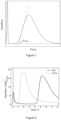
- Figure 1
- shows a scheme of the determination of the start of the main heat evolution (tonset) by the intersection of the minimum plateau line and the maximum slope line.
- Figure 2
- shows a heat flow diagram for RE1 (1) and systems using CE7 (CE14).
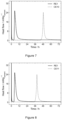
- Figure 3
- shows a heat flow diagram for RE1 (1) and systems using IE1 (IE5).
- Figure 4
- shows a heat flow diagram for RE1 (1) and systems using CE5 (CE12).
- Figure 5
- shows a heat flow diagram for RE1 (1) and systems using CE1 (CE8).
- Figure 6
- shows a heat flow diagram for RE1 (1) and systems using CE2 (CE9).
- Figure 7
- shows a heat flow diagram for RE1 (1) and systems using CE3 (CE10).
- Figure 8
- shows a heat flow diagram for RE1 (1) and systems using CE4 (CE11).
- Figure 9
- shows a XRD pattern of IE1.
- Figure 10
- shows a XRD pattern of CE5.
- Figure 11
- shows a XRD pattern of CE6.
- Figure 12
- shows a XRD pattern of CE7.
- Figure 13
- shows a XRD pattern of IE2.
- Figure 14
- shows a XRD pattern of IE3.
- Figure 15
- shows a XRD pattern of IE4.
- Figure 16
- shows a process scheme for determining the Feret diameter.
Definitions
-
The term "dispersant" as used herein denotes a substance, preferably a surfactant, that is suitable to improve the separation of particles in a suspension of solid or liquid particles in a liquid, such as a colloid or emulsion, and to prevent settling or clumping of the particles over the time. Dispersants are used as plasticizers or superplasticizers in concrete formulations to lower the use of water while retaining the needed slump (flow) property. A lower water content makes the concrete stronger and more impervious to water penetration. Similarly, dispersants are used as plasticizers in gypsum slurry during wallboard manufacture, to reduce the amount of water used. The lower water usage allows lower energy use to dry the wallboard.
-
The term "mortar" as used herein denotes a workable paste, which binds after a given time. Preferably, mortars comprise cement and becomes hard when cured, resulting in a rigid aggregate structure. Typically, mortar comprises sand, a binder, such as cement, and water. The most common binder since the early 20th century is Portland cement.
-
The term "copolymer" as used herein demotes a polymer polymerized from at least two different monomers. However, preferably, the copolymer is polymerized from three or more different monomers.
-
As used in the context of present invention, the singular forms of "a" and "an" also include the respective plurals unless the context clearly dictates otherwise. Thus, the term "a" or "an" is intended to mean "one or more" or "at least one", unless indicated otherwise.
-
The term "aluminous cement" as used herein denotes a calcium aluminate cement that consists predominantly of hydraulic active calcium aluminates. Alternative names are "high-alumina cement" or "Ciment fondu" in French. The main active constituent of calcium aluminate cements is monocalcium aluminate (CaAl2O4, CaO·Al2O3, or CA in the cement chemist notation).
-
The term "shelf life" as used herein denotes the time during which a component stays in the form of a more or less fluid aqueous suspension of solid products, capable of coming back to the aqueous suspension by mechanical means, without setting or losing its reactivity.
-
The term "initiator" as used herein denotes a compound or composition that modifies the chemical environment to start a particular chemical reaction. In the present invention the initiator modifies the pH-value of the mortar suspension thereby deblocking the hydraulic binder in the final mixture.
-
The term "retarder" as used herein denotes a compound or composition that modifies the chemical environment to delay a particular chemical reaction. In the present invention the retarder modifies the hydration ability of the calcium aluminate cement of the mortar suspension thereby delaying the hydraulic binder action in the final mixture.
-
The term "initial set-time" as used herein denotes the time at which the mixture of two components of a curable mortar starts to set after mixing. During the time period after mixing, the mixture stays in the form of a more or less fluid aqueous suspension or paste of solid products.
Detailed Description of the Invention
-
As set out above, the present invention is concerned in a first aspect with a process for preparing an expediting composition suitable for accelerating the curation of a mortar comprising aluminous cement. This aspect of the invention is described in detail in the following.
Process according to the Invention
-
In a first aspect the present invention is concerned with a process for preparing an expediting composition suitable for accelerating the curing of a mortar comprising aluminous cement, wherein the process comprises mixing the following components:
- A) aluminous cement,
- B) at least one dispersant agent for dispersing inorganic particles in water,
- C) water,
- wherein the weight ratio of component A) to component C) is in the range of from 1.5:1 to 1:70, and
- wherein the weight ratio of component A) to component B) is more than 20:1 .
-
Preferably, the aluminous cement according to the first aspect of the present invention comprises at least monocalcium aluminate and dicalciumaluminate, more preferably consists of monocalcium aluminate and dicalcium aluminate, even more preferably consists of monocalcium aluminate in an amount higher than 50 wt.-% with respect to the weight of the aluminous cement and dicalciumaluminate in an amount higher than 15 wt.-% with respect to the total weight of the aluminous cement, and most preferably of monocalcium aluminate in an amount in the range of from 55 wt.-% to 80 wt.-% with respect to the total weight of the aluminous cement and dicalcium aluminate in an amount in the range of from 20 wt.-% to 45 wt.-% with respect to the total amount of the aluminous cement. It should be noted that without wishing to being bound by theory, it is believed that the aluminous cement in the process of the present invention leads to the formation of active species such as CAH10, C2AH8, AH3, and C3AH6 (katoite), wherein CAH10 and C2AH8 are metastable and most likely convert into the more stable hydrate phases AH3 and C3AH6,which are able to efficiently accelerate the hardening reaction of CAC. The calcium aluminate cement which can be used in the present invention is characterized by rapid set and rapid hardening, rapid drying, excellent resistance to corrosion and shrinkage. Such a calcium aluminate cement suitable to be used in the present invention is for example Ternal® White (Kerneos, France).
-
The process of the present invention uses at least on dispersant. The role of the dispersant is to help forming a fine suspension of CAC in water. Without wishing to being bound by theory it is believed that a fine dispersion of the CAC in water helps to provide nano-sized particles of CAC and its hydrates having a high specific surface. It is further believed that the smaller the particles are and the higher the specific surface is, not only the hydration rate at the surface will be higher, but also the acceleration effect will be more significant.
-
It has been found that preferably for achieving the above-mentioned effects most efficiently, the at least one dispersant of the first aspect of the present invention is a water-soluble polymer having polyether groups according to the structural unit (I),
*-U-(C(O))k-X-(AlkO)n-W (I)
wherein
- *
- denotes the binding site to the polymer,
- U
- denotes a chemical bond or an alkylene group with 1 to 8 C-atoms,
- X
- denotes oxygen, sulfur, or a group NR1,
- k
- is 0 or 1,
- n
- is an integer whose mean value, relative to the polymer, is in the range from 3 to 300,
- Alk
- denotes an C2-C4-alkylene, wherein Alk of the group (Alk-O)n can be the same or different,
- W
- denotes a hydrogen radical, a C1-C6 alkyl radical, or an aryl radical, or denotes the group Y-F, wherein
- Y
- denotes a linear or branched alkylene group containing 2 to 8 carbon atoms which may bear a phenyl ring,
- F
- denotes a 5- to 10-membered nitrogen heterocycle, which may in addition to the nitrogen atom and in addition to carbon atoms have as ring members 1, 2, or 3 additional heteroatoms selected from the group consisting of oxygen, nitrogen, and sulfur, wherein the nitrogen ring members may have a group R2, and wherein 1 or 2 carbon ring members may be present as a carbonyl group,
- R1
- denotes hydrogen, C1-C4-alkyl, or benzyl, and
- R2
- denotes hydrogen, C1-C4-alkyl or benzyl.
-
Preferably, the at least one dispersant of the first aspect of the present invention comprises at least one functional group selected from the list consisting of carboxyester-, carboxy-, phosphono-, sulfino-, sulfo-, sulfamido-, sulfoxy-, sulfoalkyloxy-, sulfinoalkyloxy- and phosphonooxy group.
-
In a preferred embodiment of the first aspect of the present invention, the at least one dispersant comprises a polycondensation product comprising
- (II) a structural unit comprising an aromatic or heteroaromatic unit and a polyether group, and
- (III) a phosphated structural unit comprising an aromatic or heteroaromatic unit. Preferably, the structural units (II) and (III) are represented by the following general formulae
A-U-(C(O))k-X-(AlkO)n-W (II)
wherein
- A
- denotes a substituted or unsubstituted aromatic or heteroaromatic unit having from 5 to 10 carbon atoms in the aromatic system, where the residues thereof have the meanings given for structural unit (I);
wherein
- D
- denotes a substituted or unsubstituted aromatic or heteroaromatic compound having 5 to 10 carbon atoms in the aromatic system,
- E
- is selected from the group consisting of N, NH, or O, wherein m = 2 if E = N and m = 1 if E = NH or O,
- R3, R4
- independently denote a branched or unbranched C1- to C10-alkyl unit, C5- to C8-cycloalkyl unit, aryl unit, heteroaryl unit, or H, and
- b
- being an integer from 0 to 300.
-
The polycondensation product according to the first aspect of the present invention preferably comprises a further structural unit (IV) represented by the following formula
wherein
- Y
- independently denotes the same or different unit represented by (II), (III) or other components of the polycondensation product.
-
R5 and R6 are preferably identical or different and represented by H, CH3, COOH, substituted or unsubstituted, aromatic or heteroaromatic compound having 5 to carbons. R5 and R6 here in structural unit (IV) are independently of one another preferably represented by H, COOH and/or methyl.
-
In one particular preferred embodiment, R5 and R6 are represented by H.
-
The molar ratio of the structural units (II), (III), and (IV) in the phosphated polycondensation product of the invention may be varied within wide ranges. It has proven useful for the molar ratio of the structural units [(II) + (III)]:(IV) to be 1:0.8 to 3, preferably 1:0.9 to 2, and more preferably 1:0.95 to 1.2.
-
The molar ratio of the structural units (II): (III) is normally 1:10 to 10:1, preferably 1:7 to 5:1, and more preferably 1:5 to 3:1.
-
The groups A and D in the structural units (II) and (III) in the polycondensation product are usually represented by phenyl, 2-hydroxyphenyl, 3-hydroxyphenyl, 4hydroxyphenyl, 2-methoxyphenyl, 3-methoxyphenyl, 4-methoxyphenyl, naphthyl, 2hydroxynaphthyl, 4-hydroxynaphthyl, 2-methoxynaphthyl, 4-methoxynaphthyl, preferably phenyl, and A and D may be selected independently of one another and may also each consist of a mixture of the stated compounds. The groups X and E are represented independently of one another preferably by 0.
-
Preferably, n in structural unit (I) is represented by an integer from 5 to 280, more particularly 10 to 160, and very preferably 12 to 120, and b in structural unit (III) is represented by an integer from 0 to 10, preferably 1 to 7, and more preferably 1 to 5.
-
The representative radicals whose length is defined by n and b may consist here of uniform structural groups, though it may also be useful for them to comprise a mixture of different structural groups. Furthermore, the radicals of the structural units (II) and (III) may independently of one another each have the same chain length, with n and b in each case being represented by one number. In general, however, it will be useful for these each to be mixtures having different chain lengths, and so the radicals of the 5 structural units in the polycondensation product have different numerical values for n and, independently for b.
-
In one particular embodiment, the present invention further envisages a sodium, potassium, ammonium and/or calcium salt, and preferably a sodium and/or potassium salt, of the phosphated polycondensation product.
-
The phosphated polycondensation product of the invention frequently has a weight average molecular weight of 5000 g/mol to 150 000 g/mol, preferably 10 000 to 100 000 g/mol, and more preferably 20 000 to 75 000 g/mol.
-
With regard to the phosphated polycondensation products for preferred use in accordance with the present invention, and to their preparation, reference is additionally made to patent applications
WO 2006/042709 A1 and
WO 2010/040612 A1 , the content of which is hereby incorporated into the specification.
-
In a further preferred embodiment, the dispersant comprises at least one copolymer which is obtainable by polymerization of a mixture of monomers comprising (V) at least one ethylenically unsaturated monomer which comprises at least one radical from the series of carboxylic acid, carboxylic salt, carboxylic ester, carboxylic amide, carboxylic anhydride, and carboxylic imide and (VI) at least one ethylenically unsaturated monomer comprising a polyether group, the polyether group being represented preferably by the structural unit (I).
-
The copolymers in accordance with the present invention contain at least two monomer units. It may, however, also be advantageous to use copolymers having three or more monomer units.
-
In another preferred embodiment of the first aspect of the present invention, the at least one dispersant comprises at least one copolymer obtainable by polymerization of a mixture of monomers comprising
- (V) at least one ethylenically unsaturated monomer which contains at least one radical from the series consisting of carboxylic acid, carboxylic acid salt, carboxylic acid ester, carboxylic acid amide, carboxylic acid anhydride, and carboxylic acid imide comprises, and
- (VI) at least one ethylenically unsaturated monomer comprising a polyether group.
-
In a preferred embodiment of the first aspect of the present invention, the ethylenically unsaturated monomer (V) is represented by at least one of the following general formulae selected from the group consisting of (Va), (Vb) and (Vc)
wherein
- R7, R8
- independently denote hydrogen or an aliphatic hydrocarbon unit having 1 to 20 carbon atoms,
- B
- denotes H, -COOMa, -CO-O(CqH2qO)r-R9, -CO-NH-(CqH2qO)r-R9,
- M
- denotes hydrogen, a monovalent, divalent or trivalent metal cation, ammonium ion, or an organic amine radical,
- A
- is 1/3, 1/2, or 1,
- R9
- denotes hydrogen, an aliphatic hydrocarbon radical containing 1 to 20 C-atoms, a cycloaliphatic hydrocarbon radical having 5 to 8 C atoms, an optionally substituted aryl radical having 6 to 14 C atoms
- q
- independently is equally or differently for each (CqH2qO) unit 2, 3 or 4,
- r
- is 0 to 200,
- Z
- is O or NR16, and
- R16
- independently is identical or different and denotes a branched or unbranched C1-to C10-alkyl radical, C5- to C8-cycloalkyl radical, aryl radical, heteroaryl radical or H.
-
The following formula represents monomer [Vy]:
wherein
- R10, R11
- denote independently hydrogen or an aliphatic hydrocarbon unit having 1 to 20 carbon atoms, a cycloaliphatic hydrocarbon unit having 5 to 8 carbon atoms, an optionally substituted aryl unit having 6 to 14 carbon atoms,
- R12
- denotes a (CnH2n)-SO3H where n = 0, 1, 2, 3, or 4, (CnH2n)-OH where n = 0, 1, 2, 3, or 4; (CnH2n)-PO3H2 with n = 0, 1, 2, 3, or 4, (CnH2n)-OPO3H2 with n= 0, 1, 2, 3, or 4, (C6H4)-SO3H, (C6H4)-PO3H2, (C6H4)-OPO3H2 and (CnH2n)-NR4 b with n = 0, 1, 2, 3, or 4 and b = 2 or 3,
- R13
- denotes H, -COOMa, -CO-O(CqH2qO)r-R9, -CO-NH-(CqH2qO)r-R9, wherein Ma, R9, q and r have the abovementioned meanings,
- R14
- denotes hydrogen, an aliphatic hydrocarbon radical having 1 to 10 carbon atoms, a cycloaliphatic hydrocarbon radical having 5 to 8 carbon atoms, an optionally substituted aryl unit having 6 to 14 carbon atoms,
- Q
- denotes NH, NR15, or O, wherein R15 denotes an aliphatic hydrocarbon radical having 1 to 10 carbon atoms, a cycloaliphatic hydrocarbon radical having 5 to 8 carbon atoms, or an optionally substituted aryl radical having 6 to 14 carbon atoms.
-
In one particularly preferred embodiment, the ethylenically unsaturated monomer (VI) is represented by the following general formulae (VIa)
in which all the radicals having the definitions above.
-
In a further-preferred embodiment, the ethylenically unsaturated monomer (VI) is represented by the following general formulae (Vlb)
where
- R1, R2, R3
- independently of one another, identically or differently, are H, CH3,
- R4
- is linear or branched C1-C30 alkylene,
- R5, R6
- independently of one another, identically or differently, are H, C1-C20 alkyl, C3-C15 cycloalkyl, aryl, -CH2-O-C1-C20 alkyl, CH2-O-C2-C20 alkenyl, and R5 and R6 may also together form a C3-C6 alkylene,
- R7
- independently at each occurrence, identically or differently, is H, C1-C4 alkyl,
- R8
- is C1-C22 alkyl, C2-C22 alkenyl, and
- N
- independently at each occurrence, is identical or different and is an integer from 2 to 200.
-
In particular, the copolymer preferably has an average molecular weight (Mw) of 5000 g/mol, or more, more preferably 10,000 g/mol or more, and most preferably 15,000 g/mol or more. Moreover, the copolymer preferably has an average molecular weight (Mw) of 150,000 g/mol or less, more preferably of 80,000 g/mol or less, and most preferably of 60,000 g/mol or less. A particularly preferred range of the average molecular weight (Mw) is between 5000 and 150,000 g/mol, more preferably 10,000 to 80,000 g/mol, and most preferably 15,000 to 60,000 g/mol. The average molecular weight (Mw) of the copolymer is determined by gel permeation chromatography.
-
Preferably, in the process for obtaining the expediting composition according to the first aspect of the present invention the weight ratio of component A) to component B) is 20:1 or higher, preferably 25:1 or higher, and most preferably 35:1 and higher. Moreover, the weight ratio of component A) to component B) is preferably 510:1 or lower, more preferably 300:1 or lower, and most preferably 50:1 or lower. Hence, a particularly preferred range for the weight ratio of component A) to component B) is from 21:1 to 510:1, more preferably from 25:1 to 300:1, and most preferably from 35:1 to 50:1.
-
Preferably, the weight ratio of component C) to component A) is 5:1 or more, more preferably 7:1 or more, and most preferably 9:1 or more. Moreover, preferably, the weight ratio of component C) to component A) is 15:1 or less, preferably 13:1 or less, and most preferably 11:1 or less. A particularly preferred range for the weight ratio of component C) to component A) is from 5:1 to 15:1, more preferably from 7:1 to 13:1, and most preferably from 9:1 to 11:1.
-
Preferably, the process for obtaining the expediting composition according to the first aspect of the present invention is carried out at a temperature of 15 °C or more, more preferably 20 °C or more, and most preferably 23 °C or more. Moreover, the process for obtaining the expediting composition according to the first aspect of the present invention is preferably carried out at a temperature of 25 °C or less, more preferably of 23 °C. Hence, the process for obtaining the expediting composition according to the first aspect of the present invention is particularly preferably carried out at a temperature in the range of from 15 to 25 °C, more preferably in the range of from 20 to 23 °C, and most preferably at room temperature.
-
Also, preferably, the process for obtaining the expediting composition according to the first aspect of the present invention is carried out for a time period of 12 h or more, more preferably of 20 h or more, and most preferably of 45 h or more. Moreover, preferably, the process for obtaining the expediting composition according to the first aspect of the present invention is carried out for a time period of 80 h or less, more preferably of 60 h or less, and most preferably of 55 h or less. The process for obtaining the expediting composition according to the first aspect of the present invention is preferably carried out for a time period in the range of from 12 to 80 H, more preferably from 20 to 60 h, and most preferably from 45 to 55 h
-
In another preferred embodiment of the present invention, the expediting composition obtainable by the process according to the first aspect of the present invention comprises nano-sized particles. Preferably, the Feret diameter of the nano-sized particles of the expediting composition of the present invention is larger than 55 nm, more preferably equal to or larger than 60 nm, even more preferably equal to or more than 65 nm, and most preferably larger than 70 nm. Usually, the Feret diameter of the nano-sized particles of the expediting composition obtainable by the process according to the present invention is smaller than 150 nm, more preferably smaller than 130 nm, even more preferably smaller than 110 nm, and most preferably smaller than 100 nm, measured according to the method as set out under the section measurement methods herein. Preferably, the particle thickness of the nano-sized particles of the expediting composition obtainable by the process according to the present invention is in the range of from 3 to 8 nm, preferably from 4 to 6 nm, and most preferably 5 nm, measured according to the method as set out under the section measurement methods herein. Preferably, of the nano-sized particles of the expediting composition obtainable by the process according to the present invention comprise at least one calcium aluminate hydrate phase in an amount in the range of from 10 to 99 wt.-%, preferably 30 to 98 wt.-%, more preferably 60 to 97 wt.-%, and most preferably 95 to 96 wt.-% measured by thermal gravimetric analysis as described in the section measurement methods herein. Preferably, the solids content of the expediting composition obtainable by the process according to the present invention has a solids content of equal to or more than 4%, more preferably of equal to or more than 5%, even more preferably of equal to or more than 10%, and most preferably of equal to or more than 12%. Preferably, the solids content of the expediting composition obtainable by the process according to the present invention is equal to or lower than 45%, more preferably equal to or lower than 25%, even more preferably equal to or lower than 20%, and most preferably equal to or lower than 18%. Preferably, the solids content of the expediting composition obtainable by the process according to the present invention is in the range of from 4% to 45%, more preferably in the range of from 5% to 25%, even more preferably in the range of from 10% to 20%, and most preferably in the range of from 12% to 18%.
Measurement methods
-
The following measurement methods are used to quantify parameters in the examples of the present invention.
(a) Solid content
-
The solid content was measured with a moisture analyzer.
(b) Calorimetry
-
All calorimetry experiments were carried out using a thermostat temperature of 20.0 °C and a TAM Air isothermal calorimeter.
Determination of tonset and Δt
-
The sample is put into an ampoule, the ampoule is sealed and placed into the calorimeter within a time period of 10 min after mixing the sample.
-
The main objective of the measurement is to determine the speed of the hydration of CAC. As the hydration rate of cement corresponds to the released heat flow of the cement paste, a fast curing of the paste can be derived from an early heat evolution event in the isothermal calorimeter.
-
Thus, the start of the main heat evolution in the cement (tonset) is determined by the intersection of two straight lines (cf. Figure 1). The first line describes the level at the minimum plateau between the initial dissolution of the cement paste and the main heat evolution. The second line presents the maximum slope of the main heat evolution. The difference between the respective tonset value of the inventive or comparative example and the tonset value of the reference/blank sample yields Δt (cf. Table 6). A negative value indicates an accelerating effect of the applied example and a positive value a decelerating effect.
(c) X-ray Diffraction
-
XRD patters were recorded on a Bruker AXS D8 Advance instrument (Bruker, Karlsruhe, Germany) with a Bragg-Brentano θ-2θ geometry equipped with a V°ANTEC-1 LPSD detector (12° 2θ detector opening) and Cu Kα1,2 source (1.5406 Å, 32 kV, 40 mA). Data was collected between 7° and 42° 2θ as all relevant reflexes appear within this range.
Sample preparation
-
To obtain a powder for the XRD measurement, the suspensions of IE1-4 were centrifuged. The supernatant was decanted, and the sediment was dried in vacuum to obtain a dry specimen. The specimens were gently crushed using a pistil and a mortar. The powders were transferred onto a sample holder and the XRD patterns were recorded using the Bruker AXS D8 Advance.
(d) Transmission Electron Microscopy
-
The specimens were placed on a copper grid with 300 mesh and then observed with JEOL JEM-1400 Plus TEM (JEOL) at 120 kV (equipped with a RUBY CCD camera).
-
To determine the size (length and thickness) of the individual particles the Feret diameter (described by the longest dimension of the particles between two tangents on opposite sides of the particles) is used, which is commonly applied to irregular shaped crystals, grains, etc. (cf. K. Scrivener, R. Snelling, B. Lothenbach, A Practical Guide to Microstructural Analysis of Cementitious Materials, CRC Press, 2016; Test Method 2B.5 Analysis of Calcium Aluminate Cement Hydrates by Thermal Gravimetric Analysis, University of Sydney, Marjorie Valix, 2020.)
-
To measure the Feret diameter the image processing software (FiJi Is Just) ImageJ 2.14.0/1.54f was used. The particles were measured manually according to the following procedure.
-
The image is loaded into the software and the correct scale is applied (Analyze - > Set scale). A particle with recognizable edges and proper color contrast is selected with the "freehand selection" and added to the result file (the software automatically returns the Feret diameter for this particle). The last step is repeated until no further particle is visible to the operator. The straight-line tool is used to determine the thickness of the particles. The last step is repeated until no further flake was visible to the operator. Octahedral shaped crystals with several hundred nanometers in diameter are not considered in the evaluation (cf. Figure 16 for a graphical illustration of the image analysis procedure).
-
To statistically describe the frequency distribution of individual particles in the sample the weight average particle size (Feret diameter FD
w or thickness T
w, respectively) is determined (n = total number of measured particles).
-
Furthermore, the number average particle size (FDn and Tn) and median particle size (FDm and Tm) are determined. The ratio of FDw/FDn (or Tw/Tn) displays the dispersity (polydispersity index, PDI) and describes the width of this distribution. These concepts are derived from the chemistry of polymers (K. D. Lechner, K. Gehrke, E. H. Nordmeier: Makromolekulare Chemie: ein Lehrbuch für Chemiker, Physiker, Materialwissenschaftler und Verfahrenstechniker, 5. Auflage, Springer Spektrum, Berlin 2014).
(e) Thermal Gravimetric Analysis (TGA)
General remarks
-
Thermal gravimetric analysis is usually used to follow the hydration process of cementitious materials by recording the weight loss of a material. It is also used to calculate the amount of a single material in a mixture of solids.
-
However, this technique is limited to systems with one to two solids present, as the recorded weight loss of the individual materials can overlap, complicating the quantitative analysis.
-
One can present TGA data in two ways: The first way shows the thermogravimetric (thermal gravimetric) change as a function of increasing temperature, the second way describes the differentiation of the TG curve (DTG). By applying deconvolution methods to the DTG the observed overlapping thermal transitions can be resolved to a certain degree.
Sample preparation
-
Samples for TGA measurements were prepared according to the following procedure. 3 g of the respective expediting composition (in suspension) were mixed with 7 g cold (5 °C) isopropanol. The mixture was vigorously shaken by hand for two to three minutes and then placed in an overhead shaker (15 rpm) for 15 min. Subsequently, the mixture was centrifuged for 5 min at 8500 g. The clear supernatant was decanted, and the remaining solvent was removed in vacuum overnight. The dried powder was gently crushed using a pistil and mortar and characterized with TGA as soon as possible.
Measurement
-
The observed DTG data was deconvoluted using a pseudo-Voigt profile (PVP). The thermal analysis was performed on a STA 409 TG-MS instrument (Netzsch, Selb, Germany) from 30 °C to 1000 °C at a heating rate of 10 °C/min in Argon flow. 10 mg of sample was placed in the aluminum oxide crucible. The crucible was covered with a lid, which had a small opening in it.
-
The DTG curves were iteratively adjusted until the R2 score was higher than 0.98 and the found ratio between the different phases for each suspension was in an acceptable range. The maximum position of the individual phases was adapted from the literature (Test Method 2B.5 Analysis of Calcium Aluminate Cement Hydrates by Thermal Gravimetric Analysis, University of Sydney, Marjorie Valix, 2020; N. Ukrainczyk, T. Matusinovic, S. Kurajica, B. Zimmerman, J. Sipusic, Dehydration of layered double hydroxide - C2AH8, Thermochimica Acta 464 (2007) 7 - 15)). The used polymer was also characterized in its air-dried form by TGA showing its maximum value at 400 °C (decomposition of polymer).
-
The ratio between the different phases is determined according to the following reaction pathways (based on the found phases in the XRD measurement): 3 CA + 21 H → CAH10 + C2AH8 + AH3 or 2 CA + 11 H → C2AH8 + AH3 Cement notation is used (C = CaO, A = Al2O3, H = H2O).
-
By determining the theoretical amount of each phase according to following equation (MW = molecular weight in g/mol) the ratio between the different phases can be determined.
-
The ratio between the different phases is given by CAH10/C2AH8 (= 0.94), CAH10/AH3 (= 2.17), C2AH8/AH3 (= 2.30). The reaction of the slowly reacting calcium aluminate phase CA2 (Grossite) is not considered in the equation. The amount of polymer is determined based on the area for the polymer in relation to the total area. The amount of the different phases is based on the pseudo-Voigt profiles in combination with the water loss of the respective phases.
Examples
-
The following example illustrates the invention without thereby limiting it.
(a) Comparative Examples CE1-4
Common preparation method (co-precipitation)
-
Water and optionally polymer solution (A) (cf. Table 1) were placed in a 100 mL beaker and stirred at 300 rpm using a cylindrical shaped magnetic stirrer. The polymer solution (A) is a commercially available polymer solution (comb-shaped co-polymer) with a solid content of 45% (Melpers® 0045). Subsequently, a calcium solution (C) and an aluminum solution (B) were added dropwise in a time period of 10 min into the beaker and the mixture was stirred for additional 5 min after the addition had been finished. As Al3+ source, a NaAlO2 solution (B) was used, with a solid content of 29%. Two different Ca2+ sources (C) were tested for the co-precipitation method. A Ca(NO3)2 (C1) and a CaCl2 (C2) solution, both with a solid content of 25%. 0.02 mol of the respective calcium salt were added. To yield the C2AH8 phase a Ca/AI molar ratio of 1 was chosen. The polymer amount in the aqueous polymer solution refers to 10 wt.-% with respect to the amount of calcium and aluminum ions added. The amount of water present in the beaker is adjusted to reach a final solid content of 15%. The samples were stored in glass vials at room temperature and their solid content is determined after one day after synthesis. In all comparative examples CE1-4 white, opaque suspensions that show sedimentation over time have been achieved.
CE1-4
-
The comparative examples have been prepared according to the common preparation method as described above under considerations of the amounts given in Table 1.
Table 1: Details of synthesis conditions use for CE1-4 (co-precipitation method). A: polymer solution (solid content: 45 %), B: NaAlO2 solution (solid content: 29 %), C1: Ca(NO3)2 solution (solid content: 25 %), C2: CaCl2 solution (solid content: 25 %). | | water | A | B | C1 | C2 | solid content |
| | [g] | [g] | [g] | [g] | [g] | [%] |
| CE1 | 14.03 | 0.00 | 5.65 | 13.13 | 0.00 | 14.5 |
| CE2 | 14.62 | 0.30 | 5.65 | 13.13 | 0.00 | 14.9 |
| CE3 | 11.20 | 0.00 | 5.65 | 0.00 | 8.88 | 15.2 |
| CE4 | 11.79 | 0.30 | 5.65 | 0.00 | 8.88 | 15.5 |
(b) Inventive Examples IE1-4, Comparative Examples CE5-7
Common preparation method (one-pot reaction)
-
Water and the desired amount of polymer solution (A) (cf. Table 2) were placed in a 1 L round bottom flask and stirred at 800 rpm using an ellipse shaped magnetic stirrer. The polymer solution (A) is a commercially available polymer solution (comb-shaped copolymer) with a solid content of 45% (Melpers® 0045). Subsequently, white calcium aluminate cement (CAC) commercially available as Ternal® White was added into the reaction mixture. The weight ratio of water to CAC is kept at 10 for IE1, at 8.2 for IE2, at 8.25 for IE3, and at 8.3 for IE4. The solid polymer content in the polymer solution is adjusted to obtain a weight ratio of polymer to CAC of 9.99:1, 19.98:1, 505.05:1, 49.94:1, 33.42:1, and 24.97 for examples CE6, CE7, IE1, IE2, IE3, and IE4, while example CE5 does not comprise any polymer. The suspensions were stirred for 48 h with 800 rpm at room temperature and subsequently stored in polyethylene containers at room temperature. The solid content of the respective suspensions is determined one day after synthesis.
Examples
-
The inventive examples have been prepared according to the common preparation method as described above under considerations of the amounts given in Table 2. The appearance of the respective reaction mixtures is also described in Table 2.
Table 2 Details of synthesis conditions for the comparative examples and inventive examples using the dissolution method. A: polymer solution (solid content: 45 %). | | water | A | CAC | solid content | Optical appearance | Sedimentation |
| | [g] | [g] | [g] | [%] | | |
| CE5 | 500.00 | 0.00 | 50.00 | 15.2 | opaque, white suspension | yes |
| CE6 | 493.88 | 11.12 | 50.00 | 12.0 | opaque, white suspension | yes |
| CE7 | 496.94 | 5.56 | 50.00 | 11.6 | opaque, white gel | no |
| IE1 | 499.88 | 0.22 | 50.00 | 11.9 | opaque, white suspension | yes |
| IE2 | 487.51 | 2.67 | 59.92 | 14.6 | opaque, white suspension | yes |
| IE3 | 486.81 | 3.95 | 59.34 | 14.9 | opaque, white suspension | yes |
| IE4 | 486.10 | 5.23 | 58.77 | 14.7 | opaque, white suspension | yes |
-
To study the composition of the expediting compositions, powder X-ray diffraction (PXRD) measurements were conducted to qualitatively determine the phases obtained via the dissolution method.
-
The XRD patterns of IE1, CE5-7 (cf. Figures 9-12) show that the main clinker phase of calcium aluminate cement, calcium aluminate (CA), has completely hydrated after 48 h (main reflex 30.08 2θ). The second main clinker phase of the CAC, calcium dialuminate (CA2), is still present to some extent (main reflex 25.46 2θ) after 48 h. IE4 (cf. Figure 11) shows the hydrate phase C2AH8 (main reflex 8.26 2θ, reflex position adapted from N. Ukrainczyk, T. Matusinovic, S. Kurajica, B. Zimmermann, J. Sipusic, Thermochimica Acta 2007, 464, 7-15) or similar forms of this hydrate phase (e.g. C2AH7.5, C2AH8.2). The hydrate phase CAH10 is not observed in this sample (main reflex 6.0 2θ, second reflex 12.4 2θ). AH3 is not observed. CE7 (cf. Figure 12) shows also no CAH10, but AH3 (main reflex 18.1 2θ). As the two peaks for AH3 are very broad, the formation of very small/poorly crystalline/amorphous AH3 crystals may be indicated. IE1 (cf. Figure 9) and CE5 (cf. Figure 10) also show CAH10 next to C2AH8, AH3 and CA2.
-
Table shows respective results obtained via TGA.
Table 1 Quantitative analysis of phase distribution for the different calcium aluminate cement suspension obtained from TGA measurement and pseudo-Voigt profiles. | | | IE1 | IE2 | IE3 | IE4 | CE5 | CE6 | CE7 |
| CAH10 | [wt.-%] | 32 | - | - | - | 34 | - | - |
| C2AH8 | [wt.-%] | 49 | 63 | 68 | 66 | 47 | 68 | 70 |
| AH3 | [wt.-%] | 19 | 33 | 27 | 26 | 19 | 24 | 24 |
| Polymer | [wt.-%] | - | 4 | 5 | 8 | - | 8 | 6 |
| CAH10/C2AH8 | | 0.65 | - | - | - | 0.71 | - | - |
| CAH10/AH3 | | 1.62 | - | - | - | 1.73 | - | - |
| C2AH8/AH3 | | 2.50 | 1.94 | 2.56 | 2.48 | 2.44 | 2.88 | 2.84 |
| R2 score | | 0.99 | 1.00 | 0.99 | 1.00 | 0.99 | 1.00 | 1.00 |
-
To study the size and morphology of the particles of the expediting compositions, transmission electron microscopy has been used. Samples with no polymer present and samples with polymer present were investigated. In case of samples with polymer, only the supernatant of the sample was studied (no homogenization of serum and sediment took place by shaking the suspension before collecting the sample for TEM measurements).
-
Generally, the morphology of the found solid particles can be described as irregular flakes (straight and buckled ones) with varying sizes in the nanometer regime for both polymer-free and polymer-containing samples. The flakes have the tendency to agglomerate and build larger flocks of flakes in the micrometer regime. For the sample with no polymer present, additional, large, octahedral crystals with the size of several hundred nanometers up to a few micrometers have been observed. It is believed that they concern katoite phase (C
3AH
6), which was not detected by the XRD measurements. These octahedral crystals were not observed in the serum of the polymer-containing sample.
Table 4: Feret diameter values of the particles of the expediting compositions. | Sample | FDW / nm | FDn / nm | PDI | FDm/nm |
| IE1 | 67 | 50 | 1.35 | 45 |
| IE2 | 99 | 59 | 1.69 | 40 |
| IE3 | 60 | 45 | 1.33 | 38 |
| IE4 | 57 | 45 | 1.25 | 40 |
| CE5 | 70 | 55 | 1.28 | 52 |
| CE6 | 53 | 45 | 1.17 | 42 |
Table 5: Particles thickness values determined for the particles of the expediting compositions. | Sample | Tw / nm | Tn / nm | PDI | Tm / nm |
| IE1 |
| | 5 | 4 | 1.18 | 4 |
| IE2 | 5 | 4 | 1.23 | 4 |
| IE3 | 4 | 4 | 1.17 | 3 |
| IE4 | 4 | 3 | 1.14 | 3 |
| CE5 | 8.1 | 6.8 | 1.18 | 6.1 |
| CE6 | 2.8 | 2.5 | 1.09 | 2.5 |
(c) Reference Example 1, Comparative Examples 8-14, Inventive Examples 5-8
-
To study the hydration of the calcium aluminate cement (CAC) in absence (reference example 1 - RE1) and presence of the respective synthesized calcium aluminate hydrate suspensions (IE5-8 using IE1-4; CE8-14 using CE1-7), isothermal calorimetry experiments were carried out.
-
CAC and a fine corundum (Al
2O
3) commercially available as Nabalox NO 713-10 MF, were mixed with the appropriate amount of water and the herein synthesized expediting compositions as prepared in IE1-4 and CE1-7 (cf. Table 6). The water to cement ratio has been kept constant to 0.67 for all calorimetry experiments. The dosage was either 4 or 8 % of solid component in the suspensions with respect to the weight of cement. The mixing has been done mechanically with an overhead-stirrer (IKA
® EUROSTAR 20 digital) equipped with a four-bladed propeller at 800 rpm for 2 min. After mixing, about six grams of the paste are transferred into a glass ampoule and t
onset and Δt are measured as set out under the section
'measurement methods' above.
Table 6: Reference, comparative, and inventive examples studied in isothermal calorimetry. The tonset values describe the start of the main heat event and Δt presents the effect of used additive sample (negative values show an accelerating effect, positive values show a retarding effect). | | Expediting composition | CAC | Al2O3 | Water | tonset | Δt |
| | | [g] | [g] | [g] | [g] | [h] | [h] |
| RE1 | none | none | 9.00 | 6.00 | 6.00 | 4.50 | - |
| IE5 | IE1 | 3.03 | 9.00 | 6.00 | 3.33 | 1.00 | -3.50 |
| IE6 | IE2 | 2.51 | 9.00 | 6.00 | 3.86 | 1.00 | -3.50 |
| IE7 | IE3 | 2.49 | 9.00 | 6.00 | 3.88 | 1.25 | -3.25 |
| IE8 | IE4 | 2.55 | 9.00 | 6.00 | 3.82 | 1.25 | -3.25 |
| CE8 | CE1 | 2.48 | 9.00 | 6.00 | 3.88 | 18.0 | 13.5 |
| CE9 | CE2 | 2.42 | 9.00 | 6.00 | 3.94 | 17.0 | 12.5 |
| CE10 | CE3 | 2.37 | 9.00 | 6.00 | 3.99 | 46.0 | 41.5 |
| CE11 | CE4 | 2.33 | 9.00 | 6.00 | 4.03 | 36.0 | 31.5 |
| CE12 | CE5 | 2.37 | 9.00 | 6.00 | 3.99 | 1.50 | -3.00 |
| CE13 | CE6 | 3.00 | 9.00 | 6.00 | 3.36 | 1.25 | -3.25 |
| CE14 | CE7 | 3.11 | 9.00 | 6.00 | 3.25 | 1.10 | -3.40 |
-
As can be seen by the data provided by Table 6, the addition of the expediting composition according to the present invention (IE1) leads to an accelerating effect of the hardening reaction of CAC in comparison to CAC without any expediting composition. This can be shown by the lower tonset values of examples IE5-8 using IE1-4 compared to RE1 using no expediting composition (cf. Table 6). The heat flow curves for the individually tested systems using the expediting composition according to the present invention (IE5) can be found in Figure 3.
-
For the expediting compositions as prepared in CE1-4, a strong decelerating effect can be detected in the isothermal calorimeter by showing higher tonset values compared to RE1 with no expediting composition present (cf. Table 6). The heat flow curves for the individually tested systems using the comparative examples using comparative examples CE1-4 can be found in Figure 5, Figure 6, Figure 7, and Figure 8, respectively.
-
However, also the comparative example using only water and no dispersant for the preparation of the expediting composition (CE5), while showing negative tonset values, still shows worse values than the inventive examples. The heat flow curve for the individually tested systems using CE5 can be found in Figure 4.
-
For the expediting compositions as prepared in CE6-7, which involve a comparable process as used for the inventive example IE1, but which have a CAC:polymer ratio below 20:1, comparable or lower acceleration value can be observed wherein the expediting composition loading of CE6-7 is higher than in case of the inventive examples. Inventive Example IE6 shows at the second lowest expediting composition loading the best accelerating effect of all examples. The heat flow curves for the individually tested systems using the comparative example CE7 can be found in Figure 2.




 D denotes a substituted or unsubstituted aromatic or heteroaromatic compound having 5 to 10 carbon atoms in the aromatic system,E is selected from the group consisting of N, NH, or O, wherein m = 2 if E = N and m = 1 if E = NH or O,R3, R4 independently denote a branched or unbranched C1- to C10-alkyl unit, C5-to C8-cycloalkyl unit, aryl unit, heteroaryl unit, or H, andb being an integer from 0 to 300.
 Y independently denote the same or different unit represented by (II), (III) or other components of the polycondensation product.
 R7, R8 independently denote hydrogen or an aliphatic hydrocarbon unit having 1 to 20 carbon atoms,B denotes H, -COOMa, -CO-O(CqH2qO)r-R9, -CO-NH-(CqH2qO)r-R9,M denotes hydrogen, a monovalent, divalent or trivalent metal cation, ammonium ion, or an organic amine radical,A is 1/3, 1/2, or 1,R9 denotes hydrogen, an aliphatic hydrocarbon radical containing 1 to 20 C-atoms, a cycloaliphatic hydrocarbon radical having 5 to 8 C atoms, an optionally substituted aryl radical having 6 to 14 C atomsq independently is equally or differently for each (CqH2qO) unit 2, 3 or 4,r is 0 to 200,Z is O or NR16, andR16 independently is identical or different and denotes a branched or unbranched C1- to C10-alkyl radical, C5- to C8-cycloalkyl radical, aryl radical, heteroaryl radical or H,
 R10, R11 denote independently hydrogen or an aliphatic hydrocarbon unit having 1 to 20 carbon atoms, a cycloaliphatic hydrocarbon unit having 5 to 8 carbon atoms, an optionally substituted aryl unit having 6 to 14 carbon atoms,R12 denotes a (CnH2n)-SO3H where n = 0, 1, 2, 3, or 4, (CnH2n)-OH where n = 0, 1, 2, 3, or 4; (CnH2n)-PO3H2 with n = 0, 1, 2, 3, or 4, (CnH2n)-OPO3H2 with n= 0, 1, 2, 3, or 4, (C6H4)-SO3H, (C6H4)-PO3H2, (C6H4)-OPO3H2 and (CnH2n)-NR4 b with n = 0, 1, 2, 3, or 4 and b = 2 or 3,R13 denotes H, -COOMa, -CO-O(CqH2qO)r-R9, -CO-NH-(CqH2qO)r-R9, wherin Ma, R9, q and r have the abovementioned meanings,R14 denotes hydrogen, an aliphatic hydrocarbon radical having 1 to 10 carbon atoms, a cycloaliphatic hydrocarbon radical having 5 to 8 carbon atoms, an optionally substituted aryl unit having 6 to 14 carbon atoms,Q denotes NH, NR15, or O, wherein R15 denotes an aliphatic hydrocarbon radical having 1 to 10 carbon atoms, a cycloaliphatic hydrocarbon radical having 5 to 8 carbon atoms, or an optionally substituted aryl radical having 6 to 14 carbon atoms.