EP4572199A1 - Iot device for retransmitting data and operating method thereof - Google Patents
Iot device for retransmitting data and operating method thereof Download PDFInfo
- Publication number
- EP4572199A1 EP4572199A1 EP23860952.3A EP23860952A EP4572199A1 EP 4572199 A1 EP4572199 A1 EP 4572199A1 EP 23860952 A EP23860952 A EP 23860952A EP 4572199 A1 EP4572199 A1 EP 4572199A1
- Authority
- EP
- European Patent Office
- Prior art keywords
- data
- sub
- transmission
- iot device
- retransmissions
- Prior art date
- Legal status (The legal status is an assumption and is not a legal conclusion. Google has not performed a legal analysis and makes no representation as to the accuracy of the status listed.)
- Pending
Links
Images


Classifications
-
- H—ELECTRICITY
- H04—ELECTRIC COMMUNICATION TECHNIQUE
- H04L—TRANSMISSION OF DIGITAL INFORMATION, e.g. TELEGRAPHIC COMMUNICATION
- H04L1/00—Arrangements for detecting or preventing errors in the information received
- H04L1/12—Arrangements for detecting or preventing errors in the information received by using return channel
- H04L1/16—Arrangements for detecting or preventing errors in the information received by using return channel in which the return channel carries supervisory signals, e.g. repetition request signals
- H04L1/18—Automatic repetition systems, e.g. Van Duuren systems
- H04L1/1867—Arrangements specially adapted for the transmitter end
- H04L1/1887—Scheduling and prioritising arrangements
-
- G—PHYSICS
- G16—INFORMATION AND COMMUNICATION TECHNOLOGY [ICT] SPECIALLY ADAPTED FOR SPECIFIC APPLICATION FIELDS
- G16Y—INFORMATION AND COMMUNICATION TECHNOLOGY SPECIALLY ADAPTED FOR THE INTERNET OF THINGS [IoT]
- G16Y10/00—Economic sectors
- G16Y10/75—Information technology; Communication
-
- G—PHYSICS
- G16—INFORMATION AND COMMUNICATION TECHNOLOGY [ICT] SPECIALLY ADAPTED FOR SPECIFIC APPLICATION FIELDS
- G16Y—INFORMATION AND COMMUNICATION TECHNOLOGY SPECIALLY ADAPTED FOR THE INTERNET OF THINGS [IoT]
- G16Y20/00—Information sensed or collected by the things
- G16Y20/20—Information sensed or collected by the things relating to the thing itself
-
- H—ELECTRICITY
- H04—ELECTRIC COMMUNICATION TECHNIQUE
- H04L—TRANSMISSION OF DIGITAL INFORMATION, e.g. TELEGRAPHIC COMMUNICATION
- H04L1/00—Arrangements for detecting or preventing errors in the information received
- H04L1/12—Arrangements for detecting or preventing errors in the information received by using return channel
- H04L1/16—Arrangements for detecting or preventing errors in the information received by using return channel in which the return channel carries supervisory signals, e.g. repetition request signals
- H04L1/18—Automatic repetition systems, e.g. Van Duuren systems
- H04L1/1825—Adaptation of specific ARQ protocol parameters according to transmission conditions
-
- H—ELECTRICITY
- H04—ELECTRIC COMMUNICATION TECHNIQUE
- H04L—TRANSMISSION OF DIGITAL INFORMATION, e.g. TELEGRAPHIC COMMUNICATION
- H04L1/00—Arrangements for detecting or preventing errors in the information received
- H04L1/12—Arrangements for detecting or preventing errors in the information received by using return channel
- H04L1/16—Arrangements for detecting or preventing errors in the information received by using return channel in which the return channel carries supervisory signals, e.g. repetition request signals
- H04L1/18—Automatic repetition systems, e.g. Van Duuren systems
- H04L1/1867—Arrangements specially adapted for the transmitter end
- H04L1/188—Time-out mechanisms
-
- H—ELECTRICITY
- H04—ELECTRIC COMMUNICATION TECHNIQUE
- H04L—TRANSMISSION OF DIGITAL INFORMATION, e.g. TELEGRAPHIC COMMUNICATION
- H04L67/00—Network arrangements or protocols for supporting network services or applications
- H04L67/01—Protocols
- H04L67/12—Protocols specially adapted for proprietary or special-purpose networking environments, e.g. medical networks, sensor networks, networks in vehicles or remote metering networks
-
- H—ELECTRICITY
- H04—ELECTRIC COMMUNICATION TECHNIQUE
- H04L—TRANSMISSION OF DIGITAL INFORMATION, e.g. TELEGRAPHIC COMMUNICATION
- H04L69/00—Network arrangements, protocols or services independent of the application payload and not provided for in the other groups of this subclass
- H04L69/40—Network arrangements, protocols or services independent of the application payload and not provided for in the other groups of this subclass for recovering from a failure of a protocol instance or entity, e.g. service redundancy protocols, protocol state redundancy or protocol service redirection
-
- H—ELECTRICITY
- H04—ELECTRIC COMMUNICATION TECHNIQUE
- H04W—WIRELESS COMMUNICATION NETWORKS
- H04W4/00—Services specially adapted for wireless communication networks; Facilities therefor
- H04W4/30—Services specially adapted for particular environments, situations or purposes
- H04W4/38—Services specially adapted for particular environments, situations or purposes for collecting sensor information
-
- H—ELECTRICITY
- H04—ELECTRIC COMMUNICATION TECHNIQUE
- H04W—WIRELESS COMMUNICATION NETWORKS
- H04W4/00—Services specially adapted for wireless communication networks; Facilities therefor
- H04W4/70—Services for machine-to-machine communication [M2M] or machine type communication [MTC]
-
- Y—GENERAL TAGGING OF NEW TECHNOLOGICAL DEVELOPMENTS; GENERAL TAGGING OF CROSS-SECTIONAL TECHNOLOGIES SPANNING OVER SEVERAL SECTIONS OF THE IPC; TECHNICAL SUBJECTS COVERED BY FORMER USPC CROSS-REFERENCE ART COLLECTIONS [XRACs] AND DIGESTS
- Y02—TECHNOLOGIES OR APPLICATIONS FOR MITIGATION OR ADAPTATION AGAINST CLIMATE CHANGE
- Y02D—CLIMATE CHANGE MITIGATION TECHNOLOGIES IN INFORMATION AND COMMUNICATION TECHNOLOGIES [ICT], I.E. INFORMATION AND COMMUNICATION TECHNOLOGIES AIMING AT THE REDUCTION OF THEIR OWN ENERGY USE
- Y02D30/00—Reducing energy consumption in communication networks
- Y02D30/70—Reducing energy consumption in communication networks in wireless communication networks
Definitions
- Embodiments disclosed in the present disclosure relate to an internet of things (IoT) device that retransmits data and a method of operating the same.
- IoT internet of things
- IoT internet of things
- a wireless communication network may be used to interconnect a plurality of electronic devices.
- a representative example of such a wireless communication network is a wireless local area network (WLAN).
- Wi-Fi is a technology for implementing WLAN.
- each of the plurality of electronic devices may be connected to and registered with a server through an access point (AP).
- the AP may be a device capable of wirelessly transmitting and receiving data with each of a plurality of electronic devices, and transmitting and receiving data with a core network in a wired manner and/or wirelessly.
- IoT networks are utilizable in various fields. For example, IoT networks are utilizable in factories.
- An IoT device in a factory may occupy resources in an IoT network to transmit data to a server. If data transmission of the IoT device fails, a time during which the IoT device occupies the resources of the IoT network may increase.
- an IoT network may be temporarily paralyzed.
- An IoT device may include: a sensing circuit that obtains state values of a battery cell every time intervals; a communication circuit that establishes a wireless communication connection with a server at a transmission timing of data including the state values obtained during a designated time period; and a processor, wherein the processor is configured to: transmit the data of the state values obtained during the designated time period to the server through the communication circuit; in response to failure in transmission of the data, divide the data into sub-data of a division number based on the number of retransmissions of the data; and sequentially retransmit the sub-data through the communication circuit at a transmission time interval based on the number of retransmissions, wherein the transmission time interval is a time interval obtained by dividing the designated time period by the number of retransmissions.
- the division number may be determined based on a value obtained by dividing a total time required to transmit the data by an occupancy limit time for the network of the IoT device, the total time required for transmission may be the product of the total number of transmissions of the data and a time required to transmit the data, and the total number of transmissions may be a value obtained by adding 1 to the number of retransmissions.
- the division number may be 1, and if the total time required for transmission exceeds the occupancy limit time, the division number may be determined based on the divided value.
- the division number may be determined by one of the up value, down value, or rounding value of the divided value.
- the processor of the IoT device may be configured to: identify at least one piece of sub-data that failed to be retransmitted among the sub-data; if the at least one piece of sub-data that failed to be retransmitted is identified, identify a new division number of the at least one piece of sub-data on the basis of an updated number of retransmissions; divide the at least one piece of sub-data into new sub-data corresponding to the new division number; and sequentially retransmit the new sub-data through the communication circuit at an updated transmission time interval based on the updated number of retransmissions.
- the processor of the IoT device may be configured to: determine whether retransmission timings of the sub-data overlap with a transmission timing of another piece of data of state values obtained during a time period following the designated time period; if one retransmission timing of the retransmission timings overlaps with the transmission timing of the other data, determine new retransmission timings on the basis of an offset; and based on the new retransmission timings, retransmit the sub-data sequentially through the communication circuit.
- a method of operating an IoT device may include: obtaining state values of a battery cell every time intervals; transmitting data of the state values obtained during a designated time period to a server through a communication circuit of the IoT device; in response to failure in transmission of the data, dividing the data into sub-data of a division number based on the number of retransmissions of the data; and sequentially retransmitting the sub-data through the communication circuit at a transmission time interval based on the number of retransmissions, wherein the transmission time interval is a time interval obtained by dividing the designated time period by the number of retransmissions.
- the division number may be determined based on a value obtained by dividing a total time required to transmit the data by an occupancy limit time for the network of the IoT device, the total time required for transmission may be the product of the total number of transmissions of the data and a time required to transmit the data, and the total number of transmissions may be a value obtained by adding 1 to the number of retransmissions.
- the division number may be 1, and if the total time required for transmission exceeds the occupancy limit time, the division number may be determined based on the divided value.
- the division number may be determined by one of the up value, down value, or rounding value of the divided value.
- the method of operating an IoT device may include: if at least one piece of sub-data among the sub-data has been transmitted, identifying remaining sub-data that failed to be transmitted among the sub-data; identifying a new division number of the remaining sub-data on the basis of the updated number of retransmissions; dividing the remaining sub-data into new sub-data corresponding to the new division number; and sequentially retransmitting the new sub-data through the communication circuit at an updated transmission time interval based on the updated number of retransmissions.
- the retransmitting may include: determining the retransmission timings of the sub-data so that the retransmission timings do not overlap with a transmission timing of another piece of data of state values obtained during a time period following the designated time period; and based on the determined retransmission timings, sequentially retransmitting the sub-data through the communication circuit.
- An IoT device for retransmitting data and a method of operating the same may not excessively occupy IoT network resources.
- each of phrases such as “A or B”, “at least one of A and B”, “at least one of A or B”, “A, B or C”, “at least one of A, B and C”, and “at least one of A, B, or C” may include any one of items listed together in a corresponding one of the phrases, or any possible combination thereof.
- Terms such as “first”, “second”, “A”, “B”, “(a)” or “(b)” may be used simply to distinguish a corresponding component from other components, and unless specifically stated to the contrary, corresponding components are not limited in any other respect (e.g., importance or order).
- any (e.g., first) component is referred to as being "connected”, “coupled” or “lined” to another (e.g., second) component with or without the terms “functionally” or “communicatively”, this means that the one component may be connected to the other component directly (e.g., directly (e.g., in a wired manner or wirelessly), or indirectly (e.g., through a third component).
- a method according to various embodiments disclosed in the present disclosure may be provided as being included in a computer program product.
- a computer program product as a commodity, may be traded between sellers and buyers.
- a computer program product may be distributed on a machine-readable storage medium (e.g., compact disc read only memory (CD-ROM)) or distributed online, directly through an application store or between two user devices (e.g., downloaded or uploaded).
- a machine-readable storage medium e.g., compact disc read only memory (CD-ROM)
- CD-ROM compact disc read only memory
- two user devices e.g., downloaded or uploaded.
- at least some of computer program products may be at least temporarily stored or temporarily created in a machine-readable storage medium, such as the memory of a manufacturer's server, an application store's server, or a relay server.
- each component (e.g., module or program) of the above-described components may include a single entity or a plurality of entities, and some of the plurality of entities may be separately placed in other components.
- one or more of the above-described components or operations may be omitted, or one or more other components or operations may be added.
- a plurality of components e.g., modules or programs
- the integrated component may perform one or more functions of each component of the plurality of components identically or similarly to those performed by a corresponding component of the plurality of components prior to the integration.
- operations performed by a module, a program, or another component may be executed sequentially, in parallel, iteratively, or heuristically, one or more of the operations may be performed in a different order or omitted, or one or more other operations may be added.
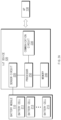
- FIG. 1 is a block diagram of a network environment 100 according to an embodiment of the present disclosure.
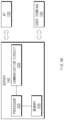
- FIG. 2A is a block diagram of an internet of things (IoT) device according to an embodiment of the present disclosure.
- FIG. 2B is a block diagram of a server according to an embodiment of the present disclosure.
- IoT internet of things
- the network environment 100 may include a plurality of service areas 101 and 105.
- each of the plurality of service areas 101 and 105 may be an area (or coverage) in which network services are provided by access points (APs) 131 and 135.
- APs access points
- each of a plurality of IoT devices 121, 123, 125, and 127 may be electrically connected to each of a plurality of battery modules 111, 113, 115, and 117.
- each of the plurality of battery modules 111, 113, 115, and 117 may have the same structure as the exemplary battery module 110.
- the battery module 110 may include at least one battery cell 211, 213, or 215.
- the at least one battery cell 211, 213, or 215 may be included in the battery module 110 while being electrically connected to each other.
- the at least one battery cell 211, 213, or 215 may be connected in series with each other and/or in parallel with each other.
- the at least one battery cell 211, 213, or 215 may be included in the battery module 110 in an electrically separated state.
- each of the plurality of IoT devices 121, 123, 125, and 127 may establish a wireless connection with each of the plurality of APs 131 and 135.
- each of the plurality of IoT devices 121, 123, 125, and 127 may wirelessly transmit and receive data with each of the plurality of APs 131 and 135 on the basis of an established wireless connection.
- each of the plurality of IoT devices 121, 123, 125, and 127 may have the same structure as the exemplary IoT device 120.
- the IoT device 120 may include a sensing circuit 220, a communication circuit 230, a memory 240, and a processor 250.
- the sensing circuit 220 may obtain information related to the battery module 110. In an embodiment, the sensing circuit 220 may obtain values (or information) related to the state of each of the at least one battery cell 211, 213, or 215. In an embodiment, values related to a state may include one or more values for a battery cell's voltage, current, resistance, state of charge (SOC), state of health (SOH), or temperature, or a combination thereof. Hereinafter, values related to a state may be referred to as "state values”.
- the sensing circuit 220 may provide information (e.g., state values) of each of the at least one battery cell 211, 213, or 215 to the processor 250.
- the communication circuit 230 may establish a wireless communication channel between the IoT device 120 and the AP 130 and transmit and receive data with the AP 130 through the established communication channel. In an embodiment, the communication circuit 230 may perform communication on the basis of at least one radio access technology (RAT). In an embodiment, the communication circuit 230 may transmit and receive data with the AP 130 by using at least one RAT. In an embodiment, the at least one radio access technology may include Wi-Fi, ultra wide band (UWB), near field communication (NFC), Bluetooth, or Bluetooth low energy (BLE).
- RAT radio access technology
- the at least one radio access technology may include Wi-Fi, ultra wide band (UWB), near field communication (NFC), Bluetooth, or Bluetooth low energy (BLE).
- the communication circuit 230 may transmit and receive data with a server 140 through a wireless communication channel between the IoT device 120 and the AP 130 and a communication channel between the AP 130 and the server 140.
- the resources of the IoT device 120, the AP 130, and the server 140 may be allocated a communication channel. Accordingly, if the IoT device 120 occupies the wireless communication channel between the IoT device 120 and the AP 130 and the communication channel between the AP 130 and the server 140 for data communication with the server 140, delays may occur in a network.
- the memory 240 may include a volatile memory and/or a non-volatile memory.
- the memory 240 may store data used by at least one component (e.g., the processor 250 or the sensing circuit 220) of the IoT device 120.
- data may include software (or instructions related thereto), input data, or output data.
- an instruction if executed by the processor 250, may cause the IoT device 120 to perform operations defined by the instruction.
- the processor 250 may execute software to control at least one other component (e.g., hardware or software component) of the IoT device 120 connected to the processor 250, and perform a variety of data processing and calculations.
- at least one other component e.g., hardware or software component
- each of the plurality of APs 131 and 135 may establish a wireless and/or wired connection with the server 140.
- each of the plurality of APs 131 and 135 may transmit and receive data with the server 140 on the basis of the established connection.
- the server 140 may establish a wireless connection with a user terminal 150. In an embodiment, the server 140 may wirelessly transmit and receive data with the user terminal 150 on the basis of an established wireless connection.
- the server 140 may include a communication circuit 235, a memory 245, and a processor 255.
- the functions of the communication circuit 235, the memory 245, and the processor 255 may respectively correspond to the functions of the communication circuit 230, the memory 240, and the processor 250 described with reference to FIG. 2A .
- the IoT device 120 transmits a state value of the battery module 110 to the server 140 according to an embodiment of the present disclosure.
- the IoT device 120 and the battery module 110 will be described as examples, but this is only an example. The following descriptions are also applicable to IoT devices 121, 123, 125, and 127 and battery modules 111, 113, 115, and 117.
- the IoT device 120 may periodically obtain a state value of the battery module 110 by using the sensing circuit 220. In an embodiment, the IoT device 120 may obtain a state value of the battery module 110 at a specified time interval (e.g., 1 hour) by using the sensing circuit 220. In an embodiment, the state value may include one or more values for the battery cell's voltage, current, resistance, state of charge (SOC), state of health (SOH), or temperature, or a combination thereof.
- SOC state of charge
- SOH state of health
- the IoT device 120 may periodically establish a wireless communication connection with the AP 130. In an embodiment, the IoT device 120 may establish a wireless communication connection with the AP 130 at each transmission timing of data including a state value obtained during a designated time period (e.g., 24 hours). In an embodiment, if a wireless communication connection is established with the AP 130, the IoT device 120 may transmit data including a state value of the battery module 110 to the server 140 through the AP 130. In an embodiment, the IoT device 120 may transmit data including a state value of the battery module 110 to the server 140 and then release the wireless communication connection with the AP 130.
- a designated time period e.g. 24 hours
- the IoT device 120 may determine whether transmission of data including a state value was successful. In an embodiment, the IoT device 120 may determine whether transmission of data including a state value was successful on the basis of a response (e.g., ACK or NACK) to transmission of data.
- a response e.g., ACK or NACK
- the IoT device 120 may not retransmit the data including the state value. In an embodiment, if transmission of data including a state value failed, the IoT device 120 may retransmit data including a state value.
- the IoT device 120 retransmits data including a state value of the battery module 110 to the server 140 according to an embodiment of the present disclosure
- the IoT device 120 and the battery module 110 will be described as examples, but this is only an example.
- the following descriptions are also applicable to IoT devices 121, 123, 125, and 127 and battery modules 111, 113, 115, and 117.
- the IoT device 120 may identify the number of retransmissions of data including a state value. In an embodiment, the IoT device 120 may identify the number of retransmissions of data including a state value in response to failure in transmission or retransmission of data including a state value.
- Equation 1 p may be a division number, k may be a time required to transmit data (e.g., 4 seconds), n may be the number of retransmissions, n+1 may be the total number of transmissions, and L may indicate an occupancy limit time (e.g., 10 seconds) for a network of the IoT device 120.
- k ⁇ (n + 1) may be a total time required for transmission.
- the total time required for transmission may be the product of the total number of transmissions and the time required to transmit data.
- the division number may be determined based on a value obtained by dividing the total time required for transmission of data by the occupancy limit time.
- the occupancy limit time may be a time for the IoT device 120 to prevent excessive occupancy of a network (e.g., a wireless communication channel between the IoT device 120 and the AP 130 and a communication channel between the AP 130 and the server 140).
- the division number may be determined to be the up value, down value, or rounding value of a value obtained by dividing the total time required for transmission of data by the occupancy limit time.
- the division number is determined to be the rounding value of a value obtained by dividing the total time required for transmission of data by the occupancy limit time.
- a time required to transmit data is 4 seconds and the number of retransmissions is 1, a total time required for transmission may be 8.
- a network occupancy limit time of the IoT device 120 is 10 seconds, a division number may be determined to be 1.
- a time required to transmit data is 4 seconds, the number of retransmissions is 2, and a network occupancy limit time is 10 seconds, a division number may be determined to be 2 as a total time required for transmission is 12.
- the IoT device 120 may divide data including a state value into sub-data corresponding to a division number. For example, if a division number is 2, the IoT device 120 may divide data including a state value into two pieces of sub-data.
- x may be a transmission time interval
- i may represent an initial transmission time interval
- p may represent a division number. Therefore, the transmission time interval may be a time interval obtained by dividing a designated time period by the number of retransmissions. For example, if an initial transmission time interval is 24 hours and a division number is 2, a transmission time interval may be determined to be 12 hours.
- the IoT device 120 may sequentially retransmit sub-data at a transmission time interval based on the number of retransmissions. For example, if a division number is 2 and a transmission time interval is 12 hours, the IoT device 120 may transmit second sub-data 12 hours after transmitting first sub-data among the two pieces of sub-data.
- the IoT device 120 may retransmit remaining sub-data that failed to be transmitted, if at least one piece of sub-data among the sub-data has been transmitted.
- a method in which the IoT device 120 retransmits sub-data that failed to be transmitted to the server 140 according to an embodiment of the present disclosure will be described.
- the IoT device 120 may determine whether transmission of sub-data was successful. In an embodiment, the IoT device 120 may determine whether transmission of each piece of sub-data was successful on the basis of a response (e.g., ACK or NACK) to transmission of each piece of sub-data.
- a response e.g., ACK or NACK
- the IoT device 120 may identify at least one piece of sub-data that failed to be transmitted among sub-data. In an embodiment, the IoT device 120 may update the number of retransmissions if at least one piece of sub-data that failed to be retransmitted is identified. In an embodiment, the IoT device 120 may identify a new division number of at least one piece of sub-data on the basis of the updated number of retransmissions. In an embodiment, the IoT device 120 may identify a new division number of at least one piece of sub-data on the basis of the updated number of retransmissions. In an embodiment, the IoT device 120 may divide at least one piece of sub-data into new sub-data corresponding to a new division number. In an embodiment, the IoT device 120 may sequentially retransmit new sub-data to the server 140 through the communication circuit 230 at an updated transmission time interval based on the updated number of retransmissions.
- the IoT device 120 may adjust a transmission timing of sub-data so that a transmission timing of data including a state value obtained during a next specified time period does not overlap with a transmission timing of the sub-data.
- a method in which the IoT device 120 adjusts a transmission timing of sub-data according to an embodiment of the present disclosure will be described.
- the IoT device 120 may determine whether retransmission timings of sub-data overlap with a transmission timing of another piece of data of state values obtained during a time period following a designated time period.
- the IoT device 120 may adjust retransmission timings of sub-data if one retransmission timing of retransmission timings of the sub-data overlaps with a transmission timing of another piece of data. In an embodiment, the IoT device 120 may determine retransmission timings of sub-data so that retransmission timings of the sub-data do not overlap with a transmission timing of another piece of data of state values obtained during a time period following a designated time period. In an embodiment, the IoT device 120 may determine new retransmission timings on the basis of an offset if one retransmission timing of retransmission timings overlaps with a transmission timing of another piece of data.
- the IoT device 120 may move each of the retransmission timings as much as the offset.
- the offset may be shorter than a transmission time interval between retransmission timings.
- the offset may correspond to a value obtained by dividing a transmission time interval by an arbitrary decimal number.
- the IoT device 120 may determine whether re-determined new retransmission timings overlap with a transmission timing of another piece of data of state values obtained during a next time period. In an embodiment, the IoT device 120 may readjust redetermined retransmission timings if the redetermined retransmission timings overlap with a transmission timing of another piece of data of state values obtained during a next time period.
- the IoT device 120 may sequentially retransmit the sub-data through the communication circuit on the basis of determined new retransmission timings.
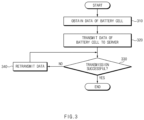
- FIG. 3 is a flowchart showing an operation of the IoT device 120 according to an embodiment of the present disclosure.
- the IoT device 120 may obtain data of the battery cell 211, 213, or 215.
- the IoT device 120 may obtain data of the battery cell 211, 213, or 215 at a designated time interval (e.g., 1 hour) and during a designated time period (e.g., 24 hours).
- data of the battery cell 211, 213, or 215 may include values related to a state.
- values related to a state may include one or more values for a battery cell's voltage, current, resistance, state of charge (SOC), state of health (SOH), or temperature, or a combination thereof.
- SOC state of charge
- SOH state of health
- temperature or a combination thereof.
- state values related to a state may be referred to as "state values”.
- the IoT device 120 may transmit data of the battery cell 211, 213, or 215 to the server 140.
- the IoT device 120 may establish a wireless communication channel with the AP 130 through the communication circuit 230.
- the IoT device 120 data of the battery cell 211, 213, or 215 to the server 140 through a wireless communication channel with the AP 130 and a communication channel between the AP 130 and the server 140.
- the IoT device 120 may determine whether transmission was successful. In an embodiment, the IoT device 120 may determine whether transmission of data was successful on the basis of a response (e.g., ACK or NACK) from the AP 130 and/or the server 140.
- a response e.g., ACK or NACK
- the IoT device 120 may terminate operations according to FIG. 3 . In an embodiment, if transmission of data was successful, the IoT device 120 may re-perform operations according to FIG. 3 to transmit data of the battery cell 211, 213, or 215 obtained during a next time period.
- the IoT device 120 may perform operation 340.
- the IoT device 120 may retransmit data.
- FIG. 4 is a flowchart showing an operation of the IoT device 120 according to an embodiment of the present disclosure. Operations of FIG. 4 may be included in operation 340 of FIG. 3 .
- the IoT device 120 may identify the number of retransmissions.
- the IoT device 120 may identify the number of retransmissions of data including a state value in response to failure in transmission or retransmission of data including a state value.
- the IoT device 120 may identify a division number and a transmission time interval of data of the battery cell 211, 213, or 215 on the basis of the number of retransmissions. In an embodiment, the IoT device 120 may identify a division number of data on the basis of the number of retransmissions of data including a state value in accordance with Equation 1 above. In one embodiment, the IoT device 120 may identify a transmission time interval of data including a state value in accordance with Equation 2 above.
- the IoT device 120 may transmit sub-data divided in a division number at a transmission time interval.
- the IoT device 120 may retransmit remaining sub-data that failed to be transmitted. According to an embodiment, the IoT device 120 may adjust a transmission timing of sub-data so that a transmission timing of data including a state value obtained during a next specified time period does not overlap with a transmission timing of the sub-data.
Landscapes
- Engineering & Computer Science (AREA)
- Computer Networks & Wireless Communication (AREA)
- Signal Processing (AREA)
- Computing Systems (AREA)
- Medical Informatics (AREA)
- General Health & Medical Sciences (AREA)
- Health & Medical Sciences (AREA)
- Accounting & Taxation (AREA)
- General Business, Economics & Management (AREA)
- Economics (AREA)
- Development Economics (AREA)
- Business, Economics & Management (AREA)
- Computer Security & Cryptography (AREA)
- Mobile Radio Communication Systems (AREA)
- Debugging And Monitoring (AREA)
Abstract
Description
- This application claims the benefit of
Korean Patent Application No. 10-2022-0111718, filed on September 2, 2022 - Embodiments disclosed in the present disclosure relate to an internet of things (IoT) device that retransmits data and a method of operating the same.
- What internet of things (IoT) means is that all objects (e.g., electronic devices and the like), such as TVs, smartphones, PCs, cars, refrigerators, washing machines, dryers, air conditioners, heaters, and watches, are connected to a wireless network. Using IoT, a plurality of electronic devices may exchange data wirelessly.
- In order to implement an IoT environment, a plurality of electronic devices must maintain communication connections with each other. A wireless communication network may be used to interconnect a plurality of electronic devices. A representative example of such a wireless communication network is a wireless local area network (WLAN). Wi-Fi is a technology for implementing WLAN.
- In order for a plurality of electronic devices to build an IoT network, each of the plurality of electronic devices may be connected to and registered with a server through an access point (AP). Here, the AP may be a device capable of wirelessly transmitting and receiving data with each of a plurality of electronic devices, and transmitting and receiving data with a core network in a wired manner and/or wirelessly.
- IoT networks are utilizable in various fields. For example, IoT networks are utilizable in factories.
- An IoT device in a factory may occupy resources in an IoT network to transmit data to a server. If data transmission of the IoT device fails, a time during which the IoT device occupies the resources of the IoT network may increase.
- Accordingly, if excessive network traffic occurs in an environment such as a factory, or if a time during which a specific IoT device occupies IoT network resources increases, an IoT network may be temporarily paralyzed.
- The technical problems of the embodiments disclosed in the present disclosure are not limited to the technical problems mentioned above, and other technical problems not mentioned can be clearly understood by those skilled in the art from the description below.
- An IoT device according to an embodiment disclosed in the present disclosure may include: a sensing circuit that obtains state values of a battery cell every time intervals; a communication circuit that establishes a wireless communication connection with a server at a transmission timing of data including the state values obtained during a designated time period; and a processor, wherein the processor is configured to: transmit the data of the state values obtained during the designated time period to the server through the communication circuit; in response to failure in transmission of the data, divide the data into sub-data of a division number based on the number of retransmissions of the data; and sequentially retransmit the sub-data through the communication circuit at a transmission time interval based on the number of retransmissions, wherein the transmission time interval is a time interval obtained by dividing the designated time period by the number of retransmissions.
- In the IoT device according to an embodiment disclosed in the present disclosure, the division number may be determined based on a value obtained by dividing a total time required to transmit the data by an occupancy limit time for the network of the IoT device, the total time required for transmission may be the product of the total number of transmissions of the data and a time required to transmit the data, and the total number of transmissions may be a value obtained by adding 1 to the number of retransmissions.
- In the IoT device according to an embodiment disclosed in the present disclosure, if the total time required for transmission is less than or equal to the occupancy limit time, the division number may be 1, and if the total time required for transmission exceeds the occupancy limit time, the division number may be determined based on the divided value.
- In the IoT device according to an embodiment disclosed in the present disclosure, the division number may be determined by one of the up value, down value, or rounding value of the divided value.
- The processor of the IoT device according to an embodiment disclosed in the present disclosure may be configured to: identify at least one piece of sub-data that failed to be retransmitted among the sub-data; if the at least one piece of sub-data that failed to be retransmitted is identified, identify a new division number of the at least one piece of sub-data on the basis of an updated number of retransmissions; divide the at least one piece of sub-data into new sub-data corresponding to the new division number; and sequentially retransmit the new sub-data through the communication circuit at an updated transmission time interval based on the updated number of retransmissions.
- The processor of the IoT device according to an embodiment disclosed in the present disclosure may be configured to: determine whether retransmission timings of the sub-data overlap with a transmission timing of another piece of data of state values obtained during a time period following the designated time period; if one retransmission timing of the retransmission timings overlaps with the transmission timing of the other data, determine new retransmission timings on the basis of an offset; and based on the new retransmission timings, retransmit the sub-data sequentially through the communication circuit.
- A method of operating an IoT device according to an embodiment disclosed in the present disclosure may include: obtaining state values of a battery cell every time intervals; transmitting data of the state values obtained during a designated time period to a server through a communication circuit of the IoT device; in response to failure in transmission of the data, dividing the data into sub-data of a division number based on the number of retransmissions of the data; and sequentially retransmitting the sub-data through the communication circuit at a transmission time interval based on the number of retransmissions, wherein the transmission time interval is a time interval obtained by dividing the designated time period by the number of retransmissions.
- In the method of operating an IoT device according to an embodiment disclosed in the present disclosure, the division number may be determined based on a value obtained by dividing a total time required to transmit the data by an occupancy limit time for the network of the IoT device, the total time required for transmission may be the product of the total number of transmissions of the data and a time required to transmit the data, and the total number of transmissions may be a value obtained by adding 1 to the number of retransmissions.
- In the method of operating an IoT device according to an embodiment disclosed in the present disclosure, if the total time required for transmission is less than or equal to the occupancy limit time, the division number may be 1, and if the total time required for transmission exceeds the occupancy limit time, the division number may be determined based on the divided value.
- In the method of operating an IoT device according to an embodiment disclosed in the present disclosure, the division number may be determined by one of the up value, down value, or rounding value of the divided value.
- The method of operating an IoT device according to an embodiment disclosed in the present disclosure may include: if at least one piece of sub-data among the sub-data has been transmitted, identifying remaining sub-data that failed to be transmitted among the sub-data; identifying a new division number of the remaining sub-data on the basis of the updated number of retransmissions; dividing the remaining sub-data into new sub-data corresponding to the new division number; and sequentially retransmitting the new sub-data through the communication circuit at an updated transmission time interval based on the updated number of retransmissions.
- In the method of operating an IoT device according to an embodiment disclosed in the present disclosure, the retransmitting may include: determining the retransmission timings of the sub-data so that the retransmission timings do not overlap with a transmission timing of another piece of data of state values obtained during a time period following the designated time period; and based on the determined retransmission timings, sequentially retransmitting the sub-data through the communication circuit.
- An IoT device for retransmitting data and a method of operating the same according to various embodiments disclosed in the present disclosure may not excessively occupy IoT network resources.
- The effects of the IoT device for retransmitting data and the method of operating the same according to the disclosure of the present disclosure are not limited to the effects mentioned above, and other effects not mentioned will be clearly understood by those skilled in the art according to the disclosure of the present disclosure.
-
-
FIG. 1 is a block diagram of a network environment according to an embodiment of the present disclosure. -
FIG. 2A is a block diagram of an IoT device according to an embodiment of the present disclosure. -
FIG. 2B is a block diagram of a server according to an embodiment of the present disclosure. -
FIG. 3 is a flowchart showing an operation of an IoT device according to an embodiment of the present disclosure. -
FIG. 4 is a flowchart showing an operation of an IoT device according to an embodiment of the present disclosure. - In relation to the description of the drawings, identical or similar reference numerals may be used for identical or similar components.
- Hereinafter, embodiments of the present invention will be described with reference to the accompanying drawings. However, this is not intended to limit the present invention to specific embodiments, and should be understood to include various modifications, equivalents, and/or alternatives to the embodiments of the present invention.
- The embodiments of the present disclosure and the terms used herein are not intended to limit the technical features described in the present disclosure to specific embodiments, and should be understood to include various changes, equivalents, or replacements of the embodiments. With regard to the description of the drawings, similar reference numbers may be used for similar or related components. The singular form of a noun corresponding to an item may include the one item or more, unless the relevant context clearly indicates otherwise.
- In the present disclosure, each of phrases such as "A or B", "at least one of A and B", "at least one of A or B", "A, B or C", "at least one of A, B and C", and "at least one of A, B, or C" may include any one of items listed together in a corresponding one of the phrases, or any possible combination thereof. Terms such as "first", "second", "A", "B", "(a)" or "(b)" may be used simply to distinguish a corresponding component from other components, and unless specifically stated to the contrary, corresponding components are not limited in any other respect (e.g., importance or order).
- In the present disclosure, if any (e.g., first) component is referred to as being "connected", "coupled" or "lined" to another (e.g., second) component with or without the terms "functionally" or "communicatively", this means that the one component may be connected to the other component directly (e.g., directly (e.g., in a wired manner or wirelessly), or indirectly (e.g., through a third component).
- A method according to various embodiments disclosed in the present disclosure may be provided as being included in a computer program product. A computer program product, as a commodity, may be traded between sellers and buyers. A computer program product may be distributed on a machine-readable storage medium (e.g., compact disc read only memory (CD-ROM)) or distributed online, directly through an application store or between two user devices (e.g., downloaded or uploaded). In the case of online distribution, at least some of computer program products may be at least temporarily stored or temporarily created in a machine-readable storage medium, such as the memory of a manufacturer's server, an application store's server, or a relay server.
- According to embodiments disclosed in the present disclosure, each component (e.g., module or program) of the above-described components may include a single entity or a plurality of entities, and some of the plurality of entities may be separately placed in other components. According to embodiments disclosed in the present disclosure, one or more of the above-described components or operations may be omitted, or one or more other components or operations may be added. Alternatively or additionally, a plurality of components (e.g., modules or programs) may be integrated into a single component. In this case, the integrated component may perform one or more functions of each component of the plurality of components identically or similarly to those performed by a corresponding component of the plurality of components prior to the integration. According to embodiments disclosed herein, operations performed by a module, a program, or another component may be executed sequentially, in parallel, iteratively, or heuristically, one or more of the operations may be performed in a different order or omitted, or one or more other operations may be added.
-
FIG. 1 is a block diagram of anetwork environment 100 according to an embodiment of the present disclosure.FIG. 2A is a block diagram of an internet of things (IoT) device according to an embodiment of the present disclosure.FIG. 2B is a block diagram of a server according to an embodiment of the present disclosure. - Referring to
FIG. 1 , thenetwork environment 100 may include a plurality ofservice areas - In an embodiment, each of the plurality of
service areas - In one embodiment, each of a plurality of
IoT devices battery modules - Referring to
FIG. 2A , anexemplary battery module 110 is shown. In an embodiment, each of the plurality ofbattery modules exemplary battery module 110. - In an embodiment, the
battery module 110 may include at least onebattery cell battery cell battery module 110 while being electrically connected to each other. For example, the at least onebattery cell battery cell battery module 110 in an electrically separated state. - Referring again to
FIG. 1 , in an embodiment, each of the plurality ofIoT devices APs IoT devices APs - Referring to
FIG. 2A , anexemplary IoT device 120 is shown. In an embodiment, each of the plurality ofIoT devices exemplary IoT device 120. - In an embodiment, the
IoT device 120 may include asensing circuit 220, acommunication circuit 230, amemory 240, and aprocessor 250. - In an embodiment, the
sensing circuit 220 may obtain information related to thebattery module 110. In an embodiment, thesensing circuit 220 may obtain values (or information) related to the state of each of the at least onebattery cell - In an embodiment, the
sensing circuit 220 may provide information (e.g., state values) of each of the at least onebattery cell processor 250. - In an embodiment, the
communication circuit 230 may establish a wireless communication channel between theIoT device 120 and theAP 130 and transmit and receive data with theAP 130 through the established communication channel. In an embodiment, thecommunication circuit 230 may perform communication on the basis of at least one radio access technology (RAT). In an embodiment, thecommunication circuit 230 may transmit and receive data with theAP 130 by using at least one RAT. In an embodiment, the at least one radio access technology may include Wi-Fi, ultra wide band (UWB), near field communication (NFC), Bluetooth, or Bluetooth low energy (BLE). - In an embodiment, the
communication circuit 230 may transmit and receive data with aserver 140 through a wireless communication channel between theIoT device 120 and theAP 130 and a communication channel between theAP 130 and theserver 140. In order for thecommunication circuit 230 to transmit and receive data with theserver 140, the resources of theIoT device 120, theAP 130, and theserver 140 may be allocated a communication channel. Accordingly, if theIoT device 120 occupies the wireless communication channel between theIoT device 120 and theAP 130 and the communication channel between theAP 130 and theserver 140 for data communication with theserver 140, delays may occur in a network. - In an embodiment, the
memory 240 may include a volatile memory and/or a non-volatile memory. In an embodiment, thememory 240 may store data used by at least one component (e.g., theprocessor 250 or the sensing circuit 220) of theIoT device 120. For example, data may include software (or instructions related thereto), input data, or output data. In one embodiment, an instruction, if executed by theprocessor 250, may cause theIoT device 120 to perform operations defined by the instruction. - In an embodiment, the
processor 250 may execute software to control at least one other component (e.g., hardware or software component) of theIoT device 120 connected to theprocessor 250, and perform a variety of data processing and calculations. - Referring again to
FIG. 1 , in an embodiment, each of the plurality ofAPs server 140. In an embodiment, each of the plurality ofAPs server 140 on the basis of the established connection. - In an embodiment, the
server 140 may establish a wireless connection with auser terminal 150. In an embodiment, theserver 140 may wirelessly transmit and receive data with theuser terminal 150 on the basis of an established wireless connection. - Referring to
FIG. 2B , theserver 140 may include acommunication circuit 235, amemory 245, and aprocessor 255. The functions of thecommunication circuit 235, thememory 245, and theprocessor 255 may respectively correspond to the functions of thecommunication circuit 230, thememory 240, and theprocessor 250 described with reference toFIG. 2A . - Hereinafter, a method in which the
IoT device 120 transmits a state value of thebattery module 110 to theserver 140 according to an embodiment of the present disclosure will be described. Hereinafter, theIoT device 120 and thebattery module 110 will be described as examples, but this is only an example. The following descriptions are also applicable toIoT devices battery modules - In an embodiment, the
IoT device 120 may periodically obtain a state value of thebattery module 110 by using thesensing circuit 220. In an embodiment, theIoT device 120 may obtain a state value of thebattery module 110 at a specified time interval (e.g., 1 hour) by using thesensing circuit 220. In an embodiment, the state value may include one or more values for the battery cell's voltage, current, resistance, state of charge (SOC), state of health (SOH), or temperature, or a combination thereof. - In an embodiment, the
IoT device 120 may periodically establish a wireless communication connection with theAP 130. In an embodiment, theIoT device 120 may establish a wireless communication connection with theAP 130 at each transmission timing of data including a state value obtained during a designated time period (e.g., 24 hours). In an embodiment, if a wireless communication connection is established with theAP 130, theIoT device 120 may transmit data including a state value of thebattery module 110 to theserver 140 through theAP 130. In an embodiment, theIoT device 120 may transmit data including a state value of thebattery module 110 to theserver 140 and then release the wireless communication connection with theAP 130. - In an embodiment, the
IoT device 120 may determine whether transmission of data including a state value was successful. In an embodiment, theIoT device 120 may determine whether transmission of data including a state value was successful on the basis of a response (e.g., ACK or NACK) to transmission of data. - In an embodiment, if transmission of data including a state value was successful, the
IoT device 120 may not retransmit the data including the state value. In an embodiment, if transmission of data including a state value failed, theIoT device 120 may retransmit data including a state value. - Hereinafter, a method in which the
IoT device 120 retransmits data including a state value of thebattery module 110 to theserver 140 according to an embodiment of the present disclosure will be described. Hereinafter, theIoT device 120 and thebattery module 110 will be described as examples, but this is only an example. The following descriptions are also applicable toIoT devices battery modules - In an embodiment, the
IoT device 120 may identify the number of retransmissions of data including a state value. In an embodiment, theIoT device 120 may identify the number of retransmissions of data including a state value in response to failure in transmission or retransmission of data including a state value. - In an embodiment, based on the number of retransmissions of data including a state value, the
IoT device 120 may identify a division number of the data. In an embodiment, theIoT device 120 may identify a division number of data including a state value in response to failure in transmission of the data including the state value. In an embodiment, theIoT device 120 may identify a division number of the data on the basis of the number of retransmissions of data including a state value in accordance with Equation 1 below.
- In Equation 1, p may be a division number, k may be a time required to transmit data (e.g., 4 seconds), n may be the number of retransmissions, n+1 may be the total number of transmissions, and L may indicate an occupancy limit time (e.g., 10 seconds) for a network of the
IoT device 120. In an embodiment, k × (n + 1) may be a total time required for transmission. In an embodiment, the total time required for transmission may be the product of the total number of transmissions and the time required to transmit data. - In Equation 1, the division number may be determined based on a value obtained by dividing the total time required for transmission of data by the occupancy limit time. In an embodiment, the occupancy limit time may be a time for the
IoT device 120 to prevent excessive occupancy of a network (e.g., a wireless communication channel between theIoT device 120 and theAP 130 and a communication channel between theAP 130 and the server 140). For example, the division number may be determined to be the up value, down value, or rounding value of a value obtained by dividing the total time required for transmission of data by the occupancy limit time. Hereinafter, it is exemplified that the division number is determined to be the rounding value of a value obtained by dividing the total time required for transmission of data by the occupancy limit time. - For example, if a time required to transmit data is 4 seconds and the number of retransmissions is 1, a total time required for transmission may be 8. In this example, if a network occupancy limit time of the
IoT device 120 is 10 seconds, a division number may be determined to be 1. For another example, if a time required to transmit data is 4 seconds, the number of retransmissions is 2, and a network occupancy limit time is 10 seconds, a division number may be determined to be 2 as a total time required for transmission is 12. - In an embodiment, the
IoT device 120 may divide data including a state value into sub-data corresponding to a division number. For example, if a division number is 2, theIoT device 120 may divide data including a state value into two pieces of sub-data. - In an embodiment, the
IoT device 120 may identify a transmission time interval for data including a state value on the basis of the number of retransmissions. In an embodiment, theIoT device 120 may identify a transmission time interval of data including a state value in accordance with Equation 2 below.
- In Equation 2, x may be a transmission time interval, i may represent an initial transmission time interval, and p may represent a division number. Therefore, the transmission time interval may be a time interval obtained by dividing a designated time period by the number of retransmissions. For example, if an initial transmission time interval is 24 hours and a division number is 2, a transmission time interval may be determined to be 12 hours.
- In an embodiment, the
IoT device 120 may sequentially retransmit sub-data at a transmission time interval based on the number of retransmissions. For example, if a division number is 2 and a transmission time interval is 12 hours, theIoT device 120 may transmit second sub-data 12 hours after transmitting first sub-data among the two pieces of sub-data. - According to an embodiment, the
IoT device 120 may retransmit remaining sub-data that failed to be transmitted, if at least one piece of sub-data among the sub-data has been transmitted. Hereinafter, a method in which theIoT device 120 retransmits sub-data that failed to be transmitted to theserver 140 according to an embodiment of the present disclosure will be described. - In an embodiment, the
IoT device 120 may determine whether transmission of sub-data was successful. In an embodiment, theIoT device 120 may determine whether transmission of each piece of sub-data was successful on the basis of a response (e.g., ACK or NACK) to transmission of each piece of sub-data. - In an embodiment, the
IoT device 120 may identify at least one piece of sub-data that failed to be transmitted among sub-data. In an embodiment, theIoT device 120 may update the number of retransmissions if at least one piece of sub-data that failed to be retransmitted is identified. In an embodiment, theIoT device 120 may identify a new division number of at least one piece of sub-data on the basis of the updated number of retransmissions. In an embodiment, theIoT device 120 may identify a new division number of at least one piece of sub-data on the basis of the updated number of retransmissions. In an embodiment, theIoT device 120 may divide at least one piece of sub-data into new sub-data corresponding to a new division number. In an embodiment, theIoT device 120 may sequentially retransmit new sub-data to theserver 140 through thecommunication circuit 230 at an updated transmission time interval based on the updated number of retransmissions. - According to an embodiment, the
IoT device 120 may adjust a transmission timing of sub-data so that a transmission timing of data including a state value obtained during a next specified time period does not overlap with a transmission timing of the sub-data. Hereinafter, a method in which theIoT device 120 adjusts a transmission timing of sub-data according to an embodiment of the present disclosure will be described. - In an embodiment, the
IoT device 120 may determine whether retransmission timings of sub-data overlap with a transmission timing of another piece of data of state values obtained during a time period following a designated time period. - In an embodiment, the
IoT device 120 may adjust retransmission timings of sub-data if one retransmission timing of retransmission timings of the sub-data overlaps with a transmission timing of another piece of data. In an embodiment, theIoT device 120 may determine retransmission timings of sub-data so that retransmission timings of the sub-data do not overlap with a transmission timing of another piece of data of state values obtained during a time period following a designated time period. In an embodiment, theIoT device 120 may determine new retransmission timings on the basis of an offset if one retransmission timing of retransmission timings overlaps with a transmission timing of another piece of data. For example, if one retransmission timing of retransmission timings overlaps with a transmission timing of another piece of data, theIoT device 120 may move each of the retransmission timings as much as the offset. In an embodiment, the offset may be shorter than a transmission time interval between retransmission timings. For example, the offset may correspond to a value obtained by dividing a transmission time interval by an arbitrary decimal number. - In an embodiment, the
IoT device 120 may determine whether re-determined new retransmission timings overlap with a transmission timing of another piece of data of state values obtained during a next time period. In an embodiment, theIoT device 120 may readjust redetermined retransmission timings if the redetermined retransmission timings overlap with a transmission timing of another piece of data of state values obtained during a next time period. - In an embodiment, the
IoT device 120 may sequentially retransmit the sub-data through the communication circuit on the basis of determined new retransmission timings. -
FIG. 3 is a flowchart showing an operation of theIoT device 120 according to an embodiment of the present disclosure. - Referring to
FIG. 3 , inoperation 310, theIoT device 120 may obtain data of thebattery cell IoT device 120 may obtain data of thebattery cell battery cell - In
operation 320, theIoT device 120 may transmit data of thebattery cell server 140. In an embodiment, theIoT device 120 may establish a wireless communication channel with theAP 130 through thecommunication circuit 230. In an embodiment, theIoT device 120 data of thebattery cell server 140 through a wireless communication channel with theAP 130 and a communication channel between theAP 130 and theserver 140. - In
operation 330, theIoT device 120 may determine whether transmission was successful. In an embodiment, theIoT device 120 may determine whether transmission of data was successful on the basis of a response (e.g., ACK or NACK) from theAP 130 and/or theserver 140. - In an embodiment, if transmission of data was successful, the
IoT device 120 may terminate operations according toFIG. 3 . In an embodiment, if transmission of data was successful, theIoT device 120 may re-perform operations according toFIG. 3 to transmit data of thebattery cell - In an embodiment, if transmission of data failed, the
IoT device 120 may performoperation 340. - In
operation 340, theIoT device 120 may retransmit data. -
FIG. 4 is a flowchart showing an operation of theIoT device 120 according to an embodiment of the present disclosure. Operations ofFIG. 4 may be included inoperation 340 ofFIG. 3 . - Referring to
FIG. 4 , inoperation 410, theIoT device 120 may identify the number of retransmissions. In an embodiment, theIoT device 120 may identify the number of retransmissions of data including a state value in response to failure in transmission or retransmission of data including a state value. - In
operation 420, theIoT device 120 may identify a division number and a transmission time interval of data of thebattery cell IoT device 120 may identify a division number of data on the basis of the number of retransmissions of data including a state value in accordance with Equation 1 above. In one embodiment, theIoT device 120 may identify a transmission time interval of data including a state value in accordance with Equation 2 above. - In
operation 430, theIoT device 120 may transmit sub-data divided in a division number at a transmission time interval. - Thereafter, if at least one piece of sub-data among sub-data is transmitted, the
IoT device 120 may retransmit remaining sub-data that failed to be transmitted. According to an embodiment, theIoT device 120 may adjust a transmission timing of sub-data so that a transmission timing of data including a state value obtained during a next specified time period does not overlap with a transmission timing of the sub-data.
Claims (12)
- An internet of things (IoT) device, comprising:a sensing circuit that obtains state values of a battery cell every time intervals;a communication circuit that establishes a wireless communication connection with a server at a transmission timing of data including the state values obtained during a designated time period; anda processor, wherein the processor is configured to:transmit the data of the state values obtained during the designated time period to the server through the communication circuit;in response to failure in transmission of the data, divide the data into sub-data of a division number based on the number of retransmissions of the data; andsequentially retransmit the sub-data through the communication circuit at a transmission time interval based on the number of retransmissions,wherein the transmission time interval is a time interval obtained by dividing the designated time period by the number of retransmissions.
- The IoT device of claim 1, wherein the division number is determined based on a value obtained by dividing a total time required to transmit the data by an occupancy limit time for the network of the IoT device,the total time required for transmission is the product of the total number of transmissions of the data and a time required to transmit the data, andthe total number of transmissions is a value obtained by adding 1 to the number of retransmissions.
- The IoT device of claim 2, wherein if the total time required for transmission is less than or equal to the occupancy limit time, the division number is 1, and
if the total time required for transmission exceeds the occupancy limit time, the division number is determined based on the divided value. - The IoT device of claim 3, wherein the division number is determined by one of the up value, down value, or rounding value of the divided value.
- The IoT device of claim 1, wherein the processor is configured to:identify at least one piece of sub-data that failed to be retransmitted among the sub-data;if the at least one piece of sub-data that failed to be retransmitted is identified, identify a new division number of the at least one piece of sub-data on the basis of an updated number of retransmissions;divide the at least one piece of sub-data into new sub-data corresponding to the new division number; andsequentially retransmit the new sub-data through the communication circuit at an updated transmission time interval based on the updated number of retransmissions.
- The IoT device of claim 1, wherein the processor is configured to:determine whether retransmission timings of the sub-data overlap with a transmission timing of another piece of data of state values obtained during a time period following the designated time period;if one retransmission timing of the retransmission timings overlaps with the transmission timing of the other data, determine new retransmission timings on the basis of an offset; andbased on the new retransmission timings, retransmit the sub-data sequentially through the communication circuit.
- A method of operating an internet of things (IoT) device, comprising:obtaining state values of a battery cell every time intervals;transmitting data of the state values obtained during a designated time period to a server through a communication circuit of the IoT device;in response to failure in transmission of the data, dividing the data into sub-data of a division number based on the number of retransmissions of the data; andsequentially retransmitting the sub-data through the communication circuit at a transmission time interval based on the number of retransmissions,wherein the transmission time interval is a time interval obtained by dividing the designated time period by the number of retransmissions.
- The method of claim 7, wherein the division number is determined based on a value obtained by dividing a total time required to transmit the data by an occupancy limit time for the network of the IoT device,the total time required for transmission is the product of the total number of transmissions of the data and a time required to transmit the data, andthe total number of transmissions is a value obtained by adding 1 to the number of retransmissions.
- The method of claim 8, wherein if the total time required for transmission is less than or equal to the occupancy limit time, the division number is 1, and
if the total time required for transmission exceeds the occupancy limit time, the division number is determined based on the divided value. - The method of claim 9, wherein the division number is determined by one of the up value, down value, or rounding value of the divided value.
- The method of claim 7, comprising:if at least one piece of sub-data among the sub-data has been transmitted, identifying remaining sub-data that failed to be transmitted among the sub-data;identifying a new division number of the remaining sub-data on the basis of the updated number of retransmissions;dividing the remaining sub-data into new sub-data corresponding to the new division number; andsequentially retransmitting the new sub-data through the communication circuit at an updated transmission time interval based on the updated number of retransmissions.
- The method of claim 7, wherein the retransmitting comprises:determining the retransmission timings of the sub-data so that the retransmission timings do not overlap with a transmission timing of another piece of data of state values obtained during a time period following the designated time period; andbased on the determined retransmission timings, sequentially retransmitting the sub-data through the communication circuit.
Applications Claiming Priority (2)
| Application Number | Priority Date | Filing Date | Title |
|---|---|---|---|
| KR1020220111718A KR20240032568A (en) | 2022-09-02 | 2022-09-02 | IoT (internet of things) DEVICE FOR DATA RETRANSMITTION AND OPERATING METHOD THEREOF |
| PCT/KR2023/013104 WO2024049277A1 (en) | 2022-09-02 | 2023-09-01 | Iot device for retransmitting data and operating method thereof |
Publications (2)
| Publication Number | Publication Date |
|---|---|
| EP4572199A1 true EP4572199A1 (en) | 2025-06-18 |
| EP4572199A4 EP4572199A4 (en) | 2025-11-26 |
Family
ID=90098441
Family Applications (1)
| Application Number | Title | Priority Date | Filing Date |
|---|---|---|---|
| EP23860952.3A Pending EP4572199A4 (en) | 2022-09-02 | 2023-09-01 | IoT DEVICE FOR RETRACTION OF DATA AND OPERATING PROCEDURES FOR IT |
Country Status (5)
| Country | Link |
|---|---|
| EP (1) | EP4572199A4 (en) |
| JP (1) | JP7838732B2 (en) |
| KR (1) | KR20240032568A (en) |
| CN (1) | CN119731969A (en) |
| WO (1) | WO2024049277A1 (en) |
Family Cites Families (10)
| Publication number | Priority date | Publication date | Assignee | Title |
|---|---|---|---|---|
| JPH09139727A (en) * | 1995-11-15 | 1997-05-27 | Oki Electric Ind Co Ltd | Portable terminal equipment |
| JP2973936B2 (en) * | 1996-08-27 | 1999-11-08 | 日本電気株式会社 | Data transmission method |
| JPH10178494A (en) * | 1996-12-16 | 1998-06-30 | Fuji Xerox Co Ltd | Communication terminal equipment, communication system and communication control method |
| US9826523B2 (en) * | 2014-03-21 | 2017-11-21 | Qualcomm Incorporated | Semi-persistent scheduling for eIMTA in LTE |
| JP6790999B2 (en) * | 2017-04-28 | 2020-11-25 | 横河電機株式会社 | Battery management device, battery management system, and battery management method |
| KR102349265B1 (en) * | 2017-06-08 | 2022-01-10 | 삼성전자주식회사 | Apparatus and method for controlling communication time duration in wireless communication system |
| EP3753154A1 (en) * | 2018-02-15 | 2020-12-23 | Telefonaktiebolaget LM Ericsson (publ) | Segment concatenation in radio link control status reports |
| BE1027958B1 (en) | 2020-01-02 | 2021-08-05 | Atlas Copco Airpower Nv | Drying device and method for drying compressed gas |
| JP7516972B2 (en) * | 2020-08-13 | 2024-07-17 | 日本電気株式会社 | Data relay device, IoT system, data relay method, and program |
| CN113890691B (en) * | 2021-09-29 | 2024-04-23 | 天翼物联科技有限公司 | Data transmission control method and device, internet of things terminal and storage medium |
-
2022
- 2022-09-02 KR KR1020220111718A patent/KR20240032568A/en active Pending
-
2023
- 2023-09-01 JP JP2025511974A patent/JP7838732B2/en active Active
- 2023-09-01 CN CN202380062522.1A patent/CN119731969A/en active Pending
- 2023-09-01 EP EP23860952.3A patent/EP4572199A4/en active Pending
- 2023-09-01 WO PCT/KR2023/013104 patent/WO2024049277A1/en not_active Ceased
Also Published As
| Publication number | Publication date |
|---|---|
| JP2025531701A (en) | 2025-09-25 |
| CN119731969A (en) | 2025-03-28 |
| WO2024049277A1 (en) | 2024-03-07 |
| KR20240032568A (en) | 2024-03-12 |
| EP4572199A4 (en) | 2025-11-26 |
| JP7838732B2 (en) | 2026-04-01 |
Similar Documents
| Publication | Publication Date | Title |
|---|---|---|
| US11166088B2 (en) | Discovery mechanism for communication in wireless networks | |
| EP3422747B1 (en) | Data volume information transmission | |
| CN107005443B (en) | Method for relaying messages, residential gateway, storage device | |
| US8837354B2 (en) | Apparatus and method for supporting wireless actuators and other devices in process control systems | |
| US8385924B2 (en) | Systems and methods for facilitating communications over a shared channel | |
| WO2018125747A1 (en) | Group acknowledgement message efficiency | |
| US20240297847A1 (en) | Dynamic medium switching for hybrid networks | |
| EP3646503B1 (en) | Coherent link quality across multiple modulations based on error rate prediction for different modulation schemes | |
| US20180295219A1 (en) | Acknowledging Communication in a Wireless Network | |
| WO2010001570A1 (en) | Base station and communication method | |
| WO2020031282A1 (en) | Terminal device, base station device, radio communication system, and radio communication method | |
| EP3490182A1 (en) | Hybrid automatic repeat request method and system | |
| KR20120036886A (en) | Peer-to-peer negotiation in a wireless network | |
| US20150057819A1 (en) | Power control apparatus, power control system, and control method | |
| US10652317B2 (en) | Load distribution device, load distribution system, load distribution method, and non-transitory computer-readable storage medium | |
| JP7838732B2 (en) | IoT device for retransmitting data and its operating method | |
| EP3709726B1 (en) | Method and system of wireless tdma communication for industrial machine-to-machine communication | |
| US11855779B2 (en) | Method for transmitting a message over a broadcast channel with retransmission over a point-to-point link | |
| JP5627344B2 (en) | Base station, terminal, and wireless communication system | |
| US11089592B2 (en) | Communication method executed in a long-range wireless network and affording low energy consumption and load management | |
| CN113796050B (en) | Gateway selection method | |
| KR20240032567A (en) | IoT(internet of things) DEVICE FOR REDUNDANCY OF DESIGNATED DATA ASSOCIATED WITH BATTERY AND OPERATING METHOD THEREOF | |
| US8339984B2 (en) | Automatic network retrieval and display device | |
| WO2023284841A1 (en) | Transmission resource indication method and apparatus | |
| WO2025032391A1 (en) | Apparatus comprising at least one processor |
Legal Events
| Date | Code | Title | Description |
|---|---|---|---|
| STAA | Information on the status of an ep patent application or granted ep patent |
Free format text: STATUS: THE INTERNATIONAL PUBLICATION HAS BEEN MADE |
|
| PUAI | Public reference made under article 153(3) epc to a published international application that has entered the european phase |
Free format text: ORIGINAL CODE: 0009012 |
|
| STAA | Information on the status of an ep patent application or granted ep patent |
Free format text: STATUS: REQUEST FOR EXAMINATION WAS MADE |
|
| 17P | Request for examination filed |
Effective date: 20250313 |
|
| AK | Designated contracting states |
Kind code of ref document: A1 Designated state(s): AL AT BE BG CH CY CZ DE DK EE ES FI FR GB GR HR HU IE IS IT LI LT LU LV MC ME MK MT NL NO PL PT RO RS SE SI SK SM TR |
|
| REG | Reference to a national code |
Ref country code: DE Ref legal event code: R079 Free format text: PREVIOUS MAIN CLASS: H04L0001180000 Ipc: H04L0001186700 |
|
| A4 | Supplementary search report drawn up and despatched |
Effective date: 20251024 |
|
| RIC1 | Information provided on ipc code assigned before grant |
Ipc: H04L 1/1867 20230101AFI20251020BHEP Ipc: H04L 1/18 20230101ALI20251020BHEP Ipc: H04L 67/12 20220101ALI20251020BHEP Ipc: H04W 4/70 20180101ALI20251020BHEP Ipc: G16Y 10/75 20200101ALI20251020BHEP Ipc: G16Y 20/20 20200101ALI20251020BHEP |
|
| DAV | Request for validation of the european patent (deleted) | ||
| DAX | Request for extension of the european patent (deleted) |