EP4571501A1 - Method and apparatus for displaying virtual display interface in extended-reality space - Google Patents
Method and apparatus for displaying virtual display interface in extended-reality space Download PDFInfo
- Publication number
- EP4571501A1 EP4571501A1 EP23851789.0A EP23851789A EP4571501A1 EP 4571501 A1 EP4571501 A1 EP 4571501A1 EP 23851789 A EP23851789 A EP 23851789A EP 4571501 A1 EP4571501 A1 EP 4571501A1
- Authority
- EP
- European Patent Office
- Prior art keywords
- display interface
- virtual display
- extended
- reality space
- displaying
- Prior art date
- Legal status (The legal status is an assumption and is not a legal conclusion. Google has not performed a legal analysis and makes no representation as to the accuracy of the status listed.)
- Pending
Links
Images

Classifications
-
- G—PHYSICS
- G06—COMPUTING OR CALCULATING; COUNTING
- G06F—ELECTRIC DIGITAL DATA PROCESSING
- G06F9/00—Arrangements for program control, e.g. control units
- G06F9/06—Arrangements for program control, e.g. control units using stored programs, i.e. using an internal store of processing equipment to receive or retain programs
- G06F9/44—Arrangements for executing specific programs
- G06F9/451—Execution arrangements for user interfaces
- G06F9/452—Remote windowing, e.g. X-Window System, desktop virtualisation
-
- G—PHYSICS
- G06—COMPUTING OR CALCULATING; COUNTING
- G06F—ELECTRIC DIGITAL DATA PROCESSING
- G06F3/00—Input arrangements for transferring data to be processed into a form capable of being handled by the computer; Output arrangements for transferring data from processing unit to output unit, e.g. interface arrangements
- G06F3/01—Input arrangements or combined input and output arrangements for interaction between user and computer
- G06F3/011—Arrangements for interaction with the human body, e.g. for user immersion in virtual reality
-
- G—PHYSICS
- G06—COMPUTING OR CALCULATING; COUNTING
- G06F—ELECTRIC DIGITAL DATA PROCESSING
- G06F3/00—Input arrangements for transferring data to be processed into a form capable of being handled by the computer; Output arrangements for transferring data from processing unit to output unit, e.g. interface arrangements
- G06F3/01—Input arrangements or combined input and output arrangements for interaction between user and computer
- G06F3/011—Arrangements for interaction with the human body, e.g. for user immersion in virtual reality
- G06F3/013—Eye tracking input arrangements
-
- G—PHYSICS
- G06—COMPUTING OR CALCULATING; COUNTING
- G06F—ELECTRIC DIGITAL DATA PROCESSING
- G06F3/00—Input arrangements for transferring data to be processed into a form capable of being handled by the computer; Output arrangements for transferring data from processing unit to output unit, e.g. interface arrangements
- G06F3/01—Input arrangements or combined input and output arrangements for interaction between user and computer
-
- G—PHYSICS
- G06—COMPUTING OR CALCULATING; COUNTING
- G06F—ELECTRIC DIGITAL DATA PROCESSING
- G06F3/00—Input arrangements for transferring data to be processed into a form capable of being handled by the computer; Output arrangements for transferring data from processing unit to output unit, e.g. interface arrangements
- G06F3/01—Input arrangements or combined input and output arrangements for interaction between user and computer
- G06F3/011—Arrangements for interaction with the human body, e.g. for user immersion in virtual reality
- G06F3/012—Head tracking input arrangements
-
- G—PHYSICS
- G06—COMPUTING OR CALCULATING; COUNTING
- G06F—ELECTRIC DIGITAL DATA PROCESSING
- G06F3/00—Input arrangements for transferring data to be processed into a form capable of being handled by the computer; Output arrangements for transferring data from processing unit to output unit, e.g. interface arrangements
- G06F3/16—Sound input; Sound output
- G06F3/167—Audio in a user interface, e.g. using voice commands for navigating, audio feedback
-
- G—PHYSICS
- G06—COMPUTING OR CALCULATING; COUNTING
- G06F—ELECTRIC DIGITAL DATA PROCESSING
- G06F9/00—Arrangements for program control, e.g. control units
- G06F9/06—Arrangements for program control, e.g. control units using stored programs, i.e. using an internal store of processing equipment to receive or retain programs
- G06F9/44—Arrangements for executing specific programs
- G06F9/451—Execution arrangements for user interfaces
-
- G—PHYSICS
- G06—COMPUTING OR CALCULATING; COUNTING
- G06T—IMAGE DATA PROCESSING OR GENERATION, IN GENERAL
- G06T19/00—Manipulating three-dimensional [3D] models or images for computer graphics
- G06T19/20—Editing of three-dimensional [3D] images, e.g. changing shapes or colours, aligning objects or positioning parts
-
- G—PHYSICS
- G06—COMPUTING OR CALCULATING; COUNTING
- G06T—IMAGE DATA PROCESSING OR GENERATION, IN GENERAL
- G06T2200/00—Indexing scheme for image data processing or generation, in general
- G06T2200/24—Indexing scheme for image data processing or generation, in general involving graphical user interfaces [GUIs]
-
- G—PHYSICS
- G06—COMPUTING OR CALCULATING; COUNTING
- G06T—IMAGE DATA PROCESSING OR GENERATION, IN GENERAL
- G06T2219/00—Indexing scheme for manipulating 3D models or images for computer graphics
- G06T2219/20—Indexing scheme for editing of 3D models
- G06T2219/2016—Rotation, translation, scaling
Definitions
- the present disclosure relates to a technical field of smart devices, in particular to a method and apparatus for displaying a virtual display interface in an extended-reality space.
- Extended reality refers to that a real scene is combined with virtual content by means of a computer, to create a man-machine interactive extended-reality environment. In some scenes, it is required to present some virtual display interfaces, such as a GUI (Graphical User Interface), in the extended-reality environment.
- GUI Graphic User Interface
- an embodiment of the present disclosure provides a method for displaying a virtual display interface in an extended-reality space, comprising:
- the determining a target position of a virtual display interface in the extended-reality space and displaying the virtual display interface at the target position comprises: determining distance information between the virtual display interface and an initial position of a head-mounted device according to attribute information of the virtual display interface, determining the target position of the virtual display interface in the extended-reality space based on the distance information, and displaying the virtual display interface at the target position.
- the method before the determining distance information between the virtual display interface and an initial position of a head-mounted device according to attribute information of the virtual display interface, the method further comprises: receiving a call-out instruction for the virtual display interface, and obtaining the attribute information of the virtual display interface based on the call-out instruction.
- the method further comprises: receiving a reset instruction, and returning to perform the obtaining map information of a real space by means of an image acquisition device.
- a size of the virtual display interface in a horizontal direction is determined based on the distance information and a preset viewing angle in the horizontal direction
- a size of the virtual display interface in a vertical direction is determined based on the distance information and a preset viewing angle in the vertical direction.
- the method further comprises: detecting movement of a head-mounted device in the extended-reality space, and adjusting the size of the virtual display interface based on displacement of the movement.
- the detecting movement of a head-mounted device in the extended-reality space and adjusting the size of the virtual display interface based on displacement of the movement comprises:
- an embodiment of the present disclosure provides an apparatus for displaying a virtual display interface in an extended-reality space, comprising:
- the virtual display interface displaying unit is specifically configured to, determine distance information between the virtual display interface and an initial position of a head-mounted device according to attribute information of the virtual display interface, determine the target position of the virtual display interface in the extended-reality space based on the distance information, and display the virtual display interface at the target position.
- the apparatus further comprises: a call-out instruction receiving unit, configured to receive a call-out instruction for the virtual display interface, and obtain the attribute information of the virtual display interface based on the call-out instruction.
- the apparatus further comprises: a reset instruction receiving unit, configured to receive a reset instruction, and return to perform the obtaining map information of a real space by means of an image acquisition device.
- a size of the virtual display interface in a horizontal direction is determined based on the distance information and a preset viewing angle in the horizontal direction
- a size of the virtual display interface in a vertical direction is determined based on the distance information and a preset viewing angle in the vertical direction.
- the apparatus further comprises: a virtual display interface size adjusting unit, configured to detect movement of a head-mounted device in the extended-reality space, and adjust the size of the virtual display interface based on displacement of the movement.
- a virtual display interface size adjusting unit configured to detect movement of a head-mounted device in the extended-reality space, and adjust the size of the virtual display interface based on displacement of the movement.
- the virtual display interface size adjusting unit is specifically configured to: reduce the size of the virtual display interface if the head-mounted device moves in the extended-reality space in a direction close to the virtual display interface; and enlarge the size of the virtual display interface if the head-mounted device moves in the extended-reality space in a direction away from the virtual display interface.
- an embodiment of the present disclosure provides an electronic device, comprising: a memory and a processor, the memory configured to store a computer program, and the processor configured to, when executing the computer program, cause the electronic device to implement the method for displaying a virtual display interface in an extended-reality space according to any one of the above implementations.
- an embodiment of the present disclosure provides a non-transitory computer-readable storage medium having stored thereon a computer program which, when executed by a computing device, causes the computing device to implement the method for displaying a virtual display interface in an extended-reality space according to any one of the above implementations.
- an embodiment of the present disclosure provides a computer program product comprising a program which, when executed on a computer, causes the computer to implement the method for displaying a virtual display interface in an extended-reality space according to any one of the above implementations.
- the present disclosure provides a computer program which, when executed by a processor, implements the method for displaying a virtual display interface in an extended-reality space according to any one of the above implementations.
- words such as “exemplary” or “for example” serve as an example, instance, or illustration. Any embodiment or design described as “exemplary” or “for example” in the embodiments of the present disclosure is not necessarily to be construed as preferred or advantageous over other embodiments or designs. Rather, the words such as “exemplary” or “for example” are intended to present relevant concepts specifically. Further, in the description of the embodiments of the present disclosure, "a plurality" means two or more unless otherwise specified.
- a size of the virtual display interface presented in an extended-reality environment is determined based on experience, but in the related art, the effect of the user viewing the virtual display interface is poor.
- the present disclosure provides a method and apparatus for displaying a virtual display interface in an extended-reality space, so as to solve the problem that the effect of the user viewing the virtual display interface is poor.
- the method for displaying a virtual display interface in an extended-reality space comprises: firstly obtaining map information of a real space by means of an image acquisition device, then generating an extended-reality space by means of a rendering engine based on the map information of the real space, and finally determining a target position of a virtual display interface in the extended-reality space, and displaying the virtual display interface at the target position. Since a size of the virtual display interface is related to the target position where the virtual display interface is located and a visual range of a user, a more reasonable size of the virtual display interface can be determined according to the target position where the virtual display interface is located and the visual range of the user, thereby solving the problem that the effect of the user viewing the virtual display interface is poor.
- the virtual display interface is presented in a 360° surrounded three-dimensional space, and the virtual display interface is not limited by a physical equipment size any longer, so that in the present application, on this basis, in order to improve the viewing effect of the user viewing the virtual display interface, in the extended-reality space, the size of the virtual display interface is determined based on a display position of the virtual display interface and the visual range of the user, such that the size of the virtual display interface is set in a more reasonable way, and the effect of the user viewing the virtual display interface is improved.
- extended reality includes but is not limited to, AR (Augmented Reality), VR (Virtual Reality), MR (Mixed Reality), and the like.
- AR Augmented Reality
- VR Virtual Reality
- MR Magnetic Reality
- the technical solution of the present disclosure is described below with several embodiments.
- Fig. 1 is a schematic flowchart of a method for displaying a virtual display interface in an extended-reality space according to an embodiment of the present disclosure, and referring to Fig. 1 , the method for displaying a virtual display interface in an extended-reality space comprises the following steps S11 to S13: S11, obtaining map information of a real space by means of an image acquisition device.
- the image acquisition device includes but is not limited to: a radar device, a device with a photographing function and the like, wherein the radar device can be a laser radar, and the device with a photographing function can be a camera, a video acquisition card, a scanner, or the like.
- the map information of the real space includes but is not limited to, three-dimensional coordinate information of respective objects in the real space, relative position information of respective objects, or the like.
- the rendering engine may be a 3D rendering engine such as unity, UE (Unreal Engine), or the like.
- an extended-reality space is generated by means of a rendering engine.
- a head-mounted device can be in the form of glasses or the like, a position of the head-mounted device in a SLAM (simultaneous localization and mapping) environment can be taken as an initial position of human eyes for localization, mapping is performed by means of a 3D engine such as unity and UE, and accurate conversion is performed on distance data in the environment, thereby constructing an extended-reality space.
- SLAM simultaneous localization and mapping
- the determining a target position of a virtual display interface in the extended-reality space comprises but is not limited to the following possible implementation: determining distance information between the virtual display interface and an initial position of a head-mounted device according to attribute information of the virtual display interface, determining the target position of the virtual display interface in the extended-reality space based on the distance information, and displaying the virtual display interface at the target position.
- the attribute information of the virtual display interface may be a type of the virtual display interface, for example, the attribute information of the virtual display interface may be a cinema virtual display screen, an office virtual display screen, a shopping mall live-action map virtual display screen, a scenic spot sand-table virtual display screen, or the like.
- the distance information between the virtual display interface and the initial position of the head-mounted device can be determined according to historical experience values. Taking table 1 as an example, the relationship between the attribute information of the virtual display interface and the distance information between the virtual display interface and the initial position of the head-mounted device may be as shown in Table 1.
- Table 1 Attribute information of virtual display interface Distance information Cinema virtual display screen 3 m Office virtual display screen 2 m Shopping mall live-action map virtual display screen 1 m Scenic spot sand-table virtual display screen 1.5 m
- the attribute information of the virtual display interface is a cinema virtual display screen
- the distance information between the virtual display interface and the initial position of the head-mounted device is determined as 3 meters
- the target position of the virtual display interface in the extended-reality space is determined according to the distance information
- the virtual display interface is displayed at the target position.
- a size of the virtual display interface in a horizontal direction refers to a maximum length in the horizontal direction, for example, considering the rectangle, it refers to a length of a side in the horizontal direction
- a size of the virtual display interface in a vertical direction refers to a maximum length in the vertical direction, for example, considering the rectangle, it refers to a length of a side in the vertical direction.
- the size in the horizontal direction is determined based on the distance information and a preset viewing angle in the horizontal direction
- the size of the virtual display interface in the vertical direction is determined based on the distance information and a preset viewing angle in the vertical direction.
- a horizontal optimal visual range of both eyes is 60° and a vertical clear visual range is from 25° up to 30° down, when the head of a person is not rotated.
- the clear visual range at 1 meter is: 1.15 * 1.04 m 2 .
- This data can be used to present a canvas with an optimal visual range at 1 meter in the rendering engine, and so on elsewhere.
- the method for displaying a virtual display interface in an extended-reality space comprises: firstly obtaining map information of a real space by means of an image acquisition device, then generating an extended-reality space by means of a rendering engine based on the map information of the real space, and finally determining a target position of a virtual display interface in the extended-reality space, and displaying the virtual display interface at the target position. Since a size of the virtual display interface is related to the target position where the virtual display interface is located and a visual range of a user, a more reasonable size of the virtual display interface can be determined according to the target position where the virtual display interface is located and the visual range of the user, thereby solving the problem that the effect of the user viewing the virtual display interface is poor.
- the following step may be further performed: receiving a call-out instruction for the virtual display interface, and obtaining the attribute information of the virtual display interface based on the call-out instruction.
- the call-out instruction for the virtual display interface may be an instruction issued by the user via voice, or an instruction issued by the user via a key on a terminal device.
- the present disclosure provides an implementation in which, the position information of the virtual display interface is re-adjusted by setting a reset instruction, wherein the reset instruction may be triggered by an interactive device, for example, the reset instruction may be triggered by a preset key on a handle or a preset key on the head-mounted device, may also be triggered by a key on the displayed virtual interactive interface, and may also be triggered by a voice instruction, which is not limited in the present disclosure.
- the virtual display device each time when the virtual display device receives the reset instruction, the virtual display device returns to perform the steps of obtaining the map information of the real space by means of the image acquisition device, then generating the extended-reality space by means of the rendering engine based on the map information of the real space, and finally determining the target position where the virtual display interface is located in the extended-reality space and displaying the virtual display interface at the target position.
- the detailed implementation of the steps may refer to the description of the embodiment shown in Fig. 1 , which is not repeated herein, and the target position of the virtual display interface is adjusted by the reset instruction, so that the user has a better viewing effect when viewing the virtual display interface.
- the present disclosure further provides an implementation as follows: detecting movement of a head-mounted device in the extended-reality space, and adjusting the size of the virtual display interface based on displacement of the movement.
- the size of the virtual display interface is reduced if the head-mounted device moves in the extended-reality space in a direction close to the virtual display interface.
- the size of the virtual display interface is enlarged if the head-mounted device moves in the extended-reality space in a direction away from the virtual display interface.
- the size of the display interface is adjusted after a distance moved in a preset direction is greater than a preset distance; for example, the preset distance may be set to 2 meters, and, assuming that the initial position is 3 meters, the initial size of the virtual display interface is as shown in Fig. 4 ; when the head-mounted device moves 2.5 meters in the direction close to the virtual display interface, the size of the virtual display interface is reduced, and the reduced size of the virtual display interface is specifically: tan30° in the horizontal direction, and tan27.5° in the vertical direction, as shown in Fig.
- the size of the virtual display interface is enlarged, and the enlarged size of the virtual display interface is specifically: 10*tan30°, and 10*tan27.5° in the vertical direction, as shown in Fig. 6 .
- the size of the virtual display interface can be adjusted after the head-mounted device is detected to be static, and the adjustment is not made in the moving process of the head-mounted device.
- the head-mounted device used in the embodiment of the present disclosure is an extended reality device based on 6 dof (degree of freedom) technology
- the 6 dof extended reality device may be glasses or other reasonable devices, and can detect a change in up-down, front-back, left-right displacement due to body movement, in addition to a change in the angle of view due to rotation of the head. Therefore, the embodiment of the present disclosure not only makes the user's eyes the most comfortable, but also can realize more comfortable steering, improving user experience.
- the method for displaying a virtual display interface in an extended-reality space comprises: firstly obtaining map information of a real space by means of an image acquisition device, then generating an extended-reality space by means of a rendering engine based on the map information of the real space, and finally determining a target position of a virtual display interface in the extended-reality space, and displaying the virtual display interface at the target position. Since a size of the virtual display interface is related to the target position where the virtual display interface is located and a visual range of a user, the size of the virtual display interface can be determined according to the target position where the virtual display interface is located and the visual range of the user, thereby solving the problem that the effect of the user viewing the virtual display interface is poor.
- an embodiment of the present disclosure further provides an apparatus for displaying a virtual display interface in an extended-reality space; the embodiment corresponds to the foregoing method embodiment, and for convenience of reading, details in the foregoing method embodiment are not described again one by one in this embodiment, but it should be clear that the apparatus for displaying a virtual display interface in an extended-reality space in this embodiment can correspondingly implement all contents in the foregoing method embodiment.
- FIG. 7 is a schematic structural diagram of an apparatus for displaying a virtual display interface in an extended-reality space, and as shown in Fig. 7 , an apparatus 700 for displaying a virtual display interface in the extended-reality space comprises:
- the virtual display interface displaying unit 730 is specifically configured to, determine distance information between the virtual display interface and an initial position of a head-mounted device according to attribute information of the virtual display interface, determine the target position of the virtual display interface in the extended-reality space based on the distance information, and display the virtual display interface at the target position.
- the apparatus further comprises: a call-out instruction receiving unit, configured to receive a call-out instruction for the virtual display interface, and obtain the attribute information of the virtual display interface based on the call-out instruction.
- the apparatus further comprises: a reset instruction receiving unit, configured to receive a reset instruction, and return to perform the obtaining map information of a real space by means of an image acquisition device.
- a size of the virtual display interface in a horizontal direction is determined based on the distance information and a preset viewing angle in the horizontal direction
- a size of the virtual display interface in a vertical direction is determined based on the distance information and a preset viewing angle in the vertical direction.
- the apparatus further comprises: a virtual display interface size adjusting unit, configured to detect movement of a head-mounted device in the extended-reality space, and adjust the size of the virtual display interface based on displacement of the movement.
- a virtual display interface size adjusting unit configured to detect movement of a head-mounted device in the extended-reality space, and adjust the size of the virtual display interface based on displacement of the movement.
- the apparatus for displaying a virtual display interface in an extended-reality space may execute the method for displaying a virtual display interface in an extended-reality space according to the foregoing method embodiment, with similar implementation principles and technical effects, which are not described herein again.
- FIG. 8 is a schematic structural diagram of an electronic device according to an embodiment of the present disclosure, and as shown in Fig. 8 , the electronic device according to this embodiment comprises: a memory 81 and a processor 82, the memory 81 configured to store a computer program, and the processor 82 configured to, when executing the computer program, implement the method for displaying a virtual display interface in an extended-reality space according to the above embodiment.
- an embodiment of the present disclosure further provides a non-transitory computer-readable storage medium having stored thereon a computer program which, when executed by a computing device, causes the computing device to implement the method for displaying a virtual display interface in an extended-reality space according to the above embodiment.
- an embodiment of the present disclosure further provides a computer program product comprising a program which, when executed on a computer, causes the computer to implement the method for displaying a virtual display interface in an extended-reality space according to the above embodiment.
- the present disclosure further provides a computer program which, when executed by a processor, implements the method for displaying a virtual display interface in an extended-reality space according to the above embodiment.
- the embodiments of the present disclosure may be provided as a method, system, or computer program product. Accordingly, the present disclosure may take the form of an entirely hardware embodiment, an entirely software embodiment or an embodiment combining software and hardware aspects. Furthermore, the present disclosure may take the form of a computer program product embodied on one or more computer-usable storage media having computer-usable program codes embodied therein.
- the processor may be a Central Processing Unit (CPU), other general purpose processors, a Digital Signal Processor (DSP), an Application Specific Integrated Circuit (ASIC), a Field-Programmable Gate Array (FPGA) or other programmable logic device, a discrete gate or transistor logic device, a discrete hardware component, etc.
- a general purpose processor may be a microprocessor or the processor may be any conventional processor or the like.
- the memory may include forms such as volatile memory, Random Access Memory (RAM) and/or nonvolatile memory, such as Read Only Memory (ROM) or flash memory (flash RAM), in a computer readable medium.
- RAM Random Access Memory
- ROM Read Only Memory
- flash RAM flash memory
- the memory is an example of the computer readable medium.
- the computer readable medium includes both permanent and non-permanent, removable and non-removable storage medium.
- the storage medium may realize information storage by any method or technology, and the information may be computer-readable instruction, data structure, module of program, or other data.
- Examples of the computer storage medium include, but are not limited to, Phase Change Memory (PRAM), Static Random Access Memory (SRAM), Dynamic Random Access Memory (DRAM), other types of Random Access Memory (RAM), Read Only Memory (ROM), Electrically Erasable Programmable Read Only Memory (EEPROM), flash memory or other memory technology, Compact Disc Read Only Memory (CD-ROM), Digital Versatile Disks (DVD) or other optical storage, magnetic cassette, magnetic disk storage or other magnetic storage devices, or any other non-transmission medium, which can be used to store information that can be accessed by a computing device.
- the computer readable medium does not include transitory computer readable media, such as modulated data signals and carrier waves.
Landscapes
- Engineering & Computer Science (AREA)
- Theoretical Computer Science (AREA)
- General Engineering & Computer Science (AREA)
- General Physics & Mathematics (AREA)
- Physics & Mathematics (AREA)
- Human Computer Interaction (AREA)
- Software Systems (AREA)
- Multimedia (AREA)
- Architecture (AREA)
- Computer Hardware Design (AREA)
- Health & Medical Sciences (AREA)
- Audiology, Speech & Language Pathology (AREA)
- General Health & Medical Sciences (AREA)
- Computer Graphics (AREA)
- User Interface Of Digital Computer (AREA)
- Processing Or Creating Images (AREA)
Abstract
Description
- The present disclosure is based on and claims the priority to the
Chinese Patent Application No. 202210960732.X entitled "METHOD AND APPARATUS FOR DISPLAYING VIRTUAL DISPLAY INTERFACE IN EXTENDED-REALITY SPACE" and filed on August 11, 2022 - The present disclosure relates to a technical field of smart devices, in particular to a method and apparatus for displaying a virtual display interface in an extended-reality space.
- Extended reality refers to that a real scene is combined with virtual content by means of a computer, to create a man-machine interactive extended-reality environment. In some scenes, it is required to present some virtual display interfaces, such as a GUI (Graphical User Interface), in the extended-reality environment.
- Embodiments of the present disclosure provide the following technical solutions:
- In a first aspect, an embodiment of the present disclosure provides a method for displaying a virtual display interface in an extended-reality space, comprising:
- obtaining map information of a real space by means of an image acquisition device;
- generating an extended-reality space by means of a rendering engine based on the map information of the real space; and
- determining a target position of a virtual display interface in the extended-reality space, and displaying the virtual display interface at the target position, wherein a size of the virtual display interface is related to the target position where the virtual display interface is located and a visual range of a user.
- As an optional implementation of the embodiment of the present disclosure, the determining a target position of a virtual display interface in the extended-reality space and displaying the virtual display interface at the target position comprises:
determining distance information between the virtual display interface and an initial position of a head-mounted device according to attribute information of the virtual display interface, determining the target position of the virtual display interface in the extended-reality space based on the distance information, and displaying the virtual display interface at the target position. - As an optional implementation of the embodiment of the present disclosure, before the determining distance information between the virtual display interface and an initial position of a head-mounted device according to attribute information of the virtual display interface, the method further comprises:
receiving a call-out instruction for the virtual display interface, and obtaining the attribute information of the virtual display interface based on the call-out instruction. - As an optional implementation of the embodiment of the present disclosure, the method further comprises:
receiving a reset instruction, and returning to perform the obtaining map information of a real space by means of an image acquisition device. - As an optional implementation of the embodiment of the present disclosure, a size of the virtual display interface in a horizontal direction is determined based on the distance information and a preset viewing angle in the horizontal direction, and a size of the virtual display interface in a vertical direction is determined based on the distance information and a preset viewing angle in the vertical direction.
- As an optional implementation of the embodiment of the present disclosure, the method further comprises:
detecting movement of a head-mounted device in the extended-reality space, and adjusting the size of the virtual display interface based on displacement of the movement. - As an optional implementation of the embodiment of the present disclosure, the detecting movement of a head-mounted device in the extended-reality space and adjusting the size of the virtual display interface based on displacement of the movement comprises:
- reducing the size of the virtual display interface if the head-mounted device moves in the extended-reality space in a direction close to the virtual display interface; and
- enlarging the size of the virtual display interface if the head-mounted device moves in the extended-reality space in a direction away from the virtual display interface.
- In a second aspect, an embodiment of the present disclosure provides an apparatus for displaying a virtual display interface in an extended-reality space, comprising:
- a map information obtaining unit, configured to obtain map information of a real space by means of an image acquisition device; an extended-reality space generating unit, configured to generate an extended-reality space by means of a rendering engine based on the map information of the real space; and
- a virtual display interface displaying unit, configured to determine a target position of a virtual display interface in the extended-reality space, and display the virtual display interface at the target position, wherein a size of the virtual display interface is related to the target position where the virtual display interface is located and a visual range of a user.
- As an optional implementation of the embodiment of the present disclosure, the virtual display interface displaying unit is specifically configured to, determine distance information between the virtual display interface and an initial position of a head-mounted device according to attribute information of the virtual display interface, determine the target position of the virtual display interface in the extended-reality space based on the distance information, and display the virtual display interface at the target position.
- As an optional implementation of the embodiment of the present disclosure, the apparatus further comprises: a call-out instruction receiving unit, configured to receive a call-out instruction for the virtual display interface, and obtain the attribute information of the virtual display interface based on the call-out instruction.
- As an optional implementation of the embodiment of the present disclosure, the apparatus further comprises: a reset instruction receiving unit, configured to receive a reset instruction, and return to perform the obtaining map information of a real space by means of an image acquisition device.
- As an optional implementation of the embodiment of the present disclosure, a size of the virtual display interface in a horizontal direction is determined based on the distance information and a preset viewing angle in the horizontal direction, and a size of the virtual display interface in a vertical direction is determined based on the distance information and a preset viewing angle in the vertical direction.
- As an optional implementation of the embodiment of the present disclosure, the apparatus further comprises: a virtual display interface size adjusting unit, configured to detect movement of a head-mounted device in the extended-reality space, and adjust the size of the virtual display interface based on displacement of the movement.
- As an optional implementation of the embodiment of the present disclosure, the virtual display interface size adjusting unit is specifically configured to: reduce the size of the virtual display interface if the head-mounted device moves in the extended-reality space in a direction close to the virtual display interface; and enlarge the size of the virtual display interface if the head-mounted device moves in the extended-reality space in a direction away from the virtual display interface.
- In a third aspect, an embodiment of the present disclosure provides an electronic device, comprising: a memory and a processor, the memory configured to store a computer program, and the processor configured to, when executing the computer program, cause the electronic device to implement the method for displaying a virtual display interface in an extended-reality space according to any one of the above implementations.
- In a fourth aspect, an embodiment of the present disclosure provides a non-transitory computer-readable storage medium having stored thereon a computer program which, when executed by a computing device, causes the computing device to implement the method for displaying a virtual display interface in an extended-reality space according to any one of the above implementations.
- In a fifth aspect, an embodiment of the present disclosure provides a computer program product comprising a program which, when executed on a computer, causes the computer to implement the method for displaying a virtual display interface in an extended-reality space according to any one of the above implementations.
- In a sixth aspect, the present disclosure provides a computer program which, when executed by a processor, implements the method for displaying a virtual display interface in an extended-reality space according to any one of the above implementations.
- The accompanying drawings, which are incorporated in and constitute a part of this specification, illustrate embodiments consistent with the present disclosure and, together with the description, serve to explain the principles of the present disclosure.
- In order to more clearly illustrate the embodiments of the present disclosure or technical solutions in the related art, the drawings that need to be called in the description of the embodiments or the related art are briefly described below, and it is apparent for those skilled in the art to obtain other drawings based on these drawings without creative labor.
-
Fig. 1 is a flowchart illustrating steps of a method for displaying a virtual display interface in an extended-reality space according to an embodiment of the present disclosure; -
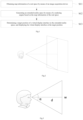
Fig. 2 is a first interface display diagram of a method for displaying a virtual display interface in an extended-reality space according to an embodiment of the present disclosure; -
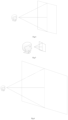
Fig. 3 is an interface display schematic diagram of a method for displaying a virtual display interface in an extended-reality space according to an embodiment of the present disclosure; -
Fig. 4 is a second interface display diagram of a method for displaying a virtual display interface in an extended-reality space according to an embodiment of the present disclosure; -
Fig. 5 is a third interface display diagram of a method for displaying a virtual display interface in an extended-reality space according to an embodiment of the present disclosure; -
Fig. 6 is a fourth interface display diagram of a method for displaying a virtual display interface in an extended-reality space according to an embodiment of the present disclosure; -
Fig. 7 is a schematic structural diagram of an apparatus for displaying a virtual display interface in an extended-reality space according to an embodiment of the present disclosure; and -
Fig. 8 is a schematic diagram of a hardware structure of an electronic device according to an embodiment of the present disclosure. - In order that the above objects, features and advantages of the present disclosure may be more clearly understood, the solutions of the present disclosure will be further described below. It should be noted that, without conflicts, the embodiments of the present disclosure and features in the embodiments may be combined with each other.
- In the following description, numerous specific details are set forth in order to provide a thorough understanding of the present disclosure, but the present disclosure may be practiced otherwise than as described herein; it is to be understood that the embodiments disclosed in the specification are only a few embodiments of the present disclosure, and not all embodiments.
- In the embodiments of the present disclosure, words such as "exemplary" or "for example" serve as an example, instance, or illustration. Any embodiment or design described as "exemplary" or "for example" in the embodiments of the present disclosure is not necessarily to be construed as preferred or advantageous over other embodiments or designs. Rather, the words such as "exemplary" or "for example" are intended to present relevant concepts specifically. Further, in the description of the embodiments of the present disclosure, "a plurality" means two or more unless otherwise specified.
- In the related art, a size of the virtual display interface presented in an extended-reality environment is determined based on experience, but in the related art, the effect of the user viewing the virtual display interface is poor.
- In view of this, the present disclosure provides a method and apparatus for displaying a virtual display interface in an extended-reality space, so as to solve the problem that the effect of the user viewing the virtual display interface is poor.
- The method for displaying a virtual display interface in an extended-reality space according to the embodiment of the present disclosure comprises: firstly obtaining map information of a real space by means of an image acquisition device, then generating an extended-reality space by means of a rendering engine based on the map information of the real space, and finally determining a target position of a virtual display interface in the extended-reality space, and displaying the virtual display interface at the target position. Since a size of the virtual display interface is related to the target position where the virtual display interface is located and a visual range of a user, a more reasonable size of the virtual display interface can be determined according to the target position where the virtual display interface is located and the visual range of the user, thereby solving the problem that the effect of the user viewing the virtual display interface is poor.
- In the extended-reality space, the virtual display interface is presented in a 360° surrounded three-dimensional space, and the virtual display interface is not limited by a physical equipment size any longer, so that in the present application, on this basis, in order to improve the viewing effect of the user viewing the virtual display interface, in the extended-reality space, the size of the virtual display interface is determined based on a display position of the virtual display interface and the visual range of the user, such that the size of the virtual display interface is set in a more reasonable way, and the effect of the user viewing the virtual display interface is improved.
- The technical solution of the present disclosure may be applied to an extended-reality scene, wherein extended reality includes but is not limited to, AR (Augmented Reality), VR (Virtual Reality), MR (Mixed Reality), and the like. The technical solution of the present disclosure is described below with several embodiments.
-
Fig. 1 is a schematic flowchart of a method for displaying a virtual display interface in an extended-reality space according to an embodiment of the present disclosure, and referring toFig. 1 , the method for displaying a virtual display interface in an extended-reality space comprises the following steps S11 to S13:
S11, obtaining map information of a real space by means of an image acquisition device. - The image acquisition device includes but is not limited to: a radar device, a device with a photographing function and the like, wherein the radar device can be a laser radar, and the device with a photographing function can be a camera, a video acquisition card, a scanner, or the like.
- The map information of the real space includes but is not limited to, three-dimensional coordinate information of respective objects in the real space, relative position information of respective objects, or the like.
- S12, generating an extended-reality space by means of a rendering engine based on the map information of the real space.
- The rendering engine may be a 3D rendering engine such as unity, UE (Unreal Engine), or the like.
- Specifically, based on the map information of the real space obtained in the above step, an extended-reality space is generated by means of a rendering engine. A head-mounted device can be in the form of glasses or the like, a position of the head-mounted device in a SLAM (simultaneous localization and mapping) environment can be taken as an initial position of human eyes for localization, mapping is performed by means of a 3D engine such as unity and UE, and accurate conversion is performed on distance data in the environment, thereby constructing an extended-reality space.
- S13, determining a target position of a virtual display interface in the extended-reality space, and displaying the virtual display interface at the target position, wherein a size of the virtual display interface is related to the target position where the virtual display interface is located and a visual range of a user.
- The determining a target position of a virtual display interface in the extended-reality space comprises but is not limited to the following possible implementation:
determining distance information between the virtual display interface and an initial position of a head-mounted device according to attribute information of the virtual display interface, determining the target position of the virtual display interface in the extended-reality space based on the distance information, and displaying the virtual display interface at the target position. - The attribute information of the virtual display interface may be a type of the virtual display interface, for example, the attribute information of the virtual display interface may be a cinema virtual display screen, an office virtual display screen, a shopping mall live-action map virtual display screen, a scenic spot sand-table virtual display screen, or the like. The distance information between the virtual display interface and the initial position of the head-mounted device can be determined according to historical experience values. Taking table 1 as an example, the relationship between the attribute information of the virtual display interface and the distance information between the virtual display interface and the initial position of the head-mounted device may be as shown in Table 1.
Table 1 Attribute information of virtual display interface Distance information Cinema virtual display screen 3 m Office virtual display screen 2 m Shopping mall live-action map virtual display screen 1 m Scenic spot sand-table virtual display screen 1.5 m - Illustratively, taking
Fig. 2 as an example, when the attribute information of the virtual display interface is a cinema virtual display screen, the distance information between the virtual display interface and the initial position of the head-mounted device is determined as 3 meters, the target position of the virtual display interface in the extended-reality space is determined according to the distance information, and the virtual display interface is displayed at the target position. - Further, the shape of the virtual display interface is described by taking a rectangle as an example, and it may also be other shapes, which is not limited in this disclosure. A size of the virtual display interface in a horizontal direction refers to a maximum length in the horizontal direction, for example, considering the rectangle, it refers to a length of a side in the horizontal direction, and a size of the virtual display interface in a vertical direction refers to a maximum length in the vertical direction, for example, considering the rectangle, it refers to a length of a side in the vertical direction.
- The size in the horizontal direction is determined based on the distance information and a preset viewing angle in the horizontal direction, and the size of the virtual display interface in the vertical direction is determined based on the distance information and a preset viewing angle in the vertical direction.
- Specifically, according to ergonomic calculation, a horizontal optimal visual range of both eyes is 60° and a vertical clear visual range is from 25° up to 30° down, when the head of a person is not rotated. Taking
Fig. 3 as an example, the most suitable visual range w for each distance d is calculated according to the most comfortable ergonomic angle α: w=2d•tan(α/2), so that the optimal visual area for the human eye in the extended-reality space can be obtained. Therefore, a preset viewing angle α of 60° in the horizontal direction and a preset viewing angle α of 55° in the vertical direction may be set. - Illustratively, taking the size of the shopping mall live-action map virtual display screen as an example, the preset viewing angle α in the horizontal direction is 60° and the preset viewing angle α in the vertical direction is 55°, and, at a distance d=1 m, the size of the shopping mall live-action map virtual display screen in the horizontal direction is: w = 2 tan30° ≈ 1.15 m, and the size of the shopping mall live-action map virtual display screen in the vertical direction is: w = 2 tan27.5° ≈ 1.04 m. Thus, the clear visual range at 1 meter is: 1.15 * 1.04 m2. This data can be used to present a canvas with an optimal visual range at 1 meter in the rendering engine, and so on elsewhere.
- The method for displaying a virtual display interface in an extended-reality space according to the embodiment of the present disclosure comprises: firstly obtaining map information of a real space by means of an image acquisition device, then generating an extended-reality space by means of a rendering engine based on the map information of the real space, and finally determining a target position of a virtual display interface in the extended-reality space, and displaying the virtual display interface at the target position. Since a size of the virtual display interface is related to the target position where the virtual display interface is located and a visual range of a user, a more reasonable size of the virtual display interface can be determined according to the target position where the virtual display interface is located and the visual range of the user, thereby solving the problem that the effect of the user viewing the virtual display interface is poor.
- As an optional implementation of the embodiment of the present disclosure, before determining distance information between the virtual display interface and an initial position of a head-mounted device according to attribute information of the virtual display interface, the following step may be further performed:
receiving a call-out instruction for the virtual display interface, and obtaining the attribute information of the virtual display interface based on the call-out instruction. - Illustratively, the call-out instruction for the virtual display interface may be an instruction issued by the user via voice, or an instruction issued by the user via a key on a terminal device.
- In some embodiments, since the user may move in the extended-reality space, sometimes the user may be farther from the position of the virtual display interface, and sometimes the user may be closer to the position of the virtual display interface, in order that the user may have a better viewing effect, the present disclosure provides an implementation in which, the position information of the virtual display interface is re-adjusted by setting a reset instruction, wherein the reset instruction may be triggered by an interactive device, for example, the reset instruction may be triggered by a preset key on a handle or a preset key on the head-mounted device, may also be triggered by a key on the displayed virtual interactive interface, and may also be triggered by a voice instruction, which is not limited in the present disclosure.
- After receiving the reset instruction, it is returned to perform S11-S13.
- Specifically, each time when the virtual display device receives the reset instruction, the virtual display device returns to perform the steps of obtaining the map information of the real space by means of the image acquisition device, then generating the extended-reality space by means of the rendering engine based on the map information of the real space, and finally determining the target position where the virtual display interface is located in the extended-reality space and displaying the virtual display interface at the target position. The detailed implementation of the steps may refer to the description of the embodiment shown in
Fig. 1 , which is not repeated herein, and the target position of the virtual display interface is adjusted by the reset instruction, so that the user has a better viewing effect when viewing the virtual display interface. - The present disclosure further provides an implementation as follows: detecting movement of a head-mounted device in the extended-reality space, and adjusting the size of the virtual display interface based on displacement of the movement.
- Specifically, the size of the virtual display interface is reduced if the head-mounted device moves in the extended-reality space in a direction close to the virtual display interface.
- The size of the virtual display interface is enlarged if the head-mounted device moves in the extended-reality space in a direction away from the virtual display interface.
- In order to avoid frequently adjusting the size of the virtual display interface, it may be set that the size of the display interface is adjusted after a distance moved in a preset direction is greater than a preset distance; for example, the preset distance may be set to 2 meters, and, assuming that the initial position is 3 meters, the initial size of the virtual display interface is as shown in
Fig. 4 ; when the head-mounted device moves 2.5 meters in the direction close to the virtual display interface, the size of the virtual display interface is reduced, and the reduced size of the virtual display interface is specifically: tan30° in the horizontal direction, and tan27.5° in the vertical direction, as shown inFig. 5 ; and when the head-mounted device moves 2 meters away from the virtual display interface, the size of the virtual display interface is enlarged, and the enlarged size of the virtual display interface is specifically: 10*tan30°, and 10*tan27.5° in the vertical direction, as shown inFig. 6 . - In order to avoid the user from feeling dizzy and the like due to the fact that the user adjusts the size of the virtual display interface in the moving process, the size of the virtual display interface can be adjusted after the head-mounted device is detected to be static, and the adjustment is not made in the moving process of the head-mounted device.
- Further, the head-mounted device used in the embodiment of the present disclosure is an extended reality device based on 6 dof (degree of freedom) technology, and the 6 dof extended reality device may be glasses or other reasonable devices, and can detect a change in up-down, front-back, left-right displacement due to body movement, in addition to a change in the angle of view due to rotation of the head. Therefore, the embodiment of the present disclosure not only makes the user's eyes the most comfortable, but also can realize more comfortable steering, improving user experience.
- The method for displaying a virtual display interface in an extended-reality space according to the embodiment of the present disclosure comprises: firstly obtaining map information of a real space by means of an image acquisition device, then generating an extended-reality space by means of a rendering engine based on the map information of the real space, and finally determining a target position of a virtual display interface in the extended-reality space, and displaying the virtual display interface at the target position. Since a size of the virtual display interface is related to the target position where the virtual display interface is located and a visual range of a user, the size of the virtual display interface can be determined according to the target position where the virtual display interface is located and the visual range of the user, thereby solving the problem that the effect of the user viewing the virtual display interface is poor.
- Based on the same inventive concept, as an implementation of the method, an embodiment of the present disclosure further provides an apparatus for displaying a virtual display interface in an extended-reality space; the embodiment corresponds to the foregoing method embodiment, and for convenience of reading, details in the foregoing method embodiment are not described again one by one in this embodiment, but it should be clear that the apparatus for displaying a virtual display interface in an extended-reality space in this embodiment can correspondingly implement all contents in the foregoing method embodiment.
- An embodiment of the present disclosure provides an apparatus for displaying a virtual display interface in an extended-reality space;
Fig. 7 is a schematic structural diagram of an apparatus for displaying a virtual display interface in an extended-reality space, and as shown inFig. 7 , anapparatus 700 for displaying a virtual display interface in the extended-reality space comprises: - a map
information obtaining unit 710, configured to obtain map information of a real space by means of an image acquisition device; an extended-realityspace generating unit 720, configured to generate an extended-reality space by means of a rendering engine based on the map information of the real space; and - a virtual display
interface displaying unit 730, configured to determine a target position of a virtual display interface in the extended-reality space, and display the virtual display interface at the target position, wherein a size of the virtual display interface is related to the target position where the virtual display interface is located and a visual range of a user. - As an optional implementation of the embodiment of the present disclosure, the virtual display
interface displaying unit 730 is specifically configured to, determine distance information between the virtual display interface and an initial position of a head-mounted device according to attribute information of the virtual display interface, determine the target position of the virtual display interface in the extended-reality space based on the distance information, and display the virtual display interface at the target position. - As an optional implementation of the embodiment of the present disclosure, the apparatus further comprises: a call-out instruction receiving unit, configured to receive a call-out instruction for the virtual display interface, and obtain the attribute information of the virtual display interface based on the call-out instruction.
- As an optional implementation of the embodiment of the present disclosure, the apparatus further comprises: a reset instruction receiving unit, configured to receive a reset instruction, and return to perform the obtaining map information of a real space by means of an image acquisition device.
- As an optional implementation of the embodiment of the present disclosure, a size of the virtual display interface in a horizontal direction is determined based on the distance information and a preset viewing angle in the horizontal direction, and a size of the virtual display interface in a vertical direction is determined based on the distance information and a preset viewing angle in the vertical direction.
- As an optional implementation of the embodiment of the present disclosure, the apparatus further comprises: a virtual display interface size adjusting unit, configured to detect movement of a head-mounted device in the extended-reality space, and adjust the size of the virtual display interface based on displacement of the movement.
- As an optional implementation of the embodiment of the present disclosure, the virtual display interface size adjusting unit is specifically configured to: reduce the size of the virtual display interface if the head-mounted device moves in the extended-reality space in a direction close to the virtual display interface; and enlarge the size of the virtual display interface if the head-mounted device moves in the extended-reality space in a direction away from the virtual display interface.
- The apparatus for displaying a virtual display interface in an extended-reality space according to this embodiment may execute the method for displaying a virtual display interface in an extended-reality space according to the foregoing method embodiment, with similar implementation principles and technical effects, which are not described herein again.
- Based on the same inventive concept, an embodiment of the present disclosure further provides an electronic device.
Fig. 8 is a schematic structural diagram of an electronic device according to an embodiment of the present disclosure, and as shown inFig. 8 , the electronic device according to this embodiment comprises: amemory 81 and aprocessor 82, thememory 81 configured to store a computer program, and theprocessor 82 configured to, when executing the computer program, implement the method for displaying a virtual display interface in an extended-reality space according to the above embodiment. - Based on the same inventive concept, an embodiment of the present disclosure further provides a non-transitory computer-readable storage medium having stored thereon a computer program which, when executed by a computing device, causes the computing device to implement the method for displaying a virtual display interface in an extended-reality space according to the above embodiment.
- Based on the same inventive concept, an embodiment of the present disclosure further provides a computer program product comprising a program which, when executed on a computer, causes the computer to implement the method for displaying a virtual display interface in an extended-reality space according to the above embodiment.
- Based on the same inventive concept, the present disclosure further provides a computer program which, when executed by a processor, implements the method for displaying a virtual display interface in an extended-reality space according to the above embodiment.
- As will be appreciated by one of skill in the art, the embodiments of the present disclosure may be provided as a method, system, or computer program product. Accordingly, the present disclosure may take the form of an entirely hardware embodiment, an entirely software embodiment or an embodiment combining software and hardware aspects. Furthermore, the present disclosure may take the form of a computer program product embodied on one or more computer-usable storage media having computer-usable program codes embodied therein.
- The processor may be a Central Processing Unit (CPU), other general purpose processors, a Digital Signal Processor (DSP), an Application Specific Integrated Circuit (ASIC), a Field-Programmable Gate Array (FPGA) or other programmable logic device, a discrete gate or transistor logic device, a discrete hardware component, etc. A general purpose processor may be a microprocessor or the processor may be any conventional processor or the like.
- The memory may include forms such as volatile memory, Random Access Memory (RAM) and/or nonvolatile memory, such as Read Only Memory (ROM) or flash memory (flash RAM), in a computer readable medium. The memory is an example of the computer readable medium.
- The computer readable medium includes both permanent and non-permanent, removable and non-removable storage medium. The storage medium may realize information storage by any method or technology, and the information may be computer-readable instruction, data structure, module of program, or other data. Examples of the computer storage medium include, but are not limited to, Phase Change Memory (PRAM), Static Random Access Memory (SRAM), Dynamic Random Access Memory (DRAM), other types of Random Access Memory (RAM), Read Only Memory (ROM), Electrically Erasable Programmable Read Only Memory (EEPROM), flash memory or other memory technology, Compact Disc Read Only Memory (CD-ROM), Digital Versatile Disks (DVD) or other optical storage, magnetic cassette, magnetic disk storage or other magnetic storage devices, or any other non-transmission medium, which can be used to store information that can be accessed by a computing device. As defined herein, the computer readable medium does not include transitory computer readable media, such as modulated data signals and carrier waves.
- Finally, it should be noted that: the above embodiments are only used for illustrating the technical solutions of the present disclosure, and not for limiting the same; although the present disclosure has been described in detail with reference to the foregoing embodiments, those of ordinary skill in the art will understand that: the technical solutions recited in the foregoing embodiments may still be modified, or some or all of the technical features therein may be equivalently replaced; such modifications or replacements do not make the essence of the corresponding technical solutions depart from the scope of the technical solutions of the embodiments of the present disclosure.
Claims (12)
- A method for displaying a virtual display interface in an extended-reality space, comprising:obtaining map information of a real space by means of an image acquisition device;generating an extended-reality space by means of a rendering engine based on the map information of the real space; anddetermining a target position of a virtual display interface in the extended-reality space, and displaying the virtual display interface at the target position, wherein a size of the virtual display interface is related to the target position where the virtual display interface is located and a visual range of a user.
- The method according to claim 1, wherein the determining a target position of a virtual display interface in the extended-reality space and displaying the virtual display interface at the target position comprises:
determining distance information between the virtual display interface and an initial position of a head-mounted device according to attribute information of the virtual display interface, determining the target position of the virtual display interface in the extended-reality space based on the distance information, and displaying the virtual display interface at the target position. - The method according to claim 2, wherein before the determining distance information between the virtual display interface and an initial position of a head-mounted device according to attribute information of the virtual display interface, the method further comprises:
receiving a call-out instruction for the virtual display interface, and obtaining the attribute information of the virtual display interface based on the call-out instruction. - The method according to any of claims 1 to 3, further comprising:
receiving a reset instruction, and returning to perform the obtaining map information of a real space by means of an image acquisition device. - The method according to claim 2, wherein a size of the virtual display interface in a horizontal direction is determined based on the distance information and a preset viewing angle in the horizontal direction, and a size of the virtual display interface in a vertical direction is determined based on the distance information and a preset viewing angle in the vertical direction.
- The method according to claim 1, further comprises:
detecting movement of a head-mounted device in the extended-reality space, and adjusting the size of the virtual display interface based on displacement of the movement. - The method according to claim 6, wherein the detecting movement of a head-mounted device in the extended-reality space and adjusting the size of the virtual display interface based on displacement of the movement comprises:reducing the size of the virtual display interface if the head-mounted device moves in the extended-reality space in a direction close to the virtual display interface; andenlarging the size of the virtual display interface if the head-mounted device moves in the extended-reality space in a direction away from the virtual display interface.
- An apparatus for displaying a virtual display interface in an extended-reality space, comprising:a map information obtaining unit, configured to obtain map information of a real space by means of an image acquisition device; an extended-reality space generating unit, configured to generate an extended-reality space by means of a rendering engine based on the map information of the real space; anda virtual display interface displaying unit, configured to determine a target position of a virtual display interface in the extended-reality space, and display the virtual display interface at the target position, wherein a size of the virtual display interface is related to the target position where the virtual display interface is located and a visual range of a user.
- An electronic device, comprising: a memory and a processor, the memory configured to store a computer program, and the processor configured to, when executing the computer program, cause the electronic device to implement the method for displaying a virtual display interface in an extended-reality space according to any one of claims 1 to 7.
- A non-transitory computer-readable storage medium having stored thereon a computer program which, when executed by a computing device, causes the computing device to implement the method for displaying a virtual display interface in an extended-reality space according to any one of claims 1 to 7.
- A computer program product comprising a program which, when executed on a computer, causes the computer to implement the method for displaying a virtual display interface in an extended-reality space according to any one of claims 1 to 7.
- A computer program which, when executed by a processor, implements the method for displaying a virtual display interface in an extended-reality space according to any one of claims 1 to 7.
Applications Claiming Priority (2)
| Application Number | Priority Date | Filing Date | Title |
|---|---|---|---|
| CN202210960732.XA CN117632318A (en) | 2022-08-11 | 2022-08-11 | Display method and device for virtual display interface in extended real space |
| PCT/CN2023/111560 WO2024032568A1 (en) | 2022-08-11 | 2023-08-07 | Method and apparatus for displaying virtual display interface in extended-reality space |
Publications (2)
| Publication Number | Publication Date |
|---|---|
| EP4571501A1 true EP4571501A1 (en) | 2025-06-18 |
| EP4571501A4 EP4571501A4 (en) | 2026-02-18 |
Family
ID=89850859
Family Applications (1)
| Application Number | Title | Priority Date | Filing Date |
|---|---|---|---|
| EP23851789.0A Pending EP4571501A4 (en) | 2022-08-11 | 2023-08-07 | METHOD AND DEVICE FOR DISPLAYING A VIRTUAL DISPLAY INTERFACE IN AN AUGMENTED REALITY SPACE |
Country Status (6)
| Country | Link |
|---|---|
| US (1) | US20250383706A1 (en) |
| EP (1) | EP4571501A4 (en) |
| JP (1) | JP2025526806A (en) |
| KR (1) | KR20250049286A (en) |
| CN (1) | CN117632318A (en) |
| WO (1) | WO2024032568A1 (en) |
Family Cites Families (8)
| Publication number | Priority date | Publication date | Assignee | Title |
|---|---|---|---|---|
| JP2012141461A (en) * | 2010-12-29 | 2012-07-26 | Sony Corp | Head mount display |
| JP6290754B2 (en) * | 2014-09-11 | 2018-03-07 | 株式会社パスコ | Virtual space display device, virtual space display method and program |
| US20170256096A1 (en) * | 2016-03-07 | 2017-09-07 | Google Inc. | Intelligent object sizing and placement in a augmented / virtual reality environment |
| US10325409B2 (en) * | 2017-06-16 | 2019-06-18 | Microsoft Technology Licensing, Llc | Object holographic augmentation |
| CN107277485B (en) * | 2017-07-18 | 2019-06-18 | 歌尔科技有限公司 | Image display method and device based on virtual reality |
| US20220229534A1 (en) * | 2020-04-08 | 2022-07-21 | Multinarity Ltd | Coordinating cursor movement between a physical surface and a virtual surface |
| WO2021262507A1 (en) * | 2020-06-22 | 2021-12-30 | Sterling Labs Llc | Displaying a virtual display |
| JP7318670B2 (en) * | 2021-01-27 | 2023-08-01 | セイコーエプソン株式会社 | Display method and display system |
-
2022
- 2022-08-11 CN CN202210960732.XA patent/CN117632318A/en active Pending
-
2023
- 2023-08-07 EP EP23851789.0A patent/EP4571501A4/en active Pending
- 2023-08-07 JP JP2025507704A patent/JP2025526806A/en active Pending
- 2023-08-07 US US18/877,615 patent/US20250383706A1/en active Pending
- 2023-08-07 WO PCT/CN2023/111560 patent/WO2024032568A1/en not_active Ceased
- 2023-08-07 KR KR1020257004477A patent/KR20250049286A/en active Pending
Also Published As
| Publication number | Publication date |
|---|---|
| KR20250049286A (en) | 2025-04-11 |
| US20250383706A1 (en) | 2025-12-18 |
| EP4571501A4 (en) | 2026-02-18 |
| JP2025526806A (en) | 2025-08-15 |
| CN117632318A (en) | 2024-03-01 |
| WO2024032568A1 (en) | 2024-02-15 |
Similar Documents
| Publication | Publication Date | Title |
|---|---|---|
| US20200288112A1 (en) | Method, apparatus, medium, and device for processing multi-angle free-perspective video data | |
| US9826225B2 (en) | 3D image display method and handheld terminal | |
| CN111708432B (en) | Safe area determination method, device, head-mounted display device and storage medium | |
| KR102208773B1 (en) | Panoramic image compression method and apparatus | |
| US20120249730A1 (en) | Stereoscopic panoramic video capture system using surface identification and distance registration technique | |
| KR20200093004A (en) | Method and system for testing wearable devices | |
| CN111324200B (en) | Virtual reality display method and device and computer storage medium | |
| US20190340773A1 (en) | Method and apparatus for a synchronous motion of a human body model | |
| CN110830783A (en) | VR image processing method and device, VR glasses and readable storage medium | |
| US9197882B2 (en) | Mobile communication terminal having image conversion function and method | |
| KR20180104600A (en) | Stereoscopic mapping | |
| JP2013162416A (en) | Imaging apparatus, image processing apparatus, image processing method and program | |
| US20250383706A1 (en) | Method and apparatus for displaying virtual display interface in extended-reality space | |
| KR102415754B1 (en) | Electronic device, method, computer-readable storage medium and computer program for processing image in virtual space | |
| CN108665525B (en) | Method for calculating virtual camera field angle based on engine and storage medium | |
| KR101222153B1 (en) | the Apparatus of Augmented Reality Using Fisheye Lens and the Method of the Same | |
| US20190285903A1 (en) | Display device and method | |
| US20120281067A1 (en) | Image processing method, image processing apparatus, and display apparatus | |
| CN111683238A (en) | 3D image fusion method and device based on observation and tracking | |
| CN111314687A (en) | VR image processing method and device, VR glasses and readable storage medium | |
| US20120162199A1 (en) | Apparatus and method for displaying three-dimensional augmented reality | |
| EP4704415A1 (en) | Playback method for six-degree-of-freedom video, and electronic device | |
| CN110517179B (en) | VR 3D model watermark adding method and system | |
| KR101904489B1 (en) | Apparatus, method and computer program for generating contents | |
| KR101818854B1 (en) | View range enlarging method at table top 3D display system by user tracking base |
Legal Events
| Date | Code | Title | Description |
|---|---|---|---|
| STAA | Information on the status of an ep patent application or granted ep patent |
Free format text: STATUS: THE INTERNATIONAL PUBLICATION HAS BEEN MADE |
|
| PUAI | Public reference made under article 153(3) epc to a published international application that has entered the european phase |
Free format text: ORIGINAL CODE: 0009012 |
|
| STAA | Information on the status of an ep patent application or granted ep patent |
Free format text: STATUS: REQUEST FOR EXAMINATION WAS MADE |
|
| 17P | Request for examination filed |
Effective date: 20241217 |
|
| AK | Designated contracting states |
Kind code of ref document: A1 Designated state(s): AL AT BE BG CH CY CZ DE DK EE ES FI FR GB GR HR HU IE IS IT LI LT LU LV MC ME MK MT NL NO PL PT RO RS SE SI SK SM TR |
|
| DAV | Request for validation of the european patent (deleted) | ||
| DAX | Request for extension of the european patent (deleted) | ||
| REG | Reference to a national code |
Ref country code: DE Ref legal event code: R079 Free format text: PREVIOUS MAIN CLASS: G06F0009451000 Ipc: G06F0003010000 |
|
| A4 | Supplementary search report drawn up and despatched |
Effective date: 20260116 |
|
| RIC1 | Information provided on ipc code assigned before grant |
Ipc: G06F 3/01 20060101AFI20260112BHEP |