EP4570438A1 - Power tool system, asset management system and method for regulating the collaboration of power tools - Google Patents
Power tool system, asset management system and method for regulating the collaboration of power tools Download PDFInfo
- Publication number
- EP4570438A1 EP4570438A1 EP23216692.6A EP23216692A EP4570438A1 EP 4570438 A1 EP4570438 A1 EP 4570438A1 EP 23216692 A EP23216692 A EP 23216692A EP 4570438 A1 EP4570438 A1 EP 4570438A1
- Authority
- EP
- European Patent Office
- Prior art keywords
- battery pack
- power tool
- charger
- identifier
- power
- Prior art date
- Legal status (The legal status is an assumption and is not a legal conclusion. Google has not performed a legal analysis and makes no representation as to the accuracy of the status listed.)
- Pending
Links
Images



Classifications
-
- B—PERFORMING OPERATIONS; TRANSPORTING
- B25—HAND TOOLS; PORTABLE POWER-DRIVEN TOOLS; MANIPULATORS
- B25F—COMBINATION OR MULTI-PURPOSE TOOLS NOT OTHERWISE PROVIDED FOR; DETAILS OR COMPONENTS OF PORTABLE POWER-DRIVEN TOOLS NOT PARTICULARLY RELATED TO THE OPERATIONS PERFORMED AND NOT OTHERWISE PROVIDED FOR
- B25F5/00—Details or components of portable power-driven tools not particularly related to the operations performed and not otherwise provided for
- B25F5/02—Construction of casings, bodies or handles
-
- B—PERFORMING OPERATIONS; TRANSPORTING
- B25—HAND TOOLS; PORTABLE POWER-DRIVEN TOOLS; MANIPULATORS
- B25F—COMBINATION OR MULTI-PURPOSE TOOLS NOT OTHERWISE PROVIDED FOR; DETAILS OR COMPONENTS OF PORTABLE POWER-DRIVEN TOOLS NOT PARTICULARLY RELATED TO THE OPERATIONS PERFORMED AND NOT OTHERWISE PROVIDED FOR
- B25F5/00—Details or components of portable power-driven tools not particularly related to the operations performed and not otherwise provided for
Definitions
- the present invention relates to a power tool system, an asset management system for the power tool system and a method to regulate the collaboration of power tools, battery packs and chargers in a power tool system.
- US20170364360A1 describes techniques for providing anti-theft protection for power tools by a power tool which disables itself after a predetermined amount of usage time, and re-enables usage only after secure, software-based authentication of the device.
- JP2005342796A describes a rechargeable electric tool and means for transmitting a search signal in a rechargeable electric tool in which a battery pack is detachable from the electric tool body.
- the electric tool main body and the battery pack is provided with notification means for notifying the user in response to the search signal.
- the battery pack is provided with search signal receiving means that operates using the built-in rechargeable battery as a power source and can notify a user by sound or light.
- JP4678199B2 describes an authentication unit that transmits or receives information on tool usage to or from an authentication device worn by the user, and a tool usage confirmation output from the authentication unit or the authentication device that performs the authentication operation. A person who does not wear the proper authentication equipment cannot use the power tool.
- US10285003B2 describes a power distribution box including a power input, an AC output, a power-line adapter, and a gateway device.
- the power-line adapter is coupled to the power input and configured to receive power via the power input and to communicate with an external network.
- the gateway device is coupled to the power-line adapter and includes a wireless network module and a translation controller.
- the wireless network module is configured to communicate with power tool devices in a wireless network
- the translation controller is coupled to the power-line adapter and enables communications between the wireless network module and the external network through the power-line adapter.
- JP2017126560A describes a power tool system and an adapter for the power tool system to prevent theft of a handheld power tool, its battery, and its charger.
- Each of the handheld power tool and the battery has a passcode.
- Each passcode is compared, for example, when the battery is attached to the power tool or electrically connected in other ways.
- the pass code of the power tool and the battery pack does not match or does not correspond in a predetermined manner, the power tool, or the battery the power tool cannot be operated.
- a battery charger may have a pass code.
- the battery and charger passcodes are directly compared, for example, when a battery is attached to a charger for charging. When the pass codes of the battery and the charger do not match or do not correspond, charging of the battery is hindered.
- US2014339922A1 describes a battery pack which includes an electrical energy store, a data memory, and an interface for the alternative connection of the battery pack to a data source or a data sink.
- the data memory is designed to store data from the data source while the interface is connected to the data source, and to supply the data in the data memory to the data sink while the interface is connected to the data sink.
- a power tool system comprising: a plurality of chargers, each having a charger identifier, a plurality of exchangeable battery packs, each having a battery pack identifier, a plurality of power tools, each having a power tool identifier.
- the power tools may be, e.g., saws, drivers or wrenches, rotary hammers, or drill and screw drivers.
- a first battery pack of the power tool system has stored in a first battery pack memory at least one power tool identifier and information on admissibility for the first battery pack to supply power to a power tool identified by the power tool identifier and/or at least one charger identifier and information on admissibility for the first battery pack to be charged by the charger identified by the charger identifier.
- a first charger of the power tool system has stored in a first charger memory at least one battery pack identifier and information on admissibility of the first charger to charge the battery pack identified by the battery pack identifier.
- a first power tool of the power tool system has stored in a first power tool memory at least one battery pack identifier and information on admissibility of the first power tool to source power from the battery pack identified by the battery pack identifier.
- the interaction of these devices can be regulated using these identifiers.
- the identifiers can be assigned to, and, e.g., securely and/or unchangeable stored on the devices during production or before delivery to a customer.
- the device can decide, based on a list of identifiers and associated information on admissibility, stored on the device, how to collaborate with the other device.
- the battery pack can check whether it has stored the identifier of the charger together with the information that the battery should not be charged by this charger and refuse to be charged. This is enabled by the proposed power tool system. There is no necessity for an interaction with a backend to determine at the time of connection of the battery pack to the charger to determine the way of collaboration. There is also no necessity for the battery to influence the charger to charge or not to charge, because the battery itself refuses to be charged.
- the identifier of a device may be communicated in various ways and in embodiments the devices of the power tool system may refuse any further interaction with other devices when the identifier of the other device is not communicated.
- a convenient way to communicate the identifier is via a wired or wireless connection of devices.
- the chargers in particular the first charger, are configured to transfer to and receive data from the battery packs when the chargers, in particular the first charger, are connected via a wired or wireless connection to the battery packs.
- the chargers may have an integrated or attached communication module to connect with the battery packs.
- the battery packs, in particular the first battery pack are configured to transfer to and receive data from the chargers and the power tools when the battery packs, in particular the first battery pack, are connected via a wired or wireless connection to the chargers or power tools.
- the power tools in particular the first power tool, are configured to transfer to and receive data from the battery packs when the power tools, in particular the first power tool, are connected via a wired or wireless connection to the battery packs.
- the data can comprise identifiers and/or information on admissibility.
- the devices can use various ways to communicatively connect with each other using, e.g., Bluetooth, Near Field Communication, cellular communication protocols or wireless LAN protocols.
- Bluetooth Near Field Communication
- cellular communication protocols e.g., Bluetooth, Near Field Communication, cellular communication protocols or wireless LAN protocols.
- the power transfer connections or other, wired, connections may be used for communication.
- Via signal strength or further protocols it might be ensured or established that only devices in physical connection with each other transfer data via a wireless connection to and receive data from each other.
- One way to define collaboration in the power tool system is to define what power tools, battery packs and chargers may not do in interaction with other devices from the power tool system. This might be seen as a blacklisting of devices and is described now for various embodiments for combinations of devices of the power tool system.
- the first battery pack is configured to refuse or limit to supply power to the at least one power tool identified by the power tool identifier, when the information on admissibility prohibits or restricts the first battery pack to supply power to the power tool identified by the power tool identifier.
- the first battery pack is configured to refuse or limit to be charged by the at least one charger identified by the charger identifier when the information on admissibility prohibits or restricts the first battery to be charged by the charger identified by the charger identifier.
- the first charger is configured to refuse or limit to charge the at least one battery pack identified by the battery pack identifier when the information on admissibility prohibits or restricts the first charger to charge the battery pack identified by the battery pack identifier.
- the first power tool is configured to refuse or limit to be supplied with power by the at least one battery pack identified by the battery pack identifier when the information on admissibility prohibits or restricts the first power tool to be supplied with power by the battery pack identified by the battery pack identifier.
- Refusing to supply power or to be supplied with power, to charge or to be charged is a rather strict way for the devices of the power tool system to interact with each other. This might be a way, e.g., for devices which are known as stolen. Limiting to supply power or to be supplied with power, to charge or to be charged, e.g., to a predefined number of chargings or operations or a predefined level of charging, a predefined period of time or number of operations might be a way for a device used together with devices it is not usually used with. E.g., battery packs in one construction company might be assigned to two construction crews. The use of one crew's battery packs might be limited on tools of the other crew.
- Another way to define collaboration in the power tool system is to define what power tools, battery packs and chargers may do in interaction with other devices from the power tool system. This might be seen as whitelisting and is described now with regard to various combinations of devices of the power tool system.
- the first battery pack is configured to only supply power in an unlimited way to the at least one power tool identified by the power tool identifier, when the information on admissibility allows the first battery pack to supply power to the power tool identified by the power tool identifier.
- the first battery pack is configured to only allow to be charged in an unlimited way by the at least one charger identified by the charger identifier when the information on admissibility allows the first battery to be charged by the charger identified by the charger identifier.
- the first charger is configured to only charge in an unlimited way the at least one battery pack identified by the battery pack identifier when the information on admissibility allows the first charger to charge the battery pack identified by the battery pack identifier.
- the first power tool is configured to only be supplied with power in an unlimited way by the at least one battery pack identified by the battery pack identifier when the information on admissibility allows the first power tool to be supplied with power by the battery pack identified by the battery pack identifier.
- Whitelisting is a convenient way to ensure that a device of a power tool system can only be used with preassigned other devices, e.g., a battery pack can only be used for power tools and chargers identified as allowed on the battery pack. If such a battery pack is stolen, it is useless for other power tools or chargers. For stolen sets of chargers, battery packs and power tools, which whitelist each other, there are other ways to restrict the use. Charging, being charged, supplying power, or being supplied with power in an unlimited way means that there is no restriction imposed based on the identifier of a device. In particular, physical constraints or limitations by controllers for charging or supplying power, e.g., due to temperature constraints, can still apply.
- a general setting for devices in a whitelisting system is that the devices operate only with explicitly allowed partners in such an unlimited way. For other devices, not being on a whitelist, limitations might apply. E.g., charging, being charged, supplying power, or being supplied with power may be completely refused or restricted to a predefined number, number of operations, level and/or time.
- the battery packs of the power tool system are configured to store charger data received from the chargers of the power tool system and transfer the charger data to the power tools of the power tool system and to store power tool data received from the power tools of the power tool system and transfer the power tool data to the chargers of the power tool system.
- the charger data comprises charger, battery pack and power tool identifiers, admissibility information and/or commands, particularly lock commands.
- the power tool data comprises usage data, location data, power tool identifiers and/or identifiers of battery packs having been connected with the power tools.
- suspicious behavior can be determined.
- a device is used outside the regular work time or at a location outside the expected construction environment or workshop.
- lock commands may be sent to devices which are regarded as suspicious.
- the battery pack may receive a lock command for the power tool.
- the chargers are configured to be connected via a wired or a wireless connection to the backend.
- the backend is configured to transfer data to and receive data from the chargers, particularly the first charger, and the chargers, particularly the first charger, are configured to transfer data to and receive data from the backend.
- the asset management system with a backend is a practical embodiment to manage identifiers and information on admissibility for the power tool system.
- Input/output systems such as a personal computer, a tablet, or a smart phone, might be used to interact with the asset management system.
- data and commands can be transferred from the backend into the power tool system and, particularly, via the battery packs to the power tools of the power tool system.
- the backend might also receive data from battery packs and/or power tools, via the chargers connected to the backend, and evaluate the received data from the power tool system.
- the battery packs are configured for communication with the charger when the battery pack is not physically connected to the charger via a wireless communication.
- the battery packs are configured to require an iterative connection to a charger which is connected to the backend or has been connected to the backend within a predefined time period and/or the chargers are configured to require a permanent or iterative connection to the backend, particularly, a connection after a predefined amount of charging cycles, a predefined charging time or a predefined time period.
- the battery has to be connected to a charger which itself is from time to time in connection with the backend, preferably the battery pack is connected with the charger while the charger is connected to the backend.
- the charger connected to the backend lock commands may be sent to the charger and transferred via the battery pack to the power tool. Such lock commands may disable the charger, the battery pack, or the power tool.
- the battery pack When the battery pack is not connected to the charger in communication with the backend as required, functions of the battery pack may be disabled, in particular by a battery pack controller, e.g., the battery pack may be locked, particularly, the battery pack may not or only partly be charged, or the battery pack may stop or limit supplying power. Similarly, the charger may disable or limit its functions to charge battery packs.
- a battery pack controller e.g., the battery pack may be locked, particularly, the battery pack may not or only partly be charged, or the battery pack may stop or limit supplying power.
- the charger may disable or limit its functions to charge battery packs.
- the battery pack might be connected to the charger while the charger is connected to the backend, however, the connections might also be at different times and the charger may store information for and from the battery pack until connected to the battery pack and the backend, respectively.
- Using the identifiers of the devices of a power tool system enables to direct the communication in a power tool system to the right devices in the power tools system.
- devices may store data, particularly information and/or commands, for other devices in relation to the identifiers of the other devices.
- the data can be transferred.
- the communication in the power tool system may be managed in terms of assessing the best way to communicate data to a specific device in the power tool system.
- data for a power tool X may be communicated from the backend to a battery pack Y, having been connected more frequently to the power tool X than the other battery packs, via a charger Z, having been more frequently connected to the battery pack Y than the other battery packs.
- a method for regulating the collaboration of power tools, chargers and battery packs in a power tool system comprises storing on a first battery pack of the power tool system at least one power tool identifier and information on admissibility for the first battery pack to supply power to a power tool identified by the power tool identifier and/or at least one charger identifier and information on admissibility for the first battery pack to be charged by the charger identified by the charger identifier.
- the method comprises storing on a first charger of the power tool system at least one battery pack identifier and information on admissibility of the first charger to charge the battery pack identified by the battery pack identifier.
- the method comprises storing on a first power tool of the power tool system at least one battery pack identifier and information on admissibility of the first charger to charge the battery pack identified by the battery pack identifier.
- the collaboration with other devices with the identifiers may be regulated.
- the collaboration of the first battery pack with power tools may be regulated using the at least one power tool identifier and information on admissibility for the first battery pack to supply power to the power tool identified by the at least one power tool identifier.
- the method for regulating the collaboration of devices in a power tool system based on storing identifiers and information on admissibility on devices allows for a flexible way to regulate the interactions of the devices in the power tool system.
- the devices may regulate their interactions with each other without having to rely on information from the outside.
- Several identifiers of devices and associated information on admissibility may be stored on a device, e.g., a battery pack may have several identifiers of power tools and several identifiers of chargers and the associated information on admissibility stored.
- the admissibility information regulates the possible interactions with the identified devices.
- the battery pack may store the identifier of a power tool, it is allowed to supply power to, and the identifier of a power tool, it is not allowed to supply power to.
- the first charger transfers to and receives data from the battery packs of the power tool system, when the first charger is connected via a wired or wireless connection to the battery packs.
- the first battery pack transfers to and receives data from the chargers of the power tools system and the power tools of the power tool system, when the first battery pack is connected via a wired or wireless connection to the chargers or the power tools.
- the first power tool transfers to and receives data from the battery packs of the power tool system, when the first power tool is connected via a wired or wireless connection to the battery packs.
- the data transferred or received by the first charger, the first battery pack and/or the first power tool particularly, comprises identifiers and information on admissibility, e.g., the at least one power tool identifier and information on admissibility received by the first battery pack, the at least one charger identifier and information on admissibility received by the first battery pack, the at least one battery pack identifier and information on admissibility received by the first charger, and/or the at least one battery pack identifier and information on admissibility received by the first charger.
- Devices may communicate via wireless or wired connections with each other to identify a device and to check whether there is information on admissibility of this device available.
- a battery pack which is attached to a power tool may communicate with the power tool via a wired connection, e.g., a connection also usable for supplying power, and transfer its own identifier to the power tool and receive the identifier of the power tool. The identifier received from the power tool may then be used by the battery pack to determine how to interact with the power tool.
- a power tool system where battery packs can communicate both with the power tools and the chargers allows for transferring data from the chargers to the power tools via the battery packs.
- the battery packs may receive data from the chargers, e.g., while charging, and store this data. When communicatively connected to the power tool, e.g., attached to the power tool to supply power, they can transfer this data to the power tool, and vice versa.
- One way to regulate collaboration in the power tool system is to refuse or limit actions of the power tools, battery packs and chargers in relation to other devices from the power tool system. This might be seen as regulating by a blacklisting of devices.
- the first battery pack refuses or limits to supply power to the power tool identified by the power tool identifier when the information on admissibility prohibits or restricts the first battery pack to supply power to the power tool identified by the power tool identifier.
- the first battery pack refuses or limits to be charged by the charger identified by the charger identifier when the information on admissibility prohibits the first battery to be charged by the charger identified by the charger identifier.
- the first charger refuses or limits to charge the battery pack identified by the battery pack identifier when the information on admissibility prohibits or restricts the first charger to charge the battery pack identified by the battery pack identifier.
- the first power tool refuses or limits to be supplied with power by the battery pack identified by the battery pack identifier when the information on admissibility prohibits or restricts the first power tool to be supplied with power by the battery pack identified by the battery pack identifier.
- the collaboration in the power tool system may be regulated by allowing actions of the power tools, battery packs and chargers in relation to other devices from the power tool system. This might be seen as regulating by a whitelisting of devices.
- the first battery pack supplies power only to the power tool identified by the power tool identifier when the information on admissibility allows the first battery pack to supply power to the power tool identified by the power tool identifier.
- the first battery pack allows to be charged only by the charger identified by the charger identifier when the information on admissibility allows the first battery to be charged by the charger identified by the charger identifier.
- the first charger charges only the battery pack identified by the battery pack identifier when the information on admissibility allows the first charger to charge the battery pack identified by the battery pack identifier.
- Both for blacklisting and for whitelisting having an identifier on a blacklist or a whitelist may provide already the information on admissibility by being associated to the respective list.
- the first battery pack stores first charger data received from the first charger and transfers the first charger data to the first power tool and/or stores first power tool data received from the first power tool and transfers the first power tool data to the first charger.
- the first battery pack acts as a data messenger or shuttle between the first charger and the first power tool. This is enabled by the ability of the battery packs to communicate both with power tools and chargers and additionally store the received data.
- the chargers in particular the first charger, are connected via a wired or a wireless connection to a backend.
- the backend transfers data to and receives data from the chargers, in particular the first charger, and the chargers, in particular the first charger, transfer data to and receive data from the backend.
- Connecting the chargers to a backend via a wired or wireless connection can facilitate transferring data to and from the chargers, e.g., to a user or administrator of the devices of the power tool system.
- the wired or wireless connection might be, e.g., a connection to a local access network or a wireless local access network or a connection to a mobile communications network, such as cellular communications networks.
- identifiers, and the information on admissibility and/or commands, particularly locking commands are transferred from the backend to the power tools, the battery packs and/or the chargers.
- the identifiers and information on admissibility may be derived using the first charger data, comprising charger, battery pack and/or power tool identifiers and/or the first power tool data, comprising usage date, location data, power tool and/or battery pack identifiers, in particular of a battery pack having been connected with the power tool.
- the identifiers and information on admissibility comprise: the at least one power tool identifier and information on admissibility for the first battery pack to supply power to a power tool identified by the power tool identifier and/or the at least one charger identifier and information on admissibility for the first battery pack to be charged by the charger identified by the charger identifier and/or the at least one battery pack identifier and information on admissibility of the first charger to charge the battery pack identified by the battery pack identifier and/or the at least one battery pack identifier and information on admissibility of the first charger to charge the battery pack identified by the battery pack identifier.
- the backend can also store and evaluate data. Therefore, the backend can be used to find suspicious behaviors of devices. Upon finding such a suspicious behavior of a device, the backend itself or upon confirmation from a user, via an input/output device connected to the backend, can blacklist a device for collaboration on other devices or even send a locking command to the device with the suspicious behavior and stop operation of the device.
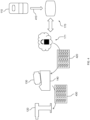
- Fig. 1 shows how in an input/output (I/O) system 110, e.g., a personal computer, a tablet or a smart phone, a user may define a power tool 120, a battery pack 130 and a charger 140, which belong to a power tool set 150 and should be able to work with each other.
- the power tool 120, the battery pack 130 and the charger 140 may have unique identifiers, which may be used to identify the physical power tool 120, battery pack 130 and charger 140.
- the power tool set 150 may comprise a plurality of, different, power tools 120, battery packs 130 and/or chargers 140.
- the power tool 120, the battery pack 130 and/or the charger 140 may be part of further power tool sets 150.
- the I/O system communicates the chosen power tool 120, battery pack 130 and charger 140 to a backend 170. Further devices such as power tools 120, battery packs 130 and/or chargers 140 may be added later to the power tool set 150 or the set 150 may be amended by removing devices from the set 150 later.
- the backend 170 may be realized as a cloud application or may be hosted on a server of the user.
- the backend 170 whitelists now the devices of the power tool set 150. I.e., the backend 170 provides identifiers and information on admissibility of the devices of the power tool set 150 for transfer to the devices of the power tool set 150.
- the backend 170 provides the identifier of the chosen power tool 120 together with the information that supplying power by the chosen battery pack 130 is allowed 181, for transfer to the battery pack 130; the identifier of the chosen battery pack 130 together with the information that charging by the chosen charger 140 is allowed, for transfer to the charger 182; and the identifier of the chosen battery pack 130 together with the information that being supplied by the chosen battery pack 130 is allowed 183, for the power tool 120.
- the backend 170 When the backend 170 is connected to the chosen charger 140, over a charger communication channel 163, the information provided for whitelisting 181, 182, 183 is transferred to the chosen charger 140 and stored in the charger memory 142.
- the backend 170 may also communicate further information, e.g., commands intended for devices in the power tool system.
- the backend may be connected to the chosen charger via a secure internet connection and/or via a secure cloud 171.
- the charger 140 communicates with the battery pack 130 over a charger battery pack communication channel 161.
- the chosen charger 140 realizes by receiving the identifier of the battery pack 130, that the chosen battery pack 130 is whitelisted for the chosen charger 140.
- the chosen charger 140 charges the chosen battery pack 130 and transfers the provided information for whitelisting 181, 183 for the chosen battery pack 130 and the chosen power tool 120 to the chosen battery pack 130 and the transferred information is stored in the battery pack memory, which is not show for clarity reasons in Fig. 1 .
- the chosen charger 140 may also communicate further information.
- the chosen battery pack 130 can be removed from the chosen charger 140 for usage in any power tool 120 it is whitelisted for.
- the chosen battery pack 130 is attached to the chosen power tool 120, the chosen power tool 120 and the chosen battery pack 130 communicate over a battery pack power tool communication channel 162.
- the chosen battery pack 130 receives the identifier of the chosen power tool 120 and realizes, that the chosen power tool 120 is whitelisted for the chosen battery pack 130.
- the chosen battery pack 130 will supply power to the chosen power tool 120 and transfers the provided information for whitelisting 183 for the chosen power tool 120.
- the chosen battery pack 130 If the chosen battery pack 130 is connected to a power tool, which is not whitelisted on the chosen battery pack 130, the chosen battery pack 130 stops supplying power when having obtained the not whitelisted identifier of the power pack or may reduce supplying power or limit the time or numbers of operations for supplying power.
- blacklisting information and other commands might be distributed in the power tool system 100 to power tools 120, battery packs 130, and chargers 140.
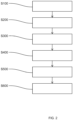
- Fig. 2 shows in a flowchart a process flow of regulating the collaboration of power tools 120, chargers 140, and battery packs 120 in a power tool system 100 in a blacklisting example.
- step S100 it is communicated to a backend 170 by an administrator of a power tool system 100 of a company via a personal computer which is connected to the backend 170, that a battery pack A is prohibited to be used for a power tool B.
- step S200 a charger 140, which is connected to battery pack A, transfers to the backend 170 that it is connected to the battery pack A and receives from the backend 170 the power tool identifier for power tool B and the information on admissibility, that battery pack A is prohibited to supply power to power tool B. Additionally, the charger 140 receives for the battery pack A a lock command for power tool B, to set power tool B inoperative.
- step S300 the charger 140 transfers to the battery pack A the power tool identifier for power tool B and the information on admissibility, that battery pack A is prohibited to supply power to power tool B. Additionally, the charger 140 transfers to the battery pack A a lock command for power tool B, to set power tool B inoperative.
- step S400 the battery pack A stores the information that it is prohibited to supply power to a power tool with the power tool identifier of power tool B and the lock command, to set power tool B inoperative.
- Battery pack B might then be removed from the charger 140 and used in combination with various power tools 120.
- battery pack A When battery pack A is eventually connected to power tool B, it receives in step S500 the identifier of power tool B and recognizes that it is not supposed to supply power to power tool A. Battery pack A transfers the lock command.
- step S600 battery pack A stops supplying power to the locked power tool B.
- the stop of supply might be immediately, or after a certain time or a certain number of operations.
- the supplied power might be reduced to a predefined level, allowing, e.g., a drill to be removed from a workpiece.
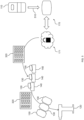
- Fig. 3 shows a schematic presentation of detecting and handling suspicious devices.
- the detection uses information about chargers 140, power tools 120 and battery packs 130 stored on battery packs 130.
- Battery packs 130 store power tool data 310, among other information, the identifiers of power tools 120 they are used with and the identifiers of chargers 140 they have been charged on.
- the power tool data 310 can be transferred with the batter pack 130 to the charger 140.
- the logical location of the power tools 120 and battery packs 130 can be determined from the location of the chargers 140 on which these battery packs 130 have been charged on. When a battery pack 130 is charged, the charger 140 reads out power tool data 310 and battery pack data from the charged battery pack 130.
- the combined data 320 comprising the power tool data 310, the battery pack data and charger data, is sent to the backend 170 of the asset management system when the charger 140 is connected to the backend 170.
- the connection may be via a secure cloud 171.
- the asset management system can derive if battery packs 130, power tools 120 and/or chargers 140 belong to the same power tool set 150 and/or are used at the expected location.
- a suspicious activity alert 330 is sent to the owner of the power tool 120 or battery pack 130 or an input/output device, respectively.
- the owner can, e.g., upon the suspicious activity alert allow the usage of the reported power tool 120 or battery pack 130; the owner can mark the power tool 120 or the battery pack 130 as suspicious; the owner can set settings on the charger 140, e.g., the battery pack identifier of the reported battery pack and information on admissibility of charging the reported battery by the charger 140, which refuse or limit charging the battery pack by the charger 140; or the owner can send a lock command via the charger 140 to the reported battery pack 130, disabling the battery pack 130 until, e.g., a specific reset by the asset management system.
- a lock command for the power tool 120 may also be sent to the power tool 120 via the battery pack 130, thus the reported power tool 120 will be disabled, when the battery pack 130 is attached to it.
- the user is alerted each time the suspicious battery pack 130 is charged on a connected charger or data from a suspicious power tool 120 is transferred to the asset management system.
- the owner gets the alert about the suspicious battery pack 130 or power tool 120, the owner has again the various options to proceed.
- Fig. 4 shows a schematic presentation of blacklisting a power tool 120 on one battery pack 130.
- a charger 140 being connected to the backend 170 and/or a battery pack 130 connected to the charger 140 might be directly locked and disabled by commands from the patent asset management system backend 170. Initiating such a command has been described also above in relation to Fig. 3 .
- the power tool 120 may be marked as suspicious in the asset management system and will be listed on the list of suspicious devices. This list of suspicious devices is maintained by the backend 170. Whenever the owner of a device is informed about a suspicious device, the owner can decide how to proceed and send a first response command 410.
- the owner can blacklist a device, e.g., a power tool 120.
- a blacklist can get quite large over time for a power tool system 100.
- Such a limited blacklist would only prevent the usage of blacklisted devices of a certain customer, location, or region.
- the general blacklist 420 may comprise information on blacklisted power tools 120, battery packs 130 and chargers 140.
- the general blacklist 420 may be distributed in the power tool system 100 or a reduced blacklist 430 is written to the battery packs 130 during a charging cycle on a connected charger 140, which comprises only information on blacklisted power tools 120.
- the charger 140 connects to the asset management system, downloads the general blacklist 420 for power tools 120, chargers 140, and battery packs 130 or the reduced blacklist 430, and writes the general or reduced, blacklist 420, 430 to a protected memory of the battery pack 130. If the battery pack 130 is now used with a power tool 120 or charged on a charger 140, it compares the identifiers of the power tool 120 or of the charger 140 with its blacklist 420, 430. If the power tool 120 or the charger 130 is found on the blacklist 420, 430, the battery pack will refuse to supply power to the power tool 120 or refuse to be charged with that charger 140.
- the battery pack 130 will store information that there was an attempt to work with a blacklisted power tool 130 or charger 140 and report this attempt to the assent management system on the next charging cycle on a connected charger 140. If a battery pack 130 or charger 140 is on the blacklist 420, 430, it can additionally be locked as soon as the battery pack 130 is charged on a connected charger 140 or the charger is connecting to the asset management system. If a complete set of power tools 120, chargers 140 and battery packs 130 gets stolen, the set will work as long as the blacklist on the devices is not updated and/or the devices are not blacklisted on the asset management system.
- an iterative charging cycle on a connected charger 140 could be enforced by the owner of the power tools 120 and battery packs 130. If then the battery pack 130 is not iteratively updated via a connected changer 140, it can lock automatically and refuse to work. Due to the limited memory of battery packs 130 and the growing size of a global blacklist it might not be possible to write a blacklist of all locked power tools 120 to the battery packs 130. However, an entry could be added to the blacklist of those battery packs 130, that were charged at the same location or charger 130, where the suspicious power tool 120 was detected.
- Fig. 5 shows a schematic presentation of blacklisting a power tool 120 on several battery packs 130.
- the process for several battery packs 130 is rather similar to the process described with regard to Fig. 4 for one battery pack 130.
- the decision in this case is to send a second response command 510 requesting to blacklist the stolen power tool 120 on a plurality of battery packs 130.
- the backend sends the blacklist 420 comprising the identifier and its information on admissibility, that the battery pack should refuse supplying power to the stolen power tool 120 to all connected chargers 140, connected to a battery pack 130 from the plurality of battery packs 130.
- the battery packs 130 receive the blacklist 420 in parallel or in series, when connected to a charger 140 connected to the backend 170.
- the battery packs 130 store the blacklist 420 and refuse or stop, when attached to the stolen power tool 120, to supply power. Thereby, the stolen power tool 120 can be rendered useless with no battery packs 130 supplying power after a certain time.
- Fig. 6 shows a schematic presentation of whitelisting power tools 120, battery packs 130, and chargers 140.
- the whitelist comprises allowed and supported combinations of devices which should operate with each other. Generally, all combinations of devices not on the whitelist are not allowed.
- the backend of the patent asset management system receives set information 610 which power tools 120, battery packs 130, and chargers 140 are in a power tool set 150 and should work which each other, i.e., which battery packs 130 should supply power to which power tools 120, which battery packs 130 should be allowed to be charged by which charger 140, which power tool 120 should be allowed to be supplied by which battery pack 130, and which chargers 140 should be allowed to charge which battery packs 130.
- the whitelist 620 is maintained by the asset management system. in which it is defined which power tools 120, battery packs 130, and chargers 140 belong to a power tool set 150 and should work together. Such a power tool set 150 may be defined on customer, jobsite or even worker level.
- a new battery pack 130 When a new battery pack 130 is onboarded for a customer on the asset management system, it can be added to a power tool set 150 of the customer by the asset management system.
- the connected charger 180 When the battery pack 130 is charged for the first time, the connected charger 180 will download from the backend 170 the whitelist 620 of allowed devices from the asset management system and store the whitelist 620 on the new battery pack 130.
- a battery pack 130 is attached to a power tool 120 or charger 140, it compares if the power tool's identifier or the charger's identifier is listed on its internal whitelist 620 of allowed devices. If the power tool 120 or the charger 140 is found on the whitelist 620, the battery pack 130 will work with the power tool 120 and provide power.
- the battery pack 130 may be configured to directly refuse to supply power or to still allow a certain number or kind of unauthorized operations with that power tool 120, before it refuses to work. This may be a configurable customer setting on the battery pack 130 which should allow for some flexibility in the usage. If a battery pack 130 is charged on a charger 140, in the same way the battery pack 130 checks its whitelist 620 if the charger 140 is member of its power tool set 150. If not, the battery will refuse charging on that charger 140.
- a new battery pack 130 without the whitelist 620 can either be configured to be open, and operate with any device, until it receives a whitelist 620. Alternatively, it works only for a certain number of applications or a predefined time with a device without the whitelist 620 being installed. Similarly, if a new power tool 120 is not found on the whitelist 620 of a battery pack 130 and the battery pack's 130 whitelist 620 has not been updated after a predefined time or a certain number of applications with the new power tool 120, the battery pack 130 can refuse to supply the power tool 120 with power. Thus, the battery pack 130 needs to be charged from time to time on a connected charger 140 to update its whitelist 620 with new power tools 120 or chargers 140.
- Stolen or lost devices may be marked as lost by the customer on asset management system. Such marked power tools, battery packs 130 or chargers 140 will be removed from the whitelist 620, and thus can no longer be used in combination with the other battery packs 130, power tools 120 or chargers 140, once the whitelists 620 of the devices in the power tool set 150 have been updated.
- the power tool identifier and usage data is stored on the battery pack 130.
- the connected charger 140 sends data of the battery pack 130 and power tool data stored on the battery pack 130 to the asset management system.
- the asset management system can detect if the battery pack has been used with a stolen power tool 120. Further actions may be taken on the detection of a stolen power tool 120 by the asset management system. Such actions might be, e.g., alerting the user.
- a battery pack 130 will only provide power to power tools 120 on its whitelist, and a battery pack will only charge on chargers 140 listed on its whitelist. With the whitelist approach, the battery pack 130 decides with which power tools 120 it works and on which chargers 140 it can be charged.
- a battery pack 130 is charged on a charger, e.g., a connected charger 140, but it is not known to which customer the charger 140 belongs, as it is not part of the power tool set 150, it can be blocked or only a limited number of charging cycles may be allowed. If the battery pack 130 is reported lost or stolen on the asset management system, the chargers 140 may refuse charging and additionally the battery pack 130 may be locked to prevent further usage.
- a charger e.g., a connected charger 140, but it is not known to which customer the charger 140 belongs, as it is not part of the power tool set 150, it can be blocked or only a limited number of charging cycles may be allowed. If the battery pack 130 is reported lost or stolen on the asset management system, the chargers 140 may refuse charging and additionally the battery pack 130 may be locked to prevent further usage.
Landscapes
- Engineering & Computer Science (AREA)
- Mechanical Engineering (AREA)
- Charge And Discharge Circuits For Batteries Or The Like (AREA)
Abstract
A power tool system comprising a plurality of chargers, each having a charger identifier, a plurality of exchangeable battery packs, each having a battery pack identifier and a plurality of power tools, each having a power tool identifier. A first battery pack of the power tool system having stored in a first battery pack memory at least one power tool identifier and information on admissibility for the first battery pack to supply power to a power tool identified by the power tool identifier and/or at least one charger identifier and information on admissibility for the first battery pack to be charged by the charger identified by the charger identifier; a first charger of the power tool system having stored in a first charger memory at least one battery pack identifier and information on admissibility of the first charger to charge the battery pack identified by the battery pack identifier; and/or a first power tool of the power tool system having stored in a first power tool memory at least one battery pack identifier and information on admissibility of the first power tool to source power from the battery pack identified by the battery pack identifier.
Description
- The present invention relates to a power tool system, an asset management system for the power tool system and a method to regulate the collaboration of power tools, battery packs and chargers in a power tool system.
- Power tools and their accessories can get lost, misplaced or stolen. This can result in significant losses for workshops or construction companies. Current power tools are mostly cordless power tools and cordless power tool systems comprise power tool, battery, and charger. Physical protection by locking devices away is a common solution against theft, however, it is difficult to ensure a proper locking away on construction sites. Therefore, other methods and systems have been developed.
-
US20170364360A1 describes techniques for providing anti-theft protection for power tools by a power tool which disables itself after a predetermined amount of usage time, and re-enables usage only after secure, software-based authentication of the device. -
JP2005342796A -
JP4678199B2 -
US10285003B2 -
JP2017126560A -
US2014339922A1 describes a battery pack which includes an electrical energy store, a data memory, and an interface for the alternative connection of the battery pack to a data source or a data sink. The data memory is designed to store data from the data source while the interface is connected to the data source, and to supply the data in the data memory to the data sink while the interface is connected to the data sink. - It is one object of the present invention to provide an improved power tool system, asset management system for the power tool system and method to regulate the collaboration of power tools, battery packs and chargers in a power tool system enabling improved controlling of the use and collaboration of the devices in the power tool system, in particular, improved or facilitated preparation of power tools, their battery packs and chargers for theft prevention measures and/or providing improved or facilitated theft prevention.
- A power tool system is proposed, comprising: a plurality of chargers, each having a charger identifier, a plurality of exchangeable battery packs, each having a battery pack identifier, a plurality of power tools, each having a power tool identifier. The power tools may be, e.g., saws, drivers or wrenches, rotary hammers, or drill and screw drivers. A first battery pack of the power tool system has stored in a first battery pack memory at least one power tool identifier and information on admissibility for the first battery pack to supply power to a power tool identified by the power tool identifier and/or at least one charger identifier and information on admissibility for the first battery pack to be charged by the charger identified by the charger identifier. Alternatively or additionally, a first charger of the power tool system has stored in a first charger memory at least one battery pack identifier and information on admissibility of the first charger to charge the battery pack identified by the battery pack identifier. Alternatively or additionally, a first power tool of the power tool system has stored in a first power tool memory at least one battery pack identifier and information on admissibility of the first power tool to source power from the battery pack identified by the battery pack identifier.
- In the power tool system where the devices such as power tools, battery packs and chargers have an identifier, in particular a unique identifier, the interaction of these devices can be regulated using these identifiers. The identifiers can be assigned to, and, e.g., securely and/or unchangeable stored on the devices during production or before delivery to a customer. When now a device is supposed to collaborate with another device, e.g., a battery pack is connected to a charger to be charged, the device can decide, based on a list of identifiers and associated information on admissibility, stored on the device, how to collaborate with the other device. E.g., the battery pack can check whether it has stored the identifier of the charger together with the information that the battery should not be charged by this charger and refuse to be charged. This is enabled by the proposed power tool system. There is no necessity for an interaction with a backend to determine at the time of connection of the battery pack to the charger to determine the way of collaboration. There is also no necessity for the battery to influence the charger to charge or not to charge, because the battery itself refuses to be charged.
- The identifier of a device may be communicated in various ways and in embodiments the devices of the power tool system may refuse any further interaction with other devices when the identifier of the other device is not communicated. A convenient way to communicate the identifier is via a wired or wireless connection of devices.
- In an embodiment, the chargers, in particular the first charger, are configured to transfer to and receive data from the battery packs when the chargers, in particular the first charger, are connected via a wired or wireless connection to the battery packs. The chargers may have an integrated or attached communication module to connect with the battery packs. The battery packs, in particular the first battery pack, are configured to transfer to and receive data from the chargers and the power tools when the battery packs, in particular the first battery pack, are connected via a wired or wireless connection to the chargers or power tools. And the power tools, in particular the first power tool, are configured to transfer to and receive data from the battery packs when the power tools, in particular the first power tool, are connected via a wired or wireless connection to the battery packs. Particularly, the data can comprise identifiers and/or information on admissibility.
- The devices can use various ways to communicatively connect with each other using, e.g., Bluetooth, Near Field Communication, cellular communication protocols or wireless LAN protocols. As the battery packs are connected to the chargers for charging and to the power tools for supplying power the power transfer connections or other, wired, connections may be used for communication. Via signal strength or further protocols, it might be ensured or established that only devices in physical connection with each other transfer data via a wireless connection to and receive data from each other.
- One way to define collaboration in the power tool system is to define what power tools, battery packs and chargers may not do in interaction with other devices from the power tool system. This might be seen as a blacklisting of devices and is described now for various embodiments for combinations of devices of the power tool system.
- In an embodiment, the first battery pack is configured to refuse or limit to supply power to the at least one power tool identified by the power tool identifier, when the information on admissibility prohibits or restricts the first battery pack to supply power to the power tool identified by the power tool identifier.
- In an embodiment, the first battery pack is configured to refuse or limit to be charged by the at least one charger identified by the charger identifier when the information on admissibility prohibits or restricts the first battery to be charged by the charger identified by the charger identifier.
- In an embodiment, the first charger is configured to refuse or limit to charge the at least one battery pack identified by the battery pack identifier when the information on admissibility prohibits or restricts the first charger to charge the battery pack identified by the battery pack identifier.
- In an embodiment, the first power tool is configured to refuse or limit to be supplied with power by the at least one battery pack identified by the battery pack identifier when the information on admissibility prohibits or restricts the first power tool to be supplied with power by the battery pack identified by the battery pack identifier.
- Refusing to supply power or to be supplied with power, to charge or to be charged is a rather strict way for the devices of the power tool system to interact with each other. This might be a way, e.g., for devices which are known as stolen. Limiting to supply power or to be supplied with power, to charge or to be charged, e.g., to a predefined number of chargings or operations or a predefined level of charging, a predefined period of time or number of operations might be a way for a device used together with devices it is not usually used with. E.g., battery packs in one construction company might be assigned to two construction crews. The use of one crew's battery packs might be limited on tools of the other crew.
- Another way to define collaboration in the power tool system is to define what power tools, battery packs and chargers may do in interaction with other devices from the power tool system. This might be seen as whitelisting and is described now with regard to various combinations of devices of the power tool system.
- In an embodiment, the first battery pack is configured to only supply power in an unlimited way to the at least one power tool identified by the power tool identifier, when the information on admissibility allows the first battery pack to supply power to the power tool identified by the power tool identifier.
- In an embodiment, the first battery pack is configured to only allow to be charged in an unlimited way by the at least one charger identified by the charger identifier when the information on admissibility allows the first battery to be charged by the charger identified by the charger identifier.
- In an embodiment, the first charger is configured to only charge in an unlimited way the at least one battery pack identified by the battery pack identifier when the information on admissibility allows the first charger to charge the battery pack identified by the battery pack identifier.
- In an embodiment, the first power tool is configured to only be supplied with power in an unlimited way by the at least one battery pack identified by the battery pack identifier when the information on admissibility allows the first power tool to be supplied with power by the battery pack identified by the battery pack identifier.
- Whitelisting is a convenient way to ensure that a device of a power tool system can only be used with preassigned other devices, e.g., a battery pack can only be used for power tools and chargers identified as allowed on the battery pack. If such a battery pack is stolen, it is useless for other power tools or chargers. For stolen sets of chargers, battery packs and power tools, which whitelist each other, there are other ways to restrict the use. Charging, being charged, supplying power, or being supplied with power in an unlimited way means that there is no restriction imposed based on the identifier of a device. In particular, physical constraints or limitations by controllers for charging or supplying power, e.g., due to temperature constraints, can still apply. A general setting for devices in a whitelisting system is that the devices operate only with explicitly allowed partners in such an unlimited way. For other devices, not being on a whitelist, limitations might apply. E.g., charging, being charged, supplying power, or being supplied with power may be completely refused or restricted to a predefined number, number of operations, level and/or time.
- In an embodiment, the battery packs of the power tool system are configured to store charger data received from the chargers of the power tool system and transfer the charger data to the power tools of the power tool system and to store power tool data received from the power tools of the power tool system and transfer the power tool data to the chargers of the power tool system.
- This is way to transfer data from chargers via battery packs to power tools and vice versa, using the battery packs as data transfer shuttles. Only the charger needs external input in such a system and the further communication can be realized within the devices of the power tool system. There may be various ways to get data to and receive data from the chargers.
- In an embodiment, the charger data comprises charger, battery pack and power tool identifiers, admissibility information and/or commands, particularly lock commands. The power tool data comprises usage data, location data, power tool identifiers and/or identifiers of battery packs having been connected with the power tools.
- From power tool data such as usage data or location data, suspicious behavior can be determined. E.g., if a device is used outside the regular work time or at a location outside the expected construction environment or workshop. Alternatively or additionally to whitelisting or blacklisting, lock commands may be sent to devices which are regarded as suspicious. E.g., not only may a battery pack receive the identifier of a power tool which has shown suspicious behavior and the admissibility information that the battery pack should refuse to supply power to this power tool, additionally the battery pack may receive a lock command for the power tool. When the battery pack is connected the next time to the power tool, not only the power tool is not supplied with power, but the power tool receives the lock command and is rendered useless until it is, e.g., reset.
- An asset management system with a backend and the described power tool system managed by the asset management system is proposed. The chargers, particularly the first charger, are configured to be connected via a wired or a wireless connection to the backend. The backend is configured to transfer data to and receive data from the chargers, particularly the first charger, and the chargers, particularly the first charger, are configured to transfer data to and receive data from the backend.
- The asset management system with a backend is a practical embodiment to manage identifiers and information on admissibility for the power tool system. Input/output systems, such as a personal computer, a tablet, or a smart phone, might be used to interact with the asset management system. With chargers connected, at least from time to time, with the backend, data and commands can be transferred from the backend into the power tool system and, particularly, via the battery packs to the power tools of the power tool system. The backend might also receive data from battery packs and/or power tools, via the chargers connected to the backend, and evaluate the received data from the power tool system.
- In an embodiment, the battery packs are configured for communication with the charger when the battery pack is not physically connected to the charger via a wireless communication.
- Often there are more battery packs than chargers on a site and only one battery pack might be connected physically to the charger at a given time. Therefore, it might be advantageous to have a wireless communication between the battery pack and the charger, thus several battery packs might be connected via the charger with the backend, particularly, when the battery packs are in the vicinity of the charger, e.g., less than 10 m away from the charger.
- In an embodiment, the battery packs are configured to require an iterative connection to a charger which is connected to the backend or has been connected to the backend within a predefined time period and/or the chargers are configured to require a permanent or iterative connection to the backend, particularly, a connection after a predefined amount of charging cycles, a predefined charging time or a predefined time period.
- To ensure that communication from the backend to the power tool via the charger and the battery pack is enabled from time to time, the battery has to be connected to a charger which itself is from time to time in connection with the backend, preferably the battery pack is connected with the charger while the charger is connected to the backend. This ensures also, that if a whole power tool set with power tool, battery pack and charger, which operate together, is stolen, this set cannot used indefinitely without connection to the backend. Is, however, the charger connected to the backend, lock commands may be sent to the charger and transferred via the battery pack to the power tool. Such lock commands may disable the charger, the battery pack, or the power tool. When the battery pack is not connected to the charger in communication with the backend as required, functions of the battery pack may be disabled, in particular by a battery pack controller, e.g., the battery pack may be locked, particularly, the battery pack may not or only partly be charged, or the battery pack may stop or limit supplying power. Similarly, the charger may disable or limit its functions to charge battery packs.
- In embodiments, the battery pack might be connected to the charger while the charger is connected to the backend, however, the connections might also be at different times and the charger may store information for and from the battery pack until connected to the battery pack and the backend, respectively.
- Using the identifiers of the devices of a power tool system enables to direct the communication in a power tool system to the right devices in the power tools system. E.g., devices may store data, particularly information and/or commands, for other devices in relation to the identifiers of the other devices. When connected to the other devices, the data can be transferred. There is no central star shaped system set up necessary, where one instance is communicating directly with all devices of the power tool system. The communication in the power tool system may be managed in terms of assessing the best way to communicate data to a specific device in the power tool system. E.g., data for a power tool X may be communicated from the backend to a battery pack Y, having been connected more frequently to the power tool X than the other battery packs, via a charger Z, having been more frequently connected to the battery pack Y than the other battery packs.
- A method for regulating the collaboration of power tools, chargers and battery packs in a power tool system is proposed. The method comprises storing on a first battery pack of the power tool system at least one power tool identifier and information on admissibility for the first battery pack to supply power to a power tool identified by the power tool identifier and/or at least one charger identifier and information on admissibility for the first battery pack to be charged by the charger identified by the charger identifier. Alternatively or additionally, the method comprises storing on a first charger of the power tool system at least one battery pack identifier and information on admissibility of the first charger to charge the battery pack identified by the battery pack identifier. Alternatively or additionally, the method comprises storing on a first power tool of the power tool system at least one battery pack identifier and information on admissibility of the first charger to charge the battery pack identified by the battery pack identifier.
- Based on the identifiers and information on admissibility, which are stored on devices the collaboration with other devices with the identifiers may be regulated. E.g., the collaboration of the first battery pack with power tools may be regulated using the at least one power tool identifier and information on admissibility for the first battery pack to supply power to the power tool identified by the at least one power tool identifier.
- The method for regulating the collaboration of devices in a power tool system based on storing identifiers and information on admissibility on devices, allows for a flexible way to regulate the interactions of the devices in the power tool system. After the storing of the identifiers and the information on admissibility the devices may regulate their interactions with each other without having to rely on information from the outside. Several identifiers of devices and associated information on admissibility may be stored on a device, e.g., a battery pack may have several identifiers of power tools and several identifiers of chargers and the associated information on admissibility stored. The admissibility information regulates the possible interactions with the identified devices. E.g., the battery pack may store the identifier of a power tool, it is allowed to supply power to, and the identifier of a power tool, it is not allowed to supply power to.
- In an embodiment, the first charger transfers to and receives data from the battery packs of the power tool system, when the first charger is connected via a wired or wireless connection to the battery packs. The first battery pack transfers to and receives data from the chargers of the power tools system and the power tools of the power tool system, when the first battery pack is connected via a wired or wireless connection to the chargers or the power tools. And the first power tool transfers to and receives data from the battery packs of the power tool system, when the first power tool is connected via a wired or wireless connection to the battery packs. The data transferred or received by the first charger, the first battery pack and/or the first power tool, particularly, comprises identifiers and information on admissibility, e.g., the at least one power tool identifier and information on admissibility received by the first battery pack, the at least one charger identifier and information on admissibility received by the first battery pack, the at least one battery pack identifier and information on admissibility received by the first charger, and/or the at least one battery pack identifier and information on admissibility received by the first charger.
- Devices may communicate via wireless or wired connections with each other to identify a device and to check whether there is information on admissibility of this device available. E.g., a battery pack which is attached to a power tool may communicate with the power tool via a wired connection, e.g., a connection also usable for supplying power, and transfer its own identifier to the power tool and receive the identifier of the power tool. The identifier received from the power tool may then be used by the battery pack to determine how to interact with the power tool. A power tool system where battery packs can communicate both with the power tools and the chargers allows for transferring data from the chargers to the power tools via the battery packs. The battery packs may receive data from the chargers, e.g., while charging, and store this data. When communicatively connected to the power tool, e.g., attached to the power tool to supply power, they can transfer this data to the power tool, and vice versa.
- One way to regulate collaboration in the power tool system is to refuse or limit actions of the power tools, battery packs and chargers in relation to other devices from the power tool system. This might be seen as regulating by a blacklisting of devices.
- In an embodiment, the first battery pack refuses or limits to supply power to the power tool identified by the power tool identifier when the information on admissibility prohibits or restricts the first battery pack to supply power to the power tool identified by the power tool identifier.
- In an embodiment, the first battery pack refuses or limits to be charged by the charger identified by the charger identifier when the information on admissibility prohibits the first battery to be charged by the charger identified by the charger identifier.
- In an embodiment, the first charger refuses or limits to charge the battery pack identified by the battery pack identifier when the information on admissibility prohibits or restricts the first charger to charge the battery pack identified by the battery pack identifier.
- In an embodiment, the first power tool refuses or limits to be supplied with power by the battery pack identified by the battery pack identifier when the information on admissibility prohibits or restricts the first power tool to be supplied with power by the battery pack identified by the battery pack identifier.
- Alternatively to blacklisting, the collaboration in the power tool system may be regulated by allowing actions of the power tools, battery packs and chargers in relation to other devices from the power tool system. This might be seen as regulating by a whitelisting of devices.
- In an embodiment, the first battery pack supplies power only to the power tool identified by the power tool identifier when the information on admissibility allows the first battery pack to supply power to the power tool identified by the power tool identifier.
- In an embodiment, the first battery pack allows to be charged only by the charger identified by the charger identifier when the information on admissibility allows the first battery to be charged by the charger identified by the charger identifier.
- In an embodiment, the first charger charges only the battery pack identified by the battery pack identifier when the information on admissibility allows the first charger to charge the battery pack identified by the battery pack identifier.
- In an embodiment, the first power tool allows to be supplied with power only by the battery pack identified by the battery pack identifier when the information on admissibility allows the first power tool to be supplied with power by the battery pack identified by the battery pack identifier.
- Both for blacklisting and for whitelisting having an identifier on a blacklist or a whitelist may provide already the information on admissibility by being associated to the respective list.
- In an embodiment, the first battery pack stores first charger data received from the first charger and transfers the first charger data to the first power tool and/or stores first power tool data received from the first power tool and transfers the first power tool data to the first charger.
- By this embodiment, the first battery pack acts as a data messenger or shuttle between the first charger and the first power tool. This is enabled by the ability of the battery packs to communicate both with power tools and chargers and additionally store the received data.
- In an embodiment, the chargers, in particular the first charger, are connected via a wired or a wireless connection to a backend. The backend transfers data to and receives data from the chargers, in particular the first charger, and the chargers, in particular the first charger, transfer data to and receive data from the backend.
- Connecting the chargers to a backend via a wired or wireless connection can facilitate transferring data to and from the chargers, e.g., to a user or administrator of the devices of the power tool system. The wired or wireless connection might be, e.g., a connection to a local access network or a wireless local access network or a connection to a mobile communications network, such as cellular communications networks.
- In an embodiment, identifiers, and the information on admissibility and/or commands, particularly locking commands, are transferred from the backend to the power tools, the battery packs and/or the chargers. The identifiers and information on admissibility may be derived using the first charger data, comprising charger, battery pack and/or power tool identifiers and/or the first power tool data, comprising usage date, location data, power tool and/or battery pack identifiers, in particular of a battery pack having been connected with the power tool. Particularly, the identifiers and information on admissibility comprise: the at least one power tool identifier and information on admissibility for the first battery pack to supply power to a power tool identified by the power tool identifier and/or the at least one charger identifier and information on admissibility for the first battery pack to be charged by the charger identified by the charger identifier and/or the at least one battery pack identifier and information on admissibility of the first charger to charge the battery pack identified by the battery pack identifier and/or the at least one battery pack identifier and information on admissibility of the first charger to charge the battery pack identified by the battery pack identifier.
- Using the backend to transfer the information on admissibility and/or commands facilitates the method to regulate the power tool system for a user, e.g., an administrator from any place, e.g., from an office or a workshop. The backend can also store and evaluate data. Therefore, the backend can be used to find suspicious behaviors of devices. Upon finding such a suspicious behavior of a device, the backend itself or upon confirmation from a user, via an input/output device connected to the backend, can blacklist a device for collaboration on other devices or even send a locking command to the device with the suspicious behavior and stop operation of the device.
- The various embodiments of the method for regulating the collaboration of power tools, chargers and battery packs in a power tool system may be combined with the use of the embodiments of the disclosed power tool system and/or the disclosed patent asset management system.
- Further possible implementations or alternative solutions of the invention also encompass combinations - that are not explicitly mentioned herein - of features described above or below with regard to the embodiments. The person skilled in the art may also add individual or isolated aspects and features to the most basic form of the invention.
- Further embodiments, features and advantages of the present invention will become apparent from the subsequent description and dependent claims, taken in conjunction with the accompanying drawings, in which:
- Fig. 1
- shows a schematic presentation of a power tool system with an asset management system and its operation regarding transfer of identifiers and information on admissibility;
- Fig. 2
- shows in a flowchart a process flow of regulating the collaboration of power tools, chargers, and battery packs in a power tool system;
- Fig. 3
- shows a schematic presentation of detecting and handling suspicious devices;
- Fig. 4
- shows a schematic presentation of blacklisting a power tool on one battery pack;
- Fig. 5
- shows a schematic presentation of blacklisting a power tool on several battery packs; and
- Fig. 6
- shows a schematic presentation of whitelisting power tools and chargers.
- In the Figures, like reference numerals designate like or functionally equivalent elements, unless otherwise indicated.
-
Fig. 1 shows how in an input/output (I/O)system 110, e.g., a personal computer, a tablet or a smart phone, a user may define apower tool 120, abattery pack 130 and acharger 140, which belong to a power tool set 150 and should be able to work with each other. Thepower tool 120, thebattery pack 130 and thecharger 140 may have unique identifiers, which may be used to identify thephysical power tool 120,battery pack 130 andcharger 140. The power tool set 150 may comprise a plurality of, different,power tools 120, battery packs 130 and/orchargers 140. Thepower tool 120, thebattery pack 130 and/or thecharger 140 may be part of further power tool sets 150. - Via an I/O
backend communication channel 160 the I/O system communicates the chosenpower tool 120,battery pack 130 andcharger 140 to abackend 170. Further devices such aspower tools 120, battery packs 130 and/orchargers 140 may be added later to the power tool set 150 or theset 150 may be amended by removing devices from theset 150 later. Thebackend 170 may be realized as a cloud application or may be hosted on a server of the user. Thebackend 170 whitelists now the devices of the power tool set 150. I.e., thebackend 170 provides identifiers and information on admissibility of the devices of the power tool set 150 for transfer to the devices of the power tool set 150. For whitelisting, thebackend 170 provides the identifier of the chosenpower tool 120 together with the information that supplying power by the chosenbattery pack 130 is allowed 181, for transfer to thebattery pack 130; the identifier of the chosenbattery pack 130 together with the information that charging by the chosencharger 140 is allowed, for transfer to thecharger 182; and the identifier of the chosenbattery pack 130 together with the information that being supplied by the chosenbattery pack 130 is allowed 183, for thepower tool 120. - When the
backend 170 is connected to the chosencharger 140, over acharger communication channel 163, the information provided for whitelisting 181, 182, 183 is transferred to the chosencharger 140 and stored in thecharger memory 142. Thebackend 170 may also communicate further information, e.g., commands intended for devices in the power tool system. The backend may be connected to the chosen charger via a secure internet connection and/or via asecure cloud 171. - When the chosen
battery pack 130 is connected to the chosencharger 140, thecharger 140 communicates with thebattery pack 130 over a charger batterypack communication channel 161. The chosencharger 140 realizes by receiving the identifier of thebattery pack 130, that the chosenbattery pack 130 is whitelisted for the chosencharger 140. The chosencharger 140 charges the chosenbattery pack 130 and transfers the provided information for whitelisting 181, 183 for the chosenbattery pack 130 and the chosenpower tool 120 to the chosenbattery pack 130 and the transferred information is stored in the battery pack memory, which is not show for clarity reasons inFig. 1 . The chosencharger 140 may also communicate further information. - The chosen
battery pack 130 can be removed from the chosencharger 140 for usage in anypower tool 120 it is whitelisted for. When the chosenbattery pack 130 is attached to the chosenpower tool 120, the chosenpower tool 120 and the chosenbattery pack 130 communicate over a battery pack powertool communication channel 162. The chosenbattery pack 130 receives the identifier of the chosenpower tool 120 and realizes, that the chosenpower tool 120 is whitelisted for the chosenbattery pack 130. The chosenbattery pack 130 will supply power to the chosenpower tool 120 and transfers the provided information for whitelisting 183 for the chosenpower tool 120. - If the chosen
battery pack 130 is connected to a power tool, which is not whitelisted on the chosenbattery pack 130, the chosenbattery pack 130 stops supplying power when having obtained the not whitelisted identifier of the power pack or may reduce supplying power or limit the time or numbers of operations for supplying power. - Similarly to the transfer of the whitelisting information, blacklisting information and other commands might be distributed in the
power tool system 100 topower tools 120, battery packs 130, andchargers 140. -
Fig. 2 shows in a flowchart a process flow of regulating the collaboration ofpower tools 120,chargers 140, and battery packs 120 in apower tool system 100 in a blacklisting example. In step S100 it is communicated to abackend 170 by an administrator of apower tool system 100 of a company via a personal computer which is connected to thebackend 170, that a battery pack A is prohibited to be used for a power tool B. - In step S200, a
charger 140, which is connected to battery pack A, transfers to thebackend 170 that it is connected to the battery pack A and receives from thebackend 170 the power tool identifier for power tool B and the information on admissibility, that battery pack A is prohibited to supply power to power tool B. Additionally, thecharger 140 receives for the battery pack A a lock command for power tool B, to set power tool B inoperative. - In step S300, the
charger 140 transfers to the battery pack A the power tool identifier for power tool B and the information on admissibility, that battery pack A is prohibited to supply power to power tool B. Additionally, thecharger 140 transfers to the battery pack A a lock command for power tool B, to set power tool B inoperative. - In step S400, the battery pack A stores the information that it is prohibited to supply power to a power tool with the power tool identifier of power tool B and the lock command, to set power tool B inoperative.
- Battery pack B might then be removed from the
charger 140 and used in combination withvarious power tools 120. When battery pack A is eventually connected to power tool B, it receives in step S500 the identifier of power tool B and recognizes that it is not supposed to supply power to power tool A. Battery pack A transfers the lock command. - In step S600, battery pack A stops supplying power to the locked power tool B. The stop of supply might be immediately, or after a certain time or a certain number of operations. Alternatively, the supplied power might be reduced to a predefined level, allowing, e.g., a drill to be removed from a workpiece.
-
Fig. 3 shows a schematic presentation of detecting and handling suspicious devices. The detection uses information aboutchargers 140,power tools 120 and battery packs 130 stored on battery packs 130. Battery packs 130 storepower tool data 310, among other information, the identifiers ofpower tools 120 they are used with and the identifiers ofchargers 140 they have been charged on. Thepower tool data 310 can be transferred with thebatter pack 130 to thecharger 140. The logical location of thepower tools 120 and battery packs 130 can be determined from the location of thechargers 140 on which these battery packs 130 have been charged on. When abattery pack 130 is charged, thecharger 140 reads outpower tool data 310 and battery pack data from the chargedbattery pack 130. The combineddata 320, comprising thepower tool data 310, the battery pack data and charger data, is sent to thebackend 170 of the asset management system when thecharger 140 is connected to thebackend 170. The connection may be via asecure cloud 171. By analyzing the data transferred from thebattery pack 130 to thebackend 170 the asset management system can derive if battery packs 130,power tools 120 and/orchargers 140 belong to the same power tool set 150 and/or are used at the expected location. - If the asset management system detects that, e.g., a lost or stolen
power tool 120 orbattery pack 130 is charged on thecharger 140 connected to thebackend 170, or thepower tool 120, thebattery pack 130 and/or thecharger 140 are not supposed to be used together, or thepower tool 120 or thebattery pack 130 is used at a location outside of an expected area or logical location, asuspicious activity alert 330 is sent to the owner of thepower tool 120 orbattery pack 130 or an input/output device, respectively. The owner can, e.g., upon the suspicious activity alert allow the usage of the reportedpower tool 120 orbattery pack 130; the owner can mark thepower tool 120 or thebattery pack 130 as suspicious; the owner can set settings on thecharger 140, e.g., the battery pack identifier of the reported battery pack and information on admissibility of charging the reported battery by thecharger 140, which refuse or limit charging the battery pack by thecharger 140; or the owner can send a lock command via thecharger 140 to the reportedbattery pack 130, disabling thebattery pack 130 until, e.g., a specific reset by the asset management system. A lock command for thepower tool 120 may also be sent to thepower tool 120 via thebattery pack 130, thus the reportedpower tool 120 will be disabled, when thebattery pack 130 is attached to it. If the reportedpower tool 120 orbattery pack 130 has been marked as suspicious the user is alerted each time thesuspicious battery pack 130 is charged on a connected charger or data from asuspicious power tool 120 is transferred to the asset management system. When the owner gets the alert about thesuspicious battery pack 130 orpower tool 120, the owner has again the various options to proceed. -
Fig. 4 shows a schematic presentation of blacklisting apower tool 120 on onebattery pack 130. Acharger 140 being connected to thebackend 170 and/or abattery pack 130 connected to thecharger 140 might be directly locked and disabled by commands from the patent assetmanagement system backend 170. Initiating such a command has been described also above in relation toFig. 3 . When apower tool 120 has been reported stolen or got lost or has been used at a wrong site, thepower tool 120 may be marked as suspicious in the asset management system and will be listed on the list of suspicious devices. This list of suspicious devices is maintained by thebackend 170. Whenever the owner of a device is informed about a suspicious device, the owner can decide how to proceed and send afirst response command 410. E.g., the owner can blacklist a device, e.g., apower tool 120. Such a blacklist can get quite large over time for apower tool system 100. Thus, it may be useful to have individual blacklists per customer, per jobsite, or per region. Such a limited blacklist would only prevent the usage of blacklisted devices of a certain customer, location, or region. There might be ageneral blacklist 420, listing identifiers of devices and information that certain interactions are not allowed with these devices. Thegeneral blacklist 420 may comprise information on blacklistedpower tools 120, battery packs 130 andchargers 140. Thegeneral blacklist 420 may be distributed in thepower tool system 100 or a reducedblacklist 430 is written to the battery packs 130 during a charging cycle on aconnected charger 140, which comprises only information on blacklistedpower tools 120. - The
charger 140 connects to the asset management system, downloads thegeneral blacklist 420 forpower tools 120,chargers 140, and battery packs 130 or the reducedblacklist 430, and writes the general or reduced,blacklist battery pack 130. If thebattery pack 130 is now used with apower tool 120 or charged on acharger 140, it compares the identifiers of thepower tool 120 or of thecharger 140 with itsblacklist power tool 120 or thecharger 130 is found on theblacklist power tool 120 or refuse to be charged with thatcharger 140. - Further the
battery pack 130 will store information that there was an attempt to work with a blacklistedpower tool 130 orcharger 140 and report this attempt to the assent management system on the next charging cycle on aconnected charger 140. If abattery pack 130 orcharger 140 is on theblacklist battery pack 130 is charged on aconnected charger 140 or the charger is connecting to the asset management system. If a complete set ofpower tools 120,chargers 140 and battery packs 130 gets stolen, the set will work as long as the blacklist on the devices is not updated and/or the devices are not blacklisted on the asset management system. To ensure a regular update of theblacklist connected charger 140 could be enforced by the owner of thepower tools 120 and battery packs 130. If then thebattery pack 130 is not iteratively updated via aconnected changer 140, it can lock automatically and refuse to work. Due to the limited memory of battery packs 130 and the growing size of a global blacklist it might not be possible to write a blacklist of all lockedpower tools 120 to the battery packs 130. However, an entry could be added to the blacklist of those battery packs 130, that were charged at the same location orcharger 130, where thesuspicious power tool 120 was detected. -
Fig. 5 shows a schematic presentation of blacklisting apower tool 120 on several battery packs 130. The process for several battery packs 130 is rather similar to the process described with regard toFig. 4 for onebattery pack 130. Similarly, to thefirst response command 410 the decision in this case is to send asecond response command 510 requesting to blacklist the stolenpower tool 120 on a plurality of battery packs 130. The backend sends theblacklist 420 comprising the identifier and its information on admissibility, that the battery pack should refuse supplying power to the stolenpower tool 120 to allconnected chargers 140, connected to abattery pack 130 from the plurality of battery packs 130. The battery packs 130 receive theblacklist 420 in parallel or in series, when connected to acharger 140 connected to thebackend 170. The battery packs 130 store theblacklist 420 and refuse or stop, when attached to the stolenpower tool 120, to supply power. Thereby, the stolenpower tool 120 can be rendered useless with no battery packs 130 supplying power after a certain time. -
Fig. 6 shows a schematic presentation ofwhitelisting power tools 120, battery packs 130, andchargers 140. The whitelist comprises allowed and supported combinations of devices which should operate with each other. Generally, all combinations of devices not on the whitelist are not allowed. Via an input/output system 110 the backend of the patent asset management system receives setinformation 610 whichpower tools 120, battery packs 130, andchargers 140 are in a power tool set 150 and should work which each other, i.e., which battery packs 130 should supply power to whichpower tools 120, which battery packs 130 should be allowed to be charged by whichcharger 140, whichpower tool 120 should be allowed to be supplied by whichbattery pack 130, and whichchargers 140 should be allowed to charge which battery packs 130. It is sufficient to put all devices on awhitelist 620, the whitelist itself carrying the information on admissibility. Of course, it is also possible to associate a flag or parameter to each identifier showing that the device having stored thewhitelist 620 may operate together with the device on thewhitelist 620. Thewhitelist 620 is maintained by the asset management system. in which it is defined whichpower tools 120, battery packs 130, andchargers 140 belong to a power tool set 150 and should work together. Such a power tool set 150 may be defined on customer, jobsite or even worker level. - When a
new battery pack 130 is onboarded for a customer on the asset management system, it can be added to a power tool set 150 of the customer by the asset management system. When thebattery pack 130 is charged for the first time, the connected charger 180 will download from thebackend 170 thewhitelist 620 of allowed devices from the asset management system and store thewhitelist 620 on thenew battery pack 130. When abattery pack 130 is attached to apower tool 120 orcharger 140, it compares if the power tool's identifier or the charger's identifier is listed on itsinternal whitelist 620 of allowed devices. If thepower tool 120 or thecharger 140 is found on thewhitelist 620, thebattery pack 130 will work with thepower tool 120 and provide power. If the identifier is not stored on thewhitelist 620, thebattery pack 130 may be configured to directly refuse to supply power or to still allow a certain number or kind of unauthorized operations with thatpower tool 120, before it refuses to work. This may be a configurable customer setting on thebattery pack 130 which should allow for some flexibility in the usage. If abattery pack 130 is charged on acharger 140, in the same way thebattery pack 130 checks itswhitelist 620 if thecharger 140 is member of its power tool set 150. If not, the battery will refuse charging on thatcharger 140. - A
new battery pack 130 without thewhitelist 620 can either be configured to be open, and operate with any device, until it receives awhitelist 620. Alternatively, it works only for a certain number of applications or a predefined time with a device without thewhitelist 620 being installed. Similarly, if anew power tool 120 is not found on thewhitelist 620 of abattery pack 130 and the battery pack's 130whitelist 620 has not been updated after a predefined time or a certain number of applications with thenew power tool 120, thebattery pack 130 can refuse to supply thepower tool 120 with power. Thus, thebattery pack 130 needs to be charged from time to time on aconnected charger 140 to update itswhitelist 620 withnew power tools 120 orchargers 140. Stolen or lost devices may be marked as lost by the customer on asset management system. Such marked power tools, battery packs 130 orchargers 140 will be removed from thewhitelist 620, and thus can no longer be used in combination with the other battery packs 130,power tools 120 orchargers 140, once thewhitelists 620 of the devices in the power tool set 150 have been updated. - On each usage the power tool identifier and usage data is stored on the
battery pack 130. When a battery pack is charged, theconnected charger 140 sends data of thebattery pack 130 and power tool data stored on thebattery pack 130 to the asset management system. With this information the asset management system can detect if the battery pack has been used with a stolenpower tool 120. Further actions may be taken on the detection of a stolenpower tool 120 by the asset management system. Such actions might be, e.g., alerting the user. Using the whitelist method, abattery pack 130 will only provide power topower tools 120 on its whitelist, and a battery pack will only charge onchargers 140 listed on its whitelist. With the whitelist approach, thebattery pack 130 decides with whichpower tools 120 it works and on whichchargers 140 it can be charged. If abattery pack 130 is charged on a charger, e.g., aconnected charger 140, but it is not known to which customer thecharger 140 belongs, as it is not part of the power tool set 150, it can be blocked or only a limited number of charging cycles may be allowed. If thebattery pack 130 is reported lost or stolen on the asset management system, thechargers 140 may refuse charging and additionally thebattery pack 130 may be locked to prevent further usage. - If a complete power tool set 150, with battery packs 130,
chargers 140, andpower tools 120 is stolen, the whitelist cannot prevent their usage, until the battery packs 130 of the stolen power tool set 150 are reported stolen or lost by the owner and charged on aconnected charger 140. On the next charging cycle, however, a stolenbattery pack 130 will be locked by theconnected charger 140, as it was reported as stolen or lost by the asset management system. Enforcing iterative charging of battery packs 130 onconnected changers 140 could ensure that stolen battery packs 130 are locked, and whitelists are updated in a timely manner. - Although the present invention has been described in accordance with preferred embodiments, it is obvious for the person skilled in the art that modifications are possible in all embodiments.
-
- 100
- power tool system
- 110
- input/output system
- 120
- power tool
- 130
- battery pack
- 140
- charger
- 142
- charger memory
- 150
- power tool set
- 160
- I/O backend communication channel
- 161
- charger battery pack communication channel
- 162
- battery pack power tool communication channel
- 170
- backend
- 171
- secure cloud
- 181
- identifier of the chosen power tool with information that supplying power by the chosen battery pack is allowed
- 182
- identifier of the chosen battery pack with information that charging by the chosen charger is allowed
- 183
- identifier of the chosen battery pack with information that being supplied by the chosen battery pack is allowed
- 310
- power tool data
- 320
- combined data
- 330
- suspicious activity alert
- 410
- first response command
- 420
- general blacklist
- 430
- reduced blacklist
- 510
- second response command
- 610
- set information
- 620
- whitelist
- S100
- communication input/output system to backend
- S200
- communication charger with backend
- S300
- transfer identifiers and admissibility information from charger to battery pack
- S400
- storing identifier and information on admissibility on battery pack
- S500
- communication power tool battery pack
- S600
- stop supplying power by battery pack to power tool
Claims (15)
- A power tool system (100) comprising:a plurality of chargers (140), each having a charger identifier,a plurality of exchangeable battery packs (130), each having a battery pack identifier anda plurality of power tools (120), each having a power tool identifier,- wherein a first battery pack (130) of the power tool system (100) having stored in a first battery pack memory:- at least one power tool identifier and information on admissibility for the first battery pack (130) to supply power to a power tool (120) identified by the power tool identifier and/or- at least one charger identifier and information on admissibility for the first battery pack (130) to be charged by a charger (140) identified by the charger identifierand/or- wherein a first charger (140) of the power tool system (100) having stored in a first charger memory at least one battery pack identifier and information on admissibility of the first charger (140) to charge a battery pack (130) identified by the battery pack identifier
and/or- wherein a first power tool (120) of the power tool system (100) having stored in a first power tool memory at least one battery pack identifier and information on admissibility of the first power tool (120) to source power from a battery pack (130) identified by the battery pack identifier. - The power tool system (100) according to claim 1, wherein- the chargers (140) are configured to transfer to and receive data from the battery packs (130), when the chargers (140) are connected via a wired or wireless connection to the battery packs (130),- the battery packs (130) are configured to transfer to and receive data from the chargers (140) and the power tools (120), when the battery packs (130) are connected via a wired or wireless connection to the chargers (140) or the power tools (120) and- the power tools (120) are configured to transfer to and receive data from the battery packs (130), when the power tools (120) are connected via a wired or wireless connection to the battery packs (130),particularly, the data comprising identifiers and/or information on admissibility.
- The power tool system (100) according to claims 1 or 2, wherein- the first battery pack (130) is configured to refuse or limit to supply power to the at least one power tool (120) identified by the power tool identifier, when the information on admissibility prohibits or restricts the first battery pack (130) to supply power to the power tool (120) identified by the power tool identifier
and/or- the first battery pack (130) is configured to refuse or limit to be charged by the at least one charger (140) identified by the charger identifier when the information on admissibility prohibits or restricts the first battery to be charged by the charger (140) identified by the charger identifier
and/or- the first charger (140) is configured to refuse or limit to charge the at least one battery pack (130) identified by the battery pack identifier when the information on admissibility prohibits or restricts the first charger (140) to charge the battery pack (130) identified by the battery pack identifier
and/or- the first power tool (120) is configured to refuse or limit to be supplied with power by the at least one battery pack (130) identified by the battery pack identifier when the information on admissibility prohibits or restricts the first power tool (120) to be supplied with power by the battery pack (130) identified by the battery pack identifier. - The power tool system (100) according to any of claims 1 to 3, wherein- the first battery pack (130) is configured to only supply power in an unlimited way to the at least one power tool (120) identified by the power tool identifier, when the information on admissibility allows the first battery pack (130) to supply power to the power tool (120) identified by the power tool identifier
and/or- the first battery pack (130) is configured to only allow to be charged in an unlimited way by the at least one charger (140) identified by the charger identifier when the information on admissibility allows the first battery pack (130) to be charged by the charger (140) identified by the charger identifier
and/or- the first charger (140) is configured to only charge in an unlimited way the at least one battery pack (130) identified by the battery pack identifier when the information on admissibility allows the first charger (140) to charge the battery pack (130) identified by the battery pack identifier
and/or- the first power tool (120) is configured to only be supplied with power in an unlimited way by the at least one battery pack (130) identified by the battery pack identifier when the information on admissibility allows the first power tool (120) to be supplied with power by the battery pack (130) identified by the battery pack identifier. - The power tool system (100) according to any of claims 2 to 4, wherein the battery packs (130) of the power tool system (100) are configured to:- store charger data received from the chargers (140) of the power tool system (100) and transfer the charger data to the power tools (120) of the power tool system (100) and- store power tool data received from the power tools (120) of the power tool system (100) and transfer the power tool data to the chargers (140) of the power tool system (100).
- The power tool system (100) according to claim 5, wherein- the charger data comprises charger, battery pack and power tool identifiers, admissibility information and/or commands, particularly lock commands, and- the power tool data comprises usage data, location data, power tool identifiers and/or identifiers of battery packs (130) having been connected with the power tools (120).
- An asset management system with a backend (170) and the power tool system (100) according to any of claims 1 to 6, managed by the asset management system, wherein the chargers (140) are configured to be connected via a wired or a wireless connection to the backend (170) and the backend (170) is configured to transfer data to and receive data from the chargers (140) and the chargers (140) are configured to transfer data to and receive data from the backend (170).
- A method for regulating the collaboration of power tools (120), chargers (140) and battery packs (130) in a power tool system (100) comprising:- storing on a first battery pack (130) of the power tool system (100)- at least one power tool identifier and information on admissibility for the first battery pack (130) to supply power to a power tool (120) identified by the power tool identifier (S400) and/or- at least one charger identifier and information on admissibility for the first battery pack (130) to be charged by the charger (140) identified by the charger identifierand/or- storing on a first charger (140) of the power tool system (100) at least one battery pack identifier and information on admissibility of the first charger (140) to charge the battery pack (130) identified by the battery pack identifier
and/or- storing on a first power tool (120) of the power tool system (100) at least one battery pack identifier and information on admissibility of the first charger (140) to charge the battery pack (130) identified by the battery pack identifier. - The method according to claim 8, wherein- the first charger (140) transfers to and receives data from the battery packs (130) of the power tool system (100) when the first charger (140) is connected via a wired or wireless connection to the battery packs (130),- the first battery pack (130) transfers to and receives (S500) data from the chargers (140) and the power tools (120) of the power tool system (100) when the first battery pack (130) is connected via a wired or wireless connection to the chargers (140) or the power tools (120) and- the first power tool transfers to and receives data from the battery packs (130) of the power tool system (100) when the first power tool (120) is connected via a wired or wireless connection to the battery packs (130),particularly, the data comprising identifiers and information on admissibility.
- The method according to claim 8 or 9, further comprising:- refusing by the first battery pack (130) to supply power to the at least one power tool (120) identified by the power tool identifier (S600), when the information on admissibility prohibits the first battery pack (130) to supply power to the power tool (120) identified by the power tool identifier
and/or- refusing by the first battery pack (130) to be charged by the at least one charger (140) identified by the charger (140) identifier when the information on admissibility prohibits the first battery to be charged by the charger (140) identified by the charger identifier
and/or- refusing by the first charger (140) to charge the at least one battery pack (130) identified by the battery pack identifier, when the information on admissibility prohibits the first charger (140) to charge the battery pack (130) identified by the battery pack identifier
and/or- refusing by the first power tool (120) to be supplied with power by the at least one battery pack (130) identified by the battery pack identifier when the information on admissibility prohibits the first power tool (120) to be supplied with power by the battery pack (130) identified by the battery pack identifier. - The method according to any of claims 8 to 10, further comprising:- supplying by the first battery pack (130) power in an unlimited way only to the at least one power tool (120) identified by the power tool identifier when the information on admissibility allows the first battery pack (130) to supply power to the power tool (120) identified by the power tool identifier
and/or- allowing the first battery pack (130) to be charged in an unlimited way only by the at least one charger (140) identified by the charger identifier when the information on admissibility allows the first battery to be charged by the charger (140) identified by the charger identifier
and/or- charging by the first charger (140) in an unlimited way only the at least one battery pack (130) identified by the battery pack identifier when the information on admissibility allows the first charger (140) to charge the battery pack (130) identified by the battery pack identifier
and/or- allowing the first power tool (120) to be supplied with power in an unlimited way only by the at least one battery pack (130) identified by the battery pack identifier when the information on admissibility allows the first power tool (120) to be supplied with power by the battery pack (130) identified by the battery pack identifier. - The method according to any of claims 9 to 11, wherein the first battery pack:- stores first charger data received from the first charger (140) and transfers the first charger data to the first power tool (120) and/or- stores first power tool data received from the first power tool (120) and transfers the first power tool data to the first charger (140).
- The method according to any of claims 8 to 12, wherein- the chargers (140), in particular the first charger (140), are connected via a wired or a wireless connection to a backend (170),- the backend (170) transfers data to and receives data from the chargers (140), in particular the first charger (140), and- the chargers (140), in particular the first charger (140), transfer data to and receive data from the backend (170).
- The method according to claim 13, wherein from the backend (170) the identifiers and information on admissibility are transferred and/or wherein commands, particularly locking commands, are transferred to the power tools (120), the battery packs (130) and/or the chargers (140),in particular, wherein the identifiers and information on admissibility are derived using- the first charger data, the first charger data comprising charger, battery pack and/or power tool identifiers and/or- the first power tool data, the first power tool data comprising usage date, location data, power tool and/or battery pack identifiers, in particular of a battery pack (130) having been connected with the power tool,and in particular, wherein the identifiers and information on admissibility comprise:- the at least one power tool identifier and information on admissibility for the first battery pack (130) to supply power to a power tool (120) identified by the power tool identifier and/or- the at least one charger identifier and information on admissibility for the first battery pack (130) to be charged by the charger (140) identified by the charger identifier
and/or- the at least one battery pack identifier and information on admissibility of the first charger (140) to charge the battery pack (130) identified by the battery pack identifier
and/or- the at least one battery pack identifier and information on admissibility of the first charger (140) to charge the battery pack (130) identified by the battery pack identifier - The method according to any of claims 8 to 14 for the power tool system (100) according to any of claims 1 to 6 or the asset management system according to claim 7.
Priority Applications (1)
| Application Number | Priority Date | Filing Date | Title |
|---|---|---|---|
| EP23216692.6A EP4570438A1 (en) | 2023-12-14 | 2023-12-14 | Power tool system, asset management system and method for regulating the collaboration of power tools |
Applications Claiming Priority (1)
| Application Number | Priority Date | Filing Date | Title |
|---|---|---|---|
| EP23216692.6A EP4570438A1 (en) | 2023-12-14 | 2023-12-14 | Power tool system, asset management system and method for regulating the collaboration of power tools |
Publications (1)
| Publication Number | Publication Date |
|---|---|
| EP4570438A1 true EP4570438A1 (en) | 2025-06-18 |
Family
ID=89223472
Family Applications (1)
| Application Number | Title | Priority Date | Filing Date |
|---|---|---|---|
| EP23216692.6A Pending EP4570438A1 (en) | 2023-12-14 | 2023-12-14 | Power tool system, asset management system and method for regulating the collaboration of power tools |
Country Status (1)
| Country | Link |
|---|---|
| EP (1) | EP4570438A1 (en) |
Citations (9)
| Publication number | Priority date | Publication date | Assignee | Title |
|---|---|---|---|---|
| JP2005342796A (en) | 2004-05-31 | 2005-12-15 | Matsushita Electric Works Ltd | Charging type electric tool |
| JP4678199B2 (en) | 2005-02-10 | 2011-04-27 | パナソニック電工株式会社 | Electric tool |
| WO2013014890A2 (en) * | 2011-07-24 | 2013-01-31 | Makita Corporation | Theft-deterrence system for power tool system, and adapter and method therefor |
| DE102012105483A1 (en) * | 2012-06-22 | 2013-12-24 | Bmz Batterien-Montage-Zentrum Gmbh | Method for transmitting information from energy storage module to receiver, involves keeping multiple parameter informations of energy storage module available in energy storage module, and transmitting parameter informations to receiver |
| US20140339922A1 (en) | 2013-05-14 | 2014-11-20 | Robert Bosch Gmbh | Data Transmission Using an Electrical Machine |
| US20170364360A1 (en) | 2016-06-16 | 2017-12-21 | Infineon Technologies Austria Ag | Power tool anti-theft |
| EP3269515A1 (en) * | 2015-03-11 | 2018-01-17 | Panasonic Intellectual Property Management Co., Ltd. | Electric tool system |
| US10285003B2 (en) | 2013-02-22 | 2019-05-07 | Milwaukee Electric Tool Corporation | Wireless tracking of power tools and related devices |
| WO2023076387A2 (en) * | 2021-10-27 | 2023-05-04 | Milwaukee Electric Tool Corporation | Smart power tool battery charger |
-
2023
- 2023-12-14 EP EP23216692.6A patent/EP4570438A1/en active Pending
Patent Citations (10)
| Publication number | Priority date | Publication date | Assignee | Title |
|---|---|---|---|---|
| JP2005342796A (en) | 2004-05-31 | 2005-12-15 | Matsushita Electric Works Ltd | Charging type electric tool |
| JP4678199B2 (en) | 2005-02-10 | 2011-04-27 | パナソニック電工株式会社 | Electric tool |
| WO2013014890A2 (en) * | 2011-07-24 | 2013-01-31 | Makita Corporation | Theft-deterrence system for power tool system, and adapter and method therefor |
| JP2017126560A (en) | 2011-07-24 | 2017-07-20 | 株式会社マキタ | Theft-inhibition battery pack system and power tool system |
| DE102012105483A1 (en) * | 2012-06-22 | 2013-12-24 | Bmz Batterien-Montage-Zentrum Gmbh | Method for transmitting information from energy storage module to receiver, involves keeping multiple parameter informations of energy storage module available in energy storage module, and transmitting parameter informations to receiver |
| US10285003B2 (en) | 2013-02-22 | 2019-05-07 | Milwaukee Electric Tool Corporation | Wireless tracking of power tools and related devices |
| US20140339922A1 (en) | 2013-05-14 | 2014-11-20 | Robert Bosch Gmbh | Data Transmission Using an Electrical Machine |
| EP3269515A1 (en) * | 2015-03-11 | 2018-01-17 | Panasonic Intellectual Property Management Co., Ltd. | Electric tool system |
| US20170364360A1 (en) | 2016-06-16 | 2017-12-21 | Infineon Technologies Austria Ag | Power tool anti-theft |
| WO2023076387A2 (en) * | 2021-10-27 | 2023-05-04 | Milwaukee Electric Tool Corporation | Smart power tool battery charger |
Similar Documents
| Publication | Publication Date | Title |
|---|---|---|
| US10124455B2 (en) | Theft-deterrence system for power tool system, and adapter and method therefor | |
| EP2836052B1 (en) | Method and device for data secrecy based on embedded universal integrated circuit card | |
| US12169989B2 (en) | Job site security system and method of use therefor | |
| US20150084584A1 (en) | Wireless charging control for multiple electronic devices | |
| RU2008151976A (en) | SYSTEM OF AUTOMATED MANAGEMENT OF MULTI-LEVEL AUTHORITY FOR BROADCASTING ELECTRONIC AND ELECTRICAL DEVICES | |
| US12162416B2 (en) | Methods and systems for secure communication and authorization of vehicle mode change | |
| US11776335B1 (en) | Vehicle connectivity for enhancing powered tool operation | |
| JP6835096B2 (en) | Electrical equipment, power supply, electrical equipment system and management equipment | |
| JP2013026813A (en) | Apparatus information acquisition system | |
| KR20210030559A (en) | Method for Processing Battery Sharing for Rent/Return | |
| JP4805385B2 (en) | Subscriber information sharing method and mobile communication terminal | |
| EP4559628A1 (en) | Power tool system and authorization method | |
| CN111163444B (en) | Battery management method and device, battery and electronic equipment | |
| CN108880819A (en) | Work machine operating system and method | |
| US11979800B2 (en) | Device, particularly a hand-held power tool management device and method for monitoring and/or managing a plurality of objects | |
| WO2022168915A1 (en) | Storage device and charging device | |
| EP4556166A1 (en) | Power tool ecosystem, and method to reduce the usability of a device | |
| EP4556167A1 (en) | A method to restrict the use of a power tool, a battery pack or a charger and a power tool ecosystem | |
| JP4240962B2 (en) | Information terminal management system | |
| KR20220003894A (en) | Smart charging system and smart charging method including smart concentric plug, user terminal, and power management server | |
| CN110869933A (en) | Communication monitoring device, communication monitoring system, and communication monitoring method | |
| JP2011028647A (en) | Personal digital assistant | |
| JP6493763B2 (en) | Power storage system, information terminal, control method, and control program | |
| CN105279412A (en) | Intelligent storage box and control method thereof | |
| CN109202899A (en) | Permission processing method and processing device for robot |
Legal Events
| Date | Code | Title | Description |
|---|---|---|---|
| PUAI | Public reference made under article 153(3) epc to a published international application that has entered the european phase |
Free format text: ORIGINAL CODE: 0009012 |
|
| STAA | Information on the status of an ep patent application or granted ep patent |
Free format text: STATUS: THE APPLICATION HAS BEEN PUBLISHED |
|
| AK | Designated contracting states |
Kind code of ref document: A1 Designated state(s): AL AT BE BG CH CY CZ DE DK EE ES FI FR GB GR HR HU IE IS IT LI LT LU LV MC ME MK MT NL NO PL PT RO RS SE SI SK SM TR |
|
| STAA | Information on the status of an ep patent application or granted ep patent |
Free format text: STATUS: THE APPLICATION IS DEEMED TO BE WITHDRAWN |