EP4568098A1 - Power supply system for arc furnace and associated arc furnace and method - Google Patents
Power supply system for arc furnace and associated arc furnace and method Download PDFInfo
- Publication number
- EP4568098A1 EP4568098A1 EP23214193.7A EP23214193A EP4568098A1 EP 4568098 A1 EP4568098 A1 EP 4568098A1 EP 23214193 A EP23214193 A EP 23214193A EP 4568098 A1 EP4568098 A1 EP 4568098A1
- Authority
- EP
- European Patent Office
- Prior art keywords
- output
- input
- connecting node
- switch
- switching units
- Prior art date
- Legal status (The legal status is an assumption and is not a legal conclusion. Google has not performed a legal analysis and makes no representation as to the accuracy of the status listed.)
- Pending
Links
Images




Classifications
-
- H—ELECTRICITY
- H05—ELECTRIC TECHNIQUES NOT OTHERWISE PROVIDED FOR
- H05B—ELECTRIC HEATING; ELECTRIC LIGHT SOURCES NOT OTHERWISE PROVIDED FOR; CIRCUIT ARRANGEMENTS FOR ELECTRIC LIGHT SOURCES, IN GENERAL
- H05B7/00—Heating by electric discharge
- H05B7/02—Details
- H05B7/144—Power supplies specially adapted for heating by electric discharge; Automatic control of power, e.g. by positioning of electrodes
-
- H—ELECTRICITY
- H05—ELECTRIC TECHNIQUES NOT OTHERWISE PROVIDED FOR
- H05B—ELECTRIC HEATING; ELECTRIC LIGHT SOURCES NOT OTHERWISE PROVIDED FOR; CIRCUIT ARRANGEMENTS FOR ELECTRIC LIGHT SOURCES, IN GENERAL
- H05B7/00—Heating by electric discharge
- H05B7/02—Details
- H05B7/144—Power supplies specially adapted for heating by electric discharge; Automatic control of power, e.g. by positioning of electrodes
- H05B7/148—Automatic control of power
-
- H—ELECTRICITY
- H02—GENERATION; CONVERSION OR DISTRIBUTION OF ELECTRIC POWER
- H02J—ELECTRIC POWER NETWORKS; CIRCUIT ARRANGEMENTS OR SYSTEMS FOR SUPPLYING OR DISTRIBUTING ELECTRIC POWER; SYSTEMS FOR STORING ELECTRIC ENERGY
- H02J3/00—Circuit arrangements for AC mains or AC distribution networks
- H02J3/001—Arrangements for handling faults or abnormalities, e.g. emergencies or contingencies
-
- H—ELECTRICITY
- H02—GENERATION; CONVERSION OR DISTRIBUTION OF ELECTRIC POWER
- H02M—APPARATUS FOR CONVERSION BETWEEN AC AND AC, BETWEEN AC AND DC, OR BETWEEN DC AND DC, AND FOR USE WITH MAINS OR SIMILAR POWER SUPPLY SYSTEMS; CONVERSION OF DC OR AC INPUT POWER INTO SURGE OUTPUT POWER; CONTROL OR REGULATION THEREOF
- H02M1/00—Details of apparatus for conversion
- H02M1/0095—Hybrid converter topologies, e.g. NPC mixed with flying capacitor, thyristor converter mixed with MMC or charge pump mixed with buck
-
- H—ELECTRICITY
- H02—GENERATION; CONVERSION OR DISTRIBUTION OF ELECTRIC POWER
- H02M—APPARATUS FOR CONVERSION BETWEEN AC AND AC, BETWEEN AC AND DC, OR BETWEEN DC AND DC, AND FOR USE WITH MAINS OR SIMILAR POWER SUPPLY SYSTEMS; CONVERSION OF DC OR AC INPUT POWER INTO SURGE OUTPUT POWER; CONTROL OR REGULATION THEREOF
- H02M1/00—Details of apparatus for conversion
- H02M1/10—Arrangements incorporating converting means for enabling loads to be operated at will from different kinds of power supplies, e.g. from AC or DC
-
- H—ELECTRICITY
- H02—GENERATION; CONVERSION OR DISTRIBUTION OF ELECTRIC POWER
- H02M—APPARATUS FOR CONVERSION BETWEEN AC AND AC, BETWEEN AC AND DC, OR BETWEEN DC AND DC, AND FOR USE WITH MAINS OR SIMILAR POWER SUPPLY SYSTEMS; CONVERSION OF DC OR AC INPUT POWER INTO SURGE OUTPUT POWER; CONTROL OR REGULATION THEREOF
- H02M5/00—Conversion of AC power input into AC power output, e.g. for change of voltage, for change of frequency, for change of number of phases
- H02M5/40—Conversion of AC power input into AC power output, e.g. for change of voltage, for change of frequency, for change of number of phases with intermediate conversion into DC
- H02M5/42—Conversion of AC power input into AC power output, e.g. for change of voltage, for change of frequency, for change of number of phases with intermediate conversion into DC by static converters
- H02M5/44—Conversion of AC power input into AC power output, e.g. for change of voltage, for change of frequency, for change of number of phases with intermediate conversion into DC by static converters using discharge tubes or semiconductor devices to convert the intermediate DC into AC
- H02M5/453—Conversion of AC power input into AC power output, e.g. for change of voltage, for change of frequency, for change of number of phases with intermediate conversion into DC by static converters using discharge tubes or semiconductor devices to convert the intermediate DC into AC using devices of a triode or transistor type requiring continuous application of a control signal
- H02M5/458—Conversion of AC power input into AC power output, e.g. for change of voltage, for change of frequency, for change of number of phases with intermediate conversion into DC by static converters using discharge tubes or semiconductor devices to convert the intermediate DC into AC using devices of a triode or transistor type requiring continuous application of a control signal using semiconductor devices only
- H02M5/4585—Conversion of AC power input into AC power output, e.g. for change of voltage, for change of frequency, for change of number of phases with intermediate conversion into DC by static converters using discharge tubes or semiconductor devices to convert the intermediate DC into AC using devices of a triode or transistor type requiring continuous application of a control signal using semiconductor devices only having a rectifier with controlled elements
-
- H—ELECTRICITY
- H02—GENERATION; CONVERSION OR DISTRIBUTION OF ELECTRIC POWER
- H02M—APPARATUS FOR CONVERSION BETWEEN AC AND AC, BETWEEN AC AND DC, OR BETWEEN DC AND DC, AND FOR USE WITH MAINS OR SIMILAR POWER SUPPLY SYSTEMS; CONVERSION OF DC OR AC INPUT POWER INTO SURGE OUTPUT POWER; CONTROL OR REGULATION THEREOF
- H02M7/00—Conversion of AC power input into DC power output; Conversion of DC power input into AC power output
- H02M7/42—Conversion of DC power input into AC power output without possibility of reversal
- H02M7/44—Conversion of DC power input into AC power output without possibility of reversal by static converters
- H02M7/48—Conversion of DC power input into AC power output without possibility of reversal by static converters using discharge tubes with control electrode or semiconductor devices with control electrode
- H02M7/483—Converters with outputs that each can have more than two voltages levels
- H02M7/4835—Converters with outputs that each can have more than two voltages levels comprising two or more cells, each including a switchable capacitor, the capacitors having a nominal charge voltage which corresponds to a given fraction of the input voltage, and the capacitors being selectively connected in series to determine the instantaneous output voltage
-
- H—ELECTRICITY
- H02—GENERATION; CONVERSION OR DISTRIBUTION OF ELECTRIC POWER
- H02M—APPARATUS FOR CONVERSION BETWEEN AC AND AC, BETWEEN AC AND DC, OR BETWEEN DC AND DC, AND FOR USE WITH MAINS OR SIMILAR POWER SUPPLY SYSTEMS; CONVERSION OF DC OR AC INPUT POWER INTO SURGE OUTPUT POWER; CONTROL OR REGULATION THEREOF
- H02M7/00—Conversion of AC power input into DC power output; Conversion of DC power input into AC power output
- H02M7/42—Conversion of DC power input into AC power output without possibility of reversal
- H02M7/44—Conversion of DC power input into AC power output without possibility of reversal by static converters
- H02M7/48—Conversion of DC power input into AC power output without possibility of reversal by static converters using discharge tubes with control electrode or semiconductor devices with control electrode
- H02M7/483—Converters with outputs that each can have more than two voltages levels
- H02M7/487—Neutral point clamped inverters
Definitions
- the present invention concerns arc furnaces, and more particularly a power supply system for arc furnaces, and an arc furnace facility comprising an arc furnace and such a power supply system.
- Arc furnaces are highly nonlinear loads resulting in considerable reactions on the power supply system, in particular so-called flicker.
- the document EP 2 329 684 discloses a power supply system to supply a polyphase arc furnace from a grid.
- the power supply system comprises an indirect power converter and a polyphase transformer.
- the indirect power converter supplies a primary circuit of the transformer.
- a secondary circuit of the transformer supplies electrodes of the arc furnace.
- the indirect power converter is controlled to minimize reactions on the grid in order to supress the flicker and in order to comply with grid quality standards.
- the power supply system may be faulted out, halted or stopped, for example following reactions on the grid generated by the indirect power converter greater than acceptable reactions.
- the arc furnace does not melt scraps to produce molten steel.
- Machines using molten steel for example rolling mills, are forced to be stopped during stops of the arc furnace, which generates production losses.
- a power supply system for arc furnace including:
- the power supply system further comprises a first isolation switch and a second isolation switch, the first disconnecting means connecting the input of the power converter to a first end of the first isolation switch, the second disconnecting means connecting the output of the power converter to the first end of the first isolation switch, the second end of the first isolation switch being intended to be connected to at least one electrode of the arc furnace, the second isolation switch connecting the first end of the first isolation switch to the primary circuit and the secondary circuit being connected to the second end of the first isolation switch, and third disconnecting means connecting the input of the power converter to the output of the power converter, and a control circuit configured:
- the power converter comprises an input device, a link circuit comprising a first bus and a second bus, and an output device, wherein:
- each input module comprises:
- each input module comprises:
- each input module comprises:
- each input module comprises a string comprising:
- each output module comprises:
- each output module comprises:
- each output module comprises:
- each output module comprises a string comprising:
- the power supply system further comprises a third isolation switch, the third isolation switch connecting the secondary circuit to the second end of the first isolation switch, the control circuit being configured:
- Another object of the invention relates to an arc furnace facility.
- the arc furnace facility comprises an arc furnace including at least one electrode and a power supply system as defined above, wherein the electrode is connected to at least one phase of the secondary circuit of the polyphase transformer.
- the arc furnace comprises a plurality of electrodes, each electrode being connected to a different phase of the secondary circuit.
- the power supply system further comprises a rectifier connected to the electrode and to each phase of the secondary circuit to supply the electrode with a continuous voltage from the secondary circuit.
- Another object of the invention relates to a method for controlling a power supply system of an arc furnace, the power supply system including:
- the method comprises:
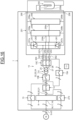
- Figure 1 illustrates a first example of an arc furnace facility.
- the arc furnace facility comprises a polyphase power supply system 1 connected to a grid G and an arc furnace 2 connected to the power supply system 1.
- the power supply system 1 supplies the arc furnace 2 from electrical energy supplied by the grid G.
- the power supply system 1 and the polyphase arc furnace 2 have each three phases, the grid G being a three phases supply grid.
- Each of the power supply system 1 and the polyphase arc furnace 2 may have two phases or more than three phases, the grid G having the same number of phases as the power supply system 1.
- the arc furnace 2 comprises a set of electrodes comprising three electrodes 2a, 2b, 2c.
- the electrodes 2a, 2b, 2c supplied by the power supply system 1 generate electric arcs between the electrodes 2a, 2b, 2c to melt the contents of the arc furnace 2, for example scrap steel.
- the power supply system 1 comprises three inputs 3, 4, 5, each input being connected to a different phase of the grid G, and three outputs 6, 7, 8.
- Each output 6, 7, 8 is connected to an electrode 2a, 2b, 2c.
- the power supply system 1 further comprises a power converter 9, a transformer 10, a control circuit 11, current sensors, and voltage sensors.
- the control circuit 11 may comprise a processing unit.
- the power supply system 1 further comprises first disconnecting means 13, second disconnecting means 14 and third disconnecting means 270.
- Each disconnecting means of the first, second and third disconnecting means 13, 14, 270 comprises for example a disconnector.
- the power supply system 1 comprises a first isolation switch 15A, a second isolation switch 15B and a third isolation switch 15C.
- the first, second and third disconnecting means, and the first, second and third isolation switches 15A, 15B, 15C are controlled by the control circuit 11.
- the power converter 9 comprises three inputs 16, 17, 18 and three outputs 19, 20, 21.
- Each input 16, 17, 18 of the power converter 9 is connected to a different input 3, 4, 5 of the power supply system 1.
- the transformer 10 further comprises a primary circuit including three phases 22, 23, 24 and a secondary circuit including three phases 25, 26, 27.
- Each phase 25, 26, 27 of the secondary circuit is connected to a different output 6, 7, 8 of the power supply system 1.
- Each phase 25, 26, 27 of the secondary circuit comprises a sensing module 300, 301, 302 comprising a voltage sensor and a current sensor measuring a voltage and a current of the said phase.
- the third disconnecting means 270 connect the inputs 16, 17, 18 of the power converter 9 to the outputs 19, 20, 21 of the power converter 9.
- the first disconnecting means 13 connect the input 16, 17, 18 of the power converter 9 to a first end of the first isolation switch 15A.
- the second disconnecting means 14 connect the outputs 19, 20, 21 of the power converter 9 to the first end of the first isolation switch 15A.
- the second end of the first isolation switch 15A is connected to the outputs 6, 7, 8 of the power supply system 1.
- the second isolation switch 15B connects the first end of the first isolation switch 15A to the phases 22, 23, 24 of the primary circuit and the third isolation switch 15C connects the second end of the first isolation switch 15A to the phases 25, 26, 27 of the secondary circuit.
- the first, second and third isolation switch 15A, 15B, 15C are interlocked so that when the first isolation switch 15A is open, the second and third isolation switches 15B, 15C are closed, and when the first isolation switch 15A is closed, the second and third isolation switches 15B, 15C are open.
- the power supply system 1 does not comprise the third isolation switch 15C, the second end of the first isolation switch 15A being connected to the phases 25, 26, 27 of the secondary circuit.
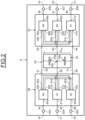
- Figure 2 illustrates an example of the power converter 9.
- the power converter 9 further comprises an input device 28, a link circuit 29 comprising a first bus 30 and a second bus 31, and an output device 32.
- Each input 16, 17, 18 of the power converter 9 comprises a sensing module 303, 304, 305 comprising a voltage sensor and a current sensor measuring a voltage and a current of the said input.
- Each output 19, 20, 21 of the power converter 9 comprises a sensing module 306, 307, 308 comprising a voltage sensor and a current sensor measuring a voltage and a current of the said output.
- the first bus 30 may have a potential higher than the second bus 31.
- VDC voltage between the first and second buses 30, 31.
- the link circuit 29 may further comprise a direct current DC link module 33 including two energy storage devices 33a, 33b connected in series.
- a first end of a first energy storage device 33a is connected to the first bus 30, a first end of the second energy storage 33b is connected to the second bus 31, and the second end of the second energy storage 33b and the second end of the first energy storage 33a are connected to a connecting node 33c.
- Each energy storage device 33a, 33b comprises for example a capacitor.
- the input device 28 comprises three inputs 34, 35, 36 and three outputs 37, 38, 39.
- Each input 34, 35, 36 of the input device 28 is connected to a different input 16, 17, 18 of the power converter 9.
- a first output 37 of the input device 28 is connected to the first bus 30, a second output 38 of the input device 28 is connected to the second bus 31 and the third output 39 is connected to the connecting node 33c of the DC link module 33.
- the input device 28 further comprises identical input modules 40, 41, 42 intended to the supply the link circuit 29 with a continuous voltage from the phases of the supply grid.
- Each input module 40, 41, 42 is connected to a different input 34, 35, 36 of the input device 28.
- Each input module 40, 41, 42 comprises an input 40a, 41a, 42a connected to the input 34, 35, 36 of the input device 28, a first output 40b, 41b, 42b connected to the first output 37 of the input device 28, a second output 40c, 41c, 42c connected to the second output 38 of the input device 28, and a third output 40d, 41d, 42d connected to the third output 39 of the input device 28.
- the output device 32 comprises three inputs 43, 44, 45 and three outputs 46, 47, 48.
- a first input 43 of the output device 32 is connected to the first bus 30, a second input 44 of the output device 32 is connected to the second bus 31, and the third input 45 of the output device 32 is connected to the connecting node 33c of the DC link module 33.
- a first output 46 of the output device 32 is connected to a first output 19 of the power converter 9, a second output 47 is connected to a second output 20 of the power converter 9, and a third output 48 is connected to the third output 21 of the power converter 9.
- the output device 32 further comprises identical output modules 49, 50, 51 intended to supply the transformer 10 with alternative voltages from the link circuit 29.
- Each output module 49, 50, 51 comprises a first input 49a, 50a, 51a connected to the first input 43 of the output device 32, a second input 49b, 50b, 51b connected to the second input 44 of the output device 32 and a third input 49c, 50c, 51c connected to the third input 45 of the output device 32.
- Each output module 49, 50, 51 further comprises an output 49d, 50d, 51d connected to a different output 46, 47, 48 of the output device 32.
- the input device 28 is intended to supply the link circuit 29 with a continuous voltage from the grid G.
- the output device 32 is intended to supply with electrical energy the electrodes 2a, 2b, 2c through the transformer 10.
- the energy storage devices 33a, 33b are designed to stabilize the continuous voltage and to smooth the current variation on the buses 30, 31.
- the DC link module 33 may decouple the input device 28 and the output device 32 to avoid that electrical perturbations generated by the arc furnace 2 are rejected on the grid G.
- the link circuit 29 may not comprise the DC link module 33, the third output 39 of the input device 28 and the third input 45 of the output device 32 being not connected.
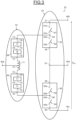
- Figure 3 illustrates schematically a first example of the input module 40 comprising a first example of a hybrid modular multilevel converter HMMC.
- the first example of HMMC comprises a leg 52 comprising a first string 53 and a second string 54.
- the first string 53 comprises a first branch 55 and a second branch 56.
- Each branch 55, 56 comprises a first end 57, 58 and a second end 59, 60.
- the first end 57 of the first branch 55 is connected to the first output 40b of the input module 40 and the second end 60 of the second branch 56 is connected to the second output 40c of the input module 40.
- Each branch 55, 56 comprises a first set of input switches 61, 62, 63, 64 connected in series between the first and the second ends 57, 58, 59, 60 of the said branch 55, 56.
- the first branch 55 further comprises a first connecting node 65 situated between two input switches 61, 62 of the first set of input switches.
- the second branch 56 further comprises a second connecting node 66 situated between two input switches 63, 64 of the second set of input switches.
- the number of input switches between the first connecting node 65 and the first end 57 of the said branch may equal to the number of input switches between the first connecting node 65 and the second end 59
- the number of input switches between the second connecting node 66 and the first end 58 of the said branch may equal to the number of input switches between the second connecting node 66 and the second end 60.
- Each branch 55, 56 may comprise more than two input switches, the two branches comprising a same number of input switches.
- Each input switch 61, 62, 63, 64 comprises a first end 61a, 62a, 63a, 64a and a second end 61b, 62b, 63b, 64b.
- the input switches 61, 62 of the first branch 55 are connected in series so that the first end 61a of the input switch 61 is connected to the first end 57 of the first branch 55, the second end 61b and the first end 62a of the input switches 61, 62 are connected to the first connecting node 65, and the second end 62b of the input switch 62 is connected to the second end 59 of the first branch 55.
- the input switches 63, 64 of the second branch 56 are connected in series so that the first end 63a of the input switch 63 is connected to the first end 58 of the second branch 56, the second end 63b and the first end 64a of the input switches 63, 64 are connected to the second connecting node 66, and the second end 64b of the input switch 64 is connected to the second end 60 of the second branch 56.
- the first string 53 further comprises a third connecting node 67 connected to the second end 59 of the branch 55, the first end 58 of the second branch 56, and the third output 40d of the input module 40.
- the first set of input switches 61, 62 connect the first bus 30 to the third connecting node 67
- the second set of input switches 63, 64 connect the second bus 31 to the third connecting node 67.
- the second string 54 comprises a first portion 68, a second portion 69, and a fourth connecting node 70.
- the second string 54 may further comprise an inductor 71.
- Each portion 68, 69 comprises a first end 73, 74, a second end 75, 76.
- the first portion 68 comprises a first set of input switching units 77 in series between the first and second ends 73, 75 of the said portion.
- the second portion 69 comprises a second set of input switching units 77 in series between the first and second ends 74, 76 of the said portion.
- Each set of input switching units 77 comprises a same number of input switching units 77.
- Each input switching unit 77 includes a plurality of controllable switches and energy storage means, the controllable switches being intended to bridge the energy storage means or to connect the energy storage means in each input switching unit 77.
- the input switching units 77 of each set are connected in series so that the first connection 78 of an input switching unit 77 is connected to a second connection 79 of an adjacent input switching unit 77.
- the first remaining connection 78 of the switching unit 77 of the first set is connected to the first end 73 and the second remaining connection 79 of the input switching unit 77 of the first set is connected to the second end 75.
- the first remaining connection of an input switching unit 77 is the first connection 78 of the said input switching unit which is not connected to the first connection 78 or to the second connection 79 of another input switching unit 77.
- the second remaining connection 79 of an input switching unit 77 is the second connection 79 of the said input switching unit which is not connected to the first connection 78 or to the second connection 79 of another input switching unit 77.
- the first end 73 of the first portion 68 is connected to the first connecting node 65 and the second end 75 is connected to a first end of the inductor 71.
- the first remaining connection 78 of the input switching unit 77 of the second set is connected to the first end 74 and the second remaining connection 79 of the input switching unit 77 of the second set is connected to the second end 76.
- the first set of input switching units 77 connects the first connecting node 66 to the fourth connecting node 70 and the second set of input switching units 77 connects the second connecting node 66 to the fourth connecting node 70.
- the first end 74 of the second portion 69 is connected to a second end of the inductor 71 and the second end 76 is connected to the second connecting node 66.
- the fourth connecting node 70 connects the input 40a of the input module 40 to a mid-connecting node of the inductor 71.
- the inductor 71 permits to limit current peaks in the second string 54 and the phases of the grid G during commutations of the input switching units 77.
- the second string 54 does not comprise the inductor 71, the ends 74, 75 of the first and second portions 68, 69 and the input 40a of the input module 40 being connected to the fourth connecting node 70, the first portion 68 or the second portion 69 comprising an inductor to limit the current peaks in the second string 54 and the second string 54 comprises another inductor connecting the input 40a of the input module 40 to the fourth connecting node 70 to limit the current peaks in the phase of the grid G.
- the second string 54 does not comprise the inductor 71, the ends 74, 75 of the first and second portions 68, 69 and the input 40a of the input module 40 are connected to the fourth connecting node 70, each of the first portion 68 and the second portion 69 comprising an inductor to limit the current peaks in the second string 54 and the second string 54 may comprise another inductor connecting the input 40a of the input module 40 to the fourth connecting node 70 to limit the current peaks in the phase of the grid G.
- Figure 4 illustrates schematically a second example of the input module 40 comprising a second example of the HMMC.
- the second example of HMMC comprises a leg 80 comprising a first string 81 and a second string 82.
- the first string 81 comprises a first branch 83 and a second branch 84.
- Each branch 83, 84 comprises a first end 85, 86 and a second end 87, 88.
- the first end 85 of the first branch 83 is connected to the first output 40b of the input module 40 and the second end 88 of the second branch 84 is connected to the second output 40c of the input module 40.
- the first branch 83 comprises a first input switch 89, a first connecting node 90, a first set 91 of input switching units 77 connected in series, and a first inductor 92.
- a first end 89a of the first input switch 89 is connected to the first end 85 of the first branch 83 and a second end 89b of the first input switch 89 is connected to the first connecting node 90.
- the input switching units 77 of the first set 91 are connected in series so that the first connection 78 of an input switching unit 77 is connected to a second connection 79 of an adjacent input switching unit 77.
- the first remaining connection 78 of the input switching unit 77 of the first set 91 is connected to the first connecting node 90 and the second remaining connection 79 of the input switching unit 77 of the first set 91 is connected to a first end of the first inductor 92.
- the second end of the first inductor 92 is connected to the second end 87 of the first branch 83.
- the second branch 84 comprises a second input switch 93, a second connecting node 94, a second set 95 of input switching units 77 connected in series, and a second inductor 96.
- a second end 93b of the second input switch 93 is connected to the second end 88 of the second branch 84 and a first end 93a of the second input switch 93 is connected to the second connecting node 94.
- the input switching units 77 of the second set 95 are connected in series so that the first connection 78 of an input switching unit 77 is connected to a second connection 79 of an adjacent input switching unit 77.
- the second remaining connection 79 of the input switching unit 77 of the second set 95 is connected to the second connecting node 94 and the first remaining connection 78 of the input switching unit 77 of the second set 95 is connected to a first end of the second inductor 96.
- the second end of the second inductor 96 is connected to the first end 86 of the second branch 84.
- the first and second sets 91, 95 of input switching units 77 have a same number of input switching units 77.
- the first string 81 further comprises third connecting node 97 connected to the first end 86 of the second branch 84, the second end of the first branch 83, and the third input 40d of the input module 40.
- the first input switch 89 connects the first bus 30 to the first connecting node 90 and the input switching units 77 connected in series of the first set 91 of input switching units 77.
- the input switching units 77 connected in series of the first set 91 of input switching units 77 connect the first connecting node 90 to the third connecting node 97.
- the second input switch 93 connects the second bus 31 to the second connecting node 94 and the second set 95 of input switching units 77.
- the input switching units 77 connected in series of the second set 95 of input switching units 77 connected in series connect the second connecting node 94 to the third connecting node 97.
- Each branch 83, 84 may comprise more than one input switch, the input switches being connected in series between a connecting node and one end of the said branch.
- the first and second inductors 92, 96 limit current peaks in the first string 81 and the phases of the grid G during commutations of the input switching units 77.
- the second string 82 comprises a first portion 98 and a second portion 99.
- Each portion 98, 99 comprises a first end 100, 101 and a second end 102, 103.
- the first portion 98 comprises a third input switch 104 comprising a first end 104a connected to the first end 100 of the said portion and a second end 104b connected to the second end 102 of the said portion.
- the second portion 99 comprises a fourth input switch 105 comprising a first end 105a connected to the first end 101 of the said portion and a second end 105b connected to the second end 103 of the said portion.
- each portion 98, 99 may comprise more than one input switch connected in series between both ends of the said portion, the number of input switches of the first and second portions being identical.
- the second string 82 further comprises a fourth connecting node 106 connected to the second end 102 of the first portion 98, the first end 101 of the second portion 99, and the input 40a of the input module 40.
- the first end 100 of the first portion 98 is connected to the first connecting node 90 and the second end 103 of the second portion 99 is connected to the second connecting node 94.
- the third input switch 104 connects the first connecting node 90 to the fourth connecting node 106 and the fourth input switch 105 connected in series connects the second connecting node 94 to the fourth connecting node 106.
- Figure 5 illustrates schematically a third example of the input module 40 comprising a third example of the HMMC.
- the third example of HMMC comprises a leg 110 comprising a first string 111 and the second string 82 according to the second example of HMMC illustrated in figure 4 .
- the first string 111 comprises a first branch 112 and a second branch 113.
- Each branch 112, 113 comprises a first end 114, 115 and a second end 116, 117.
- the first end 114 of the first branch 112 is connected to the first output 40b of the input module 40 and the second end 117 of the second branch 113 is connected to the second output 40c of the input module 40.
- the first branch 112 comprises a first input switch 118, a first connecting node 119, a first inductor 120, and a first set 121 of input switching units 77 connected in series.
- a second end 118b of the first input switch 118 is connected to the second end 116 of the first branch 112 and a first end 118a of the first input switch 118 is connected to the first connecting node 119.
- the input switching units 77 of the first set 121 are connected in series so that the first connection 78 of an input switching unit 77 is connected to a second connection 79 of an adjacent input switching unit 77.
- the first remaining connection 78 of the input switching unit 77 of the first set 121 is connected to the first end 114 of the first branch 112 and the second remaining connection 79 of the input switching unit 77 of the first set 121 is connected to a first end of the first inductor 120.
- the second end of the first inductor 120 is connected to the first connecting node 119.
- the second branch 113 comprises a second input switch 122, a second connecting node 123, a second inductor 124, and a second set 125 of input switching units 77 connected in series.
- a first end 122a of the second input switch 122 is connected to the first end 115 of the second branch 113 and a second end 122b of the second input switch 122 is connected to the second connecting node 123.
- the input switching units 77 of the second set 125 are connected in series so that the first connection 78 of an input switching unit 77 is connected to a second connection 79 of an adjacent input switching unit 77.
- the first remaining connection 78 of the input switching unit 77 of the second set 125 is connected to a first end of the second inductor 124.
- a second end of the second inductor 124 is connected to the second connecting node 123.
- the second remaining connection 79 of the input switching unit 77 of the second set 125 is connected to the second end 117 of the second branch 113.
- the first and second sets 121, 125 of input switching units 77 have a same number of input switching units 77.
- the first string 111 further comprises third connecting node 126 connected to the first end 115 of the second branch 113, the second end 116 of the first branch 112, and the third input 40d of the input module 40.
- the first set 121 of input switching units 77 connected in series connects the first bus 30 to the first connecting node 119 and the first input switch 118 connects the first connecting node 119 to the third connecting node 126.
- the second set 125 of input switching units 77 in series connects the second bus 31 to the second connecting node 123 and the second input switch 122 connects the second connecting node 123 to the third connecting node 126.
- Each branch 112, 113 may comprise more than one input switch, the input switches being connected in series between a connecting node and one end of the said branch.
- the first and second inductors 120, 124 limit current peaks in the first string 111 and the phases of the grid G during commutations of the input switching units 77.
- the first end 100 of the first portion 98 of the second string 82 is connected to the first connecting node 119 and the second end 103 of the second portion 99 of the second string 82 is connected to the second connecting node 123.
- Figure 6 illustrates schematically a fourth example of the input module 40 comprising an example of a modular multi-level converter MMC.
- the output module 40 comprises a string 130 including a first portion 131 and a second portion 132.
- the input module 40 comprises an inductor 133.
- Each portion 131, 132 comprises a first end 134, 135 and a second end 136, 137.
- the first end 134 of the first portion 131 is connected to the first output 40b of the input module 40 and the second end 137 of the second portion 132 is connected to the second output 40c of the input module 40.
- the third output 40d of the input module 40 is not connected.
- the first portion 131 comprises a first set of input switching units 77 in series between the first and second ends 134, 136 of the said portion.
- the second portion 132 comprises a second set of input switching units 77 in series between the first and second ends 135, 137 of the said portion.
- Each set of input switching units 77 comprises a same number of switching units 77.
- the input switching units 77 of each set are connected in series so that the first connection 78 of an input switching unit 77 is connected to a second connection 79 of an adjacent input switching unit 77.
- the first remaining connection 78 of the input switching unit 77 of the first set is connected to the first end 134 and the second remaining connection 79 of the input switching unit 77 of the first set is connected to the second end 136.
- the first remaining connection 78 of the input switching unit 77 of the second set is connected to the first end 135 and the second remaining connection 79 of the input switching unit 77 of the second set is connected to the second end 137.
- the string 130 further comprises a connecting node 138.
- the second end 136 of the first portion 131 is connected to a first end of the inductor 133 and the first end 135 of the second portion 132 is connected to the second end of the inductor 133.
- the connecting node 138 connects the input 40a of the input module 40 to a mid-connecting node of the inductor 133.
- the first set of input switching units 77 is series connects the first bus 30 to the connecting node 138 and the second set of input switching units 77 in series connects the second bus 31 to the connecting node 138.
- the inductor 133 permits to limit current peaks in the string 130 and the phases of the grid G during commutations of the input switching units 77.
- the string 130 does not comprise the inductor 133, the ends 136, 135 of the first and second portions 131, 132 and the input 40a of the input module 40 being connected to the connecting node 138, the first portion 131 or the second portion 132 comprising an inductor to limit the current peaks in the string 130 and the string 130 comprises another inductor connecting the input 40a of the input module 40 to the connecting node 130 to limit the current peaks in the phase of the grid G.
- the string 130 does not comprise the inductor 133, the ends 136, 135 of the first and second portions 131, 132 and the input 40a of the input module 40 are connected to the connecting node 138, each of the first portion 131 and the second portion 132 comprising an inductor to limit the current peaks in the string 130 and the string 130 may comprise another inductor connecting the input 40a of the input module 40 to the connecting node 138 to limit the current peaks in the phase of the grid G.
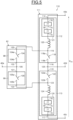
- figure 7 illustrates schematically a first example of the output module 49 comprising a first example of the HMMC.
- the first example of the output module 49 comprises a leg 140 comprising a first string 141 and a second string 142.
- the first string 141 comprises a first branch 143 and a second branch 144.
- Each branch 143, 144 comprises a first end 145, 146 and a second end 147, 148.
- the first end 145 of the first branch 143 is connected to the first input 49a of the output module 49 and the second end 148 of the second branch 144 is connected to the second input 49b of the output module 49.
- Each branch 143, 144 comprises a first set of output switches 149, 150, 151, 152 connected in series between the first and the second ends 145, 146, 147, 148 of the said branches 143, 144.
- the first branch 143 further comprises a first connecting node 153 situated between two output switches 149, 150 of the first set of output switches so that the number of output switches between the first connecting node 153 and the first end 145 of the said branch is equal to the number of output switches between the first connecting node 153 and the second end 147.
- the second branch 144 further comprises a second connecting node 154 situated between two output switches 151, 152 of the second set of output switches so that the number of output switches between the second connecting node 154 and the first end 146 of the said branch is equal to the number of output switches between the second connecting node 154 and the second end 148.
- Each branch 143, 144 may comprise more than two output switches, the two branches comprising a same number of output switches.
- Each output switch 149, 150, 151, 152 comprises a first end 149a, 150a, 151a, 152a and a second end 149b, 150b, 151b, 152b.
- the output switches 149, 150 of the first branch 143 are connected in series so that the first end 150a of the output switch 150 is connected to the first end 145 of the first branch 143, the second end 149b and the first end 150a of the output switches 149, 150 are connected to the first connecting node 153, and the second end 150b of the switch 150 is connected to the second end 147 of the first branch 143.
- the output switches 151, 152 of the second branch 144 are connected in series so that the first end 151a of the output switch 151 is connected to the first end 146 of the second branch 144, the second end 151b and the first end 152a of the output switches 151, 152 are connected to the second connecting node 154, and the second end 152b of the output switch 152 is connected to the second end 148 of the second branch 144.
- the first string 141 further comprises a third connecting node 155 connected to the second end 147 of the first branch 143, the first end 146 of the second branch 144, and the third input 49c of the output module 49.
- the first set of output switches 149, 150 in series connects the first bus 30 to the third connecting node 155
- the second set of output switches 151, 152 in series connects the second bus 31 to the third connecting node 155.
- the second string 142 comprises a first portion 156, a second portion 157, and a fourth connecting node 158.
- Each portion 156, 157 comprises a first end 159, 160, a second end 161, 162.
- the first portion 156 comprises a first set of output switching units 163 in series between the first and second ends 159, 161 of the said portion.
- the second portion 157 comprises a second set of output switching units 163 in series between the first and second ends 160, 162 of the said portion.
- Each set of output switching units 163 comprises a same number of output switching units 163.
- Each output switching unit 163 includes a plurality of controllable switches and energy storage means, the controllable switches being intended to bridge the energy storage means or to connect the energy storage means in each output switching unit 163.
- the output switching units 163 of each set are connected in series so that the first connection 164 of an output switching unit 163 is connected to a second connection 165 of an adjacent output switching unit 163.
- the first remaining connection of the output switching unit 163 of the first set is connected to the first end 159 and the second remaining connection 165 of the output switching unit 163 of the first set is connected to the second end 161.
- the first end 159 of the first portion 156 is connected to the first connecting node 153 and the second end 161 is connected to a first end of the inductor 159a.
- the first remaining connection of the output switching unit 163 of the second set is connected to the first end 160 and the second remaining connection of the output switching unit 163 of the second set is connected to the second end 162.
- the first set of output switching units 163 in series connects the first connecting node 153 to the fourth connecting node 158 and the second set of output switching units 163 in series connects the second connecting node 154 to the fourth connecting node 158.
- the first end 160 of the second portion 157 is connected to a second end of the inductor 159a and the second end 162 is connected to the second connecting node 154.
- the fourth connecting node 158 connects the output 49d of the output module 49 to a mid-connecting node of the inductor 159a.
- the inductor 159a permits to limit current peaks in the second string 142 and the phases of the arc furnace 2 during commutations of the output switching units 163.
- the second string 142 does not comprise the inductor 159a, the ends 161, 160 of the first and second portions 156, 157 and the output 49d of the output module 49 being connected to the fourth connecting node 158, the first portion 156 or the second portion 157 comprising an inductor to limit the current peaks in the second string 142 and the second string 142 comprises another inductor connecting the output 49d of the output module 49 to the fourth connecting node 159 to limit the current peaks in the phase of the arc furnace 2.
- the second string 142 does not comprise the inductor 159a
- the ends 161, 160 of the first and second portions 156, 157 and the output 49d of the output module 49 are connected to the fourth connecting node 158
- each of the first portion 156 and the second portion 157 comprising an inductor to limit the current peaks in the second string 142
- the second string 142 may comprise another inductor connecting the output 49d of the output module 49 to the fourth connecting node 158 to limit the current peaks in the phase of the arc furnace 2.
- Figure 8 illustrates schematically a second example of the output module 49 comprising a second example of the hybrid modular multilevel converter HMMC.
- the second example of the output module 49 comprises a leg 170 comprising a first string 171 and a second string 172.
- the first string 171 comprises a first branch 173 and a second branch 174.
- Each branch 173, 174 comprises a first end 175, 176 and a second end 177, 178.
- the first end 175 of the first branch 173 is connected to the first input 49a of the output module 49 and the second end 178 of the second branch 174 is connected to the second input 49b of the output module 49.
- the first branch 173 comprises a first output switch 179, a first connecting node 180, a first set 181 of output switching units 163 connected in series, and a first inductor 182.
- a first end 179a of the first output switch 179 is connected to the first end 175 of the first branch 173 and a second end 179b of the first output switch 179 is connected to the first connecting node 180.
- the output switching units 163 of the first set 181 are connected in series so that the first connection 164 of an output switching unit 163 is connected to a second connection 165 of an adjacent output switching unit 163.
- the first remaining connection of the output switching unit 163 of the first set 181 is connected to the first connecting node 180 and the second remaining connection of the output switching unit 163 of the first set 181 is connected to a first end of the first inductor 182.
- the second end of the first inductor 182 is connected to the second end 177 of the first branch 173.
- the second branch 174 comprises a second output switch 183, a second connecting node 184, a second set 185 of output switching units 163 connected in series, and a second inductor 186.
- a second end 183b of the second output switch 183 is connected to the second end 178 of the second branch 174 and a first end 183a of the second output switch 183 is connected to the second connecting node 184.
- the output switching units 163 of the second set 185 are connected in series so that the first connection 164 of an output switching unit 163 is connected to a second connection 165 of an adjacent output switching unit 163.
- the second remaining connection 165 of the output switching unit 163 of the second set 185 is connected to the second connecting node 184 and the first remaining connection 164 of the output switching unit 163 of the second set 185 is connected to a first end of the second inductor 186.
- the second end of the second inductor 186 is connected to the first end 176 of the second branch 174.
- the first and second sets 181, 185 of output switching units 163 have a same number of output switching units 163.
- the first string 171 further comprises a third connecting node 187 connected to the first end 176 of the second branch 174, the second end 177 of the first branch 173 and the third input 49c the output module 49.
- the first output switch 179 connects the first bus 30 to the first connecting node 180 and the first set 181 of output switching units 163 in series connects the first connecting node 180 to the third connecting node 187.
- the second output switch 183 connects the second bus 31 to the second connecting node 184 and the second set 185 of output switching units 163 in series connects the second connecting node 184 to the third connecting node 187.
- Each branch 173, 174 may comprise more than one output switch, the output switches being connected in series between a connecting node and one end of the said branch.
- the first and second inductors 182, 186 limit current peaks in the first string 171 and the phases of the arc furnace 2 during commutations of the output switching units 163.
- the second string 172 comprises a first portion 186 and a second portion 187.
- Each portion 186, 187 comprises a first end 188, 189 and a second end 190, 191.
- the first portion 186 comprises a third output switch 192 comprising a first end 192a connected to the first end 188 of the said portion and a second end 192b connected to the second end 190 of the said portion.
- the second portion 187 comprises a fourth output switch 193 comprising a first end 193a connected to the first end 189 of the said portion and a second end 193b connected to the second end 191 of the said portion.
- each portion 186, 187 may comprise more than one output switch connected in series between both ends of the said portion, the number of output switches of the first and second portions being identical.
- the second string 172 further comprises a fourth connecting node 194 connected to the second end 190 of the first portion 186, the first end 189 of the second portion 187, and the output 49d of the output module 49.
- the first end 188 of the first portion 186 is connected to the first connecting node 180 and the second end 191 of the second portion 187 is connected to the second connecting node 184.
- the third output switch 192 connects the first connecting node 180 to the fourth connecting node 194 and the fourth output switch 193 in series connects the second connecting node 184 to the fourth connecting node 194.
- Figure 9 illustrates schematically a third example of the output module 49 comprising a third example of the hybrid modular multilevel converter HMMC.
- the third example of the output module 49 comprises a leg 195 comprising a first string 196 and the second string 172 according to the second example of the hybrid modular multilevel converter illustrated in figure 8 .
- the first string 196 comprises a first branch 197 and a second branch 198.
- Each branch 197, 198 comprises a first end 199, 200 and a second end 201, 202.
- the first end 199 of the first branch 197 is connected to the first input 49a of the output module 49 and the second end 202 of the second branch 198 is connected to the second input 49b of the output module 49.
- the first branch 197 comprises a first output switch 203, a first connecting node 204, a first inductor 205, and a first set 206 of output switching units 163 connected in series.
- a second end 203b of the first output switch 203 is connected to the second end 201 of the first branch 197 and a first end 203 of the first output switch 203 is connected to the first connecting node 204.
- the output switching units 163 of the first set 206 are connected in series so that the first connection 164 of an output switching unit 163 is connected to a second connection 165 of an adjacent output switching unit 163.
- the first remaining connection 164 of the output switching unit 163 of the first set 206 is connected to the first end 199 of the first branch 197 and the second remaining connection 165 of the output switching unit 163 of the first set 206 is connected to a first end of the first inductor 205.
- the second end of the first inductor 205 is connected to the first connecting node 204.
- the second branch 198 comprises a second output switch 207, a second connecting node 208, a second inductor 209, and a second set 210 of input switching units 163 connected in series.
- a first end 207a of the second output switch 207 is connected to the first end 200 of the second branch 198 and a second end 207b of the second output switch 207 is connected to the second connecting node 208.
- the output switching units 163 of the second set 210 are connected in series so that the first connection 164 of an output switching unit 163 is connected to a second connection 165 of an adjacent switching unit 163.
- the first remaining connection 164 of the output switching unit of the second set 210 is connected to a first end of the second inductor 209.
- a second end of the second inductor 209 is connected to the second connecting node 208.
- the second remaining connection 165 of the output switching unit 163 of the second set 210 is connected to the second end 202 of the second branch 198.
- the first and second sets 206, 210 of output switching units 163 have a same number of output switching units 163.
- the first string 196 further comprises a third connecting node 211 connected to the first end 200 of the second branch 198, the second end 201 of the first branch 197 and the third input 49c of the output module 49.
- the first set 206 of output switching units 163 in series connects the first bus 30 to the first connecting node 204 and the first output switch 203 connects the first connecting node 204 to the third connecting node 211.
- the second set 210 of output switching units 163 in series connects the second bus 31 to the second connecting node 208 and the second input switch 207 connects the second connecting node 208 to the third connecting node 211.
- Each branch 197, 198 may comprise more than one output switch, the output switches being connected in series between a connecting node and one end of the said branch.
- the first and second inductors 205, 209 limit current peaks in the first string 196 and the phases of the arc furnace 2 during commutations of the output switching units 163.
- the first end 188 of the first portion 186 of the second string 172 is connected to the first connecting node 204 and the second end 191 of the second portion 187 of the second string 172 is connected to the second connecting node 208.
- Figure 10 illustrates schematically a fourth example of the output module 49 comprising an example of a modular multi-level converter MMC.
- the output module 49 comprises a string 220 including a first portion 221 and a second portion 222.
- the output module 49 comprises an inductor 223.
- Each portion 221, 222 comprises a first end 224, 225, a second end 226, 227.
- the first end 224 of the first portion 221 is connected to the first input 49a of the output module 49 and the second end 227 of the second portion 222 is connected to the second input 49b of the output module 49.
- the input 49c of the output module 49 is not connected.
- the first portion 221 comprises a first set of output switching units 163 in series between the first and second ends 224, 226 of the said portion.
- the second portion 222 comprises a second set of output switching units 163 in series between the first and second ends 225, 227 of the said portion.
- Each set of output switching units 163 comprises a same number of output switching units 163.
- the output switching units 163 of each set are connected in series so that the first connection 164 of an output switching unit 163 is connected to a second connection 165 of an adjacent output switching unit 163.
- the first remaining connection 164 of the output switching unit 163 of the first set is connected to the first end 224 and the second remaining connection 165 of the output switching unit 163 of the first set is connected to the second end 226.
- the first remaining connection 164 of the output switching unit 163 of the second set 222 is connected to the first end 225 and the second remaining connection 165 of the output switching unit 163 of the second set is connected to the second end 227.
- the string 220 further comprises a connecting node 228.
- the second end 226 of the first portion 221 is connected to a first end of the inductor 223 and the first end 225 of the second portion 222 is connected to the second end of the inductor 223.
- the connecting node 228 connects the output 49d of the output module 49 to a mid-connecting node of the inductor 223.
- the first set of output switching units 163 in series connects the first bus 30 to the connecting node 228 and the second set of output switching units 163 in series connects the second bus 31 to the connecting node 228.
- the inductor 223 permits to limit current peaks in the string 220 and the phases of the grid G during commutations of the output switching units 163.
- the string 220 does not comprise the inductor 223, the ends 226, 225 of the first and second portions 221, 222 and the output 49d of the output module 49 being connected to the connecting node 228, the first portion 221 or the second portion 222 comprising an inductor to limit the current peaks in the string 220 and the string 220 comprises another inductor connecting the output 49d of the output module 49 to the connecting node 228 to limit the current peaks in the phase of the arc furnace 2.
- the string 220 does not comprise the inductor 223, the ends 226, 225 of the first and second portions 221, 222 and the output 49d of the output module 49 are connected to the connecting node 228, each of the first portion 221 and the second portion 222 comprising an inductor to limit the current peaks in the string 220 and the string 220 may comprise another inductor connecting the output 49d of the output module 49 to the connecting node 228 to limit the current peaks in the phase of the arc furnace 2.
- Figure 11 illustrates schematically a first embodiment of the input switches 61, 62, 63, 64, 89, 93, 104, 105, 118, 122 and the output switches 149, 150, 151, 152, 179, 183, 192, 193, 203, 207.
- Each switch of the input and output switches comprises a diode 230 extending between the first and the second ends of the switch 61, 62, 63, 64, 89, 93, 104, 105, 118, 122, 149, 150, 151, 152, 179, 183, 192, 193, 203, 207 so that the anode of the diode 230 is connected to the second end 61b, 62b, 63b, 64b, 89b, 93b, 104b, 105b, 118b, 122b, 149b, 150b, 151b, 152b, 179b, 183b, 192b, 193b, 203b, 207b of the switch and the cathode is connected to the first end 61a, 62a, 63a, 64a, 89a, 93a, 104a, 105a, 118a, 122a, 149a, 150a, 151a, 152a, 179a,
- the first example of the switch comprising the diode 230 simplify the implementation of the input switches in the input modules 40, 41, 42 and in the implementation of the output switches in the output modules 49, 50, 51.
- Each switch may comprise a plurality of diodes 230 in series so that the anode of one diode is connected to the cathode of another diode.
- the diode 230 is designed to support a voltage at least equal to VDC/2.
- Each input or output switch may comprise a plurality of diodes 230 in series so that the anode of one diode is connected to the cathode of another diode.
- Figure 12 illustrates schematically a first embodiment of the input switches 61, 62, 63, 64, 89, 93, 104, 105, 118, 122 and the output switches 149, 150, 151, 152, 179, 183, 192, 193, 203, 207.
- Each switch of the input and output switches comprises the diode 230 extending between the first and the second ends of the switch 61, 62, 63, 64, 89, 93, 104, 105, 118, 122, 149, 150, 151, 152, 179, 183, 192, 193, 203, 207 so that the anode of the diode 230 is connected to the second end 61b, 62b, 63b, 64b, 89b, 93b, 104b, 105b, 118b, 122b, 149b, 150b, 151b, 152b, 179b, 183b, 192b, 193b, 203b, 207b of the switch and the cathode is connected to the first end 61a, 62a, 63a, 64a, 89a, 93a, 104a, 105a, 118a, 122a, 149a, 150a, 151a, 152a, 179a, 183
- Each switch further comprises a gate turn off thyristor 231.
- the gate of the gate turn off thyristor 231 is connected to the control circuit 11, the anode of the gate turn off thyristor 231 is connected to the cathode of the diode 230, and the cathode of the gate turn off thyristor 231 is connected to the anode of the diode 230.
- Each switch may comprise a plurality of gate of the gate turn off thyristors 231 in series so that the anode of one thyristor is connected to the cathode of another thyristor.
- the diode 230 and the gate turn off thyristors 231 are designed to support a voltage at least equal to VDC/2.
- Each input or output switch may comprise a plurality of gate turn off thyristors 231 in parallel with the diode 230 in series so that the anode of one diode is connected to the cathode of another diode.
- Figure 13 illustrates schematically a third embodiment of the input switches 61, 62, 63, 64, 89, 93, 104, 105, 118, 122 and the output switches 149, 150, 151, 152, 179, 183, 192, 193, 203, 207.
- Each switch of the input and output switches comprises the diode 230 extending between the first and the second ends of the switch 61, 62, 63, 64, 89, 93, 104, 105, 118, 122, 149, 150, 151, 152, 179, 183, 192, 193, 203, 207 so that the anode of the diode 230 is connected to the second end 61b, 62b, 63b, 64b, 89b, 93b, 104b, 105b, 118b, 122b, 149b, 150b, 151b, 152b, 179b, 183b, 192b, 193b, 203b, 207b of the switch and the cathode is connected to the first end 61a, 62a, 63a, 64a, 89a, 93a, 104a, 105a, 118a, 122a, 149a, 150a, 151a, 152a, 179a, 183
- Each switch further comprises a field effect transistor 232.
- the field effect transistor 232 may be an insulated gate bipolar transistor for example using silicon-base semiconductors such as insulated gate bipolar transistor IGBT or injection-enhanced gate transistor IEGT, or using silicon carbide semiconductors such as metal-oxide-semiconductor field-effect transistor MOSFET.
- the gate of the transistor 232 is connected to the control circuit 11, the drain of the transistor 232 is connected to the cathode of the diode 230 and the source of the transistor 232 is connected to the anode of the diode 230.
- Each switch may comprise a plurality of transistors 232 and diodes 230 in parallel in series so that the drain of one transistor is connected to the source of another transistor.
- the diode 230 is designed to support a voltage at least equal to VDC/2.
- the inputs modules 40, 41, 42 may comprise one embodiment of the input switches illustrated in figures 11, 12, 13
- the output modules 49, 50, 51 may comprise the same or another embodiment of the output switches illustrated in figures 11, 12, 13 .
- Figure 14 illustrates schematically a first embodiment of the input switching unit 77 and the output switching unit 163.
- Each switching unit of the input switching unit 77 and the output switching unit 163 comprises two controllable switches 233, 234 and an energy storage means 235 comprising a first end 235a and a second end 235b.
- the energy storage means 235 comprises for example a capacitor.
- Each controllable switch 233, 234 comprises a first end 233a, 234a, a second end 233b, 234b, and a control input 233c, 234c connected to the control circuit 11.
- the first end 233a of a first controllable switch 233 is connected to the first end 235a of the energy storage means 235.
- the second end 233b of the first controllable switch 233 and the first end 234a of the second controllable switch 234 are connected to the first end 78, 164 of the input switching unit 77 or output switching unit 163.
- the second end 234b of the second controllable switch 234 is connected to the second end 235b of the energy storage means 235 and to the second end 79, 165 of the input switching unit 77 or output switching unit 163.
- controllable switches 233, 234 are identical, only the first switch 233 is detailed.
- the first switch 233 comprises a transistor 236 and a diode 237.
- the transistor 236 may be a field effect transistor.
- the field effect transistor 236 may be an insulated gate bipolar transistor for example using silicon-base semiconductors such as insulated gate bipolar transistor IGBT or injection-enhanced gate transistor IEGT, or using silicon carbide semiconductors such as metal-oxide-semiconductor field-effect transistor MOSFET.
- the gate of the transistor 236 is connected to the control input 233c, the drain of the transistor 236 and the cathode of the diode 237 are connected to the first end 233a, and the source of the transistor 236 and the anode of the diode 237 are connected to the second end 233b.
- Figure 15 illustrates schematically a second embodiment of the input switching unit 77 and the output switching unit 163.
- Each switching unit of the input switching unit 77 and the output switching unit 163 comprises four controllable switches 238, 239, 240, 241 identical to the controllable switches 233, 234 of the first embodiment illustrated in figure 14 .
- Each controllable switches 238, 239, 240, 241 comprises a first end 238a, 239a, 240a, 241a, a second end 238b, 239b, 240b, 241b, and a control input 238c, 239c, 240c, 241c connected to the control circuit 11.
- Each switching unit 77, 163 further comprises the energy storage means 235
- the first end 238a of a first controllable switch 238 and the first end 239a of a second controllable switch 239 are connected to the first end 235a of the energy storage means 235.
- the second end 240b of a third controllable switch 240 and the second end 241b of the fourth controllable switch 241 are connected to the second end 235b of the energy storage means 235.
- the second end 238b of the first controllable switch 238 and the first end 240a of the third controllable switch 240 are connected to the first end 78, 164 of the input switching unit 77 or output switching unit 163.
- the second end 239b of the second controllable switch 239 and the first end 241a of the fourth controllable switch 241 are connected to the second end 79, 165 of the input switching unit 77 or output switching unit 163.
- the input switching units 77 and the output switching units 163 according to the first embodiment illustrated in figure 14 have two states, each state delivering a different voltage value on the ends of the input switching units 77 and the output switching units 163.
- the input and output switching units 77, 163 deliver a positive compensating voltage Vcc, and in a second state a nil voltage.
- the input switching units 77 and the output switching units 163 according to the second embodiment illustrated in figure 15 have three states, each state delivering a different voltage value on the ends of the input switching units 77 and the output switching units 163.
- the input and output switching units 77, 163 deliver a positive voltage Vcc, in a second state a nil voltage, and in a third state a negative compensating voltage -Vcc.
- the embodiment of the input switching units 77 of inputs modules 40, 41, 42 and the embodiment of the output switching units 163 of the output modules 49, 50, 51 may be identical or different.
- Figure 16 illustrates a second example of the arc furnace facility.
- the arc furnace facility differs from the arc furnace facility illustrated in figure 1 in that the arc furnace facility comprises a direct voltage arc furnace 250.
- the direct voltage arc furnace 250 comprises the set of electrodes comprising only one electrode 250a.
- the power supply system 1 further comprises a rectifier 251.
- the rectifier 251 comprises a plurality of inputs 252, 253, 254, being connected the phase 25, 26, 27 of the secondary circuit of the transformer 10.
- the rectifier 251 further comprises a first output 255 connected to an enclosure 250b of the arc furnace 250 and a second output 256 connected to the electrode 250a of the arc furnace 250.
- the rectifier 251 comprises the same number of identical legs 257, 258, 259 as the number of phases of the secondary circuit of the transformer 10, each leg 257, 258, 259 being connected to a different phase.
- Each leg 257, 258, 259 comprises a first connection 257a, 258a, 259a, a second connection 257b, 258b, 259b, and a third connection 257c, 258c, 259c.
- legs 257, 258, 259 are identical, only a first leg 257 is detailed.
- the first leg 257 comprises two identical power diodes 260, 261 connected in series.
- the cathode of a first power diode 260 is connected to the first connection 257a, the anode of the first power diode 260 and the cathode of the second power diode 261 are connected to the third connection 257c, and the anode of the second power diode 261 is connected to the second connection 257b.
- the rectifier 251 rectifies the voltage delivered by each phase of the secondary circuit to supply the electrode 250a of the direct voltage arc furnace 250.
- the rectifier 251 may comprise an active rectifier made from controlled semiconductor, for example transistors and/or gate turn off thyristors.
- HMMC HMMC
- input and output modules permits to reduce the volume, the size and the weight of the said modules, and to increase power density and efficiency of the said modules.
- a first example of a method implementing the power supply system 1 is presented.
- the control circuit 11 opens the first disconnecting means 13, the third disconnecting means 270 and the first isolation switch 15A, and closes the second disconnecting means 14, the second isolation switch 15B and if applicable the third isolation switch 15C.
- the third disconnecting means 270 and first isolation switch 15A are open, no current flows through the first disconnecting means 13, third disconnecting means 270 and first isolation switch 15A.
- the control circuit 11 controls the input modules 40, 41, 42 and the outputs modules 49, 50, 51 to supply the set of electrodes and to stabilize the current and the voltage delivered by the grid G to reduce reactions in the grid G generated by the arc furnace 2, 250.
- the control circuit 11 controls independently each input switching unit 77 and each output switching unit 163, and if applicable each input switch and each output switch to supply the set of electrodes and to stabilize the current and the voltage delivered by the grid G to reduce reactions in the grid G.
- the control circuit 11 closes the first disconnecting means 13 so that currents flow from the grid G to the primary circuit through the first disconnecting means 13, the second isolation switch 15B so that currents flow through the second isolation switch 15B and if applicable the third isolation switch 15C so that currents flow through the third isolation switch 15C, and opens the second disconnecting means 14 and the third disconnecting means 270 so that no current flows from the outputs of the power converter 9 to the primary circuit, the primary circuit being supplied directly by the grid G.
- the output switching unit 163 are idle and if applicable the output switches are open.
- the control circuit 11 controls independently each input switching unit 77 of the input modules to stabilize the current and the voltage delivered by the grid G to reduce reactions in the grid G.
- the input modules of the power converter 9 acts as a static compensator STATCOM to reduce the reactions on the grid G.
- the control circuit 11 further closes the input switch 61 of the first set of input switches between the first end 57 of the first branch 55 and the first connecting node 65 of the first branch 55, and the input switch 64 of the second set of input switches between the second end 60 of the second branch 56 and the second connecting node 66 of the second branch 56, and the control circuit 11 further opens the input switch 62 of the first set of input switches between the first connecting node 65 of the first branch 55 and the third connecting node 67 of the first string 53 and, the input switch 63 of the second set of input switches between the second connecting node 66 of the second branch 56 and the third connecting node 67 of the first string 53.
- control circuit 11 further opens the input switch 61 of the first set of input switches between the first end 57 of the first branch 55 and the first connecting node 65 of the first branch 55, and the input switch 64 of the second set of input switches between the second end 60 of the second branch 56 and the second connecting node 66 of the second branch 56, and the control circuit 11 further closes the input switch 62 of the first set of input switches between the first connecting node 65 of the first branch 55 and the third connecting node 67 of the first string 53 and, the input switch 63 of the second set of input switches between the second connecting node 66 of the second branch 56 and the third connecting node 67 of the first string 53.
- the control circuit 11 further opens the first input switch 89 and the second input switch 93, and further closes the third input switch 104 and the fourth input switch 105.
- the control circuit 11 further opens the first input switch 118 and the second input switch 122, and further closes the third input switch 104 and the fourth input switch 105.
- a third example of the method implementing the power supply system 1 differs from the second example of the method in that the control circuit 11 further closes the third disconnecting means 270.
- the power converter 9 acting as a STATCOM injects power in the grid G through the third disconnecting means 270.
- the control circuit 11 opens the first disconnecting means 13, the third disconnecting means 270 so that currents flow from the grid G to the inputs 16, 17, 18 of the power converter 9 and so that no current flows directly from the grid G to the second disconnecting means 14, the second isolation switch 15B and if applicable the third isolation switch 15C, and closes the second disconnecting means 14 and the first isolation switch 15A so that electrode(s) of the arc furnace 2, 250 is directly supplied by the power converter 9, the transformer 10 being bypassed to simplify the control of the power converter 9 to supply the arc furnace 2, 250, and to improve the reliability and the efficiency of the power supply system 1.
- the first and second isolation switches 15A, 15B permit to bypass and isolate the transformer 10.
- the third isolation switch 15C reinforces the isolation of the bypassed transformer 10 electrically and mechanically.
Landscapes
- Engineering & Computer Science (AREA)
- Power Engineering (AREA)
- Physics & Mathematics (AREA)
- Plasma & Fusion (AREA)
- Ac-Ac Conversion (AREA)
Abstract
The power supply system (1) for arc furnace (2), the power supply system including:- a power converter (9), and- a polyphase transformer (10),- first disconnecting means (13) connecting an input of the power converter to a primary circuit of the transformer (10), and- second disconnecting means (14) connecting an output of the power converter to the primary circuit of the transformer (10).The power supply system further comprises first isolation switch (15A) and a second isolation switch (15B), and a control circuit (11).
Description
- The present invention concerns arc furnaces, and more particularly a power supply system for arc furnaces, and an arc furnace facility comprising an arc furnace and such a power supply system.
- Arc furnaces are highly nonlinear loads resulting in considerable reactions on the power supply system, in particular so-called flicker.
-
- The power supply system comprises an indirect power converter and a polyphase transformer.
- The indirect power converter supplies a primary circuit of the transformer. A secondary circuit of the transformer supplies electrodes of the arc furnace.
- The indirect power converter is controlled to minimize reactions on the grid in order to supress the flicker and in order to comply with grid quality standards.
- During the tuning of the power supply system or when the indirect power converter goes wrong, the power supply system may be faulted out, halted or stopped, for example following reactions on the grid generated by the indirect power converter greater than acceptable reactions.
- During these more or less unplanned and unexpected faults / halts / stops, the arc furnace does not melt scraps to produce molten steel.
- Machines using molten steel, for example rolling mills, are forced to be stopped during stops of the arc furnace, which generates production losses.
- Further, during normal operation of the arc furnace, when the back-to-back electric arc furnace (EAF) converter is in full operation providing (real) power to the EAF furnace while controlling the voltage and current at the EAF, currents delivered by the indirect power converter going through the transformer generates losses and complicates operation of the arc furnace.
- It is therefore proposed to overcome wholly or partially the disadvantages related to arc furnace power supply systems known from the prior art.
- In view of the foregoing the invention proposes a power supply system for arc furnace including:
- a power converter comprising an input intended to be connected to a polyphase supply grid and an output, and
- a polyphase transformer comprising a primary circuit and a secondary circuit,
- first disconnecting means, and
- second disconnecting means.
- The power supply system further comprises a first isolation switch and a second isolation switch, the first disconnecting means connecting the input of the power converter to a first end of the first isolation switch, the second disconnecting means connecting the output of the power converter to the first end of the first isolation switch, the second end of the first isolation switch being intended to be connected to at least one electrode of the arc furnace, the second isolation switch connecting the first end of the first isolation switch to the primary circuit and the secondary circuit being connected to the second end of the first isolation switch, and third disconnecting means connecting the input of the power converter to the output of the power converter, and a control circuit configured:
- o to control the power converter to supply the electrode and to stabilize the current and the voltage delivered by the grid to reduce reactions in the grid when the first disconnecting means are open, the second disconnecting means are closed, the first isolation switch is open and the second isolation switch is closed or the first isolation switch is closed and the second isolation switch is open, and the third disconnecting means are open, and
- o to control the power converter to stabilize the current and the voltage delivered by the grid to reduce reactions in the grid when the first disconnecting means are closed, the second disconnecting means are open, the first isolation switch is open and the second isolation switch is closed, and the third disconnecting means are open or closed.
- Advantageously, the power converter comprises an input device, a link circuit comprising a first bus and a second bus, and an output device, wherein:
- the input device comprises a plurality of input modules each input module being connected to the first bus and the second bus and being intended to be connected to a different phase of the supply grid to supply the link circuit with a continuous voltage from the said phase of the supply grid,
- the output device comprises a plurality of output modules, each output module being connected to the first bus and second bus and to the primary circuit to supply the transformer with an alternative voltage from the circuit link.
- Preferably, each input module comprises:
- a leg including:
- o a first string comprising:
- ▪ a first set of input switches connected in series, a second set of input switches connected in series, a first connecting node, a second connecting node, and a third connecting node,
- ▪ the first set of input switches connecting the first bus to the third connecting node, and the first connecting node being disposed between two input switches of the first set of input switches,
- ▪ the second set of input switches connecting the second bus to the third connecting node, and the second connecting node being disposed between two input switches of the second set of input switches,
- o a second string comprising:
- ▪ a first set of input switching units in series, a second set of input switching units in series, and a fourth connecting node,
- ▪ the first set of input switching units connecting the first connecting node to the fourth connecting node,
- ▪ the second set of input switching units connecting the second connecting node to the fourth connecting node, and
- ▪ the fourth connecting node being intended to be connected to the phase of the supply grid,
- o a first string comprising:
- Advantageously, each input module comprises:
- a leg including:
- o a first string comprising:
- ▪ a first input switch, a second input switch, a first connecting node, a second connecting node, a third connecting node, a first set of input switching units connected in series, and a second set of input switching units connected in series,
- ▪ the first input switch connecting the first bus to the first connecting node, and the first set of input switching units connecting the first connecting node to the third connecting node,
- ▪ the second input switch connecting the second bus to the second connecting node, and the second set of input switching units connecting the second connecting node to the third connecting node,
- o a second string comprising:
- ▪ a third input switch, a fourth input switch, and a fourth connecting node,
- ▪ the third input switch connecting the first connecting node to the fourth connecting node, and the fourth input switch connecting the second connecting node to the fourth connecting node,
- ▪ the fourth connecting node being intended to be connected to the said phase of the supply grid,
- o a first string comprising:
- Preferably, each input module comprises:
- a leg including:
- o a first string comprising:
- ▪ a first input switch, a second input switch, a first connecting node, a second connecting node, a third connecting node, a first set of input switching units connected in series, and a second set of input switching units connected in series,
- ▪ the first set of input switching units connecting the first bus to the first connecting node, and the first input switch connecting the first connecting node to the third connecting node,
- ▪ the second set of input switching units connecting the second bus to the second connecting node, and the second input switch connecting the second connecting node to the third connecting node,
- o a second string comprising:
- ▪ a third input switch, a fourth input switch, and a fourth connecting node,
- ▪ the third input switch connecting the first connecting node to the fourth connecting node, and the fourth input switch connecting the second connecting node to the fourth connecting node,
- ▪ the fourth connecting node being intended to be connected to the said phase of the supply grid,
- o a first string comprising:
- Advantageously, each input module comprises a string comprising:
- a connecting node being intended to be connected to the said phase of the supply grid, a first set of input switching units connected in series, and a second set of input switching units connected in series,
- the first set of input switching units connecting the first bus to the connecting node, and the second set of input switching units connecting the second bus to the connecting node, and
- Preferably, each output module comprises:
- a leg including:
- o a first string comprising:
- ▪ a first set of output switches connected in series, a second set of output switches connected in series, a first connecting node, a second connecting node, and a third connecting node,
- ▪ the first set of output switches connecting the first bus to the third connecting node, and the first connecting node being disposed between two output switches of the first set of output switches,
- ▪ the second set of output switches connecting the second bus to the third connecting node, and the second connecting node being disposed between two output switches of the second set of output switches,
- o a second string comprising:
- ▪ a first set of output switching units in series, a second set of output switching units in series, and a fourth connecting node,
- ▪ the first set of output switching units connecting the first connecting node to the third connecting node,
- ▪ the second set of output switching units connecting the second connecting node to the fourth connecting node, and
- ▪ the fourth connecting node being intended to be connected to a phase of the arc furnace,
- o a first string comprising:
- Advantageously, each output module comprises:
- a leg including:
- o a first string comprising:
- ▪ a first output switch, a second output switch, a first connecting node, a second connecting node, a third connecting node, a first set of output switching units connected in series, and a second set of output switching units connected in series,
- ▪ the first output switch connecting the first bus to the first connecting node, and the first set of output switching units connecting the first connecting node to the third connecting node,
- ▪ the second output switch connecting the second bus to the second connecting node, and the second set of output switching units connecting the second connecting node to the third connecting node,
- o a second string comprising:
- ▪ a third output switch, a fourth output switch, and a fourth connecting node,
- ▪ the third output switch connecting the first connecting node to the fourth connecting node, and the fourth output switch connecting the second connecting node to the fourth connecting node,
- ▪ the fourth connecting node being intended to be connected to a phase of the arc furnace,
- o a first string comprising:
- Preferably, each output module comprises:
- a leg including:
- o a first string comprising:
- ▪ a first output switch, a second output switch, a first connecting node, a second connecting node, a third connecting node, a first set of output switching units connected in series, and a second set of output switching units connected in series,
- ▪ the first set of output switching units connecting the first bus to the first connecting node, and the first output switch connecting the first connecting node to the third connecting node,
- ▪ the second set of output switching units connecting the second bus to the second connecting node, and the second output switch connecting the second connecting node to the third connecting node,
- o a second string comprising:
- ▪ a third output switch, a fourth output switch, and a fourth connecting node,
- ▪ the third output switch connecting the first connecting node to the fourth connecting node, and the fourth output switch connecting the second connecting node to the fourth connecting node,
- ▪ the fourth connecting node being intended to be connected to a phase of the arc furnace,
- o a first string comprising:
- Advantageously, each output module comprises a string comprising:
- a connecting node being intended to be connected to a phase of the arc furnace, a first set of output switching units connected in series, and a second set of output switching units connected in series,
- the first set of output switching units connecting the first bus to the connecting node, and the second set of output switching units connecting the second bus to the connecting node,
- Preferably, the power supply system further comprises a third isolation switch, the third isolation switch connecting the secondary circuit to the second end of the first isolation switch, the control circuit being configured:
- o to control the power converter to supply the electrode and to stabilize the current and the voltage delivered by the grid to reduce reactions in the grid when the first disconnecting means are open, the second disconnecting means are closed, the first isolation switch is open and the second and third isolation switches are closed or the first isolation switch is closed and the second and third isolation switches are open, and the third disconnecting means are open, and
- o to control the power converter to stabilize the current and the voltage delivered by the grid to reduce reactions in the grid when the first disconnecting means are closed, the second disconnecting means are open, the first isolation switch is open and the second and third isolation switches are closed, and the third disconnecting means are open or closed.
- Another object of the invention relates to an arc furnace facility.
- The arc furnace facility comprises an arc furnace including at least one electrode and a power supply system as defined above, wherein the electrode is connected to at least one phase of the secondary circuit of the polyphase transformer.
- Advantageously, the arc furnace comprises a plurality of electrodes, each electrode being connected to a different phase of the secondary circuit.
- Preferably, the power supply system further comprises a rectifier connected to the electrode and to each phase of the secondary circuit to supply the electrode with a continuous voltage from the secondary circuit.
- Another object of the invention relates to a method for controlling a power supply system of an arc furnace, the power supply system including:
- a power converter comprising an input connected to a polyphase supply grid and an output, and
- a polyphase transformer comprising a primary circuit and a secondary circuit,
- first disconnecting means, and
- second disconnecting means.
- The method comprises:
- o controlling the power converter to supply the electrode and to stabilize the current and the voltage delivered by the grid to reduce reactions in the grid when the first disconnecting means are open, the second disconnecting means are closed, a first isolation switch is open and a second isolation switch is closed or the first isolation switch is closed and the second isolation switch is open, and third disconnecting means are open, and
- o controlling the power converter to stabilize the current and the voltage delivered by the grid to reduce reactions in the grid when the first disconnecting means are closed, the second disconnecting means are open, the first isolation switch is open and the second isolation switch is closed, and the third disconnecting means are open or closed,
- the first disconnecting means connecting the input of the power converter to a first end of the first isolation switch, the second disconnecting means connecting the output of the power converter to the first end of the first isolation switch, the second end of the first isolation switch being intended to be connected to at least one electrode of the arc furnace, the second isolation switch connecting the first end of the first isolation switch to the primary circuit and the secondary circuit being connected to the second end of the first isolation switch, and
- the third disconnecting means connecting the input of the power converter to the output of the power converter.
- Other characteristics and advantages of the invention will emerge on reading the following description of embodiments of the invention, provided solely by way of non-limiting examples and with reference to the drawings in which:
-
Figure 1 illustrates schematically a first example of an arc furnace facility according to the invention, -
Figure 2 illustrates schematically an example of a power converter according to the invention, -
Figure 3 illustrates schematically a first example of an input module according to the invention, -
Figure 4 illustrates schematically a second example of the input module according to the invention, -
Figure 5 illustrates schematically a third example of the input module according to the invention, -
Figure 6 illustrates schematically a fourth example of the input module known from the prior art, -
Figure 7 illustrates schematically a first example of an output module according to the invention, -
Figure 8 illustrates schematically a second example of the output module according to the invention, -
Figure 9 illustrates schematically a third example of the output module according to the invention, -
Figure 10 illustrates schematically a fourth example of the output module known from the prior art, -
Figure 11 illustrates schematically a first embodiment of input switches and output switches according to the invention, -
Figure 12 illustrates schematically a second embodiment of the input switches and the output switches according to the invention, -
Figure 13 illustrates schematically a third embodiment of the input switches and the output switches according to the invention, -
Figure 14 illustrates schematically a first embodiment of input switching units and output switching units according to the invention, -
Figure 15 illustrates schematically a second embodiment of the input switching units and the output switching units according to the invention, and -
Figure 16 illustrates a second example of the arc furnace facility according to the invention. -
Figure 1 illustrates a first example of an arc furnace facility. - The arc furnace facility comprises a polyphase
power supply system 1 connected to a grid G and anarc furnace 2 connected to thepower supply system 1. - The
power supply system 1 supplies thearc furnace 2 from electrical energy supplied by the grid G. - It is assumed that the
power supply system 1 and thepolyphase arc furnace 2 have each three phases, the grid G being a three phases supply grid. - Each of the
power supply system 1 and thepolyphase arc furnace 2 may have two phases or more than three phases, the grid G having the same number of phases as thepower supply system 1. - The
arc furnace 2 comprises a set of electrodes comprising threeelectrodes - The
electrodes power supply system 1 generate electric arcs between theelectrodes arc furnace 2, for example scrap steel. - The
power supply system 1 comprises threeinputs 3, 4, 5, each input being connected to a different phase of the grid G, and threeoutputs - Each
output electrode - The
power supply system 1 further comprises apower converter 9, atransformer 10, acontrol circuit 11, current sensors, and voltage sensors. - The
control circuit 11 may comprise a processing unit. - The
power supply system 1 further comprises first disconnecting means 13, second disconnecting means 14 and third disconnecting means 270. - Each disconnecting means of the first, second and third disconnecting means 13, 14, 270 comprises for example a disconnector.
- The
power supply system 1 comprises afirst isolation switch 15A, asecond isolation switch 15B and athird isolation switch 15C. - The first, second and third disconnecting means, and the first, second and third isolation switches 15A, 15B, 15C are controlled by the
control circuit 11. - The
power converter 9 comprises threeinputs outputs - Each
input power converter 9 is connected to adifferent input 3, 4, 5 of thepower supply system 1. - The
transformer 10 further comprises a primary circuit including three phases 22, 23, 24 and a secondary circuit including threephases - Each
phase different output power supply system 1. - Each
phase sensing module - The third disconnecting means 270 connect the
inputs power converter 9 to theoutputs power converter 9. - The first disconnecting means 13 connect the
input power converter 9 to a first end of thefirst isolation switch 15A. - The second disconnecting means 14 connect the
outputs power converter 9 to the first end of thefirst isolation switch 15A. - The second end of the
first isolation switch 15A is connected to theoutputs power supply system 1. - The
second isolation switch 15B connects the first end of thefirst isolation switch 15A to the phases 22, 23, 24 of the primary circuit and thethird isolation switch 15C connects the second end of thefirst isolation switch 15A to thephases - The first, second and
third isolation switch first isolation switch 15A is open, the second and third isolation switches 15B, 15C are closed, and when thefirst isolation switch 15A is closed, the second and third isolation switches 15B, 15C are open. - In a variant, the
power supply system 1 does not comprise thethird isolation switch 15C, the second end of thefirst isolation switch 15A being connected to thephases -
Figure 2 illustrates an example of thepower converter 9. - The
power converter 9 further comprises aninput device 28, alink circuit 29 comprising afirst bus 30 and asecond bus 31, and anoutput device 32. - Each
input power converter 9 comprises asensing module - Each
output power converter 9 comprises asensing module - The
first bus 30 may have a potential higher than thesecond bus 31. - The voltage between the first and
second buses - The
link circuit 29 may further comprise a direct currentDC link module 33 including twoenergy storage devices 33a, 33b connected in series. - A first end of a first energy storage device 33a is connected to the
first bus 30, a first end of thesecond energy storage 33b is connected to thesecond bus 31, and the second end of thesecond energy storage 33b and the second end of the first energy storage 33a are connected to a connectingnode 33c. - Each
energy storage device 33a, 33b comprises for example a capacitor. - The
input device 28 comprises threeinputs outputs - Each
input input device 28 is connected to adifferent input power converter 9. - A
first output 37 of theinput device 28 is connected to thefirst bus 30, asecond output 38 of theinput device 28 is connected to thesecond bus 31 and thethird output 39 is connected to the connectingnode 33c of theDC link module 33. - The
input device 28 further comprisesidentical input modules link circuit 29 with a continuous voltage from the phases of the supply grid. - Each
input module different input input device 28. - Each
input module input input input device 28, afirst output first output 37 of theinput device 28, asecond output second output 38 of theinput device 28, and athird output third output 39 of theinput device 28. - The
output device 32 comprises threeinputs outputs - A
first input 43 of theoutput device 32 is connected to thefirst bus 30, asecond input 44 of theoutput device 32 is connected to thesecond bus 31, and thethird input 45 of theoutput device 32 is connected to the connectingnode 33c of theDC link module 33. - A
first output 46 of theoutput device 32 is connected to afirst output 19 of thepower converter 9, asecond output 47 is connected to asecond output 20 of thepower converter 9, and athird output 48 is connected to thethird output 21 of thepower converter 9. - The
output device 32 further comprisesidentical output modules transformer 10 with alternative voltages from thelink circuit 29. - Each
output module first input first input 43 of theoutput device 32, asecond input second input 44 of theoutput device 32 and athird input third input 45 of theoutput device 32. - Each
output module output different output output device 32. - The
input device 28 is intended to supply thelink circuit 29 with a continuous voltage from the grid G. - The
output device 32 is intended to supply with electrical energy theelectrodes transformer 10. - The
energy storage devices 33a, 33b are designed to stabilize the continuous voltage and to smooth the current variation on thebuses - The
DC link module 33 may decouple theinput device 28 and theoutput device 32 to avoid that electrical perturbations generated by thearc furnace 2 are rejected on the grid G. - In a variant, the
link circuit 29 may not comprise theDC link module 33, thethird output 39 of theinput device 28 and thethird input 45 of theoutput device 32 being not connected. - As the
input modules Figure 3 illustrates schematically a first example of theinput module 40 comprising a first example of a hybrid modular multilevel converter HMMC. - The first example of HMMC comprises a
leg 52 comprising afirst string 53 and asecond string 54. - The
first string 53 comprises afirst branch 55 and asecond branch 56. - Each
branch first end second end - The
first end 57 of thefirst branch 55 is connected to thefirst output 40b of theinput module 40 and thesecond end 60 of thesecond branch 56 is connected to thesecond output 40c of theinput module 40. - Each
branch branch - The
first branch 55 further comprises a first connectingnode 65 situated between two input switches 61, 62 of the first set of input switches. - The
second branch 56 further comprises a second connectingnode 66 situated between two input switches 63, 64 of the second set of input switches. - As represented, the number of input switches between the first connecting
node 65 and thefirst end 57 of the said branch may equal to the number of input switches between the first connectingnode 65 and thesecond end 59, and the number of input switches between the second connectingnode 66 and thefirst end 58 of the said branch may equal to the number of input switches between the second connectingnode 66 and thesecond end 60. - Each
branch - Each
input switch first end second end - The input switches 61, 62 of the
first branch 55 are connected in series so that thefirst end 61a of theinput switch 61 is connected to thefirst end 57 of thefirst branch 55, thesecond end 61b and thefirst end 62a of the input switches 61, 62 are connected to the first connectingnode 65, and thesecond end 62b of theinput switch 62 is connected to thesecond end 59 of thefirst branch 55. - The input switches 63, 64 of the
second branch 56 are connected in series so that thefirst end 63a of the input switch 63 is connected to thefirst end 58 of thesecond branch 56, thesecond end 63b and thefirst end 64a of the input switches 63, 64 are connected to the second connectingnode 66, and thesecond end 64b of theinput switch 64 is connected to thesecond end 60 of thesecond branch 56. - The
first string 53 further comprises a third connectingnode 67 connected to thesecond end 59 of thebranch 55, thefirst end 58 of thesecond branch 56, and thethird output 40d of theinput module 40. - The first set of input switches 61, 62 connect the
first bus 30 to the third connectingnode 67, and the second set of input switches 63, 64 connect thesecond bus 31 to the third connectingnode 67. - The
second string 54 comprises afirst portion 68, asecond portion 69, and a fourth connectingnode 70. - The
second string 54 may further comprise aninductor 71. - Each
portion first end second end - The
first portion 68 comprises a first set ofinput switching units 77 in series between the first and second ends 73, 75 of the said portion. - The
second portion 69 comprises a second set ofinput switching units 77 in series between the first and second ends 74, 76 of the said portion. - Each set of
input switching units 77 comprises a same number ofinput switching units 77. - Each
input switching unit 77 includes a plurality of controllable switches and energy storage means, the controllable switches being intended to bridge the energy storage means or to connect the energy storage means in eachinput switching unit 77. - The
input switching units 77 of each set are connected in series so that thefirst connection 78 of aninput switching unit 77 is connected to asecond connection 79 of an adjacentinput switching unit 77. - The first remaining
connection 78 of the switchingunit 77 of the first set is connected to thefirst end 73 and the second remainingconnection 79 of theinput switching unit 77 of the first set is connected to thesecond end 75. - The first remaining connection of an
input switching unit 77 is thefirst connection 78 of the said input switching unit which is not connected to thefirst connection 78 or to thesecond connection 79 of anotherinput switching unit 77. - The second remaining
connection 79 of aninput switching unit 77 is thesecond connection 79 of the said input switching unit which is not connected to thefirst connection 78 or to thesecond connection 79 of anotherinput switching unit 77. - The
first end 73 of thefirst portion 68 is connected to the first connectingnode 65 and thesecond end 75 is connected to a first end of theinductor 71. - The first remaining
connection 78 of theinput switching unit 77 of the second set is connected to thefirst end 74 and the second remainingconnection 79 of theinput switching unit 77 of the second set is connected to thesecond end 76. - The first set of
input switching units 77 connects the first connectingnode 66 to the fourth connectingnode 70 and the second set ofinput switching units 77 connects the second connectingnode 66 to the fourth connectingnode 70. - The
first end 74 of thesecond portion 69 is connected to a second end of theinductor 71 and thesecond end 76 is connected to the second connectingnode 66. - The fourth connecting
node 70 connects theinput 40a of theinput module 40 to a mid-connecting node of theinductor 71. - The
inductor 71 permits to limit current peaks in thesecond string 54 and the phases of the grid G during commutations of theinput switching units 77. - In a variant, the
second string 54 does not comprise theinductor 71, the ends 74, 75 of the first andsecond portions input 40a of theinput module 40 being connected to the fourth connectingnode 70, thefirst portion 68 or thesecond portion 69 comprising an inductor to limit the current peaks in thesecond string 54 and thesecond string 54 comprises another inductor connecting theinput 40a of theinput module 40 to the fourth connectingnode 70 to limit the current peaks in the phase of the grid G. - In another variant, the
second string 54 does not comprise theinductor 71, the ends 74, 75 of the first andsecond portions input 40a of theinput module 40 are connected to the fourth connectingnode 70, each of thefirst portion 68 and thesecond portion 69 comprising an inductor to limit the current peaks in thesecond string 54 and thesecond string 54 may comprise another inductor connecting theinput 40a of theinput module 40 to the fourth connectingnode 70 to limit the current peaks in the phase of the grid G. -
Figure 4 illustrates schematically a second example of theinput module 40 comprising a second example of the HMMC. - The second example of HMMC comprises a
leg 80 comprising afirst string 81 and asecond string 82. - The
first string 81 comprises afirst branch 83 and asecond branch 84. - Each
branch first end second end - The
first end 85 of thefirst branch 83 is connected to thefirst output 40b of theinput module 40 and thesecond end 88 of thesecond branch 84 is connected to thesecond output 40c of theinput module 40. - The
first branch 83 comprises a first input switch 89, a first connectingnode 90, afirst set 91 ofinput switching units 77 connected in series, and afirst inductor 92. - A
first end 89a of the first input switch 89 is connected to thefirst end 85 of thefirst branch 83 and asecond end 89b of the first input switch 89 is connected to the first connectingnode 90. - The
input switching units 77 of thefirst set 91 are connected in series so that thefirst connection 78 of aninput switching unit 77 is connected to asecond connection 79 of an adjacentinput switching unit 77. - The first remaining
connection 78 of theinput switching unit 77 of thefirst set 91 is connected to the first connectingnode 90 and the second remainingconnection 79 of theinput switching unit 77 of thefirst set 91 is connected to a first end of thefirst inductor 92. - The second end of the
first inductor 92 is connected to thesecond end 87 of thefirst branch 83. - The
second branch 84 comprises asecond input switch 93, a second connectingnode 94, asecond set 95 ofinput switching units 77 connected in series, and asecond inductor 96. - A
second end 93b of thesecond input switch 93 is connected to thesecond end 88 of thesecond branch 84 and afirst end 93a of thesecond input switch 93 is connected to the second connectingnode 94. - The
input switching units 77 of thesecond set 95 are connected in series so that thefirst connection 78 of aninput switching unit 77 is connected to asecond connection 79 of an adjacentinput switching unit 77. - The second remaining
connection 79 of theinput switching unit 77 of thesecond set 95 is connected to the second connectingnode 94 and the first remainingconnection 78 of theinput switching unit 77 of thesecond set 95 is connected to a first end of thesecond inductor 96. - The second end of the
second inductor 96 is connected to thefirst end 86 of thesecond branch 84. - The first and
second sets input switching units 77 have a same number ofinput switching units 77. - The
first string 81 further comprises third connectingnode 97 connected to thefirst end 86 of thesecond branch 84, the second end of thefirst branch 83, and thethird input 40d of theinput module 40. - The first input switch 89 connects the
first bus 30 to the first connectingnode 90 and theinput switching units 77 connected in series of thefirst set 91 ofinput switching units 77. - The
input switching units 77 connected in series of thefirst set 91 ofinput switching units 77 connect the first connectingnode 90 to the third connectingnode 97. - The
second input switch 93 connects thesecond bus 31 to the second connectingnode 94 and thesecond set 95 ofinput switching units 77. - The
input switching units 77 connected in series of thesecond set 95 ofinput switching units 77 connected in series connect the second connectingnode 94 to the third connectingnode 97. - Each
branch - The first and
second inductors first string 81 and the phases of the grid G during commutations of theinput switching units 77. - The
second string 82 comprises afirst portion 98 and asecond portion 99. - Each
portion first end second end - The
first portion 98 comprises athird input switch 104 comprising afirst end 104a connected to thefirst end 100 of the said portion and asecond end 104b connected to thesecond end 102 of the said portion. - The
second portion 99 comprises afourth input switch 105 comprising afirst end 105a connected to thefirst end 101 of the said portion and asecond end 105b connected to thesecond end 103 of the said portion. - In a variant, each
portion - The
second string 82 further comprises a fourth connectingnode 106 connected to thesecond end 102 of thefirst portion 98, thefirst end 101 of thesecond portion 99, and theinput 40a of theinput module 40. - The
first end 100 of thefirst portion 98 is connected to the first connectingnode 90 and thesecond end 103 of thesecond portion 99 is connected to the second connectingnode 94. - The
third input switch 104 connects the first connectingnode 90 to the fourth connectingnode 106 and thefourth input switch 105 connected in series connects the second connectingnode 94 to the fourth connectingnode 106. -
Figure 5 illustrates schematically a third example of theinput module 40 comprising a third example of the HMMC. - The third example of HMMC comprises a
leg 110 comprising afirst string 111 and thesecond string 82 according to the second example of HMMC illustrated infigure 4 . - The
first string 111 comprises afirst branch 112 and asecond branch 113. - Each
branch first end second end - The
first end 114 of thefirst branch 112 is connected to thefirst output 40b of theinput module 40 and thesecond end 117 of thesecond branch 113 is connected to thesecond output 40c of theinput module 40. - The
first branch 112 comprises afirst input switch 118, a first connectingnode 119, afirst inductor 120, and afirst set 121 ofinput switching units 77 connected in series. - A
second end 118b of thefirst input switch 118 is connected to thesecond end 116 of thefirst branch 112 and afirst end 118a of thefirst input switch 118 is connected to the first connectingnode 119. - The
input switching units 77 of thefirst set 121 are connected in series so that thefirst connection 78 of aninput switching unit 77 is connected to asecond connection 79 of an adjacentinput switching unit 77. - The first remaining
connection 78 of theinput switching unit 77 of thefirst set 121 is connected to thefirst end 114 of thefirst branch 112 and the second remainingconnection 79 of theinput switching unit 77 of thefirst set 121 is connected to a first end of thefirst inductor 120. - The second end of the
first inductor 120 is connected to the first connectingnode 119. - The
second branch 113 comprises asecond input switch 122, a second connectingnode 123, asecond inductor 124, and asecond set 125 ofinput switching units 77 connected in series. - A
first end 122a of thesecond input switch 122 is connected to thefirst end 115 of thesecond branch 113 and asecond end 122b of thesecond input switch 122 is connected to the second connectingnode 123. - The
input switching units 77 of thesecond set 125 are connected in series so that thefirst connection 78 of aninput switching unit 77 is connected to asecond connection 79 of an adjacentinput switching unit 77. - The first remaining
connection 78 of theinput switching unit 77 of thesecond set 125 is connected to a first end of thesecond inductor 124. - A second end of the
second inductor 124 is connected to the second connectingnode 123. - The second remaining
connection 79 of theinput switching unit 77 of thesecond set 125 is connected to thesecond end 117 of thesecond branch 113. - The first and
second sets input switching units 77 have a same number ofinput switching units 77. - The
first string 111 further comprises third connectingnode 126 connected to thefirst end 115 of thesecond branch 113, thesecond end 116 of thefirst branch 112, and thethird input 40d of theinput module 40. - The
first set 121 ofinput switching units 77 connected in series connects thefirst bus 30 to the first connectingnode 119 and thefirst input switch 118 connects the first connectingnode 119 to the third connectingnode 126. - The
second set 125 ofinput switching units 77 in series connects thesecond bus 31 to the second connectingnode 123 and thesecond input switch 122 connects the second connectingnode 123 to the third connectingnode 126. - Each
branch - The first and
second inductors first string 111 and the phases of the grid G during commutations of theinput switching units 77. - The
first end 100 of thefirst portion 98 of thesecond string 82 is connected to the first connectingnode 119 and thesecond end 103 of thesecond portion 99 of thesecond string 82 is connected to the second connectingnode 123. -
Figure 6 illustrates schematically a fourth example of theinput module 40 comprising an example of a modular multi-level converter MMC. - The
output module 40 comprises astring 130 including afirst portion 131 and asecond portion 132. - The
input module 40 comprises aninductor 133. - Each
portion first end second end - The
first end 134 of thefirst portion 131 is connected to thefirst output 40b of theinput module 40 and thesecond end 137 of thesecond portion 132 is connected to thesecond output 40c of theinput module 40. - The
third output 40d of theinput module 40 is not connected. - The
first portion 131 comprises a first set ofinput switching units 77 in series between the first and second ends 134, 136 of the said portion. - The
second portion 132 comprises a second set ofinput switching units 77 in series between the first and second ends 135, 137 of the said portion. - Each set of
input switching units 77 comprises a same number of switchingunits 77. - The
input switching units 77 of each set are connected in series so that thefirst connection 78 of aninput switching unit 77 is connected to asecond connection 79 of an adjacentinput switching unit 77. - The first remaining
connection 78 of theinput switching unit 77 of the first set is connected to thefirst end 134 and the second remainingconnection 79 of theinput switching unit 77 of the first set is connected to thesecond end 136. - The first remaining
connection 78 of theinput switching unit 77 of the second set is connected to thefirst end 135 and the second remainingconnection 79 of theinput switching unit 77 of the second set is connected to thesecond end 137. - The
string 130 further comprises a connectingnode 138. - The
second end 136 of thefirst portion 131 is connected to a first end of theinductor 133 and thefirst end 135 of thesecond portion 132 is connected to the second end of theinductor 133. - The connecting
node 138 connects theinput 40a of theinput module 40 to a mid-connecting node of theinductor 133. - The first set of
input switching units 77 is series connects thefirst bus 30 to the connectingnode 138 and the second set ofinput switching units 77 in series connects thesecond bus 31 to the connectingnode 138. - The
inductor 133 permits to limit current peaks in thestring 130 and the phases of the grid G during commutations of theinput switching units 77. - In a variant, the
string 130 does not comprise theinductor 133, theends second portions input 40a of theinput module 40 being connected to the connectingnode 138, thefirst portion 131 or thesecond portion 132 comprising an inductor to limit the current peaks in thestring 130 and thestring 130 comprises another inductor connecting theinput 40a of theinput module 40 to the connectingnode 130 to limit the current peaks in the phase of the grid G. - In another variant, the
string 130 does not comprise theinductor 133, theends second portions input 40a of theinput module 40 are connected to the connectingnode 138, each of thefirst portion 131 and thesecond portion 132 comprising an inductor to limit the current peaks in thestring 130 and thestring 130 may comprise another inductor connecting theinput 40a of theinput module 40 to the connectingnode 138 to limit the current peaks in the phase of the grid G. - As the
output modules figure 7 illustrates schematically a first example of theoutput module 49 comprising a first example of the HMMC. - The first example of the
output module 49 comprises aleg 140 comprising afirst string 141 and asecond string 142. - The
first string 141 comprises afirst branch 143 and asecond branch 144. - Each
branch first end second end - The
first end 145 of thefirst branch 143 is connected to thefirst input 49a of theoutput module 49 and thesecond end 148 of thesecond branch 144 is connected to thesecond input 49b of theoutput module 49. - Each
branch output switches branches - The
first branch 143 further comprises a first connectingnode 153 situated between twooutput switches 149, 150 of the first set of output switches so that the number of output switches between the first connectingnode 153 and thefirst end 145 of the said branch is equal to the number of output switches between the first connectingnode 153 and thesecond end 147. - The
second branch 144 further comprises a second connectingnode 154 situated between twooutput switches node 154 and thefirst end 146 of the said branch is equal to the number of output switches between the second connectingnode 154 and thesecond end 148. - Each
branch - Each
output switch first end second end - The output switches 149, 150 of the
first branch 143 are connected in series so that thefirst end 150a of theoutput switch 150 is connected to thefirst end 145 of thefirst branch 143, thesecond end 149b and thefirst end 150a of the output switches 149, 150 are connected to the first connectingnode 153, and thesecond end 150b of theswitch 150 is connected to thesecond end 147 of thefirst branch 143. - The output switches 151, 152 of the
second branch 144 are connected in series so that thefirst end 151a of theoutput switch 151 is connected to thefirst end 146 of thesecond branch 144, thesecond end 151b and thefirst end 152a of the output switches 151, 152 are connected to the second connectingnode 154, and thesecond end 152b of theoutput switch 152 is connected to thesecond end 148 of thesecond branch 144. - The
first string 141 further comprises a third connectingnode 155 connected to thesecond end 147 of thefirst branch 143, thefirst end 146 of thesecond branch 144, and thethird input 49c of theoutput module 49. - The first set of
output switches 149, 150 in series connects thefirst bus 30 to the third connectingnode 155, and the second set ofoutput switches second bus 31 to the third connectingnode 155. - The
second string 142 comprises afirst portion 156, asecond portion 157, and a fourth connectingnode 158. - The
second string 142 may further comprise aninductor 159a. - Each
portion first end second end - The
first portion 156 comprises a first set ofoutput switching units 163 in series between the first and second ends 159, 161 of the said portion. - The
second portion 157 comprises a second set ofoutput switching units 163 in series between the first and second ends 160, 162 of the said portion. - Each set of
output switching units 163 comprises a same number ofoutput switching units 163. - Each
output switching unit 163 includes a plurality of controllable switches and energy storage means, the controllable switches being intended to bridge the energy storage means or to connect the energy storage means in eachoutput switching unit 163. - The
output switching units 163 of each set are connected in series so that thefirst connection 164 of anoutput switching unit 163 is connected to asecond connection 165 of an adjacentoutput switching unit 163. - The first remaining connection of the
output switching unit 163 of the first set is connected to thefirst end 159 and the second remainingconnection 165 of theoutput switching unit 163 of the first set is connected to thesecond end 161. - The
first end 159 of thefirst portion 156 is connected to the first connectingnode 153 and thesecond end 161 is connected to a first end of theinductor 159a. - The first remaining connection of the
output switching unit 163 of the second set is connected to thefirst end 160 and the second remaining connection of theoutput switching unit 163 of the second set is connected to thesecond end 162. - The first set of
output switching units 163 in series connects the first connectingnode 153 to the fourth connectingnode 158 and the second set ofoutput switching units 163 in series connects the second connectingnode 154 to the fourth connectingnode 158. - The
first end 160 of thesecond portion 157 is connected to a second end of theinductor 159a and thesecond end 162 is connected to the second connectingnode 154. - The fourth connecting
node 158 connects theoutput 49d of theoutput module 49 to a mid-connecting node of theinductor 159a. - The
inductor 159a permits to limit current peaks in thesecond string 142 and the phases of thearc furnace 2 during commutations of theoutput switching units 163. - In a variant, the
second string 142 does not comprise theinductor 159a, theends second portions output 49d of theoutput module 49 being connected to the fourth connectingnode 158, thefirst portion 156 or thesecond portion 157 comprising an inductor to limit the current peaks in thesecond string 142 and thesecond string 142 comprises another inductor connecting theoutput 49d of theoutput module 49 to the fourth connectingnode 159 to limit the current peaks in the phase of thearc furnace 2. - In another variant, the
second string 142 does not comprise theinductor 159a, theends second portions output 49d of theoutput module 49 are connected to the fourth connectingnode 158, each of thefirst portion 156 and thesecond portion 157 comprising an inductor to limit the current peaks in thesecond string 142 and thesecond string 142 may comprise another inductor connecting theoutput 49d of theoutput module 49 to the fourth connectingnode 158 to limit the current peaks in the phase of thearc furnace 2. -
Figure 8 illustrates schematically a second example of theoutput module 49 comprising a second example of the hybrid modular multilevel converter HMMC. - The second example of the
output module 49 comprises aleg 170 comprising afirst string 171 and asecond string 172. - The
first string 171 comprises afirst branch 173 and asecond branch 174. - Each
branch first end second end - The
first end 175 of thefirst branch 173 is connected to thefirst input 49a of theoutput module 49 and thesecond end 178 of thesecond branch 174 is connected to thesecond input 49b of theoutput module 49. - The
first branch 173 comprises afirst output switch 179, a first connectingnode 180, afirst set 181 ofoutput switching units 163 connected in series, and afirst inductor 182. - A
first end 179a of thefirst output switch 179 is connected to thefirst end 175 of thefirst branch 173 and asecond end 179b of thefirst output switch 179 is connected to the first connectingnode 180. - The
output switching units 163 of thefirst set 181 are connected in series so that thefirst connection 164 of anoutput switching unit 163 is connected to asecond connection 165 of an adjacentoutput switching unit 163. - The first remaining connection of the
output switching unit 163 of thefirst set 181 is connected to the first connectingnode 180 and the second remaining connection of theoutput switching unit 163 of thefirst set 181 is connected to a first end of thefirst inductor 182. - The second end of the
first inductor 182 is connected to thesecond end 177 of thefirst branch 173. - The
second branch 174 comprises asecond output switch 183, a second connectingnode 184, asecond set 185 ofoutput switching units 163 connected in series, and asecond inductor 186. - A
second end 183b of thesecond output switch 183 is connected to thesecond end 178 of thesecond branch 174 and afirst end 183a of thesecond output switch 183 is connected to the second connectingnode 184. - The
output switching units 163 of thesecond set 185 are connected in series so that thefirst connection 164 of anoutput switching unit 163 is connected to asecond connection 165 of an adjacentoutput switching unit 163. - The second remaining
connection 165 of theoutput switching unit 163 of thesecond set 185 is connected to the second connectingnode 184 and the first remainingconnection 164 of theoutput switching unit 163 of thesecond set 185 is connected to a first end of thesecond inductor 186. - The second end of the
second inductor 186 is connected to thefirst end 176 of thesecond branch 174. - The first and
second sets output switching units 163 have a same number ofoutput switching units 163. - The
first string 171 further comprises a third connectingnode 187 connected to thefirst end 176 of thesecond branch 174, thesecond end 177 of thefirst branch 173 and thethird input 49c theoutput module 49. - The
first output switch 179 connects thefirst bus 30 to the first connectingnode 180 and thefirst set 181 ofoutput switching units 163 in series connects the first connectingnode 180 to the third connectingnode 187. - The
second output switch 183 connects thesecond bus 31 to the second connectingnode 184 and thesecond set 185 ofoutput switching units 163 in series connects the second connectingnode 184 to the third connectingnode 187. - Each
branch - The first and
second inductors first string 171 and the phases of thearc furnace 2 during commutations of theoutput switching units 163. - The
second string 172 comprises afirst portion 186 and asecond portion 187. - Each
portion first end second end - The
first portion 186 comprises athird output switch 192 comprising afirst end 192a connected to thefirst end 188 of the said portion and asecond end 192b connected to thesecond end 190 of the said portion. - The
second portion 187 comprises afourth output switch 193 comprising afirst end 193a connected to thefirst end 189 of the said portion and asecond end 193b connected to thesecond end 191 of the said portion. - In a variant, each
portion - The
second string 172 further comprises a fourth connectingnode 194 connected to thesecond end 190 of thefirst portion 186, thefirst end 189 of thesecond portion 187, and theoutput 49d of theoutput module 49. - The
first end 188 of thefirst portion 186 is connected to the first connectingnode 180 and thesecond end 191 of thesecond portion 187 is connected to the second connectingnode 184. - The
third output switch 192 connects the first connectingnode 180 to the fourth connectingnode 194 and thefourth output switch 193 in series connects the second connectingnode 184 to the fourth connectingnode 194. -
Figure 9 illustrates schematically a third example of theoutput module 49 comprising a third example of the hybrid modular multilevel converter HMMC. - The third example of the
output module 49 comprises aleg 195 comprising afirst string 196 and thesecond string 172 according to the second example of the hybrid modular multilevel converter illustrated infigure 8 . - The
first string 196 comprises afirst branch 197 and a second branch 198. - Each
branch 197, 198 comprises afirst end second end - The
first end 199 of thefirst branch 197 is connected to thefirst input 49a of theoutput module 49 and thesecond end 202 of the second branch 198 is connected to thesecond input 49b of theoutput module 49. - The
first branch 197 comprises afirst output switch 203, a first connectingnode 204, afirst inductor 205, and afirst set 206 ofoutput switching units 163 connected in series. - A
second end 203b of thefirst output switch 203 is connected to thesecond end 201 of thefirst branch 197 and afirst end 203 of thefirst output switch 203 is connected to the first connectingnode 204. - The
output switching units 163 of thefirst set 206 are connected in series so that thefirst connection 164 of anoutput switching unit 163 is connected to asecond connection 165 of an adjacentoutput switching unit 163. - The first remaining
connection 164 of theoutput switching unit 163 of thefirst set 206 is connected to thefirst end 199 of thefirst branch 197 and the second remainingconnection 165 of theoutput switching unit 163 of thefirst set 206 is connected to a first end of thefirst inductor 205. - The second end of the
first inductor 205 is connected to the first connectingnode 204. - The second branch 198 comprises a
second output switch 207, a second connectingnode 208, asecond inductor 209, and a second set 210 ofinput switching units 163 connected in series. - A
first end 207a of thesecond output switch 207 is connected to thefirst end 200 of the second branch 198 and asecond end 207b of thesecond output switch 207 is connected to the second connectingnode 208. - The
output switching units 163 of the second set 210 are connected in series so that thefirst connection 164 of anoutput switching unit 163 is connected to asecond connection 165 of anadjacent switching unit 163. - The first remaining
connection 164 of the output switching unit of the second set 210 is connected to a first end of thesecond inductor 209. - A second end of the
second inductor 209 is connected to the second connectingnode 208. - The second remaining
connection 165 of theoutput switching unit 163 of the second set 210 is connected to thesecond end 202 of the second branch 198. - The first and
second sets 206, 210 ofoutput switching units 163 have a same number ofoutput switching units 163. - The
first string 196 further comprises a third connectingnode 211 connected to thefirst end 200 of the second branch 198, thesecond end 201 of thefirst branch 197 and thethird input 49c of theoutput module 49. - The
first set 206 ofoutput switching units 163 in series connects thefirst bus 30 to the first connectingnode 204 and thefirst output switch 203 connects the first connectingnode 204 to the third connectingnode 211. - The second set 210 of
output switching units 163 in series connects thesecond bus 31 to the second connectingnode 208 and thesecond input switch 207 connects the second connectingnode 208 to the third connectingnode 211. - Each
branch 197, 198 may comprise more than one output switch, the output switches being connected in series between a connecting node and one end of the said branch. - The first and
second inductors first string 196 and the phases of thearc furnace 2 during commutations of theoutput switching units 163. - The
first end 188 of thefirst portion 186 of thesecond string 172 is connected to the first connectingnode 204 and thesecond end 191 of thesecond portion 187 of thesecond string 172 is connected to the second connectingnode 208. -
Figure 10 illustrates schematically a fourth example of theoutput module 49 comprising an example of a modular multi-level converter MMC. - The
output module 49 comprises astring 220 including afirst portion 221 and asecond portion 222. - The
output module 49 comprises aninductor 223. - Each
portion first end second end - The
first end 224 of thefirst portion 221 is connected to thefirst input 49a of theoutput module 49 and thesecond end 227 of thesecond portion 222 is connected to thesecond input 49b of theoutput module 49. - The
input 49c of theoutput module 49 is not connected. - The
first portion 221 comprises a first set ofoutput switching units 163 in series between the first and second ends 224, 226 of the said portion. - The
second portion 222 comprises a second set ofoutput switching units 163 in series between the first and second ends 225, 227 of the said portion. - Each set of
output switching units 163 comprises a same number ofoutput switching units 163. - The
output switching units 163 of each set are connected in series so that thefirst connection 164 of anoutput switching unit 163 is connected to asecond connection 165 of an adjacentoutput switching unit 163. - The first remaining
connection 164 of theoutput switching unit 163 of the first set is connected to thefirst end 224 and the second remainingconnection 165 of theoutput switching unit 163 of the first set is connected to thesecond end 226. - The first remaining
connection 164 of theoutput switching unit 163 of thesecond set 222 is connected to thefirst end 225 and the second remainingconnection 165 of theoutput switching unit 163 of the second set is connected to thesecond end 227. - The
string 220 further comprises a connectingnode 228. - The
second end 226 of thefirst portion 221 is connected to a first end of theinductor 223 and thefirst end 225 of thesecond portion 222 is connected to the second end of theinductor 223. - The connecting
node 228 connects theoutput 49d of theoutput module 49 to a mid-connecting node of theinductor 223. - The first set of
output switching units 163 in series connects thefirst bus 30 to the connectingnode 228 and the second set ofoutput switching units 163 in series connects thesecond bus 31 to the connectingnode 228. - The
inductor 223 permits to limit current peaks in thestring 220 and the phases of the grid G during commutations of theoutput switching units 163. - In a variant, the
string 220 does not comprise theinductor 223, theends second portions output 49d of theoutput module 49 being connected to the connectingnode 228, thefirst portion 221 or thesecond portion 222 comprising an inductor to limit the current peaks in thestring 220 and thestring 220 comprises another inductor connecting theoutput 49d of theoutput module 49 to the connectingnode 228 to limit the current peaks in the phase of thearc furnace 2. - In another variant, the
string 220 does not comprise theinductor 223, theends second portions output 49d of theoutput module 49 are connected to the connectingnode 228, each of thefirst portion 221 and thesecond portion 222 comprising an inductor to limit the current peaks in thestring 220 and thestring 220 may comprise another inductor connecting theoutput 49d of theoutput module 49 to the connectingnode 228 to limit the current peaks in the phase of thearc furnace 2. -
Figure 11 illustrates schematically a first embodiment of the input switches 61, 62, 63, 64, 89, 93, 104, 105, 118, 122 and the output switches 149, 150, 151, 152, 179, 183, 192, 193, 203, 207. - Each switch of the input and output switches comprises a
diode 230 extending between the first and the second ends of theswitch diode 230 is connected to thesecond end first end - As the
diode 230 does need to be controlled by thecontrol circuit 11, the first example of the switch comprising thediode 230 simplify the implementation of the input switches in theinput modules output modules - Each switch may comprise a plurality of
diodes 230 in series so that the anode of one diode is connected to the cathode of another diode. - When the input switches according to the first embodiment of the said switches comprising the
diode 230 are implemented in input modules comprising an HMMC as illustrated infigures 3 to 5 according to the first, second and third examples of the input modules or when the output switches according to the first embodiment of the said switches comprising thediode 230 are implemented in output modules comprising an HMMC as illustrated infigures 6 to 8 according to the first, second and third examples of the output modules, thediode 230 is designed to support a voltage at least equal to VDC/2. - Each input or output switch may comprise a plurality of
diodes 230 in series so that the anode of one diode is connected to the cathode of another diode. -
Figure 12 illustrates schematically a first embodiment of the input switches 61, 62, 63, 64, 89, 93, 104, 105, 118, 122 and the output switches 149, 150, 151, 152, 179, 183, 192, 193, 203, 207. - Each switch of the input and output switches comprises the
diode 230 extending between the first and the second ends of theswitch diode 230 is connected to thesecond end first end - Each switch further comprises a gate turn off
thyristor 231. - The gate of the gate turn off
thyristor 231 is connected to thecontrol circuit 11, the anode of the gate turn offthyristor 231 is connected to the cathode of thediode 230, and the cathode of the gate turn offthyristor 231 is connected to the anode of thediode 230. - Each switch may comprise a plurality of gate of the gate turn off
thyristors 231 in series so that the anode of one thyristor is connected to the cathode of another thyristor. - When the input switches according to the second embodiment of the said switches comprising the
diode 230 and the gate turn offthyristor 230 are implemented in input modules comprising an HMMC as illustrated infigures 3 to 5 according to the first, second and third examples of the input modules or when the output switches according to the second embodiment of the said switches are implemented in output modules comprising an HMMC as illustrated infigures 6 to 8 according to the first, second and third examples of the output modules, thediode 230 and the gate turn offthyristors 231 are designed to support a voltage at least equal to VDC/2. - Each input or output switch may comprise a plurality of gate turn off
thyristors 231 in parallel with thediode 230 in series so that the anode of one diode is connected to the cathode of another diode. -
Figure 13 illustrates schematically a third embodiment of the input switches 61, 62, 63, 64, 89, 93, 104, 105, 118, 122 and the output switches 149, 150, 151, 152, 179, 183, 192, 193, 203, 207. - Each switch of the input and output switches comprises the
diode 230 extending between the first and the second ends of theswitch diode 230 is connected to thesecond end first end - Each switch further comprises a
field effect transistor 232. - The
field effect transistor 232 may be an insulated gate bipolar transistor for example using silicon-base semiconductors such as insulated gate bipolar transistor IGBT or injection-enhanced gate transistor IEGT, or using silicon carbide semiconductors such as metal-oxide-semiconductor field-effect transistor MOSFET. - The gate of the
transistor 232 is connected to thecontrol circuit 11, the drain of thetransistor 232 is connected to the cathode of thediode 230 and the source of thetransistor 232 is connected to the anode of thediode 230. - Each switch may comprise a plurality of
transistors 232 anddiodes 230 in parallel in series so that the drain of one transistor is connected to the source of another transistor. - When the input switches according to the third embodiment of the said switches are implemented in input modules comprising an HMMC as illustrated in
figures 3 to 5 according to the first, second and third examples of the input modules or when the output switches according to the third embodiment of the said are implemented in output modules comprising an HMMC as illustrated infigures 6 to 8 according to the first, second and third examples of the output modules, thediode 230 is designed to support a voltage at least equal to VDC/2. - The
inputs modules figures 11, 12, 13 , and theoutput modules figures 11, 12, 13 . -
Figure 14 illustrates schematically a first embodiment of theinput switching unit 77 and theoutput switching unit 163. - Each switching unit of the
input switching unit 77 and theoutput switching unit 163 comprises twocontrollable switches first end 235a and asecond end 235b. - The energy storage means 235 comprises for example a capacitor.
- Each
controllable switch first end second end control input control circuit 11. - The
first end 233a of a firstcontrollable switch 233 is connected to thefirst end 235a of the energy storage means 235. - The
second end 233b of the firstcontrollable switch 233 and thefirst end 234a of the secondcontrollable switch 234 are connected to thefirst end input switching unit 77 oroutput switching unit 163. - The
second end 234b of the secondcontrollable switch 234 is connected to thesecond end 235b of the energy storage means 235 and to thesecond end input switching unit 77 oroutput switching unit 163. - As the
controllable switches first switch 233 is detailed. - The
first switch 233 comprises atransistor 236 and adiode 237. Thetransistor 236 may be a field effect transistor. - The
field effect transistor 236 may be an insulated gate bipolar transistor for example using silicon-base semiconductors such as insulated gate bipolar transistor IGBT or injection-enhanced gate transistor IEGT, or using silicon carbide semiconductors such as metal-oxide-semiconductor field-effect transistor MOSFET. - The gate of the
transistor 236 is connected to thecontrol input 233c, the drain of thetransistor 236 and the cathode of thediode 237 are connected to thefirst end 233a, and the source of thetransistor 236 and the anode of thediode 237 are connected to thesecond end 233b. -
Figure 15 illustrates schematically a second embodiment of theinput switching unit 77 and theoutput switching unit 163. - Each switching unit of the
input switching unit 77 and theoutput switching unit 163 comprises fourcontrollable switches controllable switches figure 14 . - Each
controllable switches first end second end control input control circuit 11. - Each switching
unit - The
first end 238a of a firstcontrollable switch 238 and thefirst end 239a of a secondcontrollable switch 239 are connected to thefirst end 235a of the energy storage means 235. - The
second end 240b of a thirdcontrollable switch 240 and thesecond end 241b of the fourthcontrollable switch 241 are connected to thesecond end 235b of the energy storage means 235. - The
second end 238b of the firstcontrollable switch 238 and thefirst end 240a of the thirdcontrollable switch 240 are connected to thefirst end input switching unit 77 oroutput switching unit 163. - The
second end 239b of the secondcontrollable switch 239 and thefirst end 241a of the fourthcontrollable switch 241 are connected to thesecond end input switching unit 77 oroutput switching unit 163. - The
input switching units 77 and theoutput switching units 163 according to the first embodiment illustrated infigure 14 have two states, each state delivering a different voltage value on the ends of theinput switching units 77 and theoutput switching units 163. - For example, in a first state, the input and
output switching units - The
input switching units 77 and theoutput switching units 163 according to the second embodiment illustrated infigure 15 have three states, each state delivering a different voltage value on the ends of theinput switching units 77 and theoutput switching units 163. - For example, in a first state, the input and
output switching units - The embodiment of the
input switching units 77 ofinputs modules output switching units 163 of theoutput modules -
Figure 16 illustrates a second example of the arc furnace facility. - The arc furnace facility differs from the arc furnace facility illustrated in
figure 1 in that the arc furnace facility comprises a directvoltage arc furnace 250. - The direct
voltage arc furnace 250 comprises the set of electrodes comprising only oneelectrode 250a. - To supply the direct
voltage arc furnace 250, thepower supply system 1 further comprises arectifier 251. - The
rectifier 251 comprises a plurality ofinputs phase transformer 10. - The
rectifier 251 further comprises afirst output 255 connected to an enclosure 250b of thearc furnace 250 and asecond output 256 connected to theelectrode 250a of thearc furnace 250. - The
rectifier 251 comprises the same number ofidentical legs transformer 10, eachleg - Each
leg first connection second connection third connection - The
first connection leg first output 255 of therectifier 251, thesecond connection leg second output 256 of therectifier 251, and thethird connection different input rectifier 251. - As the
legs first leg 257 is detailed. - The
first leg 257 comprises twoidentical power diodes - The cathode of a
first power diode 260 is connected to thefirst connection 257a, the anode of thefirst power diode 260 and the cathode of thesecond power diode 261 are connected to thethird connection 257c, and the anode of thesecond power diode 261 is connected to thesecond connection 257b. - The
rectifier 251 rectifies the voltage delivered by each phase of the secondary circuit to supply theelectrode 250a of the directvoltage arc furnace 250. - In a variant, the
rectifier 251 may comprise an active rectifier made from controlled semiconductor, for example transistors and/or gate turn off thyristors. - The implementation of a HMMC according to the examples described above in input and output modules permits to reduce the volume, the size and the weight of the said modules, and to increase power density and efficiency of the said modules.
- A first example of a method implementing the
power supply system 1 is presented. - The
control circuit 11 opens the first disconnecting means 13, the third disconnecting means 270 and thefirst isolation switch 15A, and closes the second disconnecting means 14, thesecond isolation switch 15B and if applicable thethird isolation switch 15C. - As first disconnecting means 13, the third disconnecting means 270 and
first isolation switch 15A are open, no current flows through the first disconnecting means 13, third disconnecting means 270 andfirst isolation switch 15A. - As the second disconnecting means 14 are closed, currents flow from the
outputs power converter 9 to the primary circuit of thetransformer 10. - The
control circuit 11 controls theinput modules outputs modules arc furnace - The
control circuit 11 controls independently eachinput switching unit 77 and eachoutput switching unit 163, and if applicable each input switch and each output switch to supply the set of electrodes and to stabilize the current and the voltage delivered by the grid G to reduce reactions in the grid G. - In a second example of the method implementing the
power supply system 1, thecontrol circuit 11 closes the first disconnecting means 13 so that currents flow from the grid G to the primary circuit through the first disconnecting means 13, thesecond isolation switch 15B so that currents flow through thesecond isolation switch 15B and if applicable thethird isolation switch 15C so that currents flow through thethird isolation switch 15C, and opens the second disconnecting means 14 and the third disconnecting means 270 so that no current flows from the outputs of thepower converter 9 to the primary circuit, the primary circuit being supplied directly by the grid G. - The
output switching unit 163 are idle and if applicable the output switches are open. - The
control circuit 11 controls independently eachinput switching unit 77 of the input modules to stabilize the current and the voltage delivered by the grid G to reduce reactions in the grid G. - The input modules of the
power converter 9 acts as a static compensator STATCOM to reduce the reactions on the grid G. - When the
power converter 9 comprises theinput modules figure 3 , in this second example of the method, thecontrol circuit 11 further closes theinput switch 61 of the first set of input switches between thefirst end 57 of thefirst branch 55 and the first connectingnode 65 of thefirst branch 55, and theinput switch 64 of the second set of input switches between thesecond end 60 of thesecond branch 56 and the second connectingnode 66 of thesecond branch 56, and thecontrol circuit 11 further opens theinput switch 62 of the first set of input switches between the first connectingnode 65 of thefirst branch 55 and the third connectingnode 67 of thefirst string 53 and, the input switch 63 of the second set of input switches between the second connectingnode 66 of thesecond branch 56 and the third connectingnode 67 of thefirst string 53. - In a variant, the
control circuit 11 further opens theinput switch 61 of the first set of input switches between thefirst end 57 of thefirst branch 55 and the first connectingnode 65 of thefirst branch 55, and theinput switch 64 of the second set of input switches between thesecond end 60 of thesecond branch 56 and the second connectingnode 66 of thesecond branch 56, and thecontrol circuit 11 further closes theinput switch 62 of the first set of input switches between the first connectingnode 65 of thefirst branch 55 and the third connectingnode 67 of thefirst string 53 and, the input switch 63 of the second set of input switches between the second connectingnode 66 of thesecond branch 56 and the third connectingnode 67 of thefirst string 53. - When the
power converter 9 comprises theinput modules figure 4 , in this second example of the method, thecontrol circuit 11 further opens the first input switch 89 and thesecond input switch 93, and further closes thethird input switch 104 and thefourth input switch 105. - When the
power converter 9 comprises theinput modules figure 5 , in this second example of the method, thecontrol circuit 11 further opens thefirst input switch 118 and thesecond input switch 122, and further closes thethird input switch 104 and thefourth input switch 105. - A third example of the method implementing the
power supply system 1 differs from the second example of the method in that thecontrol circuit 11 further closes the third disconnecting means 270. - The
power converter 9 acting as a STATCOM injects power in the grid G through the third disconnecting means 270. - In a fourth example of the method implementing the
power supply system 1, thecontrol circuit 11 opens the first disconnecting means 13, the third disconnecting means 270 so that currents flow from the grid G to theinputs power converter 9 and so that no current flows directly from the grid G to the second disconnecting means 14, thesecond isolation switch 15B and if applicable thethird isolation switch 15C, and closes the second disconnecting means 14 and thefirst isolation switch 15A so that electrode(s) of thearc furnace power converter 9, thetransformer 10 being bypassed to simplify the control of thepower converter 9 to supply thearc furnace power supply system 1. - The first and second isolation switches 15A, 15B permit to bypass and isolate the
transformer 10. - The
third isolation switch 15C reinforces the isolation of the bypassedtransformer 10 electrically and mechanically.
Claims (15)
- Power supply system (1) for arc furnace (2, 250), the power supply system including:- a power converter (9) comprising an input (16, 17, 18) intended to be connected to a polyphase supply grid (G) and an output (19, 20, 21), and- a polyphase transformer (10) comprising a primary circuit and a secondary circuit,- first disconnecting means (13), and- second disconnecting means (14),- characterized in that the power supply system comprises a first isolation switch (15A) and a second isolation switch (15B), the first disconnecting means (13) connecting the input of the power converter to a first end of the first isolation switch (15A), the second disconnecting means (14) connecting the output of the power converter to the first end of the first isolation switch (15A), the second end of the first isolation switch (15A) being intended to be connected to at least one electrode (2a, 2b, 2c, 250a) of the arc furnace, the second isolation switch (15B) connecting the first end of the first isolation switch (15A) to the primary circuit and the secondary circuit being connected to the second end of the first isolation switch (15A),- third disconnecting means (270) connecting the input of the power converter (9) to the output of the power converter, and a control circuit (11) configured:o to control the power converter to supply the electrode and to stabilize the current and the voltage delivered by the grid to reduce reactions in the grid when the first disconnecting means are open, the second disconnecting means are closed, the first isolation switch is open and the second isolation switch is closed or the first isolation switch is closed and the second isolation switch is open, and the third disconnecting means are open, ando to control the power converter to stabilize the current and the voltage delivered by the grid to reduce reactions in the grid when the first disconnecting means are closed, the second disconnecting means are open, the first isolation switch is open and the second isolation switch is closed, and the third disconnecting means are open or closed.
- Power supply system according to claim 1, wherein the power converter (9) comprises an input device (28), a link circuit (29) comprising a first bus (30) and a second bus (31), and an output device (32), wherein:- the input device (28) comprises a plurality of input modules (40, 41, 42), each input module being connected to the first bus and the second bus and being intended to be connected to a different phase of the supply grid to supply the link circuit with a continuous voltage from the said phase of the supply grid,- the output device (32) comprises a plurality of output modules (49, 50, 51), each output module being connected to the first bus and second bus and to the primary circuit to supply the transformer with an alternative voltage from the circuit link.
- Power supply system according claim 2, wherein each input module (40, 41, 42) comprises:- a leg (52) including:the control circuit (11) being configured to control the input switches, the input switching units, and the output modules, the third connecting nodes (67) of the input modules being connected together.∘ a first string (53) comprising:▪ a first set (55) of input switches (61, 62) connected in series, a second set (55) of input switches (63, 64) connected in series, a first connecting node (65), a second connecting node (66), and a third connecting node (67),▪ the first set of input switches connecting the first bus to the third connecting node, and the first connecting node being disposed between two input switches (61, 62) of the first set of input switches,▪ the second set of input switches connecting the second bus to the third connecting node, and the second connecting node being disposed between two input switches (63, 64) of the second set of input switches,∘ a second string (54) comprising:▪ a first set (68) of input switching units (77) in series, a second set (69) of input switching units (77) in series, and a fourth connecting node (70),▪ the first set of input switching units connecting the first connecting node (65) to the fourth connecting node (70),▪ the second set of input switching units connecting the second connecting node (66) to the fourth connecting node (70), and▪ the fourth connecting node (70) being intended to be connected to the phase of the supply grid,
- Power supply system according claim 2, wherein each input module (40, 41, 42) comprises:- a leg (80) including:the control circuit (11) being configured to control the input switches, the input switching units, and the output modules, the third connecting nodes (97) of the input modules being connected together.∘ a first string (81) comprising:▪ a first input switch (89), a second input switch (93), a first connecting node (90), a second connecting node (94), a third connecting node (97), a first set (91) of input switching units (77) connected in series, and a second set (95) of input switching units (77) connected in series,▪ the first input switch connecting the first bus to the first connecting node, and the first set of input switching units connecting the first connecting node (90) to the third connecting node (97),▪ the second input switch connecting the second bus to the second connecting node, and the second set of input switching units connecting the second connecting node (94) to the third connecting node (97),∘ a second string (82) comprising:▪ a third input switch (104), a fourth input switch (105), and a fourth connecting node (106),▪ the third input switch connecting the first connecting node (90) to the fourth connecting node (106), and the fourth input switch connecting the second connecting node (94) to the fourth connecting node (106),▪ the fourth connecting node (106) being intended to be connected to the said phase of the supply grid,
- Power supply system according claim 2, wherein each input module (40, 41, 42) comprises:- a leg (110) including:the control circuit (11) being configured to control the input switches, the input switching units, and the output modules, the third connecting nodes (126) of the input modules being connected together.∘ a first string (111) comprising:▪ a first input switch (118), a second input switch (122), a first connecting node (119), a second connecting node (123), a third connecting node (126), a first set (121) of input switching units (77) connected in series, and a second set (125) of input switching units (77) connected in series,▪ the first set (121) of input switching units (77) connecting the first bus to the first connecting node, and the first input switch connecting the first connecting node (119) to the third connecting node (126),▪ the second set (125) of input switching units (77) connecting the second bus to the second connecting node, and the second input switch connecting the second connecting node (123) to the third connecting node (126),∘ a second string (82) comprising:▪ a third input switch (104), a fourth input switch (105), and a fourth connecting node (106),▪ the third input switch connecting the first connecting node (119) to the fourth connecting node (106), and the fourth input switch connecting the second connecting node (123) to the fourth connecting node (106),▪ the fourth connecting node (106) being intended to be connected to the said phase of the supply grid,
- Power supply system according to claim 2, wherein each input module (48, 49, 50) comprises a string comprising:- a connecting node (138) being intended to be connected to the said phase of the supply grid (G), a first set (131) of input switching units (77) connected in series, and a second set (132) of input switching units (77) connected in series,- the first set (131) of input switching units connecting the first bus to the connecting node (138), and the second set (132) of input switching units connecting the second bus to the connecting node (138), andthe control circuit (11) being configured to control the input switching units, and the output modules.
- Power supply system according to any one of claims 2 to 6, wherein each output module (49, 50, 51) comprises:- a leg (140) including:the control circuit (11) being configured to control the output switches, the output switching units, and the output modules, the third connecting nodes (155) of the output modules being connected together.∘ a first string (141) comprising:▪ a first set (143) of output switches (149, 150) connected in series, a second set (144) of output switches (151, 152) connected in series, a first connecting node (153), a second connecting node (154), and a third connecting node (155),▪ the first set of output switches connecting the first bus to the third connecting node, and the first connecting node (155) being disposed between two output switches (149, 150) of the first set of output switches,▪ the second set of output switches connecting the second bus to the third connecting node, and the second connecting node (154) being disposed between two output switches (151, 152) of the second set of output switches,∘ a second string (142) comprising:▪ a first set (156) of output switching units (163) in series, a second set (157) of output switching units (163) in series, and a fourth connecting node (158),▪ the first set of output switching units connecting the first connecting node (153) to the third connecting node (158),▪ the second set of output switching units connecting the second connecting node (154) to the fourth connecting node (158), and▪ the fourth connecting node (158) being intended to be connected to a phase (22, 23, 24) of the arc furnace (2, 250),
- Power supply system according to any one of claims 2 to 6, wherein each output module (49, 50, 51) comprises:- a leg (170) including:the control circuit (11) being configured to control the output switches, the output switching units, and the output modules, the third connecting nodes of the output modules being connected together.∘ a first string (171) comprising:▪ a first output switch (179), a second output switch (183), a first connecting node (180), a second connecting node (184), a third connecting node (187), a first set (181) of output switching units (163) connected in series, and a second set (185) of output switching units (163) connected in series,▪ the first output switch connecting the first bus to the first connecting node, and the first set of output switching units connecting the first connecting node (180) to the third connecting node (187),▪ the second output switch connecting the second bus to the second connecting node, and the second set of output switching units connecting the second connecting node (184) to the third connecting node (187),∘ a second string (172) comprising:▪ a third output switch (192), a fourth output switch (193), and a fourth connecting node (194),▪ the third output switch connecting the first connecting node (180) to the fourth connecting node (194), and the fourth output switch connecting the second connecting node (184) to the fourth connecting node (194),▪ the fourth connecting node (194) being intended to be connected to a phase (22, 23, 24) of the arc furnace (2, 250),
- Power supply system according to any one of claims 2 to 6, wherein each output module (49, 50, 51) comprises:- a leg (195) including:the control circuit (11) being configured to control the output switches, the output switching units, and the output modules, the third connecting nodes (211) of the output modules being connected together.∘ a first string (196) comprising:▪ a first output switch (203), a second output switch (207), a first connecting node (204), a second connecting node (208), a third connecting node (211), a first set (206) of output switching units (163) connected in series, and a second set (210) of output switching units (163) connected in series,▪ the first set (206) of output switching units (163) connecting the first bus to the first connecting node, and the first output switch connecting the first connecting node (204) to the third connecting node (211),▪ the second set (210) of output switching units (163) connecting the second bus to the second connecting node, and the second output switch connecting the second connecting node (208) to the third connecting node (211),∘ a second string (172) comprising:▪ a third output switch (192), a fourth output switch (193), and a fourth connecting node (194),▪ the third output switch connecting the first connecting node (204) to the fourth connecting node (194), and the fourth output switch connecting the second connecting node (208) to the fourth connecting node (194),▪ the fourth connecting node (194) being intended to be connected to a phase (22, 23, 24) of the arc furnace (2, 250),
- Power supply system according to any one of claims 2 to 6, wherein each output module (49, 50, 51) comprises a string comprising:- a connecting node (228) being intended to be connected to a phase (22, 23, 24) of the arc furnace (2, 250), a first set (221) of output switching units (163) connected in series, and a second set (222) of output switching units (163) connected in series,- the first set (221) of output switching units connecting the first bus to the connecting node (228), and the second set (222) of output switching units connecting the second bus to the connecting node (228),the control circuit (11) being configured to control the output switching units and the output modules.
- Power supply system according to any one of claims 1 to 10, further comprising a third isolation switch (15C), the third isolation switch (15C) connecting the secondary circuit to the second end of the first isolation switch (15A), the control circuit (11) being configured:∘ to control the power converter to supply the electrode and to stabilize the current and the voltage delivered by the grid to reduce reactions in the grid when the first disconnecting means are open, the second disconnecting means are closed, the first isolation switch is open and the second and third isolation switches are closed or the first isolation switch is closed and the second and third isolation switches are open, and the third disconnecting means are open, ando to control the power converter to stabilize the current and the voltage delivered by the grid to reduce reactions in the grid when the first disconnecting means are closed, the second disconnecting means are open, the first isolation switch is open and the second and third isolation switches are closed, and the third disconnecting means are open or closed.
- Arc furnace facility comprising an arc furnace (1, 250) including at least one electrode (2a, 2b, 2c, 250a) and a power supply system (1) according to any one of claims 1 to 11, wherein the electrode is connected to at least one phase of the secondary circuit of the polyphase transformer (10).
- Arc furnace facility according to claim 12, wherein the arc furnace (2) comprises a plurality of electrodes (2a, 2b, 2c), each electrode being connected to a different phase of the secondary circuit.
- Arc furnace facility according to claim 12, wherein the power supply system (1) further comprises a rectifier (251) connected to the electrode (250a) and to each phase of the secondary circuit to supply the electrode with a continuous voltage from the secondary circuit.
- Method for controlling a power supply system (1) of an arc furnace (2, 250), the power supply system including:- a power converter (9) comprising an input connected to a polyphase supply grid (G) and an output, and- a polyphase transformer (10) comprising a primary circuit and a secondary circuit,- first disconnecting means (13), and- second disconnecting means (14),- characterized in that the method comprises:∘ controlling the power converter to supply the electrode and to stabilize the current and the voltage delivered by the grid to reduce reactions in the grid when the first disconnecting means are open, the second disconnecting means are closed, a first isolation switch (15A) is open and a second isolation switch (15B) is closed or the first isolation switch is closed and the second isolation switch is open, and third disconnecting means (270) are open, and∘ controlling the power converter to stabilize the current and the voltage delivered by the grid to reduce reactions in the grid when the first disconnecting means are closed, the second disconnecting means are open, the first isolation switch is open and the second isolation switch is closed, and the third disconnecting means are open or closed,- the first disconnecting means (13) connecting the input of the power converter to a first end of the first isolation switch (15A), the second disconnecting means (14) connecting the output of the power converter to the first end of the first isolation switch (15A), the second end of the first isolation switch (15A) being intended to be connected to at least one electrode (2a, 2b, 2c, 250a) of the arc furnace, the second isolation switch (15B) connecting the first end of the first isolation switch (15A) to the primary circuit and the secondary circuit being connected to the second end of the first isolation switch (15A), and- the third disconnecting means (270) connecting the input of the power converter (9) to the output of the power converter.
Priority Applications (2)
| Application Number | Priority Date | Filing Date | Title |
|---|---|---|---|
| EP23214193.7A EP4568098A1 (en) | 2023-12-05 | 2023-12-05 | Power supply system for arc furnace and associated arc furnace and method |
| US18/951,305 US20250287482A1 (en) | 2023-12-05 | 2024-11-18 | Power supply system for arc furnace and associated arc furnace and method |
Applications Claiming Priority (1)
| Application Number | Priority Date | Filing Date | Title |
|---|---|---|---|
| EP23214193.7A EP4568098A1 (en) | 2023-12-05 | 2023-12-05 | Power supply system for arc furnace and associated arc furnace and method |
Publications (1)
| Publication Number | Publication Date |
|---|---|
| EP4568098A1 true EP4568098A1 (en) | 2025-06-11 |
Family
ID=89119448
Family Applications (1)
| Application Number | Title | Priority Date | Filing Date |
|---|---|---|---|
| EP23214193.7A Pending EP4568098A1 (en) | 2023-12-05 | 2023-12-05 | Power supply system for arc furnace and associated arc furnace and method |
Country Status (2)
| Country | Link |
|---|---|
| US (1) | US20250287482A1 (en) |
| EP (1) | EP4568098A1 (en) |
Citations (3)
| Publication number | Priority date | Publication date | Assignee | Title |
|---|---|---|---|---|
| US20080123714A1 (en) * | 2005-08-15 | 2008-05-29 | Roland Konig | Electronic Circuit And Method Of Supplying Electricity ... |
| EP2329684A1 (en) | 2008-09-30 | 2011-06-08 | Siemens Aktiengesellschaft | Power supply system for a three-phase arc furnace having an indirect converter between a mains connection and a furnace transformer |
| EP4236055A1 (en) * | 2022-02-23 | 2023-08-30 | GE Energy Power Conversion Technology Ltd | Hybrid modular multilevel converter (hmmc) based on a neutral point clamped (npc) topology |
-
2023
- 2023-12-05 EP EP23214193.7A patent/EP4568098A1/en active Pending
-
2024
- 2024-11-18 US US18/951,305 patent/US20250287482A1/en active Pending
Patent Citations (3)
| Publication number | Priority date | Publication date | Assignee | Title |
|---|---|---|---|---|
| US20080123714A1 (en) * | 2005-08-15 | 2008-05-29 | Roland Konig | Electronic Circuit And Method Of Supplying Electricity ... |
| EP2329684A1 (en) | 2008-09-30 | 2011-06-08 | Siemens Aktiengesellschaft | Power supply system for a three-phase arc furnace having an indirect converter between a mains connection and a furnace transformer |
| EP4236055A1 (en) * | 2022-02-23 | 2023-08-30 | GE Energy Power Conversion Technology Ltd | Hybrid modular multilevel converter (hmmc) based on a neutral point clamped (npc) topology |
Also Published As
| Publication number | Publication date |
|---|---|
| US20250287482A1 (en) | 2025-09-11 |
Similar Documents
| Publication | Publication Date | Title |
|---|---|---|
| MX2011003116A (en) | Power supply system for a three-phase arc furnace having an indirect converter between a mains connection and a furnace transformer. | |
| Wheeler et al. | Enhancement of matrix converter output waveform quality using minimized commutation times | |
| Tian et al. | A short-time transition and cost saving redundancy scheme for medium-voltage three-phase cascaded H-bridge electronic power transformer | |
| US20140042817A1 (en) | Method and apparatus for bypassing cascaded h-bridge (chb) power cells and power sub cell for multilevel inverter | |
| EP2471164B1 (en) | Converter cell module with autotransformer bypass, voltage source converter system comprising such a module and a method for controlling such a system | |
| US7643318B2 (en) | Dual voltage wye-connected H-bridge converter topology for powering a high-speed electric motor | |
| US10666160B2 (en) | Power conversion device and method for operating same with reactive power compensation | |
| US20020064061A1 (en) | Rectifying circuit and control method therefor | |
| Chen et al. | Online diagnosis and ride-through operation for cascaded H-bridge converter based STATCOM with a single open-circuit IGBT | |
| AU2020306347B2 (en) | Arc furnace power supply with converter circuit | |
| KR101089026B1 (en) | Power semiconductor module with reduced parasitic inductance | |
| EP4568098A1 (en) | Power supply system for arc furnace and associated arc furnace and method | |
| EP4568097A1 (en) | Power supply system for arc furnace and associated arc furnace and method | |
| EP0616416A1 (en) | Conversion apparatus | |
| US20240235408A1 (en) | Hybrid modular multilevel rectifier (hmmr) for highly dynamic load applications | |
| US20240305202A1 (en) | Power supply system for arc furnace and associated arc furnace and method | |
| US8036009B2 (en) | Method for supplying and discharging power to and from a resistive-inductive load, and rectifier used therein | |
| BR102024025361A2 (en) | ARC FURNACE POWER SUPPLY SYSTEM, ARC FURNACE INSTALLATION AND CONTROL METHOD OF AN ARC FURNACE POWER SUPPLY SYSTEM | |
| BR102024025352A2 (en) | ARC FURNACE POWER SUPPLY SYSTEM, ARC FURNACE INSTALLATION AND ARC FURNACE POWER SUPPLY SYSTEM CONTROL METHOD | |
| EP3399631B1 (en) | Redundancy control method of mmc for hvdc | |
| JP6910579B1 (en) | Power conversion system and its control device | |
| US11658585B2 (en) | Arc furnace power supply with resonant circuit | |
| US20240305211A1 (en) | Arc furnacle facility | |
| AU749387B2 (en) | High-speed disconnector using semiconductor technology | |
| JP7134306B2 (en) | Power conversion system and its controller |
Legal Events
| Date | Code | Title | Description |
|---|---|---|---|
| PUAI | Public reference made under article 153(3) epc to a published international application that has entered the european phase |
Free format text: ORIGINAL CODE: 0009012 |
|
| STAA | Information on the status of an ep patent application or granted ep patent |
Free format text: STATUS: THE APPLICATION HAS BEEN PUBLISHED |
|
| AK | Designated contracting states |
Kind code of ref document: A1 Designated state(s): AL AT BE BG CH CY CZ DE DK EE ES FI FR GB GR HR HU IE IS IT LI LT LU LV MC ME MK MT NL NO PL PT RO RS SE SI SK SM TR |
|
| STAA | Information on the status of an ep patent application or granted ep patent |
Free format text: STATUS: REQUEST FOR EXAMINATION WAS MADE |
|
| 17P | Request for examination filed |
Effective date: 20251201 |