EP4567743A1 - Active learning for object classification in visual perception tasks in a vehicle - Google Patents
Active learning for object classification in visual perception tasks in a vehicle Download PDFInfo
- Publication number
- EP4567743A1 EP4567743A1 EP24213149.8A EP24213149A EP4567743A1 EP 4567743 A1 EP4567743 A1 EP 4567743A1 EP 24213149 A EP24213149 A EP 24213149A EP 4567743 A1 EP4567743 A1 EP 4567743A1
- Authority
- EP
- European Patent Office
- Prior art keywords
- latent space
- space vector
- distance
- object class
- sensor data
- Prior art date
- Legal status (The legal status is an assumption and is not a legal conclusion. Google has not performed a legal analysis and makes no representation as to the accuracy of the status listed.)
- Pending
Links
Images

Classifications
-
- G—PHYSICS
- G06—COMPUTING OR CALCULATING; COUNTING
- G06F—ELECTRIC DIGITAL DATA PROCESSING
- G06F18/00—Pattern recognition
- G06F18/20—Analysing
- G06F18/21—Design or setup of recognition systems or techniques; Extraction of features in feature space; Blind source separation
- G06F18/217—Validation; Performance evaluation; Active pattern learning techniques
-
- G—PHYSICS
- G06—COMPUTING OR CALCULATING; COUNTING
- G06F—ELECTRIC DIGITAL DATA PROCESSING
- G06F18/00—Pattern recognition
- G06F18/10—Pre-processing; Data cleansing
- G06F18/15—Statistical pre-processing, e.g. techniques for normalisation or restoring missing data
-
- G—PHYSICS
- G06—COMPUTING OR CALCULATING; COUNTING
- G06F—ELECTRIC DIGITAL DATA PROCESSING
- G06F18/00—Pattern recognition
- G06F18/20—Analysing
- G06F18/21—Design or setup of recognition systems or techniques; Extraction of features in feature space; Blind source separation
- G06F18/213—Feature extraction, e.g. by transforming the feature space; Summarisation; Mappings, e.g. subspace methods
-
- G—PHYSICS
- G06—COMPUTING OR CALCULATING; COUNTING
- G06F—ELECTRIC DIGITAL DATA PROCESSING
- G06F18/00—Pattern recognition
- G06F18/20—Analysing
- G06F18/22—Matching criteria, e.g. proximity measures
-
- G—PHYSICS
- G06—COMPUTING OR CALCULATING; COUNTING
- G06F—ELECTRIC DIGITAL DATA PROCESSING
- G06F18/00—Pattern recognition
- G06F18/20—Analysing
- G06F18/24—Classification techniques
- G06F18/243—Classification techniques relating to the number of classes
- G06F18/2431—Multiple classes
-
- G—PHYSICS
- G06—COMPUTING OR CALCULATING; COUNTING
- G06N—COMPUTING ARRANGEMENTS BASED ON SPECIFIC COMPUTATIONAL MODELS
- G06N3/00—Computing arrangements based on biological models
- G06N3/02—Neural networks
- G06N3/04—Architecture, e.g. interconnection topology
- G06N3/045—Combinations of networks
- G06N3/0455—Auto-encoder networks; Encoder-decoder networks
-
- G—PHYSICS
- G06—COMPUTING OR CALCULATING; COUNTING
- G06N—COMPUTING ARRANGEMENTS BASED ON SPECIFIC COMPUTATIONAL MODELS
- G06N3/00—Computing arrangements based on biological models
- G06N3/02—Neural networks
- G06N3/08—Learning methods
- G06N3/091—Active learning
-
- G—PHYSICS
- G06—COMPUTING OR CALCULATING; COUNTING
- G06V—IMAGE OR VIDEO RECOGNITION OR UNDERSTANDING
- G06V10/00—Arrangements for image or video recognition or understanding
- G06V10/70—Arrangements for image or video recognition or understanding using pattern recognition or machine learning
- G06V10/74—Image or video pattern matching; Proximity measures in feature spaces
- G06V10/761—Proximity, similarity or dissimilarity measures
-
- G—PHYSICS
- G06—COMPUTING OR CALCULATING; COUNTING
- G06V—IMAGE OR VIDEO RECOGNITION OR UNDERSTANDING
- G06V10/00—Arrangements for image or video recognition or understanding
- G06V10/70—Arrangements for image or video recognition or understanding using pattern recognition or machine learning
- G06V10/764—Arrangements for image or video recognition or understanding using pattern recognition or machine learning using classification, e.g. of video objects
-
- G—PHYSICS
- G06—COMPUTING OR CALCULATING; COUNTING
- G06V—IMAGE OR VIDEO RECOGNITION OR UNDERSTANDING
- G06V10/00—Arrangements for image or video recognition or understanding
- G06V10/70—Arrangements for image or video recognition or understanding using pattern recognition or machine learning
- G06V10/77—Processing image or video features in feature spaces; using data integration or data reduction, e.g. principal component analysis [PCA] or independent component analysis [ICA] or self-organising maps [SOM]; Blind source separation
- G06V10/778—Active pattern-learning, e.g. online learning of image or video features
-
- G—PHYSICS
- G06—COMPUTING OR CALCULATING; COUNTING
- G06V—IMAGE OR VIDEO RECOGNITION OR UNDERSTANDING
- G06V10/00—Arrangements for image or video recognition or understanding
- G06V10/70—Arrangements for image or video recognition or understanding using pattern recognition or machine learning
- G06V10/82—Arrangements for image or video recognition or understanding using pattern recognition or machine learning using neural networks
-
- G—PHYSICS
- G06—COMPUTING OR CALCULATING; COUNTING
- G06V—IMAGE OR VIDEO RECOGNITION OR UNDERSTANDING
- G06V20/00—Scenes; Scene-specific elements
- G06V20/50—Context or environment of the image
- G06V20/56—Context or environment of the image exterior to a vehicle by using sensors mounted on the vehicle
-
- G—PHYSICS
- G06—COMPUTING OR CALCULATING; COUNTING
- G06N—COMPUTING ARRANGEMENTS BASED ON SPECIFIC COMPUTATIONAL MODELS
- G06N3/00—Computing arrangements based on biological models
- G06N3/02—Neural networks
- G06N3/04—Architecture, e.g. interconnection topology
- G06N3/048—Activation functions
Definitions
- the invention generally relates to active learning and more precisely to active learning in the context of perception tasks in vehicles configured to provide at least partial driving automation.
- a vehicle needs to accurately perform automotive perception tasks, such as object classification, object detection or semantic segmentation.
- automotive perception tasks are usually performed by machine learning algorithms, which need to be trained on large datasets and may be further improved even once the vehicle is deployed in traffic.
- One way of ensuring accurate performance of automotive perception tasks by the machine learning algorithms is to train the machine learning algorithms with large, labeled datasets, i.e. datasets which indicate the outcome of the respective automotive perception task.
- large, labeled datasets to train machine learning algorithms for at least partial driving automation may be costly to generate.
- active learning may be used, i.e.
- a given machine learning algorithm may be inferenced on unlabeled data and may request that a subset of the unlabeled data be labeled based on active learning criteria.
- the active learning criteria need to generally be determined in a way which improves a given machine learning algorithm and in the context of at least partial driving automation need to enable achieving the level of accuracy of a machine learning algorithm required for of at least partial driving automation.
- the present disclosure provides a method configured to enable active learning for object classification in visual perception tasks in a vehicle configured to provide at least partial driving automation.
- the method provides automotive sensor data to a machine learning algorithm.
- the machine learning algorithm has been trained based on training automotive sensor data to classify objects in an environment of the vehicle.
- the automotive sensor data serve as an input of the machine learning algorithm.
- An output of the machine learning algorithm corresponds to an object class determined by the machine learning algorithm based on the automotive sensor data.
- the method further obtains, from the machine learning algorithm, a latent space vector.
- the latent space vector corresponds to activation values within a latent space of the machine learning algorithm.
- the latent space includes all activation values of the machine learning algorithm without activation values corresponding to the input and the output.
- the method further calculates at least one latent space vector variance of the latent space vector based on object class latent space vectors.
- the object class latent space vectors correspond to previous automotive sensor data determined to correspond to the object class of the latent space vector. If the at least one latent space vector variance exceeds a variance threshold, the method determines a latent space vector distance quotient.
- the latent space vector distance quotient is indicative of a distance of the latent space vector to a closest object class latent space vector of the object class latent space vectors relative to a distance of the latent space vector to a closest latent space vector determined to correspond to an object class different from the object class of the latent space vector.
- the method provides the automotive sensor data to an object classifier based on the latent space vector distance quotient.
- the present disclosure further provides an automotive control unit.
- the automotive control unit comprises at least one processing unit and a memory coupled to the at least one processing unit and configured to store machine-readable instructions.
- the machine-readable instructions cause the at least one processing unit to provide automotive sensor data to a machine learning algorithm.
- the machine learning algorithm has been trained based on training automotive sensor data to classify objects in an environment of the vehicle.
- the automotive sensor data serve as an input of the machine learning algorithm.
- An output of the machine learning algorithm corresponds to an object class determined by the machine learning algorithm based on the automotive sensor data.
- the machine-readable instructions further cause the at least one processing unit to obtain, from the machine learning algorithm, a latent space vector.
- the latent space vector corresponds to activation values within a latent space of the machine learning algorithm.
- the latent space includes all activation values of the machine learning algorithm without activation values corresponding to the input and the output.
- the machine-readable instructions further cause the at least one processing unit to calculate at least one latent space vector variance of the latent space vector based on object class latent space vectors.
- the object class latent space vectors correspond to previous automotive sensor data determined to correspond to the object class of the latent space vector. If the at least one latent space vector variance exceeds a variance threshold, the machine-readable instructions cause the at least one processing unit to determine a latent space vector distance quotient.
- the latent space vector distance quotient is indicative of a distance of the latent space vector to a closest object class latent space vector of the object class latent space vectors relative to a distance of the latent space vector to a closest latent space vector determined to correspond to an object class different from the object class of the latent space vector.
- the machine-readable instructions cause the at least one processing unit to provide the automotive sensor data to an object classifier based on the latent space vector distance quotient.
- the present disclosure further provides a vehicle comprising the automotive control unit.
- the present disclosure generally provides a method configured to enable active learning for object classification in visual perception tasks in a vehicle configured to provide at least partial driving automation.
- the present disclosure generally provides an automotive control unit configured to execute instructions implementing said method and a vehicle including said automotive control unit.
- a machine learning algorithm is initially trained with training automotive sensor data in order to determine object classes in automotive sensor data, i.e. data captured by various automotive sensors of the vehicle.
- the machine learning algorithm may perform data collection for active learning. More precisely, the machine learning algorithm performs the data collection for active learning using a two-step approach based on a latent space vector obtained from a latent space of the machine learning algorithm.
- At least one latent space vector variance of the latent space vector with regard to latent space vectors is determined to correspond to the same object class as the latent space vector is calculated.
- the at least one latent space vector variance may e.g. be a variance of the magnitude of the latent space vector or a variance of some or all components of the latent space vector. If the at least one latent space vector variance exceeds a variance threshold, the latent space vector is considered to be out-of-distribution (OOD).
- OOD out-of-distribution
- a latent space vector distance quotient is calculated in the second step.
- the latent space vector distance quotient indicates whether the latent space vector is closer to a latent space vector determined to correspond to another object class than to a latent space vector determined to correspond to the same object class as the latent space vector.
- the automotive sensor data corresponding to the latent space vector are provided to an object classifier, which labels the data and returns the automotive sensor data together with the label to the machine learning algorithm in order to improve the performance of the perception task by the machine learning algorithm.
- automotive sensor data is chosen for active learning which corresponds to spares regions of the determined object class due to the distance from the closest latent space vector of the same object class as the latent space vector. Further, due to this approach automotive sensor data is chosen for active learning which corresponds to decision boundaries between object classes due to the closeness of the latent space vector to a latent space vector of a different object class.
- performing active learning using the two-step approach enables selecting automotive sensor data for labeling by the object classifier which is OOD and which enables increasing coverage in sparse regions of the determined object class and which enables increasing coverage at decision boundaries, i.e. at boundaries between object classes.
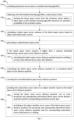
- FIG. 1 provides a flowchart of a method 100 configured to enable active learning for object classification in visual perception tasks in a vehicle configured to provide at least partial driving automation.
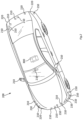
- Fig. 2 illustrates a vehicle according to the present disclosure and Fig. 3 illustrates an automotive controller configured to perform method 100.
- Method 100 is configured to enable active learning for object classification in visual perception tasks in a vehicle, such as vehicle 200 of Fig. 2 , configured to provide at least partial driving automation.
- Vehicle 200 in the context of the present disclosure refers to any kind of motor vehicle configured to transport people and/or cargo.
- the motor of vehicle 200 may be any kind of motor, such as an electric motor or an internal combustion engine.
- Vehicle 200 may e.g. be a passenger vehicle. It will however be understood that the vehicle 200 may also be a bus, a truck or any other kind of vehicle including one or more sensors 210 and an automotive control unit 300 enabling vehicle 200 to provide at least partial driving automation. That is, automotive control unit 300 and one or more sensors 210 are configured to enable at least partial driving automation, i.e. level 2 as defined in standard J3016 of SAE International.
- method 100 enables accurate performance of object classification in visual perception tasks within automotive control unit 400 in order to enable safe control of the longitudinal and the lateral of vehicle 200. It will be understood that method 100, automotive control unit 300 and one or more sensors 210 may enable higher levels of automation, e.g. up to and including level 5 as defined in standard J3016 of SAE International.
- the one or more sensors 210 may be configured to capture automotive sensor data indicative of the environment of vehicle 200, which may provide the environmental awareness enabling at least partial driving automation.
- the one or more sensors 210 may provide vehicle 200 with information on the position and size of other vehicles or with information regarding road surface markings, which are extracted from the automotive sensor data based on the object classification performed by the machine learning algorithm.
- the one or more sensors 210 may be radar sensors, which may be configured to emit radio waves in order to determine a distance, an angle and a velocity of objects around the vehicle based on the reflected radio waves.
- the one or more sensors 210 may be light detection and ranging (LIDAR) sensors, which are configured to emit laser beams in order to determine a distance, an angle and a velocity of objects around vehicle 200 based on the reflected laser beams.
- the one or more sensors 210 may be cameras, which capture images of the environment of the vehicle.
- the one or more sensors 210 may be thermographic cameras, which capture images of the environment of vehicle 200 based on infrared radiation. It will be understood that LIDAR sensors, radar sensors or cameras are merely provided as examples of sensor types of the one or more sensors 210.
- the one or more sensors 210 may also be ultrasonic sensors. More generally, the one or more sensors 210 may be any type of sensor capable of capturing sensor data indicative of the environment of vehicle 200.
- vehicle 200 may include multiple sensors of various types of sensors. Further, the one or more sensors 210 of the same type may exhibit different properties, e.g. by being configured to capture sensor data at different ranges, such as a close range, a middle range and a far range.
- vehicle 200 may include three close range radar sensors each at a front and a back of vehicle 200, a middle range to far range radar sensor at the back of vehicle 200, a LIDAR sensor at the front of vehicle 200, a rear-facing camera at the back of vehicle 200, a front-facing camera at the front of the vehicle, a front-facing camera at the rear-view mirror and a rear-facing close range to middle range radar sensor in each door-mounted outer rear view mirror.
- vehicle 200 may include more or fewer automotive sensors than shown in Fig. 2 and discussed in the above example.
- Automotive control unit 300 will be discussed in more detail below with regard to Fig. 3 .
- visual perception task refers to any kind of task identifying one or more object classes within the automotive sensor data captured by the one or more sensors 210.
- the visual perception task may for example identify within automotive sensor data provided by a camera included in vehicle 200 whether vehicle 200 is located on a controlled-access highway, a limited-access road, an arterial road, a local road or a parking lot.
- the one or more object classes correspond to the type of road on which vehicle 200 may be located.
- the visual perception task may for example identify within automotive sensor data provided by a LIDAR sensor and multiple cameras included in vehicle 200 other vehicles and the type of vehicle, road surface markings and the type of road surface marking, road signs and the type of road sign, vulnerable road users (VRUs) as well as traffic lights and the indication state of the traffic light.
- the one or more object classes may correspond to any possible road user, road traffic control device and road surface marking as well as any other type of possible element in the vicinity of vehicle 200 relevant for providing at least partial driving automation.
- the visual perception task may thus be any perception task determining the class of objects in the vicinity of vehicle 200, with the objects referring to both a determination of the general environment of vehicle 200 as well as a determination of individual elements in the vicinity of vehicle 200.
- active learning is thus to be understood in the context of the present disclosure to refer to a machine learning algorithm performing the visual perception task requesting an object classifier to label the automotive sensor data, i.e. to determine an object class within the automotive sensor data.
- the machine learning algorithm may be any kind of machine learning algorithm which has been trained based on training automotive sensor data to classify objects in an environment of the vehicle, i.e. which has been trained to perform a visual perception task as defined above.
- Training automotive sensor data may be unlabeled, partially labeled or fully labeled.
- the training automotive sensor data may include the corresponding object classes in addition to the automotive sensor data.
- the training automotive sensor data need not be fully labeled.
- the machine learning algorithm may be a feature extractor configured to extract objects from the automotive sensor data and to determine the object class of the extracted objects.
- the machine learning algorithm may e.g. be an artificial neural network (ANN) or an autoencoder.
- ANN artificial neural network
- step 110 method 100 provides automotive sensor data to the machine learning algorithm. That is, the automotive sensor data serve as an input of the machine learning algorithm while an output of the machine learning algorithm corresponds to an object class determined by the machine learning algorithm based on the automotive sensor data.
- step 120 method 100 obtains a latent space vector from the machine learning algorithm.
- the latent space vector corresponds to activation values within a latent space of the machine learning algorithm.
- the latent space includes all activation values of the machine learning algorithm without activation values corresponding to the input and the output.
- the latent space may for example include the activation values of all neurons of all layers excluding the input layer and the output layer.
- the latent space vector may thus include all activation values of an intermediate layer of the ANN.
- the intermediate layer may for example be the layer of the ANN preceding the output layer.
- the latent space may again include all activation values of all neurons between the input layer and the output layer with the latent space vector corresponding to a code, i.e. the bottleneck, of the autoencoder.
- the components of the latent space vector may directly be a subset of the activation values within the latent space, e.g. the activation values of all neurons of a layer of an ANN, or may be values obtained based on processing of a subset of the activation values within the latent space.
- the components of the latent space vector may reflect a probability of an activation of a given neuron, which may be derived from the corresponding activation values and the deviation of the corresponding output and the correspondingly determined object class of the machine learning algorithm from a normal distribution of the determined object class.
- the components of latent space vectors may correspond to pre-processed activation values of the latent space of the machine learning algorithm in order to improve the OOD detection of the automotive sensor data and thereby the selection of the automotive sensor data for active learning.
- step 120 may include a step 121, in which method 100 derives the latent space vector from the activation values within the latent space of the machine learning algorithm based on an activation probability of the activation values.
- method 100 calculates at least one latent space vector variance of the latent space vector based on object class latent space vectors.
- the object class latent space vectors correspond to previous automotive sensor data determined to correspond to the object class of the latent space vector.
- method 100 may determine, as part of step 130, latent space vectors whose corresponding automotive sensor data were previously classified as belonging to the same object class as the latent space vector during execution of the visual perception task by the machine learning algorithm.
- the object class latent space vectors may be a set of latent space vectors determined for each object class during training of the machine learning algorithm or may be continuously updated based on further object classification performed with automotive data constantly processed by the machine learning algorithm during operation of vehicle 200.
- method 100 may calculate on latent space vector variance based on the magnitude of the latent space vector with regard to the magnitude of the object class latent space vectors. Method 100 may also, as part of step 130, calculate the variance of some or all components of the latent space vector with regard to the corresponding some or all components of the object latent space vectors.
- the calculation of the at least latent space vector variance enables determining whether the latent space vector is OOD. That is, step 130 corresponds to the first step of the two-step approach for active learning selection discussed above.
- step 130 and the accordingly derived components of the latent space vector together correspond the first step of the two-step approach for active learning selection discussed above.
- Method 100 may include a step 140, in which method 100 generates a reduced latent space vector, which includes the components of the latent space vector exceeding a variance threshold.
- the variance threshold may be any value indicative of a given latent space vector variance being OOD for a given object class.
- the at least one latent space vector variance may further be used to reduce the dimensionality of the latent space vector to dimensions determined to be OOD, thereby reducing the computational effort of the subsequent steps of method 100.
- step 150 method 100 determines, the latent space vector distance quotient discussed above.
- the latent space vector distance quotient is indicative of a distance of the latent space vector to a closest object class latent space vector of the object class latent space vectors relative to a distance of the latent space vector to a closest latent space vector determined to correspond to an object class different from the object class of the latent space vector.
- method 100 determines in step 150 the shortest, i.e. closest, distance of the latent space vector to an object class latent space vector, i.e. a latent space vector whose corresponding automotive sensor data were previously classified as belonging to the same object class as the latent space vector during execution of the visual perception task by the machine learning algorithm.
- the object class latent space vector accordingly is one of the object class latent space vectors used to calculate the at least one latent space vector variance in step 130.
- method 100 determines in step 150 the shortest, i.e. closest, distance of the latent space vector to a latent space vector whose corresponding automotive sensor data were previously classified as belonging to a different object class than the latent space vector during execution of the visual perception task by the machine learning algorithm. Both distances may e.g. be the Euclidian distance between the latent space vector and the closest object class latent space vector.
- Step 150 accordingly implements the second step of the two-step active learning approach and thereby ensures that automotive sensor data is chosen for active learning which corresponds to both spare regions of the determined object class due to the distance from the closest object class latent space vector and to decision boundaries between different object classes due to the closeness of the latent space vector to a latent space vector of a different object class.
- method 100 may include a step 151, in which method 100 may calculate the latent space vector distance quotient based on dividing an inner class distance by an outer class distance.
- the inner class distance may correspond to a distance between the latent space vector and an object class latent space vector of the object class latent space vectors closest to the latent space vector.
- the outer class distance may correspond to a distance between the latent space vector and a different object class latent space vector closest to the latent space vector.
- the different object class latent space vector may correspond to an object class different from the object class corresponding to the latent space vector.
- method 100 may determine the latent space vector distance quotient based on the reduced latent space vector. That is, in examples in which method 100 generates the reduced latent space vector, the latent space vector distance quotient is indicative of a distance of the reduced latent space vector to a closest reduced object class latent space vector of the object class latent space vectors relative to a distance of the reduced latent space vector to a closest reduced latent space vector determined to correspond to an object class different from the object class of the latent space vector. In other words, the determination of the latent space vector distance quotient may only be based on the dimensions of the reduced latent space vector, which may reduce the computational effort of the determination of the latent space vector distance quotient.
- Method 100 may include a step 160, in which method 100 normalizes the latent space vector distance quotient to a normalized latent space vector distance quotient which has a value within a distance quotient range. Further method 100 may include a step 170, in which method 100 reverses the normalized latent space vector distance quotient. Normalizing the latent space vector quotient and reversing the normalized latent space vector distance quotient may improve the comparability and further processing of the latent space vector distance quotient.
- Normalizing the latent space vector distance quotient to the normalized latent space vector distance quotient may be based on one of a sigmoid function, a hyperbolic tangent function, a Soboleva modified hyperbolic tangent function or a Gaussian function.
- step 180 method 100 provides the automotive sensor data to an object classifier based on the latent space vector distance quotient. That is, the automotive sensor data may be chosen for active learning, i.e. may be chosen labeling, if the latent space vector distance quotient indicates that the classification of the automotive sensor data appears to be OOD and corresponds to areas with low coverage and/or decision boundaries.
- the object classifier may be one of a user of vehicle 200 and a cloud-based object classification service. More generally, the object classifier may be any entity capable of labeling the autonomous data if requested to dos so and may also be referred to as an oracle or an annotator. In other words, if the automotive sensor data is chosen for active learning, the automotive sensor data may e.g.
- the automotive sensor data may be displayed to the user of vehicle 200 to obtain a classification of the automotive sensor data from the user.
- the automotive sensor data may be displayed to the user of vehicle 200 on a screen integrated into the dashboard of vehicle 200 alongside with a request to for example confirm that a traffic control device visible in the automotive sensor data is indeed a stop sign or in the alternative to indicate what is visible in the automotive sensor data.
- the automotive sensor data may be wirelessly transmitted to the cloud-based object classification service, which may classify the one or more objects visible in the automotive sensor data and may provide the labeled automotive sensor data to not only vehicle 200 but to all vehicles of the manufacturer in order to improve the performance of the visual perception task by the machine algorithm on all vehicles of the manufacturer.
- the cloud-based object classification service may classify the one or more objects visible in the automotive sensor data and may provide the labeled automotive sensor data to not only vehicle 200 but to all vehicles of the manufacturer in order to improve the performance of the visual perception task by the machine algorithm on all vehicles of the manufacturer.
- Providing the automotive sensor data to the object classifier may be based on a latent space vector distance quotient threshold. That is, the automotive sensor data may be provided to the object classifier if the latent space vector distance quotient exceeds a value indicative of a necessity that the automotive data be labeled due to the latent space vector distance quotient indicating that the automotive sensor data may be OOD and may increase the coverage in spare regions of an object class or at decision boundaries.
- Providing the automotive sensor data to the object classifier may also be based on selecting one or more sets of automotive sensor data with corresponding latent space vector distance quotients indicating that the one or more sets of automotive sensor data may be more OOD and may increase the coverage in spare regions of an object class or at decision boundaries more than other sets of automotive sensor data.
- method 100 may include steps 181 and 182.
- step 181 method 100 may store the latent space vector distance quotient and the corresponding automotive sensor data as well as one or more previously determined latent space vector distance quotients and the corresponding automotive sensor data and one or more subsequently determined latent space vector distance quotients and the corresponding automotive sensor data.
- step 181 method 100 may provide to the object classifier one or more of the latent space vector distance quotient, the one or more previously determined latent space vector distance quotients and the one or more subsequently determined latent space vector distance quotients and the corresponding automotive sensor data based on a ranking of the corresponding latent space vector distance quotients.
- Fig. 3 shows automotive control unit 300 configured to perform method 100.
- automotive control unit 300 may include a processor 310, a graphics processing unit (GPU) 320, automotive processing system 330, a memory 340, a removable storage 350, a storage 360, a cellular interface 370, a global navigation satellite system (GNSS) interface 380 and a communication interface 390.
- GPU graphics processing unit
- GNSS global navigation satellite system
- Processor 310 may be any kind of single-core or multi-core processing unit employing a reduced instruction set (RISC) or a complex instruction set (CISC).
- RISC reduced instruction set
- CISC complex instruction set
- Exemplary RISC processing units include ARM based cores or RISC V based cores.
- Exemplary CISC processing units include x86 based cores or x86-64 based cores.
- Processor 310 may perform instructions causing automotive control unit 300 to perform method 100.
- Processor 310 may be directly coupled to any of the components of computing device 300 or may be directly coupled to memory 330, GPU 320 and a device bus.
- GPU 320 may be any kind of processing unit optimized for processing graphics related instructions or more generally for parallel processing of instructions.
- GPU 320 may be configured to generate a display of information, such as ADAS information or telemetry data, to a driver of the vehicle, e.g. via a head-up display (HUD) or a display arranged within the view of the driver.
- GPU 320 may be coupled to the HUD and/or the display via connection 320C.
- GPU 320 may further perform at least a part of method 100 to enable fast parallel processing of instructions relating to method 300.
- processor 310 may determine that GPU 320 need not perform instructions relating to method 300.
- GPU 320 may be directly coupled to any of the components of automotive control unit 300 or may be directly coupled to processor 310 and memory 330. In some embodiments, GPU 320 may also be coupled to the device bus.
- Automotive processing system 330 may be any kind of system-on chip configured to provide trillions of operations per second (TOPS) in order to enable automotive control unit 300 to implement one or more ADAS while driving. Automotive processing system 330 may only interface with processor 310 or may interface with other devices via the system bus. Automotive processing system 330 may for example execute the machine learning algorithm performing the visual perception task.
- TOPS operations per second
- Memory 340 may be any kind of fast storage enabling processor 310, GPU 320 and automotive processing system 430 to store instructions for fast retrieval during processing of instructions as well as to cache and buffer data.
- Memory 340 may be a unified memory coupled to processor 310 and GPU 320 and automotive processing system 330 in order to enable allocation of memory 340 to processor 310, GPU 320 and automotive processing system 330 as needed.
- processor 310, GPU 320 and automotive processing system 330 may be coupled to separate processor memory 340a, GPU memory 340b and automotive processing system memory 340c.
- Removable storage 350 may be a storage device which can be removably coupled with automotive control unit 400. Examples include a digital versatile disc (DVD), a compact disc (CD), a Universal Serial Bus (USB) storage device, such as an external SSD, or a magnetic tape. It should be noted that removable storage 350 may store data, such as instructions of method 200 and/or automotive sensor data, or may be omitted.
- DVD digital versatile disc
- CD compact disc
- USB Universal Serial Bus
- removable storage 350 may store data, such as instructions of method 200 and/or automotive sensor data, or may be omitted.
- Storage 360 may be a storage device enabling storage of program instructions and other data.
- storage 360 may be a hard disk drive (HDD), a solid state disk (SSD) or some other type of non-volatile memory.
- HDD hard disk drive
- SSD solid state disk
- Storage 360 may for example store the instructions of method 100.
- Removable Storage 350 and storage 360 may be coupled to processor 310 via the system bus.
- the system bus may be any kind of bus system enabling processor 310 and optionally GPU 320 as well as automotive processing system 330 to communicate with the other devices of automotive control unit 300.
- the system bus may for example be a Peripheral Component Interconnect express (PCIe) bus or a Serial AT Attachment (SATA) bus.
- PCIe Peripheral Component Interconnect express
- SATA Serial AT Attachment
- Cellular interface 370 may be any kind of interface enabling automotive control unit 300 to communicate via a cellular network, such as a 4G network or a 5G network.
- GNSS interface 380 may be any kind of interface enabling automotive control unit 300 to receive position data provided by a satellite network, such as the Global Positioning System (GPS), the Global Navigation Satellite System (GLONASS) or Galileo.
- GPS Global Positioning System
- GLONASS Global Navigation Satellite System
- Galileo Galileo
- the position data may be used when generating and updating egress route graph 320 and when determining and re-determining the egress route.
- Communications interface 390 may enable computing device 300 to interface with external devices, either directly or via network, via connection 380C.
- Communications interface 380 may for example enable computing device 300 to couple to a wired or wireless network, such as Ethernet, Wifi, a Controller Area Network (CAN) bus or any bus system appropriate in vehicles.
- automotive control unit 300 may be coupled to the one or more sensors 210 to receive information about the environment of vehicle 200 in order to classify objects in the vicinity of vehicle 200.
- Communications interface 390 may also include a USB port or a serial port to enable direct communication with an external device.
- Automotive control unit 300 may be integrated with the vehicle, e.g. beneath the cabin, under the dashboard or in the trunk of vehicle 300.
- the invention may further be illustrated by the following examples.
- a method is configured to enable active learning for object classification in visual perception tasks in a vehicle configured to provide at least partial driving automation.
- the example method provides automotive sensor data to a machine learning algorithm.
- the machine learning algorithm has been trained based on training automotive sensor data to classify objects in an environment of the vehicle.
- the automotive sensor data serve as an input of the machine learning algorithm.
- An output of the machine learning algorithm corresponds to an object class determined by the machine learning algorithm based on the automotive sensor data.
- the example method further obtains, from the machine learning algorithm, a latent space vector.
- the latent space vector corresponds to activation values within a latent space of the machine learning algorithm.
- the latent space includes all activation values of the machine learning algorithm without activation values corresponding to the input and the output.
- the example method further calculates at least one latent space vector variance of the latent space vector based on object class latent space vectors.
- the object class latent space vectors correspond to previous automotive sensor data determined to correspond to the object class of the latent space vector. If the at least one latent space vector variance exceeds a variance threshold, the example method determines a latent space vector distance quotient.
- the latent space vector distance quotient is indicative of a distance of the latent space vector to a closest object class latent space vector of the object class latent space vectors relative to a distance of the latent space vector to a closest latent space vector determined to correspond to an object class different from the object class of the latent space vector.
- the example method provides the automotive sensor data to an object classifier based on the latent space vector distance quotient.
- determining the latent space vector distance quotient may comprise calculating the latent space vector distance quotient based on dividing an inner class distance by an outer class distance, wherein the inner class distance may correspond to a distance between the latent space vector and an object class latent space vector of the object class latent space vectors closest to the latent space vector and wherein the outer class distance may correspond to a distance between the latent space vector and a different object class latent space vector closest to the latent space vector, the different object class latent space vector corresponding to an object class different from the object class corresponding to the latent space vector.
- the example method may further comprise if at least one of the latent space vector variances exceeds a variance threshold, generating a reduced latent space vector, the reduced latent space vector including the components of the latent space vector exceeding the variance threshold, wherein the determining the latent space vector distance quotient may be indicative of a distance of the reduced latent space vector to a closest reduced object class latent space vector of the object class latent space vectors relative to a distance of the reduced latent space vector to a closest reduced latent space vector determined to correspond to an object class different from the object class of the latent space vector.
- the obtaining the latent space vector may include deriving the latent space vector from the activation values within the latent space of the machine learning algorithm based on an activation probability of the activation values.
- the example method may further comprise normalizing the latent space vector distance quotient to a normalized latent space vector distance quotient having a value within a distance quotient range and reversing the normalized latent space vector distance quotient.
- the normalizing the latent space vector distance quotient to the normalized latent space vector distance quotient may be based on one of a sigmoid function, a hyperbolic tangent function, a Soboleva modified hyperbolic tangent function or a Gaussian function.
- the machine learning algorithm may be an artificial neural network
- the latent space vector may include all activation values of an intermediate layer of the artificial neural network between an input layer and an output layer of the artificial neural network.
- the intermediate layer may be the layer of the artificial neural network preceding the output layer.
- the machine learning algorithm may be an autoencoder
- the latent space vector may correspond to a code of the autoencoder
- the providing the automotive sensor data to the object may be based on a latent space vector distance quotient threshold.
- the providing the automotive sensor data to the object classifier may include storing the latent space vector distance quotient and the corresponding automotive sensor data as well as one or more previously determined latent space vector distance quotients and the corresponding automotive sensor data and one or more subsequently determined latent space vector distance quotients and the corresponding automotive sensor data and providing to the object classifier one or more of the latent space vector distance quotient, the one or more previously determined latent space vector distance quotients and the one or more subsequently determined latent space vector distance quotients and the corresponding automotive sensor data based on a ranking of the corresponding latent space vector distance quotients.
- the object classifier may be one of a user of the vehicle and a cloud-based object classification service.
- an automotive control unit comprises at least one processing unit and a memory coupled to the at least one processing unit and configured to store machine-readable instructions.
- the machine-readable instructions cause the at least one processing unit to provide automotive sensor data to a machine learning algorithm.
- the machine learning algorithm has been trained based on training automotive sensor data to classify objects in an environment of the vehicle.
- the automotive sensor data serve as an input of the machine learning algorithm.
- An output of the machine learning algorithm corresponds to an object class determined by the machine learning algorithm based on the automotive sensor data.
- the machine-readable instructions further cause the at least one processing unit to obtain, from the machine learning algorithm, a latent space vector.
- the latent space vector corresponds to activation values within a latent space of the machine learning algorithm.
- the latent space includes all activation values of the machine learning algorithm without activation values corresponding to the input and the output.
- the machine-readable instructions further cause the at least one processing unit to calculate at least one latent space vector variance of the latent space vector based on object class latent space vectors.
- the object class latent space vectors correspond to previous automotive sensor data determined to correspond to the object class of the latent space vector. If the at least one latent space vector variance exceeds a variance threshold, the machine-readable instructions cause the at least one processing unit to determine a latent space vector distance quotient.
- the latent space vector distance quotient is indicative of a distance of the latent space vector to a closest object class latent space vector of the object class latent space vectors relative to a distance of the latent space vector to a closest latent space vector determined to correspond to an object class different from the object class of the latent space vector.
- the machine-readable instructions cause the at least one processing unit to provide the automotive sensor data to an object classifier based on the latent space vector distance quotient.
- the machine-readable instructions may further cause the at least one processing unit to perform the method of any one of the above example methods.
- a vehicle comprises the automotive control unit of any one of the above example automotive control units.
Landscapes
- Engineering & Computer Science (AREA)
- Theoretical Computer Science (AREA)
- Physics & Mathematics (AREA)
- General Physics & Mathematics (AREA)
- Evolutionary Computation (AREA)
- Computer Vision & Pattern Recognition (AREA)
- Artificial Intelligence (AREA)
- Data Mining & Analysis (AREA)
- Multimedia (AREA)
- General Health & Medical Sciences (AREA)
- Computing Systems (AREA)
- Health & Medical Sciences (AREA)
- Software Systems (AREA)
- Databases & Information Systems (AREA)
- General Engineering & Computer Science (AREA)
- Life Sciences & Earth Sciences (AREA)
- Medical Informatics (AREA)
- Bioinformatics & Cheminformatics (AREA)
- Bioinformatics & Computational Biology (AREA)
- Evolutionary Biology (AREA)
- Mathematical Physics (AREA)
- Molecular Biology (AREA)
- Computational Linguistics (AREA)
- Biophysics (AREA)
- Biomedical Technology (AREA)
- Probability & Statistics with Applications (AREA)
- Traffic Control Systems (AREA)
Abstract
A machine learning algorithm trained to classify objects in automotive sensor data is provided with automotive sensor data as an input. Based on this input, the machine learning algorithm determines an object class. Then, a latent space vector corresponding to activation values within a latent space of the machine learning algorithm is obtained and at least one latent space vector variance is calculated. If the at least one latent space vector variance exceeds a variance threshold, a latent space vector distance quotient is determined, which is indicative of a distance of the latent space vector to a closest object class latent space vector of the same object class relative to a distance of the latent space vector to a closest latent space vector of a different object class. Finally, the automotive sensor data is provided to an object classifier based on the latent space vector distance quotient.
Description
- The invention generally relates to active learning and more precisely to active learning in the context of perception tasks in vehicles configured to provide at least partial driving automation.
- To enable at least partial driving automation, a vehicle needs to accurately perform automotive perception tasks, such as object classification, object detection or semantic segmentation. These perception tasks are usually performed by machine learning algorithms, which need to be trained on large datasets and may be further improved even once the vehicle is deployed in traffic. One way of ensuring accurate performance of automotive perception tasks by the machine learning algorithms is to train the machine learning algorithms with large, labeled datasets, i.e. datasets which indicate the outcome of the respective automotive perception task. However, since such labeling may be performed manually, large, labeled datasets to train machine learning algorithms for at least partial driving automation may be costly to generate. To overcome this issue, active learning may be used, i.e. a given machine learning algorithm may be inferenced on unlabeled data and may request that a subset of the unlabeled data be labeled based on active learning criteria. However, the active learning criteria need to generally be determined in a way which improves a given machine learning algorithm and in the context of at least partial driving automation need to enable achieving the level of accuracy of a machine learning algorithm required for of at least partial driving automation.
- It is therefore an objective of the present disclosure to provide active learning criteria which enable the training and improvement of a machine learning algorithm configured to perform an automotive perception task in a manner ensuring the accuracy required for at least partial driving automation.
- To achieve this objective, the present disclosure provides a method configured to enable active learning for object classification in visual perception tasks in a vehicle configured to provide at least partial driving automation. The method provides automotive sensor data to a machine learning algorithm. The machine learning algorithm has been trained based on training automotive sensor data to classify objects in an environment of the vehicle. The automotive sensor data serve as an input of the machine learning algorithm. An output of the machine learning algorithm corresponds to an object class determined by the machine learning algorithm based on the automotive sensor data. The method further obtains, from the machine learning algorithm, a latent space vector. The latent space vector corresponds to activation values within a latent space of the machine learning algorithm. The latent space includes all activation values of the machine learning algorithm without activation values corresponding to the input and the output. The method further calculates at least one latent space vector variance of the latent space vector based on object class latent space vectors. The object class latent space vectors correspond to previous automotive sensor data determined to correspond to the object class of the latent space vector. If the at least one latent space vector variance exceeds a variance threshold, the method determines a latent space vector distance quotient. The latent space vector distance quotient is indicative of a distance of the latent space vector to a closest object class latent space vector of the object class latent space vectors relative to a distance of the latent space vector to a closest latent space vector determined to correspond to an object class different from the object class of the latent space vector. Finally, the method provides the automotive sensor data to an object classifier based on the latent space vector distance quotient.
- The present disclosure further provides an automotive control unit. The automotive control unit comprises at least one processing unit and a memory coupled to the at least one processing unit and configured to store machine-readable instructions. The machine-readable instructions cause the at least one processing unit to provide automotive sensor data to a machine learning algorithm. The machine learning algorithm has been trained based on training automotive sensor data to classify objects in an environment of the vehicle. The automotive sensor data serve as an input of the machine learning algorithm. An output of the machine learning algorithm corresponds to an object class determined by the machine learning algorithm based on the automotive sensor data. The machine-readable instructions further cause the at least one processing unit to obtain, from the machine learning algorithm, a latent space vector. The latent space vector corresponds to activation values within a latent space of the machine learning algorithm. The latent space includes all activation values of the machine learning algorithm without activation values corresponding to the input and the output. The machine-readable instructions further cause the at least one processing unit to calculate at least one latent space vector variance of the latent space vector based on object class latent space vectors. The object class latent space vectors correspond to previous automotive sensor data determined to correspond to the object class of the latent space vector. If the at least one latent space vector variance exceeds a variance threshold, the machine-readable instructions cause the at least one processing unit to determine a latent space vector distance quotient. The latent space vector distance quotient is indicative of a distance of the latent space vector to a closest object class latent space vector of the object class latent space vectors relative to a distance of the latent space vector to a closest latent space vector determined to correspond to an object class different from the object class of the latent space vector. Finally, the machine-readable instructions cause the at least one processing unit to provide the automotive sensor data to an object classifier based on the latent space vector distance quotient.
- The present disclosure further provides a vehicle comprising the automotive control unit.
- Examples of the present disclosure will be described with reference to the following appended drawings, in which like reference signs refer to like elements.
-
FIG. 1 shows a flowchart of a method configured to enable active learning for object classification in visual perception tasks in a vehicle configured to provide at least partial driving automation according to examples of the present disclosure. -
FIG. 2 illustrates a vehicle according to examples of the present disclosure. -
Fig. 3 illustrates an automotive control unit according to examples of the present disclosure. - It should be understood that the above-identified drawings are in no way meant to limit the present disclosure. Rather, these drawings are provided to assist in understanding the present disclosure. The person skilled in the art will readily understand that aspects of the present invention shown in one drawing may be combined with aspects in another drawing or may be omitted without departing from the scope of the present disclosure.
- The present disclosure generally provides a method configured to enable active learning for object classification in visual perception tasks in a vehicle configured to provide at least partial driving automation. In addition, the present disclosure generally provides an automotive control unit configured to execute instructions implementing said method and a vehicle including said automotive control unit.
- To enable active learning for object classification in visual perception tasks in a vehicle, a machine learning algorithm is initially trained with training automotive sensor data in order to determine object classes in automotive sensor data, i.e. data captured by various automotive sensors of the vehicle. During both the training of the machine learning algorithm, if the training data is fully or partially unlabeled, as well as during the subsequent deployment of the machine learning algorithm during operation of the vehicle on the road, the machine learning algorithm may perform data collection for active learning. More precisely, the machine learning algorithm performs the data collection for active learning using a two-step approach based on a latent space vector obtained from a latent space of the machine learning algorithm.
- In the first step, at least one latent space vector variance of the latent space vector with regard to latent space vectors is determined to correspond to the same object class as the latent space vector is calculated. The at least one latent space vector variance may e.g. be a variance of the magnitude of the latent space vector or a variance of some or all components of the latent space vector. If the at least one latent space vector variance exceeds a variance threshold, the latent space vector is considered to be out-of-distribution (OOD).
- If the at least one latent space vector variance exceeds the variance threshold, a latent space vector distance quotient is calculated in the second step. The latent space vector distance quotient indicates whether the latent space vector is closer to a latent space vector determined to correspond to another object class than to a latent space vector determined to correspond to the same object class as the latent space vector. Based on latent space vector distance quotient, the automotive sensor data corresponding to the latent space vector are provided to an object classifier, which labels the data and returns the automotive sensor data together with the label to the machine learning algorithm in order to improve the performance of the perception task by the machine learning algorithm.
- By providing automotive sensor data to the object classifier based on the latent space vector distance quotient, automotive sensor data is chosen for active learning which corresponds to spares regions of the determined object class due to the distance from the closest latent space vector of the same object class as the latent space vector. Further, due to this approach automotive sensor data is chosen for active learning which corresponds to decision boundaries between object classes due to the closeness of the latent space vector to a latent space vector of a different object class.
- In summary, performing active learning using the two-step approach enables selecting automotive sensor data for labeling by the object classifier which is OOD and which enables increasing coverage in sparse regions of the determined object class and which enables increasing coverage at decision boundaries, i.e. at boundaries between object classes.
- This general concept will be explained with reference to the appended drawings, with
Fig. 1 providing a flowchart of amethod 100 configured to enable active learning for object classification in visual perception tasks in a vehicle configured to provide at least partial driving automation. In addition,Fig. 2 illustrates a vehicle according to the present disclosure andFig. 3 illustrates an automotive controller configured to performmethod 100. - It will be understood that dashed boxes in
Fig. 1 illustrate optional steps ofmethod 100. -
Method 100 is configured to enable active learning for object classification in visual perception tasks in a vehicle, such asvehicle 200 ofFig. 2 , configured to provide at least partial driving automation. -
Vehicle 200 in the context of the present disclosure refers to any kind of motor vehicle configured to transport people and/or cargo. The motor ofvehicle 200 may be any kind of motor, such as an electric motor or an internal combustion engine.Vehicle 200 may e.g. be a passenger vehicle. It will however be understood that thevehicle 200 may also be a bus, a truck or any other kind of vehicle including one ormore sensors 210 and anautomotive control unit 300 enablingvehicle 200 to provide at least partial driving automation. That is,automotive control unit 300 and one ormore sensors 210 are configured to enable at least partial driving automation, i.e.level 2 as defined in standard J3016 of SAE International. Accordingly,method 100 enables accurate performance of object classification in visual perception tasks within automotive control unit 400 in order to enable safe control of the longitudinal and the lateral ofvehicle 200. It will be understood thatmethod 100,automotive control unit 300 and one ormore sensors 210 may enable higher levels of automation, e.g. up to and including level 5 as defined in standard J3016 of SAE International. - The one or
more sensors 210 may be configured to capture automotive sensor data indicative of the environment ofvehicle 200, which may provide the environmental awareness enabling at least partial driving automation. For example, the one ormore sensors 210 may providevehicle 200 with information on the position and size of other vehicles or with information regarding road surface markings, which are extracted from the automotive sensor data based on the object classification performed by the machine learning algorithm. To this end, the one ormore sensors 210 may be radar sensors, which may be configured to emit radio waves in order to determine a distance, an angle and a velocity of objects around the vehicle based on the reflected radio waves. The one ormore sensors 210 may be light detection and ranging (LIDAR) sensors, which are configured to emit laser beams in order to determine a distance, an angle and a velocity of objects aroundvehicle 200 based on the reflected laser beams. The one ormore sensors 210 may be cameras, which capture images of the environment of the vehicle. The one ormore sensors 210 may be thermographic cameras, which capture images of the environment ofvehicle 200 based on infrared radiation. It will be understood that LIDAR sensors, radar sensors or cameras are merely provided as examples of sensor types of the one ormore sensors 210. For example, the one ormore sensors 210 may also be ultrasonic sensors. More generally, the one ormore sensors 210 may be any type of sensor capable of capturing sensor data indicative of the environment ofvehicle 200. It will further be understood that the one ormore sensors 210 may include multiple sensors of various types of sensors. Further, the one ormore sensors 210 of the same type may exhibit different properties, e.g. by being configured to capture sensor data at different ranges, such as a close range, a middle range and a far range. For example,vehicle 200 may include three close range radar sensors each at a front and a back ofvehicle 200, a middle range to far range radar sensor at the back ofvehicle 200, a LIDAR sensor at the front ofvehicle 200, a rear-facing camera at the back ofvehicle 200, a front-facing camera at the front of the vehicle, a front-facing camera at the rear-view mirror and a rear-facing close range to middle range radar sensor in each door-mounted outer rear view mirror. It will be understood thatvehicle 200 may include more or fewer automotive sensors than shown inFig. 2 and discussed in the above example. -
Automotive control unit 300 will be discussed in more detail below with regard toFig. 3 . - In the context of the present disclosure, visual perception task refers to any kind of task identifying one or more object classes within the automotive sensor data captured by the one or
more sensors 210. The visual perception task may for example identify within automotive sensor data provided by a camera included invehicle 200 whethervehicle 200 is located on a controlled-access highway, a limited-access road, an arterial road, a local road or a parking lot. In this case, the one or more object classes correspond to the type of road on whichvehicle 200 may be located. Further, the visual perception task may for example identify within automotive sensor data provided by a LIDAR sensor and multiple cameras included invehicle 200 other vehicles and the type of vehicle, road surface markings and the type of road surface marking, road signs and the type of road sign, vulnerable road users (VRUs) as well as traffic lights and the indication state of the traffic light. Accordingly, the one or more object classes may correspond to any possible road user, road traffic control device and road surface marking as well as any other type of possible element in the vicinity ofvehicle 200 relevant for providing at least partial driving automation. More generally, the visual perception task may thus be any perception task determining the class of objects in the vicinity ofvehicle 200, with the objects referring to both a determination of the general environment ofvehicle 200 as well as a determination of individual elements in the vicinity ofvehicle 200. - In the context of the visual perception task, active learning is thus to be understood in the context of the present disclosure to refer to a machine learning algorithm performing the visual perception task requesting an object classifier to label the automotive sensor data, i.e. to determine an object class within the automotive sensor data.
- The machine learning algorithm may be any kind of machine learning algorithm which has been trained based on training automotive sensor data to classify objects in an environment of the vehicle, i.e. which has been trained to perform a visual perception task as defined above. Training automotive sensor data may be unlabeled, partially labeled or fully labeled. In other words, the training automotive sensor data may include the corresponding object classes in addition to the automotive sensor data. However, given the active learning functionality discussed above and described in detail below, the training automotive sensor data need not be fully labeled. The machine learning algorithm may be a feature extractor configured to extract objects from the automotive sensor data and to determine the object class of the extracted objects. To this end, the machine learning algorithm may e.g. be an artificial neural network (ANN) or an autoencoder.
- In
step 110,method 100 provides automotive sensor data to the machine learning algorithm. That is, the automotive sensor data serve as an input of the machine learning algorithm while an output of the machine learning algorithm corresponds to an object class determined by the machine learning algorithm based on the automotive sensor data. - In
step 120,method 100 obtains a latent space vector from the machine learning algorithm. The latent space vector corresponds to activation values within a latent space of the machine learning algorithm. The latent space includes all activation values of the machine learning algorithm without activation values corresponding to the input and the output. Using an ANN as an example of the machine learning algorithm, the latent space may for example include the activation values of all neurons of all layers excluding the input layer and the output layer. In this example, the latent space vector may thus include all activation values of an intermediate layer of the ANN. The intermediate layer may for example be the layer of the ANN preceding the output layer. Using an autoencoder as a further example of the machine learning algorithm, the latent space may again include all activation values of all neurons between the input layer and the output layer with the latent space vector corresponding to a code, i.e. the bottleneck, of the autoencoder. - Since the latent space vector corresponds to activation values within the latent space of the machine learning algorithm, it will be understood that the components of the latent space vector may directly be a subset of the activation values within the latent space, e.g. the activation values of all neurons of a layer of an ANN, or may be values obtained based on processing of a subset of the activation values within the latent space. For example, the components of the latent space vector may reflect a probability of an activation of a given neuron, which may be derived from the corresponding activation values and the deviation of the corresponding output and the correspondingly determined object class of the machine learning algorithm from a normal distribution of the determined object class. The lower the probability that a given neuron is activated, the higher the probability that an activation of the given neuron leads to a determination of an object class of the corresponding automotive sensor data which may be OOD. Accordingly, in some examples of the present disclosure, the components of latent space vectors may correspond to pre-processed activation values of the latent space of the machine learning algorithm in order to improve the OOD detection of the automotive sensor data and thereby the selection of the automotive sensor data for active learning.
- To this end, step 120 may include a step 121, in which
method 100 derives the latent space vector from the activation values within the latent space of the machine learning algorithm based on an activation probability of the activation values. - In
step 130,method 100 calculates at least one latent space vector variance of the latent space vector based on object class latent space vectors. The object class latent space vectors correspond to previous automotive sensor data determined to correspond to the object class of the latent space vector. In other words,method 100 may determine, as part ofstep 130, latent space vectors whose corresponding automotive sensor data were previously classified as belonging to the same object class as the latent space vector during execution of the visual perception task by the machine learning algorithm. The object class latent space vectors may be a set of latent space vectors determined for each object class during training of the machine learning algorithm or may be continuously updated based on further object classification performed with automotive data constantly processed by the machine learning algorithm during operation ofvehicle 200. As part ofstep 130,method 100 may calculate on latent space vector variance based on the magnitude of the latent space vector with regard to the magnitude of the object class latent space vectors.Method 100 may also, as part ofstep 130, calculate the variance of some or all components of the latent space vector with regard to the corresponding some or all components of the object latent space vectors. The calculation of the at least latent space vector variance enables determining whether the latent space vector is OOD. That is,step 130 corresponds to the first step of the two-step approach for active learning selection discussed above. In examples of the present disclosure, in which the latent space vector includes components derived from the activation values based on the activation probability, as discussed above,step 130 and the accordingly derived components of the latent space vector together correspond the first step of the two-step approach for active learning selection discussed above. -
Method 100 may include astep 140, in whichmethod 100 generates a reduced latent space vector, which includes the components of the latent space vector exceeding a variance threshold. The variance threshold may be any value indicative of a given latent space vector variance being OOD for a given object class. In other words, in addition to using the at least one latent space vector variance for OOD detection, the at least one latent space vector variance may further be used to reduce the dimensionality of the latent space vector to dimensions determined to be OOD, thereby reducing the computational effort of the subsequent steps ofmethod 100. - In
step 150,method 100 determines, the latent space vector distance quotient discussed above. The latent space vector distance quotient is indicative of a distance of the latent space vector to a closest object class latent space vector of the object class latent space vectors relative to a distance of the latent space vector to a closest latent space vector determined to correspond to an object class different from the object class of the latent space vector. In other words,method 100 determines instep 150 the shortest, i.e. closest, distance of the latent space vector to an object class latent space vector, i.e. a latent space vector whose corresponding automotive sensor data were previously classified as belonging to the same object class as the latent space vector during execution of the visual perception task by the machine learning algorithm. As will be apparent, the object class latent space vector accordingly is one of the object class latent space vectors used to calculate the at least one latent space vector variance instep 130. Likewise,method 100 determines instep 150 the shortest, i.e. closest, distance of the latent space vector to a latent space vector whose corresponding automotive sensor data were previously classified as belonging to a different object class than the latent space vector during execution of the visual perception task by the machine learning algorithm. Both distances may e.g. be the Euclidian distance between the latent space vector and the closest object class latent space vector. Step 150 accordingly implements the second step of the two-step active learning approach and thereby ensures that automotive sensor data is chosen for active learning which corresponds to both spare regions of the determined object class due to the distance from the closest object class latent space vector and to decision boundaries between different object classes due to the closeness of the latent space vector to a latent space vector of a different object class. - To determine the latent space vector quotient,
method 100 may include a step 151, in whichmethod 100 may calculate the latent space vector distance quotient based on dividing an inner class distance by an outer class distance. The inner class distance may correspond to a distance between the latent space vector and an object class latent space vector of the object class latent space vectors closest to the latent space vector. The outer class distance may correspond to a distance between the latent space vector and a different object class latent space vector closest to the latent space vector. The different object class latent space vector may correspond to an object class different from the object class corresponding to the latent space vector. - In examples of the present disclosure in which
method 100 generates the reduced latent space vector,method 100 may determine the latent space vector distance quotient based on the reduced latent space vector. That is, in examples in whichmethod 100 generates the reduced latent space vector, the latent space vector distance quotient is indicative of a distance of the reduced latent space vector to a closest reduced object class latent space vector of the object class latent space vectors relative to a distance of the reduced latent space vector to a closest reduced latent space vector determined to correspond to an object class different from the object class of the latent space vector. In other words, the determination of the latent space vector distance quotient may only be based on the dimensions of the reduced latent space vector, which may reduce the computational effort of the determination of the latent space vector distance quotient. -
Method 100 may include astep 160, in whichmethod 100 normalizes the latent space vector distance quotient to a normalized latent space vector distance quotient which has a value within a distance quotient range.Further method 100 may include astep 170, in whichmethod 100 reverses the normalized latent space vector distance quotient. Normalizing the latent space vector quotient and reversing the normalized latent space vector distance quotient may improve the comparability and further processing of the latent space vector distance quotient. Normalizing the latent space vector distance quotient to the normalized latent space vector distance quotient may be based on one of a sigmoid function, a hyperbolic tangent function, a Soboleva modified hyperbolic tangent function or a Gaussian function. - In
step 180,method 100 provides the automotive sensor data to an object classifier based on the latent space vector distance quotient. That is, the automotive sensor data may be chosen for active learning, i.e. may be chosen labeling, if the latent space vector distance quotient indicates that the classification of the automotive sensor data appears to be OOD and corresponds to areas with low coverage and/or decision boundaries. The object classifier may be one of a user ofvehicle 200 and a cloud-based object classification service. More generally, the object classifier may be any entity capable of labeling the autonomous data if requested to dos so and may also be referred to as an oracle or an annotator. In other words, if the automotive sensor data is chosen for active learning, the automotive sensor data may e.g. be displayed to the user ofvehicle 200 to obtain a classification of the automotive sensor data from the user. For example. The automotive sensor data may be displayed to the user ofvehicle 200 on a screen integrated into the dashboard ofvehicle 200 alongside with a request to for example confirm that a traffic control device visible in the automotive sensor data is indeed a stop sign or in the alternative to indicate what is visible in the automotive sensor data. If the object classifier is a cloud-based object classification service, such as a classification service of the manufacturer ofvehicle 200, the automotive sensor data may be wirelessly transmitted to the cloud-based object classification service, which may classify the one or more objects visible in the automotive sensor data and may provide the labeled automotive sensor data to not onlyvehicle 200 but to all vehicles of the manufacturer in order to improve the performance of the visual perception task by the machine algorithm on all vehicles of the manufacturer. - Providing the automotive sensor data to the object classifier may be based on a latent space vector distance quotient threshold. That is, the automotive sensor data may be provided to the object classifier if the latent space vector distance quotient exceeds a value indicative of a necessity that the automotive data be labeled due to the latent space vector distance quotient indicating that the automotive sensor data may be OOD and may increase the coverage in spare regions of an object class or at decision boundaries. Providing the automotive sensor data to the object classifier may also be based on selecting one or more sets of automotive sensor data with corresponding latent space vector distance quotients indicating that the one or more sets of automotive sensor data may be more OOD and may increase the coverage in spare regions of an object class or at decision boundaries more than other sets of automotive sensor data. To this end,
method 100 may includesteps step 181,method 100 may store the latent space vector distance quotient and the corresponding automotive sensor data as well as one or more previously determined latent space vector distance quotients and the corresponding automotive sensor data and one or more subsequently determined latent space vector distance quotients and the corresponding automotive sensor data. Instep 181,method 100 may provide to the object classifier one or more of the latent space vector distance quotient, the one or more previously determined latent space vector distance quotients and the one or more subsequently determined latent space vector distance quotients and the corresponding automotive sensor data based on a ranking of the corresponding latent space vector distance quotients. -
Fig. 3 showsautomotive control unit 300 configured to performmethod 100.automotive control unit 300 may include aprocessor 310, a graphics processing unit (GPU) 320,automotive processing system 330, amemory 340, aremovable storage 350, astorage 360, acellular interface 370, a global navigation satellite system (GNSS)interface 380 and acommunication interface 390. -
Processor 310 may be any kind of single-core or multi-core processing unit employing a reduced instruction set (RISC) or a complex instruction set (CISC). Exemplary RISC processing units include ARM based cores or RISC V based cores. Exemplary CISC processing units include x86 based cores or x86-64 based cores.Processor 310 may perform instructions causingautomotive control unit 300 to performmethod 100.Processor 310 may be directly coupled to any of the components ofcomputing device 300 or may be directly coupled tomemory 330,GPU 320 and a device bus. -
GPU 320 may be any kind of processing unit optimized for processing graphics related instructions or more generally for parallel processing of instructions. As such,GPU 320 may be configured to generate a display of information, such as ADAS information or telemetry data, to a driver of the vehicle, e.g. via a head-up display (HUD) or a display arranged within the view of the driver.GPU 320 may be coupled to the HUD and/or the display via connection 320C.GPU 320 may further perform at least a part ofmethod 100 to enable fast parallel processing of instructions relating tomethod 300. It should be noted that in some embodiments,processor 310 may determine thatGPU 320 need not perform instructions relating tomethod 300.GPU 320 may be directly coupled to any of the components ofautomotive control unit 300 or may be directly coupled toprocessor 310 andmemory 330. In some embodiments,GPU 320 may also be coupled to the device bus. -
Automotive processing system 330 may be any kind of system-on chip configured to provide trillions of operations per second (TOPS) in order to enableautomotive control unit 300 to implement one or more ADAS while driving.Automotive processing system 330 may only interface withprocessor 310 or may interface with other devices via the system bus.Automotive processing system 330 may for example execute the machine learning algorithm performing the visual perception task. -
Memory 340 may be any kind of faststorage enabling processor 310,GPU 320 and automotive processing system 430 to store instructions for fast retrieval during processing of instructions as well as to cache and buffer data.Memory 340 may be a unified memory coupled toprocessor 310 andGPU 320 andautomotive processing system 330 in order to enable allocation ofmemory 340 toprocessor 310,GPU 320 andautomotive processing system 330 as needed. Alternatively,processor 310,GPU 320 andautomotive processing system 330 may be coupled toseparate processor memory 340a,GPU memory 340b and automotiveprocessing system memory 340c. -
Removable storage 350 may be a storage device which can be removably coupled with automotive control unit 400. Examples include a digital versatile disc (DVD), a compact disc (CD), a Universal Serial Bus (USB) storage device, such as an external SSD, or a magnetic tape. It should be noted thatremovable storage 350 may store data, such as instructions ofmethod 200 and/or automotive sensor data, or may be omitted. -
Storage 360 may be a storage device enabling storage of program instructions and other data. For example,storage 360 may be a hard disk drive (HDD), a solid state disk (SSD) or some other type of non-volatile memory.Storage 360 may for example store the instructions ofmethod 100. -
Removable Storage 350 andstorage 360 may be coupled toprocessor 310 via the system bus. The system bus may be any kind of bussystem enabling processor 310 and optionallyGPU 320 as well asautomotive processing system 330 to communicate with the other devices ofautomotive control unit 300. The system bus may for example be a Peripheral Component Interconnect express (PCIe) bus or a Serial AT Attachment (SATA) bus. -
Cellular interface 370 may be any kind of interface enablingautomotive control unit 300 to communicate via a cellular network, such as a 4G network or a 5G network. -
GNSS interface 380 may be any kind of interface enablingautomotive control unit 300 to receive position data provided by a satellite network, such as the Global Positioning System (GPS), the Global Navigation Satellite System (GLONASS) or Galileo. The position data may be used when generating and updatingegress route graph 320 and when determining and re-determining the egress route. - Communications interface 390 may enable
computing device 300 to interface with external devices, either directly or via network, via connection 380C. Communications interface 380 may for example enablecomputing device 300 to couple to a wired or wireless network, such as Ethernet, Wifi, a Controller Area Network (CAN) bus or any bus system appropriate in vehicles. For example,automotive control unit 300 may be coupled to the one ormore sensors 210 to receive information about the environment ofvehicle 200 in order to classify objects in the vicinity ofvehicle 200. Communications interface 390 may also include a USB port or a serial port to enable direct communication with an external device. -
Automotive control unit 300 may be integrated with the vehicle, e.g. beneath the cabin, under the dashboard or in the trunk ofvehicle 300. - The invention may further be illustrated by the following examples.
- In an example, a method is configured to enable active learning for object classification in visual perception tasks in a vehicle configured to provide at least partial driving automation. The example method provides automotive sensor data to a machine learning algorithm. The machine learning algorithm has been trained based on training automotive sensor data to classify objects in an environment of the vehicle. The automotive sensor data serve as an input of the machine learning algorithm. An output of the machine learning algorithm corresponds to an object class determined by the machine learning algorithm based on the automotive sensor data. The example method further obtains, from the machine learning algorithm, a latent space vector. The latent space vector corresponds to activation values within a latent space of the machine learning algorithm. The latent space includes all activation values of the machine learning algorithm without activation values corresponding to the input and the output. The example method further calculates at least one latent space vector variance of the latent space vector based on object class latent space vectors. The object class latent space vectors correspond to previous automotive sensor data determined to correspond to the object class of the latent space vector. If the at least one latent space vector variance exceeds a variance threshold, the example method determines a latent space vector distance quotient. The latent space vector distance quotient is indicative of a distance of the latent space vector to a closest object class latent space vector of the object class latent space vectors relative to a distance of the latent space vector to a closest latent space vector determined to correspond to an object class different from the object class of the latent space vector. Finally, the example method provides the automotive sensor data to an object classifier based on the latent space vector distance quotient.
- In the example method, determining the latent space vector distance quotient may comprise calculating the latent space vector distance quotient based on dividing an inner class distance by an outer class distance, wherein the inner class distance may correspond to a distance between the latent space vector and an object class latent space vector of the object class latent space vectors closest to the latent space vector and wherein the outer class distance may correspond to a distance between the latent space vector and a different object class latent space vector closest to the latent space vector, the different object class latent space vector corresponding to an object class different from the object class corresponding to the latent space vector.
- The example method may further comprise if at least one of the latent space vector variances exceeds a variance threshold, generating a reduced latent space vector, the reduced latent space vector including the components of the latent space vector exceeding the variance threshold, wherein the determining the latent space vector distance quotient may be indicative of a distance of the reduced latent space vector to a closest reduced object class latent space vector of the object class latent space vectors relative to a distance of the reduced latent space vector to a closest reduced latent space vector determined to correspond to an object class different from the object class of the latent space vector.
- In the example method, the obtaining the latent space vector may include deriving the latent space vector from the activation values within the latent space of the machine learning algorithm based on an activation probability of the activation values.
- The example method may further comprise normalizing the latent space vector distance quotient to a normalized latent space vector distance quotient having a value within a distance quotient range and reversing the normalized latent space vector distance quotient.
- In the example method, the normalizing the latent space vector distance quotient to the normalized latent space vector distance quotient may be based on one of a sigmoid function, a hyperbolic tangent function, a Soboleva modified hyperbolic tangent function or a Gaussian function.
- In the example method, the machine learning algorithm may be an artificial neural network, and the latent space vector may include all activation values of an intermediate layer of the artificial neural network between an input layer and an output layer of the artificial neural network.
- In the example method, the intermediate layer may be the layer of the artificial neural network preceding the output layer.
- In the example method, the machine learning algorithm may be an autoencoder, and the latent space vector may correspond to a code of the autoencoder.
- In the example method, the providing the automotive sensor data to the object may be based on a latent space vector distance quotient threshold.
- In the example method, the providing the automotive sensor data to the object classifier may include storing the latent space vector distance quotient and the corresponding automotive sensor data as well as one or more previously determined latent space vector distance quotients and the corresponding automotive sensor data and one or more subsequently determined latent space vector distance quotients and the corresponding automotive sensor data and providing to the object classifier one or more of the latent space vector distance quotient, the one or more previously determined latent space vector distance quotients and the one or more subsequently determined latent space vector distance quotients and the corresponding automotive sensor data based on a ranking of the corresponding latent space vector distance quotients.
- In the example method, the object classifier may be one of a user of the vehicle and a cloud-based object classification service.
- In an example, an automotive control unit, comprises at least one processing unit and a memory coupled to the at least one processing unit and configured to store machine-readable instructions. The machine-readable instructions cause the at least one processing unit to provide automotive sensor data to a machine learning algorithm. The machine learning algorithm has been trained based on training automotive sensor data to classify objects in an environment of the vehicle. The automotive sensor data serve as an input of the machine learning algorithm. An output of the machine learning algorithm corresponds to an object class determined by the machine learning algorithm based on the automotive sensor data. The machine-readable instructions further cause the at least one processing unit to obtain, from the machine learning algorithm, a latent space vector. The latent space vector corresponds to activation values within a latent space of the machine learning algorithm. The latent space includes all activation values of the machine learning algorithm without activation values corresponding to the input and the output. The machine-readable instructions further cause the at least one processing unit to calculate at least one latent space vector variance of the latent space vector based on object class latent space vectors. The object class latent space vectors correspond to previous automotive sensor data determined to correspond to the object class of the latent space vector. If the at least one latent space vector variance exceeds a variance threshold, the machine-readable instructions cause the at least one processing unit to determine a latent space vector distance quotient. The latent space vector distance quotient is indicative of a distance of the latent space vector to a closest object class latent space vector of the object class latent space vectors relative to a distance of the latent space vector to a closest latent space vector determined to correspond to an object class different from the object class of the latent space vector. Finally, the machine-readable instructions cause the at least one processing unit to provide the automotive sensor data to an object classifier based on the latent space vector distance quotient.
- In the example automotive control unit, the machine-readable instructions may further cause the at least one processing unit to perform the method of any one of the above example methods.
- In an example, a vehicle comprises the automotive control unit of any one of the above example automotive control units.
- The preceding description has been provided to illustrate enabling active learning for object classification in visual perception tasks in a vehicle. It should be understood that the description is in no way meant to limit the scope of the present disclosure to the precise embodiments discussed throughout the description. Rather, the person skilled in the art will be aware that the examples of the present disclosure may be combined, modified or condensed without departing from the scope of the present disclosure as defined by the following claims.
-
- 100
- method
- 110 -182
- method steps
- 200
- vehicle
- 210
- automotive sensor
- 220
- light
- 300
- automotive control unit
- 310
- CPU
- 320
- GPU
- 320c
- connection
- 330
- automotive processing system
- 340
- memory
- 350
- removable storage
- 360
- storage
- 370
- cellular interface
- 380
- GNSS interface
- 390
- communications interface
Claims (15)
- Method (100) configured to enable active learning for object classification in visual perception tasks in a vehicle (200) configured to provide at least partial driving automation, comprising:providing (110) automotive sensor data to a machine learning algorithm, the machine learning algorithm having been trained based on training automotive sensor data to classify objects in an environment of the vehicle, wherein the automotive sensor data serve as an input of the machine learning algorithm and wherein an output of the machine learning algorithm corresponds to an object class determined by the machine learning algorithm based on the automotive sensor data;obtaining (120), from the machine learning algorithm, a latent space vector, the latent space vector corresponding to activation values within a latent space of the machine learning algorithm, the latent space including all activation values of the machine learning algorithm without activation values corresponding to the input and the output;calculating (130) at least one latent space vector variance of the latent space vector based on object class latent space vectors, the object class latent space vectors corresponding to previous automotive sensor data determined to correspond to the object class of the latent space vector;if the at least one latent space vector variance exceeds a variance threshold, determining (150) a latent space vector distance quotient indicative of a distance of the latent space vector to a closest object class latent space vector of the object class latent space vectors relative to a distance of the latent space vector to a closest latent space vector determined to correspond to an object class different from the object class of the latent space vector; andproviding (180) the automotive sensor data to an object classifier based on the latent space vector distance quotient.
- The method (100) of claim 1, wherein the determining (140) the latent space vector distance quotient comprises:calculating (151) the latent space vector distance quotient based on dividing an inner class distance by an outer class distance,wherein the inner class distance corresponds to a distance between the latent space vector and an object class latent space vector of the object class latent space vectors closest to the latent space vector, andwherein the outer class distance corresponds to a distance between the latent space vector and a different object class latent space vector closest to the latent space vector, the different object class latent space vector corresponding to an object class different from the object class corresponding to the latent space vector.
- The method (100) of any one of the preceding claims, further comprising:if at least one of the latent space vector variances exceeds a variance threshold, generating (140) a reduced latent space vector, the reduced latent space vector including the components of the latent space vector exceeding the variance threshold,wherein the determining (150) the latent space vector distance quotient is indicative of a distance of the reduced latent space vector to a closest reduced object class latent space vector of the object class latent space vectors relative to a distance of the reduced latent space vector to a closest reduced latent space vector determined to correspond to an object class different from the object class of the latent space vector.
- The method (100) of any one of the preceding claims, wherein the obtaining (120) the latent space vector includes deriving (121) the latent space vector from the activation values within the latent space of the machine learning algorithm based on an activation probability of the activation values.
- The method (100) of any one of the preceding claims, further comprising:normalizing (160) the latent space vector distance quotient to a normalized latent space vector distance quotient having a value within a distance quotient range; andreversing (170) the normalized latent space vector distance quotient.
- The method (100) of claim 5, wherein the normalizing the latent space vector distance quotient to the normalized latent space vector distance quotient is based on one of a sigmoid function, a hyperbolic tangent function, a Soboleva modified hyperbolic tangent function or a Gaussian function.
- The method (100) of any one of the preceding claims, wherein:the machine learning algorithm is an artificial neural network, andthe latent space vector includes all activation values of an intermediate layer of the artificial neural network between an input layer and an output layer of the artificial neural network.
- The method (100) of claim 6, wherein the intermediate layer is the layer of the artificial neural network preceding the output layer.
- The method (100) of any one of claims 1 to 6, wherein:the machine learning algorithm is an autoencoder, andthe latent space vector corresponds to a code of the autoencoder.
- The method (100) of any one of the preceding claims, wherein the providing (180) the automotive sensor data to the object is based on a latent space vector distance quotient threshold.
- The method (100) of any one of claims 1 to 9, wherein the providing (180) the automotive sensor data to the object classifier includes:storing (181) the latent space vector distance quotient and the corresponding automotive sensor data as well as one or more previously determined latent space vector distance quotients and the corresponding automotive sensor data and one or more subsequently determined latent space vector distance quotients and the corresponding automotive sensor data; andproviding (182) to the object classifier one or more of the latent space vector distance quotient, the one or more previously determined latent space vector distance quotients and the one or more subsequently determined latent space vector distance quotients and the corresponding automotive sensor data based on a ranking of the corresponding latent space vector distance quotients.
- The method of any one of the preceding claims, wherein the object classifier is one of a user of the vehicle and a cloud-based object classification service.
- An automotive control unit (300), comprising:at least one processing unit (310); anda memory (340, 350, 360) coupled to the at least one processing unit (310) and configured to store machine-readable instructions, wherein the machine-readable instructions cause the at least one processing unit to:provide automotive sensor data to a machine learning algorithm, the machine learning algorithm having been trained based on training automotive sensor data to classify objects in an environment of the vehicle, wherein the automotive sensor data serve as an input of the machine learning algorithm and wherein an output of the machine learning algorithm corresponds to an object class determined by the machine learning algorithm based on the automotive sensor data;obtain, from the machine learning algorithm, a latent space vector, the latent space vector corresponding to activation values within a latent space of the machine learning algorithm, the latent space including all activation values of the machine learning algorithm without activation values corresponding to the input and the output;calculate at least one latent space vector variance of the latent space vector based on object class latent space vectors, the object class latent space vectors corresponding to previous automotive sensor data determined to correspond to the object class of the latent space vector;if the at least one latent space vector variance exceeds a variance threshold, determine a latent space vector distance quotient indicative of a distance of the latent space vector to a closest object class latent space vector of the object class latent space vectors relative to a distance of the latent space vector to a closest latent space vector determined to correspond to an object class different from the object class of the latent space vector; andprovide the automotive sensor data to an object classifier based on the latent space vector distance quotient.
- The automotive control unit (300) of claim 13, wherein the machine-readable instructions further cause the at least one processing unit (310) to perform the method of any one of claims 2 to 11.
- A vehicle (200) comprising the automotive control unit (300) of any one of claims 13 and 14.
Applications Claiming Priority (1)
| Application Number | Priority Date | Filing Date | Title |
|---|---|---|---|
| DE102023133826.9A DE102023133826A1 (en) | 2023-12-04 | 2023-12-04 | Active learning for object classification in visual perception tasks in a vehicle |
Publications (1)
| Publication Number | Publication Date |
|---|---|
| EP4567743A1 true EP4567743A1 (en) | 2025-06-11 |
Family
ID=93563559
Family Applications (1)
| Application Number | Title | Priority Date | Filing Date |
|---|---|---|---|
| EP24213149.8A Pending EP4567743A1 (en) | 2023-12-04 | 2024-11-15 | Active learning for object classification in visual perception tasks in a vehicle |
Country Status (4)
| Country | Link |
|---|---|
| US (1) | US20250182492A1 (en) |
| EP (1) | EP4567743A1 (en) |
| CN (1) | CN120105031A (en) |
| DE (1) | DE102023133826A1 (en) |
-
2023
- 2023-12-04 DE DE102023133826.9A patent/DE102023133826A1/en active Pending
-
2024
- 2024-11-15 EP EP24213149.8A patent/EP4567743A1/en active Pending
- 2024-12-03 US US18/966,662 patent/US20250182492A1/en active Pending
- 2024-12-03 CN CN202411763089.7A patent/CN120105031A/en active Pending
Non-Patent Citations (2)
| Title |
|---|
| RINYOICHI TAKEZOE ET AL: "Deep Active Learning for Computer Vision: Past and Future", ARXIV.ORG, CORNELL UNIVERSITY LIBRARY, 201 OLIN LIBRARY CORNELL UNIVERSITY ITHACA, NY 14853, 27 November 2022 (2022-11-27), XP091379897 * |
| WU JIAXI ET AL: "Entropy-based Active Learning for Object Detection with Progressive Diversity Constraint", 2022 IEEE/CVF CONFERENCE ON COMPUTER VISION AND PATTERN RECOGNITION (CVPR), IEEE, 18 June 2022 (2022-06-18), pages 9387 - 9396, XP034194929, [retrieved on 20220927], DOI: 10.1109/CVPR52688.2022.00918 * |
Also Published As
| Publication number | Publication date |
|---|---|
| US20250182492A1 (en) | 2025-06-05 |
| DE102023133826A1 (en) | 2025-06-05 |
| CN120105031A (en) | 2025-06-06 |
Similar Documents
| Publication | Publication Date | Title |
|---|---|---|
| US12412278B2 (en) | Object detection using skewed polygons suitable for parking space detection | |
| US12266148B2 (en) | Real-time detection of lanes and boundaries by autonomous vehicles | |
| US20230012645A1 (en) | Deep neural network processing for sensor blindness detection in autonomous machine applications | |
| EP3850539B1 (en) | Deep neural network processing for sensor blindness detection in autonomous machine applications | |
| US20200247404A1 (en) | Information processing device, information processing system, information processing method, and program | |
| US10495480B1 (en) | Automated travel lane recommendation | |
| CN116106905A (en) | Lane changing safety system based on radar | |
| CN116229390A (en) | Deep Learning-Based Operational Domain Validation Using Camera-Based Inputs for Autonomous Systems and Applications | |
| US11443622B2 (en) | Systems and methods for mitigating a risk of being followed by a vehicle | |
| US20240095937A1 (en) | Distance estimation using a geometrical distance aware machine learning model | |
| CN116320331A (en) | A data processing method and device | |
| US12528482B2 (en) | Methods and systems for automatic introspective perception | |
| US11994622B2 (en) | Methods and systems for providing scan data for decision making by a self-driving vehicle | |
| US20250182492A1 (en) | Active Learning for Object Classification in Visual Perception Tasks in a Vehicle | |
| CN118604834B (en) | Distance calculation method, device, vehicle and storage medium based on vehicle-mounted sensor | |
| US12078491B2 (en) | Self-localization of a vehicle in a parking infrastructure | |
| US20250265834A1 (en) | Uncertainty Based Active Learning for Object Classification in Visual Perception Tasks in a Vehicle | |
| EP4734072A1 (en) | Method and system for active learning in automated vehicles based on frame scores | |
| EP4685674A1 (en) | Two-stage active learning for object classification in automotive visual perception tasks | |
| US20250265815A1 (en) | Active Learning Based on Confusion Matrix Calibrated Uncertainty for Object Classification in Visual Perception Tasks in a Vehicle | |
| KR20240033564A (en) | Learning method and learning device for supporting autonomous driving by generating information on surrounding vehicles based on machine learning and testing method and testing device using the same | |
| EP4708220A1 (en) | Method and system for determining the relationship of object compliance detection and object classification in at least partially automated vehicles | |
| US20260094450A1 (en) | Machine-learning model for vehicle operation | |
| US12485904B2 (en) | Vehicle tire area control | |
| US20250042423A1 (en) | Automotive Perception Based on a Fused Sensor Graph |
Legal Events
| Date | Code | Title | Description |
|---|---|---|---|
| PUAI | Public reference made under article 153(3) epc to a published international application that has entered the european phase |
Free format text: ORIGINAL CODE: 0009012 |
|
| STAA | Information on the status of an ep patent application or granted ep patent |
Free format text: STATUS: THE APPLICATION HAS BEEN PUBLISHED |
|
| AK | Designated contracting states |
Kind code of ref document: A1 Designated state(s): AL AT BE BG CH CY CZ DE DK EE ES FI FR GB GR HR HU IE IS IT LI LT LU LV MC ME MK MT NL NO PL PT RO RS SE SI SK SM TR |
|
| STAA | Information on the status of an ep patent application or granted ep patent |
Free format text: STATUS: REQUEST FOR EXAMINATION WAS MADE |
|
| 17P | Request for examination filed |
Effective date: 20250612 |