EP4566711A1 - Method of preparing a hydrogenation catalyst - Google Patents
Method of preparing a hydrogenation catalyst Download PDFInfo
- Publication number
- EP4566711A1 EP4566711A1 EP24216035.6A EP24216035A EP4566711A1 EP 4566711 A1 EP4566711 A1 EP 4566711A1 EP 24216035 A EP24216035 A EP 24216035A EP 4566711 A1 EP4566711 A1 EP 4566711A1
- Authority
- EP
- European Patent Office
- Prior art keywords
- nickel
- reagent
- dispensing device
- alkoxylate
- reaction vessel
- Prior art date
- Legal status (The legal status is an assumption and is not a legal conclusion. Google has not performed a legal analysis and makes no representation as to the accuracy of the status listed.)
- Granted
Links
Images

Classifications
-
- B—PERFORMING OPERATIONS; TRANSPORTING
- B01—PHYSICAL OR CHEMICAL PROCESSES OR APPARATUS IN GENERAL
- B01J—CHEMICAL OR PHYSICAL PROCESSES, e.g. CATALYSIS OR COLLOID CHEMISTRY; THEIR RELEVANT APPARATUS
- B01J31/00—Catalysts comprising hydrides, coordination complexes or organic compounds
- B01J31/02—Catalysts comprising hydrides, coordination complexes or organic compounds containing organic compounds or metal hydrides
- B01J31/12—Catalysts comprising hydrides, coordination complexes or organic compounds containing organic compounds or metal hydrides containing organo-metallic compounds or metal hydrides
- B01J31/14—Catalysts comprising hydrides, coordination complexes or organic compounds containing organic compounds or metal hydrides containing organo-metallic compounds or metal hydrides of aluminium or boron
-
- B—PERFORMING OPERATIONS; TRANSPORTING
- B01—PHYSICAL OR CHEMICAL PROCESSES OR APPARATUS IN GENERAL
- B01J—CHEMICAL OR PHYSICAL PROCESSES, e.g. CATALYSIS OR COLLOID CHEMISTRY; THEIR RELEVANT APPARATUS
- B01J23/00—Catalysts comprising metals or metal oxides or hydroxides, not provided for in group B01J21/00
- B01J23/70—Catalysts comprising metals or metal oxides or hydroxides, not provided for in group B01J21/00 of the iron group metals or copper
- B01J23/74—Iron group metals
- B01J23/755—Nickel
-
- B—PERFORMING OPERATIONS; TRANSPORTING
- B01—PHYSICAL OR CHEMICAL PROCESSES OR APPARATUS IN GENERAL
- B01J—CHEMICAL OR PHYSICAL PROCESSES, e.g. CATALYSIS OR COLLOID CHEMISTRY; THEIR RELEVANT APPARATUS
- B01J31/00—Catalysts comprising hydrides, coordination complexes or organic compounds
- B01J31/02—Catalysts comprising hydrides, coordination complexes or organic compounds containing organic compounds or metal hydrides
- B01J31/12—Catalysts comprising hydrides, coordination complexes or organic compounds containing organic compounds or metal hydrides containing organo-metallic compounds or metal hydrides
- B01J31/14—Catalysts comprising hydrides, coordination complexes or organic compounds containing organic compounds or metal hydrides containing organo-metallic compounds or metal hydrides of aluminium or boron
- B01J31/143—Catalysts comprising hydrides, coordination complexes or organic compounds containing organic compounds or metal hydrides containing organo-metallic compounds or metal hydrides of aluminium or boron of aluminium
-
- B—PERFORMING OPERATIONS; TRANSPORTING
- B01—PHYSICAL OR CHEMICAL PROCESSES OR APPARATUS IN GENERAL
- B01J—CHEMICAL OR PHYSICAL PROCESSES, e.g. CATALYSIS OR COLLOID CHEMISTRY; THEIR RELEVANT APPARATUS
- B01J14/00—Chemical processes in general for reacting liquids with liquids; Apparatus specially adapted therefor
-
- B—PERFORMING OPERATIONS; TRANSPORTING
- B01—PHYSICAL OR CHEMICAL PROCESSES OR APPARATUS IN GENERAL
- B01J—CHEMICAL OR PHYSICAL PROCESSES, e.g. CATALYSIS OR COLLOID CHEMISTRY; THEIR RELEVANT APPARATUS
- B01J19/00—Chemical, physical or physico-chemical processes in general; Their relevant apparatus
- B01J19/24—Stationary reactors without moving elements inside
-
- B—PERFORMING OPERATIONS; TRANSPORTING
- B01—PHYSICAL OR CHEMICAL PROCESSES OR APPARATUS IN GENERAL
- B01J—CHEMICAL OR PHYSICAL PROCESSES, e.g. CATALYSIS OR COLLOID CHEMISTRY; THEIR RELEVANT APPARATUS
- B01J31/00—Catalysts comprising hydrides, coordination complexes or organic compounds
- B01J31/02—Catalysts comprising hydrides, coordination complexes or organic compounds containing organic compounds or metal hydrides
- B01J31/04—Catalysts comprising hydrides, coordination complexes or organic compounds containing organic compounds or metal hydrides containing carboxylic acids or their salts
-
- B—PERFORMING OPERATIONS; TRANSPORTING
- B01—PHYSICAL OR CHEMICAL PROCESSES OR APPARATUS IN GENERAL
- B01J—CHEMICAL OR PHYSICAL PROCESSES, e.g. CATALYSIS OR COLLOID CHEMISTRY; THEIR RELEVANT APPARATUS
- B01J31/00—Catalysts comprising hydrides, coordination complexes or organic compounds
- B01J31/02—Catalysts comprising hydrides, coordination complexes or organic compounds containing organic compounds or metal hydrides
- B01J31/12—Catalysts comprising hydrides, coordination complexes or organic compounds containing organic compounds or metal hydrides containing organo-metallic compounds or metal hydrides
- B01J31/122—Metal aryl or alkyl compounds
-
- B—PERFORMING OPERATIONS; TRANSPORTING
- B01—PHYSICAL OR CHEMICAL PROCESSES OR APPARATUS IN GENERAL
- B01J—CHEMICAL OR PHYSICAL PROCESSES, e.g. CATALYSIS OR COLLOID CHEMISTRY; THEIR RELEVANT APPARATUS
- B01J31/00—Catalysts comprising hydrides, coordination complexes or organic compounds
- B01J31/16—Catalysts comprising hydrides, coordination complexes or organic compounds containing coordination complexes
- B01J31/22—Organic complexes
- B01J31/2204—Organic complexes the ligands containing oxygen or sulfur as complexing atoms
- B01J31/2208—Oxygen, e.g. acetylacetonates
- B01J31/2226—Anionic ligands, i.e. the overall ligand carries at least one formal negative charge
- B01J31/223—At least two oxygen atoms present in one at least bidentate or bridging ligand
- B01J31/2239—Bridging ligands, e.g. OAc in Cr2(OAc)4, Pt4(OAc)8 or dicarboxylate ligands
-
- B—PERFORMING OPERATIONS; TRANSPORTING
- B01—PHYSICAL OR CHEMICAL PROCESSES OR APPARATUS IN GENERAL
- B01J—CHEMICAL OR PHYSICAL PROCESSES, e.g. CATALYSIS OR COLLOID CHEMISTRY; THEIR RELEVANT APPARATUS
- B01J35/00—Catalysts, in general, characterised by their form or physical properties
- B01J35/20—Catalysts, in general, characterised by their form or physical properties characterised by their non-solid state
- B01J35/27—Catalysts, in general, characterised by their form or physical properties characterised by their non-solid state in a liquid or molten state
-
- B—PERFORMING OPERATIONS; TRANSPORTING
- B01—PHYSICAL OR CHEMICAL PROCESSES OR APPARATUS IN GENERAL
- B01J—CHEMICAL OR PHYSICAL PROCESSES, e.g. CATALYSIS OR COLLOID CHEMISTRY; THEIR RELEVANT APPARATUS
- B01J37/00—Processes, in general, for preparing catalysts; Processes, in general, for activation of catalysts
- B01J37/04—Mixing
-
- C—CHEMISTRY; METALLURGY
- C08—ORGANIC MACROMOLECULAR COMPOUNDS; THEIR PREPARATION OR CHEMICAL WORKING-UP; COMPOSITIONS BASED THEREON
- C08C—TREATMENT OR CHEMICAL MODIFICATION OF RUBBERS
- C08C19/00—Chemical modification of rubber
- C08C19/02—Hydrogenation
-
- C—CHEMISTRY; METALLURGY
- C08—ORGANIC MACROMOLECULAR COMPOUNDS; THEIR PREPARATION OR CHEMICAL WORKING-UP; COMPOSITIONS BASED THEREON
- C08F—MACROMOLECULAR COMPOUNDS OBTAINED BY REACTIONS ONLY INVOLVING CARBON-TO-CARBON UNSATURATED BONDS
- C08F8/00—Chemical modification by after-treatment
- C08F8/04—Reduction, e.g. hydrogenation
-
- C—CHEMISTRY; METALLURGY
- C08—ORGANIC MACROMOLECULAR COMPOUNDS; THEIR PREPARATION OR CHEMICAL WORKING-UP; COMPOSITIONS BASED THEREON
- C08L—COMPOSITIONS OF MACROMOLECULAR COMPOUNDS
- C08L15/00—Compositions of rubber derivatives
-
- B—PERFORMING OPERATIONS; TRANSPORTING
- B01—PHYSICAL OR CHEMICAL PROCESSES OR APPARATUS IN GENERAL
- B01J—CHEMICAL OR PHYSICAL PROCESSES, e.g. CATALYSIS OR COLLOID CHEMISTRY; THEIR RELEVANT APPARATUS
- B01J2231/00—Catalytic reactions performed with catalysts classified in B01J31/00
- B01J2231/60—Reduction reactions, e.g. hydrogenation
-
- B—PERFORMING OPERATIONS; TRANSPORTING
- B01—PHYSICAL OR CHEMICAL PROCESSES OR APPARATUS IN GENERAL
- B01J—CHEMICAL OR PHYSICAL PROCESSES, e.g. CATALYSIS OR COLLOID CHEMISTRY; THEIR RELEVANT APPARATUS
- B01J2231/00—Catalytic reactions performed with catalysts classified in B01J31/00
- B01J2231/60—Reduction reactions, e.g. hydrogenation
- B01J2231/64—Reductions in general of organic substrates, e.g. hydride reductions or hydrogenations
- B01J2231/641—Hydrogenation of organic substrates, i.e. H2 or H-transfer hydrogenations, e.g. Fischer-Tropsch processes
- B01J2231/645—Hydrogenation of organic substrates, i.e. H2 or H-transfer hydrogenations, e.g. Fischer-Tropsch processes of C=C or C-C triple bonds
-
- B—PERFORMING OPERATIONS; TRANSPORTING
- B01—PHYSICAL OR CHEMICAL PROCESSES OR APPARATUS IN GENERAL
- B01J—CHEMICAL OR PHYSICAL PROCESSES, e.g. CATALYSIS OR COLLOID CHEMISTRY; THEIR RELEVANT APPARATUS
- B01J2531/00—Additional information regarding catalytic systems classified in B01J31/00
- B01J2531/30—Complexes comprising metals of Group III (IIIA or IIIB) as the central metal
- B01J2531/31—Aluminium
-
- B—PERFORMING OPERATIONS; TRANSPORTING
- B01—PHYSICAL OR CHEMICAL PROCESSES OR APPARATUS IN GENERAL
- B01J—CHEMICAL OR PHYSICAL PROCESSES, e.g. CATALYSIS OR COLLOID CHEMISTRY; THEIR RELEVANT APPARATUS
- B01J2531/00—Additional information regarding catalytic systems classified in B01J31/00
- B01J2531/80—Complexes comprising metals of Group VIII as the central metal
- B01J2531/84—Metals of the iron group
- B01J2531/847—Nickel
Definitions
- Embodiments disclosed herein relate to methods for preparation and use of a hydrogenation catalyst which find particular application in connection with the partial hydrogenation of unsaturated elastomers used in rubber compositions.
- Hydrogenation catalysts are often used for chemical modification of natural rubber and other unsaturated elastomers. This can help to provide the elastomer with greater stability against thermal, oxidative, and radiation-induced degradation.
- One catalyst system commonly used is a homogeneous Ziegler-Natta catalyst formed by reaction of a trialkylaluminum compound with a nickel alkyl carboxylate, such as nickel 2-ethylhexanoate or nickel (II) octanoate. The reaction may take place in a suitable solvent, such as hexane.
- a ratio of aluminum to nickel in the cocatalyst system is selected to provide active catalyst species while avoiding excess alkyl aluminum, which may interact with the active species to give an inactive product.
- the invention relates to a method in accordance with claim 1, to a hydrogenation catalyst in accordance with claim 12, to a rubber composition in accordance with claim 13 and to a system in accordance with claim 14.
- a method of forming a hydrogenation catalyst includes providing a first fluid including a first reagent in a first reagent dispensing device, the first reagent including an organoaluminum compound and providing a second fluid including a second reagent in a second reagent dispensing device, the second reagent including a nickel alkoxylate.
- the method further includes contemporaneously delivering the first fluid from the first reagent dispensing device and the second fluid from second reagent dispensing device to a reaction vessel at a constant stoichiometry of aluminum in the organoaluminum compound to nickel in the nickel alkoxylate, the organoaluminum compound reacting with the nickel alkoxylate in the reaction vessel to form the hydrogenation catalyst.
- At least one of the first fluid and the second fluid further may include a solvent.
- the solvent may be selected from the group consisting of aliphatic hydrocarbons, aromatic hydrocarbons, cycloaliphatic hydrocarbons and mixtures thereof.
- the solvent may be selected from the group consisting of hexane, pentane, toluene, benzene, cyclohexane and mixtures thereof.
- the organoaluminum compound may be represented by Formula I: where R 1 is selected from alkyl, alkoxy, aryl, alkaryl, arylalkyl and hydrogen R 2 is selected from alkyl (including cycloalkyl), aryl, alkaryl, arylalkyl and hydrogen; and R 3 is selected from alkyl (including cycloalkyl), aryl, alkaryl and arylalkyl.
- the organoaluminum compound may include a trialkylaluminum compound.
- R 1 , R 2 and R 3 may each independently be a C1 to C18 straight chain or branched alkyl group.
- the trialkylaluminum compound may be selected from the group consisting of trimethylaluminum, triethylaluminum, tri-n-propylaluminum, triisopropylaluminum, tri-n-butylaluminum, triisobutylaluminum, tripentylaluminum, trihexylaluminum, tricyclohexylaluminum, trioctylaluminum, and dimers and mixtures thereof.
- the nickel alkoxylate may be derived from a C6 to C18 carboxylic acid.
- the nickel alkoxylate may be selected from the group consisting of nickel (II) octoate and nickel octanoate.
- the constant stoichiometry of aluminum in the organoaluminum compound to nickel in the nickel alkoxylate may be fixed within a range of from 2:1 to 3.5:1, or up to 3:1.
- the step of contemporaneously delivering the first fluid from the first reagent dispensing device and the second fluid from the second reagent dispensing device to the reaction vessel may include maintaining the constant stoichiometry of aluminum in the organoaluminum compound to nickel in the nickel alkoxylate for at least two minutes, or at least 10 minutes, or at least 30 minutes.
- the first reagent dispensing device and the second reagent dispensing device may include syringes that are actuated by respective motors or by a common motor.
- the delivery may include pumping the first and second fluids to a mixing point upstream of the reaction vessel and delivering a mixture of the first and second fluids from the mixing point to the reaction vessel.
- the reaction vessel may be cooled during the reaction.
- a hydrogenation catalyst may be formed by the method described in any of the above aspects.
- a rubber composition may include a hydrogenated elastomer hydrogenated with the hydrogenation catalyst described above and at least one additive selected from the group consisting of fillers, plasticizers, zinc oxide, and a sulfur-based curing agent.
- an apparatus and reagents for forming a hydrogenation catalyst include a first reagent dispensing device which contains a first reagent, the first reagent including an organoaluminum compound and a second reagent dispensing device which contains a second reagent, the second reagent including a nickel alkoxylate.
- a first delivery tube connects the first reagent dispensing device with a mixing point.
- a second delivery tube connects the second reagent dispensing device with the mixing point.
- a common delivery tube connects the mixing point to a reaction vessel.
- a pressurizing mechanism pressurizes the first and second reagents so that they are delivered to the reaction vessel at a constant stoichiometry of aluminum in the organoaluminum compound to nickel in the nickel alkoxylate.
- the first and second reagent dispensing devices may include first and second syringes.
- the pressurizing mechanism may include a motor which drives a plunger of at least one of the first and second syringes.
- aspects of the exemplary embodiment relate to a hydrogenation catalyst, to an apparatus for preparing a hydrogenation catalyst, to a process for preparation of the hydrogenation catalyst, and to a method of hydrogenation which makes use of the catalyst.
- the hydrogenation catalyst can be used for the partial or complete hydrogenation of unsaturated hydrocarbons, such as alkenes and unsaturated elastomers, such as those used in rubber compositions.
- the hydrogenation catalyst can have superior activity and shelf stability, when compared with existing hydrogenation catalysts formed by reaction of a trialkyl aluminum compound with a nickel alkoxylate compound. Additionally, the catalyst can operate outside of previously used Ni:Al ratios.
- an organoaluminum compound is reacted with a nickel alkoxylate to form a complex in which nickel-containing particles of extremely small size (and thus a high active surface area) are dispersed in a gel in which the aluminum is concentrated.
- nickel alkoxylates include those derived from C6 to C18 carboxylic acids, such as nickel (II) octoate (which is nickel bis(2-ethylhexanoate)) and nickel octanoate.
- the organoaluminum compound contains at least one carbon to aluminum bond and can be represented by Formula I: where R 1 is selected from alkyl (including cycloalkyl), alkoxy, aryl, alkaryl, arylalkyl and hydrogen; R 2 is selected from alkyl (including cycloalkyl), aryl, alkaryl, arylalkyl and hydrogen; and R 3 is selected from alkyl (including cycloalkyl), aryl, alkaryl and arylalkyl.
- R 1 and R 2 are not hydrogen.
- R 1 , R 2 and R 3 are each an alkyl group, i.e., the organoaluminum compound is a trialkylaluminum compound.
- At least one of R 1 , R 2 and R 3 R 1 , R 2 and R 3 has a beta hydrogen.
- trialkylaluminum compounds include those where R 1 , R 2 and R 3 are each independently a C1 to C18 straight chain or branched alkyl group, or a C1 to C12 straight chain or branched alkyl group. Examples include trimethylaluminum, triethylaluminum, tri-n-propylaluminum, triisopropylaluminum, tri-n-butylaluminum, triisobutylaluminum, tripentylaluminum, trihexylaluminum, tricyclohexylaluminum, trioctylaluminum, and mixtures thereof.
- the trialkyl aluminum compound may exist in the form of a monomer or a dimer, or a mixture thereof. In one embodiment, the trialkylaluminum compound includes triisobutylaluminum.
- Representative aryl and alkylaryl organoaluminum compounds include triphenylaluminum, tri-p-tolylaluminum, tribenzylaluminum, ethyldiphenylaluminum, ethyl-di-p-tolylaluminum, ethyldibenzylaluminum, diethylphenylaluminum, diethyl-p-tolylaluminum, diethylbenzylaluminum, and mixtures thereof.
- organoaluminum compounds where R 1 is hydrogen include diethylaluminum hydride, di-n-propylaluminum hydride, di-n-butylaluminum hydride, diisobutylaluminum hydride, diphenylaluminum hydride, di-p-tolylaluminum hydride, dibenzylaluminum hydride, phenylethylaluminum hydride, phenyl-n-propylaluminum hydride, p-tolylethylaluminum hydride, p-tolyl-n-propylaluminum hydride, p-tolylisopropylaluminum hydride, benzylethylaluminum hydride, benzyl-n-propylaluminum hydride, and benzylisopropylaluminum hydride and mixtures thereof.
- R 1 and R 2 are hydrogen
- ethylaluminum dihydride butylaluminum dihydride, isobutylaluminum dihydride, octylaluminum dihydride, amylaluminum dihydride and mixtures thereof.
- diethylaluminum ethoxide and dipropylaluminum ethoxide are also included.
- the reaction of the reagents for forming the hydrogenation catalyst may be carried out in a reaction vessel in a suitable solvent.
- the reagents may be maintained at a constant stoichiometry throughout the catalyst preparation.
- constant stoichiometry it is meant that a molar ratio of the nickel in the nickel alkoxylate to the aluminum in the organoaluminum compound in the reaction vessel does not vary by more than ⁇ 10% or by no more than ⁇ 5% during preparation of the hydrogenation catalyst.
- the two reagents may be introduced to the reaction vessel contemporaneously, at fixed flow rates, so that the reagents in the reaction vessel are being continuously replenished, at the constant stoichiometry, while the reaction is taking place.
- a suitable pressurizing mechanism such as motor-driven pumps or other mechanism(s) for controlling the flow rates of both reagents through tubing that ensures the maintenance of the constant stoichiometry.
- the pumps are syringe pumps, although other pumps, such as gear pumps, screw pumps, peristaltic pumps, rotary pumps, and the like, are also contemplated, provided that they are capable of ensuring a constant stoichiometry.
- the flow rates may vary during the reaction, while maintaining the constant stoichiometry, e.g., through a gravity flow mechanism.
- the AI:Ni molar ratio of the reagents entering the reaction vessel is maintained at a constant value in the range of 1.5:1 to 3.5:1 or in the range of 2.3:1 to 2.5:1 throughout the addition.
- the solvent used in the reaction can be any organic solvent in which the two reagents (organoaluminum compound and nickel alkoxylate) are soluble. Additionally, since in the exemplary embodiment, the hydrogenation catalyst formed in the reaction remains dispersed in the solvent during subsequent use, it may be selected to be compatible with the elastomer(s) being hydrogenated.
- Example solvents include aprotic organic solvents, such as aliphatic, aromatic, and cycloaliphatic hydrocarbons, such as hexane, pentane, toluene, benzene, cyclohexane and mixtures thereof.
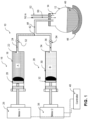
- FIGURE 1 illustrates an exemplary apparatus 10 for preparing the hydrogenation catalyst.
- a reaction vessel 12 such as a flask, has an open end 14 for receiving the two reagents.
- a first reagent delivery device, such as a syringe pump 16 includes a first barrel 18 which holds a first fluid A containing a first of the reagents (e.g., the organoaluminum compound), optionally dissolved or dispersed in a suitable solvent, such as hexane.
- a first plunger 20 forces the first fluid A containing the first reagent out of the first barrel 18 through a first outlet 22 and into a first delivery tube 24.
- the first plunger 20 is advanced by a first motor 26, such as a first stepper motor, while the first barrel is maintained in a fixed position.
- a similarly configured second reagent delivery device, such as a syringe pump 28 includes a second barrel 30 which holds a second fluid B containing a second of the reagents (e.g., the nickel alkoxylate), optionally dissolved or dispersed in a suitable solvent, such a hexane, or a different solvent.
- a second plunger 32 forces the fluid B containing the second reagent out of the second barrel 30 through a second outlet 34 and into a second delivery tube 36.
- the second plunger 32 is advanced by a second motor 38, such as a second stepper motor, while the second barrel is maintained in a fixed position.
- a second motor 38 such as a second stepper motor
- plungers 20, 32 may be driven by a common motor.
- the motor(s) may be under the control of a common controller 40, as shown, or may be separately controlled.
- the constant ratio is defined by the flow rate and the concentration of the reagent in the syringes. Alternatively, the motors are manually adjusted to provide a constant delivery rate.
- the first and second delivery tubes 24, 36 are connected at a mixing point 42, e.g., a T-shaped junction, located upstream of the flask 12, such that a mixture of the first and second reagents enters the flask through a common delivery tube 44.
- a mixing point 42 e.g., a T-shaped junction
- the first and second reagents A, B are delivered to the flask through completely separate tubes and only mix within the flask 12.
- the mixture 46 of reagents and their reaction products, within the flask 12 may be maintained at a suitable reaction temperature for forming the hydrogenation catalyst while avoiding decomposition of the reaction product, such as below 50°C, or below 40°C, e.g., through use of a cooling jacket 48.
- the reaction may be carried out under an inert gas, such as nitrogen.
- an inert gas such as nitrogen.
- a suitable gas delivery system illustrated by tubes 50, 52, flushes the flask with nitrogen prior to, and/or during, introduction of the reagents.
- the reagent delivery devices 16, 18 may be isolated from each other, upstream of the mixing point 42, e.g., by valves 54, 56 which may be positioned in the respective delivery tubes 24, 36 or at the outlets 22, 24 of the delivery devices 16, 28.
- the valves may be under the control of the controller(s) 40, such that the valves are opened just prior to actuating the motors 26, 38.
- the reaction product formed in the flask may be collected and stored for up to several weeks or, in some cases, a month or more, before use in hydrogenating an elastomer without a significant loss in activity.
- the shelf stability is a significant advantage over similar hydrogenation catalysts, which rapidly lose activity.
- Such existing catalysts may be prepared by a conventional process in which one of the reagents is added to the other, resulting in a change in the stoichiometry of the metals throughout the reaction.
- Another advantage over the existing catalysts is that the activity of the catalyst, at a given temperature, is higher than for an existing catalyst containing the same amount of nickel, in moles.
- the present hydrogenation catalyst can be used in lesser amounts, and/or for shorter times, and/or at lower temperatures to achieve a desired level of hydrogenation as the existing catalyst.
- the ability to hydrogenate an elastomer at a lower temperature and/or time has advantages in some cases, such as when the elastomer is functionalized with a moiety which tends to degrade or cross-link.
- the ability to hydrogenate an elastomer with a lower amount of catalyst can result in significant cost savings and may be more environmentally desirable.
- the ability to hydrogenate an elastomer in a shorter time (about a quarter of the time, or less, is observed for a comparable amount of nickel at the same reaction temperature) allows the hydrogenated elastomer to be produced at a faster rate, saving time and operating costs.
- FIGURE 2 illustrates a method of preparing the hydrogenation catalyst. The method begins at S100.
- a first fluid including a first reagent, such as an organoaluminum compound is provided in a first reagent delivery device, such as a first syringe.
- the first reagent may be dissolved in an organic solvent, such as hexane, e.g., at a ratio by weight of reagent:solvent of from 50:50 to 75:25, such as 65:35.
- a second fluid including a second reagent such as a nickel alkoxylate, is provided, separate from the first reagent, in a second reagent delivery device, such as a second syringe.
- the second reagent may be dissolved in an organic solvent, such as hexane, e.g., at a ratio by weight of reagent:solvent of from 50:50 to 75:25, such as 65:35.
- a reaction vessel may be charged with a portion of an inert solvent, such as hexane, and flushed with an inert gas, such as nitrogen.
- an inert solvent such as hexane
- the reaction vessel may be heated to a suitable temperature for reaction to occur between the reagents.
- the first fluid, containing the first reagent is delivered under pressure, continuously, over a period of time, from the first reagent delivery device into the reaction vessel while contemporaneously delivering the second fluid containing the second reagent continuously, from the second reagent delivery device, under pressure, into the reaction vessel to maintain a constant molar ratio of the first and second reagents.
- the dispensing may be continuous, e.g., for a time period of at least two minutes, or at least five minutes, or at least 30 minutes for an illustrative 500 ml batch, or for sufficient time to maintain the reaction temperature in the reaction vessel below 40°C.
- the first and second reagents are reacted together in the reaction vessel to form the hydrogenation catalyst.
- the hydrogenation catalyst may be stored in the reaction vessel, or transferred to a separate storage vessel, until needed for a hydrogenation process. No further treatment of the catalyst is required, after completion of the reaction, such as separation of the catalyst from the solvent. It can be used, intermixed with the solvent, in the form of a gel.
- the method ends at S116.
- the reaction product is a colloidal mixture of small particles of nickel dispersed in in an aluminum-containing gel.
- the nickel metal (nickel (0)) particles are much smaller and more uniform in size (below 10 nanometers, on average) than can be achieved in existing methods of preparation which do not use the constant stoichiometry. These small particles provide a high surface area which yields highly effective hydrogenation catalyst for hydrogenating unsaturated elastomers.
- the hydrogenation catalyst described herein can be used for the hydrogenation of one or more polydiene elastomers that contain unsaturation in the form of double bonds.
- elastomers are polymers derived from a conjugated diene monomer, such as butadiene, and optionally one or more other monomers, such as a vinyl aromatic monomer, e.g., styrene.
- the elastomer may include at least 40 %, or at least 90 %, or at least 92 % of cis 1,4 microstructure in the polydiene portion of the elastomer.
- the elastomer may be a homopolymer formed from 1,3-butadiene monomers (polybutadiene, PBD) or a copolymer formed from a mixture of 1,3-butadiene monomers and styrene (styrene-butadiene rubber, SBR, which may be formed by solution polymerization, SSBR, or emulsion polymerization, ESBR), and /or other polydiene-based elastomers.
- PBD 1,3-butadiene monomers
- SBR styrene-butadiene rubber
- Examples of elastomers which can be hydrogenated with the exemplary hydrogenation catalyst include polybutadiene rubber, styrene/butadiene rubber, styrene/isoprene/butadiene rubber, butadiene/acrylonitrile rubber, styrene/butadiene/acrylonitrile rubber, methyl methacrylate/butadiene/styrene rubber, and polymers derived from substituted butadiene, such as methylbutadiene or dimethylbutadiene, pentadiene, and the like.
- the elastomer to be hydrogenated may be functionalized, e.g., at the terminal end, as described, for example, in US Application Serial Nos. 18/155,927 entitled FUNCTIONALIZED HYDROGENATED POLYMERS, 18/155,835 , entitled FUNCTIONALIZED HYDROGENATED POLYMERS, 18/155,799 , entitled FUNCTIONALIZED HYDROGENATED POLYMERS, and 18/155,815, entitled HYDROGENATED POLYMERS WITH SILOXYTRITHIOCARBONATE TERMINATION, all filed on January 18, 2023 . Functionalization may also be performed intermediate the terminal ends.
- the elastomer is functionalized with an alkoxysilane group and optionally at least one functional group selected from the group consisting of primary amines and thiols.
- a (co)polymer chain of a conjugated diene or a conjugated diene and an aromatic vinyl compound may be terminated with a terminating agent compound having a protected primary amino group and an alkoxysilyl group, as described, for example, in US Pat. No. 7,342,070 .
- Another SBR functionalized with an alkoxysilane group and a thiol is described in US Pub. No. 20080287601A1 .
- Hydrogenation of the polydiene elastomer may be partial or complete.
- partial it is meant that fewer than all of the double bonds present in the polydiene segment(s) of the elastomer are hydrogenated by the catalyst.
- at least 10% or at least 20%, or at least 30%, or at least 40%, or at least 60%, or at least 80% of the double bonds present in the polydiene segment(s) of the elastomer become saturated by the hydrogenation.
- up to 100% of the double bonds present in the polydiene segment(s) of the elastomer become saturated by the hydrogenation.
- the partially or fully hydrogenated elastomer can be used in a rubber composition.
- the rubber composition is formed of ingredients including, in total, 100 parts of an elastomer component.
- the total amount of 100 parts of elastomer or rubber is used so that the amount of other ingredients may be listed in amounts of phr or the number of parts per hundred parts of rubber (or 100 parts of the elastomer component).
- the elastomer component includes the hydrogenated elastomer with the optional use of other elastomers, such as natural rubber and synthetic polymers, such as polyisoprene (including cis-1,4-polyisoprene), and as well as copolymers such as those formed from butadiene or its homologues or derivatives with other unsaturated monomers.
- other elastomers such as natural rubber and synthetic polymers, such as polyisoprene (including cis-1,4-polyisoprene), and as well as copolymers such as those formed from butadiene or its homologues or derivatives with other unsaturated monomers.
- acetylenes for example, vinyl acetylene
- olefins for example, isobutylene, which copolymerizes with isoprene to form butyl rubber
- vinyl compounds for example, acrylic acid, acrylonitrile (which polymerize with butadiene to form NBR), methacrylic acid, vinyl esters and various unsaturated aldehydes, ketones and ethers, e.g., acrolein, methyl isopropenyl ketone, and vinylethyl ether.
- elastomers include halogen-containing elastomers, including neoprene (polychloroprene), and halobutyl rubber, such as chlorobutyl rubber and bromobutyl rubber; ethylene/propylene terpolymers, also known as ethylene/propylene/diene monomer (EPDM), and in particular, ethylene/propylene/dicyclopentadiene terpolymers; alkoxy-silyl end functionalized solution polymerized polymers (SBR, PBR, IBR and SIBR), silicon-coupled and tin-coupled star-branched polymers, and combinations thereof.
- halogen-containing elastomers including neoprene (polychloroprene), and halobutyl rubber, such as chlorobutyl rubber and bromobutyl rubber
- ethylene/propylene terpolymers also known as ethylene/propylene/diene monomer (EPDM), and in particular
- a ratio by weight of the hydrogenated elastomer to other elastomers, when used, may be from 5:95 to 99:1, or from 10:90 to 90:10.
- the rubber composition may include one or more fillers, such as silica and/or carbon black, optionally, an organosilane coupling agent, a plasticizer, such as an oil and/or a resin, optionally, a wax, a sulfur-based curing agent, one or more cure activators, such as zinc oxide and/or an organic cure activator, an accelerator, and optionally one or more additional additives, such as cure inhibitors, free radical initiators, antioxidants, antiozonants, peptizers, and the like.
- Silica e.g., precipitated silica
- the silica may have a CTAB specific surface area of at least 120 m 2 /g, or at least 140 m 2 /g, or up to 400 m 2 /g, or up to 300 m 2 /g, or up to 230 m 2 /g.
- CTAB surface area is measured according to ASTM D6845-20, "Standard Test Method for Silica, Precipitated, Hydrated-CTAB (Cetyltrimethylammonium Bromide) Surface Area.”
- Carbon black where used, may be present in the rubber composition in an amount of at least 2 phr and/or up to 60 phr.
- the carbon black may have a specific surface area of at least 8, or at least 20, or at least 100, or at least 120, or up to 132 m 2 /kg, as determined according to ASTM D6556-21, "Standard Test Method for Carbon Black-Total and External Surface Area by Nitrogen Adsorption.”
- particulate fillers which may be used in the rubber composition include alumina, aluminum hydroxide, clay (reinforcing grades), magnesium hydroxide, boron nitride, aluminum nitride, titanium dioxide, and combinations thereof. Such particulate fillers, where used may be present in a total amount of 1 to 30 phr, or up to 20 phr, or up to 10 phr, or up to 5 phr.
- the organosilane coupling agent assists in dispersing the silica and in bonding the silica to the elastomers.
- the amount of organosilane coupling agent in the rubber composition may depend on the amount of silica used in the rubber composition, e.g., a ratio by weight of coupling agent to silica may be from 2:100 to 10:100.
- the amount of organosilane coupling agent may be, for example, at least 2 phr, or at least 5 phr, or up to 16 phr, or up to 10 phr.
- organosilane coupling agents include those containing groups such as alkyl alkoxy, mercapto, blocked mercapto, sulfide-containing (e.g., monosulfide-based alkoxy-containing, disulfide-based alkoxy-containing, tetrasulfide-based alkoxy-containing), amino, vinyl, epoxy, and combinations thereof.
- groups such as alkyl alkoxy, mercapto, blocked mercapto, sulfide-containing (e.g., monosulfide-based alkoxy-containing, disulfide-based alkoxy-containing, tetrasulfide-based alkoxy-containing), amino, vinyl, epoxy, and combinations thereof.
- 3-octanoylthio-1-propyltriethoxysilane examples include 3-octanoylthio-1-propyltriethoxysilane; the reaction product of a hydrocarbon based diol (e.g., 2-methyl-1,3-propanediol) with S-[3-(triethoxysilyl)propyl] thiooctanoate; and bis(trialkoxysilylorgano)polysulfides, including bis-(3-triethoxysilylpropyl) polysulfides with an average of from 2 to 4 connecting sulfur atoms in the polysulfidic bridge.
- a hydrocarbon based diol e.g., 2-methyl-1,3-propanediol
- S-[3-(triethoxysilyl)propyl] thiooctanoate examples include 3-octanoylthio-1-propyltriethoxy
- the processing oil may be at least 2 phr, or at least 3 phr, or at least 4 phr, or up to 15 phr, or up to 12 phr, or up to 10 phr, or up to 6 phr and may be selected from aromatic oils, paraffinic oils, naphthenic oils, vegetable oils, and mixtures thereof.
- the resin may be at least 5 phr, or at least 10 phr, or at least 20 phr, or up to 90 phr, or up to 70 phr.
- resins are generally solid or highly viscous at room temperature.
- the resin may have a glass transition temperature (Tg) of at least 40°, or at least 50°C, or up to 70°C, as determined using DSC according to ASTM D6604.
- Tg glass transition temperature
- resins include hydrocarbon traction resins and tackifier resins.
- Hydrocarbon traction resins include C5 resins, including polydicyclopentadiene (DCPD) and hydrogenated equivalents thereof such as HC5 resins and hydrogenated DCPD resins (HDCPD); C9 resins, and hydrogenated equivalents thereof such as HC9 resins; and copolymers and mixtures thereof, such as C5/C9 resins, including DCPD/C9 resins, HDCPD/C9 resins, and mixtures thereof.
- H indicates that the resin is at least partially hydrogenated
- C5 and C9 indicate the number of carbon atoms, prior to any dimerization or functionalization, in the monomers from which the resins are formed.
- hydrocarbon traction resins which may be used include terpene-phenol resins, terpene resins, terpene-styrene resins, styrene/alpha-methylstyrene resins, and coumarone-indene resins.
- the resin may be at least partially hydrogenated.
- Tackifier resins may include gum rosin and modified derivatives thereof.
- the wax where used, may be present at 1-5 phr, or up to 3 phr.
- Example waxes include paraffin wax, microcrystalline wax, and mixtures thereof.
- Sulfur-based curing agents may be used in an amount of from 0.1 to 10 phr, such as at least 0.4 phr, or up 5 phr, or up to 2 phr.
- suitable sulfur-based curing agents include elemental sulfur (free sulfur), insoluble polymeric sulfur, soluble sulfur, and sulfur donating vulcanizing agents, for example, an amine disulfide, polymeric polysulfide, or sulfur olefin adduct, and mixtures thereof.
- Cure accelerators and activators act as catalysts for the sulfur-based curing agent. Cure accelerators are used to control the time and/or temperature required for vulcanization and to improve the properties of the cured rubber composition.
- the amount of the cure accelerator may be from 0.1 to 10 phr, or at least 0.5 phr, or at least 2 phr, or up to 8 phr, or up to 6 phr.
- accelerators include thiazole cure accelerators, such as 2-mercaptobenzothiazole and 2,2'-dithio bis (benzothiazole) (MBTS); guanidine cure accelerators, such as diphenyl guanidine (DPG); sulfenamide cure accelerators, such as benzothiazole sulfenamides, such as N-cyclohexyl-2-benzothiazolesulfenamide (CBS), and N-tert-butyl-2-benzothiazole-sulfenamide (TBBS); ultra-accelerators, such as 1,6-bis(N,N'-dibenzylthiocarbamoyldithio)hexane (BDBZTH); and combinations thereof.
- thiazole cure accelerators such as 2-mercaptobenzothiazole and 2,2'-dithio bis (benzothiazole) (MBTS)
- guanidine cure accelerators such as diphenyl guanidine (D
- Zinc oxide acts as an inorganic cure activator and may be used in an amount of at least 2 phr, and/or up to 10 phr.
- Organic cure activators include stearic acid, palmitic acid, lauric acid, mixtures thereof, zinc salts of each of the foregoing, and thiourea compounds, e.g., thiourea, and dihydrocarbylthioureas such as dialkylthioureas and diarylthioureas, and mixtures thereof.
- the total amount of organic cure activator(s), such as a mixture of fatty acids may be from 0.1 to 8 phr, such as at least 0.5 phr, or at least 1 phr, or at least 2 phr, or up to 6 phr.
- Rubber compositions may be prepared by mixing the elastomers, fillers, and other rubber compounding ingredients, not including the curing agent, in at least one sequential mixing stage with at least one mechanical mixer, usually referred to as a "non-productive" mixing stage, or stage(s), to an elevated temperature (e.g., 130°C - 200°C) under high shear rubber mixing conditions, followed by a final "productive" mixing stage, in which a sulfur-based cure package, such as a sulfur-based curing agent and cure accelerator(s), is added to the mixture and mixed at a lower mixing temperature (e.g., below 120°C) to avoid unnecessarily pre-curing the rubber mixture during the productive mixing stage.
- Mixing may be performed, for example, by kneading the ingredients together in a Banbury mixer or on a milled roll.
- the rubber composition may be cooled to a temperature below 40 °C between each of the mixing stages.
- the rubber composition When the cure package is thoroughly mixed into the rubber composition, the rubber composition may be molded or otherwise formed into the shape of a green component, such as a part of a tire, such as a tire tread or an inner liner.
- the temperature of the green component may be raised to effect cure.
- Curing of a pneumatic tire or a part thereof may be carried out at a temperature of from 120°C to 200°C, e.g., at least 140°C, or up to 180°C, or 150°C, for at least 10 minutes.
- Any of the usual vulcanization processes may be used, such as heating in a press or mold, or heating with superheated steam or hot air.
- Such tires can be built, shaped, molded and cured by various methods which are known and will be readily apparent to those having skill in such art.
- a tire in one embodiment, is provided, the tire having a tread which is formed, at least in part, from the exemplary rubber composition formed with the hydrogenated elastomer described herein.
- Other parts of the tire such as the tire sidewalls and innerliner, may additionally, or alternatively, be formed, at least in part, from a rubber composition as described herein.
- the tire may be a pneumatic tire for an on-the-road vehicle, such as a bus or truck, or an automobile, or a tire for an off-road vehicle, airplane or the like.
- the rubber composition is not limited to use in tires but may find application in rubber gloves, hoses, surgical instruments, and the like.
- Hydrogenation of the elastomer has several advantages.
- the reduction in the number of double bonds reduces the opportunity for degradation of the rubber product. Degradation caused by ozone tends to reduce the molecular weight of the polymer, while oxidation of the polymer at the allylic sites, leading to hardening. By reducing the number of double bonds, the resulting product is more durable.
- Another advantage of reducing the number of double bonds is that the tensile strength of the rubber composition is increased. For example, the tensile strength may be increased by about 50%. Improvements in tire treadwear may also occur.
- each chemical or composition referred to herein should be interpreted as being a commercial grade material which may contain the isomers, by-products, derivatives, and other such materials which are normally understood to be present in the commercial grade.
- the amount of each chemical component is presented exclusive of any solvent or diluent oil, which may be customarily present in the commercial material, unless otherwise indicated. It is to be understood that the upper and lower amount, range, and ratio limits set forth herein may be independently combined. Similarly, the ranges and amounts for each element of the invention may be used together with ranges or amounts for any of the other elements.
Landscapes
- Chemical & Material Sciences (AREA)
- Chemical Kinetics & Catalysis (AREA)
- Organic Chemistry (AREA)
- Materials Engineering (AREA)
- Engineering & Computer Science (AREA)
- Medicinal Chemistry (AREA)
- Polymers & Plastics (AREA)
- Health & Medical Sciences (AREA)
- General Chemical & Material Sciences (AREA)
- Inorganic Chemistry (AREA)
- Addition Polymer Or Copolymer, Post-Treatments, Or Chemical Modifications (AREA)
- Catalysts (AREA)
- Compositions Of Macromolecular Compounds (AREA)
- Organic Low-Molecular-Weight Compounds And Preparation Thereof (AREA)
Abstract
Description
- Embodiments disclosed herein relate to methods for preparation and use of a hydrogenation catalyst which find particular application in connection with the partial hydrogenation of unsaturated elastomers used in rubber compositions.
- Hydrogenation catalysts are often used for chemical modification of natural rubber and other unsaturated elastomers. This can help to provide the elastomer with greater stability against thermal, oxidative, and radiation-induced degradation. One catalyst system commonly used is a homogeneous Ziegler-Natta catalyst formed by reaction of a trialkylaluminum compound with a nickel alkyl carboxylate, such as nickel 2-ethylhexanoate or nickel (II) octanoate. The reaction may take place in a suitable solvent, such as hexane. A ratio of aluminum to nickel in the cocatalyst system is selected to provide active catalyst species while avoiding excess alkyl aluminum, which may interact with the active species to give an inactive product. See, for example Gan, et al., "Hydrogenation of Natural Rubber Using Nickel 2-Ethylhexanoate Catalyst in Combination with Triisobutylaluminum," J. Applied Polymer Science, Vol. 59, 63-70 (1996). In the method of Gan, the triisobutylaluminum is added to nickel 2-ethylhexanoate in a reaction vessel containing a natural rubber sample in hexane. The reaction vessel is pressurized with hydrogen gas.
U.S. 2021/0340306 A1 to Yukimura, et al. describes hydrogenation of a functionalized copolymer in which addition of triethylaluminum is followed by addition of nickel octanoate. In both the Gan and the Yukimura methods, a ratio of Al:Ni of 3:1 was found to be effective. - One problem with existing methods for preparation of such hydrogenation catalysts is that addition of the nickel compound into the aluminum compound, or vice versa, results in a variable Al:Ni ratio throughout the reaction. This can lead to inactivation of the catalyst system or insufficient active species. Additionally, long-term storage of such catalyst systems is generally not feasible.
- A catalyst composition, and an apparatus and method for preparing it, are now described, which can address these and other problems.
- The invention relates to a method in accordance with
claim 1, to a hydrogenation catalyst in accordance withclaim 12, to a rubber composition in accordance with claim 13 and to a system in accordance withclaim 14. - Dependent claims refer to preferred embodiments of the invention.
- In accordance with one exemplary embodiment, a method of forming a hydrogenation catalyst includes providing a first fluid including a first reagent in a first reagent dispensing device, the first reagent including an organoaluminum compound and providing a second fluid including a second reagent in a second reagent dispensing device, the second reagent including a nickel alkoxylate. The method further includes contemporaneously delivering the first fluid from the first reagent dispensing device and the second fluid from second reagent dispensing device to a reaction vessel at a constant stoichiometry of aluminum in the organoaluminum compound to nickel in the nickel alkoxylate, the organoaluminum compound reacting with the nickel alkoxylate in the reaction vessel to form the hydrogenation catalyst.
- In various aspects of this embodiment:
At least one of the first fluid and the second fluid further may include a solvent. The solvent may be selected from the group consisting of aliphatic hydrocarbons, aromatic hydrocarbons, cycloaliphatic hydrocarbons and mixtures thereof. The solvent may be selected from the group consisting of hexane, pentane, toluene, benzene, cyclohexane and mixtures thereof. - The organoaluminum compound may be represented by Formula I:

- The organoaluminum compound may include a trialkylaluminum compound. In the trialkylaluminum compound, R1, R2 and R3 may each independently be a C1 to C18 straight chain or branched alkyl group. The trialkylaluminum compound may be selected from the group consisting of trimethylaluminum, triethylaluminum, tri-n-propylaluminum, triisopropylaluminum, tri-n-butylaluminum, triisobutylaluminum, tripentylaluminum, trihexylaluminum, tricyclohexylaluminum, trioctylaluminum, and dimers and mixtures thereof.
- The nickel alkoxylate may be derived from a C6 to C18 carboxylic acid. The nickel alkoxylate may be selected from the group consisting of nickel (II) octoate and nickel octanoate.
- The constant stoichiometry of aluminum in the organoaluminum compound to nickel in the nickel alkoxylate may be fixed within a range of from 2:1 to 3.5:1, or up to 3:1.
- The step of contemporaneously delivering the first fluid from the first reagent dispensing device and the second fluid from the second reagent dispensing device to the reaction vessel may include maintaining the constant stoichiometry of aluminum in the organoaluminum compound to nickel in the nickel alkoxylate for at least two minutes, or at least 10 minutes, or at least 30 minutes.
- The first reagent dispensing device and the second reagent dispensing device may include syringes that are actuated by respective motors or by a common motor.
- The delivery may include pumping the first and second fluids to a mixing point upstream of the reaction vessel and delivering a mixture of the first and second fluids from the mixing point to the reaction vessel.
- The reaction vessel may be cooled during the reaction.
- A hydrogenation catalyst may be formed by the method described in any of the above aspects.
- A rubber composition may include a hydrogenated elastomer hydrogenated with the hydrogenation catalyst described above and at least one additive selected from the group consisting of fillers, plasticizers, zinc oxide, and a sulfur-based curing agent.
- In accordance with another embodiment, in combination, an apparatus and reagents for forming a hydrogenation catalyst include a first reagent dispensing device which contains a first reagent, the first reagent including an organoaluminum compound and a second reagent dispensing device which contains a second reagent, the second reagent including a nickel alkoxylate. A first delivery tube connects the first reagent dispensing device with a mixing point. A second delivery tube connects the second reagent dispensing device with the mixing point. A common delivery tube connects the mixing point to a reaction vessel. A pressurizing mechanism pressurizes the first and second reagents so that they are delivered to the reaction vessel at a constant stoichiometry of aluminum in the organoaluminum compound to nickel in the nickel alkoxylate.
- In various aspects of this embodiment:
The first and second reagent dispensing devices may include first and second syringes. - The pressurizing mechanism may include a motor which drives a plunger of at least one of the first and second syringes.
-
-
FIGURE 1 is a side sectional view of one embodiment of an apparatus for preparing a hydrogenation catalyst; and -
FIGURE 2 is a flow chart illustrating a method for preparing a hydrogenation catalyst. - Aspects of the exemplary embodiment relate to a hydrogenation catalyst, to an apparatus for preparing a hydrogenation catalyst, to a process for preparation of the hydrogenation catalyst, and to a method of hydrogenation which makes use of the catalyst.
- The hydrogenation catalyst can be used for the partial or complete hydrogenation of unsaturated hydrocarbons, such as alkenes and unsaturated elastomers, such as those used in rubber compositions. The hydrogenation catalyst can have superior activity and shelf stability, when compared with existing hydrogenation catalysts formed by reaction of a trialkyl aluminum compound with a nickel alkoxylate compound. Additionally, the catalyst can operate outside of previously used Ni:Al ratios.
- In the exemplary apparatus and method, an organoaluminum compound is reacted with a nickel alkoxylate to form a complex in which nickel-containing particles of extremely small size (and thus a high active surface area) are dispersed in a gel in which the aluminum is concentrated.
- Examples of nickel alkoxylates include those derived from C6 to C18 carboxylic acids, such as nickel (II) octoate (which is nickel bis(2-ethylhexanoate)) and nickel octanoate.
- The organoaluminum compound contains at least one carbon to aluminum bond and can be represented by Formula I:

- In one embodiment, R1 and R2 are not hydrogen.
- In one embodiment, R1, R2 and R3 are each an alkyl group, i.e., the organoaluminum compound is a trialkylaluminum compound.
- In one embodiment, at least one of R1, R2 and R3 R1, R2 and R3 has a beta hydrogen.
- Representative trialkylaluminum compounds include those where R1, R2 and R3 are each independently a C1 to C18 straight chain or branched alkyl group, or a C1 to C12 straight chain or branched alkyl group. Examples include trimethylaluminum, triethylaluminum, tri-n-propylaluminum, triisopropylaluminum, tri-n-butylaluminum, triisobutylaluminum, tripentylaluminum, trihexylaluminum, tricyclohexylaluminum, trioctylaluminum, and mixtures thereof. The trialkyl aluminum compound may exist in the form of a monomer or a dimer, or a mixture thereof. In one embodiment, the trialkylaluminum compound includes triisobutylaluminum.
- Representative aryl and alkylaryl organoaluminum compounds include triphenylaluminum, tri-p-tolylaluminum, tribenzylaluminum, ethyldiphenylaluminum, ethyl-di-p-tolylaluminum, ethyldibenzylaluminum, diethylphenylaluminum, diethyl-p-tolylaluminum, diethylbenzylaluminum, and mixtures thereof.
- Other representative organoaluminum compounds where R1 is hydrogen include diethylaluminum hydride, di-n-propylaluminum hydride, di-n-butylaluminum hydride, diisobutylaluminum hydride, diphenylaluminum hydride, di-p-tolylaluminum hydride, dibenzylaluminum hydride, phenylethylaluminum hydride, phenyl-n-propylaluminum hydride, p-tolylethylaluminum hydride, p-tolyl-n-propylaluminum hydride, p-tolylisopropylaluminum hydride, benzylethylaluminum hydride, benzyl-n-propylaluminum hydride, and benzylisopropylaluminum hydride and mixtures thereof. Other representative organoaluminum compounds where R1 and R2 are hydrogen include ethylaluminum dihydride, butylaluminum dihydride, isobutylaluminum dihydride, octylaluminum dihydride, amylaluminum dihydride and mixtures thereof. Also included are diethylaluminum ethoxide and dipropylaluminum ethoxide.
- The reaction of the reagents for forming the hydrogenation catalyst (e.g., nickel (II) octoate and triisobutylaluminum) may be carried out in a reaction vessel in a suitable solvent. The reagents may be maintained at a constant stoichiometry throughout the catalyst preparation. By "constant stoichiometry," it is meant that a molar ratio of the nickel in the nickel alkoxylate to the aluminum in the organoaluminum compound in the reaction vessel does not vary by more than ± 10% or by no more than ± 5% during preparation of the hydrogenation catalyst. The two reagents may be introduced to the reaction vessel contemporaneously, at fixed flow rates, so that the reagents in the reaction vessel are being continuously replenished, at the constant stoichiometry, while the reaction is taking place. This can be achieved with a suitable pressurizing mechanism, such as motor-driven pumps or other mechanism(s) for controlling the flow rates of both reagents through tubing that ensures the maintenance of the constant stoichiometry. In one embodiment, the pumps are syringe pumps, although other pumps, such as gear pumps, screw pumps, peristaltic pumps, rotary pumps, and the like, are also contemplated, provided that they are capable of ensuring a constant stoichiometry. In other embodiments, the flow rates may vary during the reaction, while maintaining the constant stoichiometry, e.g., through a gravity flow mechanism.
- It has been found that a process which maintains a constant stoichiometry between nickel and aluminum during the preparation of the hydrogenation catalyst yields higher activity and better shelf stability than where one of the reagents is placed in the reaction vessel and the other is introduced thereafter. Further, the AI:Ni molar ratio maintained during the reaction can be outside previously established boundaries with higher activity than previously disclosed and accepted ratios.
- In one embodiment, the AI:Ni molar ratio of the reagents entering the reaction vessel is maintained at a constant value in the range of 1.5:1 to 3.5:1 or in the range of 2.3:1 to 2.5:1 throughout the addition.
- The solvent used in the reaction can be any organic solvent in which the two reagents (organoaluminum compound and nickel alkoxylate) are soluble. Additionally, since in the exemplary embodiment, the hydrogenation catalyst formed in the reaction remains dispersed in the solvent during subsequent use, it may be selected to be compatible with the elastomer(s) being hydrogenated. Example solvents include aprotic organic solvents, such as aliphatic, aromatic, and cycloaliphatic hydrocarbons, such as hexane, pentane, toluene, benzene, cyclohexane and mixtures thereof.
-
FIGURE 1 illustrates anexemplary apparatus 10 for preparing the hydrogenation catalyst. Areaction vessel 12, such as a flask, has anopen end 14 for receiving the two reagents. A first reagent delivery device, such as asyringe pump 16 includes afirst barrel 18 which holds a first fluid A containing a first of the reagents (e.g., the organoaluminum compound), optionally dissolved or dispersed in a suitable solvent, such as hexane. Afirst plunger 20 forces the first fluid A containing the first reagent out of thefirst barrel 18 through afirst outlet 22 and into afirst delivery tube 24. Thefirst plunger 20 is advanced by afirst motor 26, such as a first stepper motor, while the first barrel is maintained in a fixed position. A similarly configured second reagent delivery device, such as asyringe pump 28 includes a second barrel 30 which holds a second fluid B containing a second of the reagents (e.g., the nickel alkoxylate), optionally dissolved or dispersed in a suitable solvent, such a hexane, or a different solvent. Asecond plunger 32 forces the fluid B containing the second reagent out of the second barrel 30 through asecond outlet 34 and into asecond delivery tube 36. Thesecond plunger 32 is advanced by asecond motor 38, such as a second stepper motor, while the second barrel is maintained in a fixed position. In another embodiment (not shown),plungers common controller 40, as shown, or may be separately controlled. The constant ratio is defined by the flow rate and the concentration of the reagent in the syringes. Alternatively, the motors are manually adjusted to provide a constant delivery rate. As will be appreciated, other pressurizing mechanisms than the illustrated motors which pressurize the first and second reagents so that they are delivered to the reaction vessel at a constant stoichiometry of aluminum in the organoaluminum compound to nickel in the nickel alkoxylate are also contemplated. - In the illustrated embodiment, the first and
second delivery tubes mixing point 42, e.g., a T-shaped junction, located upstream of theflask 12, such that a mixture of the first and second reagents enters the flask through a common delivery tube 44. In another embodiment (not shown) the first and second reagents A, B are delivered to the flask through completely separate tubes and only mix within theflask 12. - The
mixture 46 of reagents and their reaction products, within theflask 12 may be maintained at a suitable reaction temperature for forming the hydrogenation catalyst while avoiding decomposition of the reaction product, such as below 50°C, or below 40°C, e.g., through use of a coolingjacket 48. - The reaction may be carried out under an inert gas, such as nitrogen. For example, a suitable gas delivery system, illustrated by
tubes - Prior to starting the
motors reagent delivery devices mixing point 42, e.g., byvalves 54, 56 which may be positioned in therespective delivery tubes outlets delivery devices motors - The reaction product formed in the flask may be collected and stored for up to several weeks or, in some cases, a month or more, before use in hydrogenating an elastomer without a significant loss in activity. The shelf stability is a significant advantage over similar hydrogenation catalysts, which rapidly lose activity. Such existing catalysts may be prepared by a conventional process in which one of the reagents is added to the other, resulting in a change in the stoichiometry of the metals throughout the reaction.
- Another advantage over the existing catalysts is that the activity of the catalyst, at a given temperature, is higher than for an existing catalyst containing the same amount of nickel, in moles. Thus, the present hydrogenation catalyst can be used in lesser amounts, and/or for shorter times, and/or at lower temperatures to achieve a desired level of hydrogenation as the existing catalyst. The ability to hydrogenate an elastomer at a lower temperature and/or time has advantages in some cases, such as when the elastomer is functionalized with a moiety which tends to degrade or cross-link. The ability to hydrogenate an elastomer with a lower amount of catalyst can result in significant cost savings and may be more environmentally desirable. The ability to hydrogenate an elastomer in a shorter time (about a quarter of the time, or less, is observed for a comparable amount of nickel at the same reaction temperature) allows the hydrogenated elastomer to be produced at a faster rate, saving time and operating costs.
-
FIGURE 2 illustrates a method of preparing the hydrogenation catalyst. The method begins at S100. - At S102, a first fluid including a first reagent, such as an organoaluminum compound is provided in a first reagent delivery device, such as a first syringe. The first reagent may be dissolved in an organic solvent, such as hexane, e.g., at a ratio by weight of reagent:solvent of from 50:50 to 75:25, such as 65:35.
- At S104, a second fluid including a second reagent, such as a nickel alkoxylate, is provided, separate from the first reagent, in a second reagent delivery device, such as a second syringe. The second reagent may be dissolved in an organic solvent, such as hexane, e.g., at a ratio by weight of reagent:solvent of from 50:50 to 75:25, such as 65:35.
- At S106, a reaction vessel may be charged with a portion of an inert solvent, such as hexane, and flushed with an inert gas, such as nitrogen.
- At S108, the reaction vessel may be heated to a suitable temperature for reaction to occur between the reagents.
- At S110, the first fluid, containing the first reagent, is delivered under pressure, continuously, over a period of time, from the first reagent delivery device into the reaction vessel while contemporaneously delivering the second fluid containing the second reagent continuously, from the second reagent delivery device, under pressure, into the reaction vessel to maintain a constant molar ratio of the first and second reagents. The dispensing may be continuous, e.g., for a time period of at least two minutes, or at least five minutes, or at least 30 minutes for an illustrative 500 ml batch, or for sufficient time to maintain the reaction temperature in the reaction vessel below 40°C.
- At S112, the first and second reagents are reacted together in the reaction vessel to form the hydrogenation catalyst.
- At S114, the hydrogenation catalyst may be stored in the reaction vessel, or transferred to a separate storage vessel, until needed for a hydrogenation process. No further treatment of the catalyst is required, after completion of the reaction, such as separation of the catalyst from the solvent. It can be used, intermixed with the solvent, in the form of a gel.
- The method ends at S116.
- The reaction product is a colloidal mixture of small particles of nickel dispersed in in an aluminum-containing gel. The nickel metal (nickel (0)) particles are much smaller and more uniform in size (below 10 nanometers, on average) than can be achieved in existing methods of preparation which do not use the constant stoichiometry. These small particles provide a high surface area which yields highly effective hydrogenation catalyst for hydrogenating unsaturated elastomers.
- The hydrogenation catalyst described herein can be used for the hydrogenation of one or more polydiene elastomers that contain unsaturation in the form of double bonds. Such elastomers are polymers derived from a conjugated diene monomer, such as butadiene, and optionally one or more other monomers, such as a vinyl aromatic monomer, e.g., styrene. The elastomer may include at least 40 %, or at least 90 %, or at least 92 % of cis 1,4 microstructure in the polydiene portion of the elastomer.
- For example, the elastomer may be a homopolymer formed from 1,3-butadiene monomers (polybutadiene, PBD) or a copolymer formed from a mixture of 1,3-butadiene monomers and styrene (styrene-butadiene rubber, SBR, which may be formed by solution polymerization, SSBR, or emulsion polymerization, ESBR), and /or other polydiene-based elastomers. Examples of elastomers which can be hydrogenated with the exemplary hydrogenation catalyst include polybutadiene rubber, styrene/butadiene rubber, styrene/isoprene/butadiene rubber, butadiene/acrylonitrile rubber, styrene/butadiene/acrylonitrile rubber, methyl methacrylate/butadiene/styrene rubber, and polymers derived from substituted butadiene, such as methylbutadiene or dimethylbutadiene, pentadiene, and the like.
- The elastomer to be hydrogenated may be functionalized, e.g., at the terminal end, as described, for example, in
US Application Serial Nos. 18/155,927 18/155,835 18/155,799 18/155,815, entitled HYDROGENATED POLYMERS WITH SILOXYTRITHIOCARBONATE TERMINATION, all filed on January 18, 2023 US Pat. No. 7,342,070 . Another SBR functionalized with an alkoxysilane group and a thiol is described inUS Pub. No. 20080287601A1 . - Hydrogenation of the polydiene elastomer may be partial or complete. By partial, it is meant that fewer than all of the double bonds present in the polydiene segment(s) of the elastomer are hydrogenated by the catalyst. For example, at least 10% or at least 20%, or at least 30%, or at least 40%, or at least 60%, or at least 80% of the double bonds present in the polydiene segment(s) of the elastomer become saturated by the hydrogenation. In some embodiments, up to 100% of the double bonds present in the polydiene segment(s) of the elastomer become saturated by the hydrogenation.
- The partially or fully hydrogenated elastomer can be used in a rubber composition. The rubber composition is formed of ingredients including, in total, 100 parts of an elastomer component. The total amount of 100 parts of elastomer or rubber is used so that the amount of other ingredients may be listed in amounts of phr or the number of parts per hundred parts of rubber (or 100 parts of the elastomer component). The elastomer component includes the hydrogenated elastomer with the optional use of other elastomers, such as natural rubber and synthetic polymers, such as polyisoprene (including cis-1,4-polyisoprene), and as well as copolymers such as those formed from butadiene or its homologues or derivatives with other unsaturated monomers. Among the latter are acetylenes, for example, vinyl acetylene; olefins, for example, isobutylene, which copolymerizes with isoprene to form butyl rubber; vinyl compounds, for example, acrylic acid, acrylonitrile (which polymerize with butadiene to form NBR), methacrylic acid, vinyl esters and various unsaturated aldehydes, ketones and ethers, e.g., acrolein, methyl isopropenyl ketone, and vinylethyl ether. Other elastomers include halogen-containing elastomers, including neoprene (polychloroprene), and halobutyl rubber, such as chlorobutyl rubber and bromobutyl rubber; ethylene/propylene terpolymers, also known as ethylene/propylene/diene monomer (EPDM), and in particular, ethylene/propylene/dicyclopentadiene terpolymers; alkoxy-silyl end functionalized solution polymerized polymers (SBR, PBR, IBR and SIBR), silicon-coupled and tin-coupled star-branched polymers, and combinations thereof.
- A ratio by weight of the hydrogenated elastomer to other elastomers, when used, may be from 5:95 to 99:1, or from 10:90 to 90:10.
- The rubber composition may include one or more fillers, such as silica and/or carbon black, optionally, an organosilane coupling agent, a plasticizer, such as an oil and/or a resin, optionally, a wax, a sulfur-based curing agent, one or more cure activators, such as zinc oxide and/or an organic cure activator, an accelerator, and optionally one or more additional additives, such as cure inhibitors, free radical initiators, antioxidants, antiozonants, peptizers, and the like.
- Silica, e.g., precipitated silica, may be used in the rubber composition in an amount of at least 5 phr and/or up to 160 phr. The silica may have a CTAB specific surface area of at least 120 m2/g, or at least 140 m2/g, or up to 400 m2/g, or up to 300 m2/g, or up to 230 m2/g. CTAB surface area is measured according to ASTM D6845-20, "Standard Test Method for Silica, Precipitated, Hydrated-CTAB (Cetyltrimethylammonium Bromide) Surface Area."
- Carbon black, where used, may be present in the rubber composition in an amount of at least 2 phr and/or up to 60 phr. The carbon black may have a specific surface area of at least 8, or at least 20, or at least 100, or at least 120, or up to 132 m2/kg, as determined according to ASTM D6556-21, "Standard Test Method for Carbon Black-Total and External Surface Area by Nitrogen Adsorption."
- Other particulate fillers which may be used in the rubber composition include alumina, aluminum hydroxide, clay (reinforcing grades), magnesium hydroxide, boron nitride, aluminum nitride, titanium dioxide, and combinations thereof. Such particulate fillers, where used may be present in a total amount of 1 to 30 phr, or up to 20 phr, or up to 10 phr, or up to 5 phr.
- The organosilane coupling agent, where used, assists in dispersing the silica and in bonding the silica to the elastomers. The amount of organosilane coupling agent in the rubber composition may depend on the amount of silica used in the rubber composition, e.g., a ratio by weight of coupling agent to silica may be from 2:100 to 10:100. The amount of organosilane coupling agent may be, for example, at least 2 phr, or at least 5 phr, or up to 16 phr, or up to 10 phr.
- Examples of organosilane coupling agents include those containing groups such as alkyl alkoxy, mercapto, blocked mercapto, sulfide-containing (e.g., monosulfide-based alkoxy-containing, disulfide-based alkoxy-containing, tetrasulfide-based alkoxy-containing), amino, vinyl, epoxy, and combinations thereof. Specific examples include 3-octanoylthio-1-propyltriethoxysilane; the reaction product of a hydrocarbon based diol (e.g., 2-methyl-1,3-propanediol) with S-[3-(triethoxysilyl)propyl] thiooctanoate; and bis(trialkoxysilylorgano)polysulfides, including bis-(3-triethoxysilylpropyl) polysulfides with an average of from 2 to 4 connecting sulfur atoms in the polysulfidic bridge.
- The processing oil, where used, may be at least 2 phr, or at least 3 phr, or at least 4 phr, or up to 15 phr, or up to 12 phr, or up to 10 phr, or up to 6 phr and may be selected from aromatic oils, paraffinic oils, naphthenic oils, vegetable oils, and mixtures thereof.
- The resin, where used, may be at least 5 phr, or at least 10 phr, or at least 20 phr, or up to 90 phr, or up to 70 phr. Unlike oils, which are liquids at room temperature (20-25°C), resins are generally solid or highly viscous at room temperature. For example, the resin may have a glass transition temperature (Tg) of at least 40°, or at least 50°C, or up to 70°C, as determined using DSC according to ASTM D6604. Examples of resins include hydrocarbon traction resins and tackifier resins. Hydrocarbon traction resins include C5 resins, including polydicyclopentadiene (DCPD) and hydrogenated equivalents thereof such as HC5 resins and hydrogenated DCPD resins (HDCPD); C9 resins, and hydrogenated equivalents thereof such as HC9 resins; and copolymers and mixtures thereof, such as C5/C9 resins, including DCPD/C9 resins, HDCPD/C9 resins, and mixtures thereof. In the abbreviations, H indicates that the resin is at least partially hydrogenated, and C5 and C9 indicate the number of carbon atoms, prior to any dimerization or functionalization, in the monomers from which the resins are formed. Other hydrocarbon traction resins which may be used include terpene-phenol resins, terpene resins, terpene-styrene resins, styrene/alpha-methylstyrene resins, and coumarone-indene resins. The resin may be at least partially hydrogenated. Tackifier resins may include gum rosin and modified derivatives thereof.
- The wax, where used, may be present at 1-5 phr, or up to 3 phr. Example waxes include paraffin wax, microcrystalline wax, and mixtures thereof.
- Sulfur-based curing agents may be used in an amount of from 0.1 to 10 phr, such as at least 0.4 phr, or up 5 phr, or up to 2 phr. Examples of suitable sulfur-based curing agents include elemental sulfur (free sulfur), insoluble polymeric sulfur, soluble sulfur, and sulfur donating vulcanizing agents, for example, an amine disulfide, polymeric polysulfide, or sulfur olefin adduct, and mixtures thereof.
- Cure accelerators and activators act as catalysts for the sulfur-based curing agent. Cure accelerators are used to control the time and/or temperature required for vulcanization and to improve the properties of the cured rubber composition. The amount of the cure accelerator may be from 0.1 to 10 phr, or at least 0.5 phr, or at least 2 phr, or up to 8 phr, or up to 6 phr.
- Examples of accelerators include thiazole cure accelerators, such as 2-mercaptobenzothiazole and 2,2'-dithiobis(benzothiazole) (MBTS); guanidine cure accelerators, such as diphenyl guanidine (DPG); sulfenamide cure accelerators, such as benzothiazole sulfenamides, such as N-cyclohexyl-2-benzothiazolesulfenamide (CBS), and N-tert-butyl-2-benzothiazole-sulfenamide (TBBS); ultra-accelerators, such as 1,6-bis(N,N'-dibenzylthiocarbamoyldithio)hexane (BDBZTH); and combinations thereof.
- Zinc oxide acts as an inorganic cure activator and may be used in an amount of at least 2 phr, and/or up to 10 phr.
- Organic cure activators include stearic acid, palmitic acid, lauric acid, mixtures thereof, zinc salts of each of the foregoing, and thiourea compounds, e.g., thiourea, and dihydrocarbylthioureas such as dialkylthioureas and diarylthioureas, and mixtures thereof. The total amount of organic cure activator(s), such as a mixture of fatty acids, may be from 0.1 to 8 phr, such as at least 0.5 phr, or at least 1 phr, or at least 2 phr, or up to 6 phr.
- Rubber compositions may be prepared by mixing the elastomers, fillers, and other rubber compounding ingredients, not including the curing agent, in at least one sequential mixing stage with at least one mechanical mixer, usually referred to as a "non-productive" mixing stage, or stage(s), to an elevated temperature (e.g., 130°C - 200°C) under high shear rubber mixing conditions, followed by a final "productive" mixing stage, in which a sulfur-based cure package, such as a sulfur-based curing agent and cure accelerator(s), is added to the mixture and mixed at a lower mixing temperature (e.g., below 120°C) to avoid unnecessarily pre-curing the rubber mixture during the productive mixing stage. Mixing may be performed, for example, by kneading the ingredients together in a Banbury mixer or on a milled roll. The rubber composition may be cooled to a temperature below 40 °C between each of the mixing stages.
- When the cure package is thoroughly mixed into the rubber composition, the rubber composition may be molded or otherwise formed into the shape of a green component, such as a part of a tire, such as a tire tread or an inner liner. The temperature of the green component may be raised to effect cure. Curing of a pneumatic tire or a part thereof may be carried out at a temperature of from 120°C to 200°C, e.g., at least 140°C, or up to 180°C, or 150°C, for at least 10 minutes. Any of the usual vulcanization processes may be used, such as heating in a press or mold, or heating with superheated steam or hot air. Such tires can be built, shaped, molded and cured by various methods which are known and will be readily apparent to those having skill in such art.
- In one embodiment, a tire is provided, the tire having a tread which is formed, at least in part, from the exemplary rubber composition formed with the hydrogenated elastomer described herein. Other parts of the tire, such as the tire sidewalls and innerliner, may additionally, or alternatively, be formed, at least in part, from a rubber composition as described herein. The tire may be a pneumatic tire for an on-the-road vehicle, such as a bus or truck, or an automobile, or a tire for an off-road vehicle, airplane or the like. The rubber composition is not limited to use in tires but may find application in rubber gloves, hoses, surgical instruments, and the like.
- Hydrogenation of the elastomer has several advantages. The reduction in the number of double bonds reduces the opportunity for degradation of the rubber product. Degradation caused by ozone tends to reduce the molecular weight of the polymer, while oxidation of the polymer at the allylic sites, leading to hardening. By reducing the number of double bonds, the resulting product is more durable. Another advantage of reducing the number of double bonds is that the tensile strength of the rubber composition is increased. For example, the tensile strength may be increased by about 50%. Improvements in tire treadwear may also occur.
- Each of the documents referred to above is incorporated herein by reference. Singular forms, such as "a" and "an" are intended to encompass plural forms unless the context indicates otherwise. Unless otherwise indicated, each chemical or composition referred to herein should be interpreted as being a commercial grade material which may contain the isomers, by-products, derivatives, and other such materials which are normally understood to be present in the commercial grade. However, the amount of each chemical component is presented exclusive of any solvent or diluent oil, which may be customarily present in the commercial material, unless otherwise indicated. It is to be understood that the upper and lower amount, range, and ratio limits set forth herein may be independently combined. Similarly, the ranges and amounts for each element of the invention may be used together with ranges or amounts for any of the other elements.
Claims (15)
- A method of forming a hydrogenation catalyst, the method comprising:providing a first fluid including a first reagent in a first reagent dispensing device, the first reagent including an organoaluminum compound;providing a second fluid including a second reagent in a second reagent dispensing device, the second reagent including a nickel alkoxylate;contemporaneously delivering the first fluid from the first reagent dispensing device and delivering the second fluid from the second reagent dispensing device to a reaction vessel at a constant stoichiometry of aluminum in the organoaluminum compound to nickel in the nickel alkoxylate, the organoaluminum compound reacting with the nickel alkoxylate in the reaction vessel to form the hydrogenation catalyst.
- The method of claim 1, wherein at least one of the first fluid and the second fluid further includes a solvent, the solvent being preferably selected from the group consisting of aliphatic hydrocarbons, aromatic hydrocarbons, cycloaliphatic hydrocarbons and mixtures thereof.
- The method of claim 2, wherein the solvent is selected from the group consisting of hexane, pentane, toluene, benzene, cyclohexane and mixtures thereof.
- The method of at least one of the previous claims, wherein the organoaluminum compound is represented by Formula I:

- The method of claim 4, wherein in the trialkylaluminum compound, R1, R2 and R3 are each independently a C1 to C18 straight chain or branched alkyl group; and/or wherein the trialkylaluminum compound is selected from the group consisting of trimethylaluminum,
triethylaluminum, tri-n-propylaluminum, triisopropylaluminum, tri-n-butylaluminum, triisobutylaluminum, tripentylaluminum, trihexylaluminum, tricyclohexylaluminum, trioctylaluminum, and dimers and mixtures thereof. - The method of at least one of the previous claims, wherein the nickel alkoxylate is derived from a C6 to C18 carboxylic acids; and/or wherein the nickel alkoxylate is selected from the group consisting of nickel (II) octoate and nickel octanoate.
- The method of at least one of the previous claims, wherein the constant stoichiometry of aluminum in the organoaluminum compound to nickel in the nickel alkoxylate is fixed within a range of from 2:1 to 3.5:1.
- The method of at least one of the previous claims, wherein in the contemporaneously delivering the first fluid from the first reagent dispensing device and the second fluid from the second reagent dispensing device to the reaction vessel comprises maintaining the constant stoichiometry of aluminum in the organoaluminum compound to nickel in the nickel alkoxylate for at least two or for at least ten minutes.
- The method of at least one of the previous claims, wherein the first reagent dispensing device and the second reagent dispensing device comprise syringes that are actuated by respective motors or by a common motor.
- The method of at least one of the previous claims, wherein the delivery comprises pumping the first and second fluids to a mixing point upstream of the reaction vessel and delivering a mixture of the first and second fluids from the mixing point to the reaction vessel.
- The method of at least one of the previous claims, wherein the method further includes cooling the reaction vessel during the contemporaneously delivering step.
- A hydrogenation catalyst formed by the method of at least one of the previous claims.
- A rubber composition comprising a hydrogenated elastomer hydrogenated with the hydrogenation catalyst of claim 12 and at least one additive selected from the group consisting of fillers, plasticizers, zinc oxide, and a sulfur-based curing agent.
- A system comprising an apparatus and reagents for forming a hydrogenation catalyst, the system comprising:a first reagent dispensing device which contains a first reagent, the first reagent including an organoaluminum compound;a second reagent dispensing device which contains a second reagent, the second reagent including a nickel alkoxylate;a first delivery tube which connects the first reagent dispensing device with a mixing point;a second delivery tube which connects the second reagent dispensing device with the mixing point;a reaction vessel;a common delivery tube which connects the mixing point to the reaction vessel; anda pressurizing mechanism which pressurizes the first and second reagents so that they are delivered to the reaction vessel at a constant stoichiometry of aluminum in the organoaluminum compound to nickel in the nickel alkoxylate.
- The system of claim 14, wherein the first and second reagent dispensing devices comprise first and second syringes and, optionally, wherein the pressurizing mechanism comprises a motor which drives a plunger of at least one of the first and second syringes.
Applications Claiming Priority (1)
| Application Number | Priority Date | Filing Date | Title |
|---|---|---|---|
| US202363607278P | 2023-12-07 | 2023-12-07 |
Publications (2)
| Publication Number | Publication Date |
|---|---|
| EP4566711A1 true EP4566711A1 (en) | 2025-06-11 |
| EP4566711B1 EP4566711B1 (en) | 2026-08-19 |
Family
ID=93741780
Family Applications (1)
| Application Number | Title | Priority Date | Filing Date |
|---|---|---|---|
| EP24216035.6A Active EP4566711B1 (en) | 2023-12-07 | 2024-11-28 | Method of preparing a hydrogenation catalyst |
Country Status (5)
| Country | Link |
|---|---|
| US (1) | US20250186977A1 (en) |
| EP (1) | EP4566711B1 (en) |
| JP (1) | JP2025092466A (en) |
| KR (1) | KR20250087471A (en) |
| CN (1) | CN120115187A (en) |
Citations (4)
| Publication number | Priority date | Publication date | Assignee | Title |
|---|---|---|---|---|
| CN1127375C (en) * | 1994-01-13 | 2003-11-12 | 法国石油公司 | Preparation of hydrogenation catalyst resovable in organic liquid phase |
| US7342070B2 (en) | 2001-09-27 | 2008-03-11 | Jsr Corporation | Conjugated diolefin (co)polymer rubber, process for producing (co)polymer rubber, rubber composition, composite, and tire |
| US20080287601A1 (en) | 2005-10-19 | 2008-11-20 | Dow Global Technologies Inc. | Silane-Sulfide Chain End Modified Elastomeric Polymers |
| US20210340306A1 (en) | 2018-06-20 | 2021-11-04 | Bridgestone Corporation | High Strength Hydrogenated Polymers, And Rubber Compositions Incorporating Same |
-
2024
- 2024-11-28 EP EP24216035.6A patent/EP4566711B1/en active Active
- 2024-12-04 US US18/968,593 patent/US20250186977A1/en active Pending
- 2024-12-04 JP JP2024211083A patent/JP2025092466A/en active Pending
- 2024-12-04 KR KR1020240178246A patent/KR20250087471A/en active Pending
- 2024-12-06 CN CN202411793062.2A patent/CN120115187A/en active Pending
Patent Citations (4)
| Publication number | Priority date | Publication date | Assignee | Title |
|---|---|---|---|---|
| CN1127375C (en) * | 1994-01-13 | 2003-11-12 | 法国石油公司 | Preparation of hydrogenation catalyst resovable in organic liquid phase |
| US7342070B2 (en) | 2001-09-27 | 2008-03-11 | Jsr Corporation | Conjugated diolefin (co)polymer rubber, process for producing (co)polymer rubber, rubber composition, composite, and tire |
| US20080287601A1 (en) | 2005-10-19 | 2008-11-20 | Dow Global Technologies Inc. | Silane-Sulfide Chain End Modified Elastomeric Polymers |
| US20210340306A1 (en) | 2018-06-20 | 2021-11-04 | Bridgestone Corporation | High Strength Hydrogenated Polymers, And Rubber Compositions Incorporating Same |
Non-Patent Citations (2)
| Title |
|---|
| GAN ET AL.: "Hydrogenation of Natural Rubber Using Nickel 2-Ethylhexanoate Catalyst in Combination with Triisobutylaluminum", J. APPLIED POLYMER SCIENCE, vol. 59, 1996, pages 63 - 70, XP000580694, DOI: 10.1002/(SICI)1097-4628(19960103)59:1<63::AID-APP10>3.0.CO;2-9 |
| SENG NEON GAN ET AL: "HYDROGENATION OF NATURAL RUBBER USING NICKEL 2-ETHYLHEXANOATE CATALYST IN COMBINATION WITH TRIISOBUTYLALUMINUM", JOURNAL OF APPLIED POLYMER SCIENCE, JOHN WILEY & SONS, INC, US, vol. 59, no. 1, 3 January 1996 (1996-01-03), pages 63 - 70, XP000580694, ISSN: 0021-8995, DOI: 10.1002/(SICI)1097-4628(19960103)59:1<63::AID-APP10>3.0.CO;2-9 * |
Also Published As
| Publication number | Publication date |
|---|---|
| EP4566711B1 (en) | 2026-08-19 |
| JP2025092466A (en) | 2025-06-19 |
| US20250186977A1 (en) | 2025-06-12 |
| CN120115187A (en) | 2025-06-10 |
| KR20250087471A (en) | 2025-06-16 |
Similar Documents
| Publication | Publication Date | Title |
|---|---|---|
| CN101052660B (en) | Polymerization catalyst for conjugated diene polymer, process for producing conjugated diene polymer using the same, rubber composition for tire, and rubber composition for golf ball | |
| EP3290228B1 (en) | Functionalized polymer, rubber composition, and pneumatic tire | |
| TWI335338B (en) | Rubber composition | |
| EP2727948B1 (en) | High cis diene/phenylbutadine copolymers prepared using a ziegler/natta neodymium catalyst | |
| US20040181004A1 (en) | Preparation of silica-rich rubber composition by sequential mixing with maximum mixing temperature limitations | |
| US7199201B2 (en) | Synthetic polyisoprene rubber | |
| US20250186977A1 (en) | Method of preparing a hydrogenation catalyst | |
| EP2805833B1 (en) | Copolymer of conjugated diene and 1-vinylcycloalkene and method of making thereof | |
| HK40129046A (en) | Method for preparing hydrogenation catalyst | |
| EP3444125B1 (en) | Functionalized elastomer | |
| US20190055335A1 (en) | Functionalized elastomer | |
| US20230312784A1 (en) | Functionalized hydrogenated polymers | |
| CA2338301A1 (en) | Rubbers with polyether side groups | |
| US20250326871A1 (en) | Polydienes with reduced solution viscosity | |
| US11492426B2 (en) | Functionalized polymer, rubber composition and pneumatic tire | |
| US20260035494A1 (en) | Method for cold flow reduction of elastomers | |
| HK40129076A (en) | Polydienes with reduced solution viscosity | |
| WO2026006075A1 (en) | Disulfur dichloride and liquid olefinic compounds for mooney jump | |
| US20260002005A1 (en) | Disulfur dichloride and alkenyl ethers additives for mooney jump | |
| US20260001974A1 (en) | Disulfur dichloride and silane/siloxane additive for mooney jump | |
| WO2026006074A1 (en) | Disulfur dichloride adducts for mooney jump | |
| WO2026006089A1 (en) | Disulfur dichloride and alkyne adducts for mooney jump | |
| US11767388B1 (en) | Silicon-functionalized rubber | |
| WO2026006090A1 (en) | Disulfur dichloride and acrylates adducts for mooney jump |
Legal Events
| Date | Code | Title | Description |
|---|---|---|---|
| PUAI | Public reference made under article 153(3) epc to a published international application that has entered the european phase |
Free format text: ORIGINAL CODE: 0009012 |
|
| STAA | Information on the status of an ep patent application or granted ep patent |
Free format text: STATUS: THE APPLICATION HAS BEEN PUBLISHED |
|
| AK | Designated contracting states |
Kind code of ref document: A1 Designated state(s): AL AT BE BG CH CY CZ DE DK EE ES FI FR GB GR HR HU IE IS IT LI LT LU LV MC ME MK MT NL NO PL PT RO RS SE SI SK SM TR |
|
| STAA | Information on the status of an ep patent application or granted ep patent |
Free format text: STATUS: REQUEST FOR EXAMINATION WAS MADE |
|
| 17P | Request for examination filed |
Effective date: 20251204 |
|
| RAP1 | Party data changed (applicant data changed or rights of an application transferred) |
Owner name: G-3 CHICKADEE PURCHASER, LLC1485 E ARCHWOOD AVENUE |
|
| GRAP | Despatch of communication of intention to grant a patent |
Free format text: ORIGINAL CODE: EPIDOSNIGR1 |
|
| STAA | Information on the status of an ep patent application or granted ep patent |
Free format text: STATUS: GRANT OF PATENT IS INTENDED |
|
| INTG | Intention to grant announced |
Effective date: 20260407 |
|
| GRAS | Grant fee paid |
Free format text: ORIGINAL CODE: EPIDOSNIGR3 |
|
| GRAA | (expected) grant |
Free format text: ORIGINAL CODE: 0009210 |
|
| STAA | Information on the status of an ep patent application or granted ep patent |
Free format text: STATUS: THE PATENT HAS BEEN GRANTED |