EP4564487A1 - Sheet, sealing material, fuel battery, electrolyte cell, method for manufacturing sheet, and method for manufacturing sealing material - Google Patents
Sheet, sealing material, fuel battery, electrolyte cell, method for manufacturing sheet, and method for manufacturing sealing material Download PDFInfo
- Publication number
- EP4564487A1 EP4564487A1 EP23846635.3A EP23846635A EP4564487A1 EP 4564487 A1 EP4564487 A1 EP 4564487A1 EP 23846635 A EP23846635 A EP 23846635A EP 4564487 A1 EP4564487 A1 EP 4564487A1
- Authority
- EP
- European Patent Office
- Prior art keywords
- weight
- component
- sheet
- sealing material
- muscovite
- Prior art date
- Legal status (The legal status is an assumption and is not a legal conclusion. Google has not performed a legal analysis and makes no representation as to the accuracy of the status listed.)
- Pending
Links
Images




Classifications
-
- F—MECHANICAL ENGINEERING; LIGHTING; HEATING; WEAPONS; BLASTING
- F16—ENGINEERING ELEMENTS AND UNITS; GENERAL MEASURES FOR PRODUCING AND MAINTAINING EFFECTIVE FUNCTIONING OF MACHINES OR INSTALLATIONS; THERMAL INSULATION IN GENERAL
- F16J—PISTONS; CYLINDERS; SEALINGS
- F16J15/00—Sealings
- F16J15/02—Sealings between relatively-stationary surfaces
- F16J15/06—Sealings between relatively-stationary surfaces with solid packing compressed between sealing surfaces
- F16J15/10—Sealings between relatively-stationary surfaces with solid packing compressed between sealing surfaces with non-metallic packing
- F16J15/102—Sealings between relatively-stationary surfaces with solid packing compressed between sealing surfaces with non-metallic packing characterised by material
-
- H—ELECTRICITY
- H01—ELECTRIC ELEMENTS
- H01M—PROCESSES OR MEANS, e.g. BATTERIES, FOR THE DIRECT CONVERSION OF CHEMICAL ENERGY INTO ELECTRICAL ENERGY
- H01M8/00—Fuel cells; Manufacture thereof
- H01M8/02—Details
- H01M8/0271—Sealing or supporting means around electrodes, matrices or membranes
- H01M8/0276—Sealing means characterised by their form
-
- C—CHEMISTRY; METALLURGY
- C01—INORGANIC CHEMISTRY
- C01B—NON-METALLIC ELEMENTS; COMPOUNDS THEREOF; METALLOIDS OR COMPOUNDS THEREOF NOT COVERED BY SUBCLASS C01C
- C01B33/00—Silicon; Compounds thereof
- C01B33/20—Silicates
- C01B33/36—Silicates having base-exchange properties but not having molecular sieve properties
- C01B33/38—Layered base-exchange silicates, e.g. clays, micas or alkali metal silicates of kenyaite or magadiite type
- C01B33/42—Micas ; Interstratified clay-mica products
-
- C—CHEMISTRY; METALLURGY
- C25—ELECTROLYTIC OR ELECTROPHORETIC PROCESSES; APPARATUS THEREFOR
- C25B—ELECTROLYTIC OR ELECTROPHORETIC PROCESSES FOR THE PRODUCTION OF COMPOUNDS OR NON-METALS; APPARATUS THEREFOR
- C25B13/00—Diaphragms; Spacing elements
- C25B13/04—Diaphragms; Spacing elements characterised by the material
- C25B13/05—Diaphragms; Spacing elements characterised by the material based on inorganic materials
- C25B13/07—Diaphragms; Spacing elements characterised by the material based on inorganic materials based on ceramics
-
- C—CHEMISTRY; METALLURGY
- C25—ELECTROLYTIC OR ELECTROPHORETIC PROCESSES; APPARATUS THEREFOR
- C25B—ELECTROLYTIC OR ELECTROPHORETIC PROCESSES FOR THE PRODUCTION OF COMPOUNDS OR NON-METALS; APPARATUS THEREFOR
- C25B9/00—Cells or assemblies of cells; Constructional parts of cells; Assemblies of constructional parts, e.g. electrode-diaphragm assemblies; Process-related cell features
- C25B9/60—Constructional parts of cells
-
- C—CHEMISTRY; METALLURGY
- C25—ELECTROLYTIC OR ELECTROPHORETIC PROCESSES; APPARATUS THEREFOR
- C25B—ELECTROLYTIC OR ELECTROPHORETIC PROCESSES FOR THE PRODUCTION OF COMPOUNDS OR NON-METALS; APPARATUS THEREFOR
- C25B9/00—Cells or assemblies of cells; Constructional parts of cells; Assemblies of constructional parts, e.g. electrode-diaphragm assemblies; Process-related cell features
- C25B9/70—Assemblies comprising two or more cells
- C25B9/73—Assemblies comprising two or more cells of the filter-press type
-
- F—MECHANICAL ENGINEERING; LIGHTING; HEATING; WEAPONS; BLASTING
- F16—ENGINEERING ELEMENTS AND UNITS; GENERAL MEASURES FOR PRODUCING AND MAINTAINING EFFECTIVE FUNCTIONING OF MACHINES OR INSTALLATIONS; THERMAL INSULATION IN GENERAL
- F16J—PISTONS; CYLINDERS; SEALINGS
- F16J15/00—Sealings
- F16J15/02—Sealings between relatively-stationary surfaces
- F16J15/06—Sealings between relatively-stationary surfaces with solid packing compressed between sealing surfaces
-
- H—ELECTRICITY
- H01—ELECTRIC ELEMENTS
- H01M—PROCESSES OR MEANS, e.g. BATTERIES, FOR THE DIRECT CONVERSION OF CHEMICAL ENERGY INTO ELECTRICAL ENERGY
- H01M8/00—Fuel cells; Manufacture thereof
- H01M8/02—Details
- H01M8/0271—Sealing or supporting means around electrodes, matrices or membranes
- H01M8/0273—Sealing or supporting means around electrodes, matrices or membranes with sealing or supporting means in the form of a frame
-
- H—ELECTRICITY
- H01—ELECTRIC ELEMENTS
- H01M—PROCESSES OR MEANS, e.g. BATTERIES, FOR THE DIRECT CONVERSION OF CHEMICAL ENERGY INTO ELECTRICAL ENERGY
- H01M8/00—Fuel cells; Manufacture thereof
- H01M8/02—Details
- H01M8/0271—Sealing or supporting means around electrodes, matrices or membranes
- H01M8/028—Sealing means characterised by their material
- H01M8/0282—Inorganic material
-
- H—ELECTRICITY
- H01—ELECTRIC ELEMENTS
- H01M—PROCESSES OR MEANS, e.g. BATTERIES, FOR THE DIRECT CONVERSION OF CHEMICAL ENERGY INTO ELECTRICAL ENERGY
- H01M8/00—Fuel cells; Manufacture thereof
- H01M8/10—Fuel cells with solid electrolytes
- H01M8/12—Fuel cells with solid electrolytes operating at high temperature, e.g. with stabilised ZrO2 electrolyte
-
- C—CHEMISTRY; METALLURGY
- C09—DYES; PAINTS; POLISHES; NATURAL RESINS; ADHESIVES; COMPOSITIONS NOT OTHERWISE PROVIDED FOR; APPLICATIONS OF MATERIALS NOT OTHERWISE PROVIDED FOR
- C09K—MATERIALS FOR MISCELLANEOUS APPLICATIONS, NOT PROVIDED FOR ELSEWHERE
- C09K3/00—Materials not provided for elsewhere
- C09K3/10—Materials in mouldable or extrudable form for sealing or packing joints or covers
-
- C—CHEMISTRY; METALLURGY
- C25—ELECTROLYTIC OR ELECTROPHORETIC PROCESSES; APPARATUS THEREFOR
- C25B—ELECTROLYTIC OR ELECTROPHORETIC PROCESSES FOR THE PRODUCTION OF COMPOUNDS OR NON-METALS; APPARATUS THEREFOR
- C25B1/00—Electrolytic production of inorganic compounds or non-metals
- C25B1/01—Products
- C25B1/02—Hydrogen or oxygen
- C25B1/04—Hydrogen or oxygen by electrolysis of water
- C25B1/042—Hydrogen or oxygen by electrolysis of water by electrolysis of steam
-
- H—ELECTRICITY
- H01—ELECTRIC ELEMENTS
- H01M—PROCESSES OR MEANS, e.g. BATTERIES, FOR THE DIRECT CONVERSION OF CHEMICAL ENERGY INTO ELECTRICAL ENERGY
- H01M8/00—Fuel cells; Manufacture thereof
- H01M8/10—Fuel cells with solid electrolytes
- H01M8/12—Fuel cells with solid electrolytes operating at high temperature, e.g. with stabilised ZrO2 electrolyte
- H01M2008/1293—Fuel cells with solid oxide electrolytes
-
- H—ELECTRICITY
- H01—ELECTRIC ELEMENTS
- H01M—PROCESSES OR MEANS, e.g. BATTERIES, FOR THE DIRECT CONVERSION OF CHEMICAL ENERGY INTO ELECTRICAL ENERGY
- H01M8/00—Fuel cells; Manufacture thereof
- H01M8/02—Details
- H01M8/0271—Sealing or supporting means around electrodes, matrices or membranes
- H01M8/0286—Processes for forming seals
-
- Y—GENERAL TAGGING OF NEW TECHNOLOGICAL DEVELOPMENTS; GENERAL TAGGING OF CROSS-SECTIONAL TECHNOLOGIES SPANNING OVER SEVERAL SECTIONS OF THE IPC; TECHNICAL SUBJECTS COVERED BY FORMER USPC CROSS-REFERENCE ART COLLECTIONS [XRACs] AND DIGESTS
- Y02—TECHNOLOGIES OR APPLICATIONS FOR MITIGATION OR ADAPTATION AGAINST CLIMATE CHANGE
- Y02E—REDUCTION OF GREENHOUSE GAS [GHG] EMISSIONS, RELATED TO ENERGY GENERATION, TRANSMISSION OR DISTRIBUTION
- Y02E60/00—Enabling technologies; Technologies with a potential or indirect contribution to GHG emissions mitigation
- Y02E60/30—Hydrogen technology
- Y02E60/50—Fuel cells
Definitions
- the present invention relates to a sheet, a sealing material, a fuel battery, an electrolysis cell, a method for producing a sheet, and a method for producing a sealing material.
- a sealing material such as a gasket and a packing is used.
- a gasket a sheet gasket, a spiral-wound gasket, a serrated gasket, and the like are known.
- a sheet containing clay as a main component is used.
- the clay sheet is sorted into a sheet using non-swellable clay and a sheet using swellable clay.
- vermiculite that is modified to swell modified vermiculite or the like is used as a raw material.
- PATENT LITERATURE 1 a sheet containing modified vermiculite as swellable clay, and a sealing material using the sheet described above are described.
- PATENT LITERATURE 2 a sealing material using a sheet containing modified vermiculite as swellable clay is described.
- the modified vermiculite described in PATENT LITERATURES 1 and 2 can be a sheet without using a fiber and a binder, and has sealability in a high-temperature environment.
- the modified vermiculite contains a large amount of iron contents, and thus, conductivity is caused, and there is restriction on use in the vicinity of an electronic part and an electrode required to have an insulating property.
- the present invention has been made in consideration of the insufficient electrical insulating property of the clay sheet of the related art in the high-temperature environment, and an object of the present invention is to provide a sheet and a sealing material that are based on clay and are excellent in an electrical insulating property in a high-temperature environment, a fuel battery and an electrolysis cell using the sealing material, a method for producing a sheet, and a method for producing a sealing material.
- the present invention relates to a sheet, a sealing material, a fuel battery and an electrolysis cell using the sealing material, a method for producing a sheet, and a method for producing a sealing material described below.
- the sheet containing the clay that is the first component for example, the swelling muscovite has a low iron content, compared to vermiculite-based and phlogopite-based sheets, and thus, has a high insulating property.
- sheet using the clay such as the swelling muscovite is not compounded with a fiber or a binder, and thus, has high sealability, and does not cause outgasing.
- the restorability of the sheet is improved. Therefore, high heat resistance, high sealability, a reduction in the outgasing, and the control of the restorability (a high compression feature), which are not capable of being attained in the related art, can be attained.
- This embodiment relates to a sheet, a sealing material, a method for producing a sheet, and a method for producing a sealing material.
- ⁇ to ⁇ indicates ⁇ or more and ⁇ or less ( ⁇ % by weight or more and ⁇ % by weight or less).
- a sheet of this embodiment can be used for a sealing material.
- the sheet of this embodiment contains a first component as a main component, and optionally contains a second component.
- the first component is swelling clay, preferably swelling muscovite.
- the "muscovite” is a concept including “sericite” that is another name in a case where the muscovite is fine particles.
- the swelling muscovite includes "swelling sericite” in a case where the swelling muscovite is fine particles.
- at least a part of K + ions in the interlayer of the muscovite is exchanged with at least one or more types of ions (ions imparting swellability) selected from the group consisting of Li + ions, Ca 2+ ions, and Mg 2+ ions.
- K + ions in the interlayer of the sericite is exchanged with at least one or more types of ions (ions imparting swellability) selected from the group consisting of Li + ions, Ca 2+ ions, and Mg 2+ ions.
- the muscovite is one type of silicate mineral (phyllosilicate mineral), is represented by Chemical Formula K 2 Al 4 (Si 6 ⁇ Al 2 )O 20 (OH) 4 , and has a triple structure containing Al and K between layers of a silicic acid tetrahedron.
- the sericite is fine particles of muscovite that is a layered silicate mineral. It is preferable that the muscovite used in this embodiment is not fluorine mica-type muscovite containing fluorine, from the viewpoint of preventing the generation of fluorine-based gas.
- the swelling muscovite that is preferable as the first component can be obtained by exchanging at least a part of K + ions in the interlayer of the muscovite with ions such as Li + ions by modification.
- the modification of the muscovite is not particularly limited, and for example, can be performed by mixing lithium nitrate that is heated and melted with muscovite or sericite to react for a predetermined time.
- the dispersion of the swelling muscovite to water for example, can be performed by removing the lithium nitrate with filtering and washing, and then, adding pure water, and stirring.
- the same ratio applies to a case where ions to be exchanged are not K + but Ca 2+ or Mg 2+ .
- the weight of the entire sheet is 100% by weight, 90% by weight or more of the first component is contained.
- at least 25% by weight or more, preferably 30% by weight or more, more preferably 50% by weight or more, even more preferably 60% by weight or more, particularly preferably 75% by weight or more, and more particularly preferably 80% by weight or more of the first component is contained when the total weight of the first component and the second component is 100% by weight.
- the total weight of the first component and the second component is 100% by weight, at most 100% by weight or less, 90% by weight or less, 80% by weight or less, 70% by weight or less, 65% by weight or less, and 50% by weight or less of the first component is contained.
- the total weight of the first component and the second component is 100% by weight, 25 to 100% by weight, 30 to 100% by weight, 40 to 100% by weight, 50 to 100% by weight, 60 to 100% by weight, 65 to 100% by weight, 70 to 100% by weight, 75 to 100% by weight, 80 to 100% by weight, 25 to 95% by weight, 25 to 90% by weight, 25 to 80% by weight, 25 to 75% by weight, 25 to 70% by weight, 25 to 65% by weight, 25 to 60% by weight, and 25 to 50% by weight of the first component is contained.
- a volume-based cumulative 50% particle size (D 50 ) measured by a laser diffraction/scattering particle size distribution analyzer is 5 to 500 ⁇ m, preferably 7 to 400 ⁇ m, more preferably 10 to 300 ⁇ m, even more preferably 10 to 250 ⁇ m, and particularly preferably 10 to 230 ⁇ m.
- the second component is a filling material, preferably a filling material of clay or an oxide.
- the second component is optionally contained in the sheet.
- the filling material of the clay or the oxide is at least one or more types selected from the group consisting of muscovite, sericite, talc, kaolinite, and molten silica. Note that as the filling material, a calcined filling material can also be used.
- the total weight of the first component and the second component is 100% by weight, at least 10% by weight or more, preferably 20% by weight or more, more preferably 25% by weight or more, even more preferably 30% by weight or more, particularly preferably 40% by weight or more, and more particularly preferably 50% by weight or more of the second component is contained.
- the total weight of the first component and the second component is 100% by weight, at most 75% by weight or less, 70% by weight or less, 65% by weight or less, 60% by weight or less, 55% by weight or less, and 50% by weight or less of the second component is contained.
- the total weight of the first component and the second component is 100% by weight, 0 to 75% by weight, 0 to 70% by weight, 0 to 60% by weight, 0 to 50% by weight, 0 to 40% by weight, 0 to 35% by weight, 0 to 30% by weight, 0 to 25% by weight, 0 to 20% by weight, 5 to 75% by weight, 10 to 75% by weight, 20 to 75% by weight, 25 to 75% by weight, 30 to 75% by weight, 35 to 75% by weight, 40 to 75% by weight, and 50 to 75% by weight of the second component is contained.
- a volume-based cumulative 50% particle size (D 50 ) measured by a laser diffraction/scattering particle size distribution analyzer is 5 to 500 ⁇ m, preferably 7 to 400 ⁇ m, more preferably 10 to 300 ⁇ m, even more preferably 10 to 250 ⁇ m, and particularly preferably 10 to 230 ⁇ m.
- a weight loss rate when heated to 1000°C is 15% by weight or less, preferably 13% by weight or less, more preferably 10% by weight or less, even more preferably 8% by weight or less, still even more preferably 7% by weight or less, and particularly preferably 6% by weight or less when the weight before heating is 100% by weight.
- the content of iron is small.
- the content of iron in terms of iron oxide (Fe 2 O 3 ) contained in the second component is 3% by weight or less, preferably 2% by weight or less, more preferably 1.5% by weight or less, even more preferably 1.0% by weight or less, still even more preferably 0.8% by weight or less, and particularly preferably 0.5% by weight or less.
- the content of each component can be measured by fluorescent X-ray analysis (XRF) when notated in terms of oxide. Note that even in a case where the content of each component is notated in terms of oxide, it is not necessary that each component is contained as an oxide.
- the sum of the first component and the second component is 90% by weight or more, preferably 92% by weight or more, more preferably 93% by weight or more, even more preferably 95% by weight or more, still even more preferably 96% by weight or more, and particularly preferably 97% by weight or more.
- a ratio (a weight ratio) of the content of the first component : the content of the second component is 10 : 90 to 100 : 0, 15 : 85 to 100 : 0, 20 : 80 to 100 : 0, 25 : 75 to 100 : 0, 30 : 70 to 100 : 0, 40 : 60 to 100 : 0, 50 : 50 to 100 : 0, 60 : 40 to 100 : 0, 65 : 35 to 100 : 0, 70 : 30 to 100 : 0, 75 : 25 to 100 : 0, 80 : 20 to 100 : 0, 25 : 75 to 95 : 5, 25 : 75 to 90 : 10, 25 : 75 to 80 : 20, 25 : 75 to 75 : 25, 25 : 75 to 70 : 30, 25 : 75 to 65 : 35, 25 : 75 to 60 : 40, and 25 : 75 to 50 : 50.
- a method for producing a sheet of this embodiment includes a step of mixing the first component and the second component to form a mixture.
- a solvent such as water is added to the mixture, and the mixture is adjusted to slurry with an appropriate viscosity, in accordance with a molding method. Then, the mixture is molded by using extrusion molding, a calendering roll, a film applicator, a doctor blade, a bar coater, screen printing, and the like, and dried, and thus, the sheet can be obtained.
- the sheet of this embodiment can be used for a sealing material in various industries, a fuel battery such as a high-temperature fuel battery (SOFC), an electrolysis cell such as a solid oxide electrolysis cell (SOEC), and various pipes such as an exhaust conduit of an automobile, for example, a gasket, a packing, and the like.
- the sheet of this embodiment can also be used as the sealing material itself, or can also be used by being incorporated as a part of the sealing material such as a gasket or a packing.
- As the shape of the sealing material as a product a sheet gasket, a spiral-wound gasket, a serrated gasket, and the like are exemplified, but the shape is not limited thereto.
- the sheet of this embodiment and the sealing material including the sheet described above do not substantially contain a binder.
- the binder is not particularly limited, and examples thereof include rubber and a pressure-sensitive adhesive. More specifically, examples of the binder include acrylonitrile butadiene rubber, styrene butadiene rubber, polybutadiene rubber, silicone rubber, acrylic rubber, natural rubber, butyl rubber, chloroprene rubber, ethylene propylene rubber, fluorine rubber, urethane rubber, an acrylic pressure-sensitive adhesive, and a silicone-based pressure-sensitive adhesive.
- Not substantially containing the binder indicates that when the total weight of the sheet is 100% by weight, the content of the binder contained is less than 0.1% by weight (0.1% by weight or less), preferably less than 0.05% by weight (0.05% by weight or less), more preferably less than 0.01% by weight (0.01% by weight or less), even more preferably less than 0.001% by weight (0.001% by weight or less), and particularly preferably less than 0.0001% by weight (0.0001% by weight or less).
- the sheet of this embodiment is not compounded with the binder, and thus, when the sheet is used as the sealing material, sealability is high, and outgasing is not caused.
- the content of iron is small. Specifically, when the weight of the entire sheet is 100% by weight, the content of iron in terms of iron oxide (Fe 2 O 3 ) contained in the sheet of this embodiment and the sealing material including the sheet described above is 6% by weight or less, preferably 3% by weight or less, more preferably 2% by weight or less, even more preferably 1.5% by weight or less, still even more preferably 1.0% by weight or less, and particularly preferably 0.8% by weight or less.
- the content of alumina contained in the sheet of this embodiment and the sealing material including the sheet described above is 16% by weight or more.
- the sheet of this embodiment and the sealing material including the sheet described above have a low iron content, compared to vermiculite-based and phlogopite-based sheets, and thus, have a high insulating property. Therefore, the sheet of this embodiment and the sealing material including the sheet described above can be used for a fuel battery such as a solid oxide fuel battery (SOFC) and an electrolysis cell such as a solid oxide electrolysis cell (SOEC), which are required to have a high insulating property.
- SOFC solid oxide fuel battery
- SOEC solid oxide electrolysis cell
- the basis weight of the sheet of this embodiment and the sealing material including the sheet described above is preferably 700 to 1300 g/m 2 , more preferably 700 to 1200 g/m 2 , even more preferably 750 to 1100 g/m 2 , and particularly preferably 800 to 1050 g/m 2 .
- the density of the sealing material of this embodiment at 2 MPa is preferably 0.5 to 2.5 g/cm 3 , more preferably 1.0 to 2.2 g/cm 3 , and even more preferably 1.2 to 2.0 g/cm 3 .
- the density of the sealing material can be greater than 1.4 g/cm 3 . As the density at 2 MPa decreases, it is easier for the sealing material to follow the irregularities of the opposite member when compressed, and leakage from the contact surfaces decreases.
- the density of the sealing material of this embodiment at 20 MPa is preferably 0.5 to 2.8 g/cm 3 , more preferably 1.0 to 2.8 g/cm 3 , and even more preferably 1.2 to 2.8 g/cm 3 .
- the density of the sealing material can be greater than 1.4 g/cm 3 . As the density at 20 MPa increases, the sealing material is densed when tightened, and substantial leakage decreases.
- the value of a compression rate calculated by a method described in Examples is 15% or more, preferably 20% or more, more preferably 25% or more, even more preferably 30% or more, and particularly preferably 40% or more. As the compression rate increases, it is easier for the sealing material to follow the irregularities of the opposite member when compressed, and the leakage from the contact surfaces decreases.
- the value of a restoration rate calculated by a method described in Examples is 5% or more, preferably 6% or more, more preferably 7% or more, even more preferably 8% or more, and particularly preferably 10% or more.
- the sealing material of this embodiment has high heat resistance, in which specifically, a diameter change rate calculated by a method described in Examples is 10% or less, preferably 8% or less, more preferably 5% or less, even more preferably 3% or less, and particularly preferably 1% or less.
- the sheet of this embodiment and the sealing material including the sheet described above is excellent in an electrical insulating property in a high-temperature environment.
- the value of volume resistivity calculated by a method described in Examples is greater than 2.0 ⁇ 10 6 ⁇ cm in a measurement condition of 600°C and an applied voltage of 100 V, and is 3.8 ⁇ 10 6 ⁇ cm or more in a measurement condition of 600°C and an applied voltage of 300 V.
- the sealing material of this embodiment has the features as described above, and thus, can be used for a fuel battery. That is, it is possible to provide a fuel battery including the sealing material of this embodiment.
- a fuel battery a planar SOFC is exemplified, but the fuel battery is not limited thereto.
- a solid oxide electrolysis cell SOEC
- the electrolysis cell is not limited thereto.
- a method for producing a sealing material of this embodiment includes a step of incorporating the sheet produced by the method for producing a sheet as a part of a gasket and a packing.
- muscovite As illustrated in FIG. 1 , five types of muscovite with different particle sizes were used. Lithium nitrate of which the weight is 8 times the weight of the muscovite was heated at 370°C and melted, and was mixed with the muscovite. By causing a reaction at 370°C for 40 hours, ion exchange was performed. After that, water was added, and suction filtration was performed. Washing with pure water was performed to cause dechlorination. Pure water was added and stirred to obtain slurry.
- the slurry obtained in [1.1] described above was condensed, and then, was molded with a doctor blade machine, and dried at 100°C for 24 hours to produce a sheet.
- swelling muscovite modified muscovite
- FIG. 1 swelling muscovite (modified muscovite) was prepared from the muscovite with different particle sizes, and thus, all the muscovite was capable of being formed into sheets.
- Interlayer ions were examined by a fluorescent X-ray analysis (XRF). As a result thereof, approximately 20 at% to 60 at% of K + ions in the interlayer were exchanged with Li + ions ( FIG. 1 ).
- LM7 As a first component, LM7, LM11, LM20, and LM42 illustrated in FIG. 1 were used.
- muscovite before modification M7 or 42
- talc kaolin
- calcined muscovite calcined M7
- calcined kaolin molten silica, shown in FIG. 2
- the second component was added to the slurry of the first component obtained in [1.1] described above at a predetermined ratio, and mixed to form a mixture.
- the obtained mixture was condensed, and then, molded with a doctor blade machine, and dried at 100°C for 24 hours to produce sheets of Examples and Comparative Examples.
- swelling vermiculite was used as the first component, instead of the swelling muscovite.
- Comparative Example 4 a commercially available silicone-laminated phlogopite sheet was used.
- the sheet was punched to be a test piece with an outer diameter of 20 mm.
- the test piece was subjected to a drying treatment at 100°C for 24 hours.
- a compression jig provided with three linear gauge sensors at an interval of 120° was set in a universal tester, and the test piece was placed in the center, and a surface pressure of 0.16 MPa was applied.
- a test force was applied such that a compression velocity was 0.1 MPa per 1 second, and compression was performed until the maximum surface pressure of 20 MPa. After that, the test force was released at the same rate, and restoration was performed until 0.16 MPa.
- a compression rate and a restoration rate were calculated by the following expression.
- Compression Rate % Thickness mm at 2 MPa ⁇ Thickness mm at 20 MPa
- Restoration Rate % Thickness mm at Restoration to 0.16 MPa ⁇ Thickness mm at 2 MPa Thickness mm at Restoration to 0.16 MPa
- the maximum surface pressure was changed to 125 MPa from the case of evaluating a low surface pressure.
- the other condition was not changed, and the same test was performed. A case where a crack was observed in the sample after the test was set to "Present", and a case where a crack was not observed was set to "Absent".
- the sheet was punched to be a test piece with an outer diameter of 20 mm.
- the test piece was heated at 900°C for 24 hours in an electrical muffle furnace (a temperature increase of 200°C/h, a natural temperature decrease), and left to cool.
- a diameter change rate was measured by the following expression.
- Diameter Change Rate % Diameter mm When Drying ⁇ Diameter mm after Drying Diameter mm When Drying
- the sheet was punched to be a ring-shaped test piece with an outer diameter of 92 mm and an inner diameter of 49 mm.
- the ring-shaped test piece was subjected to a standard state treatment at 24°C and 50%RH for 24 hours.
- a leakage amount was measured in the following test condition, with reference to standard EN13555.
- the second component was pulverized with a mortar.
- a weight loss on heating at each temperature was measured in the following condition by using a TG-DTA device, manufactured by Rigaku Corporation.
- volume resistivity was measured in the following test condition, with reference to Japanese Industrial Standards JIS C2141, JEC-6148, and JIS C2139.
- a main electrode, a guard electrode, and counter electrodes were printed on the upper and lower surfaces of a specimen by using a screen printer and a silver paste, and then, subjected to a drying treatment (in the air, 150°C, 12 hours), and then, subjected to a baking treatment (in the air, 700°C, 1 hour, a temperature increase rate of 200°C/h) in an electrical furnace to form each electrode.
- the sheets of Examples contain the first component (swelling muscovite) and the second component (a filling material) as a main component, and do not contain fluorine and a resin such as a binder, and thus, are less likely to cause outgasing.
- the sheets of Examples have a low iron content of 2.1% by weight or less, and thus, have a high insulating property. Specifically, in the sheets of Examples, the value of the volume resistivity was 3.8 ⁇ 10 6 ⁇ cm or more in a measurement condition of 600°C and an applied voltage of 300 V, and insulating performance in a high-temperature environment was excellent. Therefore, the sheets of Examples can be used for a fuel battery and an electrolysis cell required to have a high insulating property.
- the sheet of Comparative Example 1 the sheet was not capable of being obtained (handling was not available), and thus, it was found that the sheet can be obtained by modifying the muscovite.
- the initial thickness (density) can be controlled, and a compression amount is adjusted.
- the sheets of Examples can be used as the sealing material having a high density when compressed (a density at 20 MPa of 2.1 to 2.5 g/cm 3 ) and low substantial leakage.
- the sheets of Examples had sufficient sealability when used as the sealing material from the result of a sealing test.
- PATENT LITERATURE 3 a sealing material containing mica as non-swellable clay, in which an organic fiber and a binder are compounded, is described.
- PATENT LITERATURES 4 and 5 a sealing material containing talc as non-swellable clay, in which an inorganic fiber and a binder are compounded, is described.
- PATENT LITERATURE 6 a sheet containing fluor-tetrasilisic mica as swellable clay is described.
- PATENT LITERATURE 7 a sealing material using a sheet containing fluor-tetrasilisic mica as swellable clay is described.
- the sealing material containing the non-swellable clay, the fiber, and the binder described in PATENT LITERATURES 3 to 5 contained the fiber, and thus, the sealability was insufficient.
- an organic binder or an organic fiber is used, an organic content is burned down to generate voids in a high-temperature environment, and thus, the sealability is degraded.
- silicone was used as the inorganic binder, siloxane-based outgasing was caused in a high-temperature environment, and thus, the sealing material was not capable of being used in the vicinity of an electronic part or an electrode.
- the fluorine mica described in PATENT LITERATURES 6 and 7 can be the sheet without using a fiber and a binder, and has sealability in a high-temperature environment.
- a slight amount of fluorine-based gas is generated in a high-temperature environment, and thus, there was restriction on use in the vicinity of an electronic part and an electrode.
- PATENT LITERATURE 8 a sheet containing montmorillonite that is one type of smectite as the swellable clay, and a sealing material using the sheet described above are described.
- PATENT LITERATURES 9 to 11 it is described that clay can be modified by a reaction between a molten salt, a concentrated aqueous solution, and the like.
- the smectite described in PATENT LITERATURE 8 can be the sheet without using a fiber and a binder.
- the sheet was gelled at a comparatively low concentration when produced, and thus, warpage was likely to occur when dried, and there was a problem in the moldability of a thick film.
- PATENT LITERATURES 9 to 11 it is described that the clay can be modified by the reaction between the molten salt, the concentrated aqueous solution, and the like.
- the application of the technologies of such literatures was limited to the preparation of a clay dispersion liquid, compounding with a polymer, and mixing with a resin.
Landscapes
- Chemical & Material Sciences (AREA)
- Engineering & Computer Science (AREA)
- Chemical Kinetics & Catalysis (AREA)
- Electrochemistry (AREA)
- Life Sciences & Earth Sciences (AREA)
- General Chemical & Material Sciences (AREA)
- Sustainable Energy (AREA)
- Sustainable Development (AREA)
- Manufacturing & Machinery (AREA)
- Organic Chemistry (AREA)
- Inorganic Chemistry (AREA)
- Materials Engineering (AREA)
- Metallurgy (AREA)
- General Engineering & Computer Science (AREA)
- Mechanical Engineering (AREA)
- Ceramic Engineering (AREA)
- Sealing Material Composition (AREA)
- Fuel Cell (AREA)
- Silicates, Zeolites, And Molecular Sieves (AREA)
- Gasket Seals (AREA)
Abstract
Description
- The present invention relates to a sheet, a sealing material, a fuel battery, an electrolysis cell, a method for producing a sheet, and a method for producing a sealing material.
- In an apparatus, a piping flange, and the like in various industries, a sealing material such as a gasket and a packing is used. As the gasket, a sheet gasket, a spiral-wound gasket, a serrated gasket, and the like are known.
- In particular, in a gasket for a high temperature, a sheet containing clay as a main component is used. The clay sheet is sorted into a sheet using non-swellable clay and a sheet using swellable clay. Among them, in the sheet using the swellable clay of the related art or a sealing material using the sheet described above, vermiculite that is modified to swell (modified vermiculite) or the like is used as a raw material.
- For example, in
PATENT LITERATURE 1, a sheet containing modified vermiculite as swellable clay, and a sealing material using the sheet described above are described. InPATENT LITERATURE 2, a sealing material using a sheet containing modified vermiculite as swellable clay is described. -
- PATENT LITERATURE 1:
US 3325340 - PATENT LITERATURE 2:
JP 4745691 B2 - PATENT LITERATURE 3:
JP S58-9955 A - PATENT LITERATURE 4:
WO 2017/115399 A - PATENT LITERATURE 5:
JP 2015-535911 A - PATENT LITERATURE 6:
JP H7-8724 B - PATENT LITERATURE 7:
JP 6754746 B2 - PATENT LITERATURE 8:
JP 3855003 B2 - PATENT LITERATURE 9:
JP 3468747 B2 - PATENT LITERATURE 10:
JP 2007-254188 A - PATENT LITERATURE 11:
JP 2017-71512 A - In a case where the clay sheet of the related art using the swellable clay is used as the sealing material, the following problems occur.
- The modified vermiculite described in
PATENT LITERATURES - The present invention has been made in consideration of the insufficient electrical insulating property of the clay sheet of the related art in the high-temperature environment, and an object of the present invention is to provide a sheet and a sealing material that are based on clay and are excellent in an electrical insulating property in a high-temperature environment, a fuel battery and an electrolysis cell using the sealing material, a method for producing a sheet, and a method for producing a sealing material.
- As a result of intensive studies of the present inventors, it has been found that by drying slurry in which a solvent such as water is added to modified muscovite, a sheet excellent in an electrical insulating property in a high-temperature environment is obtained.
- The present invention relates to a sheet, a sealing material, a fuel battery and an electrolysis cell using the sealing material, a method for producing a sheet, and a method for producing a sealing material described below.
-
- [1] A sheet, containing
- a first component as a main component,
- in which the first component is clay,
- a diameter change rate is 10% or less, as thermal dimensional stability, and
- when a weight of the entire sheet is 100% by weight, a content of iron oxide is 6% by weight or less.
- [2] The sheet according to [1] described above,
- in which the sheet contains the first component, and a second component optionally,
- the first component is swelling clay,
- the second component is a filling material,
- when the weight of the entire sheet is 100% by weight, a sum of the first component and the second component is 90% by weight or more, and
- the first component : the second component = 20 : 80 to 100 : 0 is set.
- [3] The sheet according to [1] described above,
in which the first component is swelling muscovite. - [4] The sheet according to [1] described above,
in which when the weight of the entire sheet is 100% by weight, a content of alumina is 16% by weight or more. - [5] The sheet according to [1] or [2] described above,
- in which the swelling clay is swelling muscovite, and
- in the swelling muscovite, at least a part of K+ ions in an interlayer of the muscovite is exchanged with Li+ ions.
- [6] The sheet according to [2] described above,
in which the second component is a filling material of clay or an oxide. - [7] The sheet according to [2] described above,
in which in the second component, a volume-based cumulative 50% particle size (D50) measured by a laser diffraction/scattering particle size distribution analyzer is 5 to 50 µm. - [8] The sheet according to [1] or [2] described above,
in which a content of a binder is 0.1% by weight or less. - [9] The sheet according to [1] or [2] described above,
in which when the weight of the entire sheet is 100% by weight, the content of the iron oxide is 3% by weight or less. - [10] A sealing material, including
the sheet according to any one of [1] to [9] described above. - [11] The sealing material according to [10] described above,
in which the sealing material is for a fuel battery or an electrolysis cell. - [12] A fuel battery or an electrolysis cell, including
the sealing material according to [11] described above. - [13] A method for producing the sheet according to any one of [1] to [9] described above, including
a step of mixing the first component and the second component to form a mixture. - [14] A method for producing a sealing material, including
a step of incorporating the sheet produced by the method for producing the sheet according to [13] described above as a part of a gasket or a packing. - The sheet containing the clay that is the first component, for example, the swelling muscovite has a low iron content, compared to vermiculite-based and phlogopite-based sheets, and thus, has a high insulating property. In addition, sheet using the clay such as the swelling muscovite is not compounded with a fiber or a binder, and thus, has high sealability, and does not cause outgasing. Further, by adding the filling material, the restorability of the sheet is improved. Therefore, high heat resistance, high sealability, a reduction in the outgasing, and the control of the restorability (a high compression feature), which are not capable of being attained in the related art, can be attained.
-
- [
FIG. 1] FIG. 1 is a diagram illustrating a particle size of muscovite used for modification, and a feature and a sheet appearance after modification. - [
FIG. 2] FIG. 2 is a table showing a second component used. - [
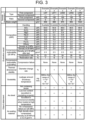
FIG. 3] FIG. 3 is a table showing sheets and sealing materials of Examples 1 to 5. - [
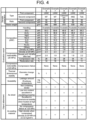
FIG. 4] FIG. 4 is a table showing sheets and sealing materials of Examples 6 to 10. - [
FIG. 5] FIG. 5 is a table showing sheets and sealing materials of Examples 11 to 14. - [
FIG. 6] FIG. 6 is a table showing sheets and sealing materials of Comparative Examples 1 to 4. - [
FIG. 7] FIG. 7 is a table showing a result of measuring volume resistivity. - Hereinafter, an embodiment of the present invention (hereinafter, this embodiment) will be described with reference to the drawings. This embodiment relates to a sheet, a sealing material, a method for producing a sheet, and a method for producing a sealing material.
- In this specification, ○ to △ (for example, ○% by weight to △% by weight) indicates ○ or more and △ or less (○% by weight or more and △% by weight or less).
- In addition, in this specification, the term "include" or "including" indicates including specified constituents, but does not exclude the presence of other constituents.
- A sheet of this embodiment, for example, can be used for a sealing material. The sheet of this embodiment contains a first component as a main component, and optionally contains a second component.
- The first component is swelling clay, preferably swelling muscovite. Here, the "muscovite" is a concept including "sericite" that is another name in a case where the muscovite is fine particles. In addition, the swelling muscovite includes "swelling sericite" in a case where the swelling muscovite is fine particles. In the swelling muscovite, at least a part of K+ ions in the interlayer of the muscovite is exchanged with at least one or more types of ions (ions imparting swellability) selected from the group consisting of Li+ ions, Ca2+ ions, and Mg2+ ions. In the swelling sericite, at least a part of K+ ions in the interlayer of the sericite is exchanged with at least one or more types of ions (ions imparting swellability) selected from the group consisting of Li+ ions, Ca2+ ions, and Mg2+ ions.
- The muscovite is one type of silicate mineral (phyllosilicate mineral), is represented by Chemical Formula K2Al4 (Si6·Al2)O20(OH)4, and has a triple structure containing Al and K between layers of a silicic acid tetrahedron. The sericite is fine particles of muscovite that is a layered silicate mineral. It is preferable that the muscovite used in this embodiment is not fluorine mica-type muscovite containing fluorine, from the viewpoint of preventing the generation of fluorine-based gas.
- The swelling muscovite that is preferable as the first component can be obtained by exchanging at least a part of K+ ions in the interlayer of the muscovite with ions such as Li+ ions by modification. The modification of the muscovite is not particularly limited, and for example, can be performed by mixing lithium nitrate that is heated and melted with muscovite or sericite to react for a predetermined time. The dispersion of the swelling muscovite to water, for example, can be performed by removing the lithium nitrate with filtering and washing, and then, adding pure water, and stirring.
- In the swelling muscovite, a ratio of Li+ ions to K+ ions contained in the interlayer is Li+:K+ = 20 at%:80 at% to 70 at%:30 at%, preferably Li+:K+ = 30 at%:70 at% to 60 at%:40 at%, more preferably Li+:K+ = 40 at%:60 at% to 60 at%:40 at%, and even more preferably Li+:K+ = 40 at%:60 at% to 55 at%:45 at%. The same ratio applies to a case where ions to be exchanged are not K+ but Ca2+ or Mg2+.
- When the weight of the entire sheet is 100% by weight, 90% by weight or more of the first component is contained. In addition, in a case where both of the first component and the second component are contained, at least 25% by weight or more, preferably 30% by weight or more, more preferably 50% by weight or more, even more preferably 60% by weight or more, particularly preferably 75% by weight or more, and more particularly preferably 80% by weight or more of the first component is contained when the total weight of the first component and the second component is 100% by weight. In addition, when the total weight of the first component and the second component is 100% by weight, at most 100% by weight or less, 90% by weight or less, 80% by weight or less, 70% by weight or less, 65% by weight or less, and 50% by weight or less of the first component is contained.
- When the total weight of the first component and the second component is 100% by weight, 25 to 100% by weight, 30 to 100% by weight, 40 to 100% by weight, 50 to 100% by weight, 60 to 100% by weight, 65 to 100% by weight, 70 to 100% by weight, 75 to 100% by weight, 80 to 100% by weight, 25 to 95% by weight, 25 to 90% by weight, 25 to 80% by weight, 25 to 75% by weight, 25 to 70% by weight, 25 to 65% by weight, 25 to 60% by weight, and 25 to 50% by weight of the first component is contained.
- In the first component, a volume-based cumulative 50% particle size (D50) measured by a laser diffraction/scattering particle size distribution analyzer is 5 to 500 µm, preferably 7 to 400 µm, more preferably 10 to 300 µm, even more preferably 10 to 250 µm, and particularly preferably 10 to 230 µm.
- The second component is a filling material, preferably a filling material of clay or an oxide. The second component is optionally contained in the sheet. Here, the filling material of the clay or the oxide is at least one or more types selected from the group consisting of muscovite, sericite, talc, kaolinite, and molten silica. Note that as the filling material, a calcined filling material can also be used.
- When the total weight of the first component and the second component is 100% by weight, at least 10% by weight or more, preferably 20% by weight or more, more preferably 25% by weight or more, even more preferably 30% by weight or more, particularly preferably 40% by weight or more, and more particularly preferably 50% by weight or more of the second component is contained. In addition, when the total weight of the first component and the second component is 100% by weight, at most 75% by weight or less, 70% by weight or less, 65% by weight or less, 60% by weight or less, 55% by weight or less, and 50% by weight or less of the second component is contained. By changing the ratio of the second component, it is possible to adjust restorability to any state, but in a case where the ratio is excessively increased, a mechanical strength decreases.
- When the total weight of the first component and the second component is 100% by weight, 0 to 75% by weight, 0 to 70% by weight, 0 to 60% by weight, 0 to 50% by weight, 0 to 40% by weight, 0 to 35% by weight, 0 to 30% by weight, 0 to 25% by weight, 0 to 20% by weight, 5 to 75% by weight, 10 to 75% by weight, 20 to 75% by weight, 25 to 75% by weight, 30 to 75% by weight, 35 to 75% by weight, 40 to 75% by weight, and 50 to 75% by weight of the second component is contained.
- In the second component, a volume-based cumulative 50% particle size (D50) measured by a laser diffraction/scattering particle size distribution analyzer is 5 to 500 µm, preferably 7 to 400 µm, more preferably 10 to 300 µm, even more preferably 10 to 250 µm, and particularly preferably 10 to 230 µm.
- In the second component, a weight loss rate when heated to 1000°C is 15% by weight or less, preferably 13% by weight or less, more preferably 10% by weight or less, even more preferably 8% by weight or less, still even more preferably 7% by weight or less, and particularly preferably 6% by weight or less when the weight before heating is 100% by weight.
- In the second component, the content of iron is small. Specifically, the content of iron in terms of iron oxide (Fe2O3) contained in the second component is 3% by weight or less, preferably 2% by weight or less, more preferably 1.5% by weight or less, even more preferably 1.0% by weight or less, still even more preferably 0.8% by weight or less, and particularly preferably 0.5% by weight or less. Here, the content of each component can be measured by fluorescent X-ray analysis (XRF) when notated in terms of oxide. Note that even in a case where the content of each component is notated in terms of oxide, it is not necessary that each component is contained as an oxide.
- When the weight of the entire sheet is 100% by weight, the sum of the first component and the second component is 90% by weight or more, preferably 92% by weight or more, more preferably 93% by weight or more, even more preferably 95% by weight or more, still even more preferably 96% by weight or more, and particularly preferably 97% by weight or more.
- A ratio (a weight ratio) of the content of the first component : the content of the second component is 10 : 90 to 100 : 0, 15 : 85 to 100 : 0, 20 : 80 to 100 : 0, 25 : 75 to 100 : 0, 30 : 70 to 100 : 0, 40 : 60 to 100 : 0, 50 : 50 to 100 : 0, 60 : 40 to 100 : 0, 65 : 35 to 100 : 0, 70 : 30 to 100 : 0, 75 : 25 to 100 : 0, 80 : 20 to 100 : 0, 25 : 75 to 95 : 5, 25 : 75 to 90 : 10, 25 : 75 to 80 : 20, 25 : 75 to 75 : 25, 25 : 75 to 70 : 30, 25 : 75 to 65 : 35, 25 : 75 to 60 : 40, and 25 : 75 to 50 : 50.
- A method for producing a sheet of this embodiment includes a step of mixing the first component and the second component to form a mixture. A solvent such as water is added to the mixture, and the mixture is adjusted to slurry with an appropriate viscosity, in accordance with a molding method. Then, the mixture is molded by using extrusion molding, a calendering roll, a film applicator, a doctor blade, a bar coater, screen printing, and the like, and dried, and thus, the sheet can be obtained.
- The sheet of this embodiment can be used for a sealing material in various industries, a fuel battery such as a high-temperature fuel battery (SOFC), an electrolysis cell such as a solid oxide electrolysis cell (SOEC), and various pipes such as an exhaust conduit of an automobile, for example, a gasket, a packing, and the like. The sheet of this embodiment can also be used as the sealing material itself, or can also be used by being incorporated as a part of the sealing material such as a gasket or a packing. As the shape of the sealing material as a product, a sheet gasket, a spiral-wound gasket, a serrated gasket, and the like are exemplified, but the shape is not limited thereto.
- The sheet of this embodiment and the sealing material including the sheet described above do not substantially contain a binder. Here, the binder is not particularly limited, and examples thereof include rubber and a pressure-sensitive adhesive. More specifically, examples of the binder include acrylonitrile butadiene rubber, styrene butadiene rubber, polybutadiene rubber, silicone rubber, acrylic rubber, natural rubber, butyl rubber, chloroprene rubber, ethylene propylene rubber, fluorine rubber, urethane rubber, an acrylic pressure-sensitive adhesive, and a silicone-based pressure-sensitive adhesive.
- Not substantially containing the binder indicates that when the total weight of the sheet is 100% by weight, the content of the binder contained is less than 0.1% by weight (0.1% by weight or less), preferably less than 0.05% by weight (0.05% by weight or less), more preferably less than 0.01% by weight (0.01% by weight or less), even more preferably less than 0.001% by weight (0.001% by weight or less), and particularly preferably less than 0.0001% by weight (0.0001% by weight or less). The sheet of this embodiment is not compounded with the binder, and thus, when the sheet is used as the sealing material, sealability is high, and outgasing is not caused.
- In the sheet of this embodiment and the sealing material including the sheet described above, the content of iron is small. Specifically, when the weight of the entire sheet is 100% by weight, the content of iron in terms of iron oxide (Fe2O3) contained in the sheet of this embodiment and the sealing material including the sheet described above is 6% by weight or less, preferably 3% by weight or less, more preferably 2% by weight or less, even more preferably 1.5% by weight or less, still even more preferably 1.0% by weight or less, and particularly preferably 0.8% by weight or less.
- When the weight of the entire sheet is 100% by weight, the content of alumina contained in the sheet of this embodiment and the sealing material including the sheet described above is 16% by weight or more.
- The sheet of this embodiment and the sealing material including the sheet described above have a low iron content, compared to vermiculite-based and phlogopite-based sheets, and thus, have a high insulating property. Therefore, the sheet of this embodiment and the sealing material including the sheet described above can be used for a fuel battery such as a solid oxide fuel battery (SOFC) and an electrolysis cell such as a solid oxide electrolysis cell (SOEC), which are required to have a high insulating property.
- The basis weight of the sheet of this embodiment and the sealing material including the sheet described above is preferably 700 to 1300 g/m2, more preferably 700 to 1200 g/m2, even more preferably 750 to 1100 g/m2, and particularly preferably 800 to 1050 g/m2.
- The density of the sealing material of this embodiment at 2 MPa is preferably 0.5 to 2.5 g/cm3, more preferably 1.0 to 2.2 g/cm3, and even more preferably 1.2 to 2.0 g/cm3. In this application, the density of the sealing material can be greater than 1.4 g/cm3. As the density at 2 MPa decreases, it is easier for the sealing material to follow the irregularities of the opposite member when compressed, and leakage from the contact surfaces decreases.
- The density of the sealing material of this embodiment at 20 MPa is preferably 0.5 to 2.8 g/cm3, more preferably 1.0 to 2.8 g/cm3, and even more preferably 1.2 to 2.8 g/cm3. In this application, the density of the sealing material can be greater than 1.4 g/cm3. As the density at 20 MPa increases, the sealing material is densed when tightened, and substantial leakage decreases.
- In the sealing material of this embodiment, the value of a compression rate calculated by a method described in Examples is 15% or more, preferably 20% or more, more preferably 25% or more, even more preferably 30% or more, and particularly preferably 40% or more. As the compression rate increases, it is easier for the sealing material to follow the irregularities of the opposite member when compressed, and the leakage from the contact surfaces decreases.
- In the sealing material of this embodiment, the value of a restoration rate calculated by a method described in Examples is 5% or more, preferably 6% or more, more preferably 7% or more, even more preferably 8% or more, and particularly preferably 10% or more. As the restoration rate increases, a reactive force when tightened increases, and the leakage from contact surfaces decreases.
- The sealing material of this embodiment has high heat resistance, in which specifically, a diameter change rate calculated by a method described in Examples is 10% or less, preferably 8% or less, more preferably 5% or less, even more preferably 3% or less, and particularly preferably 1% or less.
- The sheet of this embodiment and the sealing material including the sheet described above is excellent in an electrical insulating property in a high-temperature environment. Specifically, in the sheet of this embodiment and the sealing material including the sheet described above, as insulating performance in a high-temperature environment, the value of volume resistivity calculated by a method described in Examples is greater than 2.0 × 10⁶ Ω·cm in a measurement condition of 600°C and an applied voltage of 100 V, and is 3.8 × 10⁶ Ω·cm or more in a measurement condition of 600°C and an applied voltage of 300 V.
- The sealing material of this embodiment has the features as described above, and thus, can be used for a fuel battery. That is, it is possible to provide a fuel battery including the sealing material of this embodiment. As the fuel battery, a planar SOFC is exemplified, but the fuel battery is not limited thereto. In addition, as an electrolysis cell, a solid oxide electrolysis cell (SOEC) is exemplified, but the electrolysis cell is not limited thereto.
- A method for producing a sealing material of this embodiment includes a step of incorporating the sheet produced by the method for producing a sheet as a part of a gasket and a packing.
- Hereinafter, the present invention will be described in detail, on the basis of specific examples, but the present invention is not limited thereto.
- As illustrated in
FIG. 1 , five types of muscovite with different particle sizes were used. Lithium nitrate of which the weight is 8 times the weight of the muscovite was heated at 370°C and melted, and was mixed with the muscovite. By causing a reaction at 370°C for 40 hours, ion exchange was performed. After that, water was added, and suction filtration was performed. Washing with pure water was performed to cause dechlorination. Pure water was added and stirred to obtain slurry. - The slurry obtained in [1.1] described above was condensed, and then, was molded with a doctor blade machine, and dried at 100°C for 24 hours to produce a sheet. As the appearance of the sheet is illustrated in
FIG. 1 , swelling muscovite (modified muscovite) was prepared from the muscovite with different particle sizes, and thus, all the muscovite was capable of being formed into sheets. Interlayer ions were examined by a fluorescent X-ray analysis (XRF). As a result thereof, approximately 20 at% to 60 at% of K+ ions in the interlayer were exchanged with Li+ ions (FIG. 1 ). - As a first component, LM7, LM11, LM20, and LM42 illustrated in
FIG. 1 were used. - As a second component, muscovite before modification (M7 or 42), talc, kaolin, calcined muscovite (calcined M7), calcined kaolin, molten silica, shown in
FIG. 2 , were used. - The second component was added to the slurry of the first component obtained in [1.1] described above at a predetermined ratio, and mixed to form a mixture. The obtained mixture was condensed, and then, molded with a doctor blade machine, and dried at 100°C for 24 hours to produce sheets of Examples and Comparative Examples. In the sheets of Comparative Examples 2 and 3, swelling vermiculite was used as the first component, instead of the swelling muscovite.
- In Comparative Example 4, a commercially available silicone-laminated phlogopite sheet was used.
- The following evaluation was performed on the sheets of Examples and Comparative Examples. Results are shown in
FIG. 3 to FIG. 5 . - The sheet was punched to be a test piece with an outer diameter of 20 mm. The test piece was subjected to a drying treatment at 100°C for 24 hours.
- A compression jig provided with three linear gauge sensors at an interval of 120° was set in a universal tester, and the test piece was placed in the center, and a surface pressure of 0.16 MPa was applied. A test force was applied such that a compression velocity was 0.1 MPa per 1 second, and compression was performed until the maximum surface pressure of 20 MPa. After that, the test force was released at the same rate, and restoration was performed until 0.16 MPa.
- From a thickness at a surface pressure of 2 MPa (= a thickness at 2 MPa), a thickness at the maximum surface pressure of 20 MPa (= a thickness at 20 MPa), and a thickness at the end of the test at 0.16 MPa (= a thickness at the restoration to 0.16 MPa), a compression rate and a restoration rate were calculated by the following expression.


- The maximum surface pressure was changed to 125 MPa from the case of evaluating a low surface pressure. The other condition was not changed, and the same test was performed. A case where a crack was observed in the sample after the test was set to "Present", and a case where a crack was not observed was set to "Absent".
- The sheet was punched to be a test piece with an outer diameter of 20 mm. The test piece was dried at 100°C for 24 hours, and then, left to cool in a desiccator, and the diameter was measured by using a projector (= a diameter after drying). After that, the test piece was heated at 900°C for 24 hours in an electrical muffle furnace (a temperature increase of 200°C/h, a natural temperature decrease), and left to cool. The diameter was measured by using a projector (= a diameter after heating). A diameter change rate was measured by the following expression.

- The sheet was punched to be a ring-shaped test piece with an outer diameter of 92 mm and an inner diameter of 49 mm. The ring-shaped test piece was subjected to a standard state treatment at 24°C and 50%RH for 24 hours.
- A leakage amount was measured in the following test condition, with reference to standard EN13555.
- · Tester: AMTEC temes fl. ai1
- · Gas Type: He
- · Internal Pressure: 0.5 MPa
- · Surface Pressure: 20 MPa
- · Detector: a leak detector
- The second component was pulverized with a mortar. A weight loss on heating at each temperature was measured in the following condition by using a TG-DTA device, manufactured by Rigaku Corporation.
- · Atmosphere: air
- · Sample Weight: 10 mg
- · Temperature Increase Rate: 5°C/min
- · Highest Temperature: 1000°C
- · Pan Material: Pt
- Volume resistivity was measured in the following test condition, with reference to Japanese Industrial Standards JIS C2141, JEC-6148, and JIS C2139.
- · Temperature: 600°C
- · Atmosphere: Atmospheric Air
- · Measurement Method
- A main electrode, a guard electrode, and counter electrodes were printed on the upper and lower surfaces of a specimen by using a screen printer and a silver paste, and then, subjected to a drying treatment (in the air, 150°C, 12 hours), and then, subjected to a baking treatment (in the air, 700°C, 1 hour, a temperature increase rate of 200°C/h) in an electrical furnace to form each electrode.
- Retention was performed at 600°C for 15 minutes, and then, a DC voltage (V) was applied to the specimen, and a current (I) after charging for 1 minute was measured to obtain the volume resistance (Rv) of the specimen, and the volume resistivity (ρv) was calculated from the thickness (t) of the specimen and the electrode area (S) by the following expression.
- In a case where the thickness of the specimen is t (cm), the volume resistivity ρv is given by the following expression.



- ρv : Volume Resistivity (Ω ·cm)
- t : Thickness of Specimen (cm)
- S : Electrode effective Area (cm2)
- Rv : Volume Resistance (Ω)
- g : Electrode Gap Interval (cm)
- D1 : Diameter of Main Electrode (cm)
- D2 : Diameter of Guard Electrode (cm)
- From results shown in
FIG. 3 to FIG. 7 , the following results were checked. - The sheets of Examples contain the first component (swelling muscovite) and the second component (a filling material) as a main component, and do not contain fluorine and a resin such as a binder, and thus, are less likely to cause outgasing.
- The sheets of Examples have a low iron content of 2.1% by weight or less, and thus, have a high insulating property. Specifically, in the sheets of Examples, the value of the volume resistivity was 3.8 × 10⁶ Ω·cm or more in a measurement condition of 600°C and an applied voltage of 300 V, and insulating performance in a high-temperature environment was excellent. Therefore, the sheets of Examples can be used for a fuel battery and an electrolysis cell required to have a high insulating property.
- For the thermal dimensional stability, it was found that the sheets of Examples did not significantly contract even when heated at 900°C, and thus, have sufficient heat resistance as a sheet for high-temperature application.
- It was found that the sheets of Examples have high heat resistance from the fact that a clay phase remains even when heated at 900°C.
- In a case where a calcined filling material is used as the second component, it is expected that a weight loss amount when heated decreases, and thus, heat resistance is improved.
- In the sheet of Comparative Example 1, the sheet was not capable of being obtained (handling was not available), and thus, it was found that the sheet can be obtained by modifying the muscovite.
- It was checked that as an effect of adding the second component (the filling material), the initial thickness (density) can be controlled, and a compression amount is adjusted.
- It was indicated that as a result of evaluating the compression restorability (125 MPa), breakdown behavior is not observed in the sheets of Examples even when applying a high surface pressure, and the sheets have a sufficient strength when used as the sealing material.
- It was found that the sheets of Examples can be used as the sealing material having a high density when compressed (a density at 20 MPa of 2.1 to 2.5 g/cm3) and low substantial leakage.
- The sheets of Examples had sufficient sealability when used as the sealing material from the result of a sealing test.
- In contrast, the sheets of Comparative Examples had a high iron content (Comparative Examples 2 to 4).
- Note that the present invention is created with reference to the following technologies and problems of the related art, which are not the essential elements of the present invention, but as necessary, can be appropriately incorporated.
- In a sheet using non-swellable clay of the related art or a sealing material using the sheet described above, an organic or inorganic fiber and a binder were added.
- In
PATENT LITERATURE 3, a sealing material containing mica as non-swellable clay, in which an organic fiber and a binder are compounded, is described. In PATENT LITERATURES 4 and 5, a sealing material containing talc as non-swellable clay, in which an inorganic fiber and a binder are compounded, is described. InPATENT LITERATURE 6, a sheet containing fluor-tetrasilisic mica as swellable clay is described. InPATENT LITERATURE 7, a sealing material using a sheet containing fluor-tetrasilisic mica as swellable clay is described. - The sealing material containing the non-swellable clay, the fiber, and the binder described in
PATENT LITERATURES 3 to 5 contained the fiber, and thus, the sealability was insufficient. In addition, in a case where an organic binder or an organic fiber is used, an organic content is burned down to generate voids in a high-temperature environment, and thus, the sealability is degraded. In addition, silicone was used as the inorganic binder, siloxane-based outgasing was caused in a high-temperature environment, and thus, the sealing material was not capable of being used in the vicinity of an electronic part or an electrode. The fluorine mica described inPATENT LITERATURES - In
PATENT LITERATURE 8, a sheet containing montmorillonite that is one type of smectite as the swellable clay, and a sealing material using the sheet described above are described. InPATENT LITERATURES 9 to 11, it is described that clay can be modified by a reaction between a molten salt, a concentrated aqueous solution, and the like. - The smectite described in
PATENT LITERATURE 8 can be the sheet without using a fiber and a binder. However, there was a problem that warpage or significant contraction occurs in a high-temperature environment, and there was a problem in dimensional stability. In addition, the sheet was gelled at a comparatively low concentration when produced, and thus, warpage was likely to occur when dried, and there was a problem in the moldability of a thick film. InPATENT LITERATURES 9 to 11, it is described that the clay can be modified by the reaction between the molten salt, the concentrated aqueous solution, and the like. However, the application of the technologies of such literatures was limited to the preparation of a clay dispersion liquid, compounding with a polymer, and mixing with a resin.
Claims (14)
- A sheet, comprisinga first component as a main component,wherein the first component is clay,a diameter change rate is 10% or less, as thermal dimensional stability, andwhen a weight of the entire sheet is 100% by weight, a content of iron oxide is 6% by weight or less.
- The sheet according to claim 1,wherein the sheet contains the first component, and a second component optionally,the first component is swelling clay,the second component is a filling material,when the weight of the entire sheet is 100% by weight, a sum of the first component and the second component is 90% by weight or more, andthe first component : the second component = 20 : 80 to 100 : 0 is set.
- The sheet according to claim 1,
wherein the first component is swelling muscovite. - The sheet according to claim 1,
wherein when the weight of the entire sheet is 100% by weight, a content of alumina is 16% by weight or more. - The sheet according to claim 1 or 2,
wherein the swelling clay is swelling muscovite, and in the swelling muscovite, at least a part of K+ ions in an interlayer of the muscovite is exchanged with Li+ ions. - The sheet according to claim 2,
wherein the second component is a filling material of clay or an oxide. - The sheet according to claim 2,
wherein in the second component, a volume-based cumulative 50% particle size (D50) measured by a laser diffraction/scattering particle size distribution analyzer is 5 to 50 µm. - The sheet according to claim 1 or 2,
wherein a content of a binder is 0.1% by weight or less. - The sheet according to claim 1 or 2,
wherein when the weight of the entire sheet is 100% by weight, the content of the iron oxide is 3% by weight or less. - A sealing material, comprising
the sheet according to any one of claims 1 to 9. - The sealing material according to claim 10,
wherein the sealing material is for a fuel battery or an electrolysis cell. - A fuel battery or an electrolysis cell, comprising
the sealing material according to claim 11. - A method for producing the sheet according to any one of claims 1 to 9, comprising
a step of mixing the first component and the second component to form a mixture. - A method for producing a sealing material, comprising
a step of incorporating the sheet produced by the method for producing the sheet according to claim 13 as a part of a gasket or a packing.
Applications Claiming Priority (2)
| Application Number | Priority Date | Filing Date | Title |
|---|---|---|---|
| JP2022120879A JP2024017919A (en) | 2022-07-28 | 2022-07-28 | Seats, sealing materials, fuel cells, electrolytic cells, sheet manufacturing methods, and sealing material manufacturing methods |
| PCT/JP2023/027638 WO2024024905A1 (en) | 2022-07-28 | 2023-07-27 | Sheet, sealing material, fuel battery, electrolyte cell, method for manufacturing sheet, and method for manufacturing sealing material |
Publications (2)
| Publication Number | Publication Date |
|---|---|
| EP4564487A1 true EP4564487A1 (en) | 2025-06-04 |
| EP4564487A4 EP4564487A4 (en) | 2025-12-17 |
Family
ID=89706530
Family Applications (1)
| Application Number | Title | Priority Date | Filing Date |
|---|---|---|---|
| EP23846635.3A Pending EP4564487A4 (en) | 2022-07-28 | 2023-07-27 | FOIL, SEALANT MATERIAL, FUEL CELL, ELECTROLYTIC CELL, METHOD FOR PRODUCE THE FOIL AND METHOD FOR PRODUCE THE SEALANT MATERIAL |
Country Status (6)
| Country | Link |
|---|---|
| US (1) | US20260045524A1 (en) |
| EP (1) | EP4564487A4 (en) |
| JP (1) | JP2024017919A (en) |
| KR (1) | KR20250037532A (en) |
| CN (1) | CN119605001A (en) |
| WO (1) | WO2024024905A1 (en) |
Family Cites Families (14)
| Publication number | Priority date | Publication date | Assignee | Title |
|---|---|---|---|---|
| US3325340A (en) | 1961-12-22 | 1967-06-13 | Commw Scient Ind Res Org | Suspensions of silicate layer minerals and products made therefrom |
| PL136519B1 (en) | 1981-04-08 | 1986-02-28 | Nickel alloy with high chromium content | |
| TW460427B (en) * | 2000-05-25 | 2001-10-21 | Ind Tech Res Inst | Process for manufacturing swellable sericite and applications thereof |
| JP2007254188A (en) | 2006-03-22 | 2007-10-04 | Meiki Shu | Method for producing acid-expandable mica |
| US20090311570A1 (en) * | 2008-06-17 | 2009-12-17 | Battelle Memorial Institute | SOFC Double Seal with Dimensional Control for Superior Thermal Cycle Stability |
| JP5582731B2 (en) * | 2009-06-19 | 2014-09-03 | 株式会社巴川製紙所 | Heat resistant seal |
| JP2011236065A (en) * | 2010-05-06 | 2011-11-24 | Tomoegawa Paper Co Ltd | Clay film, clay dispersion, and method for producing clay dispersion |
| US20130082447A1 (en) | 2011-10-04 | 2013-04-04 | Garlock Sealing Technologies, Llc | Spiral wound gasket |
| CN104733657A (en) * | 2015-03-31 | 2015-06-24 | 昆山艾可芬能源科技有限公司 | Sealing material for solid oxide fuel battery stack |
| JP6621291B2 (en) | 2015-10-05 | 2019-12-18 | 国立研究開発法人物質・材料研究機構 | Method for producing water-swellable layered silicate |
| JP2019503030A (en) * | 2015-11-13 | 2019-01-31 | サン−ゴバン セラミックス アンド プラスティクス,インコーポレイティド | Thermal insulation and compression of high temperature equipment |
| WO2017115399A1 (en) | 2015-12-28 | 2017-07-06 | 日本バルカー工業株式会社 | Spiral gasket |
| JP6754746B2 (en) | 2017-10-31 | 2020-09-16 | ニチアス株式会社 | Sealing material |
| KR102849062B1 (en) * | 2018-12-04 | 2025-08-21 | 닛신 오일리오그룹 가부시키가이샤 | Oil-based moisturizer and external skin composition containing the same |
-
2022
- 2022-07-28 JP JP2022120879A patent/JP2024017919A/en active Pending
-
2023
- 2023-07-27 KR KR1020257004758A patent/KR20250037532A/en active Pending
- 2023-07-27 CN CN202380056654.3A patent/CN119605001A/en active Pending
- 2023-07-27 EP EP23846635.3A patent/EP4564487A4/en active Pending
- 2023-07-27 WO PCT/JP2023/027638 patent/WO2024024905A1/en not_active Ceased
- 2023-07-27 US US18/998,627 patent/US20260045524A1/en active Pending
Also Published As
| Publication number | Publication date |
|---|---|
| JP2024017919A (en) | 2024-02-08 |
| KR20250037532A (en) | 2025-03-17 |
| EP4564487A4 (en) | 2025-12-17 |
| CN119605001A (en) | 2025-03-11 |
| WO2024024905A1 (en) | 2024-02-01 |
| US20260045524A1 (en) | 2026-02-12 |
Similar Documents
| Publication | Publication Date | Title |
|---|---|---|
| Ren et al. | N-doping of graphene: toward long-term corrosion protection of Cu | |
| Naguib et al. | Ti 3 C 2 T x (MXene)–polyacrylamide nanocomposite films | |
| Zhang et al. | MoSe 2 nanosheets grown on carbon cloth with superior electrochemical performance as flexible electrode for sodium ion batteries | |
| Chen et al. | Graphene-wrapped TiO 2 hollow structures with enhanced lithium storage capabilities | |
| US8835344B2 (en) | Fuel cell electrode and method for manufacturing membrane-electrode assembly using the same | |
| Li et al. | One-step synthesis of high-quality N-doped graphene/Fe 3 O 4 hybrid nanocomposite and its improved supercapacitor performances | |
| Li et al. | Enhancement of the interfacial interaction between poly (vinyl chloride) and zinc oxide modified reduced graphene oxide | |
| Savchenko et al. | Improvement of the oxidation stability and the mechanical properties of flexible graphite foil by boron oxide impregnation | |
| Jose et al. | Enhanced supercapacitor performance of a 3D architecture tailored using atomically thin rGO–MoS 2 2D sheets | |
| EP3761355A1 (en) | Insulating heat dissipation sheet | |
| Li et al. | Advanced oxygen reduction reaction catalyst based on nitrogen and sulfur co-doped graphene in alkaline medium | |
| Zheng et al. | Integrating carbon nanotube into activated carbon matrix for improving the performance of supercapacitor | |
| EP4130545A1 (en) | Gas sealing member for high-pressure hydrogen devices, and high-pressure hydrogen device | |
| EP4564487A1 (en) | Sheet, sealing material, fuel battery, electrolyte cell, method for manufacturing sheet, and method for manufacturing sealing material | |
| Suzuki et al. | Heat-resistant insulation film containing clay and wood components | |
| Gómez et al. | Testing the influence of the temperature, RH and filler type and content on the universal power law for new reduced graphene oxide TPU composites | |
| US12031082B2 (en) | Seal material | |
| Joshi et al. | CNT Sheets Co‐Loaded with Sulfur and Silicon Oxides: Free Standing Anodes for Lithium and Sodium‐Ion Batteries | |
| Tan et al. | Towards electrochemical purification of chemically reduced graphene oxide from redox accessible impurities | |
| Liu et al. | Study of acid-resistant behavior of hydroxylated hexagonal boron nitride/isobutyltriethoxysilane composite coatings on sulfoaluminate concrete surfaces | |
| CN114976225B (en) | Mixed conductive slurry, preparation method and application thereof | |
| EP4678364A1 (en) | Sheet, sealing material, fuel cell, electrolytic cell, method for producing sheet, and method for producing sealing material | |
| Quarz et al. | Ink Processing and its Influence on Particle Size Distribution, Ionomer Requirements and Electrode Properties in Polymer Electrolyte Membrane Fuel Cell and Electrolyzer Catalyst Coated Membranes | |
| CN110423390A (en) | A kind of flame-proof weather-resisting expansible fireproof casing and preparation method thereof | |
| CN121160245B (en) | Adhesive, negative electrode plate, preparation method of negative electrode plate, battery pack and electric equipment |
Legal Events
| Date | Code | Title | Description |
|---|---|---|---|
| STAA | Information on the status of an ep patent application or granted ep patent |
Free format text: STATUS: THE INTERNATIONAL PUBLICATION HAS BEEN MADE |
|
| PUAI | Public reference made under article 153(3) epc to a published international application that has entered the european phase |
Free format text: ORIGINAL CODE: 0009012 |
|
| STAA | Information on the status of an ep patent application or granted ep patent |
Free format text: STATUS: REQUEST FOR EXAMINATION WAS MADE |
|
| 17P | Request for examination filed |
Effective date: 20250217 |
|
| AK | Designated contracting states |
Kind code of ref document: A1 Designated state(s): AL AT BE BG CH CY CZ DE DK EE ES FI FR GB GR HR HU IE IS IT LI LT LU LV MC ME MK MT NL NO PL PT RO RS SE SI SK SM TR |
|
| DAV | Request for validation of the european patent (deleted) | ||
| DAX | Request for extension of the european patent (deleted) | ||
| A4 | Supplementary search report drawn up and despatched |
Effective date: 20251118 |
|
| RIC1 | Information provided on ipc code assigned before grant |
Ipc: H01M 8/0282 20160101AFI20251112BHEP Ipc: C01B 33/42 20060101ALI20251112BHEP Ipc: C09K 3/10 20060101ALI20251112BHEP Ipc: C25B 13/05 20210101ALI20251112BHEP Ipc: F16J 15/06 20060101ALI20251112BHEP Ipc: H01M 8/0273 20160101ALI20251112BHEP Ipc: H01M 8/0286 20160101ALI20251112BHEP Ipc: H01M 8/12 20160101ALI20251112BHEP Ipc: C25B 9/60 20210101ALI20251112BHEP Ipc: C25B 9/73 20210101ALI20251112BHEP Ipc: F16J 15/10 20060101ALI20251112BHEP |