EP4564371A1 - Information processing device - Google Patents
Information processing device Download PDFInfo
- Publication number
- EP4564371A1 EP4564371A1 EP23845939.0A EP23845939A EP4564371A1 EP 4564371 A1 EP4564371 A1 EP 4564371A1 EP 23845939 A EP23845939 A EP 23845939A EP 4564371 A1 EP4564371 A1 EP 4564371A1
- Authority
- EP
- European Patent Office
- Prior art keywords
- model
- treatment method
- treatment effect
- treatment
- prediction model
- Prior art date
- Legal status (The legal status is an assumption and is not a legal conclusion. Google has not performed a legal analysis and makes no representation as to the accuracy of the status listed.)
- Pending
Links
Images




Classifications
-
- G—PHYSICS
- G16—INFORMATION AND COMMUNICATION TECHNOLOGY [ICT] SPECIALLY ADAPTED FOR SPECIFIC APPLICATION FIELDS
- G16H—HEALTHCARE INFORMATICS, i.e. INFORMATION AND COMMUNICATION TECHNOLOGY [ICT] SPECIALLY ADAPTED FOR THE HANDLING OR PROCESSING OF MEDICAL OR HEALTHCARE DATA
- G16H10/00—ICT specially adapted for the handling or processing of patient-related medical or healthcare data
- G16H10/60—ICT specially adapted for the handling or processing of patient-related medical or healthcare data for patient-specific data, e.g. for electronic patient records
-
- G—PHYSICS
- G16—INFORMATION AND COMMUNICATION TECHNOLOGY [ICT] SPECIALLY ADAPTED FOR SPECIFIC APPLICATION FIELDS
- G16H—HEALTHCARE INFORMATICS, i.e. INFORMATION AND COMMUNICATION TECHNOLOGY [ICT] SPECIALLY ADAPTED FOR THE HANDLING OR PROCESSING OF MEDICAL OR HEALTHCARE DATA
- G16H20/00—ICT specially adapted for therapies or health-improving plans, e.g. for handling prescriptions, for steering therapy or for monitoring patient compliance
-
- G—PHYSICS
- G16—INFORMATION AND COMMUNICATION TECHNOLOGY [ICT] SPECIALLY ADAPTED FOR SPECIFIC APPLICATION FIELDS
- G16H—HEALTHCARE INFORMATICS, i.e. INFORMATION AND COMMUNICATION TECHNOLOGY [ICT] SPECIALLY ADAPTED FOR THE HANDLING OR PROCESSING OF MEDICAL OR HEALTHCARE DATA
- G16H50/00—ICT specially adapted for medical diagnosis, medical simulation or medical data mining; ICT specially adapted for detecting, monitoring or modelling epidemics or pandemics
- G16H50/20—ICT specially adapted for medical diagnosis, medical simulation or medical data mining; ICT specially adapted for detecting, monitoring or modelling epidemics or pandemics for computer-aided diagnosis, e.g. based on medical expert systems
-
- G—PHYSICS
- G16—INFORMATION AND COMMUNICATION TECHNOLOGY [ICT] SPECIALLY ADAPTED FOR SPECIFIC APPLICATION FIELDS
- G16H—HEALTHCARE INFORMATICS, i.e. INFORMATION AND COMMUNICATION TECHNOLOGY [ICT] SPECIALLY ADAPTED FOR THE HANDLING OR PROCESSING OF MEDICAL OR HEALTHCARE DATA
- G16H50/00—ICT specially adapted for medical diagnosis, medical simulation or medical data mining; ICT specially adapted for detecting, monitoring or modelling epidemics or pandemics
- G16H50/70—ICT specially adapted for medical diagnosis, medical simulation or medical data mining; ICT specially adapted for detecting, monitoring or modelling epidemics or pandemics for mining of medical data, e.g. analysing previous cases of other patients
Definitions
- the present invention relates to an information processing apparatus using a model that outputs a treatment method according to a state of a patient, and particularly relates to a technique for updating the model.
- DTx Digital therapy
- PTL 1 discloses obtaining a predicted value of a clinical parameter from a set of a model with the highest accuracy, which is selected according to a predictor from among a plurality of models, and the predictor, and updating the model according to the obtained predicted value and the measured value of the clinical parameter to improve the accuracy.
- an object of the present invention is to provide an information processing apparatus capable of improving reliability of a treatment effect by an output treatment method.
- the present invention is an information processing apparatus using a treatment method output model that outputs a treatment method according to a state of a patient, the information processing apparatus including a treatment effect prediction model construction unit that constructs a treatment effect prediction model that includes the treatment method output model as a component, and compares a treatment effect when the treatment method is used with a treatment effect when the treatment method is not used, and a model adjustment unit that generates a prediction model group by inactivating a weighting factor of the treatment effect prediction model based on a tendency score when the treatment method is used and when the treatment method is not used, and adjusts the treatment method output model that is the component of the treatment effect prediction model such that a variance of a treatment effect output from the prediction model group falls within a predetermined range.
- an information processing apparatus capable of improving reliability of a treatment effect by an output treatment method.
- FIG. 1 is a diagram illustrating a hardware configuration of an information processing apparatus 101.
- the information processing apparatus 101 is configured such that a computation unit 102, a memory 103, a storage unit 104, and a network adapter 105 are connected by a system bus 106 to be able to transmit and receive signals.
- the information processing apparatus 101 is connected to an electronic medical record 110 and a digital therapy 111 via a network 109 to be able to transmit and receive signals.
- a display device 107 and an input device 108 are connected to the information processing apparatus 101.
- “being able to transmit and receive signals” indicates a state in which signals can be transmitted and received to and from each other or from one to the other electrically and optically regardless of a wired manner or a wireless manner.
- the computation unit 102 is a device that controls the operation of each component, and is specifically a central processing unit (CPU), a micro processor unit (MPU), or the like.
- the computation unit 102 loads a program stored in the storage unit 104 and data necessary for executing the program into the memory 103, executes the program, and performs various types of processing on the program.
- the memory 103 stores programs to be executed by the computation unit 102 and the progress of computation processing.
- the storage unit 104 is a device that stores a program executed by the computation unit 102 and data necessary for executing the program, and is specifically a hard disk drive (HDD), a solid state drive (SSD), or the like.
- the network adapter 105 is provided for connecting the information processing apparatus 101 to the network 109 such as a LAN, a telephone line, or the Internet.
- the network 109 such as a LAN, a telephone line, or the Internet.
- Various types of data handled by the computation unit 102 may be transmitted and received to and from the outside of the information processing apparatus 101 via the network 109 such as a local area network (LAN).
- LAN local area network
- the display device 107 is a device that displays a processing result or the like of the information processing apparatus 101, and is specifically a liquid crystal display or the like.
- the input device 108 is an operation device with which an operator gives an operation instruction to the information processing apparatus 101, and is specifically a keyboard, a mouse, a touch panel, or the like.
- the mouse may be another pointing device such as a track pad or a track ball.
- the electronic medical record 110 stores medical data related to a patient, for example, data related to a state of the patient and a treatment effect for a certain treatment method.
- the digital therapy 111 has a treatment method output model that is a model for outputting a treatment method according to the state and profile of a patient.
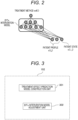
- the DTx intervention model is a model that outputs a treatment method sd(i) according to a patient profile x(i, j) and a patient state c(i, j), and is a neural network constructed by machine learning of known data.
- i is an index for specifying a patient
- j is an index representing a patient state or a type of patient profile.
- the patient state is calorie intake or exercise amount
- the patient profile is gender, age, or the like.
- the treatment method output from the DTx intervention model is, for example, a type of medicine.
- Example 1 Functional blocks of Example 1 will be described with reference to FIG. 3 . Note that the functional blocks may be configured by dedicated hardware or may be configured by software that operates on the computation unit 102. In the following description, a case where the functional blocks of Example 1 are configured by software will be described.
- Example 1 a treatment effect prediction model construction unit 301 and a DTx intervention model adjustment unit 302 are provided. Each unit will be described below.
- the treatment effect prediction model construction unit 301 constructs a treatment effect prediction model that compares a treatment effect when the treatment method output from the DTx intervention model is used with a treatment effect when the treatment method is not used.
- the DTx intervention model adjustment unit 302 adjusts the DTx intervention model to reduce the variance of the treatment effect when the treatment method output from the DTx intervention model is used.
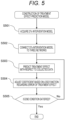
- Example 1 An example of a flow of processing performed in Example 1 will be described for each step with reference to FIG. 4 .
- the treatment effect prediction model construction unit 301 constructs a treatment effect prediction model.
- the treatment effect prediction model construction unit 301 acquires a DTx intervention model.
- the DTx intervention model is transmitted from the digital therapy 111.
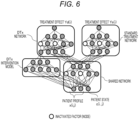
- the treatment effect prediction model construction unit 301 constructs a treatment effect prediction model illustrated in FIG. 6 by connecting the DTx intervention model acquired in S501 to three networks of a DTx network, a standard treatment network, and a shared network.
- the DTx network outputs the predicted value of the treatment effect when the treatment method output from the DTx intervention model is used.
- the standard treatment network outputs the predicted value of the treatment effect when the treatment method output from the DTx intervention model is not used.
- the shared network outputs parameters shared between the DTx network and the standard treatment network, depending on the patient profile x(i, j) and the patient state c(i, j).
- the treatment effect prediction model construction unit 301 inputs the patient profile x(i, j) and the patient state c(i, j) of the collected data to the treatment effect prediction model and outputs the predicted value of the treatment effect.
- the predicted value of the treatment effect is output for each of a case where the treatment method output from the DTx intervention model is used and a case where the treatment method is not used.
- a weighting factor of the treatment effect prediction model is inactivated based on the tendency score for both a case where the treatment method output from the DTx intervention model is used and when the treatment method is not used, and the treatment effect prediction model is constructed while the unevenness of the patient background is corrected.
- the tendency score p(i) is calculated using, for example, the following expression.
- a 1 , a 2 , ..., b 1 , b 2 , ... are coefficients calculated from the collected data.
- r(l) ss is a weighting factor of an l layer of the shared network
- r(l) i d is a weighting factor of the l layer of the DTx network
- r(l) i s is a weighting factor of the l layer of the standard treatment network
- ⁇ is an offset hyperparameter and is usually set to 1.
- the treatment effect prediction model illustrated in FIG. 6 is represented by the following expression.
- s ⁇ (x) is the shared network
- sd ⁇ (x) is the DTx intervention model
- Yd ⁇ is the DTx network
- Ys ⁇ is the standard treatment network
- f( ⁇ ) is an activation function
- the treatment effect prediction model construction unit 301 adjusts the coefficient of the treatment effect prediction model based on a loss function regarding an error of the predicted value for the treatment effect included in the collected data. That is, the coefficient is adjusted so that the output of the loss function becomes smaller.
- a square error function is used as the loss function, and for example, a stochastic gradient method or the like is used to adjust the coefficient.
- the treatment effect prediction model construction unit 301 determines whether or not an end condition is satisfied. When the end condition is satisfied, the processing flow ends, and when the end condition is not satisfied, the processing returns to S503.
- the end condition is, for example, a predetermined number of repetitions, a threshold value for the output of the loss function, or a threshold value for the amount of change in the output of the loss function.
- the DTx intervention model adjustment unit 302 adjusts the DTx intervention model to reduce the variance of the treatment effect when the treatment method output from the DTx intervention model is used.
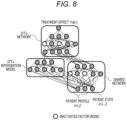
- the DTx intervention model adjustment unit 302 deletes the standard treatment network from the treatment effect prediction model constructed in S401, and constructs a treatment effect prediction model used to adjust the DTx intervention model.
- FIG. 8 illustrates a treatment effect prediction model used to adjust the DTx intervention model.
- the DTx intervention model adjustment unit 302 inactivates the weighting factor of the treatment effect prediction model to be used to adjust the DTx intervention model based on the tendency score for when the treatment method output from the DTx intervention model is used and when the treatment method is not used, and generates a prediction model group.
- a tendency score is calculated by the treatment effect prediction model construction unit 301. Note that the tendency score is calculated using Math. 1, and the weighting factor to be inactivated is represented by Math. 2.
- the DTx intervention model adjustment unit 302 inputs the patient profile x(i, j) and the patient state c(i, j) of the newly collected data to each of the prediction model groups generated in S702, and outputs the predicted value of the treatment effect.
- the DTx intervention model adjustment unit 302 adjusts the coefficients of the DTx intervention model based on the loss function regarding the variance of the predicted value output in S703. That is, the coefficients of the DTx intervention model are adjusted so that the variance of the predicted value becomes smaller.
- a square error function is used as the loss function, and for example, a stochastic gradient method or the like is used to adjust the coefficient.
- the DTx intervention model adjustment unit 302 determines whether or not the end condition is satisfied. When the end condition is satisfied, the processing flow ends, and when the end condition is not satisfied, the processing returns to S703.
- the end condition is, for example, a predetermined number of repetitions, a threshold value for the output of the loss function, or a threshold value for the amount of change in the output of the loss function.
- the model is updated by the DTx intervention model adjusted by the DTx intervention model adjustment unit 302.
- the treatment effect obtained by the updated model may be displayed on the display device 107.
- the result display screen illustrated in FIG. 9 includes a model update start button 901 and a result display portion 902.
- the result display portion 902 displays the treatment effect obtained by the updated DTx intervention model.
- the treatment effect is displayed, for example, in a graph form in which the vertical axis indicates the frequency and the horizontal axis indicates the amount of effect.
- the treatment effect obtained by the DTx intervention model before update or the standard treatment may be displayed together.
- the effect of the model update becomes clear as the treatment effects obtained by the DTx intervention model before and after the update and the standard treatment are displayed together.
- HbA1c indicating the ratio of glycosylated hemoglobin
- the treatment method output from the DTx intervention model was able to reduce HbA1c as compared with the standard treatment.
- the distribution of the treatment effect obtained by the DTx intervention model after the update is narrower than that before the update, and it is indicated that it is possible to reduce the variation of the treatment effect and to improve the reliability.
- Example of the present invention will be described above.
- the present invention is not limited to the above embodiment, and can be embodied by modifying the components without departing from the gist of the invention.
- a plurality of components disclosed in the above example may be appropriately combined. Further, some components may be deleted from all the components described in the above example.
Landscapes
- Engineering & Computer Science (AREA)
- Health & Medical Sciences (AREA)
- Medical Informatics (AREA)
- Public Health (AREA)
- Epidemiology (AREA)
- General Health & Medical Sciences (AREA)
- Primary Health Care (AREA)
- Data Mining & Analysis (AREA)
- Biomedical Technology (AREA)
- Databases & Information Systems (AREA)
- Pathology (AREA)
- Medical Treatment And Welfare Office Work (AREA)
Abstract
Provided is an information processing apparatus capable of improving reliability of a treatment effect by an output treatment method. An information processing apparatus using a treatment method output model that outputs a treatment method according to a state of a patient includes a treatment effect prediction model construction unit that constructs a treatment effect prediction model that includes the treatment method output model as a component, and compares a treatment effect when the treatment method is used with a treatment effect when the treatment method is not used, and a model adjustment unit that generates a prediction model group by inactivating a weighting factor of the treatment effect prediction model based on a tendency score when the treatment method is used and when the treatment method is not used, and adjusts the treatment method output model that is the component of the treatment effect prediction model such that a variance of a treatment effect output from the prediction model group falls within a predetermined range.
Description
- The present invention relates to an information processing apparatus using a model that outputs a treatment method according to a state of a patient, and particularly relates to a technique for updating the model.
- Digital therapy (hereinafter, DTx), which is an information processing apparatus using a model that is constructed by machine learning of known data and outputs a treatment method according to the state of a patient, has been developed. Since DTx can collect data in real time after launch, it is possible to update the model based on the collected data.
- PTL 1 discloses obtaining a predicted value of a clinical parameter from a set of a model with the highest accuracy, which is selected according to a predictor from among a plurality of models, and the predictor, and updating the model according to the obtained predicted value and the measured value of the clinical parameter to improve the accuracy.
- PTL 1:
JP 2016-519807 A - However, in PTL 1, consideration is not given to improvement of the reliability of the model. That is, even if a treatment method having a high treatment effect is output by the updated model, the treatment effect may vary due to a slight change in the predictor.
- Therefore, an object of the present invention is to provide an information processing apparatus capable of improving reliability of a treatment effect by an output treatment method.
- In order to achieve the above object, the present invention is an information processing apparatus using a treatment method output model that outputs a treatment method according to a state of a patient, the information processing apparatus including a treatment effect prediction model construction unit that constructs a treatment effect prediction model that includes the treatment method output model as a component, and compares a treatment effect when the treatment method is used with a treatment effect when the treatment method is not used, and a model adjustment unit that generates a prediction model group by inactivating a weighting factor of the treatment effect prediction model based on a tendency score when the treatment method is used and when the treatment method is not used, and adjusts the treatment method output model that is the component of the treatment effect prediction model such that a variance of a treatment effect output from the prediction model group falls within a predetermined range.
- According to the present invention, it is possible to provide an information processing apparatus capable of improving reliability of a treatment effect by an output treatment method.
-
- [
FIG. 1] FIG. 1 is an overall configuration diagram of an information processing apparatus. - [
FIG. 2] FIG. 2 is a diagram illustrating an example of a DTx intervention model that is a model for outputting a treatment method according to a state of a patient. - [
FIG. 3] FIG. 3 is a diagram illustrating an example of functional blocks of Example 1. - [
FIG. 4] FIG. 4 is a diagram illustrating an example of a flow of processing of Example 1. - [
FIG. 5] FIG. 5 is a diagram illustrating an example of a flow of processing of constructing a treatment effect prediction model. - [
FIG. 6] FIG. 6 is a diagram illustrating an example of the treatment effect prediction model. - [
FIG. 7] FIG. 7 is a diagram illustrating an example of a flow of processing of adjusting the DTx intervention model. - [
FIG. 8] FIG. 8 is a diagram illustrating an example of the treatment effect prediction model used to adjust the DTx intervention model. - [
FIG. 9] FIG. 9 is a diagram illustrating an example of a result display screen. - Hereinafter, embodiments of an information processing apparatus according to the present invention will be described with reference to the accompanying drawings. Note that, in the following description and the accompanying drawings, components having the same functional configuration are denoted by the same reference signs, and repetitive description will be omitted.
-
FIG. 1 is a diagram illustrating a hardware configuration of an information processing apparatus 101. The information processing apparatus 101 is configured such that acomputation unit 102, amemory 103, astorage unit 104, and anetwork adapter 105 are connected by asystem bus 106 to be able to transmit and receive signals. In addition, the information processing apparatus 101 is connected to an electronicmedical record 110 and adigital therapy 111 via anetwork 109 to be able to transmit and receive signals. Further, adisplay device 107 and aninput device 108 are connected to the information processing apparatus 101. Here, "being able to transmit and receive signals" indicates a state in which signals can be transmitted and received to and from each other or from one to the other electrically and optically regardless of a wired manner or a wireless manner. - The
computation unit 102 is a device that controls the operation of each component, and is specifically a central processing unit (CPU), a micro processor unit (MPU), or the like. Thecomputation unit 102 loads a program stored in thestorage unit 104 and data necessary for executing the program into thememory 103, executes the program, and performs various types of processing on the program. Thememory 103 stores programs to be executed by thecomputation unit 102 and the progress of computation processing. Thestorage unit 104 is a device that stores a program executed by thecomputation unit 102 and data necessary for executing the program, and is specifically a hard disk drive (HDD), a solid state drive (SSD), or the like. Thenetwork adapter 105 is provided for connecting the information processing apparatus 101 to thenetwork 109 such as a LAN, a telephone line, or the Internet. Various types of data handled by thecomputation unit 102 may be transmitted and received to and from the outside of the information processing apparatus 101 via thenetwork 109 such as a local area network (LAN). - The
display device 107 is a device that displays a processing result or the like of the information processing apparatus 101, and is specifically a liquid crystal display or the like. Theinput device 108 is an operation device with which an operator gives an operation instruction to the information processing apparatus 101, and is specifically a keyboard, a mouse, a touch panel, or the like. The mouse may be another pointing device such as a track pad or a track ball. - The electronic
medical record 110 stores medical data related to a patient, for example, data related to a state of the patient and a treatment effect for a certain treatment method. Thedigital therapy 111 has a treatment method output model that is a model for outputting a treatment method according to the state and profile of a patient. - An example of a DTx intervention model that is the treatment method output model will be described with reference to
FIG. 2 . The DTx intervention model is a model that outputs a treatment method sd(i) according to a patient profile x(i, j) and a patient state c(i, j), and is a neural network constructed by machine learning of known data. Note that i is an index for specifying a patient, j is an index representing a patient state or a type of patient profile. The patient state is calorie intake or exercise amount, and the patient profile is gender, age, or the like. In addition, the treatment method output from the DTx intervention model is, for example, a type of medicine. - Functional blocks of Example 1 will be described with reference to
FIG. 3 . Note that the functional blocks may be configured by dedicated hardware or may be configured by software that operates on thecomputation unit 102. In the following description, a case where the functional blocks of Example 1 are configured by software will be described. In Example 1, a treatment effect predictionmodel construction unit 301 and a DTx interventionmodel adjustment unit 302 are provided. Each unit will be described below. - The treatment effect prediction
model construction unit 301 constructs a treatment effect prediction model that compares a treatment effect when the treatment method output from the DTx intervention model is used with a treatment effect when the treatment method is not used. - The DTx intervention
model adjustment unit 302 adjusts the DTx intervention model to reduce the variance of the treatment effect when the treatment method output from the DTx intervention model is used. - An example of a flow of processing performed in Example 1 will be described for each step with reference to
FIG. 4 . - The treatment effect prediction
model construction unit 301 constructs a treatment effect prediction model. - An example of a flow of processing performed in S401 will be described for each step with reference to
FIG. 5 . - The treatment effect prediction
model construction unit 301 acquires a DTx intervention model. For example, the DTx intervention model is transmitted from thedigital therapy 111. - The treatment effect prediction
model construction unit 301 constructs a treatment effect prediction model illustrated inFIG. 6 by connecting the DTx intervention model acquired in S501 to three networks of a DTx network, a standard treatment network, and a shared network. The DTx network outputs the predicted value of the treatment effect when the treatment method output from the DTx intervention model is used. The standard treatment network outputs the predicted value of the treatment effect when the treatment method output from the DTx intervention model is not used. The shared network outputs parameters shared between the DTx network and the standard treatment network, depending on the patient profile x(i, j) and the patient state c(i, j). - The treatment effect prediction
model construction unit 301 inputs the patient profile x(i, j) and the patient state c(i, j) of the collected data to the treatment effect prediction model and outputs the predicted value of the treatment effect. The predicted value of the treatment effect is output for each of a case where the treatment method output from the DTx intervention model is used and a case where the treatment method is not used. Here, regarding the unevenness of the patient background when the treatment method output from the DTx intervention model is used and when the treatment method is not used, such as a case where the age of a patient group using the treatment method output from the DTx intervention model is young, a weighting factor of the treatment effect prediction model is inactivated based on the tendency score for both a case where the treatment method output from the DTx intervention model is used and when the treatment method is not used, and the treatment effect prediction model is constructed while the unevenness of the patient background is corrected. The tendency score p(i) is calculated using, for example, the following expression.
- Here, a1, a2, ..., b1, b2, ... are coefficients calculated from the collected data.
- In addition, the weighting factor to be inactivated based on the tendency score p(i) is represented by the following expression.

- Here, r(l)ss is a weighting factor of an l layer of the shared network, r(l)i, d is a weighting factor of the l layer of the DTx network, r(l)i, s is a weighting factor of the l layer of the standard treatment network, and γ is an offset hyperparameter and is usually set to 1.
- In addition, the treatment effect prediction model illustrated in
FIG. 6 is represented by the following expression.
- Here, s~ (x) is the shared network, sd~ (x) is the DTx intervention model, Yd~ is the DTx network, Ys~ is the standard treatment network, and f(·) is an activation function.
- The treatment effect prediction
model construction unit 301 adjusts the coefficient of the treatment effect prediction model based on a loss function regarding an error of the predicted value for the treatment effect included in the collected data. That is, the coefficient is adjusted so that the output of the loss function becomes smaller. For example, a square error function is used as the loss function, and for example, a stochastic gradient method or the like is used to adjust the coefficient. - The treatment effect prediction
model construction unit 301 determines whether or not an end condition is satisfied. When the end condition is satisfied, the processing flow ends, and when the end condition is not satisfied, the processing returns to S503. The end condition is, for example, a predetermined number of repetitions, a threshold value for the output of the loss function, or a threshold value for the amount of change in the output of the loss function. - With the flow of processing illustrated in
FIG. 5 , the treatment effect prediction model in which coefficients are adjusted according to newly collected data is constructed. The description returns toFIG. 4 . - The DTx intervention
model adjustment unit 302 adjusts the DTx intervention model to reduce the variance of the treatment effect when the treatment method output from the DTx intervention model is used. - An example of a flow of processing performed in S402 will be described for each step with reference to
FIG. 7 . - The DTx intervention
model adjustment unit 302 deletes the standard treatment network from the treatment effect prediction model constructed in S401, and constructs a treatment effect prediction model used to adjust the DTx intervention model.FIG. 8 illustrates a treatment effect prediction model used to adjust the DTx intervention model. - The DTx intervention
model adjustment unit 302 inactivates the weighting factor of the treatment effect prediction model to be used to adjust the DTx intervention model based on the tendency score for when the treatment method output from the DTx intervention model is used and when the treatment method is not used, and generates a prediction model group. Such a tendency score is calculated by the treatment effect predictionmodel construction unit 301. Note that the tendency score is calculated using Math. 1, and the weighting factor to be inactivated is represented by Math. 2. - The DTx intervention
model adjustment unit 302 inputs the patient profile x(i, j) and the patient state c(i, j) of the newly collected data to each of the prediction model groups generated in S702, and outputs the predicted value of the treatment effect. - The DTx intervention
model adjustment unit 302 adjusts the coefficients of the DTx intervention model based on the loss function regarding the variance of the predicted value output in S703. That is, the coefficients of the DTx intervention model are adjusted so that the variance of the predicted value becomes smaller. For example, a square error function is used as the loss function, and for example, a stochastic gradient method or the like is used to adjust the coefficient. - The DTx intervention
model adjustment unit 302 determines whether or not the end condition is satisfied. When the end condition is satisfied, the processing flow ends, and when the end condition is not satisfied, the processing returns to S703. The end condition is, for example, a predetermined number of repetitions, a threshold value for the output of the loss function, or a threshold value for the amount of change in the output of the loss function. - With the flow of processing illustrated in
FIG. 7 , the treatment effect prediction model in which coefficients are adjusted according to newly collected data is constructed. The description returns toFIG. 4 . - The model is updated by the DTx intervention model adjusted by the DTx intervention
model adjustment unit 302. - With the flow of processing described above, it is possible to improve the reliability of the treatment effect by the treatment method output from the DTx intervention model. Note that the treatment effect obtained by the updated model may be displayed on the
display device 107. - An example of a result display screen displayed on the
display device 107 will be described with reference toFIG. 9 . The result display screen illustrated inFIG. 9 includes a modelupdate start button 901 and aresult display portion 902. - The model
update start button 901 is pressed when new data is collected and the DTx intervention model is updated. - The
result display portion 902 displays the treatment effect obtained by the updated DTx intervention model. The treatment effect is displayed, for example, in a graph form in which the vertical axis indicates the frequency and the horizontal axis indicates the amount of effect. In addition, the treatment effect obtained by the DTx intervention model before update or the standard treatment may be displayed together. The effect of the model update becomes clear as the treatment effects obtained by the DTx intervention model before and after the update and the standard treatment are displayed together. - Note that the horizontal axis of the graph illustrated in
FIG. 9 is HbA1c indicating the ratio of glycosylated hemoglobin, and it is indicated that the treatment method output from the DTx intervention model was able to reduce HbA1c as compared with the standard treatment. In addition, the distribution of the treatment effect obtained by the DTx intervention model after the update is narrower than that before the update, and it is indicated that it is possible to reduce the variation of the treatment effect and to improve the reliability. - Example of the present invention will be described above. The present invention is not limited to the above embodiment, and can be embodied by modifying the components without departing from the gist of the invention. In addition, a plurality of components disclosed in the above example may be appropriately combined. Further, some components may be deleted from all the components described in the above example.
-
- 101
- information processing apparatus
- 102
- computation unit
- 103
- memory
- 104
- storage unit
- 105
- network adapter
- 106
- system bus
- 107
- display device
- 108
- input device
- 109
- network
- 110
- electronic medical record
- 111
- digital therapy
- 301
- treatment effect prediction model construction unit
- 302
- DTx intervention model adjustment unit
- 901
- model update start button
- 902
- result display portion
Claims (5)
- An information processing apparatus using a treatment method output model that outputs a treatment method according to a state of a patient, the information processing apparatus comprising:a treatment effect prediction model construction unit that constructs a treatment effect prediction model that includes the treatment method output model as a component, and compares a treatment effect when the treatment method is used with a treatment effect when the treatment method is not used; anda model adjustment unit that generates a prediction model group by inactivating a weighting factor of the treatment effect prediction model based on a tendency score when the treatment method is used and when the treatment method is not used, and adjusts the treatment method output model that is the component of the treatment effect prediction model such that a variance of a treatment effect output from the prediction model group falls within a predetermined range.
- The information processing apparatus according to claim 1, wherein the model adjustment unit displays a variance of a treatment effect when the treatment method output from the adjusted treatment method output model is used.
- The information processing apparatus according to claim 2, wherein the model adjustment unit further displays a variance of a treatment effect output from the treatment effect prediction model.
- The information processing apparatus according to claim 1, wherein the model adjustment unit adjusts the treatment method output model when new data is collected.
- The information processing apparatus according to claim 1, wherein the treatment effect prediction model construction unit inactivates the weighting factor of the treatment effect prediction model based on the tendency score when the treatment method is used and when the treatment method is not used.
Applications Claiming Priority (2)
| Application Number | Priority Date | Filing Date | Title |
|---|---|---|---|
| JP2022120523A JP7815055B2 (en) | 2022-07-28 | 2022-07-28 | Information processing device |
| PCT/JP2023/016810 WO2024024200A1 (en) | 2022-07-28 | 2023-04-28 | Information processing device |
Publications (1)
| Publication Number | Publication Date |
|---|---|
| EP4564371A1 true EP4564371A1 (en) | 2025-06-04 |
Family
ID=89705946
Family Applications (1)
| Application Number | Title | Priority Date | Filing Date |
|---|---|---|---|
| EP23845939.0A Pending EP4564371A1 (en) | 2022-07-28 | 2023-04-28 | Information processing device |
Country Status (3)
| Country | Link |
|---|---|
| EP (1) | EP4564371A1 (en) |
| JP (1) | JP7815055B2 (en) |
| WO (1) | WO2024024200A1 (en) |
Family Cites Families (4)
| Publication number | Priority date | Publication date | Assignee | Title |
|---|---|---|---|---|
| US20060173663A1 (en) | 2004-12-30 | 2006-08-03 | Proventys, Inc. | Methods, system, and computer program products for developing and using predictive models for predicting a plurality of medical outcomes, for evaluating intervention strategies, and for simultaneously validating biomarker causality |
| EP2973106A1 (en) | 2013-03-15 | 2016-01-20 | The Cleveland Clinic Foundation | Self-evolving predictive model |
| WO2020215209A1 (en) | 2019-04-23 | 2020-10-29 | 日本电气株式会社 | Operation result predicting method, electronic device, and computer program product |
| EP4038617A4 (en) | 2019-10-02 | 2023-11-29 | Endpoint Health Inc. | Directing medical diagnosis and intervention recommendations |
-
2022
- 2022-07-28 JP JP2022120523A patent/JP7815055B2/en active Active
-
2023
- 2023-04-28 WO PCT/JP2023/016810 patent/WO2024024200A1/en not_active Ceased
- 2023-04-28 EP EP23845939.0A patent/EP4564371A1/en active Pending
Also Published As
| Publication number | Publication date |
|---|---|
| JP2024017703A (en) | 2024-02-08 |
| WO2024024200A1 (en) | 2024-02-01 |
| JP7815055B2 (en) | 2026-02-17 |
Similar Documents
| Publication | Publication Date | Title |
|---|---|---|
| Schuster et al. | Modeling non-linear relationships in epidemiological data: the application and interpretation of spline models | |
| Manrai et al. | In the era of precision medicine and big data, who is normal? | |
| Johnson et al. | Utilizing the ambulatory glucose profile to standardize and implement continuous glucose monitoring in clinical practice | |
| Flahault et al. | Sample size calculation should be performed for design accuracy in diagnostic test studies | |
| US20180294060A1 (en) | Technological devices and systems and methods to use the same to obtain biological information | |
| US6805668B1 (en) | System and method for processing patient polysomnograph data utilizing multiple neural network processing | |
| Boyd et al. | Quality specifications for glucose meters: assessment by simulation modeling of errors in insulin dose | |
| EP3780003A1 (en) | Prediction system, model generation system, method, and program | |
| US12417835B1 (en) | Imputation of blood glucose monitoring data | |
| US11587672B1 (en) | Tiered time-in-range guiding interfaces for diabetes management | |
| US20160249863A1 (en) | Health condition determination method and health condition determination system | |
| Wisler et al. | Influences of methodological decisions on assessing the spatiotemporal stability of speech movement sequences | |
| Barker et al. | Flexible models of change: Using structural equations to match statistical and theoretical models of multiple change processes | |
| Allman et al. | Statistically consistent k-mer methods for phylogenetic tree reconstruction | |
| US10438700B2 (en) | Computer simulation for testing and monitoring of treatment strategies for stress hyperglycemia | |
| US20230177540A1 (en) | Questionnaire correction program, method performed by computer to correct questionnaire result, and questionnaire count device | |
| US20210151189A1 (en) | Joint state estimation prediction that evaluates differences in predicted vs. corresponding received data | |
| Gomon et al. | CGR-CUSUM: a continuous time generalized rapid response cumulative sum chart | |
| Leff et al. | Calculated medicine: seven decades of accelerating growth | |
| EP2568402A1 (en) | An analysis system for performing an analysis of measured blood glucose values and a method for using the analyzing system | |
| Musyoki et al. | Mathematical modelling of tuberculosis and diabetes co-infection using the non-standard finite difference scheme | |
| JP7815055B2 (en) | Information processing device | |
| Eskesen et al. | Association of trauma with long-term risk of death and immune-mediated or cancer disease in same-sex twins | |
| Enright et al. | Modelling and monitoring the individual patient in real time | |
| JP2005052164A (en) | Disease risk simulation system |
Legal Events
| Date | Code | Title | Description |
|---|---|---|---|
| STAA | Information on the status of an ep patent application or granted ep patent |
Free format text: STATUS: THE INTERNATIONAL PUBLICATION HAS BEEN MADE |
|
| PUAI | Public reference made under article 153(3) epc to a published international application that has entered the european phase |
Free format text: ORIGINAL CODE: 0009012 |
|
| STAA | Information on the status of an ep patent application or granted ep patent |
Free format text: STATUS: REQUEST FOR EXAMINATION WAS MADE |
|
| 17P | Request for examination filed |
Effective date: 20250228 |
|
| AK | Designated contracting states |
Kind code of ref document: A1 Designated state(s): AL AT BE BG CH CY CZ DE DK EE ES FI FR GB GR HR HU IE IS IT LI LT LU LV MC ME MK MT NL NO PL PT RO RS SE SI SK SM TR |
|
| DAV | Request for validation of the european patent (deleted) | ||
| DAX | Request for extension of the european patent (deleted) |