EP4561021A1 - Vehicle communication method and terminal, and vehicle and computer-readable storage medium - Google Patents
Vehicle communication method and terminal, and vehicle and computer-readable storage medium Download PDFInfo
- Publication number
- EP4561021A1 EP4561021A1 EP23842319.8A EP23842319A EP4561021A1 EP 4561021 A1 EP4561021 A1 EP 4561021A1 EP 23842319 A EP23842319 A EP 23842319A EP 4561021 A1 EP4561021 A1 EP 4561021A1
- Authority
- EP
- European Patent Office
- Prior art keywords
- session
- key
- vehicle
- encrypted
- information
- Prior art date
- Legal status (The legal status is an assumption and is not a legal conclusion. Google has not performed a legal analysis and makes no representation as to the accuracy of the status listed.)
- Pending
Links
Images



Classifications
-
- H—ELECTRICITY
- H04—ELECTRIC COMMUNICATION TECHNIQUE
- H04L—TRANSMISSION OF DIGITAL INFORMATION, e.g. TELEGRAPHIC COMMUNICATION
- H04L63/00—Network architectures or network communication protocols for network security
- H04L63/04—Network architectures or network communication protocols for network security for providing a confidential data exchange among entities communicating through data packet networks
- H04L63/0428—Network architectures or network communication protocols for network security for providing a confidential data exchange among entities communicating through data packet networks wherein the data content is protected, e.g. by encrypting or encapsulating the payload
-
- G—PHYSICS
- G09—EDUCATION; CRYPTOGRAPHY; DISPLAY; ADVERTISING; SEALS
- G09C—CIPHERING OR DECIPHERING APPARATUS FOR CRYPTOGRAPHIC OR OTHER PURPOSES INVOLVING THE NEED FOR SECRECY
- G09C5/00—Ciphering apparatus or methods not provided for in the preceding groups, e.g. involving the concealment or deformation of graphic data such as designs, written or printed messages
-
- H—ELECTRICITY
- H04—ELECTRIC COMMUNICATION TECHNIQUE
- H04L—TRANSMISSION OF DIGITAL INFORMATION, e.g. TELEGRAPHIC COMMUNICATION
- H04L63/00—Network architectures or network communication protocols for network security
- H04L63/06—Network architectures or network communication protocols for network security for supporting key management in a packet data network
- H04L63/061—Network architectures or network communication protocols for network security for supporting key management in a packet data network for key exchange, e.g. in peer-to-peer networks
-
- H—ELECTRICITY
- H04—ELECTRIC COMMUNICATION TECHNIQUE
- H04L—TRANSMISSION OF DIGITAL INFORMATION, e.g. TELEGRAPHIC COMMUNICATION
- H04L67/00—Network arrangements or protocols for supporting network services or applications
- H04L67/01—Protocols
- H04L67/12—Protocols specially adapted for proprietary or special-purpose networking environments, e.g. medical networks, sensor networks, networks in vehicles or remote metering networks
-
- H—ELECTRICITY
- H04—ELECTRIC COMMUNICATION TECHNIQUE
- H04L—TRANSMISSION OF DIGITAL INFORMATION, e.g. TELEGRAPHIC COMMUNICATION
- H04L9/00—Cryptographic mechanisms or cryptographic arrangements for secret or secure communications; Network security protocols
- H04L9/08—Key distribution or management, e.g. generation, sharing or updating, of cryptographic keys or passwords
- H04L9/0861—Generation of secret information including derivation or calculation of cryptographic keys or passwords
-
- H—ELECTRICITY
- H04—ELECTRIC COMMUNICATION TECHNIQUE
- H04L—TRANSMISSION OF DIGITAL INFORMATION, e.g. TELEGRAPHIC COMMUNICATION
- H04L9/00—Cryptographic mechanisms or cryptographic arrangements for secret or secure communications; Network security protocols
- H04L9/08—Key distribution or management, e.g. generation, sharing or updating, of cryptographic keys or passwords
- H04L9/0861—Generation of secret information including derivation or calculation of cryptographic keys or passwords
- H04L9/0863—Generation of secret information including derivation or calculation of cryptographic keys or passwords involving passwords or one-time passwords
-
- H—ELECTRICITY
- H04—ELECTRIC COMMUNICATION TECHNIQUE
- H04L—TRANSMISSION OF DIGITAL INFORMATION, e.g. TELEGRAPHIC COMMUNICATION
- H04L9/00—Cryptographic mechanisms or cryptographic arrangements for secret or secure communications; Network security protocols
- H04L9/08—Key distribution or management, e.g. generation, sharing or updating, of cryptographic keys or passwords
- H04L9/0861—Generation of secret information including derivation or calculation of cryptographic keys or passwords
- H04L9/0869—Generation of secret information including derivation or calculation of cryptographic keys or passwords involving random numbers or seeds
-
- H—ELECTRICITY
- H04—ELECTRIC COMMUNICATION TECHNIQUE
- H04L—TRANSMISSION OF DIGITAL INFORMATION, e.g. TELEGRAPHIC COMMUNICATION
- H04L9/00—Cryptographic mechanisms or cryptographic arrangements for secret or secure communications; Network security protocols
- H04L9/32—Cryptographic mechanisms or cryptographic arrangements for secret or secure communications; Network security protocols including means for verifying the identity or authority of a user of the system or for message authentication, e.g. authorization, entity authentication, data integrity or data verification, non-repudiation, key authentication or verification of credentials
- H04L9/3226—Cryptographic mechanisms or cryptographic arrangements for secret or secure communications; Network security protocols including means for verifying the identity or authority of a user of the system or for message authentication, e.g. authorization, entity authentication, data integrity or data verification, non-repudiation, key authentication or verification of credentials using a predetermined code, e.g. password, passphrase or PIN
-
- H—ELECTRICITY
- H04—ELECTRIC COMMUNICATION TECHNIQUE
- H04W—WIRELESS COMMUNICATION NETWORKS
- H04W12/00—Security arrangements; Authentication; Protecting privacy or anonymity
- H04W12/02—Protecting privacy or anonymity, e.g. protecting personally identifiable information [PII]
-
- H—ELECTRICITY
- H04—ELECTRIC COMMUNICATION TECHNIQUE
- H04W—WIRELESS COMMUNICATION NETWORKS
- H04W12/00—Security arrangements; Authentication; Protecting privacy or anonymity
- H04W12/03—Protecting confidentiality, e.g. by encryption
-
- H—ELECTRICITY
- H04—ELECTRIC COMMUNICATION TECHNIQUE
- H04W—WIRELESS COMMUNICATION NETWORKS
- H04W12/00—Security arrangements; Authentication; Protecting privacy or anonymity
- H04W12/04—Key management, e.g. using generic bootstrapping architecture [GBA]
-
- H—ELECTRICITY
- H04—ELECTRIC COMMUNICATION TECHNIQUE
- H04W—WIRELESS COMMUNICATION NETWORKS
- H04W12/00—Security arrangements; Authentication; Protecting privacy or anonymity
- H04W12/04—Key management, e.g. using generic bootstrapping architecture [GBA]
- H04W12/041—Key generation or derivation
-
- H—ELECTRICITY
- H04—ELECTRIC COMMUNICATION TECHNIQUE
- H04W—WIRELESS COMMUNICATION NETWORKS
- H04W12/00—Security arrangements; Authentication; Protecting privacy or anonymity
- H04W12/50—Secure pairing of devices
-
- H—ELECTRICITY
- H04—ELECTRIC COMMUNICATION TECHNIQUE
- H04W—WIRELESS COMMUNICATION NETWORKS
- H04W4/00—Services specially adapted for wireless communication networks; Facilities therefor
- H04W4/30—Services specially adapted for particular environments, situations or purposes
- H04W4/40—Services specially adapted for particular environments, situations or purposes for vehicles, e.g. vehicle-to-pedestrians [V2P]
-
- H—ELECTRICITY
- H04—ELECTRIC COMMUNICATION TECHNIQUE
- H04L—TRANSMISSION OF DIGITAL INFORMATION, e.g. TELEGRAPHIC COMMUNICATION
- H04L2209/00—Additional information or applications relating to cryptographic mechanisms or cryptographic arrangements for secret or secure communication H04L9/00
- H04L2209/80—Wireless
-
- H—ELECTRICITY
- H04—ELECTRIC COMMUNICATION TECHNIQUE
- H04L—TRANSMISSION OF DIGITAL INFORMATION, e.g. TELEGRAPHIC COMMUNICATION
- H04L2209/00—Additional information or applications relating to cryptographic mechanisms or cryptographic arrangements for secret or secure communication H04L9/00
- H04L2209/84—Vehicles
-
- H—ELECTRICITY
- H04—ELECTRIC COMMUNICATION TECHNIQUE
- H04W—WIRELESS COMMUNICATION NETWORKS
- H04W12/00—Security arrangements; Authentication; Protecting privacy or anonymity
- H04W12/60—Context-dependent security
- H04W12/69—Identity-dependent
- H04W12/77—Graphical identity
Definitions
- the disclosure relates to the field of vehicle privacy protection, and in particular, to a vehicle communication method and terminal, a vehicle, and a computer-readable storage medium.
- Embodiments of the disclosure provide a vehicle communication method and terminal, a vehicle, and a computer-readable storage medium for improving the security of vehicle communication.
- a vehicle communication method includes the following steps performed by a vehicle end: generating a seed key and presenting a graphic code for the seed key, wherein information carried in the graphic code is encrypted with a password, and the graphic code is read by a mobile end in communication with the vehicle end; negotiating with the mobile end to determine session information, and generating a session key based on the seed key and the session information using a key generation algorithm; encrypting session content by using the session key to generate encrypted session content; and sending the encrypted session content.
- the graphic code is a two-dimensional code.
- the information carried in the graphic code further includes a vehicle identification code of the vehicle end.
- the session information is determined based on at least one of the following: timestamp(s) and random number(s).
- the session content includes: transmitting a real-time image from the vehicle end to the mobile end.
- the method further includes: receiving second encrypted session content from the mobile end; and decrypting the second encrypted session content by using the session key to obtain second session content.
- a vehicle communication method includes the following steps performed by a mobile end: reading a graphic code presented by a vehicle end in communication with the mobile end; decrypting, by using a password, information carried in the graphic code to obtain a seed key; negotiating with the vehicle end to determine session information, and generating a session key based on the seed key and the session information using a key generation algorithm; receiving encrypted session content from the vehicle end; and decrypting the encrypted session content by using the session key to obtain session content.
- the method further includes: encrypting second session content by using the session key to generate second encrypted session content; and sending the second encrypted session content.
- a vehicle communication terminal includes: a key management and encryption/decryption module configured to generate a seed key; a verification module configured to present a graphic code for the seed key, wherein information carried in the graphic code is encrypted with a password, for reading by a mobile end in communication with a vehicle end; and a session management module configured to negotiate with the mobile end to determine session information, wherein the key management and encryption/decryption module is further configured to generate a session key based on the seed key and the session information using a key generation algorithm, encrypt session content by using the session key to generate encrypted session content, and send the encrypted session content.
- the graphic code is a two-dimensional code.
- the information carried in the graphic code further includes a vehicle identification code of the vehicle end.
- the session information is determined based on at least one of the following: timestamp(s) and random number(s).
- the session content includes: transmitting a real-time image from the vehicle end to the mobile end.
- the key management and encryption/decryption module is further configured to: receive second encrypted session content from the mobile end; and decrypt the second encrypted session content by using the session key to obtain second session content.
- a mobile end for vehicle communication includes: a verification module configured to read a graphic code presented by a vehicle end in communication with the mobile end; a key management and encryption/decryption module configured to decrypt, by using a password, information carried in the graphic code to obtain a seed key; and a session management module configured to negotiate with the vehicle end to determine session information and receive encrypted session content from the vehicle end, wherein the key management and encryption/decryption module is further configured to generate a session key based on the seed key and the session information using a key generation algorithm, and decrypt the encrypted session content by using the session key to obtain session content.
- the key management and encryption/decryption module is further configured to: encrypt second session content by using the session key to generate second encrypted session content; and send the second encrypted session content.
- a vehicle communication terminal includes: a memory configured to store instructions; and a processor configured to execute the instructions to cause any one of the vehicle communication methods as described above to be performed.
- a vehicle includes any one of the vehicle communication terminals as described above.
- a computer-readable storage medium having instructions stored therein, wherein the instructions, when executed by a processor, cause the processor to perform any one of the vehicle communication methods as described above.
- a reliable communication link may be established between the vehicle end and the mobile end, thereby ensuring the security of signals transmitted therebetween.
- the above steps of the method 10 enable sharing of the seed key between the vehicle end and the mobile end, and the decryption of the seed key using the password ensures that there is no data leakage even if it is intercepted halfway.
- the seed key and the session information shared between the two ends can be used for subsequent encrypted communication, thus ensuring the reliability of data exchanged between the vehicle end and the mobile end.
- the vehicle communication system includes a vehicle end, a mobile end, etc.
- E2EE end-to-end encrypted
- session key data transmitted between a sender and a recipient (including an intermediate recipient)
- the following operations will be performed between the above ends.
- sequence numbers of the following operations correspond to the serial numbers shown in the figure.
- FIG. 6 and the above descriptions are intended to provide the reader with an adequate but not necessarily complete solution, such that the reader has a thorough understanding of the basic operations of the disclosure. However, this solution is not intended to limit other embodiments.
- step S102 of the method 10 the seed key is generated and the graphic code for the seed key is presented.
- Information carried in the graphic code can be encrypted with the password, and the graphic code can be read by a mobile end that communicates with the vehicle end.
- the seed key generated in step S102 can then be used to encrypt the information through, for example, symmetric encryption in subsequent processes.
- the recipient (the mobile end) of the seed key can extract, by entering the password, the seed key from the information carried in the graphic code.
- the graphic code may be a two-dimensional code.
- the graphic code may be other graphic codes, such as a bar code, that can be recognized and read by a digital device.
- the information carried in the graphic code further includes a vehicle identification code of the vehicle end, etc.
- step S104 of the method 10 negotiation with the mobile end is made to determine the session information, and the session key is generated based on the seed key and the session information using the key generation algorithm.
- the session information may be determined by the two ends through negotiation based on timestamp(s), random number(s), etc.
- the key generation algorithm used to generate the session key for symmetric encryption based on random session information and seed key can be conventional symmetric algorithms, which will not be described in detail herein.
- step S106 of the method 10 the session key is used to encrypt the session content and generate the encrypted session content.
- the session content encrypted with the session key has enhanced security, and will less likely result in data leakage even if it is intercepted halfway.
- the session key generated thereby is also constantly updated, which makes it more difficult for a hacker to decrypt information in a brute-force attack.
- step S108 of the method 10 the encrypted session content is sent in real time to the mobile end.
- the method 10 as described herein allows real-time session content to be encrypted through symmetric encryption, thereby ensuring the communication security. Due to a large data volume of the session content, encrypting the session content by symmetric encryption with real-time key rotations achieves a balance between security and efficiency.
- the method 10 may be used for the transmission of real-time data.
- the session content may be transmitting a real-time image from the vehicle end to the mobile end, etc.
- the steps above are described from the perspective when the vehicle end is a connection initiator. Similar to the steps as described above, the vehicle end may also be an intended recipient of a session. Specifically, the method 10 may further include the following steps (not shown in the figures): receiving encrypted session content (referred to as second encrypted session content to be distinguishable from the descriptions above) from the mobile end; and decrypting the second encrypted session content by using the session key to obtain session content (referred to as second session content to be distinguishable from the descriptions above).
- second encrypted session content referred to as second encrypted session content to be distinguishable from the descriptions above
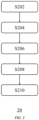
- the vehicle communication method 20 includes the following steps performed by a mobile end: in step S202, reading a graphic code presented by a vehicle end in communication with the mobile end; in step S204, decrypting, by using a password, information carried in the graphic code to obtain a seed key; in step S206, negotiating with the vehicle end to determine session information, and generating a session key based on the seed key and the session information using a key generation algorithm; in step S208, receiving encrypted session content from the vehicle end; and in step S210, decrypting the encrypted session content by using the session key to obtain session content.
- the mobile end may also be a session initiator.
- the method 20 may further include the following steps (not shown in the figures): encrypting session content (referred to as second session content to be distinguishable from the descriptions above) by using the session key to generate encrypted session content (referred to as second encrypted session content to be distinguishable from the descriptions above); and sending the second encrypted session content.
- the vehicle end and the mobile end constitute a sender/recipient or a recipient/sender pair.
- Processes performed by the vehicle end as a sender can be equivalent or similar to the processes performed by the mobile end when the mobile end serves as a sender.
- processes performed by the vehicle end as a recipient can be equivalent or similar to the processes performed by the mobile end when the mobile end serves as a recipient.
- the vehicle communication terminal 30 (hereinafter referred to as the terminal 30) includes a memory 302 and a processor 304.
- the processor 304 may read data from the memory 302 and write data into the memory 302.
- the memory 302 may store instructions, and the processor 304 may execute the instructions stored in the memory 302 to cause any of the vehicle communication methods as described above to be performed.
- the vehicle communication terminal 40 (hereinafter referred to as the terminal 40) includes a key management and encryption/decryption module, a verification module, and a session management module.
- the key management and encryption/decryption module of the terminal 40 may be configured to generate a seed key.
- the verification module of the terminal 40 may be configured to present a graphic code for the seed key.
- Information carried in the graphic code is encrypted with a password, for reading by a mobile end in communication with a vehicle end.
- the graphic code may be a two-dimensional code.
- the graphic code may be other graphic codes, such as a bar code, that can be recognized and read by a digital device.
- the information carried in the graphic code further includes a vehicle identification code of the vehicle end.
- the verification module integrates two functions, namely, generation and presentation of the two-dimensional code, with the two-dimensional code containing information such as the seed key (the seed key being derived from a master key) and vehicle-end identity information.
- the information is encoded, and the generated two-dimensional code is then encrypted with the password. Random information can be added when encoding the information into the two-dimensional code to ensure that a different two-dimensional code is generated each time, thereby preventing the information carried in the two-dimensional code from being attacked by cryptanalysis.
- the session management module of the terminal 40 may negotiate with the mobile end to determine session information.
- the session information may be determined based on at least one of the following: timestamp(s) and random number(s).
- the session management module may be configured for offline session management and real-time session management.
- the session management module manages session information for offline session(s) and real-time session(s), and the session information includes vehicle identity information of the vehicle end, mobile-side identity information, the timestamps, the random numbers, etc.
- the session information is synchronized between the two ends through secure encrypted communication channels.
- the two ends can generate a real-time session key based on the session information and the seed key using a key generation algorithm for subsequent end-to-end data encrypted transmission.
- the key management and encryption/decryption module of the terminal 40 is further configured to generate a session key based on the seed key and the session information using a key generation algorithm, encrypt session content by using the session key to generate encrypted session content, and send the encrypted session content.
- the key management and encryption/decryption module is further configured for key management of the master key, the seed key, the session key, etc. that are involved in end-to-end encryption, encryption/decryption, as well as key derivation, among other functions.
- the master key is generated by a real-time session initiator, the seed key is derived from the master key and shared with a real-time session recipient through code scanning, and the session key is used for end-to-end data encrypted transmission in offline and real-time session scenarios.
- the encryption/decryption function provides an encryption/decryption interface, and a key generation algorithm is used to generate the session key.
- the key generation algorithm can use the seed key for key derivation to generate a one-time session key using encryption techniques such as rotation and substitution based on application scenarios and time factors.
- the algorithm derives a one-time symmetric key, a one-time initialization vector, and a key digest based on the time of an event.
- the one-time symmetric key and the one-time initialization vector are used for data encryption, and the key digest is used for key verification.
- the terminal 40 may also serve as the intended recipient of the session.
- the key management and encryption/decryption module is further configured to: receive encrypted session content (referred to as second encrypted session content to be distinguishable from the descriptions above) from the mobile end; and decrypt the second encrypted session content by using the session key to obtain session content (referred to as second session content to be distinguishable from the descriptions above).
- the session content may be transmitting a real-time image from the vehicle end to the mobile end.
- the terminal 40 may further include a hardware security module (not shown in the figures).
- This module may be an abstraction layer of an underlying hardware security module (HSM) of the vehicle end, and is used for providing key generation and management and data encryption/decryption capabilities.
- HSM hardware security module
- a mobile end for vehicle communication includes a key management and encryption/decryption module, a verification module, and a session management module.
- the key management and encryption/decryption module and session management module of the mobile end 50 may have the same functions as the corresponding modules of the terminal 40.
- the verification module of the mobile end 50 can read a graphic code presented by the vehicle end in communication with the mobile end.
- the verification module of the mobile end 50 integrates a two-dimensional code scanning function, and the mobile end scans the two-dimensional code for information of the vehicle end and can decrypt the information by using an encrypted password, to obtain a seed key, and vehicle identity information of the vehicle end, timestamps, signature(s), and other information.
- the key management and encryption/decryption module of the mobile end 50 may decrypt, by using a password, information carried in the graphic code to obtain the seed key.
- the session management module of the mobile end 50 may negotiate with the vehicle end to determine session information, and may receive encrypted session content and session information from the vehicle end.
- the key management and encryption/decryption module is further configured to generate a session key based on the seed key and the session information using a key generation algorithm, and decrypt the encrypted session content by using the session key to obtain session content.
- the mobile end 50 may also serve as a session initiator.
- the key management and encryption/decryption module is further configured to: encrypt session content (referred to as second session content to be distinguishable from the descriptions above) by using the session key to generate encrypted session content (referred to as second encrypted session content to be distinguishable from the descriptions above); and send the second encrypted session content.
- the mobile end 50 may further include a hardware security module (not shown in the figures).
- This module may be an abstraction layer of an underlying hardware security module (HSM) of the vehicle end, and is used for providing key generation and management and data encryption/decryption capabilities.
- HSM hardware security module
- a vehicle includes any one of the vehicle communication terminals as described above.
- the disclosure does not limit the layout of the vehicle (for example, a wheeled vehicle, a tracked vehicle, etc.), nor does it limit the driving force of the vehicle (for example, electric motor-driven vehicles, gasoline engine-driven vehicles, etc.), and the vehicle in the disclosure covers various vehicles currently known in the field as well as vehicles to be developed in the future.
- a computer-readable storage medium having instructions stored therein, where the instructions, when executed by a processor, cause the processor to perform any one of the vehicle communication methods as described above.
- the computer-readable medium in the disclosure includes various types of computer storage media, and may be any usable medium accessible to a general-purpose or special-purpose computer.
- the computer-readable medium may include a RAM, a ROM, an EPROM, an EEPROM, a register, a hard disk, a removable hard disk, a CD-ROM or another optical memory, a magnetic disk memory or another magnetic storage device, or any other transitory or non-transitory media that can carry or store expected program code having an instruction or data structure form and be accessible to the general-purpose or special-purpose computer or a general-purpose or special-purpose processor.
- Data is usually copied magnetically in a disk used herein, while data is usually copied optically by using lasers in a disc. A combination thereof shall also fall within the scope of protection of the computer-readable media.
- An exemplary storage medium is coupled to a processor, so that the processor can read information from and write information to the storage medium.
- the storage medium may be integrated into the processor.
- the processor and the storage medium may reside in an application-specific integrated circuit (ASIC).
- the ASIC may reside in a user terminal.
- the processor and the storage medium may reside as discrete assemblies in a user terminal.
Landscapes
- Engineering & Computer Science (AREA)
- Computer Security & Cryptography (AREA)
- Computer Networks & Wireless Communication (AREA)
- Signal Processing (AREA)
- Computing Systems (AREA)
- General Engineering & Computer Science (AREA)
- Computer Hardware Design (AREA)
- Health & Medical Sciences (AREA)
- General Health & Medical Sciences (AREA)
- Medical Informatics (AREA)
- Theoretical Computer Science (AREA)
- General Physics & Mathematics (AREA)
- Physics & Mathematics (AREA)
- Mobile Radio Communication Systems (AREA)
- Telephonic Communication Services (AREA)
Abstract
Description
- The disclosure claims priority to
Chinese Patent Application No. 202210863585.4 filed with July 22, 2022 - The disclosure relates to the field of vehicle privacy protection, and in particular, to a vehicle communication method and terminal, a vehicle, and a computer-readable storage medium.
- With the development of intelligent connected vehicles, communication security is also grabbing more and more attention from users. In the industry of intelligent electric vehicles, one of the most important areas of security is data security, which is related to user privacy, property and even life safety. With the increasing intelligence and connectivity of vehicles, the amount of data generated by smart vehicles is growing, and much of this data is related to user privacy. If such data were to be leaked, it could have a significant impact on the user privacy, property, and even the safety of users' lives. With the introduction of data security laws and personal information protection laws, user privacy protection has become a compliance requirement. In real-time scenarios such as remote viewing, special attention should be paid to the protection of communication privacy.
- In view of this, there is a need for an improved vehicle communication solution.
- Embodiments of the disclosure provide a vehicle communication method and terminal, a vehicle, and a computer-readable storage medium for improving the security of vehicle communication.
- According to an aspect of the disclosure, a vehicle communication method is provided. The method includes the following steps performed by a vehicle end: generating a seed key and presenting a graphic code for the seed key, wherein information carried in the graphic code is encrypted with a password, and the graphic code is read by a mobile end in communication with the vehicle end; negotiating with the mobile end to determine session information, and generating a session key based on the seed key and the session information using a key generation algorithm; encrypting session content by using the session key to generate encrypted session content; and sending the encrypted session content.
- In some embodiments of the disclosure, the graphic code is a two-dimensional code.
- In some embodiments of the disclosure, the information carried in the graphic code further includes a vehicle identification code of the vehicle end.
- In some embodiments of the disclosure, the session information is determined based on at least one of the following: timestamp(s) and random number(s).
- In some embodiments of the disclosure, the session content includes: transmitting a real-time image from the vehicle end to the mobile end.
- In some embodiments of the disclosure, the method further includes: receiving second encrypted session content from the mobile end; and decrypting the second encrypted session content by using the session key to obtain second session content.
- According to another aspect of the disclosure, a vehicle communication method is provided. The method includes the following steps performed by a mobile end: reading a graphic code presented by a vehicle end in communication with the mobile end; decrypting, by using a password, information carried in the graphic code to obtain a seed key; negotiating with the vehicle end to determine session information, and generating a session key based on the seed key and the session information using a key generation algorithm; receiving encrypted session content from the vehicle end; and decrypting the encrypted session content by using the session key to obtain session content.
- In some embodiments of the disclosure, the method further includes: encrypting second session content by using the session key to generate second encrypted session content; and sending the second encrypted session content.
- According to another aspect of the disclosure, a vehicle communication terminal is provided. The terminal includes: a key management and encryption/decryption module configured to generate a seed key; a verification module configured to present a graphic code for the seed key, wherein information carried in the graphic code is encrypted with a password, for reading by a mobile end in communication with a vehicle end; and a session management module configured to negotiate with the mobile end to determine session information, wherein the key management and encryption/decryption module is further configured to generate a session key based on the seed key and the session information using a key generation algorithm, encrypt session content by using the session key to generate encrypted session content, and send the encrypted session content.
- In some embodiments of the disclosure, the graphic code is a two-dimensional code.
- In some embodiments of the disclosure, the information carried in the graphic code further includes a vehicle identification code of the vehicle end.
- In some embodiments of the disclosure, the session information is determined based on at least one of the following: timestamp(s) and random number(s).
- In some embodiments of the disclosure, the session content includes: transmitting a real-time image from the vehicle end to the mobile end.
- In some embodiments of the disclosure, the key management and encryption/decryption module is further configured to: receive second encrypted session content from the mobile end; and decrypt the second encrypted session content by using the session key to obtain second session content.
- According to another aspect of the disclosure, a mobile end for vehicle communication is provided. The mobile end includes: a verification module configured to read a graphic code presented by a vehicle end in communication with the mobile end; a key management and encryption/decryption module configured to decrypt, by using a password, information carried in the graphic code to obtain a seed key; and a session management module configured to negotiate with the vehicle end to determine session information and receive encrypted session content from the vehicle end, wherein the key management and encryption/decryption module is further configured to generate a session key based on the seed key and the session information using a key generation algorithm, and decrypt the encrypted session content by using the session key to obtain session content.
- In some embodiments of the disclosure, the key management and encryption/decryption module is further configured to: encrypt second session content by using the session key to generate second encrypted session content; and send the second encrypted session content.
- According to another aspect of the disclosure, a vehicle communication terminal is provided. The terminal includes: a memory configured to store instructions; and a processor configured to execute the instructions to cause any one of the vehicle communication methods as described above to be performed.
- According to another aspect of the disclosure, a vehicle is provided. The vehicle includes any one of the vehicle communication terminals as described above.
- According to another aspect of the disclosure, there is provided a computer-readable storage medium having instructions stored therein, wherein the instructions, when executed by a processor, cause the processor to perform any one of the vehicle communication methods as described above.
- According to the vehicle communication method and terminal, the vehicle, and the computer-readable storage medium of some embodiments of the disclosure, a reliable communication link may be established between the vehicle end and the mobile end, thereby ensuring the security of signals transmitted therebetween.
- The above and other objectives and advantages of the disclosure will be more thorough and clearer from the following detailed description in conjunction with the drawings, where the same or similar elements are represented by the same reference numerals.
-
FIG. 1 shows a vehicle communication method according to an embodiment of the disclosure; -
FIG. 2 shows a vehicle communication method according to an embodiment of the disclosure; -
FIG. 3 shows a vehicle communication terminal according to an embodiment of the disclosure; -
FIG. 4 shows a vehicle communication terminal according to an embodiment of the disclosure; -
FIG. 5 shows a mobile end according to an embodiment of the disclosure; and -
FIG. 6 shows a vehicle communication system and the working principle thereof according to an embodiment of the disclosure. - For brevity and illustrative purposes, various embodiments will now be described in detail with reference to the drawings, which are provided as illustrative examples of the disclosure. However, a person skilled in the art would easily realize that various embodiments disclosed herein may be equivalently applied or directed to any vehicle communication methods and terminals, vehicles, and computer-readable storage media, and it is evident that various modifications and changes may be made thereto without departing from the broad spirit and scope of the disclosure.
- According to an aspect of the disclosure, a vehicle communication method is provided. As shown in
FIG. 1 , the vehicle communication method 10 (hereinafter referred to as method 10) includes the following steps performed by a vehicle end: in step S102, generating a seed key and presenting a graphic code for the seed key; in step S104, negotiating with the mobile end to determine session information, and generating a session key based on the seed key and the session information using a key generation algorithm; in step S106, encrypting session content by using the session key to generate encrypted session content; and in step S108, sending the encrypted session content. The above steps of themethod 10 enable sharing of the seed key between the vehicle end and the mobile end, and the decryption of the seed key using the password ensures that there is no data leakage even if it is intercepted halfway. The seed key and the session information shared between the two ends can be used for subsequent encrypted communication, thus ensuring the reliability of data exchanged between the vehicle end and the mobile end. The specific operations of themethod 10 in the above steps are explained in detail below. - For the sake of clarity, the
method 10 will be described in detail with reference to the vehicle communication system shown inFIG. 6 . As shown inFIG. 6 , the vehicle communication system includes a vehicle end, a mobile end, etc. Some embodiments of end-to-end encrypted (E2EE) communication using a session key are described below, where data transmitted between a sender and a recipient (including an intermediate recipient), is E2EE encrypted data. The following operations will be performed between the above ends. The sequence numbers of the following operations correspond to the serial numbers shown in the figure. - (1) Two-dimensional code scanning.
FIG. 6 shows an example end-to-end encryption scheme for Internet of Vehicles privacy protection in a real-time data transmission scenario, where a seed key is shared by scanning a two-dimensional code before a real-time session is established, the seed key being the basis for subsequent key rotation for the end-to-end encrypted session. In addition to the seed key information, the two-dimensional code may further contain identity-related information of the vehicle end (e.g., a vehicle identification code of the vehicle end), etc. These information can be protected by the password. The mobile end needs to enter the password to decode and obtain the seed key and the identity-related information of the vehicle end after scanning the code. - (2) Real-time session. In a real-time session scenario, the vehicle end establishes a real-time session connection with the mobile end. The two ends may negotiate with each other to generate real-time session-related information (referred to as session information in the disclosure, which may be exchanged through a secure transmission channel), and subsequently, the two ends generate the same real-time session key separately based on the session information and the seed key using a key generation algorithm.
- (3) Real-time data exchange. In a real-time session scenario, the two ends of the session encrypt and decrypt the data exchanged between the two ends by using the real-time session key.
- It should be understood that
FIG. 6 and the above descriptions are intended to provide the reader with an adequate but not necessarily complete solution, such that the reader has a thorough understanding of the basic operations of the disclosure. However, this solution is not intended to limit other embodiments. - Returning to
FIG. 1 , instead of describing the communication system as a whole, themethod 10 will be described below with a focus on describing the performance of the communication method as disclosed herein from the perspective of the vehicle end. In step S102 of themethod 10, the seed key is generated and the graphic code for the seed key is presented. Information carried in the graphic code can be encrypted with the password, and the graphic code can be read by a mobile end that communicates with the vehicle end. The seed key generated in step S102 can then be used to encrypt the information through, for example, symmetric encryption in subsequent processes. Then, the recipient (the mobile end) of the seed key can extract, by entering the password, the seed key from the information carried in the graphic code. In some examples, the graphic code may be a two-dimensional code. In some other examples, the graphic code may be other graphic codes, such as a bar code, that can be recognized and read by a digital device. In some embodiments of the disclosure, the information carried in the graphic code further includes a vehicle identification code of the vehicle end, etc. - In step S104 of the
method 10, negotiation with the mobile end is made to determine the session information, and the session key is generated based on the seed key and the session information using the key generation algorithm. In some embodiments of the disclosure, the session information may be determined by the two ends through negotiation based on timestamp(s), random number(s), etc. The key generation algorithm used to generate the session key for symmetric encryption based on random session information and seed key can be conventional symmetric algorithms, which will not be described in detail herein. - In step S106 of the
method 10, the session key is used to encrypt the session content and generate the encrypted session content. The session content encrypted with the session key has enhanced security, and will less likely result in data leakage even if it is intercepted halfway. In addition, because the session information is constantly updated by the two ends during a real-time session, the session key generated thereby is also constantly updated, which makes it more difficult for a hacker to decrypt information in a brute-force attack. - In step S108 of the
method 10, the encrypted session content is sent in real time to the mobile end. - In this way, the
method 10 as described herein allows real-time session content to be encrypted through symmetric encryption, thereby ensuring the communication security. Due to a large data volume of the session content, encrypting the session content by symmetric encryption with real-time key rotations achieves a balance between security and efficiency. - In some embodiments of the disclosure, as described above, the
method 10 may be used for the transmission of real-time data. For example, the session content may be transmitting a real-time image from the vehicle end to the mobile end, etc. - The steps above are described from the perspective when the vehicle end is a connection initiator. Similar to the steps as described above, the vehicle end may also be an intended recipient of a session. Specifically, the
method 10 may further include the following steps (not shown in the figures): receiving encrypted session content (referred to as second encrypted session content to be distinguishable from the descriptions above) from the mobile end; and decrypting the second encrypted session content by using the session key to obtain session content (referred to as second session content to be distinguishable from the descriptions above). - According to another aspect of the disclosure, a vehicle communication method is provided. As shown in
FIG. 2 , the vehicle communication method 20 (hereinafter referred to as the method 20) includes the following steps performed by a mobile end: in step S202, reading a graphic code presented by a vehicle end in communication with the mobile end; in step S204, decrypting, by using a password, information carried in the graphic code to obtain a seed key; in step S206, negotiating with the vehicle end to determine session information, and generating a session key based on the seed key and the session information using a key generation algorithm; in step S208, receiving encrypted session content from the vehicle end; and in step S210, decrypting the encrypted session content by using the session key to obtain session content. - The steps above are described from the perspective when the mobile end is an intended recipient of a session. Similar to the steps as described above, the mobile end may also be a session initiator. Specifically, the
method 20 may further include the following steps (not shown in the figures): encrypting session content (referred to as second session content to be distinguishable from the descriptions above) by using the session key to generate encrypted session content (referred to as second encrypted session content to be distinguishable from the descriptions above); and sending the second encrypted session content. - It should be understood that except in the case of code scanning (requiring the two-dimensional code to be presented by the vehicle end and the two-dimensional code to be scanned by the mobile end), the vehicle end and the mobile end constitute a sender/recipient or a recipient/sender pair. Processes performed by the vehicle end as a sender can be equivalent or similar to the processes performed by the mobile end when the mobile end serves as a sender. Likewise, processes performed by the vehicle end as a recipient can be equivalent or similar to the processes performed by the mobile end when the mobile end serves as a recipient.
- According to another aspect of the disclosure, a vehicle communication terminal is provided. As shown in
FIG. 3 , the vehicle communication terminal 30 (hereinafter referred to as the terminal 30) includes amemory 302 and aprocessor 304. Theprocessor 304 may read data from thememory 302 and write data into thememory 302. Thememory 302 may store instructions, and theprocessor 304 may execute the instructions stored in thememory 302 to cause any of the vehicle communication methods as described above to be performed. - According to another aspect of the disclosure, a vehicle communication terminal is provided. As shown in
FIG. 4 , the vehicle communication terminal 40 (hereinafter referred to as the terminal 40) includes a key management and encryption/decryption module, a verification module, and a session management module. - The key management and encryption/decryption module of the terminal 40 may be configured to generate a seed key. The verification module of the terminal 40 may be configured to present a graphic code for the seed key. Information carried in the graphic code is encrypted with a password, for reading by a mobile end in communication with a vehicle end. In some examples, the graphic code may be a two-dimensional code. In some other examples, the graphic code may be other graphic codes, such as a bar code, that can be recognized and read by a digital device. In addition, the information carried in the graphic code further includes a vehicle identification code of the vehicle end. Specifically, the verification module integrates two functions, namely, generation and presentation of the two-dimensional code, with the two-dimensional code containing information such as the seed key (the seed key being derived from a master key) and vehicle-end identity information. The information is encoded, and the generated two-dimensional code is then encrypted with the password. Random information can be added when encoding the information into the two-dimensional code to ensure that a different two-dimensional code is generated each time, thereby preventing the information carried in the two-dimensional code from being attacked by cryptanalysis.
- The session management module of the terminal 40 may negotiate with the mobile end to determine session information. In some embodiments of the disclosure, the session information may be determined based on at least one of the following: timestamp(s) and random number(s). Specifically, the session management module may be configured for offline session management and real-time session management. The session management module manages session information for offline session(s) and real-time session(s), and the session information includes vehicle identity information of the vehicle end, mobile-side identity information, the timestamps, the random numbers, etc. The session information is synchronized between the two ends through secure encrypted communication channels. The two ends can generate a real-time session key based on the session information and the seed key using a key generation algorithm for subsequent end-to-end data encrypted transmission.
- In addition, the key management and encryption/decryption module of the terminal 40 is further configured to generate a session key based on the seed key and the session information using a key generation algorithm, encrypt session content by using the session key to generate encrypted session content, and send the encrypted session content.
- Specifically, the key management and encryption/decryption module is further configured for key management of the master key, the seed key, the session key, etc. that are involved in end-to-end encryption, encryption/decryption, as well as key derivation, among other functions. The master key is generated by a real-time session initiator, the seed key is derived from the master key and shared with a real-time session recipient through code scanning, and the session key is used for end-to-end data encrypted transmission in offline and real-time session scenarios. The encryption/decryption function provides an encryption/decryption interface, and a key generation algorithm is used to generate the session key. The key generation algorithm can use the seed key for key derivation to generate a one-time session key using encryption techniques such as rotation and substitution based on application scenarios and time factors. The algorithm derives a one-time symmetric key, a one-time initialization vector, and a key digest based on the time of an event. The one-time symmetric key and the one-time initialization vector are used for data encryption, and the key digest is used for key verification.
- In addition, the terminal 40 may also serve as the intended recipient of the session. In this case, the key management and encryption/decryption module is further configured to: receive encrypted session content (referred to as second encrypted session content to be distinguishable from the descriptions above) from the mobile end; and decrypt the second encrypted session content by using the session key to obtain session content (referred to as second session content to be distinguishable from the descriptions above).
- In some embodiments of the disclosure, the session content may be transmitting a real-time image from the vehicle end to the mobile end.
- Furthermore, the terminal 40 may further include a hardware security module (not shown in the figures). This module may be an abstraction layer of an underlying hardware security module (HSM) of the vehicle end, and is used for providing key generation and management and data encryption/decryption capabilities.
- According to another aspect of the disclosure, a mobile end for vehicle communication is provided. As shown in
FIG. 5 , themobile end 50 includes a key management and encryption/decryption module, a verification module, and a session management module. Here, the key management and encryption/decryption module and session management module of themobile end 50 may have the same functions as the corresponding modules of the terminal 40. Specifically,
The verification module of themobile end 50 can read a graphic code presented by the vehicle end in communication with the mobile end. The verification module of themobile end 50 integrates a two-dimensional code scanning function, and the mobile end scans the two-dimensional code for information of the vehicle end and can decrypt the information by using an encrypted password, to obtain a seed key, and vehicle identity information of the vehicle end, timestamps, signature(s), and other information. - The key management and encryption/decryption module of the
mobile end 50 may decrypt, by using a password, information carried in the graphic code to obtain the seed key. The session management module of themobile end 50 may negotiate with the vehicle end to determine session information, and may receive encrypted session content and session information from the vehicle end. The key management and encryption/decryption module is further configured to generate a session key based on the seed key and the session information using a key generation algorithm, and decrypt the encrypted session content by using the session key to obtain session content. - In addition, the
mobile end 50 may also serve as a session initiator. In this case, the key management and encryption/decryption module is further configured to: encrypt session content (referred to as second session content to be distinguishable from the descriptions above) by using the session key to generate encrypted session content (referred to as second encrypted session content to be distinguishable from the descriptions above); and send the second encrypted session content. - Likewise, the
mobile end 50 may further include a hardware security module (not shown in the figures). This module may be an abstraction layer of an underlying hardware security module (HSM) of the vehicle end, and is used for providing key generation and management and data encryption/decryption capabilities. - According to another aspect of the disclosure, a vehicle is provided. The vehicle includes any one of the vehicle communication terminals as described above. The disclosure does not limit the layout of the vehicle (for example, a wheeled vehicle, a tracked vehicle, etc.), nor does it limit the driving force of the vehicle (for example, electric motor-driven vehicles, gasoline engine-driven vehicles, etc.), and the vehicle in the disclosure covers various vehicles currently known in the field as well as vehicles to be developed in the future.
- According to another aspect of the disclosure, there is provided a computer-readable storage medium having instructions stored therein, where the instructions, when executed by a processor, cause the processor to perform any one of the vehicle communication methods as described above. The computer-readable medium in the disclosure includes various types of computer storage media, and may be any usable medium accessible to a general-purpose or special-purpose computer. For example, the computer-readable medium may include a RAM, a ROM, an EPROM, an EEPROM, a register, a hard disk, a removable hard disk, a CD-ROM or another optical memory, a magnetic disk memory or another magnetic storage device, or any other transitory or non-transitory media that can carry or store expected program code having an instruction or data structure form and be accessible to the general-purpose or special-purpose computer or a general-purpose or special-purpose processor. Data is usually copied magnetically in a disk used herein, while data is usually copied optically by using lasers in a disc. A combination thereof shall also fall within the scope of protection of the computer-readable media. An exemplary storage medium is coupled to a processor, so that the processor can read information from and write information to the storage medium. Alternatively, the storage medium may be integrated into the processor. The processor and the storage medium may reside in an application-specific integrated circuit (ASIC). The ASIC may reside in a user terminal. Alternatively, the processor and the storage medium may reside as discrete assemblies in a user terminal.
- The foregoing descriptions are merely the implementations of the disclosure, but are not intended to limit the scope of protection of the disclosure. Any feasible variation or replacement conceived by a person skilled in the art within the technical scope disclosed in the disclosure shall fall within the scope of protection of the disclosure. Without conflicts, the implementations of the disclosure and features in the implementations may also be combined with each other. The scope of protection of the disclosure shall be subject to recitations of the claims.
Claims (10)
- A vehicle communication method, characterized by comprising the following steps performed by a vehicle end:generating a seed key and presenting a graphic code for the seed key, wherein information carried in the graphic code is encrypted with a password, and the graphic code is read by a mobile end in communication with the vehicle end;negotiating with the mobile end to determine session information, and generating a session key based on the seed key and the session information using a key generation algorithm;encrypting session content by using the session key to generate encrypted session content; andsending the encrypted session content.
- The method according to claim 1, characterized in that the graphic code is a two-dimensional code.
- The method according to claim 1, characterized in that the information carried in the graphic code further comprises a vehicle identification code of the vehicle end.
- The method according to claim 1, characterized in that the session information is determined based on at least one of the following: timestamp(s) and random number(s).
- The method according to claim 1, characterized in that the session content comprises: transmitting a real-time image from the vehicle end to the mobile end.
- The method according to claim 1, characterized by further comprising:receiving second encrypted session content from the mobile end; anddecrypting the second encrypted session content by using the session key to obtain second session content.
- A vehicle communication method, characterized by comprising the following steps performed by a mobile end:reading a graphic code presented by a vehicle end in communication with the mobile end;decrypting, by using a password, information carried in the graphic code to obtain a seed key;negotiating with the vehicle end to determine session information, and generating a session key based on the seed key and the session information using a key generation algorithm;receiving encrypted session content from the vehicle end; anddecrypting the encrypted session content by using the session key to obtain session content.
- The method according to claim 7, characterized by further comprising:encrypting second session content by using the session key to generate second encrypted session content; andsending the second encrypted session content.
- A vehicle communication terminal, characterized by comprising:a key management and encryption/decryption module configured to generate a seed key;a verification module configured to present a graphic code for the seed key, wherein information carried in the graphic code is encrypted with a password, for reading by a mobile end in communication with a vehicle end; anda session management module configured to negotiate with the mobile end to determine session information, whereinthe key management and encryption/decryption module is further configured to generate a session key based on the seed key and the session information using a key generation algorithm, encrypt session content by using the session key to generate encrypted session content, and send the encrypted session content.
- The terminal according to claim 9, characterized in that the graphic code is a two-dimensional code.
Applications Claiming Priority (2)
| Application Number | Priority Date | Filing Date | Title |
|---|---|---|---|
| CN202210863585.4A CN115334100B (en) | 2022-07-22 | 2022-07-22 | Vehicle communication method and terminal, vehicle, and computer-readable storage medium |
| PCT/CN2023/107942 WO2024017256A1 (en) | 2022-07-22 | 2023-07-18 | Vehicle communication method and terminal, and vehicle and computer-readable storage medium |
Publications (2)
| Publication Number | Publication Date |
|---|---|
| EP4561021A1 true EP4561021A1 (en) | 2025-05-28 |
| EP4561021A4 EP4561021A4 (en) | 2026-01-14 |
Family
ID=83920458
Family Applications (1)
| Application Number | Title | Priority Date | Filing Date |
|---|---|---|---|
| EP23842319.8A Pending EP4561021A4 (en) | 2022-07-22 | 2023-07-18 | VEHICLE COMMUNICATION METHOD AND END DEVICE AS WELL AS VEHICLE AND COMPUTER-READABLE STORAGE MEDIUM |
Country Status (3)
| Country | Link |
|---|---|
| EP (1) | EP4561021A4 (en) |
| CN (1) | CN115334100B (en) |
| WO (1) | WO2024017256A1 (en) |
Families Citing this family (1)
| Publication number | Priority date | Publication date | Assignee | Title |
|---|---|---|---|---|
| CN115334100B (en) * | 2022-07-22 | 2025-08-26 | 蔚来汽车科技(安徽)有限公司 | Vehicle communication method and terminal, vehicle, and computer-readable storage medium |
Family Cites Families (10)
| Publication number | Priority date | Publication date | Assignee | Title |
|---|---|---|---|---|
| CN104836660A (en) * | 2014-02-12 | 2015-08-12 | 中国银联股份有限公司 | Password management method and system |
| CN106017462A (en) * | 2016-05-20 | 2016-10-12 | 成都景博信息技术有限公司 | Positioning analysis method for internet of vehicles |
| KR102598613B1 (en) * | 2016-07-21 | 2023-11-07 | 삼성전자주식회사 | System and method for providing vehicle information based on personal certification and vehicle certification |
| KR101946527B1 (en) * | 2016-10-27 | 2019-02-11 | 아주대학교산학협력단 | Communication system between vehicle to nomadic device and communication method therebetween |
| CN110177354B (en) * | 2019-06-21 | 2022-01-07 | 湖北亿咖通科技有限公司 | Wireless control method and system for vehicle |
| CN110932846B (en) * | 2019-06-25 | 2022-07-22 | 南京汽车集团有限公司 | Vehicle-mounted virtual key communication method |
| MX2021004261A (en) * | 2020-04-15 | 2021-10-18 | Transp Ip Holdings Llc | Communication system and method. |
| CN112512038B (en) * | 2020-11-19 | 2022-11-29 | 中国建设银行股份有限公司 | Method and device for generating session key, electronic equipment and readable storage medium |
| CN113099457A (en) * | 2021-04-22 | 2021-07-09 | 联合汽车电子有限公司 | Method and system for binding vehicle and mobile terminal |
| CN115334100B (en) * | 2022-07-22 | 2025-08-26 | 蔚来汽车科技(安徽)有限公司 | Vehicle communication method and terminal, vehicle, and computer-readable storage medium |
-
2022
- 2022-07-22 CN CN202210863585.4A patent/CN115334100B/en active Active
-
2023
- 2023-07-18 EP EP23842319.8A patent/EP4561021A4/en active Pending
- 2023-07-18 WO PCT/CN2023/107942 patent/WO2024017256A1/en not_active Ceased
Also Published As
| Publication number | Publication date |
|---|---|
| CN115334100A (en) | 2022-11-11 |
| WO2024017256A1 (en) | 2024-01-25 |
| EP4561021A4 (en) | 2026-01-14 |
| CN115334100B (en) | 2025-08-26 |
Similar Documents
| Publication | Publication Date | Title |
|---|---|---|
| CN101340443B (en) | Session key negotiating method, system and server in communication network | |
| US10785019B2 (en) | Data transmission method and apparatus | |
| CN1697367B (en) | A method and system for recovering password protected private data via a communication network without exposing the private data | |
| EP3185466B1 (en) | Encrypted communications method and communications terminal, and computer storage medium | |
| CN109218825B (en) | Video encryption system | |
| CN109151508B (en) | Video encryption method | |
| CN110611670A (en) | API request encryption method and device | |
| CN101867898A (en) | Short message encrypting communication system, method and secret key center | |
| EP3883178A1 (en) | Encryption system and method employing permutation group-based encryption technology | |
| KR20150079489A (en) | Instant messaging method and system | |
| EP3219130A1 (en) | Visual cryptography and obfuscation using augmented reality | |
| CN110166489B (en) | Data transmission method, system, equipment and computer medium in Internet of things | |
| CN115022868A (en) | Satellite terminal entity authentication method, system and storage medium | |
| Degabriele et al. | Provable security in the real world | |
| CN115225672A (en) | End-to-end data transmission method, device and medium | |
| CN103905388A (en) | Authentication method, authentication device, smart card, and server | |
| CN117715026A (en) | Unmanned aerial vehicle safety authentication method and system based on embedded message authentication code | |
| CN119276494A (en) | Session key generation method and related device | |
| CN109831782B (en) | Safety transmission verification method for electronic card information | |
| EP4561020A1 (en) | Vehicle communication method, terminal, vehicle and computer-readable storage medium | |
| CN112054905B (en) | Secure communication method and system of mobile terminal | |
| CN112788046A (en) | Method and system for encrypting transmission information | |
| CN115334100B (en) | Vehicle communication method and terminal, vehicle, and computer-readable storage medium | |
| CN109617916A (en) | Secret key processing method and instant messaging system | |
| CN119276502A (en) | Method, system and medium for realizing unified encryption, decryption and desensitization of data across terminals |
Legal Events
| Date | Code | Title | Description |
|---|---|---|---|
| STAA | Information on the status of an ep patent application or granted ep patent |
Free format text: STATUS: THE INTERNATIONAL PUBLICATION HAS BEEN MADE |
|
| PUAI | Public reference made under article 153(3) epc to a published international application that has entered the european phase |
Free format text: ORIGINAL CODE: 0009012 |
|
| STAA | Information on the status of an ep patent application or granted ep patent |
Free format text: STATUS: REQUEST FOR EXAMINATION WAS MADE |
|
| 17P | Request for examination filed |
Effective date: 20250220 |
|
| AK | Designated contracting states |
Kind code of ref document: A1 Designated state(s): AL AT BE BG CH CY CZ DE DK EE ES FI FR GB GR HR HU IE IS IT LI LT LU LV MC ME MK MT NL NO PL PT RO RS SE SI SK SM TR |
|
| DAV | Request for validation of the european patent (deleted) | ||
| DAX | Request for extension of the european patent (deleted) | ||
| A4 | Supplementary search report drawn up and despatched |
Effective date: 20251216 |
|
| RIC1 | Information provided on ipc code assigned before grant |
Ipc: H04L 67/12 20220101AFI20251210BHEP Ipc: H04W 4/40 20180101ALI20251210BHEP Ipc: H04W 12/041 20210101ALI20251210BHEP Ipc: H04L 9/08 20060101ALI20251210BHEP Ipc: H04L 9/40 20220101ALI20251210BHEP Ipc: H04L 9/32 20060101ALI20251210BHEP Ipc: H04W 12/02 20090101ALI20251210BHEP Ipc: H04W 12/03 20210101ALI20251210BHEP Ipc: H04W 12/04 20210101ALI20251210BHEP Ipc: H04W 12/50 20210101ALI20251210BHEP |