EP4560197A1 - Positional control of fuel injection into gas turbine combustors - Google Patents
Positional control of fuel injection into gas turbine combustors Download PDFInfo
- Publication number
- EP4560197A1 EP4560197A1 EP24214925.0A EP24214925A EP4560197A1 EP 4560197 A1 EP4560197 A1 EP 4560197A1 EP 24214925 A EP24214925 A EP 24214925A EP 4560197 A1 EP4560197 A1 EP 4560197A1
- Authority
- EP
- European Patent Office
- Prior art keywords
- injector
- combustor
- injectors
- actuator
- relative
- Prior art date
- Legal status (The legal status is an assumption and is not a legal conclusion. Google has not performed a legal analysis and makes no representation as to the accuracy of the status listed.)
- Pending
Links
Images




Classifications
-
- F—MECHANICAL ENGINEERING; LIGHTING; HEATING; WEAPONS; BLASTING
- F23—COMBUSTION APPARATUS; COMBUSTION PROCESSES
- F23C—METHODS OR APPARATUS FOR COMBUSTION USING FLUID FUEL OR SOLID FUEL SUSPENDED IN A CARRIER GAS OR AIR
- F23C5/00—Disposition of burners with respect to the combustion chamber or to one another; Mounting of burners in combustion apparatus
- F23C5/02—Structural details of mounting
- F23C5/06—Provision for adjustment of burner position during operation
-
- F—MECHANICAL ENGINEERING; LIGHTING; HEATING; WEAPONS; BLASTING
- F23—COMBUSTION APPARATUS; COMBUSTION PROCESSES
- F23R—GENERATING COMBUSTION PRODUCTS OF HIGH PRESSURE OR HIGH VELOCITY, e.g. GAS-TURBINE COMBUSTION CHAMBERS
- F23R3/00—Continuous combustion chambers using liquid or gaseous fuel
- F23R3/28—Continuous combustion chambers using liquid or gaseous fuel characterised by the fuel supply
- F23R3/283—Attaching or cooling of fuel injecting means including supports for fuel injectors, stems, or lances
-
- F—MECHANICAL ENGINEERING; LIGHTING; HEATING; WEAPONS; BLASTING
- F02—COMBUSTION ENGINES; HOT-GAS OR COMBUSTION-PRODUCT ENGINE PLANTS
- F02C—GAS-TURBINE PLANTS; AIR INTAKES FOR JET-PROPULSION PLANTS; CONTROLLING FUEL SUPPLY IN AIR-BREATHING JET-PROPULSION PLANTS
- F02C9/00—Controlling gas-turbine plants; Controlling fuel supply in air- breathing jet-propulsion plants
- F02C9/26—Control of fuel supply
- F02C9/28—Regulating systems responsive to plant or ambient parameters, e.g. temperature, pressure, rotor speed
-
- F—MECHANICAL ENGINEERING; LIGHTING; HEATING; WEAPONS; BLASTING
- F02—COMBUSTION ENGINES; HOT-GAS OR COMBUSTION-PRODUCT ENGINE PLANTS
- F02D—CONTROLLING COMBUSTION ENGINES
- F02D7/00—Other fuel-injection control
-
- F—MECHANICAL ENGINEERING; LIGHTING; HEATING; WEAPONS; BLASTING
- F05—INDEXING SCHEMES RELATING TO ENGINES OR PUMPS IN VARIOUS SUBCLASSES OF CLASSES F01-F04
- F05D—INDEXING SCHEME FOR ASPECTS RELATING TO NON-POSITIVE-DISPLACEMENT MACHINES OR ENGINES, GAS-TURBINES OR JET-PROPULSION PLANTS
- F05D2260/00—Function
- F05D2260/96—Preventing, counteracting or reducing vibration or noise
-
- F—MECHANICAL ENGINEERING; LIGHTING; HEATING; WEAPONS; BLASTING
- F05—INDEXING SCHEMES RELATING TO ENGINES OR PUMPS IN VARIOUS SUBCLASSES OF CLASSES F01-F04
- F05D—INDEXING SCHEME FOR ASPECTS RELATING TO NON-POSITIVE-DISPLACEMENT MACHINES OR ENGINES, GAS-TURBINES OR JET-PROPULSION PLANTS
- F05D2270/00—Control
- F05D2270/01—Purpose of the control system
- F05D2270/14—Purpose of the control system to control thermoacoustic behaviour in the combustion chambers
-
- F—MECHANICAL ENGINEERING; LIGHTING; HEATING; WEAPONS; BLASTING
- F05—INDEXING SCHEMES RELATING TO ENGINES OR PUMPS IN VARIOUS SUBCLASSES OF CLASSES F01-F04
- F05D—INDEXING SCHEME FOR ASPECTS RELATING TO NON-POSITIVE-DISPLACEMENT MACHINES OR ENGINES, GAS-TURBINES OR JET-PROPULSION PLANTS
- F05D2270/00—Control
- F05D2270/01—Purpose of the control system
- F05D2270/20—Purpose of the control system to optimize the performance of a machine
-
- F—MECHANICAL ENGINEERING; LIGHTING; HEATING; WEAPONS; BLASTING
- F23—COMBUSTION APPARATUS; COMBUSTION PROCESSES
- F23R—GENERATING COMBUSTION PRODUCTS OF HIGH PRESSURE OR HIGH VELOCITY, e.g. GAS-TURBINE COMBUSTION CHAMBERS
- F23R3/00—Continuous combustion chambers using liquid or gaseous fuel
- F23R3/28—Continuous combustion chambers using liquid or gaseous fuel characterised by the fuel supply
- F23R3/286—Continuous combustion chambers using liquid or gaseous fuel characterised by the fuel supply having fuel-air premixing devices
-
- F—MECHANICAL ENGINEERING; LIGHTING; HEATING; WEAPONS; BLASTING
- F23—COMBUSTION APPARATUS; COMBUSTION PROCESSES
- F23R—GENERATING COMBUSTION PRODUCTS OF HIGH PRESSURE OR HIGH VELOCITY, e.g. GAS-TURBINE COMBUSTION CHAMBERS
- F23R3/00—Continuous combustion chambers using liquid or gaseous fuel
- F23R3/28—Continuous combustion chambers using liquid or gaseous fuel characterised by the fuel supply
- F23R3/34—Feeding into different combustion zones
Definitions
- the present disclosure relates to fuel injection, and more particularly to fuel injection in gas turbine combustors.
- a system includes a combustor for a gas turbine defining a main axis extending in an upstream-downstream direction, the combustor including a combustor dome bounding an upstream portion of the combustor, wherein a plurality of injector openings are defined through the combustor dome.
- An injector defines a spray axis aligned with one of the plurality of injector openings for issuing a spray into the combustor along the spray axis.
- An actuator is operatively connected to the injector for movement of the injector relative combustor dome to adjust a relative position of the spray axis relative to the main axis.
- a high pressure case of a gas turbine engine can be included outboard of the combustor, wherein the actuator can be positioned outside the high pressure case.
- the actuator can be operatively connected to the injector for rotation of the injector relative combustor dome to adjust a relative angle of the spray axis relative to the main axis.
- the actuator and injector can be configured to sweep the spray axis over a range of angles relative to the main axis, wherein the range includes a position wherein the spray axis is aligned parallel to the main axis.
- the actuator can be configured to rotate the injector about a rotation axis that is radial relative to the main axis.
- the actuator can be configured to rotate the injector about a rotation axis that is perpendicular to and radially offset from the main axis.
- the actuator can be configured to rotate the injector about a rotation axis that is tangential to and offset from the main axis.
- the actuator can be configured to move the injector linearly relative to the combustor dome.
- the actuator can be configured to move the injector linearly along an actuation axis that is perpendicular to the main axis.
- the injector can include a nozzle with a sliding top hat seal interfacing and sealing between the nozzle and the combustor dome, wherein the sliding top hat seal is configured to slide relative to the combustor dome and to be stationary relative to the nozzle.
- a system includes a combustor for a gas turbine defining a main axis extending in an upstream-downstream direction, the combustor including a combustor dome bounding an upstream portion of the combustor, wherein a plurality of injector openings are defined through the combustor dome.
- a plurality of injectors each define a respective spray axis aligned with one of the plurality of injector openings for issuing a spray into the combustor along the respective spray axis.
- At least one actuator is operatively connected to at least a subset of the plurality of injectors for movement of the subset relative combustor dome to adjust a relative position of the respective spray axes of the subset relative to the main axis.
- a controller is operatively connected to the at least one actuator.
- the at least one actuator can be a single actuator operatively connected for movement of the at least the subset of the plurality of injectors.
- the at least one actuator can be a plurality of individual actuators, each operatively connected to move at least one respective one of the injectors.
- the at least one actuator and the controller can be configured to actuate the plurality of injectors in banks of injectors.
- the at least one actuator can include a plurality of actuators, one for each one of the injectors in the plurality of injectors.
- the controller can be configured to actuate the plurality of actuators to move each of the injectors in the plurality of injectors identically to one another based on phase of engine operation, and/or for correcting for adverse combustion conditions.
- the controller can be configured to actuate the plurality of actuators in a regular, circumferential pattern based on phase of engine operation, and/or for correcting for adverse combustion conditions.
- the controller can be configured to actuate the plurality of actuators to compensate for a faulty one of the injectors, wherein injectors circumferentially neighboring the faulty injector are moved and actuators circumferentially remote from the faulty one of the injectors are moved less than the injectors circumferentially neighboring the faulty injector.
- the controller can be configured to sweep the plurality of injectors through a range of converging and diverging positions of the spray axes relative to the main axis.
- the controller can be configured to sweep the plurality of injectors through a range of clock-wise/counter clock-wise tangential positions of the spray axes relative to the main axis.
- FIG. 1 a partial view of an embodiment of a system in accordance with the disclosure is shown in Fig. 1 and is designated generally by reference character 100.
- FIGs. 2-14 Other embodiments of systems in accordance with the disclosure, or aspects thereof, are provided in Figs. 2-14 , as will be described.
- the systems and methods described herein can be used to provide positional control of fuel injection during operation of gas turbine engines.
- the system 100 includes a combustor 102 for a gas turbine engine defining a main axis A extending in an upstream-downstream direction.
- the combustor 102 includes a combustor dome 104 bounding an upstream portion of the combustor 102, wherein a plurality of injector openings 106 are defined through the combustor dome 104.
- the combustor liner includes inner and outer liner walls 108, 110 extending in a downstream direction from the dome 104.
- the system 100 includes a plurality of injectors 112 as shown in Fig. 3 .
- An injector 112 defines a spray axis S aligned with one of the plurality of injector openings 106 for issuing a spray 114 (the sprays 114 are indicated schematically throughout the drawings) into the combustor 102 along the spray axis S.
- the nozzle 116 of the injector 112 has a surface 118 which interfaces with the combustor dome 104 and/or a sealing element 120 (labeled in Fig. 14 ).
- an actuator 122 is operatively connected to the injector 112 for movement of the injector 112 relative combustor dome 104 to adjust a relative position of the spray axis S relative to the main axis A (labeled in Figs. 1 and 3 ) to alter the position and/or direction of the spray 114 from the injector 112 during operation of the gas turbine engine.
- the actuator 122 is located outside of the high pressure engine case 124, which is outboard of the combustor 102, where it is in a lower temperature environment that inside the case 124 proximate the combustor 102.
- a feed arm 128 of the injector 112 extends from the actuator 122, through a bore 126 in the high pressure engine case 124, to the nozzle 116 so the actuator can control movement of the nozzle 116.
- the actuator 122 is operatively connected to the injector 112 for rotation of the injector 112 relative combustor dome 104 to adjust a relative angle ⁇ of the spray axis S relative to the main axis A (labeled in Figs. 1 and 3 ).
- the actuator 122 can include a rotary actuator such as stepper motor or the like, located at the flange 130 of the injector 112, at the opposite end of the feed arm 128 from the nozzle 116.
- the actuator 122 does not need to be right at the flange 130 to the high pressure engine case 124, but can be spaced off of the case 124 if needed for thermal considerations, but can still be located within the fuel injector 112.
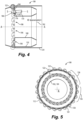
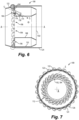
- the actuator 122 and injector 112 are configured to sweep the spray axis S over a range of angles ⁇ relative to the main axis A (as labeled in Fig. 1 ), wherein the range includes a position wherein the spray axis S is aligned parallel or close to parallel with the main axis A, as shown in Figs. 4-5 .
- the system 100 includes a plurality of injectors 112, each defining its own a respective spray axis S aligned with one of the plurality of injector openings 106 for issuing a spray 114 into the combustor along 102 the respective spray axis S.
- a controller 134 is operatively connected to the actuators 122 for individual or ganged control of the actuators 122. It is contemplated that in some applications, not all of the injectors 122 need actuators. Some injectors 122 can be stationary.
- a single actuator 122 could actuate a subset of the injectors 112, or a small number of actuators 122 could each actuate a respective subset of the injectors 122 in banks, e.g. using sync rings/segments 136 indicated schematically in Fig. 3 .
- sync rings/segments 136 indicated schematically in Fig. 3 .
- the controller 134 is configured to actuate the plurality of actuators 112 to move each of the injectors 112 in the plurality of injectors identically to one another based on phase of engine operation, such as phase of mission including ground idle, taxiing, take off, cruise, descent, landing, and the like in the case of aircraft, and/or for correcting for adverse combustion conditions.
- the controller can be configured to perform the operations of the actuators 122, e.g. with machine readable program instructions causing a processor to control the actuators 122.
- the controller 134 can be configured to actuate the plurality of actuators 122 in a regular, circumferential pattern based on phase of engine operation, and/or for correcting for adverse combustion conditions. Figs.
- FIG. 1 and 3-7 show regular, circumferential uniformity of the actuators 122 as the actuators are positioned in three different positions but in each position all of the actuators are angled the same so there is no circumferential variation from one actuator 122 to the others.
- Other regular patterns are also contemplated for the controller 134.
- every other actuator 122 is positioned to converge toward the main axis A, and the remaining actuators 122 are positioned to diverge.
- Fig. 9 shows another possible regular, circumferentially repeating pattern of three different actuator positions, converging, roughly parallel, and diverging.
- the controller 134 can be configured to actuate the plurality of actuators 122 to compensate for a faulty one of the injectors 112, wherein injectors 112 circumferentially neighboring the faulty injector 112 are moved by individualize amounts and actuators 122 circumferentially remote from the faulty one of the injectors 112 are moved less than the injectors 112 circumferentially neighboring the faulty injector 112.
- the adjacent injectors 112 all face in towards the faulty injector 112 to achieve circumferential uniformity in the combustor 102.
- the controller 134 is configured to sweep the plurality of injectors 112 through a range of clock-wise/counter clock-wise tangential positions of the spray axes relative to the main axis, e.g. using the configurations of Figs. 11 or 13 .
- the actuator 122 is configured to rotate the injector 112 about a rotation axis R that is tangential to and offset from the main axis A.
- the rotation axis R does not intersect the main axis A, but oblique relative to the a radials R of the main axis A. This means the injector spray can be adjusted closer/farther from the combustor liners 108, 110 (labeled in Fig. 1 ).
- the injector 112 can be rotated to spray closer/farther from its neighboring injector's sprays, (albeit with some compromise towards/away from the liners 108, 110.
- This rotation axis R causes the range of angles ⁇ (labeled in Fig. 1 ) to include positions of the spray axis S that diverge away from the main axis A, as shown in Figs. 1 and 3 , positions parallel or nearly parallel to the main axis A (as shown in Figs. 4-5 ), and positions that converge towards the main axis A as shown in Figs. 6-7 .
- Having all nozzles 116 angled inward may be desired for low power to concentrate heat.
- Having all nozzles 116 angled approximately mid-way may be desired for takeoff to avoid overheating walls/liners 108, 110 (labeled in Fig. 1 ). Having all nozzles angled outward (as in Figs. 1 and 3 ) may be desired for ignition, e.g. to bring the spays 114 into a closer position to ignitors on the outer liner 110 (labeled in Fig. 1 ).
- the actuator 122 can be configured to rotate the injector about a rotation axis R that is perpendicular to and radially offset from the main axis A, so the range of angles ⁇ (e.g. as labeled in Fig. 1 ) is in a plane P oriented radially (the plane is defined by the radius r as oriented in Fig. 12 ) relative to the main axis A, i.e. the main axis A and the radius r are both in the plane P.
- the injector spray 114 can be adjusted closer/farther from the combustor liners 108, 110, and limits the amount of travel the injectors 112 can be rotated closer/farther from their neighboring injectors 112.
- the actuator 112 can be configured to rotate the injector 112 about a rotation axis R that is radial (aligned along a radius r) relative to the main axis A, meaning the injector spray 114 can be adjusted closer/farther from adjacent fuel injectors 112. This limits the amount of travel the injector 112 can be rotated closer/farther from the combustor liners 108, 110.
- the actuator 122 can be configured to move the injector 112 linearly along an actuation axis L.
- the nozzle 116 can engage with a sliding top hat seal 132 interfacing and sealing between the nozzle 116 and the combustor dome 104, wherein the sliding top hat seal 132 is configured to slide relative to the combustor dome 104 and to be stationary relative to the nozzle 116.
- the actuation axis L can be perpendicular to the main axis A (not shown in Fig. 14 , but see rotation axis R that is perpendicular to the main axis A in Fig. 13 ).
- Systems and methods as disclose herein provide potential benefits including the following. Temperature maldistribution, emissions, acoustics, and operability such as lean blow-out and ignition, are all ongoing issues within gas turbine combustors, and having the ability to selectively modify the placement of fuel into the combustor provides an improvement to these categories.
- Systems and methods as disclosed herein can actuate at different positions depending on engine condition (e.g., idle, takeoff, cruise) to position for best emissions, temperature pattern factor, or other relevant metric. They may actuate injectors into different positions dependent on a fault. For instance, if one nozzle is plugging up due to internal carbon growth, the other nozzles can compensate by aiming their fuel closer to the faulty nozzle.
- the nozzle may be adjusted away from the combustor liner. If rotation and/or linear movement can be timed with acoustic instability, systems and methods as disclosed herein can be used to operate out-of-phase to actively control the acoustics.
Landscapes
- Engineering & Computer Science (AREA)
- Chemical & Material Sciences (AREA)
- Combustion & Propulsion (AREA)
- Mechanical Engineering (AREA)
- General Engineering & Computer Science (AREA)
- Control Of Turbines (AREA)
- Spray Control Apparatus (AREA)
Abstract
Description
- The present disclosure relates to fuel injection, and more particularly to fuel injection in gas turbine combustors.
- Temperature maldistribution, emissions, acoustics, and operability such as lean blow-out and ignition, are all ongoing issues within gas turbine combustors. Having the ability to selectively modify the injection of fuel into the combustor can provide an improvement to these categories.
- The conventional techniques have been considered satisfactory for their intended purpose. However, there is an ever present need for improved systems and methods for selectively modifying the injection of fuel into a gas turbine combustor. This disclosure provides a solution for this need.
- A system includes a combustor for a gas turbine defining a main axis extending in an upstream-downstream direction, the combustor including a combustor dome bounding an upstream portion of the combustor, wherein a plurality of injector openings are defined through the combustor dome. An injector defines a spray axis aligned with one of the plurality of injector openings for issuing a spray into the combustor along the spray axis. An actuator is operatively connected to the injector for movement of the injector relative combustor dome to adjust a relative position of the spray axis relative to the main axis.
- A high pressure case of a gas turbine engine can be included outboard of the combustor, wherein the actuator can be positioned outside the high pressure case. The actuator can be operatively connected to the injector for rotation of the injector relative combustor dome to adjust a relative angle of the spray axis relative to the main axis. The actuator and injector can be configured to sweep the spray axis over a range of angles relative to the main axis, wherein the range includes a position wherein the spray axis is aligned parallel to the main axis. The actuator can be configured to rotate the injector about a rotation axis that is radial relative to the main axis. The actuator can be configured to rotate the injector about a rotation axis that is perpendicular to and radially offset from the main axis. The actuator can be configured to rotate the injector about a rotation axis that is tangential to and offset from the main axis. The actuator can be configured to move the injector linearly relative to the combustor dome.
- The actuator can be configured to move the injector linearly along an actuation axis that is perpendicular to the main axis. The injector can include a nozzle with a sliding top hat seal interfacing and sealing between the nozzle and the combustor dome, wherein the sliding top hat seal is configured to slide relative to the combustor dome and to be stationary relative to the nozzle.
- A system includes a combustor for a gas turbine defining a main axis extending in an upstream-downstream direction, the combustor including a combustor dome bounding an upstream portion of the combustor, wherein a plurality of injector openings are defined through the combustor dome. A plurality of injectors each define a respective spray axis aligned with one of the plurality of injector openings for issuing a spray into the combustor along the respective spray axis. At least one actuator is operatively connected to at least a subset of the plurality of injectors for movement of the subset relative combustor dome to adjust a relative position of the respective spray axes of the subset relative to the main axis. A controller is operatively connected to the at least one actuator.
- The at least one actuator can be a single actuator operatively connected for movement of the at least the subset of the plurality of injectors. The at least one actuator can be a plurality of individual actuators, each operatively connected to move at least one respective one of the injectors. The at least one actuator and the controller can be configured to actuate the plurality of injectors in banks of injectors.
- The at least one actuator can include a plurality of actuators, one for each one of the injectors in the plurality of injectors. The controller can be configured to actuate the plurality of actuators to move each of the injectors in the plurality of injectors identically to one another based on phase of engine operation, and/or for correcting for adverse combustion conditions. The controller can be configured to actuate the plurality of actuators in a regular, circumferential pattern based on phase of engine operation, and/or for correcting for adverse combustion conditions. The controller can be configured to actuate the plurality of actuators to compensate for a faulty one of the injectors, wherein injectors circumferentially neighboring the faulty injector are moved and actuators circumferentially remote from the faulty one of the injectors are moved less than the injectors circumferentially neighboring the faulty injector. The controller can be configured to sweep the plurality of injectors through a range of converging and diverging positions of the spray axes relative to the main axis. The controller can be configured to sweep the plurality of injectors through a range of clock-wise/counter clock-wise tangential positions of the spray axes relative to the main axis.
- These and other features of the systems and methods of the subject disclosure will become more readily apparent to those skilled in the art from the following detailed description of the preferred embodiments taken in conjunction with the drawings.
- So that those skilled in the art to which the subject disclosure appertains will readily understand how to make and use the devices and methods of the subject disclosure without undue experimentation, preferred embodiments thereof will be described in detail herein below with reference to certain figures, wherein:
-
Fig. 1 is a schematic cross-sectional side elevation view of an embodiment of a system constructed in accordance with the present disclosure, showing one of the injectors engaged through the high pressure case and the combustor dome; -
Fig. 2 is a cross-sectional side-elevation view of the injector ofFig. 1 , showing the rotational actuator; -
Fig. 3 is an axial end elevation view of the system ofFig. 1 , showing all of the injectors in a diverging position; -
Figs. 4 and 5 are schematic cross-sectional side and axial elevation views, respectively, of the system ofFig. 1 , showing the injectors in a centered position; -
Figs. 6 and 7 are schematic cross-sectional side and axial elevation views, respectively, of the system ofFig. 1 , showing the injectors in a converging, tangential position; -
Figs. 8 and 9 are schematic axial end elevation views of the system ofFig. 1 , showing the injectors positioned in two different circumferential patterns. -
Fig. 10 is a schematic axial end elevation view of the system ofFig. 1 , showing a faulted injector and neighboring injectors positioned to compensate; -
Fig. 11 is a schematic end elevation view of the system ofFig. 1 , showing the range of rotation of the injector; -
Fig. 12 is a schematic end elevation view of the system ofFig. 1 , showing an injector mounted for rotation in a plane perpendicular or radial to the main axis; -
Fig. 13 is a schematic end elevation view of the system ofFig. 1 , showing an injector mounted for rotation about a rotation axis perpendicular to the main axis; and -
Fig. 14 is a cross-sectional side-elevation view of a portion of the system ofFig. 1 , showing an injector mounted of for linear movement relative to the combustor dome. - Reference will now be made to the drawings wherein like reference numerals identify similar structural features or aspects of the subject disclosure. For purposes of explanation and illustration, and not limitation, a partial view of an embodiment of a system in accordance with the disclosure is shown in
Fig. 1 and is designated generally byreference character 100. Other embodiments of systems in accordance with the disclosure, or aspects thereof, are provided inFigs. 2-14 , as will be described. The systems and methods described herein can be used to provide positional control of fuel injection during operation of gas turbine engines. - The
system 100 includes acombustor 102 for a gas turbine engine defining a main axis A extending in an upstream-downstream direction. Thecombustor 102 includes acombustor dome 104 bounding an upstream portion of thecombustor 102, wherein a plurality ofinjector openings 106 are defined through thecombustor dome 104. The combustor liner includes inner andouter liner walls dome 104. Thesystem 100 includes a plurality ofinjectors 112 as shown inFig. 3 . Aninjector 112 defines a spray axis S aligned with one of the plurality ofinjector openings 106 for issuing a spray 114 (thesprays 114 are indicated schematically throughout the drawings) into thecombustor 102 along the spray axis S. Thenozzle 116 of theinjector 112 has asurface 118 which interfaces with thecombustor dome 104 and/or a sealing element 120 (labeled inFig. 14 ). - With reference to
Fig. 2 , anactuator 122 is operatively connected to theinjector 112 for movement of theinjector 112relative combustor dome 104 to adjust a relative position of the spray axis S relative to the main axis A (labeled inFigs. 1 and3 ) to alter the position and/or direction of thespray 114 from theinjector 112 during operation of the gas turbine engine. Theactuator 122 is located outside of the highpressure engine case 124, which is outboard of thecombustor 102, where it is in a lower temperature environment that inside thecase 124 proximate thecombustor 102. Afeed arm 128 of theinjector 112 extends from theactuator 122, through abore 126 in the highpressure engine case 124, to thenozzle 116 so the actuator can control movement of thenozzle 116. - The
actuator 122 is operatively connected to theinjector 112 for rotation of theinjector 112relative combustor dome 104 to adjust a relative angle θ of the spray axis S relative to the main axis A (labeled inFigs. 1 and3 ). Theactuator 122 can include a rotary actuator such as stepper motor or the like, located at theflange 130 of theinjector 112, at the opposite end of thefeed arm 128 from thenozzle 116. Those skilled in the art will readily appreciate that theactuator 122 does not need to be right at theflange 130 to the highpressure engine case 124, but can be spaced off of thecase 124 if needed for thermal considerations, but can still be located within thefuel injector 112. Theactuator 122 andinjector 112 are configured to sweep the spray axis S over a range of angles θ relative to the main axis A (as labeled inFig. 1 ), wherein the range includes a position wherein the spray axis S is aligned parallel or close to parallel with the main axis A, as shown inFigs. 4-5 . - As shown in
Fig. 3 , thesystem 100 includes a plurality ofinjectors 112, each defining its own a respective spray axis S aligned with one of the plurality ofinjector openings 106 for issuing aspray 114 into the combustor along 102 the respective spray axis S. Acontroller 134 is operatively connected to theactuators 122 for individual or ganged control of theactuators 122. It is contemplated that in some applications, not all of theinjectors 122 need actuators. Someinjectors 122 can be stationary. It is also contemplated that asingle actuator 122 could actuate a subset of theinjectors 112, or a small number ofactuators 122 could each actuate a respective subset of theinjectors 122 in banks, e.g. using sync rings/segments 136 indicated schematically inFig. 3 . However, there are advantages to configurations with individual spray control, as further detailed below. - The
controller 134 is configured to actuate the plurality ofactuators 112 to move each of theinjectors 112 in the plurality of injectors identically to one another based on phase of engine operation, such as phase of mission including ground idle, taxiing, take off, cruise, descent, landing, and the like in the case of aircraft, and/or for correcting for adverse combustion conditions. The controller can be configured to perform the operations of theactuators 122, e.g. with machine readable program instructions causing a processor to control theactuators 122. Thecontroller 134 can be configured to actuate the plurality ofactuators 122 in a regular, circumferential pattern based on phase of engine operation, and/or for correcting for adverse combustion conditions.Figs. 1 and3-7 show regular, circumferential uniformity of theactuators 122 as the actuators are positioned in three different positions but in each position all of the actuators are angled the same so there is no circumferential variation from oneactuator 122 to the others. Other regular patterns are also contemplated for thecontroller 134. For example, inFig. 8 everyother actuator 122 is positioned to converge toward the main axis A, and the remainingactuators 122 are positioned to diverge.Fig. 9 shows another possible regular, circumferentially repeating pattern of three different actuator positions, converging, roughly parallel, and diverging. - With reference now to
Fig. 10 , thecontroller 134 can be configured to actuate the plurality ofactuators 122 to compensate for a faulty one of theinjectors 112, whereininjectors 112 circumferentially neighboring thefaulty injector 112 are moved by individualize amounts andactuators 122 circumferentially remote from the faulty one of theinjectors 112 are moved less than theinjectors 112 circumferentially neighboring thefaulty injector 112. Theadjacent injectors 112 all face in towards thefaulty injector 112 to achieve circumferential uniformity in thecombustor 102. - The
controller 134 is configured to sweep the plurality ofinjectors 112 through a range of clock-wise/counter clock-wise tangential positions of the spray axes relative to the main axis, e.g. using the configurations ofFigs. 11 or 13 . As shown inFig. 11 , theactuator 122 is configured to rotate theinjector 112 about a rotation axis R that is tangential to and offset from the main axis A. The rotation axis R does not intersect the main axis A, but oblique relative to the a radials R of the main axis A. This means the injector spray can be adjusted closer/farther from thecombustor liners 108, 110 (labeled inFig. 1 ). Also, theinjector 112 can be rotated to spray closer/farther from its neighboring injector's sprays, (albeit with some compromise towards/away from theliners Fig. 1 ) to include positions of the spray axis S that diverge away from the main axis A, as shown inFigs. 1 and3 , positions parallel or nearly parallel to the main axis A (as shown inFigs. 4-5 ), and positions that converge towards the main axis A as shown inFigs. 6-7 . Having allnozzles 116 angled inward (as inFigs. 6-7 ) may be desired for low power to concentrate heat. Having allnozzles 116 angled approximately mid-way (as inFigs. 4-5 ) may be desired for takeoff to avoid overheating walls/liners 108, 110 (labeled inFig. 1 ). Having all nozzles angled outward (as inFigs. 1 and3 ) may be desired for ignition, e.g. to bring thespays 114 into a closer position to ignitors on the outer liner 110 (labeled inFig. 1 ). - As shown in
Fig. 12 , it is also contemplated that theactuator 122 can be configured to rotate the injector about a rotation axis R that is perpendicular to and radially offset from the main axis A, so the range of angles θ (e.g. as labeled inFig. 1 ) is in a plane P oriented radially (the plane is defined by the radius r as oriented inFig. 12 ) relative to the main axis A, i.e. the main axis A and the radius r are both in the plane P. This means theinjector spray 114 can be adjusted closer/farther from thecombustor liners injectors 112 can be rotated closer/farther from their neighboringinjectors 112. As shown inFig. 13 , it is also contemplated that theactuator 112 can be configured to rotate theinjector 112 about a rotation axis R that is radial (aligned along a radius r) relative to the main axis A, meaning theinjector spray 114 can be adjusted closer/farther fromadjacent fuel injectors 112. This limits the amount of travel theinjector 112 can be rotated closer/farther from thecombustor liners - With reference now to
Fig. 14 , in addition to or in lieu of rotation, it is also contemplated that theactuator 122 can be configured to move theinjector 112 linearly along an actuation axis L. Thenozzle 116 can engage with a sliding top hat seal 132 interfacing and sealing between thenozzle 116 and thecombustor dome 104, wherein the sliding top hat seal 132 is configured to slide relative to thecombustor dome 104 and to be stationary relative to thenozzle 116. The actuation axis L can be perpendicular to the main axis A (not shown inFig. 14 , but see rotation axis R that is perpendicular to the main axis A inFig. 13 ). - Systems and methods as disclose herein provide potential benefits including the following. Temperature maldistribution, emissions, acoustics, and operability such as lean blow-out and ignition, are all ongoing issues within gas turbine combustors, and having the ability to selectively modify the placement of fuel into the combustor provides an improvement to these categories. Systems and methods as disclosed herein can actuate at different positions depending on engine condition (e.g., idle, takeoff, cruise) to position for best emissions, temperature pattern factor, or other relevant metric. They may actuate injectors into different positions dependent on a fault. For instance, if one nozzle is plugging up due to internal carbon growth, the other nozzles can compensate by aiming their fuel closer to the faulty nozzle. If a hot spot is detected on a combustor liner due to skewed spray, the nozzle may be adjusted away from the combustor liner. If rotation and/or linear movement can be timed with acoustic instability, systems and methods as disclosed herein can be used to operate out-of-phase to actively control the acoustics.
- The methods and systems of the present disclosure, as described above and shown in the drawings, provide for positional control of fuel injection during operation of gas turbine engines. While the apparatus and methods of the subject disclosure have been shown and described with reference to preferred embodiments, those skilled in the art will readily appreciate that changes and/or modifications may be made thereto without departing from the scope of the subject disclosure.
Claims (15)
- A system comprising:a combustor (102) for a gas turbine defining a main axis extending in an upstream-downstream direction, the combustor (102) including a combustor dome (104) bounding an upstream portion of the combustor (102), wherein a plurality of injector openings (106) are defined through the combustor dome (104);an injector (112) defining a spray axis aligned with one of the plurality of injector openings (106) for issuing a spray into the combustor (102) along the spray axis; andan actuator (122) operatively connected to the injector (112) for movement of the injector (112) relative combustor dome (104) to adjust a relative position of the spray axis relative to the main axis.
- The system as recited in claim 1, wherein the actuator (122) is operatively connected to the injector (112) for rotation of the injector relative combustor dome (104) to adjust a relative angle of the spray axis relative to the main axis.
- The system as recited in claim 2, wherein the actuator (122) and injector (112) are configured to sweep the spray axis over a range of angles relative to the main axis, wherein the range includes a position wherein the spray axis is aligned parallel to the main axis; orwherein the actuator (122) is configured to rotate the injector (112) about a rotation axis that is radial relative to the main axis; orwherein the actuator (122) is configured to rotate the injector (112) about a rotation axis that is perpendicular to and radially offset from the main axis; orwherein the actuator (122) is configured to rotate the injector (112) about a rotation axis that is tangential to and offset from the main axis.
- The system as recited in claim 1, wherein the actuator (122) is configured to move the injector (112) linearly relative to the combustor dome (104).
- The system as recited in claim 4, wherein the actuator (122) is configured to move the injector (112) linearly along an actuation axis that is perpendicular to the main axis.
- The system as recited in claim 4, wherein the injector (112) includes a nozzle with a sliding top hat seal interfacing and sealing between the nozzle and the combustor dome (104), wherein the sliding top hat seal is configured to slide relative to the combustor dome (104) and to be stationary relative to the nozzle.
- The system as recited in any preceding claim, further comprising a high pressure case of a gas turbine engine outboard of the combustor (102), wherein the actuator (122) is positioned outside the high pressure case.
- A system comprising:a combustor (102) for a gas turbine defining a main axis extending in an upstream-downstream direction, the combustor (102) including a combustor dome (104) bounding an upstream portion of the combustor (102), wherein a plurality of injector openings (106) are defined through the combustor dome (104);a plurality of injectors, each defining a respective spray axis aligned with one of the plurality of injector openings (106) for issuing a spray into the combustor (102) along the respective spray axis;at least one actuator (122) operatively connected to at least a subset of the plurality of injectors for movement of the subset relative combustor dome (104) to adjust a relative position of the respective spray axes of the subset relative to the main axis; anda controller operatively connected to the at least one actuator (122).
- The system as recited in claim 8, wherein the at least one actuator (122) is a single actuator operatively connected for movement of the at least the subset of the plurality of injectors.
- The system as recited in claim 8, wherein the at least one actuator (122) is a plurality of individual actuators, each operatively connected to move at least one respective one of the injectors.
- The system as recited in claim 10, wherein the at least one actuator (122) and the controller are configured to actuate the plurality of injectors in banks of injectors.
- The system as recited in claim 8, wherein the at least one actuator (122) includes a plurality of actuators, one for each one of the injectors in the plurality of injectors.
- The system as recited in claim 11, wherein the controller is configured to actuate the plurality of actuators to move each of the injectors in the plurality of injectors identically to one another based on phase of engine operation, and/or for correcting for adverse combustion conditions; orwherein the controller is configured to actuate the plurality of actuators in a regular, circumferential pattern based on phase of engine operation, and/or for correcting for adverse combustion conditions; orwherein the controller is configured to actuate the plurality of actuators to compensate for a faulty one of the injectors, wherein injectors circumferentially neighboring the faulty injector are moved and actuators circumferentially remote from the faulty one of the injectors are moved less than the injectors circumferentially neighboring the faulty injector.
- The system as recited in claim 8, wherein the controller is configured to sweep the plurality of injectors through a range of converging and diverging positions of the spray axes relative to the main axis.
- The system as recited in claim 14, wherein the controller is configured to sweep the plurality of injectors through a range of clock-wise/counter clock-wise tangential positions of the spray axes relative to the main axis.
Applications Claiming Priority (1)
| Application Number | Priority Date | Filing Date | Title |
|---|---|---|---|
| US18/517,712 US12331927B2 (en) | 2023-11-22 | 2023-11-22 | Positional control of fuel injection into gas turbine combustors |
Publications (1)
| Publication Number | Publication Date |
|---|---|
| EP4560197A1 true EP4560197A1 (en) | 2025-05-28 |
Family
ID=93648570
Family Applications (1)
| Application Number | Title | Priority Date | Filing Date |
|---|---|---|---|
| EP24214925.0A Pending EP4560197A1 (en) | 2023-11-22 | 2024-11-22 | Positional control of fuel injection into gas turbine combustors |
Country Status (2)
| Country | Link |
|---|---|
| US (1) | US12331927B2 (en) |
| EP (1) | EP4560197A1 (en) |
Families Citing this family (1)
| Publication number | Priority date | Publication date | Assignee | Title |
|---|---|---|---|---|
| US12480657B1 (en) * | 2025-04-29 | 2025-11-25 | General Electric Company | Gas turbine engine and fuel nozzle therefor |
Citations (6)
| Publication number | Priority date | Publication date | Assignee | Title |
|---|---|---|---|---|
| JPS56121910U (en) * | 1980-02-20 | 1981-09-17 | ||
| US4304196A (en) * | 1979-10-17 | 1981-12-08 | Combustion Engineering, Inc. | Apparatus for tilting low load coal nozzle |
| US20100293953A1 (en) * | 2007-11-02 | 2010-11-25 | Siemens Aktiengesellschaft | Combustor for a gas-turbine engine |
| EP2940389A1 (en) * | 2014-05-02 | 2015-11-04 | Siemens Aktiengesellschaft | Combustor burner arrangement |
| US20190170357A1 (en) * | 2016-04-13 | 2019-06-06 | Safran Helicopter Engines | Improved injectors for gas turbine combustion chamber |
| US20230324040A1 (en) * | 2020-10-13 | 2023-10-12 | John Zink Company, Llc | Variable-direction injector tip and burner incorporating the same |
Family Cites Families (10)
| Publication number | Priority date | Publication date | Assignee | Title |
|---|---|---|---|---|
| US2895435A (en) * | 1954-03-15 | 1959-07-21 | Combustion Eng | Tilting nozzle for fuel burner |
| US3483750A (en) * | 1967-02-01 | 1969-12-16 | Garrett Corp | Gas turbine inlet temperature measuring system |
| US3421702A (en) * | 1967-08-02 | 1969-01-14 | Spraying Systems Co | Adjustable multiple fluid atomizing nozzle |
| US4761959A (en) | 1987-03-02 | 1988-08-09 | Allied-Signal Inc. | Adjustable non-piloted air blast fuel nozzle |
| JP2995013B2 (en) * | 1997-03-31 | 1999-12-27 | 三菱重工業株式会社 | Pulverized fuel combustion burner |
| EP1499800B1 (en) * | 2002-04-26 | 2011-06-29 | Rolls-Royce Corporation | Fuel premixing module for gas turbine engine combustor |
| US20100175380A1 (en) * | 2009-01-13 | 2010-07-15 | General Electric Company | Traversing fuel nozzles in cap-less combustor assembly |
| US9920674B2 (en) * | 2014-01-09 | 2018-03-20 | Cummins Inc. | Variable spray angle injector arrangement |
| US11131458B2 (en) * | 2018-04-10 | 2021-09-28 | Delavan Inc. | Fuel injectors for turbomachines |
| US12241419B2 (en) * | 2022-08-25 | 2025-03-04 | Collins Engine Nozzles, Inc. | Fuel injectors assemblies with tangential flow component |
-
2023
- 2023-11-22 US US18/517,712 patent/US12331927B2/en active Active
-
2024
- 2024-11-22 EP EP24214925.0A patent/EP4560197A1/en active Pending
Patent Citations (6)
| Publication number | Priority date | Publication date | Assignee | Title |
|---|---|---|---|---|
| US4304196A (en) * | 1979-10-17 | 1981-12-08 | Combustion Engineering, Inc. | Apparatus for tilting low load coal nozzle |
| JPS56121910U (en) * | 1980-02-20 | 1981-09-17 | ||
| US20100293953A1 (en) * | 2007-11-02 | 2010-11-25 | Siemens Aktiengesellschaft | Combustor for a gas-turbine engine |
| EP2940389A1 (en) * | 2014-05-02 | 2015-11-04 | Siemens Aktiengesellschaft | Combustor burner arrangement |
| US20190170357A1 (en) * | 2016-04-13 | 2019-06-06 | Safran Helicopter Engines | Improved injectors for gas turbine combustion chamber |
| US20230324040A1 (en) * | 2020-10-13 | 2023-10-12 | John Zink Company, Llc | Variable-direction injector tip and burner incorporating the same |
Also Published As
| Publication number | Publication date |
|---|---|
| US12331927B2 (en) | 2025-06-17 |
| US20250164103A1 (en) | 2025-05-22 |
Similar Documents
| Publication | Publication Date | Title |
|---|---|---|
| US8261556B2 (en) | Device for guiding an element in an orifice in a wall of a turbomachine combustion chamber | |
| EP4560197A1 (en) | Positional control of fuel injection into gas turbine combustors | |
| US8113004B2 (en) | Wall element for use in combustion apparatus | |
| EP1507121B1 (en) | Combustor dome assembly of a gas turbine engine having improved deflector plates | |
| US10712003B2 (en) | Combustion chamber assembly | |
| EP3460332B1 (en) | A combustion chamber | |
| EP3301373B1 (en) | Pilot injector fuel shifting in an axial staged combustor for a gas turbine engine | |
| EP3315866B1 (en) | Combustor assembly with mounted auxiliary component | |
| US9790862B2 (en) | Fuel manifold and fuel injector arrangement for a combustion chamber | |
| US11015808B2 (en) | Aerodynamically enhanced premixer with purge slots for reduced emissions | |
| US20140007579A1 (en) | Non-symmetric arrangement of fuel nozzles in a combustor | |
| EP3091288B1 (en) | Mixing system | |
| EP2613084B1 (en) | A combustor for a gas turbine engine | |
| EP2884173B1 (en) | Assembly of a fuel injector in a combustion chamber for a gas turbine | |
| CN102308060A (en) | Diffuser/rectifier assembly for a turbine engine | |
| US9803555B2 (en) | Fuel delivery system with moveably attached fuel tube | |
| EP3933268B1 (en) | Assembly for a turbomachine comprising a combustor, an outer casing and a high pressure plenum | |
| US20080063513A1 (en) | Turbine blade tip gap reduction system for a turbine engine | |
| EP4317656B1 (en) | Aircraft engine intake duct with passively movable flow restrictor | |
| US20230392521A1 (en) | T-fairing installation tooling assembly | |
| US7677045B2 (en) | Gas turbine transition duct | |
| US20190316776A1 (en) | Fuel injector arrangement | |
| WO2018156419A1 (en) | Combustion system with axially staged fuel injection | |
| US20240280265A1 (en) | Combustor fuel nozzle assembly | |
| EP3988846A1 (en) | Integrated combustion nozzle having a unified head end |
Legal Events
| Date | Code | Title | Description |
|---|---|---|---|
| PUAI | Public reference made under article 153(3) epc to a published international application that has entered the european phase |
Free format text: ORIGINAL CODE: 0009012 |
|
| STAA | Information on the status of an ep patent application or granted ep patent |
Free format text: STATUS: THE APPLICATION HAS BEEN PUBLISHED |
|
| AK | Designated contracting states |
Kind code of ref document: A1 Designated state(s): AL AT BE BG CH CY CZ DE DK EE ES FI FR GB GR HR HU IE IS IT LI LT LU LV MC ME MK MT NL NO PL PT RO RS SE SI SK SM TR |
|
| STAA | Information on the status of an ep patent application or granted ep patent |
Free format text: STATUS: REQUEST FOR EXAMINATION WAS MADE |
|
| 17P | Request for examination filed |
Effective date: 20251120 |
|
| GRAP | Despatch of communication of intention to grant a patent |
Free format text: ORIGINAL CODE: EPIDOSNIGR1 |
|
| STAA | Information on the status of an ep patent application or granted ep patent |
Free format text: STATUS: GRANT OF PATENT IS INTENDED |
|
| RIC1 | Information provided on ipc code assigned before grant |
Ipc: F23R 3/28 20060101AFI20260306BHEP Ipc: F23C 5/06 20060101ALI20260306BHEP |
|
| INTG | Intention to grant announced |
Effective date: 20260318 |