EP4559628A1 - Power tool system and authorization method - Google Patents
Power tool system and authorization method Download PDFInfo
- Publication number
- EP4559628A1 EP4559628A1 EP24212071.5A EP24212071A EP4559628A1 EP 4559628 A1 EP4559628 A1 EP 4559628A1 EP 24212071 A EP24212071 A EP 24212071A EP 4559628 A1 EP4559628 A1 EP 4559628A1
- Authority
- EP
- European Patent Office
- Prior art keywords
- power tool
- battery pack
- charger
- key
- shared
- Prior art date
- Legal status (The legal status is an assumption and is not a legal conclusion. Google has not performed a legal analysis and makes no representation as to the accuracy of the status listed.)
- Pending
Links
Images



Classifications
-
- H—ELECTRICITY
- H02—GENERATION; CONVERSION OR DISTRIBUTION OF ELECTRIC POWER
- H02J—ELECTRIC POWER NETWORKS; CIRCUIT ARRANGEMENTS OR SYSTEMS FOR SUPPLYING OR DISTRIBUTING ELECTRIC POWER; SYSTEMS FOR STORING ELECTRIC ENERGY
- H02J7/00—Circuit arrangements for charging or discharging batteries or for supplying loads from batteries
- H02J7/40—Circuit arrangements for charging or discharging batteries or for supplying loads from batteries characterised by the exchange of charge or discharge related data
- H02J7/443—Circuit arrangements for charging or discharging batteries or for supplying loads from batteries characterised by the exchange of charge or discharge related data using passive battery identification means, e.g. resistors or capacitors
-
- G—PHYSICS
- G06—COMPUTING OR CALCULATING; COUNTING
- G06F—ELECTRIC DIGITAL DATA PROCESSING
- G06F21/00—Security arrangements for protecting computers, components thereof, programs or data against unauthorised activity
- G06F21/30—Authentication, i.e. establishing the identity or authorisation of security principals
- G06F21/44—Program or device authentication
-
- G—PHYSICS
- G06—COMPUTING OR CALCULATING; COUNTING
- G06F—ELECTRIC DIGITAL DATA PROCESSING
- G06F21/00—Security arrangements for protecting computers, components thereof, programs or data against unauthorised activity
- G06F21/70—Protecting specific internal or peripheral components, in which the protection of a component leads to protection of the entire computer
- G06F21/81—Protecting specific internal or peripheral components, in which the protection of a component leads to protection of the entire computer by operating on the power supply, e.g. enabling or disabling power-on, sleep or resume operations
-
- G—PHYSICS
- G06—COMPUTING OR CALCULATING; COUNTING
- G06F—ELECTRIC DIGITAL DATA PROCESSING
- G06F21/00—Security arrangements for protecting computers, components thereof, programs or data against unauthorised activity
- G06F21/70—Protecting specific internal or peripheral components, in which the protection of a component leads to protection of the entire computer
- G06F21/88—Detecting or preventing theft or loss
-
- H—ELECTRICITY
- H02—GENERATION; CONVERSION OR DISTRIBUTION OF ELECTRIC POWER
- H02J—ELECTRIC POWER NETWORKS; CIRCUIT ARRANGEMENTS OR SYSTEMS FOR SUPPLYING OR DISTRIBUTING ELECTRIC POWER; SYSTEMS FOR STORING ELECTRIC ENERGY
- H02J7/00—Circuit arrangements for charging or discharging batteries or for supplying loads from batteries
- H02J7/70—Circuit arrangements for charging or discharging batteries or for supplying loads from batteries characterised by the mechanical construction
-
- B—PERFORMING OPERATIONS; TRANSPORTING
- B25—HAND TOOLS; PORTABLE POWER-DRIVEN TOOLS; MANIPULATORS
- B25F—COMBINATION OR MULTI-PURPOSE TOOLS NOT OTHERWISE PROVIDED FOR; DETAILS OR COMPONENTS OF PORTABLE POWER-DRIVEN TOOLS NOT PARTICULARLY RELATED TO THE OPERATIONS PERFORMED AND NOT OTHERWISE PROVIDED FOR
- B25F5/00—Details or components of portable power-driven tools not particularly related to the operations performed and not otherwise provided for
Definitions
- the present invention relates to a power tool system and an authorization method for a power tool system.
- US20170364360A1 describes techniques for providing anti-theft protection for power tools by a power tool which disables itself after a predetermined amount of usage time, and re-enables usage only after secure, software-based authentication of the device.
- JP2005342796A describes a rechargeable electric tool and means for transmitting a search signal in a rechargeable electric tool in which a battery pack is detachable from the electric tool body.
- the electric tool main body and the battery pack is provided with notification means for notifying the user in response to the search signal.
- the battery pack is provided with search signal receiving means that operates using the built-in rechargeable battery as a power source and can notify a user by sound or light.
- JP4678199B2 describes an authentication unit that transmits or receives information on tool usage to or from an authentication device worn by the user, and a tool usage confirmation output from the authentication unit or the authentication device that performs the authentication operation. A person who does not wear the proper authentication equipment cannot use the power tool.
- US10285003B2 describes a power distribution box including a power input, an AC output, a power-line adapter, and a gateway device.
- the power-line adapter is coupled to the power input and configured to receive power via the power input and to communicate with an external network.
- the gateway device is coupled to the power-line adapter and includes a wireless network module and a translation controller.
- the wireless network module is configured to communicate with power tool devices in a wireless network
- the translation controller is coupled to the power-line adapter and enables communications between the wireless network module and the external network through the power-line adapter.
- JP2017126560A describes a power tool system and an adapter for the power tool system to prevent theft of a handheld power tool, its battery and its charger.
- Each of the handheld power tool and the battery has a passcode.
- Each passcode is compared, for example, when the battery is attached to the power tool or electrically connected in other ways.
- the pass code of the power tool and the battery pack does not match or does not correspond in a predetermined manner, the power tool or the battery the power tool cannot be operated.
- a battery charger may have a pass code.
- the battery and charger passcodes are directly compared, for example, when a battery is attached to a charger for charging. When the pass codes of the battery and the charger do not match or do not correspond, charging of the battery is hindered.
- US2014339922A1 describes a battery pack which includes an electrical energy store, a data memory and an interface for the alternative connection of the battery pack to a data source or a data sink.
- the data memory is designed to store data from the data source while the interface is connected to the data source, and to supply the data in the data memory to the data sink while the interface is connected to the data sink.
- a power tool system comprising: a cordless power tool with a power tool controller and a power tool memory and an exchangeable battery pack for the power tool comprising a battery pack controller and a battery pack memory, a first communication interface for communication with the power tool and a second communication interface for communication with a charger.
- the charger for the battery pack includes a charger controller and a charger memory and the charger is configured to store in the charger memory a shared key or to store a set parameter and to derive a set key by the charger controller from the set parameter.
- the battery pack is configured to receive the shared key or the set parameter via the second communication interface from the charger and to store in the battery pack memory the shared key or to store the set parameter and derive the set key by the battery pack controller from the set parameter.
- the power tool is configured to receive the shared key or the set parameter via the first communication interface from the battery pack and to store in the power tool memory the shared key or to store the set key derived by the power tool controller from the set parameter and/or to store the set parameter and derive the set key by the power tool controller from the set parameter.
- the transfer of the shared key, or the set parameter to derive the set key, from the charger via the battery pack to the power tool allows a flexible binding of devices such as power tools, battery packs and chargers of a power tool system to a power tool set.
- the binding can be done successively by the owner of the devices and in course of the routine operation of the devices, like charging of battery packs and exchange of battery packs on power tools. Additionally, further devices may be added to a set later.
- the binding can be initiated remotely and can be done without further specific devices for the binding.
- the set may comprise one or several, potentially different, power tools, one or more battery packs and one or more chargers.
- the power tools may be, e.g., saws, drivers or wrenches, rotary hammers, or drill and screw drivers.
- a power tool, a battery pack and a charger may also be part of different power tool sets, by receiving further shared keys or set parameters.
- the affiliation to a set can be defined by the shared key of the set or the set parameter which is communicated to the power tools of the set via a battery pack of the set which gets the information and affiliation to the set from a charger of the set.
- the battery pack is configured to transfer data, particularly commands, from the charger to the power tool and/or from the power tool to the charger, by receiving data via the first and/or second communication interface, storing the data in the battery pack memory, and sending the data via the first and/or second communication interface.
- the use of the battery pack as data communication means between the charger and the power tool allows the use of communication interfaces which frequently exist in power tool-battery pack-charger-combinations, e.g., to control charging or power supply.
- shared keys or set parameters may also be removed, taking a device from a power tool set or even lock commands may be communicated.
- the shared key, set parameter or set key on the power tool, battery pack or charger can also be updated if the set to which the device belongs changes. If the power tool, battery pack or charger is assigned to a different set, a new shared key or set key may be installed on it. If the power tool, battery pack or charger is removed from the power tool set, the respective shared key, set key and/or set parameter of is deleted.
- the power tools, battery packs and chargers particularly may have unique identifiers, which may be transferred upon connection of the devices to each other and stored.
- the charger is configured to receive the shared key or the set parameter via a third communication interface from a backend and/or to transfer the data via the third communication interface from the charger to the backend or from the backend to the charger.
- Chargers may be connected to the electrical power grid and can include a communication interface for connection via power line, Internet, WLAN or cellular phone module to a communications network. It is convenient to combine the power tools, battery packs and chargers which belong to a specific power tool set in a backend, e.g., by somebody in an office with an overview of the available devices. The respective setting is then communicated to the devices of the power tool system as described.
- the backend can also be used to receive information from the power tool, e.g., maintenance or usage information, via the battery pack and the charger.
- the charger may also comprise a communication module attached to a charging module and the third communication interface is realized in the communication module of the charger.
- New power tool sets, assignments to power tool sets, set parameters or shared keys can be created on the backend system, e.g., using an input output device in communication with the backend.
- the shard key or the set parameter is then communicated to a charger and transferred to power tools and/or battery packs which are assigned to the power tool set.
- the battery pack is configured to require an iterative connection via the second communication interface to the charger, while the charger is connected to the backend or has been connected to the backend within a predefined time period, and/or the charger is configured to require a permanent or iterative connection via the third communication interface to the backend, particularly, a connection after a predefined amount of charging cycles, a predefined charging time or a predefined time period.
- the battery has to be connected to a charger which itself is from time to time in connection with the backend, preferably the battery pack is connected with the charger while the charger is connected to the backend.
- the charger connected to the backend lock commands may be sent to the charger and transferred via the battery pack to the power tool. Such lock commands may disable the charger, the battery pack or the power tool.
- the battery pack controller When the battery pack is not connected to the charger in communication with the backend as required, functions of the battery pack may be disabled, in particular by the battery pack controller, e.g., the battery pack may be locked, particularly, the battery pack may not or only partly be charged, or the battery pack may stop or limit supplying power.
- the charger may disable or limit its functions to charge battery packs.
- the battery pack might be connected to the charger while the charger is connected to the backend, however, the connections might also be at different times and the charger stores information for and from the battery pack until connected to the battery pack and the backend, respectively.
- the battery pack is configured to compare its shared key or derived set key with a shared key or a derived set key of any power tool it is connected to and/or any charger it is connected to and control by the battery pack controller the power supply for the power tool or the loading of the battery pack it is connected to based on the comparison.
- the power tool is configured to compare its shared key or derived key stored with a shared key or a derived set key of any battery pack it is connected to and control by the power tool controller the operation of the power tool based on the comparison.
- the charger is configured to compare its shared key or derived set key with a shared key or a derived set key of any battery pack it is connected to and control by the charger controller the charging of the battery pack it is connected to based on the comparison.
- a comparison may be a simple one-to-one comparison of the shared keys or the set keys or it may comprise cryptographic verification techniques such as challenge-response authentication.
- the devices of a power tool set, with a common shared key or set key may, without further external input, in particular, without individual human interference, determine how to interact with devices which are not part of the power tool set.
- the interaction can be determined based on interaction schemes stored on the devices.
- the interaction of devices might, e.g., be restricted.
- a restriction could be absolute, meaning devices belonging to different sets, and not having a common shared key or set key, shall not work together at all. E.g., battery packs from one set cannot be charged on a charger belonging to another set.
- the restriction can be also partially, i.e., by time, duration, number or kind of applications, e.g., limiting the number of times the power tool can be used with the battery pack, if both belong to different sets and not sharing a common shared key or set key.
- the first communication interface is a wireless or a wired communication interface and/or the second communication interface is a wireless or a wired communication interface and/or the third communication interface is a wireless or wired communication interface.
- connection for the electrical supply of the power tool by the battery pack which may be a wired connection
- this connection or a physical connection established simultaneously with the electrical connection may be used for communication between the battery pack and the power tool.
- a wireless connection e.g., a Bluetooth connection between the battery pack and the power tool or an inductive connection.
- a physical connection might be used as wired communication interface between the battery pack and the charger.
- the charger may be connected to a LAN, whether wireless or by a cable or via the power line.
- the charger might be connected via a cellular telephone module, e.g., an embedded SIM, directly to a cellular telephone network.
- the first communication interface and the second communication interface of the battery pack are realized as one wireless or wired physical interface configured to communicate to the charger and the power tool.
- interfaces can be implemented as one physical interface.
- the battery pack is configured for communication via the second interface with the charger when the battery pack is not physically connected to the charger.
- the shared key or the set parameter and/or set key may be existent stored in the power tool memory, the battery pack memory and/or the charger memory. Power tools, battery packs and chargers with at least one common shared key or set key build the power tool set.
- the power tool system includes a first power tool, a first battery pack, a first charger and a backend.
- the method includes an initialization step comprising the steps of: providing a shared key or a set parameter, for deriving a set key by a key derivation function from an initial key and the set parameter, via a wireless or wired connection from the backend to the first charger and storing the shared key or the set parameter on the first charger, providing the shared key or the set parameter via a wireless or wired connection from the first charger to the first battery pack and storing the shared key or the set parameter on the first battery pack and providing the shared key or the set parameter via a wireless or wired connection from the first battery pack to the first power tool and storing the shared key or the set parameter or the derived set key on the first power tool.
- the transfer of shared keys or set parameters from a backend to devices of a power tool system is a convenient way to flexibly determine how devices of the power tool system may operate together. No determination of the operating together has to be made in a storage and changes can be made.
- the set parameters or shared keys By providing the set parameters or shared keys to the devices of the power tool system, the interoperability of the devices after being initialized is determined on the device level and does not need a continuous input from the backend, as the devices of the power tool system can be bundled to power tool sets.
- deriving of the set key by a key derivation function is using an initial key or an initial key derived from public/private key pairs stored on the power tools, the battery packs and the chargers of the power tool system from which the key derivation function, particularly a Cipher-Based Message Authentication Code (CMAC) or hash-based message authentication code (HMAC) function, calculates the set key with the further input of the set parameter.
- CMAC Cipher-Based Message Authentication Code
- HMAC hash-based message authentication code
- a shared key may be transmitted, which might be intercepted and copied, but a set parameter which is only used in the devices of the power tool system to determine or calculate the set key by using an initial key as additional input. Therefore, to copy the method, the knowledge of both the set parameter and the initial key is necessary.
- the shared or derived set keys stored on the first battery pack with the shared or derived set keys stored on the first charger or shared or derived set keys stored on a second charger when the first battery pack is connected to the first or the second charger are compared.
- the shared or derived set keys stored on the first battery pack with the shared or derived set keys stored on the first power tool or shared or derived set keys stored on a second power tool when the first battery pack is connected to the first or the second power tool are compared.
- the shared or derived set keys stored on the first charger with shared keys or derived set keys stored on a second battery pack when the first charger is connected to the second battery pack are compared.
- the shared or derived set keys stored on the first power tool with the shared or derived set keys stored on the second battery pack when the first power tool is connected with the second battery pack are compared.
- a comparison might be a simple one-to-one comparison of the shared keys or the set keys or it might comprise cryptographic verification techniques such as challenge-response authentication.
- the method for authorization also includes comparing the initial keys stored on the first battery pack with the initial keys stored on the first charger or initial keys stored on a second charger when the first battery pack is connected to the first or the second charger and/or comparing the initial keys stored on the first battery pack with the initial keys stored on the first power tool or initial keys stored on a second power tool when the first battery pack is connected to the first or the second power tool and/or comparing the initial keys stored on the first charger with initial keys stored on a second battery pack when the first charger is connected to the second battery pack and/or comparing the initial keys stored on the first power tool with the initial keys stored on the second battery pack when the first power tool is connected with the second battery pack.
- the use and/or collaboration of any of the first and second battery packs, the first and second chargers and the first and second power tools is limited or controlled based on the results of any of the comparisons of the initial keys.
- Comparing initial keys allows to check whether non initialized, e.g., fake devices are combined with the power tool system. It is a simple measure to reduce the risk that the method for authorization is gamed by devices, in particular battery packs, not belonging to the system.
- a comparison might be a simple one-to-one comparison of the shared keys or the set keys or it might comprise cryptographic verification techniques such as challenge-response authentication. All initial keys of a power tool system or of a manufacturer might be the same.
- the limiting and/or controlling the use and/or collaboration comprises: a denial of operation including not charging of the first or second battery pack by the first or second charger and/or not providing power to the first or second power tool by the first or second battery pack; limiting the charging of the first or second battery pack by the first or second charger to a predefined number of chargings or a predefined level of charging; and providing power to the first or second power tool by the first or second battery pack to a predefined period of time or number of operations.
- the providing of the shared key or the set parameter from the backend to the first charger, from the first charger to the first battery pack and/or from the first battery pack to the first power tool uses cryptographic protection, in particular, signing the shared key or the set parameter with a private key.
- Fig. 1 shows how in an input/output (I/O) system 110, e.g., a personal computer, a tablet or a smart phone, a user may define a power tool 120, a battery pack 130 and a charger 140 of a power tool system 100 100, to belong to a power tool set 150.
- the power tool 120, the battery pack 130 and the charger 140 may have unique identifiers, which may be used to identify the physical power tool 120, battery pack 130 and charger 140.
- the power tool set may comprise a plurality of, different, power tools 120, battery packs 130 and/or chargers 140.
- the power tool 120, the battery pack 130 and/or the charger 140 may be part of further power tool sets 150.
- the I/O system communicates the chosen power tool 120, battery pack 130 and/or charger 140 to a backend 170.
- Further devices such as power tools 120, battery packs 130 and/or chargers 140 may be added later to the power tool set 150 or the set may be amended by removing devices from the set later.
- Undescribed power tools 120, battery packs 130 and chargers 140 which do not already have a shared key stored, may also automatically receive the shared key 180 from the first device they are connected to, without further involvement of the backend 170.
- the backend 170 may be realized as a cloud application or may be hosted on a server of the user.
- the backend 170 assigns a shared key 180 to the power tool set 150.
- the shared key might be generated by a random generator, forwarded by the I/O system or taken from a list.
- the backend 170 When the backend 170 is connected to the charger 140, over a charger battery pack communication channel 161, via a third communication interface 141 of the charger 140, the shared key 180 is transferred to the charger 140 and stored in the charger memory 141.
- the backend 170 may also communicate further information, e.g., the identifiers of the battery pack 130 and the power tool 120, which are part of the power tool set. 150.
- the charger 140 communicates with the battery pack 130 over a charger battery pack communication channel 161 via a second communication 131 interface of the battery pack 130.
- the charger 140 with the charger controller 143 determines from the communication with the battery pack 130 that the battery pack 130 is part of the power tool set 150, e.g., by checking the identifier of the battery pack 130 and comparing the identifier with identifiers the charger has received from the backend 170 for the power tool set 150, the charger 140 transfers the shared key 180 to the battery pack 130 and the shared key is stored in the battery pack memory, which is not show for clarity reasons in Fig. 1 .
- a battery pack without any stored shared key might get the shared key 180 transferred and a battery pack with already different shared key stored and not identified as part of the power tool set 150 might not get the shared key 180 transferred to.
- the charger 140 may also communicate further information, e.g., the identifiers of the charger 140 and the power tool 120 or identifiers of further battery packs 130 or power tools 140, which are part of the power tool set 150.
- the battery pack 130 with its first communication interface 132 and its second communication interface 131 can be removed from the charger 140 for usage in a power tool.
- the power tool 120 and the battery pack 130 communicate over a battery pack power tool communication channel 162 via the second communication interface 132 of the battery pack 130.
- the battery pack 130 can determine with its battery pack controller whether the power tool 120 is part of the power tool set 150, e.g., by comparing the identifier of the power tool 150 with identifiers of power tools transferred from the charger 140 to the battery pack 130. If the battery pack 130 determines that the power tool 120 is part of the power tool set 150 it transfers the shared key 180 to the power tool 120 and the shared key 180 is stored in the power tool in the power tool memory.
- a battery pack without any stored shared key 180 might get the shared key 180 transferred and a battery pack 130 with already different shared key 180 stored and not identified as part of the power tool set 150 might not get the shared key 180 transferred to.
- the charger 140 may also communicate further information, e.g., the identifiers of the charger 140 and the power tool 120, which are part of the power tool set 150.
- the battery pack 130 may also communicate further information, e.g., the identifiers of further battery packs, which are part of the power tool set 150.
- a power tool 120 without any stored shared key 180 might get the shared key 180 transferred and a power tool 120 with already a different shared key 180 stored, and not identified as part of the power tool set 150, might not get the shared key 180 transferred to.
- the charger When a new battery pack 130 without a stored shared key or set parameter and/or set key is charged on a charger 140, while the charger is connected to the backend 170, the charger will communicate with the identifier of the battery pack 130 to the backend 170.
- the backend 170 provides the shared key or set parameter of the power tool set 150 to which this battery pack 130 belongs, when the battery pack 130 is already assigned to a power tool set 150, the owner of the charger 140 may be informed about the new battery pack 130 connected to the backend 170 via the charger 140.
- the charger 140 may receive and transfer the shared key or set parameter to the battery pack 140.
- a set parameter 220 might be distributed in a power tool system 100 to power tools 120, battery packs 130 and chargers 140 part of the power tool set 150.
- the power tools 120, battery packs 130 and chargers 140 may derive a set key 210 from the set parameter 220 as described in detail below.
- the backend 170 may communicate with the charger 140 via the backend charger communication channel 163
- the battery pack 130 may communicate with the charger 140 via the charger battery pack communication channel 161
- the battery pack 130 may communicate with the power tool 120 via the battery pack power tool communication channel 162.
- the communications may be bidirectional, and additionally to the shared key 180 or the set parameter 220, data on usage and commands may be transferred. In this way, data and commands may be transferred from the backend 170 to the power tool 120 and vice versa.
- This system enables, e.g., in case of a stolen power tool 120 which is used with a battery pack 130 having a shared key 180 or set key 210 that is different from the shared key 180 of set key 210 of the tool, to allow only limited usage. If a predefined limit, e.g., time of supplying power by the battery pack 130, is exceeded, the power tool 120 may lock itself and/or the battery pack 130 will refuse to continue to work with the power tool 120. The battery pack 130 will also record the usage of the power tool 120 with a nonmatching shared key 180 or set key 210 and report this to the backend 170 at the next charging on a connected charger 140.
- a predefined limit e.g., time of supplying power by the battery pack 130
- the locked power tool 120 may only be unlocked by a battery pack 130 with a matching shared key 180 or set key 210 or by installing a new shared key 180 or set key 210 obtained from the backend 170 via a connected charger 140 and a battery pack 130.
- the battery pack 130 with the new shared key 180 or set parameter 220 may be a second battery pack 130 and the charger 140 providing the new shared key 180 or set parameter 210 may be a second charger 140.
- power tools 120 may refuse to work with that battery pack 130 after a predefined number of applications or time.
- the charger 140 will refuse charging, and the battery pack 130 may lock itself, after a certain predefined number of applications or charging cycles.
- the charger 140 will also record the usage of this battery pack 130 with a nonmatching shared key 180 or set key 210 and report this to the backend 170.
- the battery pack 130 may only be unlocked by the backend 170 via the charger 140, while the charger 140 is connected with the backend 170 or when the charger 140 has received and stored information to unlock the battery pack 130 when connected to the backend 170.
- the battery pack 130 will only accept a limited number of charging cycles from a charger 140 with a nonmatching shared key 180 or set key 210.
- the battery pack 130 will store this unauthorized charging cycle and report the charger 140 to the backend 170 at the next charging cycle on any connected charger 140.
- a connected charger can be locked immediately by the backend system at the next connection.
- the power tool set 150 would work for a defined number of applications without any problems as they have the common shared key 180 or set key 210.
- the battery pack 130 will be locked at the next charging on a connected charger 140.
- the battery pack 130 will also receive a lock command for the stolen power tool 120, via the connected charger 140 from the backend 170.
- the battery pack 130 will thus lock the stolen power tool 120 or stolen charger 140 by applying a lock command next time the battery pack 130 gets connected.
- Fig. 2a shows a creation of a first set key 210 instead of the distribution of the shared key 180, as described above.
- a first set parameter 220 is distributed.
- the power tool 120, the battery pack 130 and the charger 140 have already an initial key 230 stored.
- This initial key 230 may be stored in the power tool 120, the battery pack 130 and the charger 140 already upon production or in a storage environment. It might be stored on a chip level, e.g., on the power tool, charger, or battery pack controller, already in the production of the chip and it may be realized in a way not directly or easily accessible.
- a key derivation function 240 derives the first set key 210 from the first set parameter 220 and the initial key 230.
- Using a secret initial key 230 can add an extra layer of security compared to distribution of the shared key 180 and a potential interception of the transmission of the shared key 180.
- Fig. 2b shows how the assignment to two power tool sets may be realized with a first set parameter 220 and a second set parameter 250 using the same initial key 230 and the same key derivation function 240.
- the power tool 120, the battery pack 130 or the charger 140 can store in this way the first set key 210 and a second set key 260, thus marking the device belonging to a first and a second power tool set.
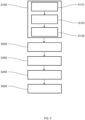
- Fig. 3 shows a flowchart of an authorization method for a power tool system 100 with a first power tool 120, a first battery pack 130, a first charger 140 and a backend 170.
- a shared key 180 or a set parameter 220 is distributed from the backend 170 to the first power tool 120, the first battery pack 130 and the first charger 140.
- This distribution is implemented by providing in step S110 a shared key or a set parameter via a wireless or wired connection from the backend 170 to the first charger 140 and storing the shared key or the set parameter 220 on the first charger 140.
- a set key 210 can be derived by a key derivation function 240 from an initial key 230 and the set parameter 220 as discussed above in relation to Fig. 2a and 2b .
- the wireless or wired connection can be, e.g., a connection of the backend 170 to the first charger 140 via a cellular network, via a wireless local access network or via a cable connection of the first charger 140 to a local access network.
- the shared key 180 or the set parameter 220 can be further distributed in the power tool system 100 by the step S120 of providing the shared key 180 or the set parameter 220 via a wireless or wired connection from the first charger 140 to the first battery pack 130 and storing the shared key 180 or the set parameter 220 on the first battery pack 130.
- the wireless or wired connection might be a Bluetooth connection between the first battery pack 130 and the first charger 140 or a physical wire connection when the first battery pack 130 is attached to the first charger 140 for charging.
- the further distribution of the shared key 180 or the set parameter 220 can then be done by the first battery pack 130 to the first power tool 120 by providing the shared key 180 or the set parameter 220 via a wireless or wired connection from the first battery pack 130 to the first power tool 120 and storing the shared key 180 or the set parameter 220 or the set key 210 derived from the set parameter 220 on the first power tool 120.
- step S200 comparisons of the initial key 230 and in step S400 comparisons of the shared key 180 or set key 210 of devices can be performed.
- the use and/or collaboration of devices might be limited in steps S300 and S500 based on the results of the comparisons.
- the initial key 230 of the device can be checked. If all devices of a power tool system 100 have the same initial key 230 this can be done by a simple comparison of the initial keys 230 of the devices. Therefore, various comparisons can be performed:
- the comparison might be, as described, simple one-to-one comparison of the initial keys 230 or it might comprise cryptographic verification techniques such as challenge-response authentication.
- step S300 the use and/or collaboration of any of the first and second battery pack, the first and second charger and the first and second power tool based on the results of any of the comparisons of the initial keys can be limited or controlled.
- the charger 140 can refuse charging of a battery pack 130 with a different initial key 230.
- step S400 After establishing that two devices are part of the power tool system 100 it can be checked whether the devices belong to the same power tool set 150. This can again be done by comparisons in step S400, in this case of the shared key 180 or the set key 210 of the devices:
- the comparison might be a simple one-to-one comparison of the shared or set keys 180, 210 or it might comprise cryptographic verification techniques such as challenge-response authentication.
- step S500 e.g., a battery pack 130 not part of the power tool set 150 may be charged only for a limited amount of cycles by a charger 140 which is part of the power tool set, identified by the shared key or set key.
- the limiting and/or controlling the use and/or collaboration can be realized in various way, e.g., as: a denial of operation including not charging of the first or second battery pack 130 by the first or second charger 140 and/or not providing power to the first or second power tool 120 by the first or second battery pack 130, limiting the charging of the first or second battery pack 130 by the first or second charger 140 to a predefined number of chargings or a predefined level of charging and providing power to the first or second power tool 120 by the first or second battery pack 130 to a predefined period of time or number of operations. It is possible to assign different limitations for different power tool sets 150. E.g., if the power tool 120 and the battery pack 130 belong to set A, all functions can be enabled.
- the power tool 120 belongs to set A and the battery pack belongs to set B, charging from this battery pack may be limited to a limited number of times. Similarly, if a power tool 120 is in a repair center, only reading out data and a limited usage for testing purposes may be allowed.
- a new power tool 120 or new battery pack 130 When a new power tool 120 or new battery pack 130 is used for the first time, it may operate for a predefined time or number of charging cycles with a battery pack 130 or a charger 140 without having a common shared key 180.
- the battery pack or the charger 140 is recording the identifier of the new power tool 120 or the new battery pack 130.
- the identifier of the new power tool 120 or battery pack 130 At the next charging of the battery pack on the charger, while connected to the backend 170 or the next connection of the charger 140 to the backend 170, the identifier of the new power tool 120 or battery pack 130 will be looked up at the backend 170 and appropriate shared keys 180 will be downloaded and saved to the battery pack 130 or charger 140.
- the stored shared key 180 At the next usage of the power tool 120 with the battery pack 130, the stored shared key 180 will be transferred to the power tool 120.
- the power tool 120 is now bound to the same power tool set 150 as the battery pack 130.
- the shared key 180 can be transferred to the battery pack 130 while charging on a connected charger 140 or the next time the battery pack is connected to the charger 140 which in the meantime had a connection with the backend 170.
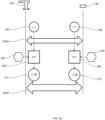
- Fig. 4a shows a diagram depicting the authentication and control whether two devices belong to the same power tool system 100 based on the same initial key 230 and the same power tool set 150 on the example of the power tool 120 and the battery pack 130.
- the initial key 230 is a common key that is installed on all power tools 120, battery packs 130, and chargers 140 which belong to a power tool system 100. This might be all devices by a manufacturer or a group of devices by this manufacturer or even devices of collaborating manufacturers. This initial key 230 has to be kept secret. It is preferable if this common initial key 230 can be installed on devices only once and this is done during production.
- the initial key 230 may also be stored on the backend 170 and installed on devices when they are onboarded by the customer. This can be done, e.g., via a smartphone or via a service adapter at a warehouse or shop.
- the set parameter 220 is installed on all power tools 120, battery packs 130 and chargers 140 that are part of the power tool set and that shall be able to work with each other, which might also be changed afterwards.
- the transfer of the set parameter 220 has been described above in relation to Fig. 1 and Fig. 3 .
- Each power tool 120, battery pack 130 or charger 140 derives the set key 210 using the key derivation function 240 with the initial key 230 and the set parameter 220 as input parameters. This has been described in detail with regard to Fig. 2 .
- a comparison of the initial keys 230 can be performed as described in detail, e.g., with regard to Fig. 3 and the step S200.
- This comparison may use any security mechanism to verify if both devices, e.g., the power tool 120 and the battery pack 130 in Fig. 4a own the same initial key 230.
- the comparison may be a simple comparison of the initial keys 230 or performing a challenge-response authentication technique to verify if both devices own the same initial key 230.
- the verification whether they belong to the same power tool set 150 can be done, as described above in detail with regard to step S400 in Fig. 4a .
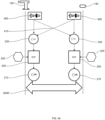
- Fig. 4b shows therefore a way for the authentication and control whether two devices belong to the same power tool system 100 where the initial key 230 of Fig. 4a is based on public/private key pairs
- Unique public/private key-pairs 400 or certificates may be installed on power tools 120, battery packs 130, and chargers 140. These unique public/private key-pairs 400 or certificates are installed only once, e.g., during production or in a warehouse.
- a device When a device is connected to another device, e.g. when the power tool 120 is connected to the battery pack 130, they can mutually authenticate and verify if both devices are part of the same power tool system 100, e.g., manufactured by the same manufacturer, by using certificates and the public key exchange 410 with each other to derive their common initial key 230, e.g., using a Diffie Hellman algorithm.
- This initial key 230 is in this embodiment only shared between this pair of devices, e.g., the power tool 120 and the battery pack 130. Once the initial key 230 is available after the public key exchange 400, the further process remains as described. Using the initial key 230 and the set parameter 220, the power tool 120 and the battery pack 130 can derive the set key 210 to verify if and how they shall operate with each other or not, as described above.
- the shared key or set parameter can be obtained by somebody with malicious intent, they can be used for stolen or counterfeit devices which might be used in a power tool system 100 and which might game the authorization method.
- the power tools, battery packs or chargers do not necessarily have a mechanism to verify if the shared key or set parameter is on a stolen or counterfeited device.
- the backend 170 can use a private key to apply an additional layer of security to the shared key 180 or set parameter 220.
- the shared key 180 or set parameter 220 may be signed with a private key before being sent to chargers 140, battery packs 130 or power tools 120.
- the public key to verify this signature also needs be installed on all devices.
- the backend 170 stores public/private key-pairs of all power tools 120, battery packs 130 and chargers 140 of the system.
- the backend 170 uses its corresponding private key to sign.
- the device can verify this signature with its own public key that is installed on it.
- this requires that public/private key-pairs of all power tools 120, battery packs 130 and chargers 140 of the system are stored on backend 170, which may not be feasible for large numbers of devices.
- Fig. 5 shows a more manageable solution which can be implemented with a hierarchical key derivation.
- the backend 170 stores only the parent public/private key-pair 510 and derives child public/private key-pairs 511 for the power tool 120, the battery pack 130 or the charger 140 using its parent public/private key-pair and an identification number (ID) of this power tool, battery pack or charger.
- ID identification number
- These children public/private key-pairs are installed S530 on this power tool 120, battery pack 130 and charger 140 only once, e.g., during production or in a warehouse.
- the backend 170 When the backend 170 needs to create a shared key 180 or a set parameter 220 for a power tool system 100, it can use its parent public/private key-pair 510 and the IDs of the devices to derive the children public/private key-pairs 511 of these devices. The backend 170 then uses the private keys of these devices to sign and send the shared key 180 or set parameter 220, as signed set parameter 520. The power tool 120, the battery pack 130 or charger 140 can verify the signature of the received signed shared key 180 or set parameter 220 by using its own child public key as shown in Fig. 5 .
- the backend 170 may sign shared keys 180 or set parameters 220 with a replay protection counter to protect against someone reusing older signed shared keys 180 or set parameters 220 to unlock/misuse the power tool 120, battery pack 130 or charger 140.
Landscapes
- Engineering & Computer Science (AREA)
- Theoretical Computer Science (AREA)
- Computer Hardware Design (AREA)
- Computer Security & Cryptography (AREA)
- Software Systems (AREA)
- Physics & Mathematics (AREA)
- General Engineering & Computer Science (AREA)
- General Physics & Mathematics (AREA)
- Power Engineering (AREA)
- Mechanical Engineering (AREA)
- Secondary Cells (AREA)
Abstract
Description
- The present invention relates to a power tool system and an authorization method for a power tool system.
- Power tools and their accessories can get lost, misplaced or stolen. This can result in significant losses for workshops or construction companies. Current power tools are mostly cordless power tools and cordless power tool systems comprise power tools, battery packs and chargers. Physical protection by locking devices away is a common solution against theft, however, it is difficult to ensure a proper locking away on construction sites. Therefore, other methods and systems have been developed.
-
US20170364360A1 describes techniques for providing anti-theft protection for power tools by a power tool which disables itself after a predetermined amount of usage time, and re-enables usage only after secure, software-based authentication of the device. -
JP2005342796A -
JP4678199B2 -
US10285003B2 -
JP2017126560A -
US2014339922A1 describes a battery pack which includes an electrical energy store, a data memory and an interface for the alternative connection of the battery pack to a data source or a data sink. The data memory is designed to store data from the data source while the interface is connected to the data source, and to supply the data in the data memory to the data sink while the interface is connected to the data sink. - It is one object of the present invention to provide an improved method and improved devices enabling improved or facilitated preparation of power tools, their battery packs and chargers for theft prevention measures and/or providing improved or facilitated theft prevention.
- A power tool system is provided, comprising: a cordless power tool with a power tool controller and a power tool memory and an exchangeable battery pack for the power tool comprising a battery pack controller and a battery pack memory, a first communication interface for communication with the power tool and a second communication interface for communication with a charger. The charger for the battery pack includes a charger controller and a charger memory and the charger is configured to store in the charger memory a shared key or to store a set parameter and to derive a set key by the charger controller from the set parameter. The battery pack is configured to receive the shared key or the set parameter via the second communication interface from the charger and to store in the battery pack memory the shared key or to store the set parameter and derive the set key by the battery pack controller from the set parameter. The power tool is configured to receive the shared key or the set parameter via the first communication interface from the battery pack and to store in the power tool memory the shared key or to store the set key derived by the power tool controller from the set parameter and/or to store the set parameter and derive the set key by the power tool controller from the set parameter.
- The transfer of the shared key, or the set parameter to derive the set key, from the charger via the battery pack to the power tool allows a flexible binding of devices such as power tools, battery packs and chargers of a power tool system to a power tool set. The binding can be done successively by the owner of the devices and in course of the routine operation of the devices, like charging of battery packs and exchange of battery packs on power tools. Additionally, further devices may be added to a set later. The binding can be initiated remotely and can be done without further specific devices for the binding. The set may comprise one or several, potentially different, power tools, one or more battery packs and one or more chargers. The power tools may be, e.g., saws, drivers or wrenches, rotary hammers, or drill and screw drivers. A power tool, a battery pack and a charger may also be part of different power tool sets, by receiving further shared keys or set parameters. The affiliation to a set can be defined by the shared key of the set or the set parameter which is communicated to the power tools of the set via a battery pack of the set which gets the information and affiliation to the set from a charger of the set.
- According to an embodiment, the battery pack is configured to transfer data, particularly commands, from the charger to the power tool and/or from the power tool to the charger, by receiving data via the first and/or second communication interface, storing the data in the battery pack memory, and sending the data via the first and/or second communication interface.
- The use of the battery pack as data communication means between the charger and the power tool allows the use of communication interfaces which frequently exist in power tool-battery pack-charger-combinations, e.g., to control charging or power supply. By way of this communication shared keys or set parameters may also be removed, taking a device from a power tool set or even lock commands may be communicated. The shared key, set parameter or set key on the power tool, battery pack or charger, can also be updated if the set to which the device belongs changes. If the power tool, battery pack or charger is assigned to a different set, a new shared key or set key may be installed on it. If the power tool, battery pack or charger is removed from the power tool set, the respective shared key, set key and/or set parameter of is deleted. The power tools, battery packs and chargers particularly may have unique identifiers, which may be transferred upon connection of the devices to each other and stored.
- According to an embodiment the charger is configured to receive the shared key or the set parameter via a third communication interface from a backend and/or to transfer the data via the third communication interface from the charger to the backend or from the backend to the charger.
- Chargers may be connected to the electrical power grid and can include a communication interface for connection via power line, Internet, WLAN or cellular phone module to a communications network. It is convenient to combine the power tools, battery packs and chargers which belong to a specific power tool set in a backend, e.g., by somebody in an office with an overview of the available devices. The respective setting is then communicated to the devices of the power tool system as described. The backend can also be used to receive information from the power tool, e.g., maintenance or usage information, via the battery pack and the charger. The charger may also comprise a communication module attached to a charging module and the third communication interface is realized in the communication module of the charger. New power tool sets, assignments to power tool sets, set parameters or shared keys can be created on the backend system, e.g., using an input output device in communication with the backend. The shard key or the set parameter is then communicated to a charger and transferred to power tools and/or battery packs which are assigned to the power tool set.
- According to an embodiment, the battery pack is configured to require an iterative connection via the second communication interface to the charger, while the charger is connected to the backend or has been connected to the backend within a predefined time period, and/or the charger is configured to require a permanent or iterative connection via the third communication interface to the backend, particularly, a connection after a predefined amount of charging cycles, a predefined charging time or a predefined time period.
- To ensure that communication from the backend to the power tool via the charger and the battery pack is enabled from time to time, the battery has to be connected to a charger which itself is from time to time in connection with the backend, preferably the battery pack is connected with the charger while the charger is connected to the backend. This ensures also, that if a whole power tool set with power tool, battery pack and charger is stolen, this set cannot used indefinitely without connection to the backend. Is, however, the charger connected to the backend, lock commands may be sent to the charger and transferred via the battery pack to the power tool. Such lock commands may disable the charger, the battery pack or the power tool. When the battery pack is not connected to the charger in communication with the backend as required, functions of the battery pack may be disabled, in particular by the battery pack controller, e.g., the battery pack may be locked, particularly, the battery pack may not or only partly be charged, or the battery pack may stop or limit supplying power. Similarly, the charger may disable or limit its functions to charge battery packs. The battery pack might be connected to the charger while the charger is connected to the backend, however, the connections might also be at different times and the charger stores information for and from the battery pack until connected to the battery pack and the backend, respectively.
- According to an embodiment, the battery pack is configured to compare its shared key or derived set key with a shared key or a derived set key of any power tool it is connected to and/or any charger it is connected to and control by the battery pack controller the power supply for the power tool or the loading of the battery pack it is connected to based on the comparison.
- According to an embodiment, the power tool is configured to compare its shared key or derived key stored with a shared key or a derived set key of any battery pack it is connected to and control by the power tool controller the operation of the power tool based on the comparison.
- According to an embodiment, the charger is configured to compare its shared key or derived set key with a shared key or a derived set key of any battery pack it is connected to and control by the charger controller the charging of the battery pack it is connected to based on the comparison.
- A comparison may be a simple one-to-one comparison of the shared keys or the set keys or it may comprise cryptographic verification techniques such as challenge-response authentication.
- By comparing shared keys or set keys the devices of a power tool set, with a common shared key or set key, may, without further external input, in particular, without individual human interference, determine how to interact with devices which are not part of the power tool set. The interaction can be determined based on interaction schemes stored on the devices. The interaction of devices might, e.g., be restricted. A restriction could be absolute, meaning devices belonging to different sets, and not having a common shared key or set key, shall not work together at all. E.g., battery packs from one set cannot be charged on a charger belonging to another set. The restriction can be also partially, i.e., by time, duration, number or kind of applications, e.g., limiting the number of times the power tool can be used with the battery pack, if both belong to different sets and not sharing a common shared key or set key.
- According to various embodiments, the first communication interface is a wireless or a wired communication interface and/or the second communication interface is a wireless or a wired communication interface and/or the third communication interface is a wireless or wired communication interface.
- When the battery pack is connected to the power tool for charging, there is already a connection for the electrical supply of the power tool by the battery pack, which may be a wired connection, this connection or a physical connection established simultaneously with the electrical connection may be used for communication between the battery pack and the power tool. However, there may be also a wireless connection, e.g., a Bluetooth connection between the battery pack and the power tool or an inductive connection. Similarly, a physical connection might be used as wired communication interface between the battery pack and the charger. The charger may be connected to a LAN, whether wireless or by a cable or via the power line. Alternatively, the charger might be connected via a cellular telephone module, e.g., an embedded SIM, directly to a cellular telephone network.
- According to an embodiment, the first communication interface and the second communication interface of the battery pack are realized as one wireless or wired physical interface configured to communicate to the charger and the power tool.
- To facilitate manufacturing and reuse existing parts the first and second communication, interfaces can be implemented as one physical interface.
- According to an embodiment, the battery pack is configured for communication via the second interface with the charger when the battery pack is not physically connected to the charger.
- Often there are more battery packs than chargers and only one battery pack might be connected physically to the charger at a given time. Therefore, it might be advantageous to have a wireless communication between the battery pack and the charger, thus several battery packs may be connected via the charger with the backend, particularly, when the battery packs are in the vicinity of the charger, e.g., less than 10 m away from the charger.
- In the described embodiments for the power tool system, the shared key or the set parameter and/or set key may be existent stored in the power tool memory, the battery pack memory and/or the charger memory. Power tools, battery packs and chargers with at least one common shared key or set key build the power tool set.
- Further, a method for authorization of power tools, battery packs and chargers in a power tool system is provided. The power tool system includes a first power tool, a first battery pack, a first charger and a backend. The method includes an initialization step comprising the steps of: providing a shared key or a set parameter, for deriving a set key by a key derivation function from an initial key and the set parameter, via a wireless or wired connection from the backend to the first charger and storing the shared key or the set parameter on the first charger, providing the shared key or the set parameter via a wireless or wired connection from the first charger to the first battery pack and storing the shared key or the set parameter on the first battery pack and providing the shared key or the set parameter via a wireless or wired connection from the first battery pack to the first power tool and storing the shared key or the set parameter or the derived set key on the first power tool.
- The transfer of shared keys or set parameters from a backend to devices of a power tool system is a convenient way to flexibly determine how devices of the power tool system may operate together. No determination of the operating together has to be made in a storage and changes can be made. By providing the set parameters or shared keys to the devices of the power tool system, the interoperability of the devices after being initialized is determined on the device level and does not need a continuous input from the backend, as the devices of the power tool system can be bundled to power tool sets.
- According to an embodiment, deriving of the set key by a key derivation function is using an initial key or an initial key derived from public/private key pairs stored on the power tools, the battery packs and the chargers of the power tool system from which the key derivation function, particularly a Cipher-Based Message Authentication Code (CMAC) or hash-based message authentication code (HMAC) function, calculates the set key with the further input of the set parameter.
- To improve the security of the power tool system not a shared key may be transmitted, which might be intercepted and copied, but a set parameter which is only used in the devices of the power tool system to determine or calculate the set key by using an initial key as additional input. Therefore, to copy the method, the knowledge of both the set parameter and the initial key is necessary.
- According to an embodiment, the shared or derived set keys stored on the first battery pack with the shared or derived set keys stored on the first charger or shared or derived set keys stored on a second charger when the first battery pack is connected to the first or the second charger are compared.
- According to an embodiment, the shared or derived set keys stored on the first battery pack with the shared or derived set keys stored on the first power tool or shared or derived set keys stored on a second power tool when the first battery pack is connected to the first or the second power tool are compared.
- According to an embodiment, the shared or derived set keys stored on the first charger with shared keys or derived set keys stored on a second battery pack when the first charger is connected to the second battery pack are compared.
- According to an embodiment, the shared or derived set keys stored on the first power tool with the shared or derived set keys stored on the second battery pack when the first power tool is connected with the second battery pack are compared.
- Based on the results of any of the above-described comparisons, the use and/or the collaboration of any of the first and second battery pack, the first and second charger and the first and second power tool is limited or controlled. A comparison might be a simple one-to-one comparison of the shared keys or the set keys or it might comprise cryptographic verification techniques such as challenge-response authentication.
- According to an embodiment, the method for authorization also includes comparing the initial keys stored on the first battery pack with the initial keys stored on the first charger or initial keys stored on a second charger when the first battery pack is connected to the first or the second charger and/or comparing the initial keys stored on the first battery pack with the initial keys stored on the first power tool or initial keys stored on a second power tool when the first battery pack is connected to the first or the second power tool and/or comparing the initial keys stored on the first charger with initial keys stored on a second battery pack when the first charger is connected to the second battery pack and/or comparing the initial keys stored on the first power tool with the initial keys stored on the second battery pack when the first power tool is connected with the second battery pack. The use and/or collaboration of any of the first and second battery packs, the first and second chargers and the first and second power tools is limited or controlled based on the results of any of the comparisons of the initial keys.
- Comparing initial keys allows to check whether non initialized, e.g., fake devices are combined with the power tool system. It is a simple measure to reduce the risk that the method for authorization is gamed by devices, in particular battery packs, not belonging to the system. A comparison might be a simple one-to-one comparison of the shared keys or the set keys or it might comprise cryptographic verification techniques such as challenge-response authentication. All initial keys of a power tool system or of a manufacturer might be the same.
- According to an embodiment, the limiting and/or controlling the use and/or collaboration comprises: a denial of operation including not charging of the first or second battery pack by the first or second charger and/or not providing power to the first or second power tool by the first or second battery pack; limiting the charging of the first or second battery pack by the first or second charger to a predefined number of chargings or a predefined level of charging; and providing power to the first or second power tool by the first or second battery pack to a predefined period of time or number of operations.
- According to an embodiment, the providing of the shared key or the set parameter from the backend to the first charger, from the first charger to the first battery pack and/or from the first battery pack to the first power tool uses cryptographic protection, in particular, signing the shared key or the set parameter with a private key.
- The various embodiments of the method for authorization may be combined with the use of the embodiments of the disclosed power tool system.
- Further possible implementations or alternative solutions of the invention also encompass combinations - that are not explicitly mentioned herein - of features described above or below with regard to the embodiments. The person skilled in the art may also add individual or isolated aspects and features to the most basic form of the invention.
- Further embodiments, features and advantages of the present invention will become apparent from the subsequent description and dependent claims, taken in conjunction with the accompanying drawings.
-
-
Fig. 1 shows a schematic presentation of a power tool system and its operation regarding transfer of a shared key; -
Fig. 2a shows a creation of a set key; -
Fig. 2b shows a creation of two set keys for a device which is part of two power tool sets; -
Fig. 3 shows a flowchart of an authorization method for a power tool system; -
Fig. 4a shows a diagram depicting an authentication and control whether two devices belong to the same power tool system and power tool set; -
Fig. 4b shows the diagram ofFig. 4a using public/private key pairs; and -
Fig. 5 shows a cryptographic protection of a transfer of shared keys or set parameters. - In the Figures, like reference numerals designate like or functionally equivalent elements, unless otherwise indicated.
-
Fig. 1 shows how in an input/output (I/O)system 110, e.g., a personal computer, a tablet or a smart phone, a user may define apower tool 120, abattery pack 130 and acharger 140 of apower tool system 100 100, to belong to a power tool set 150. Thepower tool 120, thebattery pack 130 and thecharger 140 may have unique identifiers, which may be used to identify thephysical power tool 120,battery pack 130 andcharger 140. The power tool set may comprise a plurality of, different,power tools 120, battery packs 130 and/orchargers 140. Thepower tool 120, thebattery pack 130 and/or thecharger 140 may be part of further power tool sets 150. - Via an I/O
backend communication channel 160 the I/O system communicates the chosenpower tool 120,battery pack 130 and/orcharger 140 to abackend 170. Further devices such aspower tools 120, battery packs 130 and/orchargers 140 may be added later to the power tool set 150 or the set may be amended by removing devices from the set later.Undescribed power tools 120, battery packs 130 andchargers 140, which do not already have a shared key stored, may also automatically receive the shared key 180 from the first device they are connected to, without further involvement of thebackend 170. Thebackend 170 may be realized as a cloud application or may be hosted on a server of the user. Thebackend 170 assigns a shared key 180 to the power tool set 150. The shared key might be generated by a random generator, forwarded by the I/O system or taken from a list. - When the
backend 170 is connected to thecharger 140, over a charger batterypack communication channel 161, via athird communication interface 141 of thecharger 140, the sharedkey 180 is transferred to thecharger 140 and stored in thecharger memory 141. Thebackend 170 may also communicate further information, e.g., the identifiers of thebattery pack 130 and thepower tool 120, which are part of the power tool set. 150. - When the
battery pack 130 is connected to thecharger 140, thecharger 140 communicates with thebattery pack 130 over a charger batterypack communication channel 161 via asecond communication 131 interface of thebattery pack 130. When thecharger 140 with thecharger controller 143 determines from the communication with thebattery pack 130 that thebattery pack 130 is part of the power tool set 150, e.g., by checking the identifier of thebattery pack 130 and comparing the identifier with identifiers the charger has received from thebackend 170 for the power tool set 150, thecharger 140 transfers the shared key 180 to thebattery pack 130 and the shared key is stored in the battery pack memory, which is not show for clarity reasons inFig. 1 . Alternatively, a battery pack without any stored shared key might get the shared key 180 transferred and a battery pack with already different shared key stored and not identified as part of the power tool set 150 might not get the shared key 180 transferred to. Thecharger 140 may also communicate further information, e.g., the identifiers of thecharger 140 and thepower tool 120 or identifiers of further battery packs 130 orpower tools 140, which are part of the power tool set 150. - The
battery pack 130 with itsfirst communication interface 132 and itssecond communication interface 131, can be removed from thecharger 140 for usage in a power tool. When thebattery pack 130 is attached to thepower tool 120, thepower tool 120 and thebattery pack 130 communicate over a battery pack powertool communication channel 162 via thesecond communication interface 132 of thebattery pack 130. Thebattery pack 130 can determine with its battery pack controller whether thepower tool 120 is part of the power tool set 150, e.g., by comparing the identifier of thepower tool 150 with identifiers of power tools transferred from thecharger 140 to thebattery pack 130. If thebattery pack 130 determines that thepower tool 120 is part of the power tool set 150 it transfers the shared key 180 to thepower tool 120 and the sharedkey 180 is stored in the power tool in the power tool memory. Alternatively, a battery pack without any stored shared key 180 might get the shared key 180 transferred and abattery pack 130 with already different shared key 180 stored and not identified as part of the power tool set 150 might not get the shared key 180 transferred to. Thecharger 140 may also communicate further information, e.g., the identifiers of thecharger 140 and thepower tool 120, which are part of the power tool set 150. Thebattery pack 130 may also communicate further information, e.g., the identifiers of further battery packs, which are part of the power tool set 150. Alternatively, apower tool 120 without any stored shared key 180 might get the shared key 180 transferred and apower tool 120 with already a different shared key 180 stored, and not identified as part of the power tool set 150, might not get the shared key 180 transferred to. - When a
new battery pack 130 without a stored shared key or set parameter and/or set key is charged on acharger 140, while the charger is connected to thebackend 170, the charger will communicate with the identifier of thebattery pack 130 to thebackend 170. Thebackend 170 provides the shared key or set parameter of the power tool set 150 to which thisbattery pack 130 belongs, when thebattery pack 130 is already assigned to a power tool set 150, the owner of thecharger 140 may be informed about thenew battery pack 130 connected to thebackend 170 via thecharger 140. Thecharger 140 may receive and transfer the shared key or set parameter to thebattery pack 140. - Similarly, to the transfer of the shared
key 180, aset parameter 220 might be distributed in apower tool system 100 topower tools 120, battery packs 130 andchargers 140 part of the power tool set 150. Thepower tools 120, battery packs 130 andchargers 140 may derive a set key 210 from theset parameter 220 as described in detail below. - When devices are connected to each other, the
backend 170 may communicate with thecharger 140 via the backendcharger communication channel 163, thebattery pack 130 may communicate with thecharger 140 via the charger batterypack communication channel 161, and thebattery pack 130 may communicate with thepower tool 120 via the battery pack powertool communication channel 162. The communications may be bidirectional, and additionally to the shared key 180 or theset parameter 220, data on usage and commands may be transferred. In this way, data and commands may be transferred from thebackend 170 to thepower tool 120 and vice versa. - This system enables, e.g., in case of a stolen
power tool 120 which is used with abattery pack 130 having a shared key 180 or set key 210 that is different from the sharedkey 180 of setkey 210 of the tool, to allow only limited usage. If a predefined limit, e.g., time of supplying power by thebattery pack 130, is exceeded, thepower tool 120 may lock itself and/or thebattery pack 130 will refuse to continue to work with thepower tool 120. Thebattery pack 130 will also record the usage of thepower tool 120 with a nonmatching shared key 180 or setkey 210 and report this to thebackend 170 at the next charging on aconnected charger 140. The lockedpower tool 120 may only be unlocked by abattery pack 130 with a matching shared key 180 or set key 210 or by installing a new shared key 180 or set key 210 obtained from thebackend 170 via aconnected charger 140 and abattery pack 130. Thebattery pack 130 with the new shared key 180 or setparameter 220 may be asecond battery pack 130 and thecharger 140 providing the new shared key 180 or setparameter 210 may be asecond charger 140. - Similarly, in case the
battery pack 130 is stolen,power tools 120 may refuse to work with thatbattery pack 130 after a predefined number of applications or time. Thecharger 140 will refuse charging, and thebattery pack 130 may lock itself, after a certain predefined number of applications or charging cycles. Thecharger 140 will also record the usage of thisbattery pack 130 with a nonmatching shared key 180 or setkey 210 and report this to thebackend 170. Thebattery pack 130 may only be unlocked by thebackend 170 via thecharger 140, while thecharger 140 is connected with thebackend 170 or when thecharger 140 has received and stored information to unlock thebattery pack 130 when connected to thebackend 170. - Similarly, in case the
charger 140 is stolen, thebattery pack 130 will only accept a limited number of charging cycles from acharger 140 with a nonmatching shared key 180 or setkey 210. Thebattery pack 130 will store this unauthorized charging cycle and report thecharger 140 to thebackend 170 at the next charging cycle on anyconnected charger 140. A connected charger can be locked immediately by the backend system at the next connection. - In case a complete power tool set 150, comprising the
power tool 120, thebattery pack 130 and thecharger 140 is stolen, the power tool set 150 would work for a defined number of applications without any problems as they have the common shared key 180 or setkey 210. However, when the power tool set 150 is reported stolen on thebackend 170, thebattery pack 130 will be locked at the next charging on aconnected charger 140. Thebattery pack 130 will also receive a lock command for the stolenpower tool 120, via theconnected charger 140 from thebackend 170. Thebattery pack 130 will thus lock the stolenpower tool 120 or stolencharger 140 by applying a lock command next time thebattery pack 130 gets connected. -
Fig. 2a shows a creation of afirst set key 210 instead of the distribution of the sharedkey 180, as described above. Instead of the shared key 180 afirst set parameter 220 is distributed. Thepower tool 120, thebattery pack 130 and thecharger 140 have already aninitial key 230 stored. This initial key 230 may be stored in thepower tool 120, thebattery pack 130 and thecharger 140 already upon production or in a storage environment. It might be stored on a chip level, e.g., on the power tool, charger, or battery pack controller, already in the production of the chip and it may be realized in a way not directly or easily accessible. Akey derivation function 240 derives thefirst set key 210 from thefirst set parameter 220 and theinitial key 230. Using a secretinitial key 230 can add an extra layer of security compared to distribution of the sharedkey 180 and a potential interception of the transmission of the sharedkey 180. -
Fig. 2b shows how the assignment to two power tool sets may be realized with afirst set parameter 220 and asecond set parameter 250 using the sameinitial key 230 and the samekey derivation function 240. Thepower tool 120, thebattery pack 130 or thecharger 140 can store in this way thefirst set key 210 and a second set key 260, thus marking the device belonging to a first and a second power tool set. -
Fig. 3 shows a flowchart of an authorization method for apower tool system 100 with afirst power tool 120, afirst battery pack 130, afirst charger 140 and abackend 170. In an initialization step S100, a shared key 180 or aset parameter 220 is distributed from thebackend 170 to thefirst power tool 120, thefirst battery pack 130 and thefirst charger 140. This distribution is implemented by providing in step S110 a shared key or a set parameter via a wireless or wired connection from thebackend 170 to thefirst charger 140 and storing the shared key or theset parameter 220 on thefirst charger 140. From the set parameter 220 aset key 210 can be derived by akey derivation function 240 from aninitial key 230 and theset parameter 220 as discussed above in relation toFig. 2a and 2b . The wireless or wired connection can be, e.g., a connection of thebackend 170 to thefirst charger 140 via a cellular network, via a wireless local access network or via a cable connection of thefirst charger 140 to a local access network. The shared key 180 or theset parameter 220 can be further distributed in thepower tool system 100 by the step S120 of providing the shared key 180 or theset parameter 220 via a wireless or wired connection from thefirst charger 140 to thefirst battery pack 130 and storing the shared key 180 or theset parameter 220 on thefirst battery pack 130. The wireless or wired connection might be a Bluetooth connection between thefirst battery pack 130 and thefirst charger 140 or a physical wire connection when thefirst battery pack 130 is attached to thefirst charger 140 for charging. The further distribution of the shared key 180 or theset parameter 220 can then be done by thefirst battery pack 130 to thefirst power tool 120 by providing the shared key 180 or theset parameter 220 via a wireless or wired connection from thefirst battery pack 130 to thefirst power tool 120 and storing the shared key 180 or theset parameter 220 or theset key 210 derived from theset parameter 220 on thefirst power tool 120. - With such a shared key 180 distributed or a
set key 210 derived from a distributedset parameter 220 in apower tool system 100 various authentication or authorization methods may be implemented. E.g., in step S200 comparisons of theinitial key 230 and in step S400 comparisons of the shared key 180 or setkey 210 of devices can be performed. The use and/or collaboration of devices might be limited in steps S300 and S500 based on the results of the comparisons. - To ensure that a
power tool 120, abattery pack 130 or acharger 140 is part of thepower tool system 100 and is, e.g., not a device not fitting into the system or a counterfeit part, theinitial key 230 of the device can be checked. If all devices of apower tool system 100 have the sameinitial key 230 this can be done by a simple comparison of theinitial keys 230 of the devices. Therefore, various comparisons can be performed: - comparing the
initial keys 230 stored on thefirst battery pack 130 with theinitial keys 230 stored on thefirst charger 140 orinitial keys 230 stored on asecond charger 140 when thefirst battery pack 130 is connected to the first or thesecond charger 140; - comparing the
initial keys 230 stored on thefirst battery pack 130 with theinitial keys 230 stored on thefirst power tool 120 orinitial keys 230 stored on asecond power tool 120 when thefirst battery pack 130 is connected to the first or thesecond power tool 120; - comparing the
initial keys 230 stored on thefirst charger 140 withinitial keys 230 stored on asecond battery pack 130 when thefirst charger 140 is connected to thesecond battery pack 130; and/or - comparing the
initial keys 230 stored on thefirst power tool 120 with theinitial keys 230 stored on thesecond battery pack 130 when thefirst power tool 120 is connected with thesecond battery pack 130. - The comparison might be, as described, simple one-to-one comparison of the
initial keys 230 or it might comprise cryptographic verification techniques such as challenge-response authentication. - In step S300, the use and/or collaboration of any of the first and second battery pack, the first and second charger and the first and second power tool based on the results of any of the comparisons of the initial keys can be limited or controlled. E.g., the
charger 140 can refuse charging of abattery pack 130 with a differentinitial key 230. - After establishing that two devices are part of the
power tool system 100 it can be checked whether the devices belong to the same power tool set 150. This can again be done by comparisons in step S400, in this case of the shared key 180 or theset key 210 of the devices: - comparing the shared or derived set
keys first battery pack 130 with the shared or derived setkeys first power tool 120 or shared or derived setkeys second power tool 120 when thefirst battery pack 130 is connected to the first or thesecond power tool 120; - comparing the shared or derived set
keys first charger 140 with shared or derived setkeys second battery pack 130 when thefirst charger 140 is connected to thesecond battery pack 130; and/or - comparing the shared or derived set
keys first power tool 120 with the shared or derived setkeys second battery pack 130 when thefirst power tool 120 is connected with thesecond battery pack 130. - The comparison might be a simple one-to-one comparison of the shared or set
keys - Based on the results of any of these comparisons the use and/or collaboration of any of the first and second battery pack, the first and second charger and the first and second power tool, can be limited or controlled in step S500, e.g., a
battery pack 130 not part of the power tool set 150 may be charged only for a limited amount of cycles by acharger 140 which is part of the power tool set, identified by the shared key or set key. - In steps S300 and S500, the limiting and/or controlling the use and/or collaboration can be realized in various way, e.g., as: a denial of operation including not charging of the first or
second battery pack 130 by the first orsecond charger 140 and/or not providing power to the first orsecond power tool 120 by the first orsecond battery pack 130, limiting the charging of the first orsecond battery pack 130 by the first orsecond charger 140 to a predefined number of chargings or a predefined level of charging and providing power to the first orsecond power tool 120 by the first orsecond battery pack 130 to a predefined period of time or number of operations. It is possible to assign different limitations for different power tool sets 150. E.g., if thepower tool 120 and thebattery pack 130 belong to set A, all functions can be enabled. However, if thepower tool 120 belongs to set A and the battery pack belongs to set B, charging from this battery pack may be limited to a limited number of times. Similarly, if apower tool 120 is in a repair center, only reading out data and a limited usage for testing purposes may be allowed. - When a
new power tool 120 ornew battery pack 130 is used for the first time, it may operate for a predefined time or number of charging cycles with abattery pack 130 or acharger 140 without having a common sharedkey 180. The battery pack or thecharger 140 is recording the identifier of thenew power tool 120 or thenew battery pack 130. At the next charging of the battery pack on the charger, while connected to thebackend 170 or the next connection of thecharger 140 to thebackend 170, the identifier of thenew power tool 120 orbattery pack 130 will be looked up at thebackend 170 and appropriate sharedkeys 180 will be downloaded and saved to thebattery pack 130 orcharger 140. At the next usage of thepower tool 120 with thebattery pack 130, the stored shared key 180 will be transferred to thepower tool 120. Thepower tool 120 is now bound to the same power tool set 150 as thebattery pack 130. Similarly, the shared key 180 can be transferred to thebattery pack 130 while charging on aconnected charger 140 or the next time the battery pack is connected to thecharger 140 which in the meantime had a connection with thebackend 170. -
Fig. 4a shows a diagram depicting the authentication and control whether two devices belong to the samepower tool system 100 based on the sameinitial key 230 and the same power tool set 150 on the example of thepower tool 120 and thebattery pack 130. Theinitial key 230 is a common key that is installed on allpower tools 120, battery packs 130, andchargers 140 which belong to apower tool system 100. This might be all devices by a manufacturer or a group of devices by this manufacturer or even devices of collaborating manufacturers. This initial key 230 has to be kept secret. It is preferable if this common initial key 230 can be installed on devices only once and this is done during production. Theinitial key 230 may also be stored on thebackend 170 and installed on devices when they are onboarded by the customer. This can be done, e.g., via a smartphone or via a service adapter at a warehouse or shop. - The
set parameter 220 is installed on allpower tools 120, battery packs 130 andchargers 140 that are part of the power tool set and that shall be able to work with each other, which might also be changed afterwards. The transfer of theset parameter 220 has been described above in relation toFig. 1 andFig. 3 . Eachpower tool 120,battery pack 130 orcharger 140 derives the setkey 210 using thekey derivation function 240 with theinitial key 230 and theset parameter 220 as input parameters. This has been described in detail with regard toFig. 2 . - To verify if
power tools 120, battery packs 130 andchargers 140 belong to the samepower tool system 100, e.g., are from same manufacturer, a comparison of theinitial keys 230 can be performed as described in detail, e.g., with regard toFig. 3 and the step S200. This comparison may use any security mechanism to verify if both devices, e.g., thepower tool 120 and thebattery pack 130 inFig. 4a own the sameinitial key 230. The comparison may be a simple comparison of theinitial keys 230 or performing a challenge-response authentication technique to verify if both devices own the sameinitial key 230. - After verification that the
power tool 120 and thebattery pack 130 belong to the samepower tool system 100 the verification whether they belong to the same power tool set 150 can be done, as described above in detail with regard to step S400 inFig. 4a . - There is always the risk that one
initial key 230 used for a large number of devices may be get known and may be used with malicious intent, e.g., to game an authorization system.Fig. 4b shows therefore a way for the authentication and control whether two devices belong to the samepower tool system 100 where theinitial key 230 ofFig. 4a is based on public/private key pairs - Unique public/private key-
pairs 400 or certificates may be installed onpower tools 120, battery packs 130, andchargers 140. These unique public/private key-pairs 400 or certificates are installed only once, e.g., during production or in a warehouse. When a device is connected to another device, e.g. when thepower tool 120 is connected to thebattery pack 130, they can mutually authenticate and verify if both devices are part of the samepower tool system 100, e.g., manufactured by the same manufacturer, by using certificates and the publickey exchange 410 with each other to derive their commoninitial key 230, e.g., using a Diffie Hellman algorithm. This initial key 230 is in this embodiment only shared between this pair of devices, e.g., thepower tool 120 and thebattery pack 130. Once theinitial key 230 is available after the publickey exchange 400, the further process remains as described. Using theinitial key 230 and theset parameter 220, thepower tool 120 and thebattery pack 130 can derive theset key 210 to verify if and how they shall operate with each other or not, as described above. - If the shared key or set parameter can be obtained by somebody with malicious intent, they can be used for stolen or counterfeit devices which might be used in a
power tool system 100 and which might game the authorization method. The power tools, battery packs or chargers do not necessarily have a mechanism to verify if the shared key or set parameter is on a stolen or counterfeited device. - The
backend 170 can use a private key to apply an additional layer of security to the shared key 180 or setparameter 220. E.g., the shared key 180 or setparameter 220 may be signed with a private key before being sent tochargers 140, battery packs 130 orpower tools 120. In this case, the public key to verify this signature also needs be installed on all devices. - Alternatively, the
backend 170 stores public/private key-pairs of allpower tools 120, battery packs 130 andchargers 140 of the system. To send sharedkeys 180 or setparameters 220 to a device, thebackend 170 uses its corresponding private key to sign. The device can verify this signature with its own public key that is installed on it. However, this requires that public/private key-pairs of allpower tools 120, battery packs 130 andchargers 140 of the system are stored onbackend 170, which may not be feasible for large numbers of devices. -
Fig. 5 shows a more manageable solution which can be implemented with a hierarchical key derivation. In this case, thebackend 170 stores only the parent public/private key-pair 510 and derives child public/private key-pairs 511 for thepower tool 120, thebattery pack 130 or thecharger 140 using its parent public/private key-pair and an identification number (ID) of this power tool, battery pack or charger. These children public/private key-pairs are installed S530 on thispower tool 120,battery pack 130 andcharger 140 only once, e.g., during production or in a warehouse. - When the
backend 170 needs to create a shared key 180 or aset parameter 220 for apower tool system 100, it can use its parent public/private key-pair 510 and the IDs of the devices to derive the children public/private key-pairs 511 of these devices. Thebackend 170 then uses the private keys of these devices to sign and send the shared key 180 or setparameter 220, as signedset parameter 520. Thepower tool 120, thebattery pack 130 orcharger 140 can verify the signature of the received signed shared key 180 or setparameter 220 by using its own child public key as shown inFig. 5 . - Additionally, the
backend 170 may sign sharedkeys 180 or setparameters 220 with a replay protection counter to protect against someone reusing older signed sharedkeys 180 or setparameters 220 to unlock/misuse thepower tool 120,battery pack 130 orcharger 140. - Although the present invention has been described in accordance with preferred embodiments, it is obvious for the person skilled in the art that modifications are possible in all embodiments.
-
- 110
- input/output system
- 120
- power tool
- 130
- battery pack
- 140
- charger
- 141
- third communication interface
- 142
- charger memory
- 143
- charger controller
- 150
- power tool set
- 160
- I/O backend communication channel
- 161
- charger battery pack communication channel
- 162
- battery pack power tool communication channel
- 163
- backend charger communication channel
- 170
- backend
- 180
- shared key
- 210
- first set key
- 220
- first set parameter
- 230
- initial key
- 240
- key derivation function
- 250
- second set parameter
- 260
- second set key
- 400
- public/private key pairs
- 410
- public key exchange
- 510
- parent public/private key pair
- 511
- child public/private key pair
- 520
- signed set parameter
- S100
- initialization step
- S110
- providing shared key or set parameter from backend to charger
- S120
- providing shared key or set parameter from charger to battery pack
- S130
- providing shared key or set parameter from battery pack to power tool
- S200
- comparison of initial keys
- S300
- limiting or controlling collaboration of devices based on comparison of initial keys
- S400
- comparison of shared keys or set keys
- S500
- limiting or controlling collaboration of devices based on comparison of shared or set keys
- S530
- installation of child public/private key pair
Claims (15)
- A power tool system (100), comprising:a cordless power tool (120) with a power tool controller and a power tool memory;an exchangeable battery pack (130) for the power tool (120) comprising:a charger (140);a battery pack controller and a battery pack memory,a first communication interface for communication with the power tool (120); anda second communication interface for communication with the charger (140); wherein the charger comprises a charger controller (142) and a charger memory (142);wherein the charger (140) is configured to store in the charger memory (142) a shared key (180) or to store a set parameter (220, 250) and derive a set key (210, 260) by the charger controller (142) from the set parameter (220, 250);wherein the battery pack (130) is configured to receive the shared key (180) or the set parameter (220, 250) via the second communication interface from the charger (140) and to store the shared key (180) or to store the set parameter (220, 250) and derive the set key (210, 260) by the battery pack controller from the set parameter (220, 250);wherein the power tool (120) is configured to receive the shared key (180) or the set parameter (220, 250) via the first communication interface from the battery pack (130) and to store the shared key (180) or to store the set key (210, 260) derived by the power tool controller from the set parameter (220, 250) and/or to store the set parameter (220, 250) in the power tool memory and derive the set key (210, 260) by the power tool controller from the set parameter (220, 250).
- The power tool system (100) according to claim 1, wherein the battery pack (130) is configured to transfer data from the charger (140) to the power tool (120) and/or from the power tool (120) to the charger (140), by receiving data via the first and/or second communication interface, storing the data in the battery pack memory, and sending the data via the first and/or second communication interface.
- The power tool system (100) according to claim 1, wherein the charger (140) is configured to receive the shared key (180) or the set parameter (220, 250) via a third communication interface (141) from a backend (170) and/or to transfer the data via the third communication interface (141) from the charger (140) to the backend (170) or from the backend (170) to the charger (140).
- The power tool system (100) according to claim 3, wherein the battery pack (130) is configured to require an iterative connection via the second communication interface to the charger (140), while the charger (140) is connected to the backend (170) or has been connected to the backend (170) within a predefined time period, and/or the charger (140) is configured to require a permanent or iterative connection via the third communication interface (141) to the backend (170), wherein the connection is after a predefined amount of charging cycles, a predefined charging time or a predefined time period.
- The power tool system (100) according to claim 1, wherein:the battery pack (130) is configured to:compare its shared key (180) or derived set key (210, 260) with a shared key (180) or a derived set key (210, 260) of any power tool (120) it is connected to and/or any charger (140) it is connected to; andcontrol, by the battery pack controller, the power supply for the power tool (120) or the loading of the battery pack (130) it is connected to based on the comparison; and/orthe power tool (120) is configured to:compare its shared key (180) or derived set key (210, 260) with a shared key (180) or a derived set key (210, 260) of any battery pack (130) it is connected to; andcontrol, by the power tool controller, the operation of the power tool (120) based on the comparison;
and/orthe charger (140) is configured to:
compare its shared key (180) or derived set key (210, 260) with a shared key (180) or a derived set key (210, 260) of any battery pack (130) it is connected to and control by the charger controller (142) the charging of the battery pack (130) it is connected to based on the comparison. - The power tool system (100) according to claim 1, wherein the first communication interface is a wireless or a wired communication interface and/or the second communication interface is a wireless or a wired communication interface and/or the third communication interface (141) is a wireless or wired communication interface.
- The power tool system (100) according to claim 1, wherein the first communication interface and the second communication interface of the battery pack (130) are realized as one wireless or wired physical interface configured to communicate to the charger (140) and the power tool (120).
- The power tool system (100) according to claim 1, wherein the battery pack (130) is configured for communication via the second interface with the charger (140) when the battery pack (130) is not physically connected to the charger (140).
- A method for authorization of power tools (120), battery packs (130) and chargers (140) in a power tool system (100) comprising a first power tool (120), a first battery pack (130), a first charger (140) and a backend (170), comprising the steps of:providing a shared key (180) or a set parameter (220, 250), for deriving a set key (210, 260) by a key derivation function (240) from an initial key (230) and the set parameter (220, 250), via a wireless or wired connection from the backend (170) to the first charger (140);providing the shared key (180) or the set parameter (220, 250) via a wireless or wired connection from the first charger (140) to the first battery pack (130) and storing the shared key (180) or the set parameter (220, 250) on the first battery pack (130); andproviding the shared key (180) or the set parameter (220, 250) via a wireless or wired connection from the first battery pack (130) to the first power tool (120) and storing the shared key (180) or storing the set parameter (220, 250) and/or the derived set key (210, 260) on the first power tool (120).
- The method according to claim 9, wherein deriving the set key (210, 260) by a key derivation function (240) is using an initial key (230) or an initial key (230) derived from public/private key pairs (400) stored on the power tools (120), the battery packs (130) and the chargers (140) of the power tool system (100) from which the key derivation function (240), particularly a Cipher-Based Message Authentication Code (CMAC) or a hash-based message authentication code (HMAC) function, calculates the set key (210, 260) with the further input of the set parameter (220, 250).
- The method according to claim 9, further comprising the steps of:
comparing the shared or derived set keys (210, 260) stored on the first battery pack (130) with the shared or derived set keys (210, 260) stored on the first charger (140) or shared or derived set keys (210, 260) stored on a second charger (140) when the first battery pack (130) is connected to the first or the second charger (140);
and/orcomparing the shared or derived set keys (210, 260) stored on the first battery pack (130) with the shared or derived set keys (210, 260) stored on the first power tool (120) or shared or derived set keys (210, 260) stored on a second power tool (120) when the first battery pack (130) is connected to the first or the second power tool (120);
and/orcomparing the shared or derived set keys (210, 260) stored on the first charger (140) with shared or derived set keys (210, 260) stored on a second battery pack (130) when the first charger (140) is connected to the second battery pack (130);
and/orcomparing the shared or derived set keys (210, 260) stored on the first power tool (120) with the shared or derived set keys (210, 260) stored on the second battery pack (130) when the first power tool (120) is connected with the second battery pack (130);
andlimiting and/or controlling the use and/or collaboration of any of the first and second battery pack (130), the first and second charger (140) and the first and second power tool (120) based on the results of any of the comparisons. - The method according to claim 10, further comprising the steps of:
comparing the initial keys (230) stored on the first battery pack (130) with the initial keys (230) stored on the first charger (140) or initial keys (230) stored on a second charger (140) when the first battery pack (130) is connected to the first or the second charger (140);
and/orcomparing the initial keys (230) stored on the first battery pack (130) with the initial keys (230) stored on the first power tool (120) or initial keys (230) stored on a second power tool (120) when the first battery pack (130) is connected to the first or the second power tool (120);
and/orcomparing the initial keys (230) stored on the first charger (140) with initial keys (230) stored on a second battery pack (130) when the first charger (140) is connected to the second battery pack (130);
and/orcomparing the initial keys (230) stored on the first power tool (120) with the initial keys (230) stored on the second battery pack (130) when the first power tool (120) is connected with the second battery pack (130);
andlimiting and/or controlling the use and/or collaboration of any of the first and second battery pack (130), the first and second charger (140) and the first and second power tool (120) based on the results of any of the comparisons of the initial keys (230). - The method according to claim 11, wherein the limiting and/or controlling the use and/or collaboration comprises:a denial of operation including not charging of the first or second battery pack (130) by the first or second charger (140) and/or not providing power to the first or second power tool (120) by the first or second battery pack (130);
and/orlimiting the charging of the first or second battery pack (130) by the first or second charger (140) to a predefined number of chargings or a predefined level of charging;
and/orproviding power to the first or second power tool (120) by the first or second battery pack (130) to a predefined period of time or number of operations. - The method according to claim 9, wherein providing the shared key (180) or the set parameter (220, 250) from the backend (170) to the first charger (140), from the first charger (140) to the first battery pack (130) and/or from the first battery pack (130) to the first power tool (120) uses cryptographic protection of signing the shared key (180) or the set parameter (220, 250) with a private key.
- The method according to claim 9 using the power tool system (100) according to claim.
Applications Claiming Priority (1)
| Application Number | Priority Date | Filing Date | Title |
|---|---|---|---|
| US18/516,228 US20250167562A1 (en) | 2023-11-21 | 2023-11-21 | Power Tool System and Authorization Method |
Publications (1)
| Publication Number | Publication Date |
|---|---|
| EP4559628A1 true EP4559628A1 (en) | 2025-05-28 |
Family
ID=93520606
Family Applications (1)
| Application Number | Title | Priority Date | Filing Date |
|---|---|---|---|
| EP24212071.5A Pending EP4559628A1 (en) | 2023-11-21 | 2024-11-11 | Power tool system and authorization method |
Country Status (2)
| Country | Link |
|---|---|
| US (1) | US20250167562A1 (en) |
| EP (1) | EP4559628A1 (en) |
Families Citing this family (1)
| Publication number | Priority date | Publication date | Assignee | Title |
|---|---|---|---|---|
| DE102022201366A1 (en) * | 2022-02-10 | 2023-08-10 | Robert Bosch Gesellschaft mit beschränkter Haftung | Method of operating a power tool |
Citations (9)
| Publication number | Priority date | Publication date | Assignee | Title |
|---|---|---|---|---|
| JP2005342796A (en) | 2004-05-31 | 2005-12-15 | Matsushita Electric Works Ltd | Charging type electric tool |
| JP4678199B2 (en) | 2005-02-10 | 2011-04-27 | パナソニック電工株式会社 | Electric tool |
| DE102012105483A1 (en) * | 2012-06-22 | 2013-12-24 | Bmz Batterien-Montage-Zentrum Gmbh | Method for transmitting information from energy storage module to receiver, involves keeping multiple parameter informations of energy storage module available in energy storage module, and transmitting parameter informations to receiver |
| US20140339922A1 (en) | 2013-05-14 | 2014-11-20 | Robert Bosch Gmbh | Data Transmission Using an Electrical Machine |
| JP2017126560A (en) | 2011-07-24 | 2017-07-20 | 株式会社マキタ | Theft-inhibition battery pack system and power tool system |
| US20170364360A1 (en) | 2016-06-16 | 2017-12-21 | Infineon Technologies Austria Ag | Power tool anti-theft |
| EP3269515A1 (en) * | 2015-03-11 | 2018-01-17 | Panasonic Intellectual Property Management Co., Ltd. | Electric tool system |
| US10285003B2 (en) | 2013-02-22 | 2019-05-07 | Milwaukee Electric Tool Corporation | Wireless tracking of power tools and related devices |
| EP3888517A1 (en) * | 2020-04-02 | 2021-10-06 | Guido Valentini | Battery pack and electronic appliance comprising such a battery pack |
-
2023
- 2023-11-21 US US18/516,228 patent/US20250167562A1/en active Pending
-
2024
- 2024-11-11 EP EP24212071.5A patent/EP4559628A1/en active Pending
Patent Citations (9)
| Publication number | Priority date | Publication date | Assignee | Title |
|---|---|---|---|---|
| JP2005342796A (en) | 2004-05-31 | 2005-12-15 | Matsushita Electric Works Ltd | Charging type electric tool |
| JP4678199B2 (en) | 2005-02-10 | 2011-04-27 | パナソニック電工株式会社 | Electric tool |
| JP2017126560A (en) | 2011-07-24 | 2017-07-20 | 株式会社マキタ | Theft-inhibition battery pack system and power tool system |
| DE102012105483A1 (en) * | 2012-06-22 | 2013-12-24 | Bmz Batterien-Montage-Zentrum Gmbh | Method for transmitting information from energy storage module to receiver, involves keeping multiple parameter informations of energy storage module available in energy storage module, and transmitting parameter informations to receiver |
| US10285003B2 (en) | 2013-02-22 | 2019-05-07 | Milwaukee Electric Tool Corporation | Wireless tracking of power tools and related devices |
| US20140339922A1 (en) | 2013-05-14 | 2014-11-20 | Robert Bosch Gmbh | Data Transmission Using an Electrical Machine |
| EP3269515A1 (en) * | 2015-03-11 | 2018-01-17 | Panasonic Intellectual Property Management Co., Ltd. | Electric tool system |
| US20170364360A1 (en) | 2016-06-16 | 2017-12-21 | Infineon Technologies Austria Ag | Power tool anti-theft |
| EP3888517A1 (en) * | 2020-04-02 | 2021-10-06 | Guido Valentini | Battery pack and electronic appliance comprising such a battery pack |
Also Published As
| Publication number | Publication date |
|---|---|
| US20250167562A1 (en) | 2025-05-22 |
Similar Documents
| Publication | Publication Date | Title |
|---|---|---|
| CN102255109B (en) | Authentication method for mobile terminal battery, and mobile terminal thereof | |
| US11228453B2 (en) | Secure provisioning of electronic lock controllers | |
| WO2020090232A1 (en) | Vehicle control system | |
| CN104952128A (en) | Intelligent handheld terminal based electronic unlocking system and unlocking method thereof | |
| CN104167029A (en) | Intelligent lock and operation method thereof | |
| CN110070650A (en) | A kind of intelligent unlocking method and system of intelligent distribution box | |
| CN109905869A (en) | Data transmission method between a kind of charging equipment and smart machine | |
| US20240403028A1 (en) | Multi-functional computerized charging station for electric vehicles | |
| KR101377570B1 (en) | Apparatus and method for communication security for charging of electric vehicle | |
| EP4559628A1 (en) | Power tool system and authorization method | |
| CN103093531A (en) | Lock system controlled by internet | |
| CN114084023A (en) | Control method and device and charging pile | |
| WO2019007063A1 (en) | Battery charging and swapping equipment, and authentication method and system for object requesting for battery charging or swapping | |
| KR20200091142A (en) | Electric vehicle customer auto certification service support apparatus | |
| EP4237974B1 (en) | System for authenticating a user at and reporting about use of a charging device | |
| JP2008299457A (en) | Authentication system, authentication method, and authentication socket device | |
| CN109639644A (en) | Authority checking method, apparatus, storage medium and electronic equipment | |
| US11993165B2 (en) | Charging system and method of a battery of an electric vehicle based on cable authentication | |
| CN109472890A (en) | intelligent lock and intelligent lock control method | |
| CN110610569B (en) | Intelligent lock system and control method thereof | |
| WO2013017446A2 (en) | Method and system for accessing an energy charging service | |
| KR101509079B1 (en) | Smart Card and Dynamic ID Based Electric Vehicle User Authentication Scheme | |
| KR102384371B1 (en) | Smart charging system and smart charging method including smart concentric plug, user terminal, and power management server | |
| EP3831644B1 (en) | Charging system and method of a battery of an electric vehicle | |
| CN105430649A (en) | Wifi access method and apparatus |
Legal Events
| Date | Code | Title | Description |
|---|---|---|---|
| PUAI | Public reference made under article 153(3) epc to a published international application that has entered the european phase |
Free format text: ORIGINAL CODE: 0009012 |
|
| STAA | Information on the status of an ep patent application or granted ep patent |
Free format text: STATUS: THE APPLICATION HAS BEEN PUBLISHED |
|
| AK | Designated contracting states |
Kind code of ref document: A1 Designated state(s): AL AT BE BG CH CY CZ DE DK EE ES FI FR GB GR HR HU IE IS IT LI LT LU LV MC ME MK MT NL NO PL PT RO RS SE SI SK SM TR |
|
| P01 | Opt-out of the competence of the unified patent court (upc) registered |
Free format text: CASE NUMBER: UPC_APP_3043_4559628/2025 Effective date: 20250811 |
|
| STAA | Information on the status of an ep patent application or granted ep patent |
Free format text: STATUS: REQUEST FOR EXAMINATION WAS MADE |
|
| 17P | Request for examination filed |
Effective date: 20251128 |