EP4557889A1 - System for controlling an induction hob - Google Patents
System for controlling an induction hob Download PDFInfo
- Publication number
- EP4557889A1 EP4557889A1 EP23209571.1A EP23209571A EP4557889A1 EP 4557889 A1 EP4557889 A1 EP 4557889A1 EP 23209571 A EP23209571 A EP 23209571A EP 4557889 A1 EP4557889 A1 EP 4557889A1
- Authority
- EP
- European Patent Office
- Prior art keywords
- frequency
- noise
- electronic system
- noise signal
- domain
- Prior art date
- Legal status (The legal status is an assumption and is not a legal conclusion. Google has not performed a legal analysis and makes no representation as to the accuracy of the status listed.)
- Pending
Links
Images
Classifications
-
- H—ELECTRICITY
- H05—ELECTRIC TECHNIQUES NOT OTHERWISE PROVIDED FOR
- H05B—ELECTRIC HEATING; ELECTRIC LIGHT SOURCES NOT OTHERWISE PROVIDED FOR; CIRCUIT ARRANGEMENTS FOR ELECTRIC LIGHT SOURCES, IN GENERAL
- H05B6/00—Heating by electric, magnetic or electromagnetic fields
- H05B6/02—Induction heating
- H05B6/06—Control, e.g. of temperature, of power
- H05B6/062—Control, e.g. of temperature, of power for cooking plates or the like
-
- F—MECHANICAL ENGINEERING; LIGHTING; HEATING; WEAPONS; BLASTING
- F24—HEATING; RANGES; VENTILATING
- F24C—DOMESTIC STOVES OR RANGES ; DETAILS OF DOMESTIC STOVES OR RANGES, OF GENERAL APPLICATION
- F24C7/00—Stoves or ranges heated by electric energy
- F24C7/08—Arrangement or mounting of control or safety devices
- F24C7/082—Arrangement or mounting of control or safety devices on ranges, e.g. control panels, illumination
- F24C7/083—Arrangement or mounting of control or safety devices on ranges, e.g. control panels, illumination on tops, hot plates
Definitions
- the present invention generally concerns the technical field of induction hobs.
- the present invention relates to a system for controlling an induction hob.
- Induction hobs for preparing food are well known in prior art.
- Induction hobs typically comprise heating zones, which are associated with induction coils.
- the induction coils is electrically coupled with electronic driving units of a control unit for driving an alternating current through the induction coil.
- the alternating current generates a time varying magnetic field. Due to the inductive coupling between the induction coils and the piece of cookware placed above the induction coil, the magnetic field generated by the induction coil causes eddy currents circulating in the piece of cookware. The presence of eddy currents generates heat within the piece of cookware due to the electrical resistance of the piece of cookware.
- cookwares or pots usually generate acoustic noise when heated by induction hobs.
- Acoustic noise generated by cookware generally depends on structure, materials of cookware and heating temperature. For example, noise tends to be higher with lightweight cookware or multi-ply material e.g., stainless steel with aluminum core.
- some induction cooking appliances includes noises detecting systems.
- Some known noises detecting systems used in induction hobs comprise microphones configured to provide electrical signals indicative of the noise generated by the cookware during cooking, and an electronic control unit which receives the electrical signals and processes the latter in order to determine a value indicative of the acoustic noise.
- the aim object of the present invention is therefore to provide system for controlling an induction hob, wherein it is possible to perform a Fourier transform on a noise signal, without however the need to use expensive calculation systems embedded in the induction hob itself.
- the claims describe preferred embodiments of the present invention forming an integral part of the present specification.
- the system 100 comprises the induction hob 1 and a user electronic device 110.
- the user electronic device 110 is provided with a communication module device (not shown) configured to perform wireless communications of data/information.
- the user electronic device 110 may be, for example, a smartphone (as illustrated in the example of Figure 1 ), a laptop, a personal computer or any other equivalent/similar electronic apparatus.
- the user electronic device 110 comprises one or more calculation units 111 (one of which illustrated in Figures 1 and 2 ).
- the calculation unit 111 of the user electronic device 110 comprises a computer processor.
- the induction hob 1 may comprise a hob plate 2 and one or more heating zones 4 (shown by broken lines), which are arranged on the hob plate 2 and are structured in order to support respective cookwares C (one schematically illustrated in Figures 1 and 2 ).
- each heating zone 4 is associated with at least an induction coil 3 configured to heat the cookware C.
- the induction coil 3 may be arranged under the hob plate 2.
- the induction hob 1 further comprises a user-interface 5, for example, comprised in a control panel of the induction hob 1.
- the user-interface 5 may be configured in order to allow users to input/set commands to the induction hob 1 to perform the cooking (cycle).
- the user- interface 5 may be further configured to allow the user to input/set command to select a heating power for cooking and or a cooking program among a plurality of preestablished cooking programs.
- the induction hob 1 further comprise an electronic control system 6, which is configured to control the operation of the induction hob 1.
- the electronic control system 6 may comprise an electronic control unit 7.
- the electronic control unit 7 may be configured to control the electric power supplied to the induction coil 3 in order to regulate the heating power that induction coil 3 provides to the cookware C while cooking.
- the electronic control system 6 of the induction hob 1 may further comprise a communication module device 9 configured to perform wireless communications to communicate (exchange) data/information with the user electronic device 110.
- the induction hob 1 further comprises a noise detecting system 10.
- the noise detecting system 10 may comprise one or more acoustic sensing devices 8.
- the acoustic sensing device 8 may be configured to provide to the electronic control system 6, i.e. the electronic control unit 7, an electrical noise-signal indicative of the noise generated by the cookware C.
- the acoustic sensing device 8 may be configured to output the electrical noise-signal in the "time domain".
- the acoustic sensing device 8 may comprise a microphone, or a vibration sensing device or any similar device, which is configured to provide an electrical signal indicative of the detected acoustic noise, hereinafter indicated with electrical noise signal.
- the acoustic sensing device 8 may be arranged in the induction hob 1 in order to be adjacent to a relative heating zone 4/induction coil 3.
- the acoustic sensing device 8 may be arranged in the induction hob 1 in order to sense/determine the noise generated by the cookware C.
- the present invention is not limited to a noise detecting system 10 wherein the acoustic sensing device 8 are arranged in the induction hob 1, but in addition or alternatively, it may be envisaged that the noise detecting system 10 comprises acoustic sensing device 8 arranged in a cooker-hood (not illustrated) and/or in a smart-home device (ceiling light, smoke alarm, or the like).
- the noise detecting system 10 comprises an acoustic sensing device 8, such as a microphone being arranged in the user-electronic device 110.
- the electronic control unit 7 may be configured to input (receive) the electrical noise signal "in the time-domain”, hereinafter indicated with "time-domain electrical noise signal”.
- the electronic control unit 7 may be configured to transmit by means of the communication module device 9 the time-domain electrical noises signals to the user electronic device 110.
- the calculation unit 111 may be configured to perform a Fourier transform (FTT) on the time-domain electrical noises signals to transform the latter in the frequency-domain in order to provide frequency-domain electrical noise signals.
- FFT Fourier transform
- the calculation unit 111 may be configured to perform a Fourier transform based on a prefixed bandwidth of the frequency-domain comprised between about 100 Hz to about 20KHz.
- the calculation unit 111 may be configured to perform a Fourier transform based on a prefixed bandwidth associated to about 640 frequency-channels.
- the calculation unit 111 may be configured to perform a Fourier transform in order to have a linear resolution on the prefixed frequency bandwidth greater than about 31 Hz.
- the calculation unit 111 may also be configured in order to process the frequency-domain electrical noise signal for determining noise information/data concerning the noise generated by the cookware C/induction hob 1.
- the user electronic device 110 may be configured to communicate the determined noise information/data to the electronic control system 6.
- the electronic control system 6 may be configured in order to control the electric power supplied to the induction coil 3 being heating the cookware C, based on the received noise information/data.
- the electronic control system 6 may be configured in order to elaborate the received noise information/data in order to find out the "cause" of the generation of noise. According to an embodiment, the electronic control system 6 may be configured to elaborate the received noise information/data in order to determine whether the acoustic noise is caused by at least a first noise cause/condition or a second noise cause/condition.
- the first noise cause/condition may be associated to noise due to the electric power supplied to the induction coil 3.
- the second noise cause/condition may be associated to a noise generated by cookware C (structure or material, etc%) .
- the electronic control system 6 may be configured to sweep the power supplied to the induction coil 3 during a prefixed control time (about few second), determine the noise by the noise detection system 10 and provide the time-domain electrical noise signal to the user electronic device 110.
- the user electronic device 110 may determine the frequency-domain electrical noise signal based on time-domain electrical noise signal by performing the Fourier transform. It is understood that the transformation operations of the time-domain electrical noise signal through the Fourier transform may be performed trough a mobile application implemented by the user electronic device 110.
- the user electronic device 110 may communicate the frequency-domain electrical noise signal to the electronic control system 6. It is understood that these operations may be performed trough a mobile application implemented by the user electronic device 110.
- the electronic control system 6 may receive the frequency-domain noise signal from the electronic device 110, compare the rise on all frequencies of the frequency-domain noise signal, with the rise on prefixed frequencies of a reference frequency-domain noise signal, and determine the first noise cause based on the results of comparison. For example the electronic control system 6 may determine an average value based on the rise on all frequencies of the frequency-domain noise signal, compare the determined average value with a prefixed an average value and determine the first noise cause based on the results of comparison.
- the electronic control system 6 may be configured to sweep the power supplied to the induction coil 3 by changing the value of the electrical power supplied to the induction coil 3 and/or by changing the working frequency of the electrical power.
- the electrical power may have a value of 300 Watt
- the working frequency may be changed by the electronic control system 6 within a prefixed frequency range comprised between about 23 kHz and about 25kHz.
- the first noise cause may be associated to some prefixed frequencies having predetermined peaks values, within said prefixed frequencies range corresponding to the range in which the power has been swept.
- the first noise cause may be associated to at least a first value.
- This reference may be stored and associated to 2048 frequency channels.
- the electronic control system 6 may be configured to alternately switch on/off the induction coil 3 and/or sweeps the frequency/value of the electric power supplied to the induction coil 3.
- the electronic control system 6 may be configured to in order to calculate the second noise cause associated to an average in the prefixed frequency band.
- the second noise cause may be associated to at least a second value.
- the electronic control system 6 may be configured to search for frequency peaks.
- the electronic control system 6 may be configured to make a short time average.
- the short time average may be maybe for example of 2..3 FFT.
- the electronic control system 6 may be also configured to compare this with stored references, calculate the difference for example per channel (the delta can be cumulated) in odred to determine the second value, compares the second value with said first value, and determine that noise has generated by the cookware C based on the result of comparison.
- the electronic control system 6 may determine if there is at least a impulse or high "dB level" on some frequencies of the frequency-domain electrical noise signals.
- the electronic control system 6 controls the power provided to the induction coil 3 when it determines that there is at least an impulse or high "dB level" on some frequencies of the frequency-domain electrical noise signal.
- impulse is due to intern processing, and the electronic control system 6 may run a corresponding subroutine, which controls the induction coil 3 to reduce the noise.
- the electronic control system 6 may perform of: sweeping the induction frequency & FFT calculated in parallel, and repeat this. Moreover, it is understood that this maybe in power steps 3000W/2500W/2000W/1500W/1000W/ 700W induction board can sweep within some milliseconds through this. Moreover a threshold, i.e. 60% noise reduction, will indicate the power/frequency which gives this noise reduction. This will be automatically selected. During boiling further noise can appear (water); here the system may detects what is cookware C and what is water (with &without lid) which causes noise. The reference data from the first sweep will be used for that.
- the system has the advantage that is configured to perform a Fourier transform on a noise signal supplied by a microphone, without the need to use have powerful and expensive calculation systems in the same.
- the cooking experience is not disturbed by noisy pan.
- the mobile phone is powerful enough an coming micro for the induction POB will be powerful as well.
- the Fourier transform software is meanwhile available as single mobile application APP.
Landscapes
- Physics & Mathematics (AREA)
- Electromagnetism (AREA)
- Induction Heating Cooking Devices (AREA)
- Cookers (AREA)
Abstract
System for controlling an induction hob (100) wherein the induction hob (1) is provided with at least an induction coil (3) for heating a cookware (C) and a first electronic system (6) configured to control the power supplied to the induction coil (3). The system further comprises a noise detecting system (10) which is configured to provide a time-domain electrical noise signal indicative of the noise generated by the induction hob, and/or induction coil (3) and/or cookware (C). The system further comprises a user electronic device (110) provided with a second electronic system (111) which is configured to communicate data/information to first electronic system (6). The first electronic system (6) is further configured to communicate the time-domain electrical noise signal to the second electronic system (111) of the user electronic device (110). The second electronic system (111) is configured in order to: receive the time-domain electrical noise signal from the first electronic system (6), perform a Fourier transform in order to transform the time-domain electrical noise signal in a frequency-domain electrical noise signal, and communicate the frequency-domain electrical noise signal to the first electronic system (6).
Description
- The present invention generally concerns the technical field of induction hobs.
- More specifically, the present invention relates to a system for controlling an induction hob.
- Induction hobs for preparing food are well known in prior art. Induction hobs typically comprise heating zones, which are associated with induction coils. For heating a piece of cookware placed on a heating zone, the induction coils is electrically coupled with electronic driving units of a control unit for driving an alternating current through the induction coil.
- The alternating current generates a time varying magnetic field. Due to the inductive coupling between the induction coils and the piece of cookware placed above the induction coil, the magnetic field generated by the induction coil causes eddy currents circulating in the piece of cookware. The presence of eddy currents generates heat within the piece of cookware due to the electrical resistance of the piece of cookware.
- It is also known that cookwares (or pots) usually generate acoustic noise when heated by induction hobs.
- Acoustic noise generated by cookware generally depends on structure, materials of cookware and heating temperature. For example, noise tends to be higher with lightweight cookware or multi-ply material e.g., stainless steel with aluminum core.
- In order to control the induction coils to reduce the noise generated by cookwares during the cooking, some induction cooking appliances includes noises detecting systems. Some known noises detecting systems used in induction hobs comprise microphones configured to provide electrical signals indicative of the noise generated by the cookware during cooking, and an electronic control unit which receives the electrical signals and processes the latter in order to determine a value indicative of the acoustic noise.
- In some solutions, it has been proposed to elaborate the electrical signals of the acoustic noise by means of Fourier transform. However, performing a Fourier transform, if on the one hand is advantageous because allows to elaborate the noise signals in the "frequency domain", on the other hand, needs calculation units, i.e. microprocessors, having high computational powerful and thus high costs which of course affect the cost of the induction hobs.
- The aim object of the present invention is therefore to provide system for controlling an induction hob, wherein it is possible to perform a Fourier transform on a noise signal, without however the need to use expensive calculation systems embedded in the induction hob itself. The claims describe preferred embodiments of the present invention forming an integral part of the present specification.
- If not explicitly indicated otherwise, embodiments of the invention can be freely combined with each other.
- The various aspects of the invention, including its particular features and advantages, will be readily understood from the following detailed description and the accompanying drawings, in which:
-
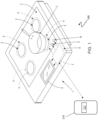
Fig. 1 schematically illustrates a system for controlling an induction hob made according to the teaching of the present invention, -
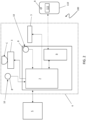
Fig. 2 shows a block diagram of the system for controlling an induction hob according to the present invention. - The present invention will now be described more fully with reference to the accompanying drawings, in which example embodiments are shown. However, this invention should not be construed as limited to the embodiments set forth herein. Throughout the following description similar reference numerals have been used to denote similar elements, parts, items or features, when applicable. With reference to
Figure 1 , number 1 indicates, as a whole, asystem 100 for controlling an induction hob 1 made according to the present invention. - The
system 100 comprises the induction hob 1 and a userelectronic device 110. - According to the exemplary embodiment illustrated in
Figures 1 and2 , the userelectronic device 110 is provided with a communication module device (not shown) configured to perform wireless communications of data/information. The userelectronic device 110 may be, for example, a smartphone (as illustrated in the example ofFigure 1 ), a laptop, a personal computer or any other equivalent/similar electronic apparatus. The userelectronic device 110 comprises one or more calculation units 111 (one of which illustrated inFigures 1 and2 ). Preferably, thecalculation unit 111 of the userelectronic device 110 comprises a computer processor. - With reference to the example of
Figure 1 , the induction hob 1 may comprise ahob plate 2 and one or more heating zones 4 (shown by broken lines), which are arranged on thehob plate 2 and are structured in order to support respective cookwares C (one schematically illustrated inFigures 1 and2 ). - With reference to the exemplary embodiment shown in
Figure 1 , each heating zone 4 is associated with at least aninduction coil 3 configured to heat the cookware C. Preferably, theinduction coil 3 may be arranged under thehob plate 2. - In the example shown in
Figure 1 , the induction hob 1 further comprises a user-interface 5, for example, comprised in a control panel of the induction hob 1. - The user-
interface 5 may be configured in order to allow users to input/set commands to the induction hob 1 to perform the cooking (cycle). - According to an embodiment of the present invention illustrated in
Figure 1 , the user- interface 5 (panel or similar/equivalent) may be further configured to allow the user to input/set command to select a heating power for cooking and or a cooking program among a plurality of preestablished cooking programs. - With reference to the example shown in
Figure 1 , the induction hob 1 further comprise anelectronic control system 6, which is configured to control the operation of the induction hob 1. - Preferably, the
electronic control system 6 may comprise an electronic control unit 7. - The electronic control unit 7 may be configured to control the electric power supplied to the
induction coil 3 in order to regulate the heating power thatinduction coil 3 provides to the cookware C while cooking. - With reference to
Figure 2 , theelectronic control system 6 of the induction hob 1 may further comprise acommunication module device 9 configured to perform wireless communications to communicate (exchange) data/information with the userelectronic device 110. According to a preferred embodiment of the present invention, the induction hob 1 further comprises anoise detecting system 10. - In an exemplary embodiment of the present invention illustrated in
Figure 2 , thenoise detecting system 10 may comprise one or moreacoustic sensing devices 8. - The
acoustic sensing device 8 may be configured to provide to theelectronic control system 6, i.e. the electronic control unit 7, an electrical noise-signal indicative of the noise generated by the cookware C. - Preferably, the
acoustic sensing device 8 may be configured to output the electrical noise-signal in the "time domain". Theacoustic sensing device 8 may comprise a microphone, or a vibration sensing device or any similar device, which is configured to provide an electrical signal indicative of the detected acoustic noise, hereinafter indicated with electrical noise signal. - The
acoustic sensing device 8 may be arranged in the induction hob 1 in order to be adjacent to a relative heating zone 4/induction coil 3. Preferably, theacoustic sensing device 8 may be arranged in the induction hob 1 in order to sense/determine the noise generated by the cookware C. - It is understood that the present invention is not limited to a
noise detecting system 10 wherein theacoustic sensing device 8 are arranged in the induction hob 1, but in addition or alternatively, it may be envisaged that thenoise detecting system 10 comprisesacoustic sensing device 8 arranged in a cooker-hood (not illustrated) and/or in a smart-home device (ceiling light, smoke alarm, or the like). - Moreover, in addition or alternatively, it may be envisaged that the
noise detecting system 10 comprises anacoustic sensing device 8, such as a microphone being arranged in the user-electronic device 110. - According to an embodiment of the present invention, the electronic control unit 7 may be configured to input (receive) the electrical noise signal "in the time-domain", hereinafter indicated with "time-domain electrical noise signal".
- Moreover, according to an embodiment of the present invention, the electronic control unit 7 may be configured to transmit by means of the
communication module device 9 the time-domain electrical noises signals to the userelectronic device 110. - According to an embodiment of the present invention, the
calculation unit 111 may be configured to perform a Fourier transform (FTT) on the time-domain electrical noises signals to transform the latter in the frequency-domain in order to provide frequency-domain electrical noise signals. - Preferably, the
calculation unit 111 may be configured to perform a Fourier transform based on a prefixed bandwidth of the frequency-domain comprised between about 100 Hz to about 20KHz. - Preferably, the
calculation unit 111 may be configured to perform a Fourier transform based on a prefixed bandwidth associated to about 640 frequency-channels. - Conveniently, the
calculation unit 111 may be configured to perform a Fourier transform in order to have a linear resolution on the prefixed frequency bandwidth greater than about 31 Hz. - The
calculation unit 111 may also be configured in order to process the frequency-domain electrical noise signal for determining noise information/data concerning the noise generated by the cookware C/induction hob 1. - Preferably, the user
electronic device 110 may be configured to communicate the determined noise information/data to theelectronic control system 6. - The
electronic control system 6 may be configured in order to control the electric power supplied to theinduction coil 3 being heating the cookware C, based on the received noise information/data. - The
electronic control system 6 may be configured in order to elaborate the received noise information/data in order to find out the "cause" of the generation of noise. According to an embodiment, theelectronic control system 6 may be configured to elaborate the received noise information/data in order to determine whether the acoustic noise is caused by at least a first noise cause/condition or a second noise cause/condition. - The first noise cause/condition may be associated to noise due to the electric power supplied to the
induction coil 3. - The second noise cause/condition may be associated to a noise generated by cookware C (structure or material, etc...) .
- Preferably, the
electronic control system 6 may be configured to sweep the power supplied to theinduction coil 3 during a prefixed control time (about few second), determine the noise by thenoise detection system 10 and provide the time-domain electrical noise signal to the userelectronic device 110. - Preferably, the user
electronic device 110 may determine the frequency-domain electrical noise signal based on time-domain electrical noise signal by performing the Fourier transform. It is understood that the transformation operations of the time-domain electrical noise signal through the Fourier transform may be performed trough a mobile application implemented by the userelectronic device 110. - Preferably, the user
electronic device 110 may communicate the frequency-domain electrical noise signal to theelectronic control system 6. It is understood that these operations may be performed trough a mobile application implemented by the userelectronic device 110. Preferably, theelectronic control system 6 may receive the frequency-domain noise signal from theelectronic device 110, compare the rise on all frequencies of the frequency-domain noise signal, with the rise on prefixed frequencies of a reference frequency-domain noise signal, and determine the first noise cause based on the results of comparison. For example theelectronic control system 6 may determine an average value based on the rise on all frequencies of the frequency-domain noise signal, compare the determined average value with a prefixed an average value and determine the first noise cause based on the results of comparison. - Preferably, the
electronic control system 6 may be configured to sweep the power supplied to theinduction coil 3 by changing the value of the electrical power supplied to theinduction coil 3 and/or by changing the working frequency of the electrical power. For example the electrical power may have a value of 300 Watt, and the working frequency may be changed by theelectronic control system 6 within a prefixed frequency range comprised between about 23 kHz and about 25kHz. - The first noise cause may be associated to some prefixed frequencies having predetermined peaks values, within said prefixed frequencies range corresponding to the range in which the power has been swept. The first noise cause may be associated to at least a first value.
- It is understood that the full spectrum, average over certain time or over some data-cycles (10ms per FFT x 10 = 100ms ) may be the current average reference.
- This reference may be stored and associated to 2048 frequency channels.
- According to an embodiment of the present invention, the
electronic control system 6 may be configured to alternately switch on/off theinduction coil 3 and/or sweeps the frequency/value of the electric power supplied to theinduction coil 3. - Preferably, the
electronic control system 6 may be configured to in order to calculate the second noise cause associated to an average in the prefixed frequency band. The second noise cause may be associated to at least a second value. - Preferably the
electronic control system 6 may be configured to search for frequency peaks., Preferably theelectronic control system 6 may be configured to make a short time average. The short time average may be maybe for example of 2..3 FFT. Theelectronic control system 6 may be also configured to compare this with stored references, calculate the difference for example per channel (the delta can be cumulated) in odred to determine the second value, compares the second value with said first value, and determine that noise has generated by the cookware C based on the result of comparison. - When the
electronic control system 6 determines that noise is generated by electric power supplied to the induction coil , it may determine if there is at least a impulse or high "dB level" on some frequencies of the frequency-domain electrical noise signals. - The
electronic control system 6 controls the power provided to theinduction coil 3 when it determines that there is at least an impulse or high "dB level" on some frequencies of the frequency-domain electrical noise signal. - It is understood that impulse is due to intern processing, and the
electronic control system 6 may run a corresponding subroutine, which controls theinduction coil 3 to reduce the noise. - It is understood that in case of high dB: the
electronic control system 6 may perform of: sweeping the induction frequency & FFT calculated in parallel, and repeat this. Moreover, it is understood that this maybe in power steps 3000W/2500W/2000W/1500W/1000W/ 700W induction board can sweep within some milliseconds through this. Moreover a threshold, i.e. 60% noise reduction, will indicate the power/frequency which gives this noise reduction. This will be automatically selected. During boiling further noise can appear (water); here the system may detects what is cookware C and what is water (with &without lid) which causes noise. The reference data from the first sweep will be used for that. - The system has the advantage that is configured to perform a Fourier transform on a noise signal supplied by a microphone, without the need to use have powerful and expensive calculation systems in the same. The cooking experience is not disturbed by noisy pan. The mobile phone is powerful enough an coming micro for the induction POB will be powerful as well. The Fourier transform software is meanwhile available as single mobile application APP.
- Clearly, changes and variations may be made to the system , departing from the scope of the present invention.
Claims (12)
- System for controlling an induction hob (100) comprising:an induction hob (1) provided with at least an induction coil (3) for heating a cookware (C) , a first electronic system (6) configured to control the power supplied to said induction coil (3), and a noise detecting system (10) which is configured to provide a time-domain electrical noise signal indicative of the noise generated by said induction hob, and/or induction coil (3) and/or cookware (C),a user electronic device (110) provided with a second electronic system (111) which is configured to communicate data/information with said first electronic system (6) whereinsaid first electronic system (6) is configured to communicate said time-domain electrical noise signal to said second electronic system (111) of said user electronic device (110)second electronic system (111) is configured in order to: receive the time-domain electrical noise signal from said a first electronic system (6), perform a Fourier transform in order to transform said time-domain electrical noise signal in a frequency-domain electrical noise signal, and communicate said frequency-domain electrical noise signal to said first electronic system (6).
- System according to claim 1, wherein said a first electronic system (6) is also configured in order to receive said frequency-domain electrical noise signal, processes said frequency domain electrical noise signal in order to determine noise information indicative of said noise, and control the power supplied to said induction coil (3) based on said determined noise information.
- System according to claims 1 or 2 wherein said first electronic system is configured to perform a Fourier transform (FTT) on said time-domain noise-signals based on a prefixed bandwidth comprises between about 100 Hz to about 20KHz.
- System according to any of the foregoing claims, wherein said first electronic system (6) is configured to elaborate the received noise information/data in order to find out the causes of generation of said noises.
- System according to any of the foregoing claims, wherein said first electronic system (6) is configured to elaborate the received noise information/data in order to determine whether the noise is generated because of a first noise cause or a second noise cause, said first noise cause being associated to noises due to the electric power supplied to the induction coil (3), said second noise cause being associated to a noise generated by said cookware (C ).
- System according to any of the foregoing claims, wherein said first electronic system (6) is configured to sweep the power supplied to said induction coil (3) during a prefixed control time, communicating the time-domain electric noise signal to the second electronic system (111) of the user electronic device 110, determining by the second electronic system (111) the frequency-domain electrical noise signal by performing the Fourier transform on said time-domain electric noise signal, receiving the frequency-domain electrical noise signal from said second electronic system of the user electronic device (110), comparing the frequency-domain electrical noise signal with ta prefixed frequency-domain electrical noise signal, and determine the first noise cause based on the results of the comparison.
- System according to claim 6, wherein said first electronic system (6) is configured in order to sweep the power supplied to the induction coil (3) by changing the value of the supplied power and/or by changing the working frequency.
- System according to claim 7, wherein said first electronic system (6) is configured in order to sweep the power supplied to the induction coil (3) by changing the working frequency within a prefixed frequency range comprised between about 23kHz and about 25kHz.
- System according to any of the foregoing claims, wherein said first electronic system (6) is configured in order to determine a second noise cause based on an average value of said frequency-domain electrical noise signal in a prefixed frequency band.
- System according to any of the foregoing claims, wherein said first electronic control system (6) is configured in order to determine peaks of the said frequency-domain electrical noise signal in said prefixed frequency band, compare said peaks with reference values, calculate the difference, and determine that acoustic noise is generated by said cookware (C ) during the heating, based on said difference.
- System according to any of the foregoing claims, wherein when said first electronic system (6) is configured to determine that the noise is generated by electric powers, based on one or more impulse of said frequency-domain electrical noise signal.
- System according to claim 11, wherein when said first electronic system (6) is configured to controls the power supplied to said induction coil (3) based on said one or more impulses of said frequency-domain electrical noise signal.
Priority Applications (2)
| Application Number | Priority Date | Filing Date | Title |
|---|---|---|---|
| EP23209571.1A EP4557889A1 (en) | 2023-11-14 | 2023-11-14 | System for controlling an induction hob |
| PCT/EP2024/079897 WO2025103720A1 (en) | 2023-11-14 | 2024-10-23 | System for controlling an induction hob |
Applications Claiming Priority (1)
| Application Number | Priority Date | Filing Date | Title |
|---|---|---|---|
| EP23209571.1A EP4557889A1 (en) | 2023-11-14 | 2023-11-14 | System for controlling an induction hob |
Publications (1)
| Publication Number | Publication Date |
|---|---|
| EP4557889A1 true EP4557889A1 (en) | 2025-05-21 |
Family
ID=88833637
Family Applications (1)
| Application Number | Title | Priority Date | Filing Date |
|---|---|---|---|
| EP23209571.1A Pending EP4557889A1 (en) | 2023-11-14 | 2023-11-14 | System for controlling an induction hob |
Country Status (2)
| Country | Link |
|---|---|
| EP (1) | EP4557889A1 (en) |
| WO (1) | WO2025103720A1 (en) |
Citations (4)
| Publication number | Priority date | Publication date | Assignee | Title |
|---|---|---|---|---|
| US20090173731A1 (en) * | 2006-05-11 | 2009-07-09 | Sachio Nagamitsu | Induction heating cooker, induction heating cooking method, induction heating cooking program, resonance sound detection device, resonance sound detection method, and resonance sound detection program |
| CN105973998A (en) * | 2016-07-27 | 2016-09-28 | 邓东东 | Cooking tool and method for blindly determining food cooking degree |
| DE102017214598A1 (en) * | 2017-08-22 | 2019-02-28 | Robert Bosch Gmbh | Monitoring device for at least one domestic appliance |
| US20190172323A1 (en) * | 2016-07-27 | 2019-06-06 | Dongdong Deng | Culinary mapping tool for detecting cooking status in pot and culinary mapping and evaluation method |
-
2023
- 2023-11-14 EP EP23209571.1A patent/EP4557889A1/en active Pending
-
2024
- 2024-10-23 WO PCT/EP2024/079897 patent/WO2025103720A1/en active Pending
Patent Citations (4)
| Publication number | Priority date | Publication date | Assignee | Title |
|---|---|---|---|---|
| US20090173731A1 (en) * | 2006-05-11 | 2009-07-09 | Sachio Nagamitsu | Induction heating cooker, induction heating cooking method, induction heating cooking program, resonance sound detection device, resonance sound detection method, and resonance sound detection program |
| CN105973998A (en) * | 2016-07-27 | 2016-09-28 | 邓东东 | Cooking tool and method for blindly determining food cooking degree |
| US20190172323A1 (en) * | 2016-07-27 | 2019-06-06 | Dongdong Deng | Culinary mapping tool for detecting cooking status in pot and culinary mapping and evaluation method |
| DE102017214598A1 (en) * | 2017-08-22 | 2019-02-28 | Robert Bosch Gmbh | Monitoring device for at least one domestic appliance |
Also Published As
| Publication number | Publication date |
|---|---|
| WO2025103720A1 (en) | 2025-05-22 |
Similar Documents
| Publication | Publication Date | Title |
|---|---|---|
| CN101208994B (en) | Method and arrangement for supplying power to several induction coils in an induction apparatus | |
| US11700675B2 (en) | Induction cooking hob including a cooking area with three or more induction coils and a method for controlling a cooking area | |
| Millán et al. | Series resonant inverter with selective harmonic operation applied to all-metal domestic induction heating | |
| US6316757B1 (en) | Halogen heater control apparatus of microwave oven and method thereof | |
| CN106255246B (en) | The electrical control method of electric power heating equipment | |
| US10719165B2 (en) | Touch sensing apparatus based on ultrasonic waves, cooking apparatus and home appliance including the same | |
| WO2025103720A1 (en) | System for controlling an induction hob | |
| CN104373973B (en) | Electromagnetic oven and method and device for controlling power of electromagnetic oven | |
| CN112425260B (en) | cooking stove | |
| CN104251502A (en) | Control system for audio curve detection of boiling water in electromagnetic oven and method thereof | |
| KR102142411B1 (en) | Cooker for reducing noise by frequency interference | |
| CN109140543B (en) | Noise reduction method for electromagnetic heating cooker | |
| CN106879097A (en) | A kind of detection method and micro-wave oven | |
| US20250240853A1 (en) | Induction energy transmission system | |
| CN112714517A (en) | Electromagnetic heating apparatus and control method thereof | |
| EP4044767B1 (en) | Induction heating device and method for controlling induction heating device | |
| CN120050811A (en) | Control method of cooking appliance and cooking appliance | |
| CN108307552B (en) | Device and method for reducing electromagnetic noise, and cooking utensils | |
| CN110784024B (en) | Method and device for inductively transmitting energy | |
| JP4325446B2 (en) | Induction heating device | |
| EP4429406A1 (en) | Induction hob and operation method thereof | |
| KR102903205B1 (en) | Noise cancellation system and method from induction heating cooking equipment | |
| CN114754383B (en) | Noise reduction method and circuit of electromagnetic heating appliance and electromagnetic heating appliance | |
| CN119277587A (en) | Control method, device, equipment and storage medium of electromagnetic heating equipment | |
| JP3152638B2 (en) | Cooking device |
Legal Events
| Date | Code | Title | Description |
|---|---|---|---|
| PUAI | Public reference made under article 153(3) epc to a published international application that has entered the european phase |
Free format text: ORIGINAL CODE: 0009012 |
|
| STAA | Information on the status of an ep patent application or granted ep patent |
Free format text: STATUS: THE APPLICATION HAS BEEN PUBLISHED |
|
| AK | Designated contracting states |
Kind code of ref document: A1 Designated state(s): AL AT BE BG CH CY CZ DE DK EE ES FI FR GB GR HR HU IE IS IT LI LT LU LV MC ME MK MT NL NO PL PT RO RS SE SI SK SM TR |
|
| STAA | Information on the status of an ep patent application or granted ep patent |
Free format text: STATUS: REQUEST FOR EXAMINATION WAS MADE |
|
| 17P | Request for examination filed |
Effective date: 20251121 |