EP4557707A1 - Device management system and method - Google Patents
Device management system and method Download PDFInfo
- Publication number
- EP4557707A1 EP4557707A1 EP24194507.0A EP24194507A EP4557707A1 EP 4557707 A1 EP4557707 A1 EP 4557707A1 EP 24194507 A EP24194507 A EP 24194507A EP 4557707 A1 EP4557707 A1 EP 4557707A1
- Authority
- EP
- European Patent Office
- Prior art keywords
- server
- electronic device
- binding
- device management
- instruction
- Prior art date
- Legal status (The legal status is an assumption and is not a legal conclusion. Google has not performed a legal analysis and makes no representation as to the accuracy of the status listed.)
- Granted
Links
Images

Classifications
-
- H—ELECTRICITY
- H04—ELECTRIC COMMUNICATION TECHNIQUE
- H04L—TRANSMISSION OF DIGITAL INFORMATION, e.g. TELEGRAPHIC COMMUNICATION
- H04L67/00—Network arrangements or protocols for supporting network services or applications
- H04L67/01—Protocols
- H04L67/12—Protocols specially adapted for proprietary or special-purpose networking environments, e.g. medical networks, sensor networks, networks in vehicles or remote metering networks
-
- H—ELECTRICITY
- H04—ELECTRIC COMMUNICATION TECHNIQUE
- H04W—WIRELESS COMMUNICATION NETWORKS
- H04W60/00—Affiliation to network, e.g. registration; Terminating affiliation with the network, e.g. de-registration
-
- H—ELECTRICITY
- H04—ELECTRIC COMMUNICATION TECHNIQUE
- H04W—WIRELESS COMMUNICATION NETWORKS
- H04W12/00—Security arrangements; Authentication; Protecting privacy or anonymity
- H04W12/04—Key management, e.g. using generic bootstrapping architecture [GBA]
-
- H—ELECTRICITY
- H04—ELECTRIC COMMUNICATION TECHNIQUE
- H04W—WIRELESS COMMUNICATION NETWORKS
- H04W48/00—Access restriction; Network selection; Access point selection
- H04W48/08—Access restriction or access information delivery, e.g. discovery data delivery
-
- H—ELECTRICITY
- H04—ELECTRIC COMMUNICATION TECHNIQUE
- H04L—TRANSMISSION OF DIGITAL INFORMATION, e.g. TELEGRAPHIC COMMUNICATION
- H04L63/00—Network architectures or network communication protocols for network security
- H04L63/12—Applying verification of the received information
-
- H—ELECTRICITY
- H04—ELECTRIC COMMUNICATION TECHNIQUE
- H04W—WIRELESS COMMUNICATION NETWORKS
- H04W4/00—Services specially adapted for wireless communication networks; Facilities therefor
- H04W4/70—Services for machine-to-machine communication [M2M] or machine type communication [MTC]
-
- H—ELECTRICITY
- H04—ELECTRIC COMMUNICATION TECHNIQUE
- H04W—WIRELESS COMMUNICATION NETWORKS
- H04W84/00—Network topologies
- H04W84/18—Self-organising networks, e.g. ad-hoc networks or sensor networks
Definitions
- the present invention relates to a device management system and method, and in particular to a device management system and method concerning the switching of binding.
- Internet of Things is a widely used technology for interconnection and information exchange.
- both termination and switching of binding have to be done manually by operating personnel. Therefore, discovering a way to simplify the manual operating steps and to achieve automation has become an imperative for the technical field.
- the present invention provides a device management system and method that can simplify operation steps of terminating and switching binding and achieve automation.
- the device management system comprises: an entry server, a first server coupled to the entry server, a second server coupled to the entry server, and an electronic device bound with the first server.
- the device management method executed by the device management system comprises: sending, by the entry server, a server-switching instruction corresponding to the electronic device to the first server, such that the first server sends a binding termination instruction to the electronic device; sending, by the electronic device, an address-requesting instruction corresponding to the second server to the entry server, such that the entry server sends an address of the second server to the electronic device; and sending, by the electronic device, a registration information instruction to the second server to execute binding, and exchanging data information with the second server.
- the device management method provided by the present invention is suitable for the device management system, wherein the device management system comprises an entry server, a first server, a second server, and an electronic device, and the electronic device and the first server are bound together.
- the device management method comprises: sending, by the entry server, a server-switching instruction corresponding to the electronic device to the first server, such that the first server sends a binding termination instruction to the electronic device; sending, by the electronic device, an address-requesting instruction corresponding to the second server to the entry server, such that the entry server sends an address of the second server to the electronic device; and sending, by the electronic device, a registration information instruction to the second server to execute binding, and exchanging data information with the second server.
- the above first server and second server are Internet of Things servers
- the electronic device is an Internet of Things device.
- the above device management method further comprises: verifying the binding termination instruction, by the electronic device using a public key of the first server, to determine whether to terminate binding.
- the above-mentioned sub-step of sending, by an electronic device, a registration information instruction to a second server to execute binding comprises: receiving, by the electronic device, a registration-permitting instruction and a public key from the second server.
- the above-mentioned sub-step of exchanging data information between the electronic device and the second server comprises: verifying the data information by the second server using the public key of the electronic device in the registration information instruction to determine whether to receive the data information.
- the device management system 1 provided by the embodiment comprises an entry server 2, at least one server, and an electronic device 5, wherein the at least one server comprises a first server 3 and a second server 4, and the at least one server is coupled to the entry server 2.
- the first server 3 and the second server 4 are Internet of Things servers, and the electronic device is an Internet of Things device 5.It is to be understood that, in this embodiment, the electronic device 5 and the first server 3 are bound together to perform data information exchange, and then, through the device management method provided by the present invention, the binding between the electronic device 5 and the first server 3 is terminated, and the binding between the electronic device 5 and the second server 4 is registered, so as to allow data information exchange between the electronic device 5 and the second server 4.
- Step S1 the entry server 2 sends a server-switching instruction corresponding to the electronic device 5 to the first server 3, such that the first server 3 sends a binding termination instruction to the electronic device 5.
- each server has a plurality of bound electronic devices 5 with which each server performs data information exchange.
- an incident e.g.
- the server-switching instruction corresponding to the electronic device 5 is sent by the entry server 2 to make the original server terminate its binding with the electronic device 5, and make the original server send the binding termination instruction to the electronic device 5 to terminate its binding with the original server, which prevents the electronic device 5, when connected to the internet, from reconnecting to the original server and not being able to perform registration, binding, and data information exchange with the new server.
- Step S3 the electronic device 5 verifies the binding termination instruction using a public key of the first server 3 to determine whether to terminate binding.
- the electronic device 5 holds a public key of the original server, which is used for verification when the electronic device performs data information exchange with the original server.
- the electronic device 5 verifies the binding termination instruction using the public key of the original server. Therefore, when the verification using the public key is successful, the binding will be terminated.
- Step S5 when the result is a YES, the electronic device 5 sends an address-requesting instruction corresponding to the second server 4 to the entry server 2, such that the entry server 2 sends an address of the second server 4 to the electronic device 5.
- the electronic device 5 when its binding with the original server is terminated, the electronic device 5 will request an address of a new server from the entry server 2 before the electronic device and the new server are connected to the internet, so as to perform registration, binding, and data information exchange.
- Step S7 the electronic device 5 sends a registration information instruction to the second server 4 to execute binding, and exchanges data information with the second server 4.
- FIG. 3 it is a flow chart of a sub-step of sending, by an electronic device, a registration information instruction to a second server to execute binding, provided by embodiments of the present invention.
- the new server receives the registration information instruction from the electronic device 5 and allows registration of the electronic device 5
- Step S71 is executed: the electronic device 5 receives a registration-permitting instruction and a public key from the second server 4, so as to perform registration, binding, and data information exchange.
- Step S73 it is a flow chart of a sub-step of exchanging data information between the electronic device and the second server, provided by embodiments of the present invention.
- the electronic device 5 performs data information exchange with the new server
- Step S73 is executed: the second server 4 verifies the data information using the public key of the electronic device 5 in the registration information instruction to determine whether to receive the data information.
- the new server exchanges data information with the electronic device 5 after the electronic device 5 is successfully registered and bound with the new server, the data information from the electronic device 5 is verified by the public key of the electronic device 5.
Landscapes
- Engineering & Computer Science (AREA)
- Computer Networks & Wireless Communication (AREA)
- Signal Processing (AREA)
- Computer Security & Cryptography (AREA)
- Health & Medical Sciences (AREA)
- Computing Systems (AREA)
- General Health & Medical Sciences (AREA)
- Medical Informatics (AREA)
- Computer And Data Communications (AREA)
Abstract
Description
- The instant application claims priority to
Taiwan Patent Application No. 112144087, filed on November 15, 2023 - The present invention relates to a device management system and method, and in particular to a device management system and method concerning the switching of binding.
- Internet of Things is a widely used technology for interconnection and information exchange. In a field of Internet of Things with specific binding relationships, both termination and switching of binding have to be done manually by operating personnel. Therefore, discovering a way to simplify the manual operating steps and to achieve automation has become an imperative for the technical field.
- The present invention provides a device management system and method that can simplify operation steps of terminating and switching binding and achieve automation.
- The device management system provided by the present invention comprises: an entry server, a first server coupled to the entry server, a second server coupled to the entry server, and an electronic device bound with the first server. The device management method executed by the device management system comprises: sending, by the entry server, a server-switching instruction corresponding to the electronic device to the first server, such that the first server sends a binding termination instruction to the electronic device; sending, by the electronic device, an address-requesting instruction corresponding to the second server to the entry server, such that the entry server sends an address of the second server to the electronic device; and sending, by the electronic device, a registration information instruction to the second server to execute binding, and exchanging data information with the second server.
- The device management method provided by the present invention is suitable for the device management system, wherein the device management system comprises an entry server, a first server, a second server, and an electronic device, and the electronic device and the first server are bound together. The device management method comprises: sending, by the entry server, a server-switching instruction corresponding to the electronic device to the first server, such that the first server sends a binding termination instruction to the electronic device; sending, by the electronic device, an address-requesting instruction corresponding to the second server to the entry server, such that the entry server sends an address of the second server to the electronic device; and sending, by the electronic device, a registration information instruction to the second server to execute binding, and exchanging data information with the second server.
- In an embodiment of the present invention, the above first server and second server are Internet of Things servers, and the electronic device is an Internet of Things device.
- In an embodiment of the present invention, the above device management method further comprises: verifying the binding termination instruction, by the electronic device using a public key of the first server, to determine whether to terminate binding.
- In an embodiment of the present invention, the above-mentioned sub-step of sending, by an electronic device, a registration information instruction to a second server to execute binding comprises: receiving, by the electronic device, a registration-permitting instruction and a public key from the second server.
- In an embodiment of the present invention, the above-mentioned sub-step of exchanging data information between the electronic device and the second server comprises: verifying the data information by the second server using the public key of the electronic device in the registration information instruction to determine whether to receive the data information.
- With the adoption of the device management method provided by the present invention, the effects of simplifying steps of terminating and switching binding and realizing automation can be achieved.
- Other objectives, features and advantages of the invention will be further understood from the further technological features disclosed by the embodiments of the invention wherein there are shown and described preferred embodiments of this invention, simply by way of illustration of modes best suited to carry out the invention.
-
-
FIG. 1 is a schematic diagram of a device management system provided by embodiments of the present invention. -
FIG. 2 is a flow chart of steps of a device management method provided by embodiments of the present invention. -
FIG. 3 is a flow chart of a sub-step of sending, by an electronic device, a registration information instruction to a second server to execute binding, provided by embodiments of the present invention. -
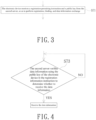
FIG. 4 is a flow chart of a sub-step of exchanging data information between the electronic device and the second server, provided by embodiments of the present invention. - In order to make the purposes, technical solutions and advantages of the present invention more clear, the present invention is further described in detail in conjunction with accompanying drawings and embodiments below. It should be understood that the specific embodiments described herein are only used to explain the present invention, not to define the present invention. On the basis of the embodiments of the present invention, all other embodiments obtained by those of ordinary skill in the pertinent technical field without involving any inventive effort should fall within the scope of protection of the present invention.
- With reference to
FIG. 1 , it is a schematic diagram of a device management system provided by embodiments of the present invention. Thedevice management system 1 provided by the embodiment comprises anentry server 2, at least one server, and anelectronic device 5, wherein the at least one server comprises afirst server 3 and asecond server 4, and the at least one server is coupled to theentry server 2. Additionally, thefirst server 3 and thesecond server 4 are Internet of Things servers, and the electronic device is an Internet of Things device 5.It is to be understood that, in this embodiment, theelectronic device 5 and thefirst server 3 are bound together to perform data information exchange, and then, through the device management method provided by the present invention, the binding between theelectronic device 5 and thefirst server 3 is terminated, and the binding between theelectronic device 5 and thesecond server 4 is registered, so as to allow data information exchange between theelectronic device 5 and thesecond server 4. - With reference to
FIG. 2 , it is a flow chart of a device management method provided by embodiments of the present invention. The device management method provided by the embodiment, when executed by thedevice management system 1, comprises the following steps. Step S1: theentry server 2 sends a server-switching instruction corresponding to theelectronic device 5 to thefirst server 3, such that thefirst server 3 sends a binding termination instruction to theelectronic device 5. Specifically, each server has a plurality of boundelectronic devices 5 with which each server performs data information exchange. However, in case of an incident, e.g. when theelectronic device 5 no longer performs data information exchange with the original server after repair, but performs data information exchange with other servers, the binding between theelectronic device 5 and the original server must be terminated before the electronic device can perform registration, binding, and data information exchange with a new server. Therefore, the server-switching instruction corresponding to theelectronic device 5 is sent by theentry server 2 to make the original server terminate its binding with theelectronic device 5, and make the original server send the binding termination instruction to theelectronic device 5 to terminate its binding with the original server, which prevents theelectronic device 5, when connected to the internet, from reconnecting to the original server and not being able to perform registration, binding, and data information exchange with the new server. - Step S3: the
electronic device 5 verifies the binding termination instruction using a public key of thefirst server 3 to determine whether to terminate binding. Specifically, theelectronic device 5 holds a public key of the original server, which is used for verification when the electronic device performs data information exchange with the original server. Similarly, when its binding with the original server is terminated, theelectronic device 5 verifies the binding termination instruction using the public key of the original server. Therefore, when the verification using the public key is successful, the binding will be terminated. - Step S5: when the result is a YES, the
electronic device 5 sends an address-requesting instruction corresponding to thesecond server 4 to theentry server 2, such that theentry server 2 sends an address of thesecond server 4 to the electronic device 5.Specifically, when its binding with the original server is terminated, theelectronic device 5 will request an address of a new server from theentry server 2 before the electronic device and the new server are connected to the internet, so as to perform registration, binding, and data information exchange. - Step S7: the
electronic device 5 sends a registration information instruction to thesecond server 4 to execute binding, and exchanges data information with thesecond server 4. With reference toFIG. 3 , it is a flow chart of a sub-step of sending, by an electronic device, a registration information instruction to a second server to execute binding, provided by embodiments of the present invention. Specifically, when the new server receives the registration information instruction from theelectronic device 5 and allows registration of theelectronic device 5, Step S71 is executed: theelectronic device 5 receives a registration-permitting instruction and a public key from thesecond server 4, so as to perform registration, binding, and data information exchange. - Then, with reference to
FIG. 4 , it is a flow chart of a sub-step of exchanging data information between the electronic device and the second server, provided by embodiments of the present invention. When theelectronic device 5 performs data information exchange with the new server, Step S73 is executed: thesecond server 4 verifies the data information using the public key of theelectronic device 5 in the registration information instruction to determine whether to receive the data information. Specifically, when the new server exchanges data information with theelectronic device 5 after theelectronic device 5 is successfully registered and bound with the new server, the data information from theelectronic device 5 is verified by the public key of theelectronic device 5. - As described above, with the adoption of the device management method provided herein, the effects of simplifying steps of terminating and switching binding and realizing automation can be achieved.
- While the invention has been described in terms of what is presently considered to be the most practical and preferred embodiments, it is to be understood that the invention needs not be limited to the disclosed embodiment. On the contrary, it is intended to cover various modifications and similar arrangements included within the spirit and scope of the appended claims which are to be accorded with the broadest interpretation so as to encompass all such modifications and similar structures.
Claims (10)
- A device management system (1), comprising:an entry server (2);a first server (3), coupled to the entry server (2);a second server (4), coupled to the entry server (2); andan electronic device (5), bound with the first server (3);wherein the device management system (1) executes a device management method, and the device management method comprises:sending, by the entry server (2), a server-switching instruction corresponding to the electronic device (5) to the first server (3), so that the first server (3) sends a binding termination instruction to the electronic device (5) (S1);sending, by the electronic device (5), an address-requesting instruction corresponding to the electronic device (5) to the entry server (2), so that the entry server (2) sends an address of the second server (4) to the electronic device (5) (S5); andsending, by the electronic device (5), a registration information instruction to the second server (4) to execute binding, and exchanging data information with the second server (4) (S7).
- The device management system (1) according to claim 1, wherein the first server (3) and the second server (4) are Internet of Things servers, and the electronic device (5) is an Internet of Things device.
- The device management system (1) according to claim 1 or 2, wherein the device management method further comprises:
verifying the binding termination instruction by the electronic device (5) using a public key of the first server (3) to determine whether to terminate binding (S3). - The device management system (1) according to any of the preceding claims, wherein the sending, by the electronic device (5), the registration information instruction to the second server (4) to execute binding comprises:
receiving, by the electronic device (5), a registration-permitting instruction and a public key from the second server (4) (S71). - The device management system (1) according to any of the preceding claims, wherein the exchanging of the data information between the electronic device (5) and the second server (4) comprises:
verifying the data information by the second server (4) using the public key of the electronic device (5) in the registration information instruction to determine whether to receive the data information (S73). - A device management method suitable for a device management system (1), wherein the device management system (1) comprises an entry server (2), a first server (3), a second server (4), and an electronic device (5), the electronic device (5) and the first server (3) are bound together, and the device management method comprises:sending, by the entry server (2), a server-switching instruction corresponding to the electronic device (5) to the first server (3), so that the first server (3) sends a binding termination instruction to the electronic device (5) (S1);sending, by the electronic device (5), an address-requesting instruction corresponding to the electronic device (5) to the entry server (2), so that the entry server (2) sends an address of the second server (4) to the electronic device (5) (S5); andsending, by the electronic device (5), a registration information instruction to the second server (4) to execute binding, and exchanging data information with the second server (4) (S7).
- The device management method according to claim 6, wherein the first server (3) and the second server (4) are Internet of Things servers, and the electronic device (5) is an Internet of Things device.
- The device management method according to claim 6 or 7, wherein the device management method further comprises:
verifying the binding termination instruction by the electronic device (5) using a public key of the first server (3) to determine whether to terminate binding (S3). - The device management method according to any of claims 6 to 8, wherein the sending, by the electronic device (5), the registration information instruction to the second server (4) to execute binding comprises:
receiving, by the electronic device (5), a registration-permitting instruction and a public key from the second server (4) (S71). - The device management method according to any of claims 6 to 9, wherein the exchanging of the data information between the electronic device (5) and the second server (4) comprises:
verifying the data information by the second server (4) using the public key of the electronic device (5) in the registration information instruction to determine whether to receive the data information (S73).
Applications Claiming Priority (1)
| Application Number | Priority Date | Filing Date | Title |
|---|---|---|---|
| TW112144087A TWI854892B (en) | 2023-11-15 | 2023-11-15 | Device management system and method |
Publications (2)
| Publication Number | Publication Date |
|---|---|
| EP4557707A1 true EP4557707A1 (en) | 2025-05-21 |
| EP4557707B1 EP4557707B1 (en) | 2026-05-20 |
Family
ID=92424134
Family Applications (1)
| Application Number | Title | Priority Date | Filing Date |
|---|---|---|---|
| EP24194507.0A Active EP4557707B1 (en) | 2023-11-15 | 2024-08-14 | FACILITY MANAGEMENT SYSTEM AND PROCEDURES |
Country Status (3)
| Country | Link |
|---|---|
| US (1) | US20250159637A1 (en) |
| EP (1) | EP4557707B1 (en) |
| TW (1) | TWI854892B (en) |
Citations (1)
| Publication number | Priority date | Publication date | Assignee | Title |
|---|---|---|---|---|
| CN112073265A (en) * | 2020-08-31 | 2020-12-11 | 帷幄匠心科技(杭州)有限公司 | Internet of things monitoring method and system based on distributed edge computing |
Family Cites Families (6)
| Publication number | Priority date | Publication date | Assignee | Title |
|---|---|---|---|---|
| US20130298209A1 (en) * | 2012-05-02 | 2013-11-07 | Interdigital Patent Holdings, Inc. | One round trip authentication using sngle sign-on systems |
| US10284627B2 (en) * | 2013-03-29 | 2019-05-07 | Citrix Systems, Inc. | Data management for an application with multiple operation modes |
| JP2018507639A (en) * | 2015-01-28 | 2018-03-15 | アンブラ テクノロジーズ リミテッドUmbra Technologies Ltd. | System and method for global virtual network |
| CN109428940A (en) * | 2017-09-04 | 2019-03-05 | 阿里巴巴集团控股有限公司 | The means of communication, information sharing method and device |
| CN107483480B (en) * | 2017-09-11 | 2020-05-12 | 杭州迪普科技股份有限公司 | Address processing method and device |
| CN109886375B (en) * | 2019-02-17 | 2022-06-03 | 北京意锐新创科技有限公司 | Method and system for batch replacement of binding two-dimensional code reading devices |
-
2023
- 2023-11-15 TW TW112144087A patent/TWI854892B/en active
-
2024
- 2024-07-12 US US18/771,117 patent/US20250159637A1/en active Pending
- 2024-08-14 EP EP24194507.0A patent/EP4557707B1/en active Active
Patent Citations (1)
| Publication number | Priority date | Publication date | Assignee | Title |
|---|---|---|---|---|
| CN112073265A (en) * | 2020-08-31 | 2020-12-11 | 帷幄匠心科技(杭州)有限公司 | Internet of things monitoring method and system based on distributed edge computing |
Also Published As
| Publication number | Publication date |
|---|---|
| US20250159637A1 (en) | 2025-05-15 |
| EP4557707B1 (en) | 2026-05-20 |
| TW202522933A (en) | 2025-06-01 |
| TWI854892B (en) | 2024-09-01 |
Similar Documents
| Publication | Publication Date | Title |
|---|---|---|
| CN110677383B (en) | Firewall wall opening method and device, storage medium and computer equipment | |
| US9621559B2 (en) | Network apparatus for secure remote access and control | |
| KR20080053298A (en) | A computer program product having a method of creating a secure connection by authenticating relatively early in the connection process and computer executable instructions that cause the method to be performed. | |
| CN107241336B (en) | Identity verification method and device | |
| CN112188493A (en) | Authentication method, system and related equipment | |
| CN104599119A (en) | Embedding and cloud computing based vending machine mobile electronic payment method | |
| CN101127645A (en) | A Method for Integrity Checking of Remote Network Services | |
| US10158587B2 (en) | Communication between a web application instance connected to a connection server and a calling entity other than said connection server | |
| CN114070824B (en) | Registration method of Internet of things equipment, registration cloud server and medium | |
| US20250159637A1 (en) | Device management system and method | |
| CN102567040A (en) | Software market-based method and device for installing vehicle-mounted equipment software | |
| CN112272211A (en) | Service request processing method, device and system | |
| CN111552907A (en) | Message processing method, device, equipment and storage medium | |
| CN110166252B (en) | Digital certificate unified authentication gateway supporting multiple authentication modes | |
| CN114124475B (en) | Network asset port scanning and service identification method and device | |
| CN118827311A (en) | Machine card binding method, monitoring method, system, electronic device and storage medium | |
| CN117061209A (en) | A method, system and computer storage medium for unified signature adding and verification | |
| CN117036017A (en) | Transaction processing method and system in blockchain | |
| RU2587421C2 (en) | Method of accessing logic network systems using software service requests | |
| CN106385409B (en) | A kind of processing method and processing device of TCP message | |
| CN112653627A (en) | Data transmission method, device and system, computer equipment and computer readable storage medium | |
| CN100547969C (en) | The method and data handling system and the resource management system that are used for instantaneous message communicating | |
| CN112099810A (en) | CAN network sub-node remote firmware upgrading method between motion control systems | |
| CN115834399B (en) | A method and device for opening a SPN service transmission link | |
| TWI724615B (en) | Unlock system for configured image on augmented reality and method thereof |
Legal Events
| Date | Code | Title | Description |
|---|---|---|---|
| PUAI | Public reference made under article 153(3) epc to a published international application that has entered the european phase |
Free format text: ORIGINAL CODE: 0009012 |
|
| STAA | Information on the status of an ep patent application or granted ep patent |
Free format text: STATUS: THE APPLICATION HAS BEEN PUBLISHED |
|
| STAA | Information on the status of an ep patent application or granted ep patent |
Free format text: STATUS: REQUEST FOR EXAMINATION WAS MADE |
|
| AK | Designated contracting states |
Kind code of ref document: A1 Designated state(s): AL AT BE BG CH CY CZ DE DK EE ES FI FR GB GR HR HU IE IS IT LI LT LU LV MC ME MK MT NL NO PL PT RO RS SE SI SK SM TR |
|
| 17P | Request for examination filed |
Effective date: 20250422 |
|
| GRAP | Despatch of communication of intention to grant a patent |
Free format text: ORIGINAL CODE: EPIDOSNIGR1 |
|
| STAA | Information on the status of an ep patent application or granted ep patent |
Free format text: STATUS: GRANT OF PATENT IS INTENDED |
|
| RIC1 | Information provided on ipc code assigned before grant |
Ipc: H04L 67/12 20220101AFI20251121BHEP Ipc: H04L 9/40 20220101ALN20251121BHEP Ipc: H04W 4/70 20180101ALN20251121BHEP |
|
| INTG | Intention to grant announced |
Effective date: 20251217 |
|
| GRAS | Grant fee paid |
Free format text: ORIGINAL CODE: EPIDOSNIGR3 |
|
| GRAA | (expected) grant |
Free format text: ORIGINAL CODE: 0009210 |
|
| STAA | Information on the status of an ep patent application or granted ep patent |
Free format text: STATUS: THE PATENT HAS BEEN GRANTED |