EP4557564A1 - Charging method and power system - Google Patents
Charging method and power system Download PDFInfo
- Publication number
- EP4557564A1 EP4557564A1 EP24177613.7A EP24177613A EP4557564A1 EP 4557564 A1 EP4557564 A1 EP 4557564A1 EP 24177613 A EP24177613 A EP 24177613A EP 4557564 A1 EP4557564 A1 EP 4557564A1
- Authority
- EP
- European Patent Office
- Prior art keywords
- charging
- battery
- target
- batteries
- total power
- Prior art date
- Legal status (The legal status is an assumption and is not a legal conclusion. Google has not performed a legal analysis and makes no representation as to the accuracy of the status listed.)
- Pending
Links
Images

Classifications
-
- H—ELECTRICITY
- H02—GENERATION; CONVERSION OR DISTRIBUTION OF ELECTRIC POWER
- H02J—ELECTRIC POWER NETWORKS; CIRCUIT ARRANGEMENTS OR SYSTEMS FOR SUPPLYING OR DISTRIBUTING ELECTRIC POWER; SYSTEMS FOR STORING ELECTRIC ENERGY
- H02J7/00—Circuit arrangements for charging or discharging batteries or for supplying loads from batteries
- H02J7/50—Circuit arrangements for charging or discharging batteries or for supplying loads from batteries acting upon multiple batteries simultaneously or sequentially
- H02J7/52—Circuit arrangements for charging or discharging batteries or for supplying loads from batteries acting upon multiple batteries simultaneously or sequentially for charge balancing, e.g. equalisation of charge between batteries
- H02J7/56—Active balancing, e.g. using capacitor-based, inductor-based or DC-DC converters
-
- H—ELECTRICITY
- H02—GENERATION; CONVERSION OR DISTRIBUTION OF ELECTRIC POWER
- H02J—ELECTRIC POWER NETWORKS; CIRCUIT ARRANGEMENTS OR SYSTEMS FOR SUPPLYING OR DISTRIBUTING ELECTRIC POWER; SYSTEMS FOR STORING ELECTRIC ENERGY
- H02J7/00—Circuit arrangements for charging or discharging batteries or for supplying loads from batteries
- H02J7/50—Circuit arrangements for charging or discharging batteries or for supplying loads from batteries acting upon multiple batteries simultaneously or sequentially
-
- H—ELECTRICITY
- H01—ELECTRIC ELEMENTS
- H01M—PROCESSES OR MEANS, e.g. BATTERIES, FOR THE DIRECT CONVERSION OF CHEMICAL ENERGY INTO ELECTRICAL ENERGY
- H01M10/00—Secondary cells; Manufacture thereof
- H01M10/42—Methods or arrangements for servicing or maintenance of secondary cells or secondary half-cells
- H01M10/4207—Methods or arrangements for servicing or maintenance of secondary cells or secondary half-cells for several batteries or cells simultaneously or sequentially
-
- H—ELECTRICITY
- H01—ELECTRIC ELEMENTS
- H01M—PROCESSES OR MEANS, e.g. BATTERIES, FOR THE DIRECT CONVERSION OF CHEMICAL ENERGY INTO ELECTRICAL ENERGY
- H01M10/00—Secondary cells; Manufacture thereof
- H01M10/42—Methods or arrangements for servicing or maintenance of secondary cells or secondary half-cells
- H01M10/425—Structural combination with electronic components, e.g. electronic circuits integrated to the outside of the casing
- H01M10/4257—Smart batteries, e.g. electronic circuits inside the housing of the cells or batteries
-
- H—ELECTRICITY
- H01—ELECTRIC ELEMENTS
- H01M—PROCESSES OR MEANS, e.g. BATTERIES, FOR THE DIRECT CONVERSION OF CHEMICAL ENERGY INTO ELECTRICAL ENERGY
- H01M10/00—Secondary cells; Manufacture thereof
- H01M10/42—Methods or arrangements for servicing or maintenance of secondary cells or secondary half-cells
- H01M10/44—Methods for charging or discharging
- H01M10/441—Methods for charging or discharging for several batteries or cells simultaneously or sequentially
-
- H—ELECTRICITY
- H01—ELECTRIC ELEMENTS
- H01M—PROCESSES OR MEANS, e.g. BATTERIES, FOR THE DIRECT CONVERSION OF CHEMICAL ENERGY INTO ELECTRICAL ENERGY
- H01M10/00—Secondary cells; Manufacture thereof
- H01M10/42—Methods or arrangements for servicing or maintenance of secondary cells or secondary half-cells
- H01M10/46—Accumulators structurally combined with charging apparatus
-
- H—ELECTRICITY
- H02—GENERATION; CONVERSION OR DISTRIBUTION OF ELECTRIC POWER
- H02J—ELECTRIC POWER NETWORKS; CIRCUIT ARRANGEMENTS OR SYSTEMS FOR SUPPLYING OR DISTRIBUTING ELECTRIC POWER; SYSTEMS FOR STORING ELECTRIC ENERGY
- H02J7/00—Circuit arrangements for charging or discharging batteries or for supplying loads from batteries
- H02J7/80—Circuit arrangements for charging or discharging batteries or for supplying loads from batteries including monitoring or indicating arrangements
- H02J7/82—Control of state of charge [SOC]
-
- H—ELECTRICITY
- H02—GENERATION; CONVERSION OR DISTRIBUTION OF ELECTRIC POWER
- H02J—ELECTRIC POWER NETWORKS; CIRCUIT ARRANGEMENTS OR SYSTEMS FOR SUPPLYING OR DISTRIBUTING ELECTRIC POWER; SYSTEMS FOR STORING ELECTRIC ENERGY
- H02J7/00—Circuit arrangements for charging or discharging batteries or for supplying loads from batteries
- H02J7/90—Regulation of charging or discharging current or voltage
- H02J7/933—Regulation of charging or discharging current or voltage the cycle being controlled or terminated in response to electric parameters
-
- H—ELECTRICITY
- H02—GENERATION; CONVERSION OR DISTRIBUTION OF ELECTRIC POWER
- H02J—ELECTRIC POWER NETWORKS; CIRCUIT ARRANGEMENTS OR SYSTEMS FOR SUPPLYING OR DISTRIBUTING ELECTRIC POWER; SYSTEMS FOR STORING ELECTRIC ENERGY
- H02J7/00—Circuit arrangements for charging or discharging batteries or for supplying loads from batteries
- H02J7/90—Regulation of charging or discharging current or voltage
- H02J7/96—Regulation of charging or discharging current or voltage in response to battery voltage
-
- H—ELECTRICITY
- H01—ELECTRIC ELEMENTS
- H01M—PROCESSES OR MEANS, e.g. BATTERIES, FOR THE DIRECT CONVERSION OF CHEMICAL ENERGY INTO ELECTRICAL ENERGY
- H01M10/00—Secondary cells; Manufacture thereof
- H01M10/42—Methods or arrangements for servicing or maintenance of secondary cells or secondary half-cells
- H01M10/425—Structural combination with electronic components, e.g. electronic circuits integrated to the outside of the casing
- H01M2010/4271—Battery management systems including electronic circuits, e.g. control of current or voltage to keep battery in healthy state, cell balancing
-
- H—ELECTRICITY
- H01—ELECTRIC ELEMENTS
- H01M—PROCESSES OR MEANS, e.g. BATTERIES, FOR THE DIRECT CONVERSION OF CHEMICAL ENERGY INTO ELECTRICAL ENERGY
- H01M10/00—Secondary cells; Manufacture thereof
- H01M10/42—Methods or arrangements for servicing or maintenance of secondary cells or secondary half-cells
- H01M10/425—Structural combination with electronic components, e.g. electronic circuits integrated to the outside of the casing
- H01M2010/4278—Systems for data transfer from batteries, e.g. transfer of battery parameters to a controller, data transferred between battery controller and main controller
-
- Y—GENERAL TAGGING OF NEW TECHNOLOGICAL DEVELOPMENTS; GENERAL TAGGING OF CROSS-SECTIONAL TECHNOLOGIES SPANNING OVER SEVERAL SECTIONS OF THE IPC; TECHNICAL SUBJECTS COVERED BY FORMER USPC CROSS-REFERENCE ART COLLECTIONS [XRACs] AND DIGESTS
- Y02—TECHNOLOGIES OR APPLICATIONS FOR MITIGATION OR ADAPTATION AGAINST CLIMATE CHANGE
- Y02E—REDUCTION OF GREENHOUSE GAS [GHG] EMISSIONS, RELATED TO ENERGY GENERATION, TRANSMISSION OR DISTRIBUTION
- Y02E60/00—Enabling technologies; Technologies with a potential or indirect contribution to GHG emissions mitigation
- Y02E60/10—Energy storage using batteries
Definitions
- the present invention relates to a charging method and a power system, and more particularly to a charging method and a power system that are capable of simultaneously charging a plurality of batteries by use of a plurality of charging integrated circuits (IC).
- IC integrated circuits
- a conventional power system includes a plurality of chargeable batteries.
- these batteries are usually charged one-by-one in turn.
- alternative solutions are urgently needed to improve on the conventional charging method and the conventional power system.
- the present invention provides a charging method and a power system that are capable of simultaneously charging a plurality of batteries by use of a plurality of charging integrated circuits.
- the charging method is applicable to a power system that includes a plurality of batteries, a plurality of charging integrated circuits, and a processor.
- the plurality of charging integrated circuits are coupled to the plurality of batteries, respectively.
- the charging method is performed by the processor, and includes: obtaining a plurality of remaining capacities of the plurality of batteries, respectively; selecting a battery from the plurality of batteries that is lowest in remaining capacity as a target battery, and using a charging integrated circuit of the plurality of charging integrated circuits that is coupled to the target battery as a target charging integrated circuit; and configuring the target charging integrated circuit to charge the target battery according to a first total power, and configuring each of the plurality of charging integrated circuits other than the target charging integrated circuit to charge a corresponding one of the plurality of batteries according to a second total power that is less than the first total power.
- the power system includes a plurality of batteries, a plurality of charging integrated circuits, and a processor.
- the plurality of charging integrated circuits are coupled to the plurality of batteries, respectively.
- the processor is coupled to the charging integrated circuits, and is configured to perform processes of: obtaining a plurality of remaining capacities of the plurality of batteries, respectively; selecting a battery from the plurality of batteries that is lowest in remaining capacity as a target battery, and using a charging integrated circuit of the plurality of charging integrated circuits that is coupled to the target battery as a target charging integrated circuit; and configuring the target charging integrated circuit to charge the target battery according to a first total power, and configuring each of the plurality of charging integrated circuits other than the target charging integrated circuit to charge a corresponding one of the plurality of batteries according to a second total power that is less than the first total power.
- a power system 1 of the present embodiment includes a plurality of batteries 11_1 to 11_n, a plurality of charging integrated circuits 13_1 to 13_n, and a processor 15.
- n is an integer greater than one.
- the batteries 11_1 to 11_n are all chargeable batteries, each of which can include at least one battery unit. However, a specific implementation of each battery is not limited in the present invention.
- the charging integrated circuits 13_1 to 13_n are coupled to the batteries 11_1 to 11_n, respectively.
- Each charging integrated circuit can include an alternating current to direct current (AC to DC) power convertor, and has buck-boost and voltage regulation functions. Similarly, a specific implementation of each charging integrated circuit is also not limited in the present invention.
- the charging integrated circuits 13_1 to 13_n can also be coupled to a power supply (e.g., an AC adapter, but not shown in FIG. 1 ), and are configured to charge the batteries 11_1 to 11_n.
- the processor 15 can be implemented by cooperation of hardware (e.g., a central processor and a memory), software, and/or firmware. However, a specific implementation of the processor 15 is not limited in the present invention.
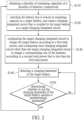
- the processor 15 is coupled to the charging integrated circuits 13_1 to 13_n, and is configured to perform a charging method of the present embodiment. As shown in FIG. 2 , the charging method of the present embodiment includes the following processes.
- Step S110 includes: obtaining a plurality of remaining capacities of the batteries, respectively.
- the remaining capacity of each battery can be represented by a state of charge (SOC) in percentage form.
- SOC state of charge
- the processor 15 is capable of reading gauge data of the batteries 11_1 to 11_n.
- the gauge data of each battery includes its state of charge.
- Step S 120 includes: selecting the battery that is lowest in remaining capacity as a target battery, and using the charging integrated circuit that is coupled to the target battery as a target charging integrated circuit.
- Step S 130 includes: configuring the target charging integrated circuit to charge the target battery according to a first total power, and configuring each of the charging integrated circuits other than the target charging integrated circuit to charge a corresponding one of the batteries according to a second total power that is less than the first total power.
- the processor 15 selects the battery 11_1 as the target battery, and the charging integrated circuit 13_1 that is coupled to the battery 11_1 is used as the target charging integrated circuit. Then, the charging integrated circuit 13_1 is configured by the processor 15 to charge the battery 11_1 according to the first total power (not shown in FIG. 1 ), and each of the charging integrated circuits other than the charging integrated circuit 13_1 is configured by the processor 15 to charge the coupled battery according to the second total power (not shown in FIG. 1 ) that is less than the first total power.
- each charging integrated circuit can have a total power, and provides a charging current (not shown in FIG. 1 ) according to the total power, so as to charge the coupled battery.
- the processor 15 can be, for example, an embedded controller (EC), but the present invention is not limited thereto.
- the processor 15 can set the total power of the target charging integrated circuit as the first total power, and set the total power of each of the charging integrated circuits other than the target charging integrated circuit as the second total power that is less than the first total power.
- the target charging integrated circuit can be configured to provide a maximum charging current for charging the target battery. Accordingly, the remaining capacity of the target battery is significantly increased in comparison with those of other batteries. Moreover, other charging integrated circuits can each be configured to provide a smaller charging current to charge the coupled battery, so as to satisfy the technical requirement of simultaneously charging more than one battery.
- the charging integrated circuits 13_1 to 13_n can also be coupled to a system load (not shown in FIG. 1 ), and the above-mentioned power supply can supply power to the system load through the charging integrated circuits 13_1 to 13_n.
- P1 is the first total power
- Battery_Vol is a battery voltage of the target battery
- Charger_I is the charging current provided to the target battery by the target charging integrated circuit
- Sys_P is a system load power for the system load. It should be noted that (Battery_Vol * Charger_I) is a charging power for the target battery.
- the processor 15 can also obtain the charging current and the battery voltage of the target battery by reading the gauge data of the target battery, and obtain the system load power for the system load through the charging integrated circuits 13_1 to 13_n.
- the first total power minus a preset power equals the second total power.
- the preset power can be 5 watts.
- the processor 15 can set the total power of the target charging integrated circuit as P1, and set the total power of each of the charging integrated circuits other than the target charging integrated circuit as (P1 - 5), but the present invention is not limited thereto.
- the charging integrated circuits are simultaneously used to charge the batteries, imbalance of charging currents may occur.
- the charging current may vary with the system load. If one of the charging integrated circuits continues to provide the maximum charging current to the coupled battery for an earliest completion of the charging, an overall battery charging time of other batteries will be prolonged due to the charging current varying with the system load. Therefore, in order to improve the imbalance of charging currents and effectively shorten the overall battery charging time, the batteries 11_1 to 11_n and the charging integrated circuits 13_1 to 13_n can be selected in turn as the target battery and the target charging integrated circuit in the charging method and the power system 1 of the present embodiment. As shown in FIG. 2 , the charging method of the present embodiment can further include the following processes.
- Step S 140 includes: obtaining a charging parameter of the target battery.
- Step S150 includes: determining whether or not the charging parameter of the target battery satisfies a predetermined parameter. If yes (i.e., in response to determining that the charging parameter of the target battery satisfies the predetermined parameter), the charging method returns to step S110. If not, the charging method returns to step S140.
- the charging parameter of the target battery can be a duration in which the target charging integrated circuit charges the target battery, and the predetermined parameter can be a designated time.
- the processor 15 in response to determining that the duration for charging the target battery reaches the designated time, the processor 15 can re-execute the process of obtaining the remaining capacities (step S 110).
- the designated time can be, for example, but is not limited to, 10 minutes.
- the processor 15 can once again obtain the remaining capacities of the batteries 11_1 to 11_n, respectively. Subsequent details are the same as those mentioned above, and will not be reiterated herein. On this basis, the processor 15 can in turn select the batteries 11_1 to 11_n and the charging integrated circuits 13_1 to 13_n as the target battery and the target charging integrated circuit, thereby improving the imbalance of charging currents and effectively shortening the overall battery charging time.
- the charging parameter of the target battery can be an increased capacity of the target battery during charging
- the predetermined parameter can be a designated capacity.
- the increased capacity and the designated capacity can both be represented in percentage form.
- the designated capacity can be 10%.
- the processor 15 can once again obtain the remaining capacities of the batteries 11_1 to 11_n, respectively.
- the present invention is not limited to this example. Subsequent details are also the same as those mentioned above, and will not be reiterated herein.
- the technical requirement of simultaneously charging more than one battery can be satisfied.
- the batteries and the charging integrated circuits can also be selected in turn as the target battery and the target charging integrated circuit, so as to improve the imbalance of charging currents and effectively shorten the overall battery charging time.
Landscapes
- Engineering & Computer Science (AREA)
- Power Engineering (AREA)
- Manufacturing & Machinery (AREA)
- Chemical & Material Sciences (AREA)
- Chemical Kinetics & Catalysis (AREA)
- Electrochemistry (AREA)
- General Chemical & Material Sciences (AREA)
- Microelectronics & Electronic Packaging (AREA)
- Charge And Discharge Circuits For Batteries Or The Like (AREA)
Abstract
A charging method and a power system (1) are provided. The power system (1) includes a plurality of batteries (11_1 to 11_n), a plurality of charging integrated circuits (13_1 to 13_n), and a processor (15). The plurality of charging integrated circuits (13_1 to 13_n) are coupled to the plurality of batteries (11_1 to 11_n), respectively. The charging method is performed by the processor (15), and includes: obtaining a plurality of remaining capacities of the plurality of batteries (11_1 to 11_n), respectively; selecting a battery from the plurality of batteries (11_1 to 11_n) that is lowest in remaining capacity as a target battery, and using a charging integrated circuit of the plurality of charging integrated circuits (13_1 to 13_n) that is coupled to the target battery as a target charging integrated circuit; and configuring the target charging integrated circuit to charge the target battery according to a first total power, and configuring each of the plurality of charging integrated circuits other than the target charging integrated circuit to charge a corresponding one of the plurality of batteries (11_1 to 11_n) according to a second total power that is less than the first total power.
Description
- The present invention relates to a charging method and a power system, and more particularly to a charging method and a power system that are capable of simultaneously charging a plurality of batteries by use of a plurality of charging integrated circuits (IC).
- A conventional power system includes a plurality of chargeable batteries. In a conventional charging method and the conventional power system, these batteries are usually charged one-by-one in turn. However, in order to satisfy the technical requirement of simultaneously charging more than one battery, alternative solutions are urgently needed to improve on the conventional charging method and the conventional power system.
- In response to the above-referenced technical inadequacy, the present invention provides a charging method and a power system that are capable of simultaneously charging a plurality of batteries by use of a plurality of charging integrated circuits.
- In order to solve the above-mentioned problem, one of the technical aspects adopted by the present invention is to provide a charging method. The charging method is applicable to a power system that includes a plurality of batteries, a plurality of charging integrated circuits, and a processor. The plurality of charging integrated circuits are coupled to the plurality of batteries, respectively. The charging method is performed by the processor, and includes: obtaining a plurality of remaining capacities of the plurality of batteries, respectively; selecting a battery from the plurality of batteries that is lowest in remaining capacity as a target battery, and using a charging integrated circuit of the plurality of charging integrated circuits that is coupled to the target battery as a target charging integrated circuit; and configuring the target charging integrated circuit to charge the target battery according to a first total power, and configuring each of the plurality of charging integrated circuits other than the target charging integrated circuit to charge a corresponding one of the plurality of batteries according to a second total power that is less than the first total power.
- In order to solve the above-mentioned problem, another one of the technical aspects adopted by the present invention is to provide a power system. The power system includes a plurality of batteries, a plurality of charging integrated circuits, and a processor. The plurality of charging integrated circuits are coupled to the plurality of batteries, respectively. The processor is coupled to the charging integrated circuits, and is configured to perform processes of: obtaining a plurality of remaining capacities of the plurality of batteries, respectively; selecting a battery from the plurality of batteries that is lowest in remaining capacity as a target battery, and using a charging integrated circuit of the plurality of charging integrated circuits that is coupled to the target battery as a target charging integrated circuit; and configuring the target charging integrated circuit to charge the target battery according to a first total power, and configuring each of the plurality of charging integrated circuits other than the target charging integrated circuit to charge a corresponding one of the plurality of batteries according to a second total power that is less than the first total power.
- These and other aspects of the present invention will become apparent from the following description of the embodiment taken in conjunction with the following drawings and their captions, although variations and modifications therein may be affected without departing from the spirit and scope of the novel concepts of the invention.
- The described embodiments may be better understood by reference to the following description and the accompanying drawings, in which:
-
FIG. 1 is a functional block diagram of a power system according to an embodiment of the present invention; and -
FIG. 2 is a flowchart of a charging method according to the embodiment of the present invention. - The present invention is more particularly described in the following examples that are intended as illustrative only since numerous modifications and variations therein will be apparent to those skilled in the art. Like numbers in the drawings indicate like components throughout the views. As used in the description herein and throughout the claims that follow, unless the context clearly dictates otherwise, the meaning of "a," "an" and "the" includes plural reference, and the meaning of "in" includes "in" and "on." Titles or subtitles can be used herein for the convenience of a reader, which shall have no influence on the scope of the present invention.
- The terms used herein generally have their ordinary meanings in the art. In the case of conflict, the present document, including any definitions given herein, will prevail. The same thing can be expressed in more than one way. Alternative language and synonyms can be used for any term(s) discussed herein, and no special significance is to be placed upon whether a term is elaborated or discussed herein. A recital of one or more synonyms does not exclude the use of other synonyms. The use of examples anywhere in this specification including examples of any terms is illustrative only, and in no way limits the scope and meaning of the present invention or of any exemplified term. Likewise, the present invention is not limited to various embodiments given herein. Numbering terms such as "first," "second" or "third" can be used to describe various components, signals or the like, which are for distinguishing one component/signal from another one only, and are not intended to, nor should be construed to impose any substantive limitations on the components, signals or the like.
- Reference is made to
FIG. 1 andFIG. 2 . Referring toFIG. 1 , a power system 1 of the present embodiment includes a plurality of batteries 11_1 to 11_n, a plurality of charging integrated circuits 13_1 to 13_n, and aprocessor 15. Here, n is an integer greater than one. The batteries 11_1 to 11_n are all chargeable batteries, each of which can include at least one battery unit. However, a specific implementation of each battery is not limited in the present invention. The charging integrated circuits 13_1 to 13_n are coupled to the batteries 11_1 to 11_n, respectively. Each charging integrated circuit can include an alternating current to direct current (AC to DC) power convertor, and has buck-boost and voltage regulation functions. Similarly, a specific implementation of each charging integrated circuit is also not limited in the present invention. - In the present embodiment, the charging integrated circuits 13_1 to 13_n can also be coupled to a power supply (e.g., an AC adapter, but not shown in
FIG. 1 ), and are configured to charge the batteries 11_1 to 11_n. In addition, theprocessor 15 can be implemented by cooperation of hardware (e.g., a central processor and a memory), software, and/or firmware. However, a specific implementation of theprocessor 15 is not limited in the present invention. Theprocessor 15 is coupled to the charging integrated circuits 13_1 to 13_n, and is configured to perform a charging method of the present embodiment. As shown inFIG. 2 , the charging method of the present embodiment includes the following processes. - Step S110 includes: obtaining a plurality of remaining capacities of the batteries, respectively.
- Specifically, the remaining capacity of each battery can be represented by a state of charge (SOC) in percentage form. Through the charging integrated circuits 13_1 to 13_n, the
processor 15 is capable of reading gauge data of the batteries 11_1 to 11_n. In addition, the gauge data of each battery includes its state of charge. -
Step S 120 includes: selecting the battery that is lowest in remaining capacity as a target battery, and using the charging integrated circuit that is coupled to the target battery as a target charging integrated circuit. - Step S 130 includes: configuring the target charging integrated circuit to charge the target battery according to a first total power, and configuring each of the charging integrated circuits other than the target charging integrated circuit to charge a corresponding one of the batteries according to a second total power that is less than the first total power.
- For example, in response to the battery 11_1 having a lowest remaining capacity at this time, the
processor 15 selects the battery 11_1 as the target battery, and the charging integrated circuit 13_1 that is coupled to the battery 11_1 is used as the target charging integrated circuit. Then, the charging integrated circuit 13_1 is configured by theprocessor 15 to charge the battery 11_1 according to the first total power (not shown inFIG. 1 ), and each of the charging integrated circuits other than the charging integrated circuit 13_1 is configured by theprocessor 15 to charge the coupled battery according to the second total power (not shown inFIG. 1 ) that is less than the first total power. - Specifically, each charging integrated circuit can have a total power, and provides a charging current (not shown in
FIG. 1 ) according to the total power, so as to charge the coupled battery. In addition, theprocessor 15 can be, for example, an embedded controller (EC), but the present invention is not limited thereto. As such, in step S 130, theprocessor 15 can set the total power of the target charging integrated circuit as the first total power, and set the total power of each of the charging integrated circuits other than the target charging integrated circuit as the second total power that is less than the first total power. - Compared to other charging integrated circuits, the target charging integrated circuit can be configured to provide a maximum charging current for charging the target battery. Accordingly, the remaining capacity of the target battery is significantly increased in comparison with those of other batteries. Moreover, other charging integrated circuits can each be configured to provide a smaller charging current to charge the coupled battery, so as to satisfy the technical requirement of simultaneously charging more than one battery.
- Furthermore, the charging integrated circuits 13_1 to 13_n can also be coupled to a system load (not shown in
FIG. 1 ), and the above-mentioned power supply can supply power to the system load through the charging integrated circuits 13_1 to 13_n. Under this circumstance, the first total power can be calculated by theprocessor 15 based on the following mathematical expression:
- Here, P1 is the first total power, Battery_Vol is a battery voltage of the target battery, Charger_I is the charging current provided to the target battery by the target charging integrated circuit, and Sys_P is a system load power for the system load. It should be noted that (Battery_Vol * Charger_I) is a charging power for the target battery.
- In the present embodiment, the
processor 15 can also obtain the charging current and the battery voltage of the target battery by reading the gauge data of the target battery, and obtain the system load power for the system load through the charging integrated circuits 13_1 to 13_n. In addition, the first total power minus a preset power equals the second total power. - For example, the preset power can be 5 watts. Based on the above, in step S130, the
processor 15 can set the total power of the target charging integrated circuit as P1, and set the total power of each of the charging integrated circuits other than the target charging integrated circuit as (P1 - 5), but the present invention is not limited thereto. However, when the charging integrated circuits are simultaneously used to charge the batteries, imbalance of charging currents may occur. - Specifically, the charging current may vary with the system load. If one of the charging integrated circuits continues to provide the maximum charging current to the coupled battery for an earliest completion of the charging, an overall battery charging time of other batteries will be prolonged due to the charging current varying with the system load. Therefore, in order to improve the imbalance of charging currents and effectively shorten the overall battery charging time, the batteries 11_1 to 11_n and the charging integrated circuits 13_1 to 13_n can be selected in turn as the target battery and the target charging integrated circuit in the charging method and the power system 1 of the present embodiment. As shown in
FIG. 2 , the charging method of the present embodiment can further include the following processes. - Step
S 140 includes: obtaining a charging parameter of the target battery. - Step S150 includes: determining whether or not the charging parameter of the target battery satisfies a predetermined parameter. If yes (i.e., in response to determining that the charging parameter of the target battery satisfies the predetermined parameter), the charging method returns to step S110. If not, the charging method returns to step S140.
- In one embodiment of the present invention, the charging parameter of the target battery can be a duration in which the target charging integrated circuit charges the target battery, and the predetermined parameter can be a designated time. Hence, in response to determining that the duration for charging the target battery reaches the designated time, the
processor 15 can re-execute the process of obtaining the remaining capacities (step S 110). - The designated time can be, for example, but is not limited to, 10 minutes. As such, after every specific period of time, the
processor 15 can once again obtain the remaining capacities of the batteries 11_1 to 11_n, respectively. Subsequent details are the same as those mentioned above, and will not be reiterated herein. On this basis, theprocessor 15 can in turn select the batteries 11_1 to 11_n and the charging integrated circuits 13_1 to 13_n as the target battery and the target charging integrated circuit, thereby improving the imbalance of charging currents and effectively shortening the overall battery charging time. - In another embodiment of the present invention, the charging parameter of the target battery can be an increased capacity of the target battery during charging, and the predetermined parameter can be a designated capacity. Hence, in response to determining that the increased capacity of the target battery during charging reaches the designated capacity, the
processor 15 can re-execute the process of obtaining the remaining capacities (step S110). - Furthermore, the increased capacity and the designated capacity can both be represented in percentage form. For example, the designated capacity can be 10%. As such, each time the remaining capacity of the target battery is increased by 10%, the
processor 15 can once again obtain the remaining capacities of the batteries 11_1 to 11_n, respectively. However, the present invention is not limited to this example. Subsequent details are also the same as those mentioned above, and will not be reiterated herein. - In conclusion, in the charging method and the power system provided by the present invention, by virtue of "configuring the target charging integrated circuit to charge the target battery according to the first total power, and configuring each of the charging integrated circuits other than the target charging integrated circuit to charge a corresponding one of the batteries according to the second total power that is less than the first total power," the technical requirement of simultaneously charging more than one battery can be satisfied.
- Furthermore, in the charging method and the power system provided by the present invention, the batteries and the charging integrated circuits can also be selected in turn as the target battery and the target charging integrated circuit, so as to improve the imbalance of charging currents and effectively shorten the overall battery charging time.
- The foregoing description of the exemplary embodiments of the invention has been presented only for the purposes of illustration and description and is not intended to be exhaustive or to limit the invention to the precise forms disclosed. Many modifications and variations are possible in light of the above teaching.
- The embodiments were chosen and described in order to explain the principles of the invention and their practical application so as to enable others skilled in the art to utilize the invention and various embodiments and with various modifications as are suited to the particular use contemplated. Alternative embodiments will become apparent to those skilled in the art to which the present invention pertains without departing from its spirit and scope.
Claims (10)
- A charging method, wherein the charging method is applicable to a power system (1), the power system (1) includes a plurality of batteries (11_1 to 11_n), a plurality of charging integrated circuits (13_1 to 13_n), and a processor (15), the plurality of charging integrated circuits (13_1 to 13_n) are respectively coupled to the plurality of batteries (11_1 to 11_n), the charging method is performed by the processor (15), and the charging method is characterized by comprising:obtaining a plurality of remaining capacities of the plurality of batteries (11_1 to 11_n), respectively;selecting a battery from the plurality of batteries (11_1 to 11_n) that is lowest in remaining capacity as a target battery, and using a charging integrated circuit of the plurality of charging integrated circuits (13_1 to 13_n) that is coupled to the target battery as a target charging integrated circuit; andconfiguring the target charging integrated circuit to charge the target battery according to a first total power, and configuring each of the plurality of charging integrated circuits other than the target charging integrated circuit to charge a corresponding one of the plurality of batteries (11_1 to 11_n) according to a second total power that is less than the first total power.
- The charging method according to claim 1, wherein the first total power is calculated based on a mathematical expression of:

- The charging method according to claim 1, wherein the first total power minus a preset power equals the second total power.
- The charging method according to claim 1, further comprising:
re-executing, in response to determining that a duration for charging the target battery reaches a designated time, the process of obtaining the plurality of remaining capacities. - The charging method according to claim 1, further comprising:
re-executing, in response to determining that an increased capacity of the target battery during charging reaches a designated capacity, the process of obtaining the plurality of remaining capacities. - A power system (1), characterized by comprising:a plurality of batteries (11_1 to 11_n);a plurality of charging integrated circuits (13_1 to 13_n) coupled to the plurality of batteries (11_1 to 11_n), respectively; anda processor (15) coupled to the plurality of charging integrated circuits (13_1 to 13_n), wherein the processor (15) is configured to perform processes of:obtaining a plurality of remaining capacities of the plurality of batteries (11_1 to 11_n), respectively;selecting a battery from the plurality of batteries (11_1 to 11_n) that is lowest in remaining capacity as a target battery, and using a charging integrated circuit of the plurality of charging integrated circuits (13_1 to 13_n) that is coupled to the target battery as a target charging integrated circuit; andconfiguring the target charging integrated circuit to charge the target battery according to a first total power, and configuring each of the plurality of charging integrated circuits other than the target charging integrated circuit to charge a corresponding one of the plurality of batteries (11_1 to 11_n) according to a second total power that is less than the first total power.
- The power system (1) according to claim 6, wherein the first total power is calculated based on a mathematical expression of:

- The power system (1) according to claim 6, wherein the first total power minus a preset power equals the second total power.
- The power system (1) according to claim 6, wherein the processor (15) is further configured to perform a process of:
re-executing, in response to determining that a duration for charging the target battery reaches a designated time, the process of obtaining the plurality of remaining capacities. - The power system (1) according to claim 6, wherein the processor (15) is further configured to perform a process of:
re-executing, in response to determining that an increased capacity of the target battery during charging reaches a designated capacity, the process of obtaining the plurality of remaining capacities.
Applications Claiming Priority (1)
| Application Number | Priority Date | Filing Date | Title |
|---|---|---|---|
| CN202311544331.7A CN120021128A (en) | 2023-11-17 | 2023-11-17 | Charging method and power supply system |
Publications (1)
| Publication Number | Publication Date |
|---|---|
| EP4557564A1 true EP4557564A1 (en) | 2025-05-21 |
Family
ID=91247367
Family Applications (1)
| Application Number | Title | Priority Date | Filing Date |
|---|---|---|---|
| EP24177613.7A Pending EP4557564A1 (en) | 2023-11-17 | 2024-05-23 | Charging method and power system |
Country Status (3)
| Country | Link |
|---|---|
| US (1) | US20250167563A1 (en) |
| EP (1) | EP4557564A1 (en) |
| CN (1) | CN120021128A (en) |
Citations (4)
| Publication number | Priority date | Publication date | Assignee | Title |
|---|---|---|---|---|
| JP6442949B2 (en) * | 2014-09-22 | 2018-12-26 | 住友電気工業株式会社 | Power storage system |
| US20210066929A1 (en) * | 2018-01-23 | 2021-03-04 | Tdk Corporation | Direct current power supplying system |
| US20210281097A1 (en) * | 2018-07-12 | 2021-09-09 | Triathlon Holding GmbH | Method and device for charging electric energy stores |
| CN114899925A (en) * | 2022-06-30 | 2022-08-12 | 联想(北京)有限公司 | Battery charging method and device and electronic equipment |
-
2023
- 2023-11-17 CN CN202311544331.7A patent/CN120021128A/en active Pending
-
2024
- 2024-05-15 US US18/664,414 patent/US20250167563A1/en active Pending
- 2024-05-23 EP EP24177613.7A patent/EP4557564A1/en active Pending
Patent Citations (5)
| Publication number | Priority date | Publication date | Assignee | Title |
|---|---|---|---|---|
| JP6442949B2 (en) * | 2014-09-22 | 2018-12-26 | 住友電気工業株式会社 | Power storage system |
| US20210066929A1 (en) * | 2018-01-23 | 2021-03-04 | Tdk Corporation | Direct current power supplying system |
| US20210281097A1 (en) * | 2018-07-12 | 2021-09-09 | Triathlon Holding GmbH | Method and device for charging electric energy stores |
| CN114899925A (en) * | 2022-06-30 | 2022-08-12 | 联想(北京)有限公司 | Battery charging method and device and electronic equipment |
| US20240006895A1 (en) * | 2022-06-30 | 2024-01-04 | Lenovo (Beijing) Limited | Battery charging method and device and electronic apparatus |
Also Published As
| Publication number | Publication date |
|---|---|
| CN120021128A (en) | 2025-05-20 |
| US20250167563A1 (en) | 2025-05-22 |
Similar Documents
| Publication | Publication Date | Title |
|---|---|---|
| US11718188B2 (en) | Wireless battery management system and battery pack including same | |
| US6424123B1 (en) | Battery charging system and charge control apparatus | |
| US8193778B2 (en) | Method of charging a battery array | |
| EP2313956B1 (en) | Improvements in and relating to battery management | |
| JP7076543B2 (en) | Charge control devices, transportation equipment, and programs | |
| EP1043824A2 (en) | Battery charge control circuit, battery charging device, and battery charge control method | |
| KR101084828B1 (en) | How to control the charge of the battery pack | |
| US10283987B1 (en) | Dynamic adjustment of capacity threshold for a battery unit | |
| JP2023526829A (en) | BATTERY CONTROL DEVICE, BATTERY SYSTEM, POWER SUPPLY SYSTEM AND BATTERY CONTROL METHOD | |
| US20250079590A1 (en) | Battery device and battery management method | |
| CN112737056A (en) | Method and device for balancing electric quantity of battery module | |
| CN111433619B (en) | Adapter aging detection method and device for equipment to be charged | |
| CN118353124A (en) | Battery cluster-level balancing management method, controller, storage medium and energy storage system | |
| CN117897626A (en) | Battery capacity estimation device, charging plan generation device, discharge plan generation device and battery capacity estimation method | |
| EP4557564A1 (en) | Charging method and power system | |
| EP3843235B1 (en) | Balance charging method and charging device | |
| US11462927B2 (en) | Method, rated voltage adjusting device, and electric storage device | |
| EP4485747A1 (en) | Adaptive battery algorithm for effective battery management system | |
| CN113013935B (en) | Control method and system of power supply device, terminal equipment, and storage medium | |
| CN114578239A (en) | Method and device for testing battery capacity of uninterruptible power supply | |
| CN107732343B (en) | Charging method and charger | |
| CN117578668A (en) | A power balance control method and energy storage controller | |
| CN112332484B (en) | Battery charging control method, device, storage medium and electronic device | |
| EP4432511A1 (en) | Charging control method and system, and terminal device, charger and storage medium | |
| JPH11299111A (en) | Storage means backup control device and storage means backup control method |
Legal Events
| Date | Code | Title | Description |
|---|---|---|---|
| PUAI | Public reference made under article 153(3) epc to a published international application that has entered the european phase |
Free format text: ORIGINAL CODE: 0009012 |
|
| STAA | Information on the status of an ep patent application or granted ep patent |
Free format text: STATUS: THE APPLICATION HAS BEEN PUBLISHED |
|
| AK | Designated contracting states |
Kind code of ref document: A1 Designated state(s): AL AT BE BG CH CY CZ DE DK EE ES FI FR GB GR HR HU IE IS IT LI LT LU LV MC ME MK MT NL NO PL PT RO RS SE SI SK SM TR |
|
| STAA | Information on the status of an ep patent application or granted ep patent |
Free format text: STATUS: REQUEST FOR EXAMINATION WAS MADE |
|
| 17P | Request for examination filed |
Effective date: 20250904 |