EP4557458A1 - Battery system and method of circulating a first fluid and a second fluid through such a battery system - Google Patents
Battery system and method of circulating a first fluid and a second fluid through such a battery system Download PDFInfo
- Publication number
- EP4557458A1 EP4557458A1 EP24207248.6A EP24207248A EP4557458A1 EP 4557458 A1 EP4557458 A1 EP 4557458A1 EP 24207248 A EP24207248 A EP 24207248A EP 4557458 A1 EP4557458 A1 EP 4557458A1
- Authority
- EP
- European Patent Office
- Prior art keywords
- fluid circuit
- fluid
- cells
- cell holder
- battery system
- Prior art date
- Legal status (The legal status is an assumption and is not a legal conclusion. Google has not performed a legal analysis and makes no representation as to the accuracy of the status listed.)
- Pending
Links
Images





Classifications
-
- H—ELECTRICITY
- H01—ELECTRIC ELEMENTS
- H01M—PROCESSES OR MEANS, e.g. BATTERIES, FOR THE DIRECT CONVERSION OF CHEMICAL ENERGY INTO ELECTRICAL ENERGY
- H01M50/00—Constructional details or processes of manufacture of the non-active parts of electrochemical cells other than fuel cells, e.g. hybrid cells
- H01M50/20—Mountings; Secondary casings or frames; Racks, modules or packs; Suspension devices; Shock absorbers; Transport or carrying devices; Holders
- H01M50/204—Racks, modules or packs for multiple batteries or multiple cells
-
- H—ELECTRICITY
- H01—ELECTRIC ELEMENTS
- H01M—PROCESSES OR MEANS, e.g. BATTERIES, FOR THE DIRECT CONVERSION OF CHEMICAL ENERGY INTO ELECTRICAL ENERGY
- H01M10/00—Secondary cells; Manufacture thereof
- H01M10/60—Heating or cooling; Temperature control
- H01M10/64—Heating or cooling; Temperature control characterised by the shape of the cells
- H01M10/643—Cylindrical cells
-
- H—ELECTRICITY
- H01—ELECTRIC ELEMENTS
- H01M—PROCESSES OR MEANS, e.g. BATTERIES, FOR THE DIRECT CONVERSION OF CHEMICAL ENERGY INTO ELECTRICAL ENERGY
- H01M10/00—Secondary cells; Manufacture thereof
- H01M10/60—Heating or cooling; Temperature control
- H01M10/65—Means for temperature control structurally associated with the cells
- H01M10/656—Means for temperature control structurally associated with the cells characterised by the type of heat-exchange fluid
- H01M10/6567—Liquids
- H01M10/6568—Liquids characterised by flow circuits, e.g. loops, located externally to the cells or cell casings
-
- H—ELECTRICITY
- H01—ELECTRIC ELEMENTS
- H01M—PROCESSES OR MEANS, e.g. BATTERIES, FOR THE DIRECT CONVERSION OF CHEMICAL ENERGY INTO ELECTRICAL ENERGY
- H01M50/00—Constructional details or processes of manufacture of the non-active parts of electrochemical cells other than fuel cells, e.g. hybrid cells
- H01M50/20—Mountings; Secondary casings or frames; Racks, modules or packs; Suspension devices; Shock absorbers; Transport or carrying devices; Holders
- H01M50/204—Racks, modules or packs for multiple batteries or multiple cells
- H01M50/207—Racks, modules or packs for multiple batteries or multiple cells characterised by their shape
- H01M50/213—Racks, modules or packs for multiple batteries or multiple cells characterised by their shape adapted for cells having curved cross-section, e.g. round or elliptic
-
- Y—GENERAL TAGGING OF NEW TECHNOLOGICAL DEVELOPMENTS; GENERAL TAGGING OF CROSS-SECTIONAL TECHNOLOGIES SPANNING OVER SEVERAL SECTIONS OF THE IPC; TECHNICAL SUBJECTS COVERED BY FORMER USPC CROSS-REFERENCE ART COLLECTIONS [XRACs] AND DIGESTS
- Y02—TECHNOLOGIES OR APPLICATIONS FOR MITIGATION OR ADAPTATION AGAINST CLIMATE CHANGE
- Y02E—REDUCTION OF GREENHOUSE GAS [GHG] EMISSIONS, RELATED TO ENERGY GENERATION, TRANSMISSION OR DISTRIBUTION
- Y02E60/00—Enabling technologies; Technologies with a potential or indirect contribution to GHG emissions mitigation
- Y02E60/10—Energy storage using batteries
Definitions
- Electric battery systems including multi-cell battery packs, may be utilized to power passenger cars, trucks, buses, other automotive applications, and industrial, commercial, and/or work vehicle applications, including without limitation agricultural, construction, and turf equipment.
- Such battery systems may include lithium-ion, lithium iron phosphate, nickel cobalt aluminum, nickel cobalt manganese, and other types and/or chemistries of battery cells in non-limiting examples.
- Battery cells are arranged in the battery system in series and/or parallel configurations to meet desired voltage, power, capacity, and other requirements for specific vehicle and other applications.
- Battery systems may include a battery thermal management system having cooling and/or heating functions to maintain desired cell operating temperatures and perform other functions for the battery pack.
- Such battery thermal management systems may utilize air, oil, coolant, or another gaseous or liquid fluid to heat and/or cool the battery cells and/or other battery pack components.
- a battery system includes a cell holder, a plurality of cells disposed in the cell holder and oriented to be aligned with an axis, a cell holder fluid circuit formed around and between each of the plurality of cells and extending through the cell holder from a cell holder fluid circuit inlet to a cell holder fluid circuit outlet, a first end fluid circuit formed by a first channel at an axial end of the plurality of cells comprising a first end fluid circuit inlet and a first end fluid circuit outlet, and a second end fluid circuit formed by a second channel at the axial end of the plurality of cells comprising a second end fluid circuit inlet and a second end fluid circuit outlet.
- the first end fluid circuit may be in fluid communication with the cell holder fluid circuit at a divergence disposed upstream of the plurality of cells.
- the first end fluid circuit inlet may include the divergence disposed upstream of the plurality of cells.
- the first end fluid circuit may be in fluid communication with the cell holder fluid circuit at a convergence disposed downstream of the plurality of cells.
- the first end fluid circuit outlet may include the convergence disposed downstream of the plurality of cells.
- the system may further include a second cell holder disposed at an axial side of the first end fluid circuit and the second end fluid circuit opposite from the cell holder, a second plurality of cells disposed in the second cell holder and oriented to be aligned with the axis, and a second cell holder fluid circuit formed around and between each of the second plurality of cells and extending through the second cell holder.
- the first end fluid circuit, the cell holder fluid circuit, and the second cell holder fluid circuit may be configured to circulate a dielectric fluid, and the second end fluid circuit may be configured to circulate a non-dielectric fluid.
- the first end fluid circuit and the cell holder fluid circuit may be configured to circulate a dielectric fluid, and the second end fluid circuit may be configured to circulate a non-dielectric fluid.
- a method of circulating a first fluid and a second fluid that is different from the first fluid through a battery system includes providing a plurality of cells disposed at least partially in a cavity of a cell holder of the battery system, initiating circulation of the second fluid through an unobstructed channel at an axial end of the plurality of cells, and initiating circulation of the first fluid through the cavity of the cell holder and between and around the plurality of cells after the initiation of circulation of the second fluid through the unobstructed channel at the axial end of the plurality of cells.
- the method may further include initiating circulation of the first fluid through a second unobstructed channel at the axial end of the plurality of cells after the initiation of circulation of the second fluid through the unobstructed channel at the axial end of the plurality of cells.
- the method may further include diverging the first fluid upstream of the plurality of cells into the second unobstructed channel at the axial end of the plurality of cells and the cavity of the cell holder.
- the method may further include converging the first fluid downstream of the plurality of cells from the cavity of the cell holder with the second unobstructed channel at the axial end of the plurality of cells.
- a battery system 10 is illustrated in accordance with an embodiment of the present disclosure.
- the battery system 10 illustrated in various embodiments of the present disclosure includes an immersion cooled battery arrangement but element, methods, and other aspects of the present disclosure may be applied to systems other than immersion cooled battery systems.
- the battery system 10 includes a controller (not shown) configured to control the temperature, pressure, flow rate, and/or other aspects of a fluid 26 of or utilized with the battery system 10.
- the controller may interface with or form part of a battery management system (not shown) or other controller or system.
- the fluid 26 of the embodiments of the present disclosure may include a single fluid or multiple, diverse fluids, as explained in further detail below.
- the battery system 10 includes a cell holder 20.
- the cell holder 20 includes a cavity 24.
- the cell holder 20 includes an end cover 12, and the battery system 10 includes a plate 28, as shown in the embodiment illustrated in FIG. 2 .
- the cell holder 20 may be integrally formed with one or both of the end cover 12 and the plate 28.
- the battery system 10 further includes cells 30 disposed, at least partially, in the cell holder 20.
- the cells 30 are positioned at least partially in or through the cavity 24 such that the cells 30 are spaced apart to allow fluid flow around each cell 30.
- the cells 30 in the illustrated embodiment include cylindrical cells 30.
- the cells 30 include prismatic, pouch, and/or other types or configurations or combinations of types.
- Each cell 30 in the battery system 10 is oriented to be aligned with an axis 22 as illustrated in FIGs. 2 and 3 . In additional embodiments not shown, one or more of the cells 30 may be oriented differently and/or not aligned with each other or the axis 22.
- the battery system 10 further includes a cell holder fluid circuit 52 formed through the cells and around and/or between each cell 30 and extends through the cavity 24 of the cell holder 20.
- the cell holder fluid circuit 52 extends in a direction perpendicular to the axis 22 in the illustrated embodiment of FIGs. 2-5 but may extend in other directions in additional embodiments.
- the cells 30 and/or the cell holder fluid circuit 52 is/are arranged or otherwise configured such that one or more of the cells 30 may obstruct a flow of the fluid 26 through the cavity 24.
- the fluid 26 flowing in the cell holder fluid circuit 52 may or is configured to be in contact with and/or impinge upon one or more or all of the cells 30.
- the battery system 10 further includes an end fluid circuit 40 formed by a channel 42 at an axial end 48 of the cells 30.
- the channel 42 and/or the end fluid circuit 40 of one or more embodiments is or includes an unobstructed, continuous, and/or contiguous opening or passageway.
- the channel 42 and/or the end fluid circuit 40 of an embodiment is unobstructed, continuous, and/or contiguous from an end fluid circuit inlet 94 to an end fluid circuit outlet 96.
- the channel 42 and/or the end fluid circuit 40 extends or flows in parallel with the cell holder fluid circuit 52 and/or the cavity 24 in one or more embodiments.
- the channel 42 is a single, fully open passageway, and it may extend and/or flow under, across, and/or against multiple or all conductors 50 and/or cells 30 of the cell holder 20.
- the channel 42 and/or the end fluid circuit 40 of one or more embodiments is spaced from the cell holder fluid circuit 52 and/or does not directly contact or flow against one or more or all of the cells 30.
- the end fluid circuit 40 is at least partially and/or selectively in fluid communication with the cell holder fluid circuit 52, such as at a first end 36 and a second end 38 of the end fluid circuit 40 or the cell holder fluid circuit 52.
- the end fluid circuit 40 is in thermal contact or is otherwise configured to transfer heat with one or more or all cells 30 in the cell holder 20.
- the cell holder fluid circuit 52 is at least partially or entirely radially or otherwise aligned with the end fluid circuit 40 relative to the axis 22.
- the end fluid circuit 40 extends from a fluid circuit inlet 32 to a fluid circuit outlet 34.
- the cell holder fluid circuit 52 extends from the fluid circuit inlet 32 to the fluid circuit outlet 34.
- the end fluid circuit 40 of an embodiment is in fluid communication with the cell holder fluid circuit 52 at a divergence 44 disposed between the fluid circuit inlet 32 and the cells 30 and/or upstream of the cells 30.
- the end fluid circuit 40 of an embodiment is in fluid communication with the cell holder fluid circuit 52 at a convergence 46 disposed between the fluid circuit outlet 34 and the cells 30 and/or downstream of the cells 30.
- the battery system 10 further includes one or more seals 70 disposed between each of the cells 30 and the cell holder 20.
- the battery system 10 of one or more embodiments includes at least one valve 80 to selectively control a flow of the fluid 26 to and/or through the cell holder fluid circuit 52 and/or the end fluid circuit 40.
- a first valve 82 is positioned at the divergence 44 to control flow of the fluid 26 into one or both of the cell holder fluid circuit 52 and/or the end fluid circuit 40
- a second valve 84 is positioned at the convergence 46 to control flow of the fluid 26 from one or both of the cell holder fluid circuit 52 and/or the end fluid circuit 40.
- the first valve 82 and/or the second valve 84 opens or closes and/or opens at various discrete opening degrees or across infinitely variable degrees to selectively control flow of the fluid 26 in embodiments of the present disclosure.
- the first valve 82 and/or the second valve 84 are operated by the controller (not shown) of a thermal management system or battery management system of the battery system 10 in accordance with any one or more functions, methods, or operations of embodiments of the battery system 10 described herein.
- the battery system 10 of certain embodiments further includes a second cell holder 60 disposed at an axial side 62 of the end fluid circuit 40 opposite from the cell holder 20.
- the second cell holder 60 includes a second cavity 64.
- the battery system 10 further includes cells 30 disposed in the second cavity 64 and/or the second cell holder 60 and oriented to be aligned with the axis 22.
- the plate 28 of FIGs. 6 and 7 includes the end fluid circuit 40 and is disposed between the cell holder 20 and the second cell holder 60 in the illustrated embodiment but may also or alternatively be disposed at outer ends of the cell holder 20 and/or the second cell holder 60 in additional embodiments not illustrated.
- any number of cell holders 20, 60 and/or plates 28 in any stacked, spaced, or other arrangement may be included, in addition to the cell holder 20, the plate 28, and the second cell holder 60, to form the battery system 10 of one or more embodiments of the present disclosure.
- the battery system 10 of one or more embodiments includes conductors 50 positioned between each cell 30 and the end fluid circuit 40 to conduct heat between the cells 30 and the end fluid circuit 40.
- the conductors 50 contact both the cell 30 and the end fluid circuit 40.
- the conductors 50 are composed of metallic, ceramic, and/or another material and are attached to one or more cells 30 in the illustrated embodiment to transfer and/or conduct heat between the cell 30 and the end fluid circuit 40.
- the conductors 50 are formed as a single piece, such as a continuous piece extending across or under multiple or all cells 30, or multiple pieces in contact with one or more cells 30.
- the conductors 50 are positioned in the cell holder 20 and/or the second cell holder 60 and/or form part of an outer surface of the cell holder 20 and/or the second cell holder 60 in embodiments.
- the cell holder fluid circuit 52 and/or the end fluid circuit 40 of one or more embodiments is configured to circulate a dielectric fluid as the fluid 26.
- the dielectric fluid is a dielectric oil in a non-limiting example.
- the cell holder fluid circuit 52 and/or the end fluid circuit 40 of one or more embodiments is configured to circulate non-dielectric fluid as the fluid 26.
- the non-dielectric fluid is water ethylene glycol in a non-limiting example.
- the water ethylene glycol includes any percentage of water from 0 to 100% in various embodiments.
- a method in accordance with embodiments of the present disclosure controls a flow of the fluid(s) 26 through the battery system 10.
- the method includes providing cells 30 disposed at least partially in the cavity 24 of the cell holder 20.
- the method further includes circulating the fluid(s) 26 through the cavity 24 of the cell holder 20 and between and around one or more or all of the cells 30.
- the method further includes circulating the fluid(s) 26 through the channel 42 at the axial end 48 of the plurality of cells.
- the method further includes selectively increasing, restricting, fully opening, or stopping a flow of the fluid(s) 26, such as with the valve(s) 80, through the cavity 24 of the cell holder 20 and/or the channel 42 based on an operating condition of the battery system 10.
- the operating condition of the battery system 10 includes a discharge rate of the cells 30, a charge rate of the cells 30, a state of charge of one or more cell(s) 30, a temperature of the fluid(s) 26, a pressure of the fluid(s) 26, a temperature of one or more of the cell(s) 30, and a temperature differential of two or more cells 30.
- the controller (not shown) is utilized in one or more embodiments for operation of one or more or all steps of the method, one or more features of the system 10, and/or the operation of the valve(s) 80.
- the method and/or the battery system 10 may include circulating different fluids 26, such as a first fluid through the cavity 24 of the cell holder 20 and around the cells 30 and a second fluid through the channel 24 and/or the plate 28 at the axial end 48 of the cells 30.
- the first fluid and the second fluid may each be or include dielectric fluid or non-dielectric fluid, as further described herein, in embodiments of the present disclosure.
- the cell holder fluid circuit 52 of an embodiment extends through the cell holder 20 from a cell holder fluid circuit inlet 54 to a cell holder fluid circuit outlet (not visible behind cell holder 20 in FIG. 8 ).
- the end fluid circuit 40 is formed by the channel 42 at the axial end 48 of the cells 30 and includes an end fluid circuit inlet 14 and an end fluid circuit outlet 16.
- the cell holder fluid circuit 52 of an embodiment extends through the cell holder 20 from the cell holder fluid circuit inlet 54 to a cell holder fluid circuit outlet (not visible behind cell holder 20).
- a first end fluid circuit 156 is formed by a first channel 158 at the axial end 48 of the cells 30 and includes a first end fluid circuit inlet 114 and a first end fluid circuit outlet 116.
- a second end fluid circuit 18 is formed by a second channel 86 at the axial end 48 of the cells 30 and includes a second end fluid circuit inlet 88 and a second end fluid circuit outlet 90. As shown in FIG.
- one or more embodiments of the battery system 10 include the fluid 26 flowing through the second end fluid circuit 18 while receiving the fluid 26 from, sending the fluid 26 to, or otherwise being in fluid communication with the cell holder fluid circuit 52, as shown by the openings in the plate 28 shown in FIG. 12 .
- the battery system 10 of FIGs. 13 and 14 includes the second cell holder 60 disposed at the axial side of the first end fluid circuit 56 and the second end fluid circuit 18 opposite from the cell holder 20.
- the second cell holder 60 includes a second cell holder fluid circuit 92 and any one or more features or functions of additional embodiments described in the present disclosure.
- the system 10 illustrated in embodiments shown in FIGs. 13 and 14 includes cell holders 20, 60 but may also or alternatively include only cell holder 20, as illustrated in FIG. 15 , or include additional cell holders and/or plate(s) 28 connected to or integrally formed with the system 10 in additional embodiments.
- the battery system 10 of FIG. 13 illustrates the first end fluid circuit 156 disposed inside of and/or surrounded by the second end fluid circuit 18. In the embodiment of FIG.
- the fluid 26 of the first end fluid circuit 156 may include a non-dielectric fluid
- the fluid 26 of the second end fluid circuit 18 may include a dielectric fluid such that, in a non-limiting example, the non-dielectric fluid may transfer heat to the dielectric fluid upon startup of the battery system 10 and/or when a temperature of the battery system 10 is below a threshold temperature.
- the battery system 10 of FIG. 14 illustrates the first end fluid circuit 156 being disposed in a serpentine, spiral, row, or similar pattern with the second end fluid circuit 18 whereby both the first end fluid circuit 156 and the second end fluid circuit 18 extend into contact across all or most of the cells 30 of the cell holder 20 and/or the cell holder 60.
- the battery system 10 of FIG. 15 illustrates the first channel 158 being layered on or over the second channel 86 such that the first end fluid circuit 156 is closer to the second end fluid circuit 18.
- the first end fluid circuit 156 may include a dielectric fluid and the second end fluid circuit 18 may include a non-dielectric fluid such that, in a non-limiting example, the non-dielectric fluid may transfer heat to the dielectric fluid upon startup of the battery system 10 and/or when a temperature of the battery system 10 is below a threshold temperature.
- the first end fluid circuit 56 is in fluid communication with the cell holder fluid circuit 52 at the divergence 44 disposed upstream of the cells 30.
- the first end fluid circuit inlet 14 may include or be formed as the divergence 44 disposed upstream of the cells 30.
- the first end fluid circuit 56 is in fluid communication with the cell holder fluid circuit 52 at the convergence 46 disposed downstream of the cells 30.
- the first end fluid circuit outlet 16 may include or be formed as the convergence 46 disposed downstream of the cells 30.
- any one or more of the first end fluid circuit 156, the cell holder fluid circuit 52, and second cell holder fluid circuit 92 circulates a dielectric fluid, and the second end fluid circuit 18 circulates a non-dielectric fluid.
- Any one or more fluid(s) 26 may be included in the first end fluid circuit 156, the second end fluid circuit 18, the cell holder fluid circuit 52, or the second cell holder fluid circuit 92.
- a method of an embodiment includes circulating a first fluid 26 and a second fluid 26 that is different from the first fluid 26 through the battery system 10.
- the method includes providing the cells 30 disposed at least partially in the cavity 24 of the cell holder 20 of the battery system 10, initiating circulation of the second fluid 26 through the unobstructed channel 42 at the axial end 48 of the cells 30, initiating circulation of the first fluid 26 through the cavity 24 of the cell holder 20 and between and around the cells 30 after the initiation of circulation of the second fluid 26 through the channel 42 at the axial end 48 of the cells 30.
- the method may further include initiating circulation of the first fluid 26 through the second channel 86 at the axial end 48 of the cells 30 after the initiation of circulation of the second fluid 26 through the channel 42 at the axial end 48 of the cells 30.
- the method may further include diverging the first fluid 26 upstream of the cells 30 into the second channel 86 at the axial end 48 of the cells 30 and the cavity 24 of the cell holder 20.
- the method may further include converging the first fluid 26 downstream of the cells 30 from the cavity 24 of the cell holder 20 with the second channel 86 at the axial end 48 of the cells 30.
- a battery system 10 in accordance with embodiments of the present disclosure includes a heater 120 disposed between the cells 30 and the end fluid circuit 40 at the axial end 48 of the cells 30 and configured to heat or increase the temperature of the cells 30.
- the system 10 of certain embodiments includes conductors 50 positioned between the cells 30 and the heater 120 to conduct heat between the cells 30 and the heater 120.
- the system 10 may further include a second heater 122 disposed between second cells 30 in a second holder 60 and the end fluid circuit 40 and configured to heat the second cells 30.
- the second heater 122 or an additional heater may be disposed at a second axial end 124 of the cells 30 opposite from the axial end 48 of the cells 30 and configured to heat the cells 30.
- the heater 120 and/or the second heater 122 of one or more embodiments includes or is an electrically resistive heater.
- the heater 120 and/or the second heater 122 is/are configured to be activated based on at least one temperature threshold.
- the heater 120 and/or the second heater 122 is/are configured to be activated based on a threshold temperature of a single cell 30, multiple cells 30, or all cells 30 of the system 10 and/or a temperature of one or more of the fluid(s) 26 circulating in the system 10.
- the heater 120 and/or the second heater 122 includes a thermally conductive material to allow heat to be transferred between the end fluid circuit 40 and the cells 30 through the heater 120 and/or the second heater 122 such that the end fluid circuit 40 may still heat or cool the cells 30 as needed.
- a technical effect of one or more of the example embodiments disclosed herein is to provide the battery system 10 and associated methods to improve thermal management of the cells 30.
- Such improved thermal management of the cells 30 of the battery system 10 will result in improved efficiency of the battery system 10, increased life cycle and capacity of the cells 30 and other components of the battery system 10, and improved cell temperature uniformity.
- the battery system 10 and associated methods further provides flexibility and additional control for the fluid 26 utilized for thermal management of the cells 30.
- the system 10 and associated methods allow for a non-dielectric fluid to be circulated through the plate 28 during, for example, low load operation and a dielectric fluid to be circulated through the cavity 24 of one or more holder(s) 20, 60 during higher load operation.
- the fluid 26 may be controlled to flow into one or both of the cavity 24 and the plate 28 depending upon environment temperature, power demand, cell temperature level and/or uniformity, and/or one or more additional factors.
- the system 10 and associated methods may include one or more heater(s) 120 to heat the cells 30 more quickly and efficiently while providing the ability to heat or cool the cells 30 with the plate 28 and the fluid 26 in the cavity 24.
Landscapes
- Chemical & Material Sciences (AREA)
- Chemical Kinetics & Catalysis (AREA)
- Electrochemistry (AREA)
- General Chemical & Material Sciences (AREA)
- Engineering & Computer Science (AREA)
- Manufacturing & Machinery (AREA)
- Secondary Cells (AREA)
Abstract
A battery system (10) is disclosed. The battery system (10) comprising: a cell holder (20); a plurality of cells (30) disposed in the cell holder (20) and oriented to be aligned with an axis (22); a cell holder fluid circuit (52) formed around and between each of the plurality of cells (30) and extending through the cell holder (20) from a cell holder fluid circuit inlet (32) to a cell holder fluid circuit outlet (34); a first end fluid circuit (156) formed by a first channel (158) at an axial end (48) of the plurality of cells (30) comprising a first end fluid circuit inlet (114) and a first end fluid circuit outlet (116); and a second end fluid circuit (18) formed by a second channel (86) at the axial end (48) of the plurality of cells (30) comprising a second end fluid circuit inlet (88) and a second end fluid circuit outlet (90). Further, a method of circulating a first fluid and a second fluid that is different from the first fluid through a battery system (10) is disclosed.
Description
- Electric battery systems, including multi-cell battery packs, may be utilized to power passenger cars, trucks, buses, other automotive applications, and industrial, commercial, and/or work vehicle applications, including without limitation agricultural, construction, and turf equipment. Such battery systems may include lithium-ion, lithium iron phosphate, nickel cobalt aluminum, nickel cobalt manganese, and other types and/or chemistries of battery cells in non-limiting examples. Battery cells are arranged in the battery system in series and/or parallel configurations to meet desired voltage, power, capacity, and other requirements for specific vehicle and other applications. Battery systems may include a battery thermal management system having cooling and/or heating functions to maintain desired cell operating temperatures and perform other functions for the battery pack. Such battery thermal management systems may utilize air, oil, coolant, or another gaseous or liquid fluid to heat and/or cool the battery cells and/or other battery pack components.
- In accordance with aspects of the present disclosure, a battery system includes a cell holder, a plurality of cells disposed in the cell holder and oriented to be aligned with an axis, a cell holder fluid circuit formed around and between each of the plurality of cells and extending through the cell holder from a cell holder fluid circuit inlet to a cell holder fluid circuit outlet, a first end fluid circuit formed by a first channel at an axial end of the plurality of cells comprising a first end fluid circuit inlet and a first end fluid circuit outlet, and a second end fluid circuit formed by a second channel at the axial end of the plurality of cells comprising a second end fluid circuit inlet and a second end fluid circuit outlet.
- The first end fluid circuit may be in fluid communication with the cell holder fluid circuit at a divergence disposed upstream of the plurality of cells. The first end fluid circuit inlet may include the divergence disposed upstream of the plurality of cells. The first end fluid circuit may be in fluid communication with the cell holder fluid circuit at a convergence disposed downstream of the plurality of cells. The first end fluid circuit outlet may include the convergence disposed downstream of the plurality of cells. The system may further include a second cell holder disposed at an axial side of the first end fluid circuit and the second end fluid circuit opposite from the cell holder, a second plurality of cells disposed in the second cell holder and oriented to be aligned with the axis, and a second cell holder fluid circuit formed around and between each of the second plurality of cells and extending through the second cell holder. The first end fluid circuit, the cell holder fluid circuit, and the second cell holder fluid circuit may be configured to circulate a dielectric fluid, and the second end fluid circuit may be configured to circulate a non-dielectric fluid. The first end fluid circuit and the cell holder fluid circuit may be configured to circulate a dielectric fluid, and the second end fluid circuit may be configured to circulate a non-dielectric fluid.
- In accordance with aspects of the present disclosure, a method of circulating a first fluid and a second fluid that is different from the first fluid through a battery system includes providing a plurality of cells disposed at least partially in a cavity of a cell holder of the battery system, initiating circulation of the second fluid through an unobstructed channel at an axial end of the plurality of cells, and initiating circulation of the first fluid through the cavity of the cell holder and between and around the plurality of cells after the initiation of circulation of the second fluid through the unobstructed channel at the axial end of the plurality of cells.
- The method may further include initiating circulation of the first fluid through a second unobstructed channel at the axial end of the plurality of cells after the initiation of circulation of the second fluid through the unobstructed channel at the axial end of the plurality of cells. The method may further include diverging the first fluid upstream of the plurality of cells into the second unobstructed channel at the axial end of the plurality of cells and the cavity of the cell holder. The method may further include converging the first fluid downstream of the plurality of cells from the cavity of the cell holder with the second unobstructed channel at the axial end of the plurality of cells.
- Other features and aspects will become apparent by consideration of the detailed description, claims, and accompanying drawings.
- The detailed description of the drawings refers to the accompanying figures.
-
FIG. 1 illustrates a battery system in accordance with an embodiment of the present disclosure. -
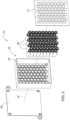
FIG. 2 is an exploded view of a battery system in accordance with an embodiment of the present disclosure. -
FIG. 3 is an enlarged cross-sectional view of a battery system in accordance with an embodiment of the present disclosure. -
FIG. 4 is an enlarged cross-sectional view of a battery system in accordance with an embodiment of the present disclosure. -
FIG. 5 illustrates a battery system in accordance with an embodiment of the present disclosure. -
FIG. 6 illustrates a battery system in accordance with an embodiment of the present disclosure. -
FIG. 7 is a cross-sectional view of a battery system in accordance with an embodiment of the present disclosure. -
FIG. 8 is an exploded view of a battery system in accordance with an embodiment of the present disclosure. -
FIG. 9 is an exploded view of a battery system in accordance with an embodiment of the present disclosure. -
FIG. 10 is a cross-sectional view of a battery system in accordance with an embodiment of the present disclosure. -
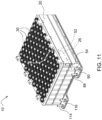
FIG. 11 illustrates a battery system in accordance with an embodiment of the present disclosure. -
FIG. 12 is an exploded view of a battery system in accordance with an embodiment of the present disclosure. -
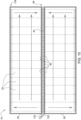
FIG. 13 is a cross-sectional view of a battery system in accordance with an embodiment of the present disclosure. -
FIG. 14 is a cross-sectional view of a battery system in accordance with an embodiment of the present disclosure. -
FIG. 15 is a cross-sectional view of a battery system in accordance with an embodiment of the present disclosure. - Like reference numerals are used to indicate like elements throughout the several figures.
- Referring to
FIGs. 1-5 , abattery system 10 is illustrated in accordance with an embodiment of the present disclosure. Thebattery system 10 illustrated in various embodiments of the present disclosure includes an immersion cooled battery arrangement but element, methods, and other aspects of the present disclosure may be applied to systems other than immersion cooled battery systems. Thebattery system 10 includes a controller (not shown) configured to control the temperature, pressure, flow rate, and/or other aspects of afluid 26 of or utilized with thebattery system 10. The controller may interface with or form part of a battery management system (not shown) or other controller or system. Thefluid 26 of the embodiments of the present disclosure may include a single fluid or multiple, diverse fluids, as explained in further detail below. - The
battery system 10 includes acell holder 20. Thecell holder 20 includes acavity 24. Thecell holder 20 includes anend cover 12, and thebattery system 10 includes aplate 28, as shown in the embodiment illustrated inFIG. 2 . In additional embodiments, thecell holder 20 may be integrally formed with one or both of theend cover 12 and theplate 28. - The
battery system 10 further includescells 30 disposed, at least partially, in thecell holder 20. In the illustrated embodiment ofFIGs. 3-5 , thecells 30 are positioned at least partially in or through thecavity 24 such that thecells 30 are spaced apart to allow fluid flow around eachcell 30. Thecells 30 in the illustrated embodiment includecylindrical cells 30. In additional embodiments not illustrated, thecells 30 include prismatic, pouch, and/or other types or configurations or combinations of types. - Each
cell 30 in thebattery system 10 is oriented to be aligned with anaxis 22 as illustrated inFIGs. 2 and3 . In additional embodiments not shown, one or more of thecells 30 may be oriented differently and/or not aligned with each other or theaxis 22. - As illustrated in
FIG. 5 , thebattery system 10 further includes a cellholder fluid circuit 52 formed through the cells and around and/or between eachcell 30 and extends through thecavity 24 of thecell holder 20. The cellholder fluid circuit 52 extends in a direction perpendicular to theaxis 22 in the illustrated embodiment ofFIGs. 2-5 but may extend in other directions in additional embodiments. Thecells 30 and/or the cellholder fluid circuit 52 is/are arranged or otherwise configured such that one or more of thecells 30 may obstruct a flow of thefluid 26 through thecavity 24. Thefluid 26 flowing in the cellholder fluid circuit 52 may or is configured to be in contact with and/or impinge upon one or more or all of thecells 30. - As shown in
FIGs. 3 and4 , thebattery system 10 further includes anend fluid circuit 40 formed by achannel 42 at anaxial end 48 of thecells 30. Thechannel 42 and/or theend fluid circuit 40 of one or more embodiments is or includes an unobstructed, continuous, and/or contiguous opening or passageway. Although not shown in its entirey inFIGs. 3 and4 , thechannel 42 and/or theend fluid circuit 40 of an embodiment is unobstructed, continuous, and/or contiguous from an endfluid circuit inlet 94 to an endfluid circuit outlet 96. Thechannel 42 and/or theend fluid circuit 40 extends or flows in parallel with the cellholder fluid circuit 52 and/or thecavity 24 in one or more embodiments. In embodiments, thechannel 42 is a single, fully open passageway, and it may extend and/or flow under, across, and/or against multiple or allconductors 50 and/orcells 30 of thecell holder 20. Thechannel 42 and/or theend fluid circuit 40 of one or more embodiments is spaced from the cellholder fluid circuit 52 and/or does not directly contact or flow against one or more or all of thecells 30. - In accordance with certain embodiments, the
end fluid circuit 40 is at least partially and/or selectively in fluid communication with the cellholder fluid circuit 52, such as at afirst end 36 and asecond end 38 of theend fluid circuit 40 or the cellholder fluid circuit 52. Theend fluid circuit 40 is in thermal contact or is otherwise configured to transfer heat with one or more or allcells 30 in thecell holder 20. - In an embodiment, the cell
holder fluid circuit 52 is at least partially or entirely radially or otherwise aligned with theend fluid circuit 40 relative to theaxis 22. - In the illustrated embodiment, the
end fluid circuit 40 extends from afluid circuit inlet 32 to afluid circuit outlet 34. In an additional embodiment not shown, the cellholder fluid circuit 52 extends from thefluid circuit inlet 32 to thefluid circuit outlet 34. - The
end fluid circuit 40 of an embodiment is in fluid communication with the cellholder fluid circuit 52 at adivergence 44 disposed between thefluid circuit inlet 32 and thecells 30 and/or upstream of thecells 30. - The
end fluid circuit 40 of an embodiment is in fluid communication with the cellholder fluid circuit 52 at aconvergence 46 disposed between thefluid circuit outlet 34 and thecells 30 and/or downstream of thecells 30. - The
battery system 10 further includes one ormore seals 70 disposed between each of thecells 30 and thecell holder 20. - The
battery system 10 of one or more embodiments includes at least onevalve 80 to selectively control a flow of the fluid 26 to and/or through the cellholder fluid circuit 52 and/or theend fluid circuit 40. In the embodiments illustrated inFIGs. 3 and4 , afirst valve 82 is positioned at thedivergence 44 to control flow of the fluid 26 into one or both of the cellholder fluid circuit 52 and/or theend fluid circuit 40, and asecond valve 84 is positioned at theconvergence 46 to control flow of the fluid 26 from one or both of the cellholder fluid circuit 52 and/or theend fluid circuit 40. Thefirst valve 82 and/or thesecond valve 84 opens or closes and/or opens at various discrete opening degrees or across infinitely variable degrees to selectively control flow of the fluid 26 in embodiments of the present disclosure. Thefirst valve 82 and/or thesecond valve 84 are operated by the controller (not shown) of a thermal management system or battery management system of thebattery system 10 in accordance with any one or more functions, methods, or operations of embodiments of thebattery system 10 described herein. - Referring now to
FIG. 6 and7 , thebattery system 10 of certain embodiments further includes asecond cell holder 60 disposed at anaxial side 62 of theend fluid circuit 40 opposite from thecell holder 20. Thesecond cell holder 60 includes asecond cavity 64. Thebattery system 10 further includescells 30 disposed in thesecond cavity 64 and/or thesecond cell holder 60 and oriented to be aligned with theaxis 22. Theplate 28 ofFIGs. 6 and7 includes theend fluid circuit 40 and is disposed between thecell holder 20 and thesecond cell holder 60 in the illustrated embodiment but may also or alternatively be disposed at outer ends of thecell holder 20 and/or thesecond cell holder 60 in additional embodiments not illustrated. It will be appreciated that any number ofcell holders plates 28 in any stacked, spaced, or other arrangement may be included, in addition to thecell holder 20, theplate 28, and thesecond cell holder 60, to form thebattery system 10 of one or more embodiments of the present disclosure. - As best shown in
FIGs. 3 and4 , thebattery system 10 of one or more embodiments includesconductors 50 positioned between eachcell 30 and theend fluid circuit 40 to conduct heat between thecells 30 and theend fluid circuit 40. In an embodiment, theconductors 50 contact both thecell 30 and theend fluid circuit 40. Theconductors 50 are composed of metallic, ceramic, and/or another material and are attached to one ormore cells 30 in the illustrated embodiment to transfer and/or conduct heat between thecell 30 and theend fluid circuit 40. In one or more embodiments, theconductors 50 are formed as a single piece, such as a continuous piece extending across or under multiple or allcells 30, or multiple pieces in contact with one ormore cells 30. Theconductors 50 are positioned in thecell holder 20 and/or thesecond cell holder 60 and/or form part of an outer surface of thecell holder 20 and/or thesecond cell holder 60 in embodiments. - The cell
holder fluid circuit 52 and/or theend fluid circuit 40 of one or more embodiments is configured to circulate a dielectric fluid as thefluid 26. The dielectric fluid is a dielectric oil in a non-limiting example. - The cell
holder fluid circuit 52 and/or theend fluid circuit 40 of one or more embodiments is configured to circulate non-dielectric fluid as thefluid 26. The non-dielectric fluid is water ethylene glycol in a non-limiting example. The water ethylene glycol includes any percentage of water from 0 to 100% in various embodiments. - A method in accordance with embodiments of the present disclosure controls a flow of the fluid(s) 26 through the
battery system 10. The method includes providingcells 30 disposed at least partially in thecavity 24 of thecell holder 20. The method further includes circulating the fluid(s) 26 through thecavity 24 of thecell holder 20 and between and around one or more or all of thecells 30. The method further includes circulating the fluid(s) 26 through thechannel 42 at theaxial end 48 of the plurality of cells. With reference toFIGs. 3 and4 , the method further includes selectively increasing, restricting, fully opening, or stopping a flow of the fluid(s) 26, such as with the valve(s) 80, through thecavity 24 of thecell holder 20 and/or thechannel 42 based on an operating condition of thebattery system 10. The operating condition of thebattery system 10 includes a discharge rate of thecells 30, a charge rate of thecells 30, a state of charge of one or more cell(s) 30, a temperature of the fluid(s) 26, a pressure of the fluid(s) 26, a temperature of one or more of the cell(s) 30, and a temperature differential of two ormore cells 30. The controller (not shown) is utilized in one or more embodiments for operation of one or more or all steps of the method, one or more features of thesystem 10, and/or the operation of the valve(s) 80. - With reference to
FIG. 8 and continuing reference toFIGs. 3 and4 , the method and/or thebattery system 10 according to one or more embodiments may include circulatingdifferent fluids 26, such as a first fluid through thecavity 24 of thecell holder 20 and around thecells 30 and a second fluid through thechannel 24 and/or theplate 28 at theaxial end 48 of thecells 30. The first fluid and the second fluid may each be or include dielectric fluid or non-dielectric fluid, as further described herein, in embodiments of the present disclosure. The cellholder fluid circuit 52 of an embodiment extends through thecell holder 20 from a cell holderfluid circuit inlet 54 to a cell holder fluid circuit outlet (not visible behindcell holder 20 inFIG. 8 ). Theend fluid circuit 40 is formed by thechannel 42 at theaxial end 48 of thecells 30 and includes an endfluid circuit inlet 14 and an endfluid circuit outlet 16. - As shown in
FIGs. 11 and12 , the cellholder fluid circuit 52 of an embodiment extends through thecell holder 20 from the cell holderfluid circuit inlet 54 to a cell holder fluid circuit outlet (not visible behind cell holder 20). - As shown in the embodiment of
FIGs. 11 and12 and schematically for various embodiments inFIGS. 13-15 , a firstend fluid circuit 156 is formed by afirst channel 158 at theaxial end 48 of thecells 30 and includes a first endfluid circuit inlet 114 and a first endfluid circuit outlet 116. A secondend fluid circuit 18 is formed by asecond channel 86 at theaxial end 48 of thecells 30 and includes a second endfluid circuit inlet 88 and a second endfluid circuit outlet 90. As shown inFIG. 12 , one or more embodiments of thebattery system 10 include the fluid 26 flowing through the secondend fluid circuit 18 while receiving the fluid 26 from, sending the fluid 26 to, or otherwise being in fluid communication with the cellholder fluid circuit 52, as shown by the openings in theplate 28 shown inFIG. 12 . Although not shown in the embodiment ofFIG. 8 , such fluid communication between anyend fluid circuit 40 and cellholder fluid circuit 52 may be enabled, prevented, or controlled for any one or more embodiments of thebattery system 10. Thebattery system 10 ofFIGs. 13 and 14 includes thesecond cell holder 60 disposed at the axial side of the first end fluid circuit 56 and the secondend fluid circuit 18 opposite from thecell holder 20. Thesecond cell holder 60 includes a second cellholder fluid circuit 92 and any one or more features or functions of additional embodiments described in the present disclosure. Thesystem 10 illustrated in embodiments shown inFIGs. 13 and 14 includescell holders only cell holder 20, as illustrated inFIG. 15 , or include additional cell holders and/or plate(s) 28 connected to or integrally formed with thesystem 10 in additional embodiments. Thebattery system 10 ofFIG. 13 illustrates the firstend fluid circuit 156 disposed inside of and/or surrounded by the secondend fluid circuit 18. In the embodiment ofFIG. 13 , thefluid 26 of the firstend fluid circuit 156 may include a non-dielectric fluid, and thefluid 26 of the secondend fluid circuit 18 may include a dielectric fluid such that, in a non-limiting example, the non-dielectric fluid may transfer heat to the dielectric fluid upon startup of thebattery system 10 and/or when a temperature of thebattery system 10 is below a threshold temperature. - The
battery system 10 ofFIG. 14 illustrates the firstend fluid circuit 156 being disposed in a serpentine, spiral, row, or similar pattern with the secondend fluid circuit 18 whereby both the firstend fluid circuit 156 and the secondend fluid circuit 18 extend into contact across all or most of thecells 30 of thecell holder 20 and/or thecell holder 60. - The
battery system 10 ofFIG. 15 illustrates thefirst channel 158 being layered on or over thesecond channel 86 such that the firstend fluid circuit 156 is closer to the secondend fluid circuit 18. In the embodiment ofFIG. 15 , the firstend fluid circuit 156 may include a dielectric fluid and the secondend fluid circuit 18 may include a non-dielectric fluid such that, in a non-limiting example, the non-dielectric fluid may transfer heat to the dielectric fluid upon startup of thebattery system 10 and/or when a temperature of thebattery system 10 is below a threshold temperature. - In an embodiment, the first end fluid circuit 56 is in fluid communication with the cell
holder fluid circuit 52 at thedivergence 44 disposed upstream of thecells 30. The first endfluid circuit inlet 14 may include or be formed as thedivergence 44 disposed upstream of thecells 30. In an embodiment, the first end fluid circuit 56 is in fluid communication with the cellholder fluid circuit 52 at theconvergence 46 disposed downstream of thecells 30. The first endfluid circuit outlet 16 may include or be formed as theconvergence 46 disposed downstream of thecells 30. - In at least one embodiment, any one or more of the first
end fluid circuit 156, the cellholder fluid circuit 52, and second cellholder fluid circuit 92 circulates a dielectric fluid, and the secondend fluid circuit 18 circulates a non-dielectric fluid. Any one or more fluid(s) 26 may be included in the firstend fluid circuit 156, the secondend fluid circuit 18, the cellholder fluid circuit 52, or the second cellholder fluid circuit 92. A method of an embodiment includes circulating afirst fluid 26 and asecond fluid 26 that is different from thefirst fluid 26 through thebattery system 10. The method includes providing thecells 30 disposed at least partially in thecavity 24 of thecell holder 20 of thebattery system 10, initiating circulation of thesecond fluid 26 through theunobstructed channel 42 at theaxial end 48 of thecells 30, initiating circulation of thefirst fluid 26 through thecavity 24 of thecell holder 20 and between and around thecells 30 after the initiation of circulation of thesecond fluid 26 through thechannel 42 at theaxial end 48 of thecells 30. The method may further include initiating circulation of thefirst fluid 26 through thesecond channel 86 at theaxial end 48 of thecells 30 after the initiation of circulation of thesecond fluid 26 through thechannel 42 at theaxial end 48 of thecells 30. The method may further include diverging thefirst fluid 26 upstream of thecells 30 into thesecond channel 86 at theaxial end 48 of thecells 30 and thecavity 24 of thecell holder 20. The method may further include converging thefirst fluid 26 downstream of thecells 30 from thecavity 24 of thecell holder 20 with thesecond channel 86 at theaxial end 48 of thecells 30. - Referring now to
FIGs. 9 and10 , abattery system 10 in accordance with embodiments of the present disclosure includes aheater 120 disposed between thecells 30 and theend fluid circuit 40 at theaxial end 48 of thecells 30 and configured to heat or increase the temperature of thecells 30. Thesystem 10 of certain embodiments includesconductors 50 positioned between thecells 30 and theheater 120 to conduct heat between thecells 30 and theheater 120. Thesystem 10 may further include asecond heater 122 disposed betweensecond cells 30 in asecond holder 60 and theend fluid circuit 40 and configured to heat thesecond cells 30. Alternatively, or additionally, thesecond heater 122 or an additional heater may be disposed at a secondaxial end 124 of thecells 30 opposite from theaxial end 48 of thecells 30 and configured to heat thecells 30. - The
heater 120 and/or thesecond heater 122 of one or more embodiments includes or is an electrically resistive heater. Theheater 120 and/or thesecond heater 122 is/are configured to be activated based on at least one temperature threshold. In embodiments, theheater 120 and/or thesecond heater 122 is/are configured to be activated based on a threshold temperature of asingle cell 30,multiple cells 30, or allcells 30 of thesystem 10 and/or a temperature of one or more of the fluid(s) 26 circulating in thesystem 10. In the illustrated embodiment, theheater 120 and/or thesecond heater 122 includes a thermally conductive material to allow heat to be transferred between theend fluid circuit 40 and thecells 30 through theheater 120 and/or thesecond heater 122 such that theend fluid circuit 40 may still heat or cool thecells 30 as needed. - Without in any way limiting the scope, interpretation, or application of the claims appearing below, a technical effect of one or more of the example embodiments disclosed herein is to provide the
battery system 10 and associated methods to improve thermal management of thecells 30. Such improved thermal management of thecells 30 of thebattery system 10 will result in improved efficiency of thebattery system 10, increased life cycle and capacity of thecells 30 and other components of thebattery system 10, and improved cell temperature uniformity. Thebattery system 10 and associated methods further provides flexibility and additional control for the fluid 26 utilized for thermal management of thecells 30. Thesystem 10 and associated methods allow for a non-dielectric fluid to be circulated through theplate 28 during, for example, low load operation and a dielectric fluid to be circulated through thecavity 24 of one or more holder(s) 20, 60 during higher load operation. Further, where the fluid 26 is a single fluid or two different fluids, the fluid 26 may be controlled to flow into one or both of thecavity 24 and theplate 28 depending upon environment temperature, power demand, cell temperature level and/or uniformity, and/or one or more additional factors. Finally, thesystem 10 and associated methods may include one or more heater(s) 120 to heat thecells 30 more quickly and efficiently while providing the ability to heat or cool thecells 30 with theplate 28 and the fluid 26 in thecavity 24.
Claims (12)
- A battery system (10) comprising:a cell holder (20);a plurality of cells (30) disposed in the cell holder (20) and oriented to be aligned with an axis (22);a cell holder fluid circuit (52) formed around and between each of the plurality of cells (30) and extending through the cell holder (20) from a cell holder fluid circuit inlet (32) to a cell holder fluid circuit outlet (34);a first end fluid circuit (156) formed by a first channel (158) at an axial end (48) of the plurality of cells (30) comprising a first end fluid circuit inlet (114) and a first end fluid circuit outlet (116); anda second end fluid circuit (18) formed by a second channel (86) at the axial end (48) of the plurality of cells (30) comprising a second end fluid circuit inlet (88) and a second end fluid circuit outlet (90).
- The system of claim 1, wherein the first end fluid circuit (156) is in fluid communication with the cell holder fluid circuit (52) at a divergence (44) disposed upstream of the plurality of cells (30).
- The system of claim 2, wherein the first end fluid circuit inlet (114) comprises the divergence (44) disposed upstream of the plurality of cells (30).
- The system of one of the claims 1 to 3, wherein the first end fluid circuit (156) is in fluid communication with the cell holder fluid circuit (52) at a convergence (46) disposed downstream of the plurality of cells (30).
- The system of claim 4, wherein the first end fluid circuit outlet (116) comprises the convergence (46) disposed downstream of the plurality of cells (30).
- The system of one of the claims 1 to 5, further comprising:a second cell holder (60) disposed at an axial side of the first end fluid circuit (56) and the second end fluid circuit (18) opposite from the cell holder (20);a second plurality of cells (30) disposed in the second cell holder (60) and oriented to be aligned with the axis (22); anda second cell holder fluid circuit (92) formed around and between each of the second plurality of cells (30) and extending through the second cell holder (60).
- The system of claim 6, wherein the first end fluid circuit (156), the cell holder fluid circuit (52), and the second cell holder fluid circuit (92) are configured to circulate a dielectric fluid, and wherein the second end fluid circuit (18) is configured to circulate a non-dielectric fluid.
- The system of one of the claims 1 to 7, wherein the first end fluid circuit (156) and the cell holder fluid circuit (52) are configured to circulate a dielectric fluid, and wherein the second end fluid circuit (18) is configured to circulate a non-dielectric fluid.
- A method of circulating a first fluid and a second fluid that is different from the first fluid through a battery system (10), the method comprising the battery system (10) of one of the claims 1 to 8; and further:providing a plurality of cells (30) disposed at least partially in a cavity (24) of a cell holder (20) of the battery system (10);initiating circulation of the second fluid through an unobstructed channel (42) at an axial end (48) of the plurality of cells (30);initiating circulation of the first fluid through the cavity (24) of the cell holder (20) and between and around the plurality of cells (30) after the initiation of circulation of the second fluid through the unobstructed channel (42) at the axial end (48) of the plurality of cells (30).
- The method of claim 9, further comprising initiating circulation of the first fluid through the second channel (86) at the axial end (48) of the plurality of cells (30) after the initiation of circulation of the second fluid through the unobstructed channel (42) at the axial end (48) of the plurality of cells (30).
- The method of claim 9 or 10, further comprising diverging the first fluid upstream of the plurality of cells (30) into the second channel (86) at the axial end (48) of the plurality of cells (30) and the cavity (24) of the cell holder (20).
- The method of one of the claims 9 to 11, further comprising converging the first fluid downstream of the plurality of cells (30) from the cavity (24) of the cell holder (20) with the second channel (86) at the axial end (48) of the plurality of cells (30).
Applications Claiming Priority (1)
| Application Number | Priority Date | Filing Date | Title |
|---|---|---|---|
| US18/502,406 US20250149679A1 (en) | 2023-11-06 | 2023-11-06 | Battery fluid circuit |
Publications (1)
| Publication Number | Publication Date |
|---|---|
| EP4557458A1 true EP4557458A1 (en) | 2025-05-21 |
Family
ID=93154278
Family Applications (1)
| Application Number | Title | Priority Date | Filing Date |
|---|---|---|---|
| EP24207248.6A Pending EP4557458A1 (en) | 2023-11-06 | 2024-10-17 | Battery system and method of circulating a first fluid and a second fluid through such a battery system |
Country Status (2)
| Country | Link |
|---|---|
| US (1) | US20250149679A1 (en) |
| EP (1) | EP4557458A1 (en) |
Citations (4)
| Publication number | Priority date | Publication date | Assignee | Title |
|---|---|---|---|---|
| US20140248520A1 (en) * | 2013-03-04 | 2014-09-04 | Mclaren Automotive Limited | Battery structure |
| EP3723157A1 (en) * | 2019-04-10 | 2020-10-14 | Tsykhmistro, Oleksandr Sergiyovych | Secondary battery |
| WO2022069910A1 (en) * | 2020-10-02 | 2022-04-07 | Rimac Automobili D.O.O. | Battery module and method for cooling the battery module |
| US20220281353A1 (en) * | 2018-05-30 | 2022-09-08 | Dana Canada Corporation | Thermal management systems and heat exchangers for battery thermal modulation |
-
2023
- 2023-11-06 US US18/502,406 patent/US20250149679A1/en active Pending
-
2024
- 2024-10-17 EP EP24207248.6A patent/EP4557458A1/en active Pending
Patent Citations (4)
| Publication number | Priority date | Publication date | Assignee | Title |
|---|---|---|---|---|
| US20140248520A1 (en) * | 2013-03-04 | 2014-09-04 | Mclaren Automotive Limited | Battery structure |
| US20220281353A1 (en) * | 2018-05-30 | 2022-09-08 | Dana Canada Corporation | Thermal management systems and heat exchangers for battery thermal modulation |
| EP3723157A1 (en) * | 2019-04-10 | 2020-10-14 | Tsykhmistro, Oleksandr Sergiyovych | Secondary battery |
| WO2022069910A1 (en) * | 2020-10-02 | 2022-04-07 | Rimac Automobili D.O.O. | Battery module and method for cooling the battery module |
Also Published As
| Publication number | Publication date |
|---|---|
| US20250149679A1 (en) | 2025-05-08 |
Similar Documents
| Publication | Publication Date | Title |
|---|---|---|
| US11916210B2 (en) | Battery housing for a battery module, battery module with a battery housing and motor vehicle | |
| CN114506248A (en) | Traction battery thermal management | |
| US7172831B2 (en) | Battery system for automotive vehicle | |
| US9088057B2 (en) | Battery charging system and method of thereof | |
| US9509018B2 (en) | Expanded battery cooling fin | |
| KR20130107354A (en) | Battery module, battery temperature managing system and vehicle comprising the same | |
| CN113745729A (en) | Direct temperature regulation of batteries | |
| CN104659441A (en) | Battery module | |
| CN108232364B (en) | Battery temperature control device | |
| US20070037050A1 (en) | Thermal control device | |
| CN111092275A (en) | Battery with temperature control device and method for regulating the temperature of a battery | |
| CN216432588U (en) | Thermal regulation device | |
| US20220196347A1 (en) | Temperature control device, in particular a cooling device for a motor vehicle | |
| US11552347B2 (en) | Bi-directional switchable cooling flow for traction battery | |
| EP4557458A1 (en) | Battery system and method of circulating a first fluid and a second fluid through such a battery system | |
| EP4553959A1 (en) | Battery system and method of controlling a flow of a fluid through such battery system | |
| EP4550528A1 (en) | Battery system | |
| EP4550527A1 (en) | Battery system | |
| Le et al. | Optimization of thermal performance characteristics for 21,700 lithium-ion battery pack utilizing single-phase immersion cooling: A multi-parameter numerical investigation | |
| WO2022119524A1 (en) | A battery pack with thermal management system | |
| CN221596559U (en) | Batteries and electrical devices | |
| US20210296722A1 (en) | Battery module and method for operating such | |
| CN117157804A (en) | Thermal management device for electrical and/or electronic components | |
| US20250337097A1 (en) | Cylindrical battery cell including side vent | |
| EP4060793A2 (en) | Battery thermal management system |
Legal Events
| Date | Code | Title | Description |
|---|---|---|---|
| PUAI | Public reference made under article 153(3) epc to a published international application that has entered the european phase |
Free format text: ORIGINAL CODE: 0009012 |
|
| STAA | Information on the status of an ep patent application or granted ep patent |
Free format text: STATUS: THE APPLICATION HAS BEEN PUBLISHED |
|
| AK | Designated contracting states |
Kind code of ref document: A1 Designated state(s): AL AT BE BG CH CY CZ DE DK EE ES FI FR GB GR HR HU IE IS IT LI LT LU LV MC ME MK MT NL NO PL PT RO RS SE SI SK SM TR |
|
| STAA | Information on the status of an ep patent application or granted ep patent |
Free format text: STATUS: REQUEST FOR EXAMINATION WAS MADE |
|
| 17P | Request for examination filed |
Effective date: 20251121 |