EP4557135A1 - Information processing apparatus, control method, and program - Google Patents
Information processing apparatus, control method, and program Download PDFInfo
- Publication number
- EP4557135A1 EP4557135A1 EP24199375.7A EP24199375A EP4557135A1 EP 4557135 A1 EP4557135 A1 EP 4557135A1 EP 24199375 A EP24199375 A EP 24199375A EP 4557135 A1 EP4557135 A1 EP 4557135A1
- Authority
- EP
- European Patent Office
- Prior art keywords
- list
- storage unit
- startup program
- program
- protocols
- Prior art date
- Legal status (The legal status is an assumption and is not a legal conclusion. Google has not performed a legal analysis and makes no representation as to the accuracy of the status listed.)
- Pending
Links
Images





Classifications
-
- G—PHYSICS
- G06—COMPUTING OR CALCULATING; COUNTING
- G06F—ELECTRIC DIGITAL DATA PROCESSING
- G06F21/00—Security arrangements for protecting computers, components thereof, programs or data against unauthorised activity
- G06F21/50—Monitoring users, programs or devices to maintain the integrity of platforms, e.g. of processors, firmware or operating systems
- G06F21/57—Certifying or maintaining trusted computer platforms, e.g. secure boots or power-downs, version controls, system software checks, secure updates or assessing vulnerabilities
- G06F21/575—Secure boot
-
- G—PHYSICS
- G06—COMPUTING OR CALCULATING; COUNTING
- G06F—ELECTRIC DIGITAL DATA PROCESSING
- G06F21/00—Security arrangements for protecting computers, components thereof, programs or data against unauthorised activity
- G06F21/50—Monitoring users, programs or devices to maintain the integrity of platforms, e.g. of processors, firmware or operating systems
- G06F21/51—Monitoring users, programs or devices to maintain the integrity of platforms, e.g. of processors, firmware or operating systems at application loading time, e.g. accepting, rejecting, starting or inhibiting executable software based on integrity or source reliability
-
- G—PHYSICS
- G06—COMPUTING OR CALCULATING; COUNTING
- G06F—ELECTRIC DIGITAL DATA PROCESSING
- G06F21/00—Security arrangements for protecting computers, components thereof, programs or data against unauthorised activity
- G06F21/50—Monitoring users, programs or devices to maintain the integrity of platforms, e.g. of processors, firmware or operating systems
- G06F21/57—Certifying or maintaining trusted computer platforms, e.g. secure boots or power-downs, version controls, system software checks, secure updates or assessing vulnerabilities
-
- G—PHYSICS
- G06—COMPUTING OR CALCULATING; COUNTING
- G06F—ELECTRIC DIGITAL DATA PROCESSING
- G06F21/00—Security arrangements for protecting computers, components thereof, programs or data against unauthorised activity
- G06F21/50—Monitoring users, programs or devices to maintain the integrity of platforms, e.g. of processors, firmware or operating systems
- G06F21/57—Certifying or maintaining trusted computer platforms, e.g. secure boots or power-downs, version controls, system software checks, secure updates or assessing vulnerabilities
- G06F21/572—Secure firmware programming, e.g. of basic input output system [BIOS]
-
- G—PHYSICS
- G06—COMPUTING OR CALCULATING; COUNTING
- G06F—ELECTRIC DIGITAL DATA PROCESSING
- G06F9/00—Arrangements for program control, e.g. control units
- G06F9/06—Arrangements for program control, e.g. control units using stored programs, i.e. using an internal store of processing equipment to receive or retain programs
- G06F9/44—Arrangements for executing specific programs
- G06F9/4401—Bootstrapping
- G06F9/4406—Loading of operating system
-
- G—PHYSICS
- G06—COMPUTING OR CALCULATING; COUNTING
- G06F—ELECTRIC DIGITAL DATA PROCESSING
- G06F21/00—Security arrangements for protecting computers, components thereof, programs or data against unauthorised activity
- G06F21/50—Monitoring users, programs or devices to maintain the integrity of platforms, e.g. of processors, firmware or operating systems
- G06F21/55—Detecting local intrusion or implementing counter-measures
-
- H—ELECTRICITY
- H04—ELECTRIC COMMUNICATION TECHNIQUE
- H04L—TRANSMISSION OF DIGITAL INFORMATION, e.g. TELEGRAPHIC COMMUNICATION
- H04L63/00—Network architectures or network communication protocols for network security
- H04L63/14—Network architectures or network communication protocols for network security for detecting or protecting against malicious traffic
-
- H—ELECTRICITY
- H04—ELECTRIC COMMUNICATION TECHNIQUE
- H04W—WIRELESS COMMUNICATION NETWORKS
- H04W12/00—Security arrangements; Authentication; Protecting privacy or anonymity
- H04W12/12—Detection or prevention of fraud
Definitions
- the present invention relates to an information processing apparatus, a control method, and a program.
- an information processing apparatus such as a personal computer has an implemented function called "secure boot” in the basic input output system (BIOS), the secure boot preventing a program that is not signed with a key registered in the system (secure boot key) from running, so that a third party is not able to tamper with or monitor the pre-boot environment before the operating system (OS) is started (see, for example, Japanese Unexamined Patent Application Publication No. 2017-146694 ) .
- BIOS basic input output system
- a general-purpose interface whose protocols or the like are defined by the unified extensible firmware interface (UEFI) specification.
- the general-purpose interface is a program that is present in a memory, and therefore may be rewritten by a third party program.
- some programs signed with a secure boot key may have vulnerabilities that allow someone to slip through the secure boot, so that even under the protection of secure boot, the programs may be tampered with by a third party. Therefore, in a conventional information processing apparatus, for example, when a program tampered with by a third party is executed in secure boot, the program executed thereafter may be tampered with or monitored.
- the present invention was made to solve the above problem, and the object of the present invention is to provide an information processing apparatus, a control method, and a program capable of improving protection against third party attacks in secure boot.
- an information processing apparatus includes: an authentication processing unit that confirms the validity of a startup program for booting an operating system (OS) based on a predetermined security key in basic input output system (BIOS) processing; a trust list storage unit that stores a trust list, a list of trustable providers of the startup program; a chain information storage unit that stores chain information indicating whether the startup program has been executed when the startup program is unauthorized because of being possibly tampered with; a startup processing unit that changes the chain information stored in the chain information storage unit to information indicating that the unauthorized startup program has been executed when the startup program acquired from a provider not included in the trust list stored in the trust list storage unit has been executed in secure boot processing for executing the startup program whose validity has been confirmed by the authentication processing unit; and a restriction processing unit that restricts the use of preset security-related protocols when the chain information stored in the chain information storage unit is information indicating that the unauthorized startup program has been executed.
- OS operating system
- BIOS basic input output system
- the trust list may include a firmware volume with a BIOS memory as a provider, where programs for the BIOS are stored, or a network boot with a preset server device as a provider.
- the information processing apparatus further may include a usage restriction list storage unit that stores a list of the protocols whose use is restricted, and the restriction processing unit may restrict the use of the protocols included in the list of the protocols stored in the usage restriction list storage unit when the chain information indicates that the unauthorized startup program has been executed.
- the list of the protocols whose use is restricted may include protocols related to network connection or protocols related to a trusted platform module (TPM).
- TPM trusted platform module
- a control method for an information processing apparatus including: an authentication processing unit that confirms the validity of a startup program for booting an operating system (OS) based on a predetermined security key in basic input output system (BIOS) processing; a trust list storage unit that stores a trust list, a list of trustable providers of the startup program; and a chain information storage unit that stores chain information indicating whether the startup program has been executed when the startup program is unauthorized because of being possibly tampered with; the method including: a startup processing step in which a startup processing unit changes the chain information stored in the chain information storage unit to information indicating that the unauthorized startup program has been executed when the startup program acquired from a provider not included in the trust list stored in the trust list storage unit has been executed in secure boot processing for executing the startup program whose validity has been confirmed by the authentication processing unit; and a restriction processing step in which a restriction processing unit restricts the use of preset security-related protocols when the chain information stored in the chain information storage unit is information indicating that
- a program for causing a computer for an information processing apparatus including: an authentication processing unit that confirms the validity of a startup program for booting an operating system (OS) based on a predetermined security key in basic input output system (BIOS) processing; a trust list storage unit that stores a trust list, a list of trustable providers of the startup program; and a chain information storage unit that stores chain information indicating whether the startup program has been executed when the startup program is unauthorized because of being possibly tampered with, the program causing the computer to execute: a startup processing step in which the startup processing unit changes the chain information stored in the chain information storage unit to information indicating that the unauthorized startup program has been executed when the startup program acquired from a provider not included in the trust list stored in the trust list storage unit has been executed in secure boot processing for executing the startup program whose validity has been confirmed by the authentication processing unit; and a restriction processing step of restricting the use of preset security-related protocols when the chain information stored in the chain information storage unit is information
- FIG. 1 is a diagram illustrating an example of the main hardware configuration of a laptop PC 1 according to the present embodiment.
- the laptop PC 1 is described as an example of the information processing apparatus.
- the laptop PC 1 has a central processing unit (CPU) 11, a main memory 12, a video subsystem 13, a display unit 14, a chipset 21, a BIOS memory 22, a solid state drive (SSD) 23, an audio system 24, a wireless local area network (WLAN) card 25, a universal serial bus (USB) connector 26, an embedded controller 31, an input unit 32, and a power circuit 33.
- CPU central processing unit
- main memory main memory
- video subsystem 13 a display unit 14
- chipset 21 a BIOS memory 22
- SSD solid state drive
- audio system 24
- WLAN wireless local area network
- USB universal serial bus
- the CPU 11 and the chipset 21 correspond to a main control unit 10.
- the main control unit 10 is an example of a processor (main processor) that executes a program stored in a memory (the main memory 12).
- the CPU 11 performs various arithmetic operations under program control and controls the entire laptop PC 1.
- the main memory 12 is a writable memory that is used as a reading area of the execution program of the CPU 11 or as a working area to write processing data of the execution program.
- the main memory 12 includes a plurality of dynamic random access memory (DRAM) chips.
- the execution program includes BIOS, OS, various drivers for hardware operations of peripherals, various services/utilities, application programs, and so on.
- the video subsystem 13 is a subsystem to implement functions related to image display, and includes a video controller.
- the video controller processes drawing commands from the CPU 11, writes the processed drawing information into a video memory, reads the drawing information from the video memory, and outputs the drawing information as drawing data (display data) to the display unit 14.
- the display unit 14 which is, for example, a liquid crystal display, displays a display screen based on the drawing data (display data) output from the video subsystem 13.
- the chipset 21 has controllers such as a USB, a serial AT Attachment (ATA), a serial peripheral interface (SPI) bus, a peripheral component interconnect (PCI) bus, a PCI-Express bus, a low pin count (LPC) bus and the like, to which a plurality of devices is connected.
- controllers such as a USB, a serial AT Attachment (ATA), a serial peripheral interface (SPI) bus, a peripheral component interconnect (PCI) bus, a PCI-Express bus, a low pin count (LPC) bus and the like, to which a plurality of devices is connected.
- ATA serial AT Attachment
- SPI serial peripheral interface
- PCI peripheral component interconnect
- PCI-Express PCI-Express
- LPC low pin count
- the BIOS memory 22 includes an electrically rewritable non-volatile memory such as an electrically erasable programmable read only memory (EEPROM) or a Flash ROM, for example.
- the BIOS memory 22 stores a BIOS, system firmware for controlling the embedded controller 31, and so on.
- the SSD 23 (an example of a non-volatile memory) stores an OS, various drivers, various services/utilities, application programs, and various data.
- the audio system 24 records, plays, and outputs sound data.
- the WLAN card 25 connects to the network by wireless LAN and performs data communication.
- the USB connector 26 is a connector for connecting peripherals using USBs.
- the embedded controller 31 (an example of a sub-control unit) is a one-chip microcomputer that monitors and controls various devices (peripherals, sensors, and the like) regardless of the system status of the laptop PC 1.
- the embedded controller 31 has a power management function that controls the power circuit 33.
- the embedded controller 31 includes an unillustrated CPU, ROM, R_AM, and the like, and is equipped with A/D input terminals, D/A output terminals, timers, and digital input-output terminals for a plurality of channels.
- the input unit 32, the power circuit 33, and the like are connected to the embedded controller 31 via those input-output terminals, and the embedded controller 31 controls the operations of the input unit 32, the power circuit 33, and the like.
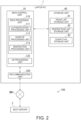
- FIG. 2 is a functional block diagram illustrating an example of the functional configuration of an information processing system 100 and the laptop PC 1 according to the present embodiment.
- FIG. 2 among the functional configurations of the laptop PC 1, only the configurations related to the present invention are described.
- the information processing system 100 includes the laptop PC 1 and the boot server 2.
- the laptop PC 1 and the boot server 2 are allowed to be connected to each other via a network NW1.
- the boot server 2 is a server device for network boot, for example, a server device to which the manufacturer of the laptop PC 1 provides various services.
- the boot server 2 provides the laptop PC 1 with the OS startup program for network boot via the network NW1.
- the laptop PC 1 includes the main control unit 10, a storage unit 40, and a network (NW) communication unit 250.
- NW network
- the NW communication unit 250 is a functional unit implemented by a network device such as, for example, a WLAN card 25.
- the main control unit 10 is allowed to be connected to the network NW1 via the NW communication unit 250.
- the NW communication unit 250 is assumed to be connected to the network NW1 using wireless LAN (WiFi [registered trademark]) in description.
- the storage unit 40 is implemented by a memory such as, for example, the BIOS memory 22 or the main memory 12, and stores various information used for various processes of the main control unit 10, for example.
- the storage unit 40 includes a trust list storage unit 41, a restriction list storage unit 42, and a chain flag storage unit 43.
- the trust list storage unit 41 is implemented by the BIOS memory 22, for example, and stores a trust list that is a list of trustable providers of the startup program.
- the provider here means a device that is a source of execution (boot source) of the startup program.
- the provider includes an Https boot, a USB device connected to the USB connector 26, an internal SSD 23, a firmware of the BIOS memory 22, and so on.
- the startup program is, for example, various UEFI programs that are executed when booting an OS (Windows [registered trademark] or the like).
- the trust list storage unit 41 stores a list of trustable devices as providers (boot sources).
- example data for the trust list storage unit 41 is described with reference to FIG. 3 .
- FIG. 3 is a diagram illustrating the example data for the trust list storage unit 41 in the present embodiment.
- the trust list stored in the trust list storage unit 41 includes "Firmware Volume,” “Https Boot,” and the like as trustable UEFI sources.
- BIOS Volume indicates that the firmware in the BIOS memory 22 is a provider (boot source)
- Https Boot indicates that, for example, that a network boot by the boot server 2 is a provider (boot source).
- the restriction list storage unit 42 (an example of a usage restriction list storage unit), which is a storage unit implemented by, for example, the BIOS memory 22, stores a list of protocols to restrict usage.
- protocol means a procedure and a rule defined for exchanging data with the laptop PC 1, an electrical regulation for signals, a standard that defines the procedures for transmission and reception in telecommunications.
- the restriction list storage unit 42 stores a list of protocols to be restricted (prohibited) from being used in subsequent processes, as a usage restriction list.
- the usage restriction list includes protocols likely to compromise security such as, for example, protocols related to network connection, protocols related to a trusted platform module (TPM), and the like.
- example data for the restriction list storage unit 42 is described with reference to FIG. 4 .
- FIG. 4 is a diagram illustrating the example data for the restriction list storage unit 42 in the present embodiment.
- the usage restriction list stored in the restriction list storage unit 42 contains WiFiInfoPassProtocol, WiFiConfigProtocol, BBBBBBBBBBProtocol, CCCCCCCCCCProtocol, and so on, as the usage restriction protocols.
- WiFiInfoPassProtocol is a protocol to pass a service set identifier (SSID) and a password of a wireless LAN.
- WiFiConfigProtocol is a protocol to configure the connection settings of the wireless LAN.
- the chain flag storage unit 43 (an example of the chain information storage unit) is a storage unit implemented by the system area of the main memory 12, for example.
- the chain flag storage unit 43 stores a boot chain flag (chain information) that indicates whether an unauthorized startup program that may have been tampered with has been executed.
- the boot chain flag stores information indicating the trust state (for example, "0") when, for example, an unauthorized startup program has not been executed, and information indicating the non-trust state (for example, "1") when the unauthorized startup program has been executed.
- the main control unit 10 is a functional unit implemented by causing the CPU 11 and the chipset 21 to execute the programs stored in the BIOS memory 22 and the SSD 23, and performs various processes based on the BIOS and OS.
- the main control unit 10 includes a BIOS processing unit 110 and an OS processing unit 120.
- the BIOS processing unit 110 performs various processes based on BIOS (BIOS processing).
- BIOS processing unit 110 includes an authentication processing unit 111, a startup processing unit 112, and a restriction processing unit 113
- the authentication processing unit 111 confirms the validity of the startup program (for example, a UEFI program) for booting the OS on the basis of a predetermined security key in the processes of BIOS (BIOS processing).
- BIOS BIOS processing
- the authentication processing unit 111 confirms the validity of the startup program (for example, a UEFI program) by confirming the signature by the security key (for example, a secure boot key).
- the authentication processing unit 111 performs the authentication processing for secure boot described later.
- the startup processing unit 112 performs various processes for booting the laptop PC 1 (OS) in the processes of BIOS (BIOS processing).
- the startup processing unit 112 performs the secure boot processing for executing the startup program whose validity is confirmed by the authentication processing unit 111.
- the startup processing unit 112 changes a boot chain flag stored in the chain flag storage unit 43 to information indicating that an unauthorized startup program has been executed.
- the startup processing unit 112 acquires the Device Path Class from the Device Path of the startup program (UEFI program) and confirms the provider of the startup program (UEFI program) on the basis of the Device Path Class.
- the startup processing unit 112 determines whether the confirmed provider is included in the trust list stored in the trust list storage unit 41. When the confirmed provider is not included in the trust list stored in the trust list storage unit 41, the startup processing unit 112 changes the boot chain flag stored in the chain flag storage unit 43 from the trust state (for example, "0") to the non-trust state (for example, "1").
- the restriction processing unit 113 restricts the use of preset security-related protocols.
- the restriction processing unit 113 restricts the use of the protocols included in the list of protocols stored in the restriction list storage unit 42, for example, when the boot chain flag is information indicating that an unauthorized startup program has been executed (for example, the non-trust state "1").
- the restriction processing unit 113 prohibits the use of protocols included in the usage restriction list illustrated in FIG. 3 .
- the OS processing unit 120 is a functional unit that takes over the processing after the OS startup processing by the BIOS processing unit 110.
- the OS processing unit 120 performs various processes based on the OS.
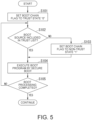
- FIG. 5 is a flowchart illustrating an example of the startup processing of the laptop PC 1 according to the present embodiment.
- the BIOS processing unit 110 of the laptop PC 1 starts a power-on self-test (POST) process and sets the boot chain flag to the trust state "0" when the startup of the laptop PC 1 is started (step S101).
- the BIOS processing unit 110 stores the trust state "0" in the boot chain flag of the chain flag storage unit 43.
- the startup processing unit 112 of the BIOS processing unit 110 determines whether a boot source (supplier) is included in the trust list (step S102).
- the startup processing unit 112 confirms the provider of the boot program (startup program) using the Device Path Class, and determines whether the confirmed provider is included in the trust list stored in the trust list storage unit 41.
- the startup processing unit 112 proceeds to step S104 when the boot source (supplier) is included in the trust list (step S102: YES).
- the startup processing unit 112 determines that the unauthorized boot program has been executed and then proceeds to step S103.
- step S103 the startup processing unit 112 sets the boot chain flag to the non-trust state "1." In other words, the startup processing unit 112 stores the non-trust state "1" in the boot chain flag of the chain flag storage unit 43. After the processing of step S103, the process proceeds to step S104.
- step S104 the startup processing unit 112 executes the boot program by secure boot.
- the startup processing unit 112 confirms the validity of the boot program using the authentication processing unit 111, and performs the processing of the boot program whose validity is confirmed.
- the startup processing unit 112 determines whether the boot processing is completed (step S105). In other words, the startup processing unit 112 determines whether there is a boot program to be executed next. When the boot processing is completed (there is no boot program to be executed next) (step S105: YES), the startup processing unit 112 takes over the processing to the OS processing unit 120. When the boot processing is not completed (there is a boot program to be executed next) (step S105: NO), the startup processing unit 112 returns to step S102 and performs processing for the boot program to be executed next.
- FIG. 6 is a flowchart illustrating an example of the protocol processing of the laptop PC according to the present embodiment.
- the protocol processing here is, for example, InstallProtocol, LocalteProtocol, HandleProtocol, or the like of the UEFI specification.
- the restriction processing unit 113 of the BIOS processing unit 110 determines whether the boot chain flag is in the non-trust state "1" (step S201).
- the restriction processing unit 113 determines whether the boot chain flag of the chain flag storage unit 43 is in the non-trust state "1.”
- step S201: YES the restriction processing unit 113 proceeds to step S203.
- step S201: NO the restriction processing unit 113 proceeds to step S202.
- step S202 the BIOS processing unit 110 executes the protocol process.
- the BIOS processing unit 110 executes protocol processes such as InstallProtocol, LocalteProtocol, and HandleProtocol. After the processing of step S202, the BIOS processing unit 110 proceeds to the next process.
- step S203 the restriction processing unit 113 determines whether the protocol is included in the usage restriction list.
- the restriction processing unit 113 confirms the usage restriction list stored in the restriction list storage unit 42 and determines whether the process is included in the usage restriction list.
- step S203: YES the restriction processing unit 113 proceeds to step S204.
- step S203: NO the restriction processing unit 113 returns to step S204.
- step S204 the restriction processing unit 113 send back (returns) an error result and does not execute the protocol process. After the processing of step S204, the restriction processing unit 113 proceeds to the next process.
- FIG. 7 is a diagram for describing an example of a third party attack on a laptop PC of a conventional technique.
- the example of the attack in FIG. 7 illustrates a case where a malicious third party, an attacker AT1, attempted to steal connection information by planting malware and tampering with the protocol before executing the Wifi Configuration App.
- the attacker AT1 uses USB to cause the execution of the boot program ATP1 with malware called "Attack.efi” planted to tamper with the "WiFiConfigProtocol.”
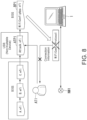
- FIG. 8 is a first diagram for describing an advantageous effect of the laptop PC according to the present embodiment on a third party attack.
- description is made on a case where the attacker AT1 performs the same attack on the laptop PC 1 according to the present embodiment as in FIG. 7 described above.
- the startup processing unit 112 changes the boot chain flag to the non-trust state "1."
- the restriction processing unit 113 prohibits the use of "WiFiConfigProtocol” since "WiFiConfigProtocol” is included in the usage restriction list, for example, as illustrated in FIG. 4 . Therefore, in the laptop PC 1 according to the present embodiment, the attacker AT1 is not able to steal the connection information of the wireless LAN.
- FIG. 9 is a diagram for describing another example of a third party attack on a laptop PC of a conventional technique.
- FIG. 9 illustrates a case where a third party with malicious intent, attacker AT1, caused execution of an old version of the boot program ATP2 called "EFIApp(Ver1)" with a password leakage bug found to attempt to steal a password by using "WiFiInfoPassProtocol.”
- the attacker AT1 is able to steal the password of wireless LAN by causing execution of the old version of the boot program ATP2 named "EFIApp(Ver1)" using the USB to execute "WiFiInfoPassProtocol.”
- FIG. 10 is a second diagram for describing an advantageous effect of the laptop PC according to the present embodiment on a third party attack.
- description is made on a case where the attacker AT1 performs the same attack on the laptop PC 1 according to the present embodiment as in FIG. 9 described above.
- the startup processing unit 112 changes the boot chain flag to the non-trust state "1" since the USB is not on the trust list as a trustable supplier, for example, as illustrated in FIG. 3 .
- the restriction processing unit 113 prohibits the use of "WiFiInfoPassProtocol" since "WiFiInfoPassProtocol" is included in the usage restriction list as illustrated in FIG. 4 , for example. Therefore, in the laptop PC 1 according to the present embodiment, the attacker AT1 is not able to steal the password of the wireless LAN.
- the laptop PC 1 (information processing apparatus) according to the present embodiment includes the authentication processing unit 111, the trust list storage unit 41, the chain flag storage unit 43 (a chain information storage unit), the startup processing unit 112, and the restriction processing unit 113.
- the authentication processing unit 111 confirms the validity of the boot program (startup program) for booting the OS on the basis of the predetermined security key in the BIOS process.
- the trust list storage unit 41 stores the trust list, which is a list of trustable providers of the boot program.
- the chain flag storage unit 43 stores chain information (for example, a boot chain flag) that indicates whether an unauthorized boot program that may have been tampered with has been executed.
- the startup processing unit 112 changes the boot chain flag stored in the chain flag storage unit 43 to information indicating that the unauthorized boot program has been executed (non-trust state "1"), when the boot program acquired from a provider not included in the trust list stored in the trust list storage unit 41 has been executed in the secure boot processing for executing the boot program whose validity is confirmed by the authentication processing unit 111.
- the restriction processing unit 113 restricts the use of preset security-related protocols in the case where the boot chain flag stored in the chain flag storage unit 43 is information indicating that an unauthorized boot program has been executed.
- the laptop PC 1 (information processing apparatus) according to the present embodiment is able to reduce the possibility, for example, even in the case where a program tampered with by a third party is executed in secure boot, that programs subsequently executed are tampered with or monitored (see FIGS. 8 and 10 described above). Therefore, the laptop PC 1 according to the present embodiment is able to increase the protection against third party attacks in secure boot.
- the trust list includes a firmware volume ("Firmware Volume”) whose provider is the BIOS memory 22 in which BIOS programs are stored, or a network boot (“Https Boot”) with a preset server device as a provider.
- firmware Volume whose provider is the BIOS memory 22 in which BIOS programs are stored
- Https Boot a network boot with a preset server device as a provider.
- the laptop PC 1 lists safely-bootable firmware volumes ("Firmware Volume”) or network boots (“Https Boot”) and determines that an unauthorized boot program has been executed (the non-trust state "1") due to any other execution (for example, booting from the USB or the like), thus making it easy to detect the execution of an unauthorized boot program that may have been tampered with.
- Firmware Volume or network boots
- Https Boot safely-bootable firmware volumes
- the non-trust state "1” for example, booting from the USB or the like
- the laptop PC 1 has a restriction list storage unit 42 (a usage restriction list storage unit) that stores a list of protocols whose usage is restricted.
- the restriction processing unit 113 restricts the use of protocols included in the list of protocols stored in the restriction list storage unit 42 in the case where the boot chain flag is information indicating that an unauthorized boot program has been executed (non-trust state "1").
- the laptop PC 1 according to the present embodiment allows the laptop PC 1 according to the present embodiment to appropriately restrict protocols likely to compromise security by a simple method of a list of protocols whose usage is restricted (a usage restriction list).
- a usage restriction list a list of protocols whose usage is restricted
- the list of protocols whose usage is restricted includes protocols related to network connection (for example, "WiFiConfigProtocol” or the like), or protocols related to TPM.
- the laptop PC 1 according to the present embodiment allows the laptop PC 1 according to the present embodiment to appropriately restrict protocols that are likely to compromise security.
- the laptop PC 1 according to the present embodiment is able to further increase the protection against third party attacks in secure boot.
- the control method according to the present embodiment which is a control method for the laptop PC 1 having the authentication processing unit 111 and the chain flag storage unit 43 described above, includes a startup processing step and a restriction processing step.
- the authentication processing unit 111 confirms the validity of the boot program for booting the OS on the basis of a predetermined security key in the BIOS processing.
- the chain flag storage unit 43 stores a boot chain flag that indicates whether an unauthorized boot program that may have been tampered with has been executed, in cooperation with a trust list storage unit 41 that stores a trust list, which is a list of trustable providers of a boot program.
- the startup processing unit 112 changes the boot chain flag stored in the chain flag storage unit 43 to information indicating that the unauthorized boot program has been executed in the case of causing the execution of the boot program acquired from a provide not included in the trust list stored in the trust list storage unit 41.
- the restriction processing unit 113 restricts the use of the preset security-related protocols in the case where the boot chain flag stored in the chain flag storage unit 43 is information indicating that the unauthorized startup program has been executed.
- control method according to the present embodiment has the same effect as the above-mentioned laptop PC 1 and is able to increase the protection against third party attacks in secure boot.
- the present invention is not limited to the above embodiments, but may be modified to the extent not to deviate from the gist of the present invention.
- the information processing apparatus is described as a laptop PC 1, but not limited thereto, and may be any other information processing apparatus, such as, for example, a tablet terminal device, a desktop PC, and the like.
- the provider of the trust list is not limited to the example illustrated in FIG. 3 , but may include providers of other devices.
- the protocol of the usage restriction list is not limited to the example illustrated in FIG. 4 , but may include other protocols.
- Each of the components of the laptop PC 1 described above has a computer system inside.
- a program for implementing the functions of each of the components of the laptop PC 1 described above may be recorded on a computer-readable recording medium, and by loading the program recorded in the recording medium into the computer system to execute the program, the processes of the respective components of the laptop PC 1 described above may be performed. Note that the above “loading the program recorded in the recording medium into the computer system to execute the program” includes installing the program in the computer system.
- computer system here includes hardware such as the operating system and peripheral devices.
- the "computer system” may also include a plurality of computer devices connected via a network including the Internet, WAN, LAN, dedicated lines, and other communication lines.
- “computer-readable recording medium” refers to a portable medium such as a flexible disk, a magneto-optical disk, a ROM, or a CD-ROM, as well as a storage device such as a hard disk built in a computer system or the like.
- the recording medium storing the program may be a non-transitory recording medium such as a CD-ROM.
- a recording medium also includes an internal or external recording medium able to be accessed by a delivery server to deliver the program.
- the program may be divided into a plurality of programs, each of which is downloaded at a different timing and then merged with each of the components of the laptop PC 1, or the distribution server that delivers each of the divided programs may be different.
- the term "computer-readable recording medium” includes a recording medium that retains the program for a certain period of time, like a volatile memory (RAM) inside the computer system that serves as the server or client used when the program is transmitted via a network.
- the above programs may be used to implement some of the above-described functions.
- the program may be a so-called difference file (difference program), which is able to implement the above-described functions in combination with the programs already recorded in the computer system.
- LSI large scale integration
- Each of the above functions may be individually implemented as a processor, or the functions may be partially or fully integrated into a processor.
- the method of forming an integrated circuit is not limited to LSI, but may be implemented as a dedicated circuit or a general-purpose processor. In the case where an alternative integrated circuit technology to LSI emerges as a result of progress in semiconductor technology, an integrated circuit based on the technology may be used.
Landscapes
- Engineering & Computer Science (AREA)
- Software Systems (AREA)
- Computer Security & Cryptography (AREA)
- Theoretical Computer Science (AREA)
- General Engineering & Computer Science (AREA)
- Computer Hardware Design (AREA)
- Physics & Mathematics (AREA)
- General Physics & Mathematics (AREA)
- Stored Programmes (AREA)
Abstract
Provided is an information processing apparatus to improve the protection against third party attacks in secure boot. The information processing apparatus includes: an authentication processing unit that confirms the validity of a startup program for booting an OS based on a security key in BIOS processing; a trust list storage unit that stores a trust list, a list of trustable providers of the startup program; a chain information storage unit that stores chain information indicating whether the startup program has been executed when the startup program is unauthorized; a startup processing unit that changes the chain information when the startup program acquired from a provider not included in the trust list has been executed in secure boot processing for executing the startup program whose validity has been confirmed by the authentication processing unit; and a restriction processing unit that restricts the use of security-related protocols when the chain information has been changed to information indicating that the unauthorized startup program has been executed.
Description
- The present invention relates to an information processing apparatus, a control method, and a program.
- In recent years, an information processing apparatus such as a personal computer has an implemented function called "secure boot" in the basic input output system (BIOS), the secure boot preventing a program that is not signed with a key registered in the system (secure boot key) from running, so that a third party is not able to tamper with or monitor the pre-boot environment before the operating system (OS) is started (see, for example,
Japanese Unexamined Patent Application Publication No. 2017-146694 - In a conventional information processing apparatus, an information exchange between drivers, system information management, BIOS configuration setting, and the like are performed by means of a general-purpose interface whose protocols or the like are defined by the unified extensible firmware interface (UEFI) specification. The general-purpose interface, however, is a program that is present in a memory, and therefore may be rewritten by a third party program.
- Moreover, some programs signed with a secure boot key may have vulnerabilities that allow someone to slip through the secure boot, so that even under the protection of secure boot, the programs may be tampered with by a third party. Therefore, in a conventional information processing apparatus, for example, when a program tampered with by a third party is executed in secure boot, the program executed thereafter may be tampered with or monitored.
- The present invention was made to solve the above problem, and the object of the present invention is to provide an information processing apparatus, a control method, and a program capable of improving protection against third party attacks in secure boot.
- To solve the above problem, an information processing apparatus according to the first aspect of the present invention includes: an authentication processing unit that confirms the validity of a startup program for booting an operating system (OS) based on a predetermined security key in basic input output system (BIOS) processing; a trust list storage unit that stores a trust list, a list of trustable providers of the startup program; a chain information storage unit that stores chain information indicating whether the startup program has been executed when the startup program is unauthorized because of being possibly tampered with; a startup processing unit that changes the chain information stored in the chain information storage unit to information indicating that the unauthorized startup program has been executed when the startup program acquired from a provider not included in the trust list stored in the trust list storage unit has been executed in secure boot processing for executing the startup program whose validity has been confirmed by the authentication processing unit; and a restriction processing unit that restricts the use of preset security-related protocols when the chain information stored in the chain information storage unit is information indicating that the unauthorized startup program has been executed.
- Moreover, according to the first aspect of the present invention, in the above information processing apparatus, the trust list may include a firmware volume with a BIOS memory as a provider, where programs for the BIOS are stored, or a network boot with a preset server device as a provider.
- Furthermore, according to the first aspect of the present invention, the information processing apparatus further may include a usage restriction list storage unit that stores a list of the protocols whose use is restricted, and the restriction processing unit may restrict the use of the protocols included in the list of the protocols stored in the usage restriction list storage unit when the chain information indicates that the unauthorized startup program has been executed.
- Further, according to the first aspect of the present invention, in the above information processing apparatus, the list of the protocols whose use is restricted may include protocols related to network connection or protocols related to a trusted platform module (TPM).
- According to the second aspect of the present invention, there is provided a control method for an information processing apparatus including: an authentication processing unit that confirms the validity of a startup program for booting an operating system (OS) based on a predetermined security key in basic input output system (BIOS) processing; a trust list storage unit that stores a trust list, a list of trustable providers of the startup program; and a chain information storage unit that stores chain information indicating whether the startup program has been executed when the startup program is unauthorized because of being possibly tampered with; the method including: a startup processing step in which a startup processing unit changes the chain information stored in the chain information storage unit to information indicating that the unauthorized startup program has been executed when the startup program acquired from a provider not included in the trust list stored in the trust list storage unit has been executed in secure boot processing for executing the startup program whose validity has been confirmed by the authentication processing unit; and a restriction processing step in which a restriction processing unit restricts the use of preset security-related protocols when the chain information stored in the chain information storage unit is information indicating that the unauthorized startup program has been executed.
- According to the third aspect of the present invention, there is provided a program for causing a computer for an information processing apparatus including: an authentication processing unit that confirms the validity of a startup program for booting an operating system (OS) based on a predetermined security key in basic input output system (BIOS) processing; a trust list storage unit that stores a trust list, a list of trustable providers of the startup program; and a chain information storage unit that stores chain information indicating whether the startup program has been executed when the startup program is unauthorized because of being possibly tampered with, the program causing the computer to execute: a startup processing step in which the startup processing unit changes the chain information stored in the chain information storage unit to information indicating that the unauthorized startup program has been executed when the startup program acquired from a provider not included in the trust list stored in the trust list storage unit has been executed in secure boot processing for executing the startup program whose validity has been confirmed by the authentication processing unit; and a restriction processing step of restricting the use of preset security-related protocols when the chain information stored in the chain information storage unit is information indicating that the unauthorized startup program has been executed.
- The above-described aspects of the present invention can increase the protection against third-party attacks in secure boot.
-
-
FIG. 1 is a diagram illustrating an example of the main hardware configuration of a laptop PC according to the present embodiment. -
FIG. 2 is a functional block diagram illustrating an example of the functional configuration of an information processing system and the laptop PC according to the present embodiment. -
FIG. 3 is a diagram illustrating example data for a trust list storage unit in the present embodiment. -
FIG. 4 is a diagram illustrating example data for a restriction list storage unit in the present embodiment. -
FIG. 5 is a flowchart illustrating an example of startup processing of the laptop PC according to the present embodiment. -
FIG. 6 is a flowchart illustrating an example of protocol processing of the laptop PC according to the present embodiment. -
FIG. 7 is a diagram for describing an example of a third party attack on a laptop PC of a conventional technique. -
FIG. 8 is a first diagram for describing an advantageous effect of the laptop PC according to the present embodiment against the third party attack. -
FIG. 9 is a diagram for describing another example of a third party attack on the laptop PC of the conventional technique. -
FIG. 10 is a second diagram for describing an advantageous effect of the laptop PC according to the present embodiment against a third party attack. - An information processing apparatus and a control method according to one embodiment of the present invention are described below with reference to the drawings.
-
FIG. 1 is a diagram illustrating an example of the main hardware configuration of alaptop PC 1 according to the present embodiment. In the present embodiment, the laptop PC 1 is described as an example of the information processing apparatus. - As illustrated in
FIG. 1 , the laptop PC 1 has a central processing unit (CPU) 11, amain memory 12, avideo subsystem 13, adisplay unit 14, achipset 21, aBIOS memory 22, a solid state drive (SSD) 23, anaudio system 24, a wireless local area network (WLAN)card 25, a universal serial bus (USB)connector 26, anembedded controller 31, aninput unit 32, and apower circuit 33. - In the present embodiment, the
CPU 11 and thechipset 21 correspond to amain control unit 10. Themain control unit 10 is an example of a processor (main processor) that executes a program stored in a memory (the main memory 12). - The
CPU 11 performs various arithmetic operations under program control and controls the entire laptop PC 1. - The
main memory 12 is a writable memory that is used as a reading area of the execution program of theCPU 11 or as a working area to write processing data of the execution program. For example, themain memory 12 includes a plurality of dynamic random access memory (DRAM) chips. The execution program includes BIOS, OS, various drivers for hardware operations of peripherals, various services/utilities, application programs, and so on. - The
video subsystem 13 is a subsystem to implement functions related to image display, and includes a video controller. The video controller processes drawing commands from theCPU 11, writes the processed drawing information into a video memory, reads the drawing information from the video memory, and outputs the drawing information as drawing data (display data) to thedisplay unit 14. - The
display unit 14, which is, for example, a liquid crystal display, displays a display screen based on the drawing data (display data) output from thevideo subsystem 13. - The
chipset 21 has controllers such as a USB, a serial AT Attachment (ATA), a serial peripheral interface (SPI) bus, a peripheral component interconnect (PCI) bus, a PCI-Express bus, a low pin count (LPC) bus and the like, to which a plurality of devices is connected. InFIG. 1 , as examples of devices, theBIOS memory 22, theSSD 23, theaudio system 24, theWLAN card 25, and theUSB connector 26 are connected to thechipset 21. - The
BIOS memory 22 includes an electrically rewritable non-volatile memory such as an electrically erasable programmable read only memory (EEPROM) or a Flash ROM, for example. TheBIOS memory 22 stores a BIOS, system firmware for controlling the embeddedcontroller 31, and so on. - The SSD 23 (an example of a non-volatile memory) stores an OS, various drivers, various services/utilities, application programs, and various data.
- The
audio system 24 records, plays, and outputs sound data. - The
WLAN card 25 connects to the network by wireless LAN and performs data communication. - The
USB connector 26 is a connector for connecting peripherals using USBs. - The embedded controller 31 (an example of a sub-control unit) is a one-chip microcomputer that monitors and controls various devices (peripherals, sensors, and the like) regardless of the system status of the
laptop PC 1. In addition, the embeddedcontroller 31 has a power management function that controls thepower circuit 33. The embeddedcontroller 31 includes an unillustrated CPU, ROM, R_AM, and the like, and is equipped with A/D input terminals, D/A output terminals, timers, and digital input-output terminals for a plurality of channels. For example, theinput unit 32, thepower circuit 33, and the like are connected to the embeddedcontroller 31 via those input-output terminals, and the embeddedcontroller 31 controls the operations of theinput unit 32, thepower circuit 33, and the like. - Subsequently, the functional configuration of the laptop PC 1 according to the present embodiment is described with reference to
FIG. 2. FIG. 2 is a functional block diagram illustrating an example of the functional configuration of aninformation processing system 100 and the laptop PC 1 according to the present embodiment. InFIG. 2 , among the functional configurations of the laptop PC 1, only the configurations related to the present invention are described. - As illustrated in
FIG. 2 , theinformation processing system 100 includes the laptop PC 1 and theboot server 2. The laptop PC 1 and theboot server 2 are allowed to be connected to each other via a network NW1. - The
boot server 2 is a server device for network boot, for example, a server device to which the manufacturer of the laptop PC 1 provides various services. Theboot server 2 provides the laptop PC 1 with the OS startup program for network boot via the network NW1. - Moreover, as illustrated in
FIG. 2 , the laptop PC 1 includes themain control unit 10, astorage unit 40, and a network (NW)communication unit 250. - The NW
communication unit 250 is a functional unit implemented by a network device such as, for example, aWLAN card 25. Themain control unit 10 is allowed to be connected to the network NW1 via the NWcommunication unit 250. In the present embodiment, the NWcommunication unit 250 is assumed to be connected to the network NW1 using wireless LAN (WiFi [registered trademark]) in description. - The
storage unit 40 is implemented by a memory such as, for example, theBIOS memory 22 or themain memory 12, and stores various information used for various processes of themain control unit 10, for example. Thestorage unit 40 includes a trustlist storage unit 41, a restrictionlist storage unit 42, and a chainflag storage unit 43. - The trust
list storage unit 41 is implemented by theBIOS memory 22, for example, and stores a trust list that is a list of trustable providers of the startup program. The provider here means a device that is a source of execution (boot source) of the startup program. For example, the provider includes an Https boot, a USB device connected to theUSB connector 26, aninternal SSD 23, a firmware of theBIOS memory 22, and so on. The startup program is, for example, various UEFI programs that are executed when booting an OS (Windows [registered trademark] or the like). The trustlist storage unit 41 stores a list of trustable devices as providers (boot sources). - Here, example data for the trust
list storage unit 41 is described with reference toFIG. 3 . -
FIG. 3 is a diagram illustrating the example data for the trustlist storage unit 41 in the present embodiment. - In the example illustrated in
FIG. 3 , the trust list stored in the trustlist storage unit 41 includes "Firmware Volume," "Https Boot," and the like as trustable UEFI sources. - Here, "Firmware Volume" indicates that the firmware in the
BIOS memory 22 is a provider (boot source), and "Https Boot" indicates that, for example, that a network boot by theboot server 2 is a provider (boot source). - Returning to the description of
FIG. 2 , the restriction list storage unit 42 (an example of a usage restriction list storage unit), which is a storage unit implemented by, for example, theBIOS memory 22, stores a list of protocols to restrict usage. Here, the term "protocol" means a procedure and a rule defined for exchanging data with thelaptop PC 1, an electrical regulation for signals, a standard that defines the procedures for transmission and reception in telecommunications. When the startup program (UEFI program) is executed from a provider (boot source) that is not in the trust list described above, the restrictionlist storage unit 42 stores a list of protocols to be restricted (prohibited) from being used in subsequent processes, as a usage restriction list. The usage restriction list includes protocols likely to compromise security such as, for example, protocols related to network connection, protocols related to a trusted platform module (TPM), and the like. - Here, example data for the restriction
list storage unit 42 is described with reference toFIG. 4 . -
FIG. 4 is a diagram illustrating the example data for the restrictionlist storage unit 42 in the present embodiment. - In the example illustrated in
FIG. 4 , the usage restriction list stored in the restrictionlist storage unit 42 contains WiFiInfoPassProtocol, WiFiConfigProtocol, BBBBBBBBBBProtocol, CCCCCCCCCCProtocol, and so on, as the usage restriction protocols. - In the above, WiFiInfoPassProtocol is a protocol to pass a service set identifier (SSID) and a password of a wireless LAN. Moreover, WiFiConfigProtocol is a protocol to configure the connection settings of the wireless LAN.
- Returning to the description of
FIG. 2 again, the chain flag storage unit 43 (an example of the chain information storage unit) is a storage unit implemented by the system area of themain memory 12, for example. The chainflag storage unit 43 stores a boot chain flag (chain information) that indicates whether an unauthorized startup program that may have been tampered with has been executed. The boot chain flag stores information indicating the trust state (for example, "0") when, for example, an unauthorized startup program has not been executed, and information indicating the non-trust state (for example, "1") when the unauthorized startup program has been executed. - The
main control unit 10 is a functional unit implemented by causing theCPU 11 and thechipset 21 to execute the programs stored in theBIOS memory 22 and theSSD 23, and performs various processes based on the BIOS and OS. - The
main control unit 10 includes aBIOS processing unit 110 and anOS processing unit 120. - The
BIOS processing unit 110 performs various processes based on BIOS (BIOS processing). TheBIOS processing unit 110 includes anauthentication processing unit 111, astartup processing unit 112, and arestriction processing unit 113 - The
authentication processing unit 111 confirms the validity of the startup program (for example, a UEFI program) for booting the OS on the basis of a predetermined security key in the processes of BIOS (BIOS processing). Theauthentication processing unit 111 confirms the validity of the startup program (for example, a UEFI program) by confirming the signature by the security key (for example, a secure boot key). Theauthentication processing unit 111 performs the authentication processing for secure boot described later. - The
startup processing unit 112 performs various processes for booting the laptop PC 1 (OS) in the processes of BIOS (BIOS processing). Thestartup processing unit 112 performs the secure boot processing for executing the startup program whose validity is confirmed by theauthentication processing unit 111. - When the startup program acquired from a provider that is not included in the trust list stored in the trust
list storage unit 41 is executed in the secure boot processing, thestartup processing unit 112 changes a boot chain flag stored in the chainflag storage unit 43 to information indicating that an unauthorized startup program has been executed. - The
startup processing unit 112, for example, acquires the Device Path Class from the Device Path of the startup program (UEFI program) and confirms the provider of the startup program (UEFI program) on the basis of the Device Path Class. Thestartup processing unit 112 determines whether the confirmed provider is included in the trust list stored in the trustlist storage unit 41. When the confirmed provider is not included in the trust list stored in the trustlist storage unit 41, thestartup processing unit 112 changes the boot chain flag stored in the chainflag storage unit 43 from the trust state (for example, "0") to the non-trust state (for example, "1"). - When the boot chain flag stored in the chain
flag storage unit 43 is information indicating that an unauthorized startup program has been executed (for example, the non-trust state "1"), therestriction processing unit 113 restricts the use of preset security-related protocols. Therestriction processing unit 113 restricts the use of the protocols included in the list of protocols stored in the restrictionlist storage unit 42, for example, when the boot chain flag is information indicating that an unauthorized startup program has been executed (for example, the non-trust state "1"). Therestriction processing unit 113, for example, prohibits the use of protocols included in the usage restriction list illustrated inFIG. 3 . - The
OS processing unit 120 is a functional unit that takes over the processing after the OS startup processing by theBIOS processing unit 110. TheOS processing unit 120 performs various processes based on the OS. - Subsequently, the operation of the
laptop PC 1 according to the present embodiment is described with reference to the drawings. - First, the startup processing of the
laptop PC 1 according to the present embodiment is described with reference toFIG. 5. FIG. 5 is a flowchart illustrating an example of the startup processing of thelaptop PC 1 according to the present embodiment. - As illustrated in
FIG. 5 , theBIOS processing unit 110 of thelaptop PC 1 starts a power-on self-test (POST) process and sets the boot chain flag to the trust state "0" when the startup of thelaptop PC 1 is started (step S101). TheBIOS processing unit 110 stores the trust state "0" in the boot chain flag of the chainflag storage unit 43. - Subsequently, the
startup processing unit 112 of theBIOS processing unit 110 determines whether a boot source (supplier) is included in the trust list (step S102). Thestartup processing unit 112 confirms the provider of the boot program (startup program) using the Device Path Class, and determines whether the confirmed provider is included in the trust list stored in the trustlist storage unit 41. Thestartup processing unit 112 proceeds to step S104 when the boot source (supplier) is included in the trust list (step S102: YES). Moreover, when the boot source (supplier) is not included in the trust list (step S102: NO), thestartup processing unit 112 determines that the unauthorized boot program has been executed and then proceeds to step S103. - In step S103, the
startup processing unit 112 sets the boot chain flag to the non-trust state "1." In other words, thestartup processing unit 112 stores the non-trust state "1" in the boot chain flag of the chainflag storage unit 43. After the processing of step S103, the process proceeds to step S104. - In step S104, the
startup processing unit 112 executes the boot program by secure boot. Thestartup processing unit 112 confirms the validity of the boot program using theauthentication processing unit 111, and performs the processing of the boot program whose validity is confirmed. - Then, the
startup processing unit 112 determines whether the boot processing is completed (step S105). In other words, thestartup processing unit 112 determines whether there is a boot program to be executed next. When the boot processing is completed (there is no boot program to be executed next) (step S105: YES), thestartup processing unit 112 takes over the processing to theOS processing unit 120. When the boot processing is not completed (there is a boot program to be executed next) (step S105: NO), thestartup processing unit 112 returns to step S102 and performs processing for the boot program to be executed next. - Subsequently, the protocol restriction processing of the
laptop PC 1 is described with reference toFIG. 6 . -
FIG. 6 is a flowchart illustrating an example of the protocol processing of the laptop PC according to the present embodiment. The protocol processing here is, for example, InstallProtocol, LocalteProtocol, HandleProtocol, or the like of the UEFI specification. - As illustrated in
FIG. 6 , therestriction processing unit 113 of theBIOS processing unit 110 determines whether the boot chain flag is in the non-trust state "1" (step S201). Therestriction processing unit 113 determines whether the boot chain flag of the chainflag storage unit 43 is in the non-trust state "1." When the boot chain flag is in the non-trust state "1" (step S201: YES), therestriction processing unit 113 proceeds to step S203. When the boot chain flag is not in the non-trust state "1" (trust state "0") (step S201: NO), therestriction processing unit 113 proceeds to step S202. - In step S202, the
BIOS processing unit 110 executes the protocol process. For example, theBIOS processing unit 110 executes protocol processes such as InstallProtocol, LocalteProtocol, and HandleProtocol. After the processing of step S202, theBIOS processing unit 110 proceeds to the next process. - In step S203, the
restriction processing unit 113 determines whether the protocol is included in the usage restriction list. Therestriction processing unit 113 confirms the usage restriction list stored in the restrictionlist storage unit 42 and determines whether the process is included in the usage restriction list. When the process is included in the usage restriction list (step S203: YES), therestriction processing unit 113 proceeds to step S204. When the process is not included in the usage restriction list (step S203: NO), therestriction processing unit 113 returns to step S204. - In step S204, the
restriction processing unit 113 send back (returns) an error result and does not execute the protocol process. After the processing of step S204, therestriction processing unit 113 proceeds to the next process. - Subsequently, description is made on an attack example and an advantageous effect of the
laptop PC 1 according to the present embodiment with reference toFIGS. 7 to 10 . -
FIG. 7 is a diagram for describing an example of a third party attack on a laptop PC of a conventional technique. - The example of the attack in
FIG. 7 illustrates a case where a malicious third party, an attacker AT1, attempted to steal connection information by planting malware and tampering with the protocol before executing the Wifi Configuration App. - The attacker AT1 uses USB to cause the execution of the boot program ATP1 with malware called "Attack.efi" planted to tamper with the "WiFiConfigProtocol."
- In the conventional laptop PC in
FIG. 7 , when a boot program BP1, "WifiConfigurationApp.efi" is executed subsequently by the BIOS, the attacker AT1 is able to steal the connection information of the wireless LAN by means of the "WiFiConfigProtocol" tampered with. - On the other hand,
FIG. 8 is a first diagram for describing an advantageous effect of the laptop PC according to the present embodiment on a third party attack. In this specification, description is made on a case where the attacker AT1 performs the same attack on thelaptop PC 1 according to the present embodiment as inFIG. 7 described above. - As illustrated in
FIG. 8 , in the laptop PC1 according to the present embodiment, when the boot program ATP1 named "Attack.efi" is executed from the USB, the USB is not on the trust list as a trustable supplier, for example, as illustrated inFIG. 3 , and therefore thestartup processing unit 112 changes the boot chain flag to the non-trust state "1." - Subsequently, when a boot program BP1, "WifiConfigurationApp.efi" is executed by the BIOS, the
restriction processing unit 113 prohibits the use of "WiFiConfigProtocol" since "WiFiConfigProtocol" is included in the usage restriction list, for example, as illustrated inFIG. 4 . Therefore, in thelaptop PC 1 according to the present embodiment, the attacker AT1 is not able to steal the connection information of the wireless LAN. - In addition,
FIG. 9 is a diagram for describing another example of a third party attack on a laptop PC of a conventional technique. - The example of the attack in
FIG. 9 illustrates a case where a third party with malicious intent, attacker AT1, caused execution of an old version of the boot program ATP2 called "EFIApp(Ver1)" with a password leakage bug found to attempt to steal a password by using "WiFiInfoPassProtocol." - The attacker AT1 is able to steal the password of wireless LAN by causing execution of the old version of the boot program ATP2 named "EFIApp(Ver1)" using the USB to execute "WiFiInfoPassProtocol."
- On the other hand,
FIG. 10 is a second diagram for describing an advantageous effect of the laptop PC according to the present embodiment on a third party attack. In this specification, description is made on a case where the attacker AT1 performs the same attack on thelaptop PC 1 according to the present embodiment as inFIG. 9 described above. - As illustrated in
FIG. 10 , in thelaptop PC 1 according to the present embodiment, when the boot program ATP2 named "EFIApp(Ver1)" is executed from the USB, thestartup processing unit 112 changes the boot chain flag to the non-trust state "1" since the USB is not on the trust list as a trustable supplier, for example, as illustrated inFIG. 3 . - Subsequently, the
restriction processing unit 113 prohibits the use of "WiFiInfoPassProtocol" since "WiFiInfoPassProtocol" is included in the usage restriction list as illustrated inFIG. 4 , for example. Therefore, in thelaptop PC 1 according to the present embodiment, the attacker AT1 is not able to steal the password of the wireless LAN. - As described above, the laptop PC 1 (information processing apparatus) according to the present embodiment includes the
authentication processing unit 111, the trustlist storage unit 41, the chain flag storage unit 43 (a chain information storage unit), thestartup processing unit 112, and therestriction processing unit 113. Theauthentication processing unit 111 confirms the validity of the boot program (startup program) for booting the OS on the basis of the predetermined security key in the BIOS process. The trustlist storage unit 41 stores the trust list, which is a list of trustable providers of the boot program. The chainflag storage unit 43 stores chain information (for example, a boot chain flag) that indicates whether an unauthorized boot program that may have been tampered with has been executed. Thestartup processing unit 112 changes the boot chain flag stored in the chainflag storage unit 43 to information indicating that the unauthorized boot program has been executed (non-trust state "1"), when the boot program acquired from a provider not included in the trust list stored in the trustlist storage unit 41 has been executed in the secure boot processing for executing the boot program whose validity is confirmed by theauthentication processing unit 111. Therestriction processing unit 113 restricts the use of preset security-related protocols in the case where the boot chain flag stored in the chainflag storage unit 43 is information indicating that an unauthorized boot program has been executed. - Thereby, the laptop PC 1 (information processing apparatus) according to the present embodiment is able to reduce the possibility, for example, even in the case where a program tampered with by a third party is executed in secure boot, that programs subsequently executed are tampered with or monitored (see
FIGS. 8 and10 described above). Therefore, thelaptop PC 1 according to the present embodiment is able to increase the protection against third party attacks in secure boot. - Moreover, in the present embodiment, the trust list includes a firmware volume ("Firmware Volume") whose provider is the
BIOS memory 22 in which BIOS programs are stored, or a network boot ("Https Boot") with a preset server device as a provider. - Thereby, the
laptop PC 1 according to the present embodiment lists safely-bootable firmware volumes ("Firmware Volume") or network boots ("Https Boot") and determines that an unauthorized boot program has been executed (the non-trust state "1") due to any other execution (for example, booting from the USB or the like), thus making it easy to detect the execution of an unauthorized boot program that may have been tampered with. - In addition, the
laptop PC 1 according to the present embodiment has a restriction list storage unit 42 (a usage restriction list storage unit) that stores a list of protocols whose usage is restricted. Therestriction processing unit 113 restricts the use of protocols included in the list of protocols stored in the restrictionlist storage unit 42 in the case where the boot chain flag is information indicating that an unauthorized boot program has been executed (non-trust state "1"). - This allows the
laptop PC 1 according to the present embodiment to appropriately restrict protocols likely to compromise security by a simple method of a list of protocols whose usage is restricted (a usage restriction list). Thus, thelaptop PC 1 according to the present embodiment is able to further increase the protection against third party attacks in secure boot. - Further, in the present embodiment, the list of protocols whose usage is restricted includes protocols related to network connection (for example, "WiFiConfigProtocol" or the like), or protocols related to TPM.
- This allows the
laptop PC 1 according to the present embodiment to appropriately restrict protocols that are likely to compromise security. Thus, thelaptop PC 1 according to the present embodiment is able to further increase the protection against third party attacks in secure boot. - The control method according to the present embodiment, which is a control method for the
laptop PC 1 having theauthentication processing unit 111 and the chainflag storage unit 43 described above, includes a startup processing step and a restriction processing step. Theauthentication processing unit 111 confirms the validity of the boot program for booting the OS on the basis of a predetermined security key in the BIOS processing. The chainflag storage unit 43 stores a boot chain flag that indicates whether an unauthorized boot program that may have been tampered with has been executed, in cooperation with a trustlist storage unit 41 that stores a trust list, which is a list of trustable providers of a boot program. In the startup processing step, thestartup processing unit 112 changes the boot chain flag stored in the chainflag storage unit 43 to information indicating that the unauthorized boot program has been executed in the case of causing the execution of the boot program acquired from a provide not included in the trust list stored in the trustlist storage unit 41. In the restriction processing step, therestriction processing unit 113 restricts the use of the preset security-related protocols in the case where the boot chain flag stored in the chainflag storage unit 43 is information indicating that the unauthorized startup program has been executed. - Thereby, the control method according to the present embodiment has the same effect as the above-mentioned
laptop PC 1 and is able to increase the protection against third party attacks in secure boot. - The present invention is not limited to the above embodiments, but may be modified to the extent not to deviate from the gist of the present invention.
- For example, in the above embodiment, the information processing apparatus is described as a
laptop PC 1, but not limited thereto, and may be any other information processing apparatus, such as, for example, a tablet terminal device, a desktop PC, and the like. - In the above embodiments, the provider of the trust list is not limited to the example illustrated in
FIG. 3 , but may include providers of other devices. - Moreover, in the above embodiments, the protocol of the usage restriction list is not limited to the example illustrated in
FIG. 4 , but may include other protocols. - Each of the components of the
laptop PC 1 described above has a computer system inside. A program for implementing the functions of each of the components of thelaptop PC 1 described above may be recorded on a computer-readable recording medium, and by loading the program recorded in the recording medium into the computer system to execute the program, the processes of the respective components of thelaptop PC 1 described above may be performed. Note that the above "loading the program recorded in the recording medium into the computer system to execute the program" includes installing the program in the computer system. The term "computer system" here includes hardware such as the operating system and peripheral devices. - Moreover, the "computer system" may also include a plurality of computer devices connected via a network including the Internet, WAN, LAN, dedicated lines, and other communication lines. Furthermore, "computer-readable recording medium" refers to a portable medium such as a flexible disk, a magneto-optical disk, a ROM, or a CD-ROM, as well as a storage device such as a hard disk built in a computer system or the like. Thus, the recording medium storing the program may be a non-transitory recording medium such as a CD-ROM.
- Furthermore, a recording medium also includes an internal or external recording medium able to be accessed by a delivery server to deliver the program. The program may be divided into a plurality of programs, each of which is downloaded at a different timing and then merged with each of the components of the
laptop PC 1, or the distribution server that delivers each of the divided programs may be different. Furthermore, the term "computer-readable recording medium" includes a recording medium that retains the program for a certain period of time, like a volatile memory (RAM) inside the computer system that serves as the server or client used when the program is transmitted via a network. The above programs may be used to implement some of the above-described functions. Moreover, the program may be a so-called difference file (difference program), which is able to implement the above-described functions in combination with the programs already recorded in the computer system. - In addition, some or all of the above-described functions may be implemented as integrated circuits such as large scale integration (LSI). Each of the above functions may be individually implemented as a processor, or the functions may be partially or fully integrated into a processor. The method of forming an integrated circuit is not limited to LSI, but may be implemented as a dedicated circuit or a general-purpose processor. In the case where an alternative integrated circuit technology to LSI emerges as a result of progress in semiconductor technology, an integrated circuit based on the technology may be used.
-
- 1
- laptop PC
- 2
- boot server
- 10
- main control unit
- 11
- CPU
- 12
- main memory
- 13
- video subsystem
- 14
- display unit
- 21
- chipset
- 22
- BIOS memory
- 23
- SSD
- 24
- audio system
- 25
- WLAN card
- 26
- USB connector
- 31
- embedded controller (EC)
- 32
- input unit
- 33
- power circuit
- 40
- storage unit
- 41
- trust list storage unit
- 42
- restriction list storage unit
- 43
- chain flag storage unit
- 100
- information processing system
- 110
- BIOS processing unit
- 111
- authentication processing unit
- 112
- startup processing unit
- 113
- restriction processing unit
- 120
- OS processing unit
- 250
- NW communication unit
- NW1
- network
Claims (12)
- An information processing apparatus comprising:an authentication processing unit configured to confirm a validity of a startup program for booting an operating system, OS, based on a predetermined security key in basic input output system, BIOS, processing;a trust list storage unit configured to store a trust list, the trust list comprising a list of trustable providers of the startup program;a chain information storage unit configured to store chain information indicating whether the startup program has been executed when the startup program is unauthorized because of being possibly tampered with;a startup processing unit configured to change the chain information stored in the chain information storage unit to information indicating that the unauthorized startup program has been executed when the startup program acquired from a provider not included in the trust list stored in the trust list storage unit has been executed in secure boot processing for executing the startup program whose validity has been confirmed by the authentication processing unit; anda restriction processing unit configured to restrict the use of preset security-related protocols when the chain information stored in the chain information storage unit is information indicating that the unauthorized startup program has been executed.
- The information processing apparatus according to claim 1, wherein the trust list includes a firmware volume with a BIOS memory as a provider, where programs for the BIOS are stored, or a network boot with a preset server device as a provider.
- The information processing apparatus according to any one of claims 1 and 2, further comprising a usage restriction list storage unit configured to store a list of the protocols whose use is restricted,
wherein the restriction processing unit is configured to restrict the use of the protocols included in the list of the protocols stored in the usage restriction list storage unit when the chain information indicates that the unauthorized startup program has been executed. - The information processing apparatus according to claim 3, wherein the list of the protocols whose use is restricted includes protocols related to network connection or protocols related to a trusted platform module, TPM.
- A control method for an information processing apparatus including: an authentication processing unit configured to confirm a validity of a startup program for booting an operating system, OS, based on a predetermined security key in basic input output system, BIOS, processing; a trust list storage unit configured to store a trust list, the trust list comprising a list of trustable providers of the startup program; and a chain information storage unit configured to store chain information indicating whether the startup program has been executed when the startup program is unauthorized because of being possibly tampered with;
the method comprising:a startup processing step in which a startup processing unit changes the chain information stored in the chain information storage unit to information indicating that the unauthorized startup program has been executed when the startup program acquired from a provider not included in the trust list stored in the trust list storage unit has been executed in secure boot processing for executing the startup program whose validity has been confirmed by the authentication processing unit; anda restriction processing step in which a restriction processing unit restricts the use of preset security-related protocols when the chain information stored in the chain information storage unit is information indicating that the unauthorized startup program has been executed. - The control method according to claim 5, wherein the trust list includes a firmware volume with a BIOS memory as a provider, where programs for the BIOS are stored, or a network boot with a preset server device as a provider.
- The control method according to any one of claims 5 and 6, wherein the information processing apparatus further comprises a usage restriction list storage unit configured to store a list of the protocols whose use is restricted, the control method further comprising:
a step in which the usage restriction list storage unit restricts the use of the protocols included in the list of the protocols stored in the usage restriction list storage unit when the chain information indicates that the unauthorized startup program has been executed. - The control method according to claim 7, wherein the list of the protocols whose use is restricted includes protocols related to network connection or protocols related to a trusted platform module, TPM.
- A program for causing a computer for an information processing apparatus including: an authentication processing unit configured to confirm a validity of a startup program for booting an operating system, OS, based on a predetermined security key in basic input output system, BIOS, processing; a trust list storage unit configured to store a trust list, the trust list comprising a list of trustable providers of the startup program; and a chain information storage unit configured to store chain information indicating whether the startup program has been executed when the startup program is unauthorized because of being possibly tampered with, the program causing the computer to execute:a startup processing step in which the startup processing unit changes the chain information stored in the chain information storage unit to information indicating that the unauthorized startup program has been executed when the startup program acquired from a provider not included in the trust list stored in the trust list storage unit has been executed in secure boot processing for executing the startup program whose validity has been confirmed by the authentication processing unit; anda restriction processing step of restricting the use of preset security-related protocols when the chain information stored in the chain information storage unit is information indicating that the unauthorized startup program has been executed.
- The program according to claim 9, wherein the trust list includes a firmware volume with a BIOS memory as a provider, where programs for the BIOS are stored, or a network boot with a preset server device as a provider.
- The program according to any one of claims 9 and 10, wherein the information processing apparatus further comprises a usage restriction list storage unit configured to store a list of the protocols whose use is restricted, the program further causing the computer to execute:
a step in which the usage restriction list storage unit restricts the use of the protocols included in the list of the protocols stored in the usage restriction list storage unit when the chain information indicates that the unauthorized startup program has been executed. - The program according to claim 11, wherein the list of the protocols whose use is restricted includes protocols related to network connection or protocols related to a trusted platform module, TPM.
Applications Claiming Priority (1)
| Application Number | Priority Date | Filing Date | Title |
|---|---|---|---|
| JP2023193416A JP7649362B1 (en) | 2023-11-14 | 2023-11-14 | Information processing device, control method, and program |
Publications (1)
| Publication Number | Publication Date |
|---|---|
| EP4557135A1 true EP4557135A1 (en) | 2025-05-21 |
Family
ID=92746742
Family Applications (1)
| Application Number | Title | Priority Date | Filing Date |
|---|---|---|---|
| EP24199375.7A Pending EP4557135A1 (en) | 2023-11-14 | 2024-09-10 | Information processing apparatus, control method, and program |
Country Status (4)
| Country | Link |
|---|---|
| US (1) | US20250156550A1 (en) |
| EP (1) | EP4557135A1 (en) |
| JP (1) | JP7649362B1 (en) |
| CN (1) | CN120012093A (en) |
Citations (4)
| Publication number | Priority date | Publication date | Assignee | Title |
|---|---|---|---|---|
| US20090319782A1 (en) * | 2008-06-20 | 2009-12-24 | Lockheed Martin Corporation | Interconnectable personal computer architectures that provide secure, portable, and persistent computing environments |
| JP2017146694A (en) | 2016-02-16 | 2017-08-24 | 富士通株式会社 | Authentication method, authentication program, and information processing apparatus |
| US20180365424A1 (en) * | 2017-06-15 | 2018-12-20 | International Business Machines Corporation | Securely Booting a Service Processor and Monitoring Service Processor Integrity |
| US20200364342A1 (en) * | 2019-05-13 | 2020-11-19 | Dell Products, L.P. | Detecting security threats by monitoring chains of configuration changes made to basic input/output system (bios) or unified extensible firmware interface (uefi) attributes |
Family Cites Families (11)
| Publication number | Priority date | Publication date | Assignee | Title |
|---|---|---|---|---|
| US7120787B2 (en) | 2003-10-31 | 2006-10-10 | International Business Machinces Corporation | Secure switching for downloading network boots |
| US8843650B2 (en) | 2012-01-09 | 2014-09-23 | Fujitsu Limited | Trusted network booting system and method |
| US9306964B2 (en) | 2014-04-04 | 2016-04-05 | Netscout Systems, Inc. | Using trust profiles for network breach detection |
| JP6838343B2 (en) | 2016-10-07 | 2021-03-03 | 株式会社リコー | Communication control device, communication control program and communication system |
| JP2020027963A (en) | 2018-08-09 | 2020-02-20 | Agc株式会社 | Relay device, relay method, and relay program |
| JP2020187650A (en) | 2019-05-16 | 2020-11-19 | キヤノン株式会社 | Controller system and method |
| US11347519B2 (en) * | 2020-05-27 | 2022-05-31 | Dell Products L.P. | Systems and methods for detecting short-term changes to BIOS setup |
| CN116502216A (en) | 2022-01-21 | 2023-07-28 | 三六零数字安全科技集团有限公司 | Security management method, device, electronic device and storage medium |
| DE102022201895A1 (en) | 2022-02-23 | 2023-08-24 | Robert Bosch Gesellschaft mit beschränkter Haftung | MITIGATION OF MANIPULATION OF SOFTWARE OF A VEHICLE |
| WO2023173102A2 (en) | 2022-03-10 | 2023-09-14 | BedRock Systems, Inc. | Zero trust endpoint device |
| US12381898B2 (en) | 2022-04-12 | 2025-08-05 | Frontier Communications Holdings, Llc | Mitigating malicious network traffic |
-
2023
- 2023-11-14 JP JP2023193416A patent/JP7649362B1/en active Active
-
2024
- 2024-09-10 EP EP24199375.7A patent/EP4557135A1/en active Pending
- 2024-10-17 US US18/918,721 patent/US20250156550A1/en active Pending
- 2024-11-12 CN CN202411608663.1A patent/CN120012093A/en active Pending
Patent Citations (4)
| Publication number | Priority date | Publication date | Assignee | Title |
|---|---|---|---|---|
| US20090319782A1 (en) * | 2008-06-20 | 2009-12-24 | Lockheed Martin Corporation | Interconnectable personal computer architectures that provide secure, portable, and persistent computing environments |
| JP2017146694A (en) | 2016-02-16 | 2017-08-24 | 富士通株式会社 | Authentication method, authentication program, and information processing apparatus |
| US20180365424A1 (en) * | 2017-06-15 | 2018-12-20 | International Business Machines Corporation | Securely Booting a Service Processor and Monitoring Service Processor Integrity |
| US20200364342A1 (en) * | 2019-05-13 | 2020-11-19 | Dell Products, L.P. | Detecting security threats by monitoring chains of configuration changes made to basic input/output system (bios) or unified extensible firmware interface (uefi) attributes |
Also Published As
| Publication number | Publication date |
|---|---|
| US20250156550A1 (en) | 2025-05-15 |
| JP7649362B1 (en) | 2025-03-19 |
| CN120012093A (en) | 2025-05-16 |
| JP2025080332A (en) | 2025-05-26 |
Similar Documents
| Publication | Publication Date | Title |
|---|---|---|
| US10931451B2 (en) | Securely recovering a computing device | |
| CN109542518B (en) | Chip and method of starting the chip | |
| US8230412B2 (en) | Compatible trust in a computing device | |
| US8688967B2 (en) | Secure booting a computing device | |
| US8291480B2 (en) | Trusting an unverified code image in a computing device | |
| JP2011210129A (en) | Storage device, data processing device, registration method, and computer program | |
| US12067121B2 (en) | Trusted boot method and apparatus, electronic device, and readable storage medium | |
| US20180024840A1 (en) | Booting computer from user trusted device with an operating system loader stored thereon | |
| CN106815531A (en) | The treating method and apparatus of equipment identification information | |
| US20250156550A1 (en) | Information processing apparatus, control method, and program | |
| EP4372586B1 (en) | Information processing system and bios update method | |
| CN119987803A (en) | Firmware upgrade method, device, intelligent terminal and storage medium |
Legal Events
| Date | Code | Title | Description |
|---|---|---|---|
| PUAI | Public reference made under article 153(3) epc to a published international application that has entered the european phase |
Free format text: ORIGINAL CODE: 0009012 |
|
| STAA | Information on the status of an ep patent application or granted ep patent |
Free format text: STATUS: THE APPLICATION HAS BEEN PUBLISHED |
|
| AK | Designated contracting states |
Kind code of ref document: A1 Designated state(s): AL AT BE BG CH CY CZ DE DK EE ES FI FR GB GR HR HU IE IS IT LI LT LU LV MC ME MK MT NL NO PL PT RO RS SE SI SK SM TR |
|
| STAA | Information on the status of an ep patent application or granted ep patent |
Free format text: STATUS: REQUEST FOR EXAMINATION WAS MADE |
|
| 17P | Request for examination filed |
Effective date: 20251027 |