EP4556920A1 - Battery state prediction device and operating method therefor - Google Patents
Battery state prediction device and operating method therefor Download PDFInfo
- Publication number
- EP4556920A1 EP4556920A1 EP23860848.3A EP23860848A EP4556920A1 EP 4556920 A1 EP4556920 A1 EP 4556920A1 EP 23860848 A EP23860848 A EP 23860848A EP 4556920 A1 EP4556920 A1 EP 4556920A1
- Authority
- EP
- European Patent Office
- Prior art keywords
- battery
- data
- state
- predicting
- value
- Prior art date
- Legal status (The legal status is an assumption and is not a legal conclusion. Google has not performed a legal analysis and makes no representation as to the accuracy of the status listed.)
- Pending
Links
Images





Classifications
-
- G—PHYSICS
- G06—COMPUTING OR CALCULATING; COUNTING
- G06N—COMPUTING ARRANGEMENTS BASED ON SPECIFIC COMPUTATIONAL MODELS
- G06N3/00—Computing arrangements based on biological models
- G06N3/02—Neural networks
- G06N3/08—Learning methods
-
- G—PHYSICS
- G01—MEASURING; TESTING
- G01R—MEASURING ELECTRIC VARIABLES; MEASURING MAGNETIC VARIABLES
- G01R31/00—Arrangements for testing electric properties; Arrangements for locating electric faults; Arrangements for electrical testing characterised by what is being tested not provided for elsewhere
- G01R31/36—Arrangements for testing, measuring or monitoring the electrical condition of accumulators or electric batteries, e.g. capacity or state of charge [SoC]
- G01R31/367—Software therefor, e.g. for battery testing using modelling or look-up tables
-
- G—PHYSICS
- G01—MEASURING; TESTING
- G01R—MEASURING ELECTRIC VARIABLES; MEASURING MAGNETIC VARIABLES
- G01R31/00—Arrangements for testing electric properties; Arrangements for locating electric faults; Arrangements for electrical testing characterised by what is being tested not provided for elsewhere
- G01R31/36—Arrangements for testing, measuring or monitoring the electrical condition of accumulators or electric batteries, e.g. capacity or state of charge [SoC]
- G01R31/374—Arrangements for testing, measuring or monitoring the electrical condition of accumulators or electric batteries, e.g. capacity or state of charge [SoC] with means for correcting the measurement for temperature or ageing
-
- G—PHYSICS
- G01—MEASURING; TESTING
- G01R—MEASURING ELECTRIC VARIABLES; MEASURING MAGNETIC VARIABLES
- G01R31/00—Arrangements for testing electric properties; Arrangements for locating electric faults; Arrangements for electrical testing characterised by what is being tested not provided for elsewhere
- G01R31/36—Arrangements for testing, measuring or monitoring the electrical condition of accumulators or electric batteries, e.g. capacity or state of charge [SoC]
- G01R31/382—Arrangements for monitoring battery or accumulator variables, e.g. SoC
- G01R31/3842—Arrangements for monitoring battery or accumulator variables, e.g. SoC combining voltage and current measurements
-
- G—PHYSICS
- G01—MEASURING; TESTING
- G01R—MEASURING ELECTRIC VARIABLES; MEASURING MAGNETIC VARIABLES
- G01R31/00—Arrangements for testing electric properties; Arrangements for locating electric faults; Arrangements for electrical testing characterised by what is being tested not provided for elsewhere
- G01R31/36—Arrangements for testing, measuring or monitoring the electrical condition of accumulators or electric batteries, e.g. capacity or state of charge [SoC]
- G01R31/392—Determining battery ageing or deterioration, e.g. state of health
-
- G—PHYSICS
- G01—MEASURING; TESTING
- G01R—MEASURING ELECTRIC VARIABLES; MEASURING MAGNETIC VARIABLES
- G01R31/00—Arrangements for testing electric properties; Arrangements for locating electric faults; Arrangements for electrical testing characterised by what is being tested not provided for elsewhere
- G01R31/36—Arrangements for testing, measuring or monitoring the electrical condition of accumulators or electric batteries, e.g. capacity or state of charge [SoC]
- G01R31/396—Acquisition or processing of data for testing or for monitoring individual cells or groups of cells within a battery
-
- G—PHYSICS
- G06—COMPUTING OR CALCULATING; COUNTING
- G06N—COMPUTING ARRANGEMENTS BASED ON SPECIFIC COMPUTATIONAL MODELS
- G06N3/00—Computing arrangements based on biological models
- G06N3/02—Neural networks
- G06N3/04—Architecture, e.g. interconnection topology
-
- G—PHYSICS
- G06—COMPUTING OR CALCULATING; COUNTING
- G06N—COMPUTING ARRANGEMENTS BASED ON SPECIFIC COMPUTATIONAL MODELS
- G06N3/00—Computing arrangements based on biological models
- G06N3/02—Neural networks
- G06N3/04—Architecture, e.g. interconnection topology
- G06N3/045—Combinations of networks
-
- G—PHYSICS
- G06—COMPUTING OR CALCULATING; COUNTING
- G06N—COMPUTING ARRANGEMENTS BASED ON SPECIFIC COMPUTATIONAL MODELS
- G06N3/00—Computing arrangements based on biological models
- G06N3/02—Neural networks
- G06N3/04—Architecture, e.g. interconnection topology
- G06N3/0464—Convolutional networks [CNN, ConvNet]
-
- H—ELECTRICITY
- H01—ELECTRIC ELEMENTS
- H01M—PROCESSES OR MEANS, e.g. BATTERIES, FOR THE DIRECT CONVERSION OF CHEMICAL ENERGY INTO ELECTRICAL ENERGY
- H01M10/00—Secondary cells; Manufacture thereof
- H01M10/42—Methods or arrangements for servicing or maintenance of secondary cells or secondary half-cells
- H01M10/44—Methods for charging or discharging
-
- H—ELECTRICITY
- H01—ELECTRIC ELEMENTS
- H01M—PROCESSES OR MEANS, e.g. BATTERIES, FOR THE DIRECT CONVERSION OF CHEMICAL ENERGY INTO ELECTRICAL ENERGY
- H01M10/00—Secondary cells; Manufacture thereof
- H01M10/42—Methods or arrangements for servicing or maintenance of secondary cells or secondary half-cells
- H01M10/48—Accumulators combined with arrangements for measuring, testing or indicating the condition of cells, e.g. the level or density of the electrolyte
-
- H—ELECTRICITY
- H01—ELECTRIC ELEMENTS
- H01M—PROCESSES OR MEANS, e.g. BATTERIES, FOR THE DIRECT CONVERSION OF CHEMICAL ENERGY INTO ELECTRICAL ENERGY
- H01M10/00—Secondary cells; Manufacture thereof
- H01M10/42—Methods or arrangements for servicing or maintenance of secondary cells or secondary half-cells
- H01M10/48—Accumulators combined with arrangements for measuring, testing or indicating the condition of cells, e.g. the level or density of the electrolyte
- H01M10/486—Accumulators combined with arrangements for measuring, testing or indicating the condition of cells, e.g. the level or density of the electrolyte for measuring temperature
Definitions
- Embodiments disclosed herein relate to a battery state prediction apparatus and an operating method thereof.
- An electric vehicle is supplied with electricity from outside to charge a battery, and then a motor is driven by a voltage charged in the battery to obtain power.
- the battery of the electric vehicle may have heat generated therein by chemical reaction occurring in a process of charging and discharging electricity, and the heat may impair performance and lifetime of the battery.
- BMS battery management system
- SoH state of health
- the battery management system may analyze the state of the battery by training large-volume battery data in an artificial intelligence model that analyzes the state of the battery.
- the battery management system undergoes efficiency degradation in a process of managing and analyzing the large-volume battery data, reducing performance and speed of the artificial intelligence model and causing an error. Accordingly, there is a need to analyze the state of the battery by establishing a suitable train data set to be input into the artificial intelligence model.
- Embodiments disclosed herein aim to provide a battery state prediction apparatus and an operating method thereof in which a part of battery data is extracted as train data to train an artificial intelligence model that analyzes a battery state, thereby improving performance of the artificial intelligence model.
- a battery state prediction apparatus includes a data managing unit configured to extract first battery data obtained for a predetermined time after completion of charging of a battery and second battery data obtained for the predetermined time after completion of discharging of the battery and a controller configured to obtain first state data for predicting a state of the battery by applying the first battery data to a first deep learning model, obtain second state data for predicting the state of the battery by applying the second battery data to a second deep learning model, and predict the state of the battery based on the first state data and the second state data.
- the controller may be further configured to generate third state data by combining the first state data with the second state data and predict the state of the battery based on the third state data.
- the controller may be further configured to extract a feature of the first battery data by applying the first battery data to a first convolutional neural network (CNN) model and extract a feature of the second battery data by applying the second battery data to a second CNN model.
- CNN convolutional neural network
- the controller may be further configured to generate a third value based on a weighted sum of a first value, obtained by converting the feature of the first battery data into an embedding vector, and a second value, obtained by converting the feature of the second battery data into an embedding vector, and predict the state of the battery based on the third value.
- the first battery data and the second battery data may include a voltage, a current, and a temperature of the battery, measured accumulatively, and the first state data, the second state data, and the third state data may include a state of health (SoH) of the battery, calculated based on the first battery data and the second battery data.
- SoH state of health
- An operating method of a battery state prediction apparatus includes extracting, from battery data, first battery data obtained for a predetermined time after completion of charging of a battery, extracting, from the battery data, second battery data obtained for the predetermined time after completion of discharging of the battery, obtaining first state data for predicting a state of the battery by applying the first battery data to a first deep learning model, obtaining second state data for predicting the state of the battery by applying the second battery data to a second deep learning model, and predicting the state of the battery based on the first state data and the second state data.
- the predicting of the state of the battery based on the first state data and the second state data may include generating third state data by combining the first state data with the second state data and predicting the state of the battery based on the third state data.
- the obtaining of the first state data for predicting a state of the battery by applying the first battery data to the first deep learning model may include extracting a feature of the first battery data by applying the first battery data to a first convolutional neural network (CNN) model
- the obtaining of the second state data for predicting the state of the battery by applying the second battery data to the second deep learning model may include extracting a feature of the second battery data by applying the second battery data to a second CNN model.
- CNN convolutional neural network
- the predicting of the state of the battery based on the first state data and the second state data may include generating a third value based on a weighted sum of a first value, obtained by converting the feature of the first battery data into an embedding vector, and a second value, obtained by converting the feature of the second battery data into an embedding vector, and predicting the state of the battery based on the third value.
- the predicting of the state of the battery based on the first state data and the second state data may include predicting a state of health (SoH) of the battery.
- SoH state of health
- terms such as first, second, A, B, (a), (b), etc. may be used. These terms are used merely for distinguishing one component from another component and do not limit the component to the essence, sequence, order, etc., of the component.
- the terms used herein, including technical and scientific terms, have the same meanings as terms that are generally understood by those skilled in the art, as long as the terms are not differently defined.
- the terms defined in a generally used dictionary should be interpreted as having the same meanings as the contextual meanings of the relevant technology and should not be interpreted as having ideal or exaggerated meanings unless they are clearly defined in the present document.
- FIG. 1 illustrates a battery pack according to an embodiment disclosed herein.
- a battery pack 1000 may include a battery module 100, a battery state prediction apparatus 200, and a relay 300.
- the battery module 100 may include a plurality of battery cells 110, 120, 130, and 140. Although the plurality of battery cells are illustrated as four in FIG. 1 , the present disclosure is not limited thereto, and the battery module 100 may include n battery cells (n is a natural number equal to or greater than 2).
- the battery module 100 may supply power to a target device (not shown). To this end, the battery module 100 may be electrically connected to the target device.
- the target device may include an electrical, electronic, or mechanical device that operates by receiving power from the battery pack 1000 including the plurality of battery cells 110, 120, 130, and 140, and the target device may be, for example, an electric vehicle (EV) or an energy storage system (ESS), but is not limited thereto.
- EV electric vehicle
- ESS energy storage system
- the plurality of battery cells 110, 120, 130, and 140 each of which is a basic unit of a battery available by charging and discharging electrical energy, may be a lithium ion (Li-ion) battery, an Li-ion polymer battery, a nickel-cadmium (Ni-Cd) battery, a nickel hydrogen (Ni-MH) battery, etc., and are not limited thereto.
- Li-ion lithium ion
- Li-ion polymer battery Li-ion polymer battery
- Ni-Cd nickel-cadmium
- Ni-MH nickel hydrogen
- the battery module 100 may be configured in plural according to an embodiment.
- the battery state prediction apparatus 200 may predict states of battery cells, which include lifetimes (states of health (SoH)) of the plurality of battery cells 110, 120, 130, and 140, based on temperature, current, and voltage data of the plurality of battery cells 110, 120, 130, and 140.
- the battery state prediction apparatus 200 may predict the states of the plurality of battery cells 110, 120, 130, and 140 for each of temperature, current, and voltage of a battery based on battery data of the plurality of battery cells 110, 120, 130, and 140.
- the battery state prediction apparatus 200 may be implemented in the form of a battery management system (BMS). Moreover, according to an embodiment, the battery state prediction apparatus 200 may be mounted on a battery management system.
- BMS battery management system
- the battery management system may manage and/or control a state and/or an operation of the battery module 100.
- the battery management system may manage and/or control the states and/or operations of the plurality of battery cells 110, 120, 130, and 140 included in the battery module 100.
- the battery management system may manage charge and/or discharge of the battery module 100.
- the battery management system may monitor voltage, current, temperature, etc., of the battery module 100 and/or each of the plurality of battery cells 110, 120, 130, and 140 included in the battery module 100.
- a sensor or various measurement modules for monitoring performed by the battery management system may be additionally installed in the battery module 100, a charging/discharging path, any position of the battery module 100, etc.
- the battery management system may calculate a parameter indicating a state of the battery module 100, e.g., a state of charge (SoC), a SoH, etc., based on a measurement value such as monitored voltage, current, temperature, etc.
- SoC state of charge
- SoH SoH
- the battery management system may control an operation of the relay 300. For example, the battery management system may short-circuit the relay 300 to supply power to the target device. The battery management system may short-circuit the relay 300 when a charging device is connected to the battery pack 1000.
- the battery management system may calculate a cell balancing time of each of the plurality of battery cells 110, 120, 130, and 140.
- the cell balancing time may be defined as a time required for balancing of the battery cell.
- the battery management system may calculate a cell balancing time based on an SoC, a battery capacity, and a balancing efficiency of each of the plurality of battery cells 110, 120, 130, and 140.
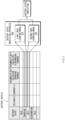
- FIG. 2 is a view for generally describing a battery state prediction apparatus according to an embodiment disclosed herein.
- the battery state prediction apparatus 200 may extract a part of battery data A
- the battery state prediction apparatus 200 may obtain the battery data A of the plurality of battery cells 110, 120, 130, and 140.
- the battery management system may obtain the battery data A including a measurement value of a battery from a voltage value at which the SoC of the battery is 0% up to a voltage value at which the SoC of the battery is 100%.
- the battery state prediction apparatus 200 may obtain the battery data A including voltages, currents, and temperatures of the plurality of battery cells 110, 120, 130, and 140 accumulatively measured during a charge/discharge period.
- the battery state prediction apparatus 200 may establish a train data set to be used for a deep learning model of the battery state prediction apparatus 200 based on the battery data A.
- Deep learning which is one of types of machine learning algorithms, may refer to a technique that connects artificial neural networks in the form of numerous layers.
- Machine learning may refer to a technique for training a computer to predict a certain result.
- a result of using machine learning includes a process of preparing train data for training a machine and training the computer in a manner suitable for a problem, a process of validating a model with test data, and a process of predicting a result with a model having passed the verification.
- train data For machine learning, it is important that train data well represents a feature to be generalized through machine learning, and thus the train data is generated using train data limitedly selected according to certain criteria
- a sampling noise may occur, and a pattern having a machine problem analysis model embedded therein is difficult to find, increasing an error of the model separately from the accuracy of the machine problem analysis model and thus degrading the reliability of the model.
- a machine learning technique requires investment of time in evaluating train data and processing data to select a train data set.
- the battery state prediction apparatus 200 may extract a part of the battery data A and generate a train data set to train a first deep learning model 221 and a second deep learning model 222.
- the first deep learning model 221 and the second deep learning model 222 may refer to learning models capable of predicting a state of the battery including a lifetime (SoH) of the battery based on input battery data.
- the battery state prediction apparatus 200 may generate a train data set for machine learning of the first deep learning model 221 and the second deep learning model 222 to reduce an error of machine learning of the first deep learning model 221 and the second deep learning model 222 and improve the reliability of the machine learning.
- the battery state prediction apparatus 200 may input the train data set to the first deep learning model 221 and the second deep learning model 222 to predict the states of the plurality of battery cells 110, 120, 130, and 140.
- FIG. 3 is a block diagram showing a configuration of a battery state prediction apparatus, according to an embodiment disclosed herein.
- the battery state prediction apparatus 200 may include a data managing unit 210 and a controller 220.
- the data managing unit 210 may collect the battery data A.
- the battery data A may be defined as a value that records a change in the amount of electricity from discharge states of the plurality of battery cells 110, 120, 130, and 140 to full charge states thereof or from the full charge states to the discharge states.
- the data managing unit 210 may extract first battery data A1 obtained for a predetermined time after completion of charging of the battery and second battery data A2 obtained for the predetermined time after completion of discharging of the battery.
- the first battery data A1 and the second battery data A2 may include voltage, current, and temperature of the battery, measured accumulatively.
- FIG. 4A is a graph showing a voltage change of battery data according to an embodiment disclosed herein.
- a period in which a voltage of the battery sharply changes may be extracted from the battery data A.
- the data managing unit 210 may set, as the first battery data A1, a period in which a voltage of the battery sharply changes in an idle period after charging of the battery in the battery data A.
- the data managing unit 210 may set, as the second battery data A2, a period in which a voltage of the battery sharply changes in a discharging period after idling of the battery in the battery data A.
- a deep learning model has been conventionally trained using behaviors of the voltage or current of the whole battery data A, but when the entire battery data A is used as train data, a very long analysis time is required.
- the data managing unit 210 may extract data required for lifetime prediction of the battery in which the voltage or current of the battery sharply changes in the battery data A as the first battery data A1 and the second battery data A2.
- FIG. 4B is a graph showing a voltage change of first battery data according to an embodiment disclosed herein.
- the first battery data A1 shown in FIG. 4B may include voltage change information of the battery in the idle period after charging of the battery.
- a capacity of the battery may constantly deteriorate as the resistance of the battery increases.
- the voltage or the open circuit may constantly decrease even after charging of the battery.
- the data managing unit 210 may extract the first battery data A1 corresponding to a voltage change of the idle period after charging of the battery to use the same for training the deep learning model.
- the first battery data A1 may include data of the last 1 second of the charging period of the battery and data of 60 seconds of the idle period immediately after charging of the battery. That is, the first battery data A1 may include the battery data A corresponding to a period of a total of 61 seconds.
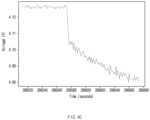
- FIG. 4C is a graph showing a voltage change of second battery data according to an embodiment disclosed herein.
- the second battery data A2 shown in FIG. 4C may include voltage change information of the battery at the time of entering a discharging period after idling of the battery.
- the battery may be affected by an ohmic resistance generated due to an internal resistance of the battery as current is applied to the battery at the start of discharging after idling.
- the second battery data A2 including the voltage change information of the battery of the discharging period after idling of the battery may include a voltage drop phenomenon (IR Drop) occurring due to the internal resistance of the battery.
- the voltage drop phenomenon may refer to a potential difference between two points in a conducting phase while the current flows.
- the data managing unit 210 may extract the second battery data A2 corresponding to a voltage change of the discharging period after idling of the battery to use the same for training the deep learning model.
- the second battery data A2 may include the last 1 second of the idling period after charging of the battery and data of 40 seconds of the discharging period immediately after idling of the battery. That is, the second battery data A2 may include the battery data A corresponding to a period of a total of 41 seconds.
- the data managing unit 110 may collect the first battery data A1 and the second battery data A2 as a train data set to be input to the deep learning model.
- the data managing unit 210 may manage the first battery data A1 and the second battery data A2 separately as respective time-series data.
- the time-series data may refer to data arranged at specific time intervals over time.
- the controller 220 may predict a state of the battery by applying the first battery data A1 and the second battery data A2 including temperature, current, and voltage changes of the plurality of battery cells 110, 120, 130, and 140 to a deep learning model of a time-series analysis structure.
- the controller 220 may obtain first state data for predicting the state of the battery, by applying the first battery data A1 to the first deep learning model 221.
- the controller 220 may obtain second state data for predicting the state of the battery, by applying the second battery data A2 to the second deep learning model 222. That is, the controller 220 may obtain separate output data by inputting the first battery data A1 and the second battery data A2 to separate deep learning models.
- the first state data and the second state data may include lifetime (SoH) data of the battery, calculated using the first battery data A1 as train data of the first deep learning model 221, and SoH data of the battery, calculated using the second battery data A2 as train data of the second deep learning model 222.
- SoH lifetime
- the first deep learning model 221 and the second deep learning model 222 may include, for example, a one-dimensional (1D) convolutional neural network (CNN) model.
- the CNN model may mainly extract a feature of matrix data or image data.
- 1D may mean that a kernel for convolution and a sequence of data to be applied have an 1D shape.
- the 1D CNN may analyze a feature of time-series data or a text.
- the controller 220 may extract a feature of the first battery data A1 by applying the first battery data A1 to a first CNN model.
- the controller 220 may also extract a feature of the second battery data A2 by applying the second battery data A2 to a second CNN model.
- the controller 220 may predict the state of the battery based on the first state data and the second state data. More specifically, the controller 220 may generate third state data by combining the first state data with the second state data. The controller 220 may predict the state of the battery based on the third state data.
- the third state data may include lifetime data of the battery.
- the controller 220 may generate a third value by combining a first value obtained by converting the feature of the first battery data A1 into an embedding vector with a second value obtained by converting the feature of the second battery data A2 into an embedding vector.
- embedding may be defined as a process of converting a natural language used by human into an array of numbers that may be understood by machines. More specifically, the controller 220 may combine the first value with the second value by inputting them into a sequential function (concatenate).
- the controller 220 may generate the third value by inputting the data, generated by combining the first value with the second value, into a single-layer perceptron model.
- the single-layer perceptron model may receive a plurality of signals as an input and output one signal.
- the single-layer perceptron model may generate an output signal based on a weighted sum that assigns a weight value to each of the plurality of input signals and sums values obtained by multiplying unique weight values to the respective signals.
- the weighted sum may be defined as an average value obtained by reflecting a weight value corresponding to an importance or influence of a data value when an average of data is obtained.
- the controller 220 may generate the third value based on a weighted sum of the first value and the second value by inputting the first value and the second value into the single-layer perceptron model.
- the third value may be generated by multiplying the first value and the second value by the weight values and summing the multiplication results.
- the weight values of the first value and the second value may be determined to maximize accuracy through a test using a test data set.
- the controller 220 may obtain the third value, which is prediction data of the state of the battery.
- the third value may include lifetime data of the battery.
- Embodiments disclosed herein aim to provide a battery state prediction apparatus and an operating method thereof in which a part of battery data is extracted as train data to train an artificial intelligence model that analyzes a battery state, thereby improving performance of the artificial intelligence model.
- the battery state prediction apparatus may extract a part of battery data and then train a plurality of deep learning models with the same, thereby improving the accuracy of the deep learning model.
- the battery state prediction apparatus may simplify and lightweight train data, thereby reducing a computing time of a deep learning model for predicting the state of the battery in real time and reducing a time required for collecting and managing the train data.
- FIG. 5 is a flowchart of an operating method of a battery state prediction apparatus according to an embodiment disclosed herein.
- the battery state prediction apparatus 200 may be substantially the same as the battery state prediction apparatus 200 described with reference to FIGS. 1 to 4C , and thus will be briefly described to avoid redundant description.
- an operating method of a battery state prediction apparatus may include operation S101 of extracting, from the battery data A, the first battery data A1 obtained during a predetermined time after completion of charging of the battery, operation S102 of extracting, from the battery data, the second battery data A2 obtained during a predetermined time after completion of discharging of the battery, operation S103 of obtaining the first state data for predicting the state of the battery by applying the first battery data A1 to the first deep learning model 221, operation S104 of obtaining the second state data for predicting the state of the battery by applying the second battery data A2 to the second deep learning model 222, and operation S105 of predicting the state of the battery based on the first state data and the second state data.
- the data managing unit 210 may collect the battery data A of the plurality of battery cells 110, 120, 130, and 140.
- the battery data A may be defined as a value that records a change in the amount of electricity from discharge states of the plurality of battery cells 110, 120, 130, and 140 to full charge states thereof or from the full charge states to the discharge states.
- the data managing unit 210 may obtain the battery data A including voltages, currents, and temperatures of the plurality of battery cells 110, 120, 130, and 140 accumulatively measured during a charge/discharge period.
- the data managing unit 210 may extract, from the battery data A, the first battery data A1 obtained during a predetermined time after completion of charging of the battery. In operation S101, the data managing unit 210 may extract the first battery data A1 corresponding to a voltage change of the idle period after charging of the battery to use the same for training the deep learning model.
- the first battery data A1 may include voltage, current, and temperature of the battery, measured accumulatively.
- the first battery data A1 may include data of the last 1 second of the charging period of the battery and data of 60 seconds of the idle period immediately after charging of the battery. That is, the first battery data A1 may include the battery data A corresponding to a period of a total of 61 seconds.
- the data managing unit 210 may extract, from the battery data A, the second battery data A2 obtained during a predetermined time after completion of discharging of the battery. In operation S102, the data managing unit 210 may extract the second battery data A2 corresponding to a voltage change of the discharging period after idling of the battery to use the same for training the deep learning model.
- the second battery data A2 may include voltage, current, and temperature of the battery, measured accumulatively.
- the second battery data A2 may include data of the last 1 second of the idling period after charging of the battery and data of 40 seconds of the discharging period immediately after idling of the battery. That is, the second battery data A2 may include the battery data A corresponding to a period of a total of 41 seconds.
- the controller 220 may obtain first state data for predicting the state of the battery, by applying the first battery data A1 to the first deep learning model 221.
- the controller 220 may predict a state of the battery by applying the first battery data A1 including temperature, current, and voltage changes of the plurality of battery cells 110, 120, 130, and 140 to a deep learning model of a time-series analysis structure.
- the first state data may include lifetime (SoH) data of the battery, calculated using the first battery data A1 as train data of the first deep learning model 221.
- the first deep learning model 221 may include, for example, an 1D CNN model.
- the CNN model may mainly extract a feature of matrix data or image data.
- 1D may mean that a kernel for convolution and a sequence of data to be applied have an 1D shape.
- the 1D CNN may analyze a feature of time-series data or a text.
- the controller 220 may also extract a feature of the first battery data A1 by applying the first battery data A1 to the first CNN model.
- the controller 220 may obtain second state data for predicting the state of the battery, by applying the second battery data A2 to the second deep learning model 222.
- the controller 220 may predict the state of the battery by applying the second battery data A2 including temperature, current, and voltage changes of the plurality of battery cells 110, 120, 130, and 140 to a deep learning model of a time-series analysis structure.
- the second state data may include lifetime (SoH) data of the battery, calculated using the second battery data A2 as train data of the second deep learning model 222.
- the second deep learning model 222 may include, for example, the 1D CNN model.
- the controller 220 may extract a feature of the second battery data A2 by applying the second battery data A2 to the second CNN model.
- the controller 220 may predict the state of the battery based on the first state data and the second state data. In operation S105, the controller 220 may generate third state data by combining the first state data with the second state data. In operation S105, the controller 220 may predict the state of the battery based on the third state data.
- the third state data may include lifetime data of the battery.
- the controller 220 may generate the third value by combining the first value obtained by converting the feature of the first battery data A1 into an embedding vector with the second value obtained by converting the feature of the second battery data A2 into an embedding vector.
- embedding may be defined as a process of converting a natural language used by human into an array of numbers that may be understood by machines.
- the controller 220 may combine the first value with the second value by inputting them into a sequential function (concatenate).
- the controller 220 may generate the third value by inputting the data, generated by combining the first value with the second value, into a single-layer perceptron model.
- the single-layer perceptron model may receive a plurality of signals as an input and output one signal.
- the single-layer perceptron model may generate an output signal based on a weighted sum that assigns a weight value to each of the plurality of input signals and sums values obtained by multiplying unique weight values to the respective signals.
- the controller 220 may generate the third value based on a weighted sum of the first value and the second value by inputting the first value and the second value into the single-layer perceptron model.
- the third value may be generated by multiplying the first value and the second value by the weight values and summing the multiplication results.
- the controller 220 may obtain the third value, which is prediction data of the state of the battery.
- the third value may include lifetime data of the battery.
- FIG. 6 is a block diagram showing a hardware configuration of a computing system for implementing a battery state prediction apparatus according to an embodiment disclosed herein.
- a computing system 2000 may include an MCU 2100, a memory 2200, an input/output I/F 2300, and a communication I/F 2400.
- the MCU 2100 may be a processor that executes various programs (e.g., a battery state prediction program, etc.) stored in the memory 2200, processes various data through these programs, and perform the above-described functions of the battery management apparatus 200 shown in FIG. 1 .
- programs e.g., a battery state prediction program, etc.
- the memory 2200 may store various programs regarding operations of the battery state prediction apparatus 200. Moreover, the memory 2200 may store operation data of the battery state prediction apparatus 200.
- the memory 2200 may be provided in plural, depending on a need.
- the memory 2200 may be volatile memory or non-volatile memory.
- RAM random access memory
- DRAM dynamic RAM
- SRAM static RAM
- ROM read only memory
- PROM programmable ROM
- EAROM electrically alterable ROM
- EPROM erasable PROM
- EEPROM electrically erasable PROM
- flash memory etc.
- the above-listed examples of the memory 2200 are merely examples and are not limited thereto.
- the input/output I/F 2300 may provide an interface for transmitting and receiving data by connecting an input device (not shown) such as a keyboard, a mouse, a touch panel, etc., and an output device such as a display (not shown), etc., to the MCU 2100.
- an input device such as a keyboard, a mouse, a touch panel, etc.
- an output device such as a display (not shown), etc.
- the communication I/F 2400 which is a component capable of transmitting and receiving various data to and from a server, may be various devices capable of supporting wired or wireless communication.
- a program for resistance measurement and abnormality diagnosis of the battery cell or various data may be transmitted and received to and from a separately provided external server through the communication I/F 2400.
Landscapes
- Physics & Mathematics (AREA)
- Engineering & Computer Science (AREA)
- General Physics & Mathematics (AREA)
- Theoretical Computer Science (AREA)
- Biophysics (AREA)
- Evolutionary Computation (AREA)
- Software Systems (AREA)
- Mathematical Physics (AREA)
- Health & Medical Sciences (AREA)
- Life Sciences & Earth Sciences (AREA)
- Artificial Intelligence (AREA)
- Biomedical Technology (AREA)
- General Engineering & Computer Science (AREA)
- Computational Linguistics (AREA)
- Data Mining & Analysis (AREA)
- Computing Systems (AREA)
- General Health & Medical Sciences (AREA)
- Molecular Biology (AREA)
- General Chemical & Material Sciences (AREA)
- Chemical & Material Sciences (AREA)
- Chemical Kinetics & Catalysis (AREA)
- Electrochemistry (AREA)
- Manufacturing & Machinery (AREA)
- Secondary Cells (AREA)
- Charge And Discharge Circuits For Batteries Or The Like (AREA)
- Testing Electric Properties And Detecting Electric Faults (AREA)
- Tests Of Electric Status Of Batteries (AREA)
Abstract
Description
- This application claims priority to and the benefit of
Korean Patent Application No. 10-2022-0109524 filed in the Korean Intellectual Property Office on August 30, 2022 - Embodiments disclosed herein relate to a battery state prediction apparatus and an operating method thereof.
- An electric vehicle is supplied with electricity from outside to charge a battery, and then a motor is driven by a voltage charged in the battery to obtain power. The battery of the electric vehicle may have heat generated therein by chemical reaction occurring in a process of charging and discharging electricity, and the heat may impair performance and lifetime of the battery. Thus, a battery management system (BMS) that monitors temperature, voltage, and current of the battery is driven to predict a lifetime (a state of health (SoH)) of the battery.
- The battery management system may analyze the state of the battery by training large-volume battery data in an artificial intelligence model that analyzes the state of the battery. However, the battery management system undergoes efficiency degradation in a process of managing and analyzing the large-volume battery data, reducing performance and speed of the artificial intelligence model and causing an error. Accordingly, there is a need to analyze the state of the battery by establishing a suitable train data set to be input into the artificial intelligence model.
- Embodiments disclosed herein aim to provide a battery state prediction apparatus and an operating method thereof in which a part of battery data is extracted as train data to train an artificial intelligence model that analyzes a battery state, thereby improving performance of the artificial intelligence model.
- Technical problems of the embodiments disclosed herein are not limited to the above-described technical problems, and other unmentioned technical problems would be clearly understood by one of ordinary skill in the art from the following description.
- A battery state prediction apparatus according to an embodiment disclosed herein includes a data managing unit configured to extract first battery data obtained for a predetermined time after completion of charging of a battery and second battery data obtained for the predetermined time after completion of discharging of the battery and a controller configured to obtain first state data for predicting a state of the battery by applying the first battery data to a first deep learning model, obtain second state data for predicting the state of the battery by applying the second battery data to a second deep learning model, and predict the state of the battery based on the first state data and the second state data.
- According to an embodiment, the controller may be further configured to generate third state data by combining the first state data with the second state data and predict the state of the battery based on the third state data.
- According to an embodiment, the controller may be further configured to extract a feature of the first battery data by applying the first battery data to a first convolutional neural network (CNN) model and extract a feature of the second battery data by applying the second battery data to a second CNN model.
- According to an embodiment, the controller may be further configured to generate a third value based on a weighted sum of a first value, obtained by converting the feature of the first battery data into an embedding vector, and a second value, obtained by converting the feature of the second battery data into an embedding vector, and predict the state of the battery based on the third value.
- According to an embodiment, the first battery data and the second battery data may include a voltage, a current, and a temperature of the battery, measured accumulatively, and the first state data, the second state data, and the third state data may include a state of health (SoH) of the battery, calculated based on the first battery data and the second battery data.
- An operating method of a battery state prediction apparatus according to an embodiment disclosed herein includes extracting, from battery data, first battery data obtained for a predetermined time after completion of charging of a battery, extracting, from the battery data, second battery data obtained for the predetermined time after completion of discharging of the battery, obtaining first state data for predicting a state of the battery by applying the first battery data to a first deep learning model, obtaining second state data for predicting the state of the battery by applying the second battery data to a second deep learning model, and predicting the state of the battery based on the first state data and the second state data.
- According to an embodiment, the predicting of the state of the battery based on the first state data and the second state data may include generating third state data by combining the first state data with the second state data and predicting the state of the battery based on the third state data.
- According to an embodiment, the obtaining of the first state data for predicting a state of the battery by applying the first battery data to the first deep learning model, may include extracting a feature of the first battery data by applying the first battery data to a first convolutional neural network (CNN) model, and the obtaining of the second state data for predicting the state of the battery by applying the second battery data to the second deep learning model, may include extracting a feature of the second battery data by applying the second battery data to a second CNN model.
- According to an embodiment, the predicting of the state of the battery based on the first state data and the second state data may include generating a third value based on a weighted sum of a first value, obtained by converting the feature of the first battery data into an embedding vector, and a second value, obtained by converting the feature of the second battery data into an embedding vector, and predicting the state of the battery based on the third value.
- According to an embodiment, the predicting of the state of the battery based on the first state data and the second state data may include predicting a state of health (SoH) of the battery.
-
-
FIG. 1 illustrates a battery pack according to an embodiment disclosed herein. -
FIG. 2 is a view for generally describing a battery state prediction apparatus according to an embodiment disclosed herein. -
FIG. 3 is a block diagram showing a configuration of a battery state prediction apparatus, according to an embodiment disclosed herein. -
FIG. 4A is a graph showing a voltage change of battery data according to an embodiment disclosed herein. -
FIG. 4B is a graph showing a voltage change of first battery data according to an embodiment disclosed herein. -
FIG. 4C is a graph showing a voltage change of second battery data according to an embodiment disclosed herein. -
FIG. 5 is a flowchart of an operating method of a battery state prediction apparatus according to an embodiment disclosed herein. -
FIG. 6 is a block diagram showing a hardware configuration of a computing system for implementing a battery state prediction apparatus according to an embodiment disclosed herein. - Hereinafter, some embodiments disclosed in this document will be described in detail with reference to the exemplary drawings. In adding reference numerals to components of each drawing, it should be noted that the same components are given the same reference numerals even though they are indicated in different drawings. In addition, in describing the embodiments disclosed in this document, when it is determined that a detailed description of a related known configuration or function interferes with the understanding of an embodiment disclosed in this document, the detailed description thereof will be omitted.
- To describe a component of an embodiment disclosed herein, terms such as first, second, A, B, (a), (b), etc., may be used. These terms are used merely for distinguishing one component from another component and do not limit the component to the essence, sequence, order, etc., of the component. The terms used herein, including technical and scientific terms, have the same meanings as terms that are generally understood by those skilled in the art, as long as the terms are not differently defined. Generally, the terms defined in a generally used dictionary should be interpreted as having the same meanings as the contextual meanings of the relevant technology and should not be interpreted as having ideal or exaggerated meanings unless they are clearly defined in the present document.
-
FIG. 1 illustrates a battery pack according to an embodiment disclosed herein. - Referring to
FIG. 1 , abattery pack 1000 according to an embodiment disclosed herein may include abattery module 100, a batterystate prediction apparatus 200, and arelay 300. - The
battery module 100 may include a plurality ofbattery cells FIG. 1 , the present disclosure is not limited thereto, and thebattery module 100 may include n battery cells (n is a natural number equal to or greater than 2). - The
battery module 100 may supply power to a target device (not shown). To this end, thebattery module 100 may be electrically connected to the target device. Herein, the target device may include an electrical, electronic, or mechanical device that operates by receiving power from thebattery pack 1000 including the plurality ofbattery cells - The plurality of
battery cells battery module 100 is illustrated inFIG. 1 , thebattery module 100 may be configured in plural according to an embodiment. - The battery
state prediction apparatus 200 may predict states of battery cells, which include lifetimes (states of health (SoH)) of the plurality ofbattery cells battery cells state prediction apparatus 200 may predict the states of the plurality ofbattery cells battery cells - According to an embodiment, the battery
state prediction apparatus 200 may be implemented in the form of a battery management system (BMS). Moreover, according to an embodiment, the batterystate prediction apparatus 200 may be mounted on a battery management system. - Herein, the battery management system may manage and/or control a state and/or an operation of the
battery module 100. For example, the battery management system may manage and/or control the states and/or operations of the plurality ofbattery cells battery module 100. The battery management system may manage charge and/or discharge of thebattery module 100. - In addition, the battery management system may monitor voltage, current, temperature, etc., of the
battery module 100 and/or each of the plurality ofbattery cells battery module 100. A sensor or various measurement modules for monitoring performed by the battery management system, which are not shown, may be additionally installed in thebattery module 100, a charging/discharging path, any position of thebattery module 100, etc. The battery management system may calculate a parameter indicating a state of thebattery module 100, e.g., a state of charge (SoC), a SoH, etc., based on a measurement value such as monitored voltage, current, temperature, etc. - The battery management system may control an operation of the
relay 300. For example, the battery management system may short-circuit therelay 300 to supply power to the target device. The battery management system may short-circuit therelay 300 when a charging device is connected to thebattery pack 1000. - The battery management system may calculate a cell balancing time of each of the plurality of
battery cells battery cells -
FIG. 2 is a view for generally describing a battery state prediction apparatus according to an embodiment disclosed herein. - Referring to
FIG. 2 , the batterystate prediction apparatus 200 may extract a part of battery data A
The batterystate prediction apparatus 200 may obtain the battery data A of the plurality ofbattery cells battery cells state prediction apparatus 200 may obtain the battery data A including voltages, currents, and temperatures of the plurality ofbattery cells - The battery
state prediction apparatus 200 may establish a train data set to be used for a deep learning model of the batterystate prediction apparatus 200 based on the battery data A. Deep learning, which is one of types of machine learning algorithms, may refer to a technique that connects artificial neural networks in the form of numerous layers. Machine learning may refer to a technique for training a computer to predict a certain result. Generally, a result of using machine learning includes a process of preparing train data for training a machine and training the computer in a manner suitable for a problem, a process of validating a model with test data, and a process of predicting a result with a model having passed the verification. - For machine learning, it is important that train data well represents a feature to be generalized through machine learning, and thus the train data is generated using train data limitedly selected according to certain criteria For a low relation between the feature to be generalized through machine learning and a feature of train data, a sampling noise may occur, and a pattern having a machine problem analysis model embedded therein is difficult to find, increasing an error of the model separately from the accuracy of the machine problem analysis model and thus degrading the reliability of the model. Thus, a machine learning technique requires investment of time in evaluating train data and processing data to select a train data set.
- The battery
state prediction apparatus 200 may extract a part of the battery data A and generate a train data set to train a firstdeep learning model 221 and a seconddeep learning model 222. Herein, the firstdeep learning model 221 and the seconddeep learning model 222 may refer to learning models capable of predicting a state of the battery including a lifetime (SoH) of the battery based on input battery data. - That is, the battery
state prediction apparatus 200 may generate a train data set for machine learning of the firstdeep learning model 221 and the seconddeep learning model 222 to reduce an error of machine learning of the firstdeep learning model 221 and the seconddeep learning model 222 and improve the reliability of the machine learning. The batterystate prediction apparatus 200 may input the train data set to the firstdeep learning model 221 and the seconddeep learning model 222 to predict the states of the plurality ofbattery cells -
FIG. 3 is a block diagram showing a configuration of a battery state prediction apparatus, according to an embodiment disclosed herein. - Hereinbelow, with reference to
FIG. 3 , a configuration and an operation of the batterystate prediction apparatus 200 will be described in detail. - First, referring to
FIG. 3 , the batterystate prediction apparatus 200 may include adata managing unit 210 and acontroller 220. - The
data managing unit 210 may collect the battery data A. For example, the battery data A may be defined as a value that records a change in the amount of electricity from discharge states of the plurality ofbattery cells - The
data managing unit 210 may extract first battery data A1 obtained for a predetermined time after completion of charging of the battery and second battery data A2 obtained for the predetermined time after completion of discharging of the battery. Herein, the first battery data A1 and the second battery data A2 may include voltage, current, and temperature of the battery, measured accumulatively. -
FIG. 4A is a graph showing a voltage change of battery data according to an embodiment disclosed herein. - Referring to
FIG. 4A , a period in which a voltage of the battery sharply changes may be extracted from the battery data A. Thedata managing unit 210 may set, as the first battery data A1, a period in which a voltage of the battery sharply changes in an idle period after charging of the battery in the battery data A. Thedata managing unit 210 may set, as the second battery data A2, a period in which a voltage of the battery sharply changes in a discharging period after idling of the battery in the battery data A. - A deep learning model has been conventionally trained using behaviors of the voltage or current of the whole battery data A, but when the entire battery data A is used as train data, a very long analysis time is required. The
data managing unit 210 may extract data required for lifetime prediction of the battery in which the voltage or current of the battery sharply changes in the battery data A as the first battery data A1 and the second battery data A2. -
FIG. 4B is a graph showing a voltage change of first battery data according to an embodiment disclosed herein. - The first battery data A1 shown in
FIG. 4B may include voltage change information of the battery in the idle period after charging of the battery. When a charging/discharging cycle is repeated, a capacity of the battery may constantly deteriorate as the resistance of the battery increases. Thus, the voltage or the open circuit may constantly decrease even after charging of the battery. Thedata managing unit 210 may extract the first battery data A1 corresponding to a voltage change of the idle period after charging of the battery to use the same for training the deep learning model. - For example, the first battery data A1 may include data of the last 1 second of the charging period of the battery and data of 60 seconds of the idle period immediately after charging of the battery. That is, the first battery data A1 may include the battery data A corresponding to a period of a total of 61 seconds.
-
FIG. 4C is a graph showing a voltage change of second battery data according to an embodiment disclosed herein. - The second battery data A2 shown in
FIG. 4C may include voltage change information of the battery at the time of entering a discharging period after idling of the battery. The battery may be affected by an ohmic resistance generated due to an internal resistance of the battery as current is applied to the battery at the start of discharging after idling. Thus, the second battery data A2 including the voltage change information of the battery of the discharging period after idling of the battery may include a voltage drop phenomenon (IR Drop) occurring due to the internal resistance of the battery. Herein, the voltage drop phenomenon may refer to a potential difference between two points in a conducting phase while the current flows. Thedata managing unit 210 may extract the second battery data A2 corresponding to a voltage change of the discharging period after idling of the battery to use the same for training the deep learning model. - For example, the second battery data A2 may include the last 1 second of the idling period after charging of the battery and data of 40 seconds of the discharging period immediately after idling of the battery. That is, the second battery data A2 may include the battery data A corresponding to a period of a total of 41 seconds.
- Referring back to
FIG. 3 , thedata managing unit 110 may collect the first battery data A1 and the second battery data A2 as a train data set to be input to the deep learning model. Thedata managing unit 210 may manage the first battery data A1 and the second battery data A2 separately as respective time-series data. Herein, the time-series data may refer to data arranged at specific time intervals over time. - The
controller 220 may predict a state of the battery by applying the first battery data A1 and the second battery data A2 including temperature, current, and voltage changes of the plurality ofbattery cells - The
controller 220 may obtain first state data for predicting the state of the battery, by applying the first battery data A1 to the firstdeep learning model 221. Thecontroller 220 may obtain second state data for predicting the state of the battery, by applying the second battery data A2 to the seconddeep learning model 222. That is, thecontroller 220 may obtain separate output data by inputting the first battery data A1 and the second battery data A2 to separate deep learning models. - Herein, the first state data and the second state data may include lifetime (SoH) data of the battery, calculated using the first battery data A1 as train data of the first
deep learning model 221, and SoH data of the battery, calculated using the second battery data A2 as train data of the seconddeep learning model 222. - According to an embodiment, the first
deep learning model 221 and the seconddeep learning model 222 may include, for example, a one-dimensional (1D) convolutional neural network (CNN) model. Herein, the CNN model may mainly extract a feature of matrix data or image data. Herein, 1D may mean that a kernel for convolution and a sequence of data to be applied have an 1D shape. The 1D CNN may analyze a feature of time-series data or a text. - According to an embodiment, the
controller 220 may extract a feature of the first battery data A1 by applying the first battery data A1 to a first CNN model. Thecontroller 220 may also extract a feature of the second battery data A2 by applying the second battery data A2 to a second CNN model. - The
controller 220 may predict the state of the battery based on the first state data and the second state data. More specifically, thecontroller 220 may generate third state data by combining the first state data with the second state data. Thecontroller 220 may predict the state of the battery based on the third state data. Herein, the third state data may include lifetime data of the battery. - According to an embodiment, the
controller 220 may generate a third value by combining a first value obtained by converting the feature of the first battery data A1 into an embedding vector with a second value obtained by converting the feature of the second battery data A2 into an embedding vector. Herein, embedding may be defined as a process of converting a natural language used by human into an array of numbers that may be understood by machines. More specifically, thecontroller 220 may combine the first value with the second value by inputting them into a sequential function (concatenate). - The
controller 220 may generate the third value by inputting the data, generated by combining the first value with the second value, into a single-layer perceptron model. Herein, the single-layer perceptron model may receive a plurality of signals as an input and output one signal. The single-layer perceptron model may generate an output signal based on a weighted sum that assigns a weight value to each of the plurality of input signals and sums values obtained by multiplying unique weight values to the respective signals. Herein, the weighted sum may be defined as an average value obtained by reflecting a weight value corresponding to an importance or influence of a data value when an average of data is obtained. - That is, the
controller 220 may generate the third value based on a weighted sum of the first value and the second value by inputting the first value and the second value into the single-layer perceptron model. The third value may be generated by multiplying the first value and the second value by the weight values and summing the multiplication results. Herein, the weight values of the first value and the second value may be determined to maximize accuracy through a test using a test data set. Thus, thecontroller 220 may obtain the third value, which is prediction data of the state of the battery. Herein, the third value may include lifetime data of the battery. - Embodiments disclosed herein aim to provide a battery state prediction apparatus and an operating method thereof in which a part of battery data is extracted as train data to train an artificial intelligence model that analyzes a battery state, thereby improving performance of the artificial intelligence model.
- As described above, the battery state prediction apparatus according to an embodiment disclosed herein may extract a part of battery data and then train a plurality of deep learning models with the same, thereby improving the accuracy of the deep learning model.
- Moreover, the battery state prediction apparatus may simplify and lightweight train data, thereby reducing a computing time of a deep learning model for predicting the state of the battery in real time and reducing a time required for collecting and managing the train data.
-
FIG. 5 is a flowchart of an operating method of a battery state prediction apparatus according to an embodiment disclosed herein. - The battery
state prediction apparatus 200 may be substantially the same as the batterystate prediction apparatus 200 described with reference toFIGS. 1 to 4C , and thus will be briefly described to avoid redundant description. - Referring to
FIG. 5 , an operating method of a battery state prediction apparatus may include operation S101 of extracting, from the battery data A, the first battery data A1 obtained during a predetermined time after completion of charging of the battery, operation S102 of extracting, from the battery data, the second battery data A2 obtained during a predetermined time after completion of discharging of the battery, operation S103 of obtaining the first state data for predicting the state of the battery by applying the first battery data A1 to the firstdeep learning model 221, operation S104 of obtaining the second state data for predicting the state of the battery by applying the second battery data A2 to the seconddeep learning model 222, and operation S105 of predicting the state of the battery based on the first state data and the second state data. - Hereinbelow, operations S101 through S105 will be described in detail.
- In operation S101, the
data managing unit 210 may collect the battery data A of the plurality ofbattery cells battery cells data managing unit 210 may obtain the battery data A including voltages, currents, and temperatures of the plurality ofbattery cells - In operation S101, the
data managing unit 210 may extract, from the battery data A, the first battery data A1 obtained during a predetermined time after completion of charging of the battery. In operation S101, thedata managing unit 210 may extract the first battery data A1 corresponding to a voltage change of the idle period after charging of the battery to use the same for training the deep learning model. - Herein, the first battery data A1 may include voltage, current, and temperature of the battery, measured accumulatively. For example, the first battery data A1 may include data of the last 1 second of the charging period of the battery and data of 60 seconds of the idle period immediately after charging of the battery. That is, the first battery data A1 may include the battery data A corresponding to a period of a total of 61 seconds.
- In operation S102, the
data managing unit 210 may extract, from the battery data A, the second battery data A2 obtained during a predetermined time after completion of discharging of the battery. In operation S102, thedata managing unit 210 may extract the second battery data A2 corresponding to a voltage change of the discharging period after idling of the battery to use the same for training the deep learning model. - Herein, the second battery data A2 may include voltage, current, and temperature of the battery, measured accumulatively. For example, the second battery data A2 may include data of the last 1 second of the idling period after charging of the battery and data of 40 seconds of the discharging period immediately after idling of the battery. That is, the second battery data A2 may include the battery data A corresponding to a period of a total of 41 seconds.
- In operation S103, the
controller 220 may obtain first state data for predicting the state of the battery, by applying the first battery data A1 to the firstdeep learning model 221. - In operation S103, more specifically, the
controller 220 may predict a state of the battery by applying the first battery data A1 including temperature, current, and voltage changes of the plurality ofbattery cells - Herein, the first state data may include lifetime (SoH) data of the battery, calculated using the first battery data A1 as train data of the first
deep learning model 221. Herein, the firstdeep learning model 221 may include, for example, an 1D CNN model. The CNN model may mainly extract a feature of matrix data or image data. Herein, 1D may mean that a kernel for convolution and a sequence of data to be applied have an 1D shape. The 1D CNN may analyze a feature of time-series data or a text. - In operation S103, the
controller 220 may also extract a feature of the first battery data A1 by applying the first battery data A1 to the first CNN model. - In operation S104, the
controller 220 may obtain second state data for predicting the state of the battery, by applying the second battery data A2 to the seconddeep learning model 222. - In operation S104, more specifically, the
controller 220 may predict the state of the battery by applying the second battery data A2 including temperature, current, and voltage changes of the plurality ofbattery cells deep learning model 222. Herein, the seconddeep learning model 222 may include, for example, the 1D CNN model. - In operation S104, the
controller 220 may extract a feature of the second battery data A2 by applying the second battery data A2 to the second CNN model. - In operation S105, the
controller 220 may predict the state of the battery based on the first state data and the second state data. In operation S105, thecontroller 220 may generate third state data by combining the first state data with the second state data. In operation S105, thecontroller 220 may predict the state of the battery based on the third state data. Herein, the third state data may include lifetime data of the battery. - In operation S105, according to an embodiment, the
controller 220 may generate the third value by combining the first value obtained by converting the feature of the first battery data A1 into an embedding vector with the second value obtained by converting the feature of the second battery data A2 into an embedding vector. Herein, embedding may be defined as a process of converting a natural language used by human into an array of numbers that may be understood by machines. - In operation S105, more specifically, the
controller 220 may combine the first value with the second value by inputting them into a sequential function (concatenate). In operation S105, thecontroller 220 may generate the third value by inputting the data, generated by combining the first value with the second value, into a single-layer perceptron model. Herein, the single-layer perceptron model may receive a plurality of signals as an input and output one signal. The single-layer perceptron model may generate an output signal based on a weighted sum that assigns a weight value to each of the plurality of input signals and sums values obtained by multiplying unique weight values to the respective signals. - In operation S105, that is, the
controller 220 may generate the third value based on a weighted sum of the first value and the second value by inputting the first value and the second value into the single-layer perceptron model. The third value may be generated by multiplying the first value and the second value by the weight values and summing the multiplication results. - In operation S105, the
controller 220 may obtain the third value, which is prediction data of the state of the battery. Herein, the third value may include lifetime data of the battery. -
FIG. 6 is a block diagram showing a hardware configuration of a computing system for implementing a battery state prediction apparatus according to an embodiment disclosed herein. - Referring to
FIG. 6 , acomputing system 2000 according to an embodiment disclosed herein may include anMCU 2100, amemory 2200, an input/output I/F 2300, and a communication I/F 2400. - The
MCU 2100 may be a processor that executes various programs (e.g., a battery state prediction program, etc.) stored in thememory 2200, processes various data through these programs, and perform the above-described functions of thebattery management apparatus 200 shown inFIG. 1 . - The
memory 2200 may store various programs regarding operations of the batterystate prediction apparatus 200. Moreover, thememory 2200 may store operation data of the batterystate prediction apparatus 200. - The
memory 2200 may be provided in plural, depending on a need. Thememory 2200 may be volatile memory or non-volatile memory. For thememory 2200 as the volatile memory, random access memory (RAM), dynamic RAM (DRAM), static RAM (SRAM), etc., may be used. For thememory 2200 as the nonvolatile memory, read only memory (ROM), programmable ROM (PROM), electrically alterable ROM (EAROM), erasable PROM (EPROM), electrically erasable PROM (EEPROM), flash memory, etc., may be used. The above-listed examples of thememory 2200 are merely examples and are not limited thereto. - The input/output I/
F 2300 may provide an interface for transmitting and receiving data by connecting an input device (not shown) such as a keyboard, a mouse, a touch panel, etc., and an output device such as a display (not shown), etc., to theMCU 2100. - The communication I/
F 2400, which is a component capable of transmitting and receiving various data to and from a server, may be various devices capable of supporting wired or wireless communication. For example, a program for resistance measurement and abnormality diagnosis of the battery cell or various data may be transmitted and received to and from a separately provided external server through the communication I/F 2400. - The above description is merely illustrative of the technical idea of the present disclosure, and various modifications and variations will be possible without departing from the essential characteristics of the present disclosure by those of ordinary skill in the art to which the present disclosure pertains.
- Therefore, the embodiments disclosed in the present disclosure are intended for description rather than limitation of the technical spirit of the present disclosure and the scope of the technical spirit of the present disclosure is not limited by these embodiments. The protection scope of the present disclosure should be interpreted by the following claims, and all technical spirits within the same range should be understood to be included in the range of the present disclosure.
-
- 1000: Battery Pack
- 100: Battery Module
- 200: Battery State Prediction Apparatus
- 210: Data Managing Unit
- 220: Controller
- 221: First Deep Learning Model
- 222: Second Deep Learning Model
- 300: Relay
- A: Battery Data
- A1: First Battery Data
- A2: Second Battery Data
- 2000: Computing System
- 2100: MCU
- 2200: Memory
- 2300: Input/Output I/F
- 2400: Communication I/F
Claims (10)
- A battery state prediction apparatus comprising:a data managing unit configured to extract first battery data obtained for a predetermined time after completion of charging of a battery and second battery data obtained for the predetermined time after completion of discharging of the battery; anda controller configured to obtain first state data for predicting a state of the battery by applying the first battery data to a first deep learning model, obtain second state data for predicting the state of the battery by applying the second battery data to a second deep learning model, and predict the state of the battery based on the first state data and the second state data.
- The battery state prediction apparatus of claim 1, wherein the controller is further configured to generate third state data by combining the first state data with the second state data and predict the state of the battery based on the third state data.
- The battery state prediction apparatus of claim 2, wherein the controller is further configured to extract a feature of the first battery data by applying the first battery data to a first convolutional neural network (CNN) model and extract a feature of the second battery data by applying the second battery data to a second CNN model.
- The battery state prediction apparatus of claim 3, wherein the controller is further configured to generate a third value based on a weighted sum of a first value, obtained by converting the feature of the first battery data into an embedding vector, and a second value, obtained by converting the feature of the second battery data into an embedding vector, and predict the state of the battery based on the third value.
- The battery state prediction apparatus of claim 1, wherein the first battery data and the second battery data comprise a voltage, a current, and a temperature of the battery, measured accumulatively, and the first state data, the second state data, and the third state data comprise a state of health (SoH) of the battery, calculated based on the first battery data and the second battery data.
- An operating method of a battery state prediction apparatus, the operating method comprising:extracting, from battery data, first battery data obtained for a predetermined time after completion of charging of a battery;extracting, from the battery data, second battery data obtained for the predetermined time after completion of discharging of the battery;obtaining first state data for predicting a state of the battery by applying the first battery data to a first deep learning model;obtaining second state data for predicting the state of the battery by applying the second battery data to a second deep learning model; andpredicting the state of the battery based on the first state data and the second state data.
- The operating method of claim 6, wherein the predicting of the state of the battery based on the first state data and the second state data comprises generating third state data by combining the first state data with the second state data and predicting the state of the battery based on the third state data.
- The operating method of claim 7, wherein the obtaining of the first state data for predicting a state of the battery by applying the first battery data to the first deep learning model, comprises extracting a feature of the first battery data by applying the first battery data to a first convolutional neural network (CNN) model, and
the obtaining of the second state data for predicting the state of the battery by applying the second battery data to the second deep learning model, comprises extracting a feature of the second battery data by applying the second battery data to a second CNN model. - The operating method of claim 8, wherein the predicting of the state of the battery based on the first state data and the second state data comprises generating a third value based on a weighted sum of a first value, obtained by converting the feature of the first battery data into an embedding vector, and a second value, obtained by converting the feature of the second battery data into an embedding vector, and predicting the state of the battery based on the third value.
- The operating method of claim 6, wherein the predicting of the state of the battery based on the first state data and the second state data comprises predicting a state of health (SoH) of the battery.
Applications Claiming Priority (2)
| Application Number | Priority Date | Filing Date | Title |
|---|---|---|---|
| KR1020220109524A KR102888922B1 (en) | 2022-08-30 | 2022-08-30 | Apparatus for predicting condition of battery and operating method of the same |
| PCT/KR2023/012809 WO2024049172A1 (en) | 2022-08-30 | 2023-08-29 | Battery state prediction device and operating method therefor |
Publications (2)
| Publication Number | Publication Date |
|---|---|
| EP4556920A1 true EP4556920A1 (en) | 2025-05-21 |
| EP4556920A4 EP4556920A4 (en) | 2025-12-10 |
Family
ID=90098246
Family Applications (1)
| Application Number | Title | Priority Date | Filing Date |
|---|---|---|---|
| EP23860848.3A Pending EP4556920A4 (en) | 2022-08-30 | 2023-08-29 | BATTERY STATUS PREDICT DEVICE AND OPERATING PROCEDURES |
Country Status (6)
| Country | Link |
|---|---|
| US (1) | US20260072087A1 (en) |
| EP (1) | EP4556920A4 (en) |
| JP (1) | JP2025529060A (en) |
| KR (1) | KR102888922B1 (en) |
| CN (1) | CN119731546A (en) |
| WO (1) | WO2024049172A1 (en) |
Families Citing this family (2)
| Publication number | Priority date | Publication date | Assignee | Title |
|---|---|---|---|---|
| WO2025109522A1 (en) * | 2023-11-21 | 2025-05-30 | LG Energy Solution, Ltd., | Systems and methods for determining the chargeable or dischargeable energy of a battery energy storage system |
| KR20250178852A (en) * | 2024-06-20 | 2025-12-29 | 주식회사 엘지에너지솔루션 | Battery management apparatus, battery management method and battery management system |
Family Cites Families (15)
| Publication number | Priority date | Publication date | Assignee | Title |
|---|---|---|---|---|
| JP2006324591A (en) * | 2005-05-20 | 2006-11-30 | Nisshinbo Ind Inc | Electric double layer capacitor, control method thereof, power storage system using the same, and secondary battery |
| JP6250298B2 (en) * | 2013-04-15 | 2017-12-20 | 新電元工業株式会社 | Secondary battery life prediction system and secondary battery characteristic evaluation device |
| US10322634B2 (en) * | 2015-10-14 | 2019-06-18 | Ford Global Technologies, Llc | Estimating battery capacity in an electric vehicle |
| AU2019238652A1 (en) * | 2018-03-20 | 2020-11-12 | Gs Yuasa International Ltd. | Degradation estimation apparatus, computer program, and degradation estimation method |
| WO2019181729A1 (en) * | 2018-03-20 | 2019-09-26 | 株式会社Gsユアサ | Deterioration estimation device, computer program and deterioration estimation method |
| CN109633452B (en) * | 2018-12-24 | 2024-10-18 | 广东省智能制造研究所 | Battery health degree detection method and detection device |
| KR102802132B1 (en) * | 2019-02-20 | 2025-04-28 | 삼성에스디아이 주식회사 | Battery control appratus and battery control method |
| KR20210024962A (en) * | 2019-08-26 | 2021-03-08 | 오토시맨틱스 주식회사 | Method and Apparatus for Diagnosis and Life Assessment for ESS Battery |
| KR102679550B1 (en) * | 2019-09-27 | 2024-07-01 | 삼성전자주식회사 | Method for evaluating battery and electronic device for supporting the same |
| KR102140011B1 (en) * | 2019-10-31 | 2020-07-31 | 국민대학교 산학협력단 | Method for managing battery and battery management system |
| JP2021092404A (en) * | 2019-12-06 | 2021-06-17 | 株式会社Gsユアサ | Deterioration estimation device, deterioration estimation system, deterioration estimation method, and computer program |
| KR102387780B1 (en) * | 2020-03-30 | 2022-04-18 | 주식회사 아르고스다인 | Method and apparatus for estimating battery capacity based on neural network |
| WO2022024235A1 (en) * | 2020-07-29 | 2022-02-03 | 株式会社日立ハイテク | Battery management device, battery management method |
| KR102703658B1 (en) * | 2020-12-31 | 2024-09-04 | 성균관대학교산학협력단 | Method for estimating aging condition of battery and apparatus for performing the same |
| KR102540346B1 (en) | 2021-01-28 | 2023-06-08 | 주식회사 바이오포스 | Composition for attracting honeybees and drug delivery system for beekeeping comprising the same |
-
2022
- 2022-08-30 KR KR1020220109524A patent/KR102888922B1/en active Active
-
2023
- 2023-08-29 US US19/104,615 patent/US20260072087A1/en active Pending
- 2023-08-29 EP EP23860848.3A patent/EP4556920A4/en active Pending
- 2023-08-29 WO PCT/KR2023/012809 patent/WO2024049172A1/en not_active Ceased
- 2023-08-29 CN CN202380060246.5A patent/CN119731546A/en active Pending
- 2023-08-29 JP JP2025511398A patent/JP2025529060A/en active Pending
Also Published As
| Publication number | Publication date |
|---|---|
| KR102888922B1 (en) | 2025-11-20 |
| US20260072087A1 (en) | 2026-03-12 |
| CN119731546A (en) | 2025-03-28 |
| JP2025529060A (en) | 2025-09-04 |
| WO2024049172A1 (en) | 2024-03-07 |
| EP4556920A4 (en) | 2025-12-10 |
| KR20240030459A (en) | 2024-03-07 |
Similar Documents
| Publication | Publication Date | Title |
|---|---|---|
| EP4425198B1 (en) | Battery capacity prediction apparatus and operating method thereof | |
| US20260072087A1 (en) | Battery state prediction apparatus and operating method thereof | |
| EP4386401A1 (en) | Battery management apparatus and battery inspection system including same | |
| Chianese et al. | Real-time estimation of battery SoC through neural networks trained with model-based datasets: Experimental implementation and performance comparison | |
| KR102886638B1 (en) | Apparatus for estimating state of health of battery and operating method of the same | |
| Zhao et al. | Life degradation monitoring using generated constant-current charging voltage curves for lithium-ion batteries | |
| EP4629395A1 (en) | Battery state prediction device and operation method therefor | |
| EP4660652A1 (en) | Battery data management device and operation method therefor | |
| EP4628913A1 (en) | Battery data management device and operation method therefor | |
| US20250147113A1 (en) | Battery management apparatus and operating method thereof | |
| KR102925815B1 (en) | Apparatus for predicting condition of battery and operating method of the same | |
| EP4464545A1 (en) | Battery management apparatus and server | |
| CN118131047A (en) | A battery performance testing method, device and storage medium | |
| EP4707836A1 (en) | Battery management apparatus and operating method thereof | |
| KR102966905B1 (en) | Apparatus for managing battery and operating method of the same | |
| CN118534331B (en) | Model training method, battery state determining method, device, medium and product | |
| EP4711789A1 (en) | Battery diagnostic device, and operation method therefor | |
| EP4726420A1 (en) | Battery management apparatus and operating method thereof | |
| EP4711782A1 (en) | Battery management apparatus and operation method therefor | |
| Ashika et al. | Estimation of SoC and SoH of Li-ion Batteries: Data-Driven Approach | |
| Li et al. | State estimation of lithium-ion batteries via electrochemical features and self-attention networks | |
| Santana et al. | Stochastic Battery Degradation Modeling Considering Cell-to-Cell Current Interactions | |
| KR20260053748A (en) | Apparatus and method for diagnosing battery | |
| Fang et al. | Rough Estimation and Error Compensation: Empirical-Data-Driven Lightweight State of Health Estimation for Lithium-Ion Batteries | |
| CN121299514A (en) | A method, apparatus and equipment for predicting the health status of electric vehicle batteries |
Legal Events
| Date | Code | Title | Description |
|---|---|---|---|
| STAA | Information on the status of an ep patent application or granted ep patent |
Free format text: STATUS: THE INTERNATIONAL PUBLICATION HAS BEEN MADE |
|
| PUAI | Public reference made under article 153(3) epc to a published international application that has entered the european phase |
Free format text: ORIGINAL CODE: 0009012 |
|
| STAA | Information on the status of an ep patent application or granted ep patent |
Free format text: STATUS: REQUEST FOR EXAMINATION WAS MADE |
|
| 17P | Request for examination filed |
Effective date: 20250212 |
|
| AK | Designated contracting states |
Kind code of ref document: A1 Designated state(s): AL AT BE BG CH CY CZ DE DK EE ES FI FR GB GR HR HU IE IS IT LI LT LU LV MC ME MK MT NL NO PL PT RO RS SE SI SK SM TR |
|
| DAV | Request for validation of the european patent (deleted) | ||
| DAX | Request for extension of the european patent (deleted) | ||
| A4 | Supplementary search report drawn up and despatched |
Effective date: 20251106 |
|
| RIC1 | Information provided on ipc code assigned before grant |
Ipc: G01R 31/367 20190101AFI20251031BHEP Ipc: G01R 31/392 20190101ALI20251031BHEP Ipc: G06N 3/08 20230101ALI20251031BHEP Ipc: G06N 3/04 20230101ALI20251031BHEP Ipc: G06N 3/045 20230101ALI20251031BHEP |