EP4556091A1 - Method for recovering valuable metals from positive electrode of waste lithium iron phosphate - Google Patents
Method for recovering valuable metals from positive electrode of waste lithium iron phosphate Download PDFInfo
- Publication number
- EP4556091A1 EP4556091A1 EP23213113.6A EP23213113A EP4556091A1 EP 4556091 A1 EP4556091 A1 EP 4556091A1 EP 23213113 A EP23213113 A EP 23213113A EP 4556091 A1 EP4556091 A1 EP 4556091A1
- Authority
- EP
- European Patent Office
- Prior art keywords
- quenching
- separation device
- iron phosphate
- lithium iron
- roasting
- Prior art date
- Legal status (The legal status is an assumption and is not a legal conclusion. Google has not performed a legal analysis and makes no representation as to the accuracy of the status listed.)
- Pending
Links
Images
Classifications
-
- H—ELECTRICITY
- H01—ELECTRIC ELEMENTS
- H01M—PROCESSES OR MEANS, e.g. BATTERIES, FOR THE DIRECT CONVERSION OF CHEMICAL ENERGY INTO ELECTRICAL ENERGY
- H01M6/00—Primary cells; Manufacture thereof
- H01M6/52—Reclaiming serviceable parts of waste cells or batteries, e.g. recycling
-
- B—PERFORMING OPERATIONS; TRANSPORTING
- B01—PHYSICAL OR CHEMICAL PROCESSES OR APPARATUS IN GENERAL
- B01D—SEPARATION
- B01D5/00—Condensation of vapours; Recovering volatile solvents by condensation
- B01D5/0003—Condensation of vapours; Recovering volatile solvents by condensation by using heat-exchange surfaces for indirect contact between gases or vapours and the cooling medium
-
- B—PERFORMING OPERATIONS; TRANSPORTING
- B01—PHYSICAL OR CHEMICAL PROCESSES OR APPARATUS IN GENERAL
- B01D—SEPARATION
- B01D5/00—Condensation of vapours; Recovering volatile solvents by condensation
- B01D5/0078—Condensation of vapours; Recovering volatile solvents by condensation characterised by auxiliary systems or arrangements
- B01D5/0087—Recirculating of the cooling medium
-
- B—PERFORMING OPERATIONS; TRANSPORTING
- B01—PHYSICAL OR CHEMICAL PROCESSES OR APPARATUS IN GENERAL
- B01D—SEPARATION
- B01D5/00—Condensation of vapours; Recovering volatile solvents by condensation
- B01D5/0078—Condensation of vapours; Recovering volatile solvents by condensation characterised by auxiliary systems or arrangements
- B01D5/009—Collecting, removing and/or treatment of the condensate
-
- C—CHEMISTRY; METALLURGY
- C01—INORGANIC CHEMISTRY
- C01D—COMPOUNDS OF ALKALI METALS, i.e. LITHIUM, SODIUM, POTASSIUM, RUBIDIUM, CAESIUM, OR FRANCIUM
- C01D15/00—Lithium compounds
- C01D15/08—Carbonates; Bicarbonates
-
- C—CHEMISTRY; METALLURGY
- C01—INORGANIC CHEMISTRY
- C01F—COMPOUNDS OF THE METALS BERYLLIUM, MAGNESIUM, ALUMINIUM, CALCIUM, STRONTIUM, BARIUM, RADIUM, THORIUM, OR OF THE RARE-EARTH METALS
- C01F7/00—Compounds of aluminium
- C01F7/48—Halides, with or without other cations besides aluminium
- C01F7/56—Chlorides
-
- C—CHEMISTRY; METALLURGY
- C01—INORGANIC CHEMISTRY
- C01G—COMPOUNDS CONTAINING METALS NOT COVERED BY SUBCLASSES C01D OR C01F
- C01G49/00—Compounds of iron
- C01G49/10—Halides
-
- C—CHEMISTRY; METALLURGY
- C21—METALLURGY OF IRON
- C21B—MANUFACTURE OF IRON OR STEEL
- C21B15/00—Other processes for the manufacture of iron from iron compounds
- C21B15/006—By a chloride process
-
- C—CHEMISTRY; METALLURGY
- C22—METALLURGY; FERROUS OR NON-FERROUS ALLOYS; TREATMENT OF ALLOYS OR NON-FERROUS METALS
- C22B—PRODUCTION AND REFINING OF METALS; PRETREATMENT OF RAW MATERIALS
- C22B1/00—Preliminary treatment of ores or scrap
- C22B1/02—Roasting processes
-
- C—CHEMISTRY; METALLURGY
- C22—METALLURGY; FERROUS OR NON-FERROUS ALLOYS; TREATMENT OF ALLOYS OR NON-FERROUS METALS
- C22B—PRODUCTION AND REFINING OF METALS; PRETREATMENT OF RAW MATERIALS
- C22B1/00—Preliminary treatment of ores or scrap
- C22B1/02—Roasting processes
- C22B1/08—Chloridising roasting
-
- C—CHEMISTRY; METALLURGY
- C22—METALLURGY; FERROUS OR NON-FERROUS ALLOYS; TREATMENT OF ALLOYS OR NON-FERROUS METALS
- C22B—PRODUCTION AND REFINING OF METALS; PRETREATMENT OF RAW MATERIALS
- C22B1/00—Preliminary treatment of ores or scrap
- C22B1/14—Agglomerating; Briquetting; Binding; Granulating
- C22B1/24—Binding; Briquetting ; Granulating
-
- C—CHEMISTRY; METALLURGY
- C22—METALLURGY; FERROUS OR NON-FERROUS ALLOYS; TREATMENT OF ALLOYS OR NON-FERROUS METALS
- C22B—PRODUCTION AND REFINING OF METALS; PRETREATMENT OF RAW MATERIALS
- C22B26/00—Obtaining alkali, alkaline earth metals or magnesium
- C22B26/10—Obtaining alkali metals
- C22B26/12—Obtaining lithium
-
- C—CHEMISTRY; METALLURGY
- C22—METALLURGY; FERROUS OR NON-FERROUS ALLOYS; TREATMENT OF ALLOYS OR NON-FERROUS METALS
- C22B—PRODUCTION AND REFINING OF METALS; PRETREATMENT OF RAW MATERIALS
- C22B7/00—Working up raw materials other than ores, e.g. scrap, to produce non-ferrous metals and compounds thereof; Methods of a general interest or applied to the winning of more than two metals
- C22B7/001—Dry processes
- C22B7/002—Dry processes by treating with halogens, sulfur or compounds thereof; by carburising, by treating with hydrogen (hydriding)
-
- C—CHEMISTRY; METALLURGY
- C22—METALLURGY; FERROUS OR NON-FERROUS ALLOYS; TREATMENT OF ALLOYS OR NON-FERROUS METALS
- C22B—PRODUCTION AND REFINING OF METALS; PRETREATMENT OF RAW MATERIALS
- C22B7/00—Working up raw materials other than ores, e.g. scrap, to produce non-ferrous metals and compounds thereof; Methods of a general interest or applied to the winning of more than two metals
- C22B7/005—Separation by a physical processing technique only, e.g. by mechanical breaking
-
- C—CHEMISTRY; METALLURGY
- C22—METALLURGY; FERROUS OR NON-FERROUS ALLOYS; TREATMENT OF ALLOYS OR NON-FERROUS METALS
- C22B—PRODUCTION AND REFINING OF METALS; PRETREATMENT OF RAW MATERIALS
- C22B7/00—Working up raw materials other than ores, e.g. scrap, to produce non-ferrous metals and compounds thereof; Methods of a general interest or applied to the winning of more than two metals
- C22B7/006—Wet processes
-
- H—ELECTRICITY
- H01—ELECTRIC ELEMENTS
- H01M—PROCESSES OR MEANS, e.g. BATTERIES, FOR THE DIRECT CONVERSION OF CHEMICAL ENERGY INTO ELECTRICAL ENERGY
- H01M10/00—Secondary cells; Manufacture thereof
- H01M10/05—Accumulators with non-aqueous electrolyte
- H01M10/052—Li-accumulators
- H01M10/0525—Rocking-chair batteries, i.e. batteries with lithium insertion or intercalation in both electrodes; Lithium-ion batteries
-
- H—ELECTRICITY
- H01—ELECTRIC ELEMENTS
- H01M—PROCESSES OR MEANS, e.g. BATTERIES, FOR THE DIRECT CONVERSION OF CHEMICAL ENERGY INTO ELECTRICAL ENERGY
- H01M10/00—Secondary cells; Manufacture thereof
- H01M10/54—Reclaiming serviceable parts of waste accumulators
-
- H—ELECTRICITY
- H01—ELECTRIC ELEMENTS
- H01M—PROCESSES OR MEANS, e.g. BATTERIES, FOR THE DIRECT CONVERSION OF CHEMICAL ENERGY INTO ELECTRICAL ENERGY
- H01M4/00—Electrodes
- H01M4/02—Electrodes composed of, or comprising, active material
- H01M4/36—Selection of substances as active materials, active masses, active liquids
- H01M4/58—Selection of substances as active materials, active masses, active liquids of inorganic compounds other than oxides or hydroxides, e.g. sulfides, selenides, tellurides, halogenides or LiCoFy; of polyanionic structures, e.g. phosphates, silicates or borates
- H01M4/5825—Oxygenated metallic salts or polyanionic structures, e.g. borates, phosphates, silicates, olivines
-
- B—PERFORMING OPERATIONS; TRANSPORTING
- B01—PHYSICAL OR CHEMICAL PROCESSES OR APPARATUS IN GENERAL
- B01D—SEPARATION
- B01D53/00—Separation of gases or vapours; Recovering vapours of volatile solvents from gases; Chemical or biological purification of waste gases, e.g. engine exhaust gases, smoke, fumes, flue gases, aerosols
- B01D53/002—Separation of gases or vapours; Recovering vapours of volatile solvents from gases; Chemical or biological purification of waste gases, e.g. engine exhaust gases, smoke, fumes, flue gases, aerosols by condensation
-
- C—CHEMISTRY; METALLURGY
- C01—INORGANIC CHEMISTRY
- C01P—INDEXING SCHEME RELATING TO STRUCTURAL AND PHYSICAL ASPECTS OF SOLID INORGANIC COMPOUNDS
- C01P2006/00—Physical properties of inorganic compounds
- C01P2006/80—Compositional purity
-
- C—CHEMISTRY; METALLURGY
- C22—METALLURGY; FERROUS OR NON-FERROUS ALLOYS; TREATMENT OF ALLOYS OR NON-FERROUS METALS
- C22B—PRODUCTION AND REFINING OF METALS; PRETREATMENT OF RAW MATERIALS
- C22B1/00—Preliminary treatment of ores or scrap
- C22B1/005—Preliminary treatment of scrap
-
- Y—GENERAL TAGGING OF NEW TECHNOLOGICAL DEVELOPMENTS; GENERAL TAGGING OF CROSS-SECTIONAL TECHNOLOGIES SPANNING OVER SEVERAL SECTIONS OF THE IPC; TECHNICAL SUBJECTS COVERED BY FORMER USPC CROSS-REFERENCE ART COLLECTIONS [XRACs] AND DIGESTS
- Y02—TECHNOLOGIES OR APPLICATIONS FOR MITIGATION OR ADAPTATION AGAINST CLIMATE CHANGE
- Y02P—CLIMATE CHANGE MITIGATION TECHNOLOGIES IN THE PRODUCTION OR PROCESSING OF GOODS
- Y02P10/00—Technologies related to metal processing
- Y02P10/20—Recycling
-
- Y—GENERAL TAGGING OF NEW TECHNOLOGICAL DEVELOPMENTS; GENERAL TAGGING OF CROSS-SECTIONAL TECHNOLOGIES SPANNING OVER SEVERAL SECTIONS OF THE IPC; TECHNICAL SUBJECTS COVERED BY FORMER USPC CROSS-REFERENCE ART COLLECTIONS [XRACs] AND DIGESTS
- Y02—TECHNOLOGIES OR APPLICATIONS FOR MITIGATION OR ADAPTATION AGAINST CLIMATE CHANGE
- Y02W—CLIMATE CHANGE MITIGATION TECHNOLOGIES RELATED TO WASTEWATER TREATMENT OR WASTE MANAGEMENT
- Y02W30/00—Technologies for solid waste management
- Y02W30/50—Reuse, recycling or recovery technologies
- Y02W30/84—Recycling of batteries or fuel cells
Definitions
- the present invention belongs to the field of recovery of waste lithium-ion batteries, and specifically relates to a method for recovering valuable metals from a positive electrode of waste lithium iron phosphate.
- lithium-ion batteries contain lithium, aluminum, iron and other valuable metals, how to reasonably recover and recycle the waste lithium-ion batteries is a problem to be solved urgently.
- methods for treatment of the waste lithium-ion batteries mainly include a wet process and a fire process, in which the wet process or a fire assisted wet process is used as a main technical route.
- the wet recovery process includes leaching and extracting valuable metals from positive electrode materials, which requires the use of large amounts of acidic solutions and alkaline solutions.
- the process has the problems of many leaching steps, long leaching time, a low leaching rate and the like.
- greater pressure to environmental protection is also caused by the use of large amounts of acidic solutions and alkaline solutions.
- high-temperature chlorination roasting methods which include chlorinating metals in positive active substances at high temperature in a chlorine atmosphere and then recovering various metals step by step, are disclosed in CN115149134A , CN116759686A , CN103060567A , CN112342394A and the like in the prior art.
- the above methods require the manner of precipitation or extraction with a solvent to achieve step-by-step recovery of metal chlorides, and still have the problems of consumption of large amounts of alkaline reagents or extraction agents and metal loss in a step-by-step recovery process, thereby reducing the recovery rate of valuable metals.
- the present invention adopts a one-step carbothermal chlorination method in combination with a two-stage quenching and condensation process, which can avoid the use of acidic reagents, alkaline reagents or extraction solvents during recovery of valuable metals, and has good environmental protection benefits.
- the method of the present invention has the advantages of a short process flow, outstanding economic benefits, a high recovery rate of valuable metals, a low comprehensive recovery cost and the like.
- the present invention provides a method for recovering valuable metals from a positive electrode of waste lithium iron phosphate.
- the method sequentially includes the following steps:
- step (3) subjecting a solid phase product obtained by the roasting in step (3) to water leaching, stirring and filtration to obtain a LiCl aqueous solution, and then adding sodium carbonate into the LiCl aqueous solution to recover and precipitate Li 2 CO 3 .
- the lithium iron phosphate positive plate has an average particle size of equal to or less than 3 mm after the breaking.
- step (2) the high temperature treatment is performed at a heating rate of 5-10°C/min and a temperature of 400-600°C, and the temperature is maintained for 3-6 h.
- the carbon material includes at least one of graphite, carbon black, carbon fibers, carbon nanotubes and amorphous carbon.
- step (3) the mass ratio of the product obtained by the high temperature treatment to the carbon material is 10: 1 to 5:1.
- step (3) the high-purity Cl 2 is introduced at a rate of 10-50 mL/min.
- step (3) the roasting is performed in two stages; the roasting in the first stage is performed at a heating rate of 3-5°C/min and a temperature of 180-300°C, and the temperature is maintained for 1-3 h; and the roasting in the second stage is performed at a heating rate of 5-10°C/min and a temperature of 350-550°C, and the temperature is maintained for 3-6 h.
- step (4) before introduced into the heat exchange tube of the quenching and condensation separation device 2, the SiCl 4 is preheated to 100-120°C first, and the SiCl 4 is introduced into the heat exchange tube of the quenching and condensation separation device 2 at a flow rate of 5-10 mL/min.
- step (4) before introduced into the heat exchange tube of the quenching and condensation separation device 1, the SiCl 4 is preheated to 220-240°C first, and the SiCl 4 is introduced into the heat exchange tube of the quenching and condensation separation device 1 at a flow rate of 5-10 mL/min.
- step (5) water used in the water leaching is deionized water; and the water leaching and the stirring are performed for 1-4 h.
- the present invention has the following beneficial effects.
- lithium carbonate, ferric chloride and aluminum chloride can be recovered and obtained separately based on different boiling points of chlorides (LiCl, FeCl 3 and AlCl 3 ) generated by a carbothermal chlorination reaction (referring to Table 1 below), so that metal loss caused by step-by-step recovery of a solid phase product of a chloride mixture is avoided, and the recovery rate of the metallic lithium and the metallic aluminum can be obviously improved.
- the present invention has the advantages that the use of large amounts of alkaline solutions or extraction agents to separate and recover chlorides step by step is not required, the metal recovery rate is improved, the process flow is shortened, areas occupied by equipment are reduced, wastewater treatment burden is relived, and the method has good economic benefits, social benefits and environmental protection benefits.
- Table 1 Substance LiCl FeCl 3 AlCl 3 SiCl 4 Melting point (°C) 609 306 194 -70 Boiling point (°C) 1382 316 178 57.6
- a method in the present example includes the following steps.
- a waste lithium iron phosphate battery was discharged and disassembled to obtain a lithium iron phosphate positive plate.
- the obtained lithium iron phosphate positive plate was directly broken to obtain particles with an average particle size of equal to or less than 3 mm, and then the material was placed in a Muffle furnace for high temperature treatment at 500°C at a heating rate of 5°C/min for 3 h in an air atmosphere to remove a polymer binder and a residual electrolyte lithium salt.
- a product obtained by the high temperature treatment was uniformly mixed with graphite at a mass ratio of 5:1 by ball milling, and then a mixed material was transferred into a tube furnace.
- high-purity Cl 2 was introduced at a flow rate of 30 mL/min, and the mixed material was heated and roasted in the Cl 2 atmosphere, where the roasting process was carried out in two stages: the mixed material was heated to 300°C at a heating rate of 5°C/min during the roasting in the first stage, and the temperature was maintained for 1 h; and the mixed material was heated to 550°C at a heating rate of 5°C/min during the roasting in the second stage, and the temperature was maintained for 3 h.
- a gas phase product produced in the roasting process was enabled to sequentially pass through a quenching and condensation separation device 1 and a quenching and condensation separation device 2.
- SiCl 4 that was preheated to 220°C and flowed backward with the gas phase product was introduced into a heat exchange tube of the quenching and condensation separation device 1 at a flow rate of 5 mL/min, and condensed FeCl 3 was recovered in a deposition chamber of the quenching and condensation separation device 1.
- SiCl 4 that was preheated to 120°C and flowed backward with the gas phase product was introduced into a heat exchange tube of the quenching and condensation separation device 2 at a flow rate of 5 mL/min, and condensed AlCl 3 was recovered in a deposition chamber of the quenching and condensation separation device 2.
- a solid phase product obtained by the roasting was subjected to water leaching with deionized water and stirring for 1 h, followed by suction filtration to obtain a LiCl aqueous solution, and then sodium carbonate was added into the LiCl aqueous solution to recover and precipitate Li 2 CO 3 .
- a method in the present example includes the following steps.
- a waste lithium iron phosphate battery was discharged and disassembled to obtain a lithium iron phosphate positive plate.
- the obtained lithium iron phosphate positive plate was directly broken to obtain particles with an average particle size of equal to or less than 3 mm, and then the material was placed in a Muffle furnace for high temperature treatment at 400°C at a heating rate of 10°C/min for 6 h in an air atmosphere to remove a polymer binder and a residual electrolyte lithium salt.
- a product obtained by the high temperature treatment was uniformly mixed with carbon black at a mass ratio of 10:1 by ball milling, and then a mixed material was transferred into a tube furnace.
- high-purity Cl 2 was introduced at a flow rate of 10 mL/min, and the mixed material was heated and roasted in the Cl 2 atmosphere, where the roasting process was carried out in two stages: the mixed material was heated to 180°C at a heating rate of 3°C/min during the roasting in the first stage, and the temperature was maintained for 3 h; and the mixed material was heated to 450°C at a heating rate of 5°C/min during the roasting in the second stage, and the temperature was maintained for 3 h.
- a gas phase product produced in the roasting process was enabled to sequentially pass through a quenching and condensation separation device 1 and a quenching and condensation separation device 2.
- SiCl 4 that was preheated to 240°C and flowed backward with the gas phase product was introduced into a heat exchange tube of the quenching and condensation separation device 1 at a flow rate of 10 mL/min, and condensed FeCl 3 was recovered in a deposition chamber of the quenching and condensation separation device 1.
- SiCl 4 that was preheated to 100°C and flowed backward with the gas phase product was introduced into a heat exchange tube of the quenching and condensation separation device 2 at a flow rate of 10 mL/min, and condensed AlCl 3 was recovered in a deposition chamber of the quenching and condensation separation device 2.
- a solid phase product obtained by the roasting was subjected to water leaching with deionized water and stirring for 4 hours, followed by suction filtration to obtain a LiCl aqueous solution, and then sodium carbonate was added into the LiCl aqueous solution to recover and precipitate Li 2 CO 3 .
- a method in the present example includes the following steps.
- a waste lithium iron phosphate battery was discharged and disassembled to obtain a lithium iron phosphate positive plate.
- the obtained lithium iron phosphate positive plate was directly broken to obtain particles with an average particle size of equal to or less than 3 mm, and then the material was placed in a Muffle furnace for high temperature treatment at 600°C at a heating rate of 10°C/min for 3 h in an air atmosphere to remove a polymer binder and a residual electrolyte lithium salt.
- a product obtained by the high temperature treatment was uniformly mixed with carbon fibers at a mass ratio of 10:1 by ball milling, and then a mixed material was transferred into a tube furnace.
- high-purity Cl 2 was introduced at a flow rate of 50 mL/min, and the mixed material was heated and roasted in the Cl 2 atmosphere, where the roasting process was carried out in two stages: the mixed material was heated to 250°C at a heating rate of 5°C/min during the roasting in the first stage, and the temperature was maintained for 2 h; and the mixed material was heated to 350°C at a heating rate of 10°C/min during the roasting in the second stage, and the temperature was maintained for 6 h.
- a gas phase product produced in the roasting process was enabled to sequentially pass through a quenching and condensation separation device 1 and a quenching and condensation separation device 2.
- SiCl 4 that was preheated to 230°C and flowed backward with the gas phase product was introduced into a heat exchange tube of the quenching and condensation separation device 1 at a flow rate of 10 mL/min, and condensed FeCl 3 was recovered in a deposition chamber of the quenching and condensation separation device 1.
- SiCl 4 that was preheated to 110°C and flowed backward with the gas phase product was introduced into a heat exchange tube of the quenching and condensation separation device 2 at a flow rate of 10 mL/min, and condensed AlCl 3 was recovered in a deposition chamber of the quenching and condensation separation device 2.
- a solid phase product obtained by the roasting was subjected to water leaching with deionized water and stirring for 3 hours, followed by suction filtration to obtain a LiCl aqueous solution, and then sodium carbonate was added into the LiCl aqueous solution to recover and precipitate Li 2 CO 3 .
- a waste lithium iron phosphate battery was discharged and disassembled to obtain a lithium iron phosphate positive plate.
- the obtained lithium iron phosphate positive plate was directly broken to obtain particles with an average particle size of equal to or less than 3 mm, and then the material was placed in a Muffle furnace for high temperature treatment at 500°C at a heating rate of 5°C/min for 3 h in an air atmosphere to remove a polymer binder and a residual electrolyte lithium salt.
- a product obtained by the high temperature treatment was uniformly mixed with graphite at a mass ratio of 5:1 by ball milling, and then a mixed material was placed in a tube furnace.
- high-purity Cl 2 was introduced at a flow rate of 30 mL/min, and the mixed material was heated and roasted in the Cl 2 atmosphere, where the mixed material was heated to 300°C at a heating rate of 5°C/min in the roasting process, and the temperature was maintained for 4 h.
- a gas phase product produced in the roasting process was enabled to pass through a condensation device, and AlCl 3 was recovered in the condensation device.
- a solid phase product obtained by the roasting was subjected to water leaching with deionized water and stirring for 1 h, followed by suction filtration to obtain an aqueous solution of a mixed metal chloride salt containing LiCl and FeCl 3 , then ammonia was added into the aqueous solution of a mixed metal chloride salt to adjust the pH of the solution to 3.5, and the solution was subjected to suction filtration to obtain a ferric hydroxide precipitate and a filtrate.
- recovery rate actual mass of a product/theoretical mass of the product ⁇ 100%, in which the theoretical mass of the product is obtained by determining the content of various elements in a broken product of a lithium iron phosphate positive plate using an inductively coupled plasma (ICP) method and then calculating the theoretical mass value of the product that is completely converted thereto.
- ICP inductively coupled plasma
- Examples 1-3 compared with Comparative Example, Examples 1-3 have the advantage that the recovery rate of Li can be significantly improved as a mixed chloride salt of Li and Fe is not required to be recovered step by step.
- the recovery rate of the metallic Fe and the metallic in Examples 1-3 is higher, indicating that the recovery purity of lithium carbonate in Examples 1-3 is also higher than that in Comparative Example.
Landscapes
- Chemical & Material Sciences (AREA)
- Engineering & Computer Science (AREA)
- Organic Chemistry (AREA)
- Materials Engineering (AREA)
- Manufacturing & Machinery (AREA)
- Life Sciences & Earth Sciences (AREA)
- Geology (AREA)
- Metallurgy (AREA)
- Mechanical Engineering (AREA)
- General Life Sciences & Earth Sciences (AREA)
- Environmental & Geological Engineering (AREA)
- Chemical Kinetics & Catalysis (AREA)
- Inorganic Chemistry (AREA)
- Electrochemistry (AREA)
- General Chemical & Material Sciences (AREA)
- Geochemistry & Mineralogy (AREA)
- Crystallography & Structural Chemistry (AREA)
- Sustainable Development (AREA)
- Manufacture And Refinement Of Metals (AREA)
Abstract
Provided is a method for recovering valuable metals from a positive electrode of waste lithium iron phosphate. The method includes: subjecting a waste lithium iron phosphate battery to discharging and disassembly; subjecting a lithium iron phosphate positive plate obtained by the disassembly to breaking, followed by high temperature treatment; uniformly mixing a product obtained by the high temperature treatment with a carbon material, and roasting a mixture in a high-purity Cl2 atmosphere; subjecting a gas phase product obtained by the roasting to fractional quenching and condensation to recover ferric chloride and aluminum chloride separately; and subjecting a solid phase product obtained by the roasting to water leaching and filtration to obtain a lithium chloride aqueous solution, and then adding sodium carbonate to precipitate lithium carbonate. As a one-step carbothermal chlorination method is adopted in combination with a two-stage quenching and condensation process in the present invention, the use of acidic solutions during recovery of valuable metals from the lithium iron phosphate positive electrode can be avoided, and the use of large amounts of alkaline solutions or extraction agents to separate and recover chlorides step by step is also not required. The method of the present invention has the advantages of a high metal recovery rate, a low comprehensive cost and good economic benefits, social benefits and environmental protection benefits.
Description
- The present invention belongs to the field of recovery of waste lithium-ion batteries, and specifically relates to a method for recovering valuable metals from a positive electrode of waste lithium iron phosphate.
- With rapid increase of the use number of consumer electronic products and electric vehicles, especially with wide application of lithium iron phosphate batteries in new energy vehicles in recent years, the number of waste and decommissioned lithium-ion batteries also shows an explosive increase trend. As lithium-ion batteries contain lithium, aluminum, iron and other valuable metals, how to reasonably recover and recycle the waste lithium-ion batteries is a problem to be solved urgently.
- At present, methods for treatment of the waste lithium-ion batteries mainly include a wet process and a fire process, in which the wet process or a fire assisted wet process is used as a main technical route. However, the wet recovery process includes leaching and extracting valuable metals from positive electrode materials, which requires the use of large amounts of acidic solutions and alkaline solutions. Moreover, the process has the problems of many leaching steps, long leaching time, a low leaching rate and the like. In addition, greater pressure to environmental protection is also caused by the use of large amounts of acidic solutions and alkaline solutions.
- In order to avoid the use of large amounts of acidic solutions and alkaline solutions in a metal leaching stage, high-temperature chlorination roasting methods, which include chlorinating metals in positive active substances at high temperature in a chlorine atmosphere and then recovering various metals step by step, are disclosed in
CN115149134A ,CN116759686A ,CN103060567A ,CN112342394A and the like in the prior art. However, the above methods require the manner of precipitation or extraction with a solvent to achieve step-by-step recovery of metal chlorides, and still have the problems of consumption of large amounts of alkaline reagents or extraction agents and metal loss in a step-by-step recovery process, thereby reducing the recovery rate of valuable metals. - Aiming at the above technical problems, the present invention adopts a one-step carbothermal chlorination method in combination with a two-stage quenching and condensation process, which can avoid the use of acidic reagents, alkaline reagents or extraction solvents during recovery of valuable metals, and has good environmental protection benefits. In addition, the method of the present invention has the advantages of a short process flow, outstanding economic benefits, a high recovery rate of valuable metals, a low comprehensive recovery cost and the like.
- In order to realize the above purpose, the present invention provides a method for recovering valuable metals from a positive electrode of waste lithium iron phosphate. The method sequentially includes the following steps:
- (1) subjecting a waste lithium iron phosphate battery to discharging and disassembly to obtain a lithium iron phosphate positive plate;
- (2) subjecting the lithium iron phosphate positive plate to breaking, followed by high temperature treatment in an air atmosphere;
- (3) uniformly mixing a product obtained by the high temperature treatment with a carbon material by ball milling, then transferring a mixture to a sintering device, introducing high-purity Cl2 after vacuumizing the sintering device, and heating and roasting the mixture in the Cl2 atmosphere;
- (4) enabling a gas phase product produced in the roasting process to sequentially pass through a quenching and condensation separation device 1 and a quenching and
condensation separation device 2; introducing SiCl4 that is preheated to 220-240°C and flows backward with the gas phase product into a heat exchange tube of the quenching and condensation separation device 1, and recovering condensed FeCl3 in a deposition chamber of the quenching and condensation separation device 1; and introducing SiCl4 that is preheated to 100-120°C and flows backward with the gas phase product into a heat exchange tube of the quenching andcondensation separation device 2, and recovering condensed AlCl3 in a deposition chamber of the quenching andcondensation separation device 2; and - (5) subjecting a solid phase product obtained by the roasting in step (3) to water leaching, stirring and filtration to obtain a LiCl aqueous solution, and then adding sodium carbonate into the LiCl aqueous solution to recover and precipitate Li2CO3.
- Further, in step (2), the lithium iron phosphate positive plate has an average particle size of equal to or less than 3 mm after the breaking.
- Further, in step (2), the high temperature treatment is performed at a heating rate of 5-10°C/min and a temperature of 400-600°C, and the temperature is maintained for 3-6 h.
- Further, in step (3), the carbon material includes at least one of graphite, carbon black, carbon fibers, carbon nanotubes and amorphous carbon.
- Further, in step (3), the mass ratio of the product obtained by the high temperature treatment to the carbon material is 10: 1 to 5:1.
- Further, in step (3), the high-purity Cl2 is introduced at a rate of 10-50 mL/min.
- Further, in step (3), the roasting is performed in two stages; the roasting in the first stage is performed at a heating rate of 3-5°C/min and a temperature of 180-300°C, and the temperature is maintained for 1-3 h; and the roasting in the second stage is performed at a heating rate of 5-10°C/min and a temperature of 350-550°C, and the temperature is maintained for 3-6 h.
- Further, in step (4), before introduced into the heat exchange tube of the quenching and
condensation separation device 2, the SiCl4 is preheated to 100-120°C first, and the SiCl4 is introduced into the heat exchange tube of the quenching andcondensation separation device 2 at a flow rate of 5-10 mL/min. - Further, in step (4), before introduced into the heat exchange tube of the quenching and condensation separation device 1, the SiCl4 is preheated to 220-240°C first, and the SiCl4 is introduced into the heat exchange tube of the quenching and condensation separation device 1 at a flow rate of 5-10 mL/min.
- Further, in step (5), water used in the water leaching is deionized water; and the water leaching and the stirring are performed for 1-4 h.
- The present invention has the following beneficial effects.
- As a one-step carbothermal chlorination method is adopted in combination with a two-stage quenching and condensation process to recover a lithium iron phosphate positive electrode in the present invention, lithium carbonate, ferric chloride and aluminum chloride can be recovered and obtained separately based on different boiling points of chlorides (LiCl, FeCl3 and AlCl3) generated by a carbothermal chlorination reaction (referring to Table 1 below), so that metal loss caused by step-by-step recovery of a solid phase product of a chloride mixture is avoided, and the recovery rate of the metallic lithium and the metallic aluminum can be obviously improved. Compared with the prior art, the present invention has the advantages that the use of large amounts of alkaline solutions or extraction agents to separate and recover chlorides step by step is not required, the metal recovery rate is improved, the process flow is shortened, areas occupied by equipment are reduced, wastewater treatment burden is relived, and the method has good economic benefits, social benefits and environmental protection benefits.
Table 1 Substance LiCl FeCl3 AlCl3 SiCl4 Melting point (°C) 609 306 194 -70 Boiling point (°C) 1382 316 178 57.6 -
-
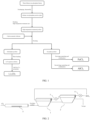
FIG. 1 is a flow chart of recovering valuable metals from a positive electrode of waste lithium iron phosphate used in an embodiment of the present invention. -
FIG. 2 is a schematic diagram of recovering valuable metals from a positive electrode of waste lithium iron phosphate used in an embodiment of the present invention. -
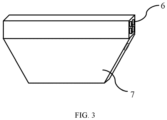
FIG. 3 is a schematic diagram of a quenching and condensation separation device of the present invention. - Illustration symbols are as follows:
- 1, 2: quenching and condensation separation device;
- 3, 4: preheating device;
- 5: roasted solid phase product;
- 6: heat exchange tube of a quenching and condensation separation device; and
- 7: deposition chamber of a quenching and condensation separation device.
- The present invention is further described below in combination with examples and comparative examples.
- A waste lithium iron phosphate battery was discharged and disassembled to obtain a lithium iron phosphate positive plate. The obtained lithium iron phosphate positive plate was directly broken to obtain particles with an average particle size of equal to or less than 3 mm, and then the material was placed in a Muffle furnace for high temperature treatment at 500°C at a heating rate of 5°C/min for 3 h in an air atmosphere to remove a polymer binder and a residual electrolyte lithium salt. A product obtained by the high temperature treatment was uniformly mixed with graphite at a mass ratio of 5:1 by ball milling, and then a mixed material was transferred into a tube furnace. After the tube furnace was vacuumized, high-purity Cl2 was introduced at a flow rate of 30 mL/min, and the mixed material was heated and roasted in the Cl2 atmosphere, where the roasting process was carried out in two stages: the mixed material was heated to 300°C at a heating rate of 5°C/min during the roasting in the first stage, and the temperature was maintained for 1 h; and the mixed material was heated to 550°C at a heating rate of 5°C/min during the roasting in the second stage, and the temperature was maintained for 3 h.
- A gas phase product produced in the roasting process was enabled to sequentially pass through a quenching and condensation separation device 1 and a quenching and
condensation separation device 2. SiCl4 that was preheated to 220°C and flowed backward with the gas phase product was introduced into a heat exchange tube of the quenching and condensation separation device 1 at a flow rate of 5 mL/min, and condensed FeCl3 was recovered in a deposition chamber of the quenching and condensation separation device 1. SiCl4 that was preheated to 120°C and flowed backward with the gas phase product was introduced into a heat exchange tube of the quenching andcondensation separation device 2 at a flow rate of 5 mL/min, and condensed AlCl3 was recovered in a deposition chamber of the quenching andcondensation separation device 2. - A solid phase product obtained by the roasting was subjected to water leaching with deionized water and stirring for 1 h, followed by suction filtration to obtain a LiCl aqueous solution, and then sodium carbonate was added into the LiCl aqueous solution to recover and precipitate Li2CO3.
- A waste lithium iron phosphate battery was discharged and disassembled to obtain a lithium iron phosphate positive plate. The obtained lithium iron phosphate positive plate was directly broken to obtain particles with an average particle size of equal to or less than 3 mm, and then the material was placed in a Muffle furnace for high temperature treatment at 400°C at a heating rate of 10°C/min for 6 h in an air atmosphere to remove a polymer binder and a residual electrolyte lithium salt. A product obtained by the high temperature treatment was uniformly mixed with carbon black at a mass ratio of 10:1 by ball milling, and then a mixed material was transferred into a tube furnace. After the tube furnace was vacuumized, high-purity Cl2 was introduced at a flow rate of 10 mL/min, and the mixed material was heated and roasted in the Cl2 atmosphere, where the roasting process was carried out in two stages: the mixed material was heated to 180°C at a heating rate of 3°C/min during the roasting in the first stage, and the temperature was maintained for 3 h; and the mixed material was heated to 450°C at a heating rate of 5°C/min during the roasting in the second stage, and the temperature was maintained for 3 h.
- A gas phase product produced in the roasting process was enabled to sequentially pass through a quenching and condensation separation device 1 and a quenching and
condensation separation device 2. SiCl4 that was preheated to 240°C and flowed backward with the gas phase product was introduced into a heat exchange tube of the quenching and condensation separation device 1 at a flow rate of 10 mL/min, and condensed FeCl3 was recovered in a deposition chamber of the quenching and condensation separation device 1. SiCl4 that was preheated to 100°C and flowed backward with the gas phase product was introduced into a heat exchange tube of the quenching andcondensation separation device 2 at a flow rate of 10 mL/min, and condensed AlCl3 was recovered in a deposition chamber of the quenching andcondensation separation device 2. - A solid phase product obtained by the roasting was subjected to water leaching with deionized water and stirring for 4 hours, followed by suction filtration to obtain a LiCl aqueous solution, and then sodium carbonate was added into the LiCl aqueous solution to recover and precipitate Li2CO3.
- A waste lithium iron phosphate battery was discharged and disassembled to obtain a lithium iron phosphate positive plate. The obtained lithium iron phosphate positive plate was directly broken to obtain particles with an average particle size of equal to or less than 3 mm, and then the material was placed in a Muffle furnace for high temperature treatment at 600°C at a heating rate of 10°C/min for 3 h in an air atmosphere to remove a polymer binder and a residual electrolyte lithium salt. A product obtained by the high temperature treatment was uniformly mixed with carbon fibers at a mass ratio of 10:1 by ball milling, and then a mixed material was transferred into a tube furnace. After the tube furnace was vacuumized, high-purity Cl2 was introduced at a flow rate of 50 mL/min, and the mixed material was heated and roasted in the Cl2 atmosphere, where the roasting process was carried out in two stages: the mixed material was heated to 250°C at a heating rate of 5°C/min during the roasting in the first stage, and the temperature was maintained for 2 h; and the mixed material was heated to 350°C at a heating rate of 10°C/min during the roasting in the second stage, and the temperature was maintained for 6 h.
- A gas phase product produced in the roasting process was enabled to sequentially pass through a quenching and condensation separation device 1 and a quenching and
condensation separation device 2. SiCl4 that was preheated to 230°C and flowed backward with the gas phase product was introduced into a heat exchange tube of the quenching and condensation separation device 1 at a flow rate of 10 mL/min, and condensed FeCl3 was recovered in a deposition chamber of the quenching and condensation separation device 1. SiCl4 that was preheated to 110°C and flowed backward with the gas phase product was introduced into a heat exchange tube of the quenching andcondensation separation device 2 at a flow rate of 10 mL/min, and condensed AlCl3 was recovered in a deposition chamber of the quenching andcondensation separation device 2. - A solid phase product obtained by the roasting was subjected to water leaching with deionized water and stirring for 3 hours, followed by suction filtration to obtain a LiCl aqueous solution, and then sodium carbonate was added into the LiCl aqueous solution to recover and precipitate Li2CO3.
- A waste lithium iron phosphate battery was discharged and disassembled to obtain a lithium iron phosphate positive plate. The obtained lithium iron phosphate positive plate was directly broken to obtain particles with an average particle size of equal to or less than 3 mm, and then the material was placed in a Muffle furnace for high temperature treatment at 500°C at a heating rate of 5°C/min for 3 h in an air atmosphere to remove a polymer binder and a residual electrolyte lithium salt. A product obtained by the high temperature treatment was uniformly mixed with graphite at a mass ratio of 5:1 by ball milling, and then a mixed material was placed in a tube furnace. After the tube furnace was vacuumized, high-purity Cl2 was introduced at a flow rate of 30 mL/min, and the mixed material was heated and roasted in the Cl2 atmosphere, where the mixed material was heated to 300°C at a heating rate of 5°C/min in the roasting process, and the temperature was maintained for 4 h.
- A gas phase product produced in the roasting process was enabled to pass through a condensation device, and AlCl3 was recovered in the condensation device.
- A solid phase product obtained by the roasting was subjected to water leaching with deionized water and stirring for 1 h, followed by suction filtration to obtain an aqueous solution of a mixed metal chloride salt containing LiCl and FeCl3, then ammonia was added into the aqueous solution of a mixed metal chloride salt to adjust the pH of the solution to 3.5, and the solution was subjected to suction filtration to obtain a ferric hydroxide precipitate and a filtrate.
- Then, sodium carbonate was added into the filtrate to recover and precipitate Li2CO3.
- The recovery rate is calculated by the following formula: recovery rate=actual mass of a product/theoretical mass of the product× 100%, in which the theoretical mass of the product is obtained by determining the content of various elements in a broken product of a lithium iron phosphate positive plate using an inductively coupled plasma (ICP) method and then calculating the theoretical mass value of the product that is completely converted thereto.
- Test results of the recovery rate of various elements in Examples 1-3 and Comparative Example are shown in Table 2 below.
Table 2 Li (%) Fe (%) Al (%) Example 1 99.3 97.2 95.6 Example 2 98.6 97.8 94.3 Example 3 98.8 96.9 96.2 Comparative Example 71.6 82.6 94.5 - As can be seen from Table 2, compared with Comparative Example, Examples 1-3 have the advantage that the recovery rate of Li can be significantly improved as a mixed chloride salt of Li and Fe is not required to be recovered step by step. In addition, the recovery rate of the metallic Fe and the metallic in Examples 1-3 is higher, indicating that the recovery purity of lithium carbonate in Examples 1-3 is also higher than that in Comparative Example.
Claims (10)
- A method for recovering valuable metals from a positive electrode of waste lithium iron phosphate, characterized by sequentially comprising the following steps:(1) subjecting a waste lithium iron phosphate battery to discharging and disassembly to obtain a lithium iron phosphate positive plate;(2) subjecting the lithium iron phosphate positive plate to breaking, followed by high temperature treatment in an air atmosphere;(3) uniformly mixing a product obtained by the high temperature treatment with a carbon material by ball milling, then transferring a mixture to a sintering device, introducing high-purity Cl2 after vacuumizing the sintering device, and heating and roasting the mixture in the Cl2 atmosphere;(4) enabling a gas phase product produced in the roasting process to sequentially pass through a quenching and condensation separation device 1 and a quenching and condensation separation device 2; introducing SiCl4 that is preheated to 220-240°C and flows backward with the gas phase product into a heat exchange tube of the quenching and condensation separation device 1, and recovering condensed FeCl3 in a deposition chamber of the quenching and condensation separation device 1; and introducing SiCl4 that is preheated to 100-120°C and flows backward with the gas phase product into a heat exchange tube of the quenching and condensation separation device 2, and recovering condensed AlCl3 in a deposition chamber of the quenching and condensation separation device 2; and(5) subjecting a solid phase product obtained by the roasting in step (3) to water leaching, stirring and filtration to obtain a LiCl aqueous solution, and then adding sodium carbonate into the LiCl aqueous solution to recover and precipitate Li2CO3.
- The method according to claim 1, characterized in that in step (2), the lithium iron phosphate positive plate has an average particle size of equal to or less than 3 mm after the breaking.
- The method according to claim 1, characterized in that in step (2), the high temperature treatment is performed at a heating rate of 5-10°C/min and a temperature of 400-600°C, and the temperature is maintained for 3-6 h.
- The method according to claim 1, characterized in that in step (3), the carbon material comprises at least one of graphite, carbon black, carbon fibers, carbon nanotubes and amorphous carbon.
- The method according to claim 1, characterized in that in step (3), the mass ratio of the product obtained by the high temperature treatment to the carbon material is 10: 1 to 5:1.
- The method according to claim 1, characterized in that in step (3), the high-purity Cl2 is introduced at a rate of 10-50 mL/min.
- The method according to claim 1, characterized in that in step (3), the roasting is performed in two stages; the roasting in the first stage is performed at a heating rate of 3-5°C/min and a temperature of 180-300°C, and the temperature is maintained for 1-3 h; and the roasting in the second stage is performed at a heating rate of 5-10°C/min and a temperature of 350-550°C, and the temperature is maintained for 3-6 h.
- The method according to claim 1, characterized in that in step (4), before introduced into the heat exchange tube of the quenching and condensation separation device 2, the SiCl4 is preheated to 100-120°C first, and the SiCl4 is introduced into the heat exchange tube of the quenching and condensation separation device 2 at a flow rate of 5-10 mL/min.
- The method according to claim 1, characterized in that in step (4), before introduced into the heat exchange tube of the quenching and condensation separation device 1, the SiCl4 is preheated to 220-240°C first, and the SiCl4 is introduced into the heat exchange tube of the quenching and condensation separation device 1 at a flow rate of 5-10 mL/min.
- The method according to claim 1, characterized in that in step (5), water used in the water leaching is deionized water; and the water leaching and the stirring are performed for 1-4 h.
Applications Claiming Priority (1)
| Application Number | Priority Date | Filing Date | Title |
|---|---|---|---|
| CN202311510539.7A CN117550628B (en) | 2023-11-14 | 2023-11-14 | A method for recovering valuable metals from waste lithium iron phosphate positive electrodes |
Publications (1)
| Publication Number | Publication Date |
|---|---|
| EP4556091A1 true EP4556091A1 (en) | 2025-05-21 |
Family
ID=89029688
Family Applications (1)
| Application Number | Title | Priority Date | Filing Date |
|---|---|---|---|
| EP23213113.6A Pending EP4556091A1 (en) | 2023-11-14 | 2023-11-29 | Method for recovering valuable metals from positive electrode of waste lithium iron phosphate |
Country Status (3)
| Country | Link |
|---|---|
| US (1) | US20250158146A1 (en) |
| EP (1) | EP4556091A1 (en) |
| CN (1) | CN117550628B (en) |
Families Citing this family (6)
| Publication number | Priority date | Publication date | Assignee | Title |
|---|---|---|---|---|
| CN118387898A (en) * | 2024-05-31 | 2024-07-26 | 郴州汇能储能材料工程研究中心有限责任公司 | Method for recovering lithium in waste lithium iron phosphate battery |
| CN119430237A (en) * | 2024-09-20 | 2025-02-14 | 郴州汇能储能材料工程研究中心有限责任公司 | A method for recovering black powder from lithium iron phosphate batteries |
| CN118993158B (en) * | 2024-10-25 | 2025-01-17 | 郴州汇能储能材料工程研究中心有限责任公司 | Recycling method of lithium extraction slag of waste lithium iron phosphate battery |
| CN119191392B (en) * | 2024-11-26 | 2025-03-25 | 郴州金铖环保科技有限公司 | A method for extracting and recovering metal elements in lithium batteries using chlorination method |
| CN120733556B (en) * | 2025-07-30 | 2025-12-23 | 广东自立环保有限公司 | Synergistic treatment method for metal-containing solid waste smelting and smoke multi-pollutant |
| CN121183139B (en) * | 2025-09-24 | 2026-03-17 | 矿冶科技集团有限公司 | A method for recovering lithium, iron, and phosphorus from waste lithium iron phosphate battery cathode powder. |
Citations (6)
| Publication number | Priority date | Publication date | Assignee | Title |
|---|---|---|---|---|
| CN103060567A (en) | 2012-12-21 | 2013-04-24 | 中南大学 | Method for processing waste lithium ion battery positive plate to extract valuable metal |
| CN112342394A (en) | 2020-10-29 | 2021-02-09 | 广东邦普循环科技有限公司 | Incomplete-extraction battery recovery method |
| CN114015885A (en) * | 2021-09-24 | 2022-02-08 | 中南大学 | Separation and recovery method of waste material containing lithium iron phosphate |
| CN115149134A (en) | 2022-07-14 | 2022-10-04 | 广东佳纳能源科技有限公司 | Method, equipment and application of high temperature chlorination roasting waste lithium battery |
| CN116443838A (en) * | 2022-01-06 | 2023-07-18 | 中国科学院过程工程研究所 | A method for cascade utilization of waste lithium iron phosphate cathode powder |
| CN116759686A (en) | 2023-08-04 | 2023-09-15 | 湖南德景源科技有限公司 | Method for recycling valuable metal from lithium iron phosphate battery anode material |
Family Cites Families (4)
| Publication number | Priority date | Publication date | Assignee | Title |
|---|---|---|---|---|
| CN111733328B (en) * | 2020-07-17 | 2021-04-27 | 中南大学 | A method for recycling valuable metals in waste lithium-ion batteries |
| CN113278803A (en) * | 2021-05-11 | 2021-08-20 | 贵研资源(易门)有限公司 | Method for treating precious metal iron catching material |
| CN113897488A (en) * | 2021-09-01 | 2022-01-07 | 格林美股份有限公司 | Method for recovering valuable metals from waste lithium ion batteries |
| CN117004816B (en) * | 2023-08-02 | 2025-08-12 | 中南大学 | A method for separating nickel and iron by chlorination roasting of nickel and iron alloy |
-
2023
- 2023-11-14 CN CN202311510539.7A patent/CN117550628B/en active Active
- 2023-11-29 EP EP23213113.6A patent/EP4556091A1/en active Pending
-
2024
- 2024-01-24 US US18/421,950 patent/US20250158146A1/en active Pending
Patent Citations (6)
| Publication number | Priority date | Publication date | Assignee | Title |
|---|---|---|---|---|
| CN103060567A (en) | 2012-12-21 | 2013-04-24 | 中南大学 | Method for processing waste lithium ion battery positive plate to extract valuable metal |
| CN112342394A (en) | 2020-10-29 | 2021-02-09 | 广东邦普循环科技有限公司 | Incomplete-extraction battery recovery method |
| CN114015885A (en) * | 2021-09-24 | 2022-02-08 | 中南大学 | Separation and recovery method of waste material containing lithium iron phosphate |
| CN116443838A (en) * | 2022-01-06 | 2023-07-18 | 中国科学院过程工程研究所 | A method for cascade utilization of waste lithium iron phosphate cathode powder |
| CN115149134A (en) | 2022-07-14 | 2022-10-04 | 广东佳纳能源科技有限公司 | Method, equipment and application of high temperature chlorination roasting waste lithium battery |
| CN116759686A (en) | 2023-08-04 | 2023-09-15 | 湖南德景源科技有限公司 | Method for recycling valuable metal from lithium iron phosphate battery anode material |
Also Published As
| Publication number | Publication date |
|---|---|
| US20250158146A1 (en) | 2025-05-15 |
| CN117550628A (en) | 2024-02-13 |
| CN117550628B (en) | 2024-10-29 |
Similar Documents
| Publication | Publication Date | Title |
|---|---|---|
| EP4556091A1 (en) | Method for recovering valuable metals from positive electrode of waste lithium iron phosphate | |
| CN114015885B (en) | Separation and recovery method of waste material containing lithium iron phosphate | |
| CN107540004B (en) | A method for recycling battery-grade lithium carbonate from waste lithium iron phosphate battery cathode powder | |
| CN110482511A (en) | A kind of recovery method of positive material of waste lithium iron phosphate | |
| CN111519020B (en) | Method for recovering valuable elements from rare earth electrolytic molten salt slag | |
| CN103849775B (en) | A method for recovering nickel and cobalt from superalloy scrap | |
| CN111370801B (en) | Method for recovering waste lithium iron phosphate positive plate | |
| CN114394582A (en) | Method for regenerating iron phosphate from phosphorus iron slag after lithium extraction | |
| CN105039724B (en) | Smelting furnace soot treatment method | |
| JP3777226B2 (en) | Method for recovering reusable rare earth-containing compounds | |
| CN115304059B (en) | Recycling treatment method for retired battery carbon residue | |
| CN111575502A (en) | A kind of method for extracting nickel element from nickel ore | |
| CN118343706A (en) | A method for preparing lithium phosphate from waste lithium iron phosphate residue | |
| JP2014051718A (en) | Rare earth separation method and rare earth separation unit | |
| CN112080748A (en) | Method for recycling acidic etching waste liquid | |
| CN109536992B (en) | Method for purifying copper electrolyte by two-removing and two-accumulating | |
| CN117525660B (en) | A method for recycling positive electrode materials of lithium iron phosphate batteries | |
| CN111534701B (en) | Method for efficiently recovering valuable elements from rare earth molten salt electrolytic slag | |
| EP4636102A1 (en) | Method for recovering lithium | |
| CN112481492A (en) | Method for recovering valuable metals from waste lithium battery lithium cobaltate positive electrode material | |
| CN112029997A (en) | Recovery process for large-scale treatment of waste lithium ion battery anode material | |
| EP4594543A1 (en) | A method for recovering metals from black mass from recycling of spent lithium-ion batteries | |
| CN119956086B (en) | Leaching agent and method for leaching and recycling waste ternary cathode material | |
| EP4596730A1 (en) | Method for recovery of valuable metals | |
| CN119706890B (en) | A method for the complete element recovery of retired lithium iron phosphate batteries |
Legal Events
| Date | Code | Title | Description |
|---|---|---|---|
| PUAI | Public reference made under article 153(3) epc to a published international application that has entered the european phase |
Free format text: ORIGINAL CODE: 0009012 |
|
| STAA | Information on the status of an ep patent application or granted ep patent |
Free format text: STATUS: THE APPLICATION HAS BEEN PUBLISHED |
|
| AK | Designated contracting states |
Kind code of ref document: A1 Designated state(s): AL AT BE BG CH CY CZ DE DK EE ES FI FR GB GR HR HU IE IS IT LI LT LU LV MC ME MK MT NL NO PL PT RO RS SE SI SK SM TR |
|
| STAA | Information on the status of an ep patent application or granted ep patent |
Free format text: STATUS: REQUEST FOR EXAMINATION WAS MADE |
|
| 17P | Request for examination filed |
Effective date: 20260209 |