EP4553627A1 - Touch-control method, electronic device, and touch-control system - Google Patents
Touch-control method, electronic device, and touch-control system Download PDFInfo
- Publication number
- EP4553627A1 EP4553627A1 EP24174472.1A EP24174472A EP4553627A1 EP 4553627 A1 EP4553627 A1 EP 4553627A1 EP 24174472 A EP24174472 A EP 24174472A EP 4553627 A1 EP4553627 A1 EP 4553627A1
- Authority
- EP
- European Patent Office
- Prior art keywords
- touch
- brightness level
- duration
- ambient brightness
- rec
- Prior art date
- Legal status (The legal status is an assumption and is not a legal conclusion. Google has not performed a legal analysis and makes no representation as to the accuracy of the status listed.)
- Pending
Links
Images




Classifications
-
- G—PHYSICS
- G06—COMPUTING OR CALCULATING; COUNTING
- G06F—ELECTRIC DIGITAL DATA PROCESSING
- G06F3/00—Input arrangements for transferring data to be processed into a form capable of being handled by the computer; Output arrangements for transferring data from processing unit to output unit, e.g. interface arrangements
- G06F3/01—Input arrangements or combined input and output arrangements for interaction between user and computer
- G06F3/03—Arrangements for converting the position or the displacement of a member into a coded form
- G06F3/041—Digitisers, e.g. for touch screens or touch pads, characterised by the transducing means
- G06F3/0416—Control or interface arrangements specially adapted for digitisers
-
- G—PHYSICS
- G06—COMPUTING OR CALCULATING; COUNTING
- G06F—ELECTRIC DIGITAL DATA PROCESSING
- G06F3/00—Input arrangements for transferring data to be processed into a form capable of being handled by the computer; Output arrangements for transferring data from processing unit to output unit, e.g. interface arrangements
- G06F3/01—Input arrangements or combined input and output arrangements for interaction between user and computer
- G06F3/03—Arrangements for converting the position or the displacement of a member into a coded form
- G06F3/041—Digitisers, e.g. for touch screens or touch pads, characterised by the transducing means
- G06F3/0416—Control or interface arrangements specially adapted for digitisers
- G06F3/0418—Control or interface arrangements specially adapted for digitisers for error correction or compensation, e.g. based on parallax, calibration or alignment
-
- G—PHYSICS
- G06—COMPUTING OR CALCULATING; COUNTING
- G06F—ELECTRIC DIGITAL DATA PROCESSING
- G06F3/00—Input arrangements for transferring data to be processed into a form capable of being handled by the computer; Output arrangements for transferring data from processing unit to output unit, e.g. interface arrangements
- G06F3/01—Input arrangements or combined input and output arrangements for interaction between user and computer
- G06F3/03—Arrangements for converting the position or the displacement of a member into a coded form
- G06F3/041—Digitisers, e.g. for touch screens or touch pads, characterised by the transducing means
- G06F3/042—Digitisers, e.g. for touch screens or touch pads, characterised by the transducing means by opto-electronic means
-
- G—PHYSICS
- G09—EDUCATION; CRYPTOGRAPHY; DISPLAY; ADVERTISING; SEALS
- G09G—ARRANGEMENTS OR CIRCUITS FOR CONTROL OF INDICATING DEVICES USING STATIC MEANS TO PRESENT VARIABLE INFORMATION
- G09G3/00—Control arrangements or circuits, of interest only in connection with visual indicators other than cathode-ray tubes
- G09G3/20—Control arrangements or circuits, of interest only in connection with visual indicators other than cathode-ray tubes for presentation of an assembly of a number of characters, e.g. a page, by composing the assembly by combination of individual elements arranged in a matrix no fixed position being assigned to or needed to be assigned to the individual characters or partial characters
- G09G3/2003—Display of colours
-
- G—PHYSICS
- G09—EDUCATION; CRYPTOGRAPHY; DISPLAY; ADVERTISING; SEALS
- G09G—ARRANGEMENTS OR CIRCUITS FOR CONTROL OF INDICATING DEVICES USING STATIC MEANS TO PRESENT VARIABLE INFORMATION
- G09G2320/00—Control of display operating conditions
- G09G2320/06—Adjustment of display parameters
- G09G2320/0626—Adjustment of display parameters for control of overall brightness
-
- G—PHYSICS
- G09—EDUCATION; CRYPTOGRAPHY; DISPLAY; ADVERTISING; SEALS
- G09G—ARRANGEMENTS OR CIRCUITS FOR CONTROL OF INDICATING DEVICES USING STATIC MEANS TO PRESENT VARIABLE INFORMATION
- G09G2360/00—Aspects of the architecture of display systems
- G09G2360/14—Detecting light within display terminals, e.g. using a single or a plurality of photosensors
- G09G2360/144—Detecting light within display terminals, e.g. using a single or a plurality of photosensors the light being ambient light
Definitions
- the present invention relates to a touch-control technology, and more particularly to a touch-control method, an electronic device, and a touch-control system that use a light sensor as a touch-control button.
- buttons of an electronic device are normally used for specific functions, and the quantity of the physical buttons is limited and unable to be increased.
- current electronic devices such as mobile phones and tablets
- virtual buttons have problems of taking up screen space and requiring position identification by the human eye.
- electronic devices generally apply light sensors to obtain the brightness of ambient light, and adjust the brightness of a screen accordingly. Under these circumstances, the purpose and the function of light sensors are not diversified.
- the present invention provides a touch-control method, an electronic device, and a touch-control system.
- the touch-control method is applied to an electronic device that includes a light sensor and a processor.
- the touch-control method is executed by the processor, and includes: obtaining an ambient brightness level via the light sensor; recording a duration in which the ambient brightness level is lower than a threshold, and determining, in response to the duration being greater than a predetermined minimum time length and less than a predetermined maximum time length, whether or not a first brightness characteristic of the ambient brightness level before the duration matches a second brightness characteristic of the ambient brightness level after the duration; and determining, in response to determining that the first brightness characteristic matches the second brightness characteristic, occurrence of a touch-control behavior, and triggering the electronic device to perform an operation corresponding to the touch-control behavior.
- the electronic device includes a light sensor and a processor.
- the processor is coupled to the light sensor, and is configured to execute processes of: obtaining an ambient brightness level via the light sensor; recording a duration in which the ambient brightness level is lower than a threshold, and determining, in response to the duration being greater than a predetermined minimum time length and less than a predetermined maximum time length, whether or not a first brightness characteristic of the ambient brightness level before the duration matches a second brightness characteristic of the ambient brightness level after the duration; and determining, in response to determining that the first brightness characteristic matches the second brightness characteristic, occurrence of a touch-control behavior, and triggering the electronic device to perform an operation corresponding to the touch-control behavior.
- the touch-control system includes an electronic device, a light sensor, and a processor.
- the processor is coupled to the light sensor and the electronic device, and is configured to execute processes of: obtaining an ambient brightness level via the light sensor; recording a duration in which the ambient brightness level is lower than a threshold, and determining, in response to the duration being greater than a predetermined minimum time length and less than a predetermined maximum time length, whether or not a first brightness characteristic of the ambient brightness level before the duration matches a second brightness characteristic of the ambient brightness level after the duration; and determining, in response to determining that the first brightness characteristic matches the second brightness characteristic, occurrence of a touch-control behavior, and triggering the electronic device to perform an operation corresponding to the touch-control behavior.
- FIG. 1 is a functional block diagram of an electronic device according to one embodiment of the present invention
- FIG. 2 is a flowchart of a touch-control method according to one embodiment of the present invention.
- an electronic device 10 of the present embodiment includes a light sensor 101 and a processor 103.
- the electronic device 10 can be, for example, a mobile phone or a tablet, but the present invention is not limited thereto.
- the light sensor 101 can be an ambient light sensor, and sends an ambient brightness level to the processor 103.
- the processor 103 is coupled to the light sensor 101, and is configured to execute a touch-control method of the present embodiment. That is to say, the touch-control method of the present embodiment can be applied to the electronic device 10 that includes the light sensor 101 and the processor 103, and is executed by the processor 103.
- the processor 103 can be implemented by cooperation of hardware (e.g., a CPU and a memory), software, and/or firmware. However, a specific implementation of the processor 103 is not limited in the present invention. As shown in FIG. 2 , the touch-control method of the present embodiment includes the following processes.
- Step S110 obtaining the ambient brightness level via a light sensor.
- Step S120 recording a duration in which the ambient brightness level is lower than a threshold.
- Step S130 determining whether or not the duration is greater than a predetermined minimum time length and less than a predetermined maximum time length. If yes, the touch-control method proceeds to step S140. If not, the touch-control method returns to step S120.
- Step S 140 determining whether or not a first brightness characteristic of the ambient brightness level before the duration matches a second brightness characteristic of the ambient brightness level after the duration. If yes, the touch-control method proceeds to step S 150. If not, the touch-control method returns to step S120.
- Step S 150 determining occurrence of a touch-control behavior, and triggering the electronic device to perform an operation corresponding to the touch-control behavior.
- the touch-control method of the present embodiment can be an application running in a background, and the application can be defined to enable the light sensor 101 to have the function of acting as a touch-control button. Users can turn on or off the application according to their needs.
- the processor 103 may register the light sensor 101 in an operating system of the electronic device 10 to act as the touch-control button.
- the processor 103 can configure the light sensor 101 to periodically obtain the ambient brightness level, and sequentially save the ambient brightness level.
- the processor 103 can include a circular buffer 1031.
- the processor 103 can sequentially save the ambient brightness level with the circular buffer 1031, and the light sensor 101 is configured to periodically obtain the ambient brightness level according to a sampling frequency.
- the sampling frequency of the present embodiment can be 20 times per second.
- the present invention is not limited thereto.
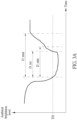
- FIG. 3A is a schematic view showing a duration being not greater than a predetermined minimum time length according to one embodiment of the present invention
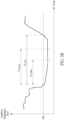
- FIG. 3B is a schematic view showing the duration being not less than a predetermined maximum time length according to one embodiment of the present invention.
- the processor 103 can record a duration D_rec in which the ambient brightness level is lower than a threshold TH, and determine whether or not the duration D_rec is greater than a predetermined minimum time length Dmin and less than a predetermined maximum time length D_max.
- the processor 103 can also determine that pressing of the button does not occur, and does not trigger the electronic device 10 to perform the corresponding operation.
- the duration D_rec in which the ambient brightness level is lower than the threshold TH can also be greater than the predetermined minimum time length Dmin and less than the predetermined maximum time length D_max.
- the processor 103 can also determine whether or not the first brightness characteristic of the ambient brightness level before the duration D_rec matches the second brightness characteristic of the ambient brightness level after the duration D_rec.
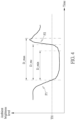
- FIG. 4 is a schematic view showing a first brightness characteristic not matching a second brightness characteristic when the duration is greater than the predetermined minimum time length and less than the predetermined maximum time length according to one embodiment of the present invention.
- the first brightness characteristic can be a first distribution pattern P1 of the ambient brightness level before the duration D_rec
- the second brightness characteristic can be a second distribution pattern P2 of the ambient brightness level after the duration D_rec.
- the distribution pattern of the present embodiment refers to a trajectory of changes of the ambient brightness level within a period of time.
- the first distribution pattern P1 can be a first trajectory of the changes of the ambient brightness level within a period of time before the duration D_rec
- the second distribution pattern P2 can be a second trajectory of the changes of the ambient brightness level within a period of time after the duration D_rec.
- a specific length of the period of time is not limited in the present invention.
- the processor can determine whether or not the first brightness characteristic matches the second brightness characteristic.
- the processor 103 can determine that the first brightness characteristic does not match the second brightness characteristic.
- the processor 103 can determine that the touch-control behavior does not occur, and does not trigger the electronic device 10 to perform the operation corresponding to the touch-control behavior. That is to say, if there is a significant difference between the ambient brightness levels before and after the duration D_rec, the processor 103 can determine that the ambient brightness level is lower than the threshold TH due to the instability of the light source.
- FIG. 5 is a schematic view showing the first brightness characteristic matching the second brightness characteristic when the duration is greater than the predetermined minimum time length and less than the predetermined maximum time length according to one embodiment of the present invention.
- the touch-control behavior is pressing of the button
- the users can cover the light sensor of the electronic device for 0.4 seconds with their fingers.
- the sampling frequency of the present embodiment can be 20 times per second.
- the processor 103 can calculate that the current duration D_rec is 0.4 seconds.
- the processor 103 can further determine whether or not the first brightness characteristic matches the second brightness characteristic.
- the processor 103 can determine that the first brightness characteristic matches the second brightness characteristic.
- the processor 103 can determine occurrence of the touch-control behavior, and triggers the electronic device 10 to perform the operation corresponding to the touch-control behavior. It should be noted that, in the present invention, the operation corresponding to the touch-control behavior is not limited, and specific implementations of the processor 103 to trigger the electronic device 10 for performing the operation are also not limited.
- the processor 103 can trigger the electronic device 10 to turn on other applications, but the present invention is not limited thereto. Furthermore, a time length of a vibration feedback (e.g., 0.2 seconds) can be designed in the present embodiment. In this way, in response to determining occurrence of the touch-control behavior, the processor 103 can control a vibrator inside the electronic device 10 to vibrate for 0.2 seconds, so as to provide a touch-control feedback effect.
- a vibration feedback e.g., 0.2 seconds
- a touch-control system 2 can include an electronic device 20, a light sensor 201, and a processor 203.
- the electronic device 20 can be, for example, a mobile phone or a tablet, but the present invention is not limited thereto.
- the light sensor 201 and the processor 203 are independent elements disposed outside of the electronic device 20.
- the light sensor 201 can be an ambient light detector disposed outside of the electronic device 20, and sends the obtained ambient brightness level to the processor 203.
- the processor 203 can be implemented by cooperation of hardware, software, and/or firmware, and includes a circular buffer 2031 to sequentially save the ambient brightness level. Specific implementations of the processor 203 are also not limited in the present invention.
- the processor 203 can be coupled to the light sensor 201 and the electronic device 20 through a wired communication apparatus or a wireless communication apparatus, and can be configured to execute the touch-control method of the present embodiment. Relevant details thereof have already been mentioned above, and will not be reiterated herein.
- step S140 can be omitted from the touch-control method. That is to say, if the determination result of step S130 is 'yes', the touch-control method of other embodiments can proceed to step S150. If the determination result of step S130 is 'no', the touch-control method of other embodiments can return to step S120. Relevant details thereof have also been mentioned above, and will not be reiterated herein.
- the touch-control method, the electronic device, and the touch-control system of the present invention use the light sensor as the touch-control button.
- the touch-control method, the electronic device, and the touch-control system provided by the present invention by virtue of "determining, in response to the duration in which the ambient brightness level is lower than the threshold being greater than the predetermined minimum time length and less than the predetermined maximum time length, whether or not the first brightness characteristic matches the second brightness characteristic," misjudgment of occurrence of the touch-control behavior due to the influence of an unstable light source can be prevented.
Landscapes
- Engineering & Computer Science (AREA)
- Theoretical Computer Science (AREA)
- General Engineering & Computer Science (AREA)
- Physics & Mathematics (AREA)
- General Physics & Mathematics (AREA)
- Human Computer Interaction (AREA)
- Computer Hardware Design (AREA)
- Telephone Function (AREA)
- Position Input By Displaying (AREA)
- User Interface Of Digital Computer (AREA)
Abstract
A touch-control method, an electronic device (10), and a touch-control system (2) are provided. The touch-control method includes: obtaining an ambient brightness level via a light sensor (10, 201); recording a duration (D rec) in which the ambient brightness level is lower than a threshold (TH), and determining, in response to the duration (D rec) being greater than a predetermined minimum time length (D min) and less than a predetermined maximum time length (D_max), whether or not a first brightness characteristic of the ambient brightness level before the duration (D rec) matches a second brightness characteristic of the ambient brightness level after the duration (D rec); and determining, in response to determining that the first brightness characteristic matches the second brightness characteristic, occurrence of a touch-control behavior, and triggering the electronic device (10, 20) to perform an operation corresponding to the touch-control behavior.
Description
- The present invention relates to a touch-control technology, and more particularly to a touch-control method, an electronic device, and a touch-control system that use a light sensor as a touch-control button.
- In conventional technology, physical buttons of an electronic device are normally used for specific functions, and the quantity of the physical buttons is limited and unable to be increased. As such, current electronic devices (such as mobile phones and tablets) generate virtual buttons on their screens as touch-control buttons. However, virtual buttons have problems of taking up screen space and requiring position identification by the human eye.
- In addition, electronic devices generally apply light sensors to obtain the brightness of ambient light, and adjust the brightness of a screen accordingly. Under these circumstances, the purpose and the function of light sensors are not diversified.
- In response to the above-referenced technical inadequacies, the present invention provides a touch-control method, an electronic device, and a touch-control system.
- In order to solve the above-mentioned problems, one of the technical aspects adopted by the present invention is to provide a touch-control method. The touch-control method is applied to an electronic device that includes a light sensor and a processor. The touch-control method is executed by the processor, and includes: obtaining an ambient brightness level via the light sensor; recording a duration in which the ambient brightness level is lower than a threshold, and determining, in response to the duration being greater than a predetermined minimum time length and less than a predetermined maximum time length, whether or not a first brightness characteristic of the ambient brightness level before the duration matches a second brightness characteristic of the ambient brightness level after the duration; and determining, in response to determining that the first brightness characteristic matches the second brightness characteristic, occurrence of a touch-control behavior, and triggering the electronic device to perform an operation corresponding to the touch-control behavior.
- In order to solve the above-mentioned problems, another one of the technical aspects adopted by the present invention is to provide an electronic device. The electronic device includes a light sensor and a processor. The processor is coupled to the light sensor, and is configured to execute processes of: obtaining an ambient brightness level via the light sensor; recording a duration in which the ambient brightness level is lower than a threshold, and determining, in response to the duration being greater than a predetermined minimum time length and less than a predetermined maximum time length, whether or not a first brightness characteristic of the ambient brightness level before the duration matches a second brightness characteristic of the ambient brightness level after the duration; and determining, in response to determining that the first brightness characteristic matches the second brightness characteristic, occurrence of a touch-control behavior, and triggering the electronic device to perform an operation corresponding to the touch-control behavior.
- In order to solve the above-mentioned problems, yet another one of the technical aspects adopted by the present invention is to provide a touch-control system. The touch-control system includes an electronic device, a light sensor, and a processor. The processor is coupled to the light sensor and the electronic device, and is configured to execute processes of: obtaining an ambient brightness level via the light sensor; recording a duration in which the ambient brightness level is lower than a threshold, and determining, in response to the duration being greater than a predetermined minimum time length and less than a predetermined maximum time length, whether or not a first brightness characteristic of the ambient brightness level before the duration matches a second brightness characteristic of the ambient brightness level after the duration; and determining, in response to determining that the first brightness characteristic matches the second brightness characteristic, occurrence of a touch-control behavior, and triggering the electronic device to perform an operation corresponding to the touch-control behavior.
- These and other aspects of the present invention will become apparent from the following description of the embodiment taken in conjunction with the following drawings and their captions, although variations and modifications therein may be affected without departing from the spirit and scope of the novel concepts of the invention.
- The described embodiments may be better understood by reference to the following description and the accompanying drawings, in which:
-
FIG. 1 is a functional block diagram of an electronic device according to one embodiment of the present invention; -
FIG. 2 is a flowchart of a touch-control method according to one embodiment of the present invention; -
FIG. 3A is a schematic view showing a duration being not greater than a predetermined minimum time length according to one embodiment of the present invention; -
FIG. 3B is a schematic view showing the duration being not less than a predetermined maximum time length according to one embodiment of the present invention; -
FIG. 4 is a schematic view showing a first brightness characteristic not matching a second brightness characteristic when the duration is greater than the predetermined minimum time length and less than the predetermined maximum time length according to one embodiment of the present invention; -
FIG. 5 is a schematic view showing the first brightness characteristic matching the second brightness characteristic when the duration is greater than the predetermined minimum time length and less than the predetermined maximum time length according to one embodiment of the present invention; and -
FIG. 6 is a functional block diagram of a touch-control system according to one embodiment of the present invention. - The present invention is more particularly described in the following examples that are intended as illustrative only since numerous modifications and variations therein will be apparent to those skilled in the art. Like numbers in the drawings indicate like components throughout the views. As used in the description herein and throughout the claims that follow, unless the context clearly dictates otherwise, the meaning of "a," "an" and "the" includes plural reference, and the meaning of "in" includes "in" and "on." Titles or subtitles can be used herein for the convenience of a reader, which shall have no influence on the scope of the present invention.
- The terms used herein generally have their ordinary meanings in the art. In the case of conflict, the present document, including any definitions given herein, will prevail. The same thing can be expressed in more than one way. Alternative language and synonyms can be used for any term(s) discussed herein, and no special significance is to be placed upon whether a term is elaborated or discussed herein. A recital of one or more synonyms does not exclude the use of other synonyms. The use of examples anywhere in this specification including examples of any terms is illustrative only, and in no way limits the scope and meaning of the present invention or of any exemplified term. Likewise, the present invention is not limited to various embodiments given herein. Numbering terms such as "first," "second" or "third" can be used to describe various components, signals or the like, which are for distinguishing one component/signal from another one only, and are not intended to, nor should be construed to impose any substantive limitations on the components, signals or the like.
- Referring to
FIG. 1 andFIG. 2 ,FIG. 1 is a functional block diagram of an electronic device according to one embodiment of the present invention, andFIG. 2 is a flowchart of a touch-control method according to one embodiment of the present invention. As shown inFIG. 1 , anelectronic device 10 of the present embodiment includes alight sensor 101 and aprocessor 103. - The
electronic device 10 can be, for example, a mobile phone or a tablet, but the present invention is not limited thereto. Thelight sensor 101 can be an ambient light sensor, and sends an ambient brightness level to theprocessor 103. - The
processor 103 is coupled to thelight sensor 101, and is configured to execute a touch-control method of the present embodiment. That is to say, the touch-control method of the present embodiment can be applied to theelectronic device 10 that includes thelight sensor 101 and theprocessor 103, and is executed by theprocessor 103. - The
processor 103 can be implemented by cooperation of hardware (e.g., a CPU and a memory), software, and/or firmware. However, a specific implementation of theprocessor 103 is not limited in the present invention. As shown inFIG. 2 , the touch-control method of the present embodiment includes the following processes. - Step S110: obtaining the ambient brightness level via a light sensor.
- Step S120: recording a duration in which the ambient brightness level is lower than a threshold.
- Step S130: determining whether or not the duration is greater than a predetermined minimum time length and less than a predetermined maximum time length. If yes, the touch-control method proceeds to step S140. If not, the touch-control method returns to step S120.
- Step S 140: determining whether or not a first brightness characteristic of the ambient brightness level before the duration matches a second brightness characteristic of the ambient brightness level after the duration. If yes, the touch-control method proceeds to step S 150. If not, the touch-control method returns to step S120.
- Step S 150: determining occurrence of a touch-control behavior, and triggering the electronic device to perform an operation corresponding to the touch-control behavior.
- Specifically, the touch-control method of the present embodiment can be an application running in a background, and the application can be defined to enable the
light sensor 101 to have the function of acting as a touch-control button. Users can turn on or off the application according to their needs. When the application is turned on, theprocessor 103 may register thelight sensor 101 in an operating system of theelectronic device 10 to act as the touch-control button. - Furthermore, in step S 110, the
processor 103 can configure thelight sensor 101 to periodically obtain the ambient brightness level, and sequentially save the ambient brightness level. Theprocessor 103 can include acircular buffer 1031. Theprocessor 103 can sequentially save the ambient brightness level with thecircular buffer 1031, and thelight sensor 101 is configured to periodically obtain the ambient brightness level according to a sampling frequency. For example, the sampling frequency of the present embodiment can be 20 times per second. However, the present invention is not limited thereto. - Referring to
FIG. 3A andFIG. 3B ,FIG. 3A is a schematic view showing a duration being not greater than a predetermined minimum time length according to one embodiment of the present invention, andFIG. 3B is a schematic view showing the duration being not less than a predetermined maximum time length according to one embodiment of the present invention. As mentioned above, theprocessor 103 can record a duration D_rec in which the ambient brightness level is lower than a threshold TH, and determine whether or not the duration D_rec is greater than a predetermined minimum time length Dmin and less than a predetermined maximum time length D_max. - In other words, the
processor 103 can determine whether or not the duration D_rec is between the predetermined minimum time length D_min and the predetermined maximum time length D_max. In addition, when the duration D_rec is not greater than the predetermined minimum time length Dmin or not less than the predetermined maximum time length D_max, theprocessor 103 can determine that the touch-control behavior does not occur, and does not trigger theelectronic device 10 to perform the operation corresponding to the touch-control behavior. - Specifically, in the present embodiment, the touch-control behavior can be pressing of a button. As such, the predetermined minimum time length D_min and the predetermined maximum time length D_max can be 0.1 seconds and 1 second, respectively. However, the present invention is not limited thereto. As shown in
FIG. 3A , when the duration D_rec is not greater than the predetermined minimum time length Dmin (i.e., D_rec ≤ D min), theprocessor 103 can determine that pressing of the button does not occur, and does not trigger theelectronic device 10 to perform the corresponding operation. In addition, as shown inFIG. 3B , when the duration D_rec is not less than the predetermined maximum time length D max (i.e., D_rec ≥ D max), theprocessor 103 can also determine that pressing of the button does not occur, and does not trigger theelectronic device 10 to perform the corresponding operation. - Furthermore, the predetermined maximum time length D_max can be used to prevent occurrence of misjudgment caused by the
electronic device 10 entering a dark room, and the predetermined maximum time length D_max can be set according to the touch-control behavior. For example, when the touch-control behavior is long-pressing of the button, the predetermined maximum time length D_max can be extended to 1.5 seconds, but the present invention is not limited thereto. - On the other hand, when a light source is unstable, the duration D_rec in which the ambient brightness level is lower than the threshold TH can also be greater than the predetermined minimum time length Dmin and less than the predetermined maximum time length D_max. In order to prevent misjudgment of occurrence of the touch-control behavior due to the influence of the unstable light source, when the duration D rec is greater than the predetermined minimum time length D_min and less than the predetermined maximum time length D_max, the
processor 103 can also determine whether or not the first brightness characteristic of the ambient brightness level before the duration D_rec matches the second brightness characteristic of the ambient brightness level after the duration D_rec. - Reference is made to
FIG. 4 , which is a schematic view showing a first brightness characteristic not matching a second brightness characteristic when the duration is greater than the predetermined minimum time length and less than the predetermined maximum time length according to one embodiment of the present invention. As shown inFIG. 4 , the first brightness characteristic can be a first distribution pattern P1 of the ambient brightness level before the duration D_rec, and the second brightness characteristic can be a second distribution pattern P2 of the ambient brightness level after the duration D_rec. The distribution pattern of the present embodiment refers to a trajectory of changes of the ambient brightness level within a period of time. - Therefore, the first distribution pattern P1 can be a first trajectory of the changes of the ambient brightness level within a period of time before the duration D_rec, and the second distribution pattern P2 can be a second trajectory of the changes of the ambient brightness level within a period of time after the duration D_rec. However, a specific length of the period of time is not limited in the present invention.
- In addition, by determining whether or not the second distribution pattern P2 after being horizontally rotated matches the first distribution pattern P1, the processor can determine whether or not the first brightness characteristic matches the second brightness characteristic. In the embodiment of
FIG. 4 , since the horizontally-rotated second distribution pattern P2 does not match the first distribution pattern P1 (i.e., the second trajectory after being horizontally rotated does not match the first trajectory), theprocessor 103 can determine that the first brightness characteristic does not match the second brightness characteristic. - In response to determining that the first brightness characteristic does not match the second brightness characteristic, the
processor 103 can determine that the touch-control behavior does not occur, and does not trigger theelectronic device 10 to perform the operation corresponding to the touch-control behavior. That is to say, if there is a significant difference between the ambient brightness levels before and after the duration D_rec, theprocessor 103 can determine that the ambient brightness level is lower than the threshold TH due to the instability of the light source. - Reference is made to
FIG. 5 , which is a schematic view showing the first brightness characteristic matching the second brightness characteristic when the duration is greater than the predetermined minimum time length and less than the predetermined maximum time length according to one embodiment of the present invention. As shown inFIG. 5 , when the touch-control behavior is pressing of the button, the users can cover the light sensor of the electronic device for 0.4 seconds with their fingers. As previously mentioned, the sampling frequency of the present embodiment can be 20 times per second. Hence, after theprocessor 103 obtains a first piece of data in which the ambient brightness level is lower than the threshold TH, if the ambient brightness level is lower than the threshold TH in eight consecutive pieces of data, and if the ambient brightness level is greater than the threshold TH in a ninth piece of data, theprocessor 103 can calculate that the current duration D_rec is 0.4 seconds. - In addition, when the predetermined minimum time length Dmin and the predetermined maximum time length Dmax are respectively 0.1 seconds and 1 second, since the duration D_rec is between 0.1 seconds and 1 second (i.e., Dmin < D_rec < D max), the
processor 103 can further determine whether or not the first brightness characteristic matches the second brightness characteristic. In the embodiment ofFIG. 5 , since the horizontally-rotated second distribution pattern P2 matches the first distribution pattern P1 (i.e., the second trajectory after being horizontally rotated matches the first trajectory), theprocessor 103 can determine that the first brightness characteristic matches the second brightness characteristic. - In response to determining that the first brightness characteristic matches the second brightness characteristic, the
processor 103 can determine occurrence of the touch-control behavior, and triggers theelectronic device 10 to perform the operation corresponding to the touch-control behavior. It should be noted that, in the present invention, the operation corresponding to the touch-control behavior is not limited, and specific implementations of theprocessor 103 to trigger theelectronic device 10 for performing the operation are also not limited. - In the present embodiment, the
processor 103 can trigger theelectronic device 10 to turn on other applications, but the present invention is not limited thereto. Furthermore, a time length of a vibration feedback (e.g., 0.2 seconds) can be designed in the present embodiment. In this way, in response to determining occurrence of the touch-control behavior, theprocessor 103 can control a vibrator inside theelectronic device 10 to vibrate for 0.2 seconds, so as to provide a touch-control feedback effect. - On the other hand, the
light sensor 101 and theprocessor 103 can also be elements independent of theelectronic device 10. Therefore, the present invention also provides a touch-control system to which the aforementioned touch-control method is applicable. Reference is made toFIG. 6 , which is a functional block diagram of a touch-control system according to one embodiment of the present invention. As shown inFIG. 6 , a touch-control system 2 can include anelectronic device 20, alight sensor 201, and aprocessor 203. - Similarly, the
electronic device 20 can be, for example, a mobile phone or a tablet, but the present invention is not limited thereto. Thelight sensor 201 and theprocessor 203 are independent elements disposed outside of theelectronic device 20. Thelight sensor 201 can be an ambient light detector disposed outside of theelectronic device 20, and sends the obtained ambient brightness level to theprocessor 203. - The
processor 203 can be implemented by cooperation of hardware, software, and/or firmware, and includes acircular buffer 2031 to sequentially save the ambient brightness level. Specific implementations of theprocessor 203 are also not limited in the present invention. Theprocessor 203 can be coupled to thelight sensor 201 and theelectronic device 20 through a wired communication apparatus or a wireless communication apparatus, and can be configured to execute the touch-control method of the present embodiment. Relevant details thereof have already been mentioned above, and will not be reiterated herein. - In other embodiments, if the stability of the light source is guaranteed or the influence of the unstable light source is not taken into consideration, step S140 can be omitted from the touch-control method. That is to say, if the determination result of step S130 is 'yes', the touch-control method of other embodiments can proceed to step S150. If the determination result of step S130 is 'no', the touch-control method of other embodiments can return to step S120. Relevant details thereof have also been mentioned above, and will not be reiterated herein.
- In conclusion, the touch-control method, the electronic device, and the touch-control system of the present invention use the light sensor as the touch-control button. In the touch-control method, the electronic device, and the touch-control system provided by the present invention, by virtue of "determining, in response to the duration in which the ambient brightness level is lower than the threshold being greater than the predetermined minimum time length and less than the predetermined maximum time length, whether or not the first brightness characteristic matches the second brightness characteristic," misjudgment of occurrence of the touch-control behavior due to the influence of an unstable light source can be prevented.
- The foregoing description of the exemplary embodiments of the invention has been presented only for the purposes of illustration and description and is not intended to be exhaustive or to limit the invention to the precise forms disclosed. Many modifications and variations are possible in light of the above teaching.
- The embodiments were chosen and described in order to explain the principles of the invention and their practical application so as to enable others skilled in the art to utilize the invention and various embodiments and with various modifications as are suited to the particular use contemplated. Alternative embodiments will become apparent to those skilled in the art to which the present invention pertains without departing from its spirit and scope.
Claims (15)
- A touch-control method, characterized in that the touch-control method is applied to an electronic device (10) comprising a light sensor (101) and a processor (103), the touch-control method is executed by the processor (103), and the touch-control method comprises:obtaining an ambient brightness level via the light sensor (101);recording a duration (D rec) in which the ambient brightness level is lower than a threshold (TH), and determining, in response to the duration (D rec) being greater than a predetermined minimum time length (D min) and less than a predetermined maximum time length (D max), whether or not a first brightness characteristic of the ambient brightness level before the duration (D rec) matches a second brightness characteristic of the ambient brightness level after the duration (D rec); anddetermining, in response to determining that the first brightness characteristic matches the second brightness characteristic, occurrence of a touch-control behavior, and triggering the electronic device (10) to perform an operation corresponding to the touch-control behavior.
- The touch-control method according to claim 1, further comprising:
re-recording, in response to determining that the first brightness characteristic does not match the second brightness characteristic, the duration (D rec) in which the ambient brightness level is lower than the threshold (TH). - The touch-control method according to claim 1, wherein the first brightness characteristic is a first distribution pattern (P1) of the ambient brightness level before the duration (D rec), and the second brightness characteristic is a second distribution pattern (P2) of the ambient brightness level after the duration (D rec).
- The touch-control method according to claim 1, wherein obtaining the ambient brightness level via the light sensor (101) comprises:configuring the light sensor (101) to periodically obtain the ambient brightness level, and sequentially saving the ambient brightness level;wherein sequentially saving the ambient brightness level comprises sequentially saving the ambient brightness level with a circular buffer (1031), and the light sensor (101) is configured to periodically obtain the ambient brightness level according to a sampling frequency.
- An electronic device (10), characterized by comprising:a light sensor (101); anda processor (103) coupled to the light sensor (101), wherein the processor (103) is configured to execute processes of:obtaining an ambient brightness level via the light sensor (101);recording a duration (D rec) in which the ambient brightness level is lower than a threshold (TH), and determining, in response to the duration (D rec) being greater than a predetermined minimum time length (D min) and less than a predetermined maximum time length (D max), whether or not a first brightness characteristic of the ambient brightness level before the duration (D rec) matches a second brightness characteristic of the ambient brightness level after the duration (D rec); anddetermining, in response to determining that the first brightness characteristic matches the second brightness characteristic, occurrence of a touch-control behavior, and triggering the electronic device (10) to perform an operation corresponding to the touch-control behavior.
- The electronic device (10) according to claim 5, wherein the processor is further configured to execute a process of:
re-recording, in response to determining that the first brightness characteristic does not match the second brightness characteristic, the duration (D rec) in which the ambient brightness level is lower than the threshold (TH). - The electronic device (10) according to claim 5, wherein the first brightness characteristic is a first distribution pattern (P1) of the ambient brightness level before the duration (D rec), and the second brightness characteristic is a second distribution pattern (P2) of the ambient brightness level after the duration (D rec).
- The electronic device (10) according to claim 5, wherein the process of obtaining the ambient brightness level via the light sensor (101) comprises:configuring the light sensor (101) to periodically obtain the ambient brightness level, and sequentially saving the ambient brightness level;wherein the processor (103) sequentially saves the ambient brightness level with a circular buffer (1031), and the light sensor (101) is configured to periodically obtain the ambient brightness level according to a sampling frequency.
- A touch-control system (2), characterized by comprising:an electronic device (20);a light sensor (201); anda processor (203) coupled to the light sensor (201) and the electronic device (20), wherein the processor (203) is configured to execute processes of:obtaining an ambient brightness level via the light sensor (201);recording a duration (D rec) in which the ambient brightness level is lower than a threshold (TH), and determining, in response to the duration (D rec) being greater than a predetermined minimum time length (D min) and less than a predetermined maximum time length (D max), whether or not a first brightness characteristic of the ambient brightness level before the duration (D rec) matches a second brightness characteristic of the ambient brightness level after the duration (D rec); anddetermining, in response to determining that the first brightness characteristic matches the second brightness characteristic, occurrence of a touch-control behavior, and triggering the electronic device (20) to perform an operation corresponding to the touch-control behavior.
- The touch-control system (2) according to claim 9, wherein the processor (203) is further configured to execute a process of:
re-recording, in response to determining that the first brightness characteristic does not match the second brightness characteristic, the duration (D rec) in which the ambient brightness level is lower than the threshold (TH). - The touch-control system (2) according to claim 9, wherein the first brightness characteristic is a first distribution pattern (P1) of the ambient brightness level before the duration (D rec), and the second brightness characteristic is a second distribution pattern (P2) of the ambient brightness level after the duration (D rec).
- The touch-control system (2) according to claim 9, wherein the process of obtaining the ambient brightness level via the light sensor (201) comprises:configuring the light sensor (201) to periodically obtain the ambient brightness level, and sequentially saving the ambient brightness level;wherein the processor (203) sequentially saves the ambient brightness level with a circular buffer (2031), and the light sensor (201) is configured to periodically obtain the ambient brightness level according to a sampling frequency.
- A touch-control method, characterized in that the touch-control method is applied to an electronic device (10) that comprises a light sensor (101) and a processor (103), the touch-control method is executed by the processor (103), and the touch-control method comprises:obtaining an ambient brightness level via the light sensor (101);recording a duration (D rec) in which the ambient brightness level is lower than a threshold (TH), and determining whether or not the duration (D rec) is greater than a predetermined minimum time length (D min) and less than a predetermined maximum time length (D max); anddetermining, in response to determining that the duration (D rec) is greater than the predetermined minimum time length (D min) and less than the predetermined maximum time length (D max), occurrence of a touch-control behavior, and triggering the electronic device (10) to perform an operation corresponding to the touch-control behavior.
- An electronic device (10), characterized in that the electronic device comprises:a light sensor (101); anda processor (103) coupled to the light sensor (101), wherein the processor (103) is configured to execute processes of:obtaining an ambient brightness level via the light sensor (101);recording a duration (D rec) in which the ambient brightness level is lower than a threshold (TH), and determining whether or not the duration (D rec) is greater than a predetermined minimum time length (D min) and less than a predetermined maximum time length (D max); anddetermining, in response to determining that the duration (D rec) is greater than the predetermined minimum time length (D min) and less than the predetermined maximum time length (D max), occurrence of a touch-control behavior, and triggering the electronic device (10) to perform an operation corresponding to the touch-control behavior.
- A touch-control system (2), characterized by comprising:an electronic device (20);a light sensor (201); anda processor (203) coupled to the light sensor (201) and the electronic device (20), wherein the processor (203) is configured to execute processes of:obtaining an ambient brightness level via the light sensor (201);recording a duration (D rec) in which the ambient brightness level is lower than a threshold (TH), and determining whether or not the duration (D rec) is greater than a predetermined minimum time length (D min) and less than a predetermined maximum time length (D max); anddetermining, in response to determining that the duration (D rec) is greater than the predetermined minimum time length (D min) and less than the predetermined maximum time length (D max), occurrence of a touch-control behavior, and triggering the electronic device (20) to perform an operation corresponding to the touch-control behavior.
Applications Claiming Priority (1)
| Application Number | Priority Date | Filing Date | Title |
|---|---|---|---|
| CN202311490061.6A CN119960630A (en) | 2023-11-09 | 2023-11-09 | Touch method, electronic device and touch system |
Publications (1)
| Publication Number | Publication Date |
|---|---|
| EP4553627A1 true EP4553627A1 (en) | 2025-05-14 |
Family
ID=91030020
Family Applications (1)
| Application Number | Title | Priority Date | Filing Date |
|---|---|---|---|
| EP24174472.1A Pending EP4553627A1 (en) | 2023-11-09 | 2024-05-07 | Touch-control method, electronic device, and touch-control system |
Country Status (3)
| Country | Link |
|---|---|
| US (1) | US12561019B2 (en) |
| EP (1) | EP4553627A1 (en) |
| CN (1) | CN119960630A (en) |
Citations (3)
| Publication number | Priority date | Publication date | Assignee | Title |
|---|---|---|---|---|
| EP2884383A1 (en) * | 2012-09-29 | 2015-06-17 | Huawei Technologies Co., Ltd. | Method and apparatus for controlling terminal device by using non-contact gesture |
| US20160299635A1 (en) * | 2013-10-04 | 2016-10-13 | Ams Ag | Optical sensor arrangement and method for gesture detection |
| US20190096357A1 (en) * | 2017-09-26 | 2019-03-28 | Samsung Electronics Co., Ltd. | Electronic apparatus, method for controlling the same and computer-readable recording medium |
Family Cites Families (15)
| Publication number | Priority date | Publication date | Assignee | Title |
|---|---|---|---|---|
| US8289300B2 (en) * | 2009-07-17 | 2012-10-16 | Microsoft Corporation | Ambient correction in rolling image capture system |
| TWI428906B (en) | 2009-09-30 | 2014-03-01 | Toshiba Global Commerce Solutions Holdings Corp | Method of automatically adjusting a brightness of an optical touch panel and apparatus thereof |
| TW201419121A (en) | 2012-11-02 | 2014-05-16 | Qisda Corp | Electronic apparatus, method for terminating the locking state of electronic apparatus |
| WO2016032806A1 (en) | 2014-08-26 | 2016-03-03 | Apple Inc. | User interface for limiting notifications and alerts |
| US9679534B2 (en) * | 2015-02-13 | 2017-06-13 | Microsoft Technology Licensing, Llc | Emission unit brightness adjustment |
| US9622326B1 (en) * | 2015-12-18 | 2017-04-11 | Amazon Technologies, Inc. | Method and device for determining emitted light intensity level |
| CN105511631B (en) | 2016-01-19 | 2018-08-07 | 北京小米移动软件有限公司 | Gesture identification method and device |
| KR20230038303A (en) * | 2016-09-23 | 2023-03-17 | 애플 인크. | Watch theater mode |
| DK179555B1 (en) * | 2017-05-16 | 2019-02-13 | Apple Inc. | User interface for a flashlight mode on an electronic device |
| US11107440B2 (en) * | 2018-11-20 | 2021-08-31 | Dell Products, Lp | System and method for dynamic backlight and ambient light sensor control management with semi-supervised machine learning for digital display operation |
| TW202042022A (en) | 2019-05-03 | 2020-11-16 | 美商美國未來科技公司 | Detection method of smart keyboard capable of intelligently adjusting keystrokes of keyboard to meet the needs of an operator |
| US10665204B1 (en) * | 2019-10-08 | 2020-05-26 | Capital One Services, Llc | Automatically adjusting screen brightness based on screen content |
| CN112710388B (en) * | 2019-10-24 | 2022-07-01 | 北京小米移动软件有限公司 | Ambient light detection method, ambient light detection device, terminal device, and storage medium |
| CN110956939B (en) * | 2019-11-27 | 2022-12-13 | 华为技术有限公司 | Method for adjusting screen brightness and electronic equipment |
| TWM640215U (en) | 2022-12-08 | 2023-04-21 | 華碩電腦股份有限公司 | Wearable electronic device |
-
2023
- 2023-11-09 CN CN202311490061.6A patent/CN119960630A/en active Pending
-
2024
- 2024-01-30 US US18/426,436 patent/US12561019B2/en active Active
- 2024-05-07 EP EP24174472.1A patent/EP4553627A1/en active Pending
Patent Citations (3)
| Publication number | Priority date | Publication date | Assignee | Title |
|---|---|---|---|---|
| EP2884383A1 (en) * | 2012-09-29 | 2015-06-17 | Huawei Technologies Co., Ltd. | Method and apparatus for controlling terminal device by using non-contact gesture |
| US20160299635A1 (en) * | 2013-10-04 | 2016-10-13 | Ams Ag | Optical sensor arrangement and method for gesture detection |
| US20190096357A1 (en) * | 2017-09-26 | 2019-03-28 | Samsung Electronics Co., Ltd. | Electronic apparatus, method for controlling the same and computer-readable recording medium |
Also Published As
| Publication number | Publication date |
|---|---|
| CN119960630A (en) | 2025-05-09 |
| US20250156003A1 (en) | 2025-05-15 |
| US12561019B2 (en) | 2026-02-24 |
Similar Documents
| Publication | Publication Date | Title |
|---|---|---|
| US10932196B2 (en) | Method for reducing power consumption of mobile terminal, storage medium and mobile terminal | |
| US20200201536A1 (en) | Black screen gesture detection method and device, storage medium, and mobile terminal | |
| US20160283022A1 (en) | Method and Device for Awakening an Element | |
| US8983444B2 (en) | Method for controlling portable device by using humidity sensor and portable device thereof | |
| EP3509012B1 (en) | Fingerprint recognition method and device | |
| WO2018131932A1 (en) | Electronic device for providing user interface according to electronic device usage environment and method therefor | |
| CN108509204B (en) | Application log-in method and mobile terminal | |
| CN108108683A (en) | Touch-control response method, mobile terminal and storage medium | |
| US20190034071A1 (en) | Method, device, storage medium and mobile terminal for recognizing an off-screen gesture | |
| US12001757B2 (en) | Parameter adjustment method and electronic device | |
| CN107967418B (en) | Face recognition method and mobile terminal | |
| CN108762641B (en) | Text editing method and terminal equipment | |
| US12561019B2 (en) | Touch-control method, electronic device, and touch-control system | |
| CN108459796B (en) | A function key response method and mobile terminal | |
| CN111479026A (en) | Image forming apparatus and event detection system | |
| CN111599386B (en) | Screen recording method and screen recording device | |
| CN112698806A (en) | Parameter adjusting method and device, electronic equipment and readable storage medium | |
| CN114610176B (en) | Screen control methods, devices and computer-readable storage media | |
| CN115145420A (en) | False touch prevention method and device, electronic equipment and storage medium | |
| CN106874749A (en) | A kind of method and apparatus for managing root authority | |
| TWI866592B (en) | Touch method, electronic device and touch system | |
| CN108235087B (en) | A kind of playback method of video data, mobile terminal | |
| CN113311956B (en) | Methods and apparatus for determining the type of triggering operation event, electronic devices | |
| CN111045563A (en) | A display control method, electronic device and storage medium | |
| KR102301546B1 (en) | Electronic device control method and electronic device applying the electronic device control method |
Legal Events
| Date | Code | Title | Description |
|---|---|---|---|
| PUAI | Public reference made under article 153(3) epc to a published international application that has entered the european phase |
Free format text: ORIGINAL CODE: 0009012 |
|
| STAA | Information on the status of an ep patent application or granted ep patent |
Free format text: STATUS: THE APPLICATION HAS BEEN PUBLISHED |
|
| AK | Designated contracting states |
Kind code of ref document: A1 Designated state(s): AL AT BE BG CH CY CZ DE DK EE ES FI FR GB GR HR HU IE IS IT LI LT LU LV MC ME MK MT NL NO PL PT RO RS SE SI SK SM TR |
|
| STAA | Information on the status of an ep patent application or granted ep patent |
Free format text: STATUS: REQUEST FOR EXAMINATION WAS MADE |
|
| 17P | Request for examination filed |
Effective date: 20250930 |