EP4550858A1 - Software design method for intelligent vehicle-mounted terminal based on microservice architecture - Google Patents
Software design method for intelligent vehicle-mounted terminal based on microservice architecture Download PDFInfo
- Publication number
- EP4550858A1 EP4550858A1 EP24198442.6A EP24198442A EP4550858A1 EP 4550858 A1 EP4550858 A1 EP 4550858A1 EP 24198442 A EP24198442 A EP 24198442A EP 4550858 A1 EP4550858 A1 EP 4550858A1
- Authority
- EP
- European Patent Office
- Prior art keywords
- module
- message
- data
- service
- layer
- Prior art date
- Legal status (The legal status is an assumption and is not a legal conclusion. Google has not performed a legal analysis and makes no representation as to the accuracy of the status listed.)
- Granted
Links
Images





Classifications
-
- H—ELECTRICITY
- H04—ELECTRIC COMMUNICATION TECHNIQUE
- H04W—WIRELESS COMMUNICATION NETWORKS
- H04W4/00—Services specially adapted for wireless communication networks; Facilities therefor
- H04W4/30—Services specially adapted for particular environments, situations or purposes
- H04W4/40—Services specially adapted for particular environments, situations or purposes for vehicles, e.g. vehicle-to-pedestrians [V2P]
-
- G—PHYSICS
- G06—COMPUTING OR CALCULATING; COUNTING
- G06F—ELECTRIC DIGITAL DATA PROCESSING
- G06F8/00—Arrangements for software engineering
- G06F8/20—Software design
-
- G—PHYSICS
- G06—COMPUTING OR CALCULATING; COUNTING
- G06F—ELECTRIC DIGITAL DATA PROCESSING
- G06F8/00—Arrangements for software engineering
- G06F8/70—Software maintenance or management
- G06F8/76—Adapting program code to run in a different environment; Porting
-
- H—ELECTRICITY
- H04—ELECTRIC COMMUNICATION TECHNIQUE
- H04W—WIRELESS COMMUNICATION NETWORKS
- H04W88/00—Devices specially adapted for wireless communication networks, e.g. terminals, base stations or access point devices
- H04W88/02—Terminal devices
Definitions
- the present invention relates to the technical field of intelligent networked vehicle, more specifically refers to a software design method for intelligent vehicle-mounted terminal based on microservice architecture.
- the deployment of vehicle-mounted terminal is a key link in the industrialization and application of intelligent transportation, and the functions are gradually improving.
- the intelligent vehicle-mounted terminal can obtain driving parameters such as the vehicle's speed and direction in real time, as well as road network information such as traffic lights ahead and road hazard conditions.
- driving parameters such as the vehicle's speed and direction in real time, as well as road network information such as traffic lights ahead and road hazard conditions.
- road network information such as traffic lights ahead and road hazard conditions.
- the real-time speed of vehicles can be planned in real time through the cloud control platform.
- it can also be combined with traffic light collaborative control to achieve accurate arrival of intelligent networked vehicles and improve the service quality of public transportation and private driving.
- the purpose of the present invention is to provide a software design method for intelligent vehicle-mounted terminal based on microservice architecture, which applies the microservice architecture and realizes software system development based on the framework of distributed microservices.
- software architecture the single application integrated by the original intelligent vehicle-mounted terminal is divided into a group of small services, and the services are coordinated and cooperated with each other to provide ultimate value for the application layer and the terminal.
- a software design method for intelligent vehicle-mounted terminal based on microservice architecture wherein dividing a system software into a hardware adaptation layer, a system component, a service layer, and an application layer, wherein
- communicating the C-V2X module and the system main controller through a V2X protocol stack wherein the V2X protocol stack includes an access layer, a network layer and a message layer protocol, wherein the access layer includes an Uu interface and a PC5 interface, wherein the network layer includes a data sublayer and a management sublayer, wherein the data sublayer not only transmits data flows between application layers, but also transmits data flows between management entities of different devices or between management entities and applications, wherein the management sublayer transmits management data flows between different devices by using the data sublayer service, wherein the message layer is located inside the application layer, connects downward to the data sublayer of the network layer, and supports specific user applications upward.
- the V2X protocol stack includes an access layer, a network layer and a message layer protocol
- the access layer includes an Uu interface and a PC5 interface
- the network layer includes a data sublayer and a management sublayer
- the data sublayer not only transmits data flows between application layers, but also transmits data flows between management entities of different devices or
- system-related function interfaces for unified calling by an upper-layer application through the embedded operating system related interface, wherein the upper-layer application configures different relevant parameters when calling, wherein the embedded operating system related interface includes memory operation functions, system tasks, semaphores, thread synchronization mutexes, system message queues, events and timers.
- the hardware external setting interface includes a serial port communication, a serial external setting SPI communication, a I2C bus, and a network socket interface.
- GNSS positioning module providing a basic and high-precision differential positioning service for the vehicle through the GNSS positioning module, wherein the protocols involved include NMEA0183, Ntrip Client and RTCM protocol, wherein providing a basic positioning data through the GNSS positioning module, starting the GPSD daemon through the system management service to be responsible for communicating with the hardware positioning module, outputting the hardware positioning module positioning information using the NMEA0183 standard protocol, opening the system management service to configure the relevant parameters of the hardware positioning module through the UBX protocol, parsing out the basic positioning information, and then sending the positioning information into the C-V2X module to provide positioning service.
- the protocols involved include NMEA0183, Ntrip Client and RTCM protocol
- the system management service obtains a high-precision differential positioning base station information from the Qianxun server through the Ntrip protocol, and then sends the high-precision differential positioning base station information in the internal of a high-precision differential positioning module, which calculates and outputs a high-precision positioning information through internal algorithms.
- the dataset of the message layer defined by the C-V2X module standard mainly consists of one message frame format, five most basic message bodies, and corresponding data frames and data elements.
- the five most basic message bodies are a vehicle basic safety message, a map message, a road safety information message (RSI), a roadside safety message, and a signal light message.
- Each service of the present invention runs in its independent process, and services communicate with each other using a lightweight communication mechanism.
- Each service is built around a specific business and can be independently deployed to a production environment, a production-like environment, etc.
- the distributed scenario development method based on the microservice architecture enables different service modules to be freely combined to form application scenarios, which is convenient for independent deployment, distributed management and code decoupling, and the applications can be updated and expanded independently, reducing the coupling of hardware platforms and improving software portability.
- the present invention has the following advantages:
- This embodiment provides a software design method for intelligent vehicle-mounted terminal based on microservice architecture, which applies the microservice architecture and implements software system development based on a distributed microservice framework.
- software architecture the single application integrated by the original intelligent vehicle-mounted terminal is divided into a group of small services, and the services are coordinated and cooperated with each other to provide ultimate value for the application layer and the terminal.
- Each service runs in its own independent process, and services communicate with each other using a lightweight communication mechanism (RESTful API based on HTTP).
- Each service is built around a specific business and can be independently deployed to a production environment, a production-like environment, etc.
- unified and centralized service management mechanisms should be avoided as much as possible.
- For a specific service it should be built using languages and tools including but not limited to C, C#, C++, Java, Matlab, Python, etc. according to the business context.
- a software design method for intelligent vehicle-mounted terminal based on microservice architecture as follows:
- the GNSS positioning module 21 is an important module of the system, which providing basic and high-precision differential positioning services for vehicles, involving protocols such as NMEA0183, Ntrip Client and RTCM software protocols.
- the GNSS positioning module 21 provides basic positioning data, and a system management service starts the GPSD daemon to be responsible for communicating with a hardware positioning module.
- the positioning information of the hardware positioning module is output in the NMEA0183 standard protocol, and the relevant parameters of the hardware positioning module can be configured through the UBX protocol.
- the system management service analyses the basic positioning information and then sends the positioning information into the C-V2X module to provide positioning services.
- the system obtains a high-precision differential positioning base station information from the Qianxun server through the Ntrip protocol, and then sends the differential positioning base station information in the internal of a high-precision differential positioning module, which calculates and outputs high-precision positioning information through internal algorithms.
- the OBU has two LAN network ports (Gigabit Ethernet port and 100M Ethernet port) and can also be externally connected with an Ethernet-to-WiFi AP, and other WiFi devices can access the internet through the hotspot provided by the AP.
- a system main controller first creates a CAN channel, establishes communication with the vehicle CAN bus, receives the data on the CAN and performs J1939 protocol parsing, transmits the parsed vehicle data to the CVU through a network socket interface, and finally to the C-V2X module for processing.
- the system main controller receives the commands related to obtaining vehicle data transmitted by the CVU, and sends the commands parsed to the vehicle CAN bus through the CAN interface to realize the control of the vehicle.
- the C-V2X module includes a C-V2X processor and a V2X protocol stack.
- the V2X protocol stack includes an access layer interface, a network layer and a message layer protocol implementation.
- the access layer is provided by the MH5000-871 system, and the module manufacturer provides the corresponding SDK interface to initialize, send and receive data.
- the network layer framework of LTE-based Internet of Vehicles wireless communication technology is shown in Fig. 6 .
- the network layer can support access layer transmission technology based on the Uu interface and the PC5 interface.
- the network layer includes a data sublayer and a management sublayer.
- the data sublayer mainly includes an adaptation layer, IP and UDP/TCP, and DSMP.
- the IP protocol and DSMP protocol are both optional.
- the data sublayer transmits not only the data flow between the application layers, but also the data flow between different device management layer entities or between the management layer entity and the application.
- the management sublayer mainly performs system configuration and maintenance functions.
- the management sublayer transfers management data flows between different devices by using the data sublayer services.
- the DME is a general collection of management services.
- the DME provides management interfaces for all data sublayer entities, including the DSMP protocol.
- the framework of the message layer of LTE-based Internet of Vehicles wireless communication technology is shown in Fig 7 .
- the message layer is located inside the application layer, connects downward to the data sublayer of the network layer, and supports specific user applications upward.
- the message layer can support various data transmissions defined by the network layer of LTE-based Internet of Vehicles wireless communication technology.
- a dataset of the message layer is defined by the ASN. 1 standard, which follows the logic of "message frame-message body-data frame-data element” layer nesting.
- the interactive encoding and decoding method of the dataset follows the non-aligned compression encoding rule UPER.
- the dataset of the message layer defined by the V2X standard consists of 1 message frame format, 5 most basic message bodies, and corresponding data frames and data elements.
- the message frame is a unified packaging format for a single application layer message and is the only operation object for data encoding and decoding.
- the message frame includes message bodies of diverse categories and supports extensions.
- the five most basic message bodies are a vehicle basic safety message, a map message, a road safety information message (RSI), a roadside safety message, and a signal light message.
- the vehicle basic safety message is the most widely used application layer message and is used to exchange safety status data between vehicles. Through the broadcast of the message, the vehicle informs surrounding vehicles of the real-time status, thereby supporting a series of collaborative safety and other applications.
- the map message is broadcast by the roadside unit and transmits the map information of the local area to the vehicle, including an intersection information, a road segment information, a lane information, and a connection relationship between roads of the local area, etc.
- a single map message can include a map data for multiple intersections or areas.
- the signal light message at the intersection is defined in detail in the Signal Phase and Timing (SPAT) message.
- SPAT Signal Phase and Timing
- the RSI messages are suitable for traffic event information and traffic sign information released by roadside unit to surrounding vehicle-mounted units.
- the traffic event information currently supports the national standard GB/T 29100-2012; the traffic sign information currently supports the national standard GB 5768.2-2009.
- the message frame can package one or more traffic event information or traffic sign information, and also including the roadside unit number and reference location coordinates that sent the message.
- the vehicle-mounted unit makes a determination based on its own positioning and running direction, as well as the time-sensitive information and associated area/road section range provided by the message itself.
- the refPos field is used to provide the reference 3D position coordinates within the scope of the message, and all position offsets in the message are calculated based on the reference coordinate.
- the true position coordinate is equal to the offset plus the reference coordinate.
- the roadside unit obtains real-time status information of its surrounding traffic participants through the corresponding detection means owned by the roadside itself (where traffic participants include the roadside unit itself, surrounding vehicles, non-motorized vehicles, pedestrians, etc.), and organizes this information into the format defined by the message body, as the basic safety status information of these traffic participants (similar to Msg_BSM), and broadcasts to surrounding vehicles, and supports the related applications of these vehicles.
- the existence of the Msg_RSM message makes the vehicle's perception of the surrounding environment not only dependent on the Msg_BSM message.
- the roadside unit is based on roadside sensors, helping the vehicle detect the surrounding environment, and transmits the real-time information to the vehicle through the Msg_RSM message.
- the refPos field is used to provide the reference three-dimensional position coordinates within the scope of the message. All position offsets in the message are calculated based on the reference coordinate. The true position coordinate is equal to the offset plus the reference coordinate.
- the signal light message includes the current status information of one or more intersection signal lights. Combined with the MAP message, it provides real-time signal phase information of the signal lights ahead of the vehicle.
- U disk upgrade Refer to Fig. 8 , when a U disk is inserted, the system will automatically mount it to the corresponding directory of MNT, and detect whether the specified application firmware is stored in the U disk. If yes, the system will automatically copy the new firmware to a specific directory and compare the MD5 value of the new firmware with the original firmware. If the comparison fails, another copy will be attempted. If replication fails after repeated copies, the upgrade fails. If the replication is successful, replace the old firmware with the new firmware and modify the executable permissions. The changes take effect after device restart.
- the application layer 4 includes 17 common specific implementations of vehicle-road collaboration application scenarios and related HMI services.
Landscapes
- Engineering & Computer Science (AREA)
- Software Systems (AREA)
- General Engineering & Computer Science (AREA)
- Theoretical Computer Science (AREA)
- Physics & Mathematics (AREA)
- General Physics & Mathematics (AREA)
- Computer Networks & Wireless Communication (AREA)
- Signal Processing (AREA)
- Mobile Radio Communication Systems (AREA)
- Small-Scale Networks (AREA)
Abstract
Description
- The present invention relates to the technical field of intelligent networked vehicle, more specifically refers to a software design method for intelligent vehicle-mounted terminal based on microservice architecture.
- With the rapid development of the social economy and the acceleration of industrialization, problems such as traffic congestion, energy consumption, and environmental pollution caused by the automotive society are becoming increasingly serious. The "intelligent transportation system" with the goal of "ensuring safety, improving efficiency, improving the environment, and saving energy" has attracted widespread attention, and vehicle-mounted terminal is an important part of the intelligent transportation system. Under the inevitable trend of intelligent transportation in the future, from policy to market, the research and development of vehicle-mounted terminal is particularly necessary.
- In recent years, with the technological change, the development of 5G, communication protocols, roadside sensors and vehicle-mounted terminal has accelerated, empowering intelligent transportation. The deployment of vehicle-mounted terminal is a key link in the industrialization and application of intelligent transportation, and the functions are gradually improving. The intelligent vehicle-mounted terminal can obtain driving parameters such as the vehicle's speed and direction in real time, as well as road network information such as traffic lights ahead and road hazard conditions. Combined with intelligent platform, the real-time speed of vehicles can be planned in real time through the cloud control platform. In addition, it can also be combined with traffic light collaborative control to achieve accurate arrival of intelligent networked vehicles and improve the service quality of public transportation and private driving.
- Currently, vehicle-mounted terminal on the market are still in their infancy and cannot meet the increasing demand for intelligent networked vehicle functions. There are common problems such as fixed scenes, single functions, delayed data collection and packet loss, poor scalability and poor anti-interference, etc., which face challenges in security and reliability.
- The purpose of the present invention is to provide a software design method for intelligent vehicle-mounted terminal based on microservice architecture, which applies the microservice architecture and realizes software system development based on the framework of distributed microservices. In terms of software architecture, the single application integrated by the original intelligent vehicle-mounted terminal is divided into a group of small services, and the services are coordinated and cooperated with each other to provide ultimate value for the application layer and the terminal.
- The present invention adopts the following technical solutions:
- A software design method for intelligent vehicle-mounted terminal based on microservice architecture, wherein dividing a system software into a hardware adaptation layer, a system component, a service layer, and an application layer, wherein
- the hardware adaptation layer includes an embedded operating system related interface and a hardware external setting interface driver, wherein
- the system component includes a GNSS positioning module, a C-V2X module, a 5G network module, a vehicle body data acquisition and control module, a security module, a system application program, a specific protocol module, and a data storage module, wherein communicating with each other through a lightweight message component between the modules, wherein
- the service layer includes a system management service, a network management service, a V2X hazard detection algorithm service, an internet of vehicles service, and a firmware upgrade service, wherein communicating with each other through communication protocols between the services, wherein
- the application layer includes several specific implementations of vehicle-road collaboration application scenarios and related HMI services, wherein
- communicating and connecting the system management service and the GNSS positioning module, the C-V2X module, and the 5G network module respectively; communicating and connecting the internet of vehicles service and the vehicle body data acquisition and control module, the security module, the system application program, the specific protocol module and the data storage module respectively; communicating and connecting the network management service and the 5G network module and the security module respectively; enabling the system software to realize the Internet of Vehicles through the network management service through the 5G network module; and establishing communication between a system main controller and a vehicle CAN bus, transmitting a parsed vehicle data to the vehicle body data acquisition and control module through a network socket interface, and finally processing through the C-V2X module.
- In a preferred embodiment, communicating the C-V2X module and the system main controller through a V2X protocol stack, wherein the V2X protocol stack includes an access layer, a network layer and a message layer protocol, wherein the access layer includes an Uu interface and a PC5 interface, wherein the network layer includes a data sublayer and a management sublayer, wherein the data sublayer not only transmits data flows between application layers, but also transmits data flows between management entities of different devices or between management entities and applications, wherein the management sublayer transmits management data flows between different devices by using the data sublayer service, wherein the message layer is located inside the application layer, connects downward to the data sublayer of the network layer, and supports specific user applications upward.
- Specifically, implementing the system-related function interfaces for unified calling by an upper-layer application through the embedded operating system related interface, wherein the upper-layer application configures different relevant parameters when calling, wherein the embedded operating system related interface includes memory operation functions, system tasks, semaphores, thread synchronization mutexes, system message queues, events and timers.
- Realizing the initialization of various external settings through the hardware external setting interface, and providing an open, send or write data, receive or read data, deinitialize or close the function interface, wherein the hardware external setting interface includes a serial port communication, a serial external setting SPI communication, a I2C bus, and a network socket interface.
- Furthermore, providing a basic and high-precision differential positioning service for the vehicle through the GNSS positioning module, wherein the protocols involved include NMEA0183, Ntrip Client and RTCM protocol, wherein providing a basic positioning data through the GNSS positioning module, starting the GPSD daemon through the system management service to be responsible for communicating with the hardware positioning module, outputting the hardware positioning module positioning information using the NMEA0183 standard protocol, opening the system management service to configure the relevant parameters of the hardware positioning module through the UBX protocol, parsing out the basic positioning information, and then sending the positioning information into the C-V2X module to provide positioning service.
- If the hardware positioning module supports a high-precision differential positioning, the system management service obtains a high-precision differential positioning base station information from the Qianxun server through the Ntrip protocol, and then sends the high-precision differential positioning base station information in the internal of a high-precision differential positioning module, which calculates and outputs a high-precision positioning information through internal algorithms.
- Preferably, defining a dataset of the message layer using the ASN.1 standard, and formulating following the nested logic of "message frame - message body - data frame - data element", wherein the interactive encoding and decoding method of the dataset follows the non-aligned compression encoding rule UPER.
- Preferably, the dataset of the message layer defined by the C-V2X module standard mainly consists of one message frame format, five most basic message bodies, and corresponding data frames and data elements. The five most basic message bodies are a vehicle basic safety message, a map message, a road safety information message (RSI), a roadside safety message, and a signal light message.
- Inserting into a U disk, automatically mounting the U disk to a corresponding directory of MNT by the system, and detecting whether the specified application firmware is stored in the U disk; if yes, automatically copying to a specific directory by the system and comparing the MD5 value of the new firmware with the original firmware; if the comparison fails, copying will be attempted again; if the replication fails after repeated copies, failing the upgrade; if the replication is successful, replacing the old firmware with the new firmware and modifying the executable permissions, and taking effect after device restart.
- Each service of the present invention runs in its independent process, and services communicate with each other using a lightweight communication mechanism. Each service is built around a specific business and can be independently deployed to a production environment, a production-like environment, etc.
- The distributed scenario development method based on the microservice architecture enables different service modules to be freely combined to form application scenarios, which is convenient for independent deployment, distributed management and code decoupling, and the applications can be updated and expanded independently, reducing the coupling of hardware platforms and improving software portability.
- From the above description of the present invention, it can be seen that, compared with the prior art, the present invention has the following advantages:
- 1. Simple development. The microservice architecture splits the complex system, so that the development of each microservice application becomes very simple, for developers, there is no need to analyze a lot of code, and the efficiency is greatly improved.
- 2. Quickly respond to changes in demand. Generally, changes in demand come from changes in local functions. Such changes will be implemented in each microservice. The functions of each microservice are relatively simple and easy to change. Therefore, microservices are suitable for agile development methods and can quickly respond to changes in demand.
- 3. The system is more stable and reliable. Microservices run in a distributed environment with supporting monitoring and scheduling mechanisms, and provide flexible and scalable management, fully ensuring the stability and reliability of the system operation.
- 4. Update anytime and anywhere. The deployment and update of a microservice will not affect the normal operation of the global system, and can be done without being noticed, and can be deployed and updated at any time.
- 5. The scale can be continuously expanded to meet the ever-changing needs of application scenarios in the field of intelligent transportation.
-
-
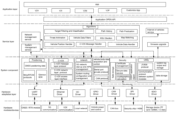
FIG. 1 is an architecture diagram of the intelligent vehicle-mounted terminal software of the present invention. -
FIG. 2 is a work flow diagram of the intelligent vehicle-mounted terminal software of the present invention. -
FIG. 3 is an implementation block diagram of the GNSS positioning module of the present invention. -
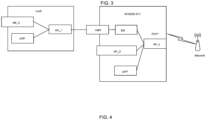
FIG. 4 is a network topology diagram of the OBU system of the present invention. -
FIG. 5 is a vehicle data processing flow diagram of the present invention. -
FIG. 6 is a network layer framework of the V2X protocol stack of the present invention. -
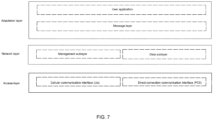
FIG. 7 is a message layer framework of the V2X protocol stack of the present invention. -
FIG. 8 is a flow diagram of the U disk local upgrade of the present invention. - The specific embodiments of the present invention will be described below with reference to the accompanying drawings. In order to fully understand the present invention, many details are described below, but it is apparent to those skilled in the art that the present invention can be implemented without these details. For well-known components, methods, and processes, detailed descriptions are not provided below.
- This embodiment provides a software design method for intelligent vehicle-mounted terminal based on microservice architecture, which applies the microservice architecture and implements software system development based on a distributed microservice framework. In terms of software architecture, the single application integrated by the original intelligent vehicle-mounted terminal is divided into a group of small services, and the services are coordinated and cooperated with each other to provide ultimate value for the application layer and the terminal.
- Each service runs in its own independent process, and services communicate with each other using a lightweight communication mechanism (RESTful API based on HTTP). Each service is built around a specific business and can be independently deployed to a production environment, a production-like environment, etc. In addition, unified and centralized service management mechanisms should be avoided as much as possible. For a specific service, it should be built using languages and tools including but not limited to C, C#, C++, Java, Matlab, Python, etc. according to the business context.
- A software design method for intelligent vehicle-mounted terminal based on microservice architecture, as follows:
- As shown in
Figs. 1 and2 , dividing an intelligent vehicle-mounted terminal software into ahardware adaptation layer 1, asystem component 2, aservice layer 3, and anapplication layer 4. - I . The
hardware adaptation layer 1 includes an embedded operating system related interface and a hardware external setting interface driver: - 1. The embedded operating system related interface includes memory operation functions, system tasks, semaphores, thread synchronization mutexes, system message queues, events and timers, etc. Implement system-related function interfaces for the upper-layer applications to call in a unified manner, and configure different related parameters when upper-layer applications call.
- 2. The hardware external setting interface is used to implement the initialization of various external settings, and provides but is not limited to function interfaces such as opening, sending or writing data, receiving or reading data, and deinitializing or closing. The implemented external setting hardware interface include a serial port communication, a serial external setting SPI communication, a I2C bus, and a network socket interface.
- II. The
system component 2 includes aGNSS positioning module 21, a C-V2X module 22, a5G network module 23, a vehicle body data acquisition and control module 24, asecurity module 25, asystem application program 26, aspecific protocol module 27, a communication protocol betweensystem modules 28, a system log output andstorage module 29, adata storage module 20, etc. The various modules communicate with each other through the communication protocol betweensystem modules 28. - Referring to
Fig. 3 , theGNSS positioning module 21 is an important module of the system, which providing basic and high-precision differential positioning services for vehicles, involving protocols such as NMEA0183, Ntrip Client and RTCM software protocols. TheGNSS positioning module 21 provides basic positioning data, and a system management service starts the GPSD daemon to be responsible for communicating with a hardware positioning module. The positioning information of the hardware positioning module is output in the NMEA0183 standard protocol, and the relevant parameters of the hardware positioning module can be configured through the UBX protocol. The system management service analyses the basic positioning information and then sends the positioning information into the C-V2X module to provide positioning services. - If the hardware positioning module supports high-precision differential positioning, the system obtains a high-precision differential positioning base station information from the Qianxun server through the Ntrip protocol, and then sends the differential positioning base station information in the internal of a high-precision differential positioning module, which calculates and outputs high-precision positioning information through internal algorithms.
- III . The service layer includes
system management service 31,network management service 32, V2X hazard detection andother application algorithm 33, internet ofvehicles service 34,device firmware upgrade 35 and other services. The services communicate with each other through communication protocols. Thesystem management service 31 is respectively communicated with theGNSS positioning module 21, the C-V2X module 22, and the5G network module 23, wherein the internet ofvehicles service 34 is respectively communicated with the vehicle body data acquisition and control module 24, thesecurity module 25, thesystem application program 26, thespecific protocol module 27, the system log output andstorage module 29, and the data storage module 30, wherein thenetwork management service 32 is respectively communicated with the5G network module 23 and thesecurity module 25. - 1. The network topology of the OBU system is shown in
Figure 4 , the communication module of the 5G communication module initiates a dial-up by default, the communication module preferentially adopts the MH5000-871 module, the data packet is carried by PDP1 by default, and the device name of the network card of the single APN channel mapping WAN port is eth_x. Internal routing configuration allows Gigabit network cards, USB network cards and upper-layer application APP to realize networking functions. The USB interface implements CDC-ECM network equipment. For IMX6, the MH5000-871 module is a USB network card device, eth_1. The 100M LAN port eth_0 device and the internal APP can achieve networking functions through eth_1. - The OBU has two LAN network ports (Gigabit Ethernet port and 100M Ethernet port) and can also be externally connected with an Ethernet-to-WiFi AP, and other WiFi devices can access the internet through the hotspot provided by the AP.
- Referring to
Fig. 5 , a system main controller first creates a CAN channel, establishes communication with the vehicle CAN bus, receives the data on the CAN and performs J1939 protocol parsing, transmits the parsed vehicle data to the CVU through a network socket interface, and finally to the C-V2X module for processing. At the same time, the system main controller receives the commands related to obtaining vehicle data transmitted by the CVU, and sends the commands parsed to the vehicle CAN bus through the CAN interface to realize the control of the vehicle. The C-V2X module includes a C-V2X processor and a V2X protocol stack. - 2. The V2X protocol stack includes an access layer interface, a network layer and a message layer protocol implementation. The access layer is provided by the MH5000-871 system, and the module manufacturer provides the corresponding SDK interface to initialize, send and receive data.
- The network layer framework of LTE-based Internet of Vehicles wireless communication technology is shown in
Fig. 6 . The network layer can support access layer transmission technology based on the Uu interface and the PC5 interface. - The network layer includes a data sublayer and a management sublayer.
- The data sublayer mainly includes an adaptation layer, IP and UDP/TCP, and DSMP. The IP protocol and DSMP protocol are both optional. The data sublayer transmits not only the data flow between the application layers, but also the data flow between different device management layer entities or between the management layer entity and the application.
- The management sublayer mainly performs system configuration and maintenance functions. The management sublayer transfers management data flows between different devices by using the data sublayer services. The DME is a general collection of management services. The DME provides management interfaces for all data sublayer entities, including the DSMP protocol.
- The framework of the message layer of LTE-based Internet of Vehicles wireless communication technology is shown in
Fig 7 . The message layer is located inside the application layer, connects downward to the data sublayer of the network layer, and supports specific user applications upward. The message layer can support various data transmissions defined by the network layer of LTE-based Internet of Vehicles wireless communication technology. - A dataset of the message layer is defined by the ASN. 1 standard, which follows the logic of "message frame-message body-data frame-data element" layer nesting.
- The interactive encoding and decoding method of the dataset follows the non-aligned compression encoding rule UPER.
- The dataset of the message layer defined by the V2X standard consists of 1 message frame format, 5 most basic message bodies, and corresponding data frames and data elements.
- The message frame is a unified packaging format for a single application layer message and is the only operation object for data encoding and decoding. The message frame includes message bodies of diverse categories and supports extensions.
- The five most basic message bodies are a vehicle basic safety message, a map message, a road safety information message (RSI), a roadside safety message, and a signal light message.
- The vehicle basic safety message is the most widely used application layer message and is used to exchange safety status data between vehicles. Through the broadcast of the message, the vehicle informs surrounding vehicles of the real-time status, thereby supporting a series of collaborative safety and other applications.
- The map message is broadcast by the roadside unit and transmits the map information of the local area to the vehicle, including an intersection information, a road segment information, a lane information, and a connection relationship between roads of the local area, etc. A single map message can include a map data for multiple intersections or areas. The signal light message at the intersection is defined in detail in the Signal Phase and Timing (SPAT) message.
- The RSI messages are suitable for traffic event information and traffic sign information released by roadside unit to surrounding vehicle-mounted units. Among them, the traffic event information currently supports the national standard GB/T 29100-2012; the traffic sign information currently supports the national standard GB 5768.2-2009. The message frame can package one or more traffic event information or traffic sign information, and also including the roadside unit number and reference location coordinates that sent the message. When judging the effective area of an event or sign, the vehicle-mounted unit makes a determination based on its own positioning and running direction, as well as the time-sensitive information and associated area/road section range provided by the message itself. In the message body, the refPos field is used to provide the reference 3D position coordinates within the scope of the message, and all position offsets in the message are calculated based on the reference coordinate. The true position coordinate is equal to the offset plus the reference coordinate.
- Roadside safety message: The roadside unit obtains real-time status information of its surrounding traffic participants through the corresponding detection means owned by the roadside itself (where traffic participants include the roadside unit itself, surrounding vehicles, non-motorized vehicles, pedestrians, etc.), and organizes this information into the format defined by the message body, as the basic safety status information of these traffic participants (similar to Msg_BSM), and broadcasts to surrounding vehicles, and supports the related applications of these vehicles. The existence of the Msg_RSM message makes the vehicle's perception of the surrounding environment not only dependent on the Msg_BSM message. The roadside unit is based on roadside sensors, helping the vehicle detect the surrounding environment, and transmits the real-time information to the vehicle through the Msg_RSM message. In the Msg_RSM message, the refPos field is used to provide the reference three-dimensional position coordinates within the scope of the message. All position offsets in the message are calculated based on the reference coordinate. The true position coordinate is equal to the offset plus the reference coordinate.
- The signal light message includes the current status information of one or more intersection signal lights. Combined with the MAP message, it provides real-time signal phase information of the signal lights ahead of the vehicle.
- 3. U disk upgrade: Refer to
Fig. 8 , when a U disk is inserted, the system will automatically mount it to the corresponding directory of MNT, and detect whether the specified application firmware is stored in the U disk. If yes, the system will automatically copy the new firmware to a specific directory and compare the MD5 value of the new firmware with the original firmware. If the comparison fails, another copy will be attempted. If replication fails after repeated copies, the upgrade fails. If the replication is successful, replace the old firmware with the new firmware and modify the executable permissions. The changes take effect after device restart. - IV. The
application layer 4 includes 17 common specific implementations of vehicle-road collaboration application scenarios and related HMI services. - The above are only the specific embodiments of the present invention, but the design concept of the present invention is not limited thereto, and any non-substantial modification of the present invention by using this concept shall be an act of infringing the scope of protection of the present invention.
Claims (10)
- A software design method for intelligent vehicle-mounted terminal based on microservice architecture, which is characterized by dividing a system software into a hardware adaptation layer, a system component, a service layer, and an application layer, whereinthe hardware adaptation layer comprises an embedded operating system related interface and a hardware external setting interface driver, whereinthe system component comprises a GNSS positioning module, a C-V2X module, a 5G network module, a vehicle body data acquisition and control module, a security module, a system application program, a specific protocol module, and a data storage module, wherein communicating with each other through a lightweight message component between the modules, whereinthe service layer comprises a system management service, a network management service, a V2X hazard detection algorithm service, an internet of vehicles service, and a firmware upgrade service, wherein communicating with each other through communication protocols between the services, whereinthe application layer comprises several specific implementations of vehicle-road collaboration application scenarios and related HMI services, whereincommunicating and connecting the system management service and the GNSS positioning module, the C-V2X module, and the 5G network module respectively; communicating and connecting the internet of vehicles service and the vehicle body data acquisition and control module, the security module, the system application program, the specific protocol module and the data storage module respectively; communicating and connecting the network management service and the 5G network module and the security module respectively; enabling the system software to realize the Internet of Vehicles through the network management service through the 5G network module; and establishing communication between a system main controller and a vehicle CAN bus, transmitting a parsed vehicle data to the vehicle body data acquisition and control module through a network socket interface, and finally processing through the C-V2X module.
- The software design method for intelligent vehicle-mounted terminal based on microservice architecture, as recited in claim 1, characterized in that: communicating the C-V2X module and the system main controller through a V2X protocol stack, wherein the V2X protocol stack comprises an access layer, a network layer and a message layer protocol, wherein the access layer comprises an Uu interface and a PC5 interface, wherein the network layer comprises a data sublayer and a management sublayer, wherein the data sublayer not only transmits data flows between application layers, but also transmits data flows between management entities of different devices or between management entities and applications, wherein the management sublayer transmits management data flows between different devices by using the data sublayer service, wherein the message layer is located inside the application layer, connects downward to the data sublayer of the network layer, and supports specific user applications upward.
- The software design method for intelligent vehicle-mounted terminal based on microservice architecture, as recited in claim 1, characterized in that: implementing the system-related function interfaces for unified calling by an upper-layer application through the embedded operating system related interface, wherein the upper-layer application configures different relevant parameters when calling, wherein the embedded operating system related interface comprises memory operation functions, system tasks, semaphores, thread synchronization mutexes, system message queues, events and timers.
- The software design method for intelligent vehicle-mounted terminal based on microservice architecture, as recited in claim 1, characterized in that: realizing the initialization of various external settings through the hardware external setting interface, and providing an open, send or write data, receive or read data, deinitialize or close the function interface, wherein the hardware external setting interface comprises a serial port communication, a serial external setting SPI communication, a I2C bus, and a network socket interface.
- The software design method for intelligent vehicle-mounted terminal based on microservice architecture, as recited in claim 1, characterized in that: providing a basic and high-precision differential positioning service for the vehicle through the GNSS positioning module, wherein the protocols involved include NMEA0183, Ntrip Client and RTCM protocol, wherein providing a basic positioning data through the GNSS positioning module, starting the GPSD daemon through the system management service to be responsible for communicating with the hardware positioning module, outputting the hardware positioning module positioning information using the NMEA0183 standard protocol, opening the system management service to configure the relevant parameters of the hardware positioning module through the UBX protocol, parsing out the basic positioning information, and then sending the positioning information into the C-V2X module to provide positioning service.
- The software design method for intelligent vehicle-mounted terminal based on microservice architecture, as recited in claim 5, characterized in that: if the hardware positioning module supports a high-precision differential positioning, the system management service obtains a high-precision differential positioning base station information from the Qianxun server through the Ntrip protocol, and then sends the high-precision differential positioning base station information in the internal of a high-precision differential positioning module, which calculates and outputs a high-precision positioning information through internal algorithms.
- The software design method for intelligent vehicle-mounted terminal based on microservice architecture, as recited in claim 6, characterized in that: defining a dataset of the message layer using the ASN. 1 standard, and formulating following the nested logic of "message frame - message body - data frame - data element", wherein the interactive encoding and decoding method of the dataset follows the non-aligned compression encoding rule UPER.
- The software design method for intelligent vehicle-mounted terminal based on microservice architecture, as recited in claim 1, characterized in that: the dataset of the message layer defined by the C-V2X module standard mainly consists of one message frame format, five most basic message bodies, and corresponding data frames and data elements.
- The software design method for intelligent vehicle-mounted terminal based on microservice architecture, as recited in claim 8, characterized in that: the five most basic message bodies are a vehicle basic safety message, a map message, a road safety information message (RSI), a roadside safety message, and a signal light message.
- The software design method for intelligent vehicle-mounted terminal based on microservice architecture, as recited in claim 1, characterized in that: inserting into a U disk, automatically mounting the U disk to a corresponding directory of MNT by the system, and detecting whether the specified application firmware is stored in the U disk; if yes, automatically copying to a specific directory by the system and comparing the MD5 value of the new firmware with the original firmware; if the comparison fails, copying will be attempted again; if the replication fails after repeated copies, failing the upgrade; if the replication is successful, replacing the old firmware with the new firmware and modifying the executable permissions, and taking effect after device restart.
Applications Claiming Priority (1)
| Application Number | Priority Date | Filing Date | Title |
|---|---|---|---|
| CN202311449545.6A CN117453187A (en) | 2023-11-02 | 2023-11-02 | An intelligent vehicle terminal software design method based on microservice architecture |
Publications (2)
| Publication Number | Publication Date |
|---|---|
| EP4550858A1 true EP4550858A1 (en) | 2025-05-07 |
| EP4550858B1 EP4550858B1 (en) | 2026-02-11 |
Family
ID=89585080
Family Applications (1)
| Application Number | Title | Priority Date | Filing Date |
|---|---|---|---|
| EP24198442.6A Active EP4550858B1 (en) | 2023-11-02 | 2024-09-04 | Software design method for intelligent vehicle-mounted terminal based on microservice architecture |
Country Status (2)
| Country | Link |
|---|---|
| EP (1) | EP4550858B1 (en) |
| CN (1) | CN117453187A (en) |
Cited By (2)
| Publication number | Priority date | Publication date | Assignee | Title |
|---|---|---|---|---|
| CN120768926A (en) * | 2025-08-06 | 2025-10-10 | 润芯微科技(江苏)有限公司 | A method for networking vehicle-mounted heterogeneous devices |
| CN121349474A (en) * | 2025-12-16 | 2026-01-16 | 中国林业科学研究院木材工业研究所 | Method for Encapsulating and Publishing Wood Flooring Production Process Data via WebAPI Based on Microservice Architecture |
Citations (3)
| Publication number | Priority date | Publication date | Assignee | Title |
|---|---|---|---|---|
| EP3099019A1 (en) * | 2015-05-27 | 2016-11-30 | OpenSynergy GmbH | Method, computer program product, and control unit for an automotive vehicle |
| WO2022192773A1 (en) * | 2021-03-12 | 2022-09-15 | Renovo Motors, Inc. | Service-oriented data architecture for a vehicle |
| US20220321655A1 (en) * | 2021-03-31 | 2022-10-06 | Amazon Technologies, Inc. | In-vehicle distributed computing environment |
Family Cites Families (6)
| Publication number | Priority date | Publication date | Assignee | Title |
|---|---|---|---|---|
| CN107783777A (en) * | 2016-08-29 | 2018-03-09 | 深圳市中兴微电子技术有限公司 | A kind of upgrade method, equipment and the system of vehicle-mounted integral machine |
| CN108182080A (en) * | 2017-12-28 | 2018-06-19 | 重庆德科电子仪表有限公司 | A kind of method of automobile instrument software upgrading |
| CN110430079B (en) * | 2019-08-05 | 2021-03-16 | 腾讯科技(深圳)有限公司 | Vehicle-road cooperation system |
| CN113253710B (en) * | 2021-06-16 | 2021-09-28 | 奥特酷智能科技(南京)有限公司 | Control software implementation architecture of block gateway electronic control unit |
| CN113938858B (en) * | 2021-12-17 | 2022-04-12 | 高新兴智联科技有限公司 | Communication method of V2X protocol stack |
| CN115695139A (en) * | 2022-12-29 | 2023-02-03 | 安徽交欣科技股份有限公司 | Method for enhancing micro-service system architecture based on distributed robust |
-
2023
- 2023-11-02 CN CN202311449545.6A patent/CN117453187A/en active Pending
-
2024
- 2024-09-04 EP EP24198442.6A patent/EP4550858B1/en active Active
Patent Citations (3)
| Publication number | Priority date | Publication date | Assignee | Title |
|---|---|---|---|---|
| EP3099019A1 (en) * | 2015-05-27 | 2016-11-30 | OpenSynergy GmbH | Method, computer program product, and control unit for an automotive vehicle |
| WO2022192773A1 (en) * | 2021-03-12 | 2022-09-15 | Renovo Motors, Inc. | Service-oriented data architecture for a vehicle |
| US20220321655A1 (en) * | 2021-03-31 | 2022-10-06 | Amazon Technologies, Inc. | In-vehicle distributed computing environment |
Cited By (3)
| Publication number | Priority date | Publication date | Assignee | Title |
|---|---|---|---|---|
| CN120768926A (en) * | 2025-08-06 | 2025-10-10 | 润芯微科技(江苏)有限公司 | A method for networking vehicle-mounted heterogeneous devices |
| CN120768926B (en) * | 2025-08-06 | 2026-04-07 | 润芯微科技(江苏)有限公司 | Networking method for vehicle-mounted heterogeneous equipment |
| CN121349474A (en) * | 2025-12-16 | 2026-01-16 | 中国林业科学研究院木材工业研究所 | Method for Encapsulating and Publishing Wood Flooring Production Process Data via WebAPI Based on Microservice Architecture |
Also Published As
| Publication number | Publication date |
|---|---|
| EP4550858B1 (en) | 2026-02-11 |
| CN117453187A (en) | 2024-01-26 |
Similar Documents
| Publication | Publication Date | Title |
|---|---|---|
| EP4550858B1 (en) | Software design method for intelligent vehicle-mounted terminal based on microservice architecture | |
| CN110383864B (en) | Road communication system with multicasting | |
| KR102361920B1 (en) | Method for time synchronization of domain based on time information of vehicle | |
| CN107733459A (en) | The vehicle-mounted T Box to be communicated based on DSRC and low-altitude satellite and its application | |
| JP2004511188A (en) | Automotive telemetry protocol | |
| CN113253736B (en) | Multi-robot scheduling method and equipment | |
| CN112019638A (en) | ITS protocol stack based on ROS2 | |
| CN116010039B (en) | Message middleware integration method for intelligent automobile multi-entity joint simulation | |
| CN117917881A (en) | A flow scheduling method, device and vehicle | |
| WO2020259525A1 (en) | Communication method and apparatus | |
| CN115776654A (en) | A vehicle-mounted intelligent terminal system and method based on 5G+V2X communication | |
| US11012376B2 (en) | Data system on a module (DSoM) for connecting computing devices and cloud-based services | |
| CN109076321A (en) | System information transmission method, apparatus and system between car networking equipment | |
| CN107888314A (en) | A kind of across a network method for synchronizing time towards industrial Internet of Things | |
| CN110731089A (en) | Data transmission device and data transmission method for a vehicle | |
| US11537631B2 (en) | Data system on a module (DSoM) for connecting computing devices and cloud-based services | |
| CN116246456A (en) | Vehicle-road coordination method, roadside communication device, and computer-readable storage medium | |
| CN116996965B (en) | A kind of car networking system based on multi-modal network | |
| CN208908024U (en) | Tourist attraction big data SAAS system | |
| Helmy et al. | ADAS System Integrated with New Architecture for V2X in Adaptive AUTOSAR | |
| CN118660280A (en) | Dynamic MEC assisted technology agnostic communication | |
| CN117978828A (en) | Information processing method and system | |
| WO2020238764A1 (en) | Time sequence management method, device and system | |
| US20260051246A1 (en) | Secure, scalable networked v2x system for broadcasting real-time signal phase and timing (spat) data and other sae j2735 standard messages | |
| CN104718530A (en) | Communication system for vehicle-to-environment communication |
Legal Events
| Date | Code | Title | Description |
|---|---|---|---|
| PUAI | Public reference made under article 153(3) epc to a published international application that has entered the european phase |
Free format text: ORIGINAL CODE: 0009012 |
|
| STAA | Information on the status of an ep patent application or granted ep patent |
Free format text: STATUS: REQUEST FOR EXAMINATION WAS MADE |
|
| 17P | Request for examination filed |
Effective date: 20240909 |
|
| AK | Designated contracting states |
Kind code of ref document: A1 Designated state(s): AL AT BE BG CH CY CZ DE DK EE ES FI FR GB GR HR HU IE IS IT LI LT LU LV MC ME MK MT NL NO PL PT RO RS SE SI SK SM TR |
|
| GRAP | Despatch of communication of intention to grant a patent |
Free format text: ORIGINAL CODE: EPIDOSNIGR1 |
|
| STAA | Information on the status of an ep patent application or granted ep patent |
Free format text: STATUS: GRANT OF PATENT IS INTENDED |
|
| INTG | Intention to grant announced |
Effective date: 20251020 |
|
| GRAS | Grant fee paid |
Free format text: ORIGINAL CODE: EPIDOSNIGR3 |
|
| GRAA | (expected) grant |
Free format text: ORIGINAL CODE: 0009210 |
|
| STAA | Information on the status of an ep patent application or granted ep patent |
Free format text: STATUS: THE PATENT HAS BEEN GRANTED |
|
| AK | Designated contracting states |
Kind code of ref document: B1 Designated state(s): AL AT BE BG CH CY CZ DE DK EE ES FI FR GB GR HR HU IE IS IT LI LT LU LV MC ME MK MT NL NO PL PT RO RS SE SI SK SM TR |
|
| REG | Reference to a national code |
Ref country code: CH Ref legal event code: F10 Free format text: ST27 STATUS EVENT CODE: U-0-0-F10-F00 (AS PROVIDED BY THE NATIONAL OFFICE) Effective date: 20260211 Ref country code: GB Ref legal event code: FG4D |
|
| REG | Reference to a national code |
Ref country code: DE Ref legal event code: R096 Ref document number: 602024002509 Country of ref document: DE |
|
| REG | Reference to a national code |
Ref country code: IE Ref legal event code: FG4D |