EP4550808A1 - Display device and operating method therefor - Google Patents
Display device and operating method therefor Download PDFInfo
- Publication number
- EP4550808A1 EP4550808A1 EP22950336.2A EP22950336A EP4550808A1 EP 4550808 A1 EP4550808 A1 EP 4550808A1 EP 22950336 A EP22950336 A EP 22950336A EP 4550808 A1 EP4550808 A1 EP 4550808A1
- Authority
- EP
- European Patent Office
- Prior art keywords
- search
- application
- information
- display device
- image
- Prior art date
- Legal status (The legal status is an assumption and is not a legal conclusion. Google has not performed a legal analysis and makes no representation as to the accuracy of the status listed.)
- Pending
Links
Images






Classifications
-
- G—PHYSICS
- G06—COMPUTING OR CALCULATING; COUNTING
- G06F—ELECTRIC DIGITAL DATA PROCESSING
- G06F16/00—Information retrieval; Database structures therefor; File system structures therefor
- G06F16/70—Information retrieval; Database structures therefor; File system structures therefor of video data
- G06F16/73—Querying
- G06F16/738—Presentation of query results
-
- H—ELECTRICITY
- H04—ELECTRIC COMMUNICATION TECHNIQUE
- H04N—PICTORIAL COMMUNICATION, e.g. TELEVISION
- H04N21/00—Selective content distribution, e.g. interactive television or video on demand [VOD]
- H04N21/40—Client devices specifically adapted for the reception of or interaction with content, e.g. set-top-box [STB]; Operations thereof
- H04N21/43—Processing of content or additional data, e.g. demultiplexing additional data from a digital video stream; Elementary client operations, e.g. monitoring of home network or synchronising decoder's clock; Client middleware
- H04N21/431—Generation of visual interfaces for content selection or interaction; Content or additional data rendering
- H04N21/4312—Generation of visual interfaces for content selection or interaction; Content or additional data rendering involving specific graphical features, e.g. screen layout, special fonts or colors, blinking icons, highlights or animations
- H04N21/4316—Generation of visual interfaces for content selection or interaction; Content or additional data rendering involving specific graphical features, e.g. screen layout, special fonts or colors, blinking icons, highlights or animations for displaying supplemental content in a region of the screen, e.g. an advertisement in a separate window
-
- G—PHYSICS
- G06—COMPUTING OR CALCULATING; COUNTING
- G06F—ELECTRIC DIGITAL DATA PROCESSING
- G06F16/00—Information retrieval; Database structures therefor; File system structures therefor
- G06F16/70—Information retrieval; Database structures therefor; File system structures therefor of video data
- G06F16/74—Browsing; Visualisation therefor
-
- G—PHYSICS
- G06—COMPUTING OR CALCULATING; COUNTING
- G06F—ELECTRIC DIGITAL DATA PROCESSING
- G06F16/00—Information retrieval; Database structures therefor; File system structures therefor
- G06F16/70—Information retrieval; Database structures therefor; File system structures therefor of video data
- G06F16/78—Retrieval characterised by using metadata, e.g. metadata not derived from the content or metadata generated manually
-
- G—PHYSICS
- G06—COMPUTING OR CALCULATING; COUNTING
- G06F—ELECTRIC DIGITAL DATA PROCESSING
- G06F16/00—Information retrieval; Database structures therefor; File system structures therefor
- G06F16/90—Details of database functions independent of the retrieved data types
- G06F16/903—Querying
- G06F16/9038—Presentation of query results
-
- H—ELECTRICITY
- H04—ELECTRIC COMMUNICATION TECHNIQUE
- H04N—PICTORIAL COMMUNICATION, e.g. TELEVISION
- H04N21/00—Selective content distribution, e.g. interactive television or video on demand [VOD]
- H04N21/40—Client devices specifically adapted for the reception of or interaction with content, e.g. set-top-box [STB]; Operations thereof
- H04N21/43—Processing of content or additional data, e.g. demultiplexing additional data from a digital video stream; Elementary client operations, e.g. monitoring of home network or synchronising decoder's clock; Client middleware
- H04N21/435—Processing of additional data, e.g. decrypting of additional data, reconstructing software from modules extracted from the transport stream
-
- H—ELECTRICITY
- H04—ELECTRIC COMMUNICATION TECHNIQUE
- H04N—PICTORIAL COMMUNICATION, e.g. TELEVISION
- H04N21/00—Selective content distribution, e.g. interactive television or video on demand [VOD]
- H04N21/40—Client devices specifically adapted for the reception of or interaction with content, e.g. set-top-box [STB]; Operations thereof
- H04N21/47—End-user applications
- H04N21/472—End-user interface for requesting content, additional data or services; End-user interface for interacting with content, e.g. for content reservation or setting reminders, for requesting event notification, for manipulating displayed content
- H04N21/4722—End-user interface for requesting content, additional data or services; End-user interface for interacting with content, e.g. for content reservation or setting reminders, for requesting event notification, for manipulating displayed content for requesting additional data associated with the content
-
- H—ELECTRICITY
- H04—ELECTRIC COMMUNICATION TECHNIQUE
- H04N—PICTORIAL COMMUNICATION, e.g. TELEVISION
- H04N21/00—Selective content distribution, e.g. interactive television or video on demand [VOD]
- H04N21/40—Client devices specifically adapted for the reception of or interaction with content, e.g. set-top-box [STB]; Operations thereof
- H04N21/47—End-user applications
- H04N21/478—Supplemental services, e.g. displaying phone caller identification, shopping application
- H04N21/4782—Web browsing, e.g. WebTV
-
- H—ELECTRICITY
- H04—ELECTRIC COMMUNICATION TECHNIQUE
- H04N—PICTORIAL COMMUNICATION, e.g. TELEVISION
- H04N21/00—Selective content distribution, e.g. interactive television or video on demand [VOD]
- H04N21/40—Client devices specifically adapted for the reception of or interaction with content, e.g. set-top-box [STB]; Operations thereof
- H04N21/47—End-user applications
- H04N21/482—End-user interface for programme selection
-
- H—ELECTRICITY
- H04—ELECTRIC COMMUNICATION TECHNIQUE
- H04N—PICTORIAL COMMUNICATION, e.g. TELEVISION
- H04N21/00—Selective content distribution, e.g. interactive television or video on demand [VOD]
- H04N21/40—Client devices specifically adapted for the reception of or interaction with content, e.g. set-top-box [STB]; Operations thereof
- H04N21/47—End-user applications
- H04N21/482—End-user interface for programme selection
- H04N21/4828—End-user interface for programme selection for searching programme descriptors
-
- H—ELECTRICITY
- H04—ELECTRIC COMMUNICATION TECHNIQUE
- H04N—PICTORIAL COMMUNICATION, e.g. TELEVISION
- H04N21/00—Selective content distribution, e.g. interactive television or video on demand [VOD]
- H04N21/80—Generation or processing of content or additional data by content creator independently of the distribution process; Content per se
- H04N21/83—Generation or processing of protective or descriptive data associated with content; Content structuring
- H04N21/84—Generation or processing of descriptive data, e.g. content descriptors
- H04N21/8405—Generation or processing of descriptive data, e.g. content descriptors represented by keywords
-
- H—ELECTRICITY
- H04—ELECTRIC COMMUNICATION TECHNIQUE
- H04N—PICTORIAL COMMUNICATION, e.g. TELEVISION
- H04N21/00—Selective content distribution, e.g. interactive television or video on demand [VOD]
- H04N21/40—Client devices specifically adapted for the reception of or interaction with content, e.g. set-top-box [STB]; Operations thereof
- H04N21/41—Structure of client; Structure of client peripherals
- H04N21/422—Input-only peripherals, i.e. input devices connected to specially adapted client devices, e.g. global positioning system [GPS]
- H04N21/42204—User interfaces specially adapted for controlling a client device through a remote control device; Remote control devices therefor
Definitions
- An objective of the present disclosure is to provide a display device that efficiently provides a search function.
- Digital TV services using wired or wireless communication network are becoming popular. Such a digital TV service may provide various services that may not be provided by the existing analog broadcasting service.
- IPTV Internet Protocol Television
- smart TV service which is a , digital TV service type
- IPTV and smart TV services may provide various additional services such as Internet search, home shopping, online games, etc. based on the bidirectionality.
- An objective of the present disclosure is to enable, when executing a multi-view function, to search for information about one view through a search application for another view.
- Another objective of the purpose of this disclosure is to quickly and conveniently provide related information about a broadcast program when playing the broadcast program through a multi-view function.
- a display device may include a network interface, a display configured to display a first image, which corresponds to a first application that provides real-time broadcasting, on a first split screen, and a second image, which corresponds to a second application that supports a search function, on a second split screen, and a controller configured to: acquire broadcast information about the first image; transmit a search request for the acquired broadcast information to a server configured to provide a service for the second application through the network interface; receive search results for the broadcast information from the server through the network interface; and display the received search results on the second split screen.
- a method for operating a display device may include displaying each of a first image corresponding to a first application that provides real-time broadcasting on a first split screen and a second image corresponding to a second application that supports a search function on a second split screen, acquiring broadcast information about the first image, transmitting a search request for the acquired broadcast information to a server configured to provide a service for the second application through a network interface, receiving search results for the broadcast information from the server through the network interface, and displaying the received search results on the second split screen.
- the content associated with the broadcast program may be automatically searched.
- the user's search convenience may be improved, and the desired search information may be obtained quickly
- the content associated with the meta information of the broadcast program may be automatically searched. Therefore, the convenience of the user searches may be improved, and the desired information may be quickly searched when watching the live broadcast images.
- a display device is an intelligent display device that adds a computer-assisted function to, for example, a broadcast reception function, and while remaining faithful to the broadcast reception function, adds an Internet function or the like and may have a more convenient interface such as a manual input device, a touch screen, or a space remote control.
- a display device may have a more convenient interface such as a manual input device, a touch screen, or a space remote control.
- wired or wireless Internet functions it is possible to connect to the Internet and a computer, and perform functions such as email, web browsing, banking, or games.
- a standardized general-purpose OS may be used for these various functions.
- the display device described in the present disclosure may perform various user-friendly functions, for example, since various applications may be freely added or deleted on a general-purpose OS kernel. More specifically, the display device may be, for example, a network TV, an HBBTV, a smart TV, an LED TV, an OLED TV, or the like and in some cases, may also be applied to a smartphone.
- FIG. 1 is a block diagram illustrating a configuration of a display device according to an embodiment of the present disclosure.
- a display device 100 may include a broadcast reception part 130, an external device interface 135, a memory 140, a user input interface 150, a controller 170, a wireless communication interface 173, a display 180, a speaker 185, and a power supply circuit 190.
- the broadcast reception part 130 may include a tuner 131, a demodulator 132, and a network interface 133.
- the tuner 131 may select a specific broadcast channel according to a channel selection command.
- the tuner 131 may receive broadcast signals for the selected specific broadcast channel.
- the demodulator 132 may divide the received broadcast signals into image signals, audio signals, and broadcast program-related data signals, and may restore the divided image signals, audio signals, and data signals into an output available form.
- the external device interface 135 may receive an application or an application list in an adjacent external device and deliver the application or the application list to the controller 170 or the memory 140.
- the external device interface 135 may provide a connection path between the display device 100 and an external device.
- the external device interface 135 may receive at least one of an image or audio outputted from an external device that is wirelessly or wiredly connected to the display device 100 and deliver the received image or the audio to the controller.
- the external device interface 135 may include a plurality of external input terminals.
- the plurality of external input terminals may include an RGB terminal, at least one High Definition Multimedia Interface (HDMI) terminal, and a component terminal.
- HDMI High Definition Multimedia Interface
- An image signal of an external device inputted through the external device interface 135 may be outputted through the display 180.
- a sound signal of an external device inputted through the external device interface 135 may be outputted through the speaker 185.
- An external device connectable to the external device interface 135 may be one of a set-top box, a Blu-ray player, a DVD player, a game console, a sound bar, a smartphone, a PC, a USB Memory, and a home theater system but this is just exemplary.
- the network interface 133 may provide an interface for connecting the display device 100 to a wired/wireless network comprising internet network.
- the network interface 133 may transmit or receive data to or from another user or another electronic device through an accessed network or another network linked to the accessed network.
- some content data stored in the display device 100 may be transmitted to a user or an electronic device, which is selected from other users or other electronic devices pre-registered in the display device 100.
- the network interface 133 may access a predetermined webpage through an accessed network or another network linked to the accessed network. In other words, the network interface 133 may transmit or receive data to or from a corresponding server by accessing a predetermined webpage through the network.
- the network interface 133 may receive content or data provided from a content provider or a network operator.
- the network interface 133 may receive content, such as movies, advertisements, games, VODs, and broadcast signals, which are provided from the content provider or the network operator, and information relating thereto through the network.
- the network interface 133 may receive firmware update information and update files provided from the network operator, and may transmit data to the Internet or content provider or the network operator.
- the network interface 133 may select and receive a desired application among applications open to the air, through network.
- the memory 140 may store signal-processed image, voice, or data signals stored by a program in order for each signal processing and control in the controller 170.
- the memory 140 may perform a function for temporarily storing image, voice, or data signals output from the external device interface 135 or the network interface 133, and may store information on a predetermined image through a channel memory function.
- the memory 140 may store an application or an application list input from the external device interface 135 or the network interface 133.
- the display device 100 may play content files (e.g., video files, still image files, music files, document files, application files, etc.) stored in the memory 140, and may provide the content files to a user.
- content files e.g., video files, still image files, music files, document files, application files, etc.
- the user input interface 150 may transmit signals input by a user to the controller 170, or may transmit signals from the controller 170 to a user.
- the user input interface 150 may receive or process control signals such as power on/off, channel selection, and screen setting from the remote control device 200 or transmit control signals from the controller 170 to the remote control device 200 according to various communication methods such as Bluetooth, Ultra Wideband (WB), ZigBee, Radio Frequency (RF), and IR communication methods.
- WB Ultra Wideband
- RF Radio Frequency
- the user input interface 150 may transmit, to the controller 170, control signals input from local keys (not illustrated) such as a power key, a channel key, a volume key, and a setting key.
- local keys such as a power key, a channel key, a volume key, and a setting key.
- Image signals that are image-processed by the controller 170 may be input to the display 180 and displayed as images corresponding to the image signals.
- image signals that are image-processed by the controller 170 may be input to an external output device through the external device interface 135.
- Voice signals processed by the controller 170 may be output to the speaker 185.
- voice signals processed by the controller 170 may be input to the external output device through the external device interface 135.
- controller 170 may control overall operations of the display device 100.
- controller 170 may control the display device 100 by a user command or an internal program input through the user input interface 150, and may access the network to download a desired application or application list into the display device 100.
- the controller 170 may output channel information selected by a user together with the processed image or voice signals through the display 180 or the speaker 185.
- controller 170 may output image signals or voice signals of an external device such as a camera or a camcorder, which are input through the external device interface 135, through the display 180 or the speaker 185, according to an external device image playback command received through the user input interface 150.
- an external device such as a camera or a camcorder
- the controller 170 may control the display 180 to display images, and may control the display 180 to display broadcast images input through the tuner 131, external input images input through the external device interface 135, images input through the network interface, or images stored in the memory 140.
- an image displayed on the display 180 may be a still image or video and also may be a 2D image or a 3D image.
- the controller 170 may play content stored in the display device 100, received broadcast content, and external input content input from the outside, and the content may be in various formats such as broadcast images, external input images, audio files, still images, accessed web screens, and document files.
- the wireless communication interface 173 may perform wired or wireless communication with an external device.
- the wireless communication interface 173 may perform short-range communication with an external device.
- the wireless communication interface 173 may support short-range communication by using at least one of Bluetooth TM , Bluetooth Low Energy (BLE), Radio Frequency Identification (RFID), Infrared Data Association (IrDA), Ultra Wideband (UWB), ZigBee, Near Field Communication (NFC), Wireless-Fidelity (Wi-Fi), Wi-Fi Direct, and Wireless Universal Serial Bus (USB) technologies.
- Bluetooth TM Bluetooth Low Energy
- RFID Radio Frequency Identification
- IrDA Infrared Data Association
- UWB Ultra Wideband
- ZigBee Near Field Communication
- NFC Near Field Communication
- Wi-Fi Wireless-Fidelity
- Wi-Fi Direct Wireless Universal Serial Bus
- the wireless communication interface 173 may support wireless communication between the display device 100 and a wireless communication system, between the display device 100 and another display device 100, or between networks including the display device 100 and another display device 100 (or an external server) through wireless area networks.
- the wireless area networks may be wireless personal area networks.
- the other display device 100 may be a mobile terminal such as a wearable device (for example, a smart watch, a smart glass, and a head mounted display (HMD)) or a smartphone, which is capable of exchanging data (or inter-working) with the display device 100.
- the wireless communication interface 173 may detect (or recognize) a wearable device capable of communication around the display device 100.
- the controller 170 may transmit at least part of data processed in the display device 100 to the wearable device through the wireless communication interface 173. Therefore, a user of the wearable device may use the data processed by the display device 100 through the wearable device.
- the display 180 may convert image signals, data signals, or on-screen display (OSD) signals, which are processed in the controller 170, or images signals or data signals, which are received in the external device interface 135, into R, G, and B signals to generate driving signals.
- OSD on-screen display
- the display device 100 illustrated in FIG. 1 is just one embodiment of the present disclosure and thus, some of the components illustrated may be integrated, added, or omitted according to the specification of the actually implemented display device 100.
- the display device 100 may receive images through the network interface 133 or the external device interface 135 and play them without including the tuner 131 and the demodulator 132.
- the display device 100 may be divided into an image processing device such as a set-top box for receiving broadcast signals or contents according to various network services and a content playback device for playing content input from the image processing device.
- an image processing device such as a set-top box for receiving broadcast signals or contents according to various network services
- a content playback device for playing content input from the image processing device.
- an operating method of a display device may be performed by one of the display device described with reference to FIG. 1 , an image processing device such as the separated set-top box, and a content playback device including the display 180 and the speaker 185.
- a remote control device according to an embodiment of the present disclosure will be described with reference to FIGS. 2 and 3 .
- FIG. 2 is a block diagram illustrating a remote control device according to an embodiment of the present disclosure
- FIG. 3 is a view illustrating an actual configuration of a remote control device according to an embodiment of the present disclosure.
- a remote control device 200 may include a fingerprint recognition device 210, a wireless communication interface 220, a user input interface 230, a sensor 240, an output interface 250, a power supply circuit 260, a memory 270, a controller 280, and a microphone 290.
- the wireless communication interface 220 transmits/receives signals to/from an arbitrary any one of display devices according to the above-mentioned embodiments of the present disclosure.
- the remote control device 200 may include a radio frequency (RF) circuit 221 capable of transmitting or receiving signals to or from the display device 100 according to an RF communication standard, and an IR circuit 223 capable of transmitting or receiving signals to or from the display device 100 according to an IR communication standard.
- the remote control device 200 may include a Bluetooth circuit 225 capable of transmitting or receiving signals to or from the display device 100 according to a Bluetooth communication standard.
- the remote control device 200 may include an NFC circuit 227 capable of transmitting or receiving signals to or from the display device 100 according to an NFC communication standard, and a wireless LAN (WLAN) circuit 229 capable of transmitting or receiving signals to or from the display device 100 according to a WLAN communication standard.
- WLAN wireless LAN
- the remote control device 200 may transmit signals containing information on the movement of the remote control device 200 to the display device 100 through the wireless communication interface 220.
- the remote control device 200 may receive signals transmitted from the display device 100 through the RF circuit 221 and if necessary, may transmit a command for power on/off, channel change, and volume change to the display device 100 through the IR circuit 223.
- the user input interface 230 may be configured with a keypad, a button, a touch pad, or a touch screen. A user may operate the user input interface 230 to input a command relating to the display device 100 to the remote control device 200. If the user input interface 230 includes a hard key button, a user may input a command relating to the display device 100 to the remote control device 200 through the push operation of the hard key button. This will be described with reference to FIG. 3 .
- the remote control device 200 may include a plurality of buttons.
- the plurality of buttons may include a fingerprint recognition button 212, a power button 231, a home button 232, a live button 233, an external input button 234, a volume control button 235, a voice recognition button 236, a channel change button 237, an OK button 238, and a back button 239.
- the fingerprint recognition button 212 may be a button for recognizing a user's fingerprint. According to an embodiment of the present disclosure, the fingerprint recognition button 212 may perform a push operation and receive a push operation and a fingerprint recognition operation.
- the power button 231 may be a button for turning on/off the power of the display device 100.
- the home button 232 may be a button for moving to the home screen of the display device 100.
- the live button 233 may be a button for displaying live broadcast programs.
- the external input button 234 may be a button for receiving an external input connected to the display device 100.
- the volume control button 235 may be a button for controlling a volume output from the display device 100.
- the voice recognition button 236 may be a button for receiving user's voice and recognizing the received voice.
- the channel change button 237 may be a button for receiving broadcast signals of a specific broadcast channel.
- the OK button 238 may be a button for selecting a specific function, and the back button 239 may be a button for returning to a previous screen.
- FIG. 2 is described again.
- the user input interface 230 includes a touch screen, a user may touch a soft key of the touch screen to input a command relating to the display device 100 to the remote control device 200.
- the user input interface 230 may include various kinds of input interfaces operable by a user, for example, a scroll key and a jog key, and this embodiment does not limit the scope of the present disclosure.
- the sensor 240 may include a gyro sensor 241 or an acceleration sensor 243.
- the gyro sensor 241 may sense information on the movement of the remote control device 200.
- the gyro sensor 241 may sense information on an operation of the remote control device 200 on the basis of x, y, and z axes and the acceleration sensor 243 may sense information on a movement speed of the remote control device 200.
- the remote control device 200 may further include a distance measurement sensor that senses a distance with respect to the display 180 of the display device 100.
- the output interface 250 may output image or voice signals in response to the operation of the user input interface 230, or may output image or voice signals corresponding to signals transmitted from the display device 100.
- a user may recognize whether the user input interface 230 is operated or the display device 100 is controlled through the output interface 250.
- the output interface 250 may include an LED 251 for flashing, a vibrator 253 for generating vibration, a speaker 255 for outputting sound, or a display 257 for outputting an image, if the user input interface 230 is manipulated or signals are transmitted/received to/from the display device 100 through the wireless communication interface 220.
- the power supply circuit 260 supplies power to the remote control device 200 and if the remote control device 200 does not move for a predetermined time, stops the power supply, so that power waste may be reduced.
- the power supply circuit 260 may resume the supply of power if a predetermined key provided at the remote control device 200 is operated.
- the memory 270 may store various kinds of programs and application data required to control or operate the remote control device 200.
- the remote control device 200 transmits/receives signals wirelessly through the display device 100 and the RF circuit 221, the remote control device 200 and the display device 100 transmits/receives signals through a predetermined frequency band.
- the controller 280 of the remote control device 200 may store, in the memory 270, information on a frequency band for transmitting/receiving signals to/from the display device 100 paired with the remote control device 200 and refer to it.
- the controller 280 controls general matters relating to the control of the remote control device 200.
- the controller 280 may transmit a signal corresponding to a predetermined key operation of the user input interface 230 or a signal corresponding to the movement of the remote control device 200 sensed by the sensor 240 to the display device 100 through the wireless communication interface 220.
- the microphone 290 of the remote control device 200 may acquire voice.
- a plurality of microphones 290 may be provided.
- FIG. 4 is described.
- FIG. 4 is a view illustrating an example of utilizing a remote control device according to an embodiment of the present disclosure.
- FIG. 4(b) illustrates that if a user moves the remote control device 200, the pointer 205 displayed on the display 180 of the display device 100 is moved to the left according to the movement of the remote control device 200.
- the display device 100 may calculate the coordinates of the pointer 205 from the information on the movement of the remote control device 200.
- the display device 100 may display the pointer 205 to match the calculated coordinates.
- FIG. 4(c) illustrates that while a specific button in the remote control device 200 is pressed, a user moves the remote control device 200 away from the display 180. Thus, a selected region in the display 180 corresponding to the pointer 205 may be zoomed in and displayed in an enlarged size.
- a selection area in the display 180 corresponding to the pointer 205 may be zoomed out and displayed in a reduced size.
- a selection area may be zoomed out and if the remote control device 200 is moved closer to the display 180, a selection area may be zoomed in.
- a specific button in the remote control device 200 is pressed, recognition of a vertical or horizontal movement may be excluded. In other words, if the remote control device 200 is moved away from or closer to the display 180, the up, down, left, or right movement may not be recognized and only the back and forth movement may be recognized. While a specific button in the remote control device 200 is not pressed, only the pointer 205 is moved according to the up, down, left or right movement of the remote control device 200.
- the moving speed or moving direction of the pointer 205 may correspond to the moving speed or moving direction of the remote control device 200.
- a pointer in this specification means an object displayed on the display 180 in response to an operation of the remote control device 200. Therefore, in addition to the arrow form displayed as the pointer 205 in the drawing, various forms of objects are possible.
- the above concept includes a point, a cursor, a prompt, and a thick outline. Then, the pointer 205 may be displayed in correspondence to one point of a horizontal axis and a vertical axis on the display 180 and also may be displayed in correspondence to a plurality of points such as a line and a surface.
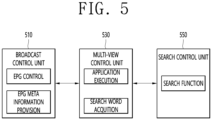
- FIG. 5 is a view for explaining a detailed configuration of a controller according to an embodiment of the present disclosure.
- the controller 170 may include a broadcast control unit 510, a multi-view control unit 530, and a search control unit 550.
- the broadcast control unit 510 may manage an electronic program guide.
- the broadcast control unit 510 may extract meta information from an EPG to transmit the extracted meta information to the multi-view control unit 530.
- the multi-view control unit 530 may receive a request for executing a multi-view, split a screen of the display 180 according to the received request, and display an image on each of the split screens.
- the multi-view control unit 530 may control an execution of an application to display an execution image of a different application on each of the split screens.
- the multi-view control unit 530 may request the EPG meta information of the broadcast image displayed on the split screen from the broadcast control unit 510 and receive the EPG meta information in response to the request.
- the multi-view control unit 530 may obtain search words for searching related contents using the received EPG meta information and transmit the obtained search words to the search control unit 550.
- the search control unit 550 may perform a search on the basis of the search words received from the multi-view control unit 530.
- the search control unit 550 may perform the search for the search words through an application that supports a search function and output the search results on the display 180.
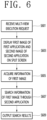
- FIG. 6 is a flowchart for explaining an operating method of a display device according to an embodiment of the present disclosure.
- the controller 170 of the display device 100 may receive a multi-view execution request (S601).
- the controller 170 may receive the multi-view execution request from a remote control device 200 via a user input interface 150.
- the controller 170 may receive the multi-view execution request via a user voice input.
- the controller 170 may receive the multi-view execution request while displaying the content image on the display 180.
- the content image may be an execution image of a first application described later.
- the controller 170 of the display device 100 may display a first image of the first application and a second image of a second application on the split screen of the display 180 upon receiving the multi-view execution request (S603).
- the first image may be an image resulting from the execution of the first application
- the second image may be an image resulting from the execution of the second application
- the first application may be a main application, and the second application may be a sub application, but are just examples, and the first and second applications may be interchanged.
- the first application may be a Live TV application that provides a real-time broadcast image
- the second application may be an application that supports the search function.
- the controller 170 may split the screen of the display 180 into two split screens according to the multi-view execution request.
- the two screens may be a just example, and the screen of the display 180 may be split into two or more screens depending on the multi-view execution request.
- the controller 170 of the display device 100 may acquire information of the first image displayed on the split screen (S605) and perform a search for information of the first image through the second application (S607).
- the information of the first image may be broadcast information.
- the broadcast information may be EPG information.
- the EPG information may include one or more of a title of the broadcast program, a program ID that identifies the broadcast program, and a subtitle of the program.
- the broadcast information may be EPG meta information.
- the EPG meta information may include one or more of background music information, character information, and plot information (or episode information) of the broadcast program.
- the controller 170 may request the EPG information of the first image from an external device (e.g., a set-top box) and receive the EPG information from the external device.
- an external device e.g., a set-top box
- the multi-view control unit 530 provided in the controller 170 may request the EPG information of the first image from the broadcast control unit 510.
- the broadcast control unit 510 may request the EPG information from the external device connected through an external device interface 135 and receive the EPG information from the external device.
- the EPG information may be stored in a memory 140.
- the broadcast control unit 510 may extract the EPG information of the first image from the EPG stored in the memory 140 and provide the extracted EPG information to the multi-view control unit 530.
- the controller 170 may perform a search for information on the first image through the second application that supports the search function. Specifically, the controller 170 may transmit a search word for the first image to an application server that provides a search service through the second application and receive search results for the search word from the application server.
- the controller 170 of the display device 100 may output the search results according to the search execution results (S609).
- the controller 170 may display the search results on the split screen on which the second image is displayed.
- the search results may be any one of a video, an image, or a website based on the search word.
- the controller 170 may transmit the search results to a mobile terminal, such as a user's smartphone, via a wireless communication interface 173.
- a mobile terminal such as a user's smartphone
- FIGS. 7 to 9 are views for explaining a scenario for automatically searching for a program name when executing the multi-view function according to an embodiment of the present disclosure.
- FIG. 7 will be described.
- FIG. 7 is a view for explaining a process after the operation S603 in the embodiment of FIG. 6 , and detailed description of the duplicated steps will be omitted.
- the controller 170 of the display device 100 may determine whether the first application is a real-time broadcast application that provides a real-time broadcast image (S703).
- the controller 170 may determine whether a real-time broadcasting application is executed by using identification information of the first application executed on the screen.
- the first image provided through the first application may be a live broadcast image.
- the controller 170 of the display device 100 may determine whether the EPG information of the first image, which is the real-time broadcast image, exists when the first application is the real-time broadcast image providing the real-time broadcast image (S705).
- the EPG information may include one or more of an ID, a subtitle, a name, a genre, and a remaining broadcast time of the program that is a live broadcast image.
- the controller 170 may receive an EPG set from a set-top box connected to the display device 100 and confirm whether the received EPG set includes the EPG information of the real-time broadcast image.
- the controller 170 may determine whether the EPG information of the first image, which is the real-time broadcast image, is stored in the memory 140.
- the controller 170 of the display device 100 may determine whether the second application is an application that supports the search function when the EPG information of the first image exists (S707).
- the application that supports the search function may be an application that searches for videos, images, and websites related to the search word and provides search results.
- the controller 170 of the display device 100 may transmit a search request for the EPG information to the application server of the second application when the second application is an application that supports the search function (S709).
- the application server of the second application may be a server that provides a search service through the second application.
- the controller 170 may transmit the search request for the EPG information to the application server via the network interface 133.
- the application server may search for one or more contents related to a program name contained in EPG information and transmit information about the one or more searched contents to the display device 100.
- the information about the contents may include one or more of a thumbnail image of the content, an access address that accesses the content, a name of the content, and a source providing the content.
- the controller 170 of the display device 100 may receive the search results on the basis of the EPG information from the application server (S711) and output the received search results (S609).
- the controller 170 may receive the search results on the basis of the EPG information through the network interface 133.
- FIG. 8a is a view illustrating a process of acquiring the EPG information of the real-time broadcast image and generating the search requests on the basis of the EPG information according to an embodiment of the present disclosure.
- Operations S801 and S803 of FIG. 8a may be processes that embody operation S705 of FIG. 7
- operations S805 and S807 may be views that embody operation S707
- operation S809 may correspond to operation S709.
- the multi-view control unit 530 may request the EPG information of the real-time broadcast image from the broadcast control unit 510 (S801), and the broadcast control unit 510 may transmit the EPG information to the multi-view control unit 530 in response to the received request (S803).
- the EPG information may include a program ID (or channel ID), a program's subtitle, a program's name, a program's genre, and a remaining airing time.
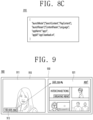
- EPG information 810 of the real-time broadcast image is illustrated.
- the broadcast control unit 510 may acquire the EPG information 810 from a set-top box connected to the memory 140 or the display device 100.
- the multi-view control unit 530 may request the search capability of the second application (S805) and receive the search capability information of the second application in response to the request (S807).
- the request for the search capabilities may be a request to inquire whether the second application supports the search function.
- the search capability information will be described with reference to FIG. 8c .
- the search capability information may include one or more of second application's launch mode information, launch parameter information, application's name, and application's ID.
- the launch mode information may include information indicating whether content search for ELG information is possible and whether the search for the EPG information is possible.
- the launch parameter information may include information about additional functions, such as languages that are searchable through the application.
- the multi-view control unit 530 may transmit the search request for the EPG information through the second application to the search control unit 550 on the basis of the search capability information of the second application (S809).
- the search request for the EPG information may be transmitted to the search control unit 550.
- the search request may include a value for the launch mode (search or play) for the EPG information, a value for the launch parameter (language), and the application ID identifying the second application.
- the search control unit 550 may transmit the search request for the EPG information to the application server of the second application through the network interface 133.
- the search control unit 550 may receive search results for the EPG information from the application server through the network interface 133.
- the screen 900 of the display 180 may include a first split screen 910 and a second split screen 930.
- the real-time broadcast program 911 provided through the real-time broadcast application may be displayed on the first split screen 910.
- Search results 931 for the name 913 of the broadcast program 911 may be displayed on the second split screen 930 through a search application.
- the display device 100 may acquire the EPG information of the broadcast program 911 that is being played through the real-time broadcast application and transmit the acquired EPG information to the application server of the search application.
- the EPG information may include the name 913 of the broadcast program 911.
- the display device 100 may receive search result information for the name 913 of the broadcast program 911 from the application server and display search results 931 on the basis of the received search result information on the second split screen 930.
- the search results 931 may include contents associated with the program name 913.
- the search results 931 may include video, image, and website information associated with the program name 913.
- the content associated with the broadcast program may be automatically searched.
- the user's search convenience may be improved, and the desired search information may be obtained quickly.
- FIGS. 10 to 12b are views for explaining a process of performing a search by providing a menu when executing the multi-view function according to an embodiment of the present disclosure.
- FIGS. 10 to 12b it is assumed that the first image of the first application is displayed on each of the two split screens, and the second image of the second application is being displayed.
- FIG. 10 will be described.
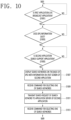
- FIG. 10 is a view for explaining a process after the operation S603 in the embodiment of FIG. 6 , and detailed description of the duplicated operations (steps) will be omitted.
- the controller 170 of the display device 100 may determine whether the first application is a real-time broadcast application that provides a real-time broadcast image (S1001).
- the controller 170 may determine whether a real-time broadcasting application is executed by using identification information of the first application executed on the screen.
- the first image provided through the first application may be a live broadcast image.
- the controller 170 of the display device 100 may determine whether the EPG information of the first image, which is the real-time broadcast image, exists when the first application is the real-time broadcast image providing the real-time broadcast image (S1003).
- the EPG information may include one or more of an ID, a subtitle, a name, a genre, and a remaining broadcast time of the program that is a live broadcast image.
- the controller 170 may receive an EPG set from a set-top box connected to the display device 100 and confirm whether the received EPG set includes the EPG information of the real-time broadcast image.
- the controller 170 may determine whether the EPG information of the first image, which is the real-time broadcast image, is stored in the memory 140.
- the controller 170 of the display device 100 may determine whether the second application is an application that supports the search function when the EPG information of the first image exists (S1005).
- the application that supports the search function may be an application that searches for videos, images, and websites related to the search word and provides search results.
- the controller 170 of the display device 100 may display search keywords on the basis of the EPG meta information on the split screen corresponding to the second application when the second application is an application that supports the search function (S1007).
- the EPG meta information may also be acquired.
- the EPG meta information may include one or more of a name of an actor appearing in the program, background music of the program, and synopsis.
- the controller 170 may acquire the actor's name, the background music, and synopsis contained in the EPG meta information as search keywords.
- the controller 170 may display a search menu including the acquired search keywords on the split screen corresponding to the second application.
- the controller 170 of the display device 100 may receive a command for selecting one of the search keywords (S1009).
- the controller 170 may receive a command for selecting one of the search keywords from the remote control device 200.
- the controller 170 may transmit the search request for the selected search keyword to the application server through the network interface 133.
- the controller 170 of the display device 100 may receive search results for the search keywords from the application server (S1013) and output the received search results (S609).
- a real-time broadcast program provided through a real-time broadcast application and a search window 1311 overlapping the broadcast program may be displayed on the first split screen 1310.
- the display device 100 may perform a search for the background music through the application server of the search application instead of performing the search on its own.
- search results for the background music played on another split screen may be performed through the search application.
- the above-described method may also be embodied as processor readable codes on a processor readable recording medium.
- processor readable medium include read-only memory (ROM), random-access memory (RAM), CD-ROMs, magnetic tapes, floppy disks, and optical data storage devices.
- the display device described above is not limited to the configuration and method of the embodiments described above, and the embodiments may be configured by selectively combining all or portion of the embodiments so that various modifications may be made.
Landscapes
- Engineering & Computer Science (AREA)
- Multimedia (AREA)
- Signal Processing (AREA)
- Theoretical Computer Science (AREA)
- Human Computer Interaction (AREA)
- Databases & Information Systems (AREA)
- Physics & Mathematics (AREA)
- Data Mining & Analysis (AREA)
- General Engineering & Computer Science (AREA)
- General Physics & Mathematics (AREA)
- Marketing (AREA)
- Business, Economics & Management (AREA)
- Computational Linguistics (AREA)
- Library & Information Science (AREA)
- Two-Way Televisions, Distribution Of Moving Picture Or The Like (AREA)
Abstract
Description
- An objective of the present disclosure is to provide a display device that efficiently provides a search function.
- Digital TV services using wired or wireless communication network are becoming popular. Such a digital TV service may provide various services that may not be provided by the existing analog broadcasting service.
- For example, in the case of IPTV (Internet Protocol Television) or smart TV service, which is a , digital TV service type, it may provide bidirectionality in which a user may actively select a type of viewing program and a viewing time. IPTV and smart TV services may provide various additional services such as Internet search, home shopping, online games, etc. based on the bidirectionality.
- In addition, recently, a multi-view function of providing an image of each application by executing two applications at the same time is being provided.
- However, in the related art, when providing the multi-view function, there were limitations in linkage between the two applications.
- An objective of the present disclosure is to enable, when executing a multi-view function, to search for information about one view through a search application for another view.
- Another objective of the purpose of this disclosure is to quickly and conveniently provide related information about a broadcast program when playing the broadcast program through a multi-view function.
- A display device according to an embodiment of the present disclosure may include a network interface, a display configured to display a first image, which corresponds to a first application that provides real-time broadcasting, on a first split screen, and a second image, which corresponds to a second application that supports a search function, on a second split screen, and a controller configured to: acquire broadcast information about the first image; transmit a search request for the acquired broadcast information to a server configured to provide a service for the second application through the network interface; receive search results for the broadcast information from the server through the network interface; and display the received search results on the second split screen.
- A method for operating a display device according to an embodiment of the present disclosure may include displaying each of a first image corresponding to a first application that provides real-time broadcasting on a first split screen and a second image corresponding to a second application that supports a search function on a second split screen, acquiring broadcast information about the first image, transmitting a search request for the acquired broadcast information to a server configured to provide a service for the second application through a network interface, receiving search results for the broadcast information from the server through the network interface, and displaying the received search results on the second split screen.
- According to the embodiment of the present disclosure, when the multi-view function is executed, the content associated with the broadcast program may be automatically searched. Thus, the user's search convenience may be improved, and the desired search information may be obtained quickly
- According to the embodiment of the present disclosure, when the multi-view function is executed, the content associated with the meta information of the broadcast program may be automatically searched. Therefore, the convenience of the user searches may be improved, and the desired information may be quickly searched when watching the live broadcast images.
-
-
FIG. 1 is a block diagram illustrating a configuration of a display device according to an embodiment of the present disclosure. -
FIG. 2 is a block diagram illustrating a remote control device according to an embodiment of the present disclosure -
FIG. 3 is a view illustrating an actual configuration of a remote control device according to an embodiment of the present disclosure. -
FIG. 4 is a view illustrating an example of utilizing a remote control device according to an embodiment of the present disclosure. -
FIG. 5 is a view for explaining a detailed configuration of a controller according to an embodiment of the present disclosure. -
FIG. 6 is a flowchart for explaining an operating method of a display device according to an embodiment of the present disclosure. -
FIGS. 7 to 9 are views for explaining a scenario for automatically searching for a program name when executing a multi-view function according to an embodiment of the present disclosure. -
FIGS. 10 to 12b are views for explaining a process of performing a search by providing a menu when executing the multi-view function according to an embodiment of the present disclosure. -
FIG. 13 is a view for explaining a process of performing a search through a search application when using a search function while executing the multi-view function according to another embodiment of the present disclosure. -
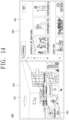
FIG. 14 is a view for explaining a process of performing a search through a search application when using a music function while executing the multi-view function according to another embodiment of the present disclosure. - Hereinafter, embodiments relating to the present disclosure will be described in detail with reference to the accompanying drawings. The suffixes "module" and "unit" for components used in the description below are assigned or mixed in consideration of easiness in writing the specification and do not have distinctive meanings or roles by themselves.
- A display device according to an embodiment of the present disclosure is an intelligent display device that adds a computer-assisted function to, for example, a broadcast reception function, and while remaining faithful to the broadcast reception function, adds an Internet function or the like and may have a more convenient interface such as a manual input device, a touch screen, or a space remote control. In addition, with the support of wired or wireless Internet functions, it is possible to connect to the Internet and a computer, and perform functions such as email, web browsing, banking, or games. A standardized general-purpose OS may be used for these various functions.
- Accordingly, the display device described in the present disclosure may perform various user-friendly functions, for example, since various applications may be freely added or deleted on a general-purpose OS kernel. More specifically, the display device may be, for example, a network TV, an HBBTV, a smart TV, an LED TV, an OLED TV, or the like and in some cases, may also be applied to a smartphone.
-
FIG. 1 is a block diagram illustrating a configuration of a display device according to an embodiment of the present disclosure. - Referring to
FIG. 1 , adisplay device 100 may include abroadcast reception part 130, anexternal device interface 135, amemory 140, auser input interface 150, acontroller 170, awireless communication interface 173, adisplay 180, aspeaker 185, and apower supply circuit 190. - The
broadcast reception part 130 may include atuner 131, ademodulator 132, and anetwork interface 133. - The
tuner 131 may select a specific broadcast channel according to a channel selection command. Thetuner 131 may receive broadcast signals for the selected specific broadcast channel. - The
demodulator 132 may divide the received broadcast signals into image signals, audio signals, and broadcast program-related data signals, and may restore the divided image signals, audio signals, and data signals into an output available form. - The
external device interface 135 may receive an application or an application list in an adjacent external device and deliver the application or the application list to thecontroller 170 or thememory 140. - The
external device interface 135 may provide a connection path between thedisplay device 100 and an external device. Theexternal device interface 135 may receive at least one of an image or audio outputted from an external device that is wirelessly or wiredly connected to thedisplay device 100 and deliver the received image or the audio to the controller. Theexternal device interface 135 may include a plurality of external input terminals. The plurality of external input terminals may include an RGB terminal, at least one High Definition Multimedia Interface (HDMI) terminal, and a component terminal. - An image signal of an external device inputted through the
external device interface 135 may be outputted through thedisplay 180. A sound signal of an external device inputted through theexternal device interface 135 may be outputted through thespeaker 185. - An external device connectable to the
external device interface 135 may be one of a set-top box, a Blu-ray player, a DVD player, a game console, a sound bar, a smartphone, a PC, a USB Memory, and a home theater system but this is just exemplary. - The
network interface 133 may provide an interface for connecting thedisplay device 100 to a wired/wireless network comprising internet network. Thenetwork interface 133 may transmit or receive data to or from another user or another electronic device through an accessed network or another network linked to the accessed network. - Additionally, some content data stored in the
display device 100 may be transmitted to a user or an electronic device, which is selected from other users or other electronic devices pre-registered in thedisplay device 100. - The
network interface 133 may access a predetermined webpage through an accessed network or another network linked to the accessed network. In other words, thenetwork interface 133 may transmit or receive data to or from a corresponding server by accessing a predetermined webpage through the network. - The
network interface 133 may receive content or data provided from a content provider or a network operator. In other words, thenetwork interface 133 may receive content, such as movies, advertisements, games, VODs, and broadcast signals, which are provided from the content provider or the network operator, and information relating thereto through the network. - In addition, the
network interface 133 may receive firmware update information and update files provided from the network operator, and may transmit data to the Internet or content provider or the network operator. - The
network interface 133 may select and receive a desired application among applications open to the air, through network. - The
memory 140 may store signal-processed image, voice, or data signals stored by a program in order for each signal processing and control in thecontroller 170. - In addition, the
memory 140 may perform a function for temporarily storing image, voice, or data signals output from theexternal device interface 135 or thenetwork interface 133, and may store information on a predetermined image through a channel memory function. - The
memory 140 may store an application or an application list input from theexternal device interface 135 or thenetwork interface 133. - The
display device 100 may play content files (e.g., video files, still image files, music files, document files, application files, etc.) stored in thememory 140, and may provide the content files to a user. - The
user input interface 150 may transmit signals input by a user to thecontroller 170, or may transmit signals from thecontroller 170 to a user. For example, theuser input interface 150 may receive or process control signals such as power on/off, channel selection, and screen setting from theremote control device 200 or transmit control signals from thecontroller 170 to theremote control device 200 according to various communication methods such as Bluetooth, Ultra Wideband (WB), ZigBee, Radio Frequency (RF), and IR communication methods. - In addition, the
user input interface 150 may transmit, to thecontroller 170, control signals input from local keys (not illustrated) such as a power key, a channel key, a volume key, and a setting key. - Image signals that are image-processed by the
controller 170 may be input to thedisplay 180 and displayed as images corresponding to the image signals. In addition, image signals that are image-processed by thecontroller 170 may be input to an external output device through theexternal device interface 135. - Voice signals processed by the
controller 170 may be output to thespeaker 185. In addition, voice signals processed by thecontroller 170 may be input to the external output device through theexternal device interface 135. - Additionally, the
controller 170 may control overall operations of thedisplay device 100. - In addition, the
controller 170 may control thedisplay device 100 by a user command or an internal program input through theuser input interface 150, and may access the network to download a desired application or application list into thedisplay device 100. - The
controller 170 may output channel information selected by a user together with the processed image or voice signals through thedisplay 180 or thespeaker 185. - In addition, the
controller 170 may output image signals or voice signals of an external device such as a camera or a camcorder, which are input through theexternal device interface 135, through thedisplay 180 or thespeaker 185, according to an external device image playback command received through theuser input interface 150. - Moreover, the
controller 170 may control thedisplay 180 to display images, and may control thedisplay 180 to display broadcast images input through thetuner 131, external input images input through theexternal device interface 135, images input through the network interface, or images stored in thememory 140. In this case, an image displayed on thedisplay 180 may be a still image or video and also may be a 2D image or a 3D image. - Additionally, the
controller 170 may play content stored in thedisplay device 100, received broadcast content, and external input content input from the outside, and the content may be in various formats such as broadcast images, external input images, audio files, still images, accessed web screens, and document files. - Moreover, the
wireless communication interface 173 may perform wired or wireless communication with an external device. Thewireless communication interface 173 may perform short-range communication with an external device. For this, thewireless communication interface 173 may support short-range communication by using at least one of Bluetooth™, Bluetooth Low Energy (BLE), Radio Frequency Identification (RFID), Infrared Data Association (IrDA), Ultra Wideband (UWB), ZigBee, Near Field Communication (NFC), Wireless-Fidelity (Wi-Fi), Wi-Fi Direct, and Wireless Universal Serial Bus (USB) technologies. Thewireless communication interface 173 may support wireless communication between thedisplay device 100 and a wireless communication system, between thedisplay device 100 and anotherdisplay device 100, or between networks including thedisplay device 100 and another display device 100 (or an external server) through wireless area networks. The wireless area networks may be wireless personal area networks. - Herein, the
other display device 100 may be a mobile terminal such as a wearable device (for example, a smart watch, a smart glass, and a head mounted display (HMD)) or a smartphone, which is capable of exchanging data (or inter-working) with thedisplay device 100. Thewireless communication interface 173 may detect (or recognize) a wearable device capable of communication around thedisplay device 100. - Furthermore, if the detected wearable device is a device authenticated to communicate with the
display device 100, thecontroller 170 may transmit at least part of data processed in thedisplay device 100 to the wearable device through thewireless communication interface 173. Therefore, a user of the wearable device may use the data processed by thedisplay device 100 through the wearable device. - The
display 180 may convert image signals, data signals, or on-screen display (OSD) signals, which are processed in thecontroller 170, or images signals or data signals, which are received in theexternal device interface 135, into R, G, and B signals to generate driving signals. - Furthermore, the
display device 100 illustrated inFIG. 1 is just one embodiment of the present disclosure and thus, some of the components illustrated may be integrated, added, or omitted according to the specification of the actually implementeddisplay device 100. - In other words, if necessary, two or more components may be integrated into one component, or one component may be divided into two or more components. Additionally, a function performed by each block is to describe an embodiment of the present disclosure and its specific operation or device does not limit the scope of the present disclosure.
- According to another embodiment of the present disclosure, unlike
FIG. 1 , thedisplay device 100 may receive images through thenetwork interface 133 or theexternal device interface 135 and play them without including thetuner 131 and thedemodulator 132. - For example, the
display device 100 may be divided into an image processing device such as a set-top box for receiving broadcast signals or contents according to various network services and a content playback device for playing content input from the image processing device. - In this case, an operating method of a display device according to an embodiment of the present disclosure described below may be performed by one of the display device described with reference to
FIG. 1 , an image processing device such as the separated set-top box, and a content playback device including thedisplay 180 and thespeaker 185. - A remote control device according to an embodiment of the present disclosure will be described with reference to
FIGS. 2 and3 . -
FIG. 2 is a block diagram illustrating a remote control device according to an embodiment of the present disclosure andFIG. 3 is a view illustrating an actual configuration of a remote control device according to an embodiment of the present disclosure. - First, referring to
FIG. 2 , aremote control device 200 may include afingerprint recognition device 210, awireless communication interface 220, auser input interface 230, asensor 240, anoutput interface 250, apower supply circuit 260, amemory 270, acontroller 280, and amicrophone 290. - Referring to
FIG. 2 , thewireless communication interface 220 transmits/receives signals to/from an arbitrary any one of display devices according to the above-mentioned embodiments of the present disclosure. - The
remote control device 200 may include a radio frequency (RF) circuit 221 capable of transmitting or receiving signals to or from thedisplay device 100 according to an RF communication standard, and anIR circuit 223 capable of transmitting or receiving signals to or from thedisplay device 100 according to an IR communication standard. In addition, theremote control device 200 may include aBluetooth circuit 225 capable of transmitting or receiving signals to or from thedisplay device 100 according to a Bluetooth communication standard. In addition, theremote control device 200 may include anNFC circuit 227 capable of transmitting or receiving signals to or from thedisplay device 100 according to an NFC communication standard, and a wireless LAN (WLAN)circuit 229 capable of transmitting or receiving signals to or from thedisplay device 100 according to a WLAN communication standard. - In addition, the
remote control device 200 may transmit signals containing information on the movement of theremote control device 200 to thedisplay device 100 through thewireless communication interface 220. - Moreover, the
remote control device 200 may receive signals transmitted from thedisplay device 100 through the RF circuit 221 and if necessary, may transmit a command for power on/off, channel change, and volume change to thedisplay device 100 through theIR circuit 223. - The
user input interface 230 may be configured with a keypad, a button, a touch pad, or a touch screen. A user may operate theuser input interface 230 to input a command relating to thedisplay device 100 to theremote control device 200. If theuser input interface 230 includes a hard key button, a user may input a command relating to thedisplay device 100 to theremote control device 200 through the push operation of the hard key button. This will be described with reference toFIG. 3 . - Referring to
FIG. 3 , theremote control device 200 may include a plurality of buttons. The plurality of buttons may include afingerprint recognition button 212, apower button 231, ahome button 232, alive button 233, anexternal input button 234, avolume control button 235, avoice recognition button 236, achannel change button 237, anOK button 238, and aback button 239. - The
fingerprint recognition button 212 may be a button for recognizing a user's fingerprint. According to an embodiment of the present disclosure, thefingerprint recognition button 212 may perform a push operation and receive a push operation and a fingerprint recognition operation. - The
power button 231 may be a button for turning on/off the power of thedisplay device 100. - The
home button 232 may be a button for moving to the home screen of thedisplay device 100. - The
live button 233 may be a button for displaying live broadcast programs. - The
external input button 234 may be a button for receiving an external input connected to thedisplay device 100. - The
volume control button 235 may be a button for controlling a volume output from thedisplay device 100. - The
voice recognition button 236 may be a button for receiving user's voice and recognizing the received voice. - The
channel change button 237 may be a button for receiving broadcast signals of a specific broadcast channel. - The
OK button 238 may be a button for selecting a specific function, and theback button 239 may be a button for returning to a previous screen. -
FIG. 2 is described again. - If the
user input interface 230 includes a touch screen, a user may touch a soft key of the touch screen to input a command relating to thedisplay device 100 to theremote control device 200. In addition, theuser input interface 230 may include various kinds of input interfaces operable by a user, for example, a scroll key and a jog key, and this embodiment does not limit the scope of the present disclosure. - The
sensor 240 may include agyro sensor 241 or anacceleration sensor 243. Thegyro sensor 241 may sense information on the movement of theremote control device 200. - For example, the
gyro sensor 241 may sense information on an operation of theremote control device 200 on the basis of x, y, and z axes and theacceleration sensor 243 may sense information on a movement speed of theremote control device 200. Moreover, theremote control device 200 may further include a distance measurement sensor that senses a distance with respect to thedisplay 180 of thedisplay device 100. - The
output interface 250 may output image or voice signals in response to the operation of theuser input interface 230, or may output image or voice signals corresponding to signals transmitted from thedisplay device 100. - A user may recognize whether the
user input interface 230 is operated or thedisplay device 100 is controlled through theoutput interface 250. - For example, the
output interface 250 may include anLED 251 for flashing, avibrator 253 for generating vibration, aspeaker 255 for outputting sound, or adisplay 257 for outputting an image, if theuser input interface 230 is manipulated or signals are transmitted/received to/from thedisplay device 100 through thewireless communication interface 220. - Additionally, the
power supply circuit 260 supplies power to theremote control device 200 and if theremote control device 200 does not move for a predetermined time, stops the power supply, so that power waste may be reduced. - The
power supply circuit 260 may resume the supply of power if a predetermined key provided at theremote control device 200 is operated. - The
memory 270 may store various kinds of programs and application data required to control or operate theremote control device 200. - If the
remote control device 200 transmits/receives signals wirelessly through thedisplay device 100 and the RF circuit 221, theremote control device 200 and thedisplay device 100 transmits/receives signals through a predetermined frequency band. - The
controller 280 of theremote control device 200 may store, in thememory 270, information on a frequency band for transmitting/receiving signals to/from thedisplay device 100 paired with theremote control device 200 and refer to it. - The
controller 280 controls general matters relating to the control of theremote control device 200. Thecontroller 280 may transmit a signal corresponding to a predetermined key operation of theuser input interface 230 or a signal corresponding to the movement of theremote control device 200 sensed by thesensor 240 to thedisplay device 100 through thewireless communication interface 220. - In addition, the
microphone 290 of theremote control device 200 may acquire voice. - A plurality of
microphones 290 may be provided. - Next,
FIG. 4 is described. -
FIG. 4 is a view illustrating an example of utilizing a remote control device according to an embodiment of the present disclosure. -
FIG. 4(a) illustrates that apointer 205 corresponding to theremote control device 200 is displayed on thedisplay 180. - A user may move or rotate the
remote control device 200 vertically or horizontally. Thepointer 205 displayed on thedisplay 180 of thedisplay device 100 corresponds to a movement of theremote control device 200. Since thecorresponding pointer 205 is moved and displayed according to a movement on a 3D space as show in the drawing, theremote control device 200 may be referred to as a spatial remote control device. -
FIG. 4(b) illustrates that if a user moves theremote control device 200, thepointer 205 displayed on thedisplay 180 of thedisplay device 100 is moved to the left according to the movement of theremote control device 200. - Information on a movement of the
remote control device 200 detected through a sensor of theremote control device 200 is transmitted to thedisplay device 100. Thedisplay device 100 may calculate the coordinates of thepointer 205 from the information on the movement of theremote control device 200. Thedisplay device 100 may display thepointer 205 to match the calculated coordinates. -
FIG. 4(c) illustrates that while a specific button in theremote control device 200 is pressed, a user moves theremote control device 200 away from thedisplay 180. Thus, a selected region in thedisplay 180 corresponding to thepointer 205 may be zoomed in and displayed in an enlarged size. - On the other hand, if a user moves the
remote control device 200 close to thedisplay 180, a selection area in thedisplay 180 corresponding to thepointer 205 may be zoomed out and displayed in a reduced size. - On the other hand, if the
remote control device 200 is moved away from thedisplay 180, a selection area may be zoomed out and if theremote control device 200 is moved closer to thedisplay 180, a selection area may be zoomed in. - Additionally, if a specific button in the
remote control device 200 is pressed, recognition of a vertical or horizontal movement may be excluded. In other words, if theremote control device 200 is moved away from or closer to thedisplay 180, the up, down, left, or right movement may not be recognized and only the back and forth movement may be recognized. While a specific button in theremote control device 200 is not pressed, only thepointer 205 is moved according to the up, down, left or right movement of theremote control device 200. - Moreover, the moving speed or moving direction of the
pointer 205 may correspond to the moving speed or moving direction of theremote control device 200. - Furthermore, a pointer in this specification means an object displayed on the
display 180 in response to an operation of theremote control device 200. Therefore, in addition to the arrow form displayed as thepointer 205 in the drawing, various forms of objects are possible. For example, the above concept includes a point, a cursor, a prompt, and a thick outline. Then, thepointer 205 may be displayed in correspondence to one point of a horizontal axis and a vertical axis on thedisplay 180 and also may be displayed in correspondence to a plurality of points such as a line and a surface. -
FIG. 5 is a view for explaining a detailed configuration of a controller according to an embodiment of the present disclosure. - The
controller 170 may include abroadcast control unit 510, amulti-view control unit 530, and asearch control unit 550. - The
broadcast control unit 510 may manage an electronic program guide. - The
broadcast control unit 510 may extract meta information from an EPG to transmit the extracted meta information to themulti-view control unit 530. - The
multi-view control unit 530 may receive a request for executing a multi-view, split a screen of thedisplay 180 according to the received request, and display an image on each of the split screens. - The
multi-view control unit 530 may control an execution of an application to display an execution image of a different application on each of the split screens. - The
multi-view control unit 530 may request the EPG meta information of the broadcast image displayed on the split screen from thebroadcast control unit 510 and receive the EPG meta information in response to the request. - The
multi-view control unit 530 may obtain search words for searching related contents using the received EPG meta information and transmit the obtained search words to thesearch control unit 550. - The
search control unit 550 may perform a search on the basis of the search words received from themulti-view control unit 530. - The
search control unit 550 may perform the search for the search words through an application that supports a search function and output the search results on thedisplay 180. -
FIG. 6 is a flowchart for explaining an operating method of a display device according to an embodiment of the present disclosure. - Hereinafter, an app is an abbreviation for application.
- The
controller 170 of thedisplay device 100 may receive a multi-view execution request (S601). - In an embodiment, the
controller 170 may receive the multi-view execution request from aremote control device 200 via auser input interface 150. - In another embodiment, the
controller 170 may receive the multi-view execution request via a user voice input. - In an embodiment, the
controller 170 may receive the multi-view execution request while displaying the content image on thedisplay 180. - The content image may be an execution image of a first application described later.
- The
controller 170 of thedisplay device 100 may display a first image of the first application and a second image of a second application on the split screen of thedisplay 180 upon receiving the multi-view execution request (S603). - In an embodiment, the first image may be an image resulting from the execution of the first application, and the second image may be an image resulting from the execution of the second application.
- The first application may be a main application, and the second application may be a sub application, but are just examples, and the first and second applications may be interchanged.
- The first application may be a Live TV application that provides a real-time broadcast image, and the second application may be an application that supports the search function.
- The
controller 170 may split the screen of thedisplay 180 into two split screens according to the multi-view execution request. Here, the two screens may be a just example, and the screen of thedisplay 180 may be split into two or more screens depending on the multi-view execution request. - When the
controller 170 receives the multi-view execution request while displaying the first image of the first application on thedisplay 180, the controller may reduce the first image to display the first image on the first split screen and display the second image of the second application on the second split screen. - The
controller 170 of thedisplay device 100 may acquire information of the first image displayed on the split screen (S605) and perform a search for information of the first image through the second application (S607). - In an embodiment, the information of the first image may be broadcast information.
- The broadcast information may be EPG information. The EPG information may include one or more of a title of the broadcast program, a program ID that identifies the broadcast program, and a subtitle of the program.
- The broadcast information may be EPG meta information. The EPG meta information may include one or more of background music information, character information, and plot information (or episode information) of the broadcast program.
- The
controller 170 may request the EPG information of the first image from an external device (e.g., a set-top box) and receive the EPG information from the external device. - Specifically, the
multi-view control unit 530 provided in thecontroller 170 may request the EPG information of the first image from thebroadcast control unit 510. - In an embodiment, the
broadcast control unit 510 may request the EPG information from the external device connected through anexternal device interface 135 and receive the EPG information from the external device. - In another embodiment, the EPG information may be stored in a
memory 140. In this case, thebroadcast control unit 510 may extract the EPG information of the first image from the EPG stored in thememory 140 and provide the extracted EPG information to themulti-view control unit 530. - The
controller 170 may perform a search for information on the first image through the second application that supports the search function. Specifically, thecontroller 170 may transmit a search word for the first image to an application server that provides a search service through the second application and receive search results for the search word from the application server. - The
controller 170 of thedisplay device 100 may output the search results according to the search execution results (S609). - In an embodiment, the
controller 170 may display the search results on the split screen on which the second image is displayed. - The search results may be any one of a video, an image, or a website based on the search word.
- In another embodiment, the
controller 170 may transmit the search results to a mobile terminal, such as a user's smartphone, via awireless communication interface 173. -
FIGS. 7 to 9 are views for explaining a scenario for automatically searching for a program name when executing the multi-view function according to an embodiment of the present disclosure. - In
FIGS. 7 to 9 , it is assumed that the first image of the first application is displayed on each of the two split screens, and the second image of the second application is being displayed. - First,
FIG. 7 will be described. -
FIG. 7 is a view for explaining a process after the operation S603 in the embodiment ofFIG. 6 , and detailed description of the duplicated steps will be omitted. - Referring to
FIG. 7 , thecontroller 170 of thedisplay device 100 may determine whether the first application is a real-time broadcast application that provides a real-time broadcast image (S703). - In an embodiment, the
controller 170 may determine whether a real-time broadcasting application is executed by using identification information of the first application executed on the screen. The first image provided through the first application may be a live broadcast image. - The
controller 170 of thedisplay device 100 may determine whether the EPG information of the first image, which is the real-time broadcast image, exists when the first application is the real-time broadcast image providing the real-time broadcast image (S705). - In an embodiment, the EPG information may include one or more of an ID, a subtitle, a name, a genre, and a remaining broadcast time of the program that is a live broadcast image.
- In an embodiment, the
controller 170 may receive an EPG set from a set-top box connected to thedisplay device 100 and confirm whether the received EPG set includes the EPG information of the real-time broadcast image. - In another embodiment, the
controller 170 may determine whether the EPG information of the first image, which is the real-time broadcast image, is stored in thememory 140. - The
controller 170 of thedisplay device 100 may determine whether the second application is an application that supports the search function when the EPG information of the first image exists (S707). - The application that supports the search function may be an application that searches for videos, images, and websites related to the search word and provides search results.
- The
controller 170 of thedisplay device 100 may transmit a search request for the EPG information to the application server of the second application when the second application is an application that supports the search function (S709). - The application server of the second application may be a server that provides a search service through the second application.
- The
controller 170 may transmit the search request for the EPG information to the application server via thenetwork interface 133. - Upon receiving the search request, the application server may search for one or more contents related to a program name contained in EPG information and transmit information about the one or more searched contents to the
display device 100. - The information about the contents may include one or more of a thumbnail image of the content, an access address that accesses the content, a name of the content, and a source providing the content.
- The
controller 170 of thedisplay device 100 may receive the search results on the basis of the EPG information from the application server (S711) and output the received search results (S609). - The
controller 170 may receive the search results on the basis of the EPG information through thenetwork interface 133. -
FIG. 8a is a view illustrating a process of acquiring the EPG information of the real-time broadcast image and generating the search requests on the basis of the EPG information according to an embodiment of the present disclosure. - Operations S801 and S803 of
FIG. 8a may be processes that embody operation S705 ofFIG. 7 , operations S805 and S807 may be views that embody operation S707, and operation S809 may correspond to operation S709. - The
multi-view control unit 530 may request the EPG information of the real-time broadcast image from the broadcast control unit 510 (S801), and thebroadcast control unit 510 may transmit the EPG information to themulti-view control unit 530 in response to the received request (S803). - The EPG information may include a program ID (or channel ID), a program's subtitle, a program's name, a program's genre, and a remaining airing time.
- Referring to
FIG. 8b ,EPG information 810 of the real-time broadcast image is illustrated. - The
broadcast control unit 510 may acquire theEPG information 810 from a set-top box connected to thememory 140 or thedisplay device 100. - When the EPG information is acquired, the
multi-view control unit 530 may request the search capability of the second application (S805) and receive the search capability information of the second application in response to the request (S807). - The request for the search capabilities may be a request to inquire whether the second application supports the search function.
- The search capability information will be described with reference to
FIG. 8c . - The search capability information may include one or more of second application's launch mode information, launch parameter information, application's name, and application's ID.
- The launch mode information may include information indicating whether content search for ELG information is possible and whether the search for the EPG information is possible.
- The launch parameter information may include information about additional functions, such as languages that are searchable through the application.
- The
multi-view control unit 530 may transmit the search request for the EPG information through the second application to thesearch control unit 550 on the basis of the search capability information of the second application (S809). - If the
multi-view control unit 530 determines that the second application supports the content search function through the search capability information, the search request for the EPG information may be transmitted to thesearch control unit 550. - The search request may include a value for the launch mode (search or play) for the EPG information, a value for the launch parameter (language), and the application ID identifying the second application.
- The
search control unit 550 may transmit the search request for the EPG information to the application server of the second application through thenetwork interface 133. - The
search control unit 550 may receive search results for the EPG information from the application server through thenetwork interface 133. - Referring to
FIG. 9 , thescreen 900 of thedisplay 180 may include afirst split screen 910 and asecond split screen 930. - The real-
time broadcast program 911 provided through the real-time broadcast application may be displayed on thefirst split screen 910. - Search results 931 for the
name 913 of thebroadcast program 911 may be displayed on thesecond split screen 930 through a search application. - The
display device 100 may acquire the EPG information of thebroadcast program 911 that is being played through the real-time broadcast application and transmit the acquired EPG information to the application server of the search application. The EPG information may include thename 913 of thebroadcast program 911. - The
display device 100 may receive search result information for thename 913 of thebroadcast program 911 from the application server and display search results 931 on the basis of the received search result information on thesecond split screen 930. - The search results 931 may include contents associated with the
program name 913. - For example, the search results 931 may include video, image, and website information associated with the
program name 913. - As described above, according to the embodiment of the present disclosure, when the multi-view function is executed, the content associated with the broadcast program may be automatically searched. Thus, the user's search convenience may be improved, and the desired search information may be obtained quickly.
-
FIGS. 10 to 12b are views for explaining a process of performing a search by providing a menu when executing the multi-view function according to an embodiment of the present disclosure. - In
FIGS. 10 to 12b , it is assumed that the first image of the first application is displayed on each of the two split screens, and the second image of the second application is being displayed. - First,
FIG. 10 will be described. -
FIG. 10 is a view for explaining a process after the operation S603 in the embodiment ofFIG. 6 , and detailed description of the duplicated operations (steps) will be omitted. - Referring to
FIG. 10 , thecontroller 170 of thedisplay device 100 may determine whether the first application is a real-time broadcast application that provides a real-time broadcast image (S1001). - In an embodiment, the
controller 170 may determine whether a real-time broadcasting application is executed by using identification information of the first application executed on the screen. The first image provided through the first application may be a live broadcast image. - The
controller 170 of thedisplay device 100 may determine whether the EPG information of the first image, which is the real-time broadcast image, exists when the first application is the real-time broadcast image providing the real-time broadcast image (S1003). - In an embodiment, the EPG information may include one or more of an ID, a subtitle, a name, a genre, and a remaining broadcast time of the program that is a live broadcast image.
- In an embodiment, the
controller 170 may receive an EPG set from a set-top box connected to thedisplay device 100 and confirm whether the received EPG set includes the EPG information of the real-time broadcast image. - In another embodiment, the
controller 170 may determine whether the EPG information of the first image, which is the real-time broadcast image, is stored in thememory 140. - The
controller 170 of thedisplay device 100 may determine whether the second application is an application that supports the search function when the EPG information of the first image exists (S1005). - The application that supports the search function may be an application that searches for videos, images, and websites related to the search word and provides search results.
- The
controller 170 of thedisplay device 100 may display search keywords on the basis of the EPG meta information on the split screen corresponding to the second application when the second application is an application that supports the search function (S1007). - In an embodiment, when the
controller 170 acquires the EPG information of the first image, the EPG meta information may also be acquired. - The EPG meta information may include one or more of a name of an actor appearing in the program, background music of the program, and synopsis.
- The
controller 170 may acquire the actor's name, the background music, and synopsis contained in the EPG meta information as search keywords. - The
controller 170 may display a search menu including the acquired search keywords on the split screen corresponding to the second application. - The
controller 170 of thedisplay device 100 may receive a command for selecting one of the search keywords (S1009). - The
controller 170 may receive a command for selecting one of the search keywords from theremote control device 200. - The
controller 170 of thedisplay device 100 may transmit a search request for the selected search keyword to the application server of the second application according to the command (S1011). - The
controller 170 may transmit the search request for the selected search keyword to the application server through thenetwork interface 133. - The
controller 170 of thedisplay device 100 may receive search results for the search keywords from the application server (S1013) and output the received search results (S609). -
FIG. 11a is a view for explaining a process of acquiring the EPG meta information of the real-time broadcast image and performing the search on the basis of the acquired EPG meta information. - The
multi-view control unit 530 may request the EPG information of the real-time broadcast image from the broadcast control unit 510 (S1101), and thebroadcast control unit 510 may transmit the EPG information to themulti-view control unit 530 in response to the received request (S1103). - The EPG information may include a program ID (or channel ID), a program's subtitle, a program's name, a program's genre, and a remaining airing time.
- The description of the EPG information may be replaced with the description in
FIG. 8b . - The
broadcast control unit 510 may acquire theEPG information 810 from a set-top box connected to thememory 140 or thedisplay device 100. - The
multi-view control unit 530 may request the EPG meta information of the real-time broadcast image from thebroadcast control unit 510 on the basis of the received EPG information (S1105), and thebroadcast control unit 510 may transmit the EPG information to themulti-view control unit 530 in response to the received request (S1107). - The
multi-view control unit 530 may transmit the request including the EPG information to thebroadcast control unit 510, and thebroadcast control unit 510 may extract the EPG meta information including the plurality of search keywords on the basis of the EPG information. Thebroadcast control unit 510 may transmit the extracted EPG meta information to themulti-view control unit 530. - The EPG meta information will be described with reference to
FIG. 11b . - Referring to
FIG. 11b , the EPGmeta information 1100 is illustrated. The EPG meta information may include information about the program's background music, the actor appearing, and the program's synopsis (or episode information). Each of the background music, the actor name, and the synopsis may be search keywords. - The
multi-view control unit 530 may receive an event for selecting one of the plurality of search keywords (S1109). - When the event is received, the
multi-view control unit 530 may request thesearch control unit 550 for the search capability of the second application (S1111) and receive the search capability information of the second application in response to the request (S1113). - The request for the search capabilities may be a request to inquire whether the second application supports the search function.
- The search capability information will be replaced with those in
FIG. 8c . - The
multi-view control unit 530 may transmit the search request for the EPG information through the second application to thesearch control unit 550 on the basis of the search capability information of the second application (S1115). - If the
multi-view control unit 530 determines that the second application supports the content search function through the search capability information, the search request for the EPG information may be transmitted to thesearch control unit 550. - The search request may include a value for the launch mode (search or play) for the EPG information, a value for the launch parameter (language, selected search keywords, etc.), and the application ID identifying the second application. That is, the value of the launch parameters may include additional selected search keywords.
- The
search control unit 550 may transmit a search request for the search keywords to the application server of the second application through thenetwork interface 133. - The
search control unit 550 may receive the search results for the search keywords from the application server through thenetwork interface 133. - Referring to
FIG. 12a , thescreen 1200 of thedisplay 180 may include afirst split screen 1210 and asecond split screen 1230. - The real-
time broadcast program 1211 provided through the real-time broadcast application may be displayed on thefirst split screen 1210. - An
execution image 1231 of the search application may be displayed on thesecond split screen 1230. - The
display device 100 may receive a command for providing a search menu from theremote control device 200. The user may press an OK button on theremote control device 200 for a certain period of time while the multi-view function is executed to receive the search menu. - The
display device 100 may acquire the EPG meta information of thebroadcast program 1211 being played through the real-time broadcast application according to the command for providing the search menu, and display asearch menu 1250 including the plurality ofsearch keywords second split screen 1230 on the basis of the EPG meta information. - Simultaneously, the
display device 100 may reduce a size of thefirst split screen 1210 and enlarge a size of thesecond split screen 1230. - When one of the plurality of
search keywords display device 100 may request the search request for the selected search keyword to the application server of the second application. - The
display device 100 may display search results for search keywords received from the application server on thesecond split screen 1230. - The search results may include video, image, and website information associated with the search keywords.
- As described above, according to the embodiment of the present disclosure, when the multi-view function is executed, the content associated with the meta information of the broadcast program may be automatically searched. Therefore, the convenience of the user searches may be improved, and the desired information may be quickly searched when watching the live broadcast images.
- Referring to
FIG. 12b , asearch menu 1250 may be provided even in a single view state (a state in which a view is provided through one application) rather than a multi-view state. - The
display device 100 may receive a request for providing the search menu during playback of the real-time broadcast program 1211 on thescreen 1270. - The
display device 100 may acquire the EPG meta information of thebroadcast program 1211 according to the received request and display thesearch menu 1250 on thescreen 1270 on the basis of the acquired meta information. Thesearch menu 1250 may be displayed to overlap thebroadcast program 1211. -
FIG. 13 is a view for explaining a process of performing a search through a search application when using a search function while executing the multi-view function according to another embodiment of the present disclosure. - Referring to FIG. 13a, a
screen 1300 of thedisplay 180 may include afirst split screen 1310 and asecond split screen 1330. - A real-time broadcast program provided through a real-time broadcast application and a
search window 1311 overlapping the broadcast program may be displayed on thefirst split screen 1310. - The
search window 1311 may be a window for a search function on thedisplay device 100. - An
execution image 1331 of the search application may be displayed on thesecond split screen 1330. - When a
search word 1313 is input into thesearch window 1311, thedisplay device 100 may transmit a search request for thesearch word 1313 to the application server of the search application. - That is, when the search application is executed, the
display device 100 may perform a search for theinput search word 1313 through the application server of the search application instead of performing the search on its own. - The
display device 100 may receive search results for thesearch word 1313 through the application server of the search application and display the received search results on thesecond split screen 1330. - As described above, according to an embodiment of the present disclosure, when the search application is executed in a multi-view function, search results for a search word input into a search window of another split screen may be performed through the search application.
- Thus, rich and diverse search results for the search words may be provided to the user.
-
FIG. 14 is a view for explaining a process of performing a search through a search application when using a music function while executing the multi-view function according to another embodiment of the present disclosure. - Referring to FIG. 14a, a
screen 1400 of thedisplay 180 may include afirst split screen 1410 and asecond split screen 1430. - A real-
time broadcast program 1411 and a backgroundmusic search icon 1413 provided through a real-time broadcast application may be displayed on thefirst split screen 1410. - The background
music search icon 1413 may be an icon for searching for background music output together with thebroadcast program 1411. - An
execution image 1431 of the search application may be displayed on thesecond split screen 1430. - The
display device 100 may acquire EPG meta information including background music information of thebroadcast program 1413 when the backgroundmusic search icon 1413 is selected. - The
display device 100 may transmit the background music information to an application server of a search application. That is, the search application may perform a search for the background music information. - When the search application is executed, the
display device 100 may perform a search for the background music through the application server of the search application instead of performing the search on its own. - The
display device 100 may receive search results for the background music through the application server of the search application and display the received search results on thesecond split screen 1430. - As described above, according to an embodiment of the present disclosure, when the search application is executed in a multi-view function, search results for the background music played on another split screen may be performed through the search application.
- According to the embodiments of the present disclosure, the above-described method may also be embodied as processor readable codes on a processor readable recording medium. Examples of the processor readable medium include read-only memory (ROM), random-access memory (RAM), CD-ROMs, magnetic tapes, floppy disks, and optical data storage devices.
- The display device described above is not limited to the configuration and method of the embodiments described above, and the embodiments may be configured by selectively combining all or portion of the embodiments so that various modifications may be made.
Claims (15)
- A display device comprising:a network interface;a display configured to display a first image, which corresponds to a first application that provides real-time broadcasting, on a first split screen, and a second image, which corresponds to a second application that supports a search function, on a second split screen; anda controller configured to: acquire broadcast information about the first image; transmit a search request for the acquired broadcast information to a server configured to provide a service for the second application through the network interface; receive search results for the broadcast information from the server through the network interface; and display the received search results on the second split screen.
- The display device according to claim 1, wherein the broadcast information comprises a program name of the first image.
- The display device according to claim 1, wherein the broadcast information comprises meta information comprising background music information and character information of the first image.
- The display device according to claim 3, wherein the controller is configured to:acquire each of the background music information and the character information, which are contained in the meta information, as a search keyword; anddisplay a search menu comprising the search keywords on the second split screen.
- The display device according to claim 4, wherein the controller is configured to display the search menu according to a command received from a remote control device.
- The display device according to claim 4, wherein the controller is configured to:receive a command for selecting one of the search keywords; andtransmit a search request for the selected search keyword to the server according to the received command.
- The display device according to claim 1, wherein the controller is configured to:acquire search capability information of the second application when the broadcast information is acquired; andtransmit the search request to the server of the second application when it is determined that the search function is supported on the basis of the search capability information.
- The display device according to claim 1, wherein the search results comprise one or more of videos, images, and addresses of contents, which are related to the broadcast information.
- A method for operating a display device, the method comprising:displaying each of a first image corresponding to a first application that provides real-time broadcasting on a first split screen and a second image corresponding to a second application that supports a search function on a second split screen;acquiring broadcast information about the first image;transmitting a search request for the acquired broadcast information to a server configured to provide a service for the second application through a network interface;receiving search results for the broadcast information from the server through the network interface; anddisplaying the received search results on the second split screen.
- The method according to claim 9, wherein the broadcast information comprises a program name of the first image.
- The method according to claim 9, wherein the broadcast information comprises meta information comprising background music information and character information of the first image.
- The method according to claim 11, further comprising:acquiring each of the background music information and the character information, which are contained in the meta information, as a search keyword; anddisplaying a search menu comprising the search keywords on the second split screen.
- The method according to claim 12, wherein the displaying of the search menu comprises displaying the search menu according to a command received from a remote control device.
- The method according to claim 12, further comprising:receiving a command for selecting one of the search keywords; andtransmitting a search request for the selected search keyword to the server according to the received command.
- The method according to claim 9, further comprising:acquiring search capability information of the second application when the broadcast information is acquired; andtransmitting the search request to the server of the second application when it is determined that the search function is supported on the basis of the search capability information.
Applications Claiming Priority (1)
| Application Number | Priority Date | Filing Date | Title |
|---|---|---|---|
| PCT/KR2022/009724 WO2024010110A1 (en) | 2022-07-06 | 2022-07-06 | Display device and operating method therefor |
Publications (2)
| Publication Number | Publication Date |
|---|---|
| EP4550808A1 true EP4550808A1 (en) | 2025-05-07 |
| EP4550808A4 EP4550808A4 (en) | 2025-07-02 |
Family
ID=89453549
Family Applications (1)
| Application Number | Title | Priority Date | Filing Date |
|---|---|---|---|
| EP22950336.2A Pending EP4550808A4 (en) | 2022-07-06 | 2022-07-06 | DISPLAY DEVICE AND OPERATING METHOD THEREFOR |
Country Status (4)
| Country | Link |
|---|---|
| US (1) | US20250392777A1 (en) |
| EP (1) | EP4550808A4 (en) |
| KR (1) | KR20250018518A (en) |
| WO (1) | WO2024010110A1 (en) |
Family Cites Families (9)
| Publication number | Priority date | Publication date | Assignee | Title |
|---|---|---|---|---|
| KR100650176B1 (en) * | 2005-07-05 | 2006-11-27 | 주식회사 알티캐스트 | Method for providing search information in linked data broadcasting and system for same |
| KR101487381B1 (en) * | 2008-07-10 | 2015-01-30 | 삼성전자주식회사 | Method of providing widget and TV using it |
| KR100973214B1 (en) * | 2008-12-19 | 2010-07-30 | 엔에이치엔(주) | Method and apparatus for providing search service during program broadcasting |
| WO2011146276A2 (en) * | 2010-05-19 | 2011-11-24 | Google Inc. | Television related searching |
| CA2820574C (en) * | 2010-11-24 | 2016-10-25 | Lg Electronics Inc. | Method of receiving enhanced service and video display device thereof |
| KR20120060692A (en) * | 2010-12-02 | 2012-06-12 | 삼성전자주식회사 | Display apparatus and contents searching method |
| US9596515B2 (en) * | 2012-01-04 | 2017-03-14 | Google Inc. | Systems and methods of image searching |
| US20140380361A1 (en) * | 2013-06-19 | 2014-12-25 | Thomson Licensing | Process and user interface for downloading musical content |
| KR101638963B1 (en) * | 2014-08-14 | 2016-07-22 | 삼성전자주식회사 | User terminal apparatus and control method thereof |
-
2022
- 2022-07-06 WO PCT/KR2022/009724 patent/WO2024010110A1/en not_active Ceased
- 2022-07-06 US US18/881,226 patent/US20250392777A1/en active Pending
- 2022-07-06 KR KR1020247042092A patent/KR20250018518A/en active Pending
- 2022-07-06 EP EP22950336.2A patent/EP4550808A4/en active Pending
Also Published As
| Publication number | Publication date |
|---|---|
| WO2024010110A1 (en) | 2024-01-11 |
| US20250392777A1 (en) | 2025-12-25 |
| KR20250018518A (en) | 2025-02-06 |
| EP4550808A4 (en) | 2025-07-02 |
Similar Documents
| Publication | Publication Date | Title |
|---|---|---|
| EP3417630B1 (en) | Display device and operating method thereof | |
| US12079544B2 (en) | Display device and system comprising same | |
| US20170308261A1 (en) | Display device and method of operating the same | |
| US11703991B2 (en) | Display device with mouse control and operating method thereof | |
| EP4037323A1 (en) | Artificial intelligence server and operation method thereof | |
| US10587910B2 (en) | Display device for providing scrape function and method of operating the same | |
| US20210014572A1 (en) | Display device | |
| US12198692B2 (en) | Display apparatus | |
| US11881220B2 (en) | Display device for providing speech recognition service and method of operation thereof | |
| EP4550808A1 (en) | Display device and operating method therefor | |
| KR20160096884A (en) | Display device and operating method thereof | |
| US12301911B2 (en) | Display device and control method therefor | |
| EP4236329B1 (en) | Display device and operating method therefor | |
| US20250227342A1 (en) | Display device | |
| EP4554238A1 (en) | Display device and operating method thereof | |
| US12450282B2 (en) | Display device | |
| EP4557749A1 (en) | Display device and operation method thereof | |
| EP4738263A1 (en) | Artificial intelligence device and operating method thereof | |
| KR102700206B1 (en) | A display device | |
| US12389058B2 (en) | Mobile terminal and display system | |
| EP4350692A1 (en) | Display device and operation method thereof | |
| KR20260040252A (en) | Artificial intelligence device and its method of operation |
Legal Events
| Date | Code | Title | Description |
|---|---|---|---|
| STAA | Information on the status of an ep patent application or granted ep patent |
Free format text: STATUS: THE INTERNATIONAL PUBLICATION HAS BEEN MADE |
|
| PUAI | Public reference made under article 153(3) epc to a published international application that has entered the european phase |
Free format text: ORIGINAL CODE: 0009012 |
|
| STAA | Information on the status of an ep patent application or granted ep patent |
Free format text: STATUS: REQUEST FOR EXAMINATION WAS MADE |
|
| 17P | Request for examination filed |
Effective date: 20250128 |
|
| AK | Designated contracting states |
Kind code of ref document: A1 Designated state(s): AL AT BE BG CH CY CZ DE DK EE ES FI FR GB GR HR HU IE IS IT LI LT LU LV MC MK MT NL NO PL PT RO RS SE SI SK SM TR |
|
| A4 | Supplementary search report drawn up and despatched |
Effective date: 20250602 |
|
| RIC1 | Information provided on ipc code assigned before grant |
Ipc: G06F 16/738 20190101ALI20250526BHEP Ipc: G06F 16/78 20190101ALI20250526BHEP Ipc: H04N 21/232 20110101ALI20250526BHEP Ipc: H04N 21/482 20110101ALI20250526BHEP Ipc: H04N 21/435 20110101ALI20250526BHEP Ipc: H04N 21/431 20110101ALI20250526BHEP Ipc: H04N 21/432 20110101AFI20250526BHEP |
|
| DAV | Request for validation of the european patent (deleted) | ||
| DAX | Request for extension of the european patent (deleted) |