EP4550454A1 - Method for restoration performances of aged nickel-rich nmc cathode material for lithium-ion secondary battery - Google Patents
Method for restoration performances of aged nickel-rich nmc cathode material for lithium-ion secondary battery Download PDFInfo
- Publication number
- EP4550454A1 EP4550454A1 EP23306886.5A EP23306886A EP4550454A1 EP 4550454 A1 EP4550454 A1 EP 4550454A1 EP 23306886 A EP23306886 A EP 23306886A EP 4550454 A1 EP4550454 A1 EP 4550454A1
- Authority
- EP
- European Patent Office
- Prior art keywords
- cathode
- nickel
- aged
- lithium
- cathode material
- Prior art date
- Legal status (The legal status is an assumption and is not a legal conclusion. Google has not performed a legal analysis and makes no representation as to the accuracy of the status listed.)
- Granted
Links
Images

Classifications
-
- H—ELECTRICITY
- H01—ELECTRIC ELEMENTS
- H01M—PROCESSES OR MEANS, e.g. BATTERIES, FOR THE DIRECT CONVERSION OF CHEMICAL ENERGY INTO ELECTRICAL ENERGY
- H01M4/00—Electrodes
- H01M4/02—Electrodes composed of, or comprising, active material
- H01M4/04—Processes of manufacture in general
- H01M4/043—Processes of manufacture in general involving compressing or compaction
- H01M4/0435—Rolling or calendering
-
- H—ELECTRICITY
- H01—ELECTRIC ELEMENTS
- H01M—PROCESSES OR MEANS, e.g. BATTERIES, FOR THE DIRECT CONVERSION OF CHEMICAL ENERGY INTO ELECTRICAL ENERGY
- H01M4/00—Electrodes
- H01M4/02—Electrodes composed of, or comprising, active material
- H01M4/04—Processes of manufacture in general
- H01M4/0402—Methods of deposition of the material
- H01M4/0421—Methods of deposition of the material involving vapour deposition
- H01M4/0428—Chemical vapour deposition
-
- H—ELECTRICITY
- H01—ELECTRIC ELEMENTS
- H01M—PROCESSES OR MEANS, e.g. BATTERIES, FOR THE DIRECT CONVERSION OF CHEMICAL ENERGY INTO ELECTRICAL ENERGY
- H01M4/00—Electrodes
- H01M4/02—Electrodes composed of, or comprising, active material
- H01M4/04—Processes of manufacture in general
- H01M4/0471—Processes of manufacture in general involving thermal treatment, e.g. firing, sintering, backing particulate active material, thermal decomposition, pyrolysis
-
- H—ELECTRICITY
- H01—ELECTRIC ELEMENTS
- H01M—PROCESSES OR MEANS, e.g. BATTERIES, FOR THE DIRECT CONVERSION OF CHEMICAL ENERGY INTO ELECTRICAL ENERGY
- H01M4/00—Electrodes
- H01M4/02—Electrodes composed of, or comprising, active material
- H01M4/13—Electrodes for accumulators with non-aqueous electrolyte, e.g. for lithium-accumulators; Processes of manufacture thereof
- H01M4/139—Processes of manufacture
- H01M4/1391—Processes of manufacture of electrodes based on mixed oxides or hydroxides, or on mixtures of oxides or hydroxides, e.g. LiCoOx
-
- H—ELECTRICITY
- H01—ELECTRIC ELEMENTS
- H01M—PROCESSES OR MEANS, e.g. BATTERIES, FOR THE DIRECT CONVERSION OF CHEMICAL ENERGY INTO ELECTRICAL ENERGY
- H01M4/00—Electrodes
- H01M4/02—Electrodes composed of, or comprising, active material
- H01M4/36—Selection of substances as active materials, active masses, active liquids
- H01M4/362—Composites
- H01M4/366—Composites as layered products
-
- H—ELECTRICITY
- H01—ELECTRIC ELEMENTS
- H01M—PROCESSES OR MEANS, e.g. BATTERIES, FOR THE DIRECT CONVERSION OF CHEMICAL ENERGY INTO ELECTRICAL ENERGY
- H01M4/00—Electrodes
- H01M4/02—Electrodes composed of, or comprising, active material
- H01M4/36—Selection of substances as active materials, active masses, active liquids
- H01M4/48—Selection of substances as active materials, active masses, active liquids of inorganic oxides or hydroxides
- H01M4/52—Selection of substances as active materials, active masses, active liquids of inorganic oxides or hydroxides of nickel, cobalt or iron
- H01M4/525—Selection of substances as active materials, active masses, active liquids of inorganic oxides or hydroxides of nickel, cobalt or iron of mixed oxides or hydroxides containing iron, cobalt or nickel for inserting or intercalating light metals, e.g. LiNiO2, LiCoO2 or LiCoOxFy
-
- H—ELECTRICITY
- H01—ELECTRIC ELEMENTS
- H01M—PROCESSES OR MEANS, e.g. BATTERIES, FOR THE DIRECT CONVERSION OF CHEMICAL ENERGY INTO ELECTRICAL ENERGY
- H01M4/00—Electrodes
- H01M4/02—Electrodes composed of, or comprising, active material
- H01M4/62—Selection of inactive substances as ingredients for active masses, e.g. binders, fillers
- H01M4/624—Electric conductive fillers
- H01M4/625—Carbon or graphite
-
- H—ELECTRICITY
- H01—ELECTRIC ELEMENTS
- H01M—PROCESSES OR MEANS, e.g. BATTERIES, FOR THE DIRECT CONVERSION OF CHEMICAL ENERGY INTO ELECTRICAL ENERGY
- H01M4/00—Electrodes
- H01M4/02—Electrodes composed of, or comprising, active material
- H01M4/62—Selection of inactive substances as ingredients for active masses, e.g. binders, fillers
- H01M4/628—Inhibitors, e.g. gassing inhibitors, corrosion inhibitors
-
- H—ELECTRICITY
- H01—ELECTRIC ELEMENTS
- H01M—PROCESSES OR MEANS, e.g. BATTERIES, FOR THE DIRECT CONVERSION OF CHEMICAL ENERGY INTO ELECTRICAL ENERGY
- H01M4/00—Electrodes
- H01M4/02—Electrodes composed of, or comprising, active material
- H01M2004/026—Electrodes composed of, or comprising, active material characterised by the polarity
- H01M2004/028—Positive electrodes
-
- Y—GENERAL TAGGING OF NEW TECHNOLOGICAL DEVELOPMENTS; GENERAL TAGGING OF CROSS-SECTIONAL TECHNOLOGIES SPANNING OVER SEVERAL SECTIONS OF THE IPC; TECHNICAL SUBJECTS COVERED BY FORMER USPC CROSS-REFERENCE ART COLLECTIONS [XRACs] AND DIGESTS
- Y02—TECHNOLOGIES OR APPLICATIONS FOR MITIGATION OR ADAPTATION AGAINST CLIMATE CHANGE
- Y02E—REDUCTION OF GREENHOUSE GAS [GHG] EMISSIONS, RELATED TO ENERGY GENERATION, TRANSMISSION OR DISTRIBUTION
- Y02E60/00—Enabling technologies; Technologies with a potential or indirect contribution to GHG emissions mitigation
- Y02E60/10—Energy storage using batteries
Definitions
- the present disclosure relates to lithium-ion secondary battery having a nickel-manganese-cobalt (NMC) cathode.
- NMC nickel-manganese-cobalt
- Lithium-ion secondary batteries make use nickel-manganese-cobalt as material for the cathode. Indeed, such type of material allows for an increase in energy density while allowing for reducing the cost of the cathode.
- NMC111 is a typical cathode material having the following chemical composition LiNi 0.33 Mn 0.33 Co 0.33 O 2 .
- Nickel-rich NMCs are becoming more and more in focus now in current research due to their higher specific capacity and energy.
- Nickel-rich NMC is intended for lithium-nickel-manganese-cobalt composition having a molar nickel content at least of 0.5, for example NMC532 having the following chemical composition LiNi 0.5 Mn 0.3 Co 0.2 O 2 .
- the overpotential peak might have a large influence on the cell production, especially during the activation process.
- a solid electrolyte interface (SEI) is formed on the anode by controlling the current and the voltage.
- SEI solid electrolyte interface
- the overpotential peak appearing during the first cycle might have a detrimental influence on the quality control of the formation process.
- the present disclosure relates to a method for restoration performances of aged nickel-rich NMC cathode material for lithium-ion secondary battery.
- the method includes:
- lithium-nickel-manganese-cobalt composition having a molar nickel content at least of 0.5.
- NMC532 having the following chemical composition LiNi 0.5 Mn 0.3 Co 0.2 O 2
- NMC622 having the following chemical composition LiNi 0.6 Mn 0.2 Co 0.2 O 2
- NMC811 having the following chemical composition LiNi 0.8 Mn 0.1 Co 0.1 O 2 may be used.
- nickel-rich NMC cathode material By aged nickel-rich NMC cathode material, it is intended nickel-rich NMC cathode material exhibiting an overpotential peak during the formation process. Freshly made nickel-rich NMC cathode material and/or nickel-rich NMC cathode material stored in dry condition do not exhibit overpotential peak.
- aged nickel-rich NMC cathode material may be nickel-rich NMC cathode material that has been stored at least one month in a normal atmosphere, i.e., not under dry conditions. It is therefore understood that the aged nickel-rich NMC material has reacted and that impurities are present at least on the surface of the aged nickel-rich NMC cathode material.
- the cathode By exposing the cathode to diethyl phosphoramidate, it is possible to avoid short-cut of electronic path that may occur when exposing the cathode material before forming the cathode. It is understood that the diethyl phosphoramidate (DEPA) is reacting with lithium impurities present on the surface of the aged nickel-rich NMC cathode material, such as lithium hydroxide (LiOH), lithium carbonate (Li 2 CO 3 ). It is understood that no lithium precursor are added during the formation of the protective layer.
- DEPA diethyl phosphoramidate
- the binder may be polyvinylidene fluoride (PVDF).
- PVDF polyvinylidene fluoride
- exposure is made by a one-precursor atomic layer deposition technique and the exposure temperature is equal to or smaller than 200°C.
- reaction between lithium precursors and diethyl phosphoramidate takes place around 300°C. Thanks to the atomic layer deposition technique, the reaction temperature may be reduced to 200°C and below. Furthermore, contrary to conventional two-precursor atomic layer deposition, no annealing at 600°C is requested, which would be detrimental when the coating is made directly on the cathode because it might decompose the binder.
- the atomic layer deposition technique is an atmospheric spatial atomic deposition technique.
- the atmospheric spatial atomic deposition technique is a one-precursor atmospheric spatial atomic deposition technique.
- a carrier gas for diethyl phosphoramidate is argon or nitrogen preheated at the exposure temperature.
- argon is a 99.999% pure argon.
- nitrogen is a 99.99% pure nitrogen.
- a bearing gas is argon or nitrogen.
- argon is a 99.999% pure argon.
- nitrogen is a 99.99% pure nitrogen.
- the bearing gas allows for purging between two supply positions for exposure to diethyl phosphoramidate in the spatial atomic layer deposition equipment.
- an exposure time of the cathode to diethyl phosphoramidate lies in the range 0.5 second to 6 seconds.
- the cathode before exposure to diethyl phosphoramidate, is dried at a temperature lying in the range 65°C to 75°C, for example at 70°C, for at least 24 h (hour).
- forming the cathode comprises:
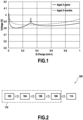
- Fig. 1 shows a voltage V (expressed in V (volt)) as a function of the charge Q (expressed in mA.h (milliampere-hour)) for a NMC532 electrode aged three months (dotted line) and three years (plain line) during first charge of the electrode. It can be seen that the curve for the aged three years NMC532 electrode presents an overpotential peak at around 0.3 mA.h. It can also be seen that an initial overpotential is also present, but with a lower voltage value for the aged three months NMC532 electrode compared to the aged three years NMC532 electrode.
- Fig. 2 shows a flow chart of the method 100 for restoration performances of aged nickel-rich NMC cathode material for lithium-ion secondary battery.
- the method includes a step of forming 110 a cathode 10 (see figure 3 ) with the aged nickel-rich NMC cathode material, a binder and carbon black.
- the step of forming 110 the cathode may include a step of making 102 a slurry preparation with the aged nickel-rich NMC cathode material, a binder and carbon black, a step of applying 104 the slurry to form a layer, drying 106 the layer and calendering 108 the layer so as to obtain the cathode.
- the step of forming 110 the cathode is known. Calendering 108 helps in increasing the density of the cathode.
- the method includes a step of exposing 114 the cathode 10 to diethyl phosphoramidate at an exposure temperature above 160°C so as to obtain a lithium phosphate protective layer on the cathode.
- the exposure of the aged nickel-rich NMC cathode may be carried out in an atmospheric spatial atomic layer deposition equipment 20, which is schematically represented in Fig. 3 .
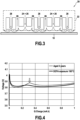
- Fig. 3 shows schematically the deposition head 22 of the atmospheric spatial atomic layer deposition equipment 20, where the cathode 10 rotates underneath the deposition head 22.
- Diethyl phosphoramidate 24 is supplied at the same time at the different positions on the cathode 10 with a carrier gas 26 at atmospheric pressure.
- a bearing gas 28 is supplied between the different positions where the diethyl phosphoramidate 24 is supplied, so as to purge the system.
- the exhaust of the gases is referenced as 29.
- the aged nickel-rich NMC cathode material may be NMC532 cathode material aged three years.
- the binder may be polyvinylidene fluoride.
- the cathode 10 obtained based on NMC532 cathode material, polyvinylidene fluoride and carbon black is named hereafter NMC532 cathode.
- the gap between the deposition head 22 and the cathode 10 is about 25 ⁇ m (micrometre) and both the carrier gas 26 and the bearing gas 28 is 99.999% pure argon.
- the NMC532 cathode may be exposed for 666 ms (millisecond) for one cycle and the lithium phosphate (Li 3 PO 4 ) protective layer is obtained with ten cycles.
- the exposure temperature may be 195°C.
- NMC532 cathode aged three years without lithium phosphate protective layer obtained by exposure to diethyl phosphoramidate exhibits an average capacity of 0.85 ⁇ 0.02 mA.h/cm 2 at 1C, a charge transfer resistance Rct of 39 ⁇ 4 ⁇ /cm 2 and total resistance of 49 ⁇ 4 ⁇ /cm 2 .
- NMC532 cathode aged three years with lithium phosphate protective layer obtained by exposure to diethyl phosphoramidate exhibits an average capacity of 0.88 ⁇ 0.02 mA.h/cm 2 at 1C, a charge transfer resistance Rct of 36.3 ⁇ 0.4 ⁇ /cm 2 and total resistance of 45 ⁇ 1 ⁇ /cm 2 .
- the lithium phosphate protective layer Thanks to the lithium phosphate protective layer, the average capacity is increased by 3%, the charge transfer resistance is decreased by 7% and the total resistance is decreased by 8%. Furthermore, as shown in Fig. 4 , the overpotential peak is significantly decreased.
- the curve corresponding to the NMC532 cathode aged three years without lithium phosphate protective layer is in plain line, and the curve corresponding to the NMC532 cathode aged three years with lithium phosphate protective layer is in bold line.
- the cycling protocol is as follows: waiting of 6 hours, formation at C/3, capacity check at 1C, set at SOC (state of charge) 55%, both equipment are at 25°C and are set to 0°C for 5 hours and then return to 25°C after measurement.
- Total resistance of the cell is measure by IV measurement (current-voltage) as shown in Fig. 5 . Different current are applied to the cell and voltage drop is measured. By plotting the current as a function of the voltage drop, the slope gives the total resistance of the cell.
- R ct Charge transfer resistance R ct is measure with EIS (Electrochemical Impedance Spectroscopy) from 20 kHz-0.1 Hz (hertz) and amplitude 10 mV.
- R ct (R2-R1)/1.33 in ⁇ /cm 2 .
Landscapes
- Chemical & Material Sciences (AREA)
- Chemical Kinetics & Catalysis (AREA)
- Electrochemistry (AREA)
- General Chemical & Material Sciences (AREA)
- Engineering & Computer Science (AREA)
- Manufacturing & Machinery (AREA)
- Composite Materials (AREA)
- Inorganic Chemistry (AREA)
- Materials Engineering (AREA)
- Battery Electrode And Active Subsutance (AREA)
Abstract
Description
- The present disclosure relates to lithium-ion secondary battery having a nickel-manganese-cobalt (NMC) cathode.
- Lithium-ion secondary batteries make use nickel-manganese-cobalt as material for the cathode. Indeed, such type of material allows for an increase in energy density while allowing for reducing the cost of the cathode. NMC111 is a typical cathode material having the following chemical composition LiNi0.33Mn0.33Co0.33O2.
- Nickel-rich NMCs are becoming more and more in focus now in current research due to their higher specific capacity and energy. Nickel-rich NMC is intended for lithium-nickel-manganese-cobalt composition having a molar nickel content at least of 0.5, for example NMC532 having the following chemical composition LiNi0.5Mn0.3Co0.2O2.
- However, higher content of nickel increases the reactivity of the material especially when in contact with atmospheric condition. The reaction has an influence on the secondary battery performance. Indeed, aged nickel-rich NMCs show, at the beginning of the charging process, an overpotential peak which is not exhibited with a fresh nickel-rich NMC cathode.
- The overpotential peak might have a large influence on the cell production, especially during the activation process.
- Indeed, during the formation process (activation of the working material of the battery), i.e., during the first charge/discharge cycle to a full charge of the battery, a solid electrolyte interface (SEI) is formed on the anode by controlling the current and the voltage. High-quality SEI formation is desirable for performance and life of the lithium-ion battery or cell.
- The overpotential peak appearing during the first cycle might have a detrimental influence on the quality control of the formation process.
- One solution is to store the cathode material under dry conditions. However, this solution increases the cost of the storage facilities and the cathode material should still be used rapidly to reduce the material surface modification.
- Currently, it remains desirable to reduce the cost of storage facilities while increasing storage time of the cathode material.
- In this respect, the present disclosure relates to a method for restoration performances of aged nickel-rich NMC cathode material for lithium-ion secondary battery. The method includes:
- forming a cathode with the aged nickel-rich NMC cathode material, a binder and carbon black; and
- exposing the cathode to diethyl phosphoramidate at an exposure temperature above 160°C (degree Celsius) so as to obtain a lithium phosphate protective layer on the cathode.
- By nickel-rich NMC, it is intended lithium-nickel-manganese-cobalt composition having a molar nickel content at least of 0.5.
- As non-limiting examples, NMC532 having the following chemical composition LiNi0.5Mn0.3Co0.2O2, NMC622 having the following chemical composition LiNi0.6Mn0.2Co0.2O2 or NMC811 having the following chemical composition LiNi0.8Mn0.1Co0.1O2 may be used.
- By aged nickel-rich NMC cathode material, it is intended nickel-rich NMC cathode material exhibiting an overpotential peak during the formation process. Freshly made nickel-rich NMC cathode material and/or nickel-rich NMC cathode material stored in dry condition do not exhibit overpotential peak.
- As non-limiting examples, aged nickel-rich NMC cathode material may be nickel-rich NMC cathode material that has been stored at least one month in a normal atmosphere, i.e., not under dry conditions. It is therefore understood that the aged nickel-rich NMC material has reacted and that impurities are present at least on the surface of the aged nickel-rich NMC cathode material.
- By providing such a method, it is possible to store nickel-rich NMC material for longer period of time and in storage facilities that do not need to be with humidity control, i.e., in dry condition.
- By exposing the cathode to diethyl phosphoramidate, it is possible to avoid short-cut of electronic path that may occur when exposing the cathode material before forming the cathode. It is understood that the diethyl phosphoramidate (DEPA) is reacting with lithium impurities present on the surface of the aged nickel-rich NMC cathode material, such as lithium hydroxide (LiOH), lithium carbonate (Li2CO3). It is understood that no lithium precursor are added during the formation of the protective layer.
- As a non-limiting example, the binder may be polyvinylidene fluoride (PVDF).
- According to some embodiments, exposure is made by a one-precursor atomic layer deposition technique and the exposure temperature is equal to or smaller than 200°C.
- Normally, reaction between lithium precursors and diethyl phosphoramidate takes place around 300°C. Thanks to the atomic layer deposition technique, the reaction temperature may be reduced to 200°C and below. Furthermore, contrary to conventional two-precursor atomic layer deposition, no annealing at 600°C is requested, which would be detrimental when the coating is made directly on the cathode because it might decompose the binder.
- In some embodiments, the atomic layer deposition technique is an atmospheric spatial atomic deposition technique.
- It is understood that the atmospheric spatial atomic deposition technique is a one-precursor atmospheric spatial atomic deposition technique.
- In some embodiments, a carrier gas for diethyl phosphoramidate is argon or nitrogen preheated at the exposure temperature.
- As a non-limiting example, argon is a 99.999% pure argon. As a non-limiting example, nitrogen is a 99.99% pure nitrogen.
- In some embodiments, a bearing gas is argon or nitrogen.
- As a non-limiting example, argon is a 99.999% pure argon. As a non-limiting example, nitrogen is a 99.99% pure nitrogen.
- The bearing gas allows for purging between two supply positions for exposure to diethyl phosphoramidate in the spatial atomic layer deposition equipment.
- In some embodiments, an exposure time of the cathode to diethyl phosphoramidate lies in the range 0.5 second to 6 seconds.
- In some embodiments, before exposure to diethyl phosphoramidate, the cathode is dried at a temperature lying in the range 65°C to 75°C, for example at 70°C, for at least 24 h (hour).
- In some embodiments, forming the cathode comprises:
- making a slurry preparation with the aged nickel-rich NMC cathode material, a binder and carbon black; and
- applying the slurry to form a layer, drying the layer and calendering the layer so as to obtain the cathode.
- Features, advantages, and technical and industrial significance of exemplary embodiments of the invention will be described below with reference to the accompanying drawings, in which like signs denote like elements, and wherein:
-
FIG. 1 shows voltage as a function of charge during the first charge for a NMC532 aged three years and three months; -
FIG.2 shows a flow chart of the method according to embodiments of the present disclosure; -
FIG. 3 shows a schematic representation of a spatial atomic deposition head; -
FIG. 4 shows voltage as a function of charge during the first charge for a NMC532 aged three years with and without protective layer; -
FIG. 5 shows a current-voltage curve measured at 0°C for the NMC532 aged three years with protective layer; -
FIG. 6 shows an electrochemical impedance spectroscopy measurement for the NMC532 aged three years with protective layer. -
Fig. 1 shows a voltage V (expressed in V (volt)) as a function of the charge Q (expressed in mA.h (milliampere-hour)) for a NMC532 electrode aged three months (dotted line) and three years (plain line) during first charge of the electrode. It can be seen that the curve for the aged three years NMC532 electrode presents an overpotential peak at around 0.3 mA.h. It can also be seen that an initial overpotential is also present, but with a lower voltage value for the aged three months NMC532 electrode compared to the aged three years NMC532 electrode. -
Fig. 2 shows a flow chart of themethod 100 for restoration performances of aged nickel-rich NMC cathode material for lithium-ion secondary battery. The method includes a step of forming 110 a cathode 10 (seefigure 3 ) with the aged nickel-rich NMC cathode material, a binder and carbon black. The step of forming 110 the cathode may include a step of making 102 a slurry preparation with the aged nickel-rich NMC cathode material, a binder and carbon black, a step of applying 104 the slurry to form a layer, drying 106 the layer and calendering 108 the layer so as to obtain the cathode. - The step of forming 110 the cathode is known.
Calendering 108 helps in increasing the density of the cathode. - The method includes a step of exposing 114 the
cathode 10 to diethyl phosphoramidate at an exposure temperature above 160°C so as to obtain a lithium phosphate protective layer on the cathode. - As an example, the exposure of the aged nickel-rich NMC cathode may be carried out in an atmospheric spatial atomic
layer deposition equipment 20, which is schematically represented inFig. 3 . More specifically,Fig. 3 shows schematically the deposition head 22 of the atmospheric spatial atomiclayer deposition equipment 20, where thecathode 10 rotates underneath the deposition head 22.Diethyl phosphoramidate 24 is supplied at the same time at the different positions on thecathode 10 with acarrier gas 26 at atmospheric pressure. Furthermore, a bearinggas 28 is supplied between the different positions where thediethyl phosphoramidate 24 is supplied, so as to purge the system. The exhaust of the gases is referenced as 29. - As non-limiting example, the aged nickel-rich NMC cathode material may be NMC532 cathode material aged three years. The binder may be polyvinylidene fluoride. The
cathode 10 obtained based on NMC532 cathode material, polyvinylidene fluoride and carbon black is named hereafter NMC532 cathode. - As a non-limiting example, the gap between the deposition head 22 and the
cathode 10 is about 25 µm (micrometre) and both thecarrier gas 26 and the bearinggas 28 is 99.999% pure argon. - As a non-limiting example, the NMC532 cathode may be exposed for 666 ms (millisecond) for one cycle and the lithium phosphate (Li3PO4) protective layer is obtained with ten cycles.
- As a non-limiting example, the exposure temperature may be 195°C.
- Performances of the NMC532 cathode aged three years with and without the lithium phosphate protective layer are given below, the NMC532 cathode being exposed to ten cycles of 666 ms to diethyl phosphoramidate.
- NMC532 cathode aged three years without lithium phosphate protective layer obtained by exposure to diethyl phosphoramidate exhibits an average capacity of 0.85 ± 0.02 mA.h/cm2 at 1C, a charge transfer resistance Rct of 39 ± 4 Ω/cm2 and total resistance of 49 ± 4 Ω/cm2.
- NMC532 cathode aged three years with lithium phosphate protective layer obtained by exposure to diethyl phosphoramidate exhibits an average capacity of 0.88 ± 0.02 mA.h/cm2 at 1C, a charge transfer resistance Rct of 36.3± 0.4 Ω/cm2 and total resistance of 45 ± 1 Ω/cm2.
- Thanks to the lithium phosphate protective layer, the average capacity is increased by 3%, the charge transfer resistance is decreased by 7% and the total resistance is decreased by 8%. Furthermore, as shown in
Fig. 4 , the overpotential peak is significantly decreased. InFig. 4 , the curve corresponding to the NMC532 cathode aged three years without lithium phosphate protective layer is in plain line, and the curve corresponding to the NMC532 cathode aged three years with lithium phosphate protective layer is in bold line. - Charge transfer resistance Rct and total resistance are measured with a cell assembly having the following specifications:
- coin cell type (CR2032) battery assembly;
- anode: lithium metal 0.45 mm (millimetre) thick and 15 mm in diameter;
- cathode: NMC532 aged three years with and without lithium phosphate protective layer, 1.0 mA.h/cm2; 13 mm in diameter (1.33 cm2);
- separator: Celgard-2500; 17 mm in diameter ;
- electrolyte: LP40; 20 µL.
- The cycling protocol is as follows: waiting of 6 hours, formation at C/3, capacity check at 1C, set at SOC (state of charge) 55%, both equipment are at 25°C and are set to 0°C for 5 hours and then return to 25°C after measurement.
- Total resistance of the cell is measure by IV measurement (current-voltage) as shown in
Fig. 5 . Different current are applied to the cell and voltage drop is measured. By plotting the current as a function of the voltage drop, the slope gives the total resistance of the cell. - Charge transfer resistance Rct is measure with EIS (Electrochemical Impedance Spectroscopy) from 20 kHz-0.1 Hz (hertz) and
amplitude 10 mV. Rct = (R2-R1)/1.33 in Ω/cm2. - Although the present disclosure refers to specific exemplary embodiments, modifications may be provided to these examples without departing from the general scope of the invention as defined by the claims. In particular, individual characteristics of the different illustrated/mentioned embodiments may be combined in additional embodiments. Therefore, the description and the drawings should be considered in an illustrative rather than in a restrictive sense.
Claims (8)
- Method (100) for restoration performances of aged nickel-rich NMC cathode material for lithium-ion secondary battery, the method comprising:- forming (110) a cathode (10) with the aged nickel-rich NMC cathode material, a binder and carbon black; and- exposing (114) the cathode to diethyl phosphoramidate (24) at an exposure temperature above 160°C so as to obtain a lithium phosphate protective layer on the cathode (10).
- Method (100) according to claim 1, wherein exposure is made by a one-precursor atomic layer deposition technique and the exposure temperature is equal to or smaller than 200°C.
- Method (100) according to claim 2, wherein the atomic layer deposition technique is an atmospheric spatial atomic deposition technique.
- Method (100) according to claim 2 or 3, wherein a carrier gas (26) for diethyl phosphoramidate is argon or nitrogen preheated at the exposure temperature.
- Method (100) according to claim 3, wherein a bearing gas (28) is argon or nitrogen.
- Method (100) according to any one of claims 1 to 5, wherein an exposure time of the cathode (10) to diethyl phosphoramidate (24) lies in the range 0.5 second to 6 seconds.
- Method (100) according to any of claims 1 to 5, wherein before exposure (114) to diethyl phosphoramidate, the cathode is dried (106) at a temperature lying in the range 65°C to 75°C for at least 24 h.
- Method (100) according to any of claims 1 to 6, wherein forming (110) the cathode (10) comprises:- making (102) a slurry preparation with the aged nickel-rich NMC cathode material, a binder and carbon black; and- applying (104) the slurry to form a layer, drying (106) the layer and calendering (108) the layer so as to obtain the cathode (10).
Priority Applications (3)
| Application Number | Priority Date | Filing Date | Title |
|---|---|---|---|
| EP23306886.5A EP4550454B1 (en) | 2023-10-31 | 2023-10-31 | Method for restoration performances of aged nickel-rich nmc cathode material for lithium-ion secondary battery |
| US18/929,027 US12537183B2 (en) | 2023-10-31 | 2024-10-28 | Method for restoration performances of aged nickel-rich NMC cathode material for lithium-ion secondary battery |
| CN202411516480.7A CN119921016A (en) | 2023-10-31 | 2024-10-29 | Method for restoring performance of aged nickel-rich NMC cathode materials for lithium-ion secondary batteries |
Applications Claiming Priority (1)
| Application Number | Priority Date | Filing Date | Title |
|---|---|---|---|
| EP23306886.5A EP4550454B1 (en) | 2023-10-31 | 2023-10-31 | Method for restoration performances of aged nickel-rich nmc cathode material for lithium-ion secondary battery |
Publications (2)
| Publication Number | Publication Date |
|---|---|
| EP4550454A1 true EP4550454A1 (en) | 2025-05-07 |
| EP4550454B1 EP4550454B1 (en) | 2025-11-19 |
Family
ID=88839828
Family Applications (1)
| Application Number | Title | Priority Date | Filing Date |
|---|---|---|---|
| EP23306886.5A Active EP4550454B1 (en) | 2023-10-31 | 2023-10-31 | Method for restoration performances of aged nickel-rich nmc cathode material for lithium-ion secondary battery |
Country Status (3)
| Country | Link |
|---|---|
| US (1) | US12537183B2 (en) |
| EP (1) | EP4550454B1 (en) |
| CN (1) | CN119921016A (en) |
Citations (3)
| Publication number | Priority date | Publication date | Assignee | Title |
|---|---|---|---|---|
| CA3182665A1 (en) * | 2020-06-24 | 2021-12-30 | Sunao KAMIMURA | Processes for forming doped-metal oxides thin films on electrode for interphase control |
| WO2023102107A1 (en) * | 2021-12-01 | 2023-06-08 | L'air Liquide, Societe Anonyme Pourl'etude Et L'exploitation Des Procedes Georges Claude | Processes for forming metal oxide thin films on electrode interphase control |
| WO2023202951A1 (en) * | 2022-04-22 | 2023-10-26 | L'air Liquide, Societe Anonyme Pour L'etude Et L'exploitation Des Procedes Georges Claude | Method for producing nickel-rich cathode active material and method for producing cathode electrode |
-
2023
- 2023-10-31 EP EP23306886.5A patent/EP4550454B1/en active Active
-
2024
- 2024-10-28 US US18/929,027 patent/US12537183B2/en active Active
- 2024-10-29 CN CN202411516480.7A patent/CN119921016A/en active Pending
Patent Citations (3)
| Publication number | Priority date | Publication date | Assignee | Title |
|---|---|---|---|---|
| CA3182665A1 (en) * | 2020-06-24 | 2021-12-30 | Sunao KAMIMURA | Processes for forming doped-metal oxides thin films on electrode for interphase control |
| WO2023102107A1 (en) * | 2021-12-01 | 2023-06-08 | L'air Liquide, Societe Anonyme Pourl'etude Et L'exploitation Des Procedes Georges Claude | Processes for forming metal oxide thin films on electrode interphase control |
| WO2023202951A1 (en) * | 2022-04-22 | 2023-10-26 | L'air Liquide, Societe Anonyme Pour L'etude Et L'exploitation Des Procedes Georges Claude | Method for producing nickel-rich cathode active material and method for producing cathode electrode |
Also Published As
| Publication number | Publication date |
|---|---|
| EP4550454B1 (en) | 2025-11-19 |
| CN119921016A (en) | 2025-05-02 |
| US20250140782A1 (en) | 2025-05-01 |
| US12537183B2 (en) | 2026-01-27 |
Similar Documents
| Publication | Publication Date | Title |
|---|---|---|
| KR101757628B1 (en) | Positive active material for rechargeable lithium battery, method of preparing the same, and rechargeable lithium battery including the same | |
| KR100570677B1 (en) | Lithium secondary battery | |
| US12500236B2 (en) | Positive electrode active material and lithium secondary battery including the same | |
| EP3907186B1 (en) | Method for preparing positive electrode active material precursor and positive electrode active material precursor | |
| US20140178768A1 (en) | All solid state battery and producing method therefor | |
| US20250149572A1 (en) | Positive Electrode Active Material, Method for Preparing the Same, and Positive Electrode and Lithium Secondary Battery Including the Same | |
| CN114730872A (en) | Positive electrode active material for lithium secondary battery and method for producing positive electrode active material | |
| Tang et al. | Surface modification of garnet with amorphous SnO 2 via atomic layer deposition | |
| KR20210154748A (en) | Positive active material and lithium secondary battery comprising the same | |
| EP4415072A1 (en) | Cathode active material, preparation method therefor, and lithium secondary battery comprising same | |
| CN113725412A (en) | Coated TiO2/SiO2/Li3PO4Positive electrode material of composite membrane, preparation method and application thereof | |
| KR20160093854A (en) | Positive active material for rechargeable lithium battery, method of preparing the same, and rechargeable lithium battery including the same | |
| EP4553927A1 (en) | Cathode active material precursor, preparation method therefor, method for preparing cathode active material by using same, and cathode active material | |
| EP4550454B1 (en) | Method for restoration performances of aged nickel-rich nmc cathode material for lithium-ion secondary battery | |
| KR20240101445A (en) | Cathode active material, cathode and lithium secondary battery containing the same | |
| US20260042681A1 (en) | Positive Electrode Active Material and Method of Preparing the Same | |
| EP4593114A1 (en) | Positive electrode active material and lithium secondary battery including same | |
| EP4603460A1 (en) | Cathode active material for lithium secondary battery and lithium secondary battery including the same | |
| EP4674816A1 (en) | Cathode active material for lithium secondary battery and lithium secondary battery including the same | |
| US20220285745A1 (en) | Method for producing solid-state battery | |
| EP4682110A1 (en) | Positive electrode active material, method for preparing same, and positive electrode and lithium secondary battery comprising same | |
| US20240055596A1 (en) | Coated nickel-rich layered oxide electrodes and applications thereof | |
| KR20250093944A (en) | Cathode active material for lithium secondary battery, preparing method of the same, and lithium secondary batterty comprising same | |
| KR20230166448A (en) | Positive electrode active material for lithium secondary battery, preparing method of the same, positive electrode and lithium secondary battery including the same | |
| JP2026516245A (en) | Positive electrode active material for lithium secondary batteries, method for manufacturing the same, and lithium secondary battery containing the same |
Legal Events
| Date | Code | Title | Description |
|---|---|---|---|
| PUAI | Public reference made under article 153(3) epc to a published international application that has entered the european phase |
Free format text: ORIGINAL CODE: 0009012 |
|
| STAA | Information on the status of an ep patent application or granted ep patent |
Free format text: STATUS: REQUEST FOR EXAMINATION WAS MADE |
|
| 17P | Request for examination filed |
Effective date: 20231031 |
|
| AK | Designated contracting states |
Kind code of ref document: A1 Designated state(s): AL AT BE BG CH CY CZ DE DK EE ES FI FR GB GR HR HU IE IS IT LI LT LU LV MC ME MK MT NL NO PL PT RO RS SE SI SK SM TR |
|
| GRAP | Despatch of communication of intention to grant a patent |
Free format text: ORIGINAL CODE: EPIDOSNIGR1 |
|
| STAA | Information on the status of an ep patent application or granted ep patent |
Free format text: STATUS: GRANT OF PATENT IS INTENDED |
|
| INTG | Intention to grant announced |
Effective date: 20250611 |
|
| GRAS | Grant fee paid |
Free format text: ORIGINAL CODE: EPIDOSNIGR3 |
|
| GRAA | (expected) grant |
Free format text: ORIGINAL CODE: 0009210 |
|
| STAA | Information on the status of an ep patent application or granted ep patent |
Free format text: STATUS: THE PATENT HAS BEEN GRANTED |
|
| AK | Designated contracting states |
Kind code of ref document: B1 Designated state(s): AL AT BE BG CH CY CZ DE DK EE ES FI FR GB GR HR HU IE IS IT LI LT LU LV MC ME MK MT NL NO PL PT RO RS SE SI SK SM TR |
|
| REG | Reference to a national code |
Ref country code: CH Ref legal event code: F10 Free format text: ST27 STATUS EVENT CODE: U-0-0-F10-F00 (AS PROVIDED BY THE NATIONAL OFFICE) Effective date: 20251119 Ref country code: GB Ref legal event code: FG4D |
|
| REG | Reference to a national code |
Ref country code: DE Ref legal event code: R096 Ref document number: 602023008760 Country of ref document: DE |
|
| REG | Reference to a national code |
Ref country code: IE Ref legal event code: FG4D |
|
| REG | Reference to a national code |
Ref country code: NL Ref legal event code: MP Effective date: 20251119 |
|
| PG25 | Lapsed in a contracting state [announced via postgrant information from national office to epo] |
Ref country code: ES Free format text: LAPSE BECAUSE OF FAILURE TO SUBMIT A TRANSLATION OF THE DESCRIPTION OR TO PAY THE FEE WITHIN THE PRESCRIBED TIME-LIMIT Effective date: 20251119 |
|
| REG | Reference to a national code |
Ref country code: LT Ref legal event code: MG9D |
|
| PG25 | Lapsed in a contracting state [announced via postgrant information from national office to epo] |
Ref country code: NO Free format text: LAPSE BECAUSE OF FAILURE TO SUBMIT A TRANSLATION OF THE DESCRIPTION OR TO PAY THE FEE WITHIN THE PRESCRIBED TIME-LIMIT Effective date: 20260219 |
|
| PG25 | Lapsed in a contracting state [announced via postgrant information from national office to epo] |
Ref country code: FI Free format text: LAPSE BECAUSE OF FAILURE TO SUBMIT A TRANSLATION OF THE DESCRIPTION OR TO PAY THE FEE WITHIN THE PRESCRIBED TIME-LIMIT Effective date: 20251119 Ref country code: AT Free format text: LAPSE BECAUSE OF FAILURE TO SUBMIT A TRANSLATION OF THE DESCRIPTION OR TO PAY THE FEE WITHIN THE PRESCRIBED TIME-LIMIT Effective date: 20251119 Ref country code: HR Free format text: LAPSE BECAUSE OF FAILURE TO SUBMIT A TRANSLATION OF THE DESCRIPTION OR TO PAY THE FEE WITHIN THE PRESCRIBED TIME-LIMIT Effective date: 20251119 |
|
| REG | Reference to a national code |
Ref country code: AT Ref legal event code: MK05 Ref document number: 1859648 Country of ref document: AT Kind code of ref document: T Effective date: 20251119 |
|
| PG25 | Lapsed in a contracting state [announced via postgrant information from national office to epo] |
Ref country code: NL Free format text: LAPSE BECAUSE OF FAILURE TO SUBMIT A TRANSLATION OF THE DESCRIPTION OR TO PAY THE FEE WITHIN THE PRESCRIBED TIME-LIMIT Effective date: 20251119 |
|
| PG25 | Lapsed in a contracting state [announced via postgrant information from national office to epo] |
Ref country code: RS Free format text: LAPSE BECAUSE OF FAILURE TO SUBMIT A TRANSLATION OF THE DESCRIPTION OR TO PAY THE FEE WITHIN THE PRESCRIBED TIME-LIMIT Effective date: 20260219 |
|
| PG25 | Lapsed in a contracting state [announced via postgrant information from national office to epo] |
Ref country code: IS Free format text: LAPSE BECAUSE OF FAILURE TO SUBMIT A TRANSLATION OF THE DESCRIPTION OR TO PAY THE FEE WITHIN THE PRESCRIBED TIME-LIMIT Effective date: 20260319 |
|
| PG25 | Lapsed in a contracting state [announced via postgrant information from national office to epo] |
Ref country code: PT Free format text: LAPSE BECAUSE OF FAILURE TO SUBMIT A TRANSLATION OF THE DESCRIPTION OR TO PAY THE FEE WITHIN THE PRESCRIBED TIME-LIMIT Effective date: 20260319 |
|
| PG25 | Lapsed in a contracting state [announced via postgrant information from national office to epo] |
Ref country code: PL Free format text: LAPSE BECAUSE OF FAILURE TO SUBMIT A TRANSLATION OF THE DESCRIPTION OR TO PAY THE FEE WITHIN THE PRESCRIBED TIME-LIMIT Effective date: 20251119 |
|
| PG25 | Lapsed in a contracting state [announced via postgrant information from national office to epo] |
Ref country code: LV Free format text: LAPSE BECAUSE OF FAILURE TO SUBMIT A TRANSLATION OF THE DESCRIPTION OR TO PAY THE FEE WITHIN THE PRESCRIBED TIME-LIMIT Effective date: 20251119 |
|
| PG25 | Lapsed in a contracting state [announced via postgrant information from national office to epo] |
Ref country code: BG Free format text: LAPSE BECAUSE OF FAILURE TO SUBMIT A TRANSLATION OF THE DESCRIPTION OR TO PAY THE FEE WITHIN THE PRESCRIBED TIME-LIMIT Effective date: 20251119 |