EP4550277A1 - Method and system for monitoring attentiveness - Google Patents
Method and system for monitoring attentiveness Download PDFInfo
- Publication number
- EP4550277A1 EP4550277A1 EP23206754.6A EP23206754A EP4550277A1 EP 4550277 A1 EP4550277 A1 EP 4550277A1 EP 23206754 A EP23206754 A EP 23206754A EP 4550277 A1 EP4550277 A1 EP 4550277A1
- Authority
- EP
- European Patent Office
- Prior art keywords
- interest
- human operator
- computer
- score
- gaze
- Prior art date
- Legal status (The legal status is an assumption and is not a legal conclusion. Google has not performed a legal analysis and makes no representation as to the accuracy of the status listed.)
- Pending
Links
Images


Classifications
-
- G—PHYSICS
- G06—COMPUTING OR CALCULATING; COUNTING
- G06V—IMAGE OR VIDEO RECOGNITION OR UNDERSTANDING
- G06V20/00—Scenes; Scene-specific elements
- G06V20/50—Context or environment of the image
- G06V20/59—Context or environment of the image inside of a vehicle, e.g. relating to seat occupancy, driver state or inner lighting conditions
- G06V20/597—Recognising the driver's state or behaviour, e.g. attention or drowsiness
Definitions
- the present disclosure relates to a computer-implemented method for monitoring attentiveness of a human operator.
- ADAS Advanced Driver Assistance Systems
- DMS Driver Monitoring Systems
- DMS Driver monitoring systems
- Algorithms developed for distraction detection primarily assess alterations in human operators' gaze patterns, attributable to secondary task involvement, such as using a phone or succumbing to cognitive distractions.
- Distraction detection from a computational perspective, often translates to a multi-class classification challenge. Distractions manifest differently, thus, algorithms predominantly either detect a specific type of distraction or differentiate between various distractions.
- cognitive and visuo-manual distractions have garnered the most attention in recent research.
- a shared aspect across nearly all distraction detection methodologies is the use of temporal data, typically spanning between 2 to 10 seconds.
- many algorithms employ eye-tracking data as described by Ruohan Wang, Pierluigi V Amadori, and Yiannis Demiris in "Real-time workload classification during driving using hypernetworks", 2018 IEEE/RSJ International Conference on Intelligent Robots and Systems (IROS), IEEE, 2018, pp. 3060-3065 , by Tianchi Liu et al. in "Cluster regularized extreme learning machine for detecting mixed-type distraction in driving", 2015 IEEE 18th International Conference on Intelligent Transportation Systems. IEEE. 2015, pp. 1323-1326 .
- Keshav Seshadri et al in "Driver cell phone usage detection on strategic highway research program (SHRP2) face view videos", Proceedings of the IEEE Conference on Computer Vision and Pattern Recognition Workshops, 2015, pp. 35-43 .
- Other algorithms have instead employed manual annotations, as described by Takatsugu Hirayama et al. in "Analysis of peripheral vehicular behavior in driver's gaze transition: Differences between driver's neutral and cognitive distraction states", 17th International IEEE Conference on Intelligent Transportation Systems (ITSC), IEEE, 2014, pp. 962-967 , by Fabio Tango and Marco Botta in "Real-time detection system of driver distraction using machine learning", IEEE Transactions on Intelligent Transportation Systems 14.2 (2013), pp.
- SVM Support Vector Machine
- Nanxiang Li and Carlos Busso and by Keshav Seshadri et al. as well as by Yuan Liao et al in "Detection of driver cognitive distraction: A comparison study of stop-controlled intersection and speed-limited highway", IEEE Transactions on Intelligent Transportation Systems 17.6 (2016), pp. 1628-1637 .
- Alternatives demonstrating efficacy include boosting, K-means, as described by Nanxiang Li and Carlos Busso in “Predicting perceived visual and cognitive distractions of drivers with multimodal features", IEEE Transactions on Intelligent Transportation Systems 16.1 (2014), pp.
- HMM Hidden Markov Models
- Cognitive aspects of driving are integrated by some systems, like those described in the abovementioned paper by Yinan Ma, Jing Wu, and Chengnian Long, as well as by Masataka Mori et al. in “Measuring driver awareness based on correlation between gaze behavior and risks of surrounding vehicles", 2012 15th International IEEE Conference on Intelligent Transportation Systems, IEEE, 2012, pp. 644-647 and by Christer Ahlstr ⁇ om, George Georgoulas, and Katja Kircher. "Towards a context-dependent multi-buffer driver distraction detection algorithm", IEEE transactions on intelligent transportation systems 23.5 (2021), pp. 4778-4790 .
- SSVEP Steady-State Visual Evoked Potential
- the object of the present invention is to at least substantially remedy the above-mentioned drawbacks of previous methods and systems, by more accurately considering the gaze dynamics of human operators when monitoring their attentiveness.
- a first aspect of the present disclosure relates to a computer-implemented method for monitoring attentiveness of a human operator, which may in particular be operating a vehicle, comprising the steps of attributing an importance score to an object of interest in a field of view of the human operator, calculating an inhibition-of-return coefficient for the object of interest, weighing the importance score of the object of interest based on the inhibition coefficient calculated for the object of interest, and calculating an individual attention score for the object of interest based on the importance score of the object of interest and a current distance between the object of interest and the gaze of the human operator.
- the inhibition-of-return coefficient may be calculated as a function of a time elapsed since a gaze of the human operator was last fixated on the object of interest, and in particular as a double gamma function of the time elapsed since the gaze of the human operator was last fixated on the object of interest.
- the importance score for the object of interest may in particular be weighed by multiplication by the inhibition-of-return coefficient, and the individual attention score for the object of interest may in particular be calculated by multiplying the importance score of the object of interest by an exponential decay function of the current distance between the object of interest and the gaze of the human operator.
- the present method incorporates an active vision feedback mechanism which accounts for the gaze dynamics of the human operator when calculating the attention score for the object of interest.
- an active vision feedback mechanism which accounts for the gaze dynamics of the human operator when calculating the attention score for the object of interest.
- the computer-implemented method according to said first aspect may further comprise a step of registering the object of interest, and a time when the gaze of the human operator was last fixated on the object of interest, in an inhibition-of-return register, from which the time elapsed since the gaze of the human operator was last fixated on the object of interest may be subsequently extracted for the calculation of the inhibition-of-return coefficient.
- the computer-implemented method according to said first aspect may further comprise the steps of identifying and tracking the objects of interest in a video feed, as well as that of tracking the gaze of the human operator in an image plane of the video feed.
- distance between the object of interest and the gaze of the human operator may be measured as an Euclidean distance in the image plane of the video feed.
- the gaze of the human operator may be determined to be fixated on the object of interest when the gaze is within a predetermined distance from a centroid of the object of interest. Alternatively, however, gaze of the human operator may be determined to be fixated on the object of interest when the gaze is within a boundary associated with the object of interest.
- the importance score may be calculated based on a time-to-collision with respect to the object of interest.
- an alternative hazard estimation model offering an estimate of the object's significance concerning potential driving hazards, may alternatively be used for the calculation of this importance score.
- the step of attributing the importance score may be carried out for a plurality of objects of interest, the steps of calculating the inhibition-of-return coefficient and weighing the importance score may be carried out for one or more objects of interest, among said plurality of objects of interest, on which the gaze of the human operator has been previously fixated, and the step of calculating the individual attention score may be carried out for at least a selection of the plurality of objects of interest, in particular for a selection of objects of interest having highest importance scores.
- the computer-implemented method may further comprise a subsequent step of calculating an overall attention score based on the individual attention scores calculated for at least a selection of the plurality of objects of interest, for example, as a mean of the individual attention scores calculated for at least a selection of the plurality of objects of interest, as well as another subsequent step of calculating a current distraction score based on the importance scores of at least a selection of the plurality of objects and the overall attention score, for example by dividing a mean average of the importance scores of at least a selection of the plurality of objects by the overall attention score.
- This current distraction score may be buffered and averaged over a time frame to obtain an overall distraction score for the time frame.
- the current and overall distraction scores may therefore be continuously computed relative to many objects of interest to provide a complete picture of the attentiveness of the human operator in a complex visual environment currently and over a given time frame.
- the computer-implemented method according to said first aspect may comprise a subsequent step of outputting a visual, haptic and/or aural warning and/or interrupting operation by the human operator, for instance when said overall distraction score exceeds a predetermined threshold.
- the method can thus be used to ensure operating safety, for instance in a Driver Monitoring System associated to an Advanced Driver Assistance System (ADAS) of a vehicle.
- ADAS Advanced Driver Assistance System
- a second aspect of the present disclosure relates to a computer program set including instructions for executing the steps of the method according to the first aspect when said program set is executed by at least one computer.
- a third aspect of the present disclosure relates to a recording medium readable by at least one computer and having recorded thereon at least one computer program including instructions for executing the steps of the method according to the first aspect.
- a fourth aspect of the present disclosure relates to a system for monitoring attentiveness of a human operator, comprising a data processing device adapted to perform the steps of the method.
- the system may further comprise a camera for providing a video feed of a scene at least partially overlapping the field of view of the human operator, an eye-tracking device for tracking the gaze of the human operator and/or an output device for outputting a visual, haptic and/or audible warning and/or interrupting operation by the human operator.
- a fifth aspect of the present disclosure relates to a vehicle comprising the system according to the fourth aspect, for monitoring attentiveness of a human operator of the vehicle.
- a vehicle 1 may operate in a complex environment including a plurality of objects of interest 2 that may each represent a potential obstacle in the path of the vehicle 1, such as another vehicle, a pedestrian, an animal, or an inanimate obstacle, etc., but also e.g. signage.
- the vehicle 1 may be operated by a human operator 3, which as in the illustrated example may be a driver onboard the vehicle 1 itself, but could alternatively be a remote operator connected to the vehicle over a remote communication network, for instance over a wireless communication network.
- the vehicle 1 may incorporate an Advanced Driver Assistance System (ADAS) 4, configured to perform e.g. adaptive cruise control, lane tracking, collision avoidance and/or other advanced driver assistance tracks.
- ADAS 4 may comprise a Driver Monitoring System (DMS) 5.
- DMS Driver Monitoring System
- Both the ADAS 4 and DMS 5 may be incorporated in a data processing device, such as an Electronic Control Unit (ECU), onboard the vehicle 1, although each or both of them may also be distributed over a plurality of interconnected data processing devices forming a distributed computer environment, and which may include both onboard data processing devices and remote data processing devices connected to the vehicle over a remote communication network, for instance over a wireless communication network.
- ECU Electronic Control Unit
- the vehicle 1 may further comprise a prime mover 6, such as an internal combustion engine and/or an electric motor, a steering system 7 and/or a braking system 8, which may each be connected to the ADAS 4, as well as a driver interface provided to receive driver inputs for the prime mover 6, steering system 7 and/or braking system 8, and which may notably include an accelerator pedal 9, a steering wheel 10 and/or a brake pedal 11, each one of which may be connected to the ADAS 4 and/or DMS 5.
- a prime mover 6, such as an internal combustion engine and/or an electric motor a steering system 7 and/or a braking system 8 which may each be connected to the ADAS 4, as well as a driver interface provided to receive driver inputs for the prime mover 6, steering system 7 and/or braking system 8, and which may notably include an accelerator pedal 9, a steering wheel 10 and/or a brake pedal 11, each one of which may be connected to the ADAS 4 and/or DMS 5.
- the vehicle 1 may further comprise a forward-facing camera 12 for providing a video feed of a scene at least partially overlapping the field of view of the human operator 3.
- this forward-facing camera 12 may be a stereoscopic camera, or incorporate a distance-ranging device, in order to provide depth data of the scene with the video feed.
- the forward-facing camera 12 may be connected to the ADAS 4 and/or DMS 5.
- the video feed may in particular take the form of a continuous stream of RGB images, each RGB image representing a frame of the video feed, captured at a rate of e.g. 10 frames per second.
- the vehicle 1 may further comprise an eye-tracking device 13, for tracking the gaze of the human operator 3.
- this eye-tracking device 13 may comprise an operator-facing camera for providing a video feed of the eyes of the human operator 3, from which a data processing device, possibly integrated with the DMS 5, may determine and track the gaze of the human operator.
- the vehicle 1 may also comprise visual, haptic and/or aural output devices, such as a display 14, a buzzer 15 and/or a loudspeaker 16, which may be connected to the ADAS 4 and/or DMS 5.
- visual, haptic and/or aural output devices such as a display 14, a buzzer 15 and/or a loudspeaker 16, which may be connected to the ADAS 4 and/or DMS 5.
- the ADAS 4 and/or DMS 5 may be configured to detect and track the objects of interest 2 within the scene relayed by the video feed from the forward-facing camera 11, as illustrated in Fig. 3 , which represents a frame of this video feed.
- the ADAS 4 and/or DMS 5 may further be configured to detect and track the objects of interest 2 within the frames of the video feed, attribute an importance score to each object of interest 2 and, based on these importance scores and the gaze dynamics of the human operator 3, as tracked using the eye-tracking device 13, calculate current and/or overall distraction scores for the human operator 3 and eventually, when said current and/or overall distraction scores exceed a predetermined threshold, output a visual, haptic and/or aural warning through the display 14, buzzer 15 and/or loudspeaker 16 and/or interrupt operation of the vehicle 1 by the human operator 3.
- the ADAS 4 and/or DMS 5 may be adapted to execute a method for monitoring attentiveness of the human operator 3 as follows:
- a video feed frame F t may first be received from the forward-facing camera 12. Then, utilizing state-of-the-art object detection algorithms, such as e.g. the faster r-cnn algorithm described by S. Ren, K. He, R. Girshick, and J. Sun in "Faster r-cnn: towards real-time object detection with region proposal networks," IEEE Transactions on Pattern Analysis & Machine Intelligence, no. 6, pp. 1137-1149, 2017 , the SPPN algorithm described by K. He, X. Zhang, S. Ren, and J. Sun in "Spatial pyramid pooling in deep convolutional networks for visual recognition", ECCV. Springer, 2014, pp.
- state-of-the-art object detection algorithms such as e.g. the faster r-cnn algorithm described by S. Ren, K. He, R. Girshick, and J. Sun in "Faster r-cnn: towards real-time object detection with region proposal networks," IEEE Transactions on Pattern Analysis & Machine
- the objects of interest 2 detected in the frame F t may be then subjected to a tracking mechanism, such as e.g. the combination of Kalman filter and Hungarian algorithm taught by K. Wang, and M. Liu in "YOLOv3-MT: A YOLOv3 using multi-target tracking for vehicle visual detection", Applied Intelligence doi:10.1007/s10489-021-02491-3 , the SORT and DeepSORT tracking mechanisms taught by Pereira, R., Carvalho, G., Garrote, L., and Nunes, U. J.
- a tracking mechanism such as e.g. the combination of Kalman filter and Hungarian algorithm taught by K. Wang, and M. Liu in "YOLOv3-MT: A YOLOv3 using multi-target tracking for vehicle visual detection", Applied Intelligence doi:10.1007/s10489-021-02491-3 , the SORT and DeepSORT tracking mechanisms taught by Pereira, R., Carvalho, G., Garrote, L
- T t : Track O t T t ⁇ 1 wherein T t represents the set of tracked objects of interest 2 at time step t, given the set of tracked objects of interest 2 at the previous time step t-1.
- paths of the vehicle 1 and objects of interest 2 may be predicted, e.g. as taught by Althoff, M., Mergel, A. in “Comparison of markov chain abstraction and monte carlo simulation for the safety assessment of autonomous cars", IEEE Transactions on Intelligent Transportation Systems 12(4), 1237-1247 (2011 ) or by Greene, D., Liu, J., Reich, J., Hirokawa, Y., Shinagawa, A., Ito, H., Mikami, T.
- TTC Time-to-Collision
- the importance score I i,t may then be computed based on said metric.
- the importance score I i,t may be computed using a hazard estimation model offering an estimate of the significance of the object of interest 2 concerning potential driving hazards.
- a hazard estimation model may be created for instance by machine learning from datasets with hand-labelled importance score values, as taught e.g. by Gao, M., Tawari, A., Martin, S. in "Goal-oriented object importance estimation in on-road driving videos", 2019 International Conference on Robotics and Automation (ICRA). pp. 5509-5515. IEEE (2019 ), disclosing how a binary classifier was taught to distinguish between important and irrelevant objects.
- a self-driving convolutional neural network's attention feature may be used to determine the importance of individual scene pixels, and then an importance score may be computed from this for the object of interest 2 via a post-processing causal inference algorithm, as taught by Kim, J. and Canny, J. in “Interpretable learning for self-driving cars by visualizing causal attention", Proceedings of the IEEE international conference on computer vision, pp. 2942-2950 (2017 ).
- Yet another alternative would be to use an object-centric scene graph, wherein each graph node corresponds to an object of interest 2, and a self-driving graph convolutional network to determine which objects of interest 2, when removed, would reduce a predicted braking likelihood, as taught by Li, C., Chan, S.H. and Chen, Y.T. in "Driver-centric risk object identification", arXiv preprint arXiv:2106.13201 (2021 ), and attribute the importance score I i,t accordingly.
- the distance d i,t of the gaze to each object of interest 2 from among the N detected and tracked objects of interest 2 within the current frame F t it may be determined whether the gaze is fixated on one of the N detected and tracked objects of interest 2. For this, the distance d i,t of the gaze to each object of interest 2 may be compared to a predetermined threshold D. If the distance d i,t of the gaze to an object of interest 2 from among the N detected and tracked objects of interest 2 within the current frame F t does not exceed that predetermined threshold D, the gaze may be determined to be fixed on that object of interest 2.
- the gaze may be determined to be fixed on the object of interest if the current position ( x gaze,t , y gaze,t ) of the gaze of the human operator 3 is within a boundary associated to the object of interest such as a contour or a box enclosing an image of the object of interest 2 in the current frame F t ,
- the process may proceed to storing an identifier of this object of interest 2 and a time stamp in an Inhibition of Return (IOR) register, in order to register the object of interest 2, and the time when the gaze of the human operator was last fixated on the object of interest 2, in this IOR register.
- IOR Inhibition of Return
- the process may proceed to the determination of which, if any, objects of interest 2 from among the N detected and tracked objects of interest 2 within the current frame F t , are already registered in the IOR register. Then, an inhibition-of-return coefficient f ( ⁇ t i ) may be calculated for each object of interest 2, from among the N detected and tracked objects of interest 2 within the current frame F t , which has been determined, in step S800, to be registered in the IOR register.
- This inhibition-of-return coefficient f ( ⁇ t i ) may be calculated as a function of a time ⁇ t i elapsed since the gaze of the human operator 3 was last fixated on that object of interest 2, as may be determined as the difference between the current time step t and the time stamp associated, in the IOR register, to that object of interest 2.
- the importance score I i,t of each object of interest 2, from among the N detected and tracked objects of interest 2 within the current frame F t , which are registered in the IOR register, may then be weighed using the corresponding inhibition-of-return coefficient f ( ⁇ t i ).
- the current distraction score distraction_score t may be buffered in a buffer memory holding the distraction scores for the ⁇ latest distraction scores, wherein T is an integer number greater than 1.
- An overall distraction score for the time interval extending over the corresponding T time steps may then be calculated, for example as a mean average of the T latest distraction scores stored in the buffer memory.
- Derivative-free optimization techniques such as e.g. those taught by Ozaki, Y., Tanigaki, Y., Watanabe, S., and Onishi, M. in "Multiobjective tree-structured parzen estimator for computationally expensive optimization problems", Proceedings of the 2020 genetic and evolutionary computation conference, pp. 533-541, 2020 , by Beyer, H. G., & Sendhoff, B. in "Simplify your covariance matrix adaptation evolution strategy. IEEE Transactions on Evolutionary Computation", 21(5), pp. 746-759, 2017 , or by Aszemi, N. M., and Dominic, P. D. D.
- the parameters that may be optimized encompass the fixation distance threshold D, the parameters ⁇ 1 , ⁇ 1 and ⁇ 2 , ⁇ 2, A and c of the double gamma function, buffer length T, the number M of selected objects of interest 2, and the decay and amplitude parameters used to calculate, respectively, the individual attention scores attention_scores j,t and the current distraction score distraction_score t .
- Either the current distraction score distraction_score t or the overall distraction score may be compared to a distraction threshold, and may trigger, if the distraction threshold is exceeded, the output of a visual, haptic and/or aural warning through the visual, haptic and/or aural output devices and/or an interruption of operation by the human operator 3 to ensure the safety of the vehicle 1, its human operator 3, and any passengers or bystanders.
Landscapes
- Engineering & Computer Science (AREA)
- Physics & Mathematics (AREA)
- General Physics & Mathematics (AREA)
- Multimedia (AREA)
- Theoretical Computer Science (AREA)
- Traffic Control Systems (AREA)
Abstract
A computer-implemented method for monitoring attentiveness of a human operator (3) comprises the steps of attributing an importance score to an object of interest (2) in a field of view of the human operator (3), calculating an inhibition-of-return coefficient for the object of interest (2), weighing the importance score of the object of interest (2), and calculating an individual attention score for the object of interest (2). The inhibition-of-return coefficient is calculated as a function of a time elapsed since a gaze of the human operator (3) was last fixated on the object of interest (2), the importance score is weighed based on the inhibition-of-return coefficient calculated for the object of interest (2), and the individual attention score for the object of interest (2) is calculated based on the importance score of the object of interest (2) and a current distance (d j,t ) between the object of interest and the gaze of the human operator (3). A system for monitoring attentiveness of a human operator (3) comprises a data processing device adapted to perform the steps of the method.
Description
- The present disclosure relates to a computer-implemented method for monitoring attentiveness of a human operator.
- Operating safety has been a concern since the inception of machinery and other vehicles, primarily due to operator inattention, which can result from multitasking or distractions. The importance of understanding where and when human operators focus their attention is paramount for enhancing safety and preventing accidents, in particular in the field of vehicles, as noted by Charlie Klauer et al. in "The impact of driver inattention on near-crash/crash risk: An analysis using the 100-car naturalistic driving study data", United States. National Highway Traffic Safety Administration (2006) and by Chloe Robbins and Peter Chapman in "How does drivers' visual search change as a function of experience? A systematic review and meta-analysis", Accident Analysis & Prevention 132 (2019), p. 105266.
- Technological advancements aim to mitigate accidents caused by human errors. These include Advanced Driver Assistance Systems (ADAS) that are now becoming standard in various vehicle models. These systems can spot specific dangers and take preventative measures, although they do not usually consider the driver's state or intent, as noted by Lishengsa Yue et al. in "Assessment of the safety benefits of vehicles' advanced driver assistance, connectivity and low level automation systems", Accident Analysis & Prevention 117 (2018), pp. 55-64.
- Driver Monitoring Systems (DMS) come into play to assess the driver's attention and readiness. While current DMS largely rely on vehicle controls for assessment, in has been proposed for DMS to incorporate in-vehicle cameras to observe and guide the driver's attention as needed, which could be particularly vital for vehicles with automation levels 2-4, as noted by Alaa El Khatib, Chaojie Ou, and Fakhri Karray in "Driver inattention detection in the context of next-generation autonomous vehicles design: A survey", IEEE Transactions on Intelligent Transportation Systems 21.11 (2019), pp. 4483-4496, by John Gaspar and Cher Carney. "The effect of partial automation on driver attention: A naturalistic driving study", Human factors 61.8 (2019), pp. 1261-1276, by Joost CF De Winter et al. in "Effects of adaptive cruise control and highly automated driving on workload and situation awareness: A review of the empirical evidence", Transportation research part F: traffic psychology and behaviour 27 (2014), pp. 196-217, and by Tobias Vogelpohl et al. in "Asleep at the automated wheel-Sleepiness and fatigue during highly automated driving", Accident Analysis & Prevention 126 (2019), pp. 70-84.. DMS, in conjunction with ADAS, is seen as a crucial step toward enhanced road safety, with initiatives aiming for zero fatalities by 2050.
- Driver monitoring systems (DMS) can play a crucial role in enhancing road safety, with their primary function being to identify and alert drivers about potential hazardous behaviours, notably, distractions. Algorithms developed for distraction detection primarily assess alterations in human operators' gaze patterns, attributable to secondary task involvement, such as using a phone or succumbing to cognitive distractions. Distraction detection, from a computational perspective, often translates to a multi-class classification challenge. Distractions manifest differently, thus, algorithms predominantly either detect a specific type of distraction or differentiate between various distractions. Among the plethora of distractions, cognitive and visuo-manual distractions have garnered the most attention in recent research.
- A shared aspect across nearly all distraction detection methodologies is the use of temporal data, typically spanning between 2 to 10 seconds. To capture gaze patterns, many algorithms employ eye-tracking data as described by Ruohan Wang, Pierluigi V Amadori, and Yiannis Demiris in "Real-time workload classification during driving using hypernetworks", 2018 IEEE/RSJ International Conference on Intelligent Robots and Systems (IROS), IEEE, 2018, pp. 3060-3065, by Tianchi Liu et al. in "Cluster regularized extreme learning machine for detecting mixed-type distraction in driving", 2015 IEEE 18th International Conference on Intelligent Transportation Systems. IEEE. 2015, pp. 1323-1326. or by Keshav Seshadri et al in "Driver cell phone usage detection on strategic highway research program (SHRP2) face view videos", Proceedings of the IEEE Conference on Computer Vision and Pattern Recognition Workshops, 2015, pp. 35-43. Other algorithms have instead employed manual annotations, as described by Takatsugu Hirayama et al. in "Analysis of peripheral vehicular behavior in driver's gaze transition: Differences between driver's neutral and cognitive distraction states", 17th International IEEE Conference on Intelligent Transportation Systems (ITSC), IEEE, 2014, pp. 962-967, by Fabio Tango and Marco Botta in "Real-time detection system of driver distraction using machine learning", IEEE Transactions on Intelligent Transportation Systems 14.2 (2013), pp. 894-905, or by Yulan Liang, John D Lee, and Lora Yekhshatyan. "How dangerous is looking away from the road? Algorithms predict crash risk from glance patterns in naturalistic driving", Human factors 54.6 (2012), pp. 1104-1116. Fewer algorithms use explicit feature extraction pipelines, with some relying on facial landmarks, as described by Lichao Yang et al. in "Recognition of visual-related non-driving activities using a dual-camera monitoring system", Pattern Recognition 116 (2021), p. 107955, or using extracted head poses from camera images as described by Björn Schuller Schuller et al. "Online Driver Distraction Detection Using Long Short-Term Memory", 2020. The richness of data sources augments the accuracy of these algorithms.
- Beyond the gaze of the human operator, the inclusion of vehicle data, as described by Nanxiang Li and Carlos Busso in "Detecting drivers' mirror-checking actions and its application to maneuver and secondary task recognition", IEEE Transactions on Intelligent Transportation Systems 17.4 (2015), pp. 980-992, or by Yuan Liao et al. in "Detection of driver cognitive distraction: A comparison study of stop-controlled intersection and speed-limited highway", IEEE Transactions on Intelligent Transportation Systems 17.6 (2016), pp. 1628-1637, physiological signals as described by Jie Chen et al. in "Fine-grained detection of driver distraction based on neural architecture search", IEEE Transactions on Intelligent Transportation Systems 22.9 (2021), pp. 5783-5801, audio detection of conversations, and scene objects have all shown promise in refining distraction detection.
- In terms of classification models, the Support Vector Machine (SVM) stands out as the most popular, being employed in a significant number of algorithms like those described in the abovementioned papers by Nanxiang Li and Carlos Busso and by Keshav Seshadri et al., as well as by Yuan Liao et al in "Detection of driver cognitive distraction: A comparison study of stop-controlled intersection and speed-limited highway", IEEE Transactions on Intelligent Transportation Systems 17.6 (2016), pp. 1628-1637. Alternatives demonstrating efficacy include boosting, K-means, as described by Nanxiang Li and Carlos Busso in "Predicting perceived visual and cognitive distractions of drivers with multimodal features", IEEE Transactions on Intelligent Transportation Systems 16.1 (2014), pp. 51-65, Hidden Markov Models (HMM) as described by Mauricio Muñoz et al in "Distinguishing patterns in drivers' visual attention allocation using Hidden Markov Models", Transportation research part F: traffic psychology and behaviour 43 (2016), pp. 90-103, and cutting-edge deep learning methods like recurrent and convolutional neural networks as described by Jie Chen et al. in "Fine-grained detection of driver distraction based on neural architecture search", IEEE Transactions on Intelligent Transportation Systems 22.9 (2021), pp. 5783-5801, by Ruohan Wang, Pierluigi V Amadori, and Yiannis Demiris. "Real-time workload classification during driving using hypernetworks", 2018 IEEE/RSJ International Conference on Intelligent Robots and Systems (IROS), IEEE, 2018, pp. 3060-3065, and by Martin Wollmer et al. in "Online driver distraction detection using long short-term memory", IEEE Transactions on Intelligent Transportation Systems 12.2 (2011), pp. 574-582.
- However, challenges remain. Existing datasets primarily encapsulate a narrow spectrum of non-driving related tasks (NDRTs), leading to over-optimized algorithms. A novel approach described by Katja Kircher and Christer Ahlström in "The driver distraction detection algorithm AttenD", Driver distraction and inattention. CRC Press, 2017, pp. 327-348, shifts the focus from specific activities, detecting inattention based on off-road glances, inspired by evidence linking prolonged off-road glances to increased crash risks presented in the Visual-Manual NHTSA Driver Distraction Guidelines for In-Vehicle Electronic Devices of 2012.
- Towards a more nuanced understanding of distraction, there's an evolving emphasis on associating driver attention with pertinent objects within their environment. This approach intends not merely to monitor a driver's activity but to holistically assess their awareness and contextual behaviour, thereby enhancing driver assistance systems. At the heart of these systems is a process that determines the driver's gaze direction, transposes it into the vehicle's frame of reference, identifies objects in the immediate vicinity, and evaluates whether the driver has indeed focused on these objects. Techniques range from sophisticated algorithms, as mentioned by Yinan Ma, Jing Wu, and Chengnian Long in "GazeFCW: Filter Collision Warning Triggers by Detecting Driver's Gaze Area", Proceedings of the 1st Workshop on Machine Learning on Edge in Sensor Systems. 2019, pp. 13-18, to classical vision pipelines as described by Michael Bauer et al in "Detection and recognition of traffic signs inside the attentional visual field of drivers" and by Tobias Langner et al. in "Traffic awareness driver assistance based on stereovision, eye-tracking, and head-up display", 2016 IEEE International Conference on Robotics and Automation (ICRA), IEEE, 2016, pp. 3167-3173, and manual bounding boxes, as described by Ashish Tawari et al. in "Attention estimation by simultaneous analysis of viewer and view", 17th International IEEE Conference on Intelligent Transportation Systems (ITSC), IEEE, 2014, pp. 1381-1387. As further described by Tobias Langner et al. in their abovementioned paper, as well as by Julian Schwehr and Volker Willert in "Multi-hypothesis multi-model driver's gaze target tracking". In: 2018 21st International Conference on Intelligent Transportation Systems (ITSC). IEEE. 2018, pp. 1427-1434, various tools, from stereo cameras to range sensors, may help discern object distances and velocities.
- While basic methods check if the driver's gaze aligns with an object's bounding box, as described by Yinan Ma, Jing Wu, and Chengnian Long in their abovementioned papers, as well as by Ashish Tawari et al in "Attention estimation by simultaneous analysis of viewer and view", 17th International IEEE Conference on Intelligent Transportation Systems (ITSC), IEEE, 2014, pp. 1381-1387 and by Tobias Bär et al. in "Seen and missed traffic objects: A traffic object-specific awareness estimation", 2013 IEEE Intelligent Vehicles Symposium (IV), IEEE, 2013, pp. 31-36, others interpret attention as a projected cone from the driver's eyes, as described by Michael Bauer and by Tobias Langner et al. in their abovementioned papers. Cognitive aspects of driving, such as memory retention post-observation, and other environmental variables like weather conditions, are integrated by some systems, like those described in the abovementioned paper by Yinan Ma, Jing Wu, and Chengnian Long, as well as by Masataka Mori et al. in "Measuring driver awareness based on correlation between gaze behavior and risks of surrounding vehicles", 2012 15th International IEEE Conference on Intelligent Transportation Systems, IEEE, 2012, pp. 644-647 and by Christer Ahlstr¨om, George Georgoulas, and Katja Kircher. "Towards a context-dependent multi-buffer driver distraction detection algorithm", IEEE transactions on intelligent transportation systems 23.5 (2021), pp. 4778-4790.
- In conclusion, while significant strides have been made in distraction detection within DMS, intricacies arising from the interplay of individual behaviors, environmental context, and technology warrant further exploration.
- Several notable models have been proposed to enhance situation awareness prediction. However, each of these models presents certain limitations which the present disclosure seeks to address.
- The work by Mahdi Rezaei and Reinhard Klette in "Look at the driver, look at the road: No distraction! no accident!" In: Proceedings of the IEEE conference on computer vision and pattern recognition. 2014, pp. 129-136, integrates both the driver's head pose and road hazards to deter rear-end collisions due to distractions or fatigue. However, their reliance on a fuzzy fusion system results in black box computations which lack transparency. More critically, their system fails to account for the continuous, dynamic gaze behavior that is integral to understanding human attention mechanisms.
- Similarly, the work by Luke Fletcher and Alexander Zelinsky in "Driver inattention detection based on eye gaze-Road event correlation", The international journal of robotics research 28.6 (2009), pp. 774-801, offers an integrated approach considering both the driver and environment. While it brings forward the commendable ability to detect missed road events, it categorically classifies objects as detected or not. This binary treatment fails to offer the granularity achievable with a continuous system. Moreover, the model does not capture gaze dynamics and is not optimized for real-world distraction detection.
- Work described by Yinan Ma, Jing Wu, and Chengnian Long in their abovementioned paper, significantly enhances collision warning efficiency by considering the direction of the operator's gaze. However, its handling of gaze dynamics is relatively simplistic. Additionally, while the method reduces unnecessary warning triggers, the optimization is not specifically directed at detecting distraction events.
- Lastly, the model described by Markus Hofbauer et al. in "Measuring driver situation awareness using region-of-interest prediction and eye tracking", 2020 IEEE International Symposium on Multimedia (ISM). IEEE. 2020, pp. 91-95, seeks to measure the driver's situation awareness directly. However, it imposes a stringent boundary on awareness, depending on fixations within a set radius. This binary approach may miss the nuances of actual human attention mechanisms. Furthermore, like the aforementioned models, it also fails to incorporate the biologically inspired gaze dynamics and is not tailored for distraction event detection.
- In particular, neither of these three models accounts for the intricate and biologically plausible "inhibition of return" (IOR) mechanism that was first observed in the domain of cognitive psychology as a deterrent against the repeated allocation of attention to a previously examined location. In essence, once an individual's attention has been directed to a certain location and subsequently shifts away, there is an inhibitory effect which makes it less likely for the attention to return to that original spot in the immediate future.
- IOR is believed to play a vital role in promoting efficient visual search by discouraging the visual system from repeatedly sampling the same location. The seminal work of Michael I Posner, Yoav Cohen, et al. in "Components of visual orienting", Attention and performance X: Control of language processes 32 (1984), pp. 531-556, illuminated this concept when they discovered that while cues in a visual scene can attract attention initially, they subsequently repel it. Raymond M Klein, in "Inhibition of return", Trends in cognitive sciences, 4.4 (2000), pp. 138-147,.further validated this observation by demonstrating that this inhibitory effect increases the reaction time when a target reappears at a previously attended location.
- Research into the temporal dynamics of Inhibition of Return (IOR) has sought to unravel the intricacies of its onset, shape and duration. Historically, investigations primarily relied on contrasting cued versus uncued conditions across a range of Cue-Target Onset Asynchronies (CTOA), as seen in the works of Juan Lupiáñez et al, "Does IOR occur in discrimination tasks? Yes, it does, but later", Perception & psychophysics 59 (1997), pp. 1241-1254, and Arthur G Samuel and Donna Kat. "Inhibition of return: A graphical meta-analysis of its time course and an empirical test of its temporal and spatial properties", Psychonomic bulletin & review 10 (2003), pp. 897-906. Although insightful, this methodology, anchored in multi-setting CTOA studies, occasionally fell short of capturing the nuanced temporal transitions of IOR. Such shortcomings became particularly evident with emerging evidence of oscillatory responses triggered by peripheral cues, as described by Kun Song et al. in "Behavioral oscillations in attention: rhythmic α pulses mediated through θ band", Journal of Neuroscience 34.14 (2014), pp. 4837-4844.
- Addressing this gap, the Steady-State Visual Evoked Potential (SSVEP) technique was introduced by Ai-Su Li et al. in "The time course of inhibition of return: Evidence from steady-state visual evoked potentials", Frontiers in psychology 8 (2017), p. 1562., offering a refined lens to observe IOR dynamics with millisecond precision. Utilizing this method, researchers observed that following a cue onset, there was a pronounced increase in the SSVEP amplitude, a metric of neural activity, around 180 ms post-stimulus.
- Intriguingly, this initial facilitative response soon transitioned into an inhibitory one within a mere 20 ms span. This swift transition, positioned approximately at the 200 ms mark, has been corroborated by the abovementioned comprehensive meta-analysis by Arthur G Samuel and Donna Kat, which synthesized data from 27 distinct studies and identified a facilitation-to-IOR shift around 220 ms. This finding also aligns closely with Klein's previous theoretical postulations on the IOR temporal framework.
- The object of the present invention is to at least substantially remedy the above-mentioned drawbacks of previous methods and systems, by more accurately considering the gaze dynamics of human operators when monitoring their attentiveness.
- In this respect, a first aspect of the present disclosure relates to a computer-implemented method for monitoring attentiveness of a human operator, which may in particular be operating a vehicle, comprising the steps of attributing an importance score to an object of interest in a field of view of the human operator, calculating an inhibition-of-return coefficient for the object of interest, weighing the importance score of the object of interest based on the inhibition coefficient calculated for the object of interest, and calculating an individual attention score for the object of interest based on the importance score of the object of interest and a current distance between the object of interest and the gaze of the human operator. The inhibition-of-return coefficient may be calculated as a function of a time elapsed since a gaze of the human operator was last fixated on the object of interest, and in particular as a double gamma function of the time elapsed since the gaze of the human operator was last fixated on the object of interest. The importance score for the object of interest may in particular be weighed by multiplication by the inhibition-of-return coefficient, and the individual attention score for the object of interest may in particular be calculated by multiplying the importance score of the object of interest by an exponential decay function of the current distance between the object of interest and the gaze of the human operator.
- Through the calculation of the an inhibition-of-return coefficient for the object of interest, as a function of a time elapsed since a gaze of the human operator was last fixated on the object of interest, and the weighing of the importance score of the object of interest based on the inhibition-of-return coefficient calculated for the object of interest, the present method incorporates an active vision feedback mechanism which accounts for the gaze dynamics of the human operator when calculating the attention score for the object of interest. Using, for the calculation of the inhibition-of-return coefficient, a double-gamma function, commonly used in modeling neural haemodynamic response, as disclosed by William D. Penny et al. in "Statistical Parametric Mapping: The Analysis of Functional Brain Images", allows for the inclusion of both an initial facilitatory phase, wherein the gaze is further drawn towards the object-of-interest after the initial fixation, and a subsequent inhibitory phase, during which the gaze is rather drawn away from the object of interest.
- The computer-implemented method according to said first aspect may further comprise a step of registering the object of interest, and a time when the gaze of the human operator was last fixated on the object of interest, in an inhibition-of-return register, from which the time elapsed since the gaze of the human operator was last fixated on the object of interest may be subsequently extracted for the calculation of the inhibition-of-return coefficient.
- The computer-implemented method according to said first aspect may further comprise the steps of identifying and tracking the objects of interest in a video feed, as well as that of tracking the gaze of the human operator in an image plane of the video feed. In this case, distance between the object of interest and the gaze of the human operator may be measured as an Euclidean distance in the image plane of the video feed.
- The gaze of the human operator may be determined to be fixated on the object of interest when the gaze is within a predetermined distance from a centroid of the object of interest. Alternatively, however, gaze of the human operator may be determined to be fixated on the object of interest when the gaze is within a boundary associated with the object of interest.
- When the human operator is operating a vehicle, the importance score may be calculated based on a time-to-collision with respect to the object of interest. However, an alternative hazard estimation model, offering an estimate of the object's significance concerning potential driving hazards, may alternatively be used for the calculation of this importance score.
- The step of attributing the importance score may be carried out for a plurality of objects of interest, the steps of calculating the inhibition-of-return coefficient and weighing the importance score may be carried out for one or more objects of interest, among said plurality of objects of interest, on which the gaze of the human operator has been previously fixated, and the step of calculating the individual attention score may be carried out for at least a selection of the plurality of objects of interest, in particular for a selection of objects of interest having highest importance scores. In that case, the computer-implemented method may further comprise a subsequent step of calculating an overall attention score based on the individual attention scores calculated for at least a selection of the plurality of objects of interest, for example, as a mean of the individual attention scores calculated for at least a selection of the plurality of objects of interest, as well as another subsequent step of calculating a current distraction score based on the importance scores of at least a selection of the plurality of objects and the overall attention score, for example by dividing a mean average of the importance scores of at least a selection of the plurality of objects by the overall attention score. This current distraction score may be buffered and averaged over a time frame to obtain an overall distraction score for the time frame.
- The current and overall distraction scores may therefore be continuously computed relative to many objects of interest to provide a complete picture of the attentiveness of the human operator in a complex visual environment currently and over a given time frame.
- The computer-implemented method according to said first aspect may comprise a subsequent step of outputting a visual, haptic and/or aural warning and/or interrupting operation by the human operator, for instance when said overall distraction score exceeds a predetermined threshold.
- The method can thus be used to ensure operating safety, for instance in a Driver Monitoring System associated to an Advanced Driver Assistance System (ADAS) of a vehicle.
- A second aspect of the present disclosure relates to a computer program set including instructions for executing the steps of the method according to the first aspect when said program set is executed by at least one computer.
- A third aspect of the present disclosure relates to a recording medium readable by at least one computer and having recorded thereon at least one computer program including instructions for executing the steps of the method according to the first aspect.
- A fourth aspect of the present disclosure relates to a system for monitoring attentiveness of a human operator, comprising a data processing device adapted to perform the steps of the method. The system may further comprise a camera for providing a video feed of a scene at least partially overlapping the field of view of the human operator, an eye-tracking device for tracking the gaze of the human operator and/or an output device for outputting a visual, haptic and/or audible warning and/or interrupting operation by the human operator.
- A fifth aspect of the present disclosure relates to a vehicle comprising the system according to the fourth aspect, for monitoring attentiveness of a human operator of the vehicle.
- Features, advantages, and technical and industrial significance of an exemplary embodiment of the invention will be described below with reference to the accompanying drawings, in which like signs denote like elements, and wherein:
-
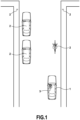
FIG. 1 is a schematic view of a vehicle, operated by a human operator and including a system for monitoring attentiveness of the human operator according to the embodiment, within an environment including several objects of interest; -
FIG.2 is a functional diagram of the system for monitoring attentiveness of the human operator of the vehicle ofFIG. 1 ; and -
FIG. 3 is a schematic view of a frame of a video feed overlapping with a field of view of the human operator ofFIG. 1 . - As illustrated in
Fig. 1 , avehicle 1 may operate in a complex environment including a plurality of objects ofinterest 2 that may each represent a potential obstacle in the path of thevehicle 1, such as another vehicle, a pedestrian, an animal, or an inanimate obstacle, etc., but also e.g. signage. Thevehicle 1 may be operated by ahuman operator 3, which as in the illustrated example may be a driver onboard thevehicle 1 itself, but could alternatively be a remote operator connected to the vehicle over a remote communication network, for instance over a wireless communication network. - As illustrated in
Fig. 2 , thevehicle 1 may incorporate an Advanced Driver Assistance System (ADAS) 4, configured to perform e.g. adaptive cruise control, lane tracking, collision avoidance and/or other advanced driver assistance tracks. Such anADAS 4 may comprise a Driver Monitoring System (DMS) 5. Both theADAS 4 andDMS 5 may be incorporated in a data processing device, such as an Electronic Control Unit (ECU), onboard thevehicle 1, although each or both of them may also be distributed over a plurality of interconnected data processing devices forming a distributed computer environment, and which may include both onboard data processing devices and remote data processing devices connected to the vehicle over a remote communication network, for instance over a wireless communication network. - The
vehicle 1 may further comprise aprime mover 6, such as an internal combustion engine and/or an electric motor, asteering system 7 and/or abraking system 8, which may each be connected to theADAS 4, as well as a driver interface provided to receive driver inputs for theprime mover 6,steering system 7 and/orbraking system 8, and which may notably include an accelerator pedal 9, asteering wheel 10 and/or abrake pedal 11, each one of which may be connected to theADAS 4 and/orDMS 5. - The
vehicle 1 may further comprise a forward-facing camera 12 for providing a video feed of a scene at least partially overlapping the field of view of thehuman operator 3. In particular, this forward-facing camera 12 may be a stereoscopic camera, or incorporate a distance-ranging device, in order to provide depth data of the scene with the video feed. The forward-facing camera 12 may be connected to theADAS 4 and/orDMS 5. The video feed may in particular take the form of a continuous stream of RGB images, each RGB image representing a frame of the video feed, captured at a rate of e.g. 10 frames per second. - The
vehicle 1 may further comprise an eye-trackingdevice 13, for tracking the gaze of thehuman operator 3. In particular, this eye-trackingdevice 13 may comprise an operator-facing camera for providing a video feed of the eyes of thehuman operator 3, from which a data processing device, possibly integrated with theDMS 5, may determine and track the gaze of the human operator. - The
vehicle 1 may also comprise visual, haptic and/or aural output devices, such as adisplay 14, abuzzer 15 and/or aloudspeaker 16, which may be connected to theADAS 4 and/orDMS 5. - The
ADAS 4 and/orDMS 5 may be configured to detect and track the objects ofinterest 2 within the scene relayed by the video feed from the forward-facingcamera 11, as illustrated inFig. 3 , which represents a frame of this video feed. - The
ADAS 4 and/orDMS 5 may further be configured to detect and track the objects ofinterest 2 within the frames of the video feed, attribute an importance score to each object ofinterest 2 and, based on these importance scores and the gaze dynamics of thehuman operator 3, as tracked using the eye-trackingdevice 13, calculate current and/or overall distraction scores for thehuman operator 3 and eventually, when said current and/or overall distraction scores exceed a predetermined threshold, output a visual, haptic and/or aural warning through thedisplay 14,buzzer 15 and/orloudspeaker 16 and/or interrupt operation of thevehicle 1 by thehuman operator 3. For that purpose, theADAS 4 and/orDMS 5 may be adapted to execute a method for monitoring attentiveness of thehuman operator 3 as follows: - For each time step t, a video feed frame Ft may first be received from the forward-facing camera 12. Then, utilizing state-of-the-art object detection algorithms, such as e.g. the faster r-cnn algorithm described by S. Ren, K. He, R. Girshick, and J. Sun in "Faster r-cnn: towards real-time object detection with region proposal networks," IEEE Transactions on Pattern Analysis & Machine Intelligence, no. 6, pp. 1137-1149, 2017, the SPPN algorithm described by K. He, X. Zhang, S. Ren, and J. Sun in "Spatial pyramid pooling in deep convolutional networks for visual recognition", ECCV. Springer, 2014, pp. 346-361, the YOLO family of algorithms described by J. Redmon, S. Divvala, R. Girshick, and A. Farhadi in "You only look once: Unified, real-time object detection", CVPR, 2016, pp. 779-788, or the DETR algorithm disclosed by N. Carion, F. Massa, G. Synnaeve, N. Usunier, A. Kirillov, and S. Zagoruyko in "End-to-end object detection with transformers", European Conference on Computer Vision. Springer, 2020, pp. 213-229, objects of
interest 2 such as pedestrians, other vehicles, and signage may be identified within this frame Ft :
interest 2 in the frame Ft. - Following detection, the objects of interest 2 detected in the frame Ft may be then subjected to a tracking mechanism, such as e.g. the combination of Kalman filter and Hungarian algorithm taught by K. Wang, and M. Liu in "YOLOv3-MT: A YOLOv3 using multi-target tracking for vehicle visual detection", Applied Intelligence doi:10.1007/s10489-021-02491-3, the SORT and DeepSORT tracking mechanisms taught by Pereira, R., Carvalho, G., Garrote, L., and Nunes, U. J. in "Sort and deep-SORT based multi-object tracking for mobile robotics: Evaluation with new data association metrics", Applied Sciences, 12(3), 1319, 2022, the OCSORT tracking mechanism taught by Cao, J., Pang, J., Weng, X., Khirodkar, R., and Kitani, K. in "Observation-centric sort: Rethinking sort for robust multi-object tracking", Proceedings of the IEEE/CVF Conference on Computer Vision and Pattern Recognition (pp. 9686-9696), 2023, or the traffic specific tracking taught by Tian, W., Lauer, M., and Chen, L., in "Online multi-object tracking using joint domain information in traffic scenarios", IEEE Transactions on Intelligent Transportation Systems, 21(1), 374-384, 2019, matching them to the objects of interest 2 detected and tracked in previous frames to maintain a consistent identity for each object of interest 2 across successive frames, facilitating temporal analyses:

- An importance score Ii,t may then be computed for each detected and tracked object of
interest 2 from among the N detected and tracked objects of interest 2:
- For that purpose, paths of the vehicle 1 and objects of interest 2 may be predicted, e.g. as taught by Althoff, M., Mergel, A. in "Comparison of markov chain abstraction and monte carlo simulation for the safety assessment of autonomous cars", IEEE Transactions on Intelligent Transportation Systems 12(4), 1237-1247 (2011) or by Greene, D., Liu, J., Reich, J., Hirokawa, Y., Shinagawa, A., Ito, H., Mikami, T. in "An efficient computational architecture for a collision early-warning system for vehicles, pedestrians, and bicyclists", IEEE Transactions on intelligent transportation systems 12(4), 942-953 (2011), and analyzing motion patterns seen in actual accidents or near-miss situations, as taught for instance by Salim, F.D., Loke, S.W., Rakotonirainy, A., Srinivasan, B., and Krishnaswamy, S. in "Collision pattern modeling and real-time collision detection at road intersections", IEEE Intelligent Transportation Systems Conference, pp. 161-166, IEEE (2007), to attribute a metric indicative of collision risk, such as a Time-to-Collision (TTC) of the vehicle 1 with respect to the object of interest 2, as in methods compiled by Lefèvre, S., Vasquez, D. and Laugier, C. in "A survey on motion prediction and risk assessment for intelligent vehicles", ROBOMECH journal 1(1), 1-14 (2014). The importance score Ii,t may then be computed based on said metric.
- Alternatively or complementarily to this, the importance score Ii,t may be computed using a hazard estimation model offering an estimate of the significance of the object of
interest 2 concerning potential driving hazards. Such a hazard estimation model may be created for instance by machine learning from datasets with hand-labelled importance score values, as taught e.g. by Gao, M., Tawari, A., Martin, S. in "Goal-oriented object importance estimation in on-road driving videos", 2019 International Conference on Robotics and Automation (ICRA). pp. 5509-5515. IEEE (2019), disclosing how a binary classifier was taught to distinguish between important and irrelevant objects. Alternatively, a self-driving convolutional neural network's attention feature may be used to determine the importance of individual scene pixels, and then an importance score may be computed from this for the object ofinterest 2 via a post-processing causal inference algorithm, as taught by Kim, J. and Canny, J. in "Interpretable learning for self-driving cars by visualizing causal attention", Proceedings of the IEEE international conference on computer vision, pp. 2942-2950 (2017). Yet another alternative would be to use an object-centric scene graph, wherein each graph node corresponds to an object ofinterest 2, and a self-driving graph convolutional network to determine which objects ofinterest 2, when removed, would reduce a predicted braking likelihood, as taught by Li, C., Chan, S.H. and Chen, Y.T. in "Driver-centric risk object identification", arXiv preprint arXiv:2106.13201 (2021), and attribute the importance score Ii,t accordingly. - A current position (xgaze, ygaze ) t of the gaze of the
human operator 3 within the current frame Ft may be calculated, based on eye-tracking data obtained with the eye-tracking device 12. Then, a current distance di,t of the gaze to each object ofinterest 2 from among the N detected and tracked objects ofinterest 2 within the current frame Ft may be calculated, for instance as an Euclidian distance, in a two-dimensional image plane of the current frame Ft, between the current position (xgaze,t, ygaze,t ) of the gaze of thehuman operator 3 and a current position (xi,t, yi,t ) of a centroid of the corresponding object of interest 2:
interest 2 may be measured to a closest boundary of the object ofinterest 2, rather than to its centroid. - Once the distance di,t of the gaze to each object of
interest 2 from among the N detected and tracked objects ofinterest 2 within the current frame Ft is calculated, it may be determined whether the gaze is fixated on one of the N detected and tracked objects ofinterest 2. For this, the distance di,t of the gaze to each object ofinterest 2 may be compared to a predetermined threshold D. If the distance di,t of the gaze to an object ofinterest 2 from among the N detected and tracked objects ofinterest 2 within the current frame Ft does not exceed that predetermined threshold D, the gaze may be determined to be fixed on that object ofinterest 2. However, for this determination, it may be required that the distance di,t of the gaze to this object ofinterest 2 does not exceed the predetermined threshold over several successive time steps. Also, alternatively to comparing the distance di,t of the gaze to the object ofinterest 2 to a predetermined threshold D, the gaze may be determined to be fixed on the object of interest if the current position (xgaze,t, ygaze,t ) of the gaze of thehuman operator 3 is within a boundary associated to the object of interest such as a contour or a box enclosing an image of the object ofinterest 2 in the current frame Ft, - If a gaze fixation on an object of
interest 2 from among the N detected and tracked objects ofinterest 2 within the current frame Ft is determined, the process may proceed to storing an identifier of this object ofinterest 2 and a time stamp in an Inhibition of Return (IOR) register, in order to register the object ofinterest 2, and the time when the gaze of the human operator was last fixated on the object ofinterest 2, in this IOR register. - After the registering step, or directly if the gaze is not determined to be fixated on any object of
interest 2 from among the N detected and tracked objects ofinterest 2 within the current frame Ft, the process may proceed to the determination of which, if any, objects ofinterest 2 from among the N detected and tracked objects ofinterest 2 within the current frame Ft, are already registered in the IOR register. Then, an inhibition-of-return coefficient f(Δti ) may be calculated for each object ofinterest 2, from among the N detected and tracked objects ofinterest 2 within the current frame Ft, which has been determined, in step S800, to be registered in the IOR register. This inhibition-of-return coefficient f(Δti ) may be calculated as a function of a time Δti elapsed since the gaze of thehuman operator 3 was last fixated on that object ofinterest 2, as may be determined as the difference between the current time step t and the time stamp associated, in the IOR register, to that object ofinterest 2. - In particular, in order to reflect the time-dependent modulation due to the IOR mechanism, the inhibition-of-return coefficient f(Δti ) may be calculated as a double gamma function, that is, as a weighted combination of two gamma probability density functions, as follows:

- The importance score Ii,t of each object of
interest 2, from among the N detected and tracked objects ofinterest 2 within the current frame Ft, which are registered in the IOR register, may then be weighed using the corresponding inhibition-of-return coefficient f(Δti ). In particular, the importance score Ii,t may be weighed by multiplication by the corresponding inhibition-of-return coefficient f(Δti ):
- The M objects of
interest 2 with the highest importance scores Ii,t , may then be selected from among the N detected and tracked objects ofinterest 2 within the current frame Ft, wherein M<N. Then, an individual attention score attention_scoresj,t for each selected object ofinterest 2 at the current time step t may be calculated on the basis of the corresponding importance score Ij,t and distance dj,t of the gaze. In particular, an exponential decay function may be used to calculate these individual attention scores attention_scoresj,t :
- An overall attention score attention_scoret for the current time step t may then be calculated as the mean average from these M individual attention scores attention_scoresj,t :

- A current distraction score distraction_scoret may then be calculated on the basis of the overall attention score attention_scoret and the mean average of the importance scores Ii,t of the M selected objects of
interest 2 for the current time step t, for instance by inverting the overall attention score attention_scoret and multiplying it by a mean average of the importance scores Ii,t of the M selected objects ofinterest 2, as according to the equation:
- The current distraction score distraction_scoret may be buffered in a buffer memory holding the distraction scores for the Γ latest distraction scores, wherein T is an integer number greater than 1. An overall distraction score for the time interval extending over the corresponding T time steps may then be calculated, for example as a mean average of the T latest distraction scores stored in the buffer memory.
- Derivative-free optimization techniques, such as e.g. those taught by Ozaki, Y., Tanigaki, Y., Watanabe, S., and Onishi, M. in "Multiobjective tree-structured parzen estimator for computationally expensive optimization problems", Proceedings of the 2020 genetic and evolutionary computation conference, pp. 533-541, 2020, by Beyer, H. G., & Sendhoff, B. in "Simplify your covariance matrix adaptation evolution strategy. IEEE Transactions on Evolutionary Computation", 21(5), pp. 746-759, 2017, or by Aszemi, N. M., and Dominic, P. D. D. in "Hyperparameter optimization in convolutional neural network using genetic algorithms", International Journal of Advanced Computer Science and Applications, 10(6), 2019, may be used to fine-tune the parameters of this method with respect to detecting distracted operation by the
human operator 2. Sequences of engaged and simulated distracted driving data may be used for this optimization. The parameters that may be optimized encompass the fixation distance threshold D, the parameters α1, β1 and α2, β2, A and c of the double gamma function, buffer length T, the number M of selected objects ofinterest 2, and the decay and amplitude parameters used to calculate, respectively, the individual attention scores attention_scoresj,t and the current distraction score distraction_scoret. - Either the current distraction score distraction_scoret or the overall distraction score may be compared to a distraction threshold, and may trigger, if the distraction threshold is exceeded, the output of a visual, haptic and/or aural warning through the visual, haptic and/or aural output devices and/or an interruption of operation by the
human operator 3 to ensure the safety of thevehicle 1, itshuman operator 3, and any passengers or bystanders. - Although the present disclosure refers to a specific exemplary embodiment, modifications may be provided to this example without departing from the general scope of the invention as defined by the claims. For instance, although in this example the human operator operates a vehicle, the present invention is also applicable to monitoring attentiveness in the operation of other devices, such as for instance manipulators, where distraction could potentially lead to damage or injury. Therefore, the description and the drawings should be considered in an illustrative rather than in a restrictive sense.
Claims (26)
- A computer-implemented method for monitoring attentiveness of a human operator (3), comprising the steps of:attributing an importance score to an object of interest (2) in a field of view of the human operator (3);calculating an inhibition-of-return coefficient for the object of interest (2), as a function of a time elapsed since a gaze of the human operator (3) was last fixated on the object of interest (2);weighing the importance score of the object of interest (2) based on the inhibition-of-return coefficient calculated for the object of interest (2); andcalculating an individual attention score for the object of interest (2) based on the importance score of the object of interest (2) and a current distance (dj,t ) between the object of interest and the gaze of the human operator (3).
- The computer-implemented method of claim 1, wherein the importance score is weighed by multiplication by the inhibition-of-return coefficient.
- The computer-implemented method of any one of claims 1 or 2, wherein the inhibition-of-return coefficient is calculated as a double gamma function of the time elapsed since the gaze of the human operator (3) was last fixated on the object of interest (2).
- The computer-implemented method of any one of claims 1 to 3, also comprising a step of registering the object of interest (2), and a time when the gaze of the human operator (3) was last fixated on the object of interest (2), in an inhibition-of-return register.
- The computer-implemented method of any one of claims 1 to 4, wherein the individual attention score is calculated by multiplying the importance score of the object of interest (2) by an exponential decay function of the current distance (dj,t ) between the object of interest (2) and the gaze of the human operator (3).
- The computer-implemented method of any one of claims 1 to 5, also comprising the steps of identifying and tracking the objects of interest (2) in a video feed.
- The computer-implemented method of claim 6, also comprising a step of tracking the gaze of the human operator (3) in an image plane of the video feed.
- The computer-implemented method of claim 7, wherein distance (dj,t ) between the object of interest (2) and the gaze of the human operator (3) is measured as an Euclidean distance in the image plane of the video feed.
- The computer-implemented method of any one of claims 1 to 8, wherein the gaze of the human operator (3) is determined to be fixated on the object of interest when the gaze is within a predetermined distance (D) from a centroid of the object of interest.
- The computer-implemented method of any one of claims 1 to 9, wherein the human operator (3) is operating a vehicle (1).
- The computer-implemented method of claim 10, wherein the importance score is calculated based on a time-to-collision with respect to the object of interest (2).
- The computer-implemented method of any one of claims 1 to 11, wherein the step of attributing the importance score is carried out for a plurality of objects of interest (2), the steps of calculating the inhibition-of-return coefficient and weighing the importance score are carried out for one or more objects of interest (2), among said plurality of objects of interest (2), on which the gaze of the human operator (3) has been previously fixated, and the step of calculating the individual attention score is carried out for at least a selection of the plurality of objects of interest (2).
- The computer-implemented method of claim 12, wherein the step of calculating the individual attention score is carried out for a selection of the plurality of objects of interest (2) with highest importance scores.
- The computer-implemented method of any one of claims 12 or 13, also comprising a subsequent step of calculating an overall attention score based on the individual attention scores calculated for at least part of the plurality of objects of interest (2).
- The computer-implemented method of claim 14, wherein the overall attention score is calculated as a mean of the individual attention scores calculated for at least a selection of the plurality of objects of interest (2).
- The computer-implemented method of any one of claims 14 or 15, comprising a subsequent step of calculating a current distraction score based on the importance scores of at least a selection of the plurality of objects of interest (2) and the overall attention score.
- The computer-implemented method of claim 16, wherein the current distraction score is calculated by dividing a mean average of the importance scores of at least a selection of the plurality of objects of interest (2) by the overall attention score.
- The computer-implemented method of any one of claims 16 or 17, wherein the current distraction score is buffered and averaged over a time frame to obtain an overall distraction score for the time frame.
- The computer-implemented method of claim 18, comprising a subsequent step of outputting a visual, haptic and/or aural warning and/or interrupting operation by the human operator (3) when said overall distraction score exceeds a predetermined threshold.
- A computer program set including instructions for executing the steps of the method of any one of claims 1 to 19 when said program set is executed by at least one computer.
- A recording medium readable by at least one computer and having recorded thereon at least one computer program including instructions for executing the steps of the method of any one of claims 1 to 19.
- A system for monitoring attentiveness of a human operator, comprising a data processing device adapted to perform the steps of the method of any one of claims 1 to 19.
- The system of claim 22, also comprising a camera (11) for providing a video feed of a scene at least partially overlapping the field of view of the human operator (3).
- The system of any one of claims 22 or 23, also comprising an eye-tracking device (12) for tracking the gaze of the human operator (3).
- The system of any one of claims 22 to 24, further comprising an output device (13,14,15) for outputting a visual, haptic and/or audible warning and/or interrupting operation by the human operator (3).
- A vehicle (1) comprising the system of any one of claims 21 to 24 for monitoring attentiveness of a human operator (3) of the vehicle (1).
Priority Applications (1)
| Application Number | Priority Date | Filing Date | Title |
|---|---|---|---|
| EP23206754.6A EP4550277A1 (en) | 2023-10-30 | 2023-10-30 | Method and system for monitoring attentiveness |
Applications Claiming Priority (1)
| Application Number | Priority Date | Filing Date | Title |
|---|---|---|---|
| EP23206754.6A EP4550277A1 (en) | 2023-10-30 | 2023-10-30 | Method and system for monitoring attentiveness |
Publications (1)
| Publication Number | Publication Date |
|---|---|
| EP4550277A1 true EP4550277A1 (en) | 2025-05-07 |
Family
ID=88600146
Family Applications (1)
| Application Number | Title | Priority Date | Filing Date |
|---|---|---|---|
| EP23206754.6A Pending EP4550277A1 (en) | 2023-10-30 | 2023-10-30 | Method and system for monitoring attentiveness |
Country Status (1)
| Country | Link |
|---|---|
| EP (1) | EP4550277A1 (en) |
Citations (1)
| Publication number | Priority date | Publication date | Assignee | Title |
|---|---|---|---|---|
| US20180225554A1 (en) * | 2017-02-06 | 2018-08-09 | Honda Motor Co., Ltd. | Systems and methods of a computational framework for a driver's visual attention using a fully convolutional architecture |
-
2023
- 2023-10-30 EP EP23206754.6A patent/EP4550277A1/en active Pending
Patent Citations (1)
| Publication number | Priority date | Publication date | Assignee | Title |
|---|---|---|---|---|
| US20180225554A1 (en) * | 2017-02-06 | 2018-08-09 | Honda Motor Co., Ltd. | Systems and methods of a computational framework for a driver's visual attention using a fully convolutional architecture |
Non-Patent Citations (59)
| Title |
|---|
| AI-SU LI: "The time course of inhibition of return: Evidence from steady-state visual evoked potentials", FRONTIERS IN PSYCHOLOGY, vol. 8, 2017, pages 1562 |
| ALAA EL KHATIBCHAOJIE OUFAKHRI KARRAY: "Driver inattention detection in the context of next-generation autonomous vehicles design: A survey", IEEE TRANSACTIONS ON INTELLIGENT TRANSPORTATION SYSTEMS, vol. 21, no. 11, 2019, pages 4483 - 4496, XP011818735, DOI: 10.1109/TITS.2019.2940874 |
| ALTHOFF, M.MERGEL, A.: "Comparison of markov chain abstraction and monte carlo simulation for the safety assessment of autonomous cars", IEEE TRANSACTIONS ON INTELLIGENT TRANSPORTATION SYSTEMS, vol. 12, no. 4, 2011, pages 1237 - 1247, XP011379316, DOI: 10.1109/TITS.2011.2157342 |
| ANUP DOSHI ET AL: "Attention estimation by simultaneous observation of viewer and view", COMPUTER VISION AND PATTERN RECOGNITION WORKSHOPS (CVPRW), 2010 IEEE COMPUTER SOCIETY CONFERENCE ON, IEEE, PISCATAWAY, NJ, USA, 13 June 2010 (2010-06-13), pages 21 - 27, XP031728459, ISBN: 978-1-4244-7029-7 * |
| ARTHUR G SAMUELDONNA KAT: "Inhibition of return: A graphical meta-analysis of its time course and an empirical test of its temporal and spatial properties", PSYCHONOMIC BULLETIN & REVIEW, vol. 10, 2003, pages 897 - 906 |
| ASZEMI, N. M., AND DOMINIC, P. D. D.: "Hyperparameter optimization in convolutional neural network using genetic algorithms", INTERNATIONAL JOURNAL OF ADVANCED COMPUTER SCIENCE AND APPLICATIONS, vol. 10, no. 6, 2019 |
| BEYER, H. G.SENDHOFF, B.: "Simplify your covariance matrix adaptation evolution strategy", IEEE TRANSACTIONS ON EVOLUTIONARY COMPUTATION, vol. 21, no. 5, 2017, pages 746 - 759, XP011661524, DOI: 10.1109/TEVC.2017.2680320 |
| BJORN SCHULLER SCHULLER ET AL., ONLINE DRIVER DISTRACTION DETECTION USING LONG SHORT-TERM MEMORY, 2020 |
| CAO, J.PANG, J.WENG, X.KHIRODKAR, R.KITANI, K.: "Observation-centric sort: Rethinking sort for robust multi-object tracking", PROCEEDINGS OF THE IEEE/CVF CONFERENCE ON COMPUTER VISION AND PATTERN RECOGNITION, 2023, pages 9686 - 9696, XP034400975, DOI: 10.1109/CVPR52729.2023.00934 |
| CHARLIE KLAUER ET AL.: "The impact of driver inattention on near-crash/crash risk: An analysis using the 100-car naturalistic driving study data", UNITED STATES. NATIONAL HIGHWAY TRAFFIC SAFETY ADMINISTRATION, 2006 |
| CHLOE ROBBINSPETER CHAPMAN: "How does drivers' visual search change as a function of experience? A systematic review and meta-analysis", ACCIDENT ANALYSIS & PREVENTION, vol. 132, 2019, pages 105266, XP085841062, DOI: 10.1016/j.aap.2019.105266 |
| CHRISTER AHLSTR'OMGEORGE GEORGOULASKATJA KIRCHER: "Towards a context-dependent multi-buffer driver distraction detection algorithm", IEEE TRANSACTIONS ON INTELLIGENT TRANSPORTATION SYSTEMS, vol. 23, no. 5, 2021, pages 4778 - 4790 |
| FABIO TANGOMARCO BOTTA: "Real-time detection system of driver distraction using machine learning", IEEE TRANSACTIONS ON INTELLIGENT TRANSPORTATION SYSTEMS, vol. 14, no. 2, 2013, pages 894 - 905, XP011511543, DOI: 10.1109/TITS.2013.2247760 |
| GAO, M.TAWARI, A.MARTIN, S.: "2019 International Conference on Robotics and Automation (ICRA", 2019, IEEE, article "Goal-oriented object importance estimation in on-road driving videos", pages: 5509 - 5515 |
| GREENE, D.LIU, J.REICH, J.HIROKAWA, Y.SHINAGAWA, A.ITO, H.MIKAMI, T.: "An efficient computational architecture for a collision early-warning system for vehicles, pedestrians, and bicyclists", IEEE TRANSACTIONS ON INTELLIGENT TRANSPORTATION SYSTEMS, vol. 12, no. 4, 2011, pages 942 - 953, XP011379292, DOI: 10.1109/TITS.2010.2097594 |
| J. REDMONS. DIVVALAR. GIRSHICKA. FARHADI: "You only look once: Unified, real-time object detection", CVPR, 2016, pages 779 - 788 |
| JIE CHEN ET AL.: "Fine-grained detection of driver distraction based on neural architecture search", IEEE TRANSACTIONS ON INTELLIGENT TRANSPORTATION SYSTEMS, vol. 22, no. 9, 2021, pages 5783 - 5801, XP011875802, DOI: 10.1109/TITS.2021.3055545 |
| JOHN GASPARCHER CARNEY: "The effect of partial automation on driver attention: A naturalistic driving study", HUMAN FACTORS, vol. 61, no. 8, 2019, pages 1261 - 1276 |
| JOOST CF DE WINTER ET AL.: "Effects of adaptive cruise control and highly automated driving on workload and situation awareness: A review of the empirical evidence", TRANSPORTATION RESEARCH PART F: TRAFFIC PSYCHOLOGY AND BEHAVIOUR, vol. 27, 2014, pages 196 - 217, XP029105246, DOI: 10.1016/j.trf.2014.06.016 |
| JUAN LUPIANEZ ET AL.: "Does IOR occur in discrimination tasks? Yes, it does, but later", PERCEPTION & PSYCHOPHYSICS, vol. 59, 1997, pages 1241 - 1254 |
| JULIAN SCHWEHRVOLKER WILLERT: "2018 21st International Conference on Intelligent Transportation Systems (ITSC", 2018, IEEE., article "Multi-hypothesis multi-model driver's gaze target tracking", pages: 1427 - 1434 |
| K. HEX. ZHANGS. RENJ. SUN: "ECCV", 2014, SPRINGER, article "Spatial pyramid pooling in deep convolutional networks for visual recognition", pages: 346 - 361 |
| K. WANGM. LIU: "YOLOv3-MT: A YOLOv3 using multi-target tracking for vehicle visual detection", APPLIED INTELLIGENCE |
| KATJA KIRCHERCHRISTER AHLSTROM: "Driver distraction and inattention", 2017, CRC PRESS, article "The driver distraction detection algorithm AttenD", pages: 327 - 348 |
| KESHAV SESHADRI ET AL.: "Driver cell phone usage detection on strategic highway research program (SHRP2) face view videos", PROCEEDINGS OF THE IEEE CONFERENCE ON COMPUTER VISION AND PATTERN RECOGNITION WORKSHOPS, 2015, pages 35 - 43, XP032795634, DOI: 10.1109/CVPRW.2015.7301397 |
| KIM, J.CANNY, J.: "Interpretable learning for self-driving cars by visualizing causal attention", PROCEEDINGS OF THE IEEE INTERNATIONAL CONFERENCE ON COMPUTER VISION, 2017, pages 2942 - 2950 |
| KLEIN RAYMOND M: "Inhibition of return", TRENDS IN COGNITIVE SCIENCES, vol. 4, no. 4, 13 June 2010 (2010-06-13), pages 138 - 147, XP085036286, ISSN: 1364-6613, DOI: 10.1016/S1364-6613(00)01452-2 * |
| KUN SONG ET AL.: "Behavioral oscillations in attention: rhythmic a pulses mediated through 8 band", JOURNAL OF NEUROSCIENCE, vol. 34, no. 14, 2014, pages 4837 - 4844 |
| LEFÈVRE, S.VASQUEZ, D.LAUGIER, C.: "A survey on motion prediction and risk assessment for intelligent vehicles", ROBOMECH JOURNAL, vol. 1, no. 1, 2014, pages 1 - 14, XP055348622, DOI: 10.1186/s40648-014-0001-z |
| LICHAO YANG ET AL.: "Recognition of visual-related non-driving activities using a dual-camera monitoring system", PATTERN RECOGNITION, vol. 116, 2021, pages 107955 |
| LISHENGSA YUE ET AL.: "Assessment of the safety benefits of vehicles' advanced driver assistance, connectivity and low level automation systems", ACCIDENT ANALYSIS & PREVENTION, vol. 117, 2018, pages 55 - 64 |
| LUKE FLETCHERALEXANDER ZELINSKY: "Driver inattention detection based on eye gaze—Road event correlation", THE INTERNATIONAL JOURNAL OF ROBOTICS RESEARCH, vol. 28, no. 6, 2009, pages 774 - 801, XP055281585, DOI: 10.1177/0278364908099459 |
| MAHDI REZAEIREINHARD KLETTE: "Look at the driver, look at the road: No distraction! no accident!", PROCEEDINGS OF THE IEEE CONFERENCE ON COMPUTER VISION AND PATTERN RECOGNITION, 2014, pages 129 - 136 |
| MARKUS HOFBAUER ET AL.: "2020 IEEE International Symposium on Multimedia (ISM", 2020, IEEE., article "Measuring driver situation awareness using region-of-interest prediction and eye tracking", pages: 91 - 95 |
| MARTIN WOLLMER ET AL.: "Online driver distraction detection using long short-term memory", IEEE TRANSACTIONS ON INTELLIGENT TRANSPORTATION SYSTEMS, vol. 12, no. 2, 2011, pages 574 - 582, XP011325870, DOI: 10.1109/TITS.2011.2119483 |
| MASATAKA MORI ET AL.: "2012 15th International IEEE Conference on Intelligent Transportation Systems", 2012, IEEE, article "Measuring driver awareness based on correlation between gaze behavior and risks of surrounding vehicles", pages: 644 - 647 |
| MAURICIO MUNOZ ET AL.: "Distinguishing patterns in drivers' visual attention allocation using Hidden Markov Models", TRANSPORTATION RESEARCH PART F: TRAFFIC PSYCHOLOGY AND BEHAVIOUR, vol. 43, 2016, pages 90 - 103, XP029819321, DOI: 10.1016/j.trf.2016.09.015 |
| MICHAEL BAUER ET AL., DETECTION AND RECOGNITION OF TRAFFIC SIGNS INSIDE THE ATTENTIONAL VISUAL FIELD OF DRIVERS |
| MICHAEL I POSNERYOAV COHEN ET AL.: "Components of visual orienting", ATTENTION AND PERFORMANCE X: CONTROL OF LANGUAGE PROCESSES, vol. 32, 1984, pages 531 - 556 |
| N. CARIONF. MASSAG. SYNNAEVEN. USUNIERA. KIRILLOVS. ZAGORUYKO: "European Conference on Computer Vision", 2020, SPRINGER, article "End-to-end object detection with transformers", pages: 213 - 229 |
| NANXIANG LICARLOS BUSSO: "Detecting drivers' mirror-checking actions and its application to maneuver and secondary task recognition", IEEE TRANSACTIONS ON INTELLIGENT TRANSPORTATION SYSTEMS, vol. 17, no. 4, 2015, pages 980 - 992, XP011604460, DOI: 10.1109/TITS.2015.2493451 |
| OZAKI, Y.TANIGAKI, Y.WATANABE, S.ONISHI, M: "Multiobjective tree-structured parzen estimator for computationally expensive optimization problems", PROCEEDINGS OF THE 2020 GENETIC AND EVOLUTIONARY COMPUTATION CONFERENCE, 2020, pages 533 - 541, XP058474951, DOI: 10.1145/3377930.3389817 |
| PALAZZI ANDREA ET AL: "Predicting the Driver's Focus of Attention: The DR(eye)VE Project", IEEE TRANSACTIONS ON PATTERN ANALYSIS AND MACHINE INTELLIGENCE, IEEE COMPUTER SOCIETY, USA, vol. 41, no. 7, 1 July 2019 (2019-07-01), pages 1720 - 1733, XP011728030, ISSN: 0162-8828, [retrieved on 20190603], DOI: 10.1109/TPAMI.2018.2845370 * |
| PEREIRA, R.CARVALHO, G.GARROTE, L.NUNES, U. J.: "Sort and deep-SORT based multi-object tracking for mobile robotics: Evaluation with new data association metrics", APPLIED SCIENCES, vol. 12, no. 3, 2022, pages 1319 |
| RAYMOND M KLEIN: "Inhibition of return", TRENDS IN COGNITIVE SCIENCES, vol. 4, no. 4, 2000, pages 138 - 147, XP085036286, DOI: 10.1016/S1364-6613(00)01452-2 |
| RUOHAN WANGPIERLUIGI V AMADORIYIANNIS DEMIRIS: "2018 IEEE/RSJ International Conference on Intelligent Robots and Systems (IROS", 2018, IEEE, article "Real-time workload classification during driving using hypernetworks", pages: 3060 - 3065 |
| S. RENK. HER. GIRSHICKJ. SUN: "Faster r-cnn: towards real-time object detection with region proposal networks", IEEE TRANSACTIONS ON PATTERN ANALYSIS & MACHINE INTELLIGENCE, no. 6, 2017, pages 1137 - 1149 |
| SALIM, F.D.LOKE, S.W.RAKOTONIRAINY, A.SRINIVASAN, B.KRISHNASWAMY, S.: "IEEE Intelligent Transportation Systems Conference", 2007, IEEE, article "Collision pattern modeling and real-time collision detection at road intersections", pages: 161 - 166 |
| TAKATSUGU HIRAYAMA ET AL.: "17th International IEEE Conference on Intelligent Transportation Systems (ITSC", 2014, IEEE, article "Analysis of peripheral vehicular behavior in driver's gaze transition: Differences between driver's neutral and cognitive distraction states", pages: 1381 - 1387 |
| TIAN, W.LAUER, M.CHEN, L.: "Online multi-object tracking using joint domain information in traffic scenarios", IEEE TRANSACTIONS ON INTELLIGENT TRANSPORTATION SYSTEMS, vol. 21, no. 1, 2019, pages 374 - 384, XP011764023, DOI: 10.1109/TITS.2019.2892413 |
| TIANCHI LIU ET AL.: "2015 IEEE 18th International Conference on Intelligent Transportation Systems", 2015, IEEE., article "Cluster regularized extreme learning machine for detecting mixed-type distraction in driving", pages: 1323 - 1326 |
| TOBIAS BAR ET AL.: "2013 IEEE Intelligent Vehicles Symposium (IV", 2013, IEEE, article "Seen and missed traffic objects: A traffic object-specific awareness estimation", pages: 31 - 36 |
| TOBIAS LANGNER ET AL.: "2016 IEEE International Conference on Robotics and Automation (ICRA", 2016, IEEE, article "Traffic awareness driver assistance based on stereovision, eye-tracking, and head-up display", pages: 3167 - 3173 |
| TOBIAS VOGELPOHL ET AL.: "Asleep at the automated wheel—Sleepiness and fatigue during highly automated driving", ACCIDENT ANALYSIS & PREVENTION, vol. 126, 2019, pages 70 - 84, XP085665981, DOI: 10.1016/j.aap.2018.03.013 |
| WILLIAM D. PENNY ET AL., STATISTICAL PARAMETRIC MAPPING: THE ANALYSIS OF FUNCTIONAL BRAIN IMAGES |
| Y NANXIANG LICARLOS BUSSO: "Predicting perceived visual and cognitive distractions of drivers with multimodal features", IEEE TRANSACTIONS ON INTELLIGENT TRANSPORTATION SYSTEMS, vol. 16, no. 1, 2014, pages 51 - 65, XP011571764, DOI: 10.1109/TITS.2014.2324414 |
| YINAN MAJING WUCHENGNIAN LONG: "GazeFCW: Filter Collision Warning Triggers by Detecting Driver's Gaze Area", PROCEEDINGS OF THE 1ST WORKSHOP ON MACHINE LEARNING ON EDGE IN SENSOR SYSTEMS, 2019, pages 13 - 18 |
| YUAN LIAO ET AL.: "Detection of driver cognitive distraction: A comparison study of stop-controlled intersection and speed-limited highway", IEEE TRANSACTIONS ON INTELLIGENT TRANSPORTATION SYSTEMS, vol. 17, no. 6, 2016, pages 1628 - 1637, XP011612353, DOI: 10.1109/TITS.2015.2506602 |
| YULAN LIANGJOHN D LEELORA YEKHSHATYAN: "How dangerous is looking away from the road? Algorithms predict crash risk from glance patterns in naturalistic driving", HUMAN FACTORS, vol. 54, no. 6, 2012, pages 1104 - 1116, XP055502048, DOI: 10.1177/0018720812446965 |
Similar Documents
| Publication | Publication Date | Title |
|---|---|---|
| US12346498B2 (en) | Primary preview region and gaze based driver distraction detection | |
| US12258016B2 (en) | Methods and devices for triggering vehicular actions based on passenger actions | |
| Khairdoost et al. | Real-time driver maneuver prediction using LSTM | |
| Ridel et al. | A literature review on the prediction of pedestrian behavior in urban scenarios | |
| CN112193252B (en) | Driving risk warning method, device, computing equipment and storage medium | |
| CN112203916B (en) | Method and apparatus for determining a vehicle comfort metric for an autonomous vehicle | |
| Bila et al. | Vehicles of the future: A survey of research on safety issues | |
| You et al. | Carsafe app: Alerting drowsy and distracted drivers using dual cameras on smartphones | |
| US10055652B2 (en) | Pedestrian detection and motion prediction with rear-facing camera | |
| KR101276770B1 (en) | Advanced driver assistance system for safety driving using driver adaptive irregular behavior detection | |
| US9767368B2 (en) | Method and system for adaptive ray based scene analysis of semantic traffic spaces and vehicle equipped with such system | |
| Sarala et al. | Emotionally adaptive driver voice alert system for advanced driver assistance system (ADAS) applications | |
| KR20210118912A (en) | Neural network-based autonomous vehicle navigation through traffic objects | |
| CN113056749A (en) | Future object trajectory prediction for autonomous machine applications | |
| Chavez-Garcia | Multiple sensor fusion for detection, classification and tracking of moving objects in driving environments | |
| Sakthivel et al. | Hybrid Deep Learning for Proactive Driver Risk Prediction and Safety Enhancement | |
| Teng et al. | DTTCNet: Time-to-collision estimation with autonomous emergency braking using multi-scale transformer network | |
| Kazemi et al. | Evaluating Driver Readiness in Conditionally Automated Vehicles From Eye‐Tracking Data and Head Pose | |
| Michalke et al. | The narrow road assistant-next generation advanced driver assistance in inner-city | |
| EP4550277A1 (en) | Method and system for monitoring attentiveness | |
| JP2024525153A (en) | DEVICE AND METHOD FOR PREDICTING COLLASONS, PREDICTING INTERSECTION VIOLATIONS AND/OR DETERMINING AREAS OF INTEREST FOR OBJECT DETECTION IN CAMERA IMAGES - Patent application | |
| Pech et al. | Real time recognition of non-driving related tasks in the context of highly automated driving | |
| US12340594B2 (en) | Systems and methods for determining road object importance based on forward facing and driver facing video data | |
| Khairdoost | Driver behavior analysis based on real on-road driving data in the design of advanced driving assistance systems | |
| Ramwala et al. | Optimizing driver assistance systems for real-time performance on resource constrained gpus |
Legal Events
| Date | Code | Title | Description |
|---|---|---|---|
| PUAI | Public reference made under article 153(3) epc to a published international application that has entered the european phase |
Free format text: ORIGINAL CODE: 0009012 |
|
| STAA | Information on the status of an ep patent application or granted ep patent |
Free format text: STATUS: REQUEST FOR EXAMINATION WAS MADE |
|
| 17P | Request for examination filed |
Effective date: 20231030 |
|
| AK | Designated contracting states |
Kind code of ref document: A1 Designated state(s): AL AT BE BG CH CY CZ DE DK EE ES FI FR GB GR HR HU IE IS IT LI LT LU LV MC ME MK MT NL NO PL PT RO RS SE SI SK SM TR |
|
| GRAP | Despatch of communication of intention to grant a patent |
Free format text: ORIGINAL CODE: EPIDOSNIGR1 |
|
| STAA | Information on the status of an ep patent application or granted ep patent |
Free format text: STATUS: GRANT OF PATENT IS INTENDED |
|
| INTG | Intention to grant announced |
Effective date: 20260304 |