EP4548944A1 - Computer program, extracorporeal circulation system, observation device, and information processing method - Google Patents
Computer program, extracorporeal circulation system, observation device, and information processing method Download PDFInfo
- Publication number
- EP4548944A1 EP4548944A1 EP23871901.7A EP23871901A EP4548944A1 EP 4548944 A1 EP4548944 A1 EP 4548944A1 EP 23871901 A EP23871901 A EP 23871901A EP 4548944 A1 EP4548944 A1 EP 4548944A1
- Authority
- EP
- European Patent Office
- Prior art keywords
- pressure value
- pressure
- blood
- correspondence relationship
- extracorporeal circulation
- Prior art date
- Legal status (The legal status is an assumption and is not a legal conclusion. Google has not performed a legal analysis and makes no representation as to the accuracy of the status listed.)
- Pending
Links
Images




Classifications
-
- A—HUMAN NECESSITIES
- A61—MEDICAL OR VETERINARY SCIENCE; HYGIENE
- A61M—DEVICES FOR INTRODUCING MEDIA INTO, OR ONTO, THE BODY; DEVICES FOR TRANSDUCING BODY MEDIA OR FOR TAKING MEDIA FROM THE BODY; DEVICES FOR PRODUCING OR ENDING SLEEP OR STUPOR
- A61M1/00—Suction or pumping devices for medical purposes; Devices for carrying-off, for treatment of, or for carrying-over, body-liquids; Drainage systems
- A61M1/36—Other treatment of blood in a by-pass of the natural circulatory system, e.g. temperature adaptation, irradiation ; Extra-corporeal blood circuits
- A61M1/3621—Extra-corporeal blood circuits
- A61M1/3666—Cardiac or cardiopulmonary bypass, e.g. heart-lung machines
-
- A—HUMAN NECESSITIES
- A61—MEDICAL OR VETERINARY SCIENCE; HYGIENE
- A61M—DEVICES FOR INTRODUCING MEDIA INTO, OR ONTO, THE BODY; DEVICES FOR TRANSDUCING BODY MEDIA OR FOR TAKING MEDIA FROM THE BODY; DEVICES FOR PRODUCING OR ENDING SLEEP OR STUPOR
- A61M1/00—Suction or pumping devices for medical purposes; Devices for carrying-off, for treatment of, or for carrying-over, body-liquids; Drainage systems
- A61M1/36—Other treatment of blood in a by-pass of the natural circulatory system, e.g. temperature adaptation, irradiation ; Extra-corporeal blood circuits
- A61M1/3621—Extra-corporeal blood circuits
- A61M1/3639—Blood pressure control, pressure transducers specially adapted therefor
-
- A—HUMAN NECESSITIES
- A61—MEDICAL OR VETERINARY SCIENCE; HYGIENE
- A61M—DEVICES FOR INTRODUCING MEDIA INTO, OR ONTO, THE BODY; DEVICES FOR TRANSDUCING BODY MEDIA OR FOR TAKING MEDIA FROM THE BODY; DEVICES FOR PRODUCING OR ENDING SLEEP OR STUPOR
- A61M1/00—Suction or pumping devices for medical purposes; Devices for carrying-off, for treatment of, or for carrying-over, body-liquids; Drainage systems
- A61M1/14—Dialysis systems; Artificial kidneys; Blood oxygenators ; Reciprocating systems for treatment of body fluids, e.g. single needle systems for hemofiltration or pheresis
- A61M1/16—Dialysis systems; Artificial kidneys; Blood oxygenators ; Reciprocating systems for treatment of body fluids, e.g. single needle systems for hemofiltration or pheresis with membranes
- A61M1/1698—Blood oxygenators with or without heat-exchangers
-
- A—HUMAN NECESSITIES
- A61—MEDICAL OR VETERINARY SCIENCE; HYGIENE
- A61M—DEVICES FOR INTRODUCING MEDIA INTO, OR ONTO, THE BODY; DEVICES FOR TRANSDUCING BODY MEDIA OR FOR TAKING MEDIA FROM THE BODY; DEVICES FOR PRODUCING OR ENDING SLEEP OR STUPOR
- A61M1/00—Suction or pumping devices for medical purposes; Devices for carrying-off, for treatment of, or for carrying-over, body-liquids; Drainage systems
- A61M1/36—Other treatment of blood in a by-pass of the natural circulatory system, e.g. temperature adaptation, irradiation ; Extra-corporeal blood circuits
- A61M1/3621—Extra-corporeal blood circuits
- A61M1/3643—Priming, rinsing before or after use
-
- A—HUMAN NECESSITIES
- A61—MEDICAL OR VETERINARY SCIENCE; HYGIENE
- A61M—DEVICES FOR INTRODUCING MEDIA INTO, OR ONTO, THE BODY; DEVICES FOR TRANSDUCING BODY MEDIA OR FOR TAKING MEDIA FROM THE BODY; DEVICES FOR PRODUCING OR ENDING SLEEP OR STUPOR
- A61M1/00—Suction or pumping devices for medical purposes; Devices for carrying-off, for treatment of, or for carrying-over, body-liquids; Drainage systems
- A61M1/36—Other treatment of blood in a by-pass of the natural circulatory system, e.g. temperature adaptation, irradiation ; Extra-corporeal blood circuits
- A61M1/3621—Extra-corporeal blood circuits
- A61M1/3653—Interfaces between patient blood circulation and extra-corporal blood circuit
-
- A—HUMAN NECESSITIES
- A61—MEDICAL OR VETERINARY SCIENCE; HYGIENE
- A61M—DEVICES FOR INTRODUCING MEDIA INTO, OR ONTO, THE BODY; DEVICES FOR TRANSDUCING BODY MEDIA OR FOR TAKING MEDIA FROM THE BODY; DEVICES FOR PRODUCING OR ENDING SLEEP OR STUPOR
- A61M2205/00—General characteristics of the apparatus
- A61M2205/18—General characteristics of the apparatus with alarm
-
- A—HUMAN NECESSITIES
- A61—MEDICAL OR VETERINARY SCIENCE; HYGIENE
- A61M—DEVICES FOR INTRODUCING MEDIA INTO, OR ONTO, THE BODY; DEVICES FOR TRANSDUCING BODY MEDIA OR FOR TAKING MEDIA FROM THE BODY; DEVICES FOR PRODUCING OR ENDING SLEEP OR STUPOR
- A61M2205/00—General characteristics of the apparatus
- A61M2205/33—Controlling, regulating or measuring
- A61M2205/3331—Pressure; Flow
-
- A—HUMAN NECESSITIES
- A61—MEDICAL OR VETERINARY SCIENCE; HYGIENE
- A61M—DEVICES FOR INTRODUCING MEDIA INTO, OR ONTO, THE BODY; DEVICES FOR TRANSDUCING BODY MEDIA OR FOR TAKING MEDIA FROM THE BODY; DEVICES FOR PRODUCING OR ENDING SLEEP OR STUPOR
- A61M2205/00—General characteristics of the apparatus
- A61M2205/33—Controlling, regulating or measuring
- A61M2205/3331—Pressure; Flow
- A61M2205/3351—Controlling upstream pump pressure
-
- A—HUMAN NECESSITIES
- A61—MEDICAL OR VETERINARY SCIENCE; HYGIENE
- A61M—DEVICES FOR INTRODUCING MEDIA INTO, OR ONTO, THE BODY; DEVICES FOR TRANSDUCING BODY MEDIA OR FOR TAKING MEDIA FROM THE BODY; DEVICES FOR PRODUCING OR ENDING SLEEP OR STUPOR
- A61M2205/00—General characteristics of the apparatus
- A61M2205/33—Controlling, regulating or measuring
- A61M2205/3331—Pressure; Flow
- A61M2205/3355—Controlling downstream pump pressure
-
- A—HUMAN NECESSITIES
- A61—MEDICAL OR VETERINARY SCIENCE; HYGIENE
- A61M—DEVICES FOR INTRODUCING MEDIA INTO, OR ONTO, THE BODY; DEVICES FOR TRANSDUCING BODY MEDIA OR FOR TAKING MEDIA FROM THE BODY; DEVICES FOR PRODUCING OR ENDING SLEEP OR STUPOR
- A61M2205/00—General characteristics of the apparatus
- A61M2205/50—General characteristics of the apparatus with microprocessors or computers
-
- A—HUMAN NECESSITIES
- A61—MEDICAL OR VETERINARY SCIENCE; HYGIENE
- A61M—DEVICES FOR INTRODUCING MEDIA INTO, OR ONTO, THE BODY; DEVICES FOR TRANSDUCING BODY MEDIA OR FOR TAKING MEDIA FROM THE BODY; DEVICES FOR PRODUCING OR ENDING SLEEP OR STUPOR
- A61M2205/00—General characteristics of the apparatus
- A61M2205/70—General characteristics of the apparatus with testing or calibration facilities
-
- A—HUMAN NECESSITIES
- A61—MEDICAL OR VETERINARY SCIENCE; HYGIENE
- A61M—DEVICES FOR INTRODUCING MEDIA INTO, OR ONTO, THE BODY; DEVICES FOR TRANSDUCING BODY MEDIA OR FOR TAKING MEDIA FROM THE BODY; DEVICES FOR PRODUCING OR ENDING SLEEP OR STUPOR
- A61M2205/00—General characteristics of the apparatus
- A61M2205/70—General characteristics of the apparatus with testing or calibration facilities
- A61M2205/702—General characteristics of the apparatus with testing or calibration facilities automatically during use
Definitions
- the present invention relates to a computer program that performs extracorporeal circulation of blood, an extracorporeal circulation system, an observation device, and an information processing method.
- an extracorporeal circulation system that performs extracorporeal circulation of blood via an oxygenator that is present outside the body is used in some cases at the time of treatment of a person.
- the extracorporeal circulation is to circulate blood through a path that is present outside the body.
- a part of the blood circulation path is an extracorporeal circulation path that is present outside the body.
- the extracorporeal circulation path includes a pump that circulates blood and an oxygenator.
- the extracorporeal circulation system causes blood to flow out of a vein in the human body, exchanges gas in the blood by the oxygenator, and then returns the blood to a blood vessel (for example, an artery) in the human body.
- An example of the extracorporeal circulation system is an extracorporeal membrane oxygenation (ECMO).
- Patent Literature 1 discloses an example of the extracorporeal circulation system.
- Patent Literature 1 JP 2019-217405 A
- the present invention has been made in view of such circumstances, and an object of the present invention is to provide a computer program, an extracorporeal circulation system, an observation device, and an information processing method that can prevent extracorporeal circulation from being performed in a state where a correspondence relationship between a position where pressure is measured and a pressure value is incorrect.
- the pressure values measured at a plurality of positions in the extracorporeal circulation path it is determined whether or not the correspondence relationship between the position where the pressure of blood is measured and the pressure value is correct.
- the pressure values measured at the plurality of positions are values corresponding to the positions. Therefore, whether or not the correspondence relationship between the position where the pressure of blood is measured and the pressure value is correct can be determined on the basis of whether or not each pressure value is a value corresponding to the position. This enables the incorrectness in the correspondence relationship between the position and the pressure value to be found and the correspondence relationship to be corrected.
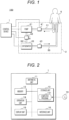
- Fig. 1 is a schematic diagram illustrating a configuration example of an extracorporeal circulation system 100 according to a first embodiment.
- the extracorporeal circulation system 100 is a system that performs extracorporeal circulation of circulating blood of a human body 5 through an extracorporeal circulation path 2.
- the extracorporeal circulation path 2 is disposed outside the human body 5 and is a path through which the blood passes.
- the extracorporeal circulation path 2 includes a first blood supply tube 31, a second blood supply tube 32, a third blood supply tube 33, a pump 21, and an oxygenator 22.
- the first blood supply tube 31, the second blood supply tube 32, and the third blood supply tube 33 are bendable tubes and can allow the blood to pass therethrough.
- the pump 21 circulates the blood through the extracorporeal circulation path 2.
- the blood is sucked out from the human body 5, and the blood flows through the first blood supply tube 31, the pump 21, the second blood supply tube 32, the oxygenator 22, and the third blood supply tube 33 in this order, and is returned into the human body 5.
- Fig. 1 the direction in which the blood flows is indicated by an arrow.
- the oxygenator 22 takes in oxygen of gas blown into the oxygenator 22 and exchanges gas in the blood. The gas exchange removes carbon dioxide from the blood and adds oxygen to the blood. In this manner, the extracorporeal circulation system 100 assists the cardiopulmonary function of the human body 5.
- the extracorporeal circulation system 100 includes a control device 1.
- the control device 1 is connected to the pump 21 and controls the operation of the pump 21.
- Each of the first sensor 41, the second sensor 42, and the third sensor 43 is connected to the control device 1 via a cable.
- the first sensor 41, the second sensor 42, and the third sensor 43 transmit sensor output values that change according to the pressure of blood to the control device 1 via a cable.
- the control device 1 receives the sensor output values transmitted from the first sensor 41, the second sensor 42, and the third sensor 43, and converts each of the received sensor output values into a measured pressure value of blood. In this manner, the control device 1 acquires the pressure values measured from the first sensor 41, the second sensor 42, and the third sensor 43.
- the control device 1 corresponds to an observation device and executes an information processing method.
- Fig. 2 is a block diagram illustrating an internal configuration example of the control device 1 according to the first embodiment.
- the control device 1 is configured by using a computer.
- the control device 1 includes an arithmetic unit 11, a memory 12, a storage unit 13, an operation unit 14, a display unit 15, and an interface unit 16.
- the arithmetic unit 11 is constituted of, for example, a central processing unit (CPU), a graphics processing unit (GPU), or a multi-core CPU.
- the arithmetic unit 11 may be configured by using a quantum computer.
- the memory 12 stores temporary data generated in association with arithmetic operation.
- the memory 12 is, for example, a random access memory (RAM).
- the storage unit 13 is non-volatile and is, for example, a hard disk or a non-volatile semiconductor memory.
- Fig. 3 is a schematic diagram illustrating a configuration of a portion of the interface unit 16.
- the interface unit 16 includes a first connection part 161 to which a cable connected to the first sensor 41 is connected, a second connection part 162 to which a cable connected to the second sensor 42 is connected, and a third connection part 163 to which a cable connected to the third sensor 43 is connected.
- the control device 1 receives sensor output values transmitted from the first sensor 41, the second sensor 42, and the third sensor 43 through the first connection part 161, the second connection part 162, the third connection part 163, and the cables connected to the respective connection parts.
- the pressure value of blood converted from the sensor output value received by the control device 1 through the cable or the connection part is referred to as a pressure value acquired through the cable or the connection part.
- the interface unit 16 includes a fourth connection part 164 to which a cable connected to the pump 21 is connected. The control device 1 transmits a control signal to the pump 21 through the cable connected to the fourth connection part 164.
- the control device 1 identifies the correspondence relationship between the pressure value acquired through the cable and the position where the pressure of blood is measured according to which one of the first connection part 161, the second connection part 162, and the third connection part 163 the cable is connected. Because the cable connected to the first sensor 41 provided at the first position is connected to the first connection part 161, the pressure value acquired through the first connection part 161 is associated with the first position. Similarly, the pressure value acquired through the second connection part 162 is associated with the second position, and the pressure value acquired through the third connection part 163 is associated with the third position.
- the control device 1 acquires the pressure values from the first sensor 41, the second sensor 42, and the third sensor 43, identifies at which position in the extracorporeal circulation path 2 each pressure value is measured according to which connection part the pressure value is acquired through, and controls the extracorporeal circulation of blood on the basis of the pressure value.
- the control device 1 incorrectly identifies the pressure value of the blood at the first position as the pressure value of the blood at the second position. At this time, the control device 1 or the user who operates the control device 1 executes improper control on the basis of an incorrect pressure value, and there is a risk of causing a damage such as hemolysis in the human body 5.
- control device 1 performs processing of determining whether or not the correspondence relationship between the acquired pressure value and the position where the pressure of blood is measured is correct before performing the extracorporeal circulation of blood. Determining whether or not the correspondence relationship between the acquired pressure value and the position where the pressure of blood is measured is correct is equivalent to determining whether or not the cable connected to each sensor is connected to the correct connection part.
- Fig. 4 is a schematic graph illustrating a relationship between a pressure of blood and a position in the extracorporeal circulation path 2.
- the horizontal axis represents the position in the extracorporeal circulation path 2
- the vertical axis represents the pressure of blood.
- Fig. 4 illustrates a relative pressure value based on the atmospheric pressure as the pressure value. In a case where the pressure of blood is above the atmospheric pressure, that is, in a case where the pressure value shown in Fig. 4 is positive, the pressure of blood is positive pressure. In a case where the pressure of blood is below the atmospheric pressure, that is, in a case where the pressure value shown in Fig. 4 is negative, the pressure of blood is negative pressure.
- the pressure of blood is a pressure corresponding to the position in the extracorporeal circulation path 2.
- the pressure of blood is a negative pressure. That is, the pressure value measured by the first sensor 41 provided at the first position is a negative pressure value.
- the pump 21 increases the pressure of blood.
- the pressure of blood is the positive pressure. That is, the pressure value measured by the second sensor 42 provided at the second position and the pressure value measured by the third sensor 43 provided at the third position are positive pressure values. Furthermore, after passing through the oxygenator 22, the pressure of blood decreases. That is, the pressure value measured by the second sensor 42 provided at the second position is larger than the pressure value measured by the third sensor 43 provided at the third position.
- the extracorporeal circulation system 100 performs priming of the extracorporeal circulation path 2 before performing the extracorporeal circulation of blood.
- the priming is a treatment of filling the extracorporeal circulation path 2 with physiological saline and removing air bubbles from the inside of the extracorporeal circulation path 2.
- Fig. 5 is a schematic view illustrating the extracorporeal circulation path 2 at the time when the priming is performed.
- a bag 23 containing physiological saline is connected between the first blood supply tube 31 and the third blood supply tube 33.
- the pump 21 circulates the physiological saline through the extracorporeal circulation path 2.
- the control device 1 operates the pump 21 for a predetermined time, stops the pump 21 for a certain time, and controls the pump 21 to perform intermittent driving in which the operating and the stopping of the pump 21 are repeated.
- the extracorporeal circulation path 2 is filled with the physiological saline, the air bubbles are removed from the inside of the extracorporeal circulation path 2, and preparation for the extracorporeal circulation of blood is made.
- the extracorporeal circulation system 100 performs processing of determining whether or not the correspondence relationship between the acquired pressure value and the position where the pressure of blood is measured is correct while the priming of the extracorporeal circulation path 2 is being performed. By making the determination before the extracorporeal circulation of blood is performed, the determination can be made without putting strain on the human body 5. In addition, in a case where the correspondence relationship between the pressure value and the position is incorrect, the correspondence relationship can be corrected before the extracorporeal circulation of blood is performed, and the extracorporeal circulation of blood can be appropriately performed.
- Fig. 6 is a flowchart illustrating a procedure of a first example of processing, performed by the control device 1, for determining whether or not the correspondence relationship between the pressure value and the position is correct.
- step will be abbreviated as S.
- the control device 1 executes the following processing. While the priming of the extracorporeal circulation path 2 is being performed, the first sensor 41, the second sensor 42, and the third sensor 43 measure the pressure of blood, and the control device 1 acquires the pressure values measured by the first sensor 41, the second sensor 42, and the third sensor 43 (S101).
- the first sensor 41, the second sensor 42, and the third sensor 43 transmit sensor output values that change according to the pressure of blood to the control device 1 via the cables.
- the control device 1 acquires the sensor output values through the first connection part 161, the second connection part 162, and the third connection part 163 to which the cables are connected.
- the arithmetic unit 11 converts the sensor output values into the pressure values of blood. In this manner, the control device 1 acquires the pressure value.
- the processing in S101 corresponds to an acquisition unit.
- the control device 1 determines whether the pressure value associated with the first position is a negative pressure value (S102).
- the pressure value acquired through the first connection part 161 is associated with the first position.
- the arithmetic unit 11 determines whether or not the pressure value acquired through the first connection part 161 is a negative pressure value. If the pressure value is not the negative pressure value (S102: NO), the control device 1 determines that the correspondence relationship between the position where the pressure of blood is measured and the pressure value is incorrect (S103). In S103, the arithmetic unit 11 determines that the correspondence relationship between the pressure value acquired through the first connection part 161 and the first position is incorrect.
- the control device 1 outputs a warning indicating that the correspondence relationship between the position where the pressure of blood is measured and the pressure value is incorrect (S104).
- the arithmetic unit 11 outputs a warning by displaying a warning image in which contents of the warning are represented by an image on the display unit 15. For example, the arithmetic unit 11 displays, on the display unit 15, a warning image indicating that the connection of the cable to the first connection part 161 is incorrect.
- the control device 1 ends the processing of determining whether or not the correspondence relationship is correct.
- the control device 1 determines whether or not the pressure value associated with the second position is a positive pressure value (S105).
- the pressure value acquired through the second connection part 162 is associated with the second position.
- the arithmetic unit 11 determines whether or not the pressure value acquired through the second connection part 162 is a positive pressure value. If the pressure value is not the positive pressure value (S105: NO), the control device 1 determines that the correspondence relationship between the position where the pressure of blood is measured and the pressure value is incorrect (S106). In S106, the arithmetic unit 11 determines that the correspondence relationship between the pressure value acquired through the second connection part 162 and the second position is incorrect.
- the control device 1 outputs a warning indicating that the correspondence relationship between the position where the pressure of blood is measured and the pressure value is incorrect (S107).
- the arithmetic unit 11 displays a warning image on the display unit 15.
- the arithmetic unit 11 displays, on the display unit 15, a warning image indicating that the connection of the cable to the second connection part 162 is incorrect.
- the control device 1 ends the processing of determining whether or not the correspondence relationship is correct.
- the control device 1 determines whether or not the pressure value associated with the third position is a positive pressure value (S108).
- the pressure value acquired through the third connection part 163 is associated with the third position.
- the arithmetic unit 11 determines whether or not the pressure value acquired through the third connection part 163 is a positive pressure value. If the pressure value is not the positive pressure value (S108: NO), the control device 1 determines that the correspondence relationship between the position where the pressure of blood is measured and the pressure value is incorrect (S109). In S109, the arithmetic unit 11 determines that the correspondence relationship between the pressure value acquired through the third connection part 163 and the third position is incorrect.
- the control device 1 outputs a warning indicating that the correspondence relationship between the position where the pressure of blood is measured and the pressure value is incorrect (S110).
- the arithmetic unit 11 displays a warning image on the display unit 15.
- the arithmetic unit 11 displays, on the display unit 15, a warning image indicating that the connection of the cable to the third connection part 163 is incorrect.
- the control device 1 ends the processing of determining whether or not the correspondence relationship is correct.
- the control device 1 determines whether or not the pressure value associated with the second position exceeds the pressure value associated with the third position (S111). In S111, the arithmetic unit 11 compares the pressure value acquired through the second connection part 162 with the pressure value acquired through the third connection part 163. If the pressure value associated with the second position is equal to or less than the pressure value associated with the third position (S111: NO), the control device 1 determines that the correspondence relationship between the position where the pressure of blood is measured and the pressure value is incorrect (S112). In S112, the arithmetic unit 11 determines that the correspondence relationship between the pressure value acquired through the second connection part 162 and the second position and the correspondence relationship between the pressure value acquired through the third connection part 163 and the third position are incorrect.
- the control device 1 outputs a warning indicating that the correspondence relationship between the position where the pressure of blood is measured and the pressure value is incorrect (S113).
- the arithmetic unit 11 displays a warning image on the display unit 15.
- the arithmetic unit 11 displays, on the display unit 15, a warning image indicating that the connection of the cable to the second connection part 162 and the connection of the cable to the third connection part 163 are incorrect.
- the control device 1 ends the processing of determining whether or not the correspondence relationship is correct.
- the control device 1 determines that the correspondence relationship between the position where the pressure of blood is measured and the pressure value is correct (S114).
- the arithmetic unit 11 may display an image indicating that the correspondence relationship is correct on the display unit 15.
- the processing of S102, S103, S105, S106, S108, S109, S111, S112, and S114 corresponds to a determination unit.
- the control device 1 ends the processing of determining whether or not the correspondence relationship is correct.
- the control device 1 may include a sound output unit and output a warning by outputting a predetermined sound in S104, S107, S110, and S113.
- the control device 1 may omit the processing of S105 to S110.
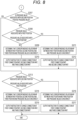
- Figs. 7 and 8 are flowcharts illustrating a procedure of a second example of processing, performed by the control device 1, for determining whether or not the correspondence relationship between the pressure value and the position is correct.
- the control device 1 acquires the pressure values measured by the first sensor 41, the second sensor 42, and the third sensor 43 (S201).
- the processing in S201 corresponds to the acquisition unit.
- the control device 1 determines whether or not the pressure value associated with the first position is a negative pressure value (S202).
- the arithmetic unit 11 determines whether or not the pressure value acquired through the first connection part 161 is a negative pressure value.
- the control device 1 determines whether or not the pressure value associated with the second position exceeds the pressure value associated with the third position (S203).
- the arithmetic unit 11 compares the pressure value acquired through the second connection part 162 with the pressure value acquired through the third connection part 163. Because the pressure value associated with the first position is the negative pressure value, the pressure value associated with the second position and the pressure value associated with the third position are positive pressure values. Before S203, the control device 1 may determine whether or not the pressure value associated with the second position and the pressure value associated with the third position are positive pressure values.
- the control device 1 determines that the correspondence relationship between the second position and the third position and the pressure values is incorrect (S204).
- the arithmetic unit 11 determines that the correspondence relationship between the pressure value acquired through the second connection part 162 and the second position and the correspondence relationship between the pressure value acquired through the third connection part 163 and the third position are incorrect.
- the control device 1 outputs an instruction to change the connection at the second connection part 162 and the third connection part 163 (S205).
- the arithmetic unit 11 displays, on the display unit 15, an instruction image including an instruction to change the connection of the cables at the second connection part 162 and the third connection part 163. Because the correspondence relationship between the pressure value acquired through the second connection part 162 and the second position and the correspondence relationship between the pressure value acquired through the third connection part 163 and the third position are incorrect, the cables are incorrectly connected at the second connection part 162 and the third connection part 163. For example, a cable connected to the second sensor 42 provided at the second position is incorrectly connected to the third connection part 163, and a cable connected to the third sensor 43 provided at the third position is incorrectly connected to the second connection part 162.
- the positions where the pressure of blood is measured and the pressure values are appropriately associated with each other.
- the arithmetic unit 11 may display, on the display unit 15, an instruction image including an instruction to exchange the cable connected to the second connection part 162 and the cable connected to the third connection part 163.
- the pressure values and the positions are appropriately associated with each other by the user executing the work according to the output instruction.
- the control device 1 determines that the correspondence relationship between the position where the pressure of blood is measured and the pressure value is correct (S206).
- the arithmetic unit 11 may display an image indicating that the correspondence relationship is correct on the display unit 15. After S206 ends, the control device 1 ends the processing of determining whether or not the correspondence relationship is correct.
- the control device 1 determines that the correspondence relationship between the first position, the second position, and the third position and the pressure values is incorrect (S209).
- the arithmetic unit 11 determines that the correspondence relationship between the pressure value acquired through the first connection part 161 and the first position, the correspondence relationship between the pressure value acquired through the second connection part 162 and the second position, and the correspondence relationship between the pressure value acquired through the third connection part 163 and the third position are incorrect.
- the pressure value acquired through the first connection part 161 is a pressure value measured at the third position
- the pressure value acquired through the second connection part 162 is a pressure value measured at the first position
- the pressure value acquired through the third connection part 163 is a pressure value measured at the second position.
- the positions where the pressure of blood are measured and the pressure values are appropriately associated with each other.
- the arithmetic unit 11 may display, on the display unit 15, an instruction image including an instruction to connect each cable to an appropriate connection part.
- the pressure values and the positions are appropriately associated with each other by the user executing the work according to the output instruction.
- the control device 1 determines that the correspondence relationship between the first position and the second position and the pressure values is incorrect (S211). Because the pressure value associated with the first position exceeds the pressure value associated with the third position, the pressure value associated with the first position is the pressure value measured at the second position, and the correspondence relationship between the third position and the pressure value is correct. In S211, the arithmetic unit 11 determines that the correspondence relationship between the pressure value acquired through the first connection part 161 and the first position and the correspondence relationship between the pressure value acquired through the second connection part 162 and the second position are incorrect. Specifically, it is determined that the pressure value acquired through the first connection part 161 is a pressure value measured at the second position, and the pressure value acquired through the second connection part 162 is a pressure value measured at the first position.
- the control device 1 then outputs an instruction to change the connection at the first connection part 161 and the second connection part 162 (S212).
- the arithmetic unit 11 displays, on the display unit 15, an instruction image including an instruction to change the connection of the cables at the first connection part 161 and the second connection part 162. Because the correspondence relationship between the pressure values acquired through the first connection part 161 and the second connection part 162 and the positions where the pressure of blood are measured is incorrect, the connection of the cables at the first connection part 161 and the second connection part 162 is incorrect. Specifically, the cable connected to the first sensor 41 provided at the first position is incorrectly connected to the second connection part 162, and the cable connected to the second sensor 42 provided at the second position is incorrectly connected to the first connection part 161.
- the positions where the pressure of blood is measured and the pressure values are appropriately associated with each other.
- the arithmetic unit 11 may display, on the display unit 15, an instruction image including an instruction to exchange the cable connected to the first connection part 161 and the cable connected to the second connection part 162.
- the pressure values and the positions are appropriately associated with each other by the user executing the work according to the output instruction.
- the control device 1 determines whether or not the pressure value associated with the second position exceeds the pressure value associated with the first position (S213).
- the arithmetic unit 11 compares the pressure value acquired through the first connection part 161 with the pressure value acquired through the second connection part 162. Because the pressure value associated with the first position is not the negative pressure value but the pressure value associated with the second position is the positive pressure value, the pressure value associated with the third position is the negative pressure value, and the pressure value measured at the first position is associated with the third position. One of the pressure values measured at the second position or the third position is associated with the first position, and the other is associated with the second position. By comparing the pressure value associated with the first position with the pressure value associated with the second position, it becomes clear whether the pressure value associated with the second position is the pressure value measured at the second position or the third position.
- the control device 1 determines that the correspondence relationship between the first position, the second position, and the third position and the pressure values is incorrect (S214). Specifically, in S214, the arithmetic unit 11 determines that the pressure value acquired through the first connection part 161 is a pressure value measured at the second position, the pressure value acquired through the second connection part 162 is a pressure value measured at the third position, and the pressure value acquired through the third connection part 163 is a pressure value measured at the first position.
- the control device 1 outputs an instruction to change the connection at the first connection part 161, the second connection part 162, and the third connection part 163 (S215).
- the arithmetic unit 11 displays, on the display unit 15, an instruction image including an instruction to change the connection of the cables at the first connection part 161, the second connection part 162, and the third connection part 163. In the first connection part 161, the second connection part 162, and the third connection part 163, all the cables are incorrectly connected.
- the cable connected to the first sensor 41 provided at the first position is incorrectly connected to the third connection part 163
- the cable connected to the second sensor 42 provided at the second position is incorrectly connected to the first connection part 161
- the cable connected to the third sensor 43 provided at the third position is incorrectly connected to the second connection part 162.
- the positions where the pressure of blood are measured and the pressure values are appropriately associated with each other.
- the arithmetic unit 11 may display, on the display unit 15, an instruction image including an instruction to connect each cable to an appropriate connection part.
- the pressure values and the positions are appropriately associated with each other by the user executing the work according to the output instruction.
- the control device 1 determines that the correspondence relationship between the first position and the third position and the pressure values is incorrect (S216). Because the pressure value associated with the second position exceeds the pressure value associated with the first position, the pressure value associated with the first position is the pressure value measured at the third position, and the correspondence relationship between the second position and the pressure value is correct. In S216, the arithmetic unit 11 determines that the correspondence relationship between the pressure value acquired through the first connection part 161 and the first position and the correspondence relationship between the pressure value acquired through the third connection part 163 and the third position are incorrect. Specifically, it is determined that the pressure value acquired through the first connection part 161 is a pressure value measured at the third position, and the pressure value acquired through the third connection part 163 is a pressure value measured at the first position.
- the control device 1 outputs an instruction to change the connection at the first connection part 161 and the third connection part 163 (S217).
- the arithmetic unit 11 displays, on the display unit 15, an instruction image including an instruction to change the connection of the cables at the first connection part 161 and the third connection part 163. Because the correspondence relationship between the pressure value acquired through the first connection part 161 and the first position and the correspondence relationship between the pressure value acquired through the third connection part 163 and the third position are incorrect, the cables are incorrectly connected at the first connection part 161 and the third connection part 163. Specifically, the cable connected to the first sensor 41 provided at the first position is incorrectly connected to the third connection part 163, and the cable connected to the third sensor 43 provided at the third position is incorrectly connected to the first connection part 161.
- the positions where the pressure of blood is measured and the pressure values are appropriately associated with each other.
- the arithmetic unit 11 may display, on the display unit 15, an instruction image including an instruction to exchange the cable connected to the first connection part 161 and the cable connected to the third connection part 163.
- the pressure values and the positions are appropriately associated with each other by the user executing the work according to the output instruction.
- the control device 1 ends the processing of determining whether or not the correspondence relationship is correct.
- the processing of S202 to S204, S206, S207 to S209, S211, S213, S214, and S216 corresponds to the determination unit.
- Figs. 9 and 10 are flowcharts illustrating a procedure of a third example of processing, performed by the control device 1, for determining whether or not the correspondence relationship between the pressure value and the position is correct. While the priming of the extracorporeal circulation path 2 is being performed, the control device 1 acquires the pressure values measured by the first sensor 41, the second sensor 42, and the third sensor 43 (S301). The processing in S301 corresponds to the acquisition unit. The control device 1 determines whether or not the pressure value associated with the first position is a negative pressure value (S302).
- the control device 1 determines whether or not the pressure value associated with the second position exceeds the pressure value associated with the third position (S303). Before S303, the control device 1 may determine whether or not the pressure value associated with the second position and the pressure value associated with the third position are positive pressure values.
- the control device 1 determines that the correspondence relationship between the second position and the third position and the pressure values is incorrect (S304). Next, the control device 1 corrects the correspondence relationship between the second position and the third position and the pressure values (S305). In S305, the arithmetic unit 11 corrects the correspondence relationship so as to cause the pressure value that has been associated with the second position to be associated with the third position, and cause the pressure value that has been associated with the third position to be associated with the second position.
- the arithmetic unit 11 performs setting such that the pressure value acquired through the second connection part 162 is recognized as the pressure value measured by the third sensor 43, and the pressure value acquired through the third connection part 163 is recognized as the pressure value measured by the second sensor 42.
- the arithmetic unit 11 stores information indicating the corrected correspondence relationship in the storage unit 13. After S305 ends, the control device 1 ends the processing of determining whether or not the correspondence relationship is correct.
- the control device 1 determines that the correspondence relationship between the position where the pressure of blood is measured and the pressure value is correct (S306).
- the arithmetic unit 11 may display an image indicating that the correspondence relationship is correct on the display unit 15. After S306 ends, the control device 1 ends the processing of determining whether or not the correspondence relationship is correct.
- the control device 1 determines that the correspondence relationship between the first position, the second position, and the third position and the pressure values is incorrect (S309).
- the control device 1 corrects the correspondence relationship between the first position, the second position, and the third position and the pressure values (S310).
- the arithmetic unit 11 corrects the correspondence relationship so as to cause the pressure value that has been associated with the second position to be associated with the first position, cause the pressure value that has been associated with the third position to be associated with the second position, and cause the pressure value that has been associated with the first position to be associated with the third position.
- the arithmetic unit 11 performs setting such that the pressure value acquired through the second connection part 162 is recognized as the pressure value measured by the first sensor 41, the pressure value acquired through the third connection part 163 is recognized as the pressure value measured by the second sensor 42, and the pressure value acquired through the first connection part 161 is recognized as the pressure value measured by the third sensor 43.
- the arithmetic unit 11 stores information indicating the corrected correspondence relationship in the storage unit 13. After S310 ends, the control device 1 ends the processing of determining whether or not the correspondence relationship is correct.
- the control device 1 determines that the correspondence relationship between the first position and the second position and the pressure values is incorrect (S311). Next, the control device 1 corrects the correspondence relationship between the first position and the second position and the pressure values (S312). In S312, the arithmetic unit 11 corrects the correspondence relationship so as to cause the pressure value that has been associated with the first position to be associated with the second position, and cause the pressure value that has been associated with the second position to be associated with the first position.
- the arithmetic unit 11 performs setting such that the pressure value acquired through the first connection part 161 is recognized as the pressure value measured by the second sensor 42, and the pressure value acquired through the second connection part 162 is recognized as the pressure value measured by the first sensor 41.
- the arithmetic unit 11 stores information indicating the corrected correspondence relationship in the storage unit 13. After S312 ends, the control device 1 ends the processing of determining whether or not the correspondence relationship is correct.
- the control device 1 determines whether or not the pressure value associated with the second position exceeds the pressure value associated with the first position (S313). If the pressure value associated with the second position is equal to or less than the pressure value associated with the first position (S313: NO), the control device 1 determines that the correspondence relationship between the first position, the second position, and the third position and the pressure values is incorrect (S314).
- the control device 1 corrects the correspondence relationship between the first position, the second position, and the third position and the pressure values (S315).
- the arithmetic unit 11 corrects the correspondence relationship so as to cause the pressure value that has been associated with the third position to be associated with the first position, cause the pressure value that has been associated with the first position to be associated with the second position, and cause the pressure value that has been associated with the second position to be associated with the third position.
- the arithmetic unit 11 performs setting such that the pressure value acquired through the third connection part 163 is recognized as the pressure value measured by the first sensor 41, the pressure value acquired through the first connection part 161 is recognized as the pressure value measured by the second sensor 42, and the pressure value acquired through the second connection part 162 is recognized as the pressure value measured by the third sensor 43.
- the arithmetic unit 11 stores information indicating the corrected correspondence relationship in the storage unit 13. After S315 ends, the control device 1 ends the processing of determining whether or not the correspondence relationship is correct.
- the control device 1 determines that the correspondence relationship between the first position and the third position and the pressure values is incorrect (S316). Next, the control device 1 corrects the correspondence relationship between the first position and the third position and the pressure values (S317). In S317, the arithmetic unit 11 corrects the correspondence relationship so as to cause the pressure value that has been associated with the first position to be associated with the third position, and cause the pressure value that has been associated with the third position to be associated with the first position.
- the arithmetic unit 11 performs setting such that the pressure value acquired through the first connection part 161 is recognized as the pressure value measured by the third sensor 43, and the pressure value acquired through the third connection part 163 is recognized as the pressure value measured by the first sensor 41.
- the arithmetic unit 11 stores information indicating the corrected correspondence relationship in the storage unit 13. After S317 ends, the control device 1 ends the processing of determining whether or not the correspondence relationship is correct.
- the processing of S302 to S304, S306, S307 to S309, S311, S313, S314, and S316 corresponds to the determination unit.
- the control device 1 may perform processing of outputting that the correspondence relationship between the position where the pressure of blood is measured and the pressure value is corrected.
- the arithmetic unit 11 displays an image indicating that the correspondence relationship has been corrected on the display unit 15.
- the control device 1 may perform processing of outputting a correction content of the correspondence relationship.
- the arithmetic unit 11 displays, on the display unit 15, an image representing that the pressure value that has been associated with the second position is made to associate with the third position, and the pressure value that has been associated with the third position is made to associate with the second position.
- the arithmetic unit 11 displays, on the display unit 15, an image representing that the pressure value that has been associated with the second position is made to associate with the first position, the pressure value that has been associated with the third position is made to associate with the second position, and the pressure value that has been associated with the first position is made to associate with the third position.
- the arithmetic unit 11 performs processing in a similar manner.
- whether the pressure of the blood is positive pressure or negative pressure is determined by the position, and the magnitude of the two pressure values is determined by the positions where the respective pressure values are measured. Therefore, whether or not the correspondence relationship between the pressure value and the position is correct can be determined by determining whether the pressure value is a positive pressure value or a negative pressure value or by comparing the two pressure values.
- the extracorporeal circulation system 100 performs the extracorporeal circulation of blood after the position where the pressure of blood is measured and the pressure value are appropriately associated with each other and the priming of the extracorporeal circulation path 2 is finished.
- the control device 1 acquires the pressure values measured by the first sensor 41, the second sensor 42, and the third sensor 43, and controls the extracorporeal circulation of blood on the basis of the acquired pressure values. Because the position where the pressure of blood is measured and the pressure value are appropriately associated with each other, the control device 1 can appropriately control the extracorporeal circulation of blood. Therefore, occurrence of a damage to the human body 5 due to improper control is prevented.
- the user can make an appropriate preparation without requiring special attention to the correspondence relationship between the cable connected to each sensor and the connection part of the control device 1. Therefore, in an emergency, a burden on the user is reduced at a medical site full of tensed atmosphere.
- the extracorporeal circulation system 100 may be configured such that the pressure value measured by each sensor is input to the control device 1 by another method.
- the first sensor 41, the second sensor 42, and the third sensor 43 may be collectively connected to the control device 1 via one cable.
- the control device 1 determines whether or not the correspondence relationship between the position where the pressure of blood is measured and the pressure value is correct by executing the processing of S101 to S114, S201 to S217, or S301 to S317.
- the control device 1 outputs an instruction to correct the correspondence relationship between the position where the pressure of blood is measured and the pressure value.
- the user performs an operation for correcting the correspondence relationship on the operation unit 14, and the control device 1 performs the processing of correcting the correspondence relationship according to the operation. Also in this mode, the position where the pressure of blood is measured is appropriately associated with the pressure value, and the extracorporeal circulation of blood is appropriately controlled.
- FIG. 11 is a schematic view illustrating a configuration example of the extracorporeal circulation system 100 according to the second embodiment.
- the extracorporeal circulation system 100 includes an observation device 6 that observes the pressure of blood at a plurality of positions in an extracorporeal circulation path 2.
- the observation device 6 is connected to the control device 1.
- cables connected to a first sensor 41, a second sensor 42, and a third sensor 43 are connected to the observation device 6.
- the configuration of the other portions of the extracorporeal circulation system 100 is similar to that of the first embodiment.
- Fig. 12 is a block diagram illustrating an internal configuration example of the observation device 6 according to the second embodiment.
- the observation device 6 is configured by using a computer.
- the observation device 6 includes an arithmetic unit 61, a memory 62, a storage unit 63, an operation unit 64, a display unit 65, and an interface unit 66.
- the arithmetic unit 61 is configured by using, for example, a CPU, a GPU, or a multi-core CPU.
- the arithmetic unit 61 may be configured by using a quantum computer.
- the memory 62 stores temporary data generated in association with arithmetic operation.
- the memory 62 is, for example, a RAM.
- the storage unit 63 is non-volatile and is, for example, a hard disk or a non-volatile semiconductor memory.
- the storage unit 63 stores a computer program 631.
- the computer program 631 is read from a recording medium 60 such as an optical disk or a portable memory that stores the computer program 631 and is stored in the storage unit 63.
- the computer program 631 may be a computer program product.
- the computer program 631 may be downloaded from the outside and stored in the storage unit 63.
- the arithmetic unit 61 executes necessary processing according to the computer program 631.
- the operation unit 64 receives the operation from a user.
- the operation unit 64 is configured by using a push button or a touch panel.
- the display unit 65 displays information.
- the display unit 65 is, for example, a liquid crystal display or an EL display.
- the control device 1, the first sensor 41, the second sensor 42, and the third sensor 43 are connected to the interface unit 66.
- the interface unit 66 includes a plurality of connection parts to which a plurality of cables connected to the first sensor 41, the second sensor 42, and the third sensor 43 are connected.
- the observation device 6 acquires the pressure value by receiving the pressure values transmitted from the first sensor 41, the second sensor 42, and the third sensor 43 through the cables and the connection parts.
- the observation device 6 determines whether or not the correspondence relationship between the position where the pressure of blood is measured and the pressure value is correct by executing the processing of S101 to S114, S201 to S217, or S301 to S317. In S305, S310, S312, S315, and S317, the observation device 6 transmits an instruction to correct the correspondence relationship between the position where the pressure of blood is measured and the pressure value to the control device 1, and the control device 1 performs processing of correcting the correspondence relationship according to the instruction from the observation device 6.
- control device 1 can appropriately control the extracorporeal circulation of blood. Therefore, occurrence of a damage to the human body 5 due to improper control is prevented. In addition, similarly to the first embodiment, the burden on the user at the medical site is reduced.
- the mode in which the three cables connected to the first sensor 41, the second sensor 42, and the third sensor 43 are connected to the observation device 6 is shown, but a mode in which the pressure value measured by each sensor is input to the observation device 6 by another method may be adopted.
- the first sensor 41, the second sensor 42, and the third sensor 43 may be collectively connected to the observation device 6 via one cable.
- the observation device 6 determines whether or not the correspondence relationship between the position where the pressure of blood is measured and the pressure value is correct by executing the processing of S101 to S114, S201 to S217, or S301 to S317.
- the position where the pressure of blood is measured is appropriately associated with the pressure value, and the extracorporeal circulation of blood is appropriately controlled.
Landscapes
- Health & Medical Sciences (AREA)
- Heart & Thoracic Surgery (AREA)
- Vascular Medicine (AREA)
- Life Sciences & Earth Sciences (AREA)
- General Health & Medical Sciences (AREA)
- Anesthesiology (AREA)
- Biomedical Technology (AREA)
- Hematology (AREA)
- Cardiology (AREA)
- Animal Behavior & Ethology (AREA)
- Engineering & Computer Science (AREA)
- Public Health (AREA)
- Veterinary Medicine (AREA)
- Emergency Medicine (AREA)
- Urology & Nephrology (AREA)
- Pulmonology (AREA)
- External Artificial Organs (AREA)
Abstract
To provide a computer program, an extracorporeal circulation system, an observation device, and an information processing method that can prevent extracorporeal circulation from being performed in a state where a correspondence relationship between a position where pressure is measured and a pressure value is incorrect.
The computer program causes a computer to execute processing of acquiring a pressure value measured by each sensor from a plurality of the sensors that measure blood pressure at a plurality of positions in an extracorporeal circulation path that performs extracorporeal circulation of blood, and determining, on the basis of the acquired pressure value, whether or not the correspondence relationship between the pressure value and the position where the blood pressure is measured is correct.
Description
- The present invention relates to a computer program that performs extracorporeal circulation of blood, an extracorporeal circulation system, an observation device, and an information processing method.
- Conventionally, an extracorporeal circulation system that performs extracorporeal circulation of blood via an oxygenator that is present outside the body is used in some cases at the time of treatment of a person. The extracorporeal circulation is to circulate blood through a path that is present outside the body. A part of the blood circulation path is an extracorporeal circulation path that is present outside the body. The extracorporeal circulation path includes a pump that circulates blood and an oxygenator. The extracorporeal circulation system causes blood to flow out of a vein in the human body, exchanges gas in the blood by the oxygenator, and then returns the blood to a blood vessel (for example, an artery) in the human body. An example of the extracorporeal circulation system is an extracorporeal membrane oxygenation (ECMO).
Patent Literature 1 discloses an example of the extracorporeal circulation system. - Patent Literature 1:
JP 2019-217405 A - At the time of performing the extracorporeal circulation, circulation of blood is controlled on the basis of various parameters of blood passing through the extracorporeal circulation path. The parameters include the pressure of blood. The pressure is one of the parameters necessary to understand the circulation state of blood. Usually, sensors for measuring the pressure are attached between the human body and the pump, between the pump and the oxygenator, and between the oxygenator and the human body. However, in a case where the correspondence relationship between a position where the pressure is measured and a pressure value is incorrect, a pressure value at an appropriate position becomes unknown, and thus, appropriate control is not performed, and there is a risk of causing a damage to the human body. For example, in a case where a cable for transmitting a measurement result from a sensor is connected to a device for observing the pressure, and another cable is incorrectly connected to a connection part to which a certain cable is to be connected, the correspondence relationship between the position where the pressure is measured and the pressure value becomes incorrect.
- The present invention has been made in view of such circumstances, and an object of the present invention is to provide a computer program, an extracorporeal circulation system, an observation device, and an information processing method that can prevent extracorporeal circulation from being performed in a state where a correspondence relationship between a position where pressure is measured and a pressure value is incorrect.
-
- (1) A computer program according to one mode of the present invention causes a computer to execute processing of: acquiring, from a plurality of sensors that measure pressure of blood at a plurality of positions in an extracorporeal circulation path that performs extracorporeal circulation of blood, a pressure value measured by each of the sensors; and determining, on the basis of the pressure value that has been acquired, whether or not a correspondence relationship between the pressure value and the position where the pressure of blood is measured is correct.
- (2) The computer program according to the above (1) preferably causes a computer to execute processing of: acquiring the pressure value from the plurality of sensors through a plurality of cables connected to the plurality of sensors and through a plurality of connection parts to which the plurality of cables are connected; having the correspondence relationship predetermined in accordance with which connection part through which the pressure value has been acquired; and determining whether or not the correspondence relationship that is predetermined is correct on the basis of the pressure value that has been acquired.
- (3) The computer program according to the above (1) or (2) preferably causes a computer to execute processing of determining whether or not the correspondence relationship is correct while priming of the extracorporeal circulation path is being performed before the extracorporeal circulation is performed.
- (4) The computer program according to any one of the above (1) to (3) preferably causes a computer to execute processing of determining whether or not the correspondence relationship is correct on the basis of whether the pressure value is a negative pressure value or a positive pressure value.
- (5) The computer program according to any one of the above (1) to (4) preferably causes a computer to execute processing of determining whether or not the correspondence relationship is correct on the basis of a magnitude relationship among a plurality of the pressure values.
- (6) The computer program according to any one of the above (1) to (5) preferably causes a computer to execute processing of, in a case where the pressure value associated with a first position between a pump and a human body included in the extracorporeal circulation path is not a negative pressure value, determining that a correspondence relationship between the first position and the pressure value is incorrect.
- (7) The computer program according to any one of the above (1) to (6) preferably causes a computer to execute processing of, in a case where the pressure value associated with a second position between a pump and an oxygenator included in the extracorporeal circulation path or the pressure value associated with a third position between the oxygenator and a human body is not a positive pressure value, determining that a correspondence relationship between the second position and the pressure value, or a correspondence relationship between the third position and the pressure value is incorrect.
- (8) The computer program according to the above (7) preferably causes a computer to execute processing of, in a case where the pressure value associated with the second position and the pressure value associated with the third position are positive pressure values and the pressure value associated with the second position is equal to or less than the pressure value associated with the third position, determining that a correspondence relationship between the second position and the pressure value, and a correspondence relationship between the third position and the pressure value are incorrect.
- (9) The computer program according to any one of the above (1) to (8) further preferably causes a computer to execute processing of outputting a warning in a case where the correspondence relationship is incorrect.
- (10) The computer program according to any one of the above (1) to (9) further preferably causes a computer to execute processing of outputting an instruction that appropriately associates the pressure value with a position where pressure of blood is measured in a case where the correspondence relationship is incorrect.
- (11) The computer program according to any one of the above (1) to (10) further preferably causes a computer to execute processing of correcting the correspondence relationship in a case where the correspondence relationship is incorrect.
- (12) An extracorporeal circulation system according to one mode of the present invention performs extracorporeal circulation of blood, the extracorporeal circulation system including: an extracorporeal circulation path that is disposed outside a human body and through which blood passes; a plurality of sensors that measure pressure of blood at a plurality of positions in the extracorporeal circulation path; and an observation device that observes pressure of blood, in which the observation device performs: acquiring pressure values measured by the plurality of sensors; and determining whether or not a correspondence relationship between the pressure value and a position where the pressure of blood is measured is correct on the basis of the pressure value that has been acquired.
- (13) An observation device according to one mode of the present invention observes pressure of blood at a plurality of positions in an extracorporeal circulation path that performs extracorporeal circulation of blood, the observation device including: an acquisition unit that acquires, from a plurality of sensors that measure the pressure of blood at the plurality of positions, a pressure value measured by each of the sensors; and a determination unit that determines, on the basis of the pressure value that has been acquired, whether or not a correspondence relationship between the pressure value and the position where the pressure of blood is measured is correct.
- (14) An information processing method according to one mode of the present invention includes: acquiring, from a plurality of sensors that measure pressure of blood at a plurality of positions in an extracorporeal circulation path that performs extracorporeal circulation of blood, a pressure value measured by each of the sensors; and
determining, on the basis of the pressure value that has been acquired, whether or not a correspondence relationship between the pressure value and the position where the pressure of blood is measured is correct. - In one mode of the present invention, on the basis of the pressure values of the blood measured at a plurality of positions in the extracorporeal circulation path, it is determined whether or not the correspondence relationship between the position where the pressure of blood is measured and the pressure value is correct. The pressure values measured at the plurality of positions are values corresponding to the positions. Therefore, whether or not the correspondence relationship between the position where the pressure of blood is measured and the pressure value is correct can be determined on the basis of whether or not each pressure value is a value corresponding to the position. This enables the incorrectness in the correspondence relationship between the position and the pressure value to be found and the correspondence relationship to be corrected.
- In the present invention, the blood extracorporeal circulation is prevented from being performed in a state in which the correspondence relationship between the pressure value and the position is incorrect. The present invention exhibits excellent effects such as that extracorporeal circulation of blood is appropriately performed and occurrence of a damage to the human body is prevented.
-
-
Fig. 1 is a schematic diagram illustrating a configuration example of an extracorporeal circulation system according to a first embodiment. -
Fig. 2 is a block diagram illustrating an internal configuration example of a control device according to the first embodiment. -
Fig. 3 is a schematic diagram illustrating a configuration of a portion of an interface unit. -
Fig. 4 is a schematic graph illustrating a relationship between a pressure of blood and a position in an extracorporeal circulation path. -
Fig. 5 is a schematic view illustrating an extracorporeal circulation path at the time when priming is performed. -
Fig. 6 is a flowchart illustrating a procedure of a first example of processing for determining whether or not a correspondence relationship between a pressure value and a position performed by a control device is correct. -
Fig. 7 is a flowchart illustrating a procedure of a second example of processing for determining whether or not a correspondence relationship between a pressure value and a position performed by a control device is correct. -
Fig. 8 is a flowchart illustrating a procedure of the second example of processing for determining whether or not a correspondence relationship between a pressure value and a position performed by a control device is correct. -
Fig. 9 is a flowchart illustrating a procedure of a third example of processing for determining whether or not a correspondence relationship between a pressure value and a position performed by a control device is correct. -
Fig. 10 is a flowchart illustrating a procedure of the third example of processing for determining whether or not a correspondence relationship between a pressure value and a position performed by a control device is correct. -
Fig. 11 is a schematic diagram illustrating a configuration example of an extracorporeal circulation system according to a second embodiment. -
Fig. 12 is a block diagram illustrating an internal - Hereinafter, the present invention will be specifically described with reference to the drawings illustrating embodiments of the present invention.
-
Fig. 1 is a schematic diagram illustrating a configuration example of anextracorporeal circulation system 100 according to a first embodiment. Theextracorporeal circulation system 100 is a system that performs extracorporeal circulation of circulating blood of ahuman body 5 through anextracorporeal circulation path 2. Theextracorporeal circulation path 2 is disposed outside thehuman body 5 and is a path through which the blood passes. Theextracorporeal circulation path 2 includes a firstblood supply tube 31, a secondblood supply tube 32, a thirdblood supply tube 33, apump 21, and anoxygenator 22. The firstblood supply tube 31, the secondblood supply tube 32, and the thirdblood supply tube 33 are bendable tubes and can allow the blood to pass therethrough. One end of the firstblood supply tube 31 is connected to thepump 21, and the other end is connected to a vein of thehuman body 5. For example, the other end of the firstblood supply tube 31 is connected to a catheter inserted into the vein of thehuman body 5. One end of the secondblood supply tube 32 is connected to thepump 21, and the other end is connected to theoxygenator 22. One end of the thirdblood supply tube 33 is connected to theoxygenator 22, and the other end is connected to an artery of thehuman body 5. For example, the other end of the thirdblood supply tube 33 is connected to a catheter inserted into the artery of thehuman body 5. Note that theextracorporeal circulation path 2 is preferably a so-called closed system circuit that does not use a blood reservoir. - The
pump 21 circulates the blood through theextracorporeal circulation path 2. By the operation of thepump 21, the blood is sucked out from thehuman body 5, and the blood flows through the firstblood supply tube 31, thepump 21, the secondblood supply tube 32, theoxygenator 22, and the thirdblood supply tube 33 in this order, and is returned into thehuman body 5. InFig. 1 , the direction in which the blood flows is indicated by an arrow. Theoxygenator 22 takes in oxygen of gas blown into theoxygenator 22 and exchanges gas in the blood. The gas exchange removes carbon dioxide from the blood and adds oxygen to the blood. In this manner, theextracorporeal circulation system 100 assists the cardiopulmonary function of thehuman body 5. - The
extracorporeal circulation system 100 includes afirst sensor 41, asecond sensor 42, and athird sensor 43 that measure the pressure of blood passing through theextracorporeal circulation path 2. Thefirst sensor 41, thesecond sensor 42, and thethird sensor 43 are provided at different positions in theextracorporeal circulation path 2, and measure the pressure of blood at a plurality of positions in theextracorporeal circulation path 2. Thefirst sensor 41 is provided at a first position between thepump 21 and thehuman body 5. The first position may be in the middle of the firstblood supply tube 31 or at an inlet of thepump 21. Thesecond sensor 42 is provided at a second position between thepump 21 and theoxygenator 22. The second position may be at an outlet of thepump 21, in the middle of the secondblood supply tube 32, or at an inlet of theoxygenator 22. Thethird sensor 43 is provided at a third position between theoxygenator 22 and thehuman body 5. The third position may be in the middle of the thirdblood supply tube 33 or at an outlet of theoxygenator 22. - The
extracorporeal circulation system 100 includes acontrol device 1. Thecontrol device 1 is connected to thepump 21 and controls the operation of thepump 21. Each of thefirst sensor 41, thesecond sensor 42, and thethird sensor 43 is connected to thecontrol device 1 via a cable. Thefirst sensor 41, thesecond sensor 42, and thethird sensor 43 transmit sensor output values that change according to the pressure of blood to thecontrol device 1 via a cable. Thecontrol device 1 receives the sensor output values transmitted from thefirst sensor 41, thesecond sensor 42, and thethird sensor 43, and converts each of the received sensor output values into a measured pressure value of blood. In this manner, thecontrol device 1 acquires the pressure values measured from thefirst sensor 41, thesecond sensor 42, and thethird sensor 43. Thecontrol device 1 corresponds to an observation device and executes an information processing method. -
Fig. 2 is a block diagram illustrating an internal configuration example of thecontrol device 1 according to the first embodiment. Thecontrol device 1 is configured by using a computer. Thecontrol device 1 includes anarithmetic unit 11, amemory 12, astorage unit 13, anoperation unit 14, adisplay unit 15, and aninterface unit 16. Thearithmetic unit 11 is constituted of, for example, a central processing unit (CPU), a graphics processing unit (GPU), or a multi-core CPU. Thearithmetic unit 11 may be configured by using a quantum computer. Thememory 12 stores temporary data generated in association with arithmetic operation. Thememory 12 is, for example, a random access memory (RAM). Thestorage unit 13 is non-volatile and is, for example, a hard disk or a non-volatile semiconductor memory. - The
storage unit 13 stores acomputer program 131. For example, at the time of manufacturing thecontrol device 1, thecomputer program 131 is read from arecording medium 10 such as an optical disk or a portable memory that stores thecomputer program 131 and is stored in thestorage unit 13. Thecomputer program 131 may be a computer program product. Thecomputer program 131 may be downloaded from the outside and stored in thestorage unit 13. Thearithmetic unit 11 executes necessary processing according to thecomputer program 131. - The
operation unit 14 receives the operation from a user. For example, theoperation unit 14 is configured by using a push button or a touch panel. Thedisplay unit 15 displays information. Thedisplay unit 15 is, for example, a liquid crystal display or an electroluminescent display (EL display). Thepump 21, thefirst sensor 41, thesecond sensor 42, and thethird sensor 43 are connected to theinterface unit 16. Thearithmetic unit 11 controls the operation of thepump 21 and controls the extracorporeal circulation of blood by transmitting a control signal from theinterface unit 16 to thepump 21. In addition, thecontrol device 1 acquires a pressure value by receiving sensor output values transmitted from thefirst sensor 41, thesecond sensor 42, and thethird sensor 43 by theinterface unit 16 and converting each of the sensor output values into the pressure value of blood. -
Fig. 3 is a schematic diagram illustrating a configuration of a portion of theinterface unit 16. Theinterface unit 16 includes afirst connection part 161 to which a cable connected to thefirst sensor 41 is connected, asecond connection part 162 to which a cable connected to thesecond sensor 42 is connected, and athird connection part 163 to which a cable connected to thethird sensor 43 is connected. Thecontrol device 1 receives sensor output values transmitted from thefirst sensor 41, thesecond sensor 42, and thethird sensor 43 through thefirst connection part 161, thesecond connection part 162, thethird connection part 163, and the cables connected to the respective connection parts. Hereinafter, the pressure value of blood converted from the sensor output value received by thecontrol device 1 through the cable or the connection part is referred to as a pressure value acquired through the cable or the connection part. Furthermore, theinterface unit 16 includes afourth connection part 164 to which a cable connected to thepump 21 is connected. Thecontrol device 1 transmits a control signal to thepump 21 through the cable connected to thefourth connection part 164. - The
control device 1 identifies the correspondence relationship between the pressure value acquired through the cable and the position where the pressure of blood is measured according to which one of thefirst connection part 161, thesecond connection part 162, and thethird connection part 163 the cable is connected. Because the cable connected to thefirst sensor 41 provided at the first position is connected to thefirst connection part 161, the pressure value acquired through thefirst connection part 161 is associated with the first position. Similarly, the pressure value acquired through thesecond connection part 162 is associated with the second position, and the pressure value acquired through thethird connection part 163 is associated with the third position. Thecontrol device 1 acquires the pressure values from thefirst sensor 41, thesecond sensor 42, and thethird sensor 43, identifies at which position in theextracorporeal circulation path 2 each pressure value is measured according to which connection part the pressure value is acquired through, and controls the extracorporeal circulation of blood on the basis of the pressure value. - However, in a case where another cable is incorrectly connected to the connection part to which a certain cable is to be connected, the correspondence relationship between the position where the pressure is measured and the pressure value becomes incorrect. For example, in a case where the cable connected to the
first sensor 41 is connected to thesecond connection part 162, thecontrol device 1 incorrectly identifies the pressure value of the blood at the first position as the pressure value of the blood at the second position. At this time, thecontrol device 1 or the user who operates thecontrol device 1 executes improper control on the basis of an incorrect pressure value, and there is a risk of causing a damage such as hemolysis in thehuman body 5. - In order to prevent the inappropriate control, the
control device 1 performs processing of determining whether or not the correspondence relationship between the acquired pressure value and the position where the pressure of blood is measured is correct before performing the extracorporeal circulation of blood. Determining whether or not the correspondence relationship between the acquired pressure value and the position where the pressure of blood is measured is correct is equivalent to determining whether or not the cable connected to each sensor is connected to the correct connection part. - The
control device 1 determines whether or not the correspondence relationship between the position where the pressure of blood is measured and the pressure value is correct on the basis of the acquired pressure value.Fig. 4 is a schematic graph illustrating a relationship between a pressure of blood and a position in theextracorporeal circulation path 2. InFig. 4 , the horizontal axis represents the position in theextracorporeal circulation path 2, and the vertical axis represents the pressure of blood.Fig. 4 illustrates a relative pressure value based on the atmospheric pressure as the pressure value. In a case where the pressure of blood is above the atmospheric pressure, that is, in a case where the pressure value shown inFig. 4 is positive, the pressure of blood is positive pressure. In a case where the pressure of blood is below the atmospheric pressure, that is, in a case where the pressure value shown inFig. 4 is negative, the pressure of blood is negative pressure. - As illustrated in
Fig. 4 , at the time when the extracorporeal circulation of blood is performed, the pressure of blood is a pressure corresponding to the position in theextracorporeal circulation path 2. At a position between thepump 21 and thehuman body 5, the pressure of blood is a negative pressure. That is, the pressure value measured by thefirst sensor 41 provided at the first position is a negative pressure value. - The
pump 21 increases the pressure of blood. At a position between thepump 21 and theoxygenator 22 and a position between theoxygenator 22 and thehuman body 5, the pressure of blood is the positive pressure. That is, the pressure value measured by thesecond sensor 42 provided at the second position and the pressure value measured by thethird sensor 43 provided at the third position are positive pressure values. Furthermore, after passing through theoxygenator 22, the pressure of blood decreases. That is, the pressure value measured by thesecond sensor 42 provided at the second position is larger than the pressure value measured by thethird sensor 43 provided at the third position. - The
extracorporeal circulation system 100 performs priming of theextracorporeal circulation path 2 before performing the extracorporeal circulation of blood. The priming is a treatment of filling theextracorporeal circulation path 2 with physiological saline and removing air bubbles from the inside of theextracorporeal circulation path 2.Fig. 5 is a schematic view illustrating theextracorporeal circulation path 2 at the time when the priming is performed. Abag 23 containing physiological saline is connected between the firstblood supply tube 31 and the thirdblood supply tube 33. Thepump 21 circulates the physiological saline through theextracorporeal circulation path 2. At this time, thecontrol device 1 operates thepump 21 for a predetermined time, stops thepump 21 for a certain time, and controls thepump 21 to perform intermittent driving in which the operating and the stopping of thepump 21 are repeated. By the priming, theextracorporeal circulation path 2 is filled with the physiological saline, the air bubbles are removed from the inside of theextracorporeal circulation path 2, and preparation for the extracorporeal circulation of blood is made. - The
extracorporeal circulation system 100 performs processing of determining whether or not the correspondence relationship between the acquired pressure value and the position where the pressure of blood is measured is correct while the priming of theextracorporeal circulation path 2 is being performed. By making the determination before the extracorporeal circulation of blood is performed, the determination can be made without putting strain on thehuman body 5. In addition, in a case where the correspondence relationship between the pressure value and the position is incorrect, the correspondence relationship can be corrected before the extracorporeal circulation of blood is performed, and the extracorporeal circulation of blood can be appropriately performed. -
Fig. 6 is a flowchart illustrating a procedure of a first example of processing, performed by thecontrol device 1, for determining whether or not the correspondence relationship between the pressure value and the position is correct. Hereinafter, step will be abbreviated as S. By thearithmetic unit 11 executing the information processing according to thecomputer program 131, thecontrol device 1 executes the following processing. While the priming of theextracorporeal circulation path 2 is being performed, thefirst sensor 41, thesecond sensor 42, and thethird sensor 43 measure the pressure of blood, and thecontrol device 1 acquires the pressure values measured by thefirst sensor 41, thesecond sensor 42, and the third sensor 43 (S101). Thefirst sensor 41, thesecond sensor 42, and thethird sensor 43 transmit sensor output values that change according to the pressure of blood to thecontrol device 1 via the cables. Thecontrol device 1 acquires the sensor output values through thefirst connection part 161, thesecond connection part 162, and thethird connection part 163 to which the cables are connected. Thearithmetic unit 11 converts the sensor output values into the pressure values of blood. In this manner, thecontrol device 1 acquires the pressure value. The processing in S101 corresponds to an acquisition unit. - The
control device 1 determines whether the pressure value associated with the first position is a negative pressure value (S102). The pressure value acquired through thefirst connection part 161 is associated with the first position. In S102, thearithmetic unit 11 determines whether or not the pressure value acquired through thefirst connection part 161 is a negative pressure value. If the pressure value is not the negative pressure value (S102: NO), thecontrol device 1 determines that the correspondence relationship between the position where the pressure of blood is measured and the pressure value is incorrect (S103). In S103, thearithmetic unit 11 determines that the correspondence relationship between the pressure value acquired through thefirst connection part 161 and the first position is incorrect. - Next, the
control device 1 outputs a warning indicating that the correspondence relationship between the position where the pressure of blood is measured and the pressure value is incorrect (S104). In S104, thearithmetic unit 11 outputs a warning by displaying a warning image in which contents of the warning are represented by an image on thedisplay unit 15. For example, thearithmetic unit 11 displays, on thedisplay unit 15, a warning image indicating that the connection of the cable to thefirst connection part 161 is incorrect. After S104 ends, thecontrol device 1 ends the processing of determining whether or not the correspondence relationship is correct. - If the pressure value associated with the first position is the negative pressure value (S102: YES), the
control device 1 determines whether or not the pressure value associated with the second position is a positive pressure value (S105). The pressure value acquired through thesecond connection part 162 is associated with the second position. In S105, thearithmetic unit 11 determines whether or not the pressure value acquired through thesecond connection part 162 is a positive pressure value. If the pressure value is not the positive pressure value (S105: NO), thecontrol device 1 determines that the correspondence relationship between the position where the pressure of blood is measured and the pressure value is incorrect (S106). In S106, thearithmetic unit 11 determines that the correspondence relationship between the pressure value acquired through thesecond connection part 162 and the second position is incorrect. - Next, the
control device 1 outputs a warning indicating that the correspondence relationship between the position where the pressure of blood is measured and the pressure value is incorrect (S107). In S107, thearithmetic unit 11 displays a warning image on thedisplay unit 15. For example, thearithmetic unit 11 displays, on thedisplay unit 15, a warning image indicating that the connection of the cable to thesecond connection part 162 is incorrect. After S107 ends, thecontrol device 1 ends the processing of determining whether or not the correspondence relationship is correct. - If the pressure value associated with the second position is the positive pressure value (S105: YES), the
control device 1 determines whether or not the pressure value associated with the third position is a positive pressure value (S108). The pressure value acquired through thethird connection part 163 is associated with the third position. In S108, thearithmetic unit 11 determines whether or not the pressure value acquired through thethird connection part 163 is a positive pressure value. If the pressure value is not the positive pressure value (S108: NO), thecontrol device 1 determines that the correspondence relationship between the position where the pressure of blood is measured and the pressure value is incorrect (S109). In S109, thearithmetic unit 11 determines that the correspondence relationship between the pressure value acquired through thethird connection part 163 and the third position is incorrect. - Next, the
control device 1 outputs a warning indicating that the correspondence relationship between the position where the pressure of blood is measured and the pressure value is incorrect (S110). In S110, thearithmetic unit 11 displays a warning image on thedisplay unit 15. For example, thearithmetic unit 11 displays, on thedisplay unit 15, a warning image indicating that the connection of the cable to thethird connection part 163 is incorrect. After S110 ends, thecontrol device 1 ends the processing of determining whether or not the correspondence relationship is correct. - If the pressure value associated with the third position is the positive pressure value (S108: YES), the
control device 1 determines whether or not the pressure value associated with the second position exceeds the pressure value associated with the third position (S111). In S111, thearithmetic unit 11 compares the pressure value acquired through thesecond connection part 162 with the pressure value acquired through thethird connection part 163. If the pressure value associated with the second position is equal to or less than the pressure value associated with the third position (S111: NO), thecontrol device 1 determines that the correspondence relationship between the position where the pressure of blood is measured and the pressure value is incorrect (S112). In S112, thearithmetic unit 11 determines that the correspondence relationship between the pressure value acquired through thesecond connection part 162 and the second position and the correspondence relationship between the pressure value acquired through thethird connection part 163 and the third position are incorrect. - Next, the
control device 1 outputs a warning indicating that the correspondence relationship between the position where the pressure of blood is measured and the pressure value is incorrect (S113). In S113, thearithmetic unit 11 displays a warning image on thedisplay unit 15. For example, thearithmetic unit 11 displays, on thedisplay unit 15, a warning image indicating that the connection of the cable to thesecond connection part 162 and the connection of the cable to thethird connection part 163 are incorrect. After S113 ends, thecontrol device 1 ends the processing of determining whether or not the correspondence relationship is correct. - If the pressure value associated with the second position exceeds the pressure value associated with the third position (S111: YES), the
control device 1 determines that the correspondence relationship between the position where the pressure of blood is measured and the pressure value is correct (S114). Thearithmetic unit 11 may display an image indicating that the correspondence relationship is correct on thedisplay unit 15. The processing of S102, S103, S105, S106, S108, S109, S111, S112, and S114 corresponds to a determination unit. After S114 ends, thecontrol device 1 ends the processing of determining whether or not the correspondence relationship is correct. Note that thecontrol device 1 may include a sound output unit and output a warning by outputting a predetermined sound in S104, S107, S110, and S113. Thecontrol device 1 may omit the processing of S105 to S110. -
Figs. 7 and8 are flowcharts illustrating a procedure of a second example of processing, performed by thecontrol device 1, for determining whether or not the correspondence relationship between the pressure value and the position is correct. While the priming of theextracorporeal circulation path 2 is being performed, thecontrol device 1 acquires the pressure values measured by thefirst sensor 41, thesecond sensor 42, and the third sensor 43 (S201). The processing in S201 corresponds to the acquisition unit. Thecontrol device 1 determines whether or not the pressure value associated with the first position is a negative pressure value (S202). In S202, thearithmetic unit 11 determines whether or not the pressure value acquired through thefirst connection part 161 is a negative pressure value. - If the pressure value is the negative pressure value (S202: YES), the
control device 1 determines whether or not the pressure value associated with the second position exceeds the pressure value associated with the third position (S203). In S203, thearithmetic unit 11 compares the pressure value acquired through thesecond connection part 162 with the pressure value acquired through thethird connection part 163. Because the pressure value associated with the first position is the negative pressure value, the pressure value associated with the second position and the pressure value associated with the third position are positive pressure values. Before S203, thecontrol device 1 may determine whether or not the pressure value associated with the second position and the pressure value associated with the third position are positive pressure values. - If the pressure value associated with the second position is equal to or less than the pressure value associated with the third position (S203: NO), the
control device 1 determines that the correspondence relationship between the second position and the third position and the pressure values is incorrect (S204). In S204, thearithmetic unit 11 determines that the correspondence relationship between the pressure value acquired through thesecond connection part 162 and the second position and the correspondence relationship between the pressure value acquired through thethird connection part 163 and the third position are incorrect. - Next, the
control device 1 outputs an instruction to change the connection at thesecond connection part 162 and the third connection part 163 (S205). In S205, thearithmetic unit 11 displays, on thedisplay unit 15, an instruction image including an instruction to change the connection of the cables at thesecond connection part 162 and thethird connection part 163. Because the correspondence relationship between the pressure value acquired through thesecond connection part 162 and the second position and the correspondence relationship between the pressure value acquired through thethird connection part 163 and the third position are incorrect, the cables are incorrectly connected at thesecond connection part 162 and thethird connection part 163. For example, a cable connected to thesecond sensor 42 provided at the second position is incorrectly connected to thethird connection part 163, and a cable connected to thethird sensor 43 provided at the third position is incorrectly connected to thesecond connection part 162. - By appropriately changing the connection of the cables at the
second connection part 162 and thethird connection part 163, the positions where the pressure of blood is measured and the pressure values are appropriately associated with each other. For example, by exchanging the cable connected to thesecond connection part 162 and the cable connected to thethird connection part 163, the pressure values and the positions are appropriately associated with each other. In S205, thearithmetic unit 11 may display, on thedisplay unit 15, an instruction image including an instruction to exchange the cable connected to thesecond connection part 162 and the cable connected to thethird connection part 163. The pressure values and the positions are appropriately associated with each other by the user executing the work according to the output instruction. After S205 ends, thecontrol device 1 ends the processing of determining whether or not the correspondence relationship is correct. - If the pressure value associated with the second position exceeds the pressure value associated with the third position (S203: YES), the
control device 1 determines that the correspondence relationship between the position where the pressure of blood is measured and the pressure value is correct (S206). Thearithmetic unit 11 may display an image indicating that the correspondence relationship is correct on thedisplay unit 15. After S206 ends, thecontrol device 1 ends the processing of determining whether or not the correspondence relationship is correct. - If the pressure value associated with the first position is not the negative pressure value (S202: NO), the
control device 1 determines whether or not the pressure value associated with the second position is a positive pressure value (S207). In S207, thearithmetic unit 11 determines whether or not the pressure value acquired through thesecond connection part 162 is a positive pressure value. - If the pressure value associated with the second position is not the positive pressure value (S207: NO), the
control device 1 determines whether or not the pressure value associated with the first position exceeds the pressure value associated with the third position (S208). In S208, thearithmetic unit 11 compares the pressure value acquired through thefirst connection part 161 with the pressure value acquired through thethird connection part 163. Because the pressure value associated with the second position is not the positive pressure value, the pressure value associated with the third position is the positive pressure value. Because the pressure value associated with the first position is not the negative pressure value, the pressure value measured at the second position or the third position is associated with the first position. By comparing the pressure value associated with the first position with the pressure value associated with the third position, it becomes clear whether the pressure value associated with the first position is the pressure value measured at the second position or the third position. - If the pressure value associated with the first position is equal to or less than the pressure value associated with the third position (S208: NO), the
control device 1 determines that the correspondence relationship between the first position, the second position, and the third position and the pressure values is incorrect (S209). In S209, thearithmetic unit 11 determines that the correspondence relationship between the pressure value acquired through thefirst connection part 161 and the first position, the correspondence relationship between the pressure value acquired through thesecond connection part 162 and the second position, and the correspondence relationship between the pressure value acquired through thethird connection part 163 and the third position are incorrect. Specifically, it is determined that the pressure value acquired through thefirst connection part 161 is a pressure value measured at the third position, the pressure value acquired through thesecond connection part 162 is a pressure value measured at the first position, and the pressure value acquired through thethird connection part 163 is a pressure value measured at the second position. - Next, the
control device 1 outputs an instruction to change the connection at thefirst connection part 161, thesecond connection part 162, and the third connection part 163 (S210). In S210, thearithmetic unit 11 displays, on thedisplay unit 15, an instruction image including an instruction to change the connection of the cables at thefirst connection part 161, thesecond connection part 162, and thethird connection part 163. Because the correspondence relationship between the pressure values acquired through thefirst connection part 161, thesecond connection part 162, and thethird connection part 163 and the positions where the pressure of blood is measured is all wrong, the connection of the cables in thefirst connection part 161, thesecond connection part 162, and thethird connection part 163 is all wrong. Specifically, the cable connected to thefirst sensor 41 provided at the first position is incorrectly connected to thesecond connection part 162, the cable connected to thesecond sensor 42 provided at the second position is incorrectly connected to thethird connection part 163, and the cable connected to thethird sensor 43 provided at the third position is incorrectly connected to thefirst connection part 161. - By appropriately changing the connection of the cables at the
first connection part 161, thesecond connection part 162, and thethird connection part 163, the positions where the pressure of blood are measured and the pressure values are appropriately associated with each other. Specifically, by connecting the cable connected to thesecond connection part 162 to thefirst connection part 161, the cable connected to thethird connection part 163 to thesecond connection part 162, and the cable connected to thefirst connection part 161 to thethird connection part 163, the pressure values and the positions are appropriately associated with each other. In S210, thearithmetic unit 11 may display, on thedisplay unit 15, an instruction image including an instruction to connect each cable to an appropriate connection part. The pressure values and the positions are appropriately associated with each other by the user executing the work according to the output instruction. After S210 ends, thecontrol device 1 ends the processing of determining whether or not the correspondence relationship is correct. - If the pressure value associated with the first position exceeds the pressure value associated with the third position (S208: YES), the
control device 1 determines that the correspondence relationship between the first position and the second position and the pressure values is incorrect (S211). Because the pressure value associated with the first position exceeds the pressure value associated with the third position, the pressure value associated with the first position is the pressure value measured at the second position, and the correspondence relationship between the third position and the pressure value is correct. In S211, thearithmetic unit 11 determines that the correspondence relationship between the pressure value acquired through thefirst connection part 161 and the first position and the correspondence relationship between the pressure value acquired through thesecond connection part 162 and the second position are incorrect. Specifically, it is determined that the pressure value acquired through thefirst connection part 161 is a pressure value measured at the second position, and the pressure value acquired through thesecond connection part 162 is a pressure value measured at the first position. - The
control device 1 then outputs an instruction to change the connection at thefirst connection part 161 and the second connection part 162 (S212). In S212, thearithmetic unit 11 displays, on thedisplay unit 15, an instruction image including an instruction to change the connection of the cables at thefirst connection part 161 and thesecond connection part 162. Because the correspondence relationship between the pressure values acquired through thefirst connection part 161 and thesecond connection part 162 and the positions where the pressure of blood are measured is incorrect, the connection of the cables at thefirst connection part 161 and thesecond connection part 162 is incorrect. Specifically, the cable connected to thefirst sensor 41 provided at the first position is incorrectly connected to thesecond connection part 162, and the cable connected to thesecond sensor 42 provided at the second position is incorrectly connected to thefirst connection part 161. - By appropriately changing the connection of the cables at the
first connection part 161 and thesecond connection part 162, the positions where the pressure of blood is measured and the pressure values are appropriately associated with each other. For example, by exchanging the cable connected to thefirst connection part 161 and the cable connected to thesecond connection part 162, the pressure values and the positions are appropriately associated with each other. In S212, thearithmetic unit 11 may display, on thedisplay unit 15, an instruction image including an instruction to exchange the cable connected to thefirst connection part 161 and the cable connected to thesecond connection part 162. The pressure values and the positions are appropriately associated with each other by the user executing the work according to the output instruction. After S212 ends, thecontrol device 1 ends the processing of determining whether or not the correspondence relationship is correct. - If the pressure value associated with the second position is the positive pressure value (S207: YES), the
control device 1 determines whether or not the pressure value associated with the second position exceeds the pressure value associated with the first position (S213). In S213, thearithmetic unit 11 compares the pressure value acquired through thefirst connection part 161 with the pressure value acquired through thesecond connection part 162. Because the pressure value associated with the first position is not the negative pressure value but the pressure value associated with the second position is the positive pressure value, the pressure value associated with the third position is the negative pressure value, and the pressure value measured at the first position is associated with the third position. One of the pressure values measured at the second position or the third position is associated with the first position, and the other is associated with the second position. By comparing the pressure value associated with the first position with the pressure value associated with the second position, it becomes clear whether the pressure value associated with the second position is the pressure value measured at the second position or the third position. - If the pressure value associated with the second position is equal to or less than the pressure value associated with the first position (S213: NO), the
control device 1 determines that the correspondence relationship between the first position, the second position, and the third position and the pressure values is incorrect (S214). Specifically, in S214, thearithmetic unit 11 determines that the pressure value acquired through thefirst connection part 161 is a pressure value measured at the second position, the pressure value acquired through thesecond connection part 162 is a pressure value measured at the third position, and the pressure value acquired through thethird connection part 163 is a pressure value measured at the first position. - Next, the
control device 1 outputs an instruction to change the connection at thefirst connection part 161, thesecond connection part 162, and the third connection part 163 (S215). In S215, thearithmetic unit 11 displays, on thedisplay unit 15, an instruction image including an instruction to change the connection of the cables at thefirst connection part 161, thesecond connection part 162, and thethird connection part 163. In thefirst connection part 161, thesecond connection part 162, and thethird connection part 163, all the cables are incorrectly connected. Specifically, the cable connected to thefirst sensor 41 provided at the first position is incorrectly connected to thethird connection part 163, the cable connected to thesecond sensor 42 provided at the second position is incorrectly connected to thefirst connection part 161, and the cable connected to thethird sensor 43 provided at the third position is incorrectly connected to thesecond connection part 162. - By appropriately changing the connection of the cables at the
first connection part 161, thesecond connection part 162, and thethird connection part 163, the positions where the pressure of blood are measured and the pressure values are appropriately associated with each other. Specifically, by connecting the cable connected to thethird connection part 163 to thefirst connection part 161, the cable connected to thefirst connection part 161 to thesecond connection part 162, and the cable connected to thesecond connection part 162 to thethird connection part 163, the pressure values and the positions are appropriately associated with each other. In S215, thearithmetic unit 11 may display, on thedisplay unit 15, an instruction image including an instruction to connect each cable to an appropriate connection part. The pressure values and the positions are appropriately associated with each other by the user executing the work according to the output instruction. After S215 ends, thecontrol device 1 ends the processing of determining whether or not the correspondence relationship is correct. - If the pressure value associated with the second position exceeds the pressure value associated with the first position (S213: YES), the
control device 1 determines that the correspondence relationship between the first position and the third position and the pressure values is incorrect (S216). Because the pressure value associated with the second position exceeds the pressure value associated with the first position, the pressure value associated with the first position is the pressure value measured at the third position, and the correspondence relationship between the second position and the pressure value is correct. In S216, thearithmetic unit 11 determines that the correspondence relationship between the pressure value acquired through thefirst connection part 161 and the first position and the correspondence relationship between the pressure value acquired through thethird connection part 163 and the third position are incorrect. Specifically, it is determined that the pressure value acquired through thefirst connection part 161 is a pressure value measured at the third position, and the pressure value acquired through thethird connection part 163 is a pressure value measured at the first position. - Next, the
control device 1 outputs an instruction to change the connection at thefirst connection part 161 and the third connection part 163 (S217). In S217, thearithmetic unit 11 displays, on thedisplay unit 15, an instruction image including an instruction to change the connection of the cables at thefirst connection part 161 and thethird connection part 163. Because the correspondence relationship between the pressure value acquired through thefirst connection part 161 and the first position and the correspondence relationship between the pressure value acquired through thethird connection part 163 and the third position are incorrect, the cables are incorrectly connected at thefirst connection part 161 and thethird connection part 163. Specifically, the cable connected to thefirst sensor 41 provided at the first position is incorrectly connected to thethird connection part 163, and the cable connected to thethird sensor 43 provided at the third position is incorrectly connected to thefirst connection part 161. - By appropriately changing the connection of the cables at the
first connection part 161 and thethird connection part 163, the positions where the pressure of blood is measured and the pressure values are appropriately associated with each other. For example, by exchanging the cable connected to thefirst connection part 161 and the cable connected to thethird connection part 163, the pressure values and the positions are appropriately associated with each other. In S217, thearithmetic unit 11 may display, on thedisplay unit 15, an instruction image including an instruction to exchange the cable connected to thefirst connection part 161 and the cable connected to thethird connection part 163. The pressure values and the positions are appropriately associated with each other by the user executing the work according to the output instruction. After S217 ends, thecontrol device 1 ends the processing of determining whether or not the correspondence relationship is correct. The processing of S202 to S204, S206, S207 to S209, S211, S213, S214, and S216 corresponds to the determination unit. -
Figs. 9 and10 are flowcharts illustrating a procedure of a third example of processing, performed by thecontrol device 1, for determining whether or not the correspondence relationship between the pressure value and the position is correct. While the priming of theextracorporeal circulation path 2 is being performed, thecontrol device 1 acquires the pressure values measured by thefirst sensor 41, thesecond sensor 42, and the third sensor 43 (S301). The processing in S301 corresponds to the acquisition unit. Thecontrol device 1 determines whether or not the pressure value associated with the first position is a negative pressure value (S302). - If the pressure value is the negative pressure value (S302: YES), the
control device 1 determines whether or not the pressure value associated with the second position exceeds the pressure value associated with the third position (S303). Before S303, thecontrol device 1 may determine whether or not the pressure value associated with the second position and the pressure value associated with the third position are positive pressure values. - If the pressure value associated with the second position is equal to or less than the pressure value associated with the third position (S303: NO), the
control device 1 determines that the correspondence relationship between the second position and the third position and the pressure values is incorrect (S304). Next, thecontrol device 1 corrects the correspondence relationship between the second position and the third position and the pressure values (S305). In S305, thearithmetic unit 11 corrects the correspondence relationship so as to cause the pressure value that has been associated with the second position to be associated with the third position, and cause the pressure value that has been associated with the third position to be associated with the second position. For example, thearithmetic unit 11 performs setting such that the pressure value acquired through thesecond connection part 162 is recognized as the pressure value measured by thethird sensor 43, and the pressure value acquired through thethird connection part 163 is recognized as the pressure value measured by thesecond sensor 42. For example, thearithmetic unit 11 stores information indicating the corrected correspondence relationship in thestorage unit 13. After S305 ends, thecontrol device 1 ends the processing of determining whether or not the correspondence relationship is correct. - If the pressure value associated with the second position exceeds the pressure value associated with the third position (S303: YES), the
control device 1 determines that the correspondence relationship between the position where the pressure of blood is measured and the pressure value is correct (S306). Thearithmetic unit 11 may display an image indicating that the correspondence relationship is correct on thedisplay unit 15. After S306 ends, thecontrol device 1 ends the processing of determining whether or not the correspondence relationship is correct. - If the pressure value associated with the first position is not the negative pressure value (S302: NO), the
control device 1 determines whether or not the pressure value associated with the second position is a positive pressure value (S307). If the pressure value associated with the second position is not the positive pressure value (S307: NO), thecontrol device 1 determines whether or not the pressure value associated with the first position exceeds the pressure value associated with the third position (S308). - If the pressure value associated with the first position is equal to or less than the pressure value associated with the third position (S308: NO), the
control device 1 determines that the correspondence relationship between the first position, the second position, and the third position and the pressure values is incorrect (S309). Next, thecontrol device 1 corrects the correspondence relationship between the first position, the second position, and the third position and the pressure values (S310). In S310, thearithmetic unit 11 corrects the correspondence relationship so as to cause the pressure value that has been associated with the second position to be associated with the first position, cause the pressure value that has been associated with the third position to be associated with the second position, and cause the pressure value that has been associated with the first position to be associated with the third position. For example, thearithmetic unit 11 performs setting such that the pressure value acquired through thesecond connection part 162 is recognized as the pressure value measured by thefirst sensor 41, the pressure value acquired through thethird connection part 163 is recognized as the pressure value measured by thesecond sensor 42, and the pressure value acquired through thefirst connection part 161 is recognized as the pressure value measured by thethird sensor 43. For example, thearithmetic unit 11 stores information indicating the corrected correspondence relationship in thestorage unit 13. After S310 ends, thecontrol device 1 ends the processing of determining whether or not the correspondence relationship is correct. - If the pressure value associated with the first position exceeds the pressure value associated with the third position (S308: YES), the
control device 1 determines that the correspondence relationship between the first position and the second position and the pressure values is incorrect (S311). Next, thecontrol device 1 corrects the correspondence relationship between the first position and the second position and the pressure values (S312). In S312, thearithmetic unit 11 corrects the correspondence relationship so as to cause the pressure value that has been associated with the first position to be associated with the second position, and cause the pressure value that has been associated with the second position to be associated with the first position. For example, thearithmetic unit 11 performs setting such that the pressure value acquired through thefirst connection part 161 is recognized as the pressure value measured by thesecond sensor 42, and the pressure value acquired through thesecond connection part 162 is recognized as the pressure value measured by thefirst sensor 41. For example, thearithmetic unit 11 stores information indicating the corrected correspondence relationship in thestorage unit 13. After S312 ends, thecontrol device 1 ends the processing of determining whether or not the correspondence relationship is correct. - If the pressure value associated with the second position is the positive pressure value (S307: YES), the
control device 1 determines whether or not the pressure value associated with the second position exceeds the pressure value associated with the first position (S313). If the pressure value associated with the second position is equal to or less than the pressure value associated with the first position (S313: NO), thecontrol device 1 determines that the correspondence relationship between the first position, the second position, and the third position and the pressure values is incorrect (S314). - Next, the
control device 1 corrects the correspondence relationship between the first position, the second position, and the third position and the pressure values (S315). In S315, thearithmetic unit 11 corrects the correspondence relationship so as to cause the pressure value that has been associated with the third position to be associated with the first position, cause the pressure value that has been associated with the first position to be associated with the second position, and cause the pressure value that has been associated with the second position to be associated with the third position. For example, thearithmetic unit 11 performs setting such that the pressure value acquired through thethird connection part 163 is recognized as the pressure value measured by thefirst sensor 41, the pressure value acquired through thefirst connection part 161 is recognized as the pressure value measured by thesecond sensor 42, and the pressure value acquired through thesecond connection part 162 is recognized as the pressure value measured by thethird sensor 43. For example, thearithmetic unit 11 stores information indicating the corrected correspondence relationship in thestorage unit 13. After S315 ends, thecontrol device 1 ends the processing of determining whether or not the correspondence relationship is correct. - If the pressure value associated with the second position exceeds the pressure value associated with the first position (S313: YES), the
control device 1 determines that the correspondence relationship between the first position and the third position and the pressure values is incorrect (S316). Next, thecontrol device 1 corrects the correspondence relationship between the first position and the third position and the pressure values (S317). In S317, thearithmetic unit 11 corrects the correspondence relationship so as to cause the pressure value that has been associated with the first position to be associated with the third position, and cause the pressure value that has been associated with the third position to be associated with the first position. For example, thearithmetic unit 11 performs setting such that the pressure value acquired through thefirst connection part 161 is recognized as the pressure value measured by thethird sensor 43, and the pressure value acquired through thethird connection part 163 is recognized as the pressure value measured by thefirst sensor 41. For example, thearithmetic unit 11 stores information indicating the corrected correspondence relationship in thestorage unit 13. After S317 ends, thecontrol device 1 ends the processing of determining whether or not the correspondence relationship is correct. The processing of S302 to S304, S306, S307 to S309, S311, S313, S314, and S316 corresponds to the determination unit. - At the time of performing the processing of S305, S310, S312, S315, and S317, the
control device 1 may perform processing of outputting that the correspondence relationship between the position where the pressure of blood is measured and the pressure value is corrected. For example, thearithmetic unit 11 displays an image indicating that the correspondence relationship has been corrected on thedisplay unit 15. Thecontrol device 1 may perform processing of outputting a correction content of the correspondence relationship. For example, in S305, thearithmetic unit 11 displays, on thedisplay unit 15, an image representing that the pressure value that has been associated with the second position is made to associate with the third position, and the pressure value that has been associated with the third position is made to associate with the second position. Similarly, in S310, thearithmetic unit 11 displays, on thedisplay unit 15, an image representing that the pressure value that has been associated with the second position is made to associate with the first position, the pressure value that has been associated with the third position is made to associate with the second position, and the pressure value that has been associated with the first position is made to associate with the third position. In S312, S315, and S317, thearithmetic unit 11 performs processing in a similar manner. - As described above in detail, the
extracorporeal circulation system 100 determines whether or not the correspondence relationship between the position where the pressure of blood is measured and the pressure value is correct on the basis of the pressure values of the blood measured at a plurality of positions in theextracorporeal circulation path 2. The pressure values measured at the plurality of positions are values corresponding to the positions. Whether or not the correspondence relationship between the position where the pressure of blood is measured and the pressure value is correct can be determined on the basis of whether or not each pressure value is a value corresponding to the position. The incorrectness in the correspondence relationship between the position and the pressure value can be found and the correspondence relationship can be corrected. Specifically, whether the pressure of the blood is positive pressure or negative pressure is determined by the position, and the magnitude of the two pressure values is determined by the positions where the respective pressure values are measured. Therefore, whether or not the correspondence relationship between the pressure value and the position is correct can be determined by determining whether the pressure value is a positive pressure value or a negative pressure value or by comparing the two pressure values. - In a mode in which a warning is output in a case where the correspondence relationship between the position where the pressure of blood is measured and the pressure value is incorrect, the position where the pressure of blood is measured and the pressure value are appropriately associated with each other by the user correctly reconnecting the cable connected to each sensor and the connection part according to the warning. In a mode in which an instruction for appropriately associating the pressure value and the position is output in a case where the correspondence relationship is incorrect, the pressure value and the position are appropriately associated with each other by the user executing work such as correctly reconnecting the cable and the connection part according to the output instruction. In a mode in which the correspondence relationship is corrected in a case where the correspondence relationship is incorrect, the pressure value and the position are appropriately associated with each other by correcting the correspondence relationship. Therefore, the blood extracorporeal circulation is prevented from being performed in a state in which the correspondence relationship between the pressure value and the position is incorrect.
- The
extracorporeal circulation system 100 performs the extracorporeal circulation of blood after the position where the pressure of blood is measured and the pressure value are appropriately associated with each other and the priming of theextracorporeal circulation path 2 is finished. Thecontrol device 1 acquires the pressure values measured by thefirst sensor 41, thesecond sensor 42, and thethird sensor 43, and controls the extracorporeal circulation of blood on the basis of the acquired pressure values. Because the position where the pressure of blood is measured and the pressure value are appropriately associated with each other, thecontrol device 1 can appropriately control the extracorporeal circulation of blood. Therefore, occurrence of a damage to thehuman body 5 due to improper control is prevented. In addition, at the time of preparing theextracorporeal circulation system 100 at the medical site, the user can make an appropriate preparation without requiring special attention to the correspondence relationship between the cable connected to each sensor and the connection part of thecontrol device 1. Therefore, in an emergency, a burden on the user is reduced at a medical site full of tensed atmosphere. - In the first embodiment, the mode in which the three cables connected to the
first sensor 41, thesecond sensor 42, and thethird sensor 43 are connected to thecontrol device 1 is shown, but theextracorporeal circulation system 100 may be configured such that the pressure value measured by each sensor is input to thecontrol device 1 by another method. For example, thefirst sensor 41, thesecond sensor 42, and thethird sensor 43 may be collectively connected to thecontrol device 1 via one cable. Also in this mode, thecontrol device 1 determines whether or not the correspondence relationship between the position where the pressure of blood is measured and the pressure value is correct by executing the processing of S101 to S114, S201 to S217, or S301 to S317. In S205, S208, and S211, thecontrol device 1 outputs an instruction to correct the correspondence relationship between the position where the pressure of blood is measured and the pressure value. The user performs an operation for correcting the correspondence relationship on theoperation unit 14, and thecontrol device 1 performs the processing of correcting the correspondence relationship according to the operation. Also in this mode, the position where the pressure of blood is measured is appropriately associated with the pressure value, and the extracorporeal circulation of blood is appropriately controlled. - In the first embodiment, a mode in which the
control device 1 corresponds to the observation device has been described, but in a second embodiment, a mode in which anextracorporeal circulation system 100 includes an observation device separately from acontrol device 1 is described.Fig. 11 is a schematic view illustrating a configuration example of theextracorporeal circulation system 100 according to the second embodiment. Theextracorporeal circulation system 100 includes anobservation device 6 that observes the pressure of blood at a plurality of positions in anextracorporeal circulation path 2. Theobservation device 6 is connected to thecontrol device 1. In addition, cables connected to afirst sensor 41, asecond sensor 42, and athird sensor 43 are connected to theobservation device 6. The configuration of the other portions of theextracorporeal circulation system 100 is similar to that of the first embodiment. -
Fig. 12 is a block diagram illustrating an internal configuration example of theobservation device 6 according to the second embodiment. Theobservation device 6 is configured by using a computer. Theobservation device 6 includes anarithmetic unit 61, amemory 62, astorage unit 63, anoperation unit 64, adisplay unit 65, and aninterface unit 66. Thearithmetic unit 61 is configured by using, for example, a CPU, a GPU, or a multi-core CPU. Thearithmetic unit 61 may be configured by using a quantum computer. Thememory 62 stores temporary data generated in association with arithmetic operation. Thememory 62 is, for example, a RAM. Thestorage unit 63 is non-volatile and is, for example, a hard disk or a non-volatile semiconductor memory. - The
storage unit 63 stores acomputer program 631. For example, at the time of manufacturing theobservation device 6, thecomputer program 631 is read from a recording medium 60 such as an optical disk or a portable memory that stores thecomputer program 631 and is stored in thestorage unit 63. Thecomputer program 631 may be a computer program product. Thecomputer program 631 may be downloaded from the outside and stored in thestorage unit 63. Thearithmetic unit 61 executes necessary processing according to thecomputer program 631. - The
operation unit 64 receives the operation from a user. For example, theoperation unit 64 is configured by using a push button or a touch panel. Thedisplay unit 65 displays information. Thedisplay unit 65 is, for example, a liquid crystal display or an EL display. Thecontrol device 1, thefirst sensor 41, thesecond sensor 42, and thethird sensor 43 are connected to theinterface unit 66. Theinterface unit 66 includes a plurality of connection parts to which a plurality of cables connected to thefirst sensor 41, thesecond sensor 42, and thethird sensor 43 are connected. Theobservation device 6 acquires the pressure value by receiving the pressure values transmitted from thefirst sensor 41, thesecond sensor 42, and thethird sensor 43 through the cables and the connection parts. - Similarly to the
control device 1 in the first embodiment, theobservation device 6 determines whether or not the correspondence relationship between the position where the pressure of blood is measured and the pressure value is correct by executing the processing of S101 to S114, S201 to S217, or S301 to S317. In S305, S310, S312, S315, and S317, theobservation device 6 transmits an instruction to correct the correspondence relationship between the position where the pressure of blood is measured and the pressure value to thecontrol device 1, and thecontrol device 1 performs processing of correcting the correspondence relationship according to the instruction from theobservation device 6. - As described above, in the second embodiment, the
extracorporeal circulation system 100 determines whether or not the correspondence relationship between the position where the pressure of blood is measured and the pressure value is correct on the basis of the pressure values of the blood measured at the plurality of positions in theextracorporeal circulation path 2. Therefore, the position where the pressure of blood is measured is appropriately associated with the pressure value. Theextracorporeal circulation system 100 performs the extracorporeal circulation of blood after the priming of theextracorporeal circulation path 2 is finished. Thecontrol device 1 acquires the pressure value via theobservation device 6 and controls the extracorporeal circulation of blood on the basis of the acquired pressure value. Thecontrol device 1 may acquire the pressure values from thefirst sensor 41, thesecond sensor 42, and thethird sensor 43 without passing through theobservation device 6. Because the position where the pressure of blood is measured and the pressure value are appropriately associated with each other also in the second embodiment, thecontrol device 1 can appropriately control the extracorporeal circulation of blood. Therefore, occurrence of a damage to thehuman body 5 due to improper control is prevented. In addition, similarly to the first embodiment, the burden on the user at the medical site is reduced. - In the second embodiment, the mode in which the three cables connected to the
first sensor 41, thesecond sensor 42, and thethird sensor 43 are connected to theobservation device 6 is shown, but a mode in which the pressure value measured by each sensor is input to theobservation device 6 by another method may be adopted. For example, thefirst sensor 41, thesecond sensor 42, and thethird sensor 43 may be collectively connected to theobservation device 6 via one cable. Also in this mode, theobservation device 6 determines whether or not the correspondence relationship between the position where the pressure of blood is measured and the pressure value is correct by executing the processing of S101 to S114, S201 to S217, or S301 to S317. Also in this mode, the position where the pressure of blood is measured is appropriately associated with the pressure value, and the extracorporeal circulation of blood is appropriately controlled. - Some or all of the subject matters described in the respective embodiments can be combined together. In addition, some or all of the independent claims and their dependent claims described in the claims can be combined together, regardless of their dependent relationships. Furthermore, although a form (multiple dependent claim form) in which a claim dependent on two or more other claims is described is used in the claims, the claim form is not limited thereto. The present invention may be described by using a form in which a multiple dependent claim dependent on at least one multiple dependent claim is described.
- The present invention is not limited to the content of the above-described embodiments, and various modifications can be made within the scope indicated in the claims. In other words, embodiments obtained by combining technical means appropriately changed within the scope indicated in the claims are also included in the technical scope of the present invention.
-
- 100
- Extracorporeal circulation system
- 1
- Control device
- 131
- Computer program
- 2
- Extracorporeal circulation path
- 21
- Pump
- 22
- Oxygenator
- 31
- First blood supply tube
- 32
- Second blood supply tube
- 33
- Third blood supply tube
- 41
- First sensor
- 42
- Second sensor
- 43
- Third sensor
- 5
- Human body
- 6
- Observation device
- 631
- Computer program
Claims (14)
- A computer program causing a computer to execute processing of:acquiring, from a plurality of sensors that measure pressure of blood at a plurality of positions in an extracorporeal circulation path that performs extracorporeal circulation of blood, a pressure value measured by each of the sensors; anddetermining, on a basis of the pressure value that has been acquired, whether or not a correspondence relationship between the pressure value and the position where the pressure of blood is measured is correct.
- The computer program according to claim 1, the computer program causing a computer to execute processing of:acquiring the pressure value from the plurality of sensors through a plurality of cables connected to the plurality of sensors and through a plurality of connection parts to which the plurality of cables are connected;having the correspondence relationship predetermined in accordance with which connection part through which the pressure value has been acquired; anddetermining whether or not the correspondence relationship that is predetermined is correct on a basis of the pressure value that has been acquired.
- The computer program according to claim 1 or 2, the computer program causing a computer to execute processing of
determining whether or not the correspondence relationship is correct while priming of the extracorporeal circulation path is being performed before the extracorporeal circulation is performed. - The computer program according to claim 1 or 2, the computer program causing a computer to execute processing of
determining whether or not the correspondence relationship is correct on a basis of whether the pressure value is a negative pressure value or a positive pressure value. - The computer program according to claim 1 or 2, the computer program causing a computer to execute processing of
determining whether or not the correspondence relationship is correct on a basis of a magnitude relationship among a plurality of the pressure values. - The computer program according to claim 1 or 2, the computer program causing a computer to execute processing of,
in a case where the pressure value associated with a first position between a pump and a human body included in the extracorporeal circulation path is not a negative pressure value, determining that a correspondence relationship between the first position and the pressure value is incorrect. - The computer program according to claim 1 or 2, the computer program causing a computer to execute processing of,
in a case where the pressure value associated with a second position between a pump and an oxygenator included in the extracorporeal circulation path or the pressure value associated with a third position between the oxygenator and a human body is not a positive pressure value, determining that a correspondence relationship between the second position and the pressure value, or a correspondence relationship between the third position and the pressure value is incorrect. - The computer program according to claim 7, the computer program causing a computer to execute processing of,
in a case where the pressure value associated with the second position and the pressure value associated with the third position are positive pressure values and the pressure value associated with the second position is equal to or less than the pressure value associated with the third position, determining that a correspondence relationship between the second position and the pressure value, and a correspondence relationship between the third position and the pressure value are incorrect. - The computer program according to claim 1 or 2, the computer program further causing a computer to execute processing of
outputting a warning in a case where the correspondence relationship is incorrect. - The computer program according to claim 1 or 2, the computer program further causing a computer to execute processing of
outputting an instruction that appropriately associates the pressure value with a position where pressure of blood is measured in a case where the correspondence relationship is incorrect. - The computer program according to claim 1 or 2, the computer program further causing a computer to execute processing of
correcting the correspondence relationship in a case where the correspondence relationship is incorrect. - An extracorporeal circulation system that performs extracorporeal circulation of blood, the extracorporeal circulation system comprising:an extracorporeal circulation path that is disposed outside a human body and through which blood passes;a plurality of sensors that measure pressure of blood at a plurality of positions in the extracorporeal circulation path; andan observation device that observes pressure of blood,
whereinthe observation device performs:acquiring pressure values measured by the plurality of sensors; anddetermining whether or not a correspondence relationship between the pressure value and a position where the pressure of blood is measured is correct on a basis of the pressure value that has been acquired. - An observation device that observes pressure of blood at a plurality of positions in an extracorporeal circulation path that performs extracorporeal circulation of blood, the observation device comprising:an acquisition unit that acquires, from a plurality of sensors that measure the pressure of blood at the plurality of positions, a pressure value measured by each of the sensors; anda determination unit that determines, on a basis of the pressure value that has been acquired, whether or not a correspondence relationship between the pressure value and the position where the pressure of blood is measured is correct.
- An information processing method comprising:acquiring, from a plurality of sensors that measure pressure of blood at a plurality of positions in an extracorporeal circulation path that performs extracorporeal circulation of blood, a pressure value measured by each of the sensors; anddetermining, on a basis of the pressure value that has been acquired, whether or not a correspondence relationship between the pressure value and the position where the pressure of blood is measured is correct.
Applications Claiming Priority (2)
| Application Number | Priority Date | Filing Date | Title |
|---|---|---|---|
| JP2022156626 | 2022-09-29 | ||
| PCT/JP2023/033226 WO2024070668A1 (en) | 2022-09-29 | 2023-09-12 | Computer program, extracorporeal circulation system, observation device, and information processing method |
Publications (1)
| Publication Number | Publication Date |
|---|---|
| EP4548944A1 true EP4548944A1 (en) | 2025-05-07 |
Family
ID=90477588
Family Applications (1)
| Application Number | Title | Priority Date | Filing Date |
|---|---|---|---|
| EP23871901.7A Pending EP4548944A1 (en) | 2022-09-29 | 2023-09-12 | Computer program, extracorporeal circulation system, observation device, and information processing method |
Country Status (4)
| Country | Link |
|---|---|
| US (1) | US20250213767A1 (en) |
| EP (1) | EP4548944A1 (en) |
| JP (1) | JPWO2024070668A1 (en) |
| WO (1) | WO2024070668A1 (en) |
Family Cites Families (4)
| Publication number | Priority date | Publication date | Assignee | Title |
|---|---|---|---|---|
| JP6320128B2 (en) * | 2014-04-02 | 2018-05-09 | アズビル株式会社 | Sensor wiring confirmation system and method |
| JP6358863B2 (en) * | 2014-06-11 | 2018-07-18 | アズビル株式会社 | Sensor wiring confirmation system and method |
| JP6624069B2 (en) * | 2014-12-09 | 2019-12-25 | ニプロ株式会社 | Membrane position adjusting device and blood purification system including the same |
| JP6894066B2 (en) | 2015-10-07 | 2021-06-23 | マクエット カルディオプルモナリー ゲーエムベーハー | User interface |
-
2023
- 2023-09-12 WO PCT/JP2023/033226 patent/WO2024070668A1/en not_active Ceased
- 2023-09-12 JP JP2024550033A patent/JPWO2024070668A1/ja active Pending
- 2023-09-12 EP EP23871901.7A patent/EP4548944A1/en active Pending
-
2025
- 2025-03-24 US US19/087,912 patent/US20250213767A1/en active Pending
Also Published As
| Publication number | Publication date |
|---|---|
| JPWO2024070668A1 (en) | 2024-04-04 |
| WO2024070668A1 (en) | 2024-04-04 |
| US20250213767A1 (en) | 2025-07-03 |
Similar Documents
| Publication | Publication Date | Title |
|---|---|---|
| RU2624343C2 (en) | Device to control warning device signal limit | |
| US5743259A (en) | Apparatus and method for continuous monitoring of tissue carbon dioxide and pH using capnometric recirculating gas tonometry | |
| US20220233757A1 (en) | System and method for preparing a catheter before use | |
| US20120197086A1 (en) | Medical visualization technique and apparatus | |
| CN116942112A (en) | Strain sensing system, indwelling medical device and method for determining body attributes | |
| JP6592456B2 (en) | Extracorporeal circulation management device and extracorporeal circulation device having the same | |
| US11152102B2 (en) | Display device and display method | |
| US20250128050A1 (en) | Visual indicator associated with a medical device | |
| US20250213767A1 (en) | Extracorporeal circulation system, and information processing method | |
| EP3932302B1 (en) | Cardiac function measurement system, extracorporeal circulation device, and cardiac function measurement program | |
| CN117563072A (en) | Blood flow monitoring system, method, medium and equipment for ECMO | |
| EP4257161B1 (en) | Monitoring apparatus and assisted circulation apparatus | |
| US20260014305A1 (en) | Extracorporeal circulation device, including management device, and method of operation | |
| CN117750904A (en) | Monitoring device and display method for target object | |
| JPWO2024070668A5 (en) | ||
| US20210178040A1 (en) | Extracorporeal circulation management device, extracorporeal circulation device, and extracorporeal circulation management program | |
| US20220130550A1 (en) | Method of obtaining advice data of physiological characteristics for a patient in order to lower risk of the patient entering a medical emergency state | |
| WO2016103789A1 (en) | Blood acid-base equilibrium monitoring device and extracorporeal circulation device including same | |
| US11654223B2 (en) | Extracorporeal circulation management device with blood level detection in a reservoir without a sensor | |
| WO2023006119A1 (en) | Guiding method for extracorporeal circulation device and monitoring device | |
| EP4491132A1 (en) | Program, information processing method, and information processing apparatus | |
| JPWO2019181658A1 (en) | Measurement system and calculation unit | |
| JP2024137407A (en) | Management device, extracorporeal circulation management device having the management device, operation method of the management device, and operation program of the management device | |
| WO2026090518A1 (en) | Systems and methods for determining low pulse pressure events using an auxiliary monitor | |
| JP6630794B2 (en) | Extracorporeal circulation device |
Legal Events
| Date | Code | Title | Description |
|---|---|---|---|
| STAA | Information on the status of an ep patent application or granted ep patent |
Free format text: STATUS: THE INTERNATIONAL PUBLICATION HAS BEEN MADE |
|
| PUAI | Public reference made under article 153(3) epc to a published international application that has entered the european phase |
Free format text: ORIGINAL CODE: 0009012 |
|
| STAA | Information on the status of an ep patent application or granted ep patent |
Free format text: STATUS: REQUEST FOR EXAMINATION WAS MADE |
|
| 17P | Request for examination filed |
Effective date: 20250131 |
|
| AK | Designated contracting states |
Kind code of ref document: A1 Designated state(s): AL AT BE BG CH CY CZ DE DK EE ES FI FR GB GR HR HU IE IS IT LI LT LU LV MC ME MK MT NL NO PL PT RO RS SE SI SK SM TR |
|
| DAV | Request for validation of the european patent (deleted) | ||
| DAX | Request for extension of the european patent (deleted) |