EP4546814A1 - Cover for headphones - Google Patents
Cover for headphones Download PDFInfo
- Publication number
- EP4546814A1 EP4546814A1 EP23383080.1A EP23383080A EP4546814A1 EP 4546814 A1 EP4546814 A1 EP 4546814A1 EP 23383080 A EP23383080 A EP 23383080A EP 4546814 A1 EP4546814 A1 EP 4546814A1
- Authority
- EP
- European Patent Office
- Prior art keywords
- cover
- holes
- washer
- spring
- sound
- Prior art date
- Legal status (The legal status is an assumption and is not a legal conclusion. Google has not performed a legal analysis and makes no representation as to the accuracy of the status listed.)
- Granted
Links
Images


Classifications
-
- H—ELECTRICITY
- H04—ELECTRIC COMMUNICATION TECHNIQUE
- H04R—LOUDSPEAKERS, MICROPHONES, GRAMOPHONE PICK-UPS OR LIKE ACOUSTIC ELECTROMECHANICAL TRANSDUCERS; ELECTRIC HEARING AIDS; PUBLIC ADDRESS SYSTEMS
- H04R1/00—Details of transducers, loudspeakers or microphones
- H04R1/10—Earpieces; Attachments therefor ; Earphones; Monophonic headphones
- H04R1/1008—Earpieces of the supra-aural or circum-aural type
-
- H—ELECTRICITY
- H04—ELECTRIC COMMUNICATION TECHNIQUE
- H04R—LOUDSPEAKERS, MICROPHONES, GRAMOPHONE PICK-UPS OR LIKE ACOUSTIC ELECTROMECHANICAL TRANSDUCERS; ELECTRIC HEARING AIDS; PUBLIC ADDRESS SYSTEMS
- H04R1/00—Details of transducers, loudspeakers or microphones
- H04R1/10—Earpieces; Attachments therefor ; Earphones; Monophonic headphones
- H04R1/1041—Mechanical or electronic switches, or control elements
-
- H—ELECTRICITY
- H04—ELECTRIC COMMUNICATION TECHNIQUE
- H04R—LOUDSPEAKERS, MICROPHONES, GRAMOPHONE PICK-UPS OR LIKE ACOUSTIC ELECTROMECHANICAL TRANSDUCERS; ELECTRIC HEARING AIDS; PUBLIC ADDRESS SYSTEMS
- H04R1/00—Details of transducers, loudspeakers or microphones
- H04R1/20—Arrangements for obtaining desired frequency or directional characteristics
- H04R1/22—Arrangements for obtaining desired frequency or directional characteristics for obtaining desired frequency characteristic only
- H04R1/28—Transducer mountings or enclosures modified by provision of mechanical or acoustic impedances, e.g. resonator, damping means
- H04R1/2803—Transducer mountings or enclosures modified by provision of mechanical or acoustic impedances, e.g. resonator, damping means for loudspeaker transducers
-
- H—ELECTRICITY
- H04—ELECTRIC COMMUNICATION TECHNIQUE
- H04R—LOUDSPEAKERS, MICROPHONES, GRAMOPHONE PICK-UPS OR LIKE ACOUSTIC ELECTROMECHANICAL TRANSDUCERS; ELECTRIC HEARING AIDS; PUBLIC ADDRESS SYSTEMS
- H04R5/00—Stereophonic arrangements
- H04R5/033—Headphones for stereophonic communication
-
- H—ELECTRICITY
- H04—ELECTRIC COMMUNICATION TECHNIQUE
- H04R—LOUDSPEAKERS, MICROPHONES, GRAMOPHONE PICK-UPS OR LIKE ACOUSTIC ELECTROMECHANICAL TRANSDUCERS; ELECTRIC HEARING AIDS; PUBLIC ADDRESS SYSTEMS
- H04R1/00—Details of transducers, loudspeakers or microphones
- H04R1/10—Earpieces; Attachments therefor ; Earphones; Monophonic headphones
- H04R1/1083—Reduction of ambient noise
Definitions
- Cover for headband earphones of the type that closes at the back of the headphone chassis, inside which there is a transducer or sound reproducing medium, comprising a main body, which defines a first end, free, where the transducer is housed, and a second end, and which comprises: a first cover associated with or integrated into the interior of the main body, with a series of first through holes provided in the first cover, a second cover, facing and parallel to said first cover, with a series of second through holes performed in said second cover, said second cover closing the second end, characterised in that it comprises: a spacer, of woven or non-woven fabric, as a seal, which allows the passage of sound, separating the second cover from the first cover by sealing it, an internal friction washer, arranged on the first cover, in the direction of the first end, a helical spring, arranged over the washer, fixing means passing through the first cover, the second cover, the spacer, the washer and the spring, rotating either the first cover or the second cover or both, relative to the
- the US Patent US2005/0105755 A1 "MODIFIED EARPHONE STRUCTURE HAVING CLOSABLE OPENING", which relates to a modified earphone structure having a closable opening is formed by connecting two cover bodies with a headband.
- the cover body has a first shell and a second shell.
- the first shell has at least a first opening, and forms a first connection portion.
- the second shell has at least a second opening, and forms a second connection portion.
- the second opening corresponds to the first opening.
- the second connection portion is retained within the first connection portion.
- a loudspeaker is arranged in the second shell.
- the first shell can be turned through the first connection portion to connect the first opening with the second opening so that external sound sources can enter a user's ears, or the second opening can be closed with the first shell to block external sound sources from entering a user's ears.
- a headset has a hollow housing having a front wall with at least one sound hole formed thereon, and a rear wall facing the front wall having a plurality of air holes formed thereon.
- a loudspeaker unit is disposed in the housing and adjacent to the sound hole.
- An adjustive component is rotatably mounted to the rear wall of the housing.
- the adjustive component has an adjustive switch outside the rear wall and a blocking slice against an inner surface of the rear wall and connected with the adjustive switch.
- the adjustive switch is capable of controlling the blocking slice to swing and halt repetitiously, for altering the number of the covered air holes when the adjustive switch is driven to rotate.
- patent WO2011/045782 "AN EARPHONE WITH TOGGLE MECHANISM” where the earphone comprising a moving part, adapted to close an auditory port thereby toggling the earphone from an open mode allowing environmental sounds to reach an ear of the user to a closed mode blocking the ear of the user. The closing is accomplished while the earphone is in operation.
- the sound capsule of the earphone may also be activated and deactivated according to the mode of the earphone.
- Patent US8521480 VARIABLE NOISE ATTENUATOR WITH ADJUSTABLE ATTENUATION
- This US patent is from 2015 and claims an ear attenuator earphone (at least two embodiments: fig. 1 and fig.
- control element comprising: - at least one earpiece, having at least one passage through the at least one orifice allowing sound to pass through; - a control element, the control element being capable of controlling the flow of sound passing through the at least one earpiece; - said control element includes a blocking member, the blocking member is configured to move through the passageway to change the amount of sound passing through the passageway of the at least one earpiece wherein when the blocking member is in a closed position, the blocking member is aligned with the passageway in the at least one earpiece, and when the blocking member is in an open position, the blocking member is not aligned with the passageway in the at least one earpiece.
- the idea of this mechanism is based on the concept of a "screw" that is tightened or released, thus opening the air/sound passage.
- Patent US9674596 “HEADPHONE WITH SELECTABLE AMBIENT SOUND ADMISSION” from 2015.
- the patent describes a headphone apparatus comprising: a housing configured to substantially cover a user's ear when wearing the headphone apparatus; a sound emitting component within the housing; a baffle element formed of flexible sound insulating material in the form of a tube having an open outer end and an open inner end with a central axis through the tube, the baffle element having an open arrangement with the tube providing an open channel and a closed arrangement in which the baffle element is bent or rotated around the central axis to form a closed collar on the baffle element thereby preventing transmission of sound through the tube; and an operating mechanism for switching the baffle element between the open arrangement and the closed arrangement.
- Patent US2016/0330537 A1 "HYBRID HEADSET TUNED FOR OPEN-BACK AND CLOSED-BACK OPERATION" describes a hybrid headset that includes a variable opening device configured to reversibly switch the hybrid headset between an open-back operation mode and a closed-back operation mode.
- the closed-back mode can be used to provide acoustic isolation from ambient noise.
- the hybrid headset may automatically switch from open-backed mode to closed-backed mode when ANC is activated or in response to a signal or data.
- Hybrid headphones may include a semi-open back-up mode that is between open and closed back-up modes.
- the variable aperture device may include a shutter, an orifice, a port, or a port that includes a variable acoustic impedance material.
- the invention relates to a headphone comprising: - a housing for earphones; - an elastic cushion attached to the housing defining a chamber with the housing for wrapping around the user's ear; - an assembly disposed in the housing proximal to a distal end and having a plurality of blades, each of the plurality of blades being movable between at least an open position and a closed position, wherein in the closed position, the plurality of blades interlock with each other to define a distal surface of the housing, and in the open position, the plurality of blades define an opening in the housing, wherein the opening allows communication of sound from outside the housing to the chamber; - a controller in communication with the assembly and at least one external device, wherein the controller receives a signal from the external device and commands the assembly to move between the open position and the closed position according to the signal. It comprises an interchangeable rod which is fixed
- the present invention falls within the field of high-fidelity headphones.
- Open headphones are headphones that provide better sound quality, but at the cost of transmitting the waves outdoors, so they are not very suitable if there are other people around who might be disturbed.
- Closed earphones isolate the sound inside the earphone, but at the cost of reducing the quality of the sound they reproduce, as the waves do not expand outwards, but continue to bounce back inwards, so that the fidelity of the sound is lost.
- the sound quality is inferior to that of an open headphone, but at the same time the sound quality is superior to that of a closed headphone.
- This patent solves the problem of how to enable a headset to operate in both closed and open mode by means of an existing connector with a hook, which allows the rotation of an outer disc with three holes of equal dimensions.
- the present invention solves the problem of deterioration of the materials by the provision of a spring that regulates the pressure exerted when one cover is rotated with respect to the other and also by the placement of a separating means of fabric or non-woven fabric that allows the passage of sound through it, and prevents friction between the two covers, this configuration solving the problem of the creation of gaps and the reduction in sound quality.
- An object of the present invention is a cover for headband headphones of the type that closes at the back of the headphone chassis, inside which there is a transducer or sound reproducing medium, comprising a main body, which defines a first end, free, where the transducer is housed, and a second end, and which comprises: a first cover associated with or integrated into the interior of the main body, with a series of first through holes provided in the first cover, a second cover, facing and parallel to said first cover, with a series of second through holes performed in said second cover, said second cover closing the second end, characterised in that it comprises: a spacer, of woven or non-woven fabric, as a seal, which allows the passage of sound, separating the second cover from the first cover by sealing it, an internal friction washer, arranged on the first cover, in the direction of the first end, a helical spring, arranged over the washer, fixing means passing through the first cover, the second cover, the spacer, the washer and the spring, rotating either the first cover or the second cover
- the cover for headphones of the present invention is of the type which closes downstream of the transducer chassis 20, inside said chassis 20 there is a transducer 21 or sound reproducing means.
- It comprises a main body 1, which defines a first, free end 6, where the electro-acoustic transducer 21 is housed.
- It also comprises a second end 7, which is located on the other side of the main body 1, which is closed.
- the main body 1 comprises a first cover 2 associated with or integrated inside the main body 1. That is, the first cover 2 may be part of the main body 1 or a separate element of the main body 1 ( Fig. 1 ).
- the first cover 2 comprises a series of first through holes 3 in the first cover 2 which allow sound, coming from the transducer 21, to pass through the first cover 2.
- It also comprises a second cover 4, which is positioned faced to said first cover 2 and parallel said first cover 2 to said second cover 4, with a series of second through holes 5 made in said second cover 4, also to allow the passage of the sound coming from the transducer 21 or from the outside through it, said second cover 4 closing the second end 7.
- It also comprises a spacer 8, made of fabric or non-woven fabric, with a sealing function, which allows sound to pass through it and at the same time separates the second cover 4 from the first cover 2 by sealing it.
- this prevents dust and dirt from entering the earpiece through the second through-holes 5, and on the other hand, it prevents the first cover 4 and the second cover 2 from rubbing against each other, and therefore from being damaged, when the first cover 4 and the second cover 2 are rotated in relation to each other, because if they are damaged, the quality of the reproduced sound will be impaired.
- the spacer 8 guarantees the total absence of unwanted vibrations, even at high hearing levels, as the spacer 8 absorbs these unwanted vibrations.
- the material of the non-woven spacer 8 may be, for example, felt.
- the invention comprises an internal friction washer 11, arranged on the first cover 2, in the direction of the first end 6.
- This washer 11 provides rotational freedom to the cover assembly while also giving it mechanical rigidity, preventing wear of the first cover 2.
- It also includes a spring 10 arranged on the first cover 2, in the direction of the first end 6, whose function is to maintain a constant pressure when the covers 2,4 rotate relative to each other, i.e. it prevents these rotations from creating stresses, since the spring 10 absorbs these stresses by compressing or decompressing.
- the spring 10 itself by self-adjusting, ensures maximum precision in the closing or opening capacity of the covers 2,4, guaranteeing that this capacity is maintained throughout the useful life of the covers 2,4, and compensating for possible wear of the other parts or elements of the receiver, without any reduction in the quality of the closure.
- this spring 10 by conferring adaptability, guarantees the perfect assembly of different materials, e.g. wood, aluminium, plastic, ...
- a fixing means 9 which passes through the first cover 2, the second cover 4, the spacer means 8, through the first 14 and second through holes 15,16, the washer 11 and the spring 10, which also serves as an axis of rotation about which the covers 2,4 rotate.
- the fixing means 9 ensures the perfect positioning inside the receiver of the aforementioned elements, since, by passing through them, it establishes the position of the elements and their interrelation with the rest of the elements.
- the closed position is when the first through holes 3 and the second through holes 4 are misaligned from each other, i.e. the through holes 3,5 face an area without a through hole in the opposite cover.
- the sound coming from the transducer 21 is either stopped or deflected, preventing the entry of sound from the outside into the earphone, losing the effect of spatiality, but sealing out sounds from the outside.
- first cover 2, the second cover 4 and the spacer element 8 adopt a circular configuration. This facilitates their rotations and makes it easier for the through holes 3,5 to face each other and be made to fit together.
- the first cover 2 comprises at least some projections 22,24 that move along the inside of some rails 23,25 located on the second cover 4, the rails 23,25 defining the turning radius of the second cover 4 with respect to the first cover 2.
- it comprises two projections 22,24, which fit into two rails 23,25, arranged equidistantly.
- first through holes 3 and the second through holes 5 closest to the perimeter of the circle are larger in diameter than those closest to the centre of the circle. This is to take advantage of the antihelix of the pinna.
- first nut 13 acts as a lock nut, ensuring that the entire cover assembly is perfectly secured.
- second nut 17 allows the pressure of the spring 10 to be adjusted during assembly.
- the outer washer 12 secures the spring 10 by means of the nuts 13,17, the friction of the second nut 17 with the spring 10 falling on the outer washer 12, preventing the nuts 13,17 from performing this function, thus reducing the wear of both the spring 10 and the second nut 17.
- the second cover 4 can be made of the same material as the main body 1, e.g. wood.
- the user would wear the earphones of the present invention on the pinnae.
- I would (in this embodiment) rotate the second cover 4 until the first through holes 3 coincide with the second through holes 5, i.e. allowing sound to pass outwards.
- the internal washer 11 would compress the spring 10 against the stopper 13, facilitating the rotation of the second cover 2 and when the rotation is finished, the pressure of the internal washer 11 on the spring 10 disappears and the spring 10 recovers the initial compression.
- the user seeks to seal the sound, he would rotate in the opposite direction to that previously carried out, seeking to ensure that the first through holes 3 are blocked by the second cover 4, i.e. by a surface of the second cover 4 which does not contain the second through holes 5, thus preventing sound from escaping from the inside of the earphones.
- the present invention describes a new cover for headband headphones.
- the examples mentioned herein are not limitative of the present invention, therefore it may have different applications and/or adaptations, all of them within the scope of the following claims.
Landscapes
- Physics & Mathematics (AREA)
- Engineering & Computer Science (AREA)
- Acoustics & Sound (AREA)
- Signal Processing (AREA)
- Health & Medical Sciences (AREA)
- Otolaryngology (AREA)
- Headphones And Earphones (AREA)
Abstract
- a spacer (8), of woven or non-woven fabric, as a seal, which allows the passage of sound, separating the second cover (4) from the first cover (2) by sealing it,
- an internal friction washer (11), arranged on the first cover (2), in the direction of the first end (6),
- a helical spring (10), arranged over the washer (11),
- fixing means (9) passing through the first cover (2), the second cover (4), the spacer (8), the washer (11) and the spring (10),
rotating either the first cover (2) or the second cover (4) or both, relative to the fixing means (9), being in the open position when the first through holes (3) are facing to the second through holes (5) and being in the closed position when the first through holes (3) and the second through holes (5) are misaligned from each other.
Description
- Cover for headband headphones.
- Cover for headband earphones of the type that closes at the back of the headphone chassis, inside which there is a transducer or sound reproducing medium, comprising a main body, which defines a first end, free, where the transducer is housed, and a second end, and which comprises: a first cover associated with or integrated into the interior of the main body, with a series of first through holes provided in the first cover, a second cover, facing and parallel to said first cover, with a series of second through holes performed in said second cover, said second cover closing the second end, characterised in that it comprises: a spacer, of woven or non-woven fabric, as a seal, which allows the passage of sound, separating the second cover from the first cover by sealing it, an internal friction washer, arranged on the first cover, in the direction of the first end, a helical spring, arranged over the washer, fixing means passing through the first cover, the second cover, the spacer, the washer and the spring, rotating either the first cover or the second cover or both, relative to the fixing means, being in the open position when the first through holes are facing to the second through holes and being in the closed position when the first through holes and the second through holes are misaligned from each other.
- In the state of the art, different headphone systems with selectors for listening in either closed or open mode are known.
- Thus, the US Patent
US2005/0105755 A1 "MODIFIED EARPHONE STRUCTURE HAVING CLOSABLE OPENING", which relates to a modified earphone structure having a closable opening is formed by connecting two cover bodies with a headband. The cover body has a first shell and a second shell. The first shell has at least a first opening, and forms a first connection portion. The second shell has at least a second opening, and forms a second connection portion. The second opening corresponds to the first opening. The second connection portion is retained within the first connection portion. A loudspeaker is arranged in the second shell. The first shell can be turned through the first connection portion to connect the first opening with the second opening so that external sound sources can enter a user's ears, or the second opening can be closed with the first shell to block external sound sources from entering a user's ears. - Also known is US patent
US2010/0272303 "HEADSET", which describes a headset has a hollow housing having a front wall with at least one sound hole formed thereon, and a rear wall facing the front wall having a plurality of air holes formed thereon. A loudspeaker unit is disposed in the housing and adjacent to the sound hole. An adjustive component is rotatably mounted to the rear wall of the housing. The adjustive component has an adjustive switch outside the rear wall and a blocking slice against an inner surface of the rear wall and connected with the adjustive switch. The adjustive switch is capable of controlling the blocking slice to swing and halt repetitiously, for altering the number of the covered air holes when the adjustive switch is driven to rotate. - It is worth mentioning patent
WO2011/045782 "AN EARPHONE WITH TOGGLE MECHANISM" where the earphone comprising a moving part, adapted to close an auditory port thereby toggling the earphone from an open mode allowing environmental sounds to reach an ear of the user to a closed mode blocking the ear of the user. The closing is accomplished while the earphone is in operation. The sound capsule of the earphone may also be activated and deactivated according to the mode of the earphone. - Patent
US8521480 "VARIABLE NOISE ATTENUATOR WITH ADJUSTABLE ATTENUATION" belongs to the prior art. This US patent is from 2015 and claims an ear attenuator earphone (at least two embodiments:fig. 1 andfig. 3 ) comprising: - at least one earpiece, having at least one passage through the at least one orifice allowing sound to pass through; - a control element, the control element being capable of controlling the flow of sound passing through the at least one earpiece; - said control element includes a blocking member, the blocking member is configured to move through the passageway to change the amount of sound passing through the passageway of the at least one earpiece wherein when the blocking member is in a closed position, the blocking member is aligned with the passageway in the at least one earpiece, and when the blocking member is in an open position, the blocking member is not aligned with the passageway in the at least one earpiece. The idea of this mechanism is based on the concept of a "screw" that is tightened or released, thus opening the air/sound passage. - Another example is Patent
US9674596 - Patent
US2016/0330537 A1 "HYBRID HEADSET TUNED FOR OPEN-BACK AND CLOSED-BACK OPERATION" describes a hybrid headset that includes a variable opening device configured to reversibly switch the hybrid headset between an open-back operation mode and a closed-back operation mode. The closed-back mode can be used to provide acoustic isolation from ambient noise. The hybrid headset may automatically switch from open-backed mode to closed-backed mode when ANC is activated or in response to a signal or data. Hybrid headphones may include a semi-open back-up mode that is between open and closed back-up modes. The variable aperture device may include a shutter, an orifice, a port, or a port that includes a variable acoustic impedance material. - Finally, European Patent
EP3089474 B1 "ADJUSTABLE OPENING HEADPHONES" is worth mentioning. The invention relates to a headphone comprising: - a housing for earphones; - an elastic cushion attached to the housing defining a chamber with the housing for wrapping around the user's ear; - an assembly disposed in the housing proximal to a distal end and having a plurality of blades, each of the plurality of blades being movable between at least an open position and a closed position, wherein in the closed position, the plurality of blades interlock with each other to define a distal surface of the housing, and in the open position, the plurality of blades define an opening in the housing, wherein the opening allows communication of sound from outside the housing to the chamber; - a controller in communication with the assembly and at least one external device, wherein the controller receives a signal from the external device and commands the assembly to move between the open position and the closed position according to the signal. It comprises an interchangeable rod which is fixed by a magnet. The closing/opening mechanism is based on the principle of overlapping blades to form an opening of different diameter. The highlight of this patent is the claimed mechanism which is quite similar to the mechanism of the two previous documents. - The present invention falls within the field of high-fidelity headphones.
- In the hi-fi world of headphones, there are three models to choose from: open, closed and semi-open/semi-closed.
- Open headphones are headphones that provide better sound quality, but at the cost of transmitting the waves outdoors, so they are not very suitable if there are other people around who might be disturbed.
- Closed earphones, on the other hand, isolate the sound inside the earphone, but at the cost of reducing the quality of the sound they reproduce, as the waves do not expand outwards, but continue to bounce back inwards, so that the fidelity of the sound is lost.
- Finally, semi-open/semi-closed headphones combine some of the advantages of the previous two and also some of the disadvantages.
- As the headphones are not completely open, the sound quality is inferior to that of an open headphone, but at the same time the sound quality is superior to that of a closed headphone.
- On the other hand, with half-open/semi-closed headphones, people in the vicinity are not disturbed by the sound that is transmitted through the open headphones. On the other hand, however, it is not as watertight as a closed headphone, so that under certain conditions you can still disturb people in the vicinity because some of the sound is still transmitted to the outside.
- The closest prior art is the US Patent
US2005/0105755 . - This patent solves the problem of how to enable a headset to operate in both closed and open mode by means of an existing connector with a hook, which allows the rotation of an outer disc with three holes of equal dimensions.
- On the other hand, it has the disadvantage of eventually creating a gap in the connector, resulting in a loss of sound quality and the impossibility of using the closed headphone option because part of the sound would pass through the gap created and out of the connector.
- In addition, the friction of the outer disc with the inner disc, when the outer disc is rotated during open and closed configurations, also leads to material deterioration and loss of material quality.
- The present invention solves the problem of deterioration of the materials by the provision of a spring that regulates the pressure exerted when one cover is rotated with respect to the other and also by the placement of a separating means of fabric or non-woven fabric that allows the passage of sound through it, and prevents friction between the two covers, this configuration solving the problem of the creation of gaps and the reduction in sound quality.
- An object of the present invention is a cover for headband headphones of the type that closes at the back of the headphone chassis, inside which there is a transducer or sound reproducing medium, comprising a main body, which defines a first end, free, where the transducer is housed, and a second end, and which comprises: a first cover associated with or integrated into the interior of the main body, with a series of first through holes provided in the first cover, a second cover, facing and parallel to said first cover, with a series of second through holes performed in said second cover, said second cover closing the second end, characterised in that it comprises: a spacer, of woven or non-woven fabric, as a seal, which allows the passage of sound, separating the second cover from the first cover by sealing it, an internal friction washer, arranged on the first cover, in the direction of the first end, a helical spring, arranged over the washer, fixing means passing through the first cover, the second cover, the spacer, the washer and the spring, rotating either the first cover or the second cover or both, relative to the fixing means, being in the open position when the first through holes are facing to the second through holes and being in the closed position when the first through holes and the second through holes are misaligned from each other.
- In order to facilitate the explanation, the present description is accompanied by seven sheets of drawings in which a practical embodiment has been shown, which is cited by way of example, not limiting the scope of the present invention:
-
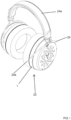
Figure 1 is a perspective view of a headset comprising the subject matter of the present invention, and -
Figure 2 is an exploded view of one of the headsets, -
Figure 3 is a perspective view of the chassis, -
Figure 4 is a cut along the dotted line IV-IV infigure 3 , -
Figure 5 is an alternative way of fixing the cover, -
Figure 6 is a detail of the second cover, from the view that it is hidden inside the chassis; and -
Figure 7 is a cut along the dotted line VII-VII infigure 3 . -
-
Figure 1 shows amain body 1, achassis 20, aheadband 24a,clamps 26 andpads 25. -
Figure 2 shows themain body 1, afirst cover 2, asecond cover 4, aspacer 8, a fixing means 9, aspring 10, aninner washer 11, a firstouter nut 13,passage openings transducer 21,projections rail 25, thepad 25a, apad ring 27, aplush ring 28, atransducer cover 29, afront ring 30 and ajack connector 31. -
Figure 3 shows themain body 1, thefirst cover 2 with first throughholes 3, thesecond cover 4, afirst end 6, asecond end 7, the fixing means 9, thespring 10, theinner washer 11, the firstouter nut 13 and thechassis 20. -
Figure 4 shows themain body 1, thefirst cover 2 with first throughholes 3, thesecond cover 4 with second throughholes 5, thefirst end 6, thesecond end 7, thespacer 8, the fixing means 9, thespring 10, theinner washer 11, the firstouter nut 13, a first passage opening 14 and thechassis 20. -
Figure 5 illustrates themain body 1, thefirst cover 2 with the first throughholes 3, thesecond cover 4, thefirst end 6, thesecond end 7, the fixing means 9, thespring 10, theinner washer 11, anouter washer 12, the firstouter nut 13, thepassage openings inner nut 17 and thechassis 20. -
Figure 6 shows thesecond cover 4 with the second throughholes 5, thepassage opening 16, and therails - Finally,
Figure 7 shows themain body 1, thefirst cover 2 with the first throughholes 3, thesecond cover 4 with the second throughholes 5, thespacer 8, theprojection 22 and therail 23. - Thus, the cover for headphones of the present invention is of the type which closes downstream of the
transducer chassis 20, inside saidchassis 20 there is atransducer 21 or sound reproducing means. - It comprises a
main body 1, which defines a first,free end 6, where the electro-acoustic transducer 21 is housed. - It also comprises a
second end 7, which is located on the other side of themain body 1, which is closed. - The
main body 1 comprises afirst cover 2 associated with or integrated inside themain body 1. That is, thefirst cover 2 may be part of themain body 1 or a separate element of the main body 1 (Fig. 1 ). - The
first cover 2 comprises a series of first throughholes 3 in thefirst cover 2 which allow sound, coming from thetransducer 21, to pass through thefirst cover 2. - It also comprises a
second cover 4, which is positioned faced to saidfirst cover 2 and parallel saidfirst cover 2 to saidsecond cover 4, with a series of second throughholes 5 made in saidsecond cover 4, also to allow the passage of the sound coming from thetransducer 21 or from the outside through it, saidsecond cover 4 closing thesecond end 7. - It also comprises a
spacer 8, made of fabric or non-woven fabric, with a sealing function, which allows sound to pass through it and at the same time separates thesecond cover 4 from thefirst cover 2 by sealing it. - On the one hand, this prevents dust and dirt from entering the earpiece through the second through-
holes 5, and on the other hand, it prevents thefirst cover 4 and thesecond cover 2 from rubbing against each other, and therefore from being damaged, when thefirst cover 4 and thesecond cover 2 are rotated in relation to each other, because if they are damaged, the quality of the reproduced sound will be impaired. - Furthermore, the
spacer 8 guarantees the total absence of unwanted vibrations, even at high hearing levels, as thespacer 8 absorbs these unwanted vibrations. - The material of the
non-woven spacer 8 may be, for example, felt. - Similarly, the invention comprises an
internal friction washer 11, arranged on thefirst cover 2, in the direction of thefirst end 6. Thiswasher 11 provides rotational freedom to the cover assembly while also giving it mechanical rigidity, preventing wear of thefirst cover 2. - It also includes a
spring 10 arranged on thefirst cover 2, in the direction of thefirst end 6, whose function is to maintain a constant pressure when thecovers spring 10 absorbs these stresses by compressing or decompressing. - In this way, the
spring 10 itself, by self-adjusting, ensures maximum precision in the closing or opening capacity of thecovers covers - In addition, this
spring 10, by conferring adaptability, guarantees the perfect assembly of different materials, e.g. wood, aluminium, plastic, ... - Finally, it comprises a fixing means 9 which passes through the
first cover 2, thesecond cover 4, the spacer means 8, through the first 14 and second throughholes washer 11 and thespring 10, which also serves as an axis of rotation about which thecovers - That is to say, the fixing means 9 ensures the perfect positioning inside the receiver of the aforementioned elements, since, by passing through them, it establishes the position of the elements and their interrelation with the rest of the elements.
- Thus, by rotating either the
first cover 2 or thesecond cover 4 or both, relative to the fixing means 9, it is in the open position when the first throughholes 3 are facing the second throughholes 5, thus in the position where the spatial effect of the sound reaches its greatest magnitude, but at the same time is subject to possible outside noises affecting the quality of the sound heard. - The closed position is when the first through
holes 3 and the second throughholes 4 are misaligned from each other, i.e. the throughholes - In this way, the sound coming from the
transducer 21 is either stopped or deflected, preventing the entry of sound from the outside into the earphone, losing the effect of spatiality, but sealing out sounds from the outside. - Optionally, the
first cover 2, thesecond cover 4 and thespacer element 8 adopt a circular configuration. This facilitates their rotations and makes it easier for the throughholes - Optionally, it could be configured (
Figures 2 and7 ) that thefirst cover 2 comprises at least someprojections rails second cover 4, therails second cover 4 with respect to thefirst cover 2. In this embodiment, it comprises twoprojections rails - There is the possibility of configuring that, between the open and closed position, the
first cover 2 and thesecond cover 4 rotate between 10 and 20°. In this way, the opening/closing effect would be achieved without disrupting the invention, as the turning radius is sufficient for opening and closing and has little impact on the materials because it is a short-travel movement. - It is possible to configure the first through
holes 3 and the second throughholes 5 closest to the perimeter of the circle to be larger in diameter than those closest to the centre of the circle. This is to take advantage of the antihelix of the pinna. - It is also possible to use a pair of nuts that are attached to the free end of the fixing means 9 (
Figure 5 ), afirst nut 13, external, as a lock nut, and asecond nut 17, internal. Thefirst nut 13 acts as a lock nut, ensuring that the entire cover assembly is perfectly secured. Thesecond nut 17 allows the pressure of thespring 10 to be adjusted during assembly. - In one embodiment it would be possible to have
washers inner washer 11 and theouter washer 12 on both sides of thespring 10. Thus, theinner washer 11 is in contact with thespring 10 and thefirst cover 2. - The
outer washer 12 secures thespring 10 by means of the nuts 13,17, the friction of thesecond nut 17 with thespring 10 falling on theouter washer 12, preventing the nuts 13,17 from performing this function, thus reducing the wear of both thespring 10 and thesecond nut 17. - For ease of manufacture, and in cases where noble materials are used to provide better sound quality, the
second cover 4 can be made of the same material as themain body 1, e.g. wood. - Thus, in a specific embodiment, the user would wear the earphones of the present invention on the pinnae.
- If I wanted to have spatial effect, i.e. open position, I would (in this embodiment) rotate the
second cover 4 until the first throughholes 3 coincide with the second throughholes 5, i.e. allowing sound to pass outwards. - At the same moment of rotation, the
internal washer 11 would compress thespring 10 against thestopper 13, facilitating the rotation of thesecond cover 2 and when the rotation is finished, the pressure of theinternal washer 11 on thespring 10 disappears and thespring 10 recovers the initial compression. - If the user then seeks to seal the sound, he would rotate in the opposite direction to that previously carried out, seeking to ensure that the first through
holes 3 are blocked by thesecond cover 4, i.e. by a surface of thesecond cover 4 which does not contain the second throughholes 5, thus preventing sound from escaping from the inside of the earphones. - The present invention describes a new cover for headband headphones. The examples mentioned herein are not limitative of the present invention, therefore it may have different applications and/or adaptations, all of them within the scope of the following claims.
Claims (9)
- Cover for headband headphones of the type that closes at the back of the headphone chassis (20), inside which there is a transducer (21) or sound reproducing medium, comprising a main body (1), which defines a first end (6), free, where the transducer (21) is housed, and a second end (7), and which comprises:- a first cover (2) associated with or integrated into the interior of the main body (1), with a series of first through holes (3) provided in the first cover (2),- a second cover (4), facing and parallel to said first cover (2), with a series of second through holes (5) performed in said second cover (4), said second cover (4) closing the second end (7),characterised in that it comprises:- a spacer (8), of woven or non-woven fabric, as a seal, which allows the passage of sound, separating the second cover (4) from the first cover (2) by sealing it,- an internal friction washer (11), arranged on the first cover (2), in the direction of the first end (6),- a helical spring (10), arranged over the washer (11),- fixing means (9) passing through the first cover (2), the second cover (4), the spacer (8), the washer (11) and the spring (10),rotating either the first cover (2) or the second cover (4) or both, relative to the fixing means (9), being in the open position when the first through holes (3) are facing to the second through holes (5) and being in the closed position when the first through holes (3) and the second through holes (5) are misaligned from each other.
- Cover, according to claim 1, characterised in that the first cover (2), the second cover (4) and the separating element (8) adopt a circular configuration.
- Cover, according to claim 2, characterised in that the first cover (2) comprises at least one projection (22) that moves along a rail (23) located on the second cover (4), the rail (23) defining the radius of rotation of the second cover (4) with respect to the first cover (2).
- Cover, according to claim 3, characterised in that between the open and closed position, the covers (2,4) rotate between themselves between 10 and 20°.
- Cover according to claim 2, characterised in that the first through holes (3) and the second through holes (5) closest to the perimeter of the circle are larger than those closest to the centre of the circle.
- Cover, according to claim 1, characterised in that the free end of the fixing means (9) comprises a stop (13), which regulates the compression pressure of the spring (10).
- Cover, according to claim 6, characterised in that the stop (13) is a first nut, in the form of a lock nut, and that it comprises a second nut (17), inside.
- Cover, according to claim 7, characterised in that at the free end of the fixing means (9) there is an external washer (12), between the stop (13) and the spring (10), said external washer (12) regulating the compression pressure of the spring (10).
- Cover, according to claim 1, characterised in that the second cover (4) is made of the same material as the main body (1).
Priority Applications (4)
| Application Number | Priority Date | Filing Date | Title |
|---|---|---|---|
| EP23383080.1A EP4546814B1 (en) | 2023-10-23 | 2023-10-23 | Cover for headphones |
| ES23383080T ES3065435T3 (en) | 2023-10-23 | 2023-10-23 | |
| CN202480068123.0A CN122074176A (en) | 2023-10-23 | 2024-10-16 | Cover assembly for earphone |
| PCT/IB2024/060116 WO2025088431A1 (en) | 2023-10-23 | 2024-10-16 | Cover for headphones |
Applications Claiming Priority (1)
| Application Number | Priority Date | Filing Date | Title |
|---|---|---|---|
| EP23383080.1A EP4546814B1 (en) | 2023-10-23 | 2023-10-23 | Cover for headphones |
Publications (3)
| Publication Number | Publication Date |
|---|---|
| EP4546814A1 true EP4546814A1 (en) | 2025-04-30 |
| EP4546814B1 EP4546814B1 (en) | 2026-02-25 |
| EP4546814C0 EP4546814C0 (en) | 2026-02-25 |
Family
ID=88838914
Family Applications (1)
| Application Number | Title | Priority Date | Filing Date |
|---|---|---|---|
| EP23383080.1A Active EP4546814B1 (en) | 2023-10-23 | 2023-10-23 | Cover for headphones |
Country Status (4)
| Country | Link |
|---|---|
| EP (1) | EP4546814B1 (en) |
| CN (1) | CN122074176A (en) |
| ES (1) | ES3065435T3 (en) |
| WO (1) | WO2025088431A1 (en) |
Citations (8)
| Publication number | Priority date | Publication date | Assignee | Title |
|---|---|---|---|---|
| US20050105755A1 (en) | 2003-11-17 | 2005-05-19 | Wen Hsiang Yueh | Modified earphone structure having closable opening |
| US20100272303A1 (en) | 2009-04-24 | 2010-10-28 | You-Ruei Lin | Headset |
| WO2011045782A1 (en) | 2009-10-15 | 2011-04-21 | Elad Avital | An earphone with toggle mechanism |
| US8521480B2 (en) | 2009-03-12 | 2013-08-27 | Etegent Technologies, Ltd. | Managing non-destructive evaluation data |
| US20160330537A1 (en) | 2015-05-06 | 2016-11-10 | Aliphcom | Hybrid headset tuned for open-back and closed-back operation |
| US9674596B2 (en) | 2015-11-03 | 2017-06-06 | International Business Machines Corporation | Headphone with selectable ambient sound admission |
| EP3089474B1 (en) | 2015-04-29 | 2018-06-13 | Harman International Industries, Incorporated | Adjustable opening headphones |
| US20230239609A1 (en) * | 2020-04-16 | 2023-07-27 | Burmester Audiosysteme Gmbh | Headphones |
-
2023
- 2023-10-23 EP EP23383080.1A patent/EP4546814B1/en active Active
- 2023-10-23 ES ES23383080T patent/ES3065435T3/es active Active
-
2024
- 2024-10-16 CN CN202480068123.0A patent/CN122074176A/en active Pending
- 2024-10-16 WO PCT/IB2024/060116 patent/WO2025088431A1/en not_active Ceased
Patent Citations (8)
| Publication number | Priority date | Publication date | Assignee | Title |
|---|---|---|---|---|
| US20050105755A1 (en) | 2003-11-17 | 2005-05-19 | Wen Hsiang Yueh | Modified earphone structure having closable opening |
| US8521480B2 (en) | 2009-03-12 | 2013-08-27 | Etegent Technologies, Ltd. | Managing non-destructive evaluation data |
| US20100272303A1 (en) | 2009-04-24 | 2010-10-28 | You-Ruei Lin | Headset |
| WO2011045782A1 (en) | 2009-10-15 | 2011-04-21 | Elad Avital | An earphone with toggle mechanism |
| EP3089474B1 (en) | 2015-04-29 | 2018-06-13 | Harman International Industries, Incorporated | Adjustable opening headphones |
| US20160330537A1 (en) | 2015-05-06 | 2016-11-10 | Aliphcom | Hybrid headset tuned for open-back and closed-back operation |
| US9674596B2 (en) | 2015-11-03 | 2017-06-06 | International Business Machines Corporation | Headphone with selectable ambient sound admission |
| US20230239609A1 (en) * | 2020-04-16 | 2023-07-27 | Burmester Audiosysteme Gmbh | Headphones |
Also Published As
| Publication number | Publication date |
|---|---|
| CN122074176A (en) | 2026-05-22 |
| EP4546814B1 (en) | 2026-02-25 |
| ES3065435T3 (en) | 2026-05-06 |
| EP4546814C0 (en) | 2026-02-25 |
| WO2025088431A1 (en) | 2025-05-01 |
Similar Documents
| Publication | Publication Date | Title |
|---|---|---|
| CN111800686B (en) | In-ear headphone device with active noise control | |
| US9131311B2 (en) | Canal phones with structure and method for selectively passing or blocking environmental ambient sound and switchable electrical connections | |
| US10250965B2 (en) | Multi-function bone conducting headphones | |
| EP0688143B1 (en) | Supra aural active noise reduction headphones | |
| US4088849A (en) | Headphone unit incorporating microphones for binaural recording | |
| EP3089474B1 (en) | Adjustable opening headphones | |
| JP5363825B2 (en) | Noise canceling headphones | |
| AU2005309381B2 (en) | Hearing protector | |
| US20230058427A1 (en) | Wireless headset with hearable functions | |
| WO2019035304A1 (en) | Sound output device | |
| JPH0256198A (en) | Headphone element and its assembly | |
| EP4546814B1 (en) | Cover for headphones | |
| US9510079B1 (en) | Dual function sound attenuating and enhancing headpiece | |
| US12177617B2 (en) | Wireless headset with improved wind noise resistance | |
| JP2019145964A (en) | earphone | |
| US8130971B2 (en) | Manually switching dual-mode hearing protector | |
| JP2019145965A (en) | earphone | |
| WO1991011078A1 (en) | Earphone device | |
| CN115668975A (en) | Earphone set | |
| JP3047451B2 (en) | Sound reproduction device | |
| EP4070566A1 (en) | Adaptive eartip for true wireless stereo headsets | |
| JPH02152396A (en) | Headphone device | |
| JPH03214893A (en) | Earphone device | |
| HK40087815A (en) | Headphones | |
| HK40044489A (en) | Apparatus with acoustic enhancement and method for the same |
Legal Events
| Date | Code | Title | Description |
|---|---|---|---|
| PUAI | Public reference made under article 153(3) epc to a published international application that has entered the european phase |
Free format text: ORIGINAL CODE: 0009012 |
|
| STAA | Information on the status of an ep patent application or granted ep patent |
Free format text: STATUS: THE APPLICATION HAS BEEN PUBLISHED |
|
| AK | Designated contracting states |
Kind code of ref document: A1 Designated state(s): AL AT BE BG CH CY CZ DE DK EE ES FI FR GB GR HR HU IE IS IT LI LT LU LV MC ME MK MT NL NO PL PT RO RS SE SI SK SM TR |
|
| STAA | Information on the status of an ep patent application or granted ep patent |
Free format text: STATUS: REQUEST FOR EXAMINATION WAS MADE |
|
| 17P | Request for examination filed |
Effective date: 20250604 |
|
| GRAP | Despatch of communication of intention to grant a patent |
Free format text: ORIGINAL CODE: EPIDOSNIGR1 |
|
| STAA | Information on the status of an ep patent application or granted ep patent |
Free format text: STATUS: GRANT OF PATENT IS INTENDED |
|
| INTG | Intention to grant announced |
Effective date: 20250915 |
|
| GRAS | Grant fee paid |
Free format text: ORIGINAL CODE: EPIDOSNIGR3 |
|
| GRAA | (expected) grant |
Free format text: ORIGINAL CODE: 0009210 |
|
| STAA | Information on the status of an ep patent application or granted ep patent |
Free format text: STATUS: THE PATENT HAS BEEN GRANTED |
|
| AK | Designated contracting states |
Kind code of ref document: B1 Designated state(s): AL AT BE BG CH CY CZ DE DK EE ES FI FR GB GR HR HU IE IS IT LI LT LU LV MC ME MK MT NL NO PL PT RO RS SE SI SK SM TR |
|
| REG | Reference to a national code |
Ref country code: CH Ref legal event code: F10 Free format text: ST27 STATUS EVENT CODE: U-0-0-F10-F00 (AS PROVIDED BY THE NATIONAL OFFICE) Effective date: 20260225 Ref country code: GB Ref legal event code: FG4D |
|
| REG | Reference to a national code |
Ref country code: IE Ref legal event code: FG4D |
|
| U01 | Request for unitary effect filed |
Effective date: 20260226 |
|
| U07 | Unitary effect registered |
Designated state(s): AT BE BG DE DK EE FI FR IT LT LU LV MT NL PT RO SE SI Effective date: 20260304 |
|
| REG | Reference to a national code |
Ref country code: ES Ref legal event code: FG2A Ref document number: 3065435 Country of ref document: ES Kind code of ref document: T3 Effective date: 20260506 |
|
| PG25 | Lapsed in a contracting state [announced via postgrant information from national office to epo] |
Ref country code: RS Free format text: LAPSE BECAUSE OF FAILURE TO SUBMIT A TRANSLATION OF THE DESCRIPTION OR TO PAY THE FEE WITHIN THE PRESCRIBED TIME-LIMIT Effective date: 20260525 |
|
| PG25 | Lapsed in a contracting state [announced via postgrant information from national office to epo] |
Ref country code: PL Free format text: LAPSE BECAUSE OF FAILURE TO SUBMIT A TRANSLATION OF THE DESCRIPTION OR TO PAY THE FEE WITHIN THE PRESCRIBED TIME-LIMIT Effective date: 20260225 |
|
| PG25 | Lapsed in a contracting state [announced via postgrant information from national office to epo] |
Ref country code: GR Free format text: LAPSE BECAUSE OF FAILURE TO SUBMIT A TRANSLATION OF THE DESCRIPTION OR TO PAY THE FEE WITHIN THE PRESCRIBED TIME-LIMIT Effective date: 20260526 |
|
| PG25 | Lapsed in a contracting state [announced via postgrant information from national office to epo] |
Ref country code: NO Free format text: LAPSE BECAUSE OF FAILURE TO SUBMIT A TRANSLATION OF THE DESCRIPTION OR TO PAY THE FEE WITHIN THE PRESCRIBED TIME-LIMIT Effective date: 20260525 |
|
| PG25 | Lapsed in a contracting state [announced via postgrant information from national office to epo] |
Ref country code: HR Free format text: LAPSE BECAUSE OF FAILURE TO SUBMIT A TRANSLATION OF THE DESCRIPTION OR TO PAY THE FEE WITHIN THE PRESCRIBED TIME-LIMIT Effective date: 20260225 |
|
| PG25 | Lapsed in a contracting state [announced via postgrant information from national office to epo] |
Ref country code: IS Free format text: LAPSE BECAUSE OF FAILURE TO SUBMIT A TRANSLATION OF THE DESCRIPTION OR TO PAY THE FEE WITHIN THE PRESCRIBED TIME-LIMIT Effective date: 20260625 |