EP4546795A1 - Media control method and vehicle-mounted terminal - Google Patents
Media control method and vehicle-mounted terminal Download PDFInfo
- Publication number
- EP4546795A1 EP4546795A1 EP23825799.2A EP23825799A EP4546795A1 EP 4546795 A1 EP4546795 A1 EP 4546795A1 EP 23825799 A EP23825799 A EP 23825799A EP 4546795 A1 EP4546795 A1 EP 4546795A1
- Authority
- EP
- European Patent Office
- Prior art keywords
- media
- target
- application system
- content
- media source
- Prior art date
- Legal status (The legal status is an assumption and is not a legal conclusion. Google has not performed a legal analysis and makes no representation as to the accuracy of the status listed.)
- Pending
Links
Images



Classifications
-
- B—PERFORMING OPERATIONS; TRANSPORTING
- B60—VEHICLES IN GENERAL
- B60R—VEHICLES, VEHICLE FITTINGS, OR VEHICLE PARTS, NOT OTHERWISE PROVIDED FOR
- B60R16/00—Electric or fluid circuits specially adapted for vehicles and not otherwise provided for; Arrangement of elements of electric or fluid circuits specially adapted for vehicles and not otherwise provided for
- B60R16/02—Electric or fluid circuits specially adapted for vehicles and not otherwise provided for; Arrangement of elements of electric or fluid circuits specially adapted for vehicles and not otherwise provided for electric constitutive elements
- B60R16/023—Electric or fluid circuits specially adapted for vehicles and not otherwise provided for; Arrangement of elements of electric or fluid circuits specially adapted for vehicles and not otherwise provided for electric constitutive elements for transmission of signals between vehicle parts or subsystems
-
- G—PHYSICS
- G06—COMPUTING OR CALCULATING; COUNTING
- G06F—ELECTRIC DIGITAL DATA PROCESSING
- G06F16/00—Information retrieval; Database structures therefor; File system structures therefor
- G06F16/40—Information retrieval; Database structures therefor; File system structures therefor of multimedia data, e.g. slideshows comprising image and additional audio data
- G06F16/43—Querying
-
- G—PHYSICS
- G06—COMPUTING OR CALCULATING; COUNTING
- G06F—ELECTRIC DIGITAL DATA PROCESSING
- G06F16/00—Information retrieval; Database structures therefor; File system structures therefor
- G06F16/40—Information retrieval; Database structures therefor; File system structures therefor of multimedia data, e.g. slideshows comprising image and additional audio data
- G06F16/43—Querying
- G06F16/435—Filtering based on additional data, e.g. user or group profiles
-
- G—PHYSICS
- G06—COMPUTING OR CALCULATING; COUNTING
- G06F—ELECTRIC DIGITAL DATA PROCESSING
- G06F3/00—Input arrangements for transferring data to be processed into a form capable of being handled by the computer; Output arrangements for transferring data from processing unit to output unit, e.g. interface arrangements
- G06F3/01—Input arrangements or combined input and output arrangements for interaction between user and computer
- G06F3/048—Interaction techniques based on graphical user interfaces [GUI]
- G06F3/0481—Interaction techniques based on graphical user interfaces [GUI] based on specific properties of the displayed interaction object or a metaphor-based environment, e.g. interaction with desktop elements like windows or icons, or assisted by a cursor's changing behaviour or appearance
- G06F3/0482—Interaction with lists of selectable items, e.g. menus
-
- G—PHYSICS
- G06—COMPUTING OR CALCULATING; COUNTING
- G06F—ELECTRIC DIGITAL DATA PROCESSING
- G06F3/00—Input arrangements for transferring data to be processed into a form capable of being handled by the computer; Output arrangements for transferring data from processing unit to output unit, e.g. interface arrangements
- G06F3/01—Input arrangements or combined input and output arrangements for interaction between user and computer
- G06F3/048—Interaction techniques based on graphical user interfaces [GUI]
- G06F3/0487—Interaction techniques based on graphical user interfaces [GUI] using specific features provided by the input device, e.g. functions controlled by the rotation of a mouse with dual sensing arrangements, or of the nature of the input device, e.g. tap gestures based on pressure sensed by a digitiser
-
- G—PHYSICS
- G06—COMPUTING OR CALCULATING; COUNTING
- G06F—ELECTRIC DIGITAL DATA PROCESSING
- G06F8/00—Arrangements for software engineering
- G06F8/60—Software deployment
- G06F8/61—Installation
-
- G—PHYSICS
- G06—COMPUTING OR CALCULATING; COUNTING
- G06F—ELECTRIC DIGITAL DATA PROCESSING
- G06F9/00—Arrangements for program control, e.g. control units
- G06F9/06—Arrangements for program control, e.g. control units using stored programs, i.e. using an internal store of processing equipment to receive or retain programs
- G06F9/44—Arrangements for executing specific programs
- G06F9/451—Execution arrangements for user interfaces
-
- H—ELECTRICITY
- H04—ELECTRIC COMMUNICATION TECHNIQUE
- H04N—PICTORIAL COMMUNICATION, e.g. TELEVISION
- H04N21/00—Selective content distribution, e.g. interactive television or video on demand [VOD]
- H04N21/20—Servers specifically adapted for the distribution of content, e.g. VOD servers; Operations thereof
- H04N21/23—Processing of content or additional data; Elementary server operations; Server middleware
- H04N21/232—Content retrieval operation locally within server, e.g. reading video streams from disk arrays
-
- H—ELECTRICITY
- H04—ELECTRIC COMMUNICATION TECHNIQUE
- H04N—PICTORIAL COMMUNICATION, e.g. TELEVISION
- H04N21/00—Selective content distribution, e.g. interactive television or video on demand [VOD]
- H04N21/20—Servers specifically adapted for the distribution of content, e.g. VOD servers; Operations thereof
- H04N21/25—Management operations performed by the server for facilitating the content distribution or administrating data related to end-users or client devices, e.g. end-user or client device authentication, learning user preferences for recommending movies
- H04N21/262—Content or additional data distribution scheduling, e.g. sending additional data at off-peak times, updating software modules, calculating the carousel transmission frequency, delaying a video stream transmission, generating play-lists
-
- H—ELECTRICITY
- H04—ELECTRIC COMMUNICATION TECHNIQUE
- H04N—PICTORIAL COMMUNICATION, e.g. TELEVISION
- H04N21/00—Selective content distribution, e.g. interactive television or video on demand [VOD]
- H04N21/40—Client devices specifically adapted for the reception of or interaction with content, e.g. set-top-box [STB]; Operations thereof
- H04N21/41—Structure of client; Structure of client peripherals
- H04N21/414—Specialised client platforms, e.g. receiver in car or embedded in a mobile appliance
-
- H—ELECTRICITY
- H04—ELECTRIC COMMUNICATION TECHNIQUE
- H04N—PICTORIAL COMMUNICATION, e.g. TELEVISION
- H04N21/00—Selective content distribution, e.g. interactive television or video on demand [VOD]
- H04N21/40—Client devices specifically adapted for the reception of or interaction with content, e.g. set-top-box [STB]; Operations thereof
- H04N21/41—Structure of client; Structure of client peripherals
- H04N21/414—Specialised client platforms, e.g. receiver in car or embedded in a mobile appliance
- H04N21/41422—Specialised client platforms, e.g. receiver in car or embedded in a mobile appliance located in transportation means, e.g. personal vehicle
-
- H—ELECTRICITY
- H04—ELECTRIC COMMUNICATION TECHNIQUE
- H04N—PICTORIAL COMMUNICATION, e.g. TELEVISION
- H04N21/00—Selective content distribution, e.g. interactive television or video on demand [VOD]
- H04N21/40—Client devices specifically adapted for the reception of or interaction with content, e.g. set-top-box [STB]; Operations thereof
- H04N21/43—Processing of content or additional data, e.g. demultiplexing additional data from a digital video stream; Elementary client operations, e.g. monitoring of home network or synchronising decoder's clock; Client middleware
- H04N21/443—OS processes, e.g. booting an STB, implementing a Java virtual machine in an STB or power management in an STB
-
- H—ELECTRICITY
- H04—ELECTRIC COMMUNICATION TECHNIQUE
- H04N—PICTORIAL COMMUNICATION, e.g. TELEVISION
- H04N21/00—Selective content distribution, e.g. interactive television or video on demand [VOD]
- H04N21/40—Client devices specifically adapted for the reception of or interaction with content, e.g. set-top-box [STB]; Operations thereof
- H04N21/47—End-user applications
- H04N21/482—End-user interface for programme selection
-
- H—ELECTRICITY
- H04—ELECTRIC COMMUNICATION TECHNIQUE
- H04N—PICTORIAL COMMUNICATION, e.g. TELEVISION
- H04N21/00—Selective content distribution, e.g. interactive television or video on demand [VOD]
- H04N21/40—Client devices specifically adapted for the reception of or interaction with content, e.g. set-top-box [STB]; Operations thereof
- H04N21/47—End-user applications
- H04N21/482—End-user interface for programme selection
- H04N21/4828—End-user interface for programme selection for searching programme descriptors
Definitions
- Embodiments of the present disclosure relate to the field of software control, and in particular, to a media control method and a vehicle-mounted terminal.
- An objective of embodiments of the present disclosure is to provide a media control method, a vehicle-mounted terminal, a storage medium, and a computer program product, to help a user obtain content resources from different media sources.
- a media control method is provided, which is applied to a first converged media application system. Interfaces of multiple media sources are integrated in the first converged media application system.
- the media control method includes: A content identifier of target content and a media source identifier of a target media source are obtained.
- the target media source is a media source of the target content.
- the target content is obtained from a target media server based on the content identifier through a target interface.
- the target interface is an interface corresponding to the media source identifier, and the target media server is a media server of the target media source.
- the method further includes: The target media source is determined in the multiple media sources in response to a first input of a user. A content list of the target media source is displayed. The target content is determined in response to a second input of the user for the content list.
- the method further includes:
- the target media source is determined in the multiple media sources in response to a first input of a user.
- a search keyword entered by the user in a search window is received.
- a search request including the search keyword is submitted to the target media server through the target interface, and a search result of the target media server for the search keyword is received.
- the target content is determined in the search result in response to a third input of the user for the search result.
- the method further includes: A search keyword entered by a user in a converged search window is received.
- a search request including the search keyword is submitted to a media server of each media source through an interface of the media source, and a search result of the media server of the media source for the search keyword is received.
- the target content is determined in search results in response to a third input of the user for the search results.
- a content identifier of target content and a media source identifier of a target media source are obtained includes:
- Push information under a target account is obtained from a server end after the target account is logged in.
- the content identifier of the target content and the media source identifier of the target media source are obtained from the push information.
- the push information is generated by the server end based on the content identifier of the target content and the media source identifier of the target media source that are submitted by a second media application system to which the target account is logged in.
- the first converged media application system is installed on a vehicle-mounted terminal, and the second media application system is installed on a mobile terminal.
- the first converged media application system is installed on a vehicle-mounted terminal or on a mobile terminal.
- the interface of the media source is an SDK interface or an API interface.
- a media control method is further provided, which is applied to a second media application system.
- the media control method includes: A content identifier of target content and a media source identifier of a target media source are sent to a server end, so that the server end delivers push information to a first converged media application system. Interfaces of multiple media sources are integrated in the first converged media application system.
- the push information includes the content identifier of the target content and the media source identifier of the target media source, so that the first converged media application system obtains the target content from a target media server based on the content identifier through a target interface.
- the target interface is an interface, of the first converged media application system, corresponding to the media source identifier, and the target media server is a media server of the target media source.
- interfaces of multiple media sources are integrated in the second media application system.
- the method further includes: A search keyword entered by a user in a converged search window of the second media application system is received.
- a search request including the search keyword is submitted to a media server of each media source of the second media application system through an interface of the media source, and a search result of the media server of the media source for the search keyword is received.
- the target content is determined in search results in response to a third input of the user for the search results.
- the first converged media application system is installed on a vehicle-mounted terminal and the second media application system is installed on a mobile terminal, or the first converged media application system is installed on a mobile terminal and the second media application system is installed on a vehicle-mounted terminal.
- a media control method is further provided, which is applied to a media system.
- the media system includes a first converged media application system, a second media application system, and a server end.
- the first converged media application system is installed on a vehicle-mounted terminal
- the second media application system is installed on a mobile terminal
- interfaces of multiple media sources are integrated in the first converged media application system.
- the media control method includes: The second media application system sends a content identifier of target content and a media source identifier of a target media source to the server end.
- the server end delivers push information to the first converged media application system.
- the first converged media application system obtains the content identifier of the target content and the media source identifier of the target media source from the push information.
- the first converged media application system obtains the target content from a target media server based on the content identifier through a target interface.
- the target interface is an interface, of the first converged media application system, corresponding to the media source identifier, and the target media server is a media server of the target media source.
- interfaces of multiple media sources are integrated in the second media application system.
- the method further includes: The second media application system receives a search keyword entered by a user in a converged search window of the second media application system.
- the second media application system submits, to a media server of each media source of the second media application system through an interface of the media source a search request including the search keyword, and receives a search result of the media server of the media source for the search keyword.
- the second media application system determines the target content in search results in response to a third input of the user for the search results.
- FIG. 2 is a diagram of a structure of a hardware configuration of a vehicle-mounted terminal 2000 to which a media control method in embodiments of the present disclosure is applicable.
- the vehicle-mounted terminal 2000 may include a processor 2100, a memory 2200, an interface apparatus 2300, a display apparatus 2400, an input apparatus 2500, a speaker 2600, and the like.
- the processor 2100 is configured to execute a computer program.
- the computer program may use an instruction set of an architecture, for example, x86, Arm, RISC, MIPS, or SSE.
- the memory 2200 includes, for example, a ROM (read-only memory), a RAM (random access memory), and a non-volatile memory such as a hard disk.
- the interface apparatus 2300 is a physical interface, for example, a USB interface or a headset jack.
- the display apparatus 2400 may be a display, and the display may be a touchscreen.
- the input apparatus 2500 may include a keyboard, a mouse, and the like, and may further include a touch apparatus and a microphone.
- FIG. 2 shows multiple apparatuses of the vehicle-mounted terminal 2000
- the vehicle-mounted terminal 2000 in this embodiment of the present disclosure may include only a part of the apparatuses, or may further include another apparatus. This is not limited herein.
- the mobile terminal 3000 may include a processor 3100, a memory 3200, an interface apparatus 3300, a display apparatus 3400, an input apparatus 3500, a speaker 3600, and the like.
- the processor 3100 is configured to execute a computer program.
- the computer program may use an instruction set of an architecture, for example, x86, Arm, RISC, MIPS, or SSE.
- the memory 3200 includes, for example, a ROM (read-only memory), a RAM (random access memory), and a non-volatile memory such as a hard disk.
- the interface apparatus 3300 is a physical interface, for example, a USB interface or a headset jack.
- the display apparatus 3400 may be a display, and the display may be a touchscreen.
- the input apparatus 3500 may include a keyboard, a mouse, and the like, and may further include a touch apparatus and a microphone.
- the memory 3200 of the mobile terminal 3000 is configured to store the computer program, and the computer program is used to control the processor 3100 to perform operations to implement a media control method according to any embodiment.
- the computer program is used to control the processor 3100 to perform operations to implement a media control method according to any embodiment.
- a person skilled in the art may design the computer program according to a solution disclosed in this specification. How the computer program is used to control the processor 3100 to perform the operations is well-known in the art. Therefore, details are not described herein again.
- FIG. 4 shows an application scenario of a media control method according to an embodiment of the present disclosure.
- a first converged media application system is installed on a vehicle-mounted terminal, and interfaces of multiple media sources are integrated in the first converged media application system.
- a second media application system is installed on a mobile terminal, and the mobile terminal may be, for example, a mobile phone, a tablet, or another mobile device. This is not limited herein.
- the second media application system is also a converged media system. In other words, interfaces of multiple media sources are integrated in the second media application system.
- a server end is a server end corresponding to the first converged media application system and the second media application system, and provides service support for the first converged media application system and the second media application system.
- FIG. 4 shows only an example of a media source 1 and a media source 2.
- this embodiment of the present disclosure is not limited thereto, and a quantity of media sources may be set according to an actual situation.
- an embodiment of the present disclosure provides a converged media application system 1000.
- the converged media application system 1000 includes a content obtaining module 1100, a converged display module 1200, and interfaces 1300 of multiple media sources.
- the content obtaining module 1100 is configured to obtain content from servers of the media sources through the interfaces 1300 of the media sources.
- the converged display module 1200 is configured to display the content obtained by the content obtaining module.
- the converged media application system 1000 may be a first converged media application system or a second media application system.
- an embodiment of the present disclosure provides a media control method.
- the media control method may be applied to a first converged media application system.
- the media control method may be implemented by the vehicle-mounted terminal 2000 shown in FIG. 2 .
- the media control method may include the following steps S2100 and S2200.
- Step S2100 A content identifier of target content and a media source identifier of a target media source are obtained.
- the target media source is a media source of the target content.
- the content identifier of the target content and the media source of the target content may be learned of.
- the media source of the target content is the target media source.
- the content identifier of the target content is used to mark the target content.
- Each piece of target content corresponds to a different content identifier.
- the content identifier of the target content may be a string or a data address corresponding to the target content.
- the content identifier of the target content may be information such as an address of the target content, a name of the target content, and an author of the target content.
- Step S2200 The target content is obtained from a target media server based on the content identifier through a target interface.
- the target interface is an interface corresponding to the media source identifier
- the target media server is a media server of the target media source.
- the first converged media application system transmits the content identifier of the target content to the target media server through the target interface over a network.
- the target media server searches, based on the content identifier of the target content, a media database corresponding to the target media server, to obtain the target content corresponding to the content identifier.
- the target media server then sends the target content to the first converged media application system through the target interface.
- An interface corresponding to the media source identifier of the target media source is the target interface.
- the media control method provided in this embodiment of the present disclosure is performed by the first converged media application system installed on the vehicle-mounted terminal.
- An interface of at least one media source is integrated in the first converged media application system.
- the content identifier of the target content and the media source identifier of the target media source are obtained, and then the target content is obtained from the target media server based on the content identifier through the target interface.
- the target interface is the interface corresponding to the media source identifier.
- the target media server is the media server of the target media source.
- an embodiment of the present disclosure further provides a media control method.
- the media control method may be applied to a first converged media application system.
- the media control method may be implemented by the vehicle-mounted terminal 2000 shown in FIG. 2 .
- the media control method may include the following steps S3100 to S3500.
- Step S3100 A target media source is determined in multiple media sources in response to a first input of a user.
- the first converged media application system may display all media sources.
- the user completes the first input on a touchscreen.
- the first input may be an input of the user using gesture touch, or may be an input of the user using voice control.
- the first input may be performing selection from the multiple media sources, to obtain the target media source that matches a user requirement.
- the target media source includes a media source identifier.
- the media source identifier is used to mark the target media source.
- one or more media sources may be determined in the multiple media sources. This is not limited herein.
- Step S3200 A content list of the target media source is displayed.
- the first converged media application system switches a media source to the target media source in response to the first input of the user.
- the content list in the target media source is displayed on the display apparatus 2400 of the vehicle-mounted terminal 2000.
- the content list is a hot song or station list automatically pushed in the target media source, or may be a song or station list recommended based on a user history record or an individual preference. Specific display content of the content list may be set according to an actual situation. This is not limited herein.
- multiple media sources are displayed on the left side of an interface of the first converged media application system, and a content area is displayed on the right side of the interface.
- the media source switches to the selected target media source, and the content area displays a content list in the target media source.
- the content list is a hot song or station list automatically pushed in the target media source.
- Step S3300 Target content is determined in response to a second input of the user for the content list.
- step S3300 the user selects, from the content list of the target media source, a song or a station that has been loaded, that is, performs the second input.
- the first converged media application system determines, based on the second input of the user, the target content selected based on the second input.
- the target content includes a content identifier.
- the content identifier may be used to mark the target content. Each piece of target content corresponds to a different content mark, and the content identifier may be a string or a data address corresponding to the target content.
- step S3400 the content identifier corresponding to the target content determined in the foregoing content may be obtained based on the target content. Then, the corresponding media source identifier may be obtained based on the determined target media source.
- the media source corresponding to the target content is the target media source.
- the target media source transmits the content identifier of the target content to the target media server through the target interface over a network.
- the target media server may search, based on the content identifier, a media database corresponding to the target media server, to obtain the target content corresponding to the content identifier.
- the target media server may transmit the target content to the first converged media application system through the target interface, and the target media source plays the transmitted target content.
- an embodiment of the present disclosure further provides a media control method.
- the media control method may be applied to a first converged media application system.
- the media control method may be implemented by the vehicle-mounted terminal 2000 shown in FIG. 2 .
- the media control method may include the following steps S4100 to S4600.
- Step S4100 A target media source is determined in multiple media sources in response to a first input of a user.
- the first converged media application system may display all media sources.
- the user completes the first input on a touchscreen.
- the first input may be an input of the user using gesture touch, or may be an input of the user using voice control.
- the first input may be performing selection from the multiple media sources, to obtain the target media source that matches a user requirement.
- the target media source includes a media source identifier.
- the media source identifier is used to mark the target media source.
- one or more media sources may be determined in the multiple media sources. This is not limited herein.
- Step S4200 A search keyword entered by the user in a search window is received.
- the user may enter the search keyword in a search window corresponding to the target media source.
- the search keyword may be a combination of Chinese, English, or a number, or another language and symbol. This is not limited herein.
- Step S4300 A search request including the search keyword is submitted to a target media server through a target interface, and a search result of the target media server for the search keyword is received.
- the target media source submits, to the corresponding target media server through the target interface, the search request including the search keyword, and transmits the search keyword to the target media server over a network.
- the target media server searches, based on the search keyword, a media database corresponding to the target media server, to obtain the search result corresponding to the search keyword.
- Target content may be one or more search results that match the keyword. If there is no matched search result, no search result is returned, and no search result is displayed in the target media source. If there are one or more matched search results, the target media server transmits the search result to the target media source of the first converged media application system through the target interface.
- the target media source receives the found search result, and displays the search result on an interface of the target media source.
- the search results may be sequentially sorted based on matching degrees between the search results and the keyword, or may be sequentially sorted based on byte lengths of the search results. This is not limited herein.
- Step S4400 The target content is determined in the search result in response to a third input of the user for the search result.
- step S4400 the user performs selection from the search result displayed in the target media source, that is, performs the third input.
- the target media source determines the target content in the search result based on the third input of the user. There may be one or more pieces of target content determined based on the third input. This is not limited herein.
- Step S4500 A content identifier of the target content and the media source identifier of the target media source are obtained.
- the target media source is a media source of the target content.
- step S4500 the content identifier corresponding to the target content determined in the foregoing content may be obtained based on the target content.
- the corresponding media source identifier may be obtained based on the target media source determined in step S4100.
- the media source corresponding to the target content is the target media source.
- Step S4600 The target content is obtained from the target media server based on the content identifier through the target interface.
- the target interface is an interface corresponding to the media source identifier
- the target media server is a media server of the target media source.
- the target media source transmits the content identifier of the target content to the target media server through the target interface over a network.
- the target media server may search, based on the content identifier, a media database corresponding to the target media server, to obtain the target content corresponding to the content identifier.
- the target media server may transmit the target content to the first converged media application system through the target interface, and the target media source plays the transmitted target content.
- the target content transmitted by the target media server to the target media source includes an audio data file corresponding to the target content.
- the audio data file may be directly played in the target media source.
- An interface corresponding to the media source identifier of the target media source may be determined based on the media source identifier as the target interface.
- Each media source has a media server corresponding to the media source.
- Each media server is set with a corresponding media database.
- an embodiment of the present disclosure further provides a media control method.
- the media control method may be applied to a first converged media application system.
- the media control method may be implemented by the vehicle-mounted terminal 2000 shown in FIG. 2 .
- the media control method may include the following steps S5100 to S5500.
- Step S5100 A search keyword entered by a user in a converged search window is received.
- the user may enter the search keyword in the converged search window.
- the search keyword may be a combination of Chinese, English, or a number, or another language and symbol. This is not limited herein.
- Step S5200 A search request including the search keyword is submitted to a media server of each media source through an interface of the media source, and a search result of the media server of the media source for the search keyword is received.
- step S5200 the search request for the search keyword is initiated to the media server corresponding to each media source through a target interface corresponding to the media source, and the search keyword is transmitted to a target media server of the media source over a network.
- the target media server searches, based on the search keyword, a media database corresponding to the target media server, to obtain the search result corresponding to the search keyword.
- the first converged media application system receives the found search result, and displays the search result on the converged search interface of the first converged media application.
- the search results may be sequentially sorted based on matching degrees between the search results and the keyword, or may be sequentially sorted based on byte lengths of the search results. This is not limited herein.
- Step S5300 Target content is determined in the search results in response to a third input of the user for the search results.
- step S5300 the user performs selection from the search results displayed on the converged search interface, that is, performs the third input.
- a selected search result is used as the target content based on the third input of the user.
- Step S5400 A content identifier of the target content and a media source identifier of the target media source are obtained.
- the target media source is a media source of the target content.
- the content identifier corresponding to the target content may be obtained based on the target content.
- the media source identifier corresponding to the target media source may be obtained based on the target media source determined in step S5300, and an interface corresponding to the media source identifier may be determined as a target interface.
- Step S5500 The target content is obtained from a target media server based on the content identifier through the target interface.
- the target interface is the interface corresponding to the media source identifier, and the target media server is a media server of the target media source.
- the target media source transmits the content identifier of the target content to the target media server through the target interface over a network.
- the target media server may search, based on the content identifier, a media database corresponding to the target media server, to obtain the target content corresponding to the content identifier.
- the target media server may transmit the target content to the first converged media application system through the target interface, and the target media source plays the transmitted target content.
- the target content transmitted by the target media server to the target media source includes an audio data file corresponding to the target content.
- the audio data file may be directly played in the target media source.
- the interface corresponding to the media source identifier of the target media source may be determined based on the media source identifier as the target interface.
- Each media source has a media server corresponding to the media source.
- Each media server is set with a corresponding media database.
- an embodiment of the present disclosure further provides a media control method.
- the media control method may be applied to a second media application system. Interfaces of multiple media sources are integrated in the second media application system.
- the media control method may be implemented by the mobile terminal 3000 shown in FIG. 3 .
- the media control method may include the following steps S6100 to S6400.
- Step S6100 A search keyword entered by a user in a converged search window of the second application system is received.
- a first converged media application system is installed on the vehicle-mounted terminal 2000
- the second media application system is installed on a mobile terminal of the user, for example, a mobile phone, a tablet, or another mobile device.
- a mobile terminal of the user for example, a mobile phone, a tablet, or another mobile device.
- the user enters the search keyword in the converged search window of the second media application system.
- the search keyword may be a combination of Chinese, English, or a number, or another language and symbol. This is not limited herein.
- Step S6200 A search request including the search keyword is submitted to a media server of each media source of the second application system through an interface of the media source, and a search result of the media server of the media source for the search keyword is received.
- the second media application system submits, to the media server of each media source through a target interface corresponding to the media source, the search request including the search keyword, and transmits the search keyword to a target media server of the media source over a network.
- the target media server searches, based on the search keyword, a media database corresponding to the target media server, to obtain the search result corresponding to the search keyword. There may be one or more search results that match the keyword. If there is no matched search result, no target content is returned, and no search result is displayed on a converged search interface. If there are one or more matched search results, the target media server transmits the search result to the second media application system through the target interface, and displays the search result on the converged search interface.
- the search results may be sequentially sorted based on matching degrees between the search results and the keyword, or may be sequentially sorted based on byte lengths of the search results. This is not limited herein.
- Step S6300 Target content is determined in the search results in response to a third input of the user for the search results.
- step S6300 the user performs selection from the search results displayed on the converged search interface of the second media application system, that is, performs the third input.
- a selected search result is determined as the target content based on the third input of the user. Because the search results are obtained by the multiple media sources of the second media application system by separately performing searching based on the search keyword, when the target content is determined, a content identifier of the target content is determined, and a media source corresponding to the target content is also determined as a target media source. On the basis of determining the target media source, a media source identifier of the target media source may be determined.
- Step S6400 The content identifier of the target content and the media source identifier of the target media source are sent to a server end, so that the server end delivers push information to the first converged media application system.
- step S6400 the second media application system sends the determined content identifier of the target content and the determined media source identifier of the target media source to the server end over a network, and then the server end generates the push information and delivers the push information to the first converged media application system.
- the push information generated by the server end includes the determined content identifier of the target content and the determined media source identifier of the target media source.
- the first converged media application system is installed on a vehicle-mounted terminal and the second media application system is installed on a mobile terminal, or the first converged media application system is installed on a mobile terminal and the second media application system is installed on a vehicle-mounted terminal.
- the first converged media application system may be installed on a vehicle-mounted terminal, and the second media application system is installed on a mobile terminal.
- the first converged media application system may alternatively be installed on a mobile terminal, and the second media application system may alternatively be installed on a vehicle-mounted terminal. Whether the first converged media application system or the second media application system is installed on a mobile terminal or a vehicle-mounted terminal may be manually set according to an actual situation. This is not limited herein.
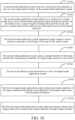
- an embodiment of the present disclosure further provides a media control method.
- the media control method may be applied to a media system.
- the media system includes a first converged media application system, a second media application system, and a server end.
- the first converged media application system is installed on a vehicle-mounted terminal
- the second media application system is installed on a mobile terminal
- interfaces of multiple media sources are integrated in the first converged media application system.
- the second media application system is also a converged media system. In other words, interfaces of multiple media sources are also integrated in the second media application system.
- the media control method may include the following steps S7100 to S7700.
- Step S7100 The second media application system receives a search keyword entered by a user in a converged search window of the second media application system.
- the first converged media application system is installed on the vehicle-mounted terminal 2000
- the second media application system is installed on a mobile terminal of the user, for example, a mobile phone, a tablet, or another mobile device.
- a mobile terminal of the user for example, a mobile phone, a tablet, or another mobile device.
- the user enters the search keyword in the converged search window of the second media application system.
- the search keyword may be a combination of Chinese, English, or a number, or another language and symbol. This is not limited herein.
- Step S7200 The second media application system submits, to a media server of each media source of the second media application system through an interface of the media source, a search request including the search keyword, and receives a search result of the media server of the media source for the search keyword.
- the second media application system submits, to the media server of each media source through a target interface corresponding to the media source, the search request including the search keyword, and transmits the search keyword to a target media server of the media source over a network.
- the target media server searches, based on the search keyword, a media database corresponding to the target media server, to obtain the search result corresponding to the search keyword. There may be one or more search results that match the keyword. If there is no matched search result, no target content is returned, and no search result is displayed on a converged search interface.
- the target media server transmits the search result to the second media application system through the target interface, and displays the search result in a column on the converged search interface of the second media application system.
- each column includes information such as a title, a singer, an album, and duration.
- the search results may be sequentially sorted based on matching degrees between the search results and the keyword, or may be sequentially sorted based on byte lengths of the search results. This is not limited herein.
- Step S7300 The second media application system determines target content in the search results in response to a third input of the user for the search results.
- step S7300 the user performs selection from the search results displayed on the converged search interface of the second media application system, that is, performs the third input.
- a selected search result is determined as the target content based on the third input of the user. Because the search results are obtained by the multiple media sources of the second media application system by separately performing searching based on the search keyword, when the target content is determined, a content identifier of the target content is determined, and a media source corresponding to the target content is also determined as a target media source. On the basis of determining the target media source, a media source identifier of the target media source may be determined.
- Step S7400 The second media application system sends the content identifier of the target content and the media source identifier of the target media source to the server end.
- step S7400 the second media application system sends the determined content identifier of the target content and the determined media source identifier of the target media source to the server end over a network.
- push information is generated by the server end based on the content identifier of the target content and the media source identifier of the target media source that are submitted by the second media application system to which a target account is logged in.
- the first converged media application system is installed on the vehicle-mounted terminal, and the second media application system is installed on the mobile terminal.
- the server end receives the content identifier of the target content and the media source identifier of the target media source that are sent by the second media application system.
- the server generates the push information based on the content identifier of the target content and the media source identifier of the target media source.
- the first converged media application system may be installed on a vehicle-mounted terminal, and the second media application system may be installed on a mobile terminal.
- the first converged media application system may alternatively be installed on a mobile terminal, and the second media application system may alternatively be installed on a vehicle-mounted terminal.
- the target account needs to be logged into the second media application system, and a login status of the target account on the second media application system is a logged-in state.
- the target account may be obtained by the user through self-registration or in another manner.
- the target account logged into the second media application system needs to be consistent with an account logged into the first converged media application system, or the target account logged into the second media application system may be an associated sub-account of the account logged into the first converged media application system.
- Step S7500 The server end delivers the push information to the first converged media application system.
- the server end delivers the generated push information to the first converged media application system.
- the push information generated by the server end includes the content identifier of the target content and the media source identifier of the target media source.
- the first converged media application system may directly receive the push information under the target account that is sent by the server end. If the in-vehicle infotainment system is in a sleep or power-off state, when the in-vehicle infotainment system is powered on next time, the first converged media application system may automatically receive push information delivered by a target media server.
- Step S7600 The first converged media application system obtains the content identifier of the target content and the media source identifier of the target media source from the push information.
- step S7600 the first converged media application system obtains the content identifier of the target content and the media source identifier of the target media source from the received push information. After the media identifier of the target media source is obtained, an interface corresponding to the media source identifier of the target media source may be determined, and the interface is used as a target interface.
- the first converged media application system may receive the push information under the target account that is sent by the server end.
- the target account on the first converged media application system is in the logged-in state, and the first converged media application system may directly receive the push information under the target account that is sent by the server end.
- the in-vehicle infotainment system of the vehicle-mounted terminal is in the sleep or power-off state, when the in-vehicle infotainment system of the vehicle-mounted terminal is powered on next time, the target account is automatically logged into the first converged media application system, and the first converged media application system automatically receives the push information delivered by the server end.
- Step S7700 The first converged media application system obtains the target content from a target media server based on the content identifier through the target interface.
- the target interface is an interface, of the first converged media application system, corresponding to the media source identifier, and the target media server is a media server of the target media source.
- the target media source transmits the content identifier of the target content to the target media server through the target interface over a network.
- the target media server may search, based on the content identifier, a media database corresponding to the target media server, to obtain the target content corresponding to the content identifier.
- the target media server may transmit the target content to the first converged media application system through the target interface, and the target media source plays the transmitted target content.
- the target content transmitted by the target media server to the target media source includes an audio data file corresponding to the target content.
- the audio data file may be directly played in the target media source.
- the interface corresponding to the media source identifier of the target media source may be determined based on the media source identifier as the target interface.
- Each media source has a media server corresponding to the media source.
- Each media server is set with a corresponding media database.
- the user may perform an operation on the mobile terminal, select the target content on the mobile terminal, and push the target content to the server end. Then, the server end delivers the push message to the vehicle-mounted terminal.
- the vehicle-mounted terminal When the vehicle-mounted terminal is in a normal working state, the push message is obtained in real time.
- the push message may be automatically obtained when the in-vehicle infotainment system of the vehicle-mounted terminal is powered on next time. In this way, convenience in user operation is improved.
- a media server separately exchanges data with a first converged media application system and a second media application system.
- the following uses a specific example to describe a process and a principle of transmitting push information by the second media application system to the first converged media application system in the present disclosure.
- a same target account is logged into the first converged media application system and the second media application system, and a user may operate in the second media application system.
- multiple media source options such as A music, B music, C music, and D music are separately set below the search window.
- a search keyword is entered in the converged search window, and a search button is clicked, to transmit the search keyword to a target media server of each media source through a target interface corresponding to the media source over a network.
- the target media server searches, based on the search keyword, a media database in a memory of the target media server, to obtain a search result corresponding to the keyword. There may be one or more search results that match the search keyword.
- each column includes information such as a title, a singer, an album, and duration.
- a selected search result is target content.
- a content identifier of the target content and a media source identifier of a target media source may be sent to a server end by clicking a push button corresponding to the selected search result.
- the target media source is also determined, so that the content identifier of the target content and the media source identifier of the target media source can be determined.
- a target interface corresponding to the media source identifier may be determined based on the media source identifier.
- the second media application system sends the content identifier and the media source identifier of the target media source to the server end through the target interface over a network.
- the server end generates push information based on the uploaded content identifier of the target content and the uploaded media source identifier of the target media source.
- the server end then transmits the push information to the first converged media application system over a network.
- the push information includes the content identifier of the target content and the media source identifier of the target media source.
- the first converged media application system directly receives the push information sent by the server end. If the in-vehicle infotainment system is in a sleep or power-off state, when the in-vehicle infotainment system of a vehicle-mounted terminal is powered on next time, the target account is automatically logged into the first converged media application system, and the first converged media application system receives the push information delivered by the server end.
- the first converged media application system automatically receives the push information from the server end.
- the push information includes the content identifier of the target content and the media source identifier of the target media source.
- the content identifier is transmitted to a target media server through the target interface corresponding to the media source identifier over a network.
- the target media server searches, based on the content identifier, a media database corresponding to the target media server, to obtain the target content corresponding to the content identifier.
- the target media server transmits the target content to the target media source through the target interface, and plays the target content.
- the target content transmitted by the target media server to the target media source in the first converged media application system includes a corresponding audio data file, and the audio data file may be directly played in the target media source.
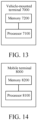
- embodiments of the present disclosure further provide a vehicle-mounted terminal 7000.
- the vehicle-mounted terminal 7000 may include a processor 7100 and a memory 7200.
- the memory 7200 stores computer instructions. When the computer instructions are run by the processor 7100, steps performed by the first converged media application system in the media control method in any embodiment of the present disclosure are performed.
- a mobile terminal 8000 is further provided.
- the mobile terminal 8000 may include a processor 8100 and a memory 8200.
- the memory 8200 stores computer instructions. When the computer instructions are run by the processor 8100, steps performed by the second media application system in the media control method in any embodiment of the present disclosure are performed.
- embodiments of the present disclosure further provide a computer-readable storage medium, storing computer instructions.
- the computer instructions When the computer instructions are run by a processor, the media control method in any method embodiment of the present disclosure is implemented.
- a computer-readable storage medium is further provided.
- the computer-readable storage medium stores computer instructions.
- steps performed by the first converged media application system in the media control method in any method embodiment of the present disclosure are implemented.
- a computer-readable storage medium is further provided.
- the computer-readable storage medium stores computer instructions.
- steps performed by the second media application system in the media control method in any method embodiment of the present disclosure are implemented.
- embodiments of the present disclosure further provide a computer program product.
- steps performed by the first converged media application system in the media control method in any embodiment of the present disclosure or steps performed by the second media application system in the media control method in any embodiment of the present disclosure are implemented.
- the present disclosure may be implemented as a system, a method, and/or a computer program product.
- the computer program product may include a computer-readable storage medium that carries computer-readable program instructions used to enable the processor 2100 to implement aspects of the present disclosure.
- the computer-readable storage medium may be a tangible device that can maintain and store an instruction used by an instruction execution device.
- the computer-readable storage medium may be, for example, but is not limited to, an electric storage device, a magnetic storage device, an optical storage device, an electromagnetic storage device, a semiconductor storage device, or any appropriate combination thereof.
- the computer-readable storage medium includes: a portable computer disk, a hard disk, a random access memory (RAM), a read-only memory (ROM), an erasable programmable read-only memory (EPROM or flash memory), a static random access memory (SRAM), a portable compact disk read-only memory (CD-ROM), a digital versatile disc (DVD), a memory stick, a floppy disk, a mechanical coding device, for example, a punch card or a protrusion structure in a groove that stores instructions, and any appropriate combination thereof.
- RAM random access memory
- ROM read-only memory
- EPROM or flash memory erasable programmable read-only memory
- SRAM static random access memory
- CD-ROM compact disk read-only memory
- DVD digital versatile disc
- a memory stick a floppy disk
- a mechanical coding device for example, a punch card or a protrusion structure in a groove that stores instructions, and any appropriate combination thereof.
- the computer-readable storage medium used herein is not interpreted as an instantaneous signal, for example, a radio wave or another freely propagating electromagnetic wave, an electromagnetic wave propagated through a waveguide or another transmission medium (for example, an optical pulse propagated through an optical fiber cable), or an electrical signal transmitted through a wire.
- the computer-readable program instructions described herein may be downloaded from the computer-readable storage medium to each computing/processing device, or downloaded to an external computer or an external storage device over a network, for example, the Internet, a local area network, a wide area network, and/or a wireless network.
- the network may include copper transmission cables, optical fiber transmission, wireless transmission, routers, firewalls, switches, gateway computers, and/or edge servers.
- a network adapter or a network interface in each computing/processing device receives the computer-readable program instructions from the network, and forwards the computer-readable program instructions, so that the computer-readable program instructions are stored in a computer-readable storage medium in each computing/processing device.
- Computer program instructions for performing operations of the present disclosure may be assembly instructions, instruction set architecture (ISA) instructions, machine instructions, machine-related instructions, microcode, firmware instructions, status setting data, or source or target code written in one programming language or any combination of multiple programming languages.
- the programming languages include an object-oriented programming language, for example, Smalltalk or C++, and a conventional procedural programming language, for example, C language or a similar programming language.
- the computer-readable program instructions may be completely executed on a user computer, partially executed on a user computer, executed as an independent software package, partially executed on a user computer and partially executed on a remote computer, or completely executed on a remote computer or server.
- the remote computer may be connected to a user computer through any type of network including a local area network (LAN) or a wide area network (WAN), or may be connected to an external computer (for example, through the Internet by using an Internet service provider).
- LAN local area network
- WAN wide area network
- an electronic circuit for example, a programmable logic circuit, a field programmable gate array (FPGA), or a programmable logic array (PLA), is personalized by using status information of the compute-readable program instructions, so that the electronic circuit may execute the computer-readable program instructions to implement aspects of the present disclosure.
- FPGA field programmable gate array
- PDA programmable logic array
- These computer-readable program instructions may be provided to a processor of a general-purpose computer, a dedicated computer, or another programmable data processing apparatus to generate a machine, so that these instructions generate, when being executed by the processor of the computer or another programmable data processing apparatus, an apparatus for implementing functions/actions specified in one or more blocks in the flowcharts and/or block diagrams.
- These computer-readable program instructions may alternatively be stored in a computer-readable storage medium. These instructions enable a computer, a programmable data processing apparatus, and/or another device to work in a specific manner, so that the computer-readable medium storing the instructions includes an artifact, including the instructions for implementing aspects of functions/actions specified in one or more blocks in the flowcharts and/or block diagrams.
- the computer-readable program instructions may alternatively be loaded onto a computer, another programmable data processing apparatus, or another device, so that a series of operational steps are performed on the computer, another programmable data processing apparatus, or another device, thereby generating a computer-implemented process. Therefore, the instructions executed on the computer, another programmable data processing apparatus, another device implement functions/actions specified in one or more blocks in the flowcharts and/or block diagrams.
- each block in the flowcharts or block diagrams may represent a module, a program segment, or a part of instructions.
- the module, the program segment, or the part of instructions includes one or more executable instructions for implementing a specified logic function.
- functions annotated in blocks may alternatively occur in a sequence different from that annotated in the accompanying drawings. For example, actually two blocks shown in succession may be performed basically in parallel, but sometimes the two blocks may be performed in a reverse sequence. This is determined based on related functions.
- each block in the block diagrams and/or flowcharts and a combination of blocks in the block diagrams and/or flowcharts may be implemented by using a dedicated hardware-based system configured to perform a specified function or action, or may be implemented by using a combination of dedicated hardware and computer instructions. It is well-known to a person skilled in the art that implementation in a hardware manner, implementation in a software manner, and implementation in a combination of software and hardware are equivalent.
Landscapes
- Engineering & Computer Science (AREA)
- Theoretical Computer Science (AREA)
- General Engineering & Computer Science (AREA)
- Multimedia (AREA)
- Signal Processing (AREA)
- Software Systems (AREA)
- Physics & Mathematics (AREA)
- General Physics & Mathematics (AREA)
- Human Computer Interaction (AREA)
- Databases & Information Systems (AREA)
- Mechanical Engineering (AREA)
- Data Mining & Analysis (AREA)
- Information Transfer Between Computers (AREA)
- Information Retrieval, Db Structures And Fs Structures Therefor (AREA)
- User Interface Of Digital Computer (AREA)
Abstract
Description
- The present disclosure claims priority to
Chinese Patent Application No. 202210723009.X, filed on June 21, 2022 Chinese Patent Application No. 202211256021.0, filed on October 13, 2022 - Embodiments of the present disclosure relate to the field of software control, and in particular, to a media control method and a vehicle-mounted terminal.
- In related arts, to implement a variety of different vehicle-mounted functions, it is necessary to install multiple applications on a vehicle-mounted terminal. Media applications of different types are installed on an existing vehicle-mounted terminal, and there may even be a situation where multiple media applications of the same type coexist. Because of the differences in music resources available in each media application, a user needs to switch between different media applications to obtain a desired music resource, which greatly reduces the convenience of user operation.
- An objective of embodiments of the present disclosure is to provide a media control method, a vehicle-mounted terminal, a storage medium, and a computer program product, to help a user obtain content resources from different media sources.
- According to a first aspect of the present disclosure, a media control method is provided, which is applied to a first converged media application system. Interfaces of multiple media sources are integrated in the first converged media application system. The media control method includes: A content identifier of target content and a media source identifier of a target media source are obtained. The target media source is a media source of the target content. The target content is obtained from a target media server based on the content identifier through a target interface. The target interface is an interface corresponding to the media source identifier, and the target media server is a media server of the target media source.
- Optionally, before the content identifier of the target content and the media source identifier of the target media source are obtained, the method further includes: The target media source is determined in the multiple media sources in response to a first input of a user. A content list of the target media source is displayed. The target content is determined in response to a second input of the user for the content list.
- Optionally, before the content identifier of the target content and the media source identifier of the target media source are obtained, the method further includes: The target media source is determined in the multiple media sources in response to a first input of a user. A search keyword entered by the user in a search window is received. A search request including the search keyword is submitted to the target media server through the target interface, and a search result of the target media server for the search keyword is received. The target content is determined in the search result in response to a third input of the user for the search result.
- Optionally, before the content identifier of the target content and the media source identifier of the target media source are obtained, the method further includes: A search keyword entered by a user in a converged search window is received. A search request including the search keyword is submitted to a media server of each media source through an interface of the media source, and a search result of the media server of the media source for the search keyword is received. The target content is determined in search results in response to a third input of the user for the search results.
- Optionally, that a content identifier of target content and a media source identifier of a target media source are obtained includes:
- Push information under a target account is obtained from a server end after the target account is logged in. The content identifier of the target content and the media source identifier of the target media source are obtained from the push information.
- Optionally, the push information is generated by the server end based on the content identifier of the target content and the media source identifier of the target media source that are submitted by a second media application system to which the target account is logged in. The first converged media application system is installed on a vehicle-mounted terminal, and the second media application system is installed on a mobile terminal.
- Optionally, the first converged media application system is installed on a vehicle-mounted terminal or on a mobile terminal.
- Optionally, the interface of the media source is an SDK interface or an API interface.
- According to a second aspect of the present disclosure, a media control method is further provided, which is applied to a second media application system. The media control method includes: A content identifier of target content and a media source identifier of a target media source are sent to a server end, so that the server end delivers push information to a first converged media application system. Interfaces of multiple media sources are integrated in the first converged media application system. The push information includes the content identifier of the target content and the media source identifier of the target media source, so that the first converged media application system obtains the target content from a target media server based on the content identifier through a target interface. The target interface is an interface, of the first converged media application system, corresponding to the media source identifier, and the target media server is a media server of the target media source.
- Optionally, interfaces of multiple media sources are integrated in the second media application system. Before the content identifier of the target content and the media source identifier of the target media source are sent to the server end, the method further includes: A search keyword entered by a user in a converged search window of the second media application system is received. A search request including the search keyword is submitted to a media server of each media source of the second media application system through an interface of the media source, and a search result of the media server of the media source for the search keyword is received. The target content is determined in search results in response to a third input of the user for the search results.
- Optionally, the first converged media application system is installed on a vehicle-mounted terminal and the second media application system is installed on a mobile terminal, or the first converged media application system is installed on a mobile terminal and the second media application system is installed on a vehicle-mounted terminal.
- According to a third aspect of the present disclosure, a media control method is further provided, which is applied to a media system. The media system includes a first converged media application system, a second media application system, and a server end. The first converged media application system is installed on a vehicle-mounted terminal, the second media application system is installed on a mobile terminal, and interfaces of multiple media sources are integrated in the first converged media application system. The media control method includes: The second media application system sends a content identifier of target content and a media source identifier of a target media source to the server end. The server end delivers push information to the first converged media application system. The first converged media application system obtains the content identifier of the target content and the media source identifier of the target media source from the push information. The first converged media application system obtains the target content from a target media server based on the content identifier through a target interface. The target interface is an interface, of the first converged media application system, corresponding to the media source identifier, and the target media server is a media server of the target media source.
- Optionally, interfaces of multiple media sources are integrated in the second media application system. Before the second media application system sends the content identifier of the target content and the media source identifier of the target media source to the server end, the method further includes: The second media application system receives a search keyword entered by a user in a converged search window of the second media application system. The second media application system submits, to a media server of each media source of the second media application system through an interface of the media source a search request including the search keyword, and receives a search result of the media server of the media source for the search keyword. The second media application system determines the target content in search results in response to a third input of the user for the search results.
- The present disclosure provides a media control method applied to a first converged media application system. The first converged media application system can be used to access different media sources to obtain content for playback, and media applications corresponding to these media sources do not need to be installed on the converged media application system one by one. In this way, it is convenient for a user to use and operate, and user experience is improved.
- Other features and advantages of the present disclosure are to become clear in the following detailed descriptions of exemplary embodiments of the present disclosure with reference to accompany drawings.
- Accompanying drawings are incorporated into and constitute a part of this specification, show embodiments of the present disclosure, and are used together with descriptions of the accompany drawings to describe a principle of the present disclosure.
-
FIG. 1 is a schematic diagram of a converged media application system that can be used to implement an embodiment; -
FIG. 2 is a diagram of a structure of a hardware configuration of a vehicle-mounted terminal that can be used to implement an embodiment; -
FIG. 3 is a diagram of a structure of a hardware configuration of a mobile terminal that can be used to implement an embodiment; -
FIG. 4 is a schematic diagram of an application scenario of a media control method according to an embodiment; -
FIG. 5 is a schematic flowchart of a media control method according to an embodiment; -
FIG. 6 is a schematic flowchart of a media control method according to another embodiment; -
FIG. 7 is a schematic flowchart of a media control method according to another embodiment; -
FIG. 8 is a schematic flowchart of a media control method according to another embodiment; -
FIG. 9 is a schematic flowchart of a media control method according to another example; -
FIG. 10 is a schematic flowchart of a media control method according to another example; -
FIG. 11 is a schematic diagram of an interface of a first converged media application system according to an embodiment; -
FIG. 12 is a schematic diagram of an interface of a second media application system according to an embodiment; -
FIG. 13 is a schematic diagram of a vehicle-mounted terminal according to an embodiment; and -
FIG. 14 is a schematic diagram of a mobile terminal according to an embodiment. - Various exemplary embodiments of the present disclosure are now described in detail with reference to accompanying drawings. It should be noted that, unless otherwise specified, opposite arrangements, numerical expressions, and numerical values of components and steps described in the embodiments do not limit the scope of the present disclosure.
- The following descriptions of at least one exemplary embodiment are merely illustrative, and in no way constitute any limitation on the present disclosure and application or use of the present disclosure.
- Technologies, methods, and devices known to persons of ordinary skill in related arts may not be discussed in detail, but the technologies, the methods, and the devices should be considered as a part of this specification in appropriate circumstances.
- In all examples shown and discussed herein, any specific value should be construed as merely exemplary and not to be construed as a limitation. Therefore, other examples of exemplary embodiments may have different values.
- It should be noted that, similar labels and letters indicate similar items in the following accompanying drawings. Therefore, once an item is defined in one accompanying drawing, the item does not need to be further discussed in subsequent accompanying drawings.
-
FIG. 2 is a diagram of a structure of a hardware configuration of a vehicle-mounted terminal 2000 to which a media control method in embodiments of the present disclosure is applicable. - As shown in
FIG. 2 , the vehicle-mountedterminal 2000 may include aprocessor 2100, amemory 2200, aninterface apparatus 2300, a display apparatus 2400, aninput apparatus 2500, aspeaker 2600, and the like. Theprocessor 2100 is configured to execute a computer program. The computer program may use an instruction set of an architecture, for example, x86, Arm, RISC, MIPS, or SSE. Thememory 2200 includes, for example, a ROM (read-only memory), a RAM (random access memory), and a non-volatile memory such as a hard disk. Theinterface apparatus 2300 is a physical interface, for example, a USB interface or a headset jack. The display apparatus 2400 may be a display, and the display may be a touchscreen. Theinput apparatus 2500 may include a keyboard, a mouse, and the like, and may further include a touch apparatus and a microphone. - In this embodiment, the
memory 2200 of the vehicle-mountedterminal 2000 is configured to store the computer program, and the computer program is used to control theprocessor 2100 to perform operations to implement a media control method according to any embodiment. A person skilled in the art may design the computer program according to a solution disclosed in this specification. How the computer program is used to control theprocessor 2100 to perform the operations is well-known in the art. Therefore, details are not described herein again. - It should be understood by a person skilled in the art that, although
FIG. 2 shows multiple apparatuses of the vehicle-mountedterminal 2000, the vehicle-mounted terminal 2000 in this embodiment of the present disclosure may include only a part of the apparatuses, or may further include another apparatus. This is not limited herein. -
FIG. 3 is a diagram of a structure of a hardware configuration of a mobile terminal 3000 to which a media control method in embodiments of the present disclosure is applicable. - As shown in
FIG. 3 , the mobile terminal 3000 may include aprocessor 3100, amemory 3200, aninterface apparatus 3300, adisplay apparatus 3400, aninput apparatus 3500, aspeaker 3600, and the like. Theprocessor 3100 is configured to execute a computer program. The computer program may use an instruction set of an architecture, for example, x86, Arm, RISC, MIPS, or SSE. Thememory 3200 includes, for example, a ROM (read-only memory), a RAM (random access memory), and a non-volatile memory such as a hard disk. Theinterface apparatus 3300 is a physical interface, for example, a USB interface or a headset jack. Thedisplay apparatus 3400 may be a display, and the display may be a touchscreen. Theinput apparatus 3500 may include a keyboard, a mouse, and the like, and may further include a touch apparatus and a microphone. - In this embodiment, the
memory 3200 of themobile terminal 3000 is configured to store the computer program, and the computer program is used to control theprocessor 3100 to perform operations to implement a media control method according to any embodiment. A person skilled in the art may design the computer program according to a solution disclosed in this specification. How the computer program is used to control theprocessor 3100 to perform the operations is well-known in the art. Therefore, details are not described herein again. - It should be understood by a person skilled in the art that, although
FIG. 3 shows multiple apparatuses of themobile terminal 3000, the mobile terminal 3000 in this embodiment of the present disclosure may include only a part of the apparatuses, or may further include another apparatus. This is not limited herein. -
FIG. 4 shows an application scenario of a media control method according to an embodiment of the present disclosure. - A first converged media application system is installed on a vehicle-mounted terminal, and interfaces of multiple media sources are integrated in the first converged media application system.
- A second media application system is installed on a mobile terminal, and the mobile terminal may be, for example, a mobile phone, a tablet, or another mobile device. This is not limited herein. In an example, the second media application system is also a converged media system. In other words, interfaces of multiple media sources are integrated in the second media application system.
- In this embodiment of the present disclosure, the interface of the media source is an SDK interface or an API interface. Specifically, API (Application Programming Interface) and SDK (Software Development Kit) interfaces are interfaces for implementing application functions. The target interface in the foregoing content may be an SDK interface or an API interface. This can be understood by a person skilled in the art, and is not limited herein.
- In this application scenario, a converged media application system may interact with a media server corresponding to a media source integrated in the converged media application system through an interface of the media source. In other words, the first converged media application system and the second media application system may separately interact with media servers of media sources.
- In this application scenario, a server end is a server end corresponding to the first converged media application system and the second media application system, and provides service support for the first converged media application system and the second media application system.
-
FIG. 4 shows only an example of amedia source 1 and amedia source 2. However, this embodiment of the present disclosure is not limited thereto, and a quantity of media sources may be set according to an actual situation. - As shown in
FIG. 1 , an embodiment of the present disclosure provides a convergedmedia application system 1000. With reference toFIG. 1 , the convergedmedia application system 1000 includes acontent obtaining module 1100, a convergeddisplay module 1200, andinterfaces 1300 of multiple media sources. - The
content obtaining module 1100 is configured to obtain content from servers of the media sources through theinterfaces 1300 of the media sources. The convergeddisplay module 1200 is configured to display the content obtained by the content obtaining module. - The converged
media application system 1000 may be a first converged media application system or a second media application system. - It should be noted that although several modules or units of a system configured to perform actions are mentioned in the foregoing detailed descriptions, such division is not mandatory. Actually, according to implementations of the present disclosure, features and functions of two or more modules or units described above may be specifically implemented in one module or unit. On the contrary, features and functions of one module or unit described above may be further divided to be specifically implemented by multiple modules or units.
- As shown in
FIG. 5 , an embodiment of the present disclosure provides a media control method. The media control method may be applied to a first converged media application system. For example, the media control method may be implemented by the vehicle-mountedterminal 2000 shown inFIG. 2 . - The media control method may include the following steps S2100 and S2200.
- Step S2100: A content identifier of target content and a media source identifier of a target media source are obtained. The target media source is a media source of the target content.
- After the target content is determined, the content identifier of the target content and the media source of the target content may be learned of. The media source of the target content is the target media source.
- In this embodiment of the present disclosure, the content identifier of the target content is used to mark the target content. Each piece of target content corresponds to a different content identifier. The content identifier of the target content may be a string or a data address corresponding to the target content. The content identifier of the target content may be information such as an address of the target content, a name of the target content, and an author of the target content.
- Step S2200: The target content is obtained from a target media server based on the content identifier through a target interface. The target interface is an interface corresponding to the media source identifier, and the target media server is a media server of the target media source.
- The first converged media application system transmits the content identifier of the target content to the target media server through the target interface over a network. The target media server searches, based on the content identifier of the target content, a media database corresponding to the target media server, to obtain the target content corresponding to the content identifier. The target media server then sends the target content to the first converged media application system through the target interface.
- An interface corresponding to the media source identifier of the target media source is the target interface.
- The media control method provided in this embodiment of the present disclosure is performed by the first converged media application system installed on the vehicle-mounted terminal. An interface of at least one media source is integrated in the first converged media application system. First, the content identifier of the target content and the media source identifier of the target media source are obtained, and then the target content is obtained from the target media server based on the content identifier through the target interface. The target interface is the interface corresponding to the media source identifier. The target media server is the media server of the target media source. In this manner, the first converged media application system can be used to access different media sources to obtain target content for playback, and media applications corresponding to these media sources do not need to be installed on the vehicle-mounted terminal one by one. In this way, it is convenient for a user to operate, and user experience is improved.
- As shown in
FIG. 6 , an embodiment of the present disclosure further provides a media control method. The media control method may be applied to a first converged media application system. For example, the media control method may be implemented by the vehicle-mountedterminal 2000 shown inFIG. 2 . - The media control method may include the following steps S3100 to S3500.
- Step S3100: A target media source is determined in multiple media sources in response to a first input of a user.
- In this embodiment of the present disclosure, the first converged media application system may display all media sources. The user completes the first input on a touchscreen. The first input may be an input of the user using gesture touch, or may be an input of the user using voice control. The first input may be performing selection from the multiple media sources, to obtain the target media source that matches a user requirement. The target media source includes a media source identifier. The media source identifier is used to mark the target media source. For the first input of the user, one or more media sources may be determined in the multiple media sources. This is not limited herein.
- Step S3200: A content list of the target media source is displayed.
- In this embodiment of the present disclosure, the first converged media application system switches a media source to the target media source in response to the first input of the user. The content list in the target media source is displayed on the display apparatus 2400 of the vehicle-mounted
terminal 2000. The content list is a hot song or station list automatically pushed in the target media source, or may be a song or station list recommended based on a user history record or an individual preference. Specific display content of the content list may be set according to an actual situation. This is not limited herein. - With reference to
FIG. 11 , multiple media sources are displayed on the left side of an interface of the first converged media application system, and a content area is displayed on the right side of the interface. When the user selects one of the media sources, the media source switches to the selected target media source, and the content area displays a content list in the target media source. The content list is a hot song or station list automatically pushed in the target media source. - Step S3300: Target content is determined in response to a second input of the user for the content list.
- In step S3300, the user selects, from the content list of the target media source, a song or a station that has been loaded, that is, performs the second input. The first converged media application system determines, based on the second input of the user, the target content selected based on the second input. The target content includes a content identifier. The content identifier may be used to mark the target content. Each piece of target content corresponds to a different content mark, and the content identifier may be a string or a data address corresponding to the target content.
- Step S3400: The content identifier of the target content and the media source identifier of the target media source are obtained. The target media source is a media source of the target content.
- In step S3400, the content identifier corresponding to the target content determined in the foregoing content may be obtained based on the target content. Then, the corresponding media source identifier may be obtained based on the determined target media source. The media source corresponding to the target content is the target media source.
- Step S3500: The target content is obtained from a target media server based on the content identifier through a target interface. The target interface is an interface corresponding to the media source identifier, and the target media server is a media server of the target media source.
- In step S3500, the target media source transmits the content identifier of the target content to the target media server through the target interface over a network. The target media server may search, based on the content identifier, a media database corresponding to the target media server, to obtain the target content corresponding to the content identifier. The target media server may transmit the target content to the first converged media application system through the target interface, and the target media source plays the transmitted target content.
- The target content transmitted by the target media server to the target media source includes an audio data file corresponding to the target content. The audio data file may be directly played in the target media source. An interface corresponding to the media source identifier of the target media source may be determined based on the media source identifier as the target interface. Each media source has a media server corresponding to the media source. Each media server is set with a corresponding media database.
- As shown in
FIG. 7 , an embodiment of the present disclosure further provides a media control method. The media control method may be applied to a first converged media application system. For example, the media control method may be implemented by the vehicle-mountedterminal 2000 shown inFIG. 2 . - The media control method may include the following steps S4100 to S4600.
- Step S4100: A target media source is determined in multiple media sources in response to a first input of a user.
- In this embodiment of the present disclosure, the first converged media application system may display all media sources. The user completes the first input on a touchscreen. The first input may be an input of the user using gesture touch, or may be an input of the user using voice control. The first input may be performing selection from the multiple media sources, to obtain the target media source that matches a user requirement. The target media source includes a media source identifier. The media source identifier is used to mark the target media source. For the first input of the user, one or more media sources may be determined in the multiple media sources. This is not limited herein.
- Step S4200: A search keyword entered by the user in a search window is received.
- In step S4200, the user may enter the search keyword in a search window corresponding to the target media source. The search keyword may be a combination of Chinese, English, or a number, or another language and symbol. This is not limited herein.
- Step S4300: A search request including the search keyword is submitted to a target media server through a target interface, and a search result of the target media server for the search keyword is received.
- In step S4300, the target media source submits, to the corresponding target media server through the target interface, the search request including the search keyword, and transmits the search keyword to the target media server over a network. The target media server searches, based on the search keyword, a media database corresponding to the target media server, to obtain the search result corresponding to the search keyword. Target content may be one or more search results that match the keyword. If there is no matched search result, no search result is returned, and no search result is displayed in the target media source. If there are one or more matched search results, the target media server transmits the search result to the target media source of the first converged media application system through the target interface. The target media source receives the found search result, and displays the search result on an interface of the target media source. For a display sequence of search results on the target media source, the search results may be sequentially sorted based on matching degrees between the search results and the keyword, or may be sequentially sorted based on byte lengths of the search results. This is not limited herein.
- Step S4400: The target content is determined in the search result in response to a third input of the user for the search result.
- In step S4400, the user performs selection from the search result displayed in the target media source, that is, performs the third input. The target media source determines the target content in the search result based on the third input of the user. There may be one or more pieces of target content determined based on the third input. This is not limited herein.
- Step S4500: A content identifier of the target content and the media source identifier of the target media source are obtained. The target media source is a media source of the target content.
- In step S4500, the content identifier corresponding to the target content determined in the foregoing content may be obtained based on the target content. The corresponding media source identifier may be obtained based on the target media source determined in step S4100. The media source corresponding to the target content is the target media source.
- Step S4600: The target content is obtained from the target media server based on the content identifier through the target interface. The target interface is an interface corresponding to the media source identifier, and the target media server is a media server of the target media source.
- In step S4600, the target media source transmits the content identifier of the target content to the target media server through the target interface over a network. The target media server may search, based on the content identifier, a media database corresponding to the target media server, to obtain the target content corresponding to the content identifier. The target media server may transmit the target content to the first converged media application system through the target interface, and the target media source plays the transmitted target content.
- The target content transmitted by the target media server to the target media source includes an audio data file corresponding to the target content. The audio data file may be directly played in the target media source. An interface corresponding to the media source identifier of the target media source may be determined based on the media source identifier as the target interface. Each media source has a media server corresponding to the media source. Each media server is set with a corresponding media database.
- As shown in
FIG. 8 , an embodiment of the present disclosure further provides a media control method. The media control method may be applied to a first converged media application system. For example, the media control method may be implemented by the vehicle-mountedterminal 2000 shown inFIG. 2 . - The media control method may include the following steps S5100 to S5500.
- Step S5100: A search keyword entered by a user in a converged search window is received.
- In step S5100, the user may enter the search keyword in the converged search window. The search keyword may be a combination of Chinese, English, or a number, or another language and symbol. This is not limited herein.
- Step S5200: A search request including the search keyword is submitted to a media server of each media source through an interface of the media source, and a search result of the media server of the media source for the search keyword is received.
- In step S5200, the search request for the search keyword is initiated to the media server corresponding to each media source through a target interface corresponding to the media source, and the search keyword is transmitted to a target media server of the media source over a network. The target media server searches, based on the search keyword, a media database corresponding to the target media server, to obtain the search result corresponding to the search keyword. There may be one or more search results that match the search keyword. If there is no matched search result, no search result is returned, and no matched search result is displayed on a converged search interface. If there are one or more matched search results, the target media server transmits the search result to the first converged media application system through the target interface. The first converged media application system receives the found search result, and displays the search result on the converged search interface of the first converged media application. For a display sequence of search results on the converged search interface, the search results may be sequentially sorted based on matching degrees between the search results and the keyword, or may be sequentially sorted based on byte lengths of the search results. This is not limited herein.
- Step S5300: Target content is determined in the search results in response to a third input of the user for the search results.
- In step S5300, the user performs selection from the search results displayed on the converged search interface, that is, performs the third input. A selected search result is used as the target content based on the third input of the user. There may be one or more pieces of target content determined based on the third input. This is not limited herein. Because the search results are obtained by multiple media sources by separately performing searching based on the search keyword, when the target content is determined, a media source corresponding to the target content is determined as a target media source.
- Step S5400: A content identifier of the target content and a media source identifier of the target media source are obtained. The target media source is a media source of the target content.
- In step S5400, the content identifier corresponding to the target content may be obtained based on the target content. The media source identifier corresponding to the target media source may be obtained based on the target media source determined in step S5300, and an interface corresponding to the media source identifier may be determined as a target interface.
- Step S5500: The target content is obtained from a target media server based on the content identifier through the target interface. The target interface is the interface corresponding to the media source identifier, and the target media server is a media server of the target media source.
- In step S5500, the target media source transmits the content identifier of the target content to the target media server through the target interface over a network. The target media server may search, based on the content identifier, a media database corresponding to the target media server, to obtain the target content corresponding to the content identifier. The target media server may transmit the target content to the first converged media application system through the target interface, and the target media source plays the transmitted target content.
- The target content transmitted by the target media server to the target media source includes an audio data file corresponding to the target content. The audio data file may be directly played in the target media source. The interface corresponding to the media source identifier of the target media source may be determined based on the media source identifier as the target interface. Each media source has a media server corresponding to the media source. Each media server is set with a corresponding media database.
- As shown in
FIG. 9 , an embodiment of the present disclosure further provides a media control method. The media control method may be applied to a second media application system. Interfaces of multiple media sources are integrated in the second media application system. For example, the media control method may be implemented by the mobile terminal 3000 shown inFIG. 3 . - The media control method may include the following steps S6100 to S6400.
- Step S6100: A search keyword entered by a user in a converged search window of the second application system is received.
- In step S6100, a first converged media application system is installed on the vehicle-mounted
terminal 2000, and the second media application system is installed on a mobile terminal of the user, for example, a mobile phone, a tablet, or another mobile device. This is not limited herein. As shown inFIG. 12 , the user enters the search keyword in the converged search window of the second media application system. The search keyword may be a combination of Chinese, English, or a number, or another language and symbol. This is not limited herein. - Step S6200: A search request including the search keyword is submitted to a media server of each media source of the second application system through an interface of the media source, and a search result of the media server of the media source for the search keyword is received.
- In step S6200, the second media application system submits, to the media server of each media source through a target interface corresponding to the media source, the search request including the search keyword, and transmits the search keyword to a target media server of the media source over a network. The target media server searches, based on the search keyword, a media database corresponding to the target media server, to obtain the search result corresponding to the search keyword. There may be one or more search results that match the keyword. If there is no matched search result, no target content is returned, and no search result is displayed on a converged search interface. If there are one or more matched search results, the target media server transmits the search result to the second media application system through the target interface, and displays the search result on the converged search interface. For a display sequence of search results on the converged search interface of the second media application system, the search results may be sequentially sorted based on matching degrees between the search results and the keyword, or may be sequentially sorted based on byte lengths of the search results. This is not limited herein.
- Step S6300: Target content is determined in the search results in response to a third input of the user for the search results.
- In step S6300, the user performs selection from the search results displayed on the converged search interface of the second media application system, that is, performs the third input. A selected search result is determined as the target content based on the third input of the user. Because the search results are obtained by the multiple media sources of the second media application system by separately performing searching based on the search keyword, when the target content is determined, a content identifier of the target content is determined, and a media source corresponding to the target content is also determined as a target media source. On the basis of determining the target media source, a media source identifier of the target media source may be determined.
- Step S6400: The content identifier of the target content and the media source identifier of the target media source are sent to a server end, so that the server end delivers push information to the first converged media application system.
- In step S6400, the second media application system sends the determined content identifier of the target content and the determined media source identifier of the target media source to the server end over a network, and then the server end generates the push information and delivers the push information to the first converged media application system. The push information generated by the server end includes the determined content identifier of the target content and the determined media source identifier of the target media source.
- In an embodiment of the present disclosure, the first converged media application system is installed on a vehicle-mounted terminal and the second media application system is installed on a mobile terminal, or the first converged media application system is installed on a mobile terminal and the second media application system is installed on a vehicle-mounted terminal.
- In this embodiment of the present disclosure, the first converged media application system may be installed on a vehicle-mounted terminal, and the second media application system is installed on a mobile terminal. In addition, it should be further noted that, in another embodiment of the present disclosure, the first converged media application system may alternatively be installed on a mobile terminal, and the second media application system may alternatively be installed on a vehicle-mounted terminal. Whether the first converged media application system or the second media application system is installed on a mobile terminal or a vehicle-mounted terminal may be manually set according to an actual situation. This is not limited herein.
- As shown in
FIG. 10 , an embodiment of the present disclosure further provides a media control method. The media control method may be applied to a media system. The media system includes a first converged media application system, a second media application system, and a server end. The first converged media application system is installed on a vehicle-mounted terminal, the second media application system is installed on a mobile terminal, and interfaces of multiple media sources are integrated in the first converged media application system. In an example, the second media application system is also a converged media system. In other words, interfaces of multiple media sources are also integrated in the second media application system. - The media control method may include the following steps S7100 to S7700.
- Step S7100: The second media application system receives a search keyword entered by a user in a converged search window of the second media application system.
- In step S7100, the first converged media application system is installed on the vehicle-mounted
terminal 2000, and the second media application system is installed on a mobile terminal of the user, for example, a mobile phone, a tablet, or another mobile device. This is not limited herein. As shown inFIG. 12 , the user enters the search keyword in the converged search window of the second media application system. The search keyword may be a combination of Chinese, English, or a number, or another language and symbol. This is not limited herein. - Step S7200: The second media application system submits, to a media server of each media source of the second media application system through an interface of the media source, a search request including the search keyword, and receives a search result of the media server of the media source for the search keyword.
- In step S7200, the second media application system submits, to the media server of each media source through a target interface corresponding to the media source, the search request including the search keyword, and transmits the search keyword to a target media server of the media source over a network. The target media server searches, based on the search keyword, a media database corresponding to the target media server, to obtain the search result corresponding to the search keyword. There may be one or more search results that match the keyword. If there is no matched search result, no target content is returned, and no search result is displayed on a converged search interface. If there are one or more matched search results, the target media server transmits the search result to the second media application system through the target interface, and displays the search result in a column on the converged search interface of the second media application system. As shown in
FIG. 12 , each column includes information such as a title, a singer, an album, and duration. - For a display sequence of search results on the converged search interface of the second media application system, the search results may be sequentially sorted based on matching degrees between the search results and the keyword, or may be sequentially sorted based on byte lengths of the search results. This is not limited herein.
- Step S7300: The second media application system determines target content in the search results in response to a third input of the user for the search results.
- In step S7300, the user performs selection from the search results displayed on the converged search interface of the second media application system, that is, performs the third input. A selected search result is determined as the target content based on the third input of the user. Because the search results are obtained by the multiple media sources of the second media application system by separately performing searching based on the search keyword, when the target content is determined, a content identifier of the target content is determined, and a media source corresponding to the target content is also determined as a target media source. On the basis of determining the target media source, a media source identifier of the target media source may be determined.
- Step S7400: The second media application system sends the content identifier of the target content and the media source identifier of the target media source to the server end.
- In step S7400, the second media application system sends the determined content identifier of the target content and the determined media source identifier of the target media source to the server end over a network.
- In an embodiment of the present disclosure, push information is generated by the server end based on the content identifier of the target content and the media source identifier of the target media source that are submitted by the second media application system to which a target account is logged in. The first converged media application system is installed on the vehicle-mounted terminal, and the second media application system is installed on the mobile terminal.
- The server end receives the content identifier of the target content and the media source identifier of the target media source that are sent by the second media application system. The server generates the push information based on the content identifier of the target content and the media source identifier of the target media source. It should be noted that the first converged media application system may be installed on a vehicle-mounted terminal, and the second media application system may be installed on a mobile terminal. In addition, it should be further noted that, in another embodiment of the present disclosure, the first converged media application system may alternatively be installed on a mobile terminal, and the second media application system may alternatively be installed on a vehicle-mounted terminal.
- It should be noted that before the second media application system uploads the content identifier of the target content and the media source identifier of the target media source, the target account needs to be logged into the second media application system, and a login status of the target account on the second media application system is a logged-in state. The target account may be obtained by the user through self-registration or in another manner. In addition, it should be noted that the target account logged into the second media application system needs to be consistent with an account logged into the first converged media application system, or the target account logged into the second media application system may be an associated sub-account of the account logged into the first converged media application system.
- Step S7500: The server end delivers the push information to the first converged media application system.
- In this embodiment of the present disclosure, the server end delivers the generated push information to the first converged media application system. The push information generated by the server end includes the content identifier of the target content and the media source identifier of the target media source.
- If the user logs into an in-vehicle infotainment system of the vehicle-mounted terminal or the in-vehicle infotainment system is in a normal working mode, the first converged media application system may directly receive the push information under the target account that is sent by the server end. If the in-vehicle infotainment system is in a sleep or power-off state, when the in-vehicle infotainment system is powered on next time, the first converged media application system may automatically receive push information delivered by a target media server.
- Step S7600: The first converged media application system obtains the content identifier of the target content and the media source identifier of the target media source from the push information.
- In step S7600, the first converged media application system obtains the content identifier of the target content and the media source identifier of the target media source from the received push information. After the media identifier of the target media source is obtained, an interface corresponding to the media source identifier of the target media source may be determined, and the interface is used as a target interface.
- It should be noted that, after the user logs into the first converged media application system with the target account, the first converged media application system may receive the push information under the target account that is sent by the server end.
- If the user logs into the in-vehicle infotainment system or the in-vehicle infotainment system is in the normal working mode, the target account on the first converged media application system is in the logged-in state, and the first converged media application system may directly receive the push information under the target account that is sent by the server end. If the in-vehicle infotainment system of the vehicle-mounted terminal is in the sleep or power-off state, when the in-vehicle infotainment system of the vehicle-mounted terminal is powered on next time, the target account is automatically logged into the first converged media application system, and the first converged media application system automatically receives the push information delivered by the server end.
- Step S7700: The first converged media application system obtains the target content from a target media server based on the content identifier through the target interface. The target interface is an interface, of the first converged media application system, corresponding to the media source identifier, and the target media server is a media server of the target media source.
- In step S7700, the target media source transmits the content identifier of the target content to the target media server through the target interface over a network. The target media server may search, based on the content identifier, a media database corresponding to the target media server, to obtain the target content corresponding to the content identifier. The target media server may transmit the target content to the first converged media application system through the target interface, and the target media source plays the transmitted target content.
- The target content transmitted by the target media server to the target media source includes an audio data file corresponding to the target content. The audio data file may be directly played in the target media source. The interface corresponding to the media source identifier of the target media source may be determined based on the media source identifier as the target interface. Each media source has a media server corresponding to the media source. Each media server is set with a corresponding media database.
- In this embodiment, the user may perform an operation on the mobile terminal, select the target content on the mobile terminal, and push the target content to the server end. Then, the server end delivers the push message to the vehicle-mounted terminal. When the vehicle-mounted terminal is in a normal working state, the push message is obtained in real time. When the vehicle-mounted terminal is in a disabled state, the push message may be automatically obtained when the in-vehicle infotainment system of the vehicle-mounted terminal is powered on next time. In this way, convenience in user operation is improved.
- In an embodiment, as shown in
FIG. 4 , a media server separately exchanges data with a first converged media application system and a second media application system. The following uses a specific example to describe a process and a principle of transmitting push information by the second media application system to the first converged media application system in the present disclosure. - First, a same target account is logged into the first converged media application system and the second media application system, and a user may operate in the second media application system. As shown in
FIG. 12 , multiple media source options such as A music, B music, C music, and D music are separately set below the search window. A search keyword is entered in the converged search window, and a search button is clicked, to transmit the search keyword to a target media server of each media source through a target interface corresponding to the media source over a network. The target media server searches, based on the search keyword, a media database in a memory of the target media server, to obtain a search result corresponding to the keyword. There may be one or more search results that match the search keyword. If there is no matched search result, there is no need to return target content, and no matched search result is displayed on a converged search interface of the second media application system. With reference toFIG. 12 , if there is a matched search result, after the target media server returns the search to a mobile terminal through the target interface, the mobile terminal displays the search result in a column on the converged search interface of the second media application system. As shown inFIG. 12 , each column includes information such as a title, a singer, an album, and duration. - It should be noted that before the user enters the search keyword in the search window of the second media application system and clicks the search button, the user may perform selection from the multiple media sources in the second media application system. If the user selects only a few of the options, for example, selects only A music and B music, the search keyword is separately transmitted, over networks, to target media servers corresponding to the two media sources through target interfaces corresponding to the two media sources for searching. If the user does not perform selection, all the media sources are selected by default. In this case, the search keyword is separately transmitted, over the network, to the target media server of each media source through the target interface corresponding to the media source for searching. A quantity of media sources selected by the user is not limited herein, and the quantity is determined based on usage of the user. In this way, searching can be performed based on a requirement of the user, so that traffic is saved and user experience is greatly improved.
- Further, the user performs selection from search results displayed in the second media application system, and a selected search result is target content. In this case, a content identifier of the target content and a media source identifier of a target media source may be sent to a server end by clicking a push button corresponding to the selected search result. It should be noted that when the target content is determined, the target media source is also determined, so that the content identifier of the target content and the media source identifier of the target media source can be determined. A target interface corresponding to the media source identifier may be determined based on the media source identifier.
- The second media application system sends the content identifier and the media source identifier of the target media source to the server end through the target interface over a network. The server end generates push information based on the uploaded content identifier of the target content and the uploaded media source identifier of the target media source. The server end then transmits the push information to the first converged media application system over a network. The push information includes the content identifier of the target content and the media source identifier of the target media source.
- If the user logs into an in-vehicle infotainment system, the in-vehicle infotainment system is in a normal working mode, and the target account is already logged in, the first converged media application system directly receives the push information sent by the server end. If the in-vehicle infotainment system is in a sleep or power-off state, when the in-vehicle infotainment system of a vehicle-mounted terminal is powered on next time, the target account is automatically logged into the first converged media application system, and the first converged media application system receives the push information delivered by the server end.
- Finally, the first converged media application system automatically receives the push information from the server end. The push information includes the content identifier of the target content and the media source identifier of the target media source. The content identifier is transmitted to a target media server through the target interface corresponding to the media source identifier over a network. The target media server searches, based on the content identifier, a media database corresponding to the target media server, to obtain the target content corresponding to the content identifier. The target media server transmits the target content to the target media source through the target interface, and plays the target content. The target content transmitted by the target media server to the target media source in the first converged media application system includes a corresponding audio data file, and the audio data file may be directly played in the target media source.
- In an embodiment, embodiments of the present disclosure further provide a vehicle-mounted
terminal 7000. As shown inFIG. 13 , the vehicle-mountedterminal 7000 may include aprocessor 7100 and amemory 7200. Thememory 7200 stores computer instructions. When the computer instructions are run by theprocessor 7100, steps performed by the first converged media application system in the media control method in any embodiment of the present disclosure are performed. - In this embodiment, a
mobile terminal 8000 is further provided. As shown inFIG. 14 , the mobile terminal 8000 may include aprocessor 8100 and amemory 8200. Thememory 8200 stores computer instructions. When the computer instructions are run by theprocessor 8100, steps performed by the second media application system in the media control method in any embodiment of the present disclosure are performed. - In an embodiment, embodiments of the present disclosure further provide a computer-readable storage medium, storing computer instructions. When the computer instructions are run by a processor, the media control method in any method embodiment of the present disclosure is implemented.
- In this embodiment, a computer-readable storage medium is further provided. The computer-readable storage medium stores computer instructions. When the computer instructions are run by a processor, steps performed by the first converged media application system in the media control method in any method embodiment of the present disclosure are implemented.
- In this embodiment, a computer-readable storage medium is further provided. The computer-readable storage medium stores computer instructions. When the computer instructions are run by a processor, steps performed by the second media application system in the media control method in any method embodiment of the present disclosure are implemented.
- In an embodiment, embodiments of the present disclosure further provide a computer program product. When the computer program product runs, steps performed by the first converged media application system in the media control method in any embodiment of the present disclosure or steps performed by the second media application system in the media control method in any embodiment of the present disclosure are implemented.
- The present disclosure may be implemented as a system, a method, and/or a computer program product. The computer program product may include a computer-readable storage medium that carries computer-readable program instructions used to enable the
processor 2100 to implement aspects of the present disclosure. - The computer-readable storage medium may be a tangible device that can maintain and store an instruction used by an instruction execution device. The computer-readable storage medium may be, for example, but is not limited to, an electric storage device, a magnetic storage device, an optical storage device, an electromagnetic storage device, a semiconductor storage device, or any appropriate combination thereof. More specific examples (a non-exhaustive list) of the computer-readable storage medium include: a portable computer disk, a hard disk, a random access memory (RAM), a read-only memory (ROM), an erasable programmable read-only memory (EPROM or flash memory), a static random access memory (SRAM), a portable compact disk read-only memory (CD-ROM), a digital versatile disc (DVD), a memory stick, a floppy disk, a mechanical coding device, for example, a punch card or a protrusion structure in a groove that stores instructions, and any appropriate combination thereof. The computer-readable storage medium used herein is not interpreted as an instantaneous signal, for example, a radio wave or another freely propagating electromagnetic wave, an electromagnetic wave propagated through a waveguide or another transmission medium (for example, an optical pulse propagated through an optical fiber cable), or an electrical signal transmitted through a wire.
- The computer-readable program instructions described herein may be downloaded from the computer-readable storage medium to each computing/processing device, or downloaded to an external computer or an external storage device over a network, for example, the Internet, a local area network, a wide area network, and/or a wireless network. The network may include copper transmission cables, optical fiber transmission, wireless transmission, routers, firewalls, switches, gateway computers, and/or edge servers. A network adapter or a network interface in each computing/processing device receives the computer-readable program instructions from the network, and forwards the computer-readable program instructions, so that the computer-readable program instructions are stored in a computer-readable storage medium in each computing/processing device.
- Computer program instructions for performing operations of the present disclosure may be assembly instructions, instruction set architecture (ISA) instructions, machine instructions, machine-related instructions, microcode, firmware instructions, status setting data, or source or target code written in one programming language or any combination of multiple programming languages. The programming languages include an object-oriented programming language, for example, Smalltalk or C++, and a conventional procedural programming language, for example, C language or a similar programming language. The computer-readable program instructions may be completely executed on a user computer, partially executed on a user computer, executed as an independent software package, partially executed on a user computer and partially executed on a remote computer, or completely executed on a remote computer or server. In a case involving a remote computer, the remote computer may be connected to a user computer through any type of network including a local area network (LAN) or a wide area network (WAN), or may be connected to an external computer (for example, through the Internet by using an Internet service provider). In some embodiments, an electronic circuit, for example, a programmable logic circuit, a field programmable gate array (FPGA), or a programmable logic array (PLA), is personalized by using status information of the compute-readable program instructions, so that the electronic circuit may execute the computer-readable program instructions to implement aspects of the present disclosure.
- The aspects of the present disclosure are described with reference to flowcharts and/or block diagrams of methods, apparatuses (systems), and computer program products according to embodiments of the present disclosure. It should be understood that each block in the flowcharts and/or block diagrams and a combination of blocks in the flowcharts and/or block diagrams can be implemented by computer-readable program instructions.
- These computer-readable program instructions may be provided to a processor of a general-purpose computer, a dedicated computer, or another programmable data processing apparatus to generate a machine, so that these instructions generate, when being executed by the processor of the computer or another programmable data processing apparatus, an apparatus for implementing functions/actions specified in one or more blocks in the flowcharts and/or block diagrams. These computer-readable program instructions may alternatively be stored in a computer-readable storage medium. These instructions enable a computer, a programmable data processing apparatus, and/or another device to work in a specific manner, so that the computer-readable medium storing the instructions includes an artifact, including the instructions for implementing aspects of functions/actions specified in one or more blocks in the flowcharts and/or block diagrams.
- The computer-readable program instructions may alternatively be loaded onto a computer, another programmable data processing apparatus, or another device, so that a series of operational steps are performed on the computer, another programmable data processing apparatus, or another device, thereby generating a computer-implemented process. Therefore, the instructions executed on the computer, another programmable data processing apparatus, another device implement functions/actions specified in one or more blocks in the flowcharts and/or block diagrams.
- The flowcharts and block diagrams in the accompanying drawings illustrate architectures, functions, and operations of possible implementations of systems, methods, and computer program products according to multiple embodiments of the present disclosure. In this regard, each block in the flowcharts or block diagrams may represent a module, a program segment, or a part of instructions. The module, the program segment, or the part of instructions includes one or more executable instructions for implementing a specified logic function. In some implementations used as substitutes, functions annotated in blocks may alternatively occur in a sequence different from that annotated in the accompanying drawings. For example, actually two blocks shown in succession may be performed basically in parallel, but sometimes the two blocks may be performed in a reverse sequence. This is determined based on related functions. It should be further noted that, each block in the block diagrams and/or flowcharts and a combination of blocks in the block diagrams and/or flowcharts may be implemented by using a dedicated hardware-based system configured to perform a specified function or action, or may be implemented by using a combination of dedicated hardware and computer instructions. It is well-known to a person skilled in the art that implementation in a hardware manner, implementation in a software manner, and implementation in a combination of software and hardware are equivalent.
- The embodiments of the present disclosure are described above. The foregoing descriptions are examples, are not exhaustive, and are not limited to the disclosed embodiments. Many modifications and variations are clear to a person of ordinary skill in the art without departing from the scope and spirit of the described embodiments. Selection of terms used in this specification is intended to best explain embodiment principles, actual application, or improvements to technologies in the market, or to enable another person of ordinary skill in the art to understand the embodiments disclosed in this specification. The scope of the present disclosure is limited by the appended claims.
Claims (14)
- A media control method, applied to a first converged media application system, interfaces of multiple media sources being integrated in the first converged media application system;
the media control method comprising:obtaining a content identifier of target content and a media source identifier of a target media source, wherein the target media source is a media source of the target content; andobtaining the target content from a target media server based on the content identifier through a target interface, wherein the target interface is an interface corresponding to the media source identifier, and the target media server is a media server of the target media source. - The media control method according to claim 1, before obtaining the content identifier of target content and the media source identifier of the target media source, further comprising:determining the target media source in the multiple media sources in response to a first input of a user;displaying a content list of the target media source; anddetermining the target content in response to a second input of the user for the content list.
- The media control method according to claim 1, before obtaining the content identifier of target content and the media source identifier of the target media source, further comprising:determining the target media source in the multiple media sources in response to a first input of a user;receiving a search keyword entered by the user in a search window;submitting, to the target media server through the target interface, a search request comprising the search keyword, and receiving a search result of the target media server for the search keyword; anddetermining the target content in the search result in response to a third input of the user for the search result.
- The media control method according to claim 1, before obtaining the content identifier of target content and the media source identifier of the target media source, further comprising:receiving a search keyword entered by a user in a converged search window;submitting, to a media server of each media source through an interface of the media source, a search request comprising the search keyword, and receiving a search result of the media server of the media source for the search keyword; anddetermining the target content in search results in response to a third input of the user for the search results.
- The media control method according to claim 1, wherein obtaining the content identifier of target content and the media source identifier of the target media source comprises:obtaining push information under a target account from a server end after logging in the target account; andobtaining the content identifier of the target content and the media source identifier of the target media source from the push information.
- The media control method according to claim 5, wherein the push information is generated by the server end based on the content identifier of the target content and the media source identifier of the target media source that are submitted by a second media application system to which the target account is logged in,
wherein the first converged media application system is installed on a vehicle-mounted terminal, and the second media application system is installed on a mobile terminal. - The media control method according to any one of claims 1 to 6, wherein the first converged media application system is installed on the vehicle-mounted terminal or on the mobile terminal.
- The media control method according to any one of claims 1 to 6, wherein the interface of the media source is an SDK interface or an API interface.
- A media control method, applied to a second media application system; the media control method comprising:sending a content identifier of target content and a media source identifier of a target media source to a server end, so that the server end delivers push information to a first converged media application system,wherein interfaces of multiple media sources are integrated in the first converged media application system, and the push information comprises the content identifier of the target content and the media source identifier of the target media source, so that the first converged media application system obtains the target content from a target media server based on the content identifier through a target interface, wherein the target interface is an interface of the first converged media application system, corresponding to the media source identifier, and the target media server is a media server of the target media source.
- The media control method according to claim 9, interfaces of multiple media sources being integrated in the second media application system; and
before sending the content identifier of target content and the media source identifier of the target media source to the server end, further comprising:receiving a search keyword entered by a user in a converged search window of the second media application system;submitting, to a media server of each media source of the second media application system through an interface of the media source, a search request comprising the search keyword, and receiving a search result of the media server of the media source for the search keyword; anddetermining the target content in search results in response to a third input of the user for the search results. - The media control method according to claim 9 or 10, wherein the first converged media application system is installed on a vehicle-mounted terminal and the second media application system is installed on a mobile terminal, or the first converged media application system is installed on the mobile terminal and the second media application system is installed on the vehicle-mounted terminal.
- A media control method, applied to a media system, the media system comprising a first converged media application system, a second media application system, and a server end; the first converged media application system being installed on a vehicle-mounted terminal, the second media application system being installed on a mobile terminal, and interfaces of multiple media sources being integrated in the first converged media application system;
the media control method comprising:sending, by the second media application system, a content identifier of target content and a media source identifier of a target media source to the server end;delivering, by the server end, push information to the first converged media application system;obtaining, by the first converged media application system, the content identifier of the target content and the media source identifier of the target media source from the push information; andobtaining, by the first converged media application system, the target content from a target media server based on the content identifier through a target interface, wherein the target interface is an interface of the first converged media application system, corresponding to the media source identifier, and the target media server is a media server of the target media source. - The media control method according to claim 12, interfaces of multiple media sources being integrated in the second media application system; and
before sending, by the second media application system, the content identifier of target content and the media source identifier of the target media source to the server end, further comprising:receiving, by the second media application system, a search keyword entered by a user in a converged search window of the second media application system;submitting, by the second media application system to a media server of each media source of the second media application system through an interface of the media source, a search request comprising the search keyword, and receiving a search result of the media server of the media source for the search keyword; anddetermining, by the second media application system, the target content in search results in response to a third input of the user for the search results. - A vehicle-mounted terminal, comprising a processor and a memory, the memory storing computer instructions, and the media control method according to any one of claims 1 to 8 being performed when the computer instructions are executed by the processor.
Applications Claiming Priority (3)
| Application Number | Priority Date | Filing Date | Title |
|---|---|---|---|
| CN202210723009 | 2022-06-21 | ||
| CN202211256021.0A CN117319718A (en) | 2022-06-21 | 2022-10-13 | Media control method, vehicle-mounted terminal, storage medium and computer program product |
| PCT/CN2023/077656 WO2023246140A1 (en) | 2022-06-21 | 2023-02-22 | Media control method and vehicle-mounted terminal |
Publications (2)
| Publication Number | Publication Date |
|---|---|
| EP4546795A1 true EP4546795A1 (en) | 2025-04-30 |
| EP4546795A4 EP4546795A4 (en) | 2025-07-23 |
Family
ID=89272501
Family Applications (1)
| Application Number | Title | Priority Date | Filing Date |
|---|---|---|---|
| EP23825799.2A Pending EP4546795A4 (en) | 2022-06-21 | 2023-02-22 | MEDIA CONTROL METHOD AND VEHICLE-MOUNTED TERMINAL DEVICE |
Country Status (6)
| Country | Link |
|---|---|
| US (1) | US20250106447A1 (en) |
| EP (1) | EP4546795A4 (en) |
| JP (1) | JP2025519900A (en) |
| KR (1) | KR20250020644A (en) |
| CN (1) | CN117319718A (en) |
| WO (1) | WO2023246140A1 (en) |
Family Cites Families (17)
| Publication number | Priority date | Publication date | Assignee | Title |
|---|---|---|---|---|
| WO2012122400A1 (en) * | 2011-03-08 | 2012-09-13 | Zeevee, Inc. | Multi source and destination media discovery and management platform |
| US8646013B2 (en) * | 2011-04-29 | 2014-02-04 | Sling Media, Inc. | Identifying instances of media programming available from different content sources |
| US20140196079A1 (en) * | 2012-10-10 | 2014-07-10 | Red.Com, Inc. | Video distribution and playback |
| US9264774B2 (en) * | 2013-08-12 | 2016-02-16 | Verizon Patent And Licensing Inc. | Seamless multi-channel TV everywhere sign-in |
| US9467743B2 (en) * | 2014-09-15 | 2016-10-11 | Verizon Patent And Licensing Inc. | Personalized content aggregation platform |
| US20160088052A1 (en) * | 2014-09-24 | 2016-03-24 | GM Global Technology Operations LLC | Indexing mobile device content using vehicle electronics |
| US20160328396A1 (en) * | 2015-05-06 | 2016-11-10 | Blackfire Research Corporation | Collaborative intelligent media playlists |
| US9928022B2 (en) * | 2015-12-29 | 2018-03-27 | The Directv Group, Inc. | Method of controlling a content displayed in an in-vehicle system |
| CN105577818A (en) * | 2016-01-22 | 2016-05-11 | 腾讯科技(深圳)有限公司 | Data transmission methods and apparatuses, and vehicle-mounted terminal |
| CN105704505B (en) * | 2016-02-03 | 2018-02-09 | 国家新闻出版广电总局广播科学研究院 | A kind of method and Intelligent television terminal that full media play is supported in intelligent television operating system |
| CN112199524A (en) * | 2020-09-29 | 2021-01-08 | 北京字节跳动网络技术有限公司 | Multimedia resource matching and display method, device, electronic device and medium |
| CN112182411A (en) * | 2020-11-09 | 2021-01-05 | 广州酷狗计算机科技有限公司 | Multimedia data recommendation method, apparatus, computer equipment and readable storage medium |
| US11463771B2 (en) * | 2020-11-17 | 2022-10-04 | Rovi Guides, Inc. | Systems and methods for aggregating content identifiers in a super-interface |
| CN112784073B (en) * | 2021-01-18 | 2023-05-05 | 亿咖通(湖北)技术有限公司 | Integration method of external multimedia resources of vehicle and computer storage medium |
| CN113163263B (en) * | 2021-04-30 | 2023-07-28 | 广州酷狗计算机科技有限公司 | Method, device and storage medium for controlling media resources by vehicle-mounted equipment |
| CN114065026A (en) * | 2021-11-08 | 2022-02-18 | 芜湖雄狮汽车科技有限公司 | Vehicle-mounted multimedia resource acquisition method and device, vehicle and storage medium |
| CN114090116B (en) * | 2021-11-08 | 2024-10-18 | 芜湖雄狮汽车科技有限公司 | Application method, device, vehicle and storage medium of vehicle-mounted equipment |
-
2022
- 2022-10-13 CN CN202211256021.0A patent/CN117319718A/en active Pending
-
2023
- 2023-02-22 EP EP23825799.2A patent/EP4546795A4/en active Pending
- 2023-02-22 KR KR1020257000553A patent/KR20250020644A/en active Pending
- 2023-02-22 WO PCT/CN2023/077656 patent/WO2023246140A1/en not_active Ceased
- 2023-02-22 JP JP2024575363A patent/JP2025519900A/en active Pending
-
2024
- 2024-12-09 US US18/974,621 patent/US20250106447A1/en active Pending
Also Published As
| Publication number | Publication date |
|---|---|
| WO2023246140A1 (en) | 2023-12-28 |
| US20250106447A1 (en) | 2025-03-27 |
| JP2025519900A (en) | 2025-06-26 |
| KR20250020644A (en) | 2025-02-11 |
| CN117319718A (en) | 2023-12-29 |
| EP4546795A4 (en) | 2025-07-23 |
Similar Documents
| Publication | Publication Date | Title |
|---|---|---|
| US9043412B2 (en) | Computer device for reading e-book and server for being connected with the same | |
| US9633653B1 (en) | Context-based utterance recognition | |
| US10296513B2 (en) | Accessing messaging applications in search | |
| CN109190101B (en) | Reading note generation method, device and electronic device | |
| JP2018525751A (en) | Interactive control method and apparatus for voice and video calls | |
| US20200401645A1 (en) | Processor-implemented method, computing system and computer program for invoking a search | |
| US20240370516A1 (en) | Processor-implemented method, computing system and computer program for invoking a search | |
| CN104850614B (en) | Recommendation query word shows method and apparatus | |
| CN105794155B (en) | A method, device and device for displaying messages | |
| CN111708557B (en) | Method, device and storage medium for updating configuration file | |
| CN107291352A (en) | Application program is redirected in a kind of word read method and its device | |
| CN111459376B (en) | Product guidance method, device and equipment | |
| CN113407882A (en) | Component generation method and device, computer-readable storage medium and electronic equipment | |
| US20230297618A1 (en) | Information display method and electronic apparatus | |
| CN112732386A (en) | Message processing method, device, terminal and storage medium | |
| CN106325889A (en) | Data processing method and device | |
| CN108449255B (en) | Comment interaction method and equipment, client device and electronic equipment | |
| CN108984202A (en) | A method, device and storage medium for sharing electronic resources | |
| CN109446451B (en) | Webpage display method, device, medium and computing equipment | |
| CN104980807A (en) | Method and terminal for multimedia interaction | |
| EP4546795A1 (en) | Media control method and vehicle-mounted terminal | |
| CN112579554B (en) | Batch comparison method and device for server configuration files and electronic equipment | |
| WO2024222618A1 (en) | Session message processing method and apparatus, and electronic device | |
| CN116992057A (en) | Method, device and equipment for processing multimedia files in storage device | |
| CN115767142B (en) | Video searching and playing method and electronic equipment |
Legal Events
| Date | Code | Title | Description |
|---|---|---|---|
| STAA | Information on the status of an ep patent application or granted ep patent |
Free format text: STATUS: THE INTERNATIONAL PUBLICATION HAS BEEN MADE |
|
| PUAI | Public reference made under article 153(3) epc to a published international application that has entered the european phase |
Free format text: ORIGINAL CODE: 0009012 |
|
| STAA | Information on the status of an ep patent application or granted ep patent |
Free format text: STATUS: REQUEST FOR EXAMINATION WAS MADE |
|
| 17P | Request for examination filed |
Effective date: 20250120 |
|
| AK | Designated contracting states |
Kind code of ref document: A1 Designated state(s): AL AT BE BG CH CY CZ DE DK EE ES FI FR GB GR HR HU IE IS IT LI LT LU LV MC ME MK MT NL NO PL PT RO RS SE SI SK SM TR |
|
| REG | Reference to a national code |
Ref country code: DE Ref legal event code: R079 Free format text: PREVIOUS MAIN CLASS: H04N0021262000 Ipc: G06F0016430000 |
|
| A4 | Supplementary search report drawn up and despatched |
Effective date: 20250620 |
|
| RIC1 | Information provided on ipc code assigned before grant |
Ipc: G06F 16/43 20190101AFI20250613BHEP Ipc: G06F 16/435 20190101ALI20250613BHEP Ipc: H04N 21/262 20110101ALI20250613BHEP Ipc: G06F 8/61 20180101ALI20250613BHEP Ipc: B60R 16/023 20060101ALI20250613BHEP Ipc: G06F 3/0482 20130101ALI20250613BHEP Ipc: G06F 3/0487 20130101ALI20250613BHEP Ipc: G06F 9/451 20180101ALI20250613BHEP Ipc: H04N 21/232 20110101ALI20250613BHEP Ipc: H04N 21/414 20110101ALI20250613BHEP Ipc: H04N 21/443 20110101ALI20250613BHEP Ipc: H04N 21/482 20110101ALI20250613BHEP |
|
| DAV | Request for validation of the european patent (deleted) | ||
| DAX | Request for extension of the european patent (deleted) |