EP4546161A1 - Systems and methods for automated identification of emerging trends - Google Patents
Systems and methods for automated identification of emerging trends Download PDFInfo
- Publication number
- EP4546161A1 EP4546161A1 EP24208571.0A EP24208571A EP4546161A1 EP 4546161 A1 EP4546161 A1 EP 4546161A1 EP 24208571 A EP24208571 A EP 24208571A EP 4546161 A1 EP4546161 A1 EP 4546161A1
- Authority
- EP
- European Patent Office
- Prior art keywords
- word
- documents
- word pairs
- trends
- pairs
- Prior art date
- Legal status (The legal status is an assumption and is not a legal conclusion. Google has not performed a legal analysis and makes no representation as to the accuracy of the status listed.)
- Pending
Links
Images

Classifications
-
- G—PHYSICS
- G06—COMPUTING OR CALCULATING; COUNTING
- G06F—ELECTRIC DIGITAL DATA PROCESSING
- G06F16/00—Information retrieval; Database structures therefor; File system structures therefor
- G06F16/30—Information retrieval; Database structures therefor; File system structures therefor of unstructured textual data
- G06F16/35—Clustering; Classification
- G06F16/355—Creation or modification of classes or clusters
-
- G—PHYSICS
- G06—COMPUTING OR CALCULATING; COUNTING
- G06F—ELECTRIC DIGITAL DATA PROCESSING
- G06F16/00—Information retrieval; Database structures therefor; File system structures therefor
- G06F16/30—Information retrieval; Database structures therefor; File system structures therefor of unstructured textual data
- G06F16/33—Querying
- G06F16/3331—Query processing
- G06F16/334—Query execution
- G06F16/3344—Query execution using natural language analysis
-
- G—PHYSICS
- G06—COMPUTING OR CALCULATING; COUNTING
- G06F—ELECTRIC DIGITAL DATA PROCESSING
- G06F16/00—Information retrieval; Database structures therefor; File system structures therefor
- G06F16/30—Information retrieval; Database structures therefor; File system structures therefor of unstructured textual data
- G06F16/36—Creation of semantic tools, e.g. ontology or thesauri
-
- G—PHYSICS
- G06—COMPUTING OR CALCULATING; COUNTING
- G06F—ELECTRIC DIGITAL DATA PROCESSING
- G06F40/00—Handling natural language data
- G06F40/20—Natural language analysis
-
- G—PHYSICS
- G06—COMPUTING OR CALCULATING; COUNTING
- G06N—COMPUTING ARRANGEMENTS BASED ON SPECIFIC COMPUTATIONAL MODELS
- G06N20/00—Machine learning
Definitions
- Embodiments relate to systems and methods for automated identification of emerging trends.
- a method for automated identification of emerging trends may include: (1) receiving, by a computer program executed on an electronic device, a plurality of documents; (2) training, by the computer program, a proximity model to identify word pairs in each of the plurality of documents, wherein the word pairs comprise two words within a predetermined distance of each other at a predetermined frequency in the plurality of documents; (3) identifying, by the computer program and using the proximity model, trends involving the word pairs, wherein the trends are based on a frequency that the word pairs appear in the plurality of documents and/or a velocity at which the word pairs appear in the plurality of documents over a period of time; and (4) outputting, by the computer program, the word pairs and the trends to a downstream system.
- the plurality of documents may include publications, web pages, articles, and/or news streams.
- the plurality of documents may include call logs and/or chat logs.
- the plurality of documents may include text that was converted from audio.
- the word pairs may be identified within a predetermined range of each other.
- each of the word pairs may include an anchor word and a second word that may be within the predetermined distance of the anchor word.
- the method may also include identifying, by the computer program, a word that is a result of one of the word pairs merging.
- a system may include: a source of a plurality of documents; a pivot word database comprising a plurality of pivot words; a word pair database; a downstream system; and an electronic device executing a computer program that is configured to receive the plurality of documents from the source, train a proximity model to identify word pairs in each of the plurality of documents, wherein the word pairs comprise two words within a predetermined distance of each other at a predetermined frequency in the plurality of documents, store the word pairs in the word pair database, identify, using the proximity model, trends involving the word pairs, wherein the trends are based on a frequency that the word pairs appear in the plurality of documents and/or a velocity at which the word pairs appear in the plurality of documents over a period of time, and output the word pairs and the trends to the downstream system.
- the plurality of documents may include publications, web pages, articles, and/or news streams.
- the plurality of documents may include call logs and/or chat logs.
- the plurality of documents may include text that was converted from audio.
- the word pairs may be identified within a predetermined range of each other.
- each of the word pairs may include an anchor word and a second word that may be within the predetermined distance of the anchor word.
- the computer program may be further configured to identify a word that is a result of one of the word pairs merging.
- a non-transitory computer readable storage medium may include instructions stored thereon, which when read and executed by one or more computer processors, cause the one or more computer processors to perform steps comprising: receiving a plurality of documents; training a proximity model to identify word pairs in each of the plurality of documents, wherein the word pairs comprise two words within a predetermined distance of each other at a predetermined frequency in the plurality of documents; identifying, using the proximity model, trends involving the word pairs, wherein the trends are based on a frequency that the word pairs appear in the plurality of documents and/or a velocity at which the word pairs appear in the plurality of documents over a period of time; and outputting the word pairs and the trends to a downstream system.
- the plurality of documents may include publications, web pages, articles, news streams, call logs and/or chat logs.
- the plurality of documents may include text that was converted from audio.
- the word pairs may be identified within a predetermined range of each other.
- each of the word pairs may include an anchor word and a second word that may be within the predetermined distance of the anchor word.
- the non-transitory computer readable storage medium may also include instructions stored thereon, which when read and executed by one or more computer processors, cause the one or more computer processors to identify a word that is a result of one of the word pairs merging.
- Embodiments relate to systems and methods for automated identification of emerging trends.
- Embodiments may identify emerging trends based on the presence of words or groups of words in documents. Embodiments may also detect the movement of words over time to reveal where a trend may be headed.
- the words may reveal established pairs, current trends, themes, and emerging trends.
- the anatomy of the eye can focus on only a few words with clarity - the span is about 4 to 5 words across in a book at a normal reading distance - at which point the eye moves across the line when reading.
- embodiments may review documents to identify what is likely to become a new idea, theme, or trend in the future.
- the frequency of word pairs and word proximity within the range shows when the word pairs become connected to each other.
- established word pairs may be word pairs that have been active for years but are starting to separate (e.g., autonomous organizations, electric light).
- Emerging industries may be established word pairs and terms that have been recently connected, such as autonomous vehicle and electric car.
- Emerging trends may be word pairs that have become active recently, such as autonomous ride sharing and electric minivan.
- Trending pairs may be word pairs that are not less frequent than established word pairs but are increasing in frequency, such as autonomous policies and electric shoes.
- each industry may be associated with "pivot” words.
- the pivot words which are words that are central to an industry and can be joined with a second word, which reveal the trend - "climate” + “change” or "climate” + “regulation”.
- the first word is an anchor and embodiments "pivot" forward and backward to look for other terms moving toward the pivot work.
- Embodiments may look for pivot words and other nouns inside and outside of the range. These pivot words may create their own word pairs, or may create an environment where new pairs may be identified.
- pivot words may be provided by subject matter experts.
- pivot words may be identified from keywords or categories for the document or article being scanned. The pivot words may then be used with machine learning for further coverage across documents and articles.
- pivot words may include Finance, Assets, Transactions, Bank, and Compliance.
- range may reveal a new potential trend.
- Word pairs and industry associations may be used to identify emerging future trends, possible trends, and even future ideas. We can identify word pairs far from each other, not inside the range, etc. which may identify future ideas.
- Embodiments may further identify new words, such as a combination of word pairs into a single word. Examples include “FinTech” (Financial Service Technology), “RegTech” (Regulatory Technology), etc. Embodiments may track trends back to the separated word and continue to search for the joined words as a single unit - this tracking may also identify when a trend slows down.
- new words such as a combination of word pairs into a single word. Examples include “FinTech” (Financial Service Technology), “RegTech” (Regulatory Technology), etc.
- Embodiments may track trends back to the separated word and continue to search for the joined words as a single unit - this tracking may also identify when a trend slows down.
- Embodiments may be used to identify relevant trends and concepts for study, to identify un-trending and trending of areas of interest for investing, to identify future trends and future ideas based on word proximity, etc.
- the proximity model may be used with research tools, artificial intelligence content generation tools, news reader applications, news aggregators, etc.
- a user may be presented with an emerging trend, and the proximity model may be used to identify and present news articles that are related to that trend.
- System 100 may include user electronic device 110 that may execute computer program 112 and proximity model 114.
- Electronic device 110 may include any suitable electronic device, including servers (e.g., physical and/or cloud-based), computers (e.g., workstations, desktops, laptops, tablets, etc.), smart devices (e.g., smart phones, smart watches, etc.), IoT appliances, etc.
- Computer program 112 may receive documents from document source 120, which may be any suitable source of document. Examples of documents include publications, web content, articles, newsfeeds, social media content, call logs, chat logs, spoken word transcripts, etc.
- Proximity model 114 may be trained by computer program 112 to analyze text of the documents to identify word pairs within a certain range. In one embodiment, a range of five words may be used; other ranges may be used as is necessary and/or desired. In one embodiment, computer program 112 may use pivot words from pivot word database 134, which may be standard industry terms, to identify the word pairs.
- Proximity model 114 may store the word pairs in word pair database 130.
- Proximity model 114 may be trained by identifying the word pairs, the frequency of the word pairs and the distance of "paired" word from the "pivot” word. The frequency and distance may be measured over time to identify the trending of the pairs.
- proximity model 114 may identify a type of trend associated with the word pair. This may be based, for example, on the frequency with which the word pairs are used, the velocity of the word pair use, etc.
- a computer program executed on a user electronic device may receive documents from document sources.
- the computer program may receive publications, web pages, articles, news streams, etc. If necessary, the computer program may convert audio to text.
- the computer program may train a proximity model to identify word pairs in the documents. For example, embodiments may identify a high-frequency word in the document as the "anchor” and then measure the distance of each relevant word from the "anchor” - relevant words avoid articles, prepositions and other "stop words” - the distance of the second word from the anchor determines the "score" of the pair and the frequency across multiple documents determines the trend.
- the computer program may identify trends for the word pairs based on, for example, frequency, velocity, etc.
- the word pairs may identify established word pairs, emerging industries, emerging trends, trending pairs, etc.
- the computer program may output the word pairs, classifications, etc.
- the computer program may provide the word pairs and/or the proximity model to one or more downstream systems.
- the downstream systems may include research tools, artificial intelligence content generation tools, news reader applications, news aggregators, etc.
- a downstream system may use the proximity model may be used to identify and present news articles or similar that are related to that trend.
- a downstream system may identify companies associated with a trend.
- the proximity model may be used to determine the relevance of documents, articles, etc.
- Figure 3 depicts an exemplary computing system for implementing aspects of the present disclosure.
- Figure 3 depicts exemplary computing device 300.
- Computing device 300 may represent the system components described herein.
- Computing device 300 may include processor 305 that may be coupled to memory 310.
- Memory 310 may include volatile memory.
- Processor 305 may execute computer-executable program code stored in memory 310, such as software programs 315.
- Software programs 315 may include one or more of the logical steps disclosed herein as a programmatic instruction, which may be executed by processor 305.
- Memory 310 may also include data repository 320, which may be nonvolatile memory for data persistence.
- Processor 305 and memory 310 may be coupled by bus 330.
- Bus 330 may also be coupled to one or more network interface connectors 340, such as wired network interface 342 or wireless network interface 344.
- Computing device 300 may also have user interface components, such as a screen for displaying graphical user interfaces and receiving input from the user, a mouse, a keyboard and/or other input/output components (not shown).
- Embodiments of the system or portions of the system may be in the form of a "processing machine,” such as a general-purpose computer, for example.
- processing machine such as a general-purpose computer
- the term "processing machine” is to be understood to include at least one processor that uses at least one memory.
- the at least one memory stores a set of instructions.
- the instructions may be either permanently or temporarily stored in the memory or memories of the processing machine.
- the processor executes the instructions that are stored in the memory or memories in order to process data.
- the set of instructions may include various instructions that perform a particular task or tasks, such as those tasks described above. Such a set of instructions for performing a particular task may be characterized as a program, software program, or simply software.
- the processing machine may be a specialized processor.
- the processing machine may be a cloud-based processing machine, a physical processing machine, or combinations thereof.
- the processing machine executes the instructions that are stored in the memory or memories to process data.
- This processing of data may be in response to commands by a user or users of the processing machine, in response to previous processing, in response to a request by another processing machine and/or any other input, for example.
- the processing machine used to implement embodiments may be a general-purpose computer.
- the processing machine described above may also utilize any of a wide variety of other technologies including a special purpose computer, a computer system including, for example, a microcomputer, mini-computer or mainframe, a programmed microprocessor, a micro-controller, a peripheral integrated circuit element, a CSIC (Customer Specific Integrated Circuit) or ASIC (Application Specific Integrated Circuit) or other integrated circuit, a logic circuit, a digital signal processor, a programmable logic device such as a FPGA (Field-Programmable Gate Array), PLD (Programmable Logic Device), PLA (Programmable Logic Array), or PAL (Programmable Array Logic), or any other device or arrangement of devices that is capable of implementing the steps of the processes disclosed herein.
- a programmable logic device such as a FPGA (Field-Programmable Gate Array), PLD (Programmable Logic Device), PLA (Programmable Logic Array), or PAL
- the processing machine used to implement embodiments may utilize a suitable operating system.
- each of the processors and/or the memories of the processing machine may be located in geographically distinct locations and connected so as to communicate in any suitable manner.
- each of the processor and/or the memory may be composed of different physical pieces of equipment. Accordingly, it is not necessary that the processor be one single piece of equipment in one location and that the memory be another single piece of equipment in another location. That is, it is contemplated that the processor may be two pieces of equipment in two different physical locations. The two distinct pieces of equipment may be connected in any suitable manner. Additionally, the memory may include two or more portions of memory in two or more physical locations.
- processing is performed by various components and various memories.
- processing performed by two distinct components as described above may be performed by a single component.
- processing performed by one distinct component as described above may be performed by two distinct components.
- the memory storage performed by two distinct memory portions as described above may be performed by a single memory portion. Further, the memory storage performed by one distinct memory portion as described above may be performed by two memory portions.
- various technologies may be used to provide communication between the various processors and/or memories, as well as to allow the processors and/or the memories to communicate with any other entity; i.e., so as to obtain further instructions or to access and use remote memory stores, for example.
- Such technologies used to provide such communication might include a network, the Internet, Intranet, Extranet, a LAN, an Ethernet, wireless communication via cell tower or satellite, or any client server system that provides communication, for example.
- Such communications technologies may use any suitable protocol such as TCP/IP, UDP, or OSI, for example.
- a set of instructions may be used in the processing of embodiments.
- the set of instructions may be in the form of a program or software.
- the software may be in the form of system software or application software, for example.
- the software might also be in the form of a collection of separate programs, a program module within a larger program, or a portion of a program module, for example.
- the software used might also include modular programming in the form of object-oriented programming. The software tells the processing machine what to do with the data being processed.
- the instructions or set of instructions used in the implementation and operation of embodiments may be in a suitable form such that the processing machine may read the instructions.
- the instructions that form a program may be in the form of a suitable programming language, which is converted to machine language or object code to allow the processor or processors to read the instructions. That is, written lines of programming code or source code, in a particular programming language, are converted to machine language using a compiler, assembler or interpreter.
- the machine language is binary coded machine instructions that are specific to a particular type of processing machine, i.e., to a particular type of computer, for example. The computer understands the machine language.
- any suitable programming language may be used in accordance with the various embodiments.
- the instructions and/or data used in the practice of embodiments may utilize any compression or encryption technique or algorithm, as may be desired.
- An encryption module might be used to encrypt data.
- files or other data may be decrypted using a suitable decryption module, for example.
- the embodiments may illustratively be embodied in the form of a processing machine, including a computer or computer system, for example, that includes at least one memory.
- the set of instructions i.e., the software for example, that enables the computer operating system to perform the operations described above may be contained on any of a wide variety of media or medium, as desired.
- the data that is processed by the set of instructions might also be contained on any of a wide variety of media or medium. That is, the particular medium, i.e., the memory in the processing machine, utilized to hold the set of instructions and/or the data used in embodiments may take on any of a variety of physical forms or transmissions, for example.
- the medium may be in the form of a compact disc, a DVD, an integrated circuit, a hard disk, a floppy disk, an optical disc, a magnetic tape, a RAM, a ROM, a PROM, an EPROM, a wire, a cable, a fiber, a communications channel, a satellite transmission, a memory card, a SIM card, or other remote transmission, as well as any other medium or source of data that may be read by the processors.
- the memory or memories used in the processing machine that implements embodiments may be in any of a wide variety of forms to allow the memory to hold instructions, data, or other information, as is desired.
- the memory might be in the form of a database to hold data.
- the database might use any desired arrangement of files such as a flat file arrangement or a relational database arrangement, for example.
- a user interface includes any hardware, software, or combination of hardware and software used by the processing machine that allows a user to interact with the processing machine.
- a user interface may be in the form of a dialogue screen for example.
- a user interface may also include any of a mouse, touch screen, keyboard, keypad, voice reader, voice recognizer, dialogue screen, menu box, list, checkbox, toggle switch, a pushbutton or any other device that allows a user to receive information regarding the operation of the processing machine as it processes a set of instructions and/or provides the processing machine with information.
- the user interface is any device that provides communication between a user and a processing machine.
- the information provided by the user to the processing machine through the user interface may be in the form of a command, a selection of data, or some other input, for example.
- a user interface is utilized by the processing machine that performs a set of instructions such that the processing machine processes data for a user.
- the user interface is typically used by the processing machine for interacting with a user either to convey information or receive information from the user.
- the user interface might interact, i.e., convey and receive information, with another processing machine, rather than a human user. Accordingly, the other processing machine might be characterized as a user.
- a user interface utilized in the system and method may interact partially with another processing machine or processing machines, while also interacting partially with a human user.
Landscapes
- Engineering & Computer Science (AREA)
- Theoretical Computer Science (AREA)
- Physics & Mathematics (AREA)
- General Physics & Mathematics (AREA)
- General Engineering & Computer Science (AREA)
- Data Mining & Analysis (AREA)
- Computational Linguistics (AREA)
- Artificial Intelligence (AREA)
- Databases & Information Systems (AREA)
- Software Systems (AREA)
- General Health & Medical Sciences (AREA)
- Health & Medical Sciences (AREA)
- Audiology, Speech & Language Pathology (AREA)
- Evolutionary Computation (AREA)
- Mathematical Physics (AREA)
- Computing Systems (AREA)
- Medical Informatics (AREA)
- Computer Vision & Pattern Recognition (AREA)
- Information Retrieval, Db Structures And Fs Structures Therefor (AREA)
Abstract
Systems and methods for automated identification of emerging trends are disclosed. A method may include: (1) receiving, by a computer program executed on an electronic device, a plurality of documents; (2) training, by the computer program, a proximity model to identify word pairs in each of the plurality of documents, wherein the word pairs comprise two words within a predetermined distance of each other at a predetermined frequency in the plurality of documents; (3) identifying, by the computer program and using the proximity model, trends involving the word pairs, wherein the trends are based on a frequency that the word pairs appear in the plurality of documents and/or a velocity at which the word pairs appear in the plurality of documents over a period of time; and (4) outputting, by the computer program, the word pairs and the trends to a downstream system.
Description
- Embodiments relate to systems and methods for automated identification of emerging trends.
- Identifying emerging trends is an activity most businesses are engaged in - making sense of what is happening in the world by searching websites, social media, industry publications and a list of other sources. Emerging trends, however, are difficult to identify unless part of the trend is already known.
- Systems and methods for automated identification of emerging trends are disclosed. According to an embodiment, a method for automated identification of emerging trends may include: (1) receiving, by a computer program executed on an electronic device, a plurality of documents; (2) training, by the computer program, a proximity model to identify word pairs in each of the plurality of documents, wherein the word pairs comprise two words within a predetermined distance of each other at a predetermined frequency in the plurality of documents; (3) identifying, by the computer program and using the proximity model, trends involving the word pairs, wherein the trends are based on a frequency that the word pairs appear in the plurality of documents and/or a velocity at which the word pairs appear in the plurality of documents over a period of time; and (4) outputting, by the computer program, the word pairs and the trends to a downstream system.
- In one embodiment, the plurality of documents may include publications, web pages, articles, and/or news streams.
- In one embodiment, the plurality of documents may include call logs and/or chat logs.
- In one embodiment, the plurality of documents may include text that was converted from audio.
- In one embodiment, the word pairs may be identified within a predetermined range of each other.
- In one embodiment, each of the word pairs may include an anchor word and a second word that may be within the predetermined distance of the anchor word.
- In one embodiment, the method may also include identifying, by the computer program, a word that is a result of one of the word pairs merging.
- According to another embodiment, a system may include: a source of a plurality of documents; a pivot word database comprising a plurality of pivot words; a word pair database; a downstream system; and an electronic device executing a computer program that is configured to receive the plurality of documents from the source, train a proximity model to identify word pairs in each of the plurality of documents, wherein the word pairs comprise two words within a predetermined distance of each other at a predetermined frequency in the plurality of documents, store the word pairs in the word pair database, identify, using the proximity model, trends involving the word pairs, wherein the trends are based on a frequency that the word pairs appear in the plurality of documents and/or a velocity at which the word pairs appear in the plurality of documents over a period of time, and output the word pairs and the trends to the downstream system.
- In one embodiment, the plurality of documents may include publications, web pages, articles, and/or news streams.
- In one embodiment, the plurality of documents may include call logs and/or chat logs.
- In one embodiment, the plurality of documents may include text that was converted from audio.
- In one embodiment, the word pairs may be identified within a predetermined range of each other.
- In one embodiment, each of the word pairs may include an anchor word and a second word that may be within the predetermined distance of the anchor word.
- In one embodiment, the computer program may be further configured to identify a word that is a result of one of the word pairs merging.
- According to another embodiment, a non-transitory computer readable storage medium may include instructions stored thereon, which when read and executed by one or more computer processors, cause the one or more computer processors to perform steps comprising: receiving a plurality of documents; training a proximity model to identify word pairs in each of the plurality of documents, wherein the word pairs comprise two words within a predetermined distance of each other at a predetermined frequency in the plurality of documents; identifying, using the proximity model, trends involving the word pairs, wherein the trends are based on a frequency that the word pairs appear in the plurality of documents and/or a velocity at which the word pairs appear in the plurality of documents over a period of time; and outputting the word pairs and the trends to a downstream system.
- In one embodiment, the plurality of documents may include publications, web pages, articles, news streams, call logs and/or chat logs.
- In one embodiment, the plurality of documents may include text that was converted from audio.
- In one embodiment, the word pairs may be identified within a predetermined range of each other.
- In one embodiment, each of the word pairs may include an anchor word and a second word that may be within the predetermined distance of the anchor word.
- In one embodiment, the non-transitory computer readable storage medium may also include instructions stored thereon, which when read and executed by one or more computer processors, cause the one or more computer processors to identify a word that is a result of one of the word pairs merging.
- For a more complete understanding of the present invention, the objects and advantages thereof, reference is now made to the following descriptions taken in connection with the accompanying drawings in which:
-
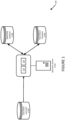
Figure 1 illustrates a system for automated identification of emerging trends according to an embodiment; -
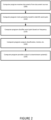
Figure 2 illustrates a method for automated identification of emerging trends according to an embodiment; and -
Figure 3 depicts an exemplary computing system for implementing aspects of the present disclosure. - Embodiments relate to systems and methods for automated identification of emerging trends.
- Embodiments may identify emerging trends based on the presence of words or groups of words in documents. Embodiments may also detect the movement of words over time to reveal where a trend may be headed.
- As words appear close to each other, and sometimes form new words, the words may reveal established pairs, current trends, themes, and emerging trends. The anatomy of the eye can focus on only a few words with clarity - the span is about 4 to 5 words across in a book at a normal reading distance - at which point the eye moves across the line when reading. Using this range, embodiments may review documents to identify what is likely to become a new idea, theme, or trend in the future. The frequency of word pairs and word proximity within the range shows when the word pairs become connected to each other.
- For example, established word pairs may be word pairs that have been active for years but are starting to separate (e.g., autonomous organizations, electric light). Emerging industries may be established word pairs and terms that have been recently connected, such as autonomous vehicle and electric car. Emerging trends may be word pairs that have become active recently, such as autonomous ride sharing and electric minivan. Trending pairs may be word pairs that are not less frequent than established word pairs but are increasing in frequency, such as autonomous policies and electric shoes.
- Once the proximity model has been trained, additional industry context, such as financial services, retail, etc. may be added to provide additional context for where the future trend might be appearing. This may also assist in associating the pair with the correct industry.
- For example, each industry may be associated with "pivot" words. The pivot words, which are words that are central to an industry and can be joined with a second word, which reveal the trend - "climate" + "change" or "climate" + "regulation". The first word is an anchor and embodiments "pivot" forward and backward to look for other terms moving toward the pivot work. Embodiments may look for pivot words and other nouns inside and outside of the range. These pivot words may create their own word pairs, or may create an environment where new pairs may be identified.
- In one embodiment, pivot words may be provided by subject matter experts. In another embodiment, pivot words may be identified from keywords or categories for the document or article being scanned. The pivot words may then be used with machine learning for further coverage across documents and articles.
- In the financial services industry, examples of pivot words may include Finance, Assets, Transactions, Bank, and Compliance. For example, if the range includes one of the pivot terms associated with a word pair, this may reveal a new potential trend.
- Word pairs and industry associations may be used to identify emerging future trends, possible trends, and even future ideas. We can identify word pairs far from each other, not inside the range, etc. which may identify future ideas.
- Embodiments may further identify new words, such as a combination of word pairs into a single word. Examples include "FinTech" (Financial Service Technology), "RegTech" (Regulatory Technology), etc. Embodiments may track trends back to the separated word and continue to search for the joined words as a single unit - this tracking may also identify when a trend slows down.
- Embodiments may be used to identify relevant trends and concepts for study, to identify un-trending and trending of areas of interest for investing, to identify future trends and future ideas based on word proximity, etc. For example, the proximity model may be used with research tools, artificial intelligence content generation tools, news reader applications, news aggregators, etc. For example, a user may be presented with an emerging trend, and the proximity model may be used to identify and present news articles that are related to that trend.
- Referring to
Figure 1 , a system for automated identification of emerging trends is disclosed according to an embodiment.System 100 may include userelectronic device 110 that may executecomputer program 112 andproximity model 114.Electronic device 110 may include any suitable electronic device, including servers (e.g., physical and/or cloud-based), computers (e.g., workstations, desktops, laptops, tablets, etc.), smart devices (e.g., smart phones, smart watches, etc.), IoT appliances, etc.Computer program 112 may receive documents fromdocument source 120, which may be any suitable source of document. Examples of documents include publications, web content, articles, newsfeeds, social media content, call logs, chat logs, spoken word transcripts, etc. -
Proximity model 114 may be trained bycomputer program 112 to analyze text of the documents to identify word pairs within a certain range. In one embodiment, a range of five words may be used; other ranges may be used as is necessary and/or desired. In one embodiment,computer program 112 may use pivot words frompivot word database 134, which may be standard industry terms, to identify the word pairs. -
Proximity model 114 may store the word pairs inword pair database 130. -
Proximity model 114 may be trained by identifying the word pairs, the frequency of the word pairs and the distance of "paired" word from the "pivot" word. The frequency and distance may be measured over time to identify the trending of the pairs. - Once
proximity model 114 is trained to identify word pairs, it may identify a type of trend associated with the word pair. This may be based, for example, on the frequency with which the word pairs are used, the velocity of the word pair use, etc. - Referring to
Figure 2 , a method for automated identification of emerging trends is disclosed according to an embodiment. - In
step 205, a computer program executed on a user electronic device may receive documents from document sources. For example, the computer program may receive publications, web pages, articles, news streams, etc. If necessary, the computer program may convert audio to text. - In
step 210, the computer program may train a proximity model to identify word pairs in the documents. For example, embodiments may identify a high-frequency word in the document as the "anchor" and then measure the distance of each relevant word from the "anchor" - relevant words avoid articles, prepositions and other "stop words" - the distance of the second word from the anchor determines the "score" of the pair and the frequency across multiple documents determines the trend. - In
step 215, using the proximity model, the computer program may identify trends for the word pairs based on, for example, frequency, velocity, etc. For example, the word pairs may identify established word pairs, emerging industries, emerging trends, trending pairs, etc. - In
step 220, the computer program may output the word pairs, classifications, etc. - In
step 225, the computer program may provide the word pairs and/or the proximity model to one or more downstream systems. For example, the downstream systems may include research tools, artificial intelligence content generation tools, news reader applications, news aggregators, etc. For example, using a selection of a trend, a downstream system may use the proximity model may be used to identify and present news articles or similar that are related to that trend. As another example, using the proximity model, a downstream system may identify companies associated with a trend. - In one embodiment, the proximity model, with other trained machine learning models, may be used to determine the relevance of documents, articles, etc.
-
Figure 3 depicts an exemplary computing system for implementing aspects of the present disclosure.Figure 3 depictsexemplary computing device 300.Computing device 300 may represent the system components described herein.Computing device 300 may includeprocessor 305 that may be coupled tomemory 310.Memory 310 may include volatile memory.Processor 305 may execute computer-executable program code stored inmemory 310, such as software programs 315.Software programs 315 may include one or more of the logical steps disclosed herein as a programmatic instruction, which may be executed byprocessor 305.Memory 310 may also includedata repository 320, which may be nonvolatile memory for data persistence.Processor 305 andmemory 310 may be coupled bybus 330.Bus 330 may also be coupled to one or morenetwork interface connectors 340, such aswired network interface 342 orwireless network interface 344.Computing device 300 may also have user interface components, such as a screen for displaying graphical user interfaces and receiving input from the user, a mouse, a keyboard and/or other input/output components (not shown). - Hereinafter, general aspects of implementation of the systems and methods of embodiments will be described.
- Embodiments of the system or portions of the system may be in the form of a "processing machine," such as a general-purpose computer, for example. As used herein, the term "processing machine" is to be understood to include at least one processor that uses at least one memory. The at least one memory stores a set of instructions. The instructions may be either permanently or temporarily stored in the memory or memories of the processing machine. The processor executes the instructions that are stored in the memory or memories in order to process data. The set of instructions may include various instructions that perform a particular task or tasks, such as those tasks described above. Such a set of instructions for performing a particular task may be characterized as a program, software program, or simply software.
- In one embodiment, the processing machine may be a specialized processor.
- In one embodiment, the processing machine may be a cloud-based processing machine, a physical processing machine, or combinations thereof.
- As noted above, the processing machine executes the instructions that are stored in the memory or memories to process data. This processing of data may be in response to commands by a user or users of the processing machine, in response to previous processing, in response to a request by another processing machine and/or any other input, for example.
- As noted above, the processing machine used to implement embodiments may be a general-purpose computer. However, the processing machine described above may also utilize any of a wide variety of other technologies including a special purpose computer, a computer system including, for example, a microcomputer, mini-computer or mainframe, a programmed microprocessor, a micro-controller, a peripheral integrated circuit element, a CSIC (Customer Specific Integrated Circuit) or ASIC (Application Specific Integrated Circuit) or other integrated circuit, a logic circuit, a digital signal processor, a programmable logic device such as a FPGA (Field-Programmable Gate Array), PLD (Programmable Logic Device), PLA (Programmable Logic Array), or PAL (Programmable Array Logic), or any other device or arrangement of devices that is capable of implementing the steps of the processes disclosed herein.
- The processing machine used to implement embodiments may utilize a suitable operating system.
- It is appreciated that in order to practice the method of the embodiments as described above, it is not necessary that the processors and/or the memories of the processing machine be physically located in the same geographical place. That is, each of the processors and the memories used by the processing machine may be located in geographically distinct locations and connected so as to communicate in any suitable manner. Additionally, it is appreciated that each of the processor and/or the memory may be composed of different physical pieces of equipment. Accordingly, it is not necessary that the processor be one single piece of equipment in one location and that the memory be another single piece of equipment in another location. That is, it is contemplated that the processor may be two pieces of equipment in two different physical locations. The two distinct pieces of equipment may be connected in any suitable manner. Additionally, the memory may include two or more portions of memory in two or more physical locations.
- To explain further, processing, as described above, is performed by various components and various memories. However, it is appreciated that the processing performed by two distinct components as described above, in accordance with a further embodiment, may be performed by a single component. Further, the processing performed by one distinct component as described above may be performed by two distinct components.
- In a similar manner, the memory storage performed by two distinct memory portions as described above, in accordance with a further embodiment, may be performed by a single memory portion. Further, the memory storage performed by one distinct memory portion as described above may be performed by two memory portions.
- Further, various technologies may be used to provide communication between the various processors and/or memories, as well as to allow the processors and/or the memories to communicate with any other entity; i.e., so as to obtain further instructions or to access and use remote memory stores, for example. Such technologies used to provide such communication might include a network, the Internet, Intranet, Extranet, a LAN, an Ethernet, wireless communication via cell tower or satellite, or any client server system that provides communication, for example. Such communications technologies may use any suitable protocol such as TCP/IP, UDP, or OSI, for example.
- As described above, a set of instructions may be used in the processing of embodiments. The set of instructions may be in the form of a program or software. The software may be in the form of system software or application software, for example. The software might also be in the form of a collection of separate programs, a program module within a larger program, or a portion of a program module, for example. The software used might also include modular programming in the form of object-oriented programming. The software tells the processing machine what to do with the data being processed.
- Further, it is appreciated that the instructions or set of instructions used in the implementation and operation of embodiments may be in a suitable form such that the processing machine may read the instructions. For example, the instructions that form a program may be in the form of a suitable programming language, which is converted to machine language or object code to allow the processor or processors to read the instructions. That is, written lines of programming code or source code, in a particular programming language, are converted to machine language using a compiler, assembler or interpreter. The machine language is binary coded machine instructions that are specific to a particular type of processing machine, i.e., to a particular type of computer, for example. The computer understands the machine language.
- Any suitable programming language may be used in accordance with the various embodiments. Also, the instructions and/or data used in the practice of embodiments may utilize any compression or encryption technique or algorithm, as may be desired. An encryption module might be used to encrypt data. Further, files or other data may be decrypted using a suitable decryption module, for example.
- As described above, the embodiments may illustratively be embodied in the form of a processing machine, including a computer or computer system, for example, that includes at least one memory. It is to be appreciated that the set of instructions, i.e., the software for example, that enables the computer operating system to perform the operations described above may be contained on any of a wide variety of media or medium, as desired. Further, the data that is processed by the set of instructions might also be contained on any of a wide variety of media or medium. That is, the particular medium, i.e., the memory in the processing machine, utilized to hold the set of instructions and/or the data used in embodiments may take on any of a variety of physical forms or transmissions, for example. Illustratively, the medium may be in the form of a compact disc, a DVD, an integrated circuit, a hard disk, a floppy disk, an optical disc, a magnetic tape, a RAM, a ROM, a PROM, an EPROM, a wire, a cable, a fiber, a communications channel, a satellite transmission, a memory card, a SIM card, or other remote transmission, as well as any other medium or source of data that may be read by the processors.
- Further, the memory or memories used in the processing machine that implements embodiments may be in any of a wide variety of forms to allow the memory to hold instructions, data, or other information, as is desired. Thus, the memory might be in the form of a database to hold data. The database might use any desired arrangement of files such as a flat file arrangement or a relational database arrangement, for example.
- In the systems and methods, a variety of "user interfaces" may be utilized to allow a user to interface with the processing machine or machines that are used to implement embodiments. As used herein, a user interface includes any hardware, software, or combination of hardware and software used by the processing machine that allows a user to interact with the processing machine. A user interface may be in the form of a dialogue screen for example. A user interface may also include any of a mouse, touch screen, keyboard, keypad, voice reader, voice recognizer, dialogue screen, menu box, list, checkbox, toggle switch, a pushbutton or any other device that allows a user to receive information regarding the operation of the processing machine as it processes a set of instructions and/or provides the processing machine with information. Accordingly, the user interface is any device that provides communication between a user and a processing machine. The information provided by the user to the processing machine through the user interface may be in the form of a command, a selection of data, or some other input, for example.
- As discussed above, a user interface is utilized by the processing machine that performs a set of instructions such that the processing machine processes data for a user. The user interface is typically used by the processing machine for interacting with a user either to convey information or receive information from the user. However, it should be appreciated that in accordance with some embodiments of the system and method, it is not necessary that a human user actually interact with a user interface used by the processing machine. Rather, it is also contemplated that the user interface might interact, i.e., convey and receive information, with another processing machine, rather than a human user. Accordingly, the other processing machine might be characterized as a user. Further, it is contemplated that a user interface utilized in the system and method may interact partially with another processing machine or processing machines, while also interacting partially with a human user.
- It will be readily understood by those persons skilled in the art that embodiments are susceptible to broad utility and application. Many embodiments and adaptations of the present invention other than those herein described, as well as many variations, modifications and equivalent arrangements, will be apparent from or reasonably suggested by the foregoing description thereof, without departing from the substance or scope. Accordingly, while the embodiments of the present invention have been described here in detail in relation to its exemplary embodiments, it is to be understood that this disclosure is only illustrative and exemplary of the present invention and is made to provide an enabling disclosure of the invention. Accordingly, the foregoing disclosure is not intended to be construed or to limit the present invention or otherwise to exclude any other such embodiments, adaptations, variations, modifications or equivalent arrangements.
Claims (20)
- A method for automated identification of emerging trends, comprising:receiving, by a computer program executed on an electronic device, a plurality of documents;training, by the computer program, a proximity model to identify word pairs in each of the plurality of documents, wherein the word pairs comprise two words within a predetermined distance of each other at a predetermined frequency in the plurality of documents;identifying, by the computer program and using the proximity model, trends involving the word pairs, wherein the trends are based on a frequency that the word pairs appear in the plurality of documents and/or a velocity at which the word pairs appear in the plurality of documents over a period of time; andoutputting, by the computer program, the word pairs and the trends to a downstream system.
- The method of claim 1, wherein the plurality of documents comprise publications, web pages, articles, and/or news streams.
- The method of claim 1, wherein the plurality of documents comprise call logs and/or chat logs.
- The method of claim 1, wherein the plurality of documents comprise text that was converted from audio.
- The method of claim 1, wherein the word pairs are identified with a predetermined range of each other.
- The method of claim 1, wherein each of the word pairs comprise an anchor word and a second word that is within the predetermined distance of the anchor word.
- The method of claim 1, further comprising:
identifying, by the computer program, a word that is a result of one of the word pairs merging. - A system, comprising:a source of a plurality of documents;a pivot word database comprising a plurality of pivot words;a word pair database;a downstream system; andan electronic device executing a computer program that is configured to receive the plurality of documents from the source, train a proximity model to identify word pairs in each of the plurality of documents, wherein the word pairs comprise two words within a predetermined distance of each other at a predetermined frequency in the plurality of documents, store the word pairs in the word pair database, identify, using the proximity model, trends involving the word pairs, wherein the trends are based on a frequency that the word pairs appear in the plurality of documents and/or a velocity at which the word pairs appear in the plurality of documents over a period of time, and output the word pairs and the trends to the downstream system.
- The system of claim 8, wherein the plurality of documents comprise publications, web pages, articles, and/or news streams.
- The system of claim 8, wherein the plurality of documents comprise call logs and/or chat logs.
- The system of claim 8, wherein the plurality of documents comprise text that was converted from audio.
- The system of claim 8, wherein the word pairs are identified with a predetermined range of each other.
- The system of claim 8, wherein each of the word pairs comprise an anchor word and a second word that is within the predetermined distance of the anchor word.
- The system of claim 8, wherein the computer program is further configured to identify a word that is a result of one of the word pairs merging.
- A non-transitory computer readable storage medium, including instructions stored thereon, which when read and executed by one or more computer processors, cause the one or more computer processors to perform steps comprising:receiving a plurality of documents;training a proximity model to identify word pairs in each of the plurality of documents, wherein the word pairs comprise two words within a predetermined distance of each other at a predetermined frequency in the plurality of documents;identifying, using the proximity model, trends involving the word pairs, wherein the trends are based on a frequency that the word pairs appear in the plurality of documents and/or a velocity at which the word pairs appear in the plurality of documents over a period of time; andoutputting the word pairs and the trends to a downstream system.
- The non-transitory computer readable storage medium of claim 15, wherein the plurality of documents comprise publications, web pages, articles, news streams, call logs and/or chat logs.
- The non-transitory computer readable storage medium of claim 15, wherein the plurality of documents comprise text that was converted from audio.
- The non-transitory computer readable storage medium of claim 15, wherein the word pairs are identified with a predetermined range of each other.
- The non-transitory computer readable storage medium of claim 15, wherein each of the word pairs comprise an anchor word and a second word that is within the predetermined distance of the anchor word.
- The non-transitory computer readable storage medium of claim 15, further including instructions stored thereon, which when read and executed by one or more computer processors, cause the one or more computer processors to perform steps comprising:
identifying a word that is a result of one of the word pairs merging.
Applications Claiming Priority (1)
| Application Number | Priority Date | Filing Date | Title |
|---|---|---|---|
| US18/493,725 US12561355B2 (en) | 2023-10-24 | 2023-10-24 | Systems and methods for automated identification of emerging trends |
Publications (1)
| Publication Number | Publication Date |
|---|---|
| EP4546161A1 true EP4546161A1 (en) | 2025-04-30 |
Family
ID=93284228
Family Applications (1)
| Application Number | Title | Priority Date | Filing Date |
|---|---|---|---|
| EP24208571.0A Pending EP4546161A1 (en) | 2023-10-24 | 2024-10-24 | Systems and methods for automated identification of emerging trends |
Country Status (2)
| Country | Link |
|---|---|
| US (1) | US12561355B2 (en) |
| EP (1) | EP4546161A1 (en) |
Citations (1)
| Publication number | Priority date | Publication date | Assignee | Title |
|---|---|---|---|---|
| US20230267139A1 (en) * | 2022-02-18 | 2023-08-24 | Peakspan Capital Management, Llc | Systems and Methods to Optimize Search for Emerging Concepts |
Family Cites Families (27)
| Publication number | Priority date | Publication date | Assignee | Title |
|---|---|---|---|---|
| US7860706B2 (en) * | 2001-03-16 | 2010-12-28 | Eli Abir | Knowledge system method and appparatus |
| US7062498B2 (en) * | 2001-11-02 | 2006-06-13 | Thomson Legal Regulatory Global Ag | Systems, methods, and software for classifying text from judicial opinions and other documents |
| US8380511B2 (en) * | 2007-02-20 | 2013-02-19 | Intervoice Limited Partnership | System and method for semantic categorization |
| US8484014B2 (en) * | 2008-11-03 | 2013-07-09 | Microsoft Corporation | Retrieval using a generalized sentence collocation |
| US20110202512A1 (en) * | 2010-02-14 | 2011-08-18 | Georges Pierre Pantanelli | Method to obtain a better understanding and/or translation of texts by using semantic analysis and/or artificial intelligence and/or connotations and/or rating |
| US9760634B1 (en) * | 2010-03-23 | 2017-09-12 | Firstrain, Inc. | Models for classifying documents |
| US10224036B2 (en) * | 2010-10-05 | 2019-03-05 | Infraware, Inc. | Automated identification of verbal records using boosted classifiers to improve a textual transcript |
| US9442928B2 (en) * | 2011-09-07 | 2016-09-13 | Venio Inc. | System, method and computer program product for automatic topic identification using a hypertext corpus |
| US10042880B1 (en) * | 2016-01-06 | 2018-08-07 | Amazon Technologies, Inc. | Automated identification of start-of-reading location for ebooks |
| US9760838B1 (en) * | 2016-03-15 | 2017-09-12 | Mattersight Corporation | Trend identification and behavioral analytics system and methods |
| US10573298B2 (en) * | 2018-04-16 | 2020-02-25 | Google Llc | Automated assistants that accommodate multiple age groups and/or vocabulary levels |
| US10679087B2 (en) * | 2018-04-18 | 2020-06-09 | Google Llc | Systems and methods for merging word fragments in optical character recognition-extracted data |
| CN108614814B (en) * | 2018-04-20 | 2022-02-15 | 广东工业大学 | A method, device and device for extracting evaluation information |
| US11194962B2 (en) * | 2019-06-05 | 2021-12-07 | Fmr Llc | Automated identification and classification of complaint-specific user interactions using a multilayer neural network |
| CN111460787B (en) * | 2020-03-27 | 2023-09-22 | 深圳价值在线信息科技股份有限公司 | Topic extraction method, topic extraction device, terminal equipment and storage medium |
| US12106051B2 (en) * | 2020-07-16 | 2024-10-01 | Optum Technology, Inc. | Unsupervised approach to assignment of pre-defined labels to text documents |
| CN112329460B (en) * | 2020-11-02 | 2023-07-28 | 中国平安人寿保险股份有限公司 | Text topic clustering method, device, equipment and storage medium |
| WO2022192771A1 (en) * | 2021-03-12 | 2022-09-15 | The Trustees Of Princeton University | Text mining method for trend identification and research connection |
| CN116348844B (en) * | 2021-05-17 | 2025-12-02 | 谷歌有限责任公司 | Arrange and/or clear speech-to-text content without requiring explicit user instructions. |
| CN114090698B (en) * | 2021-11-12 | 2025-12-05 | 北京百度网讯科技有限公司 | Methods and apparatus for constructing knowledge graphs for specific disciplines |
| US20230385685A1 (en) * | 2022-05-31 | 2023-11-30 | Gong.Io Ltd. | System and method for generating rephrased actionable data of textual data |
| US11954135B2 (en) * | 2022-09-13 | 2024-04-09 | Briefcatch, LLC | Methods and apparatus for intelligent editing of legal documents using ranked tokens |
| US12367338B2 (en) * | 2022-11-28 | 2025-07-22 | Genpact Usa, Inc. | Aspect based sentiment analysis with contextual grouping of aspects |
| US20240211701A1 (en) * | 2022-12-23 | 2024-06-27 | Genesys Cloud Services, Inc. | Automatic alternative text suggestions for speech recognition engines of contact center systems |
| US20240378382A1 (en) * | 2023-05-10 | 2024-11-14 | Holovisions LLC | Method for Detecting AI-Generated Text by Measuring the Asserted Author's Understanding of Selected Words and/or Phrases in the Text |
| US20250190459A1 (en) * | 2023-08-10 | 2025-06-12 | DataRobot, Inc. | Systems and methods for development, assessment, and/or monitoring of a generative ai system |
| US12124518B1 (en) * | 2023-08-23 | 2024-10-22 | Sas Institute Inc. | Automated near-duplicate detection for text documents |
-
2023
- 2023-10-24 US US18/493,725 patent/US12561355B2/en active Active
-
2024
- 2024-10-24 EP EP24208571.0A patent/EP4546161A1/en active Pending
Patent Citations (1)
| Publication number | Priority date | Publication date | Assignee | Title |
|---|---|---|---|---|
| US20230267139A1 (en) * | 2022-02-18 | 2023-08-24 | Peakspan Capital Management, Llc | Systems and Methods to Optimize Search for Emerging Concepts |
Non-Patent Citations (3)
| Title |
|---|
| DRIDI AMNA ET AL: "Leap2Trend: A Temporal Word Embedding Approach for Instant Detection of Emerging Scientific Trends", IEEE ACCESS, vol. 7, 3 December 2019 (2019-12-03), pages 176414 - 176428, XP011761128, DOI: 10.1109/ACCESS.2019.2957440 * |
| MUHLROTH CHRISTIAN ET AL: "Artificial Intelligence in Innovation: How to Spot Emerging Trends and Technologies", IEEE TRANSACTIONS ON ENGINEERING MANAGEMENT, IEEE, USA, vol. 69, no. 2, 27 May 2020 (2020-05-27), pages 493 - 510, XP011897856, ISSN: 0018-9391, [retrieved on 20220114], DOI: 10.1109/TEM.2020.2989214 * |
| NHU KHOA NGUYEN ET AL: "Contextualizing Emerging Trends in Financial News Articles", ARXIV.ORG, CORNELL UNIVERSITY LIBRARY, 201 OLIN LIBRARY CORNELL UNIVERSITY ITHACA, NY 14853, 20 January 2023 (2023-01-20), XP091421851 * |
Also Published As
| Publication number | Publication date |
|---|---|
| US20250131025A1 (en) | 2025-04-24 |
| US12561355B2 (en) | 2026-02-24 |
Similar Documents
| Publication | Publication Date | Title |
|---|---|---|
| US11468342B2 (en) | Systems and methods for generating and using knowledge graphs | |
| US11613008B2 (en) | Automating a process using robotic process automation code | |
| CN111984779A (en) | Dialog text analysis method, device, equipment and readable medium | |
| US11316807B2 (en) | Microservice deployment in multi-tenant environments | |
| EP3640814A1 (en) | User-friendly explanation production using generative adversarial networks | |
| Madaminov et al. | Firebase database usage and application technology in modern mobile applications | |
| US20220019954A1 (en) | Systems and methods for automated pattern detection in service tickets | |
| US20250291854A1 (en) | Ensemble augmentation with enhanced knowledge extraction techniques | |
| US20240242024A1 (en) | Systems and methods for generating contextual table embeddings for tabular data | |
| US20210182339A1 (en) | Leveraging intent resolvers to determine multiple intents | |
| CN117648437A (en) | Bank intelligent business guidance method and system | |
| US20250378092A1 (en) | Systems and method for enhanced conversational performance of large language models using adaptive retrieval-augmented generation | |
| CN118606478A (en) | A risk prevention and control method, device and equipment for text data | |
| US12182547B2 (en) | Systems and methods for code repository embedding for tagging and summarization tasks using attention on multiple code domains | |
| CN113435950B (en) | Bill processing method and device | |
| US12561355B2 (en) | Systems and methods for automated identification of emerging trends | |
| CN114596062A (en) | Digital intelligent service processing method and system applied to big data | |
| US20250021763A1 (en) | Systems and methods for generating semi-structured term sheets using neural information retrieval | |
| US20240028921A1 (en) | Systems and methods for generating custom industry classifications | |
| US20250259235A1 (en) | Systems and methods for predicting recommendations using graph relationships | |
| US12153554B2 (en) | Systems and methods for removal of attributes from multi-modality and multi-attribute data | |
| CN119692460A (en) | Information analysis method, device, computer equipment and medium based on artificial intelligence | |
| US20240069538A1 (en) | Systems and methods for harnessing label semantics to extract higher performance under noisy label for company to industry matching | |
| US20200226685A1 (en) | Systems and methods for change in language-based textual analysis | |
| US12039296B2 (en) | Systems and methods for auto-captioning repositories from source code |
Legal Events
| Date | Code | Title | Description |
|---|---|---|---|
| PUAI | Public reference made under article 153(3) epc to a published international application that has entered the european phase |
Free format text: ORIGINAL CODE: 0009012 |
|
| STAA | Information on the status of an ep patent application or granted ep patent |
Free format text: STATUS: THE APPLICATION HAS BEEN PUBLISHED |
|
| AK | Designated contracting states |
Kind code of ref document: A1 Designated state(s): AL AT BE BG CH CY CZ DE DK EE ES FI FR GB GR HR HU IE IS IT LI LT LU LV MC ME MK MT NL NO PL PT RO RS SE SI SK SM TR |
|
| STAA | Information on the status of an ep patent application or granted ep patent |
Free format text: STATUS: REQUEST FOR EXAMINATION WAS MADE |
|
| 17P | Request for examination filed |
Effective date: 20251023 |