EP4545707A1 - Barnacle larvae detection device and drug concentration management system - Google Patents
Barnacle larvae detection device and drug concentration management system Download PDFInfo
- Publication number
- EP4545707A1 EP4545707A1 EP22947910.0A EP22947910A EP4545707A1 EP 4545707 A1 EP4545707 A1 EP 4545707A1 EP 22947910 A EP22947910 A EP 22947910A EP 4545707 A1 EP4545707 A1 EP 4545707A1
- Authority
- EP
- European Patent Office
- Prior art keywords
- larvae
- image data
- unit
- barnacle larvae
- barnacle
- Prior art date
- Legal status (The legal status is an assumption and is not a legal conclusion. Google has not performed a legal analysis and makes no representation as to the accuracy of the status listed.)
- Pending
Links
Images

Classifications
-
- C—CHEMISTRY; METALLURGY
- C02—TREATMENT OF WATER, WASTE WATER, SEWAGE, OR SLUDGE
- C02F—TREATMENT OF WATER, WASTE WATER, SEWAGE, OR SLUDGE
- C02F1/00—Treatment of water, waste water, or sewage
- C02F1/008—Control or steering systems not provided for elsewhere in subclass C02F
-
- A—HUMAN NECESSITIES
- A01—AGRICULTURE; FORESTRY; ANIMAL HUSBANDRY; HUNTING; TRAPPING; FISHING
- A01K—ANIMAL HUSBANDRY; AVICULTURE; APICULTURE; PISCICULTURE; FISHING; REARING OR BREEDING ANIMALS, NOT OTHERWISE PROVIDED FOR; NEW BREEDS OF ANIMALS
- A01K61/00—Culture of aquatic animals
- A01K61/90—Sorting, grading, counting or marking live aquatic animals, e.g. sex determination
-
- G—PHYSICS
- G06—COMPUTING OR CALCULATING; COUNTING
- G06T—IMAGE DATA PROCESSING OR GENERATION, IN GENERAL
- G06T7/00—Image analysis
- G06T7/0002—Inspection of images, e.g. flaw detection
- G06T7/0012—Biomedical image inspection
- G06T7/0014—Biomedical image inspection using an image reference approach
-
- A—HUMAN NECESSITIES
- A01—AGRICULTURE; FORESTRY; ANIMAL HUSBANDRY; HUNTING; TRAPPING; FISHING
- A01M—CATCHING, TRAPPING OR SCARING OF ANIMALS; APPARATUS FOR THE DESTRUCTION OF NOXIOUS ANIMALS OR NOXIOUS PLANTS
- A01M29/00—Scaring or repelling devices, e.g. bird-scaring apparatus
-
- B—PERFORMING OPERATIONS; TRANSPORTING
- B01—PHYSICAL OR CHEMICAL PROCESSES OR APPARATUS IN GENERAL
- B01F—MIXING, e.g. DISSOLVING, EMULSIFYING OR DISPERSING
- B01F25/00—Flow mixers; Mixers for falling materials, e.g. solid particles
- B01F25/30—Injector mixers
-
- C—CHEMISTRY; METALLURGY
- C02—TREATMENT OF WATER, WASTE WATER, SEWAGE, OR SLUDGE
- C02F—TREATMENT OF WATER, WASTE WATER, SEWAGE, OR SLUDGE
- C02F1/00—Treatment of water, waste water, or sewage
- C02F1/50—Treatment of water, waste water, or sewage by addition or application of a germicide or by oligodynamic treatment
-
- E—FIXED CONSTRUCTIONS
- E02—HYDRAULIC ENGINEERING; FOUNDATIONS; SOIL SHIFTING
- E02B—HYDRAULIC ENGINEERING
- E02B1/00—Equipment or apparatus for, or methods of, general hydraulic engineering, e.g. protection of constructions against ice-strains
-
- G—PHYSICS
- G01—MEASURING; TESTING
- G01N—INVESTIGATING OR ANALYSING MATERIALS BY DETERMINING THEIR CHEMICAL OR PHYSICAL PROPERTIES
- G01N15/00—Investigating characteristics of particles; Investigating permeability, pore-volume or surface-area of porous materials
- G01N15/01—Investigating characteristics of particles; Investigating permeability, pore-volume or surface-area of porous materials specially adapted for biological cells, e.g. blood cells
-
- G—PHYSICS
- G01—MEASURING; TESTING
- G01N—INVESTIGATING OR ANALYSING MATERIALS BY DETERMINING THEIR CHEMICAL OR PHYSICAL PROPERTIES
- G01N15/00—Investigating characteristics of particles; Investigating permeability, pore-volume or surface-area of porous materials
- G01N15/02—Investigating particle size or size distribution
- G01N15/0205—Investigating particle size or size distribution by optical means
- G01N15/0227—Investigating particle size or size distribution by optical means using imaging; using holography
-
- G—PHYSICS
- G01—MEASURING; TESTING
- G01N—INVESTIGATING OR ANALYSING MATERIALS BY DETERMINING THEIR CHEMICAL OR PHYSICAL PROPERTIES
- G01N15/00—Investigating characteristics of particles; Investigating permeability, pore-volume or surface-area of porous materials
- G01N15/10—Investigating individual particles
- G01N15/14—Optical investigation techniques, e.g. flow cytometry
- G01N15/1429—Signal processing
- G01N15/1433—Signal processing using image recognition
-
- G—PHYSICS
- G01—MEASURING; TESTING
- G01N—INVESTIGATING OR ANALYSING MATERIALS BY DETERMINING THEIR CHEMICAL OR PHYSICAL PROPERTIES
- G01N21/00—Investigating or analysing materials by the use of optical means, i.e. using sub-millimetre waves, infrared, visible or ultraviolet light
- G01N21/62—Systems in which the material investigated is excited whereby it emits light or causes a change in wavelength of the incident light
- G01N21/63—Systems in which the material investigated is excited whereby it emits light or causes a change in wavelength of the incident light optically excited
- G01N21/64—Fluorescence; Phosphorescence
-
- G—PHYSICS
- G06—COMPUTING OR CALCULATING; COUNTING
- G06V—IMAGE OR VIDEO RECOGNITION OR UNDERSTANDING
- G06V10/00—Arrangements for image or video recognition or understanding
- G06V10/70—Arrangements for image or video recognition or understanding using pattern recognition or machine learning
- G06V10/77—Processing image or video features in feature spaces; using data integration or data reduction, e.g. principal component analysis [PCA] or independent component analysis [ICA] or self-organising maps [SOM]; Blind source separation
- G06V10/774—Generating sets of training patterns; Bootstrap methods, e.g. bagging or boosting
-
- G—PHYSICS
- G06—COMPUTING OR CALCULATING; COUNTING
- G06V—IMAGE OR VIDEO RECOGNITION OR UNDERSTANDING
- G06V10/00—Arrangements for image or video recognition or understanding
- G06V10/70—Arrangements for image or video recognition or understanding using pattern recognition or machine learning
- G06V10/82—Arrangements for image or video recognition or understanding using pattern recognition or machine learning using neural networks
-
- G—PHYSICS
- G06—COMPUTING OR CALCULATING; COUNTING
- G06V—IMAGE OR VIDEO RECOGNITION OR UNDERSTANDING
- G06V20/00—Scenes; Scene-specific elements
- G06V20/05—Underwater scenes
-
- G—PHYSICS
- G06—COMPUTING OR CALCULATING; COUNTING
- G06V—IMAGE OR VIDEO RECOGNITION OR UNDERSTANDING
- G06V20/00—Scenes; Scene-specific elements
- G06V20/60—Type of objects
- G06V20/69—Microscopic objects, e.g. biological cells or cellular parts
-
- G—PHYSICS
- G06—COMPUTING OR CALCULATING; COUNTING
- G06V—IMAGE OR VIDEO RECOGNITION OR UNDERSTANDING
- G06V40/00—Recognition of biometric, human-related or animal-related patterns in image or video data
- G06V40/10—Human or animal bodies, e.g. vehicle occupants or pedestrians; Body parts, e.g. hands
-
- C—CHEMISTRY; METALLURGY
- C02—TREATMENT OF WATER, WASTE WATER, SEWAGE, OR SLUDGE
- C02F—TREATMENT OF WATER, WASTE WATER, SEWAGE, OR SLUDGE
- C02F2103/00—Nature of the water, waste water, sewage or sludge to be treated
- C02F2103/08—Seawater, e.g. for desalination
-
- C—CHEMISTRY; METALLURGY
- C02—TREATMENT OF WATER, WASTE WATER, SEWAGE, OR SLUDGE
- C02F—TREATMENT OF WATER, WASTE WATER, SEWAGE, OR SLUDGE
- C02F2209/00—Controlling or monitoring parameters in water treatment
- C02F2209/003—Downstream control, i.e. outlet monitoring, e.g. to check the treating agents, such as halogens or ozone, leaving the process
-
- C—CHEMISTRY; METALLURGY
- C02—TREATMENT OF WATER, WASTE WATER, SEWAGE, OR SLUDGE
- C02F—TREATMENT OF WATER, WASTE WATER, SEWAGE, OR SLUDGE
- C02F2303/00—Specific treatment goals
- C02F2303/04—Disinfection
-
- C—CHEMISTRY; METALLURGY
- C02—TREATMENT OF WATER, WASTE WATER, SEWAGE, OR SLUDGE
- C02F—TREATMENT OF WATER, WASTE WATER, SEWAGE, OR SLUDGE
- C02F2303/00—Specific treatment goals
- C02F2303/20—Prevention of biofouling
-
- G—PHYSICS
- G01—MEASURING; TESTING
- G01N—INVESTIGATING OR ANALYSING MATERIALS BY DETERMINING THEIR CHEMICAL OR PHYSICAL PROPERTIES
- G01N15/00—Investigating characteristics of particles; Investigating permeability, pore-volume or surface-area of porous materials
- G01N15/01—Investigating characteristics of particles; Investigating permeability, pore-volume or surface-area of porous materials specially adapted for biological cells, e.g. blood cells
- G01N2015/019—Biological contaminants; Fouling
-
- G—PHYSICS
- G01—MEASURING; TESTING
- G01N—INVESTIGATING OR ANALYSING MATERIALS BY DETERMINING THEIR CHEMICAL OR PHYSICAL PROPERTIES
- G01N15/00—Investigating characteristics of particles; Investigating permeability, pore-volume or surface-area of porous materials
- G01N15/02—Investigating particle size or size distribution
- G01N2015/0294—Particle shape
-
- G—PHYSICS
- G01—MEASURING; TESTING
- G01N—INVESTIGATING OR ANALYSING MATERIALS BY DETERMINING THEIR CHEMICAL OR PHYSICAL PROPERTIES
- G01N15/00—Investigating characteristics of particles; Investigating permeability, pore-volume or surface-area of porous materials
- G01N15/10—Investigating individual particles
- G01N15/14—Optical investigation techniques, e.g. flow cytometry
- G01N2015/1497—Particle shape
-
- G—PHYSICS
- G06—COMPUTING OR CALCULATING; COUNTING
- G06T—IMAGE DATA PROCESSING OR GENERATION, IN GENERAL
- G06T2207/00—Indexing scheme for image analysis or image enhancement
- G06T2207/30—Subject of image; Context of image processing
- G06T2207/30242—Counting objects in image
-
- Y—GENERAL TAGGING OF NEW TECHNOLOGICAL DEVELOPMENTS; GENERAL TAGGING OF CROSS-SECTIONAL TECHNOLOGIES SPANNING OVER SEVERAL SECTIONS OF THE IPC; TECHNICAL SUBJECTS COVERED BY FORMER USPC CROSS-REFERENCE ART COLLECTIONS [XRACs] AND DIGESTS
- Y02—TECHNOLOGIES OR APPLICATIONS FOR MITIGATION OR ADAPTATION AGAINST CLIMATE CHANGE
- Y02A—TECHNOLOGIES FOR ADAPTATION TO CLIMATE CHANGE
- Y02A40/00—Adaptation technologies in agriculture, forestry, livestock or agroalimentary production
- Y02A40/80—Adaptation technologies in agriculture, forestry, livestock or agroalimentary production in fisheries management
- Y02A40/81—Aquaculture, e.g. of fish
Definitions
- the present invention relates to a detection device for barnacle larvae, and a chemical concentration management system.
- adding an excessive amount of a chemical such as a chlorine-based chemical to the cooling water cannot be said to be preferable from the viewpoint of environmental influence and the viewpoint of cost for adding the chemical, and it is required to add an appropriate amount of a chemical such as a chlorine-based chemical.
- a chemical such as a chlorine-based chemical
- a method of surveying barnacles a method of surveying the number of barnacles attached to a test plate immersed in the sea is considered, but continuous monitoring is difficult, and measures for suppressing attachment cannot be quickly performed because the survey is performed after attachment.
- a method for detecting attachment-stage larvae of barnacles a method using a detection kit using a monoclonal antibody specific to the attachment-stage larvae of barnacles has been disclosed (for example, see Patent Document 1).
- Patent Document 1 Japanese Unexamined Patent Application, Publication No. 2006-246821
- Patent Document 1 can detect the attachment-stage larvae of barnacles with high detection accuracy.
- the kit since the kit is disposable, continuous monitoring cannot be performed and the cost required for detection increases.
- an object of the present invention is to provide a detection device for barnacle larvae capable of easily detecting attachment-stage larvae of barnacles and continuously monitoring the attachment-stage larvae of barnacles.
- a detection device for barnacle larvae capable of easily detecting attachment-stage larvae of barnacles and continuously monitoring the attachment-stage larvae of barnacles.
- a detection device for barnacle larvae includes a detection unit that detects barnacle larvae having a predetermined shape from image data that may include barnacle larvae.
- Barnacles is a generic term for organisms classified into Arthropoda, Crustacea, Cirripedia, and Thoracica, and includes, for example, organisms belonging to Balanomorpha, which includes Amphibalanus amphitrite, Amphibalanus eburneus, Megabalanus rosa, Balanus trigonus, Megabalanus volcano, Amphibalanus reticulatus, Chthamalus challengeri, Balanus albicostatus, and Amphibalanus improvisus.
- Balanomorpha which includes Amphibalanus amphitrite, Amphibalanus eburneus, Megabalanus rosa, Balanus trigonus, Megabalanus volcano, Amphibalanus reticulatus, Chthamalus challengeri, Balanus albicostatus, and Amphibalanus improvisus.
- barnacles float in the sea during their larval stage, and when they reach attachment-stage larvae, they attach to a suitable attachment material and undergo metamorphosis into adults.
- the outline of the stages involved in breeding in the life history of barnacles is as follows. That is, after mating between attached adults and fertilization, the nauplius larvae in the floating stage hatch. After the nauplius larvae repeatedly molt, the nauplius larvae become cypris larvae in the attachment stage (attachment-stage larvae), and the cypris larvae attach to the substrate and metamorphose into juvenile barnacles. This breeding time is unique to each species.
- Cypris larvae attach to underwater structures, such as seawater intake or discharge facilities at power plants, coastal aquaculture facilities, and fishing facilities, and then grow thereon, potentially causing adverse effects on these facilities. Therefore, by ascertaining the number of cypris larvae and nauplius larvae living in the sea area where these facilities exist, it is possible to take necessary measures, such as injection of chemicals. Since cypris larvae and nauplius larvae each have a characteristic predetermined shape, it is possible to detect the barnacle larvae in images with a detection device for barnacle larvae 10.
- a cypris larva 1 has a predetermined shape as shown in FIG. 1 .
- the cypris larva 1 has a spindle-shaped transparent crust (shell) 9 which is laterally flattened in the left and right directions.
- a pair of first antennae 2 are present on the front side of the abdominal surface, and six pairs of thoracic limbs 3 are present on the rear half of the abdominal surface, and they extend from the inside of the crust 9.
- the first antenna 2 is an organ whose tip has a suction cup shape for attachment, and an adhesive substance (quinone crosslinked binding protein) secreted from a cement gland 4 through a cement duct 5 is secreted onto the surface of the attachment organ and attaches to the substrate.
- the detection device for barnacle larvae is, for example, the detection device for barnacle larvae 10, which is one component of a chemical concentration management system 100 shown in FIG. 2.
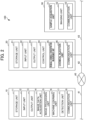
- FIG. 2 is a block diagram showing an example of main functions that may be provided in the detection device for barnacle larvae 10.
- the detection device for barnacle larvae 10 includes an image data acquisition unit 14 that acquires image data, and a detection unit 17 that detects barnacle larvae having a predetermined shape from the image data.
- the detection device for barnacle larvae 10 may include a storage unit 11, an input unit 12, an output unit 13, an image processing unit 15, a machine learning unit 16, and a communication unit 18.
- the storage unit 11 includes a storage device such as a hard disk drive (HDD) or a semiconductor drive (SSD), and stores images subjected to image processing by the image processing unit 15, learned models generated by the machine learning unit 16, and the like.
- a storage device such as a hard disk drive (HDD) or a semiconductor drive (SSD)
- HDD hard disk drive
- SSD semiconductor drive
- the input unit 12 includes, for example, a keyboard, and a mouse, and receives an input by a user of the detection device for barnacle larvae 10.
- the output unit 13 includes a display or the like that displays images subjected to image processing by the image processing unit 15 and detection results by the detection unit 17.
- the input unit 12 and the output unit 13 may have a configuration in which a display function and an input function are integrated, such as a touch panel.
- the image data acquisition unit 14 acquires image data.
- the image data is image data that may include barnacle larvae.
- the image data acquisition unit 14 acquires image data including barnacle larvae captured by an imaging unit 32 of a microorganism imaging device 30.
- the format of the image data acquired by the image data acquisition unit 14 is not limited at all, and may be a still image or a moving image.
- the image acquired by the image data acquisition unit 14 may be an image captured under a fluorescence microscope. This is because the position of the fluorescence of the barnacle larvae differs depending on the larvae, and the type of the larvae can be determined based on the position of the fluorescence.
- the image processing unit 15 performs image processing on the image data acquired by the image data acquisition unit 14. Examples of the image processing include size conversion, rotation, color conversion, and noise removal.
- the functions of the image data acquisition unit 14 and the image processing unit 15 are realized by, for example, a processor executing a computer program stored in a memory.
- the machine learning unit 16 outputs a learned model constructed using, as learning data, the image data to which annotations are added for at least barnacle larvae having a predetermined shape, with respect to an image subjected to image processing by the image processing unit 15.
- the output learned model may be a learned model that detects and counts only cypris larvae, or may be a learned model that detects and counts cypris larvae and nauplius larvae.
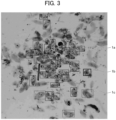
- FIG. 3 is an example of learning data to which annotations are added.
- three types of barnacle larvae i.e. , nauplius larvae 1b, small cypris larvae 1a, and large cypris larvae 1c, are respectively surrounded by bounding boxes, which indicates the state where annotations are added.
- the annotations are added in response to operations by the user of the detection device for barnacle larvae 10.
- the detection unit 17 detects and counts barnacle larvae having a predetermined shape based on the image data subjected to image processing by the image processing unit 15.
- the barnacle larvae having a predetermined shape are preferably cypris larvae, and it is further preferable that nauplius larvae can be detected and counted separately from cypris larvae.
- the functions of the detection unit 17 are realized based on the learned model output by the machine learning unit 16.
- cypris larvae were classified as large cypris larvae if they were assumed to be Megabalanus rosa or Balanus trigonus, and as small cypris larvae if they were assumed to be Amphibalanus reticulatus, Balanus kondakovi, or Amphibalanus eburneus. Nauplius larvae were annotated without classifying them by species.
- a learned model was generated.
- a learned model was generated under the same conditions as those of machine learning condition 1 except that the learning data was rotated by 90° each time and the images were replicated to prepare 4320 pieces of learning data.
- a learned model was generated under the same conditions as those of machine learning condition 1.
- the generated learned model was used to detect cypris larvae using 180 test images regardless of size.
- the communication unit 18 allows the detection device for barnacle larvae 10 to communicate with other devices through communication means such as a communication line 41.
- the communication line 41 is wired or wireless communication means, and is configured to be connectable to the Internet 40, for example.
- the detection device for barnacle larvae 10 detects barnacle larvae based on a learned model constructed using image data acquired by the image data acquisition unit 14 as learning data, focusing on the shapes of cypris larvae and nauplius larvae each having a predetermined shape, the barnacle larvae can be easily detected, and the presence or absence and the number of the barnacle larvae can be continuously monitored.
- the configuration shown in FIG. 2 is merely an example of the detection device for barnacle larvae 10, and the present invention is not limited to the configuration shown in FIG. 2 .
- the detection device for barnacle larvae 10 may not include the storage unit 11, and the storage unit 11 may be provided in an external device capable of communicating with the detection device for barnacle larvae 10.
- the detection device for barnacle larvae 10 may be configured without the communication unit 18.
- the chemical concentration management system 100 manages a chemical injection concentration in a seawater utilization plant.
- the chemical concentration management system 100 includes a detection device for barnacle larvae 10, a chemical concentration control device 20, and a microorganism imaging device 30.
- the chemical concentration management system 100 detects and counts barnacle larvae with the detection device for barnacle larvae 10 based on the microorganism image captured by the microorganism imaging device 30, and manages the chemical injection concentration with the chemical concentration control device 20 based on the detection and counting results, so that the chemical can be injected at an effective timing and in an appropriate amount.
- the chemical whose injection concentration is managed by the chemical concentration management system 100 is a chemical for the purpose of suppressing biofouling on a structure in water (seawater utilization plant).
- a chemical is not limited, and known chemicals can be used.
- the chemical include chlorine-based chemicals such as sodium hypochlorite and chlorine dioxide, and oxidizing agents such as hydrogen peroxide, ozone, and peracetic acid.
- non-oxidizing agents such as quaternary ammonium compounds or polyquaternary ammonium compounds, organic compounds such as aromatic hydrocarbons and alkyldiamines, metal salts serving as sources of copper ions and the like, ammonium nitrate, metabisulfite, antioxidants, catalytic enzymes, and the like can be used.
- the chemical concentration management system according to the present embodiment can perform control so that the residual chemical concentration does not exceed a predetermined threshold. Therefore, the chemical is preferably a chlorine-based chemical whose residual concentration is limited by an agreement with a region or the like from the viewpoint of protection of aquatic resources.
- the seawater utilization plant to which the chemical concentration management system can be applied is not limited, and examples thereof include power plants such as thermal power plants and nuclear power plants.
- the chemical concentration control device 20 includes, for example, as shown in FIG. 2 , a storage unit 21, an input unit 22, an output unit 23, a control unit 24, a residual chemical concentration measurement unit 25, a chemical injection unit 26, and a communication unit 27.
- Configurations of the storage unit 21, the input unit 22, and the output unit 23 can be the same as those of the storage unit 11, the input unit 12, and the output unit 13 above, respectively.
- the storage unit 21 stores the measurement value of the residual chemical concentration measured by the residual chemical concentration measurement unit 25 and the detection and counting results of the barnacle larvae received from the detection device for barnacle larvae 10.
- the control unit 24 controls the amount of the chemical injected from a predetermined place of the seawater system of the seawater utilization plant by the chemical injection unit 26.
- the control unit 24 controls the amount of the chemical injected based on the detection and counting results of the barnacle larvae received from the detection device for barnacle larvae 10.
- the detection and counting results of the barnacle larvae received from the detection device for barnacle larvae 10 may be obtained as the number of detected barnacle larvae with respect to a predetermined volume of seawater.
- control may be performed to increase the amount of injected chemical from a normal amount.
- control may be performed to reduce the amount of injected chemical from a normal amount.
- control unit 24 may control the amount of injected chemical so that the residual chemical concentration measured by the residual chemical concentration measurement unit 25 does not exceed a predetermined threshold. At least a part of the above functions of the control unit 24 may be realized manually based on the above detection count or the like, or may be realized by executing a program stored in the storage unit 21.
- the residual chemical concentration measurement unit 25 measures the residual chemical concentration at a predetermined location (for example, the inlet of the condenser) of the seawater system of the seawater utilization plant.
- the residual chemical concentration measurement unit 25 allows the control unit 24 to control the amount of injected chemical so as to comply with a reference value such as an environmental conservation agreement value at the discharge port of the seawater system of the seawater utilization plant.
- the configuration of the residual chemical concentration measurement unit 25 is not limited, and a known concentration meter such as a residual chlorine concentration meter can be used.
- the chemical injection unit 26 injects a chemical (sodium hypochlorite or the like) from a predetermined location (for example, any location upstream of the condenser) of the seawater system of the seawater utilization plant.
- a chemical sodium hypochlorite or the like
- the means for injecting the chemical is not limited, and the chemical may be injected or seawater may be electrolyzed.
- the communication unit 27 allows the chemical concentration control device 20 to communicate with other devices through communication means such as a communication line 42.
- the communication line 42 is wired or wireless communication means, and is configured to be connectable to the Internet 40, for example.
- the microorganism imaging device 30 acquires image data that may include barnacle larvae based on seawater flowing through the seawater system of the seawater utilization plant or seawater near the seawater utilization plant. As shown in FIG. 2 , the microorganism imaging device 30 includes a sample acquisition unit 31, an imaging unit 32, and a communication unit 33.
- the sample acquisition unit 31 takes in seawater flowing through the seawater system of the seawater utilization plant or seawater near the seawater utilization plant, and acquires a sample by filtering a predetermined volume of seawater with a plankton net or the like. In the sample acquisition unit 31, any processing such as dilution or separation of the sample to assist imaging by the imaging unit 32 and adding tap water to stop the cypris larvae from swimming can be performed.
- the imaging unit 32 captures an image of the sample acquired by the sample acquisition unit 31 and obtains image data.
- the image data captured by the imaging unit 32 is transmitted to the detection device for barnacle larvae 10 via the communication unit 33.
- the imaging unit 32 may capture an image of the sample a plurality of times.
- the specific configuration of the imaging unit 32 is not limited. For example, a camera device having a function of capturing magnified images can be used.
- the communication unit 33 allows the microorganism imaging device 30 to communicate with other devices through communication means such as a communication line 43.
- the communication line 43 is wired or wireless communication means, and is configured to be connectable to the Internet 40, for example.
- the configurations of the chemical concentration control device 20 and the microorganism imaging device 30 shown in FIG. 2 are merely examples, and the present invention is not limited thereto.
- the respective devices that realize the respective functions of the above devices do not necessarily have to be integrally provided, and the respective devices may be provided independently so as to be able to communicate with each other.
Landscapes
- Engineering & Computer Science (AREA)
- Life Sciences & Earth Sciences (AREA)
- Physics & Mathematics (AREA)
- General Physics & Mathematics (AREA)
- Health & Medical Sciences (AREA)
- Chemical & Material Sciences (AREA)
- Theoretical Computer Science (AREA)
- General Health & Medical Sciences (AREA)
- Multimedia (AREA)
- Environmental Sciences (AREA)
- Zoology (AREA)
- Pathology (AREA)
- Analytical Chemistry (AREA)
- Biochemistry (AREA)
- Immunology (AREA)
- General Engineering & Computer Science (AREA)
- Medical Informatics (AREA)
- Computer Vision & Pattern Recognition (AREA)
- Evolutionary Computation (AREA)
- Dispersion Chemistry (AREA)
- Organic Chemistry (AREA)
- Hydrology & Water Resources (AREA)
- Nuclear Medicine, Radiotherapy & Molecular Imaging (AREA)
- Environmental & Geological Engineering (AREA)
- Water Supply & Treatment (AREA)
- Biomedical Technology (AREA)
- Molecular Biology (AREA)
- Artificial Intelligence (AREA)
- Marine Sciences & Fisheries (AREA)
- Animal Husbandry (AREA)
- Biodiversity & Conservation Biology (AREA)
- Computing Systems (AREA)
- Databases & Information Systems (AREA)
- Software Systems (AREA)
- Insects & Arthropods (AREA)
- Radiology & Medical Imaging (AREA)
- Human Computer Interaction (AREA)
- Mechanical Engineering (AREA)
- Civil Engineering (AREA)
- Structural Engineering (AREA)
Abstract
Description
- The present invention relates to a detection device for barnacle larvae, and a chemical concentration management system.
- In a thermal power plant, a nuclear power plant, or the like that uses seawater as cooling water, there are cases where marine organisms such as barnacles attach to the inside of a water intake path that takes in seawater from the sea and supplies the seawater to a condenser, or a water discharge path that discharges the seawater that has passed through the condenser to the sea. When the number of marine organisms attached increases, this may cause problems such as blocking the cooling water flow path and reducing cooling performance. Therefore, to suppress the attachment of marine organisms, a chemical for the purpose of suppressing the attachment of organisms, such as a chlorine-based chemical, is conventionally injected into the cooling water.
- However, adding an excessive amount of a chemical such as a chlorine-based chemical to the cooling water cannot be said to be preferable from the viewpoint of environmental influence and the viewpoint of cost for adding the chemical, and it is required to add an appropriate amount of a chemical such as a chlorine-based chemical. For example, if the number of attached organisms such as barnacles in seawater can be ascertained, it is possible to appropriately adjust the addition amount of a chemical such as a chlorine-based chemical according to the number of attached organisms.
- As a method of surveying barnacles, a method of surveying the number of barnacles attached to a test plate immersed in the sea is considered, but continuous monitoring is difficult, and measures for suppressing attachment cannot be quickly performed because the survey is performed after attachment. As a method for detecting attachment-stage larvae of barnacles, a method using a detection kit using a monoclonal antibody specific to the attachment-stage larvae of barnacles has been disclosed (for example, see Patent Document 1).
- Patent Document 1:
Japanese Unexamined Patent Application, Publication No. 2006-246821 - The technique disclosed in Patent Document 1 can detect the attachment-stage larvae of barnacles with high detection accuracy. On the other hand, since the kit is disposable, continuous monitoring cannot be performed and the cost required for detection increases.
- In response to the above issues, an object of the present invention is to provide a detection device for barnacle larvae capable of easily detecting attachment-stage larvae of barnacles and continuously monitoring the attachment-stage larvae of barnacles.
-
- (1) The present invention relates to a detection device for barnacle larvae including an image data acquisition unit configured to acquire image data, and a detection unit configured to detect barnacle larvae having a predetermined shape from the image data. The detection unit detects and counts the barnacle larvae having the predetermined shape based on a learned model constructed using, as learning data, the image data to which annotations are added for at least the barnacle larvae having the predetermined shape.
- (2) In the detection device for barnacle larvae according to (1), the barnacle larvae having the predetermined shape are at least one of cypris larvae or nauplius larvae.
- (3) A chemical concentration management system including the detection device for barnacle larvae according to (1) or (2), a chemical concentration control device, and a microorganism imaging device. The chemical concentration control device includes a control unit configured to control an amount of a chemical injected into seawater from a chemical injection unit in a seawater utilization plant. The microorganism imaging device includes a sample acquisition unit configured to collect seawater near the seawater utilization plant, and an imaging unit configured to capture an image of the seawater acquired by the sample acquisition unit. The image data acquisition unit acquires the image data captured by the imaging unit. The control unit controls the amount of the chemical injected into the seawater based on a detection result by the detection unit.
- According to the present invention, it is possible to provide a detection device for barnacle larvae capable of easily detecting attachment-stage larvae of barnacles and continuously monitoring the attachment-stage larvae of barnacles.
-
-
FIG. 1 is a schematic diagram showing the external shape and arrangement of organs of a cypris larva, which is a detection target of a detection device for barnacle larvae according to the present embodiment; -
FIG. 2 is a block diagram showing the configuration of a chemical concentration management system according to the present embodiment; and -
FIG. 3 shows learning data for the detection device for barnacle larvae according to the present embodiment. - A detection device for barnacle larvae according to the present embodiment includes a detection unit that detects barnacle larvae having a predetermined shape from image data that may include barnacle larvae.
- Barnacles is a generic term for organisms classified into Arthropoda, Crustacea, Cirripedia, and Thoracica, and includes, for example, organisms belonging to Balanomorpha, which includes Amphibalanus amphitrite, Amphibalanus eburneus, Megabalanus rosa, Balanus trigonus, Megabalanus volcano, Amphibalanus reticulatus, Chthamalus challengeri, Balanus albicostatus, and Amphibalanus improvisus.
- Barnacles float in the sea during their larval stage, and when they reach attachment-stage larvae, they attach to a suitable attachment material and undergo metamorphosis into adults. The outline of the stages involved in breeding in the life history of barnacles is as follows. That is, after mating between attached adults and fertilization, the nauplius larvae in the floating stage hatch. After the nauplius larvae repeatedly molt, the nauplius larvae become cypris larvae in the attachment stage (attachment-stage larvae), and the cypris larvae attach to the substrate and metamorphose into juvenile barnacles. This breeding time is unique to each species.
- Cypris larvae attach to underwater structures, such as seawater intake or discharge facilities at power plants, coastal aquaculture facilities, and fishing facilities, and then grow thereon, potentially causing adverse effects on these facilities. Therefore, by ascertaining the number of cypris larvae and nauplius larvae living in the sea area where these facilities exist, it is possible to take necessary measures, such as injection of chemicals. Since cypris larvae and nauplius larvae each have a characteristic predetermined shape, it is possible to detect the barnacle larvae in images with a detection device for
barnacle larvae 10. - A cypris larva 1 has a predetermined shape as shown in
FIG. 1 . The cypris larva 1 has a spindle-shaped transparent crust (shell) 9 which is laterally flattened in the left and right directions. A pair offirst antennae 2 are present on the front side of the abdominal surface, and six pairs ofthoracic limbs 3 are present on the rear half of the abdominal surface, and they extend from the inside of thecrust 9. Thefirst antenna 2 is an organ whose tip has a suction cup shape for attachment, and an adhesive substance (quinone crosslinked binding protein) secreted from acement gland 4 through acement duct 5 is secreted onto the surface of the attachment organ and attaches to the substrate. The cypris larvae examine for their suitability with the substrate by repeatedly approaching and leaving the substrate, and during that time, they temporarily attach so as to be detachable, and then permanently attach to a finally determined fixing point. In the figure,reference numeral 6 denotes an oil cell,reference numeral 7 denotes a compound eye, andreference numeral 8 denotes a thorax. - The detection device for barnacle larvae according to the present embodiment is, for example, the detection device for
barnacle larvae 10, which is one component of a chemicalconcentration management system 100 shown inFIG. 2. FIG. 2 is a block diagram showing an example of main functions that may be provided in the detection device forbarnacle larvae 10. - The detection device for
barnacle larvae 10 includes an imagedata acquisition unit 14 that acquires image data, and adetection unit 17 that detects barnacle larvae having a predetermined shape from the image data. In addition to the above, the detection device forbarnacle larvae 10 may include astorage unit 11, aninput unit 12, anoutput unit 13, animage processing unit 15, amachine learning unit 16, and acommunication unit 18. - The
storage unit 11 includes a storage device such as a hard disk drive (HDD) or a semiconductor drive (SSD), and stores images subjected to image processing by theimage processing unit 15, learned models generated by themachine learning unit 16, and the like. - The
input unit 12 includes, for example, a keyboard, and a mouse, and receives an input by a user of the detection device forbarnacle larvae 10. - The
output unit 13 includes a display or the like that displays images subjected to image processing by theimage processing unit 15 and detection results by thedetection unit 17. Theinput unit 12 and theoutput unit 13 may have a configuration in which a display function and an input function are integrated, such as a touch panel. - The image
data acquisition unit 14 acquires image data. The image data is image data that may include barnacle larvae. In the present embodiment, the imagedata acquisition unit 14 acquires image data including barnacle larvae captured by animaging unit 32 of amicroorganism imaging device 30. The format of the image data acquired by the imagedata acquisition unit 14 is not limited at all, and may be a still image or a moving image. The image acquired by the imagedata acquisition unit 14 may be an image captured under a fluorescence microscope. This is because the position of the fluorescence of the barnacle larvae differs depending on the larvae, and the type of the larvae can be determined based on the position of the fluorescence. - The
image processing unit 15 performs image processing on the image data acquired by the imagedata acquisition unit 14. Examples of the image processing include size conversion, rotation, color conversion, and noise removal. The functions of the imagedata acquisition unit 14 and theimage processing unit 15 are realized by, for example, a processor executing a computer program stored in a memory. - The
machine learning unit 16 constructs a model such as a convolutional neural network (CNN). The CNN includes an input layer, an intermediate layer, and an output layer. Learning data (correct answer data) to be learned is input to the input layer. The intermediate layer detects features from an image input to the input layer. The output layer outputs a recognition result of the presence or absence of an abnormal portion in the image based on the features extracted by the intermediate layer. The CNN has a plurality of layer structures and holds a plurality of weight parameters. By updating the weight parameter from the initial value to the optimal value, the pre-learned model changes into a learned model. - The
machine learning unit 16 outputs a learned model constructed using, as learning data, the image data to which annotations are added for at least barnacle larvae having a predetermined shape, with respect to an image subjected to image processing by theimage processing unit 15. The output learned model may be a learned model that detects and counts only cypris larvae, or may be a learned model that detects and counts cypris larvae and nauplius larvae. -
FIG. 3 is an example of learning data to which annotations are added. In the example ofFIG. 3 , three types of barnacle larvae, i.e.,nauplius larvae 1b,small cypris larvae 1a, andlarge cypris larvae 1c, are respectively surrounded by bounding boxes, which indicates the state where annotations are added. The annotations are added in response to operations by the user of the detection device forbarnacle larvae 10. - The
detection unit 17 detects and counts barnacle larvae having a predetermined shape based on the image data subjected to image processing by theimage processing unit 15. The barnacle larvae having a predetermined shape are preferably cypris larvae, and it is further preferable that nauplius larvae can be detected and counted separately from cypris larvae. The functions of thedetection unit 17 are realized based on the learned model output by themachine learning unit 16. - Examples in which the
detection unit 17 detects barnacle larvae using the learned model output by themachine learning unit 16 will be described below. - From a sample collected with a plankton net, only barnacle larvae were attracted and collected by utilizing the phototaxis of barnacle larvae. Tap water in an amount three times that of the collected sample of the barnacle larvae was added to the sample of the barnacle larvae to stop the larvae from swimming and cause them to settle. The settled larvae were then collected in a petri dish and a magnified photograph was taken from the underside of the dish using a digital camera (manufactured by Olympus Corporation). Annotations as shown in
FIG. 3 were added to the captured image to obtain learning data. In view of the adult development status at the sample collection site, cypris larvae were classified as large cypris larvae if they were assumed to be Megabalanus rosa or Balanus trigonus, and as small cypris larvae if they were assumed to be Amphibalanus reticulatus, Balanus kondakovi, or Amphibalanus eburneus. Nauplius larvae were annotated without classifying them by species. - By preparing 1080 pieces of the learning data and performing machine learning, a learned model was generated. The generated learned model was used to detect barnacle larvae using 180 test images. The results were as follows: small cypris larvae AP (average precision) = 0.84, large cypris larvae AP (average precision) = 0.39, nauplius larvae AP (average precision) = 0.39, and the average value of AP, mAP = 0.54.
- A learned model was generated under the same conditions as those of machine learning condition 1 except that the learning data was rotated by 90° each time and the images were replicated to prepare 4320 pieces of learning data. The generated learned model was used to detect barnacle larvae using 180 test images. The results were as follows: small cypris larvae AP (average precision) = 0.85, large cypris larvae AP (average precision) = 0.39, nauplius larvae AP (average precision) = 0.36, and the average value of AP, mAP = 0.53.
- A learned model was generated under the same conditions as those of machine learning condition 1. The generated learned model was used to detect cypris larvae using 180 test images regardless of size. The results showed that the average value of AP (average precision), mAP = 0.87, confirming that the results were practical for use in detection of cypris larvae of barnacles in images.
- The
communication unit 18 allows the detection device forbarnacle larvae 10 to communicate with other devices through communication means such as acommunication line 41. Thecommunication line 41 is wired or wireless communication means, and is configured to be connectable to theInternet 40, for example. - Since the detection device for
barnacle larvae 10 detects barnacle larvae based on a learned model constructed using image data acquired by the imagedata acquisition unit 14 as learning data, focusing on the shapes of cypris larvae and nauplius larvae each having a predetermined shape, the barnacle larvae can be easily detected, and the presence or absence and the number of the barnacle larvae can be continuously monitored. - The configuration shown in
FIG. 2 is merely an example of the detection device forbarnacle larvae 10, and the present invention is not limited to the configuration shown inFIG. 2 . For example, the detection device forbarnacle larvae 10 may not include thestorage unit 11, and thestorage unit 11 may be provided in an external device capable of communicating with the detection device forbarnacle larvae 10. Alternatively, the detection device forbarnacle larvae 10 may be configured without thecommunication unit 18. - Next, a description will be given of the chemical
concentration management system 100 including the above-described detection device forbarnacle larvae 10. The chemicalconcentration management system 100 manages a chemical injection concentration in a seawater utilization plant. As shown inFIG. 2 , the chemicalconcentration management system 100 includes a detection device forbarnacle larvae 10, a chemicalconcentration control device 20, and amicroorganism imaging device 30. The chemicalconcentration management system 100 detects and counts barnacle larvae with the detection device forbarnacle larvae 10 based on the microorganism image captured by themicroorganism imaging device 30, and manages the chemical injection concentration with the chemicalconcentration control device 20 based on the detection and counting results, so that the chemical can be injected at an effective timing and in an appropriate amount. - The chemical whose injection concentration is managed by the chemical
concentration management system 100 is a chemical for the purpose of suppressing biofouling on a structure in water (seawater utilization plant). Such a chemical is not limited, and known chemicals can be used. Examples of the chemical include chlorine-based chemicals such as sodium hypochlorite and chlorine dioxide, and oxidizing agents such as hydrogen peroxide, ozone, and peracetic acid. In addition to the above, non-oxidizing agents such as quaternary ammonium compounds or polyquaternary ammonium compounds, organic compounds such as aromatic hydrocarbons and alkyldiamines, metal salts serving as sources of copper ions and the like, ammonium nitrate, metabisulfite, antioxidants, catalytic enzymes, and the like can be used. The chemical concentration management system according to the present embodiment can perform control so that the residual chemical concentration does not exceed a predetermined threshold. Therefore, the chemical is preferably a chlorine-based chemical whose residual concentration is limited by an agreement with a region or the like from the viewpoint of protection of aquatic resources. - The seawater utilization plant to which the chemical concentration management system can be applied is not limited, and examples thereof include power plants such as thermal power plants and nuclear power plants.
- The chemical
concentration control device 20 includes, for example, as shown inFIG. 2 , astorage unit 21, aninput unit 22, anoutput unit 23, acontrol unit 24, a residual chemicalconcentration measurement unit 25, achemical injection unit 26, and acommunication unit 27. - Configurations of the
storage unit 21, theinput unit 22, and theoutput unit 23 can be the same as those of thestorage unit 11, theinput unit 12, and theoutput unit 13 above, respectively. Thestorage unit 21 stores the measurement value of the residual chemical concentration measured by the residual chemicalconcentration measurement unit 25 and the detection and counting results of the barnacle larvae received from the detection device forbarnacle larvae 10. - The
control unit 24 controls the amount of the chemical injected from a predetermined place of the seawater system of the seawater utilization plant by thechemical injection unit 26. Thecontrol unit 24 controls the amount of the chemical injected based on the detection and counting results of the barnacle larvae received from the detection device forbarnacle larvae 10. Specifically, the detection and counting results of the barnacle larvae received from the detection device forbarnacle larvae 10 may be obtained as the number of detected barnacle larvae with respect to a predetermined volume of seawater. When the number of detected barnacle larvae exceeds a predetermined threshold, control may be performed to increase the amount of injected chemical from a normal amount. Alternatively, when the number of detected barnacle larvae is less than a predetermined threshold, control may be performed to reduce the amount of injected chemical from a normal amount. In addition to the above, thecontrol unit 24 may control the amount of injected chemical so that the residual chemical concentration measured by the residual chemicalconcentration measurement unit 25 does not exceed a predetermined threshold. At least a part of the above functions of thecontrol unit 24 may be realized manually based on the above detection count or the like, or may be realized by executing a program stored in thestorage unit 21. - The residual chemical
concentration measurement unit 25 measures the residual chemical concentration at a predetermined location (for example, the inlet of the condenser) of the seawater system of the seawater utilization plant. The residual chemicalconcentration measurement unit 25 allows thecontrol unit 24 to control the amount of injected chemical so as to comply with a reference value such as an environmental conservation agreement value at the discharge port of the seawater system of the seawater utilization plant. The configuration of the residual chemicalconcentration measurement unit 25 is not limited, and a known concentration meter such as a residual chlorine concentration meter can be used. - The
chemical injection unit 26 injects a chemical (sodium hypochlorite or the like) from a predetermined location (for example, any location upstream of the condenser) of the seawater system of the seawater utilization plant. The means for injecting the chemical is not limited, and the chemical may be injected or seawater may be electrolyzed. - The
communication unit 27 allows the chemicalconcentration control device 20 to communicate with other devices through communication means such as acommunication line 42. Thecommunication line 42 is wired or wireless communication means, and is configured to be connectable to theInternet 40, for example. - The
microorganism imaging device 30 acquires image data that may include barnacle larvae based on seawater flowing through the seawater system of the seawater utilization plant or seawater near the seawater utilization plant. As shown inFIG. 2 , themicroorganism imaging device 30 includes asample acquisition unit 31, animaging unit 32, and acommunication unit 33. - The
sample acquisition unit 31 takes in seawater flowing through the seawater system of the seawater utilization plant or seawater near the seawater utilization plant, and acquires a sample by filtering a predetermined volume of seawater with a plankton net or the like. In thesample acquisition unit 31, any processing such as dilution or separation of the sample to assist imaging by theimaging unit 32 and adding tap water to stop the cypris larvae from swimming can be performed. - The
imaging unit 32 captures an image of the sample acquired by thesample acquisition unit 31 and obtains image data. The image data captured by theimaging unit 32 is transmitted to the detection device forbarnacle larvae 10 via thecommunication unit 33. Theimaging unit 32 may capture an image of the sample a plurality of times. The specific configuration of theimaging unit 32 is not limited. For example, a camera device having a function of capturing magnified images can be used. - The
communication unit 33 allows themicroorganism imaging device 30 to communicate with other devices through communication means such as acommunication line 43. Thecommunication line 43 is wired or wireless communication means, and is configured to be connectable to theInternet 40, for example. - The configurations of the chemical
concentration control device 20 and themicroorganism imaging device 30 shown inFIG. 2 are merely examples, and the present invention is not limited thereto. The respective devices that realize the respective functions of the above devices do not necessarily have to be integrally provided, and the respective devices may be provided independently so as to be able to communicate with each other. - Preferred embodiments of the present invention have been described above. The present invention is not limited to the above-described embodiments, and modifications, improvements, and the like within a range in which the object of the present invention can be achieved are included in the present invention.
-
- 1 cypris larvae
- 10 detection device for barnacle larvae
- 14 image data acquisition unit
- 17 detection unit
- 20 chemical concentration control device
- 24 control unit
- 26 chemical injection unit
- 30 microorganism imaging device
- 32 imaging unit
Claims (3)
- A detection device for barnacle larvae comprising:an image data acquisition unit configured to acquire image data; anda detection unit configured to detect barnacle larvae having a predetermined shape from the image data,wherein the detection unit detects and counts the barnacle larvae having the predetermined shape based on a learned model constructed using, as learning data, the image data to which annotations are added for at least the barnacle larvae having the predetermined shape.
- The detection device for barnacle larvae according to claim 1, wherein the barnacle larvae having the predetermined shape are at least one of cypris larvae or nauplius larvae.
- A chemical concentration management system comprising: the detection device for barnacle larvae according to claim 1 or 2; a chemical concentration control device; and a microorganism imaging device,wherein the chemical concentration control device comprises a control unit configured to control an amount of a chemical injected into seawater from a chemical injection unit in a seawater utilization plant,wherein the microorganism imaging device comprises a sample acquisition unit configured to collect seawater near the seawater utilization plant, and an imaging unit configured to capture an image of the seawater acquired by the sample acquisition unit,wherein the image data acquisition unit acquires the image data captured by the imaging unit, andwherein the control unit controls the amount of the chemical injected into the seawater based on a detection result by the detection unit.
Applications Claiming Priority (1)
| Application Number | Priority Date | Filing Date | Title |
|---|---|---|---|
| PCT/JP2022/024741 WO2023248348A1 (en) | 2022-06-21 | 2022-06-21 | Barnacle larvae detection device and drug concentration management system |
Publications (2)
| Publication Number | Publication Date |
|---|---|
| EP4545707A1 true EP4545707A1 (en) | 2025-04-30 |
| EP4545707A4 EP4545707A4 (en) | 2025-11-19 |
Family
ID=85129926
Family Applications (1)
| Application Number | Title | Priority Date | Filing Date |
|---|---|---|---|
| EP22947910.0A Pending EP4545707A4 (en) | 2022-06-21 | 2022-06-21 | DEVICE FOR DETECTING PEPPER'S FOOT LAVAS AND SYSTEM FOR MANAGING DRUG CONCENTRATION |
Country Status (7)
| Country | Link |
|---|---|
| US (1) | US20250388486A1 (en) |
| EP (1) | EP4545707A4 (en) |
| JP (1) | JP7216976B1 (en) |
| KR (1) | KR20250028383A (en) |
| CN (1) | CN119317353A (en) |
| MX (1) | MX2024016051A (en) |
| WO (1) | WO2023248348A1 (en) |
Family Cites Families (9)
| Publication number | Priority date | Publication date | Assignee | Title |
|---|---|---|---|---|
| JP3607904B2 (en) * | 2002-02-14 | 2005-01-05 | 中国電力株式会社 | Barnacles adhesion control method |
| JP4194570B2 (en) | 2005-03-11 | 2008-12-10 | 中国電力株式会社 | Monoclonal antibodies specific for barnacles' adherent larvae |
| JP5386208B2 (en) * | 2009-03-25 | 2014-01-15 | 中国電力株式会社 | Physiological activity judgment method of barnacle Cypris larvae |
| US11134670B2 (en) * | 2014-12-08 | 2021-10-05 | The Chugoku Electric Power Co., Inc. | Methods of suppressing settlement of barnacles |
| JP2019015692A (en) * | 2017-07-11 | 2019-01-31 | パナソニック インテレクチュアル プロパティ コーポレーション オブ アメリカPanasonic Intellectual Property Corporation of America | Attached matter detection method, attached matter learning method, attached matter detection apparatus, attached matter learning apparatus, attached matter detection system, and program |
| JP7172302B2 (en) * | 2018-08-31 | 2022-11-16 | 株式会社明電舎 | Sewage treatment operation status evaluation device and sewage treatment operation status evaluation method |
| JP7391285B2 (en) * | 2020-07-21 | 2023-12-05 | 株式会社シバサキ | Program, information processing device, information processing method, and model generation method |
| CN113243341B (en) * | 2021-06-22 | 2022-06-03 | 中国人民解放军国防科技大学 | Breeding device, breeding method, antifouling test system and antifouling test method |
| CN113688948A (en) * | 2021-10-11 | 2021-11-23 | 中核检修有限公司 | Method for identifying attached marine organism species based on YOLO v5 |
-
2022
- 2022-06-21 US US18/877,033 patent/US20250388486A1/en active Pending
- 2022-06-21 WO PCT/JP2022/024741 patent/WO2023248348A1/en not_active Ceased
- 2022-06-21 CN CN202280097176.6A patent/CN119317353A/en active Pending
- 2022-06-21 JP JP2022551326A patent/JP7216976B1/en active Active
- 2022-06-21 KR KR1020257002039A patent/KR20250028383A/en active Pending
- 2022-06-21 EP EP22947910.0A patent/EP4545707A4/en active Pending
-
2024
- 2024-12-18 MX MX2024016051A patent/MX2024016051A/en unknown
Also Published As
| Publication number | Publication date |
|---|---|
| WO2023248348A1 (en) | 2023-12-28 |
| JPWO2023248348A1 (en) | 2023-12-28 |
| JP7216976B1 (en) | 2023-02-02 |
| EP4545707A4 (en) | 2025-11-19 |
| MX2024016051A (en) | 2025-02-10 |
| KR20250028383A (en) | 2025-02-28 |
| CN119317353A (en) | 2025-01-14 |
| US20250388486A1 (en) | 2025-12-25 |
Similar Documents
| Publication | Publication Date | Title |
|---|---|---|
| Bohlin et al. | Electrofishing—theory and practice with special emphasis on salmonids | |
| Torres-Irineo et al. | Bycatch species composition over time by tuna purse-seine fishery in the eastern tropical Atlantic Ocean | |
| Kupferberg et al. | Parasitic copepod (Lernaea cyprinacea) outbreaks in foothill yellow-legged frogs (Rana boylii) linked to unusually warm summers in northern California | |
| Ragab et al. | Overview of aquaculture Artificial Intelligence (AAI) applications: Enhance sustainability and productivity, reduce labor costs, and increase the quality of aquatic products | |
| KR20150000054A (en) | u-AUV FOR MANAGING AQUACULTURE OF FISHES | |
| Bunch et al. | Measurement error in fish lengths: evaluation and management implications | |
| Zheng et al. | Geometric morphometric analysis of the Chinese mitten crab Eriocheir sinensis: A potential approach for geographical origin authentication | |
| Albert et al. | Can artificial magnetic fields alter the functional role of the blue mussel, Mytilus edulis? | |
| Georgopoulou et al. | European seabass show variable responses in their group swimming features after tag implantation | |
| US20250388486A1 (en) | Barnacle larvae detection device and drug concentration management system | |
| Ingram | Culture of juvenile Murray cod, trout cod and Macquarie perch (Percichthyidae) in fertilised earthen ponds | |
| Matus et al. | Length-weight relationships for 25 kelp forest-associated fishes of northern and central Chile | |
| Frost et al. | Methods and accuracy of sexing sockeye salmon using ultrasound for captive broodstock management | |
| Wang et al. | Does the spatial aggregation of ponds affect crustacean zooplankton diversity and grazing efficiency in the agricultural multi-pond system? | |
| Kim et al. | The relative importance of dispersal and local factors in structuring phytoplankton communities in high mountain lakes in the Pyrenees | |
| Lowie et al. | The relationship between head shape, head musculature and bite force in caecilians (Amphibia: Gymnophiona) | |
| Oh et al. | Blood Glucose Meters | |
| Taka | Fishing Position Detection by Wearable Sensing to Achieve Fishery Support. | |
| Cabuga Jr | Phenotypes variability in Glossogobius guiris population using Geometric Morphometric Analysis with notes of physico-chemical parameters from Lake Mainit, Caraga Region, Philippines | |
| Weiss | Keys to the larvae of common decapod crustaceans (lobsters, crabs and shrimp) in Long Island Sound | |
| Dugdale et al. | Effects of acute suspended sediment exposure on the swimming and schooling performance of imperilled Redside Dace (Clinostomus elongatus) | |
| Nekuie Fard et al. | Protozoan epibionts on Astacus leptodactylus (Eschscholtz, 1823) from Aras Reservoir, Northwest Iran | |
| Kittichon et al. | A new host record of Sphaerospora epinepheli (Myxosporea: Bivalvulida) occurring on orange-spotted grouper Epinephelus coioides from Thailand: epidemiology, histopathology and phylogenetic position | |
| Viswambharan | Underwater sampling, monitoring and assessment methods of marine biodiversity | |
| Wahl et al. | Comparison of scales and sagittal otoliths to back-calculate lengths-at-age of crappies collected from midwestern waters |
Legal Events
| Date | Code | Title | Description |
|---|---|---|---|
| STAA | Information on the status of an ep patent application or granted ep patent |
Free format text: STATUS: THE INTERNATIONAL PUBLICATION HAS BEEN MADE |
|
| PUAI | Public reference made under article 153(3) epc to a published international application that has entered the european phase |
Free format text: ORIGINAL CODE: 0009012 |
|
| STAA | Information on the status of an ep patent application or granted ep patent |
Free format text: STATUS: REQUEST FOR EXAMINATION WAS MADE |
|
| 17P | Request for examination filed |
Effective date: 20241227 |
|
| AK | Designated contracting states |
Kind code of ref document: A1 Designated state(s): AL AT BE BG CH CY CZ DE DK EE ES FI FR GB GR HR HU IE IS IT LI LT LU LV MC MK MT NL NO PL PT RO RS SE SI SK SM TR |
|
| DAV | Request for validation of the european patent (deleted) | ||
| DAX | Request for extension of the european patent (deleted) | ||
| A4 | Supplementary search report drawn up and despatched |
Effective date: 20251022 |
|
| RIC1 | Information provided on ipc code assigned before grant |
Ipc: E02B 1/00 20060101AFI20251016BHEP Ipc: A01M 29/00 20110101ALI20251016BHEP Ipc: A01K 61/90 20170101ALI20251016BHEP Ipc: G06V 20/69 20220101ALI20251016BHEP Ipc: G06V 10/82 20220101ALI20251016BHEP |