EP4545675A1 - Components and methods for forming a layer of chromia thereon - Google Patents
Components and methods for forming a layer of chromia thereon Download PDFInfo
- Publication number
- EP4545675A1 EP4545675A1 EP24205111.8A EP24205111A EP4545675A1 EP 4545675 A1 EP4545675 A1 EP 4545675A1 EP 24205111 A EP24205111 A EP 24205111A EP 4545675 A1 EP4545675 A1 EP 4545675A1
- Authority
- EP
- European Patent Office
- Prior art keywords
- chromia
- oxide
- layer
- substrate
- nickel
- Prior art date
- Legal status (The legal status is an assumption and is not a legal conclusion. Google has not performed a legal analysis and makes no representation as to the accuracy of the status listed.)
- Pending
Links
Images


Classifications
-
- C—CHEMISTRY; METALLURGY
- C23—COATING METALLIC MATERIAL; COATING MATERIAL WITH METALLIC MATERIAL; CHEMICAL SURFACE TREATMENT; DIFFUSION TREATMENT OF METALLIC MATERIAL; COATING BY VACUUM EVAPORATION, BY SPUTTERING, BY ION IMPLANTATION OR BY CHEMICAL VAPOUR DEPOSITION, IN GENERAL; INHIBITING CORROSION OF METALLIC MATERIAL OR INCRUSTATION IN GENERAL
- C23C—COATING METALLIC MATERIAL; COATING MATERIAL WITH METALLIC MATERIAL; SURFACE TREATMENT OF METALLIC MATERIAL BY DIFFUSION INTO THE SURFACE, BY CHEMICAL CONVERSION OR SUBSTITUTION; COATING BY VACUUM EVAPORATION, BY SPUTTERING, BY ION IMPLANTATION OR BY CHEMICAL VAPOUR DEPOSITION, IN GENERAL
- C23C24/00—Coating starting from inorganic powder
- C23C24/08—Coating starting from inorganic powder by application of heat or pressure and heat
- C23C24/082—Coating starting from inorganic powder by application of heat or pressure and heat without intermediate formation of a liquid in the layer
-
- C—CHEMISTRY; METALLURGY
- C23—COATING METALLIC MATERIAL; COATING MATERIAL WITH METALLIC MATERIAL; CHEMICAL SURFACE TREATMENT; DIFFUSION TREATMENT OF METALLIC MATERIAL; COATING BY VACUUM EVAPORATION, BY SPUTTERING, BY ION IMPLANTATION OR BY CHEMICAL VAPOUR DEPOSITION, IN GENERAL; INHIBITING CORROSION OF METALLIC MATERIAL OR INCRUSTATION IN GENERAL
- C23C—COATING METALLIC MATERIAL; COATING MATERIAL WITH METALLIC MATERIAL; SURFACE TREATMENT OF METALLIC MATERIAL BY DIFFUSION INTO THE SURFACE, BY CHEMICAL CONVERSION OR SUBSTITUTION; COATING BY VACUUM EVAPORATION, BY SPUTTERING, BY ION IMPLANTATION OR BY CHEMICAL VAPOUR DEPOSITION, IN GENERAL
- C23C18/00—Chemical coating by decomposition of either liquid compounds or solutions of the coating forming compounds, without leaving reaction products of surface material in the coating; Contact plating
- C23C18/02—Chemical coating by decomposition of either liquid compounds or solutions of the coating forming compounds, without leaving reaction products of surface material in the coating; Contact plating by thermal decomposition
- C23C18/12—Chemical coating by decomposition of either liquid compounds or solutions of the coating forming compounds, without leaving reaction products of surface material in the coating; Contact plating by thermal decomposition characterised by the deposition of inorganic material other than metallic material
- C23C18/1204—Chemical coating by decomposition of either liquid compounds or solutions of the coating forming compounds, without leaving reaction products of surface material in the coating; Contact plating by thermal decomposition characterised by the deposition of inorganic material other than metallic material inorganic material, e.g. non-oxide and non-metallic such as sulfides, nitrides based compounds
- C23C18/1208—Oxides, e.g. ceramics
- C23C18/1216—Metal oxides
-
- C—CHEMISTRY; METALLURGY
- C23—COATING METALLIC MATERIAL; COATING MATERIAL WITH METALLIC MATERIAL; CHEMICAL SURFACE TREATMENT; DIFFUSION TREATMENT OF METALLIC MATERIAL; COATING BY VACUUM EVAPORATION, BY SPUTTERING, BY ION IMPLANTATION OR BY CHEMICAL VAPOUR DEPOSITION, IN GENERAL; INHIBITING CORROSION OF METALLIC MATERIAL OR INCRUSTATION IN GENERAL
- C23C—COATING METALLIC MATERIAL; COATING MATERIAL WITH METALLIC MATERIAL; SURFACE TREATMENT OF METALLIC MATERIAL BY DIFFUSION INTO THE SURFACE, BY CHEMICAL CONVERSION OR SUBSTITUTION; COATING BY VACUUM EVAPORATION, BY SPUTTERING, BY ION IMPLANTATION OR BY CHEMICAL VAPOUR DEPOSITION, IN GENERAL
- C23C18/00—Chemical coating by decomposition of either liquid compounds or solutions of the coating forming compounds, without leaving reaction products of surface material in the coating; Contact plating
- C23C18/02—Chemical coating by decomposition of either liquid compounds or solutions of the coating forming compounds, without leaving reaction products of surface material in the coating; Contact plating by thermal decomposition
- C23C18/12—Chemical coating by decomposition of either liquid compounds or solutions of the coating forming compounds, without leaving reaction products of surface material in the coating; Contact plating by thermal decomposition characterised by the deposition of inorganic material other than metallic material
- C23C18/1229—Composition of the substrate
- C23C18/1241—Metallic substrates
-
- C—CHEMISTRY; METALLURGY
- C23—COATING METALLIC MATERIAL; COATING MATERIAL WITH METALLIC MATERIAL; CHEMICAL SURFACE TREATMENT; DIFFUSION TREATMENT OF METALLIC MATERIAL; COATING BY VACUUM EVAPORATION, BY SPUTTERING, BY ION IMPLANTATION OR BY CHEMICAL VAPOUR DEPOSITION, IN GENERAL; INHIBITING CORROSION OF METALLIC MATERIAL OR INCRUSTATION IN GENERAL
- C23C—COATING METALLIC MATERIAL; COATING MATERIAL WITH METALLIC MATERIAL; SURFACE TREATMENT OF METALLIC MATERIAL BY DIFFUSION INTO THE SURFACE, BY CHEMICAL CONVERSION OR SUBSTITUTION; COATING BY VACUUM EVAPORATION, BY SPUTTERING, BY ION IMPLANTATION OR BY CHEMICAL VAPOUR DEPOSITION, IN GENERAL
- C23C18/00—Chemical coating by decomposition of either liquid compounds or solutions of the coating forming compounds, without leaving reaction products of surface material in the coating; Contact plating
- C23C18/02—Chemical coating by decomposition of either liquid compounds or solutions of the coating forming compounds, without leaving reaction products of surface material in the coating; Contact plating by thermal decomposition
- C23C18/12—Chemical coating by decomposition of either liquid compounds or solutions of the coating forming compounds, without leaving reaction products of surface material in the coating; Contact plating by thermal decomposition characterised by the deposition of inorganic material other than metallic material
- C23C18/125—Process of deposition of the inorganic material
- C23C18/1279—Process of deposition of the inorganic material performed under reactive atmosphere, e.g. oxidising or reducing atmospheres
-
- C—CHEMISTRY; METALLURGY
- C23—COATING METALLIC MATERIAL; COATING MATERIAL WITH METALLIC MATERIAL; CHEMICAL SURFACE TREATMENT; DIFFUSION TREATMENT OF METALLIC MATERIAL; COATING BY VACUUM EVAPORATION, BY SPUTTERING, BY ION IMPLANTATION OR BY CHEMICAL VAPOUR DEPOSITION, IN GENERAL; INHIBITING CORROSION OF METALLIC MATERIAL OR INCRUSTATION IN GENERAL
- C23C—COATING METALLIC MATERIAL; COATING MATERIAL WITH METALLIC MATERIAL; SURFACE TREATMENT OF METALLIC MATERIAL BY DIFFUSION INTO THE SURFACE, BY CHEMICAL CONVERSION OR SUBSTITUTION; COATING BY VACUUM EVAPORATION, BY SPUTTERING, BY ION IMPLANTATION OR BY CHEMICAL VAPOUR DEPOSITION, IN GENERAL
- C23C18/00—Chemical coating by decomposition of either liquid compounds or solutions of the coating forming compounds, without leaving reaction products of surface material in the coating; Contact plating
- C23C18/02—Chemical coating by decomposition of either liquid compounds or solutions of the coating forming compounds, without leaving reaction products of surface material in the coating; Contact plating by thermal decomposition
- C23C18/12—Chemical coating by decomposition of either liquid compounds or solutions of the coating forming compounds, without leaving reaction products of surface material in the coating; Contact plating by thermal decomposition characterised by the deposition of inorganic material other than metallic material
- C23C18/125—Process of deposition of the inorganic material
- C23C18/1291—Process of deposition of the inorganic material by heating of the substrate
-
- C—CHEMISTRY; METALLURGY
- C23—COATING METALLIC MATERIAL; COATING MATERIAL WITH METALLIC MATERIAL; CHEMICAL SURFACE TREATMENT; DIFFUSION TREATMENT OF METALLIC MATERIAL; COATING BY VACUUM EVAPORATION, BY SPUTTERING, BY ION IMPLANTATION OR BY CHEMICAL VAPOUR DEPOSITION, IN GENERAL; INHIBITING CORROSION OF METALLIC MATERIAL OR INCRUSTATION IN GENERAL
- C23C—COATING METALLIC MATERIAL; COATING MATERIAL WITH METALLIC MATERIAL; SURFACE TREATMENT OF METALLIC MATERIAL BY DIFFUSION INTO THE SURFACE, BY CHEMICAL CONVERSION OR SUBSTITUTION; COATING BY VACUUM EVAPORATION, BY SPUTTERING, BY ION IMPLANTATION OR BY CHEMICAL VAPOUR DEPOSITION, IN GENERAL
- C23C8/00—Solid state diffusion of only non-metal elements into metallic material surfaces; Chemical surface treatment of metallic material by reaction of the surface with a reactive gas, leaving reaction products of surface material in the coating, e.g. conversion coatings, passivation of metals
- C23C8/02—Pretreatment of the material to be coated
-
- C—CHEMISTRY; METALLURGY
- C23—COATING METALLIC MATERIAL; COATING MATERIAL WITH METALLIC MATERIAL; CHEMICAL SURFACE TREATMENT; DIFFUSION TREATMENT OF METALLIC MATERIAL; COATING BY VACUUM EVAPORATION, BY SPUTTERING, BY ION IMPLANTATION OR BY CHEMICAL VAPOUR DEPOSITION, IN GENERAL; INHIBITING CORROSION OF METALLIC MATERIAL OR INCRUSTATION IN GENERAL
- C23C—COATING METALLIC MATERIAL; COATING MATERIAL WITH METALLIC MATERIAL; SURFACE TREATMENT OF METALLIC MATERIAL BY DIFFUSION INTO THE SURFACE, BY CHEMICAL CONVERSION OR SUBSTITUTION; COATING BY VACUUM EVAPORATION, BY SPUTTERING, BY ION IMPLANTATION OR BY CHEMICAL VAPOUR DEPOSITION, IN GENERAL
- C23C8/00—Solid state diffusion of only non-metal elements into metallic material surfaces; Chemical surface treatment of metallic material by reaction of the surface with a reactive gas, leaving reaction products of surface material in the coating, e.g. conversion coatings, passivation of metals
- C23C8/60—Solid state diffusion of only non-metal elements into metallic material surfaces; Chemical surface treatment of metallic material by reaction of the surface with a reactive gas, leaving reaction products of surface material in the coating, e.g. conversion coatings, passivation of metals using solids, e.g. powders, pastes
-
- C—CHEMISTRY; METALLURGY
- C23—COATING METALLIC MATERIAL; COATING MATERIAL WITH METALLIC MATERIAL; CHEMICAL SURFACE TREATMENT; DIFFUSION TREATMENT OF METALLIC MATERIAL; COATING BY VACUUM EVAPORATION, BY SPUTTERING, BY ION IMPLANTATION OR BY CHEMICAL VAPOUR DEPOSITION, IN GENERAL; INHIBITING CORROSION OF METALLIC MATERIAL OR INCRUSTATION IN GENERAL
- C23C—COATING METALLIC MATERIAL; COATING MATERIAL WITH METALLIC MATERIAL; SURFACE TREATMENT OF METALLIC MATERIAL BY DIFFUSION INTO THE SURFACE, BY CHEMICAL CONVERSION OR SUBSTITUTION; COATING BY VACUUM EVAPORATION, BY SPUTTERING, BY ION IMPLANTATION OR BY CHEMICAL VAPOUR DEPOSITION, IN GENERAL
- C23C8/00—Solid state diffusion of only non-metal elements into metallic material surfaces; Chemical surface treatment of metallic material by reaction of the surface with a reactive gas, leaving reaction products of surface material in the coating, e.g. conversion coatings, passivation of metals
- C23C8/60—Solid state diffusion of only non-metal elements into metallic material surfaces; Chemical surface treatment of metallic material by reaction of the surface with a reactive gas, leaving reaction products of surface material in the coating, e.g. conversion coatings, passivation of metals using solids, e.g. powders, pastes
- C23C8/62—Solid state diffusion of only non-metal elements into metallic material surfaces; Chemical surface treatment of metallic material by reaction of the surface with a reactive gas, leaving reaction products of surface material in the coating, e.g. conversion coatings, passivation of metals using solids, e.g. powders, pastes only one element being applied
Definitions
- the present invention generally relates to processes for coating substrates, and more particularly relates to processes for forming a layer of chromia on a surface of a substrate formed of a low chromium content nickel-based alloy.
- Nickel-based alloys may include various elements to provide corresponding properties.
- aluminum (Al) and titanium (Ti) may be added to promote age hardening due to formation of precipitates, and refractory elements such as molybdenum (Mo), tungsten (W), and tantalum (Ta) may be added to provide solid-solution strengthening. Since increasing a concentration of one element inherently requires a decrease in concentration of another element, concentrations of alloying elements in nickel-based alloys are often adjusted to achieve desired properties depending on the application.
- chromium is included in concentrations of 30 weight percent (wt.%) or more to promote stability of the nickel-based alloys.
- concentrations of 30 weight percent (wt.%) or more it may be desirable to reduce the concentration of chromium below 30 wt.% to allow for increases in other elements.
- concentration of chromium below about 30 wt.% may promote undesirable formation of an external scale of nickel oxide (NiO).
- a component in various embodiments, includes a substrate formed of a nickel-based alloy having between 1 wt.% and 30 wt.% chromium; and a layer of chromia on and in contact with the substrate having a density of 4.69 to 5.22 g/cm 3 .
- embodiments of the present disclosure include components comprising coating systems thereon and methods for forming such coating systems.
- the components disclosed herein include a substrate formed of or including a low chromium concentration nickel-based alloy with a dense layer of chromia thereon.
- the layer of chromia may provide oxidation resistance and thereby reduce the likelihood of formation of a nickel oxide scale.
- the nickel-based alloy has a concentration that includes equal to or less than 30 weight percent (wt.%) chromium (Cr).
- the coating systems may include an additional layer of a glass, ceramic, glass-ceramic, or cermet material disposed on the dense layer of chromia.
- the layer of chromia may promote attachment of the additional layer to the substrate.
- the layer of chromia may function as a transition layer between the additional layer and the substrate to reduce thermo-mechanical mismatch therebetween (e.g., thermal expansion coefficient mismatch) that may induce stress in the additional layer and potentially promote cracking, delamination, and/or spallation of the additional layer.
- the gas turbine engine 100 includes a fan section 102, a compressor section 104, a combustion section 106, a turbine section 108, and an exhaust section 110.
- the fan section includes a fan 112 mounted on the low-pressure turbine shaft 138 and contained within a fan casing 114.
- the fan 112 induces air from the surrounding environment into the engine and passes a fraction of this air toward the compressor section 104.
- the compressor section 104 includes at least one compressor and, in the depicted embodiment, includes a low-pressure compressor 120 and a high-pressure compressor 122.
- the compressors are mounted on turbine shafts 134 and 138 and contained within a compressor casing or shroud 118.
- the combustion section 106 of the gas turbine engine 100 includes a combustor 124 in which the high-pressure air from the high-pressure compressor 122 is mixed with fuel and combusted to generate a combustion gas. The combustion gas is then directed into the turbine section 108 which includes a number of turbines 126, 128, and 130. The combustion mixture is then exhausted through the exhaust section 110.
- the gas turbine engine 100 includes at least one component with a coated outer surface.
- the component may be included in an area of the gas turbine engine 100 subjected to high-temperature environments.
- the coated outer surface is defined by one or more layers of the coating system secured directly or indirectly (e.g., via underlying layers thereof) to surfaces of a substrate (i.e., an underlying layer or body).
- the substrate may be defined by a component body.
- the component body may define a majority of the component.
- the component body may have a variety of shapes without departing from the scope of the present disclosure.
- the component body and, thus the substrate may be constructed of a nickel-based alloy and include a layer of chromia.
- the nickel-based alloy may have various compositions.
- the nickel-based alloy includes one or more of aluminum (Al), cobalt (Co), molybdenum (Mo), tungsten (W), and tantalum (Ta).
- the nickel-based alloy may be Superalloy 10, ATI 718Plus ® , Astroloy TM , CMSX2, CMSX4, CMSX6, CMSX10, MAR-247, FT750DC, Hastelloy X ® , Hastelloy S ® , Inconel ® 600, Inconel ® 718, Inconel ® 625, Inconel ® MA758, Inconel ® MA760, Inconel ® MA6000, Inconel ® MAR-M200, Nimonic ® 80A, Nimonic ® 105, PM1000, Rene N5, Rene N6, Rene 41, RR2000, RR3000, UCSX1, UCSX8, SRR99, TMS 63, TMS75, TMS138, TMS162, Udimet ® 500, Udimet ® 700, or Waspaloy ® .
- the nickel-based alloy includes 1 to 30 wt.% chromium, such as 1 to 25 wt.% chromium, such as 1 to 20 wt.% chromium, such as 1 to 15 wt.% chromium, such as 1 to 10 wt.% chromium.
- the layer of chromia may include at least 95 wt.% chromia, such as 98 wt.% chromia or greater, such as 99 wt.% chromia or greater, such as 99.9 wt.% chromia or greater with incidental impurities of 0.1 wt.% or less.
- the layer of chromia may have a density sufficient to provide oxidation resistance to the substrate.
- the layer of chromia has 4.69 to 5.22 g/cm 3 .
- the layer of chromia has a relative density of greater than 90 percent, such as greater than 95 percent.
- the layer of chromia has a thickness of 100 nanometers (nm) to 5 micrometers ( ⁇ m), such as 500 nm to 0.5 ⁇ m. Thicknesses within these ranges may reduce stress induced in the chromia layer due to lattice mismatch and thermal expansion coefficient mismatch between the chromia layer and Ni-based substrate. In various embodiments, the layer of chromia uniformly covers a surface of the substrate.
- a density and/or porosity gradient may be formed between the substrate and the layer of chromia.
- such gradient may reduce induced stress in the layer of chromia and promote mechanical attachment of any layers on the layer of chromia (e.g., the additional layer) to the layer of chromia, especially when the thickness of the layer of chromia is between 2 and 5 ⁇ m.
- the layer of chromia and, optionally, any other layers of the coating system may be formed on the surface of the substrate by various processes.
- the layer of chromia may be formed on the surface of the substrate by, for example, air plasma spraying (APS), cold spraying, sputtering (e.g., direct current (DC), radio frequency (RF), magnetron, etc.), or electron-beam physical vapor deposition (EB-PVD).
- FIG. 2 is a flow chart illustrating an exemplary method 200 for forming a layer of chromia on a substrate of a component.
- the method 200 may start at 210.
- the method 200 may include applying a chromia promoter to a substrate formed of a nickel-based alloy.
- the nickel-based alloy may have various compositions such as those described previously.
- the chromia promoter may be applied onto the surface of the substrate by various methods including, for example, air plasma spraying (APS), cold spraying, sputtering (e.g., direct current (DC), radio frequency (RF), magnetron, etc.), or electron-beam physical vapor deposition (EB-PVD).
- APS air plasma spraying
- cold spraying sputtering
- sputtering e.g., direct current (DC), radio frequency (RF), magnetron, etc.
- EB-PVD electron-beam physical vapor deposition
- the chromia promoter may be any material configured to function as an oxygen donor by providing oxygen adjacent to the surface of the substrate during a heat treatment at a temperature sufficient to diffuse the oxygen to the surface. During such heat treatment, the oxygen diffused from the chromia promotor reacts with the chromium of the surface of the substrate to form the layer of chromia thereon.
- the chromia promotor is configured to donate oxygen in a temperature range of between 400 °C and 850 °C, such as between 650 °C and 750 °C.
- the chromia promotor may include, but is not limited to, cobalt (II) oxide (CoO), nickel (II) oxide (NiO), iron (II) oxide (FeO), iron (III) oxide (Fe 2 O 3 ), zinc oxide (ZnO), aluminum oxide (Al 2 O 3 ), or a combination thereof.
- the method 200 may include preparing the surface of the substrate prior to application of the chromia promoter thereto. Preparation of the surface may include, for example, mechanical or chemical polishing or cleaning to remove any oxides of the substrate disposed thereon. Various contaminates, such as oxides of the substrate material, may reduce or prevent formation of the layer of chromia, may result in increased porosity of the layer of chromia, and/or may negatively affect adherence of the layer of chromia to the substrate thereby promoting delamination and/or spallation.
- the method 200 may include forming the layer of chromia.
- Forming the layer of chromia may include heat treating the surface of the substrate with the chromia promoter thereon in a heating apparatus such as, for example, a box furnace or a belt furnace while exposed to an inert atmosphere or air at a temperature and duration sufficient to activate the chromia promoter and promote a reaction that forms a uniform layer of dense and crystallized chromia to a predetermined thickness.
- the chromia promoter functions as an oxygen donor via diffusion of oxygen from the chromia promoter to the surface of the substrate.
- the diffused oxygen reacts with the chromium of the surface of the substrate to form the layer of chromia thereon.
- the chromia promoter may become oxygen deficient.
- the temperature of the heat treatment is less than an age-hardening temperature of the nickel-based alloy of the substrate.
- the heat treatment may be performed at a temperature equal to or less than 850 °C, such as in the range of 750 °C to 850 °C for a period of time.
- the period of time may be selected to form the layer of chromia to a predetermined thickness and may be based, at least in part, on the chromium content of the surface of the substrate. In various embodiments, the time period may be about 10 to 30 minutes.
- the method 200 may end at 216.
- the layer of chromia may be formed on the surface of the substrate by, for example, brush painting, troweling, doctor-blading, screen printing, and spraying processes.
- FIG. 3 is a flow chart illustrating an exemplary method 300 for forming a layer of chromia on a substrate of a component. The method 300 may start at 310.
- the lower end of this range of solids loading may be used with nanometer-sized powders and the upper end of this range of solids loading may be used with micrometer-sized powders.
- the mixture may include particle sizes in a range of about 0.1 micrometers ( ⁇ m) to 10 ⁇ m.
- the first powder provides a carrier medium for the chromia promotor.
- the first powder may be configured to provide a layer of protection over the surface of the substrate while a reaction occurs between the surface and the mixture.
- the first powder may be configured to promote the reaction by maintaining a specific partial pressure of oxygen released from the chromia promotor over the surface of the substrate.
- the first mixture may be configured to promote activation of the chromia promotor.
- the first powder may include a glass material, a glass-ceramic material, or a combination thereof.
- the second metal oxide may be, but is not limited to, cobalt (III) oxide (Co 2 O 3 ), zinc oxide (ZnO), nickel (II) oxide (NiO), iron (II) oxide (FeO), iron (III) oxide (Fe 2 O 3 ), chromium (III) oxide (Cr 2 O 3 ), or any combination thereof.
- the method 300 may include applying the mixture to a substrate formed of a nickel-based alloy.
- the nickel-based alloy may have various compositions such as those described previously.
- the mixture may be applied onto the surface of the substrate by various methods including, for example, brush painting, troweling, doctor-blading, screen printing, and spraying processes.
- the method 300 may optionally include performing a drying process on the applied mixture and, at 318, the method 300 may include performing a burnout process on the dried mixture. Method steps 316 and 318 may not be omitted, for example, if the mixture does not include an organic material.
- the drying process includes heat treating the substrate with the mixture applied thereon in a heating apparatus such as, for example, an oven at a temperature and duration sufficient to remove the volatile components.
- the drying process may be performed at a temperature in the range of 100°C to 130°C for about 20 minutes.
- the burnout process includes heat treating the substrate with the dried mixture applied thereon in a heating apparatus such as, for example, a box furnace or a belt furnace while exposed to an inert atmosphere or air at a temperature and duration sufficient to remove the organic compounds.
- the burnout process may be performed at a temperature in the range of 400°C to 650°C for about 30 minutes, such as about 10 minutes.
- the method 300 may include forming the layer of chromia. Forming the layer of chromia may include heat treating the surface of the substrate with the remainder of the mixture thereon in a manner such as those described previously in relation to step 214 of the method 200.
- the remainder of the mixture may form an additional layer on the layer of chromia.
- the additional layer may include a layer of a ceramic material formed from the first powder.
- the additional layer may be a cermet in which metallic particles (i.e., the core of the chromia promoter) are dispersed in a matrix of a ceramic material.
- the method 300 may end at 322.
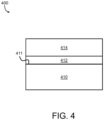
- the component 400 includes a substrate 410 formed of a nickel-based alloy having a low chromium concentration, such as between 1 and 30 wt.%.
- a coating system is formed on a surface 411 of the component 400.
- the coating system includes a first layer 412 of chromia.
- the first layer 412 may be formed by the method 200 or the method 300.
- one or more additional layers 414 may be formed on the first layer 412 (e.g., the additional layer that includes the glass, glass-ceramic, or cermet material).
- the one or more additional layers 414 are omitted and the first layer 412 is an outermost layer of the coating system.
- the components and methods disclosed herein provide various benefits over certain existing components and methods. For example, in various applications nickel-based alloys may benefit from having a layer of chromia thereon to promote oxidation resistance. However, low chromium concentration nickel-based alloys are unlikely to form a continuous external layer of chromia. Some existing methods include depositing chromia onto nickel-based alloys to provide a layer of chromia thereon. However, these methods may result in a relatively porous, low density layer of chromia. The methods disclosed herein provide for forming a continuous, external layer of chromia on low chromium concentration nickel-based alloys. The layer of chromia formed by the methods disclosed herein have relatively low porosity and high density. As such, the components and methods disclosed herein provide for producing nickel-based alloy components with excellent oxidation resistance.
Landscapes
- Chemical & Material Sciences (AREA)
- Engineering & Computer Science (AREA)
- Metallurgy (AREA)
- Chemical Kinetics & Catalysis (AREA)
- Materials Engineering (AREA)
- Mechanical Engineering (AREA)
- Organic Chemistry (AREA)
- Thermal Sciences (AREA)
- General Chemical & Material Sciences (AREA)
- Physics & Mathematics (AREA)
- Inorganic Chemistry (AREA)
- Ceramic Engineering (AREA)
- Other Surface Treatments For Metallic Materials (AREA)
Abstract
Description
- The present invention generally relates to processes for coating substrates, and more particularly relates to processes for forming a layer of chromia on a surface of a substrate formed of a low chromium content nickel-based alloy.
- Nickel-based alloys may include various elements to provide corresponding properties. As examples, aluminum (Al) and titanium (Ti) may be added to promote age hardening due to formation of precipitates, and refractory elements such as molybdenum (Mo), tungsten (W), and tantalum (Ta) may be added to provide solid-solution strengthening. Since increasing a concentration of one element inherently requires a decrease in concentration of another element, concentrations of alloying elements in nickel-based alloys are often adjusted to achieve desired properties depending on the application.
- In some nickel-based alloys, chromium (Cr) is included in concentrations of 30 weight percent (wt.%) or more to promote stability of the nickel-based alloys. However, in certain applications, it may be desirable to reduce the concentration of chromium below 30 wt.% to allow for increases in other elements. Unfortunately, a reduction of the concentration of chromium below about 30 wt.% may promote undesirable formation of an external scale of nickel oxide (NiO).
- Hence, there is a need for systems and methods that provide for the use of low chromium concentration nickel-based alloys with little or no formation of a nickel oxide scale. Furthermore, other desirable features and characteristics of the present invention will become apparent from the subsequent detailed description and the appended claims, taken in conjunction with the accompanying drawings and the foregoing technical field and background.
- This summary is provided to describe select concepts in a simplified form that are further described in the Detailed Description. This summary is not intended to identify key or essential features of the claimed subject matter, nor is it intended to be used as an aid in determining the scope of the claimed subject matter.
- In various embodiments, a method is provided for forming a layer of chromia on a substrate. The method includes forming a mixture that includes at least one chromia promoter, applying the mixture to a surface of a substrate formed of a nickel-based alloy having between 1 wt.% and 30 wt.% chromium, and forming a layer of chromia (Cr2O3) on the surface of the substrate by performing a heat treatment on the surface with the mixture thereon, wherein during the heat treatment oxygen diffuses from the at least one chromia promotor and reacts with the chromium in the substrate to form the layer of chromia on the surface.
- In various embodiments, a component is provided that includes a substrate formed of a nickel-based alloy having between 1 wt.% and 30 wt.% chromium; and a layer of chromia on and in contact with the substrate having a density of 4.69 to 5.22 g/cm3.
- Furthermore, other desirable features and characteristics of the method and component will become apparent from the subsequent detailed description and the appended claims, taken in conjunction with the accompanying drawings and the preceding background.
- The present disclosure will hereinafter be described in conjunction with the following drawing figures, wherein like numerals denote like elements, and wherein:
-
FIG. 1 is a cross-sectional view that schematically represents an exemplary turbofan gas turbine engine in accordance with an embodiment; -
FIG. 2 is a flowchart illustrating an exemplary method for forming a coating system on a component in accordance with an embodiment; -
FIG. 3 is a flowchart illustrating an exemplary method for forming a coating system on a component in accordance with an embodiment; and -
FIG. 4 schematically represents a cross-section of a portion of a component having a coating system on a surface thereof in accordance with an embodiment. - The following detailed description is merely exemplary in nature and is not intended to limit the invention or the application and uses of the invention. As used herein, the word "exemplary" means "serving as an example, instance, or illustration." Thus, any embodiment described herein as "exemplary" is not necessarily to be construed as preferred or advantageous over other embodiments. All of the embodiments described herein are exemplary embodiments provided to enable persons skilled in the art to make or use the invention and not to limit the scope of the invention which is defined by the claims. Furthermore, there is no intention to be bound by any expressed or implied theory presented in the preceding technical field, background, brief summary, or the following detailed description.
- Broadly, embodiments of the present disclosure include components comprising coating systems thereon and methods for forming such coating systems. In particular, the components disclosed herein include a substrate formed of or including a low chromium concentration nickel-based alloy with a dense layer of chromia thereon. The layer of chromia may provide oxidation resistance and thereby reduce the likelihood of formation of a nickel oxide scale. In various embodiments, the nickel-based alloy has a concentration that includes equal to or less than 30 weight percent (wt.%) chromium (Cr). In various embodiments, the coating systems may include an additional layer of a glass, ceramic, glass-ceramic, or cermet material disposed on the dense layer of chromia. In such embodiments, the layer of chromia may promote attachment of the additional layer to the substrate. In such embodiments, the layer of chromia may function as a transition layer between the additional layer and the substrate to reduce thermo-mechanical mismatch therebetween (e.g., thermal expansion coefficient mismatch) that may induce stress in the additional layer and potentially promote cracking, delamination, and/or spallation of the additional layer.
- The components are not particularly limited to any size, shape, or application. The components may be used in any industry including, but not limited to, the automobile industry, the aerospace industry, the transportation industry, the power generation industry, etc. In some embodiments, the components may be any portion of an engine or a motor, such as used for propulsion of a vehicle, aircraft, ship, train, etc. In some embodiments, the components may be any portion of a gas turbine engine, such as an aircraft engine.
- Referring to
FIG. 1 , a cross-sectional view of an exemplary turbofangas turbine engine 100 is illustrated. In general, thegas turbine engine 100 includes afan section 102, acompressor section 104, acombustion section 106, aturbine section 108, and anexhaust section 110. The fan section includes afan 112 mounted on the low-pressure turbine shaft 138 and contained within afan casing 114. Thefan 112 induces air from the surrounding environment into the engine and passes a fraction of this air toward thecompressor section 104. Thecompressor section 104 includes at least one compressor and, in the depicted embodiment, includes a low-pressure compressor 120 and a high-pressure compressor 122. The compressors are mounted on turbine shafts 134 and 138 and contained within a compressor casing orshroud 118. Thecombustion section 106 of thegas turbine engine 100 includes acombustor 124 in which the high-pressure air from the high-pressure compressor 122 is mixed with fuel and combusted to generate a combustion gas. The combustion gas is then directed into theturbine section 108 which includes a number ofturbines exhaust section 110. - The
gas turbine engine 100 includes at least one component with a coated outer surface. The component may be included in an area of thegas turbine engine 100 subjected to high-temperature environments. The coated outer surface is defined by one or more layers of the coating system secured directly or indirectly (e.g., via underlying layers thereof) to surfaces of a substrate (i.e., an underlying layer or body). The substrate may be defined by a component body. The component body may define a majority of the component. The component body may have a variety of shapes without departing from the scope of the present disclosure. - In various embodiments, the component body and, thus the substrate, may be constructed of a nickel-based alloy and include a layer of chromia. The nickel-based alloy may have various compositions. In various embodiments, the nickel-based alloy includes one or more of aluminum (Al), cobalt (Co), molybdenum (Mo), tungsten (W), and tantalum (Ta). In various embodiments, the nickel-based alloy may be Superalloy 10, ATI 718Plus®, Astroloy™, CMSX2, CMSX4, CMSX6, CMSX10, MAR-247, FT750DC, Hastelloy X®, Hastelloy S®, Inconel® 600, Inconel® 718, Inconel® 625, Inconel® MA758, Inconel® MA760, Inconel® MA6000, Inconel® MAR-M200, Nimonic® 80A, Nimonic® 105, PM1000, Rene N5, Rene N6, Rene 41, RR2000, RR3000, UCSX1, UCSX8, SRR99, TMS 63, TMS75, TMS138, TMS162, Udimet® 500, Udimet® 700, or Waspaloy®. In various embodiments, the nickel-based alloy includes 1 to 30 wt.% chromium, such as 1 to 25 wt.% chromium, such as 1 to 20 wt.% chromium, such as 1 to 15 wt.% chromium, such as 1 to 10 wt.% chromium.
- The layer of chromia (Cr2O3) may include at least 95 wt.% chromia, such as 98 wt.% chromia or greater, such as 99 wt.% chromia or greater, such as 99.9 wt.% chromia or greater with incidental impurities of 0.1 wt.% or less. The layer of chromia may have a density sufficient to provide oxidation resistance to the substrate. In various embodiments, the layer of chromia has 4.69 to 5.22 g/cm3. In various embodiments, the layer of chromia has a relative density of greater than 90 percent, such as greater than 95 percent. In various embodiments, the layer of chromia has a thickness of 100 nanometers (nm) to 5 micrometers (µm), such as 500 nm to 0.5 µm. Thicknesses within these ranges may reduce stress induced in the chromia layer due to lattice mismatch and thermal expansion coefficient mismatch between the chromia layer and Ni-based substrate. In various embodiments, the layer of chromia uniformly covers a surface of the substrate.
- In various embodiments, a density and/or porosity gradient may be formed between the substrate and the layer of chromia. In particular, such gradient may reduce induced stress in the layer of chromia and promote mechanical attachment of any layers on the layer of chromia (e.g., the additional layer) to the layer of chromia, especially when the thickness of the layer of chromia is between 2 and 5 µm.
- The layer of chromia and, optionally, any other layers of the coating system may be formed on the surface of the substrate by various processes. In some examples, the layer of chromia may be formed on the surface of the substrate by, for example, air plasma spraying (APS), cold spraying, sputtering (e.g., direct current (DC), radio frequency (RF), magnetron, etc.), or electron-beam physical vapor deposition (EB-PVD). For example,
FIG. 2 is a flow chart illustrating anexemplary method 200 for forming a layer of chromia on a substrate of a component. - The
method 200 may start at 210. At 212, themethod 200 may include applying a chromia promoter to a substrate formed of a nickel-based alloy. The nickel-based alloy may have various compositions such as those described previously. The chromia promoter may be applied onto the surface of the substrate by various methods including, for example, air plasma spraying (APS), cold spraying, sputtering (e.g., direct current (DC), radio frequency (RF), magnetron, etc.), or electron-beam physical vapor deposition (EB-PVD). - The chromia promoter may be any material configured to function as an oxygen donor by providing oxygen adjacent to the surface of the substrate during a heat treatment at a temperature sufficient to diffuse the oxygen to the surface. During such heat treatment, the oxygen diffused from the chromia promotor reacts with the chromium of the surface of the substrate to form the layer of chromia thereon. In some embodiments, the chromia promotor is configured to donate oxygen in a temperature range of between 400 °C and 850 °C, such as between 650 °C and 750 °C. In various embodiments, the chromia promotor may include, but is not limited to, cobalt (II) oxide (CoO), nickel (II) oxide (NiO), iron (II) oxide (FeO), iron (III) oxide (Fe2O3), zinc oxide (ZnO), aluminum oxide (Al2O3), or a combination thereof.
- In various embodiments, the
method 200 may include preparing the surface of the substrate prior to application of the chromia promoter thereto. Preparation of the surface may include, for example, mechanical or chemical polishing or cleaning to remove any oxides of the substrate disposed thereon. Various contaminates, such as oxides of the substrate material, may reduce or prevent formation of the layer of chromia, may result in increased porosity of the layer of chromia, and/or may negatively affect adherence of the layer of chromia to the substrate thereby promoting delamination and/or spallation. - At 214, the
method 200 may include forming the layer of chromia. Forming the layer of chromia may include heat treating the surface of the substrate with the chromia promoter thereon in a heating apparatus such as, for example, a box furnace or a belt furnace while exposed to an inert atmosphere or air at a temperature and duration sufficient to activate the chromia promoter and promote a reaction that forms a uniform layer of dense and crystallized chromia to a predetermined thickness. During the reaction, the chromia promoter functions as an oxygen donor via diffusion of oxygen from the chromia promoter to the surface of the substrate. The diffused oxygen reacts with the chromium of the surface of the substrate to form the layer of chromia thereon. As such, the chromia promoter may become oxygen deficient. - In various embodiments, the temperature of the heat treatment is less than an age-hardening temperature of the nickel-based alloy of the substrate. In various embodiments, the heat treatment may be performed at a temperature equal to or less than 850 °C, such as in the range of 750 °C to 850 °C for a period of time. The period of time may be selected to form the layer of chromia to a predetermined thickness and may be based, at least in part, on the chromium content of the surface of the substrate. In various embodiments, the time period may be about 10 to 30 minutes. The
method 200 may end at 216. - In some examples, the layer of chromia may be formed on the surface of the substrate by, for example, brush painting, troweling, doctor-blading, screen printing, and spraying processes. For example,
FIG. 3 is a flow chart illustrating anexemplary method 300 for forming a layer of chromia on a substrate of a component. Themethod 300 may start at 310. - At 312, the
method 300 may include forming a mixture of a first powder and a chromia promoter (in powder form). For example, the mixture may be in the form of a slurry, a paste, or a paint. The mixture may include the first powder, the chromia promotor, and, optionally, one or more additional components such as, but not limited to, a carrier fluid (e.g., water and/or an organic solvent), certain surfactants, chelators, stabilizers, and pH adjusters. In various embodiments, the mixture may have a solids loading of about 5 to 85 wt.%. In some examples, the lower end of this range of solids loading may be used with nanometer-sized powders and the upper end of this range of solids loading may be used with micrometer-sized powders. The mixture may include particle sizes in a range of about 0.1 micrometers (µm) to 10 µm. - The first powder provides a carrier medium for the chromia promotor. In addition, the first powder may be configured to provide a layer of protection over the surface of the substrate while a reaction occurs between the surface and the mixture. In some embodiments, the first powder may be configured to promote the reaction by maintaining a specific partial pressure of oxygen released from the chromia promotor over the surface of the substrate. In some embodiments, the first mixture may be configured to promote activation of the chromia promotor. In various embodiments, the first powder may include a glass material, a glass-ceramic material, or a combination thereof. In various examples, the first powder may include at least a first metal oxide such as, but is not limited to, zirconium dioxide (ZrO2), aluminum oxide (Al2O3), barium oxide (BaO), strontium peroxide (SrO2), cobalt oxide (CoO), silicon dioxide (SiO2), boron trioxide (B2O3), titanium oxide (TiO2), any combination thereof, or a glass powder composition configured to form one or more of the aforementioned compounds. In various embodiments, the first powder may include the first metal oxide and at least a second metal oxide. In such examples, the second metal oxide may be, but is not limited to, cobalt (III) oxide (Co2O3), zinc oxide (ZnO), nickel (II) oxide (NiO), iron (II) oxide (FeO), iron (III) oxide (Fe2O3), chromium (III) oxide (Cr2O3), or any combination thereof.
- The chromia promoter may be any material as described above in relation to step 212 of the
method 200 provided in powder form. In various examples, the chromia promoter may include a powder of particles that each have a metallic core encased in an oxide shell. In such examples, the oxide shell may be formed of or include one or more of the compositions noted above for the chromia promoter (e.g., CoO, NiO, FeO, Fe2O3, ZnO, Al2O3, or a combination thereof). - At 314, the
method 300 may include applying the mixture to a substrate formed of a nickel-based alloy. The nickel-based alloy may have various compositions such as those described previously. The mixture may be applied onto the surface of the substrate by various methods including, for example, brush painting, troweling, doctor-blading, screen printing, and spraying processes. - At 316, the
method 300 may optionally include performing a drying process on the applied mixture and, at 318, themethod 300 may include performing a burnout process on the dried mixture. Method steps 316 and 318 may not be omitted, for example, if the mixture does not include an organic material. - At 316, during the drying process, low temperature volatile components may be removed. Various processes may be used to perform the drying process. In some embodiments, the drying process includes heat treating the substrate with the mixture applied thereon in a heating apparatus such as, for example, an oven at a temperature and duration sufficient to remove the volatile components. In various embodiments, the drying process may be performed at a temperature in the range of 100°C to 130°C for about 20 minutes.
- At 318, during the burnout process, organic compounds may be removed. Various processes may be used to perform the burnout process. In some embodiments, the burnout process includes heat treating the substrate with the dried mixture applied thereon in a heating apparatus such as, for example, a box furnace or a belt furnace while exposed to an inert atmosphere or air at a temperature and duration sufficient to remove the organic compounds. In various embodiments, the burnout process may be performed at a temperature in the range of 400°C to 650°C for about 30 minutes, such as about 10 minutes.
- At 320, the
method 300 may include forming the layer of chromia. Forming the layer of chromia may include heat treating the surface of the substrate with the remainder of the mixture thereon in a manner such as those described previously in relation to step 214 of themethod 200. - In some examples, the remainder of the mixture may form an additional layer on the layer of chromia. For example, the additional layer may include a layer of a ceramic material formed from the first powder. For examples in which the chromia promoter includes particles having metal cores encased in oxide shells, the additional layer may be a cermet in which metallic particles (i.e., the core of the chromia promoter) are dispersed in a matrix of a ceramic material.
- The
method 300 may end at 322. - Referring now to
FIG. 4 , a cross-section of a portion of acomponent 400 is presented. Thecomponent 400 includes asubstrate 410 formed of a nickel-based alloy having a low chromium concentration, such as between 1 and 30 wt.%. A coating system is formed on asurface 411 of thecomponent 400. The coating system includes afirst layer 412 of chromia. In various embodiments, thefirst layer 412 may be formed by themethod 200 or themethod 300. Optionally, one or moreadditional layers 414 may be formed on the first layer 412 (e.g., the additional layer that includes the glass, glass-ceramic, or cermet material). However, in some embodiments, the one or moreadditional layers 414 are omitted and thefirst layer 412 is an outermost layer of the coating system. - The components and methods disclosed herein provide various benefits over certain existing components and methods. For example, in various applications nickel-based alloys may benefit from having a layer of chromia thereon to promote oxidation resistance. However, low chromium concentration nickel-based alloys are unlikely to form a continuous external layer of chromia. Some existing methods include depositing chromia onto nickel-based alloys to provide a layer of chromia thereon. However, these methods may result in a relatively porous, low density layer of chromia. The methods disclosed herein provide for forming a continuous, external layer of chromia on low chromium concentration nickel-based alloys. The layer of chromia formed by the methods disclosed herein have relatively low porosity and high density. As such, the components and methods disclosed herein provide for producing nickel-based alloy components with excellent oxidation resistance.
- In this document, relational terms such as first and second, and the like may be used solely to distinguish one entity or action from another entity or action without necessarily requiring or implying any actual such relationship or order between such entities or actions. Numerical ordinals such as "first," "second," "third," etc. simply denote different singles of a plurality and do not imply any order or sequence unless specifically defined by the claim language. The sequence of the text in any of the claims does not imply that process steps must be performed in a temporal or logical order according to such sequence unless it is specifically defined by the language of the claim. The process steps may be interchanged in any order without departing from the scope of the invention as long as such an interchange does not contradict the claim language and is not logically nonsensical.
- As used herein, the terms "substantially" and "about" denote within 5% to account for manufacturing tolerances.
- While at least one exemplary embodiment has been presented in the foregoing detailed description of the invention, it should be appreciated that a vast number of variations exist. It should also be appreciated that the exemplary embodiment or exemplary embodiments are only examples, and are not intended to limit the scope, applicability, or configuration of the invention in any way. Rather, the foregoing detailed description will provide those skilled in the art with a convenient road map for implementing an exemplary embodiment of the invention. It being understood that various changes may be made in the function and arrangement of elements described in an exemplary embodiment without departing from the scope of the invention as set forth in the appended claims.
Claims (15)
- A method, comprising:forming a mixture that includes at least one chromia promoter;applying the mixture to a surface of a substrate formed of a nickel-based alloy having between 1 wt.% and 30 wt.% chromium; andforming a layer of chromia (Cr2O3) on the surface of the substrate by performing a heat treatment on the surface with the mixture thereon, wherein during the heat treatment oxygen diffuses from the at least one chromia promotor and reacts with the chromium in the substrate to form the layer of chromia on the surface.
- The method of claim 1, wherein the at least one chromia promoter includes cobalt (II) oxide (CoO), nickel (II) oxide (NiO), iron (II) oxide (FeO), iron (III) oxide (Fe2O3), zinc oxide (ZnO), aluminum oxide (Al2O3), or a combination thereof.
- The method of claim 1, wherein the mixture includes at least a first powder comprising a glass material, a glass-ceramic material, or a combination thereof, wherein the method includes forming an additional layer that includes the glass material, the glass-ceramic material, or the combination thereof on the layer of chromia during the heat treatment.
- The method of claim 3, wherein the first powder includes at least a first metal oxide chosen from the group consisting of zirconium dioxide (ZrO2), aluminum oxide (Al2O3), barium oxide (BaO), strontium peroxide (SrO2), cobalt oxide (CoO), silicon dioxide (SiO2), boron trioxide (B2O3), titanium oxide (TiO2), any combination thereof, or a glass powder composition configured to form one or more of zirconium dioxide (ZrO2), aluminum oxide (Al2O3), barium oxide (BaO), strontium peroxide (SrO2), cobalt oxide (CoO), silicon dioxide (SiO2), boron trioxide (B2O3), titanium oxide (TiO2).
- The method of claim 4, wherein the first powder includes a second metal oxide chosen from the group consisting of cobalt (III) oxide (Co2O3), zinc oxide (ZnO), nickel (II) oxide (NiO), iron (II) oxide (FeO), iron (III) oxide (Fe2O3), chromium (III) oxide (Cr2O3), or any combination thereof.
- The method of claim 3, wherein the at least one chromia promoter includes particles having a metallic core encased in a ceramic shell, wherein the additional layer is a cermet material.
- The method of claim 3, wherein during the heat treatment the first powder provides a layer of protection over the surface of the substrate that promotes the formation of the layer of chromia by maintaining a specific partial pressure of the oxygen diffused from the at least one chromia promotor on the surface of the substrate.
- The method of claim 1, wherein the heat treatment is performed at a temperature that is less than an age-hardening temperature of the nickel-based alloy.
- The method of claim 1, wherein the nickel-based alloy includes an amount of chromium equal to or less than 10 wt.%.
- The method of claim 1, wherein the layer of chromia has a density of 4.69 to 5.22 g/cm3 and a thickness of 100 nm to 5 µm.
- A component, comprising:a substrate formed of a nickel-based alloy having between 1 wt.% and 30 wt.% chromium; anda layer of chromia disposed on and in contact with the substrate having a density of 4.69 to 5.22 g/cm3.
- The component of claim 11, wherein the nickel-based alloy includes an amount of chromium equal to or less than 10 wt.%.
- The component of claim 11, wherein the layer of chromia has a thickness of 100 nm to 5 µm.
- The component of claim 11, further comprising an additional layer disposed on and in contact with the layer of chromia, wherein the additional layer includes a glass material, a glass-ceramic material, or a combination thereof.
- The component of claim 11, wherein the component is configured to be installed in a gas turbine engine.
Applications Claiming Priority (1)
| Application Number | Priority Date | Filing Date | Title |
|---|---|---|---|
| US18/492,485 US20250129483A1 (en) | 2023-10-23 | 2023-10-23 | Components and methods for forming a layer of chromia thereon |
Publications (1)
| Publication Number | Publication Date |
|---|---|
| EP4545675A1 true EP4545675A1 (en) | 2025-04-30 |
Family
ID=93014940
Family Applications (1)
| Application Number | Title | Priority Date | Filing Date |
|---|---|---|---|
| EP24205111.8A Pending EP4545675A1 (en) | 2023-10-23 | 2024-10-07 | Components and methods for forming a layer of chromia thereon |
Country Status (2)
| Country | Link |
|---|---|
| US (1) | US20250129483A1 (en) |
| EP (1) | EP4545675A1 (en) |
Citations (2)
| Publication number | Priority date | Publication date | Assignee | Title |
|---|---|---|---|---|
| US20130004881A1 (en) * | 2010-03-15 | 2013-01-03 | Nima Shaigan | Composite coatings for oxidation protection |
| EP4012068A1 (en) * | 2020-12-09 | 2022-06-15 | Honeywell International Inc. | Corrosion and oxidation resistant coatings for gas turbine engines, and methods for producing the same |
Family Cites Families (1)
| Publication number | Priority date | Publication date | Assignee | Title |
|---|---|---|---|---|
| JP2017186610A (en) * | 2016-04-05 | 2017-10-12 | 三菱重工航空エンジン株式会社 | Nickel-based alloy, turbine blade and method for producing injection molded article of nickel-based alloy |
-
2023
- 2023-10-23 US US18/492,485 patent/US20250129483A1/en active Pending
-
2024
- 2024-10-07 EP EP24205111.8A patent/EP4545675A1/en active Pending
Patent Citations (2)
| Publication number | Priority date | Publication date | Assignee | Title |
|---|---|---|---|---|
| US20130004881A1 (en) * | 2010-03-15 | 2013-01-03 | Nima Shaigan | Composite coatings for oxidation protection |
| EP4012068A1 (en) * | 2020-12-09 | 2022-06-15 | Honeywell International Inc. | Corrosion and oxidation resistant coatings for gas turbine engines, and methods for producing the same |
Non-Patent Citations (1)
| Title |
|---|
| TAYLOR M P ET AL: "A chromia forming thermal barrier coating system", MATERIALS AND CORROSION, WILEY, HOBOKEN, USA, vol. 62, no. 7, 1 July 2011 (2011-07-01), pages 668 - 673, XP001563837, ISSN: 0947-5117, [retrieved on 20101223], DOI: 10.1002/MACO.201005881 * |
Also Published As
| Publication number | Publication date |
|---|---|
| US20250129483A1 (en) | 2025-04-24 |
Similar Documents
| Publication | Publication Date | Title |
|---|---|---|
| JP4084452B2 (en) | Gas turbine engine blade with improved fatigue strength and manufacturing method thereof | |
| US6485845B1 (en) | Thermal barrier coating system with improved bond coat | |
| US5993980A (en) | Protective coating for protecting a component from corrosion, oxidation and excessive thermal stress, process for producing the coating and gas turbine component | |
| CN100408726C (en) | High temperature resistant article and method of making same | |
| JP2695835B2 (en) | Ceramic coated heat resistant material | |
| US4916022A (en) | Titania doped ceramic thermal barrier coatings | |
| JP3905964B2 (en) | Thermal barrier coating for superalloy products and method for forming the coating | |
| JP3001161B2 (en) | Aluminum coating for super alloy | |
| US7056555B2 (en) | Method for coating an internal surface of an article with an aluminum-containing coating | |
| US7510779B2 (en) | Low-sulfur article having a platinum aluminide protective layer and its preparation | |
| JP3434504B2 (en) | Insulation method for metal substrate | |
| US6274193B1 (en) | Repair of a discrete selective surface of an article | |
| JP7232295B2 (en) | Adhesion-promoting layer for bonding high-temperature protective layer onto substrate, and method for producing same | |
| EP0532255A1 (en) | Thermal barrier coating | |
| JPH09296702A (en) | Thermal insulation coating products and coating methods | |
| EP0824606A1 (en) | Porous thermal barrier coating | |
| JP2002327284A (en) | Oxidation resistant coatings for niobium-based silicide composites | |
| US8039116B2 (en) | Nb-Si based alloys having an Al-containing coating, articles, and processes | |
| US9932661B2 (en) | Process for producing a high-temperature protective coating | |
| EP4012068A1 (en) | Corrosion and oxidation resistant coatings for gas turbine engines, and methods for producing the same | |
| US20250129483A1 (en) | Components and methods for forming a layer of chromia thereon | |
| US6884524B2 (en) | Low cost chrome and chrome/aluminide process for moderate temperature applications | |
| JP2002146555A (en) | Method for depositing aluminide coating with reactive- element added on metallic substrate | |
| US20090098394A1 (en) | Strain tolerant corrosion protecting coating and tape method of application | |
| JP2007239101A (en) | Bond coating method for thermal barrier coating |
Legal Events
| Date | Code | Title | Description |
|---|---|---|---|
| PUAI | Public reference made under article 153(3) epc to a published international application that has entered the european phase |
Free format text: ORIGINAL CODE: 0009012 |
|
| STAA | Information on the status of an ep patent application or granted ep patent |
Free format text: STATUS: THE APPLICATION HAS BEEN PUBLISHED |
|
| AK | Designated contracting states |
Kind code of ref document: A1 Designated state(s): AL AT BE BG CH CY CZ DE DK EE ES FI FR GB GR HR HU IE IS IT LI LT LU LV MC ME MK MT NL NO PL PT RO RS SE SI SK SM TR |
|
| P01 | Opt-out of the competence of the unified patent court (upc) registered |
Free format text: CASE NUMBER: APP_31464/2025 Effective date: 20250630 |
|
| STAA | Information on the status of an ep patent application or granted ep patent |
Free format text: STATUS: REQUEST FOR EXAMINATION WAS MADE |
|
| 17P | Request for examination filed |
Effective date: 20251020 |