EP4545668A1 - High-plasticity 1500-mpa-grade ultrahigh-strength steel and preparation method therefor - Google Patents
High-plasticity 1500-mpa-grade ultrahigh-strength steel and preparation method therefor Download PDFInfo
- Publication number
- EP4545668A1 EP4545668A1 EP23830168.3A EP23830168A EP4545668A1 EP 4545668 A1 EP4545668 A1 EP 4545668A1 EP 23830168 A EP23830168 A EP 23830168A EP 4545668 A1 EP4545668 A1 EP 4545668A1
- Authority
- EP
- European Patent Office
- Prior art keywords
- steel
- ultra
- strength steel
- high strength
- plasticity
- Prior art date
- Legal status (The legal status is an assumption and is not a legal conclusion. Google has not performed a legal analysis and makes no representation as to the accuracy of the status listed.)
- Pending
Links
Images
Classifications
-
- C—CHEMISTRY; METALLURGY
- C21—METALLURGY OF IRON
- C21D—MODIFYING THE PHYSICAL STRUCTURE OF FERROUS METALS; GENERAL DEVICES FOR HEAT TREATMENT OF FERROUS OR NON-FERROUS METALS OR ALLOYS; MAKING METAL MALLEABLE, e.g. BY DECARBURISATION OR TEMPERING
- C21D9/00—Heat treatment, e.g. annealing, hardening, quenching or tempering, adapted for particular articles; Furnaces therefor
- C21D9/0081—Heat treatment, e.g. annealing, hardening, quenching or tempering, adapted for particular articles; Furnaces therefor for slabs; for billets
-
- B—PERFORMING OPERATIONS; TRANSPORTING
- B21—MECHANICAL METAL-WORKING WITHOUT ESSENTIALLY REMOVING MATERIAL; PUNCHING METAL
- B21B—ROLLING OF METAL
- B21B37/00—Control devices or methods specially adapted for metal-rolling mills or the work produced thereby
- B21B37/74—Temperature control, e.g. by cooling or heating the rolls or the product
-
- B—PERFORMING OPERATIONS; TRANSPORTING
- B22—CASTING; POWDER METALLURGY
- B22D—CASTING OF METALS; CASTING OF OTHER SUBSTANCES BY THE SAME PROCESSES OR DEVICES
- B22D11/00—Continuous casting of metals, i.e. casting in indefinite lengths
- B22D11/001—Continuous casting of metals, i.e. casting in indefinite lengths of specific alloys
-
- C—CHEMISTRY; METALLURGY
- C21—METALLURGY OF IRON
- C21D—MODIFYING THE PHYSICAL STRUCTURE OF FERROUS METALS; GENERAL DEVICES FOR HEAT TREATMENT OF FERROUS OR NON-FERROUS METALS OR ALLOYS; MAKING METAL MALLEABLE, e.g. BY DECARBURISATION OR TEMPERING
- C21D1/00—General methods or devices for heat treatment, e.g. annealing, hardening, quenching or tempering
- C21D1/18—Hardening; Quenching with or without subsequent tempering
-
- C—CHEMISTRY; METALLURGY
- C21—METALLURGY OF IRON
- C21D—MODIFYING THE PHYSICAL STRUCTURE OF FERROUS METALS; GENERAL DEVICES FOR HEAT TREATMENT OF FERROUS OR NON-FERROUS METALS OR ALLOYS; MAKING METAL MALLEABLE, e.g. BY DECARBURISATION OR TEMPERING
- C21D1/00—General methods or devices for heat treatment, e.g. annealing, hardening, quenching or tempering
- C21D1/26—Methods of annealing
-
- C—CHEMISTRY; METALLURGY
- C21—METALLURGY OF IRON
- C21D—MODIFYING THE PHYSICAL STRUCTURE OF FERROUS METALS; GENERAL DEVICES FOR HEAT TREATMENT OF FERROUS OR NON-FERROUS METALS OR ALLOYS; MAKING METAL MALLEABLE, e.g. BY DECARBURISATION OR TEMPERING
- C21D1/00—General methods or devices for heat treatment, e.g. annealing, hardening, quenching or tempering
- C21D1/74—Methods of treatment in inert gas, controlled atmosphere, vacuum or pulverulent material
-
- C—CHEMISTRY; METALLURGY
- C21—METALLURGY OF IRON
- C21D—MODIFYING THE PHYSICAL STRUCTURE OF FERROUS METALS; GENERAL DEVICES FOR HEAT TREATMENT OF FERROUS OR NON-FERROUS METALS OR ALLOYS; MAKING METAL MALLEABLE, e.g. BY DECARBURISATION OR TEMPERING
- C21D1/00—General methods or devices for heat treatment, e.g. annealing, hardening, quenching or tempering
- C21D1/74—Methods of treatment in inert gas, controlled atmosphere, vacuum or pulverulent material
- C21D1/76—Adjusting the composition of the atmosphere
-
- C—CHEMISTRY; METALLURGY
- C21—METALLURGY OF IRON
- C21D—MODIFYING THE PHYSICAL STRUCTURE OF FERROUS METALS; GENERAL DEVICES FOR HEAT TREATMENT OF FERROUS OR NON-FERROUS METALS OR ALLOYS; MAKING METAL MALLEABLE, e.g. BY DECARBURISATION OR TEMPERING
- C21D1/00—General methods or devices for heat treatment, e.g. annealing, hardening, quenching or tempering
- C21D1/84—Controlled slow cooling
-
- C—CHEMISTRY; METALLURGY
- C21—METALLURGY OF IRON
- C21D—MODIFYING THE PHYSICAL STRUCTURE OF FERROUS METALS; GENERAL DEVICES FOR HEAT TREATMENT OF FERROUS OR NON-FERROUS METALS OR ALLOYS; MAKING METAL MALLEABLE, e.g. BY DECARBURISATION OR TEMPERING
- C21D6/00—Heat treatment of ferrous alloys
- C21D6/002—Heat treatment of ferrous alloys containing Cr
-
- C—CHEMISTRY; METALLURGY
- C21—METALLURGY OF IRON
- C21D—MODIFYING THE PHYSICAL STRUCTURE OF FERROUS METALS; GENERAL DEVICES FOR HEAT TREATMENT OF FERROUS OR NON-FERROUS METALS OR ALLOYS; MAKING METAL MALLEABLE, e.g. BY DECARBURISATION OR TEMPERING
- C21D6/00—Heat treatment of ferrous alloys
- C21D6/005—Heat treatment of ferrous alloys containing Mn
-
- C—CHEMISTRY; METALLURGY
- C21—METALLURGY OF IRON
- C21D—MODIFYING THE PHYSICAL STRUCTURE OF FERROUS METALS; GENERAL DEVICES FOR HEAT TREATMENT OF FERROUS OR NON-FERROUS METALS OR ALLOYS; MAKING METAL MALLEABLE, e.g. BY DECARBURISATION OR TEMPERING
- C21D6/00—Heat treatment of ferrous alloys
- C21D6/008—Heat treatment of ferrous alloys containing Si
-
- C—CHEMISTRY; METALLURGY
- C21—METALLURGY OF IRON
- C21D—MODIFYING THE PHYSICAL STRUCTURE OF FERROUS METALS; GENERAL DEVICES FOR HEAT TREATMENT OF FERROUS OR NON-FERROUS METALS OR ALLOYS; MAKING METAL MALLEABLE, e.g. BY DECARBURISATION OR TEMPERING
- C21D8/00—Modifying the physical properties of ferrous metals or ferrous alloys by deformation combined with, or followed by, heat treatment
- C21D8/02—Modifying the physical properties of ferrous metals or ferrous alloys by deformation combined with, or followed by, heat treatment during manufacturing of plates or strips
-
- C—CHEMISTRY; METALLURGY
- C21—METALLURGY OF IRON
- C21D—MODIFYING THE PHYSICAL STRUCTURE OF FERROUS METALS; GENERAL DEVICES FOR HEAT TREATMENT OF FERROUS OR NON-FERROUS METALS OR ALLOYS; MAKING METAL MALLEABLE, e.g. BY DECARBURISATION OR TEMPERING
- C21D8/00—Modifying the physical properties of ferrous metals or ferrous alloys by deformation combined with, or followed by, heat treatment
- C21D8/02—Modifying the physical properties of ferrous metals or ferrous alloys by deformation combined with, or followed by, heat treatment during manufacturing of plates or strips
- C21D8/021—Modifying the physical properties of ferrous metals or ferrous alloys by deformation combined with, or followed by, heat treatment during manufacturing of plates or strips involving particular fabrication steps or treatments of ingots or slabs
-
- C—CHEMISTRY; METALLURGY
- C21—METALLURGY OF IRON
- C21D—MODIFYING THE PHYSICAL STRUCTURE OF FERROUS METALS; GENERAL DEVICES FOR HEAT TREATMENT OF FERROUS OR NON-FERROUS METALS OR ALLOYS; MAKING METAL MALLEABLE, e.g. BY DECARBURISATION OR TEMPERING
- C21D8/00—Modifying the physical properties of ferrous metals or ferrous alloys by deformation combined with, or followed by, heat treatment
- C21D8/02—Modifying the physical properties of ferrous metals or ferrous alloys by deformation combined with, or followed by, heat treatment during manufacturing of plates or strips
- C21D8/0221—Modifying the physical properties of ferrous metals or ferrous alloys by deformation combined with, or followed by, heat treatment during manufacturing of plates or strips characterised by the working steps
- C21D8/0226—Hot rolling
-
- C—CHEMISTRY; METALLURGY
- C21—METALLURGY OF IRON
- C21D—MODIFYING THE PHYSICAL STRUCTURE OF FERROUS METALS; GENERAL DEVICES FOR HEAT TREATMENT OF FERROUS OR NON-FERROUS METALS OR ALLOYS; MAKING METAL MALLEABLE, e.g. BY DECARBURISATION OR TEMPERING
- C21D8/00—Modifying the physical properties of ferrous metals or ferrous alloys by deformation combined with, or followed by, heat treatment
- C21D8/02—Modifying the physical properties of ferrous metals or ferrous alloys by deformation combined with, or followed by, heat treatment during manufacturing of plates or strips
- C21D8/0221—Modifying the physical properties of ferrous metals or ferrous alloys by deformation combined with, or followed by, heat treatment during manufacturing of plates or strips characterised by the working steps
- C21D8/0236—Cold rolling
-
- C—CHEMISTRY; METALLURGY
- C21—METALLURGY OF IRON
- C21D—MODIFYING THE PHYSICAL STRUCTURE OF FERROUS METALS; GENERAL DEVICES FOR HEAT TREATMENT OF FERROUS OR NON-FERROUS METALS OR ALLOYS; MAKING METAL MALLEABLE, e.g. BY DECARBURISATION OR TEMPERING
- C21D8/00—Modifying the physical properties of ferrous metals or ferrous alloys by deformation combined with, or followed by, heat treatment
- C21D8/02—Modifying the physical properties of ferrous metals or ferrous alloys by deformation combined with, or followed by, heat treatment during manufacturing of plates or strips
- C21D8/0247—Modifying the physical properties of ferrous metals or ferrous alloys by deformation combined with, or followed by, heat treatment during manufacturing of plates or strips characterised by the heat treatment
-
- C—CHEMISTRY; METALLURGY
- C21—METALLURGY OF IRON
- C21D—MODIFYING THE PHYSICAL STRUCTURE OF FERROUS METALS; GENERAL DEVICES FOR HEAT TREATMENT OF FERROUS OR NON-FERROUS METALS OR ALLOYS; MAKING METAL MALLEABLE, e.g. BY DECARBURISATION OR TEMPERING
- C21D8/00—Modifying the physical properties of ferrous metals or ferrous alloys by deformation combined with, or followed by, heat treatment
- C21D8/02—Modifying the physical properties of ferrous metals or ferrous alloys by deformation combined with, or followed by, heat treatment during manufacturing of plates or strips
- C21D8/0247—Modifying the physical properties of ferrous metals or ferrous alloys by deformation combined with, or followed by, heat treatment during manufacturing of plates or strips characterised by the heat treatment
- C21D8/0263—Modifying the physical properties of ferrous metals or ferrous alloys by deformation combined with, or followed by, heat treatment during manufacturing of plates or strips characterised by the heat treatment following hot rolling
-
- C—CHEMISTRY; METALLURGY
- C21—METALLURGY OF IRON
- C21D—MODIFYING THE PHYSICAL STRUCTURE OF FERROUS METALS; GENERAL DEVICES FOR HEAT TREATMENT OF FERROUS OR NON-FERROUS METALS OR ALLOYS; MAKING METAL MALLEABLE, e.g. BY DECARBURISATION OR TEMPERING
- C21D8/00—Modifying the physical properties of ferrous metals or ferrous alloys by deformation combined with, or followed by, heat treatment
- C21D8/02—Modifying the physical properties of ferrous metals or ferrous alloys by deformation combined with, or followed by, heat treatment during manufacturing of plates or strips
- C21D8/0278—Modifying the physical properties of ferrous metals or ferrous alloys by deformation combined with, or followed by, heat treatment during manufacturing of plates or strips involving a particular surface treatment
-
- C—CHEMISTRY; METALLURGY
- C21—METALLURGY OF IRON
- C21D—MODIFYING THE PHYSICAL STRUCTURE OF FERROUS METALS; GENERAL DEVICES FOR HEAT TREATMENT OF FERROUS OR NON-FERROUS METALS OR ALLOYS; MAKING METAL MALLEABLE, e.g. BY DECARBURISATION OR TEMPERING
- C21D9/00—Heat treatment, e.g. annealing, hardening, quenching or tempering, adapted for particular articles; Furnaces therefor
- C21D9/46—Heat treatment, e.g. annealing, hardening, quenching or tempering, adapted for particular articles; Furnaces therefor for sheet metals
-
- C—CHEMISTRY; METALLURGY
- C22—METALLURGY; FERROUS OR NON-FERROUS ALLOYS; TREATMENT OF ALLOYS OR NON-FERROUS METALS
- C22C—ALLOYS
- C22C33/00—Making ferrous alloys
- C22C33/04—Making ferrous alloys by melting
-
- C—CHEMISTRY; METALLURGY
- C22—METALLURGY; FERROUS OR NON-FERROUS ALLOYS; TREATMENT OF ALLOYS OR NON-FERROUS METALS
- C22C—ALLOYS
- C22C38/00—Ferrous alloys, e.g. steel alloys
- C22C38/001—Ferrous alloys, e.g. steel alloys containing N
-
- C—CHEMISTRY; METALLURGY
- C22—METALLURGY; FERROUS OR NON-FERROUS ALLOYS; TREATMENT OF ALLOYS OR NON-FERROUS METALS
- C22C—ALLOYS
- C22C38/00—Ferrous alloys, e.g. steel alloys
- C22C38/002—Ferrous alloys, e.g. steel alloys containing In, Mg, or other elements not provided for in one single group C22C38/001 - C22C38/60
-
- C—CHEMISTRY; METALLURGY
- C22—METALLURGY; FERROUS OR NON-FERROUS ALLOYS; TREATMENT OF ALLOYS OR NON-FERROUS METALS
- C22C—ALLOYS
- C22C38/00—Ferrous alloys, e.g. steel alloys
- C22C38/02—Ferrous alloys, e.g. steel alloys containing silicon
-
- C—CHEMISTRY; METALLURGY
- C22—METALLURGY; FERROUS OR NON-FERROUS ALLOYS; TREATMENT OF ALLOYS OR NON-FERROUS METALS
- C22C—ALLOYS
- C22C38/00—Ferrous alloys, e.g. steel alloys
- C22C38/04—Ferrous alloys, e.g. steel alloys containing manganese
-
- C—CHEMISTRY; METALLURGY
- C22—METALLURGY; FERROUS OR NON-FERROUS ALLOYS; TREATMENT OF ALLOYS OR NON-FERROUS METALS
- C22C—ALLOYS
- C22C38/00—Ferrous alloys, e.g. steel alloys
- C22C38/06—Ferrous alloys, e.g. steel alloys containing aluminium
-
- C—CHEMISTRY; METALLURGY
- C22—METALLURGY; FERROUS OR NON-FERROUS ALLOYS; TREATMENT OF ALLOYS OR NON-FERROUS METALS
- C22C—ALLOYS
- C22C38/00—Ferrous alloys, e.g. steel alloys
- C22C38/18—Ferrous alloys, e.g. steel alloys containing chromium
- C22C38/28—Ferrous alloys, e.g. steel alloys containing chromium with titanium or zirconium
-
- C—CHEMISTRY; METALLURGY
- C22—METALLURGY; FERROUS OR NON-FERROUS ALLOYS; TREATMENT OF ALLOYS OR NON-FERROUS METALS
- C22C—ALLOYS
- C22C38/00—Ferrous alloys, e.g. steel alloys
- C22C38/18—Ferrous alloys, e.g. steel alloys containing chromium
- C22C38/32—Ferrous alloys, e.g. steel alloys containing chromium with boron
-
- C—CHEMISTRY; METALLURGY
- C22—METALLURGY; FERROUS OR NON-FERROUS ALLOYS; TREATMENT OF ALLOYS OR NON-FERROUS METALS
- C22C—ALLOYS
- C22C38/00—Ferrous alloys, e.g. steel alloys
- C22C38/18—Ferrous alloys, e.g. steel alloys containing chromium
- C22C38/34—Ferrous alloys, e.g. steel alloys containing chromium with more than 1.5% by weight of silicon
-
- C—CHEMISTRY; METALLURGY
- C22—METALLURGY; FERROUS OR NON-FERROUS ALLOYS; TREATMENT OF ALLOYS OR NON-FERROUS METALS
- C22C—ALLOYS
- C22C38/00—Ferrous alloys, e.g. steel alloys
- C22C38/18—Ferrous alloys, e.g. steel alloys containing chromium
- C22C38/38—Ferrous alloys, e.g. steel alloys containing chromium with more than 1.5% by weight of manganese
-
- C—CHEMISTRY; METALLURGY
- C23—COATING METALLIC MATERIAL; COATING MATERIAL WITH METALLIC MATERIAL; CHEMICAL SURFACE TREATMENT; DIFFUSION TREATMENT OF METALLIC MATERIAL; COATING BY VACUUM EVAPORATION, BY SPUTTERING, BY ION IMPLANTATION OR BY CHEMICAL VAPOUR DEPOSITION, IN GENERAL; INHIBITING CORROSION OF METALLIC MATERIAL OR INCRUSTATION IN GENERAL
- C23G—CLEANING OR DE-GREASING OF METALLIC MATERIAL BY CHEMICAL METHODS OTHER THAN ELECTROLYSIS
- C23G1/00—Cleaning or pickling metallic material with solutions or molten salts
- C23G1/02—Cleaning or pickling metallic material with solutions or molten salts with acid solutions
- C23G1/08—Iron or steel
-
- C—CHEMISTRY; METALLURGY
- C23—COATING METALLIC MATERIAL; COATING MATERIAL WITH METALLIC MATERIAL; CHEMICAL SURFACE TREATMENT; DIFFUSION TREATMENT OF METALLIC MATERIAL; COATING BY VACUUM EVAPORATION, BY SPUTTERING, BY ION IMPLANTATION OR BY CHEMICAL VAPOUR DEPOSITION, IN GENERAL; INHIBITING CORROSION OF METALLIC MATERIAL OR INCRUSTATION IN GENERAL
- C23G—CLEANING OR DE-GREASING OF METALLIC MATERIAL BY CHEMICAL METHODS OTHER THAN ELECTROLYSIS
- C23G3/00—Apparatus for cleaning or pickling metallic material
- C23G3/02—Apparatus for cleaning or pickling metallic material for cleaning wires, strips, filaments continuously
- C23G3/025—Details of the apparatus, e.g. linings or sealing means
-
- C—CHEMISTRY; METALLURGY
- C21—METALLURGY OF IRON
- C21D—MODIFYING THE PHYSICAL STRUCTURE OF FERROUS METALS; GENERAL DEVICES FOR HEAT TREATMENT OF FERROUS OR NON-FERROUS METALS OR ALLOYS; MAKING METAL MALLEABLE, e.g. BY DECARBURISATION OR TEMPERING
- C21D2211/00—Microstructure comprising significant phases
- C21D2211/001—Austenite
-
- C—CHEMISTRY; METALLURGY
- C21—METALLURGY OF IRON
- C21D—MODIFYING THE PHYSICAL STRUCTURE OF FERROUS METALS; GENERAL DEVICES FOR HEAT TREATMENT OF FERROUS OR NON-FERROUS METALS OR ALLOYS; MAKING METAL MALLEABLE, e.g. BY DECARBURISATION OR TEMPERING
- C21D2211/00—Microstructure comprising significant phases
- C21D2211/005—Ferrite
-
- C—CHEMISTRY; METALLURGY
- C21—METALLURGY OF IRON
- C21D—MODIFYING THE PHYSICAL STRUCTURE OF FERROUS METALS; GENERAL DEVICES FOR HEAT TREATMENT OF FERROUS OR NON-FERROUS METALS OR ALLOYS; MAKING METAL MALLEABLE, e.g. BY DECARBURISATION OR TEMPERING
- C21D2211/00—Microstructure comprising significant phases
- C21D2211/008—Martensite
Definitions
- the present disclosure relates to the technology for manufacturing high-strength steel, and in particular to a high-plasticity 1500MPa-grade ultra-high strength steel and a method for manufacturing the same.
- Advanced high-strength steel is currently a material that has the highest overall competitiveness for lightweight vehicle bodies because the increased steel sheet strength allows for reducing the steel sheet thickness while maintaining excellent forming performance.
- the ultra-high-strength martensitic steel having a strength up to the 1500MPa grade and used in a large amount has an elongation of about 5%, which can no longer meet the dual requirements in the automotive field for automobile safety and forming performance during the manufacturing process.
- Another type of steel used in a large amount is hot-formed steel.
- the forming process of the hot-formed steel has high requirements on heating equipment and cooling capacity. The process is complicated, and the elongation of this steel is basically within 10%.
- the third generation high-strength steel for automobiles has attracted extensive attention because of its high strength, high plasticity and low cost, and its strength-elongation product can reach 20-30GPa%.
- Cikonium Patent CN103667884B discloses "a method for preparing 1400MPa-grade low-yield-ratio high-elongation cold-rolled ultra-high strength automobile steel", whose composition is: C 0.14%-0.16%, Si 1.31%-1.51%, Mn 2.7%-2.9%, S ⁇ 0.005%, P ⁇ 0.009%, Al 0.11%-0.51%, RE 0.005-0.20%, and a balance of Fe and unavoidable impurities.
- the composition of this patented steel is designed simply to include C, Si, Mn, Al and a small amount of rare earth elements, and the manufacturing process involves conventional casting-hot rolling-cold rolling-continuous annealing.
- the finished steel structure comprises 70-85% of martensite, 5-20% of retained austenite and a small amount of ferrite.
- the tensile strength of the invented steel is at the 1400MPa grade, the elongation is greater than or equal to 8%, and the yield strength is relatively low.
- Cikonate CN106244918B discloses "a 1500MPa-grade automobile steel having a high strength-elongation product and a manufacturing method for the same".
- the composition of this patented steel is: C 0.1-0.3%, Si 0.1-2.0%, Mn 7.5-12%, Al 0.01-2.0%, and the chemical elements further include at least one of Nb 0.01-0.07%, Ti 0.02-0.15%, V 0.05-0.20%, Cr 0.15-0.50%, Mo 0.10-0.50%, wherein the balance is iron and other unavoidable impurities.
- the manufacturing method comprises the following steps: 1) smelting and casting; 2) hot rolling; 3) bell furnace annealing, wherein the annealing temperature is 600-700°C, and the annealing time is 1-48h; 4) cold rolling; 5) first annealing after cold rolling, wherein the annealing temperature is between the Ac1 and Ac3 temperatures, and the annealing time is more than 5min; 6) second annealing after cold rolling, wherein the annealing temperature is 750-850°C, and the annealing time is 1-10min; 7) tempering, wherein the tempering temperature is 200-300°C, and the tempering time is not less than 3min.
- the microstructure of the 1500MPa-grade automobile steel having a high strength-elongation product is austenite+martensite+ferrite or austenite+martensite, and its strength-elongation product is not less than 30GPa%.
- Si 1.00-2.00% Si 1.00-2.00%
- Mn 1.5-3.0% Ni 0-0.60%
- Cr 0.50-1.50% Cr 0.50-1.50%
- Mo 0.30-0.60% V 0-0.20%
- Co 0-1.50% Al 0-1.50%
- a balance of Fe and unavoidable impurities After vacuum smelting, casting is carried out, and then hot rolling is carried out with a total reduction rate of 80%-95%.
- the resulting hot-rolled sheet is heated to 900-970°C at a rate of 5-20°C/s for 10-20 minutes of austenitization, and then air-cooled to 250-320°C and held for 2-12 hours.
- the material has a yield strength of more than 1000 MPa, a tensile strength of more than 1500 MPa, and an elongation after fracture of more than 20%.
- This patent mainly involves an ultra-high strength bainitic steel with a complex composition containing a number of alloying elements. At the same time, the heat treatment process is inefficient, the austenitizing temperature is too high, and the low-temperature treatment time is too long.
- Cipheral Patent Application CN108018484A discloses "a cold-rolled high strength steel with a tensile strength of at least 1500MPa and excellent formability and a method for manufacturing the same".
- the composition of the steel in this patent application is: C 0.25-0.40%, Si 1.50-2.50%, Mn 2.0-3.0%, Al 0.03-0.06%, P ⁇ 0.02%, S ⁇ 0.01%, N ⁇ 0.01% and at least one of 0.1-1.0% Cr and 0.1-0.5% Mo, and it also comprises at least one of 0.01-0.1% Nb, 0.01-0.2% V and 0.01-0.05% Ti, wherein the balance is Fe and other unavoidable impurities.
- the manufacturing method includes the following steps: 1) smelting and casting; 2) hot rolling; 3) pickling; 4) cold rolling; 5) continuous annealing: heating the strip steel to a soaking temperature in the range of 800-900°C, holding for at least 60 seconds, then cooling to 150-300°C at a rate of 30-80°C/s, then reheating to 350-440°C, holding for 30-300 seconds, and finally cooling to room temperature.
- the product has a microstructure of 5-20% retained austenite and 70-90% martensite, a tensile strength of at least 1500MPa and excellent formability.
- Cikon Patent CN111455282B discloses a "quenched and partitioned steel with a tensile strength ⁇ 1500MPa produced using a short process and a method therefor".
- the composition of this steel comprises: C 0.26-0.34%, Si 1.9-2.7%, Mn 2.6-3.4%, Ti 0.02-0.07%, Als 0.02-0.05%, P ⁇ 0.018%, S ⁇ 0.004%, N ⁇ 0.006%, O ⁇ 30ppm.
- the manufacturing process comprises: desulfurization of molten iron, smelting, argon blowing, LF refining, soft blowing, RH vacuum treatment, continuous casting to form a slab, soaking of the cast slab, descaling, seven-pass finishing rolling, laminar cooling, coiling, temper rolling, pickling, and continuous annealing.
- the steel strip has an Rel in the range of 1000-1200 MPa, an Rm of ⁇ 1500 MPa, and an elongation of ⁇ 15%.
- the method is one for producing a 1500MPa-grade quenched and partitioned steel using a short process.
- the composition of this patented steel is designed simply to include C, Si, Mn, Al, and Ti.
- Chinese Patent Application CN114012056A discloses "a 1500MPa-grade hot-formed steel and a method for preparing the same".
- the composition of the steel comprises: C 0.19-0.26%, Si 0.05-1.3%, Mn 0.9-2.1%, P ⁇ 0.015%, S ⁇ 0.002%, Alt 0.02-0.12%, B 0.002-0.020%, Cr 0.15-2.0%, Ti 0.02-0.15%, N ⁇ 0.006%, V+Nb ⁇ 0.15%, and a balance of Fe and unavoidable impurities.
- the molten steel is smelted and continuously cast, then subjected to soaking treatment, descaling prior to rough rolling, rough rolling, electromagnetic induction heating, descaling prior to finishing rolling, finishing rolling, laminar cooling, coiling, air cooling to room temperature and pickling. After the pickled sheet is obtained, it is hot stamped to obtain a 1500MPa-grade hot-formed steel with an elongation within 10%.
- This patent application also adopts a method for producing a hot-formed steel using a short process.
- the composition designed for this steel is relatively complex, comprising a number of alloying elements. Although the process is relatively simple, the manufacturing method pertains to the field of hot-formed ultra-high strength steel, and the elongation of the material is insufficient.
- the ultra-high strength steel has excellent strength and plasticity, excellent surface quality, good welding performance, and a relatively simple composition without excessive alloying elements, and the manufacturing process is simple and efficient.
- the steel has a yield strength of 1000-1300MPa, a tensile strength of ⁇ 1 500MPa, and an elongation at break of ⁇ 18%. It has good application prospects in automotive safety structural parts, and is particularly suitable for manufacturing vehicle structural parts and safety parts having complex shapes and high requirements on forming performance, such as A/B pillars, door anti-collision bars, girders, bumpers, etc.
- “1500 MPa grade” and “ultra-high strength” refer to a tensile strength of ⁇ 1500 MPa; and "high plasticity” refers to an elongation at break of ⁇ 18%.
- a high-plasticity 1500MPa-grade ultra-high strength steel comprising the following components in weight percentage:
- the balance is Fe and other unavoidable impurities.
- the C content is 0.36-0.38 wt%.
- the Si content is 1.4-1.7 wt%.
- the Mn content is 1.7-2.0 wt%.
- the Cr content is 0.4-0.6 wt%.
- P is ⁇ 0.015wt%
- S is ⁇ 0.002wt%
- O is ⁇ 0.002wt%
- N is ⁇ 0.004wt%.
- the ultra-high strength steel of the present disclosure has a yield strength of 1000-1300 MPa, a tensile strength of ⁇ 1500 MPa, and an elongation at break of ⁇ 18%.
- the yield strength of the ultra-high strength steel of the present disclosure is 1000 MPa, 1050 MPa, 1100 MPa, 1150 MPa, 1200 MPa, 1250 MPa, 1300 MPa, or within a range consisting of any two of the foregoing values.
- the tensile strength of the ultra-high strength steel of the present disclosure is 1500 MPa, 1520 MPa, 1540 MPa, 1560 MPa, 1580 MPa, 1600 MPa, or within a range consisting of any two of the foregoing values.
- the elongation at break of the ultra-high strength steel of the present disclosure is 18%, 19%, 20%, 21%, 22%, 23%, 24%, 25% or within a range consisting of any two of the foregoing values.
- the present disclosure makes full use of the influence of the C, Si and Mn elements on the phase transformation of the material.
- Cr and B are used to match with low Si and low Mn to increase the strength, and an ultra-high strength steel sheet product with excellent strength, plasticity and surface quality is finally achieved.
- C is the most important solid solution strengthening element and is extremely critical for ensuring strength.
- a higher mass percentage of the C element in the steel leads to a higher fraction of retained austenite and higher enrichment of C in the retained austenite during partitioning, which is beneficial to enhancing the stability of the retained austenite, producing the TRIP effect, and improving the ductility of the material.
- too high a C content in the steel will lead to reduced weldability of the steel.
- the mass percentage of C in the steel exceeds 0.40%, more twin crystals are likely to appear after quenching, thereby increasing crack sensitivity.
- the C content is controlled in the range of 0.35-0.40 wt%, for example, 0.36 wt%, 0.37 wt%, 0.38 wt%, 0.39 wt%, preferably in the range of 0.36-0.38 wt%.
- Si can strongly suppress formation of cementite during the partitioning process, and promote the enrichment of carbon into the retained austenite, thereby improving the stability of the retained austenite.
- the Si content required to effectively suppress the formation of cementite is at least 1.0%. It should be noted that if the content of the Si element in the steel is too high, the high-temperature plasticity of the steel will be reduced, and the risk of slab cracking and even steel leakage during thin slab continuous casting will be increased greatly. At the same time, when the Si content is too high, stable oxides will form on the surface of the steel sheet, which will have an adverse effect on the subsequent pickling process.
- the Si content is controlled in the range of 1.0-1.8 wt%, for example, 1.1 wt%, 1.2 wt%, 1.3 wt%, 1.4 wt%, 1.5 wt%, 1.6 wt%, 1.7 wt%, preferably in the range of 1.4-1.7 wt%.
- Mn can expand the austenite phase zone, reduce the Ms and Mf points, and improve austenite stability and steel hardenability.
- Mn is also a relatively important solid solution strengthening element, having a great influence on steel strength.
- too high a Mn content in the steel will lead to increased latent heat of solidification; especially for thin slab continuous casting, it will lead to limited heat transfer and too thin a slab shell, such that the risk of slab cracking and even steel leakage during thin slab continuous casting will be increased greatly, affecting the production stability of the ultra-high strength steel in a short process.
- too high a Mn content will deteriorate the corrosion resistance and the welding performance.
- the Mn content is controlled in the range of 1.5-2.0 wt%, for example, 1.6 wt%, 1.7 wt%, 1.8 wt%, 1.9 wt%, preferably in the range of 1.7-2.0 wt%.
- Cr also acts to contribute to the strength. Especially, in the present disclosure, since the Si and Mn contents need to be controlled to ensure stable proceeding of the thin slab continuous casting and rolling process, Cr is a key element for supplementing the strength. Cr can improve the hardenability of the steel and reduce the martensite transformation temperature, while helping to refine the austenite grains and improve the strength during rolling. When the Cr content is lower than 0.3wt%, it is difficult to guarantee the strength, while when it is higher than 0.6wt%, it will affect the welding performance of the material. In view of the above, in the present disclosure, the Cr content is controlled in the range of 0.3-0.6 wt%, for example, 0.4 wt%, 0.5 wt%, preferably in the range of 0.4-0.6 wt%.
- the Al element When the Al element exists in a state of solid solution, it can inhibit precipitation of cementite and transformation from ⁇ to martensite, and improve the stability of austenite. In addition, the Al element can form fine and dispersed insoluble particles with C and N, which can refine the grains. However, if the mass percentage of the Al element in the steel is too high, a large amount of oxide inclusions will form easily, which is not conducive to the cleanliness of the molten steel. Therefore, in the present disclosure, the Al content is controlled in the range of 0.02-0.05 wt%, for example, 0.03 wt%, 0.04 wt%.
- Ti can fix nitrogen in the steel to form stable compounds, thereby improving the slab quality and eliminating the edge crack defects. It can also form fine carbides to prevent growth of austenite grains and refine the grains. However, if its content is higher than 0.05wt% as defined in the present disclosure, it will be disadvantageous for the enrichment of C in the retained austenite and the stabilization of the retained austenite; if its content is lower than 0.02wt% as defined in the present disclosure, the crack occurrence rate will increase. Therefore, the Ti content in the present disclosure needs to be controlled in the range of 0.02-0.05wt%, for example, 0.03wt%, 0.04wt%.
- B Its main function is to improve the hardenability and strength of the steel. B tends to segregate at the austenite grain boundaries and delay the transformation of austenite to ferrite. The effects are significant at a low content. At the same time, B has a good grain boundary purification effect, which can impede segregation of harmful elements at the grain boundaries to a certain extent, thereby improving the deformation coordination of the material. However, too high a mass percentage of B will cause the steel strength to increase, which is not conducive to obtaining good plasticity. Therefore, the B content in the present disclosure needs to be controlled in the range of 0.002-0.02wt%, for example, 0.005wt%, 0.01 wt%, 0.015wt%.
- P is ⁇ 0.015wt%
- S is ⁇ 0.002wt%
- O is ⁇ 0.002wt%
- N is ⁇ 0.004wt%.
- the S content in the steel is too high, the plasticity of the material will be deteriorated significantly.
- the S content should be controlled more strictly. Therefore, the S content is controlled to be S ⁇ 0.002wt%.
- the line defects and peeling defects on the surface of the ultra-high strength steel are mainly caused by the presence of Al 2 O 3 and other types of inclusions under the skin of the continuous casting slab. Therefore, in order to improve the surface quality of the finished strip steel, it is necessary to reduce the inclusions generated by deoxidation in the steel and control the O content in steelmaking. Therefore, in the present disclosure, the O content is controlled to be O ⁇ 0.002wt%.
- the contents of the components of the ultra-high strength steel according to the present disclosure should also meet the following requirements:
- the reason is as follows: when the carbon equivalent of the molten steel is in the peritectic reaction zone and the peritectic reaction occurs, the liquid phase of the molten steel reacts with the ⁇ phase to generate the ⁇ phase. During this process, the solidification of the molten steel will lead to a very obvious volume shrinkage (about 4.7%). This makes it easier for the thin slab continuous casting to produce defects such as surface cracks on the casting slab, and in severe cases it may even cause steel leakage.
- the carbon equivalent C eq1 in the peritectic reaction zone ranges from 0.08% to 0.17%.
- the composition needs to be designed so that the carbon equivalent C eq1 is higher than 0.17 to avoid the peritectic reaction.
- the increase in the contents of the Si and Mn elements makes it easier for the composition to enter the peritectic reaction zone, thereby affecting the surface quality of the final product.
- the microstructure of the ultra-high strength steel of the present disclosure is 10%-15% by volume of ferrite + 70%-80% by volume of martensite + retained austenite.
- the volume fraction of ferrite is 10%, 11%, 12%, 13%, 14%, 15% or within a range consisting of any two of the foregoing values.
- the volume fraction of martensite is 70%, 72%, 74%, 76%, 78%, 80% or within a range consisting of any two of the foregoing values.
- the volume fraction of retained austenite is 10%, 11%, 12%, 13%, 14%, 15% or within a range consisting of any two of the foregoing values.
- the number of grains with a grain size of ⁇ 5 ⁇ m accounts for 90% or more, and the number of grains with a grain size of ⁇ 3 ⁇ m accounts for 60% or more.
- the average grain size of the retained austenite in the microstructure of the ultra-high strength steel is ⁇ 2 ⁇ m; and/or the average C content C(ra) in the retained austenite satisfies: 1.2wt% ⁇ C(ra) ⁇ 2.0wt%.
- the average grain size of the retained austenite is ⁇ 1.6 ⁇ m.
- the average grain size of the retained austenite is 0.5 ⁇ m, 0.6 ⁇ m, 0.8 ⁇ m, 1.0 ⁇ m, 1.2 ⁇ m, 1.4 ⁇ m, 1.6 ⁇ m, 1.8 ⁇ m, 2.0 ⁇ m, or within a range consisting of any two of the foregoing values.
- the average C content C(ra) in the retained austenite satisfies: 1.2wt% ⁇ C(ra) ⁇ 1.8wt%.
- the presence of a certain amount of fine-grained ferrite allows, to a certain extent, the steel to have better ductility among the materials of the same grade of strength, and at the same time, contributes part of the material strength due to the strengthening effect of the fine grains.
- its content exceeds 15% the tensile strength of the material is insufficient; and if the content is less than 10%, it is difficult to meet the requirement for high plasticity.
- Martensite exists as the major hard phase in the material to guarantee the strength.
- its content is lower than 70%, the tensile strength of the material is insufficient; and when the content is higher than 80%, it is difficult to ensure the presence of sufficient retained austenite and ferrite to guarantee plasticity.
- ferrite grains it is necessary to ensure that the grains are small enough to fully exert the strengthening effect of the fine grains.
- the uniformity of the ferrite structure must be ensured to avoid the appearance of abnormally large grains to improve the plasticity of the material. Therefore, the number of grains with a grain size of ⁇ 5 ⁇ m should be controlled to account for 90% or more, and the number of grains with a grain size of ⁇ 3 ⁇ m should account for 60% or more.
- the factors that influence the stability of the retained austenite during material deformation mainly include the size of the retained austenite grains and the average C content in the retained austenite.
- the retained austenite grain size is > 2 ⁇ m, the retained austenite is rather large and unstable, which makes it easy to complete the TRIP effect in the early stage of deformation, resulting in insufficient plasticity of the material.
- the average C content in the retained austenite is ⁇ 1.2wt%
- the stability of the retained austenite is insufficient, and the retained austenite is prone to martensitic transformation in the early stage of the deformation process, so that the TRIP effect is insufficient, and the formability of the steel sheet cannot be improved significantly.
- the average C content in the retained austenite is > 2wt%
- the retained austenite is too stable to undergo martensitic transformation during the deformation process, so that the TRIP effect is also insufficient, and the formability of the steel sheet cannot be improved either.
- the ultra-high strength steel of the present disclosure has a thickness of 0.8-2.0 mm.
- the method for manufacturing the ultra-high strength steel according to the present disclosure is aimed to address the problems encountered by the prior art ultra-high strength steel, especially 1500MPa-grade ultra-high strength steel in the cold rolling process, i.e. the difficulty in thickness accuracy control and sheet shape control of a hard rolled sheet, and the stringent requirement on the rolling force of a cold rolling unit for rolling the ultra-high strength steel.
- the 1500MPa-grade ultra-high strength steel is creatively subjected to thin slab continuous casting and rolling to obtain a hot-rolled coil with a finished thickness directly, and then the hot coil is subjected to treatment in an insulation cover, so that the uniformity of the structure and properties of the hot coil is improved greatly, and the internal stress of the material is also eliminated to avoid abnormal brittle fracture in subsequent steps.
- pickling is carried out, and then the final continuous annealing treatment is carried out directly, omitting the step of cold rolling which is a bottleneck in the conventional process.
- the thin slab continuous casting technology due to the use of the thin slab continuous casting technology, inherent advantages in terms of structure uniformity and segregation control are observed.
- the method for manufacturing the high-plasticity 1500MPa-grade ultra-high strength steel of the present disclosure comprises the following steps:
- Heating temperature 1200-1300°C, furnace time: 25-40min;
- the steel leakage rate during the thin slab continuous casting is controlled to be ⁇ 1%, and the substandard rate due to cracks is controlled to be ⁇ 1.2%.
- the annealing temperature is 840-870°C, followed by slow cooling to 700-730°C at a cooling rate of 3-10°C/s, rapid cooling to 170-230°C; and then reheating to 400-430°C after the rapid cooling, and holding for 150-300s.
- the volume content of hydrogen in the reducing atmosphere in the continuous annealing furnace is controlled to be 10-15%.
- step 3 during the high-pressure descaling, the water pressure of the first descaling pass is controlled to be not less than 260 bar, and the water pressure of the second descaling pass is controlled to be not less than 340 bar.
- a U-shape coiling mode is used for the coiling in step 3). That is, the coiling temperature is controlled at 550-650°C within a distance of ⁇ 30 m from the head to the tail of the steel strip.
- Thin slab continuous casting is preferably utilized for the continuous casting described in the present disclosure.
- the contents of the alloying elements in the ultra-high strength steel are relatively high, and the continuous casting process is not stable enough. Especially, the solidification latent heat is high, and the slab shell is thin. Therefore, the withdrawl speed in the thin slab continuous casting process needs to be controlled at a low level.
- the withdrawl speed exceeds 5m/min, problems such as liquid level fluctuation and steel leakage are prone to occur during the continuous casting process.
- the withdrawl speed cannot be too low to affect the production efficiency. Therefore, it is desirable to control it at 2-5m/min.
- the thin slab continuous casting enables full use of the heat of the slab by charging the hot slab into the heating furnace directly without waiting for the slab to completely cool to room temperature, thereby reducing the energy consumption required for heating.
- the high-temperature structure in a hot-rolled state is more uniform, and the ferrite or ferrite + pearlite structure obtained after hot rolling is more uniform, which is beneficial to maintaining a small amount of fine-grained ferrite in the microstructure of the finished product during annealing, thereby improving the uniformity of the structure, and helping to improve plasticity.
- the slab obtained by the thin slab continuous casting is first heated at high temperature in the full austenite zone for a period of time to soften the material and allow the components to diffuse fully and evenly. Moreover, it's desirable to perform the treatment at a temperature as high as possible for a period of time as short as possible to both obtain a uniform composition of the ultra-high strength steel and avoid an excessive thickness of the iron oxide scale.
- the heating temperature should not exceed 1300°C; otherwise, the problem of overfiring at grain boundaries may occur. At this time, the heating time can be shortened to 25 minutes, which is beneficial to the control of the iron oxide scale.
- the heating temperature is lower than 1200°C, it will take a long time to achieve a uniform composition, which is not conducive to the subsequent control of the iron oxide scale.
- the slab For descaling of the slab, after the slab is removed from the heating furnace, it is first subjected to two passes of high-pressure water descaling to remove the fluffy iron oxide scale on the surface of the cast slab as much as possible. After further rolling to the required thickness by finishing rolling, a uniform and fine structure of the recrystallized material is formed.
- the rolling-end temperature of the finishing rolling is lower than 860°C, ferrite will precipitate at the end of the rolling, which may render the strength in the hot-rolled state insufficient and affect the subsequent cold rolling annealing performance.
- the rolling-end temperature of the finishing rolling With the upper limit control of the slab heating temperature as well as the temperature drop during rolling taken into account, the rolling-end temperature of the finishing rolling generally does not exceed 930°C.
- the purpose of controlling the cooling rate at 20-40°C/s during the laminar cooling is to avoid formation of excessive bainite or even martensite during the cooling process, so as to ensure that the structure in the hot-rolled coiled state is mainly uniform ferrite + pearlite.
- the coiling temperature of the hot-rolled steel sheet is one of the most critical process parameters that influence the performances in the hot-rolled state. When the coiling temperature is higher than 600°C, internal oxidation of Si and Mn is likely to occur on the surface of the steel sheet, and a broken surface layer will be generated by pickling, which affects the surface quality of the final product.
- the coiling temperature should not be too low, and must be controlled to be 500°C or higher.
- the main reason for using the U-shape coiling mode in the coiling process to increase the coiling temperature at the head and tail is that the temperature drop at the head and tail of the ultra-high strength steel is large, so that phase transformation is prone to occur at the head and tail, leading to higher strength than at the middle of the coil.
- increasing the coiling temperature is also conducive to reducing the strength of the strip head, making it easier to coil.
- Controlling the thickness of the oxide scale on the surface of the hot-rolled steel strip to be ⁇ 6 ⁇ m and (FeO+Fe 3 O 4 ) in the oxide scale on the surface of the hot-rolled steel strip to be ⁇ 30 wt% facilitates the proceeding of subsequent step (5), and has an important influence on the performances of the steel sheet obtained after continuous annealing.
- FeO and Fe 3 O 4 are more difficult to pickle than Fe 2 O 3 , so controlling the thickness of the oxide scale on the surface of the hot-rolled steel strip of the present disclosure and (FeO+Fe 3 O 4 ) ⁇ 30wt% in the oxide scale on the surface of the hot-rolled steel strip can improve the pickling effect, and a pickled sheet surface that can be used directly for continuous annealing can be obtained. Since the pickled sheet can be subjected directly to continuous annealing, the deformation rate of the hot-rolled structure is small, and the structure of the steel sheet is mainly ferrite and pearlite or bainite. Therefore, under the same continuous annealing conditions, the material strength can be reduced, the structure is made more uniform, and excellent ductility is obtained.
- the steel coil After coiling, the steel coil is allowed to stay on the reel for at least 3 minutes before removing it from the reel.
- the main purpose for this is to allow the bainitic transformation to complete in the inner layers of the steel coil to prevent the hot coil from flattening after removing it from the reel.
- the reason is that, for ultra-high-strength steel, the temperature of the inner layers drops faster during coiling, so that the temperature gradually enters the bainite temperature range during the coiling process, and the bainitic transformation occurs, leading to volume expansion. At this time, due to the different temperature drop rates of the inner and outer layers, the expansion caused by the bainitic transformation is also different.
- the steel coil as a whole may be cooled slowly by the treatment in an insulation cover to improve the uniformity of the performances and structure.
- the slow cooling process is also a process of releasing the thermal stress in the material, which is beneficial to the stability of the material in subsequent processing, so as to avoid extreme situations such as brittle fracture.
- the treatment time has to be at least 4 hours to completely release the internal stress, but the time should not be too long to affect the rhythm of production.
- the pickling speed is too fast, under-pickling will be resulted, and the inner oxide layer of the steel sheet cannot be cleaned thoroughly, leading to color difference. If it is too slow, over-pickling will be resulted, and the surface quality of the pickled sheet and the production efficiency will be affected. Therefore, it is desirable to control the pickling speed in the range of 60-150m/min.
- the annealing temperature of the continuous annealing is controlled at 820-900°C to form a homogenized structure of austenite or austenite + ferrite. Then, the material is slowly cooled to 690-760°C at a cooling rate of 3-10°C/s to further adjust the ferrite content in the structure and improve the plasticity of the material.
- the material is cooled to 150-250°C (i.e., between the Ms and Mf temperatures) at a rate of 50-100°C/s, because the critical cooling rate needs to be no less than 50°C/s in order to ensure that only martensitic transformation occurs during the cooling process, while the production cost will increase significantly if the cooling rate exceeds 100°C/s.
- austenite is mostly transformed into martensite, ensuring that the steel has high strength.
- the material is heated to 360-460°C and held for 100-400s to allow carbon to be partitioned in martensite and austenite, forming a certain amount of carbon-rich retained austenite which is stably maintained till room temperature.
- the work hardening ability and formability of the steel can be improved significantly, and an ultra-high strength steel sheet with excellent plasticity is thus obtained.
- the above partitioning process is set this way for the following reason: when the reheating temperature is lower than 360°C or the reheating time is less than 100s, the stabilization process of the retained austenite in the steel is insufficient, and the content of retained austenite finally obtained at room temperature will be insufficient; when the reheating temperature is higher than 460°C or the reheating time is more than 400s, obvious temper softening occurs in the steel, which will cause a significant decrease in the final material strength.
- the annealing temperature is 840-870°C.
- the material is cooled slowly to 700-730°C at a cooling rate of 3-10°C/s, then cooled rapidly to 170-230°C, and then heated to 400-430°C after the rapid cooling and held for 150-300s, wherein the volume content of hydrogen in the reducing atmosphere in the continuous annealing furnace is controlled to be 10-15%.
- the nucleation points of the reverse austenitic transformation increase while the size is further reduced.
- the average grain size of the retained austenite stably maintained till room temperature can be ⁇ 2 ⁇ m; and the average C content in the retained austenite is ⁇ 1.2wt%.
- the martensite formed during the rapid cooling substantially does not decompose during the partitioning process, thereby ensuring the martensite content in the structure and thus ensuring the strength of the steel.
- the present disclosure has the following advantages:
- composition designs of the existing patents are mostly complex, involving more alloying elements (such as Mo, V, Nb, Ni and even rare earth elements, etc.), and mostly showing the characteristics of a high Si and high Mn composition.
- the composition design of the present disclosure is simple and unique, and it makes full use of the influence of the C, Si and Mn elements on the phase transformation of the material. At the same time, the process stability of thin slab continuous casting and rolling is improved.
- the carbon equivalent of the composition is controlled to avoid the peritectic reaction zone so as to improve the surface quality, and the welding carbon equivalent is controlled to obtain excellent welding performance.
- Cr and B are used to match with low Si and low Mn to increase the strength. Finally, an ultra-high strength steel sheet product with excellent strength, plasticity, surface quality and welding performance is achieved.
- the manufacturing method of the present disclosure is also unique, based on different ideas than those for the manufacturing methods of the existing patents.
- a conventional production process including continuous casting + hot rolling + pickling + cold rolling + continuous annealing/bell-type annealing is used in most of the existing patents.
- the process flow is lengthy, and for ultra-high-strength steel, there are problems with respect to cold-rolled sheet shape and thickness accuracy.
- the present disclosure creatively proposes using an efficient process flow including thin slab continuous casting + precision hot rolling + slow cooling treatment + pickling + continuous annealing.
- This process flow enables elimination of the step of cold rolling which is a bottleneck for ultra-high strength steel, and at the same time, this process flow has inherent advantages in terms of structure uniformity, segregation control and manufacturing cost. Due to the characteristic of hot delivery of the billet obtained by the thin slab continuous casting, a small amount of fine-grained ferrite can be maintained in the structure, so that the elongation of the resulting ultra-high strength steel can be improved significantly under the same strength conditions. In addition, during the continuous annealing process, the nucleation points of the reverse austenitic transformation increase, and the size is further reduced. Finally, a very fine and uniform mixed structure of martensite, ferrite and retained austenite is obtained. This structure is notably advantageous in plasticity over products of the same grade while ensuring strength.
- the ultra-high strength steel obtained according to the present disclosure has good application prospects in automobile safety and structural parts. It is especially suitable for manufacturing vehicle structural parts and safety parts having complex shapes and high requirements on formability, such as A/B pillars, door anti-collision bars, girders, bumpers, etc.
- Table 1 lists the compositions of the steels in the Examples according to the present disclosure and the Comparative Examples, with the balance comprising Fe and other unavoidable impurities except P, S, O and N.
- the method for manufacturing the steels in the Examples according to the present disclosure comprises the following steps:
- the composition was smelted, and cast into a slab by thin slab continuous casting.
- the slab thickness at the continuous casting outlet was controlled to be 55-60 mm, and the continuous casting withdrawl speed was controlled to be 2-5 m/min;
- the heating temperature was 1200-1300°C, and the furnace time was 25-40min;
- the pickling speed was controlled at 60-150m/min;
- Continuous annealing was performed at an annealing temperature of 820-900°C.
- the coil was slowly cooled to 690-760°C at a cooling rate of 3-10°C/s to obtain a certain proportion of ferrite; then rapidly cooled to 150-250°C at a cooling rate of 50-100°C/s to partially transform austenite into martensite; then heated to 360-460°C, held for 100-400s, and finally cooled to room temperature.
- Table 2 and Table 3 show the manufacturing process parameters for the steels in the Examples according to the present disclosure and the Comparative Examples.
- Comparative Examples 1-3 were manufactured using the same steps of the manufacturing method according to the present disclosure, except that the components and/or manufacturing process parameters didn't meet the design requirements of the present disclosure.
- the C content in Comparative Example 1 was lower than the lower limit of the range designed according to the present disclosure, and its peritectic reaction carbon equivalent fell in the peritectic reaction zone; the Si and Mn contents in Comparative Example 2 were both higher than the upper limit of the range designed according to the present disclosure, and neither its peritectic reaction carbon equivalent nor its welding carbon equivalent met the design requirements of the present disclosure; although the peritectic reaction carbon equivalent and welding carbon equivalent in Comparative Example 3 both met the requirements, the Si and Cr contents were both lower than the lower limit of the range designed according to the present disclosure, leading to insufficient material performances.
- Comparative Examples in Table 2 were different from the Examples mainly in continuous casting withdrawl speed, slab heating temperature and time, rolling-end temperature and coiling temperature, as well as treatment time in the insulation cover.
- Comparative Examples in Table 3 were different from the Examples mainly in pickling rate, annealing process, rapid cooling rate, partitioning temperature and time.
- Table 4 lists the mechanical performance test results of the ultra-high strength steels with excellent plasticity in Examples 1-20 and the comparative steels in Comparative Examples 1-3, as well as the steel leakage rate during the thin slab continuous casting process and substandard rate due to cracks under the conditions of the corresponding Examples and Comparative Examples, wherein the mechanical performances were tested according to IS06892:1998 (Metallic materials - Tensile testing at ambient temperature) using P14 (A50) standard tensile test pieces.
- the ultra-high strength steels with excellent plasticity in Examples 1-20 achieved excellent control of ductility, stability of the continuous casting process, and surface quality of the cast billet while ensuring strength, exhibiting a yield strength YS of 1000-1300MPa, a tensile strength TS of ⁇ 1500MPa, and an elongation at break of ⁇ 18%.
- the steel leakage rate during the thin slab continuous casting process was controlled to be ⁇ 1%, and the substandard rate due to cracks was controlled to be ⁇ 1.2%.
- the steel leakage rate during continuous casting and the substandard rate due to cracks are the ratios of the number of slabs suffering from steel leakage and the number of cracked slabs to the total number of slabs in the batch, respectively.
- Table 5 shows the observation results of the microstructures of the ultra-high strength steels with excellent plasticity in Examples 1-20 according to the present disclosure.
- the specific test methods are as follows:
- the microstructure of the 1500 MPa-grade ultra-high strength steel with excellent plasticity in each of Examples 1-20 according to the present disclosure was 10%-15% by volume of ferrite + 70%-80% by volume of martensite + retained austenite, wherein the number of grains with a grain size ⁇ 5 ⁇ m in the ferrite accounted for 90% or more, the number of grains with a grain size ⁇ 3 ⁇ m accounted for 60% or more, the average grain size of the retained austenite was ⁇ 2 ⁇ m, and the average C content in the retained austenite was: 1.2wt% ⁇ C(ra) ⁇ 2.0wt%.
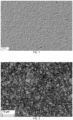
- FIG. 1 and FIG. 2 are, respectively, the photograph of the typical microstructure and the EBSD photograph of the phase composition of the ultra-high strength steel in Example 4 according to the present disclosure.
- the structure of the ultra-high strength steel according to the present disclosure is uniform and fine, and contains a large amount of fine dispersed retained austenite.
- the composition design of the ultra-high strength steel according to the present disclosure is simple. Carbon-silicon-manganese steel is used as a basis, and only Cr and B are added as alloy strengthening elements. In addition, due to the compositional characteristic of low Si and low Mn, the peritectic reaction can be avoided in the continuous casting process, thereby greatly improving the stability of the continuous casting process, and the product obtained has excellent surface quality.
Landscapes
- Chemical & Material Sciences (AREA)
- Engineering & Computer Science (AREA)
- Mechanical Engineering (AREA)
- Materials Engineering (AREA)
- Metallurgy (AREA)
- Organic Chemistry (AREA)
- Crystallography & Structural Chemistry (AREA)
- Thermal Sciences (AREA)
- Physics & Mathematics (AREA)
- Chemical Kinetics & Catalysis (AREA)
- General Chemical & Material Sciences (AREA)
- Heat Treatment Of Sheet Steel (AREA)
- Heat Treatment Of Steel (AREA)
- Continuous Casting (AREA)
Abstract
Description
- The present disclosure relates to the technology for manufacturing high-strength steel, and in particular to a high-plasticity 1500MPa-grade ultra-high strength steel and a method for manufacturing the same.
- In recent years, in order to achieve the goals of reducing vehicle weight, saving energy, reducing emissions, improving collision safety and reducing manufacturing costs, advanced high-strength steel for automobiles has been widely used in the automobile manufacturing industry. Advanced high-strength steel is currently a material that has the highest overall competitiveness for lightweight vehicle bodies because the increased steel sheet strength allows for reducing the steel sheet thickness while maintaining excellent forming performance.
- Currently, the ultra-high-strength martensitic steel having a strength up to the 1500MPa grade and used in a large amount has an elongation of about 5%, which can no longer meet the dual requirements in the automotive field for automobile safety and forming performance during the manufacturing process. Another type of steel used in a large amount is hot-formed steel. However, the forming process of the hot-formed steel has high requirements on heating equipment and cooling capacity. The process is complicated, and the elongation of this steel is basically within 10%. The third generation high-strength steel for automobiles has attracted extensive attention because of its high strength, high plasticity and low cost, and its strength-elongation product can reach 20-30GPa%.
- Chinese Patent
CN103667884B discloses "a method for preparing 1400MPa-grade low-yield-ratio high-elongation cold-rolled ultra-high strength automobile steel", whose composition is: C 0.14%-0.16%, Si 1.31%-1.51%, Mn 2.7%-2.9%, S≤0.005%, P≤0.009%, Al 0.11%-0.51%, RE 0.005-0.20%, and a balance of Fe and unavoidable impurities. The composition of this patented steel is designed simply to include C, Si, Mn, Al and a small amount of rare earth elements, and the manufacturing process involves conventional casting-hot rolling-cold rolling-continuous annealing. The finished steel structure comprises 70-85% of martensite, 5-20% of retained austenite and a small amount of ferrite. However, the tensile strength of the invented steel is at the 1400MPa grade, the elongation is greater than or equal to 8%, and the yield strength is relatively low. - Chinese Patent
CN106244918B discloses "a 1500MPa-grade automobile steel having a high strength-elongation product and a manufacturing method for the same". The composition of this patented steel is: C 0.1-0.3%, Si 0.1-2.0%, Mn 7.5-12%, Al 0.01-2.0%, and the chemical elements further include at least one of Nb 0.01-0.07%, Ti 0.02-0.15%, V 0.05-0.20%, Cr 0.15-0.50%, Mo 0.10-0.50%, wherein the balance is iron and other unavoidable impurities. The manufacturing method comprises the following steps: 1) smelting and casting; 2) hot rolling; 3) bell furnace annealing, wherein the annealing temperature is 600-700°C, and the annealing time is 1-48h; 4) cold rolling; 5) first annealing after cold rolling, wherein the annealing temperature is between the Ac1 and Ac3 temperatures, and the annealing time is more than 5min; 6) second annealing after cold rolling, wherein the annealing temperature is 750-850°C, and the annealing time is 1-10min; 7) tempering, wherein the tempering temperature is 200-300°C, and the tempering time is not less than 3min. The microstructure of the 1500MPa-grade automobile steel having a high strength-elongation product is austenite+martensite+ferrite or austenite+martensite, and its strength-elongation product is not less than 30GPa%. Although this patent can achieve a better match between strength and plasticity, the manufacturing process is extremely complicated, and the high Mn content in the composition also makes it difficult to manufacture the steel. - Chinese Patent
CN106917055B discloses "a third generation high strength-and-toughness automobile steel and its preparation method". The composition of the steel is: C 0.40-0.60%, Si 1.00-2.00%, Mn 1.5-3.0%, Ni 0-0.60%, Cr 0.50-1.50%, Mo 0.30-0.60%, V 0-0.20%, Co 0-1.50%, Al 0-1.50%, and a balance of Fe and unavoidable impurities. After vacuum smelting, casting is carried out, and then hot rolling is carried out with a total reduction rate of 80%-95%. The resulting hot-rolled sheet is heated to 900-970°C at a rate of 5-20°C/s for 10-20 minutes of austenitization, and then air-cooled to 250-320°C and held for 2-12 hours. The material has a yield strength of more than 1000 MPa, a tensile strength of more than 1500 MPa, and an elongation after fracture of more than 20%. This patent mainly involves an ultra-high strength bainitic steel with a complex composition containing a number of alloying elements. At the same time, the heat treatment process is inefficient, the austenitizing temperature is too high, and the low-temperature treatment time is too long. - Chinese Patent Application
CN108018484A discloses "a cold-rolled high strength steel with a tensile strength of at least 1500MPa and excellent formability and a method for manufacturing the same". The composition of the steel in this patent application is: C 0.25-0.40%, Si 1.50-2.50%, Mn 2.0-3.0%, Al 0.03-0.06%, P≤0.02%, S≤0.01%, N≤0.01% and at least one of 0.1-1.0% Cr and 0.1-0.5% Mo, and it also comprises at least one of 0.01-0.1% Nb, 0.01-0.2% V and 0.01-0.05% Ti, wherein the balance is Fe and other unavoidable impurities. The manufacturing method includes the following steps: 1) smelting and casting; 2) hot rolling; 3) pickling; 4) cold rolling; 5) continuous annealing: heating the strip steel to a soaking temperature in the range of 800-900°C, holding for at least 60 seconds, then cooling to 150-300°C at a rate of 30-80°C/s, then reheating to 350-440°C, holding for 30-300 seconds, and finally cooling to room temperature. The product has a microstructure of 5-20% retained austenite and 70-90% martensite, a tensile strength of at least 1500MPa and excellent formability. - There are relatively few related patents focusing on the field of short-process technology for 1500MPa-grade ultra-high strength steel.
- Chinese Patent
CN111455282B discloses a "quenched and partitioned steel with a tensile strength ≥1500MPa produced using a short process and a method therefor". The composition of this steel comprises: C 0.26-0.34%, Si 1.9-2.7%, Mn 2.6-3.4%, Ti 0.02-0.07%, Als 0.02-0.05%, P≤0.018%, S≤0.004%, N≤0.006%, O≤30ppm. The manufacturing process comprises: desulfurization of molten iron, smelting, argon blowing, LF refining, soft blowing, RH vacuum treatment, continuous casting to form a slab, soaking of the cast slab, descaling, seven-pass finishing rolling, laminar cooling, coiling, temper rolling, pickling, and continuous annealing. The steel strip has an Rel in the range of 1000-1200 MPa, an Rm of ≥ 1500 MPa, and an elongation of ≥ 15%. The method is one for producing a 1500MPa-grade quenched and partitioned steel using a short process. The composition of this patented steel is designed simply to include C, Si, Mn, Al, and Ti. Although this patent can achieve a good match between high strength and high plasticity, the use of a high Si and high Mn composition system causes a series of problems, such as steel leakage during thin slab continuous casting, slab surface cracking, and a high risk of generation of scrap steel during rolling thin-gauge steel, which increases the difficulty in and cost of producing ultra-high strength steel in a short process. - Chinese Patent Application
CN114012056A discloses "a 1500MPa-grade hot-formed steel and a method for preparing the same". The composition of the steel comprises: C 0.19-0.26%, Si 0.05-1.3%, Mn 0.9-2.1%, P<0.015%, S≤0.002%, Alt 0.02-0.12%, B 0.002-0.020%, Cr 0.15-2.0%, Ti 0.02-0.15%, N≤0.006%, V+Nb≤0.15%, and a balance of Fe and unavoidable impurities. The molten steel is smelted and continuously cast, then subjected to soaking treatment, descaling prior to rough rolling, rough rolling, electromagnetic induction heating, descaling prior to finishing rolling, finishing rolling, laminar cooling, coiling, air cooling to room temperature and pickling. After the pickled sheet is obtained, it is hot stamped to obtain a 1500MPa-grade hot-formed steel with an elongation within 10%. This patent application also adopts a method for producing a hot-formed steel using a short process. The composition designed for this steel is relatively complex, comprising a number of alloying elements. Although the process is relatively simple, the manufacturing method pertains to the field of hot-formed ultra-high strength steel, and the elongation of the material is insufficient. - One of the objects of the present disclosure is to provide a high-plasticity 1500MPa-grade ultra-high strength steel and a method for manufacturing the same. The ultra-high strength steel has excellent strength and plasticity, excellent surface quality, good welding performance, and a relatively simple composition without excessive alloying elements, and the manufacturing process is simple and efficient. The steel has a yield strength of 1000-1300MPa, a tensile strength of ≥1 500MPa, and an elongation at break of ≥18%. It has good application prospects in automotive safety structural parts, and is particularly suitable for manufacturing vehicle structural parts and safety parts having complex shapes and high requirements on forming performance, such as A/B pillars, door anti-collision bars, girders, bumpers, etc. As used herein, "1500 MPa grade" and "ultra-high strength" refer to a tensile strength of ≥1500 MPa; and "high plasticity" refers to an elongation at break of ≥18%.
- To achieve the above object, the technical solution of the present disclosure is as follows:
A high-plasticity 1500MPa-grade ultra-high strength steel, comprising the following components in weight percentage: - C: 0.35-0.40%;
- Si: 1.0~1.8%;
- Mn: 1.5~2.0%;
- Cr: 0.3~0.6%;
- Al: 0.02~0.05%;
- Ti: 0.02~0.05%;
- B: 0.002~0.02%;
- a balance comprising Fe and other unavoidable impurities, wherein the following is satisfied:
- carbon equivalent in peritectic reaction zone Ceq1>0.17%, Ceq1=C-0.03Mn-0.06Si-0.222S-0.04P; and
- welding carbon equivalent Ceq2≤0.56%, Ceq2=C+Mn/20+Si/30+2P+4S.
- Preferably, the balance is Fe and other unavoidable impurities.
- Preferably, the C content is 0.36-0.38 wt%.
- Preferably, the Si content is 1.4-1.7 wt%.
- Preferably, the Mn content is 1.7-2.0 wt%.
- Preferably, the Cr content is 0.4-0.6 wt%.
- Preferably, among the other unavoidable impurities: P is ≤0.015wt%, S is ≤0.002wt%, O is ≤0.002wt%, N is ≤0.004wt%.
- The ultra-high strength steel of the present disclosure has a yield strength of 1000-1300 MPa, a tensile strength of ≥1500 MPa, and an elongation at break of ≥18%.
- In some embodiments, the yield strength of the ultra-high strength steel of the present disclosure is 1000 MPa, 1050 MPa, 1100 MPa, 1150 MPa, 1200 MPa, 1250 MPa, 1300 MPa, or within a range consisting of any two of the foregoing values.
- In some embodiments, the tensile strength of the ultra-high strength steel of the present disclosure is 1500 MPa, 1520 MPa, 1540 MPa, 1560 MPa, 1580 MPa, 1600 MPa, or within a range consisting of any two of the foregoing values.
- In some embodiments, the elongation at break of the ultra-high strength steel of the present disclosure is 18%, 19%, 20%, 21%, 22%, 23%, 24%, 25% or within a range consisting of any two of the foregoing values.
- In the design of the composition of the ultra-high strength steel of the present disclosure:
The present disclosure makes full use of the influence of the C, Si and Mn elements on the phase transformation of the material. At the same time, for the purpose of improving the process stability of thin slab continuous casting and rolling, and helping the carbon equivalent of the composition to avoid the peritectic reaction zone so as to improve the surface quality of the hot-rolled sheet, Cr and B are used to match with low Si and low Mn to increase the strength, and an ultra-high strength steel sheet product with excellent strength, plasticity and surface quality is finally achieved. - C: C is the most important solid solution strengthening element and is extremely critical for ensuring strength. A higher mass percentage of the C element in the steel leads to a higher fraction of retained austenite and higher enrichment of C in the retained austenite during partitioning, which is beneficial to enhancing the stability of the retained austenite, producing the TRIP effect, and improving the ductility of the material. However, too high a C content in the steel will lead to reduced weldability of the steel. When the mass percentage of C in the steel exceeds 0.40%, more twin crystals are likely to appear after quenching, thereby increasing crack sensitivity. In view of the above, in the present disclosure, the C content is controlled in the range of 0.35-0.40 wt%, for example, 0.36 wt%, 0.37 wt%, 0.38 wt%, 0.39 wt%, preferably in the range of 0.36-0.38 wt%.
- Si: Si can strongly suppress formation of cementite during the partitioning process, and promote the enrichment of carbon into the retained austenite, thereby improving the stability of the retained austenite. The Si content required to effectively suppress the formation of cementite is at least 1.0%. It should be noted that if the content of the Si element in the steel is too high, the high-temperature plasticity of the steel will be reduced, and the risk of slab cracking and even steel leakage during thin slab continuous casting will be increased greatly. At the same time, when the Si content is too high, stable oxides will form on the surface of the steel sheet, which will have an adverse effect on the subsequent pickling process. In view of the above, in the present disclosure, the Si content is controlled in the range of 1.0-1.8 wt%, for example, 1.1 wt%, 1.2 wt%, 1.3 wt%, 1.4 wt%, 1.5 wt%, 1.6 wt%, 1.7 wt%, preferably in the range of 1.4-1.7 wt%.
- Mn: Mn can expand the austenite phase zone, reduce the Ms and Mf points, and improve austenite stability and steel hardenability. At the same time, Mn is also a relatively important solid solution strengthening element, having a great influence on steel strength. However, it should be noted that too high a Mn content in the steel will lead to increased latent heat of solidification; especially for thin slab continuous casting, it will lead to limited heat transfer and too thin a slab shell, such that the risk of slab cracking and even steel leakage during thin slab continuous casting will be increased greatly, affecting the production stability of the ultra-high strength steel in a short process. At the same time, too high a Mn content will deteriorate the corrosion resistance and the welding performance. In view of the above, in the present disclosure, the Mn content is controlled in the range of 1.5-2.0 wt%, for example, 1.6 wt%, 1.7 wt%, 1.8 wt%, 1.9 wt%, preferably in the range of 1.7-2.0 wt%.
- Cr: Cr also acts to contribute to the strength. Especially, in the present disclosure, since the Si and Mn contents need to be controlled to ensure stable proceeding of the thin slab continuous casting and rolling process, Cr is a key element for supplementing the strength. Cr can improve the hardenability of the steel and reduce the martensite transformation temperature, while helping to refine the austenite grains and improve the strength during rolling. When the Cr content is lower than 0.3wt%, it is difficult to guarantee the strength, while when it is higher than 0.6wt%, it will affect the welding performance of the material. In view of the above, in the present disclosure, the Cr content is controlled in the range of 0.3-0.6 wt%, for example, 0.4 wt%, 0.5 wt%, preferably in the range of 0.4-0.6 wt%.
- Al: When the Al element exists in a state of solid solution, it can inhibit precipitation of cementite and transformation from γ to martensite, and improve the stability of austenite. In addition, the Al element can form fine and dispersed insoluble particles with C and N, which can refine the grains. However, if the mass percentage of the Al element in the steel is too high, a large amount of oxide inclusions will form easily, which is not conducive to the cleanliness of the molten steel. Therefore, in the present disclosure, the Al content is controlled in the range of 0.02-0.05 wt%, for example, 0.03 wt%, 0.04 wt%.
- Ti: Ti can fix nitrogen in the steel to form stable compounds, thereby improving the slab quality and eliminating the edge crack defects. It can also form fine carbides to prevent growth of austenite grains and refine the grains. However, if its content is higher than 0.05wt% as defined in the present disclosure, it will be disadvantageous for the enrichment of C in the retained austenite and the stabilization of the retained austenite; if its content is lower than 0.02wt% as defined in the present disclosure, the crack occurrence rate will increase. Therefore, the Ti content in the present disclosure needs to be controlled in the range of 0.02-0.05wt%, for example, 0.03wt%, 0.04wt%.
- B: Its main function is to improve the hardenability and strength of the steel. B tends to segregate at the austenite grain boundaries and delay the transformation of austenite to ferrite. The effects are significant at a low content. At the same time, B has a good grain boundary purification effect, which can impede segregation of harmful elements at the grain boundaries to a certain extent, thereby improving the deformation coordination of the material. However, too high a mass percentage of B will cause the steel strength to increase, which is not conducive to obtaining good plasticity. Therefore, the B content in the present disclosure needs to be controlled in the range of 0.002-0.02wt%, for example, 0.005wt%, 0.01 wt%, 0.015wt%.
- Among the other unavoidable impurities in the present disclosure: P is ≤0.015wt%, S is ≤0.002wt%, O is ≤0.002wt%, N is ≤0.004wt%.
- In the above solution, the P, S, O, and N elements are all impurity elements. Among them, although P can play a role in solid solution strengthening, inhibit formation of carbides, and is beneficial to improving the stability of retained austenite, too high a mass percentage of P will weaken the grain boundaries, increase the brittleness of the material, and deteriorate the welding performance. In other words, the positive effect of the P element is weaker than its negative effect. Therefore, it is preferred to control the mass percentage of P to be P≤0.015wt%. As for N, because an unduly high mass percentage of N will make steelmaking and continuous casting difficult, and is not conducive to inclusion control, the mass percentage of N is preferably controlled to be N≤0.004wt%. Accordingly, if the S content in the steel is too high, the plasticity of the material will be deteriorated significantly. For the ultra-high strength steel, the S content should be controlled more strictly. Therefore, the S content is controlled to be S≤0.002wt%. The line defects and peeling defects on the surface of the ultra-high strength steel are mainly caused by the presence of Al2O3 and other types of inclusions under the skin of the continuous casting slab. Therefore, in order to improve the surface quality of the finished strip steel, it is necessary to reduce the inclusions generated by deoxidation in the steel and control the O content in steelmaking. Therefore, in the present disclosure, the O content is controlled to be O≤0.002wt%.
- In addition, the contents of the components of the ultra-high strength steel according to the present disclosure should also meet the following requirements:
- carbon equivalent in peritectic reaction zone Ceq1>0.17%, Ceq1=C-0.03Mn-0.06Si-0.222S-0.04P; and
- welding carbon equivalent Ceq2≤0.56%, Ceq2=C+Mn/20+Si/30+2P+4S.
- The reason is as follows: when the carbon equivalent of the molten steel is in the peritectic reaction zone and the peritectic reaction occurs, the liquid phase of the molten steel reacts with the δ phase to generate the γ phase. During this process, the solidification of the molten steel will lead to a very obvious volume shrinkage (about 4.7%). This makes it easier for the thin slab continuous casting to produce defects such as surface cracks on the casting slab, and in severe cases it may even cause steel leakage. The carbon equivalent Ceq1 in the peritectic reaction zone ranges from 0.08% to 0.17%. For high-carbon ultra-high strength steel, the composition needs to be designed so that the carbon equivalent Ceq1 is higher than 0.17 to avoid the peritectic reaction. At the same time, from the empirical formula, the increase in the contents of the Si and Mn elements makes it easier for the composition to enter the peritectic reaction zone, thereby affecting the surface quality of the final product.
- In addition, in the present disclosure, it has been discovered by extensive research that when the mass percentages of C, Si, Mn, P and S satisfy the welding carbon equivalent Ceq2≤0.56%, the welding performance of the high-strength steel obtained is better; and at the same time, the solid solution and structure strengthening effects of the material with such a composition are better, and the material strength is higher. On the contrary, when the welding carbon equivalent Ceq2 is >0.56%, the welding performance of the material will be deteriorated notably.
- The microstructure of the ultra-high strength steel of the present disclosure is 10%-15% by volume of ferrite + 70%-80% by volume of martensite + retained austenite.
- In some embodiments, in the microstructure of the ultra-high strength steel of the present disclosure, the volume fraction of ferrite is 10%, 11%, 12%, 13%, 14%, 15% or within a range consisting of any two of the foregoing values.
- In some embodiments, in the microstructure of the ultra-high strength steel of the present disclosure, the volume fraction of martensite is 70%, 72%, 74%, 76%, 78%, 80% or within a range consisting of any two of the foregoing values.
- In some embodiments, in the microstructure of the ultra-high strength steel of the present disclosure, the volume fraction of retained austenite is 10%, 11%, 12%, 13%, 14%, 15% or within a range consisting of any two of the foregoing values.
- In the ferrite in the microstructure of the ultra-high strength steel, the number of grains with a grain size of ≤5 µm accounts for 90% or more, and the number of grains with a grain size of ≤3 µm accounts for 60% or more.
- The average grain size of the retained austenite in the microstructure of the ultra-high strength steel is ≤2 µm; and/or the average C content C(ra) in the retained austenite satisfies: 1.2wt%≤C(ra)≤2.0wt%.
- In some embodiments, in the microstructure of the ultra-high strength steel of the present disclosure, the average grain size of the retained austenite is ≤1.6 µm.
- In some embodiments, in the microstructure of the ultra-high strength steel of the present disclosure, the average grain size of the retained austenite is 0.5 µm, 0.6 µm, 0.8 µm, 1.0 µm, 1.2 µm, 1.4 µm, 1.6 µm, 1.8 µm, 2.0 µm, or within a range consisting of any two of the foregoing values.
- In some embodiments, in the microstructure of the ultra-high strength steel of the present disclosure, the average C content C(ra) in the retained austenite satisfies: 1.2wt%≤C(ra)≤1.8wt%.
- The reason is that the presence of a certain amount of retained austenite in the structure of the material enables phase transformation into martensite during the deformation process, resulting in the TRIP effect, so that the material has good plasticity while having a tensile strength of the 1500MP grade. The presence of a certain amount of fine-grained ferrite allows, to a certain extent, the steel to have better ductility among the materials of the same grade of strength, and at the same time, contributes part of the material strength due to the strengthening effect of the fine grains. However, if its content exceeds 15%, the tensile strength of the material is insufficient; and if the content is less than 10%, it is difficult to meet the requirement for high plasticity.
- Martensite exists as the major hard phase in the material to guarantee the strength. When its content is lower than 70%, the tensile strength of the material is insufficient; and when the content is higher than 80%, it is difficult to ensure the presence of sufficient retained austenite and ferrite to guarantee plasticity. For ferrite grains, it is necessary to ensure that the grains are small enough to fully exert the strengthening effect of the fine grains. At the same time, the uniformity of the ferrite structure must be ensured to avoid the appearance of abnormally large grains to improve the plasticity of the material. Therefore, the number of grains with a grain size of ≤5µm should be controlled to account for 90% or more, and the number of grains with a grain size of ≤3µm should account for 60% or more.
- At the same time, for the retained austenite grains, the factors that influence the stability of the retained austenite during material deformation mainly include the size of the retained austenite grains and the average C content in the retained austenite. When the retained austenite grain size is > 2 µm, the retained austenite is rather large and unstable, which makes it easy to complete the TRIP effect in the early stage of deformation, resulting in insufficient plasticity of the material.
- On the other hand, when the average C content in the retained austenite is < 1.2wt%, the stability of the retained austenite is insufficient, and the retained austenite is prone to martensitic transformation in the early stage of the deformation process, so that the TRIP effect is insufficient, and the formability of the steel sheet cannot be improved significantly. When the average C content in the retained austenite is > 2wt%, the retained austenite is too stable to undergo martensitic transformation during the deformation process, so that the TRIP effect is also insufficient, and the formability of the steel sheet cannot be improved either.
- In some embodiments, the ultra-high strength steel of the present disclosure has a thickness of 0.8-2.0 mm.
- The method for manufacturing the ultra-high strength steel according to the present disclosure is aimed to address the problems encountered by the prior art ultra-high strength steel, especially 1500MPa-grade ultra-high strength steel in the cold rolling process, i.e. the difficulty in thickness accuracy control and sheet shape control of a hard rolled sheet, and the stringent requirement on the rolling force of a cold rolling unit for rolling the ultra-high strength steel. In the present disclosure, the 1500MPa-grade ultra-high strength steel is creatively subjected to thin slab continuous casting and rolling to obtain a hot-rolled coil with a finished thickness directly, and then the hot coil is subjected to treatment in an insulation cover, so that the uniformity of the structure and properties of the hot coil is improved greatly, and the internal stress of the material is also eliminated to avoid abnormal brittle fracture in subsequent steps. After the treatment in the insulation cover, pickling is carried out, and then the final continuous annealing treatment is carried out directly, omitting the step of cold rolling which is a bottleneck in the conventional process. At the same time, due to the use of the thin slab continuous casting technology, inherent advantages in terms of structure uniformity and segregation control are observed. Also, due to the characteristic of hot delivery of the billet obtained by the thin slab continuous casting, a small amount of fine-grained ferrite can be maintained in the structure, so that the elongation of the resulting ultra-high strength steel can be improved significantly under the same strength conditions.
- Specifically, the method for manufacturing the high-plasticity 1500MPa-grade ultra-high strength steel of the present disclosure comprises the following steps:
- Smelting and casting the above composition into a slab, preferably by thin slab continuous casting, wherein a slab thickness at a continuous casting outlet is controlled to be 55-60 mm, and a continuous casting withdrawl speed is controlled to be 2-5 m/min;
- Heating temperature: 1200-1300°C, furnace time: 25-40min;
- Performing high-pressure descaling first, controlling a rolling-end temperature at 860-930°C, and then performing laminar cooling to 500-600°C with a cooling rate controlled at 20-40°C/s, followed by coiling;
- After the coiling of a hot-rolled coil, laying down the coil and sealing it in-situ with an insulation cover, or transferring it into a sealed insulation cover for slow cooling; and after treatment in the insulation cover for ≥4h, opening the cover and taking out the hot-rolled coil; preferably, after the coiling of the hot-rolled coil, allowing it to stay on a reel for ≥3min, and then sealing it in-situ with an insulation cover, or transferring it into a sealed insulation cover for slow cooling;
- Controlling a pickling speed at 60-150m/min;
- Performing continuous annealing at an annealing temperature of 820-900°C; slow cooling to 690-760°C at a cooling rate of 3-10°C/s to obtain a certain proportion of ferrite; then rapid cooling to 150-250°C at a cooling rate of 50-100°C/s to partially transform austenite into martensite; then reheating to 360-460°C, holding for 100-400s, and finally cooling to room temperature.
- Preferably, in step 1), the steel leakage rate during the thin slab continuous casting is controlled to be ≤1%, and the substandard rate due to cracks is controlled to be ≤1.2%.
- Preferably, in the annealing process in step 6), the annealing temperature is 840-870°C, followed by slow cooling to 700-730°C at a cooling rate of 3-10°C/s, rapid cooling to 170-230°C; and then reheating to 400-430°C after the rapid cooling, and holding for 150-300s.
- Preferably, the volume content of hydrogen in the reducing atmosphere in the continuous annealing furnace is controlled to be 10-15%.
- Preferably, in step 3), during the high-pressure descaling, the water pressure of the first descaling pass is controlled to be not less than 260 bar, and the water pressure of the second descaling pass is controlled to be not less than 340 bar.
- Preferably, a U-shape coiling mode is used for the coiling in step 3). That is, the coiling temperature is controlled at 550-650°C within a distance of ≤30 m from the head to the tail of the steel strip.
- In the method for manufacturing the ultra-high strength steel of the present disclosure:
Thin slab continuous casting is preferably utilized for the continuous casting described in the present disclosure. The contents of the alloying elements in the ultra-high strength steel are relatively high, and the continuous casting process is not stable enough. Especially, the solidification latent heat is high, and the slab shell is thin. Therefore, the withdrawl speed in the thin slab continuous casting process needs to be controlled at a low level. When the withdrawl speed exceeds 5m/min, problems such as liquid level fluctuation and steel leakage are prone to occur during the continuous casting process. However, the withdrawl speed cannot be too low to affect the production efficiency. Therefore, it is desirable to control it at 2-5m/min. - At the same time, due to the use of the thin slab continuous casting, the rough rolling process can be omitted, and the hot rolling deformation rate can be reduced, so that the final product specifications can be satisfied more easily. The thin slab continuous casting enables full use of the heat of the slab by charging the hot slab into the heating furnace directly without waiting for the slab to completely cool to room temperature, thereby reducing the energy consumption required for heating. At the same time, due to the absence of phase transformation caused by cooling and then heating, the high-temperature structure in a hot-rolled state is more uniform, and the ferrite or ferrite + pearlite structure obtained after hot rolling is more uniform, which is beneficial to maintaining a small amount of fine-grained ferrite in the microstructure of the finished product during annealing, thereby improving the uniformity of the structure, and helping to improve plasticity.
- In the step of slab heating, the slab obtained by the thin slab continuous casting is first heated at high temperature in the full austenite zone for a period of time to soften the material and allow the components to diffuse fully and evenly. Moreover, it's desirable to perform the treatment at a temperature as high as possible for a period of time as short as possible to both obtain a uniform composition of the ultra-high strength steel and avoid an excessive thickness of the iron oxide scale. The heating temperature should not exceed 1300°C; otherwise, the problem of overfiring at grain boundaries may occur. At this time, the heating time can be shortened to 25 minutes, which is beneficial to the control of the iron oxide scale. On the other hand, if the heating temperature is lower than 1200°C, it will take a long time to achieve a uniform composition, which is not conducive to the subsequent control of the iron oxide scale.
- For descaling of the slab, after the slab is removed from the heating furnace, it is first subjected to two passes of high-pressure water descaling to remove the fluffy iron oxide scale on the surface of the cast slab as much as possible. After further rolling to the required thickness by finishing rolling, a uniform and fine structure of the recrystallized material is formed. When the rolling-end temperature of the finishing rolling is lower than 860°C, ferrite will precipitate at the end of the rolling, which may render the strength in the hot-rolled state insufficient and affect the subsequent cold rolling annealing performance. With the upper limit control of the slab heating temperature as well as the temperature drop during rolling taken into account, the rolling-end temperature of the finishing rolling generally does not exceed 930°C. The purpose of controlling the cooling rate at 20-40°C/s during the laminar cooling is to avoid formation of excessive bainite or even martensite during the cooling process, so as to ensure that the structure in the hot-rolled coiled state is mainly uniform ferrite + pearlite. The coiling temperature of the hot-rolled steel sheet is one of the most critical process parameters that influence the performances in the hot-rolled state. When the coiling temperature is higher than 600°C, internal oxidation of Si and Mn is likely to occur on the surface of the steel sheet, and a broken surface layer will be generated by pickling, which affects the surface quality of the final product. Nevertheless, since the fine-grained ferrite structure needs to be maintained in the structure in the hot-rolled state, the coiling temperature should not be too low, and must be controlled to be 500°C or higher. The main reason for using the U-shape coiling mode in the coiling process to increase the coiling temperature at the head and tail is that the temperature drop at the head and tail of the ultra-high strength steel is large, so that phase transformation is prone to occur at the head and tail, leading to higher strength than at the middle of the coil. At the same time, increasing the coiling temperature is also conducive to reducing the strength of the strip head, making it easier to coil.
- Controlling the thickness of the oxide scale on the surface of the hot-rolled steel strip to be ≤6 µm and (FeO+Fe3O4) in the oxide scale on the surface of the hot-rolled steel strip to be ≤30 wt% facilitates the proceeding of subsequent step (5), and has an important influence on the performances of the steel sheet obtained after continuous annealing. The reason is as follows: in the technical solution of the present disclosure, FeO and Fe3O4 are more difficult to pickle than Fe2O3, so controlling the thickness of the oxide scale on the surface of the hot-rolled steel strip of the present disclosure and (FeO+Fe3O4)≤30wt% in the oxide scale on the surface of the hot-rolled steel strip can improve the pickling effect, and a pickled sheet surface that can be used directly for continuous annealing can be obtained. Since the pickled sheet can be subjected directly to continuous annealing, the deformation rate of the hot-rolled structure is small, and the structure of the steel sheet is mainly ferrite and pearlite or bainite. Therefore, under the same continuous annealing conditions, the material strength can be reduced, the structure is made more uniform, and excellent ductility is obtained.
- After coiling, the steel coil is allowed to stay on the reel for at least 3 minutes before removing it from the reel. The main purpose for this is to allow the bainitic transformation to complete in the inner layers of the steel coil to prevent the hot coil from flattening after removing it from the reel. The reason is that, for ultra-high-strength steel, the temperature of the inner layers drops faster during coiling, so that the temperature gradually enters the bainite temperature range during the coiling process, and the bainitic transformation occurs, leading to volume expansion. At this time, due to the different temperature drop rates of the inner and outer layers, the expansion caused by the bainitic transformation is also different. Thus, it is necessary to allow the steel coil to stay on the reel for at least 3 minutes to allow the bainitic transformation to complete, so that the volume change of the entire steel coil can be homogenized effectively under the support of the reel, thereby avoiding flattening of the hot coil after it is removed from the reel.
- After hot rolling, the steel coil as a whole may be cooled slowly by the treatment in an insulation cover to improve the uniformity of the performances and structure. At the same time, the slow cooling process is also a process of releasing the thermal stress in the material, which is beneficial to the stability of the material in subsequent processing, so as to avoid extreme situations such as brittle fracture. The treatment time has to be at least 4 hours to completely release the internal stress, but the time should not be too long to affect the rhythm of production.
- In the manufacturing method of the present disclosure, if the pickling speed is too fast, under-pickling will be resulted, and the inner oxide layer of the steel sheet cannot be cleaned thoroughly, leading to color difference. If it is too slow, over-pickling will be resulted, and the surface quality of the pickled sheet and the production efficiency will be affected. Therefore, it is desirable to control the pickling speed in the range of 60-150m/min.
- In the manufacturing method of the present disclosure, the annealing temperature of the continuous annealing is controlled at 820-900°C to form a homogenized structure of austenite or austenite + ferrite. Then, the material is slowly cooled to 690-760°C at a cooling rate of 3-10°C/s to further adjust the ferrite content in the structure and improve the plasticity of the material. Then, the material is cooled to 150-250°C (i.e., between the Ms and Mf temperatures) at a rate of 50-100°C/s, because the critical cooling rate needs to be no less than 50°C/s in order to ensure that only martensitic transformation occurs during the cooling process, while the production cost will increase significantly if the cooling rate exceeds 100°C/s. At this time, austenite is mostly transformed into martensite, ensuring that the steel has high strength. Then, the material is heated to 360-460°C and held for 100-400s to allow carbon to be partitioned in martensite and austenite, forming a certain amount of carbon-rich retained austenite which is stably maintained till room temperature. Due to the TRIP effect, the work hardening ability and formability of the steel can be improved significantly, and an ultra-high strength steel sheet with excellent plasticity is thus obtained. The above partitioning process is set this way for the following reason: when the reheating temperature is lower than 360°C or the reheating time is less than 100s, the stabilization process of the retained austenite in the steel is insufficient, and the content of retained austenite finally obtained at room temperature will be insufficient; when the reheating temperature is higher than 460°C or the reheating time is more than 400s, obvious temper softening occurs in the steel, which will cause a significant decrease in the final material strength.
- Preferably, in the continuous annealing process of step 6) in the present disclosure, the annealing temperature is 840-870°C. The material is cooled slowly to 700-730°C at a cooling rate of 3-10°C/s, then cooled rapidly to 170-230°C, and then heated to 400-430°C after the rapid cooling and held for 150-300s, wherein the volume content of hydrogen in the reducing atmosphere in the continuous annealing furnace is controlled to be 10-15%.
- Due to the high C content and the alloying components of Mn, Si, Cr, and B designed for the ultra-high strength steel of the present disclosure as well as the ferrite grain refinement mechanism, during the continuous annealing process, the nucleation points of the reverse austenitic transformation increase while the size is further reduced. The average grain size of the retained austenite stably maintained till room temperature can be ≤2µm; and the average C content in the retained austenite is ≥1.2wt%. In addition, since the material still contains a certain amount of Si, the martensite formed during the rapid cooling substantially does not decompose during the partitioning process, thereby ensuring the martensite content in the structure and thus ensuring the strength of the steel.
- Compared with the prior art, the present disclosure has the following advantages:
- 1. The composition design of the ultra-high strength steel of the present disclosure is unique, based on different ideas than those for the composition designs of the existing patents.
- The composition designs of the existing patents are mostly complex, involving more alloying elements (such as Mo, V, Nb, Ni and even rare earth elements, etc.), and mostly showing the characteristics of a high Si and high Mn composition.
- The composition design of the present disclosure is simple and unique, and it makes full use of the influence of the C, Si and Mn elements on the phase transformation of the material. At the same time, the process stability of thin slab continuous casting and rolling is improved. The carbon equivalent of the composition is controlled to avoid the peritectic reaction zone so as to improve the surface quality, and the welding carbon equivalent is controlled to obtain excellent welding performance. In addition, Cr and B are used to match with low Si and low Mn to increase the strength. Finally, an ultra-high strength steel sheet product with excellent strength, plasticity, surface quality and welding performance is achieved.
- 2. The manufacturing method of the present disclosure is also unique, based on different ideas than those for the manufacturing methods of the existing patents.
- A conventional production process including continuous casting + hot rolling + pickling + cold rolling + continuous annealing/bell-type annealing is used in most of the existing patents. The process flow is lengthy, and for ultra-high-strength steel, there are problems with respect to cold-rolled sheet shape and thickness accuracy.
- The present disclosure creatively proposes using an efficient process flow including thin slab continuous casting + precision hot rolling + slow cooling treatment + pickling + continuous annealing. This process flow enables elimination of the step of cold rolling which is a bottleneck for ultra-high strength steel, and at the same time, this process flow has inherent advantages in terms of structure uniformity, segregation control and manufacturing cost. Due to the characteristic of hot delivery of the billet obtained by the thin slab continuous casting, a small amount of fine-grained ferrite can be maintained in the structure, so that the elongation of the resulting ultra-high strength steel can be improved significantly under the same strength conditions. In addition, during the continuous annealing process, the nucleation points of the reverse austenitic transformation increase, and the size is further reduced. Finally, a very fine and uniform mixed structure of martensite, ferrite and retained austenite is obtained. This structure is notably advantageous in plasticity over products of the same grade while ensuring strength.
- The ultra-high strength steel obtained according to the present disclosure has good application prospects in automobile safety and structural parts. It is especially suitable for manufacturing vehicle structural parts and safety parts having complex shapes and high requirements on formability, such as A/B pillars, door anti-collision bars, girders, bumpers, etc.
-
-
FIG. 1 is a photograph showing the microstructure of the ultra-high strength steel in Example 4 according to the present disclosure. -
FIG. 2 is an electron backscatter diffraction (EBSD) photograph of the phase composition of the ultra-high strength steel in Example 4 according to the present disclosure. - The present disclosure will be further illustrated below with reference to the Examples and drawings.
- Table 1 lists the compositions of the steels in the Examples according to the present disclosure and the Comparative Examples, with the balance comprising Fe and other unavoidable impurities except P, S, O and N.
- The method for manufacturing the steels in the Examples according to the present disclosure comprises the following steps:
- The composition was smelted, and cast into a slab by thin slab continuous casting. The slab thickness at the continuous casting outlet was controlled to be 55-60 mm, and the continuous casting withdrawl speed was controlled to be 2-5 m/min;
- The heating temperature was 1200-1300°C, and the furnace time was 25-40min;
- First, high-pressure descaling was performed. The rolling-end temperature was controlled at 860-930°C. Then, laminar cooling was performed. The cooling rate was controlled at 20-40°C/s. After cooling to 500-600°C, coiling was performed using a U-shape coiling mode;
- After the coiling of the hot-rolled coil was finished, it was allowed to stand on the reel for ≥3 minutes. Then, it was removed from the reel and transferred into a sealed insulation cover for slow cooling treatment. After the treatment in the insulation cover for ≥4 hours, the cover was opened to take out the hot-rolled coil;
- The pickling speed was controlled at 60-150m/min;
- Continuous annealing was performed at an annealing temperature of 820-900°C. The coil was slowly cooled to 690-760°C at a cooling rate of 3-10°C/s to obtain a certain proportion of ferrite; then rapidly cooled to 150-250°C at a cooling rate of 50-100°C/s to partially transform austenite into martensite; then heated to 360-460°C, held for 100-400s, and finally cooled to room temperature.
- Table 2 and Table 3 show the manufacturing process parameters for the steels in the Examples according to the present disclosure and the Comparative Examples.
- The steels in Comparative Examples 1-3 were manufactured using the same steps of the manufacturing method according to the present disclosure, except that the components and/or manufacturing process parameters didn't meet the design requirements of the present disclosure.
- The C content in Comparative Example 1 was lower than the lower limit of the range designed according to the present disclosure, and its peritectic reaction carbon equivalent fell in the peritectic reaction zone; the Si and Mn contents in Comparative Example 2 were both higher than the upper limit of the range designed according to the present disclosure, and neither its peritectic reaction carbon equivalent nor its welding carbon equivalent met the design requirements of the present disclosure; although the peritectic reaction carbon equivalent and welding carbon equivalent in Comparative Example 3 both met the requirements, the Si and Cr contents were both lower than the lower limit of the range designed according to the present disclosure, leading to insufficient material performances.
- The Comparative Examples in Table 2 were different from the Examples mainly in continuous casting withdrawl speed, slab heating temperature and time, rolling-end temperature and coiling temperature, as well as treatment time in the insulation cover.
- The Comparative Examples in Table 3 were different from the Examples mainly in pickling rate, annealing process, rapid cooling rate, partitioning temperature and time.
- Table 4 lists the mechanical performance test results of the ultra-high strength steels with excellent plasticity in Examples 1-20 and the comparative steels in Comparative Examples 1-3, as well as the steel leakage rate during the thin slab continuous casting process and substandard rate due to cracks under the conditions of the corresponding Examples and Comparative Examples, wherein the mechanical performances were tested according to IS06892:1998 (Metallic materials - Tensile testing at ambient temperature) using P14 (A50) standard tensile test pieces.
- As it can be seen from Table 4, the ultra-high strength steels with excellent plasticity in Examples 1-20 according to the present disclosure achieved excellent control of ductility, stability of the continuous casting process, and surface quality of the cast billet while ensuring strength, exhibiting a yield strength YS of 1000-1300MPa, a tensile strength TS of ≥1500MPa, and an elongation at break of ≥18%. At the same time, the steel leakage rate during the thin slab continuous casting process was controlled to be ≤1%, and the substandard rate due to cracks was controlled to be ≤1.2%. As used herein, the steel leakage rate during continuous casting and the substandard rate due to cracks are the ratios of the number of slabs suffering from steel leakage and the number of cracked slabs to the total number of slabs in the batch, respectively.
- Table 5 shows the observation results of the microstructures of the ultra-high strength steels with excellent plasticity in Examples 1-20 according to the present disclosure. The specific test methods are as follows:
- 1) The fraction of the retained austenite phase was quantitatively determined by XRD after taking a 10*10 mm sample from a steel sheet, grinding and polishing it;
- 2) The fraction of the martensite phase was quantitatively determined by EBSD after taking a 10*10 mm sample from a steel sheet, grinding and polishing it;
- 3) The ferrite grain size, fraction and the average size of retained austenite were obtained by statistical analysis performed when the standardized IQ values were processed during the EBSD quantitative analysis;
- 4) Test method for the C content in retained austenite: Assuming that the Mn and Al concentrations in each phase in the steel sheet structure had not changed, the lattice constant aγ was read using the diffraction peak data of retained austenite in XRD, and the following empirical formula was used for calculation: aγ=0.3556+0.00452xC+0.000095xMn+0.00056xAl, wherein XC, XMn, and XAl represented the C, Mn, and Al concentrations in retained austenite, respectively.
- As it can be seen from Table 4 and Table 5, the microstructure of the 1500 MPa-grade ultra-high strength steel with excellent plasticity in each of Examples 1-20 according to the present disclosure was 10%-15% by volume of ferrite + 70%-80% by volume of martensite + retained austenite, wherein the number of grains with a grain size ≤5 µm in the ferrite accounted for 90% or more, the number of grains with a grain size ≤3 µm accounted for 60% or more, the average grain size of the retained austenite was ≤2 µm, and the average C content in the retained austenite was: 1.2wt%≤C(ra)≤2.0wt%.
- This shows that the 1500MPa-grade ultra-high strength steel with excellent plasticity in each Example according to the present disclosure had a certain amount of fine-grained ferrite and sufficient retained austenite, as well as good structure uniformity. Therefore, the steel in each Example had excellent plasticity while ensuring high strength.
-
FIG. 1 and FIG. 2 are, respectively, the photograph of the typical microstructure and the EBSD photograph of the phase composition of the ultra-high strength steel in Example 4 according to the present disclosure. As it can be seen from these figures, the structure of the ultra-high strength steel according to the present disclosure is uniform and fine, and contains a large amount of fine dispersed retained austenite. - In summary, the composition design of the ultra-high strength steel according to the present disclosure is simple. Carbon-silicon-manganese steel is used as a basis, and only Cr and B are added as alloy strengthening elements. In addition, due to the compositional characteristic of low Si and low Mn, the peritectic reaction can be avoided in the continuous casting process, thereby greatly improving the stability of the continuous casting process, and the product obtained has excellent surface quality.
- At the same time, the present disclosure creatively proposes using an efficient process flow including thin slab continuous casting + precision hot rolling + slow cooling treatment + pickling + continuous annealing. This process flow enables elimination of the step of cold rolling which is a bottleneck for ultra-high strength steel, and has inherent advantages in terms of structure uniformity, segregation control and manufacturing cost. The ultra-high strength steel obtained has a significantly higher elongation under the same strength conditions, and has good application prospects in automobile safety and structural parts. It is especially suitable for manufacturing vehicle structural parts and safety parts having complex shapes and high requirements on formability, such as A/B pillars, door anti-collision bars, girders, bumpers, etc. The short process technology of thin slab continuous casting and rolling can be used to directly provide a hot-rolled coil with the required finished product thickness (0.8-2.0mm), and the cold rolling process can be omitted accordingly, which greatly promotes energy saving, consumption reduction and production efficiency.
- It should be noted that the prior art in the protection scope of the present disclosure is not limited to the Examples set forth in the present application file. All prior art that does not contradict the technical solution of the present disclosure, including but not limited to prior patent documents, prior publications, prior public uses, etc., can be included in the protection scope of the present disclosure.
- In addition, combinations of the various technical features in the present disclosure are not limited to the combinations described in the claims in the present disclosure or the combinations described in the specific Examples. All technical features recorded in the present disclosure can be combined freely or associated in any way unless a contradiction occurs.
- It should also be noted that the Examples listed above are only specific embodiments of the present disclosure. Obviously, the present disclosure is not limited to the above Examples, and changes or modifications made thereto can be directly derived from the present disclosure or easily conceived of by those skilled in the art, all of which fall within the protection scope of the present disclosure.
Table 1 unit: weight percent) No. Steel type C Si Mn Cr Al Ti B P S 0 N Ceq1 Ceq2 Exs. 1-4 A 0.35 1.8 2.0 0.50 0.03 0.04 0.020 0.014 0.0018 0.0019 0.0038 0.181 0.541 Exs. 5-8 B 0.37 1.7 1.8 0.60 0.05 0.05 0.010 0.013 0.0015 0.0017 0.0040 0.213 0.549 Exs. 9-12 C 0.38 1.6 1.7 0.55 0.04 0.05 0.0050 0.015 0.0020 0.0018 0.0034 0.231 0.556 Exs. 13-16 D 0.39 1.3 1.6 0.30 0.02 0.02 0.0030 0.012 0.0013 0.0015 0.0025 0.263 0.543 Exs. 17-20 E 0.40 1.0 1.5 0.40 0.04 0.03 0.0020 0.010 0.0009 0.0013 0.0030 0.294 0.532 Comp. Exs. 1 a 0.33 1.8 2.0 0.50 0.04 0.05 0.02 0.013 0.0017 0.0018 0.0035 0.161 0.523 Comp. Exs. 2 b 0.36 1.9 2.8 - 0.05 0.05 - 0.014 0.0020 0.0019 0.0037 0.161 0.599 Comp. Exs. 3 C 0.38 0.9 1.8 0.20 0.03 0.04 0.0020 0.013 0.0020 0.0017 0.0038 0.271 0.534 Note: Ceq1=C-0.03Mn-0.06Si-0.222S-0.04P, Ceq2=C+Mn/20+Si/30+2P+4S. Table 2 Steel type Product thickness (mm) Slab thickness (mm) Continuo us casting withdrawl speed (m/min) Slab heating temperature (°C) Furnace time (min) Oxide scale thickness (µm) (FeO+Fe3O4) content (wt%) Rolling-end temperature (°C) Average coiling temperature (°C) Laminar cooling rate (°C/s) Insulation cover treatment time (h) Ex. 1 A 0.8 55 2.0 1200 40 3.1 22.7 903 576 20 4 Ex. 2 A 0.9 55 2.2 1235 38 3.5 23.3 910 590 22 4 Ex. 3 A 1.0 55 2.4 1260 35 4.5 25.5 908 500 24 4 Ex. 4 A 1.1 55 2.6 1280 30 5.8 28.6 925 570 26 4 Ex. 5 B 1.2 58 3.0 1230 39 4.8 22.7 930 530 30 5 Ex. 6 B 1.3 58 3.2 1290 25 5.7 28.6 922 567 32 5 Ex. 7 B 1.4 58 3.4 1210 37 3.8 21.7 917 550 34 5 Ex. 8 B 1.5 58 3.6 1250 27 4.3 23.3 920 562 36 5 Ex. 9 C 1.6 56 4.0 1220 34 3.2 23.6 860 555 40 6 Ex. 10 C 1.7 56 4.2 1245 32 3.3 25.2 920 500 25 6 Ex. 11 C 1.8 56 4.4 1215 31 3.5 21.3 924 525 28 6 Ex. 12 C 1.9 56 4.6 1295 26 5.8 29.9 919 560 34 6 Ex. 13 D 2.0 60 5.0 1265 33 4.2 24.4 875 580 29 7 Ex. 14 D 1.8 60 4.3 1225 36 3.6 25.8 886 525 30 7 Ex. 15 D 1.6 60 4.5 1205 40 3.1 22.9 885 595 31 7 Ex. 16 D 1.4 60 4.7 1300 28 5.9 30.0 913 600 33 7 Ex. 17 E 1.3 57 2.5 1248 29 4.6 23.7 930 530 35 5 Ex. 18 E 1.2 57 2.7 1285 25 5.8 28.6 922 597 21 5 Ex. 19 E 1.1 57 3.5 1226 40 3.8 23.7 880 570 23 5 Ex. 20 E 1.0 57 4.9 1270 30 4.1 26.3 920 562 27 5 Comp. Ex. 1 a 1.6 60 6.0 1190 40 5.2 23.4 850 550 20 4 Comp. Ex. 2 b 1.6 60 4.0 1350 40 7.5 35.2 880 580 50 5 Comp. Ex. 3 c 1.0 55 3.0 1240 45 6.2 28.9 900 650 30 3 Table 3 Pickling speed (m/min) Annealing temperature (°C) Slow cooling rate (°C/s) Rapid cooling start temperature (°C) Rapid cooling end temperature (°C) Rapid cooling rate (°C/s) Reheating temperature (°C) Reheating holding time (s) Ex. 1 60 850 9 700 190 90 410 200 Ex. 2 65 845 7 715 180 70 420 160 Ex. 3 70 830 4 690 150 91 360 320 Ex. 4 75 860 8 700 230 51 405 220 Ex. 5 80 870 4 710 170 80 415 150 Ex. 6 85 840 9 730 200 94 460 110 Ex. 7 90 845 5 705 210 95 412 280 Ex. 8 95 825 4 696 220 78 425 220 Ex. 9 100 900 8 760 250 85 430 200 Ex. 10 105 890 9 730 160 62 422 240 Ex. 11 110 855 6 706 175 66 414 280 Ex. 12 115 843 8 725 185 86 435 150 Ex. 13 120 832 6 735 215 55 390 250 Ex. 14 125 820 5 713 199 76 399 220 Ex. 15 130 847 10 698 174 100 435 140 Ex. 16 135 880 10 720 225 70 419 200 Ex. 17 140 877 4 702 195 80 440 350 Ex. 18 145 842 9 740 170 90 450 110 Ex. 19 150 858 5 750 230 95 432 400 Ex. 20 112 860 4 695 220 65 400 240 Comp. Ex. 1 70 840 8 700 440 50 440 300 Comp. Ex. 2 160 920 4 730 200 20 390 90 Comp. Ex. 3 80 870 6 740 250 60 480 450 Table 4 No. Yield strength YS (MPa) Tensile strength TS (MPa) Elongation at break TEL (%) Steel leakage rate during continuous casting (%) Substandard rate due to cracks (%) Ex. 1 1086 1511 18.88 0 0 Ex. 2 1192 1501 20.21 0 0 Ex. 3 1212 1589 18.12 0 0 Ex. 4 1190 1532 19.79 0.5 0.8 Ex. 5 1092 1542 18.24 0 0 Ex. 6 1165 1512 19.21 0 0 Ex. 7 1158 1593 18.12 0 0 Ex. 8 1221 1597 18.91 0 0 Ex. 9 1300 1530 18.01 0.6 1.0 Ex. 10 1290 1576 18.22 0 0 Ex. 11 1216 1521 18.22 0 0 Ex. 12 1192 1503 21.96 0 0 Ex. 13 1095 1505 20.21 0 0 Ex. 14 1102 1508 23.21 0 0 Ex. 15 1006 1510 18.01 0 0 Ex. 16 1143 1566 18.23 0 0 Ex. 17 1242 1558 18.64 0.5 0 Ex. 18 1187 1503 19.41 0 0 Ex. 19 1201 1543 19.89 0 0 Ex. 20 1123 1502 20.76 0 0 Comp. Ex. 1 970 1410 11.33 50 30 Comp. Ex. 2 1210 1605 9.51 60 40 Comp. Ex. 3 920 1370 13.32 1.0 1.0 Table 5 Ferrite (vol.%) Martensite (vol.%) Retained austenite (vol.%) Fraction of ≤5µm ferrite grains (%) Fraction of ≤3µm ferrite grains (%) Average size of retained austenite (µm) C content in retained austenite (wt%) Ex. 1 10.25 77.56 12.19 91.77 72.35 0.6 1.27 Ex. 2 10.98 77.55 11.47 95.64 64.53 0.7 1.23 Ex. 3 12.76 76.12 11.12 90.97 74.24 0.8 1.55 Ex. 4 11.32 76.34 12.34 95.98 69.62 1.1 1.25 Ex. 5 12.08 75.15 12.77 96.06 64.35 1.0 1.37 Ex. 6 10.81 75.78 13.41 92.19 77.60 1.3 1.74 Ex. 7 11.78 76.33 11.89 93.24 62.88 0.9 1.38 Ex. 8 12.70 74.45 12.85 94.26 64.45 1.4 1.21 Ex. 9 10.54 79.34 10.12 97.24 73.50 0.7 1.31 Ex. 10 11.55 76.67 11.78 98.66 72.49 1.2 1.24 Ex. 11 13.70 74.34 11.96 93.84 73.96 0.9 1.63 Ex. 12 11.11 76.12 12.77 90.29 76.51 0.6 1.27 Ex. 13 12.89 76.23 10.88 97.12 79.01 1.6 1.36 Ex. 14 13.34 74.96 11.70 93.22 75.06 1.1 1.34 Ex. 15 11.67 76.45 11.88 93.67 74.51 1.4 1.25 Ex. 16 12.07 76.56 11.37 95.74 70.73 1.2 1.32 Ex. 17 15.00 70.23 14.77 95.06 64.35 1.0 1.34 Ex. 18 12.81 75.78 11.41 93.19 75.60 1.2 1.26 Ex. 19 11.78 76.33 11.89 93.54 65.88 0.9 1.21 Ex. 20 10.70 76.45 12.85 95.44 64.65 1.9 1.43
Claims (15)
- A high-plasticity ultra-high strength steel having a tensile strength of ≥1500MPa, comprising the following components in weight percentage:C: 0.35-0.40%;Si: 1.0-1.8%;Mn: 1.5-2.0%;Cr: 0.3-0.6%;Al: 0.02-0.05%;Ti: 0.02-0.05%;B: 0.002-0.02%;a balance comprising Fe and other unavoidable impurities, wherein the following is satisfied:carbon equivalent in peritectic reaction zone Ceq1>0.17%, Ceq1=C-0.03Mn-0.06Si-0.222S-0.04P; andwelding carbon equivalent Ceq2≤0.56%, Ceq2=C+Mn/20+Si/30+2P+4S.
- The high-plasticity ultra-high strength steel having a tensile strength of ≥1500MPa according to claim 1, wherein the balance is Fe and other unavoidable impurities.
- The high-plasticity ultra-high strength steel having a tensile strength of ≥1500MPa according to claim 1 or 2, wherein the content of C is 0.36-0.38 wt%.
- The high-plasticity ultra-high strength steel having a tensile strength of ≥1500MPa according to claim 1 or 2, wherein the content of Si is 1.4-1.7 wt%.
- The high-plasticity ultra-high strength steel having a tensile strength of ≥1500MPa according to claim 1 or 2, wherein the content of Mn is 1.7-2.0 wt%.
- The high-plasticity ultra-high strength steel having a tensile strength of ≥1500MPa according to claim 1 or 2, wherein the content of Cr is 0.4-0.6 wt%.
- The high-plasticity ultra-high strength steel having a tensile strength of ≥1500MPa according to claim 1 or 2, wherein among the other unavoidable impurities: P is ≤0.015wt%, S is ≤0.002wt%, O is ≤0.002wt%, N is ≤0.004wt%.
- The high-plasticity ultra-high strength steel having a tensile strength of ≥1500MPa according to any one of claims 1-7, wherein the ultra-high strength steel has a microstructure of 10%-15% by volume of ferrite + 70%-80% by volume of martensite + retained austenite.
- The high-plasticity ultra-high strength steel having a tensile strength of ≥1500MPa according to claim 8, wherein in the ferrite in the microstructure of the ultra-high strength steel, the number of grains with a grain size of ≤5 µm accounts for 90% or more, and the number of grains with a grain size of ≤3 µm accounts for 60% or more.
- The high-plasticity ultra-high strength steel having a tensile strength of ≥1500MPa according to claim 8, wherein an average grain size of the retained austenite in the microstructure of the ultra-high strength steel is ≤2 µm; and/or an average C content C(ra) in the retained austenite satisfies: 1.2wt%≤C(ra)≤2.0wt%.
- The high-plasticity ultra-high strength steel having a tensile strength of ≥1500MPa according to any one of claims 1-10, wherein the ultra-high strength steel has a yield strength of 1000-1300 MPa, a tensile strength of ≥1500 MPa, and an elongation at break of ≥18%.
- A method for manufacturing the high-plasticity ultra-high strength steel having a tensile strength of ≥1500MPa according to any one of claims 1-11, comprising the following steps:1) Smelting and casting
Smelting and casting the components according to claims 1-7 into a slab, preferably by thin slab continuous casting, wherein a slab thickness at a continuous casting outlet is controlled to be 55-60 mm, and a continuous casting withdrawl speed is controlled to be 2-5 m/min;2) Slab heating
Heating temperature: 1200-1300°C, furnace time: 25-40min;3) Hot rolling and cooling
Performing high-pressure descaling first, controlling a rolling-end temperature at 860-930°C, and then performing laminar cooling to 500-600°C with a cooling rate controlled at 20-40°C/s, followed by coiling;4) Slow cooling treatment
After coiling of a hot-rolled coil, laying down the coil and sealing it in-situ with an insulation cover, or transferring it into a sealed insulation cover for slow cooling; and after treatment in the insulation cover for ≥4h, opening the cover and taking out the hot-rolled coil; preferably, after the coiling of the hot-rolled coil, allowing it to stay on a reel for ≥3min, and then sealing it in-situ with an insulation cover, or transferring it into a sealed insulation cover for slow cooling;5) Pickling
Controlling a pickling speed at 60-150m/min;6) Annealing
Performing continuous annealing at an annealing temperature of 820-900°C; slow cooling to 690-760°C at a cooling rate of 3-10°C/s; then rapid cooling to 150-250°C at a cooling rate of 50-100°C/s; then reheating to 360-460°C, holding for 100-400s, and finally cooling to room temperature. - The method for manufacturing the high-plasticity ultra-high strength steel having a tensile strength of ≥1500MPa according to claim 12, wherein in step 1), a steel leakage rate during the thin slab continuous casting is controlled to be ≤1%, and a substandard rate due to cracks is controlled to be ≤1.2%.
- The method for manufacturing the high-plasticity ultra-high strength steel having a tensile strength of ≥1500MPa according to claim 12, wherein in step 3), during the high-pressure descaling, water pressure of a first descaling pass is controlled to be not less than 260 bar, and water pressure of a second descaling pass is controlled to be not less than 340 bar; and/or a U-shape coiling mode is used for the coiling in step 3), wherein a coiling temperature is controlled at 550-650°C within a distance of ≤30 m from a head to a tail of a steel strip.
- The method for manufacturing the high-plasticity ultra-high strength steel having a tensile strength of ≥1500MPa according to claim 12, wherein in the annealing process in step 6), the annealing temperature is 840-870°C, followed by slow cooling to 700-730°C at a cooling rate of 3-10°C/s; rapid cooling to 170-230°C; and then reheating to 400-430°C after the rapid cooling, and holding for 150-300s; and/or a volume content of hydrogen in a reducing atmosphere in a continuous annealing furnace is controlled to be 10-15%.
Applications Claiming Priority (2)
| Application Number | Priority Date | Filing Date | Title |
|---|---|---|---|
| CN202210735497.6A CN117344201B (en) | 2022-06-27 | 2022-06-27 | High-plasticity 1500 MPa-level ultrahigh-strength steel and preparation method thereof |
| PCT/CN2023/102330 WO2024001990A1 (en) | 2022-06-27 | 2023-06-26 | High-plasticity 1500-mpa-grade ultrahigh-strength steel and preparation method therefor |
Publications (2)
| Publication Number | Publication Date |
|---|---|
| EP4545668A1 true EP4545668A1 (en) | 2025-04-30 |
| EP4545668A4 EP4545668A4 (en) | 2025-10-22 |
Family
ID=89359936
Family Applications (1)
| Application Number | Title | Priority Date | Filing Date |
|---|---|---|---|
| EP23830168.3A Pending EP4545668A4 (en) | 2022-06-27 | 2023-06-26 | ULTRA-HIGH STRENGTH STEEL WITH HIGH PLASTICITY OF 150MPA GRADE AND MANUFACTURING PROCESS THEREFOR |
Country Status (6)
| Country | Link |
|---|---|
| US (1) | US20250270666A1 (en) |
| EP (1) | EP4545668A4 (en) |
| JP (1) | JP2025522611A (en) |
| KR (1) | KR20250028366A (en) |
| CN (1) | CN117344201B (en) |
| WO (1) | WO2024001990A1 (en) |
Families Citing this family (5)
| Publication number | Priority date | Publication date | Assignee | Title |
|---|---|---|---|---|
| CN117230374B (en) * | 2023-09-27 | 2026-03-24 | 宝武集团鄂城钢铁有限公司 | A 960MPa grade bridge structural steel with excellent fracture toughness under low internal stress and its preparation method |
| CN118756046B (en) * | 2024-07-11 | 2025-10-28 | 山西太钢不锈钢股份有限公司 | A low yield ratio 1300MPa grade hot-rolled coil and its manufacturing method |
| CN119061243B (en) * | 2024-09-05 | 2026-03-24 | 首钢集团有限公司 | A cold-rolled martensitic steel with delayed fracture resistance of 1500 MPa and its preparation method |
| CN119346823B (en) * | 2024-09-29 | 2025-10-03 | 河钢乐亭钢铁有限公司 | A method for improving grain boundary cracks on hot rolled coil surface |
| CN119162425B (en) * | 2024-10-23 | 2025-11-18 | 攀钢集团攀枝花钢铁研究院有限公司 | Methods to improve the stability of retained austenite in hot-rolled martensitic steel |
Family Cites Families (17)
| Publication number | Priority date | Publication date | Assignee | Title |
|---|---|---|---|---|
| JPH0525583A (en) * | 1991-07-23 | 1993-02-02 | Nkk Corp | Method for setting component small in steel making flaw |
| CN101270449A (en) * | 2008-05-21 | 2008-09-24 | 钢铁研究总院 | High-strength thermal forming martensitic steel |
| JP5359168B2 (en) * | 2008-10-08 | 2013-12-04 | Jfeスチール株式会社 | Ultra-high strength cold-rolled steel sheet with excellent ductility and method for producing the same |
| JP5136609B2 (en) * | 2010-07-29 | 2013-02-06 | Jfeスチール株式会社 | High-strength hot-dip galvanized steel sheet excellent in formability and impact resistance and method for producing the same |
| CN103667884B (en) | 2013-12-26 | 2016-06-29 | 北京科技大学 | The preparation method of the 1400MPa level low yield strength ratio high-elongation strong automobile steel of cold rolling superelevation |
| JP6620474B2 (en) * | 2015-09-09 | 2019-12-18 | 日本製鉄株式会社 | Hot-dip galvanized steel sheet, alloyed hot-dip galvanized steel sheet, and methods for producing them |
| CN106244918B (en) | 2016-07-27 | 2018-04-27 | 宝山钢铁股份有限公司 | A kind of 1500MPa grades of high strength and ductility automobile steel and its manufacture method |
| CN106086684B (en) * | 2016-08-24 | 2018-01-12 | 武汉钢铁有限公司 | With the thin hot forming steel of tensile strength >=1900MPa of sheet billet Direct Rolling and production method |
| CN108018484B (en) * | 2016-10-31 | 2020-01-31 | 宝山钢铁股份有限公司 | Cold-rolled high-strength steel having tensile strength of 1500MPa or more and excellent formability, and method for producing same |
| CN106917055B (en) | 2017-03-17 | 2018-10-09 | 北京科技大学 | Tough automobile steel of a kind of third generation height and preparation method thereof |
| CN109694992A (en) * | 2017-10-20 | 2019-04-30 | 鞍钢股份有限公司 | A kind of quenched distribution steel with tensile strength greater than 1500MPa and production method thereof |
| CN110616303A (en) * | 2018-06-19 | 2019-12-27 | 宝山钢铁股份有限公司 | Manufacturing method of 980MPa grade or above cold-rolled or galvanized dual-phase steel plate |
| US12286682B2 (en) * | 2019-04-30 | 2025-04-29 | Tata Steel Nederland Technology B.V. | High strength steel product and a process to produce a high strength steel product |
| JP7709269B2 (en) * | 2020-03-31 | 2025-07-16 | 日本製鉄株式会社 | Steel plate and its manufacturing method |
| CN111455282B (en) * | 2020-05-11 | 2021-03-16 | 武汉钢铁有限公司 | Quenching distribution steel with tensile strength more than or equal to 1500MPa produced by adopting short process and method |
| CN113388779B (en) * | 2021-05-21 | 2022-07-22 | 鞍钢股份有限公司 | 1.5 GPa-grade ultrahigh-strength high-plasticity high-hole-expansion DH steel plate and preparation method thereof |
| CN114012056B (en) | 2021-10-14 | 2023-10-13 | 首钢集团有限公司 | 1500 MPa-level hot forming steel and preparation method thereof |
-
2022
- 2022-06-27 CN CN202210735497.6A patent/CN117344201B/en active Active
-
2023
- 2023-06-26 US US18/878,893 patent/US20250270666A1/en active Pending
- 2023-06-26 JP JP2024576736A patent/JP2025522611A/en active Pending
- 2023-06-26 KR KR1020257001519A patent/KR20250028366A/en active Pending
- 2023-06-26 EP EP23830168.3A patent/EP4545668A4/en active Pending
- 2023-06-26 WO PCT/CN2023/102330 patent/WO2024001990A1/en not_active Ceased
Also Published As
| Publication number | Publication date |
|---|---|
| CN117344201B (en) | 2025-03-11 |
| KR20250028366A (en) | 2025-02-28 |
| CN117344201A (en) | 2024-01-05 |
| US20250270666A1 (en) | 2025-08-28 |
| JP2025522611A (en) | 2025-07-15 |
| EP4545668A4 (en) | 2025-10-22 |
| WO2024001990A1 (en) | 2024-01-04 |
Similar Documents
| Publication | Publication Date | Title |
|---|---|---|
| US20250270666A1 (en) | High-plasticity 1500-mpa-grade ultrahigh-strength steel and preparation method therefor | |
| KR101476866B1 (en) | Low density steel with good stamping properties | |
| US12534784B2 (en) | Ultra-high-strength steel having excellent plasticity and method for manufacturing same | |
| CN102586688B (en) | A kind of dual phase sheet steel and manufacture method thereof | |
| CN110306123A (en) | A kind of tensile strength >=1800MPa grades of high-toughness hot forming steel and its production method | |
| EP4159886A1 (en) | Ultrahigh-strength dual-phase steel and manufacturing method therefor | |
| CN113388779B (en) | 1.5 GPa-grade ultrahigh-strength high-plasticity high-hole-expansion DH steel plate and preparation method thereof | |
| CN113073261B (en) | Automobile Mn-TRIP steel plate with 50 GPa% of product of strength and elongation and preparation method thereof | |
| CN108642379B (en) | Cold-rolled dual-phase steel with tensile strength of 1200MPa and preparation method thereof | |
| CN113403550A (en) | High-plasticity fatigue-resistant cold-rolled hot-galvanized DH1180 steel plate and preparation method thereof | |
| CN102325916B (en) | High-strength elongation steel sheet, method for manufacturing hot-rolled steel sheet, cold-rolled steel sheet, zinc-coated steel sheet, and alloyed zinc-coated steel sheet | |
| CN111172466B (en) | A plastic-enhanced cold-rolled dual-phase steel with a tensile strength of 590 MPa and a production method thereof | |
| CN110408861A (en) | A kind of cold rolling high strength and ductility medium managese steel and preparation method thereof having lower Mn content | |
| KR20230087773A (en) | Steel sheet having excellent strength and ductility, and manufacturing method thereof | |
| CN120425262B (en) | High-formability steel for passenger car and production method thereof | |
| CN116657054A (en) | A high-temperature oxidation-resistant hot stamping steel containing rare earth elements and its hot stamping forming process | |
| CN117305678B (en) | A low-density warm-rolled steel plate and its preparation method | |
| WO2024244041A1 (en) | Quenched and partitioned steel for automobiles and gradient partitioning preparation method therefor | |
| CN109136761B (en) | 980 MPa-grade high-ductility low-density austenitic steel for automobiles and preparation method thereof | |
| CN112996939B (en) | Ultra-high-strength hot-rolled steel sheet with excellent surface quality and less material variation, and manufacturing method thereof | |
| CN114341390B (en) | Steel sheet having excellent uniform elongation and work hardening rate, and method for producing same | |
| CN118547219B (en) | High-strength TRIP-TWIP steel and preparation method thereof | |
| EP4640883A1 (en) | Cold-rolled steel sheet and manufacturing method therefor | |
| TWI662139B (en) | Hot-dip galvanized steel sheet and alloyed hot-dip galvanized steel sheet | |
| CN121518946A (en) | Ultra-high strength steel for battery pack casing of new energy vehicles and its preparation method |
Legal Events
| Date | Code | Title | Description |
|---|---|---|---|
| STAA | Information on the status of an ep patent application or granted ep patent |
Free format text: STATUS: THE INTERNATIONAL PUBLICATION HAS BEEN MADE |
|
| PUAI | Public reference made under article 153(3) epc to a published international application that has entered the european phase |
Free format text: ORIGINAL CODE: 0009012 |
|
| STAA | Information on the status of an ep patent application or granted ep patent |
Free format text: STATUS: REQUEST FOR EXAMINATION WAS MADE |
|
| 17P | Request for examination filed |
Effective date: 20250120 |
|
| AK | Designated contracting states |
Kind code of ref document: A1 Designated state(s): AL AT BE BG CH CY CZ DE DK EE ES FI FR GB GR HR HU IE IS IT LI LT LU LV MC ME MK MT NL NO PL PT RO RS SE SI SK SM TR |
|
| DAV | Request for validation of the european patent (deleted) | ||
| DAX | Request for extension of the european patent (deleted) | ||
| A4 | Supplementary search report drawn up and despatched |
Effective date: 20250922 |
|
| RIC1 | Information provided on ipc code assigned before grant |
Ipc: C22C 38/02 20060101AFI20250916BHEP Ipc: C22C 38/04 20060101ALI20250916BHEP Ipc: C22C 38/06 20060101ALI20250916BHEP Ipc: C22C 38/28 20060101ALI20250916BHEP Ipc: C22C 38/32 20060101ALI20250916BHEP Ipc: C22C 38/34 20060101ALI20250916BHEP Ipc: C22C 38/38 20060101ALI20250916BHEP Ipc: C22C 33/04 20060101ALI20250916BHEP Ipc: C21D 6/00 20060101ALI20250916BHEP Ipc: C21D 8/02 20060101ALI20250916BHEP Ipc: C21D 9/46 20060101ALI20250916BHEP Ipc: C21D 1/26 20060101ALI20250916BHEP Ipc: C21D 1/74 20060101ALI20250916BHEP Ipc: C23G 1/08 20060101ALI20250916BHEP |