EP4545469A2 - ELEVATOR SUSPENSION ELEMENT WITH LIGHT-RESISTANT COATING - Google Patents
ELEVATOR SUSPENSION ELEMENT WITH LIGHT-RESISTANT COATING Download PDFInfo
- Publication number
- EP4545469A2 EP4545469A2 EP24208069.5A EP24208069A EP4545469A2 EP 4545469 A2 EP4545469 A2 EP 4545469A2 EP 24208069 A EP24208069 A EP 24208069A EP 4545469 A2 EP4545469 A2 EP 4545469A2
- Authority
- EP
- European Patent Office
- Prior art keywords
- coating
- jacket
- suspension member
- elevator car
- hoistway
- Prior art date
- Legal status (The legal status is an assumption and is not a legal conclusion. Google has not performed a legal analysis and makes no representation as to the accuracy of the status listed.)
- Pending
Links
Images
Classifications
-
- B—PERFORMING OPERATIONS; TRANSPORTING
- B66—HOISTING; LIFTING; HAULING
- B66B—ELEVATORS; ESCALATORS OR MOVING WALKWAYS
- B66B7/00—Other common features of elevators
- B66B7/06—Arrangements of ropes or cables
-
- B—PERFORMING OPERATIONS; TRANSPORTING
- B05—SPRAYING OR ATOMISING IN GENERAL; APPLYING FLUENT MATERIALS TO SURFACES, IN GENERAL
- B05D—PROCESSES FOR APPLYING FLUENT MATERIALS TO SURFACES, IN GENERAL
- B05D3/00—Pretreatment of surfaces to which liquids or other fluent materials are to be applied; After-treatment of applied coatings, e.g. intermediate treating of an applied coating preparatory to subsequent applications of liquids or other fluent materials
- B05D3/06—Pretreatment of surfaces to which liquids or other fluent materials are to be applied; After-treatment of applied coatings, e.g. intermediate treating of an applied coating preparatory to subsequent applications of liquids or other fluent materials by exposure to radiation
- B05D3/061—Pretreatment of surfaces to which liquids or other fluent materials are to be applied; After-treatment of applied coatings, e.g. intermediate treating of an applied coating preparatory to subsequent applications of liquids or other fluent materials by exposure to radiation using U.V.
- B05D3/065—After-treatment
- B05D3/067—Curing or cross-linking the coating
-
- B—PERFORMING OPERATIONS; TRANSPORTING
- B05—SPRAYING OR ATOMISING IN GENERAL; APPLYING FLUENT MATERIALS TO SURFACES, IN GENERAL
- B05D—PROCESSES FOR APPLYING FLUENT MATERIALS TO SURFACES, IN GENERAL
- B05D5/00—Processes for applying liquids or other fluent materials to surfaces to obtain special surface effects, finishes or structures
- B05D5/06—Processes for applying liquids or other fluent materials to surfaces to obtain special surface effects, finishes or structures to obtain multicolour or other optical effects
-
- B—PERFORMING OPERATIONS; TRANSPORTING
- B66—HOISTING; LIFTING; HAULING
- B66B—ELEVATORS; ESCALATORS OR MOVING WALKWAYS
- B66B11/00—Main component parts of lifts in, or associated with, buildings or other structures
- B66B11/0005—Constructional features of hoistways
-
- B—PERFORMING OPERATIONS; TRANSPORTING
- B66—HOISTING; LIFTING; HAULING
- B66B—ELEVATORS; ESCALATORS OR MOVING WALKWAYS
- B66B7/00—Other common features of elevators
- B66B7/06—Arrangements of ropes or cables
- B66B7/062—Belts
-
- D—TEXTILES; PAPER
- D07—ROPES; CABLES OTHER THAN ELECTRIC
- D07B—ROPES OR CABLES IN GENERAL
- D07B1/00—Constructional features of ropes or cables
- D07B1/14—Ropes or cables with incorporated auxiliary elements, e.g. for marking, extending throughout the length of the rope or cable
- D07B1/148—Ropes or cables with incorporated auxiliary elements, e.g. for marking, extending throughout the length of the rope or cable comprising marks or luminous elements
-
- D—TEXTILES; PAPER
- D07—ROPES; CABLES OTHER THAN ELECTRIC
- D07B—ROPES OR CABLES IN GENERAL
- D07B1/00—Constructional features of ropes or cables
- D07B1/16—Ropes or cables with an enveloping sheathing or inlays of rubber or plastics
- D07B1/162—Ropes or cables with an enveloping sheathing or inlays of rubber or plastics characterised by a plastic or rubber enveloping sheathing
-
- D—TEXTILES; PAPER
- D07—ROPES; CABLES OTHER THAN ELECTRIC
- D07B—ROPES OR CABLES IN GENERAL
- D07B1/00—Constructional features of ropes or cables
- D07B1/22—Flat or flat-sided ropes; Sets of ropes consisting of a series of parallel ropes
-
- D—TEXTILES; PAPER
- D07—ROPES; CABLES OTHER THAN ELECTRIC
- D07B—ROPES OR CABLES IN GENERAL
- D07B5/00—Making ropes or cables from special materials or of particular form
- D07B5/005—Making ropes or cables from special materials or of particular form characterised by their outer shape or surface properties
- D07B5/006—Making ropes or cables from special materials or of particular form characterised by their outer shape or surface properties by the properties of an outer surface polymeric coating
-
- D—TEXTILES; PAPER
- D07—ROPES; CABLES OTHER THAN ELECTRIC
- D07B—ROPES OR CABLES IN GENERAL
- D07B2201/00—Ropes or cables
- D07B2201/20—Rope or cable components
- D07B2201/2083—Jackets or coverings
- D07B2201/2087—Jackets or coverings being of the coated type
-
- D—TEXTILES; PAPER
- D07—ROPES; CABLES OTHER THAN ELECTRIC
- D07B—ROPES OR CABLES IN GENERAL
- D07B2201/00—Ropes or cables
- D07B2201/20—Rope or cable components
- D07B2201/2083—Jackets or coverings
- D07B2201/2092—Jackets or coverings characterised by the materials used
-
- D—TEXTILES; PAPER
- D07—ROPES; CABLES OTHER THAN ELECTRIC
- D07B—ROPES OR CABLES IN GENERAL
- D07B2501/00—Application field
- D07B2501/20—Application field related to ropes or cables
- D07B2501/2007—Elevators
Definitions
- Elevator systems are in widespread use for carrying passengers between various levels in buildings. Some elevator systems are traction-based in which a suspension assembly, sometimes referred to as roping, suspends the elevator car and a counterweight. The suspension assembly also facilitates movement of the elevator car when needed.
- Traditional suspension assemblies include round steel ropes; however, elevator systems have also included other types of suspension members, such as flat belts or other types of ropes that have tension members encased in a compressible polymer jacket. Such suspension members are often utilized in glass hoistways, which expose the suspension members to external lighting conditions. These conditions may affect the suspension members over prolonged exposure.
- An illustrative example assembly includes: at least one suspension member that supports an elevator car and facilitates movement of the elevator car within a hoistway; a jacket that encases the at least one suspension member; and a coating that at least partially covers the jacket, wherein the coating including at least one light resistant property.
- the at least one light resistant property comprises ultraviolet resistance.
- the coating is an entirely solids-based or water-based formulation.
- the coating includes a low-friction additive.
- the low-friction additive comprises a fluorocarbon compound.
- the at least one suspension member comprises a plurality of tension members encased within the jacket, and wherein the jacket comprises a compressible material.
- the jacket has an external facing side and a traction side that is supported on at least one sheave, and wherein the coating only covers the external facing side.
- the hoistway includes one or more walls that are formed from translucent material or transparent material.
- An illustrative example elevator system includes: an elevator car; at least one suspension member that supports the elevator car and facilitates movement of the elevator car within a hoistway, wherein the at least one suspension member comprises a plurality of tension members encased within a jacket; and a coating that at least partially covers the jacket, wherein the coating comprises an ultraviolent protection coating.
- the coating includes a low-friction additive.
- the jacket comprises a compressible material.
- the jacket has an external facing side and a traction side that is supported on at least one sheave, and wherein the coating only covers the external facing side.
- the hoistway includes one or more walls that are formed from translucent material or transparent material.
- An illustrative example method of coating a suspension member that supports an elevator car and facilitates movement of the elevator car within a hoistway comprises: encasing a plurality of tension members within a jacket to form at least one suspension member; and applying a coating to at least partially cover a portion of the jacket, wherein the coating includes at least one light resistant property.
- the at least one light resistant property comprises ultraviolet resistance.
- the method includes adding a low-friction additive to the coating.
- the method includes applying the coating to only cover a side of the jacket that faces an external light source, leaving a traction side of the jacket uncoated.
- the method includes, subsequent to application of the coating, immediately curing the coating with a UV light source.
- applying the coating comprises: brushing, rolling, or spraying the coating on the jacket.
- the method includes forming at least one wall of the hoistway from a translucent or transparent material.
- Embodiments of this disclosure provide an elevator suspension member that is coated with a ultraviolet (UV) protection coating to enhance UV resistance and minimize jacket degradation due to UV damage.
- UV ultraviolet
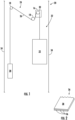
- FIG. 1 schematically illustrates selected portions of an elevator system 20.
- An elevator car 22 is supported by a roping arrangement or suspension assembly 24 that includes a plurality of suspension members 26.
- the elevator system 20 is a traction-based system in which a controller controls operation of a machine 16 to cause selected movement of the elevator car 22.
- the elevator car 22 is coupled to a counterweight 28 by the suspension members 26.
- the suspension members 26 are driven by the machine 16 around a traction sheave 30, as well as any additional deflector sheaves 18, as the elevator car 22 moves within a hoistway 32 between landings or levels.
- the hoistway 32 may be situated in a variety of locations within a building, depending on the building configuration. In some instances, at least part of the hoistway 32 may be along an exterior surface of the building. In one example, the hoistway 32 is comprised of one or more walls 34 that are formed from a translucent or transparent material through which external light can pass.
- the hoistway walls 34 can be made of a plastic based material or a glass material.
- FIG. 2 schematically illustrates a portion of an example suspension member 26.
- the suspension member 26 is a flat belt including a plurality of tension members 36 encased in a jacket 38 of a compressible material, such as polyurethane or other similar materials for example.
- the tension members 36 comprise steel cords, and the suspension member 26 is referred to as a coated steel belt (CSB), for example.
- Other embodiments include tension members that are made of different materials and jacket surfaces that are not flat, such as those that incorporate ribs, grooves, or similar features.
- the jacket 38 has an external facing side 40, e.g. a print side, and a traction side 42, e.g. internal facing side, that is supported on the traction sheave 30.
- the subject disclosure provides a coating 44, which includes at least one light resistant property, that at least partially covers the jacket 38.
- at least one light resistant property comprises UV resistance. Any type of coating with UV resistance can be applied to the jacket 38. Those skilled in the art who have the benefit of this description will be able to determine which UV resistant coating to use for each elevator application. This type of coating 44 is particularly beneficial for specific installations, such as sightseeing elevators, which require enhanced UV-protection of the members 26 without altering construction of the glass.
- the coating 44 only covers the external facing side 40.
- the external facing side 40 is the only side that faces external lighting, coating on the traction side 42 would not be needed, thus saving cost.
- the coating 44 is an entirely, e.g. 100%, solids-based or water-based formulation. As such, the coating 44 does not include or require any type of flammable solvent.
- the coating 44 includes a low-friction additive.
- the low-friction additive can comprise a fluorocarbon compound such as polyvinylidene fluoride (PVDF) or other similar materials, for example.
- PVDF polyvinylidene fluoride
- the PVDF additive is particularly beneficial due to its inherent UV-resistance and low wear/friction properties.
- the use of a low-friction additive reduces friction and wear of the coating 44 over time.
- the use of a low-friction additive also prevents stick-slip of the suspension member 26 that may cause noise arising from interaction with various sheaves installed in the elevator system.
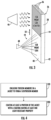
- Figure 4 shows a flowchart diagram of an example method of coating a suspension member 26.
- the method includes a step of encasing a plurality of tension members 36 within a jacket 38 to form at least one suspension member 26, as indicated at 100.
- the method further includes a step of applying a coating 44 to at least partially cover a portion of the jacket 38, as indicated at 200, wherein the coating 44 includes at least one light resistant property.
- the method may include any of the following steps either alone or in any combination.
- the at least one light resistant property comprises UV resistance.
- the method includes adding a low-friction additive to the coating 44.
- the method includes applying the coating 44 to only cover a side 40 of the jacket 38 that faces an external light source, leaving a traction side 42 of the jacket 38 uncoated.
- the method includes, subsequent to application of the coating 44, immediately curing the coating 44 with an ultraviolet light source 46.
- the coating 44 is applied with an applicator 48.
- the applicator 38 comprises applying the coating 44 by brushing, rolling, or spraying the coating 44 on the jacket 38.
- the method includes forming at least one wall 34 of the hoistway 32 from a translucent or transparent material.
- the subject disclosure utilizes a coating 44 on a print side 40 of the suspension members 26, which includes UV-protection to enhance UV-resistance and reduce likelihood of jacket degradation.
- the applied coating 44 avoids the use of flammable solvents, and incorporates low-friction additives to reduce friction and wear of the cured coating, as well as reducing noise.
- the coating 44 may be applied in the field at the specific jobsite that requires UV-protection of the suspension members 26; however, the coating 44 may also be applied prior to installation in the field, for example after extrusion of the suspension members 26 at a manufacturing facility.
- the coating application process includes the steps of applying the coating via a spray, brush, or roll-on process/applicator, followed by a rapid cure using a UV light source 46 , heat source, or combination thereof.
- the applicator 38 applies the coating 44 onto the jacket (lower portion of jacket 38), and then the suspension member 26 is moved away from the applicator 38 (see arrow 50) to the UV-curing light source 46, heat source, or combination thereof that is applied for a predetermined amount of time to accelerate the cure of the coating 44.
- the UV-and/or-heat-assisted rapid cure is intended to minimize downtime and allow for application in the field.
- the coating 44 is only applied to the print side 40, it will not alter the traction characteristics necessary for suspension member function. Furthermore, by focusing on selective application of the coating onsite, the need and cost associated with altering the formulation of all suspension members is avoided.
Landscapes
- Engineering & Computer Science (AREA)
- Civil Engineering (AREA)
- Mechanical Engineering (AREA)
- Structural Engineering (AREA)
- Physics & Mathematics (AREA)
- Plasma & Fusion (AREA)
- Lift-Guide Devices, And Elevator Ropes And Cables (AREA)
- Cage And Drive Apparatuses For Elevators (AREA)
Abstract
Description
- Elevator systems are in widespread use for carrying passengers between various levels in buildings. Some elevator systems are traction-based in which a suspension assembly, sometimes referred to as roping, suspends the elevator car and a counterweight. The suspension assembly also facilitates movement of the elevator car when needed. Traditional suspension assemblies include round steel ropes; however, elevator systems have also included other types of suspension members, such as flat belts or other types of ropes that have tension members encased in a compressible polymer jacket. Such suspension members are often utilized in glass hoistways, which expose the suspension members to external lighting conditions. These conditions may affect the suspension members over prolonged exposure.
- An illustrative example assembly includes: at least one suspension member that supports an elevator car and facilitates movement of the elevator car within a hoistway; a jacket that encases the at least one suspension member; and a coating that at least partially covers the jacket, wherein the coating including at least one light resistant property.
- In addition to one or more of the features described above, or as an alternative, the at least one light resistant property comprises ultraviolet resistance.
- In addition to one or more of the features described above, or as an alternative, the coating is an entirely solids-based or water-based formulation.
- In addition to one or more of the features described above, or as an alternative, the coating includes a low-friction additive.
- In addition to one or more of the features described above, or as an alternative, the low-friction additive comprises a fluorocarbon compound.
- In addition to one or more of the features described above, or as an alternative, the at least one suspension member comprises a plurality of tension members encased within the jacket, and wherein the jacket comprises a compressible material.
- In addition to one or more of the features described above, or as an alternative, the jacket has an external facing side and a traction side that is supported on at least one sheave, and wherein the coating only covers the external facing side.
- In addition to one or more of the features described above, or as an alternative, the hoistway includes one or more walls that are formed from translucent material or transparent material.
- An illustrative example elevator system includes: an elevator car; at least one suspension member that supports the elevator car and facilitates movement of the elevator car within a hoistway, wherein the at least one suspension member comprises a plurality of tension members encased within a jacket; and a coating that at least partially covers the jacket, wherein the coating comprises an ultraviolent protection coating.
- In addition to one or more of the features described above, or as an alternative, the coating includes a low-friction additive.
- In addition to one or more of the features described above, or as an alternative, the jacket comprises a compressible material.
- In addition to one or more of the features described above, or as an alternative, the jacket has an external facing side and a traction side that is supported on at least one sheave, and wherein the coating only covers the external facing side.
- In addition to one or more of the features described above, or as an alternative, the hoistway includes one or more walls that are formed from translucent material or transparent material.
- An illustrative example method of coating a suspension member that supports an elevator car and facilitates movement of the elevator car within a hoistway, comprises: encasing a plurality of tension members within a jacket to form at least one suspension member; and applying a coating to at least partially cover a portion of the jacket, wherein the coating includes at least one light resistant property.
- In addition to one or more of the features described above, or as an alternative, the at least one light resistant property comprises ultraviolet resistance.
- In addition to one or more of the features described above, or as an alternative, the method includes adding a low-friction additive to the coating.
- In addition to one or more of the features described above, or as an alternative, the method includes applying the coating to only cover a side of the jacket that faces an external light source, leaving a traction side of the jacket uncoated.
- In addition to one or more of the features described above, or as an alternative, the method includes, subsequent to application of the coating, immediately curing the coating with a UV light source.
- In addition to one or more of the features described above, or as an alternative, applying the coating comprises: brushing, rolling, or spraying the coating on the jacket.
- In addition to one or more of the features described above, or as an alternative, the method includes forming at least one wall of the hoistway from a translucent or transparent material.
- The various features and advantages of an example embodiment will become apparent to those skilled in the art from the following detailed description. The drawings that accompany the detailed description can be briefly described as follows.
-
-
Figure 1 schematically illustrates selected portions of an elevator system. -
Figure 2 schematically illustrates a portion of an example suspension member. -
Figure 3 schematically illustrates one example of a suspension member with a coating. -
Figure 4 is a flowchart diagram of an example method of coating a suspension member. - Embodiments of this disclosure provide an elevator suspension member that is coated with a ultraviolet (UV) protection coating to enhance UV resistance and minimize jacket degradation due to UV damage.
-
Figure 1 schematically illustrates selected portions of anelevator system 20. Anelevator car 22 is supported by a roping arrangement orsuspension assembly 24 that includes a plurality ofsuspension members 26. In one example, theelevator system 20 is a traction-based system in which a controller controls operation of amachine 16 to cause selected movement of theelevator car 22. Theelevator car 22 is coupled to acounterweight 28 by thesuspension members 26. Thesuspension members 26 are driven by themachine 16 around atraction sheave 30, as well as anyadditional deflector sheaves 18, as theelevator car 22 moves within ahoistway 32 between landings or levels. - The
hoistway 32 may be situated in a variety of locations within a building, depending on the building configuration. In some instances, at least part of thehoistway 32 may be along an exterior surface of the building. In one example, thehoistway 32 is comprised of one ormore walls 34 that are formed from a translucent or transparent material through which external light can pass. For example, thehoistway walls 34 can be made of a plastic based material or a glass material. -
Figure 2 schematically illustrates a portion of anexample suspension member 26. In the illustrated embodiment, thesuspension member 26 is a flat belt including a plurality oftension members 36 encased in ajacket 38 of a compressible material, such as polyurethane or other similar materials for example. In many embodiments, thetension members 36 comprise steel cords, and thesuspension member 26 is referred to as a coated steel belt (CSB), for example. Other embodiments include tension members that are made of different materials and jacket surfaces that are not flat, such as those that incorporate ribs, grooves, or similar features. - When the
suspension members 26 are utilized inglass hoistways 32 that do not include UV-blocking glass or film, degradation of themembers 26 can occur due to prolonged exposure to sunlight. As shown inFigure 3 , thejacket 38 has an external facingside 40, e.g. a print side, and atraction side 42, e.g. internal facing side, that is supported on thetraction sheave 30. The subject disclosure provides acoating 44, which includes at least one light resistant property, that at least partially covers thejacket 38. In one example, at least one light resistant property comprises UV resistance. Any type of coating with UV resistance can be applied to thejacket 38. Those skilled in the art who have the benefit of this description will be able to determine which UV resistant coating to use for each elevator application. This type ofcoating 44 is particularly beneficial for specific installations, such as sightseeing elevators, which require enhanced UV-protection of themembers 26 without altering construction of the glass. - In one example, the
coating 44 only covers the external facingside 40. As the external facingside 40 is the only side that faces external lighting, coating on thetraction side 42 would not be needed, thus saving cost. - In one example, the
coating 44 is an entirely, e.g. 100%, solids-based or water-based formulation. As such, thecoating 44 does not include or require any type of flammable solvent. - In one example, the
coating 44 includes a low-friction additive. The low-friction additive can comprise a fluorocarbon compound such as polyvinylidene fluoride (PVDF) or other similar materials, for example. The PVDF additive is particularly beneficial due to its inherent UV-resistance and low wear/friction properties. The use of a low-friction additive reduces friction and wear of thecoating 44 over time. The use of a low-friction additive also prevents stick-slip of thesuspension member 26 that may cause noise arising from interaction with various sheaves installed in the elevator system. -
Figure 4 shows a flowchart diagram of an example method of coating asuspension member 26. In one example, the method includes a step of encasing a plurality oftension members 36 within ajacket 38 to form at least onesuspension member 26, as indicated at 100. The method further includes a step of applying acoating 44 to at least partially cover a portion of thejacket 38, as indicated at 200, wherein thecoating 44 includes at least one light resistant property. - The method may include any of the following steps either alone or in any combination. In one example, the at least one light resistant property comprises UV resistance.
- In one example, the method includes adding a low-friction additive to the
coating 44. - In one example, the method includes applying the
coating 44 to only cover aside 40 of thejacket 38 that faces an external light source, leaving atraction side 42 of thejacket 38 uncoated. - In one example, the method includes, subsequent to application of the
coating 44, immediately curing thecoating 44 with an ultravioletlight source 46. - In one example, the
coating 44 is applied with anapplicator 48. Theapplicator 38 comprises applying thecoating 44 by brushing, rolling, or spraying thecoating 44 on thejacket 38. - In one example, the method includes forming at least one
wall 34 of the hoistway 32 from a translucent or transparent material. - The subject disclosure utilizes a
coating 44 on aprint side 40 of thesuspension members 26, which includes UV-protection to enhance UV-resistance and reduce likelihood of jacket degradation. The appliedcoating 44 avoids the use of flammable solvents, and incorporates low-friction additives to reduce friction and wear of the cured coating, as well as reducing noise. - The
coating 44 may be applied in the field at the specific jobsite that requires UV-protection of thesuspension members 26; however, thecoating 44 may also be applied prior to installation in the field, for example after extrusion of thesuspension members 26 at a manufacturing facility. The coating application process includes the steps of applying the coating via a spray, brush, or roll-on process/applicator, followed by a rapid cure using aUV light source 46 , heat source, or combination thereof. For example, as shown inFigure 3 , theapplicator 38 applies thecoating 44 onto the jacket (lower portion of jacket 38), and then thesuspension member 26 is moved away from the applicator 38 (see arrow 50) to the UV-curinglight source 46, heat source, or combination thereof that is applied for a predetermined amount of time to accelerate the cure of thecoating 44. The UV-and/or-heat-assisted rapid cure is intended to minimize downtime and allow for application in the field. - Finally, as the
coating 44 is only applied to theprint side 40, it will not alter the traction characteristics necessary for suspension member function. Furthermore, by focusing on selective application of the coating onsite, the need and cost associated with altering the formulation of all suspension members is avoided. - The preceding description is exemplary rather than limiting in nature. Variations and modifications to the disclosed examples may become apparent to those skilled in the art that do not necessarily depart from the essence of this invention. The scope of legal protection given to this invention can only be determined by studying the following claims.
Claims (15)
- An assembly comprising:at least one suspension member that supports an elevator car and facilitates movement of the elevator car within a hoistway;a jacket that encases the at least one suspension member; anda coating that at least partially covers the jacket, wherein the coating including at least one light resistant property.
- The assembly of claim 1, wherein the at least one light resistant property comprises ultraviolet resistance.
- The assembly of claim 1, wherein the coating is an entirely solids-based or water-based formulation; or
wherein the coating includes a low-friction additive, perferably wherein the low-friction additive comprises a fluorocarbon compound. - The assembly of claim 1, wherein the at least one suspension member comprises a plurality of tension members encased within the jacket, and wherein the jacket comprises a compressible material.
- The assembly of claim 1, wherein the jacket has an external facing side and a traction side that is supported on at least one sheave, and wherein the coating only covers the external facing side.
- The assembly of claim 1, wherein the hoistway includes one or more walls that are formed from translucent material or transparent material.
- An elevator system, comprising:an elevator car;at least one suspension member that supports the elevator car and facilitates movement of the elevator car within a hoistway, wherein the at least one suspension member comprises a plurality of tension members encased within a jacket; anda coating that at least partially covers the jacket, wherein the coating comprises an ultraviolent protection coating.
- The elevator system of claim 7, wherein the coating includes a low-friction additive.
- The elevator system of claim 7, wherein the jacket comprises a compressible material; or
wherein the jacket has an external facing side and a traction side that is supported on at least one sheave, and wherein the coating only covers the external facing side. - The elevator system of claim 7, wherein the hoistway includes one or more walls that are formed from translucent material or transparent material.
- A method of coating a suspension member that supports an elevator car and facilitates movement of the elevator car within a hoistway, the method comprising:encasing a plurality of tension members within a jacket to form at least one suspension member; andapplying a coating to at least partially cover a portion of the jacket, wherein the coating includes at least one light resistant property.
- The method of claim 11, wherein the at least one light resistant property comprises ultraviolet resistance.
- The method of claim 11, including adding a low-friction additive to the coating.
- The method of claim 11, including applying the coating to only cover a side of the jacket that faces an external light source, leaving a traction side of the jacket uncoated, preferably further including:
subsequent to application of the coating, immediately curing the coating with a UV light source, preferably wherein applying the coating comprises:
brushing, rolling, or spraying the coating on the jacket. - The method of claim 11, including forming at least one wall of the hoistway from a translucent or transparent material.
Applications Claiming Priority (1)
| Application Number | Priority Date | Filing Date | Title |
|---|---|---|---|
| US18/382,593 US12208992B1 (en) | 2023-10-23 | 2023-10-23 | Elevator suspension member with coating |
Publications (2)
| Publication Number | Publication Date |
|---|---|
| EP4545469A2 true EP4545469A2 (en) | 2025-04-30 |
| EP4545469A3 EP4545469A3 (en) | 2025-05-21 |
Family
ID=93257772
Family Applications (1)
| Application Number | Title | Priority Date | Filing Date |
|---|---|---|---|
| EP24208069.5A Pending EP4545469A3 (en) | 2023-10-23 | 2024-10-22 | Elevator suspension member with light resistant coating |
Country Status (3)
| Country | Link |
|---|---|
| US (1) | US12208992B1 (en) |
| EP (1) | EP4545469A3 (en) |
| CN (1) | CN119873559A (en) |
Family Cites Families (16)
| Publication number | Priority date | Publication date | Assignee | Title |
|---|---|---|---|---|
| CZ282660B6 (en) * | 1994-03-02 | 1997-08-13 | Inventio Ag | Bearer rope of lifting and transport facilities |
| EP1314813A1 (en) * | 2001-11-23 | 2003-05-28 | N.V. Bekaert S.A. | Cable and window elevator system using such cable |
| KR200457171Y1 (en) * | 2009-02-24 | 2011-12-08 | 현대엘리베이터주식회사 | The elevator for the level-upped riverside |
| DE202009014031U1 (en) * | 2009-10-16 | 2009-12-24 | Manitowoc Crane Group France Sas | Synthetic rope as a carrier for cranes and other hoists |
| CH705350A1 (en) * | 2011-08-09 | 2013-02-15 | Brugg Drahtseil Ag | Traction member with a force transfer surface with different frictional properties. |
| EP2802707B1 (en) * | 2012-01-12 | 2017-08-23 | Otis Elevator Company | Reinforced belt and method of manufacturing the same |
| JP2015048178A (en) * | 2013-08-30 | 2015-03-16 | 東芝エレベータ株式会社 | Elevator apparatus |
| CN106414300B (en) | 2013-11-22 | 2021-09-07 | 奥的斯电梯公司 | Idler or guide sheaves for elevator systems |
| WO2015134023A1 (en) * | 2014-03-06 | 2015-09-11 | Otis Elevator Company | Woven elevator belt with coating |
| US10913634B2 (en) * | 2015-09-14 | 2021-02-09 | Otis Elevator Company | Woven elevator belt with multifunctional coatings |
| WO2018198240A1 (en) * | 2017-04-26 | 2018-11-01 | 三菱電機株式会社 | Elevator, suspension body therefor, and production method for suspension body |
| US11459209B2 (en) * | 2017-11-10 | 2022-10-04 | Otis Elevator Company | Light weight load bearing member for elevator system |
| US11584619B2 (en) * | 2018-01-15 | 2023-02-21 | Otis Elevator Company | Reinforced jacket for belt |
| US11001474B2 (en) * | 2018-01-15 | 2021-05-11 | Otis Elevator Company | Wear detection of elevator belt |
| US20210229956A1 (en) * | 2018-06-06 | 2021-07-29 | Thyssenkrupp Elevator Innovation And Operations Ag | Composite elevator belt and method for making the same |
| KR20200044359A (en) * | 2018-10-19 | 2020-04-29 | 주식회사금강엔지니어링 | Elevator plat belt and plat belt pulley used the same that |
-
2023
- 2023-10-23 US US18/382,593 patent/US12208992B1/en active Active
-
2024
- 2024-10-21 CN CN202411466042.4A patent/CN119873559A/en active Pending
- 2024-10-22 EP EP24208069.5A patent/EP4545469A3/en active Pending
Also Published As
| Publication number | Publication date |
|---|---|
| CN119873559A (en) | 2025-04-25 |
| EP4545469A3 (en) | 2025-05-21 |
| US12208992B1 (en) | 2025-01-28 |
Similar Documents
| Publication | Publication Date | Title |
|---|---|---|
| EP1273695A1 (en) | Rope, and elevator using the same | |
| AU2003276289B2 (en) | Elevator cable tensioning device | |
| CN102006988A (en) | Process and device for producing a belt-like carrier means for an elevator system, belt-like carrier means and elevator system comprising such a carrier means | |
| JP2006513942A (en) | elevator | |
| CN102883985A (en) | Elevator suspension and/or driving assembly having at least one traction surface defined by weave fibers | |
| EA200400665A1 (en) | ELEVATOR WITH A SMALL DRIVE | |
| JP2000212884A (en) | Coating for rope and method of forming the same | |
| TWI272239B (en) | Sheave for elevator | |
| US11459209B2 (en) | Light weight load bearing member for elevator system | |
| US20130292211A1 (en) | System And Method For Reducing Belt Noise | |
| ATE546583T1 (en) | SPEED CONTROL FOR ELEVATORS | |
| US12208992B1 (en) | Elevator suspension member with coating | |
| ES2397167T3 (en) | Pulley for use in an elevator system | |
| US11511964B2 (en) | System for monitoring lobby activity to determine whether to cancel elevator service | |
| CN114127438B (en) | toothed belt | |
| MXPA06008176A (en) | Installation with support means for driving a lift cage, andcorresponding support means. | |
| CN1886321A (en) | Elevator apparatus | |
| US20210062414A1 (en) | Tension member and belt for elevator system | |
| EP3564180B1 (en) | Coated sheave | |
| US12172865B2 (en) | System and method for assigning elevator service based on passenger priority | |
| US11390490B2 (en) | Cantilevered climbing elevator | |
| EP4368554A1 (en) | Elevator load bearing suspension member including a corrosion inhibitor in the jacket | |
| CN110891890B (en) | Guide wheel in traction tool driving device | |
| CN1420838A (en) | Main rope elongation compensating device for elevator | |
| JP6197959B1 (en) | Elevator device, transport device and guided member |
Legal Events
| Date | Code | Title | Description |
|---|---|---|---|
| PUAI | Public reference made under article 153(3) epc to a published international application that has entered the european phase |
Free format text: ORIGINAL CODE: 0009012 |
|
| STAA | Information on the status of an ep patent application or granted ep patent |
Free format text: STATUS: THE APPLICATION HAS BEEN PUBLISHED |
|
| PUAL | Search report despatched |
Free format text: ORIGINAL CODE: 0009013 |
|
| AK | Designated contracting states |
Kind code of ref document: A2 Designated state(s): AL AT BE BG CH CY CZ DE DK EE ES FI FR GB GR HR HU IE IS IT LI LT LU LV MC ME MK MT NL NO PL PT RO RS SE SI SK SM TR |
|
| AK | Designated contracting states |
Kind code of ref document: A3 Designated state(s): AL AT BE BG CH CY CZ DE DK EE ES FI FR GB GR HR HU IE IS IT LI LT LU LV MC ME MK MT NL NO PL PT RO RS SE SI SK SM TR |
|
| RIC1 | Information provided on ipc code assigned before grant |
Ipc: B66B 7/06 20060101AFI20250414BHEP |
|
| STAA | Information on the status of an ep patent application or granted ep patent |
Free format text: STATUS: REQUEST FOR EXAMINATION WAS MADE |
|
| 17P | Request for examination filed |
Effective date: 20251031 |
|
| STAA | Information on the status of an ep patent application or granted ep patent |
Free format text: STATUS: EXAMINATION IS IN PROGRESS |
|
| 17Q | First examination report despatched |
Effective date: 20260318 |