EP4542903A1 - Information transmission method and apparatus, base station, device, storage medium, and program product - Google Patents
Information transmission method and apparatus, base station, device, storage medium, and program product Download PDFInfo
- Publication number
- EP4542903A1 EP4542903A1 EP23822854.8A EP23822854A EP4542903A1 EP 4542903 A1 EP4542903 A1 EP 4542903A1 EP 23822854 A EP23822854 A EP 23822854A EP 4542903 A1 EP4542903 A1 EP 4542903A1
- Authority
- EP
- European Patent Office
- Prior art keywords
- feedback information
- sequence
- identifier
- identifiers
- correct
- Prior art date
- Legal status (The legal status is an assumption and is not a legal conclusion. Google has not performed a legal analysis and makes no representation as to the accuracy of the status listed.)
- Pending
Links
Images








Classifications
-
- H—ELECTRICITY
- H04—ELECTRIC COMMUNICATION TECHNIQUE
- H04W—WIRELESS COMMUNICATION NETWORKS
- H04W28/00—Network traffic management; Network resource management
- H04W28/02—Traffic management, e.g. flow control or congestion control
- H04W28/06—Optimizing the usage of the radio link, e.g. header compression, information sizing, discarding information
-
- H—ELECTRICITY
- H04—ELECTRIC COMMUNICATION TECHNIQUE
- H04L—TRANSMISSION OF DIGITAL INFORMATION, e.g. TELEGRAPHIC COMMUNICATION
- H04L1/00—Arrangements for detecting or preventing errors in the information received
- H04L1/12—Arrangements for detecting or preventing errors in the information received by using return channel
- H04L1/16—Arrangements for detecting or preventing errors in the information received by using return channel in which the return channel carries supervisory signals, e.g. repetition request signals
-
- H—ELECTRICITY
- H04—ELECTRIC COMMUNICATION TECHNIQUE
- H04L—TRANSMISSION OF DIGITAL INFORMATION, e.g. TELEGRAPHIC COMMUNICATION
- H04L1/00—Arrangements for detecting or preventing errors in the information received
- H04L1/12—Arrangements for detecting or preventing errors in the information received by using return channel
- H04L1/16—Arrangements for detecting or preventing errors in the information received by using return channel in which the return channel carries supervisory signals, e.g. repetition request signals
- H04L1/1607—Details of the supervisory signal
- H04L1/1671—Details of the supervisory signal the supervisory signal being transmitted together with control information
-
- H—ELECTRICITY
- H04—ELECTRIC COMMUNICATION TECHNIQUE
- H04L—TRANSMISSION OF DIGITAL INFORMATION, e.g. TELEGRAPHIC COMMUNICATION
- H04L1/00—Arrangements for detecting or preventing errors in the information received
- H04L1/12—Arrangements for detecting or preventing errors in the information received by using return channel
- H04L1/16—Arrangements for detecting or preventing errors in the information received by using return channel in which the return channel carries supervisory signals, e.g. repetition request signals
- H04L1/18—Automatic repetition systems, e.g. Van Duuren systems
-
- H—ELECTRICITY
- H04—ELECTRIC COMMUNICATION TECHNIQUE
- H04L—TRANSMISSION OF DIGITAL INFORMATION, e.g. TELEGRAPHIC COMMUNICATION
- H04L1/00—Arrangements for detecting or preventing errors in the information received
- H04L1/12—Arrangements for detecting or preventing errors in the information received by using return channel
- H04L1/16—Arrangements for detecting or preventing errors in the information received by using return channel in which the return channel carries supervisory signals, e.g. repetition request signals
- H04L1/18—Automatic repetition systems, e.g. Van Duuren systems
- H04L1/1829—Arrangements specially adapted for the receiver end
- H04L1/1861—Physical mapping arrangements
-
- H—ELECTRICITY
- H04—ELECTRIC COMMUNICATION TECHNIQUE
- H04W—WIRELESS COMMUNICATION NETWORKS
- H04W28/00—Network traffic management; Network resource management
- H04W28/02—Traffic management, e.g. flow control or congestion control
- H04W28/04—Error control
-
- H—ELECTRICITY
- H04—ELECTRIC COMMUNICATION TECHNIQUE
- H04W—WIRELESS COMMUNICATION NETWORKS
- H04W72/00—Local resource management
- H04W72/12—Wireless traffic scheduling
-
- H—ELECTRICITY
- H04—ELECTRIC COMMUNICATION TECHNIQUE
- H04W—WIRELESS COMMUNICATION NETWORKS
- H04W74/00—Wireless channel access
- H04W74/08—Non-scheduled access, e.g. ALOHA
-
- H—ELECTRICITY
- H04—ELECTRIC COMMUNICATION TECHNIQUE
- H04W—WIRELESS COMMUNICATION NETWORKS
- H04W74/00—Wireless channel access
- H04W74/08—Non-scheduled access, e.g. ALOHA
- H04W74/0833—Random access procedures, e.g. with 4-step access
Definitions
- Embodiments of the present disclosure relate to the field of communications technologies, in particular to an information transmission method and an apparatus, a base station, a user equipment, a storage medium, and a program product.
- each base station needs to support connection of tens of thousands of user equipments (UEs).
- UEs user equipments
- CBGF contention-based grant-free
- each of the UEs which send data will randomly select a resource (also called signature) from a random access resource set (for example, a spread spectrum sequence, or a pilot sequence) provided by a system to transmit data.
- a resource also called signature
- a random access resource set for example, a spread spectrum sequence, or a pilot sequence
- the base station Since the base station does not perform scheduling for the UEs, the base station needs to feed back an acknowledgment signal to each UE for determining whether a data packet is successfully received. However, as one base station serves thousands of UEs at the same time, if a 1-bit response signal is fed back to each served UE, thousands of bit response signals need to be fed back. This causes excessive feedback overheads, leading to the waste of spectrum resources.
- Embodiments of the present disclosure provide an information transmission method and an apparatus, a BS, a UE, a computer-readable storage medium, and a computer program product, aiming at saving spectrum resources and improving data transmission efficiency.
- an embodiment provides an information transmission method, including: receiving a transport block (TB) sent by at least one second node, the TB forming a TB set; obtaining feedback information according to the TB set; where the feedback information is used to represent a reception condition of the TB sent by the at least one second node; and sending the feedback information to the at least one second node.
- TB transport block
- an embodiment provides an information transmission method, applied to a second node, including: sending a TB to a first node; and receiving feedback information sent by the first node; where the feedback information is used to represent a reception condition of the TB.
- an embodiment provides an information transmission apparatus, including: a receiving module configured to receive a TB sent by at least one second node, the TB forming a TB set; a feedback information generation module configured to obtain feedback information according to the TB set; where the feedback information is used to represent a reception condition of the TB sent by the at least one second node; and a sending module configured to send the feedback information to the at least one second node.
- an embodiment provides an information transmission apparatus, including: a sending module configured to send a TB to a first node; and a receiving module configured to receive feedback information sent by the first node; where the feedback information is used to represent a reception condition of the TB.
- an embodiment provides a base station, including: a memory, a processor, and a computer program stored in the memory and executable by the processor, where the computer program, when executed by the processor, causes the processor to implement the information transmission method of any one of the first aspect or the second aspect.
- an embodiment provides a UE, including: a memory, a processor, and a computer program stored in the memory and executable by the processor, where the computer program, when executed by the processor, causes the processor to implement the information transmission method of any one of the first aspect or the second aspect.
- an embodiment provides a computer-readable storage medium, the computer-readable storage medium storing computer-executable instructions configured to implement the information transmission method of any one of the first aspect or the second aspect.
- the terms such as “configure”, “install”, and “connect” should be construed in a broad sense, and those having ordinary skill in the art can determine the meanings of the above terms in the present disclosure in a rational way in conjunction with the contents of embodiments of the technical schemes.
- the term such as “further,” “exemplary,” or “optionally” is used to represent as an example, an illustration, or a description and should not be construed as being more preferred or advantageous than another embodiment or design.
- the use of the term such as “further,” “exemplary,” or “optionally,” is intended to present a related concept in a specific manner.
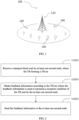
- FIG. 1 is a schematic diagram of an application scenario and system architecture of an information transmission method provided by an embodiment of the present disclosure.
- a base station 110 serves a plurality of types of UEs (120, 130, 140), and there may be one or more UEs for each type. Therefore, the base station 110 serves a plurality of UEs.
- the information transmission method provided in the present disclosure may be applied to various communications systems, for example, an Internet of Things (IoT), a narrow band Internet of Things (NB-IoT), Long Term Evolution (LTE), or a 5th Generation (5G) communications system, or may also be a hybrid architecture of LTE and 5G, a 5G new radio (NR) system, or a new communications system emerging in future communications development.
- IoT Internet of Things
- NB-IoT narrow band Internet of Things
- LTE Long Term Evolution
- 5G 5th Generation
- NR 5th Generation
- the UE in the embodiments of the present disclosure is a device which provides voice and/or data connectivity to a user, for example, a handheld device or vehicle-mounted device with a wireless connection function.
- the UE may also be another processing device connected to a wireless modem.
- the UE can communicate with one or more core networks through a radio access network (RAN).
- RAN radio access network
- the UE may also be referred to as a wireless terminal, a subscriber unit, a subscriber station, a mobile station, a mobile, a remote station, an access point, a remote terminal, an access terminal, a user terminal, or a user agent.
- the UE may be a mobile terminal device, for example, a mobile phone (also referred to as a "cellular" phone), or a computer having a mobile terminal device.
- the base station in the embodiments of the present disclosure may be a base transceiver station (BTS) in a global system for mobile communication (GSM) or code division multiple access (CDMA), a NodeB in wideband code division multiple access (WCDMA), an evolved Node B (eNB or e-NodeB) in LTE, an NR controller, a gNode B (gNB) in a 5G system, a centralized unit, a new wireless base station, a radio remote module, a micro base station, a relay, a distributed unit, a transmission reception point (TRP) or a transmission point (TP), or any other wireless access device.
- GSM global system for mobile communication
- CDMA code division multiple access
- WCDMA wideband code division multiple access
- eNB or e-NodeB evolved Node B
- gNB gNode B
- 5G system a centralized unit
- a new wireless base station a radio remote module
- TRP transmission reception point
- TP transmission point
- the UE feeds back a negative acknowledgment (NACK) state (represented by bit "0") to the base station.
- NACK negative acknowledgment
- the acknowledgment state can be transmitted on five physical uplink control channel (PUCCH) formats defined by the 5G standard. These five formats include: PUCCH format 0, PUCCH format 1, PUCCH format 2, PUCCH format 3, and PUCCH format 4.
- PUCCH formats 0 and 1 are used to transmit 1-or 2-bit hybrid automatic repeat request (HARQ) acknowledgment (HARQ-ACK) information and scheduling request.
- PUCCH formats 2 to 4 are used to transmit a channel state information (CSI) report or multi-bit HARQ-ACK information.
- CSI channel state information
- Table 1 Quantity of resources occupied by different PUCCH formats, quantity of bits transmitted, and examples of use PUCCH format Number of OFDM symbols N symb Number of RBs NRB Number of REs NRE Number A of bits of a payload Use 0 1 ⁇ 2 1 12 or 24 ⁇ 2 HARQ-ACK information feedback, and scheduling request 1 4 ⁇ 14 1 48-168 ⁇ 2 HARQ-ACK information feedback, and scheduling request 2 1 ⁇ 2 >1 ⁇ 12 >2 HARQ-ACK information feedback, scheduling request, and CSI report 3 4 ⁇ 14 ⁇ 1 ⁇ 48 >2 HARQ-ACK information feedback, scheduling request, and CSI report 4 4 ⁇ 14 1 ⁇ 48 >2 HARQ-ACK information feedback, scheduling request, and CSI report
- Table 1 shows the number of bits of the payload, the number of resources occupied, and the uses under different PUCCH formats, where OFDM represents Orthogonal Frequency Division Multiplexing, RB represents Resource Block, and RE represents Resource Element.
- PUCCH formats 0 and 1 The number of bits of the payload of each of PUCCH formats 0 and 1 is not greater than 2.
- Phase-shift keying (PSK) is performed on a load, then a modulated load is multiplied by a sequence, and spectrum spreading is performed on a product thereof to obtain a transmission signal.
- PUCCH formats 2 to 4 use polarization code channel coding and PSK to obtain a transmission signal.
- the embodiments of the present disclosure provide an information transmission method and an apparatus, a base station, UE, a storage medium, and a program product, to superimpose or splice acknowledgment signals correctly received by a plurality of UEs and then transmit a superimposed or spliced signal.
- Each UE decodes the received acknowledgment signal and extracts a corresponding acknowledgment signal, thereby achieving the purpose of saving spectrum resources and improving data transmission efficiency.
- FIG. 2 is a flowchart of an information transmission method provided by an embodiment of the present disclosure.
- the information transmission method provided by the embodiment of the present disclosure can be used for any network element having data reception and signaling transmission functions, such as a base station, a relay, or a terminal device, including but not limited to steps S1000, S2000 and S3000.
- a TB sent by at least one second node is received, where the TB forms a TB set.
- a first node receives a signal, including a TB, sent by one second node.
- the second nodes when a plurality of second nodes sends signals including TBs to the first node, the second nodes form a sequence of second nodes, and the TBs transmitted by the plurality of second nodes form a TB set.
- the sequence of second nodes includes Nu second nodes
- the TB set includes Nb TBs, where Nu and Nb are positive integers, and Nu is less than or equal to Nb.
- one second node may send one or more TBs to the first node, and the one or more TBs form a TB set.
- a TB in the TB set includes a TB identifier
- an ordered set of TB identifiers includes Na TB identifiers I(1), I(2), ..., and I(Na)
- Na is a size of the ordered set of TB identifiers.
- k 1, 2, ..., Na
- a k th element in the ordered set of TB identifiers is I(k).
- the k th element I(k) in the ordered set of TB identifiers may be an integer k or an integer k-1.
- the TB is indicated by a TB identifier.
- the TB identifier may be one of the following: a UE identifier, an index value of a UE identifier, or a signature index.
- the UE identifier is a UE identifier of a second node in the sequence of second nodes, and UE identifiers of two different second nodes in the sequence of second nodes are different.
- the UE identifiers may be used for the first node to distinguish between different TBs in the TB set in a signal including the TB set, and the UE identifier is an integer.
- the UE identifier may be a subscription permanent identifier (SUPI), a generic public subscription identifier (GPSI), a permanent equipment identifier (PEI), a network access identifier (NAI), a subscription concealed identifier (SUCI), a globally unique temporary identity (GUTI), a radio network temporary identifier (RNTI), a system information RNTI (SI-RNTI), a paging RNTI (P-RNTI), a random access RNTI (RA-RNTI), a temporary cell RNTI, (TC-RNTI), a cell RNTI (C-RNTI), a transmit power control-physical uplink control channel-RNTI (TPC-PUCCH-RNTI), a transmit power control-physical uplink shared channel-RNTI (TPC-PUSCH-RNTI), a transmit power control-sounding reference symbols-RNTI (TPC-SRS-RNTI), an interruption RNTI (INT-RNTI), a modulation coding scheme cell RNTI (MC), a modul
- the TB identifier is a UE identifier
- elements in the ordered set of TB identifiers are UE identifiers.
- the TB identifier is the index value of the UE identifier
- the UE identifier is an element in an ordered set of UE identifiers
- the ordered set of UE identifiers includes Na UE identifiers ID(1), ID(2), ..., ID(Na).
- Na is a size of the ordered set of UE identifiers and the size of the ordered set of TB identifiers
- k 1, 2, ..., Na
- an index value of a UE identifier corresponding to a k th UE identifier ID(k) in the ordered set of UE identifiers is a k th element I(k) in elements in the ordered set of TB identifiers.
- the TB identifier is a signature index
- the signature index is a signature index of a random access signature, that is, a TB in the TB set includes the random access signature.
- the random access signature is an element in an ordered set of random access signatures, and the ordered set of random access signatures includes Na random access signatures r(1), r(2), ..., r(Na).
- Na is a size of the ordered set of random access signatures and the size of the ordered set of TB identifiers
- k 1, 2, ..., Na
- a signature index of a k th random access signature r(k) in the ordered set of random access signatures is a k th element I(k) in the ordered set of TB identifiers.
- the random access signature may be a pilot, a reference signal, a preamble, a spread spectrum sequence, an interleaver, an interleaver pattern, an interleaver sequence, a scrambling sequence, a sparse code sequence, or the like.
- the second node determines a random access signature of a TB according to a UE identifier of the TB, as a random access signature included in the TB in the TB set.
- the random access signatures may be used for the first node to distinguish between different TBs in the TB set in the signal including the TB set.
- the second node determines a random access signature of a TB according to a higher layer parameter, as a random access signature included in the TB in the TB set.
- the random access signatures may be used for the first node to distinguish between different TBs in the TB set in the signal including the TB set.
- first node and the second node may be any network elements with data reception and signaling transmission functions such as base stations, relays, or terminal devices.
- feedback information is obtained according to the TB set; where the feedback information is used to represent a reception condition of the TB sent by the at least one second node.
- the ordered set of TB sequences is a predefined set of complex sequences.
- the first node determines the feedback information f according to the signal including the TB set sent by the at least one second node.
- the feedback information may be determined according to one or more of the following parameters: the maximum quantity Pmax of correct TBs, the ordered set of TB identifiers, the ordered set of TB sequences, the size Na of the ordered set of TB identifiers, the set of identifiers of correct TBs, the set of correct TB sequences, the quantity P of correct TBs, or the length Nf of feedback information f.
- the feedback information can be obtained according to one or more of the foregoing information about the correct TB, that is, the generation of the feedback information does not necessarily require all the information.
- the size Na of the ordered set of TB identifiers is a quantity of elements in the ordered set of TB identifiers
- the quantity P of correct TBs is a quantity of elements in the set of identifiers of correct TBs
- the ordered set of TB sequences includes Na complex sequences t(1), t(2), ..., t(Na)
- the set of identifiers of correct TBs includes P TB identifiers BI(1), BI(2), ..., BI(P)
- the set of correct TB sequences includes P complex sequences s(1), s(2), ..., s(P).
- Na and Pmax are positive integers
- P is a non-negative integer
- P is less than or equal to Pmax.
- a length of a complex sequence s(k) is Ns(k), where, Ns(k) is a non-negative integer, and Ns(k) is less than or equal to Nf.
- the maximum quantity Pmax of correct TBs is less than or equal to the size Na of the ordered set of TB identifiers. In some embodiments, the maximum quantity Pmax of correct TBs is configured by the first node. In some other embodiments, the maximum quantity Pmax of correct TBs is pre-configured by adopting a higher layer parameter.
- the set of identifiers of correct TBs is a set of UE identifiers included in correctly-received TBs in the TB set.
- the correctly-received TB is a TB whose acknowledgment state is positive acknowledgment ACK.
- a UE identifier belonging to the set of identifiers of correct TBs is used to indicate that an acknowledgment state of a TB corresponding to the UE identifier is positive acknowledgment ACK.
- a UE identifier not belonging to the set of identifiers of correct TBs is used to indicate that an acknowledgment state of a TB corresponding to the UE identifier is negative acknowledgment NACK. Therefore, the set of identifiers of correct TBs is a subset of the ordered set of TB identifiers.
- the set of identifiers of correct TBs is a set of index values of UE identifiers included in correctly-received TBs in the TB set.
- the correctly-received TB is a TB whose acknowledgment state is positive acknowledgment ACK.
- An index value of a UE identifier belonging to the set of identifiers of correct TBs is used to indicate that an acknowledgment state of a TB corresponding to the index value of the UE identifier is positive acknowledgment ACK.
- An index value of a UE identifier not belonging to the set of identifiers of correct TBs is used to indicate that an acknowledgment state of a TB corresponding to the index value of the UE identifier is negative acknowledgment NACK. Therefore, the set of identifiers of correct TBs is a subset of the ordered set of TB identifiers.
- the set of identifiers of correct TBs is a set of signature indexes of random access signatures included in correctly-received TBs in the TB set.
- the correctly-received TB is a TB whose acknowledgment state is positive acknowledgment ACK.
- a signature index of a random access signature belonging to the set of identifiers of correct TBs is used to indicate that an acknowledgment state of a TB corresponding to the random access signature is positive acknowledgment ACK.
- a signature index of a random access signature not belonging to the set of identifiers of correct TBs is used to indicate that an acknowledgment state of a TB corresponding to the random access signature is negative acknowledgment NACK. Therefore, the set of identifiers of correct TBs is a subset of the ordered set of TB identifiers.
- the set of correct TB sequences is a subset of the ordered set of TB sequences.
- a k th complex sequence t(k) of the ordered set of TB sequences corresponds to a k th element I(k) in the ordered set of TB identifiers.
- a length of the k th complex sequence t(k) in the ordered set of TB sequences is Nt(k), Nt(k) is a non-negative integer, and Nt(k) is less than or equal to Nf.
- the first node determines the P TB identifiers BI(1), BI(2), ..., BI(P) in the set of identifiers of correct TBs as the feedback information f according to at least any one or any combination of the following parameters: the maximum quantity Pmax of correct TBs, the ordered set of TB identifiers, the ordered set of TB sequences, the size Na of the ordered set of TB identifiers, the set of identifiers of correct TBs, the set of correct TB sequences, or the quantity P of correct TBs.
- the feedback information f includes P TB identifiers BI(1), BI(2), ..., BI(P) in the set of identifiers of correct TBs.
- the first node determines P target complex sequences s(1), s(2), ..., s(P) in the set of correct TB sequences as the feedback information f according to at least any one or any combination of the following parameters: the maximum quantity Pmax of correct TBs, the ordered set of TB identifiers, the ordered set of TB sequences, the size Na of the ordered set of TB identifiers, the set of identifiers of correct TBs, the set of correct TB sequences, or the quantity P of correct TBs.
- the feedback information f includes the P target complex sequences s(1), s(2), ..., s(P) in the set of correct TB sequences.
- the target complex sequence s(k) in the set of correct TB sequences is determined by the first node according to a TB identifier BI(k) in the set of identifiers of correct TBs.
- complex sequences in the ordered set of TB sequences may be various sequences of direct sequence spread spectrum (DSSS) used in non-orthogonal multiple access.
- DSSS direct sequence spread spectrum
- the feedback information is sent to the at least one second node.
- the first node sends the feedback information to the at least one second node, where the feedback information can represent a reception condition at the first node of the TB sent by the at least one second node.
- the information transmission method provided by the embodiment can minimize the number of input bits of channel coding, thereby saving spectrum resources and improving data transmission efficiency.
- the first node determines that a signal including the feedback information f which is an empty sequence is a null signal. In other words, the first node determines that the signal including the feedback information f is a zero power signal.
- the first node sends the zero power signal, so that energy overheads are reduced, and a second node in the sequence of second nodes does not receive the signal including the feedback information f (that is, the zero power signal) successfully. Therefore, the second node in the sequence of second nodes can determine that the feedback information is negative acknowledgment NACK.
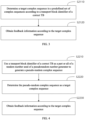
- FIG. 3 is a flowchart of an information transmission method provided by an embodiment of the present disclosure.
- the method includes steps S2110 and S2120, and describes a process of obtaining feedback information according to an identifier of a correct TB.
- a target complex sequence is determined in a predefined set of complex sequences according to a TB identifier of a correct TB.
- a first node determines P TB identifiers BI(1), BI(2), ..., BI(P) in a set of identifiers of correct TBs as feedback information f according to at least any one or any combination of the following parameters: a maximum quantity Pmax of correct TBs, an ordered set of TB identifiers, an ordered set of TB sequences, a size Na of an ordered set of TB identifiers, a set of identifiers of correct TBs, a set of correct TB sequences, or a quantity P of correct TBs.
- the feedback information f includes P TB identifiers BI(1), BI(2), ..., BI(P) in the set of identifiers of correct TBs.
- k 1, 2, ..., P
- the first node determines a target complex sequence t(m(k)) according to a TB identifier BI(k) in the set of identifiers of correct TBs, and the first node determines the feedback information f according to a target complex sequence t(m(1)), t(m(2), ..., t(m(P)), where m(k) is a sequence number of a TB identifier BI(k) in the ordered set of TB identifiers, that is, m(k) is an integer that makes I(m(k)) equal to BI(k).
- the first node determines the P TB identifiers BI(1), BI(2), ..., BI(P) in the set of identifiers of correct TBs as the feedback information f according to at least any one or any combination of the following parameters: the maximum quantity Pmax of correct TBs, the ordered set of TB identifiers, the ordered set of TB sequences, the size Na of an ordered set of TB identifiers, the set of identifiers of correct TBs, the set of correct TB sequences, or the quantity P of correct TBs.
- the feedback information f includes the P TB identifiers BI(1), BI(2), ..., BI(P) in the set of identifiers of correct TBs.
- the first node determines a target complex sequence t(BI(k)) according to a TB identifier BI(k) in the set of identifiers of correct TBs, and the first node determines the feedback information f according to a target complex sequence t(BI(1)), t(BI(2), ..., t(BI(P)), where BI(k) is an element in the ordered set I of TB identifiers.
- the first node determines P target complex sequences s(1), s(2), ..., s(P) in the set of correct TB sequences as the feedback information f according to at least any one or any combination of the following parameters: the maximum quantity Pmax of correct TBs, the ordered set of TB identifiers, the ordered set of TB sequences, the size Na of an ordered set of TB identifiers, the set of identifiers of correct TBs, the set of correct TB sequences, or the quantity P of correct TBs.
- the feedback information f includes the P target complex sequences s(1), s(2), ..., s(P) in the set of correct TB sequences.
- a target complex sequence s(k) in the set of correct TB sequences is determined by the first node according to a TB identifier BI(k) in the set of identifiers of correct TBs.
- the first node determines the P target complex sequences s(1), s(2), ..., s(P) in the set of correct TB sequences as the feedback information f according to at least any one or any combination of the following parameters: the maximum quantity Pmax of correct TBs, the ordered set of TB identifiers, the ordered set of TB sequences, the size Na of an ordered set of TB identifiers, the set of identifiers of correct TBs, the set of correct TB sequences, or the quantity P of correct TBs.
- the feedback information f includes the P target complex sequences s(1), s(2), ..., s(P) in the set of correct TB sequences.
- the target complex sequence s(k) in the set of correct TB sequences is determined by the first node according to the TB identifier BI(k) in the set of identifiers of correct TBs.
- FIG. 4 is a flowchart of an information transmission method provided by an embodiment of the present disclosure.
- the method includes steps S2210, S2220 and S2230, and describes a process of obtaining feedback information according to an identifier of a correct TB.
- a TB identifier of a correct TB is used as a part or all of a random number seed of a pseudorandom number generator (PRNG) to generate a pseudo-random complex sequence.
- PRNG pseudorandom number generator
- the pseudo-random complex sequence is determined as a target complex sequence.
- a first node generates a pseudo-random complex sequence s(k) with a length of Ns(k) by adopting a TB identifier BI(k) in a set of identifiers of correct TBs as the random number seed of the PRNG.
- the PRNG can generate random numbers of Gaussian Distribution
- the pseudo-random complex sequence s(k) is a sequence generated based on Gaussian Distribution.
- the TB identifier of the correct Tb may be used as part of the random number seeds of the PRNG, or may be used as all of the random number seed of the PRNG.
- the PRNG may alternatively generate random numbers of other distribution forms other than Gaussian distribution, which is not limited in the present disclosure.
- FIG. 5 is a flowchart of an information transmission method provided by an embodiment of the present disclosure.
- the method includes steps S2310, S2320 and S2330, and describes a process of obtaining feedback information according to an identifier of a correct TB.
- a TB identifier of a correct TB is used as a part or all of a random number seed of a pseudorandom sequence generator (PRSG) to generate a pseudo-random bit sequence.
- PRSG pseudorandom sequence generator
- the pseudo-random bit sequence is modulated to obtain a target complex sequence.
- a first node generates a pseudo-random bit sequence with a length of Np(k) by adopting a TB identifier BI(k) in a set of identifiers of correct TBs as the random number seed of the PRSG, and the first node modulates the pseudo-random bit sequence with the length of Np(k) to obtain a target complex sequence s(k) with a length Ns(k), where Np(k) is greater than or equal to Ns(k).
- the TB identifier of the correct Tb may be used as part of the random number seeds of the PRSG, or may be used as all of the random number seed of the PRSG.
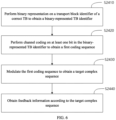
- FIG. 6 is a flowchart of an information transmission method provided by an embodiment of the present disclosure.
- the method includes steps S2410, S2420, S2430 and S2440, and describes a process of obtaining feedback information according to an identifier of a correct TB.
- binary representation is performed on a TB identifier of a correct TB to obtain a binary-represented TB identifier.
- channel coding is performed on at least one bit in the binary-represented TB identifier to obtain a first coding sequence.
- the first coding sequence is modulated to obtain a target complex sequence.
- a first node performs channel coding on log 2 Na binary-represented bits of a TB identifier BI(k) in a set of identifiers of correct TBs to obtain a coding sequence with a length of Nc(k), and the first node modulates the coding sequence with the length of Nc(k) to obtain a target complex sequence s(k) with a length Ns(k), where Nc(k) is greater than or equal to Ns(k), and log 2 Na is the smallest integer greater than or equal to log 2 (Na).
- a first node performs channel coding on log 2 Imax binary-represented bits of the TB identifier BI(k) in the set of identifiers of correct TBs to obtain the coding sequence with the length of Nc(k), and the first node modulates the coding sequence with the length of Nc(k) to obtain the target complex sequence s(k) with the length Ns(k), where Nc(k) is greater than or equal to Ns(k), and log 2 Imax is the smallest integer greater than or equal to log 2 (Imax), and Imax is a maximum value of elements in an ordered set I of TB identifiers.
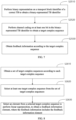
- FIG. 7 is a flowchart of an information transmission method provided by an embodiment of the present disclosure.
- the method includes steps S2510, S2520, and S2530, and describes a process of obtaining feedback information according to an identifier of a correct TB.
- binary representation is performed on a TB identifier of a correct TB to obtain a binary-represented TB identifier.
- channel coding is performed on at least one bit in the binary-represented TB identifier to obtain a target complex sequence.
- a first node performs channel coding on log 2 Na binary-represented bits of a TB identifier BI(k) in a set of identifiers of correct TBs to obtain a target complex sequence s(k) with a length of Ns(k), where log 2 Na is the smallest integer greater than or equal to log 2 (Na) .
- the first node performs channel coding on log 2 Imax binary-represented bits of the TB identifier BI(k) in the set of identifiers of correct TBs to obtain the target complex sequence s(k) with the length of Ns(k), where log 2 Imax is the smallest integer greater than or equal to log 2 (Imax), and Imax is a maximum value of elements in an ordered set I of TB identifiers.
- Ns(k) is equal to Ns(k') for any two unequal positive integers k and k' which are less than or equal to Na, where Ns(k) is a length of a complex sequence s(k) in a set of correct TB sequences, and Ns(k') is a length of a complex sequence s(k') in the set of correct TB sequences.
- Ns(k) is the length of the complex sequence s(k) in the set of correct TB sequences
- Ns(k') is the length of the complex sequence s(k') in the set of correct TB sequences.
- Nt(k) is equal to Nt(k') for any two unequal positive integers k and k' which are less than or equal to Na, where Nt(k) is a length of a complex sequence t(k) in an ordered set of TB sequences, and Nt(k') is a length of a complex sequence t(k') in the ordered set of TB sequences.
- Nt(k) is the length of the complex sequence t(k') in the ordered set of TB sequences
- Nt(k') is the length of the complex sequence t(k') in the ordered set of TB sequences.
- a length of the complex sequence s(k) in the set of correct TB sequences is equal to Nf.
- a length of the complex sequence s(k) in the set of correct TB sequences is less than Nf.
- a length of the complex sequence s(k) in the set of correct TB sequences is equal to R ⁇ Nf P or R ⁇ Nf P , where R is a positive integer less than or equal to P.
- the length of the complex sequence s(k) in the set of correct TB sequences is equal to R ⁇ Nf P or R ⁇ Nf P , where R is a positive integer less than or equal to P, Nf P represents the largest integer less than or equal to Nf P , and Nf P represents the smallest integer greater than or equal to Nf P .
- the length of the complex sequence s(k) in the set of correct TB sequences is equal to R ⁇ round Nf P , where R is a positive integer less than or equal to P, and round Nf P is an integer obtained by rounding Nf P .
- the length of the complex sequence s(k) in the set of correct TB sequences is equal to R ⁇ Nf P , where R is a positive integer less than or equal to P, and Nf P represents the largest integer less than or equal to Nf P .
- feedback information f includes an all-zero subsequence with a length of Nf ⁇ P ⁇ Nf P , where Nf P represents the largest integer less than or equal to Nf P .
- the length of the complex sequence s(k) in the set of correct TB sequences is equal to R ⁇ Nf Pmax , where R is a positive integer less than or equal to Pmax.
- the length of the complex sequence s(k) in the set of correct TB sequences is equal to R ⁇ Nf Pmax or R ⁇ Nf Pmax , where R is a positive integer less than or equal to Pmax, Nf Pmax represents the largest integer less than or equal to Nf Pmax , and Nf Pmax represents the smallest integer greater than or equal to Nf Pmax .
- the length of the complex sequence s(k) in the set of correct TB sequences is equal to R ⁇ Nf Pmax , where R is a positive integer less than or equal to Pmax, and Nf Pmax represents the largest integer less than or equal to Nf Pmax .
- BI(k) is a k th element in the set of identifiers of correct TBs
- I(m(k)) is an m(k) th element in an ordered set of TB identifiers.
- BI(k) is the k th element in the set of identifiers of correct TBs
- I(m(k)) is the m(k) th element in the ordered set of TB identifiers.
- BI(k) is the k th element in the set of identifiers of correct TBs
- BI(k) is also an element in the ordered set of TB identifiers.
- the channel coding in the corresponding embodiments of FIG. 6 and FIG. 7 may be polar coding, low-density parity check (LDPC) coding, convolutional coding, turbo coding, Reed-Muller (RM) coding, Reed-Solomon (RS) coding, Bose-Chaudhuri-Hocquenghem (BCH) coding, concatenated coding, cyclic coding, block coding, Hamming coding, Golay coding, repetition coding, single-parity-check (SPC) coding, cyclic redundancy check coding, superposition coding, sparse superposition coding, sparse regression coding, lattice coding, algebraic geometric coding, Goppa coding, polarization-adjusted convolutional (PAC) coding, pre-transformed polar coding, or parity-check polar coding.
- LDPC low-density parity check
- coding turbo coding
- RM Reed-Mul
- the modulation in the corresponding embodiments of FIG. 5 and FIG. 6 may be ⁇ /2-binary phase shift keying ( ⁇ /2-BPSK), BPSK, quadrature phase shift keying (QPSK), quadrature amplitude modulation (QAM), phase-shift keying (PSK), amplitude-shift keying (ASK), or amplitude and phase-shift keying (APSK).
- ⁇ /2-BPSK ⁇ /2-binary phase shift keying
- BPSK quadrature phase shift keying
- QPSK quadrature amplitude modulation
- QAM quadrature amplitude modulation
- PSK phase-shift keying
- ASK amplitude-shift keying
- APSK amplitude and phase-shift keying
- FIG. 8 is a flowchart of an information transmission method provided by an embodiment of the present disclosure, where feedback information is obtained by superposition of target complex sequences in a set of correct TB sequences.
- the method includes steps S2610, S2620 and S2630, and describes a process of obtaining the feedback information according to the target complex sequences.
- a set of target complex sequences is obtained according to each target complex sequence.
- At S2620 at least one target complex sequence is selected from the set of target complex sequences.
- an element is selected from the selected target complex sequence to perform linear superposition, to obtain a feedback information element, where the feedback information includes the feedback information element.
- the feedback information f is obtained by superimposition of P target complex sequences s(1), s(2), ..., s(P) in a set of correct TB sequences.
- D is less than or equal to P and greater than or equal to 2
- n' is less than or equal to Nf
- Nf is a length of the feedback information f
- d(k) is less than or equal to P
- n(k) is less than or equal to Ns(k)
- Ns(k) is a length of a target complex sequence s(k)
- a complex number s(d(k), n(k)) is an n(k) th element in a target complex sequence s(d(k)).
- the feedback information f is obtained by superimposition of P target complex sequences t(m(1)), t(m(2)), ..., t(m(P)) in the set of correct TB sequences.
- D is less than or equal to P and greater than or equal to 2
- n' is less than or equal to Nf
- Nf is the length of the feedback information f
- d(k) is less than or equal to P
- n(k) is less than or equal to Nt(m(d(k))
- Nt(m(d(k))) is a length of a target complex sequence t(m(d(k))
- m(d(k)) is an integer that makes BI(d(k)) equal to I(m(d(k)))
- a complex number t(m(d(k)) is an n(k) th element in a target complex sequence t(m(d(k))).
- the feedback information f is obtained by superimposition of P target complex sequences t(BI(1)), t(BI(2)), ..., t(BI(P)) in the set of correct TB sequences.
- D is less than or equal to P and greater than or equal to 2
- n' is less than or equal to Nf
- Nf is the length of the feedback information f
- d(k) is less than or equal to P
- n(k) is less than or equal to Nt(BI(d(k))
- Nt(BI(d(k))) is a length of a target complex sequence t(BI(d(k))
- BI(d(k)) is a d(k) th element in a set BI of identifiers of correct TBs
- BI(d(k)) is also an element in an ordered set I of TB identifiers
- a complex number t(BI(d(k)),n(k)) is an n(k) th element in the target complex sequence t(BI(d(k))).
- FIG. 9 is a flowchart of an information transmission method provided by an embodiment of the present disclosure, where feedback information is obtained by concatenation of target complex sequences in a set of correct TB sequences.
- the method includes steps S2710, S2720 and S2730, and describes a process of obtaining the feedback information according to the target complex sequences.
- a set of target complex sequences is obtained according to each target complex sequence.
- target complex numbers in the target complex sequence are obtained.
- all the target complex numbers are formed into a set of target complex numbers, where any element of the feedback information comes from the set of target complex numbers.
- the feedback information f is obtained by concatenation of P target complex sequences s(1), s(2), ..., s(P) in a set of correct TB sequences.
- an i th element f(i) of the feedback information f is equal to a first constant C or there is a unique integer pair ⁇ k(i), n(i)> so that the i th element f(i) of the feedback information f is determined only by a complex number s(k(i),n(i)), where k(i) is less than or equal to P, n(i) is less than or equal to Ns(k(i)), the first constant C may be any complex number, and the complex number s(k(i), n(i)) is an n(i) th element in a target complex sequence s(k(i)).
- the feedback information f is obtained by concatenation of P target complex sequences t(m(1)), t(m(2)), ..., t(m(P)) in the set of correct TB sequences.
- an i th element f(i) of the feedback information f is equal to a first constant C or there is a unique integer pair ⁇ k(i), n(i)> so that the i th element f(i) of the feedback information f is determined by a complex number t(m(k(i)),n(i)), where k(i) is less than or equal to P, n(i) is less than or equal to Nt(m(k(i))), the constant C may be any complex number, the complex number t(m(k(i)),n(i)) is an n(i) th element in a target complex sequence t(m(k(i))), and m(k(i)
- the feedback information f is obtained by concatenation of P target complex sequences t(BI(1)), t(BI(2)), ..., t(BI(P)) in the set of correct TB sequences.
- an i th element f(i) of the feedback information f is equal to the first constant C or there is a unique integer pair ⁇ k(i), n(i)> so that the i th element f(i) of the feedback information f is determined by a complex number t(BI(k(i)),n(i)), where k(i) is less than or equal to P, n(i) is less than or equal to Nt(BI(k(i))), the constant C may be any complex number, the complex number t(BI(k(i)),n(i)) is an n(i) th element in a target complex sequence t(BI(k(i))).
- BI(k(i)) is
- a first node is a base station and a second node is a terminal device.
- This example includes a plurality of terminal devices which form a sequence of second nodes, and a TB identifier is a UE identifier.
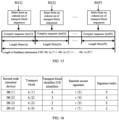
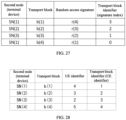
- FIG. 10 is a schematic diagram of a relationship among a second node, a TB, and a UE identifier provided by an embodiment of the present disclosure.
- the base station receives a signal, including a TB set B, sent by a sequence of terminal devices.
- the signal including the TB set B includes a signal including a TB b(1), a signal including a TB b(2), a signal including a TB b(3), and a signal including a TB b(4).
- a TB b(t) in the TB set B is sent to the base station by a terminal device SN(t) in the sequence of terminal devices.
- the TB b(t) in the TB set B includes a UE identifier of the terminal device SN(t), the UE identifier of the terminal device SN(t) is an RA-RNTI, and UE identifiers of the terminal devices SN(1), SN(2), SN(3) and SN(4) are 4, 3, 2 and 5 respectively.
- a set of identifiers of correct TBs is a set of UE identifiers included in correctly-received TBs in the TB set.
- Nf is a length of the feedback information f.
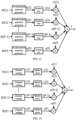
- FIG. 11 is a schematic diagram of determining feedback information f by superimposition according to a set BI of identifiers of correct TBs and an ordered set of TB sequences provided by an embodiment of the present disclosure. As shown in FIG. 11 , the base station determines the feedback information f according to the following method.
- terminal devices SN(1), SN(2), SN(3), and SN(4) determine acknowledgment of TBs b(1), b(2), b(3), and b(4), respectively, according to the following method.
- the terminal device SN(1) determines according to a UE identifier 4 that an inner product operation is performed on the sequence t(4) and the signal including the feedback information f. If an absolute value of an inner product is greater than half of an L2 norm of the sequence t(4), the terminal device SN(1) determines that the UE identifier 4 of the terminal device SN(1) belongs to the set BI of identifiers of correct TBs, and the terminal device SN(1) determines that acknowledgment of the TB b(1) is positive acknowledgment ACK.
- the terminal device SN(1) determines that the UE identifier 4 of the terminal device SN(1) does not belong to the set BI of identifiers of correct TBs, and the terminal device SN(1) determines that acknowledgment of the TB b(1) is negative acknowledgment NACK.
- the terminal device SN(2) determines according to a UE identifier 3 that an inner product operation is performed on the sequence t(3) and the signal including the feedback information f. If an absolute value of an inner product is greater than half of an L2 norm of the sequence t(3), the terminal device SN(2) determines that the UE identifier 3 of the terminal device SN(2) belongs to the set BI of identifiers of correct TBs, and the terminal device SN(2) determines that acknowledgment of the TB b(2) is positive acknowledgment ACK.
- the terminal device SN(2) determines that the UE identifier 3 of the terminal device SN(2) does not belong to the set BI of identifiers of correct TBs, and the terminal device SN(2) determines that acknowledgment of the TB b(2) is negative acknowledgment NACK.
- the terminal device SN(3) determines according to a UE identifier 2 that an inner product operation is performed on the sequence t(2) and the signal including the feedback information f. If an absolute value of an inner product is greater than half of an L2 norm of the sequence t(2), the terminal device SN(3) determines that the UE identifier 2 of the terminal device SN(3) belongs to the set BI of identifiers of correct TBs, and the terminal device SN(3) determines that acknowledgment of the TB b(3) is positive acknowledgment ACK.
- the terminal device SN(3) determines that the UE identifier 2 of the terminal device SN(3) does not belong to the set BI of identifiers of correct TBs, and the terminal device SN(3) determines that acknowledgment of the TB b(3) is negative acknowledgment NACK.
- the terminal device SN(4) determines according to a UE identifier 5 that an inner product operation is performed on the sequence t(5) and the signal including the feedback information f. If an absolute value of an inner product is greater than half of an L2 norm of the sequence t(5), the terminal device SN(4) determines that the UE identifier 5 of the terminal device SN(4) belongs to the set BI of identifiers of correct TBs, and the terminal device SN(4) determines that acknowledgment of the TB b(4) is positive acknowledgment ACK.
- the terminal device SN(4) determines that the UE identifier 5 of the terminal device SN(4) does not belong to the set BI of identifiers of correct TBs, and the terminal device SN(4) determines that acknowledgment of the TB b(4) is negative acknowledgment NACK.
- the feedback information f is an empty sequence, and the signal including the feedback information f is a zero power signal.
- FIG. 12 is a schematic diagram of determining feedback information f by superimposition according to a set BI of identifiers of correct TBs provided by another embodiment of the present disclosure. As shown in FIG. 12 , the base station determines the feedback information f according to the following method.
- Nf 6 is the length of the feedback information f.
- the PRNG generates random numbers of Gaussian distribution.
- terminal devices SN(1), SN(2), SN(3), and SN(4) determine acknowledgment of TBs b(1), b(2), b(3), and b(4), respectively, according to the following method.
- the terminal device SN(1) generates a complex sequence v(1) by adopting a UE identifier ID 4 as the random number seed of the PRNG.
- the terminal device SN(1) performs an inner product operation on v(1) and the signal including the feedback information f. If an absolute value of an inner product is greater than half of an L2 norm of the complex sequence v(1), the terminal device SN(1) determines that the UE identifier 4 of the terminal device SN(1) belongs to the set BI of identifiers of correct TBs, and the terminal device SN(1) determines that acknowledgment of the TB b(1) is positive acknowledgment ACK.
- the terminal device SN(1) determines that the UE identifier 4 of the terminal device SN(1) does not belong to the set BI of identifiers of correct TBs, and the terminal device SN(1) determines that acknowledgment of the TB b(1) is negative acknowledgment NACK.
- the terminal device SN(2) generates a complex sequence v(2) by adopting a UE identifier ID 3 as the random number seed of the PRNG.
- the terminal device SN(2) performs an inner product operation on v(2) and the signal including the feedback information f. If an absolute value of an inner product is greater than half of an L2 norm of the complex sequence v(2), the terminal device SN(2) determines that the UE identifier 3 of the terminal device SN(2) belongs to the set BI of identifiers of correct TBs, and the terminal device SN(2) determines that acknowledgment of the TB b(2) is positive acknowledgment ACK.
- the terminal device SN(2) determines that the UE identifier 3 of the terminal device SN(2) does not belong to the set BI of identifiers of correct TBs, and the terminal device SN(2) determines that acknowledgment of the TB b(2) is negative acknowledgment NACK.
- the terminal device SN(3) generates a complex sequence v(3) by adopting a UE identifier ID 2 as the random number seed of the PRNG.
- the terminal device SN(3) performs an inner product operation on v(3) and the signal including the feedback information f. If an absolute value of an inner product is greater than half of an L2 norm of the complex sequence v(3), the terminal device SN(3) determines that the UE identifier 2 of the terminal device SN(3) belongs to the set BI of identifiers of correct TBs, and the terminal device SN(3) determines that acknowledgment of the TB b(3) is positive acknowledgment ACK.
- the terminal device SN(4) generates a complex sequence v(4) by adopting a UE identifier ID 5 as the random number seed of the PRNG.
- the terminal device SN(4) performs an inner product operation on v(4) and the signal including the feedback information f. If an absolute value of an inner product is greater than half of an L2 norm of the complex sequence v(4), the terminal device SN(4) determines that the UE identifier 5 of the terminal device SN(4) belongs to the set BI of identifiers of correct TBs, and the terminal device SN(4) determines that acknowledgment of the TB b(4) is positive acknowledgment ACK.
- the terminal device SN(4) determines that the UE identifier 5 of the terminal device SN(4) does not belong to the set BI of identifiers of correct TBs, and the terminal device SN(4) determines that acknowledgment of the TB b(4) is negative acknowledgment NACK.
- the information transmission method provided in this example can save storage overheads of an ordered set of TB sequences.
- FIG. 13 is a schematic diagram of determining feedback information f by superimposition according to a set BI of identifiers of correct TBs provided by still another embodiment of the present disclosure.
- a base station determines the feedback information f according to the following method.
- the PRNG is a length-31 Gold sequence.
- the information transmission method provided in this example has a simpler way to generate a Gaussian sequence.
- a UE identifier of a terminal device SN(t) is an MCS-C-RNTI.
- FIG. 14 is a schematic diagram of determining feedback information f by superimposition according to a set BI of identifiers of correct TBs provided by yet another embodiment of the present disclosure.
- a base station determines the feedback information f according to the following method.
- the base station sends a signal including the feedback information f to a sequence of terminal devices ⁇ SN(1), SN(2), SN(3), SN(4)>.
- Terminal devices SN(1), SN(2), SN(3), and SN(4) determine acknowledgment of TBs b(1), b(2), b(3), and b(4), respectively, according to the following method.
- the terminal device SN(1) performs an inner product operation on v(1) and the signal including the feedback information f.
- the terminal device SN(1) determines that the UE identifier 4 of the terminal device SN(1) belongs to the set BI of identifiers of correct TBs, and the terminal device SN(1) determines that acknowledgment of the TB b(1) is positive acknowledgment ACK. If an absolute value of an inner product is less than half of an L2 norm of the complex sequence v(1), the terminal device SN(1) determines that the UE identifier 4 of the terminal device SN(1) does not belong to the set BI of identifiers of correct TBs, and the terminal device SN(1) determines that acknowledgment of the TB b(1) is negative acknowledgment NACK.
- the terminal device SN(2) performs an inner product operation on v(2) and the signal including the feedback information f.
- the terminal device SN(2) determines that the UE identifier 3 of the terminal device SN(2) belongs to the set BI of identifiers of correct TBs, and the terminal device SN(2) determines that acknowledgment of the TB b(2) is positive acknowledgment ACK. If an absolute value of an inner product is less than half of an L2 norm of the complex sequence v(2), the terminal device SN(2) determines that the UE identifier 3 of the terminal device SN(2) does not belong to the set BI of identifiers of correct TBs, and the terminal device SN(2) determines that acknowledgment of the TB b(2) is negative acknowledgment NACK.
- the terminal device SN(3) performs an inner product operation on v(3) and the signal including the feedback information f.
- the terminal device SN(3) determines that the UE identifier 2 of the terminal device SN(3) belongs to the set BI of identifiers of correct TBs, and the terminal device SN(3) determines that acknowledgment of the TB b(3) is positive acknowledgment ACK. If an absolute value of an inner product is less than half of an L2 norm of the complex sequence v(3), the terminal device SN(3) determines that the UE identifier 2 of the terminal device SN(3) does not belong to the set BI of identifiers of correct TBs, and the terminal device SN(3) determines that acknowledgment of the TB b(3) is negative acknowledgment NACK.
- the terminal device SN(4) performs an inner product operation on v(4) and the signal including the feedback information f.
- the terminal device SN(4) determines that the UE identifier 5 of the terminal device SN(4) belongs to the set BI of identifiers of correct TBs, and the terminal device SN(4) determines that acknowledgment of the TB b(4) is positive acknowledgment ACK. If an absolute value of an inner product is less than half of an L2 norm of the complex sequence v(4), the terminal device SN(4) determines that the UE identifier 5 of the terminal device SN(4) does not belong to the set BI of identifiers of correct TBs, and the terminal device SN(4) determines that acknowledgment of the TB b(4) is negative acknowledgment NACK.
- the information transmission method provided in this example can improve acknowledgment reception reliability by selecting channel code with superior performance.
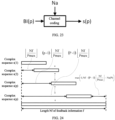
- FIG. 15 is a schematic diagram of determining feedback information f by concatenation according to a set BI of identifiers of correct TBs and an ordered set of TB sequences provided by an embodiment of the present disclosure.
- a base station determines the feedback information f according to the following method.
- the sequence of terminal devices ⁇ SN(1), SN(2), SN(3), SN(4)> receives the signal including the feedback information f.
- terminal devices SN(1), SN(2), SN(3), and SN(4) determine acknowledgment of TBs b(1), b(2), b(3), and b(4), respectively, according to the following method.
- the terminal device SN(2) determines that the UE identifier 3 of the terminal device SN(2) does not belong to the set BI of identifiers of correct TBs, and the terminal device SN(2) determines that acknowledgment of the TB b(2) is negative acknowledgment NACK.
- the terminal device SN(3) determines that the UE identifier 2 of the terminal device SN(3) does not belong to the set BI of identifiers of correct TBs, and the terminal device SN(3) determines that acknowledgment of the TB b(3) is negative acknowledgment NACK.
- the terminal device SN(4) determines that the UE identifier 5 of the terminal device SN(4) does not belong to the set BI of identifiers of correct TBs, and the terminal device SN(4) determines that acknowledgment of the TB b(4) is negative acknowledgment NACK.
- the information transmission method provided in this example increases a detection signal-to-noise ratio of a terminal device and improves information transmission efficiency because sequences of different UE identifiers do not overlap.
- a first node is a base station and a second node is a terminal device.
- This example includes a plurality of terminal devices which form a sequence of second nodes, and a TB identifier is a UE identifier.
- FIG. 16 is a schematic diagram of a relationship among a second node, a TB, a UE identifier, a random access signature, and a signature index provided by an embodiment of the present disclosure.
- the base station receives a signal, including a TB set B, sent by a sequence of terminal devices.
- the signal including the TB set B includes a signal including a TB b(1), a signal including a TB b(2), a signal including a TB b(3), and a signal including a TB b(4).
- a TB b(t) in the TB set B is sent to the base station by a terminal device SN(t) in the sequence of terminal devices.
- the TB b(t) in the TB set B includes a UE identifier and a random access signature of the terminal device SN(t).
- the UE identifier of the terminal device SN(t) is a PEI
- the random access signature is a reference signal.
- the reference signal is an element of an ordered set of random access signatures.
- the ordered set of random access signatures includes six reference signals r(1), r(2), r(3), r(4), r(5), and r(6), where the signature indexes of the reference signals r(1), r(2), r(3), r(4), r(5) and r(6) are 0, 1, 2, 3, 4 and 5, respectively.
- random access signatures included in the TBs b(1), b(2), b(3), and b(4) are determined by the terminal devices SN(1), SN(2), SN(3), and SN(4) according to the UE identifiers 4, 3, 2, and 5 of the terminal devices SN(1), SN(2), SN(3), and SN(4) in the following manner.
- a signature index of a reference signal included in the TB b(t) a remainder obtained by dividing the square of the UE identifier of the terminal device SN(t) by 6.
- the UE identifiers 4, 3, 2 and 5 of the terminal devices SN(1), SN(2), SN(3) and SN(4) are substituted into the above formula, to obtain signature indexes of reference signals of the terminal devices SN(1), SN(2), SN(3) and SN(4) as 4, 3, 4 and 1, respectively and finally obtain the reference signals of the terminal devices SN(1), SN(2), SN(3) and SN(4) as r(5), r(4), r(5) and r(2), respectively.
- the set of identifiers of correct TBs is a set of UE identifiers included in correctly-received TBs in the TB set.
- the feedback information f is determined by the base station according to the following parameters: the set BI of identifiers of correct TBs, or the quantity P of correct TBs equal to 2.
- a length Nf of the feedback information f is equal to 6.
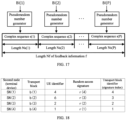
- FIG. 17 is a schematic diagram of determining feedback information f by concatenation according to a set BI of identifiers of correct TBs and an ordered set of TB sequences provided by an embodiment of the present disclosure. As shown in the block diagram of FIG. 17 , the base station determines the feedback information f according to the following method.
- the PRNG generates random numbers of Gaussian distribution.
- mod is a remainder function
- floor(x) is the largest integer less than or equal to x
- S is a state of the PRNG
- setting S BI(p) in line 1 of code is setting a seed of the PRNG.
- the sequence of terminal devices ⁇ SN(1), SN(2), SN(3), SN(4)> receives the signal including the feedback information f.
- the terminal device SN(1) generates a complex sequence v(1) with a length of 3 by adopting a UE identifier ID 4 as the random number seed of the PRNG.
- the terminal device SN(1) performs an inner product operation on v(1) and every three symbols of the signal including the feedback information f. If an absolute value of an inner product is greater than half of an L2 norm of the complex sequence v(1), the terminal device SN(1) determines that the UE identifier 4 of the terminal device SN(1) belongs to the set BI of identifiers of correct TBs, and the terminal device SN(1) determines that acknowledgment of the TB b(1) is positive acknowledgment ACK.
- the terminal device SN(1) determines that the UE identifier 4 of the terminal device SN(1) does not belong to the set BI of identifiers of correct TBs, and the terminal device SN(1) determines that acknowledgment of the TB b(1) is negative acknowledgment NACK.
- the terminal device SN(2) generates a complex sequence v(2) with a length of 3 by adopting a UE identifier ID 3 as the random number seed of the PRNG.
- the terminal device SN(2) performs an inner product operation on v(2) and every three symbols of the signal including the feedback information f. If an absolute value of an inner product is greater than half of an L2 norm of the complex sequence v(2), the terminal device SN(2) determines that the UE identifier 3 of the terminal device SN(2) belongs to the set BI of identifiers of correct TBs, and the terminal device SN(2) determines that acknowledgment of the TB b(2) is positive acknowledgment ACK.
- the terminal device SN(2) determines that the UE identifier 3 of the terminal device SN(2) does not belong to the set BI of identifiers of correct TBs, and the terminal device SN(2) determines that acknowledgment of the TB b(2) is negative acknowledgment NACK.
- the terminal device SN(3) generates a complex sequence v(3) with a length of 3 by adopting a UE identifier ID 2 as the random number seed of the PRNG.
- the terminal device SN(3) performs an inner product operation on v(3) and every three symbols of the signal including the feedback information f. If an absolute value of an inner product is greater than half of an L2 norm of the complex sequence v(3), the terminal device SN(3) determines that the UE identifier 2 of the terminal device SN(3) belongs to the set BI of identifiers of correct TBs, and the terminal device SN(3) determines that acknowledgment of the TB b(3) is positive acknowledgment ACK.
- the terminal device SN(3) determines that the UE identifier 2 of the terminal device SN(3) does not belong to the set BI of identifiers of correct TBs, and the terminal device SN(3) determines that acknowledgment of the TB b(3) is negative acknowledgment NACK.
- the terminal device SN(4) generates a complex sequence v(4) with a length of 3 by adopting a UE identifier ID 5 as the random number seed of the PRNG.
- the terminal device SN(4) performs an inner product operation on v(4) and every three symbols of the signal including the feedback information f. If an absolute value of an inner product is greater than half of an L2 norm of the complex sequence v(4), the terminal device SN(4) determines that the UE identifier 5 of the terminal device SN(4) belongs to the set BI of identifiers of correct TBs, and the terminal device SN(4) determines that acknowledgment of the TB b(4) is positive acknowledgment ACK.
- the terminal device SN(4) determines that the UE identifier 5 of the terminal device SN(4) does not belong to the set BI of identifiers of correct TBs, and the terminal device SN(4) determines that acknowledgment of the TB b(4) is negative acknowledgment NACK.
- the information transmission method provided in this example saves storage overheads of an ordered set of TB sequences.
- a first node is a base station and a second node is a terminal device.
- This example includes a plurality of terminal devices which form a sequence of second nodes, and a TB identifier is a signature index.
- FIG. 18 is a schematic diagram of a relationship among a second node, a TB, a UE identifier, a random access signature, and a signature index provided by another embodiment of the present disclosure.
- the base station receives a signal, including a TB set B, sent by a sequence of terminal devices.
- the signal including the TB set B includes a signal including a TB b(1), a signal including a TB b(2), a signal including a TB b(3), and a signal including a TB b(4).
- a TB b(k) in the TB set B is sent to the base station by a terminal device SN(k) in the sequence of terminal devices.
- the TB b(k) in the TB set B includes a UE identifier and a random access signature corresponding to the terminal device SN(k).
- a UE identifier of the terminal device SN(k) is a GPSI
- the random access signature is a preamble
- UE identifiers of the terminal devices SN(1), SN(2), SN(3) and SN(4) are 4, 6, 2 and 1, respectively.
- the preamble is an element of an ordered set of random access signatures.
- random access signatures that is, preambles, included in the TBs b(1), b(2), b(3), and b(4) are determined by the terminal devices SN(1), SN(2), SN(3), and SN(4) according to the UE identifiers 4, 6, 2, and 1 of the terminal devices SN(1), SN(2), SN(3), and SN(4) in the following manner.
- a PRNG is a length-31 Gold sequence.
- the terminal devices SN(1), SN(2), SN(3) and SN(4) determine that preambles included in the TBs b(1), b(2), b(3) and b(4) are r(4), r(3) and r(2) and r(1) respectively according to the signature indexes 4, 3, 2 and 1.
- a set of identifiers of correct TBs is a set of signature indexes of random access signatures included in correctly-received TBs in the TB set.
- the feedback information f is determined by the base station according to the following parameters: the set BI of identifiers of correct TBs, or the quantity P of correct TBs equal to 2, where a length Nf of the feedback information f is equal to 6.
- FIG. 19 is a schematic diagram of determining feedback information f by concatenation according to a set BI of identifiers of correct TBs and a quantity P of correct TBs provided by another embodiment of the present disclosure.
- the base station determines the feedback information f according to the following method.
- R 1
- Nf P represents the largest integer less than or equal to Nf P .
- the PRSG is a length-31 Gold sequence.
- the sequence of terminal devices ⁇ SN(1), SN(2), SN(3), SN(4)> receives the signal including the feedback information f.
- terminal devices SN(1), SN(2), SN(3), and SN(4) separately decode the signal including the feedback information f, and determine acknowledgment of TBs b(1), b(2), b(3), and b(4), respectively, according to the following method.
- the terminal device SN(1) determines that the UE identifier 4 of the terminal device SN(1) belongs to the set BI of identifiers of correct TBs, and the terminal device SN(1) determines that acknowledgment of the TB b(1) is positive acknowledgment ACK. If an absolute value of each inner product is less than half of an L2 norm of the complex sequence v(1), the terminal device SN(1) determines that the UE identifier 4 of the terminal device SN(1) does not belong to the set BI of identifiers of correct TBs, and the terminal device SN(1) determines that acknowledgment of the TB b(1) is negative acknowledgment NACK.
- the terminal device SN(2) determines that the UE identifier 6 of the terminal device SN(2) belongs to the set BI of identifiers of correct TBs, and the terminal device SN(2) determines that acknowledgment of the TB b(2) is positive acknowledgment ACK. If an absolute value of each inner product is less than half of an L2 norm of the complex sequence v(2), the terminal device SN(2) determines that the UE identifier 6 of the terminal device SN(2) does not belong to the set BI of identifiers of correct TBs, and the terminal device SN(2) determines that acknowledgment of the TB b(2) is negative acknowledgment NACK.
- the terminal device SN(3) determines that the UE identifier 2 of the terminal device SN(3) belongs to the set BI of identifiers of correct TBs, and the terminal device SN(3) determines that acknowledgment of the TB b(3) is positive acknowledgment ACK. If an absolute value of each inner product is less than half of an L2 norm of the complex sequence v(3), the terminal device SN(3) determines that the UE identifier 2 of the terminal device SN(3) does not belong to the set BI of identifiers of correct TBs, and the terminal device SN(3) determines that acknowledgment of the TB b(3) is negative acknowledgment NACK.
- the terminal device SN(4) uses the UE identifier 1 as the random number seed of the PRSG to obtain the signature index 1, by adopting the same method as the base station; and uses the signature index 1 to generate a complex sequence v(4) with a length of 3, by adopting the same method as the base station.
- the terminal device SN(4) performs an inner product operation on v(4) and every three symbols of the signal including the feedback information f.
- the information transmission method provided in this example obtains the signature index through the PRSG so as to determine that the collision case in Example 6 will not occur for the random access signature.
- the generation of a bit sequence by the random sequence generator is simpler than the generation of a Gaussian sequence in Example 6 and has higher processing efficiency.
- FIG. 20 is a schematic diagram of a relationship among a second node, a TB, a random access signature, and a signature index provided by an embodiment of the present disclosure.
- the base station receives a signal, including a TB set B, sent by a sequence of terminal devices.
- the signal including the TB set B includes a signal including a TB b(1), a signal including a TB b(2), a signal including a TB b(3), and a signal including a TB b(4).
- the TBs b(1), b(2), b(3), and b(4) in the TB set B are respectively sent to the base station by the terminal devices SN(1), SN(2), SN(3), and SN(1) in the sequence of terminal devices.
- the TBs b(1), b(2), b(3), and b(4) in the TB set B include random access signatures, where the random access signatures are pilots.
- the pilots are elements of an ordered set of random access signatures.
- the random access signatures included in the TBs b(1), b(2), b(3), and b(4) are respectively determined by the terminal devices SN(1), SN(2), SN(3), and SN(1) as r(4), r(3), r(2), and r(1) according to higher layer parameters, where signature indexes of the random access signatures of the TBs b(1), b(2), b(3) and b(4) are 4, 3, 2 and 1, respectively.
- a set of identifiers of correct TBs is a set of signature indexes of random access signatures included in correctly-received TBs in the TB set.
- the feedback information f is determined by compression coding by the base station according to the following parameters: the set BI of identifiers of correct TBs, or the quantity P of correct TBs equal to 2, where a length Nf of the feedback information f is equal to 6.
- FIG. 21 is a schematic diagram of determining feedback information f by concatenation according to a set BI of identifiers of correct TBs and a quantity P of correct TBs provided by still another embodiment of the present disclosure.
- the base station determines the feedback information f according to the following method.
- Terminal devices SN(1), SN(2), SN(3), and SN(4) determine acknowledgment of TBs b(1), b(2), b(3), and b(4), respectively, according to the following method.
- the terminal device SN(1) performs an inner product operation on v(1) and every three symbols of the signal including the feedback information f.
- the terminal device SN(1) determines that the signature index 4 included in the TB b(1) belongs to the set BI of identifiers of correct TBs, and the terminal device SN(1) determines that acknowledgment of the TB b(1) is positive acknowledgment ACK. Otherwise, the terminal device SN(1) determines that the acknowledgment of the TB b(1) is negative acknowledgment NACK.
- the terminal device SN(2) performs an inner product operation on v(2) and every three symbols of the signal including the feedback information f.
- the terminal device SN(2) determines that the signature index 3 included in the TB b(2) belongs to the set BI of identifiers of correct TBs, and the terminal device SN(2) determines that acknowledgment of the TB b(2) is positive acknowledgment ACK. Otherwise, the terminal device SN(2) determines that the acknowledgment of the TB b(2) is negative acknowledgment NACK.
- the terminal device SN(3) performs an inner product operation on v(3) and every three symbols of the signal including the feedback information f.
- the terminal device SN(3) determines that the signature index 2 included in the TB b(3) belongs to the set BI of identifiers of correct TBs, and the terminal device SN(3) determines that acknowledgment of the TB b(3) is positive acknowledgment ACK. Otherwise, the terminal device SN(3) determines that the acknowledgment of the TB b(3) is negative acknowledgment NACK.
- the terminal device SN(1) performs an inner product operation on v(4) and every three symbols of the signal including the feedback information f.
- the terminal device SN(1) determines that the signature index 1 included in the TB b(4) belongs to the set BI of identifiers of correct TBs, and the terminal device SN(1) determines that acknowledgment of the TB b(4) is positive acknowledgment ACK. Otherwise, the terminal device SN(1) determines that the acknowledgment of the TB b(4) is negative acknowledgment NACK.
- the information transmission method provided in this example can improve acknowledgment reception reliability by selecting channel code with superior performance.
- a first node is a base station and a second node is a terminal device.
- This example includes a plurality of terminal devices which form a sequence of second nodes, and a TB identifier is a signature index.
- the base station receives a signal, including a TB set B, sent by a sequence of terminal devices.
- the signal including the TB set B includes a signal including a TB b(1), a signal including a TB b(2), a signal including a TB b(3), and a signal including a TB b(4).
- the TBs b(1), b(2), b(3), and b(4) in the TB set B are respectively sent to the base station by the terminal devices SN(1), SN(2), SN(3), and SN(1) in the sequence of terminal devices.
- the TBs b(1), b(2), b(3), and b(4) in the TB set B include random access signatures, where the random access signatures are interleavers.
- the interleavers are elements of an ordered set of random access signatures.
- the random access signatures included in the TBs b(1), b(2), b(3), and b(4) are respectively determined by the terminal devices SN(1), SN(2), SN(3), and SN(1) as r(4), r(3), r(2), and r(1) according to higher layer parameters, where signature indexes of the random access signatures of the TBs b(1), b(2), b(3) and b(4) are 4, 3, 2 and 1, respectively.
- a set of identifiers of correct TBs is a set of signature indexes of random access signatures included in correctly-received TBs in the TB set.
- FIG. 22 is a schematic diagram of determining feedback information f by concatenation according to a set BI of identifiers of correct TBs, a quantity P of correct TBs, and a maximum quantity Pmax of correct TBs provided by an embodiment of the present disclosure.
- the base station determines the feedback information f according to the following method.
- the channel coding is single-parity-check coding.
- Terminal devices SN(1), SN(2), and SN(3) determine acknowledgment of TBs b(1), b(2), b(3), and b(4), respectively, according to the following method.
- the terminal device SN(1) performs an inner product operation on v(1) and every two symbols of the signal including the feedback information f. If an absolute value of an inner product is greater than half of an L2 norm of the complex sequence v(1), the terminal device SN(1) determines that the signature index 4 included in the TB b(1) belongs to the set BI of identifiers of correct TBs, and the terminal device SN(1) determines that acknowledgment of the TB b(1) is positive acknowledgment ACK. Otherwise, the terminal device SN(1) determines that the acknowledgment of the TB b(1) is negative acknowledgment NACK.
- the terminal device SN(2) performs an inner product operation on v(2) and every two symbols of the signal including the feedback information f. If an absolute value of an inner product is greater than half of an L2 norm of the complex sequence v(2), the terminal device SN(2) determines that the signature index 3 included in the TB b(2) belongs to the set BI of identifiers of correct TBs, and the terminal device SN(2) determines that acknowledgment of the TB b(2) is positive acknowledgment ACK. Otherwise, the terminal device SN(2) determines that the acknowledgment of the TB b(2) is negative acknowledgment NACK.
- the terminal device SN(3) performs an inner product operation on v(3) and every two symbols of the signal including the feedback information f. If an absolute value of an inner product is greater than half of an L2 norm of the complex sequence v(3), the terminal device SN(3) determines that the signature index 2 included in the TB b(3) belongs to the set BI of identifiers of correct TBs, and the terminal device SN(3) determines that acknowledgment of the TB b(3) is positive acknowledgment ACK. Otherwise, the terminal device SN(3) determines that the acknowledgment of the TB b(3) is negative acknowledgment NACK.
- the terminal device SN(1) performs an inner product operation on v(4) and every two symbols of the signal including the feedback information f. If an absolute value of an inner product is greater than half of an L2 norm of the complex sequence v(4), the terminal device SN(1) determines that the signature index 1 included in the TB b(4) belongs to the set BI of identifiers of correct TBs, and the terminal device SN(1) determines that acknowledgment of the TB b(4) is positive acknowledgment ACK. Otherwise, the terminal device SN(1) determines that the acknowledgment of the TB b(4) is negative acknowledgment NACK.
- the terminal device SN(1) sends two TBs b(1) and b(4), but selects different random access signatures.
- the base station determines the feedback information f according to a signature index of a random access signature of a correctly decoded TB, so that the terminal device SN(1) can determine whether the two TBs b(1) and b(4) are correctly received.
- the feedback information f obtained by channel coding can increase a minimum distance between different TB sequences and improve feedback detection performance.
- a random access signature is a spread spectrum sequence
- FIG. 23 is a schematic diagram of determining a complex sequence s(p) according to an element BI(p) in a set BI of identifiers of correct TBs and a size Na of an ordered set of TB identifiers provided by an embodiment of the present disclosure.
- the base station determines the feedback information f according to the following method.
- FIG. 24 is a schematic diagram of determining feedback information f according to a quantity P of correct TBs, a maximum quantity Pmax of correct TBs, a length Nf of the feedback information f, and complex sequences s(1), s(2), ..., and s(P) provided by the embodiment of the present disclosure.
- Terminal devices SN(1), SN(2), and SN(3) determine acknowledgment of TBs b(1), b(2), b(3), and b(4), respectively, according to the following method.
- the terminal device SN(1) performs an inner product operation on v(1) and a subsequence with a length of 4 starting from a position p ⁇ 1 ⁇ Nf Pmax + 1 of a signal including the feedback information f.
- the terminal device SN(1) determines that the signature index 4 included in the TB b(1) belongs to the set BI of identifiers of correct TBs, and the terminal device SN(1) determines that acknowledgment of the TB b(1) is positive acknowledgment ACK. Otherwise, the terminal device SN(1) determines that the acknowledgment of the TB b(1) is negative acknowledgment NACK.
- the terminal device SN(2) performs an inner product operation on v(2) and a subsequence with a length of 4 starting from a position p ⁇ 1 ⁇ Nf Pmax + 1 of the signal including the feedback information f.
- the terminal device SN(2) determines that the signature index 3 included in the TB b(2) belongs to the set BI of identifiers of correct TBs, and the terminal device SN(2) determines that acknowledgment of the TB b(2) is positive acknowledgment ACK. Otherwise, the terminal device SN(2) determines that the acknowledgment of the TB b(2) is negative acknowledgment NACK.
- the terminal device SN(3) performs an inner product operation on v(3) and a subsequence with a length of 4 starting from a position p ⁇ 1 ⁇ Nf Pmax + 1 of the signal including the feedback information f.
- the terminal device SN(3) determines that the signature index 2 included in the TB b(3) belongs to the set BI of identifiers of correct TBs, and the terminal device SN(3) determines that acknowledgment of the TB b(3) is positive acknowledgment ACK. Otherwise, the terminal device SN(3) determines that the acknowledgment of the TB b(3) is negative acknowledgment NACK.
- the terminal device SN(1) performs an inner product operation on v(4) and a subsequence with a length of 4 starting from a position p ⁇ 1 ⁇ Nf Pmax + 1 of the signal including the feedback information f.
- the terminal device SN(1) determines that the signature index 1 included in the TB b(4) belongs to the set BI of identifiers of correct TBs, and the terminal device SN(1) determines that acknowledgment of the TB b(4) is positive acknowledgment ACK. Otherwise, the terminal device SN(1) determines that the acknowledgment of the TB b(4) is negative acknowledgment NACK.
- a random access signature is a sparse code sequence.
- FIG. 25 is a schematic diagram of determining a complex sequence s(1) and a placement vector z(p) according to an element BI(p) in a set BI of identifiers of correct TBs, a maximum quantity Pmax of correct TBs, and a length Nf of feedback information f provided by an embodiment of the present disclosure.
- a base station determines feedback information f according to the following method.
- the base station determines the feedback information f by superimposing the complex sequences s(1) and s(2) in the following manner.
- z(p) is a vector with only "0" and "1" and a quantity of "1" in z(p) is equal to R.
- mapping from 1 bit to the position vector z(p) is shown in Table 2 below. Table 2 Table of mapping of 1 bit to the position vector z(p) Bit z(p) 0 [1, 1, 0] 1 [1, 0, 1]
- FIG. 26 is a schematic diagram of a base station determining feedback information f by superimposition according to complex sequences s(1) and s(2), and placement vectors z(1) and z(2) provided by an embodiment of the present disclosure.
- floor(x) represents the largest positive integer less than or equal to x
- f(k) is a k th element of the feedback information f
- z(p, i) is an i th element of the placement vector z(p)
- ks(p) is a p th element of a vector ks
- s(p, ks(p)) is a ks(p) th element of the complex sequence s(p)
- the feedback information f [2,-2, +1,-1, +1,-1] is obtained.
- Terminal devices SN(1), SN(2), and SN(3) determine acknowledgment of TBs b(1), b(2), b(3), and b(4), respectively, according to the following method.
- the terminal device SN(1) performs an inner product operation on v(1) and the signal including the feedback information f. If an absolute value of an inner product is greater than half of an L2 norm of the complex sequence v(1), the terminal device SN(1) determines that the signature index 4 included in the TB b(1) belongs to the set BI of identifiers of correct TBs, and the terminal device SN(1) determines that acknowledgment of the TB b(1) is positive acknowledgment ACK. Otherwise, the terminal device SN(1) determines that the acknowledgment of the TB b(1) is negative acknowledgment NACK.
- the terminal device SN(2) performs an inner product operation on v(2) and the signal including the feedback information f. If an absolute value of an inner product is greater than half of an L2 norm of the complex sequence v(2), the terminal device SN(2) determines that the signature index 3 included in the TB b(2) belongs to the set BI of identifiers of correct TBs, and the terminal device SN(2) determines that acknowledgment of the TB b(2) is positive acknowledgment ACK. Otherwise, the terminal device SN(2) determines that the acknowledgment of the TB b(2) is negative acknowledgment NACK.
- the terminal device SN(3) performs an inner product operation on v(3) and the signal including the feedback information f. If an absolute value of an inner product is greater than half of an L2 norm of the complex sequence v(3), the terminal device SN(3) determines that the signature index 2 included in the TB b(3) belongs to the set BI of identifiers of correct TBs, and the terminal device SN(3) determines that acknowledgment of the TB b(3) is positive acknowledgment ACK. Otherwise, the terminal device SN(3) determines that the acknowledgment of the TB b(3) is negative acknowledgment NACK.
- the terminal device SN(1) performs an inner product operation on v(4) and the signal including the feedback information f. If an absolute value of an inner product is greater than half of an L2 norm of the complex sequence v(4), the terminal device SN(1) determines that the signature index 1 included in the TB b(4) belongs to the set BI of identifiers of correct TBs, and the terminal device SN(1) determines that acknowledgment of the TB b(4) is positive acknowledgment ACK. Otherwise, the terminal device SN(1) determines that the acknowledgment of the TB b(4) is negative acknowledgment NACK.
- a random access signature is a scrambling sequence
- the scrambling sequence is an element of an ordered set of random access signatures.
- FIG. 27 is a schematic diagram of a relationship among a second node, a TB, a random access signature, and a signature index provided by an embodiment of the present disclosure.
- signature indexes of random access signatures of TBs b(1), b(2), b(3) and b(4) are 3, 2, 1, and 0 respectively.
- a base station determines the following according to a signal including a TB set B: a set BI of identifiers of correct TBs being an empty set ⁇ , or a quantity P of correct TBs equal to 0.
- feedback information f is determined by compression coding by the base station according to the following parameters: the set ⁇ of identifiers of correct TBs, or the quantity P of correct TBs equal to 0, where a length Nf of the feedback information f is equal to 0.
- the base station determines the feedback information f according to the following method.
- the base station determines that the feedback information f is an empty sequence according to the set of identifiers of correct TBs being an empty set ⁇ (or the quantity P of correct TBs equal to 0). Further, the base station determines that a signal including the feedback information f is a zero power signal.
- the base station sends the zero power signal including the feedback information f to a sequence of terminal devices ⁇ SN(1), SN(2), SN(3), SN(1)>.
- the sequence of terminal devices ⁇ SN(1), SN(2), SN(3), SN(1)> receives the zero power signal including the feedback information f.
- the terminal device SN(1) determines that acknowledgment of TBs b(1) and b(4) are negative acknowledgment NACK; if the terminal device SN(2) fails to decode, the terminal device SN(2) determines that acknowledgment of a TB b(2) is negative acknowledgment NACK; and if the terminal device SN(3) fails to decode, the terminal device SN(3) determines that acknowledgment of a TB b(3) is negative acknowledgment NACK.
- a first node is a base station and a second node is a terminal device.
- This example includes a plurality of terminal devices which form a sequence of second nodes, and a TB identifier is an index value of a UE identifier.
- FIG. 28 is a schematic diagram of a relationship among a second node, a TB, a UE identifier, and an index value of the UE identifier provided by an embodiment of the present disclosure.
- the base station receives a signal, including a TB set B, sent by a sequence of terminal devices.
- the signal including the TB set B includes a signal including a TB b(1), a signal including a TB b(2), a signal including a TB b(3), and a signal including a TB b(4).
- a TB b(t) in the TB set B is sent to the base station by a terminal device SN(t) in the sequence of terminal devices.
- the TB b(t) in the TB set B includes a UE identifier of the terminal device SN(t), the UE identifier of the terminal device SN(t) is an RA-RNTI, and UE identifiers of the terminal devices SN(1), SN(2), SN(3) and SN(4) are 4, 3, 2 and 5 respectively.
- a set of identifiers of correct TBs is a set of UE identifiers included in correctly-received TBs in the TB set.
- the base station determines the following according to the signal including the TB set B:
- FIG. 29 is a schematic diagram of determining feedback information f by superimposition according to a set BI of identifiers of correct TBs and an ordered set of TB sequences provided by an embodiment of the present disclosure. As shown in FIG. 29 , the base station determines the feedback information f according to the following method.
- the terminal devices SN(1), SN(2), SN(3), and SN(4) determine acknowledgment of TBs b(1), b(2), b(3), and b(4), respectively, according to the following method.
- the terminal device SN(1) determines, according to an index value 1 of a UE identifier corresponding to a UE identifier 4, that an inner product operation is performed on the sequence t(1) and the signal including the feedback information f. If an absolute value of an inner product is greater than half of an L2 norm of the sequence t(1), the terminal device SN(1) determines that the index value 1 of a UE identifier corresponding to the UE identifier 4 of the terminal device SN(1) belongs to the set BI of identifiers of correct TBs, and the terminal device SN(1) determines that acknowledgment of the TB b(1) is positive acknowledgment ACK.
- the terminal device SN(1) determines that the index value 1 of a UE identifier corresponding to the UE identifier 4 of the terminal device SN(1) does not belong to the set BI of identifiers of correct TBs, and the terminal device SN(1) determines that acknowledgment of the TB b(1) is negative acknowledgment NACK.
- the terminal device SN(2) determines, according to an index value 2 of a UE identifier corresponding to a UE identifier 3, that an inner product operation is performed on the sequence t(2) and the signal including the feedback information f. If an absolute value of an inner product is greater than half of an L2 norm of the sequence t(2), the terminal device SN(2) determines that the index value 2 of a UE identifier corresponding to the UE identifier 3 of the terminal device SN(2) belongs to the set BI of identifiers of correct TBs, and the terminal device SN(2) determines that acknowledgment of the TB b(2) is positive acknowledgment ACK.
- the terminal device SN(2) determines that the index value 2 of a UE identifier corresponding to the UE identifier 3 of the terminal device SN(2) does not belong to the set BI of identifiers of correct TBs, and the terminal device SN(2) determines that acknowledgment of the TB b(2) is negative acknowledgment NACK.
- the terminal device SN(3) determines, according to an index value 3 of a UE identifier corresponding to a UE identifier 2, that an inner product operation is performed on the sequence t(3) and the signal including the feedback information f. If an absolute value of an inner product is greater than half of an L2 norm of the sequence t(3), the terminal device SN(3) determines that the index value 3 of a UE identifier corresponding to the UE identifier 2 of the terminal device SN(3) belongs to the set BI of identifiers of correct TBs, and the terminal device SN(3) determines that acknowledgment of the TB b(3) is positive acknowledgment ACK.
- the terminal device SN(3) determines that the index value 3 of a UE identifier corresponding to the UE identifier 2 of the terminal device SN(3) does not belong to the set BI of identifiers of correct TBs, and the terminal device SN(3) determines that acknowledgment of the TB b(3) is negative acknowledgment NACK.
- the terminal device SN(4) determines, according to an index value 4 of a UE identifier corresponding to a UE identifier 5, that an inner product operation is performed on the sequence t(4) and the signal including the feedback information f. If an absolute value of an inner product is greater than half of an L2 norm of the sequence t(4), the terminal device SN(4) determines that the index value 4 of a UE identifier corresponding to the UE identifier 5 of the terminal device SN(4) belongs to the set BI of identifiers of correct TBs, and the terminal device SN(4) determines that acknowledgment of the TB b(4) is positive acknowledgment ACK.
- the terminal device SN(4) determines that the index value 4 of a UE identifier corresponding to the UE identifier 5 of the terminal device SN(4) does not belong to the set BI of identifiers of correct TBs, and the terminal device SN(4) determines that acknowledgment of the TB b(4) is negative acknowledgment NACK.
- the feedback information f is an empty sequence, and the signal including the feedback information f is a zero power signal.
- FIG. 30 is a flowchart of an information transmission method provided by an embodiment of the present disclosure.
- the information transmission method provided by the embodiment of the present disclosure can be used for any network element having data reception and signaling transmission functions, such as a base station, a relay, or a terminal device, including but not limited to steps S4000 and S5000.
- a TB is sent to a first node.
- the second node sends a signal including the TB to the first node, at which one or more TBs form a TB set.
- the second nodes that send the TB set constitute a sequence of second nodes.
- the sequence of second nodes includes Nu second nodes
- the TB set includes Nb TBs, where Nu and Nb are positive integers, and Nu is less than or equal to Nb.
- a TB in the TB set includes a TB identifier
- an ordered set of TB identifiers includes Na TB identifiers I(1), I(2), ..., and I(Na)
- Na is a size of the ordered set of TB identifiers.
- k 1, 2, ..., Na
- a k th element in the ordered set of TB identifiers is I(k).
- the k th element I(k) in the ordered set of TB identifiers may be an integer k or an integer k-1.
- the TB is indicated by a TB identifier.
- the TB identifier may be one of the following: a UE identifier, an index value of a UE identifier, or a signature index.
- the UE identifier is a UE identifier of a second node in the sequence of second nodes, and UE identifiers of two different second nodes in the sequence of second nodes are different.
- the UE identifiers may be used for the first node to distinguish between different TBs in the TB set in a signal including the TB set, and the UE identifier is an integer.
- the TB identifier is the index value of the UE identifier
- the UE identifier is an element in an ordered set of UE identifiers
- the ordered set of UE identifiers includes Na UE identifiers ID(1), ID(2), ..., ID(Na).
- an index value of a UE identifier corresponding to a k th UE identifier ID(k) in the ordered set of UE identifiers is a k th element I(k) in elements in the ordered set of TB identifiers.
- the TB identifier is a signature index
- the signature index is a signature index of a random access signature, that is, a TB in the TB set includes the random access signature.
- the random access signature is an element in an ordered set of random access signatures, and the ordered set of random access signatures includes Na random access signatures r(1), r(2), ..., r(Na).
- the random access signature may be a pilot, a reference signal, a preamble, a spread spectrum sequence, an interleaver, an interleaver pattern, an interleaver sequence, a scrambling sequence, a sparse code sequence, or the like.
- the sequence of second nodes determines a random access signature of a TB according to a UE identifier of the TB, as a random access signature included in the TB in the TB set.
- the random access signatures may be used for the first node to distinguish between different TBs in the TB set in the signal including the TB set.
- the sequence of second nodes determines a random access signature of a TB according to a higher layer parameter, as a random access signature included in the TB in the TB set.
- the random access signatures may be used for the first node to distinguish between different TBs in the TB set in the signal including the TB set.
- first node and the second node may be any network elements with data reception and signaling transmission functions such as base stations, relays, or terminal devices.
- information about the correct TB includes the maximum quantity Pmax of correct TBs, the ordered set of TB identifiers, the ordered set of TB sequences, a predefined set of complex sequences, the size Na of the ordered set of TB identifiers, the set of identifiers of correct TBs, a set of correct TB sequences, the quantity P of correct TBs, or the length Nf of the feedback information f.
- the sequence of second nodes receives the feedback information sent by the first node, where the feedback information is used to represent a reception condition of the TB, and the feedback information is obtained according to the TB set.
- the feedback information may be determined according to one or more of the following parameters: the maximum quantity Pmax of correct TBs, the ordered set of TB identifiers, the ordered set of TB sequences, the predefined set of complex sequences, the size Na of the ordered set of TB identifiers, the set of identifiers of correct TBs, the set of correct TB sequences, the quantity P of correct TBs, or the length Nf of the feedback information f.
- the ordered set of TB sequences is a predefined set of complex sequences.
- the size Na of the ordered set of TB identifiers is a quantity of elements in the ordered set of TB identifiers
- the quantity P of correct TBs is a quantity of elements in the set of identifiers of correct TBs
- the ordered set of TB sequences includes Na complex sequences t(1), t(2), ..., t(Na)
- the set of identifiers of correct TBs includes P TB identifiers BI(1), BI(2), ..., BI(P)
- the set of correct TB sequences includes P complex sequences s(1), s(2), ..., s(P).
- Na and Pmax are positive integers
- P is a non-negative integer
- P is less than or equal to Pmax.
- a length of a complex sequence s(k) is Ns(k), where, Ns(k) is a non-negative integer, and Ns(k) is less than or equal to Nf.
- the maximum quantity Pmax of correct TBs is less than or equal to the size Na of the ordered set of TB identifiers. In some embodiments, the maximum quantity Pmax of correct TBs is configured by the first node. In some other embodiments, the maximum quantity Pmax of correct TBs is pre-configured by adopting a higher layer parameter.
- the set of identifiers of correct TBs is a set of UE identifiers included in correctly-received TBs in the TB set.
- the correctly-received TB is a TB whose acknowledgment state is a positive acknowledgment ACK.
- a UE identifier belonging to the set of identifiers of correct TBs is used to indicate that an acknowledgment state of a TB corresponding to the UE identifier is positive acknowledgment ACK.
- a UE identifier not belonging to the set of identifiers of correct TBs is used to indicate that an acknowledgment state of a TB corresponding to the UE identifier is negative acknowledgment NACK. Therefore, the set of identifiers of correct TBs is a subset of the ordered set of TB identifiers.
- the set of identifiers of correct TBs is a set of index values of UE identifiers included in correctly-received TBs in the TB set.
- the correctly-received TB is a TB whose acknowledgment state is a positive acknowledgment ACK.
- An index value of a UE identifier belonging to the set of identifiers of correct TBs is used to indicate that an acknowledgment state of a TB corresponding to the index value of the UE identifier is positive acknowledgment ACK.
- An index value of a UE identifier not belonging to the set of identifiers of correct TBs is used to indicate that an acknowledgment state of a TB corresponding to the index value of the UE identifier is negative acknowledgment NACK. Therefore, the set of identifiers of correct TBs is a subset of the ordered set of TB identifiers.
- the set of identifiers of correct TBs is a set of signature indexes of random access signatures corresponding to correctly-received TBs in the TB set.
- the correctly-received TB is a TB whose acknowledgment state is a positive acknowledgment ACK.
- a signature index of a random access signature belonging to the set of identifiers of correct TBs is used to indicate that an acknowledgment state of a TB that includes the random access signature is positive acknowledgment ACK.
- a signature index of a random access signature not belonging to the set of identifiers of correct TBs is used to indicate that an acknowledgment state of a TB corresponding to the random access signature is negative acknowledgment NACK. Therefore, the set of identifiers of correct TBs is a subset of the ordered set of TB identifiers.
- the set of correct TB sequences is a subset of the ordered set of TB sequences.
- a k th complex sequence t(k) of the ordered set of TB sequences corresponds to a k th element I(k) in the ordered set of TB identifiers.
- a length of the k th complex sequence t(k) in the ordered set of TB sequences is Nt(k), Nt(k) is a non-negative integer, and Nt(k) is less than or equal to Nf.
- the feedback information f is determined by the base station according to a signal including the TB set B sent by the sequence of terminal devices.
- FIG. 31 is a schematic diagram of an information transmission apparatus provided by an embodiment of the present disclosure.
- the information transmission apparatus 200 provided in this embodiment of the present disclosure is applied to a base station and can execute the information transmission method provided in the embodiments of the present disclosure.
- the apparatus has functional modules for execution of the method and can achieve corresponding technical effects.
- the apparatus can be realized by software, hardware or a combination of software and hardware, including:
- FIG. 32 is a schematic diagram of an information transmission apparatus provided by an embodiment of the present disclosure.
- the information transmission apparatus 300 provided in this embodiment of the present disclosure is applied to a UE and can execute the information transmission method provided in the embodiments of the present disclosure.
- the apparatus has functional modules for execution of the method and can achieve corresponding technical effects.
- the apparatus can be realized by software, hardware or a combination of software and hardware, including:
- FIG, 33 is a schematic diagram of a base station provided by an embodiment of the present disclosure.
- the base station 400 includes a memory 401, a processor 402, a receiver 403, and a transmitter 404.
- the memory 401 and the processor 402 of the base station may be connected by a bus or in other ways. In FIG. 33 , the connection is realized by a bus, for example.
- the memory 401 may be configured to store a software program, a computer-executable program and a module, for example, the program instructions/modules corresponding to the information transmission method of any one of the embodiments of the present disclosure.
- the processor 402 implements the above information transmission method by executing the software programs, instructions and modules stored in the memory 401.
- the memory 401 may mainly include a storage program area and a storage data area, where the program storage area may store an operating system and application program(s) required by at least one feature.
- the memory 401 may include a high-speed random-access memory and a non-volatile memory, for example, at least one magnetic disk storage device, a flash memory device, or another non-volatile solid-state storage device.
- the memory 401 includes memories remotely located with respect to the processor 402, and these remote memories may be connected to the device via a network. Examples of the above-mentioned network include, but are not limited to, the Internet, an intranet, a local area network, a mobile communication network, and a combination thereof.
- the receiver 403 is configured to perform information reception.
- the transmitter 404 is configured to transmit feedback information according to the control of the processor 402.
- FIG. 34 is a schematic diagram of a UE provided by an embodiment of the present disclosure.
- the user equipment 500 includes a memory 501, a processor 502, a receiver 403, and a transmitter 404.
- the memory 501 and the processor 502 of the UE may be connected by a bus or in other ways. In FIG. 34 , the connection is realized by a bus, for example.
- the memory 501 may be configured to store a software program, a computer-executable program and a module, for example, the program instructions/modules corresponding to the information transmission method of any one of the embodiments of the present disclosure.
- the processor 502 implements the above information transmission method by executing the software programs, instructions and modules stored in the memory 501.
- the memory 501 may mainly include a storage program area and a storage data area, where the program storage area may store an operating system and application program(s) required by at least one feature.
- the memory 501 may include a high-speed random-access memory and a non-volatile memory, for example, at least one magnetic disk storage device, a flash memory device, or another non-volatile solid-state storage device.
- the memory 501 includes memories remotely located with respect to the processor 502, and these remote memories may be connected to the device via a network. Examples of the above-mentioned network include, but are not limited to, the Internet, an intranet, a local area network, a mobile communication network, and a combination thereof.
- the receiver 503 is configured to receive feedback information.
- the transmitter 504 is configured to transmit a TB according to the control of the processor 502.
- An embodiment of the present disclosure provides a computer-readable storage medium storing computer-executable instructions for implementing an information transmission method as provided in any embodiment of the present disclosure.
- An embodiment of the present disclosure provides a computer program product, including a computer program or computer instructions, where the computer program or the computer instructions are stored in a computer-readable storage medium, a processor of a computer device reads the computer program or the computer instructions from the computer-readable storage medium, and the computer program or the computer instructions, when executed by the processor, cause the computer device to implement the information transmission method according to any of the embodiments of the present disclosure.
- a physical component may have multiple functions, or a function or step may be performed cooperatively by several physical components.
- Some or all of the physical components may be implemented as software executed by a processor, such as a central processing unit, a digital signal processor or a microprocessor, or as hardware, or as an integrated circuit, such as an application-specific integrated circuit.
- a processor such as a central processing unit, a digital signal processor or a microprocessor, or as hardware, or as an integrated circuit, such as an application-specific integrated circuit.
- Such software may be distributed on a computer-readable media, which may include computer-readable storage media (or non-transitory media) and communication media (or transitory media).
- the term computer-readable storage medium includes volatile and nonvolatile, removable and non-removable media implemented in any method or technique for storing information, such as computer-readable instructions, data structures, program modules or other data.
- a computer storage medium includes but is not limited to a random access memory (RAM), a read-only memory (ROM), an electrically erasable programmable read-only memory (EEPROM), a flash memory or another memory technology, a compact disc read-only memory (CD-ROM), a digital versatile disk (DVD) or another optical disk storage, a magnetic cassette, a magnetic tape, magnetic disk storage or another magnetic storage apparatus, or any other medium that can be used to store desired information and can be accessed by a computer.
- communication media typically contain computer-readable instructions, data structures, program modules or other data in a modulated data signal such as a carrier wave or other transmission mechanism, and may include any information transmission media.
- a component may be, but is not limited to, a process that runs on a processor, a processor, an object, an executable file, a thread of execution, a program, or a computer.
- a computing device and an application that runs on a computing device may be components.
- One or more components may reside within a process or a thread of execution, and a component may be located on one computer or distributed between two or more computers.
- these components may be executed by various computer-readable media that store various data structures.
- the components may communicate by adopting a local or remote process and based on a signal having one or more data packets (for example, data from two components interacting with another component in a local system, a distributed system, or across a network such as Internet interacting with another system by using the signal).
- a signal having one or more data packets (for example, data from two components interacting with another component in a local system, a distributed system, or across a network such as Internet interacting with another system by using the signal).
Landscapes
- Engineering & Computer Science (AREA)
- Computer Networks & Wireless Communication (AREA)
- Signal Processing (AREA)
- Mobile Radio Communication Systems (AREA)
- Detection And Prevention Of Errors In Transmission (AREA)
Abstract
Description
- This application is based on and claims the priority of
Chinese patent application No. 202210672756.5 filed on June 15, 2022 - Embodiments of the present disclosure relate to the field of communications technologies, in particular to an information transmission method and an apparatus, a base station, a user equipment, a storage medium, and a program product.
- With the development of wireless communications technology, each base station (BS) needs to support connection of tens of thousands of user equipments (UEs). Taking a contention-based grant-free (CBGF) random access transmission scheme as an example, a base station does not need to perform scheduling and resource allocation in advance for UEs which send data, nor can the base station know in advance which UE has a data transmission requirement. As a result, there is a possibility that a plurality of UEs use the same time and frequency resource for transmission. In order for the base station to distinguish among different UEs in a process of reception and detection, each of the UEs which send data will randomly select a resource (also called signature) from a random access resource set (for example, a spread spectrum sequence, or a pilot sequence) provided by a system to transmit data.
- Since the base station does not perform scheduling for the UEs, the base station needs to feed back an acknowledgment signal to each UE for determining whether a data packet is successfully received. However, as one base station serves thousands of UEs at the same time, if a 1-bit response signal is fed back to each served UE, thousands of bit response signals need to be fed back. This causes excessive feedback overheads, leading to the waste of spectrum resources.
- Embodiments of the present disclosure provide an information transmission method and an apparatus, a BS, a UE, a computer-readable storage medium, and a computer program product, aiming at saving spectrum resources and improving data transmission efficiency.
- In accordance with a first aspect of the present disclosure, an embodiment provides an information transmission method, including: receiving a transport block (TB) sent by at least one second node, the TB forming a TB set; obtaining feedback information according to the TB set; where the feedback information is used to represent a reception condition of the TB sent by the at least one second node; and sending the feedback information to the at least one second node.
- In accordance with a second aspect of the present disclosure, an embodiment provides an information transmission method, applied to a second node, including: sending a TB to a first node; and receiving feedback information sent by the first node; where the feedback information is used to represent a reception condition of the TB.
- In accordance with a third aspect of the present disclosure, an embodiment provides an information transmission apparatus, including: a receiving module configured to receive a TB sent by at least one second node, the TB forming a TB set; a feedback information generation module configured to obtain feedback information according to the TB set; where the feedback information is used to represent a reception condition of the TB sent by the at least one second node; and a sending module configured to send the feedback information to the at least one second node.
- In accordance with a fourth aspect of the present disclosure, an embodiment provides an information transmission apparatus, including: a sending module configured to send a TB to a first node; and a receiving module configured to receive feedback information sent by the first node; where the feedback information is used to represent a reception condition of the TB.
- In accordance with a fifth aspect of the present disclosure, an embodiment provides a base station, including: a memory, a processor, and a computer program stored in the memory and executable by the processor, where the computer program, when executed by the processor, causes the processor to implement the information transmission method of any one of the first aspect or the second aspect.
- In accordance with a sixth aspect of the present disclosure, an embodiment provides a UE, including: a memory, a processor, and a computer program stored in the memory and executable by the processor, where the computer program, when executed by the processor, causes the processor to implement the information transmission method of any one of the first aspect or the second aspect.
- In accordance with a seventh aspect of the present disclosure, an embodiment provides a computer-readable storage medium, the computer-readable storage medium storing computer-executable instructions configured to implement the information transmission method of any one of the first aspect or the second aspect.
- In accordance with an eighth aspect of the present disclosure, an embodiment provides a computer program product, including a computer program or computer instructions stored in a computer-readable storage medium, from which a processor of a computer device reads the computer program or the computer instructions, where the computer program or the computer instructions, when executed by the processor, cause the computer device to implement the information transmission method of any one of the first aspect or the second aspect.
-
-
FIG. 1 is a schematic diagram of an application scenario and system architecture of an information transmission method provided by an embodiment of the present disclosure; -
FIG. 2 is a flowchart of an information transmission method provided by an embodiment of the present disclosure; -
FIG. 3 is a flowchart of an information transmission method provided by an embodiment of the present disclosure; -
FIG. 4 is a flowchart of an information transmission method provided by an embodiment of the present disclosure; -
FIG. 5 is a flowchart of an information transmission method provided by an embodiment of the present disclosure; -
FIG. 6 is a flowchart of an information transmission method provided by an embodiment of the present disclosure; -
FIG. 7 is a flowchart of an information transmission method provided by an embodiment of the present disclosure; -
FIG. 8 is a flowchart of an information transmission method provided by an embodiment of the present disclosure; -
FIG. 9 is a flowchart of an information transmission method provided by an embodiment of the present disclosure; -
FIG. 10 is a schematic diagram of a relationship among a second node, a TB, and a UE identifier provided by an embodiment of the present disclosure; -
FIG. 11 is a schematic diagram of determining feedback information f by superimposition according to a set BI of identifiers of correct TBs and an ordered set of TB sequences provided by an embodiment of the present disclosure; -
FIG. 12 is a schematic diagram of determining feedback information f by superimposition according to a set BI of identifiers of correct TBs provided by an embodiment of the present disclosure; -
FIG. 13 is a schematic diagram of determining feedback information f by superimposition according to a set BI of identifiers of correct TBs provided by another embodiment of the present disclosure; -
FIG. 14 is a schematic diagram of determining feedback information f by superimposition according to a set BI of identifiers of correct TBs provided by still another embodiment of the present disclosure; -
FIG. 15 is a schematic diagram of determining feedback information f by concatenation according to a set BI of identifiers of correct TBs and an ordered set of TB sequences provided by an embodiment of the present disclosure; -
FIG. 16 is a schematic diagram of a relationship among a second node, a TB, a UE identifier, a random access signature, and a signature index provided by an embodiment of the present disclosure; -
FIG. 17 is a schematic diagram of determining feedback information f by concatenation according to a set BI of identifiers of correct TBs and an ordered set of TB sequences provided by an embodiment of the present disclosure; -
FIG. 18 is a schematic diagram of a relationship among a second node, a TB, a UE identifier, a random access signature, and a signature index provided by another embodiment of the present disclosure; -
FIG. 19 is a schematic diagram of determining feedback information f by concatenation according to a set BI of identifiers of correct TBs and a quantity P of correct TBs provided by another embodiment of the present disclosure; -
FIG. 20 is a schematic diagram of a relationship among a second node, a TB, a random access signature, and a signature index provided by an embodiment of the present disclosure; -
FIG. 21 is a schematic diagram of determining feedback information f by concatenation according to a set BI of identifiers of correct TBs and a quantity P of correct TBs provided by still another embodiment of the present disclosure; -
FIG. 22 is a schematic diagram of determining feedback information f by concatenation according to a set BI of identifiers of correct TBs, a quantity P of correct TBs, and a maximum quantity Pmax of correct TBs provided by an embodiment of the present disclosure; -
FIG. 23 is a schematic diagram of determining a complex sequence s(p) according to an element BI(p) in a set BI of identifiers of correct TBs and a size Na of an ordered set of TB identifiers provided by an embodiment of the present disclosure; -
FIG. 24 is a schematic diagram of determining feedback information f according to a quantity P of correct TBs, a maximum quantity Pmax of correct TBs, a length Nf of the feedback information f, and a complex sequence s(p) provided by the embodiment of the present disclosure; -
FIG. 25 is a schematic diagram of determining a complex sequence s(p) and a placement vector z(p) according to an element BI(p) in a set BI of identifiers of correct TBs, a maximum quantity Pmax of correct TBs, and a length Nf of feedback information f provided by an embodiment of the present disclosure; -
FIG. 26 is a schematic diagram of a base station determining feedback information f by superimposition according to complex sequences s(1) and s(2), and placement vectors z(1) and z(2) provided by an embodiment of the present disclosure; -
FIG. 27 is a schematic diagram of a relationship among a second node, a TB, a random access signature, and a signature index provided by an embodiment of the present disclosure; -
FIG. 28 is a schematic diagram of a relationship among a second node, a TB, a UE identifier, and an index value of the UE identifier provided by an embodiment of the present disclosure; -
FIG. 29 is a schematic diagram of determining feedback information f by superimposition according to a set BI of identifiers of correct TBs and an ordered set of TB sequences provided by an embodiment of the present disclosure; -
FIG. 30 is a flowchart of an information transmission method provided by an embodiment of the present disclosure; -
FIG. 31 is a schematic diagram of an information transmission apparatus provided by an embodiment of the present disclosure; -
FIG. 32 is a schematic diagram of an information transmission apparatus provided by an embodiment of the present disclosure; -
FIG. 33 is a schematic diagram of a base station provided by an embodiment of the present disclosure; and -
FIG. 34 is a schematic diagram of a UE provided by an embodiment of the present disclosure. - In order to make the objectives, technical schemes and advantages of the present disclosure more apparent, the present disclosure is further described in detail in conjunction with the accompanying drawings and embodiments. It should be understood that the embodiments described herein are only intended to explain the present disclosure, and are not intended to limit the present disclosure.
- It is to be noted that although a functional module division is shown in a schematic diagram of an apparatus and a logical order is shown in a flowchart, the steps shown or described may be executed, in some cases, with a different module division from that of the apparatus or in a different order from that in the flowchart. The terms such as "first" and "second" in the description, claims and above-mentioned drawings are intended to distinguish between similar objects and are not necessarily to describe a specific order or sequence.
- In the description of embodiments of the present disclosure, unless otherwise explicitly defined, the terms such as "configure", "install", and "connect" should be construed in a broad sense, and those having ordinary skill in the art can determine the meanings of the above terms in the present disclosure in a rational way in conjunction with the contents of embodiments of the technical schemes. In the embodiments of the present disclosure, the term such as "further," "exemplary," or "optionally" is used to represent as an example, an illustration, or a description and should not be construed as being more preferred or advantageous than another embodiment or design. The use of the term such as "further," "exemplary," or "optionally," is intended to present a related concept in a specific manner.
-
FIG. 1 is a schematic diagram of an application scenario and system architecture of an information transmission method provided by an embodiment of the present disclosure. As shown inFIG. 1 , in awireless communications system 100, abase station 110 serves a plurality of types of UEs (120, 130, 140), and there may be one or more UEs for each type. Therefore, thebase station 110 serves a plurality of UEs. - The information transmission method provided in the present disclosure may be applied to various communications systems, for example, an Internet of Things (IoT), a narrow band Internet of Things (NB-IoT), Long Term Evolution (LTE), or a 5th Generation (5G) communications system, or may also be a hybrid architecture of LTE and 5G, a 5G new radio (NR) system, or a new communications system emerging in future communications development. Provided that an entity in the communication system can receive a TB and send feedback information on a reception condition of the TB, and another entity can send the TB and receive the feedback information on the reception condition of the TB, the information transmission method provided by the embodiments of the present disclosure can be used.
- The UE in the embodiments of the present disclosure is a device which provides voice and/or data connectivity to a user, for example, a handheld device or vehicle-mounted device with a wireless connection function. The UE may also be another processing device connected to a wireless modem. The UE can communicate with one or more core networks through a radio access network (RAN). The UE may also be referred to as a wireless terminal, a subscriber unit, a subscriber station, a mobile station, a mobile, a remote station, an access point, a remote terminal, an access terminal, a user terminal, or a user agent. The UE may be a mobile terminal device, for example, a mobile phone (also referred to as a "cellular" phone), or a computer having a mobile terminal device. For example, the UE may be a portable, pocket-sized, handheld, computer-built-in or vehicle-mounted mobile apparatus, which exchanges a language and/or data with the RAN. For example, the UE may alternatively be a device such as a personal communication service (PCS) phone, a cordless telephone set, a session initiation protocol (SIP) phone, a wireless local loop (WLL) station, or a personal digital assistant (PDA). Common UEs include, for example, a mobile phone, a tablet computer, a notebook computer, a palmtop computer, a mobile internet device (MID), or a wearable device, for example, a smart watch, a smart band, or a pedometer. The embodiments of the present disclosure are not limited thereto.
- The base station in the embodiments of the present disclosure may be a base transceiver station (BTS) in a global system for mobile communication (GSM) or code division multiple access (CDMA), a NodeB in wideband code division multiple access (WCDMA), an evolved Node B (eNB or e-NodeB) in LTE, an NR controller, a gNode B (gNB) in a 5G system, a centralized unit, a new wireless base station, a radio remote module, a micro base station, a relay, a distributed unit, a transmission reception point (TRP) or a transmission point (TP), or any other wireless access device. However, the embodiments of the present disclosure are not limited thereto. A network device may cover one or more cells.
- Taking the 5G Technical Specification (TS) of the 3rd Generation Partnership Project (3GPP) as an example, transmission of UE is scheduled by a base station, and therefore, an acknowledgment signal does not need to be fed back in the downlink. In the uplink, the UE receives a TB signal sent by the base station, and determines, by adopting a cyclic redundancy check (CRC) code of a TB, whether a current TB is correctly received. If the CRC check succeeds for the TB, it is considered that the reception is correct, and the UE feeds back a positive acknowledgment (ACK) state (represented by bit "1") to the base station on a time-frequency resource designated by the base station. Otherwise, the UE feeds back a negative acknowledgment (NACK) state (represented by bit "0") to the base station. According to requirements of different scenarios, the acknowledgment state can be transmitted on five physical uplink control channel (PUCCH) formats defined by the 5G standard. These five formats include:
PUCCH format 0,PUCCH format 1,PUCCH format 2,PUCCH format 3, andPUCCH format 4. PUCCH formats 0 and 1 are used to transmit 1-or 2-bit hybrid automatic repeat request (HARQ) acknowledgment (HARQ-ACK) information and scheduling request. PUCCH formats 2 to 4 are used to transmit a channel state information (CSI) report or multi-bit HARQ-ACK information.Table 1 Quantity of resources occupied by different PUCCH formats, quantity of bits transmitted, and examples of use PUCCH format Number of OFDM symbols Nsymb Number of RBs NRB Number of REs NRE Number A of bits of a payload Use 0 1~2 1 12 or 24 ≤2 HARQ-ACK information feedback, and scheduling request 1 4~14 1 48-168 ≤2 HARQ-ACK information feedback, and scheduling request 2 1~2 >1 ≥12 >2 HARQ-ACK information feedback, scheduling request, and CSI report 3 4~14 ≥1 ≥48 >2 HARQ-ACK information feedback, scheduling request, and CSI report 4 4~14 1 ≥48 >2 HARQ-ACK information feedback, scheduling request, and CSI report - Table 1 shows the number of bits of the payload, the number of resources occupied, and the uses under different PUCCH formats, where OFDM represents Orthogonal Frequency Division Multiplexing, RB represents Resource Block, and RE represents Resource Element.
- The number of bits of the payload of each of PUCCH formats 0 and 1 is not greater than 2. Phase-shift keying (PSK) is performed on a load, then a modulated load is multiplied by a sequence, and spectrum spreading is performed on a product thereof to obtain a transmission signal. PUCCH formats 2 to 4 use polarization code channel coding and PSK to obtain a transmission signal.
- As can be seen from Table 1, on average, at least 6 REs are required for transmitting each 1-bit acknowledgment signal. For a future large-scale scheduling-free system, even if the base station only serves 1000 UEs, at least 6000 REs are required for acknowledgment signal feedback (about 36 RBs, each RB having 12*14=168 REs). This will occupy a large amount of spectrum resources. However, in fact, the number of UEs with data transmission at the same time is far less than 1000 (often only a few dozen), and efficiency of feeding back acknowledgment signals is low.
- In view of this, the embodiments of the present disclosure provide an information transmission method and an apparatus, a base station, UE, a storage medium, and a program product, to superimpose or splice acknowledgment signals correctly received by a plurality of UEs and then transmit a superimposed or spliced signal. Each UE decodes the received acknowledgment signal and extracts a corresponding acknowledgment signal, thereby achieving the purpose of saving spectrum resources and improving data transmission efficiency.
-
FIG. 2 is a flowchart of an information transmission method provided by an embodiment of the present disclosure. As shown inFIG. 2 , the information transmission method provided by the embodiment of the present disclosure can be used for any network element having data reception and signaling transmission functions, such as a base station, a relay, or a terminal device, including but not limited to steps S1000, S2000 and S3000. - At S1000, a TB sent by at least one second node is received, where the TB forms a TB set.
- In some embodiments, a first node receives a signal, including a TB, sent by one second node.
- In some embodiments, when a plurality of second nodes sends signals including TBs to the first node, the second nodes form a sequence of second nodes, and the TBs transmitted by the plurality of second nodes form a TB set. Here, the sequence of second nodes includes Nu second nodes, and the TB set includes Nb TBs, where Nu and Nb are positive integers, and Nu is less than or equal to Nb.
- It should be noted that one second node may send one or more TBs to the first node, and the one or more TBs form a TB set.
- In some embodiments, a TB in the TB set includes a TB identifier, an ordered set of TB identifiers includes Na TB identifiers I(1), I(2), ..., and I(Na), and Na is a size of the ordered set of TB identifiers. For k = 1, 2, ..., Na, a kth element in the ordered set of TB identifiers is I(k). Here, the kth element I(k) in the ordered set of TB identifiers may be an integer k or an integer k-1.
- In some embodiments, the TB is indicated by a TB identifier.
- In some embodiments, the TB identifier may be one of the following: a UE identifier, an index value of a UE identifier, or a signature index.
- In some embodiments, the UE identifier is a UE identifier of a second node in the sequence of second nodes, and UE identifiers of two different second nodes in the sequence of second nodes are different. The UE identifiers may be used for the first node to distinguish between different TBs in the TB set in a signal including the TB set, and the UE identifier is an integer.
- It should be noted that the UE identifier may be a subscription permanent identifier (SUPI), a generic public subscription identifier (GPSI), a permanent equipment identifier (PEI), a network access identifier (NAI), a subscription concealed identifier (SUCI), a globally unique temporary identity (GUTI), a radio network temporary identifier (RNTI), a system information RNTI (SI-RNTI), a paging RNTI (P-RNTI), a random access RNTI (RA-RNTI), a temporary cell RNTI, (TC-RNTI), a cell RNTI (C-RNTI), a transmit power control-physical uplink control channel-RNTI (TPC-PUCCH-RNTI), a transmit power control-physical uplink shared channel-RNTI (TPC-PUSCH-RNTI), a transmit power control-sounding reference symbols-RNTI (TPC-SRS-RNTI), an interruption RNTI (INT-RNTI), a modulation coding scheme cell RNTI (MCS-C-RNTI), a configured scheduling RNTI (CS-RNTI), a slot format indication RNTI (SFI-RNTI), a semi-persistent RNTI (SP-CSI-RNTI), or the like.
- In some embodiments, the TB identifier is a UE identifier, and elements in the ordered set of TB identifiers are UE identifiers. An example is: the ordered set of TB identifiers I = <I(1), I(2), I(3), I(4), I(5)> = <0, 1, 2, 3, 4>; where a size Na of the ordered set of TB identifiers is equal to 5, and a UE identifier corresponding to the second element I(2) in the ordered set of TB identifiers is 1. Another example is: the ordered set of TB identifiers I = <I(1), I(2), I(3), I(4), I(5)> = <1, 2, 3, 4, 5>; where the size Na of the ordered set of TB identifiers is equal to 5, and a UE identifier corresponding to the second element I(2) in the ordered set of TB identifiers is 2. Still another example is: the ordered set of TB identifiers I = <1(1), I(2), I(3), I(4)> = <0, 11, 20, 30>; where the size Na of the ordered set of TB identifiers is equal to 4, and a UE identifier corresponding to the second element I(2) in the ordered set of TB identifiers is 11.
- In some embodiments, the index value of a UE identifier is an index k of an element I(k) in an ordered set of TB identifiers I = <I(1), I(2), ..., I(Na)>, k = 1, 2, ..., Na, and the index value of the UE identifier is an integer.
- In some embodiments, the TB identifier is the index value of the UE identifier, the UE identifier is an element in an ordered set of UE identifiers, and the ordered set of UE identifiers includes Na UE identifiers ID(1), ID(2), ..., ID(Na). Here, Na is a size of the ordered set of UE identifiers and the size of the ordered set of TB identifiers, k = 1, 2, ..., Na, and an index value of a UE identifier corresponding to a kth UE identifier ID(k) in the ordered set of UE identifiers is a kth element I(k) in elements in the ordered set of TB identifiers. An example is: the ordered set of UE identifiers ID = <ID(1), ID(2), ID(3), ID(4)> = <0, 11, 20, 30>, and the corresponding ordered set of TB identifiers I = <I(1), I(2), I(3), I(4)> = <0, 1, 2, 3>; where a size of the ordered set of UE identifiers and a size of the ordered set of TB identifiers are both Na = 4, and an index value of a UE identifier of an element ID(2) = 11 in the ordered set of UE identifiers is the element I(2) = 1 in the ordered set of TB identifiers.
- In some embodiments, the TB identifier is a signature index, and the signature index is a signature index of a random access signature, that is, a TB in the TB set includes the random access signature. The random access signature is an element in an ordered set of random access signatures, and the ordered set of random access signatures includes Na random access signatures r(1), r(2), ..., r(Na). Here, Na is a size of the ordered set of random access signatures and the size of the ordered set of TB identifiers, k = 1, 2, ..., Na, and a signature index of a kth random access signature r(k) in the ordered set of random access signatures is a kth element I(k) in the ordered set of TB identifiers.
- It should be noted that the random access signature may be a pilot, a reference signal, a preamble, a spread spectrum sequence, an interleaver, an interleaver pattern, an interleaver sequence, a scrambling sequence, a sparse code sequence, or the like.
- In some embodiments, the second node determines a random access signature of a TB according to a UE identifier of the TB, as a random access signature included in the TB in the TB set. The random access signatures may be used for the first node to distinguish between different TBs in the TB set in the signal including the TB set.
- In some embodiments, the second node determines a random access signature of a TB according to a higher layer parameter, as a random access signature included in the TB in the TB set. The random access signatures may be used for the first node to distinguish between different TBs in the TB set in the signal including the TB set.
- It should be noted that the first node and the second node may be any network elements with data reception and signaling transmission functions such as base stations, relays, or terminal devices.
- At S2000, feedback information is obtained according to the TB set; where the feedback information is used to represent a reception condition of the TB sent by the at least one second node.
- In some embodiments, the feedback information is obtained according to information about a correct TB in the TB set. The information about the correct TB includes a maximum quantity Pmax of correct TBs, an ordered set of TB identifiers, an ordered set of TB sequences, a predefined set of complex sequences, a size Na of the ordered set of TB identifiers, a set of identifiers of correct TBs, a set of correct TB sequences, a quantity P of correct TBs, or a length Nf of feedback information f. It should be noted that the feedback information can be obtained according to one or more of the foregoing information about the correct TB, that is, the generation of the feedback information does not necessarily require all the information.
- In some embodiments, the ordered set of TB sequences is a predefined set of complex sequences.
- In some embodiments, the first node determines the feedback information f according to the signal including the TB set sent by the at least one second node. The feedback information may be determined according to one or more of the following parameters: the maximum quantity Pmax of correct TBs, the ordered set of TB identifiers, the ordered set of TB sequences, the size Na of the ordered set of TB identifiers, the set of identifiers of correct TBs, the set of correct TB sequences, the quantity P of correct TBs, or the length Nf of feedback information f. It should be noted that the feedback information can be obtained according to one or more of the foregoing information about the correct TB, that is, the generation of the feedback information does not necessarily require all the information.
- It should be noted that the size Na of the ordered set of TB identifiers is a quantity of elements in the ordered set of TB identifiers, the quantity P of correct TBs is a quantity of elements in the set of identifiers of correct TBs, the ordered set of TB sequences includes Na complex sequences t(1), t(2), ..., t(Na), the set of identifiers of correct TBs includes P TB identifiers BI(1), BI(2), ..., BI(P), and the set of correct TB sequences includes P complex sequences s(1), s(2), ..., s(P). Here, Na and Pmax are positive integers, P is a non-negative integer, and P is less than or equal to Pmax. For k = 1, 2, ..., P, a length of a complex sequence s(k) is Ns(k), where, Ns(k) is a non-negative integer, and Ns(k) is less than or equal to Nf.
- It should be noted that the maximum quantity Pmax of correct TBs is less than or equal to the size Na of the ordered set of TB identifiers. In some embodiments, the maximum quantity Pmax of correct TBs is configured by the first node. In some other embodiments, the maximum quantity Pmax of correct TBs is pre-configured by adopting a higher layer parameter.
- It is to be noted that, in some embodiments, the set of identifiers of correct TBs is a set of UE identifiers included in correctly-received TBs in the TB set. Here, the correctly-received TB is a TB whose acknowledgment state is positive acknowledgment ACK. A UE identifier belonging to the set of identifiers of correct TBs is used to indicate that an acknowledgment state of a TB corresponding to the UE identifier is positive acknowledgment ACK. A UE identifier not belonging to the set of identifiers of correct TBs is used to indicate that an acknowledgment state of a TB corresponding to the UE identifier is negative acknowledgment NACK. Therefore, the set of identifiers of correct TBs is a subset of the ordered set of TB identifiers.
- It is to be noted that, in some embodiments, the set of identifiers of correct TBs is a set of index values of UE identifiers included in correctly-received TBs in the TB set. Here, the correctly-received TB is a TB whose acknowledgment state is positive acknowledgment ACK. An index value of a UE identifier belonging to the set of identifiers of correct TBs is used to indicate that an acknowledgment state of a TB corresponding to the index value of the UE identifier is positive acknowledgment ACK. An index value of a UE identifier not belonging to the set of identifiers of correct TBs is used to indicate that an acknowledgment state of a TB corresponding to the index value of the UE identifier is negative acknowledgment NACK. Therefore, the set of identifiers of correct TBs is a subset of the ordered set of TB identifiers.
- It is to be noted that, in some embodiments, the set of identifiers of correct TBs is a set of signature indexes of random access signatures included in correctly-received TBs in the TB set. Here, the correctly-received TB is a TB whose acknowledgment state is positive acknowledgment ACK. A signature index of a random access signature belonging to the set of identifiers of correct TBs is used to indicate that an acknowledgment state of a TB corresponding to the random access signature is positive acknowledgment ACK. A signature index of a random access signature not belonging to the set of identifiers of correct TBs is used to indicate that an acknowledgment state of a TB corresponding to the random access signature is negative acknowledgment NACK. Therefore, the set of identifiers of correct TBs is a subset of the ordered set of TB identifiers.
- It should be noted that the set of correct TB sequences is a subset of the ordered set of TB sequences. For k = 1, 2, ..., Na, a kth complex sequence t(k) of the ordered set of TB sequences corresponds to a kth element I(k) in the ordered set of TB identifiers. A length of the kth complex sequence t(k) in the ordered set of TB sequences is Nt(k), Nt(k) is a non-negative integer, and Nt(k) is less than or equal to Nf.
- A process in which the first node determines the feedback information f according to any one or any combination of the following parameters is described below.
- In some embodiments, the first node determines the P TB identifiers BI(1), BI(2), ..., BI(P) in the set of identifiers of correct TBs as the feedback information f according to at least any one or any combination of the following parameters: the maximum quantity Pmax of correct TBs, the ordered set of TB identifiers, the ordered set of TB sequences, the size Na of the ordered set of TB identifiers, the set of identifiers of correct TBs, the set of correct TB sequences, or the quantity P of correct TBs. The feedback information f includes P TB identifiers BI(1), BI(2), ..., BI(P) in the set of identifiers of correct TBs.
- In some embodiments, the first node determines P target complex sequences s(1), s(2), ..., s(P) in the set of correct TB sequences as the feedback information f according to at least any one or any combination of the following parameters: the maximum quantity Pmax of correct TBs, the ordered set of TB identifiers, the ordered set of TB sequences, the size Na of the ordered set of TB identifiers, the set of identifiers of correct TBs, the set of correct TB sequences, or the quantity P of correct TBs. The feedback information f includes the P target complex sequences s(1), s(2), ..., s(P) in the set of correct TB sequences. For k = 1, 2, ..., P, the target complex sequence s(k) in the set of correct TB sequences is determined by the first node according to a TB identifier BI(k) in the set of identifiers of correct TBs.
- It should be noted that complex sequences in the ordered set of TB sequences may be various sequences of direct sequence spread spectrum (DSSS) used in non-orthogonal multiple access.
- At S3000, the feedback information is sent to the at least one second node.
- In some embodiments, the first node sends the feedback information to the at least one second node, where the feedback information can represent a reception condition at the first node of the TB sent by the at least one second node.
- The information transmission method provided by the embodiment can minimize the number of input bits of channel coding, thereby saving spectrum resources and improving data transmission efficiency.
- In some embodiments, the first node has no correctly-received TB, and the set of identifiers of correct TBs is an empty set, that is, when P = 0, the first node determines that the length Nf of the feedback information f is 0, that is, the feedback information f is an empty sequence. The first node determines that a signal including the feedback information f which is an empty sequence is a null signal. In other words, the first node determines that the signal including the feedback information f is a zero power signal.
- In the information transmission method provided by the above embodiment, the first node sends the zero power signal, so that energy overheads are reduced, and a second node in the sequence of second nodes does not receive the signal including the feedback information f (that is, the zero power signal) successfully. Therefore, the second node in the sequence of second nodes can determine that the feedback information is negative acknowledgment NACK.
-
FIG. 3 is a flowchart of an information transmission method provided by an embodiment of the present disclosure. The method includes steps S2110 and S2120, and describes a process of obtaining feedback information according to an identifier of a correct TB. - At S2110, a target complex sequence is determined in a predefined set of complex sequences according to a TB identifier of a correct TB.
- At S2120, feedback information is obtained according to the target complex sequence.
- In some embodiments, a first node determines P TB identifiers BI(1), BI(2), ..., BI(P) in a set of identifiers of correct TBs as feedback information f according to at least any one or any combination of the following parameters: a maximum quantity Pmax of correct TBs, an ordered set of TB identifiers, an ordered set of TB sequences, a size Na of an ordered set of TB identifiers, a set of identifiers of correct TBs, a set of correct TB sequences, or a quantity P of correct TBs. The feedback information f includes P TB identifiers BI(1), BI(2), ..., BI(P) in the set of identifiers of correct TBs. For k = 1, 2, ..., P, the first node determines a target complex sequence t(m(k)) according to a TB identifier BI(k) in the set of identifiers of correct TBs, and the first node determines the feedback information f according to a target complex sequence t(m(1)), t(m(2), ..., t(m(P)), where m(k) is a sequence number of a TB identifier BI(k) in the ordered set of TB identifiers, that is, m(k) is an integer that makes I(m(k)) equal to BI(k).
- In some embodiments, the first node determines the P TB identifiers BI(1), BI(2), ..., BI(P) in the set of identifiers of correct TBs as the feedback information f according to at least any one or any combination of the following parameters: the maximum quantity Pmax of correct TBs, the ordered set of TB identifiers, the ordered set of TB sequences, the size Na of an ordered set of TB identifiers, the set of identifiers of correct TBs, the set of correct TB sequences, or the quantity P of correct TBs. The feedback information f includes the P TB identifiers BI(1), BI(2), ..., BI(P) in the set of identifiers of correct TBs. For k = 1, 2, ..., P, the first node determines a target complex sequence t(BI(k)) according to a TB identifier BI(k) in the set of identifiers of correct TBs, and the first node determines the feedback information f according to a target complex sequence t(BI(1)), t(BI(2), ..., t(BI(P)), where BI(k) is an element in the ordered set I of TB identifiers.
- In some embodiments, the first node determines P target complex sequences s(1), s(2), ..., s(P) in the set of correct TB sequences as the feedback information f according to at least any one or any combination of the following parameters: the maximum quantity Pmax of correct TBs, the ordered set of TB identifiers, the ordered set of TB sequences, the size Na of an ordered set of TB identifiers, the set of identifiers of correct TBs, the set of correct TB sequences, or the quantity P of correct TBs. The feedback information f includes the P target complex sequences s(1), s(2), ..., s(P) in the set of correct TB sequences. For k = 1, 2, ..., P, a target complex sequence s(k) in the set of correct TB sequences is determined by the first node according to a TB identifier BI(k) in the set of identifiers of correct TBs. The first node determines a target complex sequence s(k) with a length of Ns(k) as a target complex sequence t(m(k)) in the ordered set of TB sequences according to the TB identifier BI(k) in the set of identifiers of correct TBs, where Ns(k) =Nt(m(k)), and m(k) is a sequence number of the TB identifier BI(k) in the ordered set of TB identifiers, that is, m(k) is an integer that makes I(m(k)) equal to BI(k).
- In some embodiments, the first node determines the P target complex sequences s(1), s(2), ..., s(P) in the set of correct TB sequences as the feedback information f according to at least any one or any combination of the following parameters: the maximum quantity Pmax of correct TBs, the ordered set of TB identifiers, the ordered set of TB sequences, the size Na of an ordered set of TB identifiers, the set of identifiers of correct TBs, the set of correct TB sequences, or the quantity P of correct TBs. The feedback information f includes the P target complex sequences s(1), s(2), ..., s(P) in the set of correct TB sequences. For k = 1, 2, ..., P, the target complex sequence s(k) in the set of correct TB sequences is determined by the first node according to the TB identifier BI(k) in the set of identifiers of correct TBs. The first node determines the target complex sequence s(k) with the length of Ns(k) as a target complex sequence t(BI(k)) in the ordered set of TB sequences according to the TB identifier BI(k) in the set of identifiers of correct TBs, where Ns(k) = Nt(BI(k)), and BI(k) is an element in the ordered set I of TB identifiers.
-
FIG. 4 is a flowchart of an information transmission method provided by an embodiment of the present disclosure. The method includes steps S2210, S2220 and S2230, and describes a process of obtaining feedback information according to an identifier of a correct TB. - At S2210, a TB identifier of a correct TB is used as a part or all of a random number seed of a pseudorandom number generator (PRNG) to generate a pseudo-random complex sequence.
- At S2220, the pseudo-random complex sequence is determined as a target complex sequence.
- At S2230, feedback information is obtained according to the target complex sequence.
- In some embodiments, a first node generates a pseudo-random complex sequence s(k) with a length of Ns(k) by adopting a TB identifier BI(k) in a set of identifiers of correct TBs as the random number seed of the PRNG. In some embodiments, the PRNG can generate random numbers of Gaussian Distribution, and the pseudo-random complex sequence s(k) is a sequence generated based on Gaussian Distribution.
- It should be noted that the TB identifier of the correct Tb may be used as part of the random number seeds of the PRNG, or may be used as all of the random number seed of the PRNG. The PRNG may alternatively generate random numbers of other distribution forms other than Gaussian distribution, which is not limited in the present disclosure.
-
FIG. 5 is a flowchart of an information transmission method provided by an embodiment of the present disclosure. The method includes steps S2310, S2320 and S2330, and describes a process of obtaining feedback information according to an identifier of a correct TB. - At S2310, a TB identifier of a correct TB is used as a part or all of a random number seed of a pseudorandom sequence generator (PRSG) to generate a pseudo-random bit sequence.
- At S2320, the pseudo-random bit sequence is modulated to obtain a target complex sequence.
- At S2330, feedback information is obtained according to the target complex sequence.
- In some embodiments, a first node generates a pseudo-random bit sequence with a length of Np(k) by adopting a TB identifier BI(k) in a set of identifiers of correct TBs as the random number seed of the PRSG, and the first node modulates the pseudo-random bit sequence with the length of Np(k) to obtain a target complex sequence s(k) with a length Ns(k), where Np(k) is greater than or equal to Ns(k).
- It should be noted that the TB identifier of the correct Tb may be used as part of the random number seeds of the PRSG, or may be used as all of the random number seed of the PRSG.
-
FIG. 6 is a flowchart of an information transmission method provided by an embodiment of the present disclosure. The method includes steps S2410, S2420, S2430 and S2440, and describes a process of obtaining feedback information according to an identifier of a correct TB. - At S2410, binary representation is performed on a TB identifier of a correct TB to obtain a binary-represented TB identifier.
- At S2420, channel coding is performed on at least one bit in the binary-represented TB identifier to obtain a first coding sequence.
- At S2430, the first coding sequence is modulated to obtain a target complex sequence.
- At S2440, feedback information is obtained according to the target complex sequence.
- In some embodiments, a first node performs channel coding on


- In some embodiments, a first node performs channel coding on


-
FIG. 7 is a flowchart of an information transmission method provided by an embodiment of the present disclosure. The method includes steps S2510, S2520, and S2530, and describes a process of obtaining feedback information according to an identifier of a correct TB. - At S2510, binary representation is performed on a TB identifier of a correct TB to obtain a binary-represented TB identifier.
- At S2520, channel coding is performed on at least one bit in the binary-represented TB identifier to obtain a target complex sequence.
- At S2530, feedback information is obtained according to the target complex sequence.
- In some embodiments, a first node performs channel coding on


- In some embodiments, the first node performs channel coding on


- In order to describe a length relationship between k and s(k), the following embodiment will be used for description.
- In some embodiments, Ns(k) is equal to Ns(k') for any two unequal positive integers k and k' which are less than or equal to Na, where Ns(k) is a length of a complex sequence s(k) in a set of correct TB sequences, and Ns(k') is a length of a complex sequence s(k') in the set of correct TB sequences.
- In some embodiments, there are two unequal positive integers k and k' less than or equal to P, making Ns(k) not equal to Ns(k'), where Ns(k) is the length of the complex sequence s(k) in the set of correct TB sequences, and Ns(k') is the length of the complex sequence s(k') in the set of correct TB sequences.
- In some embodiments, Nt(k) is equal to Nt(k') for any two unequal positive integers k and k' which are less than or equal to Na, where Nt(k) is a length of a complex sequence t(k) in an ordered set of TB sequences, and Nt(k') is a length of a complex sequence t(k') in the ordered set of TB sequences.
- In some embodiments, there are two unequal positive integers k and k' less than or equal to Na, making Nt(k) not equal to Nt(k'), where Nt(k) is the length of the complex sequence t(k') in the ordered set of TB sequences, and Nt(k') is the length of the complex sequence t(k') in the ordered set of TB sequences.
- In order to describe a length relationship between s(k) and Nf, the following embodiment will be used for description.
- In some embodiments, for k = 1, 2, ..., P, a length of the complex sequence s(k) in the set of correct TB sequences is equal to Nf.
- In some embodiments, for k = 1, 2, ..., P, a length of the complex sequence s(k) in the set of correct TB sequences is less than Nf.
- In order to describe a length relationship between s(k) and P, the following embodiment will be used for description.
- In some embodiments, for k = 1, 2, ..., P, a length of the complex sequence s(k) in the set of correct TB sequences is equal to


- In some embodiments, for k = 1, 2, ..., P, the length of the complex sequence s(k) in the set of correct TB sequences is equal to




- In some embodiments, for k = 1, 2, ..., P, the length of the complex sequence s(k) in the set of correct TB sequences is equal to


- In some embodiments, for k = 1, 2, ..., P, the length of the complex sequence s(k) in the set of correct TB sequences is equal to
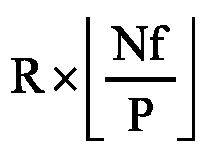

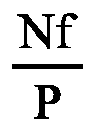
- In some embodiments, feedback information f includes an all-zero subsequence with a length of


- In order to describe a length relationship between s(k) and Pmax, the following embodiment will be used for description.
- In some embodiments, for k = 1, 2, ..., P, the length of the complex sequence s(k) in the set of correct TB sequences is equal to

- In some embodiments, for k = 1, 2, ..., P, the length of the complex sequence s(k) in the set of correct TB sequences is equal to


- In some embodiments, for k = 1, 2, ..., P, the length of the complex sequence s(k) in the set of correct TB sequences is equal to


- In some embodiments, for k = 1, 2, ..., P, the length of the complex sequence s(k) in the set of correct TB sequences is equal to


- In order to describe a length relationship between the length of the feedback information f and each of lengths of Pmax, Ns(k), and Nt(k), the following embodiment will be used for description.
- In some embodiments, the feedback information f includes an all-zero subsequence with a length less than or equal to

- In some embodiments, the feedback information f includes an all-zero subsequence with a length less than or equal to

- In some embodiments, the feedback information f includes an all-zero subsequence with a length less than or equal to

- In some embodiments, a length Nf of the feedback information f is greater than or equal to

- In some embodiments, the length Nf of the feedback information f is greater than or equal to

- In some embodiments, the length Nf of the feedback information f is greater than or equal to

- It should be noted that the channel coding in the corresponding embodiments of
FIG. 6 andFIG. 7 may be polar coding, low-density parity check (LDPC) coding, convolutional coding, turbo coding, Reed-Muller (RM) coding, Reed-Solomon (RS) coding, Bose-Chaudhuri-Hocquenghem (BCH) coding, concatenated coding, cyclic coding, block coding, Hamming coding, Golay coding, repetition coding, single-parity-check (SPC) coding, cyclic redundancy check coding, superposition coding, sparse superposition coding, sparse regression coding, lattice coding, algebraic geometric coding, Goppa coding, polarization-adjusted convolutional (PAC) coding, pre-transformed polar coding, or parity-check polar coding. - It should also be noted that the modulation in the corresponding embodiments of
FIG. 5 andFIG. 6 may be π/2-binary phase shift keying (π/2-BPSK), BPSK, quadrature phase shift keying (QPSK), quadrature amplitude modulation (QAM), phase-shift keying (PSK), amplitude-shift keying (ASK), or amplitude and phase-shift keying (APSK). - It should be noted that a process of obtaining the feedback information according to the target complex sequence in steps S2120, S2230, S2330, S2440 and S2530 is described in detail in the embodiments of
FIG. 8 andFIG. 9 . -
FIG. 8 is a flowchart of an information transmission method provided by an embodiment of the present disclosure, where feedback information is obtained by superposition of target complex sequences in a set of correct TB sequences. The method includes steps S2610, S2620 and S2630, and describes a process of obtaining the feedback information according to the target complex sequences. - At S2610, a set of target complex sequences is obtained according to each target complex sequence.
- At S2620, at least one target complex sequence is selected from the set of target complex sequences.
- At S2630, an element is selected from the selected target complex sequence to perform linear superposition, to obtain a feedback information element, where the feedback information includes the feedback information element.
- In some embodiments, the feedback information f is obtained by superimposition of P target complex sequences s(1), s(2), ..., s(P) in a set of correct TB sequences. For example, there are (2xD+1) positive integers: n', d(1), n(1), d(2), n(2), ..., d(D), n(D); and an n'th element f(n') of the feedback information f is determined by 2D complex numbers s(d(1), n(1)), s(d(2), n(d(2)), ..., s(d(D), n(D)) in D target complex sequences s(d(1)), s(d(2)), ..., s(d(D)). D is less than or equal to P and greater than or equal to 2, n' is less than or equal to Nf, where Nf is a length of the feedback information f, and for k = 1, 2, ..., D, d(k) is less than or equal to P, n(k) is less than or equal to Ns(k), Ns(k) is a length of a target complex sequence s(k), and a complex number s(d(k), n(k)) is an n(k)th element in a target complex sequence s(d(k)).
- In some embodiments, the feedback information f is obtained by superimposition of the P target complex sequences s(1), s(2), ..., s(P) in the set of correct TB sequences, where

- In some embodiments, the feedback information f is obtained by superimposition of P target complex sequences t(m(1)), t(m(2)), ..., t(m(P)) in the set of correct TB sequences. For example, there are (2xD+1) positive integers: n', d(1), n(1), d(2), n(2), ..., d(D), n(D); and an n'th element f(n') of the feedback information f is determined by D complex numbers t(m(d(1)), n(1)), t(m(d(2)), n(2)), ..., t(m(d(D)), n(D)) in D target complex sequences t(m(d(1))), t(m(d(2))), ..., t(m(d(D))). D is less than or equal to P and greater than or equal to 2, n' is less than or equal to Nf, where Nf is the length of the feedback information f, for k = 1, 2, ..., D, d(k) is less than or equal to P, n(k) is less than or equal to Nt(m(d(k))), Nt(m(d(k))) is a length of a target complex sequence t(m(d(k))), m(d(k)) is an integer that makes BI(d(k)) equal to I(m(d(k))), and a complex number t(m(d(k)), n(k)) is an n(k)th element in a target complex sequence t(m(d(k))).
- In some embodiments, the feedback information f is obtained by superimposition of P target complex sequences t(m(1)), t(m(2)), ..., t(m(P)) in the set of correct TB sequences, where

- In some embodiments, the feedback information f is obtained by superimposition of P target complex sequences t(BI(1)), t(BI(2)), ..., t(BI(P)) in the set of correct TB sequences. For example, there are (2xD+1) positive integers: n', d(1), n(1), d(2), n(2), ..., d(D), n(D); and an n'th element f(n') of the feedback information f is determined by D complex numbers t(BI(d(1)), n(1)), t(BI(d(2)), n(2)), ..., t(BI(d(D)), n(D)) in D target complex sequences t(BI(d(1))), t(BI(d(2))), ..., t(BI(d(D))). D is less than or equal to P and greater than or equal to 2, n' is less than or equal to Nf, where Nf is the length of the feedback information f, for k = 1, 2, ..., D, d(k) is less than or equal to P, n(k) is less than or equal to Nt(BI(d(k))), Nt(BI(d(k))) is a length of a target complex sequence t(BI(d(k))), BI(d(k)) is a d(k)th element in a set BI of identifiers of correct TBs, BI(d(k)) is also an element in an ordered set I of TB identifiers, and a complex number t(BI(d(k)),n(k)) is an n(k)th element in the target complex sequence t(BI(d(k))).
- In some embodiments, the feedback information f is obtained by superimposition of the P target complex sequences t(BI(1)), t(BI(2)), ..., t(BI(P)) in the set of correct TB sequences, where

-
FIG. 9 is a flowchart of an information transmission method provided by an embodiment of the present disclosure, where feedback information is obtained by concatenation of target complex sequences in a set of correct TB sequences. The method includes steps S2710, S2720 and S2730, and describes a process of obtaining the feedback information according to the target complex sequences. - At S2710, a set of target complex sequences is obtained according to each target complex sequence.
- At S2720, according to each target complex sequence, target complex numbers in the target complex sequence are obtained.
- At S2730, all the target complex numbers are formed into a set of target complex numbers, where any element of the feedback information comes from the set of target complex numbers.
- In some embodiments, the feedback information f is obtained by concatenation of P target complex sequences s(1), s(2), ..., s(P) in a set of correct TB sequences. For example, for i = 1, 2, ..., Nf, an ith element f(i) of the feedback information f is equal to a first constant C or there is a unique integer pair <k(i), n(i)> so that the ith element f(i) of the feedback information f is determined only by a complex number s(k(i),n(i)), where k(i) is less than or equal to P, n(i) is less than or equal to Ns(k(i)), the first constant C may be any complex number, and the complex number s(k(i), n(i)) is an n(i)th element in a target complex sequence s(k(i)).
- In some embodiments, the feedback information f is obtained by concatenation of P target complex sequences t(m(1)), t(m(2)), ..., t(m(P)) in the set of correct TB sequences. For example, for i = 1, 2, ..., Nf, an ith element f(i) of the feedback information f is equal to a first constant C or there is a unique integer pair <k(i), n(i)> so that the ith element f(i) of the feedback information f is determined by a complex number t(m(k(i)),n(i)), where k(i) is less than or equal to P, n(i) is less than or equal to Nt(m(k(i))), the constant C may be any complex number, the complex number t(m(k(i)),n(i)) is an n(i)th element in a target complex sequence t(m(k(i))), and m(k(i)) is an integer that makes BI(k(i)) equal to I(m(k(i))).
- In some embodiments, the feedback information f is obtained by concatenation of P target complex sequences t(BI(1)), t(BI(2)), ..., t(BI(P)) in the set of correct TB sequences. For example, for i = 1, 2, ..., Nf, an ith element f(i) of the feedback information f is equal to the first constant C or there is a unique integer pair <k(i), n(i)> so that the ith element f(i) of the feedback information f is determined by a complex number t(BI(k(i)),n(i)), where k(i) is less than or equal to P, n(i) is less than or equal to Nt(BI(k(i))), the constant C may be any complex number, the complex number t(BI(k(i)),n(i)) is an n(i)th element in a target complex sequence t(BI(k(i))). BI(k(i)) is the k(i)th element in a set BI of identifiers of correct TBs, and BI(k(i)) is also an element in the ordered set I of TB identifiers.
- In order to more clearly describe the information transmission method provided by the embodiments of the present disclosure, the following examples are used for description.
- In this example, a first node is a base station and a second node is a terminal device. This example includes a plurality of terminal devices which form a sequence of second nodes, and a TB identifier is a UE identifier.
-
FIG. 10 is a schematic diagram of a relationship among a second node, a TB, and a UE identifier provided by an embodiment of the present disclosure. As shown inFIG. 10 , the base station receives a signal, including a TB set B, sent by a sequence of terminal devices. The sequence of terminal devices includes Nu = 4 terminal devices: SN(1), SN(2), SN(3), and SN(4), and the TB set B includes Nb = 4 TBs: b(1), b(2), b(3), and b(4). The signal including the TB set B includes a signal including a TB b(1), a signal including a TB b(2), a signal including a TB b(3), and a signal including a TB b(4). - In this example, for t = 1, 2, 3, 4, a TB b(t) in the TB set B is sent to the base station by a terminal device SN(t) in the sequence of terminal devices. The TB b(t) in the TB set B includes a UE identifier of the terminal device SN(t), the UE identifier of the terminal device SN(t) is an RA-RNTI, and UE identifiers of the terminal devices SN(1), SN(2), SN(3) and SN(4) are 4, 3, 2 and 5 respectively. The
UE identifiers UE identifiers - In this example, a maximum quantity of correct TBs Pmax = 2 is configured by the base station. A set of identifiers of correct TBs is a set of UE identifiers included in correctly-received TBs in the TB set. The base station determines the following according to the signal including the TB set B: the set of identifiers of correct TBs is a set BI = {2, 3}, and a quantity P of correct TBs is equal to 2.
- In this example, feedback information f is determined by the base station according to the following parameters: the set BI of identifiers of correct TBs, the quantity of correct TB P = 2, the ordered set I of TB identifiers, or an ordered set of transmission sequences, where the ordered set of transmission sequences includes Na = 8 complex sequences, which includes:


- Here, for k = 1, 2, 3, 4, 5, 6, 7, 8, a length of a complex sequence t(k) is Nt(k) = Nf = 6. Nf is a length of the feedback information f.
-
FIG. 11 is a schematic diagram of determining feedback information f by superimposition according to a set BI of identifiers of correct TBs and an ordered set of TB sequences provided by an embodiment of the present disclosure. As shown inFIG. 11 , the base station determines the feedback information f according to the following method. - According to the ordered set I of TB identifiers, a size of the ordered set of TB identifiers Na = 8, the ordered set of TB sequences, and the set BI of identifiers of correct TBs, the base station determines m(1) = 2 from BI(1) = 2 and I(2) = BI(1) to obtain a complex sequence t(m(1)) = t(2); and the base station determines m(2) = 3 from BI(2) = 3 and I(3) = BI(2) to obtain a complex sequence t(m(2)) = t(3).
- The base station superimposes the complex sequences t(2) and t(3) to determine that the feedback information f is f = α(1) × t(2) + α(2) × t(3) = [2, 0, 1, 0,-2,-1], where α(1) = α(2) = 1.
- In this example, the base station sends a signal including the feedback information f = [2, 0, 1, 0,-2,-1] to a sequence of terminal devices <SN(1), SN(2), SN(3), SN(4)>, and the sequence of terminal devices <SN(1), SN(2), SN(3), SN(4)> receives the signal including the feedback information f.
- Further, terminal devices SN(1), SN(2), SN(3), and SN(4) determine acknowledgment of TBs b(1), b(2), b(3), and b(4), respectively, according to the following method.
- The terminal device SN(1) determines according to a
UE identifier 4 that an inner product operation is performed on the sequence t(4) and the signal including the feedback information f. If an absolute value of an inner product is greater than half of an L2 norm of the sequence t(4), the terminal device SN(1) determines that theUE identifier 4 of the terminal device SN(1) belongs to the set BI of identifiers of correct TBs, and the terminal device SN(1) determines that acknowledgment of the TB b(1) is positive acknowledgment ACK. If an absolute value of an inner product is less than half of an L2 norm of the sequence t(4), the terminal device SN(1) determines that theUE identifier 4 of the terminal device SN(1) does not belong to the set BI of identifiers of correct TBs, and the terminal device SN(1) determines that acknowledgment of the TB b(1) is negative acknowledgment NACK. - The terminal device SN(2) determines according to a
UE identifier 3 that an inner product operation is performed on the sequence t(3) and the signal including the feedback information f. If an absolute value of an inner product is greater than half of an L2 norm of the sequence t(3), the terminal device SN(2) determines that theUE identifier 3 of the terminal device SN(2) belongs to the set BI of identifiers of correct TBs, and the terminal device SN(2) determines that acknowledgment of the TB b(2) is positive acknowledgment ACK. If an absolute value of an inner product is less than half of an L2 norm of the sequence t(3), the terminal device SN(2) determines that theUE identifier 3 of the terminal device SN(2) does not belong to the set BI of identifiers of correct TBs, and the terminal device SN(2) determines that acknowledgment of the TB b(2) is negative acknowledgment NACK. - The terminal device SN(3) determines according to a
UE identifier 2 that an inner product operation is performed on the sequence t(2) and the signal including the feedback information f. If an absolute value of an inner product is greater than half of an L2 norm of the sequence t(2), the terminal device SN(3) determines that theUE identifier 2 of the terminal device SN(3) belongs to the set BI of identifiers of correct TBs, and the terminal device SN(3) determines that acknowledgment of the TB b(3) is positive acknowledgment ACK. If an absolute value of an inner product is less than half of an L2 norm of the sequence t(2), the terminal device SN(3) determines that theUE identifier 2 of the terminal device SN(3) does not belong to the set BI of identifiers of correct TBs, and the terminal device SN(3) determines that acknowledgment of the TB b(3) is negative acknowledgment NACK. - The terminal device SN(4) determines according to a
UE identifier 5 that an inner product operation is performed on the sequence t(5) and the signal including the feedback information f. If an absolute value of an inner product is greater than half of an L2 norm of the sequence t(5), the terminal device SN(4) determines that theUE identifier 5 of the terminal device SN(4) belongs to the set BI of identifiers of correct TBs, and the terminal device SN(4) determines that acknowledgment of the TB b(4) is positive acknowledgment ACK. If an absolute value of an inner product is less than half of an L2 norm of the sequence t(5), the terminal device SN(4) determines that theUE identifier 5 of the terminal device SN(4) does not belong to the set BI of identifiers of correct TBs, and the terminal device SN(4) determines that acknowledgment of the TB b(4) is negative acknowledgment NACK. - In this example, if the quantity P of correct TBs is 0, the length Nf of the feedback information f is 0, the feedback information f is an empty sequence, and the signal including the feedback information f is a zero power signal.
- This example differs from Example 1 in that, for t = 1, 2, 3, 4, a UE identifier of a terminal device SN(t) is a TC-RNTI, and feedback information f is determined by a base station according to the following parameters: a set BI of identifiers of correct TBs, or a quantity P of correct TBs equal to 2.
-
FIG. 12 is a schematic diagram of determining feedback information f by superimposition according to a set BI of identifiers of correct TBs provided by another embodiment of the present disclosure. As shown inFIG. 12 , the base station determines the feedback information f according to the following method. - The base station generates a pseudo-random complex sequence s(1) = [2.1539+3.9218j, 0.3702-1.7478j, -0.2643+0.2502j, 0.7552-2.5389j, -1.1301+0.0923j, 1.3457+1.2762j] with a length of Ns(1) = Nf = 6, by adopting a TB identifier BI(1) = 2 in the set of identifiers of correct TBs as a random number seed of a PRNG. The base station generates a pseudo-random complex sequence s(2) = [0.1403+4.3805j, -0.3004-0.5881j, -0.4079-0.1891j, 0.3796+1.0345j, 0.0840+0.6838j, -0.6795-1.4721j] with a length of Ns(2) = Nf = 6, by adopting a TB identifier BI(2) = 3 in the set of identifiers of correct TBs as a random number seed of a PRNG.
- According to the pseudo-random complex sequences s(1) and s(2), the base station determines that the feedback information f is f = α(1) × s(1) + α(2) × s(2) = [1.4238+5.8706j, 0.0494-1.6518j, -0.4754+0.0432j, 0.8025-1.0638j, -0.7397+0.5488j, 0.4711-0.1385j], where


1 Initialization: S = BI(p); k = 1; 2 while k ≤ 12 3 T = 48271*(S mod 44488) - 3399*floor(S/44488); 4 if T ≥ 0 5 S = T; 6 else 7 S = T + 2147483647; 8 end 9 u(k) = S/2147483647; 10 k = k + 1; 11 end - Here, mod is a remainder function, floor(x) is the largest integer less than or equal to x, S is a state of the PRNG, and setting S = BI(p) in
line 1 of code is setting a seed of the PRNG. - Another difference between this example and Example 1 is that in this example, the base station sends a signal including the feedback information f = [1.4238+5.8706j, 0.0494-1.6518j, - 0.4754+0.0432j, 0.8025-1.0638j, -0.7397+0.5488j, 0.4711-0.1385j] to a sequence of terminal devices <SN(1), SN(2), SN(3), SN(4)>.
- Another difference between this example and Example 1 is that in this example, terminal devices SN(1), SN(2), SN(3), and SN(4) determine acknowledgment of TBs b(1), b(2), b(3), and b(4), respectively, according to the following method.
- The terminal device SN(1) generates a complex sequence v(1) by adopting a
UE identifier ID 4 as the random number seed of the PRNG. The terminal device SN(1) performs an inner product operation on v(1) and the signal including the feedback information f. If an absolute value of an inner product is greater than half of an L2 norm of the complex sequence v(1), the terminal device SN(1) determines that theUE identifier 4 of the terminal device SN(1) belongs to the set BI of identifiers of correct TBs, and the terminal device SN(1) determines that acknowledgment of the TB b(1) is positive acknowledgment ACK. If an absolute value of an inner product is less than half of an L2 norm of the complex sequence v(1), the terminal device SN(1) determines that theUE identifier 4 of the terminal device SN(1) does not belong to the set BI of identifiers of correct TBs, and the terminal device SN(1) determines that acknowledgment of the TB b(1) is negative acknowledgment NACK. - The terminal device SN(2) generates a complex sequence v(2) by adopting a
UE identifier ID 3 as the random number seed of the PRNG. The terminal device SN(2) performs an inner product operation on v(2) and the signal including the feedback information f. If an absolute value of an inner product is greater than half of an L2 norm of the complex sequence v(2), the terminal device SN(2) determines that theUE identifier 3 of the terminal device SN(2) belongs to the set BI of identifiers of correct TBs, and the terminal device SN(2) determines that acknowledgment of the TB b(2) is positive acknowledgment ACK. If an absolute value of an inner product is less than half of an L2 norm of the complex sequence v(2), the terminal device SN(2) determines that theUE identifier 3 of the terminal device SN(2) does not belong to the set BI of identifiers of correct TBs, and the terminal device SN(2) determines that acknowledgment of the TB b(2) is negative acknowledgment NACK. - The terminal device SN(3) generates a complex sequence v(3) by adopting a
UE identifier ID 2 as the random number seed of the PRNG. The terminal device SN(3) performs an inner product operation on v(3) and the signal including the feedback information f. If an absolute value of an inner product is greater than half of an L2 norm of the complex sequence v(3), the terminal device SN(3) determines that theUE identifier 2 of the terminal device SN(3) belongs to the set BI of identifiers of correct TBs, and the terminal device SN(3) determines that acknowledgment of the TB b(3) is positive acknowledgment ACK. If an absolute value of an inner product is less than half of an L2 norm of the complex sequence v(3), the terminal device SN(3) determines that theUE identifier 2 of the terminal device SN(3) does not belong to the set BI of identifiers of correct TBs, and the terminal device SN(3) determines that acknowledgment of the TB b(3) is negative acknowledgment NACK. - The terminal device SN(4) generates a complex sequence v(4) by adopting a
UE identifier ID 5 as the random number seed of the PRNG. The terminal device SN(4) performs an inner product operation on v(4) and the signal including the feedback information f. If an absolute value of an inner product is greater than half of an L2 norm of the complex sequence v(4), the terminal device SN(4) determines that theUE identifier 5 of the terminal device SN(4) belongs to the set BI of identifiers of correct TBs, and the terminal device SN(4) determines that acknowledgment of the TB b(4) is positive acknowledgment ACK. If an absolute value of an inner product is less than half of an L2 norm of the complex sequence v(4), the terminal device SN(4) determines that theUE identifier 5 of the terminal device SN(4) does not belong to the set BI of identifiers of correct TBs, and the terminal device SN(4) determines that acknowledgment of the TB b(4) is negative acknowledgment NACK. - As compared with Example 1, the information transmission method provided in this example can save storage overheads of an ordered set of TB sequences.
- This example differs from Example 2 in that a first node is a relay, and for t = 1, 2, 3, 4, a UE identifier of a terminal device SN(t) is a C-RNTI.
-
FIG. 13 is a schematic diagram of determining feedback information f by superimposition according to a set BI of identifiers of correct TBs provided by still another embodiment of the present disclosure. As shown inFIG. 13 , a base station determines the feedback information f according to the following method. - The base station generates a pseudo-random bit sequence q(1) = 1, 0, 0, 0, 0, 0, 1, 0, 1, 1, 0, 0] with a length of Np(1) = 12, by adopting a TB identifier BI(1) = 2 in the set of identifiers of correct TBs as a random number seed of a PRSG. The base station generates a pseudo-random bit sequence q(2) = [1, 0, 0, 0, 0, 0, 1, 0, 0, 1, 0, 1] with a length of Np(2) = 12, by adopting a TB identifier BI(2) = 3 in the set of identifiers of correct TBs as the random number seed of the PRSG.
- The base station performs QPSK modulation on the pseudo-random bit sequence q(1) = [1, 0, 0, 0, 0, 0, 1, 0, 1, 1, 0, 0] to obtain a complex sequence


- According to complex sequences s(1) and s(2), the base station determines that the feedback information f is f = α(1) × s(1) + α(2) × s(2) = [-1+j, 1+j, 1+j, -1+j, -j, 1], where α(1) = α(2) =

- Here, for p = 1, 2, the QPSK modulation is implemented as follows:


- A difference between this example and Example 1 is that in this example, the base station sends a signal including the feedback information f = [-1+j, 1+j, 1+j, -1+j, -j, 1] to a sequence of terminal devices <SN(1), SN(2), SN(3), SN(4)>.
- As compared with Example 2, the information transmission method provided in this example has a simpler way to generate a Gaussian sequence.
- This example differs from Example 1 in that, for t = 1, 2, 3, 4, a UE identifier of a terminal device SN(t) is an MCS-C-RNTI. An ordered set of TB identifiers I = <I(1), I(2), I(3), I(4), I(5), I(6), I(7), I(8)> = <0, 1, 2, 3, 4, 5, 6, 7> includes Na = 8
UE identifiers -
FIG. 14 is a schematic diagram of determining feedback information f by superimposition according to a set BI of identifiers of correct TBs provided by yet another embodiment of the present disclosure. As shown inFIG. 14 , a base station determines the feedback information f according to the following method. - The base station performs channel coding on


- The base station performs BPSK modulation on the coding sequence c(1) = [0, 1, 1, 0, 0, 1] to obtain a complex sequence s(1) = [+1,-1,-1, +1, +1,-1] with a length of Ns(1) = Nf = 6. The base station performs BPSK modulation on the coding sequence c(2) = [0, 1, 1, 1, 1, 0] to obtain a complex sequence s(2) = [+1,-1,-1,-1,-1, +1] with a length of Ns(2) = Nf = 6.
- According to complex sequences s(1) and s(2), the base station determines that the feedback information f is


- Here, for p = 1, 2, the BPSK modulation is implemented as follows:


- Another difference between this example and Example 1 is that in this example, the base station sends a signal including the feedback information f to a sequence of terminal devices <SN(1), SN(2), SN(3), SN(4)>. Terminal devices SN(1), SN(2), SN(3), and SN(4) determine acknowledgment of TBs b(1), b(2), b(3), and b(4), respectively, according to the following method.
- The terminal device SN(1) performs channel coding with the generator matrix G on

UE identifier 4, and then performs BPSK modulation, to determine a complex sequence v(1) = [-1, +1, -1, +1, -1, +1]. The terminal device SN(1) performs an inner product operation on v(1) and the signal including the feedback information f. If an absolute value of an inner product is greater than half of an L2 norm of the complex sequence v(1), the terminal device SN(1) determines that theUE identifier 4 of the terminal device SN(1) belongs to the set BI of identifiers of correct TBs, and the terminal device SN(1) determines that acknowledgment of the TB b(1) is positive acknowledgment ACK. If an absolute value of an inner product is less than half of an L2 norm of the complex sequence v(1), the terminal device SN(1) determines that theUE identifier 4 of the terminal device SN(1) does not belong to the set BI of identifiers of correct TBs, and the terminal device SN(1) determines that acknowledgment of the TB b(1) is negative acknowledgment NACK. - The terminal device SN(2) performs channel coding with the generator matrix G on

UE identifier 3, and then performs BPSK modulation, to determine a complex sequence v(2) = [+1, -1, -1, -1, -1, +1]. The terminal device SN(2) performs an inner product operation on v(2) and the signal including the feedback information f. If an absolute value of an inner product is greater than half of an L2 norm of the complex sequence v(2), the terminal device SN(2) determines that theUE identifier 3 of the terminal device SN(2) belongs to the set BI of identifiers of correct TBs, and the terminal device SN(2) determines that acknowledgment of the TB b(2) is positive acknowledgment ACK. If an absolute value of an inner product is less than half of an L2 norm of the complex sequence v(2), the terminal device SN(2) determines that theUE identifier 3 of the terminal device SN(2) does not belong to the set BI of identifiers of correct TBs, and the terminal device SN(2) determines that acknowledgment of the TB b(2) is negative acknowledgment NACK. - The terminal device SN(3) performs channel coding with the generator matrix G on

UE identifier 2, and then performs BPSK modulation, to determine a complex sequence v(3) = [+1, -1, -1, +1, +1, -1]. The terminal device SN(3) performs an inner product operation on v(3) and the signal including the feedback information f. If an absolute value of an inner product is greater than half of an L2 norm of the complex sequence v(3), the terminal device SN(3) determines that theUE identifier 2 of the terminal device SN(3) belongs to the set BI of identifiers of correct TBs, and the terminal device SN(3) determines that acknowledgment of the TB b(3) is positive acknowledgment ACK. If an absolute value of an inner product is less than half of an L2 norm of the complex sequence v(3), the terminal device SN(3) determines that theUE identifier 2 of the terminal device SN(3) does not belong to the set BI of identifiers of correct TBs, and the terminal device SN(3) determines that acknowledgment of the TB b(3) is negative acknowledgment NACK. - The terminal device SN(4) performs channel coding with the generator matrix G on

UE identifier 5, and then performs BPSK modulation, to determine a complex sequence v(4) = [-1, +1, -1, -1, +1, -1]. The terminal device SN(4) performs an inner product operation on v(4) and the signal including the feedback information f. If an absolute value of an inner product is greater than half of an L2 norm of the complex sequence v(4), the terminal device SN(4) determines that theUE identifier 5 of the terminal device SN(4) belongs to the set BI of identifiers of correct TBs, and the terminal device SN(4) determines that acknowledgment of the TB b(4) is positive acknowledgment ACK. If an absolute value of an inner product is less than half of an L2 norm of the complex sequence v(4), the terminal device SN(4) determines that theUE identifier 5 of the terminal device SN(4) does not belong to the set BI of identifiers of correct TBs, and the terminal device SN(4) determines that acknowledgment of the TB b(4) is negative acknowledgment NACK. - As compared with Example 3 and Example 2, the information transmission method provided in this example can improve acknowledgment reception reliability by selecting channel code with superior performance.
- A difference between this example and Example 1 is that in this example, for t = 1, 2, 3, 4, a UE identifier of a terminal device SN(t) is a CS-RNTI.
- Another difference between this example and Example 1 is that in this example, an ordered set of transmission sequences includes Na = 8 complex sequences:


-
FIG. 15 is a schematic diagram of determining feedback information f by concatenation according to a set BI of identifiers of correct TBs and an ordered set of TB sequences provided by an embodiment of the present disclosure. As shown inFIG. 15 , a base station determines the feedback information f according to the following method. - According to the ordered set I of TB identifiers, a size of the ordered set of TB identifiers Na = 8, the ordered set of TB sequences, and the set BI of identifiers of correct TBs, the base station determines, from BI(1) = 2 and I(2) = BI(1), that m(1) is equal to a
sequence number 2 of I(2), to obtain a complex sequence t(m(1)) = t(2) [+1,-1, +1,-1]; and the base station determines, from BI(2) = 3 and I(3) = BI(2), that m(2) is equal to asequence number 3 of I(3), to obtain a complex sequence t(m(2)) = t(3) = [+1, +1,-1,-1]. - According to the complex sequence, the base station determines that the feedback information f is f = [t(2), t(3)] = [+1, -1, +1, -1, +1, +1, -1, -1], where a length of the feedback information Nf = Nt(m(1)) + Nt(m(2)) = Nt(2) + Nt(3) = 4 + 4 = 8.
- A difference between this example and Example 1 is that in this example, the base station sends a signal including the feedback information f = [+1, -1, +1, -1, +1, +1, -1, -1] to a sequence of terminal devices <SN(1), SN(2), SN(3), SN(4)>. The sequence of terminal devices <SN(1), SN(2), SN(3), SN(4)> receives the signal including the feedback information f. Further, terminal devices SN(1), SN(2), SN(3), and SN(4) determine acknowledgment of TBs b(1), b(2), b(3), and b(4), respectively, according to the following method.
- The terminal device SN(1) determines according to a
UE identifier 4 that an inner product operation is performed on the sequence t(4) and every Nt(4) = 4 symbols in the signal including the feedback information f. If an absolute value of an inner product is greater than half of an L2 norm of the sequence t(4), the terminal device SN(1) determines that theUE identifier 4 of the terminal device SN(1) belongs to the set BI of identifiers of correct TBs, and the terminal device SN(1) determines that acknowledgment of the TB b(1) is positive acknowledgment ACK. If an absolute value of each inner product is less than half of an L2 norm of the sequence t(4), the terminal device SN(1) determines that theUE identifier 4 of the terminal device SN(1) does not belong to the set BI of identifiers of correct TBs, and the terminal device SN(1) determines that acknowledgment of the TB b(1) is negative acknowledgment NACK. - The terminal device SN(2) determines according to a
UE identifier 3 that an inner product operation is performed on the sequence t(3) and every Nt(3) = 4 symbols in the signal including the feedback information f. If an absolute value of an inner product is greater than half of an L2 norm of the sequence t(3), the terminal device SN(2) determines that theUE identifier 3 of the terminal device SN(2) belongs to the set BI of identifiers of correct TBs, and the terminal device SN(2) determines that acknowledgment of the TB b(2) is positive acknowledgment ACK. If an absolute value of each inner product is less than half of an L2 norm of the sequence t(3), the terminal device SN(2) determines that theUE identifier 3 of the terminal device SN(2) does not belong to the set BI of identifiers of correct TBs, and the terminal device SN(2) determines that acknowledgment of the TB b(2) is negative acknowledgment NACK. - The terminal device SN(3) determines according to a
UE identifier 2 that an inner product operation is performed on the sequence t(2) and every Nt(2) = 4 symbols in the signal including the feedback information f. If an absolute value of an inner product is greater than half of an L2 norm of the sequence t(2), the terminal device SN(3) determines that theUE identifier 2 of the terminal device SN(3) belongs to the set BI of identifiers of correct TBs, and the terminal device SN(3) determines that acknowledgment of the TB b(3) is positive acknowledgment ACK. If an absolute value of each inner product is less than half of an L2 norm of the sequence t(2), the terminal device SN(3) determines that theUE identifier 2 of the terminal device SN(3) does not belong to the set BI of identifiers of correct TBs, and the terminal device SN(3) determines that acknowledgment of the TB b(3) is negative acknowledgment NACK. - The terminal device SN(4) determines according to a
UE identifier 5 that an inner product operation is performed on the sequence t(5) and every Nt(5) = 4 symbols in the signal including the feedback information f. If an absolute value of an inner product is greater than half of an L2 norm of the sequence t(5), the terminal device SN(5) determines that theUE identifier 5 of the terminal device SN(5) belongs to the set BI of identifiers of correct TBs, and the terminal device SN(4) determines that acknowledgment of the TB b(4) is positive acknowledgment ACK. If an absolute value of each inner product is less than half of an L2 norm of the sequence t(5), the terminal device SN(4) determines that theUE identifier 5 of the terminal device SN(4) does not belong to the set BI of identifiers of correct TBs, and the terminal device SN(4) determines that acknowledgment of the TB b(4) is negative acknowledgment NACK. - As compared with Example 1 to Example 4, the information transmission method provided in this example increases a detection signal-to-noise ratio of a terminal device and improves information transmission efficiency because sequences of different UE identifiers do not overlap.
- In this example, a first node is a base station and a second node is a terminal device. This example includes a plurality of terminal devices which form a sequence of second nodes, and a TB identifier is a UE identifier.
-
FIG. 16 is a schematic diagram of a relationship among a second node, a TB, a UE identifier, a random access signature, and a signature index provided by an embodiment of the present disclosure. As shown inFIG. 16 , the base station receives a signal, including a TB set B, sent by a sequence of terminal devices. The sequence of terminal devices includes Nu = 4 terminal devices: SN(1), SN(2), SN(3), and SN(4), and the TB set B includes Nb = 4 TBs: b(1), b(2), b(3), and b(4). The signal including the TB set B includes a signal including a TB b(1), a signal including a TB b(2), a signal including a TB b(3), and a signal including a TB b(4). - In this example, for t=1, 2, 3, 4, a TB b(t) in the TB set B is sent to the base station by a terminal device SN(t) in the sequence of terminal devices. The TB b(t) in the TB set B includes a UE identifier and a random access signature of the terminal device SN(t).
- In this example, the UE identifier of the terminal device SN(t) is a PEI, and the random access signature is a reference signal. UE identifiers of the terminal devices SN(1), SN(2), SN(3) and SN(4) are 4, 3, 2 and 5, respectively, where the
UE identifiers UE identifiers - In this example, the reference signal is an element of an ordered set of random access signatures. The ordered set of random access signatures includes six reference signals r(1), r(2), r(3), r(4), r(5), and r(6), where the signature indexes of the reference signals r(1), r(2), r(3), r(4), r(5) and r(6) are 0, 1, 2, 3, 4 and 5, respectively. Further, random access signatures included in the TBs b(1), b(2), b(3), and b(4) are determined by the terminal devices SN(1), SN(2), SN(3), and SN(4) according to the
UE identifiers - A signature index of a reference signal included in the TB b(t) = a remainder obtained by dividing the square of the UE identifier of the terminal device SN(t) by 6.
- The
UE identifiers - In this example, a maximum quantity of correct TBs Pmax = 2 is configured by the base station. In this example, the set of identifiers of correct TBs is a set of UE identifiers included in correctly-received TBs in the TB set. In this example, the base station determines the following according to the signal including the TB set B: the set of identifiers of correct TBs is a set BI = {2, 3}, and a quantity P of correct TBs is equal to 2.
- In this example, the feedback information f is determined by the base station according to the following parameters: the set BI of identifiers of correct TBs, or the quantity P of correct TBs equal to 2.
- In this example, a length Nf of the feedback information f is equal to 6.
-
FIG. 17 is a schematic diagram of determining feedback information f by concatenation according to a set BI of identifiers of correct TBs and an ordered set of TB sequences provided by an embodiment of the present disclosure. As shown in the block diagram ofFIG. 17 , the base station determines the feedback information f according to the following method. - The base station generates a pseudo-random complex sequence s(1) = [2.1539+3.9218j, 0.3702-1.7478j, -0.2643+0.2502j] with a length of


- The base station determines feedback information f = [s(1), s(2)] = [2.1539+3.9218j, 0.3702-1.7478j, -0.2643+0.2502j, 0.1403+4.3805j, -0.3004-0.5881j, -0.4079-0.1891j] by concatenation of the pseudo-random complex sequence s(1) and s(2).
- Here, for p = 1, 2, the PRNG generates random numbers of Gaussian distribution. An implementation method of the PRNG is as follows:


1 Initialization: S = BI(p); k = 1; 2 while k ≤ 6 3 T = 48271*(S mod 44488) - 3399*floor(S/44488); 4 if T ≥ 0 5 S = T; 6 else 7 S = T + 2147483647; 8 end 9 u(k) = S/2147483647; 10 k = k + 1; 11 end - Here, mod is a remainder function, floor(x) is the largest integer less than or equal to x, S is a state of the PRNG, and setting S = BI(p) in
line 1 of code is setting a seed of the PRNG. - In this example, the base station sends a signal including the feedback information f = [2.1539+3.9218j, 0.3702-1.7478j, -0.2643+0.2502j, 0.1403+4.3805j, -0.3004-0.5881j, -0.4079-0.1891j] to a sequence of terminal devices <SN(1), SN(2), SN(3), SN(4)>. The sequence of terminal devices <SN(1), SN(2), SN(3), SN(4)> receives the signal including the feedback information f. Further, terminal devices SN(1), SN(2), SN(3), and SN(4) separately decode the signal including the feedback information f, and determine acknowledgment of TBs b(1), b(2), b(3), and b(4), respectively, according to the following method.
- The terminal device SN(1) generates a complex sequence v(1) with a length of 3 by adopting a
UE identifier ID 4 as the random number seed of the PRNG. The terminal device SN(1) performs an inner product operation on v(1) and every three symbols of the signal including the feedback information f. If an absolute value of an inner product is greater than half of an L2 norm of the complex sequence v(1), the terminal device SN(1) determines that theUE identifier 4 of the terminal device SN(1) belongs to the set BI of identifiers of correct TBs, and the terminal device SN(1) determines that acknowledgment of the TB b(1) is positive acknowledgment ACK. If an absolute value of each inner product is less than half of an L2 norm of the complex sequence v(1), the terminal device SN(1) determines that theUE identifier 4 of the terminal device SN(1) does not belong to the set BI of identifiers of correct TBs, and the terminal device SN(1) determines that acknowledgment of the TB b(1) is negative acknowledgment NACK. - The terminal device SN(2) generates a complex sequence v(2) with a length of 3 by adopting a
UE identifier ID 3 as the random number seed of the PRNG. The terminal device SN(2) performs an inner product operation on v(2) and every three symbols of the signal including the feedback information f. If an absolute value of an inner product is greater than half of an L2 norm of the complex sequence v(2), the terminal device SN(2) determines that theUE identifier 3 of the terminal device SN(2) belongs to the set BI of identifiers of correct TBs, and the terminal device SN(2) determines that acknowledgment of the TB b(2) is positive acknowledgment ACK. If an absolute value of each inner product is less than half of an L2 norm of the complex sequence v(2), the terminal device SN(2) determines that theUE identifier 3 of the terminal device SN(2) does not belong to the set BI of identifiers of correct TBs, and the terminal device SN(2) determines that acknowledgment of the TB b(2) is negative acknowledgment NACK. - The terminal device SN(3) generates a complex sequence v(3) with a length of 3 by adopting a
UE identifier ID 2 as the random number seed of the PRNG. The terminal device SN(3) performs an inner product operation on v(3) and every three symbols of the signal including the feedback information f. If an absolute value of an inner product is greater than half of an L2 norm of the complex sequence v(3), the terminal device SN(3) determines that theUE identifier 2 of the terminal device SN(3) belongs to the set BI of identifiers of correct TBs, and the terminal device SN(3) determines that acknowledgment of the TB b(3) is positive acknowledgment ACK. If an absolute value of each inner product is less than half of an L2 norm of the complex sequence v(3), the terminal device SN(3) determines that theUE identifier 2 of the terminal device SN(3) does not belong to the set BI of identifiers of correct TBs, and the terminal device SN(3) determines that acknowledgment of the TB b(3) is negative acknowledgment NACK. - The terminal device SN(4) generates a complex sequence v(4) with a length of 3 by adopting a
UE identifier ID 5 as the random number seed of the PRNG. The terminal device SN(4) performs an inner product operation on v(4) and every three symbols of the signal including the feedback information f. If an absolute value of an inner product is greater than half of an L2 norm of the complex sequence v(4), the terminal device SN(4) determines that theUE identifier 5 of the terminal device SN(4) belongs to the set BI of identifiers of correct TBs, and the terminal device SN(4) determines that acknowledgment of the TB b(4) is positive acknowledgment ACK. If an absolute value of each inner product is less than half of an L2 norm of the complex sequence v(4), the terminal device SN(4) determines that theUE identifier 5 of the terminal device SN(4) does not belong to the set BI of identifiers of correct TBs, and the terminal device SN(4) determines that acknowledgment of the TB b(4) is negative acknowledgment NACK. - As compared with Example 5, the information transmission method provided in this example saves storage overheads of an ordered set of TB sequences.
- In this example, a first node is a base station and a second node is a terminal device. This example includes a plurality of terminal devices which form a sequence of second nodes, and a TB identifier is a signature index.
-
FIG. 18 is a schematic diagram of a relationship among a second node, a TB, a UE identifier, a random access signature, and a signature index provided by another embodiment of the present disclosure. As shown inFIG. 18 , the base station receives a signal, including a TB set B, sent by a sequence of terminal devices. The sequence of terminal devices includes Nu = 4 terminal devices: SN(1), SN(2), SN(3), and SN(4), and the TB set B includes Nb = 4 TBs: b(1), b(2), b(3), and b(4). The signal including the TB set B includes a signal including a TB b(1), a signal including a TB b(2), a signal including a TB b(3), and a signal including a TB b(4). - In this example, for k = 1, 2, 3, 4, a TB b(k) in the TB set B is sent to the base station by a terminal device SN(k) in the sequence of terminal devices. The TB b(k) in the TB set B includes a UE identifier and a random access signature corresponding to the terminal device SN(k).
- In this example, a UE identifier of the terminal device SN(k) is a GPSI, and the random access signature is a preamble. UE identifiers of the terminal devices SN(1), SN(2), SN(3) and SN(4) are 4, 6, 2 and 1, respectively.
- In this example, the preamble is an element of an ordered set of random access signatures. The ordered set of random access signatures includes Na = 6 preambles r(1), r(2), r(3), r(4), r(5), and r(6), where signature indexes of the preambles r(1), r(2), r(3), r(4), r(5) and r(6) are 1, 2, 3, 4, 5 and 6, respectively. The
signature indexes signature indexes UE identifiers - The terminal devices SN(1), SN(2), SN(3) and SN(4) respectively use the
UE identifiers 





- For p = 1, 2, 3, 4, signature indexes of the preambles calculated by the terminal devices SN(1), SN(2), SN(3) and SN(4) according to the formula
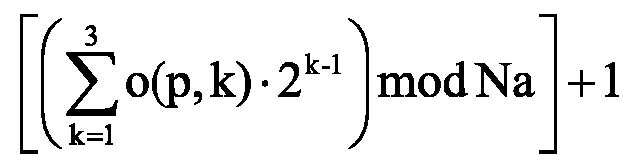
- The terminal devices SN(1), SN(2), SN(3) and SN(4) determine that preambles included in the TBs b(1), b(2), b(3) and b(4) are r(4), r(3) and r(2) and r(1) respectively according to the
signature indexes - In this example, a maximum quantity of correct TBs Pmax = 2 is configured by adopting a higher layer parameter. In this example, a set of identifiers of correct TBs is a set of signature indexes of random access signatures included in correctly-received TBs in the TB set. In this example, the base station determines the following according to the signal including the TB set B: the set of identifiers of correct TBs is a set BI = {2, 3}, and a quantity P of correct TBs is equal to 2.
- In this example, the feedback information f is determined by the base station according to the following parameters: the set BI of identifiers of correct TBs, or the quantity P of correct TBs equal to 2, where a length Nf of the feedback information f is equal to 6.
-
FIG. 19 is a schematic diagram of determining feedback information f by concatenation according to a set BI of identifiers of correct TBs and a quantity P of correct TBs provided by another embodiment of the present disclosure. In this example, as shown in the block diagram ofFIG. 19 , the base station determines the feedback information f according to the following method. - The base station generates a pseudo-random bit sequence q(1) = [1, 0, 0, 0, 0, 0, 1, 0, 1, 1, 0, 0] with a length of


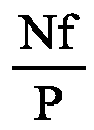
- The base station performs 16QAM modulation on the pseudo-random bit sequence q(1) = [1, 0, 0, 0, 0, 0, 1, 0, 1, 1, 0, 0] to obtain a complex sequence


- The base station determines the feedback information f = [s(1), s(2)] =


- In this example, the base station sends a signal including the feedback information f =

- The terminal device SN(1) uses the
UE identifier 4 as the random number seed of the PRSG to obtain thesignature index 4, by adopting the same method as the base station; and uses thesignature index 4 to generate a complex sequence v(1) with a length of 3, by adopting the same method as the base station. The terminal device SN(1) performs an inner product operation on v(1) and every three symbols of the signal including the feedback information f. If an absolute value of an inner product is greater than half of an L2 norm of the complex sequence v(1), the terminal device SN(1) determines that theUE identifier 4 of the terminal device SN(1) belongs to the set BI of identifiers of correct TBs, and the terminal device SN(1) determines that acknowledgment of the TB b(1) is positive acknowledgment ACK. If an absolute value of each inner product is less than half of an L2 norm of the complex sequence v(1), the terminal device SN(1) determines that theUE identifier 4 of the terminal device SN(1) does not belong to the set BI of identifiers of correct TBs, and the terminal device SN(1) determines that acknowledgment of the TB b(1) is negative acknowledgment NACK. - The terminal device SN(2) uses the
UE identifier 6 as the random number seed of the PRSG to obtain thesignature index 3, by adopting the same method as the base station; and uses thesignature index 3 as an input to generate a complex sequence v(2) with a length of 3, by adopting the same method as the base station. The terminal device SN(2) performs an inner product operation on v(2) and every three symbols of the signal including the feedback information f. If an absolute value of an inner product is greater than half of an L2 norm of the complex sequence v(2), the terminal device SN(2) determines that theUE identifier 6 of the terminal device SN(2) belongs to the set BI of identifiers of correct TBs, and the terminal device SN(2) determines that acknowledgment of the TB b(2) is positive acknowledgment ACK. If an absolute value of each inner product is less than half of an L2 norm of the complex sequence v(2), the terminal device SN(2) determines that theUE identifier 6 of the terminal device SN(2) does not belong to the set BI of identifiers of correct TBs, and the terminal device SN(2) determines that acknowledgment of the TB b(2) is negative acknowledgment NACK. - The terminal device SN(3) uses the
UE identifier 2 as the random number seed of the PRSG to obtain thesignature index 2, by adopting the same method as the base station; and uses thesignature index 2 to generate a complex sequence v(3) with a length of 3, by adopting the same method as the base station. The terminal device SN(3) performs an inner product operation on v(3) and every three symbols of the signal including the feedback information f. If an absolute value of an inner product is greater than half of an L2 norm of the complex sequence v(3), the terminal device SN(3) determines that theUE identifier 2 of the terminal device SN(3) belongs to the set BI of identifiers of correct TBs, and the terminal device SN(3) determines that acknowledgment of the TB b(3) is positive acknowledgment ACK. If an absolute value of each inner product is less than half of an L2 norm of the complex sequence v(3), the terminal device SN(3) determines that theUE identifier 2 of the terminal device SN(3) does not belong to the set BI of identifiers of correct TBs, and the terminal device SN(3) determines that acknowledgment of the TB b(3) is negative acknowledgment NACK. - The terminal device SN(4) uses the
UE identifier 1 as the random number seed of the PRSG to obtain thesignature index 1, by adopting the same method as the base station; and uses thesignature index 1 to generate a complex sequence v(4) with a length of 3, by adopting the same method as the base station. The terminal device SN(4) performs an inner product operation on v(4) and every three symbols of the signal including the feedback information f. If an absolute value of an inner product is greater than half of an L2 norm of the complex sequence v(4), the terminal device SN(4) determines that theUE identifier 1 of the terminal device SN(4) belongs to the set BI of identifiers of correct TBs, and the terminal device SN(4) determines that acknowledgment of the TB b(4) is positive acknowledgment ACK. If an absolute value of each inner product is less than half of an L2 norm of the complex sequence v(4), the terminal device SN(4) determines that theUE identifier 1 of the terminal device SN(4) does not belong to the set BI of identifiers of correct TBs, and the terminal device SN(4) determines that acknowledgment of the TB b(4) is negative acknowledgment NACK. - As compared with Example 6, the information transmission method provided in this example obtains the signature index through the PRSG so as to determine that the collision case in Example 6 will not occur for the random access signature. The generation of a bit sequence by the random sequence generator is simpler than the generation of a Gaussian sequence in Example 6 and has higher processing efficiency.
- In this example, a first node is a base station and a second node is a terminal device. This example includes a plurality of terminal devices which form a sequence of second nodes, and a TB identifier is a signature index.
-
FIG. 20 is a schematic diagram of a relationship among a second node, a TB, a random access signature, and a signature index provided by an embodiment of the present disclosure. As shown inFIG. 20 , the base station receives a signal, including a TB set B, sent by a sequence of terminal devices. The sequence of terminal devices includes Nu = 3 terminal devices: SN(1), SN(2), and SN(3), and the TB set B includes Nb = 4 TBs: b(1), b(2), b(3), and b(4). The signal including the TB set B includes a signal including a TB b(1), a signal including a TB b(2), a signal including a TB b(3), and a signal including a TB b(4). - In this example, the TBs b(1), b(2), b(3), and b(4) in the TB set B are respectively sent to the base station by the terminal devices SN(1), SN(2), SN(3), and SN(1) in the sequence of terminal devices. The TBs b(1), b(2), b(3), and b(4) in the TB set B include random access signatures, where the random access signatures are pilots.
- In this example, the pilots are elements of an ordered set of random access signatures. The ordered set of random access signatures includes Na = 6 pilots r(1), r(2), r(3), r(4), r(5), and r(6), where signature indexes of the pilots r(1), r(2), r(3), r(4), r(5) and r(6) are 1, 2, 3, 4, 5 and 6, respectively. The
signature indexes signature indexes - In this example, the random access signatures included in the TBs b(1), b(2), b(3), and b(4) are respectively determined by the terminal devices SN(1), SN(2), SN(3), and SN(1) as r(4), r(3), r(2), and r(1) according to higher layer parameters, where signature indexes of the random access signatures of the TBs b(1), b(2), b(3) and b(4) are 4, 3, 2 and 1, respectively.
- In this example, a maximum quantity of correct TBs Pmax = 3 is configured by adopting a higher layer parameter. In this example, a set of identifiers of correct TBs is a set of signature indexes of random access signatures included in correctly-received TBs in the TB set. In this example, the base station determines the following according to the signal including the TB set B: the set of identifiers of correct TBs is a set BI = {2, 3}, and a quantity P of correct TBs is equal to 2.
- In this example, the feedback information f is determined by compression coding by the base station according to the following parameters: the set BI of identifiers of correct TBs, or the quantity P of correct TBs equal to 2, where a length Nf of the feedback information f is equal to 6.
-
FIG. 21 is a schematic diagram of determining feedback information f by concatenation according to a set BI of identifiers of correct TBs and a quantity P of correct TBs provided by still another embodiment of the present disclosure. In this example, as shown in the block diagram ofFIG. 21 , the base station determines the feedback information f according to the following method. - The base station performs channel coding on

length 


length 

- The base station performs QPSK modulation on the coding sequence c(1) = [0, 1, 1, 0, 0, 1] to obtain a complex sequence


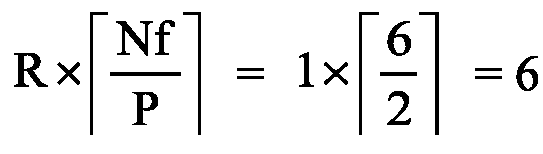
- The base station determines the feedback information f as f = [s(1), s(2)] =






- In this example, the base station sends a signal including the feedback information f =

- The terminal device SN(1) performs coding with the generator matrix G on


signature index 4, and then performs QPSK modulation, to determine acomplex sequence 
signature index 4 included in the TB b(1) belongs to the set BI of identifiers of correct TBs, and the terminal device SN(1) determines that acknowledgment of the TB b(1) is positive acknowledgment ACK. Otherwise, the terminal device SN(1) determines that the acknowledgment of the TB b(1) is negative acknowledgment NACK. - The terminal device SN(2) performs coding with the generator matrix G on

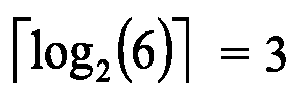
signature index 3, and then performs QPSK modulation, to determine acomplex sequence 
signature index 3 included in the TB b(2) belongs to the set BI of identifiers of correct TBs, and the terminal device SN(2) determines that acknowledgment of the TB b(2) is positive acknowledgment ACK. Otherwise, the terminal device SN(2) determines that the acknowledgment of the TB b(2) is negative acknowledgment NACK. - The terminal device SN(3) performs coding with the generator matrix G on


signature index 2, and then performs QPSK modulation, to determine acomplex sequence 
signature index 2 included in the TB b(3) belongs to the set BI of identifiers of correct TBs, and the terminal device SN(3) determines that acknowledgment of the TB b(3) is positive acknowledgment ACK. Otherwise, the terminal device SN(3) determines that the acknowledgment of the TB b(3) is negative acknowledgment NACK. - The terminal device SN(1) performs coding with the generator matrix G on


signature index 1, and then performs QPSK modulation, to determine acomplex sequence 
signature index 1 included in the TB b(4) belongs to the set BI of identifiers of correct TBs, and the terminal device SN(1) determines that acknowledgment of the TB b(4) is positive acknowledgment ACK. Otherwise, the terminal device SN(1) determines that the acknowledgment of the TB b(4) is negative acknowledgment NACK. - As compared with Example 6 and Example 7, the information transmission method provided in this example can improve acknowledgment reception reliability by selecting channel code with superior performance.
- In this example, a first node is a base station and a second node is a terminal device. This example includes a plurality of terminal devices which form a sequence of second nodes, and a TB identifier is a signature index.
- As shown in
FIG. 20 , the base station receives a signal, including a TB set B, sent by a sequence of terminal devices. The sequence of terminal devices includes Nu = 3 terminal devices: SN(1), SN(2), and SN(3), and the TB set B includes Nb = 4 TBs: b(1), b(2), b(3), and b(4). The signal including the TB set B includes a signal including a TB b(1), a signal including a TB b(2), a signal including a TB b(3), and a signal including a TB b(4). - In this example, the TBs b(1), b(2), b(3), and b(4) in the TB set B are respectively sent to the base station by the terminal devices SN(1), SN(2), SN(3), and SN(1) in the sequence of terminal devices. The TBs b(1), b(2), b(3), and b(4) in the TB set B include random access signatures, where the random access signatures are interleavers.
- In this example, the interleavers are elements of an ordered set of random access signatures. The ordered set of random access signatures includes Na = 6 interleavers r(1), r(2), r(3), r(4), r(5), and r(6), where signature indexes of the interleavers r(1), r(2), r(3), r(4), r(5) and r(6) are 1, 2, 3, 4, 5 and 6, respectively. The
signature indexes signature indexes - In this example, the random access signatures included in the TBs b(1), b(2), b(3), and b(4) are respectively determined by the terminal devices SN(1), SN(2), SN(3), and SN(1) as r(4), r(3), r(2), and r(1) according to higher layer parameters, where signature indexes of the random access signatures of the TBs b(1), b(2), b(3) and b(4) are 4, 3, 2 and 1, respectively.
- In this example, a maximum quantity of correct TBs Pmax = 3 is configured by adopting a higher layer parameter. In this example, a set of identifiers of correct TBs is a set of signature indexes of random access signatures included in correctly-received TBs in the TB set. In this example, the base station determines the following according to the signal including the TB set B: the set of identifiers of correct TBs is a set BI = {2, 3}, and a quantity P of correct TBs is equal to 2.
- In this example, the feedback information f is determined by the base station according to the following parameters: the maximum quantity of correct TBs Pmax = 3, the set BI of identifiers of correct TBs, a size Na of the ordered set of TB identifiers, or the quantity of correct TBs P = 2, where a length Nf of the feedback information f is equal to 6.
-
FIG. 22 is a schematic diagram of determining feedback information f by concatenation according to a set BI of identifiers of correct TBs, a quantity P of correct TBs, and a maximum quantity Pmax of correct TBs provided by an embodiment of the present disclosure. In this example, as shown inFIG. 22 , the base station determines the feedback information f according to the following method. - The base station performs channel coding on


first 
modulo 2 sum of the bits in the sequence a(p). - The base station performs QPSK modulation on the coding sequence c(1) = [0, 1, 0, 1] to obtain a complex sequence


- The base station determines feedback information f = [s(1), s(2), 0, 0] =
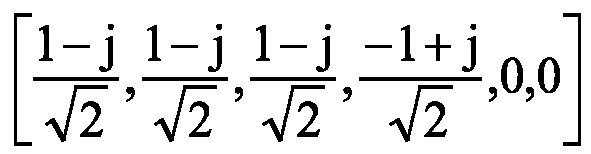

- In this example, the base station sends a signal including the feedback information f =

- The terminal device SN(1) performs single-parity-check coding on

signature index 4, and then performs QPSK modulation, to determine acomplex sequence 
signature index 4 included in the TB b(1) belongs to the set BI of identifiers of correct TBs, and the terminal device SN(1) determines that acknowledgment of the TB b(1) is positive acknowledgment ACK. Otherwise, the terminal device SN(1) determines that the acknowledgment of the TB b(1) is negative acknowledgment NACK. - The terminal device SN(2) performs single-parity-check coding on

signature index 3, and then performs QPSK modulation, to determine acomplex sequence 
signature index 3 included in the TB b(2) belongs to the set BI of identifiers of correct TBs, and the terminal device SN(2) determines that acknowledgment of the TB b(2) is positive acknowledgment ACK. Otherwise, the terminal device SN(2) determines that the acknowledgment of the TB b(2) is negative acknowledgment NACK. - The terminal device SN(3) performs single-parity-check coding on

signature index 3, and then performs QPSK modulation, to determine acomplex sequence 
signature index 2 included in the TB b(3) belongs to the set BI of identifiers of correct TBs, and the terminal device SN(3) determines that acknowledgment of the TB b(3) is positive acknowledgment ACK. Otherwise, the terminal device SN(3) determines that the acknowledgment of the TB b(3) is negative acknowledgment NACK. - The terminal device SN(1) performs single-parity-check coding on

signature index 3, and then performs QPSK modulation, to determine acomplex sequence 
signature index 1 included in the TB b(4) belongs to the set BI of identifiers of correct TBs, and the terminal device SN(1) determines that acknowledgment of the TB b(4) is positive acknowledgment ACK. Otherwise, the terminal device SN(1) determines that the acknowledgment of the TB b(4) is negative acknowledgment NACK. - In this example, the terminal device SN(1) sends two TBs b(1) and b(4), but selects different random access signatures. The base station determines the feedback information f according to a signature index of a random access signature of a correctly decoded TB, so that the terminal device SN(1) can determine whether the two TBs b(1) and b(4) are correctly received. In addition, the feedback information f obtained by channel coding can increase a minimum distance between different TB sequences and improve feedback detection performance.
- A difference between this example and Example 8 is that in this example, a random access signature is a spread spectrum sequence, and feedback information f is determined by a base station according to the following parameters: a maximum quantity of correct TBs Pmax = 2, a set BI of identifiers of correct TBs, a quantity of correct TB P = 2, a size Na of an ordered set of TB identifiers, or a length Nf of the feedback information f, where the length Nf of the feedback information f is equal to 6.
-
FIG. 23 is a schematic diagram of determining a complex sequence s(p) according to an element BI(p) in a set BI of identifiers of correct TBs and a size Na of an ordered set of TB identifiers provided by an embodiment of the present disclosure. In this example, as shown inFIG. 23 , the base station determines the feedback information f according to the following method. - The base station performs channel coding on


-
FIG. 24 is a schematic diagram of determining feedback information f according to a quantity P of correct TBs, a maximum quantity Pmax of correct TBs, a length Nf of the feedback information f, and complex sequences s(1), s(2), ..., and s(P) provided by the embodiment of the present disclosure. As shown inFIG. 24 , the base station determines the feedback information f by superimposing the complex sequences s(1), s(2) and an all-zero sequence with a length of
- For p = 1, 2, a sequence


- The base station superimposes s'(1) and s'(2) to obtain the feedback information f as follows:

- Another difference between this example and Example 8 is that in this example, the base station sends a signal including the feedback information

- The terminal device SN(1) performs superposition coding defined by the 3×4 complex matrix A on

signature index 4, to determine acomplex sequence 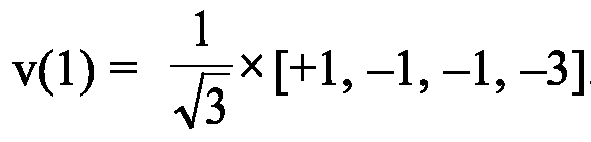

signature index 4 included in the TB b(1) belongs to the set BI of identifiers of correct TBs, and the terminal device SN(1) determines that acknowledgment of the TB b(1) is positive acknowledgment ACK. Otherwise, the terminal device SN(1) determines that the acknowledgment of the TB b(1) is negative acknowledgment NACK. - The terminal device SN(2) performs superposition coding defined by the 3×4 complex matrix A on

signature index 3, to determine acomplex sequence 

signature index 3 included in the TB b(2) belongs to the set BI of identifiers of correct TBs, and the terminal device SN(2) determines that acknowledgment of the TB b(2) is positive acknowledgment ACK. Otherwise, the terminal device SN(2) determines that the acknowledgment of the TB b(2) is negative acknowledgment NACK. - The terminal device SN(3) performs superposition coding defined by the 3×4 complex matrix A on

signature index 2, to determine acomplex sequence 

signature index 2 included in the TB b(3) belongs to the set BI of identifiers of correct TBs, and the terminal device SN(3) determines that acknowledgment of the TB b(3) is positive acknowledgment ACK. Otherwise, the terminal device SN(3) determines that the acknowledgment of the TB b(3) is negative acknowledgment NACK. - The terminal device SN(1) performs superposition coding defined by the 3×4 complex matrix A on

signature index 1, to determine acomplex sequence 
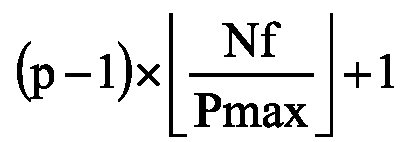
signature index 1 included in the TB b(4) belongs to the set BI of identifiers of correct TBs, and the terminal device SN(1) determines that acknowledgment of the TB b(4) is positive acknowledgment ACK. Otherwise, the terminal device SN(1) determines that the acknowledgment of the TB b(4) is negative acknowledgment NACK. - A difference between this example and Example 10 is that in this example, a random access signature is a sparse code sequence.
-
FIG. 25 is a schematic diagram of determining a complex sequence s(1) and a placement vector z(p) according to an element BI(p) in a set BI of identifiers of correct TBs, a maximum quantity Pmax of correct TBs, and a length Nf of feedback information f provided by an embodiment of the present disclosure. In this example, as shown inFIG. 25 , a base station determines feedback information f according to the following method. - The base station performs channel coding on the
first 
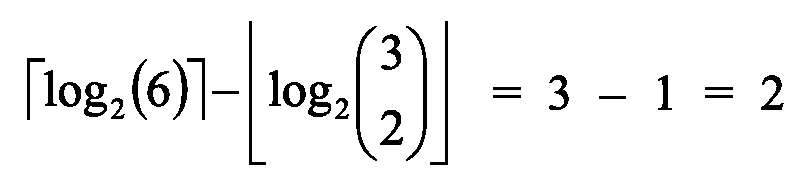


first 


- The base station determines the feedback information f by superimposing the complex sequences s(1) and s(2) in the following manner.
- The base station divides the feedback information f with a length of Nf evenly into Pmax = 3 equal parts with a length of

- For p = 1, 2, the base station determines, according to


Table 2 Table of mapping of 1 bit to the position vector z(p) Bit z(p) 0 [1, 1, 0] 1 [1, 0, 1] - As can be seen from Table 2, z(1) = [1, 1, 0] and z(2) = [1, 0, 1].
-
FIG. 26 is a schematic diagram of a base station determining feedback information f by superimposition according to complex sequences s(1) and s(2), and placement vectors z(1) and z(2) provided by an embodiment of the present disclosure. As shown inFIG. 26 , the base station determines the feedback information f by superimposition according to the complex sequences s(1) and s(2), and the placement vectors z(1) and z(2) using the following pseudo code:1 k = 1; ks = length-P all "1" vector; 2 while k ≤ Nf 3 f(k) = 0; i = floor((k-1) * Pmax/Nf) +1; p = 1; 4 while P ≤ P 5 if z(p, i) ≠ 0 6 f(k) = f(k) + α(p) · s(p, ks(p)); 7 ks(p) = ks(p) + 1; 8 end p = p + 1; 9 end 11 k = k + 1; 12 end - Here, floor(x) represents the largest positive integer less than or equal to x, f(k) is a kth element of the feedback information f, z(p, i) is an ith element of the placement vector z(p), ks(p) is a pth element of a vector ks, s(p, ks(p)) is a ks(p)th element of the complex sequence s(p), α(1) = α(2) = 1, and finally the feedback information f = [2,-2, +1,-1, +1,-1] is obtained.
- Another difference between this example and Example 10 is that in this example, the base station sends a signal including the feedback information f = [2, -2, +1, -1, +1, -1] to a sequence of terminal devices <SN(1), SN(2), SN(3)>. Terminal devices SN(1), SN(2), and SN(3) determine acknowledgment of TBs b(1), b(2), b(3), and b(4), respectively, according to the following method.
- The terminal device SN(1) performs superposition coding defined by the 2×4 complex matrix A on

signature index 4, and performs a zero adding operation, to determine a complex sequence v(1) = [-1, +1, -1, +1, 0, 0]. The terminal device SN(1) performs an inner product operation on v(1) and the signal including the feedback information f. If an absolute value of an inner product is greater than half of an L2 norm of the complex sequence v(1), the terminal device SN(1) determines that thesignature index 4 included in the TB b(1) belongs to the set BI of identifiers of correct TBs, and the terminal device SN(1) determines that acknowledgment of the TB b(1) is positive acknowledgment ACK. Otherwise, the terminal device SN(1) determines that the acknowledgment of the TB b(1) is negative acknowledgment NACK. - The terminal device SN(2) performs superposition coding defined by the 2×4 complex matrix A on

signature index 3, and performs a zero adding operation, to determine a complex sequence v(2) = [+1, -1, 0, 0, +1, -1]. The terminal device SN(2) performs an inner product operation on v(2) and the signal including the feedback information f. If an absolute value of an inner product is greater than half of an L2 norm of the complex sequence v(2), the terminal device SN(2) determines that thesignature index 3 included in the TB b(2) belongs to the set BI of identifiers of correct TBs, and the terminal device SN(2) determines that acknowledgment of the TB b(2) is positive acknowledgment ACK. Otherwise, the terminal device SN(2) determines that the acknowledgment of the TB b(2) is negative acknowledgment NACK. - The terminal device SN(3) performs superposition coding defined by the 2×4 complex matrix A on

signature index 2, and performs a zero adding operation, to determine a complex sequence v(3) = [+1, -1, +1, -1, 0, 0]. The terminal device SN(3) performs an inner product operation on v(3) and the signal including the feedback information f. If an absolute value of an inner product is greater than half of an L2 norm of the complex sequence v(3), the terminal device SN(3) determines that thesignature index 2 included in the TB b(3) belongs to the set BI of identifiers of correct TBs, and the terminal device SN(3) determines that acknowledgment of the TB b(3) is positive acknowledgment ACK. Otherwise, the terminal device SN(3) determines that the acknowledgment of the TB b(3) is negative acknowledgment NACK. - The terminal device SN(1) performs superposition coding defined by the 2×4 complex matrix A on

signature index 1, to determine a complex sequence v(4) = [+1, +1, 0, 0, +1, +1]. The terminal device SN(1) performs an inner product operation on v(4) and the signal including the feedback information f. If an absolute value of an inner product is greater than half of an L2 norm of the complex sequence v(4), the terminal device SN(1) determines that thesignature index 1 included in the TB b(4) belongs to the set BI of identifiers of correct TBs, and the terminal device SN(1) determines that acknowledgment of the TB b(4) is positive acknowledgment ACK. Otherwise, the terminal device SN(1) determines that the acknowledgment of the TB b(4) is negative acknowledgment NACK. - A difference between this example and Example 10 is that in this example, a random access signature is a scrambling sequence, and the scrambling sequence is an element of an ordered set of random access signatures. The ordered set of random access signatures includes Na = 5 scrambling sequences r(1), r(2), r(3), r(4), and r(5), where signature indexes of the scrambling sequences r(1), r(2), r(3), r(4) and r(5) are 0, 1, 2, 3 and 4, respectively. The
signature indexes signature indexes FIG. 27 is a schematic diagram of a relationship among a second node, a TB, a random access signature, and a signature index provided by an embodiment of the present disclosure. In this example, as shown in the figure, signature indexes of random access signatures of TBs b(1), b(2), b(3) and b(4) are 3, 2, 1, and 0 respectively. - Another difference between this example and Example 10 is that in this example, a base station determines the following according to a signal including a TB set B: a set BI of identifiers of correct TBs being an empty set Φ, or a quantity P of correct TBs equal to 0.
- Another difference between this example and Example 10 is that in this example, feedback information f is determined by compression coding by the base station according to the following parameters: the set Φ of identifiers of correct TBs, or the quantity P of correct TBs equal to 0, where a length Nf of the feedback information f is equal to 0.
- The base station determines the feedback information f according to the following method.
- The base station determines that the feedback information f is an empty sequence according to the set of identifiers of correct TBs being an empty set Φ (or the quantity P of correct TBs equal to 0). Further, the base station determines that a signal including the feedback information f is a zero power signal.
- Another difference between this example and Example 10 is that in this example, the base station sends the zero power signal including the feedback information f to a sequence of terminal devices <SN(1), SN(2), SN(3), SN(1)>. The sequence of terminal devices <SN(1), SN(2), SN(3), SN(1)> receives the zero power signal including the feedback information f. Further, if the terminal device SN(1) fails to decode, the terminal device SN(1) determines that acknowledgment of TBs b(1) and b(4) are negative acknowledgment NACK; if the terminal device SN(2) fails to decode, the terminal device SN(2) determines that acknowledgment of a TB b(2) is negative acknowledgment NACK; and if the terminal device SN(3) fails to decode, the terminal device SN(3) determines that acknowledgment of a TB b(3) is negative acknowledgment NACK.
- In this example, a first node is a base station and a second node is a terminal device. This example includes a plurality of terminal devices which form a sequence of second nodes, and a TB identifier is an index value of a UE identifier.
-
FIG. 28 is a schematic diagram of a relationship among a second node, a TB, a UE identifier, and an index value of the UE identifier provided by an embodiment of the present disclosure. As shown inFIG. 28 , the base station receives a signal, including a TB set B, sent by a sequence of terminal devices. The sequence of terminal devices includes Nu = 4 terminal devices: SN(1), SN(2), SN(3), and SN(4), and the TB set B includes Nb = 4 TBs: b(1), b(2), b(3), and b(4). The signal including the TB set B includes a signal including a TB b(1), a signal including a TB b(2), a signal including a TB b(3), and a signal including a TB b(4). - In this example, for t = 1, 2, 3, 4, a TB b(t) in the TB set B is sent to the base station by a terminal device SN(t) in the sequence of terminal devices. The TB b(t) in the TB set B includes a UE identifier of the terminal device SN(t), the UE identifier of the terminal device SN(t) is an RA-RNTI, and UE identifiers of the terminal devices SN(1), SN(2), SN(3) and SN(4) are 4, 3, 2 and 5 respectively. The
UE identifiers index values - In this example, a maximum quantity of correct TBs Pmax = 2 is configured by the base station. A set of identifiers of correct TBs is a set of UE identifiers included in correctly-received TBs in the TB set. The base station determines the following according to the signal including the TB set B: The set of identifiers of correct TBs is a set BI = {2, 3}, and a quantity P of correct TBs is equal to 2.
- In this example, feedback information f is determined by a base station according to the following parameters: the set BI of identifiers of correct TBs, the quantity of correct TB P = 2, the ordered set I of TB identifiers, or an ordered set of transmission sequences, where the ordered set of transmission sequences includes Na = 5 complex sequences, which are respectively:




-
FIG. 29 is a schematic diagram of determining feedback information f by superimposition according to a set BI of identifiers of correct TBs and an ordered set of TB sequences provided by an embodiment of the present disclosure. As shown inFIG. 29 , the base station determines the feedback information f according to the following method. - According to the ordered set I of TB identifiers, the size of the ordered set of TB identifiers Na = 5, the ordered set of TB sequences, and the set BI of identifiers of correct TBs, the base station obtains a complex sequence t(BI(1)) = t(2) according to BI(1) = 2. The base station obtains a complex sequence t(BI(2)) = t(3) according to BI(2) = 3.
- The base station superimposes the complex sequences t(2) and t(3) to determine that the feedback information f is f = α(1) × t(2) + α(2) × t(3) = [2, 0, 1, 0,-2,-1], where α(1) = α(2) = 1.
- In this example, the base station sends a signal including the feedback information f = [2, 0, 1, 0,-2,-1] to the sequence of terminal devices <SN(1), SN(2), SN(3), SN(4)>, and the sequence of terminal devices <SN(1), SN(2), SN(3), SN(4)> receives the signal including the feedback information f.
- Further, the terminal devices SN(1), SN(2), SN(3), and SN(4) determine acknowledgment of TBs b(1), b(2), b(3), and b(4), respectively, according to the following method.
- The terminal device SN(1) determines, according to an
index value 1 of a UE identifier corresponding to aUE identifier 4, that an inner product operation is performed on the sequence t(1) and the signal including the feedback information f. If an absolute value of an inner product is greater than half of an L2 norm of the sequence t(1), the terminal device SN(1) determines that theindex value 1 of a UE identifier corresponding to theUE identifier 4 of the terminal device SN(1) belongs to the set BI of identifiers of correct TBs, and the terminal device SN(1) determines that acknowledgment of the TB b(1) is positive acknowledgment ACK. If an absolute value of an inner product is less than half of an L2 norm of the sequence t(1), the terminal device SN(1) determines that theindex value 1 of a UE identifier corresponding to theUE identifier 4 of the terminal device SN(1) does not belong to the set BI of identifiers of correct TBs, and the terminal device SN(1) determines that acknowledgment of the TB b(1) is negative acknowledgment NACK. - The terminal device SN(2) determines, according to an
index value 2 of a UE identifier corresponding to aUE identifier 3, that an inner product operation is performed on the sequence t(2) and the signal including the feedback information f. If an absolute value of an inner product is greater than half of an L2 norm of the sequence t(2), the terminal device SN(2) determines that theindex value 2 of a UE identifier corresponding to theUE identifier 3 of the terminal device SN(2) belongs to the set BI of identifiers of correct TBs, and the terminal device SN(2) determines that acknowledgment of the TB b(2) is positive acknowledgment ACK. If an absolute value of an inner product is less than half of an L2 norm of the sequence t(2), the terminal device SN(2) determines that theindex value 2 of a UE identifier corresponding to theUE identifier 3 of the terminal device SN(2) does not belong to the set BI of identifiers of correct TBs, and the terminal device SN(2) determines that acknowledgment of the TB b(2) is negative acknowledgment NACK. - The terminal device SN(3) determines, according to an
index value 3 of a UE identifier corresponding to aUE identifier 2, that an inner product operation is performed on the sequence t(3) and the signal including the feedback information f. If an absolute value of an inner product is greater than half of an L2 norm of the sequence t(3), the terminal device SN(3) determines that theindex value 3 of a UE identifier corresponding to theUE identifier 2 of the terminal device SN(3) belongs to the set BI of identifiers of correct TBs, and the terminal device SN(3) determines that acknowledgment of the TB b(3) is positive acknowledgment ACK. If an absolute value of an inner product is less than half of an L2 norm of the sequence t(3), the terminal device SN(3) determines that theindex value 3 of a UE identifier corresponding to theUE identifier 2 of the terminal device SN(3) does not belong to the set BI of identifiers of correct TBs, and the terminal device SN(3) determines that acknowledgment of the TB b(3) is negative acknowledgment NACK. - The terminal device SN(4) determines, according to an
index value 4 of a UE identifier corresponding to aUE identifier 5, that an inner product operation is performed on the sequence t(4) and the signal including the feedback information f. If an absolute value of an inner product is greater than half of an L2 norm of the sequence t(4), the terminal device SN(4) determines that theindex value 4 of a UE identifier corresponding to theUE identifier 5 of the terminal device SN(4) belongs to the set BI of identifiers of correct TBs, and the terminal device SN(4) determines that acknowledgment of the TB b(4) is positive acknowledgment ACK. If an absolute value of an inner product is less than half of an L2 norm of the sequence t(4), the terminal device SN(4) determines that theindex value 4 of a UE identifier corresponding to theUE identifier 5 of the terminal device SN(4) does not belong to the set BI of identifiers of correct TBs, and the terminal device SN(4) determines that acknowledgment of the TB b(4) is negative acknowledgment NACK. - In this example, if the quantity P of correct TBs is 0, the length Nf of the feedback information f is 0, the feedback information f is an empty sequence, and the signal including the feedback information f is a zero power signal.
-
FIG. 30 is a flowchart of an information transmission method provided by an embodiment of the present disclosure. As shown inFIG. 30 , the information transmission method provided by the embodiment of the present disclosure can be used for any network element having data reception and signaling transmission functions, such as a base station, a relay, or a terminal device, including but not limited to steps S4000 and S5000. - At S4000, a TB is sent to a first node.
- At S5000, feedback information sent by the first node is received, where the feedback information is used to represent a reception condition of the TB.
- In some embodiments, the second node sends a signal including the TB to the first node, at which one or more TBs form a TB set.
- In some embodiments, when a plurality of second nodes send TBs to the first node, the second nodes that send the TB set constitute a sequence of second nodes. Here, the sequence of second nodes includes Nu second nodes, and the TB set includes Nb TBs, where Nu and Nb are positive integers, and Nu is less than or equal to Nb.
- In some embodiments, a TB in the TB set includes a TB identifier, an ordered set of TB identifiers includes Na TB identifiers I(1), I(2), ..., and I(Na), and Na is a size of the ordered set of TB identifiers. For k=1, 2, ..., Na, a kth element in the ordered set of TB identifiers is I(k). Here, the kth element I(k) in the ordered set of TB identifiers may be an integer k or an integer k-1.
- In some embodiments, the TB is indicated by a TB identifier.
- In some embodiments, the TB identifier may be one of the following: a UE identifier, an index value of a UE identifier, or a signature index.
- In some embodiments, the UE identifier is a UE identifier of a second node in the sequence of second nodes, and UE identifiers of two different second nodes in the sequence of second nodes are different. The UE identifiers may be used for the first node to distinguish between different TBs in the TB set in a signal including the TB set, and the UE identifier is an integer.
- In some embodiments, the TB identifier is a UE identifier, and elements in the ordered set of TB identifiers are UE identifiers. An example is: the ordered set of TB identifiers I = <I(1), I(2), I(3), I(4), I(5)> = <0, 1, 2, 3, 4>, where the size Na of the ordered set of TB identifiers is equal to 5, and a UE identifier corresponding to the second element I(2) in the ordered set of TB identifiers is 1. Another example is: the ordered set of TB identifiers I = <I(1), I(2), I(3), I(4), I(5)> = <1, 2, 3, 4, 5>, where the size Na of the ordered set of TB identifiers is equal to 5, and the UE identifier corresponding to the second element I(2) in the ordered set of TB identifiers is 2. Still another example is: the ordered set of TB identifiers I = <I(1), I(2), I(3), I(4)> = <0, 11, 20, 30>, where the size Na of the ordered set of TB identifiers is equal to 4, and the UE identifier corresponding to the second element I(2) in the ordered set of TB identifiers is 11.
- In some embodiments, the index value of a UE identifier is an index k of an element I(k) in an ordered set of TB identifiers I = <I(1), I(2), ..., I(Na)>, k = 1, 2, ..., Na, and the index value of the UE identifier is an integer.
- In some embodiments, the TB identifier is the index value of the UE identifier, the UE identifier is an element in an ordered set of UE identifiers, and the ordered set of UE identifiers includes Na UE identifiers ID(1), ID(2), ..., ID(Na). Here, Na is the size of the ordered set of UE identifiers and the size of the ordered set of TB identifiers, k=1, 2, ..., Na, and an index value of a UE identifier corresponding to a kth UE identifier ID(k) in the ordered set of UE identifiers is a kth element I(k) in elements in the ordered set of TB identifiers. An example is: the ordered set of UE identifiers ID = <ID(1), ID(2), ID(3), ID(4)> = <0, 11, 20, 30>, and the corresponding ordered set of TB identifiers I = <I(1), I(2), I(3), I(4)> = <0, 1, 2, 3>; where the size of the ordered set of UE identifiers and the size of the ordered set of TB identifiers are both Na = 4, and an index value of a UE identifier of an element ID(2) = 11 in the ordered set of UE identifiers is the element I(2) = 1 in the ordered set of TB identifiers.
- In some embodiments, the TB identifier is a signature index, and the signature index is a signature index of a random access signature, that is, a TB in the TB set includes the random access signature. The random access signature is an element in an ordered set of random access signatures, and the ordered set of random access signatures includes Na random access signatures r(1), r(2), ..., r(Na). Here, Na is a size of the ordered set of random access signatures and the size of the ordered set of TB identifiers, k=1, 2, ..., Na, and a signature index of a kth random access signature r(k) in the ordered set of random access signatures is a kth element I(k) in the ordered set of TB identifiers.
- It should be noted that the random access signature may be a pilot, a reference signal, a preamble, a spread spectrum sequence, an interleaver, an interleaver pattern, an interleaver sequence, a scrambling sequence, a sparse code sequence, or the like.
- In some embodiments, the sequence of second nodes determines a random access signature of a TB according to a UE identifier of the TB, as a random access signature included in the TB in the TB set. The random access signatures may be used for the first node to distinguish between different TBs in the TB set in the signal including the TB set.
- In some embodiments, the sequence of second nodes determines a random access signature of a TB according to a higher layer parameter, as a random access signature included in the TB in the TB set. The random access signatures may be used for the first node to distinguish between different TBs in the TB set in the signal including the TB set.
- It should be noted that the first node and the second node may be any network elements with data reception and signaling transmission functions such as base stations, relays, or terminal devices.
- In some embodiments, information about the correct TB includes the maximum quantity Pmax of correct TBs, the ordered set of TB identifiers, the ordered set of TB sequences, a predefined set of complex sequences, the size Na of the ordered set of TB identifiers, the set of identifiers of correct TBs, a set of correct TB sequences, the quantity P of correct TBs, or the length Nf of the feedback information f.
- In some embodiments, the sequence of second nodes receives the feedback information sent by the first node, where the feedback information is used to represent a reception condition of the TB, and the feedback information is obtained according to the TB set. The feedback information may be determined according to one or more of the following parameters: the maximum quantity Pmax of correct TBs, the ordered set of TB identifiers, the ordered set of TB sequences, the predefined set of complex sequences, the size Na of the ordered set of TB identifiers, the set of identifiers of correct TBs, the set of correct TB sequences, the quantity P of correct TBs, or the length Nf of the feedback information f.
- In some embodiments, the ordered set of TB sequences is a predefined set of complex sequences.
- It should be noted that the size Na of the ordered set of TB identifiers is a quantity of elements in the ordered set of TB identifiers, the quantity P of correct TBs is a quantity of elements in the set of identifiers of correct TBs, the ordered set of TB sequences includes Na complex sequences t(1), t(2), ..., t(Na), the set of identifiers of correct TBs includes P TB identifiers BI(1), BI(2), ..., BI(P), and the set of correct TB sequences includes P complex sequences s(1), s(2), ..., s(P). Here, Na and Pmax are positive integers, P is a non-negative integer, and P is less than or equal to Pmax. For k=1, 2, ..., P, a length of a complex sequence s(k) is Ns(k), where, Ns(k) is a non-negative integer, and Ns(k) is less than or equal to Nf.
- It should be noted that the maximum quantity Pmax of correct TBs is less than or equal to the size Na of the ordered set of TB identifiers. In some embodiments, the maximum quantity Pmax of correct TBs is configured by the first node. In some other embodiments, the maximum quantity Pmax of correct TBs is pre-configured by adopting a higher layer parameter.
- It is to be noted that, in some embodiments, the set of identifiers of correct TBs is a set of UE identifiers included in correctly-received TBs in the TB set. Here, the correctly-received TB is a TB whose acknowledgment state is a positive acknowledgment ACK. A UE identifier belonging to the set of identifiers of correct TBs is used to indicate that an acknowledgment state of a TB corresponding to the UE identifier is positive acknowledgment ACK. A UE identifier not belonging to the set of identifiers of correct TBs is used to indicate that an acknowledgment state of a TB corresponding to the UE identifier is negative acknowledgment NACK. Therefore, the set of identifiers of correct TBs is a subset of the ordered set of TB identifiers.
- It is to be noted that, in some embodiments, the set of identifiers of correct TBs is a set of index values of UE identifiers included in correctly-received TBs in the TB set. Here, the correctly-received TB is a TB whose acknowledgment state is a positive acknowledgment ACK. An index value of a UE identifier belonging to the set of identifiers of correct TBs is used to indicate that an acknowledgment state of a TB corresponding to the index value of the UE identifier is positive acknowledgment ACK. An index value of a UE identifier not belonging to the set of identifiers of correct TBs is used to indicate that an acknowledgment state of a TB corresponding to the index value of the UE identifier is negative acknowledgment NACK. Therefore, the set of identifiers of correct TBs is a subset of the ordered set of TB identifiers.
- It is to be noted that, in some embodiments, the set of identifiers of correct TBs is a set of signature indexes of random access signatures corresponding to correctly-received TBs in the TB set. Here, the correctly-received TB is a TB whose acknowledgment state is a positive acknowledgment ACK. A signature index of a random access signature belonging to the set of identifiers of correct TBs is used to indicate that an acknowledgment state of a TB that includes the random access signature is positive acknowledgment ACK. A signature index of a random access signature not belonging to the set of identifiers of correct TBs is used to indicate that an acknowledgment state of a TB corresponding to the random access signature is negative acknowledgment NACK. Therefore, the set of identifiers of correct TBs is a subset of the ordered set of TB identifiers.
- It should be noted that the set of correct TB sequences is a subset of the ordered set of TB sequences. For k=1, 2, ..., Na, a kth complex sequence t(k) of the ordered set of TB sequences corresponds to a kth element I(k) in the ordered set of TB identifiers. A length of the kth complex sequence t(k) in the ordered set of TB sequences is Nt(k), Nt(k) is a non-negative integer, and Nt(k) is less than or equal to Nf.
- A difference between this example and Example 9 is that in this example, as shown in
FIG. 20 , a sequence of terminal devices receives a signal including feedback information f sent by a base station, where the sequence of terminal devices includes Nu = 3 terminal devices SN(1), SN(2) and SN(3), the feedback information f is feedback information of a TB set B, and a length of the feedback information f is a complex sequence with a length of Nf = 6. Here, the TB set B is sent to the base station by the sequence of terminal devices, where the TB set B includes Nb = 4 TBs: b(1), b(2), b(3), and b(4). Here, the feedback information f is determined by the base station according to a signal including the TB set B sent by the sequence of terminal devices. -
FIG. 31 is a schematic diagram of an information transmission apparatus provided by an embodiment of the present disclosure. As shown inFIG. 31 , theinformation transmission apparatus 200 provided in this embodiment of the present disclosure is applied to a base station and can execute the information transmission method provided in the embodiments of the present disclosure. The apparatus has functional modules for execution of the method and can achieve corresponding technical effects. The apparatus can be realized by software, hardware or a combination of software and hardware, including: - a
receiving module 201 configured to receive a TB sent by the at least one second node, where the TB forms a TB set; - a feedback
information generation module 202 configured to obtain feedback information according to the TB set, where the feedback information is used to represent a reception condition of the TB sent by the second node; and - a sending
module 203 configured to send feedback information to a sequence of second nodes. -
FIG. 32 is a schematic diagram of an information transmission apparatus provided by an embodiment of the present disclosure. As shown inFIG. 32 , theinformation transmission apparatus 300 provided in this embodiment of the present disclosure is applied to a UE and can execute the information transmission method provided in the embodiments of the present disclosure. The apparatus has functional modules for execution of the method and can achieve corresponding technical effects. The apparatus can be realized by software, hardware or a combination of software and hardware, including: - a sending
module 301 configured to send a TB to a first node, where the TB forms a TB set at the first node; and - a
receiving module 302 configured to receive feedback information sent by the first node, where the feedback information is used to represent a reception condition of the TB. -
FIG, 33 is a schematic diagram of a base station provided by an embodiment of the present disclosure. As shown inFIG. 33 , thebase station 400 includes amemory 401, aprocessor 402, areceiver 403, and atransmitter 404. There may be one ormore memories 401 andprocessors 402, although onememory 401 and oneprocessor 402 are shown as an example inFIG. 33 . Thememory 401 and theprocessor 402 of the base station may be connected by a bus or in other ways. InFIG. 33 , the connection is realized by a bus, for example. - As a computer-readable storage medium, the
memory 401 may be configured to store a software program, a computer-executable program and a module, for example, the program instructions/modules corresponding to the information transmission method of any one of the embodiments of the present disclosure. Theprocessor 402 implements the above information transmission method by executing the software programs, instructions and modules stored in thememory 401. - The
memory 401 may mainly include a storage program area and a storage data area, where the program storage area may store an operating system and application program(s) required by at least one feature. In addition, thememory 401 may include a high-speed random-access memory and a non-volatile memory, for example, at least one magnetic disk storage device, a flash memory device, or another non-volatile solid-state storage device. In some examples, thememory 401 includes memories remotely located with respect to theprocessor 402, and these remote memories may be connected to the device via a network. Examples of the above-mentioned network include, but are not limited to, the Internet, an intranet, a local area network, a mobile communication network, and a combination thereof. - The
receiver 403 is configured to perform information reception. Thetransmitter 404 is configured to transmit feedback information according to the control of theprocessor 402. -
FIG. 34 is a schematic diagram of a UE provided by an embodiment of the present disclosure. As shown inFIG. 34 , theuser equipment 500 includes amemory 501, aprocessor 502, areceiver 403, and atransmitter 404. There may be one ormore memories 501 andprocessors 502, although onememory 501 and oneprocessor 502 are shown as an example inFIG. 34 . Thememory 501 and theprocessor 502 of the UE may be connected by a bus or in other ways. InFIG. 34 , the connection is realized by a bus, for example. - As a computer-readable storage medium, the
memory 501 may be configured to store a software program, a computer-executable program and a module, for example, the program instructions/modules corresponding to the information transmission method of any one of the embodiments of the present disclosure. Theprocessor 502 implements the above information transmission method by executing the software programs, instructions and modules stored in thememory 501. - The
memory 501 may mainly include a storage program area and a storage data area, where the program storage area may store an operating system and application program(s) required by at least one feature. In addition, thememory 501 may include a high-speed random-access memory and a non-volatile memory, for example, at least one magnetic disk storage device, a flash memory device, or another non-volatile solid-state storage device. In some examples, thememory 501 includes memories remotely located with respect to theprocessor 502, and these remote memories may be connected to the device via a network. Examples of the above-mentioned network include, but are not limited to, the Internet, an intranet, a local area network, a mobile communication network, and a combination thereof. - The
receiver 503 is configured to receive feedback information. Thetransmitter 504 is configured to transmit a TB according to the control of theprocessor 502. - An embodiment of the present disclosure provides a computer-readable storage medium storing computer-executable instructions for implementing an information transmission method as provided in any embodiment of the present disclosure.
- An embodiment of the present disclosure provides a computer program product, including a computer program or computer instructions, where the computer program or the computer instructions are stored in a computer-readable storage medium, a processor of a computer device reads the computer program or the computer instructions from the computer-readable storage medium, and the computer program or the computer instructions, when executed by the processor, cause the computer device to implement the information transmission method according to any of the embodiments of the present disclosure.
- The system architecture and application scenario described in the embodiment of the present disclosure are for more clearly describing the technical schemes of the embodiments of the present disclosure, and do not constitute a limitation on the technical schemes provided by the embodiments of the present disclosure. Those having ordinary skill in the art may understand that, with evolution of the system architecture and emergence of new application scenarios, the technical schemes provided by the embodiments of the present disclosure are also applicable to similar technical problems.
- It can be understood by those having ordinary skill in the art that all or some of the steps of the methods, systems and functional modules/units in the devices disclosed above can be implemented as software, firmware, hardware and appropriate combinations thereof.
- In a hardware implementation, the division between functional modules/units mentioned in the above description does not necessarily correspond to the division of physical components. For example, a physical component may have multiple functions, or a function or step may be performed cooperatively by several physical components. Some or all of the physical components may be implemented as software executed by a processor, such as a central processing unit, a digital signal processor or a microprocessor, or as hardware, or as an integrated circuit, such as an application-specific integrated circuit. Such software may be distributed on a computer-readable media, which may include computer-readable storage media (or non-transitory media) and communication media (or transitory media). As well known to those having ordinary skill in the art, the term computer-readable storage medium includes volatile and nonvolatile, removable and non-removable media implemented in any method or technique for storing information, such as computer-readable instructions, data structures, program modules or other data. A computer storage medium includes but is not limited to a random access memory (RAM), a read-only memory (ROM), an electrically erasable programmable read-only memory (EEPROM), a flash memory or another memory technology, a compact disc read-only memory (CD-ROM), a digital versatile disk (DVD) or another optical disk storage, a magnetic cassette, a magnetic tape, magnetic disk storage or another magnetic storage apparatus, or any other medium that can be used to store desired information and can be accessed by a computer. Furthermore, it is well known to those having ordinary skill in the art that communication media typically contain computer-readable instructions, data structures, program modules or other data in a modulated data signal such as a carrier wave or other transmission mechanism, and may include any information transmission media.
- Terms such as "component", "module", and "system" used in this specification indicate computer-related entities, hardware, firmware, combinations of hardware and software, software, or software being executed. For example, a component may be, but is not limited to, a process that runs on a processor, a processor, an object, an executable file, a thread of execution, a program, or a computer. As illustrated by figures, both a computing device and an application that runs on a computing device may be components. One or more components may reside within a process or a thread of execution, and a component may be located on one computer or distributed between two or more computers. In addition, these components may be executed by various computer-readable media that store various data structures. For example, the components may communicate by adopting a local or remote process and based on a signal having one or more data packets (for example, data from two components interacting with another component in a local system, a distributed system, or across a network such as Internet interacting with another system by using the signal).
- Several embodiments of the present disclosure are described above with reference to the accompanying drawings and are not to limit the scope of the present disclosure. Any modifications, equivalent substitutions, and improvements made by those having ordinary skill in the art without departing from the scope and essence of the present disclosure shall fall within the scope of the present disclosure.
Claims (30)
- An information transmission method, comprising:receiving a transport block (TB) sent by at least one second node, wherein the TB forms a TB set;obtaining feedback information according to the TB set, wherein the feedback information is used to represent a reception condition of the TB sent by the at least one second node; andsending the feedback information to the at least one second node.
- The method of claim 1, wherein the TB is indicated by a TB identifier; and the TB identifier comprises at least one of:
a user equipment (UE) identifier, an index value of a UE identifier, or a signature index. - The method of claim 1, wherein the obtaining feedback information according to the TB set comprises:
obtaining the feedback information according to information about a correct TB in the TB set. - The method of claim 3, wherein the obtaining the feedback information according to information about a correct TB comprises:determining a target complex sequence of the correct TB; andobtaining the feedback information according to the target complex sequence.
- The method of claim 3, wherein:a set of the correct TB is an empty set; andthe obtaining the feedback information according to information about a correct TB comprises:
determining that the feedback information is an empty sequence, wherein a feedback signal comprising the feedback information is a zero power signal. - The method of claim 4 or 5, wherein the determining a target complex sequence of the correct TB comprises:
determining the target complex sequence in a predefined set of complex sequences according to a TB identifier of the correct TB. - The method of claim 4, wherein the determining a target complex sequence of the correct TB comprises:using a TB identifier of the correct TB as a part or all of a random number seed of a pseudorandom number generator (PRNG) to generate a pseudo-random complex sequence; anddetermining the pseudo-random complex sequence as the target complex sequence.
- The method of claim 4, wherein the determining a target complex sequence of the correct TB comprises:using a TB identifier of the correct TB as a part or all of a random number seed of a pseudorandom sequence generator (PRSG) to generate a pseudo-random bit sequence; andmodulating the pseudo-random bit sequence to obtain the target complex sequence.
- The method of claim 4, wherein the determining a target complex sequence of the correct TB comprises:performing binary representation on a TB identifier of the correct TB to obtain a binary-represented TB identifier;performing channel coding on at least one bit in the binary-represented TB identifier to obtain a first coding sequence; andmodulating the first coding sequence to obtain the target complex sequence.
- The method of claim 4, wherein the determining a target complex sequence of the correct TB comprises:performing binary representation on a TB identifier of the correct TB to obtain a binary-represented TB identifier; andperforming channel coding on at least one bit in the binary-represented TB identifier to obtain the target complex sequence.
- The method of claim 3, wherein information about the correct TB comprises at least one of:
a maximum quantity of correct TBs, an ordered set of TB identifiers, an ordered set of TB sequences, a predefined set of complex sequences, a size of the ordered set of TB identifiers, a set of identifiers of correct TBs, a set of correct TB sequences, a quantity of correct TBs, or a length of the feedback information. - The method of claim 11, wherein the maximum quantity of correct TBs is configured by adopting a higher layer parameter.
- The method of claim 4, wherein the obtaining the feedback information according to the target complex sequence comprises:obtaining a set of target complex sequences according to each target complex sequence; andobtaining the feedback information according to the set of target complex sequences.
- The method of claim 13, wherein the obtaining the feedback information according to the set of target complex sequences comprises:selecting at least one target complex sequence from the set of target complex sequences; andselecting an element from the selected target complex sequence to perform linear superposition, to obtain a feedback information element, wherein the feedback information comprises the feedback information element.
- The method of claim 13, wherein the obtaining the feedback information according to the set of target complex sequences comprises:according to each target complex sequence, obtaining target complex numbers in the target complex sequence; andforming all the target complex numbers into a set of target complex numbers, wherein each element of the feedback information is from the set of target complex numbers.
- The method of claim 14 or 15, wherein the feedback information comprises at least one feedback information element equal to a first constant.
- The method of claim 2, wherein the UE identifier comprises at least one of:
a subscription permanent identifier, a generic public subscription identifier, a permanent equipment identifier, a network access identifier, a subscription concealed identifier, a globally unique temporary identity, a radio network temporary identifier (RNTI), a system information RNTI, a paging RNTI, a random access RNTI, a temporary cell RNTI, a cell RNTI, a transmit power control-physical uplink control channel-RNTI, a transmit power control-physical uplink shared channel-RNTI, a transmit power control-sounding reference symbols-RNTI, an interruption RNTI, a modulation coding scheme cell RNTI, a configured scheduling RNTI, a slot format indication RNTI, or a semi-persistent RNTI. - The method of claim 2, wherein the signature index is a signature index of a random access signature, and the random access signature comprises at least one of:
a pilot, a reference signal, a preamble, a spread spectrum sequence, an interleaver, an interleaver pattern, an interleaver sequence, a scrambling sequence, or a sparse code sequence. - The method of claim 4, wherein the target complex sequence comprises a sequence of direct sequence spread spectrum used in non-orthogonal multiple access.
- The method of claim 9 or 10, wherein the channel coding comprises at least one of:
polar coding, low-density parity check coding, convolutional coding, turbo coding, Reed-Muller coding, Reed-Solomon coding, Bose-Chaudhuri-Hocquenghem coding, concatenated coding, cyclic coding, block coding, Hamming coding, Golay coding, repetition coding, single-parity-check coding, cyclic redundancy check coding, superposition coding, sparse superposition coding, sparse regression coding, lattice coding, algebraic geometric coding, Goppa coding, polarization-adjusted convolutional coding, pre-transformed polar coding, or parity-check polar coding. - The method of claim 8 or 9, wherein the modulation comprises at least one of:
π/2-binary phase shift keying, binary phase shift keying, quadrature phase shift keying, quadrature amplitude modulation, phase-shift keying, amplitude-shift keying, or amplitude and phase-shift keying. - An information transmission method, which is applied to a second node, comprising:sending a transport block (TB) to a first node; andreceiving feedback information sent by the first node, wherein the feedback information is used to represent a reception condition of the TB.
- The method of claim 22, wherein the TB is indicated by a TB identifier; and the TB identifier comprises at least one of:
a user equipment (UE) identifier, an index value of a UE identifier, or a signature index. - The method of claim 22, further comprising:
obtaining, according to the feedback information, second node feedback information corresponding to the second node, wherein the second node feedback information is used to represent the reception condition of the TB sent by the second node. - An information transmission apparatus, comprising:a receiving module, configured to receive a transport block (TB) sent by at least one second node, wherein the TB forms a TB set;a feedback information generation module, configured to obtain feedback information according to the TB set, wherein the feedback information is used to represent a reception condition of the TB sent by the at least one second node; anda sending module, configured to send the feedback information to the at least one second node.
- An information transmission apparatus, comprising:a sending module, configured to send a transport block (TB) to a first node; anda receiving module, configured to receive feedback information sent by the first node; wherein the feedback information is used to represent a reception condition of the TB.
- A base station, comprising: a memory, a processor, and a computer program stored in the memory and executable by the processor, wherein the computer program, when executed by the processor, causes the processor to implement the information transmission method of any one of claims 1 to 24.
- A user equipment (UE), comprising: a memory, a processor, and a computer program stored in the memory and executable by the processor, wherein the computer program, when executed by the processor, causes the processor to implement the information transmission method of any one of claims 1 to 24.
- A computer-readable storage medium, storing computer-executable instructions configured to implement the information transmission method of any one of claims 1 to 24.
- A computer program product, comprising a computer program or computer instructions stored in a computer-readable storage medium, from which a processor of a computer device reads the computer program or the computer instructions, wherein the computer program or the computer instructions, when executed by the processor, cause the computer device to implement the information transmission method of any one of claims 1 to 24.
Applications Claiming Priority (2)
| Application Number | Priority Date | Filing Date | Title |
|---|---|---|---|
| CN202210672756.5A CN117279038A (en) | 2022-06-15 | 2022-06-15 | Information transmission methods, devices, base stations, equipment, storage media and program products |
| PCT/CN2023/094334 WO2023241284A1 (en) | 2022-06-15 | 2023-05-15 | Information transmission method and apparatus, base station, device, storage medium, and program product |
Publications (2)
| Publication Number | Publication Date |
|---|---|
| EP4542903A1 true EP4542903A1 (en) | 2025-04-23 |
| EP4542903A4 EP4542903A4 (en) | 2026-01-14 |
Family
ID=89192170
Family Applications (1)
| Application Number | Title | Priority Date | Filing Date |
|---|---|---|---|
| EP23822854.8A Pending EP4542903A4 (en) | 2022-06-15 | 2023-05-15 | INFORMATION TRANSFER METHOD AND DEVICE, BASE STATION, DEVICE, STORAGE MEDIUM AND PROGRAM PRODUCT |
Country Status (5)
| Country | Link |
|---|---|
| US (1) | US20250212058A1 (en) |
| EP (1) | EP4542903A4 (en) |
| JP (1) | JP7766805B2 (en) |
| CN (1) | CN117279038A (en) |
| WO (1) | WO2023241284A1 (en) |
Families Citing this family (1)
| Publication number | Priority date | Publication date | Assignee | Title |
|---|---|---|---|---|
| CN118487716B (en) * | 2024-07-09 | 2024-09-10 | 深圳金证引擎科技有限公司 | An Internet of Things processing method and system for data exchange |
Family Cites Families (13)
| Publication number | Priority date | Publication date | Assignee | Title |
|---|---|---|---|---|
| JP5171271B2 (en) | 2008-01-08 | 2013-03-27 | 株式会社エヌ・ティ・ティ・ドコモ | Mobile communication system, base station apparatus, user apparatus and method |
| US8265021B2 (en) | 2008-03-25 | 2012-09-11 | Samsung Electronics Co., Ltd. | Downlink phich mapping and channelization |
| AU2011204012A1 (en) * | 2010-01-11 | 2012-08-16 | Electronics And Telecommunications Research Institute | Carrier aggregation in wireless communication system |
| CN103312464B (en) | 2012-03-12 | 2017-04-12 | 华为技术有限公司 | Transmission method and device for physical hybrid automatic repeat request indicator channel |
| WO2014021631A1 (en) * | 2012-07-31 | 2014-02-06 | 엘지전자 주식회사 | Method and user device for receiving downlink signal, and method and base station for transmitting downlink signal |
| CA2885325C (en) | 2012-09-21 | 2020-12-29 | University Of South Australia | Multi-access communication system |
| FI3251245T3 (en) * | 2015-01-28 | 2023-06-20 | Interdigital Patent Holdings Inc | Uplink feedback methods for operating with a large number of carriers |
| EP3667974A1 (en) * | 2015-07-29 | 2020-06-17 | Huawei Technologies Co., Ltd. | Feedback information sending apparatus and method, and feedback information receiving apparatus and method |
| WO2018021819A1 (en) * | 2016-07-27 | 2018-02-01 | Samsung Electronics Co., Ltd. | Apparatus and method for retransmission in wireless communication system |
| US10952247B2 (en) * | 2016-08-10 | 2021-03-16 | Telefonaktiebolaget Lm Ericsson (Publ) | Data transmission technique for a contention channel |
| CN107872300B (en) * | 2016-09-28 | 2022-11-04 | 中兴通讯股份有限公司 | Feedback information processing method, device and system, base station, terminal |
| JP7027706B2 (en) | 2017-06-15 | 2022-03-02 | ソニーグループ株式会社 | Transmitter, receiver, transmission method, reception method and recording medium |
| WO2021033988A1 (en) * | 2019-08-16 | 2021-02-25 | 엘지전자 주식회사 | Method for transmitting and receiving sidelink signal in wireless communication system |
-
2022
- 2022-06-15 CN CN202210672756.5A patent/CN117279038A/en active Pending
-
2023
- 2023-05-15 JP JP2024534369A patent/JP7766805B2/en active Active
- 2023-05-15 EP EP23822854.8A patent/EP4542903A4/en active Pending
- 2023-05-15 WO PCT/CN2023/094334 patent/WO2023241284A1/en not_active Ceased
- 2023-05-15 US US18/846,893 patent/US20250212058A1/en active Pending
Also Published As
| Publication number | Publication date |
|---|---|
| WO2023241284A1 (en) | 2023-12-21 |
| JP7766805B2 (en) | 2025-11-10 |
| US20250212058A1 (en) | 2025-06-26 |
| CN117279038A (en) | 2023-12-22 |
| JP2025500800A (en) | 2025-01-15 |
| EP4542903A4 (en) | 2026-01-14 |
Similar Documents
| Publication | Publication Date | Title |
|---|---|---|
| CN111373689B (en) | Method and apparatus for transmitting and receiving wireless signal in wireless communication system | |
| EP3709723B1 (en) | Terminal device, base station device, and communication method | |
| EP3641183B1 (en) | Terminal device, base station device, and communication method | |
| US10523386B2 (en) | Method of processing data block in wireless communication system and apparatus therefor | |
| CN115398829B (en) | Use M-sequence to send payload | |
| EP2525543A2 (en) | Method and apparatus for transmitting control information in a wireless communication system | |
| EP3328142A1 (en) | Multiplexing of channel state information and hybrid automatic repeat request - acknowledgement information | |
| JP2017527179A (en) | Communicating the required number of HARQ iterations in coverage extension | |
| US8514745B2 (en) | Method of indicating number of antennas in network broadcast system | |
| US10826557B2 (en) | Data transmission method, transmitter, receiver, storage medium | |
| US9031002B2 (en) | Devices for sending and receiving feedback information | |
| EP4542903A1 (en) | Information transmission method and apparatus, base station, device, storage medium, and program product | |
| US9031090B2 (en) | Devices for sending and receiving feedback information | |
| US11223952B2 (en) | Data transmission method, transmitter, receiver and storage medium | |
| CN110192362B (en) | Method for transmitting downlink control information, network side equipment and terminal equipment | |
| EP4462927A1 (en) | Apparatus, method, and computer program | |
| EP4543115A1 (en) | Information transmission method and apparatus, and base station, device, storage medium and program product | |
| EP4407906B1 (en) | User equipment, base station and method | |
| US20250317798A1 (en) | Information transmission method and apparatus, and base station, device, storage medium and program product | |
| EP4701109A1 (en) | Information transmission method, communication device, storage medium, and program product |
Legal Events
| Date | Code | Title | Description |
|---|---|---|---|
| STAA | Information on the status of an ep patent application or granted ep patent |
Free format text: STATUS: THE INTERNATIONAL PUBLICATION HAS BEEN MADE |
|
| PUAI | Public reference made under article 153(3) epc to a published international application that has entered the european phase |
Free format text: ORIGINAL CODE: 0009012 |
|
| STAA | Information on the status of an ep patent application or granted ep patent |
Free format text: STATUS: REQUEST FOR EXAMINATION WAS MADE |
|
| 17P | Request for examination filed |
Effective date: 20240919 |
|
| AK | Designated contracting states |
Kind code of ref document: A1 Designated state(s): AL AT BE BG CH CY CZ DE DK EE ES FI FR GB GR HR HU IE IS IT LI LT LU LV MC ME MK MT NL NO PL PT RO RS SE SI SK SM TR |
|
| DAV | Request for validation of the european patent (deleted) | ||
| DAX | Request for extension of the european patent (deleted) | ||
| A4 | Supplementary search report drawn up and despatched |
Effective date: 20251217 |
|
| RIC1 | Information provided on ipc code assigned before grant |
Ipc: H04L 1/16 20230101AFI20251211BHEP Ipc: H04L 1/18 20230101ALI20251211BHEP Ipc: H04W 72/12 20230101ALI20251211BHEP Ipc: H04W 28/06 20090101ALI20251211BHEP |