EP4541910A1 - Method for controlling process, method for operating blast furnace, method for manufacturing molten metal, and device for controlling process - Google Patents
Method for controlling process, method for operating blast furnace, method for manufacturing molten metal, and device for controlling process Download PDFInfo
- Publication number
- EP4541910A1 EP4541910A1 EP23860073.8A EP23860073A EP4541910A1 EP 4541910 A1 EP4541910 A1 EP 4541910A1 EP 23860073 A EP23860073 A EP 23860073A EP 4541910 A1 EP4541910 A1 EP 4541910A1
- Authority
- EP
- European Patent Office
- Prior art keywords
- hot metal
- production rate
- gas permeability
- metal temperature
- metal production
- Prior art date
- Legal status (The legal status is an assumption and is not a legal conclusion. Google has not performed a legal analysis and makes no representation as to the accuracy of the status listed.)
- Pending
Links
Images



Classifications
-
- C—CHEMISTRY; METALLURGY
- C21—METALLURGY OF IRON
- C21B—MANUFACTURE OF IRON OR STEEL
- C21B5/00—Making pig-iron in the blast furnace
- C21B5/006—Automatically controlling the process
-
- C—CHEMISTRY; METALLURGY
- C21—METALLURGY OF IRON
- C21B—MANUFACTURE OF IRON OR STEEL
- C21B5/00—Making pig-iron in the blast furnace
- C21B5/001—Injecting additional fuel or reducing agents
-
- C—CHEMISTRY; METALLURGY
- C21—METALLURGY OF IRON
- C21B—MANUFACTURE OF IRON OR STEEL
- C21B5/00—Making pig-iron in the blast furnace
- C21B5/001—Injecting additional fuel or reducing agents
- C21B5/003—Injection of pulverulent coal
-
- C—CHEMISTRY; METALLURGY
- C21—METALLURGY OF IRON
- C21B—MANUFACTURE OF IRON OR STEEL
- C21B5/00—Making pig-iron in the blast furnace
- C21B5/007—Conditions of the cokes or characterised by the cokes used
-
- C—CHEMISTRY; METALLURGY
- C21—METALLURGY OF IRON
- C21B—MANUFACTURE OF IRON OR STEEL
- C21B7/00—Blast furnaces
- C21B7/24—Test rods or other checking devices
-
- C—CHEMISTRY; METALLURGY
- C21—METALLURGY OF IRON
- C21B—MANUFACTURE OF IRON OR STEEL
- C21B5/00—Making pig-iron in the blast furnace
- C21B5/001—Injecting additional fuel or reducing agents
- C21B2005/005—Selection or treatment of the reducing gases
-
- C—CHEMISTRY; METALLURGY
- C21—METALLURGY OF IRON
- C21B—MANUFACTURE OF IRON OR STEEL
- C21B2300/00—Process aspects
- C21B2300/04—Modeling of the process, e.g. for control purposes; CII
Definitions
- the present disclosure relates to a method of controlling a process, a method of operating a blast furnace, a method of producing hot metal, and a process control unit.
- the hot metal temperature (HMT) is an important control index in a blast furnace process of the steelmaking industry and is controlled mainly by adjusting the reducing agent ratio.
- blast furnace operations have been conducted under a set of conditions including a low coke ratio and high pulverized coal ratio in order to rationalize raw fuel costs. This approach can easily lead to furnace instability. It is therefore necessary to reduce the variation in hot metal temperature.
- the blast furnace process is also characterized by a large heat capacity of the entire process and a long time constant of response to action, because operations are performed in a solid-filled state. Furthermore, it may take several hours, for example, for the raw material charged at the top of the furnace to descend to the bottom of the furnace. Therefore, appropriate operations based on predictions of future furnace heat are necessary to control the hot metal temperature.
- the hot metal temperature needs to be controlled, and the production rate of hot metal (hereinafter referred to as "hot metal production rate") needs to be kept near the target value.
- the blast flow rate for example, is manipulated.
- the control of the blast flow rate also needs to take into account the delay in response derived from the long time constant of the blast furnace, as described above.
- PTL Patent Literature
- blowouts or the like may occur. If blowouts or the like do occur, the hot metal temperature and the hot metal production rate are greatly affected. Therefore, in a case in which abnormalities in gas permeation conditions such as furnace pressure loss are observed, operations to stabilize the unloading of raw materials by decreasing the blast flow rate become necessary.
- the control of the process in a blast furnace requires simultaneous control of the hot metal temperature, the hot metal production rate, and the gas permeability, which indicates the gas permeation conditions.
- the technology in PTL 1 only controls the hot metal temperature and does not propose to control the hot metal production rate and the gas permeability simultaneously.
- the avoidance of blowouts and the like has largely depended on operating techniques based on the experience of skilled operators (manual operation).
- FIG. 1 illustrates the basic manipulated variables and control variables in a blast furnace process (processes in the operation of a blast furnace).
- Control variables are variables that should be controlled during operation, but which are difficult or impossible to manipulate directly and are thus changed via correlated manipulated variables.
- the pulverized coal ratio or coke ratio is mainly manipulated to set the hot metal temperature to a target value.
- the coke ratio or blast flow rate is mainly manipulated.
- the blast flow rate is mainly manipulated.
- the furnace pressure loss which has a direct effect on blowouts, is used as the gas permeability in the present embodiment.
- the furnace pressure loss is the difference between the blast pressure and the furnace top pressure (pressure at the top of the furnace).
- various other indices of permeability such as permeability resistance and facing shaft differential pressure, exist. Therefore, another index of permeability may be used instead of the furnace pressure loss as the gas permeability, or a combination of a plurality of indices of permeability may be used.
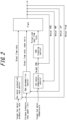
- FIG. 2 is a diagram illustrating processing in the method of controlling a process according to an embodiment of the present disclosure.
- the cascade control described in Reference 1 JP 7107444 B2
- control to calculate the target pulverized coal ratio (PCR) (the hot metal temperature control in FIG. 2 ) and control to calculate the pulverized coal flow rate required for the target PCR (the PCR tracking control in FIG. 2 ) are performed continuously.
- the hot metal temperature control can acquire a target hot metal temperature, which is a target value of the hot metal temperature (HMT), and can calculate a target PCR using the physical model described below.
- HMT target value of the hot metal temperature
- the method of controlling a process according to the present embodiment also includes hot metal production rate control and gas permeability control.
- the hot metal production rate control acquires a target hot metal production rate, which is a target value of the hot metal production rate (Production rate: Prod), and calculates a operation amount of the blast flow rate (BV) using the physical model described below.
- the gas permeability control acquires the furnace pressure loss upper limit, which is the upper limit of the furnace pressure loss ( ⁇ P), and calculates the operation amounts of the blast flow rate and coke ratio using the physical model described below.
- the actual values (which can be observed or calculated) at the plant that includes the blast furnace may be provided as feedback for purposes such as updating the physical model used in each control.
- PCR pulverized coal ratio
- HMT hot metal temperature
- ⁇ P furnace pressure loss
- Prod hot metal production rate
- the mapping between control variables and correlated manipulated variables in the blast furnace process is not limited to the examples illustrated in FIGS. 1 and 2 .
- the blast moisture can be manipulated instead of the pulverized coal ratio (PCR).
- the enrichment oxygen flow rate can be manipulated instead of the blast flow rate.
- individual controllers are constructed to control the hot metal temperature (HMT), furnace pressure loss ( ⁇ P), and hot metal production rate (Prod).
- the hot metal temperature is controlled by cascade control, which manipulates the pulverized coal ratio (PCR) and pulverized coal flow rate.
- the gas permeability is controlled by manipulating the blast flow rate and the coke ratio.
- the hot metal production rate is controlled by manipulating the blast flow rate.
- changes in the pulverized coal flow rate affect the hot metal production rate.
- This effect is reflected by the physical model in the hot metal production rate control and is calculated as the operation amount of the blast flow rate. By reflection of the calculated operation amount of the blast flow rate, the hot metal production rate is kept near the target value.
- individual controllers are constructed in the present embodiment as described above, it is possible to achieve control that takes into account the interference among the respective manipulated variables. That is, although the hot metal temperature control and hot metal production rate control interfere with each other, the control system is constructed to have disturbance elimination characteristics whereby fluctuations based on the manipulation of one manipulated variable are absorbed by manipulation of another manipulated variable, thereby reducing the effects of interference.
- gas permeability a control system that takes into account the upper limit of the furnace pressure loss is constructed. By virtue of these disturbance elimination characteristics, the hot metal temperature control and the hot metal production rate control can each, by their own manipulation of manipulated variables, also absorb the fluctuations based on the manipulation of manipulated variables in the gas permeability control.
- FIG. 3 is a diagram illustrating the relationship of the blast flow rate (BV), coke ratio (CR), and pulverized coal ratio (PCR) to the hot metal production rate (Prod).
- FIG. 4 is a diagram illustrating the relationship of the blast flow rate, coke ratio, and pulverized coal ratio to the furnace pressure loss ( ⁇ P).
- the solid lines and dashed lines illustrate the cases in which the coke ratio and pulverized coal ratio are rearranged under a constant reducing agent ratio (sum of coke ratio and pulverized coal ratio). If the reducing agent ratio is constant, the relationship between the blast flow rate (BV) and hot metal production rate (Prod) is nearly proportional, as illustrated in FIG. 3 .
- the operation amount of the gas permeability was determined according to the deviation between the target value and the predicted value of the hot metal production rate yielded by the physical model.
- the furnace pressure loss ( ⁇ P) increases even at the same blast flow rate (BV*).
- control is performed so that the furnace pressure loss does not exceed the upper limit, but in a case in which the furnace pressure loss is equal to or less than the upper limit, the coke ratio can be gradually reduced to reduce the cost of operation.
- the value of the furnace pressure loss remains near the upper limit.
- the method of controlling a process first acquires the hot metal temperature, hot metal production rate, and gas permeability of the blast furnace via observed values or calculated values.
- the hot metal temperature, the hot metal production rate, and the gas permeability are then simultaneously controlled based on a target value of the hot metal temperature, a target value of the hot metal production rate, a control value of the gas permeability, and the acquired observed values or calculated values.
- the processing of this control method includes the following steps 1 to 3.
- Step 1 a future hot metal temperature and hot metal production rate are predicted using a physical model.
- Step 1 is a free response prediction step of determining future predicted values of the hot metal temperature, the hot metal production rate, and the gas permeability for a case in which current manipulated variables are maintained.
- step 2 the manipulated variables are manipulated so that the predicted values of the hot metal temperature and the hot metal production rate from step 1 match the target values.
- Step 2 is the first manipulation step, in which the deviation between the predicted values and the target values is determined, the operation amounts to eliminate the deviation are determined, and the manipulated variables are adjusted.
- the manipulated variables are the pulverized coal ratio and the blast flow rate.
- the mapping between control variables and correlated manipulated variables in the blast furnace process is not limited to the example illustrated in FIG. 1 .
- the manipulated variables may, for example, be one or more of blast flow rate, enrichment oxygen flow rate, pulverized coal ratio, blast moisture, blast temperature, coke ratio, and furnace top pressure.
- the operation amounts of the manipulated variables that correlate with the gas permeability are determined based on the predicted value of the gas permeability from step 1 and the upper limit of the gas permeability.
- the upper limit of the gas permeability is an example of a control value for controlling the gas permeability.
- Step 3 corresponds to the second manipulation step.
- the gas permeability is the furnace pressure loss, and when the predicted value of the furnace pressure loss exceeds the set upper limit, the gas permeability state is taken to be abnormal, and operations are performed to decrease the gas permeability and increase the coke ratio.
- the upper limit is not exceeded, i.e., the predicted value of the furnace pressure loss is equal to or less than the upper limit, operations to reduce the coke ratio are performed.
- Steps 2 and 3 are not performed in a fixed order, i.e., with one being performed after the other, but rather are performed to control the hot metal temperature, the hot metal production rate, and the gas permeability simultaneously.
- the physical model used in the present disclosure is the same as the model of the method described in Reference 2 ( Ichihara Hatano et al., "Investigation of Blow-in Operation through the Blast Furnace Dynamic Model", Tetsu-to-Hagane, vol. 68, p. 2369 ).
- a physical model that consists of a set of partial differential equations taking into account physical phenomena such as ore reduction, heat exchange between ore and coke, and melting of ore, and that can calculate the conditions inside the blast furnace under non-steady state conditions.
- This physical model is also referred to below as a non-steady state model.
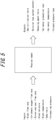
- the main input variables that vary with time are the blast flow rate, enrichment oxygen flow rate, pulverized coal flow rate, blast moisture, blast temperature, coke ratio, and furnace top pressure.
- These input variables are the manipulated variables or manipulation factors of the blast furnace.
- the blast flow rate, enrichment oxygen flow rate, and pulverized coal flow rate are, respectively, the volumes of air, oxygen, and pulverized coal delivered to the blast furnace.
- the blast moisture is the humidity of the air delivered to the blast furnace.
- the blast temperature is the temperature of the air delivered to the blast furnace.
- the coke ratio is the coke ratio at the top of the furnace and is the weight of coke used per ton of hot metal produced.
- the main output variables of the non-steady state model are the gas utilization ratio, the solution loss carbon content (solution loss carbon amount), reducing agent ratio, hot metal production rate, hot metal temperature, and furnace pressure loss.
- the non-steady state model can be used to calculate the hot metal temperature, hot metal production rate, and furnace pressure loss, which change moment by moment. While not being particularly limited, the time interval between calculations in the present embodiment is 30 minutes. The time difference between "t + 1" and "t" in the equations of the non-steady state model described below is 30 minutes in the present embodiment.
- the non-steady state model can be expressed by Expressions (1) and (2) below.
- x(t) represents state variables calculated in the non-steady state model.
- State variables are, for example, the temperature of the coke, the temperature of the iron, the oxidation degree of the ore, and the rate of descent of the raw material.
- y(t) represents control variables, i.e., the hot metal temperature, the hot metal production rate, and the gas permeability (furnace pressure loss).
- u(t) represents the aforementioned input variables, which can be manipulated by the operator of the blast furnace. That is, the input variables are the blast flow rate BV(t), enrichment oxygen flow rate BVO(t), pulverized coal flow rate PCI(t), blast moisture BM(t), blast temperature BT(t), coke ratio CR(t), and furnace top pressure TGP(t).
- the input variables are the blast flow rate BV(t), enrichment oxygen flow rate BVO(t), pulverized coal flow rate PCI(t), blast moisture BM(t), blast temperature BT(t), coke ratio CR(t), and furnace top pressure TGP(t).
- u(t) (BV(t), BVO(t), PCI(t), BM(t), BT(t), CR(t), TGP(t)) T .
- ⁇ PCR which is the operation amount of the pulverized coal ratio (PCR) [kg/t]
- PCR pulverized coal ratio
- y f,1 (t) indicates the free response of the hot metal temperature.
- y U,1 and y L,1 are respectively the upper and lower limits of the target hot metal temperature (target range of the hot metal temperature)
- max(p, q) and min(p, q) are functions whose outputs are respectively the larger value and smaller value of p and q. From the standpoint of preventing excessive manipulation, the operation amount is set to zero as long as the predicted value is within the target range of the hot metal temperature.
- the output of the max function is zero in a case in which the predicted value of the free response of the hot metal temperature does not exceed the upper limit of the target hot metal temperature.
- the output of the min function is zero in a case in which the predicted value of the free response of the hot metal temperature does not fall below the lower limit of the target hot metal temperature.
- S PCR is the amount of change in the hot metal temperature after T 1 hours in a case in which the pulverized coal ratio (PCR) is manipulated by a unit amount (1 [kg/t]). S PCR can be determined by another physical model or a step response test during actual operation.
- T 1 is a time step that defines the future time for prediction. As an example, T 1 may be 16, which means that the hot metal temperature 8 hours (30 minutes x 16) ahead is predicted. Also, a is a coefficient and is a positive number.
- the control to determine ⁇ PCR according to Expression (5) corresponds to the hot metal temperature control in FIG. 2 .
- the target PCR is defined based on the ⁇ PCR determined by the hot metal temperature control, and the pulverized coal flow rate (PCI) is manipulated to follow the target PCR by PCR tracking control as described in Reference 1 above.
- PCI pulverized coal flow rate
- ⁇ BV which is the operation amount of the blast flow rate (BV) [Nm 3 /min]
- BV blast flow rate
- y f,2 (t) indicates the free response of the hot metal production rate.
- y U,2 and y L,2 are respectively the upper and lower limits of the target hot metal production rate (target range of the hot metal production rate). From the standpoint of preventing excessive manipulation, the operation amount is set to zero as long as the predicted value is within the target range of the hot metal production rate.
- the output of the max function is zero in a case in which the predicted value of the free response of the hot metal production rate does not exceed the upper limit of the target hot metal production rate.
- the output of the min function is zero in a case in which the predicted value of the free response of the hot metal production rate does not fall below the lower limit of the target hot metal production rate.
- S BV is the amount of change in the hot metal production rate after T 2 hours in a case in which the blast flow rate (BV) is manipulated by a unit amount (1 [Nm 3 /min]). S BV can be determined by another physical model or a step response test during actual operation.
- T 2 is a time step that defines the future time for prediction. As an example, T 2 may be 4, which means that the hot metal production rate 2 hours (30 minutes x 4) ahead is predicted.
- b is a coefficient and is a positive number.
- the control to determine ⁇ BV according to Expression (6) corresponds to the hot metal production rate control in FIG. 2 .
- ⁇ CR which is the operation amount of the coke ratio (CR) [kg/t]
- ⁇ BV which is an additional operation amount of the blast flow rate (BV) [Nm 3 /min]
- ⁇ P furnace pressure loss
- the coke ratio is expressed as the charged amount of coke [kg] per ton of hot metal.
- y f,3 (t) indicates the free response of the furnace pressure loss
- y U,3 is the upper limit of the furnace pressure loss. From the perspective of reducing operating costs as described above, operations are conducted so that the furnace pressure loss is close to the upper limit.
- T 3 may be 1, which means that the furnace pressure loss 30 minutes ahead is predicted.
- c, d, and e are coefficients and are each a positive number.
- the control to determine ⁇ CR and ⁇ BV according to Expressions (7) and (8) corresponds to the gas permeability control in FIG. 2 .
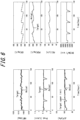
- FIG. 6 is a diagram illustrating simulation results for a case in which the target hot metal production rate is 6.4 [t/min] in the above process control. That is, in the simulation in FIG. 6 , the pulverized coal ratio (PCR), blast flow rate (BV), and coke ratio (CR) were manipulated based on the predicted values, using the non-steady state model, of the hot metal temperature (HMT), hot metal production rate (Prod), and furnace pressure loss ( ⁇ P), which is an example of the gas permeability.
- the target hot metal temperature was 1500 °C.
- the upper limit of the furnace pressure loss was 100 [kPa].
- the upper and lower limits of the target range are the same for the hot metal temperature and the hot metal production rate.
- the coke ratio (CR) is reduced according to the operation amount corresponding to the predicted value of the furnace pressure loss ( ⁇ P).
- the target PCR in the hot metal temperature control is increased from 55 to 70 [hours] to compensate for the loss of heat due to the reduction in the coke ratio.
- PCI pulverized coal flow rate
- the actual PCR follows the target PCR.
- the furnace pressure loss ( ⁇ P) increases in the period of 30 to 70 [hours] due to the decrease in the coke ratio (CR) and the increase in the pulverized coal ratio (PCR).
- FIG. 7 is a diagram illustrating simulation results for a case in which the target hot metal production rate is 6.6 [t/min] in the above process control.
- the conditions are the same as in FIG. 6 , except for the target hot metal production rate.
- the coke ratio (CR) was reduced and the blast flow rate (BV) was adjusted within a range such that the furnace pressure loss ( ⁇ P) did not exceed the upper limit, and the target hot metal temperature and target hot metal production rate were achieved for the hot metal temperature (HMT) and hot metal production rate (Prod).
- HMT hot metal temperature
- Prod hot metal production rate
- BV blast flow rate
- ⁇ P furnace pressure loss
- the required coke ratio (CR) is increased.
- the coke ratio (CR) was approximately 305 [kg/t] on average, but in the example in FIG. 7 , the coke ratio (CR) increased to 325 [kg/t] on average.
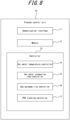
- FIG. 8 is a diagram illustrating a configuration example of the process control unit 10 according to an embodiment.
- the process control unit 10 includes a communication interface 11, a memory 12, and a controller 13.
- the controller 13 includes a hot metal temperature controller 14, a hot metal production rate controller 15, a gas permeability controller 16, and a PCR tracking controller 17.
- the process control unit 10 performs the aforementioned method of controlling a process.
- the process control unit 10 may display information such as the operation amounts, for example, on a display such as a liquid crystal display in the case of manipulating the blast flow rate, coke ratio, or pulverized coal ratio.
- the communication interface 11 is configured to include a communication module for communicating with a higher-level system.
- the higher-level system includes a process computer for managing the processes at the plant that includes the blast furnace.
- the communication interface 11 may include a communication module compatible with mobile communication standards such as 4G (4 th Generation) and 5G (5 th Generation), for example.
- the communication interface 11 may, for example, include a communication module compatible with a wired or wireless LAN standard.
- the controller 13 can acquire information such as the target hot metal temperature, target hot metal production rate, and upper limit of furnace pressure loss from the higher-level system via the communication interface 11.
- the controller 13 can also output, to the higher-level system via the communication interface 11, information on the manipulated variables that were manipulated, i.e., the manipulated variables in which the calculated operation amounts were reflected.
- the memory 12 stores the aforementioned physical model.
- the memory 12 also stores programs and data related to control of the blast furnace process.
- the memory 12 may include any storage devices, such as semiconductor storage devices, optical storage devices, and magnetic storage devices.
- a semiconductor storage device may, for example, include a semiconductor memory.
- the memory 12 may include a plurality of types of storage devices.
- the controller 13 controls and manages the process control unit 10 overall, including each functional component configuring the process control unit 10.
- the controller 13 also acquires data used for control. In other words, the controller 13 acquires the hot metal temperature, the hot metal production rate, and the gas permeability of the blast furnace via observed values or calculated values.
- the controller 13 is configured to include at least one processor, such as a CPU (Central Processing Unit), to control and manage various functions.
- the controller 13 may be configured by a single processor or a plurality of processors.
- the processor configuring the controller 13 may function as the hot metal temperature controller 14, the hot metal production rate controller 15, the gas permeability controller 16, and the PCR tracking controller 17 by reading and executing programs from the memory 12.
- the hot metal temperature controller 14 acquires the target hot metal temperature that is the target value of the hot metal temperature and calculates the operation amount of the pulverized coal ratio so that the hot metal temperature becomes the target hot metal temperature.
- the hot metal temperature controller 14 is the functional component that executes the "hot metal temperature control" in FIG. 2 .
- the hot metal production rate controller 15 acquires the target hot metal production rate that is the target value of the hot metal production rate and calculates a operation amount of the blast flow rate so that the hot metal production rate becomes the target hot metal production rate.
- the hot metal production rate controller 15 is the functional component that executes the "hot metal production rate control" in FIG. 2 .
- the gas permeability controller 16 acquires the upper limit of the gas permeability (the furnace pressure loss in the present embodiment) and calculates the operation amounts of the blast flow rate and the coke ratio so that the gas permeability does not exceed the upper limit.
- the gas permeability controller 16 is the functional component that executes the "gas permeability control" in FIG. 2 .
- the PCR tracking controller 17 acquires the target pulverized coal ratio (target PCR) determined by the hot metal temperature controller 14 and calculates the operation amount of the pulverized coal flow rate (PCI) so as to track the target PCR by PCR tracking control.
- the PCR tracking controller 17 is the functional component that executes the "PCR tracking control" in FIG. 2 .
- the hot metal temperature controller 14, the hot metal production rate controller 15, and the gas permeability controller 16 are individual controllers for controlling the hot metal temperature (HMT), hot metal production rate (Prod), and furnace pressure loss ( ⁇ P) and can achieve control that takes into account interference among the manipulated variables.
- the hot metal temperature controller 14, the hot metal production rate controller 15, and the gas permeability controller 16 respectively perform step 1 (free response prediction step) using the physical model to determine the predicted values of the hot metal temperature, the hot metal production rate, and the gas permeability.
- the hot metal temperature controller 14 and the hot metal production rate controller 15 respectively perform step 2 (first manipulation step) to determine the operation amounts of the pulverized coal ratio and blast flow rate.
- the gas permeability controller 16 performs step 3 (second manipulation step) to judge the gas permeation conditions in the furnace based on the predicted value of the gas permeability (furnace pressure loss in the present embodiment).
- the gas permeability controller 16 performs operations to decrease the gas permeability and increase the coke ratio. In a case in which the gas permeation conditions are judged not to be abnormal, the gas permeability controller 16 performs operations to reduce the coke ratio.
- the hot metal temperature controller 14, the hot metal production rate controller 15, and the gas permeability controller 16, which are constructed as individual controllers as described above, can simultaneously control the hot metal temperature, the hot metal production rate, and the gas permeability.
- the method of controlling a process as performed by the process control unit 10 may be used as part of a method of operating a blast furnace.
- the manipulated variables manipulated in the aforementioned method of controlling a process may be used to change the operating conditions in the operation of the blast furnace.
- Such a method of operating a blast furnace can also be performed as part of a process of producing hot metal. In a blast furnace, raw iron ore is melted and reduced to hot metal, which is then tapped as hot metal. The blast furnace may be operated according to this operating method.
- the process control unit 10 may, for example, be realized by a separate computer from the process computer that controls the operation of the blast furnace, or by a process computer.
- the computer includes a memory and hard disk drive (storage device), a CPU (processing unit), and a display or other display device, for example.
- Various functions can be realized by organic cooperation between hardware, such as the CPU and memory, and programs.
- the memory 12 may, for example, be realized by a storage device.
- the controller 13 may, for example, be realized by a CPU.
- the method of controlling a process, method of operating a blast furnace, method of producing hot metal, and process control unit 10 can, with the above-described configurations, simultaneously manipulate the manipulated variables based on the hot metal temperature, hot metal production rate, and gas permeability, and can predict and control the blast furnace conditions with high accuracy.
- the configuration of the process control unit 10 as illustrated in FIG. 8 is an example.
- the process control unit 10 need not include all of the components illustrated in FIG. 8 .
- the process control unit 10 may include components other than those illustrated in FIG. 8 .
- the process control unit 10 may be configured to further include a display.
Landscapes
- Engineering & Computer Science (AREA)
- Chemical & Material Sciences (AREA)
- Manufacturing & Machinery (AREA)
- Materials Engineering (AREA)
- Metallurgy (AREA)
- Organic Chemistry (AREA)
- Manufacture Of Iron (AREA)
- Feedback Control In General (AREA)
Abstract
Description
- The present disclosure relates to a method of controlling a process, a method of operating a blast furnace, a method of producing hot metal, and a process control unit.
- The hot metal temperature (HMT) is an important control index in a blast furnace process of the steelmaking industry and is controlled mainly by adjusting the reducing agent ratio. In recent years, blast furnace operations have been conducted under a set of conditions including a low coke ratio and high pulverized coal ratio in order to rationalize raw fuel costs. This approach can easily lead to furnace instability. It is therefore necessary to reduce the variation in hot metal temperature.
- The blast furnace process is also characterized by a large heat capacity of the entire process and a long time constant of response to action, because operations are performed in a solid-filled state. Furthermore, it may take several hours, for example, for the raw material charged at the top of the furnace to descend to the bottom of the furnace. Therefore, appropriate operations based on predictions of future furnace heat are necessary to control the hot metal temperature.
- In the blast furnace process, the hot metal temperature needs to be controlled, and the production rate of hot metal (hereinafter referred to as "hot metal production rate") needs to be kept near the target value. To control the hot metal production rate, the blast flow rate, for example, is manipulated. The control of the blast flow rate also needs to take into account the delay in response derived from the long time constant of the blast furnace, as described above. One method of controlling a blast furnace based on predictions is to use a physical model, such as the one in Patent Literature (PTL) 1.
- PTL 1:
JP H11-335710 A - Here, if the pressure loss inside the furnace (furnace pressure loss) increases upon increasing the blast flow rate, and the pressure loss exceeds the weight of the raw material, then blowouts or the like may occur. If blowouts or the like do occur, the hot metal temperature and the hot metal production rate are greatly affected. Therefore, in a case in which abnormalities in gas permeation conditions such as furnace pressure loss are observed, operations to stabilize the unloading of raw materials by decreasing the blast flow rate become necessary.
- Therefore, the control of the process in a blast furnace requires simultaneous control of the hot metal temperature, the hot metal production rate, and the gas permeability, which indicates the gas permeation conditions. The technology in PTL 1 only controls the hot metal temperature and does not propose to control the hot metal production rate and the gas permeability simultaneously. Conventionally, the avoidance of blowouts and the like has largely depended on operating techniques based on the experience of skilled operators (manual operation).
- It is an aim of the present disclosure, conceived to solve the above-described problems, to provide a method of controlling a process, a method of operating a blast furnace, a method of producing hot metal, and a process control unit capable of highly accurate prediction and control of blast furnace conditions.
-
- (1) A method of controlling a process according to an embodiment of the present disclosure includes
- acquiring a hot metal temperature, a hot metal production rate, and a gas permeability of a blast furnace via observed values or calculated values; and
- controlling the hot metal temperature, the hot metal production rate, and the gas permeability simultaneously based on a target value of the hot metal temperature, a target value of the hot metal production rate, a control value of the gas permeability, and the acquired observed values or calculated values.
- (2) As an embodiment of the present disclosure, (1) further includes
- a free response prediction step of determining future predicted values of the hot metal temperature, the hot metal production rate, and the gas permeability for a case in which one or more current manipulated variables are maintained using a physical model capable of calculating conditions inside the blast furnace;
- a first manipulation step of determining a deviation between the target values and the predicted values of the hot metal temperature and the hot metal production rate determined in the free response prediction step, and determining a operation amount of the one or more manipulated variables to eliminate the deviation; and
- a second manipulation step of determining operation amounts of blast flow rate and coke ratio, which are manipulated variables, based on the predicted value of the gas permeability determined in the free response prediction step and an upper limit of the gas permeability, wherein
- the first manipulation step and the second manipulation step are performed to control the hot metal temperature, the hot metal production rate, and the gas permeability simultaneously.
- (3) As an embodiment of the present disclosure, in (2),
the one or more manipulated variables in the first manipulation step are one or more of blast flow rate, enrichment oxygen flow rate, pulverized coal ratio, blast moisture, blast temperature, coke ratio, and furnace top pressure. - (4) A method of operating a blast furnace according to an embodiment of the present disclosure includes
changing operating conditions using manipulated variables manipulated by the method of controlling a process according to any one of (1) to (3). - (5) A method of producing hot metal according to an embodiment of the present disclosure includes
producing hot metal using the blast furnace operated by the method of operating a blast furnace according to (4). - (6) A process control unit according to an embodiment of the present disclosure includes
a controller configured to acquire a hot metal temperature, a hot metal production rate, and a gas permeability of a blast furnace via observed values or calculated values, and control the hot metal temperature, the hot metal production rate, and the gas permeability simultaneously based on a target value of the hot metal temperature, a target value of the hot metal production rate, a control value of the gas permeability, and the acquired observed values or calculated values. - (7) As an embodiment of the present disclosure, (6) further includes
- a memory configured to store a physical model capable of calculating the conditions inside the blast furnace, wherein
- the controller includes:
- a hot metal temperature controller configured to acquire a target hot metal temperature that is a target value of the hot metal temperature and calculate a operation amount of a pulverized coal ratio so that the hot metal temperature becomes the target hot metal temperature;
- a hot metal production rate controller configured to acquire a target hot metal production rate that is a target value of the hot metal production rate and calculate a operation amount of a blast flow rate so that the hot metal production rate becomes the target hot metal production rate; and
- a gas permeability controller configured to acquire an upper limit of the gas permeability and calculate operation amounts of the blast flow rate and a coke ratio so that the gas permeability does not exceed the upper limit,
- the hot metal temperature controller, the hot metal production rate controller, and the gas permeability controller are configured to determine future predicted values of the hot metal temperature, the hot metal production rate, and the gas permeability for a case in which a current manipulated variable is maintained using the physical model,
- the hot metal temperature controller and the hot metal production rate controller are configured to determine a deviation between the target values and the predicted values of the hot metal temperature and the hot metal production rate and determine operation amounts of the pulverized coal ratio and the blast flow rate to eliminate the deviation,
- the gas permeability controller is configured to determine the operation amounts of the blast flow rate and the coke ratio, which are manipulated variables, based on the predicted value of the gas permeability and the upper limit of the gas permeability, and
- the hot metal temperature controller, the hot metal production rate controller, and the gas permeability controller simultaneously control the hot metal temperature, the hot metal production rate, and the gas permeability.
- According to the present disclosure, it is possible to provide a method of controlling a process, a method of operating a blast furnace, a method of producing hot metal, and a process control unit capable of highly accurate prediction and control of blast furnace conditions.
- In the accompanying drawings:
-
FIG. 1 is a diagram illustrating manipulated variables and control variables in a blast furnace process; -
FIG. 2 is a diagram illustrating a method of controlling a process according to an embodiment of the present disclosure; -
FIG. 3 is a diagram illustrating the relationship of the blast flow rate, coke ratio, and pulverized coal ratio to the hot metal production rate; -
FIG. 4 is a diagram illustrating the relationship of the blast flow rate, coke ratio, and pulverized coal ratio to the furnace pressure loss; -
FIG. 5 is a diagram illustrating input/output information of a physical model used in the present disclosure; -
FIG. 6 is a diagram illustrating simulation results for a case in which the target hot metal production rate is 6.4 [t/min]; -
FIG. 7 is a diagram illustrating simulation results for a case in which the target hot metal production rate is 6.6 [t/min]; and -
FIG. 8 is a diagram illustrating a configuration example of a process control unit according to an embodiment of the present disclosure. - A method of controlling a process, a method of operating a blast furnace, a method of producing hot metal, and a process control unit according to an embodiment of the present disclosure will be described below with reference to the drawings.
-
FIG. 1 illustrates the basic manipulated variables and control variables in a blast furnace process (processes in the operation of a blast furnace). Control variables are variables that should be controlled during operation, but which are difficult or impossible to manipulate directly and are thus changed via correlated manipulated variables. In the operation of a blast furnace, the pulverized coal ratio or coke ratio is mainly manipulated to set the hot metal temperature to a target value. To maintain good blast furnace permeability (gas permeability), the coke ratio or blast flow rate is mainly manipulated. In addition, to set the hot metal production rate to a target value, the blast flow rate is mainly manipulated. Here, the furnace pressure loss, which has a direct effect on blowouts, is used as the gas permeability in the present embodiment. The furnace pressure loss is the difference between the blast pressure and the furnace top pressure (pressure at the top of the furnace). Besides the furnace pressure loss, various other indices of permeability, such as permeability resistance and facing shaft differential pressure, exist. Therefore, another index of permeability may be used instead of the furnace pressure loss as the gas permeability, or a combination of a plurality of indices of permeability may be used. -
FIG. 2 is a diagram illustrating processing in the method of controlling a process according to an embodiment of the present disclosure. In the method of controlling a process according to the present embodiment, the cascade control described in Reference 1 (JP 7107444 B2 FIG. 2 ) and control to calculate the pulverized coal flow rate required for the target PCR (the PCR tracking control inFIG. 2 ) are performed continuously. The hot metal temperature control can acquire a target hot metal temperature, which is a target value of the hot metal temperature (HMT), and can calculate a target PCR using the physical model described below. The method of controlling a process according to the present embodiment also includes hot metal production rate control and gas permeability control. The hot metal production rate control acquires a target hot metal production rate, which is a target value of the hot metal production rate (Production rate: Prod), and calculates a operation amount of the blast flow rate (BV) using the physical model described below. The gas permeability control acquires the furnace pressure loss upper limit, which is the upper limit of the furnace pressure loss (ΔP), and calculates the operation amounts of the blast flow rate and coke ratio using the physical model described below. Here, the actual values (which can be observed or calculated) at the plant that includes the blast furnace may be provided as feedback for purposes such as updating the physical model used in each control. In the example inFIG. 2 , the actual values of pulverized coal ratio (PCR), hot metal temperature (HMT), furnace pressure loss (ΔP), and hot metal production rate (Prod) are indicated as actual PCR, actual HMT, actual ΔP, and actual Prod, respectively. The mapping between control variables and correlated manipulated variables in the blast furnace process is not limited to the examples illustrated inFIGS. 1 and2 . For example, in the hot metal temperature control, the blast moisture can be manipulated instead of the pulverized coal ratio (PCR). Also, in the hot metal production rate control, for example, the enrichment oxygen flow rate can be manipulated instead of the blast flow rate. - In the present embodiment, during construction of the multi-variable control system illustrated in
FIG. 2 , individual controllers (hot metal temperature control, gas permeability control, and hot metal production rate control) are constructed to control the hot metal temperature (HMT), furnace pressure loss (ΔP), and hot metal production rate (Prod). The hot metal temperature is controlled by cascade control, which manipulates the pulverized coal ratio (PCR) and pulverized coal flow rate. The gas permeability is controlled by manipulating the blast flow rate and the coke ratio. The hot metal production rate is controlled by manipulating the blast flow rate. Here, for example, in a case in which the pulverized coal flow rate is manipulated during hot metal temperature control, changes in the pulverized coal flow rate affect the hot metal production rate. This effect is reflected by the physical model in the hot metal production rate control and is calculated as the operation amount of the blast flow rate. By reflection of the calculated operation amount of the blast flow rate, the hot metal production rate is kept near the target value. Although individual controllers are constructed in the present embodiment as described above, it is possible to achieve control that takes into account the interference among the respective manipulated variables. That is, although the hot metal temperature control and hot metal production rate control interfere with each other, the control system is constructed to have disturbance elimination characteristics whereby fluctuations based on the manipulation of one manipulated variable are absorbed by manipulation of another manipulated variable, thereby reducing the effects of interference. As for gas permeability, a control system that takes into account the upper limit of the furnace pressure loss is constructed. By virtue of these disturbance elimination characteristics, the hot metal temperature control and the hot metal production rate control can each, by their own manipulation of manipulated variables, also absorb the fluctuations based on the manipulation of manipulated variables in the gas permeability control. -
FIG. 3 is a diagram illustrating the relationship of the blast flow rate (BV), coke ratio (CR), and pulverized coal ratio (PCR) to the hot metal production rate (Prod).FIG. 4 is a diagram illustrating the relationship of the blast flow rate, coke ratio, and pulverized coal ratio to the furnace pressure loss (ΔP). The solid lines and dashed lines illustrate the cases in which the coke ratio and pulverized coal ratio are rearranged under a constant reducing agent ratio (sum of coke ratio and pulverized coal ratio). If the reducing agent ratio is constant, the relationship between the blast flow rate (BV) and hot metal production rate (Prod) is nearly proportional, as illustrated inFIG. 3 . In the control simulation of the example inFIG. 3 , the operation amount of the gas permeability was determined according to the deviation between the target value and the predicted value of the hot metal production rate yielded by the physical model. As illustrated inFIG. 4 , if the coke ratio (CR) is reduced, the furnace pressure loss (ΔP) increases even at the same blast flow rate (BV*). During operation of the blast furnace, it is preferable to stabilize the unloading of the raw material by increasing the coke ratio and simultaneously decreasing the gas permeability in a case in which the furnace pressure loss (ΔP) exceeds the upper limit (threshold), and to gradually reduce the coke ratio in a case in which the furnace pressure loss is equal to or less than the upper limit. As a general rule, control is performed so that the furnace pressure loss does not exceed the upper limit, but in a case in which the furnace pressure loss is equal to or less than the upper limit, the coke ratio can be gradually reduced to reduce the cost of operation. When control is performed in this way, the value of the furnace pressure loss remains near the upper limit. - As an overview, the method of controlling a process according to the present embodiment first acquires the hot metal temperature, hot metal production rate, and gas permeability of the blast furnace via observed values or calculated values. The hot metal temperature, the hot metal production rate, and the gas permeability are then simultaneously controlled based on a target value of the hot metal temperature, a target value of the hot metal production rate, a control value of the gas permeability, and the acquired observed values or calculated values. In greater detail, the processing of this control method includes the following steps 1 to 3.
- First, as step 1, a future hot metal temperature and hot metal production rate are predicted using a physical model. Step 1 is a free response prediction step of determining future predicted values of the hot metal temperature, the hot metal production rate, and the gas permeability for a case in which current manipulated variables are maintained.
- Next, as step 2, the manipulated variables are manipulated so that the predicted values of the hot metal temperature and the hot metal production rate from step 1 match the target values. Step 2 is the first manipulation step, in which the deviation between the predicted values and the target values is determined, the operation amounts to eliminate the deviation are determined, and the manipulated variables are adjusted. In the present embodiment, the manipulated variables are the pulverized coal ratio and the blast flow rate. However, as mentioned above, the mapping between control variables and correlated manipulated variables in the blast furnace process is not limited to the example illustrated in
FIG. 1 . The manipulated variables may, for example, be one or more of blast flow rate, enrichment oxygen flow rate, pulverized coal ratio, blast moisture, blast temperature, coke ratio, and furnace top pressure. - As step 3, the operation amounts of the manipulated variables that correlate with the gas permeability are determined based on the predicted value of the gas permeability from step 1 and the upper limit of the gas permeability. The upper limit of the gas permeability is an example of a control value for controlling the gas permeability. Step 3 corresponds to the second manipulation step. In the present embodiment, the gas permeability is the furnace pressure loss, and when the predicted value of the furnace pressure loss exceeds the set upper limit, the gas permeability state is taken to be abnormal, and operations are performed to decrease the gas permeability and increase the coke ratio. In a case in which the upper limit is not exceeded, i.e., the predicted value of the furnace pressure loss is equal to or less than the upper limit, operations to reduce the coke ratio are performed. Steps 2 and 3 are not performed in a fixed order, i.e., with one being performed after the other, but rather are performed to control the hot metal temperature, the hot metal production rate, and the gas permeability simultaneously.
- The physical model used in the present disclosure is the same as the model of the method described in Reference 2 (Ichihara Hatano et al., "Investigation of Blow-in Operation through the Blast Furnace Dynamic Model", Tetsu-to-Hagane, vol. 68, p. 2369). In other words, use is made of a physical model that consists of a set of partial differential equations taking into account physical phenomena such as ore reduction, heat exchange between ore and coke, and melting of ore, and that can calculate the conditions inside the blast furnace under non-steady state conditions. This physical model is also referred to below as a non-steady state model.
- As illustrated in
FIG. 5 , among the input variables given to the non-steady state model, the main input variables that vary with time are the blast flow rate, enrichment oxygen flow rate, pulverized coal flow rate, blast moisture, blast temperature, coke ratio, and furnace top pressure. These input variables are the manipulated variables or manipulation factors of the blast furnace. The blast flow rate, enrichment oxygen flow rate, and pulverized coal flow rate are, respectively, the volumes of air, oxygen, and pulverized coal delivered to the blast furnace. The blast moisture is the humidity of the air delivered to the blast furnace. The blast temperature is the temperature of the air delivered to the blast furnace. The coke ratio is the coke ratio at the top of the furnace and is the weight of coke used per ton of hot metal produced. - The main output variables of the non-steady state model are the gas utilization ratio, the solution loss carbon content (solution loss carbon amount), reducing agent ratio, hot metal production rate, hot metal temperature, and furnace pressure loss. The non-steady state model can be used to calculate the hot metal temperature, hot metal production rate, and furnace pressure loss, which change moment by moment. While not being particularly limited, the time interval between calculations in the present embodiment is 30 minutes. The time difference between "t + 1" and "t" in the equations of the non-steady state model described below is 30 minutes in the present embodiment.
- The non-steady state model can be expressed by Expressions (1) and (2) below.

- Here, x(t) represents state variables calculated in the non-steady state model. State variables are, for example, the temperature of the coke, the temperature of the iron, the oxidation degree of the ore, and the rate of descent of the raw material. Here, y(t) represents control variables, i.e., the hot metal temperature, the hot metal production rate, and the gas permeability (furnace pressure loss). The hot metal temperature, the hot metal production rate, and the gas permeability may be distinguished as y1(t), y2(t), and y3(t), respectively. In other words, this can be expressed as y(t) = (y1(t), y2(t), y3(t))T. Here, u(t) represents the aforementioned input variables, which can be manipulated by the operator of the blast furnace. That is, the input variables are the blast flow rate BV(t), enrichment oxygen flow rate BVO(t), pulverized coal flow rate PCI(t), blast moisture BM(t), blast temperature BT(t), coke ratio CR(t), and furnace top pressure TGP(t). This can be expressed as u(t) = (BV(t), BVO(t), PCI(t), BM(t), BT(t), CR(t), TGP(t))T.
- First, a predictive calculation of the future control variables is made, assuming that the current values of the input variables are held constant. Taking the current time step as t0, the future control variables are predicted using Expressions (3) and (4) below. The response yf(t) of the control variables determined in this way is called the free response.

- Next, ΔPCR, which is the operation amount of the pulverized coal ratio (PCR) [kg/t], is determined by Expression (5) below, so as to eliminate the deviation between the target value and predicted value of the hot metal temperature. Here, the operation amount expressed as ΔPCR is calculated as the increase or decrease relative to the previous operation amount (PCR). The meaning of Δ is the same for the other operation amounts.
[Math. 3]
- Here, yf,1(t) indicates the free response of the hot metal temperature. Furthermore, yU,1 and yL,1 are respectively the upper and lower limits of the target hot metal temperature (target range of the hot metal temperature), and max(p, q) and min(p, q) are functions whose outputs are respectively the larger value and smaller value of p and q. From the standpoint of preventing excessive manipulation, the operation amount is set to zero as long as the predicted value is within the target range of the hot metal temperature. In other words, in Expression (5), the output of the max function is zero in a case in which the predicted value of the free response of the hot metal temperature does not exceed the upper limit of the target hot metal temperature. Also, in Expression (5), the output of the min function is zero in a case in which the predicted value of the free response of the hot metal temperature does not fall below the lower limit of the target hot metal temperature. SPCR is the amount of change in the hot metal temperature after T1 hours in a case in which the pulverized coal ratio (PCR) is manipulated by a unit amount (1 [kg/t]). SPCR can be determined by another physical model or a step response test during actual operation. T1 is a time step that defines the future time for prediction. As an example, T1 may be 16, which means that the hot metal temperature 8 hours (30 minutes x 16) ahead is predicted. Also, a is a coefficient and is a positive number. The control to determine ΔPCR according to Expression (5) corresponds to the hot metal temperature control in
FIG. 2 . As illustrated inFIG. 2 , the target PCR is defined based on the ΔPCR determined by the hot metal temperature control, and the pulverized coal flow rate (PCI) is manipulated to follow the target PCR by PCR tracking control as described in Reference 1 above. - In addition, ΔBV, which is the operation amount of the blast flow rate (BV) [Nm3/min], is determined by Expression (6) below, so as to eliminate the deviation between the target value and predicted value of the hot metal production rate.
[Math. 4]
- Here, yf,2(t) indicates the free response of the hot metal production rate. Furthermore, yU,2 and yL,2 are respectively the upper and lower limits of the target hot metal production rate (target range of the hot metal production rate). From the standpoint of preventing excessive manipulation, the operation amount is set to zero as long as the predicted value is within the target range of the hot metal production rate. In other words, in Expression (6), the output of the max function is zero in a case in which the predicted value of the free response of the hot metal production rate does not exceed the upper limit of the target hot metal production rate. Also, in Expression (6), the output of the min function is zero in a case in which the predicted value of the free response of the hot metal production rate does not fall below the lower limit of the target hot metal production rate. SBV is the amount of change in the hot metal production rate after T2 hours in a case in which the blast flow rate (BV) is manipulated by a unit amount (1 [Nm3/min]). SBV can be determined by another physical model or a step response test during actual operation. T2 is a time step that defines the future time for prediction. As an example, T2 may be 4, which means that the hot metal production rate 2 hours (30 minutes x 4) ahead is predicted. Also, b is a coefficient and is a positive number. The control to determine ΔBV according to Expression (6) corresponds to the hot metal production rate control in
FIG. 2 . - Furthermore, ΔCR, which is the operation amount of the coke ratio (CR) [kg/t], and ΔBV, which is an additional operation amount of the blast flow rate (BV) [Nm3/min], are determined by Expressions (7) and (8) below according to the predicted value of the furnace pressure loss (ΔP) [kPa], which is an example of the gas permeability. The coke ratio is expressed as the charged amount of coke [kg] per ton of hot metal.

- Here, yf,3(t) indicates the free response of the furnace pressure loss, and yU,3 is the upper limit of the furnace pressure loss. From the perspective of reducing operating costs as described above, operations are conducted so that the furnace pressure loss is close to the upper limit. As an example, T3 may be 1, which means that the furnace pressure loss 30 minutes ahead is predicted. In addition, c, d, and e are coefficients and are each a positive number. The control to determine ΔCR and ΔBV according to Expressions (7) and (8) corresponds to the gas permeability control in
FIG. 2 . -
FIG. 6 is a diagram illustrating simulation results for a case in which the target hot metal production rate is 6.4 [t/min] in the above process control. That is, in the simulation inFIG. 6 , the pulverized coal ratio (PCR), blast flow rate (BV), and coke ratio (CR) were manipulated based on the predicted values, using the non-steady state model, of the hot metal temperature (HMT), hot metal production rate (Prod), and furnace pressure loss (ΔP), which is an example of the gas permeability. The target hot metal temperature was 1500 °C. The upper limit of the furnace pressure loss was 100 [kPa]. The upper and lower limits of the target range are the same for the hot metal temperature and the hot metal production rate. - For example, from 30 to 70 [hours], the coke ratio (CR) is reduced according to the operation amount corresponding to the predicted value of the furnace pressure loss (ΔP). The target PCR in the hot metal temperature control is increased from 55 to 70 [hours] to compensate for the loss of heat due to the reduction in the coke ratio. In addition, by manipulating the pulverized coal flow rate (PCI) via PCR tracking control, the actual PCR follows the target PCR. The furnace pressure loss (ΔP) increases in the period of 30 to 70 [hours] due to the decrease in the coke ratio (CR) and the increase in the pulverized coal ratio (PCR). Here, when the furnace pressure loss (ΔP) exceeds the upper limit (target upper limit) at the timing of 72 [hours], operations are performed via gas permeability control to decrease the blast flow rate (BV) and increase the coke ratio (CR). At 72 to 75 [hours], the furnace pressure loss (ΔP) is below the upper limit. Operations to increase the blast flow rate (BV) are therefore performed, and as a result, the hot metal production rate (Prod) approaches the target value. In this way, the coke ratio (CR) was reduced and the blast flow rate (BV) was adjusted within a range such that the furnace pressure loss (ΔP) did not exceed the upper limit, and the target hot metal temperature and target hot metal production rate were achieved for the hot metal temperature (HMT) and hot metal production rate (Prod).
-
FIG. 7 is a diagram illustrating simulation results for a case in which the target hot metal production rate is 6.6 [t/min] in the above process control. The conditions are the same as inFIG. 6 , except for the target hot metal production rate. As in the example inFIG. 6 , the coke ratio (CR) was reduced and the blast flow rate (BV) was adjusted within a range such that the furnace pressure loss (ΔP) did not exceed the upper limit, and the target hot metal temperature and target hot metal production rate were achieved for the hot metal temperature (HMT) and hot metal production rate (Prod). However, as the target hot metal production rate is increased, a greater blast flow rate (BV) is required, making the furnace pressure loss (ΔP) more likely to reach the upper limit. To ensure the gas permeability, i.e., so that the furnace pressure loss (ΔP) does not exceed the upper limit, the required coke ratio (CR) is increased. In the example inFIG. 6 , the coke ratio (CR) was approximately 305 [kg/t] on average, but in the example inFIG. 7 , the coke ratio (CR) increased to 325 [kg/t] on average. -
FIG. 8 is a diagram illustrating a configuration example of theprocess control unit 10 according to an embodiment. As illustrated inFIG. 8 , theprocess control unit 10 according to the present embodiment includes acommunication interface 11, amemory 12, and acontroller 13. Thecontroller 13 includes a hotmetal temperature controller 14, a hot metalproduction rate controller 15, agas permeability controller 16, and aPCR tracking controller 17. Theprocess control unit 10 performs the aforementioned method of controlling a process. Here, theprocess control unit 10 may display information such as the operation amounts, for example, on a display such as a liquid crystal display in the case of manipulating the blast flow rate, coke ratio, or pulverized coal ratio. - The
communication interface 11 is configured to include a communication module for communicating with a higher-level system. The higher-level system includes a process computer for managing the processes at the plant that includes the blast furnace. Thecommunication interface 11 may include a communication module compatible with mobile communication standards such as 4G (4th Generation) and 5G (5th Generation), for example. Thecommunication interface 11 may, for example, include a communication module compatible with a wired or wireless LAN standard. Thecontroller 13 can acquire information such as the target hot metal temperature, target hot metal production rate, and upper limit of furnace pressure loss from the higher-level system via thecommunication interface 11. Thecontroller 13 can also output, to the higher-level system via thecommunication interface 11, information on the manipulated variables that were manipulated, i.e., the manipulated variables in which the calculated operation amounts were reflected. - The
memory 12 stores the aforementioned physical model. Thememory 12 also stores programs and data related to control of the blast furnace process. Thememory 12 may include any storage devices, such as semiconductor storage devices, optical storage devices, and magnetic storage devices. A semiconductor storage device may, for example, include a semiconductor memory. Thememory 12 may include a plurality of types of storage devices. - The
controller 13 controls and manages theprocess control unit 10 overall, including each functional component configuring theprocess control unit 10. Thecontroller 13 also acquires data used for control. In other words, thecontroller 13 acquires the hot metal temperature, the hot metal production rate, and the gas permeability of the blast furnace via observed values or calculated values. Thecontroller 13 is configured to include at least one processor, such as a CPU (Central Processing Unit), to control and manage various functions. Thecontroller 13 may be configured by a single processor or a plurality of processors. The processor configuring thecontroller 13 may function as the hotmetal temperature controller 14, the hot metalproduction rate controller 15, thegas permeability controller 16, and thePCR tracking controller 17 by reading and executing programs from thememory 12. - The hot
metal temperature controller 14 acquires the target hot metal temperature that is the target value of the hot metal temperature and calculates the operation amount of the pulverized coal ratio so that the hot metal temperature becomes the target hot metal temperature. The hotmetal temperature controller 14 is the functional component that executes the "hot metal temperature control" inFIG. 2 . - The hot metal
production rate controller 15 acquires the target hot metal production rate that is the target value of the hot metal production rate and calculates a operation amount of the blast flow rate so that the hot metal production rate becomes the target hot metal production rate. The hot metalproduction rate controller 15 is the functional component that executes the "hot metal production rate control" inFIG. 2 . - The
gas permeability controller 16 acquires the upper limit of the gas permeability (the furnace pressure loss in the present embodiment) and calculates the operation amounts of the blast flow rate and the coke ratio so that the gas permeability does not exceed the upper limit. Thegas permeability controller 16 is the functional component that executes the "gas permeability control" inFIG. 2 . - The
PCR tracking controller 17 acquires the target pulverized coal ratio (target PCR) determined by the hotmetal temperature controller 14 and calculates the operation amount of the pulverized coal flow rate (PCI) so as to track the target PCR by PCR tracking control. ThePCR tracking controller 17 is the functional component that executes the "PCR tracking control" inFIG. 2 . - The hot
metal temperature controller 14, the hot metalproduction rate controller 15, and thegas permeability controller 16 are individual controllers for controlling the hot metal temperature (HMT), hot metal production rate (Prod), and furnace pressure loss (ΔP) and can achieve control that takes into account interference among the manipulated variables. - To explain with reference to the aforementioned steps 1 to 3, the hot
metal temperature controller 14, the hot metalproduction rate controller 15, and thegas permeability controller 16 respectively perform step 1 (free response prediction step) using the physical model to determine the predicted values of the hot metal temperature, the hot metal production rate, and the gas permeability. The hotmetal temperature controller 14 and the hot metalproduction rate controller 15 respectively perform step 2 (first manipulation step) to determine the operation amounts of the pulverized coal ratio and blast flow rate. Thegas permeability controller 16 performs step 3 (second manipulation step) to judge the gas permeation conditions in the furnace based on the predicted value of the gas permeability (furnace pressure loss in the present embodiment). In a case in which the gas permeation conditions are judged to be abnormal, thegas permeability controller 16 performs operations to decrease the gas permeability and increase the coke ratio. In a case in which the gas permeation conditions are judged not to be abnormal, thegas permeability controller 16 performs operations to reduce the coke ratio. Here, the hotmetal temperature controller 14, the hot metalproduction rate controller 15, and thegas permeability controller 16, which are constructed as individual controllers as described above, can simultaneously control the hot metal temperature, the hot metal production rate, and the gas permeability. - The method of controlling a process as performed by the
process control unit 10 may be used as part of a method of operating a blast furnace. For example, the manipulated variables manipulated in the aforementioned method of controlling a process may be used to change the operating conditions in the operation of the blast furnace. Such a method of operating a blast furnace can also be performed as part of a process of producing hot metal. In a blast furnace, raw iron ore is melted and reduced to hot metal, which is then tapped as hot metal. The blast furnace may be operated according to this operating method. - The
process control unit 10 may, for example, be realized by a separate computer from the process computer that controls the operation of the blast furnace, or by a process computer. The computer includes a memory and hard disk drive (storage device), a CPU (processing unit), and a display or other display device, for example. Various functions can be realized by organic cooperation between hardware, such as the CPU and memory, and programs. Thememory 12 may, for example, be realized by a storage device. Thecontroller 13 may, for example, be realized by a CPU. - As described above, the method of controlling a process, method of operating a blast furnace, method of producing hot metal, and
process control unit 10 according to the present embodiment can, with the above-described configurations, simultaneously manipulate the manipulated variables based on the hot metal temperature, hot metal production rate, and gas permeability, and can predict and control the blast furnace conditions with high accuracy. - While embodiments according to the present disclosure have been described with reference to the drawings and examples, it should be noted that various modifications and amendments may easily be implemented by those skilled in the art based on the present disclosure. Accordingly, such modifications and amendments are included within the scope of the present disclosure. For example, functions or the like included in each component, each step, or the like can be rearranged without logical inconsistency, and a plurality of components, steps, or the like can be combined into one or divided. Embodiments according to the present disclosure can also be realized as a program executed by a processor included in an apparatus or as a storage medium having the program recorded thereon. Such embodiments are also to be understood as included in the scope of the present disclosure.
- The configuration of the
process control unit 10 as illustrated inFIG. 8 is an example. Theprocess control unit 10 need not include all of the components illustrated inFIG. 8 . Theprocess control unit 10 may include components other than those illustrated inFIG. 8 . For example, theprocess control unit 10 may be configured to further include a display. -
- 10
- Process control unit
- 11
- Communication interface
- 12
- Memory
- 13
- Controller
- 14
- Hot metal temperature controller
- 15
- Hot metal production rate controller
- 16
- Gas permeability controller
- 17
- PCR tracking controller
Claims (7)
- A method of controlling a process, the method comprising:acquiring a hot metal temperature, a hot metal production rate, and a gas permeability of a blast furnace via observed values or calculated values; andcontrolling the hot metal temperature, the hot metal production rate, and the gas permeability simultaneously based on a target value of the hot metal temperature, a target value of the hot metal production rate, a control value of the gas permeability, and the acquired observed values or calculated values.
- The method of controlling a process according to claim 1, further comprisinga free response prediction step of determining future predicted values of the hot metal temperature, the hot metal production rate, and the gas permeability for a case in which one or more current manipulated variables are maintained using a physical model capable of calculating conditions inside the blast furnace;a first manipulation step of determining a deviation between the target values and the predicted values of the hot metal temperature and the hot metal production rate determined in the free response prediction step, and determining a operation amount of the one or more manipulated variables to eliminate the deviation; anda second manipulation step of determining operation amounts of blast flow rate and coke ratio, which are manipulated variables, based on the predicted value of the gas permeability determined in the free response prediction step and an upper limit of the gas permeability, whereinthe first manipulation step and the second manipulation step are performed to control the hot metal temperature, the hot metal production rate, and the gas permeability simultaneously.
- The method of controlling a process according to claim 2, wherein the one or more manipulated variables in the first manipulation step are one or more of blast flow rate, enrichment oxygen flow rate, pulverized coal ratio, blast moisture, blast temperature, coke ratio, and furnace top pressure.
- A method of operating a blast furnace, the method comprising changing operating conditions using manipulated variables manipulated by the method of controlling a process according to any one of claims 1 to 3.
- A method of producing hot metal, the method comprising producing hot metal using a blast furnace operated by the method of operating a blast furnace according to claim 4.
- A process control unit comprising a controller configured to acquire a hot metal temperature, a hot metal production rate, and a gas permeability of a blast furnace via observed values or calculated values, and control the hot metal temperature, the hot metal production rate, and the gas permeability simultaneously based on a target value of the hot metal temperature, a target value of the hot metal production rate, a control value of the gas permeability, and the acquired observed values or calculated values.
- The process control unit according to claim 6, further comprisinga memory configured to store a physical model capable of calculating conditions inside the blast furnace, whereinthe controller comprises:a hot metal temperature controller configured to acquire a target hot metal temperature that is a target value of the hot metal temperature and calculate a operation amount of a pulverized coal ratio so that the hot metal temperature becomes the target hot metal temperature;a hot metal production rate controller configured to acquire a target hot metal production rate that is a target value of the hot metal production rate and calculate a operation amount of a blast flow rate so that the hot metal production rate becomes the target hot metal production rate; anda gas permeability controller configured to acquire an upper limit of the gas permeability and calculate operation amounts of the blast flow rate and a coke ratio so that the gas permeability does not exceed the upper limit,the hot metal temperature controller, the hot metal production rate controller, and the gas permeability controller are configured to determine future predicted values of the hot metal temperature, the hot metal production rate, and the gas permeability for a case in which a current manipulated variable is maintained using the physical model,the hot metal temperature controller and the hot metal production rate controller are configured to determine a deviation between the target values and the predicted values of the hot metal temperature and the hot metal production rate and determine operation amounts of the pulverized coal ratio and the blast flow rate to eliminate the deviation,the gas permeability controller is configured to determine the operation amounts of the blast flow rate and the coke ratio, which are manipulated variables, based on the predicted value of the gas permeability and the upper limit of the gas permeability, andthe hot metal temperature controller, the hot metal production rate controller, and the gas permeability controller simultaneously control the hot metal temperature, the hot metal production rate, and the gas permeability.
Applications Claiming Priority (2)
| Application Number | Priority Date | Filing Date | Title |
|---|---|---|---|
| JP2022138750A JP7679812B2 (en) | 2022-08-31 | 2022-08-31 | Process control method, blast furnace operation method, molten iron manufacturing method, and process control device |
| PCT/JP2023/029754 WO2024048310A1 (en) | 2022-08-31 | 2023-08-17 | Method for controlling process, method for operating blast furnace, method for manufacturing molten metal, and device for controlling process |
Publications (2)
| Publication Number | Publication Date |
|---|---|
| EP4541910A1 true EP4541910A1 (en) | 2025-04-23 |
| EP4541910A4 EP4541910A4 (en) | 2025-10-22 |
Family
ID=90099436
Family Applications (1)
| Application Number | Title | Priority Date | Filing Date |
|---|---|---|---|
| EP23860073.8A Pending EP4541910A4 (en) | 2022-08-31 | 2023-08-17 | Method for controlling a process, method for operating a blast furnace, method for producing molten metal and device for controlling the process |
Country Status (5)
| Country | Link |
|---|---|
| EP (1) | EP4541910A4 (en) |
| JP (1) | JP7679812B2 (en) |
| KR (1) | KR20250042796A (en) |
| CN (1) | CN119677878A (en) |
| WO (1) | WO2024048310A1 (en) |
Family Cites Families (5)
| Publication number | Priority date | Publication date | Assignee | Title |
|---|---|---|---|---|
| JPH11335710A (en) | 1998-05-22 | 1999-12-07 | Sumitomo Metal Ind Ltd | Blast furnace heat prediction method |
| US10755200B2 (en) * | 2017-09-22 | 2020-08-25 | International Business Machines Corporation | Automated control of circumferential variability of blast furnace |
| KR102709807B1 (en) | 2019-10-31 | 2024-09-24 | 제이에프이 스틸 가부시키가이샤 | Therefore, the method of operation |
| EP4155421B1 (en) | 2020-07-06 | 2025-10-08 | JFE Steel Corporation | Methods and devices for controlling hot metal temperature and operating a blast furnace |
| JP7272326B2 (en) | 2020-07-06 | 2023-05-12 | Jfeスチール株式会社 | Operation Guidance Method, Blast Furnace Operation Method, Hot Metal Production Method, Operation Guidance Device |
-
2022
- 2022-08-31 JP JP2022138750A patent/JP7679812B2/en active Active
-
2023
- 2023-08-17 WO PCT/JP2023/029754 patent/WO2024048310A1/en not_active Ceased
- 2023-08-17 CN CN202380059098.5A patent/CN119677878A/en active Pending
- 2023-08-17 KR KR1020257005946A patent/KR20250042796A/en active Pending
- 2023-08-17 EP EP23860073.8A patent/EP4541910A4/en active Pending
Also Published As
| Publication number | Publication date |
|---|---|
| JP2024034492A (en) | 2024-03-13 |
| JP7679812B2 (en) | 2025-05-20 |
| WO2024048310A1 (en) | 2024-03-07 |
| KR20250042796A (en) | 2025-03-27 |
| CN119677878A (en) | 2025-03-21 |
| EP4541910A4 (en) | 2025-10-22 |
Similar Documents
| Publication | Publication Date | Title |
|---|---|---|
| EP4155421B1 (en) | Methods and devices for controlling hot metal temperature and operating a blast furnace | |
| KR102933531B1 (en) | Operation guidance method, blast furnace operation method, hot metal manufacturing method, and operation guidance apparatus | |
| CN107368125B (en) | A blast furnace temperature control system and method based on parallel mixed reasoning of CBR and RBR | |
| KR102713538B1 (en) | Process control method, operation guidance method, blast furnace operation method, molten iron manufacturing method and process control device | |
| EP4343006A1 (en) | Molten iron temperature prediction method, operation guidance method, molten iron production method, molten iron temperature prediction device, operation guidance device, blast furnace operation guidance system, blast furnace operation guidance server, and terminal device | |
| JP7384326B1 (en) | Blast furnace hot metal temperature prediction method, blast furnace hot metal temperature prediction model learning method, blast furnace operating method, blast furnace hot metal temperature prediction device, blast furnace hot metal temperature prediction system and terminal device | |
| JP7679812B2 (en) | Process control method, blast furnace operation method, molten iron manufacturing method, and process control device | |
| EP4628599A1 (en) | Process control method, blast furnace operation method, molten-iron manufacturing method, and process control device and program | |
| RU2843536C2 (en) | Liquid metal temperature prediction method, process operations management method, liquid metal production method, liquid metal temperature prediction device, device for managing process operations, system for managing process operations of blast furnace, server for managing process operations of blast furnace and terminal device | |
| EP4632081A1 (en) | Silicon concentration prediction method, operation guidance method, silicon concentration prediction device, operation guidance device, operation guidance system, and terminal device | |
| JP7384150B2 (en) | Operation guidance method, blast furnace operation method, hot metal production method and operation guidance device | |
| EP4647514A1 (en) | Molten iron temperature control method, molten iron temperature control device, molten iron temperature control system, and terminal device | |
| JP7522999B1 (en) | Molten iron temperature control method, blast furnace operation method, molten iron manufacturing method, molten iron temperature control device, and molten iron temperature control system | |
| JP2025183922A (en) | Ironmaking speed control method, operation guidance method, molten iron production method, ironmaking speed control device, ironmaking speed control program, terminal device, and ironmaking speed control system | |
| JP2025183870A (en) | Ironmaking rate prediction method, operation guidance method, molten iron production method, and ironmaking rate prediction device | |
| CN119731342A (en) | Process control method, blast furnace operation method, molten iron manufacturing method, and process control device | |
| WO2024060289A1 (en) | Method for automatically adjusting furnace temperature of blast furnace, terminal device, and storage medium | |
| WO2024204465A1 (en) | Molten iron temperature control method, molten iron temperature control device, molten iron temperature control system, and terminal device | |
| BR112023000085B1 (en) | OPERATING GUIDELINES METHOD, METHOD FOR OPERATING A BLAST FURNACE, METHOD FOR PRODUCING LIQUID PIG IRON, DEVICE FOR CONTROLLING LIQUID PIG IRON TEMPERATURE, AND OPERATING GUIDELINES DEVICE |
Legal Events
| Date | Code | Title | Description |
|---|---|---|---|
| STAA | Information on the status of an ep patent application or granted ep patent |
Free format text: STATUS: THE INTERNATIONAL PUBLICATION HAS BEEN MADE |
|
| PUAI | Public reference made under article 153(3) epc to a published international application that has entered the european phase |
Free format text: ORIGINAL CODE: 0009012 |
|
| STAA | Information on the status of an ep patent application or granted ep patent |
Free format text: STATUS: REQUEST FOR EXAMINATION WAS MADE |
|
| 17P | Request for examination filed |
Effective date: 20250116 |
|
| AK | Designated contracting states |
Kind code of ref document: A1 Designated state(s): AL AT BE BG CH CY CZ DE DK EE ES FI FR GB GR HR HU IE IS IT LI LT LU LV MC ME MK MT NL NO PL PT RO RS SE SI SK SM TR |
|
| A4 | Supplementary search report drawn up and despatched |
Effective date: 20250919 |
|
| RIC1 | Information provided on ipc code assigned before grant |
Ipc: C21B 5/00 20060101AFI20250915BHEP Ipc: C21B 7/24 20060101ALI20250915BHEP |
|
| DAV | Request for validation of the european patent (deleted) | ||
| DAX | Request for extension of the european patent (deleted) |