EP4541904A1 - Sequencing kit containing sulfydryl blocking reagent and application of sequencing kit - Google Patents
Sequencing kit containing sulfydryl blocking reagent and application of sequencing kit Download PDFInfo
- Publication number
- EP4541904A1 EP4541904A1 EP23823267.2A EP23823267A EP4541904A1 EP 4541904 A1 EP4541904 A1 EP 4541904A1 EP 23823267 A EP23823267 A EP 23823267A EP 4541904 A1 EP4541904 A1 EP 4541904A1
- Authority
- EP
- European Patent Office
- Prior art keywords
- sequencing
- reagent
- blocking
- disulfide bond
- sulfhydryl
- Prior art date
- Legal status (The legal status is an assumption and is not a legal conclusion. Google has not performed a legal analysis and makes no representation as to the accuracy of the status listed.)
- Pending
Links
Images


Classifications
-
- C—CHEMISTRY; METALLURGY
- C12—BIOCHEMISTRY; BEER; SPIRITS; WINE; VINEGAR; MICROBIOLOGY; ENZYMOLOGY; MUTATION OR GENETIC ENGINEERING
- C12Q—MEASURING OR TESTING PROCESSES INVOLVING ENZYMES, NUCLEIC ACIDS OR MICROORGANISMS; COMPOSITIONS OR TEST PAPERS THEREFOR; PROCESSES OF PREPARING SUCH COMPOSITIONS; CONDITION-RESPONSIVE CONTROL IN MICROBIOLOGICAL OR ENZYMOLOGICAL PROCESSES
- C12Q1/00—Measuring or testing processes involving enzymes, nucleic acids or microorganisms; Compositions therefor; Processes of preparing such compositions
- C12Q1/68—Measuring or testing processes involving enzymes, nucleic acids or microorganisms; Compositions therefor; Processes of preparing such compositions involving nucleic acids
- C12Q1/6869—Methods for sequencing
- C12Q1/6874—Methods for sequencing involving nucleic acid arrays, e.g. sequencing by hybridisation
-
- C—CHEMISTRY; METALLURGY
- C12—BIOCHEMISTRY; BEER; SPIRITS; WINE; VINEGAR; MICROBIOLOGY; ENZYMOLOGY; MUTATION OR GENETIC ENGINEERING
- C12Q—MEASURING OR TESTING PROCESSES INVOLVING ENZYMES, NUCLEIC ACIDS OR MICROORGANISMS; COMPOSITIONS OR TEST PAPERS THEREFOR; PROCESSES OF PREPARING SUCH COMPOSITIONS; CONDITION-RESPONSIVE CONTROL IN MICROBIOLOGICAL OR ENZYMOLOGICAL PROCESSES
- C12Q1/00—Measuring or testing processes involving enzymes, nucleic acids or microorganisms; Compositions therefor; Processes of preparing such compositions
- C12Q1/68—Measuring or testing processes involving enzymes, nucleic acids or microorganisms; Compositions therefor; Processes of preparing such compositions involving nucleic acids
- C12Q1/6869—Methods for sequencing
-
- C—CHEMISTRY; METALLURGY
- C12—BIOCHEMISTRY; BEER; SPIRITS; WINE; VINEGAR; MICROBIOLOGY; ENZYMOLOGY; MUTATION OR GENETIC ENGINEERING
- C12Q—MEASURING OR TESTING PROCESSES INVOLVING ENZYMES, NUCLEIC ACIDS OR MICROORGANISMS; COMPOSITIONS OR TEST PAPERS THEREFOR; PROCESSES OF PREPARING SUCH COMPOSITIONS; CONDITION-RESPONSIVE CONTROL IN MICROBIOLOGICAL OR ENZYMOLOGICAL PROCESSES
- C12Q1/00—Measuring or testing processes involving enzymes, nucleic acids or microorganisms; Compositions therefor; Processes of preparing such compositions
- C12Q1/68—Measuring or testing processes involving enzymes, nucleic acids or microorganisms; Compositions therefor; Processes of preparing such compositions involving nucleic acids
-
- C—CHEMISTRY; METALLURGY
- C12—BIOCHEMISTRY; BEER; SPIRITS; WINE; VINEGAR; MICROBIOLOGY; ENZYMOLOGY; MUTATION OR GENETIC ENGINEERING
- C12Q—MEASURING OR TESTING PROCESSES INVOLVING ENZYMES, NUCLEIC ACIDS OR MICROORGANISMS; COMPOSITIONS OR TEST PAPERS THEREFOR; PROCESSES OF PREPARING SUCH COMPOSITIONS; CONDITION-RESPONSIVE CONTROL IN MICROBIOLOGICAL OR ENZYMOLOGICAL PROCESSES
- C12Q2527/00—Reactions demanding special reaction conditions
- C12Q2527/125—Specific component of sample, medium or buffer
-
- C—CHEMISTRY; METALLURGY
- C12—BIOCHEMISTRY; BEER; SPIRITS; WINE; VINEGAR; MICROBIOLOGY; ENZYMOLOGY; MUTATION OR GENETIC ENGINEERING
- C12Q—MEASURING OR TESTING PROCESSES INVOLVING ENZYMES, NUCLEIC ACIDS OR MICROORGANISMS; COMPOSITIONS OR TEST PAPERS THEREFOR; PROCESSES OF PREPARING SUCH COMPOSITIONS; CONDITION-RESPONSIVE CONTROL IN MICROBIOLOGICAL OR ENZYMOLOGICAL PROCESSES
- C12Q2563/00—Nucleic acid detection characterized by the use of physical, structural and functional properties
- C12Q2563/107—Nucleic acid detection characterized by the use of physical, structural and functional properties fluorescence
Definitions
- the present disclosure belongs to the field of nucleic acid sequencing, and specifically relates to a kit containing a sulfhydryl blocking reagent, a method for reducing sequencing background signal based on the sulfhydryl blocking reagent, and a use thereof.
- DNA sequencing includes first-strand sequencing and second-strand sequencing. After completing the first-strand sequencing, a second strand is generated through multiple displacement amplification (MDA) using the first strand as a template, and then the second strand of DNA is sequenced. During the generation of the second strand, multiplex strand displacement amplification enzyme (phi29 DNA polymerase) is used. Phi29 DNA polymerase is easily and non-specifically adsorbed onto a sequencing chip, making it difficult to remove, leading to residue. The residual phi29 DNA polymerase entangles with dNTPs (chemically modified deoxyribonucleotides) at the beginning stage of second-strand sequencing.
- dNTPs chemically modified deoxyribonucleotides
- the entanglement of the non-specifically bound enzyme and dNTPs results in an increase in the background signal during sequencing, causing a decrease in the signal-to-noise ratio, thereby affecting the sequencing quality.
- the present disclosure provides a sulfhydryl blocking reagent, a method for reducing a sequencing background signal based on the sulfhydryl blocking reagent, and a use thereof.
- the present disclosure comprises the following steps: first opening a disulfide bond in an enzyme protein structure such that the disulfide bond becomes two exposed sulfhydryl groups, and then blocking the exposed sulfhydryl groups with twoavailable methods.
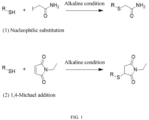
- One is halogen substitution reaction, commonly using iodoacetamide, as shown in reaction (1) of FIG. 1 .
- the other is an addition reaction, commonly using N-ethylmaleimide (NEM), as shown in reaction (2) of FIG. 1 .
- Michael addition refers to a conjugated addition reaction between a compound that can provide a nucleophilic carbanion and an electrophilic conjugated system under base catalysis.
- the present disclosure uses a disulfide bond reducing agent to open the disulfide bonds in the enzyme protein structure during the sequencing process and uses a blocking reagent to irreversibly block all disulfide bonds, releasing the fluorescent dyes and removing them completely, thereby reducing the background signal and improving the sequencing quality.
- the sulfhydryl blocking reagent according to the present disclosure includes N-ethylmaleimide and/or iodoacetamide, which are commonly used in protein structures as protein markers and are important tools for protein detection.
- the present disclosure applies the sulfhydryl blocking reagent in sequencing technology for the first time. As a means to reduce background of second-strand sequencing, the sulfhydryl blocking reagent can effectively block the polymerase during the MDA process, facilitating complete cleaning and preventing its impact on second-strand sequencing, which is conducive to improving the sequencing quality.
- the first aspect of the present disclosure provides a sequencing kit, wherein the sequencing kit comprises a sulfhydryl blocking reagent, and the sulfhydryl blocking reagent comprises iodoacetamide and/or N -ethylmaleimide.
- the sulfhydryl blocking reagent is a 50 mM ammonium bicarbonate solution containing 50 to 100 mM N-ethylmaleimide.
- the sulfhydryl blocking reagent is a 50 mM ammonium bicarbonate solution containing 100 mM N-ethylmaleimide.
- the sulfhydryl blocking reagent is a 50 mM ammonium bicarbonate solution containing 50 to 100 mM iodoacetamide.
- the sulfhydryl blocking reagent is a 50 mM ammonium bicarbonate solution containing 100 mM iodoacetamide.
- the sequencing kit further comprises a disulfide bond reducing agent, wherein the disulfide bond reducing agent is preferably tris(2-carboxyethyl)phosphine (TCEP) or a thiol such as ⁇ -mercaptoethanol ( ⁇ -ME) or dithiothreitol (DTT).
- TCEP tris(2-carboxyethyl)phosphine
- thiol such as ⁇ -mercaptoethanol ( ⁇ -ME) or dithiothreitol (DTT).
- the disulfide bond reducing agent is dithiothreitol with a working solution concentration of 1 to 10 mM.
- the sequencing kit further comprises one or more of a DNA polymerase, an MDA polymerase, a sequencing slide, and a nucleotide mixture with fluorescent modification and reversible blocking.
- the MDA polymerase is phi29 DNA polymerase.
- the second aspect of the present disclosure provides a method for reducing a background signal of nucleic acid sequencing, comprising the following steps:
- step (1) the three-dimensional space structure is disrupted by breaking a disulfide bond, and the exposed active group is a sulfhydryl group; and/or,
- reagent is not derived from the sequencing kit according to the first aspect, but may be an identical reagent prepared separately.
- the fluorescent substance may be a nucleotide labeled with a combination of markers, allowing different luciferases to be attached to the labeled nucleotide.
- the molecular marker for labeling a nucleotide and the marker that specifically binds thereto may be any pair of molecules that can specifically bind to each other. The specific binding between the paired members enables the linkage of the nucleotide with the luciferase.
- Exemplary paired members include, but are not limited to: (a) hapten or antigenic compound combined with a corresponding antibody or binding portion or fragment thereof, such as digoxin-digoxin antibody, N3G-N3G antibody, FITC-FITC antibody; (b) nucleic acid aptamer and protein; (c) non-immune binding pair (e.g., biotin-avidin, biotin-streptavidin, biotin-neutravidin); (d) hormone-hormone binding protein; (e) receptor-receptor agonist or antagonist; (f) lectin-carbohydrate; (g) enzyme-enzyme cofactor; (h) enzyme-enzyme inhibitor; and (i) complementary oligonucleotide or polynucleotide pair capable of forming a nucleic acid duplex.
- hapten or antigenic compound combined with a corresponding antibody or binding portion or fragment thereof, such as digoxin-digoxin antibody, N3G-N3G
- step (4) the cleaning is performed using an elution reagent, preferably using the elution reagent in the sequencing kit according to the first aspect of the present disclosure.
- the disulfide bond is reduced using a separate disulfide bond reducing agent or the disulfide bond reducing agent in the sequencing kit according to the first aspect, which may be tris(2-carboxyethyl)phosphine (TCEP), a thiol such as ⁇ -mercaptoethanol ( ⁇ -ME) or dithiothreitol (DTT), so as to break the disulfide bond to open the three-dimensional space.
- the disulfide bond reducing agent has a working solution concentration of 1 to 50 mM, preferably 1 to 10 mM.
- the sulfhydryl blocking reagent is a 50 mM ammonium bicarbonate solution containing 50 to 100 mM N-ethylmaleimide, either separately or in the sequencing kit according to the first aspect.
- the sulfhydryl blocking reagent is a 50 mM ammonium bicarbonate solution containing 100 mM N-ethylmaleimide.
- the sulfhydryl blocking reagent is a 50 mM ammonium bicarbonate solution containing 50 to 100 mM iodoacetamide, either separately or in the sequencing kit according to the first aspect.
- the sulfhydryl blocking reagent is a 50 mM ammonium bicarbonate solution containing 100 mM iodoacetamide.
- step (1) an elution of the disulfide bond reducing agent is performed on the sequencing reagent after loading the sequencing reagent containing the disulfide bond reducing agent onto a chip; and/or, in step (2), a secondary elution is performed after adding the sulfhydryl blocking reagent for a reaction.
- the elution reagent used for both the elution and secondary elution is an elution reagent in the sequencing reagent tank of an MGISEQ-2000RS high-throughput sequencing kit; and/or, the enzyme protein is an MDA polymerase, such as phi29 DNA polymerase.
- the third aspect of the present disclosure provides a method for nucleic acid sequencing, comprising the following steps:
- nucleic acid sequencing comprises the following steps:
- the nucleic acid sequencing is performed in a gene sequencer MGISEQ-2000RS; the cycle is performed 50 to 400 times, such as 50, 100, 150, 200, or 400 times; and/or, the polynucleotide is DNA or RNA.
- the fourth aspect of the present disclosure provides a use of the sequencing kit according to the first aspect in nucleic acid sequencing or in the preparation of a reagent for nucleic acid sequencing.
- the positive and progressive effects of the present disclosure are as follows:
- the present disclosure uses for the first time a sequencing kit containing a sulfhydryl blocking reagent.
- a sequencing kit containing a sulfhydryl blocking reagent On the basis of a strategy of breaking the disulfide bond of the enzyme protein and then performing irreversible blocking so as to better release the entangled dyes substance, the background signal during sequencing is reduced, and the signal-to-noise ratio and sequencing quality are improved.
- the use of such solutions and reagent components in sequencing protocols and sequencing kits will improve the sequencing quality of the products, thereby increasing their value and market share.
- FIG. 1 The mechanism of irreversible blocking of the sulfhydryl group of DNA polymerase according to the present disclosure is shown in FIG. 1 .
- E. coli single-stranded circular DNA as the template, i.e., standard library reagent V3.0, with primer sequence: CAACTCCTTGGCTCACAGAACATGGCTACGATCCGACTT (SEQ ID NO: 1).
- DNA polymerase and MDA polymerase were sourced from BGI, and DNA nanospheres were sourced from BGI.
- FCL PE150 the MGISEQ-2000RS high-throughput sequencing kit
- the nucleotide mixture with fluorescent modification and reversible blocking referred to in this example comprises: dATP-1, which refers to an adenine nucleotide modified with both reversible blocking groups and Cy5 fluorescence; dTTP-1, which refers to a thymidine nucleotide modified with both reversible blocking groups and ROX fluorescence; dGTP-1, which refers to a guanine nucleotide modified with both reversible blocking groups and Cy3 fluorescence; and dCTP-1, which refers to a cytosine nucleotide modified with both reversible blocking groups and EF700 fluorescence.
- dATP-1 refers to an adenine nucleotide modified with both reversible blocking groups and Cy5 fluorescence
- dTTP-1 which refers to a thymidine nucleotide modified with both reversible blocking groups and ROX fluorescence
- dGTP-1 which refer
- the aforementioned dATP-1, dTTP-1, dGTP-1, and dCTP-1 were all sourced from the MGISEQ-2000RS high-throughput sequencing kit.
- the nucleotide mixture with fluorescent modification and reversible blocking can be varied for different platforms.
- the nucleotide mixture can be mixed with a nucleotide with only reversible blocking groups or other types of modifications.
- the MGISEQ-2000RS high-throughput sequencing kit was used, and the #13 well in the kit was added with a 50 mM ammonium bicarbonate solution containing 100 mM iodoacetamide.
- the nucleotide mixture with fluorescent modification and reversible blocking was sequentially polymerized on the MGISEQ-2000RS sequencing platform, followed by elution of free nucleotides using the elution reagent, allowing for polymerization and compensation during signal collection, at which time the polymerized nucleotide mixture was a nucleotide modified with reversible blocking.
- SE50 sequencing was performed on the MGISEQ-2000RS sequencing platform according to the experimental process.
- the nucleotide mixture with fluorescent modification and reversible blocking was sequentially polymerized on the MGISEQ-2000RS sequencing platform, followed by elution of free nucleotides using the elution reagent, signal collection using the photographic solution, removal of protective groups using the excision reagent, and washing using the elution reagent.
- the Q30 decline for each cycle and the sequencing error rate curve for each cycle were then calculated to evaluate the sequencing quality.
- the MGISEQ-2000RS high-throughput sequencing kit was used, and the #13 well in the kit was added with a 50 mM ammonium bicarbonate solution containing 50 mM N-ethylmaleimide.
- the nucleotide mixture with fluorescent modification and reversible blocking was sequentially polymerized on the MGISEQ-2000RS sequencing platform, followed by elution of free nucleotides using the elution reagent, allowing for polymerization and compensation during signal collection, at which time the polymerized nucleotide mixture was a nucleotide modified with reversible blocking.
- SE50 sequencing was performed on the MGISEQ-2000RS sequencing platform according to the same experimental process as that of Example 1. The Q30 decline for each cycle and the sequencing error rate curve for each cycle were then calculated to evaluate the sequencing quality.
- the MGISEQ-2000RS high-throughput sequencing kit was used, and the #13 well in the kit was added with a 50 mM ammonium bicarbonate solution. SE50 sequencing was performed on the MGISEQ-2000RS sequencing platform according to the same experimental process as that of Example 1. The Q30 decline for each cycle and the sequencing error rate curve for each cycle were then calculated to evaluate the sequencing quality.
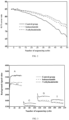
- the proportion of bases with a 0.1% error rate varies with different blocking reagents during sequencing cycles, and the higher the proportion of bases with a low error rate, the better.
- the 50 mM ammonium bicarbonate solution containing 50 mM N-ethylmaleimide had the highest proportion of bases with a 0.1% error rate; followed by the 50 mM ammonium bicarbonate solution containing 100 mM iodoacetamide; and the 50 mM ammonium bicarbonate solution without any blocking reagent had the lowest proportion of bases with a 0.1% error rate.
- the 50 mM ammonium bicarbonate solution containing 50 mM N-ethylmaleimide has the best effect.
- the group using 50 mM ammonium bicarbonate solution containing 50 mM N-ethylmaleimide had the lowest background signal value; followed by the group using 50 mM ammonium bicarbonate solution containing 100 mM iodoacetamide; and the group using 50 mM ammonium bicarbonate solution without any blocking reagent had the highest background signal value.
- the background signal values for the group using 50 mM ammonium bicarbonate solution containing 100 mM iodoacetamide and the group using 50 mM ammonium bicarbonate solution containing 50 mM N-ethylmaleimide were comparable but still lower than that of the group using 50 mM ammonium bicarbonate solution without any blocking reagent.
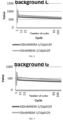
- the group using 50 mM ammonium bicarbonate solution containing 50 mM N-ethylmaleimide had the highest signal-to-noise ratio; followed by the group using 50 mM ammonium bicarbonate solution containing 100 mM iodoacetamide; and the group using 50 mM ammonium bicarbonate solution without any blocking reagent had the lowest signal-to-noise ratio.
- the MGISEQ-2000RS high-throughput sequencing kit was used, and the #13 well in the kit was added with a 50 mM ammonium bicarbonate solution containing 100 mM N-ethylmaleimide and a 50 mM ammonium bicarbonate solution containing 50 mM N-ethylmaleimide, respectively.
- the nucleotide mixture with fluorescent modification and reversible blocking was sequentially polymerized on the MGISEQ-2000RS sequencing platform, followed by elution of free nucleotides using the elution reagent.
- SE50 sequencing was performed on the MGISEQ-2000RS sequencing platform according to the same experimental process as that of Example 1. The Q30 decline for each cycle and the sequencing error rate curve for each cycle were then calculated to evaluate the sequencing quality.
- the sequencing quality (Q30) was higher when the blocking reagent used was the ammonium bicarbonate solution containing 100 mM N -ethylmaleimide than 50 mM N -ethylmaleimide.
- the Q30 (%) for the blocking reagent with a concentration of 100 mM was significantly higher than the sequencing results for the blocking reagent with a component concentration of 50 mM, and the backgrounds for A, G, C, and T were also significantly lower than that of the 50 mM blocking component. Overall, increasing the component concentration of the blocking reagent can lead to better sequencing quality.
Landscapes
- Chemical & Material Sciences (AREA)
- Life Sciences & Earth Sciences (AREA)
- Organic Chemistry (AREA)
- Proteomics, Peptides & Aminoacids (AREA)
- Health & Medical Sciences (AREA)
- Wood Science & Technology (AREA)
- Zoology (AREA)
- Engineering & Computer Science (AREA)
- Immunology (AREA)
- Biochemistry (AREA)
- Microbiology (AREA)
- Molecular Biology (AREA)
- Physics & Mathematics (AREA)
- Biotechnology (AREA)
- Analytical Chemistry (AREA)
- Biophysics (AREA)
- Bioinformatics & Cheminformatics (AREA)
- General Engineering & Computer Science (AREA)
- General Health & Medical Sciences (AREA)
- Genetics & Genomics (AREA)
- Measuring Or Testing Involving Enzymes Or Micro-Organisms (AREA)
- Investigating Or Analysing Materials By The Use Of Chemical Reactions (AREA)
- Investigating, Analyzing Materials By Fluorescence Or Luminescence (AREA)
- Apparatus Associated With Microorganisms And Enzymes (AREA)
Abstract
Provided are a sequencing kit containing a sulfydryl blocking reagent and an application of the sequencing kit. Also disclosed is a method for reducing a sequencing background signal. The method comprises the following steps: (1) opening a three-dimensional space structure of the enzyme protein, and exposing an active group; (2) blocking the exposed active group, wherein the blocking is irreversible blocking; (3) releasing a fluorescent substance; and (4) cleaning. For the first time, on the basis of a strategy of opening a disulfide bond of the enzyme protein and then performing irreversible blocking so as to better release the wound dyes substance, a background signal in the sequencing is reduced, and a signal-to-noise ratio and sequencing quality are improved, thereby facilitating efficient high-throughput sequencing.
Description
- The present application claims the right of the priority of Chinese patent application
PCT/CN2022/099258 filed on June 16, 2022 - The present disclosure belongs to the field of nucleic acid sequencing, and specifically relates to a kit containing a sulfhydryl blocking reagent, a method for reducing sequencing background signal based on the sulfhydryl blocking reagent, and a use thereof.
- DNA sequencing includes first-strand sequencing and second-strand sequencing. After completing the first-strand sequencing, a second strand is generated through multiple displacement amplification (MDA) using the first strand as a template, and then the second strand of DNA is sequenced. During the generation of the second strand, multiplex strand displacement amplification enzyme (phi29 DNA polymerase) is used. Phi29 DNA polymerase is easily and non-specifically adsorbed onto a sequencing chip, making it difficult to remove, leading to residue. The residual phi29 DNA polymerase entangles with dNTPs (chemically modified deoxyribonucleotides) at the beginning stage of second-strand sequencing. Due to the molecular structure of the modified dNTPs containing fluorescent dyes, the entanglement of the non-specifically bound enzyme and dNTPs results in an increase in the background signal during sequencing, causing a decrease in the signal-to-noise ratio, thereby affecting the sequencing quality.
- In prior art, the common approach to reduce the adsorption of non-specific fluorescent substances is to elute the chip with an elution solvent. To effectively remove non-specifically bound fluorescent substances, it is necessary to increase the concentration of an eluent and prolong the elution time, yet the effective removal of non-specific adsorption cannot be achieved. Both of these approaches are detrimental to efficient sequencing.
- In order to solve the technical problem of poor sequencing quality caused by incomplete cleaning of fluorescent dyes in the prior art, the present disclosure provides a sulfhydryl blocking reagent, a method for reducing a sequencing background signal based on the sulfhydryl blocking reagent, and a use thereof.
- The present disclosure comprises the following steps: first opening a disulfide bond in an enzyme protein structure such that the disulfide bond becomes two exposed sulfhydryl groups, and then blocking the exposed sulfhydryl groups with twoavailable methods. One is halogen substitution reaction, commonly using iodoacetamide, as shown in reaction (1) of
FIG. 1 . The other is an addition reaction, commonly using N-ethylmaleimide (NEM), as shown in reaction (2) ofFIG. 1 . Michael addition refers to a conjugated addition reaction between a compound that can provide a nucleophilic carbanion and an electrophilic conjugated system under base catalysis. - The present disclosure uses a disulfide bond reducing agent to open the disulfide bonds in the enzyme protein structure during the sequencing process and uses a blocking reagent to irreversibly block all disulfide bonds, releasing the fluorescent dyes and removing them completely, thereby reducing the background signal and improving the sequencing quality. The sulfhydryl blocking reagent according to the present disclosure includes N-ethylmaleimide and/or iodoacetamide, which are commonly used in protein structures as protein markers and are important tools for protein detection. The present disclosure applies the sulfhydryl blocking reagent in sequencing technology for the first time. As a means to reduce background of second-strand sequencing, the sulfhydryl blocking reagent can effectively block the polymerase during the MDA process, facilitating complete cleaning and preventing its impact on second-strand sequencing, which is conducive to improving the sequencing quality.
- In order to solve the above technical problems, the first aspect of the present disclosure provides a sequencing kit, wherein the sequencing kit comprises a sulfhydryl blocking reagent, and the sulfhydryl blocking reagent comprises iodoacetamide and/or N-ethylmaleimide.
- In certain technical solutions, the sulfhydryl blocking reagent is a 50 mM ammonium bicarbonate solution containing 50 to 100 mM N-ethylmaleimide. Preferably, the sulfhydryl blocking reagent is a 50 mM ammonium bicarbonate solution containing 100 mM N-ethylmaleimide.
- In certain technical solutions, the sulfhydryl blocking reagent is a 50 mM ammonium bicarbonate solution containing 50 to 100 mM iodoacetamide. Preferably, the sulfhydryl blocking reagent is a 50 mM ammonium bicarbonate solution containing 100 mM iodoacetamide.
- In some technical solutions, the sequencing kit further comprises a disulfide bond reducing agent, wherein the disulfide bond reducing agent is preferably tris(2-carboxyethyl)phosphine (TCEP) or a thiol such as β-mercaptoethanol (β-ME) or dithiothreitol (DTT).
- In certain technical solutions, the disulfide bond reducing agent is dithiothreitol with a working solution concentration of 1 to 10 mM.
- In some technical solutions, the sequencing kit further comprises one or more of a DNA polymerase, an MDA polymerase, a sequencing slide, and a nucleotide mixture with fluorescent modification and reversible blocking. Preferably, the MDA polymerase is phi29 DNA polymerase.
- The second aspect of the present disclosure provides a method for reducing a background signal of nucleic acid sequencing, comprising the following steps:
- (1) disrupting the three-dimensional space structure of an enzyme protein during nucleic acid sequencing, and exposing an active group;
- (2) blocking the exposed active group with the sulfhydryl blocking reagent in the sequencing kit according to the first aspect of the present disclosure, wherein the blocking is irreversible blocking;
- (3) releasing a fluorescent substance;
- (4) optionally, cleaning.
- In certain technical solutions, in step (1), the three-dimensional space structure is disrupted by breaking a disulfide bond, and the exposed active group is a sulfhydryl group; and/or,
- in step (2), the blocking is performed using a separate sulfhydryl blocking reagent or the sulfhydryl blocking reagent in the sequencing kit according to the first aspect; and/or,
- in step (3), the fluorescent substance may be a nucleotide individually labeled with a marker, wherein the marker is, for example, Cy5 fluorescence, ROX fluorescence, Cy3 fluorescence, or EF700 fluorescence.
- In the present disclosure, "separate" means that the reagent is not derived from the sequencing kit according to the first aspect, but may be an identical reagent prepared separately.
- In step (3), the fluorescent substance may be a nucleotide labeled with a combination of markers, allowing different luciferases to be attached to the labeled nucleotide. As used herein, the molecular marker for labeling a nucleotide and the marker that specifically binds thereto may be any pair of molecules that can specifically bind to each other. The specific binding between the paired members enables the linkage of the nucleotide with the luciferase. Exemplary paired members include, but are not limited to: (a) hapten or antigenic compound combined with a corresponding antibody or binding portion or fragment thereof, such as digoxin-digoxin antibody, N3G-N3G antibody, FITC-FITC antibody; (b) nucleic acid aptamer and protein; (c) non-immune binding pair (e.g., biotin-avidin, biotin-streptavidin, biotin-neutravidin); (d) hormone-hormone binding protein; (e) receptor-receptor agonist or antagonist; (f) lectin-carbohydrate; (g) enzyme-enzyme cofactor; (h) enzyme-enzyme inhibitor; and (i) complementary oligonucleotide or polynucleotide pair capable of forming a nucleic acid duplex.
- In step (4), the cleaning is performed using an elution reagent, preferably using the elution reagent in the sequencing kit according to the first aspect of the present disclosure.
- In certain technical solutions, in step (1), the disulfide bond is reduced using a separate disulfide bond reducing agent or the disulfide bond reducing agent in the sequencing kit according to the first aspect, which may be tris(2-carboxyethyl)phosphine (TCEP), a thiol such as β-mercaptoethanol (β-ME) or dithiothreitol (DTT), so as to break the disulfide bond to open the three-dimensional space. Preferably, the disulfide bond reducing agent has a working solution concentration of 1 to 50 mM, preferably 1 to 10 mM.
- In certain technical solutions, in step (2), the sulfhydryl blocking reagent is a 50 mM ammonium bicarbonate solution containing 50 to 100 mM N-ethylmaleimide, either separately or in the sequencing kit according to the first aspect. Preferably, the sulfhydryl blocking reagent is a 50 mM ammonium bicarbonate solution containing 100 mM N-ethylmaleimide.
- In certain technical solutions, in step (2), the sulfhydryl blocking reagent is a 50 mM ammonium bicarbonate solution containing 50 to 100 mM iodoacetamide, either separately or in the sequencing kit according to the first aspect. Preferably, the sulfhydryl blocking reagent is a 50 mM ammonium bicarbonate solution containing 100 mM iodoacetamide.
- In certain technical solutions, in step (1), an elution of the disulfide bond reducing agent is performed on the sequencing reagent after loading the sequencing reagent containing the disulfide bond reducing agent onto a chip; and/or, in step (2), a secondary elution is performed after adding the sulfhydryl blocking reagent for a reaction.
- In certain technical solutions, the elution reagent used for both the elution and secondary elution is an elution reagent in the sequencing reagent tank of an MGISEQ-2000RS high-throughput sequencing kit; and/or, the enzyme protein is an MDA polymerase, such as phi29 DNA polymerase.
- The third aspect of the present disclosure provides a method for nucleic acid sequencing, comprising the following steps:
- (1) loading a nucleic acid to be tested onto a sequencing slide;
- (2) contacting the nucleic acid to be tested with a sequencing reagent, such as dNTP molecules and DNA polymerase, and performing first-strand sequencing;
- (3) after completing first-strand sequencing, adding a polymerase for amplification to generate a second strand;
- (4) optionally, eluting;
- (5) blocking an exposed active group using the sequencing kit according to the first aspect of the present disclosure or the method according to the second aspect of the present disclosure;
- (6) optionally, eluting;
- (7) performing second-strand sequencing.
- Specifically, the nucleic acid sequencing comprises the following steps:
- (1) loading DNA nanospheres onto a sequencing slide using an MGISEQ-2000RS high-throughput sequencing kit;
- (2) pumping a mixture of dNTP molecules into the sequencing slide, polymerizing the dNTP molecules onto the sequencing strand of DNA using DNA polymerase, and performing first-strand sequencing;
- (3) after completing first-strand sequencing, adding MDA polymerase for amplification to generate a second strand, and eluting the excess MDA polymerase and polymerization reagent with an elution reagent;
- (4) opening the three-dimensional structure of the residual MDA polymerase on the sequencing chip using the method according to the second aspect of the present disclosure, blocking the exposed group, reacting for a period of, for example, 30 minutes, then eluting the chip with the elution reagent, and performing second-strand sequencing.
- Preferably, the nucleic acid sequencing is performed in a gene sequencer MGISEQ-2000RS; the cycle is performed 50 to 400 times, such as 50, 100, 150, 200, or 400 times; and/or, the polynucleotide is DNA or RNA.
- The fourth aspect of the present disclosure provides a use of the sequencing kit according to the first aspect in nucleic acid sequencing or in the preparation of a reagent for nucleic acid sequencing.
- The positive and progressive effects of the present disclosure are as follows:
The present disclosure uses for the first time a sequencing kit containing a sulfhydryl blocking reagent. On the basis of a strategy of breaking the disulfide bond of the enzyme protein and then performing irreversible blocking so as to better release the entangled dyes substance, the background signal during sequencing is reduced, and the signal-to-noise ratio and sequencing quality are improved. The use of such solutions and reagent components in sequencing protocols and sequencing kits will improve the sequencing quality of the products, thereby increasing their value and market share. -
-
FIG. 1 shows the mechanism of irreversible blocking of the sulfhydryl group of DNA polymerase according to the present disclosure. -
FIG. 2 shows the results of different blocking reagents on the number of sequencing cycles versus a 0.1% error rate; control group: a 50 mM ammonium bicarbonate solution without any blocking reagent; iodoacetamide: a 50 mM ammonium bicarbonate solution containing 100 mM iodoacetamide; N-ethylmaleimide: a 50 mM ammonium bicarbonate solution containing 50 mM N-ethylmaleimide. -
FIG. 3 shows the results of different blocking reagents in reducing the background signal of sequencing; control group: a 50 mM ammonium bicarbonate solution without any blocking reagent; iodoacetamide: a 50 mM ammonium bicarbonate solution containing 100 mM iodoacetamide; N-ethylmaleimide: a 50 mM ammonium bicarbonate solution containing 50 mM N-ethylmaleimide. -
FIG. 4 shows the results of different blocking reagents in improving the signal-to-noise ratio of sequencing; control group: a 50 mM ammonium bicarbonate solution without any blocking reagent; iodoacetamide: a 50 mM ammonium bicarbonate solution containing 100 mM iodoacetamide; N-ethylmaleimide: a 50 mM ammonium bicarbonate solution containing 50 mM N-ethylmaleimide. -
FIG. 5 shows the Q30 results for different concentrations of N-ethylmaleimide. -
FIG. 6 shows the background of A for different concentrations of N-ethylmaleimide. -
FIG. 7 shows the background of T for different concentrations of N-ethylmaleimide. -
FIG. 8 shows the background of C for different concentrations of N-ethylmaleimide. -
FIG. 9 shows the background of G for different concentrations of N-ethylmaleimide. - The present disclosure is further illustrated below by means of examples, but the present disclosure is not thereby limited to the scope of the described examples. The experimental methods for which specific conditions are not indicated in the following examples are selected according to conventional methods and conditions, or according to the product instructions.
- The mechanism of irreversible blocking of the sulfhydryl group of DNA polymerase according to the present disclosure is shown in
FIG. 1 . - MGISEQ-2000RS sequencer, MGIDL-200H loader, MGISEQ-2000RS sequencing slide. The excitation wavelengths of these instruments are 532 nm and 650 nm, respectively.
- Reagents and materials used in experiments (see Table 1):
Table 1: Reagents and materials used in experiments Sequencing kit Component Specification and quantity Storage temperature Transport temperature MGISEQ-2000RS sequencing slide Cat. No. 1000008403 Sequencing slide 1 EA -25°C to -15°C -15°C or less Low TE Buffer 300 µL × 1 tube Make DNB Buffer 100 µL × 1 tube Make DNB Enzyme Mix I 200 µL × 1 tube Make DNB Enzyme Mix II (LC) 25 µL × 1 tube Stop DNB Reaction Buffer 100 µL × 1 tube DNB Load Buffer I 200 µL × 1 tube MGISEQ-2000RS high-throughput sequencing kit (PE150) Cat. No. 1000012537 DNB Load Buffer II 200 µL × 1 tube -25°C to -15°C -15°C or less Micro Tube 0.5 mL 1 tube dNTPs Mix 1.30 mL × 2 tubes dNTPs Mix II 1.15 mL × 2 tubes Sequencing Enzyme Mix 4.80 mL × 1 tube MDA Reagent 3.50 mL × 1 tube MDA Enzyme Mix 0.60 mL × 1 tube Sequencing Reagent Cartridge 1 EA Transparent sealing film 2 sheets - Ammonium bicarbonate (analytical grade), N-ethylmaleimide (NEM, analytical grade), ultrapure water, and E. coli single-stranded circular DNA as the template, i.e., standard library reagent V3.0, with primer sequence: CAACTCCTTGGCTCACAGAACATGGCTACGATCCGACTT (SEQ ID NO: 1). DNA polymerase and MDA polymerase were sourced from BGI, and DNA nanospheres were sourced from BGI. The following experiments were all performed using E. coli single-stranded circular DNA as the template and using the MGISEQ-2000RS high-throughput sequencing kit (FCL PE150, Cat. No. 1000012555, MGI) to complete the preparation of DNA nanospheres and their loading onto the chip (MGI, Cat. No. 1000008403) for subsequent sequencing. The nucleotide mixture with fluorescent modification and reversible blocking referred to in this example comprises: dATP-1, which refers to an adenine nucleotide modified with both reversible blocking groups and Cy5 fluorescence; dTTP-1, which refers to a thymidine nucleotide modified with both reversible blocking groups and ROX fluorescence; dGTP-1, which refers to a guanine nucleotide modified with both reversible blocking groups and Cy3 fluorescence; and dCTP-1, which refers to a cytosine nucleotide modified with both reversible blocking groups and EF700 fluorescence. The aforementioned dATP-1, dTTP-1, dGTP-1, and dCTP-1 were all sourced from the MGISEQ-2000RS high-throughput sequencing kit. The nucleotide mixture with fluorescent modification and reversible blocking can be varied for different platforms. For example, the nucleotide mixture can be mixed with a nucleotide with only reversible blocking groups or other types of modifications.
-
- (a) Preparation of sulfhydryl blocking reagent:
A certain amount of ammonium bicarbonate was accurately weighed and dissolved in ultrapure water to prepare a 50 mM ammonium bicarbonate aqueous solution for later use. A certain amount of of N-ethylmaleimide and iodoacetamide was then accurately weighed to prepare a 50 mM ammonium bicarbonate solution containing 100 mM iodoacetamide and a 50 mM ammonium bicarbonate solution containing 50 mM N-ethylmaleimide. - (b) The method for nucleic acid sequencing follows the instructions, briefly described as follows:
- step 1: loading the DNA nanospheres onto the prepared chip (i.e., sequencing slide);
- step 2: pumping the prepared mixture of dNTP molecules (sourced from the MGISEQ-2000RS high-throughput sequencing kit described above) into the chip, adding the dNTP molecules to the parent strand of DNA using DNA polymerase, and performing first-strand sequencing;
- step 3: after completing first-strand sequencing, proceeding to the MDA process to generate a second strand, and after completing the generation of the second strand, eluting the excess MDA polymerase (sourced from the MGISEQ-2000RS high-throughput sequencing kit described above) with the elution reagent (sourced from the MGISEQ-2000RS high-throughput sequencing kit);
- step 4: pumping in 10 mM DTT reagent to break the disulfide bond of the enzyme protein, and then eluting the DTT reagent; pumping in the sulfhydryl blocking reagent, i.e., ammonium bicarbonate solution containing N-ethylmaleimide, carrying out the reaction for 30 minutes, eluting the solution with the elution reagent, and performing second-strand sequencing.
- The MGISEQ-2000RS high-throughput sequencing kit was used, and the #13 well in the kit was added with a 50 mM ammonium bicarbonate solution containing 100 mM iodoacetamide. The nucleotide mixture with fluorescent modification and reversible blocking was sequentially polymerized on the MGISEQ-2000RS sequencing platform, followed by elution of free nucleotides using the elution reagent, allowing for polymerization and compensation during signal collection, at which time the polymerized nucleotide mixture was a nucleotide modified with reversible blocking.
- SE50 sequencing was performed on the MGISEQ-2000RS sequencing platform according to the experimental process. In short, the nucleotide mixture with fluorescent modification and reversible blocking was sequentially polymerized on the MGISEQ-2000RS sequencing platform, followed by elution of free nucleotides using the elution reagent, signal collection using the photographic solution, removal of protective groups using the excision reagent, and washing using the elution reagent. The Q30 decline for each cycle and the sequencing error rate curve for each cycle were then calculated to evaluate the sequencing quality.
- The MGISEQ-2000RS high-throughput sequencing kit was used, and the #13 well in the kit was added with a 50 mM ammonium bicarbonate solution containing 50 mM N-ethylmaleimide. The nucleotide mixture with fluorescent modification and reversible blocking was sequentially polymerized on the MGISEQ-2000RS sequencing platform, followed by elution of free nucleotides using the elution reagent, allowing for polymerization and compensation during signal collection, at which time the polymerized nucleotide mixture was a nucleotide modified with reversible blocking. SE50 sequencing was performed on the MGISEQ-2000RS sequencing platform according to the same experimental process as that of Example 1. The Q30 decline for each cycle and the sequencing error rate curve for each cycle were then calculated to evaluate the sequencing quality.
- The MGISEQ-2000RS high-throughput sequencing kit was used, and the #13 well in the kit was added with a 50 mM ammonium bicarbonate solution. SE50 sequencing was performed on the MGISEQ-2000RS sequencing platform according to the same experimental process as that of Example 1. The Q30 decline for each cycle and the sequencing error rate curve for each cycle were then calculated to evaluate the sequencing quality.
- As shown in
FIG. 2 , the proportion of bases with a 0.1% error rate varies with different blocking reagents during sequencing cycles, and the higher the proportion of bases with a low error rate, the better. Specifically, the 50 mM ammonium bicarbonate solution containing 50 mM N-ethylmaleimide had the highest proportion of bases with a 0.1% error rate; followed by the 50 mM ammonium bicarbonate solution containing 100 mM iodoacetamide; and the 50 mM ammonium bicarbonate solution without any blocking reagent had the lowest proportion of bases with a 0.1% error rate. This indicates that the 50 mM ammonium bicarbonate solution containing 50 mM N-ethylmaleimide has the best effect. - As shown in
FIG. 3 , during the cycles for A, G, and T, the group using 50 mM ammonium bicarbonate solution containing 50 mM N-ethylmaleimide had the lowest background signal value; followed by the group using 50 mM ammonium bicarbonate solution containing 100 mM iodoacetamide; and the group using 50 mM ammonium bicarbonate solution without any blocking reagent had the highest background signal value. During the cycle for C, the background signal values for the group using 50 mM ammonium bicarbonate solution containing 100 mM iodoacetamide and the group using 50 mM ammonium bicarbonate solution containing 50 mM N-ethylmaleimide were comparable but still lower than that of the group using 50 mM ammonium bicarbonate solution without any blocking reagent. - As shown in
FIG. 4 , during the cycles for A, C, G, and T, the group using 50 mM ammonium bicarbonate solution containing 50 mM N-ethylmaleimide had the highest signal-to-noise ratio; followed by the group using 50 mM ammonium bicarbonate solution containing 100 mM iodoacetamide; and the group using 50 mM ammonium bicarbonate solution without any blocking reagent had the lowest signal-to-noise ratio. - The MGISEQ-2000RS high-throughput sequencing kit was used, and the #13 well in the kit was added with a 50 mM ammonium bicarbonate solution containing 100 mM N-ethylmaleimide and a 50 mM ammonium bicarbonate solution containing 50 mM N-ethylmaleimide, respectively. The nucleotide mixture with fluorescent modification and reversible blocking was sequentially polymerized on the MGISEQ-2000RS sequencing platform, followed by elution of free nucleotides using the elution reagent. SE50 sequencing was performed on the MGISEQ-2000RS sequencing platform according to the same experimental process as that of Example 1. The Q30 decline for each cycle and the sequencing error rate curve for each cycle were then calculated to evaluate the sequencing quality.
- Results: As shown in
FIG. 5 , the sequencing quality (Q30) was higher when the blocking reagent used was the ammonium bicarbonate solution containing 100 mM N-ethylmaleimide than 50 mM N-ethylmaleimide. As shown inFIGs 6 to 9 , the Q30 (%) for the blocking reagent with a concentration of 100 mM was significantly higher than the sequencing results for the blocking reagent with a component concentration of 50 mM, and the backgrounds for A, G, C, and T were also significantly lower than that of the 50 mM blocking component. Overall, increasing the component concentration of the blocking reagent can lead to better sequencing quality. - Although the specific embodiments of the present disclosure have been described above, those skilled in the art should understand that these are merely illustrative examples. Various changes or modifications can be made to these embodiments without departing from the principles and essence of the present disclosure. Therefore, the scope of protection for the present disclosure is defined by the appended claims.
Claims (11)
- A sequencing kit, comprising a sulfhydryl blocking reagent.
- The sequencing kit according to claim 1, wherein the sulfhydryl blocking reagent comprises iodoacetamide and/or N-ethylmaleimide, and/or the sulfhydryl blocking reagent has a concentration of 50 of 100 mM;
preferably, the sulfhydryl blocking reagent is a 50 mM ammonium bicarbonate solution containing 50 to 100 mM N-ethylmaleimide, and/or the sulfhydryl blocking reagent is a 50 mM ammonium bicarbonate solution containing 50 to 100 mM iodoacetamide. - The sequencing kit according to claim 1 or 2, wherein the sequencing kit further comprises a disulfide bond reducing agent; the disulfide bond reducing agent is preferably tris(2-carboxyethyl)phosphine or a thiol such as β-mercaptoethanol or dithiothreitol.
- The sequencing kit according to claim 3, wherein the disulfide bond reducing agent is dithiothreitol with a working solution concentration of 1 to 10 mM.
- A method for reducing a background signal for nucleic acid sequencing, comprising the following steps:(1) disrupting a three-dimensional space structure of an enzyme protein during nucleic acid sequencing, and exposing an active group;(2) blocking the exposed active group with the sulfhydryl blocking reagent as defined in the kit according to any one of claims 1 to 4, wherein the blocking is irreversible blocking;(3) releasing a fluorescent substance;(4) optionally, cleaning.
- The method according to claim 5, wherein in step (1), the three-dimensional space structure is disrupted by breaking a disulfide bond, and the exposed active group is a sulfhydryl group; and/or,in step (2), the sulfhydryl blocking reagent is a 50 mM ammonium bicarbonate solution containing 50 to 100 mM N-ethylmaleimide, and/or the sulfhydryl blocking reagent is a 50 mM ammonium bicarbonate solution containing 50 to 100 mM iodoacetamide; and/or,in step (3), the fluorescent substance is a nucleotide individually labeled with a marker, wherein the marker is, for example, Cy5 fluorescence, ROX fluorescence, Cy3 fluorescence, or EF700 fluorescence; and/or the fluorescent substance is a nucleotide labeled with a combination of markers; and/or,in step (4), the cleaning is performed using an elution reagent.
- The method according to claim 6, wherein in step (1), the disulfide bond is reduced by a disulfide bond reducing agent such as tris(2-carboxyethyl)phosphine (TCEP) or a thiol such as β-mercaptoethanol (β-ME) or dithiothreitol (DTT), so as to break the disulfide bond to disrupt the three-dimensional space.
- The method according to claim 3 or 7, wherein in step (1), an elution of the disulfide bond reducing agent is performed on the disulfide bond reducing agent after loading the sequencing reagent containing the disulfide bond reducing agent onto a chip; and/or, in step (2), a secondary elution is performed after adding the sulfhydryl blocking reagent for a reaction.
- The method according to claim 5, wherein the enzyme protein is an MDA polymerase, such as phi29 DNA polymerase.
- A method for nucleic acid sequencing, comprising the following steps:(1) loading a nucleic acid to be tested onto a sequencing slide;(2) contacting the nucleic acid to be tested with a sequencing reagent, such as dNTP molecules and DNA polymerase, and performing first-strand sequencing;(3) after completing first-strand sequencing, adding a polymerase for amplification to generate a second strand;(4) optionally, eluting;(5) blocking an exposed active group using the sequencing kit according to any one of claims 1 to 4 or the method according to any one of claims 5 to 9;(6) optionally, eluting;(7) performing second-strand sequencing.
- A use of the sequencing kit according to any one of claims 1 to 4 in nucleic acid sequencing or in the preparation of a reagent for nucleic acid sequencing.
Applications Claiming Priority (2)
| Application Number | Priority Date | Filing Date | Title |
|---|---|---|---|
| PCT/CN2022/099258 WO2023240563A1 (en) | 2022-06-16 | 2022-06-16 | Sequencing kit containing thiol blocking reagent, and use of sequencing kit |
| PCT/CN2023/100777 WO2023241701A1 (en) | 2022-06-16 | 2023-06-16 | Sequencing kit containing sulfydryl blocking reagent and application of sequencing kit |
Publications (1)
| Publication Number | Publication Date |
|---|---|
| EP4541904A1 true EP4541904A1 (en) | 2025-04-23 |
Family
ID=89192355
Family Applications (1)
| Application Number | Title | Priority Date | Filing Date |
|---|---|---|---|
| EP23823267.2A Pending EP4541904A1 (en) | 2022-06-16 | 2023-06-16 | Sequencing kit containing sulfydryl blocking reagent and application of sequencing kit |
Country Status (8)
| Country | Link |
|---|---|
| US (1) | US20250369040A1 (en) |
| EP (1) | EP4541904A1 (en) |
| JP (1) | JP2025518950A (en) |
| KR (1) | KR20250024815A (en) |
| CN (1) | CN119343467A (en) |
| AU (1) | AU2023295658A1 (en) |
| CA (1) | CA3258764A1 (en) |
| WO (2) | WO2023240563A1 (en) |
Family Cites Families (7)
| Publication number | Priority date | Publication date | Assignee | Title |
|---|---|---|---|---|
| CN101042374A (en) * | 2006-03-20 | 2007-09-26 | 中国人民解放军军事医学科学院放射与辐射医学研究所 | Method for enriching and sequencing protein terminal peptide fragment and reagent kit |
| CN101042376A (en) * | 2006-03-20 | 2007-09-26 | 中国人民解放军军事医学科学院放射与辐射医学研究所 | Method and reagent kit for rapid measuring protein N terminal sequence |
| CN101055267A (en) * | 2006-04-13 | 2007-10-17 | 中国人民解放军军事医学科学院放射与辐射医学研究所 | Method and reagent kit for quickly identifying protein and its N-terminal sequence |
| CN105301119B (en) * | 2014-07-15 | 2017-06-06 | 中国科学院大连化学物理研究所 | Protein amino acid sequence de novo sequencing method based on the heavy label such as two ends are non- |
| CN104483374B (en) * | 2014-12-02 | 2017-03-15 | 北京大学 | A kind of method and test kit for carrying out de novo sequencing with MALDI TOF TOF mass spectrums to protein N terminal sequence |
| WO2018189367A1 (en) * | 2017-04-13 | 2018-10-18 | Imba - Institut Für Molekulare Biotechnologie Gmbh | Nucleic acid modification and identification method |
| CN112986570B (en) * | 2019-12-02 | 2022-08-30 | 中国科学院大连化学物理研究所 | Method for determining amino acid sequence based on quasi-equal-weight double markers at two ends of peptide fragment |
-
2022
- 2022-06-16 WO PCT/CN2022/099258 patent/WO2023240563A1/en not_active Ceased
-
2023
- 2023-06-16 CA CA3258764A patent/CA3258764A1/en active Pending
- 2023-06-16 KR KR1020257001037A patent/KR20250024815A/en active Pending
- 2023-06-16 EP EP23823267.2A patent/EP4541904A1/en active Pending
- 2023-06-16 WO PCT/CN2023/100777 patent/WO2023241701A1/en not_active Ceased
- 2023-06-16 US US18/874,345 patent/US20250369040A1/en active Pending
- 2023-06-16 CN CN202380045977.2A patent/CN119343467A/en active Pending
- 2023-06-16 AU AU2023295658A patent/AU2023295658A1/en active Pending
- 2023-06-16 JP JP2024572683A patent/JP2025518950A/en active Pending
Also Published As
| Publication number | Publication date |
|---|---|
| CA3258764A1 (en) | 2025-04-07 |
| US20250369040A1 (en) | 2025-12-04 |
| WO2023240563A1 (en) | 2023-12-21 |
| JP2025518950A (en) | 2025-06-19 |
| WO2023241701A1 (en) | 2023-12-21 |
| KR20250024815A (en) | 2025-02-19 |
| AU2023295658A1 (en) | 2025-01-02 |
| CN119343467A (en) | 2025-01-21 |
Similar Documents
| Publication | Publication Date | Title |
|---|---|---|
| US20250250621A1 (en) | Methods, compositions, and kits for determining the location of an analyte in a biological sample | |
| WO2024086167A2 (en) | Methods, compositions, and kits for determining the location of an analyte in a biological sample | |
| Sah et al. | Functional DNA quantification guides accurate next-generation sequencing mutation detection in formalin-fixed, paraffin-embedded tumor biopsies | |
| JP6298456B2 (en) | Aptamer-based multiplexed assay | |
| CN111748551B (en) | Blocking sequence, capture kit, library hybridization capture method and library construction method | |
| JPH01289499A (en) | Detection of nucleic acid by separation | |
| CN112795654A (en) | Method and kit for organism fusion gene detection and fusion abundance quantification | |
| AU2016331058A1 (en) | Methods for subtyping diffuse B-cell lymphoma (DLBCL) | |
| CN112359093B (en) | Method and kit for preparing and expressing and quantifying free miRNA library in blood | |
| CN104024426A (en) | Tracing method and detection kit for test sample in next-generation sequencing technique of dna | |
| CN111979583A (en) | A method for constructing a single-stranded nucleic acid molecule high-throughput sequencing library and its application | |
| CN114540474B (en) | A NGS targeted capture method based on dark probe technology and its application in differential deep sequencing | |
| EP4092135A1 (en) | Method for synchronously sequencing sense strand and antisense strand of dna | |
| EP4144745B1 (en) | Sequencing method | |
| US20250369040A1 (en) | Sequencing kit containing sulfydryl blocking reagent and application of sequencing kit | |
| US20250179569A1 (en) | Single-cell transcriptome sequencing method and use thereof | |
| Profaizer et al. | HLA genotyping using the Illumina HLA TruSight next‐generation sequencing kits: A comparison | |
| CN110892079A (en) | Assay methods and compositions for detecting nucleic acid identifier contamination | |
| US20230399679A1 (en) | System and method for ligand-limited normalizing polymerase chain reaction (lln-pcr) | |
| CN116103373A (en) | Kit for enriching and amplifying urine eccDNA, method and application | |
| CN112458544B (en) | Library construction method for balancing library concentration | |
| CN116218955A (en) | Super multiplex PCR library construction kit and detection method for detection of pathogenic microorganisms | |
| WO2018129644A1 (en) | Method, reaction system and kit for improving quality of nucleic acid polymerization sequencing | |
| WO2002101389A1 (en) | Method of assaying hyaluronic acid | |
| JPH08308596A (en) | Detection of hla |
Legal Events
| Date | Code | Title | Description |
|---|---|---|---|
| STAA | Information on the status of an ep patent application or granted ep patent |
Free format text: STATUS: THE INTERNATIONAL PUBLICATION HAS BEEN MADE |
|
| PUAI | Public reference made under article 153(3) epc to a published international application that has entered the european phase |
Free format text: ORIGINAL CODE: 0009012 |
|
| STAA | Information on the status of an ep patent application or granted ep patent |
Free format text: STATUS: REQUEST FOR EXAMINATION WAS MADE |
|
| 17P | Request for examination filed |
Effective date: 20241209 |
|
| AK | Designated contracting states |
Kind code of ref document: A1 Designated state(s): AL AT BE BG CH CY CZ DE DK EE ES FI FR GB GR HR HU IE IS IT LI LT LU LV MC ME MK MT NL NO PL PT RO RS SE SI SK SM TR |
|
| DAV | Request for validation of the european patent (deleted) | ||
| DAX | Request for extension of the european patent (deleted) |