EP4541800A1 - Nitrogen-containing silane compound and method for producing same - Google Patents
Nitrogen-containing silane compound and method for producing same Download PDFInfo
- Publication number
- EP4541800A1 EP4541800A1 EP24201316.7A EP24201316A EP4541800A1 EP 4541800 A1 EP4541800 A1 EP 4541800A1 EP 24201316 A EP24201316 A EP 24201316A EP 4541800 A1 EP4541800 A1 EP 4541800A1
- Authority
- EP
- European Patent Office
- Prior art keywords
- styrene
- group
- carbon atoms
- phenyl
- phenylethylene
- Prior art date
- Legal status (The legal status is an assumption and is not a legal conclusion. Google has not performed a legal analysis and makes no representation as to the accuracy of the status listed.)
- Pending
Links
Images


Classifications
-
- C—CHEMISTRY; METALLURGY
- C07—ORGANIC CHEMISTRY
- C07F—ACYCLIC, CARBOCYCLIC OR HETEROCYCLIC COMPOUNDS CONTAINING ELEMENTS OTHER THAN CARBON, HYDROGEN, HALOGEN, OXYGEN, NITROGEN, SULFUR, SELENIUM OR TELLURIUM
- C07F7/00—Compounds containing elements of Groups 4 or 14 of the Periodic Table
- C07F7/02—Silicon compounds
- C07F7/08—Compounds having one or more C—Si linkages
- C07F7/18—Compounds having one or more C—Si linkages as well as one or more C—O—Si linkages
- C07F7/1804—Compounds having Si-O-C linkages
-
- C—CHEMISTRY; METALLURGY
- C07—ORGANIC CHEMISTRY
- C07F—ACYCLIC, CARBOCYCLIC OR HETEROCYCLIC COMPOUNDS CONTAINING ELEMENTS OTHER THAN CARBON, HYDROGEN, HALOGEN, OXYGEN, NITROGEN, SULFUR, SELENIUM OR TELLURIUM
- C07F7/00—Compounds containing elements of Groups 4 or 14 of the Periodic Table
- C07F7/02—Silicon compounds
- C07F7/08—Compounds having one or more C—Si linkages
- C07F7/0803—Compounds with Si-C or Si-Si linkages
- C07F7/081—Compounds with Si-C or Si-Si linkages comprising at least one atom selected from the elements N, O, halogen, S, Se or Te
-
- C—CHEMISTRY; METALLURGY
- C07—ORGANIC CHEMISTRY
- C07F—ACYCLIC, CARBOCYCLIC OR HETEROCYCLIC COMPOUNDS CONTAINING ELEMENTS OTHER THAN CARBON, HYDROGEN, HALOGEN, OXYGEN, NITROGEN, SULFUR, SELENIUM OR TELLURIUM
- C07F7/00—Compounds containing elements of Groups 4 or 14 of the Periodic Table
- C07F7/02—Silicon compounds
- C07F7/08—Compounds having one or more C—Si linkages
- C07F7/0803—Compounds with Si-C or Si-Si linkages
- C07F7/081—Compounds with Si-C or Si-Si linkages comprising at least one atom selected from the elements N, O, halogen, S, Se or Te
- C07F7/0812—Compounds with Si-C or Si-Si linkages comprising at least one atom selected from the elements N, O, halogen, S, Se or Te comprising a heterocyclic ring
-
- C—CHEMISTRY; METALLURGY
- C07—ORGANIC CHEMISTRY
- C07F—ACYCLIC, CARBOCYCLIC OR HETEROCYCLIC COMPOUNDS CONTAINING ELEMENTS OTHER THAN CARBON, HYDROGEN, HALOGEN, OXYGEN, NITROGEN, SULFUR, SELENIUM OR TELLURIUM
- C07F7/00—Compounds containing elements of Groups 4 or 14 of the Periodic Table
- C07F7/02—Silicon compounds
- C07F7/08—Compounds having one or more C—Si linkages
- C07F7/0803—Compounds with Si-C or Si-Si linkages
- C07F7/0825—Preparations of compounds not comprising Si-Si or Si-cyano linkages
- C07F7/0827—Syntheses with formation of a Si-C bond
-
- C—CHEMISTRY; METALLURGY
- C07—ORGANIC CHEMISTRY
- C07F—ACYCLIC, CARBOCYCLIC OR HETEROCYCLIC COMPOUNDS CONTAINING ELEMENTS OTHER THAN CARBON, HYDROGEN, HALOGEN, OXYGEN, NITROGEN, SULFUR, SELENIUM OR TELLURIUM
- C07F7/00—Compounds containing elements of Groups 4 or 14 of the Periodic Table
- C07F7/02—Silicon compounds
- C07F7/08—Compounds having one or more C—Si linkages
- C07F7/10—Compounds having one or more C—Si linkages containing nitrogen having a Si-N linkage
-
- C—CHEMISTRY; METALLURGY
- C07—ORGANIC CHEMISTRY
- C07F—ACYCLIC, CARBOCYCLIC OR HETEROCYCLIC COMPOUNDS CONTAINING ELEMENTS OTHER THAN CARBON, HYDROGEN, HALOGEN, OXYGEN, NITROGEN, SULFUR, SELENIUM OR TELLURIUM
- C07F7/00—Compounds containing elements of Groups 4 or 14 of the Periodic Table
- C07F7/02—Silicon compounds
- C07F7/08—Compounds having one or more C—Si linkages
- C07F7/18—Compounds having one or more C—Si linkages as well as one or more C—O—Si linkages
- C07F7/1804—Compounds having Si-O-C linkages
- C07F7/1872—Preparation; Treatments not provided for in C07F7/20
- C07F7/1876—Preparation; Treatments not provided for in C07F7/20 by reactions involving the formation of Si-C linkages
Definitions
- the present invention relates to a novel nitrogen-containing silane compound and a method for producing the same.
- Patent Document 1 proposes a method using 1-[ ⁇ N,N-bis (trimethylsilylamine) ⁇ dimethylsilyl ⁇ -2- ⁇ (4-vinylphenyl)dimethylsilyl ⁇ ethane
- Patent Document 2 proposes a method using 6-(N,N-bistrimethylsilylamino)myrcene.
- a highly reactive Si-N bond is introduced into a polymer compound and bonded to a silanol group on the silica surface via a siloxane bond, thereby improving the affinity between the polymer and silica, but there is room for further improvement in the dispersibility of silica.
- the present invention has been made in view of the above circumstances, and it is an object of the present invention to provide a novel nitrogen-containing silane compound useful as a polymer modifier, which makes it possible to more effectively improve the characteristics of a polymer compound by introduction of a functional group, and a method for producing the same.
- a specific nitrogen-containing silane compound is useful as a modifier capable of more effectively improving the interaction between silica and a polymer compound and improving the dispersibility of silica, and have completed the present invention.
- the present invention provides:
- the nitrogen-containing silane compound of the present invention is useful as a polymer modifier or the like because it can more effectively improve the interaction between silica and a polymer and improve the dispersibility of silica.
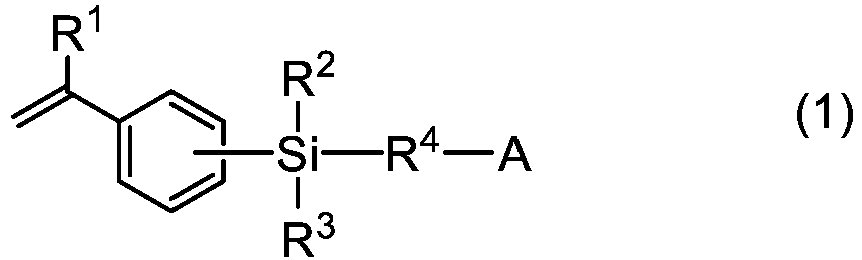
- the nitrogen-containing silane compound of the present invention is a compound having the following general formula (1) (Hereinafter, the compound is referred to as "compound (1)”.).
- R 1 is a hydrogen atom or an unsubstituted monovalent hydrocarbon group having 1 to 20 carbon atoms, preferably 1 to 10 carbon atoms, more preferably 1 to 6 carbon atoms.
- the monovalent hydrocarbon group of R 1 may be linear, branched, or cyclic, and specific examples thereof include linear alkyl groups such as methyl, ethyl, n-propyl, n-butyl, n-pentyl, n-hexyl, n-heptyl, n-octyl, n-nonyl, n-decyl, n-dodecyl, n-tetradecyl, n-hexadecyl, n-octadecyl, and n-icosyl groups; branched alkyl groups such as isopropyl, isobutyl, sec-butyl, tert-butyl, thexyl, 2-ethylhexyl groups; cyclic alkyl groups such as cyclopentyl and cyclohexyl groups; alkenyl groups such as vinyl, allyl, 1-propenyl, 1-
- R 1 is preferably a hydrogen atom, an unsubstituted linear, branched or cyclic alkyl group having 1 to 10 carbon atoms, an unsubstituted linear, branched or cyclic alkenyl group having 2 to 10 carbon atoms, an unsubstituted aryl group having 6 to 10 carbon atoms, or an unsubstituted aralkyl group having 7 to 10 carbon atoms, and from the viewpoint of easy availability of raw materials, a hydrogen atom, a methyl group, or a phenyl group is more preferable.
- R 2 and R 3 are each independently an unsubstituted monovalent hydrocarbon group having 1 to 20 carbon atoms or an organoxy group having the following general formula (2), and an organoxy group having the following general formula (2) is preferable.
- R 5 is an unsubstituted monovalent hydrocarbon group having 1 to 20 carbon atoms.
- Examples of the monovalent hydrocarbon group of R 2 , R 3 , and R 5 include the same group as R 1 .
- R 4 is an unsubstituted divalent hydrocarbon group having 1 to 20 carbon atoms, preferably 1 to 10 carbon atoms, more preferably 1 to 5 carbon atoms, and specific examples thereof include an alkylene group such as a methylene, ethylene, methylethylene, trimethylene, methylpropylene, tetramethylene, hexamethylene, octamethylene, decamethylene, or isobutylene group; arylene groups such as phenylene and methylphenylene groups; and aralkylene groups such as ethylenephenylene and ethylenephenylenemethylene groups.
- alkylene group such as a methylene, ethylene, methylethylene, trimethylene, methylpropylene, tetramethylene, hexamethylene, octamethylene, decamethylene, or isobutylene group
- arylene groups such as phenylene and methylphenylene groups
- aralkylene groups such as ethylenephenylene and ethylenephenylene
- R 4 is a single bond and A is a group having the general formula (3)
- the N-Si bond is cleaved by hydrolysis or the like, the amino group contained in A is removed from the polymer, and the interaction between the polymer compound and silica is lost.
- an unsubstituted divalent hydrocarbon group having 1 to 20 carbon atoms is present as in the present invention, amino group removal by cleavage does not occur even after use as the polymer modifier, and an amino group having a large interaction with silica can be retained in the polymer, so that the interaction between the polymer compound and silica can be increased.
- A is a group having the following general formula (3) or the following general formula (4).
- R 6 and R 7 are a monovalent hydrocarbon group having 1 to 20 carbon atoms, preferably 1 to 10 carbon atoms, more preferably 1 to 6 carbon atoms, in which a hetero atom such as an oxygen atom or a sulfur atom may be interposed, or a triorganosilyl group.
- the monovalent hydrocarbon group of R 6 and R 7 may be linear, branched, or cyclic, and specific examples thereof include linear alkyl groups such as methyl, ethyl, n-propyl, n-butyl, n-pentyl, n-hexyl, n-heptyl, n-octyl, n-nonyl, n-decyl, n-dodecyl, n-tetradecyl, n-hexadecyl, n-octadecyl, and n-icosyl groups; branched alkyl groups such as isopropyl, isobutyl, sec-butyl, tert-butyl, thexyl, 2-ethylhexyl groups; cyclic alkyl groups such as cyclopentyl and cyclohexyl groups; alkenyl groups such as vinyl, allyl, propenyl
- R 6 and R 7 are preferably a hydrogen atom, an unsubstituted linear, branched or cyclic alkyl group having 1 to 10 carbon atoms, an unsubstituted linear, branched or cyclic alkenyl group having 2 to 10 carbon atoms, an unsubstituted aryl group having 6 to 10 carbon atoms, or an unsubstituted aralkyl group having 7 to 10 carbon atoms, and from the viewpoint of easy availability of raw materials, a hydrogen atom, a methyl group, or a phenyl group is more preferable.
- R 6 and R 7 may be bonded to each other to form a ring having 2 to 20 carbon atoms together with the nitrogen atom to which they are bonded.
- Examples of such a ring include a piperidine ring, a piperazine ring, a pyrrolidine ring, and a morpholine ring.
- triorganosilyl group examples include trialkylsilyl groups having an alkyl group having 1 to 6 carbon atoms, such as trimethylsilyl, ethyldimethylsilyl, diethylmethylsilyl, triethylsilyl, tri n-propylsilyl, triisopropylsilyl, tri n-butylsilyl, triisobutylsilyl, tri sec-butylsilyl, tert-butyldimethylsilyl, tricyclopentylsilyl, and tricyclohexylsilyl groups; a triarylsilyl group having an aryl group having 6 to 10 carbon atoms, such as a triphenylsilyl group; and an alkyldiarylsilyl group having an alkyl group having 1 to 6 carbon atoms and an aryl group having 6 to 10 carbon atoms such as a tert-butyldiphenyls
- R 8 is an unsubstituted monovalent hydrocarbon group having 1 to 20 carbon atoms, preferably 1 to 10 carbon atoms, more preferably 1 to 5 carbon atoms, or a triorganosilyl group, and specific examples thereof include groups similar to R 6 and R 7 .
- R 9 and R 10 each independently represent an unsubstituted divalent hydrocarbon group having 1 to 20 carbon atoms, preferably 1 to 10 carbon atoms, more preferably 1 to 5 carbon atoms, and specific examples thereof include an alkylene group such as a methylene, ethylene, methylethylene, trimethylene, methylpropylene, tetramethylene, hexamethylene, octamethylene, decamethylene, or isobutylene group; arylene groups such as phenylene and methylphenylene groups; and aralkylene groups such as ethylenephenylene and ethylenephenylenemethylene groups.
- alkylene group such as a methylene, ethylene, methylethylene, trimethylene, methylpropylene, tetramethylene, hexamethylene, octamethylene, decamethylene, or isobutylene group
- arylene groups such as phenylene and methylphenylene groups
- aralkylene groups such as ethylenephenylene and
- R 11 represents C-H or a nitrogen atom.
- the compound (1) can be produced, for example, by reacting a nitrogen-containing silane compound (Hereinafter, the compound is referred to as "compound (5)”.) having the following general formula (5) with a Grignard reagent having the following general formula (6) (Hereinafter, the compound is referred to as "compound (6)".).
- a nitrogen-containing silane compound (Hereinafter, the compound is referred to as "compound (5)”.) having the following general formula (5)
- a Grignard reagent having the following general formula (6)
- R 2 to R 4 and A represent the same meaning as described above
- R 12 represents an unsubstituted monovalent hydrocarbon group having 1 to 20 carbon atoms.
- R 1 has the same meaning as described above
- X represents a chlorine atom, a bromine atom, or an iodine atom.
- the compound (6) include 4-styrylmagnesium chloride, 4-styrylmagnesium bromide, 4-styrylmagnesium iodide, 3-styrylmagnesium chloride, 3-styrylmagnesium bromide, 3-styrylmagnesium iodide, 2-styrylmagnesium chloride, 2-styrylmagnesium bromide, 2-styrylmagnesium iodide, 4-(1-phenylvinyl)phenylmagnesium chloride, 4-(1-phenylvinyl)phenylmagnesium bromide, and 4-(1-phenylvinyl)phenylmagnesium iodide.
- the compounding ratio of the compound (5) and the compound (6) is not particularly limited, but from the viewpoint of reactivity and productivity, the compounding ratio of the compound (6) is preferably 0.1 to 3.0 mol, more preferably 0.5 to 2 mol, per 1 mol of the compound (5).
- the reaction temperature of the above reaction is not particularly limited, but is preferably -40 to 200°C, more preferably 0 to 150°C, and the reaction time is not particularly limited, but is preferably 1 to 40 hours, more preferably 1 to 20 hours.
- the reaction atmosphere is preferably an inert gas atmosphere such as nitrogen or argon.
- a solvent can also be used.
- the solvent include hydrocarbon solvents such as pentane, hexane, cyclohexane, heptane, isooctane, benzene, toluene, and xylene; ether solvents such as diethyl ether, tetrahydrofuran, and dioxane; ester solvents such as ethyl acetate and butyl acetate; aprotic polar solvents such as acetonitrile, N,N-dimethylformamide, and N-methylpyrrolidone; and chlorinated hydrocarbon solvents such as dichloromethane and chloroform. These solvents may be used singly or in combination of two or more kinds thereof.
- the target product can be recovered by a usual method such as distillation or distillation of a low-boiling-point compound.
- FIG. 1 shows a chart
- FIG. 2 shows a chart
- FIG. 3 shows a chart
- FIG. 4 shows a chart
- FIG. 5 shows a chart
- FIG. 6 shows a chart
Landscapes
- Chemical & Material Sciences (AREA)
- Organic Chemistry (AREA)
- Chemical Kinetics & Catalysis (AREA)
Abstract

R2 and R3 each independently represent an unsubstituted monovalent hydrocarbon group or a group having general formula (2),
-OR5 (2)
wherein R5 represents an unsubstituted monovalent hydrocarbon group,
R4 represents an unsubstituted divalent hydrocarbon group,
A represents a group having general formula (3) or general formula (4):

wherein R6 and R7 represent a monovalent hydrocarbon group in which a hetero atom may be interposed or a triorganosilyl group, and may be bonded to each other to form a ring together with a nitrogen atom to which they are bonded,

Description
- The present invention relates to a novel nitrogen-containing silane compound and a method for producing the same.
- Conventionally, various attempts have been made to improve the properties of a polymer compound, and as one example thereof, a method of introducing a functional group into a polymer compound is known.
- As one of the functional group introduction methods, a method is known in which a compound having both a double bond and a functional group is reacted with a monomer to introduce a functional group into a polymer compound. For example,
Patent Document 1 proposes a method using 1-[{N,N-bis (trimethylsilylamine)}dimethylsilyl}-2-{(4-vinylphenyl)dimethylsilyl}ethane, andPatent Document 2 proposes a method using 6-(N,N-bistrimethylsilylamino)myrcene. - It is known that when a polymer compound into which a functional group is introduced as described above is used in a rubber composition for tires, the interaction with silica which is a main filler in the rubber composition is improved.
-
- Patent Document 1:
JP-A 2018-513897 - Patent Document 2:
JP-A 2022-519481 - In the method of
Patent Document 1, a highly reactive Si-N bond is introduced into a polymer compound and bonded to a silanol group on the silica surface via a siloxane bond, thereby improving the affinity between the polymer and silica, but there is room for further improvement in the dispersibility of silica. - On the other hand, in the method of
Patent Document 2, since the functional group to be introduced is an amino group, silica can be dispersed by the hydrogen bond of the amino group, and at the same time, the interaction with silica itself increases due to the high polarity of the amino group, so that the functional group introduction effect is high, but since the conjugated diene structure in which the double bond part is substituted is obtained, the reactivity at the time of introduction of the functional group decreases, and there is a possibility that the functional group cannot be sufficiently introduced into the polymer compound. - The present invention has been made in view of the above circumstances, and it is an object of the present invention to provide a novel nitrogen-containing silane compound useful as a polymer modifier, which makes it possible to more effectively improve the characteristics of a polymer compound by introduction of a functional group, and a method for producing the same.
- As a result of intensive studies to achieve the above object, the present inventors have found that a specific nitrogen-containing silane compound is useful as a modifier capable of more effectively improving the interaction between silica and a polymer compound and improving the dispersibility of silica, and have completed the present invention.
- That is, the present invention provides:
- 1. A nitrogen-containing silane compound having the following general formula (1):
- R2 and R3 each independently represent an unsubstituted monovalent hydrocarbon group having 1 to 20 carbon atoms or a group having the following general formula (2):
-OR5 (2)
wherein, R5 represents an unsubstituted monovalent hydrocarbon group having 1 to 20 carbon atoms, - R4 represents an unsubstituted divalent hydrocarbon group having 1 to 20 carbon atoms,
- A represents a group having the following general formula (3) or a group having the following general formula (4):


- R2 and R3 each independently represent an unsubstituted monovalent hydrocarbon group having 1 to 20 carbon atoms or a group having the following general formula (2):
- 2. A method for producing the nitrogen-containing silane compound according to
claim 1,- including reacting a nitrogen-containing silane compound having the following general formula (5):

- a Grignard reagent having the following general formula (6):

- including reacting a nitrogen-containing silane compound having the following general formula (5):
- The nitrogen-containing silane compound of the present invention is useful as a polymer modifier or the like because it can more effectively improve the interaction between silica and a polymer and improve the dispersibility of silica.
-
-
FIG. 1 is a 1H-NMR spectrum of 4-[(3-diethylaminopropyl)dimethoxysilyl]styrene obtained in Example 1; -
FIG. 2 is an IR spectrum of 4-[(3-diethylaminopropyl)dimethoxysilyl]styrene obtained in Example 1; -
FIG. 3 is a 1H-NMR spectrum of 4-[[3-(4-methylpiperazine-1-yl)propyl]-dimethoxysilyl]styrene obtained in Example 2; -
FIG. 4 is an IR spectrum of 4-[[3-(4-methylpiperazine-1-yl)propyl]dimethoxysilyl]-styrene obtained in Example 2; -
FIG. 5 is a 1H-NMR spectrum of 1-[4-[(3-diethylaminopropyl)dimethoxysilyl]-phenyl]-1-phenylethylene obtained in Example 3; and -
FIG. 6 is an IR spectrum of 1-[4-[(3-diethylaminopropyl)dimethoxysilyl]-phenyl]-1-phenylethylene obtained in Example 3. - The nitrogen-containing silane compound of the present invention is a compound having the following general formula (1) (Hereinafter, the compound is referred to as "compound (1)".).

- In the general formula (1), R1 is a hydrogen atom or an unsubstituted monovalent hydrocarbon group having 1 to 20 carbon atoms, preferably 1 to 10 carbon atoms, more preferably 1 to 6 carbon atoms.
- The monovalent hydrocarbon group of R1 may be linear, branched, or cyclic, and specific examples thereof include linear alkyl groups such as methyl, ethyl, n-propyl, n-butyl, n-pentyl, n-hexyl, n-heptyl, n-octyl, n-nonyl, n-decyl, n-dodecyl, n-tetradecyl, n-hexadecyl, n-octadecyl, and n-icosyl groups; branched alkyl groups such as isopropyl, isobutyl, sec-butyl, tert-butyl, thexyl, 2-ethylhexyl groups; cyclic alkyl groups such as cyclopentyl and cyclohexyl groups; alkenyl groups such as vinyl, allyl, 1-propenyl, 1-butenyl, and 1-pentenyl groups; aryl groups such as phenyl, tolyl, and xylyl groups; aralkyl groups such as benzyl and phenethyl groups, and the like.
- Among them, R1 is preferably a hydrogen atom, an unsubstituted linear, branched or cyclic alkyl group having 1 to 10 carbon atoms, an unsubstituted linear, branched or cyclic alkenyl group having 2 to 10 carbon atoms, an unsubstituted aryl group having 6 to 10 carbon atoms, or an unsubstituted aralkyl group having 7 to 10 carbon atoms, and from the viewpoint of easy availability of raw materials, a hydrogen atom, a methyl group, or a phenyl group is more preferable.
- In the general formula (1), R2 and R3 are each independently an unsubstituted monovalent hydrocarbon group having 1 to 20 carbon atoms or an organoxy group having the following general formula (2), and an organoxy group having the following general formula (2) is preferable.
-OR5 (2)
- In the formula (2), R5 is an unsubstituted monovalent hydrocarbon group having 1 to 20 carbon atoms. Examples of the monovalent hydrocarbon group of R2, R3, and R5 include the same group as R1.
- In the general formula (1), R4 is an unsubstituted divalent hydrocarbon group having 1 to 20 carbon atoms, preferably 1 to 10 carbon atoms, more preferably 1 to 5 carbon atoms, and specific examples thereof include an alkylene group such as a methylene, ethylene, methylethylene, trimethylene, methylpropylene, tetramethylene, hexamethylene, octamethylene, decamethylene, or isobutylene group; arylene groups such as phenylene and methylphenylene groups; and aralkylene groups such as ethylenephenylene and ethylenephenylenemethylene groups.
- In a case where R4 is a single bond and A is a group having the general formula (3), when the compound (1) is used as the polymer modifier, the N-Si bond is cleaved by hydrolysis or the like, the amino group contained in A is removed from the polymer, and the interaction between the polymer compound and silica is lost. On the other hand, when an unsubstituted divalent hydrocarbon group having 1 to 20 carbon atoms is present as in the present invention, amino group removal by cleavage does not occur even after use as the polymer modifier, and an amino group having a large interaction with silica can be retained in the polymer, so that the interaction between the polymer compound and silica can be increased.
- In the general formula (1), A is a group having the following general formula (3) or the following general formula (4).

- In the general formula (3), R6 and R7 are a monovalent hydrocarbon group having 1 to 20 carbon atoms, preferably 1 to 10 carbon atoms, more preferably 1 to 6 carbon atoms, in which a hetero atom such as an oxygen atom or a sulfur atom may be interposed, or a triorganosilyl group.
- The monovalent hydrocarbon group of R6 and R7 may be linear, branched, or cyclic, and specific examples thereof include linear alkyl groups such as methyl, ethyl, n-propyl, n-butyl, n-pentyl, n-hexyl, n-heptyl, n-octyl, n-nonyl, n-decyl, n-dodecyl, n-tetradecyl, n-hexadecyl, n-octadecyl, and n-icosyl groups; branched alkyl groups such as isopropyl, isobutyl, sec-butyl, tert-butyl, thexyl, 2-ethylhexyl groups; cyclic alkyl groups such as cyclopentyl and cyclohexyl groups; alkenyl groups such as vinyl, allyl, propenyl, 1-butenyl, and 1-pentenyl groups; aryl groups such as phenyl, tolyl, and xylyl groups; aralkyl groups such as benzyl and phenethyl groups, and the like.
- Among them, R6 and R7 are preferably a hydrogen atom, an unsubstituted linear, branched or cyclic alkyl group having 1 to 10 carbon atoms, an unsubstituted linear, branched or cyclic alkenyl group having 2 to 10 carbon atoms, an unsubstituted aryl group having 6 to 10 carbon atoms, or an unsubstituted aralkyl group having 7 to 10 carbon atoms, and from the viewpoint of easy availability of raw materials, a hydrogen atom, a methyl group, or a phenyl group is more preferable.
- R6 and R7 may be bonded to each other to form a ring having 2 to 20 carbon atoms together with the nitrogen atom to which they are bonded.
- Examples of such a ring include a piperidine ring, a piperazine ring, a pyrrolidine ring, and a morpholine ring.
- Specific examples of the triorganosilyl group include trialkylsilyl groups having an alkyl group having 1 to 6 carbon atoms, such as trimethylsilyl, ethyldimethylsilyl, diethylmethylsilyl, triethylsilyl, tri n-propylsilyl, triisopropylsilyl, tri n-butylsilyl, triisobutylsilyl, tri sec-butylsilyl, tert-butyldimethylsilyl, tricyclopentylsilyl, and tricyclohexylsilyl groups; a triarylsilyl group having an aryl group having 6 to 10 carbon atoms, such as a triphenylsilyl group; and an alkyldiarylsilyl group having an alkyl group having 1 to 6 carbon atoms and an aryl group having 6 to 10 carbon atoms such as a tert-butyldiphenylsilyl group.
- In the general formula (4), R8 is an unsubstituted monovalent hydrocarbon group having 1 to 20 carbon atoms, preferably 1 to 10 carbon atoms, more preferably 1 to 5 carbon atoms, or a triorganosilyl group, and specific examples thereof include groups similar to R6 and R7.
- R9 and R10 each independently represent an unsubstituted divalent hydrocarbon group having 1 to 20 carbon atoms, preferably 1 to 10 carbon atoms, more preferably 1 to 5 carbon atoms, and specific examples thereof include an alkylene group such as a methylene, ethylene, methylethylene, trimethylene, methylpropylene, tetramethylene, hexamethylene, octamethylene, decamethylene, or isobutylene group; arylene groups such as phenylene and methylphenylene groups; and aralkylene groups such as ethylenephenylene and ethylenephenylenemethylene groups.
- R11 represents C-H or a nitrogen atom.
- Specific examples of the compound (1) include
- 4-(dimethylaminomethyldimethylsilyl)styrene,
- 4-(diethylaminomethyldimethylsilyl)styrene, 4-(dibutylaminomethyldimethylsilyl)styrene,
- 4-[(N,N-bistrimethylsilyl)aminomethyldimethylsilyl]styrene,
- 4-(morpholinomethyldimethylsilyl)styrene,
- 4-[(4-methylpiperazine-1-yl)methyldimethylsilyl]styrene,
- 4-[(3-dimethylaminopropyl)dimethylsilyl]styrene,
- 4-[(3-diethylaminopropyl)dimethylsilyl]styrene,
- 4-[(3-dibutylaminopropyl)dimethylsilyl]styrene,
- 4-[3-[(N,N-bistrimethylsilyl)aminopropyl]dimethylsilyl]styrene,
- 4-[(3-morpholinopropyl)dimethylsilyl]styrene,
- 4-[[3-(4-methylpiperazine-1-yl)propyl]dimethylsilyl]styrene,
- 4-(dimethylaminomethylmethoxymethylsilyl)styrene,
- 4-(diethylaminomethylmethoxymethylsilyl)styrene,
- 4-(dibutylaminomethylmethoxymethylsilyl)styrene,
- 4-[(N,N-bistrimethylsilyl)aminomethylmethoxymethylsilyl]styrene,
- 4-(morpholinomethylmethoxymethylsilyl)styrene,
- 4-[(4-methylpiperazine-1-yl)methylmethoxymethylsilyl]styrene,
- 4-[(3-dimethylaminopropyl)methoxymethylsilyl]styrene,
- 4-[(3-diethylaminopropyl)methoxymethylsilyl]styrene,
- 4-[(3-dibutylaminopropyl)methoxymethylsilyl]styrene,
- 4-[3-[(N,N-bistrimethylsilyl)aminopropyl]methoxymethylsilyl]styrene,
- 4-[(3-morpholinopropyl)methoxymethylsilyl]styrene,
- 4-[[3-(4-methylpiperazine-1-yl)propyl]methoxymethylsilyl]styrene,
- 4-(dimethylaminomethyldimethoxysilyl)styrene,
- 4-(diethylaminomethyldimethoxysilyl)styrene,
- 4-(dibutylaminomethyldimethoxysilyl)styrene,
- 4-[(N,N-bistrimethylsilyl)aminomethyldimethoxysilyl]styrene,
- 4-(morpholinomethyldimethoxysilyl)styrene,
- 4-[(4-methylpiperazine-1-yl)methyldimethoxysilyl]styrene,
- 4-[(3-dimethylaminopropyl)dimethoxysilyl]styrene,
- 4-[(3-diethylaminopropyl)dimethoxysilyl]styrene,
- 4-[(3-dibutylaminopropyl)dimethoxysilyl]styrene,
- 4-[3-[(N,N-bistrimethylsilyl)aminopropyl]dimethoxysilyl]styrene,
- 4-[(3-morpholinopropyl)dimethoxysilyl]styrene,
- 4-[[3-(4-methylpiperazine-1-yl)propyl]dimethoxysilyl]styrene,
- 4-(dimethylaminomethylethoxymethylsilyl)styrene,
- 4-(diethylaminomethylethoxymethylsilyl)styrene,
- 4-(dibutylaminomethylethoxymethylsilyl)styrene,
- 4-[(N,N-bistrimethylsilyl)aminomethylethoxymethylsilyl]styrene,
- 4-(morpholinomethylethoxymethylsilyl)styrene,
- 4-[(4-methylpiperazine-1-yl)methylethoxymethylsilyl]styrene,
- 4-[(3-dimethylaminopropyl)ethoxymethylsilyl]styrene,
- 4-[(3-diethylaminopropyl)ethoxymethylsilyl]styrene,
- 4-[(3-dibutylaminopropyl)ethoxymethylsilyl]styrene,
- 4-[3-[(N,N-bistrimethylsilyl)aminopropyl]ethoxymethylsilyl]styrene,
- 4-[(3-morpholinopropyl)ethoxymethylsilyl]styrene,
- 4-[[3-(4-methylpiperazine-1-yl)propyl]ethoxymethylsilyl]styrene,
- 4-(dimethylaminomethyldiethoxysilyl)styrene,
- 4-(diethylaminomethyldiethoxysilyl)styrene, 4-(dibutylaminomethyldiethoxysilyl)styrene,
- 4-[(N,N-bistrimethylsilyl)aminomethyldiethoxysilyl]styrene,
- 4-(morpholinomethyldiethoxysilyl)styrene,
- 4-[(4-methylpiperazine-1-yl)methyldiethoxysilyl]styrene,
- 4-[(3-dimethylaminopropyl)diethoxysilyl] styrene,
- 4-[(3-diethylaminopropyl)diethoxysilyl]styrene,
- 4-[(3-dibutylaminopropyl)diethoxysilyl]styrene,
- 4-[3-[(N,N-bistrimethylsilyl)aminopropyl]diethoxysilyl]styrene,
- 4-[(3-morpholinopropyl)diethoxysilyl]styrene,
- 4-[[3-(4-methylpiperazine-1-yl)propyl]diethoxysilyl]styrene,
- 3-(dimethylaminomethyldimethylsilyl)styrene,
- 3-(diethylaminomethyldimethylsilyl)styrene, 3-(dibutylaminomethyldimethylsilyl)styrene,
- 3-[(N,N-bistrimethylsilyl)aminomethyldimethylsilyl]styrene,
- 3-(morpholinomethyldimethylsilyl)styrene,
- 3-[(4-methylpiperazine-1-yl)methyldimethylsilyl]styrene,
- 3-[(3-dimethylaminopropyl)dimethylsilyl]styrene,
- 3-[(3-diethylaminopropyl)dimethylsilyl]styrene,
- 3-[(3-dibutylaminopropyl)dimethylsilyl]styrene,
- 3-[3-[(N,N-bistrimethylsilyl)aminopropyl]dimethylsilyl]styrene,
- 3-[(3-morpholinopropyl)dimethylsilyl]styrene,
- 3-[[3-(4-methylpiperazine-1-yl)propyl]dimethylsilyl]styrene,
- 3-(dimethylaminomethylmethoxymethylsilyl)styrene,
- 3-(diethylaminomethylmethoxymethylsilyl)styrene,
- 3-(dibutylaminomethylmethoxymethylsilyl)styrene,
- 3-[(N,N-bistrimethylsilyl)aminomethylmethoxymethylsilyl]styrene,
- 3-(morpholinomethylmethoxymethylsilyl)styrene,
- 3-[(4-methylpiperazine-1-yl)methylmethoxymethylsilyl]styrene,
- 3-[(3-dimethylaminopropyl)methoxymethylsilyl]styrene,
- 3-[(3-diethylaminopropyl)methoxymethylsilyl]styrene,
- 3-[(3-dibutylaminopropyl)methoxymethylsilyl]styrene,
- 3-[3-[(N,N-bistrimethylsilyl)aminopropyl]methoxymethylsilyl]styrene,
- 3-[(3-morpholinopropyl)methoxymethylsilyl]styrene,
- 3-[[3-(4-methylpiperazine-1-yl)propyl]methoxymethylsilyl]styrene,
- 3-(dimethylaminomethyldimethoxysilyl)styrene,
- 3-(diethylaminomethyldimethoxysilyl)styrene,
- 3-(dibutylaminomethyldimethoxysilyl)styrene,
- 3-[(N,N-bistrimethylsilyl)aminomethyldimethoxysilyl]styrene,
- 3-(morpholinomethyldimethoxysilyl)styrene,
- 3-[(4-methylpiperazine-1-yl)methyldimethoxysilyl]styrene,
- 3-[(3-dimethylaminopropyl)dimethoxysilyl]styrene,
- 3-[(3-diethylaminopropyl)dimethoxysilyl]styrene,
- 3-[(3-dibutylaminopropyl)dimethoxysilyl]styrene,
- 3-[3-[(N,N-bistrimethylsilyl)aminopropyl]dimethoxysilyl]styrene,
- 3-[(3-morpholinopropyl)dimethoxysilyl]styrene,
- 3-[[3-(4-methylpiperazine-1-yl)propyl]dimethoxysilyl]styrene,
- 3-(dimethylaminomethylethoxymethylsilyl)styrene,
- 3-(diethylaminomethylethoxymethylsilyl)styrene,
- 3-(dibutylaminomethylethoxymethylsilyl)styrene,
- 3-[(N,N-bistrimethylsilyl)aminomethylethoxymethylsilyl]styrene,
- 3-(morpholinomethylethoxymethylsilyl)styrene,
- 3-[(4-methylpiperazine-1-yl)methylethoxymethylsilyl]styrene,
- 3-[(3-dimethylaminopropyl)ethoxymethylsilyl]styrene,
- 3-[(3-diethylaminopropyl)ethoxymethylsilyl]styrene,
- 3-[(3-dibutylaminopropyl)ethoxymethylsilyl]styrene,
- 3-[3-[(N,N-bistrimethylsilyl)aminopropyl]ethoxymethylsilyl]styrene,
- 3-[(3-morpholinopropyl)ethoxymethylsilyl]styrene,
- 3-[[3-(4-methylpiperazine-1-yl)propyl]ethoxymethylsilyl]styrene,
- 3-(dimethylaminomethyldiethoxysilyl)styrene,
- 3-(diethylaminomethyldiethoxysilyl)styrene,
- 3-[(N,N-bistrimethylsilyl)aminomethyldiethoxysilyl]styrene,
- 3-(dibutylaminomethyldiethoxysilyl)styrene,3-(morpholinomethyldiethoxysilyl)styrene,
- 3-[(4-methylpiperazine-1-yl)methyldiethoxysilyl]styrene,
- 3-[(3-dimethylaminopropyl)diethoxysilyl]styrene,
- 3-[(3-diethylaminopropyl)diethoxysilyl]styrene,
- 3-[(3-dibutylaminopropyl)diethoxysilyl]styrene,
- 3-[3-[(N,N-bistrimethylsilyl)aminopropyl]diethoxysilyl]styrene,
- 3-[(3-morpholinopropyl)diethoxysilyl]styrene,
- 3-[[3-(4-methylpiperazine-1-yl)propyl]diethoxysilyl]styrene,
- 2-(dimethylaminomethyldimethylsilyl)styrene,
- 2-(diethylaminomethyldimethylsilyl)styrene,2-(dibutylaminomethyldimethylsilyl)styrene,
- 2-[(N,N-bistrimethylsilyl)aminomethyldimethylsilyl]styrene,
- 2-(morpholinomethyldimethylsilyl)styrene,
- 2-[(4-methylpiperazine-1-yl)methyldimethylsilyl]styrene,
- 2-[(3-dimethylaminopropyl)dimethylsilyl]styrene,
- 2-[(3-diethylaminopropyl)dimethylsilyl]styrene,
- 2-[(3-dibutylaminopropyl)dimethylsilyl]styrene,
- 2-[3-[(N,N-bistrimethylsilyl)aminopropyl]dimethylsilyl]styrene,
- 2-[(3-morpholinopropyl)dimethylsilyl]styrene,
- 2-[[3-(4-methylpiperazine-1-yl)propyl]dimethylsilyl]styrene,
- 2-(dimethylaminomethylmethoxymethylsilyl)styrene,
- 2-(diethylaminomethylmethoxymethylsilyl)styrene,
- 2-(dibutylaminomethylmethoxymethylsilyl)styrene,
- 2-[(N,N-bistrimethylsilyl)aminomethylmethoxymethylsilyl]styrene,
- 2-(morpholinomethylmethoxymethylsilyl)styrene,
- 2-[(4-methylpiperazine-1-yl)methylmethoxymethylsilyl]styrene,
- 2-[(3-dimethylaminopropyl)methoxymethylsilyl]styrene,
- 2-[(3-diethylaminopropyl)methoxymethylsilyl]styrene,
- 2-[(3-dibutylaminopropyl)methoxymethylsilyl]styrene,
- 2-[3-[(N,N-bistrimethylsilyl)aminopropyl]methoxymethylsilyl]styrene,
- 2-[(3-morpholinopropyl)methoxymethylsilyl]styrene,
- 2-[[3-(4-methylpiperazine-1-yl)propyl]methoxymethylsilyl]styrene,
- 2-(dimethylaminomethyldimethoxysilyl)styrene,
- 2-(diethylaminomethyldimethoxysilyl)styrene,
- 2-(dibutylaminomethyldimethoxysilyl)styrene,
- 2-[(N,N-bistrimethylsilyl)aminomethyldimethoxysilyl]styrene,
- 2-(morpholinomethyldimethoxysilyl)styrene,
- 2-[(4-methylpiperazine-1-yl)methyldimethoxysilyl]styrene,
- 2-[(3-dimethylaminopropyl)dimethoxysilyl]styrene,
- 2-[(3-diethylaminopropyl)dimethoxysilyl]styrene,
- 2-[(3-dibutylaminopropyl)dimethoxysilyl]styrene,
- 2-[3-[(N,N-bistrimethylsilyl)aminopropyl]dimethoxysilyl]styrene,
- 2-[(3-morpholinopropyl)dimethoxysilyl]styrene,
- 2-[3-(4-methylpiperazine-1-yl)propyl]dimethoxysilyl]styrene,
- 2-(dimethylaminomethylethoxymethylsilyl)styrene,
- 2-(diethylaminomethylethoxymethylsilyl)styrene,
- 2-(dibutylaminomethylethoxymethylsilyl)styrene,
- 2-[(N,N-bistrimethylsilyl)aminomethylethoxymethylsilyl]styrene,
- 2-(morpholinomethylethoxymethylsilyl)styrene,
- 2-[(4-methylpiperazine-1-yl)methylethoxymethylsilyl]styrene,
- 2-[(3-dimethylaminopropyl)ethoxymethylsilyl]styrene,
- 2-[(3-diethylaminopropyl)ethoxymethylsilyl]styrene,
- 2-[(3-dibutylaminopropyl)ethoxymethylsilyl]styrene,
- 2-[3-[(N,N-bistrimethylsilyl)aminopropyl]ethoxymethylsilyl]styrene,
- 2-[(3-morpholinopropyl)ethoxymethylsilyl]styrene,
- 2-[[3-(4-methylpiperazine-1-yl)propyl]ethoxymethylsilyl]styrene,
- 2-(dimethylaminomethyldiethoxysilyl)styrene,
- 2-(diethylaminomethyldiethoxysilyl)styrene, 2-(dibutylaminomethyldiethoxysilyl)styrene,
- 2-[(N,N-bistrimethylsilyl)aminomethyldiethoxysilyl]styrene,
- 2-(morpholinomethyldiethoxysilyl)styrene,
- 2-[[(4-methylpiperazine-1-yl)methyldiethoxysilyl]styrene,
- 2-[(3-dimethylaminopropyl)diethoxysilyl]styrene,
- 2-[(3-diethylaminopropyl)diethoxysilyl]styrene,
- 2-[(3-dibutylaminopropyl)diethoxysilyl]styrene,
- 2-[3-[(N,N-bistrimethylsilyl)aminopropyl]diethoxysilyl]styrene,
- 2-[(3-morpholinopropyl)diethoxysilyl]styrene,
- 2-[[3-(4-methylpiperazine-1-yl)propyl]diethoxysilyl]styrene,
- 1-[4-(dimethylaminomethyldimethylsilyl)phenyl]-1-phenylethylene,
- 1-[4-(diethylaminomethyldimethylsilyl)phenyl]-1-phenylethylene,
- 1-[4-(dibutylaminomethyldimethylsilyl)phenyl]-1-phenylethylene,
- 1-[4-[(N,N-bistrimethylsilyl)aminomethyldimethylsilyl]phenyl]-1-phenylethylene,
- 1-[4-(morpholinomethyldimethylsilyl)phenyl]-1-phenylethylene,
- 1-[4-[(4-methylpiperazin-1-yl)methyldimethylsilyl]phenyl]-1-phenylethylene,
- 1-[4-[(3-dimethylaminopropyl)dimethylsilyl]phenyl]-1-phenylethylene,
- 1-[4-[(3-diethylaminopropyl)dimethylsilyl]phenyl]-1-phenylethylene,
- 1-[4-[(3-dibutylaminopropyl)dimethylsilyl]phenyl]-1-phenylethylene,
- 1-[4-[3-[(N,N-bistrimethylsilyl)aminopropyl]dimethylsilyl]phenyl]-1-phenylethylene,
- 1-[4-[(3-morpholinopropyl)dimethylsilyl]phenyl]-1-phenylethylene,
- 1-[[4-[3-(4-methylpiperazine-1-yl)propyl]dimethylsilyl]phenyl]-1-phenylethylene,
- 1-[4-(dimethylaminomethylmethoxymethylsilyl)phenyl]-1-phenylethylene,
- 1-[4-(diethylaminomethylmethoxymethylsilyl)phenyl]-1-phenylethylene,
- 1-[4-(dibutylaminomethylmethoxymethylsilyl)phenyl]-1-phenylethylene,
- 1-[4-[(N,N-bistrimethylsilyl)aminomethylmethoxymethylsilyl]phenyl]-1-phenylethylene,
- 1-[4-(morpholinomethylmethoxymethylsilyl)phenyl]-1-phenylethylene,
- 1-[4-[(4-methylpiperazine-1-yl)methylmethoxymethylsilyl]phenyl]-1-phenylethylene,
- 1-[4-[(3-dimethylaminopropyl)methoxymethylsilyl]phenyl]-1-phenylethylene,
- 1-[4-[(3-diethylaminopropyl)methoxymethylsilyl]phenyl]-1-phenylethylene,
- 1-[4-[(3-dibutylaminopropyl)methoxymethylsilyl]phenyl]-1-phenylethylene,
- 1-[4-[3-[(N,N-istrimethylsilyl)aminopropyl]methoxymethylsilyl]phenyl]-1-phenylethylene,
- 1-[4-[(3-morpholinopropyl)methoxymethylsilyl]phenyl]-1-phenylethylene,
- 1-[4-[[3-(4-methylpiperazin-1-yl)propyl]methoxymethylsilyl]phenyl]-1-phenylethylene,
- 1-[4-(dimethylaminomethyldimethoxysilyl)phenyl]-1-phenylethylene,
- 1-[4-(diethylaminomethyldimethoxysilyl)phenyl]-1-phenylethylene,
- 1-[4-(dibutylaminomethyldimethoxysilyl)phenyl]-1-phenylethylene,
- 1-[4-[(N,N-bistrimethylsilyl)aminomethyldimethoxysilyl]phenyl]-1-phenylethylene,
- 1-[4-(morpholinomethyldimethoxysilyl)phenyl]-1-phenylethylene,
- 1-[4-[(4-methylpiperazine-1-yl)methyldimethoxysilyl]phenyl]-1-phenylethylene,
- 1-[4-[(3-dimethylaminopropyl)dimethoxysilyl]phenyl]-1-phenylethylene,
- 1-[4-[(3-diethylaminopropyl)dimethoxysilyl]phenyl]-1-phenylethylene,
- 1-[4-[(3-dibutylaminopropyl)dimethoxysilyl]phenyl]-1-phenylethylene,
- 1-[4-[3-[(N,N-bistrimethylsilyl)aminopropyl]dimethoxysilyl]phenyl]-1-phenylethylene,
- 1-[4-[(3-morpholinopropyl)dimethoxysilyl]phenyl]-1-phenylethylene,
- 1-[4-[[3-(4-methylpiperazine-1-yl)propyl]dimethoxysilyl]phenyl]-1-phenylethylene,
- 1-[4-(dimethylaminomethylethoxymethylsilyl)phenyl]-1-phenylethylene,
- 1-[4-(diethylaminomethylethoxymethylsilyl)phenyl]-1-phenylethylene,
- 1-[4-(dibutylaminomethylethoxymethylsilyl)phenyl]-1-phenylethylene,
- 1-[4-[(N,N-bistrimethylsilyl)aminomethylethoxymethylsilyl]phenyl]-1-phenylethylene,
- 1-[4-(morpholinomethylethoxymethylsilyl)phenyl]-1-phenylethylene,
- 1-[4-[(4-methylpiperazine-1-yl)methylethoxymethylsilyl]phenyl]-1-phenylethylene,
- 1-[4-[(3-dimethylaminopropyl)ethoxymethylsilyl]phenyl]-1-phenylethylene,
- 1-[4-[(3-diethylaminopropyl)ethoxymethylsilyl]phenyl]-1-phenylethylene,
- 1-[4-[(3-dibutylaminopropyl)ethoxymethylsilyl]phenyl]-1-phenylethylene,
- 1-[4-[3-[(N,N-bistrimethylsilyl)aminopropyl]ethoxymethylsilyl]phenyl]-1-phenylethylene,
- 1-[4-[(3-morpholinopropyl)ethoxymethylsilyl]phenyl]-1-phenylethylene,
- 1-[4-[[3-(4-methylpiperazine-1-yl)propyl]ethoxymethylsilyl]phenyl]-1-phenylethylene,
- 1-[4-(dimethylaminomethyldiethoxysilyl)phenyl]-1-phenylethylene,
- 1-[4-(diethylaminomethyldiethoxysilyl)phenyl]-1-phenylethylene,
- 1-[4-(dibutylaminomethyldiethoxysilyl)phenyl]-1-phenylethylene,
- 1-[4-[(N,N-bistrimethylsilyl)aminomethyldiethoxysilyl]phenyl]-1-phenylethylene,
- 1-[4-(morpholinomethyldiethoxysilyl)phenyl]-1-phenylethylene,
- 1-[4-[(4-methylpiperazin-1-yl)methyldiethoxysilyl]phenyl]-1-phenylethylene,
- 1-[4-[(3-dimethylaminopropyl)diethoxysilyl]phenyl]-1-phenylethylene,
- 1-[4-[(3-diethylaminopropyl)diethoxysilyl]phenyl]-1-phenylethylene,
- 1-[4-[(3-dibutylaminopropyl)diethoxysilyl]phenyl]-1-phenylethylene,
- 1-[4-[3-[(N,N-bistrimethylsilyl)aminopropyl]diethoxysilyl]phenyl]-1-phenylethylene,
- 1-[4-[(3-morpholinopropyl)diethoxysilyl]phenyl]-1-phenylethylene, and
- 1-[4-[[3-(4-methylpiperazine-1-yl)propyl]diethoxysilyl]phenyl]-1-phenylethylene.
- Next, a method for producing the compound (1) of the present invention is described.
- The compound (1) can be produced, for example, by reacting a nitrogen-containing silane compound (Hereinafter, the compound is referred to as "compound (5)".) having the following general formula (5) with a Grignard reagent having the following general formula (6) (Hereinafter, the compound is referred to as "compound (6)".).


- Specific examples of the compound (5) include
- dimethylaminomethylmethoxydimethylsilane, diethylaminomethylmethoxydimethylsilane,
- dibutylaminomethylmethoxydimethylsilane,
- (N,N-bistrimethylsilyl)aminomethylmethoxydimethylsilane,
- morpholinomethylmethoxydimethylsilane,
- (4-methylpiperazine-1-yl)methylmethoxydimethylsilane,
- (3-dimethylaminopropyl)methoxydimethylsilane,
- (3-diethylaminopropyl)methoxydimethylsilane,
- (3-dibutylaminopropyl)methylmethoxydimethylsilane,
- 3-[(N,N-bistrimethylsilyl)aminopropyl]methoxydimethylsilane,
- (3-morpholinopropyl)methoxydimethylsilane,
- 3-[(4-methylpiperazine-1-yl)propyl]methoxydimethylsilane,
- dimethylaminomethyldimethoxymethylsilane, diethylaminomethyldimethoxymethylsilane,
- dibutylaminomethyldimethoxymethylsilane,
- (N,N-bistrimethylsilyl)aminomethyldimethoxymethylsilane,
- morpholinomethyldimethoxymethylsilane,
- (4-methylpiperazine-1-yl)methyldimethoxymethylsilane,
- (3-dimethylaminopropyl)dimethoxymethylsilane,
- (3-diethylaminopropyl)dimethoxymethylsilane,
- (3-dibutylaminopropyl)methyldimethoxymethylsilane,
- 3-[(N,N-bistrimethylsilyl)aminopropyl]dimethoxymethylsilane,
- (3-morpholinopropyl)dimethoxymethylsilane,
- 3-[(4-methylpiperazine-1-yl)propyl]dimethoxymethylsilane,
- dimethylaminomethyltrimethoxysilane, diethylaminomethyltrimethoxysilane,
- dibutylaminomethyltrimethoxysilane, (N,N-bistrimethylsilyl)aminomethyltrimethoxysilane,
- morpholinomethyltrimethoxysilane, (4-methylpiperazine-1-yl)methyltrimethoxysilane,
- (3-dimethylaminopropyl)trimethoxysilane, (3 -diethylaminopropyl)trimethoxysilane,
- (3-dibutylaminopropyl)methyltrimethoxysilane,
- 3-[(N,N-bistrimethylsilyl)aminopropyl]trimethoxysilane,
- (3-morpholinopropyl)trimethoxysilane,
- 3-[(4-methylpiperazine-1-yl)propyl]trimethoxysilane,
- dimethylaminomethylethoxydimethylsilane, diethylaminomethylethoxydimethylsilane,
- dibutylaminomethylethoxydimethylsilane,
- (N,N-bistrimethylsilyl)aminomethylethoxydimethylsilane,
- morpholinomethylethoxydimethylsilane,
- (4-methylpiperazine-1-yl)methylethoxydimethylsilane,
- (3-dimethylaminopropyl)ethoxydimethylsilane,
- (3-diethylaminopropyl)ethoxydimethylsilane,
- (3-dibutylaminopropyl)methylethoxydimethylsilane,
- 3-[(N,N-bistrimethylsilyl)aminopropyl]ethoxydimethylsilane,
- (3-morpholinopropyl)ethoxydimethylsilane,
- 3-[(4-methylpiperazine-1-yl)propyl]ethoxydimethylsilane,
- dimethylaminomethyldiethoxymethylsilane, diethylaminomethyldiethoxymethylsilane,
- dibutylaminomethyldiethoxymethylsilane,
- (N,N-bistrimethylsilyl)aminomethyldiethoxymethylsilane,
- morpholinomethyldiethoxymethylsilane,
- (4-methylpiperazine-1-yl)methyldiethoxymethylsilane,
- (3-dimethylaminopropyl)diethoxymethylsilane,
- (3-diethylaminopropyl)diethoxymethylsilane, (3-dibutylaminopropyl)diethoxymethylsilane,
- 3-[(N,N-bistrimethylsilyl)aminopropyl]diethoxymethylsilane,
- (3-morpholinopropyl)diethoxymethylsilane,
- 3-[(4-methylpiperazine-1-yl)propyl]diethoxymethylsilane,
- dimethylaminomethyltriethoxysilane, diethylaminomethyltriethoxysilane,
- dibutylaminomethyltriethoxysilane, (N,N-bistrimethylsilyl)aminomethyltriethoxysilane,
- morpholinomethyltriethoxysilane, (4-methylpiperazine-1-yl)methyltriethoxysilane,
- (3-dimethylaminopropyl)triethoxysilane, (3 -diethylaminopropyl)triethoxysilane,
- (3-dibutylaminopropyl)triethoxysilane,
- 3-[(N,N-bistrimethylsilyl)aminopropyl]triethoxysilane,
- (3-morpholinopropyl)triethoxysilane, 3-[(4-methylpiperazine-1-yl)propyl]triethoxysilane, and the like.
- Specific examples of the compound (6) include 4-styrylmagnesium chloride, 4-styrylmagnesium bromide, 4-styrylmagnesium iodide, 3-styrylmagnesium chloride, 3-styrylmagnesium bromide, 3-styrylmagnesium iodide, 2-styrylmagnesium chloride, 2-styrylmagnesium bromide, 2-styrylmagnesium iodide, 4-(1-phenylvinyl)phenylmagnesium chloride, 4-(1-phenylvinyl)phenylmagnesium bromide, and 4-(1-phenylvinyl)phenylmagnesium iodide.
- The compounding ratio of the compound (5) and the compound (6) is not particularly limited, but from the viewpoint of reactivity and productivity, the compounding ratio of the compound (6) is preferably 0.1 to 3.0 mol, more preferably 0.5 to 2 mol, per 1 mol of the compound (5).
- The reaction temperature of the above reaction is not particularly limited, but is preferably -40 to 200°C, more preferably 0 to 150°C, and the reaction time is not particularly limited, but is preferably 1 to 40 hours, more preferably 1 to 20 hours. The reaction atmosphere is preferably an inert gas atmosphere such as nitrogen or argon.
- The above reaction proceeds even without a solvent, but a solvent can also be used. Examples of the solvent include hydrocarbon solvents such as pentane, hexane, cyclohexane, heptane, isooctane, benzene, toluene, and xylene; ether solvents such as diethyl ether, tetrahydrofuran, and dioxane; ester solvents such as ethyl acetate and butyl acetate; aprotic polar solvents such as acetonitrile, N,N-dimethylformamide, and N-methylpyrrolidone; and chlorinated hydrocarbon solvents such as dichloromethane and chloroform. These solvents may be used singly or in combination of two or more kinds thereof.
- From the reaction solution obtained as described above, the target product can be recovered by a usual method such as distillation or distillation of a low-boiling-point compound.
- Hereinafter, the present invention is specifically described with reference to Examples, but the present invention is not limited to the following Examples.
- A flask equipped with a stirrer, a reflux condenser, a dropping funnel, and a thermometer was charged with 23.5 g (0.1 mol) of (3-diethylaminopropyl)trimethoxysilane and 30 ml of toluene, 43 g of a tetrahydrofuran solution of 4-styrylmagnesium chloride (0.1 mol) was added dropwise at 20 to 30°C over 1 hour, and the mixture was stirred at that temperature for 1 hour. The reaction solution was filtered, and then the filtrate was distilled to obtain 14.1 g of a fraction having a boiling point of 151 to 153°C/0.3 kPa.
- A mass spectrum, a 1H-NMR spectrum, and an IR spectrum of the obtained fraction were measured. From these results, it was confirmed that the obtained compound was 4-[[3-(4-methylpiperazine-1-yl)propyl]dimethoxysilyl]styrene.
-
m/z 307, 193, 163, 133, 117, 86 -
FIG. 1 shows a chart. -
FIG. 2 shows a chart. - A flask equipped with a stirrer, a reflux condenser, a dropping funnel, and a thermometer was charged with 26.2 g (0.1 mol) of
3-[(4-methylpiperazine-1-yl)propyl]-trimethoxysilane and 30 ml of toluene, and 43 g of a tetrahydrofuran solution of 4-styrylmagnesium chloride (0.1 mol) was added dropwise at 20 to 30°C over 1 hour and stirred at that temperature for 1 hour. The reaction solution was filtered, and then the filtrate was distilled to obtain 5.0 g of a fraction having a boiling point of 168 to 169°C/0.2 kPa. - A mass spectrum, a 1H-NMR spectrum, and an IR spectrum of the obtained fraction were measured. From these results, it was confirmed that the obtained compound was 4-[[3-(4-methylpiperazine-1-yl)propyl]dimethoxysilyl]styrene.
-
m/ z 334, 193, 163, 133, 113, 70 -
FIG. 3 shows a chart. -
FIG. 4 shows a chart. - A flask equipped with a stirrer, a reflux condenser, a dropping funnel, and a thermometer was charged with 23.5 g (0.1 mol) of (3-diethylaminopropyl)trimethoxysilane and 30 ml of toluene, 50 g of a tetrahydrofuran solution of 4-(1-phenylvinyl)phenylmagnesium chloride (0.1 mol) was added dropwise at 20 to 30°C over 1 hour, and the mixture was stirred at that temperature for 1 hour. The reaction solution was filtered, and then the filtrate was distilled to obtain 15.3 g of a fraction having a boiling point of 174 to 177°C/0.03 kPa.
- A mass spectrum, a 1H-NMR spectrum, and an IR spectrum of the obtained fraction were measured. From these results, it was confirmed that the obtained compound was 1-[4-[(3-diethylaminopropyl)dimethoxysilyl]phenyl]-1-phenylethylene.
-
m/z 383, 269, 239, 193, 174, 86 -
FIG. 5 shows a chart. -
FIG. 6 shows a chart.
Claims (2)
- A nitrogen-containing silane compound having the following general formula (1):
 wherein R1 represents a hydrogen atom or an unsubstituted monovalent hydrocarbon group having 1 to 20 carbon atoms,
R2 and R3 each independently represent an unsubstituted monovalent hydrocarbon group having 1 to 20 carbon atoms or a group having the following general formula (2):
-OR5 (2)
wherein, R5 represents an unsubstituted monovalent hydrocarbon group having 1 to 20 carbon atoms,R4 represents an unsubstituted divalent hydrocarbon group having 1 to 20 carbon atoms,A represents a group having the following general formula (3) or a group having the following general formula (4): wherein, R6 and R7 represent a monovalent hydrocarbon group having 1 to 20 carbon atoms in which a hetero atom may be interposed or a triorganosilyl group, and may be bonded to each other to form a ring having 2 to 20 carbon atoms together with a nitrogen atom to which they are bonded:
 wherein, R8 represents an unsubstituted monovalent hydrocarbon group having 1 to 20 carbon atoms or a triorganosilyl group, R9 and R10 each independently represent a divalent hydrocarbon group having 1 to 20 carbon atoms, and R11 represents C-H or a nitrogen atom.
 - A method for producing the nitrogen-containing silane compound according to claim 1, comprising reactinga nitrogen-containing silane compound having the following general formula (5):
 a Grignard reagent having the following general formula (6):
Applications Claiming Priority (1)
| Application Number | Priority Date | Filing Date | Title |
|---|---|---|---|
| JP2023179019A JP2025068907A (en) | 2023-10-17 | 2023-10-17 | Nitrogen-containing silane compound and method for producing the same |
Publications (1)
| Publication Number | Publication Date |
|---|---|
| EP4541800A1 true EP4541800A1 (en) | 2025-04-23 |
Family
ID=92883219
Family Applications (1)
| Application Number | Title | Priority Date | Filing Date |
|---|---|---|---|
| EP24201316.7A Pending EP4541800A1 (en) | 2023-10-17 | 2024-09-19 | Nitrogen-containing silane compound and method for producing same |
Country Status (3)
| Country | Link |
|---|---|
| US (1) | US20250122230A1 (en) |
| EP (1) | EP4541800A1 (en) |
| JP (1) | JP2025068907A (en) |
Citations (3)
| Publication number | Priority date | Publication date | Assignee | Title |
|---|---|---|---|---|
| EP2787031A1 (en) * | 2011-12-26 | 2014-10-08 | Sumitomo Rubber Industries, Ltd. | Rubber composition and pneumatic tire |
| JP2018513897A (en) | 2015-04-10 | 2018-05-31 | シントス エス.アー.Synthos S.A. | [Bis (trihydrocarbylsilyl) aminosilyl] functionalized styrene based elastomeric copolymers and their use in the production of rubber |
| JP2022519481A (en) | 2019-01-24 | 2022-03-24 | シントス エス.アー. | Bissilylamino functionalized conjugated diene, their preparation and their use in the production of rubber |
-
2023
- 2023-10-17 JP JP2023179019A patent/JP2025068907A/en active Pending
-
2024
- 2024-09-19 EP EP24201316.7A patent/EP4541800A1/en active Pending
- 2024-10-02 US US18/904,552 patent/US20250122230A1/en active Pending
Patent Citations (3)
| Publication number | Priority date | Publication date | Assignee | Title |
|---|---|---|---|---|
| EP2787031A1 (en) * | 2011-12-26 | 2014-10-08 | Sumitomo Rubber Industries, Ltd. | Rubber composition and pneumatic tire |
| JP2018513897A (en) | 2015-04-10 | 2018-05-31 | シントス エス.アー.Synthos S.A. | [Bis (trihydrocarbylsilyl) aminosilyl] functionalized styrene based elastomeric copolymers and their use in the production of rubber |
| JP2022519481A (en) | 2019-01-24 | 2022-03-24 | シントス エス.アー. | Bissilylamino functionalized conjugated diene, their preparation and their use in the production of rubber |
Also Published As
| Publication number | Publication date |
|---|---|
| JP2025068907A (en) | 2025-04-30 |
| US20250122230A1 (en) | 2025-04-17 |
Similar Documents
| Publication | Publication Date | Title |
|---|---|---|
| RU2007107383A (en) | SILANIC COMPOSITIONS, METHODS FOR THEIR PRODUCTION AND RUBBER COMPOSITIONS THEREOF | |
| JP5407825B2 (en) | Silane compound having two or more amino groups and method for producing the same | |
| JP5494233B2 (en) | Cyclic silazane compound having carboxylic acid ester group and method for producing the same | |
| JP5115729B2 (en) | Organosilicon compound containing acetoacetate group protected with trialkylsilyl group and process for producing the same | |
| US9440997B2 (en) | Hydrolysable silanes | |
| JP2017014140A (en) | Aminoalkylalkoxydisiloxane compound and method for producing the same | |
| JP5630458B2 (en) | Organoxysilane compound having secondary amino group protected by silyl group and method for producing the same | |
| US7053233B2 (en) | Silane compound having at least two protected functional groups and method for preparing the same | |
| JP5440389B2 (en) | Silane compound having amino group and carboxylate group protected by silyl group and method for producing the same | |
| US20250122230A1 (en) | Nitrogen-containing silane compound and method for producing same | |
| CN108017663B (en) | Method for producing silane compound containing bis (silyl) amino group | |
| JP3610741B2 (en) | Silyl group-containing cyclic sulfide compound, process for producing the same, and rubber composition comprising the compound | |
| JP3915875B2 (en) | Process for producing N-substituted-3-silylpropylamines and derivatives thereof | |
| CN101039949A (en) | Method of producing silylalkoxymethyl halide | |
| JP7787720B2 (en) | Method for producing alkoxysilyl-containing thiocarboxylic acid esters | |
| JP4662042B2 (en) | Bisorganoxysilane compound having amino group protected by silyl group and method for producing the same | |
| JP6432537B2 (en) | Bissilyl compound and method for producing the same | |
| US6136940A (en) | Silacyclobutane compounds, methods of preparing same, and polymers formed therefrom | |
| JP2025084318A (en) | Solid water-soluble polysiloxane compound having amino acid-containing groups and method for producing same | |
| JPH06107671A (en) | Organosilicon compound and method for producing the same | |
| JP5644515B2 (en) | Unsaturated bond-containing silyl group-protected amino acid compound and method for producing the same | |
| JP2006321789A (en) | Organoxysilane compound having protected piperazino group and method for producing the same | |
| JP6020410B2 (en) | [3- (2-Norbornyl) -2-norbornyl] silane compound and method for producing the same | |
| JP6207287B2 (en) | Silyl group-containing norbornene compound and method for producing the same | |
| JP2022171026A (en) | Method of producing hydroxyalkylsilane compound |
Legal Events
| Date | Code | Title | Description |
|---|---|---|---|
| PUAI | Public reference made under article 153(3) epc to a published international application that has entered the european phase |
Free format text: ORIGINAL CODE: 0009012 |
|
| STAA | Information on the status of an ep patent application or granted ep patent |
Free format text: STATUS: THE APPLICATION HAS BEEN PUBLISHED |
|
| AK | Designated contracting states |
Kind code of ref document: A1 Designated state(s): AL AT BE BG CH CY CZ DE DK EE ES FI FR GB GR HR HU IE IS IT LI LT LU LV MC ME MK MT NL NO PL PT RO RS SE SI SK SM TR |
|
| STAA | Information on the status of an ep patent application or granted ep patent |
Free format text: STATUS: REQUEST FOR EXAMINATION WAS MADE |
|
| 17P | Request for examination filed |
Effective date: 20250828 |
|
| STAA | Information on the status of an ep patent application or granted ep patent |
Free format text: STATUS: EXAMINATION IS IN PROGRESS |
|
| 17Q | First examination report despatched |
Effective date: 20251126 |
|
| GRAP | Despatch of communication of intention to grant a patent |
Free format text: ORIGINAL CODE: EPIDOSNIGR1 |
|
| STAA | Information on the status of an ep patent application or granted ep patent |
Free format text: STATUS: GRANT OF PATENT IS INTENDED |