EP4541355A1 - Specific tetradentate copper chelators for use in the treatment of wilson's disease - Google Patents
Specific tetradentate copper chelators for use in the treatment of wilson's disease Download PDFInfo
- Publication number
- EP4541355A1 EP4541355A1 EP24207390.6A EP24207390A EP4541355A1 EP 4541355 A1 EP4541355 A1 EP 4541355A1 EP 24207390 A EP24207390 A EP 24207390A EP 4541355 A1 EP4541355 A1 EP 4541355A1
- Authority
- EP
- European Patent Office
- Prior art keywords
- tdmq20
- copper
- treatment
- mice
- disease
- Prior art date
- Legal status (The legal status is an assumption and is not a legal conclusion. Google has not performed a legal analysis and makes no representation as to the accuracy of the status listed.)
- Pending
Links
- 208000002972 Hepatolenticular Degeneration Diseases 0.000 title claims abstract description 86
- 208000018839 Wilson disease Diseases 0.000 title claims abstract description 86
- 239000010949 copper Substances 0.000 title claims abstract description 71
- 229910052802 copper Inorganic materials 0.000 title claims abstract description 70
- RYGMFSIKBFXOCR-UHFFFAOYSA-N Copper Chemical compound [Cu] RYGMFSIKBFXOCR-UHFFFAOYSA-N 0.000 title claims abstract description 69
- 238000011282 treatment Methods 0.000 title claims abstract description 42
- 239000002738 chelating agent Substances 0.000 title abstract description 10
- 210000004185 liver Anatomy 0.000 claims abstract description 23
- 238000000034 method Methods 0.000 claims abstract description 9
- 230000002550 fecal effect Effects 0.000 claims abstract description 5
- 210000002966 serum Anatomy 0.000 claims description 25
- 229940079593 drug Drugs 0.000 claims description 17
- 239000003814 drug Substances 0.000 claims description 17
- 108010075016 Ceruloplasmin Proteins 0.000 claims description 15
- 102100023321 Ceruloplasmin Human genes 0.000 claims description 15
- 210000004556 brain Anatomy 0.000 claims description 14
- 230000002440 hepatic effect Effects 0.000 claims description 8
- 150000001875 compounds Chemical class 0.000 claims description 7
- 108010017384 Blood Proteins Proteins 0.000 claims description 3
- 102000004506 Blood Proteins Human genes 0.000 claims description 3
- 230000008030 elimination Effects 0.000 claims description 3
- 238000003379 elimination reaction Methods 0.000 claims description 3
- 150000003751 zinc Chemical class 0.000 claims description 2
- 102000012437 Copper-Transporting ATPases Human genes 0.000 claims 1
- VEXZGXHMUGYJMC-UHFFFAOYSA-N Hydrochloric acid Chemical group Cl VEXZGXHMUGYJMC-UHFFFAOYSA-N 0.000 claims 1
- 229910052801 chlorine Inorganic materials 0.000 claims 1
- 239000000460 chlorine Substances 0.000 claims 1
- 125000001309 chloro group Chemical group Cl* 0.000 claims 1
- 238000002648 combination therapy Methods 0.000 claims 1
- 229910052731 fluorine Inorganic materials 0.000 claims 1
- 125000001153 fluoro group Chemical group F* 0.000 claims 1
- 125000004435 hydrogen atom Chemical group [H]* 0.000 claims 1
- 238000004519 manufacturing process Methods 0.000 claims 1
- 150000003839 salts Chemical class 0.000 claims 1
- 238000009097 single-agent therapy Methods 0.000 claims 1
- 230000001225 therapeutic effect Effects 0.000 claims 1
- 125000002023 trifluoromethyl group Chemical group FC(F)(F)* 0.000 claims 1
- 230000002485 urinary effect Effects 0.000 claims 1
- 241000699670 Mus sp. Species 0.000 abstract description 76
- 230000000694 effects Effects 0.000 abstract description 9
- 229940000406 drug candidate Drugs 0.000 abstract description 8
- 230000029142 excretion Effects 0.000 abstract description 8
- 239000003446 ligand Substances 0.000 abstract description 7
- 238000010172 mouse model Methods 0.000 abstract description 7
- 230000000144 pharmacologic effect Effects 0.000 abstract description 7
- 231100000673 dose–response relationship Toxicity 0.000 abstract description 6
- 230000003247 decreasing effect Effects 0.000 abstract description 5
- 208000026350 Inborn Genetic disease Diseases 0.000 abstract description 2
- 208000016361 genetic disease Diseases 0.000 abstract description 2
- 239000008267 milk Substances 0.000 abstract description 2
- 238000002560 therapeutic procedure Methods 0.000 abstract description 2
- 210000004080 milk Anatomy 0.000 abstract 1
- 235000013336 milk Nutrition 0.000 abstract 1
- 231100000331 toxic Toxicity 0.000 abstract 1
- 230000002588 toxic effect Effects 0.000 abstract 1
- VVNCNSJFMMFHPL-VKHMYHEASA-N D-penicillamine Chemical compound CC(C)(S)[C@@H](N)C(O)=O VVNCNSJFMMFHPL-VKHMYHEASA-N 0.000 description 32
- 229960001639 penicillamine Drugs 0.000 description 32
- 230000001105 regulatory effect Effects 0.000 description 17
- 108090000623 proteins and genes Proteins 0.000 description 14
- 102000004169 proteins and genes Human genes 0.000 description 14
- 210000002700 urine Anatomy 0.000 description 12
- 235000018102 proteins Nutrition 0.000 description 11
- 210000003608 fece Anatomy 0.000 description 9
- 210000003734 kidney Anatomy 0.000 description 8
- FAPWRFPIFSIZLT-UHFFFAOYSA-M Sodium chloride Chemical compound [Na+].[Cl-] FAPWRFPIFSIZLT-UHFFFAOYSA-M 0.000 description 7
- 238000011740 C57BL/6 mouse Methods 0.000 description 5
- 102100027591 Copper-transporting ATPase 2 Human genes 0.000 description 5
- VILCJCGEZXAXTO-UHFFFAOYSA-N 2,2,2-tetramine Chemical compound NCCNCCNCCN VILCJCGEZXAXTO-UHFFFAOYSA-N 0.000 description 4
- 241000699666 Mus <mouse, genus> Species 0.000 description 4
- 229960001124 trientine Drugs 0.000 description 4
- 101000936280 Homo sapiens Copper-transporting ATPase 2 Proteins 0.000 description 3
- 208000012902 Nervous system disease Diseases 0.000 description 3
- 208000025966 Neurological disease Diseases 0.000 description 3
- HCHKCACWOHOZIP-UHFFFAOYSA-N Zinc Chemical compound [Zn] HCHKCACWOHOZIP-UHFFFAOYSA-N 0.000 description 3
- 210000004369 blood Anatomy 0.000 description 3
- 239000008280 blood Substances 0.000 description 3
- 238000001294 liquid chromatography-tandem mass spectrometry Methods 0.000 description 3
- 230000035772 mutation Effects 0.000 description 3
- 239000011701 zinc Substances 0.000 description 3
- 229910052725 zinc Inorganic materials 0.000 description 3
- 241001465754 Metazoa Species 0.000 description 2
- 102000017955 Regucalcin Human genes 0.000 description 2
- 108050007056 Regucalcin Proteins 0.000 description 2
- 230000002411 adverse Effects 0.000 description 2
- 238000007405 data analysis Methods 0.000 description 2
- 230000006735 deficit Effects 0.000 description 2
- 238000011156 evaluation Methods 0.000 description 2
- 238000002474 experimental method Methods 0.000 description 2
- 238000003304 gavage Methods 0.000 description 2
- 238000001727 in vivo Methods 0.000 description 2
- 238000001095 inductively coupled plasma mass spectrometry Methods 0.000 description 2
- 239000002184 metal Substances 0.000 description 2
- 229910052751 metal Inorganic materials 0.000 description 2
- 230000002438 mitochondrial effect Effects 0.000 description 2
- 230000009745 pathological pathway Effects 0.000 description 2
- 230000036325 urinary excretion Effects 0.000 description 2
- 102100027962 2-5A-dependent ribonuclease Human genes 0.000 description 1
- 108010000834 2-5A-dependent ribonuclease Proteins 0.000 description 1
- 102100039377 28 kDa heat- and acid-stable phosphoprotein Human genes 0.000 description 1
- 101710176122 28 kDa heat- and acid-stable phosphoprotein Proteins 0.000 description 1
- WREVVZMUNPAPOV-UHFFFAOYSA-N 8-aminoquinoline Chemical compound C1=CN=C2C(N)=CC=CC2=C1 WREVVZMUNPAPOV-UHFFFAOYSA-N 0.000 description 1
- 101150018711 AASS gene Proteins 0.000 description 1
- 101150026777 ADH5 gene Proteins 0.000 description 1
- 101710184608 AN1-type zinc finger protein 6 Proteins 0.000 description 1
- 102100036605 AN1-type zinc finger protein 6 Human genes 0.000 description 1
- 108090000662 ATP citrate synthases Proteins 0.000 description 1
- 102100021921 ATP synthase subunit a Human genes 0.000 description 1
- 101710114070 ATP synthase subunit a Proteins 0.000 description 1
- 102100035623 ATP-citrate synthase Human genes 0.000 description 1
- 101150075644 ATP7B gene Proteins 0.000 description 1
- 101150099236 Acly gene Proteins 0.000 description 1
- 102000003804 Adrenodoxin Human genes 0.000 description 1
- 108090000187 Adrenodoxin Proteins 0.000 description 1
- 102100036775 Afadin Human genes 0.000 description 1
- 101150016886 Afdn gene Proteins 0.000 description 1
- 101150097545 Agmat gene Proteins 0.000 description 1
- 102100030233 Agmatinase, mitochondrial Human genes 0.000 description 1
- 101710169455 Agmatinase, mitochondrial Proteins 0.000 description 1
- 101150003270 Agxt gene Proteins 0.000 description 1
- 108010033918 Alanine-glyoxylate transaminase Proteins 0.000 description 1
- 101710174195 Alpha-1-antitrypsin 1-2 Proteins 0.000 description 1
- 208000024827 Alzheimer disease Diseases 0.000 description 1
- 206010002961 Aplasia Diseases 0.000 description 1
- 102100028820 Aspartate-tRNA ligase, cytoplasmic Human genes 0.000 description 1
- 101710156826 Aspartate-tRNA ligase, cytoplasmic Proteins 0.000 description 1
- 101150001015 BOP1 gene Proteins 0.000 description 1
- 206010065553 Bone marrow failure Diseases 0.000 description 1
- 101150076592 CST3 gene Proteins 0.000 description 1
- 101100039010 Caenorhabditis elegans dis-3 gene Proteins 0.000 description 1
- 108010078791 Carrier Proteins Proteins 0.000 description 1
- 102000014914 Carrier Proteins Human genes 0.000 description 1
- 101710153987 Charged multivesicular body protein 7 Proteins 0.000 description 1
- 102100037828 Charged multivesicular body protein 7 Human genes 0.000 description 1
- 206010008909 Chronic Hepatitis Diseases 0.000 description 1
- JPVYNHNXODAKFH-UHFFFAOYSA-N Cu2+ Chemical compound [Cu+2] JPVYNHNXODAKFH-UHFFFAOYSA-N 0.000 description 1
- 108010016777 Cyclin-Dependent Kinase Inhibitor p27 Proteins 0.000 description 1
- 102000000577 Cyclin-Dependent Kinase Inhibitor p27 Human genes 0.000 description 1
- 101150094420 Cyp2c70 gene Proteins 0.000 description 1
- 102000012192 Cystatin C Human genes 0.000 description 1
- 108010061642 Cystatin C Proteins 0.000 description 1
- 101710141074 Cytochrome P450 2C70 Proteins 0.000 description 1
- AVVWPBAENSWJCB-GASJEMHNSA-N D-mannofuranose Chemical compound OC[C@@H](O)[C@H]1OC(O)[C@@H](O)[C@H]1O AVVWPBAENSWJCB-GASJEMHNSA-N 0.000 description 1
- 101150103171 DARS1 gene Proteins 0.000 description 1
- 102100036912 Desmin Human genes 0.000 description 1
- 108010044052 Desmin Proteins 0.000 description 1
- 101150078005 EEF1D gene Proteins 0.000 description 1
- 101150009514 Epn1 gene Proteins 0.000 description 1
- LFQSCWFLJHTTHZ-UHFFFAOYSA-N Ethanol Chemical compound CCO LFQSCWFLJHTTHZ-UHFFFAOYSA-N 0.000 description 1
- 208000010201 Exanthema Diseases 0.000 description 1
- 102100024359 Exosome complex exonuclease RRP44 Human genes 0.000 description 1
- 101710177159 Exosome complex exonuclease RRP44 Proteins 0.000 description 1
- 102100026859 FAD-AMP lyase (cyclizing) Human genes 0.000 description 1
- 101710130885 FAD-AMP lyase (cyclizing) Proteins 0.000 description 1
- 206010016654 Fibrosis Diseases 0.000 description 1
- 101150042479 GRPEL1 gene Proteins 0.000 description 1
- 206010017866 Gastritis haemorrhagic Diseases 0.000 description 1
- 101710137454 GrpE protein homolog 1, mitochondrial Proteins 0.000 description 1
- 102100023737 GrpE protein homolog 1, mitochondrial Human genes 0.000 description 1
- 102100030673 Histone H2A.V Human genes 0.000 description 1
- 101710090643 Histone H2A.V Proteins 0.000 description 1
- 102100030650 Histone H2B type 1-H Human genes 0.000 description 1
- 101710160686 Histone H2B type 1-H Proteins 0.000 description 1
- 102100034523 Histone H4 Human genes 0.000 description 1
- 108010033040 Histones Proteins 0.000 description 1
- 101000836351 Homo sapiens Protein SET Proteins 0.000 description 1
- 101710136839 Ig heavy chain V region 1-72 Proteins 0.000 description 1
- FFEARJCKVFRZRR-BYPYZUCNSA-N L-methionine Chemical compound CSCC[C@H](N)C(O)=O FFEARJCKVFRZRR-BYPYZUCNSA-N 0.000 description 1
- KZSNJWFQEVHDMF-BYPYZUCNSA-N L-valine Chemical compound CC(C)[C@H](N)C(O)=O KZSNJWFQEVHDMF-BYPYZUCNSA-N 0.000 description 1
- 101150047731 MTDH gene Proteins 0.000 description 1
- 101150100212 Manf gene Proteins 0.000 description 1
- 102100021833 Mesencephalic astrocyte-derived neurotrophic factor Human genes 0.000 description 1
- 101710155665 Mesencephalic astrocyte-derived neurotrophic factor Proteins 0.000 description 1
- 102100032118 Mitochondrial outer membrane protein SLC25A46 Human genes 0.000 description 1
- 101710169787 Mitochondrial outer membrane protein SLC25A46 Proteins 0.000 description 1
- 101100450073 Mus musculus H2bc9 gene Proteins 0.000 description 1
- 101100178920 Mus musculus Ighv1-72 gene Proteins 0.000 description 1
- 101100492886 Mus musculus Mtatp6 gene Proteins 0.000 description 1
- 101100268515 Mus musculus Serpina1b gene Proteins 0.000 description 1
- 101100161060 Mus musculus Slc30a10 gene Proteins 0.000 description 1
- 206010029155 Nephropathy toxic Diseases 0.000 description 1
- 101710143617 Nicotinamide/nicotinic acid mononucleotide adenylyltransferase 3 Proteins 0.000 description 1
- 102100034456 Nicotinamide/nicotinic acid mononucleotide adenylyltransferase 3 Human genes 0.000 description 1
- 101710197117 OCIA domain-containing protein 1 Proteins 0.000 description 1
- 102100027183 OCIA domain-containing protein 1 Human genes 0.000 description 1
- 101150085149 Ociad1 gene Proteins 0.000 description 1
- 108090000854 Oxidoreductases Proteins 0.000 description 1
- 102000004316 Oxidoreductases Human genes 0.000 description 1
- 101150114311 PAWR gene Proteins 0.000 description 1
- 101150093509 PLBD2 gene Proteins 0.000 description 1
- 101150018264 PNPO gene Proteins 0.000 description 1
- 101710162991 PRKC apoptosis WT1 regulator protein Proteins 0.000 description 1
- 102100040853 PRKC apoptosis WT1 regulator protein Human genes 0.000 description 1
- 101150002404 Pdap1 gene Proteins 0.000 description 1
- 102000010292 Peptide Elongation Factor 1 Human genes 0.000 description 1
- 108010077524 Peptide Elongation Factor 1 Proteins 0.000 description 1
- 102100030564 Peroxisomal membrane protein 2 Human genes 0.000 description 1
- 101710169884 Peroxisomal membrane protein 2 Proteins 0.000 description 1
- 102100021409 Probable ATP-dependent RNA helicase DDX17 Human genes 0.000 description 1
- 101710163212 Probable ATP-dependent RNA helicase DDX17 Proteins 0.000 description 1
- 102100037632 Progranulin Human genes 0.000 description 1
- 108010012809 Progranulins Proteins 0.000 description 1
- 101710103992 Protein Hook homolog 1 Proteins 0.000 description 1
- 102100023602 Protein Hook homolog 1 Human genes 0.000 description 1
- 102100032133 Protein LYRIC Human genes 0.000 description 1
- 101710130519 Protein LYRIC Proteins 0.000 description 1
- 102100027171 Protein SET Human genes 0.000 description 1
- 102100021674 Protein scribble homolog Human genes 0.000 description 1
- 101710169810 Protein scribble homolog Proteins 0.000 description 1
- 102100030944 Protein-glutamine gamma-glutamyltransferase K Human genes 0.000 description 1
- 101710182792 Protein-glutamine gamma-glutamyltransferase K Proteins 0.000 description 1
- 102100036164 Putative phospholipase B-like 2 Human genes 0.000 description 1
- 101710200837 Putative phospholipase B-like 2 Proteins 0.000 description 1
- 101150010925 Pxmp2 gene Proteins 0.000 description 1
- 102100034407 Pyridoxine-5'-phosphate oxidase Human genes 0.000 description 1
- 101710168781 Pyridoxine-5'-phosphate oxidase Proteins 0.000 description 1
- 101150030456 RNASE4 gene Proteins 0.000 description 1
- 206010038910 Retinitis Diseases 0.000 description 1
- 101710205841 Ribonuclease P protein component 3 Proteins 0.000 description 1
- 101710188303 Ribonuclease P protein subunit p30 Proteins 0.000 description 1
- 102100033795 Ribonuclease P protein subunit p30 Human genes 0.000 description 1
- 102100027055 Ribosome biogenesis protein BOP1 Human genes 0.000 description 1
- 101710186223 Ribosome biogenesis protein BOP1 Proteins 0.000 description 1
- 108091007590 SLC56A5 Proteins 0.000 description 1
- 102100028294 Saccharopine dehydrogenase Human genes 0.000 description 1
- 101000737979 Schizosaccharomyces pombe (strain 972 / ATCC 24843) Charged multivesicular body protein 7 Proteins 0.000 description 1
- 102100026842 Serine-pyruvate aminotransferase Human genes 0.000 description 1
- 101150040113 Sfxn5 gene Proteins 0.000 description 1
- 102100024224 Sideroflexin-5 Human genes 0.000 description 1
- 101150039702 TGM1 gene Proteins 0.000 description 1
- 101150006997 TKFC gene Proteins 0.000 description 1
- 101150032817 TPI1 gene Proteins 0.000 description 1
- 101150055872 Tagln2 gene Proteins 0.000 description 1
- 101150043385 Tpm3 gene Proteins 0.000 description 1
- 102100031016 Transgelin-2 Human genes 0.000 description 1
- 108050006805 Transgelin-2 Proteins 0.000 description 1
- 102000005924 Triose-Phosphate Isomerase Human genes 0.000 description 1
- 108700015934 Triose-phosphate isomerases Proteins 0.000 description 1
- 102100033080 Tropomyosin alpha-3 chain Human genes 0.000 description 1
- 101710091952 Tropomyosin alpha-3 chain Proteins 0.000 description 1
- 101150095130 URAD gene Proteins 0.000 description 1
- KZSNJWFQEVHDMF-UHFFFAOYSA-N Valine Natural products CC(C)C(N)C(O)=O KZSNJWFQEVHDMF-UHFFFAOYSA-N 0.000 description 1
- 101150053500 Zfand6 gene Proteins 0.000 description 1
- 101710188844 Zinc transporter 10 Proteins 0.000 description 1
- 102100034987 Zinc transporter 10 Human genes 0.000 description 1
- XJLXINKUBYWONI-DQQFMEOOSA-N [[(2r,3r,4r,5r)-5-(6-aminopurin-9-yl)-3-hydroxy-4-phosphonooxyoxolan-2-yl]methoxy-hydroxyphosphoryl] [(2s,3r,4s,5s)-5-(3-carbamoylpyridin-1-ium-1-yl)-3,4-dihydroxyoxolan-2-yl]methyl phosphate Chemical compound NC(=O)C1=CC=C[N+]([C@@H]2[C@H]([C@@H](O)[C@H](COP([O-])(=O)OP(O)(=O)OC[C@@H]3[C@H]([C@@H](OP(O)(O)=O)[C@@H](O3)N3C4=NC=NC(N)=C4N=C3)O)O2)O)=C1 XJLXINKUBYWONI-DQQFMEOOSA-N 0.000 description 1
- 238000010521 absorption reaction Methods 0.000 description 1
- 238000009825 accumulation Methods 0.000 description 1
- 108010076838 afadin Proteins 0.000 description 1
- 208000007502 anemia Diseases 0.000 description 1
- 238000010171 animal model Methods 0.000 description 1
- 210000000941 bile Anatomy 0.000 description 1
- 230000037396 body weight Effects 0.000 description 1
- 230000000747 cardiac effect Effects 0.000 description 1
- 239000000969 carrier Substances 0.000 description 1
- 238000005119 centrifugation Methods 0.000 description 1
- 230000007882 cirrhosis Effects 0.000 description 1
- 208000019425 cirrhosis of liver Diseases 0.000 description 1
- 238000011278 co-treatment Methods 0.000 description 1
- 150000001879 copper Chemical class 0.000 description 1
- 229910001431 copper ion Inorganic materials 0.000 description 1
- 230000002950 deficient Effects 0.000 description 1
- 230000001419 dependent effect Effects 0.000 description 1
- 210000005045 desmin Anatomy 0.000 description 1
- 230000006866 deterioration Effects 0.000 description 1
- 208000029460 disorder of copper metabolism Diseases 0.000 description 1
- 102000007336 epsin Human genes 0.000 description 1
- 108010032643 epsin Proteins 0.000 description 1
- 201000005884 exanthem Diseases 0.000 description 1
- 101150104627 fdxr gene Proteins 0.000 description 1
- 239000012530 fluid Substances 0.000 description 1
- 208000006454 hepatitis Diseases 0.000 description 1
- 230000000968 intestinal effect Effects 0.000 description 1
- 230000001404 mediated effect Effects 0.000 description 1
- 230000002503 metabolic effect Effects 0.000 description 1
- 229910021645 metal ion Inorganic materials 0.000 description 1
- 229930182817 methionine Natural products 0.000 description 1
- 230000007694 nephrotoxicity Effects 0.000 description 1
- 231100000417 nephrotoxicity Toxicity 0.000 description 1
- 230000000926 neurological effect Effects 0.000 description 1
- 229930027945 nicotinamide-adenine dinucleotide Natural products 0.000 description 1
- 238000001543 one-way ANOVA Methods 0.000 description 1
- 102000004196 processed proteins & peptides Human genes 0.000 description 1
- 108090000765 processed proteins & peptides Proteins 0.000 description 1
- 206010037844 rash Diseases 0.000 description 1
- 238000011160 research Methods 0.000 description 1
- 238000012552 review Methods 0.000 description 1
- 108010066490 ribonuclease 4 Proteins 0.000 description 1
- 108020000318 saccharopine dehydrogenase Proteins 0.000 description 1
- 101150081985 scrib gene Proteins 0.000 description 1
- 108010060800 serine-pyruvate aminotransferase Proteins 0.000 description 1
- 231100000046 skin rash Toxicity 0.000 description 1
- 101150050958 slc25a46 gene Proteins 0.000 description 1
- 239000007787 solid Substances 0.000 description 1
- 238000007619 statistical method Methods 0.000 description 1
- 238000003786 synthesis reaction Methods 0.000 description 1
- 238000012360 testing method Methods 0.000 description 1
- 238000012546 transfer Methods 0.000 description 1
- 230000032258 transport Effects 0.000 description 1
- YFDSDPIBEUFTMI-UHFFFAOYSA-N tribromoethanol Chemical compound OCC(Br)(Br)Br YFDSDPIBEUFTMI-UHFFFAOYSA-N 0.000 description 1
- 229950004616 tribromoethanol Drugs 0.000 description 1
- 239000004474 valine Substances 0.000 description 1
Images

Classifications
-
- A—HUMAN NECESSITIES
- A61—MEDICAL OR VETERINARY SCIENCE; HYGIENE
- A61K—PREPARATIONS FOR MEDICAL, DENTAL OR TOILETRY PURPOSES
- A61K31/00—Medicinal preparations containing organic active ingredients
- A61K31/33—Heterocyclic compounds
- A61K31/395—Heterocyclic compounds having nitrogen as a ring hetero atom, e.g. guanethidine or rifamycins
- A61K31/435—Heterocyclic compounds having nitrogen as a ring hetero atom, e.g. guanethidine or rifamycins having six-membered rings with one nitrogen as the only ring hetero atom
- A61K31/47—Quinolines; Isoquinolines
- A61K31/4706—4-Aminoquinolines; 8-Aminoquinolines, e.g. chloroquine, primaquine
-
- A—HUMAN NECESSITIES
- A61—MEDICAL OR VETERINARY SCIENCE; HYGIENE
- A61K—PREPARATIONS FOR MEDICAL, DENTAL OR TOILETRY PURPOSES
- A61K31/00—Medicinal preparations containing organic active ingredients
- A61K31/33—Heterocyclic compounds
- A61K31/395—Heterocyclic compounds having nitrogen as a ring hetero atom, e.g. guanethidine or rifamycins
- A61K31/435—Heterocyclic compounds having nitrogen as a ring hetero atom, e.g. guanethidine or rifamycins having six-membered rings with one nitrogen as the only ring hetero atom
- A61K31/47—Quinolines; Isoquinolines
-
- A—HUMAN NECESSITIES
- A61—MEDICAL OR VETERINARY SCIENCE; HYGIENE
- A61K—PREPARATIONS FOR MEDICAL, DENTAL OR TOILETRY PURPOSES
- A61K33/00—Medicinal preparations containing inorganic active ingredients
- A61K33/24—Heavy metals; Compounds thereof
- A61K33/30—Zinc; Compounds thereof
-
- A—HUMAN NECESSITIES
- A61—MEDICAL OR VETERINARY SCIENCE; HYGIENE
- A61P—SPECIFIC THERAPEUTIC ACTIVITY OF CHEMICAL COMPOUNDS OR MEDICINAL PREPARATIONS
- A61P3/00—Drugs for disorders of the metabolism
-
- A—HUMAN NECESSITIES
- A61—MEDICAL OR VETERINARY SCIENCE; HYGIENE
- A61P—SPECIFIC THERAPEUTIC ACTIVITY OF CHEMICAL COMPOUNDS OR MEDICINAL PREPARATIONS
- A61P3/00—Drugs for disorders of the metabolism
- A61P3/12—Drugs for disorders of the metabolism for electrolyte homeostasis
-
- A—HUMAN NECESSITIES
- A61—MEDICAL OR VETERINARY SCIENCE; HYGIENE
- A61P—SPECIFIC THERAPEUTIC ACTIVITY OF CHEMICAL COMPOUNDS OR MEDICINAL PREPARATIONS
- A61P43/00—Drugs for specific purposes, not provided for in groups A61P1/00-A61P41/00
Definitions
- the present invention is related to the field of Wilson's disease. More specifically, the present invention provides methods useful for the treatment of Wilson's disease.
- Wilson's disease is a genetic disease due to mutations on the Atp7b gene coding for a copper carrier protein in charge of the excretion of the excess of copper from liver.
- this autosomal recessive disorder of copper metabolism concerns 1 person over 30,000.
- the protein ATP7B transports the excess of copper from liver to the bile and then to the feces.
- this copper carrier is deficient, the excess of copper is released in the bloodstream and slowly eliminated in urine, generating an accumulation of copper ions which causes chronic hepatitis and cirrhosis. Finally, an excess of copper is detected in the brain, leading to neurological disorders ( A. Lucena-Valera et al., World J. Hepatol., 13 (6) 634-649, 2021 ). Without treatment, WD can be fatal.
- DPA D -penicillamine
- the second drug used for WD is trientine (triethylene-tetramine) with oral doses ranging from 900 to 2700 mg/day in adults. Severe adverse effects are also observed with time: bone marrow depression, anemia, skin rash and hemorrhagic gastritis.
- TDMQ ligands have a high bioavailability ( L. Huang et al., Pharmaceutics, 14, 2691, 2022 ), we decided to evaluate their activity as drug-candidates for the treatment of Wilson's disease. In addition, because of the very weak affinity of these TDMQ ligands for zinc, it should be noted that these molecules will be compatible with the co-treatment with zinc salts that is also used in WD therapy to reduce the absorption of copper in the intestinal track (see A. Lucena-Valera et al., cited above).
- TDMQ20 has been selected as the best drug-candidate because of its suitable pharmacological profile evidenced in mouse AD-models (see J. Zhao et al., ACS Chem. Neurosci., 12, 140-149, 2021 ).
- the present invention concerns specific tetradentate copper chelators that are effective in the in vivo treatment by oral route of a mouse model of the Wilson's disease.
- the invention concerns the use of specific copper chelators of the tetradentate series named TDMQ in the treatment of Wilson's disease.
- TDMQ20 has a better pharmacological activity at lower doses by oral administration than D-penicillamine (DPA), a current drug used in the treatment of the Wilson's disease.
- DPA D-penicillamine
- TDMQ20 is better than D-penicillamine to improve the normal/non-pathological pathway of copper excretion.
- TDMQ20 TDMQ-H
- DPA D-penicillamine
- the copper content in feces is significantly higher at 25 or 50 mg/kg/day with TDMQ20 compared to untreated WD mice or to mice treated with DPA at 200 mg/kg/day, indicating an increased fecal elimination of copper upon treatment by TDMQ20.
- This effect of TDMQ20 is dose-dependent.
- the copper concentration in serum of WD mice treated with TDMQ20 increased when the TDMQ20 dose increased.
- the highest dose of TDMQ20 corresponds to the highest copper concentration in serum, confirming the ability of the drug to extract copper from the liver.
- the copper concentration in the serum of WD mice treated with DPA (200 mg/kg/day) is not significantly higher than that of untreated WD mice, and far below that observed for mice treated with TDMQ20 at 50 mg/kg.
- the copper concentration in urine of WD mice was significantly higher than that of controls. Upon treatment by TDMQ20 at 50 mg/kg, copper concentration in urine was significantly increased compared to WD mice by a factor of 1.8, indicating a significant improvement of urinary excretion of copper.
- the copper concentration was also measured in the brain of mice. Data indicated that the copper concentration was similar in the brain of controls and WD mice, and that there is no increase of copper concentration in WD mice treated with TDMQ20 whatever the used dose. Since neurological disorders are often observed in WD patients, it was important to check that TDMQ20 was unable to carry copper to the brain.
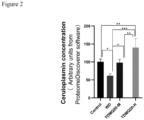
- the level of CP was significantly increased in mice treated with TDMQ20 at 25 or 50 mg/kg (TDMQ20-M and TDMQ20-H, respectively) compared to WD mice.
- the CP level was equal (25 mg/kg) or higher (50 mg/kg) than that observed in control mice. Since the level of CP is considered as a significant parameter in the clinical control of human Wilson's disease, the reversal of the CP impairment upon treatment by TDMQ20 confirms that this drug has a very good profile as drug-candidate for the treatment of Wilson's disease.
- differentially expressed proteins were screened at p ⁇ 0.05 in the treated WD mouse group compared to the control group. Fourteen proteins were found down-regulated in the liver of WD mice compared to controls, while 29 hepatic proteins were found up-regulated. In the serum of WD mice, five proteins were down-regulated and five were up-regulated. After treatment by TDMQ20 at 25 or 50 mg/kg (TDMQ20-M and TDMQ20-H groups, respectively), all these serum and hepatic DEPs were found reversed to normal values.
- FIG. 1 shows the effect of concentration of copper in liver (a), feces (b), brain (c), serum (d), kidney (e) and urine (f) of control mice, TX mice (WD) and TX mice orally treated with 3 different dosages of TDMQ20 (12. 5 mg/kg, 25 mg/kg or 50 mg/kg, L, M and H respectively) or by DPA (200 mg/kg).
- the scheme was generated by using the Prism GraphPad 8.0.2. software.
- FIG. 2 shows that the effect of different concentration of serum ceruloplasmin labeled with TMT and detected by LC-MS/MS. * p ⁇ 0.05, ** p ⁇ 0.01 and *** p ⁇ 0.001.
- WD is the short name for Wilson's disease.
- DPA is the short name for D -penicillamine, a current metal chelating agent used for the treatment of Wilson's disease.
- TDMQ refers to a series compound of the formula (I).
- TDMQ-L, TDMQ-M, TDMQ-H represent different doses of TDMQ, 12.5, 25.0, 50.0 mg/kg, respectively.
- TDMQ20 has been evaluated on the homozygous toxic-milk mouse model (TX model), a regular murine model of Wilson disease, suitable for evaluation of drug-candidates (for a review, see E. Reed et al., J. Neurochem., 146, 356-373, 2018 ).
- TX mice are bearing a naturally occurring point mutation on ATP7B resulting in a methionine changed for a valine, that causes the loss of copper transportation by this protein.
- C57BL/6 mice have no mutation on ATP7B and were used as control mice in the evaluation of TDMQ20.
- TX mice were provided by Sun Yat-Sen University (Guangzhou) and C57BL/6 mice by the Guangdong experimental animal center (Guangzhou) and all experiments were performed according to protocols approved by the Welfare Laboratory Animals Committee of the Guangdong University of Technology (approval n°GDUTXS2022083 dated on 3 August 2022), in the framework of the 3Rs principle.
- TX mice 8-Week-old TX mice (WD) and 8-week-old C57BL/6 mice (Control) were used.
- TX mice received the drug TDMQ20 by intragastric gavage twice a day for 14 consecutive days (at 0, 12.5, 25.0, 50.0 mg/kg in NaCl 0.9%).
- C57BL/6 mice received NaCl 0.9%.
- DPA group Treatment of WD mice with DPA (200 mg/kg) was used as comparison (DPA group). Six groups of 6 mice were used. The animal groups and treatments are summarized in Table 1.
- mice Male female
- the D-penicillamine dose was defined according to J. W. Zhang et al., Biochem. Biophys. Res. Commun., 458, 82-85, 2015 . Since the gavage was performed twice a day, half of the doses indicated in this Table was given at 12 h interval. * DPA stands for D-penicillamine.
- mice (10-week old) were placed in metabolic cages for 12 h in order to collect urine and feces.
- mice were anesthetized using 2.5 % Avertin diluted in 0.9 % NaCl at a dose of 125 mL/10 g body weight and sacrificed.
- Cardiac blood was collected and left at room temperature for 30 minutes before centrifugation at 4 °C at 3000 r/min for 10 minutes to obtain serum samples.
- liver, kidney, brain and serum were also collected. Copper concentrations in urine and feces, serum, liver, kidney and brain were determined by inductively coupled plasma mass spectrometry (ICP-MS).
- ICP-MS inductively coupled plasma mass spectrometry
- the level of CP was significantly increased in mice treated with TDMQ20 at 25 or 50 mg/kg (TDMQ20-M and TDMQ20-H, respectively) compared to WD mice.
- the CP level was equal (25 mg/kg) or higher (50 mg/kg) than that observed in control mice.
- TDMQ20-M and TDMQ20-H groups were screened at p ⁇ 0.05 in the WD mouse group compared to the control group. Fourteen proteins were found down-regulated in the liver of WD mice compared to controls, while 29 hepatic proteins were found up-regulated. In the serum of WD mice, five proteins were down-regulated and five were up-regulated. After treatment by TDMQ20 at 25 or 50 mg/kg (TDMQ20-M and TDMQ20-H groups, respectively), all these serum and hepatic DEPs were found reversed to normal values, with a TDMQ20-H/control ratio close to 1. Results are reported in Table 3 and 4 for hepatic and serum proteins, respectively.
Landscapes
- Health & Medical Sciences (AREA)
- Pharmacology & Pharmacy (AREA)
- Veterinary Medicine (AREA)
- Public Health (AREA)
- General Health & Medical Sciences (AREA)
- Animal Behavior & Ethology (AREA)
- Chemical & Material Sciences (AREA)
- Medicinal Chemistry (AREA)
- Life Sciences & Earth Sciences (AREA)
- Organic Chemistry (AREA)
- Epidemiology (AREA)
- Bioinformatics & Cheminformatics (AREA)
- Chemical Kinetics & Catalysis (AREA)
- General Chemical & Material Sciences (AREA)
- Engineering & Computer Science (AREA)
- Nuclear Medicine, Radiotherapy & Molecular Imaging (AREA)
- Hematology (AREA)
- Obesity (AREA)
- Diabetes (AREA)
- Inorganic Chemistry (AREA)
- Acyclic And Carbocyclic Compounds In Medicinal Compositions (AREA)
- Medicines That Contain Protein Lipid Enzymes And Other Medicines (AREA)
- Investigating Or Analysing Biological Materials (AREA)
- Pharmaceuticals Containing Other Organic And Inorganic Compounds (AREA)
Abstract
A method for treating Wilson's disease with tetradentate copper chelators therapy is provided. Specific copper chelators of the TDMQ tetradentate series are highly efficient for the treatment of Wilson's disease murine model. The concentration of copper in liver of "toxic milk" TX mice decreased and the fecal excretion of copper increased with the treatment with TDMQ20. Both effects are dose-dependent. Pharmacological data obtained on this TX mouse model with TDMQ20 strongly support the selection of this type of ligand as drug-candidate for this genetic disease.
Description
- The present invention is related to the field of Wilson's disease. More specifically, the present invention provides methods useful for the treatment of Wilson's disease.
- Wilson's disease (WD) is a genetic disease due to mutations on the Atp7b gene coding for a copper carrier protein in charge of the excretion of the excess of copper from liver. In the world, this autosomal recessive disorder of copper metabolism concerns 1 person over 30,000. The protein ATP7B transports the excess of copper from liver to the bile and then to the feces. When this copper carrier is deficient, the excess of copper is released in the bloodstream and slowly eliminated in urine, generating an accumulation of copper ions which causes chronic hepatitis and cirrhosis. Finally, an excess of copper is detected in the brain, leading to neurological disorders (A. Lucena-Valera et al., World J. Hepatol., 13 (6) 634-649, 2021). Without treatment, WD can be fatal.
- Current medical treatments involve the use of copper chelators to increase the excretion of copper. The first line drug for WD treatment is currently D-penicillamine (DPA) by oral administration at 750-1500 mg/day in adults. Several adverse effects of DPA have been identified with time: nephrotoxicity, aplasia, retinitis and neurological deterioration.
- The second drug used for WD is trientine (triethylene-tetramine) with oral doses ranging from 900 to 2700 mg/day in adults. Severe adverse effects are also observed with time: bone marrow depression, anemia, skin rash and hemorrhagic gastritis.
- There is a real medical need for a specific copper chelator able to efficiently regulate the copper excess at lower doses than the ones used for DPA or trientine. The main drawback of DPA and trientine is their lack of metal selectivity, since they have similar affinities for copper and zinc. Our research group designed a new series of tetradentate ligands based on an 8-aminoquinoline entity, named TDMQ, which are highly selective for copper compared with other metal ions like zinc, and have been qualified as drug-candidates for the treatment of Alzheimer's disease (for patents, see
Y Liu et al., China (GDUT-CNRS), 27 May 2016, n° 201610369550.X US 10,807,957 B2. Approved on October 20, 2020 Canada, patent number 3 025 406 , approved on June 1st, 2021.Japan, patent number 6889825, approved on May 26th, 2021 - The chemical syntheses of TDMQ ligands have been reported in the patents mentioned above (for an article, see W. Zhang et al., ChemMedChem, 13, 864-704, 2018). Among all various TDMQ ligands, TDMQ20 has been selected as the best drug-candidate because of its suitable pharmacological profile evidenced in mouse AD-models (see J. Zhao et al., ACS Chem. Neurosci., 12, 140-149, 2021).

- For TDMQ20: R = 5,7-dichloro-, n = m = 2.
- In view of the above-mentioned medical need for a more efficient copper chelator with reduced side effects for the treatment of Wilson's disease, the present invention concerns specific tetradentate copper chelators that are effective in the in vivo treatment by oral route of a mouse model of the Wilson's disease.
- The invention concerns the use of specific copper chelators of the tetradentate series named TDMQ in the treatment of Wilson's disease. In particular, the invention provides evidences that TDMQ20 has a better pharmacological activity at lower doses by oral administration than D-penicillamine (DPA), a current drug used in the treatment of the Wilson's disease.
- TDMQ20 is better than D-penicillamine to improve the normal/non-pathological pathway of copper excretion.
- The copper concentration in the liver of mice treated by the three different doses of TDMQ20 decreased when the drug dose increased, indicating that the pharmacological effect of TDMQ20 is dose-dependent. At 50 mg/kg/day, TDMQ20 (TDMQ-H) is more efficient in decreasing the copper concentration in liver than D-penicillamine (DPA) at 200 mg/kg/day which is considered at the moment one of the best possible treatments for WD.
- The copper content in feces is significantly higher at 25 or 50 mg/kg/day with TDMQ20 compared to untreated WD mice or to mice treated with DPA at 200 mg/kg/day, indicating an increased fecal elimination of copper upon treatment by TDMQ20. This effect of TDMQ20 is dose-dependent.
- The copper concentration in serum of WD mice treated with TDMQ20 increased when the TDMQ20 dose increased. The highest dose of TDMQ20 (TDMQ20-H, 50 mg/kg/day) corresponds to the highest copper concentration in serum, confirming the ability of the drug to extract copper from the liver. The copper concentration in the serum of WD mice treated with DPA (200 mg/kg/day) is not significantly higher than that of untreated WD mice, and far below that observed for mice treated with TDMQ20 at 50 mg/kg. The copper concentration in urine of WD mice was significantly higher than that of controls. Upon treatment by TDMQ20 at 50 mg/kg, copper concentration in urine was significantly increased compared to WD mice by a factor of 1.8, indicating a significant improvement of urinary excretion of copper.
- The copper concentration was also measured in the brain of mice. Data indicated that the copper concentration was similar in the brain of controls and WD mice, and that there is no increase of copper concentration in WD mice treated with TDMQ20 whatever the used dose. Since neurological disorders are often observed in WD patients, it was important to check that TDMQ20 was unable to carry copper to the brain.
- The concentration of ceruloplasmin (CP), that contains the most part of blood copper, was measured in the serum of treated WD mice. As expected, it was significantly lower than that of control mice. The level of CP was significantly increased in mice treated with TDMQ20 at 25 or 50 mg/kg (TDMQ20-M and TDMQ20-H, respectively) compared to WD mice. The CP level was equal (25 mg/kg) or higher (50 mg/kg) than that observed in control mice. Since the level of CP is considered as a significant parameter in the clinical control of human Wilson's disease, the reversal of the CP impairment upon treatment by TDMQ20 confirms that this drug has a very good profile as drug-candidate for the treatment of Wilson's disease.
- Other differentially expressed proteins (DEPs) were screened at p < 0.05 in the treated WD mouse group compared to the control group. Fourteen proteins were found down-regulated in the liver of WD mice compared to controls, while 29 hepatic proteins were found up-regulated. In the serum of WD mice, five proteins were down-regulated and five were up-regulated. After treatment by TDMQ20 at 25 or 50 mg/kg (TDMQ20-M and TDMQ20-H groups, respectively), all these serum and hepatic DEPs were found reversed to normal values.
-
FIG. 1 shows the effect of concentration of copper in liver (a), feces (b), brain (c), serum (d), kidney (e) and urine (f) of control mice, TX mice (WD) and TX mice orally treated with 3 different dosages of TDMQ20 (12. 5 mg/kg, 25 mg/kg or 50 mg/kg, L, M and H respectively) or by DPA (200 mg/kg). Data analysis was carried out using SPSS Statistics v. 26. p > 0.05 differences were considered not significant (ns), * p < 0.05, ** p < 0.01 and *** p < 0.001, n=6. The scheme was generated by using the Prism GraphPad 8.0.2. software. -
FIG. 2 shows that the effect of different concentration of serum ceruloplasmin labeled with TMT and detected by LC-MS/MS. * p < 0.05, ** p < 0.01 and *** p < 0.001. - WD is the short name for Wilson's disease.
- DPA is the short name for D-penicillamine, a current metal chelating agent used for the treatment of Wilson's disease.
- TDMQ refers to a series compound of the formula (I).
- The term "specific tetradentate copper chelators" refers to a series compound of the formula (I).
- TDMQ-L, TDMQ-M, TDMQ-H represent different doses of TDMQ, 12.5, 25.0, 50.0 mg/kg, respectively.
- The selected drug-candidate TDMQ20 has been evaluated on the homozygous toxic-milk mouse model (TX model), a regular murine model of Wilson disease, suitable for evaluation of drug-candidates (for a review, see E. Reed et al., J. Neurochem., 146, 356-373, 2018). TX mice are bearing a naturally occurring point mutation on ATP7B resulting in a methionine changed for a valine, that causes the loss of copper transportation by this protein. C57BL/6 mice have no mutation on ATP7B and were used as control mice in the evaluation of TDMQ20. TX mice were provided by Sun Yat-Sen University (Guangzhou) and C57BL/6 mice by the Guangdong experimental animal center (Guangzhou) and all experiments were performed according to protocols approved by the Welfare Laboratory Animals Committee of the Guangdong University of Technology (approval n°GDUTXS2022083 dated on 3 August 2022), in the framework of the 3Rs principle.
- 8-Week-old TX mice (WD) and 8-week-old C57BL/6 mice (Control) were used. TX mice (as WD, TDMQ-L, TDMQ-M, TDMQ-H groups, respectively) received the drug TDMQ20 by intragastric gavage twice a day for 14 consecutive days (at 0, 12.5, 25.0, 50.0 mg/kg in NaCl 0.9%). On the same schedule, C57BL/6 mice (as control group) received NaCl 0.9%. Treatment of WD mice with DPA (200 mg/kg) was used as comparison (DPA group). Six groups of 6 mice were used. The animal groups and treatments are summarized in Table 1.
Table 1 Groups A to F Mouse type Drug Drug dose (mg/kg/day) Number of mice Number of mice male female (A): Control C57BL/6 mice 0.9% NaCl 0 n = 6 3 3 (B): WD TX mice 0.9% NaCl 0 n = 6 3 3 (C): TDMQ20-L TX mice TDMQ20 in 0.9% NaCl 12.5 n= 6 2 4 (D): TDMQ20-M TX mice 25 n = 6 3 3 (E): TDMQ20-H TX mice 50 n = 6 2 4 (F): DPA* TX mice DPA in 0.9% NaCl 200 n = 6 3 3 *Definition of the six different groups (A to F) of mice with the different drug treatments. The D-penicillamine dose was defined according to J. W. Zhang et al., Biochem. Biophys. Res. Commun., 458, 82-85, 2015. Since the gavage was performed twice a day, half of the doses indicated in this Table was given at 12 h interval. * DPA stands for D-penicillamine. - At the end of the treatment period, mice (10-week old) were placed in metabolic cages for 12 h in order to collect urine and feces. At the end of this 12 h-period, mice were anesthetized using 2.5 % Avertin diluted in 0.9 % NaCl at a dose of 125 mL/10 g body weight and sacrificed. Cardiac blood was collected and left at room temperature for 30 minutes before centrifugation at 4 °C at 3000 r/min for 10 minutes to obtain serum samples. During this 30-min period, liver, kidney, brain and serum were also collected. Copper concentrations in urine and feces, serum, liver, kidney and brain were determined by inductively coupled plasma mass spectrometry (ICP-MS). Data analysis was carried out using SPSS Statistics software (version 26). Data are provided as mean values ± standard error of the mean (SEM). Statistical analyses were performed using one-way ANOVA for liver, feces and urine, and by non-parametric test for serum, kidney, and brain. Differences with p > 0.05 were considered as no significance (ns), * p < 0.05, ** p < 0.01, and *** p < 0.001, n = 6. Graph presentations were drawn with Prism GraphPad 8.0.2.
-
Table 2 Cu content as mean value of 6 mice ± SEM value Control WD TDMQ20-L TDMQ20-M TDMQ20-H DPA Liver (mg/kg) 4.3 ± 0.4 328 ± 6 290 ± 4 256 ± 8 200 ± 14 265 ± 9 Feces (mg/kg) 82 ± 4 79 ± 3 88 ± 3 129 ± 4 142 ± 10 96 ± 7 Serum (mg/L) 0.54 ± 0.02 0.46 ± 0.03 0.63 ± 0.04 0.83 ± 0.12 3.5 ± 0.6 0.39 ± 0.03 Kidney (mg/kg) 3.5 ± 0.1 6.7 ± 0.4 5.5 ± 0.3 5.0 ± 0.4 11.0 ± 1.7 5.4 ± 0.3 Urine (mg/L) 0.10 ± 0.01 0.56 ± 0.02 0.76 ± 0.13 0.67 ± 0.10 0.98 ± 0.05 2.8 ± 0.2 Brain (mg/kg) 3.2 ± 0.1 3.3 ± 0.1 3.2 ± 0.2 3.3 ± 0.2 3.5 ± 0.1 3.7 ± 0.3 *Concentration of copper in control mice, TX mice (WD), and TX mice treated with TDMQ20 or DPA as mean values for 6 mice of each group ± SEM, calculated using the SPSS Statistics software, v. 26. Results are in mg/kg for solids (liver, feces, kidney and brain) and in mg/L for fluids (urine and serum). -
- 1) The copper concentration in the liver (
Fig. 1a ) of mice treated by the three different doses of TDMQ20 decreased when the drug dose increased, indicating that the pharmacological effect of TDMQ20 is dose-dependent. At 50 mg/kg/day, TDMQ20 (TDMQ-H) is more efficient in decreasing the copper concentration in liver than D-penicillamine (DPA) at 200 mg/kg/day which is considered at the moment the best possible treatment for WD. It should be noted that the concentration of copper in liver of mice treated at 25 mg/kg/day (256 mg/kg) is close to the value obtained with DPA at 200 mg/kg/day (265 mg/kg). The dose of DPA is 8 times the dose of TDMQ20 for the same result, indicating the better efficiency of TDMQ20. - 2) The copper content in feces (
Fig. 1b ) is significantly higher at 25 or 50 mg/kg/day with TDMQ20 compared to untreated WD mice or to mice treated with DPA at 200 mg/kg/day, indicating an increased fecal elimination of copper upon treatment by TDMQ20. This effect of TDMQ20 is dose-dependent. - 3) The copper concentration in serum of WD mice treated with TDMQ20 was increased when the TDMQ20 dose was increased (
Fig.1d ). The highest dose of TDMQ20 (TDMQ20-H, 50 mg/kg/day) corresponds to the highest copper concentration in serum, confirming the ability of the drug to extract copper from the liver. The copper concentration in the serum of WD mice treated with DPA (200 mg/kg/day) is not significantly higher than that of untreated WD mice, and far below that observed for mice treated with TDMQ20 at 50 mg/kg. These data confirm that TDMQ20 is able to transfer copper to endogenous copper carriers in vivo. - 4) The concentration of copper in kidney of WD mice after treatment by TDMQ20 at 50 mg/kg, was higher than that of WD mice by a factor of 1.64 (
Fig.1e ). This ratio is very similar to concentration ratio TDMQ20-H/WD of 1.75 observed in urine (seeFig.1f and data of Table 2). These data indicate an important excretion of copper via kidney when WD mice are treated with TDMQ20. This excretion mediated by TDMQ20 is also significantly higher than that observed in WD mice treated with DPA at 200 mg/kg. - 5) As expected, the copper concentration in urine of WD mice was significantly higher than that of controls (
Fig.1f ). Upon treatment by TDMQ20 at 50 mg/kg, copper concentration in urine was significantly increased compared to WD mice by a factor of 1.8, indicating a significant improvement of urinary excretion of copper. - 6) The copper concentration was also measured in the brain of mice (
Fig.1c ). Data indicated that the copper concentration was similar in the brain of controls and WD mice, and that there is no increase of copper concentration in WD mice treated with TDMQ20 whatever the drug dose. Since neurological disorders are often observed in WD patients, it was important to check that TDMQ20 was unable to carry copper to the brain. - Conclusion. The treatment of the murine model of Wilson disease TX mice by TDMQ20, resulted in a significant decrease of the copper concentration in the liver, and significant increase of fecal excretion of copper compared to WD mice. This dose-dependent effect indicates that treatment with TDMQ20 significantly improves the normal/non-pathological pathway of copper excretion, which is not the case in WD mice treated with the reference drug DPA at 200 mg/kg.
- In order to confirm the positive role of TDMQ20 in the treatment of TX mice, we performed proteomic experiments. Samples from three mice of each group were depicted in Table 1, The samples were treated with TMT (Tandem Mass Tag) and detected by quantitative LC-MS/MS, then the data were analyzed with ProteomeDiscoverer 2.4.1.15 (ThermoFisher Scientific). Confidence proteins were screened according to the criteria of Sequest program score greater than 0 and number of unique peptides greater than or equal to 1, and blank values were removed.
- The concentration of ceruloplasmin (CP), that contains the most part of blood copper, was measured by TMT LC-MS/MS in the serum of WD mice. As expected, it was significantly lower than that of control mice (p < 0.05,
Fig.2 ). The level of CP was significantly increased in mice treated with TDMQ20 at 25 or 50 mg/kg (TDMQ20-M and TDMQ20-H, respectively) compared to WD mice. The CP level was equal (25 mg/kg) or higher (50 mg/kg) than that observed in control mice. Since the level of CP is considered as a significant parameter in the clinical control of human Wilson's disease, the reversal of the CP impairment upon treatment by TDMQ20 confirms that this drug has a very good profile as drug-candidate for the treatment of Wilson's disease. - Other differentially expressed proteins (DEPs) were screened at p < 0.05 in the WD mouse group compared to the control group. Fourteen proteins were found down-regulated in the liver of WD mice compared to controls, while 29 hepatic proteins were found up-regulated. In the serum of WD mice, five proteins were down-regulated and five were up-regulated. After treatment by TDMQ20 at 25 or 50 mg/kg (TDMQ20-M and TDMQ20-H groups, respectively), all these serum and hepatic DEPs were found reversed to normal values, with a TDMQ20-H/control ratio close to 1. Results are reported in Table 3 and 4 for hepatic and serum proteins, respectively.
Table 3 Protein WD/ control fold change TDMQ20-M/control fold change TDMQ20-H/control fold change a) Liver DEPs down-regulated in WD with respect to control Aspartate-tRNA ligase, cytoplasmic (Dars1) 0.77 1.03 1.13 Progranulin (Gm) 0.77 1.05 1.04 Putative phospholipase B-like 2 (Plbd2) 0.74 0.98 0.99 ATP-citrate synthase (Acly) 0.80 0.86 0.97 Ribosome biogenesis protein BOP1 (Bop1) 0.77 1.08 0.97 2-Oxo-4-hydroxy-4-caboxy-5-ureidoimidazoline decarboxylase (Urad) 0.77 0.93 0.96 Charged multivesicular body protein 7 (Chmp7) 0.80 1.04 0.94 Nicotinamide/nicotinic acid mononucleotide adenylyltransferase 3 (Nmnat3) 0.82 0.97 0.94 Mesencephalic astrocyte-derived neurotrophic factor (Manf) 0.80 0.94 0.91 Triosephosphate isomerase (Tpi1) 0.80 0.85 0.90 Pyridoxine-5'-phosphate oxidase (Pnpo) 0.75 1.01 0.90 Desmin (Des) 0.82 0.88 0.88 Cytochrome P450 2C70 (Cyp2c70) 0.73 0.85 0.88 Alcohol deshydrogenase class-3 (Adh5) 0.81 0.89 0.86 b) Liver DEPs up-regulated in WD with respect to control Ribonuclease P protein subunit p30 (Rpp30) 1.30 1.20 1.20 Histone H2A.V 1.40 1.14 1.19 PRKC apoptosis WT1 regulator protein (Pawr) 1.41 1.10 1.18 Exosome complex exonuclease RRP44 (Dis3) 1.24 1.16 1.00 Histone H4 (H4c16) 1.23 1.12 1.15 Probable ATP-dependent RNA helicase DDX17 (Ddx17) 1.23 1.01 1.11 Mitochondrial outer membrane protein SLC25A46 (Slc25a46) 1.25 1.10 1.11 28 kDa heat- and acid-stable phosphoprotein (Pdap1) 1.24 1.15 1.10 Cyclin-dependent kinase inhibitor 1B (Cdkn1b) 1.28 1.13 1.10 Protein scribble homolog (Scrib) 1.40 1.07 1.09 OCIA domain-containing protein 1 (Ociad1) 1.28 1.14 1.08 Histone H2B type 1-H (H2bc9) 1.20 1.05 1.07 Protein LYRIC (Mtdh) 1.29 0.85 1.06 Afadin (Afdn) 1.20 1.07 1.05 NADPH adrenodoxin oxidoreductase, mitochondrial (Fdxr) 1.23 1.10 1.04 Alpha-1-antitrypsin-1-2 (Serpina1b) 1.50 1.09 1.04 Alanine glyoxylate aminotransferase (Agxt) 1.89 1.18 1.03 Agmatinase, mitochondrial (Agmat) 1.42 1.15 1.01 SET nuclear proto-oncogene (Set) 1.20 0.95 1.01 Mitochondrial dicarboxylase carrier (S1c25a10) 1.25 1.10 1.00 Peroxisomal membrane protein-2 (Pxmp2) 1.34 1.14 0.98 Sideroflexin-5 (Sfxn5) 1.28 1.06 0.96 Protein Hook homolog 1 (Hook1) 1.22 1.07 0.94 Epsin-1 (Epn1) 1.21 1.05 0.93 AN1-type zinc finger protein 6 (Zfand6) 1.35 1.09 0.91 ATP synthase subunit a (Mtatp6) 1.21 1.04 0.91 Regucalcin (Rgn) 1.64 1.07 0.91 Zinc transporter 10 (Slc30a10) 1.21 0.94 0.9 Protein-glutamine gamma-glutamyltransferase K (Tgm1) 1.31 0.90 0.84 List of hepatic DEPs reversed after treatment by TDMQ20 at 0, 25 or 50 mg/kg (TDMQ20-M groups, respectively), a) DEPs down-regulated in WD, b) DEPs up-regulated in WD. Table 4 Protein WD/contro l fold change TDMQ20-M/ctr l fold change TDMQ20-H/ctr l fold change a) Serum DEPs down-regulated in WD with respect to control GrpE protein homolog 1, mitochondrial (Grpel1) 0.81 0.95 1.04 Alpha-aminoadipic semialdehyde synthase, mitochondrial (Aass) 0.74 0.97 0.93 Cystatin-C (Cst3) 0.60 0.88 0.92 Transgelin-2 (Tagln2) 0.77 0.87 0.91 Elongation factor 1-delta (Eef1d) 0.76 0.85 0.88 b) Serum DEPs up-regulated in WD with respect to control Ig heavy chain V region 1-72 (Ighv1-72) 1.72 1.08 1.15 Ribonuclease 4 (Rnase4) 1.37 1.10 1.03 Triokinase/FMN cyclase (Tkfc) 1.31 1.07 0.95 Tropomyosin alpha-3 chain (Tpm3) 1.35 1.11 0.95 Regucalcin (Rgn) 1.49 1.06 0.88 *List of serum DEPs reversed after treatment by TDMQ20 at 0, 25 or 50 mg/kg (TDMQ20-M groups, respectively), a) DEPs down-regulated in WD, b) DEPs up-regulated in WD. - These results indicate that the up- and down-regulated proteins in liver and serum of WD mice are reversed to normal values upon treatment by TDMQ20 at 25 or 50 mg/kg.
Claims (8)
- A method for the treatment of Wilson's disease, comprising the administration of an effective amount of compound of the formula (I);

- A method as claimed in claim 1, wherein n = m = 2, R5 = R7 = Cl, R6 = H is the preferred TDMQ molecule to manufacture a drug for the treatment of Wilson's disease.
- The method of claim 1 for the treatment of Wilson disease by a compound of the formula (I), resulted in a significant decrease of the copper concentration in the liver, and significant increase both fecal and urinary elimination of copper.
- The method of claim 1 does not increase the copper concentration in the brain during the treatment with a compound of the formula (I).
- The method of claim 1 reverses to normal levels hepatic and serum proteins.
- The method of claim 1 allows the serum ceruloplasmin level to return to normal values of controls after treatment by a compound of the formula (I).
- The method of claim 1 for treating Wilson's disease either as monotherapy or as a part of polytherapy, including in association with zinc salts.
- The therapeutic use of compounds from claims 1 or 2, wherein the drugs include acceptable salts of the TDMQ series. The hydrochloride form is the preferred one.
Applications Claiming Priority (1)
| Application Number | Priority Date | Filing Date | Title |
|---|---|---|---|
| PCT/CN2023/125744 WO2025081478A1 (en) | 2023-10-20 | 2023-10-20 | Specific tetradentate copper chelators for the treatment of wilson's disease |
Publications (1)
| Publication Number | Publication Date |
|---|---|
| EP4541355A1 true EP4541355A1 (en) | 2025-04-23 |
Family
ID=92811516
Family Applications (1)
| Application Number | Title | Priority Date | Filing Date |
|---|---|---|---|
| EP24207390.6A Pending EP4541355A1 (en) | 2023-10-20 | 2024-10-18 | Specific tetradentate copper chelators for use in the treatment of wilson's disease |
Country Status (6)
| Country | Link |
|---|---|
| US (1) | US20250127772A1 (en) |
| EP (1) | EP4541355A1 (en) |
| JP (1) | JP2025071035A (en) |
| CN (1) | CN118715208A (en) |
| CA (1) | CA3249781A1 (en) |
| WO (1) | WO2025081478A1 (en) |
Citations (2)
| Publication number | Priority date | Publication date | Assignee | Title |
|---|---|---|---|---|
| CA3025406A1 (en) | 2016-05-27 | 2017-11-30 | Guangdong University Of Technology | Tetradentate chelating monoquinoline derivative, manufacturing method thereof, and application of same as metal ion regulator for neurodegenerative disease |
| US20200376006A1 (en) * | 2017-11-06 | 2020-12-03 | Cold Spring Harbor Laboratory | Method and compositions for forming a copper-containing complex and uses thereof |
Family Cites Families (8)
| Publication number | Priority date | Publication date | Assignee | Title |
|---|---|---|---|---|
| JPS55113712A (en) * | 1979-02-23 | 1980-09-02 | Chugai Pharmaceut Co Ltd | Remedy for copper metabolism disorder |
| AU2002219046A1 (en) * | 2000-10-24 | 2002-05-06 | Bayer Aktiengesellschaft | Regulation of human ceruloplasmin-like protein |
| US20090082269A1 (en) * | 2005-06-29 | 2009-03-26 | Nrl Pharma, Inc. | Agent for ameliorating heavy metal-induced disorders, and medicinal composition, food and cosmetic containing the same |
| FR2943060B1 (en) * | 2009-03-13 | 2013-01-04 | Commissariat Energie Atomique | METAL ION CHELATING AGENTS, PROCESSES FOR THEIR PREPARATION AND THEIR APPLICATIONS |
| FR2984317B1 (en) * | 2011-12-20 | 2015-02-27 | Univ Rennes | METAL CHELATING COMPOUNDS HAVING AT LEAST ONE POLYAMINATED CHAIN. |
| WO2014036301A1 (en) * | 2012-08-30 | 2014-03-06 | Isis Pharmaceuticals, Inc. | Modulation of copper related diseases by ctr1 |
| WO2015154897A1 (en) * | 2014-04-08 | 2015-10-15 | Wolfgang Stremmel | Means and methods for treating disorders of copper metabolism |
| US11471497B1 (en) * | 2019-03-13 | 2022-10-18 | David Gordon Bermudes | Copper chelation therapeutics |
-
2023
- 2023-10-20 CN CN202380019093.XA patent/CN118715208A/en active Pending
- 2023-10-20 WO PCT/CN2023/125744 patent/WO2025081478A1/en active Pending
-
2024
- 2024-08-22 US US18/811,895 patent/US20250127772A1/en active Pending
- 2024-10-17 JP JP2024182167A patent/JP2025071035A/en active Pending
- 2024-10-18 CA CA3249781A patent/CA3249781A1/en active Pending
- 2024-10-18 EP EP24207390.6A patent/EP4541355A1/en active Pending
Patent Citations (5)
| Publication number | Priority date | Publication date | Assignee | Title |
|---|---|---|---|---|
| CA3025406A1 (en) | 2016-05-27 | 2017-11-30 | Guangdong University Of Technology | Tetradentate chelating monoquinoline derivative, manufacturing method thereof, and application of same as metal ion regulator for neurodegenerative disease |
| EP3466931A1 (en) * | 2016-05-27 | 2019-04-10 | Guangdong University Of Technology | Tetradentate chelating monoquinoline derivative, manufacturing method thereof, and application of same as metal ion regulator for neurodegenerative disease |
| US10807957B2 (en) | 2016-05-27 | 2020-10-20 | Guangdong University Of Technology | Tetradentate chelating monoquinoline derivative, manufacturing method thereof, and application of same as metal ion regulator for neurodegenerative disease |
| JP6889825B2 (en) | 2016-05-27 | 2021-06-18 | 広東工業大学Guangdong University Of Technology | Tetradentate chelate monoquinoline derivative and its production method, application as a metal ion regulator for neurodegenerative diseases |
| US20200376006A1 (en) * | 2017-11-06 | 2020-12-03 | Cold Spring Harbor Laboratory | Method and compositions for forming a copper-containing complex and uses thereof |
Non-Patent Citations (8)
| Title |
|---|
| A. LUCENA-VALERA ET AL., WORLD J. HEPATOL., vol. 13, no. 6, 2021, pages 634 - 649 |
| BALDARI SILVIA ET AL: "Current Biomedical Use of Copper Chelation Therapy", INTERNATIONAL JOURNAL OF MOLECULAR SCIENCES, vol. 21, no. 3, 6 February 2020 (2020-02-06), pages 1069, XP093064431, DOI: 10.3390/ijms21031069 * |
| E. REED ET AL., J. NEUROCHEM., vol. 146, 2018, pages 356 - 373 |
| J. ZHAO ET AL., ACS CHEM. NEUROSCI., vol. 12, 2021, pages 140 - 149 |
| JU HUANG ET AL: "The TDMQ Regulators of Copper Homeostasis Do Not Disturb the Activities of Cu,Zn-SOD, Tyrosinase, or the CoIII Cofactor Vitamin B12", EUROPEAN JOURNAL OF INORGANIC CHEMISTRY, WILEY-VCH VERLAG , WENHEIM, DE, vol. 2019, no. 10, 27 February 2019 (2019-02-27), pages 1384 - 1388, XP072128326, ISSN: 1434-1948, DOI: 10.1002/EJIC.201801332 * |
| L. HUANG ET AL., PHARMACEUTICS, vol. 14, 2022, pages 2691 |
| W. ZHANG ET AL., CHEMMEDCHEM, vol. 13, 2018, pages 864 - 704 |
| WEIXIN ZHANG ET AL: "Preparation of Tetradentate Copper Chelators as Potential Anti-Alzheimer Agents", CHEMMEDCHEM COMMUNICATIONS, WILEY-VCH, DE, vol. 13, no. 7, 23 February 2018 (2018-02-23), pages 684 - 704, XP072419414, ISSN: 1860-7179, DOI: 10.1002/CMDC.201700734 * |
Also Published As
| Publication number | Publication date |
|---|---|
| JP2025071035A (en) | 2025-05-02 |
| CN118715208A (en) | 2024-09-27 |
| US20250127772A1 (en) | 2025-04-24 |
| CA3249781A1 (en) | 2025-05-21 |
| WO2025081478A1 (en) | 2025-04-24 |
Similar Documents
| Publication | Publication Date | Title |
|---|---|---|
| JPH0742235B2 (en) | Prophylactic / therapeutic agent for autoimmune diseases | |
| US20050220895A1 (en) | Use of gallium to treat inflammatory arthritis | |
| EP1790346B1 (en) | Use of bile acid or bile salt fatty acid conjugates | |
| Vince et al. | A randomized, double-blind, multiple-dose study of the pan-genotypic NS5A inhibitor samatasvir in patients infected with hepatitis C virus genotype 1, 2, 3 or 4 | |
| US11291681B2 (en) | Method for treating fibrotic liver tissue using Cl-IB-MECA | |
| JP6801894B2 (en) | Agent for reducing blood uremic substances | |
| Brewer | Wilson disease and canine copper toxicosis | |
| US20250127772A1 (en) | Specific tetradentate copper chelators for the treatment of wilson's disease | |
| Dhanani et al. | Pharmacokinetics of fluconazole and ganciclovir as combination antimicrobial chemotherapy on ECMO: a case report | |
| EP3500268A1 (en) | Ppary agonist for treatment of blood cancers | |
| Somogyi et al. | Renal tubular secretion of amiloride and its inhibition by cimetidine in humans and in an animal model. | |
| Chu et al. | Increased urinary excretion of pyrimidine and nicotinamide derivatives in rats treated with methyl methane-sulphonate | |
| Missel et al. | Chelating effect of novel pyrimidines in a model of aluminum intoxication | |
| US20100239646A1 (en) | Sublingual methotrexate and methotrexate patches | |
| Patel et al. | Sex steroids exert a suppressive effect on innate and cell mediated immune responses in fresh water teleost, Channa punctatus | |
| JP2023526590A5 (en) | ||
| US10849878B2 (en) | Agent exhibiting anti-stress, anxiolytic and anti-depression activity, and composition based thereon | |
| Blouin et al. | Fleroxacin pharmacokinetics in patients with liver cirrhosis | |
| Magnussen et al. | Treatment of myoclonic syndromes with paroxetine alone or combined with 5‐HTP | |
| GRAZIANO et al. | THE EFFECT OF HEAVY METAL CHELATORS ON THE RENAL ACCUMULATION OF PLATINUM AFTER cis‐DICHLORO‐DIAMMINEPLATINUM II ADMINISTRATION TO THE RAT | |
| US20150313862A1 (en) | "Pharmaceutical composition for reducing the trimethylamine N-oxide level" | |
| Grange et al. | A pharmacokinetic model to predict the PK interaction of L-dopa and benserazide in rats | |
| Bore et al. | Methotrexate and 7-hydroxy-methotrexate pharmacokinetics following intravenous bolus administration and high-dose infusion of methotrexate | |
| AU610611B2 (en) | Use of c-5 mono-substituted barbiturates to treat disorders of uric acid metabolism | |
| US20230293529A1 (en) | Dosing regimens for n-((5-fluoro-2,3-dihydrobenzofuran-4-yl)methyl)-8-(2-methylpyridin-3-yl)-[1,2,4]triazolo[4,3-c]pyrimidin-5-amine, or a pharmaceutically acceptable salt thereof, for use in treating prc2-mediated diseases or disorders |
Legal Events
| Date | Code | Title | Description |
|---|---|---|---|
| PUAI | Public reference made under article 153(3) epc to a published international application that has entered the european phase |
Free format text: ORIGINAL CODE: 0009012 |
|
| STAA | Information on the status of an ep patent application or granted ep patent |
Free format text: STATUS: REQUEST FOR EXAMINATION WAS MADE |
|
| 17P | Request for examination filed |
Effective date: 20241018 |
|
| AK | Designated contracting states |
Kind code of ref document: A1 Designated state(s): AL AT BE BG CH CY CZ DE DK EE ES FI FR GB GR HR HU IE IS IT LI LT LU LV MC ME MK MT NL NO PL PT RO RS SE SI SK SM TR |