EP4538995A2 - Methods for operating a security system - Google Patents
Methods for operating a security system Download PDFInfo
- Publication number
- EP4538995A2 EP4538995A2 EP24201220.1A EP24201220A EP4538995A2 EP 4538995 A2 EP4538995 A2 EP 4538995A2 EP 24201220 A EP24201220 A EP 24201220A EP 4538995 A2 EP4538995 A2 EP 4538995A2
- Authority
- EP
- European Patent Office
- Prior art keywords
- event
- interest
- video
- suspect
- security system
- Prior art date
- Legal status (The legal status is an assumption and is not a legal conclusion. Google has not performed a legal analysis and makes no representation as to the accuracy of the status listed.)
- Pending
Links
Images





Classifications
-
- G—PHYSICS
- G06—COMPUTING OR CALCULATING; COUNTING
- G06V—IMAGE OR VIDEO RECOGNITION OR UNDERSTANDING
- G06V20/00—Scenes; Scene-specific elements
- G06V20/50—Context or environment of the image
- G06V20/52—Surveillance or monitoring of activities, e.g. for recognising suspicious objects
-
- G—PHYSICS
- G06—COMPUTING OR CALCULATING; COUNTING
- G06V—IMAGE OR VIDEO RECOGNITION OR UNDERSTANDING
- G06V20/00—Scenes; Scene-specific elements
- G06V20/40—Scenes; Scene-specific elements in video content
- G06V20/41—Higher-level, semantic clustering, classification or understanding of video scenes, e.g. detection, labelling or Markovian modelling of sport events or news items
-
- G—PHYSICS
- G06—COMPUTING OR CALCULATING; COUNTING
- G06V—IMAGE OR VIDEO RECOGNITION OR UNDERSTANDING
- G06V20/00—Scenes; Scene-specific elements
- G06V20/40—Scenes; Scene-specific elements in video content
- G06V20/44—Event detection
-
- G—PHYSICS
- G06—COMPUTING OR CALCULATING; COUNTING
- G06V—IMAGE OR VIDEO RECOGNITION OR UNDERSTANDING
- G06V20/00—Scenes; Scene-specific elements
- G06V20/40—Scenes; Scene-specific elements in video content
- G06V20/46—Extracting features or characteristics from the video content, e.g. video fingerprints, representative shots or key frames
- G06V20/47—Detecting features for summarising video content
-
- G—PHYSICS
- G06—COMPUTING OR CALCULATING; COUNTING
- G06V—IMAGE OR VIDEO RECOGNITION OR UNDERSTANDING
- G06V40/00—Recognition of biometric, human-related or animal-related patterns in image or video data
- G06V40/10—Human or animal bodies, e.g. vehicle occupants or pedestrians; Body parts, e.g. hands
- G06V40/155—Human or animal bodies, e.g. vehicle occupants or pedestrians; Body parts, e.g. hands use of biometric patterns for forensic purposes
-
- G—PHYSICS
- G06—COMPUTING OR CALCULATING; COUNTING
- G06V—IMAGE OR VIDEO RECOGNITION OR UNDERSTANDING
- G06V40/00—Recognition of biometric, human-related or animal-related patterns in image or video data
- G06V40/10—Human or animal bodies, e.g. vehicle occupants or pedestrians; Body parts, e.g. hands
- G06V40/16—Human faces, e.g. facial parts, sketches or expressions
- G06V40/172—Classification, e.g. identification
-
- G—PHYSICS
- G07—CHECKING-DEVICES
- G07C—TIME OR ATTENDANCE REGISTERS; REGISTERING OR INDICATING THE WORKING OF MACHINES; GENERATING RANDOM NUMBERS; VOTING OR LOTTERY APPARATUS; ARRANGEMENTS, SYSTEMS OR APPARATUS FOR CHECKING NOT PROVIDED FOR ELSEWHERE
- G07C9/00—Individual registration on entry or exit
- G07C9/20—Individual registration on entry or exit involving the use of a pass
- G07C9/28—Individual registration on entry or exit involving the use of a pass the pass enabling tracking or indicating presence
-
- G—PHYSICS
- G08—SIGNALLING
- G08B—SIGNALLING SYSTEMS, e.g. PERSONAL CALLING SYSTEMS; ORDER TELEGRAPHS; ALARM SYSTEMS
- G08B13/00—Burglar, theft or intruder alarms
- G08B13/18—Actuation by interference with heat, light, or radiation of shorter wavelength; Actuation by intruding sources of heat, light, or radiation of shorter wavelength
- G08B13/189—Actuation by interference with heat, light, or radiation of shorter wavelength; Actuation by intruding sources of heat, light, or radiation of shorter wavelength using passive radiation detection systems
- G08B13/194—Actuation by interference with heat, light, or radiation of shorter wavelength; Actuation by intruding sources of heat, light, or radiation of shorter wavelength using passive radiation detection systems using image scanning and comparing systems
- G08B13/196—Actuation by interference with heat, light, or radiation of shorter wavelength; Actuation by intruding sources of heat, light, or radiation of shorter wavelength using passive radiation detection systems using image scanning and comparing systems using television cameras
- G08B13/19602—Image analysis to detect motion of the intruder, e.g. by frame subtraction
- G08B13/19613—Recognition of a predetermined image pattern or behaviour pattern indicating theft or intrusion
-
- G—PHYSICS
- G08—SIGNALLING
- G08B—SIGNALLING SYSTEMS, e.g. PERSONAL CALLING SYSTEMS; ORDER TELEGRAPHS; ALARM SYSTEMS
- G08B13/00—Burglar, theft or intruder alarms
- G08B13/18—Actuation by interference with heat, light, or radiation of shorter wavelength; Actuation by intruding sources of heat, light, or radiation of shorter wavelength
- G08B13/189—Actuation by interference with heat, light, or radiation of shorter wavelength; Actuation by intruding sources of heat, light, or radiation of shorter wavelength using passive radiation detection systems
- G08B13/194—Actuation by interference with heat, light, or radiation of shorter wavelength; Actuation by intruding sources of heat, light, or radiation of shorter wavelength using passive radiation detection systems using image scanning and comparing systems
- G08B13/196—Actuation by interference with heat, light, or radiation of shorter wavelength; Actuation by intruding sources of heat, light, or radiation of shorter wavelength using passive radiation detection systems using image scanning and comparing systems using television cameras
- G08B13/19665—Details related to the storage of video surveillance data
- G08B13/19671—Addition of non-video data, i.e. metadata, to video stream
-
- G—PHYSICS
- G08—SIGNALLING
- G08B—SIGNALLING SYSTEMS, e.g. PERSONAL CALLING SYSTEMS; ORDER TELEGRAPHS; ALARM SYSTEMS
- G08B13/00—Burglar, theft or intruder alarms
- G08B13/18—Actuation by interference with heat, light, or radiation of shorter wavelength; Actuation by intruding sources of heat, light, or radiation of shorter wavelength
- G08B13/189—Actuation by interference with heat, light, or radiation of shorter wavelength; Actuation by intruding sources of heat, light, or radiation of shorter wavelength using passive radiation detection systems
- G08B13/194—Actuation by interference with heat, light, or radiation of shorter wavelength; Actuation by intruding sources of heat, light, or radiation of shorter wavelength using passive radiation detection systems using image scanning and comparing systems
- G08B13/196—Actuation by interference with heat, light, or radiation of shorter wavelength; Actuation by intruding sources of heat, light, or radiation of shorter wavelength using passive radiation detection systems using image scanning and comparing systems using television cameras
- G08B13/19678—User interface
- G08B13/19682—Graphic User Interface [GUI] presenting system data to the user, e.g. information on a screen helping a user interacting with an alarm system
-
- G—PHYSICS
- G08—SIGNALLING
- G08B—SIGNALLING SYSTEMS, e.g. PERSONAL CALLING SYSTEMS; ORDER TELEGRAPHS; ALARM SYSTEMS
- G08B21/00—Alarms responsive to a single specified undesired or abnormal condition and not otherwise provided for
- G08B21/02—Alarms for ensuring the safety of persons
-
- G—PHYSICS
- G08—SIGNALLING
- G08B—SIGNALLING SYSTEMS, e.g. PERSONAL CALLING SYSTEMS; ORDER TELEGRAPHS; ALARM SYSTEMS
- G08B29/00—Checking or monitoring of signalling or alarm systems; Prevention or correction of operating errors, e.g. preventing unauthorised operation
- G08B29/18—Prevention or correction of operating errors
- G08B29/185—Signal analysis techniques for reducing or preventing false alarms or for enhancing the reliability of the system
- G08B29/186—Fuzzy logic; neural networks
-
- H—ELECTRICITY
- H04—ELECTRIC COMMUNICATION TECHNIQUE
- H04N—PICTORIAL COMMUNICATION, e.g. TELEVISION
- H04N7/00—Television systems
- H04N7/18—Closed-circuit television [CCTV] systems, i.e. systems in which the video signal is not broadcast
- H04N7/181—Closed-circuit television [CCTV] systems, i.e. systems in which the video signal is not broadcast for receiving images from a plurality of remote sources
-
- G—PHYSICS
- G06—COMPUTING OR CALCULATING; COUNTING
- G06V—IMAGE OR VIDEO RECOGNITION OR UNDERSTANDING
- G06V40/00—Recognition of biometric, human-related or animal-related patterns in image or video data
- G06V40/10—Human or animal bodies, e.g. vehicle occupants or pedestrians; Body parts, e.g. hands
- G06V40/16—Human faces, e.g. facial parts, sketches or expressions
- G06V40/174—Facial expression recognition
- G06V40/175—Static expression
Definitions
- the present disclosure relates generally to video security systems and more particularly to identifying events in video security systems.
- a number of security systems are in use. Many security systems employ large numbers of video cameras, generating a substantial volume of video streams. It can be difficult for a system operator to be able to watch all of the video streams simultaneously in order to detect all possible events as they are happening. Moreover, when investigating an event that has already occurred, it can be difficult and time consuming to view all of the appropriate video streams in order to find video evidence of exactly what happened during the event. What would be desirable are methods for operating a security system in which events of interest are detected and classified, and various alerts are raised.
- the present disclosure relates generally to video security systems and more particularly to identifying events in video security systems.
- An example may be found in a method for operating a security system of a facility.
- the illustrative method includes receiving a video from a video camera of the security system of the facility.
- An event of interest occurring in the video is identified via video analytics, and the event of interest is classified into one of plurality of event severity levels.
- An alert is sent to an operator of the security system when the event of interest is classified as having a first event severity level of the plurality of event severity levels.
- An alert is sent for a first responder (e.g. police, fire, ambulance) when the event of interest is classified as having a second event severity level of the plurality of event severity levels.
- a first responder e.g. police, fire, ambulance
- Another example may be found in a method for operating a security system of a facility.
- the method includes receiving a video from a video camera of the security system of the facility.
- An event of interest occurring in the video is identified via video analytics.
- a suspect in the video that is associated with the event of interest is identified.
- An image of the face of the suspect in the video is identified.
- the image of the face of the suspect is submitted to a facial recognition engine to identify the identity of the suspect.
- An access card of the identified suspect is identified, where the access card needs to be presented to access card readers of the security system for the identified suspect to access areas of the facility.
- An access card trace for the access card of the identified suspect is activated, which tracks subsequent movement of the suspect in the facility, wherein the access card trace is configured to report each time the access card of the identified suspect is presented to an access card reader of the security system along with a location of the corresponding access card reader in the facility.
- references in the specification to "an embodiment”, “some embodiments”, “other embodiments”, etc., indicate that the embodiment described may include a particular feature, structure, or characteristic, but every embodiment may not necessarily include the particular feature, structure, or characteristic. Moreover, such phrases are not necessarily referring to the same embodiment. Further, when a particular feature, structure, or characteristic is described in connection with an embodiment, it is contemplated that the feature, structure, or characteristic is described in connection with an embodiment, it is contemplated that the feature, structure, or characteristic may be applied to other embodiments whether or not explicitly described unless clearly stated to the contrary.
- the controller 18 may be configured to create and send out one or more alerts, based upon what the controller 18 (and/or video cameras 12) sees within the video streams (e.g. what events of interests are identified by video analytics algorithms). In some instances, there may be several different severity levels of possible events, and several different severity levels of possible alerts. As an example, some alerts may include sending an alert to the display 16 for viewing by the operator of the monitoring station. Some alerts may include sending an alert to a first responder 22. The first responder 22 may be the police department, fire department and/or ambulance, for example. The first responder 22 may be the security department of the facility in which the security system 10 is installed. In some instances, alerts may be sent to a first responder 22 as well as to the display 16.
- the controller 18 may be configured to track movement of a particular individual in a facility by tracking when and where the individual presents his/her access card to the access card readers 20, individually labeled as 20a, 20b and 20c. In some cases, the controller 18 may instruct the access card readers 20 to deny access to the particular individual using the particular access card reader 20 to help contain or isolate the particular individual.
- FIG. 5 is a flow diagram showing an illustrative method 110 of processing video data 112.
- the video data 112 may include both video and audio tracks, and each may be processed separately.
- the video data 112 is split into image data 114 and sound data 116.
- the sound data 116 may be processed using a sound algorithm 118 in order to identify an invent of interest and to classify audio from a possible suspect and/or a possible victim.
- the image data 114 may be processed using a video algorithm 120 in order to identify an event of interest and determine who is the suspect and who is the victim.
- the video algorithm 120 outputs a face of the possible suspect and a face of the possible victim to a database 122.
- the database 122 outputs time-stamped image data to an algorithm 124.
- the operator may be alerted by the system when an event of interest is detected within the FOV of one of the many cameras, thereby focusing the attention of the operator on the more important happenings.
- the system may automatically alert a first responder in order to improve response time to the event of interest.
Landscapes
- Engineering & Computer Science (AREA)
- Physics & Mathematics (AREA)
- General Physics & Mathematics (AREA)
- Multimedia (AREA)
- Theoretical Computer Science (AREA)
- Human Computer Interaction (AREA)
- Business, Economics & Management (AREA)
- Emergency Management (AREA)
- General Health & Medical Sciences (AREA)
- Health & Medical Sciences (AREA)
- Software Systems (AREA)
- Oral & Maxillofacial Surgery (AREA)
- Computational Linguistics (AREA)
- Signal Processing (AREA)
- Automation & Control Theory (AREA)
- Computer Security & Cryptography (AREA)
- Mathematical Physics (AREA)
- Fuzzy Systems (AREA)
- Evolutionary Computation (AREA)
- Artificial Intelligence (AREA)
- Computer Vision & Pattern Recognition (AREA)
- Library & Information Science (AREA)
- Alarm Systems (AREA)
Abstract
Description
- The present disclosure relates generally to video security systems and more particularly to identifying events in video security systems.
- A number of security systems are in use. Many security systems employ large numbers of video cameras, generating a substantial volume of video streams. It can be difficult for a system operator to be able to watch all of the video streams simultaneously in order to detect all possible events as they are happening. Moreover, when investigating an event that has already occurred, it can be difficult and time consuming to view all of the appropriate video streams in order to find video evidence of exactly what happened during the event. What would be desirable are methods for operating a security system in which events of interest are detected and classified, and various alerts are raised.
- The present disclosure relates generally to video security systems and more particularly to identifying events in video security systems. An example may be found in a method for operating a security system of a facility. The illustrative method includes receiving a video from a video camera of the security system of the facility. An event of interest occurring in the video is identified via video analytics, and the event of interest is classified into one of plurality of event severity levels. An alert is sent to an operator of the security system when the event of interest is classified as having a first event severity level of the plurality of event severity levels. An alert is sent for a first responder (e.g. police, fire, ambulance) when the event of interest is classified as having a second event severity level of the plurality of event severity levels.
- Another example may be found in a method for operating a security system of a facility. The method includes receiving a video from a video camera of the security system of the facility. An event of interest occurring in the video is identified via video analytics. A suspect in the video that is associated with the event of interest is identified. An image of the face of the suspect in the video is identified. The image of the face of the suspect is submitted to a facial recognition engine to identify the identity of the suspect. An access card of the identified suspect is identified, where the access card needs to be presented to access card readers of the security system for the identified suspect to access areas of the facility. An access card trace for the access card of the identified suspect is activated, which tracks subsequent movement of the suspect in the facility, wherein the access card trace is configured to report each time the access card of the identified suspect is presented to an access card reader of the security system along with a location of the corresponding access card reader in the facility.
- Another example may be found in a method for operating a security system of a facility. The method includes receiving a video from a video camera of the security system of the facility, identifying an event of interest occurring in the video via video analytics, generating one or more captions describing the event of interest, extracting a first video clip of the event of interest, assembling a report that includes the first video clip of the event of interest and the one or more captions describing the event of interest, and exporting the report.
- The preceding summary is provided to facilitate an understanding of some of the innovative features unique to the present disclosure and is not intended to be a full description. A full appreciation of the disclosure can be gained by taking the entire specification, claims, figures, and abstract as a whole.
- The disclosure may be more completely understood in consideration of the following description of various examples in connection with the accompanying drawings, in which:
-
Figure 1 is a schematic block diagram showing an illustrative security system; -
Figures 2A and2B are flow diagrams that together show an illustrative method for operating a security system of a facility; -
Figures 3A and3B are flow diagrams that together show an illustrative method for operating a security system of a facility; -
Figure 4 is a flow diagram showing an illustrative method for operating a security system of a facility; -
Figure 5 is a flow diagram showing an illustrative method; -
Figure 6 is a flow diagram showing an illustrative method; -
Figure 7 is a flow diagram showing an illustrative method; and -
Figure 8 is a schematic view of an illustrative incident report that may be generated. - While the disclosure is amenable to various modifications and alternative forms, specifics thereof have been shown by way of example in the drawings and will be described in detail. It should be understood, however, that the intention is not to limit the disclosure to the particular examples described. On the contrary, the intention is to cover all modifications, equivalents, and alternatives falling within the spirit and scope of the disclosure.
- The following description should be read with reference to the drawings, in which like elements in different drawings are numbered in like fashion. The drawings, which are not necessarily to scale, depict examples that are not intended to limit the scope of the disclosure. Although examples are illustrated for the various elements, those skilled in the art will recognize that many of the examples provided have suitable alternatives that may be utilized.
- All numbers are herein assumed to be modified by the term "about", unless the content clearly dictates otherwise. The recitation of numerical ranges by endpoints includes all numbers subsumed within that range (e.g., 1 to 5 includes 1, 1.5, 2, 2.75, 3, 3.80, 4, and 5).
- As used in this specification and the appended claims, the singular forms "a", "an", and "the" include the plural referents unless the content clearly dictates otherwise. As used in this specification and the appended claims, the term "or" is generally employed in its sense including "and/or" unless the content clearly dictates otherwise.
- It is noted that references in the specification to "an embodiment", "some embodiments", "other embodiments", etc., indicate that the embodiment described may include a particular feature, structure, or characteristic, but every embodiment may not necessarily include the particular feature, structure, or characteristic. Moreover, such phrases are not necessarily referring to the same embodiment. Further, when a particular feature, structure, or characteristic is described in connection with an embodiment, it is contemplated that the feature, structure, or characteristic is described in connection with an embodiment, it is contemplated that the feature, structure, or characteristic may be applied to other embodiments whether or not explicitly described unless clearly stated to the contrary.
-
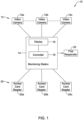
Figure 1 is a schematic block diagram showing anillustrative security system 10 that may be deployed at a facility. Thesecurity system 10 includes a number ofvideo cameras 12, individually labeled as 12a, 12b and 12c. While a total of threevideo cameras 12 are shown, this is merely illustrative as thesecurity system 10 may include any number ofvideo cameras 12 and may include substantially more than threevideo cameras 12. Thevideo cameras 12 may include fixed Field of View (FOV) cameras. Thevideo cameras 12 may include variable FOV camera, such as but not limited to Pan Tilt Zoom (PTZ) cameras that are configured to change their FOV. Thevideo cameras 12 may include both installed video cameras and portable video cameras. In some instances, thevideo cameras 12 may include cameras that are mounted into drones. - The
video cameras 12 are configured to provide their video streams to amonitoring station 14. In some instances, themonitoring station 14 is installed at the same facility as thevideo cameras 12. In some instances, themonitoring station 14 may be installed at a remote location from where thevideo cameras 12 are installed or otherwise located. Thevideo cameras 12 may provide video streams to themonitoring station 14 over a wired or wireless network, for example, using any of a variety of different communication protocols. In some instances, thevideo cameras 12 may be configured to communicate with each other over a peer-to-peer network that allows afirst video camera 12 to tell asecond video camera 12 that a scene within the FOV of thefirst video camera 12 appears to be moving towards or into the FOV of thesecond video camera 12, thereby alerting thesecond video camera 12. In some instances, thevideo cameras 12 may be configured to execute at least some video analytics algorithms to, for example, detect events of interest in the FOV. - In some instances, the
monitoring station 14 includes adisplay 16 that may be used for displaying one or more live video streams and/or one or more recorded video streams and/or video clips. Themonitoring station 14 may be operated by a user that watches the video streams and/or video clips displayed on thedisplay 16. Themonitoring station 14 may be a computer, such as a desktop computer or a laptop computer. In some instances, at least some of the functionality of themonitoring station 14 may be manifested within one or more cloud-based servers. - In some instances, the user may be able to send alerts based on what the user sees in the displayed videos. In some instances, the
monitoring station 14 includes acontroller 18 that is configured to control operation of themonitoring station 14. In some instances, thecontroller 18 may be configured to execute a variety of different video analytics algorithms to detect one or more events of interest in a video stream. In some instances, the video cameras may execute a variety of different video analytics algorithms to detect one or more events of interest in the corresponding video stream. - In some instances, the
controller 18 may be configured to create and send out one or more alerts, based upon what the controller 18 (and/or video cameras 12) sees within the video streams (e.g. what events of interests are identified by video analytics algorithms). In some instances, there may be several different severity levels of possible events, and several different severity levels of possible alerts. As an example, some alerts may include sending an alert to thedisplay 16 for viewing by the operator of the monitoring station. Some alerts may include sending an alert to afirst responder 22. Thefirst responder 22 may be the police department, fire department and/or ambulance, for example. Thefirst responder 22 may be the security department of the facility in which thesecurity system 10 is installed. In some instances, alerts may be sent to afirst responder 22 as well as to thedisplay 16. - In some cases, the
controller 18 may be configured to track movement of a particular individual in a facility by tracking when and where the individual presents his/her access card to theaccess card readers 20, individually labeled as 20a, 20b and 20c. In some cases, thecontroller 18 may instruct theaccess card readers 20 to deny access to the particular individual using the particularaccess card reader 20 to help contain or isolate the particular individual. -
Figures 2A and2B are flow diagrams that together show anillustrative method 24 for operating a security system (such as the security system 10) of a facility. Theillustrative method 24 includes receiving a video from a video camera (such as the video cameras 12) of the security system of the facility, as indicated atblock 26. An event of interest occurring in the video is identified, as indicated atblock 28. In some cases, the event of interest is identified using a video analytics algorithm running on themonitoring station 14 and/or one or more of thevideo cameras 12. The event of interest may include a person exhibiting behavior that is of interest. Examples include one or more of a person carrying a weapon, a person having a facial expression that shows fear, a person kicking another person, a person punching another person, a person throwing an object, a person dropping and leaving an object, a person shouting and/or screaming, and a person running. In some instances, identifying the event of interest occurring in the video may include identifying the event of interest using artificial intelligence, wherein the artificial intelligence includes a context-aware event model. In some cases, the event of interest is classified into one of a plurality of event severity levels, as indicated atblock 30. - An alert is sent to an operator of the security system when the event of interest is classified as having a first event severity level of the plurality of event severity levels, as indicated at
block 32. The first event severity level may be a lower severity level alert, for example. An alert is sent for a first responder when the event of interest is classified as having a second event severity level of the plurality of event severity levels, as indicated atblock 34. The second event severity level may be a higher severity level alert, for example. In some instances, themethod 24 may include sending an alert to both the operator of the security system and the first responder when the event of interest is classified as having the second event severity level of the plurality of event severity levels, as indicated atblock 36. - In some instances, the
method 24 may include generating one or more captions describing the event of interest, as indicated atblock 38. In some instances, the one or more captions may include natural language captions describing the event of interest occurring in the video. The video may include a video track and a sound track, and the one or more captions may include a caption describing the event of interest in the video track and/or a caption describing the event of interest in the sound track. In some instances, generating one or more captions describing the event of interest may include generating the one or more captions using artificial intelligence, wherein the artificial intelligence includes a context-aware video captioning model that generates natural language captions of the event of interest. In some cases, the context aware video caption generation model may be running on themonitoring station 14 and/or one or more of thevideo cameras 12. - A first video clip capturing the event of interest may be extracted, as indicated at
block 40. A report may be assembled that includes the first video clip of the event of interest and the one or more captions describing the event of interest, as indicated atblock 42. In some cases, the report may be generated by themonitoring station 14 and/or one or more of thevideo cameras 12. The report may be exported, as indicate atblock 44. - Continuing with
Figure 2B , themethod 24 may include assembling the report that includes the first video clip of the event of interest, a second video clip of the event of interest and the one or more captions describing the event of interest, as indicated atblock 48. In some instances, the first video clip may be captured by a first video camera and the second video clip may be captured by a second video camera. Sometimes, the first video camera and the second video camera are in communication via a peer-to-peer network. - In some instances, the
method 24 may include identifying a suspect in the video that is associated with the event of interest, as indicated atblock 50. An image of the face of the suspect in the video may be identified in the video (e.g. in a video frame), as indicated at block 52. The image of the face of the suspect may be submitted to a facial recognition engine to identify the identity of the suspect, as indicated atblock 54. An access card of the identified suspect may then be identified, wherein the access card needs to be presented to accesscard readers 20 of thesecurity system 10 for the identified suspect to access areas of the facility, as indicated atblock 56. An access card trace may be activated in themonitoring station 14 for the access card of the identified suspect in order to track subsequent movement of the suspect in the facility, wherein the access card trace is configured to report each time the access card of the identified suspect is presented to anaccess card reader 20 of thesecurity system 10 along with a location of the corresponding access card reader in the facility, as indicated atblock 58. In some instances, themethod 24 may include at least partially deactivating the access card of the identified suspect to prevent the suspect from accessing one or more areas of the facility, as indicated atblock 60. In some instances, themethod 24 may include activating an audio alarm of avideo camera 12 when the event of interest is classified as having the first event severity level of the plurality of event severity levels and/or when the event of interest is classified as having the second event severity level of the plurality of event severity levels, as indicated atblock 62. -
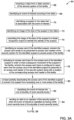
Figures 3A and3B are flow diagrams that together show anillustrative method 64 for operating a security system (such as the security system 10) of a facility. Themethod 64 includes receiving a video from a video camera (such as the video cameras 12) of the security system of the facility, as indicated atblock 66. An event of interest occurring in the video is identified via video analytics, as indicated atblock 68. A suspect in the video that is associated with the event of interest is identified, as indicated atblock 70. An image of the face of the suspect in the video is identified, as indicated atblock 72. The image of the face of the suspect is submitted to a facial recognition engine to identify the identity of the suspect, as indicated atblock 74. An access card of the identified suspect is identified, wherein the access card needs to be presented to access card readers of the security system for the identified suspect to access areas of the facility, as indicated atblock 76. An access card trace for the access card of the identified suspect is activated in order to track subsequent movement of the suspect in the facility, wherein the access card trace is configured to report each time the access card of the identified suspect is presented to an access card reader of the security system along with a location of the corresponding access card reader in the facility, as indicated atblock 78. - In some instances, the
method 64 may include at least partially deactivating the access card of the identified suspect to prevent the suspect from accessing one or more areas of the facility, as indicated atblock 80. In some instances, themethod 64 may include classifying the event of interest into one of plurality of event severity levels, as indicated atblock 82. An alert may be sent to an operator of the security system when the event of interest is classified as having a first event severity level (e.g. lower severity level) of the plurality of event severity levels, as indicated atblock 84. - Continuing on
Figure 3B , themethod 64 may include sending an alert for a first responder when the event of interest is classified as having a second event severity level (e.g. higher severity level) of the plurality of event severity levels, as indicated atblock 86. In some instances, themethod 64 may include generating one or more captions describing the event of interest, as indicated atblock 88. In some cases, the one or more captions are generated by a context-aware video captioning model that generates natural language captions of the event of interest. A first video clip of the event of interest may be extracted, as indicated atblock 90. A report may be assembled that includes the first video clip of the event of interest and the one or more captions describing the event of interest, as indicated atblock 92. The report may be exported, as indicated atblock 94. -
Figure 4 is a flow diagram showing anillustrative method 96 for operating a security system (such as the security system 10) of a facility. Themethod 96 includes receiving a video from a video camera (such as the video cameras 12) of the security system of the facility, as indicated atblock 98. An event of interest occurring in the video is identified (e.g. using video analytics), as indicated atblock 100. One or more captions describing the event of interest are generated, as indicated atblock 102. In some instances, the one or more captions may include natural language captions describing the event of interest occurring in the video. In some cases, the one or more captions are generated by a context-aware video captioning model that generates natural language captions of the event of interest. In some instances, the video may include a video track and a sound track. The one or more captions may include a caption describing the event of interest in the video track and/or a caption describing the event of interest in the sound track. A first video clip of the event of interest is extracted, as indicated atblock 104. A report is assembled that includes the first video clip of the event of interest and the one or more captions describing the event of interest, as indicated atblock 106. In some cases, an audio clip of the event of interest is extracted and included in the report. The report is exported, as indicated atblock 108. -
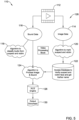
Figure 5 is a flow diagram showing anillustrative method 110 of processingvideo data 112. Thevideo data 112 may include both video and audio tracks, and each may be processed separately. InFigure 5 , thevideo data 112 is split intoimage data 114 andsound data 116. Thesound data 116 may be processed using asound algorithm 118 in order to identify an invent of interest and to classify audio from a possible suspect and/or a possible victim. Theimage data 114 may be processed using avideo algorithm 120 in order to identify an event of interest and determine who is the suspect and who is the victim. Thevideo algorithm 120 outputs a face of the possible suspect and a face of the possible victim to adatabase 122. Thedatabase 122 outputs time-stamped image data to analgorithm 124. The sound data is also provided as an input to thealgorithm 124. Thealgorithm 124 processes the images and sounds and outputs to an NLG (Natural Language Generator)Engine 126. In some instances, everything between thevideo data 112 and theNLG Engine 126 may be considered as representing avideo processing block 128. TheNLG Engine 126 outputs areport 130. Thereport 130 may include one or video clips of the event of interest and one or more natural language captions describing what is occurring in the video clips. Since thereports 130 may be automatically generated by the system, an operator may have an easily accessible repository of forensic evidence for the various events of interest. Moreover, the operator may be alerted by the system when an event of interest is detected within the FOV of one of the many cameras, thereby focusing the attention of the operator on the more important happenings. In some cases, for events of interest that are more severe, the system may automatically alert a first responder in order to improve response time to the event of interest. -
Figure 6 is a flow diagram showing anillustrative method 132 of detecting events of interest. Acamera 134 may detect a possible situation (e.g. event of interest) by running video analytics on the video stream captured by thecamera 134. Once a possible situation has been detected, thecamera 134 may inform aneighboring peer camera 136 to start video recording. Thecamera 134 also may utilizes AI (Artificial Intelligence) 138 to detect abusive or dangerous situations in its FOV. In some instances, theAI 138 may send an alert to afirst responder 140. Thecamera 134 may zoom in to obtain more information, such as identifying the abusive behavior and/or the identity of the suspect and/or victim, as shown at 142. When so provided, anaccess card 144 of the suspect may be marked as a trace card, so that the movements of the suspect with theaccess card 144 may be tracked and/or limited. In some instances, the neighboringpeer camera 136 may form aconsolidated video clip 146 that includes the evidence recorded by each of the cameras (including thecamera 134 and the neighboring peer camera 136). Theconsolidated video clip 146 may become part of anoutput 148. In some instances, the outputs from theNLG Engine 126 are documented, as indicated atblock 150, and then included as part of theoutput 148. -
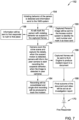
Figure 7 is a flow diagram showing anillustrative method 152 of processing data once violating behavior has been detected. Violating behavior is detected and reported to the Video Management System (VMS) system as indicated atblock 154. AI will be used to determine the suspect committing the violating behavior, as indicated atblock 156. The suspect's identity may be provided to a first responder, as indicated atblock 158. The suspect's identify may be sent to the access control system, as indicated atblock 160. Once AI identifies the suspect, the cameras are instructed to zoom in to collect more data, as indicated atblock 162. Video captured by the cameras will be consolidated, as indicated atblock 164. The additional data captured by the cameras after zooming in is also provided to an NLG engine, as indicated atblock 166. The video fromblock 164 and the incident report generated by the NLG engine atblock 166 may be combined into an investigation report, as indicated atblock 168. In some instances, the investigation report may be provided to afirst responder 170. -
Figure 8 is a schematic example of anillustrative report 172 that may be outputted (such as the investigation report referenced atblock 168 ofFigure 7 ). At 174,camera 1 has identified a tall man wearing a blue shirt with a knife in his hand via one or more video analytics algorithms. A context-aware video captioning engine generates a natural language caption of the event of interest. The suspect is shouting at a woman wearing a white top and blue jeans. The suspect is identified as being Andrew Steven while the victim is identified as Jenny. A minute later,camera 1 detects Jenny screaming (via the video and/or audio tracks), as indicated at 176. Subsequently, the suspect and victim move away fromcamera 1 towardcamera 2, and are eventually detected bycamera 2, as indicated at 180. Video clips fromcamera 1 are consolidated and exported fromcamera 1, as indicated at 178.Camera 2 detects the suspect as attempting to stab the victim while the victim throws a water bottle at the suspect, as indicated at 182. The context-aware video captioning engine generates additional natural language caption of the event of interest. The video clip fromcamera 2 are exported fromcamera 2, as indicated at 184. The behavior has stopped, as indicated at 186. Perhaps the suspect has dropped the knife, or has run away as a result of the victim throwing the water bottle at the suspect. All of the recorded video clips and the natural language captions are consolidated and exported, as indicated at 188. The report is complete, as indicated at 190. - Having thus described several illustrative embodiments of the present disclosure, those of skill in the art will readily appreciate that yet other embodiments may be made and used within the scope of the claims hereto attached. It will be understood, however, that this disclosure is, in many respects, only illustrative. Changes may be made in details, particularly in matters of shape, size, arrangement of parts, and exclusion and order of steps, without exceeding the scope of the disclosure. The disclosure's scope is, of course, defined in the language in which the appended claims are expressed.
Claims (15)
- A method for operating a security system of a facility, the method comprising:receiving a video from a video camera of the security system of the facility;identifying an event of interest occurring in the video via video analytics;classifying the event of interest into one of plurality of event severity levels;sending an alert to an operator of the security system when the event of interest is classified as having a first event severity level of the plurality of event severity levels; andsending an alert for a first responder when the event of interest is classified as having a second event severity level of the plurality of event severity levels.
- The method of claim 1, comprising:
sending an alert to the operator of the security system when the event of interest is classified as having the second event severity level of the plurality of event severity levels. - The method of claim 1, wherein the event of interest occurring in the video comprises a person exhibiting behavior that is of interest including one or more of:a person carrying a weapon;a person having a facial expression that shows fear;a person kicking another person;a person punching another person;a person throwing an object;a person dropping and leaving an object;a person shouting and/or screaming; anda person running.
- The method of claim 1, wherein identifying the event of interest occurring in the video includes identifying the event of interest using artificial intelligence, wherein the artificial intelligence includes a context-aware event model.
- The method of claim 1, comprising:generating one or more captions describing the event of interest;extracting a first video clip of the event of interest;assembling a report that includes the first video clip of the event of interest and the one or more captions describing the event of interest; andexporting the report.
- The method of claim 5, wherein the one or more captions comprise natural language captions describing the event of interest occurring in the video.
- The method of claim 6, wherein the video includes a video track and a sound track, wherein the one or more captions include:a caption describing the event of interest in the video track; anda caption describing the event of interest in the sound track.
- The method of claim 5, wherein generating one or more captions describing the event of interest includes generating the one or more captions using artificial intelligence, wherein the artificial intelligence includes a context-aware video captioning model that generates natural language captions of the event of interest.
- The method of claim 5, comprising:extracting a second video clip of the event of interest; andassembling the report that includes the first video clip of the event of interest, the second video clip of the event of interest and the one or more captions describing the event of interest.
- The method of claim 9, wherein the first video clip is captured by a first video camera and the second video clip is captured by a second video camera, wherein the first video camera and the second video camera are in communication via a peer-to-peer network.
- The method of claim 1, comprising:identifying a suspect in the video that is associated with the event of interest;identifying an image of the face of the suspect in the video;submitting the image of the face of the suspect to a facial recognition engine to identify the identity of the suspect;identifying an access card of the identified suspect, wherein the access card needs to be presented to access card readers of the security system for the identified suspect to access areas of the facility; andactivating an access card trace for the access card of the identified suspect in order to track subsequent movement of the suspect in the facility, wherein the access card trace is configured to report each time the access card of the identified suspect is presented to an access card reader of the security system along with a location of the corresponding access card reader in the facility.
- The method of claim 11, comprising at least partially deactivating the access card of the identified suspect to prevent the suspect from accessing one or more areas of the facility.
- The method of claim 1, comprising activating an audio alarm via the video camera when the event of interest is classified as having the first event severity level of the plurality of event severity levels and/or when the event of interest is classified as having the second event severity level of the plurality of event severity levels.
- A security system comprising:a video camera for capturing a video;a controller operatively coupled to the video camera, the controller configured to:identify an event of interest occurring in the video via video analytics;classify the event of interest into one of plurality of event severity levels; send an alert to an operator of the security system when the event of interest is classified as having a first event severity level of the plurality of event severity levels; andsend an alert for a first responder when the event of interest is classified as having a second event severity level of the plurality of event severity levels.
- The security system of claim 1, wherein the controller is configured to send an alert to the operator of the security system when the event of interest is classified as having the second event severity level of the plurality of event severity levels.
Applications Claiming Priority (1)
| Application Number | Priority Date | Filing Date | Title |
|---|---|---|---|
| US18/486,904 US20250124711A1 (en) | 2023-10-13 | 2023-10-13 | Methods for operating a security system |
Publications (2)
| Publication Number | Publication Date |
|---|---|
| EP4538995A2 true EP4538995A2 (en) | 2025-04-16 |
| EP4538995A3 EP4538995A3 (en) | 2025-06-11 |
Family
ID=92882998
Family Applications (1)
| Application Number | Title | Priority Date | Filing Date |
|---|---|---|---|
| EP24201220.1A Pending EP4538995A3 (en) | 2023-10-13 | 2024-09-18 | Methods for operating a security system |
Country Status (3)
| Country | Link |
|---|---|
| US (1) | US20250124711A1 (en) |
| EP (1) | EP4538995A3 (en) |
| CN (1) | CN119835386A (en) |
Family Cites Families (16)
| Publication number | Priority date | Publication date | Assignee | Title |
|---|---|---|---|---|
| US20060190960A1 (en) * | 2005-02-14 | 2006-08-24 | Barker Geoffrey T | System and method for incorporating video analytics in a monitoring network |
| US20110001604A1 (en) * | 2007-11-05 | 2011-01-06 | Nelson Ludlow | Automatic incident reporting in an access control system |
| US8368754B2 (en) * | 2009-03-12 | 2013-02-05 | International Business Machines Corporation | Video pattern recognition for automating emergency service incident awareness and response |
| BR112015026374B1 (en) * | 2013-04-19 | 2022-04-12 | James Carey | Analytical recognition system |
| JP5780570B1 (en) * | 2014-04-09 | 2015-09-16 | 株式会社 テクノミライ | Digital loss / accident defense system, method and program |
| CN109076196B (en) * | 2016-02-26 | 2020-01-14 | 亚马逊技术有限公司 | Sharing video recordings from audio/video recording and communication devices |
| US10037668B1 (en) * | 2017-05-09 | 2018-07-31 | Microsoft Technology Licensing, Llc | Emergency alerting system and method |
| US10602035B2 (en) * | 2017-09-19 | 2020-03-24 | Google Llc | Temperature-controlled camera assembly |
| EP3996058B1 (en) * | 2018-10-29 | 2024-03-06 | Hexagon Technology Center GmbH | Facility surveillance systems and methods |
| US20200135006A1 (en) * | 2018-10-29 | 2020-04-30 | Johnson Controls Technology Company | Building security system with alarm lists and alarm rule editing |
| US10733457B1 (en) * | 2019-03-11 | 2020-08-04 | Wipro Limited | Method and system for predicting in real-time one or more potential threats in video surveillance |
| US20200388139A1 (en) * | 2019-06-07 | 2020-12-10 | Ooma, Inc. | Continuous detection and recognition for threat determination via a camera system |
| US11475672B2 (en) * | 2019-07-12 | 2022-10-18 | Stealth Monitoring, Inc. | Premises security system with dynamic risk evaluation |
| US10999566B1 (en) * | 2019-09-06 | 2021-05-04 | Amazon Technologies, Inc. | Automated generation and presentation of textual descriptions of video content |
| US12307878B2 (en) * | 2021-04-16 | 2025-05-20 | Dice Corporation | Digital video alarm analytics computer system |
| US12333789B2 (en) * | 2022-03-27 | 2025-06-17 | Deep Sentinel Corp. | Using guard feedback to train AI models |
-
2023
- 2023-10-13 US US18/486,904 patent/US20250124711A1/en active Pending
-
2024
- 2024-09-18 EP EP24201220.1A patent/EP4538995A3/en active Pending
- 2024-09-25 CN CN202411340247.8A patent/CN119835386A/en active Pending
Also Published As
| Publication number | Publication date |
|---|---|
| US20250124711A1 (en) | 2025-04-17 |
| EP4538995A3 (en) | 2025-06-11 |
| CN119835386A (en) | 2025-04-15 |
Similar Documents
| Publication | Publication Date | Title |
|---|---|---|
| US12563154B2 (en) | Video surveillance system, video processing apparatus, video processing method, and video processing program | |
| CN112969049B (en) | Intelligent detection system for ship violation behaviors | |
| JP5560397B2 (en) | Autonomous crime prevention alert system and autonomous crime prevention alert method | |
| US20150070506A1 (en) | Event triggered location based participatory surveillance | |
| KR20210043960A (en) | Behavior Recognition Based Safety Monitoring System and Method using Artificial Intelligence Technology and IoT | |
| CN118506450A (en) | Method and device for detecting abnormal behavior in aerial work execution process and processor | |
| US20250124711A1 (en) | Methods for operating a security system | |
| WO2025060454A1 (en) | Video playback method and system for monitoring device | |
| CN111586355A (en) | Algorithm system for capturing portrait and analyzing behavior characteristics of portrait by high-definition camera | |
| Kumar et al. | Analyze and Highlight the Abnormal Activities While Recording in CCTV | |
| US12586381B2 (en) | Method and system for operating a video surveillance system including predicting and displaying possible future activity of a person of interest | |
| Marakkar et al. | Surveillance and security: integrating video, audio, and sensor data | |
| CN118072375B (en) | Face image acquisition system | |
| US12309533B2 (en) | Intelligent surveillance camera control and notification system | |
| EP4621737A1 (en) | Method of video surveillance, computer program, storage medium and video surveillance system | |
| Narasimha et al. | AI-Powered Threat Detection and Emergency Alert Transmission for Smart CCTV Cameras | |
| CN107481249A (en) | A kind of data processing method of computer supervisory control system | |
| Chokkalingam et al. | OpenCV-Based Real-Time Multi-Modal Threat Detection and Alert System for Public Safety Applications | |
| CN120263935A (en) | A video analysis and perception system for power supply business hall monitoring system | |
| Kaur et al. | Framework for FOGIoT based Smart Video Surveillance System (SVSS) | |
| JP2012222462A (en) | Monitoring system |
Legal Events
| Date | Code | Title | Description |
|---|---|---|---|
| PUAI | Public reference made under article 153(3) epc to a published international application that has entered the european phase |
Free format text: ORIGINAL CODE: 0009012 |
|
| STAA | Information on the status of an ep patent application or granted ep patent |
Free format text: STATUS: REQUEST FOR EXAMINATION WAS MADE |
|
| 17P | Request for examination filed |
Effective date: 20240918 |
|
| AK | Designated contracting states |
Kind code of ref document: A2 Designated state(s): AL AT BE BG CH CY CZ DE DK EE ES FI FR GB GR HR HU IE IS IT LI LT LU LV MC ME MK MT NL NO PL PT RO RS SE SI SK SM TR |
|
| PUAL | Search report despatched |
Free format text: ORIGINAL CODE: 0009013 |
|
| AK | Designated contracting states |
Kind code of ref document: A3 Designated state(s): AL AT BE BG CH CY CZ DE DK EE ES FI FR GB GR HR HU IE IS IT LI LT LU LV MC ME MK MT NL NO PL PT RO RS SE SI SK SM TR |
|
| RIC1 | Information provided on ipc code assigned before grant |
Ipc: G06V 40/16 20220101ALI20250507BHEP Ipc: G06V 20/52 20220101ALI20250507BHEP Ipc: G06V 20/40 20220101AFI20250507BHEP |