EP4538251A1 - Dispersion of filaments - Google Patents
Dispersion of filaments Download PDFInfo
- Publication number
- EP4538251A1 EP4538251A1 EP24201200.3A EP24201200A EP4538251A1 EP 4538251 A1 EP4538251 A1 EP 4538251A1 EP 24201200 A EP24201200 A EP 24201200A EP 4538251 A1 EP4538251 A1 EP 4538251A1
- Authority
- EP
- European Patent Office
- Prior art keywords
- ceramic
- polymer binder
- tows
- preform
- solvent
- Prior art date
- Legal status (The legal status is an assumption and is not a legal conclusion. Google has not performed a legal analysis and makes no representation as to the accuracy of the status listed.)
- Pending
Links
Images



Classifications
-
- C—CHEMISTRY; METALLURGY
- C04—CEMENTS; CONCRETE; ARTIFICIAL STONE; CERAMICS; REFRACTORIES
- C04B—LIME, MAGNESIA; SLAG; CEMENTS; COMPOSITIONS THEREOF, e.g. MORTARS, CONCRETE OR LIKE BUILDING MATERIALS; ARTIFICIAL STONE; CERAMICS; REFRACTORIES; TREATMENT OF NATURAL STONE
- C04B35/00—Shaped ceramic products characterised by their composition; Ceramics compositions; Processing powders of inorganic compounds preparatory to the manufacturing of ceramic products
- C04B35/622—Forming processes; Processing powders of inorganic compounds preparatory to the manufacturing of ceramic products
- C04B35/626—Preparing or treating the powders individually or as batches ; preparing or treating macroscopic reinforcing agents for ceramic products, e.g. fibres; mechanical aspects section B
- C04B35/628—Coating the powders or the macroscopic reinforcing agents
- C04B35/62844—Coating fibres
-
- C—CHEMISTRY; METALLURGY
- C04—CEMENTS; CONCRETE; ARTIFICIAL STONE; CERAMICS; REFRACTORIES
- C04B—LIME, MAGNESIA; SLAG; CEMENTS; COMPOSITIONS THEREOF, e.g. MORTARS, CONCRETE OR LIKE BUILDING MATERIALS; ARTIFICIAL STONE; CERAMICS; REFRACTORIES; TREATMENT OF NATURAL STONE
- C04B35/00—Shaped ceramic products characterised by their composition; Ceramics compositions; Processing powders of inorganic compounds preparatory to the manufacturing of ceramic products
- C04B35/622—Forming processes; Processing powders of inorganic compounds preparatory to the manufacturing of ceramic products
- C04B35/626—Preparing or treating the powders individually or as batches ; preparing or treating macroscopic reinforcing agents for ceramic products, e.g. fibres; mechanical aspects section B
- C04B35/63—Preparing or treating the powders individually or as batches ; preparing or treating macroscopic reinforcing agents for ceramic products, e.g. fibres; mechanical aspects section B using additives specially adapted for forming the products, e.g.. binder binders
- C04B35/632—Organic additives
- C04B35/634—Polymers
- C04B35/63404—Polymers obtained by reactions only involving carbon-to-carbon unsaturated bonds
- C04B35/63416—Polyvinylalcohols [PVA]; Polyvinylacetates
-
- C—CHEMISTRY; METALLURGY
- C04—CEMENTS; CONCRETE; ARTIFICIAL STONE; CERAMICS; REFRACTORIES
- C04B—LIME, MAGNESIA; SLAG; CEMENTS; COMPOSITIONS THEREOF, e.g. MORTARS, CONCRETE OR LIKE BUILDING MATERIALS; ARTIFICIAL STONE; CERAMICS; REFRACTORIES; TREATMENT OF NATURAL STONE
- C04B35/00—Shaped ceramic products characterised by their composition; Ceramics compositions; Processing powders of inorganic compounds preparatory to the manufacturing of ceramic products
- C04B35/515—Shaped ceramic products characterised by their composition; Ceramics compositions; Processing powders of inorganic compounds preparatory to the manufacturing of ceramic products based on non-oxide ceramics
- C04B35/56—Shaped ceramic products characterised by their composition; Ceramics compositions; Processing powders of inorganic compounds preparatory to the manufacturing of ceramic products based on non-oxide ceramics based on carbides or oxycarbides
- C04B35/565—Shaped ceramic products characterised by their composition; Ceramics compositions; Processing powders of inorganic compounds preparatory to the manufacturing of ceramic products based on non-oxide ceramics based on carbides or oxycarbides based on silicon carbide
-
- C—CHEMISTRY; METALLURGY
- C04—CEMENTS; CONCRETE; ARTIFICIAL STONE; CERAMICS; REFRACTORIES
- C04B—LIME, MAGNESIA; SLAG; CEMENTS; COMPOSITIONS THEREOF, e.g. MORTARS, CONCRETE OR LIKE BUILDING MATERIALS; ARTIFICIAL STONE; CERAMICS; REFRACTORIES; TREATMENT OF NATURAL STONE
- C04B35/00—Shaped ceramic products characterised by their composition; Ceramics compositions; Processing powders of inorganic compounds preparatory to the manufacturing of ceramic products
- C04B35/515—Shaped ceramic products characterised by their composition; Ceramics compositions; Processing powders of inorganic compounds preparatory to the manufacturing of ceramic products based on non-oxide ceramics
- C04B35/56—Shaped ceramic products characterised by their composition; Ceramics compositions; Processing powders of inorganic compounds preparatory to the manufacturing of ceramic products based on non-oxide ceramics based on carbides or oxycarbides
- C04B35/565—Shaped ceramic products characterised by their composition; Ceramics compositions; Processing powders of inorganic compounds preparatory to the manufacturing of ceramic products based on non-oxide ceramics based on carbides or oxycarbides based on silicon carbide
- C04B35/573—Shaped ceramic products characterised by their composition; Ceramics compositions; Processing powders of inorganic compounds preparatory to the manufacturing of ceramic products based on non-oxide ceramics based on carbides or oxycarbides based on silicon carbide obtained by reaction sintering or recrystallisation
-
- C—CHEMISTRY; METALLURGY
- C04—CEMENTS; CONCRETE; ARTIFICIAL STONE; CERAMICS; REFRACTORIES
- C04B—LIME, MAGNESIA; SLAG; CEMENTS; COMPOSITIONS THEREOF, e.g. MORTARS, CONCRETE OR LIKE BUILDING MATERIALS; ARTIFICIAL STONE; CERAMICS; REFRACTORIES; TREATMENT OF NATURAL STONE
- C04B35/00—Shaped ceramic products characterised by their composition; Ceramics compositions; Processing powders of inorganic compounds preparatory to the manufacturing of ceramic products
- C04B35/622—Forming processes; Processing powders of inorganic compounds preparatory to the manufacturing of ceramic products
- C04B35/626—Preparing or treating the powders individually or as batches ; preparing or treating macroscopic reinforcing agents for ceramic products, e.g. fibres; mechanical aspects section B
- C04B35/628—Coating the powders or the macroscopic reinforcing agents
- C04B35/62844—Coating fibres
- C04B35/62857—Coating fibres with non-oxide ceramics
- C04B35/6286—Carbides
- C04B35/62863—Silicon carbide
-
- C—CHEMISTRY; METALLURGY
- C04—CEMENTS; CONCRETE; ARTIFICIAL STONE; CERAMICS; REFRACTORIES
- C04B—LIME, MAGNESIA; SLAG; CEMENTS; COMPOSITIONS THEREOF, e.g. MORTARS, CONCRETE OR LIKE BUILDING MATERIALS; ARTIFICIAL STONE; CERAMICS; REFRACTORIES; TREATMENT OF NATURAL STONE
- C04B35/00—Shaped ceramic products characterised by their composition; Ceramics compositions; Processing powders of inorganic compounds preparatory to the manufacturing of ceramic products
- C04B35/622—Forming processes; Processing powders of inorganic compounds preparatory to the manufacturing of ceramic products
- C04B35/626—Preparing or treating the powders individually or as batches ; preparing or treating macroscopic reinforcing agents for ceramic products, e.g. fibres; mechanical aspects section B
- C04B35/628—Coating the powders or the macroscopic reinforcing agents
- C04B35/62844—Coating fibres
- C04B35/62857—Coating fibres with non-oxide ceramics
- C04B35/62865—Nitrides
- C04B35/62868—Boron nitride
-
- C—CHEMISTRY; METALLURGY
- C04—CEMENTS; CONCRETE; ARTIFICIAL STONE; CERAMICS; REFRACTORIES
- C04B—LIME, MAGNESIA; SLAG; CEMENTS; COMPOSITIONS THEREOF, e.g. MORTARS, CONCRETE OR LIKE BUILDING MATERIALS; ARTIFICIAL STONE; CERAMICS; REFRACTORIES; TREATMENT OF NATURAL STONE
- C04B35/00—Shaped ceramic products characterised by their composition; Ceramics compositions; Processing powders of inorganic compounds preparatory to the manufacturing of ceramic products
- C04B35/622—Forming processes; Processing powders of inorganic compounds preparatory to the manufacturing of ceramic products
- C04B35/626—Preparing or treating the powders individually or as batches ; preparing or treating macroscopic reinforcing agents for ceramic products, e.g. fibres; mechanical aspects section B
- C04B35/628—Coating the powders or the macroscopic reinforcing agents
- C04B35/62844—Coating fibres
- C04B35/62857—Coating fibres with non-oxide ceramics
- C04B35/62865—Nitrides
- C04B35/62871—Silicon nitride
-
- C—CHEMISTRY; METALLURGY
- C04—CEMENTS; CONCRETE; ARTIFICIAL STONE; CERAMICS; REFRACTORIES
- C04B—LIME, MAGNESIA; SLAG; CEMENTS; COMPOSITIONS THEREOF, e.g. MORTARS, CONCRETE OR LIKE BUILDING MATERIALS; ARTIFICIAL STONE; CERAMICS; REFRACTORIES; TREATMENT OF NATURAL STONE
- C04B35/00—Shaped ceramic products characterised by their composition; Ceramics compositions; Processing powders of inorganic compounds preparatory to the manufacturing of ceramic products
- C04B35/622—Forming processes; Processing powders of inorganic compounds preparatory to the manufacturing of ceramic products
- C04B35/626—Preparing or treating the powders individually or as batches ; preparing or treating macroscopic reinforcing agents for ceramic products, e.g. fibres; mechanical aspects section B
- C04B35/628—Coating the powders or the macroscopic reinforcing agents
- C04B35/62884—Coating the powders or the macroscopic reinforcing agents by gas phase techniques
-
- C—CHEMISTRY; METALLURGY
- C04—CEMENTS; CONCRETE; ARTIFICIAL STONE; CERAMICS; REFRACTORIES
- C04B—LIME, MAGNESIA; SLAG; CEMENTS; COMPOSITIONS THEREOF, e.g. MORTARS, CONCRETE OR LIKE BUILDING MATERIALS; ARTIFICIAL STONE; CERAMICS; REFRACTORIES; TREATMENT OF NATURAL STONE
- C04B35/00—Shaped ceramic products characterised by their composition; Ceramics compositions; Processing powders of inorganic compounds preparatory to the manufacturing of ceramic products
- C04B35/622—Forming processes; Processing powders of inorganic compounds preparatory to the manufacturing of ceramic products
- C04B35/626—Preparing or treating the powders individually or as batches ; preparing or treating macroscopic reinforcing agents for ceramic products, e.g. fibres; mechanical aspects section B
- C04B35/628—Coating the powders or the macroscopic reinforcing agents
- C04B35/62886—Coating the powders or the macroscopic reinforcing agents by wet chemical techniques
-
- C—CHEMISTRY; METALLURGY
- C04—CEMENTS; CONCRETE; ARTIFICIAL STONE; CERAMICS; REFRACTORIES
- C04B—LIME, MAGNESIA; SLAG; CEMENTS; COMPOSITIONS THEREOF, e.g. MORTARS, CONCRETE OR LIKE BUILDING MATERIALS; ARTIFICIAL STONE; CERAMICS; REFRACTORIES; TREATMENT OF NATURAL STONE
- C04B35/00—Shaped ceramic products characterised by their composition; Ceramics compositions; Processing powders of inorganic compounds preparatory to the manufacturing of ceramic products
- C04B35/622—Forming processes; Processing powders of inorganic compounds preparatory to the manufacturing of ceramic products
- C04B35/626—Preparing or treating the powders individually or as batches ; preparing or treating macroscopic reinforcing agents for ceramic products, e.g. fibres; mechanical aspects section B
- C04B35/628—Coating the powders or the macroscopic reinforcing agents
- C04B35/62897—Coatings characterised by their thickness
-
- C—CHEMISTRY; METALLURGY
- C04—CEMENTS; CONCRETE; ARTIFICIAL STONE; CERAMICS; REFRACTORIES
- C04B—LIME, MAGNESIA; SLAG; CEMENTS; COMPOSITIONS THEREOF, e.g. MORTARS, CONCRETE OR LIKE BUILDING MATERIALS; ARTIFICIAL STONE; CERAMICS; REFRACTORIES; TREATMENT OF NATURAL STONE
- C04B35/00—Shaped ceramic products characterised by their composition; Ceramics compositions; Processing powders of inorganic compounds preparatory to the manufacturing of ceramic products
- C04B35/622—Forming processes; Processing powders of inorganic compounds preparatory to the manufacturing of ceramic products
- C04B35/626—Preparing or treating the powders individually or as batches ; preparing or treating macroscopic reinforcing agents for ceramic products, e.g. fibres; mechanical aspects section B
- C04B35/63—Preparing or treating the powders individually or as batches ; preparing or treating macroscopic reinforcing agents for ceramic products, e.g. fibres; mechanical aspects section B using additives specially adapted for forming the products, e.g.. binder binders
- C04B35/632—Organic additives
- C04B35/634—Polymers
- C04B35/63404—Polymers obtained by reactions only involving carbon-to-carbon unsaturated bonds
- C04B35/6342—Polyvinylacetals, e.g. polyvinylbutyral [PVB]
-
- C—CHEMISTRY; METALLURGY
- C04—CEMENTS; CONCRETE; ARTIFICIAL STONE; CERAMICS; REFRACTORIES
- C04B—LIME, MAGNESIA; SLAG; CEMENTS; COMPOSITIONS THEREOF, e.g. MORTARS, CONCRETE OR LIKE BUILDING MATERIALS; ARTIFICIAL STONE; CERAMICS; REFRACTORIES; TREATMENT OF NATURAL STONE
- C04B35/00—Shaped ceramic products characterised by their composition; Ceramics compositions; Processing powders of inorganic compounds preparatory to the manufacturing of ceramic products
- C04B35/71—Ceramic products containing macroscopic reinforcing agents
- C04B35/78—Ceramic products containing macroscopic reinforcing agents containing non-metallic materials
- C04B35/80—Fibres, filaments, whiskers, platelets, or the like
-
- C—CHEMISTRY; METALLURGY
- C04—CEMENTS; CONCRETE; ARTIFICIAL STONE; CERAMICS; REFRACTORIES
- C04B—LIME, MAGNESIA; SLAG; CEMENTS; COMPOSITIONS THEREOF, e.g. MORTARS, CONCRETE OR LIKE BUILDING MATERIALS; ARTIFICIAL STONE; CERAMICS; REFRACTORIES; TREATMENT OF NATURAL STONE
- C04B41/00—After-treatment of mortars, concrete, artificial stone or ceramics; Treatment of natural stone
- C04B41/0072—Heat treatment
-
- C—CHEMISTRY; METALLURGY
- C04—CEMENTS; CONCRETE; ARTIFICIAL STONE; CERAMICS; REFRACTORIES
- C04B—LIME, MAGNESIA; SLAG; CEMENTS; COMPOSITIONS THEREOF, e.g. MORTARS, CONCRETE OR LIKE BUILDING MATERIALS; ARTIFICIAL STONE; CERAMICS; REFRACTORIES; TREATMENT OF NATURAL STONE
- C04B41/00—After-treatment of mortars, concrete, artificial stone or ceramics; Treatment of natural stone
- C04B41/45—Coating or impregnating, e.g. injection in masonry, partial coating of green or fired ceramics, organic coating compositions for adhering together two concrete elements
- C04B41/457—Non-superficial impregnation or infiltration of the substrate
-
- C—CHEMISTRY; METALLURGY
- C04—CEMENTS; CONCRETE; ARTIFICIAL STONE; CERAMICS; REFRACTORIES
- C04B—LIME, MAGNESIA; SLAG; CEMENTS; COMPOSITIONS THEREOF, e.g. MORTARS, CONCRETE OR LIKE BUILDING MATERIALS; ARTIFICIAL STONE; CERAMICS; REFRACTORIES; TREATMENT OF NATURAL STONE
- C04B2235/00—Aspects relating to ceramic starting mixtures or sintered ceramic products
- C04B2235/02—Composition of constituents of the starting material or of secondary phases of the final product
- C04B2235/30—Constituents and secondary phases not being of a fibrous nature
- C04B2235/32—Metal oxides, mixed metal oxides, or oxide-forming salts thereof, e.g. carbonates, nitrates, (oxy)hydroxides, chlorides
- C04B2235/3217—Aluminum oxide or oxide forming salts thereof, e.g. bauxite, alpha-alumina
-
- C—CHEMISTRY; METALLURGY
- C04—CEMENTS; CONCRETE; ARTIFICIAL STONE; CERAMICS; REFRACTORIES
- C04B—LIME, MAGNESIA; SLAG; CEMENTS; COMPOSITIONS THEREOF, e.g. MORTARS, CONCRETE OR LIKE BUILDING MATERIALS; ARTIFICIAL STONE; CERAMICS; REFRACTORIES; TREATMENT OF NATURAL STONE
- C04B2235/00—Aspects relating to ceramic starting mixtures or sintered ceramic products
- C04B2235/02—Composition of constituents of the starting material or of secondary phases of the final product
- C04B2235/30—Constituents and secondary phases not being of a fibrous nature
- C04B2235/32—Metal oxides, mixed metal oxides, or oxide-forming salts thereof, e.g. carbonates, nitrates, (oxy)hydroxides, chlorides
- C04B2235/3224—Rare earth oxide or oxide forming salts thereof, e.g. scandium oxide
-
- C—CHEMISTRY; METALLURGY
- C04—CEMENTS; CONCRETE; ARTIFICIAL STONE; CERAMICS; REFRACTORIES
- C04B—LIME, MAGNESIA; SLAG; CEMENTS; COMPOSITIONS THEREOF, e.g. MORTARS, CONCRETE OR LIKE BUILDING MATERIALS; ARTIFICIAL STONE; CERAMICS; REFRACTORIES; TREATMENT OF NATURAL STONE
- C04B2235/00—Aspects relating to ceramic starting mixtures or sintered ceramic products
- C04B2235/02—Composition of constituents of the starting material or of secondary phases of the final product
- C04B2235/30—Constituents and secondary phases not being of a fibrous nature
- C04B2235/32—Metal oxides, mixed metal oxides, or oxide-forming salts thereof, e.g. carbonates, nitrates, (oxy)hydroxides, chlorides
- C04B2235/3231—Refractory metal oxides, their mixed metal oxides, or oxide-forming salts thereof
- C04B2235/3244—Zirconium oxides, zirconates, hafnium oxides, hafnates, or oxide-forming salts thereof
-
- C—CHEMISTRY; METALLURGY
- C04—CEMENTS; CONCRETE; ARTIFICIAL STONE; CERAMICS; REFRACTORIES
- C04B—LIME, MAGNESIA; SLAG; CEMENTS; COMPOSITIONS THEREOF, e.g. MORTARS, CONCRETE OR LIKE BUILDING MATERIALS; ARTIFICIAL STONE; CERAMICS; REFRACTORIES; TREATMENT OF NATURAL STONE
- C04B2235/00—Aspects relating to ceramic starting mixtures or sintered ceramic products
- C04B2235/02—Composition of constituents of the starting material or of secondary phases of the final product
- C04B2235/30—Constituents and secondary phases not being of a fibrous nature
- C04B2235/38—Non-oxide ceramic constituents or additives
- C04B2235/3817—Carbides
- C04B2235/3821—Boron carbides
-
- C—CHEMISTRY; METALLURGY
- C04—CEMENTS; CONCRETE; ARTIFICIAL STONE; CERAMICS; REFRACTORIES
- C04B—LIME, MAGNESIA; SLAG; CEMENTS; COMPOSITIONS THEREOF, e.g. MORTARS, CONCRETE OR LIKE BUILDING MATERIALS; ARTIFICIAL STONE; CERAMICS; REFRACTORIES; TREATMENT OF NATURAL STONE
- C04B2235/00—Aspects relating to ceramic starting mixtures or sintered ceramic products
- C04B2235/02—Composition of constituents of the starting material or of secondary phases of the final product
- C04B2235/30—Constituents and secondary phases not being of a fibrous nature
- C04B2235/38—Non-oxide ceramic constituents or additives
- C04B2235/3817—Carbides
- C04B2235/3826—Silicon carbides
-
- C—CHEMISTRY; METALLURGY
- C04—CEMENTS; CONCRETE; ARTIFICIAL STONE; CERAMICS; REFRACTORIES
- C04B—LIME, MAGNESIA; SLAG; CEMENTS; COMPOSITIONS THEREOF, e.g. MORTARS, CONCRETE OR LIKE BUILDING MATERIALS; ARTIFICIAL STONE; CERAMICS; REFRACTORIES; TREATMENT OF NATURAL STONE
- C04B2235/00—Aspects relating to ceramic starting mixtures or sintered ceramic products
- C04B2235/02—Composition of constituents of the starting material or of secondary phases of the final product
- C04B2235/30—Constituents and secondary phases not being of a fibrous nature
- C04B2235/48—Organic compounds becoming part of a ceramic after heat treatment, e.g. carbonising phenol resins
-
- C—CHEMISTRY; METALLURGY
- C04—CEMENTS; CONCRETE; ARTIFICIAL STONE; CERAMICS; REFRACTORIES
- C04B—LIME, MAGNESIA; SLAG; CEMENTS; COMPOSITIONS THEREOF, e.g. MORTARS, CONCRETE OR LIKE BUILDING MATERIALS; ARTIFICIAL STONE; CERAMICS; REFRACTORIES; TREATMENT OF NATURAL STONE
- C04B2235/00—Aspects relating to ceramic starting mixtures or sintered ceramic products
- C04B2235/02—Composition of constituents of the starting material or of secondary phases of the final product
- C04B2235/50—Constituents or additives of the starting mixture chosen for their shape or used because of their shape or their physical appearance
- C04B2235/52—Constituents or additives characterised by their shapes
- C04B2235/5208—Fibers
- C04B2235/5216—Inorganic
- C04B2235/524—Non-oxidic, e.g. borides, carbides, silicides or nitrides
- C04B2235/5244—Silicon carbide
-
- C—CHEMISTRY; METALLURGY
- C04—CEMENTS; CONCRETE; ARTIFICIAL STONE; CERAMICS; REFRACTORIES
- C04B—LIME, MAGNESIA; SLAG; CEMENTS; COMPOSITIONS THEREOF, e.g. MORTARS, CONCRETE OR LIKE BUILDING MATERIALS; ARTIFICIAL STONE; CERAMICS; REFRACTORIES; TREATMENT OF NATURAL STONE
- C04B2235/00—Aspects relating to ceramic starting mixtures or sintered ceramic products
- C04B2235/02—Composition of constituents of the starting material or of secondary phases of the final product
- C04B2235/50—Constituents or additives of the starting mixture chosen for their shape or used because of their shape or their physical appearance
- C04B2235/52—Constituents or additives characterised by their shapes
- C04B2235/5208—Fibers
- C04B2235/5252—Fibers having a specific pre-form
-
- C—CHEMISTRY; METALLURGY
- C04—CEMENTS; CONCRETE; ARTIFICIAL STONE; CERAMICS; REFRACTORIES
- C04B—LIME, MAGNESIA; SLAG; CEMENTS; COMPOSITIONS THEREOF, e.g. MORTARS, CONCRETE OR LIKE BUILDING MATERIALS; ARTIFICIAL STONE; CERAMICS; REFRACTORIES; TREATMENT OF NATURAL STONE
- C04B2235/00—Aspects relating to ceramic starting mixtures or sintered ceramic products
- C04B2235/02—Composition of constituents of the starting material or of secondary phases of the final product
- C04B2235/50—Constituents or additives of the starting mixture chosen for their shape or used because of their shape or their physical appearance
- C04B2235/52—Constituents or additives characterised by their shapes
- C04B2235/5208—Fibers
- C04B2235/5252—Fibers having a specific pre-form
- C04B2235/5256—Two-dimensional, e.g. woven structures
-
- C—CHEMISTRY; METALLURGY
- C04—CEMENTS; CONCRETE; ARTIFICIAL STONE; CERAMICS; REFRACTORIES
- C04B—LIME, MAGNESIA; SLAG; CEMENTS; COMPOSITIONS THEREOF, e.g. MORTARS, CONCRETE OR LIKE BUILDING MATERIALS; ARTIFICIAL STONE; CERAMICS; REFRACTORIES; TREATMENT OF NATURAL STONE
- C04B2235/00—Aspects relating to ceramic starting mixtures or sintered ceramic products
- C04B2235/60—Aspects relating to the preparation, properties or mechanical treatment of green bodies or pre-forms
- C04B2235/614—Gas infiltration of green bodies or pre-forms
-
- C—CHEMISTRY; METALLURGY
- C04—CEMENTS; CONCRETE; ARTIFICIAL STONE; CERAMICS; REFRACTORIES
- C04B—LIME, MAGNESIA; SLAG; CEMENTS; COMPOSITIONS THEREOF, e.g. MORTARS, CONCRETE OR LIKE BUILDING MATERIALS; ARTIFICIAL STONE; CERAMICS; REFRACTORIES; TREATMENT OF NATURAL STONE
- C04B2235/00—Aspects relating to ceramic starting mixtures or sintered ceramic products
- C04B2235/60—Aspects relating to the preparation, properties or mechanical treatment of green bodies or pre-forms
- C04B2235/616—Liquid infiltration of green bodies or pre-forms
Definitions
- a method of fabricating a CMC component including the method above and: debulking the preform; decomposing the first polymer binder and the second polymer binder; depositing an interface coating on the preform; and subsequently, densifying the preform with a ceramic matrix.
- tow 30 can be prepared for dispersal, which in an exemplary embodiment, can include desizing of tow 30 to remove its polymer coating in order to enhance dispersal of filaments 32. Desizing can be carried out via any suitable thermal or chemical means.
- a coating of a polymeric composition including a first polymer binder can be applied to tow 30.
- the application process can include drawing tow 30 (e.g., tensioned on rollers) through a bath containing the polymeric composition.
- the polymeric composition can be a solution of a polyvinyl alcohol (PVA) as the first polymer binder with water as the solvent.
- the polymeric composition can be a solution of polyvinyl butyral (PVB) as the first polymer binder in an alcohol (e.g., ethanol) solvent.
- a solution of PVB can further optionally include water as a second solvent, as is discussed in greater detail below.
- Either solution, that is, of PVA or PVB can further optionally include a surfactant and/or other modifiers to properties of the polymeric composition or the first polymer binder.
- the polymeric composition can be a slurry of the first polymer binder (e.g., PVA or), a solvent (e.g., water or ethanol), and particles ranging from 1 micron to 20 microns in diameter.
- the particles can include carbides (e.g., silicon carbide or boron carbide), borides (e.g., zirconium borides or hafnium borides), and/or oxides (e.g., of hafnium, aluminum, zirconium, or ytterbium) intended to remain as part of the structure through matrix formation to help enhance matrix formation and sealing properties of the resultant CMC component at high temperatures.
- the bath can include ultrasonication for additional mechanical dispersal.
- An ideal second liquid is immiscible in the solvent(s) of the polymeric composition, as noted above, and should further have a lower surface tension than such solvents so that the second liquid can help to further draw away the solvent.
- the second liquid can be a non-polar, organic liquid, such as hexane.
- Hexane is immiscible with water, and can have some degree of miscibility with alcohols, depending on, for example, the length of hydrocarbon chains.
- a polymeric composition of PVB and ethanol can, as noted above, include water ( ⁇ 5%) to improve immiscibility of the polymeric composition with hexane.
- the stream of air also helps to dry tow 30 such that any solvent(s) and/or dispersing liquid evaporates and filaments 32 are coated with the first polymer binder (shown in FIG. 3 as coating 36) and tow 30 is stabilized.
- the first and second polymer binders can be decomposed.
- the first and second polymer binders can be thermally decomposed by placing the preform in an environment containing air or an inert gas (e.g., nitrogen), or in a vacuum, and exposing the preform to elevated temperatures, for example, up to 2000°F (1093.3°C). Decomposition can be carried out in situ (i.e., within the reactor used in step 22), or ex situ. Substantially all of the first and second polymer binders are decomposed at step 20, although some polymer ash may remain. Removal of the first polymer binder in this step results in dispersed tow 30 D shown in FIG. 4 . Dispersed tow 30 D has greater inter-filament spacing than tow 30 of FIG. 2 , as the first polymer binder of coatings 34 was used to disperse filaments 32 and maintain the increased spacing through preforming.
- an inert gas e.g., nitrogen
- the disclosed dispersed tows can be used to form features in CMC components for use in aerospace, maritime, or industrial equipment, to name a few, non-limiting examples.
- a method of fabricating a fibrous ceramic preform includes forming a plurality of coated ceramic tows by introducing a polymeric composition to each of a plurality of ceramic tows, and dispersing and stabilizing each of the plurality of ceramic tows such that a coating of a first polymer binder forms on individual filaments of respective ones of the plurality of ceramic tows, incorporating the plurality of coated ceramic tows into a ceramic fabric, applying a tackifier composition comprising a second polymer binder and a second solvent to the ceramic fabric, and incorporating the ceramic fabric into the preform.
- the first polymer binder is insoluble in the second solvent.
- the step of introducing the polymeric composition can include drawing each of the plurality of ceramic tows through a bath containing the polymeric composition.
- the polymeric composition can include the first polymer binder and a first solvent.
- the polymeric composition can further include at least one of a surfactant and particles.
- the dispersing liquid can be an organic, non-polar liquid.
- the step of depositing the interface coating can include depositing at least one of boron nitride, silicon-doped boron nitride, silicon carbide, and silicon nitride using chemical vapor infiltration.
Landscapes
- Chemical & Material Sciences (AREA)
- Engineering & Computer Science (AREA)
- Ceramic Engineering (AREA)
- Manufacturing & Machinery (AREA)
- Materials Engineering (AREA)
- Organic Chemistry (AREA)
- Structural Engineering (AREA)
- Inorganic Chemistry (AREA)
- Chemical Kinetics & Catalysis (AREA)
- Physics & Mathematics (AREA)
- Thermal Sciences (AREA)
- General Chemical & Material Sciences (AREA)
- Treatments For Attaching Organic Compounds To Fibrous Goods (AREA)
- Chemical Or Physical Treatment Of Fibers (AREA)
Abstract
A method of fabricating a fibrous ceramic preform includes forming a plurality of coated ceramic tows by introducing a polymeric composition to each of a plurality of ceramic tows, and dispersing and stabilizing each of the plurality of ceramic tows such that a coating of a first polymer binder forms on individual filaments of respective ones of the plurality of ceramic tows, incorporating the plurality of coated ceramic tows into a ceramic fabric, applying a tackifier composition comprising a second polymer binder and a second solvent to the ceramic fabric, and incorporating the ceramic fabric into the preform. The first polymer binder is insoluble in the second solvent.
Description
- The present invention relates to ceramic matrix composites (CMCs) and, more particularly, to the manufacturing of fibrous ceramic preforms for use in CMCs.
- In a CMC component, fiber-to-fiber contact can be detrimental to in-plane properties and interlaminar properties, with fiber touching potentially leading to coordinated local fracture under in-plane load or weakness in the through-thickness direction due to lack of inter-fiber matrix connectivity. This can cause defects and failure locations when exposed to the operating environment through cracks in the matrix. Accordingly, dispersion of filaments within ceramic tows can be critical for CMC performance.
- From one aspect, there is provided a method of fabricating a fibrous ceramic preform includes forming a plurality of coated ceramic tows by introducing a polymeric composition to each of a plurality of ceramic tows, and dispersing and stabilizing each of the plurality of ceramic tows such that a coating of a first polymer binder forms on individual filaments of respective ones of the plurality of ceramic tows, incorporating the plurality of coated ceramic tows into a ceramic fabric, applying a tackifier composition comprising a second polymer binder and a second solvent to the ceramic fabric, and incorporating the ceramic fabric into the preform. The first polymer binder is insoluble in the second solvent.
- From another aspect, there is provided a method of fabricating a CMC component including the method above and: debulking the preform; decomposing the first polymer binder and the second polymer binder; depositing an interface coating on the preform; and subsequently, densifying the preform with a ceramic matrix.
- Features of embodiments are set forth in the dependent claims.
-
-
FIG. 1 is a flow chart illustrating steps of a method for preparing a CMC component from dispersed tows. -
FIG. 2 is a simplified cross-sectional illustration of a ceramic tow in a first state. -
FIG. 3 is a simplified cross-sectional illustration of the ceramic tow in a second state. -
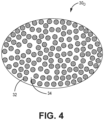
FIG. 4 is a simplified cross-sectional illustration of the ceramic tow in a third state. -
FIG. 5 is a simplified illustration of a ceramic fabric incorporating tows in the second state depicted inFIG. 3 . - While the above-identified figures set forth one or more embodiments of the present disclosure, other embodiments are also contemplated, as noted in the discussion. In all cases, this disclosure presents the invention by way of representation and not limitation. It should be understood that numerous other modifications and embodiments can be devised by those skilled in the art, which fall within the scope and spirit of the principles of the invention. The figures may not be drawn to scale, and applications and embodiments of the present invention may include features and components not specifically shown in the drawings.
- This disclosure presents means for increasing the spacing between filaments of a ceramic tow. More specifically, filaments can be coated with a polymer binder to increase inter-filament spacing which can facilitate both the application of the interface coating (IFC) on the filaments and infiltration of matrix into the ceramic tows.
-
FIG. 1 is a flowchart illustrating steps 12-28 ofmethod 10, used to fabricate a CMC component from dispersed tows.FIGS. 2, 3 , and4 are simplified cross-sectional illustrations of a ceramic tow in a first, unmodified state, a second, stabilized state, and a third, dispersed state, respectively.FIG. 5 is a simplified illustration of a ceramic fabric incorporating stabilized tows.Method 10 is described below in combination withFIGS. 2-5 . - Tow 30 can be a bundle of roughly 500 to 1,000
silicon carbide filaments 32 with inter-filament gaps orpores 34 surroundingfilaments 32. It can be desirable to increase the volume ofpores 34 withintows 30 or, stated another way, to increase spacing betweenadjacent filaments 32 to facilitate more even IFC deposition and matrix infiltration within a ceramicpreform containing tows 30. In furtherance of this objective,method 10, discussed below, includes the dispersal offilaments 32. - At
step 12,tow 30 can be prepared for dispersal, which in an exemplary embodiment, can include desizing oftow 30 to remove its polymer coating in order to enhance dispersal offilaments 32. Desizing can be carried out via any suitable thermal or chemical means. - At
step 14, a coating of a polymeric composition including a first polymer binder can be applied totow 30. The application process can include drawing tow 30 (e.g., tensioned on rollers) through a bath containing the polymeric composition. In one embodiment, the polymeric composition can be a solution of a polyvinyl alcohol (PVA) as the first polymer binder with water as the solvent. Alternatively, the polymeric composition can be a solution of polyvinyl butyral (PVB) as the first polymer binder in an alcohol (e.g., ethanol) solvent. A solution of PVB can further optionally include water as a second solvent, as is discussed in greater detail below. Either solution, that is, of PVA or PVB, can further optionally include a surfactant and/or other modifiers to properties of the polymeric composition or the first polymer binder. - In an alternative embodiment, the polymeric composition can be a slurry of the first polymer binder (e.g., PVA or), a solvent (e.g., water or ethanol), and particles ranging from 1 micron to 20 microns in diameter. These particles can include carbides (e.g., silicon carbide or boron carbide), borides (e.g., zirconium borides or hafnium borides), and/or oxides (e.g., of hafnium, aluminum, zirconium, or ytterbium) intended to remain as part of the structure through matrix formation to help enhance matrix formation and sealing properties of the resultant CMC component at high temperatures.
- In yet another alternative embodiment, the first polymer binder can be vapor deposited on
filaments 32 using, for example, chemical vapor deposition (CVD) in which the polymeric composition can include a reactive monomeric precursor introduced totow 30 which forms a film of the first polymer binder onfilaments 32 without the need for a solvent. In such case, the first polymer binder can be a fluoropolymer, a parylene, an acrylate, a methacrylate, a styrene, or N-vinylpyrrolidone, to name a few, non-limiting examples. - At
step 16, a post-application treatment for dispersing and stabilizingtow 30 can be carried out. As such,tow 30 can be subjected to mechanical dispersal means, such as a stream of air from an air knife to help separatefilaments 32. The stream of air, along with any surfactant included in the applied polymeric composition can help to evaporate the solvent, leaving behind a solid first polymer binder to coatfilaments 32. In an alternative embodiment, a second liquid generally immiscible in the solvent of the polymeric composition can be introduced totow 30 just prior to the application of mechanical dispersal means. The second liquid, which can be considered a dispersing liquid as it further facilitates dispersal offilaments 32, can be similarly introduced totow 30 by way of a bath. The bath can include ultrasonication for additional mechanical dispersal. An ideal second liquid is immiscible in the solvent(s) of the polymeric composition, as noted above, and should further have a lower surface tension than such solvents so that the second liquid can help to further draw away the solvent. Accordingly, the second liquid can be a non-polar, organic liquid, such as hexane. Hexane is immiscible with water, and can have some degree of miscibility with alcohols, depending on, for example, the length of hydrocarbon chains. As such, a polymeric composition of PVB and ethanol can, as noted above, include water (≤ 5%) to improve immiscibility of the polymeric composition with hexane. In addition to mechanical separation, the stream of air also helps to drytow 30 such that any solvent(s) and/or dispersing liquid evaporates andfilaments 32 are coated with the first polymer binder (shown inFIG. 3 as coating 36) andtow 30 is stabilized. - Stabilized, coated
tow 30c (i.e., having coated filaments 32c) is shown inFIG. 3 .Steps coating 36 can be applied to asmany filaments 32 as possible and as evenly as possible along eachindividual filament 32. For a givenfilament 32,coating 36 can have a thickness ranging from 0.5 microns to 5.0 microns such that the amount of first polymer binder in stabilizedtow 30c ranges from 2 wt% to 20 wt%, and ideally, 10 wt% to 20 wt%. As an example, for a 500-filament tow 30/30c, a coating thickness of 1 micron can yield about 9 wt% of the first polymer binder. - At
step 18, multiple coatedtows 30c can be incorporated into a ceramic fabric (e.g.,fabric 38 ofFIG. 5 ). The ceramic fabric can be woven (as shown), braided, or in some cases arranged into unidirectional tapes. Such fabrics or tapes can include only coatedtows 30c or can include a mixture of coatedtows 30c and standard tows (i.e., with only non-coated filaments 32). - At
step 20, a tackifier composition can be applied to the ceramic fabric to help facilitate the preforming process described below instep 22. More specifically, the tackifier composition can include a second polymer binder (e.g., PVB or PVA) which imparts "tack" to the ceramic fabric for improved handling. The tackifier composition can be a solution including the second polymer binder and a suitable solvent which preferably does not solubilize the first polymer binder ofcoating 36. As such, if the first polymer binder is PVA, then the tackifier composition can be a solution of PVB in ethanol. Since PVA is not readily soluble in ethanol, the enhanced filament-to-filament spacing created by thecoating 36 of each coatedtow 30c can be maintained through the debulking and preforming processes. The converse is also true, as PVB is not readily soluble in water, which is the preferred solvent for a tackifier composition including PVA. As such, using different polymer binders with different solubility characteristics helps assure that the first polymer binder (e.g., PVA) will maintain the enhanced inter-filament spacing ofcoated tow 30c when exposed to the solvent of the tackifier composition (e.g., ethanol). The tackifier composition can be applied to the ceramic fabric via spraying, dipping, pipetting etc. The ceramic fabric can alternatively be impregnated with the tackifier composition (i.e., to form a prepreg). The ceramic fabric can subsequently be dried to evaporate the solvent of the tackifier composition. - At
step 22, sheets, plies, etc., derived from the ceramic fabric can be laid up into a preform. In some embodiments, the tackifier composition can be applied to the preform, including amounts supplementing an initial application duringstep 20. Debulking of the preform can also be carried out duringstep 22 as necessary during and/or after layup. The presence ofcoatings 36 of the first polymer binder helps maintain the increased inter-filament spacing within coatedtows 30c throughstep 22. Debulking is preferably carried out at temperatures at or below 350°F (176.7°C) to minimize softening and/or migration of the first polymer binder. - At
step 24, the first and second polymer binders can be decomposed. In an exemplary embodiment, the first and second polymer binders can be thermally decomposed by placing the preform in an environment containing air or an inert gas (e.g., nitrogen), or in a vacuum, and exposing the preform to elevated temperatures, for example, up to 2000°F (1093.3°C). Decomposition can be carried out in situ (i.e., within the reactor used in step 22), or ex situ. Substantially all of the first and second polymer binders are decomposed atstep 20, although some polymer ash may remain. Removal of the first polymer binder in this step results in dispersedtow 30D shown inFIG. 4 . Dispersedtow 30D has greater inter-filament spacing thantow 30 ofFIG. 2 , as the first polymer binder ofcoatings 34 was used to dispersefilaments 32 and maintain the increased spacing through preforming. - At
step 26, the preform can undergo IFC deposition using chemical vapor infiltration (CVI). The IFC can include multiple individual layers of materials such as boron nitride, silicon-doped boron nitride, silicon carbide, and/or silicon nitride. The increased inter-filament spacing of dispersedtow 30D allows the IFC to coatindividual filaments 28 more uniformly. This imparts greater performance of the IFC in an operating environment, including an enhanced degree of debonding and crack deflection under oxidizing conditions. - At
step 28, the preform can be densified with a matrix using CVI to form a CMC component. During densification, the rigidized preform is infiltrated by reactant vapors, and a gaseous precursor deposits on the ceramic tows. The matrix material can be silicon carbide or other suitable ceramic material. Densification is carried out until the resulting CMC has reached the desired residual porosity. In an alternative embodiment, densification can additionally and/or alternatively include other methodologies such as, but not limited to, melt infiltration (MI) and polymer infiltration and pyrolysis (PIP). - The disclosed dispersed tows can be used to form features in CMC components for use in aerospace, maritime, or industrial equipment, to name a few, non-limiting examples.
- The following are non-exclusive descriptions of possible embodiments of the present invention.
- A method of fabricating a fibrous ceramic preform includes forming a plurality of coated ceramic tows by introducing a polymeric composition to each of a plurality of ceramic tows, and dispersing and stabilizing each of the plurality of ceramic tows such that a coating of a first polymer binder forms on individual filaments of respective ones of the plurality of ceramic tows, incorporating the plurality of coated ceramic tows into a ceramic fabric, applying a tackifier composition comprising a second polymer binder and a second solvent to the ceramic fabric, and incorporating the ceramic fabric into the preform. The first polymer binder is insoluble in the second solvent.
- The method of the preceding paragraph can optionally include, additionally and/or alternatively, any one or more of the following features, configurations and/or additional steps:
In the above method, the step of introducing the polymeric composition can include drawing each of the plurality of ceramic tows through a bath containing the polymeric composition. - In any of the above methods, the polymeric composition can include the first polymer binder and a first solvent.
- In any of the above methods, the first polymer binder can be polyvinyl alcohol, and the first solvent can be water.
- In any of the above methods, the first polymer binder can be polyvinyl butyral, and the first solvent can be ethanol.
- In any of the above methods, the polymeric composition can further include at least one of a surfactant and particles.
- In any of the above methods, the step of dispersing and stabilizing each of the plurality of ceramic tows can include applying a stream of air to each of the plurality of ceramic tows.
- In any of the above methods, the step of dispersing and stabilizing each of the plurality of ceramic tows can include introducing a dispersing liquid to each of the plurality of ceramic tows.
- In any of the above methods, the dispersing liquid can be at least partially immiscible in the first solvent of the polymeric compound.
- In any of the above methods, the dispersing liquid can be an organic, non-polar liquid.
- In any of the above methods, the step of applying the tackifier composition to the ceramic fabric can include one of spraying, pipetting, dipping, and prepregging.
- In any of the above methods, an amount of the first polymer binder in each of the plurality of coated ceramic tows can range from 2 wt% to 20 wt%.
- In any of the above methods, a thickness of the coating of the first polymer binder on each of the plurality of ceramic tows can range from 0.5 microns to 5.0 microns.
- In any of the above methods, the step of introducing the polymeric composition can include depositing a reactive precursor on the individual filaments.
- In any of the above methods, the first polymer binder can be one of fluoropolymer, a parylene, an acrylate, a methacrylate, a styrene, and N-vinylpyrrolidone.
- A method of fabricating a CMC component can include debulking any of the above preforms, decomposing the first polymer binder and the second polymer binder, depositing an interface coating on the preform, and subsequently, densifying the preform with a ceramic matrix.
- In any of the above methods, the step of debulking the preform can include heating the preform to a temperature at or below 350°F.
- In any of the above methods, the step of decomposing the first polymer binder and the second polymer binder can include heating the preform in the presence of air or an inert gas.
- In any of the above methods, the step of depositing the interface coating can include depositing at least one of boron nitride, silicon-doped boron nitride, silicon carbide, and silicon nitride using chemical vapor infiltration.
- In any of the above methods, the step of densifying the preform with a ceramic matrix can be carried out using at least one of chemical vapor infiltration, melt infiltration, and polymer infiltration and pyrolysis.
- While the invention has been described with reference to an exemplary embodiment(s), it will be understood by those skilled in the art that various changes may be made and equivalents may be substituted for elements thereof without departing from the scope of the invention. In addition, many modifications may be made to adapt a particular situation or material to the teachings of the invention without departing from the essential scope thereof. Therefore, it is intended that the invention not be limited to the particular embodiment(s) disclosed, but that the invention will include all embodiments falling within the scope of the appended claims.
Claims (15)
- A method of fabricating a fibrous ceramic preform, the method comprising:
forming a plurality of coated ceramic tows (30; 30c; 30D) by:introducing a polymeric composition to each of a plurality of ceramic tows (30; 30C; 30D); anddispersing and stabilizing each of the plurality of ceramic tows (30; 30c; 30D) such that a coating (36) of a first polymer binder forms on individual filaments (32) of respective ones of the plurality of ceramic tows (30; 30c; 30D);incorporating the plurality of coated ceramic tows (30; 30c; 30D) into a ceramic fabric;applying a tackifier composition comprising a second polymer binder and a second solvent to the ceramic fabric; andincorporating the ceramic fabric into the preform,wherein the first polymer binder is insoluble in the second solvent. - The method of claim 1, wherein the step of introducing the polymeric composition comprises drawing each of the plurality of ceramic tows (30; 30c; 30D) through a bath containing the polymeric composition.
- The method of claim 2, wherein the polymeric composition comprises the first polymer binder and a first solvent.
- The method of claim 3, wherein the first polymer binder is polyvinyl alcohol, and wherein the first solvent is water or ethanol.
- The method of claim 3 or 4, wherein the polymeric composition further comprises at least one of a surfactant and particles.
- The method of any preceding claim, wherein the step of dispersing and stabilizing each of the plurality of ceramic tows (30; 30c; 30D) comprises applying a stream of air to each of the plurality of ceramic tows (30; 30c; 30D).
- The method of any of claims 1 to 5, wherein the step of dispersing and stabilizing each of the plurality of ceramic tows (30; 30c; 30D) comprises introducing a dispersing liquid to each of the plurality of ceramic tows (30; 30c; 30D).
- The method of claim 7, wherein the dispersing liquid is at least partially immiscible in the first solvent of the polymeric compound, optionally wherein the dispersing liquid is an organic, non-polar liquid.
- The method of any preceding claim, wherein the step of applying the tackifier composition to the ceramic fabric comprises one of spraying, pipetting, dipping, and prepregging.
- The method of any preceding claim, wherein an amount of the first polymer binder in each of the plurality of coated ceramic tows (30; 30c; 30D) ranges from 2 wt% to 20 wt%.
- The method of any preceding claim, wherein a thickness of the coating (36) of the first polymer binder on each of the plurality of ceramic tows (30; 30c; 30D) ranges from 0.5 microns to 5.0 microns.
- The method of any preceding claim, wherein the step of introducing the polymeric composition comprises depositing a reactive precursor on the individual filaments (32), optionally wherein the first polymer binder is one of fluoropolymer, a parylene, an acrylate, a methacrylate, a styrene, and N-vinylpyrrolidone.
- A method of fabricating a CMC component, the method comprising:the method of any preceding claim;debulking the preform;decomposing the first polymer binder and the second polymer binder;depositing an interface coating on the preform; andsubsequently, densifying the preform with a ceramic matrix.
- The method of claim 13, wherein the step of debulking the preform comprises heating the preform to a temperature at or below 350°F.
- The method of claim 13 or 14, wherein one or more of:the step of decomposing the first polymer binder and the second polymer binder comprises heating the preform in the presence of air or an inert gas;the step of depositing the interface coating comprises depositing at least one of boron nitride, silicon-doped boron nitride, silicon carbide, and silicon nitride using chemical vapor infiltration; and/orthe step of densifying the preform with a ceramic matrix is carried out using at least one of chemical vapor infiltration, melt infiltration, and polymer infiltration and pyrolysis.
Applications Claiming Priority (1)
| Application Number | Priority Date | Filing Date | Title |
|---|---|---|---|
| US18/379,947 US20250122126A1 (en) | 2023-10-13 | 2023-10-13 | Dispersion of filaments |
Publications (1)
| Publication Number | Publication Date |
|---|---|
| EP4538251A1 true EP4538251A1 (en) | 2025-04-16 |
Family
ID=92843093
Family Applications (1)
| Application Number | Title | Priority Date | Filing Date |
|---|---|---|---|
| EP24201200.3A Pending EP4538251A1 (en) | 2023-10-13 | 2024-09-18 | Dispersion of filaments |
Country Status (2)
| Country | Link |
|---|---|
| US (1) | US20250122126A1 (en) |
| EP (1) | EP4538251A1 (en) |
Citations (3)
| Publication number | Priority date | Publication date | Assignee | Title |
|---|---|---|---|---|
| US20230019661A1 (en) * | 2021-07-14 | 2023-01-19 | Raytheon Technologies Corporation | Electrostatic filament dispersal for cmc applications |
| US20230192558A1 (en) * | 2021-12-20 | 2023-06-22 | Raytheon Technologies Corporation | Pva based binder application for cmcs |
| EP4512789A1 (en) * | 2023-08-21 | 2025-02-26 | RTX Corporation | Polymer towpreg for ceramic matrix composites |
-
2023
- 2023-10-13 US US18/379,947 patent/US20250122126A1/en active Pending
-
2024
- 2024-09-18 EP EP24201200.3A patent/EP4538251A1/en active Pending
Patent Citations (3)
| Publication number | Priority date | Publication date | Assignee | Title |
|---|---|---|---|---|
| US20230019661A1 (en) * | 2021-07-14 | 2023-01-19 | Raytheon Technologies Corporation | Electrostatic filament dispersal for cmc applications |
| US20230192558A1 (en) * | 2021-12-20 | 2023-06-22 | Raytheon Technologies Corporation | Pva based binder application for cmcs |
| EP4512789A1 (en) * | 2023-08-21 | 2025-02-26 | RTX Corporation | Polymer towpreg for ceramic matrix composites |
Also Published As
| Publication number | Publication date |
|---|---|
| US20250122126A1 (en) | 2025-04-17 |
Similar Documents
| Publication | Publication Date | Title |
|---|---|---|
| US9440888B2 (en) | Method of fabricating a part out of CMC material | |
| CN107226706B (en) | Ceramic matrix composites having unimodal pore size distribution and low fiber volume fraction | |
| EP3124458A1 (en) | Improved uniformity of fiber spacing in cmc materials | |
| US5635300A (en) | Process for producing articles of carbon-silicon carbide composite material and carbon-silicon carbide composite material | |
| US8039053B2 (en) | Method for making a part of composite material with ceramic matrix and resulting part | |
| US5562966A (en) | Method of applying oxidation resistant coating on carbon fibers | |
| CN102256914B (en) | Methods of processing ceramic fibers | |
| CN104010992A (en) | Process of producing ceramic matrix composites and ceramic matrix composites formed thereby | |
| US20200308066A1 (en) | Ceramic Matrix Composite Articles and Methods for Manufacturing the Same | |
| EP3124459A2 (en) | Improved uniformity of fiber spacing in cmc materials | |
| EP4321495A1 (en) | Exfoliated boron nitride for interface coating for ceramic matrix composites | |
| US20260070849A1 (en) | Process for obtaining composite, ultra-refractory, fibre-reinforced ceramic materials | |
| JP2001507328A (en) | Fabric preform coated with boron nitride coating, composite material incorporating the same, and method for producing the same | |
| US6121169A (en) | Porous interfacial coating for fiber reinforced ceramic matrix composites | |
| CN106567246A (en) | Method used for preparing SiC reinforced low-density porous carbon fiber thermal insulation composite material via chemical vapor infiltration | |
| EP4512789A1 (en) | Polymer towpreg for ceramic matrix composites | |
| US12330994B2 (en) | CVD functionalized particles for CMC applications | |
| US20250122126A1 (en) | Dispersion of filaments | |
| EP4201915A1 (en) | Introduction of metallic particles to enable formation of metallic carbides in a matrix | |
| EP4197987A2 (en) | Pva based binder application for cmcs | |
| JP2976368B2 (en) | Heat and oxidation resistant carbon fiber reinforced carbon composite material | |
| US5290491A (en) | Process for the manufacture of a thermostructural composite material having a carbon interphase between its reinforcement fibers and its matrix | |
| US20240400467A1 (en) | Particle enhanced ceramic matrix composite with no particles on surface plies | |
| US20240308927A1 (en) | Three-dimensional weave with sacrificial z-fibers for improved ceramic matrix composite microstructure | |
| US11873249B2 (en) | Method to form aligned interface coating on silicon carbide fibers |
Legal Events
| Date | Code | Title | Description |
|---|---|---|---|
| PUAI | Public reference made under article 153(3) epc to a published international application that has entered the european phase |
Free format text: ORIGINAL CODE: 0009012 |
|
| STAA | Information on the status of an ep patent application or granted ep patent |
Free format text: STATUS: THE APPLICATION HAS BEEN PUBLISHED |
|
| AK | Designated contracting states |
Kind code of ref document: A1 Designated state(s): AL AT BE BG CH CY CZ DE DK EE ES FI FR GB GR HR HU IE IS IT LI LT LU LV MC ME MK MT NL NO PL PT RO RS SE SI SK SM TR |
|
| STAA | Information on the status of an ep patent application or granted ep patent |
Free format text: STATUS: REQUEST FOR EXAMINATION WAS MADE |
|
| 17P | Request for examination filed |
Effective date: 20251013 |