EP4537905A2 - Brm targeting compounds and associated methods of use - Google Patents
Brm targeting compounds and associated methods of use Download PDFInfo
- Publication number
- EP4537905A2 EP4537905A2 EP25153421.0A EP25153421A EP4537905A2 EP 4537905 A2 EP4537905 A2 EP 4537905A2 EP 25153421 A EP25153421 A EP 25153421A EP 4537905 A2 EP4537905 A2 EP 4537905A2
- Authority
- EP
- European Patent Office
- Prior art keywords
- optionally substituted
- alkyl
- ulm
- group
- alkoxy
- Prior art date
- Legal status (The legal status is an assumption and is not a legal conclusion. Google has not performed a legal analysis and makes no representation as to the accuracy of the status listed.)
- Pending
Links
Images

Classifications
-
- C—CHEMISTRY; METALLURGY
- C07—ORGANIC CHEMISTRY
- C07D—HETEROCYCLIC COMPOUNDS
- C07D413/00—Heterocyclic compounds containing two or more hetero rings, at least one ring having nitrogen and oxygen atoms as the only ring hetero atoms
- C07D413/14—Heterocyclic compounds containing two or more hetero rings, at least one ring having nitrogen and oxygen atoms as the only ring hetero atoms containing three or more hetero rings
-
- A—HUMAN NECESSITIES
- A61—MEDICAL OR VETERINARY SCIENCE; HYGIENE
- A61K—PREPARATIONS FOR MEDICAL, DENTAL OR TOILETRY PURPOSES
- A61K31/00—Medicinal preparations containing organic active ingredients
- A61K31/33—Heterocyclic compounds
- A61K31/395—Heterocyclic compounds having nitrogen as a ring hetero atom, e.g. guanethidine or rifamycins
- A61K31/41—Heterocyclic compounds having nitrogen as a ring hetero atom, e.g. guanethidine or rifamycins having five-membered rings with two or more ring hetero atoms, at least one of which being nitrogen, e.g. tetrazole
- A61K31/425—Thiazoles
- A61K31/427—Thiazoles not condensed and containing further heterocyclic rings
-
- A—HUMAN NECESSITIES
- A61—MEDICAL OR VETERINARY SCIENCE; HYGIENE
- A61K—PREPARATIONS FOR MEDICAL, DENTAL OR TOILETRY PURPOSES
- A61K31/00—Medicinal preparations containing organic active ingredients
- A61K31/33—Heterocyclic compounds
- A61K31/395—Heterocyclic compounds having nitrogen as a ring hetero atom, e.g. guanethidine or rifamycins
- A61K31/495—Heterocyclic compounds having nitrogen as a ring hetero atom, e.g. guanethidine or rifamycins having six-membered rings with two or more nitrogen atoms as the only ring heteroatoms, e.g. piperazine or tetrazines
- A61K31/50—Pyridazines; Hydrogenated pyridazines
- A61K31/501—Pyridazines; Hydrogenated pyridazines not condensed and containing further heterocyclic rings
-
- A—HUMAN NECESSITIES
- A61—MEDICAL OR VETERINARY SCIENCE; HYGIENE
- A61K—PREPARATIONS FOR MEDICAL, DENTAL OR TOILETRY PURPOSES
- A61K47/00—Medicinal preparations characterised by the non-active ingredients used, e.g. carriers or inert additives; Targeting or modifying agents chemically bound to the active ingredient
- A61K47/06—Organic compounds, e.g. natural or synthetic hydrocarbons, polyolefins, mineral oil, petrolatum or ozokerite
- A61K47/08—Organic compounds, e.g. natural or synthetic hydrocarbons, polyolefins, mineral oil, petrolatum or ozokerite containing oxygen, e.g. ethers, acetals, ketones, quinones, aldehydes, peroxides
- A61K47/10—Alcohols; Phenols; Salts thereof, e.g. glycerol; Polyethylene glycols [PEG]; Poloxamers; PEG/POE alkyl ethers
-
- A—HUMAN NECESSITIES
- A61—MEDICAL OR VETERINARY SCIENCE; HYGIENE
- A61K—PREPARATIONS FOR MEDICAL, DENTAL OR TOILETRY PURPOSES
- A61K47/00—Medicinal preparations characterised by the non-active ingredients used, e.g. carriers or inert additives; Targeting or modifying agents chemically bound to the active ingredient
- A61K47/06—Organic compounds, e.g. natural or synthetic hydrocarbons, polyolefins, mineral oil, petrolatum or ozokerite
- A61K47/16—Organic compounds, e.g. natural or synthetic hydrocarbons, polyolefins, mineral oil, petrolatum or ozokerite containing nitrogen, e.g. nitro-, nitroso-, azo-compounds, nitriles, cyanates
- A61K47/18—Amines; Amides; Ureas; Quaternary ammonium compounds; Amino acids; Oligopeptides having up to five amino acids
-
- A—HUMAN NECESSITIES
- A61—MEDICAL OR VETERINARY SCIENCE; HYGIENE
- A61K—PREPARATIONS FOR MEDICAL, DENTAL OR TOILETRY PURPOSES
- A61K47/00—Medicinal preparations characterised by the non-active ingredients used, e.g. carriers or inert additives; Targeting or modifying agents chemically bound to the active ingredient
- A61K47/06—Organic compounds, e.g. natural or synthetic hydrocarbons, polyolefins, mineral oil, petrolatum or ozokerite
- A61K47/22—Heterocyclic compounds, e.g. ascorbic acid, tocopherol or pyrrolidones
-
- A—HUMAN NECESSITIES
- A61—MEDICAL OR VETERINARY SCIENCE; HYGIENE
- A61K—PREPARATIONS FOR MEDICAL, DENTAL OR TOILETRY PURPOSES
- A61K47/00—Medicinal preparations characterised by the non-active ingredients used, e.g. carriers or inert additives; Targeting or modifying agents chemically bound to the active ingredient
- A61K47/50—Medicinal preparations characterised by the non-active ingredients used, e.g. carriers or inert additives; Targeting or modifying agents chemically bound to the active ingredient the non-active ingredient being chemically bound to the active ingredient, e.g. polymer-drug conjugates
- A61K47/51—Medicinal preparations characterised by the non-active ingredients used, e.g. carriers or inert additives; Targeting or modifying agents chemically bound to the active ingredient the non-active ingredient being chemically bound to the active ingredient, e.g. polymer-drug conjugates the non-active ingredient being a modifying agent
- A61K47/54—Medicinal preparations characterised by the non-active ingredients used, e.g. carriers or inert additives; Targeting or modifying agents chemically bound to the active ingredient the non-active ingredient being chemically bound to the active ingredient, e.g. polymer-drug conjugates the non-active ingredient being a modifying agent the modifying agent being an organic compound
- A61K47/545—Heterocyclic compounds
-
- A—HUMAN NECESSITIES
- A61—MEDICAL OR VETERINARY SCIENCE; HYGIENE
- A61K—PREPARATIONS FOR MEDICAL, DENTAL OR TOILETRY PURPOSES
- A61K47/00—Medicinal preparations characterised by the non-active ingredients used, e.g. carriers or inert additives; Targeting or modifying agents chemically bound to the active ingredient
- A61K47/50—Medicinal preparations characterised by the non-active ingredients used, e.g. carriers or inert additives; Targeting or modifying agents chemically bound to the active ingredient the non-active ingredient being chemically bound to the active ingredient, e.g. polymer-drug conjugates
- A61K47/51—Medicinal preparations characterised by the non-active ingredients used, e.g. carriers or inert additives; Targeting or modifying agents chemically bound to the active ingredient the non-active ingredient being chemically bound to the active ingredient, e.g. polymer-drug conjugates the non-active ingredient being a modifying agent
- A61K47/54—Medicinal preparations characterised by the non-active ingredients used, e.g. carriers or inert additives; Targeting or modifying agents chemically bound to the active ingredient the non-active ingredient being chemically bound to the active ingredient, e.g. polymer-drug conjugates the non-active ingredient being a modifying agent the modifying agent being an organic compound
- A61K47/55—Medicinal preparations characterised by the non-active ingredients used, e.g. carriers or inert additives; Targeting or modifying agents chemically bound to the active ingredient the non-active ingredient being chemically bound to the active ingredient, e.g. polymer-drug conjugates the non-active ingredient being a modifying agent the modifying agent being an organic compound the modifying agent being also a pharmacologically or therapeutically active agent, i.e. the entire conjugate being a codrug
-
- A—HUMAN NECESSITIES
- A61—MEDICAL OR VETERINARY SCIENCE; HYGIENE
- A61P—SPECIFIC THERAPEUTIC ACTIVITY OF CHEMICAL COMPOUNDS OR MEDICINAL PREPARATIONS
- A61P35/00—Antineoplastic agents
-
- C—CHEMISTRY; METALLURGY
- C07—ORGANIC CHEMISTRY
- C07D—HETEROCYCLIC COMPOUNDS
- C07D417/00—Heterocyclic compounds containing two or more hetero rings, at least one ring having nitrogen and sulfur atoms as the only ring hetero atoms, not provided for by group C07D415/00
- C07D417/14—Heterocyclic compounds containing two or more hetero rings, at least one ring having nitrogen and sulfur atoms as the only ring hetero atoms, not provided for by group C07D415/00 containing three or more hetero rings
-
- C—CHEMISTRY; METALLURGY
- C07—ORGANIC CHEMISTRY
- C07D—HETEROCYCLIC COMPOUNDS
- C07D471/00—Heterocyclic compounds containing nitrogen atoms as the only ring hetero atoms in the condensed system, at least one ring being a six-membered ring with one nitrogen atom, not provided for by groups C07D451/00 - C07D463/00
- C07D471/02—Heterocyclic compounds containing nitrogen atoms as the only ring hetero atoms in the condensed system, at least one ring being a six-membered ring with one nitrogen atom, not provided for by groups C07D451/00 - C07D463/00 in which the condensed system contains two hetero rings
- C07D471/10—Spiro-condensed systems
-
- C—CHEMISTRY; METALLURGY
- C07—ORGANIC CHEMISTRY
- C07D—HETEROCYCLIC COMPOUNDS
- C07D487/00—Heterocyclic compounds containing nitrogen atoms as the only ring hetero atoms in the condensed system, not provided for by groups C07D451/00 - C07D477/00
- C07D487/02—Heterocyclic compounds containing nitrogen atoms as the only ring hetero atoms in the condensed system, not provided for by groups C07D451/00 - C07D477/00 in which the condensed system contains two hetero rings
- C07D487/08—Bridged systems
-
- C—CHEMISTRY; METALLURGY
- C07—ORGANIC CHEMISTRY
- C07D—HETEROCYCLIC COMPOUNDS
- C07D498/00—Heterocyclic compounds containing in the condensed system at least one hetero ring having nitrogen and oxygen atoms as the only ring hetero atoms
- C07D498/02—Heterocyclic compounds containing in the condensed system at least one hetero ring having nitrogen and oxygen atoms as the only ring hetero atoms in which the condensed system contains two hetero rings
- C07D498/10—Spiro-condensed systems
-
- C—CHEMISTRY; METALLURGY
- C07—ORGANIC CHEMISTRY
- C07K—PEPTIDES
- C07K5/00—Peptides containing up to four amino acids in a fully defined sequence; Derivatives thereof
- C07K5/04—Peptides containing up to four amino acids in a fully defined sequence; Derivatives thereof containing only normal peptide links
- C07K5/06—Dipeptides
- C07K5/06139—Dipeptides with the first amino acid being heterocyclic
-
- A—HUMAN NECESSITIES
- A61—MEDICAL OR VETERINARY SCIENCE; HYGIENE
- A61K—PREPARATIONS FOR MEDICAL, DENTAL OR TOILETRY PURPOSES
- A61K38/00—Medicinal preparations containing peptides
Definitions
- the description provides bifunctional compounds comprising a target protein binding moiety and a E3 ubiquitin ligase binding moiety, and associated methods of use.
- the bifunctional compounds are useful as modulators of targeted ubiquitination, especially with respect to Switch/Sucrose Non Fermentable (SWI/SNF)-Related, Matrix-Associated, Actin-Dependent Regulator of Chromatin, Subfamily A, Member 2 (SMARCA2) (i.e., BRAHMA or BRM), which are degraded and/or otherwise inhibited by bifunctional compounds according to the present disclosure.
- SWI/SNF Switch/Sucrose Non Fermentable
- SMARCA2 Matrix-Associated, Actin-Dependent Regulator of Chromatin, Subfamily A, Member 2
- E3 ubiquitin ligases confer substrate specificity for ubiquitination, and therefore, are more attractive therapeutic targets than general proteasome inhibitors due to their specificity for certain protein substrates.
- the development of ligands of E3 ligases has proven challenging, in part due to the fact that they must disrupt protein-protein interactions.
- recent developments have provided specific ligands which bind to these ligases.
- VHL von Hippel-Lindau
- VCB the substrate recognition subunit of the E3 ligase complex
- the primary substrate of VHL is Hypoxia Inducible Factor 1 ⁇ (HIF-1 ⁇ ), a transcription factor that upregulates genes such as the pro-angiogenic growth factor VEGF and the red blood cell inducing cytokine erythropoietin in response to low oxygen levels.
- HIF-1 ⁇ Hypoxia Inducible Factor 1 ⁇
- VEGF the pro-angiogenic growth factor
- VEGF red blood cell inducing cytokine erythropoietin in response to low oxygen levels.
- VHL Von Hippel Lindau
- Bifunctional compounds such as those that are described in U.S. Patent Application Publications 2015-0291562 and 2014-0356322 (incorporated herein by reference), function to recruit endogenous proteins to an E3 ubiquiuin ligase for degradation.
- the publications describe bifunctional or proteolysis targeting chimeric (PROTAC) compounds, which find utility as modulators of targeted ubiquitination of a variety of polypeptides and other proteins, which are then degraded and/or otherwise inhibited by the bifunctional compounds.
- the Switch/Sucrose Non Fermentable is a multi-subunit complex that modulates chromatic structure through the activity of two mutually exlusive helicase/ATPase catalytic subunits SWI/SNF-Related, Matrix-Associated, Actin-Dependent Regulator of Chromatin, Subfamily A, Member 2 (SMARCA2, BRAHMA or BRM) and SWI/SNF-Related, Matrix-Associated, Actin-Dependent Regulator of Chromatin, Subfamily A, Member 4 (SMARCA4 or BRG1).
- the core and the regulatory subunits couple ATP hydrolysis to the perturbation of histone-DNA contacts, thereby providing access points to transcription factors and cognate DNA elements that facilitate gene activation and repression.
- SMARCA4-related e.g., cancers having a SMARCA4-mutation or a SMARCA4-deficiency, such as lack of expression
- lung cancer such as non-small cell lung cancer
- SMARCA2 has been demonstrated as one of the top essential genes in SMARCA4-related or-mutant cancer cell lines. This is because SMARCA4-deficient patient populations or cells depend exclusively on SMARCA2 activity-i.e., there is a greater incorporation of SMARCA2 into the complex to compensate for the SMARCA4 deficiency. Thus, SMARCA2 may be targeted in SMARCA4-related/deficient cancers.
- SMARCA4-related/deficient cancers The co-occurrence of the deficiency of the expression of two (or more) genes that leads to cell death is known as, synthetic lethality. Accordingly, synethetic lethality can be leveraged in the treatment of certain SMARCA2/SMARCA4-related cancers.
- the present disclosure describes bifunctional compounds which function to recruit endogenous proteins to an E3 ubiquitin ligase for degradation, and methods of using the same.
- the present disclosure provides bifunctional or proteolysis targeting chimeric (PROTAC) compounds, which find utility as modulators of targeted ubiquitination of a variety of polypeptides and other proteins, which are then degraded and/or otherwise inhibited by the bifunctional compounds as described herein.
- An advantage of the compounds provided herein is that a broad range of pharmacological activities is possible, consistent with the degradation/inhibition of targeted polypeptides from virtually any protein class or family.
- the description provides methods of using an effective amount of the compounds as described herein for the treatment or amelioration of a disease condition, such as cancer, e.g., SMARCA4-related/deficient cancer, such as lung cancer or non-small cell lung cancer.
- a disease condition such as cancer, e.g., SMARCA4-related/deficient cancer, such as lung cancer or non-small cell lung cancer.
- the disclosure provides bifunctional or PROTAC compounds, which comprise an E3 ubiquitin ligase binding moiety (i.e., a ligand for an E3 ubquitin ligase or "ULM” group), and a moiety that binds a target protein (i.e., a protein/polypeptide targeting ligand or "PTM” group) such that the target protein/polypeptide is placed in proximity to the ubiquitin ligase to effect degradation (and inhibition) of that protein.
- the ULM ubiquitination ligase modulator
- VHL Von Hippel-Lindau E3 ubiquitin ligase
- VLM Von Hippel-Lindau E3 ubiquitin ligase
- VHL Von Hippel-Lindau E3 ubiquitin ligase
- VLM Von Hippel-Lindau E3 ubiquitin ligase
- VHL Von Hippel-Lindau E3 ubiquitin
- VLM can be hydroxyproline or a derivative thereof.
- other contemplated VLMs are included in U.S. Patent Application Publication No. 2014/03022523 , which as discussed above, is incorporated herein in its entirety.
- VLM is a derivative of trans -3-hydroxyproline, where both nitrogen and carboxylic acid in trans -3-hydroxyproline are functionalized as amides.
- the description provides methods for treating or ameliorating a disease, disorder or symptom thereof in a subject or a patient, e.g., an animal such as a human, comprising administering to a subject in need thereof a composition comprising an effective amount, e.g., a therapeutically effective amount, of a compound as described herein or salt form thereof, and a pharmaceutically acceptable carrier, wherein the composition is effective for treating or ameliorating the disease or disorder or symptom thereof in the subject.
- a composition comprising an effective amount, e.g., a therapeutically effective amount, of a compound as described herein or salt form thereof, and a pharmaceutically acceptable carrier, wherein the composition is effective for treating or ameliorating the disease or disorder or symptom thereof in the subject.
- the description provides methods for identifying the effects of the degradation of proteins of interest in a biological system using compounds according to the present disclosure.
- FIGS 1A and 1B Illustration of general principle for PROTAC function.
- Exemplary PROTACs comprise a protein targeting moiety (PTM; darkly shaded rectangle ), a ubiquitin ligase binding moiety (ULM; lightly shaded triangle ), and optionally a linker moiety (L; black line ) coupling or tethering the PTM to the ULM.
- PTM protein targeting moiety
- ULM ubiquitin ligase binding moiety
- L linker moiety
- B Illustrates the functional use of the PROTACs as described herein. Briefly, the ULM recognizes and binds to a specific E3 ubiquitin ligase, and the PTM binds and recruits a target protein bringing it into close proximity to the E3 ubiquitin ligase.
- the E3 ubiquitin ligase is complexed with an E2 ubiquitin-conjugating protein, and either alone or via the E2 protein catalyzes attachment of ubiquitin ( dark circles ) to a lysine on the target protein via an isopeptide bond.
- the poly-ubiquitinated protein far right is then targeted for degradation by the proteosomal machinery of the cell.
- an E3 ubiquitin ligase protein e.g., Von Hippel-Lindau E3 ubiquitin ligase (VHL)
- VHL Von Hippel-Lindau E3 ubiquitin ligase
- the present disclosure provides such compounds and compositions comprising an E3 ubiquintin ligase binding moiety ("ULM”) coupled to a protein target binding moiety (“PTM”), which result in the ubiquitination of a chosen target protein, which leads to degradation of the target protein by the proteasome ( see Figure 1 ).
- the present disclosure also provides a library of compositions and the use thereof.
- the present disclosure provides compounds which comprise a ligand, e.g., a small molecule ligand (i.e., having a molecular weight of below 2,000, 1,000, 500, or 200 Daltons), which is capable of binding to a ubiquitin ligase, such as VHL.
- the compounds also comprise a moiety that is capable of binding to target protein, in such a way that the target protein is placed in proximity to the ubiquitin ligase to effect degradation (and/or inhibition) of that protein.
- Small molecule can mean, in addition to the above, that the molecule is non-peptidyl, that is, it is not generally considered a peptide, e.g., comprises fewer than 4, 3, or 2 amino acids.
- the PTM, ULM or PROTAC molecule can be a small molecule.
- a reference to "A and/or B", when used in conjunction with open-ended language such as “comprising” can refer, in one embodiment, to A only (optionally including elements other than B); in another embodiment, to B only (optionally including elements other than A); in yet another embodiment, to both A and B (optionally including other elements); etc.
- compound refers to any specific chemical compound disclosed herein and includes tautomers, regioisomers, geometric isomers, and where applicable, stereoisomers, including optical isomers (enantiomers) and other stereoisomers (diastereomers) thereof, as well as pharmaceutically acceptable salts and derivatives, including prodrug and/or deuterated forms thereof where applicable, in context.
- Deuterated small molecules contemplated are those in which one or more of the hydrogen atoms contained in the drug molecule have been replaced by deuterium.
- ubiquitin ligase refers to a family of proteins that facilitate the transfer of ubiquitin to a specific substrate protein, targeting the substrate protein for degradation.
- an E3 ubiquitin ligase protein that alone or in combination with an E2 ubiquitin-conjugating enzyme causes the attachment of ubiquitin to a lysine on a target protein, and subsequently targets the specific protein substrates for degradation by the proteasome.
- E3 ubiquitin ligase alone or in complex with an E2 ubiquitin conjugating enzyme is responsible for the transfer of ubiquitin to targeted proteins.
- the ubiquitin ligase is involved in polyubiquitination such that a second ubiquitin is attached to the first; a third is attached to the second, and so forth.
- Polyubiquitination marks proteins for degradation by the proteasome.
- Mono-ubiquitinated proteins are not targeted to the proteasome for degradation, but may instead be altered in their cellular location or function, for example, via binding other proteins that have domains capable of binding ubiquitin.
- different lysines on ubiquitin can be targeted by an E3 to make chains.
- alkyl groups include methyl, ethyl, n-propyl, iso-propyl, n-butyl, t-butyl, iso-butyl, sec-butyl, n-pentyl, n-hexyl, n-heptyl, n-octyl, and the like.
- Alkyl groups may be optionally substituted as provided herein.
- the alkyl group is a C 1-6 alkyl; in some embodiments, it is a C 1-4 alkyl.
- a substituent may be optionally substituted with one or more of: halo, cyano, C 1-6 alkyl, C 3-6 cycloalkyl, C 2-6 alkenyl, C 2-6 alkynyl, halo(C 1-6 )alkyl, C 1-6 alkoxy, halo(C 1-6 alkoxy), C 1-6 alkylthio, C 1-6 alkylamino, NH 2 , NH(C 1-6 alkyl), N(C 1-6 alkyl) 2 , NH(C 1-6 alkoxy), N(C 1-6 alkoxy) 2 , -C(O)NHC 1-6 alkyl, -C(O)N(C 1-6 alkyl) 2 , -C(O)NH 2 ,
- cycloalkyl refers to a C 3-12 cyclic alkyl group, and includes bridged and spirocycles ( e.g ., adamantine).
- Examples of cycloalkyl groups include cyclopropyl, cyclobutyl, cyclopentyl, cycloheptyl, cyclohexyl, cycloheptyl, cyclooctyl, bicyclo[2.2.1]heptanyl, bicyclo[3.1.1]heptanyl, bicyclo[4.1.0]heptanyl, spiro[3.3]heptanyl, and spiro[3.4]octanyl.
- the cycloalkyl group is a C 3-6 cycloalkyl.
- alkenyl refers to C 2-12 alkyl group wherein at least two of the carbon atoms are sp2 hybridized and form a carbon-carbon double bond between them.
- An alkenyl group provided herein may contain more than one carbon-carbon double bond, but one is preferred.
- the alkyl portion of an alkenyl group provided herein may be substituted as provided above.
- the alkenyl group is a C 2-6 alkenyl.
- alkynyl refers to C 2-12 alkyl group wherein at least two of the carbon atoms are sp hybridized and form a carbon-carbon triple bond between them.
- An alkynyl group provided herein may contain more than one carbon-carbon triple bond, but one is preferred.
- the alkyl portion of an alkynyl group provided herein may be substituted as provided above.
- the alkynyl group is a C 2-6 alkynyl.
- alkoxy alkylamino and “alkylthio” are used in their conventional sense, and refer to those alkyl groups attached to the remainder of the molecule via an oxygen atom ("oxy"), an amino group (“amino”) or thio group.
- alkylamino includes mono- di-alkylamino groups, the alkyl portions can be the same or different.
- halo by itself or as part of another substituent, mean, unless otherwise stated, a fluorine, chlorine, bromine, or iodine atom, but preferably fluorine or chlorine.
- halo(C 1-x alkyl) refers to an alkyl that has 1-x carbon atoms and that is substituted with one or more (e.g. 1, 2, 3, 4, 5, or 6) halo groups.
- the term includes an alkyl group having 1-6 carbon atoms that is substituted with one or more halo groups.
- Non-limiting examples of the term halo(C 1 -C 6 alkyl) include fluoromethyl, difluoromethyl, trifluoromethyl, chloromethyl, and 2,2,2-trifluoroethyl.
- halo(C 1-x alkoxy) refers to an alkoxy group that has 1-x carbon atoms and that is substituted with one or more (e.g. 1, 2, 3, 4, 5, or 6) halo groups.
- the term includes an alkoxy group having 1-6 carbon atoms that is substituted with one or more halo groups.
- Non-limiting examples of the term halo(C 1 -C 6 alkyl) include fluoromethoxy, difluoromethoxy, trifluoromethoxy, chloromethoxy, and 2,2,2-trifluoroethoxy.
- heteroalkyl refers to a straight- or branched-chain alkyl group, e.g. having from 2 to 14 carbons, such as 2 to 10 carbons in the chain, one or more of which has been replaced by a heteroatom selected from S, O, P and N.
- exemplary heteroalkyls include alkyl ethers, secondary and tertiary alkyl amines, alkyl amides, alkyl sulfides, and the like.
- the group may be a terminal group or a bridging group. As used herein reference to the normal chain when used in the context of a bridging group refers to the direct chain of atoms linking the two terminal positions of the bridging group.
- aryl refers to a single all carbon aromatic ring or a multiple condensed all carbon ring system wherein at least one of the rings is aromatic.
- an aryl group has 6 to 12 carbon atoms.
- Aryl includes a phenyl radical.
- Aryl also includes multiple condensed ring systems (e.g., ring systems comprising 2, 3 or 4 rings) having about 9 to 12 carbon atoms in which at least one ring is aromatic and wherein the other rings may be aromatic or not aromatic.
- Such multiple condensed ring systems are optionally substituted with one or more (e.g., 1, 2 or 3) oxo groups on any carbocycle portion of the multiple condensed ring system.
- heteroaryl refers to a single aromatic ring that has at least one atom other than carbon in the ring, wherein the atom is selected from the group consisting of oxygen, nitrogen and sulfur; "heteroaryl” also includes multiple condensed ring systems that have at least one such aromatic ring, which multiple condensed ring systems are further described below.
- heteroaryl includes single aromatic rings of from about 1 to 6 carbon atoms and about 1-4 heteroatoms selected from the group consisting of oxygen, nitrogen and sulfur. The sulfur and nitrogen atoms may also be present in an oxidized form provided the ring is aromatic.
- heterocyclyl or “heterocycle” as used herein refers to a single saturated or partially unsaturated ring that has at least one atom other than carbon in the ring, wherein the atom is selected from the group consisting of oxygen, nitrogen and sulfur; the term also includes multiple condensed ring systems that have at least one such saturated or partially unsaturated ring, which multiple condensed ring systems are further described below.
- the term includes single saturated or partially unsaturated rings (e.g., 3, 4, 5, 6 or 7-membered rings) from about 1 to 6 carbon atoms and from about 1 to 3 heteroatoms selected from the group consisting of oxygen, nitrogen and sulfur in the ring.
- the point of attachment of a multiple condensed ring system can be at any position of the multiple condensed ring system including a heterocycle, aryl and carbocycle portion of the ring. It is also to be understood that the point of attachment for a heterocycle or heterocycle multiple condensed ring system can be at any suitable atom of the heterocycle or heterocycle multiple condensed ring system including a carbon atom and a heteroatom (e.g., a nitrogen).
- the term heterocycle includes a C 2-20 heterocycle.
- heterocycle includes a C 2-7 heterocycle.
- the term heterocycle includes a C 2-5 heterocycle.
- heterocycle includes a C 2-4 heterocycle.
- exemplary heterocycles include, but are not limited to aziridinyl, azetidinyl, pyrrolidinyl, piperidinyl, homopiperidinyl, morpholinyl, thiomorpholinyl, piperazinyl, tetrahydrofuranyl, dihydrooxazolyl, tetrahydropyranyl, tetrahydrothiopyranyl, 1,2,3,4- tetrahydroquinolyl, benzoxazinyl, dihydrooxazolyl, chromanyl, 1,2-dihydropyridinyl, 2,3-dihydrobenzofuranyl, 1,3-benzodioxolyl, 1,4-benzodioxanyl, spiro[cyclopropane-1,1'-isoindolinyl]-3'-one, isoindolinyl-1-one, 2-ox
- heterocycle refers to a monocyclic, saturated or partially unsaturated, 3-8 membered ring having at least one heteroatom.
- the term includes a monocyclic, saturated or partially unsaturated, 4, 5, 6, or 7 membered ring having at least one heteroatom.
- Non-limiting examples of heterocycle include aziridine, azetidine, pyrrolidine, piperidine, piperidine, piperazine, oxirane, morpholine, and thiomorpholine.
- the term "9- or 10-membered heterobicycle” as used herein refers to a partially unsaturated or aromatic fused bicyclic ring system having at least one heteroatom.
- 9- or 10-membered heterobicycle includes a bicyclic ring system having a benzo ring fused to a 5-membered or 6-membered saturated, partially unsaturated, or aromatic ring that contains one or more heteroatoms.
- heteroatom is meant to include oxygen (O), nitrogen (N), sulfur (S) and silicon (Si).
- oxygen and sulfur can be in an oxidized form when feasible.
- chiral refers to molecules which have the property of non-superimposability of the mirror image partner, while the term “achiral” refers to molecules which are superimposable on their mirror image partner.
- stereoisomers refers to compounds which have identical chemical constitution, but differ with regard to the arrangement of the atoms or groups in space. As used herein a crossed line " " indicates a mixture of E and Z stereoisomers.
- a wavy line “ " or a dashed line "----" that intersects a bond in a chemical structure indicates the point of attachment of the bond that the wavy bond intersects in the chemical structure to the remainder of a molecule.
- Diastereomer refers to a stereoisomer with two or more centers of chirality and whose molecules are not mirror images of one another. Diastereomers have different physical properties, e.g. melting points, boiling points, spectral properties, and reactivities. Mixtures of diastereomers can separate under high resolution analytical procedures such as electrophoresis and chromatography.
- Enantiomers refer to two stereoisomers of a compound which are non-superimposable mirror images of one another.
- the compounds of the invention can contain asymmetric or chiral centers, and therefore exist in different stereoisomeric forms. It is intended that all stereoisomeric forms of the compounds of the invention, including but not limited to, diastereomers, enantiomers and atropisomers, as well as mixtures thereof such as racemic mixtures, form part of the present invention.
- optically active compounds i.e., they have the ability to rotate the plane of plane-polarized light.
- the prefixes D and L, or R and S are used to denote the absolute configuration of the molecule about its chiral center(s).
- the prefixes d and l or (+) and (-) are employed to designate the sign of rotation of plane-polarized light by the compound, with (-) or 1 meaning that the compound is levorotatory.
- a compound prefixed with (+) or d is dextrorotatory. For a given chemical structure, these stereoisomers are identical except that they are mirror images of one another.
- a specific stereoisomer can also be referred to as an enantiomer, and a mixture of such isomers is often called an enantiomeric mixture.
- a 50:50 mixture of enantiomers is referred to as a racemic mixture or a racemate, which can occur where there has been no stereoselection or stereospecificity in a chemical reaction or process.
- the terms "racemic mixture” and “racemate” refer to an equimolar mixture of two enantiomeric species, devoid of optical activity.
- the atom to which the bond is attached includes all stereochemical possibilities.
- a bond in a compound formula herein is drawn in a defined stereochemical manner (e.g. bold, bold-wedge, dashed or dashed-wedge)
- a bond in a compound formula herein is drawn in a defined stereochemical manner (e.g. bold, bold-wedge, dashed or dashed-wedge)
- the atom to which the stereochemical bond is attached is enriched in the absolute stereoisomer depicted unless otherwise noted.
- the compound may be at least 51% the absolute stereoisomer depicted.
- the compound may be at least 80% the absolute stereoisomer depicted.
- the compound may be at least 90% the absolute stereoisomer depicted.
- the compound may be at least 95% the absolute stereoisomer depicted. In another embodiment, the compound may be at least 97% the absolute stereoisomer depicted. In another embodiment, the compound may be at least 98% the absolute stereoisomer depicted. In another embodiment, the compound may be at least 99% the absolute stereoisomer depicted.
- the present invention provides compounds which are in a prodrug form.
- prodrug refers to those compounds that readily undergo chemical changes under physiological conditions to provide the compounds of the present invention.
- prodrugs can be converted to the compounds of the present invention by chemical or biochemical methods in an ex vivo environment. For example, prodrugs can be slowly converted to the compounds of the present invention when placed in a transdermal patch reservoir with a suitable enzyme or chemical reagent.
- prodrugs are also encompassed.
- a free carboxyl group of a compound of the invention can be derivatized as an amide or alkyl ester.
- compounds of this invention comprising free hydroxy groups can be derivatized as prodrugs by converting the hydroxy group into a group such as, but not limited to, a phosphate ester, hemisuccinate, dimethylaminoacetate, or phosphoryloxymethyloxycarbonyl group, as outlined in Fleisher, D. et al., (1996) Improved oral drug delivery: solubility limitations overcome by the use of prodrugs Advanced Drug Delivery Reviews, 19:115 .
- prodrug derivatives see, for example, a) Design of Prodrugs, edited by H. Bundgaard, (Elsevier, 1985 ) and Methods in Enzymology, Vol. 42, p. 309-396, edited by K. Widder, et al. (Academic Press, 1985 ); b) A Textbook of Drug Design and Development, edited by Krogsgaard-Larsen and H. Bundgaard, Chapter 5 "Design and Application of Prodrugs," by H. Bundgaard p. 113-191 (1991 ); c) H. Bundgaard, Advanced Drug Delivery Reviews, 8:1-38 (1992 ); d) H.
- a "metabolite” refers to a product produced through metabolism in the body of a specified compound or salt thereof. Such products can result for example from the oxidation, reduction, hydrolysis, amidation, deamidation, esterification, deesterification, enzymatic cleavage, and the like, of the administered compound.
- metabolites In general, analysis of metabolites is done in the same way as conventional drug metabolism studies well known to those skilled in the art.
- the metabolite products so long as they are not otherwise found in vivo, are useful in diagnostic assays for therapeutic dosing of the compounds of the invention.
- patient or “subject” is used throughout the specification to describe an animal, preferably a human or a domesticated animal, to whom treatment, including prophylactic treatment, with the compositions according to the present disclosure is provided.
- patient refers to that specific animal, including a domesticated animal such as a dog or cat or a farm animal such as a horse, cow, sheep, etc.
- patient refers to a human patient unless otherwise stated or implied from the context of the use of the term.
- the description provides compounds comprising an E3 ubiquitin ligase binding moiety (“ULM”) that is a Von Hippel-Lindae E3 ubiquitin ligase (VHL) binding moiety (VLM).
- ULM E3 ubiquitin ligase binding moiety
- VHL Von Hippel-Lindae E3 ubiquitin ligase binding moiety
- the ULM is coupled to a target protein binding moiety (PTM) via a chemical linker (L) according to the structure: (A) PTM-L-ULM wherein L is a bond or a chemical linker group, ULM is a E3 ubiquitin ligase binding moiety, and PTM is a target protein binding moiety.
- the present disclosure provides bifunctional or multifunctional compounds (e.g., PROTACs) useful for regulating protein activity by inducing the degradation of a target protein.
- the compound comprises a VLM coupled, e.g., linked covalently, directly or indirectly, to a moiety that binds a target protein (i.e., a protein targeting moiety or a "PTM").
- the VLM and PTM are joined or coupled via a chemical linker (L).
- L chemical linker
- the VLM binds VHL, and the PTM recognizes a target protein and the interaction of the respective moieties with their targets facilitates the degradation of the target protein by placing the target protein in proximity to the ubiquitin ligase protein.
- An exemplary bifunctional compound can be depicted as: PTM-VLM.
- the bifunctional compound further comprises a chemical linker ("L").
- L a chemical linker
- the bifunctional compound can be depicted as: PTM-L-VLM, wherein the PTM is a protein/polypeptide targeting moiety, the L is a chemical linker, and the VLM is a VHL binding moiety.
- the ULM (e.g., VLM) shows activity or binds to the E3 ubiquitin ligase (e.g., VHL) with an IC 50 of less than about 200 ⁇ M.
- the IC 50 can be determined according to any method known in the art, e.g., a fluorescent polarization assay.
- the bifunctional compounds described herein demonstrate an activity with an IC 50 of less than about 100, 50, 10, 1, 0.5, 0.1, 0.05, 0.01, 0.005, 0.001 mM, or less than about 100, 50, 10, 1, 0.5, 0.1, 0.05, 0.01, 0.005, 0.001 ⁇ M, or less than about 100, 50, 10, 1, 0.5, 0.1, 0.05, 0.01, 0.005, 0.001 nM, or less than about 100, 50, 10, 1, 0.5, 0.1, 0.05, 0.01, 0.005, 0.001 pM.
- the ULMs are identical.
- the compound comprising a plurality of ULMs e.g., ULM, ULM', etc.
- the compound comprising a plurality of ULMs further comprises multiple PTMs.
- the PTMs are the same or, optionally, different.
- the respective PTMs may bind the same protein target or bind specifically to a different protein target.
- the compound may comprise a plurality of ULMs and/or a plurality of ULM's.
- the compound comprising at least two different ULMs, a plurality of ULMs, and/or a plurality of ULM's further comprises at least one PTM coupled to a ULM or a ULM' directly or via a chemical linker or both.
- a compound comprising at least two different ULMs can further comprise multiple PTMs.
- the PTMs are the same or, optionally, different.
- wherein the PTMs are different the respective PTMs may bind the same protein target or bind specifically to a different protein target.
- the description provides the compounds as described herein including their enantiomers, diastereomers, solvates and polymorphs, including pharmaceutically acceptable salt forms thereof, e.g., acid and base salt forms.
- the compounds as described herein include a means for binding an E3 ubiquitin ligase, e.g., Von Hippel-Lindau E3 ubiquitin ligase.
- the ULM is VLM and comprises a chemical structure selected from the group ULM-a: wherein:
- T is selected from the group of an optionally substituted alkyl, -(CH 2 ) n - group, wherein each one of the methylene groups is optionally substituted with one or two substituents selected from the group of halogen, methyl, optionally substituted alkoxy, a linear or branched C 1 -C 6 alkyl group optionally substituted by 1 or more halogen, C(O) NR 1 R 1a , or NR 1 R 1a or R 1 and R 1a are joined to form an optionally substituted heterocyclyl, or -OH groups or an amino acid side chain optionally substituted; and n is 0 to 6, often 0, 1, 2, or 3, preferably 0 or 1.
- W 4 substituents for use in the present disclosure also include specifically (and without limitation to the specific compound disclosed) the W 4 substituents which are found in the identified compounds disclosed herein. Each of these W 4 substituents may be used in conjunction with any number of W 3 substituents which are also disclosed herein.
- R 17 of Formula ULM-b is selected from the group methyl, ethyl, isopropyl, and cyclopropyl.
- R 15 of Formula ULM-b is selected from the group consisting of:
- R 11 of Formula ULM-b is selected from the group consisting of:
- R 14a , R 14b of Formula ULM-b are each independently selected from the group of H, optionally substituted haloalkyl, optionally substituted alkyl, optionally substituted alkoxy, optionally substituted hydroxyl alkyl, optionally substituted alkylamine, optionally substituted heterolkyl, optionally substituted alkyl-heterocycloalkyl, optionally substituted alkoxy-heterocycloalkyl, CH 2 OR 30 , CH 2 NHR 30 , CH 2 NCH 3 R 30 , CONR 27a R 27b , CH 2 CONR 27a R 27b , CH 2 NHCOR 26 , or CH 2 NCH 3 COR 26 ; and the other of R 14a and R 14b is H; or R 14a , R 14b , together with the carbon atom to which they are attached, form an optionally substituted 3- to 6-membered cycloalkyl, heterocycloalkyl, spirocycloalkyl or
- R 15 of Formula ULM-b is selected from H, halogen, CN, OH, NO 2 , NR 27a R 27b , OR 27a , CONR 27a R 27b , NR 27a COR 27b , SO 2 NR 27a R 27b , NR 27a SO 2 R 27b , optionally substituted alkyl, optionally substituted haloalkyl (e.g.
- optionally substituted fluoroalkyl optionally substituted haloalkoxy, optionally substituted aryl, optionally substituted heteroaryl, optionally substituted cycloalkyl, or optionally substituted heterocyclyl
- optional substitution of the said aryl, heteroaryl, cycloalkyl and heterocycloalkyl includes CH 2 OR 30 , CH 2 NHR 30 , CH 2 NCH 3 R 30 , CONR 27a R 27b , CH 2 CONR 27a R 27b , CH 2 NHCOR 26 , CH 2 NCH 3 COR 26 or wherein R 26 , R 27 , R 30 and R 14a are as described above.
- R 14a , R 14b of Formula ULM-b are each independently selected from the group of H, optionally substituted haloalkyl, optionally substituted alkyl, CH 2 OR 30 , CH 2 NHR 30 , CH 2 NCH 3 R 30 , CONR 27a R 27b , CH 2 CONR 27a R 27b , CH 2 NHCOR 26 , or CH 2 NCH 3 COR 26 ; and the other of R 14a and R 14b is H; or R 14a , R 14b , together with the carbon atom to which they are attached, form an optionally substituted 3- to 6-membered spirocycloalkyl or spiroheterocyclyl, wherein the spiroheterocyclyl is not epoxide or aziridine, the said spirocycloalkyl or spiroheterocycloalkyl itself being optionally substituted with an alkyl, a haloalkyl, or -COR
- R 15 of Formula ULM-b is selected from H, halogen, CN, OH, NO 2 , NR 27a R 27b , OR 27a , CONR 27a R 27b , NR 27a COR 27b , SO 2 NR 27a R 27b , NR 27a SO 2 R 27b , optionally substituted alkyl, optionally substituted haloalkyl, optionally substituted haloalkoxy, optionally substituted aryl, optionally substituted heteroaryl, optionally substituted cycloalkyl, or optionally substituted heterocyclyl wherein optional substitution of the said aryl, heteroaryl, cycloalkyl and heterocycloalkyl includes CH 2 OR 30 , CH 2 NHR 30 , CH 2 NCH 3 R 30 , CONR 27a R 27b , CH 2 CONR 27a R 27b , CH 2 NHCOR 26 , CH 2 NCH 3 COR 26 or wherein R 26 , R 27 , R 30 and R 14a are as
- ULM has a chemical structure selected from the group of: wherein:
- ULM comprises a group according to the chemical structure: wherein:
- the ULM is selected from the following structures: wherein n is 0 or 1.
- the ULM is selected from the following structures: wherein, the phenyl ring in ULM-a1 through ULM -a15, ULM -b1 through ULM-b12, ULM-c1 through ULM-c15 and ULM-d1 through ULM-d9 is optionally substituted with fluorine, lower alkyl and alkoxy groups, and wherein the dashed line indicates the site of attachment of at least one PTM, another ULM (ULM') or a chemical linker moiety coupling at least one PTM or a ULM' or both to ULM-a.
- the phenyl ring in ULM-a1 through ULM-a15, ULM-b1 through ULM-b12, ULM-c1 through ULM-c15 and ULM-d1 through ULM-d9 can be functionalized as the ester to make it a part of the prodrug.
- the hydroxyl group on the pyrrolidine ring of ULM-a1 through ULM-a15, ULM-b1 through ULM-b12, ULM-c1 through ULM-c15 and ULM-d1 through ULM-d9, respectively, comprises an ester-linked prodrug moiety.
- the ULM and where present, ULM' are each independently a group according to the chemical structure: or a pharmaceutically acceptable salt thereof, wherein:
- the ULM and when present, ULM' are each independently a group according to the chemical structure: wherein:
- the ULM and when present, ULM', are each independently according to the chemical structure: wherein:
- R 1' of ULM-g through ULM-i is preferably a hydroxyl group or a group which may be metabolized to a hydroxyl or carboxylic group, such that the compound represents a prodrug form of an active compound.
- Exemplary preferred R 1' groups include, for example, -(CH 2 ) n OH, (CH 2 ) n -O-(C 1 -C 6 )alkyl group, - (CH 2 ) n COOH, -(CH 2 O) n H, an optionally substituted -(CH 2 ) n OC(O)-(C 1 -C 6 alkyl), or an optionally substituted -(CH 2 ) n C(O)-O-(C 1 -C 6 alkyl), wherein n is 0 or 1.
- R 1' is or contains a carboxylic acid group, a hydroxyl group or an amine group
- the hydroxyl group, carboxylic acid group or amine may be further chemically modified to provide a covalent link to a linker group to which the PTM group (including a ULM' group) is bonded;
- Preferred Aryl groups for R 2' of ULM-g through ULM-i include optionally substituted phenyl or naphthyl groups, preferably phenyl groups, wherein the phenyl or naphthyl group is connected to a PTM (including a ULM' group) with a linker group and/or optionally substituted with a halogen (preferably F or Cl), an amine, monoalkyl- or dialkyl amine (preferably, dimethylamine), F, Cl, OH, COOH, C 1 -C 6 alkyl, preferably CH 3 , CF 3 , OMe, OCF 3 , NO 2 , or CN group (each of which may be substituted in ortho-, meta- and/or para- positions of the phenyl ring, preferably para-), an optionally substituted phenyl group (the phenyl group itself is optionally connected to a PTM group, including a ULM', with a linker group), and/or optionally substituted
- ULM-g through ULM-i is a group, where R PRO and n of ULM-g through ULM-i are the same as above.
- Preferred heteroaryl groups for R 2' of ULM-g through ULM-i include an optionally substituted quinoline (which may be attached to the pharmacophore or substituted on any carbon atom within the quinoline ring), an optionally substituted indole, an optionally substituted indolizine, an optionally substituted azaindolizine, an optionally substituted benzofuran, including an optionally substituted benzofuran, an optionally substituted isoxazole, an optionally substituted thiazole, an optionally substituted isothiazole, an optionally substituted thiophene, an optionally substituted pyridine (2-, 3, or 4-pyridine), an optionally substituted imidazole, an optionally substituted pyrrole, an optionally substituted diazole, an optionally substituted triazole, a tetrazole, an optionally substituted oximidazole, or a group according to the chemical structure: wherein:
- Preferred heterocyclylheterocyclyl groups for R 2' of ULM-g through ULM-i include tetrahydrofuran, tetrahydrothiene, tetrahydroquinoline, piperidine, piperazine, pyrrollidine, morpholine, oxane or thiane, each of which groups may be optionally substituted, or a group according to the chemical structure: preferably, a group, wherein:
- R 3' of ULM-g through ULM-i is preferably an optionally substituted -NH-T-Aryl, an optionally substituted -N(C 1 -C 3 alkyl)-T-Aryl, an optionally substituted -NH-T-Heteroaryl group, an optionally substituted -N(C 1 -C 3 alkyl)-T-Heteroaryl, an optionally substituted -NH-T-Heterocyclyl, or an optionally substituted -N(C 1 -C 3 alkyl)-T-Heterocyclyl, wherein T is an optionally substituted -(CH 2 ) n - group, wherein each one of the methylene groups may be optionally substituted with one or two substituents, preferably selected from halogen, a C 1 -C 3 alkyl group or the sidechain of an amino acid as otherwise described herein, preferably methyl, which may be optionally substituted; and n is 0 to 6, often 0, 1, 2,
- T may also be a -(CH 2 O) n - group, a -(OCH 2 ) n - group, a -(CH 2 CH 2 O) n - group, a -(OCH 2 CH 2 ) n - group, each of which groups is optionally substituted.
- Preferred aryl groups for R 3' of ULM-g through ULM-i include optionally substituted phenyl or naphthyl groups, preferably phenyl groups, wherein the phenyl or naphthyl group is optionally connected to a PTM group (including a ULM' group) via a linker group and/or optionally substituted with a halogen (preferably F or Cl), an amine, monoalkyl- or dialkyl amine (preferably, dimethylamine), an amido group (preferably a -(CH 2 ) m -NR 1 C(O)R 2 group where m, R 1 and R 2 are the same as above), a halo (often F or Cl), OH, CH 3 , CF 3 , OMe, OCF 3 , NO 2 , CN or a S(O) 2 R S group (R S is a a C 1 -C 6 alkyl group, an optionally substituted aryl, heteroaryl or heterocyclyl
- Preferred Heteroaryl groups for R 3' of ULM-g through ULM-i include an optionally substituted quinoline (which may be attached to the pharmacophore or substituted on any carbon atom within the quinoline ring), an optionally substituted indole (including dihydroindole), an optionally substituted indolizine, an optionally substituted azaindolizine (2, 3 or 4-azaindolizine) an optionally substituted benzimidazole, benzodiazole, benzoxofuran, an optionally substituted imidazole, an optionally substituted isoxazole, an optionally substituted oxazole (preferably methyl substituted), an optionally substituted diazole, an optionally substituted triazole, a tetrazole, an optionally substituted benzofuran, an optionally substituted thiophene, an optionally substituted thiazole (preferably methyl and/or thiol substituted), an optionally substituted iso
- Preferred heterocyclyl groups for R 3' of ULM-g through ULM-i include tetrahydroquinoline, piperidine, piperazine, pyrrollidine, morpholine, tetrahydrofuran, tetrahydrothiophene, oxane and thiane, each of which groups may be optionally substituted or a group according to the chemical structure: preferably, a or group, wherein:
- R 3' substituents of ULM-g through ULM-i also include specifically (and without limitation to the specific compound disclosed) the R 3' substituents which are found in the identified compounds disclosed herein (which includes the specific compounds which are disclosed in the present specification, and the figures which are attached hereto). Each of these R 3' substituents may be used in conjunction with any number of R 2' substituents, which are also disclosed herein.
- R 2' of ULM-g through ULM-i is an optionally substituted -NR 1 -X R2' -alkyl group, -NR 1 -X R2' -Aryl group; an optionally substituted - NR 1 - X R2' -HET, an optionally substituted -NR 1 -X R2' -Aryl-HET or an optionally substituted - NR 1 - X R2' -HET-Aryl, wherein:
- Each of said groups may be optionally connected to a PTM group (including a ULM' group) via a linker group.
- R 3 ' of ULM-g through ULM-i is -(CH 2 ) n -Aryl, - (CH 2 CH 2 O) n -Aryl, -(CH 2 ) n -HET or -(CH 2 CH 2 O) n -HET, wherein:
- preferred compounds include those according to the chemical structure: wherein:
- bifunctional compounds comprising a ubiquitin E3 ligase binding moiety (ULM), wherein ULM is a group according to the chemical structure: wherein:
- J is O
- R 7 is H
- each R 14 is H
- o is 0.
- J is O
- R 7 is H
- each R 14 is H
- R 15 is optionally substituted heteroaryl
- o is 0.
- M is and R 11 is each R 18 is independently H, halo, optionally substituted alkoxy, cyano, optionally substituted alkyl, haloalkyl, or haloalkoxy; and p is 0, 1, 2, 3, or 4.
- each R 14 is independently substituted with at least one of H, hydroxyl, halo, amine, amide, alkoxy, alkyl, haloalkyl, or heterocyclic.
- R 15 of ULM-j is a group according to CN, or a haloalkyl, and each R 18 is independently H, halo, optionally substituted alkoxy, cyano, aminoalkyl, amidoalkyl, optionally substituted alkyl, haloalkyl, or haloalkoxy; and p is 0, 1, 2, 3, or 4.
- ULM and where present, ULM' are each independently a group according to the chemical structure: wherein:
- R 17 of ULM-k is alkyl (e.g., methyl) or cycloalkyl (e.g., cyclopropyl).
- ULM and where present, ULM' are each independently a group according to the chemical structure: wherein:
- ULM and where present, ULM' are each independently a group according to the chemical structure: wherein:
- R 11 of ULM-j or ULM-k is selected from the group consisting of:
- R 11 of ULM-j or ULM-k is selected from the group consisting of:
- ULM (or when present ULM') is a group according to the chemical structure: wherein:
- ULM and where present, ULM' are each independently a group according to the chemical structure: wherein:
- ULM and where present, ULM' are each independently a group according to the chemical structure: wherein:
- ULM and where present, ULM' are each independently a group according to the chemical structure: or a pharmaceutically acceptable salt thereof, wherein:
- the ULM is of the formula: wherein:
- R 14a and R 14b are selected from: H, C 1-4 alkyl, C 1-4 cycloalkyl, C 1-4 haloalkyl, C 1-4 hydroxyalkyl, C 1-4 alkyloxyalkyl, C 1-4 alkyl-NR 27a R 27b and CONR 27a R 27b .
- At least one of R 14a and R 14b is H (e.g., both R 14a and R 14b are H).
- R 14a and R 14b is optionally substituted alkyl, optionally substituted haloalkyl, optionally substituted alkoxy, optionally substituted hydroxyl alkyl, optionally substituted alkylamine, optionally substituted heterolkyl, optionally substituted alkyl-heterocycloalkyl, optionally substituted alkoxy-heterocycloalkyl, COR 26 , CONR 27a R 27b , NHCOR 26 , or NHCH 3 COR 26 .
- one of R 14a and R 14b is optionally substituted alkyl, optionally substituted haloalkyl, optionally substituted alkoxy, optionally substituted hydroxyl alkyl, optionally substituted alkylamine, optionally substituted heterolkyl, optionally substituted alkyl-heterocycloalkyl, optionally substituted alkoxy-heterocycloalkyl, COR 26 , CONR 27a R 27b , NHCOR 26 , or NHCH 3 COR 26 ; and the other of R 14a and R 14b is H.
- R 14a and R 14b together with the carbon atom to which they are attached form wherein R 23 is selected from H, C 1-4 alkyl, - C(O)C 1-4 alkyl.
- ULM and where present, ULM' are each independently a group according to the chemical structure: or a pharmaceutically acceptable salt thereof, wherein:
- the ULM (or when present, ULM') as described herein may be a pharmaceutically acceptable salt, enantiomer, diastereomer, solvate or polymorph thereof.
- the ULM (or when present, ULM') as described herein may be coupled to a PTM directly via a bond or by a chemical linker.
- the ULM moiety is selected from the group consisting of: wherein the VLM may be connected to a PTM via a linker, as described herein, at any appropriate location, including, e.g., an aryl, heteroary, phenyl, or phenyl of an indole group, optionally via any appropriate functional group, such as an amine, ester, ether, alkyl, or alkoxy.
- a linker as described herein, at any appropriate location, including, e.g., an aryl, heteroary, phenyl, or phenyl of an indole group, optionally via any appropriate functional group, such as an amine, ester, ether, alkyl, or alkoxy.
- the compounds as described herein include a means for chemically coupling the PTM to the ULM, e.g., one or more PTMs chemically linked or coupled to one or more ULMs (e.g., at least one of VLM) via a chemical linker (L).
- the linker group L is a group comprising one or more covalently connected structural units (e.g., - A L 1 ...(A L ) q - or -(A L ) q -), wherein A L 1 is a group coupled to PTM, and (A L ) q is a group coupled to ULM.
- the linker (L) to ULM (e.g., VLM, ILM, CLM, or MLM) connection or coupling is a stable L-ULM connection.
- any subsequent heteroatom if present, is separated by at least one single carbon atom (e.g., -CH 2 -), such as with an acetal or aminal group.
- the heteroatom is not part of a ester.
- the linker group L is a bond or a chemical linker group represented by the formula -(A L ) q -, wherein A is a chemical moiety and q is an integer from 1-100, and wherein L is covalently bound to the PTM and the ULM, and provides for sufficient binding of the PTM to the protein target and the ULM to an E3 ubiquitin ligase to result in target protein ubiquitination.
- the linker group L is -(A L ) q -, wherein:
- q of the linker is an integer greater than or equal to 0. In certain embodiments, q is an integer greater than or equal to 1.
- (A L ) q is a group which is to A L 1 and (A L ) q wherein the units A L couple a PTM to a ULM.
- (A L ) q is a group which is connected to A L 1 and to a ULM or PTM.
- the structure of the linker group L is -A L 1 -, and A L 1 is a group which is connected to a ULM moiety and a PTM moiety.
- the unit A L of linker (L) comprises a group represented by a general structure selected from the group consisting of:
- the unit A L of linker (L) comprises a group represented by a general structure selected from the group consisting of:
- the unit A L of linker (L) is selected from the group consisting of: wherein each m and n is independently selected from 0, 1, 2, 3, 4, 5 , or 6.
- the unit A L of linker (L) is selected from the group consisting of: wherein each m, n, o, p, q, r, and s is independently 0, 1, 2, 3, 4, 5, 6, 7, 8, 9, 10, 11, 12, 13, 14, 15, 16, 17, 18, 19, or 20.
- the unit A L of linker (L) is selected from the group consisting of: and
- the linker unit or linker (L) comprises a group represented by a structure selected from the group consisting of: -O-(CH 2 ) m -O(CH 2 ) n -O(CH 2 ) o -O(CH 2 ) p -O(CH 2 ) q -O(CH 2 ) r -O(CH 2 ) s -O(CH 2 ) t -; -O-(CH 2 ) m -O(CH 2 ) n -O(CH 2 ) o -O(CH 2 ) p -O(CH 2 ) q -O(CH 2 ) r -O(CH 2 ) s -O-; -(CH 2 ) m -O(CH 2 ) n -O(CH 2 ) o -O(CH 2 ) p -O(CH 2 ) q -O(CH 2 ) r -O(CH 2 )
- the linker (L) is selected from the group consisting of: and
- the linker (L) comprises a structure selected from, but not limited to the structure shown below, where a dashed line indicates the attachment point to the PTM or ULM moieties: wherein:
- the linker (L) comprises a structure selected from, but not limited to the structure shown below, where a dashed line indicates the attachment point to the PTM or ULM moieties: or wherein:
- the linker group is optionally substituted (poly)ethyleneglycol having between 1 and about 100 ethylene glycol units, between about 1 and about 50 ethylene glycol units, between 1 and about 25 ethylene glycol units, between about 1 and 10 ethylene glycol units, between 1 and about 8 ethylene glycol units and 1 and 6 ethylene glycol units, between 2 and 4 ethylene glycol units,or optionally substituted alkyl groups interdispersed with optionally substituted, O, N, S, P or Si atoms.
- the linker is substituted with an aryl, phenyl, benzyl, alkyl, alkylene, or heterocyclyl group.
- the linker may be asymmetric or symmetrical.
- the linker group may be any suitable moiety as described herein.
- the linker is a substituted or unsubstituted polyethylene glycol group ranging in size from about 1 to about 12 ethylene glycol units, between 1 and about 10 ethylene glycol units, about 2 about 6 ethylene glycol units, between about 2 and 5 ethylene glycol units, between about 2 and 4 ethylene glycol units.
- the present disclosure is directed to a compound which comprises a PTM group as described above, which binds to a target protein or polypeptide (e.g., SMARCA2, BRAHMA or BRM), which is ubiquitinated by a ubiquitin ligase and is chemically linked directly to the ULM group or through a linker moiety L, or PTM is alternatively a ULM' group which is also a ubiquitin ligase binding moiety, which may be the same or different than the ULM group as described above and is linked directly to the ULM group directly or through the linker moiety; and L is a linker moiety as described above which may be present or absent and which chemically (covalently) links ULM to PTM, or a pharmaceutically acceptable salt, enantiomer, stereoisomer, solvate or polymorph thereof.
- a target protein or polypeptide e.g., SMARCA2, BRAHMA or BRM
- PTM is alternatively a ULM' group which
- the linker group L is a group comprising one or more covalently connected structural units independently selected from the group consisting of:
- the X is selected from the group consisting of O, N, S, S(O) and SO 2 ; n is integer from 1 to 5;
- R L1 is hydrogen or alkyl, is a mono- or bicyclic aryl or heteroaryl optionally substituted with 1-3 substituents selected from alkyl, halogen, haloalkyl, hydroxy, alkoxy or cyano; is a mono- or bicyclic cycloalkyl or a heterocyclyl optionally substituted with 1-3 substituents selected from alkyl, halogen, haloalkyl, hydroxy, alkoxy or cyano; and the phenyl ring fragment can be optionally substituted with 1, 2 or 3 substituents selected from the grou consisting of alkyl, halogen, haloalkyl, hydroxy, alkoxy and cyano.
- the linker is independently covalently bonded to the ULM group and the PTM group preferably through an amide, ester, thioester, keto group, carbamate (urethane), carbon or ether, each of which groups may be inserted anywhere on the ULM group and PTM group to provide maximum binding of the ULM group on the ubiquitin ligase and the PTM group on the target protein to be degraded.
- the linker may be linked to an optionally substituted alkyl, alkylene, alkenyl or alkynyl group, an aryl group or a heterocyclyl group on the ULM and/or PTM groups.
- the PTM group is a moiety, which binds to target proteins, such as Switch/Sucrose Non Fermentable (SWI/SNF)-Related, Matrix-Associated, Actin-Dependent Regulator of Chromatin, Subfamily A, Member 2 (SMARCA2) or BRM.
- target proteins such as Switch/Sucrose Non Fermentable (SWI/SNF)-Related, Matrix-Associated, Actin-Dependent Regulator of Chromatin, Subfamily A, Member 2 (SMARCA2) or BRM.
- SWI/SNF Switch/Sucrose Non Fermentable
- SMARCA2 Matrix-Associated, Actin-Dependent Regulator of Chromatin, Subfamily A, Member 2
- BRM BRM
- the compounds as described herein include a means for binding a target protein, e.g., Brm.
- a target protein e.g., Brm.
- the disclosure provides a bifunctional compound having a means for binding Brm, and a means for binding VHL and a means for chemically coupling the means for binding Brm to the means for binding VHL.
- compositions described below exemplify some of the members of small molecule target protein binding moieties.
- small molecule target protein binding moieties also include pharmaceutically acceptable salts, enantiomers, solvates and polymorphs of these compositions, as well as other small molecules that may target SMARCA2.
- These binding moieties are linked to the ubiquitin ligase binding moiety preferably through a linker in order to present a target protein (to which the protein target moiety is bound) in proximity to the ubiquitin ligase for ubiquitination and degradation.
- Any protein e.g., SMARCA2, BRAHMA or BRM
- SMARCA2, BRAHMA or BRM which can bind to a protein target moiety or PTM group and acted on or degraded by a ubiquitin ligase is a target protein according to the present disclosure.
- the present disclosure may be used to treat a number of disease states and/or conditions; including any disease state and/or condition in which proteins are dysregulated (e.g., SMARCA4-deficiency/mutation) and where a patient would benefit from the degradation and/or inhibition of proteins, such as SMARCA2, BRAHMA or BRM.
- any disease state and/or condition in which proteins are dysregulated e.g., SMARCA4-deficiency/mutation
- proteins e.g., SMARCA4-deficiency/mutation
- the description provides therapeutic compositions comprising an effective amount of a compound as described herein or salt form thereof, and a pharmaceutically acceptable carrier, additive or excipient, and optionally an additional bioactive agent.
- the therapeutic compositions modulate protein degradation in a patient or subject, for example, an animal such as a human, and can be used for treating or ameliorating disease states or conditions which are modulated through the degraded protein.
- the therapeutic compositions as described herein may be used to effectuate the degradation of proteins of interest for the treatment or amelioration of a disease, e.g., cancer such as at least one of a SWI/SNF associated cancer, a SMARCA4-mutation associated cancer, a SMARCA4-deficient cancer, or a cancer with decreased expression of SMARCA4 relative to normal SMARCA4 expression (e.g., decreased expression relative to the expression of non-mutated SMARCA4 or SMARCA4 in a similarly situated non-cancerous cell with wildtype SMARCA4), including lung cancer or non-small cell lung cancer.
- a disease e.g., cancer such as at least one of a SWI/SNF associated cancer, a SMARCA4-mutation associated cancer, a SMARCA4-deficient cancer, or a cancer with decreased expression of SMARCA4 relative to normal SMARCA4 expression (e.g., decreased expression relative to the expression of non-mutated SMARCA4 or SMARCA4 in a
- the disease is at least one of SWI/SNF associated cancer, a cancer with a SMARCA4 mutation, a cancer with a SMARCA4-deficiency, or a combination thereof, which may be lung cancer or a non-small cell lung cancer.
- the therapeutic compositions as described herein may be used to effectuate the degradation of proteins of interest for the treatment or amelioration of a disease, e.g., cancer such as at least one of a SWI/SNF associated cancer, a SMARCA2-associated cancer or a cancer with normal or over-expression of SMARCA2.
- a disease e.g., cancer such as at least one of a SWI/SNF associated cancer, a SMARCA2-associated cancer or a cancer with normal or over-expression of SMARCA2.
- the present disclosure relates to a method for treating a disease state or ameliorating the symptoms of a disease or condition in a subject in need thereof by degrading a protein or polypeptide through which a disease state or condition is modulated comprising administering to said patient or subject an effective amount, e.g., a therapeutically effective amount, of at least one compound as described hereinabove, optionally in combination with a pharmaceutically acceptable carrier, additive or excipient, and optionally an additional bioactive agent, wherein the composition is effective for treating or ameliorating the disease or disorder or symptom thereof in the subject.
- the method according to the present disclosure may be used to treat a large number of disease states or conditions including cancer, by virtue of the administration of effective amounts of at least one compound described herein.
- the disease state or condition may be a disease caused by a microbial agent or other exogenous agent such as a virus, bacteria, fungus, protozoa or other microbe or may be a disease state, which is caused by overexpression of a protein, which leads to a disease state and/or condition.
- the description provides methods for identifying the effects of the degradation of proteins of interest in a biological system using compounds according to the present disclosure.
- target protein is used to describe a protein or polypeptide, which is a target for binding to a compound according to the present disclosure and degradation by ubiquitin ligase hereunder.
- target protein binding moieties also include pharmaceutically acceptable salts, enantiomers, solvates and polymorphs of these compositions, as well as other small molecules that may target a protein of interest.
- These binding moieties are linked to at least one ULM group (e.g. VLM) through at least one linker group L.
- the protein target may be used in screens that identify compound moieties which bind to the protein and by incorporation of the moiety into compounds according to the present disclosure, the level of activity of the protein may be altered for therapeutic end result.
- protein target moiety or PTM is used to describe a small molecule which binds to a target protein or other protein or polypeptide of interest, such as SMARCA2 or BRM, and places/presents that protein or polypeptide in proximity to an ubiquitin ligase such that degradation of the protein or polypeptide by ubiquitin ligase may occur.
- SMARCA2 or BRM protein target moiety
- the compositions described below exemplify some of the members of the small molecule target proteins.
- the PTM of the present disclosure has a chemical structure represented by: wherein:
- W PTM5 is a piperidine.
- W PTM1 comprises a phosphate substitution.
- the PTM of the PROTAC of the present disclosure is represented by Formula I, wherein at least one of:
- W PTM3 is a pyrazole or a 6-8-membered heterocyclyl (e.g., a piperazine or a diazabicyclooctane).
- the PTM of the present disclosure has a chemical structure represented by: wherein:
- the PTM of the present disclosure is represented by Formula II, wherein W PTM1 , W PTM2 and W PTM5 are as described in any of the aspects or embodiment described herein, and W PTM4 is a piperazine ring.
- W PTM2 and W PTM4 of Formula II taken together constitute a dihydropirazino[2,3-e]pyridazine as shown:
- the PTM of the present disclosure has a chemical structure represented by: wherein:
- the PTM of the present disclosure has a chemical structure represented by formula III, wherein W PTM1 and W PTM2 are each independently selected as described in any aspect or embodiment described herein (e.g., W PTM1 is a phenyl substituted with a hydroxy substituent with or without an additional optional substituent selected as described herein, W PTM2 is a pyridazine substituted with amino group), and W PTM6 and W PTM7 are a spirocyclic ring system, for example, a spirocyclic ring selected from:
- the PTM of the the present disclosure is respresnted by: wherein W PTM1 , W PTM2 , and W PTM5 are as described in any other aspect or embodiment described herein.
- the PTM of the present disclosure has the chemical structure represented by Formula IV, wherein at least one of:
- the PTM of the present disclosure is represented by: or a pharmaceutically acceptable salt thereof, wherein:
- the PTM of the present disclosure is represented by: or a pharmaceutically acceptable salt thereof, wherein:
- the hydroxyl group is modified with a phosphate group (i.e., a phosphoester group).
- the PTM of the present disclosure has a chemical structure represented by:
- the PTM is selected from:
- the PTM is selected from:
- the PTM is selected from the group consisting of:
- compositions described herein exemplify some of the members of these types of small molecule target protein binding moieties.
- Such small molecule target protein binding moieties also include pharmaceutically acceptable salts, enantiomers, solvates and polymorphs of these compositions, as well as other small molecules that may target a protein of interest. References which are cited herein below are incorporated by reference herein in their entirety.
- compositions comprising combinations of an effective amount of at least one bifunctional compound as described herein, and one or more of the compounds otherwise described herein, all in effective amounts, in combination with a pharmaceutically effective amount of a carrier, additive or excipient, represents a further aspect of the present disclosure.
- the present disclosure includes, where applicable, the compositions comprising the pharmaceutically acceptable salts, in particular, acid or base addition salts of compounds as described herein.
- the acids which are used to prepare the pharmaceutically acceptable acid addition salts of the aforementioned base compounds useful according to this aspect are those which form non-toxic acid addition salts, i.e., salts containing pharmacologically acceptable anions, such as the hydrochloride, hydrobromide, hydroiodide, nitrate, sulfate, bisulfate, phosphate, acid phosphate, acetate, lactate, citrate, acid citrate, tartrate, bitartrate, succinate, maleate, fumarate, gluconate, saccharate, benzoate, methanesulfonate, ethanesulfonate, benzenesulfonate, p-toluenesulfonate and pamoate [i.e., 1,1'-methylene-bis-(2-hydroxy-3 naphtho
- Pharmaceutically acceptable base addition salts may also be used to produce pharmaceutically acceptable salt forms of the compounds or derivatives according to the present disclosure.
- the chemical bases that may be used as reagents to prepare pharmaceutically acceptable base salts of the present compounds that are acidic in nature are those that form non-toxic base salts with such compounds.
- Such non-toxic base salts include, but are not limited to those derived from such pharmacologically acceptable cations such as alkali metal cations (eg., potassium and sodium) and alkaline earth metal cations (eg, calcium, zinc and magnesium), ammonium or water-soluble amine addition salts such as N-methylglucamine-(meglumine), and the lower alkanolammonium and other base salts of pharmaceutically acceptable organic amines, among others.
- the compounds as described herein may, in accordance with the disclosure, be administered in single or divided doses by the oral, parenteral or topical routes.
- Administration of the active compound may range from continuous (intravenous drip) to several oral administrations per day (for example, Q.I.D.) and may include oral, topical, parenteral, intramuscular, intravenous, sub-cutaneous, transdermal (which may include a penetration enhancement agent), buccal, sublingual and suppository administration, among other routes of administration.
- Enteric coated oral tablets may also be used to enhance bioavailability of the compounds from an oral route of administration. The most effective dosage form will depend upon the pharmacokinetics of the particular agent chosen as well as the severity of disease in the patient.
- compositions comprising an effective amount of compound as described herein, optionally in combination with a pharmaceutically acceptable carrier, additive or excipient.
- Compounds according to the present disclosure may be administered in immediate release, intermediate release or sustained or controlled release forms. Sustained or controlled release forms are preferably administered orally, but also in suppository and transdermal or other topical forms. Intramuscular injections in liposomal form may also be used to control or sustain the release of compound at an injection site.
- compositions as described herein may be formulated in a conventional manner using one or more pharmaceutically acceptable carriers and may also be administered in controlled-release formulations.
- Pharmaceutically acceptable carriers that may be used in these pharmaceutical compositions include, but are not limited to, ion exchangers, alumina, aluminum stearate, lecithin, serum proteins, such as human serum albumin, buffer substances such as phosphates, glycine, sorbic acid, potassium sorbate, partial glyceride mixtures of saturated vegetable fatty acids, water, salts or electrolytes, such as prolamine sulfate, disodium hydrogen phosphate, potassium hydrogen phosphate, sodium chloride, zinc salts, colloidal silica, magnesium trisilicate, polyvinyl pyrrolidone, cellulose-based substances, polyethylene glycol, sodium carboxymethylcellulose, polyacrylates, waxes, polyethylene-polyoxypropylene-block polymers, polyethylene glycol and wool fat.
- compositions as described herein may be administered orally, parenterally, by inhalation spray, topically, rectally, nasally, buccally, vaginally or via an implanted reservoir.
- parenteral as used herein includes subcutaneous, intravenous, intramuscular, intra-articular, intra-synovial, intrasternal, intrathecal, intrahepatic, intralesional and intracranial injection or infusion techniques.
- the compositions are administered orally, intraperitoneally or intravenously.
- Sterile injectable forms of the compositions as described herein may be aqueous or oleaginous suspension. These suspensions may be formulated according to techniques known in the art using suitable dispersing or wetting agents and suspending agents.
- the sterile injectable preparation may also be a sterile injectable solution or suspension in a non-toxic parenterally-acceptable diluent or solvent, for example as a solution in 1, 3-butanediol.
- the acceptable vehicles and solvents that may be employed are water, Ringer's solution and isotonic sodium chloride solution.
- sterile, fixed oils are conventionally employed as a solvent or suspending medium. For this purpose, any bland fixed oil may be employed including synthetic mono- or di-glycerides.
- Fatty acids such as oleic acid and its glyceride derivatives are useful in the preparation of injectables, as are natural pharmaceutically-acceptable oils, such as olive oil or castor oil, especially in their polyoxyethylated versions.
- oils such as olive oil or castor oil, especially in their polyoxyethylated versions.
- These oil solutions or suspensions may also contain a long-chain alcohol diluent or dispersant, such as Ph. Helv or similar alcohol.
- compositions as described herein may be orally administered in any orally acceptable dosage form including, but not limited to, capsules, tablets, aqueous suspensions or solutions.
- carriers which are commonly used include lactose and corn starch.
- Lubricating agents such as magnesium stearate, are also typically added.
- useful diluents include lactose and dried corn starch.
- aqueous suspensions are required for oral use, the active ingredient is combined with emulsifying and suspending agents. If desired, certain sweetening, flavoring or coloring agents may also be added.
- compositions as described herein may be administered in the form of suppositories for rectal administration.
- suppositories for rectal administration.
- a suitable non-irritating excipient which is solid at room temperature but liquid at rectal temperature and therefore will melt in the rectum to release the drug.
- suitable non-irritating excipient include cocoa butter, beeswax and polyethylene glycols.
- compositions as described herein may also be administered topically. Suitable topical formulations are readily prepared for each of these areas or organs. Topical application for the lower intestinal tract can be effected in a rectal suppository formulation (see above) or in a suitable enema formulation. Topically-acceptable transdermal patches may also be used.
- the pharmaceutical compositions may be formulated in a suitable ointment containing the active component suspended or dissolved in one or more carriers.
- Carriers for topical administration of the compounds of this disclosure include, but are not limited to, mineral oil, liquid petrolatum, white petrolatum, propylene glycol, polyoxyethylene, polyoxypropylene compound, emulsifying wax and water.
- the compounds may be coated onto a stent which is to be surgically implanted into a patient in order to inhibit or reduce the likelihood of occlusion occurring in the stent in the patient.
- the pharmaceutical compositions can be formulated in a suitable lotion or cream containing the active components suspended or dissolved in one or more pharmaceutically acceptable carriers.
- suitable carriers include, but are not limited to, mineral oil, sorbitan monostearate, polysorbate 60, cetyl esters wax, cetearyl alcohol, 2-octyldodecanol, benzyl alcohol and water.
- the pharmaceutical compositions may be formulated as micronized suspensions in isotonic, pH adjusted sterile saline, or, preferably, as solutions in isotonic, pH adjusted sterile saline, either with our without a preservative such as benzylalkonium chloride.
- the pharmaceutical compositions may be formulated in an ointment such as petrolatum.
- compositions as described herein may also be administered by nasal aerosol or inhalation.
- Such compositions are prepared according to techniques well-known in the art of pharmaceutical formulation and may be prepared as solutions in saline, employing benzyl alcohol or other suitable preservatives, absorption promoters to enhance bioavailability, fluorocarbons, and/or other conventional solubilizing or dispersing agents.
- compositions should be formulated to contain between about 0.05 milligram to about 750 milligrams or more, more preferably about 1 milligram to about 600 milligrams, and even more preferably about 10 milligrams to about 500 milligrams of active ingredient, alone or in combination with at least one other compound according to the present disclosure.
- a specific dosage and treatment regimen for any particular patient will depend upon a variety of factors, including the activity of the specific compound employed, the age, body weight, general health, sex, diet, time of administration, rate of excretion, drug combination, and the judgment of the treating physician and the severity of the particular disease or condition being treated.
- a patient or subject in need of therapy using compounds according to the methods described herein can be treated by administering to the patient (subject) an effective amount of the compound according to the present disclosure including pharmaceutically acceptable salts, solvates or polymorphs, thereof optionally in a pharmaceutically acceptable carrier or diluent, either alone, or in combination with other known therapeutic agents as otherwise identified herein.
- These compounds can be administered by any appropriate route, for example, orally, parenterally, intravenously, intradermally, subcutaneously, or topically, including transdermally, in liquid, cream, gel, or solid form, or by aerosol form.
- the active compound is included in the pharmaceutically acceptable carrier or diluent in an amount sufficient to deliver to a patient a therapeutically effective amount for the desired indication, without causing serious toxic effects in the patient treated.
- a preferred dose of the active compound for all of the herein-mentioned conditions is in the range from about 10 ng/kg to 300 mg/kg, preferably 0.1 to 100 mg/kg per day, more generally 0.5 to about 25 mg per kilogram body weight of the recipient/patient per day.
- a typical topical dosage will range from 0.01-5% wt/wt in a suitable carrier.
- the compound is conveniently administered in any suitable unit dosage form, including but not limited to one containing less than 1mg, 1 mg to 3000 mg, preferably 5 to 500 mg of active ingredient per unit dosage form.
- An oral dosage of about 25-250 mg is often convenient.
- the active ingredient is preferably administered to achieve peak plasma concentrations of the active compound of about 0.00001-30 mM, preferably about 0.1-30 ⁇ M. This may be achieved, for example, by the intravenous injection of a solution or formulation of the active ingredient, optionally in saline, or an aqueous medium or administered as a bolus of the active ingredient. Oral administration is also appropriate to generate effective plasma concentrations of active agent.
- the concentration of active compound in the drug composition will depend on absorption, distribution, inactivation, and excretion rates of the drug as well as other factors known to those of skill in the art. It is to be noted that dosage values will also vary with the severity of the condition to be alleviated. It is to be further understood that for any particular subject, specific dosage regimens should be adjusted over time according to the individual need and the professional judgment of the person administering or supervising the administration of the compositions, and that the concentration ranges set forth herein are exemplary only and are not intended to limit the scope or practice of the claimed composition.
- the active ingredient may be administered at once, or may be divided into a number of smaller doses to be administered at varying intervals of time.
- Oral compositions will generally include an inert diluent or an edible carrier. They may be enclosed in gelatin capsules or compressed into tablets. For the purpose of oral therapeutic administration, the active compound or its prodrug derivative can be incorporated with excipients and used in the form of tablets, troches, or capsules. Pharmaceutically compatible binding agents, and/or adjuvant materials can be included as part of the composition.
- the tablets, pills, capsules, troches and the like can contain any of the following ingredients, or compounds of a similar nature: a binder such as microcrystalline cellulose, gum tragacanth or gelatin; an excipient such as starch or lactose, a dispersing agent such as alginic acid, Primogel, or corn starch; a lubricant such as magnesium stearate or Sterotes; a glidant such as colloidal silicon dioxide; a sweetening agent such as sucrose or saccharin; or a flavoring agent such as peppermint, methyl salicylate, or orange flavoring.
- a binder such as microcrystalline cellulose, gum tragacanth or gelatin
- an excipient such as starch or lactose, a dispersing agent such as alginic acid, Primogel, or corn starch
- a lubricant such as magnesium stearate or Sterotes
- a glidant such as colloidal silicon dioxide
- the active compound or pharmaceutically acceptable salt thereof can be administered as a component of an elixir, suspension, syrup, wafer, chewing gum or the like.
- a syrup may contain, in addition to the active compounds, sucrose as a sweetening agent and certain preservatives, dyes and colorings and flavors.
- the active compound or pharmaceutically acceptable salts thereof can also be mixed with other active materials that do not impair the desired action, or with materials that supplement the desired action, such as anti-cancer agents, including pembrolizumab, among others.
- one or more compounds according to the present disclosure are coadministered with another bioactive agent, such as an anti-cancer agent or a would healing agent, including an antibiotic, as otherwise described herein.
- Solutions or suspensions used for parenteral, intradermal, subcutaneous, or topical application can include the following components: a sterile diluent such as water for injection, saline solution, fixed oils, polyethylene glycols, glycerine, propylene glycol or other synthetic solvents; antibacterial agents such as benzyl alcohol or methyl parabens; antioxidants such as ascorbic acid or sodium bisulfite; chelating agents such as ethylenediaminetetraacetic acid; buffers such as acetates, citrates or phosphates and agents for the adjustment of tonicity such as sodium chloride or dextrose.
- the parental preparation can be enclosed in ampoules, disposable syringes or multiple dose vials made of glass or plastic.
- preferred carriers are physiological saline or phosphate buffered saline (PBS).
- the active compounds are prepared with carriers that will protect the compound against rapid elimination from the body, such as a controlled release formulation, including implants and microencapsulated delivery systems.
- a controlled release formulation including implants and microencapsulated delivery systems.
- Biodegradable, biocompatible polymers can be used, such as ethylene vinyl acetate, polyanhydrides, polyglycolic acid, collagen, polyorthoesters, and polylactic acid. Methods for preparation of such formulations will be apparent to those skilled in the art.
- Liposomal suspensions may also be pharmaceutically acceptable carriers. These may be prepared according to methods known to those skilled in the art, for example, as described in U.S. Pat. No. 4,522,811 (which is incorporated herein by reference in its entirety).
- liposome formulations may be prepared by dissolving appropriate lipid(s) (such as stearoyl phosphatidyl ethanolamine, stearoyl phosphatidyl choline, arachadoyl phosphatidyl choline, and cholesterol) in an inorganic solvent that is then evaporated, leaving behind a thin film of dried lipid on the surface of the container. An aqueous solution of the active compound are then introduced into the container. The container is then swirled by hand to free lipid material from the sides of the container and to disperse lipid aggregates, thereby forming the liposomal suspension.
- appropriate lipid(s) such as stearoyl phosphatidyl ethanolamine, stearoyl phosphat
- the description provides therapeutic compositions comprising an effective amount of a compound as described herein or salt form thereof, and a pharmaceutically acceptable carrier.
- the therapeutic compositions modulate protein degradation in a patient or subject, for example, an animal such as a human, and can be used for treating or ameliorating disease states or conditions which are modulated through the degraded protein.
- treat refers to any action providing a benefit to a patient for which the present compounds may be administered, including the treatment of any disease state or condition which is modulated through the protein to which the present compounds bind.
- Disease states or conditions including cancer such as lung cancer, including non-small cell lung cancer, which may be treated using compounds according to the present disclosure are set forth hereinabove.
- the description provides therapeutic compositions as described herein for effectuating the degradation of proteins of interest for the treatment or amelioration of a disease, e.g., cancer.
- a disease e.g., cancer.
- the disease is multiple myeloma.
- the description provides a method of ubiquitinating/ degrading a target protein in a cell.
- the method comprises administering a bifunctional compound as described herein comprising, e.g., a ULM and a PTM, preferably linked through a linker moiety, as otherwise described herein, wherein the ULM is coupled to the PTM and wherein the ULM recognizes a ubiquitin pathway protein (e.g., an ubiquitin ligase, such as a VHL E3 ubiquitin ligase) and the PTM recognizes the target protein such that degradation of the target protein will occur when the target protein is placed in proximity to the ubiquitin ligase, thus resulting in degradation/inhibition of the effects of the target protein and the control of protein levels.
- a bifunctional compound as described herein comprising, e.g., a ULM and a PTM, preferably linked through a linker moiety, as otherwise described herein, wherein the ULM is coupled to the PTM and wherein the ULM recognizes a ubiquitin pathway protein (e.g., an ubiquit
- control of protein levels afforded by the present disclosure provides treatment of a disease state or condition, which is modulated through the target protein by lowering the level of that protein in the cell, e.g., cell of a patient.
- the method comprises administering an effective amount of a compound as described herein, optionally including a pharamaceutically acceptable excipient, carrier, adjuvant, another bioactive agent or combination thereof.
- the description provides methods for treating or ameliorating a disease, disorder or symptom thereof in a subject or a patient, e.g., an animal such as a human, comprising administering to a subject in need thereof a composition comprising an effective amount, e.g., a therapeutically effective amount, of a compound as described herein or salt form thereof, and a pharmaceutically acceptable excipient, carrier, adjuvant, another bioactive agent or combination thereof, wherein the composition is effective for treating or ameliorating the disease or disorder or symptom thereof in the subject.
- a composition comprising an effective amount, e.g., a therapeutically effective amount, of a compound as described herein or salt form thereof, and a pharmaceutically acceptable excipient, carrier, adjuvant, another bioactive agent or combination thereof, wherein the composition is effective for treating or ameliorating the disease or disorder or symptom thereof in the subject.
- the description provides methods for identifying the effects of the degradation of proteins of interest in a biological system using compounds according to the present disclosure.
- the present disclosure is directed to a method of treating a human patient in need for a disease state or condition modulated through a protein where the degradation of that protein will produce a therapeutic effect in the patient, the method comprising administering to a patient in need an effective amount of a compound according to the present disclosure, optionally in combination with another bioactive agent.
- the disease state or condition may be a disease caused by a microbial agent or other exogenous agent such as a virus, bacteria, fungus, protozoa or other microbe or may be a disease state, which is caused by overexpression of a protein, which leads to a disease state and/or condition
- disease state or condition is used to describe any disease state or condition wherein protein dysregulation (i.e., the amount of protein expressed in a patient is elevated) occurs and where degradation of one or more proteins in a patient may provide beneficial therapy or relief of symptoms to a patient in need thereof. In certain instances, the disease state or condition may be cured.
- Disease states or conditions which may be treated using compounds according to the present disclosure include, for example, asthma, autoimmune diseases such as multiple sclerosis, various cancers, ciliopathies, cleft palate, diabetes, heart disease, hypertension, inflammatory bowel disease, mental retardation, mood disorder, obesity, refractive error, infertility, Angelman syndrome, Canavan disease, Coeliac disease, Charcot-Marie-Tooth disease, Cystic fibrosis, Duchenne muscular dystrophy, Haemochromatosis, Haemophilia, Klinefelter's syndrome, Neurofibromatosis, Phenylketonuria, Polycystic kidney disease, (PKD1) or 4 (PKD2) Prader-Willi syndrome, Sickle-cell disease, Tay-Sachs disease, Turner syndrome.
- autoimmune diseases such as multiple sclerosis, various cancers, ciliopathies, cleft palate, diabetes, heart disease, hypertension, inflammatory bowel disease, mental retardation, mood disorder, obesity, refractive error
- neoplasia or “cancer” is used throughout the specification to refer to the pathological process that results in the formation and growth of a cancerous or malignant neoplasm, i.e., abnormal tissue that grows by cellular proliferation, often more rapidly than normal and continues to grow after the stimuli that initiated the new growth cease.
- malignant neoplasms show partial or complete lack of structural organization and functional coordination with the normal tissue and most invade surrounding tissues, metastasize to several sites, and are likely to recur after attempted removal and to cause the death of the patient unless adequately treated.
- neoplasia is used to describe all cancerous disease states and embraces or encompasses the pathological process associated with malignant hematogenous, ascitic and solid tumors.
- Exemplary cancers which may be treated by the present compounds either alone or in combination with at least one additional anti-cancer agent include squamous-cell carcinoma, basal cell carcinoma, adenocarcinoma, hepatocellular carcinomas, and renal cell carcinomas, cancer of the bladder, bowel, breast, cervix, colon, esophagus, head, kidney, liver, lung, neck, ovary, pancreas, prostate, and stomach; leukemias; benign and malignant lymphomas, particularly Burkitt's lymphoma and Non-Hodgkin's lymphoma; benign and malignant melanomas; myeloproliferative diseases; sarcomas, including Ewing's sarcoma, hemangiosarcoma, Kaposi's sar
- Additional cancers which may be treated using compounds according to the present disclosure include, for example, T-lineage Acute lymphoblastic Leukemia (T-ALL), T-lineage lymphoblastic Lymphoma (T-LL), Peripheral T-cell lymphoma, Adult T-cell Leukemia, Pre-B ALL, Pre-B Lymphomas, Large B-cell Lymphoma, Burkitts Lymphoma, B-cell ALL, Philadelphia chromosome positive ALL and Philadelphia chromosome positive CML.
- T-ALL T-lineage Acute lymphoblastic Leukemia
- T-LL T-lineage lymphoblastic Lymphoma
- Peripheral T-cell lymphoma Peripheral T-cell lymphoma
- Adult T-cell Leukemia Pre-B ALL
- Pre-B Lymphomas Large B-cell Lymphoma
- Burkitts Lymphoma B-cell ALL
- Philadelphia chromosome positive ALL Philadelphia chromosome positive CML.
- bioactive agent is used to describe an agent, other than a compound according to the present disclosure, which is used in combination with the present compounds as an agent with biological activity to assist in effecting an intended therapy, inhibition and/or prevention/prophylaxis for which the present compounds are used.
- Preferred bioactive agents for use herein include those agents which have pharmacological activity similar to that for which the present compounds are used or administered and include for example, anti-cancer agents, antiviral agents, especially including anti-HIV agents and anti-HCV agents, antimicrobial agents, antifungal agents, etc.
- additional anti-cancer agent is used to describe an anti-cancer agent, which may be combined with compounds according to the present disclosure to treat cancer.
- agents include, for example, everolimus, trabectedin, abraxane, TLK 286, AV-299, DN-101, pazopanib, GSK690693, RTA 744, ON 0910.Na, AZD 6244 (ARRY-142886), AMN-107, TKI-258, GSK461364, AZD 1152, enzastaurin, vandetanib, ARQ-197, MK-0457, MLN8054, PHA-739358, R-763, AT-9263, a FLT-3 inhibitor, a VEGFR inhibitor, an EGFR TK inhibitor, an aurora kinase inhibitor, a PIK-1 modulator, a Bcl-2 inhibitor, an HDAC inhbitor, a c-MET inhibitor, a PARP inhibitor, a Cdk inhibitor,
- anti-HIV agent or “additional anti-HIV agent” includes, for example, nucleoside reverse transcriptase inhibitors (NRTI), other non-nucloeoside reverse transcriptase inhibitors (i.e., those which are not representative of the present disclosure), protease inhibitors, fusion inhibitors, among others, exemplary compounds of which may include, for example, 3TC (Lamivudine), AZT (Zidovudine), (-)-FTC, ddI (Didanosine), ddC (zalcitabine), abacavir (ABC), tenofovir (PMPA), D-D4FC (Reverset), D4T (Stavudine), Racivir, L-FddC, L-FD4C, NVP (Nevirapine), DLV (Delavirdine), EFV (Efavirenz), SQVM (Saquinavir mesylate), RTV (Ritona
- NNRTI's i.e., other than the NNRTI's according to the present disclosure
- NNRTI's may be selected from the group consisting of nevirapine (BI-R6-587), delavirdine (U-90152S/T), efavirenz (DMP-266), UC-781 (N-[4-chloro-3-(3-methyl-2-butenyloxy)phenyl]-2methyl3-furancarbothiamide), etravirine (TMC125), Trovirdine (Ly300046.HCl), MKC-442 (emivirine, coactinon), HI-236, HI-240, HI-280, HI-281, rilpivirine (TMC-278), MSC-127, HBY 097, DMP266, Baicalin (TJN-151) ADAM-II (Methyl 3',3'-dichloro
- pharmaceutically acceptable salt is used throughout the specification to describe, where applicable, a salt form of one or more of the compounds described herein which are presented to increase the solubility of the compound in the gastic juices of the patient's gastrointestinal tract in order to promote dissolution and the bioavailability of the compounds.
- Pharmaceutically acceptable salts include those derived from pharmaceutically acceptable inorganic or organic bases and acids, where applicable. Suitable salts include those derived from alkali metals such as potassium and sodium, alkaline earth metals such as calcium, magnesium and ammonium salts, among numerous other acids and bases well known in the pharmaceutical art. Sodium and potassium salts are particularly preferred as neutralization salts of the phosphates according to the present disclosure.
- pharmaceutically acceptable derivative is used throughout the specification to describe any pharmaceutically acceptable prodrug form (such as an ester, amide other prodrug group), which, upon administration to a patient, provides directly or indirectly the present compound or an active metabolite of the present compound.
- the synthetic realization and optimization of the bifunctional molecules as described herein may be approached in a step-wise or modular fashion.
- identification of compounds that bind to the target molecules can involve high or medium throughput screening campaigns if no suitable ligands are immediately available. It is not unusual for initial ligands to require iterative design and optimization cycles to improve suboptimal aspects as identified by data from suitable in vitro and pharmacological and/or ADMET assays. Part of the optimization/SAR campaign would be to probe positions of the ligand that are tolerant of substitution and that might be suitable places on which to attach the linker chemistry previously referred to herein. Where crystallographic or NMR structural data are available, these can be used to focus such a synthetic effort.
- PTMs and ULMs e.g. VLMs
- Linker moieties can be synthesized with a range of compositions, lengths and flexibility and functionalized such that the PTM and ULM groups can be attached sequentially to distal ends of the linker.
- a library of bifunctional molecules can be realized and profiled in in vitro and in vivo pharmacological and ADMET/PK studies.
- the final bifunctional molecules can be subject to iterative design and optimization cycles in order to identify molecules with desirable properties.
- protecting group strategies and/or functional group interconversions may be required to facilitate the preparation of the desired materials.
- FGIs functional group interconversions
- a compound having the W PTM5 moiety contains a linking group L which includes a nucleophilic group, such as an amino group.
- a compound having a good leaving group LG for instance, a perfluorosulfonyl group C 4 F 9 SO 3 -
- the coupling product reacts with a monoprotected amine molecule W PTM3 , under palladium-catalyzed conditions to attach the W PTM3 fragment.
- a more reactive halogen atom selected from Z' and Z" in W PTM5 -W PTM3 undergoes nucleophilic substitution with the free amino group to form W PTM5 -W PTM3 -W PTM2 , which then reacts with a W PTM2 boronic acid to furnish the PTM binding group including the W PTM5 -W PTM3 -W PTM2 -W PTM1 fragment.
- the resulting acid is coupled with the ULM portion bearing an amino group to combine the PTM and ULM binding moieties in one molecule.
- a Mitsunobu reaction between a hydroxyl-containing moiety R 3 and a monoprotected diol including the linking group L results in a coupling product.
- the free hydroxyl group is activated, for example as a sulfonate, and is subsequently displaced with the moiety W PTM5 -W PTM3 -W PTM2 -W PTM1 bearing an amino group at W PTM5 .
- the resulting acid is coupled with the ULM portion bearing an amino group to combine the PTM and ULM binding moieties in one molecule.
- a vinyl group is first introduced into a bis-halogenated derivative W PTM2 .
- the resulting product then undergoes the palladium-catalyzed Heck coupling reaction with a halogenated moiety W PTM2 bearing a linking group L' which includes an optionally protected amino group.
- the halide portion of W PTM2 -W PTMS is coupled with the appropriate boronic acid under Suzuki conditions, and the resulting amine reacts with the ULM-containing aldehyde to afford the PTM-ULM coupling product.
- Scheme 4 illustrates exemplary coupling reactions that are utilized for connecting the PTM-binding moiety W PTM5 -W PTM3 -W PTM2 -W PTM1 with the ULM-containing portion.
- Such reactions may include reductive amination using sodium cyanoborohydride as a reducing agent or condensation coupling reactions between a carboxylic acid and a diamine.
- a person of ordinary skill in the art would be able to select appropriate reagents and conditions to carry out the desired transformations.
- a Mitsunobu-type reaction between the hydroxyl-containing moieties R 3 and W PTM5 results in a coupling product.
- the halogen atom at W PTM5 is then displaced with the monoprotected diamine W PTM3 under Suzuki or Buchwald conditions.
- a more reactive halogen atom attached to the W PTM2 moiety is displaced to form the W PTM5 -W PTM3 -W PTM2 fragment.
- the resulting monohalide is then reacted with an appropriate boronic acid under Suzuki conditions to afford the PTM-binding moiety W PTM5 -W PTM3 -W PTM2 -W PTM2 .
- the resulting acid is then coupled with the ULM portion bearing an amino group to combine the PTM and ULM binding moieties in one molecule.
- the acetal-containing ULM moiety may undergo an acid-catalyzed hydrolysis under sufficiently mild conditions to form an aldehyde, which then reacts with the W PTM5 -W PTM3 -W PTM2 -W PTM2 fragment having an amino group-containing linker L' under reductive amination conditions to form the PTM-ULM coupling product.
- a person of ordinary skill in the art would be able to select appropriate reagents and conditions to carry out the desired transformations.
- a Mitsunobu-type reaction between the hydroxyl-containing moieties R 3 and the monoprotected fluorinated diol provides a fluorine-containing intermediate.
- the free hydroxyl group is activated (for example as a sulfonate) and subsequently displaced with the moiety W PTM5 -W PTM3 -W PTM2 -W PTM1 bearing an amino group at W PTM5 .
- the resulting acid is coupled with the ULM portion bearing an amino group to combine the PTM and ULM binding moieties in one molecule.
- nucleophilic displacement of the leaving group in L'-OLG with a hydroxyl group-containing ester including R 3 results in a coupling product that combines the linkers L' and L".
- Subsequent basic hydrolysis and coupling of the resulting acid with the ULM portion bearing an amino group provides a ULM fragment to which two sequential linking groups L' and L" are attached.
- nucleophilic displacement of the fluorine atom in the moiety W PTM5 with a hydroxyl group-containing compound having R 3 provides a W PTMS -L-R 3 halide, which is coupled under Suzuki or Buchwald conditions to a monoprotected diamine W PTM5 .
- the W PTM3 -W PTM5 -L-R 3 moiety is then reacted with bis-halogenated W PTM2 by a nucleophilic aromatic substitution to provide a monohalide.
- a subsequent Suzuki reaction with the appropriate boronic acid provides the W PTM1 -W PTM2 -W PTM3 -W PTM5 -L-R 3 ester.
- the basic hydrolysis and coupling with a ULM portion bearing an amino group provides the PTM-ULM coupling product.
- PTM of an exemplary compound represented by Formula I can be synthesized according to the general scheme below:
- exemplary compounds represented by Formula II can be prepared as described in the general synthetic scheme below where one skilled in the art would recognize that additional protection/deprotection steps may be required, dependending upon the specific chemical nature of the exemplary compound:
- the exemplary compound can be prepared according to one of the two schemes shown below below, depending on whether W PTM5 is present:
- Exemplary PTM represented by general Formula III can be prepared following the general approach described for compounds of Formula I when W PMT5 is not present.
- Exemplary Compound 5 was prepared using procedures analogous to those described above for Exemplary Compound 11 as well as procedures known and appreciated to those skilled in the art according to the scheme below:
- the reaction mixture was stirred at rt for 30 minutes.
- the mixture was extracted with EA (50 mL).
- the organic phase was washed with water (8 mL) and brine (8 mL).
- the organic layer was dried (Na 2 SO 4 ), filtered and concentrated under reduced pressure.
- the mixture was stirred at 80°C under nitrogen atmosphere for 2 hours.
- the mixture was extracted with EA (80 mL).
- the organic phase was washed with water (10 mL) and brine (10 mL).
- the organic layer was dried (Na 2 SO 4 ), filtered and concentrated under reduced pressure.
- the product was purified by Chiral-Prep-HPLC with the following conditions: Column, CHIRAL ART Cellulose-SB, 2*25cm,5um; mobile phase, Hex--HPLC and ethanol-HPLC (hold 50% ethanol--HPLC in 24 min); Detector, UV 220/254nm.
- Exemplary Compounds 16, 17, 18, and 19 were prepared wsing procedures described above for Exemplary Compound 14 and Exemplary Compound 15.
- the resulting solution was stirred for 2 hours at room temperature. The reaction was then quenched by water. The resulting solution was extracted with ethyl acetate and washed with saturated sodium chloride. The mixture was dried over anhydrous sodium sulfate and concentrated under vacuum. The residue was applied onto a silica gel column eluting with dichloromethane/methanol (5:1). The collected fractions were combined and concentrated under vacuum.
- the resulting solution was stirred for 4 hours at room temperature.
- the resulting solution was extracted with dichloromethane and washed with water and saturated sodium chloride.
- the mixture was dried over anhydrous sodium sulfate and concentrated under vacuum.
- the residue was applied onto a silica gel column eluting with dichloromethane/methanol (10:1). The collected fractions were combined and concentrated under vacuum.
- the resulting solution was stirred for 5 hours at room temperature.
- the resulting solution was extracted with dichloromethane and washed with water.
- the mixture was dried over anhydrous sodium sulfate and concentrated under vacuum.
- the residue was applied onto a silica gel column eluting with dichloromethane/methanol (12:1). The collected fractions were combined and concentrated under vacuum.
- the resulting solution was stirred for 1 overnight at 80°C.
- the resulting solution was extracted with ethyl acetate and washed with water.
- the mixture was dried over anhydrous sodium sulfate and concentrated under vacuum.
- the residue was applied onto a silica gel column with dichloromethane/methanol (10:1). The collected fractions were combined and concentrated under vacuum.
- the resulting solution was stirred for 1 overnight at room temperature.
- the resulting solution was diluted with water.
- the pH value of the solution was adjusted to 8 with sodium carbonate.
- the resulting solution was extracted with ethyl acetate and washed with water. The mixture was dried over anhydrous sodium sulfate and concentrated under vacuum.
- the crude product was purified by Prep-HPLC with the following conditions: Column: XBridge Shield RP18 OBD Column, 5um, 19*150mm; Mobile Phase A: Water (0.05%NH 3 H 2 O), Mobile Phase B: acetonitrile; Flow rate: 20 mL/min; Gradient: 34% B to 47% B in 8 min; 220 nm.
- Exemplary Compounds 25 and 26 were prepared using procedures analogous to those described above for Exemplary Compounds 22, 23 and 24.
- the resulting solution was stirred for 5 hours at 100°C in an oil bath. The reaction was then quenched by the addition of 10 mL of water. The resulting solution was extracted with dichloromethane/MeOH and the organic layers combined. The resulting mixture was washed with saturate sodium chloride. The mixture was dried over anhydrous sodium sulfate. The residue was applied onto a silica gel column eluting with dichloromethane/methanol (10:1). The collected fractions were combined and concentrated under vacuum.
- the resulting solution was stirred overnight at 100°C. The reaction was then quenched by the addition of water. The resulting solution was extracted with dichloromethane/MeOH and the organic layers combined. The resulting mixture was washed with saturate sodium chloride. The mixture was dried over anhydrous sodium sulfate. The residue was applied onto a silica gel column eluting with dichloromethane/methanol (10:1). The collected fractions were combined and concentrated under vacuum.
- the resulting solution was stirred for 2 hours at room temperature. The reaction was then quenched by the addition of water. The resulting solution was extracted with ethyl acetate and the organic layers combined. The resulting mixture was washed with saturated sodium chloride. The mixture was dried over anhydrous sodium sulfate. The residue was applied onto a silica gel column eluting with dichloromethane/methanol (10:1). The collected fractions were combined and concentrated under vacuum.
- the resulting solution was stirred for 4 hours at room temperature.
- the resulting solution was extracted with dichloromethane/MeOH, and the organic layers combined.
- the resulting mixture was washed with saturated sodium chloride.
- the mixture was dried over anhydrous sodium sulfate.
- the residue was applied onto a silica gel column eluting with dichloromethane/methanol (5:1). The collected fractions were combined and concentrated under vacuum.
- the resulting solution was stirred for 7 hours at room temperature.
- the resulting solution was diluted with 5 mL of H 2 O.
- the pH value of the solution was adjusted to 7 with aqueous Na 2 CO 3 (2M).
- the resulting solution was extracted with dichloromethane, and the organic layers combined.
- the resulting mixture was washed with saturated sodium chloride.
- the crude product was purified by Prep-HPLC with the following conditions: Column, XBridge Shield RP18 OBD Column, 5um, 19*150mm; mobile phase, Water (0.05%NH 3 H 2 O) and acetonitrile (39.0% acetonitrile up to 50.0% in 9 min); Detector, UV 220nm.
- Exemplary Compounds 29 and 30 were prepared using procedures analogous to those described for Exemplary Compounds 27 and 28.
- the resulting solution was stirred for 1 overnight at 100°C in an oil bath. The reaction was then quenched by the addition of water. The resulting solution was extracted with ethyl acetate, and the organic layers combined. The resulting mixture was washed with saturate sodium chloride. The mixture was dried over anhydrous sodium sulfate. The residue was applied onto a silica gel column eluting with dichloromethane/methanol (10:1). The collected fractions were combined and concentrated under vacuum.
- tert-butyl 8-[2-[(1E)-3-[2-(oxan-2-yloxy)ethoxy]prop-1-en-1-yl]pyridin-4-yl]-3,8-diazabicyclo[3.2.1]octane-3-carboxylate (639 mg, 1.35 mmol, 1.00 equiv), palladium on carbon (200 mg) and methanol (15 mL), and the mixture was stirred under hydrogen atmosphere overnight at room temperature. The solids were filtered off, and the filtrate was concentrated.
- the resulting mixture was concentrated under vacuum.
- the resulting solution was diluted with 10 mL of H 2 O.
- the resulting solution was extracted with dichloromethane, and the aqueous layers were combined and concentrated under vacuum.
- the residue was dissolved in 10 mL of methanol.
- the solids were filtered out.
- the resulting mixture was concentrated under vacuum.
- Exemplary Compound 50 was prepared using procedures described for Exemplary Compound 31.
- the crude product was purified by prep-HPLC with the following conditions: Column, XBridge Shield RP18 OBD Column, 5um,19*150mm; mobile phase, Water (0.1% FA) and acetonitrile (0.0% acetonitrile up to 4.0% in 2 min, up to 20.0% in 8 min); Detector, UV 254nm. This resulted in 1.5 g (49%) of 2-(4-hydroxy-1H-pyrazol-1-yl)-3-methylbutanoic acid as a white oil.
- the reaction was then quenched by the addition of 1 mL of water.
- the crude product was purified by Prep-HPLC with the following conditions: Column, XBridge Shield RP18 OBD Column,, 5um,19*150mm; mobile phase, water (10 mmol/L ammonium bicarbonate) and acetonitrile (35.0% acetonitrile up to 47.0% in 8 min); Detector, UV 254nm.
- 6-[2-(methoxymethoxy)phenyl]-4-(8-[2-[2-(piperazin-1-yl)ethoxy]pyridin-4-yl]-3,8-diazabicyclo[3.2.1]octan-3-yl)pyridazin-3-amine 54.6 mg, 0.1 mmol, 1.0 equiv
- acetonitrile 10.0 mL
- potassium carbonate 41 mg, 0.30mmol, 3.0 equiv
- sodium iodide (18 mg, 0.1 mmol, 1.2 equiv)
- (2S,4R)-1-2-[4-(2-bromoethoxy)-1H-pyrazol-1-yl]-3-methylbutanoyl-4-hydroxy-N-[(1S)-1-[4-(4-methyl-1,3-thiazol-5yl)phenyl]ethyl]pyrrolidine-2-carboxamide 60 mg,
- the resulting solution was stirred for 12 hours at 70°C. The reaction was then quenched by the addition of 3 mL of water. The resulting solution was extracted with ethyl acetate (30 mL x3), and the organic layers were combined and concentrated under vacuum. The residue was applied onto a silica gel column eluting with dichloromethane/methanol (10/1).
- the resulting solution was stirred for 2 hours at 70°C in an oil bath. The reaction was then quenched by the addition of 20 mL of water. The resulting solution was extracted with of ethyl acetate (3x30 mL), and the organic layers were combined and dried over anhydrous sodium sulfate and concentrated under vacuum. The residue was applied onto a silica gel column eluting with ethyl acetate/petroleum ether (1:0).
- the resulting mixture was stirred for 12 hours at 70°C in an oil bath.
- the resulting solution was extracted with dichloromethane (100 mL) and the organic layers combined.
- the resulting mixture was washed with brine (30 mL). The mixture was dried over anhydrous sodium sulfate and concentrated under vacuum.
- Exemplary Compound 40 was prepared according to the scheme below using procedures described for other examples above as well as procedures appreciated by those skilled in the art.
- Exemplary Compounds 41 and 42 were prepared according to the scheme below using procedures described above for other exemplary compounds.
- the resulting solution was stirred for 2 hours at 100°C in an oil bath. The reaction was then quenched by the addition of water (60 mL). The resulting solution was extracted with ethyl acetate (40 mL x 3) and the organic layers combined. The resulting mixture was washed with brine (60 mL x 1). The mixture was dried over anhydrous sodium sulfate and concentrated under vacuum. The residue was applied onto a silica gel column eluting with dichloromethane/methanol (10/1). The collected fractions were combined and concentrated under vacuum.
- the reaction was then quenched by the addition of water (40 mL).
- the resulting solution was extracted with ethyl acetate (30 mL x 3), and the organic layers were combined.
- the resulting mixture was washed with brine (40 mL x 1).
- the mixture was dried over anhydrous sodium sulfate and concentrated under vacuum.
- the residue was applied onto a silica gel column eluting with ethyl acetate/petroleum ether (4/1). The collected fractions were combined and concentrated under vacuum.
- the resulting solution was stirred for 2 hours at 80°C in an oil bath.
- the resulting mixture was concentrated under vacuum.
- the residue was applied onto a silica gel column eluting with dichloromethane/methanol (10:1). The collected fractions were combined and concentrated under vacuum.
- the resulting solution was stirred for 2 hours at room temperature.
- the resulting mixture was concentrated under vacuum.
- the crude product (100 mL) was purified by prep-HPLC with the following conditions: Column, XBridge Prep C18 OBD Column, 5um,19*150mm; mobile phase, Water(10 mmol/L ammonium bicarbonate) and acetonitrile (26.0% acetonitrile up to 49.0% in 8 min); Detector, UV 254nm.
- the resulting solution was stirred for 30 minutes at room temperature. The reaction was then quenched by the addition of 30 mL of water. The resulting solution was extracted with of ethyl acetate (30 mL x 3), and the organic layers were combined and concentrated under vacuum. The residue was applied onto a silica gel column eluting with dichloromethane/methanol (10:1).
- N-(2-aminoethyl)-N-(2-chloroethyl)-5-(2-[[(2E)-3-(tetramethyl-1,3,2-dioxaborolan-2-yl)prop-2-en-1-yl]oxy]ethyl)pyridin-2-amine 410 mg, 1.00 mmol, 1.00 equiv
- dichloromethane N,N-diisopropylethylamine (645 mg, 4.99 mmol, 5.00 equiv)
- tert-butyl 2-bromoacetate 585 mg, 3.00 mmol, 3.00 equiv
- the resulting solution was stirred for 3 hours at 80°C in an oil bath.
- the reaction mixture was cooled to 25°C.
- the reaction was then quenched by the addition of water (5mL).
- the resulting solution was extracted with ethyl acetate (20 mL x 2), and the organic layers were combined and dried over anhydrous sodium sulfate and concentrated under vacuum.
- Exemplary Compound 51 was prepared according to the scheme below using procedures from examples described above (e.g., Exemplary Compound 37) and other procedures appreciated by those skilled in the art.
- Exemplary Compound 52 was prepared according to the scheme below.
- Exemplary Compound 53 was prepared according to the scheme below.
- the resulting solution was stirred for 30 minutes at room temperature. The reaction was then quenched by the addition of 30 mL of water. The resulting solution was extracted with ethyl acetate (30 ml x 3), and the organic layers were combined and dried over anhydrous sodium sulfate and concentrated under vacuum. The residue was applied onto a silica gel column eluting with dichloromethane/methanol (10:1).
- (2S, 4R)-1-[2-(4-chloro-3-hydroxy-1, 2-oxazol-5-yl)-3-methylbutanoyl]-4-hydroxy-N-[(1S)-1-[4-(4-methyl-1, 3-thiazol-5-yl) phenyl] ethyl] pyrrolidine-2-carboxamide was converted to the final compounds, (2S,4R)-1-((2S)-2-(3-(2-(4-(2-((4-(3-(3-amino-6-(2-hydroxyphenyl)pyridazin-4-yl)-3,8-diazabicyclo[3.2.1]octan-8-yl)pyridin-2-yl)oxy)ethyl)piperazin-1-yl)ethoxy)-4-chloroisoxazol-5-yl)-3-methylbutanoyl)-4-hydroxy-N-((S)-1-(4-(4-methylthiazol-5-y
- reaction mixture was hydrogenated at 50°C for 3 days under hydrogen atmosphere using a hydrogen balloon, then filtered through a Celite pad and concentrated under reduced pressure. This resulted in 5.4 g (96%) of tert-butyl 8-[2-[(1s,3s)-3-hydroxycyclobutoxy]pyridin-4-yl]-3,8-diazabicyclo[3.2.1]octane-3-carboxylate as a light yellow oil.
- the resulting solution was stirred for 2 hours at room temperature.
- the reaction mixture was cooled to 0°C with a water/ice bath.
- the pH value of the solution was adjusted to 7 with NH 4 HCO 3 .
- the resulting solution was extracted with dichloromethane (30 mL x 3), and the organic layers were combined.
- the resulting mixture was washed with brine (50 mL x 3). The mixture was dried over anhydrous sodium sulfate.
- the mixture was purged with nitrogen for 5 minutes and then heated to 110°C for 12 hours.
- the reaction mixture was diluted with water (200 mL) and extracted with ethyl acetate (300 mL x 3). The combined organic layers were washed with brine (200 mL x 3), dried over anhydrous sodium sulfate, filtered and concentrated under reduced pressure to give a residue.
- reaction mixture was stirred at 110°C for 2 hours.
- the reaction mixture was diluted with water (200 mL), and then extracted with ethyl acetate (200 mL x 3). The combined organic layers were washed with brine (150 mL x 3), dried over anhydrous sodium sulfate, filtered and concentrated under reduced pressure to give a residue.
- the residue was purified by prep-HPLC (basic condition: column: Phenomenex Gemini C18 250*50 mm*10 um; mobile phase: [water (0.05% ammonia hydroxide v/v)-acetonitrile]; B%: 50%-80%, 20MIN 60%min) to give desired compound.
Landscapes
- Chemical & Material Sciences (AREA)
- Organic Chemistry (AREA)
- Health & Medical Sciences (AREA)
- Life Sciences & Earth Sciences (AREA)
- General Health & Medical Sciences (AREA)
- Medicinal Chemistry (AREA)
- Animal Behavior & Ethology (AREA)
- Pharmacology & Pharmacy (AREA)
- Public Health (AREA)
- Veterinary Medicine (AREA)
- Epidemiology (AREA)
- Engineering & Computer Science (AREA)
- General Chemical & Material Sciences (AREA)
- Chemical Kinetics & Catalysis (AREA)
- Bioinformatics & Cheminformatics (AREA)
- Oil, Petroleum & Natural Gas (AREA)
- Nuclear Medicine, Radiotherapy & Molecular Imaging (AREA)
- Proteomics, Peptides & Aminoacids (AREA)
- Biophysics (AREA)
- Genetics & Genomics (AREA)
- Biochemistry (AREA)
- Molecular Biology (AREA)
- Pharmaceuticals Containing Other Organic And Inorganic Compounds (AREA)
- Nitrogen Condensed Heterocyclic Rings (AREA)
- Medicines That Contain Protein Lipid Enzymes And Other Medicines (AREA)
- Plural Heterocyclic Compounds (AREA)
- Nitrogen And Oxygen Or Sulfur-Condensed Heterocyclic Ring Systems (AREA)
- Peptides Or Proteins (AREA)
- Acyclic And Carbocyclic Compounds In Medicinal Compositions (AREA)
Abstract
Description
- This application claims the benefit of
U.S. Provisional Patent Application Serial No. 62/651,186, filed: 01 April 2018 U.S. Provisional Patent Application Serial No. 62/797,754, filed: 28 January 2019 - The description provides bifunctional compounds comprising a target protein binding moiety and a E3 ubiquitin ligase binding moiety, and associated methods of use. The bifunctional compounds are useful as modulators of targeted ubiquitination, especially with respect to Switch/Sucrose Non Fermentable (SWI/SNF)-Related, Matrix-Associated, Actin-Dependent Regulator of Chromatin, Subfamily A, Member 2 (SMARCA2) (i.e., BRAHMA or BRM), which are degraded and/or otherwise inhibited by bifunctional compounds according to the present disclosure.
- Most small molecule drugs bind enzymes or receptors in tight and well-defined pockets. On the other hand, protein-protein interactions are notoriously difficult to target using small molecules due to their large contact surfaces and the shallow grooves or flat interfaces involved. E3 ubiquitin ligases (of which hundreds are known in humans) confer substrate specificity for ubiquitination, and therefore, are more attractive therapeutic targets than general proteasome inhibitors due to their specificity for certain protein substrates. The development of ligands of E3 ligases has proven challenging, in part due to the fact that they must disrupt protein-protein interactions. However, recent developments have provided specific ligands which bind to these ligases. For example, since the discovery of nutlins, the first small molecule E3 ligase inhibitors, additional compounds have been reported that target E3 ligases but the field remains underdeveloped. For example, since the discovery of Nutlins, the first small molecule E3 ligase mouse double minute 2 homolog (MDM2) inhibitors, additional compounds have been reported that target MDM2 (i.e., human double minute 2 or HDM2) E3 ligases (J. Di, et al. Current Cancer Drug Targets (2011), 11(8), 987-994).
- One E3 ligase with exciting therapeutic potential is the von Hippel-Lindau (VHL) tumor suppressor, the substrate recognition subunit of the E3 ligase complex VCB, which also consists of elongins B and C, Cul2 and Rbx1. The primary substrate of VHL is Hypoxia Inducible Factor 1α (HIF-1α), a transcription factor that upregulates genes such as the pro-angiogenic growth factor VEGF and the red blood cell inducing cytokine erythropoietin in response to low oxygen levels. The first small molecule ligands of Von Hippel Lindau (VHL) to the substrate recognition subunit of the E3 ligase were generated, and crystal structures were obtained confirming that the compound mimics the binding mode of the transcription factor HIF-1α, the major substrate of VHL.
- Bifunctional compounds such as those that are described in
U.S. Patent Application Publications 2015-0291562 and2014-0356322 (incorporated herein by reference), function to recruit endogenous proteins to an E3 ubiquiuin ligase for degradation. In particular, the publications describe bifunctional or proteolysis targeting chimeric (PROTAC) compounds, which find utility as modulators of targeted ubiquitination of a variety of polypeptides and other proteins, which are then degraded and/or otherwise inhibited by the bifunctional compounds. - The Switch/Sucrose Non Fermentable (SWI/SNF) is a multi-subunit complex that modulates chromatic structure through the activity of two mutually exlusive helicase/ATPase catalytic subunits SWI/SNF-Related, Matrix-Associated, Actin-Dependent Regulator of Chromatin, Subfamily A, Member 2 (SMARCA2, BRAHMA or BRM) and SWI/SNF-Related, Matrix-Associated, Actin-Dependent Regulator of Chromatin, Subfamily A, Member 4 (SMARCA4 or BRG1). The core and the regulatory subunits couple ATP hydrolysis to the perturbation of histone-DNA contacts, thereby providing access points to transcription factors and cognate DNA elements that facilitate gene activation and repression.
- Mutations in the genes encoding the twenty canonical SWI/SNF subunits are observed in nearly 20% of all cancers with the highest frenquency of mutations observed in rhabdoid tumors, female cancers (including ovarian, uterine, cerical and endometrial), lung adenocarcinoma, gastric adenocarcinoma, melanoma, esophageal, and feanal clear cell carcinoma. Despite having a high degree of homology, and their presumed overlapping functions, SMARCA2 and SMARCA4 have been reported as having different roles in cancer. For example, SMARCA4 is frequently mutated in primary tumors, while SMARCA2 inactivation is infrequent in tumor development. In fact, numerous types of cancer have been shown to be SMARCA4-related (e.g., cancers having a SMARCA4-mutation or a SMARCA4-deficiency, such as lack of expression), including, e.g., lung cancer (such as non-small cell lung cancer).
- SMARCA2 has been demonstrated as one of the top essential genes in SMARCA4-related or-mutant cancer cell lines. This is because SMARCA4-deficient patient populations or cells depend exclusively on SMARCA2 activity-i.e., there is a greater incorporation of SMARCA2 into the complex to compensate for the SMARCA4 deficiency. Thus, SMARCA2 may be targeted in SMARCA4-related/deficient cancers. The co-occurrence of the deficiency of the expression of two (or more) genes that leads to cell death is known as, synthetic lethality. Accordingly, synethetic lethality can be leveraged in the treatment of certain SMARCA2/SMARCA4-related cancers.
- There is an ongoing need for effective treatment for diseases that are treatable by inhibiting or degrading SMARCA2 (i.e., BRAHMA or BRM). However, non-specific effects, and the inability to target and modulate SMARCA2 remains an obstacle to the development of effective treatments. As such, small-molecule therapeutic agents that target SMARCA2 and that leverage or potentiate VHL's substrate specificity would be very useful.
- The present disclosure describes bifunctional compounds which function to recruit endogenous proteins to an E3 ubiquitin ligase for degradation, and methods of using the same. In particular, the present disclosure provides bifunctional or proteolysis targeting chimeric (PROTAC) compounds, which find utility as modulators of targeted ubiquitination of a variety of polypeptides and other proteins, which are then degraded and/or otherwise inhibited by the bifunctional compounds as described herein. An advantage of the compounds provided herein is that a broad range of pharmacological activities is possible, consistent with the degradation/inhibition of targeted polypeptides from virtually any protein class or family. In addition, the description provides methods of using an effective amount of the compounds as described herein for the treatment or amelioration of a disease condition, such as cancer, e.g., SMARCA4-related/deficient cancer, such as lung cancer or non-small cell lung cancer.
- As such, in one aspect the disclosure provides bifunctional or PROTAC compounds, which comprise an E3 ubiquitin ligase binding moiety (i.e., a ligand for an E3 ubquitin ligase or "ULM" group), and a moiety that binds a target protein (i.e., a protein/polypeptide targeting ligand or "PTM" group) such that the target protein/polypeptide is placed in proximity to the ubiquitin ligase to effect degradation (and inhibition) of that protein. In a preferred embodiment, the ULM (ubiquitination ligase modulator) can be Von Hippel-Lindau E3 ubiquitin ligase (VHL) binding moiety (VLM). For example, the structure of the bifunctional compound can be depicted as:

- The respective positions of the PTM and ULM moieties as well as their number as illustrated herein is provided by way of example only and is not intended to limit the compounds in any way. As would be understood by the skilled artisan, the bifunctional compounds as described herein can be synthesized such that the number and position of the respective functional moieties can be varied as desired.
- In certain embodiments, the bifunctional compound further comprises a chemical linker ("L"). In this example, the structure of the bifunctional compound can be depicted as:where PTM is a protein/polypeptide targeting moiety, L is a linker, e.g., a bond or a chemical group coupling PTM to ULM, and ULM is a Von Hippel-Lindau E3 ubiquitin ligase (VHL) binding moiety (VLM).

- For example, the structure of the bifunctional compound can be depicted as:wherein: PTM is a protein/polypeptide targeting moiety; "L" is a linker (e.g. a bond or a chemical linker group) coupling the PTM and a VLM, wherein VLM is Von Hippel-Lindau E3 ubiquitin ligase binding moiety that binds to VHL E3 ligase.

- In certain embodiments, the compounds as described herein comprise multiple independently selected ULMs, multiple PTMs, multiple chemical linkers or a combination thereof.
- In additional embodiments, VLM can be hydroxyproline or a derivative thereof. Furthermore, other contemplated VLMs are included in
U.S. Patent Application Publication No. 2014/03022523 - In certain embodiments, "L" is a bond. In additional embodiments, the linker "L" is a connector with a linear non-hydrogen atom number in the range of 1 to 20. The connector "L" can contain, but not limited to the functional groups such as ether, amide, alkane, alkene, alkyne, ketone, hydroxyl, carboxylic acid, thioether, sulfoxide, and sulfone. The linker can contain aromatic, heteroaromatic, cyclic, bicyclic and tricyclic moieties. Substitution with halogen, such as Cl, F, Br and I can be included in the linker. In the case of fluorine substitution, single or multiple fluorines can be included.
- In certain embodiments, VLM is a derivative of trans-3-hydroxyproline, where both nitrogen and carboxylic acid in trans-3-hydroxyproline are functionalized as amides.
- In an additional aspect, the description provides therapeutic compositions comprising an effective amount of a compound as described herein or salt form thereof, and a pharmaceutically acceptable carrier. The therapeutic compositions modulate protein degradation and/or inhibition in a patient or subject, for example, an animal such as a human, and can be used for treating or ameliorating disease states or conditions which are modulated through the degraded/inhibited protein. In certain embodiments, the therapeutic compositions as described herein may be used to effectuate the degradation of proteins of interest for the treatment or amelioration of a disease, e.g., cancer (including at least one of SWI/SNF associated cancer, a cancer with a SMARCA4 mutation, a cancer with a SMARCA4-deficiency, or a combination thereof), such as lung cancer (e.g., non-small cell lung cancer). In yet another aspect, the present disclosure provides a method of ubiquitinating/degrading a target protein in a cell. In certain embodiments, the method comprises administering a bifunctional compound as described herein comprising a VLM, preferably linked through a linker moiety, as otherwise described herein, wherein the VLM is coupled to the PTM through a linker to target a protein for degradation. Degradation of the target protein will occur when the target protein is placed in proximity to the E3 ubiquitin ligase, thus resulting in degradation/inhibition of the effects of the target protein and the control of protein levels. The control of protein levels afforded by the present disclosure provides treatment of a disease state or condition, which is modulated through the target protein by lowering the level of that protein in the cells of a patient.
- In still another aspect, the description provides methods for treating or ameliorating a disease, disorder or symptom thereof in a subject or a patient, e.g., an animal such as a human, comprising administering to a subject in need thereof a composition comprising an effective amount, e.g., a therapeutically effective amount, of a compound as described herein or salt form thereof, and a pharmaceutically acceptable carrier, wherein the composition is effective for treating or ameliorating the disease or disorder or symptom thereof in the subject.
- In another aspect, the description provides methods for identifying the effects of the degradation of proteins of interest in a biological system using compounds according to the present disclosure.
- The preceding general areas of utility are given by way of example only and are not intended to be limiting on the scope of the present disclosure and appended claims. Additional objects and advantages associated with the compositions, methods, and processes of the present disclosure will be appreciated by one of ordinary skill in the art in light of the instant claims, description, and examples. For example, the various aspects and embodiments of the disclosure may be utilized in numerous combinations, all of which are expressly contemplated by the present description. These additional aspects and embodiments are expressly included within the scope of the present disclosure. The publications and other materials used herein to illuminate the background of the disclosure, and in particular cases, to provide additional details respecting the practice, are incorporated by reference.
- The accompanying drawings, which are incorporated into and form a part of the specification, illustrate several embodiments of the present disclosure and, together with the description, serve to explain the principles of the disclosure. The drawings are only for the purpose of illustrating an embodiment of the disclosure and are not to be construed as limiting the disclosure. Further objects, features and advantages of the disclosure will become apparent from the following detailed description taken in conjunction with the accompanying figures showing illustrative embodiments of the disclosure, in which:
-
Figures 1A and 1B . Illustration of general principle for PROTAC function. (A) Exemplary PROTACs comprise a protein targeting moiety (PTM; darkly shaded rectangle), a ubiquitin ligase binding moiety (ULM; lightly shaded triangle), and optionally a linker moiety (L; black line) coupling or tethering the PTM to the ULM. (B) Illustrates the functional use of the PROTACs as described herein. Briefly, the ULM recognizes and binds to a specific E3 ubiquitin ligase, and the PTM binds and recruits a target protein bringing it into close proximity to the E3 ubiquitin ligase. Typically, the E3 ubiquitin ligase is complexed with an E2 ubiquitin-conjugating protein, and either alone or via the E2 protein catalyzes attachment of ubiquitin (dark circles) to a lysine on the target protein via an isopeptide bond. The poly-ubiquitinated protein (far right) is then targeted for degradation by the proteosomal machinery of the cell. - The following is a detailed description provided to aid those skilled in the art in practicing the present disclosure. Those of ordinary skill in the art may make modifications and variations in the embodiments described herein without departing from the spirit or scope of the present disclosure. All publications, patent applications, patents, figures and other references mentioned herein are expressly incorporated by reference in their entirety.
- Presently described are compositions and methods that relate to the surprising and unexpected discovery that an E3 ubiquitin ligase protein (e.g., Von Hippel-Lindau E3 ubiquitin ligase (VHL)) ubiquitinates a target protein once it and the target protein are placed in proximity by a bifunctional or chimeric construct that binds the E3 ubiquitin ligase protein and the target protein. Accordingly the present disclosure provides such compounds and compositions comprising an E3 ubiquintin ligase binding moiety ("ULM") coupled to a protein target binding moiety ("PTM"), which result in the ubiquitination of a chosen target protein, which leads to degradation of the target protein by the proteasome (see
Figure 1 ). The present disclosure also provides a library of compositions and the use thereof. - In certain aspects, the present disclosure provides compounds which comprise a ligand, e.g., a small molecule ligand (i.e., having a molecular weight of below 2,000, 1,000, 500, or 200 Daltons), which is capable of binding to a ubiquitin ligase, such as VHL. The compounds also comprise a moiety that is capable of binding to target protein, in such a way that the target protein is placed in proximity to the ubiquitin ligase to effect degradation (and/or inhibition) of that protein. Small molecule can mean, in addition to the above, that the molecule is non-peptidyl, that is, it is not generally considered a peptide, e.g., comprises fewer than 4, 3, or 2 amino acids. In accordance with the present description, the PTM, ULM or PROTAC molecule can be a small molecule.
- Unless otherwise defined, all technical and scientific terms used herein have the same meaning as commonly understood by one of ordinary skill in the art to which this disclosure belongs. The terminology used in the description is for describing particular embodiments only and is not intended to be limiting of the disclosure.
- Where a range of values is provided, it is understood that each intervening value, to the tenth of the unit of the lower limit unless the context clearly dictates otherwise (such as in the case of a group containing a number of carbon atoms in which case each carbon atom number falling within the range is provided), between the upper and lower limit of that range and any other stated or intervening value in that stated range is encompassed within the disclosure. The upper and lower limits of these smaller ranges may independently be included in the smaller ranges is also encompassed within the disclosure, subject to any specifically excluded limit in the stated range. Where the stated range includes one or both of the limits, ranges excluding either both of those included limits are also included in the disclosure.
- The following terms are used to describe the present disclosure. In instances where a term is not specifically defined herein, that term is given an art-recognized meaning by those of ordinary skill applying that term in context to its use in describing the present disclosure.
- The articles "a" and "an" as used herein and in the appended claims are used herein to refer to one or to more than one (i.e., to at least one) of the grammatical object of the article unless the context clearly indicates otherwise. By way of example, "an element" means one element or more than one element.
- The phrase "and/or," as used herein in the specification and in the claims, should be understood to mean "either or both" of the elements so conjoined, i.e., elements that are conjunctively present in some cases and disjunctively present in other cases. Multiple elements listed with "and/or" should be construed in the same fashion, i.e., "one or more" of the elements so conjoined. Other elements may optionally be present other than the elements specifically identified by the "and/or" clause, whether related or unrelated to those elements specifically identified. Thus, as a non-limiting example, a reference to "A and/or B", when used in conjunction with open-ended language such as "comprising" can refer, in one embodiment, to A only (optionally including elements other than B); in another embodiment, to B only (optionally including elements other than A); in yet another embodiment, to both A and B (optionally including other elements); etc.
- As used herein in the specification and in the claims, "or" should be understood to have the same meaning as "and/or" as defined above. For example, when separating items in a list, "or" or "and/or" shall be interpreted as being inclusive, i.e., the inclusion of at least one, but also including more than one, of a number or list of elements, and, optionally, additional unlisted items. Only terms clearly indicated to the contrary, such as "only one of" or "exactly one of," or, when used in the claims, "consisting of," will refer to the inclusion of exactly one element of a number or list of elements. In general, the term "or" as used herein shall only be interpreted as indicating exclusive alternatives (i.e., "one or the other but not both") when preceded by terms of exclusivity, such as "either," "one of," "only one of," or "exactly one of."
- In the claims, as well as in the specification above, all transitional phrases such as "comprising," "including," "carrying," "having," "containing," "involving," "holding," "composed of," and the like are to be understood to be open-ended, i.e., to mean including but not limited to. Only the transitional phrases "consisting of' and "consisting essentially of shall be closed or semi-closed transitional phrases, respectively, as set forth in the United States Patent Office Manual of Patent Examining Procedures, Section 2111.03.
- As used herein in the specification and in the claims, the phrase "at least one," in reference to a list of one or more elements, should be understood to mean at least one element selected from anyone or more of the elements in the list of elements, but not necessarily including at least one of each and every element specifically listed within the list of elements and not excluding any combinations of elements in the list of elements. This definition also allows that elements may optionally be present other than the elements specifically identified within the list of elements to which the phrase "at least one" refers, whether related or unrelated to those elements specifically identified. Thus, as a nonlimiting example, "at least one of A and B" (or, equivalently, "at least one of A or B," or, equivalently "at least one of A and/or B") can refer, in one embodiment, to at least one, optionally including more than one, A, with no B present (and optionally including elements other than B); in another embodiment, to at least one, optionally including more than one, B, with no A present (and optionally including elements other than A); in yet another embodiment, to at least one, optionally including more than one, A, and at least one, optionally including more than one, B (and optionally including other elements); etc.
- It should also be understood that, in certain methods described herein that include more than one step or act, the order of the steps or acts of the method is not necessarily limited to the order in which the steps or acts of the method are recited unless the context indicates otherwise.
- The terms "co-administration" and "co-administering" or "combination therapy" refer to both concurrent administration (administration of two or more therapeutic agents at the same time) and time varied administration (administration of one or more therapeutic agents at a time different from that of the administration of an additional therapeutic agent or agents), as long as the therapeutic agents are present in the patient to some extent, preferably at effective amounts, at the same time. In certain preferred aspects, one or more of the present compounds described herein, are coadministered in combination with at least one additional bioactive agent, especially including an anticancer agent. In particularly preferred aspects, the co-administration of compounds results in synergistic activity and/or therapy, including anticancer activity.
- The term "compound", as used herein, unless otherwise indicated, refers to any specific chemical compound disclosed herein and includes tautomers, regioisomers, geometric isomers, and where applicable, stereoisomers, including optical isomers (enantiomers) and other stereoisomers (diastereomers) thereof, as well as pharmaceutically acceptable salts and derivatives, including prodrug and/or deuterated forms thereof where applicable, in context. Deuterated small molecules contemplated are those in which one or more of the hydrogen atoms contained in the drug molecule have been replaced by deuterium.
- Within its use in context, the term compound generally refers to a single compound, but also may include other compounds such as stereoisomers, regioisomers and/or optical isomers (including racemic mixtures) as well as specific enantiomers or enantiomerically enriched mixtures of disclosed compounds. The term also refers, in context to prodrug forms of compounds which have been modified to facilitate the administration and delivery of compounds to a site of activity. It is noted that in describing the present compounds, numerous substituents and variables associated with same, among others, are described. It is understood by those of ordinary skill that molecules which are described herein are stable compounds as generally described hereunder. When the bond is shown, both a double bond and single bond are represented or understood within the context of the compound shown and well-known rules for valence interactions.
- The term "ubiquitin ligase" refers to a family of proteins that facilitate the transfer of ubiquitin to a specific substrate protein, targeting the substrate protein for degradation. For example, an E3 ubiquitin ligase protein that alone or in combination with an E2 ubiquitin-conjugating enzyme causes the attachment of ubiquitin to a lysine on a target protein, and subsequently targets the specific protein substrates for degradation by the proteasome. Thus, E3 ubiquitin ligase alone or in complex with an E2 ubiquitin conjugating enzyme is responsible for the transfer of ubiquitin to targeted proteins. In general, the ubiquitin ligase is involved in polyubiquitination such that a second ubiquitin is attached to the first; a third is attached to the second, and so forth. Polyubiquitination marks proteins for degradation by the proteasome. However, there are some ubiquitination events that are limited to mono-ubiquitination, in which only a single ubiquitin is added by the ubiquitin ligase to a substrate molecule. Mono-ubiquitinated proteins are not targeted to the proteasome for degradation, but may instead be altered in their cellular location or function, for example, via binding other proteins that have domains capable of binding ubiquitin. Further complicating matters, different lysines on ubiquitin can be targeted by an E3 to make chains. The most common lysine is Lys48 on the ubiquitin chain. This is the lysine used to make polyubiquitin, which is recognized by the proteasome. As used herein, the term "alkyl", by itself or as part of another substituent, means, unless otherwise stated, a straight or branched chain hydrocarbon radical, having the number of carbon atoms designated (i.e., C1-8 means one to eight carbons). Absent a specific number of carbon atoms, an alkyl group provided herein is assumed to have one to twelve carbons, one to eight carbons, one to six carbons, or one to four carbons. Examples of alkyl groups include methyl, ethyl, n-propyl, iso-propyl, n-butyl, t-butyl, iso-butyl, sec-butyl, n-pentyl, n-hexyl, n-heptyl, n-octyl, and the like. Alkyl groups may be optionally substituted as provided herein. In some embodiments, the alkyl group is a C1-6 alkyl; in some embodiments, it is a C1-4 alkyl.
-
U.S. Patent Application Serial No. 15/230,354, filed on August 5, 2016 U.S. Patent Application Serial No. 14/371,956, filed on July 11, 2014 U.S. Patent Application Publication No. 2014/0356322 ; andU.S. Patent Application Serial No. 15/074,820, filed on March 18, 2016 , published asU.S. Patent Application Publication No. 2016/0272639 ; and International Patent Application No.PCT/US2016/019328, filed February 24, 2016 , published as International Patent Application Publication No.WO2016/138114 , and International Patent Application No.PCT/US2016/023258, filed March 18, 2016 , published as International Patent Application Publication No.WO2016/149668 , andU.S. Non-Provisional Patent Application No. 15/885,671, filed 31 January 2018 U.S. Patent Application Publication No. 2018/0215731 , all of which are incorporated herein by reference in their entirety. Furthermore, all references cited herein are incorporated by reference herein in their entirety. - The term "optionally substituted", as used in combination with a substituent defined herein, means that the substituent may, but is not required to be, substituted with one or more suitable functional groups or other substituents as provided herein. For example, a substituent may be optionally substituted with one or more of: halo, cyano, C1-6 alkyl, C3-6 cycloalkyl, C2-6 alkenyl, C2-6 alkynyl, halo(C1-6)alkyl, C1-6 alkoxy, halo(C1-6alkoxy), C1-6 alkylthio, C1-6 alkylamino, NH2, NH(C1-6 alkyl), N(C1-6 alkyl)2, NH(C1-6 alkoxy), N(C1-6 alkoxy)2, -C(O)NHC1-6 alkyl, -C(O)N(C1-6 alkyl)2, -C(O)NH2, -C(O)C1-6 alkyl, -C(O)2C1-6 alkyl, -NHCO(C1-6 alkyl), -N(C1-6 alkyl)CO(C1-6 alkyl), -S(O)C1-6 alkyl, -S(O)2C1-6 alkyl, oxo, phenyl, benzyl, pyridinyl, pyrrazolyl, thiazolyl, isothiazolyl, or other 5 to 6 membered heteroaryl groups. In some embodiments, each of the above optional substituents are themselves optionally substituted by one or two groups.
- The term "cycloalkyl" as used herein refers to a C3-12 cyclic alkyl group, and includes bridged and spirocycles (e.g., adamantine). Examples of cycloalkyl groups include cyclopropyl, cyclobutyl, cyclopentyl, cycloheptyl, cyclohexyl, cycloheptyl, cyclooctyl, bicyclo[2.2.1]heptanyl, bicyclo[3.1.1]heptanyl, bicyclo[4.1.0]heptanyl, spiro[3.3]heptanyl, and spiro[3.4]octanyl. In some embodiments, the cycloalkyl group is a C3-6 cycloalkyl.
- The term "akenyl" as used herein refers to C2-12 alkyl group wherein at least two of the carbon atoms are sp2 hybridized and form a carbon-carbon double bond between them. An alkenyl group provided herein may contain more than one carbon-carbon double bond, but one is preferred. The alkyl portion of an alkenyl group provided herein may be substituted as provided above. In some embodiments, the alkenyl group is a C2-6 alkenyl.
- The term "akynyl" as used herein refers to C2-12 alkyl group wherein at least two of the carbon atoms are sp hybridized and form a carbon-carbon triple bond between them. An alkynyl group provided herein may contain more than one carbon-carbon triple bond, but one is preferred. The alkyl portion of an alkynyl group provided herein may be substituted as provided above. In some embodiments, the alkynyl group is a C2-6 alkynyl.
- The terms "alkoxy," "alkylamino" and "alkylthio", are used in their conventional sense, and refer to those alkyl groups attached to the remainder of the molecule via an oxygen atom ("oxy"), an amino group ("amino") or thio group. The term "alkylamino" includes mono- di-alkylamino groups, the alkyl portions can be the same or different.
- The terms "halo" by itself or as part of another substituent, mean, unless otherwise stated, a fluorine, chlorine, bromine, or iodine atom, but preferably fluorine or chlorine.
- The term "halo(C1-x alkyl)" refers to an alkyl that has 1-x carbon atoms and that is substituted with one or more (e.g. 1, 2, 3, 4, 5, or 6) halo groups. For example the term includes an alkyl group having 1-6 carbon atoms that is substituted with one or more halo groups. Non-limiting examples of the term halo(C1-C6alkyl) include fluoromethyl, difluoromethyl, trifluoromethyl, chloromethyl, and 2,2,2-trifluoroethyl.
- The term "halo(C1-x alkoxy)" refers to an alkoxy group that has 1-x carbon atoms and that is substituted with one or more (e.g. 1, 2, 3, 4, 5, or 6) halo groups. For example the term includes an alkoxy group having 1-6 carbon atoms that is substituted with one or more halo groups. Non-limiting examples of the term halo(C1-C6alkyl) include fluoromethoxy, difluoromethoxy, trifluoromethoxy, chloromethoxy, and 2,2,2-trifluoroethoxy.
- The term "heteroalkyl" refers to a straight- or branched-chain alkyl group, e.g. having from 2 to 14 carbons, such as 2 to 10 carbons in the chain, one or more of which has been replaced by a heteroatom selected from S, O, P and N. Exemplary heteroalkyls include alkyl ethers, secondary and tertiary alkyl amines, alkyl amides, alkyl sulfides, and the like. The group may be a terminal group or a bridging group. As used herein reference to the normal chain when used in the context of a bridging group refers to the direct chain of atoms linking the two terminal positions of the bridging group.
- The term "aryl" as used herein refers to a single all carbon aromatic ring or a multiple condensed all carbon ring system wherein at least one of the rings is aromatic. For example, in certain embodiments, an aryl group has 6 to 12 carbon atoms. Aryl includes a phenyl radical. Aryl also includes multiple condensed ring systems (e.g., ring systems comprising 2, 3 or 4 rings) having about 9 to 12 carbon atoms in which at least one ring is aromatic and wherein the other rings may be aromatic or not aromatic. Such multiple condensed ring systems are optionally substituted with one or more (e.g., 1, 2 or 3) oxo groups on any carbocycle portion of the multiple condensed ring system. The rings of the multiple condensed ring system can be connected to each other via fused, spiro and bridged bonds when allowed by valency requirements. It is to be understood that the point of attachment of a multiple condensed ring system, as defined above, can be at any position of the ring system including an aromatic or a carbocycle portion of the ring. Non-limiting examples of aryl groups include, but are not limited to, phenyl, indenyl, naphthyl, 1, 2, 3, 4-tetrahydronaphthyl, and the like.
- The term "heteroaryl" as used herein refers to a single aromatic ring that has at least one atom other than carbon in the ring, wherein the atom is selected from the group consisting of oxygen, nitrogen and sulfur; "heteroaryl" also includes multiple condensed ring systems that have at least one such aromatic ring, which multiple condensed ring systems are further described below. Thus, "heteroaryl" includes single aromatic rings of from about 1 to 6 carbon atoms and about 1-4 heteroatoms selected from the group consisting of oxygen, nitrogen and sulfur. The sulfur and nitrogen atoms may also be present in an oxidized form provided the ring is aromatic. Exemplary heteroaryl ring systems include but are not limited to pyridyl, pyrimidinyl, oxazolyl or furyl. "Heteroaryl" also includes multiple condensed ring systems (e.g., ring systems comprising 2, 3 or 4 rings) wherein a heteroaryl group, as defined above, is condensed with one or more rings selected from heteroaryls (to form for example a naphthyridinyl such as 1,8-naphthyridinyl), heterocycles, (to form for example a 1, 2, 3, 4-tetrahydronaphthyridinyl such as 1,2,3,4-tetrahydro-1,8-naphthyridinyl), carbocycles (to form for example 5,6,7,8-tetrahydroquinolyl) and aryls (to form for example indazolyl) to form the multiple condensed ring system. Thus, a heteroaryl (a single aromatic ring or multiple condensed ring system) has about 1-20 carbon atoms and about 1-6 heteroatoms within the heteroaryl ring. A heteroaryl (a single aromatic ring or multiple condensed ring system) can also have about 5 to 12 or about 5 to 10 members within the heteroaryl ring. Multiple condensed ring systems may be optionally substituted with one or more (e.g., 1, 2, 3 or 4) oxo groups on the carbocycle or heterocycle portions of the condensed ring. The rings of a multiple condensed ring system can be connected to each other via fused, spiro and bridged bonds when allowed by valency requirements. It is to be understood that the individual rings of the multiple condensed ring system may be connected in any order relative to one another. It is also to be understood that the point of attachment of a multiple condensed ring system (as defined above for a heteroaryl) can be at any position of the multiple condensed ring system including a heteroaryl, heterocycle, aryl or carbocycle portion of the multiple condensed ring system. It is also to be understood that the point of attachment for a heteroaryl or heteroaryl multiple condensed ring system can be at any suitable atom of the heteroaryl or heteroaryl multiple condensed ring system including a carbon atom and a heteroatom (e.g., a nitrogen). Exemplary heteroaryls include but are not limited to pyridyl, pyrrolyl, pyrazinyl, pyrimidinyl, pyridazinyl, pyrazolyl, thienyl, indolyl, imidazolyl, oxazolyl, isoxazolyl, thiazolyl, furyl, oxadiazolyl, thiadiazolyl, quinolyl, isoquinolyl, benzothiazolyl, benzoxazolyl, indazolyl, quinoxalyl, quinazolyl, 5,6,7,8-tetrahydroisoquinolinyl benzofuranyl, benzimidazolyl, thianaphthenyl, pyrrolo[2,3-b]pyridinyl, quinazolinyl-4(3H)-one, triazolyl, 4,5,6,7-tetrahydro-1H-indazole and 3b,4,4a,5-tetrahydro-1H-cyclopropa[3,4]cyclo- penta[1,2-c]pyrazole. In one embodiment the term "heteroaryl" refers to a single aromatic ring containing at least one heteroatom. For example, the term includes 5-membered and 6-membered monocyclic aromatic rings that include one or more heteroatoms. Non-limiting examples of heteroaryl include but are not limited to pyridyl, furyl, thiazole, pyrimidine, oxazole, and thiadiazole.
- The term "heterocyclyl" or "heterocycle" as used herein refers to a single saturated or partially unsaturated ring that has at least one atom other than carbon in the ring, wherein the atom is selected from the group consisting of oxygen, nitrogen and sulfur; the term also includes multiple condensed ring systems that have at least one such saturated or partially unsaturated ring, which multiple condensed ring systems are further described below. Thus, the term includes single saturated or partially unsaturated rings (e.g., 3, 4, 5, 6 or 7-membered rings) from about 1 to 6 carbon atoms and from about 1 to 3 heteroatoms selected from the group consisting of oxygen, nitrogen and sulfur in the ring. The ring may be substituted with one or more (e.g., 1, 2 or 3) oxo groups and the sulfur and nitrogen atoms may also be present in their oxidized forms. Exemplary heterocycles include but are not limited to azetidinyl, tetrahydrofuranyl and piperidinyl. The term "heterocycle" also includes multiple condensed ring systems (e.g., ring systems comprising 2, 3 or 4 rings) wherein a single heterocycle ring (as defined above) can be condensed with one or more groups selected from heterocycles (to form for example a 1,8-decahydronapthyridinyl ), carbocycles (to form for example a decahydroquinolyl) and aryls to form the multiple condensed ring system. Thus, a heterocycle (a single saturated or single partially unsaturated ring or multiple condensed ring system) has about 2-20 carbon atoms and 1-6 heteroatoms within the heterocycle ring. Such multiple condensed ring systems may be optionally substituted with one or more (e.g., 1, 2, 3 or 4) oxo groups on the carbocycle or heterocycle portions of the multiple condensed ring. The rings of the multiple condensed ring system can be connected to each other via fused, spiro and bridged bonds when allowed by valency requirements. It is to be understood that the individual rings of the multiple condensed ring system may be connected in any order relative to one another. Accordingly, a heterocycle (a single saturated or single partially unsaturated ring or multiple condensed ring system) has about 3-20 atoms including about 1-6 heteroatoms within the heterocycle ring system. It is also to be understood that the point of attachment of a multiple condensed ring system (as defined above for a heterocycle) can be at any position of the multiple condensed ring system including a heterocycle, aryl and carbocycle portion of the ring. It is also to be understood that the point of attachment for a heterocycle or heterocycle multiple condensed ring system can be at any suitable atom of the heterocycle or heterocycle multiple condensed ring system including a carbon atom and a heteroatom (e.g., a nitrogen). In one embodiment the term heterocycle includes a C2-20 heterocycle. In one embodiment the term heterocycle includes a C2-7 heterocycle. In one embodiment the term heterocycle includes a C2-5 heterocycle. In one embodiment the term heterocycle includes a C2-4 heterocycle. Exemplary heterocycles include, but are not limited to aziridinyl, azetidinyl, pyrrolidinyl, piperidinyl, homopiperidinyl, morpholinyl, thiomorpholinyl, piperazinyl, tetrahydrofuranyl, dihydrooxazolyl, tetrahydropyranyl, tetrahydrothiopyranyl, 1,2,3,4- tetrahydroquinolyl, benzoxazinyl, dihydrooxazolyl, chromanyl, 1,2-dihydropyridinyl, 2,3-dihydrobenzofuranyl, 1,3-benzodioxolyl, 1,4-benzodioxanyl, spiro[cyclopropane-1,1'-isoindolinyl]-3'-one, isoindolinyl-1-one, 2-oxa-6-azaspiro[3.3]heptanyl, imidazolidin-2-one N-methylpiperidine, imidazolidine, pyrazolidine, butyrolactam, valerolactam, imidazolidinone, hydantoin, dioxolane, phthalimide, 1,4-dioxane, thiomorpholine, thiomorpholine-S-oxide, thiomorpholine-S,S-oxide, pyran, 3-pyrroline, thiopyran, pyrone, tetrhydrothiophene, quinuclidine, tropane, 2-azaspiro[3.3]heptane, (1R,5S)-3-azabicyclo[3.2.1]octane, (1s,4s)-2-azabicyclo[2.2.2]octane, (1R,4R)-2-oxa-5-azabicyclo[2.2.2]octane and pyrrolidin-2-one. In one embodiment the term "heterocycle" refers to a monocyclic, saturated or partially unsaturated, 3-8 membered ring having at least one heteroatom. For example, the term includes a monocyclic, saturated or partially unsaturated, 4, 5, 6, or 7 membered ring having at least one heteroatom. Non-limiting examples of heterocycle include aziridine, azetidine, pyrrolidine, piperidine, piperidine, piperazine, oxirane, morpholine, and thiomorpholine. The term "9- or 10-membered heterobicycle" as used herein refers to a partially unsaturated or aromatic fused bicyclic ring system having at least one heteroatom. For example, the term 9- or 10-membered heterobicycle includes a bicyclic ring system having a benzo ring fused to a 5-membered or 6-membered saturated, partially unsaturated, or aromatic ring that contains one or more heteroatoms.
- As used herein, the term "heteroatom" is meant to include oxygen (O), nitrogen (N), sulfur (S) and silicon (Si). The nitrogen and sulfur can be in an oxidized form when feasible.
- As used herein, the term "chiral" refers to molecules which have the property of non-superimposability of the mirror image partner, while the term "achiral" refers to molecules which are superimposable on their mirror image partner.
- As used herein, the term "stereoisomers" refers to compounds which have identical chemical constitution, but differ with regard to the arrangement of the atoms or groups in space. As used herein a crossed line "" indicates a mixture of E and Z stereoisomers.

- As used herein a wavy line "" or a dashed line "----" that intersects a bond in a chemical structure indicates the point of attachment of the bond that the wavy bond intersects in the chemical structure to the remainder of a molecule.

- "Diastereomer" refers to a stereoisomer with two or more centers of chirality and whose molecules are not mirror images of one another. Diastereomers have different physical properties, e.g. melting points, boiling points, spectral properties, and reactivities. Mixtures of diastereomers can separate under high resolution analytical procedures such as electrophoresis and chromatography.
- "Enantiomers" refer to two stereoisomers of a compound which are non-superimposable mirror images of one another.
- Stereochemical definitions and conventions used herein generally follow S. P. Parker, Ed., McGraw-Hill Dictionary of Chemical Terms (1984) McGraw-Hill Book Company, New York; and Eliel, E. and Wilen, S., "Stereochemistry of Organic Compounds", John Wiley & Sons, Inc., New York, 1994. The compounds of the invention can contain asymmetric or chiral centers, and therefore exist in different stereoisomeric forms. It is intended that all stereoisomeric forms of the compounds of the invention, including but not limited to, diastereomers, enantiomers and atropisomers, as well as mixtures thereof such as racemic mixtures, form part of the present invention. Many organic compounds exist in optically active forms, i.e., they have the ability to rotate the plane of plane-polarized light. In describing an optically active compound, the prefixes D and L, or R and S, are used to denote the absolute configuration of the molecule about its chiral center(s). The prefixes d and l or (+) and (-) are employed to designate the sign of rotation of plane-polarized light by the compound, with (-) or 1 meaning that the compound is levorotatory. A compound prefixed with (+) or d is dextrorotatory. For a given chemical structure, these stereoisomers are identical except that they are mirror images of one another. A specific stereoisomer can also be referred to as an enantiomer, and a mixture of such isomers is often called an enantiomeric mixture. A 50:50 mixture of enantiomers is referred to as a racemic mixture or a racemate, which can occur where there has been no stereoselection or stereospecificity in a chemical reaction or process. The terms "racemic mixture" and "racemate" refer to an equimolar mixture of two enantiomeric species, devoid of optical activity.
- When a bond in a compound formula herein is drawn in a non-stereochemical manner (e.g. flat), the atom to which the bond is attached includes all stereochemical possibilities. When a bond in a compound formula herein is drawn in a defined stereochemical manner (e.g. bold, bold-wedge, dashed or dashed-wedge), it is to be understood that the atom to which the stereochemical bond is attached is enriched in the absolute stereoisomer depicted unless otherwise noted. In one embodiment, the compound may be at least 51% the absolute stereoisomer depicted. In another embodiment, the compound may be at least 80% the absolute stereoisomer depicted. In another embodiment, the compound may be at least 90% the absolute stereoisomer depicted. In another embodiment, the compound may be at least 95% the absolute stereoisomer depicted. In another embodiment, the compound may be at least 97% the absolute stereoisomer depicted. In another embodiment, the compound may be at least 98% the absolute stereoisomer depicted. In another embodiment, the compound may be at least 99% the absolute stereoisomer depicted.
- As used herein, the term "tautomer" or "tautomeric form" refers to structural isomers of different energies which are interconvertible via a low energy barrier. For example, proton tautomers (also known as prototropic tautomers) include interconversions via migration of a proton, such as keto-enol and imine-enamine isomerizations. Valence tautomers include interconversions by reorganization of some of the bonding electrons.
- As used herein, the term "solvate" refers to an association or complex of one or more solvent molecules and a compound of the invention. Examples of solvents that form solvates include, but are not limited to, water, isopropanol, ethanol, methanol, DMSO, ethyl acetate, acetic acid, and ethanolamine. The term "hydrate" refers to the complex where the solvent molecule is water.
- As used herein, the term "protecting group" refers to a substituent that is commonly employed to block or protect a particular functional group on a compound. For example, an "amino-protecting group" is a substituent attached to an amino group that blocks or protects the amino functionality in the compound. Suitable amino-protecting groups include acetyl, trifluoroacetyl, t-butoxycarbonyl (BOC), benzyloxycarbonyl (CBZ) and 9-fluorenylmethylenoxycarbonyl (Fmoc). Similarly, a "hydroxy-protecting group" refers to a substituent of a hydroxy group that blocks or protects the hydroxy functionality. Suitable protecting groups include acetyl and silyl. A "carboxy-protecting group" refers to a substituent of the carboxy group that blocks or protects the carboxy functionality. Common carboxy-protecting groups include phenyl sulfonyl ethyl, cyanoethyl, 2-(trimethylsilyl)ethyl, 2-(trimethylsilyl)ethoxymethyl, 2-(p-toluenesulfonyl)ethyl, 2-(p-nitrophenylsulfenyl)ethyl, 2-(diphenylphosphino)-ethyl, nitroethyl and the like. For a general description of protecting groups and their use, see P.G.M. Wuts and T.W. Greene, Greene's Protective Groups in Organic Synthesis 4th edition, Wiley-Interscience, New York, 2006.
- As used herein, the term "pharmaceutically acceptable salts" is meant to include salts of the active compounds which are prepared with relatively nontoxic acids or bases, depending on the particular substituents found on the compounds described herein. When compounds of the present invention contain relatively acidic functionalities, base addition salts can be obtained by contacting the neutral form of such compounds with a sufficient amount of the desired base, either neat or in a suitable inert solvent. Examples of salts derived from pharmaceutically-acceptable inorganic bases include aluminum, ammonium, calcium, copper, ferric, ferrous, lithium, magnesium, manganic, manganous, potassium, sodium, zinc and the like. Salts derived from pharmaceutically-acceptable organic bases include salts of primary, secondary and tertiary amines, including substituted amines, cyclic amines, naturally-occurring amines and the like, such as arginine, betaine, caffeine, choline, N,N'-dibenzylethylenediamine, diethylamine, 2-diethylaminoethanol, 2-dimethylaminoethanol, ethanolamine, ethylenediamine, N-ethylmorpholine, N-ethylpiperidine, glucamine, glucosamine, histidine, hydrabamine, isopropylamine, lysine, methylglucamine, morpholine, piperazine, piperidine, polyamine resins, procaine, purines, theobromine, triethylamine, trimethylamine, tripropylamine, tromethamine and the like. When compounds of the present invention contain relatively basic functionalities, acid addition salts can be obtained by contacting the neutral form of such compounds with a sufficient amount of the desired acid, either neat or in a suitable inert solvent. Examples of pharmaceutically acceptable acid addition salts include those derived from inorganic acids like hydrochloric, hydrobromic, nitric, carbonic, monohydrogencarbonic, phosphoric, monohydrogenphosphoric, dihydrogenphosphoric, sulfuric, monohydrogensulfuric, hydriodic, or phosphorous acids and the like, as well as the salts derived from relatively nontoxic organic acids like acetic, propionic, isobutyric, malonic, benzoic, succinic, suberic, fumaric, mandelic, phthalic, benzenesulfonic, p-tolylsulfonic, citric, tartaric, methanesulfonic, and the like. Also included are salts of amino acids such as arginate and the like, and salts of organic acids like glucuronic or galactunoric acids and the like (see, for example, Berge, S. M., et al., "Pharmaceutical Salts", Journal of Pharmaceutical Science, 1977, 66, 1-19). Certain specific compounds of the present invention contain both basic and acidic functionalities that allow the compounds to be converted into either base or acid addition salts.
- The neutral forms of the compounds can be regenerated by contacting the salt with a base or acid and isolating the parent compound in the conventional manner. The parent form of the compound differs from the various salt forms in certain physical properties, such as solubility in polar solvents, but otherwise the salts are equivalent to the parent form of the compound for the purposes of the present invention.
- In addition to salt forms, the present invention provides compounds which are in a prodrug form. As used herein the term "prodrug" refers to those compounds that readily undergo chemical changes under physiological conditions to provide the compounds of the present invention. Additionally, prodrugs can be converted to the compounds of the present invention by chemical or biochemical methods in an ex vivo environment. For example, prodrugs can be slowly converted to the compounds of the present invention when placed in a transdermal patch reservoir with a suitable enzyme or chemical reagent.
- Prodrugs of the invention include compounds wherein an amino acid residue, or a polypeptide chain of two or more (e.g., two, three or four) amino acid residues, is covalently joined through an amide or ester bond to a free amino, hydroxy or carboxylic acid group of a compound of the present invention. The amino acid residues include but are not limited to the 20 naturally occurring amino acids commonly designated by three letter symbols and also includes phosphoserine, phosphothreonine, phosphotyrosine, 4-hydroxyproline, hydroxylysine, demosine, isodemosine, gamma-carboxyglutamate, hippuric acid, octahydroindole-2-carboxylic acid, statine, 1,2,3,4-tetrahydroisoquinoline-3-carboxylic acid, penicillamine, ornithine, 3-methylhistidine, norvaline, beta-alanine, gamma-aminobutyric acid, citrulline, homocysteine, homoserine, methylalanine, para-benzoylphenylalanine, phenylglycine, propargylglycine, sarcosine, methionine sulfone and tert-butylglycine.
- Additional types of prodrugs are also encompassed. For instance, a free carboxyl group of a compound of the invention can be derivatized as an amide or alkyl ester. As another example, compounds of this invention comprising free hydroxy groups can be derivatized as prodrugs by converting the hydroxy group into a group such as, but not limited to, a phosphate ester, hemisuccinate, dimethylaminoacetate, or phosphoryloxymethyloxycarbonyl group, as outlined in Fleisher, D. et al., (1996) Improved oral drug delivery: solubility limitations overcome by the use of prodrugs Advanced Drug Delivery Reviews, 19:115. Carbamate prodrugs of hydroxy and amino groups are also included, as are carbonate prodrugs, sulfonate esters and sulfate esters of hydroxy groups. Derivatization of hydroxy groups as (acyloxy)methyl and (acyloxy)ethyl ethers, wherein the acyl group can be an alkyl ester optionally substituted with groups including, but not limited to, ether, amine and carboxylic acid functionalities, or where the acyl group is an amino acid ester as described above, are also encompassed. Prodrugs of this type are described in J. Med. Chem., (1996), 39:10. More specific examples include replacement of the hydrogen atom of the alcohol group with a group such as (C1-6)alkanoyloxymethyl, 1-((C1-6)alkanoyloxy)ethyl, 1-methyl-1-((C1-6)alkanoyloxy)ethyl, (C1-6)alkoxycarbonyloxymethyl, N-(C1-6)alkoxycarbonylaminomethyl, succinoyl, (C1-6)alkanoyl, alpha-amino(C1-4)alkanoyl, arylacyl and alpha-aminoacyl, or alpha-aminoacyl-alpha-aminoacyl, where each alpha-aminoacyl group is independently selected from the naturally occurring L-amino acids, P(O)(OH)2, -P(O)(O(C1-6)alkyl)2 or glycosyl (the radical resulting from the removal of a hydroxyl group of the hemiacetal form of a carbohydrate).
- For additional examples of prodrug derivatives, see, for example, a) Design of Prodrugs, edited by H. Bundgaard, (Elsevier, 1985) and Methods in Enzymology, Vol. 42, p. 309-396, edited by K. Widder, et al. (Academic Press, 1985); b) A Textbook of Drug Design and Development, edited by Krogsgaard-Larsen and H. Bundgaard, Chapter 5 "Design and Application of Prodrugs," by H. Bundgaard p. 113-191 (1991); c) H. Bundgaard, Advanced Drug Delivery Reviews, 8:1-38 (1992); d) H. Bundgaard, et al., Journal of Pharmaceutical Sciences, 77:285 (1988); and e) N. Kakeya, et al., Chem. Pharm. Bull., 32:692 (1984), each of which is specifically incorporated herein by reference.
- Additionally, the present invention provides for metabolites of compounds of the invention. As used herein, a "metabolite" refers to a product produced through metabolism in the body of a specified compound or salt thereof. Such products can result for example from the oxidation, reduction, hydrolysis, amidation, deamidation, esterification, deesterification, enzymatic cleavage, and the like, of the administered compound.
- Metabolite products typically are identified by preparing a radiolabelled (e.g., 14C or 3H) isotope of a compound of the invention, administering it parenterally in a detectable dose (e.g., greater than about 0.5 mg/kg) to an animal such as rat, mouse, guinea pig, monkey, or to man, allowing sufficient time for metabolism to occur (typically about 30 seconds to 30 hours) and isolating its conversion products from the urine, blood or other biological samples. These products are easily isolated since they are labeled (others are isolated by the use of antibodies capable of binding epitopes surviving in the metabolite). The metabolite structures are determined in conventional fashion, e.g., by MS, LC/MS or NMR analysis. In general, analysis of metabolites is done in the same way as conventional drug metabolism studies well known to those skilled in the art. The metabolite products, so long as they are not otherwise found in vivo, are useful in diagnostic assays for therapeutic dosing of the compounds of the invention.
- The term "patient" or "subject" is used throughout the specification to describe an animal, preferably a human or a domesticated animal, to whom treatment, including prophylactic treatment, with the compositions according to the present disclosure is provided. For treatment of those infections, conditions or disease states which are specific for a specific animal such as a human patient, the term patient refers to that specific animal, including a domesticated animal such as a dog or cat or a farm animal such as a horse, cow, sheep, etc. In general, in the present disclosure, the term patient refers to a human patient unless otherwise stated or implied from the context of the use of the term.
- The term "effective" is used to describe an amount of a compound, composition or component which, when used within the context of its intended use, effects an intended result. The term effective subsumes all other effective amount or effective concentration terms, which are otherwise described or used in the present application.
- In one aspect, the description provides compounds comprising an E3 ubiquitin ligase binding moiety ("ULM") that is a Von Hippel-Lindae E3 ubiquitin ligase (VHL) binding moiety (VLM). In an exemplary embodiment, the ULM is coupled to a target protein binding moiety (PTM) via a chemical linker (L) according to the structure:
(A) PTM-L-ULM
wherein L is a bond or a chemical linker group, ULM is a E3 ubiquitin ligase binding moiety, and PTM is a target protein binding moiety. The number and/or relative positions of the moieties in the compounds illustrated herein is provided by way of example only. As would be understood by the skilled artisan, compounds described herein can be synthesized with any desired number and/or relative position of the respective functional moieties. - In another aspect, the present disclosure provides bifunctional or multifunctional compounds (e.g., PROTACs) useful for regulating protein activity by inducing the degradation of a target protein. In certain embodiments, the compound comprises a VLM coupled, e.g., linked covalently, directly or indirectly, to a moiety that binds a target protein (i.e., a protein targeting moiety or a "PTM"). In certain embodiments, the VLM and PTM are joined or coupled via a chemical linker (L). The VLM binds VHL, and the PTM recognizes a target protein and the interaction of the respective moieties with their targets facilitates the degradation of the target protein by placing the target protein in proximity to the ubiquitin ligase protein. An exemplary bifunctional compound can be depicted as: PTM-VLM.
- In certain embodiments, the bifunctional compound further comprises a chemical linker ("L"). For example, the bifunctional compound can be depicted as: PTM-L-VLM,
wherein the PTM is a protein/polypeptide targeting moiety, the L is a chemical linker, and the VLM is a VHL binding moiety. - In certain embodiments, the ULM (e.g., VLM) shows activity or binds to the E3 ubiquitin ligase (e.g., VHL) with an IC50 of less than about 200 µM. The IC50 can be determined according to any method known in the art, e.g., a fluorescent polarization assay.
- In certain additional embodiments, the bifunctional compounds described herein demonstrate an activity with an IC50 of less than about 100, 50, 10, 1, 0.5, 0.1, 0.05, 0.01, 0.005, 0.001 mM, or less than about 100, 50, 10, 1, 0.5, 0.1, 0.05, 0.01, 0.005, 0.001 µM, or less than about 100, 50, 10, 1, 0.5, 0.1, 0.05, 0.01, 0.005, 0.001 nM, or less than about 100, 50, 10, 1, 0.5, 0.1, 0.05, 0.01, 0.005, 0.001 pM.
- In certain embodiments, where the compound comprises multiple ULMs, the ULMs are identical. In additional embodiments, the compound comprising a plurality of ULMs (e.g., ULM, ULM', etc.), at least one PTM coupled to a ULM directly or via a chemical linker (L) or both. In certain additional embodiments, the compound comprising a plurality of ULMs further comprises multiple PTMs. In still additional embodiments, the PTMs are the same or, optionally, different. In still further embodiments, wherein the PTMs are different, the respective PTMs may bind the same protein target or bind specifically to a different protein target.
- In certain embodiments, the compound may comprise a plurality of ULMs and/or a plurality of ULM's. In further embodiments, the compound comprising at least two different ULMs, a plurality of ULMs, and/or a plurality of ULM's further comprises at least one PTM coupled to a ULM or a ULM' directly or via a chemical linker or both. In any of the embodiments described herein, a compound comprising at least two different ULMs can further comprise multiple PTMs. In still additional embodiments, the PTMs are the same or, optionally, different. In still further embodiments, wherein the PTMs are different the respective PTMs may bind the same protein target or bind specifically to a different protein target.
- In additional embodiments, the description provides the compounds as described herein including their enantiomers, diastereomers, solvates and polymorphs, including pharmaceutically acceptable salt forms thereof, e.g., acid and base salt forms.
- In certain embodiments the compounds as described herein include a means for binding an E3 ubiquitin ligase, e.g., Von Hippel-Lindau E3 ubiquitin ligase. In certain embodiments the ULM is VLM and comprises a chemical structure selected from the group ULM-a:

- a dashed line indicates the attachment of at least one PTM, another ULM or VLM (i.e., VLM'), or a chemical linker moiety coupling at least one PTM, a ULM' or a VLM' to the other end of the linker;
- X1, X2 of Formula ULM-a are each independently selected from the group of a bond, O, NRY3, CRY3RY4, C=O, C=S, SO, and SO2;
- RY3, RY4 of Formula ULM-a are each independently selected from the group of H, linear or branched C1-6 alkyl, optionally substituted by 1 or more halo, optionally substituted C1-6 alkoxyl (e.g., optionally substituted by 0-3 RP groups);
- RP of Formula ULM-a is 0, 1, 2, or 3 groups, each independently selected from the group H, halo, -OH, C1-3 alkyl, C=O, alkyl, alkoxy or a combination thereof;
- W3 of Formula ULM-a is selected from the group of an optionally substituted T, an optionally substituted -T-N(R1aR1b)X3, optionally substituted -T-N(R1aR1b), optionally substituted -T-Aryl, an optionally substituted -T-Heteroaryl, an optionally substituted T-biheteroaryl, an optionally substituted -T-Heterocyclyl, an optionally substituted -T-biheterocyclyl, an optionally substituted -NR1-T-Aryl, an optionally substituted -NR1-T-Heteroaryl or an optionally substituted -NR1-T-Heterocyclyl;
- X3 of Formula ULM-a is C=O, R1, R1a, R1b;
- each of R1, R1a, R1b is independently selected from the group consisting of H, linear or branched C1-C6 alkyl group optionally substituted by 1 or more halo or -OH groups, RY3C=O, RY3C=S, RY3SO, RY3SO2, N(RY3RY4)C=O, N(RY3RY4)C=S, N(RY3RY4)SO, and N(RY3RY4)SO2;
- T of Formula ULM-a is selected from the group of an optionally substituted alkyl, -(CH2)n-group, -(CH2)n-O-C1-C6 alkyl which is optionally substititued, linear, branched, or - (CH2)n- O-heterocyclyl which is optionally substituted,wherein each one of the methylene groups is optionally substituted with one or two substituents selected from the group of halogen, methyl, a linear or branched C1-C6 alkyl group optionally substituted by 1 or more halogen or -OH groups, an amino acid side chain optionally substituted or an optionally substituted heterocyclyl;
- W4 of Formula ULM-a is an optionally substituted -NR1-T-Aryl wherein the aryl group may be optionally substituted with an optionally substituted 5-6 membered heteroaryl or an optionally substituted aryl, an optionally substituted -NR1-T-Heteroaryl group, wherein the heteroaryl is optionally substuted with an optionally substituted aryl or an optionally substituted heteroaryl, or an optionally substituted -NR1-T-Heterocyclyl, where -NR1 is covalently bonded to X2 and R1 is H or CH3, preferably H.
- In certain embodiments, RP is modified to form a prodrug, including by an ester or ether linkage.
- In any of the embodiments described herein, T is selected from the group of an optionally substituted alkyl, -(CH2)n- group, wherein each one of the methylene groups is optionally substituted with one or two substituents selected from the group of halogen, methyl, optionally substituted alkoxy, a linear or branched C1-C6 alkyl group optionally substituted by 1 or more halogen, C(O) NR1R1a , or NR1R1a or R1 and R1a are joined to form an optionally substituted heterocyclyl, or -OH groups or an amino acid side chain optionally substituted; and n is 0 to 6, often 0, 1, 2, or 3, preferably 0 or 1.
- In certain embodiments, W4 of Formula ULM-a is


- In any of the embodiments, W5 of Formula ULM-a is selected from the group of an optionally substituted phenyl, an optionally substituted napthyl or an optionally substituted 5-10 membered heteroaryl,
R15 of Formula ULM-a is selected from the group of H, halogen, CN, OH, NO2, N R14aR14b, OR14a, CONR14aR14b, NR14aCOR14b, SO2NR14aR14b, NR14a SO2R14b, optionally substituted alkyl, optionally substituted haloalkyl, optionally substituted haloalkoxy, optionally subsituted aryl, optionally substituted heteroaryl, optionally substituted cycloalkyl, or optionally substituted heterocyclyl; - In additional embodiments, W4 substituents for use in the present disclosure also include specifically (and without limitation to the specific compound disclosed) the W4 substituents which are found in the identified compounds disclosed herein. Each of these W4 substituents may be used in conjunction with any number of W3 substituents which are also disclosed herein.
- In certain additional embodiments, ULM-a, is optionally substituted by 0-3 RP groups in the pyrrolidine moiety. Each RP is independently H, halo, -OH, C1-3alkyl, C=O.
- In any of the embodiments described herein, the W3, W4 of Formula ULM-a can independently be covalently coupled to a linker which is attached one or more PTM groups.
and wherein the dashed line indicates the site of attachment of at least one PTM, another ULM (ULM') or a chemical linker moiety coupling at least one PTM or a ULM' or both to ULM. - In certain embodiments, ULM is VHL and is represented by the structure:

- W3 of Formula ULM-b is selected from the group of an optionally substituted aryl, optionally substituted heteroaryl, or

- R9 and R10 of Formula ULM-b are independently hydrogen, optionally substituted alkyl, optionally substituted cycloalkyl, optionally substituted hydroxyalkyl, optionally substituted heteroaryl, or haloalkyl, or R9, R10, and the carbon atom to which they are attached form an optionally substituted cycloalkyl;
- R11 of Formula ULM-b is selected from the group of an optionally substituted heterocyclyl, optionally substituted alkoxy, optionally substituted heteroaryl, optionally substituted aryl,
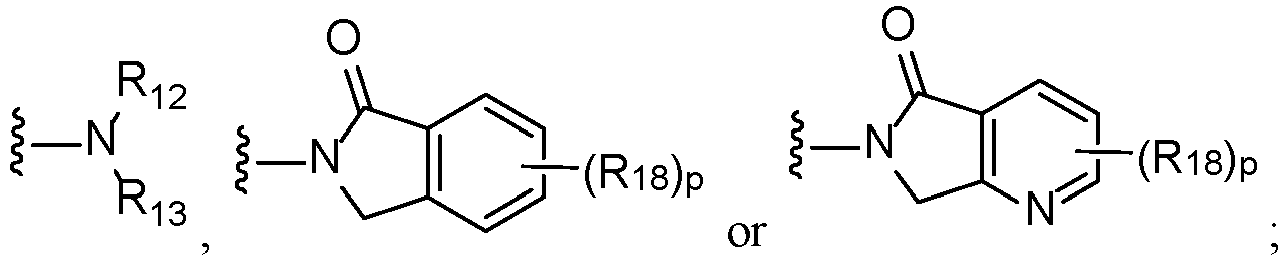
- R12 of Formula ULM-b is selected from the group of H or optionally substituted alkyl;
- R13 of Formula ULM-b is selected from the group of H, optionally substituted alkyl, optionally substituted alkylcarbonyl, optionally substituted (cycloalkyl)alkylcarbonyl, optionally substituted aralkylcarbonyl, optionally substituted arylcarbonyl, optionally substituted (heterocyclyl)carbonyl, or optionally substituted aralkyl;
- R14a, R14b of Formula ULM-b, are each independently selected from the group of H, haloalkyl (e.g. fluoroalkyl), optionally substituted alkyl, optionally substitute alkoxy, aminomethyl, alkylaminomethyl, alkoxymethyl, optionally substituted hydroxyl alkyl, optionally substituted alkylamine, optionally substituted heterolkyl, optionally substituted alkyl-heterocycloalkyl, optionally substituted alkoxy-heterocycloalkyl, CONR27aR27b, CH2NHCOR26, or (CH2)N(CH3)COR26; and the other of R14a and R14b is H; or R14a, R14b, together with the carbon atom to which they are attached, form an optionally substituted 3 to 6 membered cycloalkyl, heterocycloalky, spirocycloalkyl or spiroheterocyclyl, wherein the spiroheterocyclyl is not epoxide or aziridine;
- W5 of Formula ULM-b is selected from the group of a phenyl, napthyl, or a 5-10 membered heteroaryl,
- R15 of Formula ULM-b is selected from the group of H, halogen, CN, OH, NO2, NR27aR27b, OR27a, CONR27aR27b, NR27aCOR27b, SO2NR27aR27b, NR27a SO2R27b, optionally substituted alkyl, optionally substituted haloalkyl, optionally substituted haloalkoxy, optionally substituted aryl, optionally substituted heteroaryl, optionally substituted cycloalkyl, or optionally substituted heterocyclyl;
- each R16 of Formula ULM-b is independently selected from the group of halo, CN, optionally substituted alkyl, optionally substituted haloalkyl, hydroxy, or optionally substituted haloalkoxy;
- o of Formula ULM-b is 0, 1, 2, 3, or 4;
- R18 of Formula ULM-b is independently selected from the group of H, halo, optionally substituted alkoxy, cyano, optionally substituted alkyl, haloalkyl, haloalkoxy or a linker;
- each R26 is independently selected from H, optionally substituted alkyl or NR27aR27b;
- each R27a and R27b is independently H, optionally substituted alkyl, or R27a and R27b together with the nitrogen atom to which they are attached form a 4-6 membered heterocyclyl; and
- p of Formula ULM-b is 0, 1, 2, 3, or 4, and wherein the dashed line indicates the site of attachment of at least one PTM, another ULM (ULM') or a chemical linker moiety coupling at least one PTM or a ULM' or both to ULM.
- In certain embodiments, R15 of Formula ULM-b is

- In certain embodiments, R17 of Formula ULM-b is selected from the group methyl, ethyl, isopropyl, and cyclopropyl.
- In certain additional embodiments, R15 of Formula ULM-b is selected from the group consisting of:





- In certain embodiments, R11 of Formula ULM-b is selected from the group consisting of:


- In certain embodiments, R14a, R14b of Formula ULM-b, are each independently selected from the group of H, optionally substituted haloalkyl, optionally substituted alkyl, optionally substituted alkoxy, optionally substituted hydroxyl alkyl, optionally substituted alkylamine, optionally substituted heterolkyl, optionally substituted alkyl-heterocycloalkyl, optionally substituted alkoxy-heterocycloalkyl, CH2OR30, CH2NHR30, CH2NCH3R30, CONR27aR27b, CH2CONR27aR27b, CH2NHCOR26, or CH2NCH3COR26; and the other of R14a and R14b is H; or R14a, R14b, together with the carbon atom to which they are attached, form an optionally substituted 3- to 6-membered cycloalkyl, heterocycloalkyl, spirocycloalkyl or spiroheterocyclyl, wherein the spiroheterocyclyl is not epoxide or aziridine, the said spirocycloalkyl or spiroheterocycloalkyl itself being optionally substituted with an alkyl, a haloalkyl, or -COR33 where R33 is an alkyl or a haloalkyl,
wherein R30 is selected from H, alkyl, alkynylalkyl, cycloalkyl, heterocycloalkyl, cycloalkylalkyl, heterocycloalkylalkyl, arylalkyl or heteroarylalkyl further optionally substituted; R26 and R27 are as described above. - In certain embodiments, R15 of Formula ULM-b is selected from H, halogen, CN, OH, NO2, NR27aR27b, OR27a, CONR27aR27b, NR27aCOR27b, SO2NR27aR27b, NR27a SO2R27b, optionally substituted alkyl, optionally substituted haloalkyl (e.g. optionally substituted fluoroalkyl), optionally substituted haloalkoxy, optionally substituted aryl, optionally substituted heteroaryl, optionally substituted cycloalkyl, or optionally substituted heterocyclyl wherein optional substitution of the said aryl, heteroaryl, cycloalkyl and heterocycloalkyl includes CH2OR30, CH2NHR30, CH2NCH3R30, CONR27aR27b, CH2CONR27aR27b, CH2NHCOR26, CH2NCH3COR26 or

- In certain embodiments, R14a, R14b of Formula ULM-b, are each independently selected from the group of H, optionally substituted haloalkyl, optionally substituted alkyl, CH2OR30, CH2NHR30, CH2NCH3R30, CONR27aR27b, CH2CONR27aR27b, CH2NHCOR26, or CH2NCH3COR26; and the other of R14a and R14b is H; or R14a, R14b, together with the carbon atom to which they are attached, form an optionally substituted 3- to 6-membered spirocycloalkyl or spiroheterocyclyl, wherein the spiroheterocyclyl is not epoxide or aziridine, the said spirocycloalkyl or spiroheterocycloalkyl itself being optionally substituted with an alkyl, a haloalkyl, or -COR33 where R33 is an alkyl or a haloalkyl, wherein R30 is selected from H, alkyl, alkynylalkyl, cycloalkyl, heterocycloalkyl, cycloalkylalkyl, heterocycloalkylalkyl, arylalkyl or heteroarylalkyl further optionally substituted;
- R15 of Formula ULM-b is selected from H, halogen, CN, OH, NO2, NR27aR27b, OR27a, CONR27aR27b, NR27aCOR27b, SO2NR27aR27b, NR27a SO2R27b, optionally substituted alkyl, optionally substituted haloalkyl, optionally substituted haloalkoxy, optionally substituted aryl, optionally substituted heteroaryl, optionally substituted cycloalkyl, or optionally substituted heterocyclyl wherein optional substitution of the said aryl, heteroaryl, cycloalkyl and heterocycloalkyl includes CH2OR30, CH2NHR30, CH2NCH3R30, CONR27aR27b, CH2CONR27aR27b, CH2NHCOR26, CH2NCH3COR26 or

- In certain embodiments, ULM has a chemical structure selected from the group of:

- R1 of Formulas ULM-c, ULM-d, and ULM-e is H, ethyl, isopropyl, tert-butyl, sec-butyl, cyclopropyl, cyclobutyl, cyclopentyl, or cyclohexyl; optionally substituted alkyl, optionally substituted cycloalkyl, optionally substituted hydroxyalkyl, optionally substituted heteroaryl, or haloalkyl;
- R14a of Formulas ULM-c, ULM-d, and ULM-e is H, haloalkyl, optionally substituted alkyl, methyl, fluoromethyl, hydroxymethyl, ethyl, isopropyl, or cyclopropyl;
- R15 of Formulas ULM-c, ULM-d, and ULM-e is selected from the group consisting of H, halogen, CN, OH, NO2, optionally substituted heteroaryl, optionally substituted aryl; optionally substituted alkyl, optionally substituted haloalkyl, optionally substituted haloalkoxy, optionally substituted cycloalkyl, or optionally substituted heterocyclyl;
- X of Formulas ULM-c, ULM-d, and ULM-e is C, CH2, or C=O
- R3 of Formulas ULM-c, ULM-d, and ULM-e is absent or an optionally substituted 5 or 6 membered heteroaryl; and
- the dashed line indicates the site of attachment of at least one PTM, another ULM (ULM') or a chemical linker moiety coupling at least one PTM or a ULM' or both to ULM.
- In certain embodiments, ULM comprises a group according to the chemical structure:
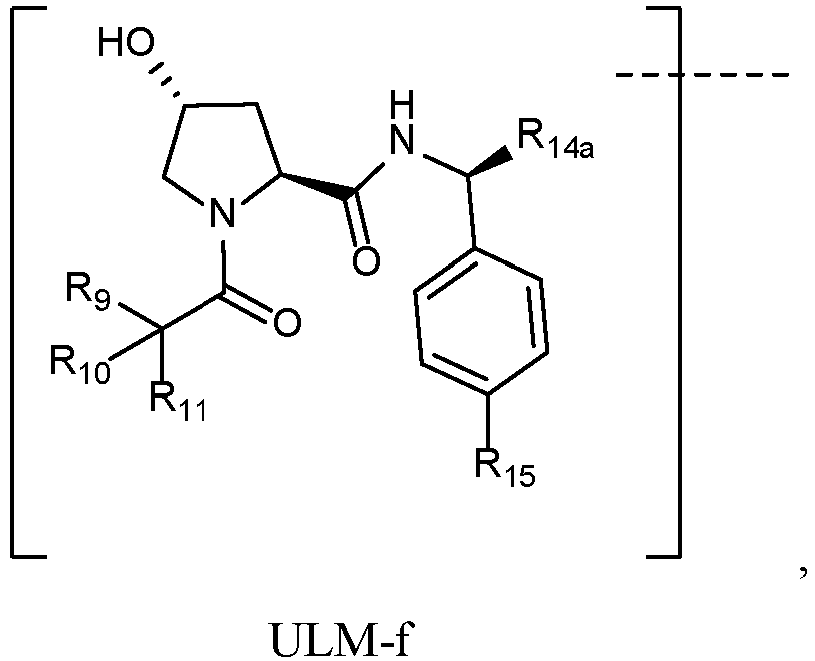
- R14a of Formula ULM-f is H, haloalkyl, optionally substituted alkyl, methyl, fluoromethyl, hydroxymethyl, ethyl, isopropyl, or cyclopropyl;
- R9 of Formula ULM-f is H;
- R10 of Formula ULM-f is H, ethyl, isopropyl, tert-butyl, sec-butyl, cyclopropyl, cyclobutyl, cyclopentyl, or cyclohexyl;
- R11 of Formula ULM-f is


- p of Formula ULM-f is 0, 1, 2, 3, or 4;
- each R18 of Formula ULM-f is independently halo, optionally substituted alkoxy, cyano, optionally substituted alkyl, haloalkyl, haloalkoxy or a linker;
- R12 of Formula ULM-f is H, C=O;
- R13 of Formula ULM-f is H, optionally substituted alkyl, optionally substituted alkylcarbonyl, optionally substituted (cycloalkyl)alkylcarbonyl, optionally substituted aralkylcarbonyl, optionally substituted arylcarbonyl, optionally substituted (heterocyclyl)carbonyl, or optionally substituted aralkyl,
- R15 of Formula ULM-f is selected from the group consisting of H, halogen, Cl, CN, OH, NO2, optionally substituted haloalkyl, optionally substituted heteroaryl, optionally substituted aryl;


- wherein the dashed line of Formula ULM-f indicates the site of attachment of at least one PTM, another ULM (ULM') or a chemical linker moiety coupling at least one PTM or a ULM' or both to ULM.
- In certain embodiments, the ULM is selected from the following structures:
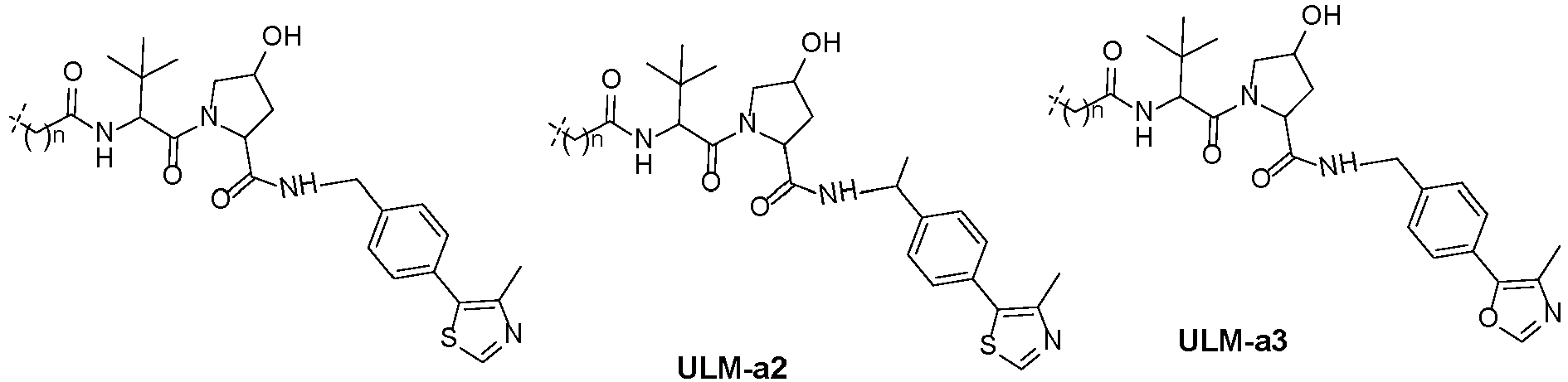


- In certain embodiments, the ULM is selected from the following structures:


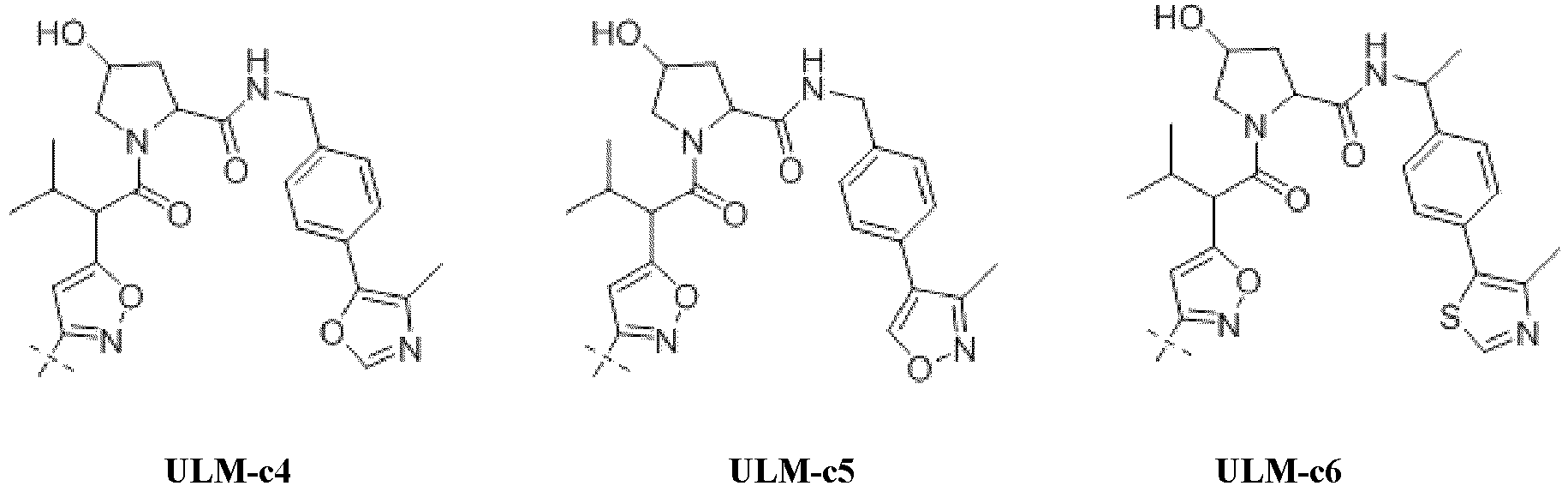


- In one embodiment, the phenyl ring in ULM-a1 through ULM-a15, ULM-b1 through ULM-b12, ULM-c1 through ULM-c15 and ULM-d1 through ULM-d9 can be functionalized as the ester to make it a part of the prodrug.
- In certain embodiments, the hydroxyl group on the pyrrolidine ring of ULM-a1 through ULM-a15, ULM-b1 through ULM-b12, ULM-c1 through ULM-c15 and ULM-d1 through ULM-d9, respectively, comprises an ester-linked prodrug moiety.
- In any of the aspects or embodiments described herein, the ULM and where present, ULM', are each independently a group according to the chemical structure:

- R1' of ULM-g is an optionally substituted C1-C6 alkyl group, an optionally substituted - (CH2)nOH, an optionally substituted -(CH2)nSH, an optionally substituted (CH2)n-O-(C1-C6)alkyl group, an optionally substituted (CH2)n-WCOCW-(C0-C6)alkyl group containing an epoxide moiety WCOCW where each W is independently H or a C1-C3 alkyl group, an optionally substituted -(CH2)nCOOH, an optionally substituted - (CH2)nC(O)-(C1-C6 alkyl), an optionally substituted -(CH2)nNHC(O)-R", an optionally substituted -(CH2)nC(O)- N(R")2, an optionally substituted -(CH2)nOC(O)- N(R")2, - (CH2O)nH, an optionally substituted -(CH2)nOC(O)-(C1-C6 alkyl), an optionally substituted -(CH2)nC(O)-O-(C1-C6 alkyl), an optionally substituted -(CH2O)nCOOH, an optionally substituted -(OCH2)nO-(C1-C6 alkyl), an optionally substituted - (CH2O)nC(O)-(C1-C6 alkyl), an optionally substituted -(OCH2)nNHC(O)-R", an optionally substituted -(CH2O)nC(O)-N(R")2, -(CH2CH2O)nH, an optionally substituted -(CH2CH2O)nCOOH, an optionally substituted -(OCH2CH2)nO-(C1-C6 alkyl), an optionally substituted -(CH2CH2O)nC(O)-(C1-C6 alkyl), an optionally substituted - (OCH2CH2)nNHC(O)-R", an optionally substituted -(CH2CH2O)nC(O)-N(R")2,an optionally substituted -SO2RS, an optionally substituted S(O)RS, NO2, CN or halogen (F, Cl, Br, I, preferably F or Cl);
- each R" of ULM-g is independently H or a C1-C6 alkyl group which may be optionally substituted with one or two hydroxyl groups or up to three halogen groups (preferably fluorine);
- RS of ULM-g is a C1-C6 alkyl group, an optionally substituted aryl, heteroaryl or heterocyclyl group or a -(CH2)m N(R")2 group;
- X and X' of ULM-g are each independently C=O, C=S, -S(O), S(O)2, (preferably X and X' are both C=O);
- R2' of ULM-g is an optionally substituted -(CH2)n-(C=O)u(NR")v(SO2)walkyl group, an optionally substituted -(CH2)n-(C=O)u(NR")v(SO2)wNR1NR2N group, an optionally substituted -(CH2)n-(C=O)u(NR")v(SO2)w-Aryl, an optionally substituted -(CH2)n-(C=O)u(NR")v(SO2)w-Heteroaryl, an optionally substituted -(CH2)n-(C=O)vNR" (SO2)w-Heterocyclyl, an optionally substituted -NR"-(CH2)n-C(O)u(NR")v(SO2)w-alkyl, an optionally substituted -NR"-(CH2)s-C(O)u(NR")v(SO2)w- NR1NR2N, an optionally substituted -NR"-(CH2)n-C(O)u(NR")v(SO2)w-NR"C(O)R1N, an optionally substituted - NR"-(CH2)n-(C=O)u(NR")v(SO2)w-Aryl, an optionally substituted -NR"-(CH2)n-(C=O)u(NR")v(SO2)w-Heteroaryl or an optionally substituted -NR"-(CH2)n-(C=O)vNR" (SO2)w-Heterocyclyl, an optionally substituted -XR2'-alkyl group; an optionally substituted -XR2'- Aryl group; an optionally substituted -XR2'- Heteroaryl group; an optionally substituted -XR2'- Heterocyclyl group;
- R3' of ULM-g is an optionally substituted alkyl, an optionally substituted -(CH2)n-(O)u(NR")y(SO2)w-alkyl, an optionally substituted -(CH2)n-C(O)u(NR")v(SO2)w-NR1NR2N, an optionally substituted -(CH2)n-C(O)u(NR")v(SO2)w-NR"C(O)R1N, an optionally substituted -(CH2)n-C(O)u(NR")v(SO2)w-C(O)(R")2, an optionally substituted -(CH2)n-C(O)u(NR")v(SO2)w-Aryl, an optionally substituted -(CH2)n-C(O)u(NR")v(SO2)w-Heteroaryl, an optionally substituted -(CH2)n-C(O)u(NR")v(SO2)w-Heterocyclyl, an optionally substituted -NR"-(CH2)n-C(O)u(NR")v(SO2)w-alkyl, an optionally substituted -NR"-(CH2)n-C(O)u(NR")v(SO2)w- NR1NR2N, an optionally substituted -NR"-(CH2)n-C(O)u(NR")v(SO2)w-NR"C(O)R1N, an optionally substituted - NR"-(CH2)n-C(O)u(NR")v(SO2)w-Aryl, an optionally substituted -NR"-(CH2)n-C(O)u(NR")v(SO2)w-Heteroaryl, an optionally substituted -NR1-(CH2)n-C(O)u(NR")v(SO2)w-Heterocyclyl, an optionally substituted -O-(CH2)n-(C=O)u(NR")v(SO2)w-alkyl, an optionally substituted -O-(CH2)n-(C=O)u(NR")v(SO2)w-NR1NR2N, an optionally substituted -O-(CH2)n-(C=O)u(NR")+(SO2)w-NR"C(O)R1N, an optionally substituted -O-(CH2)n-(C=O)u(NR")v(SO2)w-Aryl, an optionally substituted - O-(CH2)n-(C=O)u(NR")v(SO2)w-Heteroaryl or an optionally substituted -O-(CH2)n-(C=O)u(NR")v(SO2)w-Heterocyclyl; -(CH2)n-(V)n'-(CH2)n-(V)n'-alkyl group, an optionally substituted -(CH2)n-(V)n'-(CH2)n-(V)n'-Aryl group, an optionally substituted -(CH2)n-(V)n'-(CH2)n-(V)n'-Heteroaryl group, an optionally substituted -(CH2)n-V)n'-(CH2)n-(V)n'-Heterocyclyl'group, an optionally substituted -(CH2)n-N(R1')(C=O)m'-(V)n'-alkyl group, an optionally substituted -(CH2)n-N(R1')(C=O)m'-(V)n'-Aryl group, an optionally substituted -(CH2)n-N(R1')(C=O)m'-(V)n'-Heteroaryl group, an optionally substituted -(CH2)n-N(R1')(C=O)m'-(V)n'-Heterocyclyl group, an optionally substituted - XR3'- alkyl group; an optionally substituted -XR3'- Aryl group; an optionally substituted - XR3'- Heteroaryl group; an optionally substituted -XR3'- Heterocyclyl group;
- R1N and R2N of ULM-g are each independently H, C1-C6 alkyl which is optionally substituted with one or two hydroxyl groups and up to three halogen groups or an optionally substituted -(CH2)n-Aryl, -(CH2)n-Heteroaryl or -(CH2)n-Heterocyclyl group;
- V of ULM-g is O, S or NR1;
- each R1' of ULM-g is independently H or a C1-C3 alkyl group;
- XR2' and XR3' of ULM-g are each independently an optionally substituted -CH2)n-, -CH2)n-CH(Xv)=CH(Xv)- (cis or trans), -CH2)n-CH≡CH- , -(CH2CH2O)n- or a C3-C6 cycloalkyl group, where Xv is H, a halo or a C1-C3 alkyl group which is optionally substituted;
- each m of ULM-g is independently 0, 1, 2, 3, 4, 5, 6;
- each m' of ULM-g is independently 0 or 1;
- each n of ULM-g is independently 0, 1, 2, 3, 4, 5, 6;
- each n' of ULM-g is independently 0 or 1;
- each u of ULM-g is independently 0 or 1;
- each v of ULM-g is independently 0 or 1;
- each w of ULM-g is independently 0 or 1; and
- any one or more of R1', R2', R3', X and X' of ULM-g is optionally modified to be covalently bonded to the PTM group through a linker group when PTM is not ULM', or when PTM is ULM', any one or more of R1', R2', R3', X and X' of each of ULM and ULM' are optionally modified to be covalently bonded to each other directly or through a linker group, or a pharmaceutically acceptable salt, stereoisomer, solvate or polymorph thereof.
- In any of the aspects or embodiments described herein, the ULM and when present, ULM', are each independently a group according to the chemical structure:

- each of R1', R2' and R3' of ULM-h are the same as above and X is C=O, C=S, -S(O) group or a S(O)2 group, more preferably a C=O group, and
- any one or more of R1', R2'and R3' of ULM-h are optionally modified to bind a linker group to which is further covalently bonded to the PTM group when PTM is not ULM', or when PTM is ULM', any one or more of R1', R2', R3' of each of ULM and ULM' are optionally modified to be covalently bonded to each other directly or through a linker group, or
- a pharmaceutically acceptable salt, enantiomer, diastereomer, solvate or polymorph thereof.
- In any of the aspects or embodiments described herein, the ULM, and when present, ULM', are each independently according to the chemical structure:

- any one or more of R1', R2'and R3' of ULM-I are optionally modified to bind a linker group to which is further covalently bonded to the PTM group when PTM is not ULM', or when PTM is ULM', any one or more of R1', R2', R3' of each of ULM and ULM' are optionally modified to be covalently bonded to each other directly or through a linker group, or
- a pharmaceutically acceptable salt, enantiomer, diastereomer, solvate or polymorph thereof.
- In further preferred aspects of the disclosure, R1' of ULM-g through ULM-i is preferably a hydroxyl group or a group which may be metabolized to a hydroxyl or carboxylic group, such that the compound represents a prodrug form of an active compound. Exemplary preferred R1' groups include, for example, -(CH2)nOH, (CH2)n-O-(C1-C6)alkyl group, - (CH2)nCOOH, -(CH2O)nH, an optionally substituted -(CH2)nOC(O)-(C1-C6 alkyl), or an optionally substituted -(CH2)nC(O)-O-(C1-C6 alkyl), wherein n is 0 or 1. Where R1' is or contains a carboxylic acid group, a hydroxyl group or an amine group, the hydroxyl group, carboxylic acid group or amine (each of which may be optionally substituted), may be further chemically modified to provide a covalent link to a linker group to which the PTM group (including a ULM' group) is bonded;
- X and X', where present, of ULM-g and ULM-h are preferably a C=O, C=S, - S(O) group or a S(O)2 group, more preferably a C=O group;
- R2' of ULM-g through ULM-i is preferably an optionally substituted -NH-T-Aryl, an optionally substituted -N(CH3)-T-Aryl, an optionally substituted -NH-T-Heteroaryl group, an optionally substituted -N(CH3)-T-Heteroaryl, an optionally substituted -NH-T-Heterocyclyl, or an optionally substituted -N(CH3)-T-Heterocyclyl preferably H and T is an optionally substituted -(CH2)n- group, wherein each one of the methylene groups may be optionally substituted with one or two substituents, preferably selected from halogen, an amino acid sidechain as otherwise described herein or a C1-C3 alkyl group, preferably one or two methyl groups, which may be optionally substituted; and n is 0 to 6, often 0, 1, 2 or 3, preferably 0 or 1. Alternatively, T may also be a -(CH2O)n- group, a -(OCH2)n- group, a -(CH2CH2O)n- group, a -(OCH2CH2)n- group, all of which groups are optionally substituted.
- Preferred Aryl groups for R2' of ULM-g through ULM-i include optionally substituted phenyl or naphthyl groups, preferably phenyl groups, wherein the phenyl or naphthyl group is connected to a PTM (including a ULM' group) with a linker group and/or optionally substituted with a halogen (preferably F or Cl), an amine, monoalkyl- or dialkyl amine (preferably, dimethylamine), F, Cl, OH, COOH, C1-C6 alkyl, preferably CH3, CF3, OMe, OCF3, NO2, or CN group (each of which may be substituted in ortho-, meta- and/or para- positions of the phenyl ring, preferably para-), an optionally substituted phenyl group (the phenyl group itself is optionally connected to a PTM group, including a ULM', with a linker group), and/or optionally substituted with at least one of F, Cl, OH, COOH, CH3, CF3, OMe, OCF3, NO2, or CN group (in ortho-, meta- and/or para- positions of the phenyl ring, preferably para-), a naphthyl group, which may be optionally substituted, an optionally substituted heteroaryl, preferably an optionally substituted isoxazole including a methylsubstituted isoxazole, an optionally substituted oxazole including a methylsubstituted oxazole, an optionally substituted thiazole including a methyl substituted thiazole, an optionally substituted isothiazole including a methyl substituted isothiazole, an optionally substituted pyrrole including a methylsubstituted pyrrole, an optionally substituted imidazole including a methylimidazole, an optionally substituted benzimidazole or methoxybenzylimidazole, an optionally substituted oximidazole or methyloximidazole, an optionally substituted diazole group, including a methyldiazole group, an optionally substituted triazole group, including a methylsubstituted triazole group, an optionally substituted pyridine group, including a halo- (preferably, F) or methylsubstitutedpyridine group or an oxapyridine group (where the pyridine group is linked to the phenyl group by an oxygen), an optionally substituted furan, an optionally substituted benzofuran, an optionally substituted dihydrobenzofuran, an optionally substituted indole, indolizine or azaindolizine (2, 3, or 4-azaindolizine), an optionally substituted quinoline, an optionally substituted group according to the chemical structure:


- Sc of ULM-g through ULM-i is CHRSS, NRURE, or O;
- RHET of ULM-g through ULM-i is H, CN, NO2, halo (preferably Cl or F), optionally substituted C1-C6 alkyl (preferably substituted with one or two hydroxyl groups or up to three halo groups (e.g. CF3), optionally substituted O(C1-C6 alkyl) (preferably substituted with one or two hydroxyl groups or up to three halo groups) or an optionally substituted acetylenic group -C≡C-Ra where Ra is H or a C1-C6 alkyl group (preferably C1-C3 alkyl);
- RSS of ULM-g through ULM-i is H, CN, NO2, halo (preferably F or Cl), optionally substituted C1-C6 alkyl (preferably substituted with one or two hydroxyl groups or up to three halo groups), optionally substituted O-(C1-C6 alkyl) (preferably substituted with one or two hydroxyl groups or up to three halo groups) or an optionally substituted - C(O)(C1-C6 alkyl) (preferably substituted with one or two hydroxyl groups or up to three halo groups);
- RURE of ULM-g through ULM-i is H, a C1-C6 alkyl (preferably H or C1-C3 alkyl) or a - C(O)(C1-C6 alkyl) each of which groups is optionally substituted with one or two hydroxyl groups or up to three halogen, preferably fluorine groups, or an optionally substituted phenyl group, an optionally substituted heteroaryl, or an optionally substituted heterocyclyl, preferably for example piperidine, morpholine, pyrrolidine, tetrahydrofuran);
- RPRO of ULM-g through ULM-i is H, optionally substituted C1-C6 alkyl or an optionally substituted aryl (phenyl or napthyl), heteroaryl or heterocyclyl group selected from the group consisting of oxazole, isoxazole, thiazole, isothiazole, imidazole, diazole, oximidazole, pyrrole, pyrollidine, furan, dihydrofuran, tetrahydrofuran, thiene, dihydrothiene, tetrahydrothiene, pyridine, piperidine, piperazine, morpholine, quinoline, (each preferably substituted with a C1-C3 alkyl group, preferably methyl or a halo group, preferably F or Cl), benzofuran, indole, indolizine, azaindolizine;
- RPRO1 and RPRO2 of ULM-g through ULM-i are each independently H, an optionally subsituted C1-C3 alkyl group or together form a keto group; and
- each n of ULM-g through ULM-i is independently 0, 1, 2, 3, 4, 5, or 6 (preferably 0 or 1), or an optionally substituted heterocyclyl, preferably tetrahydrofuran, tetrahydrothiene, piperidine, piperazine or morpholine (each of which groups when substituted, are preferably substituted with a methyl or halo (F, Br, Cl), each of which groups may be optionally attached to a PTM group (including a ULM' group) via a linker group.
- In certain preferred aspects,
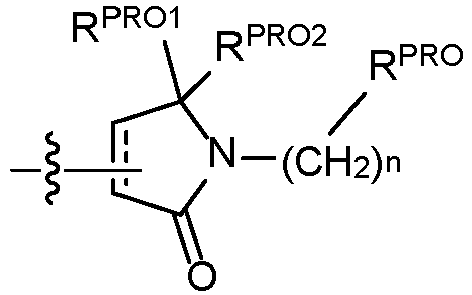

where RPRO and n of ULM-g through ULM-i are the same as above. - Preferred heteroaryl groups for R2' of ULM-g through ULM-i include an optionally substituted quinoline (which may be attached to the pharmacophore or substituted on any carbon atom within the quinoline ring), an optionally substituted indole, an optionally substituted indolizine, an optionally substituted azaindolizine, an optionally substituted benzofuran, including an optionally substituted benzofuran, an optionally substituted isoxazole, an optionally substituted thiazole, an optionally substituted isothiazole, an optionally substituted thiophene, an optionally substituted pyridine (2-, 3, or 4-pyridine), an optionally substituted imidazole, an optionally substituted pyrrole, an optionally substituted diazole, an optionally substituted triazole, a tetrazole, an optionally substituted oximidazole, or a group according to the chemical structure:


- Sc of ULM-g through ULM-i is CHRSS, NRURE, or O;
- RHET of ULM-g through ULM-i is H, CN, NO2, halo (preferably Cl or F), optionally substituted C1-C6 alkyl (preferably substituted with one or two hydroxyl groups or up to three halo groups (e.g. CF3), optionally substituted O(C1-C6 alkyl) (preferably substituted with one or two hydroxyl groups or up to three halo groups) or an optionally substituted acetylenic group -C≡C-Ra where Ra of ULM-g through ULM-i is H or a C1-C6 alkyl group (preferably C1-C3 alkyl);
- RSS of ULM-g through ULM-i is H, CN, NO2, halo (preferably F or Cl), optionally substituted C1-C6 alkyl (preferably substituted with one or two hydroxyl groups or up to three halo groups), optionally substituted O-(C1-C6 alkyl) (preferably substituted with one or two hydroxyl groups or up to three halo groups) or an optionally substituted - C(O)(C1-C6 alkyl) (preferably substituted with one or two hydroxyl groups or up to three halo groups);
- RURE of ULM-g through ULM-i is H, a C1-C6 alkyl (preferably H or C1-C3 alkyl) or a - C(O)(C1-C6 alkyl), each of which groups is optionally substituted with one or two hydroxyl groups or up to three halogen, preferably fluorine groups, or an optionally substituted heterocyclyl, for example piperidine, morpholine, pyrrolidine, tetrahydrofuran, tetrahydrothiophene, piperidine, piperazine, each of which is optionally substituted, and
- YC of ULM-g through ULM-i is N or C-RYC, where RYC is H, OH, CN, NO2, halo (preferably Cl or F), optionally substituted C1-C6 alkyl (preferably substituted with one or two hydroxyl groups or up to three halo groups (e.g. CF3), optionally substituted O(C1-C6 alkyl) (preferably substituted with one or two hydroxyl groups or up to three halo groups) or an optionally substituted acetylenic group -C≡C-Ra where Ra is H or a C1-C6 alkyl group (preferably C1-C3 alkyl), each of which groups may be optionally connected to a PTM group (including a ULM' group) via a linker group.
- Preferred heterocyclylheterocyclyl groups for R2' of ULM-g through ULM-i include tetrahydrofuran, tetrahydrothiene, tetrahydroquinoline, piperidine, piperazine, pyrrollidine, morpholine, oxane or thiane, each of which groups may be optionally substituted, or a group according to the chemical structure:


- RPRO of ULM-g through ULM-i is H, optionally substituted C1-C6 alkyl or an optionally substituted aryl, heteroaryl or heterocyclyl group; RPRO1 and RPRO2 of ULM-g through ULM-i are each independently H, an optionally subsituted C1-C3 alkyl group or together form a keto group and
- each n of ULM-g through ULM-i is independently 0, 1, 2, 3, 4, 5, or 6 (often 0 or 1), each of which groups may be optionally connected to a PTM group (including a ULM' group) via a linker group.
- Preferred R2' substituents of ULM-g through ULM-i also include specifically (and without limitation to the specific compound disclosed) the R2' substituents which are found in the identified compounds disclosed herein (which includes the specific compounds which are disclosed in the present specification, and the figures which are attached hereto). Each of these R2' substituents may be used in conjunction with any number of R3' substituents which are also disclosed herein.
- R3' of ULM-g through ULM-i is preferably an optionally substituted -NH-T-Aryl, an optionally substituted -N(C1-C3 alkyl)-T-Aryl, an optionally substituted -NH-T-Heteroaryl group, an optionally substituted -N(C1-C3 alkyl)-T-Heteroaryl, an optionally substituted -NH-T-Heterocyclyl, or an optionally substituted -N(C1-C3 alkyl)-T-Heterocyclyl, wherein T is an optionally substituted -(CH2)n- group, wherein each one of the methylene groups may be optionally substituted with one or two substituents, preferably selected from halogen, a C1-C3 alkyl group or the sidechain of an amino acid as otherwise described herein, preferably methyl, which may be optionally substituted; and n is 0 to 6, often 0, 1, 2, or 3 preferably 0 or 1. Alternatively, T may also be a -(CH2O)n- group, a -(OCH2)n- group, a -(CH2CH2O)n- group, a -(OCH2CH2)n- group, each of which groups is optionally substituted.
- Preferred aryl groups for R3' of ULM-g through ULM-i include optionally substituted phenyl or naphthyl groups, preferably phenyl groups, wherein the phenyl or naphthyl group is optionally connected to a PTM group (including a ULM' group) via a linker group and/or optionally substituted with a halogen (preferably F or Cl), an amine, monoalkyl- or dialkyl amine (preferably, dimethylamine), an amido group (preferably a -(CH2)m-NR1C(O)R2 group where m, R1 and R2 are the same as above), a halo (often F or Cl), OH, CH3, CF3, OMe, OCF3, NO2, CN or a S(O)2RS group (RS is a a C1-C6 alkyl group, an optionally substituted aryl, heteroaryl or heterocyclyl group or a -(CH2)m(R")2 group), each of which may be substituted in ortho-, meta- and/or para- positions of the phenyl ring, preferably para-), or an Aryl (preferably phenyl), Heteroaryl or Heterocyclyl. Preferably said substituent phenyl group is an optionally substituted phenyl group (i.e., the substituent phenyl group itself is preferably substituted with at least one of F, Cl, OH, SH, COOH, CH3, CF3, OMe, OCF3, NO2, CN or a linker group to which is attached a PTM group (including a ULM' group), wherein the substitution occurs in ortho-, meta- and/or para- positions of the phenyl ring, preferably para-), a naphthyl group, which may be optionally substituted including as described above, an optionally substituted heteroaryl (preferably an optionally substituted isoxazole including a methylsubstituted isoxazole, an optionally substituted oxazole including a methylsubstituted oxazole, an optionally substituted thiazole including a methyl substituted thiazole, an optionally substituted pyrrole including a methylsubstituted pyrrole, an optionally substituted imidazole including a methylimidazole, a benzylimidazole or methoxybenzylimidazole, an oximidazole or methyloximidazole, an optionally substituted diazole group, including a methyldiazole group, an optionally substituted triazole group, including a methylsubstituted triazole group, a pyridine group, including a halo- (preferably, F) or methylsubstitutedpyridine group or an oxapyridine group (where the pyridine group is linked to the phenyl group by an oxygen) or an optionally substituted heterocyclyl (tetrahydrofuran, tetrahydrothiophene, pyrrolidine, piperidine, morpholine, piperazine, tetrahydroquinoline, oxane or thiane. Each of the aryl, heteroaryl or heterocyclyl groups may be optionally connected to a PTM group (including a ULM' group) via a linker group.
- Preferred Heteroaryl groups for R3' of ULM-g through ULM-i include an optionally substituted quinoline (which may be attached to the pharmacophore or substituted on any carbon atom within the quinoline ring), an optionally substituted indole (including dihydroindole), an optionally substituted indolizine, an optionally substituted azaindolizine (2, 3 or 4-azaindolizine) an optionally substituted benzimidazole, benzodiazole, benzoxofuran, an optionally substituted imidazole, an optionally substituted isoxazole, an optionally substituted oxazole (preferably methyl substituted), an optionally substituted diazole, an optionally substituted triazole, a tetrazole, an optionally substituted benzofuran, an optionally substituted thiophene, an optionally substituted thiazole (preferably methyl and/or thiol substituted), an optionally substituted isothiazole, an optionally substituted triazole (preferably a 1,2,3-triazole substituted with a methyl group, a triisopropylsilyl group, an optionally substituted -(CH2)m-O-C1-C6 alkyl group or an optionally substituted -(CH2)m-C(O)-O-C1-C6 alkyl group), an optionally substituted pyridine (2-, 3, or 4-pyridine) or a group according to the chemical structure:


- Sc of ULM-g through ULM-i is CHRSS, NRURE, or O;
- RHET of ULM-g through ULM-i is H, CN, NO2, halo (preferably Cl or F), optionally substituted C1-C6 alkyl (preferably substituted with one or two hydroxyl groups or up to three halo groups (e.g. CF3), optionally substituted O(C1-C6 alkyl) (preferably substituted with one or two hydroxyl groups or up to three halo groups) or an optionally substituted acetylenic group -C≡C-Ra where Ra is H or a C1-C6 alkyl group (preferably C1-C3 alkyl);
- RSS of ULM-g through ULM-i is H, CN, NO2, halo (preferably F or Cl), optionally substituted C1-C6 alkyl (preferably substituted with one or two hydroxyl groups or up to three halo groups), optionally substituted O-(C1-C6 alkyl) (preferably substituted with one or two hydroxyl groups or up to three halo groups) or an optionally substituted - C(O)(C1-C6 alkyl) (preferably substituted with one or two hydroxyl groups or up to three halo groups);
- RURE of ULM-g through ULM-i is H, a C1-C6 alkyl (preferably H or C1-C3 alkyl) or a - C(O)(C1-C6 alkyl), each of which groups is optionally substituted with one or two hydroxyl groups or up to three halogen, preferably fluorine groups, or an optionally substituted heterocyclyl, for example piperidine, morpholine, pyrrolidine, tetrahydrofuran, tetrahydrothiophene, piperidine, piperazine, each of which is optionally substituted, and
- YC of ULM-g through ULM-i is N or C-RYC, where RYC is H, OH, CN, NO2, halo (preferably Cl or F), optionally substituted C1-C6 alkyl (preferably substituted with one or two hydroxyl groups or up to three halo groups (e.g. CF3), optionally substituted O(C1-C6 alkyl) (preferably substituted with one or two hydroxyl groups or up to three halo groups) or an optionally substituted acetylenic group -C≡C-Ra where Ra is H or a C1-C6 alkyl group (preferably C1-C3 alkyl). Each of said heteroaryl groups may be optionally connected to a PTM group (including a ULM' group) via a linker group.
- Preferred heterocyclyl groups for R3' of ULM-g through ULM-i include tetrahydroquinoline, piperidine, piperazine, pyrrollidine, morpholine, tetrahydrofuran, tetrahydrothiophene, oxane and thiane, each of which groups may be optionally substituted or a group according to the chemical structure:


- RPRO of ULM-g through ULM-i is H, optionally substituted C1-C6 alkyl or an optionally substituted aryl (phenyl or napthyl), heteroaryl or heterocyclyl group selected from the group consisting of oxazole, isoxazole, thiazole, isothiazole, imidazole, diazole, oximidazole, pyrrole, pyrollidine, furan, dihydrofuran, tetrahydrofuran, thiene, dihydrothiene, tetrahydrothiene, pyridine, piperidine, piperazine, morpholine, quinoline, (each preferably substituted with a C1-C3 alkyl group, preferably methyl or a halo group, preferably F or Cl), benzofuran, indole, indolizine, azaindolizine;
- RPRO1 and RPRO2 of ULM-g through ULM-i are each independently H, an optionally subsituted C1-C3 alkyl group or together form a keto group, and
- each n of ULM-g through ULM-i is 0, 1, 2, 3, 4, 5, or 6 (preferably 0 or 1), wherein each of said heterocyclyl groups may be optionally connected to a PTM group (including a ULM' group) via a linker group.
- Preferred R3' substituents of ULM-g through ULM-i also include specifically (and without limitation to the specific compound disclosed) the R3' substituents which are found in the identified compounds disclosed herein (which includes the specific compounds which are disclosed in the present specification, and the figures which are attached hereto). Each of these R3' substituents may be used in conjunction with any number of R2' substituents, which are also disclosed herein.
- In certain alternative preferred embodiments, R2' of ULM-g through ULM-i is an optionally substituted -NR1-XR2'-alkyl group, -NR1-XR2'-Aryl group; an optionally substituted - NR1- XR2'-HET, an optionally substituted -NR1-XR2'-Aryl-HET or an optionally substituted - NR1- XR2'-HET-Aryl,
wherein: - R1 of ULM-g through ULM-i is H or a C1-C3 alkyl group (preferably H);
- XR2' of ULM-g through ULM-i is an optionally substituted -CH2)n- , -CH2)n-CH(Xv)=CH(Xv)- (cis or trans), -(CH2)n-CH≡CH- , -(CH2CH2O)n- or a C3-C6 cycloalkyl group; and
- Xv of ULM-g through ULM-i is H, a halo or a C1-C3 alkyl group which is optionally substituted with one or two hydroxyl groups or up to three halogen groups;
- Alkyl of ULM-g through ULM-i is an optionally substituted C1-C10 alkyl (preferably a C1-C6 alkyl) group (in certain preferred embodiments, the alkyl group is end-capped with a halo group, often a Cl or Br);
- Aryl of ULM-g through ULM-i is an optionally substituted phenyl or naphthyl group (preferably, a phenyl group); and
- HET of ULM-g through ULM-i is an optionally substituted oxazole, isoxazole, thiazole, isothiazole, imidazole, diazole, oximidazole, pyrrole, pyrollidine, furan, dihydrofuran, tetrahydrofuran, thiene, dihydrothiene, tetrahydrothiene, pyridine, piperidine, piperazine, morpholine, benzofuran, indole, indolizine, azaindolizine, quinoline (when substituted, each preferably substituted with a C1-C3 alkyl group, preferably methyl or a halo group, preferably F or Cl) or a group according to the chemical structure:


- RHET of ULM-g through ULM-i is H, CN, NO2, halo (preferably Cl or F), optionally substituted C1-C6 alkyl (preferably substituted with one or two hydroxyl groups or up to three halo groups (e.g. CF3), optionally substituted O(C1-C6 alkyl) (preferably substituted with one or two hydroxyl groups or up to three halo groups) or an optionally substituted acetylenic group -C≡C-Ra where Ra is H or a C1-C6 alkyl group (preferably C1-C3 alkyl);
- RSS of ULM-g through ULM-i is H, CN, NO2, halo (preferably F or Cl), optionally substituted C1-C6 alkyl (preferably substituted with one or two hydroxyl groups or up to three halo groups), optionally substituted O-(C1-C6 alkyl) (preferably substituted with one or two hydroxyl groups or up to three halo groups) or an optionally substituted - C(O)(C1-C6 alkyl) (preferably substituted with one or two hydroxyl groups or up to three halo groups);
- RURE of ULM-g through ULM-i is H, a C1-C6 alkyl (preferably H or C1-C3 alkyl) or a - C(O)(C1-C6 alkyl), each of which groups is optionally substituted with one or two hydroxyl groups or up to three halogen, preferably fluorine groups, or an optionally substituted heterocyclyl, for example piperidine, morpholine, pyrrolidine, tetrahydrofuran, tetrahydrothiophene, piperidine, piperazine, each of which is optionally substituted;
- YC of ULM-g through ULM-i is N or C-RYC, where RYC is H, OH, CN, NO2, halo (preferably Cl or F), optionally substituted C1-C6 alkyl (preferably substituted with one or two hydroxyl groups or up to three halo groups (e.g. CF3), optionally substituted O(C1-C6 alkyl) (preferably substituted with one or two hydroxyl groups or up to three halo groups) or an optionally substituted acetylenic group -C≡C-Ra where Ra is H or a C1-C6 alkyl group (preferably C1-C3 alkyl);
- RPRO of ULM-g through ULM-i is H, optionally substituted C1-C6 alkyl or an optionally substituted aryl (phenyl or napthyl), heteroaryl or heterocyclyl group selected from the group consisting of oxazole, isoxazole, thiazole, isothiazole, imidazole, diazole, oximidazole, pyrrole, pyrollidine, furan, dihydrofuran, tetrahydrofuran, thiene, dihydrothiene, tetrahydrothiene, pyridine, piperidine, piperazine, morpholine, quinoline, (each preferably substituted with a C1-C3 alkyl group, preferably methyl or a halo group, preferably F or Cl), benzofuran, indole, indolizine, azaindolizine;
- RPRO1 and RPRO2 of ULM-g through ULM-i are each independently H, an optionally subsituted C1-C3 alkyl group or together form a keto group, and
- each n of ULM-g through ULM-i is independently 0, 1, 2, 3, 4, 5, or 6 (preferably 0 or 1).
- Each of said groups may be optionally connected to a PTM group (including a ULM' group) via a linker group.
- In certain alternative preferred embodiments of the present disclosure, R3' of ULM-g through ULM-i is an optionally substituted -(CH2)n-(V)n'-(CH2)n-(V)n'-RS3'group, an optionally substituted-(CH2)n-N(R1')(C=O)m'-(V)n'-RS3' group, an optionally substituted -XR3'-alkyl group, an optionally substituted -XR3'-Aryl group; an optionally substituted -XR3'-HET group, an optionally substituted -XR3'-Aryl-HET group or an optionally substituted -XR3'-HET-Aryl group,
wherein: - RS3' is an optionally substituted alkyl group (C1-C10, preferably C1-C6 alkyl), an optionally substituted Aryl group or a HET group;
- R1' is H or a C1-C3 alkyl group (preferably H);
- V is O, S or NR1';
- XR3' is -(CH2)n- , -(CH2CH2O)n-, -CH2)n-CH(Xv)=CH(Xv)- (cis or trans), -CH2)n-CH=CH- , or a C3-C6 cycloalkyl group, all optionally substituted;
- Xv is H, a halo or a C1-C3 alkyl group which is optionally substituted with one or two hydroxyl groups or up to three halogen groups;
- Alkyl is an optionally substituted C1-C10 alkyl (preferably a C1-C6 alkyl) group (in certain preferred embodiments, the alkyl group is end-capped with a halo group, often a Cl or Br);
- Aryl is an optionally substituted phenyl or napthyl group (preferably, a phenyl group); and
- HET is an optionally substituted oxazole, isoxazole, thiazole, isothiazole, imidazole, diazole, oximidazole, pyrrole, pyrollidine, furan, dihydrofuran, tetrahydrofuran, thiene, dihydrothiene, tetrahydrothiene, pyridine, piperidine, piperazine, morpholine, benzofuran, indole, indolizine, azaindolizine, quinoline (when substituted, each preferably substituted with a C1-C3 alkyl group, preferably methyl or a halo group, preferably F or Cl), or a group according to the chemical structure:


- Sc of ULM-g through ULM-i is CHRSS, NRURE, or O;
- RHET of ULM-g through ULM-i is H, CN, NO2, halo (preferably Cl or F), optionally substituted C1-C6 alkyl (preferably substituted with one or two hydroxyl groups or up to three halo groups (e.g. CF3), optionally substituted O(C1-C6 alkyl) (preferably substituted with one or two hydroxyl groups or up to three halo groups) or an optionally substituted acetylenic group -C≡C-Ra where Ra is H or a C1-C6 alkyl group (preferably C1-C3 alkyl);
- RSS of ULM-g through ULM-i is H, CN, NO2, halo (preferably F or Cl), optionally substituted C1-C6 alkyl (preferably substituted with one or two hydroxyl groups or up to three halo groups), optionally substituted O-(C1-C6 alkyl) (preferably substituted with one or two hydroxyl groups or up to three halo groups) or an optionally substituted - C(O)(C1-C6 alkyl) (preferably substituted with one or two hydroxyl groups or up to three halo groups);
- RURE of ULM-g through ULM-i is H, a C1-C6 alkyl (preferably H or C1-C3 alkyl) or a - C(O)(C0-C6 alkyl), each of which groups is optionally substituted with one or two hydroxyl groups or up to three halogen, preferably fluorine groups, or an optionally substituted heterocyclyl, for example piperidine, morpholine, pyrrolidine, tetrahydrofuran, tetrahydrothiophene, piperidine, piperazine, each of which is optionally substituted;
- YC of ULM-g through ULM-i is N or C-RYC, where RYC is H, OH, CN, NO2, halo (preferably Cl or F), optionally substituted C1-C6 alkyl (preferably substituted with one or two hydroxyl groups or up to three halo groups (e.g. CF3), optionally substituted O(C1-C6 alkyl) (preferably substituted with one or two hydroxyl groups or up to three halo groups) or an optionally substituted acetylenic group -C≡C-Ra where Ra is H or a C1-C6 alkyl group (preferably C1-C3 alkyl);
- RPRO of ULM-g through ULM-i is H, optionally substituted C1-C6 alkyl or an optionally substituted aryl (phenyl or napthyl), heteroaryl or heterocyclyl group selected from the group consisting of oxazole, isoxazole, thiazole, isothiazole, imidazole, diazole, oximidazole, pyrrole, pyrollidine, furan, dihydrofuran, tetrahydrofuran, thiene, dihydrothiene, tetrahydrothiene, pyridine, piperidine, piperazine, morpholine, quinoline, (each preferably substituted with a C1-C3 alkyl group, preferably methyl or a halo group, preferably F or Cl), benzofuran, indole, indolizine, azaindolizine;
- RPRO1 and RPRO2 of ULM-g through ULM-i are each independently H, an optionally subsituted C1-C3 alkyl group or together form a keto group;
- each n of ULM-g through ULM-i is independently 0, 1, 2, 3, 4, 5, or 6 (preferably 0 or 1);
- each m' of ULM-g through ULM-i is 0 or 1; and
- each n' of ULM-g through ULM-i is 0 or 1;
- wherein each of said compounds, preferably on the alkyl, Aryl or Het groups, is optionally connected to a PTM group (including a ULM' group) via a linker.
- In alternative embodiments, R3' of ULM-g through ULM-i is -(CH2)n-Aryl, - (CH2CH2O)n-Aryl, -(CH2)n-HET or -(CH2CH2O)n-HET,
wherein: - said Aryl of ULM-g through ULM-i is phenyl which is optionally substituted with one or two substitutents, wherein said substituent(s) is preferably selected from -(CH2)nOH, C1-C6 alkyl which itself is further optionally substituted with CN, halo (up to three halo groups), OH, -(CH2)nO(C1-C6)alkyl, amine, mono- or di-(C1-C6 alkyl) amine wherein the alkyl group on the amine is optionally substituted with 1 or 2 hydroxyl groups or up to three halo (preferably F, Cl) groups, or
- said Aryl group of ULM-g through ULM-i is substituted with -(CH2)nOH, -(CH2)n-O-(C1 C6)alkyl, -(CH2)n-O-(CH2)n-(C1-C6)alkyl, -(CH2)n-C(O)(C0-C6) alkyl, -(CH2)n-C(O)O(C0-C6)alkyl, -(CH2)n-OC(O)(C0-C6)alkyl, amine, mono- or di-(C1-C6 alkyl) amine wherein the alkyl group on the amine is optionally substituted with 1 or 2 hydroxyl groups or up to three halo (preferably F, Cl) groups, CN, NO2, an optionally substituted - (CH2)n-(V)m'-CH2)n-(V)m'-(C1-C6)alkyl group, a-(V)m'-(CH2CH2O)n-RPEG group where V is O, S or NR1', R1' is H or a C1-C3 alkyl group (preferably H) and RPEG is H or a C1-C6 alkyl group which is optionally substituted (including being optionally substituted with a carboxyl group), or
- said Aryl group of ULM-g through ULM-i is optionally substituted with a heterocyclyl, including a heteroaryl, selected from the group consisting of oxazole, isoxazole, thiazole, isothiazole, imidazole, diazole, oximidazole, pyrrole, pyrollidine, furan, dihydrofuran, tetrahydrofuran, thiene, dihydrothiene, tetrahydrothiene, pyridine, piperidine, piperazine, morpholine, quinoline, benzofuran, indole, indolizine, azaindolizine, (when substituted each preferably substituted with a C1-C3 alkyl group, preferably methyl or a halo group, preferably F or Cl), or a group according to the chemical structure:


- Sc of ULM-g through ULM-i is CHRSS, NRURE, or O;
- RHET of ULM-g through ULM-i is H, CN, NO2, halo (preferably Cl or F), optionally substituted C1-C6 alkyl (preferably substituted with one or two hydroxyl groups or up to three halo groups (e.g. CF3), optionally substituted O(C1-C6 alkyl) (preferably substituted with one or two hydroxyl groups or up to three halo groups) or an optionally substituted acetylenic group -C≡C-Ra where Ra is H or a C1-C6 alkyl group (preferably C1-C3 alkyl);
- RSS of ULM-g through ULM-i is H, CN, NO2, halo (preferably F or Cl), optionally substituted C1-C6 alkyl (preferably substituted with one or two hydroxyl groups or up to three halo groups), optionally substituted O-(C1-C6 alkyl) (preferably substituted with one or two hydroxyl groups or up to three halo groups) or an optionally substituted - C(O)(C1-C6 alkyl) (preferably substituted with one or two hydroxyl groups or up to three halo groups);
- RURE of ULM-g through ULM-i is H, a C1-C6 alkyl (preferably H or C1-C3 alkyl) or a - C(O)(C0-C6 alkyl), each of which groups is optionally substituted with one or two hydroxyl groups or up to three halogen, preferably fluorine groups, or an optionally substituted heterocyclyl, for example piperidine, morpholine, pyrrolidine, tetrahydrofuran, tetrahydrothiophene, piperidine, piperazine, each of which is optionally substituted;
- YC of ULM-g through ULM-i is N or C-RYC, where RYC is H, OH, CN, NO2, halo (preferably Cl or F), optionally substituted C1-C6 alkyl (preferably substituted with one or two hydroxyl groups or up to three halo groups (e.g. CF3), optionally substituted O(C1-C6 alkyl) (preferably substituted with one or two hydroxyl groups or up to three halo groups) or an optionally substituted acetylenic group -C≡C-Ra where Ra is H or a C1-C6 alkyl group (preferably C1-C3 alkyl);
- RPRO of ULM-g through ULM-i is H, optionally substituted C1-C6 alkyl or an optionally substituted aryl (phenyl or napthyl), heteroaryl or heterocyclyl group selected from the group consisting of oxazole, isoxazole, thiazole, isothiazole, imidazole, diazole, oximidazole, pyrrole, pyrollidine, furan, dihydrofuran, tetrahydrofuran, thiene, dihydrothiene, tetrahydrothiene, pyridine, piperidine, piperazine, morpholine, quinoline, (each preferably substituted with a C1-C3 alkyl group, preferably methyl or a halo group, preferably F or Cl), benzofuran, indole, indolizine, azaindolizine;
- RPRO1 and RPRO2 of ULM-g through ULM-i are each independently H, an optionally subsituted C1-C3 alkyl group or together form a keto group;
- HET of ULM-g through ULM-i is preferably oxazole, isoxazole, thiazole, isothiazole, imidazole, diazole, oximidazole, pyrrole, pyrollidine, furan, dihydrofuran, tetrahydrofuran, thiene, dihydrothiene, tetrahydrothiene, pyridine, piperidine, piperazine, morpholine, quinoline, (each preferably substituted with a C1-C3 alkyl group, preferably methyl or a halo group, preferably F or Cl), benzofuran, indole, indolizine, azaindolizine, or a group according to the chemical structure:


- Sc of ULM-g through ULM-i is CHRSS, NRURE, or O;
- RHET of ULM-g through ULM-i is H, CN, NO2, halo (preferably Cl or F), optionally substituted C1-C6 alkyl (preferably substituted with one or two hydroxyl groups or up to three halo groups (e.g. CF3), optionally substituted O(C1-C6 alkyl) (preferably substituted with one or two hydroxyl groups or up to three halo groups) or an optionally substituted acetylenic group -C≡C-Ra where Ra is H or a C1-C6 alkyl group (preferably C1-C3 alkyl);
- RSS of ULM-g through ULM-i is H, CN, NO2, halo (preferably F or Cl), optionally substituted C1-C6 alkyl (preferably substituted with one or two hydroxyl groups or up to three halo groups), optionally substituted O-(C1-C6 alkyl) (preferably substituted with one or two hydroxyl groups or up to three halo groups) or an optionally substituted - C(O)(C1-C6 alkyl) (preferably substituted with one or two hydroxyl groups or up to three halo groups);
- RURE of ULM-g through ULM-i is H, a C1-C6 alkyl (preferably H or C1-C3 alkyl) or a - C(O)(C0-C6 alkyl), each of which groups is optionally substituted with one or two hydroxyl groups or up to three halogen, preferably fluorine groups, or an optionally substituted heterocyclyl, for example piperidine, morpholine, pyrrolidine, tetrahydrofuran, tetrahydrothiophene, piperidine, piperazine, each of which is optionally substituted;
- YC of ULM-g through ULM-i is N or C-RYC, where RYC is H, OH, CN, NO2, halo (preferably Cl or F), optionally substituted C1-C6 alkyl (preferably substituted with one or two hydroxyl groups or up to three halo groups (e.g. CF3), optionally substituted O(C1-C6 alkyl) (preferably substituted with one or two hydroxyl groups or up to three halo groups) or an optionally substituted acetylenic group -C≡C-Ra where Ra is H or a C1-C6 alkyl group (preferably C1-C3 alkyl);
- RPRO of ULM-g through ULM-i is H, optionally substituted C1-C6 alkyl or an optionally substituted aryl, heteroaryl or heterocyclyl group;
- RPRO1 and RPRO2 of ULM-g through ULM-i are each independently H, an optionally subsituted C1-C3 alkyl group or together form a keto group;
- each m' of ULM-g through ULM-i is independently 0 or 1; and
- each n of ULM-g through ULM-i is independently 0, 1, 2, 3, 4, 5, or 6 (preferably 0 or 1),
- wherein each of said compounds, preferably on said Aryl or HET groups, is optionally connected to a PTM group (including a ULM' group) via a linker group.
- In still additional embodiments, preferred compounds include those according to the chemical structure:

- R1' of ULM-i is OH or a group which is metabolized in a patient or subject to OH;
- R2' of ULM-i is a -NH-CH2-Aryl-HET (preferably, a phenyl linked directly to a methyl substituted thiazole);
- R3' of ULM-i is a -CHRCR3'-NH-C(O)-R3P1 group or a -CHRCR3'-R3P2 group;
- RCR3' of ULM-i is a C1-C4 alkyl group, preferably methyl, isopropyl or tert-butyl;
- R3P1 of ULM-i is C1-C3 alkyl (preferably methyl), an optionally substituted oxetane group (preferably methyl substituted, a -(CH2)nOCH3 group where n is 1 or 2 (preferably 2), or a

- R3P2 of ULM-i is a

- Aryl of ULM-i is phenyl;
- HET of ULM-i is an optionally substituted thiazole or isothiazole; and
- RHET of ULM-i is H or a halo group (preferably H);
- or a pharmaceutically acceptable salt, stereoisomer, solvate or polymorph thereof, wherein each of said compounds is optionally connected to a PTM group (including a ULM' group) via a linker group.
- In certain aspects, bifunctional compounds comprising a ubiquitin E3 ligase binding moiety (ULM), wherein ULM is a group according to the chemical structure:

- each R5 and R6 of ULM-j is independently OH, SH, or optionally substituted alkyl or R5, R6, and the carbon atom to which they are attached form a carbonyl;
- R7 of ULM-j is H or optionally substituted alkyl;
- E of ULM-j is a bond, C=O, or C=S;
- G of ULM-j is a bond, optionally substituted alkyl, -COOH or C=J;
- J of ULM-j is O or N-R8;
- R8 of ULM-j is H, CN, optionally substituted alkyl or optionally substituted alkoxy;
- M of ULM-j is optionally substituted aryl, optionally substituted heteroaryl, optionally substituted heterocyclyl or

- each R9 and R10 of ULM-j is independently H; optionally substituted alkyl, optionally substituted cycloalkyl, optionally substituted hydroxyalkyl, optionally substituted thioalkyl, a disulphide linked ULM, optionally substituted heteroaryl, or haloalkyl; or R9, R10, and the carbon atom to which they are attached form an optionally substituted cycloalkyl;
- R11 of ULM-j is optionally substituted heterocyclyl, optionally substituted alkoxy, optionally substituted heteroaryl, optionally substituted aryl, or

- R12 of ULM-j is H or optionally substituted alkyl;
- R13 of ULM-j is H, optionally substituted alkyl, optionally substituted alkylcarbonyl, optionally substituted (cycloalkyl)alkylcarbonyl, optionally substituted aralkylcarbonyl, optionally substituted arylcarbonyl, optionally substituted (heterocyclyl)carbonyl, or optionally substituted aralkyl; optionally substituted (oxoalkyl)carbamate,
- each R14 of ULM-j is independently H, haloalkyl, optionally substituted cycloalkyl, optionally substituted alkyl, an azetidine, optionally substituted alkoxy, or optionally substituted heterocyclyl;
- R15 of ULM-j is H, CN, optionally substituted heteroaryl, haloalkyl, optionally substituted aryl, optionally substituted alkoxy, or optionally substituted heterocyclyl;
- each R16 of ULM-j is independently halo, optionally substituted alkyl, optionally substituted haloalkyl, optionally substituted CN, or optionally substituted haloalkoxy;
- each R25 of ULM-j is independently H or optionally substituted alkyl; or both R25 groups can be taken together to form an oxo or optionally substituted cycloalkyl group;
- R23 of ULM-j is H or OH;
- Z1,Z2, Z3, and Z4 of ULM-j are independently C or N; and
- o of ULM-j is 0, 1, 2, 3, or 4, or a pharmaceutically acceptable salt, stereoisomer, solvate or polymorph thereof.
- In certain embodiments, wherein G of ULM-j is C=J, J is O, R7 is H, each R14 is H, and o is 0.
- In certain embodiments, wherein G of ULM-j is C=J, J is O, R7 is H, each R14 is H, R15 is optionally substituted heteroaryl, and o is 0. In other instances, E is C=O and M is

- In certain embodiments, wherein E of ULM-j is C=O, R11 is optionally substituted heterocyclyl or


- In certain embodiments, wherein E of ULM-j is C=O, M is


- In certain embodiments, each R14 is independently substituted with at least one of H, hydroxyl, halo, amine, amide, alkoxy, alkyl, haloalkyl, or heterocyclic.
- In certain embodiments, R15 of ULM-j is a group according to


- In certain embodiments, ULM and where present, ULM', are each independently a group according to the chemical structure:

- G of ULM-k is C=J, J is O;
- R7 of ULM-k is H;
- each R14 of ULM-k is independently H, an amide, an alkyl, e.g., methyl, optionally substituted with one or more C1-C6 alkyl groups or C(O)NR'R";
- R' and R" are each independently H, optionally substituted alkyl, or cycloalkyl;
- o of ULM-k is 0;
R15 of ULM-k is defined as above for ULM-j;. - R16 of ULM-k is defined is as above for ULM-j; and
- R17 of ULM-k is H, halo, optionally substituted cycloalkyl, optionally substituted alkyl, optionally substituted alkenyl, and haloalkyl.
- In other instances, R17 of ULM-k is alkyl (e.g., methyl) or cycloalkyl (e.g., cyclopropyl).
- In other embodiments, ULM and where present, ULM', are each independently a group according to the chemical structure:

- G of ULM-k is C=J, J is O;
- R7 of ULM-k is H;
- each R14 of ULM-k is H;
- o of ULM-k is 0; and
- R15 of ULM-k is selected from the group consisting of optionally substituted:


- In other embodiments, ULM and where present, ULM', are each independently a group according to the chemical structure:

- E of ULM-k is C=O;
- M of ULM-k is

- R11 of ULM-k is selected from the group consisting of optionally substituted:


- In still other embodiments, a compound of the chemical structure,

- E of ULM-k is C=O;
- R11 of ULM-k is

- M of ULM-k is

- q of ULM-k is 1 or 2;
- R20 of ULM-k is H, optionally substituted alkyl, optionally substituted cycloalkyl, optionally substituted aryl, or

- R21 of ULM-k is H or optionally substituted alkyl; and
- R22 of ULM-k is H, optionally substituted alkyl, optionally substituted alkoxy, or haloalkyl.
- In any embodiment described herein, R11 of ULM-j or ULM-k is selected from the group consisting of:



- In certain embodiments, R11 of ULM-j or ULM-k is selected from the group consisting of:



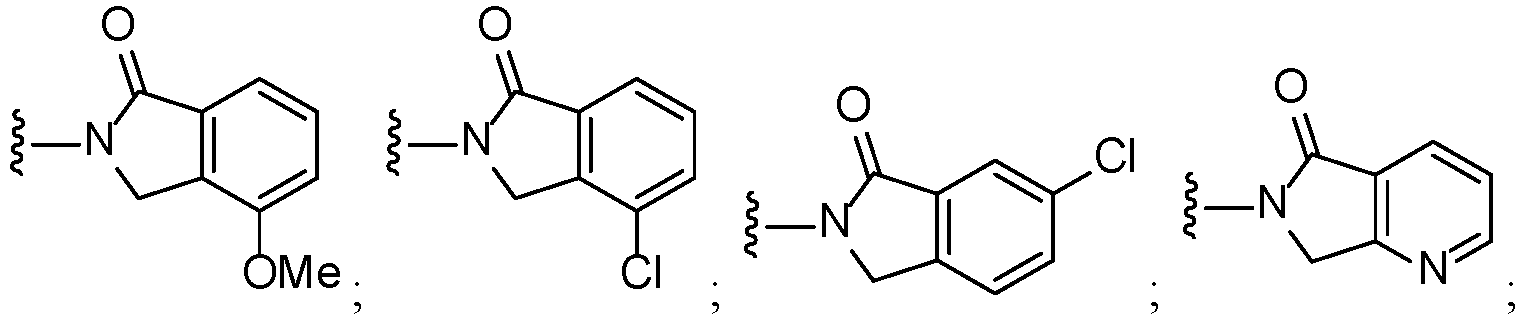


- In certain embodiments, ULM (or when present ULM') is a group according to the chemical structure:

- X of ULM-1 is O or S;
- Y of ULM-1 is H, methyl or ethyl;
- R17 of ULM-1 is H, methyl, ethyl, hydoxymethyl or cyclopropyl;
- M of ULM-1 is is optionally substituted aryl, optionally substituted heteroaryl, or

- R10 of ULM-1 is H, optionally substituted alkyl, optionally substituted haloalkyl, optionally substituted heteroaryl, optionally substituted aryl, optionally substituted hydroxyalkyl, optionally substituted thioalkyl or cycloalkyl;
- R11 of ULM-1 is optionally substituted heteroaromatic, optionally substituted heterocyclyl, optionally substituted aryl or

- R12 of ULM-1 is H or optionally substituted alkyl; and
- R13 of ULM-1 is H, optionally substituted alkyl, optionally substituted alkylcarbonyl, optionally substituted (cycloalkyl)alkylcarbonyl, optionally substituted aralkylcarbonyl, optionally substituted arylcarbonyl, optionally substituted (heterocyclyl)carbonyl, or optionally substituted aralkyl; optionally substituted (oxoalkyl)carbamate.
- In some embodiments, ULM and where present, ULM', are each independently a group according to the chemical structure:

- Y of ULM-m is H, methyol or ethyl
- R9 of ULM-m is H;
- R10 is isopropyl, tert-butyl, sec-butyl, cyclopentyl, or cyclohexyl;
- R11 of ULM-m is optionally substituted amide, optionally substituted isoindolinone, optionally substituted isooxazole, optionally substituted heterocyclyls.
- In other preferred embodiments of the disclosure, ULM and where present, ULM', are each independently a group according to the chemical structure:

- R17 of ULM-n is methyl, ethyl, or cyclopropyl; and
- R9, R10, and R11 of ULM-n are as defined above. In other instances, R9 is H; and
- R10 of ULM-n is H, alkyl, or or cycloalkyl (preferably, isopropyl, tert-butyl, sec-butyl, cyclopentyl, or cyclohexyl).
- In other preferred embodiments of the disclosure, ULM and where present, ULM', are each independently a group according to the chemical structure:

- R1 is H, optionally substituted alkyl or optionally substituted cycloalkyl;
- R3 is an optionally substituted 5-6 membered heteroaryl;
- W5 is optionally substituted phenyl, optionally substituted napthyl or optionally substituted pyridinyl;
- one of R14a and R14b is H, optionally substituted alkyl, optionally substituted haloalkyl (e.g., fluoroalkyl), optionally substituted alkoxy, optionally substituted hydroxyl alkyl, optionally substituted alkylamine, optionally substituted heterolkyl, optionally substituted alkyl-heterocycloalkyl, optionally substituted alkoxy-heterocycloalkyl, COR26, CONR27aR27b, NHCOR26, or NHCH3COR26; and the other of R14a and R14b is H; or R14a, R14b, together with the carbon atom to which they are attached, form an optionally substituted 3 to 6 membered cycloalkyl, heterocycloalkyl, spirocycloalkyl or spiroheterocyclyl, wherein the spiroheterocyclyl is not epoxide or aziridine;
- R15 is CN, optionally substituted fluoroalkyl,


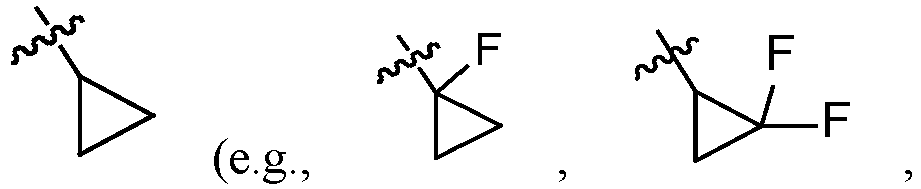


- each R16 is independently selected from halo, CN, optionally substituted alkyl, optionally substituted haloalkyl, hydroxy, or haloalkoxy;
- each R26 is independently H, optionally substituted alkyl or NR27aR27b;
- each R27a and R27b is independently H, optionally substituted alkyl, optionally substituted cycloalkyl, or R27a and R27b together with the nitrogen atom to which they are attached form a 4-6 membered heterocyclyl;
- each R28 is independently H, halogen, CN, optionally substituted aminoalkyl, optionally substituted amidoalkyl, optionally substituted haloalkyl, optionally substituted alkyl, optionally substituted alkoxy, optionally substituted heteroalkyl, optionally substituted alkylamine, optionally substituted hydroxyalkyl, amine, optionally substituted alkynyl, or optionally substituted cycloalkyl;
- o is 0, 1 or 2; and
- p is 0, 1, 2, 3, or 4.
- In any of the aspects or embodiments described herein, the ULM is of the formula:

- each of X4, X5, and X6 is selected from CH and N, wherein no more than 2 are N;
- R1 is C1-6 alkyl;
- R3 is the same as defined for ULM-o and ULM-p
- one of R14a and R14b is H, optionally substituted alkyl, optionally substituted haloalkyl, optionally substituted alkoxy, optionally substituted hydroxyl alkyl, optionally substituted alkylamine, optionally substituted heterolkyl, optionally substituted alkyl-heterocycloalkyl, optionally substituted alkoxy-heterocycloalkyl, COR26, CONR27aR27b, NHCOR26, or NHCH3 COR26; and the other of R14a and R14b is H; or R14a and R14b, together with the carbon atom to which they are attached, form an optionally substituted 3 to 5 membered cycloalkyl, heterocycloalkyl, spirocycloalkyl or spiroheterocyclyl, wherein the spiroheterocyclyl is not epoxide or aziridine;
- each R27a and R27b is independently H C1-6 alkyl or cyclolkyl;
- q is 1, 2, 3 or 4;
- R15 is optionally substituted

- R28 is H, methyl, CH2N(Me)2, CH2OH, CH2O(C1-4alkyl), CH2NHC(O)C1-4alkyl, NH2,

- R28C is H, methyl, fluoro, or chloro; and
- R16 is H, C1-4alkyl, fluoro, chloro, CN, or C1-4alkoxy.
- In any aspect or embodiment described herein, R14a and R14b are selected from: H, C1-4 alkyl, C1-4 cycloalkyl, C1-4 haloalkyl, C1-4 hydroxyalkyl, C1-4 alkyloxyalkyl, C1-4 alkyl-NR27aR27b and CONR27aR27b.
- In any aspect or embodiment described herein, at least one of R14a and R14b is H (e.g., both R14a and R14b are H).
- In any aspect or embodiment described herein, at least one of R14a and R14b is optionally substituted alkyl, optionally substituted haloalkyl, optionally substituted alkoxy, optionally substituted hydroxyl alkyl, optionally substituted alkylamine, optionally substituted heterolkyl, optionally substituted alkyl-heterocycloalkyl, optionally substituted alkoxy-heterocycloalkyl, COR26, CONR27aR27b, NHCOR26, or NHCH3COR26. Alternatively, in any aspect or embodiment described herein, one of R14a and R14b is optionally substituted alkyl, optionally substituted haloalkyl, optionally substituted alkoxy, optionally substituted hydroxyl alkyl, optionally substituted alkylamine, optionally substituted heterolkyl, optionally substituted alkyl-heterocycloalkyl, optionally substituted alkoxy-heterocycloalkyl, COR26, CONR27aR27b, NHCOR26, or NHCH3COR26; and the other of R14a and R14b is H.
- In any aspect or embodiment described herein, R14a and R14b together with the carbon atom to which they are attached form

- In other preferred embodiments of the disclosure, ULM and where present, ULM', are each independently a group according to the chemical structure:

- X is CH or N; and
- R1, R3, R14a, R14b, and R15 of ULM-q and ULM-r are the same as defined for ULM-o and ULM-p.
- In any of the aspects or embodiments described herein, the ULM (or when present, ULM') as described herein may be a pharmaceutically acceptable salt, enantiomer, diastereomer, solvate or polymorph thereof. In addition, in any of the aspects or embodiments described herein, the ULM (or when present, ULM') as described herein may be coupled to a PTM directly via a bond or by a chemical linker.
- In certain aspects of the disclosure, the ULM moiety is selected from the group consisting of:

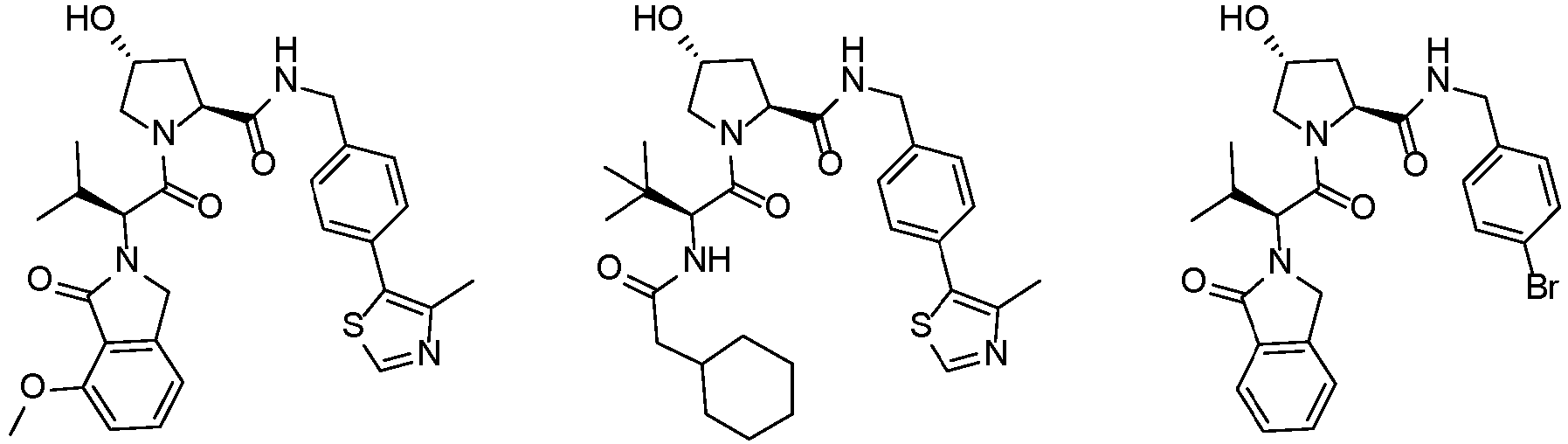

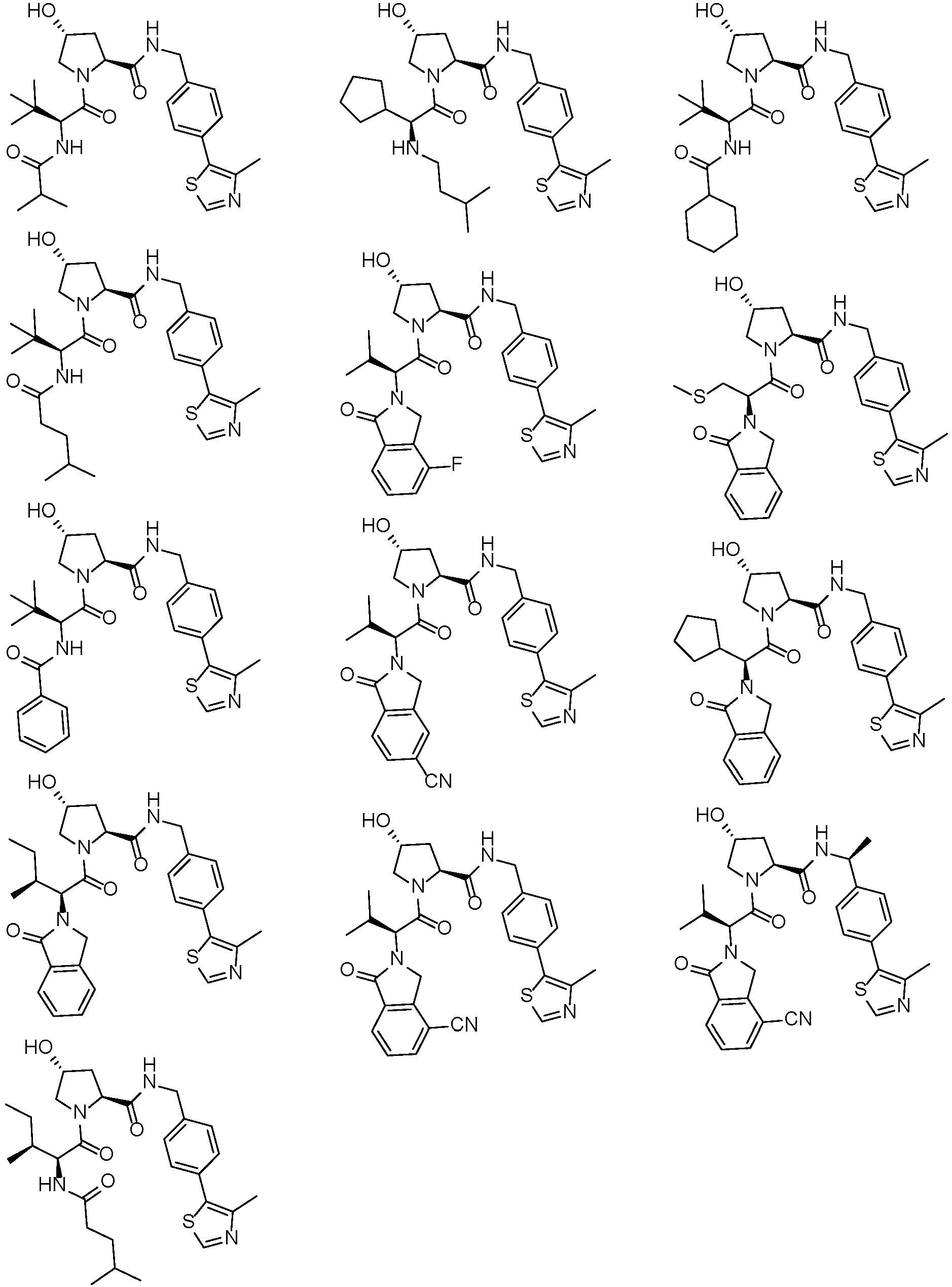
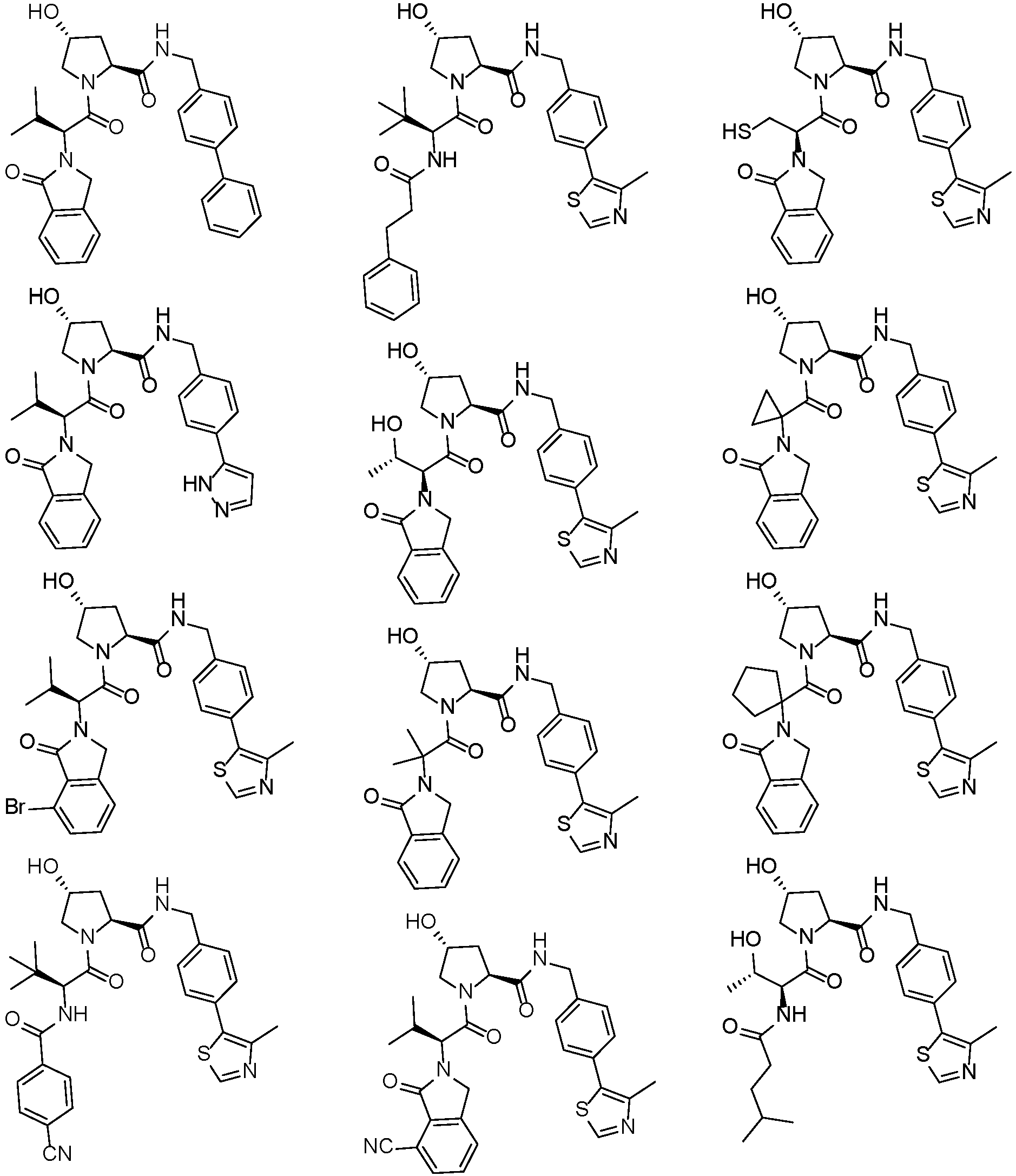


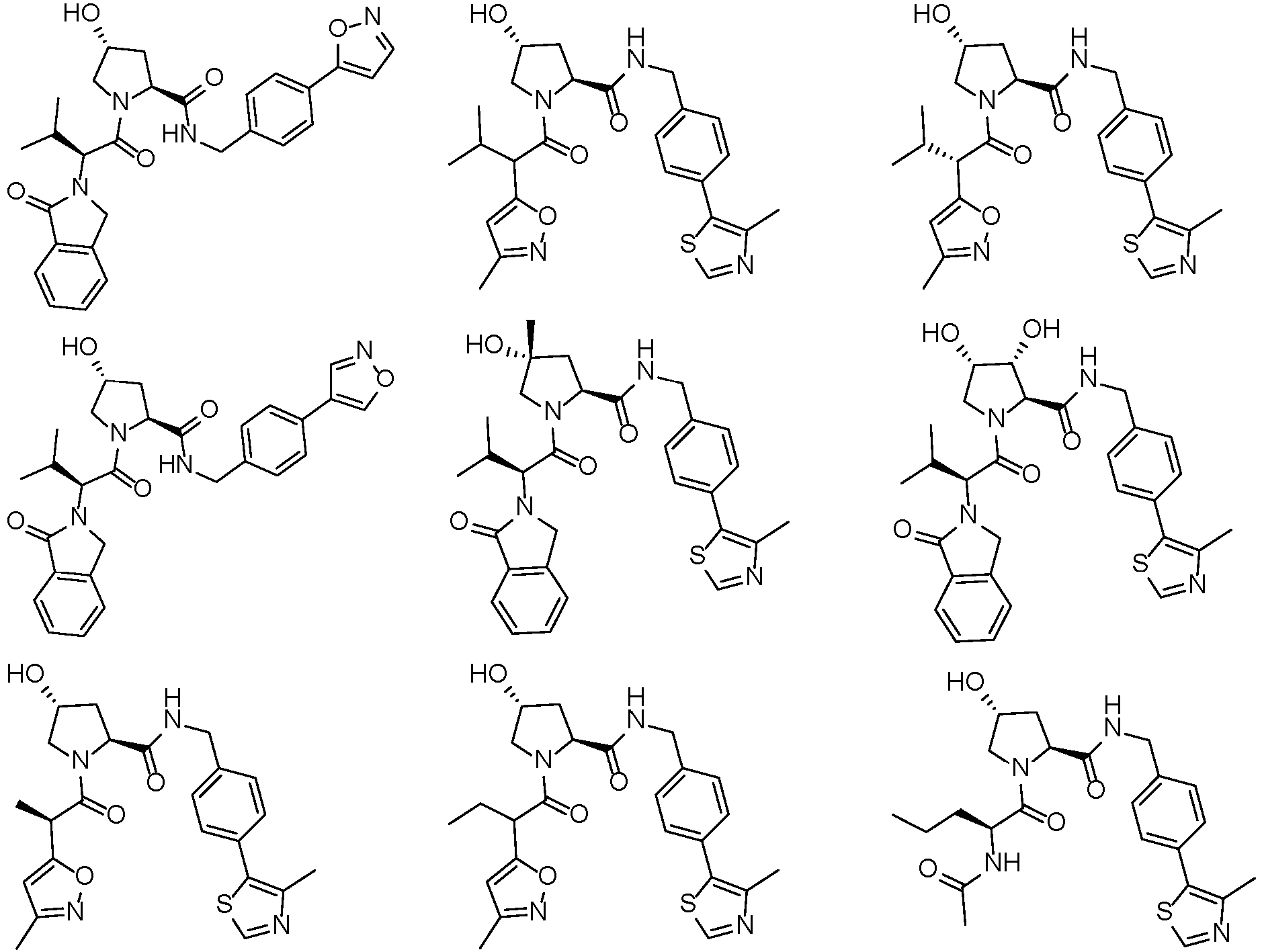

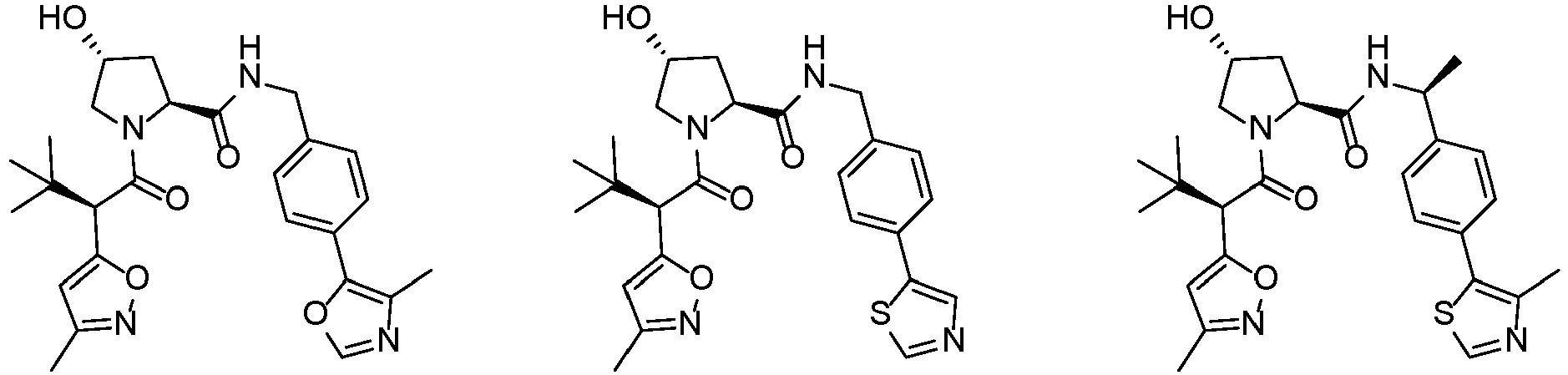


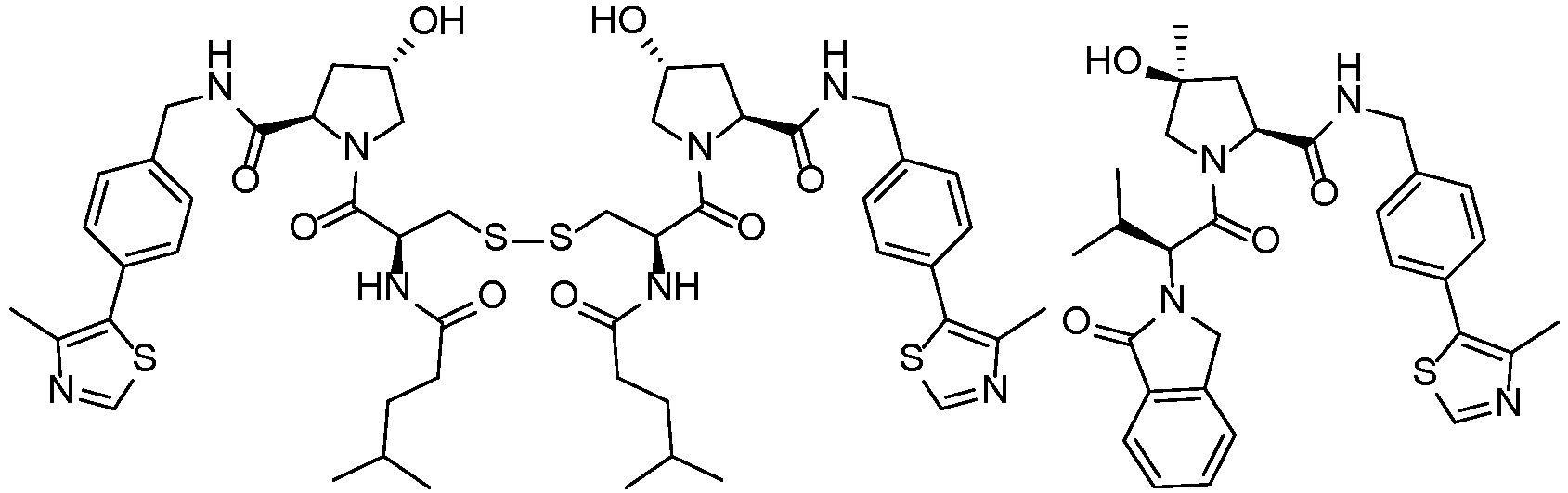


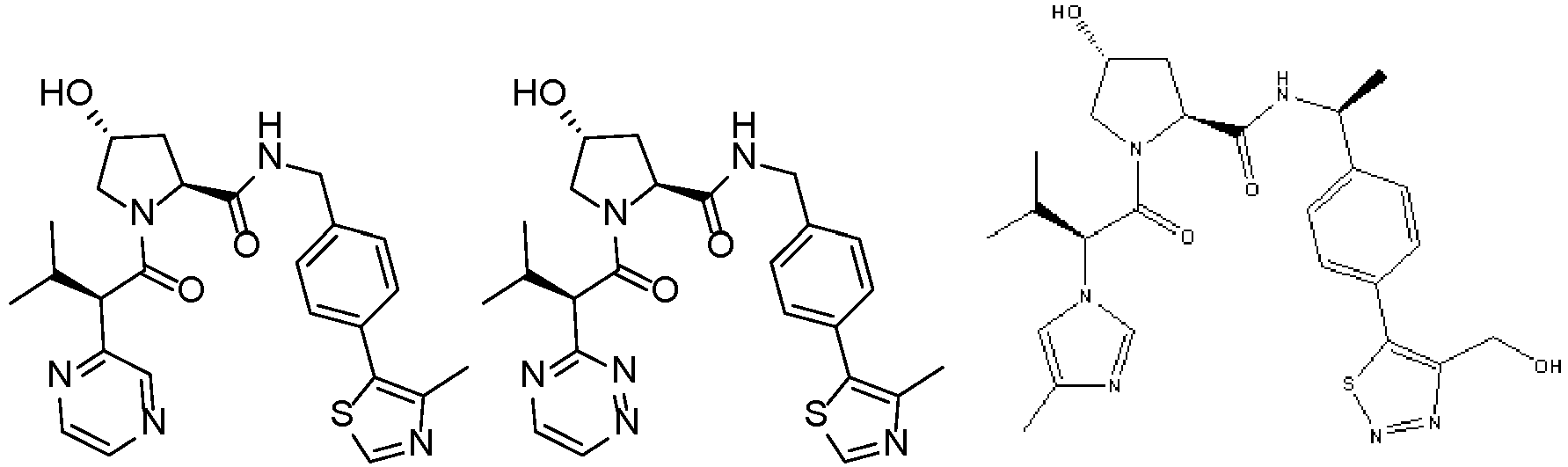


- In certain embodiments, the compounds as described herein include a means for chemically coupling the PTM to the ULM, e.g., one or more PTMs chemically linked or coupled to one or more ULMs (e.g., at least one of VLM) via a chemical linker (L). In certain embodiments, the linker group L is a group comprising one or more covalently connected structural units (e.g., - AL 1 ...(AL)q- or -(AL)q-), wherein AL 1 is a group coupled to PTM, and (AL)q is a group coupled to ULM.
- In any aspect or embodiment described herein, the linker (L) to ULM (e.g., VLM, ILM, CLM, or MLM) connection or coupling is a stable L-ULM connection. For example, in any aspect or embodiment described herein, when a linker (L) and a ULM is connected via a heteroatom, any subsequent heteroatom, if present, is separated by at least one single carbon atom (e.g., -CH2-), such as with an acetal or aminal group. By way of further example, in any aspect or embodiment described herein, when a linker (L) and a ULM is connected via a heteroatom, the heteroatom is not part of a ester.
- In any aspect or embodiment described herein, the linker group L is a bond or a chemical linker group represented by the formula -(AL)q-, wherein A is a chemical moiety and q is an integer from 1-100, and wherein L is covalently bound to the PTM and the ULM, and provides for sufficient binding of the PTM to the protein target and the ULM to an E3 ubiquitin ligase to result in target protein ubiquitination.
- In any aspect or embodiment described herein, the linker group L is -(AL)q-, wherein:
- (AL)q is a group which is connected to at least one of a ULM (such as a VLM), PTM moiety, or a combination thereof;
- q of the linker is an integer greater than or equal to 1;
- each AL is independently selected from the group consisting of, a bond, CRL1RL2, O, S, SO, SO2, NRL3, SO2NRL3, SONRL3, CONRL3, NRL3CONRL4, NRL3SO2NRL4, CO, CRL1=CRL2, C≡C, SiRL1RL2, P(O)RL1, P(O)ORL1, NRL3C(=NCN)NRL4, NRL3C(=NCN), NRL3C(-CNO2)NRL4, C3-11cycloalkyl optionally substituted with 0-6 RL1 and/or RL2 groups, C5-13 spirocycloalkyl optionally substituted with 0-9 RL1 and/or RL2 groups, C3-11heterocyclyl optionally substituted with 0-6 RL1 and/or RL2 groups, C5-13 spiroheterocyclyl optionally substituted with 0-8 RL1 and/or RL2 groups, aryl optionally substituted with 0-6 RL1 and/or RL2 groups, heteroaryl optionally substituted with 0-6 RL1 and/or RL2 groups, where RL1 or RL2, each independently are optionally linked to other groups to form cycloalkyl and/or heterocyclyl moiety, optionally substituted with 0-4 RL5 groups; and
- RL1, RL2, RL3, RL4 and RL5 are, each independently, H, halo, C1-8alkyl, OC1-8alkyl, SC1-8alkyl, NHC1-8alkyl, N(C1-8alkyl)2, C3-11cycloalkyl, aryl, heteroaryl, C3-11heterocyclyl, OC1-8cycloalkyl, SC1-8cycloalkyl, NHC1-8cycloalkyl, N(C1-8cycloalkyl)2, N(C1-8cycloalkyl)(C1-8alkyl), OH, NH2, SH, SO2C1-8alkyl, P(O)(OC1-8alkyl)(C1-8alkyl), P(O)(OC1-8alkyl)2, CC-C1-8alkyl, CCH, CH=CH(C1-8alkyl), C(C1-8alkyl)=CH(C1-8alkyl), C(C1-8alkyl)=C(C1-8alkyl)2, Si(OH)3, Si(C1-8alkyl)3, Si(OH)(C1-8alkyl)2, COC1-8alkyl, CO2H, halogen, CN, CF3, CHF2, CH2F, NO2, SF5, SO2NHC1-8alkyl, SO2N(C1-8alkyl)2, SONHC1-8alkyl, SON(C1-8alkyl)2, CONHC1-8alkyl, CON(C1-8alkyl)2, N(C1-8alkyl)CONH(C1-8alkyl), N(C1-8alkyl)CON(C1-8alkyl)2, NHCONH(C1-8alkyl), NHCON(C1-8alkyl)2, NHCONH2, N(C1-8alkyl)SO2NH(C1-8alkyl), N(C1-8alkyl) SO2N(C1-8alkyl)2, NH SO2NH(C1-8alkyl), NH SO2N(C1-8alkyl)2, NH SO2NH2.
- In certain embodiments, q of the linker is an integer greater than or equal to 0. In certain embodiments, q is an integer greater than or equal to 1.
- In certain embodiments, e.g., where q of the linker is greater than 2, (AL)q is a group which is to AL 1 and (AL)q wherein the units AL couple a PTM to a ULM.
- In certain embodiments, e.g., where q of the linker is 2, (AL)q is a group which is connected to AL 1 and to a ULM or PTM.
- In certain embodiments, e.g., where q of the linker is 1, the structure of the linker group L is -AL 1-, and AL 1 is a group which is connected to a ULM moiety and a PTM moiety.
- In certain embodiments, the unit AL of linker (L) comprises a group represented by a general structure selected from the group consisting of:
- -NR(CH2)n-(lower alkyl)-, -NR(CH2)n-(lower alkoxyl)-, -NR(CH2)n-(lower alkoxyl)-OCH2-, -NR(CH2)n-(lower alkoxyl)-(lower alkyl)-OCH2-, -NR(CH2)n-(cycloalkyl)-(lower alkyl)-OCH2-, -NR(CH2)n-(hetero cycloalkyl)-, -NR(CH2CH2O)n-(lower alkyl)-O-CH2-, - NR(CH2CH2O)n-(hetero cycloalkyl)-O-CH2-, -NR(CH2CH2O)n-Aryl-O-CH2-, - NR(CH2CH2O)n-(hetero aryl)-O-CH2-, -NR(CH2CH2O)n-(cyclo alkyl)-O-(hetero aryl)-O-CH2-, -NR(CH2CH2O)n-(cyclo alkyl)-O-Aryl-O-CH2-, -NR(CH2CH2O)n-(lower alkyl)-NH-Aryl-O-CH2-, -NR(CH2CH2O)n-(lower alkyl)-O-Aryl-CH2, - NR(CH2CH2O)n-cycloalkyl-O-Aryl-, -NR(CH2CH2O)n-cycloalkyl-O-(heteroaryl)l-, - NR(CH2CH2)n-(cycloalkyl)-O-(heterocyclyl)-CH2, -NR(CH2CH2)n-(heterocyclyl)-(heterocyclyl)-CH2, -N(R1R2)-(heterocyclyl)-CH2; where
- n of the linker can be 0 to 10;
- R of the linker can be H, lower alkyl;
- R1 and R2 of the linker can form a ring with the connecting N.
- In certain embodiments, the unit AL of linker (L) comprises a group represented by a general structure selected from the group consisting of:
- -N(R)-(CH2)m-O(CH2)n-O(CH2)o-O(CH2)p-O(CH2)q-O(CH2)r-OCH2-, -O-(CH2)m-O(CH2)n-O(CH2)o-O(CH2)p-O(CH2)q-O(CH2)r-OCH2-, -O-(CH2)m-O(CH2)n-O(CH2)o-O(CH2)p-O(CH2)q-O(CH2)r-O-; -N(R)-(CH2)m-O(CH2)n-O(CH2)o-O(CH2)p-O(CH2)q-O(CH2)r-O-;
- -(CH2)m-O(CH2)n-O(CH2)o-O(CH2)p-O(CH2)q-O(CH2)r-O-; -(CH2)m-O(CH2)n-O(CH2)o-O(CH2)p-O(CH2)q-O(CH2)r-OCH2-;







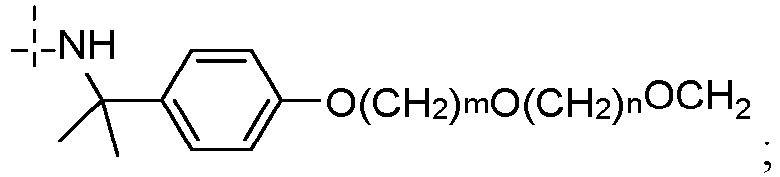


- m, n, o, p, q, and r of the linker are independently 0, 1, 2, 3, 4, 5, 6, 7, 8, 9, 10, 11, 12, 13, 14, 15, 16, 17, 18, 19, 20;
- when the number is zero, there is no N-O or O-O bond
- R of the linker is H, methyl and ethyl;
- X of the linker is H and F

- where m of the linker can be 2, 3, 4, 5

















- where each n and m of the linker can independently be 0, 1, 2, 3, 4, 5, 6.
- In any aspect or embodiment described herein, the unit AL of linker (L) is selected from the group consisting of:








- In any aspect or embodiment described herein, the unit AL of linker (L) is selected from the group consisting of:













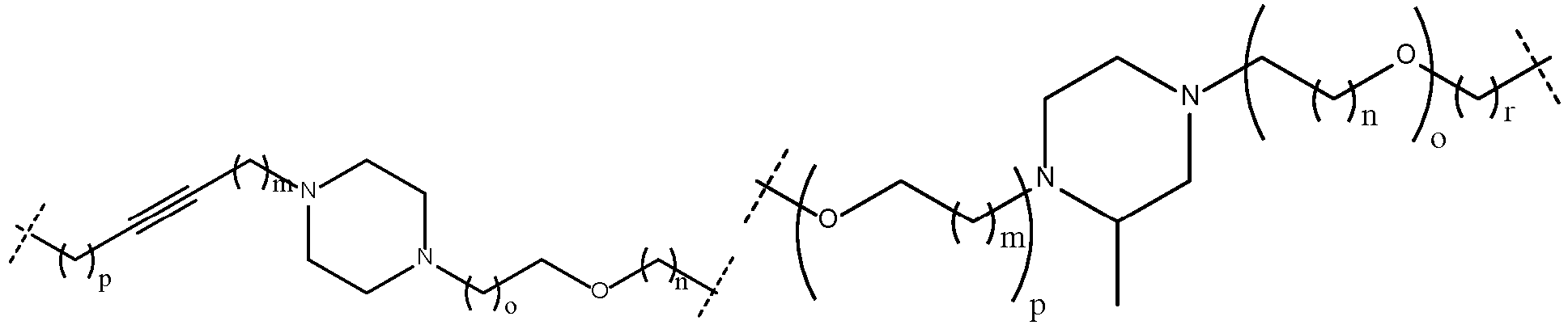


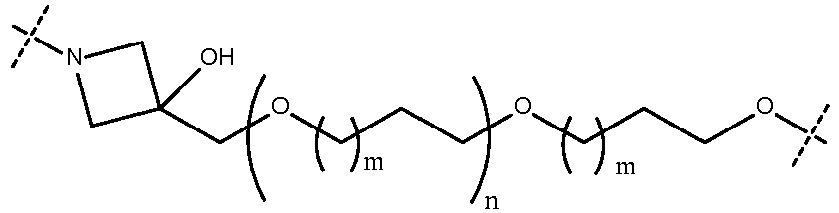






- In any aspect or embodiment described herein, the unit AL of linker (L) is selected from the group consisting of:








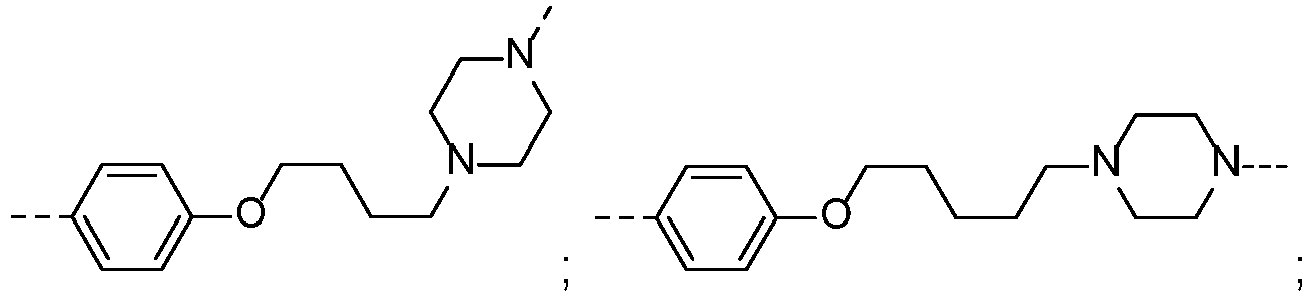

















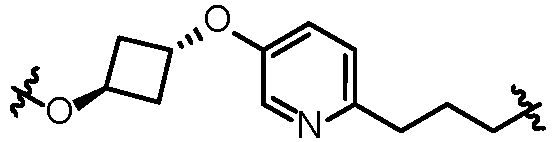
- In any aspect or embodiment described herein, the linker unit or linker (L) comprises a group represented by a structure selected from the group consisting of:
-O-(CH2)m-O(CH2)n-O(CH2)o-O(CH2)p-O(CH2)q-O(CH2)r-O(CH2)s-O(CH2)t-; -O-(CH2)m-O(CH2)n-O(CH2)o-O(CH2)p-O(CH2)q-O(CH2)r-O(CH2)s-O-; -(CH2)m-O(CH2)n-O(CH2)o-O(CH2)p-O(CH2)q-O(CH2)r-O(CH2)s-O(CH2)t-; -CH=CH(CH2)m-O(CH2)n-O(CH2)o-O(CH2)p-O(CH2)q-O(CH2)r-O(CH2)s-O(CH2)t-; -O(CH2)nNCH3C(=O)(CH2)m- ;



















- In any aspect or embodiment described herein, the linker (L) is selected from the group consisting of:



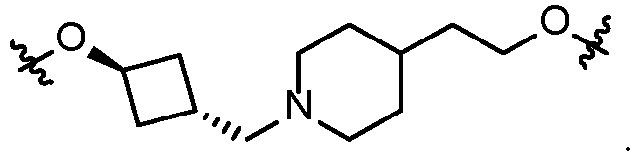
- In additional embodiments, the linker (L) comprises a structure selected from, but not limited to the structure shown below, where a dashed line indicates the attachment point to the PTM or ULM moieties:

- WL1 and WL2 are each independently absent, a 4-8 membered ring with 0-4 heteroatoms, optionally substituted with RQ, each RQ is independently a H, halo, OH, CN, CF3, optionally substituted linear or branched C1-C6 alkyl, optionally substituted linear or branched C1-C6 alkoxy, or 2 RQ groups taken together with the atom they are attached to, form a 4-8 membered ring system containing 0-4 heteroatoms;
- YL1 is each independently a bond, C1-C6 alkyl (linear, branched, optionally substituted) and optionally one or more C atoms are replaced with O; or C1-C6 alkoxy (linear, branched, optionally substituted);
- n is 0-10; and

- In additional embodiments, the linker (L) comprises a structure selected from, but not limited to the structure shown below, where a dashed line indicates the attachment point to the PTM or ULM moieties:

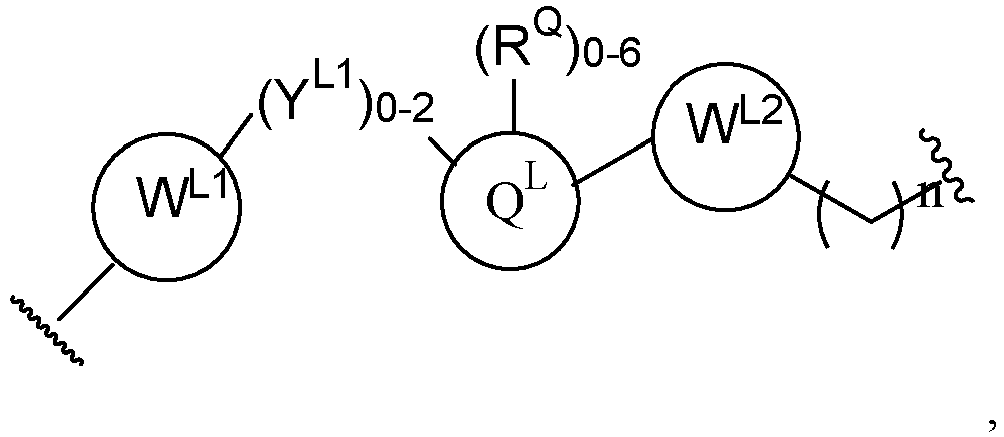
- WL1 and WL2 are each independently absent, aryl, heteroaryl, cyclic, heterocyclyl, C1-6 alkyl and optionally one or more C atoms are replaced with O or N, C1-6 alkenyl and optionally one or more C atoms are replaced with O, C1-6 alkynyl and optionally one or more C atoms are replaced with O, bicyclic, biaryl, biheteroaryl,or biheterocyclyl, each optionally substituted with RQ, each RQ is independently a H, halo, OH, CN, CF3, hydroxyl, nitro, C≡CH, C2-6 alkenyl, C2-6 alkynyl, optionally substituted linear or branched C1-C6 alkyl, optionally substituted linear or branched C1-C6 alkoxy, optionally substituted OC1-3alkyl (e.g., optionally substituted by 1 or more -F), OH, NH2, NRY1RY2, CN, or 2 RQ groups taken together with the atom they are attached to, form a 4-8 membered ring system containing 0-4 heteroatoms;
- YL1 is each independently a bond, NRYL1, O, S, NRYL2 CRYL1RYL2, C=O, C=S, SO, SO2, C1-C6 alkyl (linear, branched, optionally substituted) and optionally one or more C atoms are replaced with O; C1-C6 alkoxy (linear, branched, optionally substituted);
- QL is a 3-6 membered alicyclic or aromatic ring with 0-4 heteroatoms, optionally bridged, optionally substituted with 0-6 RQ, each RQ is independently H, linear or branched C1-6 alkyl optionally substituted by 1 or more halo or C1-6 alkoxyl, or 2 RQ groups taken together with the atom they are attached to, form a 3-8 membered ring system containing 0-2 heteroatoms);
- RYL1 RYL2 are each independently H, OH, C1-6 alkyl (linear, branched, optionally substituted by 1 or more halo, C1-6 alkoxyl), or R1, R2 together with the atom they are attached to, form a 3-8 membered ring system containing 0-2 heteroatoms);
- n is 0-10; and

- In additional embodiments, the linker group is optionally substituted (poly)ethyleneglycol having between 1 and about 100 ethylene glycol units, between about 1 and about 50 ethylene glycol units, between 1 and about 25 ethylene glycol units, between about 1 and 10 ethylene glycol units, between 1 and about 8 ethylene glycol units and 1 and 6 ethylene glycol units, between 2 and 4 ethylene glycol units,or optionally substituted alkyl groups interdispersed with optionally substituted, O, N, S, P or Si atoms. In certain embodiments, the linker is substituted with an aryl, phenyl, benzyl, alkyl, alkylene, or heterocyclyl group. In certain embodiments, the linker may be asymmetric or symmetrical.
- In any of the embodiments of the compounds described herein, the linker group may be any suitable moiety as described herein. In one embodiment, the linker is a substituted or unsubstituted polyethylene glycol group ranging in size from about 1 to about 12 ethylene glycol units, between 1 and about 10 ethylene glycol units, about 2 about 6 ethylene glycol units, between about 2 and 5 ethylene glycol units, between about 2 and 4 ethylene glycol units.
- In another embodiment, the present disclosure is directed to a compound which comprises a PTM group as described above, which binds to a target protein or polypeptide (e.g., SMARCA2, BRAHMA or BRM), which is ubiquitinated by a ubiquitin ligase and is chemically linked directly to the ULM group or through a linker moiety L, or PTM is alternatively a ULM' group which is also a ubiquitin ligase binding moiety, which may be the same or different than the ULM group as described above and is linked directly to the ULM group directly or through the linker moiety; and L is a linker moiety as described above which may be present or absent and which chemically (covalently) links ULM to PTM, or a pharmaceutically acceptable salt, enantiomer, stereoisomer, solvate or polymorph thereof.
- In certain embodiments, the linker group L is a group comprising one or more covalently connected structural units independently selected from the group consisting of:



- Although the ULM group and PTM group may be covalently linked to the linker group through any group which is appropriate and stable to the chemistry of the linker, in preferred aspects of the present dislcosure, the linker is independently covalently bonded to the ULM group and the PTM group preferably through an amide, ester, thioester, keto group, carbamate (urethane), carbon or ether, each of which groups may be inserted anywhere on the ULM group and PTM group to provide maximum binding of the ULM group on the ubiquitin ligase and the PTM group on the target protein to be degraded. (It is noted that in certain aspects where the PTM group is a ULM group, the target protein for degradation may be the ubiquitin ligase itself). In certain preferred aspects, the linker may be linked to an optionally substituted alkyl, alkylene, alkenyl or alkynyl group, an aryl group or a heterocyclyl group on the ULM and/or PTM groups.
- In any aspect or embodiment of the present disclosure, the PTM group is a moiety, which binds to target proteins, such as Switch/Sucrose Non Fermentable (SWI/SNF)-Related, Matrix-Associated, Actin-Dependent Regulator of Chromatin, Subfamily A, Member 2 (SMARCA2) or BRM. Thus, in any aspect or embodiment described herein, the PTM group is any moiety that binds to SMARCA2 or BRM protein specifically (binds to the target protein SMARCA2, BRAHMA or BRM).
- In certain embodiments, the compounds as described herein include a means for binding a target protein, e.g., Brm. As such, in certain aspects, the disclosure provides a bifunctional compound having a means for binding Brm, and a means for binding VHL and a means for chemically coupling the means for binding Brm to the means for binding VHL.
- The compositions described below exemplify some of the members of small molecule target protein binding moieties. Such small molecule target protein binding moieties also include pharmaceutically acceptable salts, enantiomers, solvates and polymorphs of these compositions, as well as other small molecules that may target SMARCA2. These binding moieties are linked to the ubiquitin ligase binding moiety preferably through a linker in order to present a target protein (to which the protein target moiety is bound) in proximity to the ubiquitin ligase for ubiquitination and degradation. Any protein (e.g., SMARCA2, BRAHMA or BRM), which can bind to a protein target moiety or PTM group and acted on or degraded by a ubiquitin ligase is a target protein according to the present disclosure.
- The present disclosure may be used to treat a number of disease states and/or conditions; including any disease state and/or condition in which proteins are dysregulated (e.g., SMARCA4-deficiency/mutation) and where a patient would benefit from the degradation and/or inhibition of proteins, such as SMARCA2, BRAHMA or BRM.
- In an additional aspect, the description provides therapeutic compositions comprising an effective amount of a compound as described herein or salt form thereof, and a pharmaceutically acceptable carrier, additive or excipient, and optionally an additional bioactive agent. The therapeutic compositions modulate protein degradation in a patient or subject, for example, an animal such as a human, and can be used for treating or ameliorating disease states or conditions which are modulated through the degraded protein. In certain embodiments, the therapeutic compositions as described herein may be used to effectuate the degradation of proteins of interest for the treatment or amelioration of a disease, e.g., cancer such as at least one of a SWI/SNF associated cancer, a SMARCA4-mutation associated cancer, a SMARCA4-deficient cancer, or a cancer with decreased expression of SMARCA4 relative to normal SMARCA4 expression (e.g., decreased expression relative to the expression of non-mutated SMARCA4 or SMARCA4 in a similarly situated non-cancerous cell with wildtype SMARCA4), including lung cancer or non-small cell lung cancer. In any aspect or embodiment described herein, the disease is at least one of SWI/SNF associated cancer, a cancer with a SMARCA4 mutation, a cancer with a SMARCA4-deficiency, or a combination thereof, which may be lung cancer or a non-small cell lung cancer.
- In certain additional embodiments, the therapeutic compositions as described herein may be used to effectuate the degradation of proteins of interest for the treatment or amelioration of a disease, e.g., cancer such as at least one of a SWI/SNF associated cancer, a SMARCA2-associated cancer or a cancer with normal or over-expression of SMARCA2.
- In alternative aspects, the present disclosure relates to a method for treating a disease state or ameliorating the symptoms of a disease or condition in a subject in need thereof by degrading a protein or polypeptide through which a disease state or condition is modulated comprising administering to said patient or subject an effective amount, e.g., a therapeutically effective amount, of at least one compound as described hereinabove, optionally in combination with a pharmaceutically acceptable carrier, additive or excipient, and optionally an additional bioactive agent, wherein the composition is effective for treating or ameliorating the disease or disorder or symptom thereof in the subject. The method according to the present disclosure may be used to treat a large number of disease states or conditions including cancer, by virtue of the administration of effective amounts of at least one compound described herein. The disease state or condition may be a disease caused by a microbial agent or other exogenous agent such as a virus, bacteria, fungus, protozoa or other microbe or may be a disease state, which is caused by overexpression of a protein, which leads to a disease state and/or condition.
- In another aspect, the description provides methods for identifying the effects of the degradation of proteins of interest in a biological system using compounds according to the present disclosure.
- The term "target protein" is used to describe a protein or polypeptide, which is a target for binding to a compound according to the present disclosure and degradation by ubiquitin ligase hereunder. Such small molecule target protein binding moieties also include pharmaceutically acceptable salts, enantiomers, solvates and polymorphs of these compositions, as well as other small molecules that may target a protein of interest. These binding moieties are linked to at least one ULM group (e.g. VLM) through at least one linker group L.
- The protein target may be used in screens that identify compound moieties which bind to the protein and by incorporation of the moiety into compounds according to the present disclosure, the level of activity of the protein may be altered for therapeutic end result.
- The term "protein target moiety" or PTM is used to describe a small molecule which binds to a target protein or other protein or polypeptide of interest, such as SMARCA2 or BRM, and places/presents that protein or polypeptide in proximity to an ubiquitin ligase such that degradation of the protein or polypeptide by ubiquitin ligase may occur. The compositions described below exemplify some of the members of the small molecule target proteins.
- In any aspect or embodiment described herein, the PTM of the present disclosure has a chemical structure represented by:

- W PTM1 is an optionally substituted 5-6-membered aryl or heteroaryl ring (e.g., a 5-6 member aryl or heteroaryl substituted with 0, 1, 2, or 3 substituents selected from hydroxy, halogen, alkoxy, alkyl, haloalkyl, phosphate, amino, alkylamino, cyano or combination thereof);
- W PTM2 is an optionally substituted 5-6-membered aryl or heteroaryl ring (e.g., a 5-6 membered aryl or heteroaryl substituted with 0, 1, 2, or 3 substituents selected from hydroxy, halogen, alkoxy, alkyl, haloalkyl, amino, alkylamino and cyano);
- W PTM3 is an optionally substituted 5-6-membered aryl or heteroaryl ring (e.g., a 5-6 membered aryl or heteroaryl substituted with 0, 1, 2, or 3 substituents selected from hydroxy, halogen, alkoxy, alkyl, haloalkyl, amino, alkylamino and cyano), or an optionally substituted 4-9 cycloalkyl or heterocyclyl, such as an optionally substituted bridged bicycloalkyl and bridged biheterocyclyl rings (e.g. a 4-9 cycloalkyl or heterocyclyl substituted with 0, 1, or 2 substituents selected from hydroxy, halogen, alkoxy, alkyl, haloalkyl, amino, alkylamino and cyano);
- W PTM5 is absent (such that W PTM3 is connected directly to L (linker) or ULM) or an optionally substituted alkyl, an optionally substituted 5-6-membered cycloalkyl, heterocycle, aryl or heteroaryl ring (e.g. a 5-6 membered cycloalkyl, heterocycle, aryl or heteroaryl substituted with 0, 1, or 2 substituents selected from hydroxy, halogen, alkoxy, alkyl, haloalkyl, amino, alkylamino and cyano); and

- In any aspect or embodiment described herein, WPTM5 is a piperidine.
- In certain embmodiments, WPTM1 comprises a phosphate substitution.
- In any aspect or embodiment described herein, the PTM of the PROTAC of the present disclosure is represented by Formula I, wherein at least one of:
- WPTM1 is an optionally substituted phenyl or a pyridyl (e.g., substituted as described herein, such as a phenyl substituted with a hydroxy or phosphate substituent with or without an additional optional substituent selected as described herein, e.g., substituted with 0, 1, 2, or 3 substituents selected from hydroxy, halogen, alkoxy, alkyl, haloalkyl, amino, alkylamino, cyano or combination thereof);
- WPTM2 is an optionally substituted 6-membered heteroaryl ring (e.g., substituted as described herein, such as a pyridazine substituted with amino group);
- WPTM3 is an optionally substituted 5-6-membered heteroaryl (e.g., a pyrazole, pyrrole, imidazole, oxazole, oxadiazole, or triazole);
- WPTM5 is as described in any aspect or embodiment described herein (e.g., WPTM5 may be absent or a pyridine ring); or
- a combination thereof.
- In any aspect or embodiment described herein, for example, an embodiment that includes a PTM of Formula I, WPTM3 is a pyrazole or a 6-8-membered heterocyclyl (e.g., a piperazine or a diazabicyclooctane).
- In any aspect or embodiment described herein, the PTM of the present disclosure has a chemical structure represented by:

- WPTM1, WPTM2, and WPTM5 are as described in any other aspect or embodiment described herein (e.g., WPTM5 may or may not be present, such that WPTM4 may be connected directly to L (linker) or the ULM);
- WPTM4 is an optionally substitute 5-7 cycloalkyl or heterocyclyl (e.g., 5-7 cycloalkyl or heterocyclyl substituted with 0, 1, 2, or 3 substituents selected from hydroxy, halogen, alkoxy, alkyl, haloalkyl, amino, alkylamino and cyano) that is fused with the WPTM2 ring; and

- In any aspect or embodiment described herein, the PTM of the present disclosure is represented by Formula II, wherein WPTM1, WPTM2 and WPTM5 are as described in any of the aspects or embodiment described herein, and WPTM4 is a piperazine ring. For example, in any aspect or embodiment described herein, WPTM2 and WPTM4 of Formula II taken together constitute a dihydropirazino[2,3-e]pyridazine as shown:

- In any aspect or embodiment described herein, the PTM of the present disclosure has a chemical structure represented by:

- WPTM1 and WPTM2 are as described in any aspect or embodiment described herein;
- WPTM6 and WPTM7 are independently an optionally 4-7 cycloalkyl or heterocyclyl (e.g., each is independently a 4-7 cycloalkyl or heterocyclyl substituted with 0, 1, or 2 substituents selected from hydroxy, halogen, alkoxy, alkyl, haloalkyl, amino, alkylamino and cyano), and the rings of WPTM6 and WPTM7 are fused or linked via a spiro connection; and

- In any aspect or embodiment described herein, the PTM of the present disclosure has a chemical structure represented by formula III, wherein WPTM1 and WPTM2 are each independently selected as described in any aspect or embodiment described herein (e.g., WPTM1 is a phenyl substituted with a hydroxy substituent with or without an additional optional substituent selected as described herein, WPTM2 is a pyridazine substituted with amino group), and WPTM6 and WPTM7 are a spirocyclic ring system, for example, a spirocyclic ring selected from:


- In any aspect or embodiment described herein, the PTM of the the present disclosure is respresnted by:


- In any aspect or embodiment described herein, the PTM of the present disclosure has the chemical structure represented by Formula IV, wherein at least one of:
- WPTM1 is a phenyl substituted with a hydroxy or phosphate substituent with or without an additional optional substituent selected as described herein;
- WPTM2 is a pyridazine substituted with amino group;
- WPTM5 is absent, a pyrazole ring, or a pyridine ring; or
- a combination thereof.
- In any aspect or embodiment described herein, the PTM of the present disclosure is represented by:

- WPTM3 is absent or an optionally substituted 5-6-membered heteroaryl, an optionally substituted 4-9 cycloalkyl or heterocyclyl ring, an optionally substituted bridged bicycloalkyl and bridged biheterocyclyl ring; and
- WPTM5 is an optionally substituted 5-6-membered heteroaryl or aryl, e.g., pyridine, or pyridazine.
- In any aspect or embodiment described herein, the PTM of the present disclosure is represented by:

- WPTM3 is an optionally substituted 5-6-membered heteroaryl, an optionally substituted 4-9 cycloalkyl or heterocyclyl ring, an optionally substituted bridged bicycloalkyl and bridged biheterocyclyl ring;
- WPTM5 is an optionally substituted 5-6-membered heteroaryl or aryl, e.g., pyridine, or pyridazine;
- Rv is 0, 1, 2 or 3 substituents independently selected from hydroxy, halogen, alkoxy, alkyl, haloalkyl, phosphate, amino, alkylamino, cyano or a combination thereof.
- In certain embodiments, the hydroxyl group is modified with a phosphate group (i.e., a phosphoester group).
- In any aspect or embodiment described herein, the PTM of the present disclosure has a chemical structure represented by:
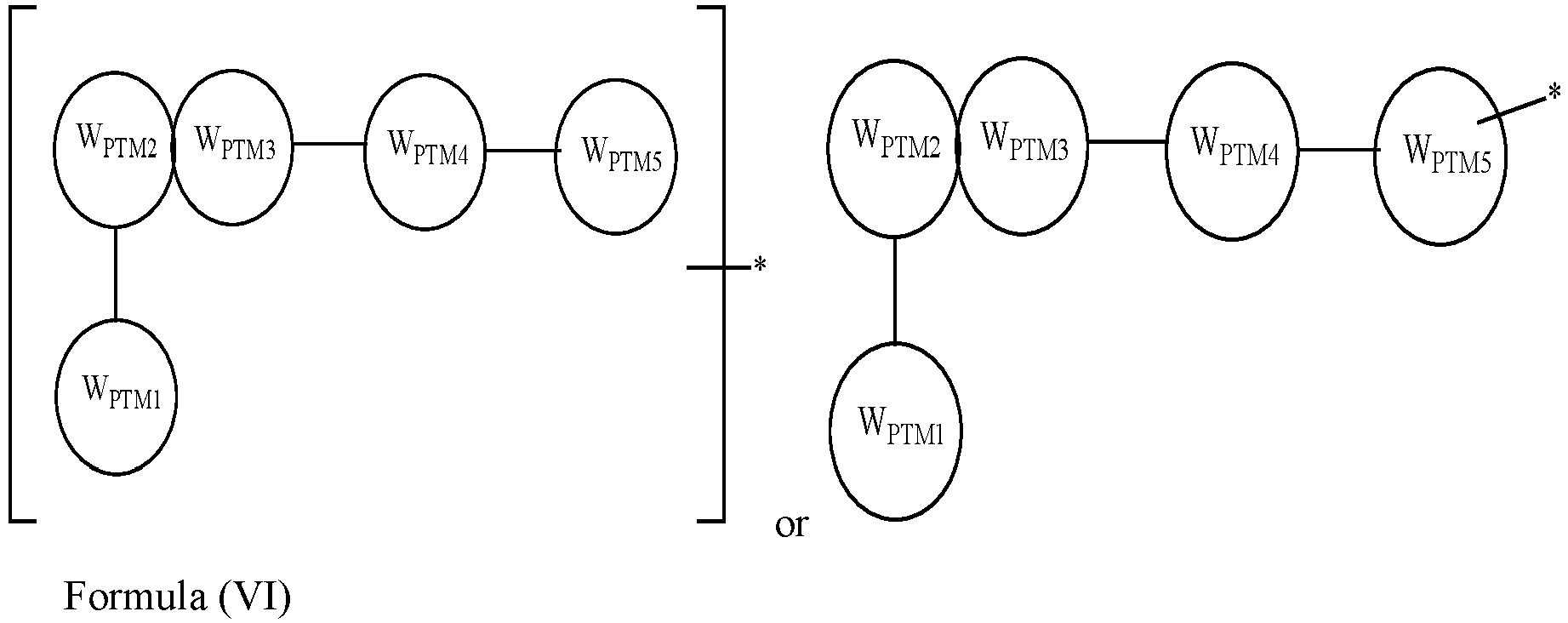
- WPTM1 and WPTM2 are as described in any other aspect or embodiment described herein (e.g., WPTM5 may or may not be present, such that WPTM4 may be connected directly to L (linker) or the ULM);
- WPTM3 is an optionally substituted 5-7 cycloalkyl or heterocyclyl (e.g., 5-7 cycloalkyl or heterocyclyl substituted with 0, 1, 2, or 3 substituents selected from hydroxy, halogen, alkoxy, alkyl, haloalkyl, amino, alkylamino and cyano) that is fused with the WPTM2 ring;
- WPTM4 is an optionally substituted 5-7-membered aryl or heteroaryl ring (e.g., a 5-6 membered aryl or heteroaryl substituted with 0, 1, 2, or 3 substituents selected from hydroxy, halogen, alkoxy, alkyl, haloalkyl, amino, alkylamino and cyano), or an optionally substituted 4-9 cycloalkyl or heterocyclyl, such as an optionally substituted bridged bicycloalkyl and bridged biheterocyclyl rings (e.g. a 4-9 cycloalkyl or heterocyclyl substituted with 0, 1, or 2 substituents selected from hydroxy, halogen, alkoxy, alkyl, haloalkyl, amino, alkylamino and cyano);
- WPTM5 is absent (such that WPTM3 is connected directly to L (linker) or ULM) or an optionally substituted alkyl, an optionally substituted 5-6-membered cycloalkyl, heterocycle, aryl or heteroaryl ring (e.g. a 5-6 membered cycloalkyl, heterocycle, aryl or heteroaryl substituted with 0, 1, or 2 substituents selected from hydroxy, halogen, alkoxy, alkyl, haloalkyl, amino, alkylamino and cyano), e.g., an optionally substituted pyrazole ring, or a pyridine ring; and

- In any aspect or embodiment described herein, the PTM is selected from:


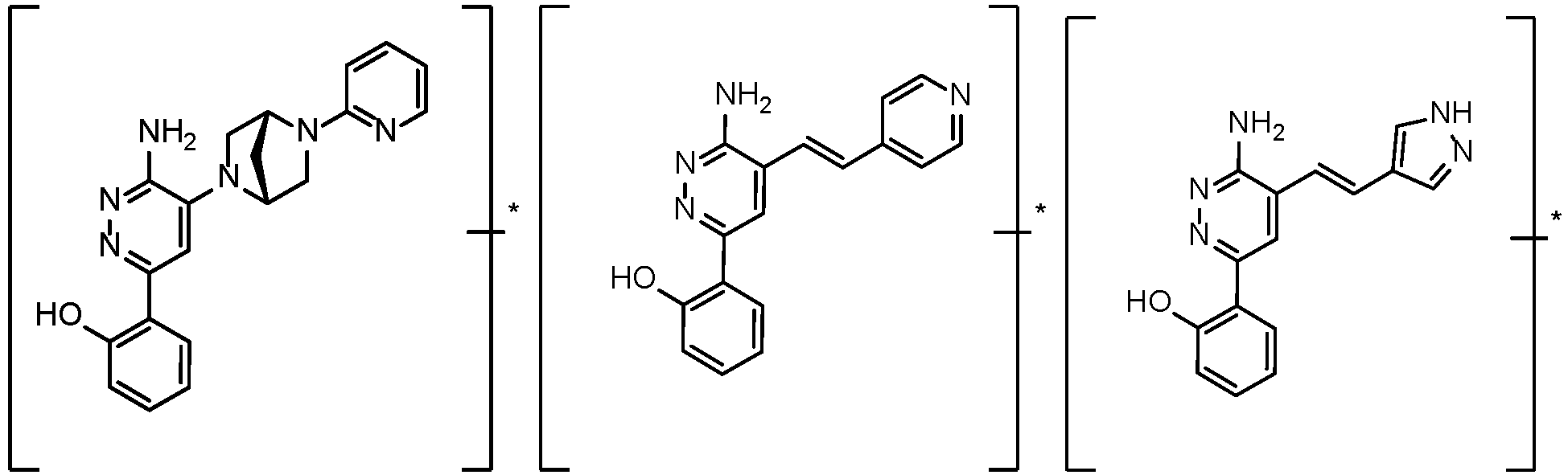

- In any aspect or embodiment described herein, the PTM is selected from:

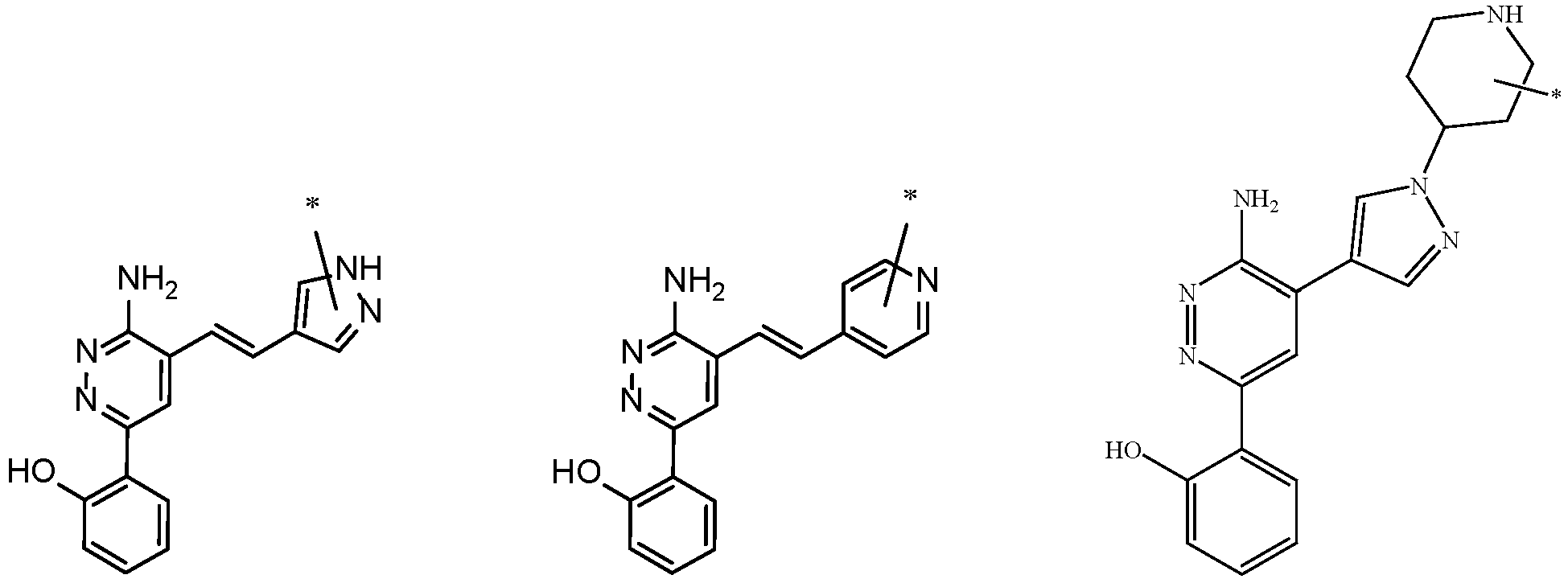

- In any aspect or embodiment described herein, the PTM is selected from the group consisting of:


- The compositions described herein exemplify some of the members of these types of small molecule target protein binding moieties. Such small molecule target protein binding moieties also include pharmaceutically acceptable salts, enantiomers, solvates and polymorphs of these compositions, as well as other small molecules that may target a protein of interest. References which are cited herein below are incorporated by reference herein in their entirety.
- Pharmaceutical compositions comprising combinations of an effective amount of at least one bifunctional compound as described herein, and one or more of the compounds otherwise described herein, all in effective amounts, in combination with a pharmaceutically effective amount of a carrier, additive or excipient, represents a further aspect of the present disclosure.
- The present disclosure includes, where applicable, the compositions comprising the pharmaceutically acceptable salts, in particular, acid or base addition salts of compounds as described herein. The acids which are used to prepare the pharmaceutically acceptable acid addition salts of the aforementioned base compounds useful according to this aspect are those which form non-toxic acid addition salts, i.e., salts containing pharmacologically acceptable anions, such as the hydrochloride, hydrobromide, hydroiodide, nitrate, sulfate, bisulfate, phosphate, acid phosphate, acetate, lactate, citrate, acid citrate, tartrate, bitartrate, succinate, maleate, fumarate, gluconate, saccharate, benzoate, methanesulfonate, ethanesulfonate, benzenesulfonate, p-toluenesulfonate and pamoate [i.e., 1,1'-methylene-bis-(2-hydroxy-3 naphthoate)]salts, among numerous others.
- Pharmaceutically acceptable base addition salts may also be used to produce pharmaceutically acceptable salt forms of the compounds or derivatives according to the present disclosure. The chemical bases that may be used as reagents to prepare pharmaceutically acceptable base salts of the present compounds that are acidic in nature are those that form non-toxic base salts with such compounds. Such non-toxic base salts include, but are not limited to those derived from such pharmacologically acceptable cations such as alkali metal cations (eg., potassium and sodium) and alkaline earth metal cations (eg, calcium, zinc and magnesium), ammonium or water-soluble amine addition salts such as N-methylglucamine-(meglumine), and the lower alkanolammonium and other base salts of pharmaceutically acceptable organic amines, among others.
- The compounds as described herein may, in accordance with the disclosure, be administered in single or divided doses by the oral, parenteral or topical routes. Administration of the active compound may range from continuous (intravenous drip) to several oral administrations per day (for example, Q.I.D.) and may include oral, topical, parenteral, intramuscular, intravenous, sub-cutaneous, transdermal (which may include a penetration enhancement agent), buccal, sublingual and suppository administration, among other routes of administration. Enteric coated oral tablets may also be used to enhance bioavailability of the compounds from an oral route of administration. The most effective dosage form will depend upon the pharmacokinetics of the particular agent chosen as well as the severity of disease in the patient. Administration of compounds according to the present disclosure as sprays, mists, or aerosols for intra-nasal, intra-tracheal or pulmonary administration may also be used. The present disclosure therefore also is directed to pharmaceutical compositions comprising an effective amount of compound as described herein, optionally in combination with a pharmaceutically acceptable carrier, additive or excipient. Compounds according to the present disclosure may be administered in immediate release, intermediate release or sustained or controlled release forms. Sustained or controlled release forms are preferably administered orally, but also in suppository and transdermal or other topical forms. Intramuscular injections in liposomal form may also be used to control or sustain the release of compound at an injection site.
- The compositions as described herein may be formulated in a conventional manner using one or more pharmaceutically acceptable carriers and may also be administered in controlled-release formulations. Pharmaceutically acceptable carriers that may be used in these pharmaceutical compositions include, but are not limited to, ion exchangers, alumina, aluminum stearate, lecithin, serum proteins, such as human serum albumin, buffer substances such as phosphates, glycine, sorbic acid, potassium sorbate, partial glyceride mixtures of saturated vegetable fatty acids, water, salts or electrolytes, such as prolamine sulfate, disodium hydrogen phosphate, potassium hydrogen phosphate, sodium chloride, zinc salts, colloidal silica, magnesium trisilicate, polyvinyl pyrrolidone, cellulose-based substances, polyethylene glycol, sodium carboxymethylcellulose, polyacrylates, waxes, polyethylene-polyoxypropylene-block polymers, polyethylene glycol and wool fat.
- The compositions as described herein may be administered orally, parenterally, by inhalation spray, topically, rectally, nasally, buccally, vaginally or via an implanted reservoir. The term "parenteral" as used herein includes subcutaneous, intravenous, intramuscular, intra-articular, intra-synovial, intrasternal, intrathecal, intrahepatic, intralesional and intracranial injection or infusion techniques. Preferably, the compositions are administered orally, intraperitoneally or intravenously.
- Sterile injectable forms of the compositions as described herein may be aqueous or oleaginous suspension. These suspensions may be formulated according to techniques known in the art using suitable dispersing or wetting agents and suspending agents. The sterile injectable preparation may also be a sterile injectable solution or suspension in a non-toxic parenterally-acceptable diluent or solvent, for example as a solution in 1, 3-butanediol. Among the acceptable vehicles and solvents that may be employed are water, Ringer's solution and isotonic sodium chloride solution. In addition, sterile, fixed oils are conventionally employed as a solvent or suspending medium. For this purpose, any bland fixed oil may be employed including synthetic mono- or di-glycerides. Fatty acids, such as oleic acid and its glyceride derivatives are useful in the preparation of injectables, as are natural pharmaceutically-acceptable oils, such as olive oil or castor oil, especially in their polyoxyethylated versions. These oil solutions or suspensions may also contain a long-chain alcohol diluent or dispersant, such as Ph. Helv or similar alcohol.
- The pharmaceutical compositions as described herein may be orally administered in any orally acceptable dosage form including, but not limited to, capsules, tablets, aqueous suspensions or solutions. In the case of tablets for oral use, carriers which are commonly used include lactose and corn starch. Lubricating agents, such as magnesium stearate, are also typically added. For oral administration in a capsule form, useful diluents include lactose and dried corn starch. When aqueous suspensions are required for oral use, the active ingredient is combined with emulsifying and suspending agents. If desired, certain sweetening, flavoring or coloring agents may also be added.
- Alternatively, the pharmaceutical compositions as described herein may be administered in the form of suppositories for rectal administration. These can be prepared by mixing the agent with a suitable non-irritating excipient, which is solid at room temperature but liquid at rectal temperature and therefore will melt in the rectum to release the drug. Such materials include cocoa butter, beeswax and polyethylene glycols.
- The pharmaceutical compositions as described herein may also be administered topically. Suitable topical formulations are readily prepared for each of these areas or organs. Topical application for the lower intestinal tract can be effected in a rectal suppository formulation (see above) or in a suitable enema formulation. Topically-acceptable transdermal patches may also be used.
- For topical applications, the pharmaceutical compositions may be formulated in a suitable ointment containing the active component suspended or dissolved in one or more carriers. Carriers for topical administration of the compounds of this disclosure include, but are not limited to, mineral oil, liquid petrolatum, white petrolatum, propylene glycol, polyoxyethylene, polyoxypropylene compound, emulsifying wax and water. In certain preferred aspects of the disclosure, the compounds may be coated onto a stent which is to be surgically implanted into a patient in order to inhibit or reduce the likelihood of occlusion occurring in the stent in the patient.
- Alternatively, the pharmaceutical compositions can be formulated in a suitable lotion or cream containing the active components suspended or dissolved in one or more pharmaceutically acceptable carriers. Suitable carriers include, but are not limited to, mineral oil, sorbitan monostearate, polysorbate 60, cetyl esters wax, cetearyl alcohol, 2-octyldodecanol, benzyl alcohol and water.
- For ophthalmic use, the pharmaceutical compositions may be formulated as micronized suspensions in isotonic, pH adjusted sterile saline, or, preferably, as solutions in isotonic, pH adjusted sterile saline, either with our without a preservative such as benzylalkonium chloride. Alternatively, for ophthalmic uses, the pharmaceutical compositions may be formulated in an ointment such as petrolatum.
- The pharmaceutical compositions as described herein may also be administered by nasal aerosol or inhalation. Such compositions are prepared according to techniques well-known in the art of pharmaceutical formulation and may be prepared as solutions in saline, employing benzyl alcohol or other suitable preservatives, absorption promoters to enhance bioavailability, fluorocarbons, and/or other conventional solubilizing or dispersing agents.
- The amount of compound in a pharmaceutical composition as described herein that may be combined with the carrier materials to produce a single dosage form will vary depending upon the host and disease treated and the particular mode of administration. Preferably, the compositions should be formulated to contain between about 0.05 milligram to about 750 milligrams or more, more preferably about 1 milligram to about 600 milligrams, and even more preferably about 10 milligrams to about 500 milligrams of active ingredient, alone or in combination with at least one other compound according to the present disclosure.
- It should also be understood that a specific dosage and treatment regimen for any particular patient will depend upon a variety of factors, including the activity of the specific compound employed, the age, body weight, general health, sex, diet, time of administration, rate of excretion, drug combination, and the judgment of the treating physician and the severity of the particular disease or condition being treated.
- A patient or subject in need of therapy using compounds according to the methods described herein can be treated by administering to the patient (subject) an effective amount of the compound according to the present disclosure including pharmaceutically acceptable salts, solvates or polymorphs, thereof optionally in a pharmaceutically acceptable carrier or diluent, either alone, or in combination with other known therapeutic agents as otherwise identified herein.
- These compounds can be administered by any appropriate route, for example, orally, parenterally, intravenously, intradermally, subcutaneously, or topically, including transdermally, in liquid, cream, gel, or solid form, or by aerosol form.
- The active compound is included in the pharmaceutically acceptable carrier or diluent in an amount sufficient to deliver to a patient a therapeutically effective amount for the desired indication, without causing serious toxic effects in the patient treated. A preferred dose of the active compound for all of the herein-mentioned conditions is in the range from about 10 ng/kg to 300 mg/kg, preferably 0.1 to 100 mg/kg per day, more generally 0.5 to about 25 mg per kilogram body weight of the recipient/patient per day. A typical topical dosage will range from 0.01-5% wt/wt in a suitable carrier.
- The compound is conveniently administered in any suitable unit dosage form, including but not limited to one containing less than 1mg, 1 mg to 3000 mg, preferably 5 to 500 mg of active ingredient per unit dosage form. An oral dosage of about 25-250 mg is often convenient.
- The active ingredient is preferably administered to achieve peak plasma concentrations of the active compound of about 0.00001-30 mM, preferably about 0.1-30 µM. This may be achieved, for example, by the intravenous injection of a solution or formulation of the active ingredient, optionally in saline, or an aqueous medium or administered as a bolus of the active ingredient. Oral administration is also appropriate to generate effective plasma concentrations of active agent.
- The concentration of active compound in the drug composition will depend on absorption, distribution, inactivation, and excretion rates of the drug as well as other factors known to those of skill in the art. It is to be noted that dosage values will also vary with the severity of the condition to be alleviated. It is to be further understood that for any particular subject, specific dosage regimens should be adjusted over time according to the individual need and the professional judgment of the person administering or supervising the administration of the compositions, and that the concentration ranges set forth herein are exemplary only and are not intended to limit the scope or practice of the claimed composition. The active ingredient may be administered at once, or may be divided into a number of smaller doses to be administered at varying intervals of time.
- Oral compositions will generally include an inert diluent or an edible carrier. They may be enclosed in gelatin capsules or compressed into tablets. For the purpose of oral therapeutic administration, the active compound or its prodrug derivative can be incorporated with excipients and used in the form of tablets, troches, or capsules. Pharmaceutically compatible binding agents, and/or adjuvant materials can be included as part of the composition.
- The tablets, pills, capsules, troches and the like can contain any of the following ingredients, or compounds of a similar nature: a binder such as microcrystalline cellulose, gum tragacanth or gelatin; an excipient such as starch or lactose, a dispersing agent such as alginic acid, Primogel, or corn starch; a lubricant such as magnesium stearate or Sterotes; a glidant such as colloidal silicon dioxide; a sweetening agent such as sucrose or saccharin; or a flavoring agent such as peppermint, methyl salicylate, or orange flavoring. When the dosage unit form is a capsule, it can contain, in addition to material of the above type, a liquid carrier such as a fatty oil. In addition, dosage unit forms can contain various other materials which modify the physical form of the dosage unit, for example, coatings of sugar, shellac, or enteric agents.
- The active compound or pharmaceutically acceptable salt thereof can be administered as a component of an elixir, suspension, syrup, wafer, chewing gum or the like. A syrup may contain, in addition to the active compounds, sucrose as a sweetening agent and certain preservatives, dyes and colorings and flavors.
- The active compound or pharmaceutically acceptable salts thereof can also be mixed with other active materials that do not impair the desired action, or with materials that supplement the desired action, such as anti-cancer agents, including pembrolizumab, among others. In certain preferred aspects of the disclosure, one or more compounds according to the present disclosure are coadministered with another bioactive agent, such as an anti-cancer agent or a would healing agent, including an antibiotic, as otherwise described herein.
- Solutions or suspensions used for parenteral, intradermal, subcutaneous, or topical application can include the following components: a sterile diluent such as water for injection, saline solution, fixed oils, polyethylene glycols, glycerine, propylene glycol or other synthetic solvents; antibacterial agents such as benzyl alcohol or methyl parabens; antioxidants such as ascorbic acid or sodium bisulfite; chelating agents such as ethylenediaminetetraacetic acid; buffers such as acetates, citrates or phosphates and agents for the adjustment of tonicity such as sodium chloride or dextrose. The parental preparation can be enclosed in ampoules, disposable syringes or multiple dose vials made of glass or plastic.
- If administered intravenously, preferred carriers are physiological saline or phosphate buffered saline (PBS).
- In one embodiment, the active compounds are prepared with carriers that will protect the compound against rapid elimination from the body, such as a controlled release formulation, including implants and microencapsulated delivery systems. Biodegradable, biocompatible polymers can be used, such as ethylene vinyl acetate, polyanhydrides, polyglycolic acid, collagen, polyorthoesters, and polylactic acid. Methods for preparation of such formulations will be apparent to those skilled in the art.
- Liposomal suspensions may also be pharmaceutically acceptable carriers. These may be prepared according to methods known to those skilled in the art, for example, as described in
U.S. Pat. No. 4,522,811 (which is incorporated herein by reference in its entirety). For example, liposome formulations may be prepared by dissolving appropriate lipid(s) (such as stearoyl phosphatidyl ethanolamine, stearoyl phosphatidyl choline, arachadoyl phosphatidyl choline, and cholesterol) in an inorganic solvent that is then evaporated, leaving behind a thin film of dried lipid on the surface of the container. An aqueous solution of the active compound are then introduced into the container. The container is then swirled by hand to free lipid material from the sides of the container and to disperse lipid aggregates, thereby forming the liposomal suspension. - In an additional aspect, the description provides therapeutic compositions comprising an effective amount of a compound as described herein or salt form thereof, and a pharmaceutically acceptable carrier. The therapeutic compositions modulate protein degradation in a patient or subject, for example, an animal such as a human, and can be used for treating or ameliorating disease states or conditions which are modulated through the degraded protein.
- The terms "treat", "treating", and "treatment", etc., as used herein, refer to any action providing a benefit to a patient for which the present compounds may be administered, including the treatment of any disease state or condition which is modulated through the protein to which the present compounds bind. Disease states or conditions, including cancer such as lung cancer, including non-small cell lung cancer, which may be treated using compounds according to the present disclosure are set forth hereinabove.
- The description provides therapeutic compositions as described herein for effectuating the degradation of proteins of interest for the treatment or amelioration of a disease, e.g., cancer. In certain additional embodiments, the disease is multiple myeloma. As such, in another aspect, the description provides a method of ubiquitinating/ degrading a target protein in a cell. In certain embodiments, the method comprises administering a bifunctional compound as described herein comprising, e.g., a ULM and a PTM, preferably linked through a linker moiety, as otherwise described herein, wherein the ULM is coupled to the PTM and wherein the ULM recognizes a ubiquitin pathway protein (e.g., an ubiquitin ligase, such as a VHL E3 ubiquitin ligase) and the PTM recognizes the target protein such that degradation of the target protein will occur when the target protein is placed in proximity to the ubiquitin ligase, thus resulting in degradation/inhibition of the effects of the target protein and the control of protein levels. The control of protein levels afforded by the present disclosure provides treatment of a disease state or condition, which is modulated through the target protein by lowering the level of that protein in the cell, e.g., cell of a patient. In certain embodiments, the method comprises administering an effective amount of a compound as described herein, optionally including a pharamaceutically acceptable excipient, carrier, adjuvant, another bioactive agent or combination thereof.
- In additional embodiments, the description provides methods for treating or ameliorating a disease, disorder or symptom thereof in a subject or a patient, e.g., an animal such as a human, comprising administering to a subject in need thereof a composition comprising an effective amount, e.g., a therapeutically effective amount, of a compound as described herein or salt form thereof, and a pharmaceutically acceptable excipient, carrier, adjuvant, another bioactive agent or combination thereof, wherein the composition is effective for treating or ameliorating the disease or disorder or symptom thereof in the subject.
- In another aspect, the description provides methods for identifying the effects of the degradation of proteins of interest in a biological system using compounds according to the present disclosure.
- In another embodiment, the present disclosure is directed to a method of treating a human patient in need for a disease state or condition modulated through a protein where the degradation of that protein will produce a therapeutic effect in the patient, the method comprising administering to a patient in need an effective amount of a compound according to the present disclosure, optionally in combination with another bioactive agent. The disease state or condition may be a disease caused by a microbial agent or other exogenous agent such as a virus, bacteria, fungus, protozoa or other microbe or may be a disease state, which is caused by overexpression of a protein, which leads to a disease state and/or condition
- The term "disease state or condition" is used to describe any disease state or condition wherein protein dysregulation (i.e., the amount of protein expressed in a patient is elevated) occurs and where degradation of one or more proteins in a patient may provide beneficial therapy or relief of symptoms to a patient in need thereof. In certain instances, the disease state or condition may be cured.
- Disease states or conditions which may be treated using compounds according to the present disclosure include, for example, asthma, autoimmune diseases such as multiple sclerosis, various cancers, ciliopathies, cleft palate, diabetes, heart disease, hypertension, inflammatory bowel disease, mental retardation, mood disorder, obesity, refractive error, infertility, Angelman syndrome, Canavan disease, Coeliac disease, Charcot-Marie-Tooth disease, Cystic fibrosis, Duchenne muscular dystrophy, Haemochromatosis, Haemophilia, Klinefelter's syndrome, Neurofibromatosis, Phenylketonuria, Polycystic kidney disease, (PKD1) or 4 (PKD2) Prader-Willi syndrome, Sickle-cell disease, Tay-Sachs disease, Turner syndrome.
- The term "neoplasia" or "cancer" is used throughout the specification to refer to the pathological process that results in the formation and growth of a cancerous or malignant neoplasm, i.e., abnormal tissue that grows by cellular proliferation, often more rapidly than normal and continues to grow after the stimuli that initiated the new growth cease. Malignant neoplasms show partial or complete lack of structural organization and functional coordination with the normal tissue and most invade surrounding tissues, metastasize to several sites, and are likely to recur after attempted removal and to cause the death of the patient unless adequately treated. As used herein, the term neoplasia is used to describe all cancerous disease states and embraces or encompasses the pathological process associated with malignant hematogenous, ascitic and solid tumors. Exemplary cancers which may be treated by the present compounds either alone or in combination with at least one additional anti-cancer agent include squamous-cell carcinoma, basal cell carcinoma, adenocarcinoma, hepatocellular carcinomas, and renal cell carcinomas, cancer of the bladder, bowel, breast, cervix, colon, esophagus, head, kidney, liver, lung, neck, ovary, pancreas, prostate, and stomach; leukemias; benign and malignant lymphomas, particularly Burkitt's lymphoma and Non-Hodgkin's lymphoma; benign and malignant melanomas; myeloproliferative diseases; sarcomas, including Ewing's sarcoma, hemangiosarcoma, Kaposi's sarcoma, liposarcoma, myosarcomas, peripheral neuroepithelioma, synovial sarcoma, gliomas, astrocytomas, oligodendrogliomas, ependymomas, gliobastomas, neuroblastomas, ganglioneuromas, gangliogliomas, medulloblastomas, pineal cell tumors, meningiomas, meningeal sarcomas, neurofibromas, and Schwannomas; bowel cancer, breast cancer, prostate cancer, cervical cancer, uterine cancer, lung cancer, ovarian cancer, testicular cancer, thyroid cancer, astrocytoma, esophageal cancer, pancreatic cancer, stomach cancer, liver cancer, colon cancer, melanoma; carcinosarcoma, Hodgkin's disease, Wilms' tumor and teratocarcinomas. Additional cancers which may be treated using compounds according to the present disclosure include, for example, T-lineage Acute lymphoblastic Leukemia (T-ALL), T-lineage lymphoblastic Lymphoma (T-LL), Peripheral T-cell lymphoma, Adult T-cell Leukemia, Pre-B ALL, Pre-B Lymphomas, Large B-cell Lymphoma, Burkitts Lymphoma, B-cell ALL, Philadelphia chromosome positive ALL and Philadelphia chromosome positive CML.
- The term "bioactive agent" is used to describe an agent, other than a compound according to the present disclosure, which is used in combination with the present compounds as an agent with biological activity to assist in effecting an intended therapy, inhibition and/or prevention/prophylaxis for which the present compounds are used. Preferred bioactive agents for use herein include those agents which have pharmacological activity similar to that for which the present compounds are used or administered and include for example, anti-cancer agents, antiviral agents, especially including anti-HIV agents and anti-HCV agents, antimicrobial agents, antifungal agents, etc.
- The term "additional anti-cancer agent" is used to describe an anti-cancer agent, which may be combined with compounds according to the present disclosure to treat cancer. These agents include, for example, everolimus, trabectedin, abraxane, TLK 286, AV-299, DN-101, pazopanib, GSK690693, RTA 744, ON 0910.Na, AZD 6244 (ARRY-142886), AMN-107, TKI-258, GSK461364, AZD 1152, enzastaurin, vandetanib, ARQ-197, MK-0457, MLN8054, PHA-739358, R-763, AT-9263, a FLT-3 inhibitor, a VEGFR inhibitor, an EGFR TK inhibitor, an aurora kinase inhibitor, a PIK-1 modulator, a Bcl-2 inhibitor, an HDAC inhbitor, a c-MET inhibitor, a PARP inhibitor, a Cdk inhibitor, an EGFR TK inhibitor, an IGFR-TK inhibitor, an anti-HGF antibody, a PI3 kinase inhibitor, an AKT inhibitor, an mTORC1/2 inhibitor, a JAK/STAT inhibitor, a checkpoint-1 or 2 inhibitor, a focal adhesion kinase inhibitor, a Map kinase kinase (mek) inhibitor, a VEGF trap antibody, pemetrexed, erlotinib, dasatanib, nilotinib, decatanib, panitumumab, amrubicin, oregovomab, Lep-etu, nolatrexed, azd2171, batabulin, ofatumumab, zanolimumab, edotecarin, tetrandrine, rubitecan, tesmilifene, oblimersen, ticilimumab, ipilimumab, gossypol, Bio 111, 131-I-TM-601, ALT-110, BIO 140, CC 8490, cilengitide, gimatecan, IL13-PE38QQR, INO 1001, IPdR1 KRX-0402, lucanthone, LY317615, neuradiab, vitespan, Rta 744, Sdx 102, talampanel, atrasentan, Xr 311, romidepsin, ADS-100380, sunitinib, 5-fluorouracil, vorinostat, etoposide, gemcitabine, doxorubicin, liposomal doxorubicin, 5'-deoxy-5-fluorouridine, vincristine, temozolomide, ZK-304709, seliciclib; PD0325901, AZD-6244, capecitabine, L-Glutamic acid, N-[4-[2-(2-amino-4,7-dihydro-4-oxo-1H- pyrrolo[2,3-d]pyrimidin-5-yl)ethyl]benzoyl]-, disodium salt, heptahydrate, camptothecin, PEG-labeled irinotecan, tamoxifen, toremifene citrate, anastrazole, exemestane, letrozole, DES(diethylstilbestrol), estradiol, estrogen, conjugated estrogen, bevacizumab, IMC-1C11, CHIR-258); 3-[5-(methylsulfonylpiperadinemethyl)- indolyl-quinolone, vatalanib, AG-013736, AVE-0005, goserelin acetate, leuprolide acetate, triptorelin pamoate, medroxyprogesterone acetate, hydroxyprogesterone caproate, megestrol acetate, raloxifene, bicalutamide, flutamide, nilutamide, megestrol acetate, CP-724714; TAK-165, HKI-272, erlotinib, lapatanib, canertinib, ABX-EGF antibody, erbitux, EKB-569, PKI-166, GW-572016, Ionafarnib, BMS-214662, tipifarnib; amifostine, NVP-LAQ824, suberoyl analide hydroxamic acid, valproic acid, trichostatin A, FK-228, SU11248, sorafenib, KRN951 , aminoglutethimide, arnsacrine, anagrelide, L-asparaginase, Bacillus Calmette-Guerin (BCG) vaccine, adriamycin, bleomycin, buserelin, busulfan, carboplatin, carmustine, chlorambucil, cisplatin, cladribine, clodronate, cyproterone, cytarabine, dacarbazine, dactinomycin, daunorubicin, diethylstilbestrol, epirubicin, fludarabine, fludrocortisone, fluoxymesterone, flutamide, gleevec, gemcitabine, hydroxyurea, idarubicin, ifosfamide, imatinib, leuprolide, levamisole, lomustine, mechlorethamine, melphalan, 6-mercaptopurine, mesna, methotrexate, mitomycin, mitotane, mitoxantrone, nilutamide, octreotide, oxaliplatin, pamidronate, pentostatin, plicamycin, porfimer, procarbazine, raltitrexed, rituximab, streptozocin, teniposide, testosterone, thalidomide, thioguanine, thiotepa, tretinoin, vindesine, 13-cis-retinoic acid, phenylalanine mustard, uracil mustard, estramustine, altretamine, floxuridine, 5-deooxyuridine, cytosine arabinoside, 6-mecaptopurine, deoxycoformycin, calcitriol, valrubicin, mithramycin, vinblastine, vinorelbine, topotecan, razoxin, marimastat, COL-3, neovastat, BMS-275291 , squalamine, endostatin, SU5416, SU6668, EMD121974, interleukin-12, IM862, angiostatin, vitaxin, droloxifene, idoxyfene, spironolactone, finasteride, cimitidine, trastuzumab, denileukin diftitox,gefitinib, bortezimib, paclitaxel, cremophor-free paclitaxel, docetaxel, epithilone B, BMS-247550, BMS-310705, droloxifene, 4-hydroxytamoxifen, pipendoxifene, ERA-923, arzoxifene, fulvestrant, acolbifene, lasofoxifene, idoxifene, TSE-424, HMR- 3339, ZK186619, topotecan, PTK787/ZK 222584, VX-745, PD 184352, rapamycin, 40-O-(2-hydroxyethyl)-rapamycin, temsirolimus, AP-23573, RAD001, ABT-578, BC-210, LY294002, LY292223, LY292696, LY293684, LY293646, wortmannin, ZM336372, L-779,450, PEG-filgrastim, darbepoetin, erythropoietin, granulocyte colony-stimulating factor, zolendronate, prednisone, cetuximab, granulocyte macrophage colony-stimulating factor, histrelin, pegylated interferon alfa-2a, interferon alfa-2a, pegylated interferon alfa-2b, interferon alfa-2b, azacitidine, PEG-L-asparaginase, lenalidomide, gemtuzumab, hydrocortisone, interleukin-11, dexrazoxane, alemtuzumab, all-transretinoic acid, ketoconazole, interleukin-2, megestrol, immune globulin, nitrogen mustard, methylprednisolone, ibritgumomab tiuxetan, androgens, decitabine, hexamethylmelamine, bexarotene, tositumomab, arsenic trioxide, cortisone, editronate, mitotane, cyclosporine, liposomal daunorubicin, Edwina-asparaginase, strontium 89, casopitant, netupitant, an NK-1 receptor antagonist, palonosetron, aprepitant, diphenhydramine, hydroxyzine, metoclopramide, lorazepam, alprazolam, haloperidol, droperidol, dronabinol, dexamethasone, methylprednisolone, prochlorperazine, granisetron, ondansetron, dolasetron, tropisetron, pegfilgrastim, erythropoietin, epoetin alfa, darbepoetin alfa and mixtures thereof.
- The term "anti-HIV agent" or "additional anti-HIV agent" includes, for example, nucleoside reverse transcriptase inhibitors (NRTI), other non-nucloeoside reverse transcriptase inhibitors (i.e., those which are not representative of the present disclosure), protease inhibitors, fusion inhibitors, among others, exemplary compounds of which may include, for example, 3TC (Lamivudine), AZT (Zidovudine), (-)-FTC, ddI (Didanosine), ddC (zalcitabine), abacavir (ABC), tenofovir (PMPA), D-D4FC (Reverset), D4T (Stavudine), Racivir, L-FddC, L-FD4C, NVP (Nevirapine), DLV (Delavirdine), EFV (Efavirenz), SQVM (Saquinavir mesylate), RTV (Ritonavir), IDV (Indinavir), SQV (Saquinavir), NFV (Nelfinavir), APV (Amprenavir), LPV (Lopinavir), fusion inhibitors such as T20, among others, fuseon and mixtures thereof, including anti-HIV compounds presently in clinical trials or in development.
- Other anti-HIV agents which may be used in coadministration with compounds according to the present disclosure include, for example, other NNRTI's (i.e., other than the NNRTI's according to the present disclosure) may be selected from the group consisting of nevirapine (BI-R6-587), delavirdine (U-90152S/T), efavirenz (DMP-266), UC-781 (N-[4-chloro-3-(3-methyl-2-butenyloxy)phenyl]-2methyl3-furancarbothiamide), etravirine (TMC125), Trovirdine (Ly300046.HCl), MKC-442 (emivirine, coactinon), HI-236, HI-240, HI-280, HI-281, rilpivirine (TMC-278), MSC-127, HBY 097, DMP266, Baicalin (TJN-151) ADAM-II (Methyl 3',3'-dichloro-4',4"-dimethoxy-5',5"-bis(methoxycarbonyl)-6,6-diphenylhexenoate), Methyl 3-Bromo-5-(1-5-bromo-4-methoxy-3-(methoxycarbonyl)phenyl)hept-1-enyl)-2-methoxybenzoate (Alkenyldiarylmethane analog, Adam analog), (S-chloro-3-(phenylsulfinyl)-2'-indolecarboxamide), AAP-BHAP (U-104489 or PNU-104489), Capravirine (AG-1549, S-1153), atevirdine (U-87201E), aurin tricarboxylic acid (SD-095345), 1-[(6-cyano-2-indolyl)carbonyl]-4-[3-(isopropylamino)-2-pyridinyl]piperazine, 1-[5-[[N-(methyl)methylsulfonylamino]-2-indolylcarbonyl-4-[3-(isopropylamino)-2-pyridinyl]piperazine, 1-[3-(Ethylamino)-2-[pyridinyl]-4-[(5-hydroxy-2-indolyl)carbonyl]piperazine, 1-[(6-Formyl-2-indolyl)carbonyl]-4-[3-(isopropylamino)-2-pyridinyl]piperazine, 1-[[5-(Methylsulfonyloxy)-2-indoyly)carbonyl]-4-[3-(isopropylamino)-2-pyridinyl]piperazine, U88204E, Bis(2-nitrophenyl)sulfone (NSC 633001), Calanolide A (NSC675451), Calanolide B, 6-Benzyl-5-methyl-2-(cyclohexyloxy)pyrimidin-4-one (DABO-546), DPC 961, E-EBU, E-EBU-dm, E-EPSeU, E-EPU, Foscarnet (Foscavir), HEPT (1-[(2-Hydroxyethoxy)methyl]-6-(phenylthio)thymine), HEPT-M (1-[(2-Hydroxyethoxy)methyl]-6-(3-methylphenyl)thio)thymine), HEPT-S (1-[(2-Hydroxyethoxy)methyl]-6-(phenylthio)-2-thiothymine), Inophyllum P, L-737,126, Michellamine A (NSC650898), Michellamine B (NSC649324), Michellamine F, 6-(3,5-Dimethylbenzyl)-1-[(2-hydroxyethoxy)methyl]-5-isopropyluracil, 6-(3,5-Dimethylbenzyl)-1-(ethyoxymethyl)-5-isopropyluracil, NPPS, E-BPTU (NSC 648400), Oltipraz (4-Methyl-5-(pyrazinyl)-3H-1,2-dithiole-3-thione), N-{2-(2-Chloro-6-fluorophenethyl]-N'-(2-thiazolyl)thiourea (PETT Cl, F derivative), N-{2-(2,6-Difluorophenethyl]-N'-[2-(5-bromopyridyl)]thiourea {PETT derivative), N-{2-(2,6-Difluorophenethyl]-N'-[2-(5-methylpyridyl)]thiourea {PETT Pyridyl derivative), N-[2-(3-Fluorofuranyl)ethyl]-N'-[2-(5-chloropyridyl)]thiourea, N-[2-(2-Fluoro-6-ethoxyphenethyl)]-N'-[2-(5-bromopyridyl)]thiourea, N-(2-Phenethyl)-N'-(2-thiazolyl)thiourea (LY-73497), L-697,639, L-697,593, L-697,661, 3-[2-(4,7-Difluorobenzoxazol-2-yl)ethyl}-5-ethyl-6-methyl(pypridin-2(1H)-thione (2-Pyridinone Derivative), 3-[[(2-Methoxy-5,6-dimethyl-3-pyridyl)methyl]amine]-5-ethyl-6-methyl(pypridin-2(1H)-thione, R82150, R82913, R87232, R88703, R89439 (Loviride), R90385, S-2720, Suramin Sodium, TBZ (Thiazolobenzimidazole, NSC 625487), Thiazoloisoindol-5-one, (+)(R)-9b-(3,5-Dimethylphenyl-2,3-dihydrothiazolo[2,3-a]isoindol-5(9bH)-one, Tivirapine (R86183), UC-38 and UC-84, among others.
- The term "pharmaceutically acceptable salt" is used throughout the specification to describe, where applicable, a salt form of one or more of the compounds described herein which are presented to increase the solubility of the compound in the gastic juices of the patient's gastrointestinal tract in order to promote dissolution and the bioavailability of the compounds. Pharmaceutically acceptable salts include those derived from pharmaceutically acceptable inorganic or organic bases and acids, where applicable. Suitable salts include those derived from alkali metals such as potassium and sodium, alkaline earth metals such as calcium, magnesium and ammonium salts, among numerous other acids and bases well known in the pharmaceutical art. Sodium and potassium salts are particularly preferred as neutralization salts of the phosphates according to the present disclosure.
- The term "pharmaceutically acceptable derivative" is used throughout the specification to describe any pharmaceutically acceptable prodrug form (such as an ester, amide other prodrug group), which, upon administration to a patient, provides directly or indirectly the present compound or an active metabolite of the present compound.
- The synthetic realization and optimization of the bifunctional molecules as described herein may be approached in a step-wise or modular fashion. For example, identification of compounds that bind to the target molecules can involve high or medium throughput screening campaigns if no suitable ligands are immediately available. It is not unusual for initial ligands to require iterative design and optimization cycles to improve suboptimal aspects as identified by data from suitable in vitro and pharmacological and/or ADMET assays. Part of the optimization/SAR campaign would be to probe positions of the ligand that are tolerant of substitution and that might be suitable places on which to attach the linker chemistry previously referred to herein. Where crystallographic or NMR structural data are available, these can be used to focus such a synthetic effort.
- In a very analogous way one can identify and optimize ligands for an E3 Ligase, i.e. ULMs/VLMs.
- With PTMs and ULMs (e.g. VLMs) in hand, one skilled in the art can use known synthetic methods for their combination with or without a linker moiety. Linker moieties can be synthesized with a range of compositions, lengths and flexibility and functionalized such that the PTM and ULM groups can be attached sequentially to distal ends of the linker. Thus a library of bifunctional molecules can be realized and profiled in in vitro and in vivo pharmacological and ADMET/PK studies. As with the PTM and ULM groups, the final bifunctional molecules can be subject to iterative design and optimization cycles in order to identify molecules with desirable properties.
- In some instances, protecting group strategies and/or functional group interconversions (FGIs) may be required to facilitate the preparation of the desired materials. Such chemical processes are well known to the synthetic organic chemist and many of these may be found in texts such as "Greene's Protective Groups in Organic Synthesis" Peter G. M. Wuts and Theodora W. Greene (Wiley), and "Organic Synthesis: The Disconnection Approach" Stuart Warren and Paul Wyatt (Wiley).
-
- ACN: acetonitrile
- ADDP: 1,1'-(azodicarbonyl)dipiperidine
- BAST: N,N-bis(2-methoxyethyl)aminosulfur trifluoride
- BPO: benzoyl peroxide
- Cbz: Carbonylbezyloxy
- DAST: diethylaminosulfur trifluoride
- DBE: 1,2-dibromoethane
- DCM: dichloromethane
- DEAD: diethyl azodicarboxylate
- DIAD: diisopropyl azodicarboxylate
- DIBAL: disiobutylaluminium hydride
- DIEA or DIPEA: diisopropylethylamine
- DMA: N,N-dimethylacetamide
- DMF: N,N-dimethylformamide
- DMP: Dess-Martin periodinane
- EA: ethyl acetate
- EDCI: 1-ethyl-3-(3-dimethylaminopropyl)carbodiimide
- HBTU: N,N,N'N'-tetramethyl-O-(1H-benzotriazol-1-yl)uronium hexafluorophosphate
- HMDS: bis9trimethylsilyl)amine
- HMPA: hexamethylphosphoramide
- LDA: lithium diisopropylamide
- MCPBA: meta-chloroperoxybenzoic acid
- MsCl: methanesulfonyl chloride
- M.W: microwave
- NBS: N-bromosuccinimide
- NMP: N-methylpyrrolidone
- PCC: pyridinium chlorochromate
- Pd-118 or Pd(dtpf)Cl2: 1,1'-bis(di-tert-butylphosphino)ferrocene dichloropalladium
- Pd(dppf)Cl2: 1,1'-bis(diphenylphosphino)ferrocene dichloropalladium
- Pd(dba)2: bis(dibenzylideneacetone)palladium
- Pd2(dba)3: Tris(dibenzylideneacetone)dipalladium
- PPTS: pyridium p-tolunesulfonate
- PTSA: p-toluenesulfonic acid
- RuPhos-Pd-G3: XPhos-Pd-G3: [(2-dicyclohexylphosphino-2',6'-diisopropoxy-1,1'-biphenyl)-2-(2'-amino-1,1'-biphenyl)] palladium(II) methanesulfonate
- RuPhos-Pd-G2: Chloro[(2-dicyclohexylphosphino-2',6'-diisopropoxy-1,1'-biphenyl)-2-(2'-amino-1,1'-biphenyl)] palladium(II)
- SFC: supercritical fluid chromatography
- t-BuXPhos-Pd-G3: [(2-di-tert-butylphosphino-2',4',6'-triisopropyl-1,1'-biphenyl)-2-(2'-amino-1,1'-biphenyl)] palladium(II) methanesulfonate
- TEA: trimethylamine
- TFA: trifluoroacetic acid
- TLC: thin layer chromatography
- TMP: 2,2,6,6-tetramethylpiperidine
- TEMPO: 2,2,6,6-tetramethylpiperidine-N-oxide
- TosCl or TsCl: p-toluenesulfonyl chloride
- TsOH: p-toluenesulfonic acid
- XantPhos: 4,5-bis(diphenylphosphino)-9,9-dimethylxanthene
- XPhos: 2-dicyclohexylphosphino-2'4'6'-triisopropylbiphenyl
- XPhos-Pd-G3: [(2-dicyclohexylphosphino-2',4',6'-triisopropyl-1,1'-biphenyl)-2-(2'-amino-1,1'-biphenyl)] palladium(II) methanesulfonate
- 12354-85-7: bis(pentamethylcyclopentadienylrhodium dichloride)

- As shown in Scheme 1, a compound having the WPTM5 moiety contains a linking group L which includes a nucleophilic group, such as an amino group. Upon reaction with a compound having a good leaving group LG (for instance, a perfluorosulfonyl group C4F9SO3-), a coupling product is formed. The coupling product reacts with a monoprotected amine molecule WPTM3, under palladium-catalyzed conditions to attach the WPTM3 fragment. Following amine deprotection, a more reactive halogen atom selected from Z' and Z" in WPTM5-WPTM3 undergoes nucleophilic substitution with the free amino group to form WPTM5-WPTM3-WPTM2, which then reacts with a WPTM2 boronic acid to furnish the PTM binding group including the WPTM5-WPTM3-WPTM2-WPTM1 fragment. Following basic-catalyzed ester hydrolysis, the resulting acid is coupled with the ULM portion bearing an amino group to combine the PTM and ULM binding moieties in one molecule.

- As shown in Scheme 2, a Mitsunobu reaction between a hydroxyl-containing moiety R3 and a monoprotected diol including the linking group L results in a coupling product. Following O-deprotection, the free hydroxyl group is activated, for example as a sulfonate, and is subsequently displaced with the moiety WPTM5-WPTM3-WPTM2-WPTM1 bearing an amino group at WPTM5. After ester hydrolysis, the resulting acid is coupled with the ULM portion bearing an amino group to combine the PTM and ULM binding moieties in one molecule.


- As shown in Scheme 3, a vinyl group is first introduced into a bis-halogenated derivative WPTM2. The resulting product then undergoes the palladium-catalyzed Heck coupling reaction with a halogenated moiety WPTM2 bearing a linking group L' which includes an optionally protected amino group. To introduce the WPTM1 moiety, the halide portion of WPTM2-WPTMS is coupled with the appropriate boronic acid under Suzuki conditions, and the resulting amine reacts with the ULM-containing aldehyde to afford the PTM-ULM coupling product.

- Scheme 4 illustrates exemplary coupling reactions that are utilized for connecting the PTM-binding moiety WPTM5-WPTM3-WPTM2-WPTM1 with the ULM-containing portion. Such reactions may include reductive amination using sodium cyanoborohydride as a reducing agent or condensation coupling reactions between a carboxylic acid and a diamine. A person of ordinary skill in the art would be able to select appropriate reagents and conditions to carry out the desired transformations.


- As shown in Scheme 5, a Mitsunobu-type reaction between the hydroxyl-containing moieties R3 and WPTM5 results in a coupling product. The halogen atom at WPTM5 is then displaced with the monoprotected diamine WPTM3 under Suzuki or Buchwald conditions. Following deprotection of the second amino group, a more reactive halogen atom attached to the WPTM2 moiety is displaced to form the WPTM5-WPTM3-WPTM2 fragment. The resulting monohalide is then reacted with an appropriate boronic acid under Suzuki conditions to afford the PTM-binding moiety WPTM5-WPTM3-WPTM2-WPTM2. Following ester hydrolysis, the resulting acid is then coupled with the ULM portion bearing an amino group to combine the PTM and ULM binding moieties in one molecule.


- As shown in Scheme 6, the acetal-containing ULM moiety may undergo an acid-catalyzed hydrolysis under sufficiently mild conditions to form an aldehyde, which then reacts with the WPTM5-WPTM3-WPTM2-WPTM2 fragment having an amino group-containing linker L' under reductive amination conditions to form the PTM-ULM coupling product. A person of ordinary skill in the art would be able to select appropriate reagents and conditions to carry out the desired transformations.


- As shown in Scheme 7, a Mitsunobu-type reaction between the hydroxyl-containing moieties R3 and the monoprotected fluorinated diol provides a fluorine-containing intermediate. Following O-deprotection, the free hydroxyl group is activated (for example as a sulfonate) and subsequently displaced with the moiety WPTM5-WPTM3-WPTM2-WPTM1 bearing an amino group at WPTM5. After ester hydrolysis, the resulting acid is coupled with the ULM portion bearing an amino group to combine the PTM and ULM binding moieties in one molecule.


- As shown in Scheme 8, nucleophilic displacement of the leaving group in L'-OLG with a hydroxyl group-containing ester including R3 results in a coupling product that combines the linkers L' and L". Subsequent basic hydrolysis and coupling of the resulting acid with the ULM portion bearing an amino group provides a ULM fragment to which two sequential linking groups L' and L" are attached. N-deprotection of the amino group of L' followed by a reductive amination with the WPTM5-WPTM3-WPTM2-WPTM1-L‴ aldehyde or a condensation with the WPTM5-WPTM3-WPTM2-WPTM1-L‴ carboxylic acid affords the PTM-ULM coupling product.


- As shown in Scheme 9, nucleophilic displacement of the fluorine atom in the moiety WPTM5 with a hydroxyl group-containing compound having R3 provides a WPTMS-L-R3 halide, which is coupled under Suzuki or Buchwald conditions to a monoprotected diamine WPTM5. Following deprotection of the second amino group, the WPTM3-WPTM5-L-R3 moiety is then reacted with bis-halogenated WPTM2 by a nucleophilic aromatic substitution to provide a monohalide. A subsequent Suzuki reaction with the appropriate boronic acid provides the WPTM1-WPTM2-WPTM3-WPTM5-L-R3 ester. The basic hydrolysis and coupling with a ULM portion bearing an amino group provides the PTM-ULM coupling product.
- One possible approach to synthesize exemplary compounds of the present disclosure is by following the general synthetic route detailed in the scheme below:

- One skilled in the art appreciates that a modified approach can be utilized to attach PTMs via different chemical linkers. For example, in cases where WPTM5 is connected to L' via a CH2 group (X = CH2 in the scheme above) one can envision an approach described in the scheme below:

- Alternatively, if WPTM5 is not present, PTM of an exemplary compound represented by Formula I can be synthesized according to the general scheme below:
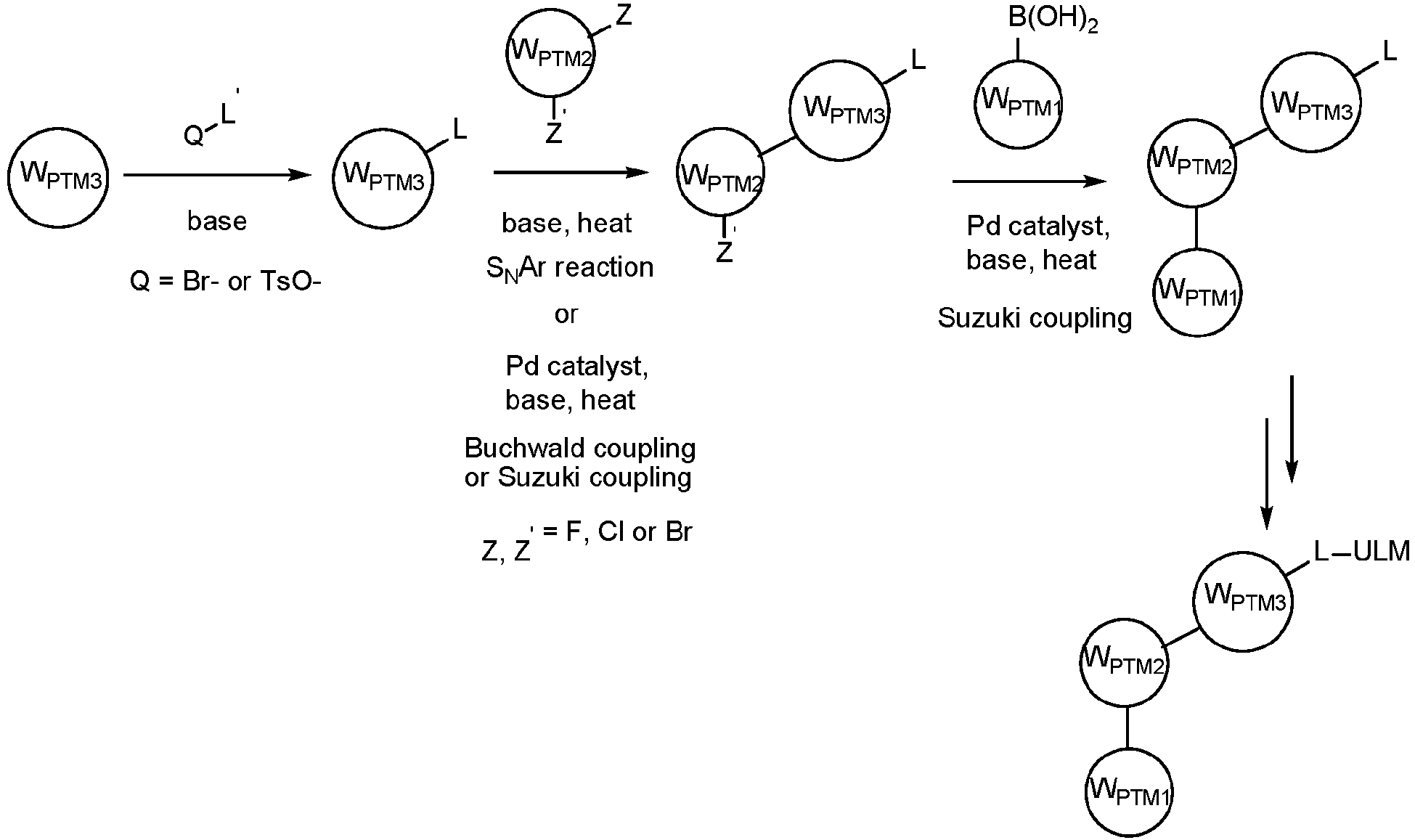
- One skilled in the art will appreciate that the general approaches described herein can be modified to adapt to the specific nature of the WPTM1, WPTM2, WPTM3, WPTM4, WPTM5, WPTM6 and WPTM7 rings. For example, in some embodiments, exemplary compounds represented by Formula II can be prepared as described in the general synthetic scheme below where one skilled in the art would recognize that additional protection/deprotection steps may be required, dependending upon the specific chemical nature of the exemplary compound:

- In an embodiment, where X represents NH, the exemplary compound can be prepared according to one of the two schemes shown below below, depending on whether WPTM5 is present:

- Exemplary PTM represented by general Formula III can be prepared following the general approach described for compounds of Formula I when WPMT5 is not present.
- Examplary PTM represented by general Formula IV can be prepared according to the following general scheme:

-

- To a mixture of tert-butyl 2-(2-(2-hydroxyethoxy)ethoxy)acetate (1.5g, 6.8 mmol) and TEA (2.07 g, 20.5 mmol) in DCM (5mL) was added TsCl (1.95 g, 10.23 mmol) at 0°C. The resulting mixture was warmed to room temperature and stirred for 3 hours. The solution was quenched with water (20 mL), and extracted with DCM. The organic phase was washed with brine (20 mL x 2). The organic phase was dried over Na2SO4, filtered and concentrated. The residue was purified by flash chromatography (CH2Cl2:MeOH 40:1) to give tert-butyl 2-(2-(2-(tosyloxy)ethoxy)ethoxy)acetate (2.14 g, mmol, 84% yield).
-

- A mixture of 4-(4,4,5,5-tetramethyl-1,3,2-dioxaborolan-2-yl)-1H-pyrazole (1.11g,5.722 mmol), tert-butyl 2-(2-(2-(tosyloxy)ethoxy)ethoxy)acetate (2.14 g, 5.722 mmol) and Cs2CO3 (3.73 g, 11.444mmol) in dry DMF (10 mL) was heated to 75°C for 3 hours. The reaction mixture was then cooled to room temperature and diluted with EtOAc (30 mL). The organic layer was washed with water (10 mL) and brine (10 mL x 2), dried (Na2SO4), filtered, and concentrated. The crude residue (2.8 g) was used in the next reaction without further purification.
-

- A mixture of tert-butyl 2-(2-(2-(4-(4,4,5,5-tetramethyl-1,3,2-dioxaborolan-2-yl)-1H-pyrazol-1-yl)ethoxy)ethoxy)acetate (1.5 g, 3.79 mmol), 4-bromo-6-chloropyridazin-3-amine (1.1g, 5.69 mmol), PdCl2(dppf) (555mg, 0.758 mmol), tBuPHBF4 (441mg, 1.52 mmol) and Cs2CO3 (3.09 g, 9.48 mmol) in dioxane (10 ml) and water (1ml) was heated to 100°C with stirring for 3 hour under N2. The solid was filtered off, and the filtrate was concentrated. The residue was purified by chromatography (CH2Cl2:MeOH 30:1) to give tert-butyl 2-(2-(2-(4-(3-amino-6-chloropyridazin-4-yl)-1H-pyrazol-1-yl)ethoxy)ethoxy)acetate (800 mg, 53% yield).
-

- A suspension of tert-butyl 2-(2-(2-(4-(3-amino-6-chloropyridazin-4-yl)-1H-pyrazol-1-yl)ethoxy)ethoxy)acetate (800 mg, 2.02 mmol), (2-hydroxyphenyl)boronic acid (418 mg, 3.03 mmol), cesium carbonate (1.65 g, 5.05 mmol), PdCl2(dppf) (444 mg, 0.606mmol), and tBu3PHBF4 (352 mg, 1.212 mmol) in dioxane (10 mL) and water (1 mL) was heated to 100°C under nitrogen for 3 hours. The mixture was cooled to room temperature and the solid was filtered off. The filtrate was concentrated and purified by chromatography (CH2Cl2:MeOH 40:1) to afford tert-butyl 2-(2-(2-(4-(3-amino-6-(2-hydroxyphenyl)pyridazin-4-yl)-1H-pyrazol-1-yl)ethoxy)ethoxy)acetate (400 mg, 44% yield).
-

- To a solution of tert-butyl 2-(2-(2-(4-(3-amino-6-(2-hydroxyphenyl)pyridazin-4-yl)-1H-pyrazol-1-yl)ethoxy)ethoxy)acetate (400 mg, 0.88mmol) in THF/H2O (5 mL, 2: 1) was added LiOH (111 mg, 2.64mmol) at 0°C. The mixture was stirred at 0°C for 2 hours. The reaction solution was quenched with 1 M HCl. The solution was dried (Na2SO4), filtered and concentrated under reduced pressure to afford crude 2-(2-(2-(4-(3-amino-6-(2-hydroxyphenyl)pyridazin-4-yl)-1H-pyrazol-1-yl)ethoxy)ethoxy)acetic acid (600 mg), which was used in the next step without further purification.
-

- To a solution of 2-(2-(2-(4-(3-amino-6-(2-hydroxyphenyl)pyridazin-4-yl)-1H-pyrazol-1-yl)ethoxy)ethoxy)acetic acid (200 mg crude), (2S,4R)-1-((S)-2-amino-3,3-dimethylbutanoyl)-4-hydroxy-N-(4-(4-methylthiazol-5-yl)benzyl)pyrrolidine-2-carboxamide (430 mg, 1 mmol), and DIPEA (516 mg, 4 mmol) in DMF (5mL) was added HATU (570 mg,1.5 mmol) at 0°C. The reaction mixture was stirred at room temperature for 30 minutes. The mixture was extracted with ethyl acetate (50 mL). The combined organic phases were washed with brine (8 mL x 2), dried (Na2SO4), and filtered. The organic layer was concentrated under reduced pressure. The residue was purified by prep TLC (6% MeOH in DCM) to afford (2S,4R)-1-((S)-2-(2-(2-(2-(4-(3-amino-6-(2-hydroxyphenyl)pyridazin-4-yl)-1H-pyrazol-1-yl)ethoxy)ethoxy)acetamido)-3,3-dimethylbutanoyl)-4-hydroxy-N-(4-(4-methylthiazol-5-yl)benzyl)pyrrolidine-2-carboxamide (22 mg).
- 1HNMR (400 MHz, MeOD) : δ 8.83 (s, 1H), 8.32 (s, 1H), 8.04 (d, J = 9.6 Hz, 2H), 7.78 (d, J= 7.6 Hz, 1H), 7.65 (d, J = 10.0 Hz, 1H), 7.39 (d, J = 8.0 Hz, 2H), 7.32-7.34 (m, 2H), 7.28 (m, 1H), 6.95 (d, J = 7.6 Hz 2H), 4.69 (d, J = 9.6 Hz 1H), 4.44-4.57 (m, 6H), 4.25-4.35 (m, 1H), 3.60-3.99 (m, 11H), 2.46 (s, 3H), 2.23 (m, 1H), 2.08 (m, 1H), 1.01 (s, 9H).
- Exemplary Compound 5 was prepared using procedures analogous to those described above for Exemplary Compound 11 as well as procedures known and appreciated to those skilled in the art according to the scheme below:

- Procedures described for Exemplary Compound 11 and Exemplary Compound 5 were used to prepare: Exemplary Compound 1, Exemplary Compound 2, Exemplary Compound 3, Exemplary Compound 4.
-

- To a solution of 3,6,9,12-tetraoxatetradecane-1,14-diol (13.5 g, 56.8 mmol) in anhydrous DMF (30 mL) was added 60% NaH (1.25 g, 31.2 mmol) at 0°C. The reaction mixture was stirred at room temperature for 0.5 hour. Then 4-bromo-2-fluoropyridine (5 g, 28.4 mmol) was added to the mixture dropwise, and the mixture was heated to 75°C for 2 hours. The reaction mixture was quenched with water (10 mL) and extracted with EA (200 mL). The organic phase was washed with brine (10 mL), dried (Na2SO4) and concentrated under reduced pressure. The residue was purified by silica gel column to afford 14-((4-bromopyridin-2-yl)oxy)-3,6,9,12-tetraoxatetradecan-1-ol (9.0 g, 22.9 mmol, 81% yield).
-

- To a solution of 14-((4-bromopyridin-2-yl)oxy)-3,6,9,12-tetraoxatetradecan-1-ol (5.0 g, 12.7 mmol) in anhydrous THF (50 mL) was added 60% NaH (660 mg, 16.5 mmol) at 0°C. The reaction mixture was stirred at room temperature for 40 minutes. Then tert-butyl 2-bromoacetate (4.9 g, 25.4 mmol) was added dropwise to the mixture and stirred at room temperature overnight. The reaction mixture was quenched with 2N NH4Cl (10 mL) and extracted with EA (200 mL). Then the organic phase was washed with brine (10 mL), dried (Na2SO4), and concentrated under reduced pressure. The residue was purified by silica gel column to afford tert-butyl 17-((4-bromopyridin-2-yl)oxy)-3,6,9,12,15-pentaoxaheptadecanoate (2.6 g, 5.13 mmol, 40% yield).
-

- A mixture of tert-butyl 17-((4-bromopyridin-2-yl)oxy)-3,6,9,12,15-pentaoxaheptadecanoate (250 mg, 1.18 mmol), tert-butyl 3,8-diazabicyclo[3.2.1]octane-3-carboxylate (718 mg, 1.4 mmol), cesium carbonate (769 mg, 2.36 mmol), Pd2(dba)3 (110 mg, 0.12 mmol) and XantPhos (138 mg, 0.24 mmol) in dioxane (5 mL) in a seal tube was heated to 110°C under nitrogen overnight. The mixture was extracted with EA (100 mL). Then the organic phase was washed with water (10 mL), brine (10 mL), dried (Na2SO4), and concentrated under reduced pressure. The residue was purified by silica gel column to afford tert-butyl 8-(2-((19,19-dimethyl-17-oxo-3,6,9,12,15,18-hexaoxaicosyl)oxy)pyridin-4-yl)-3,8-diazabicyclo[3.2.1]octane-3-carboxylate (550 mg, 0.86 mmol, 73 % yield).
-

- To a solution of tert-butyl 8-(2-((19,19-dimethyl-17-oxo-3,6,9,12,15,18-hexaoxaicosyl)oxy)pyridin-4-yl)-3,8-diazabicyclo[3.2.1]octane-3-carboxylate (550 mg, 0.86 mmol) in MeOH (15mL) was added HCl in dioxane (6N in dioxane) (5 ml, 30 mmol) at rt. The reaction mixture was stirred at room temperature for 1 hour. The mixture was concentrated under reduced pressure to afford crude methyl 17-((4-(3,8-diazabicyclo[3.2.1]octan-8-yl)pyridin-2-yl)oxy)-3,6,9,12,15-pentaoxaheptadecanoate (0.55 g).
-

- To a solution of crude methyl 17-((4-(3,8-diazabicyclo[3.2.1]octan-8-yl)pyridin-2-yl)oxy)-3,6,9,12,15-pentaoxaheptadecanoate (550 mg crude) in DMSO (5mL) were added 5-bromo-6-chloropyridazin-3-amine (526 mg, 2.71 mmol) and DIPEA (1.87 g, 14.5 mmol). The solution was stirred at 150°C overnight. The mixture was extracted with EA (60 mL). The organic phase was washed with water (8 mL) and brine (8 mL). The organic layer was dried (Na2SO4), filtered and concentrated under reduced pressure. The residue was purified by silica gel column chromatography to afford methyl 17-((4-((1R,5S)-3-(3-amino-6-chloropyridazin-4-yl)-3,8-diazabicyclo[3.2.1]octan-8-yl)pyridin-2-yl)oxy)-3,6,9,12,15-pentaoxaheptadecanoate (400 mg).
-

- To a solution of methyl 17-((4-((1R,5S)-3-(3-amino-6-chloropyridazin-4-yl)-3,8-diazabicyclo[3.2.1]octan-8-yl)pyridin-2-yl)oxy)-3,6,9,12,15-pentaoxaheptadecanoate (325 mg, 0.52 mmol) and (2-hydroxyphenyl)boronic acid (93 mg, 0.68 mmol) in dioxane (12 mL) and water (1.2 mL) were added cesium carbonate (542 mg, 1.66 mmol), PdCl2(dppf) (73.2 mg, 0.1 mmol) and t-Bu3PHBF4 (58 mg, 0.2 mmol). The solution was stirred at 100°C under nitrogen atmosphere for 4 hours. The pH of the solution was adjusted to 5 with 1N HCl. The mixture was filtered and the filtrate was concentrated under reduced pressure to afford the crude 17-((4-((1R,5S)-3-(3-amino-6-(2-hydroxyphenyl)pyridazin-4-yl)-3,8-diazabicyclo[3.2.1]octan-8-yl)pyridin-2-yl)oxy)-3,6,9,12,15-pentaoxaheptadecanoic acid (300 mg), which was used in the next step without further purification.
-

- To a solution of crude 17-((4-((1R,5S)-3-(3-amino-6-(2-hydroxyphenyl)pyridazin-4-yl)-3,8-diazabicyclo[3.2.1]octan-8-yl)pyridin-2-yl)oxy)-3,6,9,12,15-pentaoxaheptadecanoic acid (80 mg, 0.12 mmol) and (2S,4R)-1-((S)-2-amino-3,3-dimethylbutanoyl)-4-hydroxy-N-(4-(4-methylthiazol-5-yl)benzyl)pyrrolidine-2-carboxamide (108 mg, 0.24 mmol) in DMF (5mL) were added DIPEA (124 mg, 0.96 mmol) and HATU (92 mg, 0.24 mmol) at 0°C. The reaction mixture was stirred at rt for 30 minutes. The mixture was extracted with EA (50 mL). The organic phase was washed with water (8 mL) and brine (8 mL). The organic layer was dried (Na2SO4), filtered and concentrated under reduced pressure. The residue was purified by prep TLC (6% MeOH in DCM) to afford (2S,4R)-1-((S)-20-((4-((1R,5S)-3-(3-amino-6-(2-hydroxyphenyl)pyridazin-4-yl)-3,8-diazabicyclo[3.2.1]octan-8-yl)pyridin-2-yl)oxy)-2-(tert-butyl)-4-oxo-6,9,12,15,18-pentaoxa-3-azaicosanoyl)-4-hydroxy-N-(4-(4-methylthiazol-5-yl)benzyl)pyrrolidine-2-carboxamide (20 mg, 0.018 mmol, 15.0% yield).
- 1H NMR (400 MHz, MeOD): δ 8.74 (s, 1H), 7.68-7.66 (m, 2H), 7.34-7.28 (m, 5H), 7.18-7.10 (m, 1H), 6.80-6.78 (m, 2H), 6.43-6.40 (m, 1H), 6.10 (s, 1H), 4.60-4.20 (m, 9H), 3.92-3.89 (m, 2H), 3.80-3.64 (m, 4H), 3.71-3.45 (m, 16H), 3.10-3.00 (m, 1H), 3.00-2.90 (m, 2H), 2.37-2.34 (m, 1H), 2.35 (s, 3H), 2.18-1.99 (m, 6H), 0.92 (s, 9H).
- Using analogous procedures, Exemplary Compounds 7, 8, 10 and 35 were prepared.
-

- To a solution of 2-(2-(2-(2-((4-bromopyridin-2-yl)oxy)ethoxy)ethoxy)ethoxy)ethan-1-ol (3.49 g, 10 mmol) [prepared using procedure analogous to that described for example A2979] in DCM (50 mL) and H2O (25 mL) were added PhI(OAc)2 (9.66 g, 30 mmol) and TEMPO (312 mg, 2 mmol). The reaction mixture was stirred at room temperature for 2 hours. The mixture was extracted with EA (100 mL). The organic phase was washed with water (10 ml) and brine (10 ml). The organic layer was dried (Na2SO4), filtered and concentrated under reduced pressure. The residue was purified by silica gel column chromatography to afford 2-(2-(2-(2-((4-bromopyridin-2-yl)oxy)ethoxy)ethoxy)ethoxy)acetic acid (3.5 g, 9.64 mmol, 96% yield).
-

- To a solution of 2-(2-(2-(2-((4-bromopyridin-2-yl)oxy)ethoxy)ethoxy)ethoxy)acetic acid (3.0 g, 8.26 mmol) in MeOH (30 mL) was added SOCl2 (4.0 g, 33.9 mmol) dropwise at 0°C. The reaction mixture was stirred at room temperature for 4 hours. The pH of the solution was adjusted to ~8 with saturated NaHCO3. The mixture was extracted with DCM (100 mL). The organic phase was washed with water (10 mL) and brine (10 mL). The organic layer was dried (Na2SO4), filtered and concentrated under reduced pressure to afford methyl 2-(2-(2-(2-((4-bromopyridin-2-yl)oxy)ethoxy)ethoxy)ethoxy)acetate (2.9 g, 7.69 mmol, 93% yield).
- Methyl 2-(2-(2-(2-((4-bromopyridin-2-yl)oxy)ethoxy)ethoxy)ethoxy)acetate was converted to the final compound, (2S,4R)-1-((2S)-14-((4-(3-(3-amino-6-(2-hydroxyphenyl)pyridazin-4-yl)-3,8-diazabicyclo[3.2.1]octan-8-yl)pyridin-2-yl)oxy)-2-(tert-butyl)-4-oxo-6,9,12-trioxa-3-azatetradecanoyl)-4-hydroxy-N-(4-(4-methylthiazol-5-yl)benzyl)pyrrolidine-2-carboxamide (Exemplary Compound 6) using procedures analogous to those described for Exemplary Compound 9.
- 1HNMR (400 MHz, MeOD): δ 8.82 (s, 1H), 7.76-7.74 (m, 2H), 7.42-7.34 (m, 5H), 7.22-7.18 (m, 1H), 6.89-6.86 (m, 2H), 6.53-6.52 (m, 1H), 6.16 (s, 1H), 4.66-4.28 (m, 9H), 4.01-4.00 (m, 2H), 3.82-3.60 (m, 12H), 3.31-3.29 (m, 1H), 3.10-3.08 (m, 2H), 2.51-2.50 (m, 1H), 2.49 (s, 3H), 2.29-2.05 (m, 6H), 2.42-2.29 (m, 2H), 1.01 (s, 9H).
-

- To a solution of 3,6,9,12,15-pentaoxaheptadecane-1,17-diol (4 g, 14.2 mmol) and Et3N (8.6 g, 85.2 mmol)in DCM (50 mL) was added TsCl (8.1 g, 42.6 mmol). The reaction mixture was stirred at room temperature for 1 hour. The mixture was partitioned between EtOAc (100 mL) and water (10 mL). The organic phase was washed with brine (10 mL). The combined organic layers were dried (Na2SO4), filtered and concentrated under reduced pressure. The residue was purified by silica gel column chromatography to afford 3,6,9,12,15-pentaoxaheptadecane-1,17-diyl bis(4-methylbenzenesulfonate) (6.0 g, 10.2 mmol, 72% yield).
-

- To a solution of 3,6,9,12,15-pentaoxaheptadecane-1,17-diyl bis(4-methylbenzenesulfonate) (3.5 g, 5.93 mmol) in anhydrous DMF (20 mL) were added 4-(4,4,5,5-tetramethyl-1,3,2-dioxaborolan-2-yl)-1H-pyrazole (1.15 g, 5.93 mmol) and Cs2CO3 (3.87 g, 11.86 mmol). The reaction mixture was stirred at 75°C for 0.5 hour. The mixture was cooled to rt and partitioned between EtOAc (200 mL) and water (20 mL). The organic phase was washed with brine (20 mL). The combined organic layers were dried (Na2SO4), filtered and concentrated under reduced pressure. The residue was purified by silica gel column chromatography to afford 17-(4-(4,4,5,5-tetramethyl-1,3,2-dioxaborolan-2-yl)-1H-pyrazol-1-yl)-3,6,9,12,15-pentaoxaheptadecyl 4-methylbenzenesulfonate (0.6 g, 0.98 mmol, 16.5% yield).
-

- To a solution of 17-(4-(4,4,5,5-tetramethyl-1,3,2-dioxaborolan-2-yl)-1H-pyrazol-1-yl)-3,6,9,12,15-pentaoxaheptadecyl 4-methylbenzenesulfonate (0.3 g, 0.49 mmol) and (2S,4R)-4-hydroxy-N-(2-hydroxy-4-(4-methylthiazol-5-yl)benzyl)-1-((S)-3-methyl-2-(1-oxoisoindolin-2-yl)butanoyl)pyrrolidine-2-carboxamide (268 mg, 0.49 mmol) in DMF (5 mL) was added K2CO3 (135 mg, 0.98 mmol). The mixture was stirred at 80°C under nitrogen atmosphere for 2 hours. The mixture was extracted with EA (80 mL). The organic phase was washed with water (10 mL) and brine (10 mL). The organic layer was dried (Na2SO4), filtered and concentrated under reduced pressure. The residue was purified by silica gel column chromatography to afford a mixture of (2S,4R)-4-hydroxy-1-((S)-3-methyl-2-(1-oxoisoindolin-2-yl)butanoyl)-N-(4-(4-methylthiazol-5-yl)-2-((17-(4-(4,4,5,5-tetramethyl-1,3,2-dioxaborolan-2-yl)-1H-pyrazol-1-yl)-3,6,9,12,15-pentaoxaheptadecyl)oxy)benzyl)pyrrolidine-2-carboxamide and (1-(17-(2-(((2S,4R)-4-hydroxy-1-((S)-3-methyl-2-(1-oxoisoindolin-2-yl)butanoyl)pyrrolidine-2-carboxamido)methyl)-5-(4-methylthiazol-5-yl)phenoxy)-3,6,9,12,15-pentaoxaheptadecyl)-1H-pyrazol-4-yl)boronic acid (270 mg, 0.27 mmol, 56% yield).
-

- To a solution of the mixture of (2S,4R)-4-hydroxy-1-((S)-3-methyl-2-(1-oxoisoindolin-2-yl)butanoyl)-N-(4-(4-methylthiazol-5-yl)-2-((17-(4-(4,4,5,5-tetramethyl-1,3,2-dioxaborolan-2-yl)-1H-pyrazol-1-yl)-3,6,9,12,15-pentaoxaheptadecyl)oxy)benzyl)pyrrolidine-2-carboxamide and (1-(17-(2-(((2S,4R)-4-hydroxy-1-((S)-3-methyl-2-(1-oxoisoindolin-2-yl)butanoyl)pyrrolidine-2-carboxamido)methyl)-5-(4-methylthiazol-5-yl)phenoxy)-3,6,9,12,15-pentaoxaheptadecyl)-1H-pyrazol-4-yl)boronic acid (270 mg, 0.27 mmol) and 5-bromo-6-chloropyridazin-3-amine (85 mg, 0.41 mmol) in dioxane (20 mL) and water (2 mL) were added cesium carbonate (220 mg, 0.68 mmol), PdCl2(dppf) (40 mg, 0.054 mmol) and t-Bu3PHBF4 (31 mg, 0.11 mmol). The solution was stirred at 100°C under nitrogen atmosphere for 4 hours. The mixture was concentrated under reduced pressure. The residue was purified by silica gel column chromatography to afford (2S,4R)-N-(2-((17-(4-(3-amino-6-chloropyridazin-4-yl)-1H-pyrazol-1-yl)-3,6,9,12,15-pentaoxaheptadecyl)oxy)-4-(4-methylthiazol-5-yl)benzyl)-4-hydroxy-1-((S)-3-methyl-2-(1-oxoisoindolin-2-yl)butanoyl)pyrrolidine-2-carboxamide (175 mg, 0.18 mmol, 67% yield).
-

- To a solution of (2S,4R)-N-(2-((17-(4-(3-amino-6-chloropyridazin-4-yl)-1H-pyrazol-1-yl)-3,6,9,12,15-pentaoxaheptadecyl)oxy)-4-(4-methylthiazol-5-yl)benzyl)-4-hydroxy-1-((S)-3-methyl-2-(1-oxoisoindolin-2-yl)butanoyl)pyrrolidine-2-carboxamide (175 mg, 0.18 mmol) and (2-hydroxyphenyl)boronic acid (32 mg, 0.23 mmol) in dioxane (15 mL) and water (1.5 mL) were added cesium carbonate (176 mg, 0.54 mmol), PdCl2(dppf) (53 mg, 0.072 mmol) and t-Bu3PHBF4 (42 mg, 0.144 mmol). The solution was stirred at 100°C under nitrogen atmosphere for 4 hours. The mixture was concentrated under reduced pressure. The residue was purified by silica gel column chromatography to afford (2S,4R)-N-(2-((17-(4-(3-amino-6-(2-hydroxyphenyl)pyridazin-4-yl)-1H-pyrazol-1-yl)-3,6,9,12,15-pentaoxaheptadecyl)oxy)-4-(4-methylthiazol-5-yl)benzyl)-4-hydroxy-1-((S)-3-methyl-2-(1-oxoisoindolin-2-yl)butanoyl)pyrrolidine-2-carboxamide (24 mg, 0.023 mmol, 13% yield).
- 1HNMR (400 MHz, MeOD): δ 8.84 (s, 1H), 8.28 (s, 1H), 8.05 (d, J = 12.4 Hz, 2H), 7.38-7.81 (m, 6H), 7.36-7.37 (m, 1H), 6.98-7.00(m, 2H), 6.92 (d, J= 7.6 Hz, 2H), 4.37-4.59 (m, 9H), 4.15-4.16 (m, 2H), 3.83-3.96 (m, 6H), 3.46-3.56 (m, 16H), 2.46 (s, 3H), 2.44-2.45 (m, 1H), 2.21-2.22 (m, 1H), 2.09-2.10 (m, 1H), 1.03 (d, J= 6.4 Hz, 3H), 0.82 (d, J= 6.4 Hz, 3H).
- Using procedures analogous to those described for Exemplary Compound 20, Exemplary Compounds 12, 13, and 21 were prepared.
-

- Into a 250-mL round-bottom flask, was placed a solution of 4-(tetramethyl-1,3,2-dioxaborolan-2-yl)-1H-pyrazole (1.5 g, 7.73 mmol, 1.00 equiv) in dioxane/H2O (1:1) (60 mL), 4-bromo-6-chloropyridazin-3-amine (1.7 g, 8.16 mmol, 1.20 equiv), Pd(PPh3)4 (800 mg, 0.69 mmol, 0.10 equiv), potassium carbonate (2.9 g, 20.98 mmol, 3.00 equiv). The resulting solution was stirred overnight at 100°C in an oil bath. The residue was applied onto a silica gel column with dichloromethane/methanol (10:1). This resulted in 1.0 g (66%) of 6-chloro-4-(1H-pyrazol-4-yl)pyridazin-3-amine as a white solid.
-

- Into a 10-mL sealed tube, was placed a solution of 6-chloro-4-(1H-pyrazol-4-yl)pyridazin-3-amine (390 mg, 1.99 mmol, 1.00 equiv) in dioxane (4 mL), [2-(methoxymethoxy)phenyl]boronic acid (546 mg, 3.00 mmol, 1.50 equiv), Pd(PPh3)4 (300 mg, 0.26 mmol, 0.20 equiv), a solution of potassium carbonate (552 mg, 3.99 mmol, 2.00 equiv) in water (2 mL). The resulting solution was stirred for 12 hours at 100°C in an oil bath. The resulting mixture was concentrated under vacuum. The residue was applied onto a silica gel column with dichloromethane/methanol (10:1). This resulted in 120 mg (20%) of 6-[2-(methoxymethoxy)phenyl]-4-(1H-pyrazol-4-yl)pyridazin-3-amine as a yellow solid.
-

- Into a 50-mL round-bottom flask, was placed a solution of 6-[2-(methoxymethoxy)phenyl]-4-(1H-pyrazol-4-yl)pyridazin-3-amine (100 mg, 0.34 mmol, 1.00 equiv) in N,N-dimethylformamide (10 mL), 2-[2-(2-[[(4-methylbenzene)sulfonyl]oxy] ethoxy)ethoxy]ethan-1-ol (100 mg, 0.33 mmol, 1.00 equiv), potassium carbonate (91 mg, 0.66 mmol, 2.00 equiv). The resulting solution was stirred for 12 hours at 70°C in an oil bath. The resulting solution was extracted with ethyl acetate (20 mL x3) and the organic layers combined and concentrated under vacuum. The residue was applied onto a silica gel column with dichloromethane/methanol (10:1). This resulted in 100 mg (69%) of 2-[2-[2-(4-[3-amino-6-[2-(methoxymethoxy)phenyl]pyridazin-4-yl]-1H-pyrazol-1-yl)ethoxy]ethoxy]ethan-1-ol as yellow oil.
-

- Into a 100-mL round-bottom flask, was placed a solution of 2-[2-[2-(4-[3-amino-6-[2-(methoxymethoxy)phenyl]pyridazin-4-yl]-1H-pyrazol-1-yl)ethoxy]ethoxy]ethan-1-ol (100 mg, 0.23 mmol, 1.00 equiv) in dichloromethane (20 mL), 4-toluene sulfonyl chloride (66.0 mg, 0.35 mmol, 1.50 equiv), triethylamine (47 mg, 0.46 mmol, 2.00 equiv), 4-dimethylaminopyridine (10 mg, 0.08 mmol, 0.30 equiv). The resulting solution was stirred for 16 hours at room temperature. The resulting solution was extracted with ethyl acetate (20 mL x 3) and the organic layers combined and concentrated under vacuum. The residue was applied onto a silica gel column eluting with dichloromethane/methanol (10:1). This resulted in 100 mg (74%) of 2-[2-[2-(4-[3-amino-6-[2-(methoxymethoxy)phenyl]pyridazin-4-yl]-1H-pyrazol-1-yl)ethoxy]ethoxy]ethyl 4-methylbenzene-1-sulfonate as a yellow oil.
-
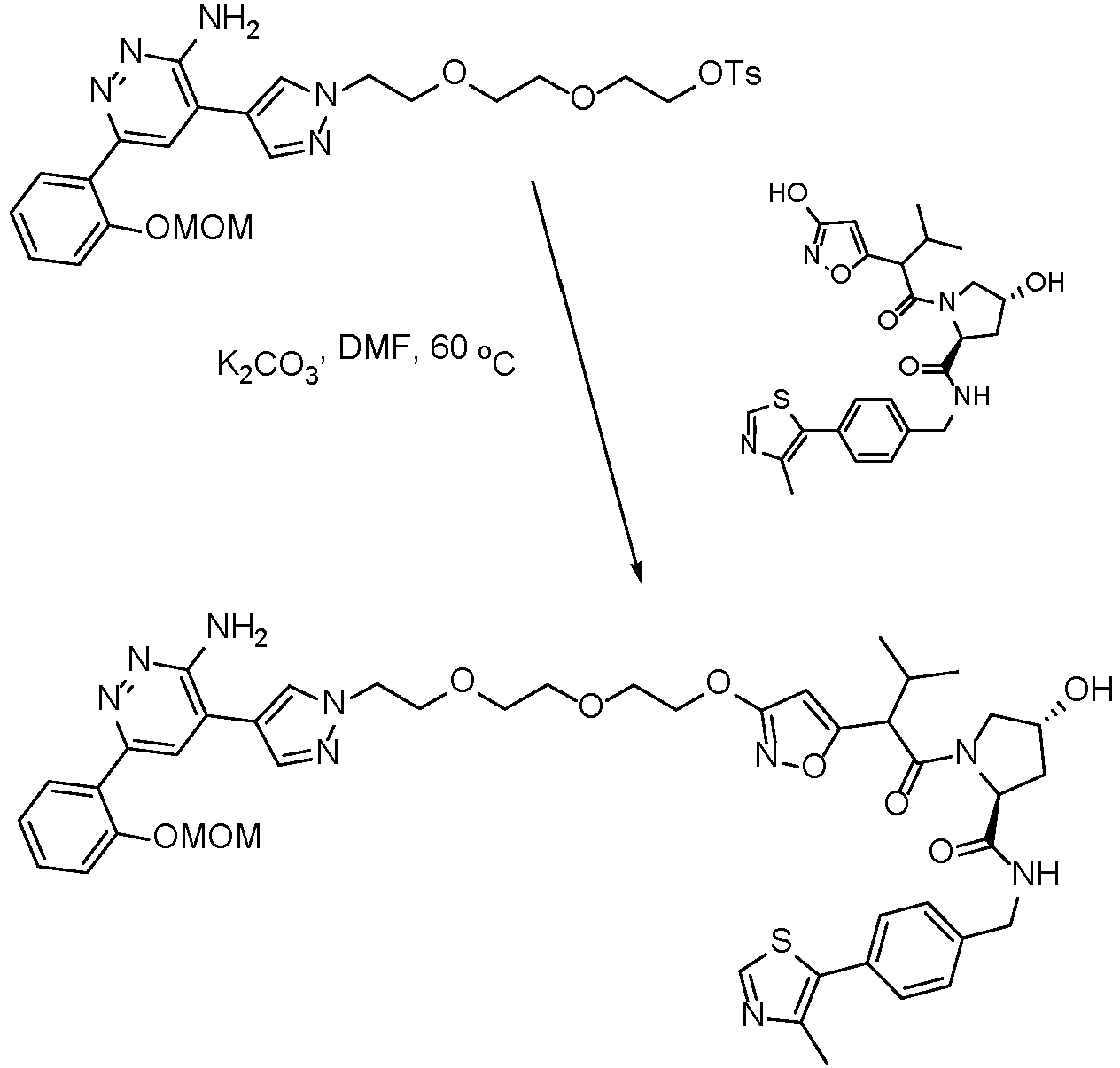
- Into a 50-mL round-bottom flask, was placed a solution of 2-[2-[2-(4-[3-amino-6-[2-(methoxymethoxy)phenyl]pyridazin-4-yl]-1H-pyrazol-1-yl)ethoxy]ethoxy]ethyl 4-methylbenzene-1-sulfonate (120 mg, 0.2 mmol, 1.00 equiv) in N,N-dimethylformamide (5 mL), (2S,4R)-4-hydroxy-1-[2-(3-hydroxy-1,2-oxazol-5-yl)-3-methylbutanoyl]-N-[[4-(4-methyl-1,3-thiazol-5-yl)phenyl]methyl]pyrrolidine-2-carboxamide (130 mg, 0.2 mmol, 1.00 equiv) [prepared as described by
Qian, Y. et al. in WO 2017/030814 ], potassium carbonate (100 mg, 0.4 mmol, 2.00 equiv). The resulting solution was stirred for 12 hours at 70°C. The resulting solution was extracted with ethyl acetate (20 mL x 3), and the organic layers were combined and concentrated under vacuum. The residue was applied onto a silica gel column eluting with dichloromethane/methanol (10:1). This resulted in 90 mg of (2S,4R)-1-[2-[3-(2-[2-[2-(4-[3-amino-6-[2-(methoxymethoxy)phenyl]pyridazin-4-yl]-1H-pyrazol-1-yl)ethoxy]ethoxy]ethoxy)-1,2-oxazol-5-yl]-3-methylbutanoyl]-4-hydroxy-N-[[4-(4-methyl-1,3-thiazol-5-yl)phenyl]methyl]pyrrolidine-2-carboxamide as a colorless oil. -
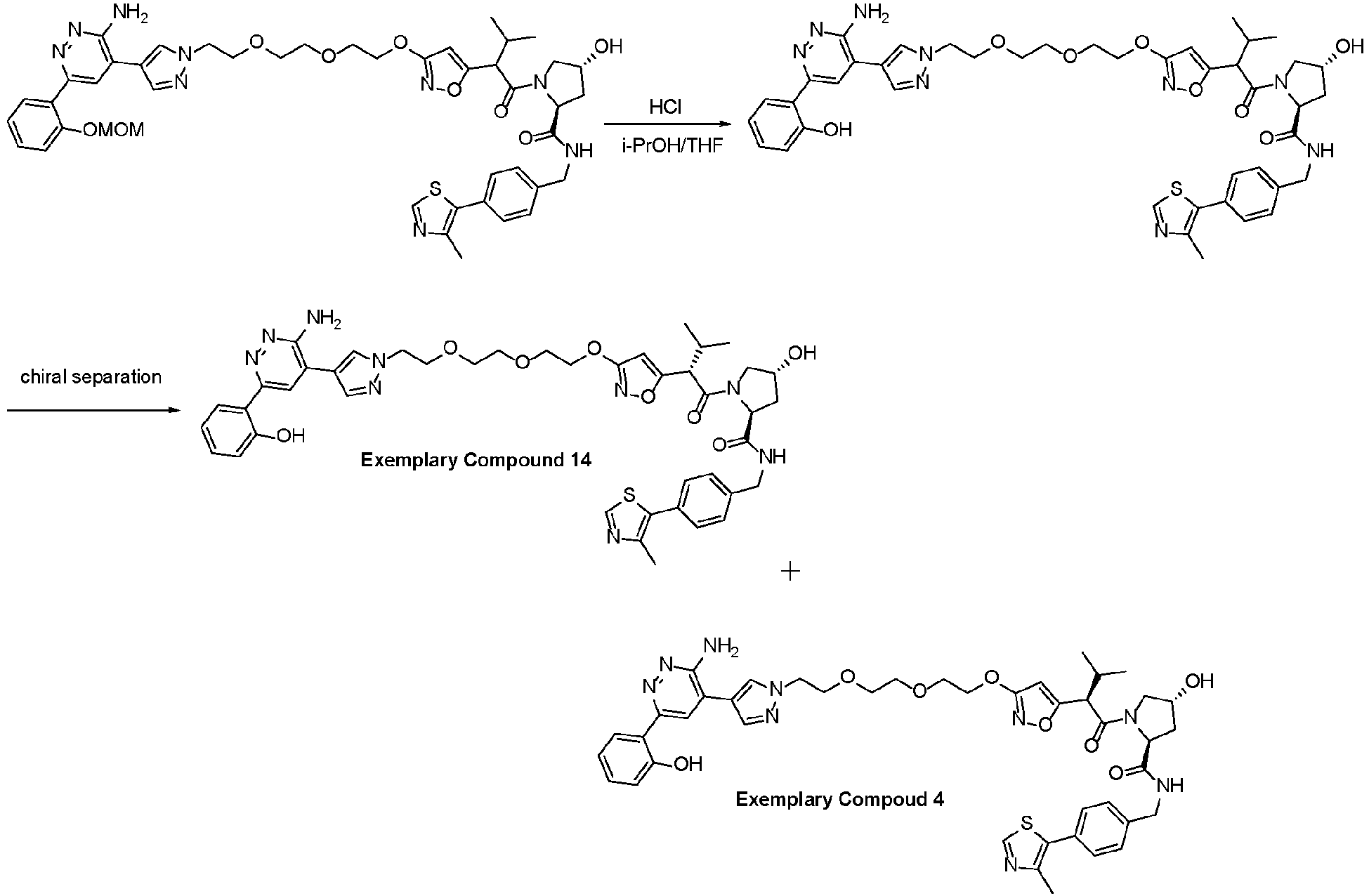
- Into a 50-mL round-bottom flask, was placed a solution of (2S,4R)-1-[2-[3-(2-[2-[2-(4-[3-amino-6-[2-(methoxymethoxy) phenyl]pyridazin-4-yl]-1H-pyrazol-1-yl)ethoxy]ethoxy]ethoxy)-1,2-oxazol-5-yl]-3-methylbutanoyl]-4-hydroxy-N-[[4-(4-methyl-1,3-thiazol-5-yl)phenyl]methyl]pyrrolidine-2-carboxamide (90.0 mg, 0.10 mmol, 1.00 equiv) in i-propanol (2 mL) and tetrahydrofuran (2 mL), and a solution of concentrated hydrogen chloride solution (12N, 2 mL) was added. The resulting solution was stirred for 1 hour at room temperature. The resulting mixture was concentrated under vacuum. The crude product was purified by Prep-HPLC with the following conditions: Column: XBridge C18 OBD Prep Column , 100A, 5 µm, 19 mm X 250 mm; Mobile Phase A:Water(0.1%FA), Mobile Phase B: ACN; Flow rate: 20 mL/min; Gradient: 32% B to 41% B in 8 min; 254 nm; Rt: 70 min. This resulted in 56 mg (65%) of (2S,4R)-1-[2-(3-[2-[2-(2-[4-[3-amino-6-(2-hydroxyphenyl)pyridazin-4-yl]-1H-pyrazol-1-yl]ethoxy)ethoxy]ethoxy]-1,2-oxazol-5-yl)-3-methylbutanoyl]-4-hydroxy-N-[[4-(4-methyl-1,3-thiazol-5-yl)phenyl]methyl]pyrrolidine-2-carboxamide as a white solid.
- The product was purified by Chiral-Prep-HPLC with the following conditions: Column, CHIRAL ART Cellulose-SB, 2*25cm,5um; mobile phase, Hex--HPLC and ethanol-HPLC (hold 50% ethanol--HPLC in 24 min); Detector, UV 220/254nm. This resulted in 17.8 mg (34%) of (2S,4R)-1-[(2S)-2-(3-[2-[2-(2-[4-[3-amino-6-(2-hydroxyphenyl)pyridazin-4-yl]-1H-pyrazol-1-yl]ethoxy)ethoxy]ethoxy]-1,2-oxazol-5-yl)-3-methylbutanoyl]-4-hydroxy-N-[[4-(4-methyl-1,3-thiazol-5-yl)phenyl]methyl]pyrrolidine-2-carboxamide as a white solid [1H NMR (300 MHz, CD3OD): δ 8.82 (d, J = 11.1 Hz, 1H), 8.29 - 8.18 (m, 1H), 8.11-7.89 (m, 2H), 7.80 (d, J = 8.2 Hz, 1H), 7.48-7.41 (m, 1H), 7.37-7.30 (m, 3H), 7.30 - 7.19 (m, 1H), 6.95-6.83 (m, 2H), 5.89 (s, 1H), 4.59- 4.41 (m, 2H), 4.40-4.30 (m, 4H), 4.27- 4.11 (m, 2H), 3.86 (q, J = 5.3 Hz, 2H), 3.75- 3.59 (m, 6H), 3.56 (s, 3H), 2.42 (d, J = 5.0 Hz, 3H), 2.36 - 2.10 (m, 2H), 2.04-2.01 (m, J = 13.1, 8.1, 4.7 Hz, 1H), 1.26 (s, 1H), 0.99 (d, J = 6.6 Hz, 3H), 0.83 (d, J = 6.8 Hz, 3H)] and 24.4 mg (47%) of (2S,4R)-1-[(2R)-2-(3-[2-[2-(2-[4-[3-amino-6-(2-hydroxyphenyl)pyridazin-4-yl]-1H-pyrazol-1-yl]ethoxy)ethoxy]ethoxy] -1,2-oxazol-5-yl)-3-methylbutanoyl]-4-hydroxy-N-[[4-(4-methyl-1,3-thiazol-5-yl)phenyl]methyl]pyrrolidine-2-carboxamide [1H NMR (300 MHz, CD3OD): δ 8.82 (d, J = 6.6 Hz, 1H), 8.26 (dd, J = 3.1, 0.8 Hz, 1H), 8.10 -7.96 (m, 2H), 7.86 -7.75 (m, 1H), 7.45-7.30 (m, 4H), 7.25-7.22 (m, 1H), 6.96-6.84 (m, 2H), 5.88 (s, 1H), 4.70- 4.42 (m, 3H), 4.41- 4.33 (m, 3H), 4.28 - 4.17 (m, 2H), 3.87 (t, J = 5.0 Hz, 3H), 3.85 -3.63 (m, 2H), 3.59-3.57 (m, 6H), 2.41 (d, J = 12.2 Hz, 3H), 2.38-2.33(m, 1H), 2.25-2.12 (m, 1H), 2.06-2.02 (m, 1H), 1.26 (s, 1H), 0.97 (dd, J = 6.6, 1.8 Hz, 3H), 0.80 (dd, J = 6.6, 1.8 Hz, 3H)] as a white solid.
- Exemplary Compounds 16, 17, 18, and 19 were prepared wsing procedures described above for Exemplary Compound 14 and Exemplary Compound 15.
-

- Into a 250-mL round-bottom flask, was placed (Z)-4-(benzyloxy)-N-hydroxybutcarbonimidoyl chloride (8.7 g, 38.21 mmol, 1.00 equiv), but-3-yn-1-ol (3.3 g, 47.08 mmol, 1.23 equiv), ethyl acetate (70 mL), water(70 mL), sodium bicarbonate (4.0 g, 47.61 mmol, 1.25 equiv). The resulting solution was stirred for 2 hours at 25°C. The resulting solution was extracted with ethyl acetate and washed with saturated sodium chloride aqueous solution. The mixture was dried over anhydrous sodium sulfate and concentrated under vacuum. The residue was applied onto a silica gel column eluting with ethyl acetate/petroleum ether (1: 1). This resulted in 5.9 g (59%) of 2-[3-[3-(benzyloxy)propyl]-1,2-oxazol-5-yl]ethan-1-ol as a yellow oil.
-

- Into a 100-mL round-bottom flask, was placed 2-[3-[3-(benzyloxy)propyl]-1,2-oxazol-5-yl]ethan-1-ol (550.0 mg, 2.10 mmol, 1.00 equiv), acetone (30 mL), Cr2O3 (100.0 mg), sulfuric acid (0.25 mL), water(1 mL). The resulting solution was stirred for 1 hour at 25°C. The resulting solution was diluted with water. The resulting solution was extracted with ethyl acetate and washed with saturated sodium chloride aqueous solution. The mixture was dried over anhydrous sodium sulfate and concentrated under vacuum. This resulted in 420 mg (72%) of 2-[3-[3-(benzyloxy)propyl]-1,2-oxazol-5-yl]acetic acid as a yellow oil.
-

- Into a 250-mL round-bottom flask, was placed ethyl 2-[3-[3-(benzyloxy)propyl]-1,2-oxazol-5-yl]acetate (8.0 g, 26.37 mmol, 1.00 equiv), ethanol (50 mL), sulfuric acid (0.1 mL). The resulting solution was stirred for 1.5 hours at 70°C. The resulting mixture was concentrated under vacuum. The crude product was purified by Flash-Prep-HPLC with the following conditions: Column, C18 silica gel; mobile phase, acetonitrile:water = 0:100 increasing to acetonitrile:water = 60:40 within 49 min; Detector, UV 220 nm. This resulted in 4.5 g (56%) of ethyl 2-[3-[3-(benzyloxy)propyl]-1,2-oxazol-5-yl]acetate as a light yellow oil.
-

- Into a 250-mL 3-necked round-bottom flask purged and maintained with an inert atmosphere of nitrogen, was placed ethyl 2-[3-[3-(benzyloxy)propyl]-1,2-oxazol-5-yl]acetate (4.5 g, 14.83 mmol, 1.00 equiv) and tetrahydrofuran (70 mL). This was followed by the addition of a solution of t-BuOK (2.0 g, 17.82 mmol, 1.20 equiv) in tetrahydrofuran (17.8 mL) dropwise with stirring at 0°C in 20 minutes. To this was added 2-iodopropane (3.01 g, 17.71 mmol, 1.19 equiv) dropwise with stirring at 0°C in 2 minutes. The resulting solution was stirred for 2 hours at 25°C. The reaction was then quenched by the water. The resulting solution was extracted with ethyl acetate and washed with saturated sodium chloride aqueous solution. The mixture was dried over anhydrous sodium sulfate and concentrated under vacuum. This resulted in 4.3 g (84%) of ethyl 2-[3-[3-(benzyloxy)propyl]-1,2-oxazol-5-yl]-3-methylbutanoate as an orange oil.
-

- Into a 250-mL 3-necked round-bottom flask purged and maintained with an inert atmosphere of nitrogen, was placed ethyl 2-[3-[3-(benzyloxy)propyl]-1,2-oxazol-5-yl]-3-methylbutanoate (4.2 g, 12.16 mmol, 1.00 equiv) and dichloromethane (100 mL). This was followed by the addition of a solution of BBr3 (5.17 g, 20.64 mmol, 1.70 equiv) in dichloromethane (20.7 mL) dropwise with stirring at -78°C in 30 minutes. The resulting solution was stirred for 2 hours at -78°C. The reaction was then quenched. The resulting solution was extracted with dichloromethane and washed with saturated sodium chloride aqueous solution. The mixture was dried over anhydrous sodium sulfate and concentrated under vacuum. The crude product was purified by Flash-Prep-HPLC with the following conditions: Column, C18 silica gel; mobile phase, acetonitrile:water = 0:100 increasing to acetonitrile:water = 23:76 within 25 min; Detector, UV 220 nm. This resulted in 2.6 g (84%) of ethyl 2-[3-(3-hydroxypropyl)-1,2-oxazol-5-yl]-3-methylbutanoate as an orange oil.
-

- Into a 100-mL round-bottom flask, was placed ethyl 2-[3-(3-hydroxypropyl)-1,2-oxazol-5-yl]-3-methylbutanoate (1.2 g, 4.70 mmol, 1.00 equiv), ethanol (20 mL), water (10 mL), sodium hydroxide (1.9 g, 47.50 mmol, 10.0 equiv). The resulting solution was stirred for 1 overnight at room temperature. The pH value of the solution was adjusted to 6 with hydrogen chloride (2M). The resulting solution was extracted with ethyl acetate and washed with saturated sodium chloride. The mixture was dried over anhydrous sodium sulfate and concentrated under vacuum. This resulted in 800 mg (75%) of 2-[3-(3-hydroxypropyl)-1,2-oxazol-5-yl]-3-methylbutanoic acid as a yellow oil.
-

- Into a 100-mL round-bottom flask, was placed 2-[3-(3-hydroxypropyl)-1,2-oxazol-5-yl]-3-methylbutanoic acid (800 mg, 3.52 mmol, 1.00 equiv), (2S,4R)-4-hydroxy-N-[[4-(4-methyl-1,3-thiazol-5-yl)phenyl]methyl]pyrrolidine-2-carboxamide hydrochloride (1.24 g, 3.50 mmol, 1.00 equiv), N,N-dimethylformamide (15 mL), N-ethyl-N-isopropylpropan-2-amine (1.82 g, 14.08 mmol, 4.00 equiv), T3P (1.77 g, 1.20 equiv). The resulting solution was stirred for 2 hours at room temperature. The reaction was then quenched by water. The resulting solution was extracted with ethyl acetate and washed with saturated sodium chloride. The mixture was dried over anhydrous sodium sulfate and concentrated under vacuum. The residue was applied onto a silica gel column eluting with dichloromethane/methanol (5:1). The collected fractions were combined and concentrated under vacuum. This resulted in 870 mg (53%) of (2S,4R)-4-hydroxy-1-[[3-(3-hydroxypropyl)-1,2-oxazol-5-yl]carbonyl]-N-[[4-(4-methyl-1,3-thiazol-5-yl)phenyl]methyl]pyrrolidine-2-carboxamide as a yellow solid.
-

- Into a 50-mL round-bottom flask, was placed (2S,4R)-4-hydroxy-1-[2-[3-(3-hydroxypropyl)-1,2-oxazol-5-yl]-3-methylbutanoyl]-N-[[4-(4-methyl-1,3-thiazol-5-yl)phenyl]methyl]pyrrolidine-2-carboxamide (870 mg, 1.65 mmol, 1.00 equiv), dichloromethane (10 mL), 4-methylbenzene-1-sulfonyl chloride (377 mg, 1.98 mmol, 1.20 equiv), triethylamine (334.0 mg, 3.30 mmol, 2.00 equiv), 4-dimethylaminopyridine (40 mg, 0.33 mmol, 0.20 equiv). The resulting solution was stirred for 4 hours at room temperature. The resulting solution was extracted with dichloromethane and washed with water and saturated sodium chloride. The mixture was dried over anhydrous sodium sulfate and concentrated under vacuum. The residue was applied onto a silica gel column eluting with dichloromethane/methanol (10:1). The collected fractions were combined and concentrated under vacuum. This resulted in 600 mg (53%) of 3-(5-[1-[(2S,4R)-4-hydroxy-2-([[4-(4-methyl-1,3-thiazol-5-yl)phenyl]methyl]carbamoyl)pyrrolidin-1-yl]-3-methyl-1-oxobutan-2-yl]-1,2-oxazol-3-yl)propyl 4-methylbenzene-1-sulfonate as a yellow solid.
-

- Into a 50-mL round-bottom flask, was placed 2-(2-hydroxyethoxy)ethan-1-ol (273.0 mg, 2.57 mmol, 5.00 equiv) and N,N-dimethylformamide (5 mL). Sodium hydride (41.0 mg, 1.71 mmol, 2.00 equiv) added under 0°C, followed by the addition, after 20 minutes, of 3-(5-[1-[(4S)-4-hydroxy-1-([[4-(4-methyl-1,3-thiazol-5-yl)phenyl]methyl]carbamoyl)pyrrolidin-2-yl]-3-methyl-1-oxobutan-2-yl]-1,2-oxazol-3-yl)propyl 4-methylbenzene-1-sulfonate (350.0 mg, 0.51 mmol, 1.00 equiv). The resulting solution was stirred for 4 hours at room temperature. Reaction mixture was diluted with water and extracted with DCM. Organic phase was dried over sodium sulfate and concentrated, and the residue was subjected to flash chromatography. This resulted in 160 mg (51%) of (4S)-4-hydroxy-2-[2-(3-[3-[2-(2-hydroxyethoxy)ethoxy]propyl]-1,2-oxazol-5-yl)-3-methylbutanoyl]-N-[[4-(4-methyl-1,3-thiazol-5-yl)phenyl]methyl]pyrrolidine-1-carboxamide as a yellow oil.
-

- Into a 50-mL round-bottom flask, was placed (2S,4R)-4-hydroxy-1-[2-(3-[3-[2-(2-hydroxyethoxy)ethoxy]propyl]-1,2-oxazol-5-yl)-3-methylbutanoyl]-N-[[4-(4-methyl-1,3-thiazol-5-yl)phenyl]methyl]pyrrolidine-2-carboxamide (160 mg, 0.26 mmol, 1.00 equiv), dichloromethane (5 mL), 4-methylbenzene-1-sulfonyl chloride (59 mg, 0.31 mmol, 1.20 equiv), triethylamine (53 mg, 0.52 mmol, 2.00 equiv), 4-dimethylaminopyridine (6 mg, 0.05 mmol, 0.20 equiv). The resulting solution was stirred for 5 hours at room temperature. The resulting solution was extracted with dichloromethane and washed with water. The mixture was dried over anhydrous sodium sulfate and concentrated under vacuum. The residue was applied onto a silica gel column eluting with dichloromethane/methanol (12:1). The collected fractions were combined and concentrated under vacuum. This resulted in 72 mg (36%) of 2-[2-[3-(5-[1-[(2S,4R)-4-hydroxy-2-([[4-(4-methyl-1,3-thiazol-5-yl)phenyl]methyl]carbamoyl)pyrrolidin-1-yl]-3-methyl-1-oxobutan-2-yl]-1,2-oxazol-3-yl)propoxy]ethoxy]ethyl 4-methylbenzene-1-sulfonate as a yellow oil.
-

- Into a 50-mL round-bottom flask, was placed 2-[2-[3-(5-[1-[(2S,4R)-4-hydroxy-2-([[4-(4-methyl-1,3-thiazol-5-yl)phenyl]methyl]carbamoyl)pyrrolidin-1-yl]-3-methyl-1-oxobutan-2-yl]-1,2-oxazol-3-yl)propoxy]ethoxy]ethyl 4-methylbenzene-1-sulfonate (70 mg, 0.09 mmol, 1.00 equiv), 6-[2-(methoxymethoxy)phenyl]-4-(1H-pyrazol-4-yl)pyridazin-3-amine (27 mg, 0.09 mmol, 1.00 equiv), acetonitrile (2 mL), potassium carbonate (38 mg, 0.27 mmol, 3.00 equiv). The resulting solution was stirred for 1 overnight at 80°C. The resulting solution was extracted with ethyl acetate and washed with water. The mixture was dried over anhydrous sodium sulfate and concentrated under vacuum. The residue was applied onto a silica gel column with dichloromethane/methanol (10:1). The collected fractions were combined and concentrated under vacuum. This resulted in 30 mg (37%) of (2S,4R)-1-[2-[3-(3-[2-[2-(4-[3-amino-6-[2-(methoxymethoxy)phenyl]pyridazin-4-yl]-1H-pyrazol-1-yl)ethoxy]ethoxy]propyl)-1,2-oxazol-5-yl]-3-methylbutanoyl]-4-hydroxy-N-[[4-(4-methyl-1,3-thiazol-5-yl)phenyl]methyl]pyrrolidine-2-carboxamide as a yellow oil.
-

- Into a 50-mL round-bottom flask, was placed (2S,4R)-1-[2-[3-(3-[2-[2-(4-[3-amino-6-[2-(methoxymethoxy)phenyl]pyridazin-4-yl]-1H-pyrazol-1-yl)ethoxy]ethoxy]propyl)-1,2-oxazol-5-yl]-3-methylbutanoyl]-4-hydroxy-N-[[4-(4-methyl-1,3-thiazol-5-yl)phenyl]methyl]pyrrolidine-2-carboxamide (27.0 mg, 0.03 mmol, 1.00 equiv), methanol (2 mL), hydrogen chloride (aq) (0.5 mL). The resulting solution was stirred for 1 overnight at room temperature. The resulting solution was diluted with water. The pH value of the solution was adjusted to 8 with sodium carbonate. The resulting solution was extracted with ethyl acetate and washed with water. The mixture was dried over anhydrous sodium sulfate and concentrated under vacuum. The crude product was purified by Prep-HPLC with the following conditions: Column: XBridge Shield RP18 OBD Column, 5um, 19*150mm; Mobile Phase A: Water (0.05%NH3H2O), Mobile Phase B: acetonitrile; Flow rate: 20 mL/min; Gradient: 34% B to 47% B in 8 min; 220 nm. This resulted in 7.6 mg (30%) of (2S,4R)-1-[2-(3-[3-[2-(2-[4-[3-amino-6-(2-hydroxyphenyl)pyridazin-4-yl]-1H-pyrazol-1-yl]ethoxy)ethoxy]propyl]-1,2-oxazol-5-yl)-3-methylbutanoyl]-4-hydroxy-N-[[4-(4-methyl-1,3-thiazol-5-yl)phenyl]methyl]pyrrolidine-2-carboxamide as a white solid.
- 1H-NMR: (400 MHz, CD3OD ) δ8.89-8.83 (m, 1H), 8.31-8.26 (m, 1H), 8.08-8.03 (m, 2H), 7.85-7.81 (m, 1H), 7.46-7.21 (m, 5H), 6.96-6.87 (m, 2H), 6.15 (s, 1H), 4.52-4.44 (m, 5H), 4.41-4.31 (m, 3H), 3.91-3.80 (m, 2H), 3.72-3.65 (m, 1H), 3.61-3.35 (m, 6H), 2.62-2.51 (m, 2H), 2.45-2.33 (m, 3H), 2.22-2.15 (m, 1H), 2.10-2.01 (m, 1H), 1.84-1.72 (m, 2H), 1.30-1.24 (m, 1H), 1.03-0.97 (m, 3H), 0.91-0.75 (m, 3H).
-

- Into a 25-mL round-bottom flask, was placed (2S,4R)-1-[2-[3-(3-[2-[2-(2-[4-[3-amino-6-(2-hydroxyphenyl)pyridazin-4-yl]-1H-pyrazol-1-yl]ethoxy)ethoxy]ethoxy]propyl)-1,2-oxazol-5-yl]-3-methylbutanoyl]-4-hydroxy-N-[[4-(4-methyl-1,3-thiazol-5-yl)phenyl]methyl]pyrrolidine-2-carboxamide (87 mg, 0.10 mmol, 1.00 equiv) [prepared as described for Exemplary Compound 22] and methanol (10 mL). The resulting solution was stirred for 1 hour at 25°C. The crude product was purified by Chiral-Prep-HPLC with the following conditions: Column, CHIRALPAK ID-3; mobile phase, MtBE (0.1%DEA):EtOH=80:20, Size :0.46*10cm;3um; Detector, UV-254nm. This resulted in 17 mg (20%) of (2S,4R)-1-[(2S)-2-[3-(3-[2-[2-(2-[4-[3-amino-6-(2-hydroxyphenyl)pyridazin-4-yl]-1H-pyrazol-1-yl]ethoxy)ethoxy]ethoxy]propyl)-1,2-oxazol-5-yl]-3-methylbutanoyl]-4-hydroxy-N-[[4-(4-methyl-1,3-thiazol-5-yl)phenyl]methyl]pyrrolidine-2-carboxamide as an off-white solid [1H NMR (300 MHz, CD3OD, ppm ): δ 8.83 (s, 1H), 8.33 (s, 1H), 8.23 (s, 1H), 7.99 (s, 1H), 7.70-7.67 (d, J=9Hz, 1H), 7.48-7.45 (d, J=9Hz, 1H), 7.37-7.32 (m, 4H), 7.00-6.97 (m, 2H), 6.19 (s, 1H), 4.61-4.58 (m, 1H), 4.50-4.38 (m, 5H), 3.91-3.86 (m, 3H), 3.60-3.51 (m, 8H), 3.50-3.43 (m, 2H), 3.40-3.34 (m, 2H), 2.57-2.52 (m, 2H), 2.46-2.43 (m, 4H), 2.30-2.23 (m, 1H), 2.10-2.04 (m, 1H), 1.73-1.69 (m, 2H), 1.07-1.05 (d, J=6.6Hz, 3H), 0.88-0.86 (d, J=6.9Hz, 3H)] and 21 mg (24%) of (2S,4R)-1-[(2R)-2-[3-(3-[2-[2-(2-[4-[3-amino-6-(2-hydroxyphenyl)pyridazin-4-yl]-1H-pyrazol-1-yl]ethoxy)ethoxy]ethoxy]propyl)-1,2-oxazol-5-yl]-3-methylbutanoyl]-4-hydroxy-N-[[4-(4-methyl-1,3-thiazol-5-yl)phenyl]methyl]pyrrolidine-2-carboxamide as a white solid [1H NMR (300 MHz, CD3OD, ppm): δ 8.88 (s, 1H), 8.37 (s, 1H), 8.31 (s, 1H), 8.04 (s, 1H), 7.69-7.67 (d, J=8.1Hz, ppm), 7.43-7.39 (m, 5H), 7.03-6.99 (m, 2H), 6.21-6.00 (m, 1H), 4.53-4.48 (m, 3H), 4.44-4.40 (m, 3H), 3.92-3.89 (m, 3H), 3.79-3.76 (m, 1H), 3.62-3.54 (m, 7H), 3.50-3.48 (m, 2H), 3.42-3.40 (m, 2H), 2.64-2.61 (m, 2H), 2.46-2.44 (m, 4H), 2.26-2.18 (m, 1H), 2.13-2.04 (m, 1H), 1.82-1.78 (m, 2H), 1.05-1.02 (d, J=6.6Hz, 3H), 0.85-0.82 (d, J=6.9Hz, 3H).
- Exemplary Compounds 25 and 26 were prepared using procedures analogous to those described above for Exemplary Compounds 22, 23 and 24.
-

- Into a 50 mL round-bottom flask, was placed 2-[2-(2-hydroxyethoxy)ethoxy]ethan-1-ol (257 mg, 1.71 mmol, 3.00 equiv) and N,N-dimethylformamide (5 mL). This was followed by the addition of sodium hydride (34 mg, 1.42 mmol, 1.50 equiv) at 0°C in 10 minutes. To this was added 4-bromo-2-fluoropyridine (100 mg, 0.57 mmol, 1.00 equiv). The resulting solution was stirred for 3 hours at room temperature. The reaction was then quenched by the addition of 5 mL of water/ice. The resulting solution was extracted with ethyl acetate, and the organic layers were combined. The resulting mixture was washed with saturate sodium chloride. The mixture was dried over anhydrous sodium sulfate. The residue was applied onto a silica gel column with ethyl acetate/petroleum ether (1:1). The collected fractions were combined and concentrated under vacuum. This resulted in 90 mg (52%) of 2-(2-[2-[(4-bromopyridin-2-yl)oxy]ethoxy]ethoxy)ethan-1-ol as a light yellow liquid.
-

- Into a 50 mL round-bottom flask purged and maintained with an inert atmosphere of nitrogen, was placed 2-(2-[2-[(4-bromopyridin-2-yl)oxy]ethoxy]ethoxy)ethan-1-ol (500 mg, 1.63 mmol, 1.00 equiv), tert-butyl 3,8-diazabicyclo[3.2.1]octane-3-carboxylate (347 mg, 1.64 mmol, 1.00 equiv), Cs2CO3 (1599 mg, 4.91 mmol, 3.00 equiv), toluene (8 mL), Ruphos (69 mg, 0.05 equiv). The resulting solution was stirred for 5 hours at 100°C in an oil bath. The reaction was then quenched by the addition of 10 mL of water. The resulting solution was extracted with dichloromethane/MeOH and the organic layers combined. The resulting mixture was washed with saturate sodium chloride. The mixture was dried over anhydrous sodium sulfate. The residue was applied onto a silica gel column eluting with dichloromethane/methanol (10:1). The collected fractions were combined and concentrated under vacuum. This resulted in 419 mg (59%) of tert-butyl 8-(2-[2-[2-(2-hydroxyethoxy)ethoxy]ethoxy]pyridin-4-yl)-3,8-diazabicyclo[3.2.1]octane-3-carboxylate as yellow oil.
-

- Into a 50 mL round-bottom flask, was placed tert-butyl 8-(2-[2-[2-(2-hydroxyethoxy)ethoxy]ethoxy]pyridin-4-yl)-3,8-diazabicyclo[3.2.1]octane-3-carboxylate (419 mg, 0.96 mmol, 1.00 equiv) and 1M HCl in methanol (8 mL). The resulting solution was stirred for 2 hours at room temperature. The resulting mixture was concentrated under vacuum. This resulted in 319 mg (99%) of 2- (2-[2-[(4- [3,8-diazabicyclo[3.2.1]octan-8-yl]pyridin-2-yl)oxy]ethoxy]ethoxy)ethan-1-ol as a yellow oil.
-

- Into a 10 mL microwave tube, was placed 2-(2-[2-[(4-[3,8-diazabicyclo[3.2.1]octan-8-yl]pyridin-2-yl)oxy]ethoxy]ethoxy)ethan-1-ol (319 mg, 0.95 mmol, 1.00 equiv), 4-bromo-6-chloropyridazin-3-amine (780 mg, 3.74 mmol, 4.00 equiv), DMSO (10 mL), DIEA (2 mL). The final reaction mixture was irradiated with microwave radiation for 3 hours at 130°C. The reaction was then quenched by the addition of 10 mL of water. The resulting solution was extracted with ethyl acetate, and organic layers combined. The resulting mixture was washed with saturated sodium chloride. The mixture was dried over anhydrous sodium sulfate. The residue was applied onto a silica gel column eluting with dichloromethane/methanol (10:1). The collected fractions were combined and concentrated under vacuum. This resulted in 260 mg (59%) of 2-[2-[2-([4-[3-(3-amino-6-chloropyridazin-4-yl)-3,8-diazabicyclo[3.2.1]octan-8-yl]pyridin-2-yl]oxy)ethoxy]ethoxy]ethan-1-ol as a yellow solid.
-

- Into a 10 mL microwave tube purged and maintained under nitrogen atmosphere was placed 2-[2-[2-([4-[3-(3-amino-6-chloropyridazin-4-yl)-3,8-diazabicyclo[3.2.1]octan-8-yl]pyridin-2-yl]oxy)ethoxy]ethoxy]ethan-1-ol (295 mg, 0.63 mmol, 1.00 equiv), [2-(methoxymethoxy)phenyl]boronic acid (223 mg, 1.23 mmol, 2.00 equiv), potassium carbonate (254 mg, 1.84 mmol, 3.00 equiv), dioxane (4 mL), water (1 mL), Pd(PPh3)4 (70 mg, 0.06 mmol, 0.10 equiv). The resulting solution was stirred overnight at 100°C. The reaction was then quenched by the addition of water. The resulting solution was extracted with dichloromethane/MeOH and the organic layers combined. The resulting mixture was washed with saturate sodium chloride. The mixture was dried over anhydrous sodium sulfate. The residue was applied onto a silica gel column eluting with dichloromethane/methanol (10:1). The collected fractions were combined and concentrated under vacuum. This resulted in 221 mg (61%) of 2-[2-(2-[[4-(3-[3-amino-6-[2-(methoxymethoxy)phenyl]pyridazin-4-yl]-3,8-diazabicyclo[3.2.1]octan-8-yl)pyridin-2-yl]oxy]ethoxy)ethoxy]ethan-1-ol as a yellow solid.
-

- Into a 50 mL round-bottom flask, was placed 2-[2-(2-[[4-(3-[3-amino-6-[2-(methoxymethoxy)phenyl]pyridazin-4-yl]-3,8-diazabicyclo[3.2.1]octan-8-yl)pyridin-2-yl]oxy]ethoxy)ethoxy]ethan-1-ol (100 mg, 0.18 mmol, 1.00 equiv), TsCl (50 mg, 0.26 mmol, 1.50 equiv), dichloromethane (5 mL), triethylamine (0.3 mL), 4-dimethylaminopyridine (2 mg, 0.02 mmol, 0.10 equiv). The resulting solution was stirred for 2 hours at room temperature. The reaction was then quenched by the addition of water. The resulting solution was extracted with ethyl acetate and the organic layers combined. The resulting mixture was washed with saturated sodium chloride. The mixture was dried over anhydrous sodium sulfate. The residue was applied onto a silica gel column eluting with dichloromethane/methanol (10:1). The collected fractions were combined and concentrated under vacuum. This resulted in 97 mg (76%) of 2-[2-(2-[[4-(3-[3-amino-6-[2-(methoxymethoxy)phenyl]pyridazin-4-yl]-3,8-diazabicyclo[3.2.1]octan-8-yl)pyridin-2-yl]oxy]ethoxy)ethoxy]ethyl 4-methylbenzene-1-sulfonate as a yellow solid.
-

- Into a 50 mL round-bottom flask, was placed 2-[2-(2-[[4-(3-[3-amino-6-[2-(methoxymethoxy)phenyl]pyridazin-4-yl]-3,8-diazabicyclo[3.2.1]octan-8-yl)pyridin-2-yl]oxy]ethoxy)ethoxy]ethyl 4-methylbenzene-1-sulfonate (87 mg, 0.12 mmol, 1.00 equiv), N,N-dimethylformamide (54 mg, 0.75 mmol, 1.00 equiv), (2S,4R)-4-hydroxy-1-[2-(3-hydroxy-1,2-oxazol-5-yl)-3-methylbutanoyl]-N-[4-(4-methyl-1,3-thiazol-5-yl)phenyl]methylpyrrolidine-2-carboxamide (79 mg, 0.16 mmol, 2.00 equiv), Cs2CO3 (5 g, 15.35 mmol, 127.15 equiv). The resulting solution was stirred for 4 hours at room temperature. The resulting solution was extracted with dichloromethane/MeOH, and the organic layers combined. The resulting mixture was washed with saturated sodium chloride. The mixture was dried over anhydrous sodium sulfate. The residue was applied onto a silica gel column eluting with dichloromethane/methanol (5:1). The collected fractions were combined and concentrated under vacuum. This resulted in 124 mg (99%) of (2S,4R)-1-[2-(3-[2-[2-(2-[[4-(3-[3-amino-6-[2-(methoxymethoxy)phenyl]pyridazin-4-yl]-3,8-diazabicyclo[3.2.1]octan-8-yl)pyridin-2-yl]oxy]ethoxy)ethoxy]ethoxy]-1,2-oxazol-5-yl)-3-methylbutanoyl]-4-hydroxy-N-[[4-(4-methyl-1,3-thiazol-5-yl)phenyl]methyl]pyrrolidine-2-carboxamide as a yellow solid.
-

- Into a 50 mL round-bottom flask was placed (2S,4R)-1-[2-(3-[2-[2-(2-[[4-(3-[3-amino-6-[2-(methoxymethoxy)phenyl]pyridazin-4-yl]-3,8-diazabicyclo[3.2.1]octan-8-yl)pyridin-2-yl]oxy]ethoxy)ethoxy]ethoxy]-1,2-oxazol-5-yl)-3-methylbutanoyl]-4-hydroxy-N-[[4-(4-methyl-1,3-thiazol-5-yl)phenyl]methyl]pyrrolidine-2-carboxamide (131 mg, 0.13 mmol, 1.00 equiv), methanol (5 mL), and 1 M HCl in MeOH (1.5 mL). The resulting solution was stirred for 7 hours at room temperature. The resulting solution was diluted with 5 mL of H2O. The pH value of the solution was adjusted to 7 with aqueous Na2CO3 (2M). The resulting solution was extracted with dichloromethane, and the organic layers combined. The resulting mixture was washed with saturated sodium chloride. The crude product was purified by Prep-HPLC with the following conditions: Column, XBridge Shield RP18 OBD Column, 5um, 19*150mm; mobile phase, Water (0.05%NH3H2O) and acetonitrile (39.0% acetonitrile up to 50.0% in 9 min); Detector, UV 220nm. This resulted in 60 mg (48%) of (2S,4R)-1-(2-[3-[2-(2-[2-[(4-[3-[3-amino-6-(2-hydroxyphenyl)pyridazin-4-yl]-3,8-diazabicyclo[3.2.1]octan-8-yl]pyridin-2-yl)oxy]ethoxy]ethoxy)ethoxy]-1,2-oxazol-5-yl]-3-methylbutanoyl)-4-hydroxy-N-[[4-(4-methyl-1,3-thiazol-5-yl)phenyl]methyl]pyrrolidine-2-carboxamide as a yellow solid, which was further purified by Chiral-Prep-HPLC with the following conditions: Column, Chiralpak ID-2, 2*25cm, 5um; mobile phase, (0.1%DEA) and ethanol (hold 30% ethanol in 30 min); Detector, UV 254/220nm. This resulted in 13.9 mg (23%) of (2S,4R)-1-[(2S)-2-[3-[2-(2-[2-[(4-[3-[3-amino-6-(2-hydroxyphenyl)pyridazin-4-yl]-3,8-diazabicyclo[3.2.1]octan-8-yl]pyridin-2-yl)oxy]ethoxy]ethoxy)ethoxy]-1,2-oxazol-5-yl]-3-methylbutanoyl]-4-hydroxy-N-[[4-(4-methyl-1,3-thiazol-5-yl)phenyl]methyl]pyrrolidine-2-carboxamide as a white solid [1H NMR (400 MHz, CD3OD): δ 8.85 (m, 1H), 7.78-7.72(m, 2H), 7.47-7.45(m, 2H), 7.40-7.34 (m, 3H), 7.23-7.22 (m, 1H), 6.92-6.88 (m, 2H), 6.55-6.53(m, 1H), 6.23 (s, 1H), 5.97 (s, 1H), 4.64-4.59(m, 2H), 4.50(s, 3H), 4.40(s, 2H), 4.33-4.24 (m, 4H), 3.81-3.79 (m, 2H), 3.75-3.65(m, 8H), 3.29 (m, 1H), 3.10-3.07(m, 2H), 2.48-2.46(m, 3H), 2.23-2.20(m,1H),2.13-2.06(m, 6H), 1.05(s, 1H), 0.90-0.89 (d, J=6.8Hz,3H), 0.78-0.76 (d, J=8Hz,3H)] and 17.9 mg (29%) of (2S,4R)-1-[(2R)-2-[3-[2-(2-[2-[(4-[3-[3-amino-6-(2-hydroxyphenyl)pyridazin-4-yl]-3,8-diazabicyclo[3.2.1]octan-8-yl]pyridin-2-yl)oxy]ethoxy]ethoxy)ethoxy]-1,2-oxazol-5-yl]-3-methylbutanoyl]-4-hydroxy-N-[[4-(4-methyl-1,3-thiazol-5-yl)phenyl]methyl]pyrrolidine-2-carboxamide as a white solid [1H NMR (400 MHz, CD3OD): δ 8.88 (m, 1H), 7.79-7.75(m, 2H), 7.49-7.39(m, 5H), 7.24(m, 1H), 6.92-6.90 (m, 2H), 6.56-6.54(m, 1H), 6.25-6.24 (M, 1H), 6.00 (s, 1H), 4.53-4.29(m, 10H), 3.88-3.81 (m, 5H), 3.70-3.63(m, 6H), 3.33(m, 2H), 3.14-3.12(m, 2H), 2.48-2.44(m, 3H), 2.42-2.29(m,1H),2.25-2.12(m, 6H), 1.04-1.02 (d, J=6.4Hz, 3H), 0.88-0.86 (d, J=6.4Hz,3H)].
- Exemplary Compounds 29 and 30 were prepared using procedures analogous to those described for Exemplary Compounds 27 and 28.
-

- Into a 50 mL round-bottom flask, was placed 2-(oxan-2-yloxy)ethan-1-ol (4.5 g, 30.78 mmol, 1.00 equiv), tetrahydrofuran (10 mL), a solution of t-BuOK (3.6 g, 32.08 mmol, 2.00 equiv) in tetrahydrofuran (60 mL). This was followed by the addition of 3-bromoprop-1-yne (2.61 mL, 1.00 equiv) dropwise with stirring at 0°C. The resulting solution was stirred overnight at room temperature. The reaction was then quenched by the addition of water/ice. The resulting solution was extracted with ethyl acetate, and the organic layers combined. The resulting mixture was washed with saturated sodium chloride. The mixture was dried over anhydrous sodium sulfate. The residue was applied onto a silica gel column eluting with ethyl acetate/petroleum ether (1:5). The collected fractions were combined and concentrated under vacuum. This resulted in 2.8 g (49%) of 2-[2-(prop-2-yn-1-yloxy)ethoxy]oxane as yellow oil.
-

- Into a 10-mL microwave tube purged and maintained under an inert atmosphere of nitrogen, was placed 2-[2-(prop-2-yn-1-yloxy)ethoxy]oxane (2.8 g, 15.20 mmol, 1.00 equiv), ZrCp2HCl (390 mg, 0.10 equiv), triethylamine (153 mg, 1.52 mmol, 0.10 equiv), pinacolborane (2.5 mL). The resulting solution was stirred overnight at 68 °C in an oil bath. The reaction was then quenched by the addition of NH4Cl. The reaction mixture was cooled to 0°C with a water/ice bath. The resulting solution was extracted with ethyl acetate and the organic layers combined. The resulting mixture was washed with saturated sodium chloride. The mixture was dried over anhydrous sodium sulfate. The residue was applied onto a silica gel column eluting with ethyl acetate/petroleum ether (1:5). The collected fractions were combined and concentrated under vacuum. This resulted in 3.01 g (63%) of 4,4,5,5-tetramethyl-2-[(1E)-3-[2-(oxan-2-yloxy)ethoxy]prop-1-en-1-yl]-1,3,2-dioxaborolane as a yellow liquid.
-
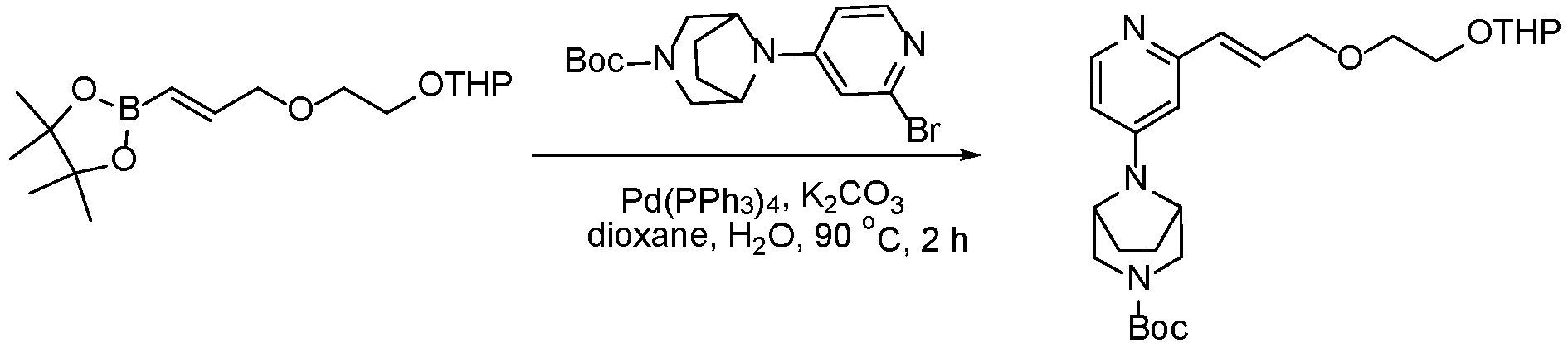
- Into a 10-mL microwave tube purged and maintained under an inert atmosphere of nitrogen, was placed 4,4,5,5-tetramethyl-2-[(1E)-3-[2-(oxan-2-yloxy)ethoxy]prop-1-en-1-yl]-1,3,2-dioxaborolane (1 g, 3.20 mmol, 1.00 equiv), Pd(PPh3)4 (800 mg, 0.69 mmol, 1.00 equiv), potassium carbonate (8 g, 57.88 mmol, 18.07 equiv), dioxane (2 g), tert-butyl 8-(2-bromopyridin-4-yl)-3,8-diazabicyclo[3.2.1]octane-3-carboxylate (902 mg, 2.45 mmol, 3.00 equiv), water (252 mg, 0.10 equiv). The resulting solution was stirred for 1 overnight at 100°C in an oil bath. The reaction was then quenched by the addition of water. The resulting solution was extracted with ethyl acetate, and the organic layers combined. The resulting mixture was washed with saturate sodium chloride. The mixture was dried over anhydrous sodium sulfate. The residue was applied onto a silica gel column eluting with dichloromethane/methanol (10:1). The collected fractions were combined and concentrated under vacuum. This resulted in 639 mg (42%) of tert-butyl 8-[2-[(1E)-3-[2-(oxan-2-yloxy)ethoxy]prop-1-en-1-yl]pyridin-4-yl]-3,8-diazabicyclo[3.2.1]octane-3-carboxylate as a yellow oil.
-

- Into a 50-mL round-bottom flask, was placed tert-butyl 8-[2-[(1E)-3-[2-(oxan-2-yloxy)ethoxy]prop-1-en-1-yl]pyridin-4-yl]-3,8-diazabicyclo[3.2.1]octane-3-carboxylate (639 mg, 1.35 mmol, 1.00 equiv), palladium on carbon (200 mg) and methanol (15 mL), and the mixture was stirred under hydrogen atmosphere overnight at room temperature. The solids were filtered off, and the filtrate was concentrated. This resulted in 639 mg (100%) of tert-butyl 8-(2-[3-[2-(oxan-2-yloxy)ethoxy]propyl]pyridin-4-yl)-3,8-diazabicyclo[3.2.1]octane-3-carboxylate as a yellow oil.
-

- Into a 50-mL round-bottom flask, was placed tert-butyl 8-(2-[3-[2-(oxan-2-yloxy)ethoxy]propyl]pyridin-4-yl)-3,8-diazabicyclo[3.2.1]octane-3-carboxylate (639 mg, 1.34 mmol, 1.00 equiv), methanol (15 mL), and hydrogen chloride gas was bubbled through the solution. The resulting solution was stirred for 3 hours at room temperature. The resulting mixture was concentrated under vacuum. This resulted in 387 mg (100%) of 2-[3-(4-[3,8-diazabicyclo[3.2.1]octan-8-yl]pyridin-2-yl)propoxy]ethan-1-ol as a yellow oil.
-

- Into a 10-mL microwave tube, was placed 2-[3-(4-[3,8-diazabicyclo[3.2.1]octan-8-yl]pyridin-2-yl)propoxy]ethan-1-ol (387 mg, 1.85 mmol, 1.00 equiv), 4-bromo-6-chloropyridazin-3-amine (1.54 g, 7.39 mmol, 4.00 equiv), DMSO (8 mL), DIEA (1.53 mL, 5.00 equiv). The final reaction mixture was irradiated with microwave radiation for 3 hours at 130°C. The reaction was then quenched by the addition of water. The resulting solution was extracted with dichloromethane/MeOH=10:1, and the aqueous layers were combined and concentrated under vacuum. The residue was applied onto a silica gel column with dichloromethane/methanol (7:3). The collected fractions were combined and concentrated under vacuum. This resulted in 519 mg (67%) of 2-(3-[4-[3-(3-amino-6-chloropyridazin-4-yl)-3,8-diazabicyclo[3.2.1]octan-8-yl]pyridin-2-yl]propoxy)ethan-1-ol as a yellow oil.
-

- Into a 50-mL round-bottom flask purged and maintained under an inert atmosphere of nitrogen, was placed 2-(3-[4-[3-(3-amino-6-chloropyridazin-4-yl)-3,8-diazabicyclo[3.2.1]octan-8-yl]pyridin-2-yl]propoxy)ethan-1-ol (650 mg, 1.55 mmol, 1.00 equiv), [2-(methoxymethoxy)phenyl]boronic acid (566 mg, 3.11 mmol, 2.00 equiv), dioxane (8 mL), water (2 mL), potassium carbonate (644 mg, 4.66 mmol, 3.00 equiv), Pd(PPh3)4 (180 mg, 0.16 mmol, 0.10 equiv). The resulting solution was stirred for 3 hours at 100°C in an oil bath. The resulting mixture was concentrated under vacuum. The residue was applied onto a silica gel column with methanol/H2O (85:15). The collected fractions were combined and concentrated under vacuum. This resulted in 400 mg (50%) of 2-[3-[4-(3-[3-amino-6-[2-(methoxymethoxy)phenyl]pyridazin-4-yl]-3,8-diazabicyclo[3.2.1]octan-8-yl)pyridin-2-yl]propoxy]ethan-1-ol as yellow oil.
-

- Into a 50-mL round-bottom flask, was placed 2-[3-[4-(3-[3-amino-6-[2-(methoxymethoxy)phenyl]pyridazin-4-yl]-3,8-diazabicyclo[3.2. 1]octan-8-yl)pyridin-2-yl]propoxy]ethan-1-ol (400 mg, 0.77 mmol, 1.00 equiv), dichloromethane (15 mL), TsCl (219 mg, 1.15 mmol, 1.50 equiv), triethylamine (155 mg, 1.53 mmol, 2.00 equiv), 4-dimethylaminopyridine (9.4 mg, 0.08 mmol, 0.10 equiv). The resulting solution was stirred overnight at room temperature. The reaction was then quenched by the addition of water. The resulting solution was extracted with dichloromethane, and the organic layers combined. The resulting mixture was washed with saturated sodium chloride. The mixture was dried over anhydrous sodium sulfate. The residue was applied onto a silica gel column eluting with dichloromethane/methanol (10:1). The collected fractions were combined and concentrated under vacuum. This resulted in 330 mg (64%) of 2-[3-[4-(3-[3-amino-6-[2-(methoxymethoxy)phenyl]pyridazin-4-yl]-3,8-diazabicyclo[3.2.1]octan-8-yl)pyridin-2-yl]propoxy]ethyl 4-methylbenzene-1-sulfonate as a yellow solid.
-

- Into a 50-mL round-bottom flask purged and maintained with an inert atmosphere of nitrogen, was placed methyl 2-(6-chloropyridin-3-yl)acetate (500 mg, 2.69 mmol, 1.00 equiv), tert-butyl piperazine-1-carboxylate (502 mg, 2.70 mmol, 1.00 equiv), Cs2CO3 (2.63 g, 8.07 mmol, 3.00 equiv), toluene (10 mL), RuPhosPd (115 mg, 0.05 equiv). The resulting solution was stirred overnight at 100°C in an oil bath. The reaction was then quenched by the addition of water. The resulting solution was extracted with ethyl acetate, and the organic layers were combined. The resulting mixture was washed with saturated sodium chloride. The mixture was dried over anhydrous sodium sulfate. The residue was applied onto a silica gel column eluting with ethyl acetate/petroleum ether (1:1). The collected fractions were combined and concentrated under vacuum. This resulted in 319 mg (35%) of tert-butyl 4-[5-(2-methoxy-2-oxoethyl)pyridin-2-yl]piperazine-1-carboxylate as a yellow solid.
-

- Into a 50-mL round-bottom flask, was placed tert-butyl 4-[5-(2-methoxy-2-oxoethyl)pyridin-2-yl]piperazine-1-carboxylate (319 mg, 0.95 mmol, 1.00 equiv), dichloromethane (8 mL), trifluoroacetic acid (2 mL). The resulting solution was stirred for 2 h at room temperature. The resulting mixture was concentrated under vacuum. This resulted in 223 mg (100%) of methyl 2-[6-(piperazin-1-yl)pyridin-3-yl]acetate as a yellow oil.
-

- Into a 50-mL round-bottom flask, was placed methyl 2-[6-(piperazin-1-yl)pyridin-3-yl]acetate (101 mg, 0.43 mmol, 1.00 equiv), 2-3-[4-(3-3-amino-6-[2-(methoxymethoxy)phenyl]pyridazin-4-yl-3,8-diazabicyclo[3.2.1]octan-8-yl)pyridin-2-yl]propoxyethyl 4-methylbenzene-1-sulfonate (320 mg, 0.47 mmol, 1.10 equiv), acetonitrile (4 mL), potassium carbonate (298 mg, 2.16 mmol, 5.00 equiv), NaI (193 mg, 3.00 equiv). The resulting solution was stirred overnight at 60°C. The resulting mixture was concentrated under vacuum. The residue was partitioned between dichloromethane and water, organic layer was separated and washed with saturated sodium chloride. The mixture was dried over anhydrous sodium sulfate. The residue was applied onto a silica gel column eluting with dichloromethane/methanol (5: 1). The collected fractions were combined and concentrated under vacuum. This resulted in 94 mg (30%) of methyl 2-[6-[4-(2-[3-[4-(3-[3-amino-6-[2-(methoxymethoxy)phenyl]pyridazin-4-yl]-3,8-diazabicyclo[3.2.1]octan-8-yl)pyridin-2-yl]propoxy]ethyl)piperazin-1-yl]pyridin-3-yl]acetate as a yellow solid.
-
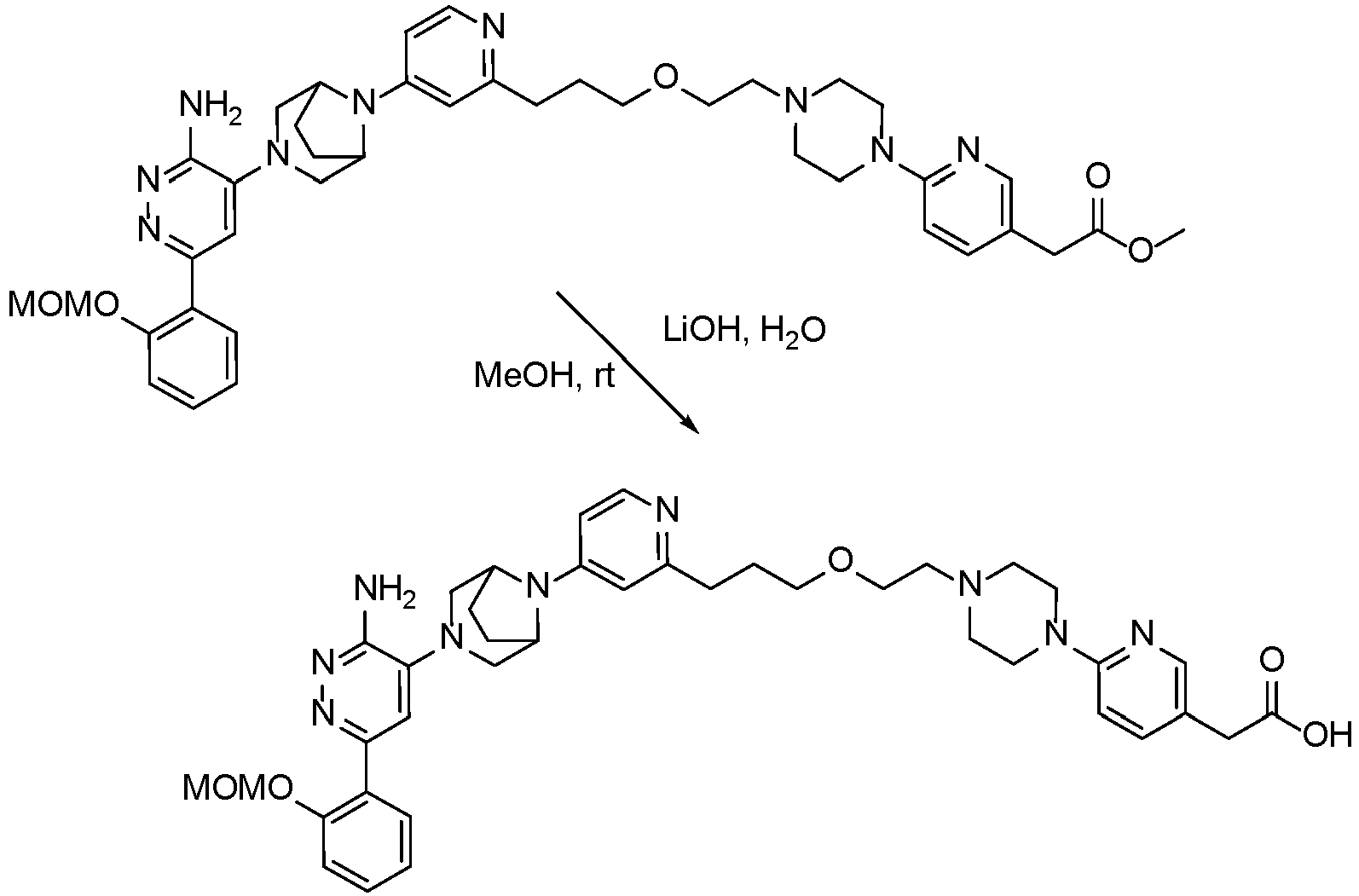
- Into a 50-mL round-bottom flask, was placed methyl 2-[6-[4-(2-[3-[4-(3-[3-amino-6-[2-(methoxymethoxy)phenyl]pyridazin-4-yl]-3,8-diazabicyclo[3.2.1]octan-8-yl)pyridin-2-yl]propoxy]ethyl)piperazin-1-yl]pyridin-3-yl]acetate (94 mg, 0.13 mmol, 1.00 equiv), methanol (5 mL), water (2 mL), and LiOH (15 mg, 0.64 mmol, 5.00 equiv). The resulting solution was stirred for 2 days at room temperature. The resulting mixture was concentrated under vacuum. The resulting solution was diluted with 10 mL of H2O. The resulting solution was extracted with dichloromethane, and the aqueous layers were combined and concentrated under vacuum. The residue was dissolved in 10 mL of methanol. The solids were filtered out. The resulting mixture was concentrated under vacuum. This resulted in 72 mg (78%) of 2-[6-[4-(2-[3-[4-(3-[3-amino-6-[2-(methoxymethoxy)phenyl]pyridazin-4-yl]-3,8-diazabicyclo[3.2.1]octan-8-yl)pyridin-2-yl]propoxy]ethyl)piperazin-1-yl]pyridin-3-yl]acetic acid as a yellow solid.
- 2-[6-[4-(2-[3-[4-(3-[3-Amino-6-[2-(methoxymethoxy)phenyl]pyridazin-4-yl]-3,8-diazabicyclo[3.2.1]octan-8-yl)pyridin-2-yl]propoxy]ethyl)piperazin-1-yl]pyridin-3-yl]acetic acid was converted to the final compound, (2S,4R)-1-((2S)-2-(2-(6-(4-(2-(3-(4-(3-(3-amino-6-(2-hydroxyphenyl)pyridazin-4-yl)-3,8-diazabicyclo[3.2.1]octan-8-yl)pyridin-2-yl)propoxy)ethyl)piperazin-1-yl)pyridin-3-yl)acetamido)-3,3-dimethylbutanoyl)-4-hydroxy-N-(4-(4-methylthiazol-5-yl)benzyl)pyrrolidine-2-carboxamide according to the scheme below and using procedures described above for previous examples.

- Exemplary Compound 50 was prepared using procedures described for Exemplary Compound 31.
-

- Into a 250-mL round-bottom flask purged and maintained under an inert atmosphere of nitrogen, was placed a solution of 2-[2-(2-hydroxyethoxy)ethoxy]ethan-1-ol (10.0 g, 66.59 mmol, 1.00 equiv) in dichloromethane (100 mL), (diethyloxonio)trifluoroborate (1.9 g, 13.33 mmol, 0.20 equiv), and ethyl 2-diazoacetate (3.8 g, 0.50 equiv). The resulting solution was stirred for 3 hours at room temperature. The reaction was then quenched by the addition of water. The resulting solution was extracted with ethyl acetate and the organic layers were combined. The resulting mixture was washed with brine. The mixture was dried over anhydrous sodium sulfate. The residue was applied onto a silica gel column with ethyl acetate/petroleum ether (1:1). The collected fractions were combined and concentrated under vacuum. This resulted in 3.6 g (23%) of ethyl 2-[2-[2-(2-hydroxyethoxy)ethoxy]ethoxy]acetate as a yellow oil.
-

- Into a 50-mL round-bottom flask purged and maintained with an inert atmosphere of nitrogen, was placed a solution of ethyl 2-[2-[2-(2-hydroxyethoxy)ethoxy]ethoxy]acetate (1.0 g, 4.23 mmol, 1.00 equiv) in dichloromethane (20 mL), 4-methylbenzene-1-sulfonyl chloride (970 mg, 5.09 mmol, 1.20 equiv), triethylamine (860.0 mg, 8.50 mmol, 2.00 equiv). The resulting solution was stirred for 5 hours at room temperature. The reaction was then quenched by the addition of water. The resulting solution was extracted with ethyl acetate and the organic layers were combined. The resulting mixture was washed with brine. The mixture was dried over anhydrous sodium sulfate. The residue was applied onto a silica gel column with ethyl acetate/petroleum ether (1:1). The collected fractions were combined and concentrated under vacuum. This resulted in 1.1 g (65%) of ethyl 2-[2-[2-(2-[[(4-methylbenzene)sulfonyl]oxy]ethoxy)ethoxy]ethoxy]acetate as a yellow oil.
-

- Into a 50-mL round-bottom flask purged and maintained with an inert atmosphere of nitrogen, was placed a solution of ethyl 2-[2-[2-(2-[[(4-methylbenzene)sulfonyl]oxy]ethoxy)ethoxy]ethoxy]acetate (1.0 g, 2.56 mmol, 1.20 equiv) in N,N-dimethylformamide (20 mL), 6-bromopyridin-2-ol (370 mg, 2.13 mmol, 1.00 equiv), Cs2CO3 (2.1 g, 6.45 mmol, 3.00 equiv). The resulting solution was stirred for 12 hours at 80°C. The reaction was then quenched by the addition of water. The resulting solution was extracted with ethyl acetate and the organic layers combined. The resulting mixture was washed with brine. The mixture was dried over anhydrous sodium sulfate. The residue was applied onto a silica gel column with ethyl acetate/petroleum ether (1:1). The collected fractions were combined and concentrated under vacuum. This resulted in 800 mg (96%) of ethyl 1-(6-bromopyridin-2-yl)-1,4,7,10-tetraoxadodecan-12-oate as a yellow solid.
- Ethyl 1-(6-bromopyridin-2-yl)-1,4,7,10-tetraoxadodecan-12-oate was converted to the final compound, (2S,4R)-1-[(2S)-2-(1-[6-[(1R,4R)-5-[3-amino-6-(2-hydroxyphenyl)pyridazin-4-yl]-2,5-diazabicyclo[2.2.1]heptan-2-yl]pyridin-2-yl]-1,4,7,10-tetraoxadodecan-12-amido)-3,3-dimethylbutanoyl]-4-hydroxy-N-[[4-(4-methyl-1,3-thiazol-5-yl)phenyl]methyl]pyrrolidine-2-carboxamide according to the scheme below and using procedures analogous to those described for other examples above.

-

- Into a 250-mL round-bottom flask, was placed 1-bromo-4-ethylbenzene (5.5 g, 29.8 mmol, 1.0 equiv), CCl4 (100 mL), AIBN (490 mg, 3.0 mmol, 0.1 equiv), N-Bromosuccinimide (5.34 g, 30.0 mmol, 1.0 equiv). The resulting solution was stirred for 3 hours at 90°C. The resulting mixture was concentrated under vacuum. This resulted in 5.4 g (68%) of 1-bromo-4-(1-bromoethyl)benzene as yellow oil.
-
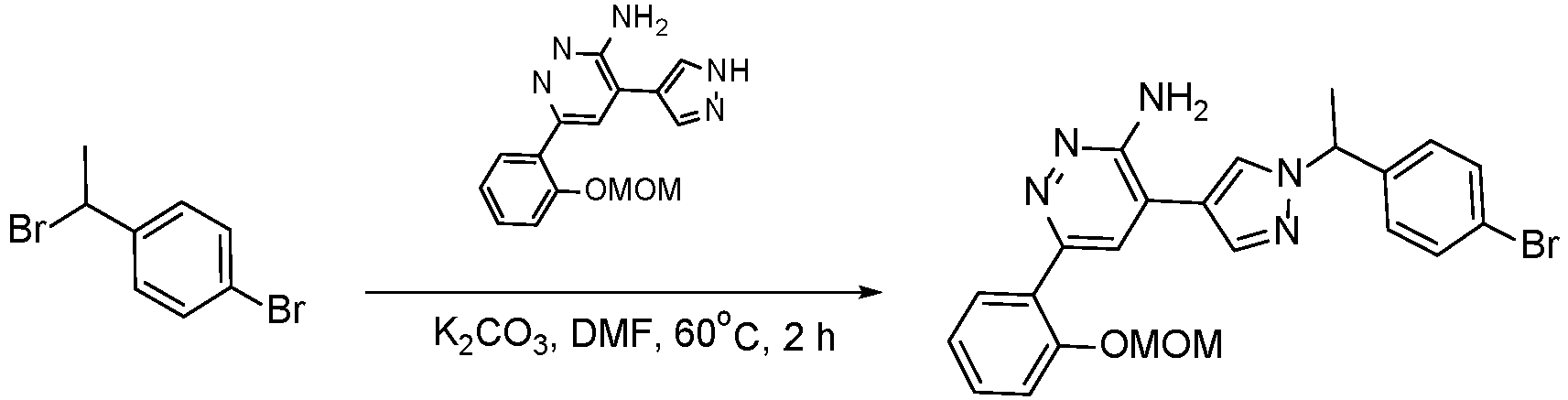
- Into a 100-mL round-bottom flask, was placed 6-[2-(methoxymethoxy)phenyl]-4-(1H-pyrazol-4-yl)pyridazin-3-amine (300 mg, 1.0 mmol, 1.0 equiv), N,N-dimethylformamide (5.0 mL), 1-bromo-4-(1-bromoethyl)benzene (400.0 mg, 1.5 mmol, 1.5 equiv), potassium carbonate (414 mg, 3.0 mmol, 3.0 equiv). The resulting solution was stirred for 3 hours at 60°C. The reaction was then quenched by the addition of 10 mL of water. The resulting solution was extracted with ethyl acetate and (20.0 mL x3), the organic layers combined and concentrated under vacuum. The residue was applied onto a silica gel column eluting with dichloromethane/methanol (1:10). This resulted in 300 mg (62%) of 4-[1-[1-(4-bromophenyl)ethyl]-1H-pyrazol-4-yl]-6-[2-(methoxymethoxy)phenyl]pyridazin-3-amine as a brown solid.
-

- Into a 250-mL round-bottom flask, was placed prop-2-yn-1-ol (10 g, 178.4 mmol, 1.0 equiv), tetrahydrofuran (100.0 mL), sodium hydride (6.4 g, 266.7 mmol, 0.9 equiv), and tert-butyl 2-bromoacetate (28 g, 143.6 mmol, 0.8 equiv). The resulting solution was stirred for 3 hours at room temperature. The reaction was then quenched by the addition of 20 mL of ammonium chloride aqueous solution. The resulting mixture was concentrated under vacuum. The resulting solution was extracted with ethyl acetate (30 mL x 3), and the organic layers were combined and concentrated under vacuum. This resulted in 24.0 g (90%) of tert-butyl 2-(prop-2-yn-1-yloxy)acetate as a yellow solid.
-

- Into a 250-mL round-bottom flask, was placed tert-butyl 2-(prop-2-yn-1-yloxy)acetate (6.6 g, 38.8 mmol, 1.0 equiv), triethylamine (400.0 mg, 3.9 mmol, 0.1 equiv), pinacolborane (20.0 mL), ZrCp2HCl (1 g, 0.1 equiv). The resulting solution was stirred for 12 minutes at 60°C. The reaction was then quenched by the addition of 10 mL of ice/water. The resulting solution was extracted with ethyl acetate (30 mL x 3), and the organic layers were combined. The residue was applied onto a silica gel column eluting with ethyl acetate/petroleum ether (1:5). This resulted in 5.0 g (43%) of tert-butyl 2-[[(2E)-3-(tetramethyl-1,3,2-dioxaborolan-2-yl)prop-2-en-1-yl]oxy]acetate as a yellow oil.
-

- Into a 10-mL sealed tube, was placed 4-[1-[1-(4-bromophenyl)ethyl]-1H-pyrazol-4-yl]-6-[2-(methoxymethoxy)phenyl] pyridazin-3-amine (300 mg, 0.6 mmol, 1.0 equiv), tert-butyl 2-[[(2E)-3-(tetramethyl-1,3,2-dioxaborolan-2-yl)prop-2-en-1-yl]oxy]acetate (279 mg, 0.9 mmol, 1.5 equiv), Pd(PPh3)4 (72 mg, 0.06 mmol, 0.1 equiv), potassium carbonate (259 mg, 1.9 mmol, 3.0 equiv), dioxane (4.0 mL), and H2O (1.0 mL). The resulting solution was stirred for 5 hours at 90°C. The resulting mixture was concentrated under vacuum. The residue was applied onto a silica gel column eluting with dichloromethane/methanol (10:1). This resulted in 200 mg (56%) of tert-butyl 2-[[(2E)-3-[4-[1-(4-[3-amino-6-[2-(methoxymethoxy)phenyl]pyridazin-4-yl]-1H-pyrazol-1-yl)ethyl]phenyl]prop-2-en-1-yl]oxy]acetate as a yellow solid.
-

- Into a 100-mL round-bottom flask, was placed tert-butyl 2-[[(2E)-3-[4-[1-(4-[3-amino-6-[2-(methoxymethoxy)phenyl]pyridazin-4-yl]-1H-pyrazol-1-yl)ethyl]phenyl]prop-2-en-1-yl]oxy]acetate (93 mg, 0.2 mmol, 1.0 equiv), methanol (5.0 mL), palladium on carbon (100 mg). The resulting solution was stirred under hydrogen atmosphere for 1 hour at room temperature. The solids were filtered off. The resulting mixture was concentrated under vacuum. This resulted in 56 mg (60%) of tert-butyl 2-(3-[4-[1-(4-[3-amino-6-[2-(methoxymethoxy)phenyl]pyridazin-4-yl]-1H-pyrazol-1-yl)ethyl]phenyl]propoxy)acetate as a yellow solid.
-

- Into a 100-mL round-bottom flask, was placed tert-butyl 2-(3-[4-[1-(4-[3-amino-6-[2-(methoxymethoxy)phenyl]pyridazin-4-yl]-1H-pyrazol-1-yl)ethyl]phenyl]propoxy)acetate (56 mg, 0.1 mmol, 1.0 equiv), dichloromethane (10.0 mg), trifluoroacetic acid (5 mL). The resulting solution was stirred for 2 hours at room temperature. The resulting mixture was concentrated under vacuum. This resulted in 45 mg (90%) of 2-(3-[4-[1-(4-[3-amino-6-[2-(methoxymethoxy) phenyl]pyridazin-4-yl]-1H-pyrazol-1-yl)ethyl]phenyl]propoxy)acetic acid as a brown solid.
-

- Into a 25-mL round-bottom flask, was placed 2-[3-[4-(1-[4-[3-amino-6-(2-hydroxyphenyl)pyridazin-4-yl]-1H-pyrazol-1-yl]ethyl)phenyl]propoxy]acetic acid (26 mg, 0.06 mmol, 1.0 equiv), N,N-dimethylformamide (5 mL), (2S,4R)-1-[(2S)-2-amino-3,3-dimethylbutanoyl]-4-hydroxy-N-[4-(4-methyl-1,3-thiazol-5-yl)phenyl] methylpyrrolidine-2-carboxamide (30 mg, 0.07 mmol, 1.2 equiv), DIEA (21 mg, 0.2 mmol, 3.0 equiv), T3P (53 mg, 1.2 equiv). The resulting solution was stirred for 1 hour at room temperature. The reaction was then quenched by the addition of 0.5 mL of water. The solids were filtered out. The crude product (5 mL) was purified by Prep-HPLC with the following conditions: Column, XBridge Prep C18 OBD Column, 150mm 5um; mobile phase, Water(10MMOL/L bicarbonate amine) and ACN (45.0% ACN up to 52.0% in 7 min); Detector, UV 254/220nm. This resulted in 6 mg (12%) of (2S,4R)-1-[(2S)-2-(2-[3-[4-(1-[4-[3-amino-6-(2-hydroxyphenyl)pyridazin-4-yl]-1H-pyrazol-1-yl]ethyl)phenyl]propoxy]acetamido) -3,3-dimethylbutanoyl]-4-hydroxy-N-[[4-(4-methyl-1,3-thiazol-5-yl)phenyl]methyl]pyrrolidine-2-carboxamide as a gray solid.
- 1H NMR (300 MHz, Methanol-d4) δ 8.79 (s, 1H), 8.35-8.23 (m, 1H), 8.09-7.97 (m, 2H), 7.80 (d, J = 7.7 Hz, 1H), 7.43-7.37 (m, 2H), 7.31 (d, J = 8.1 Hz, 2H), 7.24 (d, J = 8.1 Hz, 1H), 7.20 (s, 4H), 6.89 (t, J = 7.6 Hz, 2H), 5.64 - 5.52 (m, 1H), 4.66 (s, 1H), 4.60 - 4.44 (m, 3H), 4.27 (d, J = 15.5 Hz, 1H), 3.92 (d, J = 4.6 Hz, 2H), 3.88 - 3.74 (m, 2H), 3.52 (d, J = 6.2 Hz, 2H), 2.71 (t, J = 7.6 Hz, 2H), 2.37 (s, 3H), 2.18 (d, J = 7.7 Hz, 1H), 2.07 (dd, J = 9.4, 4.2 Hz, 1H), 1.89 (dd, J = 7.3, 1.2 Hz, 6H), 1.26 (s, 1H), 1.10-0.95 (d, J = 1.6 Hz, 9H), 0.95-0.90 (m, 1H).
- Exemplary Compound 34 was prepared according to the scheme below using procedures described for other examples above, as well as procedures known and appreciated to those skilled in the art.

- Exemplary Compounds 36 and 37 were prepared according to the scheme below using procedures described for other examples above, as well as as well as procedures known and appreciated to those skilled in the art.


-

- Into a 500-mL round-bottom flask, was placed 2-(piperazin-1-yl)ethan-1-ol (26.0 g, 199.7 mmol, 1.0 equiv), dichloromethane (200.0 mL), triethylamine (40.4 g, 399.3 mmol, 2.0 equiv), benzyl carbonochloridate (40.8 g, 239.2 mmol, 1.2 equiv). The resulting solution was stirred for 2 h at 0°C. The reaction was then quenched by the addition of 10 mL of water. The resulting solution was extracted with dichloromethane (100 mL x 3), and the organic layers were combined and concentrated under vacuum. The residue was applied onto a silica gel column eluting with dichloromethane/methanol (10:1). This resulted in 22 g (42%) of benzyl 4-(2-hydroxyethyl)piperazine-1-carboxylate as yellow oil.
-

- Into a 100-mL round-bottom flask, was placed benzyl 4-(2-hydroxyethyl)piperazine-1-carboxylate (5.3 g, 20.1 mmol, 1.0 equiv) and N,N-dimethylformamide (30.0 mL). This was followed by the addition of sodium hydride (1.6 g, 66.7 mmol, 1.2 equiv) in 5 minutes. To this was added 4-bromo-2-fluoropyridine (3.9 g, 22.2 mmol, 1.1 equiv) in 20 min. The resulting solution was stirred for 4 hours at 0°C. The reaction was then quenched by the addition of 10 mL of ammonium chloride aqueous solution. The resulting solution was extracted with ethyl acetate (50 mL x3), and the organic layers combined and concentrated under vacuum. The residue was applied onto a silica gel column eluting with dichloromethane/methanol (10:1). This resulted in 5.2 g (62%) of benzyl 4-[2-[(4-bromopyridin-2-yl)oxy]ethyl]piperazine-1-carboxylate as yellow oil.
-

- Into a 250-mL round-bottom flask purged and maintained under an inert atmosphere of nitrogen, was placed a solution of benzyl 4-[2-[(4-bromopyridin-2-yl)oxy]ethyl]piperazine-1-carboxylate (2.1 g, 5.0 mmol, 1.0 equiv), RuphosPd II (775.0 mg, 1.0 mmol, 0.2 equiv), and Cs2CO3 (4.89 g, 15.0 mmol, 3.0 equiv) in PhMe (100 mL). The resulting mixture was stirred overnight at 100°C in an oil bath. The reaction mixture was quenched by water (100 mL) and extracted with ethyl acetate (100 mL x 2). The organic layer was combined and concentrated under reduced pressure,and the residue was applied onto a silica gel column eluting with 100% ethyl acetate. This resulted in 670 mg (32%) of tert-butyl 8-[2-(2-[4-[(benzyloxy)carbonyl]piperazin-1-yl]ethoxy)pyridin-4-yl]-3,8-diazabicyclo[3.2.1]octane-3-carboxylate as a yellow solid.
-

- Into a 100-mL round-bottom flask, was placed tert-butyl8-[2-(2-[4-[(benzyloxy)carbonyl]piperazin-1-yl]ethoxy)pyridin-4-yl]-3,8-diazabicyclo[3.2.1] octane-3-carboxylate (670 mg, 1.2 mmol, 1.0 equiv) in methanol (10.0 mL). Then hydrogen chloride in 1,4-dioxane solution (4M, 10 mL) was added. The resulting solution was stirred for 5 hours at room temperature. The resulting mixture was concentrated under vacuum. This resulted in 410 mg (69%) of benzyl 4-[2-[(4-[3,8-diazabicyclo[3.2.1]octan-8-yl]pyridin-2-yl)oxy]ethyl]piperazine-1-carboxylate hydrochloride as a yellow solid.
-

- Into a 10-mL sealed tube, was placed benzyl 4-[2-[(4-[3,8-diazabicyclo[3.2.1]octan-8-yl]pyridin-2-yl)oxy]ethyl]piperazine-1-carboxylate hydrochloride (200.0 mg, 0.4 mmol, 1.0 equiv), 4-bromo-6-chloropyridazin-3-amine (137.0 mg, 0.7 mmol, 1.5 equiv), methyl sulfoxide (3.0 mL), and N,N-diisopropylethylamine (1 mL). The final reaction mixture was irradiated with microwave radiation for 6 hours at 130°C. The reaction was then quenched by the addition of 1 mL of water. The resulting solution was extracted with ethyl acetate (20 mL x3), and the organic layers were combined and concentrated under vacuum. The residue was applied onto a silica gel column eluting with dichloromethane/methanol (10:1). This resulted in 100 mg (42%) of benzyl 4-[2-([4-[3-(3-amino-6-chloropyridazin-4-yl)-3,8-diazabicyclo[3.2.1]octan-8-yl]pyridin-2-yl]oxy)ethyl]piperazine-1-carboxylate as a brown solid.
-

- Into a 100-mL round-bottom flask, was placed benzyl 4-[2-([4-[3-(3-amino-6-chloropyridazin-4-yl)-3,8-diazabicyclo[3.2.1]octan-8-yl]pyridin-2-yl]oxy)ethyl]piperazine-1-carboxylate (390 mg, 0.7 mmol, 1.0 equiv), dioxane (8.0 mL), water (2.0 mL), potassium carbonate (279 mg, 2.0 mmol, 3.0 equiv), [2-(methoxymethoxy)phenyl]boronic acid (184.0 mg, 1.0 mmol, 1.50 equiv), Pd(PPh3)4 (78 mg, 0.07 mmol, 0.1 equiv). The resulting solution was stirred for 2 hours at 100°C. The resulting solution was extracted with ethyl acetate (20 mL x 3), and the organic layers combined and concentrated under vacuum. The residue was applied onto a silica gel column eluting with dichloromethane/methanol (10:1). This resulted in 120 mg (26%) of benzyl 4-(2-[[4-(3-[3-amino-6-[2-(methoxymethoxy)phenyl]pyridazin-4-yl]-3,8-diazabicyclo[3.2.1]octan-8-yl)pyridin-2-yl]oxy]ethyl)piperazine-1-carboxylate as a brown solid.
-

- To a solution of benzyl 4-(2-[[4-(3-[3-amino-6-[2-(methoxymethoxy)phenyl]pyridazin-4-yl]-3,8-diazabicyclo[3.2. 1]octan-8-yl)pyridin-2-yl]oxy]ethyl)piperazine-1-carboxylate (200 mg, 0.29 mmol, 1.00 equiv) in 10 mL of isopropanol was added palladium hydroxide (100 mg, 0.71 mmol, 2.42 equiv) under nitrogen atmosphere in a 100-mL round bottom flask. The flask was then vacuumed and flushed with hydrogen. The resulting solution was stirred for 12 hours at room temperature. The solids were filtered off. The resulting mixture was concentrated under vacuum. This resulted in 70 mg (44%) of 6-[2-(methoxymethoxy)phenyl]-4-(8-[2-[2-(piperazin-1-yl)ethoxy]pyridin-4-yl]-3,8-diazabicyclo[3.2.1]octan-3-yl)pyridazin-3-amine as brown oil.
-

- Into a 100-mL round-bottom flask, was placed 4-(tetramethyl-1,3,2-dioxaborolan-2-yl)-1H-pyrazole (1.9 g, 10.0 mmol, 1.00 equiv), N,N-dimethylformamide (30 mL), ethyl 2-bromo-3-methylbutanoate (2.1 g, 10.0 mmol, 1.0 equiv), and cesium carbonate (10.0 g, 30.7 mmol, 3.0 equiv). The resulting solution was stirred for 12 hours at 90°C. The reaction was then quenched by the addition of 10 mL of water. The resulting solution was extracted with ethyl acetate (20 mL x 3), and the organic layers combined and concentrated under vacuum. The residue was applied onto a silica gel column eluting with ethyl acetate/petroleum ether (1:6). This resulted in 3.3 g (93%) of ethyl 3-methyl-2-[4-(tetramethyl-1,3,2-dioxaborolan-2-yl)-1H-pyrazol-1-yl]butanoate as a white solid.
-

- Into a 250-mL round-bottom flask, was placed ethyl 3-methyl-2-[4-(tetramethyl-1,3,2-dioxaborolan-2-yl)-1H-pyrazol-1-yl]butanoate (3.0 g, 9.3 mmol, 1.0 equiv), tetrahydrofuran (30 mL), water (30 mL), sodium perborate (3.5 g, 23.3 mmol, 2.5 equiv). The resulting solution was stirred for 12 hours at room temperature. The resulting mixture was concentrated under vacuum. The resulting solution was extracted with ethyl acetate (20 ml x 3), and the organic layers were combined and concentrated under vacuum. The residue was applied onto a silica gel column eluting with ethyl acetate/petroleum ether (1: 1). This resulted in 1740 mg (88%) of ethyl 2-(4-hydroxy-1H-pyrazol-1-yl)-3-methylbutanoate as a white solid.
-

- Into a 50-mL round-bottom flask, was placed ethyl 2-(4-hydroxy-1H-pyrazol-1-yl)-3-methylbutanoate (3.5 g, 16.5 mmol, 1.0 equiv), methanol (10 mL), water (10 mL), and sodium hydroxide (2.7 g, 67.5 mmol, 4.0 equiv). The resulting solution was stirred for 12 hours at room temperature. The pH value of the solution was adjusted to 2 with 2M HCl. The crude product was purified by prep-HPLC with the following conditions: Column, XBridge Shield RP18 OBD Column, 5um,19*150mm; mobile phase, Water (0.1% FA) and acetonitrile (0.0% acetonitrile up to 4.0% in 2 min, up to 20.0% in 8 min); Detector, UV 254nm. This resulted in 1.5 g (49%) of 2-(4-hydroxy-1H-pyrazol-1-yl)-3-methylbutanoic acid as a white oil.
-

- Into a 100-mL round-bottom flask, was placed 2-(4-hydroxy-1H-pyrazol-1-yl)-3-methylbutanoic acid (500 mg, 2.7 mmol, 1.0 equiv), N,N-dimethylformamide (20 mL), (2S,4R)-4-hydroxy-N-[(1S)-1-[4-(4-methyl-1,3-thiazol-5-yl)phenyl]ethyl]pyrrolidine-2-carboxamide hydrochloride (900 mg, 2.5 mmol, 0.9 equiv), DIEA (1.1 g, 8.5 mmol, 3.0 equiv), T3P (2.6 g, 1.5 equiv). The resulting solution was stirred for 1 hour at room temperature. The reaction was then quenched by the addition of 5 mL of water. The resulting solution was extracted with ethyl acetate (30 mL x3) and the organic layers combined and concentrated under vacuum. The residue was applied onto a silica gel column with dichloromethane/methanol (10:1). This resulted in 800 mg (59%) of (2S,4R)-4-hydroxy-1-[2-(4-hydroxy-1H-pyrazol-1-yl)-3-methylbutanoyl]-N-[(1S)-1-[4-(4-methyl-1,3-thiazol-5-yl)phenyl]ethyl]pyrrolidine-2-carboxamide as a yellow solid.
-

- Into a 5-mL sealed tube, was placed (2S,4R)-4-hydroxy-1-[2-(4-hydroxy-1H-pyrazol-1-yl)-3-methylbutanoyl]-N-[(1S)-1-[4-(4-methyl-1,3-thiazol-5-yl)phenyl]ethyl]pyrrolidine-2-carboxamide (300 mg, 0.60 mmol, 1.0 equiv), N,N-dimethylformamide (5.0 mL), 1,2-dibromoethane (222 mg, 1.2 mmol, 2.0 equiv), potassium carbonate (250 mg, 1.8 mmol, 3.0 equiv). The resulting solution was stirred for 12 hours at 70°C. The reaction was then quenched by the addition of 1 mL of water. The crude product was purified by Prep-HPLC with the following conditions: Column, XBridge Shield RP18 OBD Column,, 5um,19*150mm; mobile phase, water (10 mmol/L ammonium bicarbonate) and acetonitrile (35.0% acetonitrile up to 47.0% in 8 min); Detector, UV 254nm. This resulted in 120 mg (33%) of (2S,4R)-1-[2-[4-(2-bromoethoxy)-1H-pyrazol-1-yl]-3-methylbutanoyl]-4-hydroxy-N-[(1S)-1-[4-(4-methyl-1,3-thiazol-5-yl)phenyl]ethyl]pyrrolidine-2-carboxamide as a yellow solid.
-

- Into a 100-mL round-bottom flask, was placed 6-[2-(methoxymethoxy)phenyl]-4-(8-[2-[2-(piperazin-1-yl)ethoxy]pyridin-4-yl]-3,8-diazabicyclo[3.2.1]octan-3-yl)pyridazin-3-amine (54.6 mg, 0.1 mmol, 1.0 equiv), acetonitrile (10.0 mL), potassium carbonate (41 mg, 0.30mmol, 3.0 equiv), sodium iodide (18 mg, 0.1 mmol, 1.2 equiv), (2S,4R)-1-2-[4-(2-bromoethoxy)-1H-pyrazol-1-yl]-3-methylbutanoyl-4-hydroxy-N-[(1S)-1-[4-(4-methyl-1,3-thiazol-5yl)phenyl]ethyl]pyrrolidine-2-carboxamide (60 mg, 0.1 mmol, 1.0 equiv). The resulting solution was stirred for 12 hours at 70°C. The reaction was then quenched by the addition of 3 mL of water. The resulting solution was extracted with ethyl acetate (30 mL x3), and the organic layers were combined and concentrated under vacuum. The residue was applied onto a silica gel column eluting with dichloromethane/methanol (10/1). This resulted in 30 mg (29%) of (2S,4R)-1-(2-[4-[2-(4-[2-[(4-[3-[3-amino-6-(2-hydroxyphenyl)pyridazin-4-yl]-3,8-diazabicyclo[3.2.1]octan-8-yl]pyridin-2-yl)oxy]ethyl]piperazin-1-yl)ethoxy]-1H-pyrazol-1-yl]-3-methylbutanoyl)-4-hydroxy-N-[(1S)-1-[4-(4-methyl-1,3-thiazol-5-yl)phenyl]ethyl]pyrrolidine-2-carboxamide as a light brown solid.
-


- Into a 25-mL round-bottom flask, was placed (2S,4R)-1-[2-(4-[2-[4-(2-[[4-(3-[3-amino-6-[2-(methoxymethoxy)phenyl]pyridazin-4-yl]-3,8-diazabicyclo[3.2.1]octan-8-yl)pyridin-2-yl]oxy]ethyl)piperazin-1-yl]ethoxy]-1H-pyrazol-1-yl)-3-methylbutanoyl]-4-hydroxy-N-[(1S)-1-[4-(4-methyl-1,3-thiazol-5-yl)phenyl]ethyl]pyrrolidine-2-carboxamide (40 mg, 0.04 mmol, 1.0 equiv), methanol (8 mL), hydrogen chloride (150 mL). The resulting solution was stirred for 6 hours at room temperature. The reaction was then quenched by the addition of 1 mL of water. The crude product (5 mL) was purified by Prep-HPLC with the following conditions: Column, XBridge Shield RP18 OBD Column, 5um,19*150mm; mobile phase, Water (0.1% formic acid) and acetonitrile (13.0% acetonitrile up to 27.0% in 8 min); Detector, UV 254nm. This resulted in 30 mg (78%) of (2S,4R)-1-(2-[4-[2-(4-[2-[(4-[3-[3-amino-6-(2-hydroxyphenyl)pyridazin-4-yl]-3,8-diazabicyclo[3.2.1]octan-8-yl]pyridin-2-yl)oxy]ethyl]piperazin-1-yl)ethoxy]-1H-pyrazol-1-yl]-3-methylbutanoyl)-4-hydroxy-N-[(1S)-1-[4-(4-methyl-1,3-thiazol-5-yl)phenyl]ethyl]pyrrolidine-2-carboxamide as a white solid.
- (2S,4R)-1-(2-[4-[2-(4-[2-[(4-[3-[3-amino-6-(2-hydroxy phenyl)pyridazin-4-yl]-3,8-diazabicyclo[3.2.1]octan-8-yl]pyridin-2-yl)oxy]ethyl]piperazin-1-yl)ethoxy]-1H-pyrazol-1-yl]-3-methylbutanoyl)-4-hydroxy-N-[(1S)-1-[4-(4-methyl-1,3-thiazol-5-yl)phenyl]ethyl]pyrrolidine-2-carboxamide was purified by chiral prep-HPLC with the following conditions: Column, Chiralpak IC, 2*25cm, 5um; mobile phase, DCM and methanol (hold 50.0% methanol in 11 min); Detector, UV 220/254nm. This resulted in 5.6 mg of (2S,4R)-1-[(2R)-2-[4-[2-(4-[2-[(4-[3-[3-amino-6-(2-hydroxyphenyl)pyridazin-4-yl]-3,8-diazabicyclo[3.2.1]octan-8-yl]pyridin-2-yl)oxy]ethyl]piperazin-1-yl)ethoxy]-1H-pyrazol-1-yl]-3-methylbutanoyl]-4-hydroxy-N-[(1S)-1-[4-(4-methyl-1,3-thiazol-5-yl)phenyl]ethyl]pyrrolidine-2-carboxamide as a white solid [1H NMR (300 MHz, Methanol-d4) δ 8.89 (s, 1H), 7.85 - 7.72 (m, 2H), 7.56 - 7.36 (m, 6H), 7.31 - 7.16
- (m, 2H), 6.97 - 6.85 (m, 2H), 6.58 (dd, J = 6.2, 2.2 Hz, 1H), 6.24 (d, J = 2.1 Hz, 1H), 5.05 (q, J = 6.9 Hz, 1H), 4.67 (d, J = 10.6 Hz, 1H), 4.60 - 4.47 (m, 3H), 4.46 (s, 1H), 4.39 (t, J = 5.4 Hz, 2H), 4.06 (t, J = 5.3 Hz, 2H), 3.87 (dd, J = 10.9, 4.2 Hz, 1H), 3.76 (s, 1H), 3.73 - 3.55 (m, 2H), 3.19 - 2.99 (m, 2H), 2.92 - 2.69 (m, 12H), 2.50 (s, 4H), 2.30 - 2.14 (m, 5H), 1.98 (ddd, J = 13.2, 8.7, 4.6 Hz, 1H), 1.54 (d, J = 7.0 Hz, 3H), 1.41 - 1.26 (m, 4H), 1.20 (t, J = 7.0 Hz, 2H), 1.08 (d, J = 6.5 Hz, 3H), 0.93 (d, J = 4.1 Hz, 1H)] and 8.1 mg of (2S,4R)-1-[(2S)-2-[4-[2-(4-[2-[(4-[3-[3-amino-6-(2-hydroxyphenyl)pyridazin-4-yl]-3,8-diazabicyclo[3.2.1]octan-8-yl]pyridin-2-yl)oxy]ethyl]piperazin-1-yl)ethoxy]-1H-pyrazol-1-yl]-3-methylbutanoyl]-4-hydroxy-N-[(1S)-1-[4-(4-methyl-1,3-thiazol-5-yl)phenyl]ethyl]pyrrolidine-2-carboxamide as a white solid [1H NMR (300 MHz, Methanol-d4) δ 8.88 (d, J = 13.8 Hz, 1H), 7.85 - 7.69 (m, 2H), 7.59 - 7.30 (m, 6H), 7.32 - 7.18 (m, 2H), 6.97 - 6.84 (m, 2H), 6.57 (dd, J = 6.1, 2.1 Hz, 1H), 6.23 (t, J = 2.7 Hz, 1H), 4.99 (q, J = 7.0 Hz, 1H), 4.78 (d, J = 8.8 Hz, 1H), 4.60 (t, J = 8.2 Hz, 1H), 4.53 (s, 2H), 4.37 (dd, J = 6.8, 4.1 Hz, 3H), 4.04 (t, J = 5.3 Hz, 2H), 3.64 (p, J = 6.7 Hz, 3H), 3.40 - 3.24 (m, 1H), 3.11 (dd, J = 15.8, 4.6 Hz, 2H), 2.88 - 2.64 (m, 12H), 2.49 (d, J = 13.8 Hz, 4H), 2.34 - 2.10 (m, 6H), 2.06 (s, 1H), 1.95 (td, J = 8.5, 4.2 Hz, 1H), 1.50 (d, J = 7.0 Hz, 3H), 1.33 (td, J = 7.8, 7.4, 4.4 Hz, 5H), 1.20 (t, J = 7.0 Hz, 3H), 1.08 (d, J = 6.7 Hz, 3H), 0.93 (q, J = 6.8 Hz, 1H), 0.74 (dd, J = 19.3, 6.7 Hz, 3H)].
-

- Into a 250-mL round-bottom flask, was placed a solution of 2-bromo-4-fluoropyridine (7.8 g, 44.32 mmol, 1.05 equiv), tert-butyl 3,8-diazabicyclo[3.2.1]octane-3-carboxylate (9 g, 42.4 mmol, 1.00 equiv), DIEA (25 g, 193 mmol, 4.00 equiv) in NMP (120 mL). The resulting solution was stirred for 3 hours at 150°C. The reaction mixture was cooled. The reaction was then quenched by the addition of water (200 mL). The resulting solution was extracted with ethyl acetate (50 mL x 3), and the organic layers were combined. The resulting mixture was washed with water (50 mL x 1) and brine (50 mL x 1). The mixture was dried over anhydrous sodium sulfate and concentrated under vacuum. The residue was applied onto a silica gel column eluting with ethyl acetate/petroleum ether (1:2). This resulted in 11.7 g (75%) of tert-butyl 8-(2-bromopyridin-4-yl)-3,8-diazabicyclo[3.2.1]octane-3-carboxylate as a yellow solid.
-

- Into a 250-mL round-bottom flask, was placed a mixture of [(prop-2-yn-1-yloxy)methyl]benzene (10 g, 68.4 mmol, 1.00 equiv), pinacolborane (10 mL), ZrCp2HCl (2 g), triethylamine (850 mg, 8.40 mmol, 0.12 equiv). The resulting solution was stirred for 16 hours at 65°C in an oil bath. The resulting mixture were quenched with water (30 mL), then was extracted with ethyl acetate (50 mL x 3), and the organic layers combined. The resulting mixture was washed with brine (50 mL x 1). The resulting mixture was concentrated under vacuum. The residue was applied onto a silica gel column eluting with ethyl acetate/petroleum ether (1: 1). This resulted in 12.5 g (67%) of 2-[(1E)-3-(benzyloxy)prop-1-en-1-yl]-4,4,5,5-tetramethyl-1,3,2-dioxaborolane as a yellow solid.
-

- Into a 250-mL round-bottom flask purged and maintained under an inert atmosphere of nitrogen, was placed a solution of tert-butyl 8-(2-bromopyridin-4-yl)-3,8-diazabicyclo[3.2.1]octane-3-carboxylate (4.0 g, 10.9 mmol, 1.00 equiv), 2-[(1E)-3-(benzyloxy)prop-1-en-1-yl]-4,4,5,5-tetramethyl-1,3,2-dioxaborolane (4.48 g, 16.3 mmol, 1.50 equiv), Pd(dppf)2Cl2 dichloromethane (890 mg, 1.09 mmol, 0.10 equiv), and potassium carbonate (4.5 g, 32.6 mmol, 3.00 equiv) in dioxane/H2O (80/20 mL). The resulting solution was stirred for 2 hours at 90°C. The reaction mixture was cooled to room temperature. The resulting mixture was concentrated under vacuum. The residue was applied onto a silica gel column eluting with ethyl acetate/petroleum ether (1: 1). This resulted in 4.55 g (96%) of tert-butyl 8-[2-[(1E)-3-(benzyloxy)prop-1-en-1-yl]pyridin-4-yl]-3,8-diazabicyclo[3.2.1]octane-3-carboxylate as a yellow solid.
-

- Into a 250-mL round-bottom flask purged and maintained under an inert atmosphere of nitrogen, was placed a solution of tert-butyl 8-[2-[(1E)-3-(benzyloxy)prop-1-en-1-yl]pyridin-4-yl]-3,8-diazabicyclo[3.2.1]octane-3-carboxylate (12.9 g, 29.6 mmol, 1.00 equiv) in methanol/HOAc (200/0.5 mL). Palladium on carbon (6 g) was added under nitrogen atmosphere. The flask was then vacuumed and flushed with hydrogen. The reaction mixture was hydrogenated at 50°C for 20 hours under hydrogen atmosphere using a hydrogen balloon. The solids were filtered out through a celite pad, and the filtrate was concentrated under reduced pressure. This resulted in 10.2 g (99%) of tert-butyl 8-[2-(3-hydroxypropyl)pyridin-4-yl]-3,8-diazabicyclo[3.2.1]octane-3-carboxylate as a yellow oil.
-

- Into a 100-mL round-bottom flask was placed tert-butyl 8-[2-(3-hydroxypropyl)pyridin-4-yl]-3,8-diazabicyclo[3.2.1]octane-3-carboxylate (700 mg, 2.01 mmol, 1.00 equiv) in dichloromethane (30 mL), and Dess-Martin periodinane reagent (1.7 g, 2.00 equiv) was added at 0~5°C. The resulting solution was stirred for 6 hours at room temperature. The resulting mixture was concentrated under vacuum at 15°C. The residue was applied onto a silica gel column eluting with dichloromethane/methanol (5:1). This resulted in 500 mg (72%) of tert-butyl 8-[2-(3-oxopropyl)pyridin-4-yl]-3,8-diazabicyclo[3.2.1]octane-3-carboxylate as a white solid.
-

- Into a 50-mL round-bottom flask, was placed tert-butyl 8-[2-(3-oxopropyl)pyridin-4-yl]-3,8-diazabicyclo[3.2.1]octane-3-carboxylate (1.4 g, 4.05 mmol, 1.00 equiv), benzyl piperazine-1-carboxylate (1.07 g, 4.86 mmol, 1.20 equiv) in dichloromethane (20 mL). It was stirred for 20 min and NaBH(OAc)3 (2.58 g, 12.2 mmol, 3.00 equiv) was added at 0°C. The resulting solution was stirred for 4 hours at room temperature. The reaction was then quenched by the addition of water/ice (50 mL). The resulting solution was extracted with dichloromethane (50 mL x 3) and the organic layers were combined and dried over anhydrous sodium sulfate. The residue was applied onto a silica gel column eluting with dichloromethane/methanol (10/1). This resulted in 2.19 g (98%) of tert-butyl 8-[2-(3-[4-[(benzyloxy)carbonyl]piperazin-1-yl]propyl)pyridin-4-yl]-3,8-diazabicyclo[3.2.1]octane-3-carboxylate as a light yellow oil.
-

- Into a 100-mL round-bottom flask, was placed tert-butyl 8-[2-(3-[4-[(benzyloxy)carbonyl]piperazin-1-yl]propyl)pyridin-4-yl]-3,8-diazabicyclo[3.2.1]octane-3-carboxylate (2.19 g, 3.98 mmol, 1.00 equiv) in methanol (20 mL). Hydrogen chloride gas was bubbled through the resulting solution while stirring for 1 h at room temperature. The resulting mixture was concentrated under vacuum. This resulted in 1.79 g (92%) of benzyl 4-[3-(4-[3,8-diazabicyclo[3.2.1]octan-8-yl]pyridin-2-yl)propyl]piperazine-1-carboxylate hydrochloride as a light yellow solid.
-

- Into a 20-mL microwave tube purged and maintained under an inert atmosphere of nitrogen was placed benzyl 4-[3-(4-[3,8-diazabicyclo[3.2.1]octan-8-yl]pyridin-2-yl)propyl]piperazine-1-carboxylate hydrochloride (1.79 g, 3.68 mmol, 1.00 equiv), 4-bromo-6-chloropyridazin-3-amine (2.47 g, 11.9 mmol, 3.00 equiv), DIEA (5.0 mL) in DMSO (10 mL). The resulting solution was stirred for 16 hours at 130°C in an oil bath. The reaction was then quenched by the addition of water/ice (50 mL). The resulting solution was extracted with dichloromethane (50 mL x 3), and the organic layers were combined and dried over anhydrous sodium sulfate. The residue was applied onto a silica gel column eluting with dichloromethane/methanol (5/1). This resulted in 1.21 g (57%) of benzyl 4-(3-[4-[3-(3-amino-6-chloropyridazin-4-yl)-3,8-diazabicyclo[3.2.1]octan-8-yl]pyridin-2-yl]propyl)piperazine-1-carboxylate as a brown solid. Benzyl 4-(3-[4-[3-(3-amino-6-chloropyridazin-4-yl)-3,8-diazabicyclo[3.2.1]octan-8-yl]pyridin-2-yl]propyl)piperazine-1-carboxylate was converted to 6-[2-(methoxymethoxy)phenyl]-4-(8-[2-[3-(piperazin-1-yl)propyl]pyridin-4-yl]-3,8-diazabicyclo[3.2.1]octan-3-yl)pyridazin-3-amine (used in step 10) according to the scheme below and using procedures described above for other examples.
-

- Into a 50-mL round-bottom flask, was placed a solution of (2S,4R)-4-hydroxy-1-[2-(3-hydroxy-1,2-oxazol-5-yl)-3-methylbutanoyl]-N-[[4-(4-methyl-1,3-thiazol-5-yl)phenyl]methyl]pyrrolidine-2-carboxamide (480 mg, 1.0 mmol, 1.0 equiv) in N,N-dimethylformamide (10 mL), potassium carbonate (300 mg, 2.2 mmol, 2.2 equiv) and 1,2-dibromoethane (300 mg, 1.6 mmol, 1.6 equiv). The resulting solution was stirred for 2 hours at 70°C in an oil bath. The reaction was then quenched by the addition of 20 mL of water. The resulting solution was extracted with of ethyl acetate (3x30 mL), and the organic layers were combined and dried over anhydrous sodium sulfate and concentrated under vacuum. The residue was applied onto a silica gel column eluting with ethyl acetate/petroleum ether (1:0). This resulted in 235 mg (40%) of (2S, 4R)-1-[2-[3-(2-bromoethoxy)-1, 2-oxazol-5-yl]-3-methylbutanoyl]-4-hydroxy-N-[[4-(4-methyl-1, 3-thiazol-5-yl) phenyl] methyl] pyrrolidine-2-carboxamide as a light yellow solid.
-

- Into a 20-mL microwave tube purged and maintained under an inert atmosphere of nitrogen was placed 6-[2-(methoxymethoxy)phenyl]-4-(8-[2-[3-(piperazin-1-yl)propyl]pyridin-4-yl]-3,8-diazabicyclo[3.2.1]octan-3-yl)pyridazin-3-amine (92 mg, 0.17 mmol, 1.00 equiv) [prepared from benzyl 4-(3-[4-[3-(3-amino-6-chloropyridazin-4-yl)-3,8-diazabicyclo[3.2.1]octan-8-yl]pyridin-2-yl]propyl)piperazine-1-carboxylate from step 8 according to the scheme below and using procedures described above for other examples], (2S,4R)-1-2-[3-(2-bromoethoxy)-1,2-oxazol-5-yl]-3-methylbutanoyl-4-hydroxy-N-[4-(4-methyl-1,3-thiazol-5-yl)phenyl]methylpyrrolidine-2-carboxamide (100 mg, 0.17 mmol, 1.00 equiv), potassium carbonate (70 mg, 0.51 mmol, 3.00 equiv), NaI (25 mg, 0.17 mmol, 1.00 equiv) in acetonitrile (10 mL). The resulting mixture was stirred for 12 hours at 70°C in an oil bath. The resulting solution was extracted with dichloromethane (100 mL) and the organic layers combined. The resulting mixture was washed with brine (30 mL). The mixture was dried over anhydrous sodium sulfate and concentrated under vacuum. This resulted in 180 mg (crude) of (2S,4R)-1-(2-[3-[2-(4-[3-[4-(3-[3-amino-6-[2-(methoxymethoxy)phenyl]pyridazin-4-yl]-3,8-diazabicyclo[3.2.1]octan-8-yl)pyridin-2-yl]propyl]piperazin-1-yl)ethoxy]-1,2-oxazol-5-yl]-3-methylbutanoyl)-4-hydroxy-N-[[4-(4-methyl-1,3-thiazol-5-yl)phenyl]methyl]pyrrolidine-2-carboxamide as a light yellow solid.
- (2S,4R)-1-(2-[3-[2-(4-[3-[4-(3-[3-amino-6-[2-(methoxymethoxy)phenyl]pyridazin-4-yl]-3,8-diazabicyclo[3.2.1]octan-8-yl)pyridin-2-yl]propyl]piperazin-1-yl)ethoxy]-1,2-oxazol-5-yl]-3-methylbutanoyl)-4-hydroxy-N-[[4-(4-methyl-1,3-thiazol-5-yl)phenyl]methyl]pyrrolidine-2-carboxamide was converted to the final compounds, (2S,4R)-1-[(2S)-2-[3-(2-[4-[3-(4-[3-[3-amino-6-(2-hydroxyphenyl)pyridazin-4-yl]-3,8-diazabicyclo[3.2.1]octan-8-yl]pyridin-2-yl)propyl]piperazin-1-yl]ethoxy)-1,2-oxazol-5-yl]-3-methylbutanoyl]-4-hydroxy-N-[[4-(4-methyl-1,3-thiazol-5-yl)phenyl]methyl]pyrrolidine-2-carboxamide and (2S,4R)-1-[(2R)-2-[3-(2-[4-[3-(4-[3-[3-amino-6-(2-hydroxyphenyl)pyridazin-4-yl]-3,8-diazabicyclo[3.2.1]octan-8-yl]pyridin-2-yl)propyl]piperazin-1-yl]ethoxy)-1,2-oxazol-5-yl]-3-methylbutanoyl]-4-hydroxy-N-[[4-(4-methyl-1,3-thiazol-5-yl)phenyl]methyl]pyrrolidine-2-carboxamide according to the scheme below and using procedures analogous to those described above for other examples.

- Exemplary Compound 40 was prepared according to the scheme below using procedures described for other examples above as well as procedures appreciated by those skilled in the art.

- Exemplary Compounds 41 and 42 were prepared according to the scheme below using procedures described above for other exemplary compounds.

-

- Into a 250-mL round-bottom flask, was placed a solution of 2-[2-(prop-2-yn-1-yloxy)ethoxy]ethan-1-ol (1 g, 6.94 mmol, 1.00 equiv) in dichloromethane (80 mL), triethylamine (2.8 g, 27.67 mmol, 3.00 equiv), 4-dimethylaminopyridine (270 mg, 2.21 mmol, 0.30 equiv), and 4-toluenesulfonyl chloride (1.9 g, 9.97 mmol, 1.50 equiv). The resulting solution was stirred for 12 hours at room temperature. The resulting mixture was concentrated under vacuum. The residue was applied onto a silica gel column eluting with ethyl acetate/petroleum ether (1:2). The collected fractions were combined and concentrated under vacuum. This resulted in 1.4 g (68%) of 2-[2-(prop-2-yn-1-yloxy)ethoxy]ethyl 4-methylbenzene-1-sulfonate as yellow oil.
-

- Into a 25-mL sealed tube, was placed a solution of 2-[2-(prop-2-yn-1-yloxy)ethoxy]ethyl 4-methylbenzene-1-sulfonate (1.4 g, 4.69 mmol, 1.00 equiv) in N,N-dimethylformamide (10 mL), potassium carbonate (1.6 g, 11.58 mmol, 3.00 equiv), sodium iodide (280 mg, 0.50 equiv), and tert-butyl 2-(piperazin-1-yl)acetate (898 mg, 4.48 mmol, 1.20 equiv). The resulting solution was stirred for 12 hours at 70°C in an oil bath. The resulting solution was extracted with ethyl acetate, and organic layers combined. The resulting mixture was washed with brine and concentrated under vacuum. The residue was applied onto a silica gel column eluting with ethyl acetate/petroleum ether (1:1). The collected fractions were combined and concentrated under vacuum. This resulted in 910 mg (59%) of tert-butyl 2-(4-[2-[2-(prop-2-yn-1-yloxy)ethoxy]ethyl]piperazin-1-yl)acetate as a yellow oil.
-

- Into a 25-mL sealed tube, was placed a solution of tert-butyl 2-(4-[2-[2-(prop-2-yn-1-yloxy)ethoxy]ethyl]piperazin-1-yl)acetate (910 mg, 2.79 mmol, 1.00 equiv) in tetrahydrofuran (10 mL), pinacolborane (630 mg, 2.00 equiv), ZrCp2HCl (70 mg, 0.10 equiv), and triethylamine (1 mL, 3.00 equiv). The resulting solution was stirred for 12 hours at 80°C in an oil bath. The resulting mixture was concentrated under vacuum. The residue was applied onto a silica gel column eluting with dichloromethane/methanol (10:1). The collected fractions were combined and concentrated under vacuum. This resulted in 720 mg (57%) of tert-butyl 2-[4-[2-(2-[[(2E)-3-(tetramethyl-1,3,2-dioxaborolan-2-yl)prop-2-en-1-yl]oxy]ethoxy)ethyl]piperazin-1-yl]acetate as a yellow oil.
-

- Into a 100-mL round-bottom flask, was placed a solution of tert-butyl 3,8-diazabicyclo[3.2.1]octane-8-carboxylate (2.0 g, 9.42 mmol, 1.00 equiv) in dimethyl sulfoxide (40 mL), N,N-diisopropylethylamine (714.0 mg, 5.52 mmol, 4.00 equiv), 4-bromo-6-chloropyridazin-3-amine (3.0 g, 14.39 mmol, 1.50 equiv). The resulting solution was stirred for 3 hours at 130°C in an oil bath. The reaction was then quenched by the addition of water (90 mL). The resulting solution was extracted with ethyl acetate (80mL x 3) and the organic layers combined. The resulting mixture was washed with brine (100 mL x 1). The mixture was dried over anhydrous sodium sulfate and concentrated under vacuum. The residue was applied onto a silica gel column with dichloromethane/methanol (10/1). The collected fractions were combined and concentrated under vacuum. This resulted in 1.7 g (53%) of tert-butyl 3-(3-amino-6-chloropyridazin-4-yl)-3,8-diazabicyclo[3.2.1]octane-8-carboxylate as a yellow solid.
-

- Into a 250-mL 3-necked round-bottom flask purged and maintained with an inert atmosphere of nitrogen, was placed a solution of tert-butyl 3-(3-amino-6-chloropyridazin-4-yl)-3,8-diazabicyclo[3.2.1]octane-8-carboxylate (1.7 g, 5.00 mmol, 1.00 equiv) in dioxane/water (50/10 mL), potassium carbonate (2.1 g, 15.19 mmol, 3.00 equiv), (2-hydroxyphenyl)boronic acid (1.04 g, 7.54 mmol, 1.50 equiv), tetrakis(triphenylphosphine)palladium(0) (578 mg, 0.50 mmol, 0.10 equiv). The resulting solution was stirred for 2 hours at 100°C in an oil bath. The reaction was then quenched by the addition of water (60 mL). The resulting solution was extracted with ethyl acetate (40 mL x 3) and the organic layers combined. The resulting mixture was washed with brine (60 mL x 1). The mixture was dried over anhydrous sodium sulfate and concentrated under vacuum. The residue was applied onto a silica gel column eluting with dichloromethane/methanol (10/1). The collected fractions were combined and concentrated under vacuum. This resulted in 1.62 g (81%) of tert-butyl 3-[3-amino-6-(2-hydroxyphenyl)pyridazin-4-yl]-3,8-diazabicyclo[3.2.1]octane-8-carboxylate as a yellow solid.
-

- Into a 250-mL round-bottom flask, was placed a solution of tert-butyl 3-[3-amino-6-(2-hydroxyphenyl)pyridazin-4-yl]-3,8-diazabicyclo[3.2.1]octane-8-carboxylate (1.62 g, 4.08 mmol, 1.00 equiv) in dioxane (50 mL). To the above hydrogen chloride (gas) was introduced in. The resulting solution was stirred for 5 hours at room temperature. The resulting mixture was concentrated under vacuum. This resulted in 1.2 g (88%) of 2-(6-amino-5-[3,8-diazabicyclo[3.2.1]octan-3-yl]pyridazin-3-yl)phenol hydrochloride as a yellow solid.
-

- Into a 100-mL round-bottom flask, was placed a solution of 2-(6-amino-5-[3,8-diazabicyclo[3.2.1]octan-3-yl]pyridazin-3-yl)phenol (400 mg, 1.35 mmol, 1.00 equiv) in 1-methyl-2-pyrrolidinone (30 mL), N,N-diisopropylethylamine (693 mg, 5.36 mmol, 4.00 equiv), 2-bromo-4-fluoropyridine (355.0 mg, 2.02 mmol, 1.50 equiv). The resulting solution was stirred for 2 hours at 130°C in an oil bath. The reaction was then quenched by the addition of water (40 mL). The resulting solution was extracted with ethyl acetate (30 mL x 3), and the organic layers were combined. The resulting mixture was washed with brine (40 mL x 1). The mixture was dried over anhydrous sodium sulfate and concentrated under vacuum. The residue was applied onto a silica gel column eluting with ethyl acetate/petroleum ether (4/1). The collected fractions were combined and concentrated under vacuum. This resulted in 410 mg (67%) of 2-[6-amino-5-[8-(2-bromopyridin-4-yl)-3,8-diazabicyclo[3.2.1]octan-3-yl]pyridazin-3-yl]phenol as a yellow solid.
-

- Into a 20-mL sealed tube was placed a solution of tert-butyl 2-[4-[2-(2-[[(2E)-3-(tetramethyl-1,3,2-dioxaborolan-2-yl)prop-2-en-1-yl]oxy]ethoxy)ethyl]piperazin-1-yl]acetate (628 mg, 1.38 mmol, 1.00 equiv) in dioxane/water (5:1 mL), tetrakis(triphenylphosphine)palladium (108 mg, 0.15 mmol, 0.10 equiv), potassium carbonate (286 mg, 2.07 mmol, 1.50 equiv), 2-(6-amino-5-((1R,5S)-8-(2-bromopyridin-4-yl)-3,8-diazabicyclo[3.2.1]octan-3-yl)pyridazin-3-yl)phenol (500 mg, 1.10 mmol, 0.80 equiv). The resulting solution was stirred for 2 hours at 80°C in an oil bath. The resulting mixture was concentrated under vacuum. The residue was applied onto a silica gel column eluting with dichloromethane/methanol (10:1). The collected fractions were combined and concentrated under vacuum. This resulted in 540 mg (56%) of tert-butyl 2-[4-[2-(2-[[(2E)-3-(4-[3-[3-amino-6-(2-hydroxyphenyl)pyridazin-4-yl]-3,8-diazabicyclo[3.2.1]octan-8-yl]pyridin-2-yl)prop-2-en-1-yl]oxy]ethoxy)ethyl]piperazin-1-yl]acetate as a yellow solid.
-

- Into a 100-mL round-bottom flask, was placed a solution of tert-butyl 2-[4-[2-(2-[[(2E)-3-(4-[3-[3-amino-6-(2-hydroxyphenyl)pyridazin-4-yl]-3,8-diazabicyclo[3.2.1]octan-8-yl]pyridin-2-yl)prop-2-en-1-yl]oxy]ethoxy)ethyl]piperazin-1-yl]acetate (200 mg, 0.29 mmol, 1.00 equiv) in 2-propanol (30 mL) and PtO2 (10 mg, 0.10 equiv). The resulting solution was stirred under hydrogen atmosphere for 12 hours at room temperature. The resulting solution was diluted with 50 mL of 2-propanol and then concentrated under vacuum. This resulted in 190 mg (95%) of tert-butyl 2-[4-(2-[2-[3-(4-[3-[3-amino-6-(2-hydroxyphenyl)pyridazin-4-yl]-3,8-diazabicyclo[3.2.1]octan-8-yl]pyridin-2-yl)propoxy]ethoxy]ethyl)piperazin-1-yl]acetate as a yellow solid.
-

- Into a 100-mL round-bottom flask, was placed a solution of tert-butyl 2-[4-(2-[2-[3-(4-[3-[3-amino-6-(2-hydroxyphenyl)pyridazin-4-yl]-3,8-diazabicyclo[3.2.1]octan-8-yl]pyridin-2-yl)propoxy]ethoxy]ethyl)piperazin-1-yl]acetate (190 mg, 0.27 mmol, 1.00 equiv) in dioxane (20 mL). Into the above hydrogen chloride (gas) was introduced. The resulting solution was stirred for 2 hours at room temperature. The resulting mixture was concentrated under vacuum. This resulted in 160 mg (92%) of 2-[4-(2-[2-[3-(4-[3-[3-amino-6-(2-hydroxyphenyl)pyridazin-4-yl]-3,8-diazabicyclo[3.2.1]octan-8-yl]pyridin-2-yl)propoxy]ethoxy]ethyl)piperazin-1-yl]acetic acid as a yellow solid.
-

- Into a 100-mL round-bottom flask, was placed 2-[4-(2-2-[3-(4-3-[3-amino-6-(2-hydroxyphenyl)pyridazin-4-yl]-3,8-diazabicyclo[3.2.1]octan-8-ylpyridin-2-yl)propoxy]ethoxyethyl)piperazin-1-yl]acetic acid (160 mg, 0.25 mmol, 1.00 equiv), N,N-diisopropylethylamine (0.3 mL, 0.30 equiv), a solution of (2S,4R)-1-[(2S)-2-amino-3,3-dimethylbutanoyl]-4-hydroxy-N-[[4-(4-methyl-1,3-thiazol-5-yl)phenyl]methyl]pyrrolidine-2-carboxamide hydrochloride (139 mg, 0.30 mmol, 1.20 equiv) in acetonitrile (20 mL), and T3P (188 mg, 3.00 equiv). The resulting solution was stirred for 2 hours at room temperature. The resulting mixture was concentrated under vacuum. The crude product (100 mL) was purified by prep-HPLC with the following conditions: Column, XBridge Prep C18 OBD Column, 5um,19*150mm; mobile phase, Water(10 mmol/L ammonium bicarbonate) and acetonitrile (26.0% acetonitrile up to 49.0% in 8 min); Detector, UV 254nm. This resulted in 28.5 mg (11%) of (2S,4R)-1-[(2S)-2-[2-[4-(2-[2-[3-(4-[3-[3-amino-6-(2-hydroxyphenyl)pyridazin-4-yl]-3,8-diazabicyclo[3.2.1]octan-8-yl]pyridin-2-yl)propoxy]ethoxy]ethyl)piperazin-1-yl]acetamido]-3,3-dimethylbutanoyl]-4-hydroxy-N-[[4-(4-methyl-1,3-thiazol-5-yl)phenyl]methyl]pyrrolidine-2-carboxamide as a white solid.
- 1H NMR (300 MHz, CD3OD) : δ 8.88-8.66 (m, 1H), 8.09-7.88 (m, 1H),7.76-7.57 (m,1H), 7.52-7.01 (m, 6H), 6.92-6.62(m, 4H), 4.66-4.21(m, 6H), 3.94-3.72 (m, 2H),3.69-3.33 (m, 12H), 3.14-2.89 (m, 4H), 2.81-2.34 (m, 14H), 2.32-1.78 (m, 8H), 1.32-0.74 (m, 12H).
-

- Into a 50-mL round-bottom flask, was placed a solution of 2-(3-methoxy-1,2-oxazol-5-yl)-3-methylbutanoic acid (2.0 g, 10.0 mmol, 1.0 equiv) in N,N-dimethylformamide (20 mL), N,N,N',N'-tetramethyl-O-(7-azabenzotriazol-1-yl)uronium hexafluorophospate (4.1 g, 10.8 mmol, 1.1 equiv), N,N-diisopropylethylamine (6.0 g, 46.4 mmol, 4.6 equiv), and (2S,4R)-4-hydroxy-N-[(1S)-1-[4-(4-methyl-1,3-thiazol-5-yl)phenyl]ethyl]pyrrolidine-2-carboxamide hydrochloride (3.5 g, 9.5 mmol, 1.0 equiv). The resulting solution was stirred for 30 minutes at room temperature. The reaction was then quenched by the addition of 30 mL of water. The resulting solution was extracted with of ethyl acetate (30 mL x 3), and the organic layers were combined and concentrated under vacuum. The residue was applied onto a silica gel column eluting with dichloromethane/methanol (10:1). This resulted in 2.1 g (41%) of (2S, 4R)-4-hydroxy-1-[2-(3-methoxy-1,2-oxazol-5-yl)-3-methylbutanoyl]-N-[(15)-1-[4-(4-methyl-1,3-thiazol-5-yl) phenyl] ethyl] pyrrolidine-2-carboxamide as a light yellow solid.
-

- Into a 50-mL round-bottom flask, was placed (2S,4R)-4-hydroxy-1-[2-(3-methoxy-1,2-oxazol-5-yl)-3-methylbutanoyl]-N-[(1S)-1-[4-(4-methyl-1,3-thiazol-5-yl)phenyl]ethyl]pyrrolidine-2-carboxamide (2.1 g, 4.1 mmol, 1.0 equiv) and 48% aqueous hydrogen bromide (15 mL). The resulting solution was stirred overnight at 60°C in an oil bath. The resulting mixture was concentrated under vacuum to produce 1.9 g of crude product.
-

- Into a 50-mL round-bottom flask, was placed a solution of (2S,4R)-4-hydroxy-1-[2-(3-hydroxy-1,2-oxazol-5-yl)-3-methylbutanoyl]-N-[(1S)-1-[4-(4-methyl-1,3-thiazol-5-yl)phenyl]ethyl]pyrrolidine-2-carboxamide (1.9 g, 3.8 mmol, 1.0 equiv) in CH3CN (20 mL), potassium carbonate (3.5 g, 25.3 mmol, 6.6 equiv), sodium iodide (800.0 mg, 5.3 mmol, 1.4 equiv), and 1,2-dibromoethane (1 g, 5.3 mmol, 1.4 equiv). The resulting solution was stirred overnight at 60°C in an oil bath. The resulting mixture was concentrated under vacuum. The residue was applied onto a silica gel column eluting with dichloromethane/methanol (10:1). This resulted in 1.1 g (48%) of (2S, 4R)-1-[2-[3-(2-bromoethoxy)-1,2-oxazol-5-yl]-3-methylbutanoyl]-4-hydroxy-N-[(1S)-1-[4-(4-methyl-1,3-thiazol-5-yl)phenyl]ethyl]pyrrolidine-2-carboxamide as a white solid.
-

- Into a 50-mL round-bottom flask, was placed a solution of (2S,4R)-1-[2-[3-(2-bromoethoxy)-1,2-oxazol-5-yl]-3-methylbutanoyl]-4-hydroxy-N-[(1S)-1-[4-(4-methyl-1,3-thiazol-5-yl)phenyl]ethyl]pyrrolidine-2-carboxamide (200 mg, 0.3 mmol, 1.0 equiv) in CH3CN (20 mL), potassium carbonate (400 mg, 2. 9 mmol, 8.8 equiv), sodium iodide (80 mg, 0.53 mmol, 1.6 equiv), and 6-[2-(methoxymethoxy)phenyl]-4-(8-2-[2-(piperazin-1-yl)ethoxy]pyridin-4-yl-3,8-diazabicyclo[3.2.1]octan-3-yl)pyridazin-3-amine (190 mg, 0.4 mmol, 1.1 equiv) [prepared as described above for other examples]. The resulting solution was stirred overnight at 60°C in an oil bath. The resulting mixture was concentrated under vacuum. The residue was applied onto a silica gel column eluting with dichloromethane/methanol (5: 1). This resulted in 180 mg (51%) of (2S,4R)-1-[2-(3-[2-[4-(2-[[4-(3-[3-amino-6-[2-(methoxymethoxy)phenyl]pyridazin-4-yl]-3,8-diazabicyclo[3.2.1]octan-8-yl) pyridin-2-yl]oxy]ethyl)piperazin-1-yl]ethoxy]-1,2-oxazol-5-yl)-3-methylbutanoyl]-4-hydroxy-N-[(1S)-1-[4-(4-methyl-1,3-thiazol-5-yl)phenyl]ethyl]pyrrolidine-2-carboxamide as a light yellow solid.
-

- Into a 50-mL round-bottom flask was placed a solution of (2S,4R)-1-[2-(3-[2-[4-(2-[[4-(3-[3-amino-6-[2-(methoxymethoxy)phenyl] pyridazin-4-yl]-3,8-diazabicyclo[3.2.1]octan-8-yl) pyridin-2-yl]oxy]ethyl)piperazin-1-yl]ethoxy]-1,2-oxazol-5-yl)-3-methylbutanoyl]-4-hydroxy-N-[(1S)-1-[4-(4-methyl-1,3-thiazol-5-yl)phenyl]ethyl]pyrrolidine-2-carboxamide (180 mg, 0.17 mmol, 1.0 equiv) in methanol (5 mL), and hydrogen chloride (0.068 mL of 4M solution in dioxane, 0.27 mmol, 1.6 equiv). The resulting solution was stirred for 2 hours at room temperature. The resulting mixture was concentrated under vacuum. The crude product was purified by Chiral-Prep-HPLC with the following conditions: Column, ; mobile phase, Column: CHIRALPAK ID-03, 2.0cm I.D*25cm L(5um);Mobile Phase A:MTBE(0.2%IPA)--HPLC, Mobile Phase B: methanol--HPLC; Flow rate: 18 mL/min; Gradient: 50 B to 50 B in 18 min; 254/220 nm. This resulted in 46.7 mg of (2S,4R)-1-[(2S)-2-[3-[2-(4-[2-[(4-[3-[3-amino-6-(2-hydroxyphenyl)pyridazin-4-yl]-3,8-diazabicyclo[3.2.1] octan-8-yl]pyridin-2-yl)oxy]ethyl] piperazin-1-yl)ethoxy]-1,2-oxazol-5-yl]-3-methylbutanoyl]-4-hydroxy-N-[(1S)-1-[4-(4-methyl-1,3-thiazol-5-yl)phenyl]ethyl]pyrrolidine-2-carboxamide as a white solid [1H NMR (300 MHz, DMSO-d 6) δ 14.10 (s, 1H), 8.99 - 8.83 (m, 1H), 8.25 (d, J = 7.8 Hz, 1H), 7.92 - 7.83 (m, 2H), 7.75- 7.12 (m, 6H), 6.81 (td, J = 8.4, 2.2 Hz, 2H), 6.49 (dd, J = 6.1, 2.0 Hz, 1H), 6.15 -5.93 (m, 4H), 5.06 (d, J = 3.6 Hz, 1H), 4.98 - 4.79 (m, 1H), 4.38 (t, J = 7.7 Hz, 3H), 4.19 (dt, J = 21.0, 5.6 Hz, 5H), 3.98 (m, 1H),3.71 (d, J = 8.6 Hz, 2H), 3.57 - 3.34 (m, 2H), 3.33 - 3.15 (m, 2H), 2.97 (d, J = 11.6 Hz, 4H), 2.57- 2.40 (d, J = 8.0 Hz, 11H), 2.31 - 2.07 (m, 1H), 2.06 - 1.97 (m, 2H), 1.91 - 1.66 (m, 3H), 1.42 (d, J = 7.0 Hz, 1H), 1.31 (d, J = 7.0 Hz, 3H), 0.92 - 0.67 (m, 6H)] and 54.4 mg of (2S,4R)-1-[(2R)-2-[3-[2-(4-[2-[(4-[3-[3-amino-6-(2-hydroxyphenyl)pyridazin-4-yl]-3,8-diazabicyclo[3.2.1]octan-8-yl]pyridin-2-yl)oxy]ethyl]piperazin-1-yl) ethoxy]-1,2-oxazol-5-yl]-3-methylbutanoyl]-4-hydroxy-N-[(1S)-1-[4-(4-methyl-1,3-thiazol-5-yl)phenyl] ethyl]pyrrolidine-2-carboxamide as a white solid [1H NMR (300 MHz, DMSO-d 6) δ 14.11 (s, 1H), 8.95 (s, 1H), 8.37 (d, J = 7.6 Hz, 1H), 7.88 -7.75 (d, J = 5.9 Hz, 2H), 7.49 - 7.28 (m, 6H), 7.18 (ddd, J = 8.3, 7.0, 1.6 Hz, 1H), 6.88 - 6.75 (m, 2H), 6.49 (dd, J = 6.2, 2.0 Hz, 1H), 6.16 - 6.02 (m, 2H), 5.93 (s, 2H), 5.05 (d, J = 3.7 Hz, 1H), 5.00 - 4.81 (m, 1H), 4.46 (s, 2H), 4.39 - 4.13 (m, 6H), 3.72 - 3.55 (m, 2H), 3.45 - 3.35 (m, 1H), 3.21 (d, J = 11.7 Hz, 2H), 2.98 (d, J = 11.6 Hz, 2H), 2.59 (q, J = 6.5 Hz, 4H), 2.42 (s, 6H), 2.17 (dd, J = 20.0, 8.3 Hz, 3H), 1.94 (s, 4H), 1.75 (t, J = 9.6 Hz, 1H), 1.37 (dd, J = 20.9, 7.0 Hz, 3H), 1.17 (d, J = 14.9 Hz, 1H), 1.05 - 0.87 (m, 3H), 0.77 (dd, J = 10.6, 6.7 Hz, 3H)].
-

- Into a 100-mL round-bottom flask purged and maintained with an inert atmosphere of nitrogen, was placed methyl 2-(6-chloropyridin-3-yl)acetate (1.86 g, 10.0 mmol, 1.00 equiv), toluene (50 mL), Cs2CO3 (10.0 g, 30.0 mmol, 3.00 equiv), 1-benzylpiperazine (2.11 g, 12.0 mmol, 1.2 equiv), and RuPhosPd (0.39 g, 0.05 equiv). The resulting solution was stirred for 10 hours at 100°C in an oil bath. The reaction mixture was cooled to room temperature. The reaction was then quenched by the addition of water (50 mL). The resulting solution was extracted with ethyl acetate (100 mLx 2), and the organic layers were combined. The resulting mixture was washed with brine. The mixture was dried over anhydrous sodium sulfate and concentrated under vacuum. The residue was applied onto a silica gel column with ethyl acetate/petroleum ether (v:v=1/3). This resulted in 1.1 g (32%) of methyl 2-[6-(4-benzylpiperazin-1-yl)pyridin-3-yl]acetate as a yellow solid.
-

- Into a 100-mL 3-necked round-bottom flask purged and maintained with an inert atmosphere of nitrogen, was placed tetrahydrofuran (30 mL), lithium aluminium hydride (0.34 g, 3.00 equiv). This was followed by the addition of a solution of methyl 2-[6-(4-benzylpiperazin-1-yl)pyridin-3-yl]acetate (1.0 g, 3.01 mmol, 1.00 equiv) in tetrahydrofuran (5 mL) dropwise with stirring at 0°C in 5 minutes. The resulting solution was stirred for 10 hours at 25°C. The reaction was then quenched by the addition of water (3 mL), sodium hydroxide aqueous solution (5%), water (3 mL) with stirring at 0°C. The solids were filtered out. The mixture was dried over anhydrous sodium sulfate and concentrated under vacuum. The residue was applied onto a silica gel column with dichloromethane/methanol (v:v=1:10). This resulted in 750 mg (81%) of 2-[6-(4-benzylpiperazin-1-yl)pyridin-3-yl]ethan-1-ol as a light yellow solid.
-

- Into a 50-mL round-bottom flask purged and maintained under an inert atmosphere of nitrogen, was placed 2-[6-(4-benzylpiperazin-1-yl)pyridin-3-yl]ethan-1-ol (750 g, 2.5 mmol, 1.00 equiv), N,N-dimethylformamide (20 mL), sodium hydride (60%) (200 mg, 8.4 mmol, 2.00 equiv) at 0°C. The resulting solution was stirred for 0.5 hour at 0°C. This was followed by the addition of 3-bromoprop-1-yne (390 mg, 3.3 mmol, 1.30 equiv) dropwise with stirring at 0 °C. The resulting solution was allowed to react with stirring for an additional 12 hours at 25°C. The reaction was then quenched by the addition of water (20 mL) at 0°C. The resulting solution was extracted with ethyl acetate (20 mL x 2), and the organic layers combined. The mixture was dried over anhydrous sodium sulfate and concentrated under vacuum. The residue was applied onto a silica gel column eluting with ethyl acetate/petroleum ether (v:v=1:3). This resulted in 602 mg (71%) of 1-benzyl-4-[5-[2-(prop-2-yn-1-yloxy)ethyl]pyridin-2-yl]piperazine as a yellow oil.
-

- Into a 25-mL sealed tube purged and maintained with an inert atmosphere of nitrogen, was placed 1-benzyl-4-[5-[2-(prop-2-yn-1-yloxy)ethyl]pyridin-2-yl]piperazine (1.0 g, 3.00 mmol, 1.00 equiv), tetrahydrofuran (15 mL), pinacolborane (2 mL), ZrCp2HCl (0.077 g, 0.10 equiv), triethylamine (0.030 g, 0.10 equiv). The resulting solution was stirred for 12 hours at 70°C in an oil bath. The reaction was then quenched by the addition of water (5 mL). The resulting solution was extracted with ethyl acetate (10 mL x 2), and the organic layers combined and dried over anhydrous sodium sulfate and concentrated under vacuum. The residue was applied onto a silica gel column eluting with dichloromethane/methanol (v:v=10:1). This resulted in 1.05 g (75%) of 1-benzyl-4-[5-(2-[[(2E)-3-(tetramethyl-1,3,2-dioxaborolan-2-yl)prop-2-en-1-yl]oxy]ethyl)pyridin-2-yl]piperazine as orange oil.
-

- Into a 100-mL round-bottom flask, was placed 1-benzyl-4-[5-(2-[[(2E)-3-(tetramethyl-1,3,2-dioxaborolan-2-yl)prop-2-en-1-yl]oxy]ethyl)pyridin-2-yl]piperazine (928 mg, 2.00 mmol, 1.00 equiv), dichloromethane (25 mL). This was followed by the addition of 1-chloroethyl chloroformate (568.0 mg, 3.97 mmol, 2.00 equiv) dropwise with stirring at 0°C. The resulting solution was stirred for 1 hour at 25°C. The resulting mixture was concentrated under vacuum. Ethyl alcohol (5 mL) was added. The resulting solution was allowed to react with stirring for an additional 2 hours while the temperature was maintained at 80°C in an oil bath. The resulting mixture was concentrated under vacuum. This resulted in 0.71 g (95%) of 1-[5-(2-[[(2E)-3-(tetramethyl-1,3,2-dioxaborolan-2-yl)prop-2-en-1-yl]oxy]ethyl)pyridin-2-yl]piperazine as yellow oil.
-

- Into a 100-mL 3-neck round-bottom flask purged and maintained under an inert atmosphere of nitrogen was placed N-(2-aminoethyl)-N-(2-chloroethyl)-5-(2-[[(2E)-3-(tetramethyl-1,3,2-dioxaborolan-2-yl)prop-2-en-1-yl]oxy]ethyl)pyridin-2-amine (410 mg, 1.00 mmol, 1.00 equiv) in dichloromethane, N,N-diisopropylethylamine (645 mg, 4.99 mmol, 5.00 equiv), and tert-butyl 2-bromoacetate (585 mg, 3.00 mmol, 3.00 equiv) was added. The resulting solution was stirred for 12 hours at 25°C. The resulting mixture was concentrated under vacuum. The residue was applied onto a silica gel column eluting with dichloromethane/methanol (v:v=10:1). This resulted in 0.32 g (66%) of tert-butyl 2-[4-[5-(2-[[(2E)-3-(tetramethyl-1,3,2-dioxaborolan-2-yl)prop-2-en-1-yl]oxy]ethyl)pyridin-2-yl]piperazin-1-yl]acetate as yellow oil.
-

- Into a 25-mL sealed tube purged and maintained under an inert atmosphere of nitrogen was placed 2-6-amino-5-[8-(2-bromopyridin-4-yl)-3,8-diazabicyclo[3.2.1]octan-3-yl]pyridazin-3-ylphenol (158 mg, 0.35 mmol, 1.00 equiv) in dioxane/water(v:v=4:1) , tert-butyl 2-[4-[5-(2-[[(2E)-3-(tetramethyl-1,3,2-dioxaborolan-2-yl)prop-2-en-1-yl]oxy]ethyl)pyridin-2-yl]piperazin-1-yl]acetate (205 mg, 0.42 mmol, 1.20 equiv), potassium carbonate (145 mg, 1.05 mmol, 3.00 equiv), and Pd(dppf)Cl2 (12 mg, 0.02 mmol, 0.05 equiv) was added. The resulting solution was stirred for 3 hours at 80°C in an oil bath. The reaction mixture was cooled to 25°C. The reaction was then quenched by the addition of water (5mL). The resulting solution was extracted with ethyl acetate (20 mL x 2), and the organic layers were combined and dried over anhydrous sodium sulfate and concentrated under vacuum. The residue was applied onto a silica gel column with dichloromethane/methanol (v:v=10:1). This resulted in 0.16 g (63%) of tert-butyl 2-[4-[5-(2-[[(2E)-3-(4-[3-[3-amino-6-(2-hydroxyphenyl)pyridazin-4-yl]-3,8-diazabicyclo[3.2.1]octan-8-yl]pyridin-2-yl)prop-2-en-1-yl]oxy]ethyl)pyridin-2-yl]piperazin-1-yl]acetate as a light yellow solid.
- tert-Butyl 2-[4-[5-(2-[[(2E)-3-(4-[3-[3-amino-6-(2-hydroxyphenyl)pyridazin-4-yl]-3,8-diazabicyclo[3.2.1]octan-8-yl]pyridin-2-yl)prop-2-en-1-yl]oxy]ethyl)pyridin-2-yl]piperazin-1-yl]acetate was converted to the final compound, (2S,4R)-1-((2S)-2-(2-(4-(5-(2-(3-(4-(3-(3-amino-6-(2-hydroxyphenyl)pyridazin-4-yl)-3,8-diazabicyclo[3.2.1]octan-8-yl)pyridin-2-yl)propoxy)ethyl)pyridin-2-yl)piperazin-1-yl)acetamido)-3,3-dimethylbutanoyl)-4-hydroxy-N-(4-(4-methylthiazol-5-yl)benzyl)pyrrolidine-2-carboxamide according to the scheme below using procedures described above for other examples as well as procedures appreciated by those skilled in the art.

-
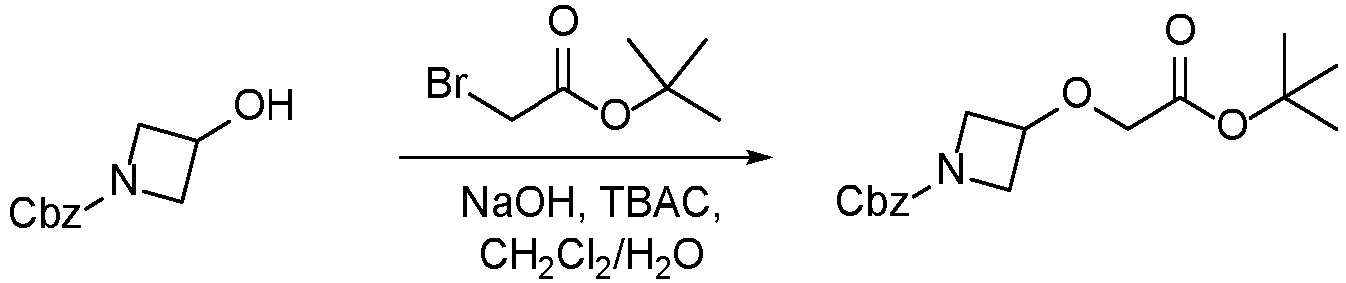
- Into a 100-mL round-bottom flask, was placed benzyl 3-hydroxyazetidine-1-carboxylate (3.11 g, 15.01 mmol, 1.00 equiv), dichloromethane (30 mL), tert-butyl 2-bromoacetate (4.37 g, 22.40 mmol, 1.50 equiv), sodium hydroxide(37%aq.) (30 mL), and TBAC (4.17 g, 1.00 equiv) at 0°C. The resulting solution was stirred for 3 hours at 25°C. The resulting solution was extracted with dichloromethane (2x30 mL), and organic layers were combined and dried over anhydrous sodium sulfate and concentrated under vacuum. The residue was applied onto a silica gel column eluting with ethyl acetate/petroleum ether (1/5). This resulted in 3.6 g (75%) of benzyl 3-[2-(tert-butoxy)-2-oxoethoxy]azetidine-1-carboxylate as a colorless oil.
-

- Into a 250-mL round-bottom flask, was placed benzyl 3-[2-(tert-butoxy)-2-oxoethoxy]azetidine-1-carboxylate (3.22 g, 10.02 mmol, 1.00 equiv), ethanol (100 mL), palladium on carbon (0.322 g). The resulting solution was stirred for 12 hours under H2 atmosphere at 25°C. The solids were filtered out. The resulting mixture was concentrated under vacuum. This resulted in 1.75 g (93%) of tert-butyl 2-(azetidin-3-yloxy)acetate as a colorless oil.
- Step 3

- Into a 50-mL round-bottom flask, was placed tert-butyl 2-(azetidin-3-yloxy)acetate (374 mg, 2.00 mmol, 1.00 equiv), N,N-dimethylformamide (15 mL), potassium carbonate (828 mg, 5.99 mmol, 3.00 equiv), and 1,2-dibromoethane (1.86 g, 9.90 mmol, 5.00 equiv). The resulting solution was stirred for 12 hours at 25°C. The reaction was then quenched by the addition of water (10mL). The resulting solution was extracted with ethyl acetate (2x20 mL), and the organic layers were combined and dried over anhydrous sodium sulfate. The residue was applied onto a silica gel column eluting with ethyl acetate/petroleum ether (1/3). This resulted in 80 mg (14%) of tert-butyl 2-[[1-(2-bromoethyl)azetidin-3-yl]oxy]acetate as a colorless oil.
- tert-Butyl 2-[[1-(2-bromoethyl)azetidin-3-yl]oxy]acetate was converted to the final compound, (2S,4R)-1-((2S)-2-(2-((1-(2-(4-(3-(4-(3-(3-amino-6-(2-hydroxyphenyl)pyridazin-4-yl)-3,8-diazabicyclo[3.2.1]octan-8-yl)pyridin-2-yl)propyl)piperazin-1-yl)ethyl)azetidin-3-yl)oxy)acetamido)-3,3-dimethylbutanoyl)-4-hydroxy-N-((S)-1-(4-(4-methylthiazol-5-yl)phenyl)ethyl)pyrrolidine-2-carboxamide, using procedures described above for other examples as well as procedures obvious to those skilled in the art.

- Exemplary Compound 51 was prepared according to the scheme below using procedures from examples described above (e.g., Exemplary Compound 37) and other procedures appreciated by those skilled in the art.

- Exemplary Compound 52 was prepared according to the scheme below.

- Exemplary Compound 53 was prepared according to the scheme below.

-

- Into a 100-mL round-bottom flask, was placed 2-(3-methoxy-1,2-oxazol-5-yl)-3-methylbutanoic acid (2.1 g, 10.5 mmol, 1.00 equiv), ethanol (20.0 g, 434 mmol, 41.2 equiv), sulfuric acid (2.0 g, 20.4 mmol, 1.9 equiv). The resulting solution was stirred for 12 hours at 70°C in an oil bath. The resulting mixture was concentrated under vacuum. This resulted in 1.9 g (79%) of ethyl 2-(3-methoxy-1, 2-oxazol-5-yl)-3-methylbutanoate as a white solid.
-

- Into a 50-mL round-bottom flask was placed ethyl 2-(3-methoxy-1,2-oxazol-5-yl)-3-methylbutanoate (1.9 g, 8.4 mmol, 1.0 equiv) and sulfuryl chloride (20 mL). The resulting solution was stirred overnight at room temperature. The resulting mixture was concentrated under vacuum. The reaction was then quenched by the addition of 30 mL of water. The resulting solution was extracted with ethyl acetate (30 ml x 3), and organic layers were combined. The residue was applied onto a silica gel column eluting with ethyl acetate/petroleum ether (1: 1). This resulted in 1.5 g (69%) of ethyl 2-(4-chloro-3-methoxy-1, 2-oxazol-5-yl)-3-methylbutanoate as yellow oil.
-

- Into a 50-mL round-bottom flask, was placed a solution of ethyl 2-(4-chloro-3-methoxy-1,2-oxazol-5-yl)-3-methylbutanoate (1.5 g, 5.7 mmol, 1.0 equiv) in methanol/H2O (5/5 mL), and lithium hydroxide (300 mg, 12.5 mmol, 2.2 equiv). The resulting solution was stirred overnight at 50°C in an oil bath. The pH value of the solution was adjusted to 6 with 1M HCl. The resulting solution was extracted with ethyl acetate (30 ml x 3), and organic layers were combined and concentrated under vacuum. The crude product was purified by prep-HPLC with the following conditions: Column; mobile phase, Column: XBridge Prep C18 OBD Column, 5um, 19* 150mm; Mobile Phase A: Water (0.1%FA), Mobile Phase B: ACN; Flow rate: 20 mL/min; Gradient: 34% B to 48% B in 8 min; 220 nm. This resulted in 300 mg (22.4%) of 2-(4-chloro-3-methoxy-1,2-oxazol-5-yl)-3-methylbutanoic acid as a white solid.
-

- Into a 50-mL round-bottom flask was placed a solution of 2-(4-chloro-3-methoxy-1,2-oxazol-5-yl)-3-methylbutanoic acid (260 mg, 1.1 mmol, 1.0 equiv) in N,N-dimethylformamide (20 mL), N,N,N',N'-tetramethyl-O-(7-azabenzotriazol-1-yl)uronium hexafluorophospate (360 mg, 1.0 mmol, 0.9 equiv), N,N-diisopropylethylamine (350 mg, 2.7 mmol, 2.4 equiv), and (2S,4R)-4-hydroxy-N-[(1S)-1-[4-(4-methyl-1,3-thiazol-5-yl)phenyl]ethyl]pyrrolidine-2-carboxamide (350 mg, 1.1 mmol, 1.0 equiv). The resulting solution was stirred for 30 minutes at room temperature. The reaction was then quenched by the addition of 30 mL of water. The resulting solution was extracted with ethyl acetate (30 ml x 3), and the organic layers were combined and dried over anhydrous sodium sulfate and concentrated under vacuum. The residue was applied onto a silica gel column eluting with dichloromethane/methanol (10:1). This resulted in 275 mg (45%) of (2S, 4R)-1-[2-(4-chloro-3-methoxy-1, 2-oxazol-5-yl)-3-methylbutanoyl]-4-hydroxy-N-[(1S)-1-[4-(4-methyl-1, 3-thiazol-5-yl) phenyl] ethyl] pyrrolidine-2-carboxamide as a white solid.
-
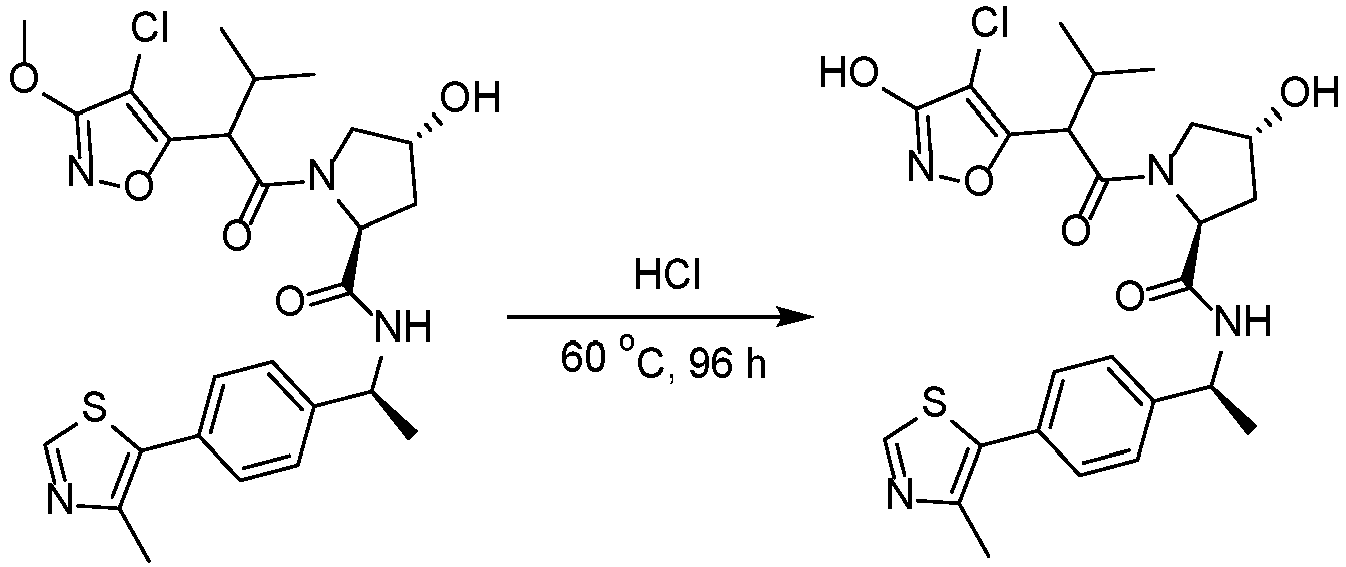
- Into a 50-mL round-bottom flask, was placed (2S,4R)-1-[2-(4-chloro-3-methoxy-1,2-oxazol-5-yl)-3-methylbutanoyl]-4-hydroxy-N-[(1S)-1-[4-(4-methyl-1,3-thiazol-5-yl)phenyl]ethyl]pyrrolidine-2-carboxamide (275 mg, 0.5 mmol, 1.0 equiv) and 4M hydrogen chloride solution in dioxane (25 mL). The resulting solution was stirred for 96 hours at 60°C in an oil bath. The resulting mixture was concentrated under vacuum. This resulted in 259 mg (97%) of (2S, 4R)-1-[2-(4-chloro-3-hydroxy-1, 2-oxazol-5-yl)-3-methylbutanoyl]-4-hydroxy-N-[(1S)-1-[4-(4-methyl-1, 3-thiazol-5-yl) phenyl] ethyl] pyrrolidine-2-carboxamide as a yellow solid.
- (2S, 4R)-1-[2-(4-chloro-3-hydroxy-1, 2-oxazol-5-yl)-3-methylbutanoyl]-4-hydroxy-N-[(1S)-1-[4-(4-methyl-1, 3-thiazol-5-yl) phenyl] ethyl] pyrrolidine-2-carboxamide was converted to the final compounds, (2S,4R)-1-((2S)-2-(3-(2-(4-(2-((4-(3-(3-amino-6-(2-hydroxyphenyl)pyridazin-4-yl)-3,8-diazabicyclo[3.2.1]octan-8-yl)pyridin-2-yl)oxy)ethyl)piperazin-1-yl)ethoxy)-4-chloroisoxazol-5-yl)-3-methylbutanoyl)-4-hydroxy-N-((S)-1-(4-(4-methylthiazol-5-yl)phenyl)ethyl)pyrrolidine-2-carboxamide and (2S,4R)-1-((2R)-2-(3-(2-(4-(2-((4-(3-(3-amino-6-(2-hydroxyphenyl)pyridazin-4-yl)-3,8-diazabicyclo[3.2.1]octan-8-yl)pyridin-2-yl)oxy)ethyl)piperazin-1-yl)ethoxy)-4-chloroisoxazol-5-yl)-3-methylbutanoyl)-4-hydroxy-N-((S)-1-(4-(4-methylthiazol-5-yl)phenyl)ethyl)pyrrolidine-2-carboxamide, according to the scheme below and using procedures described for earlier examples above.

-

- Into a 250-mL round-bottom flask, was placed a solution of 3-(benzyloxy)cyclobutan-1-one (6.0 g, 34.05 mmol, 1.0 equiv) in ethanol (100 mL). This was followed by the addition of sodium borohydride (1.25 g, 33.94 mmol, 1.00 equiv) in several batches at 0°C. The resulting solution was stirred for 3 hours at 0°C. The reaction was then quenched by the addition of water (100 mL). The resulting solution was extracted with ethyl acetate (50 mL x 2), and the organic layers were combined, dried over anhydrous sodium sulfate and concentrated under vacuum. This resulted in 6.0 g (99%) of (1s,3s)-3-(benzyloxy)cyclobutan-1-ol as a light yellow oil.
-

- Into a 500-mL round-bottom flask purged and maintained under an inert atmosphere of nitrogen was placed a solution of (1s,3s)-3-(benzyloxy)cyclobutan-1-ol (8.0 g, 44.89 mmol, 1.10 equiv) in N,N-dimethylformamide (100 mL). This was followed by the addition of sodium hydride (60%) (2.15 g, 89.58 mmol, 1.20 equiv) in several batches at 0°C. To this was added 4-bromo-2-fluoropyridine (70.0 g, 39.78 mmol, 1.00 equiv). The resulting solution was stirred overnight at room temperature. The reaction was then quenched by the addition of water/ice. The resulting solution was extracted with ethyl acetate (80 mL x 2), and organic layers were combined. The resulting mixture was washed with brine (80 mL x 2). The resulting mixture was concentrated under reduced pressure. The residue was applied onto a silica gel column eluting with ethyl acetate/petroleum ether (1:1). This resulted in 7.0 g (53%) of 4-bromo-2-[(1s,3s)-3-(benzyloxy)cyclobutoxy]pyridine as a light yellow oil.
-

- Into a 500-mL round-bottom flask purged and maintained under an inert atmosphere of nitrogen, was placed a solution of 4-bromo-2-[(1s,3s)-3-(benzyloxy)cyclobutoxy]pyridine (8.4 g, 25.13 mmol, 1.30 equiv) in toluene (200 mL), tert-butyl 3,8-diazabicyclo[3.2.1]octane-3-carboxylate (4.11 g, 19.36 mmol, 1.00 equiv), sodium tert-butoxide (3.2 g, 33.2 mmol, 1.5 equiv), xantphos (2.32 g, 4.01 mmol, 0.20 equiv), and Pd2(dba)3CH2Cl2 (430.0 mg, 0.40 mmol, 0.02 equiv). The resulting solution was stirred overnight at 100°C. The reaction was then quenched by the addition of water (100 mL). The resulting solution was extracted with ethyl acetate (80 mL x 2), and the organic layers were combined. The resulting mixture was washed with brine (100 mL x 2). The mixture was dried over anhydrous sodium sulfate and concentrated under reduced pressure. The residue was applied onto a silica gel column eluting with ethyl acetate/hexane (1:1). This resulted in 8.0 g (89%) of tert-butyl 8-[2-[(1s,3s)-3-(benzyloxy)cyclobutoxy]pyridin-4-yl]-3,8-diazabicyclo[3.2.1]octane-3-carboxylate as a light yellow oil.
-

- To a solution of tert-butyl 8-[2-[(1s,3s)-3-(benzyloxy)cyclobutoxy]pyridin-4-yl]-3,8-diazabicyclo[3.2.1]octane-3-carboxylate (7.0 g, 15.03 mmol, 1.00 equiv) in 150 mL ethanol was added palladium hydroxide (7.0 g, 49.85 mmol, 3.32 equiv) and acetic acid (2 mL) under nitrogen atmosphere in a 250 ml round bottom flask. The flask was then vacuumed and flushed with hydrogen. The reaction mixture was hydrogenated at 50°C for 3 days under hydrogen atmosphere using a hydrogen balloon, then filtered through a Celite pad and concentrated under reduced pressure. This resulted in 5.4 g (96%) of tert-butyl 8-[2-[(1s,3s)-3-hydroxycyclobutoxy]pyridin-4-yl]-3,8-diazabicyclo[3.2.1]octane-3-carboxylate as a light yellow oil.
-

- Into a 100-mL round-bottom flask, was placed a solution of tert-butyl 8-[2-[(1s,3s)-3-hydroxycyclobutoxy]pyridin-4-yl]-3,8-diazabicyclo[3.2.1]octane-3-carboxylate (5.0 g, 13.32 mmol, 1.00 equiv) in the mixed solvent of ethyl acetate and methanol (10:1) (50 mL). Hydrogen chloride (gas) was passed through the solution. The resulting mixture was stirred for 3 hours at room temperature and concentrated under reduced pressure. This resulted in 4.0 g (96%) of (1s,3s)-3-[(4-[3,8-diazabicyclo[3.2.1]octan-8-yl]pyridin-2-yl)oxy]cyclobutan-1-ol hydrochloride as an off-white solid.
-

- Into a 20-mL pressure tank reactor purged and maintained with an inert atmosphere of nitrogen, was placed a solution of (1s,3s)-3-[(4-[3,8-diazabicyclo[3.2.1]octan-8-yl]pyridin-2-yl)oxy]cyclobutan-1-ol hydrochloride (1.0 g, 3.21 mmol, 1.00 equiv) in dimethyl sulfoxide (10 mL). Then N,N-diisopropylethylamine (5 mL) and 4-bromo-6-chloropyridazin-3-amine (3.01 g, 14.44 mmol, 4.00 equiv) were added. The resulting solution was stirred for 16 hours at 130°C. The reaction was then quenched by the addition of water (50 mL). The resulting solution was extracted with ethyl acetate (3x30 mL), and the organic layers combined. The resulting mixture was washed with brine (3x50 mL). The mixture was dried over anhydrous sodium sulfate. The residue was applied onto a silica gel column eluting with dichloromethane/methanol (10:1). This resulted in 490 mg (38%) of (1s,3s)-3-([4-[3-(3-amino-6-chloropyridazin-4-yl)-3,8-diazabicyclo[3.2.1]octan-8-yl]pyridin-2-yl]oxy)cyclobutan-1-ol as a yellow oil.
-

- Into a 20-mL pressure tank reactor purged and maintained with an inert atmosphere of nitrogen, was placed a solution of (1s,3s)-3-([4-[3-(3-amino-6-chloropyridazin-4-yl)-3,8-diazabicyclo[3.2.1]octan-8-yl]pyridin-2-yl]oxy)cyclobutan-1-ol (800 mg, 1.99 mmol, 1.00 equiv) in the mixed solvent of dioxane and water (4:1) (15 mL), [2-(methoxymethoxy)phenyl]boronic acid (544 mg, 2.99 mmol, 1.50 equiv), potassium carbonate (824 mg, 6.0 mmol, 3.00 equiv), and Pd(PPh3)4 (230 mg, 0.20 mmol, 0.10 equiv). The resulting solution was stirred for 2 hours at 90 °C. The reaction was then quenched by the addition of water (30 mL). The resulting solution was extracted with ethyl acetate (50 mL x 2), and the organic layers combined. The resulting mixture was washed with brine (50 mL x 2). The mixture was dried over anhydrous sodium sulfate. The residue was applied onto a silica gel column eluting with dichloromethane/methanol (10:1). This resulted in 820 mg (82%) of (1s,3s)-3-[[4-(3-[3-amino-6-[2-(methoxymethoxy)phenyl]pyridazin-4-yl]-3,8-diazabicyclo[3.2.1]octan-8-yl)pyridin-2-yl]oxy]cyclobutan-1-ol as a yellow solid.
-

- Into a 50-mL 3-necked round-bottom flask purged and maintained with an inert atmosphere of nitrogen was placed a solution of triphenylphosphine (351 mg, 1.34 mmol, 2.00 equiv) in tetrahydrofuran (distilled) (30 mL). This was followed by the addition of diisopropyl azodicarboxylate (270 mg, 1.34 mmol, 2.00 equiv) dropwise with stirring at 0°C while a white precipitate appeared. To this was added (1s,3s)-3-[[4-(3-[3-amino-6-[2-(methoxymethoxy)phenyl]pyridazin-4-yl]-3,8-diazabicyclo[3.2.1]octan-8-yl)pyridin-2-yl]oxy]cyclobutan-1-ol (338 mg, 0.67 mmol, 1.00 equiv) and 6-bromopyridin-3-ol (232 mg, 1.33 mmol, 1.50 equiv) at 0°C. The resulting solution was stirred overnight at 50°C. The resulting mixture was concentrated under vacuum. The residue was applied onto a silica gel column eluting with dichloromethane/methanol (10:1). This resulted in 389 mg (88%) of 6-[2-(methoxymethoxy)phenyl]-4-(8-[2-[(1r,3r)-3-[(6-bromopyridin-3-yl)oxy]cyclobutoxy]pyridin-4-yl]-3,8-diazabicyclo[3.2.1]octan-3-yl)pyridazin-3-amine as a yellow solid.
-

- Into a 20-mL pressure tank reactor purged and maintained with an inert atmosphere of nitrogen, was placed a solution of 6-[2-(methoxymethoxy)phenyl]-4-(8-[2-[(1r,3r)-3-[(6-bromopyridin-3-yl)oxy]cyclobutoxy]pyridin-4-yl]-3,8-diazabicyclo[3.2.1]octan-3-yl)pyridazin-3-amine (155 mg, 0.23 mmol, 1.00 equiv) in the mixed solvent of dioxane and water (3:1) (8 mL), tert-butyldimethyl{[3-(tetramethyl-1,3,2-dioxaborolan-2-yl)prop-2-en-1-yl]oxy}silane (140 mg, 0.47 mmol, 2.00 equiv), potassium carbonate (95 mg, 0.69 mmol, 0.15 equiv), Pd(PPh3)4Cl2CH2Cl2 (28 mg, 0.03 mmol, 2.00 equiv). The resulting solution was stirred for 1 hour at 80°C. The reaction was then quenched by the addition of water. The resulting solution was extracted with ethyl acetate (30 mL x 3), and the organic layers were combined. The resulting mixture was washed with brine (30 mL x 2). The mixture was dried over anhydrous sodium sulfate. The residue was applied onto a silica gel column eluting with dichloromethane/methanol (10:1). This resulted in 130 mg (74%) of 6-[2-(methoxymethoxy)phenyl]-4-(8-[2-[(1r,3r)-3-[(6-[3-[(tertbutyldimethylsilyl)oxy]prop-1-en-1-yl]pyridin-3-yl)oxy]cyclobutoxy]pyridin-4-yl]-3,8-diazabicyclo[3.2.1]octan-3-yl)pyridazin-3-amine as a light yellow oil.
-

- Into a 25-mL round-bottom flask, was placed a solution of 6-[2-(methoxymethoxy)phenyl]-4-(8-[2-[(1r,3r)-3-[(6-[3-[(tert-butyldimethylsilyl)oxy]prop-1-en-1-yl]pyridin-3-yl)oxy]cyclobutoxy]pyridin-4-yl]-3,8-diazabicyclo[3.2.1]octan-3-yl)pyridazin-3-amine (120 mg, 0.16 mmol, 1.00 equiv) in tetrahydrofuran (2 mL), tetrabutylammonium fluoride (1M in tetrahydrofuran) (3.2 mL, 2.00 equiv). The resulting solution was stirred for 2 hours at room temperature. The reaction was then quenched by the addition of water. The resulting solution was extracted with ethyl acetate (30 mL x 3), and the organic layers were combined and dried over anhydrous sodium sulfate. The residue was applied onto a silica gel column eluting with dichloromethane/methanol (10:1). The crude product was further purified by Flash-Prep-HPLC with the following conditions (CombiFlash-1): Column, C18 silica gel; mobile phase, ACN in water, 0% ACN increasing to 40% ACN within 30 min; Detector, UV 220 nm. This resulted in 70 mg (69%) of 3-[5-[(1r,3r)-3-[[4-(3-[3-amino-6-[2-(methoxymethoxy)phenyl]pyridazin-4-yl]-3,8-diazabicyclo[3.2.1]octan-8-yl)pyridin-2-yl]oxy]cyclobutoxy]pyridin-2-yl]prop-2-en-1-ol as a light yellow solid.
-

- Into a 50-mL 3-necked round-bottom flask purged and maintained with an inert atmosphere of nitrogen, was placed a solution of tributylphosphine (149 mg, 0.74 mmol, 10.00 equiv) in tetrahydrofuran (20 mL). This was followed by the addition of a solution of tetramethylazodicarboxamide (126 mg, 0.73 mmol, 10.00 equiv) in tetrahydrofuran (5 mL) dropwise with stirring at -5°C. To this mixture was added (2S,4R)-4-hydroxy-1-[2-(3-hydroxy-1,2-oxazol-5-yl)-3-methylbutanoyl]-N-[[4-(4-methyl-1,3-thiazol-5-yl)phenyl]methyl]pyrrolidine-2-carboxamide (42 mg, 0.09 mmol, 1.20 equiv), and (2E)-3-[5-[(1r,3r)-3-[[4-(3-[3-amino-6-[2-(methoxymethoxy)phenyl]pyridazin-4-yl]-3,8-diazabicyclo[3.2.1]octan-8-yl)pyridin-2-yl]oxy]cyclobutoxy]pyridin-2-yl]prop-2-en-1-ol (47 mg, 0.07 mmol, 1.00 equiv). The resulting solution was stirred overnight at 50°C. The reaction was then quenched by the addition of water. The resulting solution was extracted with ethyl acetate (30 mL x 3), and the organic layers were combined. The resulting mixture was washed with brine (50 mL). The organic phase was evaporated under reduced pressure and applied onto a silica gel column eluting with dichloromethane/methanol (10:1). This resulted in 32 mg (39%) of (2S,4R)-4-hydroxy-N-[[4-(4-methyl-1,3-thiazol-5-yl)phenyl]methyl]-1-[3-methyl-2-(3-[[(2E)-3-[5-[(1r,3r)-3-[[4-(3-[3-amino-6-[2-(methoxymethoxy)phenyl]pyridazin-4-yl]-3,8-diazabicyclo[3.2.1]octan-8-yl)pyridin-2-yl]oxy]cyclobutoxy]pyridin-2-yl]prop-2-en-1-yl]oxy]-1,2-oxazol-5-yl)butanoyl]pyrrolidine-2-carboxamide as a light yellow solid.
-

- Into a 25-mL round-bottom flask purged and maintained with an inert atmosphere of nitrogen, was placed a solution of (2S,4R)-4-hydroxy-N-[[4-(4-methyl-1,3-thiazol-5-yl)phenyl]methyl]-1-(3-methyl-2-[3-[(3-[5-[(1r,3r)-3-[[4-(3-[3-amino-6-[2-(methoxymethoxy)phenyl]pyridazin-4-yl]-3,8-diazabicyclo[3.2.1]octan-8-yl)pyridin-2-yl]oxy]cyclobutoxy]pyridin-2-yl]prop-2-en-1-yl)oxy]-1,2-oxazol-5-yl]butanoyl)pyrrolidine-2-carboxamide (23 mg, 0.02 mmol, 1.00 equiv) in methanol (3 mL) and 37% hydrochloric acid (1.5 mL). The resulting solution was stirred for 2 hours at room temperature. The reaction mixture was cooled to 0°C with a water/ice bath. The pH value of the solution was adjusted to 7 with NH4HCO3. The resulting solution was extracted with dichloromethane (30 mL x 3), and the organic layers were combined. The resulting mixture was washed with brine (50 mL x 3). The mixture was dried over anhydrous sodium sulfate. The crude product was purified by Prep-HPLC with the following conditions: Column, XBridge Prep C18 OBD Column, 5um, 19*150mm; mobile phase, Water (10 mmoL/L NH4HCO3) and ACN (41.0% ACN up to 62.0% in 8 min); Detector, UV 254nm. This resulted in 8.1 mg (37%) of (2S,4R)-4-hydroxy-N-[[4-(4-methyl-1,3-thiazol-5-yl)phenyl]methyl]-1-(3-methyl-2-[3-[(3-[5-[(1r,3r)-3-[(4-[3-[3-amino-6-(2-hydroxyphenyl)pyridazin-4-yl]-3,8-diazabicyclo[3.2.1]octan-8-yl]pyridin-2-yl)oxy]cyclobutoxy]pyridin-2-yl]prop-2-en-1-yl)oxy]-1,2-oxazol-5-yl]butanoyl)pyrrolidine-2-carboxamide as a light yellow solid.
- Exemplary Compound 57 was prepared according to the scheme below using procedures described above for the production of other exemplary compounds.

-

- To a solution of 2-piperazin-1-ylethanol (60 g, 460 mmol, 1 eq), sodium bicarbonate (116 g, 1.38 mol, 3 eq) in dioxane (300 mL) and water (300 mL) was added benzyl (2,5-dioxopyrrolidin-1-yl) carbonate (137 g, 553 mmol, 1.2 eq) at 0°C. Then the reaction mixture was stirred at 20°C for 2 hours. The reaction mixture was diluted with water (300 mL), and then extracted with ethyl acetate (300 mL x 3). The combined organic layers were washed with brine (200 mL x 3), dried over anhydrous sodium sulfate, filtered and concentrated under reduced pressure to give a residue. The residue was purified by column chromatography (ethyl acetate: methanol = 500:1 to 100:1). Compound benzyl 4-(2-hydroxyethyl)piperazine-1-carboxylate (74 g, 279 mmol, 60% yield) was obtained as a light yellow oil.
-

- To a solution of sodium hydride (6.26 g, 156 mmol, 1.3 eq) in dimethyl formamide (240 mL) was added benzyl 4-(2-hydroxyethyl)piperazine-1-carboxylate (35 g, 132 mmol, 1.1 eq) at 0°C for 0.5 hour. Then 4-bromo-2-fluoro-pyridine (21.18 g, 120 mmol, 1 eq) was added into the reaction and stirred at 25 °C for 1 h. The reaction mixture was quenched by the addition of saturated ammonium chloride solution (500 mL), and then extracted with ethyl acetate (300 mL x 3). The combined organic layers were washed with brine (200 mL x 3), dried over anhydrous sodium sulfate, filtered and concentrated under reduced pressure to give a residue. The residue was purified by column chromatography (dichloromethane: methanol = 1:0 to 200:1). Compound benzyl 4-[2-[(4-bromo-2-pyridyl)oxy]ethyl]piperazine-1-carboxylate (39.2 g, 92 mmol, 76% yield) was obtained as a light yellow solid.
-

- A vial was charged with benzyl 4-[2-[(4-bromo-2-pyridyl)oxy]ethyl]piperazine-1-carboxylate (18.15 g, 43 mmol, 1 eq), tert-butyl 3,8-diazabicyclo[3.2.1]octane-3-carboxylate (11 g, 51 mmol, 1.2 eq), [2-(2-aminophenyl)phenyl]-chloro-palladium dicyclohexyl-[2-(2,6-diisopropoxyphenyl)phenyl]phosphane (1.68 g, 2.16 mmol, 0.05 eq), cesium carbonate (28.14 g, 86.36 mmol, 2 eq) was added into toluene (350 mL). The mixture was purged with nitrogen for 5 minutes and then heated to 110°C for 12 hours. The reaction mixture was diluted with water (200 mL) and extracted with ethyl acetate (300 mL x 3). The combined organic layers were washed with brine (200 mL x 3), dried over anhydrous sodium sulfate, filtered and concentrated under reduced pressure to give a residue. The residue was purified by column chromatography (petroleum ether/ethyl acetate = 10:1 to 0:1). Tert-Butyl 8-[2-[2-(4-benzyloxycarbonylpiperazin-1-yl)ethoxy]-4-pyridyl]-3,8-diazabicyclo[3.2.1]octane-3-carboxylate (18.37 g, 31.30 mmol, 72% yield) was obtained as a pale yellow solid.
- Step 4

- To a mixture of tert-butyl 8-[2-[2-(4-benzyloxycarbonylpiperazin-1-yl)ethoxy]-4-pyridyl]-3,8-diazabicyclo[3.2.1]octane-3-carboxylate (18.3 g, 33.17 mmol, 1 eq) in methanol (150 mL) was added hydrochloric acid/methanol (4 M, 360 mL, 43.41 eq). Then the reaction mixture was stirred at 25°C for 2 hours. The reaction mixture was concentrated under reduced pressure to give the compound without purification. Compound benzyl 4-[2-[[4-(3,8-diazabicyclo[3.2.1]octan-8-yl)-2-pyridyl]oxy]ethyl]piperazine-1-carboxylate (19 g, crude) was obtained as a yellow solid.
-

- A mixture of benzyl 4-[2-[[4-(3,8-diazabicyclo[3.2.1]octan-8-yl)-2-pyridyl]oxy]ethyl]piperazine-1-carboxylate (19 g, 42.08 mmol, 1 eq), 4-bromo-6-chloro-pyridazin-3-amine (10.52 g, 50.49 mmol, 1.2 eq) in dimethylsulfoxide (190 mL) was added diisopropylethylamine (54.38 g, 420.76 mmol, 10 eq). Then the reaction mixture was stirred at 130°C for 5 hours. The reaction mixture was quenched by addition water (600 mL), and then diluted with ethyl acetate (150 mL) and extracted with ethyl acetate (300 mL x 3). The combined organic layers were washed with brine (150 mL x 5), dried over anhydrous sodium sulfate, filtered and concentrated under reduced pressure to give a residue. The residue was purified by column chromatography (Petroleum ether/Ethyl acetate = 1:1 to dichloromethane: methanol = 50:1). Compound benzyl 4-[2-[[4-[3-(3-amino-6-chloro-pyridazin-4-yl)-3,8-diazabicyclo[3.2.1]octan-8-yl]-2-pyridyl]oxy]ethyl]piperazine-1-carboxylate (12.6 g, 21 mmol, 50% yield) was obtained as a light yellow solid.
-

- To the mixture of benzyl 4-[2-[[4-[3-(3-amino-6-chloro-pyridazin-4-yl)-3,8-diazabicyclo[3.2.1]octan-8-yl]-2-pyridyl]oxy]ethyl]piperazine-1-carboxylate (10.6 g, 18.30 mmol, 1 eq), (2-hydroxyphenyl)boronic acid (5.05 g, 36.61 mmol, 2 eq) in dioxane (160 mL) and water (25 mL) was added tetrakis[triphenylphosphine]palladium(0) (2.12 g, 1.83 mmol, 0.1 eq) and potassium carbonate (5.06 g, 36.61 mmol, 2 eq). Then the reaction mixture was stirred at 110°C for 2 hours. The reaction mixture was diluted with water (200 mL), and then extracted with ethyl acetate (200 mL x 3). The combined organic layers were washed with brine (150 mL x 3), dried over anhydrous sodium sulfate, filtered and concentrated under reduced pressure to give a residue. The residue was purified by prep-HPLC (basic condition: column: Phenomenex Gemini C18 250*50 mm*10 um; mobile phase: [water (0.05% ammonia hydroxide v/v)-acetonitrile]; B%: 50%-80%, 20MIN 60%min) to give desired compound. Compound benzyl 4-[2-[[4-[3-[3-amino-6-(2-hydroxyphenyl)pyridazin-4-yl]-3,8-diazabicyclo[3.2.1]octan-8-yl]-2-pyridyl]oxy]ethyl]piperazine-1-carboxylate (7 g, 10.22 mmol, 55% yield) was obtained as a yellow solid.
-

- To the solution of benzyl 4-[2-[[4-[3-[3-amino-6-(2-hydroxyphenyl)pyridazin-4-yl]-3,8-diazabicyclo[3.2.1]octan-8-yl]-2-pyridyl]oxy]ethyl]piperazine-1-carboxylate (7 g, 10.99 mmol, 1 eq) in tetrahydrofuran (100 mL) was added palladium hydroxide on activated carbon catalyst (0.7 g, 0.49 mmol, 0.04 eq) under nitrogen. Then the reaction mixture was stirred at 60°C under hydrogen (50 Psi) for 48 hours. 150 mL of ethyl alcohol was then added to the reaction mixture. The reaction mixture was filtered and concentrated under reduced pressure to give 2-[6-amino-5-[8-[2-(2-piperazin-1-ylethoxy)-4-pyridyl]-3,8-diazabicyclo[3.2.1]octan-3-yl]pyridazin-3-yl]phenol (5 g, 9.68 mmol, 88 % yield).
-

- To a solution of methyl 2-(3-hydroxyisoxazol-5-yl)-3-methyl-butanoate (3.5 g, 17.57 mmol, 1 eq) in N,N-dimethylformamide (40 mL) was added 2-bromo-1,1-diethoxy-ethane (5.19 g, 26.35 mmol, 1.5 eq) and potassium carbonate (4.86 g, 35.14 mmol, 2 eq). The reaction mixture was stirred at 70°C for 12 hours. The reaction mixture was quenched by the addition water 50 mL, and then diluted with water 100 mL and extracted with ethyl acetate (80 mL x 3). The combined organic layers were washed with brine (100 mL x 2), dried over anhydrous sodium sulfate, filtered and concentrated under reduced pressure to give a residue. The residue was purified by silica gel chromatography (petroleum ether: ethyl acetate = 100:1 to 50:1). The desired compound methyl 2-[3-(2,2-diethoxyethoxy)isoxazol-5-yl]-3-methyl-butanoate (4.38 g, 12.50 mmol, 71% yield) was obtained as a colorless oil.
-

- To a solution of methyl 2-[3-(2,2-diethoxyethoxy)isoxazol-5-yl]-3-methyl-butanoate (4.38 g, 12.5 mmol, 1 eq) in methanol (30 mL) and water (15 mL) was added lithium hydroxide monohydrate (2.10 g, 50 mmol, 4 eq). The reaction mixture was stirred at 40°C for 2 hours. The pH was adjusted to 4~5 with 1M hydrogen chloride, and reaction mixture was extracted with ethyl acetate (50 mL x 2). The combined organic layers were dried over anhydrous sodium sulfate, filtered and concentrated under reduced pressure to give 2-[3-(2,2-diethoxyethoxy)isoxazol-5-yl]-3-methyl-butanoic acid (4 g, crude) as a colorless oil.
-

- To a solution of 2-[3-(2,2-diethoxyethoxy)isoxazol-5-yl]-3-methyl-butanoic acid (3.84 g, 11.99 mmol, 1 eq) in N,N-dimethylformamide (20 mL) was added O-(7-azabenzotriazol-1-yl)-N,N,N',N'-tetramethyluronium hexafluorophosphate (5.47 g, 14.38 mmol, 1.2 eq). The reaction mixture was stirred at 20°C for 0.5 hour. Then to the mixture was added a solution of (2S,4R)-4-hydroxy-N-[(1S)-1-[4-(4-methylthiazol-5-yl)phenyl]ethyl]pyrrolidine-2-carboxamide hydrochloride (4.41 g, 11.99 mmol, 1 eq) and triethylamine (3.64 g, 35.96 mmol, 5 mL, 3 eq) in N,N-dimethylformamide (10 mL). The reaction mixture was stirred at 20°C for 0.15 hour. The reaction mixture was quenched by addition water (30 mL), and then diluted with water (80 mL) and extracted with ethyl acetate (60 mL x 3). The combined organic layers were washed with brine (80 mL x 2), dried over anhydrous sodium sulfate, filtered and concentrated under reduced pressure to give a residue. The residue was purified by silica gel chromatography (dichloromethane: methanol = 100:1 to 50:1). The desired compound (2S,4R)-1-[2-[3-(2,2-diethoxyethoxy)isoxazol-5-yl]-3-methyl-butanoyl]-4-hydroxy-N-[(1S)-1-[4-(4-methylthiazol-5-yl)phenyl]ethyl]pyrrolidine-2-carboxamide (7 g, 10.96 mmol, 91% yield) was obtained as a white solid.
-

- (2S,4R)-1-[2-[3-(2,2-diethoxyethoxy)isoxazol-5-yl]-3-methyl-butanoyl]-4-hydroxy-N-[(1S)-1-[4-(4-methylthiazol-5-yl)phenyl]ethyl]pyrrolidine-2-carboxamide (7 g, 11.39 mmol, 1 eq) was separated by SFC. The condition was column: DAICEL CHIRALPAK AD (250 mm*30 mm,10 um); mobile phase: [0.1%NH3H2O IPA]; B%: 35%-35%, 2.4min: 550 min. (2S,4R)-1-[(2S)-2-[3-(2,2-diethoxyethoxy)isoxazol-5-yl]-3-methyl-butanoyl]-4-hydroxy-N-[(1S)-1-[4-(4-methylthiazol-5-yl)phenyl]ethyl]pyrrolidine-2-carboxamide (3.2 g, 5.08 mmol, 89 % yield) and (2S,4R)-1-[(2R)-2-[3-(2,2-diethoxyethoxy)isoxazol-5-yl]-3-meth
- yl-butanoyl]-4-hydroxy-N-[(1S)-1-[4-(4-methylthiazol-5-yl)phenyl]ethyl]pyrrolidine-2-carboxamide (2.67 g, 4.17 mmol, 73% yield) were obtained as white solids.
-

- To a solution of (2S,4R)-1-[(2R)-2-[3-(2,2-diethoxyethoxy)isoxazol-5-yl]-3-methyl-butanoyl]-4-hydroxy-N-[(1S)-1-[4-(4-methylthiazol-5-yl)phenyl]ethyl]pyrrolidine-2-carboxamide (2 g, 3.25 mmol, 1 eq) in tetrahydrofuran (40 mL) was added sulfuric acid (1 M, 40 mL, 12.3 eq). The solution was heated to 50 °C for 7 h. The solution was cooled to 20°C and quenched with saturated sodium bicarbonate solution to pH = 8. The mixture was extracted with ethyl acetate (30 mL x 3). The combined organic layer was washed with brine (50 mL) and dried over sodium sulfate. The mixture was then filtered, and the filtrate was concentrated in vacuum. The crude product was used directly in next step. (2S,4R)-4-hydroxy-1-[(2R)-3-methyl-2-[3-(2-oxoethoxy)isoxazol-5-yl]butanoyl]-N-[(1S)-1-[4-(4-methylthiazol-5-yl)phenyl]ethyl]pyrrolidine-2-carboxamide (1.7 g, 2.52 mmol, 77% yield) was obtained as a white solid.
-

- To a solution of (2S,4R)-4-hydroxy-1-[(2R)-3-methyl-2-[3-(2-oxoethoxy)isoxazol-5-yl]butanoyl]-N-[(1S)-1-[4-(4-methylthiazol-5-yl)phenyl]ethyl]pyrrolidine-2-carboxamide (930 mg, 1.38 mmol, 1 eq) and 2-[6-amino-5-[8-[2-(2-piperazin-1-ylethoxy)-4-pyridyl]-3,8-diazabicyclo[3.2.1]octan-3-yl]pyridazin-3-yl]phenol (691 mg, 1.38 mmol, 1 eq) in methanol (15 mL) and dichloromethane (5 mL) was added acetic acid (82 mg, 1.38 mmol, 1 eq). The solution was stirred at 30°C for 0.5 hour. Then sodium cyanoborohydride (129 mg, 2.06 mmol, 1.5 eq) was added to the solution and stirred at 30°C for 7 hours. The solvent was removed in vacuum, and the crude product was purified by prep-HPLC (column: Phenomenex Synergi Max-RP 250*50 mm*10 um; mobile phase: [water (10mM NH4HCO3)-ACN]; B%: 45ACN%-75ACN%, 28min, 78% min). (2S,4R)-1-[(2R)-2-[3-[2-[4-[2-[[4-[3-[3-amino-6-(2-hydroxyphenyl)pyridazin-4-yl]-3,8-diazabicyclo[3.2.1]octan-8-yl]-2-pyridyl]oxy]ethyl]piperazin-1-yl]ethoxy]isoxazol-5-yl]-3-methyl-butanoyl]-4-hydroxy-N-[(1S)-1-[4-(4-methylthiazol-5-yl)phenyl]ethyl]pyrrolidine-2-carboxamide (840 mg, 0.8 mmol, 58% yield, 98% purity) was obtained as a white solid.
-

- Prepared as described in the scheme below using procedures described above for other examples.

-

-

- Into a 500 mL round-bottom flask, to a solution of 1-(6-bromopyridin-3-yl)ethan-1-one (10 g, 49.99 mmol, 1 equiv) in EtOH (200ml) was added sodium borohydride (4 g, 105.73 mmol, 2.11 equiv) in water (80 ml) at room temperature. The resulting mixture was stirred for 30 minutes at room temperature. The mixture was concentrated under vacuum. The residue was purified by silica gel column chromatography, eluted with ethyl acetate / petroleum ether (1:1) to afford 1-(6-bromopyridin-3-yl)ethan-1-ol (9.2 g, 91%) as a yellow oil.
- Step 2

- Into a 100 mL round-bottom flask to a solution of 1-(6-bromopyridin-3-yl)ethan-1-ol (2 g, 9.90 mmol, 1 equiv) and triethylamine (3 g, 0.03 mmol) in dichloromethane (30 mL) was added methanesulfonyl chloride (1.3 g, 11.35 mmol, 1.15 equiv) at 0°C. The resulting mixture was stirred for 16 hours at room temperature. The resulting mixture was extracted with dichloromethane (30 mL x 3). The combined organic layers were washed with brine (20 mL x 1), dried over anhydrous sodium sulfate. After filtration, the filtrate was concentrated under reduced pressure. This resulted in 1-(6-bromopyridin-3-yl)ethyl methanesulfonate (1.6g, 23%) as a yellow solid.
-

- Into a 25 mL sealed tube 1-(6-bromopyridin-3-yl)ethyl methanesulfonate(1.4 g, 1.2 equiv), 6-[2-(methoxymethoxy)phenyl]-4-(1H-pyrazol-4-yl)pyridazin-3-amine (350 mg, 1 equiv), and potassium carbonate (490 mg, 3.0 equiv) were added to N,N-Dimethylformamide (15 mL) at room temperature. The resulting mixture was stirred for 2 h at 60°C under nitrogen atmosphere. The aqueous layer was extracted with dichloromethane (50 mL x 3). The residue was washed with brine (20 mL x 1), dried over anhydrous sodium sulfate. After filtration, the filtrate was concentrated under reduced pressure. The residue was purified by silica gel column chromatography, eluted with dichloromethane / methyl alcohol (10:1) to afford 4-[1-[1-(6-bromopyridin-3-yl)ethyl]-1H-pyrazol-4-yl]-6-[2-(methoxymethoxy)phenyl]pyridazin-3-amine (90 mg, 16%) as a yellow solid.
- 4-[1-[1-(6-bromopyridin-3-yl)ethyl]-1H-pyrazol-4-yl]-6-[2-(methoxymethoxy)phenyl]pyridazin-3-amine was converted to the final compound according to the scheme below using procedures described for other examples above.

-

- A mixture of 6-[2-(methoxymethoxy)phenyl]-4-(1H-pyrazol-4-yl)pyridazin-3-amine (300 mg, 1.01 mmol, 1 eq), 1-bromo-2-(2-bromoethoxy)ethane (702 mg, 3.03 mmol, 3 eq) in dimethyl formamide (3 mL) was added potassium carbonate (418 mg, 3.03 mmol, 3 eq). Then the reaction mixture was stirred at 70°C for 2 hours. Water was added (10 mL), and reaction mixture was extracted with ethyl acetate (20 mL x 3). The combined organic layers were washed with brine (15 mL x 2), dried over anhydrous sodium sulfate, filtered and concentrated under reduced pressure to give a residue. The residue was purified by prep-TLC (dichloromethane: methanol = 10:1). 4-[1-[2-(2-Bromoethoxy)ethyl]pyrazol-4-yl]-6-[2-(methoxymethoxy)phenyl]pyridazin-3-amine (100 mg, 0.22 mmol, 22% yield) was obtained as a yellow oil.
-

- To a solution of 4-[1-[2-(2-bromoethoxy)ethyl]pyrazol-4-yl]-6-[2-(methoxymethoxy)phenyl]pyridazin-3-amine (100 mg, 0.22 mmol, 1 eq) and tert-butyl piperazine-1-carboxylate (83 mg, 0.44 mmol, 2 eq) in acetonitrile (2 mL) was added N,N-diisopropylethylamine (86.49 mg, 0.66 mmol, 3 eq). Then the reaction mixture was stirred at 100°C for 12 hours. Water was added (5 mL), and reaction mixture was extracted with ethyl acetate (15 mL x 3). The combined organic layers were washed with brine (10 mL x 3), dried over anhydrous sodium sulfate, filtered and concentrated under reduced pressure to give a residue. The residue was purified by prep-TLC (dichloromethane: methanol = 10:1). Compound tert-butyl 4-[2-[2-[4-[3-amino-6-[2-(methoxymethoxy)phenyl]pyridazin-4-yl]pyrazol-1-yl]ethoxy]ethyl]piperazine-1-carboxylate (93 mg, 0.15 mmol, 71% yield) was obtained as a yellow solid.
- tert-Butyl 4-[2-[2-[4-[3-amino-6-[2-(methoxymethoxy)phenyl]pyridazin-4-yl]pyrazol-1-yl]ethoxy]ethyl]piperazine-1-carboxylate was converted to the final compound according to the scheme below using procedures described for other examples above.

-

-

- To a solution of pyridin-4-ol (3.20 g, 33.66 mmol, 1.5 eq) and 3-benzyloxycyclobutanol (4 g, 22.44 mmol, 1 eq) in tetrahydrofuran (200 mL) was added triphenylphosphine (7.06 g, 26.93 mmol, 1.2 eq) and diisopropyl azodicarboxylate (5.45 g, 26.93 mmol, 1.2 eq) in one portion at 10 °C under nitrogen. The mixture was stirred at 50°C for 12 hours. The reaction mixture was concentrated under reduced pressure to remove tetrahydrofuran. Water (50 mL) was poured into the mixture and stirred for 1 minute. The aqueous phase was extracted with dichloromethane (50 mL x 3). The combined organic phase was washed with brine (50 mL x 2), dried with anhydrous sodium sulfate, filtered and concentrated in vacuum. The residue was purified by silica gel column chromatography (petroleum ether: tetrahydrofuran =20:1, 5:1). The residue was purified by flash C18 column chromatography [acetonitrile: water (0.5% ammonium hydroxide) = 5%~50%]. Compound 4-(3-benzyloxycyclobutoxy) pyridine (3.2 g, 12.53 mmol, 55% yield) was obtained as a white solid.
-

- To a solution of 4-(3-benzyloxycyclobutoxy)pyridine (4.2 g, 16.45 mmol, 1 eq) in toluene (65 mL) was added benzyl bromide (2.81 g, 16.45 mmol, 1 eq). The mixture was stirred at 80°C for 12 hours. The reaction mixture was concentrated under reduced pressure to remove toluene. The crude product was triturated with petroleum ether (80 mL). Compound 1-benzyl-4-(3-benzyloxycyclobutoxy)pyridine-1-ium bromide (6.5 g, 15.25 mmol, 92% yield) was obtained as a white solid.
-

- To a solution of 1-benzyl-4-(3-benzyloxycyclobutoxy)pyridine-1-ium bromide (6.5 g, 15.25 mmol, 1 eq) in ethanol (120 mL) was added sodium borohydride (3.46 g, 91.47 mmol, 6 eq) at 0°C. The mixture was stirred at 15°C for 4 hours. The reaction mixture was concentrated under reduced pressure to remove ethanol. The residue was diluted with water (25 mL) and extracted with ethyl acetate (50 mL x 2). The combined organic phase was washed with saturated brine (40 mL x 3), dried with anhydrous sodium sulfate, filtered and concentrated in vacuum. Compound 1-benzyl-4-(3-benzyloxycyclobutoxy)-3,6-dihydro-2H-pyridine (4.5 g, 12.88 mmol, 84% yield) was obtained as a colorless oil.
-

- To a solution of 1-benzyl-4-(3-benzyloxycyclobutoxy)-3,6-dihydro-2H-pyridine (4.5 g, 12.88 mmol, 1 eq) in tetrahydrofuran (95 mL) and ethanol (70 mL) was added palladium on activated carbon catalyst (0.5 g, 10% purity) under nitrogen atmosphere. The suspension was degassed and purged with hydrogen for 3 times. The mixture was stirred under hydrogen (50 Psi) at 25°C for 24 hours and then at 35°C for 12 hours. The reaction mixture was filtered, and the filtrate was concentrated. The residue was purified by silica gel column chromatography (dichloromethane: methanol: ammonium hydroxide =20:1:0, 10:1:0.1). Compound 3-[(1-benzyl-4-piperidyl)oxy] cyclobutanol (2.8 g, 10.71 mmol, 83% yield) was obtained as a colorless oil.
-

- To a solution of 3-[(1-benzyl-4-piperidyl)oxy]cyclobutanol (1.1 g, 4.21 mmol, 1 eq) in methanol (10 mL) was added palladium hydroxide (591 mg) and di-tert-butyl dicarbonate ester (1.84 g, 8.42 mmol, 2 eq) under nitrogen atmosphere. The suspension was degassed and purged with hydrogen for 3 times. The mixture was stirred under hydrogen (50 Psi) at 25°C for 12 hours. The reaction mixture was filtered and the filter was concentrated. The residue was purified by silica gel chromatography (petroleum ether: ethyl acetate=20:1 to 2:1). Compound tert-butyl 4-(3-hydroxycyclobutoxy)piperidine-1-carboxylate (820 mg, 3.02 mmol, 71% yield) was obtained as a colorless oil.
-

- A mixture of tert-butyl 4-(3-hydroxycyclobutoxy)piperidine-1-carboxylate (1 g, 3.69 mmol, 1 eq), 4-bromo-2-fluoro-pyridine (778 mg, 4.42 mmol, 1.2 eq), cesium carbonate (2.40 g, 7.37 mmol, 2 eq) in acetonitrile (10 mL) was degassed and purged with nitrogen for three times, and then the mixture was stirred at 90°C for 12 hours under nitrogen atmosphere. The reaction mixture was filtered and concentrated to afford crude product. The crude product was purified by silica gel chromatography (petroleum ether:ethyl acetate = 1:0 to 10: 1). Compound tert-butyl 4-[3-[(4-bromo-2-pyridyl)oxy]cyclobutoxy]piperidine-1-carboxylate (1.36 g, 3.18 mmol, 86% yield) was obtained as colorless oil.
-

- To a solution of tert-butyl 3,8-diazabicyclo[3.2.1]octane-8-carboxylate (10 g, 47.11 mmol, 1 eq) in dichloromethane (140 mL) was added CbzCl (9.64 g, 56.53 mmol, 8.04 mL, 1.2 eq) and triethylamine (8.58 g, 84.79 mmol, 11.80 mL, 1.8 eq). The mixture was stirred at 20 °C for 20 hours. TLC (dichloromethane:methanol = 10:1) showed reactant 1 was not consumed completely, so CbzCl (1.61 g, 9.42 mmol, 1.34 mL, 0.2 eq) was added again. The reaction mixture was stirred at 20°C for 2 hours. The reaction mixture was washed with water (80 mL) two times, the organic layer was dried over anhydrous sodium sulfate, and concentrated to afford the crude product. The crude product was purified by silica gel chromatography (petroleum ether : ethyl acetate = 1:0 to 4:1). Compound 8-benzyl 3-(tert-butyl) 3,8-diazabicyclo[3.2.1]octane-3,8-dicarboxylate (11.48 g, 33.14 mmol, 70% yield) was obtained as colorless oil.
-

- To a solution of 8-benzyl 3-(tert-butyl) 3,8-diazabicyclo[3.2.1]octane-3,8-dicarboxylate (6.20 g, 17.90 mmol, 1 eq) in dichloromethane (80 mL) was added trifluoroacetic acid (12.32 g, 108.05 mmol, 8.00 mL, 6.04 eq). The mixture was stirred at 20°C for 2 hours. The reaction mixture was adjusted with saturated sodium bicarbonate aqueous solution until pH = 8, extracted with chloroform and isopropanol (80 mL x 3, 5:1). The combined layers were dried over anhydrous sodium sulfate, concentrated to afford benzyl 3,8-diazabicyclo[3.2.1]octane-3-carboxylate (4.7 g, 17.68 mmol, 98% yield, 92% purity) as a yellow oil.
-

- A mixture of benzyl 3,8-diazabicyclo[3.2.1]octane-3-carboxylate (784 mg, 3.18 mmol, 1 eq), tert-butyl 4-[3-[(4-bromo-2-pyridyl)oxy]cyclobutoxy]piperidine-1-carboxylate (1.36 g, 3.18 mmol, 1 eq), [2-(2-aminophenyl)phenyl]-chloropalladium; dicyclohexyl-[2-(2,6-diisopropoxyphenyl)phenyl]phosphane (148 mg, 0.19 mmol, 0.06 eq), and cesium carbonate (2.07 g, 6.37 mmol, 2 eq) in toluene (27 mL) was degassed and purged with nitrogen for three times, and then the mixture was stirred at 110°C for 12 hours under nitrogen atmosphere. The reaction mixture was diluted with water (30 mL), and extracted with ethyl acetate (40 mL) two times. The combined organic layers were washed with saturated aqueous sodium chloride (30 mL) two times, dried over anhydrous sodium sulfate, filtered and concentrated under reduced pressure to give crude product. The crude product was purified by silica gel chromatography (petroleum ether : ethyl acetate = 1:0 to 1:1). Compound benzyl 8-[2-[3-[(1-tert-butoxycarbonyl-4-piperidyl)oxy]cyclobutoxy]-4-pyridyl]-3,8-diazabicyclo[3.2.1]octane-3-carboxylate (1.35 g, 2.28 mmol, 71% yield) was obtained as a colorless oil.
-

- To a solution of benzyl 8-[2-[3-[(1-tert-butoxycarbonyl-4-piperidyl)oxy]cyclobutoxy]-4-pyridyl]-3,8-diazabicyclo[3.2.1]octane-3-carboxylate (1.35 g, 2.28 mmol, 1 eq) in a mixture of tetrahydrofuran (27 mL) and ethanol (27 mL) was added palladium hydroxide on activated carbon catalyst (320 mg, 10% purity) under nitrogen. The suspension was degassed under vacuum and purged with hydrogen several times. The mixture was stirred under hydrogen (50 psi) at 60°C for 12 hours. The reaction mixture was filtered, and the filtrate was concentrated. Compound tert-butyl 4-[3-[[4-(3,8-diazabicyclo[3.2.1]octan-8-yl)-2-pyridyl]oxy]cyclobutoxy]piperidine-1-carboxylate (932 mg, 2.03 mmol, 89% yield) was obtained as a brown solid.
-

- A mixture of tert-butyl 4-[3-[[4-(3,8-diazabicyclo[3.2.1]octan-8-yl)-2-pyridyl]oxy]cyclobutoxy]piperidine-1-carboxylate (932 mg, 2.03 mmol, 1 eq), 4-bromo-6-chloro-pyridazin-3-amine (508 mg, 2.44 mmol, 1.2 eq), N,N-diisopropylethylamine (2.63 g, 20.32 mmol, 3.54 mL, 10 eq) in dimethylsulfoxide (30 mL) was degassed and purged with nitrogen for three times, and then the mixture was stirred at 130°C for 3 hours under nitrogen atmosphere. The reaction mixture was diluted with water (30 mL) and extracted with ethyl acetate (30 mL) two times. The combined organic layers were washed with saturated aqueous sodium chloride (30 mL) two times, dried over anhydrous sodium sulfate and concentrated to afford crude product. The residue was purified by semi-preparative reverse phase HPLC (column: Phenomenex Gemini C18 250*50 10 um; mobile phase: [water (0.05% ammonia hydroxide v/v)-ACN]; B%: 45%-70%, 24 MIN; 53% min). Compound tert-butyl 4-[3-[[4-[3-(3-amino-6-chloro-pyridazin-4-yl)-3,8-diazabicyclo[3.2.1]octan-8-yl]-2-pyridyl]oxy]cyclobutoxy]piperidine-1-carboxylate (772 mg, 1.32 mmol, 64% yield) was obtained as a yellow oil.
-

- A mixture of tert-butyl 4-[3-[[4-[3-(3-amino-6-chloro-pyridazin-4-yl)-3,8-diazabicyclo[3.2.1]octan-8-yl]-2-pyridyl]oxy]cyclobutoxy]piperidine-1-carboxylate (772 mg, 1.32 mmol, 1 eq), (2-hydroxyphenyl)boronic acid (218 mg, 1.58 mmol, 1.2 eq), tetrakis[triphenylphosphine]palladium(0) (152 mg, 0.13 mmol, 0.1 eq), potassium carbonate (364 mg, 2.63 mmol, 2 eq) in a mixture of dioxane (12 mL) and water (2 mL) was degassed and purged with nitrogen for three times, and then the mixture was stirred at 90°C for 10 hours under nitrogen atmosphere. The reaction mixture was concentrated to afford the crude product. The residue was purified by semi-preparative reverse phase HPLC (column: Kromasil 250*50 mm* 10 um; mobile phase: [water (0.1%trifluoroacetic acid)-ACN]; B%: 20ACN%-50ACN%, 20 minmin). Compound tert-butyl-4-[3-[[4-[3-[3-amino-6-(2-hydroxyphenyl)pyridazin-4-yl]-3,8-diazabicyclo[3.2.1]octan-8-yl]-2-pyridyl]oxy]cyclobutoxy]piperidine-1-carboxylate (500 mg, 0.71 mmol, 54% yield, 91% purity) was obtained as a yellow solid.
-

- To a solution of tert-butyl 4-[3-[[4-[3-[3-amino-6-(2-hydroxyphenyl)pyridazin-4-yl]-3,8-diazabicyclo[3.2.1]octan-8-yl]-2-pyridyl]oxy]cyclobutoxy]piperidine-1-carboxylate (500 mg, 0.78 mmol, 1 eq) in dichloromethane (5 mL) was added hydrochloric acid/dioxane (4 M, 5 mL, 25.75 eq). The mixture was stirred at 20°C for 2 hours. The mixture was concentrated to afford the crude product. Compound 2-[6-amino-5-[8-[2-[3-(4-piperidyloxy)cyclobutoxy]-4-pyridyl]-3,8-diazabicyclo[3.2.1]octan-3-yl]pyridazin-3-yl]phenol (500 mg, crude, trihydrochloride) was obtained as a yellow solid.
-
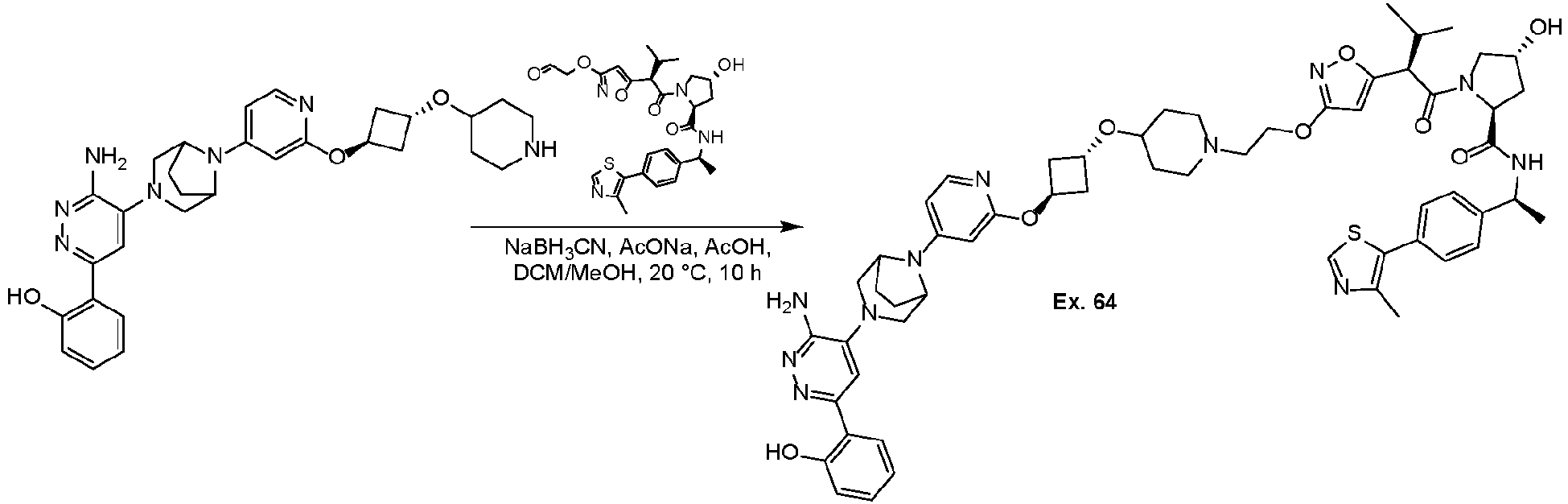
- To a solution of 2-[6-amino-5-[8-[2-[3-(4-piperidyloxy)cyclobutoxy]-4-pyridyl]-3,8-diazabicyclo[3.2.1]octan-3-yl]pyridazin-3-yl]phenol trihydrochloride (400 mg, 612 umol, 1 eq,) and (2S,4R)-4-hydroxy-1-[(2R)-3-methyl-2-[3-(2-oxoethoxy)isoxazol-5-yl]butanoyl]-N-[(1S)-1-[4-(4-methylthiazol-5-yl)phenyl]ethyl]pyrrolidine-2-carboxamide (331 mg, 0.61 mmol, 1 eq) in a mixture of dichloromethane (16 mL) and methanol (16 mL) was added sodium acetate (201 mg, 2.45 mmol, 4 eq), then acetic acid until pH = 6, and then sodium cyanoborohydride (192 mg, 3.06 mmol, 5 eq). The mixture was stirred at 20°C for 10 hours. The reaction mixture was diluted with water (20 mL) and extracted with dichloromethane (20 mL) three times. The combined organic layers were dried over anhydrous sodium sulfate and concentrated to afford the crude product which was purified by semi-preparative reverse phase HPLC (column: Phenomenex Synergi C18 150*25*10 um; mobile phase: [water (0.225%FA)-ACN]; B%: 18%-48%, 9 min). (2S,4R)-1-[(2R)-2-[3-[2-[4-[3-[[4-[3-[3-amino-6-(2-hydroxyphenyl)pyridazin-4-yl]-3,8-diazabicyclo[3.2.1]octan-8-yl]-2-pyridyl]oxy]cyclobutoxy]-1-piperidyl]ethoxy]isoxazol-5-yl]-3-methyl-butanoyl]-4-hydroxy-N-[(1S)-1-[4-(4-methylthiazol-5-yl)phenyl]ethyl]pyrrolidine-2-carboxamide bistrifluoroacetate (321 mg, 0.28 mmol, 45% yield) was obtained as an off-white solid.
-

-

- To a stirred solution of NaOH (10 g, 0.250 mol, 2.7 eq. ) in water (500 mL) was added benzyl alcohol (10 g, 92.47 mmol, 1 equiv), 1,4-dibromobutane (39.93 g, 184.9 mmol, 2.00 equiv) and Bu4NHSO4 (0.78 g, 2.297 mmol, 0.02 equiv) at room temperature . The resulting mixture was stirred for 2 hours at 70°C and then diluted with hexane (100mL). The resulting mixture was washed with 3x50 mL of water. The organic layer was dried over anhydrous sodium sulfate and concentrated under reduced pressure. The residue was purified by silica gel column chromatography eluting with PE/EtOAc (10: 1). This resulted in [(4-bromobutoxy)methyl]benzene(10 g, 44%) as a colorless oil.
-

- To a solution of 2-(2-hydroxyethoxy)ethan-1-ol (14.18 g, 133.7 mmol, 5 equiv) in DMF (100 mL) was added sodium hydride (60% in oil, 2.15 g, 2.5 eq.) at 0°C under nitrogen atmosphere. After 15 minutes to the reaction mixture was added [(4-bromobutoxy)methyl]benzene (6.5 g, 26.7 mmol, 1 equiv). The resulting mixture was stirred for 3 h at 25°C and then quenched by the addition of water (250 mL). The resulting mixture was extracted with EA (3 x 200 mL). The combined organic layers were washed with brine, dried over anhydrous sodium sulfate and concentrated under reduced pressure. The residue was purified by silica gel column chromatography eluting with PE/EtOAc (60%). This resulted in 2-[2-[4-(benzyloxy)butoxy]ethoxy]ethan-1-ol (4 g, 72%) as a colorless oil.
-

- To a stirred solution of 2-[2-[4-(benzyloxy)butoxy]ethoxy]ethan-1-ol (2.4 g, 8.94 mmol, 1 equiv) and DMAP (218 mg, 1.79 mmol, 0.2 equiv) in DCM (50 mL) was added TsCl (5.1 g, 26.83 mmol, 3 equiv) and TEA (2.7 g, 26.83 mmol, 3 equiv) at room temperature. The resulting mixture was stirred overnight at 40°C. The reaction mixture was diluted with DCM (100 mL) and washed with 2x50 mL of brine. The organic layer was dried over anhydrous sodium sulfate and concentrated under reduced pressure. The residue was purified by silica gel column chromatography eluting with PE/EtOAc (3: 1). This resulted in 2-[2-[4-(benzyloxy)butoxy]ethoxy]ethyl 4-methylbenzene-1-sulfonate(2.4 g, 64%) as a light yellow solid.
-

- To a solution of 2-[2-[4-(benzyloxy)butoxy]ethoxy]ethyl 4-methylbenzene-1-sulfonate (3.5 g, 8.28 mmol, 1 equiv) in 100 mL EtOH was added 10% Pd/C (3.5 g) and CH3COOH (0.95 mL, 15.88 mmol, 2.01 equiv) under nitrogen atmosphere. The flask was vacuumed and flushed with hydrogen. The resulting mixture was hydrogenated at 40°C overnight under hydrogen atmosphere using a hydrogen balloon, then filtered through a Celite pad and concentrated under reduced pressure. The residue was purified by reverse phase column chromatography under the following conditions: column, C18 silica gel; mobile phase, ACN in water, 10% to 50% gradient in 30 min. This resulted in 4-(2-[2-[(4-methylbenzenesulfonyl)oxy]ethoxy]ethoxy)butan-1-ol (2.2 g, 80%) as a colorless oil.
-

- To a stirred solution of methyl 2-(3-hydroxy-1,2-oxazol-5-yl)-3-methylbutanoate (1.5 g, 7.53 mmol, 1 equiv) and 4-(2-[2-[(4-methylbenzenesulfonyl)oxy]ethoxy]ethoxy)butan-1-ol (3.0 g, 9.04 mmol, 1.2 equiv) in acetone (50 mL) was added Cs2CO3 (4.9 g, 15.04 mmol, 2.00 equiv) at room temperature under nitrogen atmosphere. The resulting mixture was stirred for 4 hours at 60°C and then concentrated under reduced pressure. The residue was purified by silica gel column chromatography eluting with CH2Cl2 / MeOH (10:1). This resulted in methyl 2-(3-[2-[2-(4-hydroxybutoxy)ethoxy]ethoxy]-1,2-oxazol-5-yl)-3-methylbutanoate (800 mg, 30%) as a light yellow oil.
-

- To a stirred solution of methyl 2-(3-[2-[2-(4-hydroxybutoxy)ethoxy]ethoxy]-1,2-oxazol-5-yl)-3-methylbutanoate (550 mg, 1.53 mmol, 1 equiv) in DCM (20 mL) was added Dess-Martin periodinane (1298 mg, 3.06 mmol, 2 equiv) at 0°C. The resulting mixture was stirred for 2 hours at 30°C and then quenched by the addition of saturated sodium thiosulfate solution. The resulting mixture was extracted with DCM (3 x 20 mL). The combined organic layers were washed with saturated sodium bicarbonate solution, dried over sodium sulfate and concentrated under reduced pressure. The residue was purified by Prep-TLC (CH2Cl2 / MeOH 10:1) to afford methyl 3-methyl-2-(3-[2-[2-(4-oxobutoxy)ethoxy]ethoxy]-1,2-oxazol-5-yl)butanoate (440mg, 80%) as a light yellow solid.
- Methyl 3-methyl-2-(3-[2-[2-(4-oxobutoxy)ethoxy]ethoxy]-1,2-oxazol-5-yl)butanoate was converted to the final compounds according to the scheme below using procedures analogous to those described for other examples of the series (e.g., exemplary compound 91), as well as obvious to those skilled in the art.

- Exemplary compounds 65, 66, 71, 73, and 74 were prepared using analogous procedures.
-

-

- Into a 250-mL round-bottom flask, was placed a solution of 3-(benzyloxy)cyclobutan-1-one (6.0 g, 34.05 mmol, 1.0 equiv) in ethanol (100 mL). This was followed by the addition of sodium borohydride (1.25 g, 33.94 mmol, 1.00 equiv) in several batches at 0°C. The resulting solution was stirred for 3 hours at 0°C. The reaction was then quenched by the addition of water (100 mL). The resulting solution was extracted with ethyl acetate (50 mL x 2), and the organic layers combined and dried over anhydrous sodium sulfate and concentrated under vacuum. This resulted in 6.0 g (99%) of (1s,3s)-3-(benzyloxy)cyclobutan-1-ol as a light yellow oil.
-

- Into a 500-mL round-bottom flask purged and maintained with an inert atmosphere of nitrogen, was placed a solution of (1s,3s)-3-(benzyloxy)cyclobutan-1-ol (8.0 g, 44.89 mmol, 1.10 equiv) in N,N-dimethylformamide (100 mL). This was followed by the addition of sodium hydride (60%) (2.15 g, 89.58 mmol, 1.20 equiv) in several batches at 0°C. To this was added 4-bromo-2-fluoropyridine (70.0 g, 39.78 mmol, 1.00 equiv). The resulting solution was stirred overnight at room temperature. The reaction was then quenched by the addition of water/ice. The resulting solution was extracted with ethyl acetate (80 mL x 2) and the organic layers combined. The resulting mixture was washed with brine (80 mL x 2). The resulting mixture was concentrated under reduced pressure. The residue was applied onto a silica gel column with ethyl acetate/petroleum ether (1:1). This resulted in 7.0 g (53%) of 4-bromo-2-[(1s,3s)-3-(benzyloxy)cyclobutoxy]pyridine as a light yellow oil.
-

- Into a 500-mL round-bottom flask purged and maintained with an inert atmosphere of nitrogen, was placed a solution of 4-bromo-2-[(1s,3s)-3-(benzyloxy)cyclobutoxy]pyridine (8.4 g, 25.13 mmol, 1.30 equiv) in toluene (200 mL), tert-butyl 3,8-diazabicyclo[3.2.1]octane-3-carboxylate (4.11 g, 19.36 mmol, 1.00 equiv), sodium tert-butoxide (3.2 g, 33.2 mmol, 1.5 equiv), xantphos (2.32 g, 4.01 mmol, 0.20 equiv), Pd2(dba)3CH2Cl2 (430.0 mg, 0.40 mmol, 0.02 equiv). The resulting solution was stirred overnight at 100°C. The reaction was then quenched by the addition of water (100 mL). The resulting solution was extracted with ethyl acetate (80 mL x 2), and the organic layers were combined. The resulting mixture was washed with of brine (100 mL x 2). The mixture was dried over anhydrous sodium sulfate and concentrated under reduced pressure. The residue was applied onto a silica gel column eluting with ethyl acetate/hexane (1:1). This resulted in 8.0 g (89%) of tert-butyl 8-[2-[(1s,3s)-3-(benzyloxy)cyclobutoxy]pyridin-4-yl]-3,8-diazabicyclo[3.2.1]octane-3-carboxylate as a light yellow oil.
-

- To a solution of tert-butyl 8-[2-[(1s,3s)-3-(benzyloxy)cyclobutoxy]pyridin-4-yl]-3,8-diazabicyclo[3.2.1]octane-3-carboxylate (7.0 g, 15.03 mmol, 1.00 equiv) in 150 mL ethanol was added palladium hydroxide catalyst (7.0 g, 49.85 mmol, 3.32 equiv) and acetic acid (2 mL) under nitrogen atmosphere in a 250 ml round bottom flask. The flask was then vacuumed and flushed with hydrogen. The reaction mixture was hydrogenated at 50 °C for 3 days under hydrogen atmosphere using a hydrogen balloon, then filtered through a Celite pad and concentrated under reduced pressure. This resulted in 5.4 g (96%) of tert-butyl 8-[2-[(1s,3s)-3-hydroxycyclobutoxy]pyridin-4-yl]-3,8-diazabicyclo[3.2.1]octane-3-carboxylate as a light yellow oil.
-

- Into a 100-mL round-bottom flask, was placed a solution of tert-butyl 8-[2-[(1s,3s)-3-hydroxycyclobutoxy]pyridin-4-yl]-3,8-diazabicyclo[3.2.1]octane-3-carboxylate (5.0 g, 13.32 mmol, 1.00 equiv) in the mixed solvent of ethyl acetate and methanol (10: 1) (50 mL). Hydrogen chloride (g) was passed through. The resulting mixture was stirred for 3 hours at room temperature and concentrated under reduced pressure. This resulted in 4.0 g (96%) of (1s,3s)-3-[(4-[3,8-diazabicyclo[3.2.1]octan-8-yl]pyridin-2-yl)oxy]cyclobutan-1-ol hydrochloride as an off-white solid.
-
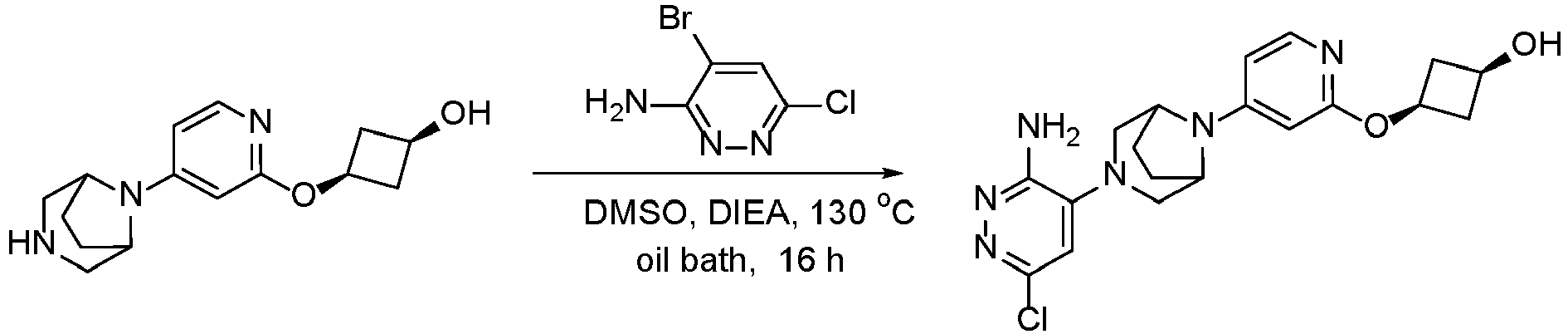
- Into a 20-mL pressure tank reactor purged and maintained with an inert atmosphere of nitrogen, was placed a solution of (1s,3s)-3-[(4-[3,8-diazabicyclo[3.2.1]octan-8-yl]pyridin-2-yl)oxy]cyclobutan-1-ol hydrochloride (1.0 g, 3.21 mmol, 1.00 equiv) in dimethyl sulfoxide (10 mL). Then N,N-Diisopropylethylamine (5 mL) and 4-bromo-6-chloropyridazin-3-amine (3.01 g, 14.44 mmol, 4.00 equiv) were added. The resulting solution was stirred for 16 hours at 130°C. The reaction was then quenched by the addition of water (50 mL). The resulting solution was extracted with ethyl acetate (3x30 mL) and the organic layers combined. The resulting mixture was washed with brine (3x50 mL). The mixture was dried over anhydrous sodium sulfate. The residue was applied onto a silica gel column with dichloromethane/methanol (10:1). This resulted in 490 mg (38%) of (1s,3s)-3-([4-[3-(3-amino-6-chloropyridazin-4-yl)-3,8-diazabicyclo[3.2.1]octan-8-yl]pyridin-2-yl]oxy)cyclobutan-1-ol as yellow oil.
-

- Into a 20-mL pressure tank reactor purged and maintained with an inert atmosphere of nitrogen, was placed a solution of (1s,3s)-3-([4-[3-(3-amino-6-chloropyridazin-4-yl)-3,8-diazabicyclo[3.2.1]octan-8-yl]pyridin-2-yl]oxy)cyclobutan-1-ol (800.0 mg, 1.99 mmol, 1.00 equiv) in the mixed solvent of dioxane and water (4:1) (15 mL), [2-(methoxymethoxy)phenyl]boronic acid (543.5 mg, 2.99 mmol, 1.50 equiv), potassium carbonate (823.9 mg, 6.0 mmol, 3.00 equiv), Pd(PPh3)4 (230.0 mg, 0.20 mmol, 0.10 equiv). The resulting solution was stirred for 2 hours at 90°C. The reaction was then quenched by the addition of water (30 mL). The resulting solution was extracted with ethyl acetate (50 mL x 2) and the organic layers combined. The resulting mixture was washed with brine (50 mL x 2). The mixture was dried over anhydrous sodium sulfate. The residue was applied onto a silica gel column with dichloromethane/methanol (10:1). This resulted in 820.0 mg (82%) of (1s,3s)-3-[[4-(3-[3-amino-6-[2-(methoxymethoxy)phenyl]pyridazin-4-yl]-3,8-diazabicyclo[3.2.1]octan-8-yl)pyridin-2-yl]oxy]cyclobutan-1-ol as a yellow solid.
-

- To a stirred solution of 6-bromopyridin-3-ol (12.70 g, 72.9 mmol, 1.00 equiv) and imidazole (7.45 g, 109.5 mmol, 1.50 equiv) in DMF (100 mL) were added TBSCl (16.50 g, 109.47 mmol, 1.50 equiv) in portions at 0°C under nitrogen atmosphere. The resulting mixture was stirred for 3 hours at room temperature under nitrogen atmosphere. The reaction was quenched with water (100 mL) at room temperature, and the resulting mixture was extracted with EtOAc (50 mL x 3). The combined organic layers were washed with brine (100 mL x 2), dried over anhydrous sodium sulfate and concentrated under reduced pressure. The residue was purified by silica gel column chromatography, eluted with PE/EtOAc (5:1) to afford 2-bromo-5-[(tert-butyldimethylsilyl)oxy]pyridine (19 g, 90%) as a colorless oil.
-

- To a stirred mixture of 2-bromo-5-[(tert-butyldimethylsilyl)oxy]pyridine (4.00 g, 13.88 mmol, 1.00 equiv) and NaI (10.40 g, 69.38 mmol, 5.00 equiv) in 1,4-dioxane (20 mL) were added CuI (0.26 g, 1.365 mmol, 0.10 equiv) and methyl[2-(methylamino)ethyl]amine (0.12 g, 1.361 mmol, 0.10 equiv) dropwise at room temperature under nitrogen atmosphere. The resulting mixture was stirred for 5 hours at 110°C under nitrogen atmosphere. The reaction mixture was filtered, and the filter cake was rinsed with 1,4-dioxane. The filtrate was concentrated under reduced pressure. The residue was purified by silica gel column chromatography eluting with hexane/EtOAc (5:1) to afford 5-[(tert-butyldimethylsilyl)oxy]-2-iodopyridine (4.2 g, 90%) as an off-white solid.
-

- To a stirred solution of 5-[(tert-butyldimethylsilyl)oxy]-2-iodopyridine (4.20 g, 12.53 mmol, 1.00 equiv) in THF (20 mL) were added TBAF (1 mol/L, 27 mL, 27 mmol, 2.00 equiv) dropwise at 0°C under hydrogen atmosphere. The resulting mixture was stirred for 2 hours at room temperature under nitrogen atmosphere. The reaction was quenched with water (50 mL) at room temperature. The resulting mixture was extracted with EtOAc (50 mL x 3). The combined organic layers were washed with brine (50 mL), dried over anhydrous sodium sulfate and concentrated under reduced pressure. The residue was purified by silica gel column chromatography eluting with hexane/EtOAc (2:1) to afford 6-iodopyridin-3-ol (2.3 g, 83%) as a light yellow solid.
-

- To a solution of PPh3 (523 mg, 2.00 mmol, 2.00 equiv) in THF (10 mL) was added DIAD (403 mg, 2.00 mmol, 2.00 equiv), (1s,3s)-3-[[4-(3-[3-amino-6-[2-(methoxymethoxy)phenyl]pyridazin-4-yl]-3,8-diazabicyclo[3.2.1]octan-8-yl)pyridin-2-yl]oxy]cyclobutan-1-ol (504 mg, 1.00 mmol, 1 equiv) and 6-iodopyridin-3-ol (265 mg, 1.20 mmol, 1.20 equiv) at 0°C under nitrogen atmosphere. The resulting mixture was stirred for 5 minutes at 0°C, heated up to 50°C and stirred for 2 hours at 50°C under nitrogen atmosphere. The reaction was quenched by the addition of water (20 mL) at room temperature, and the resulting mixture was extracted with EtOAc (20 mL x 3). The combined organic layers were washed with brine (30 mL), dried over anhydrous sodium sulfate and concentrated under reduced pressure. The residue was purified by silica gel column chromatography eluting with dichloromethane/methanol (10:1) to afford 6-[2-(methoxymethoxy)phenyl]-4-(8-[2-[(1r,3r)-3-[(6-iodopyridin-3-yl)oxy]cyclobutoxy]pyridin-4-yl]-3,8-diazabicyclo[3.2.1]octan-3-yl)pyridazin-3-amine (382 mg, 54%) as a light yellow solid.
-

- To a solution of (2S,4R)-4-hydroxy-1-[2-(3-hydroxy-1,2-oxazol-5-yl)-3-methylbutanoyl]-N-[(1S)-1-[4-(4-methyl-1,3-thiazol-5-yl)phenyl]ethyl]pyrrolidine-2-carboxamide (780 mg, 1.56 mmol, 1.00 equiv) in acetone (40 mL) was added Cs2CO3 (1019 mg, 3.13 mmol, 2.00 equiv), and 3-bromoprop-1-yne (558 mg, 4.69 mmol, 3.00 equiv) at room temperature. The resulting mixture was stirred for 3 hours at 50°C under nitrogen atmosphere. The mixture was filtered, and the filter cake was rinsed with THF (50 mL x 2). The filtrate was concentrated under reduced pressure. The residue was purified by silica gel column chromatography eluting with dichloromethane/methanol (10:1) to afford (2S,4R)-4-hydroxy-N-[(1S)-1-[4-(4-methyl-1,3-thiazol-5-yl)phenyl]ethyl]-1-[3-methyl-2-[3-(prop-2-yn-1-yloxy)-1,2-oxazol-5-yl]butanoyl]pyrrolidine-2-carboxamide (520 mg, 62%) as an off-white solid.
-

- To a stirred mixture of 6-[2-(methoxymethoxy)phenyl]-4-(8-[2-[(1r,3r)-3-[(6-iodopyridin-3-yl)oxy]cyclobutoxy]pyridin-4-yl]-3,8-diazabicyclo[3.2.1]octan-3-yl)pyridazin-3-amine (224 mg, 0.317 mmol, 1.00 equiv) and CuI (6.0 mg, 0.032 mmol, 0.10 equiv) in DMF (5 mL) was added TEA (96 mg, 0.950 mmol, 3.00 equiv), and Pd(PPh3)2Cl2 (22.2 mg, 0.032 mmol, 0.10 equiv) at room temperature under nitrogen atmosphere. The resulting mixture was stirred for 5 minutes at room temperature and then was added to the solution of (2S,4R)-4-hydroxy-N-[(1S)-1-[4-(4-methyl-1,3-thiazol-5-yl)phenyl]ethyl]-1-[3-methyl-2-[3-(prop-2-yn-1-yloxy)-1,2-oxazol-5-yl]butanoyl]pyrrolidine-2-carboxamide (170 mg, 0.317 mmol, 1.00 equiv) in DMF (2 mL). The reaction mixture was stirred for 2 hours at 65°C under nitrogen atmosphere. The reaction was quenched by the addition of water (30 mL). The resulting mixture was extracted with EtOAc (20 mL x 3). The combined organic layers were washed with brine (30 mL x 3), dried over anhydrous sodium sulfate and concentrated under reduced pressure. The residue was purified by prep-TLC eluting with dichloromethane/methanol (9:1) to afford (2S,4R)-4-hydroxy-N-[(1S)-1-[4-(4-methyl-1,3-thiazol-5-yl)phenyl]ethyl]-1-(3-methyl-2-[3-[(3-[5-[(1r,3r)-3-[[4-(3-[3-amino-6-[2-(methoxymethoxy)phenyl]pyridazin-4-yl]-3,8-diazabicyclo[3.2.1]octan-8-yl)pyridin-2-yl]oxy]cyclobutoxy]pyridin-2-yl]prop-2-yn-1-yl)oxy]-1,2-oxazol-5-yl]butanoyl)pyrrolidine-2-carboxamide (175 mg, 49%) as a light yellow solid.
- The two diastereomers of (2S,4R)-4-hydroxy-N-[(1S)-1-[4-(4-methyl-1,3-thiazol-5-yl)phenyl]ethyl]-1-(3-methyl-2-[3-[(3-[5-[(1r,3r)-3-[(4-[3-[3-amino-6-(2-hydroxyphenyl)pyridazin-4-yl]-3,8-diazabicyclo[3.2.1]octan-8-yl]pyridin-2-yl)oxy]cyclobutoxy]pyridin-2-yl]prop-2-yn-1-yl)oxy]-1,2-oxazol-5-yl]butanoyl)pyrrolidine-2-carboxamide (620 mg) were separated by chiral HPLC with the following conditions: Column: CHIRALPAK IG, 2.0cm I.D*25cm(5um); Mobile Phase A:MeOH(8mmol/L NH3.MeOH), Mobile Phase B: DCM; Flow rate: 20 mL/min; Gradient: 30 % B to 30 % B in 17 min; 220/254 nm; RT1: 8.495 min; RT2: 12.854 min. This resulted in 137 mg (22%) of isomer 1 tentatively identified as (2S,4R)-4-hydroxy-N-[(1S)-1-[4-(4-methyl-1,3-thiazol-5-yl)phenyl]ethyl]-1-[(2S)-3-methyl-2-[3-[(3-[5-[(1r,3r)-3-[(4-[3-[3-amino-6-(2-hydroxyphenyl)pyridazin-4-yl]-3,8-diazabicyclo[3.2.1]octan-8-yl]pyridin-2-yl)oxy]cyclobutoxy]pyridin-2-yl]prop-2-yn-1-yl)oxy]-1,2-oxazol-5-yl]butanoyl]pyrrolidine-2-carboxamide (light-yellow solid), and in 199 mg (32 %) of isomer 2 tentatively identified as (2S,4R)-4-hydroxy-N-[(1S)-1-[4-(4-methyl-1,3-thiazol-5-yl)phenyl]ethyl]-1-[(2R)-3-methyl-2-[3-[(3-[5-[(1r,3r)-3-[(4-[3-[3-amino-6-(2-hydroxyphenyl)pyridazin-4-yl]-3,8-diazabicyclo[3.2.1]octan-8-yl]pyridin-2-yl)oxy]cyclobutoxy]pyridin-2-yl]prop-2-yn-1-yl)oxy]-1,2-oxazol-5-yl]butanoyl]pyrrolidine-2-carboxamide (off-white solid).
- Exemplary compounds 226, 227, 231, 232, 236, and 237 using analogous procedures.
-

-

- To a solution of (1S)-1-(4-bromophenyl)ethanamine (5 g, 24.99 mmol, 1.0 eq) in dichloromethane (100 mL) was added triethylamine (2.53 g, 24.99 mmol, 1.0 eq) at 0°C. Then the mixture was stirred at 0°C for 30 minutes. Then di-tert-butyl dicarbonate ester (5.45 g, 24.99 mmol, 1.0 eq) was added, and the mixture and stirred at 0 °C for 30 minutes followed by 20 °C for 2 hours. The mixture was quenched with saturated aqueous sodium bicarbonate (20 mL), diluted with water (50 mL), extracted with dichloromethane (100 mL x 2), washed with brine (100 mL), dried over anhydrous sodium sulfate, filtered and concentrated. The residue was stirred with petroleum ether: ethyl acetate (50 mL, v/v=5/1), and then filtered. Tert-butyl N-[(1S)-1-(4-bromophenyl)ethyl]carbamate (6.4 g, 20.68 mmol, 82% yield) was obtained as a white solid.
-

- To a solution of tert-butyl N-[(1S)-1-(4-bromophenyl)ethyl]carbamate (3 g, 9.99 mmol, 1.0 eq) and 2-methyl-1H-imidazole (902 mg, 10.99 mmol, 1.1 eq) in dimethylsulfoxide (15 mL) was added L-proline (1.38 g, 11.99 mmol, 1.2 eq), cesium carbonate (9.77 g, 29.98 mmol, 3.0 eq) and copper iodide (2.28 g, 11.99 mmol, 1.2 eq) under nitrogen. Then the mixture was stirred at 130°C for 12 hours. The mixture was diluted with water (200 mL), filtered and then extracted with ethyl acetate (200 mL x 3), washed with brine (200 mL), dried over anhydrous sodium sulfate, filtered and then concentrated. The residue was purified by reversed phase flash chromatography (formic acid). tert-Butyl N-[(1S)-1-[4-(2-methylimidazol-1-yl)phenyl]ethyl]carbamate (250 mg, 0.83 mmol, 8% yield) was obtained as a yellow oil.
- tert-Butyl N-[(1S)-1-[4-(2-methylimidazol-1-yl)phenyl]ethyl]carbamate was converted to the final compound as detailed in the schemes below using procedures described above for exemplary compounds 47 and 64.

- Exemplary compound 75 was prepared using analogous procedures.
-

-

- To a solution of 1-(6-bromo-3-pyridyl)ethanone (11.88 g, 59.41 mmol, 1.2 eq) and tetraethoxytitanium (22.58 g, 99.01 mmol, 2 eq) in tetrahydrofuran (50 mL) was added (R)-2-methylpropane-2-sulfinamide (6 g, 49.50 mmol, 1 eq) under nitrogen. The reaction mixture was stirred at 70°C for 12 hours. The reaction mixture was quenched by addition water (30 mL), and then further diluted with water (100 mL), filtered and extracted with ethyl acetate (80 mL × 3). The combined organic layers were washed with brine (100 mL), dried over anhydrous sodium sulfate, filtered and concentrated under reduced pressure to produce the desired compound (R,E)-N-(1-(6-bromopyridin-3-yl)ethylidene)-2-methylpropane-2-sulfinamide (16 g, 43.27 mmol, 87% yield) as a light yellow solid.
-

- To a solution of (R,E)-N-(1-(6-bromopyridin-3-yl)ethylidene)-2-methylpropane-2-sulfinamide (16 g, 52.77 mmol, 1 eq) in tetrahydrofuran (160 mL) was added L-selectride (1 M, 158 mL, 3 eq) at 0°C. The reaction mixture was warmed up and stirred at 20°C for 3 hours. The reaction mixture was quenched by addition water (100 mL), and then further diluted with water (100 mL), filtered and extracted with ethyl acetate (100 mL × 3). The combined organic layers were washed with brine (100 mL), dried over anhydrous sodium sulfate, filtered and concentrated under reduced pressure to give crude product which was purified by recrystallization from petroleum ether: ethyl acetate = 1:1 (10 mL). Then the residue was purified by semi-preparative reverse phase HPLC (FA condition: column: Phenomenex Synergi Max-RP 250*50 mm*10 um; mobile phase: [water (0.225% FA) - ACN]; B%: 20%-55%, 30 min). N-[(1S)-1-(6-bromo-3-pyridyl)ethyl]-2-methyl-propane-2-sulfinamide (4.7 g, 12.89 mmol, 24 % yield) was obtained as a white solid.
-

- To a solution of N-[(1S)-1-(6-bromo-3-pyridyl)ethyl]-2-methyl-propane-2-sulfinamide (2.6 g, 8.52 mmol, 1 eq) in dichloromethane (20 mL) was added hydrochloric acid/methanol (4 M, 21.3 mL, 10 eq). The reaction mixture was stirred at 20°C for 0.15 hours. The reaction mixture was concentrated under reduced pressure to give (1S)-1-(6-bromo-3-pyridyl)ethanamine (1.9 g, crude, hydrochloride) as a white solid.
-

- To a solution of (1S)-1-(6-bromo-3-pyridyl)ethanamine hydrochloride (1.9 g, 8.00 mmol, 1 eq,) in dichloromethane (20 mL) was added triethylamine (2.43 g, 24.00 mmol, 3.34 mL, 3 eq) at 0°C for 0.5 hour followed by di-tert-butyl dicarbonate (2.62 g, 12.00 mmol, 2.76 mL, 1.5 eq) at 0°C for 0.5 hours. The reaction mixture was stirred at 20°C for 12 hours. The reaction mixture was quenched by the addition of water (20 mL), and then further diluted with water 60 mL, and extracted with ethyl acetate (80 mL × 3). The combined organic layers were washed with brine (100 mL), dried over anhydrous sodium sulfate, filtered and concentrated under reduced pressure to give a residue which was purified by silica gel chromatography (petroleum ether: ethyl acetate = 50:1 to 3:1). tert-Butyl N-[(1S)-1-(6-bromo-3-pyridyl)ethyl]carbamate (2.2 g, 7.06 mmol, 88% yield) was obtained as a white solid.
-

- To a solution of 5-bromo-4-methyl-thiazole (800 mg, 4.49 mmol, 1 eq) and 4,4,5,5-tetramethyl-2-(4,4,5,5-tetramethyl-1,3,2-dioxaborolan-2-yl)-1,3,2-dioxaborolane (1.37 g, 5.39 mmol, 1.2 eq) in dioxane (10 mL) was added 1,1'-bis(diphenylphosphino)ferrocene-palladium(II)dichloride (164 mg, 0.22 mmol, 0.05 eq) and potassium acetate (882 mg, 8.99 mmol, 2 eq). The reaction mixture was stirred at 100 °C for 12 h. The reaction mixture was filtered and concentrated under reduced pressure to give 4-methyl-5-(4,4,5,5-tetramethyl-1,3,2-dioxaborolan-2-yl)thiazole (1 g, crude) as a brown oil which was used without purification.
-

- To a solution of 4-methyl-5-(4,4,5,5-tetramethyl-1,3,2-dioxaborolan-2-yl)thiazole (617 mg, 2.74 mmol, 1.5 eq) and tert-butyl N-[(1S)-1-(6-bromo-3-pyridyl)ethyl]carbamate (550 mg, 1.83 mmol, 1 eq) in dioxane (12 mL) and water (2 mL) was addded 1,1'-bis(diphenylphosphino)ferrocene-palladium(II)dichloride (134 mg, 0.18 mmol, 0.1 eq) and potassium carbonate (505 mg, 3.65 mmol, 2 eq). The reaction mixture was stirred at 100°C for 12 hours. The reaction mixture was quenched by addition water (10 mL), and then diluted with water (30 mL), filtered and extracted with ethyl acetate (30 mL × 3). The combined organic layers were washed with brine (60 mL), dried over anhydrous sodium sulfate, filtered and concentrated under reduced pressure to give a residue which was purified by prep-TLC (petroleum ether: ethyl acetate = 1:1). The desired compound tert-butyl N-[(1S)-1-[6-(4-methylthiazol-5-yl)-3-pyridyl]ethyl]carbamate (200 mg, 0.62 mmol, 34% yield) was obtained as a light yellow solid.
- tert-Butyl N-[(1S)-1-[6-(4-methylthiazol-5-yl)-3-pyridyl]ethyl]carbamate was converted to the final compound as described above for exemplary compound 76.
- Exemplary compound 160 was prepared using analogous procedures.
-

-

- To a solution of tert-butyl N-[(1S)-1-(6-bromo-3-pyridyl)ethyl]carbamate (1 g, 3.32 mmol, 1 eq) in tetrahydrofuran (10 mL) was added n-butyllithium (2.5 M, 2.9 mL, 2.2 eq) at - 78°C. The mixture was stirred at -78 °C for 0.5 hours, then to the mixture was added N,N-dimethylformamide (728 mg, 9.96 mmol, 0.8 mL, 3 eq) at -78°C, and the mixture was stirred at - 78°C for 0.5 hour. Then mixture was warmed to 15°C for 1 hour. The reaction mixture was quenched by the addition of saturated ammonium chloride (10 mL), and then diluted with water (20 mL), filtered and extracted with ethyl acetate (30 mL x 3). The combined organic layers were washed with brine (60 mL), dried over anhydrous sodium sulfate, filtered and concentrated under reduced pressure to give a residue. The residue was purified by silica gel chromatography (petroleum ether: ethyl acetate = 10:1 to 1:1). The desired compound tert-butyl N-[(1S)-1-(6-formyl-3-pyridyl)ethyl]carbamate (550 mg, 2.20 mmol, 66% yield) was obtained as a light yellow solid.
-

- To a solution of tert-butyl N-[(1S)-1-(6-formyl-3-pyridyl)ethyl]carbamate (550 mg, 2.20 mmol, 1 eq) and 1-(1-isocyanoethylsulfonyl)-4-methyl-benzene (506 mg, 2.42 mmol, 1.1 eq) in methanol (10 mL) was added potassium carbonate (607 mg, 4.39 mmol, 2 eq). The reaction mixture was stirred at 70°C for 12 hours. The reaction mixture was quenched by addition water (20 mL), and then diluted with water (10 mL), filtered and extracted with ethyl acetate (30 mL x 3). The combined organic layers were washed with brine (60 mL), dried over sodium sulfate, filtered and concentrated under reduced pressure to give a residue. The residue was purified by silica gel chromatography (petroleum ether: ethyl acetate = 50:1 to 1:1). The desired compound tert-butyl N-[(1S)-1-[6-(4-methyloxazol-5-yl)-3-pyridyl]ethyl]carbamate (570 mg, 1.65 mmol, 75% yield, 87% purity) was obtained as a white solid.
- tert-Butyl N-[(1S)-1-[6-(4-methyloxazol-5-yl)-3-pyridyl]ethyl]carbamate was converted to the final compound as described for exemplary compound 76.
- Exemplary compounds 161, 229, and 230 were prepared using analogous procedures.
-

-

- Into a 250-mL round-bottom flask was placed 1-(4-hydroxyphenyl)ethan-1-one (6.0 g, 44.08 mmol, 1 equiv), tert-butyl(chloro)dimethylsilane (10 g, 66.1 mmol, 1.5 equiv), and K2CO3 (12 g, 88.14 mmol, 2 equiv) in DMF (100 mL). The resulting mixture was stirred overnight at room temperature. The reaction was then quenched by the addition of water (100mL). The resulting mixture was extracted with dichloromethane (100 mL x3), and the organic layers were combined, dried over anhydrous sodium sulfate and concentrated under reduced pressure. The residue was applied onto a silica gel column eluting with ethyl acetate/petroleum ether (1:10). This resulted in 5.2 g (47%) of 1-[4-[(tert-butyldimethylsilyl)oxy]phenyl]ethan-1-one as off-white solid.
-

- Into a 250-mL round-bottom flask, was placed 1-[4-[(tert-butyldimethylsilyl)oxy]phenyl]ethan-1-one (5 g, 20.0 mmol, 1 equiv) in MeOH (100 mL), to which was added sodium borohydride (1.5 g, 39.94 mmol, 2 equiv) in portions at room temperature. The resulting solution was stirred for 5 h at room temperature, and then concentrated under reduced pressure. The residue was applied onto a silica gel column eluting with ethyl acetate/petroleum ether (1/1). This resulted in 3.8 g (76%) of 1-[4-[(tert-butyldimethylsilyl)oxy]phenyl]ethan-1-ol as a yellow oil.
-

- Into a 250-mL round-bottom flask, was placed 1-[4-[(tert-butyldimethylsilyl)oxy]phenyl]ethan-1-ol (3.8 g, 15.05 mmol, 1 equiv) and TEA (6.1 g, 60.21 mmol, 4 equiv) in dichloromethane (100 mL), to which was added methanesulfonyl chloride (2.1 g, 18.07 mmol, 1.20 equiv) slowly at room temperature. The resulting mixture was stirred for 2 hours at room temperature. The mixture was concentrated under reduced pressure. This resulted in 3.6 g of crude 1-[4-[(tert-butyldimethylsilyl)oxy]phenyl]ethyl methanesulfonate as a yellow solid.
-

- Into a 250-mL round-bottom flask, was placed 1-[4-[(tert-butyldimethylsilyl)oxy]phenyl]ethyl methanesulfonate (5.0 g, 15.13 mmol, 1 equiv), 2-(cyclopenta-1,4-dien-1-yl)-4,4,5,5-tetramethyl-1,3,2-dioxaborolane (3.5 g, 18.17 mmol, 1.20 equiv), and K2CO3 (6.3 g, 45.38 mmol, 3 equiv) in DMF (150 mL) under nitrogen atmosphere. The resulting mixture was stirred overnight at 90°C. The reaction was then quenched by the addition of water (150mL). The resulting mixture was extracted with dichloromethane (150 mL x3), and the organic layers were combined, dried over anhydrous sodium sulfate and concentrated under reduced pressure. The residue was applied onto a silica gel column eluting with ethyl acetate/petroleum ether (1:5). This resulted in 600 mg (9%) of 1-(1-[4-[(tert-butyldimethylsilyl)oxy]phenyl]ethyl)-4-(4,4,5,5-tetramethyl-1,3,2-dioxaborolan-2-yl)-1H-pyrazole as a yellow solid.
- 1-(1-[4-[(tert-Butyldimethylsilyl)oxy]phenyl]ethyl)-4-(4,4,5,5-tetramethyl-1,3,2-dioxaborolan-2-yl)-1H-pyrazole was converted to the final compound according to the scheme below using procedures analogous to those described for other examples.

- Exemplary compound 156 was prepared using analogous procedures.
-

-

- Into a 250-mL round-bottom flask, was placed a solution of 1-(6-fluoropyridin-3-yl)ethan-1-one (4.17 g, 29.97 mmol, 1 equiv) in EtOH (60 mL). The solution was cooled to 0 °C in a water/ice bath, and the solution of sodium borohydride (2.27 g, 61.65 mmol, 2.06 equiv) in H2O (10 mL) was added dropwise. The resulting mixture was stirred for 0.5 hour at room temperature. The reaction mixture was carefully quenched with water (400 mL) and extracted with ethyl acetate (200 mL x 3). The organic layers were combined, dried over anhydrous sodium sulfate and concentrated under vacuum. The residue was applied onto a silica gel column eluting with ethyl acetate/petroleum ether (1:1). This resulted in 3.87 g (91%) of 1-(6-fluoropyridin-3-yl)ethan-1-ol as a light yellow oil.
-

- Into a 500-mL 3-necked round-bottom flask purged and maintained under an inert atmosphere of nitrogen, was placed 1-(6-fluoropyridin-3-yl)ethan-1-ol (4.06 g, 28.76 mmol, 1 equiv) in dichloromethane (200 mL). The solution was cooled to 0°C in water/ice bath, and PPh3 (11.28 g, 43.01 mmol, 1.50 equiv) and NBS (7.66 g, 43.04 mmol, 1.50 equiv) were added sequentially at 0°C. The resulting solution was stirred for 2 h at room temperature. The reaction mixture was concentrated under vacuum. The residue was applied onto a silica gel column eluting with ethyl acetate/petroleum ether (1:9). This resulted in 5.83 g (99%) of 5-(1-bromoethyl)-2-fluoropyridine as a light yellow liquid.
-

- Into a 100-mL round-bottom flask, was placed a solution of 5-(1-bromoethyl)-2-fluoropyridine (3.06 g, 15.00 mmol, 1 equiv), 4-(4,4,5,5-tetramethyl-1,3,2-dioxaborolan-2-yl)-1H-pyrazole (3.20 g, 16.49 mmol, 1.10 equiv), and K2CO3 (4.15 g, 30.03 mmol, 2.00 equiv) in DMF (50 mL). The resulting mixture was stirred for 2 hours at 60°C in an oil bath. The reaction mixture was cooled to room temperature and diluted with water (400 mL). The mixture was extracted with ethyl acetate (100 mL x 4), and the combined organic layer was washed with brine (300 mL x 2), dried over anhydrous sodium sulfate and concentrated under vacuum. This resulted in 3.43 g (72%) of 2-fluoro-5-[1-[4-(4,4,5,5-tetramethyl-1,3,2-dioxaborolan-2-yl)-1H-pyrazol-1-yl]ethyl]pyridine as a light yellow solid.
-

- Into a 100-mL round-bottom flask purged and maintained under an inert atmosphere of nitrogen, was placed 2-fluoro-5-[1-[4-(4,4,5,5-tetramethyl-1,3,2-dioxaborolan-2-yl)-1H-pyrazol-1-yl]ethyl]pyridine (2.54 g, 8.01 mmol, 1 equiv, 4-bromo-6-chloropyridazin-3-amine (2.00 g, 9.60 mmol, 1.20 equiv), Na2CO3 (2.12 g, 20.00 mmol, 2.50 equiv), and Pd(dppf)Cl2.CH2Cl2 (327 mg, 0.40 mmol, 0.05 equiv) in dioxane (50 mL) and H2O (8 mL). The resulting mixture was stirred for 2 hours at 90°C in an oil bath. The reaction mixture was cooled to room temperature and diluted with water (200 mL). The mixture was extracted with ethyl acetate (300 mL x 2), and the organic layers were combined, dried over anhydrous sodium sulfate and concentrated under vacuum. The residue was applied onto a silica gel column eluting with dichloromethane/methanol (20:1). This resulted in 1.88 g (74%) of 6-chloro-4-[1-[1-(6-fluoropyridin-3-yl)ethyl]-1H-pyrazol-4-yl]pyridazin-3-amine as a brown solid.
-

- Into a 30-mL sealed tube purged and maintained with an inert atmosphere of nitrogen, was placed 6-chloro-4-[1-[1-(6-fluoropyridin-3-yl)ethyl]-1H-pyrazol-4-yl]pyridazin-3-amine (765 mg, 2.40 mmol, 1 equiv), [2-(methoxymethoxy)phenyl]boronic acid (524 mg, 2.88 mmol, 1.20 equiv), K2CO3 (829 mg, 6.00 mmol, 2.50 equiv), and Pd(dppf)Cl2.CH2Cl2 (196 mg, 0.24 mmol, 0.10 equiv) in dioxane (18 mL) and H2O (3 mL). The resulting mixture was stirred for 2 hours at 100°C in an oil bath. The reaction mixture was cooled to room temperature and concentrated under vacuum. The residue was applied onto a silica gel column eluting with dichloromethane/methanol (20:1). This resulted in 860 mg (85%) of 4-[1-[1-(6-fluoropyridin-3-yl)ethyl]-1H-pyrazol-4-yl]-6-[2-(methoxymethoxy)phenyl]pyridazin-3-amine as a brown solid.
-

- Into a 50-mL round-bottom flask purged and maintained under an inert atmosphere of nitrogen, was placed ethane-1,2-diol (1.48 g, 23.84 mmol, 10.03 equiv) in DMF (15mL). The solution was cooled to 0°C in water/ice bath and to this was added NaH (0.76 g, 19.00 mmol, 7.99 equiv, 60%) in portions at 0°C. The resulting mixture was stirred for 1.5 hours at room temperature, after which a solution of 4-[1-[1-(6-fluoropyridin-3-yl)ethyl]-1H-pyrazol-4-yl]-6-[2-(methoxymethoxy)phenyl]pyridazin-3-amine (1.00 g, 2.38 mmol, 1 equiv) in DMF (5 mL) was added dropwise at 0°C. The reaction mixture was stirred for an additional 3 hours while the temperature was maintained at 55°C in an oil bath. The reaction mixture was cooled to room temperature, and then quenched by the addition of water (200 mL). The resulting mixture was extracted with ethyl acetate (300 mL x 2). The combined organic layers were washed with brine (200 mL x 2), dried over anhydrous sodium sulfate and concentrated under vacuum. The residue was applied onto a silica gel column eluting with dichloromethane/methanol (15: 1). This resulted in 361 mg (33%) of 2-([5-[1-(4-[3-amino-6-[2-(methoxymethoxy)phenyl]pyridazin-4-yl]-1H-pyrazol-1-yl)ethyl]pyridin-2-yl]oxy)ethan-1-ol as a light yellow solid.
-

- Into a 50-mL round-bottom flask purged and maintained with an inert atmosphere of nitrogen, was placed a solution of tetramethylazodicarboxamide (861 mg, 5.00 mmol, 10.00 equiv) and tributylphosphine (1.01 g, 4.99 mmol, 9.98 equiv) in THF (15 mL) at 0°C. To the mixture was added a mixture of 2-([5-[1-(4-[3-amino-6-[2-(methoxymethoxy)phenyl]pyridazin-4-yl]-1H-pyrazol-1-yl)ethyl]pyridin-2-yl]oxy)ethan-1-ol (231.3 mg, 0.50 mmol, 1 equiv) and (2S,4R)-4-hydroxy-1-[2-(3-hydroxy-1,2-oxazol-5-yl)-3-methylbutanoyl]-N-[(1S)-1-[4-(4-methyl-1,3-thiazol-5-yl)phenyl]ethyl]pyrrolidine-2-carboxamide (249 mg, 0.50 mmol, 1.00 equiv). The resulting solution was stirred for 10 minutes at 0°C, and then stirred for an additional 2 hours at 50°C in an oil bath. The reaction mixture was cooled to room temperature and diluted with water (150 mL). The resulting mixture was extracted with ethyl acetate (150 mL), and the organic layer was washed with brine (150 mL x 2), dried over anhydrous sodium sulfate and concentrated under vacuum. The residue was applied onto a silica gel column eluting with dichloromethane/methanol (10/1). The obtained product was further purified by Prep-HPLC with the following conditions: Column, XBridge Prep OBD C18 Column, 19 x 150 mm, 5 um; mobile phase, water (with 10 mmol/L NH4HCO3) and acetonitrile, 35% ACN up to 53% in 8 min. This resulted in 68 mg (14%) of (2S,4R)-1-(2-(3-(2-(5-(1-(4-(3-amino-6-(2-(methoxymethoxy)phenyl)pyridazin-4-yl)-1H-pyrazol-1-yl)ethyl)-2-oxopyridin-1(2H)-yl)ethoxy)isoxazol-5-yl)-3-methylbutanoyl)-4-hydroxy-N-((S)-1-(4-(4-methylthiazol-5-yl)phenyl)ethyl)pyrrolidine-2-carboxamide as an off-white solid.
- (2S,4R)-1-(2-(3-(2-(5-(1-(4-(3-Amino-6-(2-(methoxymethoxy)phenyl)pyridazin-4-yl)-1H-pyrazol-1-yl)ethyl)-2-oxopyridin-1(2H)-yl)ethoxy)isoxazol-5-yl)-3-methylbutanoyl)-4-hydroxy-N-((S)-1-(4-(4-methylthiazol-5-yl)phenyl)ethyl)pyrrolidine-2-carboxamide was converted to the final compound using procedures analogous to those described for other examples above.
- Exemplary compound 157 was preparing using analogous procedures.
-

- Into a stirred mixture of ethanol (350 mL, 7.60 mmol, 0.04 equiv) and water (60 mL, 3.33 mmol, 0.02 equiv) at room temperature was added anhydrous sodium acetate (18 g, 264.71 mmol, 1.47 equiv) in portions under nitrogen atmosphere. The resulting mixture was stirred for 16 hours at 70°C under nitrogen atmosphere. The resulting mixture was concentrated under reduced pressure. The resulting mixture was diluted with water (500 mL). The aqueous layer was extracted with ethyl acetate (300 mL x 2). The residue was washed with brine (100 mL x 2), dried and concentrated under reduced pressure. The residue was purified by silica gel column chromatography eluting with ethyl acetate/petroleum ether (1:5) to afford 1-(4-bromophenyl)-2-hydroxyethan-1-one (32 g, 83%) as a white solid.
-

- Into a 1 L round-bottom flask were added 1-(4-bromophenyl)-2-hydroxyethan-1-one (32 g, 148.8 mmol, 1 equiv), methylene chloride (500 mL), imidazole (30 g, 440.7 mmol, 2.96 equiv), 4-dimethylaminopyridine (1.8 g, 14.73 mmol, 0.10 equiv) and tert-butyldimethylsilyl chloride (26.8 g, 177.8 mmol, 1.19 equiv) at room temperature under nitrogen atmosphere. The resulting mixture was stirred for 2 hours at room temperature under nitrogen atmosphere. The reaction was quenched with water at room temperature. The resulting mixture was extracted with methylene chloride (200 mL x 3). The combined organic layers were washed with brine (100 mL x 2), dried over anhydrous sodium sulfate and concentrated under reduced pressure. The residue was purified by silica gel column chromatography eluting with ethyl acetate /petroleum ether (1:20) to afford 1-(4-bromophenyl)-2-[(tert-butyldimethylsilyl)oxy]ethan-1-one(29 g, 59%) as a light yellow solid.
-

- Into a 1 L 3-neck round-bottom flask were added 1-(4-bromophenyl)-2-[(tert-butyldimethylsilyl)oxy]ethan-1-one (27 g, 81.99 mmol, 1 equiv), tetrahydrofuran (500 mL) and (S)-2-methylpropane-2-sulfinamide (19.5 g, 160.9 mmol, 1.96 equiv) at room temperature. To the stirred solution was added Ti(i-PrO)4 (70 g, 246.5 mmol, 3.01 equiv) dropwise at room temperature under nitrogen atmosphere. The resulting mixture was stirred for 16 hours at 70°C under nitrogen atmosphere. The mixture was allowed to cool down to room temperature. The resulting mixture was filtered, and the filter cake was washed with ethyl acetate (200 mL x 2). The combined organic layers were washed with brine (200 mL), dried over anhydrous sodium sulfate and concentrated under reduced pressure. The residue was purified by silica gel column chromatography eluting with ethyl acetate /petroleum ether (1:15) to afford (S)-N-[(1Z)-1-(4-bromophenyl)-2-[(tert-butyldimethylsilyl)oxy]ethylidene]-2-methylpropane-2-sulfinamide(16 g, 45%) as a yellow oil.
-

- Into a 500 mL 3-neck round-bottom flask were added (S)-N-[(1Z)-1-(4-bromophenyl)-2-[(tert-butyldimethylsilyl)oxy]ethylidene]-2-methylpropane-2-sulfinamide(15 g, 34.68 mmol, 1 equiv) and tetrahydrofuran (150 mL) at room temperature. To the stirred solution was added BH3. THF (52 mL, 52 mmol, 1.5 equiv) dropwise at -70°C under nitrogen atmosphere. The resulting mixture was stirred for 1 hour at -70°C under nitrogen atmosphere. The reaction was quenched with methanol at room temperature. The resulting mixture was filtered, and the filter cake was washed with ethyl acetate (100 mL x 2). The filtrate was washed with brine (50 mL x 2), dried over anhydrous sodium sulfate and concentrated under reduced pressure. The residue was purified by silica gel column chromatography eluting with ethyl acetate /petroleum ether (1:2) to afford (S)-N-[(1R)-1-(4-bromophenyl)-2-[(tert-butyldimethylsilyl)oxy]ethyl]-2-methylpropane-2-sulfinamide(5.6 g, 37%) as a yellow solid.
-

- Into a 100-mL round-bottom flask purged and maintained with an inert atmosphere of nitrogen, was placed (S)-N-[(1R)-1-(4-bromophenyl)-2-[(tert-butyldimethylsilyl)oxy]ethyl]-2-methylpropane-2-sulfinamide (2.6 g, 5.98 mmol, 1.00 equiv), dioxane (30 mL), 4-methyl-5-(4,4,5,5-tetramethyl-1,3,2-dioxaborolan-2-yl)-1,3-thiazole (2 g, 8.88 mmol, 1.48 equiv), potassium carbonate (2.5 g, 18.09 mmol, 3.02 equiv), water (5 mL), and Pd(dppf)Cl2.CH2Cl2 (440 mg, 0.51 mmol, 0.09 equiv). The resulting solution was stirred for 2 hours at 90°C. The solids were filtered out. The filtrate was diluted with water (50 mL) and extracted with ethyl acetate (50 mL x 3). The combined organic layers were washed with brine (35 mL x 2), dried over anhydrous sodium sulfate and concentrated under vacuum. The residue was applied onto a silica gel column eluting with ethyl acetate/petroleum ether (1:5). This resulted in 2.5 g (92%) of (S)-N-[(1R)-2-[(tert-butyldimethylsilyl)oxy]-1-[4-(4-methyl-1,3-thiazol-5-yl)phenyl]ethyl]-2-methylpropane-2-sulfinamide as an orange oil.
-

- Into a 250-mL round-bottom flask, was placed (S)-N-[(1R)-2-[(tert-butyldimethylsilyl)oxy]-1-[4-(4-methyl-1,3-thiazol-5-yl)phenyl]ethyl]-2-methylpropane-2-sulfinamide (2.6 g, 5.74 mmol, 1.00 equiv) and hydrogen chloride in dioxane (100 mL, 4M). The resulting solution was stirred overnight at room temperature. The resulting mixture was concentrated under vacuum. This resulted in 1.5 g (96%) of (2R)-2-amino-2-[4-(4-methyl-1,3-thiazol-5-yl)phenyl]ethan-1-ol hydrochloride as a yellow oil.
-

- Into a 250-mL round-bottom flask, was placed ethyl 2-(3-hydroxy-1,2-oxazol-5-yl)-3-methylbutanoate (1 g, 4.69 mmol, 1 equiv), Cs2CO3 (4.5 g, 13.81 mmol, 3.0 equiv), and 1,2-dibromoethane (2.60 g, 13.84 mmol) in acetone (100 mL). The resulting mixture was stirred overnight at room temperature. The reaction was then quenched by water (100 mL). The resulting mixture was extracted with ethyl acetate (100 mL x 3, and the organic layers were combined, dried over anhydrous sodium sulfate and concentrated under reduced pressure. The residue was applied onto a silica gel column eluting with ethyl acetate/petroleum ether (3: 10). This resulted in 600 mg (40%) of ethyl 2-[3-(2-bromoethoxy)-1,2-oxazol-5-yl]-3-methylbutanoate as a light yellow oil.
- (2R)-2-amino-2-[4-(4-methyl-1,3-thiazol-5-yl)phenyl]ethan-1-ol and ethyl 2-[3-(2-bromoethoxy)-1,2-oxazol-5-yl]-3-methylbutanoate were converted to (2S,4R)-1-(2-(3-(2-bromoethoxy)isoxazol-5-yl)-3-methylbutanoyl)-4-hydroxy-N-((R)-2-hydroxy-1-(4-(4-methylthiazol-5-yl)phenyl)ethyl)pyrrolidine-2-carboxamide according to the scheme below using procedures described for other examples and obvious to those skilled in the art.

- (2S,4R)-1-(2-(3-(2-bromoethoxy)isoxazol-5-yl)-3-methylbutanoyl)-4-hydroxy-N-((R)-2-hydroxy-1-(4-(4-methylthiazol-5-yl)phenyl)ethyl)pyrrolidine-2-carboxamide was converted to the final compound using procedures analogous to those described for example Exemplary compound 47.
- Exemplary compound 158 was prepared using analogous procedures.
-

-

- A flask was charged with tert-butyl N-[(1S)-1-(4-bromophenyl)ethyl]carbamate (1.4 g, 4.66 mmol, 1 eq), 4,4,5,5-tetramethyl-2-(4,4,5,5-tetramethyl-1,3,2-dioxaborolan-2-yl)-1,3,2-dioxaborolane (1.42 g, 5.60 mmol, 1.2 eq), (1,1'-bis(diphenylphosphino)ferrocene)palladium(II) dichloride (170 mg, 0.23 mmol, 0.05 eq), potassium acetate (915 mg, 9.33 mmol, 2 eq) and dioxane (30 mL). The mixture was purged with nitrogen for 10 min, then heated to 80 °C for 1 h. The reaction mixture was cooled to 20 °C and filtered through a pad of celite. The filtrate was concentrated in vacuum. The crude product was purified by column (petroleum ether: ethyl acetate = 10:1). Tert-butyl N-[(1S)-1-[4-(4,4,5,5-tetramethyl-1,3,2-dioxaborolan-2-yl)phenyl]ethyl]carbamate (1.9 g, crude) was obtained as a colorless oil.
-

- A flask was charged with tert-butyl N-[(1S)-1-[4-(4,4,5,5-tetramethyl-1,3,2-dioxaborolan-2-yl)phenyl]ethyl]carbamate (1.90 g, 5.47 mmol, 1.1 eq), 2-bromo-1-methylimidazole (800 mg, 4.97 mmol, 1 eq), (1,1'-bis(diphenylphosphino)ferrocene) palladium(II) dichloride (181 mg, 0.24 mmol, 0.05 eq), sodium carbonate (1.05 g, 9.94 mmol, 2 eq), dioxane (18 mL) and water (3 mL). The mixture was purged with nitrogen for 5 mins and heated to 110 °C for 12 h. The mixture was diluted with water (50 mL) and extracted with ethyl acetate (20 mL x 3). The organic layer was washed with brine (50 mL), dried over sodium sulfate and filtered. The filtrate was concentrated in vacuum. The crude residue was purified by column chromatography (petroleum ether: ethyl acetate = 1:0 to 3:1). Tert-butyl N-[(1S)-1-[4-(1-methylimidazol-2-yl)phenyl]ethyl]carbamate (850 mg, 2.82 mmol, 56% yield) was obtained as a grey solid.
-

- To a solution of tert-butyl N-[(1S)-1-[4-(1-methylimidazol-2-yl)phenyl]ethyl]carbamate (850 mg, 2.82 mmol, 1 eq) in dioxane (2 mL) was added hydrogen chloride solution (4 M in dioxane, 10 mL, 14.18 eq). The solution was stirred at 20 °C for 1 h. The solvent was removed in vacuum. (1S)-1-[4-(1-methylimidazol -2-yl)phenyl]ethanamine (670 mg, crude, hydrochloride) was obtained as a grey solid.
-

- To a solution of (2S,4R)-1-tert-butoxycarbonyl-4-hydroxy-pyrrolidine-2-carboxylic acid (651 mg, 2.82 mmol, 1 eq) in N,N-dimethylformamide (2 mL) was added 1-hydroxybenzotriazole (456 mg, 3.38 mmol, 1.2 eq), 1-(3-dimethylaminopropyl)-3-ethylcarbodiimide hydrochloride (648 mg, 3.38 mmol, 1.2 eq). The solution was stirred at 20 °C for 0.5 h and then a solution of (1S)-1-[4-(1-methylimidazol-2-yl)phenyl]ethanamine (670 mg, 2.82 mmol, 1 eq, hydrochloride) and N,N-diisopropylethylamine (1.09 g, 8.46 mmol, 1.47 mL, 3 eq) in N,N-dimethylformamide (3 mL) was added to the solution and stirred for 11.5 h. The solvent was removed in vacuum. The crude residue was purified by semi-preparative reverse phase HPLC (column: Phenomenex Gemini C18 250*50 10 um; mobile phase: [water (0.05% ammonia hydroxide v/v)-ACN]; B%: 20%-50%, 20 min, 60% min). Tert-butyl (2S,4R)-4-hydroxy-2-[[(1S)-1-[4-(1-methylimidazol-2-yl)phenyl]ethyl]carbamoyl]pyrrolidine-1-carboxylate (800 mg, 1.93 mmol, 68% yield) was obtained as a colorless oil.
-

- To a solution tert-butyl (2S,4R)-4-hydroxy-2-[[(1S)-1-[4-(1-methylimidazol-2-yl)phenyl]ethyl]carbamoyl]pyrrolidine-1-carboxylate (350 mg, 0.84 mmol, 1 eq) in dichloromethane (3 mL) was added hydrochloric acid/dioxane (4 M in dioxane, 3 mL, 14.21 eq). Then the reaction mixture was stirred at 20 °C for 2 h. The reaction mixture was concentrated under reduced pressure to give (2S,4R)-4-hydroxy-N-[(1S)-1-[4-(1-methylimidazol-2-yl)phenyl]ethyl]pyrrolidine-2-carboxamide (400 mg, crude, hydrochloride) as a light yellow solid.
- (2S,4R)-4-hydroxy-N-[(1S)-1-[4-(1-methylimidazol-2-yl)phenyl]ethyl]pyrrolidine-2-carboxamide was converted to the final compound using procedures described for example Exemplary Compound 47.
- Compound 159 was prepared using analogous procedures.
-

-

- Into a 250-mL round-bottom flask, was placed a solution of 1-(6-fluoropyridin-3-yl)ethan-1-one (4.17 g, 29.97 mmol, 1 equiv) in EtOH (60 mL). The solution was cooled to 0 °C in a water/ice bath, and the solution of sodium borohydride (2.27 g, 61.65 mmol, 2.06 equiv) in H2O (10 mL) was added dropwise. The resulting mixture was stirred for 0.5 h at room temperature. The reaction mixture was carefully quenched with water (400 mL) and extracted with ethyl acetate (200 mL x 3). The organic layers were combined, dried over anhydrous sodium sulfate and concentrated under vacuum. The residue was applied onto a silica gel column eluting with ethyl acetate/petroleum ether (1:1). This resulted in 3.87 g (91%) of 1-(6-fluoropyridin-3-yl)ethan-1-ol as a light yellow oil.
-

- Into a 500-mL 3-necked round-bottom flask purged and maintained under an inert atmosphere of nitrogen, was placed 1-(6-fluoropyridin-3-yl)ethan-1-ol (4.06 g, 28.76 mmol, 1 equiv) in dichloromethane (200 mL). The solution was cooled to 0°C in water/ice bath, and PPh3 (11.28 g, 43.01 mmol, 1.50 equiv) and NBS (7.66 g, 43.04 mmol, 1.50 equiv) were added sequentially at 0°C. The resulting solution was stirred for 2 h at room temperature. The reaction mixture was concentrated under vacuum. The residue was applied onto a silica gel column eluting with ethyl acetate/petroleum ether (1:9). This resulted in 5.83 g (99%) of 5-(1-bromoethyl)-2-fluoropyridine as a light yellow liquid.
-

- Into a 100-mL round-bottom flask, was placed a solution of 5-(1-bromoethyl)-2-fluoropyridine (3.06 g, 15.00 mmol, 1 equiv), 4-(4,4,5,5-tetramethyl-1,3,2-dioxaborolan-2-yl)-1H-pyrazole (3.20 g, 16.49 mmol, 1.10 equiv), and K2CO3 (4.15 g, 30.03 mmol, 2.00 equiv) in DMF (50 mL). The resulting mixture was stirred for 2 h at 60 °C in an oil bath. The reaction mixture was cooled to room temperature and diluted with water (400 mL). The mixture was extracted with ethyl acetate (100 mL x 4), and the combined organic layer was washed with brine (300 mL x 2), dried over anhydrous sodium sulfate and concentrated under vacuum. This resulted in 3.43 g (72%) of 2-fluoro-5-[1-[4-(4,4,5,5-tetramethyl-1,3,2-dioxaborolan-2-yl)-1H-pyrazol-1-yl]ethyl]pyridine as a light yellow solid.
-

- Into a 100-mL round-bottom flask purged and maintained under an inert atmosphere of nitrogen, was placed 2-fluoro-5-[1-[4-(4,4,5,5-tetramethyl-1,3,2-dioxaborolan-2-yl)-1H-pyrazol-1-yl]ethyl]pyridine (2.54 g, 8.01 mmol, 1 equiv, 4-bromo-6-chloropyridazin-3-amine (2.00 g, 9.60 mmol, 1.20 equiv), Na2CO3 (2.12 g, 20.00 mmol, 2.50 equiv), and Pd(dppf)Cl2.CH2Cl2 (327 mg, 0.40 mmol, 0.05 equiv) in dioxane (50 mL) and H2O (8 mL). The resulting mixture was stirred for 2 h at 90 °C in an oil bath. The reaction mixture was cooled to room temperature and diluted with water (200 mL). The mixture was extracted with ethyl acetate (300 mL x 2), and the organic layers were combined, dried over anhydrous sodium sulfate and concentrated under vacuum. The residue was applied onto a silica gel column eluting with dichloromethane/methanol (20:1). This resulted in 1.88 g (74%) of 6-chloro-4-[1-[1-(6-fluoropyridin-3-yl)ethyl]-1H-pyrazol-4-yl]pyridazin-3-amine as a brown solid.
-

- Into a 30-mL sealed tube purged and maintained with an inert atmosphere of nitrogen, was placed 6-chloro-4-[1-[1-(6-fluoropyridin-3-yl)ethyl]-1H-pyrazol-4-yl]pyridazin-3-amine (765 mg, 2.40 mmol, 1 equiv), [2-(methoxymethoxy)phenyl]boronic acid (524 mg, 2.88 mmol, 1.20 equiv), K2CO3 (829 mg, 6.00 mmol, 2.50 equiv), and Pd(dppf)Cl2.CH2Cl2 (196 mg, 0.24 mmol, 0.10 equiv) in dioxane (18 mL) and H2O (3 mL). The resulting mixture was stirred for 2 h at 100 °C in an oil bath. The reaction mixture was cooled to room temperature and concentrated under vacuum. The residue was applied onto a silica gel column eluting with dichloromethane/methanol (20:1). This resulted in 860 mg (85%) of 4-[1-[1-(6-fluoropyridin-3-yl)ethyl]-1H-pyrazol-4-yl]-6-[2-(methoxymethoxy)phenyl]pyridazin-3-amine as a brown solid.
-

- Into a 50-mL round-bottom flask purged and maintained under an inert atmosphere of nitrogen, was placed ethane-1,2-diol (1.48 g, 23.84 mmol, 10.03 equiv) in DMF (15mL). The solution was cooled to 0 °C in water/ice bath and to this was added NaH (0.76 g, 19.00 mmol, 7.99 equiv, 60%) in portions at 0 °C. The resulting mixture was stirred for 1.5 h at room temperature, after which a solution of 4-[1-[1-(6-fluoropyridin-3-yl)ethyl]-1H-pyrazol-4-yl]-6-[2-(methoxymethoxy)phenyl]pyridazin-3-amine (1.00 g, 2.38 mmol, 1 equiv) in DMF (5 mL) was added dropwise at 0 °C. The reaction mixture was stirred for an additional 3 h while the temperature was maintained at 55°C in an oil bath. The reaction mixture was cooled to room temperature, and then quenched by the addition of water (200 mL). The resulting mixture was extracted with ethyl acetate (300 mL x 2). The combined organic layers were washed with brine (200 mL x 2), dried over anhydrous sodium sulfate and concentrated under vacuum. The residue was applied onto a silica gel column eluting with dichloromethane/methanol (15: 1). This resulted in 361 mg (33%) of 2-([5-[1-(4-[3-amino-6-[2-(methoxymethoxy)phenyl]pyridazin-4-yl]-1H-pyrazol-1-yl)ethyl]pyridin-2-yl]oxy)ethan-1-ol as a light yellow solid.
-
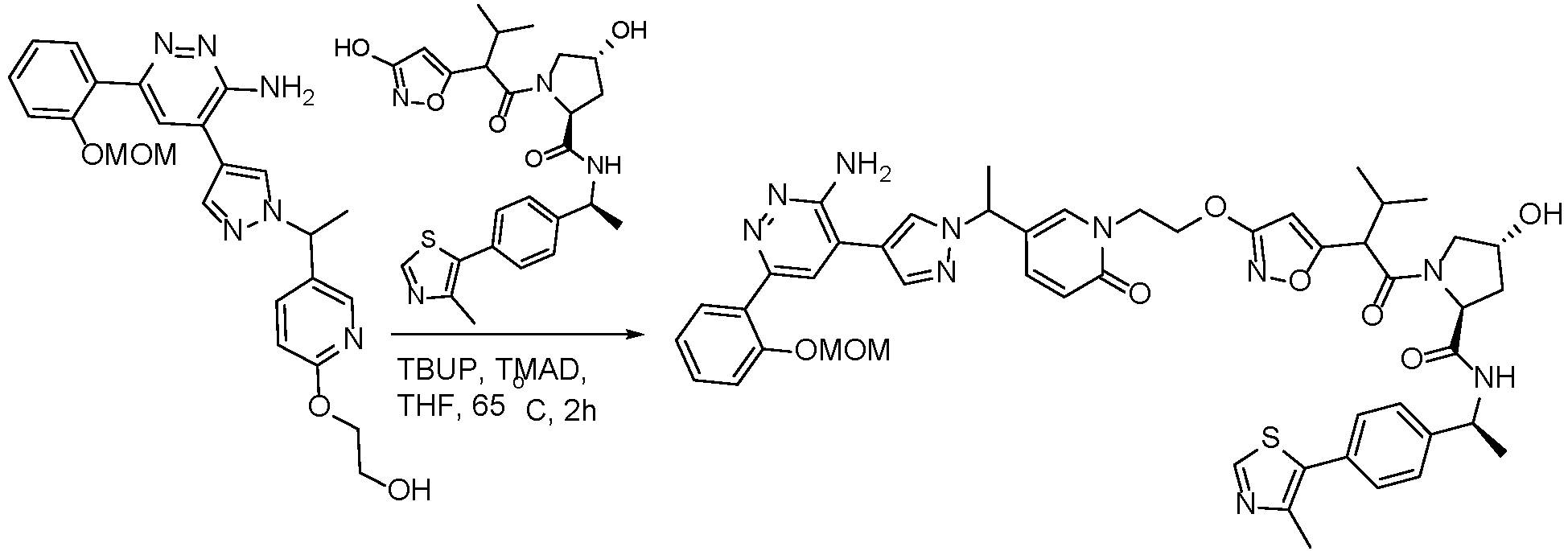
- Into a 50-mL round-bottom flask purged and maintained with an inert atmosphere of nitrogen, was placed a solution of tetramethylazodicarboxamide (861 mg, 5.00 mmol, 10.00 equiv) and tributylphosphine (1.01 g, 4.99 mmol, 9.98 equiv) in THF (15 mL) at 0 °C. To the mixture was added a mixture of 2-([5-[1-(4-[3-amino-6-[2-(methoxymethoxy)phenyl]pyridazin-4-yl]-1H-pyrazol-1-yl)ethyl]pyridin-2-yl]oxy)ethan-1-ol (231.3 mg, 0.50 mmol, 1 equiv) and (2S,4R)-4-hydroxy-1-[2-(3-hydroxy-1,2-oxazol-5-yl)-3-methylbutanoyl]-N-[(1S)-1-[4-(4-methyl-1,3-thiazol-5-yl)phenyl]ethyl]pyrrolidine-2-carboxamide (249 mg, 0.50 mmol, 1.00 equiv). The resulting solution was stirred for 10 min at 0 °C, and then stirred for an additional 2 h at 50 °C in an oil bath. The reaction mixture was cooled to room temperature and diluted with water (150 mL). The resulting mixture was extracted with ethyl acetate (150 mL), and the organic layer was washed with brine (150 mL x 2), dried over anhydrous sodium sulfate and concentrated under vacuum. The residue was applied onto a silica gel column eluting with dichloromethane/methanol (10/1). The obtained product was further purified by Prep-HPLC with the following conditions: Column, XBridge Prep OBD C18 Column, 19 x 150 mm, 5 um; mobile phase, water (with 10 mmol/L NH4HCO3) and acetonitrile, 35% ACN up to 53% in 8 min. This resulted in 68 mg (14%) of (2S,4R)-1-(2-(3-(2-(5-(1-(4-(3-amino-6-(2-(methoxymethoxy)phenyl)pyridazin-4-yl)-1H-pyrazol-1-yl)ethyl)-2-oxopyridin-1(2H)-yl)ethoxy)isoxazol-5-yl)-3-methylbutanoyl)-4-hydroxy-N-((S)-1-(4-(4-methylthiazol-5-yl)phenyl)ethyl)pyrrolidine-2-carboxamide as an off-white solid.
- (2S,4R)-1-(2-(3-(2-(5-(1-(4-(3-Amino-6-(2-(methoxymethoxy)phenyl)pyridazin-4-yl)-1H-pyrazol-1-yl)ethyl)-2-oxopyridin-1(2H)-yl)ethoxy)isoxazol-5-yl)-3-methylbutanoyl)-4-hydroxy-N-((S)-1-(4-(4-methylthiazol-5-yl)phenyl)ethyl)pyrrolidine-2-carboxamide was converted to the final compound using procedures analogous to those described for other examples above.
- Exemplary compound 157 was prepared using analogous procedures.
-
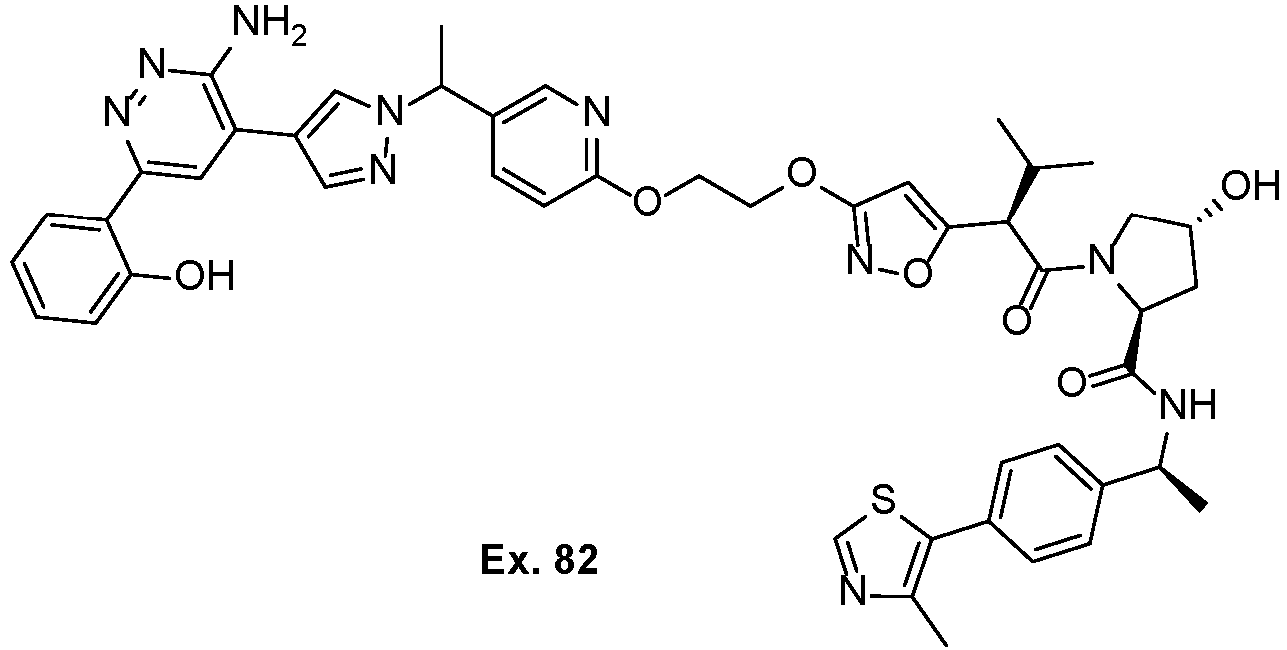
-

- Into a 100-mL round-bottom flask, was placed methyl 2-(3-hydroxy-1,2-oxazol-5-yl)-3-methylbutanoate (498 mg, 2.50 mmol, 1 equiv), 2-(2-bromoethoxy)oxane (627.3 mg, 3.00 mmol, 1.20 equiv), Cs2CO3 (1.63 g, 5.00 mmol, 2.00 equiv), and NaI (37.5 mg, 0.25 mmol, 0.10 equiv) in acetone (20 mL). The resulting mixture was stirred for 16 hours at 50°C in an oil bath. The reaction mixture was cooled to room temperature and diluted with water (150 mL). The mixture was extracted with ethyl acetate (100 mL x 2), and the organic layers were combined, dried over anhydrous sodium sulfate and concentrated under vacuum. The residue was applied onto a silica gel column eluting with ethyl acetate/petroleum ether (1:9). This resulted in 570 mg (70%) of methyl 3-methyl-2-[3-[2-(oxan-2-yloxy)ethoxy]-1,2-oxazol-5-yl]butanoate as a light yellow oil.
-

- Into a 100-mL round-bottom flask, was placed methyl 3-methyl-2-[3-[2-(oxan-2-yloxy)ethoxy]-1,2-oxazol-5-yl]butanoate (520 mg, 1.59 mmol, 1 equiv) in dioxane (6 mL), to which was added HCl solution (4M in dioxane, 6 mL) at room temperature. The resulting solution was stirred for 3 hours at room temperature. The pH value of the solution was adjusted to 8 with saturated NaHCO3. The resulting mixture was extracted with dichloromethane (100 mL x 4), and the organic layers were combined, dried over anhydrous sodium sulfate and concentrated under vacuum. The residue was applied onto a silica gel column eluting with ethyl acetate/petroleum ether (1/1). This resulted in 332 mg (86%) of methyl 2-[3-(2-hydroxyethoxy)-1,2-oxazol-5-yl]-3-methylbutanoate as a light yellow oil.
-

- Into a 50-mL round-bottom flask purged and maintained with an inert atmosphere of nitrogen, was placed methyl 2-[3-(2-hydroxyethoxy)-1,2-oxazol-5-yl]-3-methylbutanoate (375 mg, 1.54 mmol, 1.20 equiv) in DMF (6 mL). The solution was cooled to 0°C in a water/ice bath, and NaH (128.4 mg, 3.21 mmol, 2.50 equiv, 60%) was added. The resulting mixture was stirred for 1 hour at room temperature, and the solution of 4-[1-[1-(6-fluoropyridin-3-yl)ethyl]-1H-pyrazol-4-yl]-6-[2-(methoxymethoxy)phenyl]pyridazin-3-amine (540 mg, 1.28 mmol, 1 equiv) in DMF (4 mL) was added dropwise at 0°C. The resulting mixture was stirred for an additional 1 hour while the temperature was maintained at 35°C in an oil bath. The reaction mixture was then quenched by the addition of saturated NH4Cl solution (30 mL), and the pH value of the resulting mixture was adjusted to ~8 with saturated NaHCO3 solution. The mixture was extracted with ethyl acetate (100 mL x 2). The organic layers were combined and washed with brine (100 mL x 2), dried over anhydrous sodium sulfate and concentrated under vacuum. The residue was applied onto a silica gel column eluting with dichloromethane/methanol (30/1). This resulted in 540 mg (65%) of methyl 2-[3-[2-([5-[1-(4-[3-amino-6-[2-(methoxymethoxy)phenyl]pyridazin-4-yl]-1H-pyrazol-1-yl)ethyl]pyridin-2-yl]oxy)ethoxy]-1,2-oxazol-5-yl]-3-methylbutanoate as a light brown solid.
- Methyl 2-[3-[2-([5-[1-(4-[3-amino-6-[2-(methoxymethoxy)phenyl]pyridazin-4-yl]-1H-pyrazol-1-yl)ethyl]pyridin-2-yl]oxy)ethoxy]-1,2-oxazol-5-yl]-3-methylbutanoate was converted to the final compound using procedures analogous to those described for other examples above.
- Exemplary compound 163 was prepared using analogous procedures.
-

-

- To a solution of tert-butyl 2-hydroxy-7-azaspiro[3.5]nonane-7-carboxylate (1.8 g, 7.46 mmol, 1 equiv) in DMF (20 mL) was added sodium hydride (60% in oil, 358 mg, 14.9 mmol, 2 equiv) at 0° C. The mixture was stirred for 15 min. Then 2-(2-bromoethoxy)oxane (2.3 g, 11.00 mmol, 1.47 equiv) was added and the mixture was allowed to warm to 50°C and stirred for 16 h. The reaction mixture was quenched by water 100 mL) and extracted with DCM (100 mL x 3), washed with water (50 mL x 3) and brine (50 mL), dried over anhydrous sodium sulfate and concentrated under reduced pressure. The residue was applied onto a silica gel column with ethyl acetate/petroleum ether (v: v = 1: 7). This resulted in 1.0 g (36%) of tert-butyl 2-[2-(oxan-2-yloxy)ethoxy]-7-azaspiro[3.5]nonane-7-carboxylate as colorless oil.
-

- Into a 100-mL round-bottom flask, was placed a solution of tert-butyl 2-[2-(oxan-2-yloxy)ethoxy]-7-azaspiro[3.5]nonane-7-carboxylate (1.0 g, 2.71 mmol, 1 equiv) in dioxane (15 mL), to which was added hydrogen chloride in 1,4-dioxane solution (4.0 M, 15 mL). The resulting solution was stirred for 16 h at room temperature, and then concentrated under reduced pressure. This resulted in 800 mg (53%) of 2-[7-azaspiro[3.5]nonan-2-yloxy]ethan-1-ol as a yellow oil.
-

- Into a 100-mL round-bottom flask, was placed 2-[7-azaspiro[3.5]nonan-2-yloxy]ethan-1-ol (600 mg, 3.24 mmol, 1 equiv), Et3N (983 mg, 9.72 mmol, 3 equiv) in DCM (30.0 mL), to which was added CbzCl (663 mg, 3.89 mmol, 1.2 equiv) at room temperature. The resulting mixture was stirred for 16 h at room temperature. The reaction mixture was then diluted with 50 mL water and extracted with ethyl acetate (50 mL x 2). The combined organic phase was washed with brine, dried over anhydrous sodium sulfate and concentrated under reduced pressure. The residue was applied onto a silica gel column eluting with dichloromethane/methanol (v:v = 10:1). This resulted in 210 mg (20%) of benzyl 2-(2-hydroxyethoxy)-7-azaspiro[3.5]nonane-7-carboxylate as a yellow oil.
-

- Into a 50-mL round-bottom flask purged and maintained with an inert atmosphere of nitrogen, was placed benzyl 2-(2-hydroxyethoxy)-7-azaspiro[3.5]nonane-7-carboxylate (400 mg, 1.25 mmol, 1 equiv), Et3N (380 mg, 3.76 mmol, 3 equiv) in DCM (20 mL), to which was added MsCl (287 mg, 2.50 mmol, 2.00 equiv) at 0 °C. The resulting mixture was stirred for 1 h at 0 °C in a water/ice bath. The reaction mixture was quenched by the addition of water (30 mL) and extracted with dichloromethane (30 mL x 2). The combined organic layer was washed with brine (30 mL), dried over anhydrous sodium sulfate and concentrated. This resulted in 420 mg (85%) of benzyl 2-[2-(methanesulfonyloxy)ethoxy]-7-azaspiro[3.5]nonane-7-carboxylate as a yellow oil.
-

- Into a 100-mL round-bottom flask, was placed a solution of benzyl 2-[2-(methanesulfonyloxy)ethoxy]-7-azaspiro[3.5]nonane-7-carboxylate (300 mg, 0.75 mmol, 1 equiv), 6-[2-(methoxymethoxy)phenyl]-4-[1-oxa-4,9-diazaspiro[5.5]undecan-9-yl]pyridazin-3-amine (291 mg, 0.75 mmol, 1 equiv), K2CO3 (313 mg, 2.26 mmol, 3 equiv), NaI (113 mg, 0.75 mmol, 1 equiv) in MeCN (15 mL). The resulting mixture was stirred for 16 h at 75 °C in an oil bath. The solids were filtered out, and the filtrate was concentrated under reduced pressure. The residue was applied onto a silica gel column eluting with dichloromethane/methanol (v:v = 10:1). This resulted in 130 mg (25%) of benzyl 2-[2-(9-[3-amino-6-[2-(methoxymethoxy)phenyl]pyridazin-4-yl]-1-oxa-4,9-diazaspiro[5.5]undecan-4-yl)ethoxy]-7-azaspiro[3.5]nonane-7-carboxylate as a yellow oil.
-

- Into a 100-mL round-bottom flask, was placed a solution of benzyl 2-[2-(9-[3-amino-6-[2-(methoxymethoxy)phenyl]pyridazin-4-yl]-1-oxa-4,9-diazaspiro[5.5]undecan-4-yl)ethoxy]-7-azaspiro[3.5]nonane-7-carboxylate (230 mg, 0.33 mmol, 1 equiv) in THF (5 mL), to which was added lithium triethylborohydride (1.0 M in THF, 1.65 mmol, 5.0 eq) at 0 °C. The resulting mixture was stirred for 16 hours at room temperature, and then was quenched by water (50 mL) and extracted with dichloromethane (50 mL x 3). The combined organic layer was washed with brine (50 mL), dried over anhydrous sodium sulfate and concentrated under reduced pressure. This resulted in 140 mg (76%) of 4-[4-(2-[7-azaspiro[3.5]nonan-2-yloxy]ethyl)-1-oxa-4,9-diazaspiro[5.5]undecan-9-yl]-6-[2-(methoxymethoxy)phenyl]pyridazin-3-amine as a yellow oil.
- 4-[4-(2-[7-azaspiro[3.5]nonan-2-yloxy]ethyl)-1-oxa-4,9-diazaspiro[5.5]undecan-9-yl]-6-[2-(methoxymethoxy)phenyl]pyridazin-3-amine was converted to the final compounds according to the scheme below using procedures described for other examples above.

- Exemplary compound 164 was prepared using analogous procedures.
-

-

- To a solution of but-2-yne-1,4-diol (10 g, 116.16 mmol, 1 eq), 2,3-dihydro-2H-pyran (9.77 g, 116.16 mmol, 10.6 mL, 1 eq) in dichloromethane (200 mL) was added pyridiniump-toluenesulfonate (2.92 g, 11.62 mmol, 0.1 eq). The reaction mixture was stirred at 40°C for 1 hour. Water (200 mL) was added to the mixture, and the resulting mixture was extracted with dichloromethane (150 mL x 2). The combined organic phase was washed with brine (150 mL), dried over sodium sulfate, filtered and concentrated in vacuum. The residue was purified by silica gel chromatography (petroleum ether: ethyl acetate = 100:1 to 1:1). 4-tetrahydropyran-2-yloxybut-2-yn-1-ol (10.2 g, 59.93 mmol, 51% yield) was obtained as a light yellow oil.
-

- To a solution of 4-tetrahydropyran-2-yloxybut-2-yn-1-ol (5 g, 29.38 mmol, 1 eq), triphenylphosphine (7.70 g, 29.38 mmol, 1 eq) in dichloromethane (100 mL) was added carbon tetrabromide (10.72 g, 32.31 mmol, 1.1 eq) at 0°C. The reaction mixture was stirred at 20°C for 1 hour. The mixture was concentrated in vacuum. The residue was purified by silica gel chromatography (petroleum ether: ethyl acetate = 1:0 to 100:1). 2-(4-bromobut-2-ynoxy)tetrahydropyran (4 g, 17.16 mmol, 58% yield) was obtained as a light yellow oil.
-

- To a solution of 4-(4,4,5,5-tetramethyl-1,3,2-dioxaborolan-2-yl)-1H-pyrazole (3 g, 15.46 mmol, 1 eq), 2-(4-bromobut-2-ynoxy)tetrahydropyran (3.96 g, 17.01 mmol, 1.1 eq) in acetonitrile (30 mL) was added potassium carbonate (2.56 g, 18.55 mmol, 1.2 eq). The reaction mixture was stirred at 70°C for 12 hours. Water (100 mL) was added to the mixture, and the resulting mixture was extracted with ethyl acetate (30 mL x 3). The combined organic phase was washed with brine (50 mL), dried over sodium sulfate, filtered and concentrated in vacuum. The residue was purified by silica gel chromatography (petroleum ether: ethyl acetate = 200:1 to 3:1). 1-(4-tetrahydropyran-2-yloxybut-2-ynyl)-4-(4,4,5,5-tetramethyl-1,3,2-dioxaborolan-2-yl)pyrazole (4.5 g, 13.00 mmol, 84% yield) was obtained as a light yellow oil.
-

- To a solution of 1-(4-tetrahydropyran-2-yloxybut-2-ynyl)-4-(4,4,5,5-tetramethyl-1,3,2-dioxaborolan-2-yl)pyrazole (2 g, 5.78 mmol, 1 eq), 4-bromo-6-chloro-pyridazin-3-amine (1.20 g, 5.78 mmol, 1 eq) in dioxane (60 mL) and water (20 mL) was added sodium carbonate (1.53 g, 14.44 mmol, 2.5 eq) and (1,1'-bis(diphenylphosphino)ferrocene) palladium(II) dichloride (422 mg, 0.58 mmol, 0.1 eq) under nitrogen. The reaction mixture was stirred at 110°C for 3 hours. Water (200 mL) was added to the mixture, and the resulting mixture was extracted with ethyl acetate (100 mL x 3). The combined organic phase was washed with brine (100 mL), dried over sodium sulfate, filtered and concentrated in vacuum. The residue was purified by silica gel chromatography (dichloromethane: methanol = 1:0 to 50:1). 6-chloro-4-[1-(4-tetrahydropyran-2-yloxybut-2- ynyl)pyrazol-4-yl]pyridazin-3-amine (1.3 g, 3.40 mmol, 58% yield) was obtained as a yellow solid.
-

- To a solution of 6-chloro-4-[1-(4-tetrahydropyran-2-yloxybut-2-ynyl)pyrazol-4-yl]pyridazin-3-amine (1.6 g, 4.60 mmol, 1 eq) in methanol (15 mL) was added hydrochloric acid solution (4 M in methanol, 15 mL, 13.04 eq). The reaction mixture was stirred at 20°C for 1 hour. Saturated sodium bicarbonate (50 mL) was added to the mixture to adjust pH to about 6, after which the resulting mixture was extracted with ethyl acetate (30 mL x 3). The combined organic phase was washed with brine (30 mL), dried over sodium sulfate, filtered and concentrated in vacuum. 4-[4-(3-amino-6-chloro-pyridazin-4-yl)pyrazol-1-yl]but-2-yn-1-ol (1.0 g, 3.79 mmol, 82% yield) was obtained as a light yellow solid.
-

- To a solution of 4-[4-(3-amino-6-chloro-pyridazin-4-yl)pyrazol-1-yl]but-2-yn-1-ol (1.0 g, 3.79 mmol, 1 eq), triphenylphosphine (1.19 g, 4.55 mmol, 1.2 eq) in tetrahydrofuran (20 mL) was added carbon tetrabromide (1.51 g, 4.55 mmol, 1.2 eq). The reaction mixture was stirred at 20°C for 1 hour. The mixture was concentrated in vacuum. The residue was purified by silica gel chromatography (dichloromethane: methanol = 1:0 to 50:1). 4-[1-(4-bromobut-2-ynyl)pyrazol-4-yl]-6-chloro- pyridazin-3-amine (1.0 g, 1.87 mmol, 49% yield) was obtained as a light yellow solid.
-

- To a solution of 4-[1-(4-bromobut-2-ynyl)pyrazol-4-yl]-6-chloro-pyridazin-3-amine (1 g, 1.87 mmol, 1 eq) and tert-butyl piperazine-1-carboxylate (696 mg, 3.74 mmol, 2 eq) in acetonitrile (10 mL) was added N,N-diisopropylethylamine (724 mg, 5.60 mmol, 1.0 mL, 3 eq). The mixture was stirred at 80°C for 12 hours. Water (30 mL) was added to the mixture, and the resulting mixture was extracted with ethyl acetate (20 mL x 3). The combined organic phase was washed with brine (20 mL), dried over sodium sulfate, filtered and concentrated in vacuum. The residue was purified by silica gel chromatography (dichloromethane: methanol = 1:0 to 20:1). Tert-Butyl 4-[4-[4-(3-amino-6-chloro-pyridazin-4-yl)pyrazol-1-yl]but-2-ynyl]piperazine-1-carboxylate (600 mg, 1.34 mmol, 71% yield) was obtained as a brown solid.
-

- To a solution of tert-butyl 4-[4-[4-(3-amino-6-chloro-pyridazin-4-yl)pyrazol-1-yl]but-2-ynyl]piperazine-1-carboxylate (500 mg, 1.16 mmol, 1 eq), (2-hydroxyphenyl)boronic acid (192 mg, 1.39 mmol, 1.2 eq) in dioxane (10 mL) and water (2 mL) was added potassium carbonate (400 mg, 2.89 mmol, 2.5 eq) and tetrakis[triphenylphosphine]palladium(0) (134 mg, 0.12 mmol, 0.1 eq) under nitrogen. The reaction mixture was stirred at 110°C for 10 hours. Water (100 mL) was added to the mixture, and the resulting mixture was extracted with ethyl acetate (50 mL x 3). The combined organic phase was washed with brine (50 mL), dried over sodium sulfate, filtered and concentrated in vacuum. The residue was purified by prep thin-layer chromatography (dichloromethane: methanol = 10:1). Tert-Butyl 4-[4-[4-[3-amino-6-(2-hydroxyphenyl)pyridazin-4-yl]pyrazol-1-yl]but-2-ynyl]piperazine-1-carboxylate (340 mg, 0.65 mmol, 56% yield) was obtained as a light yellow solid.
- Tert-Butyl 4-[4-[4-[3-amino-6-(2-hydroxyphenyl)pyridazin-4-yl]pyrazol-1-yl]but-2-ynyl]piperazine-1-carboxylate was converted to the final compound according to the scheme below using procedures described for other examples above.

-

-

- Into a 250-mL round-bottom flask, was placed a solution of methyl 4-(1-hydroxyethyl)benzoate (2.5 g, 13.87 mmol, 1 equiv), triphenylphosphine dibromide (5.9 g, 13.87 mmol, 1 equiv) in DCM (100 mL). The resulting mixture was stirred for 3 hours at room temperature. The reaction mixture was concentrated under reduced pressure, and the residue was applied onto a silica gel column eluting with ethyl acetate/petroleum ether (v: v = 1: 12). This resulted in 2.3 g (68%) of methyl 4-(1-bromoethyl)benzoate as a colorless oil.
-
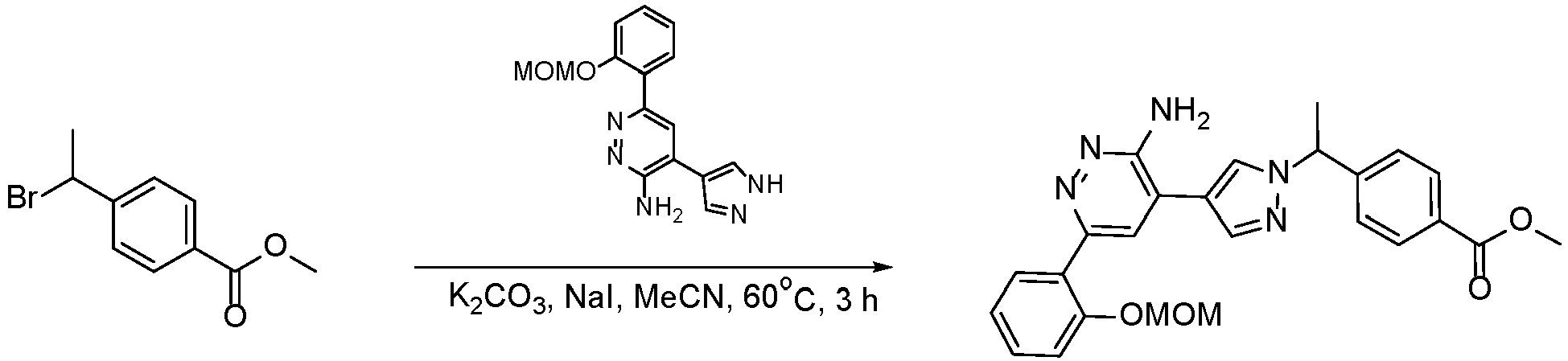
- Into a 30-mL vial, was placed methyl 4-(1-bromoethyl)benzoate (1.2 g, 4.94 mmol, 1 equiv), 6-[2-(methoxymethoxy)phenyl]-4-(1H-pyrazol-4-yl)pyridazin-3-amine (1.2 g, 3.95 mmol, 0.80 equiv), K2CO3 (2.0 g, 14.81 mmol, 3.00 equiv), NaI (739.9 mg, 4.94 mmol, 1.00 equiv) in DMF (15 mL). The resulting mixture was stirred for 3 hours at 60°C in an oil bath. The reaction mixture was then diluted by water (50 mL) and extracted with dichloromethane (50 mL x 3). The combined organic layer was washed with water (50 mL x 2) and brine (50 mL), dried over anhydrous sodium sulfate and concentrated under reduced pressure. The residue was applied onto a silica gel column eluting with dichloromethane/methanol (v: v = 10: 1). This resulted in 600 mg (26%) of methyl 4-[1-(4-[3-amino-6-[2-(methoxymethoxy)phenyl]pyridazin-4-yl]-1H-pyrazol-1-yl)ethyl]benzoate as a yellow oil.
-

- Into a 100-mL round-bottom flask, was placed a solution of methyl 4-[1-(4-[3-amino-6-[2-(methoxymethoxy)phenyl]pyridazin-4-yl]-1H-pyrazol-1-yl)ethyl]benzoate (600 mg, 1.31 mmol, 1 equiv) in THF (20 mL), to which was added LiAlH4 (495.6 mg, 13.06 mmol, 10.00 equiv) at 0°C. The resulting mixture was stirred for 3 hours at room temperature. The reaction was then quenched by the addition of Na2 SO4.10H2O (4.8 g, 15.0 mmol). The resulting mixture was stirred for 3 hours at room temperature. The solids in the reaction mixture were filtered out, and the filtrate was concentrated under reduced pressure. The residue was applied onto a silica gel column eluting with dichloromethane/methanol (v: v = 10: 1). This resulted in 310 mg (55%) of [4-[1-(4-[3-amino-6-[2-(methoxymethoxy)phenyl]pyridazin-4-yl]-1H-pyrazol-1-yl)ethyl]phenyl]methanol as a yellow oil.
-

- Into a 100-mL round-bottom flask, was placed a solution of [4-[1-(4-[3-amino-6-[2-(methoxymethoxy)phenyl]pyridazin-4-yl]-1H-pyrazol-1-yl)ethyl]phenyl]methanol (310 mg, 0.72 mmol, 1 equiv) in DCM (10.0 mL, 117 mmol, 218 equiv), to which was added manganese dioxide (1.2 g, 14.37 mmol, 20 equiv) at room temperature. The resulting mixture was stirred for 16 hours at room temperature. The solids were filtered off, and the filtrate was concentrated under reduced pressure. This resulted in 286 mg (93%) of 4-[1-(4-[3-amino-6-[2-(methoxymethoxy)phenyl]pyridazin-4-yl]-1H-pyrazol-1-yl)ethyl]benzaldehyde as a yellow solid.
-

- Into a 100-mL round-bottom flask, was placed 4-[1-(4-[3-amino-6-[2-(methoxymethoxy)phenyl]pyridazin-4-yl]-1H-pyrazol-1-yl)ethyl]benzaldehyde (300.0 mg, 0.70 mmol, 1 equiv), benzyl piperazine-1-carboxylate (185 mg, 0.84 mmol, 1.2 equiv), HOAc (0.1 mL, 1.75 mmol, 2.50 equiv) in DCM (10 mL). The resulting mixture was stirred for 0.5 hour, and then NaBH(OAc)3 (444.1 mg, 2.10 mmol, 3 equiv) was added. The resulting mixture was stirred for additional 16 hours at room temperature. The reaction mixture was then quenched by water (20 mL) and extracted with dichloromethane (20 mL x 3). The combined organic layer was washed with water (20 mL x 2) and brine (20 mL), dried over anhydrous sodium sulfate and concentrated under reduced pressure. The residue was applied onto a silica gel column eluting with dichloromethane/methanol (v: v = 10: 1). This resulted in 260 mg (59%) of benzyl 4-([4-[1-(4-[3-amino-6-[2-(methoxymethoxy)phenyl]pyridazin-4-yl]-1H-pyrazol-1-yl)ethyl]phenyl]methyl)piperazine-1-carboxylate as a yellow oil.
-

- Into a 100-mL round-bottom flask purged and maintained with an inert atmosphere of nitrogen, was placed a solution of benzyl 4-([4-[1-(4-[3-amino-6-[2-(methoxymethoxy)phenyl]pyridazin-4-yl]-1H-pyrazol-1-yl)ethyl]phenyl]methyl)piperazine-1-carboxylate (260.0 mg, 0.41 mmol, 1 equiv) in THF (8 mL), to which lithium triethylborohydride (2.1 mL, 2.05 mmol, 5.00 equiv) was added at 0°C. The reaction mixture was stirred for 16 hours at room temperature. The reaction mixture was then quenched by water (30 mL) and extracted with dichloromethane (30 mL x 3). The combined organic layer was washed with brine (30 mL), dried over anhydrous sodium and concentrated. This resulted in 200 mg (98%) of 6-[2-(methoxymethoxy)phenyl]-4-[1-(1-[4-[(piperazin-1-yl)methyl]phenyl]ethyl)-1H-pyrazol-4-yl]pyridazin-3-amine as a yellow oil.
- 6-[2-(methoxymethoxy)phenyl]-4-[1-(1-[4-[(piperazin-1-yl)methyl]phenyl]ethyl)-1H-pyrazol-4-yl]pyridazin-3-amine was converted to the title compound according to the scheme below using procedures described above for other examples.

-

-

- To a solution of tert-butyl N-[(1S)-1-(4-bromophenyl)ethyl]carbamate (5 g, 16.7 mmol, 1 eq) and 4,4,5,5-tetramethyl-2-(4,4,5,5-tetramethyl-1,3,2-dioxaborolan-2-yl)-1,3,2-dioxaborolane (5.08 g, 20.0 mmol, 1.2 eq) in dioxane (100 mL) was added [1,1'-bis(diphenylphosphino)ferrocene]dichloropalladium(II) (975 mg, 1.33 mmol, 0.08 eq) and potassium acetate (3.27 g, 33.31 mmol, 2 eq). The mixture was stirred at 90°C for 2 hours. The reaction mixture was concentrated to give crude product. The crude product was purified by silica gel chromatography (petroleum ether:ethyl acetate=1:0 to 10:1). Compound tert-butyl N-[(1S)-1-[4-(4,4,5,5-tetramethyl-1,3,2-dioxaborolan-2-yl)phenyl]ethyl]carbamate (8.2 g, 16.44 mmol, 99% yield) was obtained as a yellow oil.
-

- A mixture of ethyl 5-bromothiazole-4-carboxylate (3.49 g, 14.77 mmol, 0.9 eq), tert-butyl N-[(1S)-1-[4-(4,4,5,5-tetramethyl-1,3,2-dioxaborolan-2-yl)phenyl]ethyl]carbamate (5.70 g, 16.41 mmol, 1 eq), [1,1'-bis(diphenylphosphino)ferrocene]dichloropalladium(II) (120 mg, 0.16 mmol, 0.01 eq), potassium carbonate (4.54 g, 32.83 mmol, 2 eq) in mixture of dioxane (130 mL) and water (22 mL) was degassed and purged with nitrogen for three times, and then the mixture was stirred at 80°C for 10 hours under nitrogen atmosphere. The reaction mixture was concentrated and added water (50 mL), then extracted with ethyl acetate (60 mL) two times. The combined organic layers were washed with saturated aqueous sodium chloride (50 mL) two times, dried over anhydrous sodium sulfate, concentrated to give crude product. The crude product was purified by silica gel chromatography (petroleum ether:ethyl acetate = 1:0 to 1:1). Compound ethyl 5-[4-[(1S)-1-(tert-butoxycarbonylamino)ethyl]phenyl]thiazole-4-carboxylate (5.07 g, 13.48 mmol, 82% yield) was obtained as a yellow solid.
-

- A solution of ethyl 5-[4-[(1S)-1-(tert-butoxycarbonylamino)ethyl]phenyl]thiazole-4-carboxylate (4 g, 10.63 mmol, 1 eq) in tetrahydrofuran (60 mL) was cooled to -78 °C under nitrogen atmosphere. Then diisobutylaluminium hydride THF solution (1 M, 11.69 mL, 1.1 eq) was added dropwise at -78°C. The reaction mixture was stirred at -78°C for 0.5 hour. Methanol (2 mL) was added to quench the reaction, followed by water (50 mL). The mixture was extracted with ethyl acetate (40 mL × 2). The organic layer was dried over sodium sulfate and then concentrated under vacuum to get the residue. The residue was purified by silica gel column chromatography (10-50% ethyl acetate in petroleum ether). Compound tert-butyl N-[(1S)-1-[4-(4-formylthiazol-5-yl)phenyl]ethyl]carbamate (3.2 g, 9.63 mmol, 91% yield) was obtained as a white solid.
-

- To a solution of dimethylamine hydrochloride (368 mg, 4.51 mmol, 0.41 mL, 3 eq) in dichloromethane (30 mL) was added triethylamine (609 mg, 6.02 mmol, 0.84 mL, 4 eq), a solution of tert-butyl N-[(1S)-1-[4-(4-formylthiazol-5-yl)phenyl]ethyl]carbamate (500 mg, 1.50 mmol, 1 eq) in dichloromethane (10 mL), and sodium triacetoxyborohydride (1.28 g, 6.02 mmol, 4 eq), and the mixture was stirred at 20 °C for 2 hours. The reaction mixture was quenched by addition of water (50 mL), and extracted with dichloromethane (40 mL) two times. The combined organic layers were washed with saturated aqueous sodium chloride (60 mL) two times, dried over anhydrous sodium sulfate and concentrated to give product. The crude product was purified by silica gel chromatography (petroleum ether:ethyl acetate=1:0 to 0:1). Compound tert-butyl N-[(1S)-1-[4-[4-[(dimethylamino)methyl]thiazol-5-yl]phenyl]ethyl]carbamate (364 mg, 1.01 mmol, 67% yield) was obtained as a yellow oil.
- tert-Butyl N-[(1S)-1-[4-[4-[(dimethylamino)methyl]thiazol-5-yl]phenyl]ethyl]carbamate was converted to the final product using procedures described for exemplary compound 76.
-

-

- To a mixture of ethyl 5-[4-[(1S)-1-(tert-butoxycarbonylamino)ethyl]phenyl]thiazole-4-carboxylate (900 mg, 2.39 mmol, 1 eq) and calcium chloride (796 mg, 7.17 mmol, 3 eq) in water (40 mL) and tetrahydrofuran (20 mL) was added sodium borohydride (181 mg, 4.78 mmol, 2 eq) at 0°C under nitrogen. The mixture was warmed to 5°C and stirred for 2 hours. Hydrochloric acid (5 M, 4.50 mL) and acetone (4.95 mL) were added at 0°C, and the reaction mixture was stirred at 5°C for another 0.5 hour. The pH was adjusted to 5 with 5 M sodium hydroxide. The aqueous phase was extracted with ethyl acetate (20 mL × 4). The combined organic phase was washed with brine (20 mL × 2), dried with anhydrous sodium sulfate, filtered and concentrated under vacuum. The residue was purified by semi-preparative reverse phase HPLC (basic condition, column: Waters Xbridge 150*50 10um; mobile phase: [water (0.05% ammonia hydroxide v/v)-ACN]; B%: 25%-55%, 11.5 min). Compound tert-butyl N-[(1S)-1-[4-[4-(hydroxymethyl)thiazol-5-yl]phenyl]ethyl]carbamate (400 mg, 1.20 mmol, 50% yield) was obtained as a white solid.
- tert-Butyl N-[(1S)-1-[4-[4-(hydroxymethyl)thiazol-5-yl]phenyl]ethyl]carbamate was converted to the final product using procedures described for exemplary compound 76.
- Exemplary compounds 211 and 219 are also prepared using procedures analogous to those described above.
-
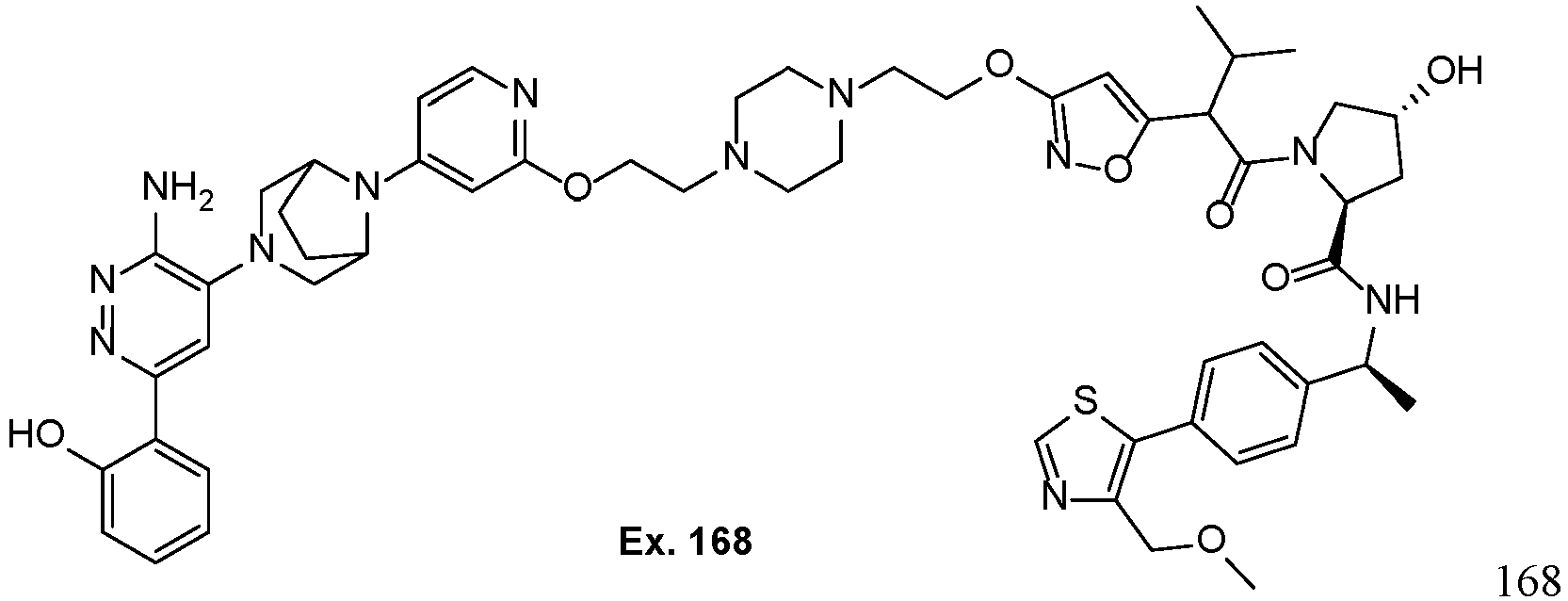
-

- Prepared using procedure described for exemplary compound 168.
-

- To a solution of (5-bromothiazol-4-yl)methanol (980 mg, 5.05 mmol, 1 eq) in THF (30 mL) was added sodium hydride (404 mg, 10.10 mmol, 2 eq) at 0 °C under nitrogen. The mixture was stirred at 0°C for 30 minutes, and iodomethane (3.58 g, 25.25 mmol, 1.57 mL, 5 eq) was then added at 0°C. The mixture was stirred at 15°C for 2 hours under nitrogen. The mixture was cooled to 0°C, quenched by a saturated aqueous solution of ammonium chloride slowly and then extracted with ethyl acetate (50 mL × 3). The combined organic phase was washed with brine (25 mL × 2), dried with anhydrous sodium sulfate, filtered and concentrated under vacuum. The residue was purified by silica gel chromatography (petroleum ether/ethyl acetate = 20/1 to 10/1) to afford 5-bromo-4-(methoxymethyl)thiazole (910 mg, 4.37 mmol, 86% yield) as a yellow solid.
-

- A flask was charged with tert-butyl N-[(1S)-1-(4-bromophenyl)ethyl]carbamate (1.4 g, 4.66 mmol, 1 eq), 4,4,5,5-tetramethyl-2-(4,4,5,5-tetramethyl-1,3,2-dioxaborolan-2-yl)-1,3,2-dioxaborolane (1.42 g, 5.60 mmol, 1.2 eq), (1,1'-bis(diphenylphosphino)ferrocene)palladium(II) dichloride (170 mg, 0.23 mmol, 0.05 eq), potassium acetate (915 mg, 9.33 mmol, 2 eq) and dioxane (30 mL). The mixture was purged with nitrogen for 10 minutes, then heated to 80°C for 1 hour. The reaction mixture was cooled to 20°C and filtered through a pad of celite. The filtrate was concentrated in vacuum. The crude product was purified by flash chromatography (petroleum ether: ethyl acetate = 10:1). Tert-Butyl N-[(1S)-1-[4-(4,4,5,5-tetramethyl-1,3,2-dioxaborolan-2-yl)phenyl]ethyl]carbamate (1.9 g, crude) was obtained as a colorless oil.
-

- To a mixture of 5-bromo-4-(methoxymethyl)thiazole (900 mg, 4.33 mmol, 1 eq) and tert-butyl N-[(1S)-1-[4-(4,4,5,5-tetramethyl-1,3,2-dioxaborolan-2-yl)phenyl]ethyl]carbamate (2.25 g, 6.49 mmol, 1.5 eq) in dioxane (30 mL) and water (5 mL) was added potassium carbonate (1.20 g, 8.65 mmol, 2 eq) and [1,1'-bis(diphenylphosphino)ferrocene]dichloropalladium(II) (316 mg, 0.43 mmol, 0.1 eq) in one portion at 15°C under nitrogen. The mixture was stirred at 90°C for 3 hours. The mixture was cooled to 15°C, filtered and concentrated under vacuum. The residue was purified by silica gel chromatography (petroleum ether/ethyl acetate = 10/1 to 1/1) to afford tert-butyl N-[(1S)-1-[4-[4-(methoxymethyl)thiazol-5-yl]phenyl]ethyl]carbamate (1.87 g, crude) as a yellow solid.
- tert-Butyl N-[(1S)-1-[4-[4-(methoxymethyl)thiazol-5-yl]phenyl]ethyl]carbamate tert-Butyl N-[(1S)-1-[4-[4-(hydroxymethyl)thiazol-5-yl]phenyl]ethyl]carbamate was converted to the final product using procedures described for exemplary compound 76.
- Exemplary compound 184 and 185 were also prepared using procedures analogous to those described above.
-

-

- To a solution of methyl 2-[3-(3-hydroxypropyl)isoxazol-5-yl]-3-methyl-butanoate (460 mg, 1.91 mmol, 1 eq) in dichloromethane (5 mL) was added Dess-Martin periodinane (970 mg, 2.29 mmol, 1.2 eq). The reaction mixture was stirred at 20°C for 1 hour. Ethyl acetate (50 mL) was added to the mixture, and the mixture was filtered, and the filtrate was concentrated in vacuum. The organic phase was washed with water (20 mL) and brine (20 mL), dried over sodium sulfate, filtered and concentrated in vacuum. The residue was purified by silica gel chromatography (petroleum ether: ethyl acetate = 100:1 to 50:1). Methyl 3-methyl-2-[3-(3-oxopropyl)isoxazol-5-yl]butanoate (300 mg, 1.25 mmol, 65% yield) was obtained as a colorless oil.
- Methyl 3-methyl-2-[3-(3-oxopropyl)isoxazol-5-yl]butanoate was converted to the final compounds according to the scheme below using procedures described above for other examples.

- Exemplary compounds 190 and 191 were preparing using procedures analogous to those described above.
-

-

- To a solution of but-3-yn-1-ol (5 g, 71.34 mmol, 1 eq) in dichloromethane (150 mL) was added pyridinium p-toluenesulfonate (1.9 g, 7.56 mmol, 0.1 eq) and 3,4-dihydro-2H-pyran (9.48 g, 112.70 mmol, 10.3 mL, 1.58 eq) at 15°C, and the mixture was stirred at 15°C for 18 hours. The mixture was concentrated to give a residue. The residue was purified by silica gel chromatography (petroleum ether: ethyl acetate = 1:0 to 10:1). 2-But-3-ynoxytetrahydropyran (10.6 g, 68.74 mmol, 96% yield) was obtained as a colorless oil.
-

- To a solution of 2-but-3-ynoxytetrahydropyran (2 g, 12.97 mmol, 1 eq) in tetrahydrofuran (20 mL) was added n-butyllithium (2.5 M, 5.7 mL,1.1 eq) at -78 °C, and the mixture was stirred at -78°C for 1 hour. Then paraformaldehyde (2.10 g, 23.35 mmol, 1.8 eq) was added to the mixture and stirred at -78°C for 30 minutes and at 20°C for 15 hours. The mixture was quenched with saturated ammonium chloride solution (80 mL) and extracted with ethyl acetate (2 x 40 mL). The combined organic phase was dried over sodium sulfate and then concentrated to give a residue. The residue was purified by column chromatography (petroleum ether: ethyl acetate= 3:1 to 0:1). 5-tetrahydropyran-2-yloxypent-2-yn-1-ol (1.4 g, 7.60 mmol, 58% yield) was obtained as a colorless oil.
-

- To a mixture of 5-tetrahydropyran-2-yloxypent-2-yn-1-ol (1.4 g, 7.60 mmol, 1 eq) and p-toluensulfonyl chloride (2.90 g, 15.20 mmol, 2 eq) in tetrahydrofuran (15 mL) was added potassium hydroxide (2.13 g, 38.00 mmol, 5 eq). Then the reaction mixture was stirred at 20°C for 2 hours. The reaction mixture was diluted with water (30 mL), and then extracted with ethyl acetate (30 mL x 3). The combined organic layers were washed with brine (20 mL x 2), dried over sodium sulfate, filtered and concentrated under reduced pressure to give a residue. The residue was purified by column chromatography (petroleum ether: ethyl acetate = 50:1 to 10:1). Compound 5-tetrahydropyran-2-yloxypent-2-ynyl 4-methylbenzenesulfonate (2.5 g, 7.39 mmol, 97% yield) was obtained as a colorless oil.
-

- To a solution of 5-tetrahydropyran-2-yloxypent-2-ynyl 4-methylbenzenesulfonate (2.5 g, 7.39 mmol, 1 eq), 4-(4,4,5,5-tetramethyl-1,3,2-dioxaborolan-2-yl)-1H-pyrazole (1.72 g, 8.86 mmol, 1.2 eq) in acetonitrile (20 mL) was added potassium carbonate (2.04 g, 14.77 mmol, 2 eq). Then the reaction mixture was stirred at 80°C for 12 hours. The reaction mixture was diluted with water (30 mL), and then extracted with ethyl acetate (30 mL x 3). The combined organic layers were washed with brine (20 mL x 2), dried over sodium sulfate, filtered and concentrated under reduced pressure to give a residue. The residue was purified by column chromatography (petroleum ether: ethyl acetate= 50:1 to 10:1). Compound 1-(5-tetrahydropyran-2-yloxypent-2-ynyl)-4-(4,4,5,5-tetramethyl-1,3,2-dioxaborolan-2-yl)pyrazole (2 g, 5.55 mmol, 75% yield) was obtained as a light yellow oil.
- 1-(5-Tetrahydropyran-2-yloxypent-2-ynyl)-4-(4,4,5,5-tetramethyl-1,3,2-dioxaborolan-2-yl)pyrazole was converted to the final compound according to the scheme below using procedures described above for other examples.

-

- (2S,4R)-N-((R)-2-(dimethylamino)-1-(4-(4-methylthiazol-5-yl)phenyl)-2-oxoethyl)-4-hydroxypyrrolidine-2-carboxamide was prepared according to scheme below using procedures described for other examples above and obvious to those skilled in the art.

- (2S,4R)-N-((R)-2-(dimethylamino)-1-(4-(4-methylthiazol-5-yl)phenyl)-2-oxoethyl)-4-hydroxypyrrolidine-2-carboxamide was converted to the final compound using procedures described for other examples above.
- Exemplary compound 171 was prepared using analogous procedures.
-

-

- To a solution of tert-butyl N-[(1S)-1-[4-(4-formylthiazol-5-yl)phenyl]ethyl]carbamate (2 g, 6.02 mmol, 1 eq) and 1-diazo-1-dimethoxyphosphoryl-propan-2-one (1.16 g, 6.02 mmol, 1 eq) in methanol (20 mL) was added potassium carbonate (1.66 g, 12.03 mmol, 2 eq) at 0°C. The reaction mixture was stirred at 15°C for 16 hours. Then 1-diazo-1-dimethoxyphosphoryl-propan-2-one (116 mg, 0.60 mmol, 0.1 eq) was added, and the reaction mixture was stirred at 15°C for another 1 hour. Ethyl acetate (50 mL) and water (40 mL) were added, and the mixture was separated. The organic layer was dried over sodium sulfate and then concentrated under vacuum to get the residue which was purified by silica gel column chromatography (10-30% ethyl acetate in petroleum ether) to afford tert-butyl N-[(1S)-1-[4-(4-ethynylthiazol-5-yl)phenyl]ethyl]carbamate (1.8 g, 5.48 mmol, 91% yield) as a white solid.
-

- To a solution of tert-butyl N-[(1S)-1-[4-(4-ethynylthiazol-5-yl)phenyl]ethyl]carbamate (400 mg, 1.22 mmol, 1 eq), dimethylamine (1.37 g, 12.18 mmol, 1.54 mL, 10 eq) and triformol (362 mg, 4.02 mmol, 3.3 eq) in dioxane (8 mL) was added cuprous iodide (232 mg, 1.22 mmol, 1 eq) at 0 °C. The reaction mixture was degassed and charged with nitrogen for 3 times and then stirred at 30°C for 4 hours. The reaction solution was concentrated under vacuum to get the residue. The residue was purified by silica gel column chromatography (0-8% methanol in dichloromethane) to obtain tert-butyl N-[(1S)-1-[4-[4-[3-(dimethylamino)prop-1-ynyl]thiazol-5-yl]phenyl]ethyl]carbamate (274 mg, 0.71 mmol, 58% yield) as a light yellow gum.
- tert-Butyl N-[(1S)-1-[4-[4-[3-(dimethylamino)prop-1-ynyl]thiazol-5-yl]phenyl]ethyl]carbamate was converted to the final compound using procedures described for exemplary compound 76.
-

-

- To a mixture of 2,2-diethoxyethanol (22.87 g, 170 mmol, 1.5 eq) and 4-bromo-2-fluoro-pyridine (20 g, 113.65 mmol, 1 eq) in acetonitrile (200 mL) was added cesium carbonate (74.06 g, 227 mmol, 2 eq) in one portion at 15°C under nitrogen. The mixture was stirred at 90°C for 3 hours. The mixture was cooled to 20°C and filtered and concentrated under vacuum. The residue was purified by silica gel chromatography (petroleum ether) to afford 4-bromo-2-(2,2-diethoxyethoxy)pyridine (22.8 g, 74.7 mmol, 66% yield) as a yellow oil.
-

- To a mixture of 4-bromo-2-(2,2-diethoxyethoxy)pyridine (10 g, 34.46 mmol, 1 eq) and benzyl 3,8-diazabicyclo[3.2.1]octane-3-carboxylate (8.49 g, 34.46 mmol, 1 eq) in toluene (200 mL) was added cesium carbonate (22.46 g, 68.93 mmol, 2 eq) and [2-(2-aminophenyl)phenyl]-chloro-palladium dicyclohexyl-[2-(2,6-diisopropoxyphenyl)phenyl]phosphane (1.61 g, 2.07 mmol, 0.06 eq) in one portion at 15°C under nitrogen. The mixture was stirred at 110°C for 12 hours. The mixture was cooled to 20°C, filtered and concentrated under vacuum. The residue was purified by silica gel chromatography (petroleum ether/ethyl acetate = 10/1, 3/1) to afford benzyl 8-[2-(2,2-diethoxyethoxy)-4-pyridyl]-3,8-diazabicyclo[3.2.1]octane-3-carboxylate (12.1 g, 26.6 mmol, 77% yield) as a yellow oil.
-

- To a solution of benzyl 8-[2-(2,2-diethoxyethoxy)-4-pyridyl]-3,8-diazabicyclo[3.2.1]octane-3-carboxylate (13.1 g, 28.76 mmol, 1 eq) in tetrahydrofuran (300 mL) and ethanol (300 mL) was added 10% palladium hydroxide on carbon (4.04 g, 2.88 mmol, 0.1 eq) under nitrogen. The suspension was degassed under vacuum and purged with hydrogen several times. The mixture was stirred under hydrogen (50 psi) at 60°C for 12 hours. The reaction mixture was filtered, and the filtrate was concentrated. The crude 8-[2-(2,2-diethoxyethoxy)-4-pyridyl]-3,8-diazabicyclo[3.2.1]octane (8.27 g, 25.73 mmol, 89.47% yield) was obtained as a brown oil.
- 8-[2-(2,2-diethoxyethoxy)-4-pyridyl]-3,8-diazabicyclo[3.2.1]octane was converted to the final compound according to the scheme below using procedures described for other examples above as well as standard procedures obvious to those skilled in the art.

- Using procedures analogous to those described for exemplary compound 132 the following exemplary compounds were prepared: 135, 136, 139, 141, 133, 140, 142, and 210.
-

-

- Into a 250-mL 3-neck round-bottom flask purged and maintained with an inert atmosphere of nitrogen, was placed 1,4-dibromobenzene (12.0 g, 50.8 mmol, 1.0 equiv) in THF (150.0 mL) at -78°C. Then n-butyllithium solution (1 M in hexane, 60.9 mL, 60.9 mmol, 1.2 equiv) was added at -78°C. The resulting mixture was stirred for 30 minutes at -78°C, and then ethyl 2,2-difluoroacetate (12.6 g, 101.5 mmol, 2.0 equiv) was added slowly at -78°C. The cooling bath was removed, and the resulting mixture was stirred for an additional 1 hour at room temperature. The reaction was then quenched by the addition of 50 mL water. The resulting mixture was extracted with ethyl acetate (250 mL x 3), and the organic layers were combined, washed with brine, dried over anhydrous sodium sulfate and concentrated under reduced pressure. The residue was applied onto a silica gel column eluting with ethyl acetate/petroleum ether (1:10). This resulted in 7.6 g (64%) of 1-(4-bromophenyl)-2,2-difluoroethan-1-one as a light yellow semi-solid.
-

- Into a 30-mL sealed tube purged and maintained with an inert atmosphere of nitrogen, was placed 1-(4-bromophenyl)-2,2-difluoroethan-1-one (3.5 g, 14.9 mmol, 1.0 equiv), (S)-2-methylpropane-2-sulfinamide (3.6 g, 29.8 mmol, 2.0 equiv) and tetrakis(propan-2-yloxy)titanium (12.7 g, 44.7 mmol, 3.0 equiv) in THF (10 mL) under nitrogen atmosphere. The resulting mixture was stirred for 14 hours at 80°C in an oil bath under nitrogen atmosphere. The mixture was concentrated under reduced pressure. The residue was applied onto a silica gel column eluting with ethyl acetate/petroleum ether (1:5). This resulted in 2.8 g (56%) of (S)-N-[(1Z)-1-(4-bromophenyl)-2,2-difluoroethylidene]-2-methylpropane-2-sulfinamide as yellow oil.
-

- Into a 250-mL 3-neck round-bottom flask purged and maintained with an inert atmosphere of nitrogen, was placed (S)-N-[(1Z)-1-(4-bromophenyl)-2,2-difluoroethylidene]-2-methylpropane-2-sulfinamide (2.8 g, 8.3 mmol, 1 equiv) and a solution of BH3-THF (40.0 mL, 40.0 mmol, 1.0 M, 4.8 equiv) in THF (40.0 mL) at 0°C. The resulting mixture was stirred for 1 h at 0°C, then warmed up to room temperature and stirred for an additional 6 hours at room temperature. The reaction was quenched by the addition of 100 mL water. The resulting mixture was extracted with ethyl acetate (100 mL x2). The organic layers were combined and concentrated under reduced pressure. The residue was applied onto a silica gel column eluting with dichloromethane/petroleum ether (1:1). This resulted in 1.3 g (45%) of (S)-N-[(1R)-1-(4-bromophenyl)-2,2-difluoroethyl]-2-methylpropane-2-sulfinamide as a white solid.
-

- Into a 30-mL sealed tube purged and maintained with an inert atmosphere of nitrogen, was placed (S)-N-[(1R)-1-(4-bromophenyl)-2,2-difluoroethyl]- 2-methylpropane-2-sulfinamide (1.3 g, 3.8 mmol, 1.0 equiv), 4-methyl-5-(4,4,5,5-tetramethyl-1,3,2- dioxaborolan-2-yl)-1,3-thiazole (1.25 g, 5.5 mmol, 1.5 equiv), K2CO3 (1.5 g, 11.3 mmol, 3.0 equiv) and Pd(dppf)Cl2 · CH2Cl2 (62.0 mg, 0.08 mmol, 0.02 equiv) in dioxane (15.0 mL) and water (3.0 mL) under nitrogen atmosphere. The resulting suspension was stirred for 12 hours at 90°C in an oil bath under nitrogen atmosphere. The mixture was concentrated under reduced pressure. The residue was applied onto a silica gel column eluting with ethyl acetate/petroleum ether (1: 1). This resulted in 750.0 mg (56%) of (S)-N-[(1R)-2,2-difluoro-1-[4-(4-methyl-1,3-thiazol-5-yl)-phenyl]ethyl]-2-methylpropane-2-sulfinamide as a light yellow solid.
- (S)-N-[(1R)-2,2-difluoro-1-[4-(4-methyl-1,3-thiazol-5-yl)- phenyl]ethyl]-2-methylpropane-2-sulfinamide was converted to the final compound according to the scheme below using procedures analogous to those described for other examples in this application.
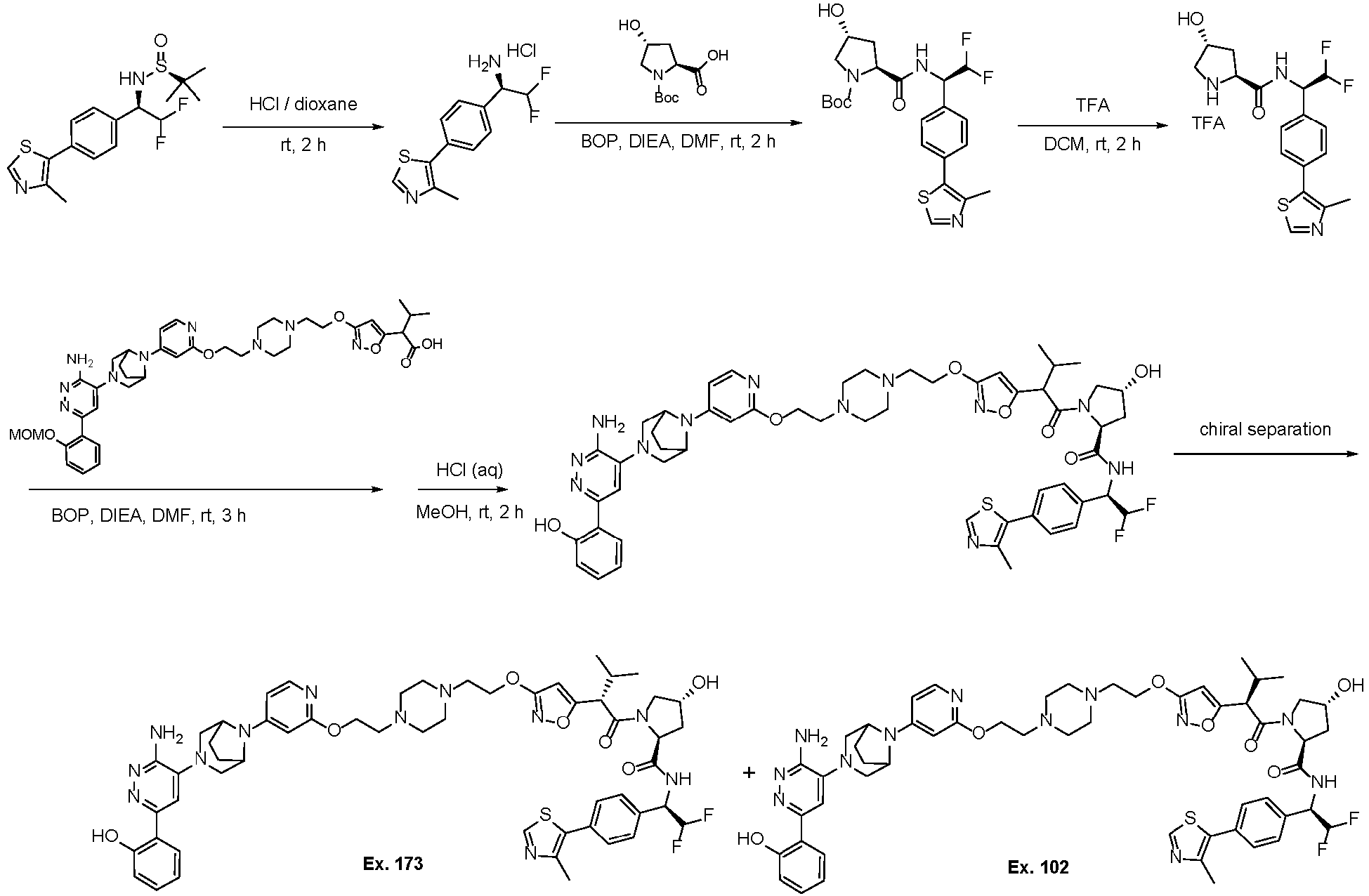
- Exemplary compound 267 and 268 were prepared using analogous procedures.
-

-

- To a solution of tert-butyl N-[(1S)-1-[4-[4-(hydroxymethyl)thiazol-5-yl]phenyl]ethyl]carbamate (400 mg, 1.20 mmol, 1 eq), isoindoline-1,3-dione (352 mg, 2.39 mmol, 2 eq) and triphenylphosphine (471 mg, 1.79 mmol, 1.5 eq) in tetrahydrofuran (8 mL) was added N,N-diisopropyl azodicarboxylate (290 mg, 1.44 mmol, 0.27 mL, 1.2 eq) at 0°C. The mixture was stirred at 15°C for 16 hours. The reaction mixture was concentrated to afford crude product which was purified by prep-TLC (petroleum ether:ethyl acetate = 1: 1) to produce tert-butyl N-[(1S)-1-[4-[4-[(1,3-dioxoisoindolin-2-yl)methyl]thiazol-5-yl]phenyl]ethyl]carbamate (560 mg) as a white solid.
-

- A mixture of tert-butyl N-[(1S)-1-[4-[4-[(1,3-dioxoisoindolin-2-yl)methyl]thiazol-5-yl]phenyl]ethyl]carbamate (600 mg, 1.29 mmol, 1 eq) and hydrazine hydrate (661 mg, 12.94 mmol, 0.64 mL, 98% purity, 10 eq) in ethanol (24 mL) was degassed and purged with nitrogen three times, and then the mixture was stirred at 70°C for 3 hours under nitrogen atmosphere. The reaction mixture was filtered, and the filter cake was washed with ethanol (30 mL). The filtrate was concentrated to afford crude product. Compound tert-butyl N-[(1S)-1-[4-[4-(aminomethyl)thiazol-5-yl]phenyl]ethyl]carbamate (530 mg, crude) was obtained as a white solid.
-

- To a solution of tert-butyl N-[(1S)-1-[4-[4-(aminomethyl)thiazol-5-yl]phenyl]ethyl]carbamate (618 mg, 1.85 mmol, 1 eq) and triethylamine (563 mg, 5.56 mmol, 0.77 mL, 3 eq) in dichloromethane (30 mL) was added acetic anhydride (227 mg, 2.22 mmol, 0.21 mL, 1.2 eq) at 0 °C. The mixture was stirred at 15 °C for 3 h. The reaction mixture was diluted with water (30 mL), and then the organic layer was concentrated to afford crude product. The crude product was purified by prep-TLC (dichloromethane:methanol = 10:1). Compound tert-butyl N-[(1S)-1-[4-[4-(acetamidomethyl)thiazol-5-yl]phenyl]ethyl]carbamate (400 mg, 1.07 mmol, 58% yield) was obtained as a white solid.
- tert-Butyl N-[(1S)-1-[4-[4-(acetamidomethyl)thiazol-5-yl]phenyl]ethyl]carbamate was converted to the final compound using procedures described for exemplary compound 76.
-

- To a solution of tert-butyl N-[(1S)-1-[4-(4-ethynylthiazol-5-yl)phenyl]ethyl]carbamate (1.73 g, 5.27 mmol, 1 eq) in tetrahydrofuran (50 mL) was added n-butyllithium (2.5 M, 4.42 mL, 2.1 eq) at -78 °C under nitrogen. The reaction mixture was stirred at -50 °C for 2 h. Then triformol (474 mg, 5.27 mmol, 1 eq) was added, and the reaction mixture was allowed to warm to 10 °C for 22 h. The reaction mixture was stirred at 10 °C for another 20 h. Water (40 mL) was added, and the mixture was extracted with ethyl acetate (40 mL). The organic layer was dried over sodium sulfate and then concentrated under vacuum. The residue was purified by silica gel column chromatography (10-80% ethyl acetate in petroleum ether) to get the tert-butyl N-[(1S)-1-[4-[4-(3-hydroxyprop-1-ynyl)thiazol-5-yl]phenyl]ethyl]carbamate (480 mg, 1.34 mmol, 25 % yield) as a white solid. 950 mg of the starting material was recovered.
- tert-Butyl N-[(1S)-1-[4-[4-(3-hydroxyprop-1-ynyl)thiazol-5-yl]phenyl]ethyl]carbamate was converted to tert-butyl (S)-(1-(4-(4-(3-acetamidoprop-1-yn-1-yl)thiazol-5-yl)phenyl)ethyl)carbamate using procedures described above for exemplary compound 174.

- tert-Butyl (S)-(1-(4-(4-(3-acetamidoprop-1-yn-1-yl)thiazol-5-yl)phenyl)ethyl)carbamate was converted to the final compound using procedures analogous to those described for exemplary compound 76.
-

- Prepared according to the scheme below using procedures described above.

- Exemplar compound 176 was prepared using analogous procedures.
-

- Prepared according to the scheme below using procedures described above.

- Exemplary compounds 179 was prepared using analogous procedures.
-

-

- To a solution of 2,2-diethoxyethanol (2.06 g, 15.38 mmol, 1.5 eq) in THF (50 mL) was added sodium hydride (615 mg, 15.38 mmol, 60% purity, 1.5 eq) at 0°C, and the mixture was stirred at 0°C for 30 minutes. To this was then added a solution of tert-butyl 2-bromoacetate (2 g, 10.25 mmol, 1.52 mL, 1 eq) in THF (50 mL) at 0°C, and the reaction mixture was stirred at 15°C for 2 hours under nitrogen. The mixture was cooled to 0°C and quenched by a saturated aqueous solution of ammonium chloride. The aqueous phase was extracted with ethyl acetate (20 mL × 3). The combined organic phase was washed with brine (15 mL × 2), dried with anhydrous sodium sulfate, filtered and concentrated under vacuum. The residue was purified by silica gel chromatography (petroleum ether/ethyl acetate = 50/1 to 20/1) to afford tert-butyl 2-(2,2-diethoxyethoxy)acetate (883 mg, 3.56 mmol, 34% yield) as a yellow oil.
-

- To tert-butyl 2-(2,2-diethoxyethoxy)acetate (0.7 g, 2.82 mmol, 1 eq) in a mixture of THF (3 mL), methanol (3 mL) and water (6 mL) was added lithium hydroxide monohydrate (1.18 g, 28.19 mmol, 10 eq) in one portion at 15°C under nitrogen. The mixture was stirred at 2 hours. The pH was adjusted to 6 with 1 M hydrochloric acid. The aqueous phase was extracted with ethyl acetate (35 mL × 4). The combined organic phase was washed with brine (20 mL × 2), dried with anhydrous sodium sulfate, filtered and concentrated under vacuum. The crude product 2-(2,2-diethoxyethoxy)acetic acid (460 mg, crude) was obtained as a yellow oil.
-

- To a mixture of (2S,4R)-1-[(2S)-2-amino-3,3-dimethyl-butanoyl]-4-hydroxy-N-[(1S)-1-[4-(4-methylthiazol-5-yl)phenyl]ethyl]pyrrolidine-2-carboxamide (0.2 g, 0.45 mmol, 1 eq) and 2-(2,2-diethoxyethoxy)acetic acid (87 mg, 0.45 mmol, 1 eq) in N,N-dimethylformamide (10 mL) was added O-(7-azabenzotriazol-1-yl)-N,N,N',N'-tetramethyluronium hexafluorophosphate (222 mg, 0.59 mmol, 1.3 eq) and triethylamine (137 mg, 1.35 mmol, 0.19 mL, 3 eq) in one portion at 15°C under nitrogen. The mixture was stirred at 15°C for 1 hour. The mixture was poured into ice-water (w/w = 1/1, 20 mL) and stirred for 5 minutes. The aqueous phase was extracted with ethyl acetate (20 mL × 4). The combined organic phase was washed with brine (15 mL × 2), dried with anhydrous sodium sulfate, filtered and concentrated in vacuum. The residue was purified by semi-preparative reverse phase HPLC (formic acid condition; column: Phenomenex Synergi C18 150*25*10 um mobile phase: [water (0.225% FA)-ACN]; B%: 30%-60%, 9 min). The product (2S,4R)-1-[(2S)-2-[[2-(2,2-diethoxyethoxy)acetyl]amino]-3,3-dimethyl-butanoyl]-4-hydroxy-N-[(1S)-1-[4-(4-methylthiazol-5-yl)phenyl]ethyl]pyrrolidine-2-carboxamide (230 mg, 0.37 mmol, 82% yield) was obtained as a yellow oil.
- (2S,4R)-1-[(2S)-2-[[2-(2,2-Diethoxyethoxy)acetyl]amino]-3,3-dimethyl-butanoyl]-4-hydroxy-N-[(1S)-1-[4-(4-methylthiazol-5-yl)phenyl]ethyl]pyrrolidine-2-carboxamide was converted to the final compound according to the scheme below and using procedures described above for other examples.

-

-

- At 0°C, to a solution of PPh3 (4.68 g, 17.836 mmol, 3.0 equiv) in THF (100 mL) was added DIAD (3.61 g, 17.836 mmol, 3.0 equiv), and (1s,3s)-3-[[4-(3-[3-amino-6-[2-(methoxymethoxy)phenyl]pyridazin-4-yl]-3,8-diazabicyclo[3.2.1]octan-8-yl)pyridin-2-yl]oxy]cyclobutan-1-ol(3.0 g, 5.945 mmol, 1 equiv) under nitrogen atmosphere. To the above mixture was added 6-bromopyridin-3-ol (2.07 g, 11.891 mmol, 2.0 equiv) dropwise over 5 minutes at 0°C under nitrogen atmosphere. The resulting mixture was stirred for 5 minutes at 0°C, then heated up to 50°C and stirred for 2 hours at 50°C. The reaction was quenched with water (25 mL), and the resulting mixture was extracted with EtOAc (50 mL x 3). The combined organic layers were washed with brine (50mL), dried over anhydrous sodium sulfate and concentrated under reduced pressure. The residue was purified by silica gel column chromatography eluting with CH2Cl2/MeOH (10:1) to afford 6-[2-(methoxymethoxy)phenyl]-4-(8-[2-[(1r,3r)-3-[(6-bromopyridin-3-yl)oxy]cyclobutoxy]pyridin-4-yl]-3,8-diazabicyclo[3.2.1]octan-3-yl)pyridazin-3-amine (2.3g, 59%) as a light yellow solid.
-

- The following reaction was done in 4 parallel equal batches and combined for work-up and purification. In each batch, to a solution of 6-[2-(methoxymethoxy)phenyl]-4-(8-[2-[(1r,3r)-3-[(6-bromopyridin-3-yl)oxy]cyclobutoxy]pyridin-4-yl]-3,8-diazabicyclo[3.2.1]octan-3-yl)pyridazin-3-amine (571 mg, 0.864 mmol, 1.00 equiv) and tert-butyldimethyl[[(2E)-3-(4,4,5,5-tetramethyl-1,3,2-dioxaborolan-2-yl)prop-2-en-1-yl]oxy]silane (387 mg, 1.297 mmol, 1.50 equiv) in 1,4-dioxane (15 mL) and water (5 mL) were added K2CO3 (1.07 g, 0.008 mmol, 3.0 equiv) and Pd(dppf)Cl2-CH2Cl2 (105 mg, 0.130 mmol, 0.15 equiv) at room temperature under nitrogen atmosphere. The resulting mixture was stirred for 2 hours at 80°C under nitrogen atmosphere. Each reaction was quenched by the addition of water (50 mL) at room temperature, and the resulting mixtures were combined and extracted with EtOAc (90 mL x 3). The combined organic layers were washed with brine, dried over anhydrous sodium sulfate and concentrated under reduced pressure. The residue was purified by silica gel column chromatography eluting with CH2Cl2/MeOH (10:1) to afford 6-[2-(methoxymethoxy)phenyl]-4-(8-[2-[(1r,3r)-3-([6-[(1E)-3-[(tert-butyldimethylsilyl)oxy]prop-1-en-1-yl]pyridin-3-yl]oxy)cyclobutoxy]pyridin-4-yl]-3,8-diazabicyclo[3.2.1]octan-3-yl)pyridazin-3-amine (2.1g total, 76%) as a light yellow solid.
-

- To a stirred solution of 6-[2-(methoxymethoxy)phenyl]-4-(8-[2-[(1r,3r)-3-([6-[(1E)-3-[(tert-butyldimethylsilyl)oxy]prop-1-en-1-yl]pyridin-3-yl]oxy)cyclobutoxy]pyridin-4-yl]-3,8-diazabicyclo[3.2.1]octan-3-yl)pyridazin-3-amine (2.10 g, 2.79 mmol, 1.00 equiv) in THF (20 mL) was added TBAF (1 mol/L, 8.3 mL, 8.3 mmol, 3.0 equiv) dropwise at 0°C under nitrogen atmosphere. The resulting solution was stirred for 2 hours at room temperature. The reaction was then quenched by the addition of water (25 mL). The resulting mixture was extracted with ethyl acetate (30 mL x 3). The organic layers were combined, dried over anhydrous sodium sulfate and concentrated. The residue was applied onto a silica gel column eluting with dichloromethane/methanol (10:1). This resulted in 3-[5-[(1r,3r)-3-[[4-(3-[3-amino-6-[2-(methoxymethoxy)phenyl]pyridazin-4-yl]-3,8-diazabicyclo[3.2.1]octan-8-yl)pyridin-2-yl]oxy]cyclobutoxy]pyridin-2-yl]prop-2-en-1-ol (1.1g, 62%) as a light yellow solid.
-

- To a solution of tributylphosphine (634 mg, 3.14 mmol, 10.00 equiv) and tetramethylazodicarboxamide (588 mg, 3.14 mmol, 10.00 equiv) in THF was added (2S,4R)-4-hydroxy-1-[2-(3-hydroxy-1,2-oxazol-5-yl)-3-methylbutanoyl]-N-[(1S)-1-[4-(4-methyl-1,3-thiazol-5-yl)phenyl]ethyl]pyrrolidine-2-carboxamide (172 mg, 0.345 mmol, 1.10 equiv) and (2E)-3-[5-[(1r,3r)-3-[[4-(3-[3-amino-6-[2-(methoxymethoxy)phenyl]pyridazin-4-yl]-3,8-diazabicyclo[3.2.1]octan-8-yl)pyridin-2-yl]oxy]cyclobutoxy]pyridin-2-yl]prop-2-en-1-ol (70 mg, 0.11 mmol, 1 equiv) at -10°C under nitrogen atmosphere. The resulting mixture was stirred for 16 hours at room temperature under nitrogen atmosphere. The reaction was quenched by the addition of water (50 mL) at room temperature, and the resulting mixture was extracted with EtOAc (30 mL x 3). The combined organic layers were washed with brine (50 mL), dried over anhydrous sodium sulfate and concentrated under reduced pressure. The residue was purified by silica gel column chromatography eluting with dichloromethane/methanol (10:1) to afford (2S,4R)-4-hydroxy-N-[(1S)-1-[4-(4-methyl-1,3-thiazol-5-yl)phenyl]ethyl]-1-[3-methyl-2-(3-[[(2E)-3-[5-[(1r,3r)-3-[[4-(3-[3-amino-6-[2-(methoxymethoxy)phenyl]pyridazin-4-yl]-3,8-diazabicyclo[3.2.1]octan-8-yl)pyridin-2-yl]oxy]cyclobutoxy]pyridin-2-yl]prop-2-en-1-yl]oxy]-1,2-oxazol-5-yl)butanoyl]pyrrolidine-2-carboxamide (120 mg, 34%) as a light yellow solid.
- (2S,4R)-4-hydroxy-N-[(1S)-1-[4-(4-methyl-1,3-thiazol-5-yl)phenyl]ethyl]-1-[3-methyl-2-(3-[[(2E)-3-[5-[(1r,3r)-3-[[4-(3-[3-amino-6-[2-(methoxymethoxy)phenyl]pyridazin-4-yl]-3,8-diazabicyclo[3.2.1]octan-8-yl)pyridin-2-yl]oxy]cyclobutoxy]pyridin-2-yl]prop-2-en-1-yl]oxy]-1,2-oxazol-5-yl)butanoyl]pyrrolidine-2-carboxamide was converted to the final compound using standard procedures described above for other examples.
- Exemplar compounds 186, 206, and 207 were preparing using analogous procedures.
-

-

- To a solution of tert-butyl 4-(3-hydroxycyclobutoxy)piperidine-1-carboxylate (2 g, 7.37 mmol, 1 eq) in N,N-dimethylformamide (40 mL) was added sodium hydride (353 mg, 8.84 mmol, 60% purity, 1.2 eq) at 0°C. The mixture was stirred at 25°C for 1 hour. Then 2-benzyloxyethyl 4-methylbenzenesulfonate (3.39 g, 11.06 mmol, 1.5 eq) in N,N-dimethylformamide (2 mL) was added. The mixture was stirred at 60°C for 15 hours. The reaction mixture was quenched by the addition of water (200 mL) and extracted with ethyl acetate (200 mL x 3). The combined organic layers were washed with brine (200 mL x 3), dried over anhydrous sodium sulfate, filtered and concentrated under reduced pressure to give a residue. The residue was purified by prep-HPLC (column: Phenomenex Synergi Max-RP 250*50 mm*10 um; mobile phase: [water (0.225% FA)-ACN]; B%: 50ACN%-80ACN%, 26 min, 20% min). Compound tert-butyl 4-[3-(2-benzyloxyethoxy)cyclobutoxy]piperidine-1-carboxylate (2.1 g, 5.18 mmol, 70 % yield) was obtained as a colorless oil.
-

- To a solution of tert-butyl 4-[3-(2-benzyloxyethoxy)cyclobutoxy]piperidine-1-carboxylate (2.1 g, 5.18 mmol, 1 eq) in ethanol (20 mL) and tetrahydrofuran (20 mL) was added 5% palladium on activated carbon catalyst (500 mg) under nitrogen. The suspension was degassed under vacuum and purged with hydrogen 3 times. The mixture was stirred under hydrogen (15 Psi) at 25°C for 16 hours. The reaction mixture was filtered and concentrated under reduced pressure to give a residue. Compound tert-butyl 4-[3-(2-hydroxyethoxy)cyclobutoxy]piperidine-1-carboxylate (1.6 g, 5.07 mmol, 97% yield) was obtained as a colorless oil.
- tert-Butyl 4-[3-(2-hydroxyethoxy)cyclobutoxy]piperidine-1-carboxylate was converted to the final compound according to the scheme below using procedures described above for other examples.

-

-

- To a solution of 1,4-dimethyl-1H-pyrazole (2.5 g, 26.0 mmol, 1 equiv) in tetrahydrofuran (50 mL) was added n-butyllithium in hexane solution (2.5 M in hexane, 78.0 mmol, 31 mL, 3 equiv) dropwise at 0 °C under nitrogen atmosphere. The resulting solution was stirred at room temperature for 1 h and then cooled to -78°C. 2-isopropoxy-4,4,5,5-tetramethyl-1,3,2-dioxaborolane (14.52 g, 78.017 mmol, 3 equiv) was added and the reaction mixture was stirred at -78°C for 0.5 hour, then slowly warmed up to 0°C. The reaction was quenched with brine and extracted with EtOAc (250 mL×3). The combined organic layer was washed with brine, dried over Na2SO4 and concentrated under reduced pressure. The residue was applied onto a silica gel column eluting with ethyl acetate/petroleum ether (1:5). This resulted in 2.6 g (45%) of 1,4-dimethyl-5-(4,4,5,5-tetramethyl-1,3,2-dioxaborolan-2-yl)-1H-pyrazole as a white solid.
-

- Into a 250-mL round-bottom flask, was placed tert-butyl N-[(1S)-1-(4-bromophenyl)ethyl]carbamate (1.0 g, 3.331 mmol, 1 equiv), 1,4-dimethyl-5-(4,4,5,5-tetramethyl-1,3,2-dioxaborolan-2-yl)-1H-pyrazole (1.48 g, 6.664 mmol, 2.00 equiv), K2CO3 (1.38 g, 9.963 mmol, 2.99 equiv) and Pd(dppf)Cl2 (244.0 mg, 0.333 mmol, 0.10 equiv) in dioxane (16 mL) and H2O (2 mL). The resulting mixture was stirred for 3 hours at 90 °C under nitrogen atmosphere. The mixture was concentrated under reduced pressure. The residue was applied onto a silica gel column eluting with ethyl acetate/petroleum ether (1:1). This resulted in 1.63 g (99%) of benzyl N-[(1S)-1-(4-bromophenyl)ethyl]carbamate as a light yellow solid.
- Benzyl N-[(1S)-1-(4-bromophenyl)ethyl]carbamate was converted to the final compound using procedures described above for other examples.
- Exemplary compound 193was prepared using analogous procedures.
-

-

- To a solution of 2-(3-hydroxyisoxazol-5-yl)-3-methyl-butanoic acid (1 g, 5.40 mmol, 1 eq) in methanol (10 mL) was added thionyl chloride (2.57 g, 21 mmol, 1.57 mL, 4 eq) at 0°C. The reaction mixture was stirred at 70°C for 3 hours. The reaction mixture was concentrated under reduced pressure. The residue was diluted with water (50 ml) and extracted with ethyl acetate (30 mL x 3). The combined organic layers were washed with brine (80 mL x 2), dried over anhydrous sodium sulfate, filtered and concentrated under reduced pressure. Methyl 2-(3-hydroxyisoxazol-5-yl)-3-methyl-butanoate (1 g, 5.02 mmol, 92% yield) was obtained as a yellow oil.
-

- To a solution of methyl 2-(3-hydroxyisoxazol-5-yl)-3-methyl-butanoate (800 mg, 4.02 mmol, 1 eq) in acetonitrile (5 mL) was added potassium carbonate (1.11 g, 8.03 mmol, 2 eq) and perfluorobutyl sulfonyl fluoride (1.46 g, 4.82 mmol, 1.2 eq). The reaction mixture was stirred at 25°C for 12 hours. The reaction mixture was diluted with water (50 mL) and extracted with ethyl acetate (30 mL x 3). The combined organic layers were washed with brine (80 mL x 3), dried over anhydrous sodium sulfate, filtered and concentrated under reduced pressure. The residue was purified by silica gel column chromatography (petroleum ether/ethyl acetate=100/1 to 20/1). Methyl 3-methyl-2-[3-(1,1,2,2,3,3,4,4,4-nonafluorobutylsulfonyloxy)isoxazol-5-yl]butanoate (530 mg, 1.10 mmol, 27 % yield) was obtained as a colorless oil.
-

- A solution of methyl 3-methyl-2-[3-(1,1,2,2,3,3,4,4,4-nonafluorobutylsulfonyloxy) isoxazol-5-yl]butanoate (400 mg, 0.83 mmol, 1 eq) and tert-butyl piperazine-1-carboxylate (154 mg, 0.83 mmol, 1 eq) in dimethyl formamide (5 mL) was stirred at 130°C for 12 hours. The reaction mixture was diluted with water (30 mL) and extracted with ethyl acetate (30 mL x 3). The combined organic layers were washed with brine (30 mL x 3), dried over anhydrous sodium sulfate, filtered and concentrated under reduced pressure. The residue was purified by prep-TLC (petroleum ether: ethyl acetate = 3:1). Tert-butyl 4-[5-(1-methoxycarbonyl-2- methylpropyl)isoxazol-3- yl]piperazine-1-carboxylate (130 mg, 0.35 mmol, 42% yield) was obtained as a colorless oil.
-

- To a solution of tert-butyl 4-[5-(1-methoxycarbonyl-2-methyl-propyl)isoxazol-3-yl] piperazine-1-carboxylate (130 mg, 0.35 mmol, 1 eq) in methanol (2 mL), tetrahydrofuran (2 mL) and water (2 mL) was added lithium hydroxide (44 mg, 1.06 mmol, 3 eq). The reaction mixture was stirred at 15°C for 1 hour. Water (3 mL) was added. The pH was adjusted to 6 with hydrochloric acid (1M in water), and extracted with ethyl acetate (10 mL x 5). The combined organic layers were washed with brine (50 mL x 1), dried over anhydrous sodium sulfate, filtered and concentrated under reduced pressure. 2-[3-(4-tert-Butoxycarbonylpiperazin-1-yl) isoxazol-5-yl] -3-methyl-butanoic acid (100 mg, 0.28 mmol, 79% yield) was obtained as a white solid.
-

- To a solution of 2-[3-(4-tert-butoxycarbonylpiperazin-1-yl)isoxazol-5-yl]-3-methylbutanoic acid (100 mg, 0.28 mmol, 1 eq) and O-(7-azabenzotriazol-1-yl)-N,N,N',N'-tetramethyluronium hexafluorophosphate (129 mg, 0.33 mmol, 1.2 eq) in dimethyl formamide (5 mL) were added (2S,4R)-4-hydroxy-N-[(1S)-1-[4-(4-methylthiazol-5-yl)phenyl]ethyl]pyrrolidine-2-carboxamide hydrochloride (104 mg, 0.28 mmol, 1 eq) and diisopropyl ethyl amine (109 mg, 0.84 mmol, 3 eq). The reaction mixture was stirred at 15°C for 0.5 hour. The reaction mixture was poured into water (20 mL), extracted with ethyl acetate (30 mL x 3). The combined organic layers were washed with brine (50 mL x 3), dried over anhydrous sodium sulfate, filtered and concentrated under reduced pressure. The residue was purified by prep-TLC (dichloromethane: methanol = 10:1). tert-Butyl 4-[5-[1-[(2S,4R)-4-hydroxy-2-[[(1S)-1-[4-(4-methylthiazol-5-yl)phenyl]ethyl]carbamoyl]pyrrolidine-1-carbonyl]-2-methyl-propyl]isoxazol-3-yl]piperazine-1-carboxylate (180 mg, 0.26 mmol, 92% yield) was obtained as a colorless oil.
-

- tert-butyl 4-[5-[1-[(2S,4R)-4-hydroxy-2-[[(1S)-1-[4-(4-methylthiazol-5-yl)phenyl]ethyl] carbamoyl]pyrrolidine-1-carbonyl]-2-methyl-propyl]isoxazol-3-yl]piperazine-1-carboxylate (200 mg, 0.29 mmol, 1 eq) was separated by chiral supercritical fluid chromatography. Instrument: CASWH-Prep-SFC-C, SFC Column: DAICEL Chiralpak AS (250 mm *30 mm, 10um); Mobile phase: ethanol (0.1% NH3·H2O) in CO2 from 25% to 25%; Flow rate: 55g/min; Wavelength: 220nm. tert-Butyl 4-[5-[(1S)-1-[(2S,4R)-4-hydroxy-2-[[(1S)-1-[4-(4-methylthiazol-5-yl)phenyl]ethyl] carbamoyl]pyrrolidine-1-carbonyl]-2-methyl-propyl]isoxazol-3-yl]piperazine-1-carboxylate (80 mg, 0.11 mmol, 76% yield, 95% purity) was obtained as a white solid. tert-Butyl 4-[5-[(1R)-1-[(2S,4R)-4-hydroxy-2-[[(1S)-1-[4-(4-methylthiazol-5-yl)phenyl]ethyl]carbamoyl]pyrrolidine-1-carbonyl]-2-methyl-propyl]isoxazol-3-yl]piperazine-1-carboxylate (70 mg, 0.1 mmol, 68% yield, 98% purity) was obtained as a white solid.
-

- To a solution of tert-butyl 4-[5-[(1R)-1-[(2S,4R)-4-hydroxy-2-[[(1S)-1-[4-(4-methylthiazol-5-yl)phenyl]ethyl]carbamoyl]pyrrolidine-1-carbonyl]-2-methyl-propyl]isoxazol-3-yl]piperazine-1-carboxylate (70 mg, 0.1 mmol, 1 eq) in dichloromethane (2 mL) was added hydrochloric acid (4 M in dioxane, 3 mL). The reaction mixture was stirred at 15°C for 1 hour. The reaction mixture was concentrated under reduced pressure. (2S,4R)-4-hydroxy-1-[(2R)-3-methyl-2-(3-piperazin-1-ylisoxazol -5-yl)butanoyl]-N-[(1S)-1-[4-(4-methylthiazol-5-yl)phenyl]ethyl]pyrrolidine-2-carboxamide (55 mg, 0.09 mmol, 91% yield) was obtained as a white solid.
-

- To a mixture of (2S,4R)-4-hydroxy-1-[(2R)-3-methyl-2-(3-piperazin-1-ylisoxazol-5-yl)butanoyl]-N-[(1S)-1-[4-(4-methylthiazol-5-yl)phenyl]ethyl]pyrrolidine-2-carboxamide (100 mg, 0.16 mmol, 1 eq, hydrochloride), 1,2-dibromoethane (31 mg, 0.16 mmol, 1 eq) and 2-[6-amino-5-[8-[2-[3-(4-piperidyloxy)cyclobutoxy]-4-pyridyl]-3,8-diazabicyclo[3.2.1]octan-3-yl]pyridazin-3-yl]phenol dihydrochloride (102 mg, 0.16 mmol, 1 eq) in acetonitrile (12 mL) was added N,N-diisopropylethylamine (128mg, 0.99 mmol, 6 eq). The mixture was stirred at 100 °C for 2 h under microwave. The reaction mixture was concentrated under reduced pressure to give a residue. The residue was purified by prep-HPLC (column: Phenomenex Synergi C18 150*25*10 um; mobile phase: [water (0.225% FA)-ACN]; B%: 5%-35%, 10 min). Compound (2S,4R)-1-[(2R)-2-[3-[4-[2-[4-[3-[[4-[3-[3-amino-6-(2-hydroxyphenyl)pyridazin-4-yl]-3,8-diazabicyclo[3.2.1]octan-8-yl]-2-pyridyl]oxy]cyclobutoxy]-1-piperidyl]ethyl]piperazin-1-yl]isoxazol-5-yl]-3-methyl-butanoyl]-4-hydroxy-N-[(1S)-1-[4-(4-methylthiazol-5-yl)phenyl]ethyl]pyrrolidine-2-carboxamide formate (24.6 mg, 0.02 mmol, 12 % yield) was obtained as an off-white solid.
- Prepared using the analogous procedures as exemplary compound 195.
-

- Prepared using procedures analogous to those described for exemplary compounds 112 and 116.
-

-

- To a solution of ethyl 2-fluoro-3-oxo-butanoate (33.6 g, 226.82 mmol, 28.47 mL, 1 eq) and ethylene glycol (70.39 g, 1.13 mol, 63.42 mL, 5 eq) in toluene (500 mL) was added boron trifluoride ethyl ether (3.36 g, 23.67 mmol, 2.92 mL, 0.1 eq). The mixture was stirred at 80°C for 12 hours. The reaction mixture was diluted with water (300 mL), and extracted with ethyl acetate (300 mL) two times. The combined organic phases were washed with brine (300 mL) two times, dried over anhydrous sodium sulfate, filtered and concentrated to afford crude product. The residue was purified by silica gel chromatography (petroleum ether: ethyl acetate = 100:1 to 10:1). Compound ethyl 2-fluoro-2-(2-methyl-1,3-dioxolan-2-yl)acetate (29.3 g, 152.5 mmol, 67% yield) was obtained as a colorless oil.
-

- To a solution of ethyl 2-fluoro-2-(2-methyl-1,3-dioxolan-2-yl)acetate (29.3 g, 152.46 mmol, 1 eq) and hydroxylamine hydrochloride (21.19 g, 304.92 mmol, 2 eq) in pyridine (164 mL), sodium methoxide (28%) in methanol (61 mL) was dropwise added at 0°C over 1 hour. The mixture was stirred at 20°C for 1 hour. The reaction mixture was filtered, and the filtrate was diluted with tetrahydrofuran (500 mL) and additionally filtered. The filtrate was concentrated to give the crude product which was purified by silica gel chromatography (petroleum ether:ethyl acetate = 1:0 to 0:1) to give product. Compound 2-fluoro-2-(2-methyl-1,3-dioxolan-2-yl)ethanehydroxamic acid (10.4 g, 58.1 mmol, 38% yield) was obtained as an orange oil.
-

- Solution of 2-fluoro-2-(2-methyl-1,3-dioxolan-2-yl)ethanehydroxamic acid (10.35 g, 57.77 mmol, 1 eq) in sulfuric acid (18 M, 50 mL, 15.58 eq) was stirred at 70°C for 2 hours. The reaction mixture was poured into ice water (250 mL), and then extracted with ethyl acetate (250 mL) two times. The combined organic layers were dried over anhydrous sodium sulfate, concentrated to afford the crude product. The crude product was used directly in the next step without purification. Compound 4-fluoro-5-methyl-isoxazol-3-ol (4.60 g, 39.29 mmol) was obtained as a yellow solid.
-

- To a solution of 4-fluoro-5-methyl-isoxazol-3-ol (5.7 g, 48.69 mmol, 1 eq) in dichloromethane (228 mL) was added p-toluenesulfonic acid monohydrate (926 mg, 4.87 mmol, 0.1 eq) and 3,4-dihydro-2H-pyran (20.48 g, 243.43 mmol, 22.26 mL, 5 eq). The mixture was stirred at 20°C for 10 hours. The reaction mixture was poured into water (100 mL), and pH was adjusted to 7 with saturated sodium bicarbonate solution (60 mL). The mixture then was extracted with dichloromethane (200 mL) two times. The combined organic layers were washed with saturated aqueous sodium chloride (200 mL) two times and dried over anhydrous sodium sulfate and filtered. The filtrate was concentrated to give the crude product which was purified by silica gel chromatography (petroleum ether:ethyl acetate = 1:0 to 8:1). Compound 4-fluoro-5-methyl-3-tetrahydropyran-2-yloxy-isoxazole (7.94 g, 39.5 mmol, 81% yield) was obtained as a yellow solid.
-

- To a solution of 4-fluoro-5-methyl-3-tetrahydropyran-2-yloxy-isoxazole (8.07 g, 40.13 mmol, 1 eq) in tetrahydrofuran (115 mL) was dropwise added potassium bis(trimethylsilyl)amide (1 M, 60.20 mL, 1.5 eq) at -78°C under nitrogen, and the reaction mixture was stirred at -78°C for 0.5 hour. Through the reaction mixture was then bubbled carbon dioxide (15 psi) for 1 hour at -78°C, and the mixture was stirred at 20°C for 1 hour. The reaction mixture was quenched by saturated ammonium chloride aqueous solution (150 mL) and extracted with ethyl acetate (100 mL) two times. The aqueous layer was adjusted by aqueous hydrochloric acid solution (1 M) until pH=3 at 0°C, and then was extracted with chloroform and isopropanol (v/v=5:1, 150 mL, three times). The combined layers were dried over anhydrous sodium sulfate, filtered, and the filtrate was concentrated to give crude product. Compound 2-(4-fluoro-3-tetrahydropyran-2-yloxy-isoxazol-5-yl)acetic acid (8.07 g, 32.91 mmol) was obtained as a yellow solid.
-

- To a solution of 2-(4-fluoro-3-tetrahydropyran-2-yloxy-isoxazol-5-yl)acetic acid (7.87 g, 32.10 mmol, 1 eq) in a mixture of methanol (70 mL) and ethyl acetate (70 mL) was dropwise added trimethylsilyl diazomethane ether solution (2 M, 24.07 mL, 1.5 eq) at -10°C, and the mixture was stirred at -10°C for 1 hour. The reaction mixture was adjusted with acetic acid until pH=7, and ethyl acetate (150 mL) was added. The organic layer was washed with saturated sodium bicarbonate solution (50 mL) and dried over anhydrous sodium sulfate, filtered, and the filtrate was concentrated to give the crude product. The crude product was purified by silica gel chromatography (petroleum ether:ethyl acetate = 1:0 to 5:1). Compound methyl 2-(4-fluoro-3-tetrahydropyran-2-yloxy-isoxazol-5-yl)acetate (4.51 g, 17.40 mmol, 54% yield) was obtained as a colorless oil.
-

- To a solution of methyl 2-(4-fluoro-3-tetrahydropyran-2-yloxy-isoxazol-5-yl)acetate (4.42 g, 17.05 mmol, 1 eq) in dimethylformamide (66 mL) was added potassium tert-butoxide (2.87 g, 25.58 mmol, 1.5 eq) at 0°C, and then 2-iodopropane (3.48 g, 20.46 mmol, 2.05 mL, 1.2 eq). The mixture was stirred at 20°C for 12 hours. The reaction mixture was diluted with water (60 mL) and extracted with ethyl acetate (80 mL) three times. The combined layers were washed with saturated aqueous sodium chloride (100 mL) two times, dried over anhydrous sodium sulfate and concentrated to afford crude product. The crude product was purified by silica gel chromatography (petroleum ether). Compound methyl 2-(4-fluoro-3-tetrahydropyran-2-yloxy-isoxazol-5-yl)-3-methyl-butanoate (5.25 g) was obtained as a yellow oil.
-

- To a solution of methyl 2-(4-fluoro-3-tetrahydropyran-2-yloxy-isoxazol-5-yl)-3-methyl-butanoate (5.48 g, 18.19 mmol, 1 eq) in a mixture of dichloromethane (20 mL) and tetrahydrofuran (5 mL) and water (5 mL) was added hydrochloric acid/dioxane (4 M, 30.00 mL, 6.60 eq). The mixture was stirred at 20°C for 20 hours. The reaction mixture was poured into saturated sodium carbonate solution (300 mL), and then extracted with methyl tert-butyl ether (100 mL) three times. The water layer pH was adjusted by adding hydrochloric acid solution (3 M) until pH=2. The aqueous layer was extracted with chloroform (150 mL) three times, dried over anhydrous sodium sulfate and concentrated to afford the crude product. The residue was purified by semi-preparative reverse phase (column: Kromasil 250*50 mm*10 um; mobile phase: [water (0.225% FA) - ACN]; B%: 21ACN%-51ACN%, 29 min, 79% min). Compound methyl 2-(4-fluoro-3-hydroxy-isoxazol-5-yl)-3-methyl-butanoate (1.27 g, 5.86 mmol, 32% yield) was obtained as a white solid.
-

- Methyl 2-(4-fluoro-3-hydroxy-isoxazol-5-yl)-3-methyl-butanoate (0.5 g, 2.30 mmol, 1 eq), 2-bromo-1,1-diethoxy-ethane (907 mg, 4.60 mmol, 0.69 mL, 2 eq) and potassium carbonate (636 mg, 4.60 mmol, 2 eq) were taken up in a microwave tube in dimethylsulfoxide (8 mL). The sealed tube was heated at 80°C for 2 hours under microwave irradiation. After LCMS showed the starting material still remained, the sealed tube was heated at 80°C for another 2 hours under microwave irradiation. The mixture was filtered and concentrated in vacuum. The residue was purified by semi-preparative reverse phase (column: Phenomenex Synergi C18 150*25*10 um; mobile phase: [water (0.225% FA) - ACN]; B%: 40% - 70%, 9 min). Compound methyl 2-[3-(2,2-diethoxyethoxy)-4-fluoro-isoxazol-5-yl]-3-methyl-butanoate (266 mg, 0.80 mmol, 35% yield) was obtained as a yellow oil, and 46 mg of methyl 2-(4-fluoro-3-hydroxy-isoxazol-5-yl)-3-methyl-butanoate was recovered.
- Methyl 2-[3-(2,2-diethoxyethoxy)-4-fluoro-isoxazol-5-yl]-3-methyl-butanoate was converted to the final compound using procedures analogous to those described above for exemplary compound 76.
- Exemplary compounds 198, 208, 209, 269, and 270 were prepared using analogous procedures.
-

-

- To a solution of (2R)-2-amino-2-(4-bromophenyl)ethanol (1.74 g, 6.89 mmol, 1 eq, hydrochloride) in tetrahydrofuran (25 mL) was added triethylamine (2.79 g, 27.56 mmol, 3.84 mL, 4 eq) and tert-butoxycarbonyl tert-butyl carbonate (1.80 g, 8.27 mmol, 1.90 mL, 1.2 eq). The mixture was stirred at 30°C for 12 hours. The reaction mixture was concentrated under reduced pressure to remove tetrahydrofuran. The residue was extracted with ethyl acetate (50 mL x 2). The combined organic layers were washed with aqueous brine (40 mL x 2), dried over anhydrous sodium sulfate, filtered and concentrated under reduced pressure. The crude product was triturated with petroleum ether/ethyl acetate (22 mL, v: v=10: 1). Compound tert-butyl N-[(1R)-1-(4-bromophenyl)-2-hydroxy-ethyl]carbamate (2 g, 6.33 mmol, 91% yield) was obtained as a white solid.
-

- A mixture of tert-butyl N-[(1R)-1-(4-bromophenyl)-2-hydroxy-ethyl]carbamate (2.0 g, 6.33 mmol, 1 eq), 4-methylthiazole (1.25 g, 12.65 mmol, 1.15 mL, 2 eq), potassium acetate (1.24 g, 12.65 mmol, 2 eq) and palladium acetate (142 mg, 0.63 mmol, 0.1 eq) in dimethylacetamide (40 mL) was degassed and purged with nitrogen for 3 times, and then the mixture was stirred at 100°C for 12 hours under nitrogen atmosphere. The reaction mixture was concentrated under reduced pressure to remove dimethylacetamide. The residue was extracted with ethyl acetate (40mL x 2) and washed with saturated brine (40 mL x 2). The combined organic layers were dried over anhydrous sodium sulfate, filtered and concentrated under reduced pressure. The residue was purified by silica gel chromatography (petroleum ether/ethyl acetate=5/1 to 1/2). Compound tert-butyl N-[(1R)-2-hydroxy-1-[4-(4-methylthiazol-5-yl) phenyl] ethyl] carbamate (1.45 g, 3.98 mmol, 63% yield) was obtained as a yellow oil.
- tert-Butyl N-[(1R)-2-hydroxy-1-[4-(4-methylthiazol-5-yl) phenyl] ethyl] carbamate was converted to the final compound using procedures analogous to those described for exemplary compound 180 above.
- Exemplar compounds 199, 158, and 100 were prepared using analogous procedures.
-

-

- To a solution of 1-(4-bromo-2-hydroxy-phenyl)ethanone (10 g, 46.50 mmol, 1.0 eq) in dimethyl formamide (50 mL) was added potassium carbonate (9.64 g, 69.75 mmol, 1.5 eq). Then iodomethane (13.20 g, 93.00 mmol, 2.0 eq) was added into the mixture at 0°C. Then the mixture was stirred at 20°C for 12 hours. The mixture was diluted with water (200 mL), extracted with ethyl acetate (100 ml x 3), washed with brine (50 mL x 2), dried over anhydrous sodium sulfate, filtered and then concentrated. 1-(4-bromo-2-methoxy-phenyl)ethanone (10.5 g, 45.84 mmol, 98% yield) was obtained as a yellow solid.
-

- To a solution of 1-(4-bromo-2-methoxy-phenyl)ethanone (10 g, 43.65 mmol, 1.18 eq) in tetrahydrofuran (50 mL) was added titanium tetraethoxide (16.94 g, 74.26 mmol, 2.0 eq). Then 2-methylpropane-2-sulfinamide (4.5 g, 37.13 mmol, 1.0 eq) was added to the mixture, and the mixture was purged with N2 3 times. The mixture was then stirred at 70°C for 12 hours. The mixture was quenched with water (100 mL), diluted with water (200 mL), filtered and then extracted with ethyl acetate (200 ml x 3), washed with brine (200 mL), dried over anhydrous sodium sulfate, filtered and then concentrated. The residue was purified by silica gel column chromatography (petroleum ether: ethyl acetate = 20:1 to 3:1). ((R,E)-N-(1-(4-bromo-2-methoxyphenyl)ethylidene)-2-methylpropane-2-sulfinamide (9 g, 27.09 mmol, 73% yield) was obtained as a yellow oil.
-

- To a solution of ((R,E)-N-(1-(4-bromo-2-methoxyphenyl)ethylidene)-2-methylpropane-2-sulfinamide (9 g, 27.09 mmol, 1.0 eq) in tetrahydrofuran (90 mL) was added L-selectride (1 M, 81.26 mL, 3.0 eq) at 0 °C. Then the mixture was stirred at 20 °C for 2 hours. The mixture was quenched with water (100 mL), diluted with water (20 mL), extracted with ethyl acetate (300 mL x 3), washed with brine (200 mL), dried over anhydrous sodium sulfate, filtered and then concentrated. The residue was purified by silica gel column chromatography (petroleum ether: ethyl acetate = 20:1 to 1:1). N-[(1S)-1-(4-bromo-2-methoxy-phenyl)ethyl]-2-methyl- propane-2-sulfinamide (5.5 g, 16.45 mmol, 60% yield) was obtained as a yellow oil.
-

- To a solution of N-[(1S)-1-(4-bromo-2-methoxy-phenyl)ethyl]-2-methyl-propane-2-sulfinamide (4.7 g, 14.06 mmol, 1.0 eq) and 4,4,5,5-tetramethyl-2-(4,4,5,5-tetramethyl-1,3,2-dioxaborolan-2-yl)-1,3,2-dioxaborolane (5.36 g, 21.09 mmol, 1.5 eq) in dioxane (12 mL) was added [1,1'-bis(diphenylphosphino)ferrocene]dichloropalladium (ii) (1.03 g, 1.41 mmol, 0.1 eq) and potassium acetate (2.76 g, 28.12 mmol, 2.0 eq). Then the mixture was purged with N2 3 times. Then the mixture was stirred at 90 °C for 5 hours. The mixture was diluted with water (20 mL), filtered and then extracted with ethyl acetate (50 mL x 3), washed with brine (30 mL), dried over anhydrous sodium sulfate, filtered and then concentrated. The residue was purified by silica gel column chromatography (petroleum ether: ethyl acetate = 10:1 to 1:1). N-[(1S)-1-[2-methoxy-4-(4,4,5,5-tetramethyl-1,3,2- dioxaborolan-2-yl)phenyl]ethyl]-2-methyl-propane-2-sulfinamide (4.5 g, 11.80 mmol, 84% yield) was obtained as a yellow oil.
- N-[(1S)-1-[2-methoxy-4-(4,4,5,5-tetramethyl-1,3,2- dioxaborolan-2-yl)phenyl]ethyl]-2-methyl-propane-2-sulfinamide was converted to (S)-1-(2-methoxy-4-(4-methylthiazol-5-yl)phenyl)ethan-1-amine according to the scheme below.

- (S)-1-(2-methoxy-4-(4-methylthiazol-5-yl)phenyl)ethan-1-amine was converted to the final compound using procedures analogous to those described for other examples above (e.g., exemplary compound 64).
- Exemplary compound 201 was prepared using procedures analogous to those described above.
-

-

- To a solution of tert-butyl N-[(1S)-1-(4-bromophenyl)ethyl]carbamate (2 g, 6.66 mmol, 1 eq) in N,N-dimethylformamide (20 mL) were added palladium tetrakistriphenylphosphine (770 mg, 0.67 mmol, 0.1 eq) and zinc cyanide (782 mg, 6.66 mmol, 0.4 mL, 1 eq). The reaction solution was stirred at 80 °C for 14 h. The solution was quenched with water (80 ml) and extracted with ethyl acetate (50 mL x 3). The combined organic layer was washed with brine (20 mL x 3). The organic layer was dried over anhydrous sodium sulfate, filtered and concentrated under reduced pressure to give a residue. The residue was purified by silica gel column chromatography (petroleum ether/ethyl acetate = 30/1 to 3:1) to get the product. tert-Butyl N-[(1S)-1-(4-cyanophenyl)ethyl]carbamate (1.6 g, 6.50 mmol, 97.50% yield) was obtained as a colorless gum.
- tert-Butyl N-[(1S)-1-(4-cyanophenyl)ethyl]carbamate was converted to the final compound using procedures described above.
- Exemplary compound 204 was prepared using analogous procedures.
-

-

- Into a 100 mL round-bottom flask, was placed tert-butyl 1-oxa-4,9-diazaspiro[5.5]undecane-9-carboxylate (3.5 g, 13.7 mmol, 1.0 equiv) and TEA (4.1 g, 0.1 mmol, 3.0 equiv) in DCM (8 mL), to which was added CbzCl (2.8 g, 0.1 mmol, 1.2 equiv) slowly. The resulting mixture was stirred for 12 hours at room temperature. The reaction mixture was then quenched by the addition of 20 mL water and extracted with DCM (20 mL x 2). The combined organic layer was dried over anhydrous sodium sulfate and concentrated under reduced pressure. The residue was applied onto a silica gel column eluting with ethyl acetate/petroleum ether (1:0). This resulted in 4.0 g (75%) of 4-benzyl 9-tert-butyl 1-oxa-4,9-diazaspiro[5.5]undecane-4,9-dicarboxylate as a white oil.
-

- Into a 100 mL round-bottom flask was placed 4-benzyl 9-tert-butyl 1-oxa-4,9-diazaspiro[5.5]undecane-4,9-dicarboxylate (4.0 g, 10.2 mmol, 1.0 equiv) in dioxane (15 mL), and then hydrogen chloride in 1,4-dioxane solution (4.0 M, 4 mL) was added. The resulting mixture was stirred for 3 hours at room temperature and then was concentrated under reduced pressure. This resulted in 2.9 g (87%) of benzyl 1-oxa-4,9-diazaspiro[5.5]undecane-4-carboxylate hydrochloride salt as a solid.
-

- Into a 30 mL sealed tube, was placed benzyl 1-oxa-4,9-diazaspiro[5.5]undecane-4-carboxylate hydrochloride salt (2.9 g, 8.9 mmol, 1.0 equiv), 4-bromo-6-chloropyridazin-3-amine (2.1 g, 0.1 mmol), and DIEA (3.9 g, 0.1 mmol) in DMSO (8 mL). The resulting mixture was stirred for 12 hours at 130°C in an oil bath. The reaction mixture was then quenched by the addition of 20 mL of water/ice. The resulting mixture was extracted with ethyl acetate (20 mL x 2). The combined organic layer was dried over anhydrous sodium sulfate and concentrated under reduced pressure. The residue was applied onto a silica gel column eluting with ethyl acetate/petroleum ether (1:0). This resulted in 3.1 g (84%) of benzyl 9-(3-amino-6-chloropyridazin-4-yl)-1-oxa-4,9-diazaspiro[5.5]undecane-4-carboxylate as a yellow solid.
-

- Into a 30-mL sealed tube, was placed benzyl 9-(3-amino-6-chloropyridazin-4-yl)-1-oxa-4, 9-diazaspiro [5.5] undecane-4-carboxylate (3.1 g, 7.4 mmol, 1.0 equiv), [2-(methoxymethoxy) phenyl] boronic acid (2.7 g, 0.1 mmol, 2.0 equiv), Pd(PPh3)4 (859.4 mg, 0.7 mmol, 0.1 equiv), and K2CO3 (3.1 g, 0.1 mmol, 3.0 equiv) in dioxane (5 mL) and H2O (1 mL). The resulting mixture was stirred for 12 hours at 100°C in an oil bath, and then was extracted with ethyl acetate (20 mL x2). The combined organic phase was dried over anhydrous sodium sulfate and concentrated under reduced pressure. The residue was applied onto a silica gel column eluting with dichloromethane/methanol (10:1). This resulted in 3.2 g (83%) of benzyl 9-[3-amino-6-[2-(methoxymethoxy) phenyl] pyridazin-4-yl]-1-oxa-4, 9-diazaspiro [5.5] undecane-4-carboxylate as a yellow solid.
-

- In a 100 ml round bottom flask, to a solution of benzyl 9-[3-amino-6-[2-(methoxymethoxy) phenyl] pyridazin-4-yl]-1-oxa-4, 9-diazaspiro [5.5] undecane-4-carboxylate (3.2 g, 6.2 mmol, 1.0 equiv) in methanol (10 mL) was added Pd(OH)2/C (10%, 500 mg) under nitrogen atmosphere. The flask was then vacuumed and flushed with hydrogen. The reaction mixture was hydrogenated at room temperature for 6 hours under hydrogen atmosphere using a hydrogen balloon, then filtered through a Celite pad and concentrated under reduced pressure. This resulted in 1.8 g (76%) of 6-[2-(methoxymethoxy) phenyl]-4-[1-oxa-4, 9-diazaspiro [5.5] undecan-9-yl] pyridazin-3-amine as a yellow solid.
-

- Into a 250-mL round-bottom flask, was placed a solution of but-2-yne-1,4-diol (2.58 g, 30.00 mmol, 1.00 equiv), silver oxide (10.35 g, 45.00 mmol, 1.50 equiv), and potassium iodide (498 mg, 3.00 mmol, 0.10 equiv) in dichloromethane (80 mL). Then 4-methylbenzenesulfonyl chloride (5.70 g, 30.00 mmol, 1.00 equiv) was added. The reaction mixture was stirred overnight at room temperature. The insoluble solids were filtered out, and the filtrate was concentrated. The residue was applied onto a silica gel column eluting with ethyl acetate/petroleum ether (1:2). This resulted in 6.13 g (85%) of 4-hydroxybut-2-yn-1-yl 4-methylbenzenesulfonate as a yellow oil.
-

- Into a 250-mL round-bottom flask, was placed a solution of 4-hydroxybut-2-yn-1-yl 4-methylbenzenesulfonate (6.13g, 25.54 mmol, 1.10 equiv), benzyl piperazine-1-carboxylate (5.11g, 23.22 mmol, 1.00 equiv) and potassium carbonate (12.82 g, 92.88 mmol, 4.00 equiv) in DMF (40 mL). The resulting mixture was stirred overnight at room temperature. The reaction mixture was then quenched by water (400 mL) and extracted with ethyl acetate (200 mL x 2). The combined organic phase was dried over sodium sulfate and concentrated. The residue was applied onto a silica gel column eluting with ethyl acetate/petroleum ether (1:1). This resulted in 2.01 g (30%) of benzyl 4-(4-hydroxybut-2-yn-1-yl)piperazine-1-carboxylate as a yellow oil.
-

- Into a 250-mL round-bottom flask, was placed a solution of benzyl 4-(4-hydroxybut-2-yn-1-yl)piperazine-1-carboxylate (2.01 g, 6.98 mmol, 1.00 equiv) and potassium hydroxide (3.91 g, 69.80 mmol, 10.00 equiv) in diethyl ether (100mL). Then 4-methylbenzenesulfonyl chloride (1.99 g, 10.47 mmol, 1.50 equiv) was added. The reaction mixture was stirred overnight at room temperature. The insoluble solids were filtered out. The filtrate was washed with water (100 ml), dried over anhydrous sodium sulfate and concentrated under vacuum. This resulted in 1.80 g (59%) benzyl 4-(4-(tosyloxy)but-2-yn-1-yl)piperazine-1-carboxylate as a yellow oil.
-

- Into a 250-mL round-bottom flask, was placed a solution of benzyl 4-(4-(tosyloxy)but-2-yn-1-yl)piperazine-1-carboxylate (1.80 g, 4.07 mmol, 2.50 equiv), 6-(2-(methoxymethoxy)phenyl)-4-(1-oxa-4,9-diazaspiro[5.5]undecan-9-yl)pyridazin-3-amine (627 mg, 1.63 mmol, 1.00 equiv), sodium iodide (366 mg, 2.44 mmol, 1.50 equiv), potassium carbonate (900 mg, 6.52 mmol, 4.0 equiv) in acetonitrile (70 mL). The resulting mixture was stirred overnight at 70°C. The reaction mixture was diluted with water (100 mL), extracted with ethyl acetate (200 mL x 2). The combined organic phase was concentrated, and the residue was applied onto a silica gel column eluting with methanol/ dichloromethane (1:10). This resulted in 180 mg (17%) of benzyl 4-(4-(9-(3-amino-6-(2-(methoxymethoxy)phenyl)pyridazin-4-yl)-1-oxa-4,9-diazaspiro[5.5]undecan-4-yl)but-2-yn-1-yl)piperazine-1-carboxylate as a brown solid.
-

- In a 100-mL round-bottom flask to a solution of benzyl 4-(4-(9-(3-amino-6-(2-(methoxymethoxy)phenyl)pyridazin-4-yl)-1-oxa-4,9-diazaspiro[5 .5]undecan-4-yl)but-2-yn-1-yl)piperazine-1-carboxylate (1.60 g, 2.44 mmol, 1.00 equiv) in methanol (40 mL) was added platinum dioxide (221.8 mg, 0.98 mmol, 0.40 equiv) under nitrogen atmosphere. The flask was vacuumed and flushed with hydrogen. The reaction mixture was hydrogenated for 4 h at room temperature under hydrogen atmosphere using a hydrogen balloon. The mixture was filtered through a celite pad, and the filtrate was concentrated under reduced pressure. The residue was applied onto a silica gel column eluting with methanol/dichloromethane (1: 10). This resulted in 444.0 mg (28%) of benzyl 4-(4-(9-(3-amino-6-(2-(methoxymethoxy)phenyl)pyridazin-4-yl)-1-oxa-4,9-diazaspiro[5.5]undecan-4-yl)butyl)piperazine-1-carboxylate as a brown solid.
-

- Into a 100-mL round-bottom flask, was placed a solution of benzyl 4-(4-(9-(3-amino-6-(2-(methoxymethoxy)phenyl)pyridazin-4-yl)-1-oxa-4,9-diazaspiro[5.5]undecan-4-yl)butyl)piperazine-1-carboxylate (444 mg, 0.67 mmol, 1.00 equiv) in THF (8 mL), to which was added a solution of lithium triethylborohydride in THF (1.0 M, 8 mL). The resulting solution was stirred for 3 hours at room temperature. The reaction mixture was quenched by saturated NH4Cl solution (30 mL) and extracted with dichloromethane (30 mL x 2). The combined organic phase was dried over sodium sulfate and concentrated under reduced pressure. This resulted in 292 mg (83%) of 6-(2-(methoxymethoxy)phenyl)-4-(4-(4-(piperazin-1-yl)butyl)-1-oxa-4,9-diazaspiro[5.5]undecan-9-yl)pyridazin-3-amine as a brown oil.
- 6-(2-(Methoxymethoxy)phenyl)-4-(4-(4-(piperazin-1-yl)butyl)-1-oxa-4,9-diazaspiro[5.5]undecan-9-yl)pyridazin-3-amine was converted to the final compound according to the scheme below using procedures analogous to those described above for other examples.

- Exemplary compound 205 was prepared using analogous procedures.
-

- Prepared according to the scheme below using procedures analogous to those described above for exemplary compound 91.

- Exemplary compound 187 was prepared using analogous procedures.
-

- Benzyl 4-(2-((1r,3r)-3-(2-(9-(3-amino-6-(2-(methoxymethoxy)phenyl)pyridazin-4-yl)-1-oxa-4,9-diazaspiro[5.5]undecan-4-yl)ethoxy)cyclobutoxy)ethyl)piperazine-1-carboxylate was prepared according to the scheme below using procedures described for other examples, as well as procedures obvious to those skilled in the art.

- Benzyl 4-(2-((1r,3r)-3-(2-(9-(3-amino-6-(2-(methoxymethoxy)phenyl)pyridazin-4-yl)-1-oxa-4,9-diazaspiro[5.5]undecan-4-yl)ethoxy)cyclobutoxy)ethyl)piperazine-1-carboxylate was converted to the final compound using procedures analogous to those described for exemplary compound 91.
-
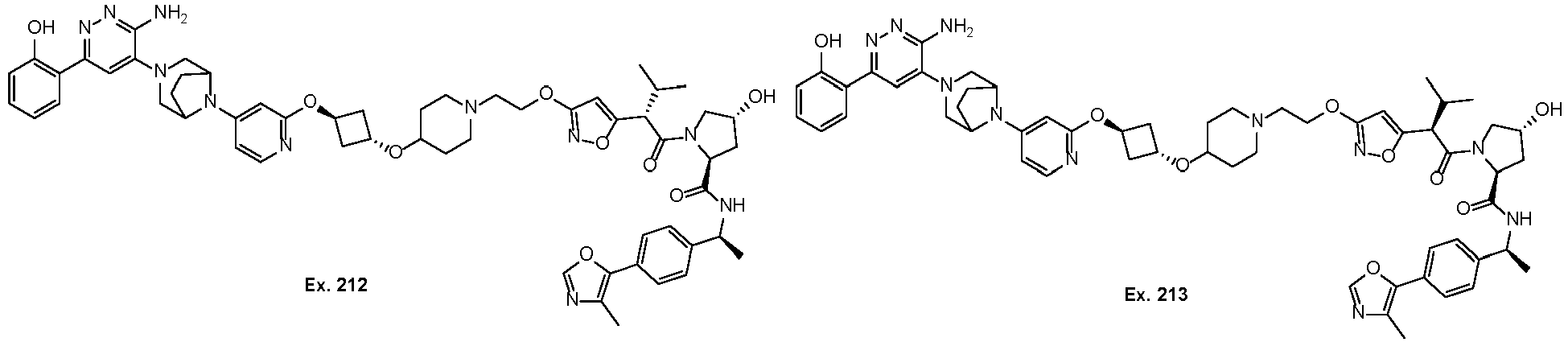
- Prepared using procedures analogous to those described in steps 1 and 2 of examplary compound 117, followed by steps described for exemplary compound 180.
-

- tert-Butyl (2S,4R)-4-hydroxy-2-((2-methoxy-4-(4-methylthiazol-5-yl)benzyl)carbamoyl)pyrrolidine-1-carboxylate was prepared according to the scheme below using standard procedures obvious to those skilled in the art.

- tert-Butyl (2S,4R)-4-hydroxy-2-((2-methoxy-4-(4-methylthiazol-5-yl)benzyl)carbamoyl)pyrrolidine-1-carboxylate was converted to the final compounds using standard procedures described for other examples above.
-

-

- To a solution of methyl 3-hydroxycyclobutanecarboxylate (14.2 g, 109.11 mmol, 1.00 eq) in DMF (150 mL) was added sodium hydride (5.24 g, 130.93 mmol, 60% purity, 1.20 eq), and the mixture was stirred for 0.5 hour at 0°C. Following that, benzyl bromide (20.53 g, 120.02 mmol, 14.26 mL, 1.1 eq) was added, and the mixture was stirred at 25°C for 2 hours. The reaction mixture was quenched by saturated ammonium chloride solution (200 mL) at 25°C, and then diluted with water (100 mL) and extracted with ethyl acetate (80 mL × 3). The combined organic layers were washed with brine (150 mL × 2), dried over anhydrous sodium sulfate, filtered and concentrated under reduced pressure to give a residue. The residue was purified by flash silica gel chromatography (0~20% ethyl acetate/petroleum ether gradient). Compound methyl 3-benzyloxycyclobutanecarboxylate (8.9 g, 40.41 mmol, 37% yield) was obtained as a light yellow oil.
-

- To a solution of lithium aluminum hydride (1.53 g, 40.41 mmol, 1.00 eq) in tetrahydrofuran (80 mL) was added methyl 3-benzyloxycyclobutanecarboxylate (8.90 g, 40.41 mmol, 1.00 eq) at 0°C, and the mixture was stirred at 25°C for 2 hours. The reaction mixture was quenched by water (1 mL), sodium hydroxide solution (15%, 2 mL) and water (3 mL) at 25°C, and then diluted with ethyl acetate (80 mL) and extracted with ethyl acetate (15 mL × 3). T1he combined organic layers were washed with brine (50 mL × 2), dried over anhydrous sodium sulfate, filtered and concentrated under reduced pressure to give a residue. The residue was purified by flash silica gel chromatography (0~50% ethyl acetate/petroleum ether). Compound (3-benzyloxycyclobutyl)methanol (7.4 g, 38.5 mmol, 95% yield) was obtained as a colorless oil.
-

- To a solution of (3-benzyloxycyclobutyl)methanol (7.4 g, 38.49 mmol, 1.00 eq) and 3,4-dihydro-2H-pyran (16.19 g, 192.5 mmol, 17.6 mL, 5.00 eq) in dichloromethane (125 mL) was added pyridinium p-toluenesulfonate (967 mg, 3.85 mmol, 0.10 eq), and the mixture was stirred at 25°C for 12 hours. Water (200 mL) was added to the mixture, and the resulting mixture was extracted with dichloromethane (100 mL × 2). Then combined organic layers were washed with brine (150 mL × 2), dried over anhydrous sodium sulfate, filtered and concentrated under reduced pressure to give a residue. The residue was purified by column chromatography (SiO2, petroleum ether: ethyl acetate = 1:0 to 20:1). Compound 2-[(3-benzyloxycyclobutyl)methoxy]tetrahydropyran (10.20 g, 36.9 mmol, 95 % yield) was obtained as a colorless oil.
-

- To a solution of 2-[(3-benzyloxycyclobutyl)methoxy]tetrahydropyran (10.20 g, 36.9 mmol, 1.00 eq) in methanol (100 mL) was added 10% palladium on carbon (2 g, 36.91 mmol) under nitrogen. The suspension was degassed under vacuum and purged with hydrogen several times. The mixture was stirred under hydrogen (15 psi) at 25°C for 16 hours. The reaction was filtered and concentrated under reduced pressure to give a residue. Compound 3-(tetrahydropyran-2-yloxymethyl)cyclobutanol (6.28 g, 33.7 mmol, 91% yield) was obtained as a colorless oil.
-

- To a solution of pyridin-4-ol (4 g, 42.06 mmol, 1 eq), 3-(tetrahydropyran-2-yloxymethyl) cyclobutanol (8.62 g, 46.27 mmol, 1.1 eq), and triphenylphosphine (33.10 g, 126.18 mmol, 3 eq) in toluene (40 mL) was added diisopropyl azodicarboxylate (25.52 g, 126.18 mmol, 24.5 mL, 3 eq) in toluene (20 mL) dropwise at 0 °C under nitrogen. The reaction mixture was stirred at 100°C for 12 hours. The mixture was concentrated in vacuum to remove most of toluene. Water (150 mL) and ethyl acetate (100 mL) were added to the mixture, hydrochloric acid solution (2M) was added to the mixture to adjust pH to about 3, and the resulting mixture was extracted with ethyl acetate (100 mL x 2). Saturated sodium bicarbonate was added to the aqueous phase to adjust pH about 8, and the resulting mixture was extracted with ethyl acetate (150 mL × 5). The combined organic phase was washed with brine (150 mL), dried over sodium sulfate, filtered and concentrated in vacuum. The crude product was purified by preparative HPLC (column: Kromasil Eternity XT 250*80mm*10um;mobile phase: [water (0.05% ammonia hydroxide v/v)-ACN];B%: 5%-30%, 31 min). ((1r,3r)-3-(Pyridin-4-yloxy)cyclobutyl)methanol (4.2 g, 23.0 mmol, 54% yield) was obtained as a light yellow oil.
-

- To a solution of ((1r,3r)-3-(pyridin-4-yloxy)cyclobutyl)methanol (4.2 g, 23.44 mmol, 1 eq) in toluene (40 mL) was added benzyl bromide (4.41 g, 25.78 mmol, 3.1 mL, 1.1 eq). The reaction mixture was stirred at 80 °C for 4 h. The mixture was concentrated in vacuum. The residue was triturated with petroleum ether and ethyl acetate (40 mL, V/V= 1/1). 1-Benzyl-4-((1r,3r)-3-(hydroxymethyl)cyclobutoxy)pyridin-1-ium (8 g, 22.8 mmol, 97% yield) was obtained as a white solid.
-

- To a solution of 1-benzyl-4-((1r,3r)-3-(hydroxymethyl)cyclobutoxy)pyridin-1-ium (8 g, 22.84 mmol, 1 eq) in ethanol (100 mL) was added sodium borohydride (1.73 g, 45.68 mmol, 2 eq) at 0°C. The reaction mixture was stirred at 20°C for 4 hours. Water (100 mL) was added to the mixture to quench the reaction. The resulting mixture was extracted with ethyl acetate (100 mL × 3). The combined organic phase was washed with brine (100 mL), dried over sodium sulfate, filtered and concentrated in vacuum. The residue was purified by silica gel chromatography (petroleum ether: ethyl acetate =50:1 to 0:1). ((1r,3r)-3-((1-Benzyl-1,2,3,6-tetrahydropyridin-4-yl)oxy)cyclobutyl)methanol (5.2 g, 19.02 mmol, 83% yield) was obtained as a light yellow oil.
-

- To a solution of [3-[(1-benzyl-3,6-dihydro-2H-pyridin-4-yl)oxy]cyclobutyl]methanol (5.2 g, 19.02 mmol, 1 eq) and di-tert-butyl dicarbonate (8.30 g, 38.04 mmol, 8.7 mL, 2 eq) in methanol (100 mL) was added 10% palladium on activated carbon catalyst (0.7 g) and palladium hydroxide 20% on carbon (0.7 g) under nitrogen. The reaction mixture was stirred at 40°C under hydrogen (50 psi) for 16 hours. The mixture was filtered through a Celite pad, and the filtrate was concentrated to give crude product. The residue was purified by silica gel chromatography (petroleum ether: ethyl acetate = 100:1 to 0:1). tert-Butyl 4-((1r,3r)-3-(hydroxymethyl)cyclobutoxy)piperidine-1-carboxylate (4.5 g, 15.77 mmol, 83% yield) was obtained as a colorless oil.
-

- To a solution of tert-butyl 4-((1r,3r)-3-(hydroxymethyl)cyclobutoxy)piperidine-1-carboxylate (2.5 g, 8.76 mmol, 1 eq) in dichloromethane (25 mL) was added Dess-Martin periodinane (4.46 g, 10.51 mmol, 1.2 eq) at 0°C. The reaction mixture was stirred at 20 °C for 2 hours. The mixture was filtered, and saturated sodium bicarbonate (50 mL) was added to the mixture. The aqueous phase was extracted with ethyl acetate (50 mL × 3). The combined organic phase was washed with brine (80 mL), dried over sodium sulfate, filtered and concentrated in vacuum. The residue was purified by silica gel chromatography (petroleum ether: ethyl acetate = 1:0 to 5:1). tert-Butyl 4-((1r,3r)-3-formylcyclobutoxy)piperidine-1-carboxylate (2.0 g, 7.06 mmol, 80% yield) was obtained as a colorless oil.
-

- To a solution of tert-butyl 4-((1r,3r)-3-formylcyclobutoxy)piperidine-1-carboxylate (2.0 g, 7.06 mmol, 1 eq) in methanol (20 mL) was added potassium carbonate (1.95 g, 14.12 mmol, 2 eq) and 1-diazo-1-dimethoxyphosphoryl-propan-2-one (1.42 g, 7.41 mmol, 1.05 eq) at 0°C. The reaction mixture was stirred at 20°C for 12 hours. Water (100 mL) was added to the mixture, the resulting mixture was extracted with ethyl acetate (50 mL × 3). The combined organic phase was washed with brine (50 mL), dried over sodium sulfate, filtered and concentrated in vacuum. The residue was purified by silica gel chromatography (petroleum ether: ethyl acetate = 1:0 to 20:1). tert-Butyl 4-((1r,3r)-3-ethynylcyclobutoxy)piperidine-1-carboxylate (1.3 g, 4.65 mmol, 66% yield) was obtained as a colorless oil.
-

- To a solution of tert-butyl 4-((1r,3r)-3-ethynylcyclobutoxy)piperidine-1-carboxylate (1.7 g, 6.09 mmol, 1 eq) in tetrahydrofuran (17 mL) was added n-butyllithium (2.5 M, 3.6 mL, 1.5 eq) at -78°C. The mixture was stirred at -78°C for 0.5 hour. Then isobutyl chloroformate (1.66 g, 12.17 mmol, 1.6 mL, 2 eq) was added to the mixture, and the reaction mixture was stirred at -78°C for 0.5 hour and at 20°C for 1 hour. Saturated ammonium chloride (80 mL) was added to the mixture, and the resulting mixture was extracted with ethyl acetate (80 mL × 3). The combined organic phase was washed with brine (100 mL), dried over sodium sulfate, filtered and concentrated in vacuum. The residue was purified by silica gel chromatography (petroleum ether: ethyl acetate = 1:0 to 5:1). tert-Butyl 4-((1r,3r)-3-(3-isobutoxy-3-oxoprop-1-yn-1-yl)cyclobutoxy)piperidine-1-carboxylate (2 g, 5.27 mmol, 86% yield) was obtained as a light yellow oil.
-

- To a solution of tert-butyl 4-[3-(3-isobutoxy-3-oxo-prop-1-ynyl)cyclobutoxy]piperidine-1- carboxylate (2 g, 5.27 mmol, 1 eq) in dichloromethane (20 mL) was added dropwise diisobutylaluminum hydride solution in DCM (1 M, 6.3 mL, 1.2 eq) at - 78°C. The reaction mixture was stirred at -78°C for 1 hour. Saturated sodium bicarbonate (10 mL) was added to the mixture, and ethyl acetate (100 mL) was added to the mixture. The mixture was filtered through a Celite pad, and was extracted with ethyl acetate (50 mL × 3). The combined organic phase was washed with brine (70 mL), dried over sodium sulfate, filtered and concentrated in vacuum. The residue was purified by silica gel chromatography (petroleum ether: ethyl acetate = 1:0 to 5:1). tert-Butyl 4-((1r,3r)-3-(3-oxoprop-1-yn-1-yl)cyclobutoxy)piperidine-1-carboxylate (1.2 g, 3.90 mmol, 74% yield) was obtained as a colorless oil.
-

- To a solution of tert-butyl 4-[3-(3-oxoprop-1-ynyl)cyclobutoxy]piperidine-1-carboxylate (1.2 g, 3.90 mmol, 1 eq) in ethanol (10 mL) was added sodium borohydride (177 mg, 4.68 mmol, 1.2 eq) in three portions at 0°C. The reaction mixture was stirred at 20°C for 1 hour. Water (100 mL) was added to the mixture, and the resulting mixture was extracted with ethyl acetate (50 mL × 3). The combined organic phase was washed with brine (50 mL), dried over sodium sulfate, filtered and concentrated in vacuum. The residue was purified by silica gel chromatography (petroleum ether: ethyl acetate = 50:1 to 1:1). tert-Butyl 4-((1r,3r)-3-(3-hydroxyprop-1-yn-1-yl)cyclobutoxy)piperidine-1-carboxylate (1.06 g, 3.43 mmol, 87% yield) was obtained as a colorless oil.
-

- To a solution of tert-butyl 4-((1r,3r)-3-(3-hydroxyprop-1-yn-1-yl)cyclobutoxy)piperidine-1-carboxylate (1.06 g, 3.43 mmol, 1 eq) in dichloromethane (10 mL) was added triphenylphosphine (1.08 g, 4.11 mmol, 1.2 eq) and carbon tetrabromide (1.36 g, 4.11 mmol, 1.2 eq) at 0°C. The reaction mixture was stirred at 20°C for 3 hours. The mixture was concentrated in vacuum. The residue was purified by silica gel chromatography (petroleum ether: ethyl acetate = 1:0 to 20:1). tert-Butyl 4-[3-(3-bromoprop-1-ynyl)cyclobutoxy] piperidine-1-carboxylate (1 g, 2.69 mmol, 78% yield) was obtained as a light yellow oil.
- tert-Butyl 4-((1r,3r)-3-(3-hydroxyprop-1-yn-1-yl)cyclobutoxy)piperidine-1-carboxylate was converted to the final compound according to the scheme below using procedures described for other examples above.

-

-

- A mixture of 2-bromo-4-fluoro-pyridine (310 mg, 1.76 mmol, 1.2 eq), 4-(3,8-diazabicyclo[3.2.1]octan-3-yl)-6-[2-(methoxymethoxy)phenyl]pyridazin-3-amine (500 mg, 1.46 mmol, 1 eq), and diisopropylethylamine (2.27 g, 17.57 mmol, 3 mL, 12 eq) in dimethylsulfoxide (30 mL) was degassed and purged with nitrogen for three times, and then the mixture was stirred at 130°C for 5 hours under nitrogen atmosphere. The reaction mixture was diluted with water (50 mL) and extracted with ethyl acetate (50 mL) three times. The combined organic layers were dried over anhydrous sodium sulfate and concentrated to give the crude product. The residue was purified by semi-preparative reverse phase chromatography (column: Phenomenex Synergi C18 150*30mm*4 um; mobile phase: [water (0.225% FA) - ACN]; B%: 15% - 45%, 10 min). 4-[8-(2-Bromo-4-pyridyl)-3,8-diazabicyclo[3.2.1]octan-3-yl]-6-[2-(methoxymethoxy)phenyl]pyridazin-3-amine (562 mg, 1.13 mmol, 77% yield) was obtained as a yellow solid.
-

- A mixture of 4-[8-(2-bromo-4-pyridyl)-3,8-diazabicyclo[3.2.1]octan-3-yl]-6-[2-(methoxymethoxy)phenyl]pyridazin-3-amine (568 mg, 1.14 mmol, 1 eq), tert-butyl 4-((1r,3r)-3-ethynylcyclobutoxy)piperidine-1-carboxylate (479 mg, 1.71 mmol, 1.5 eq), bis(triphenylphosphine)palladium(II) dichloride (80 mg, 0.1 mmol, 0.1 eq), copper iodide (22 mg, 0.1 mmol, 0.1 eq) and N-isopropylpropan-2-amine (8.13 g, 80.38 mmol, 11.36 mL, 70.39 eq) in dimethylformamide (35 mL) was degassed and purged with nitrogen three times, and then the mixture was stirred at 75°C for 12 hours under nitrogen atmosphere. The reaction mixture was diluted with water (30 mL) and extracted with ethyl acetate (60 mL) three times. The combined organic layers were washed with brine (50 mL) two times, dried over anhydrous sodium sulfate and concentrated to afford crude product. The residue was purified by semi-preparative reverse phase chromatography (column: Phenomenex luna C18 250*50mm*10 um; mobile phase: [water (0.225% FA) - ACN]; B%: 15% - 45%, 25 min). tert-Butyl 4-((1r,3r)-3-((4-(3-(3-amino-6-(2-(methoxymethoxy)phenyl)pyridazin-4-yl)-3,8-diazabicyclo[3.2.1]octan-8-yl)pyridin-2-yl)ethynyl)cyclobutoxy)piperidine-1-carboxylate (581 mg, 0.8 mmol, 73% yield) was obtained as a yellow solid.
- tert-Butyl 4-((1r,3r)-3-((4-(3-(3-amino-6-(2-(methoxymethoxy)phenyl)pyridazin-4-yl)-3,8-diazabicyclo[3.2.1]octan-8-yl)pyridin-2-yl)ethynyl)cyclobutoxy)piperidine-1-carboxylate was converted to the final compound as described for other examples above.
-

-

- To a solution of methyl 2-(3-hydroxyisoxazol-5-yl)-3-methyl-butanoate (500 mg, 2.51 mmol, 1 eq) and 3-bromopropan-1-ol (523 mg, 3.77 mmol, 0.34 mL, 1.5 eq) in N,N-dimethylformamide (5 mL) was added potassium carbonate (693 mg, 5.02 mmol, 2 eq) at 20°C, and the mixture was stirred at 80°C for 4 hours. The reaction mixture was quenched by water (20 mL), then was extracted with ethyl acetate (10 mL × 3). The combined organic layers were washed with brine (10 mL), dried over anhydrous sodium sulfate, filtered and concentrated under reduced pressure to give a residue. The residue was purified by silica gel column chromatography (petroleum ether/ethyl acetate = 20:1 to 4:1). Methyl 2-[3-(3-hydroxypropoxy)isoxazol-5-yl]-3-methyl-butanoate (370 mg, 1.44 mmol, 57% yield) was obtained as a colorless oil.
-

- To a solution of methyl 2-[3-(3-hydroxypropoxy)isoxazol-5-yl]-3-methyl-butanoate (370 mg, 1.44 mmol, 1 eq) in dichloromethane (5 mL) was added triethylamine (291 mg, 2.88 mmol, 0.40 mL, 2 eq) and p-toluenesulfonyl chloride (411 mg, 2.16 mmol, 1.5 eq) sequentially at 20 °C and then stirred at 20 °C for 16 h. The reaction mixture was concentrated to give a residue. The residue was purified by prep-TLC (petroleum ether/ethyl acetate = 3/1). Methyl 3-methyl-2-[3-[3-(p-tolylsulfonyloxy)propoxy]isoxazol-5-yl]butanoate (438 mg, 1.06 mmol, 74% yield) was obtained as a colorless oil.
-

- To a solution of methyl 3-methyl-2-[3-[3-(p-tolylsulfonyloxy)propoxy]isoxazol-5-yl]butanoate (250 mg, 0.61 mmol, 1 eq) and 2-[6-amino-5-[8-[2-[3-(4-piperidyloxy)cyclobutoxy]-4-pyridyl]-3,8-diazabicyclo[3.2.1]octan-3-yl]pyridazin-3-yl]phenol (386 mg, 0.61 mmol, 1 eq, 2trifluoroacetate) in dimethyl sulfoxide (3 mL) was added N,N-diisopropylethylamine (314 mg, 2.43 mmol, 0.42 mL, 4 eq) and potassium iodide (10 mg, 0.06 mmol, 0.1 eq) at 20°C, and the mixture was stirred at 80°C for 12 hours. The reaction mixture was diluted with water (20 mL), then was extracted with ethyl acetate (10 mL × 3). The combined organic layers were washed with brine (10 mL), dried over anhydrous sodium sulfate, filtered and concentrated under reduced pressure to give a residue. The residue was purified by silica gel column chromatography (dichloromethane/methanol = 10/1). Methyl 2-[3-[3-[4-[3-[[4-[3-[3-amino-6-(2-hydroxyphenyl)pyridazin-4-yl]-3,8-diazabicyclo[3.2.1]octan-8-yl]-2-pyridyl]oxy]cyclobutoxy]-1-piperidyl]propoxy]isoxazol-5-yl]-3-methyl-butanoate (90 mg, 0.11 mmol, 17% yield) was obtained as a yellow oil.
- Methyl 2-[3-[3-[4-[3-[[4-[3-[3-amino-6-(2-hydroxyphenyl)pyridazin-4-yl]-3,8-diazabicyclo[3.2.1]octan-8-y1]-2-pyridyl]oxy]cyclobutoxy]-1-piperidyl|propoxy]isoxazol-5-yl]-3-methyl-butanoate was converted to the final compound according to the scheme below using procedures described for other examples above.

-

-

- To a solution of methyl 2-[3-(2,2-diethoxyethoxy)isoxazol-5-yl]-3-methyl-butanoate (500 mg, 1.59 mmol, 1 eq) in N,N-dimethylformamide (10 mL) was added N-chlorosuccinimide (423 mg, 3.17 mmol, 2 eq). The reaction mixture was stirred at 70°C for 3 hours. The reaction mixture was diluted with water (50 mL), and extracted with ethyl acetate (60 mL × 3). The combined organic layer was washed with brine (20 mL × 2). The organic layer was dried over anhydrous sodium sulfate, filtered and concentrated under vacuum to get the residue. The residue was purified by prep-HPLC (column: Phenomenex Synergi C18 150*25*10 um; mobile phase: [water (0.225% FA) - ACN]; B%: 65% - 95%, 9 min) to get methyl 2-[4-chloro-3-(2,2-diethoxyethoxy)isoxazol-5-yl]-3-methyl-butanoate (337 mg, 0.965 mmol, 61% yield) as a colorless oil.
-

- To a solution of methyl 2-[4-chloro-3-(2,2-diethoxyethoxy)isoxazol-5-yl]-3-methyl-butanoate (377 mg, 1.08 mmol, 1 eq) in methanol (2 mL) and water (1 mL) was added lithium hydroxide monohydrate (181 mg, 4.31 mmol, 4 eq). The reaction mixture was stirred at 20°C for 2 hours. The mixture was cooled to 0°C and the pH was adjusted to 6 with 1M hydrogen chloride, then the solution was concentrated under vacuum to get the residue. The residue was purified by prep-HPLC (column: Phenomenex luna C18 150*25 10 um; mobile phase: [water (0.225% FA) - ACN]; B%: 54% - 74%, 7.8 min) to get the product. 2-[4-chloro-3-(2,2-diethoxyethoxy)isoxazol-5-yl]-3-methyl-butanoic acid (229 mg, 0.68 mmol, 63% yield) was obtained as a white solid.
- 2-[4-Chloro-3-(2,2-diethoxyethoxy)isoxazol-5-yl]-3-methyl-butanoic acid was converted to the final compound using procedures described for other examples above.
- Exemplary compound 222 was prepared using analogous procedures.
-

-

- To a solution of 5-bromo-2-methyl-benzonitrile (5 g, 25.50 mmol, 1 eq) in carbon tetrachloride (50 mL) was added N-bromosuccinimide (4.77 g, 26.78 mmol, 1.05 eq) and 2,2-azobis(2-methylpropionitrile) (419 mg, 2.55 mmol, 0.1 eq) under nitrogen. The reaction mixture was stirred at 80°C for 16 h. The mixture was filtered, and the filtrate was concentrated in vacuum. The residue was purified by silica gel chromatography (petroleum ether: ethyl acetate = 1:0 to 10:1). 5-Bromo-2-(bromomethyl)benzonitrile (4.5 g, 16.37 mmol, 64% yield) was obtained as a light yellow solid.
-

- To a solution of 5-bromo-2-(bromomethyl)benzonitrile (4.4 g, 16.00 mmol, 1 eq) and tert-butyl N-tert-butoxycarbonylcarbamate (4.17 g, 19.20 mmol, 1.2 eq) in acetonitrile (50 mL) was added potassium carbonate (4.42 g, 32.01 mmol, 2 eq). The reaction mixture was stirred at 50°C for 12 hours. LCMS showed most of 5-bromo-2-(bromomethyl)benzonitrile was consumed. Water (100 mL) was added to the mixture, and the resulting mixture was extracted with ethyl acetate (50 mL × 3). The combined organic phase was washed with brine (50 mL), dried over sodium sulfate, filtered and concentrated in vacuum. The residue was purified by silica gel chromatography (petroleum ether: ethyl acetate = 100:1 to 5:1). tert-Butyl N-[(4-bromo-2-cyano-phenyl)methyl]-N-tert-butoxycarbonyl-carbamate (6.4 g, 15.56 mmol, 97% yield) was obtained as a colorless oil.
-

- To a solution of tert-butyl N-[(4-bromo-2-cyano-phenyl)methyl]-N-tert-butoxycarbonyl- carbamate (2 g, 4.86 mmol, 1 eq), 4,4,5,5-tetramethyl-2-(4,4,5,5-tetramethyl-1,3,2- dioxaborolan-2-yl)-1,3,2-dioxaborolane (1.36 g, 5.35 mmol, 1.1 eq) in dioxane (20 mL) was added potassium acetate (1.19 g, 12.16 mmol, 2.5 eq) and (1,1'-bis(diphenylphosphino) ferrocene)palladium(II) dichloride (356 mg, 0.49 mmol, 0.1 eq) under nitrogen. The reaction mixture was stirred at 90°C for 12 hours. The mixture was filtered through a Celite pad, and the filtrate was concentrated to give tert-butyl N-tert-butoxycarbonyl-N-[[2-cyano-4-(4,4,5,5-tetramethyl-1,3,2-dioxaborolan-2-yl)phenyl]methyl]carbamate (2.2 g, crude) as a black oil.
-

- To a solution of tert-butyl N-tert-butoxycarbonyl-N-[[2-cyano-4-(4,4,5,5-tetramethyl-1,3,2- dioxaborolan-2-yl)phenyl]methyl]carbamate (2.2 g, 4.80 mmol, 1 eq), 5-bromo-4-methylthiazole (940 mg, 5.28 mmol, 1.1 eq) in dioxane (20 mL) and water (4 mL) was added potassium carbonate (1.66 g, 12.00 mmol, 2.5 eq) and (1,1'-bis(diphenylphosphino)ferrocene)palladium(II) dichloride (351 mg, 0.48 mmol, 0.1 eq) under nitrogen. The reaction mixture was stirred at 100°C for 12 hours. Water (100 mL) was added to the mixture, the resulting mixture was extracted with ethyl acetate (50 mL × 3). The combined organic phase was washed with brine (50 mL), dried over sodium sulfate, filtered and concentrated in vacuum. The residue was purified by silica gel chromatography (petroleum ether: ethyl acetate = 100:1 to 1:1). tert-Butyl N-tert-butoxycarbonyl-N-[[2-cyano-4-(4-methylthiazol-5-yl)phenyl] methyl]carbamate (1.7 g, 3.96 mmol, 82% yield) was obtained as a light yellow solid.
- tert-Butyl N-tert-butoxycarbonyl-N-[[2-cyano-4-(4-methylthiazol-5-yl)phenyl] methyl]carbamate was converted to the final compound as described above for other examples.
- Exemplary compound 224 was prepared using analogous procedures.
-

-

- To a mixture of benzyl 3-oxoazetidine-1-carboxylate (25 g, 122 mmol, 1 eq) and 2-methylpropane-2-sulfinamide (14.8 g, 122 mmol, 1 eq) in THF (250 mL) was added titanium(IV) isopropylate (38.9 g, 171 mmol, 35.4 mL, 1.4 eq) in one portion at 15 °C under nitrogen. The mixture was stirred at 60°C for 2 hours. The mixture was poured into ethyl acetate and ice-water (1000 mL) and stirred for 20 minutes, filtered. The aqueous phase was extracted with ethyl acetate (500 mL × 3). The combined organic phase was washed with brine (200 mL × 3), dried with anhydrous sodium sulfate, filtered and concentrated in vacuum. The residue was purified by silica gel chromatography (petroleum ether/ethyl acetate = 30/1 to 8/1) to afford benzyl 3-tert-butylsulfinyliminoazetidine-1-carboxylate (39 g, crude) as a yellow solid.
-

- To a solution of 1-bromo-4-iodo-benzene (35.78 g, 126 mmol, 1 eq) in THF (350 mL) was added n-butyllithium (2.5 M, 50.6 mL, 1 eq) dropwise at -70°C under nitrogen, and the mixture was stirred at this temperature for 30 minutes. Then solution of benzyl 3-tert-butylsulfinyliminoazetidine-1-carboxylate (39 g, 126.46 mmol, 1 eq) in THF (70 mL) was added dropwise under nitrogen. The reaction mixture was stirred at -70°C for 1 hour. The mixture was quenched with ice water (200 mL). The aqueous phase was extracted with ethyl acetate (500 mL × 3). The combined organic phase was washed with brine (200 mL × 2), dried with anhydrous sodium sulfate, filtered and concentrated in vacuum. The residue was purified by silica gel chromatography (petroleum ether/ethyl acetate = 3/1 to 1/1). Then the crude product was purified by semi-preparative reverse phase HPLC(column: Phenomenex luna c18 250 mm*100 mm*10 um; mobile phase: [water (0.1%TFA) - ACN]; B%: 40ACN% - 70ACN%, 45 min) to afford benzyl 3-(4-bromophenyl)-3-(tert-butylsulfinylamino)azetidine-1-carboxylate (4.62 g, 9.93 mmol, 7% yield) as a yellow oil. In addition, 4.16 g of somewhat impure product (purity 86%) was collected as a yellow oil.
-

- To a mixture of benzyl 3-(4-bromophenyl)-3-(tert-butylsulfinylamino)azetidine-1-carboxylate (4.62 g, 9.93 mmol, 1 eq), potassium acetate (1.95 g, 19.85 mmol, 2 eq) and 4-methylthiazole (1.97 g, 19.85 mmol, 1.8 mL, 2 eq) in dimethylacetamide (60 mL) was added palladium(II) acetate (223 mg, 0.99 mmol, 0.1 eq) in one portion at 20°C under nitrogen. The mixture was stirred at 100°C for 16 hours. The mixture was cooled to 20°C, poured into ice-water (w/w = 1/1, 100 mL) and stirred for 5 minutes. The aqueous phase was extracted with ethyl acetate (50 mL × 4). The combined organic phase was washed with brine (30 mL × 2), dried with anhydrous sodium sulfate, filtered and concentrated in vacuum. The residue was purified by semi-preparative reverse phase HPLC (formic acid condition; column: Phenomenex Synergi Max-RP 250*50 mm*10 um;mobile phase: [water (0.225% FA)-ACN]; B%: 45ACN%-75ACN%, 29 min) to afford benzyl 3-(tert-butylsulfinylamino)-3-[4-(4-methylthiazol-5-yl)phenyl]azetidine-1-carboxylate (2.3 g, 4.76 mmol, 48% yield) as a yellow solid.
-

- A solution of benzyl 3-(tert-butylsulfinylamino)-3-[4-(4-methylthiazol-5-yl)phenyl]azetidine -1-carboxylate (3.4 g, 7.03 mmol, 1 eq) and hydrochloric acid/methanol (4 M, 30 mL, 17.07 eq) in dichloromethane (5 mL) was stirred at 25 °C for 2 h. Compound benzyl 3-amino-3-[4-(4-methylthiazol-5-yl)phenyl]azetidine-1-carboxylate hydrochloride (3 g, crude) was obtained as a white solid.
-

- To a mixture of benzyl 3-amino-3-[4-(4-methylthiazol-5-yl)phenyl]azetidine-1-carboxylate hydrochloride (3 g, 7.21 mmol, 1 eq), O-(7-azabenzotriazol-1-yl)-N,N,N',N'-tetramethyluronium hexafluorophosphate (4.11 g, 10.82 mmol, 1.5 eq) and (2S,4R)-1-tert-butoxycarbonyl-4-hydroxy-pyrrolidine-2-carboxylic acid (1.67 g, 7.21 mmol, 1 eq) in N,N-dimethylformamide (40 mL) was added triethylamine (2.19 g, 21.64 mmol, 3.0 mL, 3 eq) in one portion at 15 °C under nitrogen. The mixture was stirred at 15 °C for 1 h. The mixture was poured into ice-water (w/w = 1/1, 100 mL) and stirred for 5 min. The aqueous phase was extracted with ethyl acetate (60 mL × 3). The combined organic phase was washed with brine (30 mL × 2), dried with anhydrous sodium sulfate, filtered and concentrated under vacuum. The residue was purified by semi-preparative reverse phase HPLC (column: Phenomenex Synergi Max-RP 250*80 mm*10 um; mobile phase: [water (0.225% FA) - ACN]; B%: 30% - 60%, 30 min). Compound tert-butyl (2S,4R)-2-[[1-benzyloxycarbonyl-3-[4-(4-methylthiazol-5-yl)phenyl]azetidin-3-yl]carbamoyl]-4-hydroxy-pyrrolidine-1-carboxylate (3.32 g, 5.60 mmol, 77% yield) was obtained as a white solid.
-

- To a mixture of tert-butyl (2S,4R)-2-[[1-benzyloxycarbonyl-3-[4-(4-methylthiazol-5-yl) phenyl]azetidin-3-yl]carbamoyl]-4-hydroxy-pyrrolidine-1-carboxylate (1.1 g, 1.86 mmol, 1 eq) and triethylamine (666 mg, 6.59 mmol, 0.9 mL, 3.55 eq) in dichloromethane (100 mL) was added palladium(ii) chloride (329.10 mg, 1.86 mmol, 1 eq) in one portion at 0°C under nitrogen. Triethylsilane (2.81 g, 24.13 mmol, 3.8 mL, 13 eq) was added, and the reaction mixture was stirred at 20°C for 2 hours. To the reaction was added trifluoroacetic acid (4.23 g, 37.14 mmol, 2.75 mL, 20.01 eq), and the mixture was stirred at 20°C for an additional 1 hour. The mixture was filtered and concentrated under reduced pressure at 40°C. The residue was purified by semi-preparative reverse phase HPLC (formic acid condition; column: Kromasil 250*50 mm*10 um; mobile phase: [water (0.225% FA) - ACN]; B%: 26ACN% - 56ACN%, 28 min). tert-butyl (2S,4R)-4-hydroxy-2-[[3-[4-(4-methylthiazol-5-yl)phenyl] azetidin-3-yl]carbamoyl]pyrrolidine-1-carboxylate (336 mg, 0.73 mmol, 39% yield) was obtained as a white solid.
-

- A mixture of tert-butyl (2S,4R)-4-hydroxy-2-[[3-[4-(4-methylthiazol-5-yl)phenyl]azetidin-3-yl]carbamoyl]pyrrolidine-1-carboxylate (390 mg, 0.85 mmol, 1 eq) and formaldehyde (138 mg, 1.70 mmol, 0.1 mL, 37% purity, 2 eq) in dichloromethane (15 mL) was stirred at 20°C for 30 minutes. Acetic acid (51 mg, 0.85 mmol, 1 eq) and sodium triacetoxyborohydride (901 mg, 4.25 mmol, 5 eq) were added, and the mixture was stirred at 20°C for 5 hours. The mixture was concentrated under reduced pressure at 40°C. The residue was purified by semi-preparative reverse phase HPLC (formic acid condition; column: Phenomenex Synergi C18 150*25*10 um; mobile phase: [water (0.225% FA) - ACN]; B%: 0% - 30%, 10 min). tert-Butyl (2S,4R)-4-hydroxy-2-[[1-methyl-3-[4-(4-methylthiazol-5-yl)phenyl]azetidin-3-yl]carbamoyl]pyrrolidine-1-carboxylate (300 mg, 0.63 mmol, 74% yield) was obtained as a yellow oil.
- tert-Butyl (2S,4R)-4-hydroxy-2-[[1-methyl-3-[4-(4-methylthiazol-5-yl)phenyl]azetidin-3-yl]carbamoyl]pyrrolidine-1-carboxylate was converted to the final compound using procedures analogous to those described for examples above.
- Exemplary compound 228 was prepared using analogous procedures.
-

- Prepared according to the scheme below using procedures analogous to those described for exemplary compounds 76 and 70.

-

-

- To a mixture of tert-butyl (2S,4R)-4-hydroxy-2-[[3-[4-(4-methylthiazol-5-yl)phenyl]azetidin-3-yl]carbamoyl]pyrrolidine-1-carboxylate (300 mg, 0.65 mmol, 1 eq) and triethylamine (198 mg, 1.96 mmol, 3 eq) in dichloromethane (60 mL) was added acetic anhydride (100.18 mg, 0.98 mmol, 91.9 uL, 1.5 eq) in one portion at 25 °C under nitrogen. The mixture was stirred at 25 °C for 16 h. The mixture was concentrated under reduced pressure at 45 °C. The residue was purified by semi-preparative reverse phase HPLC (basic conditions, column: Waters Xbridge 150*25 5 um; mobile phase: [water (0.05% ammonia hydroxide v/v) - ACN]; B%: 10% - 40%, 10 min). The crude product tert-butyl (2S,4R)-2-[[1-acetyl-3-[4-(4-methylthiazol-5-yl)phenyl]azetidin-3-yl]carbamoyl]-4-hydroxy-pyrrolidine-1-carboxylate (232 mg, 0.46 mmol, 71% yield) was obtained as a yellow oil.
- tert-Butyl (2S,4R)-2-[[1-acetyl-3-[4-(4-methylthiazol-5-yl)phenyl]azetidin-3-yl]carbamoyl]-4-hydroxy-pyrrolidine-1-carboxylate was converted to the final product using procedures described for examples above.
- Exemplar compound 235 was prepared using analogous procedures.
-

- tert-Butyl (S)-(1-(2-fluoro-4-(4-methylthiazol-5-yl)phenyl)ethyl)carbamate was prepared according to the scheme below using procedures analogous to those described for exemplary compound 202.

- tert-Butyl (S)-(1-(2-fluoro-4-(4-methylthiazol-5-yl)phenyl)ethyl)carbamate was converted to the final compound using procedures analogous to those described for other examples.
- Exemplary compound 239 was prepared using analogous procedures.
-

-

- To a solution of ethyl trifluoroacetate (21.31 g, 150 mmol, 20.7 mL, 1.5 eq) in tetrahydrofuran (300 mL) was added lithium bis(trimethylsilyl)amide (1 M, 120 mL, 1.2 eq) at - 78°C. The mixture was stirred at -78°C for 1 hour. Then 1-(6-bromo-3-pyridyl)ethanone (20 g, 100 mmol, 1 eq) in tetrahydrofuran (20 mL) was added dropwise to the mixture at -78°C. The reaction mixture was stirred at 20°C for 2 hours. Saturated ammonium chloride (200 mL) was added to quench the reaction, water (500 mL) was added to the mixture. The resulting mixture was extracted with ethyl acetate (300 mL × 3). The combined organic phase was washed with brine (500 mL), dried over sodium sulfate, filtered and concentrated in vacuum. The residue was triturated with petroleum ether and ethyl acetate (255 mL, petroleum ether: ethyl acetate = 50:1) and filtered to afford a light yellow solid. The filtrate was concentrated in vacuum. The residue was purified by silica gel chromatography (petroleum ether: ethyl acetate = 10:1 to 0:1). 1-(6-Bromo-3-pyridyl)-4,4,4-trifluoro-butane-1,3-dione (28 g, 94.6 mmol, 94% yield) was obtained as a yellow solid.
-

- To a solution of 1-(6-bromo-3-pyridyl)-4,4,4-trifluoro-butane-1,3-dione (15 g, 50.67 mmol, 1 eq) in acetonitrile (150 mL) was added 1-(chloromethyl)-4-fluoro-1,4-diazoniabicyclo [2.2.2]octane;ditetrafluoroborate (44.87 g, 126.7 mmol, 2.5 eq). The reaction mixture was stirred at 90 °C for 3 h. Then water (1.83 g, 101.3 mmol, 1.8 mL, 2 eq) was added to the mixture, and the reaction mixture was stirred at 90°C for 15 minutes. Then triethylamine (25.64 g, 253.3 mmol, 35.2 mL, 5 eq) was added to the mixture at 20°C, and the reaction mixture was stirred at 20°C for 16 hours. Water (300 mL) was added to the mixture. The resulting mixture was extracted with ethyl acetate (300 mL × 3). The combined organic phase was washed with brine (500 mL), dried over sodium sulfate, filtered and concentrated in vacuum. The residue was purified by silica gel chromatography (dichloromethane: methanol = 1:0 to 10:1). 1-(6-Bromo-3-pyridyl)-2,2- difluoro-ethanone (7.9 g, crude) was obtained as a brown oil.
-

- To a solution of 1-(6-bromo-3-pyridyl)-2,2-difluoro-ethanone (7.9 g, 33.47 mmol, 1 eq) in ethanol (80 mL) was added sodium borohydride (1.27 g, 33.47 mmol, 1 eq) in three portions at 0°C. The reaction mixture was stirred at 0°C for 1 hour. Water (200 mL) was added to the mixture, and the resulting mixture was extracted with ethyl acetate (100 mL × 3). The combined organic phase was washed with brine (150 mL), dried over sodium sulfate, filtered and concentrated in vacuum. The residue was purified by silica gel chromatography (petroleum ether: ethyl acetate = 100:1 to 1:1). 1-(6-Bromo-3-pyridyl)-2,2-difluoro-ethanol (5.3 g, 21.20 mmol, 63% yield) was obtained as a light yellow oil.
-

- To a solution of 1-(6-bromo-3-pyridyl)-2,2-difluoro-ethanol (3.3 g, 13.86 mmol, 1 eq) and isoindoline-1,3-dione (2.45 g, 16.64 mmol, 1.2 eq) in tetrahydrofuran (30 mL) was added triphenylphosphine (4.36 g, 16.64 mmol, 1.2 eq) followed by, dropwise, diisopropyl azodicarboxylate (3.36 g, 16.64 mmol, 3.2 mL, 1.2 eq) in tetrahydrofuran (5 mL) under nitrogen at 0°C. The reaction mixture was stirred at 20°C for 12 hours. The mixture was concentrated in vacuum. The residue was purified by silica gel chromatography (petroleum ether: ethyl acetate = 1:0 to 5:1). 2-[1-(6-Bromo-3-pyridyl)-2,2-difluoro-ethyl]isoindoline-1,3-dione (2.8 g, 6.89 mmol, 49% yield) was obtained as a light yellow solid.
-

- To a solution of 2-[1-(6-bromo-3-pyridyl)-2,2-difluoro-ethyl]isoindoline-1,3-dione (2 g, 5.45 mmol, 1 eq) in ethanol (20 mL) was added hydrazine hydrate (1.36 g, 27.24 mmol, 1.3 mL, 5 eq). The reaction mixture was stirred at 80°C for 2 hours. Ethanol (30 mL) was added to the mixture, the mixture was filtered, and the filtrate was concentrated in vacuum. The residue was used in the next step directly. 1-(6-Bromo-3-pyridyl)-2,2-difluoro-ethanamine (1.2 g, crude) was obtained as a light yellow solid.
-

- To a solution of 1-(6-bromo-3-pyridyl)-2,2-difluoro-ethanamine (1.2 g, 5.06 mmol, 1 eq) and sodium bicarbonate (850 mg, 10.12 mmol, 2 eq) in tetrahydrofuran (5 mL) and water (5 mL) was added di-tert-butyldicarbonate (2.21 g, 10.12 mmol, 2.3 mL, 2 eq). The reaction mixture was stirred at 20°C for 2 hours. Water (100 mL) was added to the mixture, and the resulting mixture was extracted with ethyl acetate (50 mL × 3). The combined organic phase was washed with brine (60 mL), dried over sodium sulfate, filtered and concentrated in vacuum. The residue was purified by silica gel chromatography (petroleum ether: ethyl acetate = 3:1). The crude product was purified by preparative High Performance Liquid (column: Phenomenex Gemini C18 250*50mm*10 um;mobile phase: [water (0.05% ammonia hydroxide v/v)-ACN];B%: 40%-65%, 22 min). tert-Butyl N-[1-(6-bromo-3-pyridyl) -2,2-difluoroethyl]carbamate (1.4 g, 4.15 mmol, 82% yield) was obtained as a light yellow solid.
-

- To a solution of tert-butyl N-[1-(6-bromo-3-pyridyl)-2,2-difluoro-ethyl]carbamate (2 g, 5.93 mmol, 1 eq), 4-methyl-5-(4,4,5,5-tetramethyl-1,3,2-dioxaborolan-2-yl)thiazole (3.34 g, 14.83 mmol, 2.5 eq) in dioxane (50 mL) and water (10 mL) was added potassium carbonate (2.05 g, 14.83 mmol, 2.5 eq) and (1,1'-bis(diphenylphosphino)ferrocene)palladium(II) dichloride (434 mg, 0.59 mmol, 0.1 eq) under nitrogen. The reaction mixture was stirred at 100°C for 12 hours. Water (150 mL) was added to the mixture, and the resulting mixture was extracted with ethyl acetate (50 mL × 3). The combined organic phase was washed with brine (80 mL), dried over sodium sulfate, filtered and concentrated in vacuum. The residue was purified by silica gel chromatography (petroleum ether: ethyl acetate = 100:1 to 1:1). The residue was then additionally purified by preparative HPLC (column: Phenomenex Synergi C18 150*30mm*4um;mobile phase: [water(0.225%FA)-ACN];B%: 35%-65%,10min). tert-Butyl N-[2,2-difluoro-1-[6-(4- methylthiazol-5-yl)-3-pyridyl]ethyl]carbamate (480 mg, 1.33 mmol, 22% yield) was obtained as a light yellow solid.
-

- tert-Butyl N-[2,2-difluoro-1-[6-(4-methylthiazol-5-yl)-3-pyridyl]ethyl]carbamate (480 mg, 1.35 mmol, 1 eq) was purified by prep-SFC (SFC Column: DAICEL CHIRALPAK AY 250×50mm, I.D., 10um; Mobile phase: ethyl alcohol in CO2 from 30% to 30%; Flow rate: 60g/min; Wavelength: 220nm). Isomer 1 (tentatively designated as tert-butyl N-[(1S)-2,2-difluoro-1-[6-(4-methylthiazol-5-yl)- 3-pyridyl]ethyl]carbamate; 200 mg, 0.56 mmol, 82% yield) was obtained as a light yellow solid. Isomer 2 (tentatively designated as tert-butyl N-[(1R)-2,2-difluoro-1-[6-(4-methylthiazol-5-yl)-3-pyridyl] ethyl]carbamate; 210 mg, 0.59 mmol, 87% yield) was obtained as a light yellow solid.
-

- To a solution of 2-[3-(2,2-diethoxyethoxy)isoxazol-5-yl]-3-methyl-butanoic acid (400 mg, 1.33 mmol, 1 eq) and methyl (2S,4R)-4-hydroxypyrrolidine-2-carboxylate (241 mg, 1.33 mmol, 1 eq, hydrochloride) in N,N-dimethylformamide (5 mL) was added N,N-diisopropylethylamine (686 mg, 5.31 mmol, 0.9 mL, 4 eq) and O-(7-Azabenzotriazol-1-yl)-N,N,N',N'-tetramethyluronium hexafluorophosphate (605 mg, 1.59 mmol, 1.2 eq) at 0°C. The reaction mixture was stirred at 20°C for 1 hour. Water (50 mL) was added to the mixture, and the resulting mixture was extracted with ethyl acetate (20 mL × 3). The combined organic phase was washed with brine (30 mL × 2), dried over sodium sulfate, filtered and concentrated in vacuum. The residue was purified by preparative HPLC (column: Phenomenex Synergi C18 150*25*10um; mobile phase: [water(0.225%FA)-ACN]; B%: 36%-66%, 10min). Methyl (2S,4R)-1-[2-[3-(2,2- diethoxyethoxy)isoxazol-5-yl]-3-methyl-butanoyl]-4-hydroxy-pyrrolidine-2-carboxylate (450 mg, 1.05 mmol, 78% yield) was obtained as a colorless oil.
-

- The mixture was purified by prep-SFC (SFC Column: DAICEL CHIRALPAK IC 250×30mm, I.D., 10um; Mobile phase: methanol (0.1% NH4OH) in CO2 from 30% to 30%; Flow rate: 50g/min; Wavelength: 220nm). Methyl (2S,4R)-1-[(2S)-2-[3-(2,2-diethoxyethoxy)isoxazol-5-yl]-3-methyl-butanoyl]-4-hydroxy-pyrrolidine-2-carboxylate (180 mg, 0.36 mmol, 69% yield) was obtained as a colorless oil. Methyl (2S,4R)-1-[(2R)-2-[3-(2,2-diethoxyethoxy)isoxazol-5-yl]-3-methyl-butanoyl]-4-hydroxy-pyrrolidine-2-carboxylate (220 mg, 0.51 mmol, 96% yield) was obtained as a colorless oil.
- Methyl (2S,4R)-1-[(2R)-2-[3-(2,2- diethoxyethoxy)isoxazol-5-yl]-3-methylbutanoyl]-4-hydroxy-pyrrolidine-2-carboxylate was converted to the final compound according to the scheme below using procedures analogous to those described above for other examples.

- Exemplary compound 243 was prepared using analogous procedures.
-

-

- Into a 50-mL round-bottom flask, was placed (2R)-2-(4-bromophenyl)-2-[[(tert-butoxy)carbonyl]amino]acetic acid (1 g, 3.029 mmol, 1 equiv) in DMF (15 mL), to which was added diisopropylethylamine (1.57 g, 12.115 mmol, 4 equiv), N-methylcyclobutanamine hydrochloride (368 mg, 3.03 mmol, 1 equiv), and BOP (1.61 g, 3.63 mmol, 1.2 equiv) in sequence. The resulting solution was stirred for 2 hours at room temperature. The reaction was then quenched by the addition of water (10 mL). The resulting mixture was extracted with ethyl acetate (4 × 30 mL), and the combined organic layer was washed with brine (2 × 10 mL), dried over anhydrous sodium sulfate and concentrated. The residue was applied onto a silica gel column eluting with ethyl acetate/petroleum ether (1/1). This resulted in 1.1 g (91%) of tert-Butyl N-[(R)-(4-bromophenyl)[cyclobutyl(methyl)carbamoyl]methyl]carbamate as a yellow solid.
-

- Into a 100-mL round-bottom flask, was placed tert-butyl N-[(R)-(4-bromophenyl)[cyclobutyl(methyl)carbamoyl]methyl]carbamate (1 g, 2.52 mmol, 1 equiv), K2CO3 (1.04 g, 7.55 mmol, 3 equiv), 4-methyl-5-(4,4,5,5-tetramethyl-1,3,2-dioxaborolan-2-yl)-1,3-thiazole (850 mg, 3.78 mmol, 1.5 equiv), and Pd(dppf)Cl2 (184 mg, 0.25 mmol, 0.1 equiv) in dioxane (10 mL) and H2O (2 mL) under nitrogen atmosphere. The resulting mixture was stirred for 3 hours at 90°C in an oil bath under nitrogen atmosphere. The mixture was concentrated, and the residue was applied onto a silica gel column eluting with ethyl acetate/petroleum ether (1/1). This resulted in 480 mg (46%) of tert-butyl N-[(R)-[cyclobutyl(methyl)carbamoyl][4-(4-methyl-1,3-thiazol-5-yl)phenyl]methyl]carbamate as a yellow solid.
- tert-Butyl N-[(R)-[cyclobutyl(methyl)carbamoyl][4-(4-methyl-1,3-thiazol-5-yl)phenyl]methyl]carbamate was converted to the final compound using procedures analogous to those described above for other examples.
- Exemplary compound 245 was prepared using analogous procedures.
-

-

- Into a 250-mL round-bottom flask, was placed a solution of 4-(trifluoromethyl)benzaldehyde (3.0 g, 17.2 mmol, 1.0 equiv), (S)-2-methylpropane-2-sulfinamide (4.2 g, 0.035 mmol, 2.0 equiv), and titanium isopropoxide (14.9 g, 0.052 mmol, 3.0 equiv) in THF (50 mL). The resulting solution was stirred for 16 hours at 80°C in an oil bath. The reaction was then quenched by the addition of 200 mL water, and the mixture was extracted with ethyl acetate (100 mL × 3). The combined organic phase was washed with brine, dried over sodium sulfate and concentrated under reduced pressure. The residue was applied onto a silica gel column eluting with ethyl acetate/petroleum ether (1: 1). This resulted in 3.1 g (65 %) of (S)-2-methyl-N-[[4-(trifluoromethyl)phenyl]methylidene]propane-2-sulfinamide as a yellow oil.
-

- To a solution of (S)-2-methyl-N-[[4-(trifluoromethyl)phenyl]methylidene]propane-2-sulfinamide (3.1 g, 11.2 mmol, 1.0 equiv) in DCM (20 mL) was added methylmagnesium chloride solution (3.0 M in ether, 5 mL) dropwise over 20 minutes period at -48°C under nitrogen atmosphere. The resulting mixture was then stirred for 2 hours at room temperature. The reaction mixture was then quenched by the addition of 50 mL saturated NH4Cl solution and extracted with dichloromethane (50 mL × 3). The combined organic phase was washed with brine, dried over sodium sulfate and concentrated under reduced pressure. The residue was applied onto a silica gel column eluting with ethyl acetate/petroleum ether (1:1). This resulted in 1.83 g (56%) of (S)-2-methyl-N-[(1S)-1-[4-(trifluoromethyl)phenyl]ethyl]propane-2-sulfinamide as a white solid.
-
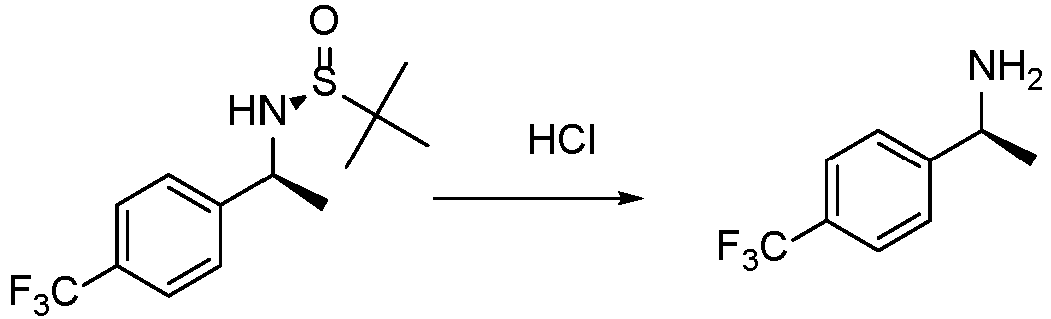
- Into a 100 mL round-bottom flask, was placed (S)-2-methyl-N-[(1S)-1-[4-(trifluoromethyl) phenyl]ethyl]propane-2-sulfinamide (1.8 g, 6.2 mmol, 1.0 equiv) in methanol (10 mL). This was followed by the addition of hydrogen chloride aqueous solution (37%, 5 mL). The resulting solution was stirred for 2 hours at room temperature, and then was concentrated under reduced pressure. This resulted in 970 mg (82%) of (1S)-1-[4-(trifluoromethyl)phenyl]ethan-1-amine as a white solid.
- (1S)-1-[4-(trifluoromethyl)phenyl]ethan-1-amine was converted to the final compound using procedures analogous to those described above for other examples.
- Example compound 247 was prepared using analogous procedures.
-

- As shown in the scheme above, tert-butyl 4-((1R,3R)-3-((4-bromopyridin-2-yl)oxy)cyclobutoxy)piperidine-1-carboxylate was deprotected under acidic conditions, and the resulting free cyclic amine reacted with the activated isoxazole derivative to form methyl 3-methyl-2-(3-(((perfluorobutyl)sulfonyl)oxy)isoxazol-5-yl)butanoate as a coupling product. A palladium catalyzed reaction of the pyridyl bromide fragment in the product with tert-butyl 3,8-diazabicyclo[3.2.1]octane-3-carboxylate followed by the cleavage of the tert-butyloxycarbonyl (Boc) protecting group yielded a free amine, which underwent a nucleophilic coupling reaction with 4-bromo-6-chloropyridazin-3-amine under heating in DMSO in the presence of an amine. A Suzuki coupling reaction of the pyridazine bromide with (2-hydroxyphenyl)boronic acid completed the assembly of the PTM binding moiety. Ester hydrolysis followed by condensation with (2S,4R)-4-hydroxy-N-((S)-1-(4-(4-methylthiazol-5-yl)phenyl)ethyl)pyrrolidine-2-carboxamide furnished the desired final product as a mixture of diastereomers, which were separated by supercritical fluid chromatography (SFC).
-

- As shown in the scheme above, a Mitsunobu reaction between methyl 2-(3-hydroxyisoxazol-5-yl)-3-methylbutanoate and (1R,3R)-3-(benzyloxy)cyclobutanol followed by the benzyloxy group cleavage provided methyl 2-(3-((1S,3S)-3-hydroxycyclobutoxy)isoxazol-5-yl)-3-methylbutanoate. Activation of the hydroxyl group with triflic anhydride followed by the triflate displacement with the cyclic amine including the WPTM5-WPTM3-WPTM2-WPTM1 fragment afforded the coupling product which included the linking group L. Ester hydrolysis followed by condensation with (2S,4R)-4-hydroxy-N-((S)-1-(4-(4-methylthiazol-5-yl)phenyl)ethyl)pyrrolidine-2-carboxamide furnished the desired final product.
-

- As shown in the scheme above, 4-bromo-6-chloropyridazin-3-amine was converted to a 4-vinyl derivative, which underwent a Heck coupling reaction with tert-butyl 4-((1R,3R)-3-((4-bromopyridin-2-yl)oxy)cyclobutoxy)piperidine-1-carboxylate to produce a coupling product. The 6-chloropyridazine moiety in the product then reacted with (2-hydroxyphenyl)boronic acid under Suzuki conditions to assemble the WPTM5-WPTM3 fragment. Subsequent Boc-deprotection followed by a reductive amination with (2S,4R)-4-hydroxy-1-((R)-3-methyl-2-(3-(2-oxoethoxy)isoxazol-5-yl)butanoyl)-N-((S)-1-(4-(4-methylthiazol-5-yl)phenyl)ethyl)pyrrolidine-2-carboxamide provided the desired final product.
-

- As shown in the scheme above, the hydroxyl group in tert-butyl 4-(2-hydroxyethyl)piperidine-1-carboxylate was activated with tosyl chloride, and the resulting tosylate underwent nucleophilic displacement with methyl 2-(3-hydroxyisoxazol-5-yl)-3-methylbutanoate. The Boc-group in the product was cleaved and the free cyclic amine reacted with 3-(hydroxymethyl)cyclobutanone and sodium triacetoxyborohydride to form methyl 2-(3-(2-(1-(3-(hydroxymethyl)cyclobutyl)piperidin-4-yl)ethoxy)isoxazol-5-yl)-3-methylbutanoate. Dess-Martin oxidation of the hydroxyl group followed reductive amination of the resulting aldehyde with a spiro-amine gave a coupling product which combined the PTM binding moiety and the linking group L. Ester hydrolysis followed by condensation with (2S,4R)-4-hydroxy-N-((S)-1-(4-(4-methylthiazol-5-yl)phenyl)ethyl)pyrrolidine-2-carboxamide furnished the desired final product.
-

- As shown in the scheme above, the assembly of the first coupling fragment started with tert-butyl 4-acetylpiperidine-1-carboxylate, which was reduced to the alcohol and converted to the tosylate. The tosyl group was displaced with 4-(4,4,5,5-tetramethyl-1,3,2-dioxaborolan-2-yl)-1H-pyrazole, and the product was coupled with 4-bromo-6-chloropyridazin-3-amine under Suzuki conditions to afford a racemic mixture of tert-butyl 4-(1-(4-(3-amino-6-(2-(methoxymethoxy)phenyl)pyridazin-4-yl)-1H-pyrazol-1-yl)ethyl)piperidine-1-carboxylates, which were separated by using chiral supercritical fluid chromatography (SFC). Subsequent Boc-deprotection provided the desired first coupling fragments in enantiomerically pure state.
- The formation of the second coupling fragment started with 3-methylenecyclobutanecarbonitrile, which was hydrolyzed to the carboxylic acid and protected as a benzyl ester. Hydroboration of the endo-double bond followed by oxidation provided a diastereomeric mixture of alcohols, which was separated by using supercritical fluid chromatography (SFC). The individual alcohols were oxidized with a Dess-Martin periodinane to provide the desired isomeric aldehydes.
- Reductive amination of the first and second coupling fragments with sodium borohydride followed by basic hydrolysis afforded (1R,3S)-3-((4-((S)-1-(4-(3-amino-6-(2-hydroxyphenyl)pyridazin-4-yl)-1H-pyrazol-1-yl)ethyl)piperidin-1-yl)methyl)cyclobutanecarboxylic acid, which underwent condensation with (2S,4R)-4-hydroxy-1-((S)-3-methyl-2-(3-(2-(piperidin-4-yl)ethoxy)isoxazol-5-yl)butanoyl)-N-((S)-1-(4-(4-methylthiazol-5-yl)phenyl)ethyl)pyrrolidine-2-carboxamide to provide the desired product. This method can be conveniently used to synthesize all enantiomerically pure isomers of the desired product by implementing reagents and intermediates having appropriate stereochemistry.
-

- As shown in the scheme above, tert-butyl 4-formylpiperidine-1-carboxylate underwent reductive amination with (2S,4R)-4-hydroxy-1-((S)-3-methyl-2-(3-(piperazin-1-yl)isoxazol-5-yl)butanoyl)-N-((S)-1-(4-(4-methylthiazol-5-yl)phenyl)ethyl)pyrrolidine-2-carboxamide and sodium cyanoborohydride to produce (2S,4R)-4-hydroxy-1-((S)-3-methyl-2-(3-(4-(piperidin-4-ylmethyl)piperazin-1-yl)isoxazol-5-yl)butanoyl)-N-((S)-1-(4-(4-methylthiazol-5-yl)phenyl)ethyl)pyrrolidine-2-carboxamide after Boc-deprotection. Subsequent reductive amination of the resulting compound with (1R,3R)-3-((4-(3-(3-amino-6-(2-hydroxyphenyl)pyridazin-4-yl)-3,8-diazabicyclo[3.2.1]octan-8-yl)pyridin-2-yl)oxy)cyclobutanecarbaldehyde under similar conditions provided the desired final product.
-

- As shown in the scheme above, a Mitsunobu reaction between 4-hydroxypyridine and tert-butyl 4-hydroxypiperidine-1-carboxylate provided tert-butyl 4-(pyridin-4-yloxy)piperidine-1-carboxylate, which was converted to a salt by alkylation of the pyridine nitrogen with benzyl bromide. The pyridine ring was subsequently reduced by a two-step procedure to form the double piperidine derivative, which reacted with methyl 3-methyl-2-(3-(((perfluorobutyl)sulfonyl)oxy)isoxazol-5-yl)butanoate under heteroaromatic nucleophilic substitution conditions to form a coupling product. Ester hydrolysis followed by condensation of the resulting acid with (2S,4R)-4-hydroxy-N-((S)-1-(4-(4-methylthiazol-5-yl)phenyl)ethyl)pyrrolidine-2-carboxamide provided a diastereomeric final products, which were separated by supercritical fluid chromatography (SFC).
-

- As shown in the scheme above, the synthesis of the PTM binding moiety started with 3-((4-methoxybenzyl)oxy)propan-1-ol which was treated with sodium hydride to open (S)-2-methyloxirane. Bromination of the resulting alcohol followed by bromide displacement with the enolate derived from methyl 2-(3-methylisoxazol-5-yl)acetate provided (3R)-methyl 4-(3-hydroxypropoxy)-3-methyl-2-(3-methylisoxazol-5-yl)butanoate. A Mitsunobu reaction of the product with 4-bromopyridin-2-ol followed by a palladium-catalyzed coupling of the pyridyl bromide moiety with mono-Boc-protected 3,8-diazabicyclo[3.2.1]octane afforded tert-butyl 8-(2-(3-((2R)-4-methoxy-2-methyl-3-(3-methylisoxazol-5-yl)-4-oxobutoxy)propoxy)pyridin-4-yl)-3,8-diazabicyclo[3.2.1]octane-3-carboxylate. Subsequent Boc-group cleavage provided a free amine, which underwent a nucleophilic coupling reaction with 4-bromo-6-chloropyridazin-3-amine by heating in the aprotic bipolar solvent (DMSO) in the presence of the amine (DIEA). A Suzuki coupling reaction of the pyridazine bromide with (2-hydroxyphenyl)boronic acid completed the assembly of the PTM binding moiety. Ester hydrolysis followed by condensation with (2S,4R)-4-hydroxy-N-((S)-1-(4-(4-methylthiazol-5-yl)phenyl)ethyl)pyrrolidine-2-carboxamide furnished the desired final product as a mixture of diastereomers, which were separated by supercritical fluid chromatography (SFC).
-

- As shown in the scheme above, the desired product was obtained by a reductive amination of (2S,4R)-1-((R)-2-(3-(4-formylpiperidin-1-yl)isoxazol-5-yl)-3-methylbutanoyl)-4-hydroxy-N-((S)-1-(4-(4-methylthiazol-5-yl)phenyl)ethyl)pyrrolidine-2-carboxamide with 2-(6-amino-5-(1-((R)-4-((1r,3R)-3-(piperidin-4-yloxy)cyclobutyl)but-3-yn-2-yl)-1H-pyrazol-4-yl)pyridazin-3-yl)phenol in the presence of sodium cyanoborohydride. This method can be conveniently used to synthesize all enantiomerically pure isomers of the desired product by implementing the coupling counterparts having appropriate stereochemistry.
-

- As shown in the scheme above, tert-butyl 4-(5-(1-((2S,4R)-4-hydroxy-2-(((S)-1-(4-(4-methylthiazol-5-yl)phenyl)ethyl)carbamoyl)pyrrolidin-1-yl)-3-methyl-1-oxobutan-2-yl)isoxazol-3-yl)piperazine-1-carboxylate as a diastereomeric mixture was separated into the individual isomers. Each of these isomers then reacted with (1R,3R)-3-((4-(3-(3-amino-6-(2-hydroxyphenyl)pyridazin-4-yl)-3,8-diazabicyclo[3.2.1]octan-8-yl)pyridin-2-yl)oxy)cyclobutanecarbaldehyde to provide the desired final product in an enantiomerically pure form. This method can be conveniently used to synthesize all enantiomerically pure isomers of the desired product by implementing the coupling counterparts having appropriate stereochemistry.
- This description also provides methods for the control of protein levels with a cell. This is based on the use of compounds as described herein, which are known to interact with a specific target protein such that degradation of a target protein in vivo will result in the control of the amount of protein in a biological system, prerferably to a particular therapeutic benefit.
- The following examples are used to assist in describing the present disclosure, but should not be seen as limiting the present disclosure in any way.
- The present disclosure encompasses the following specific embodiments. These following embodiments may include all of the features recited in a proceeding embodiment, as specified. Where applicable, the following embodiments may also include the features recited in any proceeding embodiment inclusively or in the alternative (e.g., an eighth embodiment may include the features recited in a first embodiment, as recited, and/or the features of any of the second through seventh embodiments).
- In certain embodiments, the description provides the following exemplary SMARCA2 (i.e., BRAHMA or BRM) PROTAC molecules (compounds 1-535 of Table 1A, Table 1B, Table 1C, Table 2A, Table 2B, and Table 2C), including salts, prodrugs, polymorphs, analogs, derivatives, and deuterated forms thereof. In certain embodiment, the description provides bifunctional compounds having the chemical structure: PTM-L-ULM, or a pharmaceutically acceptable salt, enantiomer, stereoisomer, solvate, polymorph or prodrug thereof, wherein: the ULM is a small molecule E3 ubiquitin ligase binding moiety that binds a Von Hippel-Lindau E3 ubiquitin ligase; the L is a bond or a chemical linking moiety connecting the ULM and the PTM; and the PTM is a small molecule comprising a SMARCA2 protein targeting moiety having a chemical structure represented by Formula I, II, III, IVa, or IVb:


- WPTM1 is an optionally substituted 5-6-membered aryl or heteroaryl ring (e.g., a 5-6 member aryl or heteroaryl substituted with 0, 1, 2, or 3 substituents selected from hydroxy, halogen, alkoxy, alkyl, haloalkyl, amino, alkylamino and cyano);
- WPTM2 is an optionally substituted 5-6-membered aryl or heteroaryl ring (e.g., a 5-6 membered aryl or heteroaryl substituted with 0, 1, 2, or 3 substituents selected from hydroxy, halogen, alkoxy, alkyl, haloalkyl, amino, alkylamino and cyano);
- WPTM3 is absent or an optionally substituted 5-6-membered aryl or heteroaryl ring (e.g., a 5-6 membered aryl or heteroaryl substituted with 0, 1, 2, or 3 substituents selected from hydroxy, halogen, alkoxy, alkyl, haloalkyl, amino, alkylamino and cyano), or an optionally substituted 4-9 cycloalkyl or heterocyclyl, an optionally substituted bridged bicycloalkyl and bridged biheterocyclyl (e.g. a 4-9 cycloalkyl or heterocyclyl substituted with 0, 1, or 2 substituents selected from hydroxy, halogen, alkoxy, alkyl, haloalkyl, amino, alkylamino and cyano);
- WPTM4 is an optionally substitute 5-7 cycloalkyl or heterocyclyl (e.g., 5-7 cycloalkyl or heterocyclyl substituted with 0, 1, 2, or 3 substituents selected from hydroxy, halogen, alkoxy, alkyl, haloalkyl, amino, alkylamino and cyano) that is fused with the WPTM2 ring;
- WPTM5 is absent or an optionally substituted 5-6-membered aryl or heteroaryl ring (e.g. a 5-6 membered aryl or heteroaryl substituted with 0, 1, or 2 substituents selected from hydroxy, halogen, alkoxy, alkyl, haloalkyl, amino, alkylamino and cyano);
- WPTM6 and WPTM7 are independently an optionally 4-7 cycloalkyl or heterocyclyl (e.g., each is independently a 4-7 cycloalkyl or heterocyclyl substituted with 0, 1, or 2 substituents selected from hydroxy, halogen, alkoxy, alkyl, haloalkyl, amino, alkylamino and cyano), and the rings of WPTM6 and WPTM7 are fused or linked via a spiro connection; and

- In any of the aspects for embodiments described herein, the PTM is represented by Formula I:

- WPTM1 is an optionally substituted phenyl or a pyridyl (e.g., substituted as described herein, such as a phenyl substituted with a hydroxy substituent with or without an additional optional substituent selected as described herein);
- WPTM2 is an optionally substituted 6-membered heteroaryl ring (e.g., substituted as described herein, such as a pyridazine substituted with amino group);
- WPTM3 is absent an optionally substituted 5-6-membered heteroaryl (e.g., a pyrazole, pyrrole, imidazole, oxazole, oxadiazole, or triazole) or an optionally substituted 4-9 cycloalkyl or heterocyclyl ring, an optionally substituted bridged bicycloalkyl and bridged biheterocyclyl ring.
- In any of the aspects or embodiments described herein, the PTM is represented by the formula:

- WPTM3 is absent or an optionally substituted 5-6-membered heteroaryl, an optionally substituted 4-9 cycloalkyl or heterocyclyl ring, an optionally substituted bridged bicycloalkyl and bridged biheterocyclyl ring; and
- WPTM5 is an optionally substituted 5-6-membered heteroaryl.
- In any of the aspects or embodiments described herein, the PTM is represented by the formula:

WPTM5 is phenyl or pyridinyl. - In any of the aspects or embodiments described herein, the PTM is represented by the formula:

- In any of the aspects or embodiments described herein, the PTM is represented by Formula III:

- WPTM1 is a phenyl substituted with a hydroxy substituent with or without an additional optional substituent;
- WPTM2 is a pyridazine substituted with amino group; and
- WPTM6 and WPTM7 are a spirocyclic ring system (e.g., a spirocyclic ring selected from:
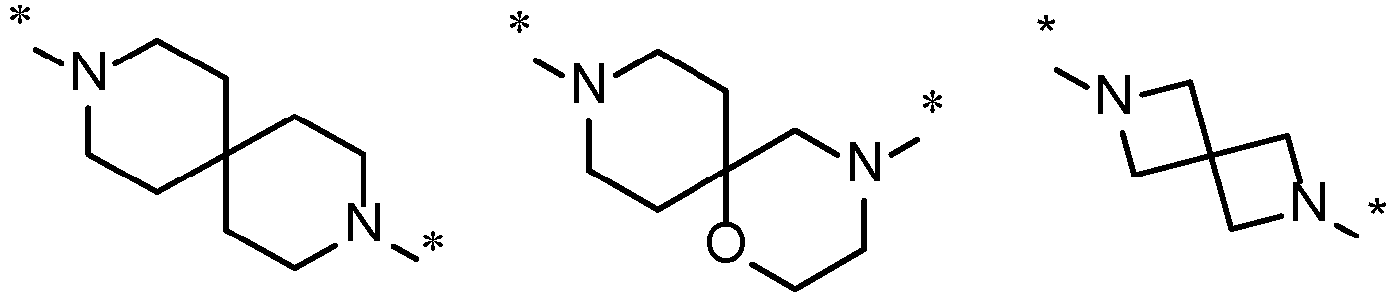

- In any of the aspects or embodiments described herein, the PTM is represented by Formula IVa or IVb:


- WPTM1 is a phenyl substituted with a hydroxy substituent with or without an additional optional substituent selected as described herein;
- WPTM2 is a pyridazine substituted with amino group;
- WPTM5 is absent, a pyrazole ring, or a pyridine ring.
- In any of the aspects or embodiments described herein, the PTM is selected from the group consisting of:


- In any of the aspects or embodiments described herein, the ULM is a chemical structure represented by:

- W3 is selected from the group of an optionally substituted aryl, optionally substituted heteroaryl, or

- R9 and R10 are independently hydrogen, optionally substituted alkyl, optionally substituted cycloalkyl, optionally substituted hydroxyalkyl, optionally substituted heteroaryl, or haloalkyl, or R9, R10, and the carbon atom to which they are attached form an optionally substituted cycloalkyl;
- R11 is selected from the group of an optionally substituted heterocyclyl, optionally substituted alkoxy, optionally substituted heteroaryl, optionally substituted aryl,


- R12 is selected from the group of H or optionally substituted alkyl;
- R13 is selected from the group of H, optionally substituted alkyl, optionally substituted alkylcarbonyl, optionally substituted (cycloalkyl)alkylcarbonyl, optionally substituted aralkylcarbonyl, optionally substituted arylcarbonyl, optionally substituted (heterocyclyl)carbonyl, or optionally substituted aralkyl;
- R14a, R14b, are each independently selected from the group of H, haloalkyl (e.g., fluoroalkyl), optionally substituted alkyl, optionally substituted alkoxy, optionally substituted hydroxyl alkyl, optionally substituted alkylamine, optionally substituted heterolkyl, optionally substituted alkyl-heterocycloalkyl, optionally substituted alkoxy-heterocycloalkyl, COR26, CONR27aR27b, NHCOR26, or NHCH3COR26; and the other of R14a and R14b is H; or R14a, R14b, together with the carbon atom to which they are attached, form an optionally substituted 3 to 5 membered cycloalkyl, heterocycloalkyl, spirocycloalkyl or spiroheterocyclyl, wherein the spiroheterocyclyl is not epoxide or aziridine;
- W5 is optionally substituted phenyl, optionally substituted napthyl, or an optionally substituted 5-10 membered heteroaryl;
- R15 is selected from the group of H, halogen, CN, OH, NO2, NR27aR27b, OR27a, CONR27aR27b,
- NR27aCOR27b, SO2NR27aR27b, NR27aSO2R27b, optionally substituted alkyl, optionally substituted haloalkyl (e.g., optionally substituted fluoroalkyl), optionally substituted haloalkoxy; optionally substituted aryl; optionally substituted heteroaryl; optionally substituted cycloalkyl; or optionally substituted heterocyclyl;
- each R16 is independently selected from the group of halo, CN, optionally substituted alkyl, optionally substituted haloalkyl, hydroxy, or optionally substituted haloalkoxy;
- o is 0, 1, 2, 3, or 4;
- R18 is independently selected from the group of H, halo, optionally substituted alkoxy, cyano, optionally substituted alkyl, haloalkyl, haloalkoxy or a linker;
- each R26 is independently selected from H, optionally substituted alkyl or NR27aR27b;
- each R27a and R27b is independently H, optionally substituted alkyl, or R27a and R27b together with the nitrogen atom to which they are attached form a 4-6 membered heterocyclyl; and
- p is 0, 1, 2, 3, or 4, and wherein the dashed line indicates the site of attachment of at least one PTM, another ULM (ULM') or a chemical linker moiety coupling at least one PTM or a ULM' or both to ULM.
- In any of the aspects or embodiments described herein, the ULM has a chemical structure selected from the group of:

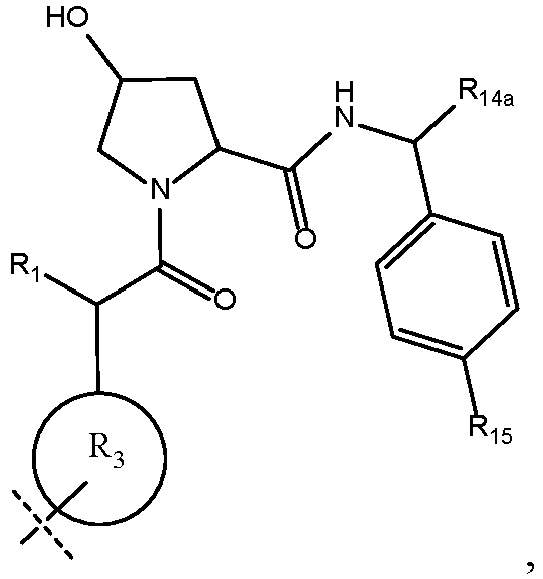
- R1 is H, optionally substituted alkyl, optionally substituted cycloalkyl, optionally substituted hydroxyalkyl, optionally substituted heteroaryl, or haloalkyl;
- R14a is H, haloalkyl, optionally substituted alkyl, methyl, fluoromethyl, hydroxymethyl, ethyl, isopropyl, or cyclopropyl;
- R15 is selected from the group consisting of H, halogen, CN, OH, NO2, optionally substituted heteroaryl, optionally substituted aryl, optionally substituted alkyl (e.g. optionally substituted haloalkyl), optionally substituted haloalkyl, optionally substituted haloalkoxy, optionally substituted cycloalkyl, or optionally substituted heterocyclyl;
- X is C, CH2, or C=O;
- R3 is absent or an optionally substituted 5 or 6 memebered heteroaryl; and
- the dashed line indicates the site of attachment of at least one PTM, another ULM (ULM') or a chemical linker moiety coupling at least one PTM or a ULM' or both to the ULM.
- In any of the aspects or embodiments described herein, the ULM comprises a group according to the chemical structure:

- R1' of ULM-g is an optionally substituted C1-C6 alkyl group, an optionally substituted - (CH2)nOH, an optionally substituted -(CH2)nSH, an optionally substituted (CH2)n-O-(C1-C6)alkyl group, an optionally substituted (CH2)n-WCOCW-(C0-C6)alkyl group containing an epoxide moiety WCOCW where each W is independently H or a C1-C3 alkyl group, an optionally substituted -(CH2)nCOOH, an optionally substituted - (CH2)nC(O)-(C1-C6 alkyl), an optionally substituted -(CH2)nNHC(O)-R", an optionally substituted -(CH2)nC(O)- N(R")2, an optionally substituted -(CH2)nOC(O)- N(R")2, - (CH2O)nH, an optionally substituted -(CH2)nOC(O)-(C1-C6 alkyl), an optionally substituted -(CH2)nC(O)-O-(C1-C6 alkyl), an optionally substituted -(CH2O)nCOOH, an optionally substituted -(OCH2)nO-(C1-C6 alkyl), an optionally substituted - (CH2O)nC(O)-(C1-C6 alkyl), an optionally substituted -(OCH2)nNHC(O)-R", an optionally substituted -(CH2O)nC(O)-N(R")2, -(CH2CH2O)nH, an optionally substituted -(CH2CH2O)nCOOH, an optionally substituted -(OCH2CH2)nO-(C1-C6 alkyl), an optionally substituted -(CH2CH2O)nC(O)-(C1-C6 alkyl), an optionally substituted - (OCH2CH2)nNHC(O)-R", an optionally substituted -(CH2CH2O)nC(O)-N(R")2,an optionally substituted -SO2RS, an optionally substituted S(O)RS, NO2, CN or halogen (F, Cl, Br, I, preferably F or Cl);
- each R" of ULM-g is independently H or a C1-C6 alkyl group which may be optionally substituted with one or two hydroxyl groups or up to three halogen groups (preferably fluorine);
- RS of ULM-g is a C1-C6 alkyl group, an optionally substituted aryl, heteroaryl or heterocyclyl group or a -(CH2)m N(R")2 group,;
- X and X' of ULM-g are each independently C=O, C=S, -S(O), S(O)2, (preferably X and X' are both C=O);
- R2' of ULM-g is an optionally substituted -(CH2)n-(C=O)u(NR")v(SO2)walkyl group, an optionally substituted -(CH2)n-(C=O)u(NR")v(SO2)wNR1NR2N group, an optionally substituted -(CH2)n-(C=O)u(NR")v(SO2)w-Aryl, an optionally substituted -(CH2)n-(C=O)u(NR")v(SO2)w-Heteroaryl, an optionally substituted -(CH2)n-(C=O)vNR" (SO2)w-Heterocyclyl, an optionally substituted -NR"-(CH2)n-C(O)u(NR")v(SO2)w-alkyl, an optionally substituted -NR"-(CH2)n-C(O)u(NR")v(SO2)w- NR1NR2N, an optionally substituted -NR"-(CH2)n-C(O)u(NR")v(SO2)w-NR"C(O)R1N, an optionally substituted - NR"-(CH2)n-(C=O)u(NR")v(SO2)w-Aryl, an optionally substituted -NR"-(CH2)n-(C=O)u(NR")v(SO2)w-Heteroaryl or an optionally substituted -NR"-(CH2)n-(C=O)vNR" (SO2)w-Heterocyclyl, an optionally substituted -XR2'-alkyl group; an optionally substituted -XR2'- Aryl group; an optionally substituted -XR2'- Heteroaryl group; an optionally substituted -XR2'- Heterocyclyl group;
- R3' of ULM-g is an optionally substituted alkyl, an optionally substituted -(CH2)n-(O)u(NR")v(SO2)w-alkyl, an optionally substituted -(CH2)n-C(O)u(NR")v(SO2)w-NR1NR2N, an optionally substituted -(CH2)n-C(O)u(NR")v(SO2)w-NR"C(O)R1N, an optionally substituted -(CH2)n-C(O)u(NR")v(SO2)w-C(O)(R")2, an optionally substituted -(CH2)n-C(O)u(NR")v(SO2)w-Aryl, an optionally substituted -(CH2)n-C(O)u(NR")v(SO2)w-Heteroaryl, an optionally substituted -(CH2)n-C(O)u(NR")v(SO2)w-Heterocyclyl, an optionally substituted -NR"-(CH2)n-C(O)u(NR")v(SO2)w-alkyl, an optionally substituted -NR"-(CH2)n-C(O)u(NR")v(SO2)w- NR1NR2N, an optionally substituted -NR"-(CH2)n-C(O)u(NR")v(SO2)w-NR"C(O)R1N, an optionally substituted - NR"-(CH2)n-C(O)u(NR")v(SO2)w-Aryl, an optionally substituted -NR"-(CH2)n-C(O)u(NR")v(SO2)w-Heteroaryl, an optionally substituted -NR1-(CH2)n-C(O)u(NR")v(SO2)w-Heterocyclyl, an optionally substituted -O-(CH2)n-(C=O)u(NR")v(SO2)w-alkyl, an optionally substituted -O-(CH2)n-(C=O)u(NR")v(SO2)w-NR1NR2N, an optionally substituted -O-(CH2)n-(C=O)u(NR")v(SO2)w-NR"C(O)R1N, an optionally substituted -O-(CH2)n-(C=O)u(NR")v(SO2)w-Aryl, an optionally substituted - O-(CH2)n-(C=O)u(NR")v(SO2)w-Heteroaryl or an optionally substituted -O-(CH2)n-(C=O)u(NR")v(SO2)w-Heterocyclyl; -(CH2)n-(V)n'-(CH2)n-(V)n'-alkyl group, an optionally substituted -(CH2)n-(V)n'-(CH2)n-(V)n'-Aryl group, an optionally substituted -(CH2)n-(V)n'-(CH2)n-(V)n'-Heteroaryl group, an optionally substituted -(CH2)n-(V)n'-(CH2)n-(V)n'-Heterocyclyl'group, an optionally substituted -(CH2)n-N(R1')(C=O)m'-(V)n'-alkyl group, an optionally substituted -(CH2)n-N(R1')(C=O)m'-(V)n'-Aryl group, an optionally substituted -(CH2)n-N(R1')(C=O)m'-(V)n'-Heteroaryl group, an optionally substituted -(CH2)n-N(R1')(C=O)m'-(V)n'-Heterocyclyl group, an optionally substituted - XR3'- alkyl group; an optionally substituted -XR3'- Aryl group; an optionally substituted - XR3'- Heteroaryl group; an optionally substituted -XR3'- Heterocyclyl group;
- R1N and R2N of ULM-g are each independently H, C1-C6 alkyl which is optionally substituted with one or two hydroxyl groups and up to three halogen groups or an optionally substituted -(CH2)n-Aryl, -(CH2)n-Heteroaryl or -(CH2)n-Heterocyclyl group;
- V of ULM-g is O, S or NR1;
- each R1' of ULM-g is independently H or a C1-C3 alkyl group;
- XR2' and XR3' of ULM-g are each independently an optionally substituted -CH2)n-, -CH2)n-CH(Xv)=CH(Xv)- (cis or trans), -CH2)n-CH≡CH- , -(CH2CH2O)n- or a C3-C6 cycloalkyl group, where Xv is H, a halo or a C1-C3 alkyl group which is optionally substituted;
- each m of ULM-g is independently 0, 1, 2, 3, 4, 5, 6;
- each m' of ULM-g is independently 0 or 1;
- each n of ULM-g is independently 0, 1, 2, 3, 4, 5, 6;
- each n' of ULM-g is independently 0 or 1;
- each u of ULM-g is independently 0 or 1;
- each v of ULM-g is independently 0 or 1;
- each w of ULM-g is independently 0 or 1; and
- any one or more of R1', R2', R3', X and X' of ULM-g is optionally modified to be covalently bonded to the PTM group through a linker group when PTM is not ULM', or when PTM is ULM', any one or more of R1', R2', R3', X and X' of each of ULM and ULM' are optionally modified to be covalently bonded to each other directly or through a linker groupthereof.
- In any of the aspects or embodiments described herein, the ULM is of the formula:

- R1 is H, optionally substituted alkyl or optionally substituted cycloalkyl;
- R3 is an optionally substituted 5-6 membered heteroaryl;
- W5 is optionally substituted phenyl, optionally substituted napthyl or optionally substituted pyridinyl;
- one of R14a and R14b is H, optionally substituted alkyl, optionally substituted haloalkyl, optionally substituted alkoxy, optionally substituted hydroxyl alkyl, optionally substituted alkylamine, optionally substituted heterolkyl, optionally substituted alkyl-heterocycloalkyl, optionally substituted alkoxy-heterocycloalkyl, COR26, CONR27aR27b, NHCOR26, or NHCH3COR26; and the other of R14a and R14b is H; or R14a, R14b, together with the carbon atom to which they are attached, form an optionally substituted 3 to 5 membered cycloalkyl, heterocycloalkyl, spirocycloalkyl or spiroheterocyclyl, wherein the spiroheterocyclyl is not epoxide or aziridine;
- R15 is CN, optionally substituted fluoroalkyl,


- each R16 is independently selected from halo, CN, optionally substituted alkyl, optionally substituted haloalkyl, hydroxy, or haloalkoxy;
- each R26 is independently H, optionally substituted alkyl or NR27aR27b;
- each R27a and R27b is independently H, optionally substituted alkyl, or R27a and R27b together with the nitrogen atom to which they are attached form a 4-6 membered heterocyclyl;
- R28 is H, optionally substituted alkyl, optionally substituted alkoxy, optionally substituted heteroalkyl, optionally substituted alkylamine, optionally substituted hydroxyalkyl, amine, optionally substituted alkynyl, or optionally substituted cycloalkyl; and
- o is 0, 1 or 2.
- In any of the aspects or embodiments described herein, the ULM is of the formula:

- each of X4, X5, and X6 is selected from CH and N, wherein no more than 2 are N;
- R1 is C1-6 alkyl;
- one of R14a and R14b is H, optionally substituted alkyl, optionally substituted haloalkyl, optionally substituted alkoxy, optionally substituted hydroxyl alkyl, optionally substituted alkylamine, optionally substituted heterolkyl, optionally substituted alkyl-heterocycloalkyl, optionally substituted alkoxy-heterocycloalkyl, COR26, CONR27aR27b, NHCOR26, or NHCH3COR26; and the other of R14a and R14b is H; or R14a and R14b, together with the carbon atom to which they are attached, form an optionally substituted 3 to 5 membered cycloalkyl, heterocycloalkyl, spirocycloalkyl or spiroheterocyclyl, wherein the spiroheterocyclyl is not epoxide or aziridine;
- each R27a and R27b is independently H or C1-6 alkyl;
- q is 1, 2, 3 or 4;
- R15 is,

- R28 is H, methyl, CH2N(Me)2, CH2OH, CH2O(C1-4alkyl), CH2NHC(O)C1-4alkyl, NH2,

- R28C is H, methyl, fluoro, or chloro; and
- R16 is H, C1-4alkyl, fluoro, chloro, CN, or C1-4alkoxy.
- In any aspect or embodiment described herein, R14a and R14b are selected from: H, C1-4 alkyl, C1-4 cycloalkyl, C1-4 haloalkyl, C1-4 hydroxyalkyl, C1-4 alkyloxyalkyl, C1-4 alkyl-NR27aR27b and CONR27aR27b.
- In any aspect or embodiment described herein, at least one of R14a and R14b is H (e.g., both R14a and R14b are H).
- In any aspect or embodiment described herein, at least one of R14a and R14b is optionally substituted alkyl, optionally substituted haloalkyl, optionally substituted alkoxy, optionally substituted hydroxyl alkyl, optionally substituted alkylamine, optionally substituted heterolkyl, optionally substituted alkyl-heterocycloalkyl, optionally substituted alkoxy-heterocycloalkyl, COR26, CONR27aR27b, NHCOR26, or NHCH3COR26. Alternatively, in any aspect or embodiment described herein, one of R14a and R14b is optionally substituted alkyl, optionally substituted haloalkyl, optionally substituted alkoxy, optionally substituted hydroxyl alkyl, optionally substituted alkylamine, optionally substituted heterolkyl, optionally substituted alkyl-heterocycloalkyl, optionally substituted alkoxy-heterocycloalkyl, COR26, CONR27aR27b, NHCOR26, or NHCH3COR26; and the other of R14a and R14b is H.
- In any aspect or embodiment described herein, R14a and R14b together with the carbon atom to which they are attached form


- In any of the aspects or embodiments described herein, R1 is C1-6 alkyl.
- In any of the aspects or embodiments described herein, one of R14a and R14b is H, C1-6 alkyl, C1-6 haloalkyl, optionally substitute C1-4 alkylamine, C1-6 alkoxy, (CH2)qC1-6 alkoxy, (CH2)qC1-6 alkoxy-C3-C7 heterocycloalkyl, (CH2)qOH, (CH2)qNR27aR27b, (CH2)qNHCOC1-6 alkyl, C3-6 cycloalkyl, or NR27aR27b; each R26 is independently H, C1-6 alkyl or NR27aR27b; each R27a and R27b is independently H or C1-6 alkyl; and q is 1, 2, 3 or 4.
- In any of the aspects or embodiments described herein, one of R14a and R14b is H, C1-4 alkyl, C1-4 haloalkyl, C1-4 alkoxy, optionally substituted C1-4 alkylamine, (CH2)qC1-6 alkoxy, (CH2)qC1-6 alkoxy-C3-C7 heterocycloalkyl, (CH2)qOH, (CH2)qNR27aR27b, (CH2)qNHCOC1-6 alkyl, C3-6 cycloalkyl, or NR27aR27b; each R26 is independently H, C1-4 alkyl or NR27aR27b; each R27a and R27b is independently H or C1-4 alkyl; and q is 1 or 2.
- In any of the aspects or embodiments described herein, R28 is C1-6 alkyl, C3-6 cycloalkyl, C1-6 haloalkyl, (CH2)qOC1-6alkyl, (CH2)qOH, (CH2)qNR27aR27b, (CH2)qNHCOC1-6 alkyl, or

wherein q is 1 or 2. - In any of the aspects or embodiments described herein, R3 is isoxazolyl, 4-chloroisoxazolyl, 4-fluoroisoxazolyl, or pyrazolyl. In any of the aspects or embodiments described herein, X is CH.
- In any aspect or embodiment described herein, the ULM is according to the formula:


wherein: - R1, R14a and R14b are as described herein;
- X is CH or N;
- R30 is H, F or Cl;
- R16 is H, C1-4 alkyl, fluoro, chloro, CN, or C1-4 alkoxy; and
- R28 is H, methyl, CH2N(Me)2, CH2OH, CH2O(C1-4alkyl), CH2NHC(O)C1-4alkyl, NH2,

- In any of the aspects or embodiments described herein, the ULM is according to the formula:


- In any of the aspects or embodiments described herein, the ULM is a ULM as provided in Table 1A, Table 1B, Table 1C, Table 2A, Table 2B, or Table 2C.
- In any of the aspects or embodiments described herein, the compound includes a Linker (L) as described herein.
- In any of the aspects or embodiments described herein, the linker (L) is a polyethylenoxy group optionally substituted with aryl or phenyl comprising from 1 to 10 ethylene glycol units.
- In any of the aspects or embodiments described herein, the compound is selected from the compounds of Table 1A, Table 1B, Table 1C, Table 2A, Table 2B, and Table 2C (e.g., selected from compounds 1-535).
- In any of the aspects or embodiments described herein, the compound has a Dmax greater than or equal to 80%.
- In an additional aspect, the description provides a composition comprising an effective amount of a bifunctional compound as described herein, and a pharmaceutically acceptable carrier.
- In any of the aspects or embodiments described herein, the composition as described herein further comprises at least one of additional bioactive agent or another bifunctional compound of any of claims 1-32.
- In any of the aspects or embodiments described herein, the additional bioactive agent is anti-cancer agent.
- In any of the aspects or embodiments described herein, the composition as described herein comprises a pharmaceutically acceptable carrier and an effective amount of at least one compound as described herein for treating a disease or disorder in a subject, the method comprising administering the composition to a subject in need thereof, wherein the compound is effective in treating or ameliorating at least one symptom of the disease or disorder.
- In any aspect or embodiment described herein, the disease or disorder is associated with SMARCA1, BRAHMA or BRM accumulation and aggregation. In any aspect or embodiment described herein, the disease or disorder is cancer. In any aspect or embodiment described herein, the cancer is a SWI/SNF associated cancer or a cancer with a SMARCA4 mutation (e.g., lung cancer or non-small cell lung cancer). In any aspect or embodiment described herein, the cancer is a SMARCA4-deficient cancer or a cancer with decreased expression of SMARCA4 relative to normal SMARCA4 expression (e.g., relative to the expression of nonmutated SMARCA4 or SMARCA4 in a similarly situated non-cancerous cell with a wildtype SMARCA4), such as lung cancer or non-small cell lung cancer.
- The invention may be described by the following embodiments.
- 1. A compound having the chemical structure
PTM-L-ULM,
or a pharmaceutically acceptable salt thereof, wherein:- (a) ULM is:

- W3 is optionally substituted aryl, optionally substituted heteroaryl, or

- R9 and R10 are independently hydrogen, optionally substituted alkyl, optionally substituted cycloalkyl, optionally substituted hydroxyalkyl, optionally substituted heteroaryl, or haloalkyl, or R9, R10, and the carbon atom to which they are attached form an optionally substituted cycloalkyl;
- R11 is optionally substituted heterocyclyl, optionally substituted alkoxy, optionally substituted heteroaryl, optionally substituted aryl,


- R12 is H or optionally substituted alkyl;
- R13 is H, optionally substituted alkyl, optionally substituted alkylcarbonyl, optionally substituted (cycloalkyl)alkylcarbonyl, optionally substituted aralkylcarbonyl, optionally substituted arylcarbonyl, optionally substituted (heterocyclyl)carbonyl, or optionally substituted aralkyl;
- one of R14a and R14b is H, amine, haloalkyl, optionally substituted alkyl, optionally substituted alkoxy, optionally substituted hydroxyl alkyl, optionally substituted alkylamine, optionally substituted heteroalkyl, optionally substituted alkyl-heterocycloalkyl, optionally substituted alkoxy-heterocycloalkyl, COR26, CONR27aR27b, NHCOR26, or NCH3COR26; and the other of R14a and R14b is H; or R14a and R14b together with the carbon atom to which they are attached form an optionally substituted 3 to 5 membered cycloalkyl, heterocycloalkyl, spirocycloalkyl up to 12 members, or spiroheterocyclyl up to 12 members, wherein the spiroheterocyclyl is not an epoxy or aziridinyl;
- W5 is optionally substituted phenyl, optionally substituted napthyl, or an optionally substituted 5-10 membered heteroaryl;
- R15 is H, halogen, CN, OH, NO2, NR27aR27b, OR27a, CONR27aR27b, NR27aCOR27b, SO2NR27aR27b, NR27aSO2R27b, optionally substituted alkyl, optionally substituted haloalkyl, optionally substituted haloalkoxy, optionally substituted aryl, optionally substituted heteroaryl, optionally substituted cycloalkyl, or optionally substituted heterocyclyl;
- each R16 is independently halogen, CN, optionally substituted alkyl, optionally substituted haloalkyl, hydroxy, or optionally substituted haloalkoxy;
- o is 0, 1, 2, 3, or 4;
- each R18 is independently H, halogen, optionally substituted alkoxy, cyano, optionally substituted alkyl, haloalkyl, or haloalkoxy;
- each R26 is independently H, optionally substituted alkyl, or NR27aR27b;
- each R27a and R27b is independently H, optionally substituted alkyl, or R27a and R27b together with the nitrogen atom to which they are attached form a 4-6 membered heterocyclyl;
- p is 0, 1, 2, 3, or 4, and

- W3 is optionally substituted aryl, optionally substituted heteroaryl, or
- (b) L is -(AL)q-, wherein:
- (AL)q is a group that is connected to the PTM and the ULM;
- q of the L is an integer from 1 to 100;
- each AL is independently CRL1RL2, O, S, SO, SO2, NRL3, SO2NRL3, SONRL3, CONRL3, NRL3CONRL4, NRL3SO2NRL4, CO, CRL1=CRL2, C≡C, SiRL1RL2, P(O)RL1, P(O)ORL1, NRL3C(=NCN)NRL4, NRL3C(=NCN), NRL3C(=CNO2)NRL4, C3-11cycloalkyl optionally substituted with 1-6 RL1 and/or RL2 groups, C3-11heterocyclyl optionally substituted with 1-6 RL1 and/or RL2 groups, and aryl optionally substituted with 1-6 RL1 and/or RL2 groups, and heteroaryl optionally substituted with 1-6 RL1 and/or RL2 groups, where RL1 or RL2, each independently are optionally linked to other groups to form cycloalkyl or heterocyclyl moiety, optionally substituted with 1-4 RL5 groups; and
- each RL1, RL2, RL3, RL4 and RL5 is independently H, halogen, C1-8alkyl, OC1-8alkyl, SC1-8alkyl, NHC1-8alkyl, N(C1-8alkyl)2, C3-11cycloalkyl, aryl, heteroaryl, C3-11heterocyclyl, OC3-8cycloalkyl, SC3-8cycloalkyl, NHC3-8cycloalkyl, N(C3-8cycloalkyl)2, N(C3-8cycloalkyl)(C1-8alkyl), OH, NH2, SH, SO2C1-8alkyl, P(O)(OC1-8alkyl)(C1-8alkyl), P(O)(OC1-8alkyl)2, CC-C1-8alkyl, CCH, CH=CH(C1-8alkyl), C(C1-8alkyl)=CH(C1-8alkyl), C(C1-8alkyl)=C(C1-8alkyl)2, Si(OH)3, Si(C1-8alkyl)3, Si(OH)(C1-8alkyl)2, COC1-8alkyl, CO2H, CN, CF3, CHF2, CH2F, NO2, SF5, SO2NHC1-8alkyl, SO2N(C1-8alkyl)2, SONHC1-8alkyl, SON(C1-8alkyl)2, CONHC1-8alkyl, CON(C1-8alkyl)2, N(C1-8alkyl)CONH(C1-8alkyl), N(C1-8alkyl)CON(C1-8alkyl)2, NHCONH(C1-8alkyl), NHCON(C1-8alkyl)2, NHCONH2, N(C1-8alkyl)SO2NH(1-8alkyl), N(C1-8alkyl)
- SO2N(C1-8alkyl)2, NH SO2NH(C1-8alkyl), NH SO2N(C1-8alkyl)2, or NH SO2NH2; and (c) PTM is:
- (a)

-

- is the attachment point to L;
- WPTM1 is a phenyl substituted with a hydroxy substituent and optionally substituted with 1 or 2 substituents independently selected from hydroxy, halogen, alkoxy, alkyl, haloalkyl, amino, phosphate, alkylamino, and cyano;
- WPTM2 is pyridazinyl optionally substituted with an amino group;
- WPTM3 is an optionally substituted 5-6-membered heteroaryl, an optionally substituted 4-9 cycloalkyl, an optionally substituted 4-9 membered heterocyclyl, an optionally substituted bridged bicycloalkyl, or an optionally substituted bridged biheterocyclyl, preferably an optionally substituted pyrazole, pyrrole, imidazole, oxazole, oxadiazole, or triazole;
- WPTM5 is an optionally substituted 5-6-membered aryl or an optionally substituted 5-6-membered heteroaryl; or
- (b)


- is the attachment point to L;
- WPTM1 is a phenyl substituted with a hydroxy substituent and optionally substituted with 1 or 2 substituents independently selected from hydroxy, halogen, alkoxy, alkyl, haloalkyl, amino, phosphate, alkylamino, and cyano;
- WPTM2 is a pyridazinyl substituted with an amino group; and
- WPTM6 and WPTM7 are a spirocyclic ring system with a structure selected from:


- (a)
- (a) ULM is:
- 2. The compound of embodiment 1, wherein the PTM is:

- 3. The compound of embodiment 1, wherein the PTM is:

- 4. The compound of embodiment 1, wherein the PTM is:


 is the attachment point to L.
- 5. The compound of any one of embodiments 1-4, wherein:
- (a) the ULM is:

- R1 is H, optionally substituted alkyl, optionally substituted cycloalkyl, optionally substituted hydroxyalkyl, optionally substituted heteroaryl, or haloalkyl;
- R14a is H, haloalkyl, optionally substituted alkyl, methyl, fluoromethyl, hydroxymethyl, ethyl, or isopropyl;
- R15 is H, halogen, CN, OH, NO2, optionally substituted heteroaryl, optionally substituted aryl, optionally substituted alkyl, optionally substituted haloalkyl, optionally substituted haloalkoxy, optionally substituted cycloalkyl, or optionally substituted heterocyclyl;
- X is CH2 or C=O;
- R3 is optionally substituted 5 or 6 membered heteroaryl; and

- (b) the ULM is:

- R1 is H, optionally substituted alkyl, or optionally substituted cycloalkyl;
- R3 is an optionally substituted 5-6 membered heteroaryl;
- W5 is optionally substituted phenyl, optionally substituted napthyl, or optionally substituted pyridinyl;
- one of R14a and R14b is H, optionally substituted alkyl, haloalkyl, optionally substituted alkoxy, optionally substituted hydroxyl alkyl, optionally substituted alkylamino, optionally substituted heteroalkyl, optionally substituted alkyl-heterocycloalkyl, optionally substituted alkoxy-heterocycloalkyl, COR26, CONR27aR27b, NHCOR26, or NCH3COR26; and the other of R14a and R14b is H; or R14a and R14b, together with the carbon atom to which they are attached form an optionally substituted 3 to 5 membered cycloalkyl, heterocycloalkyl, spirocycloalkyl or spiroheterocyclyl, wherein the spiroheterocyclyl is not an epoxy or aziridinyl;
- R15 is CN, fluoroalkyl,


- each R16 is independently halogen, CN, optionally substituted alkyl, optionally substituted haloalkyl, hydroxy, or haloalkoxy;
- each R26 is independently H, optionally substituted alkyl, or NR27aR27b;
- each R27a and R27b is independently H, optionally substituted alkyl, or R27a and R27b together with the nitrogen atom to which they are attached form a 4-6 membered heterocyclyl;
- R28 is H, optionally substituted alkyl, optionally substituted alkoxy, optionally substituted heteroalkyl, optionally substituted alkylamino, optionally substituted hydroxyalkyl, amino, optionally substituted alkynyl, or optionally substituted cycloalkyl;
- o is 0, 1 or 2; and

- (a) the ULM is:
- 6. The compound of embodiment 1, wherein the ULM is:

- R3 is an optionally substituted 5-6 membered heteroaryl;
- each of X4, X5, and X6 is CH or N, wherein no more than 2 are N;
- R1 is C1-6 alkyl;
- one of R14a and R14b is H, optionally substituted alkyl, optionally substituted haloalkyl, optionally substituted alkoxy, optionally substituted hydroxyl alkyl, optionally substituted alkylamino, optionally substituted heteroalkyl, optionally substituted alkyl-heterocycloalkyl, optionally substituted alkoxy-heterocycloalkyl, COR26, CONR27aR27b, NHCOR26, or NCH3COR26; and the other of R14a and R14b is H;
- or R14a and R14b, together with the carbon atom to which they are attached, form an optionally substituted 3 to 5 membered cycloalkyl, heterocycloalkyl, spirocycloalkyl or spiroheterocyclyl, wherein the spiroheterocyclyl is not an epoxy or an aziridinyl;
- each R27a and R27b is independently H or C1-6 alkyl;
- R15 is

- R28 is H, methyl, CH2N(Me)2, CH2OH, CH2O(C1-4alkyl), CH2NHC(O)C1-4alkyl, NH2,

- R28C is H, methyl, fluoro, or chloro;
- R16 is H, C1-4alkyl, fluoro, chloro, CN, or C1-4alkoxy; and

- 7. The compound of embodiment 6, wherein one of R14a and R14b is: H, C1-4 alkyl, C1-4 cycloalkyl, C1-4 haloalkyl, C1-4 hydroxyalkyl, C1-4 alkyloxyalkyl, C1-4 alkyl-NR27aR27b and CONR27aR27b; and the other of R14a or R14b is H; or R14a and R14b, together with the carbon atom to which they are attached form a C3-4cycloalkyl.
- 8. The compound of embodiment 6, wherein R14a and R14b together with the carbon atom to which they are attached, form

- 9. The compound of embodiment 6, wherein the ULM is:


- 10. The compound of embodiment 6 or 9, wherein:
- (a) one of R14a and R14b is H, C1-6 alkyl, C1-6 haloalkyl, optionally substituted C1-4 alkylamino, C1-6 alkoxy, (CH2)qC1-6 alkoxy, (CH2)qC1-6 alkoxy-C3-7 heterocycloalkyl, (CH2)qOH, (CH2)qNR27aR27b, or (CH2)qNHCOC1-6 alkyl; and the other of R14a and R14b is H;
- each R26 is independently H, C1-6 alkyl or NR27aR27b;
- each R27a and R27b is independently H or C1-6 alkyl; and
- q of the ULM is 1, 2, 3 or 4; or
- (b) one of R14a and R14b is H, C1-4 alkyl, C1-4 haloalkyl, C1-4 alkoxy, optionally substituted C1-4 alkylamino, (CH2)qC1-6 alkoxy, (CH2)qC1-6 alkoxy-C3-7 heterocycloalkyl, (CH2)qOH, (CH2)qNR27aR27b, or (CH2)qNHCOC1-6 alkyl; and the other of R14a or R14b is H;
- each R26 is independently H, C1-4 alkyl or NR27aR27b;
- each R27a and R27b is independently H or C1-4 alkyl; and
- q of the ULM is 1 or 2; or
- (c) R28 is C1-6 alkyl, C3-6 cycloalkyl, C1-6 haloalkyl, (CH2)qOC1-6alkyl, (CH2)qOH, (CH2)qNR27aR27b, (CH2)qNHCOC1-6 alkyl, or

q of the ULM is 1 or 2.
- (a) one of R14a and R14b is H, C1-6 alkyl, C1-6 haloalkyl, optionally substituted C1-4 alkylamino, C1-6 alkoxy, (CH2)qC1-6 alkoxy, (CH2)qC1-6 alkoxy-C3-7 heterocycloalkyl, (CH2)qOH, (CH2)qNR27aR27b, or (CH2)qNHCOC1-6 alkyl; and the other of R14a and R14b is H;
- 11. The compound of embodiment 6, wherein R3 is isoxazolyl, 4-chloroisoxazolyl, 4-fluoroisoxazolyl, or pyrazolyl.
- 12. The compound of embodiment 11, wherein:
- (a) X4 is CH; and/or
- (b) the ULM is:


- X is CH or N;
- R1 is C1-6alkyl;
- R30 is H, F or Cl;
- R16 is H, C1-4alkyl, fluoro, chloro, CN, or C1-4alkoxy;
- R28 is H, methyl, CH2N(Me)2, CH2OH, CH2O(C1-4alkyl), CH2NHC(O)C1-4alkyl, NH2,


- 13. The compound of embodiment 12, wherein the ULM is:


- 14. The compound of embodiment 1, wherein:
- (a) the L is:

- WL1 and WL2 are each independently a 4-8 membered ring with 0-4 heteroatoms, optionally substituted with RQ, each RQ is independently a H, halogen, OH, CN, CF3, optionally substituted linear or branched C1-C6 alkyl, optionally substituted linear or branched C1-C6 alkoxy, or 2 RQ groups taken together with the atom to which they are attached form a 4-8 membered ring system containing 0-4 heteroatoms;
- each YL1 is independently a bond, optionally substituted linear or branched C1-C6 alkyl and optionally one or more C atoms are replaced with O; or optionally substituted linear or branched C1-C6 alkoxy;
- n is 0, 1, 2, 3, 4, 5, 6, 7, 8, 9, or 10; and

- (b) the L is:


- WL1 and WL2 are each independently aryl, heteroaryl, cyclic, heterocyclyl, C1-6 alkyl, bicyclic, biaryl, biheteroaryl, or biheterocyclyl, each optionally substituted with RQ, each RQ is independently a H, halogen, OH, NH2, NRY1RY2, CN, CF3, hydroxyl, nitro, C≡CH, C2-6 alkenyl, C2-6 alkynyl, optionally substituted linear or branched C1-C6 alkyl, optionally substituted linear or branched C1-C6 alkoxy, OC1-3alkyl optionally substituted by 1 or more -F; or 2 RQ groups taken together with the atom to which they are attached form a 4-8 membered ring system containing 0-4 heteroatoms;
- each YL1 is independently a bond, NRYL1, O, S, NRYL2, CRYL1RYL2, C=O, C=S, SO, SO2, optionally substituted linear or branched C1-C6 alkyl and optionally one or more C atoms are replaced with O; optionally substituted linear or branched C1-C6 alkoxy;
- QL is a 3-6 membered alicyclic or aromatic ring with 0-4 heteroatoms, optionally bridged, optionally substituted with 1-6 RQ, each RQ is independently H, linear or branched C1-6 alkyl optionally substituted by 1 or more halogen or C1-6 alkoxy, or 2 RQ groups taken together with the atom to which they are attached form a 3-8 membered ring system containing 0-2 heteroatoms;
- RYL1 and RYL2 are each independently H, OH, linear or branched C1-6 alkyl optionally substituted by 1 or more halogen or C1-6 alkoxyl, or RYL1 and RYL2 together with the atom to which they are attached form a 3-8 membered ring system containing 0-2 heteroatoms;
- n is 0, 1, 2, 3, 4, 5, 6, 7, 8, 9, or 10; and

- (a) the L is:
- 15. The compound of embodiment 1, wherein:
- (a) the L is:
- -O-(CH2)m-O(CH2)n-O(CH2)o-O(CH2)p-O(CH2)q-O(CH2)r-O(CH2)s-O(CH2)t-; -O-(CH2)m-O(CH2)n-O(CH2)o-O(CH2)p-O(CH2)q-O(CH2)r-O(CH2)s-O-; -(CH2)m-O(CH2)n-O(CH2)o-O(CH2)p-O(CH2)q-O(CH2)r-O(CH2)s-O(CH2)t-; -CH=CH(CH2)m-O(CH2)n-O(CH2)o-O(CH2)p-O(CH2)q-O(CH2)r-O(CH2)s-O(CH2)t-; -O(CH2)nNCH3C(=O)(CH2)m-;








- independently selected from 0, 1, 2, 3, and 4; or
- -O-(CH2)m-O(CH2)n-O(CH2)o-O(CH2)p-O(CH2)q-O(CH2)r-O(CH2)s-O(CH2)t-; -O-(CH2)m-O(CH2)n-O(CH2)o-O(CH2)p-O(CH2)q-O(CH2)r-O(CH2)s-O-; -(CH2)m-O(CH2)n-O(CH2)o-O(CH2)p-O(CH2)q-O(CH2)r-O(CH2)s-O(CH2)t-; -CH=CH(CH2)m-O(CH2)n-O(CH2)o-O(CH2)p-O(CH2)q-O(CH2)r-O(CH2)s-O(CH2)t-; -O(CH2)nNCH3C(=O)(CH2)m-;
- (b) the L is:


- (a) the L is:
- 16. The compound of embodiment 1, wherein the compound is:


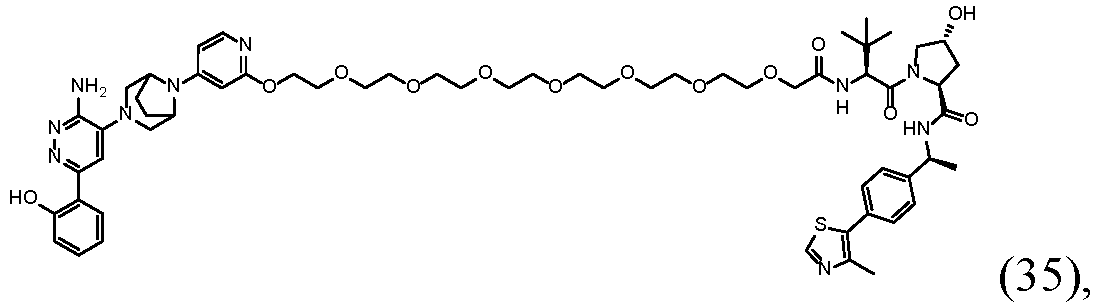


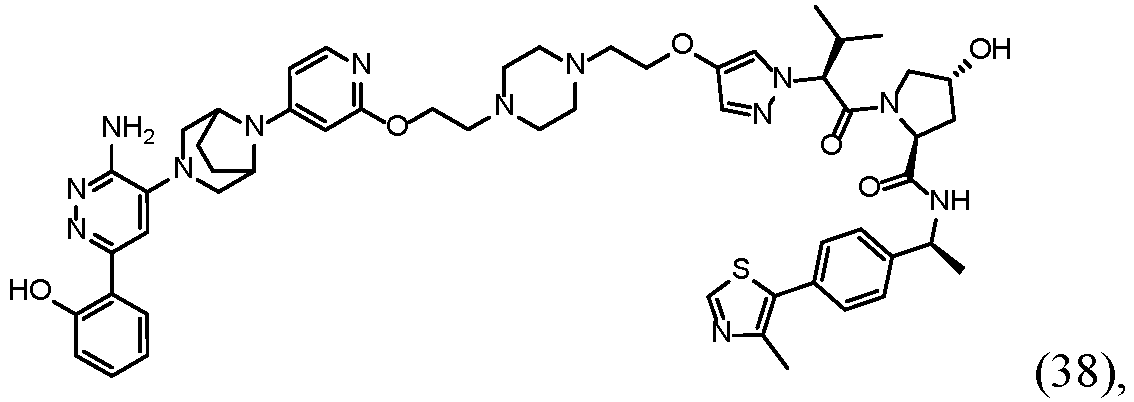


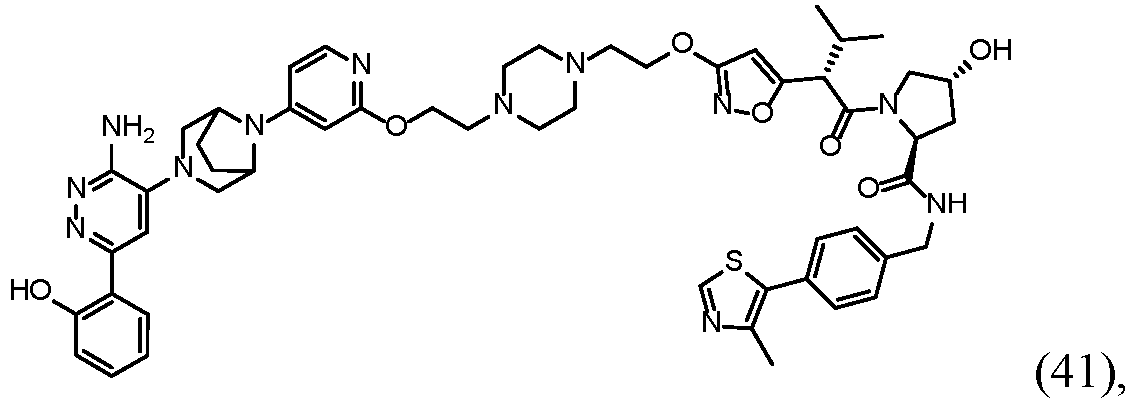


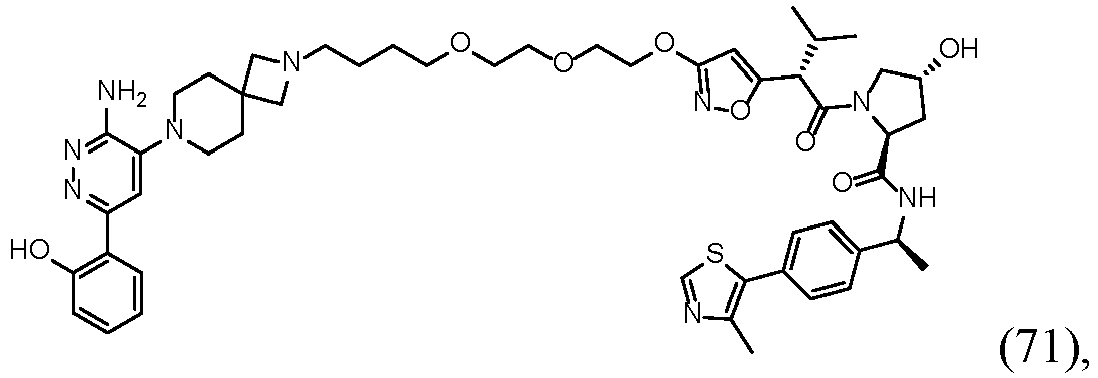


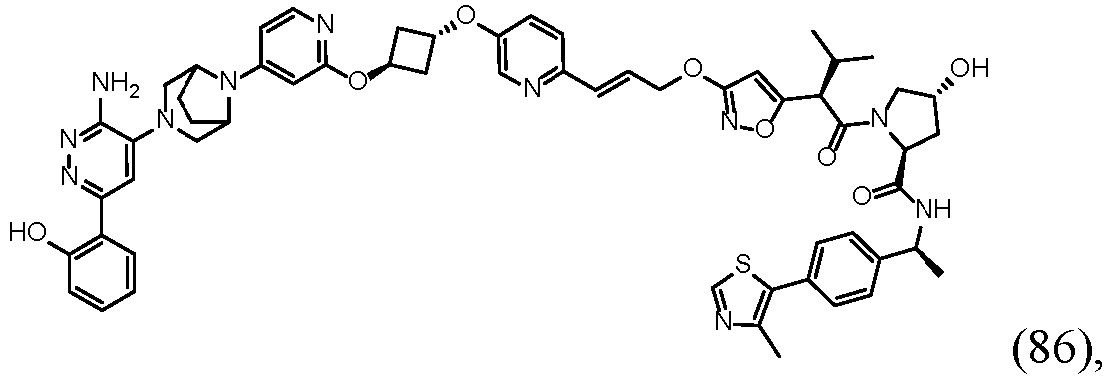


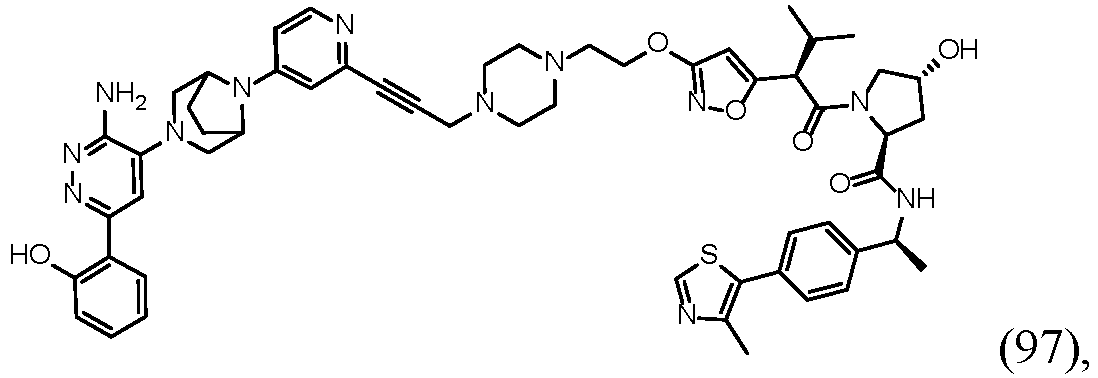


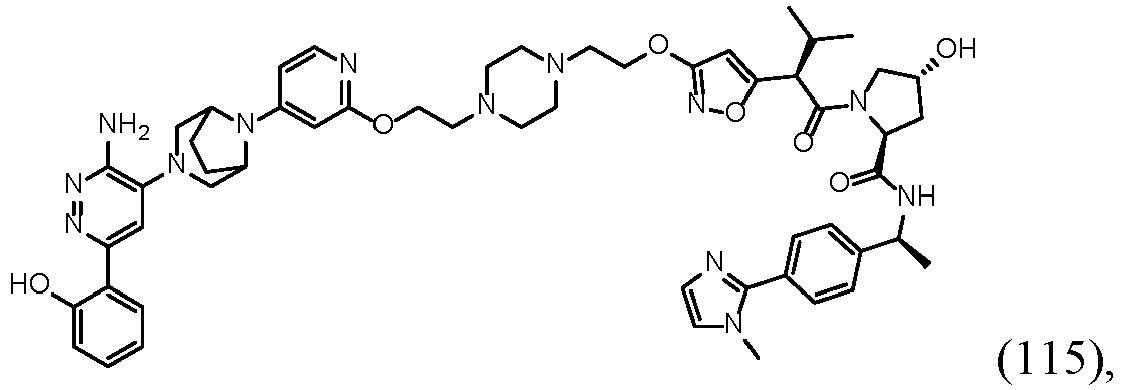


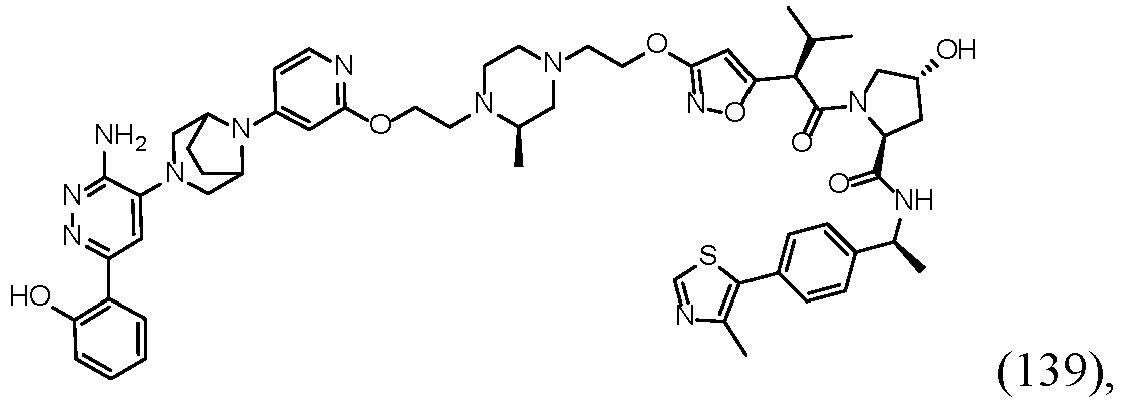


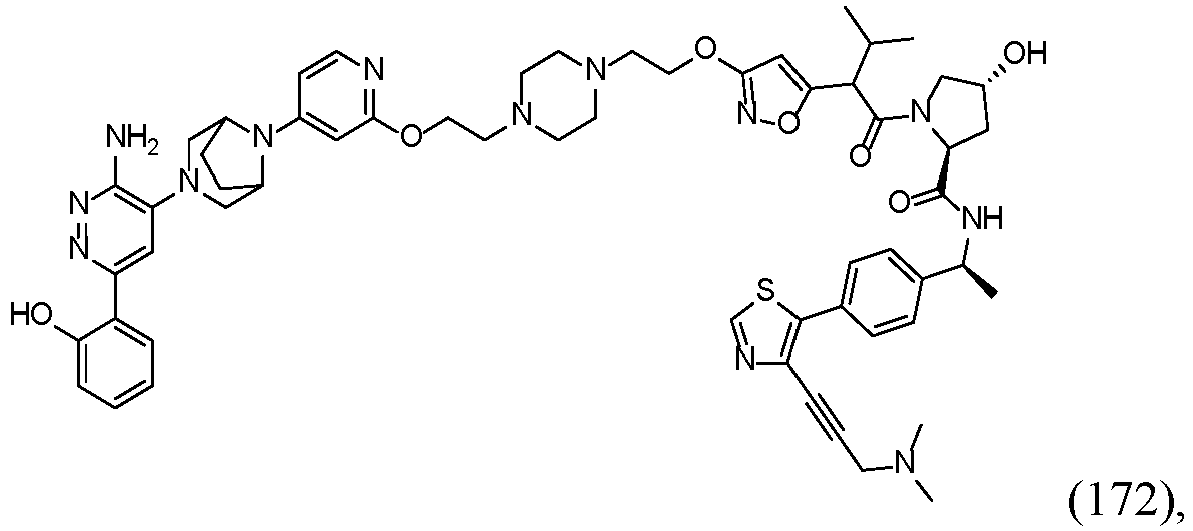


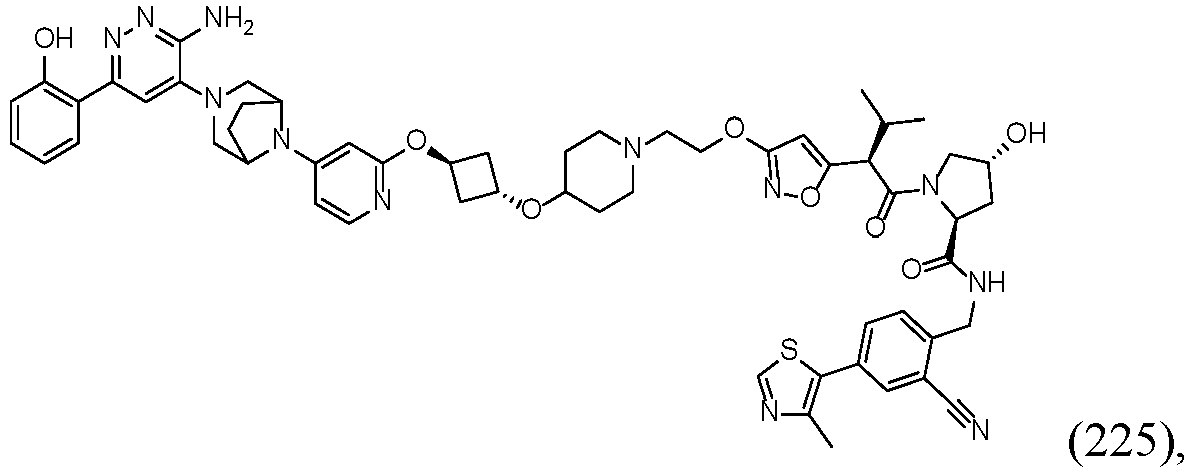


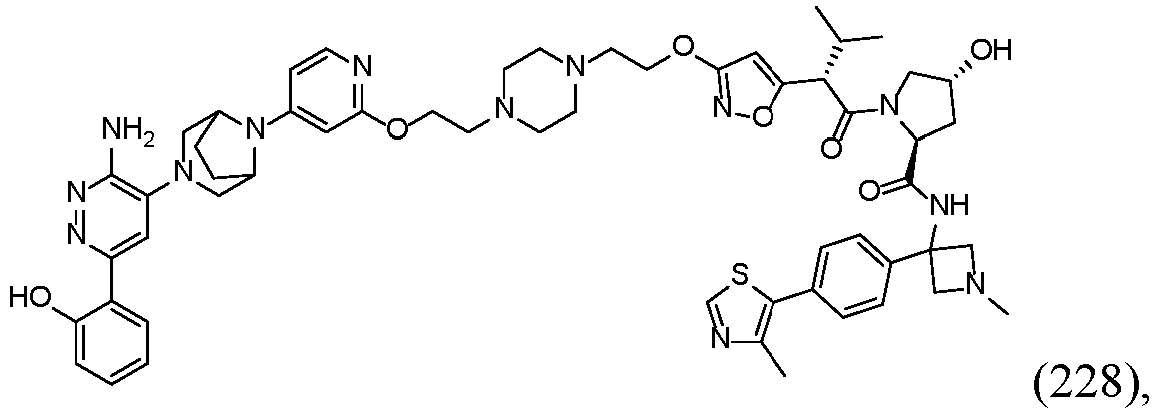


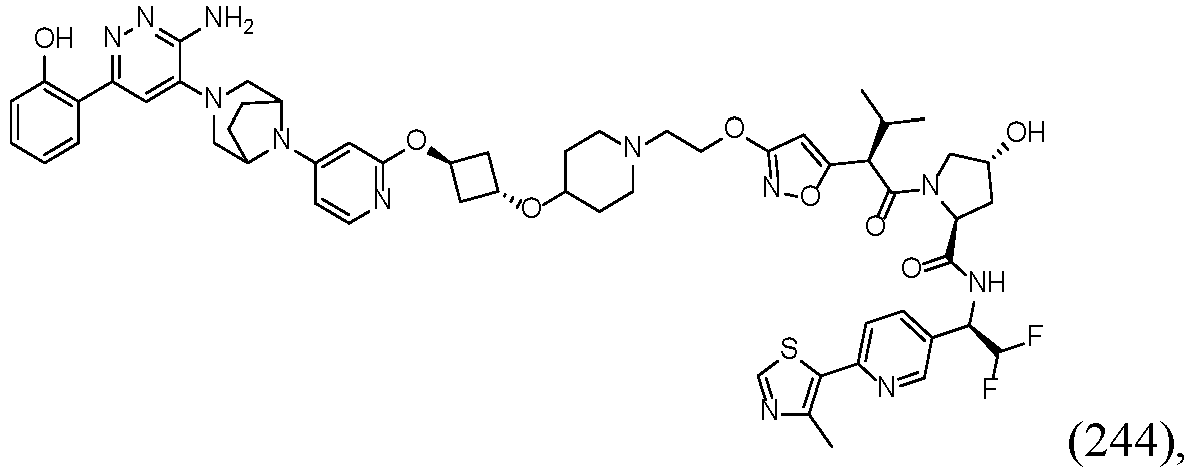


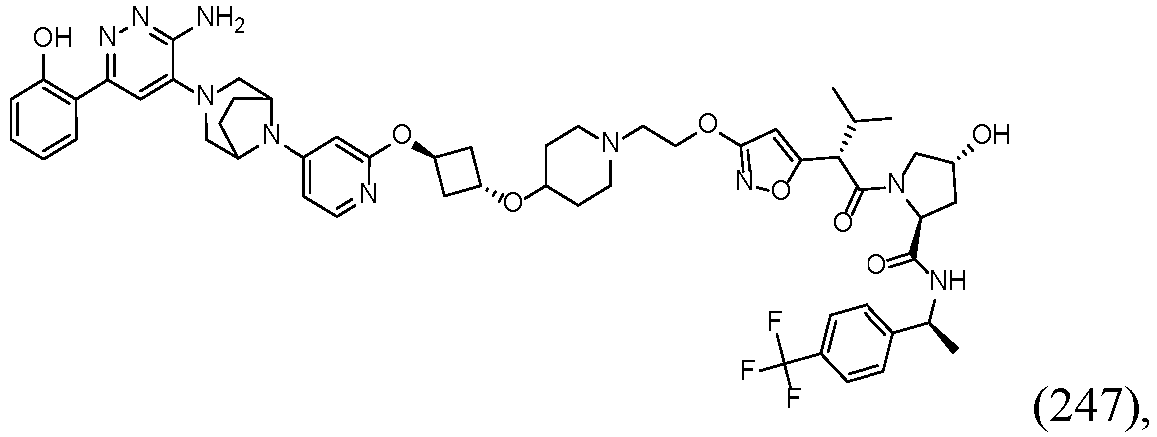
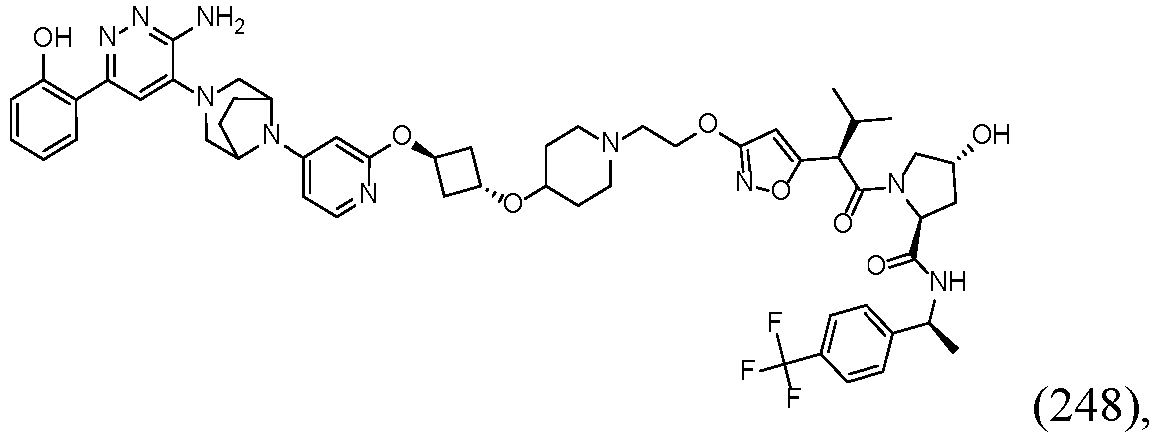


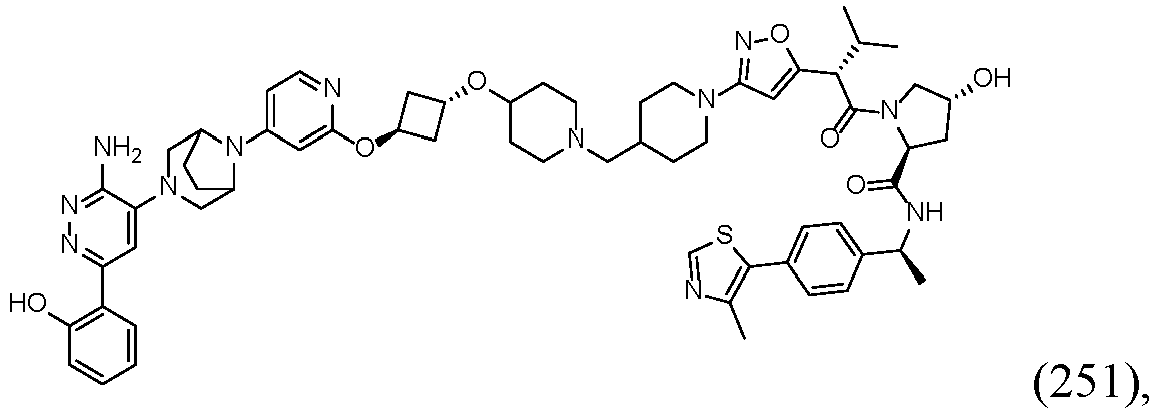


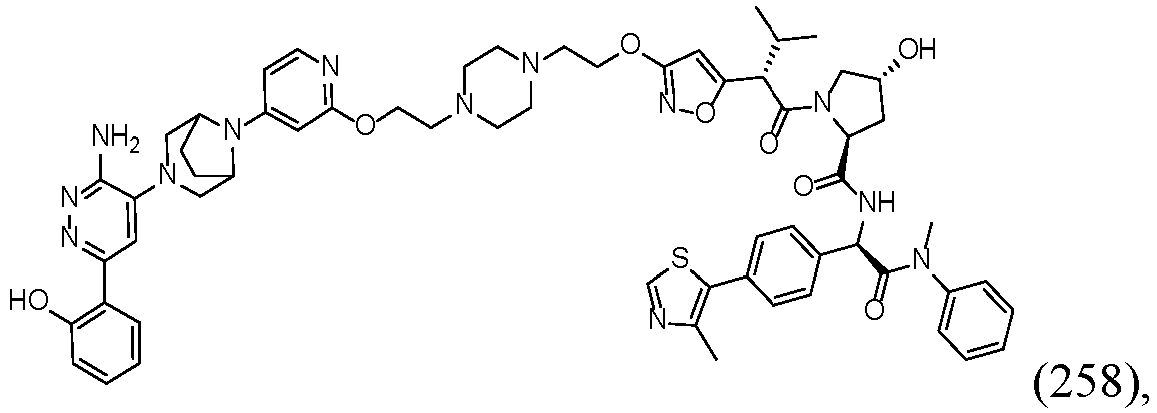
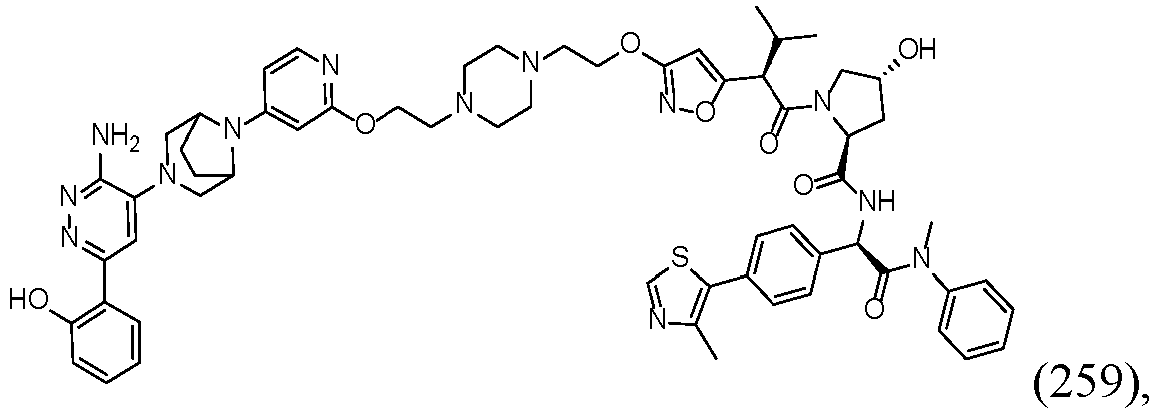


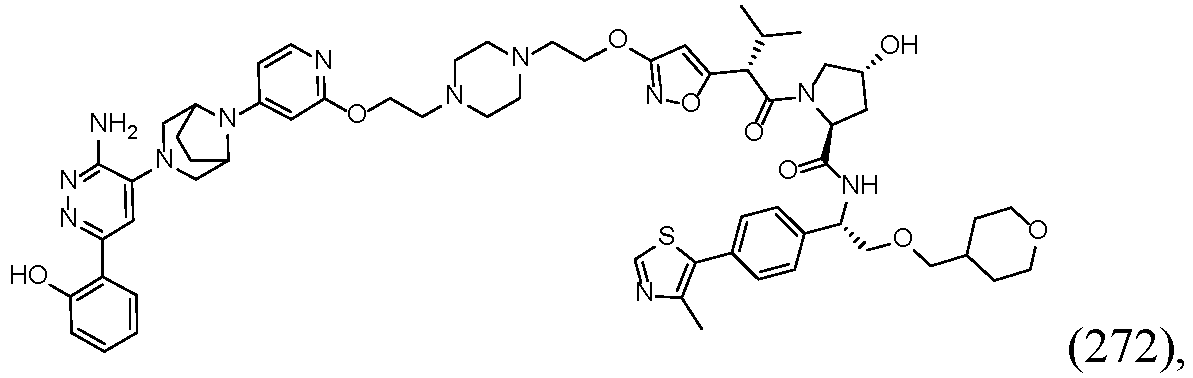


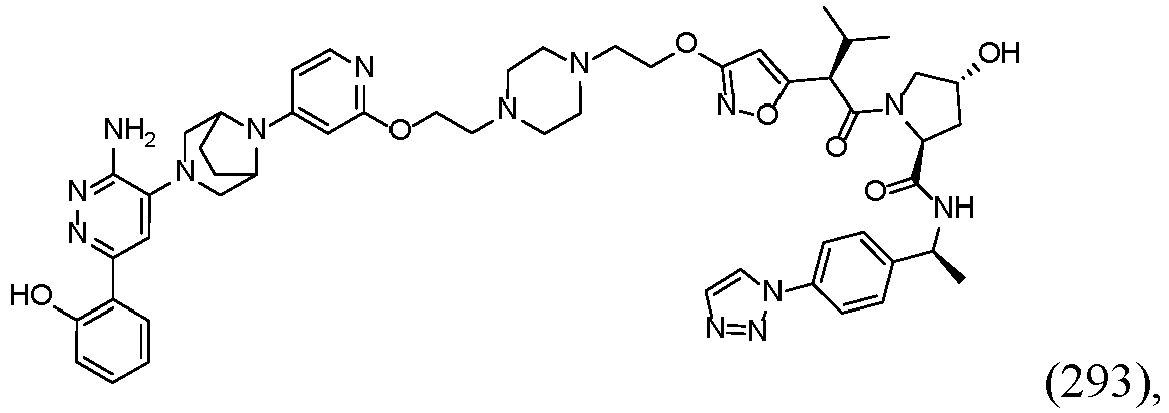

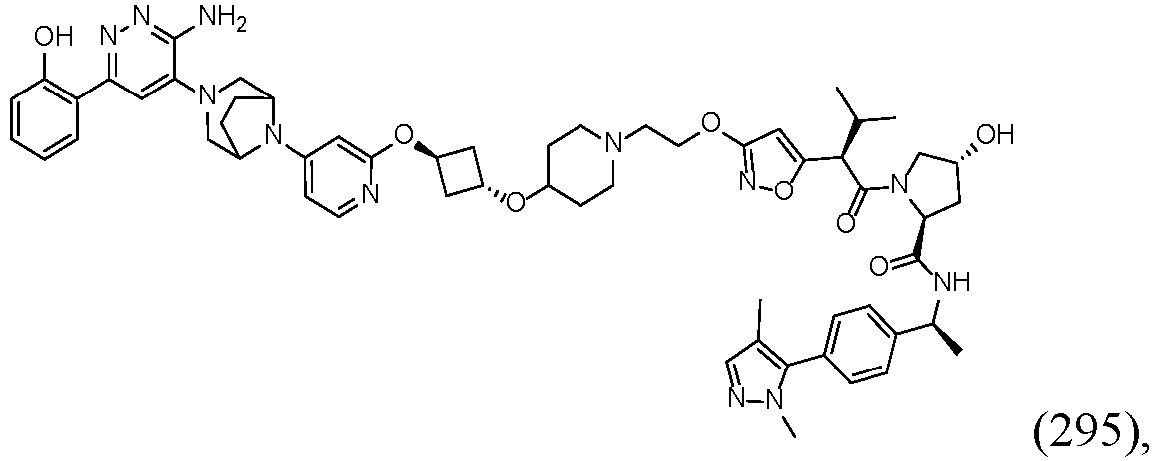


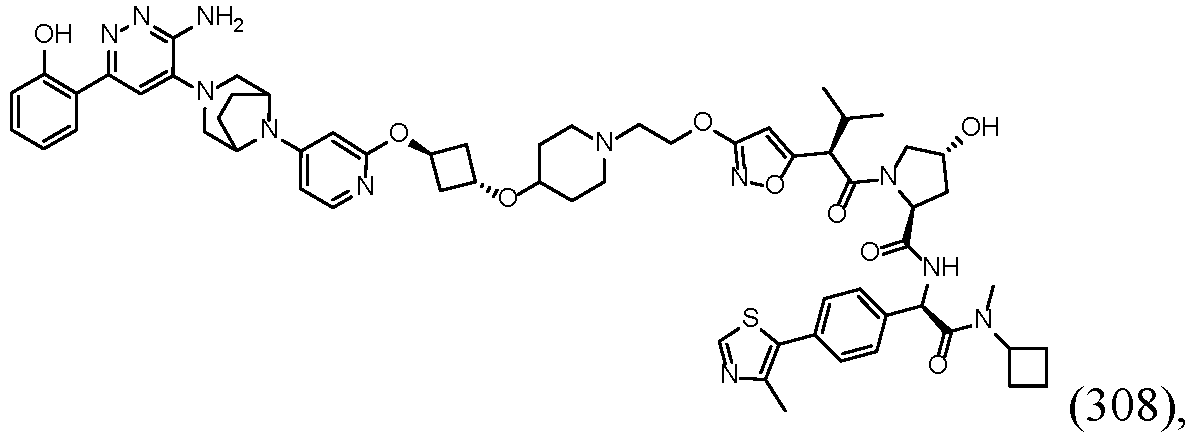


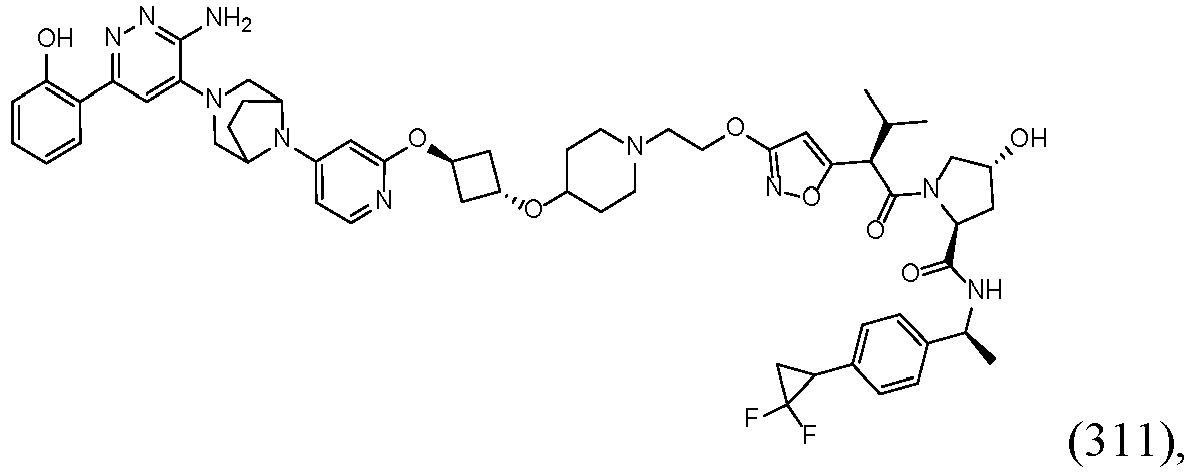


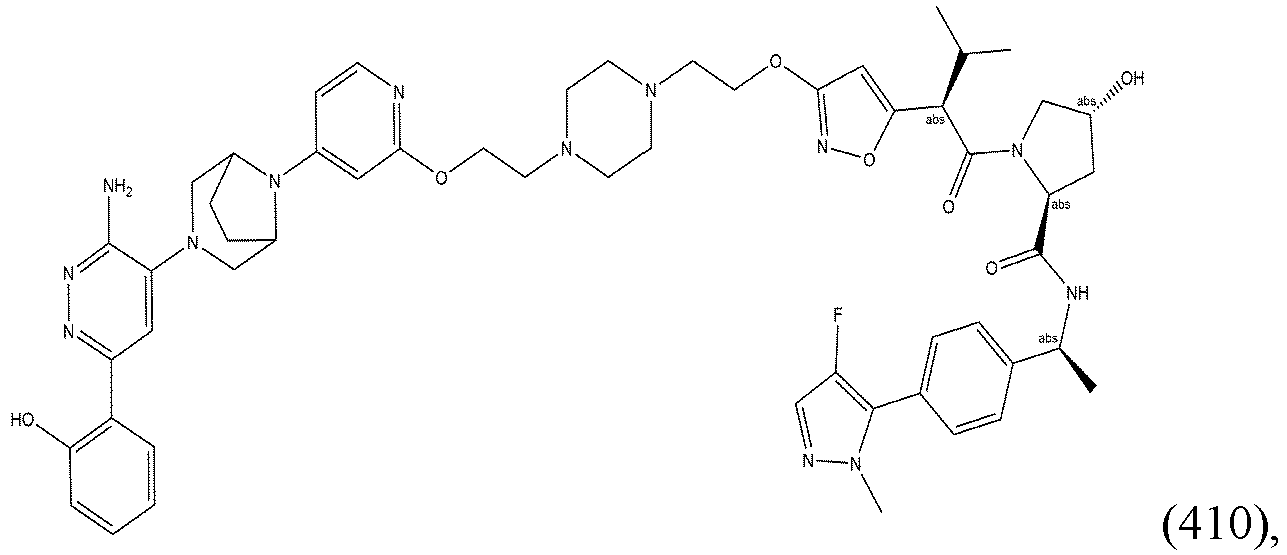


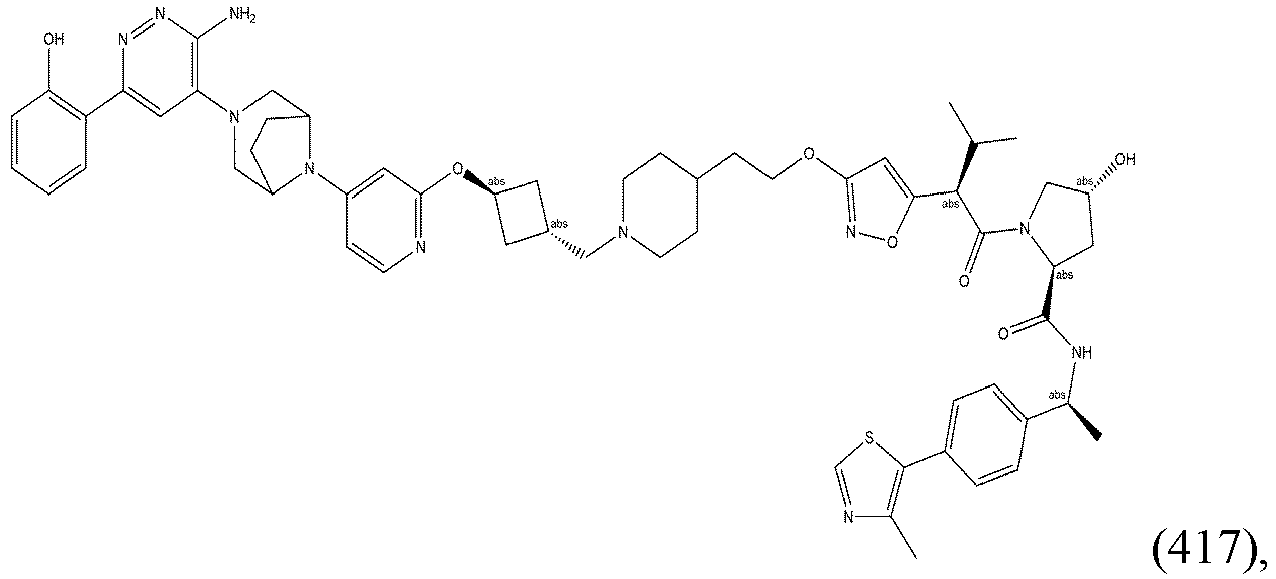


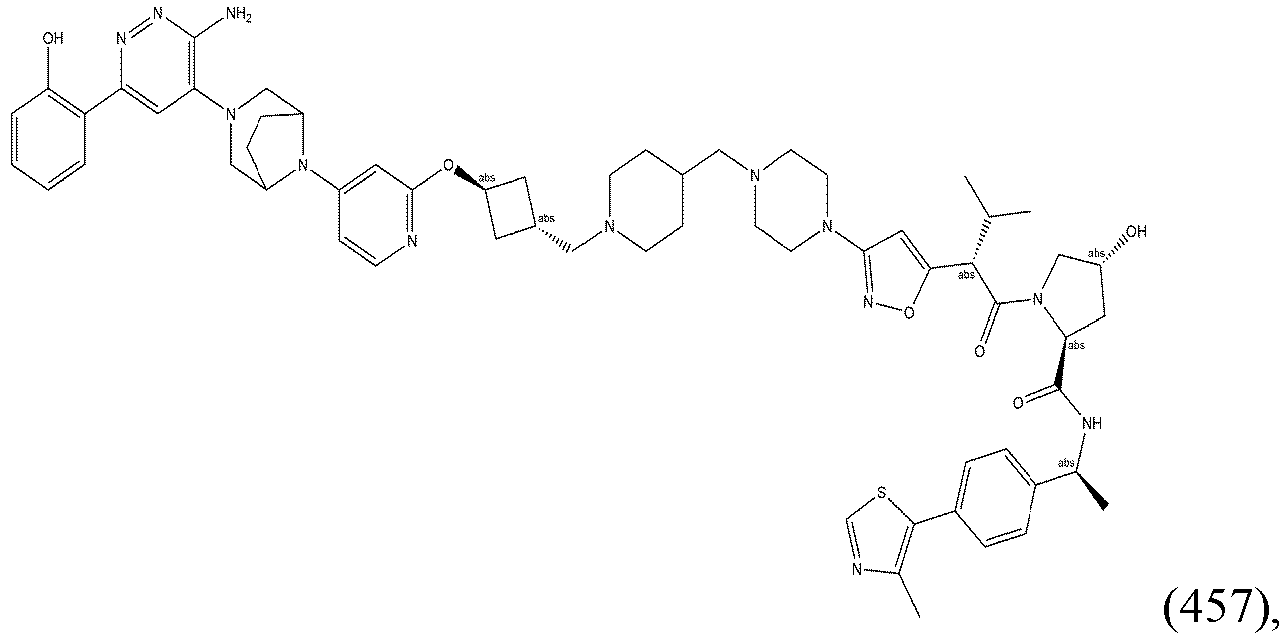


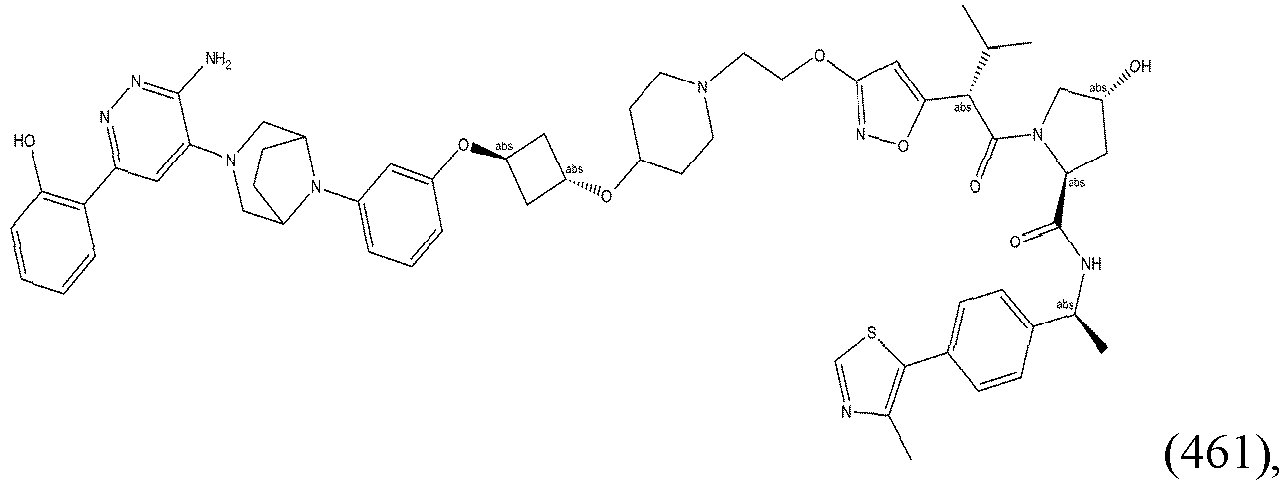


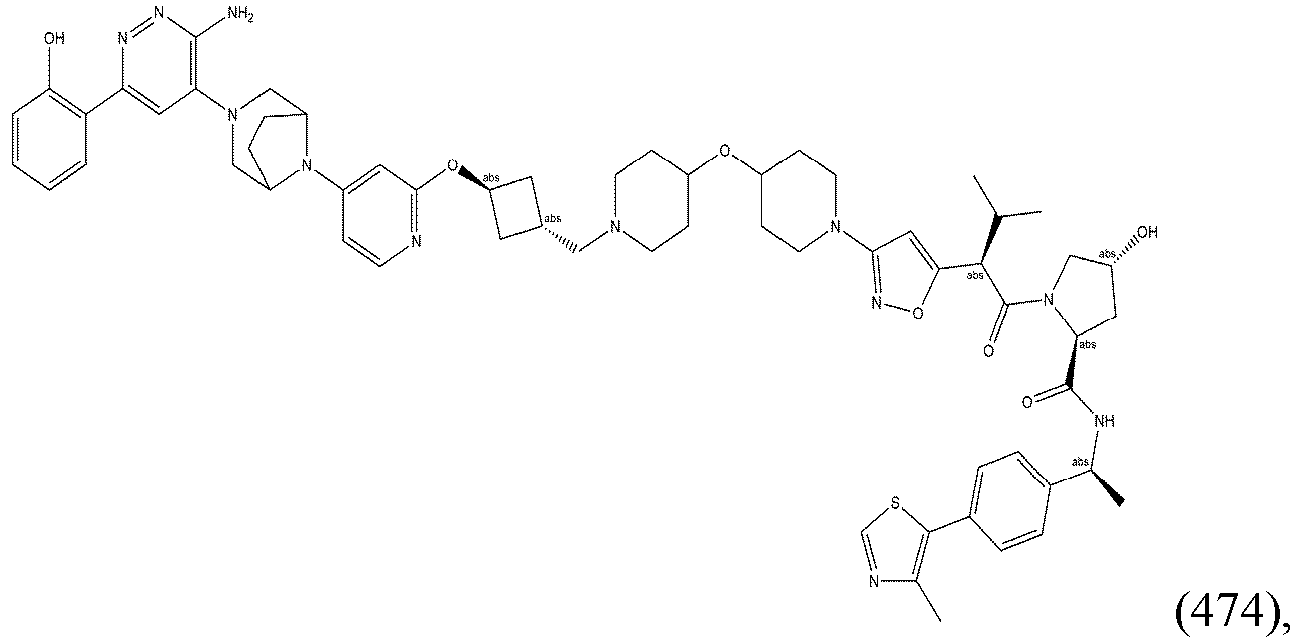


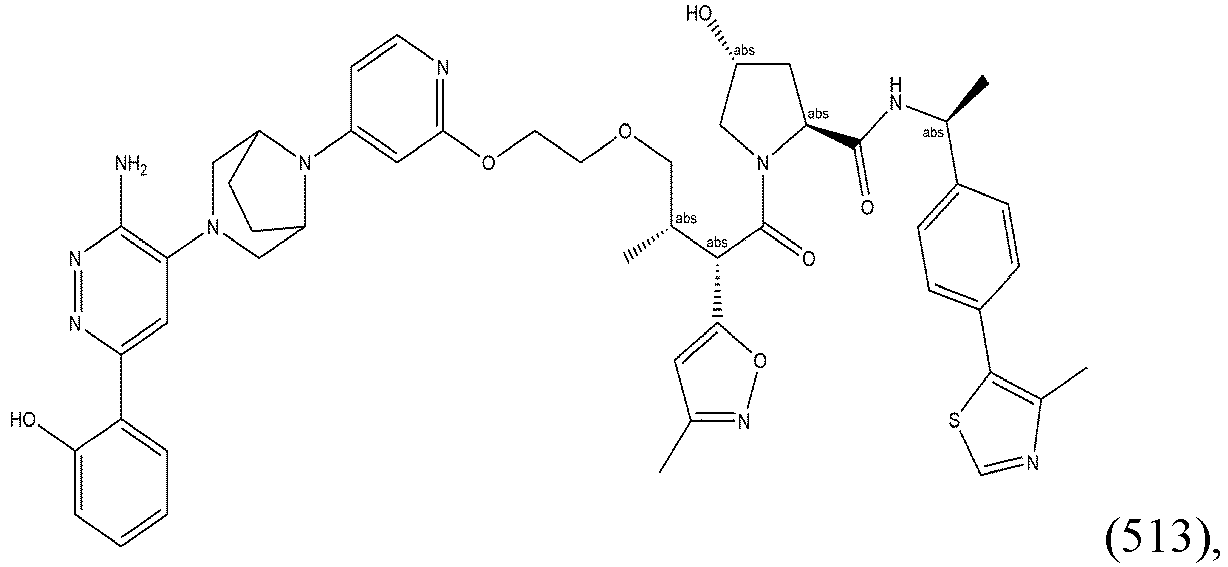


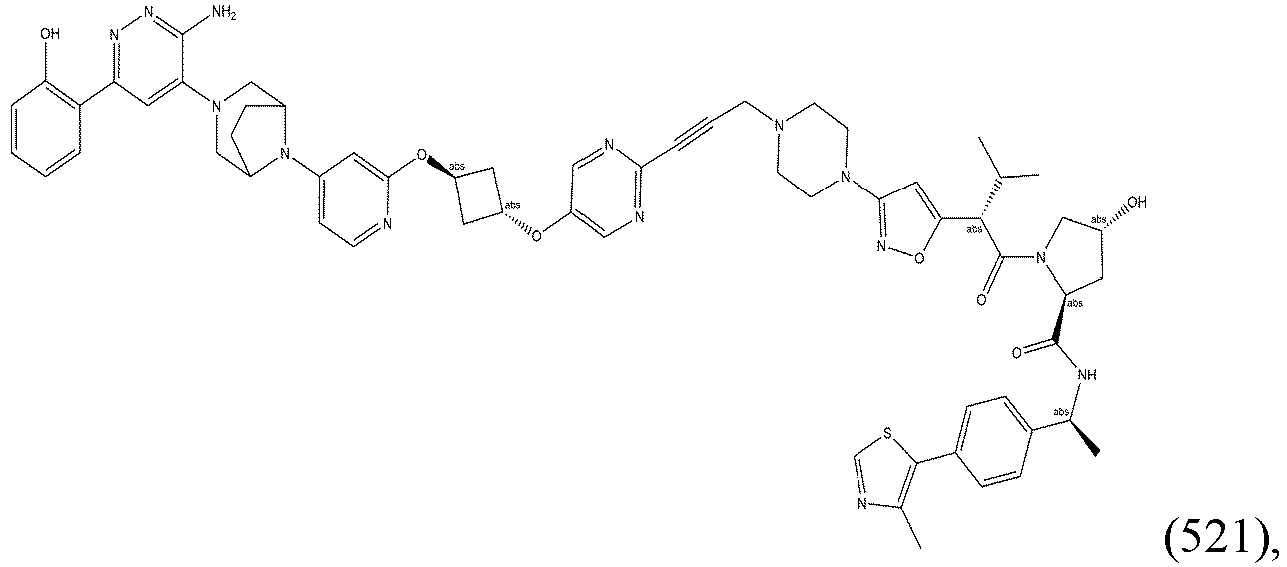


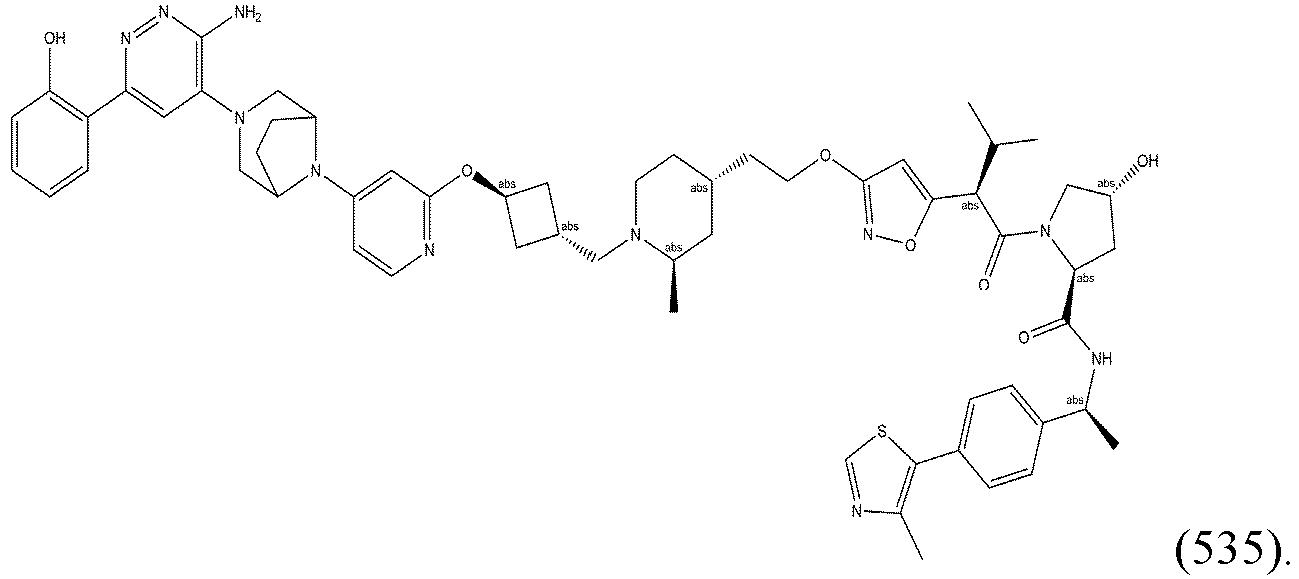
- 17. The compound of embodiment 16, wherein the compound has a Dmax greater than or equal to 80%.
- 18. The compound of embodiment 1, wherein the ULM is:


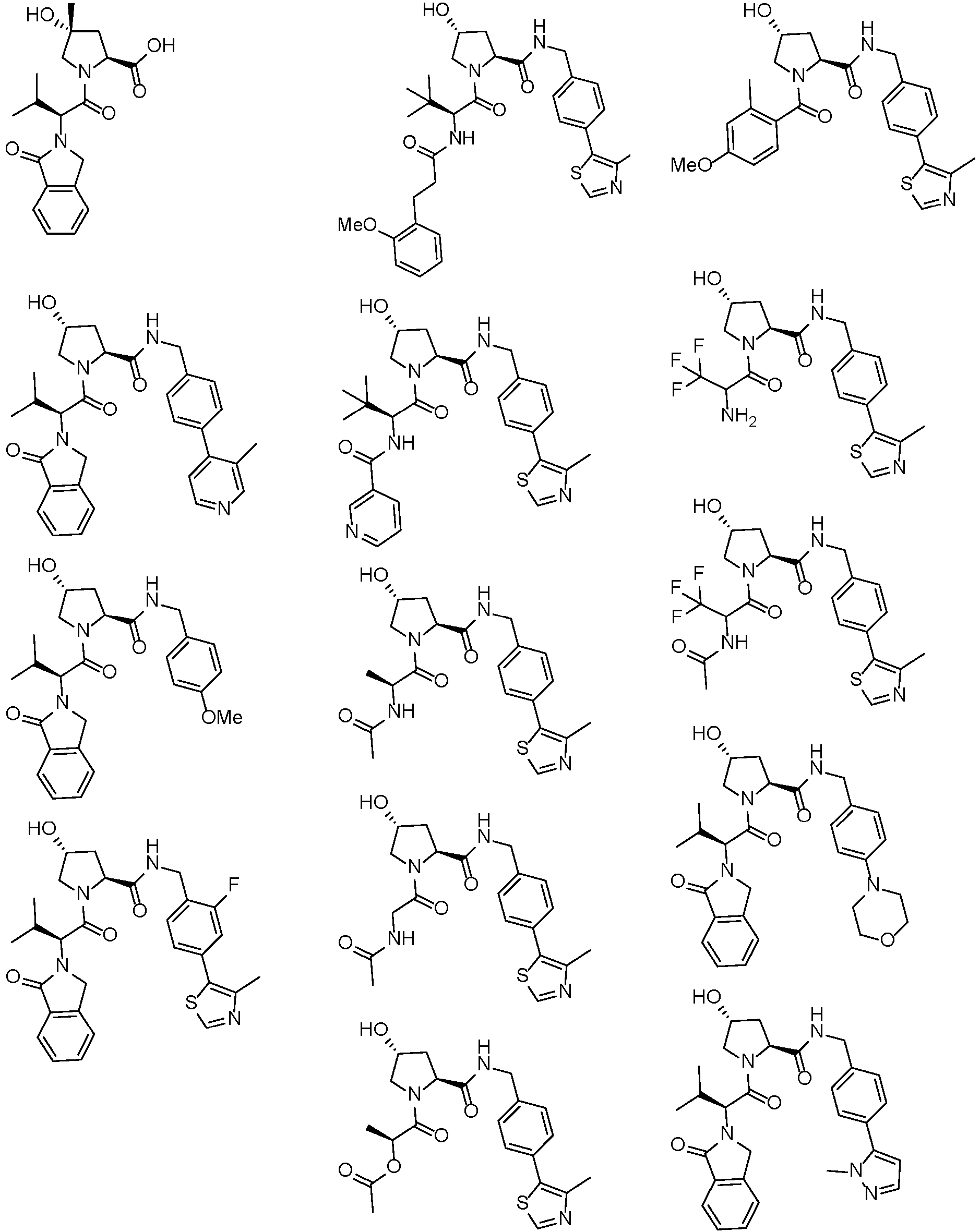


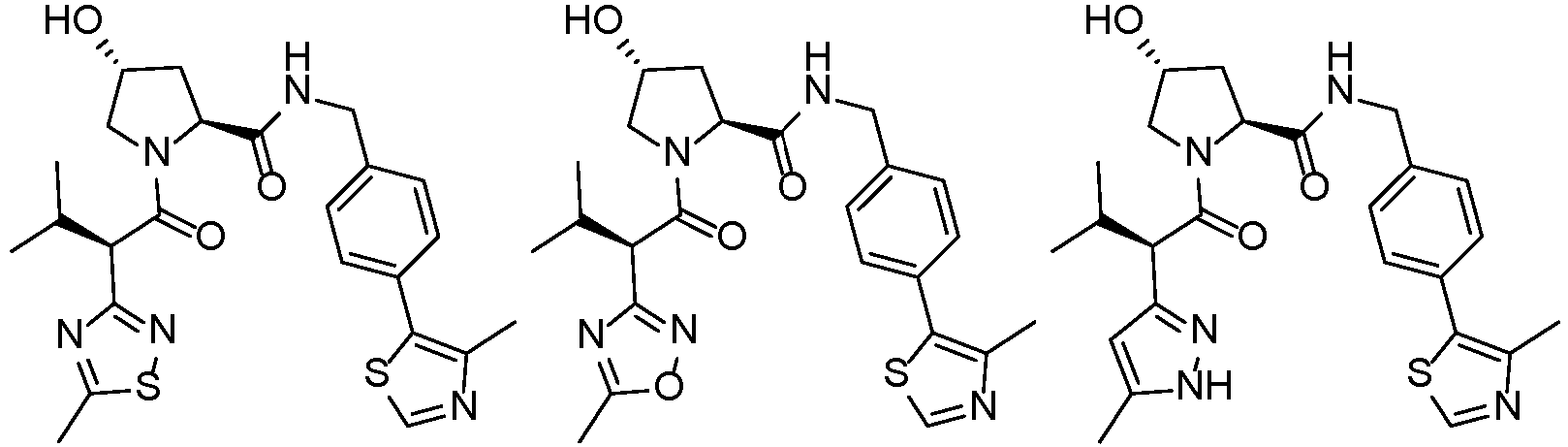


- 19. A pharmaceutical composition comprising a compound of any one of embodiments 1 to 18 and a pharmaceutically acceptable carrier.
- 20. The pharmaceutical composition of embodiment 19, wherein the composition further comprises an additional bioactive agent, preferably an anti-cancer agent.
- 21. The compound of any one of embodiments 1-18 or the pharmaceutical composition of embodiments 19 or 20, for use in the treatment of cancer.
- 22. The compound or pharmaceutical composition for use of embodiment 21, wherein the cancer is:
- (i) a SWI/SNF associated cancer or a cancer with a SMARCA4 mutation, such as lung ancer or non-small cell lung cancer; or
- (ii) a SMARCA4-deficient cancer or a cancer with decreased expression of SMARCA4 relative to normal SMARCA4 expression, such as lung cancer or non-small cell lung cancer.
- To assess BRM degradation (Dmax and DC50) cells were seeded at 8000/well in 96-well black/clear-bottom plates in 180 µL DMEM growth media (containing 1% pen-strep, 1% HEPES and 10% FBS) per well. Plates were incubated overnight to allow adhesion. The next morning cells were treated by adding 20 µL of 10X target compound concentration (1% DMSO) to appropriate wells and returned to incubator for overnight (18-20 hours). The final DMSO concentration was 0.1%.
- For lysing, adherent cells were washed once with 100 µL of DPBS. Cells were lysed in 40 µL of 1X RIPA + HALT protease inhibitor on ice for 10 minutes and frozen until use at - 80°C. Thawed lysates were cleaned by filtration in 1.2 µm filter plates, or alternatively, were spun clean at 2300g at 4°C for 30 minutes.
- For blotting, for each Western sample 30 µL of lysate was added to 10 µL of 4X LDS sample buffer, then denatured at 95°C for 5 minutes in the thermal cycler and placed on ice. Samples were loaded on 4-15% Tris/Glycine gels and run for 25 minutes at 250 constant volts in 1X Tris/Glycine buffer with 4 µL of ladder and 12 µL of each sample loaded for each blot. Protein was transferred from gels to NC with BioRad Turbo dry-transfer unit with the Turbo/midi default program. All blots were rinsed with ddH2O and blocked for 1 hour at room temperature in 5% BSA in TBST (0.1%) on rocker. Blots were exposed to primary antibody in 5% BSA in TBST (0.1%) overnight at 4°C on rocker (1:1000 for BRM (Cell Signaling Tech. cat # 11966) and 1:2000 for alpha-tubulin (Cell Signaling Tech. cat # 3873), a control protein. Blot was washed with TBST (0.1%) three times for 5 minutes on rocker at room temperature. Secondary antibody was added, and blots were incubated on a room temperature rocker for 1 hour with 1:18,000 anti-rabbit-HRP and/or anti-mouse-HRP in 5% BSA in TBST (0.1%). Blots were washed three times in TBST (0.1%) for 5 minutes at room temperature on the rocker. Signal was developed with Femto Maximum Sensitivity substrate for 4 minutes and blots read on ChemiDoc™.
- To assess BRM degradation (Dmax and DC50), cells were seeded at 8000/well in 96-well black/clear-bottom plates in 180 µL DMEM growth media (containing 1% pen-strep, 1% HEPES and 10% FBS) per well. Plates were incubated overnight to allow adhesion. The next morning cells were treated by adding 20 µL of 10X compound (1% DMSO) to appropriate wells and returned to incubator for overnight (18-20 hours). The final DMSO concentration was 0.1%.
- For processing, the plates were removed from incubator, the media was removed, and immediately 200 µL of cold (4°C) DPBS was added to all wells. DPBS was then removed, and 50 µL of 4% paraformaldehyde (PFA) in DPBS (4°C) was added to all wells, and the plates were incubated at room temperature for 20 minutes. PFA was then removed, and 200 µL of TBS-T containing 0.5% Triton X-100 was added to all wells, and the plates were incubated at room temperature for 30 minutes. TBS-T containing 0.5% Triton X-100 was then removed, and 50 µL of Li-Cor blocking solution was added, and the plates were incubated at room temperature for a minimum of one hour. The blocking solution was removed, and 50 µL of Li-Cor blocking solution containing primary antibody cocktail was added (1:1000 for BRM (Cell Signaling Tech. cat # 11966) and 1:2000 for alpha-tubulin (Sigma cat # T6074), a control protein. Plates were then placed in cold room until the next day.
- The next day plates were washed three times with TBS-T, 200 µL per well. Fifty (50) µL of secondary antibody cocktail in LI-COR blocking solution (anti-rabbit_800 nm and anti-mouse_680 nm) was added to all wells (diluted 1:5000). The plates were incubated at room temperature for at least one hour while protected from light. The plates were washed twice with TBS-T, 200 µL per well.
- To read each plate TBS-T was removed, and each plate was inverted tapped on a paper towel. The plates were read on the LI-COR Odyssey with default intensity settings of 5.0 for both channels. LI-COR images were analyzed with the in-cell Western feature of Image Studio Lite.
- The following compounds demonstrated target protein degradation when tested under the conditions described above:
Table 1A. Exemplary bifunctional degradation compounds of the present disclosure Ex. # Structure Compound Name 1 
(2S,4R)-1-((S)-14-(4-(3-amino-6-(2-hydroxyphenyl)pyridazin-4-yl)-1H-pyrazol-1-yl)-2-(tert-butyl)-4-oxo-6,9,12-trioxa-3-azatetradecanoyl)-4-hydroxy-N-(4-(4-methylthiazol-5-yl)benzyl)pyrrolidine-2-carboxamide 2 
(2S,4R)-1-((S)-17-(4-(3-amino-6-(2-hydroxyphenyl)pyridazin-4-yl)-1H-pyrazol-1-yl)-2-(tert-butyl)-4-oxo-6,9,12,15-tetraoxa-3-azaheptadecanoyl)-4-hydroxy-N-(4-(4-methylthiazol-5-yl)benzyl)pyrrolidine-2-carboxamide 3 
(2S,4R)-1-((S)-23-(4-(3-amino-6-(2-hydroxyphenyl)pyridazin-4-yl)-1H-pyrazol-1-yl)-2-(tert-butyl)-4-oxo-6,9,12,15,18,21-hexaoxa-3-azatricosanoyl)-4-hydroxy-N-(4-(4-methylthiazol-5-yl)benzyl)pyrrolidine-2-carboxamide 4 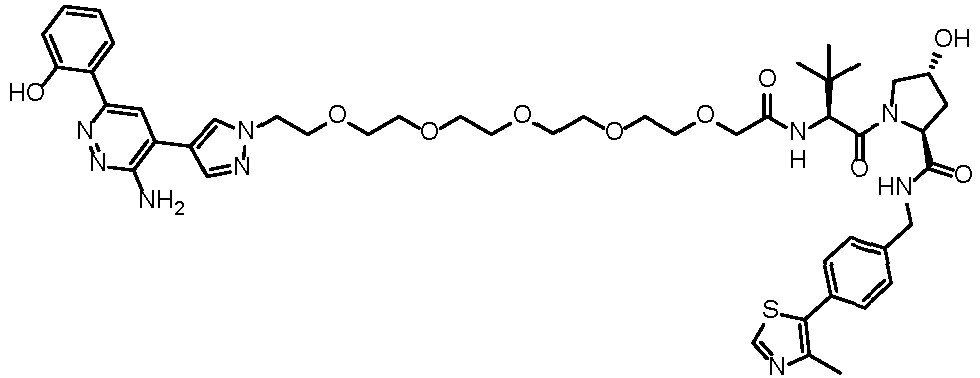
(2S,4R)-1-((S)-20-(4-(3 -amino-6-(2-hydroxyphenyl)pyridazin-4-yl)-1H-pyrazol-1-yl)-2-(tert-butyl)-4-oxo-6,9,12,15,18-pentaoxa-3-azaicosanoyl)-4-hydroxy-N-(4-(4-methylthiazol-5-yl)benzyl)pyrrolidine-2-carboxamide 5 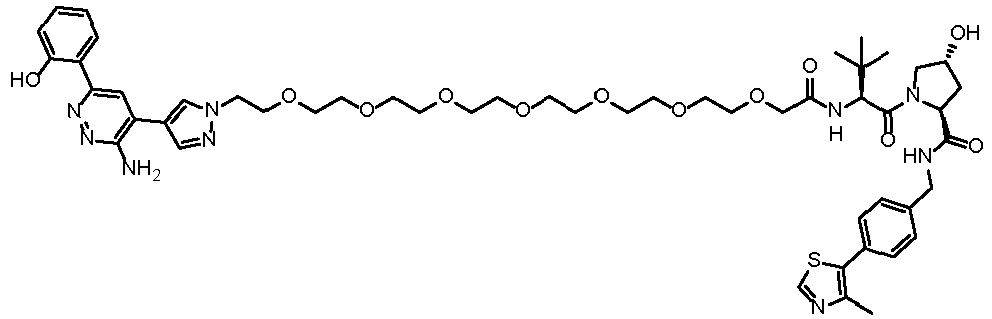
(2S,4R)-1-((S)-26-(4-(3-amino-6-(2-hydroxyphenyl)pyridazin-4-yl)-1H-pyrazol-1-yl)-2-(tert-butyl)-4-oxo-6,9,12,15,18,21,24-heptaoxa-3-azahexacosanoyl)-4-hydroxy-N-(4-(4-methylthiazol-5-yl)benzyl)pyrrolidine-2-carboxamide 6 
(2S,4R)-1-((2S)-14-((4-(3-(3-amino-6-(2-hydroxyphenyl)pyridazin-4-yl)-3,8-diazabicyclo[3.2.1]octan-8-yl)pyridin-2-yl)oxy)-2-(tert-butyl)-4-oxo-6,9,12-trioxa-3-azatetradecanoyl)-4-hydroxy-N-(4-(4-methylthiazol-5-yl)benzyl)pyrrolidine-2-carboxamide 7 
(2S,4R)-1-((2S)-17-((4-(3-(3-amino-6-(2-hydroxyphenyl)pyridazin-4-yl)-3,8-diazabicyclo[3.2.1]octan-8-yl)pyridin-2-yl)oxy)-2-(tert-butyl)-4-oxo-6,9,12,15-tetraoxa-3-azaheptadecanoyl)-4-hydroxy-N-(4-(4-methylthiazol-5-yl)benzyl)pyrrolidine-2-carboxamide 8 
(2S,4R)-1-((2S)-23-((4-(3-(3-amino-6-(2-hydroxyphenyl)pyridazin-4-yl)-3,8-diazabicyclo[3.2.1]octan-8-yl)pyridin-2-yl)oxy)-2-(tert-butyl)-4-oxo-6,9,12,15,18,21-hexaoxa-3-azatricosanoyl)-4-hydroxy-N-(4-(4-methylthiazol-5-yl)benzyl)pyrrolidine-2-carboxamide 9 
(25,4R)-1-((S)-20-((4-((1R,5S)-3-(3-amino-6-(2-hydroxyphenyl)pyridazin-4-yl)-3,8-diazabicyclo[3.2.1]octan-8-yl)pyridin-2-yl)oxy)-2-(tert-butyl)-4-oxo-6,9,12,15,18-pentaoxa-3-azaicosanoyl)-4-hydroxy-N-(4-(4-methylthiazol-5-yl)benzyl)pyrrolidine-2-carboxamide 10 
(2S,4R)-1-((2S)-26-((4-(3-(3-amino-6-(2-hydroxyphenyl)pyridazin-4-yl)-3,8-diazabicyclo[3.2.1]octan-8-yl)pyridin-2-yl)oxy)-2-(tert-butyl)-4-oxo-6,9,12,15,18,21,24-heptaoxa-3-azahexacosanoyl)-4-hydroxy-N-(4-(4-methylthiazol-5-yl)benzyl)pyrrolidine-2-carboxamide 11 
(2S,4R)-1-((S)-2-(2-(2-(2-(4-(3-amino-6-(2-hydroxyphenyl)pyridazin-4-yl)-1H-pyrazol-1-yl)ethoxy)ethoxy)acetamido)-3,3-dimethylbutanoyl)-4-hydroxy-N-(4-(4-methylthiazol-5-yl)benzyl)pyrrolidine-2-carboxamide 12 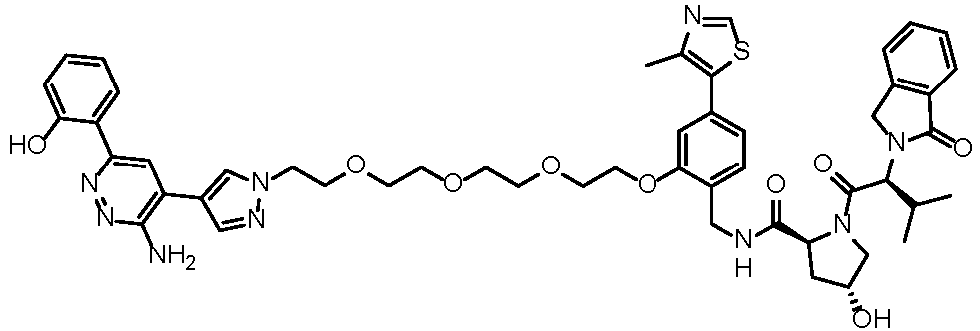
(2S,4R)-N-(2-(2-(2-(2-(2-(4-(3-amino-6-(2-hydroxyphenyl)pyridazin-4-yl)-1H-pyrazol-1-yl)ethoxy)ethoxy)ethoxy)ethoxy)-4-(4-methylthiazol-5-yl)benzyl)-4-hydroxy-1-((S)-3-methyl-2-(1-oxoisoindolin-2-yl)butanoyl)pyrrolidine-2-carboxamide 13 
(2S,4R)-N-(2-((14-(4-(3-amino-6-(2-hydroxyphenyl)pyridazin-4-yl)-1H-pyrazol-1-yl)-3,6,9,12-tetraoxatetradecyl)oxy)-4-(4-methylthiazol-5-yl)benzyl)-4-hydroxy-1-((S)-3-methyl-2-(1-oxoisoindolin-2-yl)butanoyl)pyrrolidine-2-carboxamide 14 
(2S,4R)-1-[(2S)-2-(3-[2-[2-(2-[4-[3-amino-6-(2-hydroxyphenyl)pyridazin-4-yl]-1H-pyrazol-1-yl]ethoxy)ethoxy]ethoxy]-1,2-oxazol-5-yl)-3-methylbutanoyl]-4-hydroxy-N-[[4-(4-methyl-1,3-thiazol-5-yl)phenyl]methyl]pyrrolidine-2-carboxamide 15 
(2S,4R)-1-[(2R)-2-(3-[2-[2-(2-[4-[3-amino-6-(2-hydroxyphenyl)pyridazin-4-yl]-1H-pyrazol-1-yl]ethoxy)ethoxy]ethoxy] - 1,2-oxazol-5-yl)-3-methylbutanoyl]-4-hydroxy-N-[[4-(4-methyl-1,3-thiazol-5-yl)phenyl]methyl]pyrrolidine -2-carboxamide 16 
(2S,4R)-1-((S)-2-(3-(2-(2-(2-(2-(4-(3-amino-6-(2-hydroxyphenyl)pyridazin-4-yl)-1H-pyrazol-1-yl)ethoxy)ethoxy)ethoxy)ethoxy)isox azol-5-yl)-3-methylbutanoyl)-4-hydroxy-N-(4-(4-methylthiazol-5-yl)benzyl)pyrrolidine-2-carboxamide 17 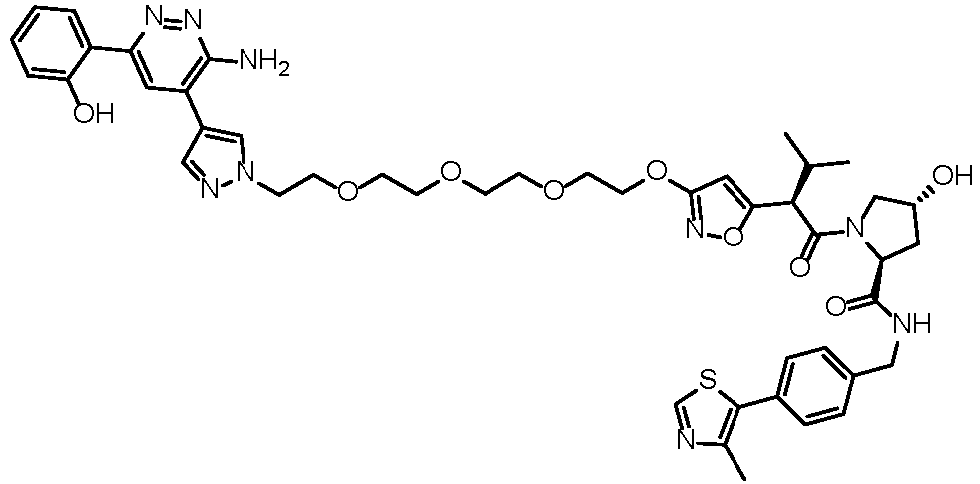
(2S,4R)-1-((R)-2-(3-(2-(2-(2-(2-(4-(3-amino-6-(2-hydroxyphenyl)pyridazin-4-yl)-1H-pyrazol-1-yl)ethoxy)ethoxy)ethoxy)ethoxy)isox azol-5-yl)-3-methylbutanoyl)-4-hydroxy-N-(4-(4-methylthiazol-5-yl)benzyl)pyrrolidine-2-carboxamide 18 
(2S,4R)-1-[(2S)-2-[3-[(14-[4-[3-amino-6-(2-hydroxyphenyl)pyridazin-4-yl]-1H-pyrazol-1-yl]-3,6,9,12-tetraoxatetradecan-1-yl)oxy]-1,2-oxazol-5-yl]-3-methylbutanoyl]-4-hydroxy-N-[[4-(4-methyl-1,3-thiazol-5-yl)phenyl]methyl]pyrrolidine-2-carboxamide 19 
(2S,4R)-1-[(2R)-2-[3-[(14-[4-[3-amino-6-(2-hydroxyphenyl)pyridazin-4-yl]-1H-pyrazol-1-yl]-3,6,9,12-tetraoxatetradecan-1-yl)oxy]-1,2-oxazol-5-yl]-3-methylbutanoyl]-4-hydroxy-N-[[4-(4-methyl-1,3-thiazol-5-yl)phenyl]methyl] pyrrolidine-2-carboxamide 20 
(2S,4R)-N-(2-((17-(4-(3-amino-6-(2-hydroxyphenyl)pyridazin-4-yl)-1H-pyrazol-1-yl)-3,6,9,12,15-pentaoxaheptadecyl)oxy)-4-(4-methylthiazol-5-yl)benzyl)-4-hydroxy-1-((S)-3-methyl-2-(1-oxoisoindolin-2-yl)butanoyl)pyrrolidine-2-carboxamide 21 
(2S,4R)-N-(2-(2-(2-(2-(4-(3-amino-6-(2-hydroxyphenyl)pyridazin-4-yl)-1H-pyrazol-1-yl)ethoxy)ethoxy)ethoxy)-4-(4-methylthiazol-5-yl)benzyl)-4-hydroxy-1-((S)-3-methyl-2-(1-oxoisoindolin-2-yl)butanoyl)pyrrolidine-2-carboxamide 22 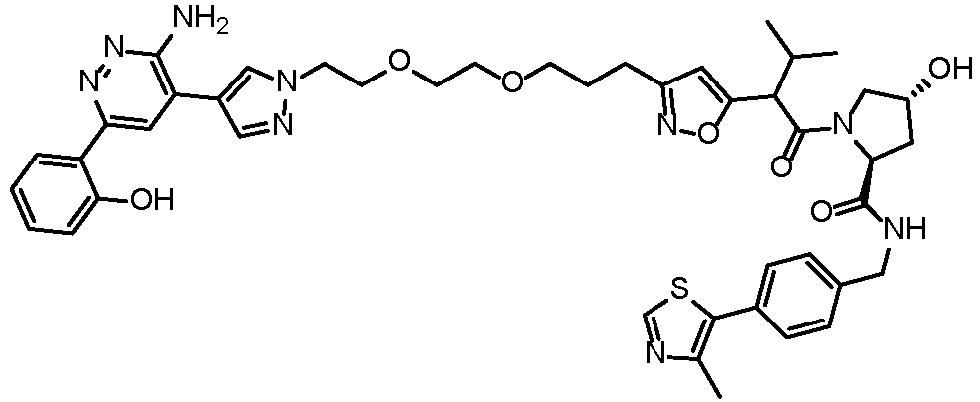
(2S,4R)-1-(2-(3-(3-(2-(2-(4-(3-amino-6-(2-hydroxyphenyl)pyridazin-4-yl)-1H-pyrazol-1-yl)ethoxy)ethoxy)propyl)isoxazol-5-yl)-3 -methylbutanoyl)-4-hydroxy-N-(4-(4-methylthiazol-5-yl)benzyl)pyrrolidine-2-carboxamide 23 
(2S,4R)-1-[(2S)-2-[3-(3-[2-[2-(2-[4-[3-amino-6-(2-hydroxyphenyl)pyridazin-4-yl]-1H-pyrazol-1-yl]ethoxy)ethoxy]ethoxy]propyl)-1,2-oxazol-5-yl]-3-methylbutanoyl]-4-hydroxy-N-[[4-(4-methyl-1,3-thiazol-5-yl)phenyl]methyl]pyrrolidine-2-carboxamide 24 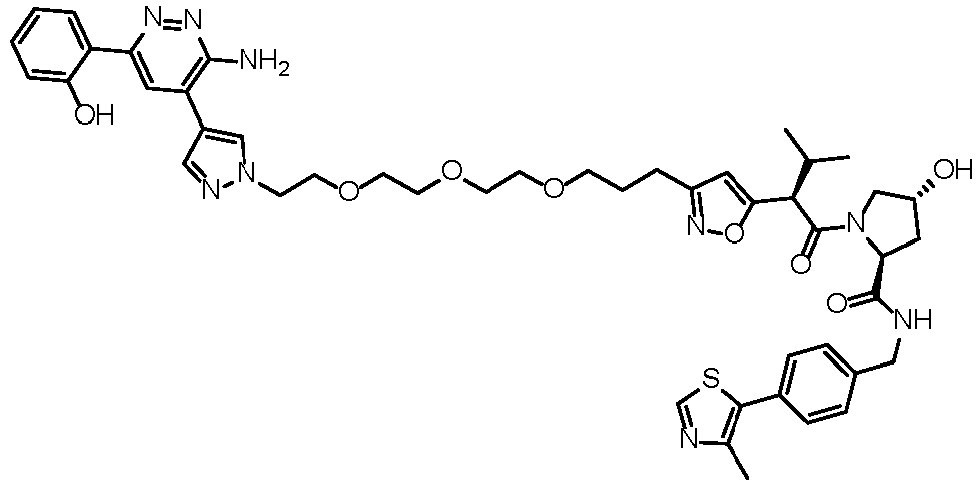
(2S,4R)-1-[(2R)-2-[3-(3-[2-[2-(2-[4-[3-amino-6-(2-hydroxyphenyl)pyridazin-4-yl]-1H-pyrazol-1-yl]ethoxy)ethoxy]ethoxy]propyl)-1,2-oxazol-5-yl]-3-methylbutanoyl]-4-hydroxy-N-[[4-(4-methyl-1,3-thiazol-5-yl)phenyl]methyl]pyrrolidine-2-carboxamide 25 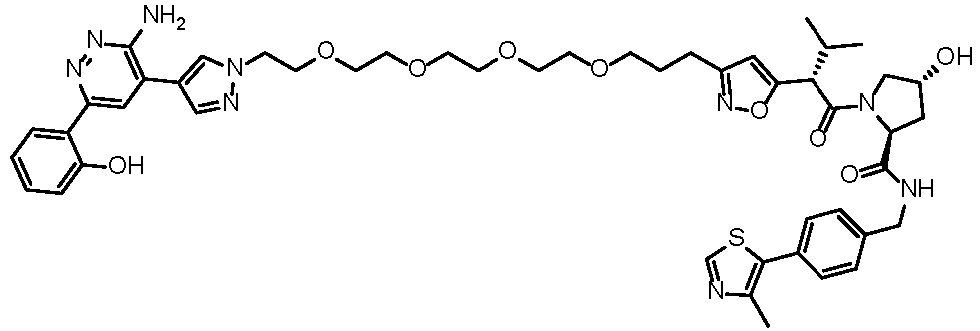
(2S,4R)-1-[(2S)-2-[3-(1-[4-[3-amino-6-(2-hydroxyphenyl)pyridazin-4-yl]-1H-pyrazol-1-yl]-3,6,9,12-tetraoxapentadecan-15-yl)-1,2-oxazol-5-yl]-3-methylbutanoyl]-4-hydroxy-N-[[4-(4-methyl-1,3-thiazol-5-yl)phenyl]methyl]pyrrolidine-2-carboxamide 26 
(2S,4R)-1-[(2R)-2-[3-(1-[4-[3-amino-6-(2-hydroxyphenyl)pyridazin-4-yl]-1H-pyrazol-1-yl]-3,6,9,12-tetraoxapentadecan-15-yl)-1,2-oxazol-5-yl]-3-methylbutanoyl]-4-hydroxy-N-[[4-(4-methyl-1,3-thiazol-5-yl)phenyl]methyl]pyrrolidine-2-carboxamide 27 
(2S,4R)-1-[(2S)-2-[3-[2-(2-[2-[(4-[3-[3-amino-6-(2-hydroxyphenyl)pyridazin-4-yl]-3,8-diazabicyclo[3.2.1]octan-8-yl]pyridin-2-yl)oxy]ethoxy]ethoxy)ethoxy]-1,2-oxazol-5-yl]-3-methylbutanoyl]-4-hydroxy-N-[[4-(4-methyl-1,3-thiazol-5-yl)phenyl]methyl]pyrrolidine-2-carboxamide 28 
(2S,4R)-1-[(2R)-2-[3-[2-(2-[2-[(4-[3-[3-amino-6-(2-hydroxyphenyl)pyridazin-4-yl]-3,8-diazabicyclo[3.2.1]octan-8-yl]pyridin-2-yl)oxy]ethoxy]ethoxy)ethoxy]-1,2-oxazol-5-yl]-3-methylbutanoyl]-4-hydroxy-N-[[4-(4-methyl-1,3-thiazol-5-yl)phenyl]methyl]pyrrolidine-2-carboxamide 29 
(2S,4R)-1-[(2S)-2-(3-[[1-(4-[3-[3-amino-6-(2-hydroxyphenyl)pyridazin-4-yl]-3,8-diazabicyclo[3.2.1]octan-8-yl]pyridin-2-yl)-1,4,7,10-tetraoxadodecan-12-yl]oxy]-1,2-oxazol-5-yl)-3-methylbutanoyl]-4-hydroxy-N-[[4-(4-methyl-1,3-thiazol-5-yl)phenyl]methyl]pyrrolidine-2-carboxamide 30 
(2S,4R)-1-[(2R)-2-(3-[[1-(4-[3-[3-amino-6-(2-hydroxyphenyl)pyridazin-4-yl]-3,8-diazabicyclo[3.2.1]octan-8-yl]pyridin-2-yl)-1,4,7,10-tetraoxadodecan-12-yl]oxy]-1,2-oxazol-5-yl)-3-methylbutanoyl]-4-hydroxy-N-[[4-(4-methyl-1,3-thiazol-5-yl)phenyl]methyl]pyrrolidine-2-carboxamide 31 
(2S,4R)-1-((2S)-2-(2-(6-(4-(2-(3-(4-(3-(3-amino-6-(2-hydroxyphenyl)pyridazin-4-yl)-3,8-diazabicyclo[3.2.1]octan-8-yl)pyridin-2-yl)propoxy)ethyl)piperazin-1-yl)pyridin-3-yl)acetamido)-3,3-dimethylbutanoyl)-4-hydroxy-N-(4-(4-methylthiazol-5-yl)benzyl)pyrrolidine-2-carboxamide 32 
(2S,4R)-1-[(2S)-2-(1-[6-[(1R,4R)-5-[3-amino-6-(2-hydroxyphenyl)pyridazin-4-yl]-2,5-diazabicyclo[2.2.1]heptan-2-yl]pyridin-2-yl]-1,4,7,10-tetraoxadodecan-12-amido)-3,3-dimethylbutanoyl]-4-hydroxy-N-[[4-(4-methyl-1,3-thiazol-5-yl)phenyl]methyl]pyrrolidine-2-carboxamide 33 
(2S,4R)-1-[(2S)-2-(2-[3-[4-(1-[4-[3-amino-6-(2-hydroxyphenyl)pyridazin-4-yl]-1H-pyrazol-1-yl]ethyl)phenyl]propoxy]acetamido) - 3,3-dimethylbutanoyl]-4-hydroxy-N-[[4-(4-methyl-1,3-thiazol-5-yl)phenyl]methyl]pyrrolidine-2-carboxamide 34 
(2S,4R)-1-[(2S)-2-[1-(6-[3-[3-amino-6-(2-hydroxyphenyl)pyridazin-4-yl]-3,8-diazabicyclo[3.2.1]octan-8-yl]pyrazin-2-yl)-1,4,7,10-tetraoxadodecan-12-amido]-3,3-dimethylbutanoyl]-4-hydroxy-N-[[4-(4-methyl-1,3-thiazol-5-yl)phenyl]methyl]pyrrolidine-2-carboxamide 35 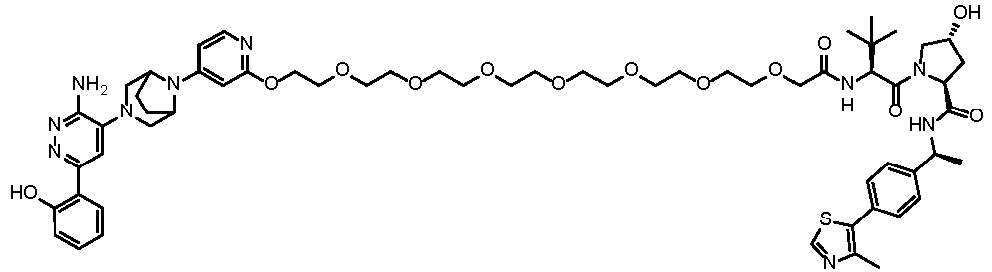
(2S,4R)-1-[(2S)-2-[1-(4-[3-[3-amino-6-(2-hydroxyphenyl)pyridazin-4-yl]-3,8-diazabicyclo[3.2.1]octan-8-yl]pyridin-2-yl)-1,4,7,10,13,16,19,22-octaoxatetracosan-24-amido]-3,3-dimethylbutanoyl]-4-hydroxy-N-[(1S)-1-[4-(4-methyl-1,3-thiazol-5-yl)phenyl]ethyl]pyrrolidine-2-carboxamide 36 
(2S,4R)-1-[(2S)-2-(3-[2-[2-(4-[9-[3-amino-6-(2-hydroxyphenyl)pyridazin-4-yl]-1-oxa-4,9-diazaspiro [5.5]undecan-4-yl]butoxy)ethoxy]ethoxy]-1,2-oxazol-5-yl)-3-methylbutanoyl]-4-hydroxy-N-[[4-(4-methyl-1,3-thiazol-5-yl)phenyl]methyl]pyrrolidine-2-carboxamide 37 
(2S,4R)-1-((R)-2-(3-(2-(2-(4-(9-(3-amino-6-(2-hydroxyphenyl)pyridazin-4-yl)-1-oxa-4,9-diazaspiro [5.5]undecan-4-yl)butoxy)ethoxy)ethoxy)isoxazol-5-yl)-3-methylbutanoyl)-4-hydroxy-N-(4-(4-methylthiazol-5-yl)benzyl)pyrrolidine-2-carboxamide 38 
(2S,4R)-1-[(2R)-2-[4-[2-(4-[2-[(4-[3-[3-amino-6-(2-hydroxyphenyl)pyridazin-4-yl]-3,8-diazabicyclo[3.2.1]octan-8-yl]pyridin-2-yl)oxy]ethyl]piperazin-1-yl)ethoxy]-1H-pyrazol-1-yl]-3-methylbutanoyl]-4-hydroxy-N-[(1S)-1-[4-(4-methyl-1,3-thiazol-5-yl)phenyl]ethyl]pyrrolidine-2-carboxamide 39 
(2S,4R)-1-[(2S)-2-[4-[2-(4-[2-[(4-[3-[3-amino-6-(2-hydroxyphenyl)pyridazin-4-yl]-3,8-diazabicyclo[3.2.1]octan-8-yl]pyridin-2-yl)oxy]ethyl]piperazin-1-yl)ethoxy]-1H-pyrazol-1-yl]-3-methylbutanoyl]-4-hydroxy-N-[(1S)-1-[4-(4-methyl-1,3-thiazol-5-yl)phenyl]ethyl]pyrrolidine-2-carboxamide 40 
(2S,4R)-1-[(2S)-2-[2-[2-(2-[4-[3-(4-[3-[3-amino-6-(2-hydroxyphenyl)pyridazin-4-yl]-3,8-diazabicyclo[3.2.1]octan-8-yl]pyridin-2-yl)propyl]piperazin-1-yl]ethoxy)ethoxy]acetamido]-3,3-dimethylbutanoyl]-4-hydroxy-N-[[4-(4-methyl-1,3-thiazol-5-yl)phenyl]methyl]pyrrolidine-2-carboxamide 41 
(2S,4R)-1-[(2S)-2-[3-[2-(4-[2-[(4-[3-[3-amino-6-(2-hydroxyphenyl)pyridazin-4-yl]-3,8-diazabicyclo[3.2.1]octan-8-yl]pyridin-2-yl)oay]ethyl]piperazin-1-yl)ethoxy]-1,2-oxazol-5-yl]-3-methylbutanoyl]-4-hydroxy-N-[[4-(4-methyl-1,3-thiazol-5-yl)phenyl]methyl]pyrrolidine-2-carboxamide 42 
(2S,4R)-1-[(2R)-2-[3-[2-(4-[2-[(4-[3-[3-amino-6-(2-hydroxyphenyl)pyridazin-4-yl]-3,8-diazabicyclo[3.2.1]octan-8-yl]pyridin-2-yl)oxy]ethyl]piperazin-1-yl)ethoxy]-1,2-oxazol-5-yl]-3-methylbutanoyl]-4-hydroay-N-[[4-(4-methyl-1,3-thiazol-5-yl) phenyl]methyl]pyrrolidine-2-carboxamide 43 
(2S,4R)-1-[(2S)-2-[3-(2-[4-[3-(4-[3-[3-amino-6-(2-hydroxyphenyl)pyridazin-4-y1]-3,8-diazabicyclo[3.2.1]octan-8-yl]pyridin-2-yl)propyl]piperazin-1-yl]ethoxy)-1,2-oxazol-5-y1]-3-methylbutanoyl]-4-hydroxy-N-[[4-(4-methyl-1,3-thiazol-5-yl)phenyl]methyl]pyrrolidine-2-carboxamide 44 
(2S,4R)-1-[(2R)-2-[3-(2-[4-[3-(4-[3-[3-amino-6-(2-hydroxyphenyl)pyridazin-4-yl]-3,8-diazabicyclo[3.2.1]octan-8-yl]pyridin-2-yl)propyl]piperazin-1-yl]ethoxy)-1,2-oxazol-5-yl]-3-methylbutanoyl]-4-hydroxy -N-[[4-(4-methyl-1,3-thiazol-5-yl)phenyl]methyl]pyrrolidine-2-carboxamide 45 
(2S,4R)-1-[(2S)-2-[2-[4-(2-[2-[3-(4-[3-[3-amino-6-(2-hydroxyphenyl)pyridazin-4-y1]-3,8-diazabicyclo[3.2.1]octan-8-yl]pyridin-2-yl)propoxy]ethoxy]ethyl)piperazin-1-yl]acetamido]-3,3-dimethylbutanoyl]-4-hydroxy-N-[[4-(4-methyl-1,3-thiazol-5-yl)phenyl]methyl]pyrrolidine-2-carboxamide 46 
(2S,4R)-1-[(2S)-2-[3-[2-(4-[2-[(4-[3-[3-amino-6-(2-hydroxyphenyl)pyridazin-4-yl]-3,8-diazabicyclo[3.2.1] octan-8-yl]pyridin-2-yl)oxy]ethyl]piperazin-1-yl)ethoxy]-1,2-oxazol-5-yl]-3-methylbutanoyl]-4-hydroxy-N-[(1S)-1-[4-(4-methyl-1,3-thiazol-5-yl)phenyl]ethyl]pyrrolidine-2-carboxamide 47 
1H NMR (300 MHz, DMSO-d 6) δ 14.11 (s, 1H), 8.95 (s, 1H), 8.37 (d, J = 7.6 Hz, 1H), 7.88 -7.75 (d, J = 5.9 Hz, 2H), 7.49 - 7.28 (m, 6H), 7.18 (ddd, J = 8.3, 7.0, 1.6 Hz, 1H), 6.88 - 6.75 (m, 2H), 6.49 (dd, J = 6.2, 2.0 Hz, 1H), 6.16 - 6.02 (m, 2H), 5.93 (s, 2H), 5.05 (d, J = 3.7 Hz, 1H), 5.00-4.81 (m, 1H), 4.46 (s, 2H), 4.39 - 4.13 (m, 6H), 3.72 - 3.55 (m, 2H), 3.45 - 3.35 (m, 1H), 3.21 (d, J = 11.7 Hz, 2H), 2.98 (d, J = 11.6 Hz, 2H), 2.59 (q, J = 6.5 Hz, 4H), 2.42 (s, 6H), 2.17 (dd, J = 20.0, 8.3 Hz, 3H), 1.94 (s, 4H), 1.75 (t, J = 9.6 Hz, 1H), 1.37 (dd, J = 20.9, 7.0 Hz, 3H), 1.17 (d, J = 14.9 Hz, 1H), 1.05 - 0.87 (m, 3H), 0.77 (dd, J = 10.6, 6.7 Hz, 3H). 48 
(2S,4R)-1-((2S)-2-(2-(4-(5-(2-(3-(4-(3-(3-amino-6-(2-hydroxyphenyl)pyridazin-4-yl)-3,8-diazabicyclo[3.2.1]octan-8-yl)pyridin-2-yl)propoxy)ethyl)pyridin-2-yl)piperazin-1-yl)acetamido)-3,3-dimethylbutanoyl)-4-hydroxy-N-(4-(4-methylthiazol-5-yl)benzyl)pyrrolidine-2-carboxamide 49 
(2S,4R)-1-((2S)-2-(2-((1-(2-(4-(3-(4-(3-(3-amino-6-(2-hydroxyphenyl)pyridazin-4-yl)-3,8-diazabicyclo[3.2.1]octan-8-yl)pyridin-2-yl)propyl)piperazin-1-yl)ethyl)azetidin-3-yl)oxy)acetamido)-3,3-dimethylbutanoyl)-4-hydroxy-N-((S)-1-(4-(4-methylthiazol-5-yl)phenyl)ethyl)pyrrolidine-2-carboxamide 50 
(2S,4R)-1-[(2S)-2-[2-[6-(4-[2-[3-(4-[3-[3-amino-6-(2-hydroxyphenyl)pyridazin-4-yl] -3,8-diazabicyclo[3.2.1]octan-8-yl]pyridin-2-yl)propoxy]ethyl]piperazin-1-yl)pyridin-3-yl]acetamido]-3,3-dimethylbutanoyl]-4-hydroxy-N-[(1S)-1-[4-(4-methyl-1,3-thiazol-5-yl)phenyl]ethyl]pyrrolidine-2-carboxamide 51 
(2S,4R)-1-[(2S)-2-(2-[2-[2-(4-[9-[3-amino-6-(2-hydroxyphenyl)pyridazin-4-yl]-1-oxa-4,9-diazaspiro [5.5]undecan-4-yl]butoxy)ethoxy]ethoxy]acetamido)-3,3-dimethylbutanoyl]-4-hydroxy-N-[(1S)-1-[4-(4-methyl-1,3-thiazol-5-yl)phenyl]ethyl]pyrrolidine-2-carboxamide 52 
(2S,4R)-1-((S,E)-18-(4-(3-(3-amino-6-(2-hydroxyphenyl)pyridazin-4-yl)-3,8-diaza-bicyclo[3.2.1]octan-8-yl)pyridin-2-yl)-2-tert-butyl-4-oxo-6,9,12,15-tetraoxa-3-azaoctadec-17-en-1-oyl)-4-hydroxy-N-(4-(4-methylthiazol-5-yl)benzyl)pyrrolidine-2-carboxamide 53 
(2S,4R)-1-((S)-18-(4-(3-(3-amino-6-(2-hydroxyphenyl)pyridazin-4-yl)-3,8-diaza-bicyclo[3.2.1]octan-8-yl)pyridin-2-yl)-2-tert-butyl-4-oxo-6,9,12,15-tetraoxa-3-azaoctadecan-1-oyl)-4-hydroxy-N-(4-(4-methylthiazol-5-yl)benzyl)pyrrolidine-2-carboxamide 54 
(2S,4R)-1-((2S)-2-(3-(2-(4-(2-((4-(3-(3-amino-6-(2-hydroxyphenyl)pyridazin-4-yl)-3,8-diazabicyclo[3.2.1]octan-8-yl)pyridin-2-yl)oxy)ethyl)piperazin-1-yl)ethoxy)-4-chloroisoxazol-5-yl)-3-methylbutanoyl)-4-hydroxy-N-((S)-1-(4-(4-methylthiazol-5-yl)phenyl)ethyl)pyrrolidine-2-carboxamide 55 
(2S,4R)-I-((2R)-2-(3 -(2-(4-(2-((4-(3-(3-amino-6-(2-hydroxyphenyl)pyridazin-4-yl)-3,8-diazabicyclo[3.2.1]octan-8-yl)pyridin-2-yl)oxy)ethyl)piperazin-1-yl)ethoxy)-4-chloroisoxazol-5-yl)-3-methylbutanoyl)-4-hydroxy-N-((S)-1-(4-(4-methylthiazol-5-yl)phenyl)ethyl)pyrrolidine-2-carboxamide 56 
(2S,4R)-1-(2-(3-((3-(5-((1r,3r)-3-((4-(3-(3-amino-6-(2-hydroxyphenyl)pyridazin-4-yl)-3,8-diazabicyclo[3.2.1]octan-8-yl)pyridin-2-yl)oxy)cyclobutoxy)pyridin-2-yl)allyl)oxy)isoxazol-5-yl)-3-methylbutanoyl)-4-hydroxy-N-(4-(4-methylthiazol-5-yl)benzyl)pyrrolidine-2-carboxamide 57 
(2R,4S)-1-(2-(3-(2-(4-(2-((4-(3-(3-amino-6-(2-hydroxyphenyl)pyridazin-4-yl)-3,8-diazabicyclo[3.2.1]octan-8-yl)pyridin-2-yl)oxy)ethyl)piperazin-1-yl)ethoxy)isoxazol-5-yl)-3-methylbutanoyl)-4-hydroxy-N-(4-(4-methylthiazol-5-yl)benzyl)pyrrolidine-2-carboxamide 58 
(2S,4R)-1-((2S)-2-(2-(6-(4-(2-((1r,3r)-3-((4-(3-(3-amino-6-(2-hydroxyphenyl)pyridazin-4-yl)-3,8-diazabicyclo[3.2.1]octan-8-yl)pyridin-2-yl)oxy)cyclobutoxy)ethyl)piperazin-1-yl)pyridin-3-yl)acetamido)-3,3-dimethylbutanoyl)-4-hydroxy-N-((S)-1-(4-(4-methylthiazol-5-yl)phenyl)ethyl)pyrrolidine-2-carboxamide 59 
(2S,4R)-1-((2S)-2-(3-(3-(4-(1-(4-(3-amino-6-(2-hydroxyphenyl)pyridazin-4-yl)-1H-pyrazol-1-yl)ethyl)phenyl)propoxy)isoxazol-5-yl)-3-methylbutanoyl)-4-hydroxy-N-((S)-1-(4-(4-methylthiazol-5-yl)phenyl)ethyl)pyrrolidine-2-carboxamide 60 
(2S,4R)-1-((2R)-2-(3-(3-(4-(1-(4-(3-amino-6-(2-hydroxyphenyl)pyridazin-4-yl)-1H-pyrazol-1-yl)ethyl)phenyl)propoxy)isoxazol-5-yl)-3-methylbutanoyl)-4-hydroxy-N-((S)-1-(4-(4-methylthiazol-5-yl)phenyl)ethyl)pyrrolidine-2-carboxamide 61 
(2S,4R)-1-((2S)-2-(2-(3-(5-(1-(4-(3-amino-6-(2-hydroxyphenyl)pyridazin-4-yl)-1H-pyrazol-1-yl)ethyl)pyridin-2-yl)propoxy)acetamido)-3,3-dimethylbutanoyl)-4-hydroxy-N-((S)-1-(4-(4-methylthiazol-5-yl)phenyl)ethyl)pyrrolidine-2-carboxamide 62 
(2S,4R)-1-((R)-2-(3-(2-(4-(2-(2-(4-(3-amino-6-(2-hydroxyphenyl)pyridazin-4-yl)-1H-pyrazol-1-yl)ethoxy)ethyl)piperazin-1-yl)ethoxy)isoxazol-5-yl)-3-methylbutanoyl)-4-hydroxy-N-((S)-1-(4-(4-methylthiazol-5-yl)phenyl)ethyl)pyrrolidine-2-carboxamide 63 
(2S,4R)-1-((2S)-2-(3-(2-(4-((1r,3 S)-3-((4-(3-(3-amino-6-(2-hydroxyphenyl)pyridazin-4-yl)-3,8-diazabicyclo[3.2.1]octan-8-yl)pyridin-2-yl)oxy)cyclobutoxy)piperidin-1-yl)ethoxy)isoxazol-5-yl)-3-methylbutanoyl)-4-hydroxy-N-((S)-1-(4-(4-methylthiazol-5-yl)phenyl)ethyl)pyrrolidine-2-carboxamide 64 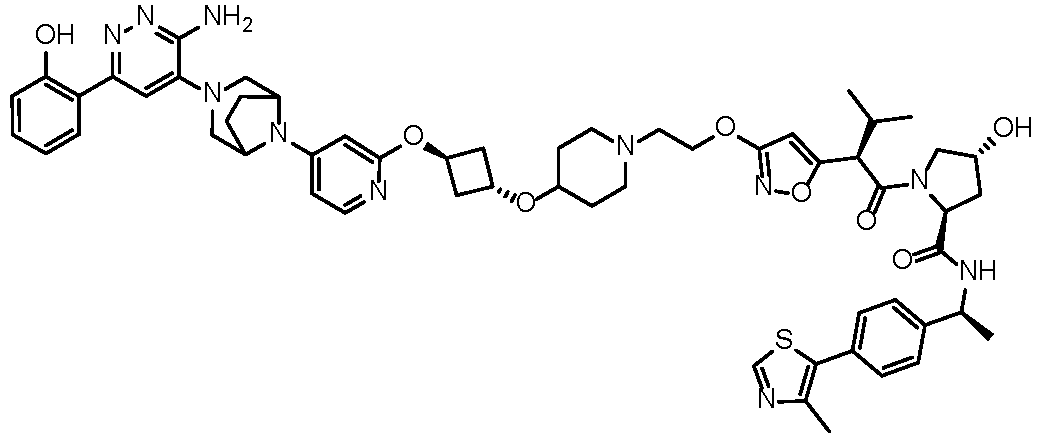
(2S,4R)-1-((2R)-2-(3-(2-(4-((1r,3R)-3-((4-(3-(3-amino-6-(2-hydroxyphenyl)pyridazin-4-yl)-3,8-diazabicyclo[3.2.1]octan-8-yl)pyridin-2-yl)oxy)cyclobutoxy)piperidin-1-yl)ethoxy)isoxazol-5-yl)-3-methylbutanoyl)-4-hydroxy-N-((S)-1-(4-(4-methylthiazol-5-yl)phenyl)ethyl)pyrrolidine-2-carboxamide 65 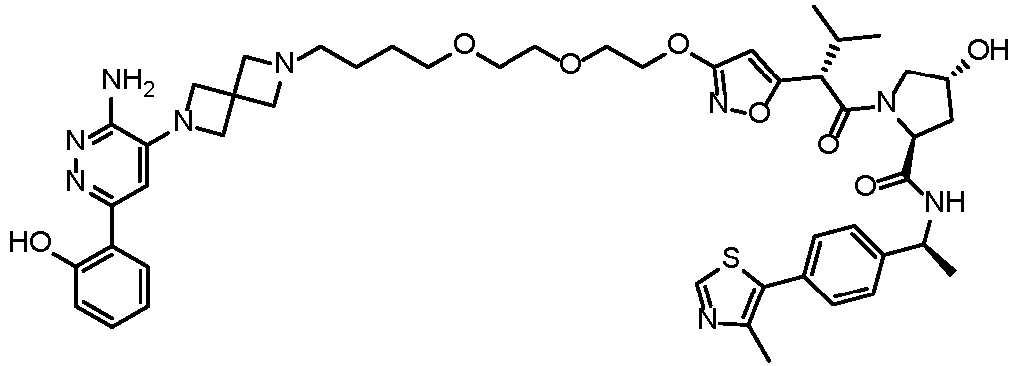
(2S,4R)-1-((S)-2-(3-(2-(2-(4-(6-(3-amino-6-(2-hydroxyphenyl)pyridazin-4-yl)-2,6-diazaspiro[3.3]heptan-2-yl)butoxy)ethoxy)ethoxy)isoxazol-5-yl)-3-methylbutanoyl)-4-hydroxy-N-((S)-1-(4-(4-methylthiazol-5-yl)phenyl)ethyl)pyrrolidine-2-carboxamide 66 
(2S,4R)-1-((R)-2-(3-(2-(2-(4-(6-(3-amino-6-(2-hydroxyphenyl)pyridazin-4-yl)-2,6-diazaspiro[3.3]heptan-2-yl)butoxy)ethoxy)ethoxy)isoxazol-5-yl)-3-methylbutanoyl)-4-hydroxy-N-((S)-1-(4-(4-methylthiazol-5-yl)phenyl)ethyl)pyrrolidine-2-carboxamide 67 
(2S,4R)-1-((S)-2-(3-(2-(2-(4-(9-(3-amino-6-(2-hydroxyphenyl)pyridazin-4-yl)-3,9-diazaspiro [5.5]undecan-3-yl)butoxy)ethoxy)ethoxy)isoxazol-5-yl)-3-methylbutanoyl)-4-hydroxy-N-((S)-1-(4-(4-methylthiazol-5-yl)phenyl)ethyl)pyrrolidine-2-carboxamide 68 
(2S,4R)-1-((R)-2-(3-(2-(2-(4-(9-(3-amino-6-(2-hydroxyphenyl)pyridazin-4-yl)-3,9-diazaspiro [5.5]undecan-3-yl)butoxy)ethoxy)ethoxy)isoxazol-5-yl)-3-methylbutanoyl)-4-hydroxy-N-((S)-1-(4-(4-methylthiazol-5-yl)phenyl)ethyl)pyrrolidine-2-carboxamide 69 
(2S,4R)-1-((2S)-2-(3-((3-(5-((1r,3 S)-3-((4-(3-(3-amino-6-(2-hydroxyphenyl)pyridazin-4-yl)-3,8-diazabicyclo[3.2.1]octan-8-yl)pyridin-2-yl)oxy)cyclobutoxy)pyridin-2-yl)prop-2-yn-1-yl)oxy)isoxazol-5-yl)-3-methylbutanoyl)-4-hydroxy-N-((S)-1-(4-(4-methylthiazol-5-yl)phenyl)ethyl)pyrrolidine-2-carboxamide 70 
(2S,4R)-1-((2R)-2-(3-((3 -(5-((1r,3R)-3-((4-(3-(3-amino-6-(2-hydroxyphenyl)pyridazin-4-yl)-3,8-diazabicyclo[3.2.1]octan-8-yl)pyridin-2-yl)oxy)cyclobutoxy)pyridin-2-yl)prop-2-yn-1-yl)oxy)isoxazol-5-yl)-3-methylbutanoyl)-4-hydroxy-N-((S)-1-(4-(4-methylthiazol-5-yl)phenyl)ethyl)pyrrolidine-2-carboxamide 71 
(2S,4R)-1-((S)-2-(3-(2-(2-(4-(7-(3-amino-6-(2-hydroxyphenyl)pyridazin-4-yl)-2,7-diazaspiro [3.5]nonan-2-yl)butoxy)ethoxy)ethoxy)isoxazol-5-yl)-3-methylbutanoyl)-4-hydroxy-N-((S)-1-(4-(4-methylthiazol-5-yl)phenyl)ethyl)pyrrolidine-2-carboxamide 72 
(2S,4R)-1-((R)-2-(3-(2-(2-(4-(7-(3-amino-6-(2-hydroxyphenyl)pyridazin-4-yl)-2,7-diazaspiro [3.5]nonan-2-yl)butoxy)ethoxy)ethoxy)isoxazol-5-yl)-3-methylbutanoyl)-4-hydroxy-N-((S)-1-(4-(4-methylthiazol-5-yl)phenyl)ethyl)pyrrolidine-2-carboxamide 73 
(2S,4R)-1-((S)-2-(3-(2-(2-(4-(8-(3-amino-6-(2-hydroxyphenyl)pyridazin-4-yl)-2,8-diazaspiro[4.5]decan-2-yl)butoxy)ethoxy)ethoxy)isoxazol-5-yl)-3-methylbutanoyl)-4-hydroxy-N-((S)-1-(4-(4-methylthiazol-5-yl)phenyl)ethyl)pyrrolidine-2-carboxamide 74 
(2S,4R)-1-((R)-2-(3-(2-(2-(4-(8-(3-amino-6-(2-hydroxyphenyl)pyridazin-4-yl)-2,8-diazaspiro[4.5]decan-2-yl)butoxy)ethoxy)ethoxy)isoxazol-5-yl)-3-methylbutanoyl)-4-hydroxy-N-((S)-1-(4-(4-methylthiazol-5-yl)phenyl)ethyl)pyrrolidine-2-carboxamide 75 
(2S,4R)-1-((2S)-2-(3-(2-(4-(2-((4-(3-(3-amino-6-(2-hydroxyphenyl)pyridazin-4-yl)-3,8-diazabicyclo[3.2.1]octan-8-yl)pyridin-2-yl)oxy)ethyl)piperazin-1-yl)ethoxy)isoxazol-5-yl)-3-methylbutanoyl)-4-hydroxy-N-((S)-1-(4-(2-methyl-1H-imidazol-1-yl)phenyl)ethyl)pyrrolidine-2-carboxamide 76 
(2S,4R)-I-((2R)-2-(3 -(2-(4-(2-((4-(3-(3-amino-6-(2-hydroxyphenyl)pyridazin-4-yl)-3,8-diazabicyclo[3.2.1]octan-8-yl)pyridin-2-yl)oxy)ethyl)piperazin-1-yl)ethoxy)isoxazol-5-yl)-3-methylbutanoyl)-4-hydroxy-N-((S)-1-(4-(2-methyl-1H-imidazol-1-yl)phenyl)ethyl)pyrrolidine-2-carboxamide 77 
(2S,4R)-1-((2S)-2-(2-(3-(2-(4-(3-(4-(3-(3-amino-6-(2-hydroxyphenyl)pyridazin-4-yl)-3,8-diazabicyclo[3.2.1]octan-8-yl)pyridin-2-yl)propyl)piperazin-1-yl)ethoxy)azetidin-1-yl)acetamido)-3,3-dimethylbutanoyl)-4-hydroxy-N-((S)-1-(4-(4-methylthiazol-5-yl)phenyl)ethyl)pyrrolidine-2-carboxamide 78 
(2S,4R)-1-((2S)-2-(2-(3-(2-(4-(2-((4-(3-(3-amino-6-(2-hydroxyphenyl)pyridazin-4-yl)-3,8-diazabicyclo[3.2.1]octan-8-yl)pyridin-2-yl)oxy)ethyl)piperazin-1-yl)ethoxy)azetidin-1-yl)acetamido)-3,3-dimethylbutanoyl)-4-hydroxy-N-((S)-1-(4-(4-methylthiazol-5-yl)phenyl)ethyl)pyrrolidine-2-carboxamide 79 
(2S,4R)-1-((2S)-2-(2-(4-(5-(2-((1r,3r)-3-((4-(3-(3-amino-6-(2-hydroxyphenyl)pyridazin-4-yl)-3,8-diazabicyclo[3.2.1]octan-8-yl)pyridin-2-yl)oxy)cyclobutoxy)ethyl)pyridin-2-yl)piperazin-1-yl)acetamido)-3,3-dimethylbutanoyl)-4-hydroxy-N-((S)-1-(4-(4-methylthiazol-5-yl)phenyl)ethyl)pyrrolidine-2-carboxamide 80 
(2S,4R)-1-((2S)-2-(2-(4-(5-(3-((1r,3r)-3-((4-(3-(3-amino-6-(2-hydroxyphenyl)pyridazin-4-yl)-3,8-diazabicyclo[3.2.1]octan-8-yl)pyridin-2-yl)oxy)cyclobutoxy)propyl)pyridin-2-yl)piperazin-1-yl)acetamido)-3,3-dimethylbutanoyl)-4-hydroxy-N-((S)-1-(4-(4-methylthiazol-5-yl)phenyl)ethyl)pyrrolidine-2-carboxamide 81 
(2S,4R)-1-((2R)-2-(3-(2-(4-(1-(4-(3-amino-6-(2-hydroxyphenyl)pyridazin-4-yl)-1H-pyrazol-1-yl)ethyl)phenoxy)ethoxy)isoxazol-5-yl)-3-methylbutanoyl)-4-hydroxy-N-((S)-1-(4-(4-methylthiazol-5-yl)phenyl)ethyl)pyrrolidine-2-carboxamide 82 
(2S,4R)-1-((2R)-2-(3-(2-((5-(1-(4-(3-amino-6-(2-hydroxyphenyl)pyridazin-4-yl)-1H-pyrazol-1-yl)ethyl)pyridin-2-yl)oxy)ethoxy)isoxazol-5-yl)-3-methylbutanoyl)-4-hydroxy-N-((S)-1-(4-(4-methylthiazol-5-yl)phenyl)ethyl)pyrrolidine-2-carboxamide 83 
(2S,4R)-I-((2R)-2-(3 -(2-(4-(4-(1-(4-(3-amino-6-(2-hydroxyphenyl)pyridazin-4-yl)-1H-pyrazol-1-yl)ethyl)benzyl)piperazin-1-yl)ethoxy)isoxazol-5-yl)-3-methylbutanoyl)-4-hydroxy-N-((S)-1-(4-(4-methylthiazol-5-yl)phenyl)ethyl)pyrrolidine-2-carboxamide 84 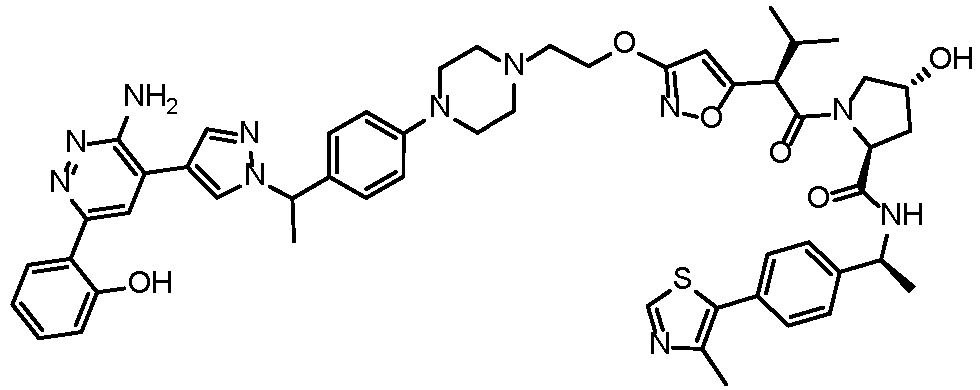
(2S,4R)-I-((2R)-2-(3 -(2-(4-(4-(1-(4-(3-amino-6-(2-hydroxyphenyl)pyridazin-4-yl)-1H-pyrazol-1-yl)ethyl)phenyl)piperazin-1-yl)ethoxy)isoxazol-5-yl)-3-methylbutanoyl)-4-hydroxy-N-((S)-1-(4-(4-methylthiazol-5-yl)phenyl)ethyl)pyrrolidine-2-carboxamide 85 
(2S,4R)-1-((2R)-2-(3-(2-(4-(2-((1r,3r)-3-((4-(3-(3-amino-6-(2-hydroxyphenyl)pyridazin-4-yl)-3,8-diazabicyclo[3.2.1]octan-8-yl)pyridin-2-yl)oxy)cyclobutoxy)ethyl)piperazin-1-yl)ethoxy)isoxazol-5-yl)-3-methylbutanoyl)-4-hydroxy-N-((S)-1-(4-(4-methylthiazol-5-yl)phenyl)ethyl)pyrrolidine-2-carboxamide 86 
(2S,4R)-1-((2R)-2-(3-(((E)-3-(5-((1r,3R)-3-((4-(3-(3-amino-6-(2-hydroxyphenyl)pyridazin-4-yl)-3,8-diazabicyclo[3.2.1]octan-8-yl)pyridin-2-yl)oxy)cyclobutoxy)pyridin-2-yl)allyl)oxy)isoxazol-5-yl)-3-methylbutanoyl)-4-hydroxy-N-((S)-1-(4-(4-methylthiazol-5-yl)phenyl)ethyl)pyrrolidine-2-carboxamide 87 
(2S,4R)-1-((2R)-2-(3-(3-(5-((1r,3R)-3-((4-(3-(3-amino-6-(2-hydroxyphenyl)pyridazin-4-yl)-3,8-diazabicyclo[3.2.1]octan-8-yl)pyridin-2-yl)oxy)cyclobutoxy)pyridin-2-yl)propoxy)isoxazol-5-yl)-3-methylbutanoyl)-4-hydroxy-N-((S)-1-(4-(4-methylthiazol-5-yl)phenyl)ethyl)pyrrolidine-2-carboxamide 88 
(2S,4R)-1-((2R)-2-(3-(3-(2-(4-(2-((4-(3-(3-amino-6-(2-hydroxyphenyl)pyridazin-4-yl)-3,8-diazabicyclo[3.2.1]octan-8-yl)pyridin-2-yl)oay)ethyl)piperazin-1-yl)ethoxy)azetidin-1-yl)isoxazol-5-yl)-3-methylbutanoyl)-4-hydroxy-N-((S)-1-(4-(4-methylthiazol-5-yl)phenyl)ethyl)pyrrolidine-2-carboxamide 89 
(2S,4R)-1-((2R)-2-(3-(3-(2-(4-((1r,3r)-3-((4-(3-(3-amino-6-(2-hydroxyphenyl)pyridazin-4-yl)-3,8-diazabicyclo[3.2.1]octan-8-yl)pyridin-2-yl)oxy)cyclobutoxy)piperidin-1-yl)ethoxy)azetidin-1-yl)isoxazol-5-yl)-3-methylbutanoyl)-4-hydroxy-N-((S)-1-(4-(4-methylthiazol-5-yl)phenyl)ethyl)pyrrolidine-2-carboxamide 90 
(2S,4R)-1-((2R)-2-(3-(6-(4-(2-((1r,3r)-3-((4-(3-(3-amino-6-(2-hydroxyphenyl)pyridazin-4-yl)-3,8-diazabicyclo[3.2.1]octan-8-yl)pyridin-2-yl)oxy)cyclobutoxy)ethyl)piperazin-1-yl)pyridin-3-yl)isoxazol-5-yl)-3-methylbutanoyl)-4-hydroxy-N-((S)-1-(4-(4-methylthiazol-5-yl)phenyl)ethyl)pyrrolidine-2-carboxamide 91 
(2S,4R)-1-((R)-2-(3-(2-(4-(4-(9-(3-amino-6-(2-hydroxyphenyl)pyridazin-4-yl)-1-oxa-4,9-diazaspiro [5.5]undecan-4-yl)butyl)piperazin-1-yl)ethoxy)isoxazol-5-yl)-3-methylbutanoyl)-4-hydroxy-N-((S)-1-(4-(4-methylthiazol-5-yl)phenyl)ethyl)pyrrolidine-2-carboxamide 92 
(2S,4R)-1-((R)-2-(3-(2-(4-(2-((1r,3r)-3-(2-(9-(3-amino-6-(2-hydroxyphenyl)pyridazin-4-yl)-1-oxa-4,9-diazaspiro [5.5]undecan-4-yl)ethoxy)cyclobutoxy)ethyl)piperazi n-1-yl)ethoxy)isoxazol-5-yl)-3-methylbutanoyl)-4-hydroxy-N-((S)-1-(4-(4-methylthiazol-5-yl)phenyl)ethyl)pyrrolidine-2-carboxamide 93 
(2S,4R)-1-((R)-2-(3-(2-(2-(2-(9-(3-amino-6-(2-hydroxyphenyl)pyridazin-4-yl)-1-oxa-4,9-diazaspiro [5.5]undecan-4-yl)ethoxy)-7-azaspiro[3.5]nonan-7-yl)ethoxy)isoxazol-5-yl)-3-methylbutanoyl)-4-hydroxy-N-((S)-1-(4-(4-methylthiazol-5-yl)phenyl)ethyl)pyrrolidine-2-carboxamide 94 
(2S,4R)-I-((2R)-2-(3 -(2-(4-(2-((1-(4-(3-(3-amino-6-(2-hydroxyphenyl)pyridazin-4-yl)-3,8-diazabicyclo[3.2.1]octan-8-yl)pyridin-2-yl)azetidin-3-yl)oxy)ethyl)piperazin-1-yl)ethoxy)isoxazol-5-yl)-3-methylbutanoyl)-4-hydroxy-N-((S)-1-(4-(4-methylthiazol-5-yl)phenyl)ethyl)pyrrolidine-2-carboxamide 95 
(2S,4R)-1-((2R)-2-(3-((1-(2-(4-(2-((4-(3-(3-amino-6-(2-hydroxyphenyl)pyridazin-4-yl)-3,8-diazabicyclo[3.2.1]octan-8-yl)pyridin-2-yl)oxy)ethyl)piperazin-1-yl)ethyl)azetidin-3-yl)oxy)isoxazol-5-yl)-3-methylbutanoyl)-4-hydroxy-N-((S)-1-(4-(4-methylthiazol-5-yl)phenyl)ethyl)pyrrolidine-2-carboxamide 96 
(2S,4R)-1-((2R)-2-(3 -(2-(4-(2-((3 -(4-(3-(3-amino-6-(2-hydroxyphenyl)pyridazin-4-yl)-3,8-diazabicyclo[3.2.1]octan-8-yl)pyridin-2-yl)prop-2-yn-1-yl)oxy)ethyl)piperazin-1-yl)ethoxy)isoxazol-5-yl)-3-methylbutanoyl)-4-hydroxy-N-((S)-1-(4-(4-methylthiazol-5-yl)phenyl)ethyl)pyrrolidine-2-carboxamide 97 
(2S,4R)-1-((2R)-2-(3-(2-(4-(3-(4-(3-(3-amino-6-(2-hydroxyphenyl)pyridazin-4-yl)-3,8-diazabicyclo[3.2.1]octan-8-yl)pyridin-2-yl)prop-2-yn-1-yl)piperazin-1-yl)ethoxy)isoxazol-5-yl)-3-methylbutanoyl)-4-hydroxy-N-((S)-1-(4-(4-methylthiazol-5-yl)phenyl)ethyl)pyrrolidine-2-carboxamide 98 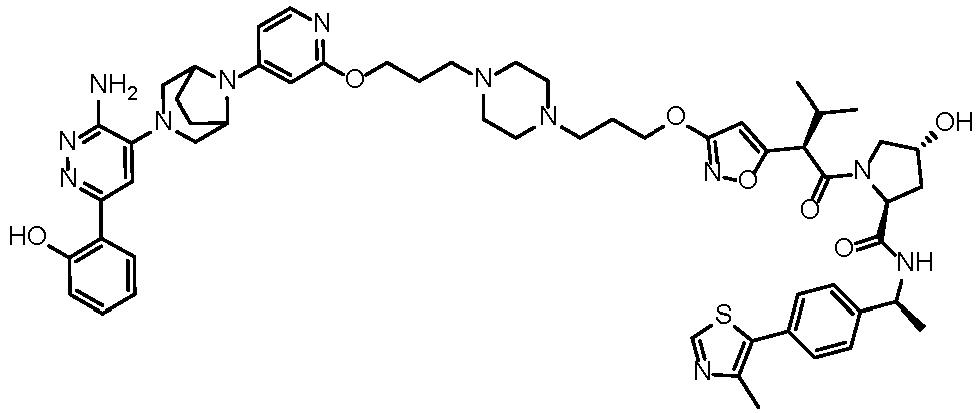
(2S,4R)-1-((2R)-2-(3-(3-(4-(3-((4-(3-(3-amino-6-(2-hydroxyphenyl)pyridazin-4-yl)-3,8-diazabicyclo[3.2.1]octan-8-yl)pyridin-2-yl)oxy)propyl)piperazin-1-yl)propoxy)isoxazol-5-yl)-3-methylbutanoyl)-4-hydroxy-N-((S)-1-(4-(4-methylthiazol-5-yl)phenyl)ethyl)pyrrolidine-2-carboxamide 99 
(2S,4R)-I-((2R)-2-(3 -(4-(4-(4-((4-(3-(3-amino-6-(2-hydroxyphenyl)pyridazin-4-yl)-3,8-diazabicyclo[3.2.1]octan-8-yl)pyridin-2-yl)oay)butyl)piperazin-1-yl)butoxy)isoxazol-5-yl)-3-methylbutanoyl)-4-hydroxy-N-((S)-1-(4-(4-methylthiazol-5-yl)phenyl)ethyl)pyrrolidine-2-carboxamide 100 
(2S,4R)-I-((2R)-2-(3 -(2-(4-(2-((4-(3-(3-amino-6-(2-hydroxyphenyl)pyridazin-4-yl)-3,8-diazabicyclo[3.2.1]octan-8-yl)pyridin-2-yl)oxy)ethyl)piperazin-1-yl)ethoxy)isoxazol-5-yl)-3-methylbutanoyl)-4-hydroxy-N-((R)-2-hydroxy-1-(4-(4-methylthiazol-5-yl)phenyl)ethyl)pyrrolidine-2-carboxamide 101 
(2S,4R)-I-((2R)-2-(3 -(2-(4-(2-((4-(3-(3-amino-6-(2-hydroxyphenyl)pyridazin-4-yl)-3,8-diazabicyclo[3.2.1]octan-8-yl)pyridin-2-yl)oxy)ethyl)piperazin-1-yl)ethoxy)isoxazol-5-yl)-3-methylbutanoyl)-N-((R)-2-fluoro-1-(4-(4-methylthiazol-5-yl)phenyl)ethyl)-4-hydroxypyrrolidine-2-carboxamide 102 
(2S,4R)-I-((2R)-2-(3 -(2-(4-(2-((4-(3-(3-amino-6-(2-hydroxyphenyl)pyridazin-4-yl)-3,8-diazabicyclo[3.2.1]octan-8-yl)pyridin-2-yl)oxy)ethyl)piperazin-1-yl)ethoxy)isoxazol-5-yl)-3-methylbutanoyl)-N-((R)-2,2-difluoro-1-(4-(4-methylthiazol-5-yl)phenyl)ethyl)-4-hydroxypyrrolidine-2-carboxamide 103 
(2S,4R)-N-((R)-2-amino-1-(4-(4-methylthiazol-5-yl)phenyl)ethyl)-1-((2R)-2-(3-(2-(4-(2-((4-(3-(3-amino-6-(2-hydroxyphenyl)pyridazin-4-yl)-3,8-diazabicyclo[3.2.1]octan-8-yl)pyridin-2-yl)oxy)ethyl)piperazin-1-yl)ethoxy)isoxazol-5-yl)-3-methylbutanoyl)-4-hydroxypyrrolidine-2-carboxamide 104 
(2S,4R)-I-((2R)-2-(3 -(2-(4-(2-((4-(3-(3-amino-6-(2-hydroxyphenyl)pyridazin-4-yl)-3,8-diazabicyclo[3.2.1]octan-8-yl)pyridin-2-yl)oxy)ethyl)piperazin-1-yl)ethoxy)isoxazol-5-yl)-3-methylbutanoyl)-N-((R)-2-(dimethylamino)-1-(4-(4-methylthiazol-5-yl)phenyl)ethyl)-4-hydroxypyrrolidine-2-carboxamide 105 
(2S,4R)-I-((2R)-2-(3 -(2-(4-(2-((4-(3-(3-amino-6-(2-hydroxyphenyl)pyridazin-4-yl)-3,8-diazabicyclo[3.2.1]octan-8-yl)pyridin-2-yl)oxy)ethyl)piperazin-1-yl)ethoxy)isoxazol-5-yl)-3-methylbutanoyl)-4-hydroxy-N-((R)-1-(4-(4-methylthiazol-5-yl)phenyl)-2-(pyrrolidin-1-yl)ethyl)pyrrolidine-2-carboxamide 106 
(2S,4R)-N-((R)-2-acetamido-1-(4-(4-methylthiazol-5-yl)phenyl)ethyl)-1-((2R)-2-(3-(2-(4-(2-((4-(3-(3-amino-6-(2-hydroxyphenyl)pyridazin-4-yl)-3,8-diazabicyclo[3.2.1]octan-8-yl)pyridin-2-yl)oxy)ethyl)piperazin-1-yl)ethoxy)isoxazol-5-yl)-3-methylbutanoyl)-4-hydroxypyrrolidine-2-carboxamide 107 
(2S,4R)-1-((2R)-2-(3-(4-(4-(2-((1r,3r)-3-((4-(3-(3-amino-6-(2-hydroxyphenyl)pyridazin-4-yl)-3,8-diazabicyclo[3.2.1]octan-8-yl)pyridin-2-yl)oxy)cyclobutoxy)ethyl)piperazin-1-yl)piperidin-1-yl)isoxazol-5-yl)-3-methylbutanoyl)-4-hydroxy-N-((S)-1-(4-(4-methylthiazol-5-yl)phenyl)ethyl)pyrrolidine-2-carboxamide 108 
(2S,4R)-1-((2R)-2-(3-(4-((1-(2-((1r,3r)-3-((4-(3-(3-amino-6-(2-hydroxyphenyl)pyridazin-4-yl)-3,8-diazabicyclo[3.2.1]octan-8-yl)pyridin-2-yl)oxy)cyclobutoxy)ethyl)piperidin-4-yl)methyl)piperazin-1-yl)isoxazol-5-yl)-3-methylbutanoyl)-4-hydroxy-N-((S)-1-(4-(4-methylthiazol-5-yl)phenyl)ethyl)pyrrolidine-2-carboxamide 109 
(2S,4R)-1-((2R)-2-(3-(4-(2-(1-(2-((1r,3r)-3-((4-(3-(3-amino-6-(2-hydroxyphenyl)pyridazin-4-yl)-3,8-diazabicyclo[3.2.1]octan-8-yl)pyridin-2-yl)oay)cyclobutoay)ethyl)piperidin-4-yl)ethyl)piperazin-1-yl)isoxazol-5-yl)-3-methylbutanoyl)-4-hydroxy-N-((S)-1-(4-(4-methylthiazol-5-yl)phenyl)ethyl)pyrrolidine-2-carboxamide 110 
(2S,4R)-1-((R)-2-(3-(3-(2-(2-(2-(4-(3-amino-6-(2-hydroxyphenyl)pyridazin-4-yl)-1H-pyrazol-1-yl)ethoxy)ethoxy)ethoxy)propyl)isox azol-5-yl)-3-methylbutanoyl)-4-hydroxy-N-((S)-1-(4-(4-methylthiazol-5-yl)phenyl)ethyl)pyrrolidine-2-carboxamide 111 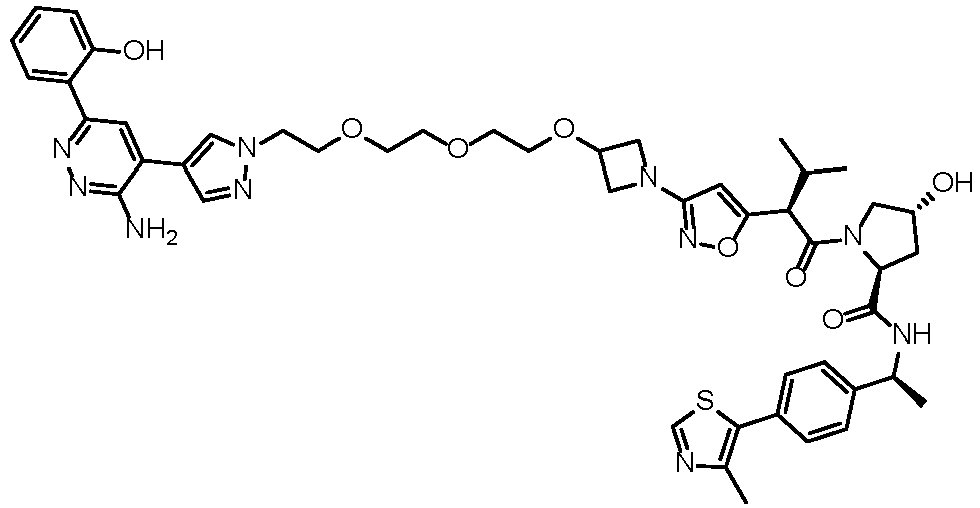
(2S,4R)-1-((R)-2-(3-(3-(2-(2-(2-(4-(3-amino-6-(2-hydroxyphenyl)pyridazin-4-yl)-1H-pyrazol-1-yl)ethoxy)ethoxy)ethoxy)azetidin-1-yl)isoxazol-5-yl)-3-methylbutanoyl)-4-hydroxy-N-((S)-1-(4-(4-methylthiazol-5-yl)phenyl)ethyl)pyrrolidine-2-carboxamide 112 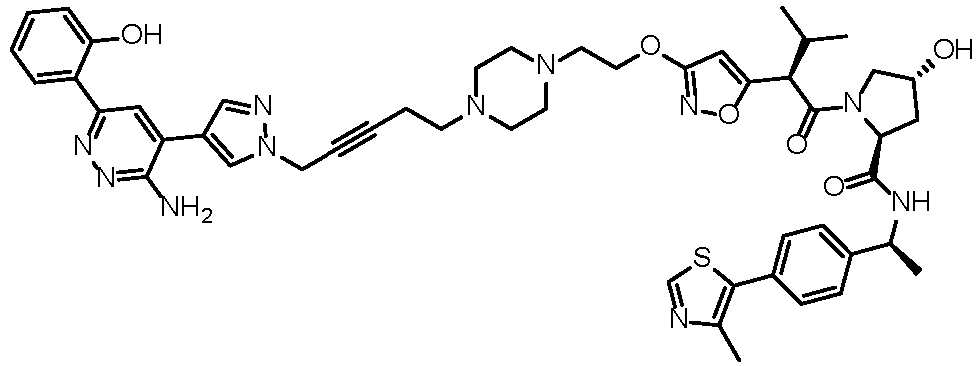
(2S,4R)-1-((R)-2-(3-(2-(4-(5-(4-(3-amino-6-(2-hydroxyphenyl)pyridazin-4-yl)-1H-pyrazol-1-yl)pent-3-yn-1-yl)piperazin-1-yl)ethoxy)isoxazol-5-yl)-3-methylbutanoyl)-4-hydroxy-N-((S)-1-(4-(4-methylthiazol-5-yl)phenyl)ethyl)pyrrolidine-2-carboxamide 113 
(2S,4R)-1-((R)-2-(3-(2-(4-(4-(4-(3-amino-6-(2-hydroxyphenyl)pyridazin-4-yl)-1H-pyrazol-1-yl)but-2-yn-1-yl)piperazin-1-yl)ethoxy)isoxazol-5-yl)-3-methylbutanoyl)-4-hydroxy-N-((S)-1-(4-(4-methylthiazol-5-yl)phenyl)ethyl)pyrrolidine-2-carboxamide 114 
(2S,4R)-I-((2R)-2-(3 -(2-(4-(2-((4-(3-(3-amino-6-(2-hydroxyphenyl)pyridazin-4-yl)-3,8-diazabicyclo[3.2.1]octan-8-yl)pyridin-2-yl)oxy)ethyl)piperazin-1-yl)ethoxy)-4-fluoroisoxazol-5-yl)-3-methylbutanoyl)-4-hydroxy-N-((S)-1-(4-(4-methylthiazol-5-yl)phenyl)ethyl)pyrrolidine-2-carboxamide 115 
(2S,4R)-I-((2R)-2-(3 -(2-(4-(2-((4-(3-(3-amino-6-(2-hydroxyphenyl)pyridazin-4-yl)-3,8-diazabicyclo[3.2.1]octan-8-yl)pyridin-2-yl)oxy)ethyl)piperazin-1-yl)ethoxy)isoxazol-5-yl)-3-methylbutanoyl)-4-hydroxy-N-((S)-1-(4-(1-methyl-1H-imidazol-2-yl)phenyl)ethyl)pyrrolidine-2-carboxamide 116 
(2S,4R)-I-((2R)-2-(3 -(2-(4-(2-((4-(3-(3-amino-6-(2-hydroxyphenyl)pyridazin-4-yl)-3,8-diazabicyclo[3.2.1]octan-8-yl)pyridin-2-yl)oxy)ethyl)piperazin-1-yl)ethoxy)isoxazol-5-yl)-3-methylbutanoyl)-4-hydroxy-N-((S)-1-(6-(4-methylthiazol-5-yl)pyridin-3-yl)ethyl)pyrrolidine-2-carboxamide 117 
(2S,4R)-I-((2R)-2-(3 -(2-(4-(2-((4-(3-(3-amino-6-(2-hydroxyphenyl)pyridazin-4-yl)-3,8-diazabicyclo[3.2.1]octan-8-yl)pyridin-2-yl)oxy)ethyl)piperazin-1-yl)ethoxy)isoxazol-5-yl)-3-methylbutanoyl)-4-hydroxy-N-((S)-1-(6-(4-methyloxazol-5-yl)pyridin-3-yl)ethyl)pyrrolidine-2-carboxamide 118 
(2S,4R)-I-((2R)-2-(3 -(2-(4-(2-((4-(3-(3-amino-6-(2-hydroxyphenyl)pyridazin-4-yl)-3,8-diazabicyclo[3.2.1]octan-8-yl)pyridin-2-yl)oxy)ethyl)piperazin-1-yl)ethoxy)isoxazol-5-yl)-3-methylbutanoyl)-N-((S)-1-(4-(4-((dimethylamino)methyl)thiazol-5-yl)phenyl)ethyl)-4-hydroxypyrrolidine-2-carboxamide 119 
(2S,4R)-N-((S)-1-(4-(4-(acetamidomethyl)thiazol-5-yl)phenyl)ethyl)-1-((2R)-2-(3-(2-(4-(2-((4-(3-(3-amino-6-(2-hydroxyphenyl)pyridazin-4-yl)-3,8-diazabicyclo[3.2.1]octan-8-yl)pyridin-2-yl)oxy)ethyl)piperazin-1-yl)ethoxy)isoxazol-5-yl)-3-methylbutanoyl)-4-hydroxypyrrolidine-2-carboxamide 120 
(2S,4R)-1-((2R)-2-(3 -(2-(4-(2-((4-(3-(3-amino-6-(2-hydroxyphenyl)pyridazin-4-yl)-3,8-diazabicyclo[3.2.1]octan-8-yl)pyridin-2-yl)oxy)ethyl)piperazin-1-yl)ethoxy)isoxazol-5-yl)-3-methylbutanoyl)-N-((S)-1-(4-(4-(3-(dimethylamino)prop-1-yn-1-yl)thiazol-5-yl)phenyl)ethyl)-4-hydroxypyrrolidine-2-carboxamide 121 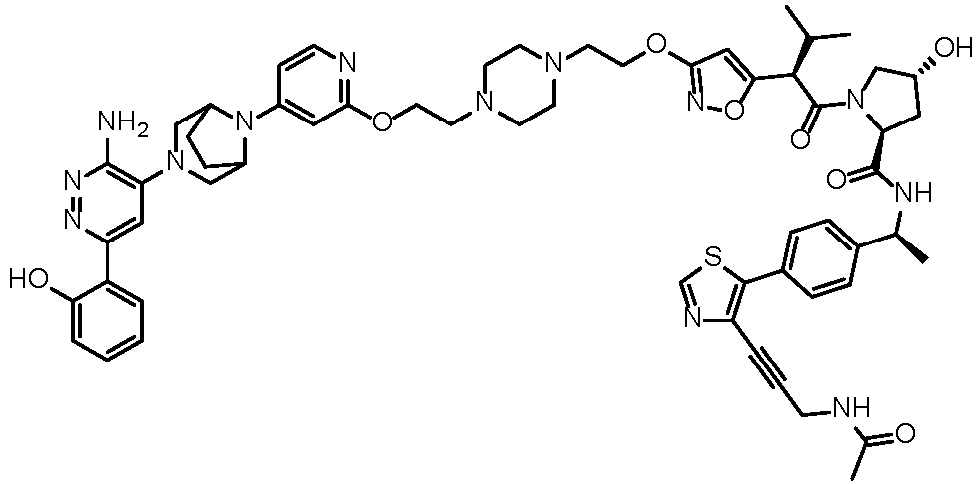
(2S,4R)-N-((S)-1-(4-(4-(3-acetamidoprop-1-yn-1-yl)thiazol-5-yl)phenyl)ethyl)-1-((2R)-2-(3-(2-(4-(2-((4-(3-(3-amino-6-(2-hydroxyphenyl)pyridazin-4-yl)-3,8-diazabicyclo[3.2.1]octan-8-yl)pyridin-2-yl)oxy)ethyl)piperazin-1-yl)ethoxy)isoxazol-5-yl)-3-methylbutanoyl)-4-hydroxypyrrolidine-2-carboxamide 122 
(2S,4R)-I-((2R)-2-(3 -(2-(4-(2-((4-(3-(3-amino-6-(2-hydroxyphenyl)pyridazin-4-yl)-3,8-diazabicyclo[3.2.1]octan-8-yl)pyridin-2-yl)oxy)ethyl)piperazin-1-yl)ethoxy)isoxazol-5-yl)-3-methylbutanoyl)-4-hydroxy-N-((S)-1-(4-(4-(hydroxymethyl)thiazol-5-yl)phenyl)ethyl)pyrrolidine-2-carboxamide 123 
(2S,4R)-I-((2R)-2-(3 -(2-(4-(2-((4-(3-(3-amino-6-(2-hydroxyphenyl)pyridazin-4-yl)-3,8-diazabicyclo[3.2.1]octan-8-yl)pyridin-2-yl)oxy)ethyl)piperazin-1-yl)ethoxy)isoxazol-5-yl)-3-methylbutanoyl)-4-hydroxy-N-((S)-1-(4-(4-(methoxymethyl)thiazol-5-yl)phenyl)ethyl)pyrrolidine-2-carboxamide 124 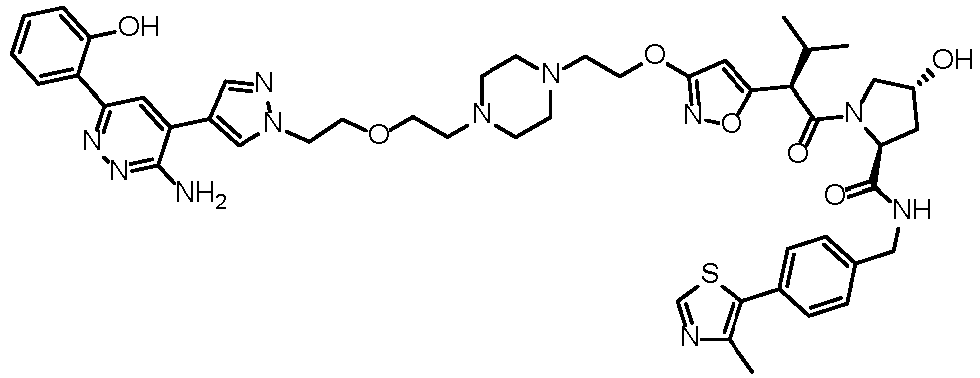
(2S,4R)-1-((R)-2-(3-(2-(4-(2-(2-(4-(3-amino-6-(2-hydroxyphenyl)pyridazin-4-yl)-1H-pyrazol-1-yl)ethoxy)ethyl)piperazin-1-yl)ethoxy)isoxazol-5-yl)-3-methylbutanoyl)-4-hydroxy-N-(4-(4-methylthiazol-5-yl)benzyl)pyrrolidine-2-carboxamide 125 
(2S,4R)-1-((R)-2-(3-(2-(2-(2-(2-(4-(3-amino-6-(2-hydroxyphenyl)pyridazin-4-yl)-1H-pyrazol-1-yl)ethoxy)ethoxy)ethoxy)ethoxy)isox azol-5-yl)-3-methylbutanoyl)-4-hydroxy-N-((S)-1-(4-(4-methylthiazol-5-yl)phenyl)ethyl)pyrrolidine-2-carboxamide 126 
(2S,4R)-I-((2R)-2-(3 -(2-(4-(2-((4-(3-(3-amino-6-(2-hydroxyphenyl)pyridazin-4-yl)-3,8-diazabicyclo[3.2.1]octan-8-yl)pyridin-2-yl)oxy)ethyl)piperazin-1-yl)ethoxy)isoxazol-5-yl)-3-methylbutanoyl)-4-hydroxy-N-(1-methyl-3-(4-(4-methylthiazol-5-yl)phenyl)azetidin-3-yl)pyrrolidine-2-carboxamide 127 
(2S,4R)-N-(1-acetyl-3-(4-(4-methylthiazol-5-yl)phenyl)azetidin-3-yl)-1-((2R)-2-(3-(2-(4-(2-((4-(3-(3-amino-6-(2-hydroxyphenyl)pyridazin-4-yl)-3,8-diazabicyclo[3.2.1]octan-8-yl)pyridin-2-yl)oxy)ethyl)piperazin-1-yl)ethoxy)isoxazol-5-yl)-3-methylbutanoyl)-4-hydroxypyrrolidine-2-carboxamide 128 
(2S,4R)-I-((2R)-2-(3 -(2-(4-(2-((4-(3-(3-amino-6-(2-hydroxyphenyl)pyridazin-4-yl)-3,8-diazabicyclo[3.2.1]octan-8-yl)pyridin-2-yl)oxy)ethyl)piperazin-1-yl)ethoxy)isoxazol-5-yl)-3-methylbutanoyl)-N-((R)-2-ethoxy-1-(4-(4-methylthiazol-5-yl)phenyl)ethyl)-4-hydroxypyrrolidine-2-carboxamide 129 
(2S,4R)-I-((2R)-2-(3 -(2-(4-(2-((4-(3-(3-amino-6-(2-hydroxyphenyl)pyridazin-4-yl)-3,8-diazabicyclo[3.2.1]octan-8-yl)pyridin-2-yl)oxy)ethyl)piperazin-1-yl)ethoxy)isoxazol-5-yl)-3-methylbutanoyl)-4-hydroxy-N-((R)-2-isobutoxy-1-(4-(4-methylthiazol-5-yl)phenyl)ethyl)pyrrolidine-2-carboxamide 130 
(2S,4R)-I-((2R)-2-(3 -(2-(4-(2-((4-(3-(3-amino-6-(2-hydroxyphenyl)pyridazin-4-yl)-3,8-diazabicyclo[3.2.1]octan-8-yl)pyridin-2-yl)oxy)ethyl)piperazin-1-yl)ethoxy)isoxazol-5-yl)-3-methylbutanoyl)-4-hydroxy-N-((R)-1-(4-(4-methylthiazol-5-yl)phenyl)-2-((tetrahydro-2H-pyran-4-yl)methoxy)ethyl)pyrrolidine-2-carboxamide 131 
(2S,4R)-I-((2R)-2-(3 -(2-(4-(2-((4-(3-(3-amino-6-(2-hydroxyphenyl)pyridazin-4-yl)-3,8-diazabicyclo[3.2.1]octan-8-yl)pyridin-2-yl)oxy)ethyl)piperazin-1-yl)ethoxy)isoxazol-5-yl)-3-methylbutanoyl)-N-((R)-2-(dimethylamino)-1-(4-(4-methylthiazol-5-yl)phenyl)-2-oxoethyl)-4-hydroxypyrrolidine-2-carboxamide 132 
(2S,4R)-I-((2R)-2-(3 -(2-(3 -(2-((4-(3-(3-amino-6-(2-hydroxyphenyl)pyridazin-4-yl)-3,8-diazabicyclo[3.2.1]octan-8-yl)pyridin-2-yl)oxy)ethyl)-3,6-diazabicyclo[3.1.1]heptan-6-yl)ethoxy)isoxazol-5-yl)-3-methylbutanoyl)-4-hydroxy-N-((S)-1-(4-(4-methylthiazol-5-yl)phenyl)ethyl)pyrrolidine-2-carboxamide 133 
(2S,4R)-1-((2R)-2-(3-(2-(6-(2-((4-(3-(3-amino-6-(2-hydroxyphenyl)pyridazin-4-yl)-3,8-diazabicyclo[3.2.1]octan-8-yl)pyridin-2-yl)oxy)ethyl)-3,6-diazabicyclo[3.1.1]heptan-3-yl)ethoxy)isoxazol-5-yl)-3-methylbutanoyl)-4-hydroxy-N-((S)-1-(4-(4-methylthiazol-5-yl)phenyl)ethyl)pyrrolidine-2-carboxamide 134 
(2S,4R)-I-((2R)-2-(3 -(3-(4-(2-((4-(3-(3-amino-6-(2-hydroxyphenyl)pyridazin-4-yl)-3,8-diazabicyclo[3.2.1]octan-8-yl)pyridin-2-yl)oxy)ethyl)piperazin-1-yl)propyl)isoxazol-5-yl)-3-methylbutanoyl)-4-hydroxy-N-((S)-1-(4-(4-methylthiazol-5-yl)phenyl)ethyl)pyrrolidine-2-carboxamide 135 
(2S,4R)-1-((2R)-2-(3-(2-((1S,4S)-5-(2-((4-(3-(3-amino-6-(2-hydroxyphenyl)pyridazin-4-yl)-3,8-diazabicyclo[3.2.1]octan-8-yl)pyridin-2-yl)oxy)ethyl)-2,5-diazabicyclo[2.2.1]heptan-2-yl)ethoxy)isoxazol-5-yl)-3-methylbutanoyl)-4-hydroxy-N-((S)-1-(4-(4-methylthiazol-5-yl)phenyl)ethyl)pyrrolidine-2-carboxamide 136 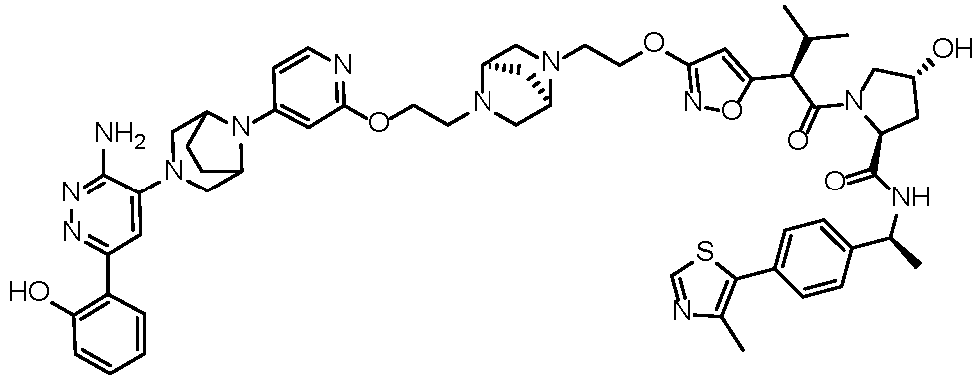
(2S,4R)-1-((2R)-2-(3-(2-((1R,4R)-5-(2-((4-(3-(3-amino-6-(2-hydroxyphenyl)pyridazin-4-yl)-3,8-diazabicyclo[3.2.1]octan-8-yl)pyridin-2-yl)oxy)ethyl)-2,5-diazabicyclo[2.2.1]heptan-2-yl)ethoxy)isoxazol-5-yl)-3-methylbutanoyl)-4-hydroxy-N-((S)-1-(4-(4-methylthiazol-5-yl)phenyl)ethyl)pyrrolidine-2-carboxamide 137 
(2S,4R)-I-((2R)-2-(3 -(2-(3 -(2-((4-(3-(3-amino-6-(2-hydroxyphenyl)pyridazin-4-yl)-3,8-diazabicyclo[3.2.1]octan-8-yl)pyridin-2-yl)oxy)ethyl)-3,8-diazabicyclo[3.2.1]octan-8-yl)ethoxy)isoxazol-5-yl)-3-methylbutanoyl)-4-hydroxy-N-((S)-1-(4-(4-methylthiazol-5-yl)phenyl)ethyl)pyrrolidine-2-carboxamide 138 
(2S,4R)-1-((2R)-2-(3-(2-(8-(2-((4-(3-(3-amino-6-(2-hydroxyphenyl)pyridazin-4-yl)-3,8-diazabicyclo[3.2.1]octan-8-yl)pyridin-2-yl)oxy)ethyl)-3,8-diazabicyclo[3.2.1]octan-3-yl)ethoxy)isoxazol-5-yl)-3-methylbutanoyl)-4-hydroxy-N-((S)-1-(4-(4-methylthiazol-5-yl)phenyl)ethyl)pyrrolidine-2-carboxamide 139 
(2S,4R)-1-((2R)-2-(3-(2-((3R)-4-(2-((4-(3-(3-amino-6-(2-hydroxyphenyl)pyridazin-4-yl)-3,8-diazabicyclo[3.2.1]octan-8-yl)pyridin-2-yl)oxy)ethyl)-3-methylpiperazin-1-yl)ethoxy)isoxazol-5-yl)-3-methylbutanoyl)-4-hydroxy-N-((S)-1-(4-(4-methylthiazol-5-yl)phenyl)ethyl)pyrrolidine-2-carboxamide 140 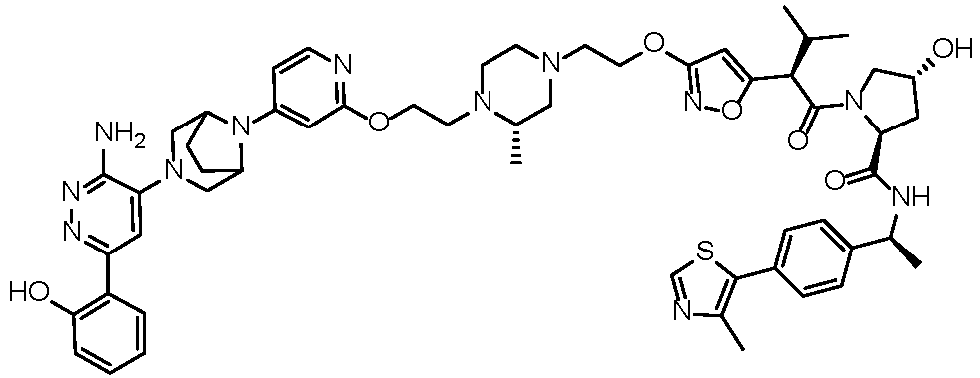
(2S,4R)-1-((2R)-2-(3-(2-((3S)-4-(2-((4-(3-(3-amino-6-(2-hydroxyphenyl)pyridazin-4-yl)-3,8-diazabicyclo[3.2.1]octan-8-yl)pyridin-2-yl)oxy)ethyl)-3-methylpiperazin-1-yl)ethoxy)isoxazol-5-yl)-3-methylbutanoyl)-4-hydroxy-N-((S)-1-(4-(4-methylthiazol-5-yl)phenyl)ethyl)pyrrolidine-2-carboxamide 141 
(2S,4R)-1-((2R)-2-(3-(2-((2S)-4-(2-((4-(3-(3-amino-6-(2-hydroxyphenyl)pyridazin-4-yl)-3,8-diazabicyclo[3.2.1]octan-8-yl)pyridin-2-yl)oxy)ethyl)-2-methylpiperazin-1-yl)ethoxy)isoxazol-5-yl)-3-methylbutanoyl)-4-hydroxy-N-((S)-1-(4-(4-methylthiazol-5-yl)phenyl)ethyl)pyrrolidine-2-carboxamide 142 
(2S,4R)-1-((2R)-2-(3-(2-((2R)-4-(2-((4-(3-(3-amino-6-(2-hydroxyphenyl)pyridazin-4-yl)-3,8-diazabicyclo[3.2.1]octan-8-yl)pyridin-2-yl)oxy)ethyl)-2-methylpiperazin-1-yl)ethoxy)isoxazol-5-yl)-3-methylbutanoyl)-4-hydroxy-N-((S)-1-(4-(4-methylthiazol-5-yl)phenyl)ethyl)pyrrolidine-2-carboxamide 143 
(2S,4R)-1-((2R)-2-(3-(4-((4-((1r,3r)-3-((4-(3-(3-amino-6-(2-hydroxyphenyl)pyridazin-4-yl)-3,8-diazabicyclo[3.2.1]octan-8-yl)pyridin-2-yl)oxy)cyclobutoxy)piperidin-1-yl)methyl)piperidin-1-yl)isoxazol-5-yl)-3-methylbutanoyl)-4-hydroxy-N-((S)-1-(4-(4-methylthiazol-5-yl)phenyl)ethyl)pyrrolidine-2-carboxamide 144 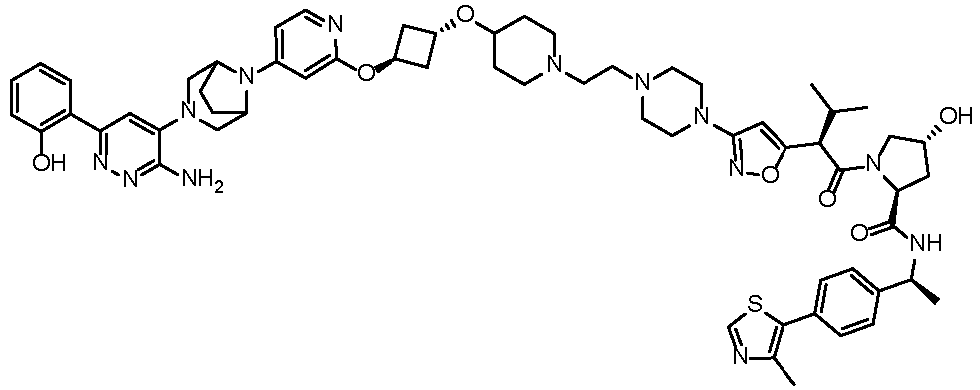
(2S,4R)-1-((2R)-2-(3-(4-(2-(4-((1r,3r)-3-((4-(3-(3-amino-6-(2-hydroxyphenyl)pyridazin-4-yl)-3,8-diazabicyclo[3.2.1]octan-8-yl)pyridin-2-yl)oxy)cyclobutoxy)piperidin-1-yl)ethyl)piperazin-1-yl)isoxazol-5-yl)-3-methylbutanoyl)-4-hydroxy-N-((S)-1-(4-(4-methylthiazol-5-yl)phenyl)ethyl)pyrrolidine-2-carboxamide 145 
(2S,4R)-1-((2R)-2-(3-(3-((4-((1r,3R)-3-((4-(3-(3-amino-6-(2-hydroxyphenyl)pyridazin-4-yl)-3,8-diazabicyclo[3.2.1]octan-8-yl)pyridin-2-yl)oxy)cyclobutoxy)piperidin-1-yl)methyl)azetidin-1-yl)isoxazol-5-yl)-3-methylbutanoyl)-4-hydroxy-N-((S)-1-(4-(4-methylthiazol-5-yl)phenyl)ethyl)pyrrolidine-2-carboxamide 146 
(2S,4R)-1-((2R)-2-(3-(2-(4-((1r,3R)-3-((4-(3-(3-amino-6-(2-hydroxyphenyl)pyridazin-4-yl)-3,8-diazabicyclo[3.2.1]octan-8-yl)pyridin-2-yl)oxy)cyclobutoxy)piperidin-1-yl)ethoxy)isoxazol-5-yl)-3-methylbutanoyl)-4-hydroxy-N-(4-(4-methylthiazol-5-yl)benzyl)pyrrolidine-2-carboxamide 147 
(2S,4R)-1-((2R)-2-(3-((4-(3-(((4-(3-(3-amino-6-(2-hydroxyphenyl)pyridazin-4-yl)-3,8-diazabicyclo[3.2.1]octan-8-yl)pyridin-2-yl)oxy)methyl)azetidin-1-yl)but-2-yn-1-yl)oxy)isoxazol-5-yl)-3-methylbutanoyl)-4-hydroxy-N-((S)-1-(4-(4-methylthiazol-5-yl)phenyl)ethyl)pyrrolidine-2-carboxamide 148 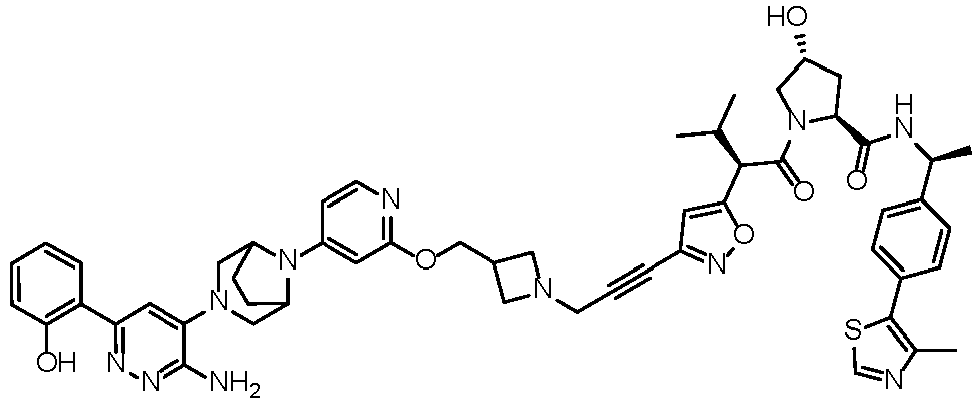
(2S,4R)-1-((2R)-2-(3-(3-(3-(((4-(3-(3-amino-6-(2-hydroxyphenyl)pyridazin-4-yl)-3,8-diazabicyclo[3.2.1]octan-8-yl)pyridin-2-yl)oxy)methyl)azetidin-1-yl)prop-1-yn-1-yl)isoxazol-5-yl)-3-methylbutanoyl)-4-hydroxy-N-((S)-1-(4-(4-methylthiazol-5-yl)phenyl)ethyl)pyrrolidine-2-carboxamide 149 
(2S,4R)-1-((2R)-2-(3-(4-(2-((4-(3-(3-amino-6-(2-hydroxyphenyl)pyridazin-4-yl)-3,8-diazabicyclo[3.2.1]octan-8-yl)pyridin-2-yl)oxy)ethoxy)phenyl)isoxazol-5-yl)-3-methylbutanoyl)-4-hydroxy-N-((S)-1-(4-(4-methylthiazol-5-yl)phenyl)ethyl)pyrrolidine-2-carboxamide 150 
(2S,4R)-1-((2R)-2-(3-(3-(2-((4-(3-(3-amino-6-(2-hydroxyphenyl)pyridazin-4-yl)-3,8-diazabicyclo[3.2.1]octan-8-yl)pyridin-2-yl)oxy)ethoxy)prop-1-yn-1-yl)isoxazol-5-yl)-3-methylbutanoyl)-4-hydroxy-N-((S)-1-(4-(4-methylthiazol-5-yl)phenyl)ethyl)pyrrolidine-2-carboxamide 151 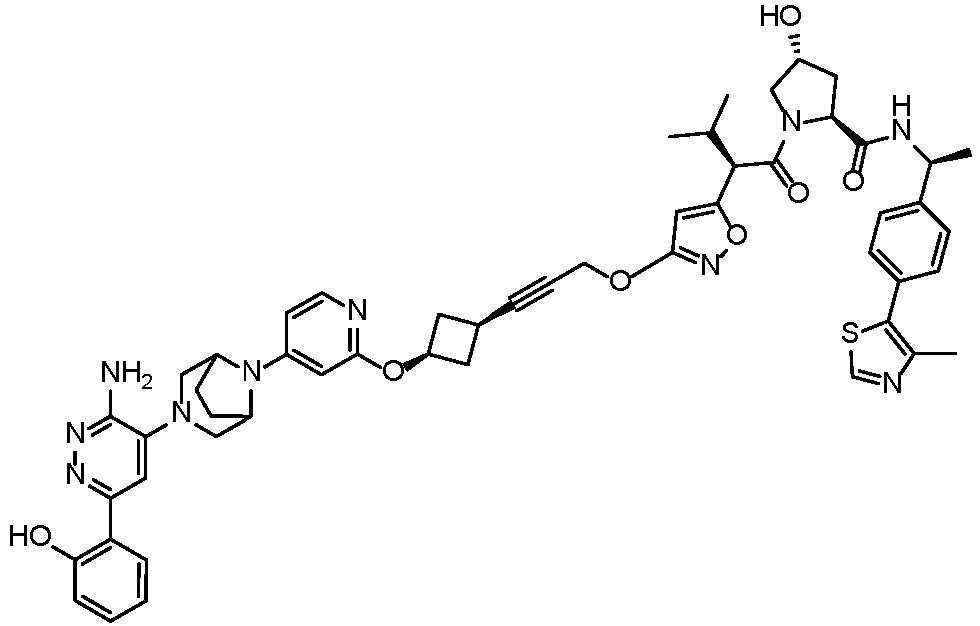
(2S,4R)-1-((2R)-2-(3-((3-((1s,3S)-3-((4-(3-(3-amino-6-(2-hydroxyphenyl)pyridazin-4-yl)-3,8-diazabicyclo[3.2.1]octan-8-yl)pyridin-2-yl)oxy)cyclobutyl)prop-2-yn-1-yl)oxy)isoxazol-5-yl)-3-methylbutanoyl)-4-hydroxy-N-((S)-1-(4-(4-methylthiazol-5-yl)phenyl)ethyl)pyrrolidine-2-carboxamide 152 
(2S,4R)-1-((2R)-2-(3-(3-(4-(1-(4-((3-amino-6-(2-hydroxyphenyl)pyridazin-4-yl)ethynyl)-1H-pyrazol-1-yl)ethyl)phenyl)propoxy)isoxazol-5-yl)-3-methylbutanoyl)-4-hydroxy-N-((S)-1-(4-(4-methylthiazol-5-yl)phenyl)ethyl)pyrrolidine-2-carboxamide 153 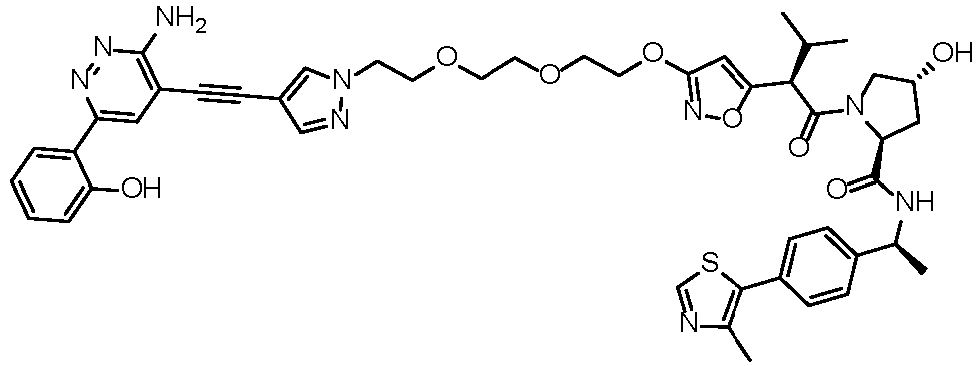
(2S,4R)-1-((R)-2-(3-(2-(2-(2-(4-((3-amino-6-(2-hydroxyphenyl)pyridazin-4-yl)ethynyl)-1H-pyrazol-1-yl)ethoxy)ethoxy)ethoxy)isoxazol-5-yl)-3-methylbutanoyl)-4-hydroxy-N-((S)-1-(4-(4-methylthiazol-5-yl)phenyl)ethyl)pyrrolidine-2-carboxamide 154 
(2S,4R)-1-((R)-2-(3-(2-(4-((1r,3R)-3-((4-((3-amino-6-(2-hydroxyphenyl)pyridazin-4-yl)ethynyl)pyridin-2-yl)oxy)cyclobutoxy)piperidin-1-yl)ethoxy)isoxazol-5-yl)-3-methylbutanoyl)-4-hydroxy-N-((S)-1-(4-(4-methylthiazol-5-yl)phenyl)ethyl)pyrrolidine-2-carboxamide 155 
(2S,4R)-1-((R)-2-(3-(2-(4-(2-((4-((3-amino-6-(2-hydroxyphenyl)pyridazin-4-yl)ethynyl)pyridin-2-yl)oxy)ethyl)piperazin-1-yl)ethoxy)isoxazol-5-yl)-3-methylbutanoyl)-4-hydroxy-N-((S)-1-(4-(4-methylthiazol-5-yl)phenyl)ethyl)pyrrolidine-2-carboxamide Table 1B. Exemplary bifunctional degradation compounds of the present disclosure Ex. # Structure Compound Name 156 
(2S,4R)-1-((2S)-2-(3-(2-(4-(1-(4-(3-amino-6-(2-hydroxyphenyl)pyridazin-4-yl)-1H-pyrazol-1-yl)ethyl)phenoxy)ethoxy)isoxazo 1-5-yl)-3-methylbutanoyl)-4-hydroxy-N-((S)-1-(4-(4-methylthiazol-5-yl)phenyl)ethyl)pyrrolidine-2-carboxamide 157 
(2S,4R)-1-((2S)-2-(3-(2-(5-(1-(4-(3-amino-6-(2-hydroxyphenyl)pyridazin-4-yl)-1H-pyrazol-1-yl)ethyl)-2-oxopyridin-1 (2H)-yl)ethoxy)isoxazol-5-yl)-3-methylbutanoyl)-4-hydroxy-N-((S)-1-(4-(4-methylthiazol-5-yl)phenyl)ethyl)pyrrolidine-2-carboxamide 158 
(2S,4R)-1-((2S)-2-(3-(2-(4-(2-((4-(3-(3-amino-6-(2-hydroxyphenyl)pyridazin-4-yl)-3,8-diazabicyclo[3.2.1]octan-8-yl)pyridin-2-yl)oxy)ethyl)piperazin-1-yl)ethoxy)isoxazol-5-yl)-3-methylbutanoyl)-4-hydroxy-N-((R)-2-hydroxy-1-(4-(4-methylthiazol-5-yl)phenyl)ethyl)pyrrolidine-2-carboxamide 159 
(2S,4R)-1-((2S)-2-(3-(2-(4-(2-((4-(3-(3-amino-6-(2-hydroxyphenyl)pyridazin-4-yl)-3,8-diazabicyclo[3.2.1]octan-8-yl)pyridin-2-yl)oxy)ethyl)piperazin-1-yl)ethoxy)isoxazol-5-yl)-3-methylbutanoyl)-4-hydroxy-N-((S)-1-(4-(1-methyl-1H-imidazol-2-yl)phenyl)ethyl)pyrrolidine-2-carboxamide 160 
(2S,4R)-1-((2S)-2-(3-(2-(4-(2-((4-(3-(3-amino-6-(2-hydroxyphenyl)pyridazin-4-yl)-3,8-diazabicyclo[3.2.1]octan-8-yl)pyridin-2-yl)oxy)ethyl)piperazin-1-yl)ethoxy)isoxazol-5-yl)-3-methylbutanoyl)-4-hydroxy-N-((S)-1-(6-(4-methylthiazol-5-yl)pyridin-3-yl)ethyl)pyrrolidine-2-carboxamide 161 
(2S,4R)-1-((2S)-2-(3-(2-(4-(2-((4-(3-(3-amino-6-(2-hydroxyphenyl)pyridazin-4-yl)-3,8-diazabicyclo[3.2.1]octan-8-yl)pyridin-2-yl)oxy)ethyl)piperazin-1-yl)ethoxy)isoxazol-5-yl)-3-methylbutanoyl)-4-hydroxy-N-((S)-1-(6-(4-methyloxazol-5-yl)pyridin-3-yl)ethyl)pyrrolidine-2-carboxamide 162 
(2S,4R)-1-((2R)-2-(3-(2-(5-(1-(4-(3-amino-6-(2-hydroxyphenyl)pyridazin-4-yl)-1H-pyrazol-1-yl)ethyl)-2-oxopyridin-1 (2H)-yl)ethoxy)isoxazol-5-yl)-3-methylbutanoyl)-4-hydroxy-N-((S)-1-(4-(4-methylthiazol-5-yl)phenyl)ethyl)pyrrolidine-2-carboxamide 163 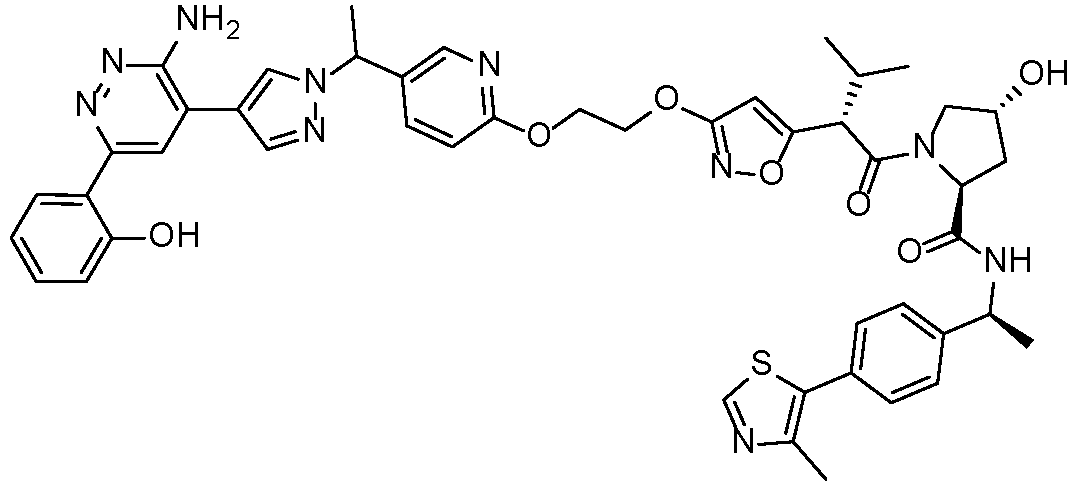
(2S,4R)-1-((2S)-2-(3-(2-((5-(1-(4-(3-amino-6-(2-hydroxyphenyl)pyridazin-4-yl)-1H-pyrazol-1-yl)ethyl)pyridin-2-yl)oxy)ethoxy)isoxazol-5-yl)-3-methylbutanoyl)-4-hydroxy-N-((S)-1-(4-(4-methylthiazol-5-yl)phenyl)ethyl)pyrrolidine-2-carboxamide 164 
(2S,4R)-1-((S)-2-(3-(2-(2-(2-(9-(3-amino-6-(2-hydroxyphenyl)pyridazin-4-yl)-1-oxa-4,9-diazaspiro[5.5]undecan-4-yl)ethoxy)-7-azaspiro[3.5]nonan-7-yl)ethoxy)isoxazol-5-yl)-3-methylbutanoyl)-4-hydroxy-N-((S)-1-(4-(4-methylthiazol-5-yl)phenyl)ethyl)pyrrolidine-2-carboxamide 165 
(2S,4R)-1-((S)-2-(3-(2-(4-(2-(2-(4-(3-amino-6-(2-hydroxyphenyl)pyridazin-4-yl)-1H-pyrazol-1-yl)ethoxy)ethyl)piperazin-1-yl)ethoxy)isoxazol-5-yl)-3-methylbutanoyl)-4-hydroxy-N-(4-(4-methylthiazol-5-yl)benzyl)pyrrolidine-2-carboxamide 166 
(2S,4R)-1-((2S)-2-(3-(2-(4-(4-(1-(4-(3-amino-6-(2-hydroxyphenyl)pyridazin-4-yl)-1H-pyrazol-1-yl)ethyl)benzyl)piperazin-1-yl)ethoxy)isoxazol-5-yl)-3-methylbutanoyl)-4-hydroxy-N-((S)-1-(4-(4-methylthiazol-5-yl)phenyl)ethyl)pyrrolidine-2-carboxamide 167 
(2S,4R)-1-(2-(3-(2-(4-(2-((4-(3-(3-amino-6-(2-hydroxyphenyl)pyridazin-4-yl)-3,8-diazabicyclo[3.2.1]octan-8-yl)pyridin-2-yl)oxy)ethyl)piperazin-1-yl)ethoxy)isoxazol-5-yl)-3-methylbutanoyl)-N-((S)-1-(4-(4-((dimethylamino)methyl)thiazol-5-yl)phenyl)ethyl)-4-hydroxypyrrolidine-2-carboxamide 168 
(2S,4R)-1-(2-(3-(2-(4-(2-((4-(3-(3-amino-6-(2-hydroxyphenyl)pyridazin-4-yl)-3,8-diazabicyclo[3.2.1]octan-8-yl)pyridin-2-yl)oxy)ethyl)piperazin-1-yl)ethoxy)isoxazol-5-yl)-3-methylbutanoyl)-4-hydroxy-N-((S)-1-(4-(4-(hydroxymethyl)thiazol-5-yl)phenyl)ethyl)pyrrolidine-2-carboxamide 169 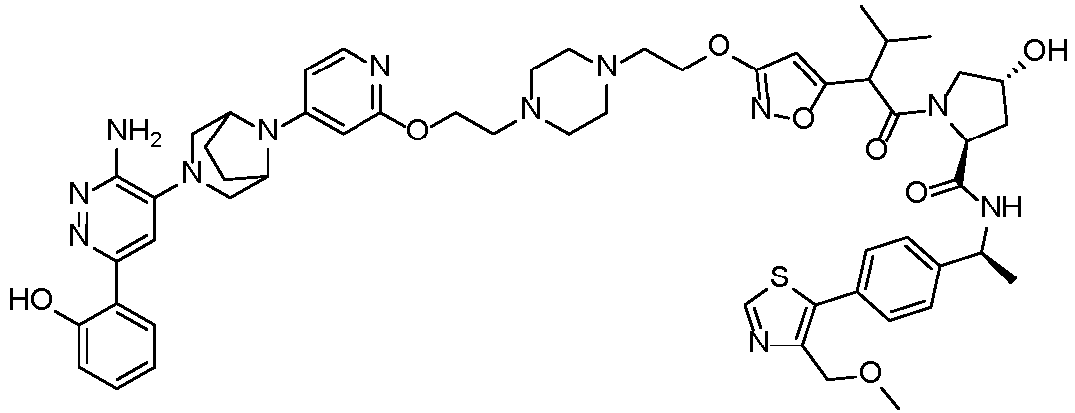
(2S,4R)-1-(2-(3-(2-(4-(2-((4-(3-(3-amino-6-(2-hydroxyphenyl)pyridazin-4-yl)-3,8-diazabicyclo[3.2.1]octan-8-yl)pyridin-2-yl)oxy)ethyl)piperazin-1-yl)ethoxy)isoxazol-5-yl)-3-methylbutanoyl)-4-hydroxy-N-((S)-1-(4-(4-(methoxymethyl)thiazol-5-yl)phenyl)ethyl)pyrrolidine-2-carboxamide 170 
(2S,4R)-1-((2S)-2-(3-(3-(4-(2-((4-(3-(3-amino-6-(2-hydroxyphenyl)pyridazin-4-yl)-3,8-diazabicyclo[3.2.1]octan-8-yl)pyridin-2-yl)oxy)ethyl)piperazin-1-yl)propyl)isoxazol-5-yl)-3-methylbutanoyl)-4-hydroxy-N-((S)-1-(4-(4-methylthiazol-5-yl)phenyl)ethyl)pyrrolidine-2-carboxamide 171 
(2S,4R)-1-((2S)-2-(3-(2-(4-(2-((4-(3-(3-amino-6-(2-hydroxyphenyl)pyridazin-4-yl)-3,8-diazabicyclo[3.2.1]octan-8-yl)pyridin-2-yl)oxy)ethyl)piperazin-1-yl)ethoxy)isoxazol-5-yl)-3-methylbutanoyl)-N-((R)-2-(dimethylamino)-1-(4-(4-methylthiazol-5-yl)phenyl)-2-oxoethyl)-4-hydroxypyrrolidine-2-carboxamide 172 
(2S,4R)-1-(2-(3-(2-(4-(2-((4-(3-(3-amino-6-(2-hydroxyphenyl)pyridazin-4-yl)-3,8-diazabicyclo[3.2.1]octan-8-yl)pyridin-2-yl)oxy)ethyl)piperazin-1-yl)ethoxy)isoxazol-5-yl)-3-methylbutanoyl)-N-((S)-1-(4-(4-(3-(dimethylamino)prop-1-yn-1-yl)thiazol-5-yl)phenyl)ethyl)-4-hydroxypyrrolidine-2-carboxamide 173 
(2S,4R)-1-((2S)-2-(3-(2-(4-(2-((4-(3-(3-amino-6-(2-hydroxyphenyl)pyridazin-4-yl)-3,8-diazabicyclo[3.2.1]octan-8-yl)pyridin-2-yl)oxy)ethyl)piperazin-1-yl)ethoxy)isoxazol-5-yl)-3-methylbutanoyl)-N-((R)-2,2-difluoro-1-(4-(4-methylthiazol-5-yl)phenyl)ethyl)-4-hydroxypyrrolidine-2-carboxamide 174 
(2S,4R)-N-((S)-1-(4-(4-(acetamidomethyl)thiazol-5-yl)phenyl)ethyl)-1-(2-(3-(2-(4-(2-((4-(3-(3-amino-6-(2-hydroxyphenyl)pyridazin-4-yl)-3,8-diazabicyclo[3.2.1]octan-8-yl)pyridin-2-yl)oxy)ethyl)piperazin-1-yl)ethoxy)isoxazol-5-yl)-3-methylbutanoyl)-4-hydroxypyrrolidine-2-carboxamide 175 
(2S,4R)-N-((S)-1-(4-(4-(3-acetamidoprop-1-yn-1-yl)thiazol-5-yl)phenyl)ethyl)-1-(2-(3-(2-(4-(2-((4-(3-(3-amino-6-(2-hydroxyphenyl)pyridazin-4-yl)-3,8-diazabicyclo[3.2.1]octan-8-yl)pyridin-2-yl)oxy)ethyl)piperazin-1-yl)ethoxy)isoxazol-5-yl)-3-methylbutanoyl)-4-hydroxypyrrolidine-2-carboxamide 176 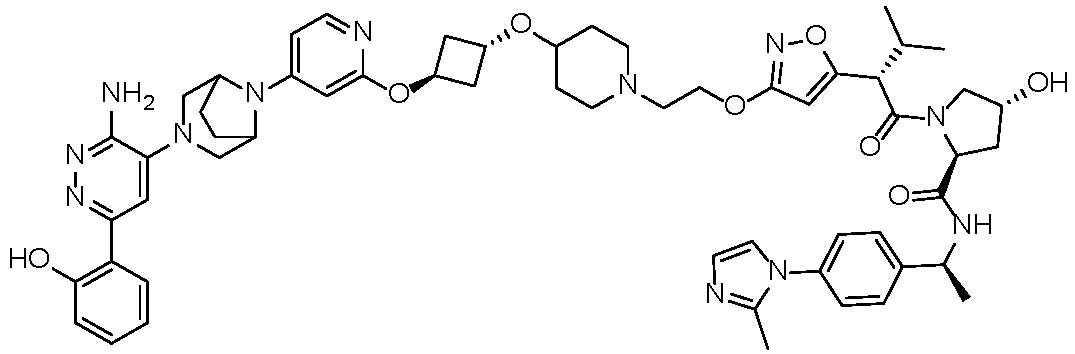
(2S,4R)-1-((2S)-2-(3-(2-(4-((1r,3S)-3-((4-(3-(3-amino-6-(2-hydroxyphenyl)pyridazin-4-yl)-3,8-diazabicyclo[3.2.1]octan-8-yl)pyridin-2-yl)oxy)cyclobutoxy)piperidin-1-yl)ethoxy)isoxazol-5-yl)-3-methylbutanoyl)-4-hydroxy-N-((S)-1-(4-(2-methyl-1H-imidazol-1-yl)phenyl)ethyl)pyrrolidine-2-carboxamide 178 
(2S,4R)-1-((2R)-2-(3-(2-(4-((1r,3R)-3-((4-(3-(3-amino-6-(2-hydroxyphenyl)pyridazin-4-yl)-3,8-diazabicyclo[3.2.1]octan-8-yl)pyridin-2-yl)oxy)cyclobutoxy)piperidin-1-yl)ethoxy)isoxazol-5-yl)-3-methylbutanoyl)-4-hydroxy-N-((S)-1-(4-(2-methyl-1H-imidazol-1-yl)phenyl)ethyl)pyrrolidine-2-carboxamide 179 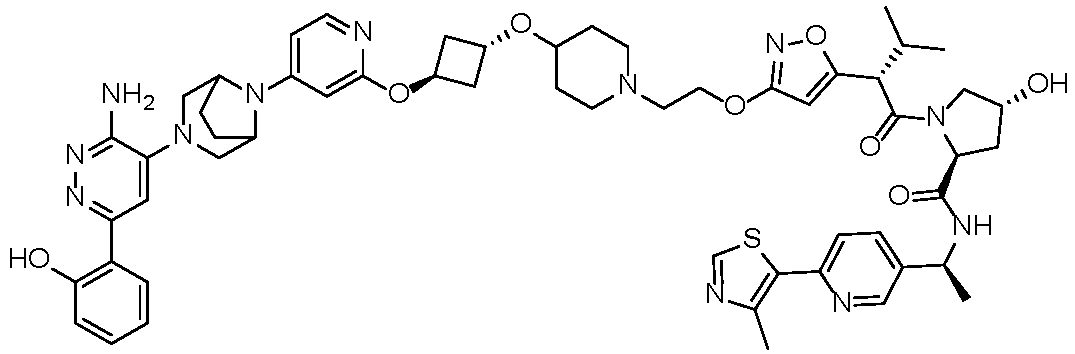
(2S,4R)-1-((2S)-2-(3-(2-(4-((1r,3S)-3-((4-(3-(3-amino-6-(2-hydroxyphenyl)pyridazin-4-yl)-3,8-diazabicyclo[3.2.1]octan-8-yl)pyridin-2-yl)oxy)cyclobutoxy)piperidin-1-yl)ethoxy)isoxazol-5-yl)-3-methylbutanoyl)-4-hydroxy-N-((S)-1-(6-(4-methylthiazol-5-yl)pyridin-3-yl)ethyl)pyrrolidine-2-carboxamide 180 
(2S,4R)-1-((2R)-2-(3-(2-(4-((1r,3R)-3-((4-(3-(3-amino-6-(2-hydroxyphenyl)pyridazin-4-yl)-3,8-diazabicyclo[3.2.1]octan-8-yl)pyridin-2-yl)oxy)cyclobutoxy)piperidin-1-yl)ethoxy)isoxazol-5-yl)-3-methylbutanoyl)-4-hydroxy-N-((S)-1-(6-(4-methylthiazol-5-yl)pyridin-3-yl)ethyl)pyrrolidine-2-carboxamide 181 
(2S,4R)-1-((S)-2-(3-(2-(2-(2-(2-(4-(3-amino-6-(2-hydroxyphenyl)pyridazin-4-yl)-1H-pyrazol-1-yl)ethoxy)ethoxy)ethoxy)ethoxy) isoxazol-5-yl)-3-methylbutanoyl)-4-hydroxy-N-((S)-1-(4-(4-methylthiazol-5-yl)phenyl)ethyl)pyrrolidine-2-carboxamide 182 
(2S,4R)-1-((R)-2-(3-(2-(2-(2-(2-(4-(3-amino-6-(2-hydroxyphenyl)pyridazin-4-yl)-1H-pyrazol-1-yl)ethoxy)ethoxy)ethoxy)ethoxy) isoxazol-5-yl)-3-methylbutanoyl)-4-hydroxy-N-((S)-1-(4-(4-methylthiazol-5-yl)phenyl)ethyl)pyrrolidine-2-carboxamide 183 
(2S,4R)-1-((2S)-2-(2-(2-(4-((1r,3 S)-3-((4-(3-(3-amino-6-(2-hydroxyphenyl)pyridazin-4-yl)-3,8-diazabicyclo[3.2.1]octan-8-yl)pyridin-2-yl)oxy)cyclobutoxy)piperidin-1-yl)ethoxy)acetamido)-3,3-dimethylbutanoyl)-4-hydroxy-N-((S)-1-(4-(4-methylthiazol-5-yl)phenyl)ethyl)pyrrolidine-2-carboxamide 184 
(2S,4R)-1-((2S)-2-(3-(2-(4-((1r,3S)-3-((4-(3-(3-amino-6-(2-hydroxyphenyl)pyridazin-4-yl)-3,8-diazabicyclo[3.2.1]octan-8-yl)pyridin-2-yl)oxy)cyclobutoxy)piperidin-1-yl)ethoxy)isoxazol-5-yl)-3-methylbutanoyl)-4-hydroxy-N-((S)-1-(4-(4-(methoxymethyl)thiazol-5-yl)phenyl)ethyl)pyrrolidine-2-carboxamide 185 
(2S,4R)-1-((2R)-2-(3-(2-(4-((1r,3R)-3-((4-(3-(3-amino-6-(2-hydroxyphenyl)pyridazin-4-yl)-3,8-diazabicyclo[3.2.1]octan-8-yl)pyridin-2-yl)oxy)cyclobutoxy)piperidin-1-yl)ethoxy)isoxazol-5-yl)-3-methylbutanoyl)-4-hydroxy-N-((S)-1-(4-(4-(methoxymethyl)thiazol-5-yl)phenyl)ethyl)pyrrolidine-2-carboxamide 186 
(2S,4R)-1-((2S)-2-(3-(((E)-3-(5-((1r,3S)-3-((4-(3-(3-amino-6-(2-hydroxyphenyl)pyridazin-4-yl)-3,8-diazabicyclo[3.2.1]octan-8-yl)pyridin-2-yl)oxy)cyclobutoxy)pyridin-2-yl)allyl)oxy)isoxazol-5-yl)-3-methylbutanoyl)-4-hydroxy-N-((S)-1-(4-(4-methylthiazol-5-yl)phenyl)ethyl)pyrrolidine-2-carboxamide 187 
(2S,4R)-1-((S)-2-(3-(2-(4-(4-(9-(3-amino-6-(2-hydroxyphenyl)pyridazin-4-yl)-1-oxa-4,9-diazaspiro[5.5]undecan-4-yl)but-2-yn-1-yl)piperazin-1-yl)ethoxy)isoxazol-5-yl)-3-methylbutanoyl)-4-hydroxy-N-((S)-1-(4-(4-methylthiazol-5-yl)phenyl)ethyl)pyrrolidine-2-carboxamide 188 
(2S,4R)-1-((R)-2-(3-(2-(4-(4-(9-(3-amino-6-(2-hydroxyphenyl)pyridazin-4-yl)-1-oxa-4,9-diazaspiro[5.5]undecan-4-yl)but-2-yn-1-yl)piperazin-1-yl)ethoxy)isoxazol-5-yl)-3-methylbutanoyl)-4-hydroxy-N-((S)-1-(4-(4-methylthiazol-5-yl)phenyl)ethyl)pyrrolidine-2-carboxamide 189 
(2S,4R)-1-((R)-2-(3-(2-(4-((1r,3R)-3-(2-(4-(3-amino-6-(2-hydroxyphenyl)pyridazin-4-yl)-1H-pyrazol-1-yl)ethoxy)cyclobutoxy)piperidin-1-yl)ethoxy)isoxazol-5-yl)-3-methylbutanoyl)-4-hydroxy-N-((S)-1-(4-(4-methylthiazol-5-yl)phenyl)ethyl)pyrrolidine-2-carboxamide 190 
(2S,4R)-1-((2S)-2-(3-(3-(4-((1r,3S)-3-((4-(3-(3-amino-6-(2-hydroxyphenyl)pyridazin-4-yl)-3,8-diazabicyclo[3.2.1]octan-8-yl)pyridin-2-yl)oxy)cyclobutoxy)piperidin-1-yl)propyl)isoxazol-5-yl)-3-methylbutanoyl)-4-hydroxy-N-((S)-1-(4-(4-methylthiazol-5-yl)phenyl)ethyl)pyrrolidine-2-carboxamide 191 
(2S,4R)-1-((2R)-2-(3-(3-(4-((1r,3R)-3-((4-(3-(3-amino-6-(2-hydroxyphenyl)pyridazin-4-yl)-3,8-diazabicyclo[3.2.1]octan-8-yl)pyridin-2-yl)oxy)cyclobutoxy)piperidin-1-yl)propyl)isoxazol-5-yl)-3-methylbutanoyl)-4-hydroxy-N-((S)-1-(4-(4-methylthiazol-5-yl)phenyl)ethyl)pyrrolidine-2-carboxamide 192 
(2S,4R)-1-(2-(3-(2-(4-(2-((1r,3r)-3-(2-(9-(3-amino-6-(2-hydroxyphenyl)pyridazin-4-yl)-1-oxa-4,9-diazaspiro[5.5]undecan-4-yl)ethoxy)cyclobutoxy)ethyl)pipe razin-1-yl)ethoxy)isoxazol-5-yl)-3-methylbutanoyl)-4-hydroxy-N-((S)-1-(4-(4-methylthiazol-5-yl)phenyl)ethyl)pyrrolidine-2-carboxamide 193 
(2S,4R)-1-((2S)-2-(3-(2-(4-(2-((4-(3-(3-amino-6-(2-hydroxyphenyl)pyridazin-4-yl)-3,8-diazabicyclo[3.2.1]octan-8-yl)pyridin-2-yl)oxy)ethyl)piperazin-1-yl)ethoxy)isoxazol-5-yl)-3-methylbutanoyl)-N-((S)-1-(4-(1,4-dimethyl-1H-pyrazol-5-yl)phenyl)ethyl)-4-hydroxypyrrolidine-2-carboxamide 194 
(2S,4R)-1-((2R)-2-(3-(2-(4-(2-((4-(3-(3-amino-6-(2-hydroxyphenyl)pyridazin-4-yl)-3,8-diazabicyclo[3.2.1]octan-8-yl)pyridin-2-yl)oxy)ethyl)piperazin-1-yl)ethoxy)isoxazol-5-yl)-3-methylbutanoyl)-N-((S)-1-(4-(1,4-dimethyl-1H-pyrazol-5-yl)phenyl)ethyl)-4-hydroxypyrrolidine-2-carboxamide 195 
(2S,4R)-1-((2S)-2-(3-(4-(2-(4-((1r,3r)-3-((4-(3-(3-amino-6-(2-hydroxyphenyl)pyridazin-4-yl)-3,8-diazabicyclo[3.2.1]octan-8-yl)pyridin-2-yl)oxy)cyclobutoxy)piperidin-1-yl)ethyl)piperazin-1-yl)isoxazol-5-yl)-3-methylbutanoyl)-4-hydroxy-N-((S)-1-(4-(4-methylthiazol-5-yl)phenyl)ethyl)pyrrolidine-2-carboxamide 196 
(2S,4R)-1-((S)-2-(3-(3-(2-(2-(2-(4-(3-amino-6-(2-hydroxyphenyl)pyridazin-4-yl)-1H-pyrazol-1-yl)ethoxy)ethoxy)ethoxy)propyl)i soxazol-5-yl)-3-methylbutanoyl)-4-hydroxy-N-((S)-1-(4-(4-methylthiazol-5-yl)phenyl)ethyl)pyrrolidine-2-carboxamide 197 
(2S,4R)-1-((S)-2-(3-(2-(4-(5-(4-(3-amino-6-(2-hydroxyphenyl)pyridazin-4-yl)-1H-pyrazol-1-yl)pent-3-yn-1-yl)piperazin-1-yl)ethoxy)isoxazol-5-yl)-3-methylbutanoyl)-4-hydroxy-N-((S)-1-(6-(4-methylthiazol-5-yl)pyridin-3-yl)ethyl)pyrrolidine-2-carboxamide 198 
(2S,4R)-1-((2S)-2-(3-(2-(4-(2-((4-(3-(3-amino-6-(2-hydroxyphenyl)pyridazin-4-yl)-3,8-diazabicyclo[3.2.1]octan-8-yl)pyridin-2-yl)oxy)ethyl)piperazin-1-yl)ethoxy)-4-fluoroisoxazol-5-yl)-3-methylbutanoyl)-4-hydroxy-N-((S)-1-(4-(4-methylthiazol-5-yl)phenyl)ethyl)pyrrolidine-2-carboxamide 199 
(2S,4R)-1-((2R)-2-(3-(2-(4-((1r,3R)-3-((4-(3-(3-amino-6-(2-hydroxyphenyl)pyridazin-4-yl)-3,8-diazabicyclo[3.2.1]octan-8-yl)pyridin-2-yl)oxy)cyclobutoxy)piperidin-1-yl)ethoxy)isoxazol-5-yl)-3-methylbutanoyl)-4-hydroxy-N-((R)-2-hydroxy-1-(4-(4-methylthiazol-5-yl)phenyl)ethyl)pyrrolidine-2-carboxamide 200 
(2S,4R)-1-((2S)-2-(3-(2-(4-((1r,3S)-3-((4-(3-(3-amino-6-(2-hydroxyphenyl)pyridazin-4-yl)-3,8-diazabicyclo[3.2.1]octan-8-yl)pyridin-2-yl)oxy)cyclobutoxy)piperidin-1-yl)ethoxy)isoxazol-5-yl)-3-methylbutanoyl)-4-hydroxy-N-((R)-2-hydroxy-1-(4-(4-methylthiazol-5-yl)phenyl)ethyl)pyrrolidine-2-carboxamide 201 
(2S,4R)-1-((2S)-2-(3-(2-(4-((1r,3S)-3-((4-(3-(3-amino-6-(2-hydroxyphenyl)pyridazin-4-yl)-3,8-diazabicyclo[3.2.1]octan-8-yl)pyridin-2-yl)oxy)cyclobutoxy)piperidin-1-yl)ethoxy)isoxazol-5-yl)-3-methylbutanoyl)-4-hydroxy-N-((S)-1-(2-methoxy-4-(4-methylthiazol-5-yl)phenyl)ethyl)pyrrolidine-2-carboxamide 202 
(2S,4R)-1-((2R)-2-(3-(2-(4-((1r,3R)-3-((4-(3-(3-amino-6-(2-hydroxyphenyl)pyridazin-4-yl)-3,8-diazabicyclo[3.2.1]octan-8-yl)pyridin-2-yl)oxy)cyclobutoxy)piperidin-1-yl)ethoxy)isoxazol-5-yl)-3-methylbutanoyl)-4-hydroxy-N-((S)-1-(2-methoxy-4-(4-methylthiazol-5-yl)phenyl)ethyl)pyrrolidine-2-carboxamide 203 
(2S,4R)-1-((2R)-2-(3-(2-(4-((1r,3R)-3-((4-(3-(3-amino-6-(2-hydroxyphenyl)pyridazin-4-yl)-3,8-diazabicyclo[3.2.1]octan-8-yl)pyridin-2-yl)oxy)cyclobutoxy)piperidin-1-yl)ethoxy)isoxazol-5-yl)-3-methylbutanoyl)-N-((S)-1-(4-cyanophenyl)ethyl)-4-hydroxypyrrolidine-2-carboxamide 204 
(2S,4R)-1-((2S)-2-(3-(2-(4-((1r,3S)-3-((4-(3-(3-amino-6-(2-hydroxyphenyl)pyridazin-4-yl)-3,8-diazabicyclo[3.2.1]octan-8-yl)pyridin-2-yl)oxy)cyclobutoxy)piperidin-1-yl)ethoxy)isoxazol-5-yl)-3-methylbutanoyl)-N-((S)-1-(4-cyanophenyl)ethyl)-4-hydroxypyrrolidine-2-carboxamide 205 
(2S,4R)-1-((S)-2-(3-(2-(4-(4-(9-(3-amino-6-(2-hydroxyphenyl)pyridazin-4-yl)-1-oxa-4,9-diazaspiro[5.5]undecan-4-yl)butyl)piperazin-1-yl)ethoxy)isoxazol-5-yl)-3-methylbutanoyl)-4-hydroxy-N-((S)-1-(4-(4-methylthiazol-5-yl)phenyl)ethyl)pyrrolidine-2-carboxamide 206 
(2S,4R)-1-((2S)-2-(3-(((E)-3-(5-((1r,3S)-3-((4-(3-(3-amino-6-(2-hydroxyphenyl)pyridazin-4-yl)-3,8-diazabicyclo[3.2.1]octan-8-yl)pyridin-2-yl)oxy)cyclobutoxy)pyridin-2-yl)allyl)oxy)isoxazol-5-yl)-3-methylbutanoyl)-4-hydroxy-N-((S)-1-(6-(4-methylthiazol-5-yl)pyridin-3-yl)ethyl)pyrrolidine-2-carboxamide 207 
(2S,4R)-1-((2R)-2-(3-(((E)-3-(5-((1r,3R)-3-((4-(3-(3-amino-6-(2-hydroxyphenyl)pyridazin-4-yl)-3,8-diazabicyclo[3.2.1]octan-8-yl)pyridin-2-yl)oxy)cyclobutoxy)pyridin-2-yl)allyl)oxy)isoxazol-5-yl)-3-methylbutanoyl)-4-hydroxy-N-((S)-1-(6-(4-methylthiazol-5-yl)pyridin-3-yl)ethyl)pyrrolidine-2-carboxamide 208 
(2S,4R)-1-((2S)-2-(3-(2-(4-((1r,3S)-3-((4-(3-(3-amino-6-(2-hydroxyphenyl)pyridazin-4-yl)-3,8-diazabicyclo[3.2.1]octan-8-yl)pyridin-2-yl)oxy)cyclobutoxy)piperidin-1-yl)ethoxy)-4-fluoroisoxazol-5-yl)-3-methylbutanoyl)-4-hydroxy-N-((S)-1-(4-(4-methylthiazol-5-yl)phenyl)ethyl)pyrrolidine-2-carboxamide 209 
(2S,4R)-1-((2R)-2-(3-(2-(4-((1r,3R)-3-((4-(3-(3-amino-6-(2-hydroxyphenyl)pyridazin-4-yl)-3,8-diazabicyclo[3.2.1]octan-8-yl)pyridin-2-yl)oxy)cyclobutoxy)piperidin-1-yl)ethoxy)-4-fluoroisoxazol-5-yl)-3-methylbutanoyl)-4-hydroxy-N-((S)-1-(4-(4-methylthiazol-5-yl)phenyl)ethyl)pyrrolidine-2-carboxamide 210 
(2S,4R)-1-((2R)-2-(3-(2-((2S)-4-(2-((4-(3-(3-amino-6-(2-hydroxyphenyl)pyridazin-4-yl)-3,8-diazabicyclo[3.2.1]octan-8-yl)pyridin-2-yl)oxy)ethyl)-2-methylpiperazin-1-yl)ethoxy)isoxazol-5-yl)-3-methylbutanoyl)-4-hydroxy-N-(4-(4-methylthiazol-5-yl)benzyl)pyrrolidine-2-carboxamide 211 
(2S,4R)-1-((2R)-2-(3-(2-(4-((1r,3R)-3-((4-(3-(3-amino-6-(2-hydroxyphenyl)pyridazin-4-yl)-3,8-diazabicyclo[3.2.1]octan-8-yl)pyridin-2-yl)oxy)cyclobutoxy)piperidin-1-yl)ethoxy)isoxazol-5-yl)-3-methylbutanoyl)-4-hydroxy-N-((S)-1-(4-(4-(hydroxymethyl)thiazol-5-yl)phenyl)ethyl)pyrrolidine-2-carboxamide 212 
(2S,4R)-1-((2S)-2-(3-(2-(4-((1r,3S)-3-((4-(3-(3-amino-6-(2-hydroxyphenyl)pyridazin-4-yl)-3,8-diazabicyclo[3.2.1]octan-8-yl)pyridin-2-yl)oxy)cyclobutoxy)piperidin-1-yl)ethoxy)isoxazol-5-yl)-3-methylbutanoyl)-4-hydroxy-N-((S)-1-(4-(4-methyloxazol-5-yl)phenyl)ethyl)pyrrolidine-2-carboxamide 213 
(2S,4R)-1-((2R)-2-(3-(2-(4-((1r,3R)-3-((4-(3-(3-amino-6-(2-hydroxyphenyl)pyridazin-4-yl)-3,8-diazabicyclo[3.2.1]octan-8-yl)pyridin-2-yl)oxy)cyclobutoxy)piperidin-1-yl)ethoxy)isoxazol-5-yl)-3-methylbutanoyl)-4-hydroxy-N-((S)-1-(4-(4-methyloxazol-5-yl)phenyl)ethyl)pyrrolidine-2-carboxamide 214 
(2S,4R)-1-((2S)-2-(3-(2-(4-((1r,3S)-3-((4-(3-(3-amino-6-(2-hydroxyphenyl)pyridazin-4-yl)-3,8-diazabicyclo[3.2.1]octan-8-yl)pyridin-2-yl)oxy)cyclobutoxy)piperidin-1-yl)ethoxy)isoxazol-5-yl)-3-methylbutanoyl)-4-hydroxy-N-(2-methoxy-4-(4-methylthiazol-5-yl)benzyl)pyrrolidine-2-carboxamide 215 
(2S,4R)-1-((2R)-2-(3-(2-(4-((1r,3R)-3-((4-(3-(3-amino-6-(2-hydroxyphenyl)pyridazin-4-yl)-3,8-diazabicyclo[3.2.1]octan-8-yl)pyridin-2-yl)oxy)cyclobutoxy)piperidin-1-yl)ethoxy)isoxazol-5-yl)-3-methylbutanoyl)-4-hydroxy-N-(2-methoxy-4-(4-methylthiazol-5-yl)benzyl)pyrrolidine-2-carboxamide 216 
(2S,4R)-1-((2R)-2-(3-(2-(4-((1r,3R)-3-((4-(3-(3-amino-6-(2-hydroxyphenyl)pyridazin-4-yl)-3,8-diazabicyclo[3.2.1]octan-8-yl)pyridin-2-yl)ethynyl)cyclobutoxy)piperidin -1-yl)ethoxy)isoxazol-5-yl)-3-methylbutanoyl)-4-hydroxy-N-((S)-1-(4-(4-methylthiazol-5-yl)phenyl)ethyl)pyrrolidine-2-carboxamide 217 
(2S,4R)-1-((2S)-2-(3-(3-(4-((1r,3S)-3-((4-(3-(3-amino-6-(2-hydroxyphenyl)pyridazin-4-yl)-3,8-diazabicyclo[3.2.1]octan-8-yl)pyridin-2-yl)oxy)cyclobutoxy)piperidin-1-yl)propoxy)isoxazol-5-yl)-3-methylbutanoyl)-4-hydroxy-N-((S)-1-(4-(4-methylthiazol-5-yl)phenyl)ethyl)pyrrolidine-2-carboxamide 218 
(2S,4R)-1-((2R)-2-(3-(3-(4-((1r,3R)-3-((4-(3-(3-amino-6-(2-hydroxyphenyl)pyridazin-4-yl)-3,8-diazabicyclo[3.2.1]octan-8-yl)pyridin-2-yl)oxy)cyclobutoxy)piperidin-1-yl)propoxy)isoxazol-5-yl)-3-methylbutanoyl)-4-hydroxy-N-((S)-1-(4-(4-methylthiazol-5-yl)phenyl)ethyl)pyrrolidine-2-carboxamide 219 
(2S,4R)-1-((2S)-2-(3-(2-(4-((1r,3S)-3-((4-(3-(3 -amino-6-(2-hydroxyphenyl)pyridazin-4-yl)-3,8-diazabicyclo[3.2.1]octan-8-yl)pyridin-2-yl)oxy)cyclobutoxy)piperidin-1-yl)ethoxy)isoxazol-5-yl)-3-methylbutanoyl)-4-hydroxy-N-((S)-1-(4-(4-(hydroxymethyl)thiazol-5-yl)phenyl)ethyl)pyrrolidine-2-carboxamide 220 
(2S,4R)-1-((2S)-2-(3-((3-(5-((1r,3S)-3-((4-(3-(3-amino-6-(2-hydroxyphenyl)pyridazin-4-yl)-3,8-diazabicyclo[3.2.1]octan-8-yl)pyridin-2-yl)oxy)cyclobutoxy)pyridin-2-yl)prop-2-yn-1-yl)oxy)isoxazol-5-yl)-3-methylbutanoyl)-4-hydroxy-N-(4-(4-methylthiazol-5-yl)benzyl)pyrrolidine-2-carboxamide 221 
(2S,4R)-1-((2R)-2-(3-((3-(5-((1r,3R)-3-((4-(3-(3-amino-6-(2-hydroxyphenyl)pyridazin-4-yl)-3,8-diazabicyclo[3.2.1]octan-8-yl)pyridin-2-yl)oxy)cyclobutoxy)pyridin-2-yl)prop-2-yn-1-yl)oxy)isoxazol-5-yl)-3-methylbutanoyl)-4-hydroxy-N-(4-(4-methylthiazol-5-yl)benzyl)pyrrolidine-2-carboxamide 222 
(2S,4R)-1-((2S)-2-(3-(2-(4-((1r,3S)-3-((4-(3-(3-amino-6-(2-hydroxyphenyl)pyridazin-4-yl)-3,8-diazabicyclo[3.2.1]octan-8-yl)pyridin-2-yl)oxy)cyclobutoxy)piperidin-1-yl)ethoxy)-4-chloroisoxazol-5-yl)-3-methylbutanoyl)-4-hydroxy-N-((S)-1-(6-(4-methylthiazol-5-yl)pyridin-3-yl)ethyl)pyrrolidine-2-carboxamide 223 
(2S,4R)-1-((2R)-2-(3-(2-(4-((1r,3R)-3-((4-(3-(3-amino-6-(2-hydroxyphenyl)pyridazin-4-yl)-3,8-diazabicyclo[3.2.1]octan-8-yl)pyridin-2-yl)oxy)cyclobutoxy)piperidin-1-yl)ethoxy)-4-chloroisoxazol-5-yl)-3-methylbutanoyl)-4-hydroxy-N-((S)-1-(6-(4-methylthiazol-5-yl)pyridin-3-yl)ethyl)pyrrolidine-2-carboxamide 224 
(2S,4R)-1-((2S)-2-(3-(2-(4-((1r,3S)-3-((4-(3-(3-amino-6-(2-hydroxyphenyl)pyridazin-4-yl)-3,8-diazabicyclo[3.2.1]octan-8-yl)pyridin-2-yl)oxy)cyclobutoxy)piperidin-1-yl)ethoxy)isoxazol-5-yl)-3-methylbutanoyl)-N-(2-cyano-4-(4-methylthiazol-5-yl)benzyl)-4-hydroxypyrrolidine-2-carboxamide 225 
(2S,4R)-1-((2R)-2-(3-(2-(4-((1r,3R)-3-((4-(3-(3-amino-6-(2-hydroxyphenyl)pyridazin-4-yl)-3,8-diazabicyclo[3.2.1]octan-8-yl)pyridin-2-yl)oxy)cyclobutoxy)piperidin-1-yl)ethoxy)isoxazol-5-yl)-3-methylbutanoyl)-N-(2-cyano-4-(4-methylthiazol-5-yl)benzyl)-4-hydroxypyrrolidine-2-carboxamide 226 
(2S,4R)-1-((2S)-2-(3-((4-(5-((1r,3r)-3-((4-(3-(3-amino-6-(2-hydroxyphenyl)pyridazin-4-yl)-3,8-diazabicyclo[3.2.1]octan-8-yl)pyridin-2-yl)oxy)cyclobutoxy)pyridin-2-yl)but-3-yn-1-yl)oxy)isoxazol-5-yl)-3-methylbutanoyl)-4-hydroxy-N-((S)-1-(4-(4-methylthiazol-5-yl)phenyl)ethyl)pyrrolidine-2-carboxamide 227 
(2S,4R)-1-((2R)-2-(3-((4-(5-((1r,3r)-3-((4-(3-(3-amino-6-(2-hydroxyphenyl)pyridazin-4-yl)-3,8-diazabicyclo[3.2.1]octan-8-yl)pyridin-2-yl)oxy)cyclobutoxy)pyridin-2-yl)but-3-yn-1-yl)oxy)isoxazol-5-yl)-3-methylbutanoyl)-4-hydroxy-N-((S)-1-(4-(4-methylthiazol-5-yl)phenyl)ethyl)pyrrolidine-2-carboxamide 228 
(2S,4R)-1-((2S)-2-(3-(2-(4-(2-((4-(3-(3-amino-6-(2-hydroxyphenyl)pyridazin-4-yl)-3,8-diazabicyclo[3.2.1]octan-8-yl)pyridin-2-yl)oxy)ethyl)piperazin-1-yl)ethoxy)isoxazol-5-yl)-3-methylbutanoyl)-4-hydroxy-N-(1-methyl-3-(4-(4-methylthiazol-5-yl)phenyl)azetidin-3-yl)pyrrolidine-2-carboxamide 229 
(2S,4R)-1-((2S)-2-(3-(2-(4-((1r,3S)-3-((4-(3-(3-amino-6-(2-hydroxyphenyl)pyridazin-4-yl)-3,8-diazabicyclo[3.2.1]octan-8-yl)pyridin-2-yl)oxy)cyclobutoxy)piperidin-1-yl)ethoxy)isoxazol-5-yl)-3-methylbutanoyl)-4-hydroxy-N-((S)-1-(6-(4-methyloxazol-5-yl)pyridin-3-yl)ethyl)pyrrolidine-2-carboxamide 230 
(2S,4R)-1-((2R)-2-(3-(2-(4-((1r,3R)-3-((4-(3-(3-amino-6-(2-hydroxyphenyl)pyridazin-4-yl)-3,8-diazabicyclo[3.2.1]octan-8-yl)pyridin-2-yl)oxy)cyclobutoxy)piperidin-1-yl)ethoxy)isoxazol-5-yl)-3-methylbutanoyl)-4-hydroxy-N-((S)-1-(6-(4-methyloxazol-5-yl)pyridin-3-yl)ethyl)pyrroli dine-2-carboxamide 231 
(2S,4R)-1-((2S)-2-(3-((3-(5-((1r,3S)-3-((4-(3-(3-amino-6-(2-hydroxyphenyl)pyridazin-4-yl)-3,8-diazabicyclo[3.2.1]octan-8-yl)pyridin-2-yl)oxy)cyclobutoxy)pyrimidin-2-yl)prop-2-yn-1-yl)oxy)isoxazol-5-yl)-3-methylbutanoyl)-4-hydroxy-N-((S)-1-(4-(4-methylthiazol-5-yl)phenyl)ethyl)pyrrolidine-2-carboxamide 232 
(2S,4R)-1-((2R)-2-(3-((3-(5-((1r,3R)-3-((4-(3-(3-amino-6-(2-hydroxyphenyl)pyridazin-4-yl)-3,8-diazabicyclo[3.2.1]octan-8-yl)pyridin-2-yl)oxy)cyclobutoxy)pyrimidin-2-yl)prop-2-yn-1-yl)oxy)isoxazol-5-yl)-3-methylbutanoyl)-4-hydroxy-N-((S)-1-(4-(4-methylthiazol-5-yl)phenyl)ethyl)pyrrolidine-2-carboxamide 233 
(2S,4R)-1-((2S)-2-(3-((3-(5-((1r,3 S)-3-((4-(3-(3-amino-6-(2-hydroxyphenyl)pyridazin-4-yl)-3,8-diazabicyclo[3.2.1]octan-8-yl)pyridin-2-yl)oxy)cyclobutoxy)pyridin-2-yl)prop-2-yn-1-yl)oxy)isoxazol-5-yl)-3-methylbutanoyl)-4-hydroxy-N-((S)-1-(4-(2-methyl-1H-imidazol-1-yl)phenyl)ethyl)pyrrolidine-2-carboxamide 234 
(2S,4R)-1-((2R)-2-(3-((3-(5-((1r,3R)-3-((4-(3-(3-amino-6-(2-hydroxyphenyl)pyridazin-4-yl)-3,8-diazabicyclo[3.2.1]octan-8-yl)pyridin-2-yl)oxy)cyclobutoxy)pyridin-2-yl)prop-2-yn-1-yl)oxy)isoxazol-5-yl)-3-methylbutanoyl)-4-hydroxy-N-((S)-1-(4-(2-methyl-1H-imidazol-1-yl)phenyl)ethyl)pyrrolidine-2-carboxamide 235 
(2S,4R)-N-(1-acetyl-3-(4-(4-methylthiazol-5-yl)phenyl)azetidin-3-yl)-1-((2S)-2-(3-(2-(4-(2-((4-(3-(3-amino-6-(2-hydroxyphenyl)pyridazin-4-yl)-3,8-diazabicyclo[3.2.1]octan-8-yl)pyridin-2-yl)oxy)ethyl)piperazin-1-yl)ethoxy)isoxazol-5-yl)-3-methylbutanoyl)-4-hydroxypyrrolidine-2-carboxamide 236 
(2S,4R)-1-((2S)-2-(3-((3-(5-((1r,3 S)-3-((4-(3-(3-amino-6-(2-hydroxyphenyl)pyridazin-4-yl)-3,8-diazabicyclo[3.2.1]octan-8-yl)pyridin-2-yl)oxy)cyclobutoxy)pyridin-2-yl)prop-2-yn-1-yl)oxy)isoxazol-5-yl)-3-methylbutanoyl)-4-hydroxy-N-((S)-1-(6-(4-methylthiazol-5-yl)pyridin-3-yl)ethyl)pyrrolidine-2-carboxamide 237 
(2S,4R)-1-((2R)-2-(3-((3-(5-((1r,3R)-3-((4-(3-(3-amino-6-(2-hydroxyphenyl)pyridazin-4-yl)-3,8-diazabicyclo[3.2.1]octan-8-yl)pyridin-2-yl)oxy)cyclobutoxy)pyridin-2-yl)prop-2-yn-1-yl)oxy)isoxazol-5-yl)-3-methylbutanoyl)-4-hydroxy-N-((S)-1-(6-(4-methylthiazol-5-yl)pyridin-3-yl)ethyl)pyrrolidine-2-carboxamide 238 
(2S,4R)-1-((R)-2-(3-(2-(4-((1r,3R)-3-(3-(4-(3-amino-6-(2-hydroxyphenyl)pyridazin-4-yl)-1H-pyrazol-1-yl)prop-1-yn-1-yl)cyclobutoxy)piperidin-1-yl)ethoxy)isoxazol-5-yl)-3-methylbutanoyl)-4-hydroxy-N-((S)-1-(4-(4-methylthiazol-5-yl)phenyl)ethyl)pyrrolidine-2-carboxamide 239 
(2S,4R)-1-((2S)-2-(3-(2-(4-((1r,3S)-3-((4-(3-(3-amino-6-(2-hydroxyphenyl)pyridazin-4-yl)-3,8-diazabicyclo[3.2.1]octan-8-yl)pyridin-2-yl)oxy)cyclobutoxy)piperidin-1-yl)ethoxy)isoxazol-5-yl)-3-methylbutanoyl)-N-((S)-1-(2-fluoro-4-(4-methylthiazol-5-yl)phenyl)ethyl)-4-hydroxypyrrolidine-2-carboxamide 240 
(2S,4R)-1-((2R)-2-(3-(2-(4-((1r,3R)-3-((4-(3-(3-amino-6-(2-hydroxyphenyl)pyridazin-4-yl)-3,8-diazabicyclo[3.2.1]octan-8-yl)pyridin-2-yl)oxy)cyclobutoxy)piperidin-1-yl)ethoxy)isoxazol-5-yl)-3-methylbutanoyl)-N-((S)-1-(2-fluoro-4-(4-methylthiazol-5-yl)phenyl)ethyl)-4-hydroxypyrrolidine-2-carboxamide 241 
(2S,4R)-1-((2S)-2-(3-((1R,3 S)-3-((4-((1r,3R)-3-((4-(3-(3-amino-6-(2-hydroxyphenyl)pyridazin-4-yl)-3,8-diazabicyclo[3.2.1]octan-8-yl)pyridin-2-yl)oxy)cyclobutoxy)piperidin-1-yl)methyl)cyclobutoxy)isoxazol-5-yl)-3-methylbutanoyl)-4-hydroxy-N-((S)-1-(4-(4-methylthiazol-5-yl)phenyl)ethyl)pyrrolidine-2-carboxamide 242 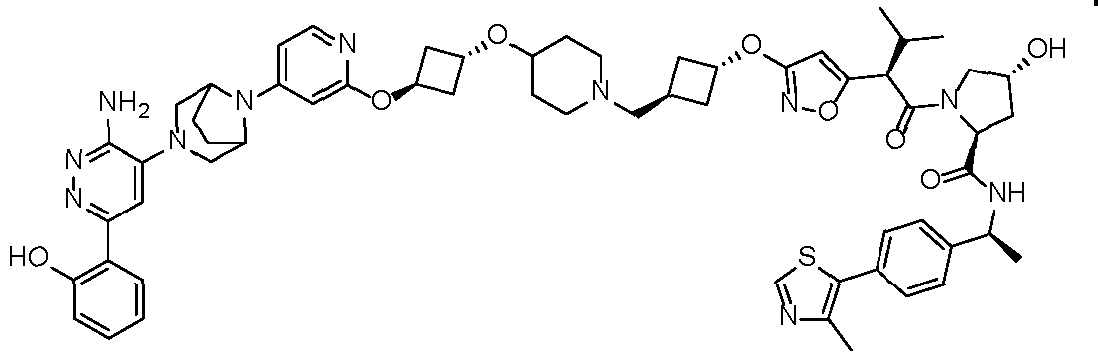
(2S,4R)-1-((2R)-2-(3-((1R,3R)-3-((4-((1r,3R)-3-((4-(3-(3-amino-6-(2-hydroxyphenyl)pyridazin-4-yl)-3,8-diazabicyclo[3.2.1]octan-8-yl)pyridin-2-yl)oxy)cyclobutoxy)piperidin-1-yl)methyl)cyclobutoxy)isoxazol-5-yl)-3-methylbutanoyl)-4-hydroxy-N-((S)-1-(4-(4-methylthiazol-5-yl)phenyl)ethyl)pyrrolidine-2-carboxamide 243 
(2S,4R)-1-((2R)-2-(3-(2-(4-((1r,3R)-3-((4-(3-(3-amino-6-(2-hydroxyphenyl)pyridazin-4-yl)-3,8-diazabicyclo[3.2.1]octan-8-yl)pyridin-2-yl)oxy)cyclobutoxy)piperidin-1-yl)ethoxy)isoxazol-5-yl)-3-methylbutanoyl)-N-((S)-2,2-difluoro-1-(6-(4-methylthiazol-5-yl)pyridin-3-yl)ethyl)-4-hydroxypyrrolidine-2-carboxamide 244 
(2S,4R)-1-((2R)-2-(3-(2-(4-((1r,3R)-3-((4-(3-(3-amino-6-(2-hydroxyphenyl)pyridazin-4-yl)-3,8-diazabicyclo[3.2.1]octan-8-yl)pyridin-2-yl)oxy)cyclobutoxy)piperidin-1-yl)ethoxy)isoxazol-5-yl)-3-methylbutanoyl)-N-((R)-2,2-difluoro-1-(6-(4-methylthiazol-5-yl)pyridin-3-yl)ethyl)-4-hydroxypyrrolidine-2-carboxamide 245 
(2S,4R)-1-((2S)-2-(3-(2-(4-(2-((4-(3-(3-amino-6-(2-hydroxyphenyl)pyridazin-4-yl)-3,8-diazabicyclo[3.2.1]octan-8-yl)pyridin-2-yl)oxy)ethyl)piperazin-1-yl)ethoxy)isoxazol-5-yl)-3-methylbutanoyl)-N-((R)-2-(cyclobutyl(methyl)amino)-1-(4-(4-methylthiazol-5-yl)phenyl)-2-oxoethyl)-4-hydroxypyrrolidine-2-carboxamide 246 
(2S,4R)-1-((2R)-2-(3-(2-(4-(2-((4-(3-(3-amino-6-(2-hydroxyphenyl)pyridazin-4-yl)-3,8-diazabicyclo[3.2.1]octan-8-yl)pyridin-2-yl)oxy)ethyl)piperazin-1-yl)ethoxy)isoxazol-5-yl)-3-methylbutanoyl)-N-((R)-2-(cyclobutyl(methyl)amino)-1-(4-(4-methylthiazol-5-yl)phenyl)-2-oxoethyl)-4-hydroxypyrrolidine-2-carboxamide 247 
(2S,4R)-1-((2S)-2-(3-(2-(4-((1r,3S)-3-((4-(3-(3-amino-6-(2-hydroxyphenyl)pyridazin-4-yl)-3,8-diazabicyclo[3.2.1]octan-8-yl)pyridin-2-yl)oxy)cyclobutoxy)piperidin-1-yl)ethoxy)isoxazol-5-yl)-3-methylbutanoyl)-4-hydroxy-N-((S)-1-(4-(trifluoromethyl)phenyl)ethyl)pyr rolidine-2-carboxamide 248 
(2S,4R)-1-((2R)-2-(3-(2-(4-((1r,3R)-3-((4-(3-(3-amino-6-(2-hydroxyphenyl)pyridazin-4-yl)-3,8-diazabicyclo[3.2.1]octan-8-yl)pyridin-2-yl)oxy)cyclobutoxy)piperidin-1-yl)ethoxy)isoxazol-5-yl)-3-methylbutanoyl)-4-hydroxy-N-((S)-1-(4-(trifluoromethyl)phenyl)ethyl)pyr rolidine-2-carboxamide 249 
(2S,4R)-1-((2S)-2-(3-((5-(5-((1r,3r)-3-((4-(3-(3-amino-6-(2-hydroxyphenyl)pyridazin-4-yl)-3,8-diazabicyclo[3.2.1]octan-8-yl)pyridin-2-yl)oxy)cyclobutoxy)pyridin-2-yl)pent-4-yn-1-yl)oxy)isoxazol-5-yl)-3-methylbutanoyl)-4-hydroxy-N-((S)-1-(4-(4-methylthiazol-5-yl)phenyl)ethyl)pyrrolidine-2-carboxamide 250 
(2S,4R)-1-((2R)-2-(3-((5-(5-((1r,3r)-3-((4-(3-(3-amino-6-(2-hydroxyphenyl)pyridazin-4-yl)-3,8-diazabicyclo[3.2.1]octan-8-yl)pyridin-2-yl)oxy)cyclobutoxy)pyridin-2-yl)pent-4-yn-1-yl)oxy)isoxazol-5-yl)-3-methylbutanoyl)-4-hydroxy-N-((S)-1-(4-(4-methylthiazol-5-yl)phenyl)ethyl)pyrrolidine-2-carboxamide 251 
(2S,4R)-1-((2S)-2-(3-(4-((4-((1r,3r)-3-((4-(3-(3-amino-6-(2-hydroxyphenyl)pyridazin-4-yl)-3,8-diazabicyclo[3.2.1]octan-8-yl)pyridin-2-yl)oxy)cyclobutoxy)piperidin-1-yl)methyl)piperidin-1-yl)isoxazol-5-yl)-3-methylbutanoyl)-4-hydroxy-N-((S)-1-(4-(4-methylthiazol-5-yl)phenyl)ethyl)pyrrolidine-2-carboxamide 252 
(2S,4R)-1-((2S)-2-(3-(2-(4-((1r,3S)-3-((4-(3-(3-amino-6-(2-hydroxyphenyl)pyridazin-4-yl)-3,8-diazabicyclo[3.2.1]octan-8-yl)pyridin-2-yl)oxy)cyclobutoxy)piperidin-1-yl)ethoxy)isoxazol-5-yl)-3-methylbutanoyl)-N-((S)-1-(3-fluoro-4-(4-methylthiazol-5-yl)phenyl)ethyl)-4-hydroxypyrrolidine-2-carboxamide 253 
(2S,4R)-1-((2R)-2-(3-(2-(4-((1r,3R)-3-((4-(3-(3-amino-6-(2-hydroxyphenyl)pyridazin-4-yl)-3,8-diazabicyclo[3.2.1]octan-8-yl)pyridin-2-yl)oxy)cyclobutoxy)piperidin-1-yl)ethoxy)isoxazol-5-yl)-3-methylbutanoyl)-N-((S)-1-(3-fluoro-4-(4-methylthiazol-5-yl)phenyl)ethyl)-4-hydroxypyrrolidine-2-carboxamide 254 
(2R,4S)-1-(2-(3-(2-(4-((1r,3r)-3-((4-(3-(3-amino-6-(2-hydroxyphenyl)pyridazin-4-yl)-3,8-diazabicyclo[3.2.1]octan-8-yl)pyridin-2-yl)oxy)cyclobutoxy)piperidin-1-yl)ethoxy)isoxazol-5-yl)-3-methylbutanoyl)-4-hydroxy-N-((S)-1-(6-(4-methylthiazol-5-yl)pyridin-3-yl)ethyl)pyrrolidine-2-carboxamide 255 
(2S,4R)-N-((S)-2-amino-1-(4-(4-methylthiazol-5-yl)phenyl)ethyl)-1-((2S)-2-(3-(2-(4-(2-((4-(3-(3-amino-6-(2-hydroxyphenyl)pyridazin-4-yl)-3,8-diazabicyclo[3.2.1]octan-8-yl)pyridin-2-yl)oxy)ethyl)piperazin-1-yl)ethoxy)isoxazol-5-yl)-3-methylbutanoyl)-4-hydroxypyrrolidine-2-carboxamide 256 
(2S,4R)-N-((S)-2-amino-1-(4-(4-methylthiazol-5-yl)phenyl)ethyl)-1-((2R)-2-(3-(2-(4-(2-((4-(3-(3-amino-6-(2-hydroxyphenyl)pyridazin-4-yl)-3,8-diazabicyclo[3.2.1]octan-8-yl)pyridin-2-yl)oxy)ethyl)piperazin-1-yl)ethoxy)isoxazol-5-yl)-3-methylbutanoyl)-4-hydroxypyrrolidine-2-carboxamide 257 
(2S,4R)-1-((2S)-2-(3-(2-(4-(2-((4-(3-(3-amino-6-(2-hydroxyphenyl)pyridazin-4-yl)-3,8-diazabicyclo[3.2.1]octan-8-yl)pyridin-2-yl)oxy)ethyl)piperazin-1-yl)ethoxy)isoxazol-5-yl)-3-methylbutanoyl)-N-((R)-2-ethoxy-1-(4-(4-methylthiazol-5-yl)phenyl)ethyl)-4-hydroxypyrrolidine-2-carboxamide 258 
(2S,4R)-1-((2S)-2-(3-(2-(4-(2-((4-(3-(3-amino-6-(2-hydroxyphenyl)pyridazin-4-yl)-3,8-diazabicyclo[3.2.1]octan-8-yl)pyridin-2-yl)oxy)ethyl)piperazin-1-yl)ethoxy)isoxazol-5-yl)-3-methylbutanoyl)-4-hydroxy-N-((R)-2-(methyl(phenyl)amino)-1-(4-(4-methylthiazol-5-yl)phenyl)-2-oxoethyl)pyrrolidine-2-carboxamide 259 
(2S,4R)-1-((2R)-2-(3-(2-(4-(2-((4-(3-(3-amino-6-(2-hydroxyphenyl)pyridazin-4-yl)-3,8-diazabicyclo[3.2.1]octan-8-yl)pyridin-2-yl)oxy)ethyl)piperazin-1-yl)ethoxy)isoxazol-5-yl)-3-methylbutanoyl)-4-hydroxy-N-((R)-2-(methyl(phenyl)amino)-1-(4-(4-methylthiazol-5-yl)phenyl)-2-oxoethyl)pyrrolidine-2-carboxamide 260 
(2S,4R)-1-((2S)-2-(3-(2-(1-((1r,3S)-3-((4-(3-(3-amino-6-(2-hydroxyphenyl)pyridazin-4-yl)-3,8-diazabicyclo[3.2.1]octan-8-yl)pyridin-2-yl)oxy)cyclobutane-1-carbonyl)piperidin-4-yl)ethoxy)isoxazol-5-yl)-3-methylbutanoyl)-4-hydroxy-N-((S)-1-(6-(4-methylthiazol-5-yl)pyridin-3-yl)ethyl)pyrrolidine-2-carboxamide 261 
(2S,4R)-1-((2R)-2-(3-(2-(1-((1r,3R)-3-((4-(3-(3-amino-6-(2-hydroxyphenyl)pyridazin-4-yl)-3,8-diazabicyclo[3.2.1]octan-8-yl)pyridin-2-yl)oxy)cyclobutane-1-carbonyl)piperidin-4-yl)ethoxy)isoxazol-5-yl)-3-methylbutanoyl)-4-hydroxy-N-((S)-1-(6-(4-methylthiazol-5-yl)pyridin-3-yl)ethyl)pyrrolidine-2-carboxamide 262 
(2S,4R)-1-((2S)-2-(3-(2-(4-(2-((4-(3-(3-amino-6-(2-hydroxyphenyl)pyridazin-4-yl)-3,8-diazabicyclo[3.2.1]octan-8-yl)pyridin-2-yl)oxy)ethyl)piperazin-1-yl)ethoxy)isoxazol-5-yl)-3-methylbutanoyl)-4-hydroxy-N-((R)-1-(4-(4-methylthiazol-5-yl)phenyl)-2-((tetrahydro-2H-pyran-4-yl)methoxy)ethyl)pyrrolidine-2-carboxamide 263 
(2S,4R)-1-((2S)-2-(3-(2-(4-(2-((4-(3-(3-amino-6-(2-hydroxyphenyl)pyridazin-4-yl)-3,8-diazabicyclo[3.2.1]octan-8-yl)pyridin-2-yl)oxy)ethyl)piperazin-1-yl)ethoxy)isoxazol-5-yl)-3-methylbutanoyl)-4-hydroxy-N-((S)-1-(4-(1-methyl-1H-pyrazol-5-yl)phenyl)ethyl)pyrrolidine-2-carboxamide 264 
(2S,4R)-1-((2R)-2-(3-(2-(4-(2-((4-(3-(3-amino-6-(2-hydroxyphenyl)pyridazin-4-yl)-3,8-diazabicyclo[3.2.1]octan-8-yl)pyridin-2-yl)oxy)ethyl)piperazin-1-yl)ethoxy)isoxazol-5-yl)-3-methylbutanoyl)-4-hydroxy-N-((S)-1-(4-(1-methyl-1H-pyrazol-5-yl)phenyl)ethyl)pyrrolidine-2-carboxamide 265 
(2S,4R)-1-((2S)-2-(3-(2-(4-(2-((4-(3-(3-amino-6-(2-hydroxyphenyl)pyridazin-4-yl)-3,8-diazabicyclo[3.2.1]octan-8-yl)pyridin-2-yl)oxy)ethyl)piperazin-1-yl)ethoxy)isoxazol-5-yl)-3-methylbutanoyl)-4-hydroxy-N-((S)-1-(4-(4-methylisothiazol-5-yl)phenyl)ethyl)pyrrolidine-2-carboxamide 266 
(2S,4R)-1-((2R)-2-(3-(2-(4-(2-((4-(3-(3-amino-6-(2-hydroxyphenyl)pyridazin-4-yl)-3,8-diazabicyclo[3.2.1]octan-8-yl)pyridin-2-yl)oxy)ethyl)piperazin-1-yl)ethoxy)isoxazol-5-yl)-3-methylbutanoyl)-4-hydroxy-N-((S)-1-(4-(4-methylisothiazol-5-yl)phenyl)ethyl)pyrrolidine-2-carboxamide 267 
(2S,4R)-1-((2S)-2-(3-(2-(4-((1r,3S)-3-((4-(3-(3-amino-6-(2-hydroxyphenyl)pyridazin-4-yl)-3,8-diazabicyclo[3.2.1]octan-8-yl)pyridin-2-yl)oxy)cyclobutoxy)piperidin-1-yl)ethoxy)isoxazol-5-yl)-3-methylbutanoyl)-N-((R)-2,2-difluoro-1-(4-(4-methylthiazol-5-yl)phenyl)ethyl)-4-hydroxypyrrolidine-2-carboxamide 268 
(2S,4R)-1-((2R)-2-(3-(2-(4-((1r,3R)-3-((4-(3-(3-amino-6-(2-hydroxyphenyl)pyridazin-4-yl)-3,8-diazabicyclo[3.2.1]octan-8-yl)pyridin-2-yl)oxy)cyclobutoxy)piperidin-1-yl)ethoxy)isoxazol-5-yl)-3-methylbutanoyl)-N-((R)-2,2-difluoro-1-(4-(4-methylthiazol-5-yl)phenyl)ethyl)-4-hydroxypyrrolidine-2-carboxamide 269 
(2S,4R)-1-((2S)-2-(3-(2-(4-((1r,3S)-3-((4-(3-(3-amino-6-(2-hydroxyphenyl)pyridazin-4-yl)-3,8-diazabicyclo[3.2.1]octan-8-yl)pyridin-2-yl)oxy)cyclobutoxy)piperidin-1-yl)ethoxy)-4-fluoroisoxazol-5-yl)-3-methylbutanoyl)-4-hydroxy-N-((S)-1-(6-(4-methylthiazol-5-yl)pyridin-3-yl)ethyl)pyrrolidine-2-carboxamide 270 
(2S,4R)-1-((2R)-2-(3-(2-(4-((1r,3R)-3-((4-(3-(3-amino-6-(2-hydroxyphenyl)pyridazin-4-yl)-3,8-diazabicyclo[3.2.1]octan-8-yl)pyridin-2-yl)oxy)cyclobutoxy)piperidin-1-yl)ethoxy)-4-fluoroisoxazol-5-yl)-3-methylbutanoyl)-4-hydroxy-N-((S)-1-(6-(4-methylthiazol-5-yl)pyridin-3-yl)ethyl)pyrrolidine-2-carboxamide 271 
(2S,4R)-1-((2S)-2-(3-(2-(4-((1r,3S)-3-((4-(3-(3-amino-6-(2-hydroxyphenyl)pyridazin-4-yl)-3,8-diazabicyclo[3.2.1]octan-8-yl)pyridin-2-yl)oxy)cyclobutoxy)piperidin-1-yl)-2-oxoethoxy)isoxazol-5-yl)-3-methylbutanoyl)-4-hydroxy-N-((S)-1-(6-(4-methylthiazol-5-yl)pyridin-3-yl)ethyl)pyrrolidine-2-carboxamide 272 
(2S,4R)-1-((2S)-2-(3-(2-(4-(2-((4-(3-(3-amino-6-(2-hydroxyphenyl)pyridazin-4-yl)-3,8-diazabicyclo[3.2.1]octan-8-yl)pyridin-2-yl)oxy)ethyl)piperazin-1-yl)ethoxy)isoxazol-5-yl)-3-methylbutanoyl)-4-hydroxy-N-((S)-1-(4-(4-methylthiazol-5-yl)phenyl)-2-((tetrahydro-2H-pyran-4-yl)methoxy)ethyl)pyrrolidine-2-carboxamide 273 
(2S,4R)-1-((2R)-2-(3-(2-(4-(2-((4-(3-(3-amino-6-(2-hydroxyphenyl)pyridazin-4-yl)-3,8-diazabicyclo[3.2.1]octan-8-yl)pyridin-2-yl)oxy)ethyl)piperazin-1-yl)ethoxy)isoxazol-5-yl)-3-methylbutanoyl)-4-hydroxy-N-((S)-1-(4-(4-methylthiazol-5-yl)phenyl)-2-((tetrahydro-2H-pyran-4-yl)methoxy)ethyl)pyrrolidine-2-carboxamide 274 
(2S,4R)-1-((2S)-2-(3-(2-(4-(2-((4-(3-(3-amino-6-(2-hydroxyphenyl)pyridazin-4-yl)-3,8-diazabicyclo[3.2.1]octan-8-yl)pyridin-2-yl)oxy)ethyl)piperazin-1-yl)ethoxy)isoxazol-5-yl)-3-methylbutanoyl)-4-hydroxy-N-((S)-1-(4-(5-methyl-1H-1,2,3-triazol-1-yl)phenyl)ethyl)pyrrolidine-2-carboxamide 275 
(2S,4R)-1-((2R)-2-(3-(2-(4-(2-((4-(3-(3-amino-6-(2-hydroxyphenyl)pyridazin-4-yl)-3,8-diazabicyclo[3.2.1]octan-8-yl)pyridin-2-yl)oxy)ethyl)piperazin-1-yl)ethoxy)isoxazol-5-yl)-3-methylbutanoyl)-4-hydroxy-N-((S)-1-(4-(5-methyl-1H-1,2,3-triazol-1-yl)phenyl)ethyl)pyrrolidine-2-carboxamide 276 
(2S,4R)-1-((2S)-2-(3-(((E)-3-(5-((1r,3S)-3-((4-(3-(3-amino-6-(2-hydroxyphenyl)pyridazin-4-yl)-3,8-diazabicyclo[3.2.1]octan-8-yl)pyridin-2-yl)oxy)cyclobutoxy)pyridin-2-yl)allyl)oxy)isoxazol-5-yl)-3-methylbutanoyl)-4-hydroxy-N-((S)-1-(4-(2-methyl-1H-imidazol-1-yl)phenyl)ethyl)pyrrolidine-2-carboxamide 277 
(2S,4R)-1-((2R)-2-(3-(((E)-3-(5-((1r,3R)-3-((4-(3-(3-amino-6-(2-hydroxyphenyl)pyridazin-4-yl)-3,8-diazabicyclo[3.2.1]octan-8-yl)pyridin-2-yl)oxy)cyclobutoxy)pyridin-2-yl)allyl)oxy)isoxazol-5-yl)-3-methylbutanoyl)-4-hydroxy-N-((S)-1-(4-(2-methyl-1H-imidazol-1-yl)phenyl)ethyl)pyrrolidine-2-carboxamide 278 
(2S,4R)-1-((2S)-2-(3-(2-(4-((1r,3S)-3-((4-(3-(3-amino-6-(2-hydroxyphenyl)pyridazin-4-yl)-3,8-diazabicyclo[3.2.1]octan-8-yl)pyridin-2-yl)oxy)cyclobutoxy)piperidin-1-yl)ethoxy)isoxazol-5-yl)-3-methylbutanoyl)-4-hydroxy-N-((S)-1-(2-methoxy-6-(4-methylthiazol-5-yl)pyridin-3-yl)ethyl)pyrrolidine-2-carboxamide 279 
(2S,4R)-1-((2R)-2-(3-(2-(4-((1r,3R)-3-((4-(3-(3-amino-6-(2-hydroxyphenyl)pyridazin-4-yl)-3,8-diazabicyclo[3.2.1]octan-8-yl)pyridin-2-yl)oxy)cyclobutoxy)piperidin-1-yl)ethoxy)isoxazol-5-yl)-3-methylbutanoyl)-4-hydroxy-N-((S)-1-(2-methoxy-6-(4-methylthiazol-5-yl)pyridin-3-yl)ethyl)pyrrolidine-2-carboxamide 280 
(2S,4R)-1-((2S)-2-(3-(2-(4-(2-((4-(3-(3-amino-6-(2-hydroxyphenyl)pyridazin-4-yl)-3,8-diazabicyclo[3.2.1]octan-8-yl)pyridin-2-yl)oxy)ethyl)piperazin-1-yl)ethoxy)isoxazol-5-yl)-3-methylbutanoyl)-N-((R)-2-(dimethylamino)-1-(4-(4-methylthiazol-5-yl)phenyl)ethyl)-4-hydroxypyrrolidine-2-carboxamide 281 
(2S,4R)-1-((2R)-2-(3-(2-(4-(2-((4-(3-(3-amino-6-(2-hydroxyphenyl)pyridazin-4-yl)-3,8-diazabicyclo[3.2.1]octan-8-yl)pyridin-2-yl)oxy)ethyl)piperazin-1-yl)ethoxy)isoxazol-5-yl)-3-methylbutanoyl)-N-((R)-2-(dimethylamino)-1-(4-(4-methylthiazol-5-yl)phenyl)ethyl)-4-hydroxypyrrolidine-2-carboxamide 282 
(2S,4R)-1-((2S)-2-(3-(2-(4-(2-((4-(3-(3-amino-6-(2-hydroxyphenyl)pyridazin-4-yl)-3,8-diazabicyclo[3.2.1]octan-8-yl)pyridin-2-yl)oxy)ethyl)piperazin-1-yl)ethoxy)isoxazol-5-yl)-3-methylbutanoyl)-N-((S)-1-(4-(4-chloro-1-methyl-1H-pyrazol-5-yl)phenyl)ethyl)-4-hydroxypyrrolidine-2-carboxamide 283 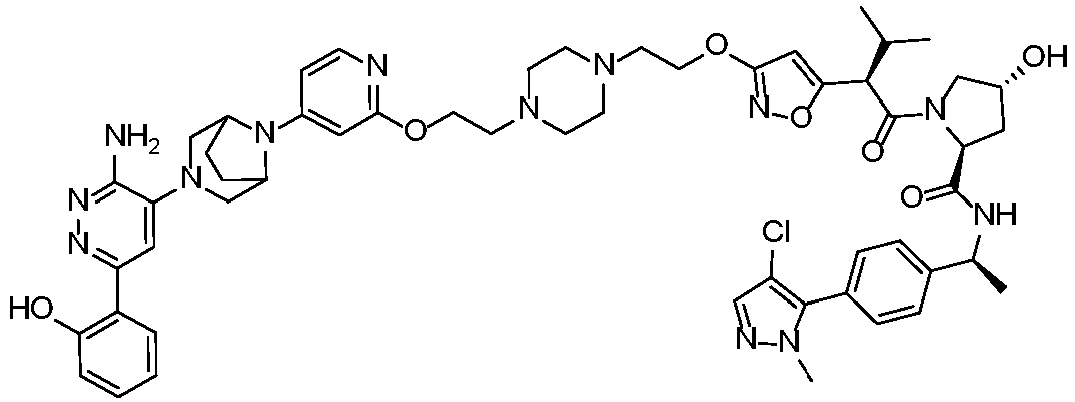
(2S,4R)-1-((2R)-2-(3-(2-(4-(2-((4-(3-(3-amino-6-(2-hydroxyphenyl)pyridazin-4-yl)-3,8-diazabicyclo[3.2.1]octan-8-yl)pyridin-2-yl)oxy)ethyl)piperazin-1-yl)ethoxy)isoxazol-5-yl)-3-methylbutanoyl)-N-((S)-1-(4-(4-chloro-1-methyl-1H-pyrazol-5-yl)phenyl)ethyl)-4-hydroxypyrrolidine-2-carboxamide 284 
(2S,4R)-1-((2S)-2-(3-((3-(5-((1r,3S)-3-((4-(3-(3-amino-6-(2-hydroxyphenyl)pyridazin-4-yl)-3,8-diazabicyclo[3.2.1]octan-8-yl)pyridin-2-yl)oxy)cyclobutoxy)pyridin-2-yl)prop-2-yn-1-yl)oxy)isoxazol-5-yl)-3-methylbutanoyl)-4-hydroxy-N-((S)-1-(4-(2-(hydroxymethyl)-1H-imidazol-1-yl)phenyl)ethyl)pyrrolidine-2-carboxamide 285 
(2S,4R)-1-((2R)-2-(3-((3-(5-((1r,3R)-3-((4-(3-(3-amino-6-(2-hydroxyphenyl)pyridazin-4-yl)-3,8-diazabicyclo[3.2.1]octan-8-yl)pyridin-2-yl)oxy)cyclobutoxy)pyridin-2-yl)prop-2-yn-1-yl)oxy)isoxazol-5-yl)-3-methylbutanoyl)-4-hydroxy-N-((S)-1-(4-(2-(hydroxymethyl)-1H-imidazol-1-yl)phenyl)ethyl)pyrrolidine-2-carboxamide 286 
(2S,4R)-1-((2R)-2-(3-(2-(4-((1r,3R)-3-((4-(3-(3-amino-6-(2-hydroxyphenyl)pyridazin-4-yl)-3,8-diazabicyclo[3.2.1]octan-8-yl)pyridin-2-yl)oxy)cyclobutoxy)piperidin-1-yl)-2-oxoethoxy)isoxazol-5-yl)-3-methylbutanoyl)-4-hydroxy-N-((S)-1-(6-(4-methylthiazol-5-yl)pyridin-3-yl)ethyl)pyrrolidine-2-carboxamide 287 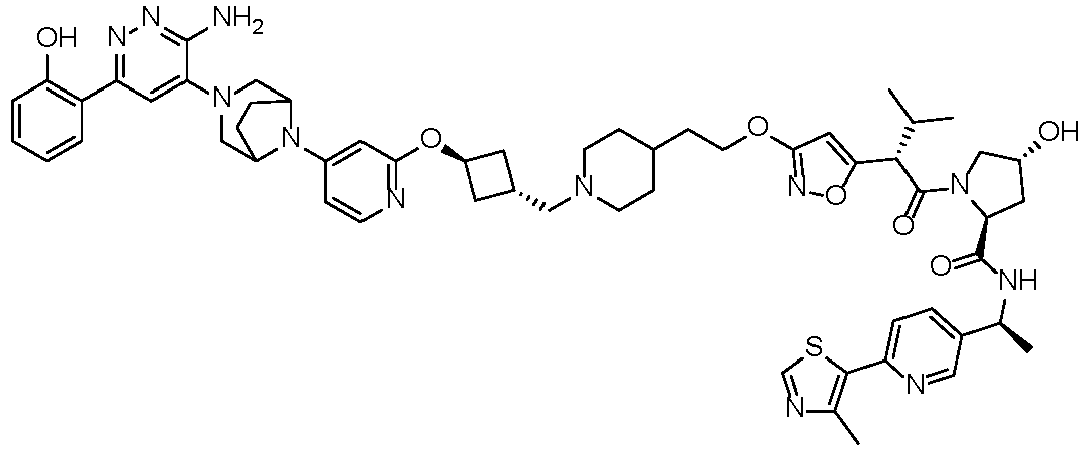
(2S,4R)-1-((2S)-2-(3-(2-(1-(((1r,3S)-3-((4-(3-(3-amino-6-(2-hydroxyphenyl)pyridazin-4-yl)-3,8-diazabicyclo[3.2.1]octan-8-yl)pyridin-2-yl)oxy)cyclobutyl)methyl)piperid in-4-yl)ethoxy)isoxazol-5-yl)-3-methylbutanoyl)-4-hydroxy-N-((S)-1-(6-(4-methylthiazol-5-yl)pyridin-3-yl)ethyl)pyrrolidine-2-carboxamide 288 
(2S,4R)-1-((2R)-2-(3-(2-(1-(((1r,3R)-3-((4-(3-(3-amino-6-(2-hydroxyphenyl)pyridazin-4-yl)-3,8-diazabicyclo[3.2.1]octan-8-yl)pyridin-2-yl)oxy)cyclobutyl)methyl)piperid in-4-yl)ethoxy)isoxazol-5-yl)-3-methylbutanoyl)-4-hydroxy-N-((S)-1-(6-(4-methylthiazol-5-yl)pyridin-3-yl)ethyl)pyrrolidine-2-carboxamide 289 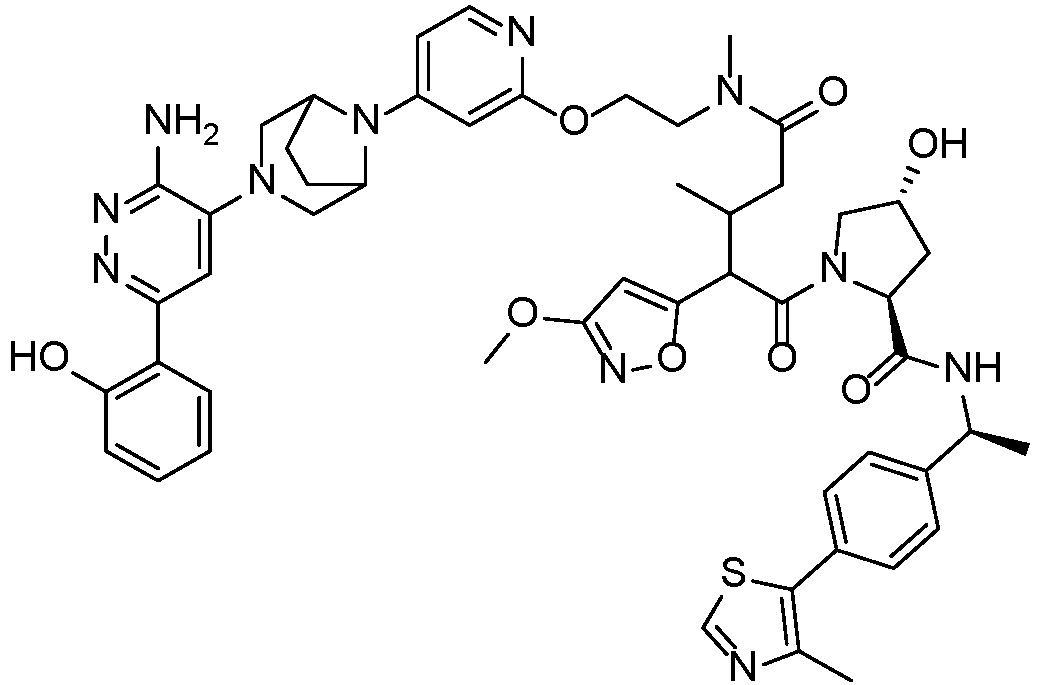
(2S,4R)-1-(5-((2-((4-(3-(3-amino-6-(2-hydroxyphenyl)pyridazin-4-yl)-3,8-diazabicyclo[3.2.1]octan-8-yl)pyridin-2-yl)oxy)ethyl)(methyl)amino)-2-(3-methoxyisoxazol-5-yl)-3-methyl-5-oxopentanoyl)-4-hydroxy-N-((S)-1-(4-(4-methylthiazol-5-yl)phenyl)ethyl)pyrrolidine-2-carboxamide 290 
(2S,4R)-N-((R)-2-amino-1-(4-(4-methylthiazol-5-yl)phenyl)ethyl)-1-((2S)-2-(3-(2-(4-(2-((4-(3-(3-amino-6-(2-hydroxyphenyl)pyridazin-4-yl)-3,8-diazabicyclo[3.2.1]octan-8-yl)pyridin-2-yl)oxy)ethyl)piperazin-1-yl)ethoxy)isoxazol-5-yl)-3-methylbutanoyl)-4-hydroxypyrrolidine-2-carboxamide 291 
(2S,4R)-1-((2S)-2-(3-(2-(4-(2-((4-(3-(3-amino-6-(2-hydroxyphenyl)pyridazin-4-yl)-3,8-diazabicyclo[3.2.1]octan-8-yl)pyridin-2-yl)oxy)ethyl)piperazin-1-yl)ethoxy)isoxazol-5-yl)-3-methylbutanoyl)-4-hydroxy-N-((R)-2-isobutoxy-1-(4-(4-methylthiazol-5-yl)phenyl)ethyl)pyrrolidine-2-carboxamide 292 
(2S,4R)-N-((S)-1-(4-(1H-1,2,3-triazol-1-yl)phenyl)ethyl)-1-((2S)-2-(3-(2-(4-(2-((4-(3-(3-amino-6-(2-hydroxyphenyl)pyridazin-4-yl)-3,8-diazabicyclo[3.2.1]octan-8-yl)pyridin-2-yl)oxy)ethyl)piperazin-1-yl)ethoxy)isoxazol-5-yl)-3-methylbutanoyl)-4-hydroxypyrrolidine-2-carboxamide 293 
(2S,4R)-N-((S)-1-(4-(1H-1,2,3-triazol-1-yl)phenyl)ethyl)-1-((2R)-2-(3-(2-(4-(2-((4-(3-(3-amino-6-(2-hydroxyphenyl)pyridazin-4-yl)-3,8-diazabicyclo[3.2.1]octan-8-yl)pyridin-2-yl)oxy)ethyl)piperazin-1-yl)ethoxy)isoxazol-5-yl)-3-methylbutanoyl)-4-hydroxypyrrolidine-2-carboxamide 294 
(2S,4R)-1-((2S)-2-(3-(2-(4-((1r,3S)-3-((4-(3-(3-amino-6-(2-hydroxyphenyl)pyridazin-4-yl)-3,8-diazabicyclo[3.2.1]octan-8-yl)pyridin-2-yl)oxy)cyclobutoxy)piperidin-1-yl)ethoxy)isoxazol-5-yl)-3-methylbutanoyl)-N-((S)-1-(4-(1,4-dimethyl-1H-pyrazol-5-yl)phenyl)ethyl)-4-hydroxypyrrolidine-2-carboxamide 295 
(2S,4R)-1-((2R)-2-(3-(2-(4-((1r,3R)-3-((4-(3-(3-amino-6-(2-hydroxyphenyl)pyridazin-4-yl)-3,8-diazabicyclo[3.2.1]octan-8-yl)pyridin-2-yl)oxy)cyclobutoxy)piperidin-1-yl)ethoxy)isoxazol-5-yl)-3-methylbutanoyl)-N-((S)-1-(4-(1,4-dimethyl-1H-pyrazol-5-yl)phenyl)ethyl)-4-hydroxypyrrolidine-2-carboxamide 296 
(2S,4R)-1-((2R)-2-(3-(2-((2S)-4-(((1r,3S)-3-((4-(3-(3-amino-6-(2-hydroxyphenyl)pyridazin-4-yl)-3,8-diazabicyclo[3.2.1]octan-8-yl)pyridin-2-yl)oxy)cyclobutyl)methyl)-2-methylpiperazin-1-yl)ethoxy)isoxazol-5-yl)-3-methylbutanoyl)-4-hydroxy-N-((S)-1-(6-(4-methylthiazol-5-yl)pyridin-3-yl)ethyl)pyrrolidine-2-carboxamide 297 
(2S,4R)-1-((2S)-2-(4-(2-(4-(2-((4-(3-(3-amino-6-(2-hydroxyphenyl)pyridazin-4-yl)-3,8-diazabicyclo[3.2.1]octan-8-yl)pyridin-2-yl)oxy)ethyl)piperazin-1-yl)ethoxy)azet-2-yl)-3-methylbutanoyl)-4-hydroxy-N-((S)-2-isobutoxy-1-(4-(4-methylthiazol-5-yl)phenyl)ethyl)pyrrolidine-2-carboxamide 298 
(2S,4R)-1-((2R)-2-(3-(2-(4-(2-((4-(3-(3-amino-6-(2-hydroxyphenyl)pyridazin-4-yl)-3,8-diazabicyclo[3.2.1]octan-8-yl)pyridin-2-yl)oxy)ethyl)piperazin-1-yl)ethoxy)isoxazol-5-yl)-3-methylbutanoyl)-4-hydroxy-N-((S)-2-isobutoxy-1-(4-(4-methylthiazol-5-yl)phenyl)ethyl)pyrrolidine-2-carboxamide 299 
(2S,4R)-1-((2S)-2-(3-(2-(4-(2-((4-(3-(3-amino-6-(2-hydroxyphenyl)pyridazin-4-yl)-3,8-diazabicyclo[3.2.1]octan-8-yl)pyridin-2-yl)oxy)ethyl)piperazin-1-yl)ethoxy)isoxazol-5-yl)-3-methylbutanoyl)-4-hydroxy-N-((S)-1-(4-(4-methyloxazol-5-yl)phenyl)ethyl)pyrrolidine-2-carboxamide 300 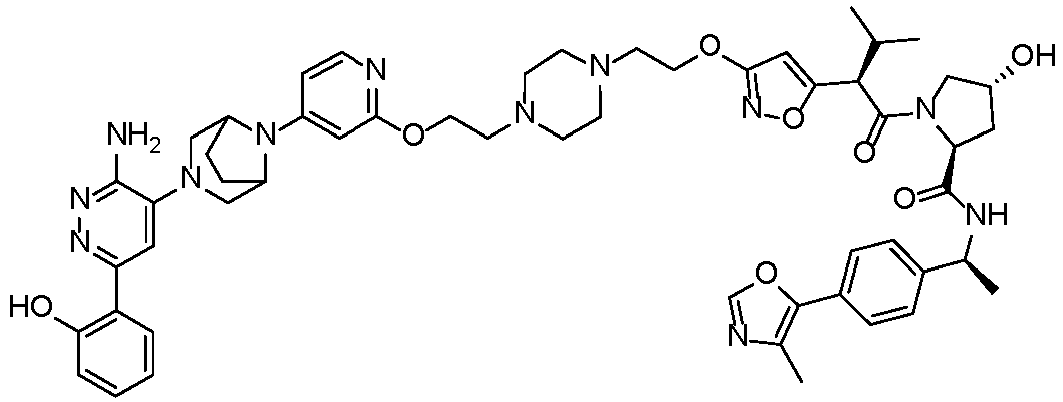
(2S,4R)-1-((2R)-2-(3-(2-(4-(2-((4-(3-(3-amino-6-(2-hydroxyphenyl)pyridazin-4-yl)-3,8-diazabicyclo[3.2.1]octan-8-yl)pyridin-2-yl)oxy)ethyl)piperazin-1-yl)ethoxy)isoxazol-5-yl)-3-methylbutanoyl)-4-hydroxy-N-((S)-1-(4-(4-methyloxazol-5-yl)phenyl)ethyl)pyrrolidine-2-carboxamide 301 
(2S,4R)-1-((2S,3R)-4-(2-((4-(3-(3-amino-6-(2-hydroxyphenyl)pyridazin-4-yl)-3,8-diazabicyclo[3.2.1]octan-8-yl)pyridin-2-yl)oxy)ethoxy)-3-methyl-2-(3-methylisoxazol-5-yl)butanoyl)-4-hydroxy-N-((S)-1-(4-(4-methylthiazol-5-yl)phenyl)ethyl)pyrrolidine-2-carboxamide 302 
(2S,4R)-1-((2R,3R)-4-(2-((4-(3-(3-amino-6-(2-hydroxyphenyl)pyridazin-4-yl)-3,8-diazabicyclo[3.2.1]octan-8-yl)pyridin-2-yl)oxy)ethoxy)-3-methyl-2-(3-methylisoxazol-5-yl)butanoyl)-4-hydroxy-N-((S)-1-(4-(4-methylthiazol-5-yl)phenyl)ethyl)pyrrolidine-2-carboxamide 303 
(2S,4R)-1-((2R)-2-(3-((3-(5-((1r,3R)-3-((4-(3-(3-amino-6-(2-hydroxyphenyl)pyridazin-4-yl)-3,8-diazabicyclo[3.2.1]octan-8-yl)pyridin-2-yl)oxy)cyclobutoxy)pyrimidin-2-yl)prop-2-yn-1-yl)oxy)isoxazol-5-yl)-3-methylbutanoyl)-N-((S)-1-(4-cyanophenyl)ethyl)-4-hydroxypyrrolidine-2-carboxamide 304 
(2S,4R)-1-((2R)-2-(3-((3-(5-((1r,3R)-3-((4-(3-(3-amino-6-(2-hydroxyphenyl)pyridazin-4-yl)-3,8-diazabicyclo[3.2.1]octan-8-yl)pyridin-2-yl)oxy)cyclobutoxy)pyrimidin-2-yl)prop-2-yn-1-yl)oxy)isoxazol-5-yl)-3-methylbutanoyl)-4-hydroxy-N-((S)-1-(4-(2-methyl-1H-imidazol-1-yl)phenyl)ethyl)pyrrolidine-2-carboxamide 305 
(2S,4R)-1-((2R)-2-(3-((3-(5-((1r,3R)-3-((4-(3-(3-amino-6-(2-hydroxyphenyl)pyridazin-4-yl)-3,8-diazabicyclo[3.2.1]octan-8-yl)pyridin-2-yl)oxy)cyclobutoxy)pyrimidin-2-yl)prop-2-yn-1-yl)oxy)isoxazol-5-yl)-3-methylbutanoyl)-4-hydroxy-N-((S)-1-(6-(4-methylthiazol-5-yl)pyridin-3-yl)ethyl)pyrrolidine-2-carboxamide 306 
(2S,4R)-1-((2R)-2-(3-(2-(4-((1r,3R)-3-((4-(3-(3-amino-6-(2-hydroxyphenyl)pyridazin-4-yl)-3,8-diazabicyclo[3.2.1]octan-8-yl)pyridin-2-yl)oxy)cyclobutoxy)piperidin-1-yl)ethoxy)isoxazol-5-yl)-3-methylbutanoyl)-4-hydroxy-N-((S)-1-(6-(2-methyl-1H-imidazol-1-yl)pyridin-3-yl)ethyl)pyrrolidine-2-carboxamide 307 
(2S,4R)-1-((2R)-2-(3-(((E)-3-(5-((1r,3R)-3-((4-(3-(3-amino-6-(2-hydroxyphenyl)pyridazin-4-yl)-3,8-diazabicyclo[3.2.1]octan-8-yl)pyridin-2-yl)oxy)cyclobutoxy)pyrimidin-2-yl)allyl)oxy)isoxazol-5-yl)-3-methylbutanoyl)-4-hydroxy-N-((S)-1-(4-(4-methylthiazol-5-yl)phenyl)ethyl)pyrrolidine-2-carboxamide 308 
(2S,4R)-1-((2R)-2-(3-(2-(4-((1r,3R)-3-((4-(3-(3-amino-6-(2-hydroxyphenyl)pyridazin-4-yl)-3,8-diazabicyclo[3.2.1]octan-8-yl)pyridin-2-yl)oxy)cyclobutoxy)piperidin-1-yl)ethoxy)isoxazol-5-yl)-3-methylbutanoyl)-N-((R)-2-(cyclobutyl(methyl)amino)-1-(4-(4-methylthiazol-5-yl)phenyl)-2-oxoethyl)-4-hydroxypyrrolidine-2-carboxamide 309 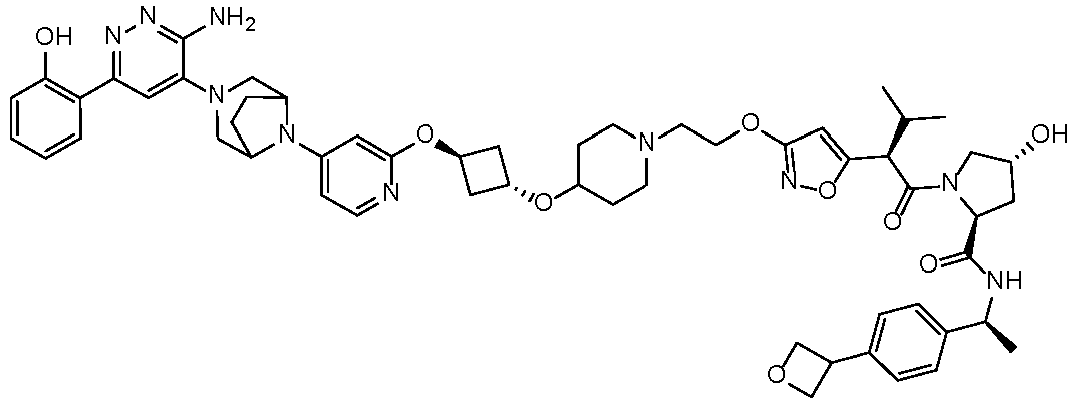
(2S,4R)-1-((2R)-2-(3-(2-(4-((1r,3R)-3-((4-(3-(3-amino-6-(2-hydroxyphenyl)pyridazin-4-yl)-3,8-diazabicyclo[3.2.1]octan-8-yl)pyridin-2-yl)oxy)cyclobutoxy)piperidin-1-yl)ethoxy)isoxazol-5-yl)-3-methylbutanoyl)-4-hydroxy-N-((S)-1-(4-(oxetan-3-yl)phenyl)ethyl)pyrrolidine-2-carboxamide 310 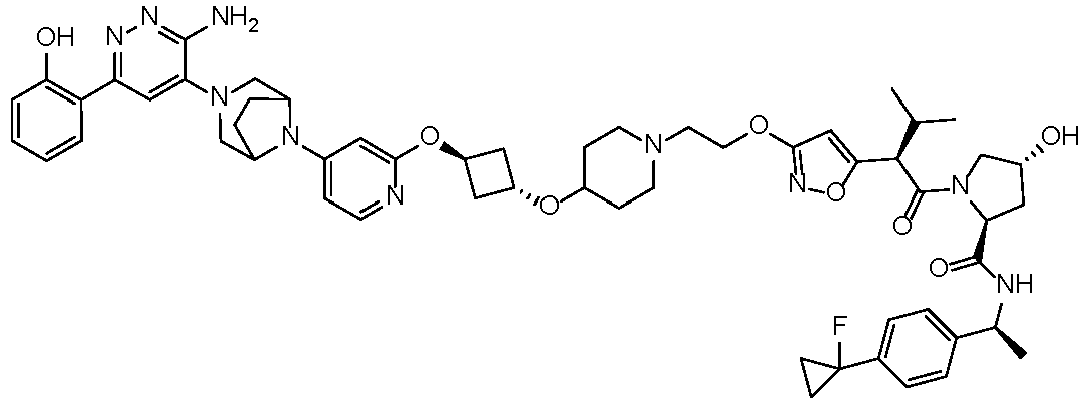
(2S,4R)-1-((2R)-2-(3-(2-(4-((1r,3R)-3-((4-(3-(3-amino-6-(2-hydroxyphenyl)pyridazin-4-yl)-3,8-diazabicyclo[3.2.1]octan-8-yl)pyridin-2-yl)oxy)cyclobutoxy)piperidin-1-yl)ethoxy)isoxazol-5-yl)-3-methylbutanoyl)-N-((S)-1-(4-(1-fluorocyclopropyl)phenyl)ethyl)-4-hydroxypyrrolidine-2-carboxamide 311 
(2S,4R)-1-((2R)-2-(3-(2-(4-((1r,3R)-3-((4-(3-(3-amino-6-(2-hydroxyphenyl)pyridazin-4-yl)-3,8-diazabicyclo[3.2.1]octan-8-yl)pyridin-2-yl)oxy)cyclobutoxy)piperidin-1-yl)ethoxy)isoxazol-5-yl)-3-methylbutanoyl)-N-((1S)-1-(4-(2,2-difluorocyclopropyl)phenyl)ethyl )-4-hydroxypyrrolidine-2-carboxamide 312 
(2S,4R)-1-((2R)-2-(3-(2-(4-((1r,3R)-3-((4-(3-(3-amino-6-(2-hydroxyphenyl)pyridazin-4-yl)-3,8-diazabicyclo[3.2.1]octan-8-yl)pyridin-2-yl)oxy)cyclobutoxy)piperidin-1-yl)ethoxy)isoxazol-5-yl)-3-methylbutanoyl)-N-((S)-1-(4-(2,5-dimethyl-1H-imidazol-1-yl)phenyl)ethyl)-4-hydroxypyrrolidine-2-carboxamide 313 
(2S,4R)-1-((2R)-2-(3-(2-(4-((1r,3R)-3-((4-(3-(3-amino-6-(2-hydroxyphenyl)pyridazin-4-yl)-3,8-diazabicyclo[3.2.1]octan-8-yl)pyridin-2-yl)oxy)cyclobutoxy)piperidin-1-yl)ethoxy)isoxazol-5-yl)-3-methylbutanoyl)-N-((S)-1-(4-(1,4-dimethyl-1H-imidazol-5-yl)phenyl)ethyl)-4-hydroxypyrrolidine-2-carboxamide 314 
(2S,4R)-1-((2R)-2-(3-(2-(4-((1r,3R)-3-((4-(3-(3-amino-6-(2-hydroxyphenyl)pyridazin-4-yl)-3,8-diazabicyclo[3.2.1]octan-8-yl)pyridin-2-yl)oxy)cyclobutoxy)piperidin-1-yl)ethoxy)isoxazol-5-yl)-3-methylbutanoyl)-N-((S)-1-(4-(3,5-dimethyl-1H-pyrazol-4-yl)phenyl)ethyl)-4-hydroxypyrrolidine-2-carboxamide 315 
(2S,4R)-1-((2R)-2-(3-(2-(4-((1r,3R)-3-((4-(3-(3-amino-6-(2-hydroxyphenyl)pyridazin-4-yl)-3,8-diazabicyclo[3.2.1]octan-8-yl)pyridin-2-yl)oxy)cyclobutoxy)piperidin-1-yl)ethoxy)isoxazol-5-yl)-3-methylbutanoyl)-4-hydroxy-N-((S)-1-(5-(4-methylthiazol-5-yl)pyridin-2-yl)ethyl)pyrrolidine-2-carboxamide 316 
(2S,4R)-1-((2R)-2-(3-(((1R,2R)-2-(5-((1r,3R)-3-((4-(3-(3-amino-6-(2-hydroxyphenyl)pyridazin-4-yl)-3,8-diazabicyclo[3.2.1]octan-8-yl)pyridin-2-yl)oxy)cyclobutoxy)pyridin-2-yl)cyclopropyl)methoxy)isoxazol -5-yl)-3-methylbutanoyl)-4-hydroxy-N-((S)-1-(6-(4-methylthiazol-5-yl)pyridin-3-yl)ethyl)pyrrolidine-2-carboxamide 317 
(2S,4R)-1-((R)-2-(3-(2-(1-((1r,3R)-3-((9-(3-amino-6-(2-hydroxyphenyl)pyridazin-4-yl)-1-oxa-4,9-diazaspiro[5.5]undecan-4-yl)methyl)cyclobutyl)piperidin-4-yl)ethoxy)isoxazol-5-yl)-3-methylbutanoyl)-4-hydroxy-N-((S)-1-(4-(4-methylthiazol-5-yl)phenyl)ethyl)pyrrolidine-2-carboxamide 318 
(2S,4R)-1-((R)-2-(3-(2-(1-(((1r,3R)-3-(4-((9-(3-amino-6-(2-hydroxyphenyl)pyridazin-4-yl)-1-oxa-4,9-diazaspiro[5.5]undecan-4-yl)methyl)piperidin-1-yl)cyclobutyl)methyl)piperidin-4-yl)ethoxy)isoxazol-5-yl)-3-methylbutanoyl)-4-hydroxy-N-((S)-1-(4-(4-methylthiazol-5-yl)phenyl)ethyl)pyrrolidine-2-carboxamide 319 
(25,4R)-1-((2R)-2-(3-(2-(4-(2-((4-(3-(3-amino-6-(2-hydroxyphenyl)pyridazin-4-yl)-3,8-diazabicyclo[3.2.1]octan-8-yl)pyridin-2-yl)oxy)ethyl)piperazin-1-yl)ethoxy)isoxazol-5-yl)-3-methylbutanoyl)-N-((S)-1-(4-(4-fluoro-1-methyl-1H-pyrazol-5-yl)phenyl)ethyl)-4-hydroxypyrrolidine-2-carboxamide 320 
(2S,4R)-1-((R)-2-(3-(2-(4-((1r,3R)-3-(2-(9-(3 -amino-6-(2-hydroxyphenyl)pyridazin-4-yl)-1-oxa-4,9-diazaspiro[5.5]undecan-4-yl)ethoxy)cyclobutoxy)piperidin-1-yl)ethoxy)isoxazol-5-yl)-3-methylbutanoyl)-4-hydroxy-N-((S)-1-(4-(4-methylthiazol-5-yl)phenyl)ethyl)pyrrolidine-2-carboxamide 321 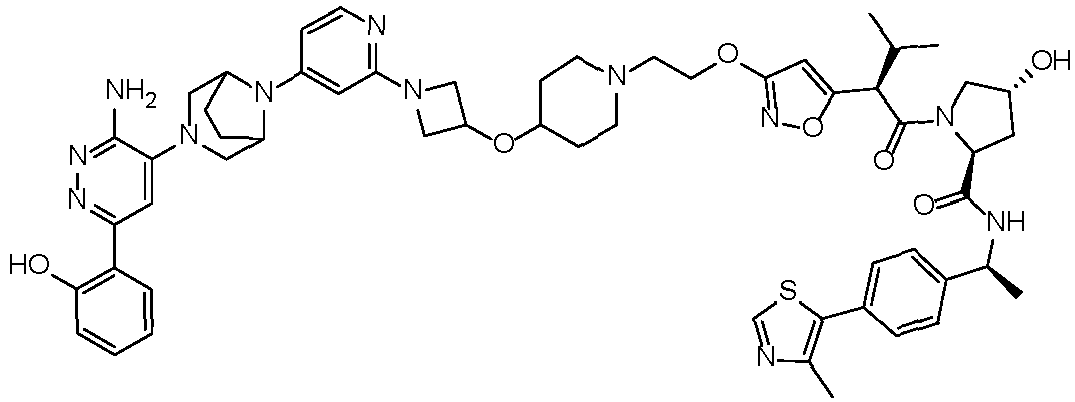
(2S,4R)-1-((2R)-2-(3-(2-(4-((1-(4-(3-(3-amino-6-(2-hydroxyphenyl)pyridazin-4-yl)-3,8-diazabicyclo[3.2.1]octan-8-yl)pyridin-2-yl)azetidin-3-yl)oxy)piperidin-1-yl)ethoxy)isoxazol-5-yl)-3-methylbutanoyl)-4-hydroxy-N-((S)-1-(4-(4-methylthiazol-5-yl)phenyl)ethyl)pyrrolidine-2-carboxamide 322 
(2S,4R)-1-((R)-2-(3-(2-(4-((1r,3R)-3-((4-(4-(3-amino-6-(2-hydroxyphenyl)pyridazin-4-yl)-1H-pyrazol-1-yl)but-2-yn-1-yl)oxy)cyclobutoxy)piperidin-1-yl)ethoxy)isoxazol-5-yl)-3-methylbutanoyl)-4-hydroxy-N-((S)-1-(4-(4-methylthiazol-5-yl)phenyl)ethyl)pyrrolidine-2-carboxamide 323 
(2S,4R)-1-((2R)-2-(3-(3-(4-((1r,3R)-3-((4-(3-(3-amino-6-(2-hydroxyphenyl)pyridazin-4-yl)-3,8-diazabicyclo[3.2.1]octan-8-yl)pyridin-2-yl)oxy)cyclobutoxy)piperidin-1-yl)prop-1-yn-1-yl)isoxazol-5-yl)-3-methylbutanoyl)-4-hydroxy-N-((S)-1-(4-(4-methylthiazol-5-yl)phenyl)ethyl)pyrrolidine-2-carboxamide 324 
(2S,4R)-1-((2R)-2-(3-((1R,3R)-3-(4-((1r,3R)-3-((4-(3-(3-amino-6-(2-hydroxyphenyl)pyridazin-4-yl)-3,8-diazabicyclo[3.2.1]octan-8-yl)pyridin-2-yl)oxy)cyclobutoxy)piperidin-1-yl)cyclobutoxy)isoxazol-5-yl)-3-methylbutanoyl)-4-hydroxy-N-((S)-1-(4-(4-methylthiazol-5-yl)phenyl)ethyl)pyrrolidine-2-carboxamide 325 
(2S,4R)-1-((2R)-2-(3-(2-((3aR,6aS)-5-((1r,3R)-3-((4-(3-(3-amino-6-(2-hydroxyphenyl)pyridazin-4-yl)-3,8-diazabicyclo[3.2.1]octan-8-yl)pyridin-2-yl)oxy)cyclobutoxy)hexahydrocy clopenta[c]pyrrol-2(1H)-yl)ethoxy)isoxazol-5-yl)-3-methylbutanoyl)-4-hydroxy-N-((S)-1-(4-(4-methylthiazol-5-yl)phenyl)ethyl)pyrrolidine-2-carboxamide 326 
(2S,4R)-1-((2R)-2-(3-(2-(4-((1r,3R)-3-((4-(3-(3-amino-6-(2-hydroxyphenyl)pyridazin-4-yl)-3,8-diazabicyclo[3.2.1]octan-8-yl)pyridin-2-yl)oxy)cyclobutoxy)piperidin-1-yl)ethoxy)-4-chloroisoxazol-5-yl)-3-methylbutanoyl)-4-hydroxy-N-((S)-1-(4-(4-methylthiazol-5-yl)phenyl)ethyl)pyrrolidine-2-carboxamide 327 
(2S,4R)-1-((2R)-2-(3-((3-(3-((((1r,3R)-3-((4-(3-(3-amino-6-(2-hydroxyphenyl)pyridazin-4-yl)-3,8-diazabicyclo[3.2.1]octan-8-yl)pyridin-2-yl)oxy)cyclobutyl)amino)methyl) bicyclo[1.1.1]pentan-1-yl)prop-2-yn-1-yl)oxy)isoxazol-5-yl)-3-methylbutanoyl)-4-hydroxy-N-((S)-1-(4-(4-methylthiazol-5-yl)phenyl)ethyl)pyrrolidine-2-carboxamide 328 
(2S,4R)-1-((2R)-2-(3-((3-(3-((3-((4-(3-(3-amino-6-(2-hydroxyphenyl)pyridazin-4-yl)-3,8-diazabicyclo[3.2.1]octan-8-yl)pyridin-2-yl)oxy)azetidin-1-yl)methyl)bicyclo[1.1.1]pentan-1-yl)prop-2-yn-1-yl)oxy)isoxazol-5-yl)-3-methylbutanoyl)-4-hydroxy-N-((S)-1-(4-(4-methylthiazol-5-yl)phenyl)ethyl)pyrrolidine-2-carboxamide 329 
(2S,4R)-1-((2R)-2-(3-(3-(4-((1r,3R)-3-((4-(3-(3-amino-6-(2-hydroxyphenyl)pyridazin-4-yl)-3,8-diazabicyclo[3.2.1]octan-8-yl)pyridin-2-yl)oxy)cyclobutoxy)piperidin-1-yl)-2,2-difluoropropoxy)isoxazol-5-yl)-3-methylbutanoyl)-4-hydroxy-N-((S)-1-(6-(4-methylthiazol-5-yl)pyridin-3-yl)ethyl)pyrrolidine-2-carboxamide 330 
(2S,4R)-1-((2R)-2-(3-(2-(((1R,4R)-4-((1r,3R)-3-((4-(3-(3-amino-6-(2-hydroxyphenyl)pyridazin-4-yl)-3,8-diazabicyclo[3.2.1]octan-8-yl)pyridin-2-yl)oxy)cyclobutoxy)cyclohexyl)(i sopropyl)amino)ethoxy)isoxazol-5-yl)-3-methylbutanoyl)-4-hydroxy-N-((S)-1-(6-(4-methylthiazol-5-yl)pyridin-3-yl)ethyl)pyrrolidine-2-carboxamide 331 
(2S,4R)-1-((2R)-2-(3-(2-(((1R,4R)-4-((1r,3R)-3-((4-(3-(3-amino-6-(2-hydroxyphenyl)pyridazin-4-yl)-3,8-diazabicyclo[3.2.1]octan-8-yl)pyridin-2-yl)oxy)cyclobutoxy)cyclohexyl)a mino)ethoxy)isoxazol-5-yl)-3-methylbutanoyl)-4-hydroxy-N-((S)-1-(6-(4-methylthiazol-5-yl)pyridin-3-yl)ethyl)pyrrolidine-2-carboxamide 332 
(2S,4R)-1-((2R)-2-(3-(2-((1R,4R)-4-((1r,3R)-3-((4-(3-(3-amino-6-(2-hydroxyphenyl)pyridazin-4-yl)-3,8-diazabicyclo[3.2.1]octan-8-yl)pyridin-2-yl)oxy)cyclobutoxy)cyclohexyl)e thoxy)isoxazol-5-yl)-3-methylbutanoyl)-4-hydroxy-N-((S)-1-(6-(4-methylthiazol-5-yl)pyridin-3-yl)ethyl)pyrrolidine-2-carboxamide 333 
(2S,4R)-1-((2R)-2-(3-((1-(2-(4-((1r,3r)-3-((4-(3-(3-amino-6-(2-hydroxyphenyl)pyridazin-4-yl)-3,8-diazabicyclo[3.2.1]octan-8-yl)pyridin-2-yl)oxy)cyclobutoxy)piperidin-1-yl)ethyl)azetidin-3-yl)oxy)isoxazol-5-yl)-3-methylbutanoyl)-4-hydroxy-N-((S)-1-(4-(4-methylthiazol-5-yl)phenyl)ethyl)pyrrolidine-2-carboxamide 334 
(2S,4R)-1-((2R)-2-(3-(4-(2-(4-((1r,3r)-3-((4-(3-(3-amino-6-(2-hydroxyphenyl)pyridazin-4-yl)-3,8-diazabicyclo[3.2.1]octan-8-yl)pyridin-2-yl)oxy)cyclobutoxy)piperidin-1-yl)ethyl)piperazin-1-yl)isoxazol-5-yl)-3-methylbutanoyl)-4-hydroxy-N-((S)-1-(4-(2-methyl-1H-imidazol-1-yl)phenyl)ethyl)pyrrolidine-2-carboxamide 335 
(2S,4R)-1-((2R)-2-(3-(2-(4-((1r,3R)-3-(3-(4-(3-amino-6-(2-hydroxyphenyl)pyridazin-4-yl)-1H-pyrazol-1-yl)but-1-yn-1-yl)cyclobutoxy)piperidin-1-yl)ethoxy)isoxazol-5-yl)-3-methylbutanoyl)-4-hydroxy-N-((S)-1-(4-(4-methylthiazol-5-yl)phenyl)ethyl)pyrrolidine-2-carboxamide 336 
(2S,4R)-1-((2R)-2-(3-(2-(4-(5-(4-(3-amino-6-(2-hydroxyphenyl)pyridazin-4-yl)-1H-pyrazol-1-yl)-2,2-difluorohex-3-yn-1-yl)piperazin-1-yl)ethoxy)isoxazol-5-yl)-3-methylbutanoyl)-4-hydroxy-N-((S)-1-(4-(4-methylthiazol-5-yl)phenyl)ethyl)pyrrolidine-2-carboxamide 337 
(2S,4R)-1-((2R)-2-(3-(2-(1-(((1r,3R)-3-(4-(1-(4-(3-amino-6-(2-hydroxyphenyl)pyridazin-4-yl)-1H-pyrazol-1-yl)ethyl)piperidin-1-yl)cyclobutyl)methyl)piperidin-4-yl)ethoxy)isoxazol-5-yl)-3-methylbutanoyl)-4-hydroxy-N-((S)-1-(4-(4-methylthiazol-5-yl)phenyl)ethyl)pyrrolidine-2-carboxamide 338 
(2S,4R)-1-((2R)-2-(3-(2-(4-((1r,3R)-3-((4-(3-(3-amino-6-(2-hydroxyphenyl)pyridazin-4-yl)-3,8-diazabicyclo[3.2.1]octan-8-yl)pyridin-2-yl)oxy)cyclobutoxy)piperidin-1-yl)ethoxy)isoxazol-5-yl)-3-methylbutanoyl)-N-((S)-1-(4-(4-aminothiazol-5-yl)phenyl)ethyl)-4-hydroxypyrrolidine-2-carboxamide 339 
(2S,4R)-N-((S)-1-(4-(1,3,4-thiadiazol-2-yl)phenyl)ethyl)-1-((2R)-2-(3-(2-(4-((1r,3R)-3-((4-(3-(3-amino-6-(2-hydroxyphenyl)pyridazin-4-yl)-3,8-diazabicyclo[3.2.1]octan-8-yl)pyridin-2-yl)oxy)cyclobutoxy)piperidin-1-yl)ethoxy)isoxazol-5-yl)-3-methylbutanoyl)-4-hydroxypyrrolidine-2-carboxamide 340 
(2S,4R)-1-((2R)-2-(3-(2-(4-((1r,3R)-3-((4-(3-(3-amino-6-(2-hydroxyphenyl)pyridazin-4-yl)-3,8-diazabicyclo[3.2.1]octan-8-yl)pyridin-2-yl)oxy)cyclobutoxy)piperidin-1-yl)ethoxy)isoxazol-5-yl)-3-methylbutanoyl)-4-hydroxy-N-((S)-1-(4-(2-oxopyridin-1(2H)-yl)phenyl)ethyl)pyrrolidine-2-carboxamide 341 
(2S,4R)-1-((2R)-2-(3-(4-((1r,3R)-3-((4-(3-(3-amino-6-(2-hydroxyphenyl)pyridazin-4-yl)-3,8-diazabicyclo[3.2.1]octan-8-yl)pyridin-2-yl)oxy)cyclobutoxy)piperidin-1-yl)isoxazol-5-yl)-3-methylbutanoyl)-4-hydroxy-N-((S)-1-(4-(4-methylthiazol-5-yl)phenyl)ethyl)pyrrolidine-2-carboxamide 342 
(2S,4R)-1-((2R)-2-(3-(4-(((1r,3R)-3-((4-(3-(3-amino-6-(2-hydroxyphenyl)pyridazin-4-yl)-3,8-diazabicyclo[3.2.1]octan-8-yl)pyridin-2-yl)oxy)cyclobutoxy)methyl)piper idin-1-yl)isoxazol-5-yl)-3-methylbutanoyl)-4-hydroxy-N-((S)-1-(4-(4-methylthiazol-5-yl)phenyl)ethyl)pyrrolidine-2-carboxamide 343 
(2S,4R)-1-((2R)-2-(3-(2-(4-(3-((4-(3-(3-amino-6-(2-hydroxyphenyl)pyridazin-4-yl)-3,8-diazabicyclo[3.2.1]octan-8-yl)pyridin-2-yl)oxy)azetidin-1-yl)piperidin-1-yl)ethoxy)isoxazol-5-yl)-3-methylbutanoyl)-4-hydroxy-N-((S)-1-(4-(4-methylthiazol-5-yl)phenyl)ethyl)pyrrolidine-2-carboxamide 344 
(2S,4R)-1-((2R)-2-(3-((3-(3-(((1r,3R)-3-((4-(3-(3-amino-6-(2-hydroxyphenyl)pyridazin-4-yl)-3,8-diazabicyclo[3.2.1]octan-8-yl)pyridin-2-yl)oxy)cyclobutoxy)methyl)bicyc lo[1.1.1]pentan-1-yl)prop-2-yn-1-yl)oxy)isoxazol-5-yl)-3-methylbutanoyl)-4-hydroxy-N-((S)-1-(4-(4-methylthiazol-5-yl)phenyl)ethyl)pyrrolidine-2-carboxamide 345 
(2S,4R)-1-((2R)-2-(3-(3-((3-(((1r,3r)-3-((4-(3-(3-amino-6-(2-hydroxyphenyl)pyridazin-4-yl)-3,8-diazabicyclo[3.2.1]octan-8-yl)pyridin-2-yl)oxy)cyclobutoxy)methyl)bicyc lo[1.1.1]pentan-1-yl)methoxy)prop-1-yn-1-yl)isoxazol-5-yl)-3-methylbutanoyl)-4-hydroxy-N-((S)-1-(4-(4-methylthiazol-5-yl)phenyl)ethyl)pyrrolidine-2-carboxamide 346 
(2S,4R)-1-((2R)-2-(3-(2-(4-((1r,3R)-3-((4-(3-(3-amino-6-(2-hydroxyphenyl)pyridazin-4-yl)-3,8-diazabicyclo[3.2.1]octan-8-yl)pyridin-2-yl)oxy)cyclobutoxy)piperidin-1-yl)-2-methylpropoxy)isoxazol-5-yl)-3-methylbutanoyl)-4-hydroxy-N-((S)-1-(6-(4-methylthiazol-5-yl)pyridin-3-yl)ethyl)pyrrolidine-2-carboxamide 347 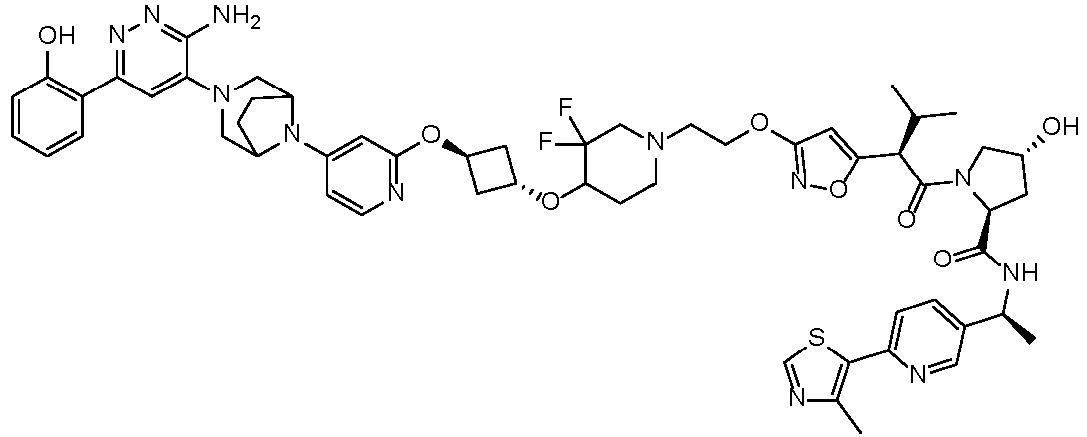
(2S,4R)-1-((2R)-2-(3-(2-(4-((1r,3R)-3-((4-(3-(3-amino-6-(2-hydroxyphenyl)pyridazin-4-yl)-3,8-diazabicyclo[3.2.1]octan-8-yl)pyridin-2-yl)oxy)cyclobutoxy)-3,3-difluoropiperidin-1-yl)ethoxy)isoxazol-5-yl)-3-methylbutanoyl)-4-hydroxy-N-((S)-1-(6-(4-methylthiazol-5-yl)pyridin-3-yl)ethyl)pyrrolidine-2-carboxamide 348 
(2S,4R)-1-((2R)-2-(3-(4-(2-(4-((1r,3r)-3-((4-(3-(3-amino-6-(2-hydroxyphenyl)pyridazin-4-yl)-3,8-diazabicyclo[3.2.1]octan-8-yl)pyridin-2-yl)oxy)cyclobutoxy)piperidin-1-yl)ethyl)piperazin-1-yl)isoxazol-5-yl)-3-methylbutanoyl)-4-hydroxy-N-((S)-1-(6-(4-methylthiazol-5-yl)pyridin-3-yl)ethyl)pyrrolidine-2-carboxamide 349 
(2S,4R)-1-((2R)-2-(3-(4-(2-(4-((1r,3r)-3-((4-(3-(3-amino-6-(2-hydroxyphenyl)pyridazin-4-yl)-3,8-diazabicyclo[3.2.1]octan-8-yl)pyridin-2-yl)oxy)cyclobutoxy)piperidin-1-yl)ethyl)piperazin-1-yl)isoxazol-5-yl)-3-methylbutanoyl)-4-hydroxy-N-((S)-1-(4-(2-methyl-1H-imidazol-1-yl)phenyl)ethyl)pyrrolidine-2-carboxamide 350 
(2S,4R)-1-((2S)-2-(3-(2-(4-((1r,3 S)-3-((4-(3-(3-amino-6-(2-hydroxyphenyl)pyridazin-4-yl)-3,8-diazabicyclo[3.2.1]octan-8-yl)pyridin-2-yl)oxy)cyclobutoxy)piperidin-1-yl)ethoxy)isoxazol-5-yl)-3-methylbutanoyl)-4-hydroxy-N-((S)-1-(4-(4-methylthiazol-5-yl)phenyl)propyl)pyrrolidine-2-carboxamide 351 
(2S,4R)-1-((2R)-2-(3-(2-(4-((1r,3R)-3-((4-(3-(3-amino-6-(2-hydroxyphenyl)pyridazin-4-yl)-3,8-diazabicyclo[3.2.1]octan-8-yl)pyridin-2-yl)oxy)cyclobutoxy)piperidin-1-yl)ethoxy)isoxazol-5-yl)-3-methylbutanoyl)-4-hydroxy-N-((S)-1-(4-(4-methylthiazol-5-yl)phenyl)propyl)pyrrolidine-2-carboxamide 352 
(2S,4R)-1-((R)-2-(3-(2-(4-(5-(4-(3-amino-6-(2-hydroxyphenyl)pyridazin-4-yl)-1H-pyrazol-1-yl)pent-3-yn-1-yl)piperazin-1-yl)ethoxy)isoxazol-5-yl)-3-methylbutanoyl)-4-hydroxy-N-((S)-1-(6-(4-methylthiazol-5-yl)pyridin-3-yl)ethyl)pyrrolidine-2-carboxamide 353 
(2S,4R)-1-((2R)-2-(3-(2-((2S,6R)-4-((1r,3R)-3-((4-(3-(3-amino-6-(2-hydroxyphenyl)pyridazin-4-yl)-3,8-diazabicyclo[3.2.1]octan-8-yl)pyridin-2-yl)oxy)cyclobutoxy)-2,6-dimethylpiperidin-1-yl)ethoxy)isoxazol-5-yl)-3-methylbutanoyl)-4-hydroxy-N-((S)-1-(6-(4-methylthiazol-5-yl)pyridin-3-yl)ethyl)pyrrolidine-2-carboxamide Table 1C. Exemplary bifunctional degradation compounds of the present disclosure Ex. # Compound Name Chemical Structure 354 (2S,4R)-1-((2S)-2-(3-(2-(4-((1-(4-(3-(3-amino-6-(2-hydroxyphenyl)pyridazin-4-yl)-3,8-diazabicyclo[3.2.1]octan-8-yl)pyridin-2-yl)azetidin-3-yl)oxy)piperidin-1-yl)ethoxy)isoxazol-5-yl)-3-methylbutanoyl)-4-hydroxy-N-((S)-1-(4-(4-methylthiazol-5-yl)phenyl)ethyl)pyrrolidine-2-carboxamide 
355 (2S,4R)-1-((2R)-2-(3-(2-(4-((1-(4-(3-(3-amino-6-(2-hydroxyphenyl)pyridazin-4-yl)-3,8-diazabicyclo[3.2.1]octan-8-yl)pyridin-2-yl)azetidin-3-yl)oxy)piperidin-1-yl)ethoxy)isoxazol-5-yl)-3-methylbutanoyl)-4-hydroxy-N-((S)-1-(4-(4-methylthiazol-5-yl)phenyl)ethyl)pyrrolidine-2-carboxamide 
356 (2S,4R)-1-((2S)-2-(3-(2-(2-((4-(3-(3-amino-6-(2-hydroxyphenyl)pyridazin-4-yl)-3,8-diazabicyclo[3.2.1]octan-8-yl)pyridin-2-yl)oxy)ethoxy)ethoxy)isoxazol-5-yl)-3-methylbutanoyl)-4-hydroxy-N-((S)-1-(4-(4-methylthiazol-5-yl)phenyl)ethyl)pyrrolidine-2-carboxamide 
357 (2S,4R)-1-((2R)-2-(3-(2-(2-((4-(3-(3-amino-6-(2-hydroxyphenyl)pyridazin-4-yl)-3,8-diazabicyclo[3.2.1]octan-8-yl)pyridin-2-yl)oxy)ethoxy)ethoxy)isoxazol-5-yl)-3-methylbutanoyl)-4-hydroxy-N-((S)-1-(4-(4-methylthiazol-5-yl)phenyl)ethyl)pyrrolidine-2-carboxamide 
358 (2S,4R)-1-((S)-2-(3-(2-(4-((1r,3S)-3-(2-(9-(3-amino-6-(2-hydroxyphenyl)pyridazin-4-yl)-1-oxa-4,9-diazaspiro[5.5]undecan-4-yl)ethoxy)cyclobutoxy)piperidin-1-yl)ethoxy)isoxazol-5-yl)-3-methylbutanoyl)-4-hydroxy-N-((S)-1-(4-(4-methylthiazol-5-yl)phenyl)ethyl)pyrrolidine-2-carboxamide 
359 (2S,4R)-1-((R)-2-(3-(2-(4-((1r,3R)-3-(2-(9-(3-amino-6-(2-hydroxyphenyl)pyridazin-4-yl)-1-oxa-4,9-diazaspiro[5.5]undecan-4-yl)ethoxy)cyclobutoxy)piperidin-1-yl)ethoxy)isoxazol-5-yl)-3-methylbutanoyl)-4-hydroxy-N-((S)-1-(4-(4-methylthiazol-5-yl)phenyl)ethyl)pyrrolidine-2-carboxamide 
360 (2S,4R)-1-((2R)-2-(3-(2-((3aR,5R,6aS)-5-((1r,3R)-3-((4-(3-(3-amino-6-(2-hydroxyphenyl)pyridazin-4-yl)-3,8-diazabicyclo[3.2.1]octan-8-yl)pyridin-2-yl)oxy)cyclobutoxy)hexahydrocyclo penta[c]pyrrol-2(1H)-yl)ethoxy)isoxazol-5-yl)-3-methylbutanoyl)-4-hydroxy-N-((S)-1-(4-(4-methylthiazol-5-yl)phenyl)ethyl)pyrrolidine-2-carboxamide 
361 (2S,4R)-1-((25)-2-(3-(2-(4-((1r,3S)-3-((4-(3-(3-amino-6-(2-hydroxyphenyl)pyridazin-4-yl)-3,8-diazabicyclo[3.2.1]octan-8-yl)pyridin-2-yl)oxy)cyclobutoxy)piperidin-1-yl)ethoxy)-4-chloroisoxazol-5-yl)-3-methylbutanoyl)-4-hydroxy-N-((S)-1-(4-(4-methylthiazol-5-yl)phenyl)ethyl)pyrrolidine-2-carboxamide 
362 (2S,4R)-1-((2R)-2-(3-(2-(4-((1r,3R)-3-((4-(3-(3-amino-6-(2-hydroxyphenyl)pyridazin-4-yl)-3,8-diazabicyclo[3.2.1]octan-8-yl)pyridin-2-yl)oxy)cyclobutoxy)piperidin-1-yl)ethoxy)-4-chloroisoxazol-5-yl)-3-methylbutanoyl)-4-hydroxy-N-((S)-1-(4-(4-methylthiazol-5-yl)phenyl)ethyl)pyrrolidine-2-carboxamide 
363 (2S,4R)-N-((S)-1-(4-(1,3,4-thiadiazol-2-yl)phenyl)ethyl)-1-((2S)-2-(3-(2-(4-((1r,3S)-3-((4-(3-(3-amino-6-(2-hydroxyphenyl)pyridazin-4-yl)-3,8-diazabicyclo[3.2.1]octan-8-yl)pyridin-2-yl)oxy)cyclobutoxy)piperidin-1-yl)ethoxy)isoxazol-5-yl)-3-methylbutanoyl)-4-hydroxypyrrolidine-2-carboxamide 
364 (2S,4R)-N-((S)-1-(4-(1,3,4-thiadiazol-2-yl)phenyl)ethyl)-1-((2R)-2-(3-(2-(4-((1r,3R)-3-((4-(3-(3-amino-6-(2-hydroxyphenyl)pyridazin-4-yl)-3,8-diazabicyclo[3.2.1]octan-8-yl)pyridin-2-yl)oxy)cyclobutoxy)piperidin-1-yl)ethoxy)isoxazol-5-yl)-3-methylbutanoyl)-4-hydroxypyrrolidine-2-carboxamide 
365 (2S,4R)-1-((2S)-2-(3-(2-(4-((1r,3S)-3-((4-(3-(3-amino-6-(2-hydroxyphenyl)pyridazin-4-yl)-3,8-diazabicyclo[3.2.1]octan-8-yl)pyridin-2-yl)oxy)cyclobutoxy)piperidin-1-yl)ethoxy)isoxazol-5-yl)-3-methylbutanoyl)-N-((S)-1-(4-(1,4-dimethyl-1H-imidazol-5-yl)phenyl)ethyl)-4-hydroxypyrrolidine-2-carboxamide 
366 (2S,4R)-1-((2R)-2-(3-(2-(4-((1r,3R)-3-((4-(3-(3-amino-6-(2-hydroxyphenyl)pyridazin-4-yl)-3,8-diazabicyclo[3.2.1]octan-8-yl)pyridin-2-yl)oxy)cyclobutoxy)piperidin-1-yl)ethoxy)isoxazol-5-yl)-3-methylbutanoyl)-N-((S)-1-(4-(1,4-dimethyl-1H-imidazol-5-yl)phenyl)ethyl)-4-hydroxypyrrolidine-2-carboxamide 
367 (2S,4R)-1-((2S)-2-(3-(2-(4-((1r,3S)-3-((4-(3-(3-amino-6-(2-hydroxyphenyl)pyridazin-4-yl)-3,8-diazabicyclo[3.2.1]octan-8-yl)pyridin-2-yl)oxy)cyclobutoxy)piperidin-1-yl)ethoxy)isoxazol-5-yl)-3-methylbutanoyl)-4-hydroxy-N-((S)-1-(5-(4-methylthiazol-5-yl)pyridin-2-yl)ethyl)pyrrolidine-2-carboxamide 
. 368 (2S,4R)-1-((2R)-2-(3-(2-(4-((1r,3R)-3-((4-(3-(3-amino-6-(2-hydroxyphenyl)pyridazin-4-yl)-3,8-diazabicyclo[3.2.1]octan-8-yl)pyridin-2-yl)oxy)cyclobutoxy)piperidin-1-yl)ethoxy)isoxazol-5-yl)-3-methylbutanoyl)-4-hydroxy-N-((S)-1-(5-(4-methylthiazol-5-yl)pyridin-2-yl)ethyl)pyrrolidine-2-carboxamide 
369 (2S,4R)-1-((2S)-2-(3-((3-(3-((3-((4-(3-(3-amino-6-(2-hydroxyphenyl)pyridazin-4-yl)-3,8-diazabicyclo[3.2.1]octan-8-yl)pyridin-2-yl)oxy)azetidin-1-yl)methyl)bicyclo[1.1.1]pentan-1-yl)prop-2-yn-1-yl)oxy)isoxazol-5-yl)-3-methylbutanoyl)-4-hydroxy-N-((S)-1-(4-(4-methylthiazol-5-yl)phenyl)ethyl)pyrrolidine-2-carboxamide 
370 (2S,4R)-1-((2S)-2-(3-((1-(2-(4-((1r,3r)-3-((4-(3-(3-amino-6-(2-hydroxyphenyl)pyridazin-4-yl)-3,8-diazabicyclo[3.2.1]octan-8-yl)pyridin-2-yl)oxy)cyclobutoxy)piperidin-1-yl)ethyl)azetidin-3-yl)oxy)isoxazol-5-yl)-3-methylbutanoyl)-4-hydroxy-N-((S)-1-(4-(4-methylthiazol-5-yl)phenyl)ethyl)pyrrolidine-2-carboxamide 
371 (2S,4R)-1-((2R)-2-(3-((1-(2-(4-((1r,3r)-3-((4-(3-(3-amino-6-(2-hydroxyphenyl)pyridazin-4-yl)-3,8-diazabicyclo[3.2.1]octan-8-yl)pyridin-2-yl)oxy)cyclobutoxy)piperidin-1-yl)ethyl)azetidin-3-yl)oxy)isoxazol-5-yl)-3-methylbutanoyl)-4-hydroxy-N-((S)-1-(4-(4-methylthiazol-5-yl)phenyl)ethyl)pyrrolidine-2-carboxamide 
372 (2S,4R)-1-((2S)-2-(3-(2-(4-((1r,3S)-3-((4-(3-(3-amino-6-(2-hydroxyphenyl)pyridazin-4-yl)-3,8-diazabicyclo[3.2.1]octan-8-yl)pyridin-2-yl)oxy)cyclobutoxy)piperidin-1-yl)ethoxy)isoxazol-5-yl)-3-methylbutanoyl)-4-hydroxy-N-((S)-1-(4-(2-oxopyridin-1(2H)-yl)phenyl)ethyl)pyrrolidine-2-carboxamide 
373 (2S,4R)-1-((2R)-2-(3-(2-(4-((1r,3R)-3-((4-(3-(3-amino-6-(2-hydroxyphenyl)pyridazin-4-yl)-3,8-diazabicyclo[3.2.1]octan-8-yl)pyridin-2-yl)oxy)cyclobutoxy)piperidin-1-yl)ethoxy)isoxazol-5-yl)-3-methylbutanoyl)-4-hydroxy-N-((S)-1-(4-(2-oxopyridin-1(2H)-yl)phenyl)ethyl)pyrrolidine-2-carboxamide 
374 (2S,4R)-1-((2R)-2-(3-(2-(4-(3-((4-(3-(3-amino-6-(2-hydroxyphenyl)pyridazin-4-yl)-3,8-diazabicyclo[3.2.1]octan-8-yl)pyridin-2-yl)oxy)azetidin-1-yl)piperidin-1-yl)ethoxy)isoxazol-5-yl)-3-methylbutanoyl)-4-hydroxy-N-((S)-1-(4-(4-methylthiazol-5-yl)phenyl)ethyl)pyrrolidine-2-carboxamide 
375 (2S,4R)-1-((2S)-2-(3-(2-(4-((1r,3S)-3-((4-(3-(3-amino-6-(2-hydroxyphenyl)pyridazin-4-yl)-3,8-diazabicyclo[3.2.1]octan-8-yl)pyridin-2-yl)oxy)cyclobutoxy)piperidin-1-yl)ethoxy)isoxazol-5-yl)-3-methylbutanoyl)-N-((S)-1-(4-(2,5-dimethyl-1H-imidazol-1-yl)phenyl)ethyl)-4-hydroxypyrrolidine-2-carboxamide 
376 (2S,4R)-1-((2R)-2-(3-(2-(4-((1r,3R)-3-((4-(3-(3-amino-6-(2-hydroxyphenyl)pyridazin-4-yl)-3,8-diazabicyclo[3.2.1]octan-8-yl)pyridin-2-yl)oxy)cyclobutoxy)piperidin-1-yl)ethoxy)isoxazol-5-yl)-3-methylbutanoyl)-N-((S)-1-(4-(2,5-dimethyl-1H-imidazol-1-yl)phenyl)ethyl)-4-hydroxypyrrolidine-2-carboxamide 
377 (2S,4R)-1-((2S)-2-(3-(2-(4-((1r,3S)-3-((4-(3-(3-amino-6-(2-hydroxyphenyl)pyridazin-4-yl)-3,8-diazabicyclo[3.2.1]octan-8-yl)pyridin-2-yl)oxy)cyclobutoxy)piperidin-1-yl)ethoxy)isoxazol-5-yl)-3-methylbutanoyl)-N-((S)-1-(4-(3,5-dimethyl-1H-pyrazol-4-yl)phenyl)ethyl)-4-hydroxypyrrolidine-2-carboxamide 
378 (2S,4R)-1-((2R)-2-(3-(2-(4-((1r,3R)-3-((4-(3-(3-amino-6-(2-hydroxyphenyl)pyridazin-4-yl)-3,8-diazabicyclo[3.2.1]octan-8-yl)pyridin-2-yl)oxy)cyclobutoxy)piperidin-1-yl)ethoxy)isoxazol-5-yl)-3-methylbutanoyl)-N-((S)-1-(4-(3,5-dimethyl-1H-pyrazol-4-yl)phenyl)ethyl)-4-hydroxypyrrolidine-2-carboxamide 
379 (2S,4R)-1-((2S)-2-(3-(3-(4-((1r,3S)-3-((4-(3-(3-amino-6-(2-hydroxyphenyl)pyridazin-4-yl)-3,8-diazabicyclo[3.2.1]octan-8-yl)pyridin-2-yl)oxy)cyclobutoxy)piperidin-1-yl)prop-1-yn-1-yl)isoxazol-5-yl)-3-methylbutanoyl)-4-hydroxy-N-((S)-1-(4-(4-methylthiazol-5-yl)phenyl)ethyl)pyrrolidine-2-carboxamide 
380 (2S,4R)-1-((2R)-2-(3-(3-(4-((1r,3R)-3-((4-(3-(3-amino-6-(2-hydroxyphenyl)pyridazin-4-yl)-3,8-diazabicyclo[3.2.1]octan-8-yl)pyridin-2-yl)oxy)cyclobutoxy)piperidin-1-yl)prop-1-yn-1-yl)isoxazol-5-yl)-3-methylbutanoyl)-4-hydroxy-N-((S)-1-(4-(4-methylthiazol-5-yl)phenyl)ethyl)pyrrolidine-2-carboxamide 
381 (2S,4R)-1-((2 S)-2-(3-((3-(3-((((1r,3S)-3-((4-(3-(3-amino-6-(2-hydroxyphenyl)pyridazin-4-yl)-3,8-diazabicyclo[3.2.1]octan-8-yl)pyridin-2-yl)oxy)cyclobutyl)amino)methyl)bic yclo[1.1.1]pentan-1-yl)prop-2-yn-1-yl)oxy)isoxazol-5-yl)-3-methylbutanoyl)-4-hydroxy-N-((S)-1-(4-(4-methylthiazol-5-yl)phenyl)ethyl)pyrrolidine-2-carboxamide 
382 (2S,4R)-1-((2R)-2-(3-((3-(3-((((1r,3R)-3-((4-(3-(3-amino-6-(2-hydroxyphenyl)pyridazin-4-yl)-3,8-diazabicyclo[3.2.1]octan-8-yl)pyridin-2-yl)oxy)cyclobutyl)amino)methyl)bic yclo[1.1.1]pentan-1-yl)prop-2-yn-1-yl)oxy)isoxazol-5-yl)-3-methylbutanoyl)-4-hydroxy-N-((S)-1-(4-(4-methylthiazol-5-yl)phenyl)ethyl)pyrrolidine-2-carboxamide 
383 (2S,4R)-1-((2R)-2-(3-((3-(3-((3-((4-(3-(3-amino-6-(2-hydroxyphenyl)pyridazin-4-yl)-3,8-diazabicyclo[3.2.1]octan-8-yl)pyridin-2-yl)oxy)azetidin-1-yl)methyl)bicyclo[1.1.1]pentan-1-yl)prop-2-yn-1-yl)oxy)isoxazol-5-yl)-3-methylbutanoyl)-4-hydroxy-N-((S)-1-(4-(4-methylthiazol-5-yl)phenyl)ethyl)pyrrolidine-2-carboxamide 
384 (2S,4R)-1-((2 S)-2-(3-(3-(4-(3-((4-(3-(3-amino-6-(2-hydroxyphenyl)pyridazin-4-yl)-3,8-diazabicyclo[3.2.1]octan-8-yl)pyridin-2-yl)oxy)propyl)piperazin-1-yl)propoxy)isoxazol-5-yl)-3-methylbutanoyl)-4-hydroxy-N-((S)-1-(4-(4-methylthiazol-5-yl)phenyl)ethyl)pyrrolidine-2-carboxamide 
385 (2S,4R)-1-((2R)-2-(3-(3-(4-(3-((4-(3-(3-amino-6-(2-hydroxyphenyl)pyridazin-4-yl)-3,8-diazabicyclo[3.2.1]octan-8-yl)pyridin-2-yl)oxy)propyl)piperazin-1-yl)propoxy)isoxazol-5-yl)-3-methylbutanoyl)-4-hydroxy-N-((S)-1-(4-(4-methylthiazol-5-yl)phenyl)ethyl)pyrrolidine-2-carboxamide 
386 (2S,4R)-1-((2S)-2-(3-((3-(5-((1r,3S)-3-((4-(3-(3-amino-6-(2-hydroxyphenyl)pyridazin-4-yl)-3,8-diazabicyclo[3.2.1]octan-8-yl)pyridin-2-yl)oxy)cyclobutoxy)pyrimidin-2-yl)prop-2-yn-1-yl)oxy)isoxazol-5-yl)-3-methylbutanoyl)-N-((S)-1-(4-cyanophenyl)ethyl)-4-hydroxypyrrolidine-2-carboxamide 
387 (2S,4R)-1-((2R)-2-(3-((3-(5-((1r,3R)-3-((4-(3-(3-amino-6-(2-hydroxyphenyl)pyridazin-4-yl)-3,8-diazabicyclo[3.2.1]octan-8-yl)pyridin-2-yl)oxy)cyclobutoxy)pyrimidin-2-yl)prop-2-yn-1-yl)oxy)isoxazol-5-yl)-3-methylbutanoyl)-N-((S)-1-(4-cyanophenyl)ethyl)-4-hydroxypyrrolidine-2-carboxamide 
388 (2S,4R)-1-((2R)-2-(3-(2-(((1S,4S)-4-((1r,3S)-3-((4-(3-(3-amino-6-(2-hydroxyphenyl)pyridazin-4-yl)-3,8-diazabicyclo[3.2.1]octan-8-yl)pyridin-2-yl)oxy)cyclobutoxy)cyclohexyl)ami no)ethoxy)isoxazol-5-yl)-3-methylbutanoyl)-4-hydroxy-N-((S)-1-(6-(4-methylthiazol-5-yl)pyridin-3-yl)ethyl)pyrrolidine-2-carboxamide 
389 (2S,4R)-1-((2 S)-2-(3-(4-(4-(4-((4-(3-(3-amino-6-(2-hydroxyphenyl)pyridazin-4-yl)-3,8-diazabicyclo[3.2.1]octan-8-yl)pyridin-2-yl)oxy)butyl)piperazin-1-yl)butoxy)isoxazol-5-yl)-3-methylbutanoyl)-4-hydroxy-N-((S)-1-(4-(4-methylthiazol-5-yl)phenyl)ethyl)pyrrolidine-2-carboxamide 
390 (2S,4R)-1-((2R)-2-(3-(4-(4-(4-((4-(3-(3-amino-6-(2-hydroxyphenyl)pyridazin-4-yl)-3,8-diazabicyclo[3.2.1]octan-8-yl)pyridin-2-yl)oxy)butyl)piperazin-1-yl)butoxy)isoxazol-5-yl)-3-methylbutanoyl)-4-hydroxy-N-((S)-1-(4-(4-methylthiazol-5-yl)phenyl)ethyl)pyrrolidine-2-carboxamide 
391 (2S,4R)-1-((2S)-2-(3-(((E)-3-(5-((1r,3S)-3-((4-(3-(3-amino-6-(2-hydroxyphenyl)pyridazin-4-yl)-3,8-diazabicyclo[3.2.1]octan-8-yl)pyridin-2-yl)oxy)cyclobutoxy)pyrimidin-2-yl)allyl)oxy)isoxazol-5-yl)-3-methylbutanoyl)-4-hydroxy-N-((S)-1-(4-(4-methylthiazol-5-yl)phenyl)ethyl)pyrrolidine-2-carboxamide 
392 (2S,4R)-1-((2R)-2-(3-(((E)-3-(5-((1r,3R)-3-((4-(3-(3-amino-6-(2-hydroxyphenyl)pyridazin-4-yl)-3,8-diazabicyclo[3.2.1]octan-8-yl)pyridin-2-yl)oxy)cyclobutoxy)pyrimidin-2-yl)allyl)oxy)isoxazol-5-yl)-3-methylbutanoyl)-4-hydroxy-N-((S)-1-(4-(4-methylthiazol-5-yl)phenyl)ethyl)pyrrolidine-2-carboxamide 
393 (2S,4R)-1-((2S)-2-(3-((3-(5-((1r,3S)-3-((4-(3-(3-amino-6-(2-hydroxyphenyl)pyridazin-4-yl)-3,8-diazabicyclo[3 2.1]octan-8-yl)pyridin-2-yl)oxy)cyclobutoxy)pyrimidin-2-yl)prop-2-yn-1-yl)oxy)isoxazol-5-yl)-3-methylbutanoyl)-4-hydroxy-N-((S)-1-(4-(2-methyl-1H-imidazol-1-yl)phenyl)ethyl)pyrrolidine-2-carboxamide 
394 (2S,4R)-1-((2R)-2-(3-((3-(5-((1r,3R)-3-((4-(3-(3-amino-6-(2-hydroxyphenyl)pyridazin-4-yl)-3,8-diazabicyclo[3.2.1]octan-8-yl)pyridin-2-yl)oxy)cyclobutoxy)pyrimidin-2-yl)prop-2-yn-1-yl)oxy)isoxazol-5-yl)-3-methylbutanoyl)-4-hydroxy-N-((S)-1-(4-(2-methyl-1H-imidazol-1-yl)phenyl)ethyl)pyrrolidine-2-carboxamide 
395 (2S,4R)-1-((R)-2-(3-(2-(4-((1r,3R)-3-((4-(4-(3-amino-6-(2-hydroxyphenyl)pyridazin-4-yl)-1H-pyrazol-1-yl)but-2-yn-1-yl)oxy)cyclobutoxy)piperidin-1-yl)ethoxy)isoxazol-5-yl)-3-methylbutanoyl)-4-hydroxy-N-((S)-1-(4-(4-methylthiazol-5-yl)phenyl)ethyl)pyrrolidine-2-carboxamide 
396 (2S,4R)-1-((2R)-2-(3-(2-(((1R,4R)-4-((1r,3R)-3-((4-(3-(3-amino-6-(2-hydroxyphenyl)pyridazin-4-yl)-3,8-diazabicyclo[3.2.1]octan-8-yl)pyridin-2-yl)oxy)cyclobutoxy)cyclohexyl)ami no)ethoxy)isoxazol-5-yl)-3-methylbutanoyl)-4-hydroxy-N-((S)-1-(6-(4-methylthiazol-5-yl)pyridin-3-yl)ethyl)pyrrolidine-2-carboxamide 
397 (2S,4R)-1-((2S)-2-(3-(2-(4-((1r,3S)-3-((4-(3-(3-amino-6-(2-hydroxyphenyl)pyridazin-4-yl)-3,8-diazabicyclo[3.2.1]octan-8-yl)pyridin-2-yl)oxy)cyclobutoxy)piperidin-1-yl)ethoxy)isoxazol-5-yl)-3-methylbutanoyl)-4-hydroxy-N-((S)-1-(6-(2-methyl-1H-imidazol-1-yl)pyridin-3-yl)ethyl)pyrrolidine-2-carboxamide 
398 (2S,4R)-1-((2R)-2-(3-(2-(4-((1r,3R)-3-((4-(3-(3-amino-6-(2-hydroxyphenyl)pyridazin-4-yl)-3,8-diazabicyclo[3.2.1]octan-8-yl)pyridin-2-yl)oxy)cyclobutoxy)piperidin-1-yl)ethoxy)isoxazol-5-yl)-3-methylbutanoyl)-4-hydroxy-N-((S)-1-(6-(2-methyl-1H-imidazol-1-yl)pyridin-3-yl)ethyl)pyrrolidine-2-carboxamide 
399 (2S,4R)-1-((2S)-2-(3-((3-(5-((1r,3S)-3-((4-(3-(3-amino-6-(2-hydroxyphenyl)pyridazin-4-yl)-3,8-diazabicyclo[3.2.1]octan-8-yl)pyridin-2-yl)oxy)cyclobutoxy)pyrimidin-2-yl)prop-2-yn-1-yl)oxy)isoxazol-5-yl)-3-methylbutanoyl)-4-hydroxy-N-((S)-1-(6-(4-methylthiazol-5-yl)pyridin-3-yl)ethyl)pyrrolidine-2-carboxamide 
400 (25,4R)-1-((2R)-2-(3-((3-(5-((1r,3R)-3-((4-(3-(3-amino-6-(2-hydroxyphenyl)pyridazin-4-yl)-3,8-diazabicyclo[3.2.1]octan-8-yl)pyridin-2-yl)oxy)cyclobutoxy)pyrimidin-2-yl)prop-2-yn-1-yl)oxy)isoxazol-5-yl)-3-methylbutanoyl)-4-hydroxy-N-((S)-1-(6-(4-methylthiazol-5-yl)pyridin-3-yl)ethyl)pyrrolidine-2-carboxamide 
401 (25,4R)-1-((2S)-2-(3-(4-(2-(4-((1r,3r)-3-((4-(3-(3-amino-6-(2-hydroxyphenyl)pyridazin-4-yl)-3,8-diazabicyclo[3.2.1]octan-8-yl)pyridin-2-yl)oxy)cyclobutoxy)piperidin-1-yl)ethyl)piperazin-1-yl)isoxazol-5-yl)-3-methylbutanoyl)-4-hydroxy-N-((S)-1-(6-(4-methylthiazol-5-yl)pyridin-3-yl)ethyl)pyrrolidine-2-carboxamide 
402 (2S,4R)-1-((2R)-2-(3-(4-(2-(4-((1r,3r)-3-((4-(3-(3-amino-6-(2-hydroxyphenyl)pyridazin-4-yl)-3,8-diazabicyclo[3.2.1]octan-8-yl)pyridin-2-yl)oxy)cyclobutoxy)piperidin-1-yl)ethyl)piperazin-1-yl)isoxazol-5-yl)-3-methylbutanoyl)-4-hydroxy-N-((S)-1-(6-(4-methylthiazol-5-yl)pyridin-3-yl)ethyl)pyrrolidine-2-carboxamide 
403 (2S,4R)-1-((2S)-2-(3-(4-((1r,3S)-3-((4-(3-(3-amino-6-(2-hydroxyphenyl)pyridazin-4-yl)-3,8-diazabicyclo[3.2.1]octan-8-yl)pyridin-2-yl)oxy)cyclobutoxy)piperidin-1-yl)isoxazol-5-yl)-3-methylbutanoyl)-4-hydroxy-N-((S)-1-(4-(4-methylthiazol-5-yl)phenyl)ethyl)pyrrolidine-2-carboxamide 
404 (2S,4R)-1-((2R)-2-(3-(4-((1r,3R)-3-((4-(3-(3-amino-6-(2-hydroxyphenyl)pyridazin-4-yl)-3,8-diazabicyclo[3.2.1]octan-8-yl)pyridin-2-yl)oxy)cyclobutoxy)piperidin-1-yl)isoxazol-5-yl)-3-methylbutanoyl)-4-hydroxy-N-((S)-1-(4-(4-methylthiazol-5-yl)phenyl)ethyl)pyrrolidine-2-carboxamide 
405 (2S,4R)-1-((2R)-2-(3-(2-(4-(3-((4-(3-(3-amino-6-(2-hydroxyphenyl)pyridazin-4-yl)-3,8-diazabicyclo[3.2.1]octan-8-yl)pyridin-2-yl)oxy)azetidine-1-carbonyl)piperidin-1-yl)ethoxy)isoxazol-5-yl)-3-methylbutanoyl)-4-hydroxy-N-((S)-1-(4-(4-methylthiazol-5-yl)phenyl)ethyl)pyrrolidine-2-carboxamide 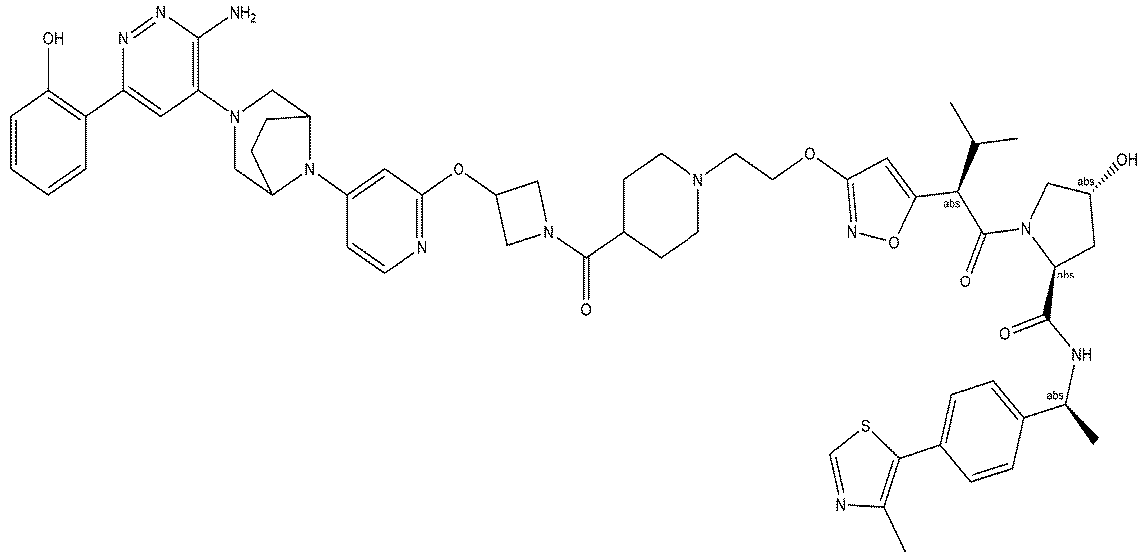
406 (2S,4R)-1-((2R)-2-(3-(2-(4-((3-((4-(3-(3-amino-6-(2-hydroxyphenyl)pyridazin-4-yl)-3,8-diazabicyclo[3.2.1]octan-8-yl)pyridin-2-yl)oxy)azetidin-1-yl)methyl)piperidin-1-yl)ethoxy)isoxazol-5-yl)-3-methylbutanoyl)-4-hydroxy-N-((S)-1-(4-(4-methylthiazol-5-yl)phenyl)ethyl)pyrrolidine-2-carboxamide 
407 (2S,4R)-1-((2S)-2-(3-(2-(4-(2-((1r,3r)-3-((4-(3-(3-amino-6-(2-hydroxyphenyl)pyridazin-4-yl)-3,8-diazabicyclo[3.2.1]octan-8-yl)pyridin-2-yl)oxy)cyclobutoxy)ethyl)piperazin-1-yl)ethoxy)isoxazol-5-yl)-3-methylbutanoyl)-4-hydroxy-N-((S)-1-(4-(4-methylthiazol-5-yl)phenyl)ethyl)pyrrolidine-2-carboxamide 
408 (2S,4R)-1-((2R)-2-(3-(2-(4-(2-((1r,3r)-3-((4-(3-(3-amino-6-(2-hydroxyphenyl)pyridazin-4-yl)-3,8-diazabicyclo[3.2.1]octan-8-yl)pyridin-2-yl)oxy)cyclobutoxy)ethyl)piperazin-1-yl)ethoxy)isoxazol-5-yl)-3-methylbutanoyl)-4-hydroxy-N-((S)-1-(4-(4-methylthiazol-5-yl)phenyl)ethyl)pyrrolidine-2-carboxamide 
409 (25,4R)-1-((2S)-2-(3-(2-(4-(2-((4-(3-(3-amino-6-(2-hydroxyphenyl)pyridazin-4-yl)-3,8-diazabicyclo[3.2.1]octan-8-yl)pyridin-2-yl)oxy)ethyl)piperazin-1-yl)ethoxy)isoxazol-5-yl)-3-methylbutanoyl)-N-((S)-1-(4-(4-fluoro-1-methyl-1H-pyrazol-5-yl)phenyl)ethyl)-4-hydroxypyrrolidine-2-carboxamide 
410 (2S,4R)-1-((2R)-2-(3-(2-(4-(2-((4-(3-(3-amino-6-(2-hydroxyphenyl)pyridazin-4-yl)-3,8-diazabicyclo[3.2.1]octan-8-yl)pyridin-2-yl)oxy)ethyl)piperazin-1-yl)ethoxy)isoxazol-5-yl)-3-methylbutanoyl)-N-((S)-1-(4-(4-fluoro-1-methyl-1H-pyrazol-5-yl)phenyl)ethyl)-4-hydroxypyrrolidine-2-carboxamide 
411 (2S,4R)-1-(2-(3-((1R,3S)-3-(4-((1r,3R)-3-((4-(3-(3-amino-6-(2-hydroxyphenyl)pyridazin-4-yl)-3,8-diazabicyclo[3.2.1]octan-8-yl)pyridin-2-yl)oxy)cyclobutoxy)piperidin-1-yl)cyclobutoxy)isoxazol-5-yl)-3-methylbutanoyl)-4-hydroxy-N-((S)-1-(4-(4-methylthiazol-5-yl)phenyl)ethyl)pyrrolidine-2-carboxamide 
412 (2S,4R)-1-((2S)-2-(3-(4-(2-(4-((1r,3r)-3-((4-(3-(3-amino-6-(2-hydroxyphenyl)pyridazin-4-yl)-3,8-diazabicyclo[3 .2.1]octan-8-yl)pyridin-2-yl)oxy)cyclobutoxy)piperidin-1-yl)ethyl)piperazin-1-yl)isoxazol-5-yl)-3-methylbutanoyl)-4-hydroxy-N-((S)-1-(4-(2-methyl-1H-imidazol-1-yl)phenyl)ethyl)pyrrolidine-2-carboxamide 
413 (2S,4R)-1-((2R)-2-(3-(4-(2-(4-((1r,3r)-3-((4-(3-(3-amino-6-(2-hydroxyphenyl)pyridazin-4-yl)-3,8-diazabicyclo[3 .2.1]octan-8-yl)pyridin-2-yl)oxy)cyclobutoxy)piperidin-1-yl)ethyl)piperazin-1-yl)isoxazol-5-yl)-3-methylbutanoyl)-4-hydroxy-N-((S)-1-(4-(2-methyl-1H-imidazol-1-yl)phenyl)ethyl)pyrrolidine-2-carboxamide 
414 (2S,4R)-1-((R)-2-(3-(2-(4-((1R,3R)-3-((R)-3-(4-(3-amino-6-(2-hydroxyphenyl)pyridazin-4-yl)-1H-pyrazol-1-yl)but-1-yn-1-yl)cyclobutoxy)piperidin-1-yl)ethoxy)isoxazol-5-yl)-3-methylbutanoyl)-4-hydroxy-N-((S)-1-(4-(4-methylthiazol-5-yl)phenyl)ethyl)pyrrolidine-2-carboxamide 
415 (2S,4R)-1-((R)-2-(3-(2-(4-((1S,3R)-3-((S)-3-(4-(3-amino-6-(2-hydroxyphenyl)pyridazin-4-yl)-1H-pyrazol-1-yl)but-1-yn-1-yl)cyclobutoxy)piperidin-1-yl)ethoxy)isoxazol-5-yl)-3-methylbutanoyl)-4-hydroxy-N-((S)-1-(4-(4-methylthiazol-5-yl)phenyl)ethyl)pyrrolidine-2-carboxamide 
416 (2S,4R)-1-((2R)-2-(3-(2-(4-((1r,3R)-3-((4-(3-(3-amino-6-(2-hydroxyphenyl)pyridazin-4-yl)-3,8-diazabicyclo[3.2.1]octan-8-yl)pyridin-2-yl)oxy)cyclobutoxy)piperidin-1-yl)ethoxy)isoxazol-5-yl)-3-methylbutanoyl)-N-((S)-1-(4-(4-aminothiazol-5-yl)phenyl)ethyl)-4-hydroxypyrrolidine-2-carboxamide 
417 (2S,4R)-1-((2R)-2-(3-(2-(1-(((1r,3R)-3-((4-(3-(3-amino-6-(2-hydroxyphenyl)pyridazin-4-yl)-3,8-diazabicyclo[3 .2.1]octan-8-yl)pyridin-2-yl)oxy)cyclobutyl)methyl)piperidin-4-yl)ethoxy)isoxazol-5-yl)-3-methylbutanoyl)-4-hydroxy-N-((S)-1-(4-(4-methylthiazol-5-yl)phenyl)ethyl)pyrrolidine-2-carboxamide 
418 (2S,4R)-1-((2S)-2-(3-(2-(4-((1r,3S)-3-((4-(3-(3-amino-6-(2-hydroxyphenyl)pyridazin-4-yl)-3,8-diazabicyclo[3 .2.1]octan-8-yl)pyridin-2-yl)oxy)cyclobutoxy)piperidin-1-yl)ethoxy)isoxazol-5-yl)-3-methylbutanoyl)-N-(4-(1-fluorocyclopropyl)benzyl)-4-hydroxypyrrolidine-2-carboxamide 
419 (2S,4R)-1-((2R)-2-(3-(2-(4-((1r,3R)-3-((4-(3-(3-amino-6-(2-hydroxyphenyl)pyridazin-4-yl)-3,8-diazabicyclo[3 .2.1]octan-8-yl)pyridin-2-yl)oxy)cyclobutoxy)piperidin-1-yl)ethoxy)isoxazol-5-yl)-3-methylbutanoyl)-N-(4-(1-fluorocyclopropyl)benzyl)-4-hydroxypyrrolidine-2-carboxamide 
420 (2S,4R)-1-((2R)-2-(3-(2-(4-((1r,3R)-3-((4-(3-(3-amino-6-(2-hydroxyphenyl)pyridazin-4-yl)-3,8-diazabicyclo[3 .2.1]octan-8-yl)pyridin-2-yl)oxy)cyclobutoxy)piperidin-1-yl)ethoxy)isoxazol-5-yl)-3-methylbutanoyl)-N-((R)-2-(cyclobutyl(methyl)amino)-1-(4-(4-methylthiazol-5-yl)phenyl)-2-oxoethyl)-4-hydroxypyrrolidine-2-carboxamide 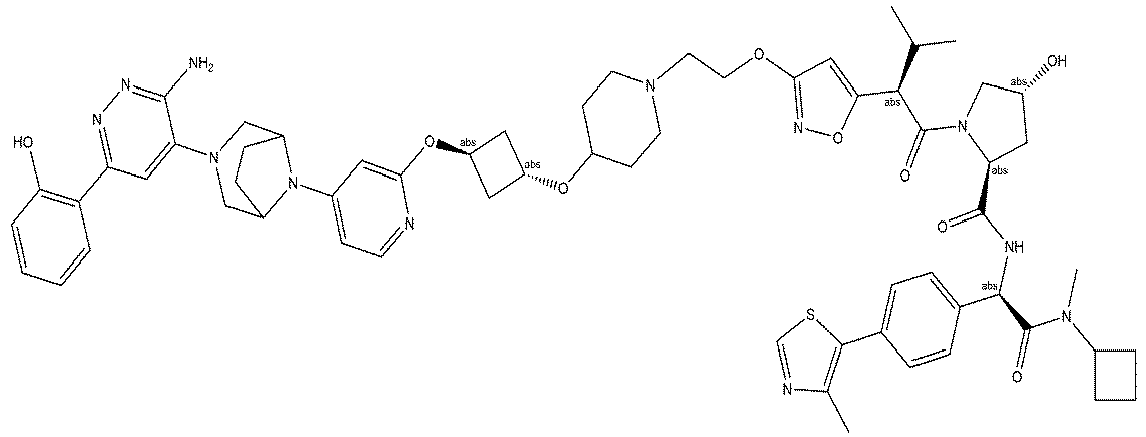
421 (2S,4R)-1-((2S)-2-(3-(3-(4-((1r,3S)-3-((4-(3-(3-amino-6-(2-hydroxyphenyl)pyridazin-4-yl)-3,8-diazabicyclo[3.2.1]octan-8-yl)pyridin-2-yl)oxy)cyclobutoxy)piperidin-1-yl)-2,2-difluoropropoxy)isoxazol-5-yl)-3-methylbutanoyl)-4-hydroxy-N-((S)-1-(6-(4-methylthiazol-5-yl)pyridin-3-yl)ethyl)pyrrolidine-2-carboxamide 
422 (2S,4R)-1-((2R)-2-(3-(3-(4-((1r,3R)-3-((4-(3-(3-amino-6-(2-hydroxyphenyl)pyridazin-4-yl)-3,8-diazabicyclo[3 .2.1]octan-8-yl)pyridin-2-yl)oxy)cyclobutoxy)piperidin-1-yl)-2,2-difluoropropoxy)isoxazol-5-yl)-3-methylbutanoyl)-4-hydroxy-N-((S)-1-(6-(4-methylthiazol-5-yl)pyridin-3-yl)ethyl)pyrrolidine-2-carboxamide 
423 (2S,4R)-1-((2S)-2-(3-(2-(4-((1r,3S)-3-((4-(3-(3-amino-6-(2-hydroxyphenyl)pyridazin-4-yl)-3,8-diazabicyclo[3 .2.1]octan-8-yl)pyridin-2-yl)oxy)cyclobutoxy)piperidin-1-yl)ethoxy)isoxazol-5-yl)-3-methylbutanoyl)-N-((R)-2-(cyclobutyl(methyl)amino)-1-(4-(4-methylthiazol-5-yl)phenyl)-2-oxoethyl)-4-hydroxypyrrolidine-2-carboxamide 
424 (2S,4R)-1-((2S,3S)-4-(4-(3-(3-amino-6-(2-hydroxyphenyl)pyridazin-4-yl)-3,8-diazabicyclo[3.2.1]octan-8-yl)butoxy)-3-methyl-2-(3-methylisoxazol-5-yl)butanoyl)-4-hydroxy-N-((S)-1-(4-(4-methylthiazol-5-yl)phenyl)ethyl)pyrrolidine-2-carboxamide 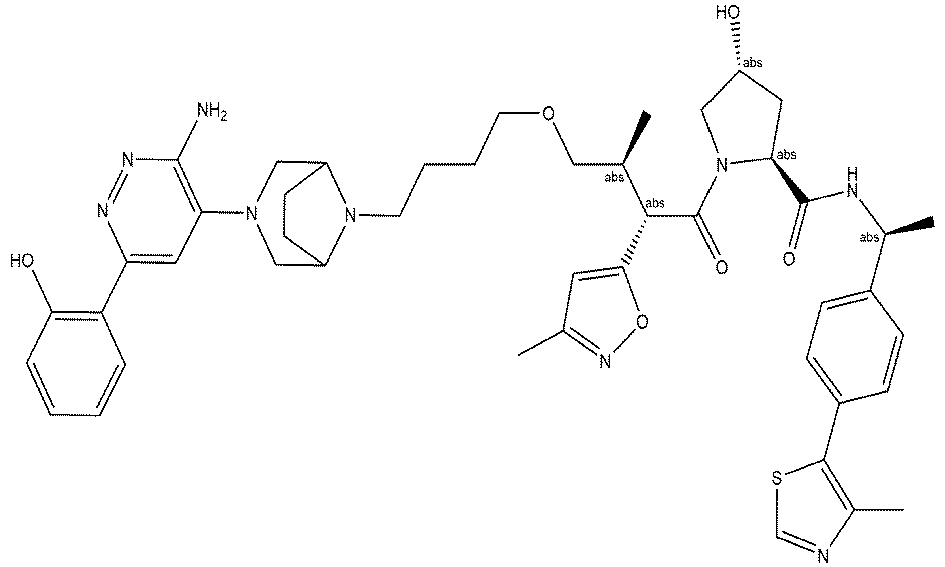
425 (2S,4R)-1-((2R,3S)-4-(4-(3-(3-amino-6-(2-hydroxyphenyl)pyridazin-4-yl)-3,8-diazabicyclo[3 .2.1]octan-8-yl)butoxy)-3-methyl-2-(3-methylisoxazol-5-yl)butanoyl)-4-hydroxy-N-((S)-1-(4-(4-methylthiazol-5-yl)phenyl)ethyl)pyrrolidine-2-carboxamide 
426 (2S,4R)-1-((2S)-2-(3-(4-((1-(((1r,3r)-3-((4-(3-(3-amino-6-(2-hydroxyphenyl)pyridazin-4-yl)-3,8-diazabicyclo[3 .2.1]octan-8-yl)pyridin-2-yl)oxy)cyclobutyl)methyl)piperidin-4-yl)methyl)piperazin-1-yl)isoxazol-5-yl)-3-methylbutanoyl)-4-hydroxy-N-((S)-1-(6-(4-methylthiazol-5-yl)pyridin-3-yl)ethyl)pyrrolidine-2-carboxamide 
427 (2S,4R)-1-((2R)-2-(3-(4-((1-(((1r,3r)-3-((4-(3-(3-amino-6-(2-hydroxyphenyl)pyridazin-4-yl)-3,8-diazabicyclo[3 .2.1]octan-8-yl)pyridin-2-yl)oxy)cyclobutyl)methyl)piperidin-4-yl)methyl)piperazin-1-yl)isoxazol-5-yl)-3-methylbutanoyl)-4-hydroxy-N-((S)-1-(6-(4-methylthiazol-5-yl)pyridin-3-yl)ethyl)pyrrolidine-2-carboxamide 
428 (2S,4R)-1-((R)-2-(3-(2-(4-((1r,3R)-3-((4-((E)-2-(3-amino-6-(2-hydroxyphenyl)pyridazin-4-yl)vinyl)pyridin-2-yl)oxy)cyclobutoxy)piperidin-1-yl)ethoxy)isoxazol-5-yl)-3-methylbutanoyl)-4-hydroxy-N-((S)-1-(4-(4-methylthiazol-5-yl)phenyl)ethyl)pyrrolidine-2-carboxamide 
429 (2S,4R)-1-((25)-2-(3-(2-(4-((1r,3S)-3-((4-(3-(3-amino-6-(2-hydroxyphenyl)pyridazin-4-yl)-3,8-diazabicyclo[3.2.1]octan-8-yl)pyridin-2-yl)oxy)cyclobutoxy)piperidin-1-yl)ethoxy)isoxazol-5-yl)-3-methylbutanoyl)-4-hydroxy-N-((S)-1-(2-(4-methylthiazol-5-yl)pyrimidin-5-yl)ethyl)pyrrolidine-2-carboxamide 
430 (2S,4R)-1-((2R)-2-(3-(2-(4-((1r,3R)-3-((4-(3-(3-amino-6-(2-hydroxyphenyl)pyridazin-4-yl)-3,8-diazabicyclo[3 .2.1]octan-8-yl)pyridin-2-yl)oxy)cyclobutoxy)piperidin-1-yl)ethoxy)isoxazol-5-yl)-3-methylbutanoyl)-4-hydroxy-N-((S)-1-(2-(4-methylthiazol-5-yl)pyrimidin-5-yl)ethyl)pyrrolidine-2-carboxamide 
431 (2S,4R)-1-((2S,3R)-4-(4-((4-(3-(3-amino-6-(2-hydroxyphenyl)pyridazin-4-yl)-3,8-diazabicyclo[3 .2.1]octan-8-yl)pyridin-2-yl)oxy)butoxy)-3-methyl-2-(3-methylisoxazol-5-yl)butanoyl)-4-hydroxy-N-((S)-1-(4-(4-methylthiazol-5-yl)phenyl)ethyl)pyrrolidine-2-carboxamide 
432 (2S,4R)-1-((2R,3R)-4-(4-((4-(3-(3-amino-6-(2-hydroxyphenyl)pyridazin-4-yl)-3,8-diazabicyclo[3 .2.1]octan-8-yl)pyridin-2-yl)oxy)butoxy)-3-methyl-2-(3-methylisoxazol-5-yl)butanoyl)-4-hydroxy-N-((S)-1-(4-(4-methylthiazol-5-yl)phenyl)ethyl)pyrrolidine-2-carboxamide 
433 (2S,4R)-1-((2S)-2-(3-(4-(((1r,3S)-3-((4-(3-(3-amino-6-(2-hydroxyphenyl)pyridazin-4-yl)-3,8-diazabicyclo[3 .2.1]octan-8-yl)pyridin-2-yl)oxy)cyclobutoxy)methyl)piperidi n-1-yl)isoxazol-5-yl)-3-methylbutanoyl)-4-hydroxy-N-((S)-1-(4-(4-methylthiazol-5-yl)phenyl)ethyl)pyrrolidine-2-carboxamide 
434 (2S,4R)-1-((2R)-2-(3-(4-(((1r,3R)-3-((4-(3-(3-amino-6-(2-hydroxyphenyl)pyridazin-4-yl)-3,8-diazabicyclo[3 .2.1]octan-8-yl)pyridin-2-yl)oxy)cyclobutoxy)methyl)piperidi n-1-yl)isoxazol-5-yl)-3-methylbutanoyl)-4-hydroxy-N-((S)-1-(4-(4-methylthiazol-5-yl)phenyl)ethyl)pyrrolidine-2-carboxamide 
435 (2S,4R)-1-((2S)-2-(3-(2-(1-(((1r,3S)-3-((4-(3-(3-amino-6-(2-hydroxyphenyl)pyridazin-4-yl)-3,8-diazabicyclo[3 .2.1]octan-8-yl)pyridin-2-yl)oxy)cyclobutyl)methyl)-4-hydroxypiperidin-4-yl)ethoxy)isoxazol-5-yl)-3-methylbutanoyl)-4-hydroxy-N-((S)-1-(4-(4-methylthiazol-5-yl)phenyl)ethyl)pyrrolidine-2-carboxamide 
436 (2S,4R)-1-((2R)-2-(3-(2-(1-(((1r,3R)-3-((4-(3-(3-amino-6-(2-hydroxyphenyl)pyridazin-4-yl)-3,8-diazabicyclo[3 .2.1]octan-8-yl)pyridin-2-yl)oxy)cyclobutyl)methyl)-4-hydroxypiperidin-4-yl)ethoxy)isoxazol-5-yl)-3-methylbutanoyl)-4-hydroxy-N-((S)-1-(4-(4-methylthiazol-5-yl)phenyl)ethyl)pyrrolidine-2-carboxamide 
437 (2S,4R)-1-((2R)-2-(3-(4-((1-(((1r,3r)-3-((4-(3-(3-amino-6-(2-hydroxyphenyl)pyridazin-4-yl)-3,8-diazabicyclo[3 .2.1]octan-8-yl)pyridin-2-yl)oxy)cyclobutyl)methyl)piperidin-4-yl)methyl)piperazin-1-yl)isoxazol-5-yl)-3-methylbutanoyl)-4-hydroxy-N-((S)-1-(4-(2-methyl-1H-imidazol-1-yl)phenyl)ethyl)pyrrolidine-2-carboxamide 
438 (2S,4R)-1-((2S)-2-(3-(2-(4-((1r,3S)-3-((4-(3-(3-amino-6-(2-hydroxyphenyl)pyridazin-4-yl)-3,8-diazabicyclo[3 .2.1]octan-8-yl)pyridin-2-yl)oxy)cyclobutoxy)piperidin-1-yl)ethoxy)isoxazol-5-yl)-3-methylbutanoyl)-N-((1S)-1-(4-(2,2-difluorocyclopropyl)phenyl)ethyl)-4-hydroxypyrrolidine-2-carboxamide 
439 (2S,4R)-1-((2R)-2-(3-(2-(4-((1r,3R)-3-((4-(3-(3-amino-6-(2-hydroxyphenyl)pyridazin-4-yl)-3,8-diazabicyclo[3 .2.1]octan-8-yl)pyridin-2-yl)oxy)cyclobutoxy)piperidin-1-yl)ethoxy)isoxazol-5-yl)-3-methylbutanoyl)-N-((1S)-1-(4-(2,2-difluorocyclopropyl)phenyl)ethyl)-4-hydroxypyrrolidine-2-carboxamide 
440 (2S,4R)-1-((2S)-2-(3-(2-(4-((1r,3S)-3-((4-(3-(3-amino-6-(2-hydroxyphenyl)pyridazin-4-yl)-3,8-diazabicyclo[3 .2.1]octan-8-yl)pyridin-2-yl)oxy)cyclobutoxy)piperidin-1-yl)ethoxy)isoxazol-5-yl)-3-methylbutanoyl)-4-hydroxy-N-((R)-1-(5-(4-methylthiazol-5-yl)pyrazin-2-yl)ethyl)pyrrolidine-2-carboxamide 
441 (2S,4R)-1-((2R)-2-(3-(2-(4-((1r,3R)-3-((4-(3-(3-amino-6-(2-hydroxyphenyl)pyridazin-4-yl)-3,8-diazabicyclo[3 .2.1]octan-8-yl)pyridin-2-yl)oxy)cyclobutoxy)piperidin-1-yl)ethoxy)isoxazol-5-yl)-3-methylbutanoyl)-4-hydroxy-N-((R)-1-(5-(4-methylthiazol-5-yl)pyrazin-2-yl)ethyl)pyrrolidine-2-carboxamide 
442 (2S,4R)-1-((2S)-2-(3-(2-(4-((1r,3S)-3-((4-(3-(3-amino-6-(2-hydroxyphenyl)pyridazin-4-yl)-3,8-diazabicyclo[3.2.1]octan-8-yl)pyridin-2-yl)oxy)cyclobutoxy)piperidin-1-yl)ethoxy)isoxazol-5-yl)-3-methylbutanoyl)-4-hydroxy-N-((R)-1-(6-(4-methylthiazol-5-yl)pyridazin-3-yl)ethyl)pyrrolidine-2-carboxamide 
443 (2S,4R)-1-((2R)-2-(3-(2-(4-((1r,3R)-3-((4-(3-(3-amino-6-(2-hydroxyphenyl)pyridazin-4-yl)-3,8-diazabicyclo[3 .2.1]octan-8-yl)pyridin-2-yl)oxy)cyclobutoxy)piperidin-1-yl)ethoxy)isoxazol-5-yl)-3-methylbutanoyl)-4-hydroxy-N-((R)-1-(6-(4-methylthiazol-5-yl)pyridazin-3-yl)ethyl)pyrrolidine-2-carboxamide 
444 (2S,4R)-1-((S)-2-(3-(2-(1-((1r,3 S)-3-((9-(3-amino-6-(2-hydroxyphenyl)pyridazin-4-yl)-1-oxa-4,9-diazaspiro[5.5]undecan-4-yl)methyl)cyclobutyl)piperidin-4-yl)ethoxy)isoxazol-5-yl)-3-methylbutanoyl)-4-hydroxy-N-((S)-1-(4-(4-methylthiazol-5-yl)phenyl)ethyl)pyrrolidine-2-carboxamide 
445 (2S,4R)-1-((R)-2-(3-(2-(1-((1r,3R)-3-((9-(3-amino-6-(2-hydroxyphenyl)pyridazin-4-yl)-1-oxa-4,9-diazaspiro[5.5]undecan-4-yl)methyl)cyclobutyl)piperidin-4-yl)ethoxy)isoxazol-5-yl)-3-methylbutanoyl)-4-hydroxy-N-((S)-1-(4-(4-methylthiazol-5-yl)phenyl)ethyl)pyrrolidine-2-carboxamide 
446 rac-(2R,4S)-1-((2S)-2-(3-(2-(4-((3-((4-(3-(3-amino-6-(2-hydroxyphenyl)pyridazin-4-yl)-3,8-diazabicyclo[3 .2.1]octan-8-yl)pyridin-2-yl)oxy)azetidin-1-yl)methyl)-4-hydroxypiperidin-1-yl)ethoxy)isoxazol-5-yl)-3-methylbutanoyl)-4-hydroxy-N-((R)-1-(4-(4-methylthiazol-5-yl)phenyl)ethyl)pyrrolidine-2-carboxamide 
447 rac-(2R,4S)-1-((2R)-2-(3-(4-((1-(((1r,3r)-3-((4-(3-(3-amino-6-(2-hydroxyphenyl)pyridazin-4-yl)-3,8-diazabicyclo[3 .2.1]octan-8-yl)pyridin-2-yl)oxy)cyclobutyl)methyl)piperidin-4-yl)methyl)piperazin-1-yl)isoxazol-5-yl)-3-methylbutanoyl)-4-hydroxy-N-((R)-1-(4-(2-methyl-1H-imidazol-1-yl)phenyl)ethyl)pyrrolidine-2-carboxamide 
448 (2S,4R)-1-(2-(3-(2-((2S,4S,6R)-4-((1r,3R)-3-((4-(3-(3-amino-6-(2-hydroxyphenyl)pyridazin-4-yl)-3,8-diazabicyclo[3 .2.1]octan-8-yl)pyridin-2-yl)oxy)cyclobutoxy)-2,6-dimethylpiperidin-1-yl)ethoxy)isoxazol-5-yl)-3-methylbutanoyl)-4-hydroxy-N-((S)-1-(6-(4-methylthiazol-5-yl)pyridin-3-yl)ethyl)pyrrolidine-2-carboxamide 
449 (25,4R)-1-((S)-2-(3-(2-(1-((1R,3R)-3-((4-((S)-1-(4-(3-amino-6-(2-hydroxyphenyl)pyridazin-4-yl)-1H-pyrazol-1-yl)ethyl)piperidin-1-yl)methyl)cyclobutane-1-carbonyl)piperidin-4-yl)ethoxy)isoxazol-5-yl)-3-methylbutanoyl)-4-hydroxy-N-((S)-1-(4-(4-methylthiazol-5-yl)phenyl)ethyl)pyrrolidine-2-carboxamide 
450 (2S,4R)-1-((R)-2-(3-(2-(1-((1R,3S)-3-((4-((S)-1-(4-(3-amino-6-(2-hydroxyphenyl)pyridazin-4-yl)-1H-pyrazol-1-yl)ethyl)piperidin-1-yl)methyl)cyclobutane-1-carbonyl)piperidin-4-yl)ethoxy)isoxazol-5-yl)-3-methylbutanoyl)-4-hydroxy-N-((S)-1-(4-(4-methylthiazol-5-yl)phenyl)ethyl)pyrrolidine-2-carboxamide 
451 (2S,4R)-1-((S)-2-(3-(2-(1-((1S,3R)-3-((4-((R)-1-(4-(3-amino-6-(2-hydroxyphenyl)pyridazin-4-yl)-1H-pyrazol-1-yl)ethyl)piperidin-1-yl)methyl)cyclobutane-1-carbonyl)piperidin-4-yl)ethoxy)isoxazol-5-yl)-3-methylbutanoyl)-4-hydroxy-N-((S)-1-(4-(4-methylthiazol-5-yl)phenyl)ethyl)pyrrolidine-2-carboxamide 
452 (28,4R)-1-((R)-2-(3-(2-(1-((18,3S)-3-((4-((R)-1-(4-(3-amino-6-(2-hydroxyphenyl)pyridazin-4-yl)-1H-pyrazol-1-yl)ethyl)piperidin-1-yl)methyl)cyclobutane-1-carbonyl)piperidin-4-yl)ethoxy)isoxazol-5-yl)-3-methylbutanoyl)-4-hydroxy-N-((S)-1-(4-(4-methylthiazol-5-yl)phenyl)ethyl)pyrrolidine-2-carboxamide 
453 (2S,4R)-1-((S)-2-(3-(2-(1-((1S,3S)-3-((4-((S)-1-(4-(3-amino-6-(2-hydroxyphenyl)pyridazin-4-yl)-1H-pyrazol-1-yl)ethyl)piperidin-1-yl)methyl)cyclobutane-1-carbonyl)piperidin-4-yl)ethoxy)isoxazol-5-yl)-3-methylbutanoyl)-4-hydroxy-N-((S)-1-(4-(4-methylthiazol-5-yl)phenyl)ethyl)pyrrolidine-2-carboxamide 
454 (2S,4R)-1-((R)-2-(3-(2-(1-((1S,3R)-3-((4-((S)-1-(4-(3-amino-6-(2-hydroxyphenyl)pyridazin-4-yl)-1H-pyrazol-1-yl)ethyl)piperidin-1-yl)methyl)cyclobutane-1-carbonyl)piperidin-4-yl)ethoxy)isoxazol-5-yl)-3-methylbutanoyl)-4-hydroxy-N-((S)-1-(4-(4-methylthiazol-5-yl)phenyl)ethyl)pyrrolidine-2-carboxamide 
455 (2S,4R)-1-((S)-2-(3-(2-(1-((1R,3S)-3-((4-((R)-1-(4-(3-amino-6-(2-hydroxyphenyl)pyridazin-4-yl)-1H-pyrazol-1-yl)ethyl)piperidin-1-yl)methyl)cyclobutane-1-carbonyl)piperidin-4-yl)ethoxy)isoxazol-5-yl)-3-methylbutanoyl)-4-hydroxy-N-((S)-1-(4-(4-methylthiazol-5-yl)phenyl)ethyl)pyrrolidine-2-carboxamide 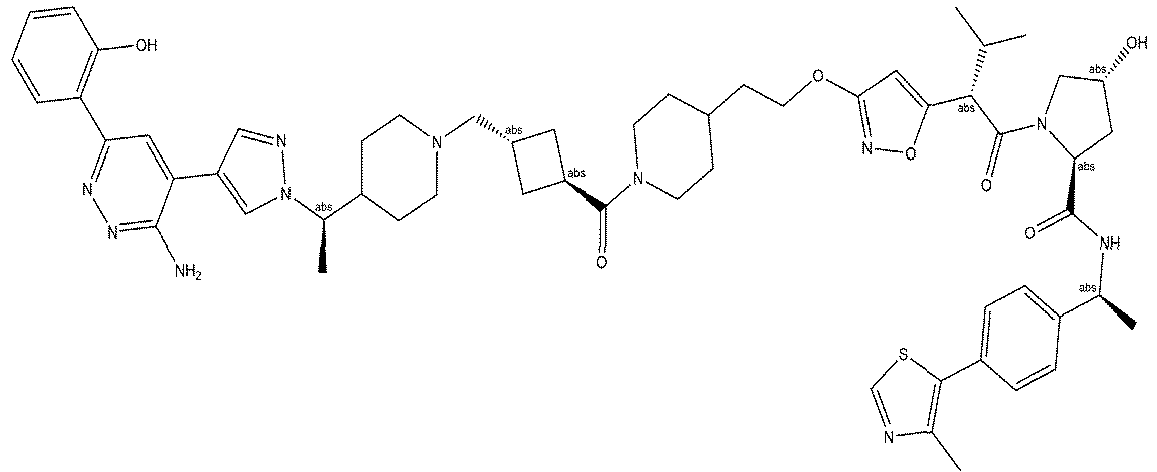
456 (2S,4R)-1-((R)-2-(3-(2-(1-((1R,3R)-3-((4-((R)-1-(4-(3-amino-6-(2-hydroxyphenyl)pyridazin-4-yl)-1H-pyrazol-1-yl)ethyl)piperidin-1-yl)methyl)cyclobutane-1-carbonyl)piperidin-4-yl)ethoxy)isoxazol-5-yl)-3-methylbutanoyl)-4-hydroxy-N-((S)-1-(4-(4-methylthiazol-5-yl)phenyl)ethyl)pyrrolidine-2-carboxamide 
457 (2S,4R)-1-((2S)-2-(3-(4-((1-(((1r,3r)-3-((4-(3-(3-amino-6-(2-hydroxyphenyl)pyridazin-4-yl)-3,8-diazabicyclo[3 .2.1]octan-8-yl)pyridin-2-yl)oxy)cyclobutyl)methyl)piperidin-4-yl)methyl)piperazin-1-yl)isoxazol-5-yl)-3-methylbutanoyl)-4-hydroxy-N-((S)-1-(4-(4-methylthiazol-5-yl)phenyl)ethyl)pyrrolidine-2-carboxamide 
458 (2S,4R)-1-((2R)-2-(3-(4-((1-(((1r,3r)-3-((4-(3-(3-amino-6-(2-hydroxyphenyl)pyridazin-4-yl)-3,8-diazabicyclo[3 .2.1]octan-8-yl)pyridin-2-yl)oxy)cyclobutyl)methyl)piperidin-4-yl)methyl)piperazin-1-yl)isoxazol-5-yl)-3-methylbutanoyl)-4-hydroxy-N-((S)-1-(4-(4-methylthiazol-5-yl)phenyl)ethyl)pyrrolidine-2-carboxamide 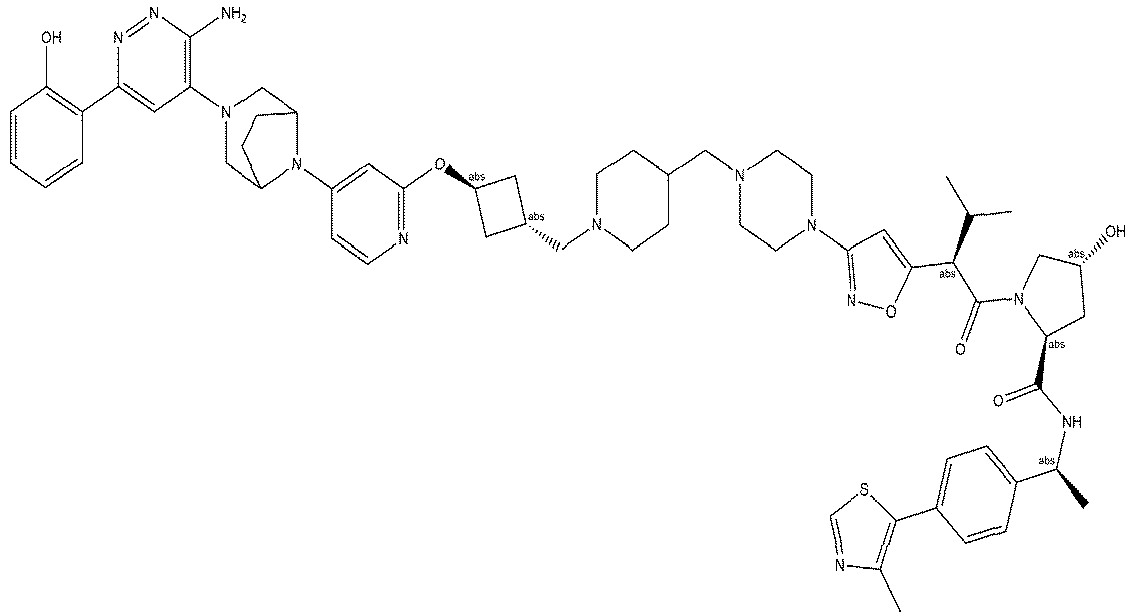
459 (3R,5S)-1-((2R)-2-(3-(2-(4-((1r,3R)-3-((4-(3-(3-amino-6-(2-hydroxyphenyl)pyridazin-4-yl)-3,8-diazabicyclo[3 .2.1]octan-8-yl)pyridin-2-yl)oxy)cyclobutoxy)piperidin-1-yl)ethoxy)isoxazol-5-yl)-3-methylbutanoyl)-5-(((S)-1-(4-(4-methylthiazol-5-yl)phenyl)ethyl)carbamoyl)pyrrolidi n-3-yl dihydrogen phosphate 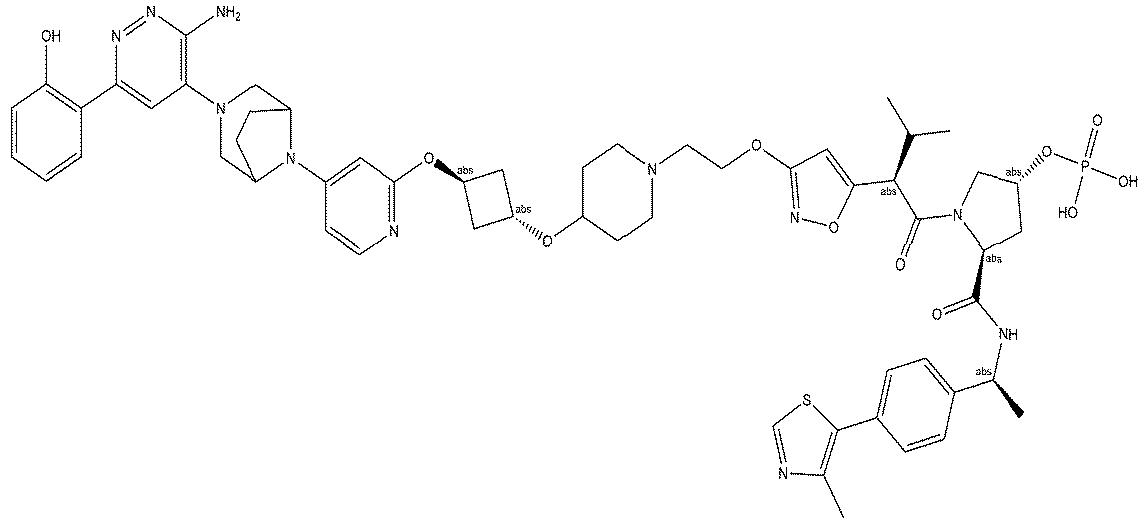
460 (3R,5S)-1-((21)-2-(3-(2-(4-((1r,3R)-3-((4-(3-(3-amino-6-(2-hydroxyphenyl)pyridazin-4-yl)-3,8-diazabicyclo[3.2.1]octan-8-yl)pyridin-2-yl)oxy)cyclobutoxy)piperidin-1-yl)ethoxy)isoxazol-5-yl)-3-methylbutanoyl)-5-(((S)-1-(4-(4-methylthiazol-5-yl)phenyl)ethyl)carbamoyl)pyrrolidi n-3-yl (2,5,8,11,14,17,20,23,26,29,32,35,3 8,41,44,47,50,53,56,59,62,65-docosaoxaheptahexacontan-67-yl) succinate 
461 (2S,4R)-1-((2S)-2-(3-(2-(4-((1r,3S)-3-(3-(3-(3-amino-6-(2-hydroxyphenyl)pyridazin-4-yl)-3,8-diazabicyclo[3.2.1]octan-8-yl)phenoxy)cyclobutoxy)piperidin-1-yl)ethoxy)isoxazol-5-yl)-3-methylbutanoyl)-4-hydroxy-N-((S)-1-(4-(4-methylthiazol-5-yl)phenyl)ethyl)pyrrolidine-2-carboxamide 
462 (2S,4R)-1-((2R)-2-(3-(2-(4-((1r,3R)-3-(3-(3-(3-amino-6-(2-hydroxyphenyl)pyridazin-4-yl)-3,8-diazabicyclo[3 .2.1]octan-8-yl)phenoxy)cyclobutoxy)piperidin-1-yl)ethoxy)isoxazol-5-yl)-3-methylbutanoyl)-4-hydroxy-N-((S)-1-(4-(4-methylthiazol-5-yl)phenyl)ethyl)pyrrolidine-2-carboxamide 
463 (2S,4R)-1-((2S)-2-(3-(2-(4-((1r,3S)-3-((4-(3-(3-amino-6-(2-hydroxyphenyl)pyridazin-4-yl)-3,8-diazabicyclo[3 .2.1]octan-8-yl)pyrimidin-2-yl)oxy)cyclobutoxy)piperidin-1-yl)ethoxy)isoxazol-5-yl)-3-methylbutanoyl)-4-hydroxy-N-((S)-1-(4-(4-methylthiazol-5-yl)phenyl)ethyl)pyrrolidine-2-carboxamide 
464 (2S,4R)-1-((2R)-2-(3-(2-(4-((1r,3R)-3-((4-(3-(3-amino-6-(2-hydroxyphenyl)pyridazin-4-yl)-3,8-diazabicyclo[3 .2.1]octan-8-yl)pyrimidin-2-yl)oxy)cyclobutoxy)piperidin-1-yl)ethoxy)isoxazol-5-yl)-3-methylbutanoyl)-4-hydroxy-N-((S)-1-(4-(4-methylthiazol-5-yl)phenyl)ethyl)pyrrolidine-2-carboxamide 
465 (25,4R)-1-((S)-2-(3-(2-(1-((1s,3R)-3-((4-(4-(3-amino-6-(2-hydroxyphenyl)pyridazin-4-yl)-1H-pyrazol-1-yl)piperidin-1-yl)methyl)cyclobutane-1-carbonyl)piperidin-4-yl)ethoxy)isoxazol-5-yl)-3-methylbutanoyl)-4-hydroxy-N-((S)-1-(4-(4-methylthiazol-5-yl)phenyl)ethyl)pyrrolidine-2-carboxamide 
466 (2S,4R)-1-((R)-2-(3-(2-(1-((1s,3S)-3-((4-(4-(3-amino-6-(2-hydroxyphenyl)pyridazin-4-yl)-1H-pyrazol-1-yl)piperidin-1-yl)methyl)cyclobutane-1-carbonyl)piperidin-4-yl)ethoxy)isoxazol-5-yl)-3-methylbutanoyl)-4-hydroxy-N-((S)-1-(4-(4-methylthiazol-5-yl)phenyl)ethyl)pyrrolidine-2-carboxamide 
467 (2S,4R)-1-((S)-2-(3-(2-(1-((1r,3 S)-3-((4-(4-(3-amino-6-(2-hydroxyphenyl)pyridazin-4-yl)-1H-pyrazol-1-yl)piperidin-1-yl)methyl)cyclobutane-1-carbonyl)piperidin-4-yl)ethoxy)isoxazol-5-yl)-3-methylbutanoyl)-4-hydroxy-N-((S)-1-(4-(4-methylthiazol-5-yl)phenyl)ethyl)pyrrolidine-2-carboxamide 
468 (2S,4R)-1-((R)-2-(3-(2-(1-((1r,3R)-3-((4-(4-(3-amino-6-(2-hydroxyphenyl)pyridazin-4-yl)-1H-pyrazol-1-yl)piperidin-1-yl)methyl)cyclobutane-1-carbonyl)piperidin-4-yl)ethoxy)isoxazol-5-yl)-3-methylbutanoyl)-4-hydroxy-N-((S)-1-(4-(4-methylthiazol-5-yl)phenyl)ethyl)pyrrolidine-2-carboxamide 
469 (2S,4R)-1-((2S)-2-(3-(4-((1-(((1r,3r)-3-((4-(3-(3-amino-6-(2-hydroxyphenyl)pyridazin-4-yl)-3,8-diazabicyclo[3 .2.1]octan-8-yl)pyridin-2-yl)oxy)cyclobutyl)methyl)piperidin-4-yl)oxy)piperidin-1-yl)isoxazol-5-yl)-3-methylbutanoyl)-4-hydroxy-N-((S)-1-(4-(4-methylthiazol-5-yl)phenyl)ethyl)pyrrolidine-2-carboxamide 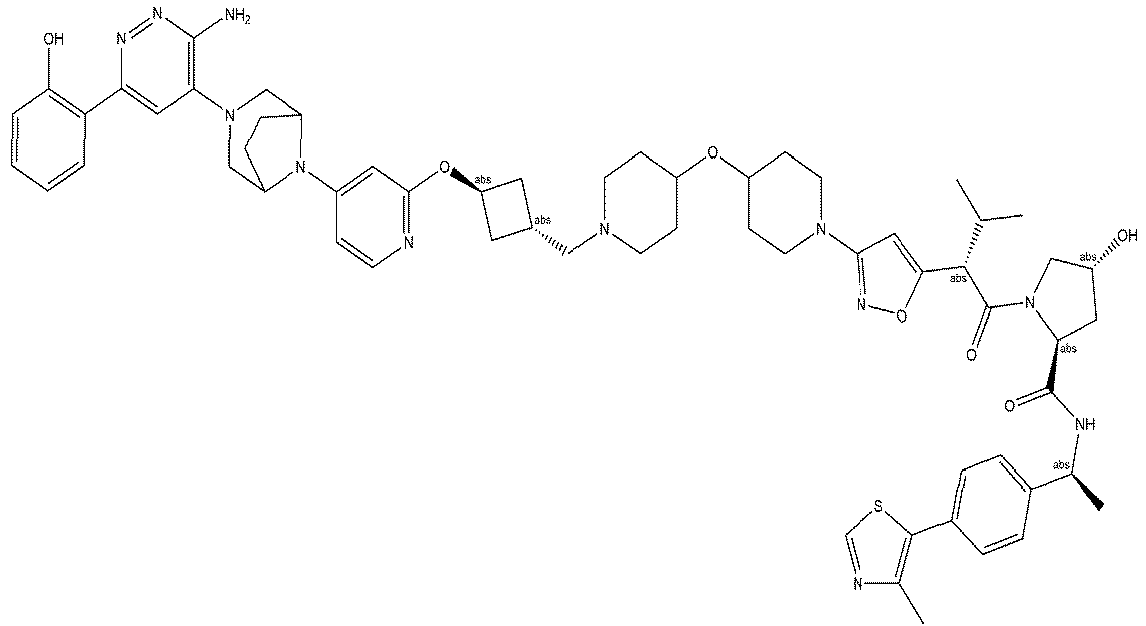
470 (2S,4R)-1-((2S)-2-(3-(2-(4-((1r,3S)-3-((6-(3-(3-amino-6-(2-hydroxyphenyl)pyridazin-4-yl)-3,8-diazabicyclo[3 .2.1]octan-8-yl)pyridazin-4-yl)oxy)cyclobutoxy)piperidin-1-yl)ethoxy)isoxazol-5-yl)-3-methylbutanoyl)-4-hydroxy-N-((S)-1-(4-(4-methylthiazol-5-yl)phenyl)ethyl)pyrrolidine-2-carboxamide 
471 (2S,4R)-1-((2R)-2-(3-(2-(4-((1r,3R)-3-((6-(3-(3-amino-6-(2-hydroxyphenyl)pyridazin-4-yl)-3,8-diazabicyclo[3 .2.1]octan-8-yl)pyridazin-4-yl)oxy)cyclobutoxy)piperidin-1-yl)ethoxy)isoxazol-5-yl)-3-methylbutanoyl)-4-hydroxy-N-((S)-1-(4-(4-methylthiazol-5-yl)phenyl)ethyl)pyrrolidine-2-carboxamide 
472 (2S,4R)-1-((2S)-2-(3-(4-((1-(((1r,3r)-3-((4-(3-(3-amino-6-(2-hydroxyphenyl)pyridazin-4-yl)-3,8-diazabicyclo[3 .2.1]octan-8-yl)pyridin-2-yl)oxy)cyclobutyl)methyl)piperidin-4-yl)methyl)piperidin-1-yl)isoxazol-5-yl)-3-methylbutanoyl)-4-hydroxy-N-((S)-1-(4-(4-methylthiazol-5-yl)phenyl)ethyl)pyrrolidine-2-carboxamide 
473 (2S,4R)-1-((2R)-2-(3-(4-((1-(((1r,3r)-3-((4-(3-(3-amino-6-(2-hydroxyphenyl)pyridazin-4-yl)-3,8-diazabicyclo[3 .2.1]octan-8-yl)pyridin-2-yl)oxy)cyclobutyl)methyl)piperidin-4-yl)methyl)piperidin-1-yl)isoxazol-5-yl)-3-methylbutanoyl)-4-hydroxy-N-((S)-1-(4-(4-methylthiazol-5-yl)phenyl)ethyl)pyrrolidine-2-carboxamide 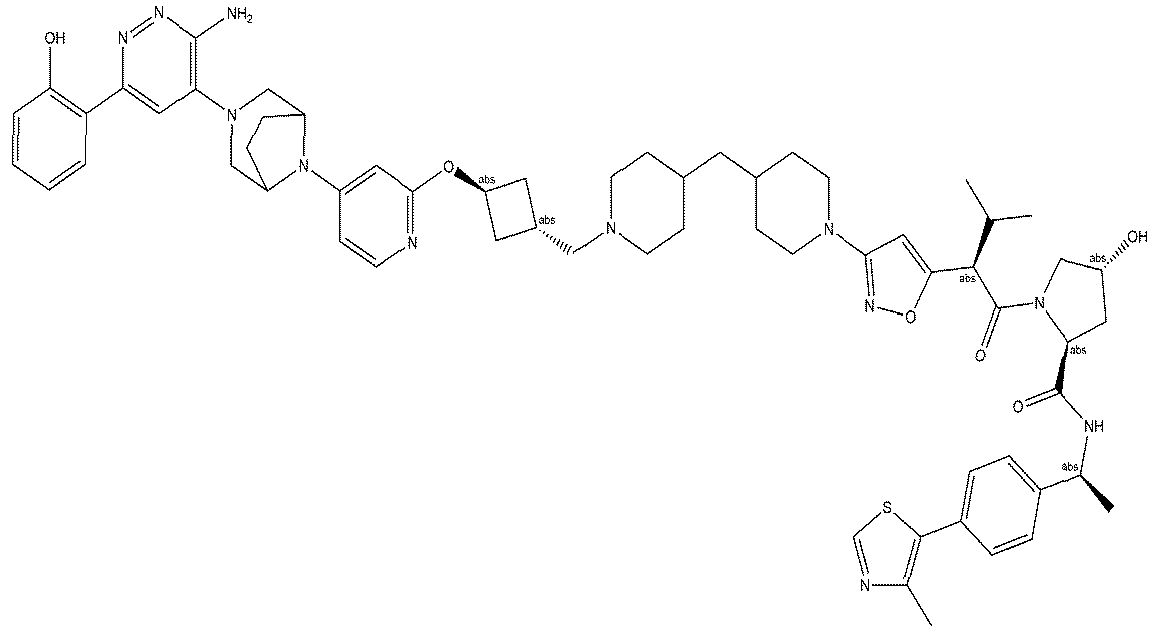
474 (2S,4R)-1-((2R)-2-(3-(4-((1-(((1r,3r)-3-((4-(3-(3-amino-6-(2-hydroxyphenyl)pyridazin-4-yl)-3,8-diazabicyclo[3 .2.1]octan-8-yl)pyridin-2-yl)oxy)cyclobutyl)methyl)piperidin-4-yl)oxy)piperidin-1-yl)isoxazol-5-yl)-3-methylbutanoyl)-4-hydroxy-N-((S)-1-(4-(4-methylthiazol-5-yl)phenyl)ethyl)pyrrolidine-2-carboxamide 
475 (2S,4R)-1-((2S)-2-(3-(4-((1-(((1r,3r)-3-((4-(3-(3-amino-6-(2-hydroxyphenyl)pyridazin-4-yl)-3,8-diazabicyclo[3.2.1]octan-8-yl)pyridin-2-yl)oxy)cyclobutyl)methyl)piperidin-4-yl)oxy)piperidin-1-yl)isoxazol-5-yl)-3-methylbutanoyl)-4-hydroxy-N-((S)-1-(6-(4-methylthiazol-5-yl)pyridin-3-yl)ethyl)pyrrolidine-2-carboxamide 
476 (2S,4R)-1-((2R)-2-(3-(4-((1-(((1r,3r)-3-((4-(3-(3-amino-6-(2-hydroxyphenyl)pyridazin-4-yl)-3,8-diazabicyclo[3 .2.1]octan-8-yl)pyridin-2-yl)oxy)cyclobutyl)methyl)piperidin-4-yl)oxy)piperidin-1-yl)isoxazol-5-yl)-3-methylbutanoyl)-4-hydroxy-N-((S)-1-(6-(4-methylthiazol-5-yl)pyridin-3-yl)ethyl)pyrrolidine-2-carboxamide 
477 (2S,4R)-1-((2S)-2-(3-(4-((1-(((1r,3r)-3-((4-(3-(3-amino-6-(2-hydroxyphenyl)pyridazin-4-yl)-3,8-diazabicyclo[3 .2.1]octan-8-yl)pyridin-2-yl)oxy)cyclobutyl)methyl)piperidin-4-yl)oxy)piperidin-1-yl)isoxazol-5-yl)-3-methylbutanoyl)-4-hydroxy-N-((S)-1-(4-(2-methyl-1H-imidazol-1-yl)phenyl)ethyl)pyrrolidine-2-carboxamide 
478 (25,4R)-1-((2R)-2-(3-(4-((1-(((1r,3r)-3-((4-(3-(3-amino-6-(2-hydroxyphenyl)pyridazin-4-yl)-3,8-diazabicyclo[3 .2.1]octan-8-yl)pyridin-2-yl)oxy)cyclobutyl)methyl)piperidin-4-yl)oxy)piperidin-1-yl)isoxazol-5-yl)-3-methylbutanoyl)-4-hydroxy-N-((S)-1-(4-(2-methyl-1H-imidazol-1-yl)phenyl)ethyl)pyrrolidine-2-carboxamide 
479 (2S,4R)-1-((2S)-2-(3-(((1R,2R)-2-(5-((1r,3R)-3-((4-(3-(3-amino-6-(2-hydroxyphenyl)pyridazin-4-yl)-3,8-diazabicyclo[3 .2.1]octan-8-yl)pyridin-2-yl)oxy)cyclobutoxy)pyridin-2-yl)cyclopropyl)methoxy)isoxazol-5-yl)-3-methylbutanoyl)-4-hydroxy-N-((S)-1-(6-(4-methylthiazol-5-yl)pyridin-3-yl)ethyl)pyrrolidine-2-carboxamide 
480 (25,4R)-1-((2R)-2-(3-(((1R,2R)-2-(5-((1r,3R)-3-((4-(3-(3-amino-6-(2-hydroxyphenyl)pyridazin-4-yl)-3,8-diazabicyclo[3 .2.1]octan-8-yl)pyridin-2-yl)oxy)cyclobutoxy)pyridin-2-yl)cyclopropyl)methoxy)isoxazol-5-yl)-3-methylbutanoyl)-4-hydroxy-N-((S)-1-(6-(4-methylthiazol-5-yl)pyridin-3-yl)ethyl)pyrrolidine-2-carboxamide 
481 (2S,4R)-1-((2S,3R)-4-((1s,3S)-3-((4-(3-(3-amino-6-(2-hydroxyphenyl)pyridazin-4-yl)-3,8-diazabicyclo[3 .2.1]octan-8-yl)pyridin-2-yl)oxy)cyclobutoxy)-3-methyl-2-(3-methylisoxazol-5-yl)butanoyl)-4-hydroxy-N-((S)-1-(4-(4-methylthiazol-5-yl)phenyl)ethyl)pyrrolidine-2-carboxamide 
482 (2S,4R)-1-((2R,3R)-4-((1s,3S)-3-((4-(3-(3-amino-6-(2-hydroxyphenyl)pyridazin-4-yl)-3,8-diazabicyclo[3.2.1]octan-8-yl)pyridin-2-yl)oxy)cyclobutoxy)-3-methyl-2-(3-methylisoxazol-5-yl)butanoyl)-4-hydroxy-N-((S)-1-(4-(4-methylthiazol-5-yl)phenyl)ethyl)pyrrolidine-2-carboxamide 
483 (2S,4R)-1-((2S)-2-(3-(3-(4-((1r,3S)-3-((4-(3-(3-amino-6-(2-hydroxyphenyl)pyridazin-4-yl)-3,8-diazabicyclo[3 .2.1]octan-8-yl)pyridin-2-yl)oxy)cyclobutoxy)piperidin-1-yl)-2,2-difluoropropoxy)isoxazol-5-yl)-3-methylbutanoyl)-4-hydroxy-N-((S)-1-(4-(4-methylthiazol-5-yl)phenyl)ethyl)pyrrolidine-2-carboxamide 
484 (2S,4R)-1-((2R)-2-(3-(3-(4-((1r,3R)-3-((4-(3-(3-amino-6-(2-hydroxyphenyl)pyridazin-4-yl)-3,8-diazabicyclo[3 .2.1]octan-8-yl)pyridin-2-yl)oxy)cyclobutoxy)piperidin-1-yl)-2,2-difluoropropoxy)isoxazol-5-yl)-3-methylbutanoyl)-4-hydroxy-N-((S)-1-(4-(4-methylthiazol-5-yl)phenyl)ethyl)pyrrolidine-2-carboxamide 
485 (2S,4R)-1-((2S)-2-(3-(2-((1R,4S)-4-((1r,3S)-3-((4-(3-(3-amino-6-(2-hydroxyphenyl)pyridazin-4-yl)-3,8-diazabicyclo[3 .2.1]octan-8-yl)pyridin-2-yl)oxy)cyclobutoxy)cyclohexyl)etho xy)isoxazol-5-yl)-3-methylbutanoyl)-4-hydroxy-N-((S)-1-(6-(4-methylthiazol-5-yl)pyridin-3-yl)ethyl)pyrrolidine-2-carboxamide 
486 (2S,4R)-1-((2R)-2-(3-(2-((1R,4R)-4-((1r,3R)-3-((4-(3-(3-amino-6-(2-hydroxyphenyl)pyridazin-4-yl)-3,8-diazabicyclo[3 .2.1]octan-8-yl)pyridin-2-yl)oxy)cyclobutoxy)cyclohexyl)etho xy)isoxazol-5-yl)-3-methylbutanoyl)-4-hydroxy-N-((S)-1-(6-(4-methylthiazol-5-yl)pyridin-3-yl)ethyl)pyrrolidine-2-carboxamide 
487 (2S,4R)-1-((2S)-2-(3-(2-((1R,4S)-4-((1r,3S)-3-((4-(3-(3-amino-6-(2-hydroxyphenyl)pyridazin-4-yl)-3,8-diazabicyclo[3 .2.1]octan-8-yl)pyridin-2-yl)oxy)cyclobutoxy)cyclohexyl)etho xy)isoxazol-5-yl)-3-methylbutanoyl)-4-hydroxy-N-((S)-1-(4-(4-methylthiazol-5-yl)phenyl)ethyl)pyrrolidine-2-carboxamide 
488 (2S,4R)-1-((2R)-2-(3-(2-((1R,4R)-4-((1r,3R)-3-((4-(3-(3-amino-6-(2-hydroxyphenyl)pyridazin-4-yl)-3,8-diazabicyclo[3 .2.1]octan-8-yl)pyridin-2-yl)oxy)cyclobutoxy)cyclohexyl)etho xy)isoxazol-5-yl)-3-methylbutanoyl)-4-hydroxy-N-((S)-1-(4-(4-methylthiazol-5-yl)phenyl)ethyl)pyrrolidine-2-carboxamide 
489 (2S,4R)-4-hydroxy-1-((2R)-2-(3-(2-(4-((1r,3R)-3-((4-(3-(2-(2-hydroxyphenyl)imidazo[1,2-a]pyrimidin-7-yl)-3,8-diazabicyclo[3 .2.1]octan-8-yl)pyridin-2-yl)oxy)cyclobutoxy)piperidin-1-yl)ethoxy)isoxazol-5-yl)-3-methylbutanoyl)-N-((S)-1-(4-(4-methylthiazol-5-yl)phenyl)ethyl)pyrrolidine-2-carboxamide 
490 (2S,4R)-1-((2S)-2-(3-(2-(4-((1r,3S)-3-((4-(3-(3-amino-6-(2-hydroxyphenyl)pyridazin-4-yl)-3,8-diazabicyclo[3 .2.1]octan-8-yl)pyridin-2-yl)oxy)cyclobutoxy)piperidin-1-yl)ethoxy)isoxazol-5-yl)-3-methylbutanoyl)-4-hydroxy-N-((S)-1-(5-(4-methylthiazol-5-yl)pyrazin-2-yl)ethyl)pyrrolidine-2-carboxamide 
491 (2S,4R)-1-((2R)-2-(3-(2-(4-((1r,3R)-3-((4-(3-(3-amino-6-(2-hydroxyphenyl)pyridazin-4-yl)-3,8-diazabicyclo[3 .2.1]octan-8-yl)pyridin-2-yl)oxy)cyclobutoxy)piperidin-1-yl)ethoxy)isoxazol-5-yl)-3-methylbutanoyl)-4-hydroxy-N-((S)-1-(5-(4-methylthiazol-5-yl)pyrazin-2-yl)ethyl)pyrrolidine-2-carboxamide 
492 (2S,4R)-1-((2S)-2-(3-(2-(4-((1r,3S)-3-((4-(3-(3-amino-6-(2-hydroxyphenyl)pyridazin-4-yl)-3,8-diazabicyclo[3 .2.1]octan-8-yl)pyridin-2-yl)amino)cyclobutoxy)piperidin-1-yl)ethoxy)isoxazol-5-yl)-3-methylbutanoyl)-4-hydroxy-N-((S)-1-(4-(4-methylthiazol-5-yl)phenyl)ethyl)pyrrolidine-2-carboxamide 
493 (2S,4R)-1-((2R)-2-(3-(2-(4-((1r,3R)-3-((4-(3-(3-amino-6-(2-hydroxyphenyl)pyridazin-4-yl)-3,8-diazabicyclo[3 .2.1]octan-8-yl)pyridin-2-yl)amino)cyclobutoxy)piperidin-1-yl)ethoxy)isoxazol-5-yl)-3-methylbutanoyl)-4-hydroxy-N-((S)-1-(4-(4-methylthiazol-5-yl)phenyl)ethyl)pyrrolidine-2-carboxamide 
494 (2S,4R)-1-((2S,3R)-4-(3-((4-(3-(3-amino-6-(2-hydroxyphenyl)pyridazin-4-yl)-3,8-diazabicyclo[3 .2.1]octan-8-yl)pyridin-2-yl)oxy)propoxy)-3-methyl-2-(3-methylisoxazol-5-yl)butanoyl)-4-hydroxy-N-((S)-1-(4-(4-methylthiazol-5-yl)phenyl)ethyl)pyrrolidine-2-carboxamide 
495 (2S,4R)-1-((2R,3R)-4-(3-((4-(3-(3-amino-6-(2-hydroxyphenyl)pyridazin-4-yl)-3,8-diazabicyclo[3 .2.1]octan-8-yl)pyridin-2-yl)oxy)propoxy)-3-methyl-2-(3-methylisoxazol-5-yl)butanoyl)-4-hydroxy-N-((S)-1-(4-(4-methylthiazol-5-yl)phenyl)ethyl)pyrrolidine-2-carboxamide 
496 (2S,4R)-1-((R)-2-(3-(4-((4-((1R,3r)-3-((R)-3-(4-(3-amino-6-(2-hydroxyphenyl)pyridazin-4-yl)-1H-pyrazol-1-yl)but-1-yn-1-yl)cyclobutoxy)piperidin-1-yl)methyl)piperidin-1-yl)isoxazol-5-yl)-3-methylbutanoyl)-4-hydroxy-N-((S)-1-(4-(4-methylthiazol-5-yl)phenyl)ethyl)pyrrolidine-2-carboxamide 
497 (2S,4R)-1-((R)-2-(3-(4-((4-((1S,3r)-3-((S)-3-(4-(3-amino-6-(2-hydroxyphenyl)pyridazin-4-yl)-1H-pyrazol-1-yl)but-1-yn-1-yl)cyclobutoxy)piperidin-1-yl)methyl)piperidin-1-yl)isoxazol-5-yl)-3-methylbutanoyl)-4-hydroxy-N-((S)-1-(4-(4-methylthiazol-5-yl)phenyl)ethyl)pyrrolidine-2-carboxamide 
498 (2S,4R)-1-((2S)-2-(3-(4-(((1r,3S)-3-((4-(3-(3-amino-6-(2-hydroxyphenyl)pyridazin-4-yl)-3,8-diazabicyclo[3 .2.1]octan-8-yl)pyridin-2-yl)oxy)cyclobutyl)methyl)piperazin-1-yl)isoxazol-5-yl)-3-methylbutanoyl)-4-hydroxy-N-((S)-1-(4-(4-methylthiazol-5-yl)phenyl)ethyl)pyrrolidine-2-carboxamide 
499 (2S,4R)-1-((2R)-2-(3-(4-(((1r,3R)-3-((4-(3-(3-amino-6-(2-hydroxyphenyl)pyridazin-4-yl)-3,8-diazabicyclo[3 .2.1]octan-8-yl)pyridin-2-yl)oxy)cyclobutyl)methyl)piperazin-1-yl)isoxazol-5-yl)-3-methylbutanoyl)-4-hydroxy-N-((S)-1-(4-(4-methylthiazol-5-yl)phenyl)ethyl)pyrrolidine-2-carboxamide 
500 (2S,4R)-1-(2-(3-(2-(4-((1r,3r)-3-((4-(3-(3-amino-6-(2-hydroxyphenyl)pyridazin-4-yl)-3,8-diazabicyclo[3 .2.1]octan-8-yl)pyridin-2-yl)oxy)cyclobutoxy)piperidin-1-yl)ethoxy)isoxazol-5-yl)-3-methylbutanoyl)-N-((S)-1-(5-fluoro-6-(4-methylthiazol-5-yl)pyridin-3-yl)ethyl)-4-hydroxypyrrolidine-2-carboxamide 
501 (2S,4R)-1-(2-(3-(2-(4-((1r,3r)-3-((4-(3-(3-amino-6-(2-hydroxyphenyl)pyridazin-4-yl)-3,8-diazabicyclo[3 .2.1]octan-8-yl)pyridin-2-yl)oxy)cyclobutoxy)piperidin-1-yl)ethoxy)isoxazol-5-yl)-3-methylbutanoyl)-N-((R)-1-(5-fluoro-6-(4-methylthiazol-5-yl)pyridin-3-yl)ethyl)-4-hydroxypyrrolidine-2-carboxamide 
502 (2S,4R)-1-((2R)-2-(3-(2-(4-((1r,3R)-3-((4-(3-(3-amino-6-(5-fluoro-2-hydroxyphenyl)pyridazin-4-yl)-3,8-diazabicyclo[3 .2.1]octan-8-yl)pyridin-2-yl)oxy)cyclobutoxy)piperidin-1-yl)ethoxy)isoxazol-5-yl)-3-methylbutanoyl)-4-hydroxy-N-((S)-1-(4-(4-methylthiazol-5-yl)phenyl)ethyl)pyrrolidine-2-carboxamide 
503 (2S,4R)-1-((2S)-2-(3-(2-(4-((1r,3S)-3-((4-(3-(3-amino-6-(2-hydroxyphenyl)pyridazin-4-yl)-3,8-diazabicyclo[3 .2.1]octan-8-yl)pyridin-2-yl)oxy)cyclobutoxy)piperidin-1-yl)ethoxy)isoxazol-5-yl)-3-methylbutanoyl)-4-hydroxy-N-((S)-1-(6-(4-methylthiazol-5-yl)pyridazin-3-yl)ethyl)pyrrolidine-2-carboxamide 
504 (2S,4R)-1-((2R)-2-(3-(2-(4-((1r,3R)-3-((4-(3-(3-amino-6-(2-hydroxyphenyl)pyridazin-4-yl)-3,8-diazabicyclo[3 .2.1]octan-8-yl)pyridin-2-yl)oxy)cyclobutoxy)piperidin-1-yl)ethoxy)isoxazol-5-yl)-3-methylbutanoyl)-4-hydroxy-N-((S)-1-(6-(4-methylthiazol-5-yl)pyridazin-3-yl)ethyl)pyrrolidine-2-carboxamide 
505 (2S,4R)-1-((2R)-2-(3-(2-(((1R,4R)-4-((1r,3R)-3-((4-(3-(3-amino-6-(2-hydroxyphenyl)pyridazin-4-yl)-3,8-diazabicyclo[3.2.1]octan-8-yl)pyridin-2-yl)oxy)cyclobutoxy)cyclohexyl)(iso propyl)amino)ethoxy)isoxazol-5-yl)-3-methylbutanoyl)-4-hydroxy-N-((S)-1-(6-(4-methylthiazol-5-yl)pyridin-3-yl)ethyl)pyrrolidine-2-carboxamide 
506 2-(6-amino-5-(8-(2-((1R,3r)-3-((1-(2-((5-((R)-1-((2S,4R)-4-hydroxy-2-(((S)-1-(4-(4-methylthiazol-5-yl)phenyl)ethyl)carbamoyl)pyrrolidi n-1-yl)-3-methyl-1-oxobutan-2-yl)isoxazol-3-yl)oxy)ethyl)piperidin-4-yl)oxy)cyclobutoxy)pyridin-4-yl)-3,8-diazabicyclo[3.2.1]octan-3-yl)pyridazin-3-yl)phenyl dihydrogen phosphate 
507 (2S,4S)-1-((2S)-2-(3-(2-(4-((1r,3S)-3-((4-(3-(3-amino-6-(2-hydroxyphenyl)pyridazin-4-yl)-3,8-diazabicyclo[3 .2.1]octan-8-yl)pyridin-2-yl)oxy)cyclobutoxy)piperidin-1-yl)ethoxy)isoxazol-5-yl)-3-methylbutanoyl)-4-hydroxy-N-((S)-1-(4-(4-methylthiazol-5-yl)phenyl)ethyl)pyrrolidine-2-carboxamide 
508 (25,4S9)-1-((2R)-2-(3-(2-(4-((1r,3R)-3-((4-(3-(3-amino-6-(2-hydroxyphenyl)pyridazin-4-yl)-3,8-diazabicyclo[3 .2.1]octan-8-yl)pyridin-2-yl)oxy)cyclobutoxy)piperidin-1-yl)ethoxy)isoxazol-5-yl)-3-methylbutanoyl)-4-hydroxy-N-((S)-1-(4-(4-methylthiazol-5-yl)phenyl)ethyl)pyrrolidine-2-carboxamide 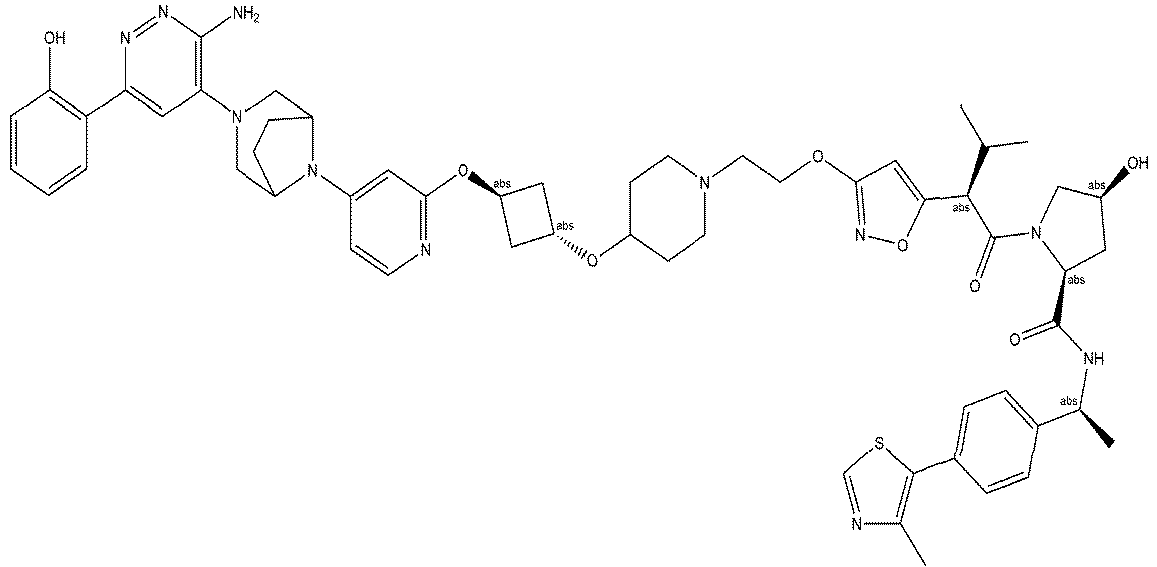
509 (2S,4R)-1-((2R)-2-(3-(2-((2S)-4-(2-((4-(3-(3-amino-6-(2-hydroxyphenyl)pyridazin-4-yl)-3,8-diazabicyclo[3.2.1]octan-8-yl)pyridin-2-yl)oxy)ethyl)-2-methylpiperazin-1-yl)ethoxy)isoxazol-5-yl)-3-methylbutanoyl)-4-hydroxy-N-((S)-1-(6-(4-methylthiazol-5-yl)pyridin-3-yl)ethyl)pyrrolidine-2-carboxamide 
510 (2S,4R)-1-((2S)-2-(3-(2-(1-(2-((4-(3-(3-amino-6-(2-hydroxyphenyl)pyridazin-4-yl)-3,8-diazabicyclo[3 .2.1]octan-8-yl)pyridin-2-yl)oxy)ethyl)piperidin-4-yl)ethoxy)isoxazol-5-yl)-3-methylbutanoyl)-4-hydroxy-N-((S)-1-(4-(4-methylthiazol-5-yl)phenyl)ethyl)pyrrolidine-2-carboxamide 
511 (2S,4R)-1-((2R)-2-(3-(2-(1-(2-((4-(3-(3-amino-6-(2-hydroxyphenyl)pyridazin-4-yl)-3,8-diazabicyclo[3 .2.1]octan-8-yl)pyridin-2-yl)oxy)ethyl)piperidin-4-yl)ethoxy)isoxazol-5-yl)-3-methylbutanoyl)-4-hydroxy-N-((S)-1-(4-(4-methylthiazol-5-yl)phenyl)ethyl)pyrrolidine-2-carboxamide 
512 (2S,4R)-1-((2S)-2-(2-(4-((4-((1r,3r)-3-((4-(3-(3-amino-6-(2-hydroxyphenyl)pyridazin-4-yl)-3,8-diazabicyclo[3 .2.1]octan-8-yl)pyridin-2-yl)oxy)cyclobutoxy)piperidin-1-yl)methyl)piperidin-1-yl)acetamido)-3,3-dimethylbutanoyl)-4-hydroxy-N-((S)-1-(4-(4-methylthiazol-5-yl)phenyl)ethyl)pyrrolidine-2-carboxamide 
513 (2S,4R)-1-((2S,3S)-4-(2-((4-(3-(3-amino-6-(2-hydroxyphenyl)pyridazin-4-yl)-3,8-diazabicyclo[3.2.1]octan-8-yl)pyridin-2-yl)oxy)ethoxy)-3-methyl-2-(3-methylisoxazol-5-yl)butanoyl)-4-hydroxy-N-((S)-1-(4-(4-methylthiazol-5-yl)phenyl)ethyl)pyrrolidine-2-carboxamide 
514 (2S,4R)-1-((2R,3S)-4-(2-((4-(3-(3-amino-6-(2-hydroxyphenyl)pyridazin-4-yl)-3,8-diazabicyclo[3 .2.1]octan-8-yl)pyridin-2-yl)oxy)ethoxy)-3-methyl-2-(3-methylisoxazol-5-yl)butanoyl)-4-hydroxy-N-((S)-1-(4-(4-methylthiazol-5-yl)phenyl)ethyl)pyrrolidine-2-carboxamide 
515 (2S,4R)-4-hydroxy-1-((2R)-2-(3-(2-(4-((1r,3R)-3-((4-(3-(2-(2-hydroxyphenyl)imidazo[1,2-a]pyrimidin-5-yl)-3,8-diazabicyclo[3 .2.1]octan-8-yl)pyridin-2-yl)oxy)cyclobutoxy)piperidin-1-yl)ethoxy)isoxazol-5-yl)-3-methylbutanoyl)-N-((S)-1-(4-(4-methylthiazol-5-yl)phenyl)ethyl)pyrrolidine-2-carboxamide 
516 (2S,4R)-1-((2R)-2-(3-(2-(4-((1r,3R)-3-((4-(3-(7-amino-2-(2-hydroxyphenyl)imidazo[1,2-a]pyrimidin-5-yl)-3,8-diazabicyclo[3.2.1]octan-8-yl)pyridin-2-yl)oxy)cyclobutoxy)piperidin-1-yl)ethoxy)isoxazol-5-yl)-3-methylbutanoyl)-4-hydroxy-N-((S)-1-(4-(4-methylthiazol-5-yl)phenyl)ethyl)pyrrolidine-2-carboxamide 
517 (3R,5S)-1-((2R)-2-(3-(2-(4-((1r,3R)-3-((4-(3-(3-amino-6-(2-(phosphonooxy)phenyl)pyridazin-4-yl)-3,8-diazabicyclo[3.2.1]octan-8-yl)pyridin-2-yl)oxy)cyclobutoxy)piperidin-1-yl)ethoxy)isoxazol-5-yl)-3-methylbutanoyl)-5-(((S)-1-(4-(4-methylthiazol-5-yl)phenyl)ethyl)carbamoyl)pyrrolidi n-3-yl dihydrogen phosphate 
518 (2S,4R)-1-((2S)-2-(3-(3-((3-(((4-(3-(3-amino-6-(2-hydroxyphenyl)pyridazin-4-yl)-3,8-diazabicyclo[3 .2.1]octan-8-yl)pyridin-2-yl)oxy)methyl)azetidin-1-yl)methyl)azetidin-1-yl)isoxazol-5-yl)-3-methylbutanoyl)-4-hydroxy-N-((S)-1-(4-(4-methylthiazol-5-yl)phenyl)ethyl)pyrrolidine-2-carboxamide 
519 (2S,4R)-1-((2R)-2-(3-(3-((3-(((4-(3-(3-amino-6-(2-hydroxyphenyl)pyridazin-4-yl)-3,8-diazabicyclo[3.2.1]octan-8-yl)pyridin-2-yl)oxy)methyl)azetidin-1-yl)methyl)azetidin-1-yl)isoxazol-5-yl)-3-methylbutanoyl)-4-hydroxy-N-((S)-1-(4-(4-methylthiazol-5-yl)phenyl)ethyl)pyrrolidine-2-carboxamide 
520 (2S,4R)-1-((2S)-2-(2-(4-((1r,3S)-3-((4-(3-(3-amino-6-(2-hydroxyphenyl)pyridazin-4-yl)-3,8-diazabicyclo[3 .2.1]octan-8-yl)pyridin-2-yl)oxy)cyclobutoxy)piperidin-1-yl)acetamido)-3,3-dimethylbutanoyl)-4-hydroxy-N-((S)-1-(4-(4-methylthiazol-5-yl)phenyl)ethyl)pyrrolidine-2-carboxamide 
521 (2S,4R)-1-((2S)-2-(3-(4-(3-(5-((1r,3r)-3-((4-(3-(3-amino-6-(2-hydroxyphenyl)pyridazin-4-yl)-3,8-diazabicyclo[3 .2.1]octan-8-yl)pyridin-2-yl)oxy)cyclobutoxy)pyrimidin-2-yl)prop-2-yn-1-yl)piperazin-1-yl)isoxazol-5-yl)-3-methylbutanoyl)-4-hydroxy-N-((S)-1-(4-(4-methylthiazol-5-yl)phenyl)ethyl)pyrrolidine-2-carboxamide 
522 (2S,4R)-1-((2R)-2-(3-(4-(3-(5-((1r,3r)-3-((4-(3-(3-amino-6-(2-hydroxyphenyl)pyridazin-4-yl)-3,8-diazabicyclo[3 .2.1]octan-8-yl)pyridin-2-yl)oxy)cyclobutoxy)pyrimidin-2-yl)prop-2-yn-1-yl)piperazin-1-yl)isoxazol-5-yl)-3-methylbutanoyl)-4-hydroxy-N-((S)-1-(4-(4-methylthiazol-5-yl)phenyl)ethyl)pyrrolidine-2-carboxamide 
523 (2S,4R)-4-hydroxy-N-((S)-2-(2-(2-((6-(2-hydroxyphenyl)pyridazin-3-yl)amino)ethoxy)ethoxy)-1-(4-(4-methylthiazol-5-yl)phenyl)ethyl)-1-((S)-3-methyl-2-(3-methylisoxazol-5-yl)butanoyl)pyrrolidine-2-carboxamide 
524 (2S,4R)-4-hydroxy-N-((S)-2-(2-(2-((6-(2-hydroxyphenyl)pyridazin-3-yl)amino)ethoxy)ethoxy)-1-(4-(4-methylthiazol-5-yl)phenyl)ethyl)-1-((R)-3-methyl-2-(3-methylisoxazol-5-yl)butanoyl)pyrrolidine-2-carboxamide 
525 (2S,4R)-4-hydroxy-N-((R)-2-(2-(2-((6-(2-hydroxyphenyl)pyridazin-3-yl)amino)ethoxy)ethoxy)-1-(4-(4-methylthiazol-5-yl)phenyl)ethyl)-1-((S)-3-methyl-2-(3-methylisoxazol-5-yl)butanoyl)pyrrolidine-2-carboxamide 
526 (2S,4R)-4-hydroxy-N-((R)-2-(2-(2-((6-(2-hydroxyphenyl)pyridazin-3-yl)amino)ethoxy)ethoxy)-1-(4-(4-methylthiazol-5-yl)phenyl)ethyl)-1-((R)-3-methyl-2-(3-methylisoxazol-5-yl)butanoyl)pyrrolidine-2-carboxamide 
527 (2S,4R)-N-((S)-2-((5-(3-amino-6-(2-hydroxyphenyl)pyridazin-4-yl)pentyl)oxy)-1-(4-(4-methylthiazol-5-yl)phenyl)ethyl)-4-hydroxy-1-((S)-3-methyl-2-(3-methylisoxazol-5-yl)butanoyl)pyrrolidine-2-carboxamide 
528 (2S,4R)-N-((S)-2-((5-(3-amino-6-(2-hydroxyphenyl)pyridazin-4-yl)pentyl)oxy)-1-(4-(4-methylthiazol-5-yl)phenyl)ethyl)-4-hydroxy-1-((R)-3-methyl-2-(3-methylisoxazol-5-yl)butanoyl)pyrrolidine-2-carboxamide 
529 (2S,4R)-N-((R)-2-((5-(3-amino-6-(2-hydroxyphenyl)pyridazin-4-yl)pentyl)oxy)-1-(4-(4-methylthiazol-5-yl)phenyl)ethyl)-4-hydroxy-1-((S)-3-methyl-2-(3-methylisoxazol-5-yl)butanoyl)pyrrolidine-2-carboxamide 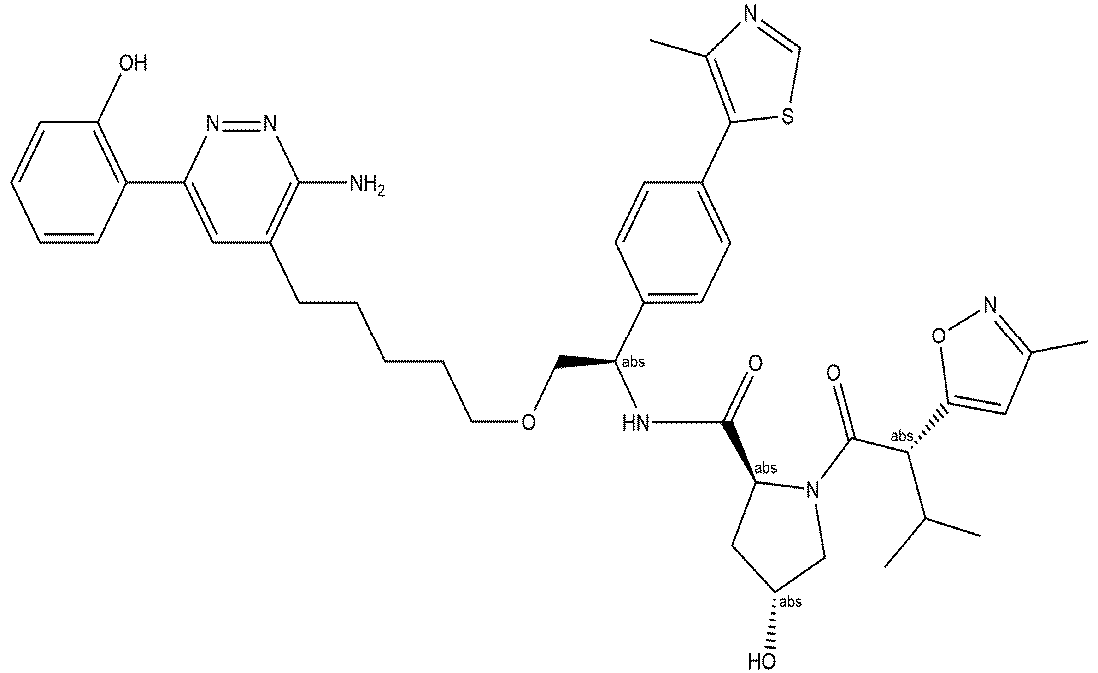
530 (2S,4R)-N-((R)-2-((5-(3-amino-6-(2-hydroxyphenyl)pyridazin-4-yl)pentyl)oxy)-1-(4-(4-methylthiazol-5-yl)phenyl)ethyl)-4-hydroxy-1-((R)-3-methyl-2-(3-methylisoxazol-5-yl)butanoyl)pyrrolidine-2-carboxamide 
531 (2S,4R)-1-((2S)-2-(3-(2-((2R,4S)-1-(((1r,3R)-3-((4-(3-(3-amino-6-(2-hydroxyphenyl)pyridazin-4-yl)-3,8-diazabicyclo[3 .2.1]octan-8-yl)pyridin-2-yl)oxy)cyclobutyl)methyl)-2-methylpiperidin-4-yl)ethoxy)isoxazol-5-yl)-3-methylbutanoyl)-4-hydroxy-N-((S)-1-(4-(4-methylthiazol-5-yl)phenyl)ethyl)pyrrolidine-2-carboxamide 
532 (2S,4R)-1-((2S)-2-(3-(2-(4-((1r,3S)-3-((4-(3-(3-amino-6-(2-hydroxyphenyl)pyridazin-4-yl)-3,8-diazabicyclo[3 .2.1]octan-8-yl)pyridin-2-yl)oxy)cyclobutoxy)piperidin-1-yl)ethoxy)isoxazol-5-yl)-3-methylbutanoyl)-N-((S)-3-cyano-1-(4-(4-methylthiazol-5-yl)phenyl)propyl)-4-hydroxypyrrolidine-2-carboxamide 
533 (2S,4R)-1-((2R)-2-(3-(2-(4-((1r,3R)-3-((4-(3-(3-amino-6-(2-hydroxyphenyl)pyridazin-4-yl)-3,8-diazabicyclo[3 .2.1]octan-8-yl)pyridin-2-yl)oxy)cyclobutoxy)piperidin-1-yl)ethoxy)isoxazol-5-yl)-3-methylbutanoyl)-N-((S)-3-cyano-1-(4-(4-methylthiazol-5-yl)phenyl)propyl)-4-hydroxypyrrolidine-2-carboxamide 
534 (2S,4R)-1-((2S,3S)-4-(2-(4-(3-amino-6-(2-hydroxyphenyl)pyridazin-4-yl)-1H-pyrazol-1-yl)ethoxy)-3-methyl-2-(3-methylisoxazol-5-yl)butanoyl)-4-hydroxy-N-((S)-1-(4-(4-methylthiazol-5-yl)phenyl)ethyl)pyrrolidine-2-carboxamide 
535 (2S,4R)-1-((2R)-2-(3-(2-((2R,4S)-1-(((1r,3R)-3-((4-(3-(3-amino-6-(2-hydroxyphenyl)pyridazin-4-yl)-3,8-diazabicyclo[3 .2.1]octan-8-yl)pyridin-2-yl)oxy)cyclobutyl)methyl)-2-methylpiperidin-4-yl)ethoxy)isoxazol-5-yl)-3-methylbutanoyl)-4-hydroxy-N-((S)-1-(4-(4-methylthiazol-5-yl)phenyl)ethyl)pyrrolidine-2-carboxamide 
Table 2A. Target protein degradation via exemplary bifunctional degradation compounds of Table 1A Ex. # *DC50 (nM) **Dmax (%)† MH+ NMR transcript 1 D A 856.5 1H NMR (400 MHz, MeOD): δ 9.12 (s, 1H), 8.38-8.32 (m, 2H), 8.06 (s, 1H), 7.69 (d, J = 6.4 Hz, 1H), 7.48-7.45 (m, 5H), 7.07-7.03 (m, 2H), 4.86-4.35 (m, 7H), 4.00-3.80 (m, 6H), 3.60 (s, 9H), 2.50 (s, 3H), 2.30-2.20 (m, 1H), 2.18-2.03 (m, 1H), 1.04 (s, 9H). 2 D A 900.5 1H NMR (400 MHz, CDCl3): δ 8.58 (s, 1H), 8.00 (s, 1H), 7.76 (s, 1H), 7.68 (s, 1H), 7.64(s, 1H), 7.55(d, J = 2.4 Hz, 1H), 7.24-7.54(m, 4H), 6.93(d, J = 8.4 Hz, 1H), 6.83(t, J = 7.9 Hz, 1H), 5.49(s, 1H), 4.69(t, J = 7.2 Hz, 1H), 4.48-4.51(m, 3H), 4.28-4.31(m, 3H), 3.8-3.98(m, 4H), 3.59-3.65(m, 16H), 2.43(s, 3H), 2.12-2.18(m, 1H), 1.39-1.43(m, 4H), 0.90(s, 9H). 3 D A 988.6 1H NMR (400 MHz, CDCl3): δ 8.64 (s, 1H), 8.03 (s, 1H), 7.79 (s, 1H), 7.72 (s, 1H), 7.54-7.58 (m, 2H), 7.19-7.26 (m, 4H), 6.95 (d, J =7.6 Hz, 1H), 6.84 (t, J =6.8 Hz, 1H), 5.42 (s, 2H), 4.65-4.67 (m, 1H), 4.44-4.48 (m, 3H), 4.32-4.38 (m, 3H), 3.81-3.99 (m, 5H), 3.49-3.51 (m, 22H), 2.42-2.49 (m, 4H), 2.10- 2.15 (m, 1H), 0.89 (s, 9H). 4 D A 944.6 1H NMR (400 MHz, CDCl3): δ 8.84 (s, 1H), 8.31 (s, 1H), 8.09 (s, 1H), 8.04 (s, 1H), 7.84(d, J = 7.6 Hz, 1H), 7.37-7.45(m, 4H), 7.26(d, J = 7.2 Hz, 1H), 6.93(d, J = 8.0 Hz, 2H), 4.67(s, 1H), 4.49-4.59(m, 3H), 4.31-4.42(m, 3H), 3.98(d, J = 6.0 Hz, 1H), 3.79-3.89(m, 3H), 3.52-3.61(m, 17H), 2.46(s, 3H), 2.08-2.21(m, 2H), 1.02(s, 9H). 5 D A 1032.6 1H NMR (400 MHz, CD3OD): δ 8.85 (s, 1H), 8.59 (s, 1H), 8.31 (s, 1H), 8.09 (s, 1H), 8.05 (s, 1H), 7.84 (d, J = 7.6 Hz, 1H), 7.64 (d, J = 7.2 Hz, 1H),7.37-7.45 (m, 4H), 7.26 (m, 1H), 6.93-6.95 (m, 2H), 4.68 (d, J = 9.2 Hz, 1H), 4.55-4.60 (m, 1H), 4.45-4.59 (s, 2H), 4.41 (m, 2H), 4.30-4.36 (m, 1H), 4.00 (m, 2H), 3.90 (m, 3H), 3.82 (m, 1H), 3.55 (m, 25H), 2.45 (s, 3H), 2.23 (m,1H), 2.10 (m, 1H),1.03 (s, 9H). 6 C A 993.6 1HNMR (400 MHz, MeOD): δ 8.82 (s, 1H), 7.76-7.74 (m, 2H), 7.42-7.34 (m, 5H), 7.22-7.18 (m, 1H), 6.89-6.86 (m, 2H), 6.53-6.52 (m, 1H), 6.16 (s, 1H), 4.66-4.28 (m, 9H), 4.01-4.00 (m, 2H), 3.82-3.60 (m, 12H), 3.31-3.29 (m, 1H), 3.10-3.08 (m, 2H), 2.51-2.50 (m, 1H), 2.49 (s, 3H), 2.29-2.05 (m, 6H), 2.42-2.29 (m, 2H), 1.01 (s, 9H). 7 B A 1037.6 1H NMR (400 MHz, MeOD): δ 8.83 (s, 1H), 7.77-7.76 (m, 2H), 7.44-7.35 (m, 5H), 7.28-7.20 (m, 1H), 6.90-6.88 (m, 2H), 6.57-6.50 (m, 1H), 6.19 (s, 1H), 4.84-4.25 (m, 9H), 4.01-3.98 (m, 2H), 3.89-3.70 (m, 4H), 3.65-3.61 (m, 12H), 3.30-3.28 (m, 2H, 3.10-3.00 (m, 2H), 2.35 (s, 3H), 2.18-1.99 (m, 6H), 1.02 (s, 9H). 8 C A 1125.5 1H NMR (400 MHz, MeOD): δ 8.84 (s, 1H), 7.76-7.75 (m, 2H), 7.44-7.35 (m, 5H), 7.29-7.20 (m, 1H), 6.91-6.88 (m, 2H), 6.58-6.50 (m, 1H), 6.20 (s, 1H), 4.70-4.25 (m, 9H), 4.02-3.99 (m, 2H), 3.90-3.71 (m, 4H), 3.65-3.61 (m, 21H), 3.10-3.00 (m, 2H), 2.45 (s, 3H), 2.23-2.00 (m, 6H), 1.02 (s, 9H). 9 B A 1081.5 1H NMR (400 MHz, MeOD): δ 8.74 (s, 1H), 7.68-7.66 (m, 2H), 7.34-7.28 (m, 5H), 7.18-7.10 (m, 1H), 6.80-6.78 (m, 2H), 6.43-6.40 (m, 1H), 6.10 (s, 1H), 4.60-4.20 (m, 9H), 3.92-3.89 (m, 2H), 3.80-3.64 (m, 4H), 3.71-3.45 (m, 16H), 3.10-3.00 (m, 1H), 3.00-2.90 (m, 2H), 2.37-2.34 (m, 1H), 2.35 (s, 3H), 2.18-1.99 (m, 6H), 0.92 (s, 9H). 10 B A 1169.6 1H NMR (400 MHz, MeOD): δ 8.84 (s, 1H), 7.77-7.76 (m, 2H), 7.44-7.38 (m, 5H), 7.29-7.20 (m, 1H), 6.91-6.89 (m, 2H), 6.58-6.50 (m, 1H), 6.18 (s, 1H), 4.70-4.25 (m, 9H), 4.02-3.99 (m, 2H), 3.90-3.71 (m, 4H), 3.65-3.61 (m, 25H), 3.10-3.00 (m, 2H), 2.45 (s, 3H), 2.24-2.00 (m, 6H), 1.02 (s, 9H). 11 D A 812.1 1HNMR (400 MHz, MeOD) : δ 8.83 (s, 1H), 8.32 (s, 1H), 8.04 (d, J = 9.6 Hz, 2H), 7.78 (d, J = 7.6 Hz, 1H), 7.65 (d, J = 10.0 Hz, 1H), 7.39 (d, J = 8.0 Hz, 2H), 7.32-7.34 (m, 2H), 7.28 (m, 1H), 6.95 (d, J = 7.6 Hz 2H), 4.69 (d, J = 9.6 Hz 1H), 4.44-4.57 (m, 6H), 4.25-4.35 (m, 1H), 3.60-3.99 (m, 11H), 2.46 (s, 3H), 2.23 (m, 1H), 2.08 (m, 1H), 1.01 (s, 9H). 12 D B 960.4 1HNMR (400 MHz, MeOD): δ 8.83 (s, 1H), 8.27 (s, 1H), 8.01 (d, J = 10.0 Hz, 2H), 7.75-7.77 (m, 2H), 7.48-7.59 (m, 4H), 7.36 (d, J = 7.6 Hz, 1H), 7.18-7.22 (m, 1H), 6.89-7.00(m, 4H), 4.36-4.58 (m, 9H), 4.15-4.16 (m, 2H), 3.83-3.96 (m, 6H), 3.46-3.56 (m, 8H), 2.45 (s, 3H), 2.43-2.44 (m, 1H), 2.22-2.23 (m, 1H), 2.10-2.11 (m, 1H), 1.02 (d, J = 6.8 Hz, 3H), 0.81 (d, J = 6.4 Hz, 3H). 13 D A 1004.4 1H NMR (400MHz, MeOD): δ 8.84 (s, 1H), 8.27 (s, 1H), 8.03(d, J = 13.2 Hz, 2H), 7.75-7.86 (m, 2H), 7.45-7.62 (m, 3H), 7.35-7.41 (m, 1H), 7.19-7.26 (m, 1H), 6.86-7.01 (m, 4H), 4.34-4.62 (m, 9H), 4.09-4.17 (m, 2H), 3.92-4.00 (m, 1H), 3.78-3.90 (m, 5H), 3.62(d, J = 8.0 Hz, 2H), 3.56(m, 10H), 2.46 (s, 4H), 2.12-2.21 (m, 1H), 1.98-2.09 (m, 1H), 1.03 (d, J = 6.4 Hz, 3H), 0.82(d, J = 6.4 Hz, 3H). 14 C 852.3 1H NMR (300 MHz, CD3OD): δ 8.82 (d, J = 11.1 Hz, 1H), 8.29 - 8.18 (m, 1H), 8.11-7.89 (m, 2H), 7.80 (d, J = 8.2 Hz, 1H), 7.48-7.41 (m, 1H), 7.37-7.30 (m, 3H), 7.30 - 7.19 (m, 1H), 6.95-6.83 (m, 2H), 5.89 (s, 1H), 4.59- 4.41 (m, 2H), 4.40-4.30 (m, 4H), 4.27- 4.11 (m, 2H), 3.86 (q, J = 5.3 Hz, 2H), 3.75- 3.59 (m, 6H), 3.56 (s, 3H), 2.42 (d, J = 5.0 Hz, 3H), 2.36 - 2.10 (m, 2H), 2.04-2.01 (m, J = 13.1, 8.1, 4.7 Hz, 1H), 1.26 (s, 1H), 0.99 (d, J = 6.6 Hz, 3H), 0.83 (d, J = 6.8 Hz, 3H) 15 C A 852.3 1H NMR (300 MHz, CD3OD): δ 8.82 (d, J = 6.6 Hz, 1H), 8.26 (dd, J = 3.1, 0.8 Hz, 1H), 8.10 -7.96 (m, 2H), 7.86 -7.75 (m, 1H), 7.45-7.30 (m, 4H), 7.25-7.22 (m, 1H), 6.96- 6.84 (m, 2H), 5.88 (s, 1H), 4.70- 4.42 (m, 3H), 4.41- 4.33 (m, 3H), 4.28 - 4.17 (m, 2H), 3.87 (t, J = 5.0 Hz, 3H), 3.85 -3.63 (m, 2H), 3.59-3.57 (m, 6H), 2.41 (d, J = 12.2 Hz, 3H), 2.38-2.33(m, 1H), 2.25-2.12 (m, 1H), 2.06-2.02 (m, 1H), 1.26 (s, 1H), 0.97 (dd, J = 6.6, 1.8 Hz, 3H), 0.80 (dd, J = 6.6, 1.8 Hz, 3H). 16 D B 896.3 1H NMR (300 MHz, Methanol-d4) δ 8.83 (d, J = 9.2 Hz, 2H), 8.32-8.23 (m, 2H), 8.10 - 7.96 (m, 4H), 7.85- 7.75 (m, 2H), 7.44 (s, 1H), 7.40 - 7.17 (m, 8H), 6.96-6.84 (m, 4H), 5.89 (s, 2H), 4.50-4.48 (m, 5H), 4.41- 4.31 (m, 7H), 4.19-4.09 (m, 3H), 3.86-3.84 (m, 4H), 3.75- 3.49 (m, 25H), 2.43 (d, J = 4.1 Hz, 6H), 2.18 (d, J = 11.3 Hz, 1H), 2.10-1.95 (m, 1H), 1.00 (d, J = 6.6 Hz, 5H), 0.85 (d, J = 6.7 Hz, 5H). 17 B A 896.3 1H NMR (300 MHz, Methanol-d4) δ 8.83 (d, J = 4.8 Hz, 1H), 8.28 (d, J = 5.2 Hz, 1H), 8.10-7.96 (m, 2H), 7.87-7.78 (m, 1H), 7.40 (s, 4H), 7.23-7.21 (m, 1H), 6.96-6.84 (m, 2H), 5.87 (s, 1H), 4.55-4.32 (m, 6H), 4.24 -4.14 (m, 2H), 3.91-3.79 (m, 3H), 3.73-3.52 (m, 12H), 2.42 (d, J = 9.1 Hz, 3H), 2.33-2.31 (m, 1H), 2.21- 1.99 (m, 2H), 0.98-0.96 (m, 3H), 0.81 (d, J = 6.7 Hz, 3H). 18 D B 940.3 1H NMR (300 MHz, CD3OD): δ 8.82-8.81 (m, 1H), 8.30-8.26 (m, 1H), 8.08-7.99 (m, 2H), 7.82-7.80 (m, 1H), 7.44-7.30 (m, 4H), 7.26-7.19 (m, 1H), 6.92-6.87 (m, 2H), 5.91-5.89 (m, 1H), 4.58-4.49 (m, 1H), 4.48-4.41 (m, 1H), 4.40-4.31 (m, 4H), 4.20-4.11 (m, 2H), 3.88-3.82 (m, 2H), 3.73-3.60 (m, 5H), 3.60-3.54 (m, 4H), 3.54-3.43 (m, 8H), 2.43 (s, 3H), 2.37-2.14 (m, 2H), 2.08-1.98 (m, 1H), 1.01-0.84 (m, 6H) 19 C A 940.3 1H NMR (300 MHz, CD3OD): δ 8.83 (s, 1H), 8.28 (s, 1H), 8.07-8.05 (m, 2H), 8.01-7.99 (m, 1H), 7.40-7.38 (m, 4H), 7.23-7.20 (m, 1H), 6.92-6.90 (m, 2H), 5.91-5.87 (m, 1H), 4.50-4.36 (m, 6H), 4.21-4.18 (m, 2H), 3.88-3.83 (m, 3H), 3.71-3.65 (m, 2H), 3.62-3.52 (m, 14H), 2.44 (s, 3H), 2.38-2.26 (m, 1H), 2.23-2.13 (m, 1H), 2.10-2.00 (m, 1H), 1.00-0.98 (m, 3H), 0.83-0.81 (m, 3H) 20 D B 1048.4 1HNMR (400 MHz, MeOD): δ 8.84 (s, 1H), 8.28 (s, 1H), 8.05 (d, J = 12.4 Hz, 2H), 7.38-7.81 (m, 6H), 7.36-7.37 (m, 1H), 6.98-7.00(m, 2H), 6.92 (d, J = 7.6 Hz, 2H), 4.37-4.59 (m, 9H), 4.15-4.16 (m, 2H), 3.83-3.96 (m, 6H), 3.46-3.56 (m, 16H), 2.46 (s, 3H), 2.44-2.45 (m, 1H), 2.21-2.22 (m, 1H), 2.09-2.10 (m, 1H), 1.03 (d, J = 6.4 Hz, 3H), 0.82 (d, J = 6.4 Hz, 3H). 21 C 916.4 1H NMR (400MHz, MeOD): δ 8.79 (s, 1H), 8.25 (s, 1H), 7.98 (s, 2H), 7.75 (t, J = 16.0 Hz, 2H), 7.46-7.57 (m, 3H), 7.32 (d, J = 8.0 Hz, 1H), 7.22 (t, J = 7.2 Hz, 1H), 6.90-6.94 (m, 4H), 4.38-4.56 (m, 9H), 4.12-4.13 (m, 2H), 3.97 (s, 1H), 3.84-3.90 (m, 5H), 3.65-3.71(m, 4H), 2.42(m, 4H), 2.13-2.21 (m, 1H), 1.98-2.09 (m, 1H), 1.02 (d, J = 6.8 Hz, 3H), 0.80 (d, J = 6.8 Hz, 3H). 22 D A 850.3 1H-NMR: (400 MHz, CD3OD ) δ8.89-8.83 (m, 1H), 8.31-8.26 (m, 1H), 8.08-8.03 (m, 2H), 7.85-7.81 (m, 1H), 7.46-7.21 (m, 5H), 6.96-6.87 (m, 2H), 6.15 (s, 1H), 4.52-4.44 (m, 5H), 4.41-4.31 (m, 3H), 3.91-3.80 (m, 2H), 3.72-3.65 (m, 1H), 3.61-3.35 (m, 6H), 2.62-2.51 (m, 2H), 2.45-2.33 (m, 3H), 2.22-2.15 (m, 1H), 2.10-2.01 (m, 1H), 1.84-1.72 (m, 2H), 1.30-1.24 (m, 1H), 1.03-0.97 (m, 3H), 0.91-0.75 (m, 3H). 23 D A 894.6 1H-NMR: (400 MHz, CD3OD ) δ 8.89-8.83 (m, 1H), 8.31-8.26 (m, 1H), 8.08-8.03 (m, 2H), 7.85-7.81 (m, 1H), 7.46-7.21 (m, 5H), 6.96-6.87 (m, 2H), 6.15 (s, 1H), 4.52-4.31 (m, 6H), 3.91-3.80 (m, 3H), 3.72-3.65 (m, 2H), 3.61-3.40 (m, 9H), 2.62-2.51 (m, 2H), 2.45-2.33 (m, 4H), 2.22-2.15 (m, 1H), 2.10-2.01 (m, 1H), 1.84-1.72 (m, 2H), 1.28-1.25 (m, 1H), 1.05-1.00 (m, 3H), 0.88-0.83 (m, 3H). 24 B A 894.6 8.88 (s, 1H), 8.37 (s, 1H), 8.31 (s, 1H), 8.04 (s, 1H), 7.69-7.67 (d, J=8.1Hz, ppm), 7.43-7.39 (m, 5H), 7.03-6.99 (m, 2H), 6.21-6.00 (m, 1H), 4.53-4.48 (m, 3H), 4.44-4.40 (m, 3H), 3.92-3.89 (m, 3H), 3.79-3.76 (m, 1H), 3.62-3.54 (m, 7H), 3.50-3.48 (m, 2H), 3.42-3.40 (m, 2H), 2.64-2.61 (m, 2H), 2.46-2.44 (m, 4H), 2.26-2.18 (m, 1H), 2.13-2.04 (m, 1H), 1.82-1.78 (m, 2H), 1.05-1.02 (d, J=6.6Hz, 3H), 0.85-0.82 (d, J=6.9Hz, 3H) 25 D A 938.4 1H NMR: (400 MHz, CD3OD ) δ8.89-8.86 (m, 1H), 8.33-8.29 (m, 1H), 8.11-8.04 (m, 2H), 7.89-7.83 (m, 1H), 7.49-7.23 (m, 5H), 6.99-6.91 (m, 2H), 6.22 (s, 1H), 4.62-4.59 (m, 3H), 4.50-4.37 (m, 5H), 3.95-3.88 (m, 3H), 3.73-3.68 (m, 2H), 3.64-3.41 (m, 13H), 3.34-3.31 (m, 2H), 2.62-2.54 (m, 2H), 2.41-2.21 (m, 2H), 2.09-2.02 (m, 1H), 1.82-1.74 (m, 2H), 1.09-1.02 (m, 3H), 0.91-0.85 (m, 3H) 26 C A 938.4 1H NMR: (400 MHz, CD3OD ) δ8.89 (s, 1H), 8.31 (s, 1H), 8.14-8.06 (m, 2H), 7.89-7.85 (m, 1H), 7.49-7.41 (m, 4H), 7.29-7.23 (m, 1H), 6.99-6.92 (m, 2H), 6.23 (s, 1H), 4.62-4.47 (m, 4H), 4.42-4.37 (m, 3H), 3.94-3.91 (m, 3H), 3.79-3.73 (m, 1H), 3.64-3.42 (m, 13H), 3.41-3.35 (m, 2H), 2.68-2.61 (m, 2H), 2.46 (s, 3H), 2.23-2.16 (m, 1H), 2.11-2.02 (m, 1H), 1.86-1.78 (m, 2H), 1.08-1.02 (m, 3H), 0.88-0.83 (m, 3H) 27 D A 989.3 1H NMR (400 MHz, CD3OD): δ 8.85 (m, 1H), 7.78-7.72(m, 2H), 7.47-7.45(m, 2H), 7.40-7.34 (m, 3H), 7.23-7.22 (m, 1H), 6.92-6.88 (m, 2H), 6.55-6.53(m, 1H), 6.23 (s, 1H), 5.97 (s, 1H), 4.64-4.59(m, 2H), 4.50(s, 3H), 4.40(s, 2H), 4.33-4.24 (m, 4H), 3.81-3.79 (m, 2H), 3.75-3.65(m, 8H), 3.29 (m, 1H), 3.10-3.07(m, 2H), 2.48-2.46(m, 3H), 2.23-2.20(m,1H),2.13-2.06(m, 6H), 1.05(s, 1H), 0.90-0.89 (d, J=6.8Hz,3H), 0.78-0.76 (d, J=8Hz,3H) 28 A A 989.3 1H NMR (400 MHz, CD3OD): δ 8.88 (m, 1H), 7.79-7.75(m, 2H), 7.49-7.39(m, 5H), 7.24(m, 1H), 6.92-6.90 (m, 2H), 6.56-6.54(m, 1H), 6.25-6.24 (M, 1H), 6.00 (s, 1H), 4.53-4.29(m, 10H), 3.88-3.81 (m, 5H), 3.70-3.63(m, 6H), 3.33(m, 2H), 3.14-3.12(m, 2H), 2.48-2.44(m, 3H), 2.42-2.29(m,1H),2.25-2.12(m, 6H), 1.04-1.02 (d, J=6.4Hz, 3H), 0.88-0.86 (d, J=6.4Hz, 3H) 29 C A 1033.4 1H NMR (400 MHz, CD3OD): δ 8.85 (m, 1H), 7.76-7.74 (m, 2H), 7.45-7.42 (m, 2H), 7.38-7.32 (m, 3H), 7.23-7.22 (m, 1H), 6.90-6.87 (m, 2H), 6.55-6.53 (m, 1H), 6.24 (s, 1H), 5.96 (s, 1H), 4.72-4.46 (m, 4H), 4.41-4.31 (m, 4H), 4.20-4.16 (m, 2H), 3.81-3.78 (m, 2H), 3.74-3.69 (m, 5H), 3.66-3.57 (m, 9H), 3.09-3.06 (m, 2H), 2.45-2.44 (m, 3H), 2.40-2.30 (m, 1H), 2.22-2.20 (m, 3H), 2.18-2.06 (m, 3H), 1.28-1.24 (m, 1H), 1.03-1.02 (d, J=6.8Hz, 3H), 0.88-0.87 (d, J=6.4Hz, 3H) 30 A A 1033.4 1H NMR (400 MHz, CD3OD): δ 8.85 (m, 1H), 7.78-7.66 (m, 2H), 7.53 (s, 1H), 7.42-7.39 (m, 4H), 7.32-7.27 (m, 1H), 6.94-6.87 (m, 2H), 6.79-6.74 (m, 1H), 6.51-6.50 (m, 1H), 5.98 (s, 1H), 4.85-4.79 (m, 3H), 4.56-4.41 (m, 5H), 4.30-4.24 (m, 2H), 3.88-3.86 (m, 4H), 3.77-3.58 (m, 12H), 3.18-3.11 (m, 2H), 2.45-2.42 (m, 3H), 2.31-2.29 (m, 3H), 2.29-2.20 (m, 3H), 2.16-2.00 (m, 1H), 1.29 (m, 1H), 1.03-1.01 (d, J=6.4Hz, 3H), 0.86-0.84 (d, J=6.8Hz, 3H) 31 C A 1092.4 1H NMR (400 MHz, CD3OD): δ 8.87 (s, 1H), 8.20 - 8.70(b, 1H), 8.05 - 8.00(m, 2H), 7.74 - 7.71(m, 1H), 7.53 - 7.32(m, 5H), 7.28 - 7.17(m, 1H), 7.09 - 7.00 (m, 2H), 6.91 - 6.87 (m, 2H), 6.76 - 6.74(m, 1H), 4.63 - 4.47(m, 4H), 4.36 - 4.32(m, 1H), 3.85 - 3.62(m, 5H), 3.57 - 3.41(m, 10H), 3.14 - 3.07(m, 2H), 2.90 - 2.88 (m, 2H), 2.77 - 2.62(m, 6H), 2.46(s, 3H), 2.38 - 2.24(m, 2H), 2.23 - 2.11(m, 3H), 2.08 - 1.96(m, 3H), 1.28(m, 1H), 1.00 - 0.98(m, 9H) 32 D A 979.3 1H NMR: (400 MHz, CD3OD ) δ 8.00 (s, 1H), 7.77-7.76 (d, J = 7.2 Hz, 1H), 7.43-7.32 (m, 5H), 7.23 (s, 1H), 7.15 (s, 1H), 6.91-6.87 (t, J = 14.4 Hz, 2H), 6.00-5.91 (q, J = 18.8 Hz, 2H), 4.79 (s, 1H), 4.67 (s, 1H), 4.56-4.50 (t, J = 24.8 Hz, 3H), 4.36-4.30 (m, 3H), 4.02-3.99 (t, J = 11.2 Hz, 2H), 3.89-3.85 (q, J = 15.2 Hz, 2H), 3.80-3.72 (m, 3H), 3.63-3.59 (t, J = 17.2 Hz, 10H), 3.47-3.45 (d, J = 9.2 Hz, 2H), 2.45-2.44 (d, J = 6.4 Hz, 3H), 2.11-2.08 (m, 4H), 1.02-0.99 (d, J = 9.6 Hz, 9H) 33 B A 886.3 1H NMR (300 MHz, Methanol-d4) δ 8.79 (s, 1H), 8.35-8.23 (m, 1H), 8.09-7.97 (m, 2H), 7.80 (d, J = 7.7 Hz, 1H), 7.43-7.37 (m, 2H), 7.31 (d, J = 8.1 Hz, 2H), 7.24 (d, J = 8.1 Hz, 1H), 7.20 (s, 4H), 6.89 (t, J = 7.6 Hz, 2H), 5.64 - 5.52 (m, 1H), 4.66 (s, 1H), 4.60 - 4.44 (m, 3H), 4.27 (d, J = 15.5 Hz, 1H), 3.92 (d, J = 4.6 Hz, 2H), 3.88 - 3.74 (m, 2H), 3.52 (d, J = 6.2 Hz, 2H), 2.71 (t, J = 7.6 Hz, 2H), 2.37 (s, 3H), 2.18 (d, J = 7.7 Hz, 1H), 2.07 (dd, J = 9.4, 4.2 Hz, 1H), 1.89 (dd, J = 7.3, 1.2 Hz, 6H), 1.26 (s, 1H), 1.10-0.95 (d, J = 1.6 Hz, 9H), 0.95-0.90 (m, 1H). 34 D A 944.4 1H NMR: (400 MHz, CD3OD ) δ 8.85 (s, 1H), 7.82-7.80 (d, J=8.4Hz, 1H), 7.64 (s, 1H), 7.49-7.39 (m, 6H), 7.27-7.25 (m, 1H), 6.96-6.93 (m, 2H), 4.70 (s, 1H), 4.60-4.50 (m, 4H), 4.46-4.44 (m, 4H), 4.36-4.32 (m, 1H), 4.10-4.04 (m, 4H), 3.90-3.82 (m, 4H), 3.72-3.68 (m, 7H), 2.47 (m, 3H), 2.21-2.15 (m, 1H), 2.13-2.05 (m, 3H),1.93-1.90 (m, 2H), 1.31 (s, 2H) 1.05 (s, 9H) 35 B A 1183.6 1H NMR: (300 MHz, CD3OD, ppm) δ 8.86 (s, 1H), 7.79 - 7.73 (m, 2H), 7.48 -7.41 (m, 5H), 7.23 - 7.20 (m, 1H), 6.91 - 6.89 (m, 2H), 6.58 - 6.55 (m, 1H), 6.24 (s, 1H), 5.01 - 4.99 (m, 1H), 4.68 (s, 1 H), 4.57 - 4.53 (m, 3H), 4.44 - 4.33 (m, 3H), 4.03 (s, 2H), 3.83 - 3.80 (m, 3H), 3.76 - 3.59 (m, 27H), 3.13 - 3.09 (m, 2H), 2.46 (s, 3H), 2.46 - 2.16 (m, 5H), 2.03 - 1.91 (m, 1H), 1.51 - 1.49 (m, 3H), 1.04 (s, 9H). 36 D B 968.4 1H NMR (400 MHz, CD3OD) δ8.88 (d, J = 1.7 Hz, 1H), 7.79 (dd, J = 8.3, 1.6 Hz, 1H), 7.56 - 7.36 (m, 6H), 7.26 (ddd, J = 8.6, 7.3, 1.5 Hz, 1H), 6.98-6.89 (m, 2H), 6.01 (s, 1H), 4.64- 4.44 (m, 4H), 4.30 (tq, J = 11.0, 6.8, 5.5 Hz, 2H), 3.86-3.47 (m, 12H), 3.25 (m, 2H), 3.07 (t, J = 11.0 Hz, 2H), 2.49 (d, J = 4.4 Hz, 2H), 2.42-2.19 (m, 8H), 2.18- 2.03 (m, 4H), 1.89- 1.78 (m, 2H), 1.66-1.58 (m, 4H), 1.30 (d, J = 10.2 Hz, 1H), 1.06 (d, J = 6.6 Hz, 3H), 0.92 (d, J = 6.7 Hz, 3H) 37 B A 968.4 1H NMR (400 MHz, CD3OD) δ8.88 (d, J = 1.7 Hz, 1H), 7.79 (dd, J = 8.3, 1.6 Hz, 1H), 7.56 - 7.36 (m, 6H), 7.26 (ddd, J = 8.6, 7.3, 1.5 Hz, 1H), 6.98- 6.89 (m, 2H), 6.01 (s, 1H), 4.64 - 4.44 (m, 4H), 4.30 (tq, J = 11.0, 6.8, 5.5 Hz, 2H), 3.86-3.47 (m, 12H), 3.25 (m, 2H), 3.07 (t, J = 11.0 Hz, 2H), 2.49 (d, J = 4.4 Hz, 2H), 2.42 - 2.19 (m, 8H), 2.18-2.03 (m, 4H), 1.89-1.78 (m, 2H), 1.66 -1.58 (m, 4H), 1.30 (d, J = 10.2 Hz, 1H), 1.06 (d, J = 6.6 Hz, 3H), 0.92 (d, J = 6.7 Hz, 3H) 38 C A 1026.5 1H NMR (300 MHz, Methanol-d4) δ 8.89 (s, 1H), 7.85 - 7.72 (m, 2H), 7.56 - 7.36 (m, 6H), 7.31 - 7.16 (m, 2H), 6.97 - 6.85 (m, 2H), 6.58 (dd, J = 6.2, 2.2 Hz, 1H), 6.24 (d, J = 2.1 Hz, 1H), 5.05 (q, J = 6.9 Hz, 1H), 4.67 (d, J = 10.6 Hz, 1H), 4.60 - 4.47 (m, 3H), 4.46 (s, 1H), 4.39 (t, J = 5.4 Hz, 2H), 4.06 (t, J = 5.3 Hz, 2H), 3.87 (dd, J = 10.9, 4.2 Hz, 1H), 3.76 (s, 1H), 3.73 - 3.55 (m, 2H), 3.19 - 2.99 (m, 2H), 2.92 - 2.69 (m, 12H), 2.50 (s, 4H), 2.30 - 2.14 (m, 5H), 1.98 (ddd, J = 13.2, 8.7, 4.6 Hz, 1H), 1.54 (d, J = 7.0 Hz, 3H), 1.41 - 1.26 (m, 4H), 1.20 (t, J = 7.0 Hz, 2H), 1.08 (d, J = 6.5 Hz, 3H), 0.93 (d, J = 4.1 Hz, 1H) 39 D A 1026.5 1H NMR (300 MHz, Methanol-d4) δ 8.88 (d, J = 13.8 Hz, 1H), 7.85 - 7.69 (m, 2H), 7.59 - 7.30 (m, 6H), 7.32 - 7.18 (m, 2H), 6.97 - 6.84 (m, 2H), 6.57 (dd, J = 6.1, 2.1 Hz, 1H), 6.23 (t, J = 2.7 Hz, 1H), 4.99 (q, J = 7.0 Hz, 1H), 4.78 (d, J = 8.8 Hz, 1H), 4.60 (t, J = 8.2 Hz, 1H), 4.53 (s, 2H), 4.37 (dd, J = 6.8, 4.1 Hz, 3H), 4.04 (t, J = 5.3 Hz, 2H), 3.64 (p, J = 6.7 Hz, 3H), 3.40 - 3.24 (m, 1H), 3.11 (dd, J = 15.8, 4.6 Hz, 2H), 2.88 - 2.64 (m, 12H), 2.49 (d, J = 13.8 Hz, 4H), 2.34 - 2.10 (m, 6H), 2.06 (s, 1H), 1.95 (td, J = 8.5, 4.2 Hz, 1H), 1.50 (d, J = 7.0 Hz, 3H), 1.33 (td, J = 7.8, 7.4, 4.4 Hz, 5H), 1.20 (t, J = 7.0 Hz, 3H), 1.08 (d, J = 6.7 Hz, 3H), 0.93 (q, J = 6.8 Hz, 1H), 0.74 (dd, J = 19.3, 6.7 Hz, 3H) 40 D C 1059.4 1H NMR (300 MHz, CD3OD): δ 8.86 (s, 1H), 8.06 (d, J = 6.1 Hz, 1H), 7.73 (dd, J = 7.9, 1.6 Hz, 1H), 7.50 0-7.37 (m, 5H), 7.24 (ddd, J = 8.3, 7.2, 1.5 Hz, 1H), 6.95- 6.85 (m, 2H), 6.82- 6.71 (m, 2H), 4.71 (s, 1H), 4.64- 4.45 (m, 5H), 4.37 (d, J = 15.5 Hz, 1H), 4.12- 3.98 (m, 2H), 3.91-3.76 (m, 2H), 3.76- 3.60 (m, 6H), 3.43-3.33 (m, 3H), 3.11 (d, J = 11.6 Hz, 2H), 2.69 (t, J = 7.4 Hz, 2H), 2.61 (t, J = 5.7 Hz, 3H), 2.54 (s, 7H), 2.41 (dd, J = 9.4, 6.2 Hz, 3H), 2.32-2.05 (m, 6H), 1.91 (td, J = 14.8, 7.2 Hz, 2H), 1.05 (s, 9H) 41 C A 1013.6 1H NMR (300 MHz, DMSO-d 6) δ 14.11 (s, 1H), 8.94 (d, J = 2.6 Hz, 1H), 8.42 (d, J = 6.0 Hz, 1H), 7.88 (d, J = 8.0 Hz, 1H), 7.75 (d, J = 5.9 Hz, 1H), 7.49 - 7.12 (m, 6H), 6.81 (dd, J = 10.7, 7.9 Hz, 2H), 6.49 (d, J = 5.9 Hz, 1H), 6.12 (s, 1H), 6.03-5.93 (m, 3H), 5.09 (d, J = 3.7 Hz, 1H), 4.49-4.31 (m, 3H), 4.29- 4.07 (m, 6H), 3.72 (d, J = 8.6 Hz, 1H), 3.38 (s, 6H), 3.18 (s, 2H), 2.98 (d, J = 11.6 Hz, 2H), 2.64 - 2.50 (m, 3H), 2.45 - 2.33 (m, 11H), 2.14-1.93 (s, 8H), 1.18 (d, J = 15.2 Hz, 1H), 1.07 (d, J = 1.3 Hz, 1H), 0.93-0.63 (d, J = 6.6 Hz, 6H) 42 A A 1013.6 1H NMR (300 MHz, DMSO-d 6) δ 14.11 (s, 1H), 8.94 (d, J = 3.6 Hz, 1H), 8.48 (t, J = 5.9 Hz, 1H), 8.10-7.75 (d, J = 6.0 Hz, 2H), 7.49 -7.12 (m, 6H), 6.87 - 6.75 (m, 2H), 6.49 (dd, J = 6.2, 1.9 Hz, 1H), 6.15 - 6.03 (m, 2H), 5.93 (s, 2H), 5.07 (d, J = 3.6 Hz, 1H), 4.46 (s, 3H), 4.39 - 4.29 (m, 7H), 4.19 (m, 1H), 3.89 (m, 1H), 3.79 - 3.57 (m, 2H), 3.24 (d, J = 28.1 Hz, 3H), 2.98 (d, J = 11.6 Hz, 2H), 2.58 (dq, J = 11.3, 5.5 Hz, 4H), 2.41 (d, J = 3.4 Hz, 10H), 2.30 - 2.11 (m,3H), 2.07 - 1.81 (m,4H), 1.01-0.76 (d,J = 6.7 Hz, 6H). 43 C 1011.5 1H NMR (400 MHz, CD3OD): δ8.84 (s, 1H), 8.04-8.03 (d, J=6.0Hz, 1H), 7.71-7.69 (d, J= 6.8Hz, 1H), 7.46-7.34 (m, 5H), 7.21-7.18 (m, 1H), 6.89-6.74 (m, 4H), 5.97 (s, 1H), 4.61-4.50 (m, 3H), 4.48 (s, 1H), 4.39-4.38(d, J=2.4Hz, 2H), 4.24 (s, 2H), 3.77-3.70 (m, 2H), 3.38-3.31 (m, 2H), 3.09-3.07 (m, 2H), 2.71-2.03 (m, 24H), 1.90-1.85 (m, 2H), 1.05-1.03 (d, J=6.4Hz, 3H), 0.91-0.89 (d, J=6.4Hz, 3H) 44 C A 1011.5 1H NMR (400 MHz, CD3OD): δ8.86 (s, 1H), 8.04-8.03 (d, J=6.0Hz, 1H), 7.71-7.69 (d, J= 6.8Hz, 1H), 7.46-7.41 (m, 5H), 7.22-7.18 (m, 1H), 6.89-6.72 (m, 4H), 5.99 (s, 1H), 4.59-4.50 (m, 2H), 4.48-4.43 (m, 4H), 4.31-4.28 (m, 2H), 3.88-3.81 (m, 1H), 3.68-3.66 (m, 2H), 3.37-3.31 (m, 2H), 3.11-3.08 (m, 2H), 2.77-2.74 (m, 2H),2.69-2.66 (m, 3H), 2.56-2.38 (m, 13 H), 2.26-2.14 (m, 7H), 1.89-1.85 (m, 2H), 1.05-1.03 (d, J=6.4Hz, 3H), 0.91-0.89 (d, J=6.4Hz, 3H) 45 D A 1059.1 1H NMR (300 MHz, CD3OD) : δ 8.88-8.66 (m, 1H), 8.09-7.88 (m, 1H),7.76-7.57 (m,1H), 7.52-7.01 (m, 6H), 6.92-6.62(m, 4H), 4.66-4.21(m, 6H), 3.94-3.72 (m, 2H),3.69-3.33 (m, 12H), 3.14-2.89 (m, 4H), 2.81-2.34 (m, 14H), 2.32-1.78 (m, 8H), 1.32-0.74 (m, 12H). 46 D B 1027.6 1H NMR (300 MHz, DMSO-d 6) δ 14.10 (s, 1H), 8.99 - 8.83 (m, 1H), 8.25 (d, J = 7.8 Hz, 1H), 7.92 - 7.83 (m, 2H), 7.75- 7.12 (m, 6H), 6.81 (td, J = 8.4, 2.2 Hz, 2H), 6.49 (dd, J = 6.1, 2.0 Hz, 1H), 6.15 -5.93 (m, 4H), 5.06 (d, J = 3.6 Hz, 1H), 4.98 - 4.79 (m, 1H), 4.38 (t, J = 7.7 Hz, 3H), 4.19 (dt, J = 21.0, 5.6 Hz, 5H), 3.98 (m, 1H),3.71 (d, J = 8.6 Hz, 2H), 3.57 - 3.34 (m, 2H), 3.33 - 3.15 (m, 2H), 2.97 (d, J = 11.6 Hz, 4H), 2.57- 2.40 (d, J = 8.0 Hz, 11H), 2.31 - 2.07 (m, 1H), 2.06 - 1.97 (m, 2H), 1.91 - 1.66 (m, 3H), 1.42 (d, J = 7.0 Hz, 1H), 1.31 (d, J = 7.0 Hz, 3H), 0.92 - 0.67 (m, 6H). 47 A A 1027.7 1H NMR (300 MHz, DMSO-d 6) δ 14.11 (s, 1H), 8.95 (s, 1H), 8.37 (d, J = 7.6 Hz, 1H), 7.88 -7.75 (d, J = 5.9 Hz, 2H), 7.49 - 7.28 (m, 6H), 7.18 (ddd, J = 8.3, 7.0, 1.6 Hz, 1H), 6.88 - 6.75 (m, 2H), 6.49 (dd, J = 6.2, 2.0 Hz, 1H), 6.16 - 6.02 (m, 2H), 5.93 (s, 2H), 5.05 (d, J = 3.7 Hz, 1H), 5.00 - 4.81 (m, 1H), 4.46 (s, 2H), 4.39 - 4.13 (m, 6H), 3.72 - 3.55 (m, 2H), 3.45 - 3.35 (m, 1H), 3.21 (d, J = 11.7 Hz, 2H), 2.98 (d, J = 11.6 Hz, 2H), 2.59 (q, J = 6.5 Hz, 4H), 2.42 (s, 6H), 2.17 (dd, J = 20.0, 8.3 Hz, 3H), 1.94 (s, 4H), 1.75 (t, J = 9.6 Hz, 1H), 1.37 (dd, J = 20.9, 7.0 Hz, 3H), 1.17 (d, J = 14.9 Hz, 1H), 1.05 - 0.87 (m, 3H), 0.77 (dd, J = 10.6, 6.7 Hz, 3H). 48 D A 1092.9 1H NMR (300 MHz, CD3OD,ppm): δ 8.80 (s, 1H), 8.04 (d, J = 6.1 Hz, 1H), 7.96 (d, J = 2.3 Hz, 1H), 7.67 (dd, J = 7.9, 1.6 Hz, 1H), 7.49-7.40 (m, 4H), 7.35 (d, J = 8.4 Hz, 2H), 7.22 (ddd, J = 8.5, 7.3, 1.5 Hz, 1H), 6.95-6.80 (m, 2H), 6.71 (dd, J = 8.4, 5.0 Hz, 2H), 6.60 (d, J = 2.4 Hz, 1H), 4.68-4.55 (m, 2H), 4.50 (d, J = 8.3 Hz, 4H), 4.32 (d, J = 15.4 Hz, 1H), 3.89 (d, J = 11.2 Hz, 1H), 3.80 (dd, J = 10.9, 3.7 Hz, 1H), 3.65-3.41 (m, 8H), 3.28 (s, 3H), 3.07 (t, J = 3.5 Hz, 3H), 3.02 (d, J = 3.2 Hz, 1H), 2.76-2.57 (m, 8H), 2.41 (s, 3H), 2.22 (q, J = 5.3, 4.2 Hz, 3H), 2.11 (dt, J = 7.8, 3.8 Hz, 3H), 1.93 (p, J = 6.5 Hz, 2H), 1.03 (d, J = 8.4 Hz, 9H), 0.89 (s, 1H). 49 D B 1084.9 1H NMR (300 MHz, CD3OD)δ 8.84 (s, 1H), 8.02 (d, J = 6.0 Hz, 1H), 7.71 (d, J = 7.7 Hz, 1H), 7.47 - 7.33 (m, 5H), 7.21 (t, J = 7.6 Hz, 1H), 6.86 (t, J = 8.0 Hz, 2H), 6.77 - 6.64 (m, 2H), 4.66 (s, 1H), 4.54 (m, 3H), 4.41 (s, 1H), 4.22 (s, 1H), 3.98 - 3.69 (m, 2H), 3.70 (t, J = 7.3 Hz, 2H),3.5(m, 2H) ,3.33 (d, J = 11.8 Hz, 3H), 3.08 (d, J = 11.4 Hz, 4H), 2.62 (dt, J = 13.2, 7.3 Hz, 4H), 2.48 - 2.10 (m, 7H), 2.30 (m, 5H), 2.20 - 2.02 (m, 5H),1.88 (s, 3H), 1.51 (dd, J = 16.3, 7.1 Hz, 3H), 1.26 (s, 3H), 1.00 (d, J = 5.7 Hz, 9H), 0.87 (s, 1H). 50 C A 1106.9 1H NMR (300 MHz, CD3OD): δ 8.85 (s, 1H), 8.10-8.00 (m, 2H), 7.80-7.10 (m, 8H), 6.90-6.75 (m, 5H), 5.00 (m, 1H), 4.60-4.30 (m, 5H), 3.90-3.30 (m, 14H), 3.10-3.00 (m, 2H), 2.80-2.40 (m, 11H), 2.30-1.90 (m, 8H), 1.50-1.40 (m, 3H), 1.30-1.40 (s, 1H), 1.02 (m, 9H) 51 C A 986.8 1H NMR (300 MHz, CD3OD): δ 8.85 (s, 1H), 7.78-7.75 (m, 1H), 7.51 (s, 1H), 7.41-7.35 (m, 4H), 7.27-7.20 (m, 1H), 6.92-6.90 (m, 2H), 5.13-4.98 (m, 1H), 4.68 (s, 1H), 4.60-4.53 (m, 1H), 4.55-4.34 (m, 1H), 4.10-4.00 (m, 2H), 3.86-3.82 (m, 1H), 3.80-3.74 (m, 2H), 3.73-3.64 (m, 6H), 3.64-3.59 (m, 2H), 3.52-3.49 (m, 2H), 3.29-3.20 (m, 2H), 3.11-3.01 (m, 2H), 2.46 (s, 3H), 2.42 (s, 2H), 2.38-2.30 (m, 4H), 2.21-2.10 (m, 3H), 2.01-1.91 (m, 1H), 2.86-2.78 (m, 2H), 2.70-2.53 (m, 5H), 1.50 (d, J = 5.1 Hz, 3H), 1.05 (s, 9H) 52 C A 1033.8 1H NMR (300 MHz, CD3OD): δ 8.83 (s, 1H), 8.11- 8.05(m, 1H), 7.75 - 7.71(m, 1H), 7.48- 7.38(m, 5H), 7.28 - 7.17(m, 1H), 6.94 - 6.86 (m, 3H), 6.77 - 6.63 (m, 3H), 4.82(s, 1H), 4.67 - 4.53(m, 3H), 4.50 - 4.42(m, 2H), 4.38- 4.27(m, 1H), 4.23- 4.17(m, 2H), 4.05-3.99(m, 2H), 3.85- 3.72(m, 2H), 3.72- 3.59(m, 12H), 3.39-3.35(m, 1H), 3.14 - 3.06(m, 2H), 2.45(s, 3H), 2.28- 2.02 (m, 6H), 1.29(m, 1H), 1.04 - 0.98(m, 9H) 53 B A 1035.8 1H NMR (300 MHz, CD3OD): δ 8.84 (s, 1H), 8.13- 8.03(m, 1H), 7.75 - 7.71(m, 1H), 7.48- 7.37(m, 5H), 7.28 - 7.13(m, 1H), 6.93 - 6.66 (m, 4H), 4.83(s, 1H), 4.67 - 4.50(m, 3H), 4.50 - 4.35(m, 1H), 4.38- 4.29(m, 1H), 4.05- 3.99(m, 1H), 3.86- 3.78(m, 2H), 3.70-3.52(m, 11H), 3.51- 3.40(m, 2H), 3.14 - 3.05(m, 2H), 2.88-2.79(m, 1H), 2.78- 2.64(m, 2H), 2.45(s, 2H), 2.28- 2.02 (m, 5H), 1.98- 1.87(m, 2H), 1.49- 1.20(m, 6H), 1.08 - 0.98(m, 9H), 0.96-0.88(m, 1H) 54 D A 1061.7 1H NMR (300 MHz, DMSO-d 6) δ 14.11 (s, 1H), 8.94 (d, J = 5.9 Hz, 1H), 8.22 (d, J = 7.7 Hz, 1H), 7.88 (d, J = 8.0 Hz, 1H), 7.75 (d, J = 5.9 Hz, 1H), 7.49 - 7.33 (m, 5H), 7.31 - 7.12 (m, 1H), 6.81 (dd, J = 10.2, 7.8 Hz, 2H), 6.49 (d, J = 6.2 Hz, 1H), 6.12 (d, J = 1.9 Hz, 1H), 5.93 (s, 2H), 5.08 (d, J = 3.5 Hz, 1H), 4.80 (t, J = 7.2 Hz, 1H), 4.49 - 4.33 (m, 3H), 4.24 (q, J = 7.0, 6.0 Hz, 5H), 3.98 (d, J = 10.0 Hz, 1H), 3.58 (d, J = 11.0 Hz, 1H), 3.50 - 3.33 (m, 2H), 3.21 (d, J = 11.7 Hz, 2H), 2.97 (d, J = 11.7 Hz, 2H), 2.61 (dt, J = 21.6, 6.2 Hz, 4H), 2.61 (dt, J = 21.6, 6.2 Hz, 3H), 2.41 (d, J = 4.0 Hz, 8H), 2.18 - 2.07 (m, 6H), 1.93 (s, 3H), 1.230.65 (m, 6H) 1063.7 55 A A 1061.7 1H NMR (300 MHz, DMSO-d 6) δ 14.10 (s, 1H), 8.95 (s, 1H), 8.37 (d, J = 7.7 Hz, 1H), 7.93 - 7.83 (m, 1H), 7.75 (d, J = 6.0 Hz, 1H), 7.49 - 7.28 (m, 5H), 7.18 (t, J = 8.1 Hz, 1H), 6.81 (t, J = 9.0 Hz, 2H), 6.50 (dd, J = 6.2, 2.1 Hz, 1H), 6.12 (d, J = 1.9 Hz, 1H), 5.94 (s, 2H), 5.08 (d, J = 3.9 Hz, 1H), 4.86 (q, J = 8.0, 7.6 Hz, 1H), 4.46 (s, 2H), 4.38 - 4.18 (m, 6H), 3.91 (t, J = 10.8 Hz, 2H), 3.71 (t, J = 10.8 Hz, 2H), 3.21 (d, J = 11.5 Hz, 2H), 2.98 (d, J = 11.6 Hz, 5H), 2.63 (dt, J = 24.3, 5.9 Hz, 3H), 2.43 (d, J = 4.6 Hz, 8H), 2.14 (d, J = 7.4 Hz, 2H), 1.93 (s, 3H), 1.80 (s, 1H), 1.34 (d, J = 7.0 Hz, 3H), 1.20 (s, 1H), 0.95 (d, J = 6.4 Hz, 3H), 0.74 (d, J = 6.7 Hz, 3H). 1063.7 56 A A 1060.7 1H NMR (300 MHz, Methanol-d4): δ 8.84 (d, J = 19.7 Hz, 1H), 8.10 (t, J = 3.3 Hz, 1H), 7.76 (dd, J = 10.9, 6.9 Hz, 2H), 7.58-7.32 (m, 6H), 7.30-7.18 (m, 2H), 6.95-6.83 (m, 2H), 6.83-6.50 (m, 3H), 6.18 (d, J = 2.0 Hz, 1H), 6.05 (d, J = 7.4 Hz, 1H), 5.33-5.23 (m, 1H), 5.05-4.95 (m, 1H), 4.88-4.83 (m, 2H), 4.65 -4.40 (m, 3H), 4.40 -4.30 (m, 1H), 3.96-3.59 (m, 3H), 3.36 (s, 1H), 3.12 (d, J = 11.6 Hz, 2H), 2.66 (t, J = 5.8 Hz, 4H), 2.47 (d, J = 7.8 Hz, 4H), 2.29-1.99 (m,6H), 1.32 (d, J = 13.0 Hz, 2H), 1.05 (t, J = 6.0 Hz, 3H), 0.91 (t, J = 7.5 Hz, 3H). 57 C 1013.7 1H NMR (300 MHz, DMSO-d 6) δ 14.17 (s, 1H), 8.99 (d, J = 3.6 Hz, 1H), 8.52 (d, J = 15.4 Hz, 1H), 7.93 (d, J = 8.1 Hz, 1H), 7.79 (d, J = 5.9 Hz, 1H), 7.51-7.03 (t, J = 7.8 Hz, 6H), 6.92 - 6.79 (m, 2H), 6.54 (d, J = 6.1 Hz, 1H), 6.20 - 6.04 (m, 2H), 5.99 (s, 2H), 5.14 (t, J = 4.2 Hz, 1H), 4.71-4.14 (m, 10H), 3.82 (dd,J = 29.2, 9.3 Hz, 2H), 3.57-3.25 (d, J = 11.4 Hz, 2H), 3.02 (d, J = 11.7 Hz, 2H), 2.60-2.43 (m, 4H), 2.39 (d, J = 7.1 Hz, 10H), 2.18 (s, 4H), 2.05 (s, 4H), 0.96 (t, J = 6.3 Hz, 3H), 0.82-0.67 (d, J = 6.7 Hz, 3H), 0.58 (d, J = 6.8 Hz, 1H). 58 D B 1134.8 59 D A 896.6 1H NMR (300MHz, DMSO-D6): δ 13.84 (s, 1H), 9.04-8.86 (m, 1H), 8.61 (s, 1H), 8.30 (d, J = 7.9 Hz, 1H), 8.21 (d, J = 10.8 Hz, 2H), 8.07-7.97 (m, 1H), 7.54-7.37 (m, 3H), 7.37-7.12 (m, 7H), 6.94 (d, J = 7.6 Hz, 2H), 6.51 (s, 2H), 6.12-6.10 (m, 1H), 5.70-5.56 (m, 1H), 5.21-4.79 (m, 2H), 4.56-4.38 (m, 1H), 4.28 (s, 1H), 4.20-4.10 (m, 2H), 3.76 (d, J = 8.5 Hz, 1H), 3.60-3.35 (m, 2H), 2.66 (t, J = 8.1 Hz, 2H), 2.47-2.40 (m, 3H), 2.37-2.13 (m, 1H), 2.13-1.91 (m, 3H), 1.92-1.74 (m, 4H), 1.50-1.41 (m, 3H), 0.97 (d, J = 6.6 Hz, 2H), 0.84 (d, J = 6.6 Hz, 3H), 0.77 (d, J = 6.7 Hz, 1H). 60 A A 896.6 1H NMR (300MHz, DMSO-D6): δ 13.84 (brs, 1H), 9.04-8.86 (m, 1H), 8.61 (s, 1H), 8.35-8.45 (m, 1H), 8.25-8.15 (m, 2H), 8.07-7.97 (m, 1H), 7.54-7.40 (m, 2H), 7.40-7.30 (m, 2H), 7.30-7.15 (m, 5H),6.95-6.85(m, 2H), 6.51 (s, 2H), 6.15-5.80 (m, 1H), 5.75-5.65 (m,1H), 5.15-5.05 (m, 1H), 5.05-4.85 (m, 1H), 4.56-4.20 (m, 2H), 4.20-4.05 (m, 2H), 3.80-3.55 (m, 2H), 3.60-3.35 (m, 1H), 2.75-2.60 (m, 2H), 2.45-2.35 (m, 3H), 2.30-2.13 (m, 1H), 2.10-1.95 (m, 3H), 1.95-1.70 (m, 4H),1.50-1.30(m, 3H), 1.30-1.20(m, 1H), 1.00-0.90(m, 3H), 0.90-0.70(m, 3H). 61 C A 901.6 1H NMR (400MHz, CD3OD): δ 8.85 (s, 1H), 8.47 - 8.42 (m, 2H), 8.12 (d, J = 4.9 Hz, 2H), 7.83 (d, J = 7.9 Hz, 1H), 7.78 (dd, J = 8.2, 2.5 Hz, 1H), 7.42 (dt, J = 14.0, 8.0 Hz, 5H), 7.34 - 7.25 (m, 1H), 6.92 (t, J = 7.8 Hz, 2H), 5.75 (d, J = 7.3 Hz, 1H), 4.98 - 4.86 (m, 1H), 4.69 (s, 1H), 4.66 - 4.55 (m, 1H), 4.45 (s, 1H), 4.01 - 3.91 (m, 2H), 3.81 - 3.75 (m, 1H), 3.73 - 3.60 (m, 1H), 3.65 - 3.56 (m, 2H), 2.94 (t, J = 7.6 Hz, 2H), 2.46 (s, 3H), 2.19 - 2.06 (m, 1H), 2.12 - 1.98 (m, 5H), 1.57 - 1.49 (m, 3H), 1.33 (d, J = 17.4 Hz, 1H), 1.04 (s, 9H) 62 B A 934.7 1H NMR (400MHz, DMSO-D6): δ 9.05 - 8.77 (m, 1H), 8.50 - 8.37 (m, 2H), 8.27 (s, 1H), 8.20-8.18 (m, 2H), 8.07 - 7.93 (m, 1H), 7.51 - 7.41 (m, 2H), 7.41 - 7.33 (m, 2H), 7.31 - 7.21 (m, 1H), 6.98 - 6.86 (m, 2H), 6.49 (s, 2H), 6.12 - 5.84 (m, 1H), 4.98 - 4.85 (m, 1H), 4.43 - 4.31 (m, 3H), 4.29 (s, 1H), 4.15-4.12 (m, 2H), 3.83-3.80 (m, 2H), 3.72-3.70 (m, 3H), 3.67-3.65 (m, 4H), 2.43-2.40 (m, 3H), 2.38-2.29 (, 7H), 2.27-2.20 (m, 2H), 2.11 - 1.98 (m, 1H), 1.82-1.75 (m, 1H), 1.48 - 1.33 (m, 3H), 1.01 - 0.91 (m, 3H), 0.87 - 0.75 (m, 3H). 63 B A 1068.8 1H NMR (300MHz, CD3OD): δ 8.84 (s, 1H), 7.76-7.70 (m, 2H), 7.45-7.33 (m, 5H), 7.21-7.15 (m, 1H), 6.89-6.87 (m, 2H), 6.52-6.51 (m, 1H), 6.11-6.02 (m, 2H), 5.10-5.00 (m, 1H), 4.99-4.97 (m, 1H), 4.56-4.42 (m, 3H), 4.37-4.27 (m, 4H), 3.77-3.66 (m, 3H), 3.40-3.31 (m, 3H), 3.11-3.07 (m, 2H), 2.81-2.72 (m, 4H), 2.48 (s, 3H), 2.45-2.14 (m, 12H), 2.00-1.82 (m, 3H), 1.59-1.50 (m, 3H), 1.47 (d, J=6.9Hz, 2H), 1.04 (d, J = 6.6Hz, 3H), 0.90 (d, J = 6.9Hz, 3H) 64 A A 1068.8 1H NMR (300MHz, CD3OD): δ 8.86 (s, 1H), 7.76-7.71 (m, 2H), 7.46-7.38 (m, 5H), 7.22-7.15 (m, 1H), 6.90-6.88 (m, 2H), 6.53-6.51 (m, 1H), 6.12-6.00 (m, 2H), 5.11-4.97 (m, 2H), 4.54-4.43 (m, 3H), 4.39-4.30 (m, 4H), 3.80-3.61 (m, 3H), 3.40-3.35 (m, 2H), 3.12-3.09 (m, 2H), 2.82-2.72 (m, 4H), 2.48 (s, 3H), 2.47-2.15 (m, 12H), 2.00-1.82 (m, 4H), 1.62-1.50 (m, 5H), 1.04 (d, J = 6.6Hz, 3H), 0.90 (d, J = 6.9Hz, 3H) 65 D NA 924.7 1H NMR (300MHz, CD3OD): δ 8.88 (d, J = 8.0 Hz, 1H), 7.77 (d, J = 7.5 Hz, 1H), 7.49 - 7.40 (m, 2H), 7.37 (d, J = 8.2 Hz, 2H), 7.25 (t, J = 8.0 Hz, 1H), 6.91 (d, J = 7.9 Hz, 3H), 6.05 (s, 1H), 5.00 (d, J = 6.9 Hz, 1H), 4.57 (t, J = 8.0 Hz, 1H), 4.43 (s, 1H), 4.36 - 4.26 (m, 6H), 3.81 (t, J = 4.6 Hz, 2H), 3.75 (d, J = 9.2 Hz, 1H), 3.70 - 3.63 (m, 4H), 3.60 (s, 1H), 3.59 (s, 5H), 3.51 (d, J = 6.2 Hz, 2H), 3.36 (s, 2H), 2.61 (s, 2H), 2.49 (d, J = 6.2 Hz, 3H), 2.20 (d, J = 7.6 Hz, 1H), 1.59 (d, J = 7.4 Hz, 4H), 1.49 (d, J = 7.0 Hz, 3H), 1.33 (d, J = 16.4 Hz, 7H), 1.05 (d, J = 6.6 Hz, 3H), 0.98 - 0.82 (m, 4H). 66 D A 924.7 1H NMR (300MHz, CD3OD): δ 8.88 (d, J = 3.3 Hz, 1H), 7.78 (d, J = 8.4 Hz, 1H), 7.48 - 7.35 (m, 4H), 7.25 (t, J = 8.2 Hz, 1H), 6.96 - 6.87 (m, 3H), 6.01 (d, J = 16.6 Hz, 1H), 5.04 (d, J = 7.1 Hz, 1H), 4.52 (t, J = 8.2 Hz, 1H), 4.44 (s, 1H), 4.34 (s, 1H), 4.34 (d, J = 9.3 Hz, 1H), 4.29 (d, J = 6.0 Hz, 4H), 3.87 - 3.79 (m, 3H), 3.72 - 3.58 (m, 5H), 3.56 (s, 6H), 3.52 (d, J = 6.0 Hz, 1H), 3.36 (s, 1H), 3.22 (s, 2H), 2.60 (s, 2H), 2.48 (d, J = 2.7 Hz, 3H), 2.17 (d, J = 10.3 Hz, 1H), 1.97 (ddd, J = 13.7, 8.8, 4.8 Hz, 1H), 1.59 (d, J = 7.1 Hz, 1H), 1.52 (d, J = 7.0 Hz, 3H), 1.49 (s, 2H), 1.35 (s, 1H), 1.31 (s, 1H), 1.20 (s, 7H), 1.05 (d, J = 6.5 Hz, 3H), 0.90 (dd, J = 10.9, 6.7 Hz, 3H). 67 D NA 980.7 1H NMR (300MHz, CD3OD): δ 8.88 (d, J = 5.1 Hz, 1H), 7.84 - 7.75 (m, 1H), 7.53 (s, 1H), 7.50 - 7.34 (m, 4H), 7.26 (t, J = 7.1 Hz, 1H), 6.98 - 6.88 (m, 2H), 6.02 (d, J = 13.4 Hz, 1H), 5.01 (q, J = 6.8 Hz, 1H), 4.58 (t, J = 7.9 Hz, 1H), 4.43 (s, 1H), 4.36 - 4.28 (m, 1H), 3.89 - 3.71 (m, 3H), 3.67 (d, J = 3.8 Hz, 4H), 3.68 - 3.49 (m, 5H), 3.37 (s, 0H), 3.13 (s, 5H), 2.58 - 2.35 (m, 11H), 2.20 (d, J = 7.9 Hz, 1H), 2.04 - 1.92 (m, 1H), 1.74 (s, 4H), 1.64 (d, J = 16.5 Hz, 10H), 1.50 (d, J = 7.0 Hz, 3H), 1.31 (s, 2H), 1.06 (d, J = 6.6 Hz, 3H), 1.02 - 0.82 (m, 4H). 68 B A 980.7 1H NMR (300MHz, CD3OD): δ 8.88 (s, 1H), 7.80 (dd, J = 8.1, 1.6 Hz, 1H), 7.53 (d, J = 5.0 Hz, 1H), 7.49 - 7.34 (m, 4H), 7.31 - 7.20 (m, 1H), 6.93 (ddd, J = 7.3, 3.8, 2.6 Hz, 2H), 6.03 (s, 1H), 5.04 (q, J = 6.9 Hz, 1H), 4.53 (t, J = 8.1 Hz, 1H), 4.42 (d, J = 16.8 Hz, 1H), 4.37 - 4.29 (m, 2H), 3.88 - 3.74 (m, 3H), 3.73 - 3.45 (m, 8H), 3.37 (s, 0H), 3.14 (t, J = 5.4 Hz, 5H), 2.55 (s, 4H), 2.49 (s, 6H), 2.08 - 1.90 (m, 1H), 1.75 (s, 4H), 1.70 - 1.48 (m, 13H), 1.33 (d, J = 12.4 Hz, 4H), 1.06 (d, J = 6.5 Hz, 3H), 0.91 (t, J = 7.2 Hz, 4H). 69 C A 1072.7 1H NMR (400MHz, DMSO-D6): δ 14.14 (s, 1H), 8.97 (d, J = 12.9 Hz, 1H), 8.33 (d, J = 7.8 Hz, 1H), 8.20 (s, 1H), 7.91 (d, J =7.9 Hz, 1H), 7.77 (d, J = 5.8 Hz, 1H), 7.48-7.34 (d, J = 8.1 Hz, 4H), 7.32-7.17 (m, 3H), 6.85 (m, 2H), 6.54 (d, J=6.1 Hz, 1H), 6.18 (d, J = 5.0 Hz, 2H), 5.98 (s, 2H), 5.45-4.72 (m, 6H), 4.60-4.11 (m, 4H), 3.78 (d, J = 8.6 Hz, 1H), 3.57 (s, 1H), 3.23 (s, 2H), 3.01 (d, J = 11.8 Hz, 2H), 2.60 (m, 4H), 2.50 (m, 3H), 2.26-1.75 (m, 8H), 1.45-1.22 (m, 4H), 0.96-0.76 (m, 6H). 70 A A 1072.7 1H NMR (400MHz, DMSO-D6): δ 14.14 (s, 1H), 8.98 (s, 1H), 8.43 (d, J = 7.6 Hz, 1H), 8.21 (d, J = 2.9 Hz, 1H), 7.91 (d, J = 7.9 Hz, 1H), 7.77 (d, J = 5.9 Hz, 1H), 7.50-7.19 (m, 7H), 6.85 (m, 2H), 6.58-6.51 (m, 1H), 6.19 (d, J = 11.0 Hz, 2H), 5.98 (s, 2H), 5.31 (t, J = 6.1 Hz, 1H), 5.13 (d, J = 10.0 Hz, 2H), 5.06-4.98 (m, 1H), 4.95-4.86 (m, 1H), 4.50 (s, 2H), 4.37 (t, J = 7.9 Hz, 1H), 4.28 (s, 1H), 3.69 (d, J = 9.3 Hz, 2H), 3.52 (m,1H), 3.23 (m, 2H), 3.01 (d, J = 11.6 Hz, 2H), 2.56 (s, 4H), 2.45 (s, 3H), 2.31-1.71 (m, 7H), 1.44-1.30 (d, J = 7.0 Hz, 3H), 1.23 (s, 2H), 0.96 (d, J = 6.3 Hz, 3H), 0.82 (d, J = 12.3, 6.6 Hz, 3H). 71 D NA 952.7 1H NMR (300MHz, CD3OD): δ 8.90 (d, J = 5.5 Hz, 1H), 7.85 - 7.76 (m, 1H), 7.55 - 7.34 (m, 5H), 7.33 - 7.21 (m, 1H), 6.99 - 6.88 (m, 2H), 6.05 (s, 1H), 5.52 (s, 0H), 5.02 (q, J = 7.1 Hz, 1H), 4.59 (t, J = 8.0 Hz, 1H), 4.44 (s, 1H), 4.33 (q, J = 3.9 Hz, 1H), 3.90 - 3.75 (m, 2H), 3.69 (s, 2H), 3.71 - 3.64 (m, 2H), 3.62 (d, J = 2.7 Hz, 2H), 3.63 - 3.46 (m, 3H), 3.21 (s, 5H), 3.08 (s, 4H), 2.60 (s, 2H), 2.50 (d, J = 4.0 Hz, 3H), 2.46 - 2.32 (m, 1H), 2.23 (dd, J = 14.3, 7.2 Hz, 1H), 2.00 (s, 5H), 2.01 - 1.89 (m, 1H), 1.61 (d, J = 7.1 Hz, 2H), 1.51 (d, J = 7.0 Hz, 3H), 1.34 (d, J = 13.0 Hz, 3H), 1.11 - 0.83 (m, 6H). 72 C A 952.7 1H NMR (300MHz, CD3OD): δ 8.89 (d, J = 2.4 Hz, 1H), 7.81 (d, J = 8.1 Hz, 1H), 7.53 (d, J = 5.1 Hz, 1H), 7.50 - 7.35 (m, 4H), 7.27 (t, J = 7.6 Hz, 1H), 7.00 - 6.90 (m, 2H), 6.02 (d, J = 13.3 Hz, 1H), 5.04 (t, J = 7.3 Hz, 1H), 4.53 (t, J = 8.2 Hz, 1H), 4.46 (s, 1H), 4.35 (s, 2H), 4.35 (d, J = 9.3 Hz, 1H), 3.85 (d, J = 9.1 Hz, 1H), 3.85 (s, 2H), 3.74 - 3.58 (m, 5H), 3.53 (t, J = 6.1 Hz, 1H), 3.24 (d, J = 3.7 Hz, 4H), 3.10 (s, 5H), 2.64 (s, 2H), 2.50 (d, J = 1.4 Hz, 3H), 2.39 (s, 2H), 2.25 - 2.14 (m, 1H), 2.07 - 1.95 (m, 4H), 1.57 (dd, J = 19.3, 7.0 Hz, 6H), 1.34 (d, J = 12.2 Hz, 4H), 1.22 (s, 1H), 1.07 (d, J = 6.6 Hz, 3H), 0.90 (d, J = 6.7 Hz, 3H). 73 D NA 966.7 1H NMR (300MHz, CD3OD): δ 8.86 (d, J = 5.7 Hz, 1H), 7.78 (d, J = 7.8 Hz, 1H), 7.51 (s, 1H), 7.40 (p, J = 8.1 Hz, 3H), 7.24 (t, J = 7.9 Hz, 1H), 6.92 (d, J = 8.5 Hz, 2H), 6.00 (d, J = 14.1 Hz, 1H), 5.49 (s, 1H), 4.99 (d, J = 7.1 Hz, 1H), 4.56 (t, J = 7.8 Hz, 1H), 4.42 (s, 1H), 3.84 - 3.70 (m, 2H), 3.69 - 3.57 (m, 1H), 3.51 (s, 1H), 3.11 (s, 5H), 2.74 (s, 2H), 2.59 (d, J = 17.9 Hz, 4H), 2.48 (d, J = 4.2 Hz, 3H), 2.18 (d, J = 7.8 Hz, 1H), 1.82 (s, 6H), 1.62 (s, 4H), 1.48 (d, J = 7.0 Hz, 2H), 1.29 (s, 3H), 1.04 (d, J = 6.6 Hz, 2H), 0.90 (d, J = 6.7 Hz, 3H). 74 C A 966.7 1H NMR (300MHz, CD3OD): δ 8.86 (s, 1H), 7.79 (d, J = 7.8 Hz, 1H), 7.52 (d, J = 5.0 Hz, 1H), 7.48 - 7.35 (m, 4H), 7.24 (t, J = 7.5 Hz, 1H), 6.96 - 6.87 (m, 1H), 5.98 (d, J = 12.9 Hz, 1H), 5.49 (s, 1H), 5.01 (t, J = 7.2 Hz, 1H), 4.51 (t, J = 8.1 Hz, 1H), 4.43 (s, 1H), 4.32 (s, 2H), 4.32 (d, J = 9.2 Hz, 1H), 3.82 (t, J = 4.8 Hz, 3H), 3.71 - 3.57 (m, 5H), 3.12 (s, 5H), 2.73 (s, 2H), 2.60 (s, 2H), 2.54 (s, 2H), 2.47 (d, J = 1.9 Hz, 3H), 2.01 (s, 2H), 1.82 (t, J = 6.8 Hz, 7H), 1.63 (s, 5H), 1.54 (dd, J = 18.6, 6.9 Hz, 3H), 1.31 (d, J = 12.4 Hz, 7H), 1.04 (d, J = 6.6 Hz, 3H), 0.88 (d, J = 6.8 Hz, 5H). 75 C A 1010.8 76 A A 1010.8 1H NMR (400MHz, DMSO-D6): δ 8.83 (d, J = 7.6 Hz, 1H), 8.17 (s, 3H), 7.91 (d, J = 7.6 Hz, 1H), 7.79 (d, J = 6.0 Hz, 1H), 7.50 (s, 1H), 7.45 - 7.35 (m, 4H), 7.27 - 7.19 (m, 2H), 6.97 - 6.80 (m, 3H), 6.53 (d, J = 6.0 Hz, 1H), 6.20 - 5.89 (m, 4H), 5.02 - 4.90 (m, 1H), 4.56 - 4.18 (m, 7H), 3.75 - 3.37 (m, 16H), 3.26 (d, J = 11.6 Hz, 2H), 3.02 (d, J = 11.6 Hz, 2H), 2.71 - 2.65 (m, 3H), 2.28 (s, 3H), 2.17 - 1.92 (m, 4H), 1.85 - 1.74 (m, 1H), 1.39 (d, J = 7.2 Hz, 2H), 1.03 - 0.69 (m, 6H). 81 A A 898.6 1H NMR (300MHz, CD3OD): δ 8.78 (s, 1H), 8.35 (s, 1H), 8.25-8.12 (m, 1H), 8.12-8.05 (m, 1H), 7.95-7.78 (m, 1H), 7.54-7.24 (m, 7H), 7.08-6.88 (m, 4H), 6.12-5.94 (m, 1H), 5.80-5.57 (m,1 H), 5.12-4.96 (m, 1H), 4.61-4.50 (m, 3H), 4.50-4.37 (m, 1H), 4.37-4.30 (m, 2H), 4.02-3.78 (m,1H), 3.78-3.45 (m, 2H), 2.51 (s, 3H), 2.45-2.30 (m, 1H), 2.27-2.13 (m,1H),2.02-1.90 (m, 4H), 1.68-1.50 (m, 3H) , 1.10-1.00 (m, 3H), 0.98-0.84 (m, 3H). 82 A A 899.7 1H NMR (300MHz, CD3OD): δ 8.88-8.84 (m, 1H), 8.37-8.35 (m, 1H), 8.15-8.14 (m, 1H), 8.08-8.05 (m, 2H), 7.85-7.82 (m, 1H), 7.74-7.70 (m, 1H), 7.45-7.22 (m, 5H), 6.94-6.89 (m, 2H), 6.81-6.78 (m, 1H), 5.99-5.93 (m, 1H), 5.72-5.65 (m, 1H), 5.05-4.96 (m, 1H), 4.62-4.58 (m, 2H), 4.53-4.47 (m, 3H), 4.42-4.37 (m, 1H), 3.85-3.80 (m, 1H), 3.70-3.58 (m, 2H), 2.47-2.45 (m, 3H), 2.39-2.32 (m, 1H), 2.21-2.13 (m, 1H), 1.99-1.90 (m, 4H), 1.57-1.49 (m, 3H), 1.05-0.95 (m, 3H), 0.91-0.85 (m, 3H). 83 A A 980.8 1H NMR (300MHz, CD3OD): δ 8.88 (s, 1H), 8.38 (s, 1H), 8.11-8.09 (m, 2H), 7.86 (d, J = 7.8 Hz, 1H), 7.49-7.39 (m, 4H), 7.39-7.22 (m, 5H), 6.99-6.90 (m, 2H), 6.00 (s, 1H), 5.72-5.65 (m, 1H), 5.10-4.99 (m, 1H), 4.58-4.49 (m, 1H), 4.49-4.39 (m, 1H), 4.37-4.29 (m, 2H), 3.89-3.75 (m, 1H), 2.72-3.59 (m, 2H), 3.57-3.50 (m, 2H), 3.40-3.36 (m, 1H), 2.82-2.73 (m, 2H), 2.69-2.43 (m, 10H), 2.43-2.25 (m, 1H), 2.25-2.11 (m, 1H), 2.08-1.90 (m, 4H), 2.61-2.48 (m, 3H), 1.10-1.00 (m, 3H), 0.93-0.80 (m, 3H). 86 A A 1074.7 1H NMR (400MHz, CD3OD): δ 8.87 (d, J = 12.3 Hz, 1H), 8.11 (t, J = 2.9 Hz, 1H), 7.77 (m, 2H), 7.52-7.38 (m, 6H), 7.36-7.20 (m, 2H), 6.94 - 6.85 (m, 2H), 6.84 - 6.64 (m, 2H), 6.56 (m, 1H), 6.19 (d, J = 2.2 Hz, 1H), 6.06 (s, 1H), 5.35-5.25 (m, 1H), 5.09 -5.00 (m, 2H), 4.93-4.87 (m, 2H), 4.53 (t, J =8.0 Hz, 3H), 4.45 (s, 1H), 3.85 (m, 1H), 3.79-3.63 (m, 2H), 3.63-3.49 (m, 1H), 3.13 (d, J=11.3 Hz, 2H), 2.67 (q, J = 5.1, 4.4 Hz, 4H), 2.48 (d, J = 6.1 Hz, 3H), 2.46-2.33 (m, 1H), 2.24 -2.17 (s, 5H), 2.08-1.92 (m, 1H),1.56 (m, 3H), 1.30 (s, 1H), 1.07 (d, J = 6.5 Hz, 3H), 0.92 (m, 3H). 91 A A 1006.9 1H NMR (400MHz, CD3OD): δ 8.88 (s, 1H), 7.79 (d, J = 7.9 Hz, 1H), 7.56-7.35 (m, 5H), 7.26 (t, J = 7.7 Hz, 1H), 6.94-6.85 (m, 2H), 6.08-5.95 (m, 1H), 5.10-5.02 (m, 1H), 4.65-4.52 (m, 3H), 4.45 (s, 1H), 4.35-4.31 (m, 2H), 3.91-3.75 (m, 3H), 3.75-3.58 (m, 2H), 3.30-3.21 (m, 2H), 3.09 (t, J = 11.7 Hz, 2H), 2.82-2.75 (m, 2H), 2.81-2.64 (m, 6H), 2.51-2.40 (m, 6H), 2.41-2.35 (m, 5H), 2.25-2.07 (m, 3H), 2.05-1.95 (m, 1H), 1.83 (t, J = 12.6 Hz, 2H), 1.65-1.48 (m, 7H), 1.20 (s, 1H), 1.06 (d, J = 6.5 Hz, 3H), 0.91 (dd, J = 9.5, 6.7 Hz, 3H) 93 A A 1033.9 1H NMR (300MHz, CD3OD): δ 8.89 (s, 1H), 7.82-7.77 (m, 1H), 7.54 (s, 1H), 7.50-7.38 (m, 4H), 7.30-7.21 (m, 1H), 6.98-6.90 (m, 2H), 6.02 (m, 1H), 5.10-5.00 (m, 1H), 4.57-4.50 (m, 1H), 4.50-4.39 (m, 1H), 4.37-4.28 (m, 2H), 4.10-3.95 (m, 1H), 3.90-3.75 (m, 3H), 3.70-3.59 (m, 2H), 3.54-3.46 (m, 2H), 3.30-3.19 (m, 2H), 3.19-3.07 (m, 2H), 2.79-2.69 (m, 2H), 2.60-2.30 (m, 14H), 2.27-2.10 (m, 5H), 2.05-1.93 (m, 1H), 1.92-1.80 (m, 2H), 1.73-1.50 (m, 9H), 1.10-1.01 (m, 3H), 0.98-0.85 (m, 3H). 100 A A 1043.7 1H NMR (300 MHz, CD3OD-d6 ): 8.85 (s, 1H), 7.97-7.80 (m, 1H), 7.80-7.63 (m, 1H), 7.60-7.40 (m, 5H), 7.40-7.18 (m, 1H), 7.03-6.90 (m, 2H), 6.78-6.62 (m, 1H), 6.48-6.34 (m, 1H), 6.04 (s, 1H), 5.09-5.01 (m, 1H), 4.70-4.62 (m, 2H), 4.62-4.50 (m, 3H), 4.50-4.35 (m, 3H), 3.98-3.81 (m, 3H), 3.81-3.60 (m, 3H), 3.60-3.48 (m, 3H), 3.28-2.98 (m, 11H), 2.67-1.92 (m, 10H), 1.41-1.25 (m, 4H),1.18-1.03 (m, 3H), 0.97-0.87 (m, 3H) 102 A A 1063.8 1H NMR (300MHz, DMSO-D6): δ 14.14 (s, 1H), 9.10-8.90 (m, 2H), 7.90-7.80 (m, 1H), 7.80-7.70 (m, 1H), 7.70-7.40 (m, 5H), 7.30-7.20 (m, 1H), 6.90-6.78 (m, 2H), 6.60-6.50 (m, 1H), 6.25-5.90 (m, 5H), 5.50-5.35 (m, 1H), 5.20-5.00 (m, 1H), 4.60-4.40 (m, 3H), 4.35-4.20 (m, 5H), 3.80-3.70 (m, 2H), 3.65-3.40 (m, 2H), 3.30-3.20 (m, 3H), 3.10-3.00 (m, 2H), 2.70-60 (m, 4H), 2.50-2.40 (m, 8H), 2.25-2.15 (m, 4H), 2.15-1.95 (m, 3H), 1.80-1.70(m, 1H), 1.00-0.90 (m, 3H), 1.85-1.70(m, 3H). 103 B A 1042.3 1H NMR (400 MHz,CD3OD) δ 8.91 (s, 1H), 7.83 - 7.73 (m, 2H), 7.57 - 7.36 (m, 5H), 7.29 - 7.20 (m, 1H), 6.95 - 6.86 (m, 2H), 6.57 (m, 1H), 6.23 (m, 1H), 6.02 (s, 1H), 5.10 (m, 1H), 4.59 - 4.46 (m, 4H), 4.35 (m, 4H), 3.87 (m, 1H), 3.68 (m, 2H), 3.39 - 3.34 (m, 1H), 3.17 - 3.10 (m, 2H), 3.10 - 3.01 (m, 1H), 2.96 (m, 1H), 2.81 (m, 4H), 2.66 (s, 9H), 2.50 (s, 3H), 2.46 - 2.33 (m, 1H), 2.31 - 2.12 (m, 5H), 2.02 (m, 1H), 1.33 (m, 2H), 1.06 (m, 3H), 0.92 (s, 1H), 0.90 (m, 3H). 110 A A 908.8 1H NMR (400MHz, DMSO-D6): δ 13.74 (s, 1H), 8.97 (s, 1H), 8.44 - 8.38 (m, 2H), 8.18 (d, J = 12.4 Hz, 2H), 7.99 (d, J = 3.6 Hz, 1H), 7.49 - 7.24 (m, 5H), 6.93 - 6.90 (m, 2H), 6.50 (s, 2H), 6.23 - 6.13 (m, 1H), 5.08 - 4.87 (m, 2H), 4.38 - 4.28 (m, 4H), 3.86 - 3.68 (m, 4H), 3.53 - 3.42 (m, 10H), 2.63 - 2.55 (m, 2H), 2.45 (s, 3H), 2.30 - 2.16 (m, 1H), 2.04 - 1.97 (m, 1H), 1.94 - 1.72 (m, 3H), 1.45 - 1.37 (m, 3H), 0.96 - 0.75 (m, 6H). 112 A A 928.8 1H NMR (400MHz, DMSO-D6): δ 8.99 (s, 1H), 8.48 - 8.42 (m, 2H), 8.21 - 8.17 (m, 3H), 8.01 (dd, J = 2.0, 8.0 Hz, 1H), 7.47 - 7.42 (m, 2H), 7.39 - 7.35 (m, 2H), 7.28 - 7.24 (m, 1H), 6.93 - 6.90 (m, 2H), 6.51 (s, 2H), 6.08 - 5.91 (m, 1H), 5.07 (s, 2H), 4.92 - 4.88 (m, 1H), 4.36 (t, J = 8.0 Hz, 1H), 4.28 - 4.17 (m, 3H), 3.71 - 3.55 (m, 2H), 3.45 - 3.43 (m, 2H), 2.60 (t, J = 5.6 Hz, 2H), 2.45 - 2.35 (m, 15H), 2.29 - 2.18 (m, 1H), 2.05 - 2.00 (m, 1H), 1.80 - 1.74 (m, 1H), 1.45 - 1.36 (m, 3H), 0.97 - 0.94 (m, 3H), 0.83 - 0.78 (m, 3H). 113 A A 914.8 1H NMR (400MHz, DMSO-D6): δ 8.98 (s, 1H), 8.49 (s, 1H), 8.41 (d, J = 7.6 Hz, 1H), 8.21 - 8.19 (m, 3H), 8.02 - 8.00 (m, 1H), 7.47 - 7.42 (m, 2H), 7.38 - 7.35 (m, 2H), 7.28 - 7.23 (m, 1H), 6.94 - 6.90 (m, 2H), 6.49 (s, 2H), 6.09 - 5.93 (m, 1H), 5.16 (m, 2H), 4.95 - 4.87 (m, 1H), 4.39 - 4.35 (m, 1H), 4.28 - 4.21 (m, 3H), 3.71 - 3.58 (m, 2H), 3.48 - 3.14 (m, 5H), 2.67 - 2.64 (m, 2H), 2.46 - 2.42 (m, 8H), 2.25 - 2.16 (m, 2H), 2.05 - 2.00 (m, 1H), 1.81 - 1.74 (m, 1H), 1.46 - 1.37 (m, 3H), 0.97 - 0.94 (m, 3H), 0.83 - 0.76 (m, 3H). 114 A A 1045.9 1H NMR (400MHz, DMSO-D6): δ 8.99 (s, 1H), 8.42 (d, J = 7.5 Hz, 1H), 8.21 (s, 2H), 7.92 (d, J = 8.1 Hz, 1H), 7.82 - 7.76 (m, 1H), 7.50 (s, 1H), 7.47 - 7.42 (m, 2H), 7.40 - 7.34 (m, 2H), 7.25 - 7.20 (m, 1H), 6.90 - 6.81 (m, 2H), 6.56 - 6.51 (m, 1H), 6.16 (d, J = 1.6 Hz, 1H), 5.96 (s, 2H), 4.91 (br t, J = 7.4 Hz, 1H), 4.50 (br s, 2H), 4.41 - 4.36 (m, 1H), 4.33 (br t, J = 5.3 Hz, 2H), 4.31 - 4.24 (m, 3H), 3.82 - 3.63 (m, 2H), 3.35 - 3.21 (m, 2H), 3.02 (br d, J = 11.4 Hz, 2H), 2.74 - 2.66 (m, 2H), 2.63 (t, J = 5.8 Hz, 2H), 2.46 (s, 12H), 2.31 - 2.11 (m, 3H), 2.09 - 1.92 (m, 3H), 1.84 - 1.74 (m, 1H), 1.47 - 1.35 (m, 3H), 1.05 - 0.95 (m, 3H), 0.88 - 0.79 (m, 3H). 115 D B 1010.8 1H NMR (400MHz, CD3OD): δ 8.42 (d, J = 8.0 Hz, 1H), 8.17 (s, 3H), 7.91 (d, J = 7.6 Hz, 1H), 7.79 (d, J = 6.0 Hz, 1H), 7.67 - 7.58 (m, 2H), 7.49 (s, 1H), 7.37-7.35 (m, 2H), 7.28 - 7.18 (m, 2H), 6.96 (s, 1H), 6.90 - 6.81 (m, 2H), 6.54 - 6.52 (m, 1H), 6.16 (s, 1H), 6.09 (s, 1H), 6.02 - 5.91 (m, 2H), 4.99 - 4.86 (m, 1H), 4.49 (s, 4H), 4.39-4.37 (m, 2H), 4.33 - 4.18 (m, 8H), 3.77 - 3.68 (m, 5H), 3.64-3.57 (m, 1H), 3.59 - 3.39 (m, 2H), 3.37 - 3.14 (m, 3H), 3.02-2.99 (m, 2H), 2.68 (s, 4H), 2.30 - 2.09 (m, 4H), 2.01 - 1.93 (m, 2H), 1.85 - 1.72 (m, 1H), 1.49 - 1.21 (m, 4H), 0.96 - 0.94 (m, 3H), 0.85 - 0.76 (m, 3H). 116 A A 1028.7 1H NMR (400MHz, DMSO-D6): δ 9.00 (s, 1H), 8.55 - 8.45 (m, 2H), 8.14 (s, 2H), 7.91 (br d, J = 7.8 Hz, 1H), 7.81 - 7.75 (m, 2H), 7.73 - 7.66 (m, 1H), 7.49 (s, 1H), 7.40 (t, J = 7.8 Hz, 1H), 7.43 - 7.17 (m, 1H), 6.89 - 6.79 (m, 2H), 6.53 (br d, J = 4.6 Hz, 1H), 6.16 (s, 1H), 6.09 (s, 1H), 6.01 - 5.90 (m, 2H), 4.97 - 4.87 (m, 1H), 4.50 (br s, 2H), 4.35 (t, J = 7.9 Hz, 1H), 4.30 - 4.17 (m, 6H), 3.73 - 3.60 (m, 2H), 3.56 (br d, J = 13.1 Hz, 1H), 3.44 (br d, J = 10.0 Hz, 4H), 3.25 (br d, J = 11.0 Hz, 2H), 3.01 (br d, J = 11.2 Hz, 2H), 2.69 - 2.62 (m, 8H), 2.29 - 2.14 (m, 4H), 2.06 - 1.89 (m, 4H), 1.79 - 1.69 (m, 1H), 1.50 - 1.38 (m, 3H), 0.98 - 0.92 (m, 3H), 0.84 - 0.77 (m, 3H). 117 B A 1012.8 1H NMR (400MHz, DMSO-D6): δ 8.56 - 8.55 (m, 1H), 8.45 - 8.37 (m, 2H), 8.14 (s, 1H), 7.91 - 7.89 (s, 1H), 7.81 - 7.77 (m, 2H), 7.66 - 7.62 (m, 1H), 7.49 (s, 1H), 7.24 - 7.20 (m, 1H), 6.88 - 6.83 (m, 2H), 6.57 - 6.50 (m, 2H), 6.17 (d, J = 1.6 Hz, 1H), 6.09 (s, 1H), 5.97 - 5.93 (m, 2H), 5.08 - 4.91 (m, 2H), 4.50 (s, 2H), 4.36 - 4.26 (m, 6H), 3.71 - 3.63 (m, 2H), 3.50 - 3.42 (m, 3H), 3.28 - 3.25 (m, 4H), 3.02 - 2.68 (m, 10H), 2.27 - 1.95 (m, 7H), 1.78 - 1.72 (m, 1H), 1.49 - 1.40 (m, 3H), 0.97 - 0.92 (m, 3H), 0.84 - 0.78 (m, 3H). 124 D A 920.8 1H NMR (400MHz, DMSO-D6): δ 9.02 - 8.96 (m, 1H), 8.54-8.51 (m, 1H), 8.44 (s, 1H), 8.22 - 8.14 (m, 3H), 8.02-7.99 (m, 1H), 7.49 - 7.32 (m, 4H), 7.31 - 7.21 (m, 1H), 6.96 - 6.88 (m, 2H), 6.49 (s, 2H), 6.11 - 5.65 (m, 1H), 4.41 - 4.26 (m, 6H), 4.16-4.12 (m, 2H), 3.85 - 3.73 (m, 4H), 3.68-3.65 (m, 2H), 3.54-3.52 (m, 3H), 3.48 - 3.41 (m, 2H), 2.46 - 2.33 (m, 11H), 2.32 - 2.14 (m, 3H), 2.13 - 1.97 (m, 1H), 1.94-1.89 (m, 1H), 0.95 (d, J = 6.4 Hz, 3H), 0.80 (d, J = 6.8 Hz, 3H). 126 B A 1068.9 1H NMR (400MHz, DMSO-D6): δ 9.49 - 9.37 (m, 1H), 9.04 (s, 1H), 7.96 (d, J=6.8 Hz, 1H), 7.77 - 7.63 (m, 2H), 7.60 - 7.45 (m, 5H), 7.39 (t, J=7.9 Hz, 1H), 7.09 - 6.95 (m, 4H), 6.85 (br d, J=6.4 Hz, 1H), 6.51 (br s, 1H), 6.15 (s, 1H), 4.81 (br s, 2H), 4.72 (br s, 1H), 4.58 - 4.24 (m, 11H), 3.79 - 3.61 (m, 4H), 3.47 (br d, J=9.2 Hz, 1H), 3.34 - 3.15 (m, 9H), 3.06 (br s, 3H), 2.96 (br s, 3H), 2.47 (s, 3H), 2.36 - 2.17 (m, 4H), 2.14 - 1.92 (m, 5H), 0.98 - 0.85 (m, 3H), 0.80 (br s, 3H). 127 C A 1096.7 1H NMR (400MHz, CD3OD): δ δ 8.94 - 8.86 (m, 1H), 8.37 (br s, 2H), 7.89 - 7.81 (m, 1H), 7.78 - 7.63 (m, 3H), 7.53 (d, J=8.6 Hz, 2H), 7.50 - 7.44 (m, 1H), 7.29 - 7.22 (m, 1H), 6.96 - 6.88 (m, 2H), 6.63 (dd, J=2.0, 6.2 Hz, 1H), 6.28 (d, J=1.8 Hz, 1H), 6.05 (d, J=2.6 Hz, 1H), 4.65 - 4.46 (m, 8H), 4.41 - 4.33 (m, 3H), 4.32 - 4.24 (m, 1H), 3.91 - 3.82 (m, 1H), 3.74 - 3.61 (m, 2H), 3.43 - 3.35 (m, 2H), 3.21 - 3.02 (m, 8H), 2.97 - 2.91 (m, 2H), 2.85 (br s, 4H), 2.55 - 2.47 (m, 3H), 2.45 - 2.35 (m, 1H), 2.27 (br d, J=7.5 Hz, 3H), 2.22 - 2.03 (m, 4H), 2.02 - 1.96 (m, 3H), 1.10 - 0.96 (m, 3H), 0.96 - 0.86 (m, 3H). 128 A A 1071.9 1H NMR (400MHz, CD3OD): δ 8.89 (s, 1H), 7.98-7.89 (m, 2H), 7.76 (s, 1H), 7.46-7.34 (m, 5H), 7.00-6.99 (m, 2H), 6.88-6.78 (m, 2H), 6.07 (s, 1H), 5.11 (s, 1H), 4.66-4.57 (m, 1H), 4.43-4.35 (m, 5H), 3.84-3.35 (m, 11H), 3.18-3.10 (m, 2H), 2.86-2.83 (m, 5H), 2.69-2.60 (m, 7H), 2.50 (s, 3H), 2.40 (s, 1H), 2.21-2.20 (m, 1H), 2.01-1.81 (m, 5H), 1.42 (s, 3H), 1.32-1.21 (m, 3H), 1.19-1.06 (m, 3H), 0.93-0.89 (m, 3H). 129 D NA 1099.4 1H NMR (300 MHz, CD3OD) δ8.87-8.83 (m, 1H), 7.80-7.67 (m, 2H), 7.56-7.53 (m, 2H), 7.50-7.37 (m, 3H), 7.25-7.19 (m, 1H), 6.90-6.83 (m, 2H), 6.55-6.53 (m, 1H), 6.21-6.20 (m, 1H), 5.99 (s, 1H), 5.15-5.01 (m, 1H), 4.78-4.59 (m, 1H), 4.50-4.42 (m, 3H), 4.35-4.29 (m, 3H), 3.89-3.48 (m, 5H), 3.28-3.18 (m, 4H), 3.12-3.04 (m, 2H), 2.82-2.76 (m, 4H), 2.64-2.52 (m, 7H), 2.48-2.47 (m, 3H), 2.38-2.30 (m, 2H), 2.24-2.08 (m, 6H), 1.88-1.79 (m, 1H), 1.29-1.22 (m, 1H), 1.04-1.02 (m, 1H), 0.94-0.82 (m, 11H). 130 B A 1142.0 1H NMR (300MHz, CD3OD): δ δ8.87 (s, 1H), 7.93-7.85 (m, 2H), 7.71 (s, 1H), 7.55-7.42 (m, 4H), 7.34-7.28 (m, 1H), 6.98-6.94 (m, 2H), 6.86-6.80 (m, 2H), 6.00 (s, 1H), 5.14-5.08 (m, 2H), 4.64-4.13 (m, 6H), 3.93-3.83 (m, 3H), 3.71-3.57 (m, 7H), 3.42-3.35 (m, 5H), 3.01-2.97 (m, 2H), 2.82-2.76 (m, 4H), 2.63-2.53 (m, 6H), 2.47-2.28 (m, 5H), 2.19-2.11 (m, 2H), 1.81 (s, 5H), 1.62-1.57 (m, 2H), 1.35-1.27 (m, 2H), 1.04-0.82 (m, 6H). 131 A A 1084.9 1H NMR (300MHz, CD3OD): δ 8.85 (s, 1H), 7.79-7.75 (m, 2H), 7.48-7.42 (m, 5H), 7.25-7.19 (m, 1H), 6.90-6.87(m, 2H), 6.53-6.50 (m, 1H), 6.21-6.20 (m, 1H), 5.97-5.92 (m, 2H), 4.54-4.52 (m, 3H), 4.37-4.32 (m, 5H), 3.88-3.50 (m, 3H), 3.12-3.02 (m, 8H), 2.86-2.66 (m, 11H), 2.48-2.15 (m, 9H), 2.12-1.90 (m, 1H), 1.28-0.84 (m, 10H). 132 B A 1039.9 1H NMR (400MHz, DMSO-D6): δ 9.02 - 8.98 (m, 1H), 8.39 (d, J = 7.7 Hz, 1H), 7.96 (d, J = 7.1 Hz, 1H), 7.56 (br d, J = 7.7 Hz, 1H), 7.51 (s, 1H), 7.48 - 7.43 (m, 2H), 7.42 - 7.36 (m, 3H), 7.05 (br d, J = 8.1 Hz, 2H), 6.97 (t, J = 7.6 Hz, 1H), 6.88 (br d, J = 7.6 Hz, 1H), 6.58 (s, 1H), 6.14 (s, 1H), 4.97 - 4.86 (m, 4H), 4.53 - 4.27 (m, 9H), 3.82 - 3.55 (m, 5H), 3.53 - 3.27 (m, 6H), 3.25 - 3.14 (m, 4H), 2.46 (s, 3H), 2.32 - 1.85 (m, 7H), 1.51 - 1.34 (m, 3H), 1.03 - 0.93 (m, 3H), 0.87 - 0.77 (m, 3H). 133 A A 1039.9 1H NMR (400MHz, CD3OD): δ 9.02 - 8.95 (m, 1H), 7.91 - 7.83 (m, 1H), 7.61 - 7.55 (m, 2H), 7.49 - 7.38 (m, 5H), 7.08 - 7.02 (m, 2H), 6.93 - 6.86 (m, 1H), 6.58 (d, J = 2.0 Hz, 1H), 6.07 - 5.96 (m, 1H), 5.08 - 4.98 (m, 1H), 4.84 - 4.75 (m, 1H), 4.69 (br d, J = 4.4 Hz, 2H), 4.55 - 4.37 (m, 6H), 3.92 - 3.82 (m, 3H), 3.81 - 3.69 (m, 3H), 3.64 (br d, J = 10.9 Hz, 1H), 3.60 - 3.47 (m, 4H), 3.33 - 3.21 (m, 5H), 3.16 - 3.03 (m, 1H), 2.52 - 2.49 (m, 3H), 2.43 - 2.18 (m, 7H), 2.07 - 1.93 (m, 1H), 1.64 - 1.50 (m, 3H), 1.06 (d, J = 6.5 Hz, 3H), 0.95 - 0.87 (m, 3H). 134 A A 1025.9 1H NMR (400MHz, DMSO-D6): δ 8.98 (s, 1H), 8.38 (d, J = 7.6 Hz, 1H), 8.25 (s, 2H), 7.92 - 7.90 (m, 1H), 7.79 - 7.77 (m, 2H), 7.49 - 7.36 (m, 5H), 7.24 - 7.20 (m, 1H), 6.87 - 6.82 (m, 2H), 6.54 - 6.52 (m, 1H), 6.25 (s, 1H), 6.15 - 6.13 (m, 1H), 5.95 (s, 2H), 4.93 - 6.90 (m, 1H), 4.49 (s, 2H), 4.38 - 4.25 (m, 4H), 3.74 - 3.70 (m, 1H), 3.44 - 3.42 (m, 3H), 3.26 - 3.23 (m, 2H), 3.03 - 3.00 (m, 2H), 2.63 - 2.56 (m, 4H), 2.45 - 2.42 (m, 7H), 2.34 - 2.16 (m, 7H), 2.04 - 1.95 (m, 3H), 1.82 - 1.70 (m, 3H), 1.45 - 1.37 (m, 3H), 0.98 - 0.95 (m, 3H), 0.81 - 0.76 (m, 3H). 135 A A 1039.9 1H NMR (400MHz, DMSO-D6): δ 8.97 (s, 1H), 8.38 (d, J = 7.7 Hz, 1H), 8.17 (s, 3H), 7.90 (d, J = 7.9 Hz, 1H), 7.79 (d, J = 6.0 Hz, 1H), 7.53 - 7.40 (m, 3H), 7.39 - 7.32 (m, 2H), 7.21 (t, J = 7.6 Hz, 1H), 6.91 - 6.80 (m, 2H), 6.54 (br d, J = 5.9 Hz, 1H), 6.15 (s, 1H), 6.07 (s, 1H), 5.99 - 5.91 (m, 2H), 4.97 - 4.85 (m, 1H), 4.49 (br s, 2H), 4.36 (br t, J = 7.8 Hz, 1H), 4.25 (br s, 4H), 4.16 (br s, 2H), 3.74 - 3.60 (m, 2H), 3.47 - 3.40 (m, 4H), 3.25 (br d, J = 11.0 Hz, 2H), 3.01 (br d, J = 11.5 Hz, 2H), 2.95 - 2.73 (m, 8H), 2.45 (s, 3H), 2.23 - 2.16 (m, 2H), 2.02 - 1.94 (m, 2H), 1.78 (ddd, J = 5.2, 8.0, 12.9 Hz, 1H), 1.67 (br s, 2H), 1.46 - 1.34 (m, 3H), 1.01 - 0.87 (m, 3H), 0.84 - 0.73 (m, 3H). 136 A A 1039.9 1H NMR (400MHz, CD3OD): δ 8.99 - 8.88 (m, 1H), 7.89 - 7.78 (m, 1H), 7.60 - 7.52 (m, 2H), 7.49 - 7.38 (m, 5H), 7.07 - 6.98 (m, 2H), 6.87 (dd, J = 2.1, 7.4 Hz, 1H), 6.55 (d, J = 2.1 Hz, 1H), 6.12 - 5.97 (m, 1H), 5.02 (dt, J = 7.0, 13.9 Hz, 1H), 4.81 - 4.74 (m, 1H), 4.63 - 4.39 (m, 7H), 4.30 - 4.21 (m, 1H), 3.90 - 3.77 (m, 4H), 3.73 - 3.37 (m, 10H), 3.29 (s, 1H), 2.50 - 2.46 (m, 3H), 2.43 - 2.14 (m, 9H), 2.05 - 1.90 (m, 1H), 1.62 - 1.48 (m, 3H), 1.08 - 1.02 (m, 3H), 0.94 - 0.86 (m, 3H). 139 A A 1041.9 1H NMR (400MHz, DMSO-D6): δ 8.98 (s, 1H), 8.45 - 8.34 (m, 1H), 8.18 (s, 3H), 7.91 (d, J = 7.9 Hz, 1H), 7.79 (d, J = 6.0 Hz, 1H), 7.51 - 7.46 (m, 1H), 7.44 (d, J = 8.1 Hz, 2H), 7.40 - 7.34 (m, 2H), 7.22 (t, J = 7.7 Hz, 1H), 6.90 - 6.82 (m, 2H), 6.53 (dd, J = 1.9, 6.1 Hz, 1H), 6.14 (d, J = 1.7 Hz, 1H), 6.09 (s, 1H), 5.99 - 5.90 (m, 2H), 4.96 - 4.88 (m, 1H), 4.49 (br s, 3H), 4.37 (brt, J = 7.8 Hz, 1H), 4.29 - 4.25 (m, 3H), 4.22 (br t, J = 5.5 Hz, 3H), 3.70 (br dd, J = 4.3, 10.5 Hz, 1H), 3.64 (d, J = 9.7 Hz, 1H), 3.48 - 3.41 (m, 1H), 3.25 (br d, J = 11.5 Hz, 2H), 3.05 - 2.95 (m, 3H), 2.83 (br d, J = 11.6 Hz, 1H), 2.68 (br d, J = 8.8 Hz, 2H), 2.62 (br t, J = 5.5 Hz, 2H), 2.46 (s, 3H), 2.44 - 2.33 (m, 2H), 2.18 (br d, J = 7.3 Hz, 3H), 2.05 - 1.89 (m, 4H), 1.79 (ddd, J = 4.8, 7.9, 12.8 Hz, 1H), 1.46 - 1.35 (m, 3H), 0.97 (dd, J = 6.4, 11.1 Hz, 6H), 0.86 - 0.76 (m, 3H). 140 A A 1041.9 1H NMR (400MHz, CD3OD): δ 8.95 (d, J = 3.7 Hz, 1H), 7.86 - 7.81 (m, 1H), 7.58 - 7.54 (m, 2H), 7.48 - 7.38 (m, 5H), 7.07 - 7.01 (m, 2H), 6.87 (dd, J = 2.0, 7.2 Hz, 1H), 6.55 (s, 1H), 6.07 - 6.00 (m, 1H), 5.02 (td, J = 7.1, 14.3 Hz, 3H), 4.83 - 4.75 (m, 1H), 4.64 - 4.36 (m, 6H), 3.92 - 3.80 (m, 3H), 3.76 - 3.68 (m, 1H), 3.62 (d, J = 10.9 Hz, 1H), 3.55 - 3.37 (m, 6H), 3.29 (s, 1H), 3.24 - 2.98 (m, 4H), 2.84 (s, 1H), 2.50 - 2.47 (m, 3H), 2.42 - 2.27 (m, 3H), 2.24 - 2.15 (m, 3H), 2.06 - 1.91 (m, 1H), 1.62 - 1.47 (m, 3H), 1.32 (d, J = 5.3 Hz, 3H), 1.07 - 1.04 (m, 3H), 0.93 - 0.86 (m, 3H). 141 A A 1041.9 1H NMR (400MHz, CD3OD): δ 9.02 - 8.97 (m, 1H), 7.87 - 7.82 (m, 1H), 7.62 - 7.55 (m, 2H), 7.49 - 7.40 (m, 5H), 7.08 - 7.03 (m, 2H), 6.88 (d, J = 6.8 Hz, 1H), 6.57 (d, J = 2.0 Hz, 1H), 6.09 (s, 1H), 5.14 - 4.95 (m, 1H), 4.81 - 4.72 (m, 2H), 4.64 - 4.41 (m, 6H), 3.91 - 3.70 (m, 5H), 3.64 (br d, J = 11.1 Hz, 2H), 3.56 - 3.37 (m, 3H), 3.29 (br s, 4H), 3.17 (br s, 2H), 2.95 (br d, J = 9.3 Hz, 1H), 2.77 (br d, J = 9.8 Hz, 1H), 2.52 - 2.49 (m, 3H), 2.44 - 2.27 (m, 6H), 2.08 - 1.94 (m, 1H), 1.54 - 1.42 (m, 3H), 1.45 - 1.35 (m, 3H), 1.10 - 1.04 (m, 3H), 0.95 - 0.87 (m, 3H). 142 A A 1041.9 1H NMR (400MHz, CD3OD): δ 8.91 - 8.82 (m, 1H), 8.30 (br s, 2H), 7.84 - 7.76 (m, 1H), 7.75 - 7.65 (m, 1H), 7.47 - 7.35 (m, 5H), 7.24 (t, J = 7.8 Hz, 1H), 6.96 - 6.83 (m, 2H), 6.62 (br d, J = 6.4 Hz, 1H), 6.31 - 6.21 (m, 1H), 6.04 - 5.96 (m, 1H), 5.02 (quin, J = 6.9 Hz, 1H), 4.60 - 4.31 (m, 9H), 3.83 (dd, J = 4.2, 10.8 Hz, 1H), 3.77 - 3.66 (m, 1H), 3.61 (br d, J = 11.2 Hz, 1H), 3.42 - 3.34 (m, 2H), 3.26 - 3.20 (m, 2H), 3.16 (br s, 2H), 3.10 (br d, J = 11.7 Hz, 2H), 2.95 - 2.74 (m, 3H), 2.75 - 2.74 (m, 1H), 2.55 (br t, J = 11.4 Hz, 1H), 2.50 - 2.43 (m, 3H), 2.42 - 2.07 (m, 7H), 2.05 - 1.92 (m, 1H), 1.62 - 1.47 (m, 3H), 1.24 - 1.15 (m, 3H), 1.05 (d, J = 6.5 Hz, 3H), 0.93 - 0.85 (m, 3H). 143 A A 1122.0 1H NMR (400MHz, CD3OD): δ: 8.88 (s, 1H), 8.52 (s, 1H), 7.83 - 7.71 (m, 2H), 7.51 - 7.37 (m, 5H), 7.24 (t, J=7.0 Hz, 1H), 6.93 - 6.85 (m, 1H), 6.93 - 6.85 (m, 1H), 6.56 (dd, J=2.0, 6.1 Hz, 1H), 6.16 - 6.04 (m, 2H), 5.15 (t, J=3.7 Hz, 1H), 5.08 - 5.00 (m, 1H), 4.76 (t, J=8.0 Hz, 1H), 4.60 - 4.39 (m, 6H), 3.85 (dd, J=4.2, 10.8 Hz, 1H), 3.77 - 3.55 (m, 5H), 3.38 - 3.34 (m, 2H), 3.11 (d, J=11.7 Hz, 4H), 2.92 - 2.71 (m, 5H), 2.50 - 2.12 (m, 14H), 1.97 (ddd, J=4.8, 8.6, 13.0 Hz, 4H), 1.82 (d, J=11.2 Hz, 4H), 1.61 - 1.48 (m, 3H), 1.33 (d, J=8.6 Hz, 2H), 1.06 (d, J=6.5 Hz, 3H), 0.95 - 0.86 (m, 3H) . 144 A A 1137.0 1H NMR (400MHz, DMSO-D6): δ δ 8.99 (s, 1H), 8.42 (d, J = 7.6 Hz, 1H), 8.27 (s, 2H), 7.93 (d, J = 7.3 Hz, 1H), 7.77 (d, J = 6.0 Hz, 1H), 7.50 (s, 1H), 7.46 - 7.41 (m, 2H), 7.41 - 7.34 (m, 2H), 7.23 (t, J = 7.2 Hz, 1H), 6.90 - 6.82 (m, 2H), 6.53 (dd, J = 1.7, 6.0 Hz, 1H), 6.14 (s, 2H), 6.06 - 5.91 (m, 2H), 5.31 - 5.05 (m, 1H), 4.96 - 4.80 (m, 1H), 4.50 (br s, 2H), 4.40 - 4.34 (m, 1H), 4.32 - 4.26 (m, 2H),3.71 (br dd, J = 4.3, 10.1 Hz, 5H), 3.29 - 3.21 (m, 5H), 3.16 - 3.11 (m, 5H), 3.02 (br d, J = 11.4 Hz, 2H), 2.86 - 2.70 (m, 3H), 2.46 (s, 5H), 2.42 (s, 3H), 2.31 - 2.24 (m, 3H), 2.22 - 2.14 (m, 3H), 2.07 - 1.93 (m, 5H), 1.82 - 1.76 (m, 2H), 1.46 (br d, J = 7.1 Hz, 2H), 1.38 (br d, J = 6.8 Hz, 3H), 0.95 (d, J = 6.4 Hz, 3H), 0.79 (d, J = 6.8 Hz, 3H). 146 A A 1054.9 1H NMR (400MHz, DMSO-D6): δ 8.99 (s, 1H), 8.53 (t, J = 5.6 Hz, 1H), 8.21 (s, 2H), 7.92 - 7.90 (m, 1H), 7.77 - 7.76 (m, 1H), 7.49 - 7.36 (m, 5H), 7.24 - 7.20 (m, 1H), 6.92 - 6.82 (m, 2H), 6.53 - 6.51 (m, 1H), 6.14 - 6.10 (m, 2H), 5.98 - 5.70 (m, 2H), 5.20 - 5.16 (m, 1H), 4.49 (s, 2H), 4.38 - 4.15 (m, 7H), 3.80 - 3.74 (m, 2H), 3.66 (d, J = 9.6 Hz, 2H), 3.49 - 3.41 (m, 2H), 3.29 - 3.16 (m, 4H), 3.01 (d, J = 11.2 Hz, 1H), 2.76 - 2.63 (m, 2H), 2.45 - 2.42 (m, 3H), 2.35 - 1.90 (m, 12H), 1.78 - 1.75 (m, 2H), 1.48 - 1.36 (m, 2H), 0.94 (d, J = 6.8 Hz, 3H), 0.79 (d, J = 6.8 Hz, 3H). †when tested at the top concentration of between 0.3 and 10 µM
*DC50 (nM)
A < 2.5
2.5 ≤ B <10
10 ≤ C <30
D ≥ 30
**Dmax (% degraded)
A > 75
50 < B ≤ 75
C ≤ 50Table 2B. Target protein degradation via exemplary bifunctional degradation compounds of Table 1B Ex. # *DC50 (nM) **Dm ax (%) MH+ NMR transcript 156 D A 898.6 1H NMR (300MHz, CD3OD): δ 8.81 (s, 1H), 8.51-8.20 (s, 1H), 8.14-8.00 (m, 2H), 7.97-7.74 (m, 1H), 7.58-7.15 (m, 7H), 7.08-6.73 (m, 4H), 6.12-5.95 (m, 1H), 5.75-5.54 (m, 1H), 5.22-4.97 (m,1 H), 4.62-4.38 (m, 4H), 4.37-4.24 (m, 2H), 3.87-3.75 (m, 1H), 3.75-3.58 (m, 2H), 2.55-2.46 (m,3H), 2.44-2.33 (m, 1H), 2.30-2.22 (m, 1H), 2.02-1.88 (m, 4H), 1.63-1.427 (m,3H), 1.41-1.28 (m, 1H), 1.11-0.80 (m, 6H). 157 C A 899.6 1H NMR (300MHz, CD3OD): δ 8.91-8.68 (m, 1H), 8.35-8.29 (m, 1H), 8.13-8.01 (m, 2H), 7.84-7.83 (m, 1H), 7.70-7.67 (m, 1H), 7.63-7.57 (m, 1H), 7.43-7.23 (m, 5H), 6.93-6.87 (m, 2H), 6.53-6.50 (m, 1H), 5.97-5.93 (m, 1H), 5.55-5.48 (m, 1H), 5.02-4.94 (m, 1H), 4.56-4.34 (m, 6H), 3.81-3.75 (m, 1H), 3.63-3.42 (m, 3H), 2.45-2.36 (m, 3H), 2.31-2.12 (m, 2H), 1.99-1.81 (m, 4H), 1.56-1.52 (m, 1H), 1.48-1.45 (m, 2H), 1.31-1.25 (m, 1H), 1.01-0.88 (m, 3H), 0.86-0.79 (m, 3H). 158 D A 1043.7 1H NMR (300 MHz, CD3OD-d6 ): 8.84 (s, 1H), 7.94-7.78 (m, 1H), 7.78-7.67 (m, 1H), 7.52-7.32 (m, 5H), 7.32-7.18 (m, 1H), 7.00-6.82 (m, 2H), 6.72-6.61 (m, 1H), 6.41-6.24 (m, 1H), 6.05 (s, 1H), 5.03-4.97 (m, 1H), 4.73-4.60 (m, 1H), 4.60-4.51 (m, 2H), 4.51-4.42 (m, 3H), 4.42-4.28 (m, 2H), 3.92-3.58 (m, 5H), 3.43-3.36 (m, 2H), 3.26-3.21 (m, 2H), 3.17-3.07 (m, 5H), 3.02-2.80 (m, 6H), 2.54-2.46 (m, 3H), 2.46-2.32 (m,1H), 2.31-2.20 (m, 3H), 2.20-2.12 (m, 2H), 2.07-1.98 (m, 1H), 1.36-1.31 (m, 1H), 1.14-0.97 (m, 3H), 0.97-0.84(m, 3H). 159 D C 1010.8 1H NMR (400MHz, DMSO-D6): δ 8.33 (d, J = 7.6 Hz, 1H), 8.17 (s, 4H), 7.92 (d, J = 7.6 Hz, 1H), 7.79 (d, J = 6.0 Hz, 1H), 7.69 - 7.57 (m, 2H), 7.50 (s, 1H), 7.45 - 7.29 (m, 2H), 7.27 - 7.17 (m, 2H), 7.01 - 6.92 (m, 1H), 6.90 - 6.81 (m, 2H), 6.54 (d, J = 6.0 Hz, 1H), 6.16 (s, 1H), 6.09 (s, 1H), 5.98 (s, 2H), 4.94 - 4.86 (m, 1H), 4.59 - 4.35 (m, 6H), 4.33 - 4.13 (m, 8H), 3.79 - 3.68 (m, 5H), 3.57-3.54 (m, 1H), 3.51 - 3.38 (m, 2H), 3.26-3.23 (m, 3H), 3.02-2.99 (m, 2H), 2.67-2.66 (m, 4H), 2.30 - 2.12 (m, 4H), 1.96 (s, 2H), 1.85 - 1.72 (m, 1H), 1.55 - 1.23 (m, 4H), 0.97 (d, J = 6.4 Hz, 3H), 0.83 (d, J = 6.4 Hz, 3H). 160 D A 1028.7 1H NMR (400MHz, DMSO-D6): δ 9.03 - 8.97 (m, 1H), 8.60 - 8.47 (m, 1H), 8.37 (d, J = 7.5 Hz, 1H), 8.16 (s, 2H), 7.92 (d, J = 8.1 Hz, 1H), 7.87 - 7.77 (m, 1H), 7.76 - 7.64 (m, 2H), 7.50 (s, 1H), 7.25 - 7.17 (m, 1H), 6.89 - 6.79 (m, 2H), 6.57 - 6.49 (m, 1H), 6.19 - 6.12 (m, 1H), 6.08 (s, 1H), 5.97 (s, 2H), 5.07 - 4.85 (m, 1H), 4.50 (br s, 2H), 4.40 (t, J = 7.8 Hz, 1H), 4.32 - 4.16 (m, 6H), 3.74 (d, J = 8.6 Hz, 1H), 3.59 - 3.53 (m, 1H), 3.46 (br dd, J = 4.2, 10.6 Hz, 2H), 3.26 (br s, 2H), 3.01 (br d, J = 11.1 Hz, 2H), 2.70 - 2.58 (m, 8H), 2.43 (br s, 4H), 2.29 - 2.12 (m, 4H), 2.09 - 2.01 (m, 1H), 2.00 - 1.90 (m, 2H), 1.80 - 1.67 (m, 1H), 1.51 - 1.35 (m, 3H), 0.96 (d, J = 6.6 Hz, 3H), 0.85 - 0.78 (m, 3H), 0.75 (d, J = 6.7 Hz, 1H). 161 D C 1012.7 1H NMR (400MHz, DMSO-D6): δ 8.62 - 8.53 (m, 1H), 8.38 - 8.33 (m, 2H), 8.15 (s, 1H), 7.91 - 7.83 (s, 1H), 7.78 (d, J = 6.0 Hz, 1H), 7.73 - 7.66 (m, 1H), 7.60 (d, J = 8.0 Hz, 1H), 7.49 (s, 1H), 7.21 (d, J = 8.0 Hz, 1H), 6.87 - 6.82 (m, 2H), 6.54 - 6.52 (m, 1H), 6.15 - 6.13 (m, 1H), 6.07 (s, 1H), 5.95 (s, 2H), 5.05 - 4.87 (m, 2H), 4.49 - 4.19 (m, 8H), 3.74 (d, J = 8.8 Hz, 1H), 3.56 - 3.43 (m, 6H), 3.32 - 3.17 (m, 8H), 3.01 (d, J = 11.2 Hz, 2H), 2.67 - 2.59 (m, 4H), 2.35 - 2.22 (m, 2H), 2.04 - 1.71 (m, 4H), 1.49 - 1.37 (m, 3H), 0.97 - 0.74 (m, 6H). 162 D A 899.7 1H NMR (300MHz, CD3OD): δ 8.87-8.81 (m, 1H), 8.37-8.34 (m, 1H), 8.19-8.11 (m, 2H), 7.85-7.77 (m, 1H), 7.71-7.59 (m, 2H), 7.45-7.42 (m, 1H), 7.35-7.23 (m, 5H), 6.95-6.89 (m, 2H), 6.54-6.51 (m, 1H), 6.01-5.95 (m, 1H), 5.52-5.47 (m, 1H), 4.94-4.91 (m, 1H), 4.60-4.37 (m, 6H), 3.72-3.55 (m, 3H), 2.48-2.41 (m, 3H), 2.34-2.17 (m, 2H), 2.04-1.85 (m, 5H), 1.58-1.56 (m, 1H), 1.47-1.39 (m, 3H), 1.33-1.26 (m, 1H), 1.02-0.91 (m, 3H), 0.86-0.77 (m, 3H). 163 A A 899.7 1H NMR (300MHz, CD3OD): δ δ8.87-8.81 (m, 1H), 8.37 (s, 1H), 8.14-8.13 (m, 1H), 8.07-8.05 (m, 2H), 7.84-7.80 (m, 1H), 7.73-7.68 (m, 1H), 7.45-7.21 (m, 5H), 6.93-6.87 (m, 2H), 6.80-6.73 (m, 1H), 6.00-5.97 (m, 1H), 5.70-5.63 (m, 1H), 4.99-4.92 (m, 1H), 4.59-4.41 (m, 6H), 3.75-3.58 (m, 3H), 2.47-2.43 (m, 3H), 2.39-2.30 (m, 1H), 2.23-2.15 (m, 1H), 1.97-1.87 (m, 4H), 1.58-1.43 (m, 3H), 1.04-0.94 (m, 3H), 0.92-0.81 (m, 3H). 164 C B 1033.9 1H NMR (300MHz, CD3OD): δ 8.88 (s, 1H), 7.82-7.76 (m, 1H), 7.53 (s, 1H), 7.50-7.35 (m, 4H), 7.30-7.21 (m, 1H), 6.98-6.89 (m, 2H), 6.04 (s, 1H), 5.06-4.95 (m, 1H), 4.62-4.55 (m, 1H), 4.50-4.40 (m, 1H), 4.35-4.23 (m, 2H), 4.10-3.95 (m, 1H), 3.81-3.72 (m, 3H), 3.72-3.60 (m, 2H), 3.60-3.45 (m, 2H), 3.29-3.19 (m, 2H), 3.19-3.05 (m, 2H), 2.78-2.68 (m, 2H), 2.58-2.31 (m, 14H), 2.30-2.02 (m, 5H), 2.02-1.78 (m, 3H), 1.72-1.55 (m, 6H), 1.53-1.44 (m, 3H), 1.10-0.82 (m, 6H). 165 D C 920.8 1H NMR (400MHz, DMSO-D6): δ 9.02 - 8.96 (m, 1H), 8.53 - 8.41 (m, 2H), 8.22 - 8.15 (m, 4H), 8.01-7.99 (m, 1H), 7.47 - 7.39 (m, 2.5H), 7.35 - 7.30 (m, 1.5H), 7.27-7.23 (m, 1H), 6.96 - 6.88 (m, 2H), 6.49 (s, 2H), 6.09 - 6.02 (m, 1H), 4.46 - 4.42 (m, 2H), 4.38 - 4.23 (m, 6H), 4.18 - 4.06 (m, 3H), 3.87 - 3.72 (m, 4H), 3.63 - 3.41 (m, 4H), 2.46 - 2.33 (m, 11H), 2.29 - 2.13 (m, 3H), 2.11 - 1.98 (m, 2H), 1.95 - 1.83 (m, 1H), 0.98-0.96 (m, 3H), 0.84-0.82 (m, 3H). 166 B A 980.2 1H NMR (300MHz, CD3OD): δ 8.86 (s, 1H), 8.39 (s, 1H), 8.10 (s, 2H), 7.85 (d, J = 6.9 Hz, 1H), 7.50-7.31 (m, 8H), 7.31-7.22 (m, 1H), 7.00-6.90 (m, 2H), 6.03 (s, 1H), 5.77-5.65 (m, 1H), 5.05-4.94 (m, 1H), 4.62-4.53 (m, 1H), 4.49-4.40 (m, 1H), 4.00-4.29 (m, 2H), 3.80-3.55 (m, 5H), 3.41-3.39 (m, 1H), 2.90-2.80 (m, 2H), 2.80-2.52 (m, 7H), 2.51-2.43 (m, 3H), 2.43-2.30 (m, 1H), 2.30-2.15 (m, 1H), 2.10-2.89 (m, 4H), 2.61-2.42 (m, 3H), 1.10-0.80 (m, 6H). 167 C A 1070.9 1H NMR (400MHz, DMSO-D6): δ 10.08 (s, 1H), 9.35 - 9.27 (m, 1H), 8.47 (d, J = 7.6 Hz, 1H), 7.95 (d, J = 7.2 Hz, 1H), 7.56 (d, J = 7.6 Hz, 1H), 7.50 - 7.36 (m, 6H), 7.05 - 6.94 (m, 4H), 6.85 (d, J = 5.6 Hz, 1H), 6.52 (s, 1H), 6.12 - 6.00 (m, 1H), 4.96 - 4.87 (m, 1H), 4.81 - 4.70 (m, 2H), 4.50 (s, 4H), 4.43 - 4.35 (m, 3H), 4.30 (s, 1H), 3.79 - 3.56 (m, 4H), 3.46 (d, J = 11.2 Hz, 1H), 3.29 (d, J = 8.0 Hz, 2H), 3.20 - 2.94 (m, 10H), 2.76 (s, 6H), 2.53 - 2.51 (m, 2H), 2.33 - 2.16 (m, 4H), 2.07 - 2.00 (m, 3H), 1.81 - 1.75 (m, 1H), 1.48 - 1.37 (m, 3H), 0.99 - 0.95 (m, 3H), 0.85 - 0.79 (m, 3H). 168 A A 1043.9 1H NMR (400MHz, DMSO-D6): δ 9.04 - 8.89 (m, 1H), 7.88 - 7.76 (m, 1H), 7.60 - 7.50 (m, 4H), 7.48 - 7.34 (m, 3H), 7.09 - 6.97 (m, 2H), 6.90 - 6.80 (m, 1H), 6.90 - 6.80 (m, 1H), 6.55 (d, J = 2.2 Hz, 1H), 6.10 - 5.94 (m, 1H), 5.09 - 4.96 (m, 1H), 4.92 - 4.89 (m, 2H), 4.83 - 4.74 (m, 1H), 4.70 - 4.64 (m, 2H), 4.61 - 4.37 (m, 6H), 3.90 - 3.75 (m, 3H), 3.70 (d, J = 9.9 Hz, 1H), 3.66 - 3.57 (m, 1H), 3.53 - 3.44 (m, 2H), 3.35 (br s, 4H), 3.31 - 3.27 (m, 2H), 3.26 - 3.06 (m, 6H), 2.44 - 2.14 (m, 6H), 2.06 - 1.89 (m, 1H), 1.64 - 1.45 (m, 3H), 1.05 (d, J = 6.5 Hz, 3H), 0.93 - 0.84 (m, 3H). 169 A A 1057.9 1H NMR (400MHz, DMSO-D6): δ 8.99 - 8.89 (m, 1H), 7.88 - 7.78 (m, 1H), 7.60 - 7.48 (m, 4H), 7.46 - 7.35 (m, 3H), 7.08 - 6.97 (m, 2H), 6.90 - 6.81 (m, 1H), 6.58 - 6.49 (m, 1H), 6.11 - 5.93 (m, 1H), 5.09 - 4.96 (m, 1H), 4.89 (br s, 2H), 4.81 - 4.73 (m, 1H), 4.61 - 4.48 (m, 7H), 4.47 - 4.36 (m, 1H), 3.89 - 3.75 (m, 3H), 3.71 (d, J = 9.7 Hz, 1H), 3.66 - 3.58 (m, 1H), 3.54 - 3.41 (m, 3H), 3.41 - 3.38 (m, 3H), 3.36 - 3.33 (m, 2H), 3.30 - 3.27 (m, 2H), 3.23 - 2.99 (m, 6H), 2.41 - 2.15 (m, 6H), 2.06 - 1.89 (m, 1H), 1.62 - 1.46 (m, 3H), 1.05 (d, J = 6.5 Hz, 3H), 0.94 - 0.85 (m, 3H). 170 B A 1025.9 1H NMR (400MHz, DMSO-D6): δ 8.99 - 8.97 (m, 1H), 8.30 - 8.25 (m, 3H), 7.92 - 7.90 (m, 1H), 7.79 - 7.77 (m, 1H), 7.49 - 7.39 (m, 4H), 7.32 - 7.20 (m, 4H), 6.87 - 6.82 (m, 2H), 6.53 - 6.51 (m, 1H), 6.30 - 6.27 (m, 1H), 6.15 - 6.14 (m, 1H), 5.97 (s, 2H), 4.89 - 6.85 (m, 1H), 4.49 - 4.40 (m, 4H), 4.27 - 4.24 (m, 4H), 3.83 (d, J = 8.8 Hz, 1H), 3.57 - 3.52 (m, 2H), 3.48 - 3.41 (m, 1H), 3.25 - 3.22 (m, 2H), 3.00 (d, J = 11.6 Hz, 2H), 2.61 - 2.55 (m, 3H), 2.46 - 2.42 (m, 6H), 2.29 - 2.13 (m, 4H), 2.04 - 1.92 (m, 3H), 1.79 - 1.67 (m, 3H), 1.46 (d, J = 7.2 Hz, 1H), 1.34 (d, J = 7.2 Hz, 3H), 0.96 (d, J = 6.8 Hz, 3H), 0.83 - 0.71 (m, 3H). 171 D B 1084.9 1H NMR (300MHz, CD3OD): δ 8.85 (s, 1H), 7.78-7.53 (m, 2H), 7.46-7.41 (m, 5H), 7.22-7.19 (m, 1H), 6.89-6.87(m, 2H), 6.52-6.50 (m, 1H), 6.20-6.19 (m, 1H), 6.09-5.90 (m, 2H), 4.59-4.29 (m, 8H), 3.76-3.66 (m, 3H), 3.33-3.30 (m, 1H), 3.11-3.01 (m, 2H), 2.99-2.96 (m, 6H), 2.80-2.48 (m, 15H), 2.46-1.90 (m, 8H), 1.29-1.26 (m, 1H), 1.03-0.89 (m, 2H), 0.88-0.85 (m, 4H). 172 A A 1094.9 1H NMR (400MHz, DMSO-D6): δ 9.01 (s, 1H), 8.12 (s, 2H), 8.00 - 7.67 (m, 5H), 7.58 - 7.46 (m, 1H), 7.43 - 7.34 (m, 2H), 7.22 (br t, J = 7.2 Hz, 1H), 6.95 - 6.82 (m, 2H), 6.57 - 6.50 (m, 1H), 6.18 - 6.03 (m, 3H), 5.94 - 5.67 (m, 2H), 4.97 - 4.89 (m, 1H), 4.49 (br s, 2H), 4.45 - 4.31 (m, 3H), 4.27 (br t, J = 5.2 Hz, 2H), 3.74 (br dd, J = 4.8, 10.4 Hz, 1H), 3.66 (br d, J = 9.2 Hz, 1H), 3.57 (br d, J = 4.0 Hz, 2H), 3.54 - 3.50 (m, 1H), 3.46 - 3.35 (m, 2H), 3.30 (br d, J = 11.2 Hz, 2H), 3.23 (br d, J = 11.2 Hz, 2H), 3.06 (br d, J = 11.6 Hz, 2H), 2.83 - 2.81 (m, 2H), 2.67 (br s, 4H), 2.61 (br s, 4H), 2.31 - 2.25 (m, 6H), 2.21 - 2.07 (m, 3H), 2.02 - 1.78 (m, 4H), 1.50 - 1.34 (m, 3H), 0.98 (br d, J = 6.5 Hz, 3H), 0.91 - 0.82 (m, 3H). 173 D A 1063.8 1H NMR (300MHz, DMSO-D6): δ 14.14 (s, 1H), 9.01 (d, J = 5.7 Hz, 1H), 8.83 (d, J = 8.9 Hz, 1H), 7.91 (d, J = 7.6 Hz, 1H), 7.78 (d, J = 6.0 Hz, 1H), 7.70-7.40 (m, 5H), 7.30-7.20 (m, 1H), 6.90-6.78 (m, 2H), 6.60-6.50 (m, 1H), 6.25-6.20 (m, 1H), 6.20-6.10 (m, 1H), 6.10-6.00 (m, 2H), 5.20-5.00 (m, 1H), 4.60-4.40 (m, 3H), 4.35-4.20 (m, 5H), 3.80-3.70 (m, 1H), 3.65-3.40 (m, 2H), 3.30-3.20 (m, 2H), 3.01 (d, J = 11.7 Hz, 2H), 2.70-60 (m, 4H), 2.50-2.40 (m, 12H), 2.25-2.15 (m, 3H), 2.15-2.10 (m, 1H), 2.10-1.95 (m, 2H), 1.80-1.70(m, 1H), 1.00-0.70 (m, 6H). 174 C A 1084.9 1H NMR (400MHz, DMSO-D6): δ 8.99 - 8.91 (m, 1H), 7.88 - 7.81 (m, 1H), 7.58 - 7.53 (m, 2H), 7.51 - 7.34 (m, 5H), 7.07 - 7.00 (m, 2H), 6.89 - 6.84 (m, 1H), 6.55 (s, 1H), 6.09 - 6.00 (m, 1H), 5.06 - 4.94 (m, 2H), 4.80 - 4.76 (m, 2H), 4.61 - 4.37 (m, 8H), 3.89 - 3.75 (m, 3H), 3.75 - 3.57 (m, 2H), 3.53 - 3.46 (m, 2H), 3.34 (s, 3H), 3.29 (s, 2H), 3.22 - 3.03 (m, 6H), 2.40 - 2.10 (m, 6H), 1.93 - 1.89 (m, 3H), 1.63 - 1.42 (m, 4H), 1.05 (d, J = 6.4 Hz, 3H), 0.95 - 0.84 (m, 3H). 175 B A 1108.9 1H NMR (400MHz, CD3OD): δ 8.90 - 8.83 (m, 1H), 7.84 - 7.69 (m, 4H), 7.49 - 7.31 (m, 3H), 7.22 (br t, J = 7.6 Hz, 1H), 6.93 - 6.86 (m, 2H), 6.55 (br d, J = 4.0 Hz, 1H), 6.21 (s, 1H), 6.04 - 5.93 (m, 1H), 5.07 - 4.94 (m, 1H), 4.82 - 4.72 (m, 1H), 4.66 - 4.47 (m, 4H), 4.46 - 4.27 (m, 5H), 4.25 - 4.16 (m, 2H), 3.86 - 3.45 (m, 3H), 3.34 (br s, 1H), 3.23 - 3.06 (m, 2H), 2.95 - 2.49 (m, 12H), 2.44 - 2.30 (m, 1H), 2.27 - 2.18 (m, 3H), 2.14 (br d, J = 5.6 Hz, 2H), 2.02 - 1.90 (m, 4H), 1.61 - 1.45 (m, 3H), 1.04 (br d, J = 6.5 Hz, 3H), 0.93 - 0.85 (m, 3H). 176 D C 1051.9 1H NMR (400MHz, DMSO-D6): δ 10.02 (br s, 1H), 8.54 (d, J = 7.6 Hz, 1H), 7.95 (d, J = 7.1 Hz, 1H), 7.88 - 7.82 (m, 1H), 7.80 - 7.72 (m, 1H), 7.65 - 7.53 (m, 4H), 7.51 - 7.45 (m, 3H), 7.37 (t, J = 7.8 Hz, 1H), 7.07 - 6.93 (m, 4H), 6.85 (br d, J = 6.8 Hz, 1H), 6.27 (s, 1H), 6.13 (s, 1H), 5.22 (br s, 1H), 4.92 (td, J = 7.2, 14.5 Hz, 1H), 4.83 (br s, 2H), 4.51 (br s, 2H), 4.45 (br t, J = 7.8 Hz, 2H), 4.34 (br s, 2H), 4.26 (br s, 2H), 3.79 (br d, J = 8.7 Hz, 2H), 3.64 - 3.54 (m, 6H), 3.46 - 3.34 (m, 2H), 3.22 - 2.99 (m, 5H), 2.43 (br s, 2H), 2.29 - 2.15 (m, 4H), 2.09 - 1.83 (m, 5H), 1.77 - 1.57 (m, 2H), 1.50 - 1.32 (m, 4H), 0.97 (d, J = 6.6 Hz, 3H), 0.83 (d, J = 6.7 Hz, 4H). 178 A A 1051.9 1H NMR (400MHz, DMSO-D6): δ 8.47 - 8.40 (m, 1H), 8.15 (s, 3H), 7.92 (d, J = 7.0 Hz, 1H), 7.77 (d, J = 6.1 Hz, 1H), 7.49 (s, 1H), 7.43 - 7.34 (m, 5H), 7.26 - 7.17 (m, 2H), 6.92 - 6.80 (m, 3H), 6.52 (d, J = 6.0 Hz, 1H), 6.13 (s, 1H), 6.09 (s, 1H), 5.98 (s, 2H), 5.18 (br s, 1H), 4.99 - 4.89 (m, 1H), 4.49 (br s, 2H), 4.36 (t, J = 8.1 Hz, 1H), 4.28 (br s, 2H), 4.21 (br t, J = 5.6 Hz, 2H), 3.75 - 3.67 (m, 2H), 3.64 (br d, J = 9.7 Hz, 2H), 3.28 - 3.26 (m, 6H), 3.01 (br d, J = 11.5 Hz, 2H), 2.74 (br s, 2H), 2.27 (s, 7H), 2.20 - 2.09 (m, 4H), 2.05 - 1.92 (m, 3H), 1.81 - 1.70 (m, 3H), 1.48 - 1.34 (m, 5H), 0.99 - 0.92 (m, 3H), 0.84 - 0.76 (m, 3H). 179 D NA 1069.9 1H NMR (400MHz, DMSO-D6): δ 9.01 - 8.98 (m, 1H), 8.59 - 8.37 (m, 2H), 8.18 (s, 3H), 7.91 (d, J = 7.6 Hz, 1H), 7.77 - 7.68 (m, 3H), 7.49 (s, 1H), 7.22 (t, J = 8.0 Hz, 1H), 6.87 - 6.84 (m, 2H), (dd, J = 2.0, 6.0 Hz, 1H), 6.16 - 6.05 (m, 2H), 5.97 (s, 2H), 5.24 - 5.13 (m, 1H), 4.90 (quin, J = 7.2 Hz, 1H), 4.48 (br s, 2H), 4.40 (br t, J = 7.8 Hz, 1H), 4.30 - 4.15 (m, 4H), 3.74 (br d, J = 8.8 Hz, 1H), 3.55 (br d, J = 10.4 Hz, 2H), 3.46 (br dd, J = 4.0, 10.4 Hz, 2H), 3.32 - 3.20 (m, 4H), 3.01 (br d, J=11.6 Hz, 2H), 2.77 - 2.66 (m, 2H), 2.66 - 2.64 (m, 3H), 2.63 - 2.61 (m, 1H), 2.34 - 2.24 (m, 5H), 2.19 - 2.05 (m, 5H), 1.99 - 1.91 (m, 2H), 1.80 - 1.68 (m, 3H), 1.50 - 1.32 (m, 5H), 0.96 (d, J = 6.8 Hz, 2H), 0.84 - 0.72 (m, 4H). 180 A A 1069.9 1H NMR (400MHz, DMSO-D6): δ 9.00 (s, 1H), 8.56 - 8.46 (m, 2H), 8.19 (s, 2H), 7.91 (d, J = 7.2 Hz, 1H), 7.82 - 7.75 (m, 2H), 7.73 - 7.66 (m, 1H), 7.49 (s, 1H), 7.25 - 7.18 (m, 1H), 6.89 - 6.81 (m, 2H), 6.55 - 6.49 (m, 1H), 6.13 (d, J = 1.6 Hz, 1H), 6.09 (s, 1H), 6.02 - 5.90 (m, 2H), 5.23 - 5.12 (m, 1H), 4.93 (quin, J = 7.2 Hz, 1H), 4.49 (br s, 2H), 4.35 (t, J = 8.0 Hz, 1H), 4.31 - 4.25 (m, 2H), 4.21 (br t, J = 5.2 Hz, 2H), 3.70 (br d, J = 4.4 Hz, 1H), 3.68 (br d, J = 4.0 Hz, 1H), 3.64 (br d, J = 9.8 Hz, 2H), 3.57 - 3.55 (m, 1H), 3.44 (br d, J = 10.0 Hz, 1H), 3.36 - 3.19 (m, 3H), 3.01 (br d, J = 11.2 Hz, 2H), 2.75 (br d, J = 11.6 Hz, 2H), 2.67 - 2.63 (m, 4H), 2.35 - 2.08 (m, 10H), 2.07 - 1.91 (m, 3H), 1.81 - 1.69 (m, 3H), 1.49 - 1.43 (m, 1H), 1.40 (d, J = 7.2 Hz, 3H), 0.98 - 0.91 (m, 3H), 0.84 - 0.76 (m, 3H). 181 D NA 910.7 1H NMR (400MHz, DMSO-D6): δ 13.81 (s, 1H), 8.93 - 9.03 (m, 1H), 8.43 (s, 1H), 8.34 (d, J = 8.0 Hz, 1H), 8.13 - 8.23 (m, 2H), 7.96 - 8.05 (m, 1H), 7.20 - 7.50 (m, 5H), 6.87 - 6.95 (m, 2H), 6.47 (s, 2H), 6.04 - 6.15 (m, 1H), 5.12 (d, J = 2.4 Hz, 1H), 4.83 - 5.06 (m, 1H), 4.39 - 4.56 (m, 1H), 4.30 - 4.37 (m, 2H), 4.14 - 4.29 (m, 3H), 3.79 - 3.89 (m, 2H), 3.74 (d, J = 8.4 Hz, 1H), 3.60 - 3.69 (m, 2H), 3.39 - 3.58 (m, 10H), 2.40 - 2.47 (m, 3H), 1.97 - 2.31 (m, 2H), 1.71 - 1.96 (m, 1H), 1.29 - 1.48 (m, 3H), 0.71 - 1.07 (m, 6H). 182 B A 910.7 1H NMR (400MHz, DMSO-D6): δ 13.81 (s, 1H), 8.79 - 9.02 (m, 1H), 8.40 - 8.47 (m, 2H), 8.19 (d, J = 11.2 Hz, 2H), 8.00 (d, J = 7.6 Hz, 1H), 7.32 - 7.48 (m, 4H), 7.26 (t, J = 7.2 Hz, 1H), 6.86 - 6.97 (m, 2H), 6.48 (s, 2H), 5.88 - 6.11 (m, 1H), 4.98 - 5.16 (m, 1H), 4.84 - 4.95 (m, 1H), 4.31 - 4.41 (m, 3H), 4.18 - 4.30 (m, 3H), 3.84 (t, J = 5.2 Hz, 2H), 3.60 - 3.74 (m, 3H), 3.38 - 3.59 (m, 10H), 2.45 (s, 3H), 2.14 - 2.28 (m, 1H), 1.87 - 2.10 (m, 1H), 1.70 - 1.84 (m, 1H), 1.32 - 1.50 (m, 3H), 0.93 - 1.05 (m, 3H), 0.74 - 0.84 (m, 3H). 183 A A 1072.9 1H NMR (400MHz, CD3OD): δ 8.96 - 8.91 (m, 1H), 7.84 (d, J = 7.4 Hz, 1H), 7.60 - 7.55 (m, 2H), 7.48 - 7.39 (m, 5H), 7.08 - 7.02 (m, 2H), 6.87 (br d, J = 7.4 Hz, 1H), 6.27 (br d, J = 5.5 Hz, 1H), 5.24 (br d, J = 3.4 Hz, 1H), 5.03 (q, J = 6.5 Hz, 1H), 4.86 - 4.77 (m, 2H), 4.71 - 4.65 (m, 1H), 4.62 - 4.54 (m, 1H), 4.53 - 4.37 (m, 2H), 4.26 - 4.05 (m, 2H), 3.95 - 3.60 (m, 8H), 3.58 - 3.35 (m, 4H), 3.29 (br s, 2H), 3.16 - 3.05 (m, 1H), 2.71 - 2.54 (m, 4H), 2.50 (s, 3H), 2.36 - 2.16 (m, 6H), 2.14 - 2.05 (m, 2H), 2.03 - 1.94 (m, 1H), 1.83 (br d, J = 9.9 Hz, 1H), 1.63 - 1.49 (m, 3H), 1.12 - 1.01 (m, 9H). 184 D NA 1098.9 1H NMR (400MHz, CD3OD): δ 8.99 - 8.94 (m, 1H), 8.65 (d, J = 7.3 Hz, 1H), 7.85 (d, J = 7.3 Hz, 1H), 7.60 - 7.56 (m, 2H), 7.55 - 7.49 (m, 2H), 7.49 - 7.38 (m, 3H), 7.09 - 7.02 (m, 2H), 6.87 (dd, J = 2.1, 7.4 Hz, 1H), 6.27 (br s, 1H), 6.15 - 6.07 (m, 1H), 5.23 (br s, 1H), 5.07 - 4.93 (m, 4H), 4.67 - 4.57 (m, 3H), 4.55 - 4.38 (m, 4H), 3.87 (br d, J = 12.2 Hz, 2H), 3.83 - 3.58 (m, 7H), 3.56 - 3.49 (m, 1H), 3.43 - 3.40 (m, 3H), 3.38 - 3.34 (m, 1H), 3.29 (br s, 1H), 3.22 - 3.06 (m, 1H), 2.60 (br d, J = 3.8 Hz, 4H), 2.40 (qd, J = 6.6, 15.8 Hz, 1H), 2.34 - 2.18 (m, 6H), 2.14 - 1.70 (m, 4H), 1.63 - 1.49 (m, 3H), 1.08 (d, J = 6.6 Hz, 3H), 0.99 - 0.91 (m, 3H). 185 A A 1098.9 1H NMR (400MHz, CD3OD): δ 9.09 - 8.95 (m, 1H), 8.65 (d, J = 7.3 Hz, 1H), 7.85 (d, J = 7.3 Hz, 1H), 7.62 - 7.51 (m, 4H), 7.49 - 7.39 (m, 3H), 7.09 - 7.02 (m, 2H), 6.87 (dd, J = 2.0, 7.5 Hz, 1H), 6.27 (br s, 1H), 6.16 - 6.01 (m, 1H), 5.24 (br s, 1H), 5.11 - 4.95 (m, 2H), 4.80 (br t, J = 7.9 Hz, 1H), 4.61 (br s, 2H), 4.56 - 4.36 (m, 5H), 3.92 - 3.56 (m, 9H), 3.56 - 3.45 (m, 2H), 3.44 - 3.41 (m, 3H), 3.37 (s, 1H), 3.29 (s, 1H), 2.61 (br s, 4H), 2.47 - 1.93 (m, 11H), 1.81 (br s, 1H), 1.66 - 1.50 (m, 3H), 1.08 (d, J = 6.6 Hz, 3H), 0.97 - 0.85 (m, 3H) 186 C A 1074.7 1H NMR (400MHz, CD3OD): δ 8.84 (s, 1H), 8.10 (d, J = 3.1 Hz, 1H), 7.81-7.72 (m, 2H), 7.51- 7.33 (m, 6H), 7.24 (m, 2H), 6.90 (t, J = 8.3 Hz, 2H), 6.76- 6.60 (m, 2H), 6.56 (m, 1H), 6.19 (d, J = 2.0 Hz, 1H), 6.08 (s, 1H), 5.29 (t, J = 5.7 Hz, 1H), 5.01 (m, 3H), 4.58-4.53 (m, 3H), 4.43 (s, 1H), 3.79 (d, J = 9.2 Hz, 1H), 3.75-3.63 (m, 2H), 3.36 (m, 2H), 3.13 (d, J = 11.7 Hz, 2H), 2.67 (t, J = 5.6 Hz, 4H), 2.48 (m, 4H), 2.25 -2.15 (m, 5H), 1.95 (m, 1H), 1.70-1.49 (m, 3H), 1.30 (s, 1H), 1.07- 0.84 (m, 6H). 187 D NA 1002.9 1H NMR (400MHz, CD3OD): δ 8.88 (s, 1H), 7.77 (d, J = 7.8 Hz, 1H), 7.52 (d, J = 7.5 Hz, 1H), 7.48-7.34 (m, 4H), 7.26 (t, J = 7.7 Hz, 1H), 6.93-6.87 (m, 1H), 6.08-6.01 (m, 1H), 5.05-4.96 (m, 2H), 4.58 (t, J = 8.0 Hz, 1H), 4.49-4.27 (m, 3H), 3.89-3.57 (m, 6H), 3.39-3.32 (m, 2H), 3.29-3.18 (m, 2H), 3.11-3.05 (m, 2H), 2.83-2.76 (m, 2H),2.75- 2.69 (m, 7H), 2.65-2.55 (m, 2H), 2.54-2.44 (m, 4H), 2.38-2.32 (m, 1H), 2.25-2.17 (m, 3H), 2.01-1.91(m, 1H), 1.85-1.76 (m, 2H), 1.64-1.44 (m, 3H), 1.30 (s, 1H), 1.20 (s, 1H), 1.06 (d, J = 6.6 Hz, 3H), 0.99-0.82 (m, 3H). 188 A A 1002.7 1H NMR (400MHz, CD3OD): δ 8.88 (s, 1H), 7.79 (d, J = 7.9 Hz, 1H), 7.59- 7.34 (m, 5H),7.26 (t, J = 7.8 Hz, 1H), 6.97-6.91 (m, 2H), 6.12-5.95 (m, 1H), 5.05-4.96 (m, 1H), 4.54-5.49 (m, 1H), 4.45-4.40 (m, 1H), 4.39-4.31(m, 2H), 3.85-3.72 (m, 3H), 3.65-3.61 (m, 2H), 3.39 (s, 2H), 3.30-3.18 (m, 2H), 3.11 (t, J = 10.9 Hz, 2H), 2.84-2.79 (m, 3H), 2.70 (brs, 7H), 2.60-2.44 (m, 7H), 2.38-2.31 (m, 2H), 2.17-2.10 (m, 3H), 1.97-1.90 (m, 1H), 1.91-1.77 (m, 2H), 1.56-1.50 (m, 3H), 1.37-1.18 (m, 1H), 1.06 (d, J = 6.5 Hz, 3H), 0.90-0.81 (m, 3H). 189 A A 975.8 1H NMR (400MHz, DMSO-D6): δ 8.99 (s, 1H), 8.47 (s, 1H), 8.43 - 8.41 (d, J = 6.8 Hz, 1H), 8.25 - 8.21 (d, J = 6 Hz, 2H), 8.18 (s, 1H), 8.03 (d, J = 6.8 Hz, 1H), 7.44 - 7.35 (m, 4H), 7.27 (t, J = 7.7 Hz, 1H), 6.95 - 6.90 (m, 2H), 6.50 (s, 2H), 6.09 (s, 1H), 4.91 (br t, J = 7.3 Hz, 1H), 4.40 - 4.34 (m, 1H), 4.33 - 4.25 (m, 3H), 4.20 - 4.12 (m, 2H), 4.11 - 4.02 (m, 2H), 3.72 - 3.68 (m, 3H), 3.42 - 3.41 (m, 1H), 3.17 - 3.06 (m, 1H), 2.69 - 2.62 (m, 2H), 2.57 - 2.53 (m, 2H), 2.45 (s, 3H), 2.30 - 2.14 (m, 2H), 2.08 - 1.92 (m, 7H), 1.78 (ddd, J = 4.6, 7.9, 12.8 Hz, 1H), 1.65 (br d, J = 10.5 Hz, 2H), 1.47 - 1.36 (m, 3H), 1.35 - 1.24 (m, 2H), 1.02 - 0.90 (m, 3H), 0.89 - 0.70 (m, 3H). 190 D NA 1066.9 1H NMR (400MHz, DMSO-D6): δ 8.99 - 8.93 (m, 1H), 8.26 (d, J = 7.6 Hz, 1H), 8.21 (s, 2H), 7.92 - 7.90 (m, 1H), 7.76 (d, J = 6.0 Hz, 1H), 7.49 - 7.30 (m, 5H), 7.24 - 7.20 (m, 1H), 6.87 - 6.82 (m, 2H), 6.53 - 6.51 (m, 1H), 6.30 - 6.28 (m, 1H), 6.13 (d, J = 1.6 Hz, 1H), 5.96 (s, 2H), 5.20 - 5.17 (m, 1H), 4.89 - 4.85 (m, 1H), 4.53 - 4.51 (m, 3H), 4.30 - 4.20 (m, 2H), 3.83 (d, J = 8.4 Hz, 1H), 3.57 - 3.54 (m, 1H), 3.49 - 3.41 (m, 3H), 3.26 - 3.28 (m, 2H), 3.02 - 2.99 (m, 2H), 2.72 - 2.66 (m, 2H), 2.60 - 2.53 (m, 2H), 2.46 - 2.44 (m, 3H), 2.33 - 2.15 (m, 9H), 2.07 - 1.91 (m, 5H), 1.81 - 1.67 (m, 5H), 1.47 - 1.36 (m, 5H), 0.96 (d, J = 6.8 Hz, 2H), 0.83 - 0.71 (m, 4H). 191 A A 1066.9 1H NMR (400MHz, DMSO-D6): δ 8.98 (s, 1H), 8.40 (d, J = 7.2 Hz, 1H), 8.22 (s, 2H), 7.92 - 7.91 (m, 1H), 7.77 (d, J = 6.0 Hz, 1H), 7.49 - 7.35 (m, 5H), 7.24 - 7.20 (m, 1H), 6.87 - 6.82 (m, 2H), 6.53 - 6.51 (m, 1H), 6.26 (s, 1H), 6.14 - 6.13 (m, 1H), 5.97 (s, 2H), 5.21 - 5.16 (m, 1H), 4.93 - 4.89 (m, 1H), 4.49 (s, 2H), 4.38 - 4.28 (m, 3H), 3.74 - 3.69 (m, 2H), 3.59 - 3.54 (m, 1H), 3.44 - 3.41 (m, 1H), 3.26 - 3.23 (m, 3H), 2.84 - 3.01 (m, 2H), 2.74 - 2.67 (m, 2H), 2.60 - 2.55 (m, 2H), 2.45 (s, 3H), 2.33 - 2.17 (m, 9H), 2.04 - 1.92 (m, 5H), 1.81 - 1.71 (m, 5H), 1.45 - 1.37 (m, 5H), 0.98 - 0.95 (m, 3H), 0.81 - 0.76 (m, 3H). 192 A A 1093.0 1H NMR (300MHz, DMSO-D6): δ 9.00 (s, 1H), 8.49-8.25 (m, 1H),8.00-7.94 (m, 1H), 7.57-7.49 (m, 1H),7.45-7.19(m, 4H),6.89-6.82 (m, 2H), 6.25 (s, 1H), 6.19-6.06 (m, 1H), 5.12 (s, 1H), 5.06- 4.85 (m, 1H), 4.53-4.31 (m, 1H), 4.29-4.10 (m, 3H), 4.09-3.89 (m, 2H), 3.87-3.60 (m, 3H), 3.58-3.33 (m, 5H), 3.30-3.05 (m, 5H), 3.02-2.90 (m, 2H), 2.79-2.52 (m, 3H), 2.50-2.45 (m, 5H), 2.42-2.30 (m, 13H), 2.20-1.91 (m, 7H), 1.82-1.70 (m, 3H), 1.45-1.41 (m, 1H), 1.40-1.32 (m, 2H), 1.30-1.25 (m, 1H), 0.93-0.73 (m,6H) 193 D A 1024.9 1H NMR (300MHz, DMSO-D6): δ 14.2 (brs, 1H), 8.29 (s, 1H), 7.89 (s, 1H), 7.76 (s, 1H), 7.60-7.45 (m, 2H), 7.35-7.27 (m, 4H), 7.23-7.18 (m, 1H), 6.91-6.84 (m, 2H), 6.60-6.51 (m, 1H), 6.20-5.90 (m, 3H), 5.20 - 4.81 (m, 2H), 4.60-4.47 (m, 3H), 4.26 - 4.17 (m, 5H), 3.75 - 3.63 (m, 4H), 3.56 - 3.41 (m, 3H), 3.22 - 3.14 (m, 3H), 3.10-2.95 (m, 2H), 2.70-2.59 (s, 4H), 2.58-2.40 (m, 6H), 2.31-2.11 (m, 4H), 2.08-1.93 (m, 5H), 1.90-1.78 (m, 1H), 1.50-1.45 (m, 1H), 1.41-1.35 (m, 2H), 1.31-1.22 (m, 1H), 0.95-0.72 (m, 6H). 194 A A 1024.9 1H NMR (300MHz, DMSO-D6): δ 14.34 - 13.88 (m, 1H), 8.45 - 8.35 (m, 1H), 7.89 (s, 1H), 7.76 (s, 1H), 7.47 (s, 1H), 7.41 - 7.28 (m, 5H), 7.18 (s, 1H), 6.83 (s, 2H), 6.52 (s, 1H), 6.14 - 5.94 (m, 3H), 5.01 (s, 2H), 4.48 (s, 2H), 4.41 - 4.11 (m, 5H), 3.70 - 3.62 (m, 4H), 3.64 - 3.34 (m, 3H), 3.21 (s, 2H), 2.99 (s, 2H), 2.71 - 2.53 (m, 5H), 2.43 (s, 7H), 2.26 - 2.05 (m, 3H), 2.05 - 1.79 (m, 6H), 1.79 (s, 1H), 1.41 (s, 3H), 1.21 (s, 1H), 0.93 (s, 3H), 0.77 (s, 3H). 195 D A 1137.0 1H NMR (400MHz, CDCl3): δ 8.60 (s, 1H), 7.83 (d, J = 6.0 Hz, 1H), 7.46 (d, J = 6.8 Hz, 1H), 7.33 - 7.23 (m, 5H), 7.22 - 7.19 (m, 1H), 7.18 (s, 1H), 6.96 (d, J = 8.4 Hz, 1H), 6.81 (t, J = 7.3 Hz, 1H), 6.26 (dd, J = 2.0, 6.1 Hz, 1H), 5.93 (d, J = 2.0 Hz, 1H), 5.82 (s, 1H), 5.27 - 5.18 (m, 1H), 4.94 - 4.86 (m, 1H), 4.77 - 4.69 (m, 3H), 4.59 - 4.53 (m, 1H), 4.34 - 4.22 (m, 3H), 3.64 (dd, J = 5.6, 10.8 Hz, 1H), 3.54 - 3.42 (m, 2H), 3.31 (br s, 1H), 3.21 - 3.05 (m, 8H), 2.79 (br s, 2H), 2.57 - 2.49 (m, 4H), 2.45 - 2.43 (m, 3H), 2.40 - 2.33 (m, 5H), 2.19 - 2.10 (m, 3H), 2.07 - 1.99 (m, 3H), 1.98 - 1.81 (m, 5H), 1.65 - 1.50 (m, 2H), 1.35 - 1.26 (m, 3H), 1.25 - 1.13 (m, 2H), 0.97 (d, J = 6.5 Hz, 3H), 0.85 (d, J = 6.8 Hz, 3H). 196 D A 908.8 1H NMR (400MHz, DMSO-D6): δ 13.80 (s, 1H), 8.99 - 8.90 (m, 1H), 8.43 (s, 1H), 8.26 (d, J = 8.0 Hz, 1H), 8.17 (d, J = 11.2 Hz, 2H), 7.99 (d, J = 8.0 Hz, 1H), 7.49 - 7.24 (m, 5H), 6.93 - 6.89 (m, 2H), 6.45 (s, 2H), 6.27 - 6.24 (m, 1H), 5.10 - 4.85 (m, 2H), 4.53 - 4.26 (m, 4H), 3.84 - 3.81 (m, 3H), 3.56 - 3.39 (m, 11H), 2.60 - 2.53 (m, 2H), 2.46 - 2.44 (m, 3H), 2.33 - 2.22 (m, 1H), 2.07 - 1.91 (m, 1H), 1.81 - 1.69 (m, 3H), 1.46 - 1.30 (m, 3H), 0.97 - 0.71(m, 6H). 197 D NA 929.8 1H NMR (400MHz, DMSO-D6): δ 9.05 - 9.00 (m, 1H), 8.61 - 8.46 (m, 3H), 8.26 (s, 1H), 8.15 (s, 1H), 7.94 - 7.63 (m, 5H), 7.37 (t, J = 7.8 Hz, 1H), 7.05 - 6.95 (m, 2H), 6.16 - 6.09 (m, 1H), 5.14 (br s, 2H), 4.90 - 4.84 (m, 1H), 4.55 - 4.32 (m, 4H), 4.26 (br s, 1H), 3.81 - 3.71 (m, 1H), 3.57 (br d, J = 9.9 Hz, 1H), 3.49 - 3.31 (m, 2H), 3.28 - 2.84 (m, 10H), 2.70 - 2.61 (m, 5H), 2.33 - 2.21 (m, 1H), 2.19 - 2.02 (m, 1H), 1.97 - 1.66 (m, 1H), 1.52 - 1.33 (m, 3H), 1.03 - 0.69 (m, 6H). 198 C A 1045.9 1H NMR (400MHz, DMSO-D6): δ 9.01 - 8.95 (m, 1H), 8.27 (d, J = 7.8 Hz, 1H), 8.18 (s, 2H), 7.96 - 7.88 (m, 1H), 7.79 (d, J = 6.0 Hz, 1H), 7.50 - 7.46 (m, 1H), 7.44 - 7.39 (m, 2H), 7.30 (d, J = 8.3 Hz, 1H), 7.22 (t, J = 7.7 Hz, 1H), 6.89 - 6.82 (m, 2H), 6.56 - 6.50 (m, 1H), 6.16 (d, J = 1.3 Hz, 1H), 5.96 (s, 2H), 4.85 (quin, J = 7.2 Hz, 1H), 4.50 (br s, 2H), 4.43 (br t, J = 7.8 Hz, 1H), 4.37 - 4.24 (m, 6H), 3.85 - 3.70 (m, 2H), 3.45 - 3.30 (m, 4H), 3.27 - 2.27 (m, 2H), 3.03 - 3.00 (m, 2H), 2.74 - 2.60 (m, 4H), 2.48 - 2.44 (m, 8H), 2.23 - 1.73 (m, 6H), 1.46 - 1.30 (m, 3H), 0.98 (d, J = 6.6 Hz, 2.5H), 0.85 (d, J = 6.7 Hz, 3H), 0.79 (br d, J = 6.7 Hz, 0.5H). 199 A A 1084.9 1H NMR (400MHz, DMSO-D6): δ 8.98 (s, 1H), 8.38 (d, J = 8.0 Hz, 1H), 8.15 (s, 2H), 7.92 - 7.90 (m, 2H), 7.76 (d, J = 6.0 Hz, 1H), 7.49 - 7.37 (m, 5H), 7.24 - 7.20 (m, 1H), 6.87 - 6.82 (m, 2H), 6.53 - 6.51 (m, 1H), 6.14 - 6.09 (m, 2H), 5.97 - 5.96 (m, 2H), 5.21 - 5.17 (m, 1H), 4.89 - 4.75 (m, 2H), 4.53 - 4.51 (m, 3H), 4.49 - 4.40 (m, 3H), 4.31 - 4.20 (m, 4H), 3.73 - 3.56 (m, 5H), 3.27 - 3.23 (m, 2H), 3.02 - 2.99 (m, 1H), 2.77 - 2.61 (m, 3H), 2.46 (s, 3H), 2.34 - 2.12 (m, 10H), 2.07 - 1.76 (m, 6H), 1.45 - 1.37 (m, 2H), 0.98 - 0.94 (m, 3H), 0.82 - 0.80 (m, 3H). 200 B A 1084.9 1H NMR (400MHz, DMSO-D6): δ 8.99 - 8.98 (m, 1H), 8.26 - 8.15 (m, 3H), 7.92 - 7.90 (m, 1H), 7.76 (d, J = 6.0 Hz, 1H), 7.49 - 7.40 (m, 4H), 7.33 - 7.31 (m, 1H), 7.24 - 7.20 (m, 1H), 6.87 - 6.82 (m, 2H), 6.53 - 6.51 (m, 1H), 6.18 - 6.07 (m, 2H), 5.97 (m, 2H), 5.19 - 5.17 (m, 1H), 4.97 - 4.80 (m, 2H), 4.59 - 4.42 (m, 4H), 4.31 - 4.12 (m, 4H), 3.77 - 3.75 (m, 4H), 3.26 - 3.23 (m, 2H), 3.02 - 2.99 (m, 2H), 2.76 - 2.65 (m, 3H), 2.46 - 2.45 (m, 3H), 2.38 - 2.01 (m, 10H), 1.97 - 1.67 (m, 6H), 1.44 - 1.32 (m, 2H), 0.97 - 0.71 (m, 6H). 201 C A 1098.9 1H NMR (400MHz, DMSO-D6): δ 8.99 - 8.96 (m, 1H), 8.85 - 8.20 (m, 1H), 8.15 (s, 2H), 7.91 (d, J = 7.0 Hz, 1H), 7.77 (d, J = 6.0 Hz, 1H), 7.49 (s, 1H), 7.36 - 7.17 (m, 2H), 7.11 - 6.97 (m, 2H), 6.90 - 6.80 (m, 2H), 6.52 (dd, J = 1.7, 6.0 Hz, 1H), 6.17 - 6.06 (m, 2H), 5.96 (s, 2H), 5.28 - 4.94 (m, 3H), 4.59 - 4.37 (m, 3H), 4.35 - 4.15 (m, 5H), 3.90 - 3.82 (m, 3H), 3.74 (br d, J = 8.6 Hz, 1H), 3.01 (br d, J = 11.5 Hz, 2H), 2.78 - 2.62 (m, 4H), 2.47 (s, 3H), 2.37 - 2.22 (m, 6H), 2.20 - 1.92 (m, 8H), 1.83 - 1.69 (m, 3H), 1.45 - 1.33 (m, 3H), 1.31 - 1.10 (m, 3H), 0.96 (d, J = 6.6 Hz, 2H), 0.83 (d, J = 6.7 Hz, 3H), 0.76 (d, J = 6.6 Hz, 1H). 202 A A 1098.9 1H NMR (400MHz, DMSO-D6): δ 9.01 - 8.97 (m, 1H), 8.35 (d, J = 7.9 Hz, 1H), 8.22 (s, 2H), 7.91 (d, J = 7.0 Hz, 1H), 7.77 (d, J = 6.0 Hz, 1H), 7.50 (s, 1H), 7.32 - 7.17 (m, 2H), 7.09 - 6.99 (m, 2H), 6.90 - 6.80 (m, 2H), 6.52 (br d, J = 6.1 Hz, 1H), 6.16 - 6.07 (m, 2H), 5.99 - 5.90 (m, 2H), 5.22 - 5.11 (m, 2H), 4.49 (br s, 2H), 4.40 (t, J = 7.7 Hz, 1H), 4.33 - 4.26 (m, 2H), 4.21 (br t, J = 5.5 Hz, 2H), 3.86 (s, 3H), 3.74 - 3.62 (m, 1H), 3.31 - 3.20 (m, 2H), 3.02 (br d, J = 11.5 Hz, 2H), 2.75 (br d, J = 11.1 Hz, 2H), 2.68 - 2.62 (m, 2H), 2.48 (s, 2H), 2.37 - 2.23 (m, 6H), 2.21 - 2.08 (m, 5H), 2.05 - 1.92 (m, 3H), 1.83 - 1.69 (m, 3H), 1.49 - 1.34 (m, 3H), 1.30 (d, J = 7.0 Hz, 3H), 1.00 - 0.92 (m, 3H), 0.84 - 0.76 (m, 3H). 203 A A 996.9 1H NMR (400MHz, DMSO-D6): δ 8.49 (d, J = 7.2 Hz, 1H), 8.27 (s, 2H), 7.91 (d, J = 6.8 Hz, 1H), 7.81 - 7.74 (m, 3H), 7.52 - 7.43 (m, 3H), 7.22 (t, J = 7.6 Hz, 1H), 6.90 - 6.81 (m, 2H), 6.52 (dd, J = 1.9, 6.1 Hz, 1H), 6.14 (d, J = 1.5 Hz, 1H), 6.08 (s, 1H), 5.96 (s, 2H), 5.25 - 5.15 (m, 1H), 4.91 (quin, J = 7.2 Hz, 1H), 4.49 (br s, 2H), 4.35 (t, J = 7.9 Hz, 1H), 4.31 - 4.25 (m, 2H), 4.21 (br t, J = 5.6 Hz, 2H), 3.72 - 3.60 (m, 1H), 3.25 (br d, J = 10.6 Hz, 4H), 3.01 (br d, J = 11.4 Hz, 2H), 2.74 (br d, J = 10.1 Hz, 2H), 2.68 - 2.60 (m, 2H), 2.35 - 2.23 (m, 5H), 2.22 - 2.09 (m, 5H), 2.05 - 1.90 (m, 3H), 1.81 - 1.70 (m, 3H), 1.47 - 1.39 (m, 2H), 1.35 (d, J = 7.1 Hz, 3H), 0.98 - 0.90 (m, 3H), 0.84 - 0.75 (m, 3H). 204 D A 996.9 1H NMR (400MHz, DMSO-D6): δ 8.40 (br d, J = 7.1 Hz, 1H), 8.13 (s, 2H), 7.91 (d, J = 7.1 Hz, 1H), 7.78 - 7.73 (m, 3H), 7.54 - 7.41 (m, 3H), 7.22 (t, J = 7.0 Hz, 1H), 6.89 - 6.81 (m, 2H), 6.55 - 6.50 (m, 1H), 6.15 - 6.12 (m, 1H), 6.08 (s, 1H), 5.96 (s, 2H), 5.26 - 5.16 (m, 1H), 5.10 (d, J = 3.2 Hz, 1H), 4.87 (quin, J = 7.1 Hz, 1H), 4.49 - 4.45 (m, 2H), 4.4 - 4.38 (m, 1H), 4.34 - 4.11 (m, 4H), 3.75 (d, J = 8.6 Hz, 1H), 3.62 - 3.50 (m, 1H), 3.45 - 3.42 (m, 3H), 3.31 - 3.23 (m, 4H), 3.07 - 2.81 (m, 4H), 2.38 - 2.23 (m, 5H), 2.24 - 2.11 (m, 2H), 2.07 - 2.01 (m, 1H), 1.97 - 1.95 (m, 2H), 1.90 - 1.85 (m, 2H), 1.75 -1.68 (m, 1H),1.51 (br s, 2H), 1.33 (d, J = 7.1 Hz, 3H), 0.96 (d, J = 6.7 Hz, 3H), 0.85 - 0.72 (m, 3H). 205 D A 1006.9 1H NMR (400MHz, CD3OD): δ 8.88 (d, J = 7.0 Hz, 1H), 7.78-7.83 (m, 1H), 7.57-7.32 (m, 5H), 7.35-7.15 (m, 1H), 6.99-6.86 (m, 2H), 6.08-5.98 (m, 1H), 4.68-4.50 (m, 3H), 4.46-4.44 (m, 1H), 4.40-4.33 (m, 2H), 3.85-3.74 (m, 3H), 3.74-3.60 (m, 2H), 3.29-3.17 (m, 2H), 3.16-3.02 (m, 2H), 2.81-2.77 (m, 5.3 Hz, 2H), 2.71-2.61 (m, 7H), 2.52-2.40 (m, 8H), 2.38-2.32 (m, 4H), 2.26-2.10 (m, 3H), 2.01-1.90 (m, 1H), 1.90-1.78 (m, 2H), 1.69-1.53 (m, 4H), 1.50 (d, J = 7.0 Hz, 2H), 1.20 (s, 1H), 1.06 (d, J = 6.6 Hz, 3H), 0.99-0.81 (m, 3H) 206 C A 1075.8 1H NMR (400MHz, DMSO-D6): δ 14.13 (s, 1H), 8.99 (d, J = 14.4 Hz, 1H), 8.49 (s, 1H), 8.38 (d, J = 7.5 Hz, 1H), 8.18 (d, J = 3.0 Hz, 1H), 7.91 (d, J = 7.9 Hz, 1H), 7.85-7.66 (m, 3H), 7.50 (s, 1H), 7.47-7.31 (m, 1H), 7.22 (t, J = 7.4 Hz, 2H), 6.85- 6.63 (m, 3H), 6.58 - 6.51 (m, 1H), 6.18-6.12 (m, 2H), 5.97 (s, 2H), 5.31 (t, J = 6.1 Hz, 1H), 5.11-4.81 (m, 4H), 4.50 (s, 2H), 4.41 (t, J = 7.8 Hz, 1H), 4.25 (s, 1H), 3.76 (d, J = 8.6 Hz, 1H), 3.56 (d, J = 10.5 Hz, 1H),3.52-3.37 (m, 2H), 3.34(m, 1H), 3.36-3.25 (m, 3H), 3.02 (d, J = 11.6 Hz, 2H), 2.64 (d, J = 9.2 Hz, 3H), 2.56 (s, 4H), 2.26-2.18 (m, 3H), 2.04-1.97 (m, 3H), 1.75 (m, 1H), 1.49-1.21 (d, J = 7.0 Hz, 3H), 0.97 (d, J = 6.6 Hz, 2H), 0.83- 0.76 (m, 3H). 207 A A 1075.8 1H NMR (400MHz, DMSO-D6): δ 14.13 (s, 1H), 9.01 (s, 1H), 8.50 (s, 2H), 8.18 (s, 1H), 7.91 (s, 1H), 7.77 (m, 3H), 7.69-7.38 (m, 2H), 7.32-7.15 (m, 2H), 6.90-6.66 (m, 4H), 6.65-6.42 (s, 1H), 6.14 (d, J = 17.2 Hz, 2H), 5.96 (s, 2H), 5.31 (s, 1H), 5.10 (s, 1H), 5.02-4.80 (m, 4H), 4.49 (s, 2H), 4.40- 4.17 (m, 2H), 3.67 (s, 2H), 3.23(m, 2H),3.01 (s, 2H), 2.70-2.65 (m, 4H), 2.50-2.41(m, 3H),2.30-2.15(m, 3H),2.01-1.96 (s, 3H), 1.75 (s, 1H), 1.40 (m, 4H), 0.95 (s, 3H), 0.80 (s, 3H). 208 D A 1086.9 1H NMR (400MHz, DMSO-D6): δ 9.90 (s, 1H), 9.00 - 8.95 (m, 1H), 8.42 (d, J=7.6 Hz, 1H), 7.94 (d, J=4.8 Hz, 1H), 7.56 (d, J=6.8 Hz, 1H), 7.52 - 7.30 (m, 7H), 7.07 - 6.78 (m, 5H), 6.27 (s, 1H), 5.21 (s, 1H), 4.89 - 4.76 (m, 4H), 4.61 (s, 3H), 4.50 - 4.24 (m, 5H), 4.20 - 4.04 (m, 2H), 3.90 (d, J=10.0 Hz, 1H), 3.21 - 3.03 (m, 7H), 2.46 - 2.41 (m, 6H), 2.22 - 1.60 (m, 12H), 1.34 (d, J=7.2 Hz, 3H), 0.98 (d, J=6.4 Hz, 3H), 0.85 (d, J=6.4 Hz, 3H). 209 A A 1086.9 1H NMR (400MHz, DMSO-D6): δ 9.80 (s, 1H), 8.99 (s, 1H), 8.41 (d, J = 7.6 Hz, 1H), 7.95 (s, 1H), 7.57 (s, 1H), 7.50 - 7.42 (m, 3H), 7.40 - 7.34 (m, 3H), 7.06 - 6.80 (m, 4H), 6.27 (s, 1H), 5.22 (s, 1H), 4.97 - 4.78 (m, 3H), 4.62 (s, 2H), 4.40 - 4.26 (m, 3H), 4.07 - 3.76 (m, 7H), 3.17 - 3.14 (m, 7H), 2.45 (s, 6H), 2.29 - 1.56 (m, 12H), 1.37 (d, J = 7.2 Hz, 3H), 1.04 - 0.93 (m, 3H), 0.85 (d, J = 6.4 Hz, 3H). 210 A A 1027.9 1H NMR (400MHz, DMSO-D6): δ 8.97 - 8.96 (m, 1H), 8.51 (t, J = 6.0 Hz, 1H), 8.31 (s, 1H), 7.91 - 7.89 (m, 1H), 7.78 (d, J = 6.0 Hz, 1H), 7.48 - 7.33 (m, 5H), 7.23 - 7.20 (m, 1H), 6.87 - 6.82 (m, 2H), 6.53 - 6.51 (m, 1H), 6.14 (d, J = 1.6 Hz, 1H), 6.08 (m, 1H), 5.95 (m, 2H), 4.48 - 4.42 (m, 2H), 4.38 - 4.12 (m, 8H), 3.78 - 3.74 (m, 1H), 3.65 (d, J = 8.8 Hz, 1H), 3.26 - 3.23 (m, 1H), 3.02 - 2.97 (m, 4H), 2.80 - 2.70 (m, 2H), 2.63 - 2.55 (m, 4H), 2.44 - 2.41 (m, 5H), 2.29 - 2.16 (m, 5H), 2.09 - 1.83 (m, 5H), 0.97 - 0.92 (m, 6H), 0.80 - 0.78 (m, 3H). 211 A A 1084.9 1H NMR (400MHz, DMSO-D6): δ 9.75 (br s, 1H), 9.11 - 8.98 (m, 1H), 8.40 (d, J=7.8 Hz, 1H), 8.91 (d, J=7.3 Hz, 1H), 7.95 (d, J=7.0 Hz, 1H), 7.62 - 7.47 (m, 4H), 7.42 - 7.33 (m, 3H), 7.07 - 6.80 (m, 5H), 6.28 (s, 1H), 6.19 - 6.02 (m, 1H), 5.23 (br s, 1H), 4.92 (br t, J=6.9 Hz, 1H), 4.84 (br s, 2H), 4.52 (s, 4H), 4.42 - 4.23 (m, 4H), 3.70 (br d, J=9.8 Hz, 8H), 3.25 - 3.02 (m, 8H), 2.29 - 1.87 (m, 10H), 1.84 - 1.74 (m, 1H), 1.64 (br d, J=12.1 Hz, 1H), 1.49 - 1.34 (m, 3H), 0.98 (br d, J=6.2 Hz, 3H), 0.87 - 0.75 (m, 3H). 212 D A 1052.9 1H NMR (400MHz, DMSO-D6): δ 8.93 - 8.27 (m, 2H), 8.14 (s, 2H), 7.91 (d, J=8.1 Hz, 1H), 7.77 (d, J=6.0 Hz, 1H), 7.62 - 7.43 (m, 3H), 7.34 (d, J=8.3 Hz, 2H), 7.26 - 7.15 (m, 1H), 6.89 - 6.81 (m, 2H), 6.52 (dd, J=1.8, 6.0 Hz, 1H), 6.16 - 6.08 (m, 2H), 5.96 (s, 1H), 5.22 - 5.14 (m, 1H), 5.03 - 4.82 (m, 1H), 4.55 - 4.39 (m, 3H), 4.30 - 4.18 (m, 4H), 3.74 (d, J=8.6 Hz, 1H), 3.57 - 3.10 (m, 9H), 3.01 (d, J=11.6 Hz, 2H), 2.82 - 2.66 (m, 4H), 2.37 - 2.33 (m, 3H), 2.32 - 2.25 (m, 4H), 2.23 - 2.14 (m, 3H), 2.09 - 1.72 (m, 6H), 1.47 - 1.30 (m, 5H), 0.96 (d, J=6.7 Hz, 2H), 0.84 - 0.72 (m, 4H). 213 A A 1052.9 1H NMR (400MHz, DMSO-D6): δ 8.39 (d, J = 7.7 Hz, 1H), 8.30 (s, 1H), 8.15 (s, 2H), 7.91 (d, J = 6.7 Hz, 1H), 7.76 (d, J = 6.0 Hz, 1H), 7.60 - 7.52 (m, 3H), 7.49 (s, 1H), 7.38 (d, J = 8.3 Hz, 2H), 7.25 - 7.18 (m, 1H), 6.89 - 6.80 (m, 2H), 6.54 - 6.49 (m, 1H), 6.13 - 6.08 (m, 1H), 5.96 - 5.91 (m, 1H), 5.23 - 5.14 (m, 1H), 4.90 ( J = 7.2 Hz, 1H), 4.48 (s, 2H), 4.40 - 4.18 (m, 6H), 3.04 - 2.98 (m, 1H), 2.80 - 2.63 (m, 5H), 2.36 - 1.71 (m, 23H), 1.46 - 1.34 (m, 6H), 0.98 - 0.93 (m, 3H), 0.84 - 0.78 (m, 3H). 214 D NA 1084.9 1H NMR (400MHz, CDCl3): δ 8.73 - 8.67 (m, 1H), 8.19 (s, 2H), 7.93 - 7.86 (m, 1H), 7.54 (d, J = 6.2 Hz, 1H), 7.42 - 7.28 (m, 2H), 7.22 (d, J = 7.7 Hz, 1H), 7.06 - 6.85 (m, 4H), 6.35 (dd, J = 2.0, 6.1 Hz, 1H), 6.04 - 5.95 (m, 1H), 5.87 - 5.76 (m, 1H), 5.29 ( t, J = 4.6 Hz, 1H), 5.01 ( s, 1H), 4.73 - 4.20 (m, 10H), 3.89 (s, 3H), 3.69 - 3.43 (m, 4H), 3.38 - 2.75 (m, 11H), 2.55 - 2.53 (m, 3H), 2.46 - 2.38 (m, 4H), 2.04 - 1.77 (m, 10H), 1.04 (d, J = 6.6 Hz, 2.5H), 0.92 (d, J = 6.7 Hz, 2.5H), 0.76 (d, J = 6.5 Hz, 0.5H), 0.61 (d, J = 7.0 Hz, 0.5H). 215 A A 1084.9 1H NMR (400MHz, CDCl3): δ 8.69 (s, 1H), 8.21 (s, 2H), 7.90 (d, J = 6.1 Hz, 1H), 7.53 (d, J = 6.7 Hz, 1H), 7.35 - 7.28 (m, 3H), 7.07 - 6.94 (m, 2H), 6.91 - 6.85 (m, 2H), 6.39 - 6.27 (m, 1H), 6.02 - 5.88 (m, 2H), 5.34 - 5.24 (m, 1H), 5.04 ( s, 1H), 4.69 - 4.29 (m, 10H), 3.89 (s, 3H), 3.73 - 3.66 (m, 1H), 3.63 - 3.54 (m, 2H), 3.43 (d, J = 9.7 Hz, 1H), 3.34 - 3.05 (m, 11H), 2.54 (s, 7H), 2.27 - 2.02 (m, 7H), 1.89 - 1.81 (m, 3H), 0.91 (d, J = 6.5 Hz, 3H), 0.87 (d, J = 6.6 Hz, 3H). 216 A A 1076.9 1H NMR (400MHz, DMSO-D6): δ 8.98 (s, 1H), 8.42 (d, J = 7.6 Hz, 1H), 8.21 (s, 2H), 8.07 (d, J = 6.0 Hz, 1H), 7.91 (d, J = 7.6 Hz, 1H), 7.51 (s, 1H), 7.43 (d, J = 8.0 Hz, 2H), 7.39 - 7.33 (m, 2H), 7.22 (t, J = 7.6 Hz, 1H), 6.95 - 6.81 (m, 3H), 6.77 (d, J = 4.0 Hz, 1H), 6.09 (s, 1H), 5.99 (s, 2H), 4.91 (t, J = 7.2 Hz, 1H), 4.56 (s, 2H), 4.40 - 4.18 (m, 6H), 3.74 - 3.60 (m, 4H), 3.44 (d, J = 10.4 Hz, 1H), 3.18 (s, 1H), 3.00 (d, J = 11.2 Hz, 2H), 2.73 (s, 2H), 2.67 - 2.60 (m, 2H), 2.45 (s, 3H), 2.36 - 2.27 (m, 3H), 2.24 - 2.08 (m, 6H), 2.04 - 1.92 (m, 3H), 1.76 (d, J = 8.4 Hz, 3H), 1.44 - 1.32 (m, 5H), 0.95 (d, J = 6.4 Hz, 3H), 0.84 - 0.76 (m, 3H). 217 B A 1082.9 1H NMR (400MHz, CD3OD): δ 8.92 - 8.82 (m, 1H), 8.46 (br s, 2H), 7.82 - 7.69 (m, 2H), 7.51 - 7.34 (m, 5H), 7.23 (t, J=7.7 Hz, 1H), 6.95 - 6.83 (m, 2H), 6.55 (br d, J=6.0 Hz, 1H), 6.13 (s, 1H), 6.06 - 5.97 (m, 1H), 5.14 (br s, 1H), 4.97 - 4.94 (m, 1H), 4.65 - 4.51 (m, 6H), 4.46 - 4.35 (m, 2H), 4.33 - 4.23 (m, 2H), 3.82 - 3.54 (m, 4H), 3.24 (br s, 2H), 3.10 (br d, J=11.1 Hz, 5H), 2.75 (br s, 2H), 2.48 - 2.38 (m, 7H), 2.26 - 2.08 (m, 6H), 2.02 - 1.75 (m, 5H), 1.62 - 1.44 (m, 3H), 1.05 (d, J=6.6 Hz, 3H), 0.96 - 0.86 (m, 3H). 218 A A 1082.9 1H NMR (400MHz, CD3OD): δ 8.87 (s, 1H), 8.45 (br s, 2H), 7.83 - 7.68 (m, 2H), 7.52 - 7.35 (m, 5H), 7.23 (t, J=7.6 Hz, 1H), 6.96 - 6.85 (m, 2H), 6.55 (br d, J=4.6 Hz, 1H), 6.13 (s, 1H), 6.06 - 5.91 (m, 1H), 5.15 (br s, 1H), 5.06 - 5.01 (m, 1H), 4.62 - 4.50 (m, 7H), 4.47 - 4.34 (m, 2H), 4.29 (br t, J=5.9 Hz, 2H), 3.90 - 3.55 (m, 4H), 3.36 (br s, 1H), 3.11 (br d, J=11.6 Hz, 5H), 2.76 (br s, 1H), 2.51 - 2.39 (m, 7H), 2.29 - 2.11 (m, 7H), 2.07 - 1.74 (m, 5H), 1.62 - 1.48 (m, 3H), 1.05 (br d, J=6.4 Hz, 3H), 0.94 - 0.85 (m, 3H). 219 D NA 1084.9 1H NMR (400MHz, CD3OD): δ 9.00 - 8.88 (m, 1H), 7.85 (d, J=7.5 Hz, 1H), 7.67 - 7.53 (m, 4H), 7.51 - 7.36 (m, 3H), 7.10 - 6.96 (m, 2H), 6.87 (br d, J=7.3 Hz, 1H), 6.26 (br s, 1H), 6.14 - 6.05 (m, 1H), 5.23 (br s, 1H), 5.03 - 4.96 (m, 3H), 4.71 - 4.65 (m, 2H), 4.64 - 4.56 (m, 3H), 4.45 (br s, 2H), 3.89 - 3.57 (m, 8H), 3.28 (br s, 2H), 2.81 (br s, 1H), 2.60 (br s, 5H), 2.46 - 2.15 (m, 8H), 2.12 - 1.87 (m, 4H), 1.79 (br s, 1H), 1.56 - 1.46 (m, 3H), 1.08 (d, J=6.5 Hz, 3H), 0.98 - 0.91 (m, 3H). 220 C A 1058.8 1H NMR (300MHz, CD3OD): δ 8.26 (s, 1H), 8.09 (s, 1H), 7.77-7.71 (m, 2H), 7.46-7.34 (m, 6H), 7.24-7.19 (m, 2H), 6.69-6.87 (m, 2H), 6.55-6.53 (m, 1H), 6.10 (s, 1H) , 6.06 (s, 1H), 5.26-5.23 (m, 1H), 5.00-4.86 (m, 4H), 4.59-4.51 (m, 6H), 4.38 (s, 2H), 3.80-3.73 (m, 2H), 3.34 (s, 1H), 3.12-3.08 (m, 2H), 2.46-2.38 (m, 4H), 2.35 (s, 3H), 2.24-2.05 (m, 6H), 1.06-1.04 (m, 3H), 0.94-0.92 (m, 3H). 221 A A 1058.8 1H NMR (300MHz, CD3OD): δ 8.87 (s, 1H), 8.12 (s, 1H), 7.78-7.72 (m, 2H), 7.50-7.33 (m, 6H), 7.28-7.20 (m, 2H), 6.91-6.88 (m, 2H), 6.56-6.55 (m, 1H), 6.17 (s, 1H) , 6.10 (s, 1H), 5.29-5.25 (m, 1H), 5.10 (s, 4H), 4.88 (s, 6H), 4.60-4.44 (m, 2H), 3.89-3.88 (m, 1H), 3.80-3.73 (m, 2H), 3.73-3.62 (m, 1H), 3.35-3.31 (m, 2H), 2.46-2.38 (m, 3H), 2.35 (s, 3H), 2.24-2.05 (m, 6H), 1.06-1.04 (m, 3H), 0.94-0.92 (m, 3H). 222 D NA 1103.9 1H NMR (400MHz, CD3OD): δ 8.89 (s, 1H), 8.50 (br s, 1H), 8.30 (br s, 2H), 7.88 - 7.76 (m, 2H), 7.73 - 7.53 (m, 2H), 7.49 - 7.32 (m, 1H), 7.23 (t, J=7.2 Hz, 1H), 7.04 - 6.84 (m, 2H), 6.58 (br d, J=5.9 Hz, 1H), 6.18 - 6.07 (m, 1H), 5.26 - 4.94 (m, 2H), 4.60 - 4.36 (m, 7H), 3.88 (d, J=10.3 Hz, 1H), 3.81 - 3.73 (m, 1H), 3.70 - 3.46 (m, 3H), 3.38 (br s, 3H), 3.28 - 2.96 (m, 6H), 2.67 - 2.59 (m, 4H), 2.44 (br s, 4H), 2.28 - 2.12 (m, 5H), 2.05 - 1.79 (m, 5H), 1.52 (br d, J=7.1 Hz, 3H), 1.08 (d, J=6.5 Hz, 3H), 0.87 (d, J=6.6 Hz, 3H). 223 B A 1103.9 1H NMR (400MHz, CD3OD): δ 8.92 (s, 1H), 8.56 (s, 1H), 8.32 (s, 2H), 7.84 (br d, J=8.1 Hz, 1H), 7.82 - 7.61 (m, 3H), 7.57 - 7.45 (m, 1H), 7.41 - 7.19 (m, 1H), 7.09 - 6.81 (m, 2H), 6.58 (br d, J=5.3 Hz, 1H), 6.26 - 6.09 (m, 1H), 5.21 - 4.98 (m, 2H), 4.63 - 4.32 (m, 7H), 3.96 - 3.72 (m, 2H), 3.67 - 3.41 (m, 3H), 3.40 - 3.35 (m, 3H), 3.31 - 3.09 (m, 6H), 2.70 - 2.55 (m, 4H), 2.51 - 2.39 (m, 4H), 2.33 - 2.11 (m, 5H), 2.10 - 1.90 (m, 5H), 1.55 (br d, J=7.1 Hz, 3H), 1.08 (br d, J=6.6 Hz, 3H), 0.93 - 0.81 (m, 3H). 224 D NA 1079.9 1H NMR (400MHz, DMSO-D6): δ 9.06 (s, 1H), 8.68 (t, J = 6.0 Hz, 1H), 8.17 (s, 2H), 7.99 - 7.90 (m, 2H), 7.77 - 7.72 (m, 2H), 7.57 (d, J = 8.4 Hz, 1H), 7.47 (s, 1H), 7.22 (t, J = 8.0 Hz, 1H), 6.87 - 6.82 (m, 2H), 6.53 - 6.51 (m, 1H), 6.13 - 6.10 (m, 2H), 6.02 - 5.97 (m, 2H), 5.17 - 5.16 (m, 1H), 4.51 - 4.11 (m, 10H), 3.76 (d, J = 8.8 Hz, 2H), 3.60 - 3.52 (m, 4H), 3.26 - 3.23 (m, 2H), 3.02 - 2.99 (m, 2H), 2.56 (t, J = 5.2 Hz, 2H), 2.46 - 2.45 (m, 3H), 2.33 - 1.89 (m, 13H), 1.75 - 1.70 (m, 2H), 1.39 - 1.34 (m, 2H), 0.96 (d, J = 6.4 Hz, 2H), 0.83 (d, J = 6.4 Hz, 2H), 0.63 - 0.57 (m, 1H). 225 A A 1079.9 1H NMR (400MHz, DMSO-D6): δ 9.06 (s, 1H), 8.75 (t, J = 6.0 Hz, 1H), 8.25 (s, 2H), 7.96 - 7.91 (m, 2H), 7.78 - 7.76 (m, 2H), 7.66 (d, J = 8.4 Hz, 1H), 7.49 (s, 1H), 7.22 (t, J = 8.0 Hz, 1H), 6.87 - 6.82 (m, 1H), 6.53 - 6.51 (m, 1H), 6.13 - 6.11 (m, 2H), 5.97 (m, 1H), 5.19 - 5.17 (m, 1H), 4.52 - 4.13 (m, 10H), 3.77 - 3.63 (m, 6H), 3.26 - 3.23 (m, 2H), 3.05 - 2.97 (m, 2H), 2.76 - 2.69 (m, 2H), 2.46 - 2.44 (m, 3H), 2.33 - 1.89 (m, 13H), 1.77 - 1.75 (m, 2H), 1.43 - 1.36 (m, 2H), 0.95 - 0.90 (m, 3H), 0.81 - 0.78 (m, 3H). 226 C A 1086.8 1H NMR (300MHz, CD3OD): δ 8.87 (s, 1H), 8.08 (s, 1H) 7.82-7.73 (m, 2H), 7.51-7.16 (m, 8H), 6.93 (d, J = 9Hz, 2H), 6.85-6.83 (m, 1H), 6.24 (s, 1H), 6.06 (s, 1H), 5.05-4.90 (m, 1H), 4.94-4.91 (m, 2H), 4.74-4.71 (m, 2H), 4.59-4.56 (m, 1H), 4.38-4.33 (m, 3H), 3.80-3.69 (m, 3H), 3.53-3.33 (m, 2H), 3.13 (d, J = 3Hz, 2H), 2.94-2.89 (m, 2H), 2.79-2.75 (m, 3H, 2.49-2.27 (m, 9H), 1.99-1.95 (m, 1H), 1.49 (d, J = 7.2Hz, 3H), 1.06 (d, J = 6.6Hz, 1H), 0.92 (d, J = 6.6Hz, 6H). 227 A A 1086.8 1H NMR (300MHz, CD3OD): δ δ 8.87 (s, 1H), 8.08 (s, 1H) 7.82-7.73 (m, 2H), 7.73-7.15 (m, 8H), 6.93 (d, J = 7.8Hz, 2H), 6.73 (d, J = 7.8 Hz, 1H), 6.24 (s, 1H), 6.06 (s, 1H), 5.35-5.33 (m, 1H), 5.02-4.99 (m, 2H), 4.74-4.71 (m, 2H), 4.62-4.59 (m, 1H), 4.38-4.33 (m, 3H), 3.80-3.69 (m, 3H), 3.53-3.49 (m, 2H), 3.14-3.12 (m, 2H), 2.94-2.89 (m, 2H), 2.79-2.75 (m, 3H), 2.47 (s, 3H), 2.46-2.15 (m, 6H), 1.96-1.93 (m, 1H), 1.48 (d, J = 7.2Hz, 3H), 1.36-1.23 (m, 1H), 1.06 (d, J = 6.6Hz, 3H), 0.92 (d, J = 6.6Hz, 3H). 228 D NA 1068.9 1H NMR (400MHz, DMSO-D6): δ : 9.02 - 8.93 (m, 1H), 8.85 (s, 1H), 8.21 (s, 2H), 7.91 (d, J=7.9 Hz, 1H), 7.79 (d, J=6.0 Hz, 1H), 7.69 (d, J=8.3 Hz, 1H), 7.59 (d, J=8.2 Hz, 1H), 7.74 - 7.54 (m, 1H), 7.53 - 7.44 (m, 1H), 7.53 - 7.35 (m, 1H), 7.39 (d, J=8.3 Hz, 1H), 7.22 (t, J=7.8 Hz, 1H), 6.91 - 6.81 (m, 2H), 6.54 (br d, J=6.2 Hz, 1H), 6.19 - 6.09 (m, 1H), 5.99 (d, J=16.0 Hz, 2H), 6.19 (s, 1H), 4.54 - 4.33 (m, 5H), 4.32 - 4.19 (m, 3H), 4.12 (br t, J=5.4 Hz, 2H), 3.77 - 3.74 (m, 1H), 3.63(m, 1H), 3.47 - 3.40 (m, 2H), 3.35 (br d, J=10.4 Hz, 1H), 3.32 - 3.28 (m, 2H), 3.25 (br d, J=11.0 Hz, 2H), 3.09 - 2.96 (m, 2H), 2.71 - 2.54 (m, 3H), 2.47 - 2.46 (m, 3H), 2.39 (br s, 4H), 2.34 (s, 3H), 2.30 - 2.24 (m, 1H), 2.20 - 2.03 (m, 4H), 2.01 - 1.89 (m, 3H), 0.98 (d, J=6.6 Hz, 2H), 0.85 (d, J=6.6 Hz, 3H), 0.60 (dd, J=6.5, 12.9 Hz, 2H). 229 D NA 1053.9 1H NMR (400MHz, CD3OD): δ 8.67 - 8.50 (m, 1H), 8.24 - 8.17 (m, 1H), 7.82 - 7.73 (m, 3H), 7.67 (d, J=8.1 Hz, 1H), 7.52 - 7.45 (m, 1H), 7.30 - 7.19 (m, 1H), 6.96 - 6.85 (m, 2H), 6.55 (dd, J=2.0, 6.2 Hz, 1H), 6.15 (d, J=2.0 Hz, 1H), 6.08 - 5.97 (m, 1H), 5.17 - 5.09 (m, 1H), 5.02 (q, J=7.0 Hz, 1H), 4.60 - 4.56 (m, 1H), 4.56 - 4.51 (m, 2H), 4.46 - 4.28 (m, 4H), 3.81 - 3.63 (m, 3H), 3.43 - 3.35 (m, 2H), 3.13 (br d, J=11.9 Hz, 2H), 2.90 - 2.73 (m, 4H), 2.60 - 2.54 (m, 3H), 2.49 - 2.08 (m, 13H), 2.00 - 1.80 (m, 3H), 1.67 - 1.56 (m, 2H), 1.53 (d, J=7.1 Hz, 3H), 1.11 - 0.96 (m, 3H), 0.95 - 0.84 (m, 3H). 230 A A 1053.9 1H NMR (400MHz, CD3OD): δ 8.65 - 8.54 (m, 1H), 8.25 - 8.16 (m, 1H), 7.91 - 7.64 (m, 4H), 7.50 (s, 1H), 7.30 - 7.20 (m, 1H), 6.97 - 6.86 (m, 2H), 6.55 (dd, J=2.0, 6.2 Hz, 1H), 6.15 (d, J=2.0 Hz, 1H), 6.07 - 5.93 (m, 1H), 5.20 - 5.02 (m, 2H), 4.59 - 4.29 (m, 7H), 3.89 - 3.72 (m, 1H), 3.71 - 3.35 (m, 4H), 3.13 (br d, J=11.4 Hz, 2H), 2.92 - 2.75 (m, 4H), 2.60 - 2.54 (m, 3H), 2.49 - 2.11 (m, 13H), 2.00 - 1.85 (m, 3H), 1.70 - 1.54 (m, 5H), 1.06 (d, J=6.5 Hz, 3H), 0.95 - 0.85 (m, 3H). 231 A A 1073.8 1H NMR (300MHz, CD3OD): δ 8.88 (s, 1H), 8.39-8.38 (d, J = 5.1 Hz, 2H), 7.80-7.74 (m, 2H), 7.49-7.36 (m, 5H), 7.25 (s, 1H), 6.93-6.90 (d, J = 7.8 Hz, 2H), 6.58-6.56 (d, J = 4.5 Hz, 1H), 6.19 (s, 1H), 6.12 (s, 1H), 5.31-5.11 (m, 4H), 4.62-4.44 (m, 8H), 3.82-3.69 (m, 3H), 3.14-3.11 (d, J = 11.1 Hz, 2H), 2.73-2.71(d, J = 5.7 Hz, 3H), 2.69-2.2.48 (m, 4H), 2.27-2.14 (m, 5H), 2.03 (s, 1H), 1.50-1.48 (d, J = 6.9 Hz, 3H), 1.08-1.06 (d, J = 6.6 Hz, 2H), 0.99-0.87 (m, 4H). 232 A A 1073.8 1H NMR (300MHz, CD3OD): δ 8.89 (s, 1H), 8.39-8.36 (d, J = 8.1 Hz, 2H), 7.80-7.72 (m, 2H), 7.49-7.41 (m, 5H), 7.25 (s, 1H), 6.93-6.91 (d, J = 7.8 Hz, 2H), 6.61 (s, 1H), 6.20 (s, 1H), 6.11 (s, 1H), 5.41-5.12 (m, 4H), 4.62-4.53 (m, 8H), 3.91-3.66 (m, 3H), 3.40-3.32 (m, 2H), 3.15-3.11 (d, J = 11.4 Hz, 2H), 2.49-2.48 (d, J = 3.3 Hz, 3H), 2.28-2.18 (m, 6H), 2.03 (s, 1H), 1.58-1.52 (m, 3H), 1.08-1.06 (d, J = 6.6 Hz, 3H), 0.95-0.90 (m, 4H). 233 C A 1055.9 1H NMR (300MHz, CD3OD): δ 8.11-8.10 (m, 1H), 7.77-7.71 (m, 2H), 7.53-7.40 (m, 3H), 7.36-7.29 (m, 3H), 7.25-7.18 (m, 2H), 7.14-7.12 (m, 1H), 6.95-6.84 (m, 3H), 6.55-6.52 (m, 1H), 6.16-6.15 (m, 1H), 6.09-6.06 (m, 1H), 5.30-5.22 (m, 1H), 5.14-4.97 (m, 4H), 4.59-4.50 (m, 3H), 4.47-4.36 (m, 1H), 3.80-3.59 (m, 3H), 3.39-3.34 (m, 2H), 3.12-3.08 (m, 2H), 2.67-2.63 (m, 4H), 2.44-2.34 (m, 1H), 2.31-2.29 (m, 3H), 2.24-2.11 (m, 5H), 1.98-1.89 (m, 1H), 1.60-1.46 (m, 3H), 1.06-0.95 (m, 3H), 0.92-0.85 (m, 3H). 234 A A 1055.9 1H NMR (300MHz, CD3OD): δ 8.12-8.10 (m, 1H), 7.77-7.72 (m, 2H), 7.54-7.46 (m, 4H), 7.41-7.32 (m, 2H), 7.29-7.19 (m, 2H), 7.13-7.12 (m, 1H), 6.95-6.85 (m, 3H), 6.55-6.53 (m, 1H), 6.17-6.16 (m, 1H), 6.08-6.01 (m, 1H), 5.31-5.23 (m, 1H), 5.11-4.99 (m, 4H), 4.54-4.43 (m, 4H), 3.86-3.81 (m, 1H), 3.75-3.61 (m, 2H), 3.55-3.48 (m, 1H), 3.35 (s, 1H), 3.12-3.08 (m, 2H), 2.68-2.62 (m, 4H), 2.42-2.29 (m, 4H), 2.25-2.12 (m, 5H), 1.99-1.89 (m, 1H), 1.59-1.48 (m, 3H), 1.06-1.04 (m, 3H), 0.92-0.88 (m, 3H). 235 D NA 1096.9 1H NMR (400MHz, CD3OD): δ 8.87 (s, 1H), 8.45 (br s, 2H), 7.82 (d, J = 6.1 Hz, 1H), 7.76 - 7.69 (m, 1H), 7.66 - 7.57 (m, 2H), 7.52 - 7.43 (m, 3H), 7.24 (t, J = 7.7 Hz, 1H), 6.96 - 6.85 (m, 2H), 6.61 (dd, J = 2.0, 6.2 Hz, 1H), 6.26 (d, J = 1.8 Hz, 1H), 5.95 (d, J = 1.3 Hz, 1H), 4.67 (dt, J = 2.8, 8.0 Hz, 1H), 4.59 - 4.49 (m, 5H), 4.43 (br s, 2H), 4.37 - 4.22 (m, 4H), 3.81 - 3.62 (m, 3H), 3.37 (br s, 1H), 3.17 - 3.08 (m, 2H), 3.04 (br d, J = 4.8 Hz, 2H), 2.94 - 2.67 (m, 10H), 2.49 (s, 3H), 2.40 (br dd, J = 6.7, 13.6 Hz, 1H), 2.33 - 2.02 (m, 7H), 1.98 (d, J = 7.9 Hz, 3H), 1.08 (d, J = 6.6 Hz, 3H), 0.93 (d, J = 6.6 Hz, 3H). 236 D A 1073.8 1H NMR (400MHz, DMSO-D6): δ 14.13 (s,1H), 9.0(m,1H)8.60-8.46 (m, 1H), 8.39 (d, J=7.5 Hz,1H), 8.21(m,1H),7.91(d, J=7.9 Hz, 1H), 7.81 (m,1H) 7.80-7.74 (m, 2H), 7.68-7.43 (m, 2H), 7.32-7.18 (m, 2H), 6.90-6.80 (m, 2H), 6.58-6.51 (m, 1H), 6.23-6.15 (m, 2H), 5.97 (s, 2H), 5.34-5.27 (m, 1H), 5.18-5.11 (m, 2H), 5.10 -4.86 (m, 2H), 4.50 (s, 2H), 4.41 (t, J=7.8 Hz, 1H), 4.25 (s, 1H), 3.79 (d, J=8.6 Hz, 1H), 3.57-3.53 (m, 2H), 3.25 (d, J = 11.5 Hz, 2H), 3.02 (d, J=11.6 Hz, 2H), 2.65 (d, J = 5.2 Hz, 3H), 2.60-2.50(m, 3H), 2.31(m, 1H), 2.26-2.18 (m,2H), 2.07 (s, 1H), 2.00-1.96 (s, 2H), 1.74(m, 1H), 1.48 (d, J = 7.1 Hz, 1H), 1.37 (d, J = 7.0 Hz, 2H), 1.23 (s, 1H), 0.97 (d, J = 6.6 Hz, 3H), 0.83 (d, J = 6.5 Hz, 4H). 237 A A 1073.8 1H NMR (400MHz, DMSO-D6): δ 14.14 (s, 1H), 8.99 (d, J = 1.7 Hz, 1H), 8.55-8.46 (m, 2H), 8.22 (d, J = 3.0 Hz, 1H), 7.91 (d, J = 7.9 Hz, 1H), 7.81-7.69 (m, 3H), 7.50 (t, J=4.4 Hz, 2H), 7.29-7.22 (m, 2H), 6.85 (m, 2H), 6.54 (d, J = 6.2 Hz, 1H), 6.23-6.15 (m, 2H), 5.97 (s, 2H), 5.31 (t, J=6.2 Hz, 1H), 5.13 (d, J = 16.5 Hz, 2H), 5.02 (s, 1H), 4.93 (t, J = 7.1 Hz, 1H), 4.50 (s, 2H), 4.37 (t, J = 7.9 Hz, 1H), 4.28 (s, 1H), 3.73-3.66 (m, 2H), 3.46 (d, J = 10.6 Hz, 1H), 3.25 (d, J = 11.7 Hz, 2H), 3.02 (d, J = 11.5 Hz, 2H), 2.65 (s, 3H), 2.59-2.53(m, 4H), 2.23 (d, J=8.3 Hz, 1H), 2.18 (d, J=7.5 Hz, 2H), 1.97 (s, 3H), 1.75 (m, 1H), 1.48-1.35 (m, 3H), 1.23 (s, 1H), 0.96 (d, J = 6.5 Hz, 3H), 0.82 (m, 3H). 238 A A 969.8 1H NMR (400MHz, DMSO-D6): δ 8.99 - 8.98 (m, 1H), 8.47 - 8.46 (m, 1H), 8.40 (d, J= 7.6 Hz, 1H), 8.22 - 8.21 (m, 2H), 8.18 (m, 1H), 8.01 (dd, J= 1.6, 8.0 Hz, 1H), 7.47 - 7.42 (m, 2H), 7.37 - 7.35 (m, 2H), 7.28 - 7.24 (m, 1H), 6.94 - 6.90 (m, 2H), 6.49 (s, 2H), 6.08 - 5.91 (m, 1H), 5.11 (d, J= 2.0 Hz, 2H), 4.92 - 4.89 (m, 1H), 4.38 - 4.18 (m, 5H), 3.72 - 3.63 (m, 2H), 3.46 - 3.43 (m, 2H), 3.05 - 3.00 (m, 1H), 2.73 - 2.69 (m, 2H), 2.61 (t, J= 6.0 Hz, 2H), 2.45 (s, 3H), 2.28 - 1.99 (m, 9H), 1.81 - 1.72 (m, 3H), 1.45 - 1.34 (m, 5H), 0.97 - 0.94 (m, 3H), 0.83 - 0.78 (m, 3H). 239 D A 1086.9 1H NMR (400MHz, CD3OD): δ 8.91 (s, 1H), 7.44 (t, J=8.1 Hz, 1H), 7.34 - 7.16 (m, 2H), 6.09 - 5.93 (m, 1H), 5.34 - 5.13 (m, 2H), 4.61 - 4.37 (m, 2H), 3.87 - 3.79 (m, 1H), 3.70 - 3.58 (m, 2H), 2.50 (s, 3H), 2.37 (s, 1H), 2.24 - 2.13 (m, 1H), 2.00 - 1.90 (m, 1H), 1.64 - 1.49 (m, 3H), 1.29 (s, 1H), 1.06 (d, J=6.5 Hz, 3H), 0.89 (d, J=6.7 Hz, 3H), 0.10 (d, J=2.9 Hz, 1H). 240 A A 1086.9 1H NMR (400MHz, DMSO-D6): δ 9.77 (s, 1H), 9.06 - 8.96 (m, 1H), 8.50 (d, J=7.5 Hz, 1H), 7.94 (d, J=7.0 Hz, 1H), 7.57 (d, J=7.7 Hz, 1H), 7.49 (s, 1H), 7.45 - 7.36 (m, 1H), 7.43 - 7.28 (m, 1H), 7.02 (d, J=8.3 Hz, 1H), 6.99 - 6.83 (m, 3H), 6.27 (s, 1H), 6.17 - 6.00 (m, 1H), 5.22 (s, 1H), 5.14 - 5.04 (m, 1H), 4.83 (s, 2H), 4.51 (s, 2H), 4.40 - 4.22 (m, 4H), 3.72 - 3.68 (m, 1H), 3.68 (s, 1H), 3.37 - 3.27 (m, 1H), 3.24 - 2.93 (m, 9H), 2.46 (s, 3H), 2.46 - 2.34 (m, 4H), 2.28 - 2.18 (m, 3H), 2.13 - 1.96 (m, 4H), 1.90 (s, 2H), 1.80 - 1.56 (m, 2H), 1.50 - 1.35 (m, 3H), 0.97 (d, J=6.5 Hz, 3H), 0.86 - 0.74 (m, 3H). 241 B A 1108.9 242 A A 1108.9 243 A A 1105.9 1H NMR (400MHz, DMSO-D6): δ 9.03 - 8.99 (m, 2H), 8.72 (d, J= 2.0 Hz, 1H), 8.25 (s, 2H), 8.04 - 7.98 (m, 1H), 7.92 - 7.90 (m, 1H), 7.79 - 7.71 (m, 2H), 7.49 (s, 1H), 7.24 - 7.20 (m, 1H),6.87 - 6.82 (m, 2H), 6.52 (dd, J= 2.0, 6.0 Hz, 1H), 6.46 - 6.18 (s, 1H), 6.13 - 6.12 (m, 1H), 6.07 (s, 1H), 5.95 (s, 2H), 5.47 - 5.39 (m, 1H), 5.21 - 5.15 (m, 1H), 4.53 - 4.49 (m, 3H), 4.36 - 4.17 (m, 4H), 3.77 - 3.74 (m, 1H), 3.64 (d, J= 9.6 Hz, 2H), 3.02 - 2.99 (m, 2H), 2.76 - 2.58 (m, 7H), 2.29 - 2.24 (m, 4H), 2.21 - 2.06 (m, 8H), 1.99 - 1.88 (m, 4H), 1.78 - 1.70 (m, 3H), 1.43 - 1.36 (m, 2H), 0.95 - 0.86 (m, 3H), 0.79 - 0.74 (m, 3H). 244 A A 1105.9 1H NMR (400MHz, DMSO-D6): δ 9.03 - 9.01 (m, 2H), 8.66 - 8.64 (m, 1H), 8.20 (s, 2H), 7.95 - 7.90 (m, 2H), 7.82 - 7.76 (m, 2H), 7.49 (m, 1H), 7.24 - 7.20 (m, 1H), 6.87 - 6.82 (m, 2H), 6.52 (dd, J= 2.0, 6.0 Hz, 1H), 6.41 - 6.27 (s, 1H), 6.13 - 6.12 (m, 1H), 6.09 (s, 1H), 5.95 (s, 2H), 5.41 - 5.37 (m, 1H), 5.20 - 5.16 (m, 1H), 4.48 - 4.46 (m, 3H), 4.31 - 4.17 (m, 4H), 3.73 - 3.70 (m, 1H), 3.65 (d, J= 9.6 Hz, 2H), 3.02 - 2.99 (m, 2H), 2.76 - 2.67 (m, 8H), 2.32 - 2.21 (m, 7H), 2.20 - 1.91 (m, 9H), 1.77 - 1.71 (m, 3H), 1.44 - 1.36 (m, 2H), 0.98 - 0.94 (m, 3H), 0.82 - 0.79 (m, 3H). 245 B A 1124.9 1H NMR (400MHz, CD3OD): δ 8.91-8.89 (d, J = 10.8 Hz, 1H), 7.81-7.79 (m, 2H), 7.55-7.42 (m, 5H), 7.25 (s, 1H), 6.93-6.91 (d, J = 7.6 Hz, 2H), 6.58-6.57 (d, J = 6.0 Hz, 1H), 6.23 (s, 1H), 6.16 (s, 1H), 4.63 (s, 4H), 4.53 (s, 3H), 4.37-4.33 (m, 5H), 3.70-3.43 (m, 4H), 3.14-3.11 (m, 2H), 3.02-2.94 (m, 4H), 2.83-2.66 (m, 11H), 2.50-2.48 (m, 2H), 2.26-2.15 (m, 9H), 1.79-1.41 (m, 3H), 1.05-1.01 (m, 3H), 0.90-0.87 (m, 4H). 246 A A 1124.9 1H NMR (400MHz, CD3OD): δ 8.91 (s, 1H), 7.81-7.75 (m, 2H), 7.50-7.47 (d, J = 9.2 Hz, 5H), 7.25 (s, 1H), 6.93-6.91 (m, 2H), 6.58-6.57 (d, J = 6.4 Hz, 1H), 6.24 (s, 1H), 6.10 (s, 1H), 4.63-4.54 (m, 6H), 4.43-4.33 (m, 5H), 3.95-3.84 (m, 1H), 3.70-3.42 (m, 2H), 3.15-3.11 (m, 2H), 3.02-2.99 (m, 3H), 2.86-2.68 (m, 11H), 2.51-2.49 (m, 3H), 2.37-2.33 (m, 5H), 2.27-2.15 (m, 5H), 2.11 (s, 1H), 1.78-1.41 (m, 3H), 1.07-1.01 (m, 3H), 0.92-0.87 (m, 4H). 247 D NA 1039.9 1H NMR (400MHz, DMSO-D6): δ 14.15 (s, 1H), 9.12-8.21 (m, 1H), 8.00-7.85 (m, 1H), 7.84-7.76 (m, 1H), 7.75-7.62 (m, 1H), 7.61-7.52 (m, 3H), 7.51-7.43 (m, 1H), 7.31-7.12 (m, 1H), 7.00-6.73 (m, 2H), 6.59-6.43(m, 1H), 6.21-6.02 (m, 1H), 6.01-5.86 (m, 2H), 5.23-5.11 (m, 1H), 5.10-5.07 (m, 1H),5.02- 4.89 (m, 1H), 4.88-4.72 (m, 1H), 4.55-4.46 (m, 2H), 4.41-4.31(m, 1H), 4.30-4.18 (m, 2H), 4.17-4.00 (m, 1H), 3.81-3.65 (m, 1H), 3.61-3.42 (m, 2H), 3.27-3.25 (m, 1H), 3.24-3.20 (m, 1H), 3.09-2.97 (m, 2H), 2.82-2.71 (m, 2H), 2.70-2.61 (m, 2H), 2.32-2.25 (m, 5H), 2.23-2.05 (m, 5H), 2.04-1.85 (m, 4H), 1.83-1.71 (m, 2H), 1.51-1.29 (m, 5H), 1.25-1.23 (m, 1H), 1.15-0.65 (m, 6H). 248 D NA 1039.9 1H NMR (400MHz, DMSO-D6): δ 14.15 (s, 1H), 9.00-8.38 (m, 1H),8.01-7.82 (m, 1H), 7.81-7.73 (m, 1H), 7.72-7.59 (m, 3H), 7.58-7.40 (m,1H), 7.35-7.10 (m, 1H), 6.98-6.75 (m, 2H), 6.62-6.41 (m, 1H), 6.18-6.10 (m, 1H),6.00-5.95 (m, 1H), 5.32-5.13 (m, 1H), 5.12-5.00 (m, 1H), 4.99-4.76 (m, 1H), 4.61-4.43 (m, 2H), 4.42-4.30 (m, 2H), 4.29-4.23 (m, 1H), 4.22-4.03 (m, 2H), 3.90-3.71 (m, 1H), 3.70-3.52 (m, 1H), 3.48-3.39(m, 1H), 3.30-3.26 (m, 1H), 3.25-3.23 (m, 1H), 3.22-3.21(m, 1H), 3.11-2.90 (m, 2H), 2.80-2.71 (m, 2H), 2.70-2.60 (m, 2H), 2.40-2.05 (m, 10H), 2.04-1.85 (m, 4H), 1.84-1.68 (m, 2H), 1.50-1.28 (m, 5H), 1.27-1.09(m, 2H), 0.99-0.61 (m,6H). 249 D A 1100.9 1H NMR (400 MHz, CD3OD): δ 8.87 (s, 1H), 8.06 (s, 1H), 7.80-7.74 (m, 2H), 7.49-7.41 (m, 2H), 7.37 (d, J = 8.4 Hz, 5H), 7.25 (d, J = 7.6 Hz, 2H), 6.92 (d, J = 8.4 Hz, 2H), 6.60 (d, J = 6.0 Hz, 1H), 6.20 (s, 1H), 6.06 (s, 1H), 5.00 (d, J = 6.8 Hz, 1H), 4.36-4.34 (m, 2H), 3.79-3.70 (m, 3H), 3.14-3.11 (m, 2H), 2.70-2.59 (m, 6H), 2.50-2.48 (m, 3H), 2.35 (s, 1H), 2.27-2.21 (m, 5H), 2.17-2.04 (m, 4H), 1.63 (s, 1H), 1.50-1.49 (d, J = 6.8 Hz, 3H), 1.35-1.29 (m, 2H), 1.08-1.06 (d, J = 6.4 Hz, 3H), 0.93-0.87 (m, 6H). 250 A A 1100.9 1H NMR (400 MHz, MeOD): δ 8.87 (s, 1H), 7.79-7.72 (m, 2H), 7.46-7.39 (m, 7H), 7.26-7.24 (d, J=6.9 Hz, 2H), 6.92-6.90 (d, J=7.8 Hz, 2H), 6.57-6.54 (d, J=6.9 Hz, 1H), 6.18 (s, 1H), 6.03 (s, 1H), 5.28 (s, 1H), 5.05-5.00 (m, 4H), 4.88-4.80 (m, 3H), 3.69-3.64 (m, 2H), 3.13-3.09 (d, J=11.4 Hz, 2H), 2.68-2.59 (m, 7H), 2.48-2.46 (d, J=5.4 Hz, 3H), 2.35 (s, 1H), 2.25-2.05 (m, 8H), 2.04-1.89 (m, 1H), 1.63 (s, 1H), 1.58-1.51 (m, 3H), 1.29-1.27 (d, J=5.1 Hz, 2H), 1.06-1.04 (d, J=6.3 Hz, 3H), 0.92-0.87 (m, 4H). 251 C A 1122.0 1H NMR (400MHz, CD3OD): δ 8.91 - 8.84 (m, 1H), 8.47 (s, 1H), 7.79 - 7.70 (m, 2H), 7.49 - 7.33 (m, 5H), 7.26 - 7.16 (m, 1H), 6.92 - 6.83 (m, 2H), 6.54 (dd, J=1.9, 6.2 Hz, 1H), 6.16 - 6.06 (m, 2H), 5.18 - 5.08 (m, 1H), 4.98 (q, J=6.9 Hz, 1H), 4.63 - 4.49 (m, 5H), 4.46 - 4.33 (m, 2H), 3.75 - 3.58 (m, 6H), 3.42 - 3.32 (m, 2H), 3.23 (s, 2H), 3.10 (d, J=11.5 Hz, 2H), 2.99 (s, 1H), 2.91 - 2.72 (m, 4H), 2.49 - 2.06 (m, 14H), 2.04 - 1.88 (m, 4H), 1.78 (d, J=12.2 Hz, 4H), 1.60 - 1.46 (m, 3H), 1.38 - 1.22 (m, 2H), 1.05 (d, J=6.6 Hz, 3H), 0.95 - 0.89 (m, 3H), 0.84 (d, J=6.4 Hz, 1H). 252 D A 1086.9 1H NMR (400 MHz, CD3OD): δ 9.06 - 8.66 (m, 1H), 7.83 (d, J=7.2 Hz, 1H), 7.64 - 7.53 (m, 2H), 7.42 (td, J=7.6, 15.2 Hz, 2H), 7.30 - 7.14 (m, 2H), 7.08 - 6.99 (m, 2H), 6.86 (dd, J=2.0, 7.2 Hz, 1H), 6.25 (s, 1H), 6.15 - 6.07 (m, 1H), 5.23 (s, 1H), 5.03 - 4.92 (m, 2H), 4.90 - 4.82 (m, 2H), 4.59 (t, J=7.6 Hz, 3H), 4.44 (s, 2H), 3.92 - 3.42 (m, 10H), 3.29 - 3.09 (m, 1H), 3.23 - 3.03 (m, 1H), 2.59 (s, 4H), 2.47 - 2.34 (m, 4H), 2.34 - 2.15 (m, 6H), 2.15 - 1.87 (m, 4H), 1.77 (s, 1H), 1.63 - 1.46 (m, 3H), 1.07 (d, J=6.8 Hz, 3H), 0.97 - 0.89 (m, 3H). 253 A A 1086.9 1H NMR (400 MHz, CD3OD): δ 9.13 - 8.54 (m, 1H), 7.82 (d, J=7.6 Hz, 1H), 7.59 - 7.52 (m, 2H), 7.42 (td, J=7.6, 12.0 Hz, 2H), 7.27 - 7.13 (m, 2H), 7.08 - 6.98 (m, 2H), 6.91 - 6.80 (m, 1H), 6.25 (s, 1H), 6.14 - 6.00 (m, 1H), 5.22 (s, 1H), 5.11 - 4.92 (m, 2H), 4.77 (s, 1H), 4.59 (s, 2H), 4.53 - 4.36 (m, 3H), 3.92 - 3.67 (m, 5H), 3.66 - 3.57 (m, 3H), 3.56 - 3.34 (m, 2H), 3.27 (s, 2H), 3.13 (s, 1H), 2.59 (s, 4H), 2.44 - 2.33 (m, 4H), 2.31 - 2.12 (m, 6H), 2.12 - 1.88 (m, 4H), 1.85 - 1.67 (m, 1H), 1.62 - 1.48 (m, 3H), 1.05 (d, J=6.5 Hz, 3H), 0.93 - 0.83 (m, 3H). 254 D NA 1069.9 1H NMR (400 MHz, CD3OD): δ 8.93 (d, J = 1.5 Hz, 1H), 8.73 - 8.58 (m, 1H), 8.33 (s, 2H), 8.04 - 7.65 (m, 4H), 7.48 (d, J = 5.0 Hz, 1H), 7.25 (t, J = 7.8 Hz, 1H), 7.00 - 6.84 (m, 2H), 6.66 - 6.54 (m, 1H), 6.16 (s, 1H), 6.11 - 5.90 (m, 1H), 5.24 - 5.12 (m, 1H), 5.10 - 4.97 (m, 1H), 4.59 - 4.49 (m, 4H), 4.46 - 4.34 (m, 2H), 3.92 - 3.57 (m, 4H), 3.38 (d, J = 11.6 Hz, 3H), 3.32 - 3.21 (m, 4H), 3.15 - 3.01 (m, 3H), 2.71 - 2.62 (m, 3H), 2.54 - 1.75 (m, 16H), 1.61 - 1.49 (m, 3H), 1.12 - 0.99 (m, 2H), 0.95 - 0.82 (m, 4H). 255 D NA 1042.9 1H NMR (300MHz, CD3OD): δ 8.87 (s, 1H), 7.94-7.92 (m, 2H), 7.72 (s, 1H), 7.59-7.47 (m, 1H), 7.45 (s, 3H), 7.37-7.26 (m, 1H), 7.02-6.91 (m, 2H), 6.90-6.79 (m, 2H), 5.86 (s, 1H), 4.65 (t, J = 7.8 Hz, 1H), 4.49 (d, J = 4.6 Hz, 1H), 4.44- 4.28 (m, 3H), 4.22 (t, J = 5.3 Hz, 2H), 3.75- 3.68 (m, 5H), 3.41-3.31 (m, 3H), 3.06-2.96 (m, 4H), 2.83-2.73 (m, 3H), 2.70-2.51 (m, 9H), 2.47 (s, 3H), 2.43- 2.32 (m, 1H), 2.28- 2.06 (m, 2H), 1.83-1.81 (m, 4H), 1.04 (d, J = 6.6 Hz, 3H), 0.89 (d, J = 6.7 Hz, 3H). 256 D NA 1042.9 1H NMR (300MHz, CD3OD): δ 8.87 (s, 1H), 7.94-7.92 (m, 2H), 7.72 (s, 1H), 7.59-7.45 (m, 4H), 7.37-7.32 (m, 1H), 7.02-6.91 (m, 2H), 6.90-6.79 (m, 2H), 6.00 (s, 1H), 4.65-4.49 (m, 5H), 4.22-4.12 (m, 1H), 3.85-3.81 (m, 1H), 3.65-3.59 (m, 4H), 3.41-3.31 (m, 6H), 3.06-2.96 (m, 4H), 2.83-2.73 (m, 8H), 2.47 (s, 3H), 2.43- 2.32-2.06 (m, 3H), 1.83-1.81 (m, 4H), 1.03-0.91 (m, 1H), 0.91-0.82 (m, 6H). 257 B A 1071.9 1H NMR (400MHz, CD3OD): δ 8.89 (s, 1H), 7.98-7.90 (m, 2H), 7.80 (s, 1H), 7.49-7.34 (m, 5H), 7.01-7.00 (m, 2H), 6.89-6.83 (m, 2H), 6.07 (s, 1H), 5.04 (s, 1H), 4.64-4.62 (m, 1H), 4.45-4.33 (m, 5H), 4.06 (s, 2H), 3.82-3.35 (m, 9H), 3.33-3.19 (m, 3H), 2.93 (s, 2H), 2.82-2.70 (m, 10H), 2.50-2.49 (m, 4H), 2.30-2.20 (m, 1H), 2.04-2.01 (m, 5H), 1.13-1.16 (m, 5H), 0.98-0.86 (m, 3H). 258 D NA 1146.9 1H NMR (400MHz, DMSO-D6): δ 13.63 (s, 1H), 9.15-9.00 (m, 1H), 8.70 (d, J = 9.0 Hz, 1H), 8.08-8.01 (m, 1H), 7.91 (d, J = 5.8 Hz, 1H), 7.68 (s, 1H), 7.48-7.29 (m, 6H), 7.27-7.13 (m, 3H), 7.03-6.95 (m, 3H), 6.80-6.78 (m, 1H), 6.49 (d, J = 1.9 Hz, 1H), 6.27-6.10 (m, 1H), 5.54-5.45 (m, 1H), 5.10-4.93 (m, 1H), 4.63-4.55 (m, 1H), 4.33-4.23 (m, 5H), 3.76 (d, J = 8.5 Hz, 1H), 3.52 (s, 1H), 3.46 (d, J = 8.6 Hz, 1H), 3.38-3.35 (m, 4H), 3.24-3.12 (m, 3H), 2.91 (d, J = 11.1 Hz, 2H), 2.71-2.56 (m, 4H), 2.47-2.34 (m, 10H), 2.07 -1.70(m, 3H), 1.59-1.53 (m, 4H), 1.01-0.93 (m, 2H),0.90- 0.86 (m, 4H). 259 A A 1146.9 1H NMR (400MHz, DMSO-D6): δ 13.64 (s, 1H), 9.00-8.69 (m, 3H), 8.05 (d, J = 8.0 Hz, 1H), 7.91 (d, J = 5.8 Hz, 1H), 7.69 (s, 1H), 7.47-7.20 (m, 8H), 7.11-7.01 (m, 2H), 6.96 (d, J = 7.9 Hz, 2H), 6.78 (d, J = 6.0 Hz, 1H), 6.49 (s, 1H), 6.14-5.91 (m, 1H), 5.68-5.47 (m, 1H), 5.09 (s, 1H), 5.00-4.42 (m, 1H), 4.40-4.26 (m, 2H), 4.23-4.14 (m, 3H), 3.73-3.63 (m, 2H), 3.57-3.37(m, 7H), 3.26-3.06 (m, 3H), 2.91 (d, J = 11.1 Hz, 2H), 2.69-2.57 (m, 5H), 2.47-2.37 (m, 7H), 2.35-2.18(m, 2H), 2.03-1.91 (m, 1H), 1.88-1.65 (m, 1H), 1.59 (s, 4H), 1.00-0.95 (m, 3H), 0.84 (dd, J = 15.9, 6.6 Hz, 3H). 260 D NA 1081.9 1H NMR (400MHz, DMSO-d 6): δ 9.03 - 8.98 (m, 1H), 8.59 (d, J=2.1 Hz, 1H), 8.37 (d, J=7.7 Hz, 1H), 8.19 (s, 1H), 7.92 (d, J=8.2 Hz, 1H), 7.80 - 7.64 (m, 3H), 7.50 (s, 1H), 7.23 (t, J=7.8 Hz, 1H), 6.90 - 6.81 (m, 2H), 6.53 (d, J=4.4 Hz, 1H), 6.15 (s, 1H), 6.07 (s, 1H), 5.97 (s, 2H), 5.12 - 5.03 (m, 1H), 4.91 (t, J=7.0 Hz, 1H), 4.50 (s, 2H), 4.45 - 4.32 (m, 2H), 4.27 (s, 1H), 4.19 - 4.12 (m, 1H), 3.75 (d, J=8.6 Hz, 1H), 3.69 - 3.53 (m, 3H), 3.51 - 3.45 (m, 2H), 3.25 (d, J=12.1 Hz, 6H), 3.02 (br d, J=11.4 Hz, 2H), 2.89 (t, J=13.1 Hz, 1H), 2.67 - 2.64 (m, 3H), 2.53 (d, J=2.0 Hz, 3H), 2.31 - 2.12 (m, 6H), 2.06 (t, J=9.5 Hz, 1H), 2.00 - 1.91 (m, 2H), 1.70 - 1.58 (m, 5H), 1.49 (d, J=6.8 Hz, 0.7H), 1.39 (d, J=7.0 Hz, 2.4H), 0.97 (d, J=6.6 Hz, 3H), 0.83 (d, J=6.7 Hz, 2.5H), 0.76 (d, J=6.7 Hz, 0.6H). 261 A A 1081.9 1H NMR (400MHz, DMSO-d 6): δ 9.00 (s, 1H), 8.52 (s, 1H), 8.48 (d, J=7.5 Hz, 1H), 8.18 (s, 1H), 7.91 (d, J=8.1 Hz, 1H), 7.80 - 7.74 (m, 2H), 7.73 - 7.66 (m, 1H), 7.49 (s, 1H), 7.22 (t, J=7.6 Hz, 1H), 6.89 - 6.80 (m, 2H), 6.52 (d, J=4.6 Hz, 1H), 6.14 (s, 1H), 6.07 (s, 1H), 5.99 - 5.87 (m, 2H), 5.08 (quin, J=6.6 Hz, 1H), 4.98 - 4.87 (m, 1H), 4.49 (s, 2H), 4.42 - 4.31 (m, 2H), 4.27 (s, 1H), 4.22 - 4.13 (m, 2H), 3.73 - 3.59 (m, 2H), 3.31 - 3.27 (m, 6H), 3.06 - 2.87 (m, 3H), 2.64 (s, 3H), 2.55 (s, 2H), 2.52 (s, 3H), 2.31 - 2.10 (m, 6H), 2.08 - 1.91 (m, 3H), 1.80 - 1.62 (m, 6H), 1.47 (d, J=6.8 Hz, 0.5H), 1.40 (d, J=7.0 Hz, 2.6H), 0.98 - 0.91 (m, 3H), 0.84 - 0.76 (m, 3H). 262 D NA 1142.0 1H NMR (300MHz, CD3OD): δ 8.86 (s, 1H), 7.94-7.85 (m, 2H), 7.71 (s, 1H), 7.64-7.26 (m, 5H), 6.98-6.82 (m, 4H), 5.93-5.87 (m, 1H), 5.21-5.02 (m, 2H), 4.73-4.68 (m, 1H), 4.57-4.31 (m, 4H), 4.23-4.20 (m, 1H), 3.92-3.87 (m, 2H), 3.74-3.57 (m, 7H), 3.43-3.37 (m, 6H), 3.01-2.97 (m, 2H), 2.80-2.55 (m, 11H), 2.47-2.45 (m, 3H), 2.39-2.31 (m, 1H), 2.18-2.14 (m, 2H), 1.82 (s, 5H), 1.61-1.57 (m, 2H), 1.33-1.20 (m, 2H), 1.05-0.41 (m, 6H) 263 B A 1010.9 1H NMR (400MHz, CD3OD): δ 7.95 (s, 1H), 7.93 (s, 1H) 7.73 (s, 1H), 7.49-7.48 (d, J = 4Hz, 2H), 7.38-7.44 (m, 4H), 7.34 (s, 1H), 6.99-6.98 (d, J = 4Hz, 2H), 6.97-6.83 (m, 2H), 6.35-6.34 (d, J = 4Hz, 1H), 6.05 (s, 1H), 5.02-5.00 (d, J = 8Hz, 2H), 4.89 (s, 1 H), 4.58 (s, 3H), 4.44-4.31 (m, 2H), 3.88-3.86 (d, J = 8Hz, 3H), 3.79-3.71 (d, J = 4Hz, 1H), 3.70-3.64 (m, 1H), 3.44-3.34 (m 3H), 3.33-3.32 (m, 3H), 3.05-3.02 ( d, J = 12Hz, 2H), 2.83 (s, 5H), 2.82 (s, 8H), 2.81 (s, 1H), 2.79-2.77 (m, 1H), 2.64 (s, 1H), 1.86 (s, 4H), 1.49 (s, 3H), 1.31(s, 2H), 1.08 (s, 3H), 1.06 (s, 1H), 0.93-0.92 (d, J = 4Hz, 3H), 0.03 (s, 1H). 264 A A 1010.9 1H NMR (400MHz, CD3OD): δ 7.95-7.94 (d, J = 4Hz, 2H), 7.90-7.88 (d, J = 8Hz, 1H) 7.74 (s, 5H), 7.50-7.43 (m, 1H), 7.33-7.32 (d, J = 4Hz, 2H), 7.00-6.98 (d, J = 8Hz, 2H), 6.88-6.83 (s, 1H), 6.36-6.35 (d, J = 4Hz, 1H), 6.02 (s, 1H), 5.07 (s, 1H), 5.05-4.55 (m, 5H), 4.53-4.43 (m, 4H), 4.42-4.36 (m, 4H), 4.35-3.84 (m, 3H), 3.83-3.62 (m, 2H), 3.48-3.41 (m, 4H), 3.41-3.32 (m, 7H), 3.04-3.02 (m 1H), 2.83-2.82 (d, J = 4Hz, 1H), 2.67 (s, 1H), 1.97 (s, 4H), 1.85-1.83 (m, 3H), 1.31 (s, 2H), 1.08-1.06 (m, 3H), 0.93-0.89 (m, 3H). 265 D NA 1027.9 1H NMR (300MHz, DMSO-D6): δ 13.62 (s, 1H), 9.00-8.65 (m, 1H), 8.55-8.24 (m, 2H), 8.17-8.00 (m, 1H), 7.98-7.86 (m, 1H), 7.78-7.62 (m, 1H), 7.55-7.31 (m, 4H), 7.02-6.87 (m, 2H), 6.85-6.72 (m, 1H), 6.67-6.42 (m, 1H), 6.21-6.00 (m, 1H), 5.26-5.01 (m, 1H), 4.98-4.81 (m, 1H), 4.55-4.11 (m, 5H), 3.80-3.62 (m, 1H), 3.60-3.42 (m,5H), 3.30-3.12 (m, 3H), 3.02-2.89 (m, 1H), 2.75-2.56 (m, 3H), 2.43-2.35 (m, 5H), 2.33-2.30 (m, 3H), 2.29-1.96 (m, 4H), 1.94-1.57 (m, 5H), 1.52-1.40 (m, 1H), 1.39-1.13 (m, 5H), 1.01-0.72 (m, 6H). 266 A A 1027.9 1H NMR (300MHz, DMSO-D6): δ 13.63 (s, 1H), 8.73 (s, 1H), 8.52-8.35 (m, 1H), 8.17-7.81 (m, 2H), 7.80-7.62 (m, 1H), 7.52-7.44 (m, 2H), 7.41-7.33 (m, 2H), 7.31-7.26 (m, 1H), 7.01-6.92(m, 2H), 6.81-6.76 (m, 1H), 6.63-6.43 (m, 1H), 6.22-5.86 (m, 1H), 5.51-5.02(m, 1H),4.98-4.85 (m, 1H), 4.43-4.12 (m, 4H), 3.78-3.54 (m, 1H), 3.48-3.40 (m, 3H), 3.38-3.22 (m, 3H), 3.01-2.87 (m, 1H),2.75-2.56 (m, 3H), 2.53-2.50 (m, 2H), 2.45-2.41 (m, 7H), 2.35-2.31 (m, 3H), 2.28-2.11 (m, 2H), 2.09-1.72 (m, 3H), 1.70-1.56 (m, 3H), 1.45-1.33 (m, 3H), 1.31-1.01 (m, 3H), 1.00-0.75 (m, 6H). 267 B A 1104.9 1H NMR (400 MHz, DMSO-d6 ): δ 14.15 (s, 1H), 9.49-8.86 (m, 2H), 7.95-7.75 (m, 2H), 7.62-7.43 (m, 5H), 7.26-7.20 (m, 1H), 6.90-6.81 (m, 2H), 6.53 (s, 1H), 6.40-5.95 (m, 5H), 5.39-5.13 (m, 3H), 4.57-4.47 (m, 3H), 4.31-4.26 (m, 3H), 3.78-3.64 (m, 1H), 3.62-3.44 (m, 4H), 3.43-3.25 (m, 3H), 3.06- 2.69 (m, 6H), 2.47 (s, 3H), 2.34-2.25 (m, 5H), 2.22-2.04 (m, 4H), 2.05-1.70 (m, 5H), 1.62-1.47 (m, 2H), 0.97 (s, 2H), 0.90- 0.70 (m, 4H). 268 A A 1104.9 1H NMR (400 MHz, DMSO-d6 ): δ 14.15 (s, 1H), 9.62-8.86 (m, 2H), 7.96-7.74 (m, 2H), 7.60-7.51 (m, 5H), 7.26-7.20 (m, 1H), 6.89-6.82 (m, 2H), 6.53 (s, 1H), 6.30-6.20 (m, 1H), 6.16-5.89 (m, 4H), 5.42-5.26 (m, 1H), 5.23-5.05 (m, 2H), 4.55-4.48 (m, 3H), 4.32-4.18 (m, 3H), 3.80-3.73 (m, 1H), 3.70-3.67 (m, 1H), 3.62- 3.39 (m, 3H),3.31- 3.25 (m, 2H), 3.05-3.00 (m, 3H), 2.82-2.64 (m, 4H), 2.60-2.48 (m, 3H), 2.41-2.28 (m, 5H), 2.20-2.15 (m, 3H), 2.10-1.92 (m, 4H), 1.81-1.67 (m,3H), 1.50-1.43 (m, 2H), 0.98 (s, 3H), 0.82 (s, 3H). 269 D NA 1087.9 1H NMR (400MHz, DMSO-d6): δ 9.02 - 8.95 (m, 1H), 8.47 (d, J=1.6 Hz, 1H), 8.34 (d, J=7.2 Hz, 1H), 8.14 (s, 2H), 7.91 (d, J=8.0 Hz, 1H), 7.80 - 7.63 (m, 3H), 7.49 (s, 1H), 7.22 (t, J=7.6 Hz, 1H), 6.89 - 6.80 (m, 2H), 6.52 (dd, J1 =1.6 Hz, J2 =6.0 Hz, 1H), 6.13 (d, J=1.6 Hz, 1H), 5.96 (s, 2H), 5.22 - 5.13 (m, 1H), 4.90 - 4.79 (m, 1H), 4.48 (s, 2H), 4.39 - 4.22 (m, 5H), 3.92 - 3.58 (m, 2H), 3.24 (d, J=12.0 Hz, 1H), 3.01 (d, J=11.2 Hz, 2H), 2.87 - 2.54 (m, 9H), 2.41 - 2.24 (m, 6H), 2.17 (d, J=7.2 Hz, 4H), 2.08 - 1.89 (m, 3H), 1.80 - 1.65 (m, 3H), 1.49 - 1.32 (m, 5H), 0.97 (d, J=6.4 Hz, 3H), 0.83 (d, J=6.8 Hz, 3H). 270 A A 1087.9 1H NMR (400MHz, DMSO-d6): δ 8.99 (s, 1H), 8.54 - 8.47 (m, 2H), 8.16 (s, 1H), 7.91 (d, J=8.0 Hz, 1H), 7.80 - 7.67 (m, 3H), 7.49 (s, 1H), 7.25 - 7.17 (m, 1H), 6.91 - 6.79 (m, 2H), 6.52 (d, J=6.0 Hz, 1H), 6.13 (d, J=1.6 Hz, 1H), 5.96 (s, 2H), 5.23 - 5.13 (m, 1H), 4.92 (t, J=7.2 Hz, 1H), 4.48 (s, 2H), 4.39 - 4.20 (m, 5H), 3.81 - 3.64 (m, 2H), 3.27 - 3.17 (m, 1H), 3.01 (d, J=11.6 Hz, 3H), 2.79 - 2.59 (m, 8H), 2.42 - 2.23 (m, 6H), 2.21 - 2.10 (m, 4H), 2.07 - 1.92 (m, 3H), 1.81 - 1.70 (m, 3H), 1.47 - 1.35 (m, 5H), 1.02 - 0.93 (m, 3H), 0.83 (d, J=6.8 Hz, 3H). 271 D NA 1083.9 1H NMR (400 MHz, DMSO-d 6): δ 0.77 - 0.88 (m, 3 H), 0.96 (d, J=6.60 Hz, 3H), 1.30 (s, 1 H), 1.38 (d, J=7.2 Hz, 3H), 1.48 (d, J=7.2 Hz, 1 H), 1.58 - 1.89 (m, 4 H), 1.90 - 2.09 (m, 4 H), 2.11 - 2.30 (m, 4 H), 2.33 (d, J=2.0 Hz, 1 H), 2.44 (s, 4 H), 2.62 - 2.67 (m, 3 H), 3.15 (d, J=12.0 Hz, 4 H), 3.75 (d, J=8.8 Hz, 3 H), 3.85 (s, 1 H), 4.20 - 4.38 (m, 3 H), 4.41 (m, J=7.60 Hz, 1 H), 4.84 ( s, 2 H), 4.88 - 4.98 (m, 3 H), 5.21 (d, J=3.42 Hz, 1 H), 6.13 (s, 1 H), 6.27 (s, 1 H), 6.85 (d, J=6.0 Hz, 3 H), 6.96 (t, J=7.60 Hz, 1H), 7.01 (d, J=8.44 Hz, 1 H), 7.37 (t, J=7.6 Hz, 1 H), 7.49 (s, 1 H), 7.58 (d, J=7.6 Hz, 1 H), 7.66 - 7.71 (m, 1 H), 7.71 - 7.77 (m, 1 H), 7.94 (d, J=7.2 Hz, 1 H), 8.43 (d, J=7.6 Hz, 1 H), 8.49 (d, J=1.6 Hz, 1 H), 8.98 - 9.01 (m, 1 H). 272 D NA 1142.0 1H NMR (300MHz, CD3OD): δ 8.88-8.84 (m, 1H), 7.93-7.85 (m, 2H), 7.70 (s, 1H), 7.46-7.28 (m, 5H), 6.98-6.93 (m, 2H), 6.86-6.83 (m, 2H), 6.06-5.98 (m, 1H), 5.08-5.04 (m, 1H), 4.64-4.59 (m, 1H), 4.40-4.28 (m, 5H), 3.90-3.85 (m, 2H), 3.79-3.76 (m, 1H), 3.72-3.62 (m, 4H), 3.56 (s, 2H), 3.39-3.35 (m, 4H), 3.27-3.24 (m, 1H), 3.01-2.97 (m, 2H), 2.89-2.73 (m, 5H), 2.60 (s, 7H), 2.48-2.45 (m, 3H), 2.42-1.95 (m, 4H), 1.82-1.69 (m, 5H), 1.60-1.53 (m, 2H), 1.32-1.17 (m, 2H), 1.06-0.83 (m, 6H). 273 A A 1142.0 1H NMR (300MHz, CD3OD): δ 8.87 (s, 1H), 7.94-7.86 (m, 2H), 7.71 (s, 1H), 7.44-7.41 (m, 4H), 7.38-7.29 (m, 1H), 6.98-6.94 (m, 2H), 6.87-6.81 (m, 2H), 6.00 (s, 1H), 5.12-5.09 (m, 1H), 4.59-4.53 (m, 1H), 4.42-4.31 (m, 5H), 3.90-3.79 (m, 3H), 3.76-3.65 (m, 3H), 3.61-3.57 (m, 3H), 3.50-3.35 (m, 6H), 3.01-2.97 (m, 2H), 2.83-2.76 (m, 4H), 2.64 (s, 8H), 2.47-2.46 (m, 3H), 2.41-2.34 (m, 1H), 2.22-2.15 (m, 1H), 2.01-1.93 (m, 1H), 1.88-1.81 (m, 5H), 1.62-1.55 (m, 2H), 1.32-1.19 (m, 2H), 1.06-1.03 (m, 3H), 0.92-0.87 (m, 3H). 274 D NA 1011.9 275 C A 1011.9 276 D NA 1057.9 277 A A 1057.9 278 D NA 1099.9 279 A A 1099.9 280 D NA 1070.7 1H NMR (400MHz, CD3OD): δ 8.9 (s, 1H), 7.96-7.89 (m, 2H), 7.74 (s, 1H), 7.48-7.42 (m, 2H), 7.36-7.34 (m, 3H) 7.00-6.97 (m, 2H), 6.89-6.85 (m, 2H), 6.07 (s, 1H), 5.00-4.89 (m, 1H), 4.65-4.59 (m, 1H), 4.42-4.31 (m, 5H), 3.83-3.82 (m, 1H), 3.74(s, 1H), 3.59 (s, 2H), 3.42-3.32 (m, 3H), 3.03-3.01 (m, 2H), 2.82-2.78 (m, 6H), 2.77-2.60 (m, 7H), 2.50 (s, 4H), 2.49-2.37 (m, 2H), 2.32-2.32 (m, 6H), 2.10-2.00 (m, 1H), 1.08-1.06 (m, 4H), 1.13-1.16 (m, 2H), 1.08-1.06 (m, 3H). 281 A A 1070.7 1H NMR (400MHz, CD3OD): δ 8.9 (s, 1H), 7.96-7.89 (m, 2H), 7.74 (s, 1H), 7.47-7.45 (m, 3H), 7.41-7.34 (m, 2H), 7.00-6.98 (m, 2H), 6.88-6.82 (m, 2H), 6.03 (s, 1H), 5.10-5.07 (m, 1H), 4.60-4.54 (m, 1H), 4.42-4.34 (m, 5H), 3.90-3.80 (m, 1H), 3.70-3.67(m, 1H), 3.59 (s, 3H), 3.43-3.40 (m, 1H), 3.33-3.32 (m, 2H), 3.04-3.01 (m, 2H), 2.84-2.80 (m, 4H), 2.77-2.66 (m, 8H), 2.50 (s, 3H), 2.37-2.35 (m, 7H), 2.20-2.10 (m, 1H), 2.09-1.90 (m, 1H), 1.84 (s, 4H), 1.08-1.06 (m, 3H), 0.95-0.89 (m, 3H). 282 ND ND 1044.6 283 A A 1044.7 284 C A 1071.6 285 A A 1071.6 286 B A 1083.6 287 D NA 1067.7 288 A A 1067.7 289 D NA 986.6 290 D NA 1042.3 291 D NA 1099.4 292 D NA 997.2 1H NMR (300MHz, DMSO-D6): δ 13.26 (s, 1H), 9.40 -9.00(m, 2H), 8.95-8370 (m, 2H), 8.85-8.76 (m, 1H), 8.20-7.80 (m, 5H),7.60-7.30 (m, 2H), 7.20-6.50 (m, 3H), 6.20-6.00 (m, 1H), 5.20-4.80 (m, 2H), 4.81-4.10( m, 7H), 3.70-3.40 (m, 7H), 3.40-3.36 (m, 4H), 3.36-3.30 (m, 2H), 3.30-3.20 (m, 3H), 2.90-2.70 (m, 3H), 2.40-2.00 (m, 3H), 2.00-1.80 (m, 4H), 1.80-1.70 (m, 1H), 1.60-1.10 (m, 3H), 1.00-0.60 (m, 6H). 293 B A 997.2 1H NMR (300MHz, DMSO-D6): δ 13.26 (s, 1H), 8.85-8.70 (m, 2H), 8.60-8.50 (m, 1H), 8.20-7.80 (m, 5H),7.80-7.71 (m, 1H), 7.60-7.45 (m, 2H), 7.45-7.35 (m,1H), 7.10-6.85 (m, 2H), 6.80-6.73 (m, 1H), 6.60-6.42 (m, 1H), 6.11 (s, 1H), 5.20-4.80 (m, 2H), 4.61-4.10( m, 6H), 3.80-3.60 (m, 2H), 3.60-3.46 (m, 4H), 2.90-2.80 (m, 2H), 2.75-2.60 (m, 5H), 2.50-2.40 (m, 6H), 2.35-2.10 (m, 2H), 2.05-1.90 (m, 1H), 1.85-1.70 (m, 1H),1.70-1.30 (m, 7H), 1.30-1.20 (m, 1H), 1.10-0.90 (m, 3H), 0.90-0.70 (m, 3H). 294 B A 1065.3 295 A A 1065.3 296 A A 1082.3 297 D NA 1099.4 1H NMR (300MHz, CD3OD): δ 8.91 (s, 1H), 8.06-8.04 (m, 1H), 7.91 (s, 1H), 7.81-7.80 (m, 1H), 7.47-7.41 (m, 5H), 7.08-7.03 (m, 4H), 6.06 (s, 1H), 5.06-5.04 (m, 1H), 4.88-4.63 (m, 3H), 4.63-4.60 (m, 3H), 4.42-4.23 (m, 2H), 3.90-3.80 (m, 2H), 3.68-3.67 (m, 8H), 3.36-3.33 (m, 12H), 2.47 (s, 3H), 2.43-2.16 (m, 6H), 1.92-1.76 (m, 2H), 1.06-1.03 (m, 3H), 0.83-0.82 (m, 10H). 298 A A 1099.4 1H NMR (400MHz, CD3OD): δ δ 8.96 (s, 1H), 8.07-8.05 (m, 1H), 7.90 (s, 1 H), 7.88-7.85 (m, 1H), 7.47-7.46 (m, 5H), 7.14-7.08 (m, 1H), 7.13-7.07 (m, 4H), 6.03 (s, 1H), 5.13-5.10 (m, 1H), 4.62- 4.43 (m, 7H), 4.24-4.22 (m, 2H), 3.93-3.57 (m, 6H), 3.56-3.45 (m, 4H), 3.33-3.21 (m, 11H), 2.47 (s, 3H), 2.33-2.21 (m, 1H), 2.13-2.11 (m, 5H), 1.91-1.89 (m, 2H), 0.87-0.84 (m, 12H). 299 D NA 1011.2 1H NMR (400MHz, DMSO-D6): δ 13.62 (s, 1H), 8.95-8.71 (m, 1H), 8.32-8.21(m, 1H), 8.04-8.00 (m, 1H), 8.85-7.91 (m, 1H), 7.71 - 7.62 (m, 1H), 7.60 - 7.51 (m, 3H), 7.38-7.33 (m, 3H), 6.98-6.91 (m, 2H), 6.83-6.78 (m, 1H), 6.49 (s, 1H), 6.13-6.08 (m, 1H), 5.11 (s, 1H), 5.04 - 4.84 (m, 1H), 4.54-4.40 (m, 1H), 4.43 - 4.22 (m, 5H), 3.74 (s, 1H), 4.61-3.53 (m, 2H), 2.91-2.82 (m, 2H), 2.69 - 2.56 (m, 5H), 2.49 - 2.39 (m, 7H), 2.38 - 2.20 (m, 6H), 2.08-2.00 (m, 1H), 1.96 - 1.68 (m, 2H), 1.71-1.59 (m, 4H), 1.47 - 1.28 (m, 4H), 0.96 (s, 3H), 0.82-0.71 (m, 4H). 300 A A 1011.2 1H NMR (400MHz, DMSO-D6): δ 13.53 (s, 1H), 8.73 (s, 1H), 8.46-8.41 (m, 1H), 8.31 (s, 1H), 8.06-8.01 (m, 1H), 8.94-8.91 (m, 1H), 7.71 (s, 1H), 7.56-8.47 (m, 2H), 7.40-7.36 (m, 3H), 6.99-6.92 (m, 2H), 6.80-6.74 (m, 1H), 6.51 (s, 1H), 6.09 (s, 1H), 5.09-5.04 (m, 1H), 4.94 - 4.86 (m, 1H), 4.48 - 4.03 (m, 7H), 3.77 - 3.50 (m, 4H), 3.48-3.43 (m, 3H), 2.98-2.94 (m, 2H), 2.73 - 2.54 (m, 5H), 2.48 - 2.36 (m, 6H), 2.35 (s, 3H), 2.30-2.23 (m, 1H), 2.08-2.00 (m, 1H), 1.81 - 1.73 (m, 1H), 1.71-1.66 (m, 4H), 1.40-1.33 (m, 3H), 1.24-1.20 (m, 1H), 0.95 (s, 3H), 0.81 (s, 3H). 301 B A 929.1 302 C A 929.1 350 D NA 1082.9 351 A A 1082.9 352 A A 929.8 1H NMR (400MHz, DMSO-D6): δ 9.00 (s, 1H), 8.56 - 8.47 (m, 3H), 8.23 - 8.16 (m, 3H), 8.01 (dd, J = 1.4, 8.4 Hz, 1H), 7.82 - 7.76 (m, 1H), 7.74 - 7.68 (m, 1H), 7.32 - 7.22 (m, 1H), 6.96 - 6.88 (m, 2H), 6.49 (s, 2H), 6.11 - 5.88 (m, 1H), 5.08 (s, 2H), 4.98 - 4.90 (m, 1H), 4.36 (t, J = 7.9 Hz, 1H), 4.28 (br s, 1H), 4.19 (br t, J = 5.4 Hz, 2H), 3.72 - 3.61 (m, 4H), 2.69 - 2.58 (m, 5H), 2.49 - 2.35 (m, 11H), 2.25 (td, J=6.8, 9.6 Hz, 1H), 2.09 - 1.97 (m, 1H), 1.92 - 1.71 (m, 1H), 1.51 - 1.38 (m, 3H), 1.01 - 0.90 (m, 3H), 0.85 - 0.75 (m, 3H). †when tested at the top concentration of between 0.3 and 10 µM
*DC50 (nM)



NA not calculated/ no curve fit
**Dmax (% degraded)


NA not calculated/ no curve fit








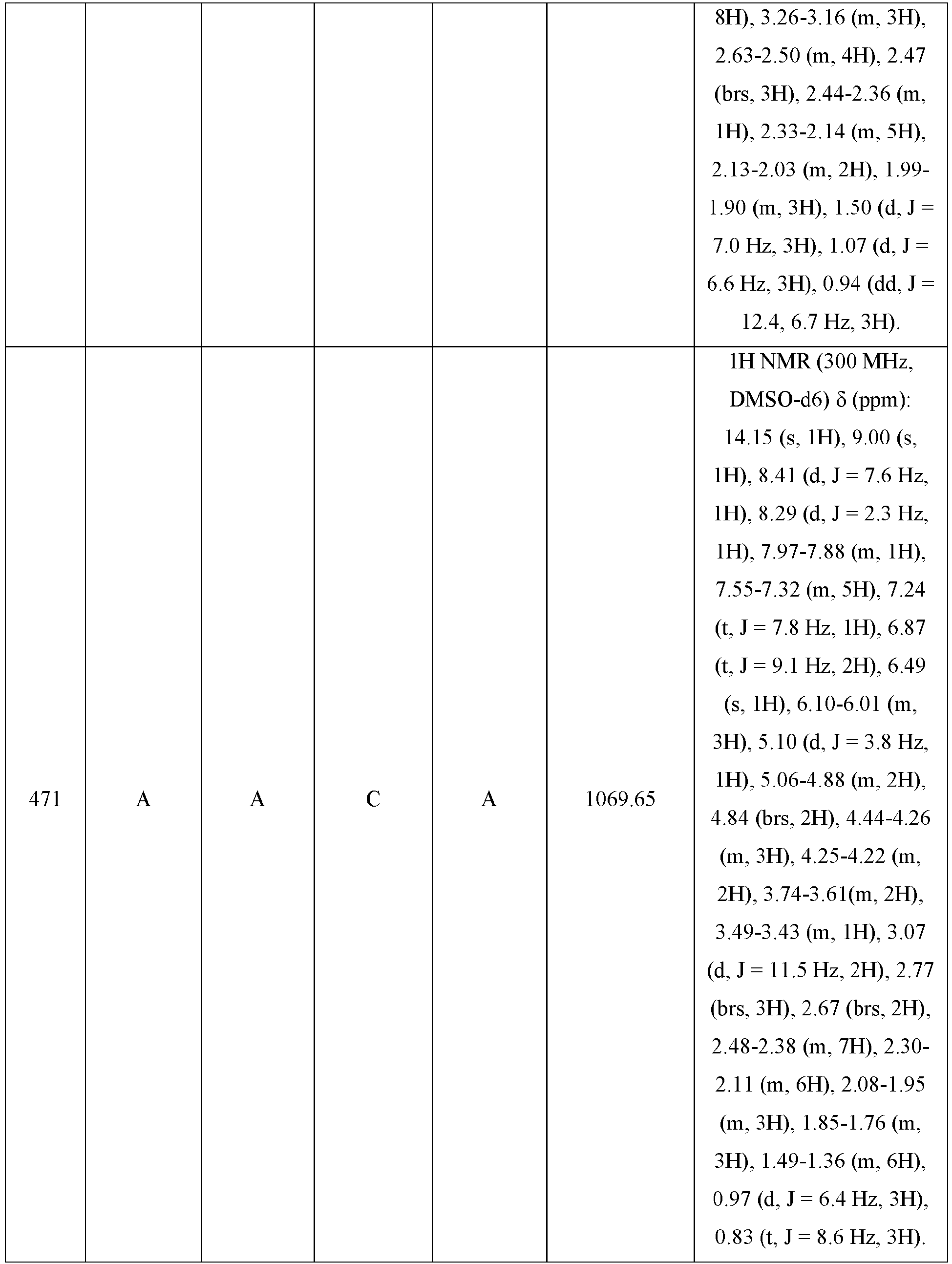


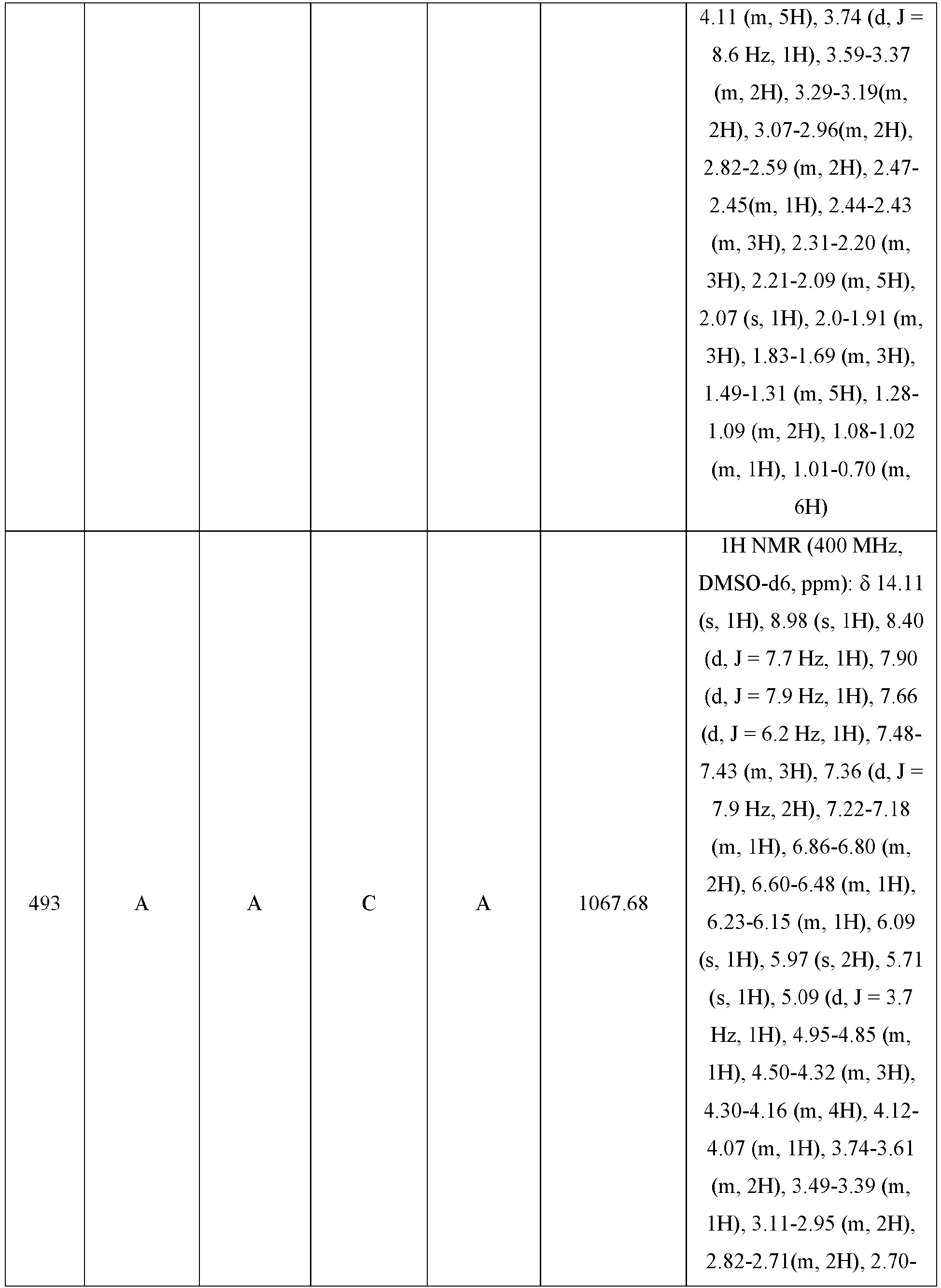


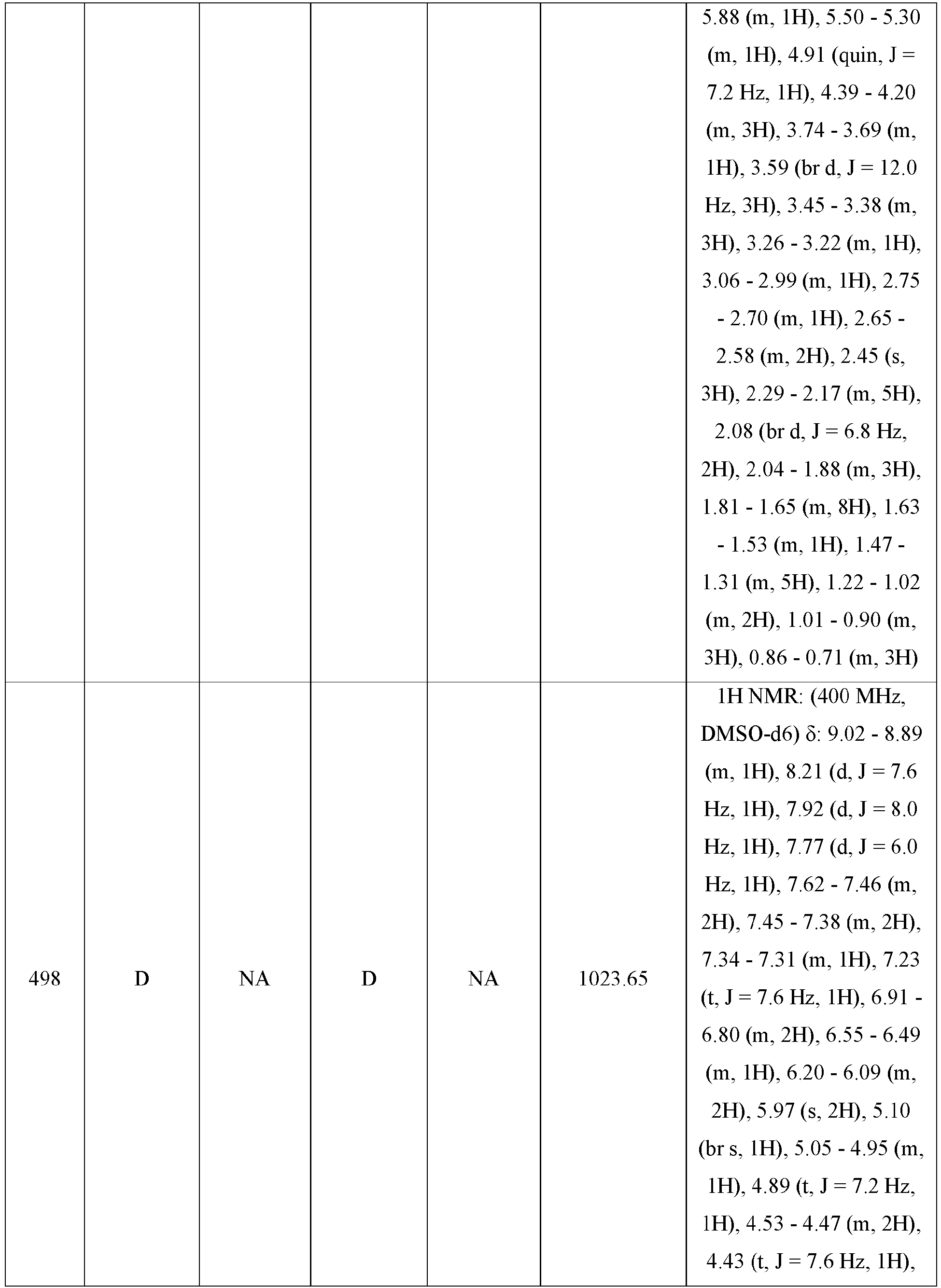
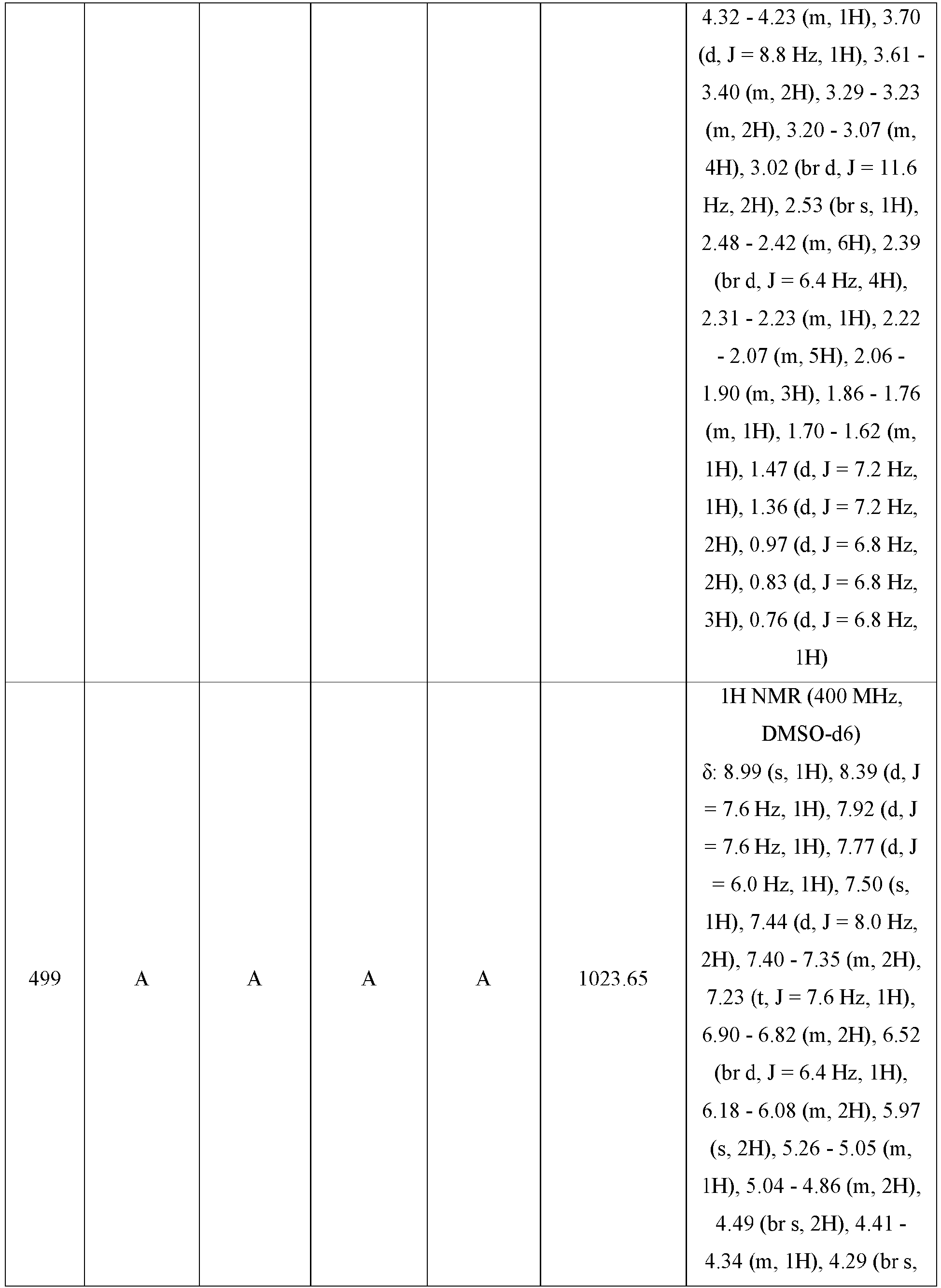


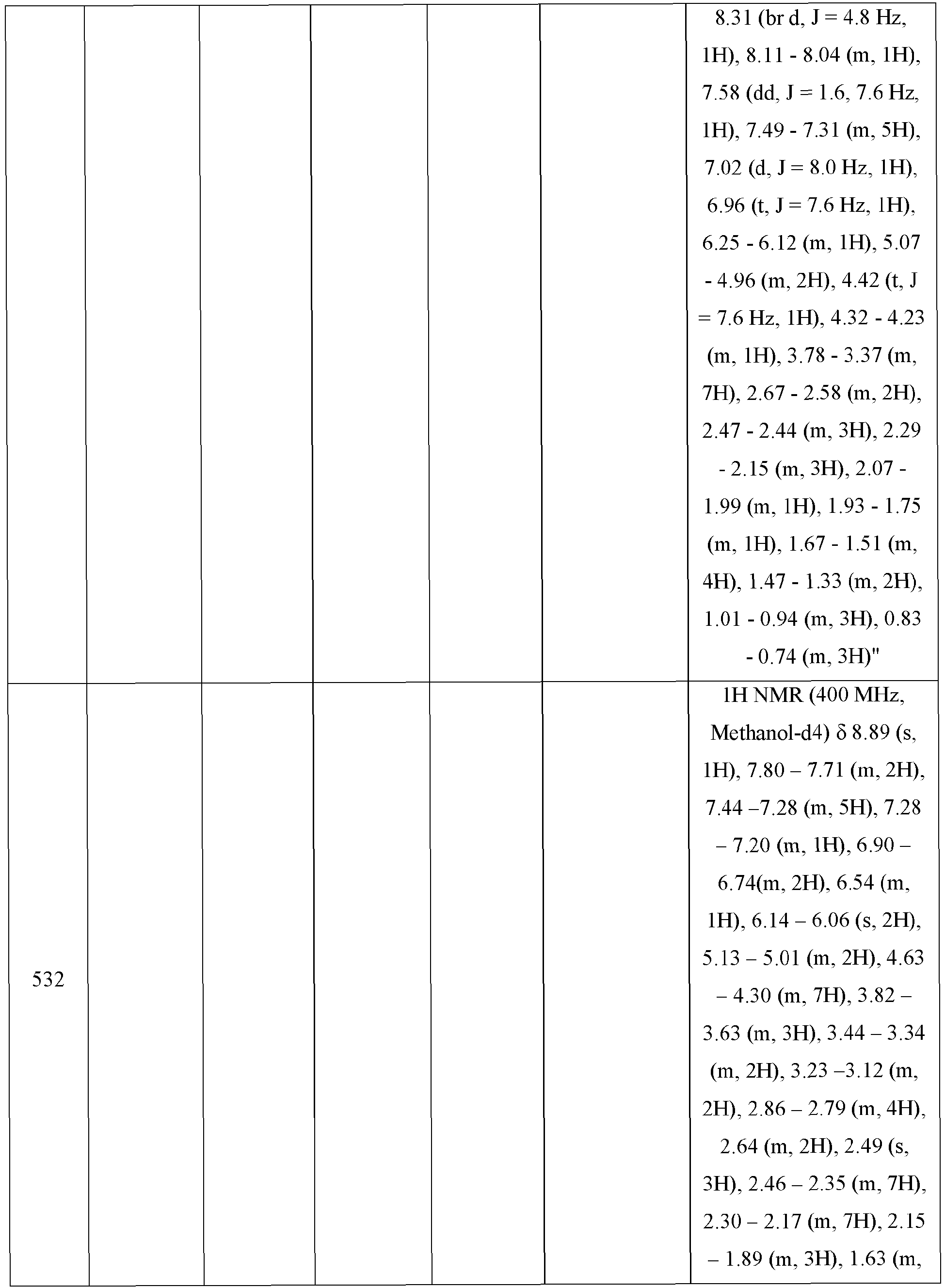


- A novel bifunctional molecule, which contains a SMARCA2, BRAHMA or BRM protein recruiting moiety and an E3 Ligase recruiting moiety, through PROTAC technology is described. The bifunctional molecules of the present disclosure actively degrade SMARCA2, leading to robust cellular proliferation suppression and apoptosis induction. PROTAC mediated protein degradation provides a promising strategy in targeting the pathological proteins "undruggable" by traditional approaches.
- The contents of all references, patents, pending patent applications and published patents, cited throughout this application are hereby expressly incorporated by reference.
- Those skilled in the art will recognize, or be able to ascertain using no more than routine experimentation, many equivalents to the specific embodiments of the disclosure described herein. Such equivalents are intended to be encompassed by the following claims. It is understood that the detailed examples and embodiments described herein are given by way of example for illustrative purposes only, and are in no way considered to be limiting to the disclosure. Various modifications or changes in light thereof will be suggested to persons skilled in the art and are included within the spirit and purview of this application and are considered within the scope of the appended claims. For example, the relative quantities of the ingredients may be varied to optimize the desired effects, additional ingredients may be added, and/or similar ingredients may be substituted for one or more of the ingredients described. Additional advantageous features and functionalities associated with the systems, methods, and processes of the present disclosure will be apparent from the appended claims. Moreover, those skilled in the art will recognize, or be able to ascertain using no more than routine experimentation, many equivalents to the specific embodiments of the disclosure described herein. Such equivalents are intended to be encompassed by the following claims.
Claims (16)
- A compound having the chemical structure:
PTM-L-ULM,
or a pharmaceutically acceptable salt thereof, wherein:(a) ULM is W3 is an optionally substituted aryl, optionally substituted heteroaryl, or
 R9 and R10 are independently hydrogen, optionally substituted alkyl, optionally substituted cycloalkyl, optionally substituted hydroxyalkyl, optionally substituted heteroaryl, or haloalkyl, or R9, R10, and the carbon atom to which they are attached form an optionally substituted cycloalkyl;R11 is an optionally substituted heterocyclyl, optionally substituted alkoxy, optionally substituted heteroaryl, optionally substituted aryl,
 R12 is H or optionally substituted alkyl;R13 is H, optionally substituted alkyl, optionally substituted alkylcarbonyl, optionally substituted (cycloalkyl)alkylcarbonyl, optionally substituted aralkylcarbonyl, optionally substituted arylcarbonyl, optionally substituted (heterocyclyl)carbonyl, or optionally substituted aralkyl;one of R14a or R14b is H, amino, haloalkyl, optionally substituted alkyl, optionally substituted alkoxy, optionally substituted hydroxyl alkyl, optionally substituted alkylamino, optionally substituted heteroalkyl, optionally substituted alkyl-heterocycloalkyl, optionally substituted alkoxy-heterocycloalkyl, COR26, CONR27aR276, NHCOR26, or NCH3COR26; and the other of R14a or R14b is H; or R14a and R14b, together with the carbon atom to which they are attached, form an optionally substituted 3 to 5 membered cycloalkyl, heterocycloalkyl, spirocycloalkyl or spiroheterocyclyl, wherein the spiroheterocyclyl is not an epoxy or an aziridinyl;W5 is an optionally substituted phenyl, an optionally substituted napthyl, or an optionally substituted 5-10 membered heteroaryl;R15 is H, halogen, CN, OH, NO2, NR27aR27b, OR27a, CONR27aR27b, NR27aCOR27b, SO2NR27aR27b, NR27aSO2R27b, optionally substituted alkyl, optionally substituted haloalkyl, optionally substituted haloalkoxy, optionally substituted aryl, optionally substituted heteroaryl; optionally substituted cycloalkyl, or optionally substituted heterocyclyl;each R16 is independently selected from halo, CN, optionally substituted alkyl, optionally substituted haloalkyl, hydroxy, and optionally substituted haloalkoxy;o is 0, 1, 2, 3, or 4;each R18 is independently selected from H, halo, optionally substituted alkoxy, cyano, optionally substituted alkyl, haloalkyl, and haloalkoxy;each R26 is independently selected from H, optionally substituted alkyl, and NR27aR27b;each R27a and R27b is independently H, optionally substituted alkyl, or R27a and R27b together with the nitrogen atom to which they are attached form a 4-6 membered heterocyclyl;p is 0, 1, 2, 3, or 4, and
 indicates the site of attachment of L;(b) L is (AL)q, wherein:(AL)q is a group that is connected to the PTM and the ULM;q is an integer from 1 to 100;each AL is independently selected from CRL1RL2, O, S, SO, SO2, NRL3, SO2NRL3, SONRL3, CONRL3, NRL3CONRL4, NRL3SO2NRL4, CO, CRL1=CRL2, C≡C, SiRL1RL2, P(O)RL1, P(O)ORL1, NRL3C(=NCN)NRL4, NRL3C(=NCN), NRL3C(=CNO2)NRL4, C3-11cycloalkyl optionally substituted with 1-6 RL1 and/or RL2 groups, C3-11heterocyclyl optionally substituted with 1-6 RL1 and/or RL2 groups, aryl optionally substituted with 1-6 RL1 and/or RL2 groups, heteroaryl optionally substituted with 0-6 RL1 and/or RL2 groups, where RL1 or RL2, each independently are optionally linked to other groups to form a cycloalkyl or heterocyclyl moiety, optionally substituted with 0-4 RL5 groups; andeach RL1, RL2, RL3, RL4 and RL5 is independently H, halo, C1-8alkyl, OC1-8alkyl, SC1-8alkyl, NHC1-8alkyl, N(C1-8alkyl)2, C3-11cycloalkyl, aryl, heteroaryl, C3-11heterocyclyl, OC3-8cycloalkyl, SC3-8cycloalkyl, NHC3-8cycloalkyl, N(C3-8cycloalkyl)2, N(C3-8cycloalkyl)(C1-8alkyl), OH, NH2, SH, SO2C1-8alkyl, P(O)(OC1-8alkyl)(C1-8alkyl), P(O)(OC1-8alkyl)2, CC-C1-8alkyl, CCH, CH=CH(C1-8alkyl), C(C1-8alkyl)=CH(C1-8alkyl), C(C1-8alkyl)=C(C1-8alkyl)2, Si(OH)3, Si(C1-8alkyl)3, Si(OH)(C1-8alkyl)2, COC1-8alkyl, CO2H, halogen, CN, CF3, CHF2, CH2F, NO2, SF5, SO2NHC1-8alkyl, SO2N(C1-8alkyl)2, SONHC1-8alkyl, SON(C1-8alkyl)2, CONHC1-8alkyl, CON(C1-8alkyl)2, N(C1-8alkyl)CONH(C1-8alkyl), N(C1-8alkyl)CON(C1-8alkyl)2, NHCONH(C1-8alkyl), NHCON(C1-8alkyl)2, NHCONH2, N(C1-8alkyl)SO2NH(C1-8alkyl), N(C1-8alkyl) SO2N(C1-8alkyl)2, NH SO2NH(C1-8alkyl), NH SO2N(C1-8alkyl)2, NH SO2NH2; and(c) the PTM is:
 WPTM1 is a 5-6-membered aryl or a 5-6-membered heteroaryl ring, each of which is optionally substituted with 1, 2, or 3 substituents independently selected from hydroxy, halogen, alkoxy, alkyl, haloalkyl, amino, phosphate, alkylamino, and cyano;WPTM2 is a 5-6-membered aryl or a 5-6-membered heteroaryl ring, each of which is optionally substituted with 1, 2, or 3 substituents independently selected from hydroxy, halogen, alkoxy, alkyl, haloalkyl, amino, alkylamino, and cyano;WPTM3 is absent, a 5-6-membered aryl, a 5-6 membered heteroaryl ring, a 4-9 membered cycloalkyl, a 4-9 membered heterocyclyl, a bridged bicycloalkyl, or a bridged biheterocyclyl, wherein the aryl and heteroaryl are each optionally substituted with 1, 2, or 3 substituents independently selected from hydroxy, halogen, alkoxy, alkyl, haloalkyl, amino, alkylamino, and cyano, wherein the cycloalkyl and heterocyclyl are each optionally substituted with 1 or 2 substituents selected from hydroxy, halogen, alkoxy, alkyl, haloalkyl, amino, alkylamino, and cyano, and wherein the bridged bicycloalkyl or bridged biheterocyclyl ear each optionally substituted with 1 or 2 substituents independently selected from hydroxy, halogen, alkoxy, alkyl, haloalkyl, amino, alkylamino, and cyano;WPTM4 is a 5-7 membered cycloalkyl or a 5-7 membered heterocyclyl, each of which is optionally substituted with, 2, or 3 substituents independently selected from hydroxy, halogen, alkoxy, alkyl, haloalkyl, amino, phosphate, alkylamino, and cyano;WPTM5 is absent, a 5-6-membered aryl, or a 5-6 membered heteroaryl ring, each of which is optionally substituted with 1 or 2 substituents independently selected from hydroxy, halogen, alkoxy, alkyl, haloalkyl, amino, alkylamino, and cyano; and
 is the attachment point to the linker or ULM group.
 - The compound of claim 1, wherein the PTM is:
 WPTM1 is a phenyl substituted with a hydroxy substituent and further optionally substituted with 1 or 2 substituents selected from hydroxy, halogen, alkoxy, alkyl, haloalkyl, amino, phosphate, alkylamino, and cyano;WPTM2 is a pyridazinyl substituted with amino group; andWPTM5 is absent, pyrazolyl, or pyridinyl.
 - The compound of any claim 1 or 2, wherein the PTM is:


- The compound of any one of claims 1 to 3, wherein the ULM is:
 R1 is H, optionally substituted alkyl, optionally substituted cycloalkyl, optionally substituted hydroxyalkyl, optionally substituted heteroaryl, or haloalkyl;R14a is H, haloalkyl, optionally substituted alkyl, methyl, fluoromethyl, hydroxymethyl, ethyl, isopropyl, or cyclopropyl;R15 is selected from the group consisting of H, halogen, CN, OH, NO2, optionally substituted heteroaryl, optionally substituted aryl; optionally substituted alkyl, optionally substituted haloalkyl, optionally substituted haloalkoxy, optionally substituted cycloalkyl, or optionally substituted heterocyclyl;X is C, CH2, or C=O;R3 is absent or an optionally substituted 5 or 6 memebered heteroaryl; andor a pharmaceutically acceptable salt thereof, wherein:
 (a) the ULM is of the formula:
 R1 is H, optionally substituted alkyl, or optionally substituted cycloalkyl;R3 is an optionally substituted 5-6 membered heteroaryl;W5 is optionally substituted phenyl, optionally substituted napthyl or optionally substituted pyridinyl;one of R14a and R14b is H, optionally substituted alkyl, haloalkyl, optionally substituted alkoxy, optionally substituted hydroxyl alkyl, optionally substituted alkylamino, optionally substituted heterolkyl, optionally substituted alkyl-heterocycloalkyl, optionally substituted alkoxy-heterocycloalkyl, COR26, CONR27aR27b, NHCOR26, or NCH3COR26; and the other of R14a and R14b is H;or R14a, R14b, together with the carbon atom to which they are attached, form an optionally substituted 3 to 5 membered cycloalkyl, heterocycloalkyl, spirocycloalkyl or spiroheterocyclyl, wherein the spiroheterocyclyl is not epoxy or aziridyl;R15 is CN, fluoroalkyl,
 R28a is halo, optionally substituted alkyl or fluoroalkyl;each R16 is independently selected from halogen, CN, optionally substituted alkyl, optionally substituted haloalkyl, hydroxy, or haloalkoxy;each R26 is independently H, optionally substituted alkyl or NR27aR27b;each R27a and R27b is independently H, optionally substituted alkyl,or R27a and R27b together with the nitrogen atom to which they are attached form a 4-6 membered heterocyclyl;R28 is H, optionally substituted alkyl, optionally substituted alkoxy, optionally substituted heteroalkyl, optionally substituted alkylamino, optionally substituted hydroxyalkyl, amino, optionally substituted alkynyl, or optionally substituted cycloalkyl;o is 0, 1 or 2; and
 both indicate the site of attachment to L; or (b) the ULM is of the formula:
 each of X4, X5, and X6 is selected from CH and N, wherein no more than 2 are N;R3 is an optionally substituted 5-6 membered heteroaryl;R1 is C1-6 alkyl;one of R14a and R14b is H, optionally substituted alkyl, optionally substituted haloalkyl, optionally substituted alkoxy, optionally substituted hydroxyl alkyl, optionally substituted alkylamino, optionally substituted heteroalkyl, optionally substituted alkyl-heterocycloalkyl, optionally substituted alkoxy-heterocycloalkyl, COR26, CONR27aR276, NHCOR26, or NCH3COR26; and the other of R14a and R14b is H;or R14a and R14b, together with the carbon atom to which they are attached, form an optionally substituted 3 to 5 membered cycloalkyl, heterocycloalkyl, spirocycloalkyl or spiroheterocyclyl, wherein the spiroheterocyclyl is not epoxide or aziridine;each R27a and R27b is independently H or C1-6 alkyl;q is 1, 2, 3 or 4;R15 is
 R28 is H, methyl, CH2N(Me)2, CH2OH, CH2O(C1-4alkyl), CH2NHC(O)C1-4alkyl, NH2,
 R28C is H, methyl, fluoro, or chloro;R16 is H, C1-4alkyl, fluoro, chloro, CN, or C1-4alkoxy;
- The compound of claim 4, wherein:(a) one of R14a and R146 are selected from: H, C1-4 alkyl, C1-4 haloalkyl, C1-4 hydroxyalkyl, C1-4 alkyloxyalkyl, C1-4 alkyl-NR27aR27b and CONR27aR27b; and the other of R14a and R14b is H; or(b) R14a and R14b together with the carbon atom to which they are attached, form

- The compound of claim 4, wherein the ULM is of the formula:


- The compound of claim 4 or 6, wherein:(a) one of R14a and R14b is H, C1-6 alkyl, C1-6 haloalkyl, optionally substituted C1-4 alkylamino, C1-6 alkoxy, (CH2)qC1-6 alkoxy, (CH2)qC1-6 alkoxy-C3-7 heterocycloalkyl, (CH2)qOH, (CH2)qNR27aR27b, or (CH2)qNHCOC1-6 alkyl; and the other of R14a and R14b is H;each R26 is independently H, C1-6 alkyl or NR27aR27b;each R27a and R27b is independently H or C1-6 alkyl; andand q of the ULM is 1, 2, 3 or 4;(b) one of R14a and R14b is H, C1-4 alkyl, C1-4 haloalkyl, C1-4 alkoxy, optionally substituted C1-4 alkylamino, (CH2)qC1-6 alkoxy, (CH2)qC1-6 alkoxy-C3-7 heterocycloalkyl, (CH2)qOH, (CH2)qNR27aR27b, or (CH2)qNHCOC1-6 alkyl;each R26 is independently H, C1-4 alkyl or NR27aR27b;each R27a and R27b is independently H or C1-4 alkyl; andq of the ULM is 1 or 2; or(c) R28 is C1-6 alkyl, C3-6 cycloalkyl, C1-6 haloalkyl, (CH2)qOC1-6alkyl, (CH2)qOH, (CH2)qNR27aR27b, (CH2)qNHCOC1-6 alkyl, or

q of the ULM is 1 or 2. - The compound of claim 4, wherein:(a) R3 is isoxazolyl, 4-chloroisoxazolyl, 4-fluoroisoxazolyl, or pyrazolyl; and/or(b) X is CH.
- The compound of claim 8, wherein the ULM is:

 X is CH or N;R30 is H, F or Cl;R16 is fluoro, chloro, CN, or C1-4alkoxy; andR28 is H, methyl, CH2N(Me)2, CH2OH, CH2O(C1-4alkyl), CH2NHC(O)C1-4alkyl, NH2,
 preferably, wherein the ULM is:


- The compound of claim 1, wherein the ULM is:


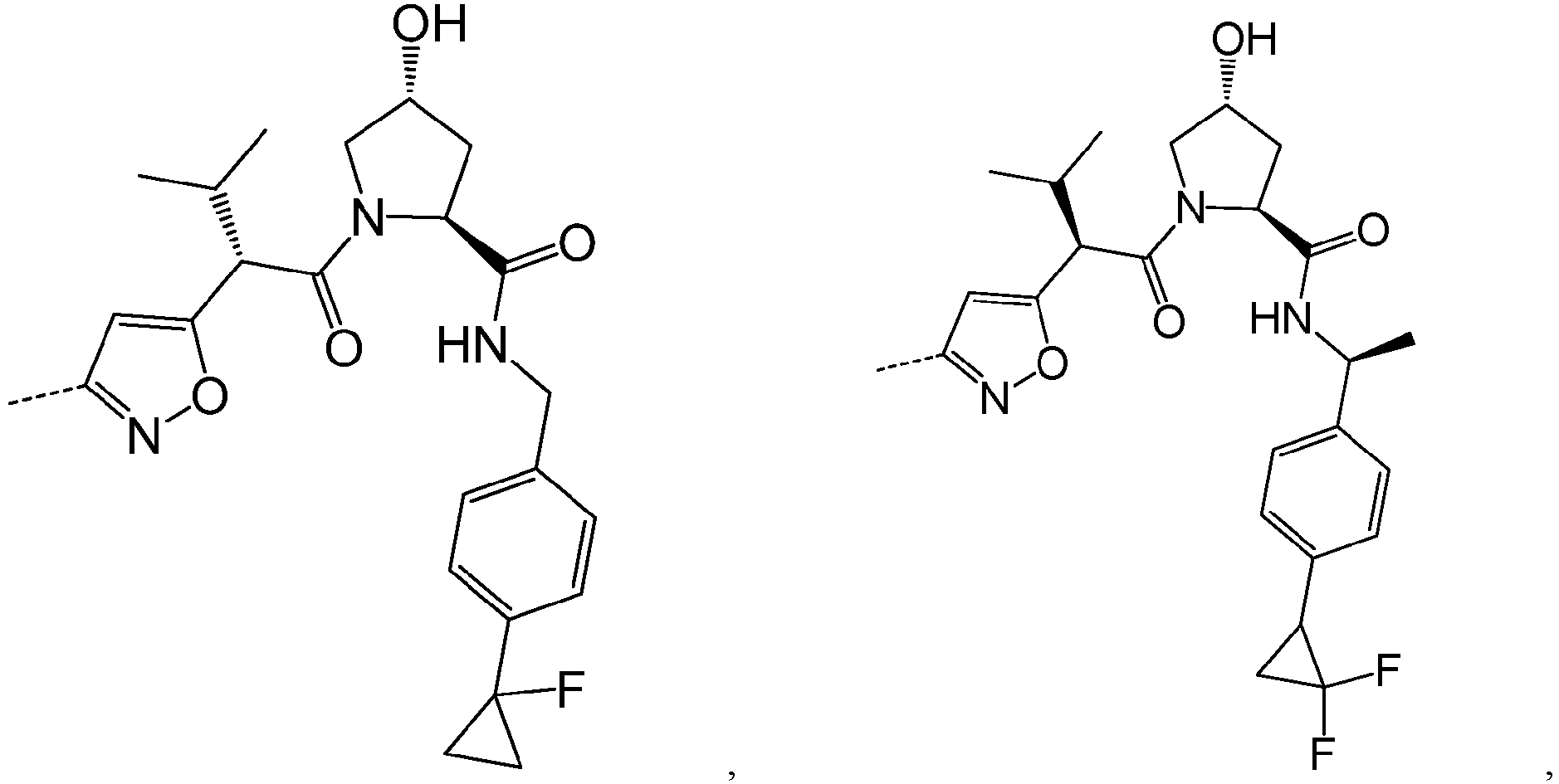


- The compound of any one of claims 1 to 10, wherein:(a) the L is:
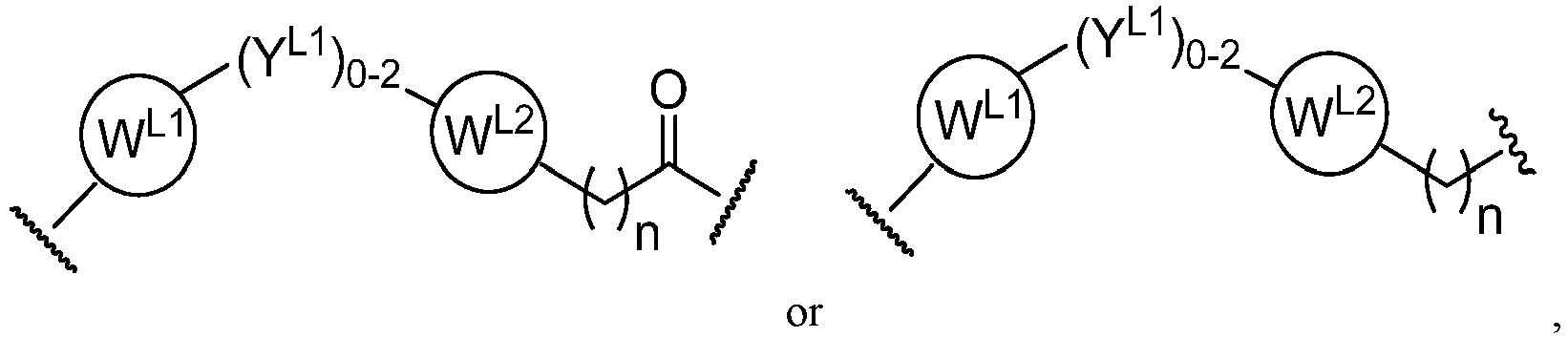 WL1 and WL2 are each independently a 4-8 membered ring with 0-4 heteroatoms, optionally substituted with RQ, each RQ is independently a H, halo, OH, CN, CF3, optionally substituted linear or branched C1-C6 alkyl, optionally substituted linear or branched C1-C6 alkoxy, or 2 RQ groups taken together with the atom they are attached to, form a 4-8 membered ring system containing 0-4 heteroatoms;YL1 is each independently a bond, optionally substituted linear or branched C1-C6 alkyl and optionally one or more C atoms are replaced with O; or optionally substituted linear or branched C1-C6 alkoxy;n is 0, 1, 2, 3, 4, 5, 6, 7, 8, 9, 10; and
 (b) the L is:
 WL1 and WL2 are each independently aryl, heteroaryl, cyclic, heterocyclyl, C1-6 alkyl, bicyclic, biaryl, biheteroaryl,or biheterocyclyl, each optionally substituted with RQ, each RQ is independently a H, halo, OH, CN, CF3, hydroxyl, nitro, C≡CH, C2-6 alkenyl, C2-6 alkynyl, optionally substituted linear or branched C1-C6 alkyl, optionally substituted linear or branched C1-C6 alkoxy, optionally substituted linear or branched OC1-3alkyl, OH, NH2, NR Y1RY2, CN, or 2 RQ groups taken together with the atom they are attached to, form a 4-8 membered ring system containing 0-4 heteroatoms;YL1 is each independently a bond, NRYL1, O, S, NRYL2, CRYL1RYL2, C=O, C=S, SO, SO2, optionally substituted linear or branched C1-C6 alkyl and optionally one or more C atoms are replaced with O; or optionally substituted linear or branched C1-C6 alkoxy;QL is a 3-6 membered alicyclic or aromatic ring with 0-4 heteroatoms, optionally bridged, optionally substituted with 0-6 RQ, each RQ is independently H, linear or branched C1-6 alkyl optionally substituted by 1 or more halo or C1-6 alkoxyl, or 2 RQ groups taken together with the atom they are attached to, form a 3-8 membered ring system containing 0-2 heteroatoms;RYL1 and RYL2 are each independently H, OH, linear or branched C1-6 alkyl optionally substituted by 1 or more halo or C1-6 alkoxyl, or RYL1 and RYL2 together with the atom they are attached to, form a 3-8 membered ring system containing 0-2 heteroatoms;n is 0, 1, 2, 3, 4, 5, 6, 7, 8, 9, or 10; and
 (c) the L is:
-O-(CH2)m-O(CH2)n-O(CH2)o-O(CH2)p-O(CH2)q-O(CH2)r-O(CH2)s-O(CH2)t-; -O-(CH2)m-O(CH2)n-O(CH2)o-O(CH2)p-O(CH2)q-O(CH2)r-O(CH2)s-O-; -(CH2)m-O(CH2)n-O(CH2)o-O(CH2)p-O(CH2)q-O(CH2)r-O(CH2)s-O(CH2)t-; -CH=CH(CH2)m-O(CH2)n-O(CH2)o-O(CH2)p-O(CH2)q-O(CH2)r-O(CH2)s-O(CH2)t-; -O(CH2)nNCH3C(=O)(CH2)m-;










 (d) the L is:


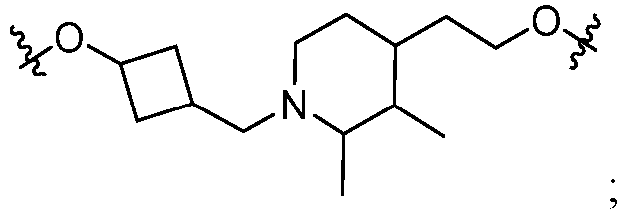


- The compound of claim 1, wherein the compound is:


- A pharmaceutical composition comprising a compound of any one of claims 1 to 12, and a pharmaceutically acceptable carrier, optionally wherein the composition further comprises an additional bioactive agent, such as wherein the additional bioactive agent is anticancer agent.
- The compound of any one of claims 1 to 12, or the pharmaceutical composition of claim 13, for use in treating cancer.
- The compound or pharmaceutical composition for use of claim 14, wherein:(a) the cancer is a SWI/SNF associated cancer or a cancer with a SMARCA4 mutation; or(b) the cancer is a SMARCA4-deficient cancer or a cancer with decreased expression of SMARCA4 relative to normal SMARCA4 expression.
- The compound or pharmaceutical composition for use of claim 15, wherein the cancer is lung cancer or non-small cell lung cancer.
Applications Claiming Priority (4)
| Application Number | Priority Date | Filing Date | Title |
|---|---|---|---|
| US201862651186P | 2018-04-01 | 2018-04-01 | |
| US201962797754P | 2019-01-28 | 2019-01-28 | |
| EP19717685.2A EP3774789B1 (en) | 2018-04-01 | 2019-04-01 | Brm targeting compounds and associated methods of use |
| PCT/US2019/025254 WO2019195201A1 (en) | 2018-04-01 | 2019-04-01 | Brm targeting compounds and associated methods of use |
Related Parent Applications (2)
| Application Number | Title | Priority Date | Filing Date |
|---|---|---|---|
| EP19717685.2A Division EP3774789B1 (en) | 2018-04-01 | 2019-04-01 | Brm targeting compounds and associated methods of use |
| EP19717685.2A Division-Into EP3774789B1 (en) | 2018-04-01 | 2019-04-01 | Brm targeting compounds and associated methods of use |
Publications (2)
| Publication Number | Publication Date |
|---|---|
| EP4537905A2 true EP4537905A2 (en) | 2025-04-16 |
| EP4537905A3 EP4537905A3 (en) | 2025-06-25 |
Family
ID=66175525
Family Applications (2)
| Application Number | Title | Priority Date | Filing Date |
|---|---|---|---|
| EP19717685.2A Active EP3774789B1 (en) | 2018-04-01 | 2019-04-01 | Brm targeting compounds and associated methods of use |
| EP25153421.0A Pending EP4537905A3 (en) | 2018-04-01 | 2019-04-01 | Brm targeting compounds and associated methods of use |
Family Applications Before (1)
| Application Number | Title | Priority Date | Filing Date |
|---|---|---|---|
| EP19717685.2A Active EP3774789B1 (en) | 2018-04-01 | 2019-04-01 | Brm targeting compounds and associated methods of use |
Country Status (29)
| Country | Link |
|---|---|
| US (2) | US20190300521A1 (en) |
| EP (2) | EP3774789B1 (en) |
| JP (3) | JP7721270B2 (en) |
| KR (2) | KR102697733B1 (en) |
| CN (2) | CN120504668A (en) |
| AU (3) | AU2019249849C1 (en) |
| BR (1) | BR112020020196A2 (en) |
| CA (1) | CA3094305A1 (en) |
| CL (1) | CL2020002546A1 (en) |
| CO (1) | CO2020013762A2 (en) |
| CR (1) | CR20200527A (en) |
| DK (1) | DK3774789T3 (en) |
| ES (1) | ES3027032T3 (en) |
| FI (1) | FI3774789T3 (en) |
| HR (1) | HRP20250617T1 (en) |
| HU (1) | HUE071391T2 (en) |
| IL (1) | IL277677B1 (en) |
| LT (1) | LT3774789T (en) |
| MX (2) | MX2020010368A (en) |
| MY (1) | MY198308A (en) |
| PE (1) | PE20212108A1 (en) |
| PH (1) | PH12020500663A1 (en) |
| PL (1) | PL3774789T3 (en) |
| PT (1) | PT3774789T (en) |
| RS (1) | RS66841B1 (en) |
| SG (1) | SG11202008898UA (en) |
| SI (1) | SI3774789T1 (en) |
| UA (1) | UA130603C2 (en) |
| WO (1) | WO2019195201A1 (en) |
Families Citing this family (76)
| Publication number | Priority date | Publication date | Assignee | Title |
|---|---|---|---|---|
| EP3737666A4 (en) | 2018-01-12 | 2022-01-05 | Kymera Therapeutics, Inc. | Protein degraders and uses thereof |
| AU2019249849C1 (en) * | 2018-04-01 | 2022-09-29 | Arvinas Operations, Inc. | BRM targeting compounds and associated methods of use |
| US12539292B2 (en) | 2018-04-01 | 2026-02-03 | Arvinas Operations, Inc. | BRM targeting compounds and associated methods of use |
| BR112020020307A2 (en) | 2018-04-04 | 2021-01-12 | Arvinas Operations, Inc. | PROTEOLYSIS MODULATORS AND ASSOCIATED METHODS OF USE |
| SG11202104495YA (en) * | 2018-04-26 | 2021-05-28 | Aurigene Discovery Tech Ltd | Pyridazine derivatives as smarca2/4 degraders |
| WO2019213005A1 (en) * | 2018-04-30 | 2019-11-07 | Dana-Farber Cancer Institute, Inc. | Small molecule degraders of polybromo-1 (pbrm1) |
| US12454520B2 (en) | 2018-07-06 | 2025-10-28 | Kymera Therapeutics, Inc. | Protein degraders and uses thereof |
| US11707452B2 (en) | 2018-08-20 | 2023-07-25 | Arvinas Operations, Inc. | Modulators of alpha-synuclein proteolysis and associated methods of use |
| AU2019365238A1 (en) | 2018-10-24 | 2021-05-13 | F. Hoffmann-La Roche Ag | Conjugated chemical inducers of degradation and methods of use |
| EP3897631A4 (en) | 2018-12-20 | 2022-11-23 | C4 Therapeutics, Inc. | TARGETED PROTEIN DEGRADATION |
| WO2020160192A1 (en) | 2019-01-29 | 2020-08-06 | Foghorn Therapeutics Inc. | Compounds and uses thereof |
| WO2020160193A2 (en) | 2019-01-29 | 2020-08-06 | Foghorn Therapeutics Inc. | Compounds and uses thereof |
| KR102947433B1 (en) | 2019-04-12 | 2026-04-06 | 씨4 테라퓨틱스, 인코포레이티드 | Tricyclic Decomposer of Icarus and Aeolus |
| US12624044B2 (en) | 2019-06-10 | 2026-05-12 | Kymera Therapeutics, Inc. | SMARCA degraders and uses thereof |
| WO2020251972A1 (en) | 2019-06-10 | 2020-12-17 | Kymera Therapeutics, Inc. | Smarca degraders and uses thereof |
| EP3999182A1 (en) | 2019-07-17 | 2022-05-25 | Arvinas Operations, Inc. | Tau-protein targeting compounds and associated methods of use |
| WO2021022163A2 (en) | 2019-07-31 | 2021-02-04 | Foghorn Therapeutics Inc. | Compounds and uses thereof |
| JP7502425B2 (en) * | 2019-10-01 | 2024-06-18 | アルヴィナス・オペレーションズ・インコーポレイテッド | BRM TARGETING COMPOUNDS AND RELATED METHODS OF USE |
| IL292153A (en) | 2019-10-16 | 2022-06-01 | Cemm Forschungszentrum Fur Molekulare Medizin Gmbh | Oxazole and thioazole-type cullin ring ubiquitin ligase compounds and uses thereof |
| MX2022004526A (en) | 2019-10-17 | 2022-07-21 | Arvinas Operations Inc | BIFUNCTIONAL MOLECULES CONTAINING A BINDING PORTION TO THE E3 UBIQUITIN LIGASE LINKED TO A BINDING PORTION TO BCL6. |
| EP4054724A4 (en) * | 2019-10-28 | 2023-12-27 | C4 Therapeutics, Inc. | BIFUNCTIONAL COMPOUNDS |
| CN114728936A (en) * | 2019-10-29 | 2022-07-08 | 豪夫迈·罗氏有限公司 | Bifunctional compounds for the treatment of cancer |
| WO2021133917A1 (en) | 2019-12-23 | 2021-07-01 | Kymera Therapeutics, Inc. | Smarca inhibitors and uses thereof |
| US11679109B2 (en) | 2019-12-23 | 2023-06-20 | Kymera Therapeutics, Inc. | SMARCA degraders and uses thereof |
| CA3167166A1 (en) * | 2020-01-10 | 2021-07-15 | Amgen Inc. | Smarca2-vhl degraders |
| IL295176A (en) * | 2020-01-29 | 2022-09-01 | Foghorn Therapeutics Inc | Compounds and uses thereof |
| US12528825B2 (en) | 2020-01-29 | 2026-01-20 | Foghorn Therapeutics Inc. | Compounds and uses thereof |
| MX2022009308A (en) | 2020-01-29 | 2022-08-22 | Foghorn Therapeutics Inc | Compounds and uses thereof. |
| WO2021163302A1 (en) * | 2020-02-12 | 2021-08-19 | Dana-Farber Cancer Institute, Inc. | Compounds, compositions, and methods for protein degradation |
| CN119823124A (en) | 2020-03-05 | 2025-04-15 | C4医药公司 | Compounds for targeted degradation of BRD9 |
| PT4161935T (en) * | 2020-06-09 | 2025-08-14 | Prelude Therapeutics Inc | Brm targeting compounds and associated methods of use |
| IL299860A (en) | 2020-07-21 | 2023-03-01 | Genentech Inc | Antibody-conjugated chemical inducers of degradation of brm and methods thereof |
| US11787800B2 (en) | 2020-07-29 | 2023-10-17 | Foghorn Therapeutics Inc. | BRD9 degraders and uses thereof |
| MX2023001445A (en) * | 2020-08-04 | 2023-05-08 | Aurigene Oncology Ltd | 6-substituted pyridazine compounds as smarca2 and/or smarca4 degraders. |
| CN116490186B (en) | 2020-08-05 | 2025-10-31 | C4医药公司 | Compounds for targeted degradation of RET |
| WO2022099117A1 (en) | 2020-11-06 | 2022-05-12 | Prelude Therapeutics Incorporated | Brm targeting compounds and associated methods of use |
| US12606568B2 (en) | 2020-12-09 | 2026-04-21 | Kymera Therapeutics, Inc. | SMARCA degraders and uses thereof |
| US20240343724A1 (en) * | 2020-12-09 | 2024-10-17 | Kymera Therapeutics, Inc. | Smarca degraders and uses thereof |
| CN117242060B (en) | 2021-01-13 | 2026-07-17 | 蒙特罗莎治疗股份有限公司 | Isoindolinone compounds |
| TW202241855A (en) * | 2021-01-27 | 2022-11-01 | 美商富曼西公司 | Azole compounds for controlling invertebrate pests |
| CN118388454A (en) | 2021-04-16 | 2024-07-26 | 阿尔维纳斯运营股份有限公司 | Modulators of BCL6 proteolysis and related methods of use |
| US20240287076A1 (en) | 2021-05-05 | 2024-08-29 | Biogen Ma Inc. | Compounds for targeting degradation of bruton's tyrosine kinase |
| CR20230518A (en) * | 2021-05-10 | 2024-02-13 | Foghorn Therapeutics Inc | COMPOUNDS AND USES OF THESE |
| CN117337178A (en) * | 2021-05-10 | 2024-01-02 | 福宏治疗公司 | Compounds and their uses |
| US11767330B2 (en) | 2021-07-06 | 2023-09-26 | Foghorn Therapeutics Inc. | Citrate salt, pharmaceutical compositions, and methods of making and using the same |
| WO2023283372A1 (en) | 2021-07-07 | 2023-01-12 | Biogen Ma Inc. | Compounds for targeting degradation of irak4 proteins |
| CA3224732A1 (en) | 2021-07-07 | 2023-01-12 | Kevin M. Guckian | Compounds for targeting degradation of irak4 proteins |
| WO2023287787A1 (en) | 2021-07-13 | 2023-01-19 | Prelude Therapeutics, Incorporated | Brm targeting compounds and associated methods of use |
| CN118696045A (en) * | 2021-11-23 | 2024-09-24 | 南京再明医药有限公司 | BRM selective degradation agent compounds and their applications |
| CN118679160A (en) | 2021-11-24 | 2024-09-20 | 阿维纳斯运营公司 | BRM targeting compounds and related methods of use |
| JP2024541479A (en) | 2021-11-24 | 2024-11-08 | アルビナス・オペレーションズ・インコーポレイテッド | BRM TARGETED COMPOUNDS AND RELATED METHODS OF USE |
| AU2022415778A1 (en) * | 2021-12-14 | 2024-07-04 | Prazer Therapeutics Inc. | Novel compound for degrading target protein or polypeptide by using polyubiquitination |
| JP2025502782A (en) * | 2021-12-28 | 2025-01-28 | ボード オブ リージェンツ, ザ ユニヴァーシティー オブ テキサス システム | Potent and selective SMARCA2 decomposition chimeric molecules as cancer therapeutics |
| AR128331A1 (en) | 2022-01-26 | 2024-04-17 | Genentech Inc | CHEMICAL DEGRADATION INDUCTORS CONJUGATED WITH ANTIBODIES AND METHODS OF THESE |
| AR128330A1 (en) | 2022-01-26 | 2024-04-17 | Genentech Inc | CHEMICAL DEGRADATION INDUCERS CONJUGATED WITH ANTIBODY AND METHODS OF THESE |
| AU2023295547A1 (en) | 2022-06-16 | 2025-01-09 | Prelude Therapeutics Incorporated | Kat6 targeting compounds with ubiquitin ligase binding moiety |
| CN119384414A (en) * | 2022-06-30 | 2025-01-28 | 甘李药业股份有限公司 | A compound used as a SMARCA2/4 inhibitor and its application |
| CN115353468B (en) * | 2022-08-19 | 2023-06-30 | 安阳工学院 | A kind of preparation method of p-toluenesulfonyloxy substituted tert-butyl oligoethylene glycol propionate |
| US20240190886A1 (en) | 2022-11-15 | 2024-06-13 | Prelude Therapeutics Incorporated | BRM Targeting Compounds and Associated Methods of Use |
| PE20260006A1 (en) | 2023-01-26 | 2026-01-06 | Arvinas Operations Inc | Cereblon-based KRAS degraders and related uses |
| CN120752233A (en) * | 2023-02-28 | 2025-10-03 | 上海海雁医药科技有限公司 | Substituted tricyclic derivatives and pharmaceutical compositions and uses thereof |
| TW202502750A (en) | 2023-06-08 | 2025-01-16 | 美商新銳思生物製藥股份有限公司 | Bifunctional selective degraders of smarca2 and therapeutic uses thereof |
| WO2024256574A1 (en) * | 2023-06-13 | 2024-12-19 | Crossfire Oncology Holding B.V. | Process for preparing macrocyclic btk inhibitors |
| PE20260307A1 (en) | 2023-06-14 | 2026-02-11 | Astrazeneca Ab | SMARCA2 DEGRADERS AND THEIR USES |
| IL325247A (en) | 2023-06-14 | 2026-02-01 | Astrazeneca Ab | 3-[3-amino-6-(2-hydroxyphenyl)pyridazin-4-yl]-3,8-diazabicyclo[3.2.1]octane derivatives as smarca2 degrading protacs for the treatment of cancer |
| CN121620368A (en) * | 2023-06-16 | 2026-03-06 | 普莱克斯姆公司 | Compounds and pharmaceutical compositions for degrading SWI/SNF-associated matrix-associated actin-dependent chromatin regulatory factor A subfamily |
| WO2025085738A1 (en) | 2023-10-18 | 2025-04-24 | Halda Therapeutics Opco, Inc. | Heterobifunctional compounds and methods of treating disease |
| WO2025094065A1 (en) * | 2023-11-01 | 2025-05-08 | Aurigene Oncology Limited | Amino-substituted pyridazine compounds as smarca2 and/or smarca4 degraders |
| CN122341612A (en) | 2023-11-10 | 2026-07-03 | 普莱鲁德疗法有限公司 | Compounds targeting KAT6 |
| WO2025106637A1 (en) * | 2023-11-16 | 2025-05-22 | Foghorn Therapeutics Inc. | Cinnoline derivatives useful as baf modulators |
| AU2024405980C1 (en) * | 2023-12-22 | 2026-07-30 | Shanghai Haiyan Pharmaceutical Technology Co., Ltd. | Bicyclic fused heteroaromatic ring derivative, and pharmaceutical composition and use thereof |
| WO2025193454A1 (en) | 2024-03-01 | 2025-09-18 | Prelude Therapeutics Incorporated | Brm and brg1 targeting antibody-drug conjugates and methods of use thereof |
| WO2025189056A1 (en) | 2024-03-08 | 2025-09-12 | Halda Therapeutics Opco, Inc. | Heterobifunctional compounds and their use in treating disease |
| WO2026120044A1 (en) | 2024-12-04 | 2026-06-11 | Astrazeneca Ab | Smarca2 degraders and uses thereof |
| WO2026128580A2 (en) | 2024-12-11 | 2026-06-18 | Nurix Therapeutics, Inc. | Bifunctional selective degraders of smarca2 and therapeutic uses thereof |
| WO2026136866A1 (en) | 2024-12-20 | 2026-06-25 | Prelude Therapeutics Incorporated | Kat6 targeting compounds |
Citations (8)
| Publication number | Priority date | Publication date | Assignee | Title |
|---|---|---|---|---|
| US4522811A (en) | 1982-07-08 | 1985-06-11 | Syntex (U.S.A.) Inc. | Serial injection of muramyldipeptides and liposomes enhances the anti-infective activity of muramyldipeptides |
| US20140022523A1 (en) | 2003-12-03 | 2014-01-23 | Nikon Corporation | Exposure apparatus, exposure method, method for producing device, and optical part |
| US20140356322A1 (en) | 2012-01-12 | 2014-12-04 | Yale University | Compounds & Methods for the Enhanced Degradation of Targeted Proteins & Other Polypeptides by an E3 Ubiquitin Ligase |
| US20150291562A1 (en) | 2014-04-14 | 2015-10-15 | Arvinas, Inc. | Imide-based modulators of proteolysis and associated methods of use |
| WO2016138114A1 (en) | 2015-02-25 | 2016-09-01 | Genentech, Inc. | Therapeutic pyridazine compounds and uses thereof |
| US20160272639A1 (en) | 2015-03-18 | 2016-09-22 | Arvinas, Inc. | Compounds and methods for the enhanced degradation of targeted proteins |
| WO2017030814A1 (en) | 2015-08-19 | 2017-02-23 | Arvinas, Inc. | Compounds and methods for the targeted degradation of bromodomain-containing proteins |
| US20180215731A1 (en) | 2017-01-31 | 2018-08-02 | Arvinas, Inc. | Cereblon ligands and bifunctional compounds comprising the same |
Family Cites Families (8)
| Publication number | Priority date | Publication date | Assignee | Title |
|---|---|---|---|---|
| US9694084B2 (en) * | 2014-12-23 | 2017-07-04 | Dana-Farber Cancer Institute, Inc. | Methods to induce targeted protein degradation through bifunctional molecules |
| JP6815318B2 (en) * | 2014-12-23 | 2021-01-20 | ダナ−ファーバー キャンサー インスティテュート,インコーポレイテッド | How to Induce Targeted Proteolysis by Bifunctional Molecules |
| JP6817962B2 (en) * | 2015-01-20 | 2021-01-20 | アルビナス・オペレーションズ・インコーポレイテッドArvinas Operations, Inc. | Compounds and methods for targeted androgen receptor degradation |
| EP3319944A4 (en) * | 2015-07-10 | 2019-04-24 | Arvinas, Inc. | MDM2-BASED PROTEASE MODULATORS AND METHODS OF USE THEREOF |
| CA2988436A1 (en) * | 2015-07-13 | 2017-01-19 | Arvinas, Inc. | Alanine-based modulators of proteolysis and associated methods of use |
| BR112018008918A8 (en) * | 2015-11-02 | 2019-02-26 | Univ Yale | directed proteolysis chimera compounds and methods for their preparation and use |
| CN107698657A (en) * | 2017-09-26 | 2018-02-16 | 中国药科大学 | Bifunctional molecule and its preparation and application based on VHL parts and the induction BET degradeds of BET inhibitor |
| AU2019249849C1 (en) * | 2018-04-01 | 2022-09-29 | Arvinas Operations, Inc. | BRM targeting compounds and associated methods of use |
-
2019
- 2019-04-01 AU AU2019249849A patent/AU2019249849C1/en active Active
- 2019-04-01 US US16/372,345 patent/US20190300521A1/en not_active Abandoned
- 2019-04-01 MX MX2020010368A patent/MX2020010368A/en unknown
- 2019-04-01 PE PE2020001522A patent/PE20212108A1/en unknown
- 2019-04-01 HR HRP20250617TT patent/HRP20250617T1/en unknown
- 2019-04-01 PL PL19717685.2T patent/PL3774789T3/en unknown
- 2019-04-01 SI SI201930935T patent/SI3774789T1/en unknown
- 2019-04-01 FI FIEP19717685.2T patent/FI3774789T3/en active
- 2019-04-01 CN CN202411543960.2A patent/CN120504668A/en active Pending
- 2019-04-01 WO PCT/US2019/025254 patent/WO2019195201A1/en not_active Ceased
- 2019-04-01 RS RS20250498A patent/RS66841B1/en unknown
- 2019-04-01 LT LTEPPCT/US2019/025254T patent/LT3774789T/en unknown
- 2019-04-01 DK DK19717685.2T patent/DK3774789T3/en active
- 2019-04-01 KR KR1020207031366A patent/KR102697733B1/en active Active
- 2019-04-01 EP EP19717685.2A patent/EP3774789B1/en active Active
- 2019-04-01 BR BR112020020196-0A patent/BR112020020196A2/en active Search and Examination
- 2019-04-01 JP JP2020553643A patent/JP7721270B2/en active Active
- 2019-04-01 ES ES19717685T patent/ES3027032T3/en active Active
- 2019-04-01 KR KR1020247027581A patent/KR20240130153A/en active Pending
- 2019-04-01 PT PT197176852T patent/PT3774789T/en unknown
- 2019-04-01 HU HUE19717685A patent/HUE071391T2/en unknown
- 2019-04-01 IL IL277677A patent/IL277677B1/en unknown
- 2019-04-01 UA UAA202006857A patent/UA130603C2/en unknown
- 2019-04-01 CN CN201980036295.9A patent/CN112166114B/en active Active
- 2019-04-01 CR CR20200527A patent/CR20200527A/en unknown
- 2019-04-01 SG SG11202008898UA patent/SG11202008898UA/en unknown
- 2019-04-01 CA CA3094305A patent/CA3094305A1/en active Pending
- 2019-04-01 MY MYPI2020005156A patent/MY198308A/en unknown
- 2019-04-01 EP EP25153421.0A patent/EP4537905A3/en active Pending
-
2020
- 2020-09-15 PH PH12020500663A patent/PH12020500663A1/en unknown
- 2020-10-01 MX MX2024000329A patent/MX2024000329A/en unknown
- 2020-10-01 CL CL2020002546A patent/CL2020002546A1/en unknown
- 2020-10-30 CO CONC2020/0013762A patent/CO2020013762A2/en unknown
-
2022
- 2022-06-10 AU AU2022204042A patent/AU2022204042A1/en not_active Abandoned
-
2023
- 2023-02-10 US US18/108,045 patent/US20240076295A1/en not_active Abandoned
- 2023-02-17 JP JP2023023039A patent/JP2023071767A/en active Pending
-
2024
- 2024-05-08 AU AU2024203058A patent/AU2024203058B2/en active Active
-
2025
- 2025-05-29 JP JP2025089862A patent/JP2025143253A/en active Pending
Patent Citations (9)
| Publication number | Priority date | Publication date | Assignee | Title |
|---|---|---|---|---|
| US4522811A (en) | 1982-07-08 | 1985-06-11 | Syntex (U.S.A.) Inc. | Serial injection of muramyldipeptides and liposomes enhances the anti-infective activity of muramyldipeptides |
| US20140022523A1 (en) | 2003-12-03 | 2014-01-23 | Nikon Corporation | Exposure apparatus, exposure method, method for producing device, and optical part |
| US20140356322A1 (en) | 2012-01-12 | 2014-12-04 | Yale University | Compounds & Methods for the Enhanced Degradation of Targeted Proteins & Other Polypeptides by an E3 Ubiquitin Ligase |
| US20150291562A1 (en) | 2014-04-14 | 2015-10-15 | Arvinas, Inc. | Imide-based modulators of proteolysis and associated methods of use |
| WO2016138114A1 (en) | 2015-02-25 | 2016-09-01 | Genentech, Inc. | Therapeutic pyridazine compounds and uses thereof |
| US20160272639A1 (en) | 2015-03-18 | 2016-09-22 | Arvinas, Inc. | Compounds and methods for the enhanced degradation of targeted proteins |
| WO2016149668A1 (en) | 2015-03-18 | 2016-09-22 | Arvinas, Inc. | Compounds and methods for the enhanced degradation of targeted proteins |
| WO2017030814A1 (en) | 2015-08-19 | 2017-02-23 | Arvinas, Inc. | Compounds and methods for the targeted degradation of bromodomain-containing proteins |
| US20180215731A1 (en) | 2017-01-31 | 2018-08-02 | Arvinas, Inc. | Cereblon ligands and bifunctional compounds comprising the same |
Non-Patent Citations (12)
| Title |
|---|
| "A Textbook of Drug Design and Development", 1991, article "Design and Application of Prodrugs", pages: 113 - 191 |
| "Methods in Enzymology", vol. 42, 1985, ACADEMIC PRESS, pages: 309 - 396 |
| "Organic Synthesis: The Disconnection Approach'' Stuart Warren and Paul Wyatt", WILEY |
| BERGE, S. M. ET AL.: "Pharmaceutical Salts", JOURNAL OF PHARMACEUTICAL SCIENCE, vol. 66, 1977, pages 1 - 19, XP002675560, DOI: 10.1002/jps.2600660104 |
| ELIEL, E.WILEN, S.: "Stereochemistry of Organic Compounds", 1994, JOHN WILEY & SONS, INC. |
| FLEISHER, D. ET AL., IMPROVED ORAL DRUG DELIVERY: SOLUBILITY LIMITATIONS OVERCOME BY THE USE OF PRODRUGS ADVANCED DRUG DELIVERY REVIEWS, vol. 19, 1996, pages 115 |
| H. BUNDGAARD ET AL., JOURNAL OF PHARMACEUTICAL SCIENCES, vol. 77, 1988, pages 285 |
| H. BUNDGAARD, ADVANCED DRUG DELIVERY REVIEWS, vol. 8, 1992, pages 1 - 38 |
| J. DI ET AL., CURRENT CANCER DRUG TARGETS, vol. 11, no. 8, 2011, pages 987 - 994 |
| J. MED. CHEM., vol. 39, 1996, pages 10 |
| N. KAKEYA ET AL., CHEM. PHARM. BULL., vol. 32, 1984, pages 692 |
| PETER G. M. WUTSTHEODORA W. GREENE: "Greene's Protective Groups in Organic Synthesis", 2006, WILEY-INTERSCIENCE |
Also Published As
Similar Documents
| Publication | Publication Date | Title |
|---|---|---|
| EP3774789B1 (en) | Brm targeting compounds and associated methods of use | |
| US12539292B2 (en) | BRM targeting compounds and associated methods of use | |
| US12036209B2 (en) | Compounds and methods for the targeted degradation of Interleukin-1 receptor-associated kinase 4 polypeptides | |
| CN114787159B (en) | BRM targeted compounds and related methods of use | |
| US20260115296A1 (en) | Compounds and methods for the targeted degradation of rapidly accelerated fibrosarcoma polypeptides | |
| AU2018211975A1 (en) | Modulators of estrogen receptor proteolysis and associated methods of use | |
| EP3322986A1 (en) | Alanine-based modulators of proteolysis and associated methods of use | |
| RU2797832C2 (en) | Compounds targeting brm and related uses thereof | |
| US20250059198A1 (en) | Brm degrading compounds and associated methods of use | |
| RU2830173C2 (en) | Polycyclic compounds and methods for targeted degradation of polypeptides of fast accelerated fibrosarcoma | |
| US20250064945A1 (en) | Brm targeting compounds and associated methods of use | |
| HK40037668A (en) | Brm targeting compounds and associated methods of use | |
| HK40078801A (en) | Heterocyclic compounds for use in the treatment of cancer | |
| HK40078801B (en) | Heterocyclic compounds for use in the treatment of cancer |
Legal Events
| Date | Code | Title | Description |
|---|---|---|---|
| PUAI | Public reference made under article 153(3) epc to a published international application that has entered the european phase |
Free format text: ORIGINAL CODE: 0009012 |
|
| STAA | Information on the status of an ep patent application or granted ep patent |
Free format text: STATUS: THE APPLICATION HAS BEEN PUBLISHED |
|
| AC | Divisional application: reference to earlier application |
Ref document number: 3774789 Country of ref document: EP Kind code of ref document: P |
|
| AK | Designated contracting states |
Kind code of ref document: A2 Designated state(s): AL AT BE BG CH CY CZ DE DK EE ES FI FR GB GR HR HU IE IS IT LI LT LU LV MC MK MT NL NO PL PT RO RS SE SI SK SM TR |
|
| REG | Reference to a national code |
Ref country code: DE Ref legal event code: R079 Free format text: PREVIOUS MAIN CLASS: A61P0035000000 Ipc: C07D0413140000 |
|
| PUAL | Search report despatched |
Free format text: ORIGINAL CODE: 0009013 |
|
| AK | Designated contracting states |
Kind code of ref document: A3 Designated state(s): AL AT BE BG CH CY CZ DE DK EE ES FI FR GB GR HR HU IE IS IT LI LT LU LV MC MK MT NL NO PL PT RO RS SE SI SK SM TR |
|
| RIC1 | Information provided on ipc code assigned before grant |
Ipc: A61P 35/00 20060101ALI20250521BHEP Ipc: A61K 31/427 20060101ALI20250521BHEP Ipc: C07D 417/14 20060101ALI20250521BHEP Ipc: C07D 413/14 20060101AFI20250521BHEP |
|
| STAA | Information on the status of an ep patent application or granted ep patent |
Free format text: STATUS: REQUEST FOR EXAMINATION WAS MADE |
|
| 17P | Request for examination filed |
Effective date: 20251222 |
|
| STAA | Information on the status of an ep patent application or granted ep patent |
Free format text: STATUS: EXAMINATION IS IN PROGRESS |
|
| 17Q | First examination report despatched |
Effective date: 20260218 |
|
| GRAP | Despatch of communication of intention to grant a patent |
Free format text: ORIGINAL CODE: EPIDOSNIGR1 |
|
| STAA | Information on the status of an ep patent application or granted ep patent |
Free format text: STATUS: GRANT OF PATENT IS INTENDED |