EP4535725A1 - Communication protection method and system, electronic device, and storage medium - Google Patents
Communication protection method and system, electronic device, and storage medium Download PDFInfo
- Publication number
- EP4535725A1 EP4535725A1 EP23822933.0A EP23822933A EP4535725A1 EP 4535725 A1 EP4535725 A1 EP 4535725A1 EP 23822933 A EP23822933 A EP 23822933A EP 4535725 A1 EP4535725 A1 EP 4535725A1
- Authority
- EP
- European Patent Office
- Prior art keywords
- data message
- communication
- verification
- transmission node
- receiving terminal
- Prior art date
- Legal status (The legal status is an assumption and is not a legal conclusion. Google has not performed a legal analysis and makes no representation as to the accuracy of the status listed.)
- Pending
Links
Images


Classifications
-
- H—ELECTRICITY
- H04—ELECTRIC COMMUNICATION TECHNIQUE
- H04L—TRANSMISSION OF DIGITAL INFORMATION, e.g. TELEGRAPHIC COMMUNICATION
- H04L63/00—Network architectures or network communication protocols for network security
- H04L63/08—Network architectures or network communication protocols for network security for authentication of entities
- H04L63/083—Network architectures or network communication protocols for network security for authentication of entities using passwords
-
- G—PHYSICS
- G06—COMPUTING OR CALCULATING; COUNTING
- G06F—ELECTRIC DIGITAL DATA PROCESSING
- G06F21/00—Security arrangements for protecting computers, components thereof, programs or data against unauthorised activity
- G06F21/60—Protecting data
- G06F21/64—Protecting data integrity, e.g. using checksums, certificates or signatures
-
- H—ELECTRICITY
- H04—ELECTRIC COMMUNICATION TECHNIQUE
- H04L—TRANSMISSION OF DIGITAL INFORMATION, e.g. TELEGRAPHIC COMMUNICATION
- H04L63/00—Network architectures or network communication protocols for network security
- H04L63/02—Network architectures or network communication protocols for network security for separating internal from external traffic, e.g. firewalls
- H04L63/0227—Filtering policies
- H04L63/0236—Filtering by address, protocol, port number or service, e.g. IP-address or URL
-
- H—ELECTRICITY
- H04—ELECTRIC COMMUNICATION TECHNIQUE
- H04L—TRANSMISSION OF DIGITAL INFORMATION, e.g. TELEGRAPHIC COMMUNICATION
- H04L63/00—Network architectures or network communication protocols for network security
- H04L63/04—Network architectures or network communication protocols for network security for providing a confidential data exchange among entities communicating through data packet networks
- H04L63/0428—Network architectures or network communication protocols for network security for providing a confidential data exchange among entities communicating through data packet networks wherein the data content is protected, e.g. by encrypting or encapsulating the payload
-
- H—ELECTRICITY
- H04—ELECTRIC COMMUNICATION TECHNIQUE
- H04L—TRANSMISSION OF DIGITAL INFORMATION, e.g. TELEGRAPHIC COMMUNICATION
- H04L63/00—Network architectures or network communication protocols for network security
- H04L63/04—Network architectures or network communication protocols for network security for providing a confidential data exchange among entities communicating through data packet networks
- H04L63/0428—Network architectures or network communication protocols for network security for providing a confidential data exchange among entities communicating through data packet networks wherein the data content is protected, e.g. by encrypting or encapsulating the payload
- H04L63/0435—Network architectures or network communication protocols for network security for providing a confidential data exchange among entities communicating through data packet networks wherein the data content is protected, e.g. by encrypting or encapsulating the payload wherein the sending and receiving network entities apply symmetric encryption, i.e. same key used for encryption and decryption
-
- H—ELECTRICITY
- H04—ELECTRIC COMMUNICATION TECHNIQUE
- H04L—TRANSMISSION OF DIGITAL INFORMATION, e.g. TELEGRAPHIC COMMUNICATION
- H04L63/00—Network architectures or network communication protocols for network security
- H04L63/08—Network architectures or network communication protocols for network security for authentication of entities
- H04L63/0807—Network architectures or network communication protocols for network security for authentication of entities using tickets, e.g. Kerberos
-
- H—ELECTRICITY
- H04—ELECTRIC COMMUNICATION TECHNIQUE
- H04L—TRANSMISSION OF DIGITAL INFORMATION, e.g. TELEGRAPHIC COMMUNICATION
- H04L63/00—Network architectures or network communication protocols for network security
- H04L63/08—Network architectures or network communication protocols for network security for authentication of entities
- H04L63/0876—Network architectures or network communication protocols for network security for authentication of entities based on the identity of the terminal or configuration, e.g. MAC address, hardware or software configuration or device fingerprint
-
- H—ELECTRICITY
- H04—ELECTRIC COMMUNICATION TECHNIQUE
- H04L—TRANSMISSION OF DIGITAL INFORMATION, e.g. TELEGRAPHIC COMMUNICATION
- H04L63/00—Network architectures or network communication protocols for network security
- H04L63/10—Network architectures or network communication protocols for network security for controlling access to devices or network resources
- H04L63/105—Multiple levels of security
-
- H—ELECTRICITY
- H04—ELECTRIC COMMUNICATION TECHNIQUE
- H04L—TRANSMISSION OF DIGITAL INFORMATION, e.g. TELEGRAPHIC COMMUNICATION
- H04L63/00—Network architectures or network communication protocols for network security
- H04L63/12—Applying verification of the received information
-
- H—ELECTRICITY
- H04—ELECTRIC COMMUNICATION TECHNIQUE
- H04L—TRANSMISSION OF DIGITAL INFORMATION, e.g. TELEGRAPHIC COMMUNICATION
- H04L63/00—Network architectures or network communication protocols for network security
- H04L63/12—Applying verification of the received information
- H04L63/123—Applying verification of the received information received data contents, e.g. message integrity
-
- H—ELECTRICITY
- H04—ELECTRIC COMMUNICATION TECHNIQUE
- H04L—TRANSMISSION OF DIGITAL INFORMATION, e.g. TELEGRAPHIC COMMUNICATION
- H04L63/00—Network architectures or network communication protocols for network security
- H04L63/12—Applying verification of the received information
- H04L63/126—Applying verification of the received information the source of the received data
-
- H—ELECTRICITY
- H04—ELECTRIC COMMUNICATION TECHNIQUE
- H04L—TRANSMISSION OF DIGITAL INFORMATION, e.g. TELEGRAPHIC COMMUNICATION
- H04L67/00—Network arrangements or protocols for supporting network services or applications
- H04L67/01—Protocols
- H04L67/10—Protocols in which an application is distributed across nodes in the network
- H04L67/104—Peer-to-peer [P2P] networks
-
- H—ELECTRICITY
- H04—ELECTRIC COMMUNICATION TECHNIQUE
- H04L—TRANSMISSION OF DIGITAL INFORMATION, e.g. TELEGRAPHIC COMMUNICATION
- H04L9/00—Cryptographic mechanisms or cryptographic arrangements for secret or secure communications; Network security protocols
- H04L9/14—Cryptographic mechanisms or cryptographic arrangements for secret or secure communications; Network security protocols using a plurality of keys or algorithms
-
- H—ELECTRICITY
- H04—ELECTRIC COMMUNICATION TECHNIQUE
- H04L—TRANSMISSION OF DIGITAL INFORMATION, e.g. TELEGRAPHIC COMMUNICATION
- H04L9/00—Cryptographic mechanisms or cryptographic arrangements for secret or secure communications; Network security protocols
- H04L9/32—Cryptographic mechanisms or cryptographic arrangements for secret or secure communications; Network security protocols including means for verifying the identity or authority of a user of the system or for message authentication, e.g. authorization, entity authentication, data integrity or data verification, non-repudiation, key authentication or verification of credentials
-
- H—ELECTRICITY
- H04—ELECTRIC COMMUNICATION TECHNIQUE
- H04W—WIRELESS COMMUNICATION NETWORKS
- H04W12/00—Security arrangements; Authentication; Protecting privacy or anonymity
- H04W12/10—Integrity
- H04W12/106—Packet or message integrity
-
- H—ELECTRICITY
- H04—ELECTRIC COMMUNICATION TECHNIQUE
- H04W—WIRELESS COMMUNICATION NETWORKS
- H04W12/00—Security arrangements; Authentication; Protecting privacy or anonymity
- H04W12/60—Context-dependent security
- H04W12/67—Risk-dependent, e.g. selecting a security level depending on risk profiles
-
- H—ELECTRICITY
- H04—ELECTRIC COMMUNICATION TECHNIQUE
- H04L—TRANSMISSION OF DIGITAL INFORMATION, e.g. TELEGRAPHIC COMMUNICATION
- H04L69/00—Network arrangements, protocols or services independent of the application payload and not provided for in the other groups of this subclass
- H04L69/22—Parsing or analysis of headers
Definitions
- the present application relates to the technical field of communication, and in particular to a communication protection method and a system, an electronic device, and a storage medium.
- the network has become an indispensable part of people's daily life.
- the conventional "patch-style" security design model has defects such as structural rigidity, late awareness, and lack of coordination.
- the stacked and reinforced security architecture relies on a passive protection mode based on prior knowledge, which is difficult to meet the new network security protection needs. Therefore, it is necessary to break through the conventional design model, add higher security factors into the network, and conduct system security design from the requirements of identity, data, network, and communication terminals.
- Network communication protection is based on the verification of access terminals and the protection of receiving terminals to ensure the security and reliability of the network, and provide security guarantees for the normal operation of resources and normal communication of services.
- the purpose of the present application is to solve the above problems, provide a communication protection method, a system, an electronic device and a storage medium, aiming to solve the problems of low protection efficiency, poor defense system and insufficient protection in the business intercommunication process, and achieve the purpose of comprehensive and efficient protection of the communication intercommunication process.
- An embodiment of the present application relates to a communication protection method which includes: determining the type of a data message to be sent, the type of the data message including a first data message and a second data message, the first data message being the primary data message sent to the communication receiving terminal, and the second data message being the non-primary data message sent to the communication receiving terminal; in response to that the data message is the first data message, performing strong verification on the data message; in response to that the data message is the second data message, performing weak verification on the data message, strong verification being verification with higher security than the weak verification; and in response to that verification passes, transmitting the data message to the communication receiving terminal.
- the communication protection method can solve the problems of low protection efficiency, poor defense system and insufficient protection in the service interworking process, and achieve the purpose of comprehensive and efficient protection of the communication interworking process.
- FIG. 1 The implementation details of the method in this embodiment are described in detail below. The following contents are only for the convenience of understanding the implementation details of technical solutions, and is not necessary for implementing these technical solutions.
- the specific process is shown in FIG. 1 , which may include the following steps.
- Step 101 determining a type of a data message to be sent.
- the type of the data message includes a first data message and a second data message.
- the first data message is a primary data message sent to a communication receiving terminal
- the second data message is a non-primary data message sent to the communication receiving terminal.
- the data message can be a set of streams with the same information or multiple combinations of the same information, which includes the Internet Protocol (IP) of the communication initiating terminal, the identity of the communication initiating terminal, the port of the communication initiating terminal, the IP of the communication receiving terminal, the identity of the communication receiving terminal, the port of the communication receiving terminal, the protocol number, and the protocol port.
- IP Internet Protocol
- the first data message may be an initial data message or a primary packet, and further may be a data message after the primary packet when the data message has poor security.
- the second data message when the data message has high security, the second data message may further be the primary data message.
- the data message when the data message carries the IP of the communication receiving terminal appearing for a first time, the data message is determined as the first data message.
- the data message when the data message carries the IP of the communication receiving terminal not appearing for a first time, the data message is determined as the second data message.
- the data message to be sent carries the IP of the communication receiving terminal A and the communication initiating terminal has never transmitted a data message to the communication receiving terminal A
- the data message is determined as the first data message.
- the communication initiating terminal has transmitted a data message to the communication receiving terminal A
- the data message is determined as the second data message.
- the data message to be sent carries the IP of the communication receiving terminal A and the IP of the communication initiating terminal B.
- the data message is determined as the first data message.
- the communication initiating terminal B has transmitted a data message to the communication receiving terminal A, the data message is determined as the second data message.
- the communication initiating terminal and the communication receiving terminal can be a terminal, a personal computer (PC), a server, a manager, a controller, and the like.
- the data message when the data message is a non-primary data message sent to the communication receiving terminal and the data message has poor security, the data message is the first data message.
- the data message is the primary data message sent to the communication receiving terminal and the data message has high security, the data message is the second data message.
- the data message can still be determined as the first data message and strong verification is performed on it.
- the data message can be determined as the second data message and weak verification is performed on it.
- the communication initiating terminal and the communication terminal that perform data transmission for the first time it is necessary to adopt a strong verification with high security to verify the data message transmitted by the communication initiating terminal.
- the first transmission node when the first transmission node performs the above-mentioned strong verification step, uses the key of the first transmission node to perform cryptography calculation on the information of the communication initiating terminal and/or the first transmission node, and generates a first verification value. Or the first transmission node uses the key of the communication initiating terminal to perform cryptography calculation on the information of the communication initiating terminal and/or the first transmission node, and generates a first verification value.
- the communication initiating terminal when the communication initiating terminal performs the above-mentioned strong verification step, uses the key of the communication initiating terminal to perform cryptography calculation on the information of the communication initiating terminal and generates a first verification value.
- the step of performing strong verification on the data message further includes: the first transmission node, the second transmission node, or the communication receiving terminal verifies the first verification value carried by the data message.
- the second transmission node is a transmission node that receives a data message sent from the previous transmission node.
- the previous transmission node is the first transmission node or the second transmission node.
- the communication initiating terminal performs cryptography calculation on the data message and generates the first verification value. After the first transmission node performs the first verification on the first verification value, the first transmission node transmits the data message carrying the verification value to the communication receiving terminal via the second transmission node. Therefore, when the first transmission node verifies the first verification value, the communication receiving terminal can further verify the first verification value again.
- the second transmission node after the first transmission node performs cryptography calculation on the data message and generates the first verification value, the second transmission node performs first verification on the first verification value, then the second transmission node transmits the data message carrying the first verification value to the communication receiving terminal. Therefore, when the second transmission node verifies the first verification value, the communication receiving terminal can further verify the first verification value again.
- the first transmission node when the first transmission node generates verification information for a data message, the first transmission node generates verification information of the first transmission node according to the IP of the communication initiating terminal and the IP of the communication receiving terminal.
- the verification information of the second transmission node is generated according to the IP of the first transmission node and the IP of the communication receiving terminal.
- the data message carries the IP of the communication receiving terminal appearing for the first time and the IP of the communication initiating terminal appearing for the first time
- the second transmission node generates verification information of the second transmission node according to the IP of the communication initiating terminal and the IP of the communication receiving terminal.
- the second transmission node and the communication initiating terminal can generate verification information for the data message again according to the IP of the communication initiating terminal and the IP of the communication receiving terminal.
- the communication receiving terminal may further generate verification information of the communication receiving terminal according to the IP of the first transmission node and the IP of the communication receiving terminal in response to that the data message carries the IP of the communication receiving terminal appearing for the first time.
- the communication receiving terminal may further generate verification information of the communication receiving terminal according to the IP of the communication initiating terminal and the IP of the communication receiving terminal in response to that the data message carries the IP of the communication receiving terminal appearing for the first time and the IP of the communication initiating terminal appearing for the first time.
- the data message carrying verification information and the first verification value will be sent to the next second transmission node, so that the subsequent multiple second transmission nodes can perform the same strong verification step on the data message. After all the second transmission nodes complete the strong verification of the data message and pass the verification, the data message will be sent to the communication receiving terminal.
- verification information is generated according to the IP information carried by the data message, so that the communication terminal can perform verification when performing the next communication transmission. That is, when the communication initiating terminal transmits the second data message to the communication terminal, each transmission node can perform weak verification on the second data message.
- the verification information is screened according to the preset standard to obtain the authorization verification information.
- the authorization verification information is sent to the communication initiating terminal together with the response message of the communication initiating terminal.
- the second transmission node A, the second transmission node B and the second transmission node C respectively generate corresponding verification information a1, verification information a2 and verification information a3 for the data message.
- the data message carrying verification information a1, a2 and a3 is sent by the second transmission node C to the communication receiving terminal.
- the communication receiving terminal can screen verification information a1, a2 and a3 according to the authorization whitelist, and a1 and a2 are screened to obtain the authorization verification information a1 and a2.
- the communication receiving terminal transmits a response message carrying the authorization verification information to the communication initiating terminal.
- the second transmission node A, the second transmission node B and the second transmission node C generate corresponding verification information a1, verification information a2 and verification information a3 for the data message, respectively.
- the second transmission node C can screen verification information a1, verification information a2 and verification information a3 according to the resource occupancy. After screening verification information a1 and verification information a2, authorization verification information a1 and a2 are obtained.
- the second transmission node C adds the authorization verification information to the response message sent by the communication receiving terminal, and forwards the response message to the communication receiving terminal via multiple transmission nodes.
- the communication receiving terminal may not screen the generated verification information, and the communication receiving terminal directly authorize each generated verification information.
- the authorization verification information is added to the response message sent by the communication receiving terminal, and the response message is forwarded to the communication receiving terminal through multiple transmission nodes.
- Embodiments of the present application do not limit the preset authorization standard of the authorization verification information.
- the specific authorization standard used in the above embodiments is to make the process of obtaining the authorization verification information clearer.
- Step 103 in response to that the data message is the second data message, performing weak verification on the data message.
- the step of performing weak verification on the data message includes: according to the IP information carried by the data message, adding the stored authorization verification information to the data message.
- the IP information carried by the data message includes: the IP of the communication receiving terminal and the IP of the communication initiating terminal.
- the authorization verification information After the strong verification is performed on the first data message of the communication receiving terminal, the authorization verification information will be sent to the communication initiating terminal or the first transmission node along with the response message.
- the authorization verification information When the encryption step of the data message is performed by the communication initiating terminal, the authorization verification information will be sent to the communication initiating terminal and stored by the communication initiating terminal.
- the authorization verification information When the encryption step of the data message is performed by the first transmission node, the authorization verification information will be sent to the first transmission node along with the response message.
- the first transmission node stores the authorization verification information and transmits a response message to the communication initiating terminal.
- the communication receiving terminal and the first transmission node or the second transmission node can verify the authorization verification information carried by the data message.
- the communication initiating terminal and the communication terminal that perform data transmission for the first time it is necessary to adopt strong verification with high security to verify the data message transmitted by the communication initiating terminal.
- strong verification with high security can be adopted for verification, so as to avoid fully opening the business between the communication initiating terminal and the communication terminal after only one verification, thereby avoiding potential security risks.
- multiple second transmission nodes all verify the authorization verification information, so as to avoid the problem that when only one second transmission node performs verification, the verification function of the second transmission node fails and the data message with secure risks cannot be intercepted.
- the verification of the authorization verification information is used to check whether the source IP of the data message (namely, the IP of the communication initiating terminal) has changed, so as to avoid forwarding data messages of unknown origin, and realize systematic security protection from an end-to-end perspective.
- Step 104 if the verification passes, the data message is sent to the communication receiving terminal.
- the second transmission node verifies the first verification value of the data message. If the verification passes, the second transmission node transmits the data message to the next second transmission node, or transmits the data message to the communication receiving terminal. If the verification of the first transmission node passes, the first transmission node transmits the data message to the second transmission node.
- the second transmission node verifies the authorization verification information carried by the data message. If the verification passes, the second transmission node transmits the data message to the next second transmission node, or transmits the data message to the communication receiving terminal. If the first transmission node verifies successfully, the first transmission node transmits the data message to the second transmission node.
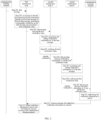
- the process of the protection method is specifically described with reference to FIG. 2 .
- the method in the embodiments of the present application is applied to the SRv6 scenario.
- the specific content of the protection process is as follows.
- Step 201 the communication initiating terminal transmits the data message to the first transmission node.
- Step 202 in response to that the first transmission node determines that the received data message is the first data message, the first transmission node performs cryptography calculation on the data message and generates a first verification value.
- Step 203 the first transmission node forwards the data message carrying the first verification value to the second transmission node A.
- Step 204 the second transmission node generates and adds verification information a1 to the data message.
- Step 205 the second transmission node verifies the first verification value.
- Step 206 if the verification is successful, the data message carrying verification information a1 and the first verification value is forwarded to the second transmission node B.
- Step 208 the second transmission node A verifies the first verification value.
- Step 209 if the verification is successful, the data message carrying verification information a1 and a2 is forwarded to the communication receiving terminal.
- Step 210 if verification information a1 and a2 meets the authorization standard, the communication receiving terminal authorizes the verification information a1 and a2.
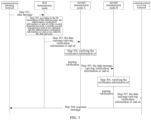
- Step 301 the communication initiating terminal transmits a data message to the first transmission node.
- Step 302 according to the IP information of the data message, the authorization verification information a1 and a2 of the second transmission node A and the second transmission node B are obtained, and the authorization verification information a1 and a2 are added to the data message.
- Step 303 the first transmission node forwards the data message carrying verification information a1 and a2 to the second transmission node A.
- Step 304 the second transmission node A verifies the verification information a1.
- Step 305 if the verification is successful, the data message carrying the verification information a1 and a2 is forwarded to the second transmission node B.
- Step 306 the second transmission node B verifies the verification information a2.
- Step 307 if the verification is successful, the data message carrying the verification information a1 and a2 is forwarded to the communication receiving terminal.
- Step 308 the communication receiving terminal transmits a response message to the communication initiating terminal.
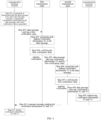
- the process of the protection method is specifically described with reference to FIG. 4 .
- the protection process can further include following specific contents.
- Step 401 in response to that the communication initiating terminal determines that the data message to be sent is the first data message, cryptography calculation is performed on the data message, and a first verification value is generated.
- Step 402 the communication initiating terminal forwards a data message carrying a first verification value to the first transmission node.
- Step 403 the first transmission node generates and adds verification information X1 to the data message.
- Step 404 the first transmission node verifies the first verification value.
- Step 407 the second transmission node verifies the first verification value.
- Step 408 if the verification is successful, the data message carrying verification information X1 and Y1 is forwarded to the communication receiving terminal.
- Step 410 the communication receiving terminal transmits a response message carrying verification information X1 and Y1 to the communication initiating terminal via the second transmission node and the first transmission node.
- Step 411 the communication initiating terminal stores verification information X1 and Y1.
- the process of the protection method is specifically described with reference to FIG. 5 .
- the protection process can further include following specific contents.
- Step 502 the communication initiating terminal forwards the data message carrying verification information X1 and Y1 to the first transmission node.
- Step 503 the first transmission node verifies verification information X1.
- Step 504 if the verification is successful, the first transmission node forwards the data message carrying verification information X1 and Y1 to the second transmission node.
- the first verification value generated by encryption can be used for the second transmission node and the communication receiving terminal to detect the authenticity of the data message, thereby avoiding forwarding data messages with security risks, ensuring the security of the data message transmission process.
- the verification for the authorization verification information is used to check whether the source IP of the data message (namely, the IP of the communication initiating terminal) has changed, thereby avoiding forwarding data messages of unknown origin, and achieving systematic security protection from an end-to-end perspective.
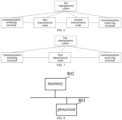
- the embodiments of the present application provide a communication protection system, and the network architecture of the protection system is shown in FIG. 6 , which specifically includes a communication initiating terminal, a communication receiving terminal, a first transmission node, and at least one second transmission node.
- the communication initiating terminal is used to transmit a data message to the communication receiving terminal, and receive a data message from the communication receiving terminal.
- the communication receiving terminal is used to receive a data message from the communication initiating terminal, authorize the communication initiating terminal, and transmit verification information to the communication initiating terminal.
- verification information is added to the first data message, and verification information carried by the second data message is verified.
- the first transmission node is used to determine whether the data message is the first data message or the second data message, perform cryptography calculation on the first data message, and add authorization verification information to the second data message.
- the first transmission node can further perform an authenticity inspection on the communication initiating terminal.
- the second transmission node generates and adds verification information for the first data message, and verifies the authorization verification information carried by the second data message.
- the communication protection system in the embodiments of the present application can further include a key management center for managing the key information of the communication initiating terminal and the first transmission node.
- the embodiment of the present application further provides a protection system, and the network architecture of the protection system is shown in FIG. 7 , which specifically includes a communication initiating terminal, a communication receiving terminal, and a first transmission node.
- the communication initiating terminal is used to determine whether the data message is the first data message or the second data message, perform cryptography calculation on the first data message, add authorization verification information to the second data message, and receive the data message from the communicati/on receiving terminal.
- the communication receiving terminal is used to receive the data message from the communication initiating terminal, authorize the communication initiating terminal, and transmit verification information to the communication initiating terminal.
- verification information is added to the first data message, and verification information carried by the second data message is verified.
- the first transmission node generates and adds verification information to the first data message, and verifies the authorization verification information carried by the second data message.
- the communication protection system in the embodiments of the present application may further include a key management center and at least one second transmission node.
- the key management center is used to manage the key information of the communication initiating terminal
- the second transmission node is used to receive the data message from the previous transmission node, perform cryptography calculation on the first data message, add authorization verification information to the second data message. Further, the second transmission node may authorize the communication initiating terminal.
- the embodiments of the present application further provide an electronic device, as shown in FIG. 8 , which includes at least one processor 801, and a memory 802 communicating with the at least one processor 801.
- the memory 802 stores data executable by the at least one processor 801.
- the at least one processor 801 can execute the communication protection method.
- the processor is configured for managing the bus and general processing, and can further provide various functions, such as timing, peripheral interfaces, voltage regulation, power management, and other control functions.
- the memory can be used to store data used by the processor when performing steps.
- the above-mentioned product can execute the method in the embodiments of the present application, and has the corresponding functional modules and beneficial effects of the execution method.
- the method in the embodiments of the present application may be referred to.
- Another embodiment of the present application relates to a computer-readable storage medium, which stores a computer program.
- the computer program is executed by the processor, the above method embodiments are implemented.
Landscapes
- Engineering & Computer Science (AREA)
- Computer Security & Cryptography (AREA)
- Computer Networks & Wireless Communication (AREA)
- Signal Processing (AREA)
- Computer Hardware Design (AREA)
- General Engineering & Computer Science (AREA)
- Computing Systems (AREA)
- Theoretical Computer Science (AREA)
- Power Engineering (AREA)
- Bioethics (AREA)
- Software Systems (AREA)
- Physics & Mathematics (AREA)
- General Physics & Mathematics (AREA)
- General Health & Medical Sciences (AREA)
- Health & Medical Sciences (AREA)
- Data Exchanges In Wide-Area Networks (AREA)
Abstract
Description
- The present application claims priority to
Chinese patent application No. 202210692194.0, and filed on June 17, 2022 - The present application relates to the technical field of communication, and in particular to a communication protection method and a system, an electronic device, and a storage medium.
- With the continuous progress of society and the continuous development of the economy, the network has become an indispensable part of people's daily life. With the evolution of network cloudification/generalization, the integration of 2B and 2C services, the increasing exposure of network openness, the further blurring of the "boundaries" of network security, and the continuous upgrading of attack methods, the conventional "patch-style" security design model has defects such as structural rigidity, late awareness, and lack of coordination. The stacked and reinforced security architecture relies on a passive protection mode based on prior knowledge, which is difficult to meet the new network security protection needs. Therefore, it is necessary to break through the conventional design model, add higher security factors into the network, and conduct system security design from the requirements of identity, data, network, and communication terminals. Network communication protection is based on the verification of access terminals and the protection of receiving terminals to ensure the security and reliability of the network, and provide security guarantees for the normal operation of resources and normal communication of services.
- However, conventional communication protection technologies have defects, such as low protection efficiency, insufficient system protection, and insufficient comprehensive protection.
- The purpose of the present application is to solve the above problems, provide a communication protection method, a system, an electronic device and a storage medium, aiming to solve the problems of low protection efficiency, poor defense system and insufficient protection in the business intercommunication process, and achieve the purpose of comprehensive and efficient protection of the communication intercommunication process.
- To solve the above problems, embodiments of the present application provide a communication protection method, which includes: determining a type of a data message to be sent, the type of the data message including a first data message and a second data message; the first data message being a primary data message sent to a communication receiving terminal, and the second data message being a non-primary data message sent to the communication receiving terminal; in response to that the data message is the first data message, performing strong verification on the data message; in response to that the data message is the second data message, performing weak verification on the data message, the strong verification being a verification with security higher than the weak verification; and in response to that verification passes, transmitting the data message to the communication receiving terminal.
- To solve the above problems, embodiments of the present application provide a communication protection system including: a communication initiating terminal, a communication receiving terminal, a first transmission node and at least one second transmission node. The first transmission node is configured to execute the communication protection method as mentioned above. The second transmission node and the communication receiving terminal are configured to execute the communication protection method as mentioned above.
- To solve the above problems, embodiments of the present application provide a communication protection system including: a communication initiating terminal, a communication receiving terminal, and a first transmission node. The communication initiating terminal is configured to execute the communication protection method as mentioned above. The first transmission node and the communication receiving terminal are configured to execute the communication protection method as mentioned above.
- To solve the above problems, embodiments of the present application provide an electronic device including at least one processor and a memory communicating with the at least one processor. The memory stores an instruction executable by the at least one processor, and the instruction is executed by the at least one processor to make the at least one processor execute the communication protection method as mentioned above.
- To solve the above problems, embodiments of the present application provide a computer-readable storage medium storing a computer program. When the computer program is executed by a processor, the communication protection method as mentioned above is implemented.
- For the communication protection method in the embodiments of the present application, strong verification is performed on the primary data message sent to the communication receiving terminal, and only if the strong verification passes, the data message is forwarded to the communication receiving terminal, so as to achieve security verification while establishing communication with the communication receiving terminal, thereby avoiding the communication receiving terminal from being attacked and ensuring the security and reliability of the network. In addition, weak verification is performed on the non-primary data message of the communication receiving terminal, so that even if the communication receiving terminal has been connected, weak verification still needs to be performed on the data message, thereby avoiding the potential risks brought by the data message. Therefore, the problems of low protection efficiency, poor defense system and insufficient protection of the service intercommunication process are solved, and the purpose of comprehensive and efficient protection of the communication intercommunication process is achieved.
- One or more embodiments are exemplified by the figures in the corresponding drawings, and these illustrative descriptions do not constitute a limitation to the embodiments. Elements with same reference numbers in the drawings represent similar elements, and unless otherwise stated, the figures in the drawings do not constitute proportional limitations.
-
FIG. 1 is a flowchart of a communication protection method according to an embodiment of the present application. -
FIG. 2 is a flowchart showing performing communication protection on a first data message according to an embodiment of the present application. -
FIG. 3 is a flowchart showing performing communication protection on a second data message according to an embodiment of the present application. -
FIG. 4 is a flowchart showing performing communication protection on a first data message according to another embodiment of the present application. -
FIG. 5 is a flowchart showing performing communication protection on a second data message according to another embodiment of the present application. -
FIG. 6 is a schematic structural diagram of a communication protection system according to an embodiment of the present application. -
FIG. 7 is a schematic structural diagram of a communication protection system according to another embodiment of the present application. -
FIG. 8 is a schematic structural diagram of an electronic device according to an embodiment of the present application. - In order to make the purpose, technical solutions and advantages of the present application clearer, embodiments of the present application will be clearly described below in conjunction with the drawings of the present application. However, those skilled in the art can understand that, in the various embodiments of the present application, many technical details are provided in order to enable the reader to better understand the present application. Even without these technical details and various changes and modifications based on following embodiments, the technical solutions in the present application can still be implemented.
- An embodiment of the present application relates to a communication protection method which includes: determining the type of a data message to be sent, the type of the data message including a first data message and a second data message, the first data message being the primary data message sent to the communication receiving terminal, and the second data message being the non-primary data message sent to the communication receiving terminal; in response to that the data message is the first data message, performing strong verification on the data message; in response to that the data message is the second data message, performing weak verification on the data message, strong verification being verification with higher security than the weak verification; and in response to that verification passes, transmitting the data message to the communication receiving terminal. The communication protection method can solve the problems of low protection efficiency, poor defense system and insufficient protection in the service interworking process, and achieve the purpose of comprehensive and efficient protection of the communication interworking process.
- The implementation details of the method in this embodiment are described in detail below. The following contents are only for the convenience of understanding the implementation details of technical solutions, and is not necessary for implementing these technical solutions. The specific process is shown in
FIG. 1 , which may include the following steps. -
Step 101, determining a type of a data message to be sent. - The type of the data message includes a first data message and a second data message. The first data message is a primary data message sent to a communication receiving terminal, and the second data message is a non-primary data message sent to the communication receiving terminal. There can be one or more data messages. The data message can be a set of streams with the same information or multiple combinations of the same information, which includes the Internet Protocol (IP) of the communication initiating terminal, the identity of the communication initiating terminal, the port of the communication initiating terminal, the IP of the communication receiving terminal, the identity of the communication receiving terminal, the port of the communication receiving terminal, the protocol number, and the protocol port. The first data message may be an initial data message or a primary packet, and further may be a data message after the primary packet when the data message has poor security. For the second data message, when the data message has high security, the second data message may further be the primary data message.
- In an embodiment of the present application, when the data message carries the IP of the communication receiving terminal appearing for a first time, the data message is determined as the first data message. When the data message carries the IP of the communication receiving terminal not appearing for a first time, the data message is determined as the second data message.
- In an embodiment, when the data message to be sent carries the IP of the communication receiving terminal A and the communication initiating terminal has never transmitted a data message to the communication receiving terminal A, the data message is determined as the first data message. When the communication initiating terminal has transmitted a data message to the communication receiving terminal A, the data message is determined as the second data message.
- In another embodiment, the data message to be sent carries the IP of the communication receiving terminal A and the IP of the communication initiating terminal B. When the communication initiating terminal B has never transmitted a data message to the communication receiving terminal A, the data message is determined as the first data message. When the communication initiating terminal B has transmitted a data message to the communication receiving terminal A, the data message is determined as the second data message.
- The communication initiating terminal and the communication receiving terminal can be a terminal, a personal computer (PC), a server, a manager, a controller, and the like.
- In an embodiment of the present application, when the data message is a non-primary data message sent to the communication receiving terminal and the data message has poor security, the data message is the first data message. When the data message is the primary data message sent to the communication receiving terminal and the data message has high security, the data message is the second data message.
- In an embodiment, for a data message that is not transmitted to the communication receiving terminal for the first time, if it is detected that the data message has poor security, the data message can still be determined as the first data message and strong verification is performed on it. For a data message that is transmitted to the communication receiving terminal for the first time, if it is detected that the data message has high security, the data message can be determined as the second data message and weak verification is performed on it.
-
Step 102, in response to that the data message is the first data message, performing strong verification on the data message. - In an embodiment, for the communication initiating terminal and the communication terminal that perform data transmission for the first time, it is necessary to adopt a strong verification with high security to verify the data message transmitted by the communication initiating terminal.
- In an embodiment of the present application, the step of performing strong verification on the data message includes: the first transmission node or the communication initiating terminal performs cryptography calculation on the data message and generates a first verification value, and adds first verification information to the data message. The first transmission node is a transmission node that receives the data message sent from the communication initiating terminal, and the first transmission node can be a router, a switch, a gateway, and the like.
- In the embodiment of the present application, when the first transmission node performs the above-mentioned strong verification step, the first transmission node uses the key of the first transmission node to perform cryptography calculation on the information of the communication initiating terminal and/or the first transmission node, and generates a first verification value. Or the first transmission node uses the key of the communication initiating terminal to perform cryptography calculation on the information of the communication initiating terminal and/or the first transmission node, and generates a first verification value.
- In an embodiment, the first transmission node receives a data message from the communication initiating terminal. The data message carries the information of the communication initiating terminal, and the key of the communication initiating terminal can be obtained from the key management center through the information of the communication initiating terminal. Therefore, the first transmission node can use the key of the first transmission node or the key of the communication initiating terminal to perform cryptography calculation or signature on information (such as identity or address) of the first transmission node or the communication initiating terminal to obtain a first verification value.
- In the embodiment of the present application, when the communication initiating terminal performs the above-mentioned strong verification step, the communication initiating terminal uses the key of the communication initiating terminal to perform cryptography calculation on the information of the communication initiating terminal and generates a first verification value.
- In an embodiment, when the communication initiating terminal performs cryptography calculation on the data message, the encryption key that the communication initiating terminal can obtain is only its own key, and the data message only carries the information of the communication initiating terminal. Therefore, when the communication initiating terminal performs cryptography calculation on the data message, the communication initiating terminal can only use the key of the communication initiating terminal to perform cryptography calculation or signature on the identity or address of the communication initiating terminal to generate the first verification value.
- In an embodiment of the present application, the step of performing strong verification on the data message further includes: after adding the first verification value to the data message, the first transmission node performs an authenticity inspection on the communication initiating terminal. The authenticity inspection includes one or more of the following combinations: inspection based on access control, inspection based on a verification code, inspection based on cryptography, and inspection based on a token.
- After receiving the data message, the first transmission node further performs an authenticity inspection on the communication initiating terminal to avoid forwarding the data message with security risks to the second transmission node.
- In an embodiment of the present application, the step of performing strong verification on the data message further includes: the first transmission node, the second transmission node, or the communication receiving terminal verifies the first verification value carried by the data message.
- The second transmission node is a transmission node that receives a data message sent from the previous transmission node. The previous transmission node is the first transmission node or the second transmission node. There may be multiple second transmission nodes between the first transmission node and the communication receiving terminal, and the second transmission node may be a router, a switch, and a gateway.
- In an embodiment of the present application, when the first transmission node verifies the first verification value, first verification is performed on the first verification value by using the key of the communication initiating terminal and the information of the communication initiating terminal.
- In an embodiment, when the communication initiating terminal performs cryptography calculation on the data message, the first transmission node uses the key of the communication initiating terminal and the information of the communication initiating terminal to perform the first verification on the first verification value.
- In an embodiment of the present application, when the second transmission node verifies the first verification value, the first verification is performed on the first verification value by using the key of the first transmission node and the information of the communication initiating terminal and/or the first transmission node, or the first verification is performed on the first verification value by using the key of the communication initiating terminal and the information of the communication initiating terminal and/or the first transmission node. In an embodiment, when the first transmission node performs cryptography calculation on the data message and generates the first verification value, the first transmission node forwards the data message carrying the first verification value to the second data message, and the data message further carries information for obtaining the key of the communication initiating terminal or the first transmission node. Therefore, the second transmission node can use the key of the first transmission node and the information of the communication initiating terminal and/or the first transmission node to perform the first verification on the first verification value. Or the second transmission node can use the key of the communication initiating terminal and the information of the communication initiating terminal and/or the first transmission node to perform the first verification on the first verification value.
- In an embodiment of the present application, when the communication receiving terminal verifies the first verification value, first verification is performed on the first verification value by using the key of the first transmission node and the information of the communication initiating terminal and/or the first transmission node, or first verification is performed on the first verification value by using the key of the communication initiating terminal and the information of the communication initiating terminal and/or the first transmission node.
- In an embodiment, the communication initiating terminal performs cryptography calculation on the data message and generates the first verification value. After the first transmission node performs the first verification on the first verification value, the first transmission node transmits the data message carrying the verification value to the communication receiving terminal via the second transmission node. Therefore, when the first transmission node verifies the first verification value, the communication receiving terminal can further verify the first verification value again.
- In another embodiment, after the first transmission node performs cryptography calculation on the data message and generates the first verification value, the second transmission node performs first verification on the first verification value, then the second transmission node transmits the data message carrying the first verification value to the communication receiving terminal. Therefore, when the second transmission node verifies the first verification value, the communication receiving terminal can further verify the first verification value again.
- Cryptography calculation is performed on the information in the data message, which can avoid data leakage and security issues. In addition, the first verification value generated with encryption can be used for the second transmission node and the communication receiving terminal to detect the authenticity of the data message, thereby avoiding forwarding data messages with security risks and ensuring the security during the data message transmission process.
- In an embodiment of the present application, the performing strong verification on the data message further includes: the first transmission node, the second transmission node or the communication receiving terminal generates verification information for the data message, and adds verification information to the data message. The verification information includes: a certificate, a verification code and a token. The certificate information is carried by the data message and can be stored in the outer IP header, the inner IP header, the IP address of the communication initiating terminal, the IP address of the communication receiving terminal, the option header, the original extension header or the newly defined extension header of the data message.
- In an embodiment, when the first transmission node generates verification information for a data message, the first transmission node generates verification information of the first transmission node according to the IP of the communication initiating terminal and the IP of the communication receiving terminal.
- In another embodiment, when the second transmission node generates verification information for the data message and the data message carries the IP of the communication receiving terminal appearing for the first time, the verification information of the second transmission node is generated according to the IP of the first transmission node and the IP of the communication receiving terminal. When the data message carries the IP of the communication receiving terminal appearing for the first time and the IP of the communication initiating terminal appearing for the first time, the second transmission node generates verification information of the second transmission node according to the IP of the communication initiating terminal and the IP of the communication receiving terminal.
- In another embodiment, when the first transmission node generates verification information of the first transmission node, the second transmission node and the communication initiating terminal can generate verification information for the data message again according to the IP of the communication initiating terminal and the IP of the communication receiving terminal.
- In an embodiment, when the second transmission node generates verification information of the second transmission node for the data message, the communication receiving terminal may further generate verification information of the communication receiving terminal according to the IP of the first transmission node and the IP of the communication receiving terminal in response to that the data message carries the IP of the communication receiving terminal appearing for the first time. Besides, the communication receiving terminal may further generate verification information of the communication receiving terminal according to the IP of the communication initiating terminal and the IP of the communication receiving terminal in response to that the data message carries the IP of the communication receiving terminal appearing for the first time and the IP of the communication initiating terminal appearing for the first time.
- In addition, when there are multiple second transmission nodes between the communication receiving terminal and the first transmission node, in response to that the primary second transmission node completes the strong verification of the data message and passes the verification, the data message carrying verification information and the first verification value will be sent to the next second transmission node, so that the subsequent multiple second transmission nodes can perform the same strong verification step on the data message. After all the second transmission nodes complete the strong verification of the data message and pass the verification, the data message will be sent to the communication receiving terminal.
- When two communication terminals transmit the data message for the first time, verification information is generated according to the IP information carried by the data message, so that the communication terminal can perform verification when performing the next communication transmission. That is, when the communication initiating terminal transmits the second data message to the communication terminal, each transmission node can perform weak verification on the second data message.
- In an embodiment of the present application, after strong verification is performed on the data message, the verification information is screened according to the preset standard to obtain the authorization verification information. The authorization verification information is sent to the communication initiating terminal together with the response message of the communication initiating terminal.
- In an embodiment, the second transmission node A, the second transmission node B and the second transmission node C respectively generate corresponding verification information a1, verification information a2 and verification information a3 for the data message. The data message carrying verification information a1, a2 and a3 is sent by the second transmission node C to the communication receiving terminal. The communication receiving terminal can screen verification information a1, a2 and a3 according to the authorization whitelist, and a1 and a2 are screened to obtain the authorization verification information a1 and a2. The communication receiving terminal transmits a response message carrying the authorization verification information to the communication initiating terminal.
- In another embodiment, the second transmission node A, the second transmission node B and the second transmission node C generate corresponding verification information a1, verification information a2 and verification information a3 for the data message, respectively. The second transmission node C can screen verification information a1, verification information a2 and verification information a3 according to the resource occupancy. After screening verification information a1 and verification information a2, authorization verification information a1 and a2 are obtained. The second transmission node C adds the authorization verification information to the response message sent by the communication receiving terminal, and forwards the response message to the communication receiving terminal via multiple transmission nodes.
- In another embodiment, the communication receiving terminal may not screen the generated verification information, and the communication receiving terminal directly authorize each generated verification information. The authorization verification information is added to the response message sent by the communication receiving terminal, and the response message is forwarded to the communication receiving terminal through multiple transmission nodes.
- Embodiments of the present application do not limit the preset authorization standard of the authorization verification information. The specific authorization standard used in the above embodiments is to make the process of obtaining the authorization verification information clearer.
- By screening the verification information, invalid verification information or information with security risks, which may affect the security of communication transmission and cause waste of resources, is prevented from being authorized.
-
Step 103, in response to that the data message is the second data message, performing weak verification on the data message. - The second data message is not the data message sent to the communication receiving terminal for the first time, indicating that strong verification has been performed on the data message when the data message is sent to the communication receiving terminal for the first time. Therefore, for the data message between the communication initiating terminal and the communication receiving terminal, on which strong verification has been performed, when the data message is transmitted again, the weak verification with security lower than the strong verification can be adopted.
- In the embodiment of the present application, the step of performing weak verification on the data message includes: according to the IP information carried by the data message, adding the stored authorization verification information to the data message. The IP information carried by the data message includes: the IP of the communication receiving terminal and the IP of the communication initiating terminal.
- After the strong verification is performed on the first data message of the communication receiving terminal, the authorization verification information will be sent to the communication initiating terminal or the first transmission node along with the response message. When the encryption step of the data message is performed by the communication initiating terminal, the authorization verification information will be sent to the communication initiating terminal and stored by the communication initiating terminal. When the encryption step of the data message is performed by the first transmission node, the authorization verification information will be sent to the first transmission node along with the response message. The first transmission node stores the authorization verification information and transmits a response message to the communication initiating terminal.
- Therefore, after the communication initiating terminal or the first transmission node determines that the data message is the second data message, the authorization verification information corresponding to the IP of the communication receiving terminal can be obtained from the stored authorization verification information according to the IP of the communication receiving terminal of the data message, and the authorization verification information is added to the data message.
- In the embodiment of the present application, the step of performing weak verification on the data message further includes: verifying the authorization verification information carried by the data message.
- In an embodiment, when the verification information generated by the second transmission node for the data message is authorized, the second transmission node verifies the authorization verification information carried by the data message. The second transmission node verifies the authorization verification information carried by the data message according to the IP of the first transmission node and the IP of the communication receiving terminal in response to that the data message carries the IP of the communication receiving terminal that does not appear for the first time. The second transmission node verifies the authorization verification information carried by the data message according to the IP of the communication initiating terminal and the IP of the communication receiving terminal in response to that the data message carries the IP of the communication receiving terminal that does not appear for the first time and the IP of the communication initiating terminal that does not appear for the first time.
- In an embodiment, when the verification information generated by the first transmission node for the data message is authorized, the first transmission node verifies the authorization verification information carried by the data message according to the IP of the communication initiating terminal and the IP of the communication receiving terminal.
- In an embodiment, when the verification information generated by the communication receiving terminal for the data message is authorized, the communication receiving terminal verifies the authorization verification information carried by the data message according to the IP of the first transmission node and the IP of the communication receiving terminal. Or the authorization verification information carried by the data message is verified according to the IP of the communication initiating terminal and the IP of the communication receiving terminal.
- In addition, when the verification information generated by the communication receiving terminal and the first transmission node or the second transmission node for the data message is authorized, the communication receiving terminal and the first transmission node or the second transmission node can verify the authorization verification information carried by the data message.
- In an embodiment, after receiving a data message carrying authorization verification information, the second transmission node uses a cryptography algorithm to calculate the IP of the communication receiving terminal and the IP of the communication initiating terminal carried by the data message to obtain a calculated value. When the calculated value matches with the authorization verification information carried by the data message, it is considered that the verification of the authorization verification information is passed.
- For the communication initiating terminal and the communication terminal that perform data transmission for the first time, it is necessary to adopt strong verification with high security to verify the data message transmitted by the communication initiating terminal. For the communication initiating terminal and the communication receiving terminal that have already undergone strong verification, when data transmission between the communication initiating terminal and the communication terminal is performed again, weak verification with security lower than strong verification can be adopted for verification, so as to avoid fully opening the business between the communication initiating terminal and the communication terminal after only one verification, thereby avoiding potential security risks. In addition, multiple second transmission nodes all verify the authorization verification information, so as to avoid the problem that when only one second transmission node performs verification, the verification function of the second transmission node fails and the data message with secure risks cannot be intercepted. The verification of the authorization verification information is used to check whether the source IP of the data message (namely, the IP of the communication initiating terminal) has changed, so as to avoid forwarding data messages of unknown origin, and realize systematic security protection from an end-to-end perspective.
-
Step 104, if the verification passes, the data message is sent to the communication receiving terminal. - In an embodiment, the second transmission node verifies the first verification value of the data message. If the verification passes, the second transmission node transmits the data message to the next second transmission node, or transmits the data message to the communication receiving terminal. If the verification of the first transmission node passes, the first transmission node transmits the data message to the second transmission node.
- In an embodiment, the second transmission node verifies the authorization verification information carried by the data message. If the verification passes, the second transmission node transmits the data message to the next second transmission node, or transmits the data message to the communication receiving terminal. If the first transmission node verifies successfully, the first transmission node transmits the data message to the second transmission node.
- In order to make the communication protection method in the embodiments of the present application clearer, the process of the protection method is specifically described with reference to
FIG. 2 . The method in the embodiments of the present application is applied to the SRv6 scenario. When the data message is the first data message, the specific content of the protection process is as follows. -
Step 201, the communication initiating terminal transmits the data message to the first transmission node. -
Step 202, in response to that the first transmission node determines that the received data message is the first data message, the first transmission node performs cryptography calculation on the data message and generates a first verification value. - Step 203, the first transmission node forwards the data message carrying the first verification value to the second transmission node A.
-
Step 204, the second transmission node generates and adds verification information a1 to the data message. -
Step 205, the second transmission node verifies the first verification value. -
Step 206, if the verification is successful, the data message carrying verification information a1 and the first verification value is forwarded to the second transmission node B. -
Step 207, the second transmission node B generates and adds verification information a2 to the data message. -
Step 208, the second transmission node A verifies the first verification value. -
Step 209, if the verification is successful, the data message carrying verification information a1 and a2 is forwarded to the communication receiving terminal. - Step 210, if verification information a1 and a2 meets the authorization standard, the communication receiving terminal authorizes the verification information a1 and a2.
-
Step 211, the communication receiving terminal transmits a response message carrying verification information a1 and a2 to the communication initiating terminal via the second transmission node B, the second transmission node A and the first transmission node. -
Step 212, the first transmission node stores verification information a1 and a2, and forwards the response message to the communication initiating terminal. - In order to make the communication protection method in the embodiments of the present application clearer, the process of the communication protection method is specifically described with reference to
FIG. 3 . The method in the embodiments of the present application is applied to the SRv6 scenario. When the data message is the second data message, the specific content of the protection process is as follows. -
Step 301, the communication initiating terminal transmits a data message to the first transmission node. -
Step 302, according to the IP information of the data message, the authorization verification information a1 and a2 of the second transmission node A and the second transmission node B are obtained, and the authorization verification information a1 and a2 are added to the data message. -
Step 303, the first transmission node forwards the data message carrying verification information a1 and a2 to the second transmission node A. -
Step 304, the second transmission node A verifies the verification information a1. -
Step 305, if the verification is successful, the data message carrying the verification information a1 and a2 is forwarded to the second transmission node B. -
Step 306, the second transmission node B verifies the verification information a2. -
Step 307, if the verification is successful, the data message carrying the verification information a1 and a2 is forwarded to the communication receiving terminal. -
Step 308, the communication receiving terminal transmits a response message to the communication initiating terminal. - In order to make the communication protection method in the embodiments of the present application clearer, the process of the protection method is specifically described with reference to
FIG. 4 . When the data message is the first data message, the protection process can further include following specific contents. -
Step 401, in response to that the communication initiating terminal determines that the data message to be sent is the first data message, cryptography calculation is performed on the data message, and a first verification value is generated. -
Step 402, the communication initiating terminal forwards a data message carrying a first verification value to the first transmission node. -
Step 403, the first transmission node generates and adds verification information X1 to the data message. -
Step 404, the first transmission node verifies the first verification value. -
Step 405, if the verification is successful, the data message carrying verification information X1 and the first verification value is forwarded to the second transmission node. -
Step 406, the second transmission node generates and adds verification information Y1 to the data message. -
Step 407, the second transmission node verifies the first verification value. -
Step 408, if the verification is successful, the data message carrying verification information X1 and Y1 is forwarded to the communication receiving terminal. -
Step 409, if verification information X1 and Y1 meet the authorization standard, the communication receiving terminal authorizes verification information X1 and Y1. -
Step 410, the communication receiving terminal transmits a response message carrying verification information X1 and Y1 to the communication initiating terminal via the second transmission node and the first transmission node. -
Step 411, the communication initiating terminal stores verification information X1 and Y1. - In order to make the protection method in the embodiments of the present application clearer, the process of the protection method is specifically described with reference to
FIG. 5 . When the data message is the second data message, the protection process can further include following specific contents. -
Step 501, in response to that the communication initiating terminal determines that the data message to be sent is the second data message, the authorization verification information X1 and Y1 of the first transmission node and the second transmission node are obtained according to the IP information of the data message. -
Step 502, the communication initiating terminal forwards the data message carrying verification information X1 and Y1 to the first transmission node. -
Step 503, the first transmission node verifies verification information X1. -
Step 504, if the verification is successful, the first transmission node forwards the data message carrying verification information X1 and Y1 to the second transmission node. -
Step 505, the second transmission node verifies verification information Y1. -
Step 506, if the verification is successful, the second transmission node forwards the data message carrying verification information X1 and Y1 to the communication receiving terminal. -
Step 507, the communication receiving terminal transmits a response message to the communication initiating terminal. - For the communication protection method in the embodiments of the present application, strong verification is performed on the primary data message sent to the communication receiving terminal, and only if the strong verification passes, the data message is forwarded to the communication receiving terminal, so as to achieve security verification while establishing communication with the communication receiving terminal, thereby avoiding the communication receiving terminal from being attacked and ensuring the security and reliability of the network. In addition, weak verification is performed on the non-primary data message of the communication receiving terminal, so that even if the communication receiving terminal has been connected, weak verification still needs to be performed on the data message, thereby avoiding the potential risks brought by the data message. Therefore, the problems of low protection efficiency, poor defense system and insufficient protection of the service intercommunication process are solved, and the purpose of comprehensive and efficient protection of the communication intercommunication process is achieved. In addition, by performing cryptography calculation on the information in the data message, while avoiding security issues caused by data leakage, the first verification value generated by encryption can be used for the second transmission node and the communication receiving terminal to detect the authenticity of the data message, thereby avoiding forwarding data messages with security risks, ensuring the security of the data message transmission process. The verification for the authorization verification information is used to check whether the source IP of the data message (namely, the IP of the communication initiating terminal) has changed, thereby avoiding forwarding data messages of unknown origin, and achieving systematic security protection from an end-to-end perspective.
- The steps of the above steps are divided only for clear description. When implementing, they can be combined into one step or some steps can be divided into multiple steps. As long as they include the same logical relationship, they are all fall within the scope of the present application. Adding insignificant modifications or introducing insignificant designs to the algorithm or process, but not changing the core design of its algorithm and process are all fall within the scope of the present application.
- The embodiments of the present application provide a communication protection system, and the network architecture of the protection system is shown in
FIG. 6 , which specifically includes a communication initiating terminal, a communication receiving terminal, a first transmission node, and at least one second transmission node. - The communication initiating terminal is used to transmit a data message to the communication receiving terminal, and receive a data message from the communication receiving terminal.
- The communication receiving terminal is used to receive a data message from the communication initiating terminal, authorize the communication initiating terminal, and transmit verification information to the communication initiating terminal. In an embodiment, verification information is added to the first data message, and verification information carried by the second data message is verified.
- The first transmission node is used to determine whether the data message is the first data message or the second data message, perform cryptography calculation on the first data message, and add authorization verification information to the second data message. In an embodiment, the first transmission node can further perform an authenticity inspection on the communication initiating terminal.
- The second transmission node generates and adds verification information for the first data message, and verifies the authorization verification information carried by the second data message.
- The communication protection system in the embodiments of the present application can further include a key management center for managing the key information of the communication initiating terminal and the first transmission node.
- The embodiment of the present application further provides a protection system, and the network architecture of the protection system is shown in
FIG. 7 , which specifically includes a communication initiating terminal, a communication receiving terminal, and a first transmission node. - The communication initiating terminal is used to determine whether the data message is the first data message or the second data message, perform cryptography calculation on the first data message, add authorization verification information to the second data message, and receive the data message from the communicati/on receiving terminal.
- The communication receiving terminal is used to receive the data message from the communication initiating terminal, authorize the communication initiating terminal, and transmit verification information to the communication initiating terminal. In an embodiment, verification information is added to the first data message, and verification information carried by the second data message is verified.
- The first transmission node generates and adds verification information to the first data message, and verifies the authorization verification information carried by the second data message.
- The communication protection system in the embodiments of the present application may further include a key management center and at least one second transmission node. The key management center is used to manage the key information of the communication initiating terminal, and the second transmission node is used to receive the data message from the previous transmission node, perform cryptography calculation on the first data message, add authorization verification information to the second data message. Further, the second transmission node may authorize the communication initiating terminal.
- The modules in the above-mentioned embodiments of the present application are all logical modules. In practical applications, a logical unit may be a physical unit, or a part of a physical unit, and may further be implemented as a combination of multiple physical units. In addition, in order to highlight the innovative part of the present application, the present implementation does not introduce units that are not closely related to solving the technical problems proposed by the present application, but this does not mean that there are no other units in the present implementation.
- The embodiments of the present application further provide an electronic device, as shown in
FIG. 8 , which includes at least oneprocessor 801, and amemory 802 communicating with the at least oneprocessor 801. Thememory 802 stores data executable by the at least oneprocessor 801. When the instructions are executed by the at least oneprocessor 801, the at least oneprocessor 801 can execute the communication protection method. - The memory is connected to the processor by a bus which may include any number of interconnected buses and bridges. The bus connects one or more processors and various circuits of the memory together. The bus can further connect various other circuits, such as peripherals, voltage regulators, and power management circuits, which are well known in the art and will not be repeated herein. The bus interface provides an interface between the bus and the transceiver. The transceiver can be one element or a plurality of elements, such as a plurality of receivers and transmitters, providing a unit configured to communicate with various other devices on a transmission medium. The data processed by the processor is transmitted on a wireless medium via an antenna, and further, the antenna further receives the data and transmits the data to the processor.
- The processor is configured for managing the bus and general processing, and can further provide various functions, such as timing, peripheral interfaces, voltage regulation, power management, and other control functions. The memory can be used to store data used by the processor when performing steps.
- The above-mentioned product can execute the method in the embodiments of the present application, and has the corresponding functional modules and beneficial effects of the execution method. For technical details not described in detail in the present embodiment, the method in the embodiments of the present application may be referred to.
- Another embodiment of the present application relates to a computer-readable storage medium, which stores a computer program. When the computer program is executed by the processor, the above method embodiments are implemented.
- Those skilled in the art can understand that all or part of the steps in the above method can be completed by instructing the hardware related to the program. The program is stored in a storage medium, and includes several instructions to enable a device (which can be a single-chip microcomputer, chip, and the like) or a processor to perform all or part of the steps of the method described in each embodiment of the present application. The aforementioned storage medium includes: the U disk, the mobile hard disk, the read-only memory (ROM), the random access memory (RAM), the disk or the optical disk, and the like.
- The above embodiments are provided to those skilled in the art to implement and use the technical solutions of the present application. Those skilled in the art may make various modifications or changes to the above embodiments without departing from the inventive concept of the present application. Therefore, the scope of the present application is not limited to the above embodiments, but should conform to the maximum scope of the innovative features mentioned in the claims.
Claims (16)
- A communication protection method, characterized by comprising:determining a type of a data message to be sent, wherein the type of the data message comprises a first data message and a second data message; the first data message is a primary data message sent to a communication receiving terminal, and the second data message is a non-primary data message sent to the communication receiving terminal;in response to that the data message is the first data message, performing strong verification on the data message;in response to that the data message is the second data message, performing weak verification on the data message, wherein the strong verification is a verification with security higher than the weak verification;in response to that verification passes, transmitting the data message to the communication receiving terminal.
- The communication protection method according to claim 1, wherein the determining the type of the data message comprises:in response to that the data message carries an Internet Protocol, IP, of the communication receiving terminal appearing for a first time, determining the data message as the first data message;in response to that the data message carries the IP of the communication receiving terminal not appearing for a first time, determining the data message as the second data message.
- The communication protection method according to claim 1, wherein:the communication protection method is applied to a first transmission node or a communication initiating terminal;the performing the strong verification on the data message comprises:performing cryptography calculation on the data message and generating a first verification value, and adding the first verification value to the data message;the performing the weak verification on the data message comprises:
adding stored authorization verification information to the data message according to Internet Protocol, IP, information carried by the data message. - The communication protection method according to claim 3, wherein the performing the cryptography calculation on the data message and generating the first verification value comprises:in response to that the communication protection method is applied to the first transmission node, performing cryptography calculation on information of the communication initiating terminal and/or the first transmission node by using a key of the first transmission node, and generating the first verification value, or performing cryptography calculation on information of the communication initiating terminal and/or the first transmission node by using a key of the communication initiating terminal, and generating the first verification value; andin response to that the communication protection method is applied to the communication initiating terminal, performing cryptography calculation on the information of the communication initiating terminal by using the key of the communication initiating terminal, and generating the first verification value.
- The communication protection method according to claim 3, wherein after the adding the first verification value to the data message, the communication protection method further comprises:
in response to that the communication protection method is applied to the first transmission node, performing authenticity inspection on the communication initiating terminal, wherein the authenticity inspection comprises one or more of following combinations: inspection based on access control, inspection based on a verification code, inspection based on cryptography, and inspection based on a token. - The communication protection method according to claim 3, wherein after the transmitting the data message to the communication receiving terminal, the communication protection method further comprises:receiving a response message returned from the communication receiving terminal, wherein the response message carries the authorization verification information;storing the authorization verification information.
- The communication protection method according to claim 3, wherein:the communication protection method is applied to the first transmission node or the second transmission node or the communication receiving terminal;the performing the strong verification on the data message comprises:verifying the first verification value carried by the data message;generating verification information for the data message, and adding the verification information to the data message;the performing the weak verification on the data message comprises:
verifying the authorization verification information carried by the data message. - The communication protection method according to claim 7, wherein the verifying the first verification value carried by the data message comprises:in response to that the communication protection method is applied to the first transmission node, performing first verification on the first verification value by using the key of the communication initiating terminal and the information of the communication initiating terminal;in response to that the communication protection method is applied to the second transmission node, performing first verification on the first verification value by using the key of the first transmission node and the information of the communication initiating terminal and/or the first transmission node, or performing first verification on the first verification value by using the key of the communication initiating terminal and the information of the communication initiating terminal and/or the first transmission node;in response to that the communication protection method is applied to the communication receiving terminal, performing first verification on the first verification value by using the key of the first transmission node and the information of the communication initiating terminal and/or the first transmission node, or performing first verification on the first verification value by using the key of the communication initiating terminal and the information of the communication initiating terminal and/or the first transmission node.
- The communication protection method according to claim 7, wherein the generating the verification information for the data message comprises:in response to that the communication protection method is applied to the second transmission node, and in response to that the data message carries an IP of the communication receiving terminal appearing for a first time, generating the verification information according to an IP of the first transmission node and the IP of the communication receiving terminal; in response to that the data message carries an IP of the communication receiving terminal appearing for a first time and an IP of the communication initiating terminal appearing for a first time, generating the verification information according to the IP of the communication initiating terminal and the IP of the communication receiving terminal;in response to that the communication protection method is applied to the first transmission node, generating the verification information according to the IP of the communication initiating terminal and the IP of the communication receiving terminal;in response to that the communication protection method is applied to the communication receiving terminal, generating the verification information according to the IP of the first transmission node and the IP of the communication receiving terminal, or generating the verification information according to the IP of the communication initiating terminal and the IP of the communication receiving terminal.
- The communication protection method according to claim 7, wherein the verifying the authorization verification information carried by the data message comprises:in response to that the communication protection method is applied to the second transmission node, and in response to that the data message carries the IP of the communication receiving terminal not appearing for a first time, verifying the authorization verification information carried by the data message according to the IP of the first transmission node and the IP of the communication receiving terminal; in response to that the data message carries the IP of the communication receiving terminal not appearing for a first time and the IP of the communication initiating terminal not appearing for a first time, verifying the authorization verification information carried by the data message according to the IP of the communication initiating terminal and the IP of the communication receiving terminal;in response to that the communication protection method is applied to the first transmission node, verifying the authorization verification information carried by the data message according to the IP of the communication initiating terminal and the IP of the communication receiving terminal;in response to that the communication protection method is applied to the communication receiving terminal, verifying the authorization verification information carried by the data message according to the IP of the first transmission node and the IP of the communication receiving terminal, or verifying the authorization verification information carried by the data message according to the IP of the communication initiating terminal and the IP of the communication receiving terminal.
- The communication protection method according to claim 7, wherein after the performing the strong verification on the data message, the communication protection method further comprises:
screening the verification information according to a preset authorization standard to obtain the authorization verification information, wherein the authorization verification information and the response message of the communication initiating terminal are sent to the communication initiating terminal. - The communication protection method according to claim 1, wherein in response to that the data message is not a non-primary data message sent to the communication receiving terminal and the security of the data message is poor, the data message is the first data message; in response to that the data message is a primary data message sent to the communication receiving terminal and the security of the data message is high, the data message is the second data message.
- A communication protection system, characterized by comprising: a communication initiating terminal, a communication receiving terminal, a first transmission node and at least one second transmission node;wherein the first transmission node is configured to execute the communication protection method according to any one of claims 3 to 6; andthe second transmission node and the communication receiving terminal are configured to execute the communication protection method according to any one of claims 7 to 12.
- A communication protection system, characterized by comprising: a communication initiating terminal, a communication receiving terminal, and a first transmission node;wherein the communication initiating terminal is configured to execute the communication protection method according to any one of claims 3 to 6; andthe first transmission node and the communication receiving terminal are configured to execute the communication protection method according to any one of claims 7 to 12.
- An electronic device, characterized by comprising:at least one processor; anda memory communicating with the at least one processor;wherein the memory stores an instruction executable by the at least one processor, and the instruction is executed by the at least one processor to make the at least one processor execute the communication protection method according to any one of claims 1 to 12.
- A computer-readable storage medium, characterized by storing a computer program, wherein when the computer program is executed by a processor, the communication protection method according to any one of claims 1 to 12 is implemented.
Applications Claiming Priority (2)
| Application Number | Priority Date | Filing Date | Title |
|---|---|---|---|
| CN202210692194.0A CN117318961A (en) | 2022-06-17 | 2022-06-17 | Communication protection methods, systems, electronic equipment and storage media |
| PCT/CN2023/097581 WO2023241363A1 (en) | 2022-06-17 | 2023-05-31 | Communication protection method and system, electronic device, and storage medium |
Publications (2)
| Publication Number | Publication Date |
|---|---|
| EP4535725A1 true EP4535725A1 (en) | 2025-04-09 |
| EP4535725A4 EP4535725A4 (en) | 2025-08-20 |
Family
ID=89192237
Family Applications (1)
| Application Number | Title | Priority Date | Filing Date |
|---|---|---|---|
| EP23822933.0A Pending EP4535725A4 (en) | 2022-06-17 | 2023-05-31 | COMMUNICATION PROTECTION METHOD AND SYSTEM, ELECTRONIC DEVICE AND RECORDING MEDIUM |
Country Status (5)
| Country | Link |
|---|---|
| US (1) | US20250106223A1 (en) |
| EP (1) | EP4535725A4 (en) |
| KR (1) | KR20250020650A (en) |
| CN (1) | CN117318961A (en) |
| WO (1) | WO2023241363A1 (en) |
Family Cites Families (8)
| Publication number | Priority date | Publication date | Assignee | Title |
|---|---|---|---|---|
| US6272538B1 (en) * | 1996-07-30 | 2001-08-07 | Micron Technology, Inc. | Method and system for establishing a security perimeter in computer networks |
| US5692124A (en) * | 1996-08-30 | 1997-11-25 | Itt Industries, Inc. | Support of limited write downs through trustworthy predictions in multilevel security of computer network communications |
| CN101699873A (en) * | 2009-10-21 | 2010-04-28 | 南京邮电大学 | Classification security-based broadcast authentication design method |
| US9832024B2 (en) * | 2015-11-13 | 2017-11-28 | Visa International Service Association | Methods and systems for PKI-based authentication |
| CN106059994B (en) * | 2016-04-29 | 2020-02-14 | 华为技术有限公司 | Data transmission method and network equipment |
| EP3959628B1 (en) * | 2019-04-25 | 2024-07-03 | Shazzle LLC | Trusted customer identity systems and methods |
| US11558399B2 (en) * | 2019-09-30 | 2023-01-17 | International Business Machines Corporation | Network transmission path verification |
| CN113873041B (en) * | 2021-09-30 | 2024-03-01 | 迈普通信技术股份有限公司 | Message transmission method, device, network equipment and computer readable storage medium |
-
2022
- 2022-06-17 CN CN202210692194.0A patent/CN117318961A/en active Pending
-
2023
- 2023-05-31 WO PCT/CN2023/097581 patent/WO2023241363A1/en not_active Ceased
- 2023-05-31 KR KR1020257000624A patent/KR20250020650A/en active Pending
- 2023-05-31 EP EP23822933.0A patent/EP4535725A4/en active Pending
-
2024
- 2024-12-10 US US18/976,174 patent/US20250106223A1/en active Pending
Also Published As
| Publication number | Publication date |
|---|---|
| US20250106223A1 (en) | 2025-03-27 |
| CN117318961A (en) | 2023-12-29 |
| EP4535725A4 (en) | 2025-08-20 |
| KR20250020650A (en) | 2025-02-11 |
| WO2023241363A1 (en) | 2023-12-21 |
Similar Documents
| Publication | Publication Date | Title |
|---|---|---|
| CN107181720A (en) | A kind of method and device of software definition networking SDN secure communications | |
| US20250097209A1 (en) | Wireless lan (wlan) public identity federation trust architecture | |
| CN106464556A (en) | Node networking method, apparatus and system | |
| CN117528459A (en) | QoS service providing method and system and 5G-RG | |
| CN109996219B (en) | Internet of things authentication method, network equipment and terminal | |
| CN113014610B (en) | Remote access method, device and system | |
| CN101227452B (en) | Method and system for network access authentication | |
| US20250300824A1 (en) | Key authentication method, electronic device, and storage medium | |
| EP4535725A1 (en) | Communication protection method and system, electronic device, and storage medium | |
| CN108650144A (en) | A kind of management method and device of Virtual NE | |
| CN117579402B (en) | Platform secondary authentication login system and method | |
| EP4408052A1 (en) | Method and apparatus for remote attestation, device, system and readable storage medium | |
| CN119561753A (en) | Abnormal traffic attack defense method, device, medium, product and electronic equipment | |
| CN118694608A (en) | PORTAL authentication method, device and storage medium applied to FTTR gateway | |
| CN115549974B (en) | Authentication method and device for private line service and electronic equipment | |
| CN113162922A (en) | Client data acquisition method and device, storage medium and electronic equipment | |
| CN113810330A (en) | Method, device and storage medium for sending verification information | |
| CN112445594B (en) | Switching method and device of security file transmission tool, computer equipment and medium | |
| CN117014222B (en) | Computer network information security event processing method | |
| CN116980666A (en) | Multi-device communication method, system, electronic device and storage medium | |
| CN118488446A (en) | Access authentication method, electronic device, storage medium and computer program product | |
| CN118972082A (en) | Data security control system, method, data transmission system and medium | |
| CN118473681A (en) | Access authorization method and communication equipment | |
| CN118012808A (en) | Virtual serial port parameter configuration method, device, electronic device and storage medium | |
| WO2026082859A1 (en) | Method of application message filtering |
Legal Events
| Date | Code | Title | Description |
|---|---|---|---|
| STAA | Information on the status of an ep patent application or granted ep patent |
Free format text: STATUS: THE INTERNATIONAL PUBLICATION HAS BEEN MADE |
|
| PUAI | Public reference made under article 153(3) epc to a published international application that has entered the european phase |
Free format text: ORIGINAL CODE: 0009012 |
|
| STAA | Information on the status of an ep patent application or granted ep patent |
Free format text: STATUS: REQUEST FOR EXAMINATION WAS MADE |
|
| 17P | Request for examination filed |
Effective date: 20250106 |
|
| AK | Designated contracting states |
Kind code of ref document: A1 Designated state(s): AL AT BE BG CH CY CZ DE DK EE ES FI FR GB GR HR HU IE IS IT LI LT LU LV MC ME MK MT NL NO PL PT RO RS SE SI SK SM TR |
|
| A4 | Supplementary search report drawn up and despatched |
Effective date: 20250723 |
|
| RIC1 | Information provided on ipc code assigned before grant |
Ipc: H04L 9/40 20220101AFI20250717BHEP Ipc: G06F 21/64 20130101ALI20250717BHEP Ipc: H04W 12/106 20210101ALI20250717BHEP Ipc: H04W 12/67 20210101ALI20250717BHEP Ipc: H04L 9/14 20060101ALI20250717BHEP Ipc: H04L 9/32 20060101ALI20250717BHEP Ipc: H04L 69/22 20220101ALI20250717BHEP |
|
| DAV | Request for validation of the european patent (deleted) | ||
| DAX | Request for extension of the european patent (deleted) |