EP4535290A1 - Information exchange method and apparatus, and electronic device and storage medium - Google Patents
Information exchange method and apparatus, and electronic device and storage medium Download PDFInfo
- Publication number
- EP4535290A1 EP4535290A1 EP23814852.2A EP23814852A EP4535290A1 EP 4535290 A1 EP4535290 A1 EP 4535290A1 EP 23814852 A EP23814852 A EP 23814852A EP 4535290 A1 EP4535290 A1 EP 4535290A1
- Authority
- EP
- European Patent Office
- Prior art keywords
- target message
- display space
- target
- video image
- space
- Prior art date
- Legal status (The legal status is an assumption and is not a legal conclusion. Google has not performed a legal analysis and makes no representation as to the accuracy of the status listed.)
- Pending
Links
Images




Classifications
-
- H—ELECTRICITY
- H04—ELECTRIC COMMUNICATION TECHNIQUE
- H04N—PICTORIAL COMMUNICATION, e.g. TELEVISION
- H04N21/00—Selective content distribution, e.g. interactive television or video on demand [VOD]
- H04N21/40—Client devices specifically adapted for the reception of or interaction with content, e.g. set-top-box [STB]; Operations thereof
- H04N21/47—End-user applications
- H04N21/478—Supplemental services, e.g. displaying phone caller identification, shopping application
- H04N21/4788—Supplemental services, e.g. displaying phone caller identification, shopping application communicating with other users, e.g. chatting
-
- G—PHYSICS
- G06—COMPUTING OR CALCULATING; COUNTING
- G06F—ELECTRIC DIGITAL DATA PROCESSING
- G06F3/00—Input arrangements for transferring data to be processed into a form capable of being handled by the computer; Output arrangements for transferring data from processing unit to output unit, e.g. interface arrangements
- G06F3/01—Input arrangements or combined input and output arrangements for interaction between user and computer
-
- G—PHYSICS
- G06—COMPUTING OR CALCULATING; COUNTING
- G06F—ELECTRIC DIGITAL DATA PROCESSING
- G06F3/00—Input arrangements for transferring data to be processed into a form capable of being handled by the computer; Output arrangements for transferring data from processing unit to output unit, e.g. interface arrangements
- G06F3/01—Input arrangements or combined input and output arrangements for interaction between user and computer
- G06F3/011—Arrangements for interaction with the human body, e.g. for user immersion in virtual reality
-
- H—ELECTRICITY
- H04—ELECTRIC COMMUNICATION TECHNIQUE
- H04N—PICTORIAL COMMUNICATION, e.g. TELEVISION
- H04N21/00—Selective content distribution, e.g. interactive television or video on demand [VOD]
- H04N21/20—Servers specifically adapted for the distribution of content, e.g. VOD servers; Operations thereof
- H04N21/21—Server components or server architectures
- H04N21/218—Source of audio or video content, e.g. local disk arrays
- H04N21/2187—Live feed
-
- H—ELECTRICITY
- H04—ELECTRIC COMMUNICATION TECHNIQUE
- H04N—PICTORIAL COMMUNICATION, e.g. TELEVISION
- H04N21/00—Selective content distribution, e.g. interactive television or video on demand [VOD]
- H04N21/40—Client devices specifically adapted for the reception of or interaction with content, e.g. set-top-box [STB]; Operations thereof
- H04N21/43—Processing of content or additional data, e.g. demultiplexing additional data from a digital video stream; Elementary client operations, e.g. monitoring of home network or synchronising decoder's clock; Client middleware
- H04N21/431—Generation of visual interfaces for content selection or interaction; Content or additional data rendering
- H04N21/4312—Generation of visual interfaces for content selection or interaction; Content or additional data rendering involving specific graphical features, e.g. screen layout, special fonts or colors, blinking icons, highlights or animations
- H04N21/4316—Generation of visual interfaces for content selection or interaction; Content or additional data rendering involving specific graphical features, e.g. screen layout, special fonts or colors, blinking icons, highlights or animations for displaying supplemental content in a region of the screen, e.g. an advertisement in a separate window
-
- H—ELECTRICITY
- H04—ELECTRIC COMMUNICATION TECHNIQUE
- H04N—PICTORIAL COMMUNICATION, e.g. TELEVISION
- H04N21/00—Selective content distribution, e.g. interactive television or video on demand [VOD]
- H04N21/40—Client devices specifically adapted for the reception of or interaction with content, e.g. set-top-box [STB]; Operations thereof
- H04N21/47—End-user applications
- H04N21/488—Data services, e.g. news ticker
-
- H—ELECTRICITY
- H04—ELECTRIC COMMUNICATION TECHNIQUE
- H04N—PICTORIAL COMMUNICATION, e.g. TELEVISION
- H04N21/00—Selective content distribution, e.g. interactive television or video on demand [VOD]
- H04N21/80—Generation or processing of content or additional data by content creator independently of the distribution process; Content per se
- H04N21/81—Monomedia components thereof
- H04N21/816—Monomedia components thereof involving special video data, e.g 3D video
-
- H—ELECTRICITY
- H04—ELECTRIC COMMUNICATION TECHNIQUE
- H04N—PICTORIAL COMMUNICATION, e.g. TELEVISION
- H04N21/00—Selective content distribution, e.g. interactive television or video on demand [VOD]
- H04N21/60—Network structure or processes for video distribution between server and client or between remote clients; Control signalling between clients, server and network components; Transmission of management data between server and client, e.g. sending from server to client commands for recording incoming content stream; Communication details between server and client
- H04N21/65—Transmission of management data between client and server
- H04N21/658—Transmission by the client directed to the server
- H04N21/6587—Control parameters, e.g. trick play commands, viewpoint selection
Definitions
- the present disclosure relates to the technical field of computer, and in particular, an information interaction method, device, electronic apparatus and storage medium.
- VR Virtual Reality
- a user can watch the performance of an anchor through, for example, a head-mounted display device and related accessories, and can interact with the anchor and other viewers through emoji and bullet comments.
- the display effect of emoji and bullet comments on the virtual live broadcast platform is poor, and the user experience is not good.
- an information interaction method including:
- an object control method including:
- an information interaction device including:
- an information interaction device including:
- an electronic apparatus including at least one memory and at least one processor, wherein the memory is configured for storing a program code, and the processor is configured for calling the program code stored in the memory to cause the electronic apparatus to execute the information interaction method provided according to one or more embodiments of the present disclosure.
- a non-transient computer storage medium which stores a program code that, when executed by a computer apparatus, causes the computer apparatus to execute the information interaction method provided according to one or more embodiments of the present disclosure.
- the term “including” and its variants are open-ended including, that is, “including but not limited to”.
- the term “based on” is “at least partially based on”.
- the term “one embodiment” means “at least one embodiment”; the term “another embodiment” means “at least one other embodiment”; the term “some embodiments” means “at least some embodiments”.
- the term “in response to” and related terms mean that one signal or event is affected to some extent by another signal or event, but not necessarily completely or directly. If the event X occurs “in response" to the event Y, X can directly or indirectly respond to Y. For example, the appearance of Y may eventually lead to the appearance of X, but there may be other intermediate events and/or conditions. In other cases, Y may not necessarily lead to the appearance of X, and X may occur even if Y has not yet occurred. Furthermore, the term “in response to” can also mean “at least partially in response to”.
- determining covers a wide range of actions, which may include acquiring, computing, calculating, processing, deriving, investigating, looking up (for example, looking up in a table, database or other data structure), ascertaining, and the like, and may also include receiving (for example, receiving information), accessing (for example, accessing data in a memory) and the like, as well as parsing, selecting, choosing, creating and the like.
- receiving for example, receiving information
- accessing for example, accessing data in a memory
- parsing selecting, choosing, creating and the like.
- phrase "A and/or B” means (A), (B) or (A and B).
- Names of messages or information exchanged among multiple devices in the embodiments of the present disclosure are only used for illustrative purposes, and are not used to limit the scope of these messages or information.
- the information interaction method provided by one or more embodiments of the present disclosure adopts Extended Reality (XR for short) technology.
- Extended reality technology can combine reality and virtuality through computers, and provide users with a virtual reality space for human-computer interaction.
- users can interact socially, entertain, study, work, telecommute, create UGC(User Generated Content) and so on through virtual reality apparatuses such as a Head Mount Display (HMD) and the like.
- HMD Head Mount Display
- PC-side virtual reality (PCVR) equipment which uses the PC-side to perform the related calculation and data output of the virtual reality function
- external PC-side virtual reality equipment which uses the data output from the PC-side to realize the virtual reality effect
- Mobile virtual reality equipment which supports setting up mobile terminals (such as smart phones) in various ways (such as head-mounted displays with special card slots), wherein through wired or wireless connection with the mobile terminals, the mobile terminals can perform relevant calculations of virtual reality functions and output data to the mobile virtual reality equipment, such as watching virtual reality videos through the mobile terminal's APP; and
- All-in-one virtual reality equipment which is provided with a processor for the relevant calculation of virtual functions, so that it has independent virtual reality input and output functions, and does not need to be connected with PC or mobile terminals, so that it has high freedom of use.
- positions of the target message display spaces 41, 42 can be unchanged relative to the video image display space 20, and the target message space 51 can be deflected around the Y axis according to the user's visual angle when the user's visual angle rotates.
- the target message if the target message is originated from a current client, the target message moves along a first path; if the target message is originated from a client other than the current client, the target message moves along a second path.
- the second path may be a random path other than the first path.
- a plurality of moving paths can be preset, so that one is randomly selected as the second path each time.
- target messages from different sources have different moving paths, so that it is convenient for users to distinguish which target messages are sent by themselves, and thus the interactive experience of users can be improved.
- the first path is a path between a message editing interface and the target message display space; the message editing interface is configured for editing and sending target messages.
- the target message sent by the current client can be highlighted.
- the target message sent by the current client can be highlighted by the background color, the size of the target message or another sign, animation special effect, etc.
- moving paths of the two or more identical first target messages are the same. For example, after the first target message A moves to the target message space, it can stay in the target message space and be presented for 2 seconds. During this period, if the same client sends the same first target message A, the same first target message A will move to the target message space along the same moving path, so that the visual effect of "continuous delivery" can be presented.
- a third identification corresponding to the two or more identical first target messages is displayed in the target message display space, and the third identification is configured to display the number of the first target messages currently arrived in the target message display space. For example, after the first target message A moves to the target message space, it can stay in the target message space A and be presented for 2 seconds. During this period, if the same client sends the same first target message A, then when a new first target message A arrives in the target message display space, an identification "X2" can be displayed, which is configured to display the number of first target messages A that have continuously arrived in the target message space at present in real time. Referring to Fig. 6a , a third identification 415 displays " ⁇ 5", indicating that the same client has sent five target messages 412 continuously at present. When the same client sends a new target message B, the target message B can move through a new path.
- the virtual reality space 10 currently displays a message editing interface 60, and the current user A can input emoji or bullet comments to the message editing interface 60, or trigger another function menus.
- the video image displayed in the video image display space can be switched from 3D format to 2D format, so as to ensure that the user can better focus on the message editing interface to edit the target message when using the message editing interface (such as editing the target message).
- the video image displayed in the video image display space can be switched from 2D format to 3D format.
- the method 200 includes steps S220-S260.
- the at least two target messages are arranged along a preset first path; in the left view of the target message display space, the at least two target messages are arranged along a preset second path; wherein the front view of the target message display space is a view that can show the front content of the target message.
- the method 200 further includes: in response to an operation on the target message display space, displaying a preset first prompt identification, wherein the first prompt identification is configured to indicate a target message display direction, and the target message display space is configured to dynamically display historical target messages along the target message display direction.
- the method 200 further includes:
- an information interaction device including:
- an information interaction device including: an information display device, characterized in including:
- the target message display space includes: at least one display space for displaying text messages and/or at least one display space for displaying image messages.
- an orthographic projection of the target message display space on the video image display space is located outside a preset central area of the video image display space.
- said that an orthographic projection of the target message display space on the video image display space is located outside a preset central area of the video image display space includes: the orthographic projection is located on a left and/or right side of the preset central area of the video image display area.
- a computer-readable signal medium may include a data signal propagated in baseband or as part of a carrier wave, in which computer-readable program code is carried. This propagated data signal can take many forms, including but not limited to an electromagnetic signal, an optical signal or any suitable combination of the above.
- a computer-readable signal medium can also be any computer-readable medium other than a computer-readable storage medium, which can send, propagate or transmit a program for use by or in connection with an instruction execution system, device or unit.
- Program code contained in the computer-readable medium can be transmitted by any suitable medium, including but not limited to: a wire, an optical cable, a RF (radio frequency) and the like, or any suitable combination of the above.
- each block in the flowchart or block diagram may represent a module, a program segment, or part of codes that contains one or more executable instructions for implementing a specified logical function.
- the function noted in the block may occur in a different order than that noted in the drawing. For example, two blocks shown in succession may actually be executed substantially in parallel, and they may sometimes be executed in the reverse order, depending on the functions involved.
- each block in the block diagrams and/or flowcharts, and combinations of blocks in the block diagrams and/or flowcharts can be implemented by a dedicated hardware-based system that performs specified functions or operations, or by a combination of dedicated hardware and computer instructions.
- exemplary types of hardware logic components include: Field Programmable Gate Array (FPGA), Application Specific Integrated Circuit (ASIC), Application Specific Standard Product (ASSP), System on Chip (SOC), Complex Programmable Logic Device (CPLD) and so on.
- FPGA Field Programmable Gate Array
- ASIC Application Specific Integrated Circuit
- ASSP Application Specific Standard Product
- SOC System on Chip
- CPLD Complex Programmable Logic Device
- machine-readable storage medium may include an electrical connection based on one or more lines, a portable computer disk, a hard disk, a random access memory (RAM), a read-only memory (ROM), an erasable programmable read-only memory (EPROM or flash memory), an optical fiber, a convenient compact disk read-only memory (CD-ROM), an optical storage apparatus, a magnetic storage apparatus, or any suitable combination of the above.
- RAM random access memory
- ROM read-only memory
- EPROM or flash memory erasable programmable read-only memory
- CD-ROM compact disk read-only memory
- magnetic storage apparatus a magnetic storage apparatus
- the target message display space includes: at least one display space for displaying text messages and/or at least one display space for displaying image messages.
- an orthographic projection of the target message display space on the video image display space is located outside a preset central area of the video image display space.
- an orthographic projection of the target message display space on the video image display space is located outside a preset central area of the video image display space, includes: the orthographic projection is located on a left and/or right side of the preset central area of the video image display area.
- projections of at least two target messages in the first direction are not coincident with each other.
- a front view of the target message display space at least two target messages are arranged along a preset first path; in a left view of the target message display space, at least two target messages are arranged along a preset second path; wherein the front view of the target message display space is a view that can show front content of the target message.
- the information interaction method further includes: rotating the target message around a preset longitudinal axis based on a viewing angle of a user, so that content of the target message is visible to the user.
- the information interaction method further includes: in response to an operation on the target message display space, displaying a first prompt identification, wherein the first prompt identification is configured to indicate a target message display direction that is available at present, and the target message display space is configured to dynamically display the target message along the target message display direction.
- the information interaction method further includes: when the target message display space dynamically displays the target message along the target message display direction, displaying a second prompt identification in response to receiving a new target message; in response to the second prompt identification being triggered, displaying the new target message in the target message display space.
- the second prompt identification displays the number of the new target messages.
- the target message if the target message is originated from a current client, the target message moves along a first path; if the target message is originated from a client other than the current client, the target message moves along a second path.
- the first path is a path between a message editing interface and the target message display space; the message editing interface is configured for editing and sending target messages.
- the information interaction method further includes: displaying a third identification corresponding to the two or more identical first target messages in the target message display space, and the third identification is configured to display the number of the first target messages currently arrived in the target message display space.
- an information interaction method including: displaying a virtual reality space, the virtual reality space including a video image display space and a target message display space; displaying a video image in the video image display space; determining a target message and displaying the target message in the target message display space; wherein in the target message display space, projections of at least two target messages in the first direction are not coincident with each other, the first direction being a direction toward which the video image faces.
- the at least two target messages are arranged along a preset first path; in a left view of the target message display space, the at least two target messages are arranged along a preset second path; wherein the front view of the target message display space is a view that can show front content of the target message.
- the information interaction method further includes: rotating the target message around a preset longitudinal axis based on a viewing angle of a user, so that content of the target message is visible to the user.
- the information interaction method further includes: in response to an operation on the target message display space, displaying a preset first prompt identification, wherein the first prompt identification is configured to indicate a target message display direction, and the target message display space is configured to dynamically display historical target messages along the target message display direction.
- the information interaction method further includes: when the target message display space dynamically displays the target message along the target message display direction, displaying a preset second prompt identification in a preset position of the target message display space in response to receiving a new target message; in response to the second prompt identification being triggered, displaying the new target message in the target message display space.
- the second prompt identification displays the number of the new target messages.
- an information interaction device including: a space display unit configured for displaying a virtual reality space, the virtual reality space including a video image display space and a target message display space; a video image display unit configured for displaying a video image in the video image display space; a message unit configured for determining a target message and displaying the target message in the target message display space; wherein the target message display space is located in front of the video image display space in a first direction, the first direction being a direction toward which the video image faces.
- an information interaction device including: a space display unit configured for displaying a virtual reality space, the virtual reality space including a video image display space and a target message display space; a video image display unit configured for displaying a video image in the video image display space; a message unit configured for determining a target message and displaying the target message in the target message display space; wherein in the target message display space, projections of at least two target messages in the first direction are not coincident with each other, the first direction being a direction toward which the video image faces.
- an electronic apparatus including: at least one memory and at least one processor, wherein the memory is configured for storing a program code, and the processor is configured for calling the program code stored in the memory to cause the electronic apparatus to execute the information interaction method provided according to one or more embodiments of the present disclosure.
- a non-transient computer storage medium which stores a program code that, when executed by a computer apparatus, causes the computer apparatus to execute the information interaction method provided according to one or more embodiments of the present disclosure.
Landscapes
- Engineering & Computer Science (AREA)
- Multimedia (AREA)
- Signal Processing (AREA)
- General Engineering & Computer Science (AREA)
- Theoretical Computer Science (AREA)
- Databases & Information Systems (AREA)
- Business, Economics & Management (AREA)
- Marketing (AREA)
- Human Computer Interaction (AREA)
- Physics & Mathematics (AREA)
- General Physics & Mathematics (AREA)
- User Interface Of Digital Computer (AREA)
Abstract
Description
- This application is based on and claims the benefit of priority to the
Chinese patent application No. 202210612147.0 filed on May 31, 2022 - The present disclosure relates to the technical field of computer, and in particular, an information interaction method, device, electronic apparatus and storage medium.
- With the development of Virtual Reality (VR), more and more virtual live broadcast platforms or applications have been developed for users to use. In a virtual live broadcast platform, a user can watch the performance of an anchor through, for example, a head-mounted display device and related accessories, and can interact with the anchor and other viewers through emoji and bullet comments. However, in the related technology, the display effect of emoji and bullet comments on the virtual live broadcast platform is poor, and the user experience is not good.
- This portion of summary of the invention is provided to introduce a selection of concepts in a simplified form that are further described below in the portion of the preferred embodiments. This portion of summary is not intended to identify key features or essential features of the claimed subject matter, nor is it intended to be used to limit the scope of the claimed subject matter.
- In a first aspect, according to one or more embodiments of the present disclosure, there is provided an information interaction method, including:
- displaying a virtual reality space, the virtual reality space including a video image display space and a target message display space;
- displaying a video image in the video image display space;
- determining a target message and displaying the target message in the target message display space;
- wherein the target message display space is located in front of the video image display space in a first direction, the first direction being a direction toward which the video image faces.
- In a second aspect, according to one or more embodiments of the present disclosure, there is provided an object control method, including:
- displaying a virtual reality space, the virtual reality space including a video image display space and a target message display space;
- displaying a video image in the video image display space;
- determining a target message and displaying the target message in the target message display space;
- wherein in the target message display space, projections of at least two target messages in the first direction are not coincident with each other, the first direction being a direction toward which the video image faces.
- In a third aspect, according to one or more embodiments of the present disclosure, there is provided an information interaction device, including:
- a space display unit configured for displaying a virtual reality space, the virtual reality space including a video image display space and a target message display space;
- a video image display unit configured for displaying a video image in the video image display space;
- a message unit configured for determining a target message and displaying the target message in the target message display space, wherein the target message display space is located in front of the video image display space in a first direction, the first direction being a direction toward which the video image faces.
- In a fourth aspect, according to one or more embodiments of the present disclosure, there is provided an information interaction device, including:
- a space display unit configured for displaying a virtual reality space, the virtual reality space including a video image display space and a target message display space;
- a video image display unit configured for displaying a video image in the video image display space;
- a message unit configured for determining a target message and displaying the target message in the target message display space, wherein in the target message display space, projections of at least two target messages in the first direction are not coincident with each other, the first direction being a direction toward which the video image faces.
- In a fifth aspect, according to one or more embodiments of the present disclosure, there is provided an electronic apparatus including at least one memory and at least one processor, wherein the memory is configured for storing a program code, and the processor is configured for calling the program code stored in the memory to cause the electronic apparatus to execute the information interaction method provided according to one or more embodiments of the present disclosure.
- In a sixth aspect, according to one or more embodiments of the present disclosure, there is provided a non-transient computer storage medium, which stores a program code that, when executed by a computer apparatus, causes the computer apparatus to execute the information interaction method provided according to one or more embodiments of the present disclosure.
- The above and other features, advantages and aspects of embodiments of the present disclosure will become more apparent by referring to the following preferred embodiments in conjunction with the accompanying drawings. Throughout the drawings, identical or similar reference numerals denote identical or similar elements. It should be understood that the drawings are schematic, and units and elements are not necessarily drawn to scale.
-
Fig. 1 is a schematic diagram of a virtual reality apparatus according to an embodiment of that present disclosure; -
Fig. 2 is an optional schematic diagram of a virtual field of view of a virtual reality apparatus provided according to an embodiment of the present disclosure; -
Fig. 3 is a flowchart of an information interaction method provided by an embodiment of the present disclosure; -
Fig. 4 is a schematic diagram of a virtual reality space provided according to an embodiment of the present disclosure; -
Figs. 5a and5b are a front view and a left view, respectively, of a target message display space provided according to an embodiment of the present disclosure; -
Figs. 6a and6b are schematic diagrams of a virtual reality space provided according to an embodiment of the present disclosure; -
Fig. 7 is a flowchart of an information interaction method provided by another embodiment of the present disclosure; -
Fig. 8 is a structural schematic diagram of an electronic apparatus provided by an embodiment of the present disclosure. - Embodiments of the present disclosure will be described in more detail below with reference to the accompanying drawings. Although some embodiments of the present disclosure are shown in the drawings, it should be understood that the present disclosure can be embodied in various forms and should not be construed as limited to the embodiments set forth here, but rather, these embodiments are provided for a more thorough and complete understanding of the present disclosure. It should be understood that the drawings and embodiments of the present disclosure are used only for illustrative purposes, and are not used to limit the protection scope of the present disclosure.
- It should be understood that steps described in the embodiments of the present disclosure may be executed in different sequences and/or in parallel. Further, embodiments may include additional steps and/or omit execution of illustrated steps. Scope of the present disclosure is not limited in this respect.
- As used herein, the term "including" and its variants are open-ended including, that is, "including but not limited to". The term "based on" is "at least partially based on". The term "one embodiment" means "at least one embodiment"; the term "another embodiment" means "at least one other embodiment"; the term "some embodiments" means "at least some embodiments". The term "in response to" and related terms mean that one signal or event is affected to some extent by another signal or event, but not necessarily completely or directly. If the event X occurs "in response" to the event Y, X can directly or indirectly respond to Y. For example, the appearance of Y may eventually lead to the appearance of X, but there may be other intermediate events and/or conditions. In other cases, Y may not necessarily lead to the appearance of X, and X may occur even if Y has not yet occurred. Furthermore, the term "in response to" can also mean "at least partially in response to".
- The term "determining" covers a wide range of actions, which may include acquiring, computing, calculating, processing, deriving, investigating, looking up (for example, looking up in a table, database or other data structure), ascertaining, and the like, and may also include receiving (for example, receiving information), accessing (for example, accessing data in a memory) and the like, as well as parsing, selecting, choosing, creating and the like. Related definitions of other terms will be given in the below description. Related definitions of other terms will be given in the below description.
- It should be noted that such concepts as "first", "second" etc. mentioned in the present disclosure are only used to distinguish different devices, modules or units, and are not used to limit the order or interdependence of functions performed by these devices, modules or units.
- It should be noted that such modifiers as "a" and "a plurality" mentioned in this disclosure are schematic rather than limiting, and those skilled in the art should understand that unless the context clearly indicates otherwise, they should be understood as "one or more".
- For the purpose of this disclosure, the phrase "A and/or B" means (A), (B) or (A and B).
- Names of messages or information exchanged among multiple devices in the embodiments of the present disclosure are only used for illustrative purposes, and are not used to limit the scope of these messages or information.
- The information interaction method provided by one or more embodiments of the present disclosure adopts Extended Reality (XR for short) technology. Extended reality technology can combine reality and virtuality through computers, and provide users with a virtual reality space for human-computer interaction. In the virtual reality space, users can interact socially, entertain, study, work, telecommute, create UGC(User Generated Content) and so on through virtual reality apparatuses such as a Head Mount Display (HMD) and the like.
- The virtual reality apparatuses recited in the embodiments of the present disclosure may include but are not limited to the following types:
- PC-side virtual reality (PCVR) equipment which uses the PC-side to perform the related calculation and data output of the virtual reality function, and external PC-side virtual reality equipment which uses the data output from the PC-side to realize the virtual reality effect;
- Mobile virtual reality equipment which supports setting up mobile terminals (such as smart phones) in various ways (such as head-mounted displays with special card slots), wherein through wired or wireless connection with the mobile terminals, the mobile terminals can perform relevant calculations of virtual reality functions and output data to the mobile virtual reality equipment, such as watching virtual reality videos through the mobile terminal's APP; and
- All-in-one virtual reality equipment which is provided with a processor for the relevant calculation of virtual functions, so that it has independent virtual reality input and output functions, and does not need to be connected with PC or mobile terminals, so that it has high freedom of use.
- Of course, the form of virtual reality apparatus is not limited to this, and it can be further miniaturized or enlarged as needed.
- A sensor for attitude detection (such as a nine-axis sensor) is provided in the virtual reality apparatus, which is configured for detecting attitude change of the virtual reality apparatus in real time. If the user wears a virtual reality apparatus, when the posture of the user's head changes, the real-time posture of the user's head will be transmitted to the processor, so as to calculate the gaze point of the user's line of sight in the virtual environment. According to the gaze point, the image in the three-dimensional model of the virtual environment that is in the user's gaze range (that is, the virtual field of view) will be calculated and displayed on the display screen, making people feel as if they are watching in the real environment.
-
Fig. 2 shows an optional schematic diagram of the virtual field of view of the virtual reality apparatus provided by an embodiment of the present disclosure. The horizontal and vertical field of view angles are used to describe the distribution range of the virtual field of view in the virtual environment, the vertical distribution range is represented by the vertical field of view angle BOC, and the horizontal distribution range is represented by the horizontal field of view angle AOB. The human eye can always perceive the image located in the virtual field of view in the virtual environment through the lens. It can be understood that the larger the angle of view, the larger the size of the virtual field of view and the larger the area of the virtual environment that the user can perceive. Wherein the viewing angle represents the distribution range of viewing angles when the environment is perceived through the lens. For example, the visual angle of a virtual reality apparatus indicates the distribution range of the visual angle of human eyes when they perceive the virtual environment through the lens of the virtual reality apparatus; for another example, for a mobile terminal equipped with a camera, the visual angle of the camera is the distribution range of the visual angle when the camera perceives the real environment to shoot. - Virtual reality apparatus, such as HMD, integrates several cameras (such as depth camera, RGB camera, etc.), and the purpose of cameras is not limited to providing through views. Camera images and integrated inertial measurement unit (IMU) provide data that can be processed by computer vision methods to automatically analyze and understand the environment. Also, HMD is designed to support not only passive computer vision analysis, but also active computer vision analysis. Passive computer vision method analyzes the image information captured from the environment. These methods can be monocular (images from a single camera) or stereoscopic (images from two cameras) . They include, but are not limited to, feature tracking, object recognition and depth estimation. Active computer vision method adds information to the environment by projecting patterns that are visible to the camera but not necessarily to the human visual system. Such technologies include time-of-flight (ToF) cameras, laser scanning or structured light to simplify the stereo matching problem. Active computer vision is used to realize scene depth reconstruction.
- Referring to
Fig. 3 , which shows a flowchart of an information interaction method 100 provided by an embodiment of the present disclosure, the method 100 includes steps S120-S160. - Step S120: displaying a virtual reality space, the virtual reality space including a video image display space and a target message display space.
- Wherein the virtual reality space can be a simulation environment for the real world, a semi-simulated and semi-fictional virtual scene, or a purely fictional virtual scene. The virtual scene can be any one of a two-dimensional virtual scene, a 2.5-dimensional virtual scene or a three-dimensional virtual scene, and the dimensions of the virtual scene are not limited in embodiments of the present application. For example, the virtual scene can include sky, land, ocean, etc. The land can include environmental elements such as desert, city and the like, and users can control virtual objects to move in the virtual scene.
- Referring to
Fig. 1 , a user can enter a virtual reality space through intelligent terminal apparatuses such as head-mounted VR glasses, and control his Avatar to have social interaction, entertainment, study, telecommuting, etc. with other user-controlled avatars in the virtual reality space. - In one embodiment, in the virtual reality space, the user can implement the related interactive operation through the controller, which can be a handle, for example, the user controls the related operation by operating the keys of the handle. Of course, in another embodiment, the target object in the virtual reality apparatus can be controlled by gestures, voice or multimodal control without using a controller.
- In some embodiments, the virtual reality space includes a virtual live broadcast space. In the virtual live broadcast space, performer users can broadcast live with virtual images or real images, and audience users can control virtual characters to watch the live broadcast of performers from a viewing angle such as the first person perspective.
- Step S140: displaying a video image in the video image display space.
- In some embodiments, a video stream can be obtained and video content can be presented in a video image display space based on the video stream. For example, the video stream may adopt encoding formats such as H.265, H.264, MPEG-4, etc. In a specific embodiment, the client can receive a live video stream sent by the server and display the live video image in the video image display space based on the live video stream.
- In some embodiments, the video image display space displays 3D (stereoscopic) video by default. 3D video technology uses human eyes, including but not limited to rectangular 3D video, semi-panoramic 3D video, panoramic 3D video or fisheye 3D video.
- Step S160: determining a target message and displaying the target message in the target message display space, wherein the target message display space is located in front of the video image display space in a first direction, the first direction being a direction toward which the video image faces.
- In some embodiments, the target message includes, but is not limited to, text message (e.g., comments, bullet comments) and image message (e.g., emoji, picture, virtual item, etc.).
- In a specific embodiment, the current user can call up the message editing interface through a preset operation, edit and send the target message, and display the target message sent by the current user in the target message display space. In another embodiment, the client can accept target messages sent by the server from other clients and display the target messages from other clients in the target message display space.
- Referring to
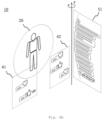
Fig. 4 , which is a schematic diagram of a virtual reality space provided according to an embodiment of the present disclosure; Thevirtual reality space 10 includes a videoimage display space 20 and targetmessage display spaces 40 and 50. The videoimage display space 20 can be configured to display video images, such as 3D video images. The targetmessage display spaces 40 and 50 can be configured to display image messages (such as emoji, pictures, virtual objects, etc.) and text messages (such as comments or bullet comments sent by the current user or other users), respectively. The targetmessage display spaces 40, 50 are located in front of the video image display space in a first direction (that is, the direction of the Z axis shown inFig. 4 ), where the first direction is a direction toward which the video image faces, that is, the direction opposite to the viewing direction when the user watches the front video image. In this embodiment, the user viewing distance corresponding to the target message display space is closer than the viewing distance corresponding to the video image display space, thus presenting a visual effect that the target message is closer and the video image is farther away. - According to one or more embodiments of the present disclosure, the target message display space is located in front of the video image display space in the direction of the video image in the virtual reality space, so that the viewing distance of the user corresponding to the target message display space is closer than that corresponding to the video image display space, thereby enabling the target message to be independent of the video image, enhancing the spatial layering of viewing, solving the problem of virtual shadow when the target message coexists with the 3D video image, and avoiding the focusing difficulty of the user.
- In some embodiments, in the target message display space, projections of at least two target messages in the first direction are not coincident with each other. For example, referring to
Fig. 4 , in the first direction, the text message B in the target message space 50 is located before the text message A, and their projections in the first direction are not coincident with each other; similarly, the smiley face emoji in thetarget message space 40 is displayed before the love emoji, and their projections in the first direction are also not coincident with each other. As so, different target messages in the target message space can correspond to different user viewing distances, thus realizing that the target messages have different display depths. - In some embodiments, in the front view of the target message display space, the at least two target messages are arranged along a preset first path; in the left view of the target message display space, the at least two target messages are arranged along a preset second path; wherein the front view of the target message display space is a view that can show the front content of the target message. As so, when the user is facing the target message (that is, the display content of the target message can be observed), the target message is arranged along the preset first path in the user's perspective, and when the user faces the target message (that is, only the left projection of the target message can be observed), the target message is arranged along the preset second path in the user's perspective.
- In some embodiments, the first path and the second path are both arc paths.
-
Figs. 5a and5b are a front view and a left view, respectively, of a target message display space provided according to an embodiment of the present disclosure. Referring toFig. 5a , in the front view of the targetmessage display space 51, a plurality oftarget messages 511 are arranged along an arc-shapedfirst path 501; referring toFig. 5b , in the left view of the target message display space, a plurality oftarget messages 511 are arranged along an arc-shapedsecond path 502. - According to one or more embodiments of the present disclosure, the target message is distributed in an arc shape in both the front view and the left view, so that the message content can be better integrated with the video image display space from the user's viewing angle, and the interactive experience of the user can be improved.
- In some embodiments, the information interaction method further includes rotating the target message around a preset longitudinal axis based on a viewing angle of a user, so that content of the target message is visible to the user. For example, referring to
Fig. 4 , when the user changes the viewing angle, for example, when the user controls an Avatar or other counterpart to move in the virtual space, the target message can be correspondingly rotated around a y-axis, so as to allow the content of the target message to be visible to the user. - In some embodiments, referring to
Fig. 5a , the target message display space may display a message queue including a plurality of target messages in the form of up-down information flow, and the newly loaded target message appears at the bottom of the message queue. - In some embodiments, in response to an operation on the target message display space, a preset first prompt identification is displayed; the first prompt identification is configured to indicate a display direction of the target message, and the target message display space is configured to dynamically display historical target messages along the display direction of the target message.
- In some embodiments, the method 100 further includes:
Step A1: in response to an operation on the target message display space, displaying a preset first prompt identification, wherein the first prompt identification is configured to indicate a target message display direction that is available at present, and the target message display space is configured to dynamically display historical target messages along the target message display direction. - Operation for the target message display space includes, but is not limited to, somatosensory control operation, gesture control operation, eye shaking operation, touch control operation, voice control instruction, or preset operation of external control equipment. For example, the user can point the ray at the target message display space through the handle to call the preset first prompt identification. The first prompt identification can display a target message display direction, and the user can control the handle according to the displayed target message direction, so that the target message display space can scroll up and down or turn pages to display the target message.
- In some embodiments, the method 100 further includes:
- Step A2: when the target message display space dynamically displays the target message along the target message display direction, displaying a preset second prompt identification in response to receiving a new target message;
- Step A3: in response to the second prompt identification being triggered, displaying the new target message in the target message display space.
- In some embodiments, the second prompt identification displays the number of the new target messages.
- Referring to
Fig. 5a , after the user triggers the targetmessage display space 51 through, for example, a handle ray or another preset operation, firstprompt identifications message display space 51, for example, above and below the target message queue presented in the target message display space, wherein the firstprompt identification 512 is configured to indicate that the target message can be scrolled up or turned pages, and the firstprompt mark 513 is configured to indicate that the target message can be scrolled down or turned pages, so that the user can control the target message display space to scroll up or down or turn pages according to the target message display direction indicated by the first prompt identification. If the virtual reality apparatus receives n new target messages during the scrolling or page turning of the target message display space, a secondprompt identification 514 "new message +N" can be displayed at a preset position of the targetmessage display space 51, for example, below the target message queue presented in the target message display space, so as to prompt the user that n new messages are currently received. If the user triggers the second prompt identification through a preset operation, the target message display space jumps to display a new message. - In some embodiments, if the first prompt identification is highlighted, it means that the display target message display direction indicated by the first prompt identification is available; if the first prompt identification is highlighted in gray scale, it means that the display target message display direction indicated by the first prompt identification is unavailable.
- In some embodiments, an orthographic projection of the target message display space on the video image display space is located outside the preset central area of the video image display space.
-
Fig. 6a is a schematic diagram of a virtual reality space provided according to an embodiment of the present disclosure, which reflects the virtual reality space presented in the user's perspective when the user looks at a video image from the front. Referring toFig.6a , thevirtual reality space 10 includes a videoimage display space 20 and targetmessage display spaces message display spaces image display space 20 are all located outside the presetcentral area 21, so that the targetmessage display spaces - It should be noted that a person skilled in the art can set position and size of the preset central area according to actual needs with the above teaching of the present disclosure, which is not limited here in the present disclosure.
- In one embodiment, as shown in
Fig. 6a , the targetmessage display spaces message display space 51 may be a display space for displaying text messages. The targetmessage display spaces - In one embodiment, as shown in
Fig. 6b , positions of the targetmessage display spaces image display space 20, and thetarget message space 51 can be deflected around the Y axis according to the user's visual angle when the user's visual angle rotates. - In some embodiments, step S160 further includes:
Step B1: moving the target message towards inside of the target message display space. - Referring to
Fig. 6a , the targetmessage display spaces central area 21, showing the visual effect that the target message "tightly surrounds" the performer. Thedetermined target messages - In some embodiments, if the target message is originated from a current client, the target message moves along a first path; if the target message is originated from a client other than the current client, the target message moves along a second path.
- In some embodiments, the second path may be a random path other than the first path. For example, a plurality of moving paths can be preset, so that one is randomly selected as the second path each time.
- In this embodiment, target messages from different sources have different moving paths, so that it is convenient for users to distinguish which target messages are sent by themselves, and thus the interactive experience of users can be improved.
- In some embodiments, the first path is a path between a message editing interface and the target message display space; the message editing interface is configured for editing and sending target messages.
- In some embodiments, the target message sent by the current client can be highlighted. For example, the target message sent by the current client can be highlighted by the background color, the size of the target message or another sign, animation special effect, etc.
- In some embodiment, if two or more identical first target messages from the same client are determined within a preset time period, moving paths of the two or more identical first target messages are the same. For example, after the first target message A moves to the target message space, it can stay in the target message space and be presented for 2 seconds. During this period, if the same client sends the same first target message A, the same first target message A will move to the target message space along the same moving path, so that the visual effect of "continuous delivery" can be presented.
- In some embodiments, a third identification corresponding to the two or more identical first target messages is displayed in the target message display space, and the third identification is configured to display the number of the first target messages currently arrived in the target message display space. For example, after the first target message A moves to the target message space, it can stay in the target message space A and be presented for 2 seconds. During this period, if the same client sends the same first target message A, then when a new first target message A arrives in the target message display space, an identification "X2" can be displayed, which is configured to display the number of first target messages A that have continuously arrived in the target message space at present in real time. Referring to
Fig. 6a , athird identification 415 displays "×5", indicating that the same client has sent fivetarget messages 412 continuously at present. When the same client sends a new target message B, the target message B can move through a new path. - Referring to
Fig. 6a , thevirtual reality space 10 currently displays amessage editing interface 60, and the current user A can input emoji or bullet comments to themessage editing interface 60, or trigger another function menus. - In some embodiments, when the message editing interface is called by a preset operation, the video image displayed in the video image display space can be switched from 3D format to 2D format, so as to ensure that the user can better focus on the message editing interface to edit the target message when using the message editing interface (such as editing the target message).
- Further, in some embodiments, when the message editing interface is hidden by the preset operation, the video image displayed in the video image display space can be switched from 2D format to 3D format.
- Referring to
Fig. 7 , which shows a flowchart of an information interaction method 100 provided by an embodiment of the present disclosure, the method 200 includes steps S220-S260. - Step S220: displaying a virtual reality space, the virtual reality space including a video image display space and a target message display space;
- Step S240: displaying a video image in the video image display space;
- Step S260: determining a target message and displaying the target message in the target message display space, wherein in the target message display space, projections of at least two target messages in the first direction are not coincident with each other, the first direction being a direction toward which the video image faces.
- In some embodiments, in the front view of the target message display space, the at least two target messages are arranged along a preset first path; in the left view of the target message display space, the at least two target messages are arranged along a preset second path; wherein the front view of the target message display space is a view that can show the front content of the target message.
- In some embodiments, the method 200 further includes:
in response to an operation on the target message display space, displaying a preset first prompt identification, wherein the first prompt identification is configured to indicate a target message display direction, and the target message display space is configured to dynamically display historical target messages along the target message display direction. - In some embodiments, the method 200 further includes:
- Step C1: when the target message display space dynamically displays the target message along the target message display direction, displaying a preset second prompt identification in a preset position of the target message display space in response to receiving a new target message;
- Step C2: in response to the second prompt identification being triggered, displaying the new target message in the target message display space.
- Correspondingly, according to one embodiment of the present disclosure, there is provided an information interaction device, including:
- a space display unit configured for displaying a virtual reality space, the virtual reality space including a video image display space and a target message display space;
- a video image display unit configured for displaying a video image in the video image display space;
- a message unit configured for determining a target message and displaying the target message in the target message display space, wherein the target message display space is located in front of the video image display space in a first direction, the first direction being a direction toward which the video image faces.
- Correspondingly, according to one embodiment of the present disclosure, there is provided an information interaction device, including:
an information display device, characterized in including: - a space display unit configured for displaying a virtual reality space, the virtual reality space including a video image display space and a target message display space;
- a video image display unit configured for displaying a video image in the video image display space;
- a message unit configured for determining a target message and displaying the target message in the target message display space, wherein in the target message display space, projections of at least two target messages in the first direction are not coincident with each other, the first direction being a direction toward which the video image faces.
- In some embodiments, the target message display space includes: at least one display space for displaying text messages and/or at least one display space for displaying image messages.
- In some embodiments, an orthographic projection of the target message display space on the video image display space is located outside a preset central area of the video image display space.
- In some embodiments, said that an orthographic projection of the target message display space on the video image display space is located outside a preset central area of the video image display space, includes: the orthographic projection is located on a left and/or right side of the preset central area of the video image display area.
- In some embodiments, in the target message display space, projections of at least two target messages in the first direction are not coincident with each other.
- In some embodiments, in a front view of the target message display space, at least two target messages are arranged along a preset first path; in a left view of the target message display space, at least two target messages are arranged along a preset second path; wherein the front view of the target message display space is a view that can show front content of the target message.
- In some embodiments, the information interaction device further includes:
a message rotating unit configured to rotate the target message around a preset longitudinal axis based on a viewing angle of a user, so that content of the target message can be visible to the user. - In some embodiments, the information interaction device further includes:
a first prompt unit configured for, in response to an operation on the target message display space, displaying a first prompt identification, wherein the first prompt identification is configured to indicate a target message display direction that is available at present, and the target message display space is configured to dynamically display the target message along the target message display direction. - In some embodiments, the information interaction device further includes:
a second prompt unit configured for, when the target message display space dynamically displays the target message along the target message display direction, displaying a second prompt identification in response to receiving a new target message; in response to the second prompt identification being triggered, displaying the new target message in the target message display space. - In some embodiments, the second prompt identification displays the number of the new target messages.
- In some embodiments, the displaying the target message in the target message display space includes: moving the target message toward inside of the target message display space.
- In some embodiments, if the target message is originated from a current client, the target message moves along a first path; if the target message is originated from a client other than the current client, the target message moves along a second path.
- In some embodiments, the first path is a path between a message editing interface and the target message display space; the message editing interface is configured for editing and sending target messages.
- In some embodiment, if two or more identical first target messages from the same client are determined within a preset time period, moving paths of the two or more identical first target messages are the same.
- In some embodiments, the information interaction device further includes:
a third prompt unit configured to display a third identification corresponding to the two or more identical first target messages in the target message display space, and the third identification is configured to display the number of the first target messages currently arrived in the target message display space. - For the device embodiments, since they basically corresponds to the method embodiments, for relevant points thereof, one may refer to partial description of the method embodiments. The device embodiments described above are only schematic, wherein the modules described as separate modules may or may not be separate. Some or all of the modules can be selected according to actual needs to achieve the purpose of the solution of this embodiment. A person skilled in the art can understand and implement it without any creative effort.
- Correspondingly, according to one or more embodiments of the present disclosure, there is provided an electronic apparatus, including:
- at least one memory and at least one processor;
- wherein the memory is configured for storing a program code, and the processor is configured for calling the program code stored in the memory to cause the electronic apparatus to execute the information interaction method provided according to one or more embodiments of the present disclosure.
- Correspondingly, according to one or more embodiments of the present disclosure, there is provided a non-transient computer storage medium, which stores a program code that, when executed by a computer apparatus, causes the computer apparatus to execute the information interaction method provided according to one or more embodiments of the present disclosure.
- Referring now to
Fig. 8 , there is shown a structural schematic diagram of an electronic apparatus (terminal equipment or server) 800 adapted for implementing an embodiment of the present disclosure. The terminal equipment in the embodiment of the present disclosure may include, but is not limited to, a mobile terminal such as a mobile phone, a notebook computer, a digital broadcast receiver, a PDA (Personal Digital Assistant), a PAD (Tablet Computer), a PMP (Portable Multimedia Player), a vehicle-mounted terminal (such as a vehicle-mounted navigation terminal) and the like, and a fixed terminal such as a digital TV, a desktop computer and the like. The electronic apparatus shown inFig. 8 is only an example, and should not be construed to limit function and application scope of the embodiment of the present disclosure. - As shown in
Fig. 8 , anelectronic apparatus 800 may include a processing device (e.g., a central processor, a graphics processor, etc.) 801, which may perform various appropriate actions and processes according to a program stored in a read-only memory (ROM) 802 or a program loaded into a random access memory (RAM) 803 from astorage device 808. In theRAM 803, various programs and data required for operation of theelectronic apparatus 800 are also stored. Theprocessing device 801, theROM 802 and theRAM 803 are connected to each other through abus 804. An input/output (I/O)interface 805 is also connected to thebus 804. - Generally, the following devices can be connected to the I/O interface 805: an
input device 806 including, for example, a touch screen, a touch pad, a keyboard, a mouse, a camera, a microphone, an accelerometer, a gyroscope, etc.; anoutput device 807 including, for example, a liquid crystal display (LCD), a speaker, a vibrator, etc.; astorage device 808 including, for example, a magnetic tape, a hard disk, etc.; and acommunication device 809. Thecommunication device 809 may allow theelectronic apparatus 800 to communicate wirelessly or wiredly with other devices to exchange data. AlthoughFig. 8 shows anelectronic apparatus 800 with various devices, it should be understood that it is not required to implement or have all the devices shown. More or fewer devices may alternatively be implemented or provided. - In particular, according to an embodiment of the present disclosure, the process described above with reference to the flowchart can be implemented as a computer software program. For example, the embodiment of the present disclosure includes a computer program product including a computer program carried on a computer-readable medium, the computer program including a program code for executing the method shown in the flowchart. In such an embodiment, the computer program can be downloaded and installed from the network through the
communication device 809, or installed from thestorage device 808, or installed from theROM 802. When the computer program is executed by theprocessing device 801, the above function defined in the method of the embodiment of the present disclosure is performed. - It should be noted that the computer-readable medium mentioned above in this disclosure can be a computer-readable signal medium or a computer-readable storage medium or any combination thereof. The computer-readable storage medium can be, for example, but not limited to, an electrical, magnetic, optical, electromagnetic, infrared, or semiconductor system, device or unit, or any combination of the above. More examples of computer-readable storage media may include, but are not limited to, an electrical connection with one or more wires, a portable computer disk, a hard disk, a random access memory (RAM), a read-only memory (ROM), an erasable programmable read-only memory (EPROM or flash memory), an optical fiber, a portable compact disk read-only memory (CD-ROM), an optical storage device, a magnetic storage device, or any suitable combination of the above. In the present disclosure, a computer-readable storage medium can be any tangible medium containing or storing a program, which program can be used by or in combination with an instruction execution system, device or unit. In the present disclosure, a computer-readable signal medium may include a data signal propagated in baseband or as part of a carrier wave, in which computer-readable program code is carried. This propagated data signal can take many forms, including but not limited to an electromagnetic signal, an optical signal or any suitable combination of the above. A computer-readable signal medium can also be any computer-readable medium other than a computer-readable storage medium, which can send, propagate or transmit a program for use by or in connection with an instruction execution system, device or unit. Program code contained in the computer-readable medium can be transmitted by any suitable medium, including but not limited to: a wire, an optical cable, a RF (radio frequency) and the like, or any suitable combination of the above.
- In some embodiments, the client and the server can communicate by using any currently known or future developed network protocol such as HTTP (HyperText Transfer Protocol), and can be interconnected with digital data communication in any form or medium (for example, communication network). Examples of communication network include a local area network ("LAN"), a wide area network ("WAN"), an internet (for example, the Internet) and an end-to-end network (for example, ad hoc end-to-end network), as well as any currently known or future developed network.
- The computer-readable medium may be included in the electronic device; or it can exist independently without being assembled into the electronic device.
- The computer-readable medium carries one or more programs, which, when executed by the electronic apparatus, cause the electronic apparatus to perform the method of the present disclosure.
- Computer program code for performing operations of the present disclosure may be written in one or more programming languages or their combinations, including object-oriented programming languages, such as Java, Smalltalk, C++, and conventional procedural programming languages, such as "C" language or similar programming languages. The program code can be completely executed on the user's computer, partially executed on the user's computer, executed as an independent software package, partially executed on the user's computer and partially executed on a remote computer, or completely executed on a remote computer or server. In the case involving a remote computer, the remote computer may be connected to a user computer through any kind of network, including a local area network (LAN) or a wide area network (WAN), or may be connected to an external computer (for example, through the Internet using an Internet service provider).
- The flowcharts and block diagrams in the drawings illustrate the architecture, functions and operations of possible implementations of systems, methods and computer program products according to various embodiments of the present disclosure. In this regard, each block in the flowchart or block diagram may represent a module, a program segment, or part of codes that contains one or more executable instructions for implementing a specified logical function. It should also be noted that in some alternative implementations, the function noted in the block may occur in a different order than that noted in the drawing. For example, two blocks shown in succession may actually be executed substantially in parallel, and they may sometimes be executed in the reverse order, depending on the functions involved. It should also be noted that each block in the block diagrams and/or flowcharts, and combinations of blocks in the block diagrams and/or flowcharts, can be implemented by a dedicated hardware-based system that performs specified functions or operations, or by a combination of dedicated hardware and computer instructions.
- Units involved in the embodiment described in the present disclosure can be realized by software or hardware. Wherein names of units do not constitute limitation of the units themselves in some cases.
- Functions described above herein may be at least partially performed by one or more hardware logic components. For example, without limitation, exemplary types of hardware logic components that can be used include: Field Programmable Gate Array (FPGA), Application Specific Integrated Circuit (ASIC), Application Specific Standard Product (ASSP), System on Chip (SOC), Complex Programmable Logic Device (CPLD) and so on.
- In the context of the present disclosure, a machine-readable medium may be a tangible medium that may contain or store a program for use by or in connection with an instruction execution system, device or apparatus. The machine-readable medium may be a machine-readable signal medium or a machine-readable storage medium. A machine-readable medium may include, but is not limited to, an electronic, magnetic, optical, electromagnetic, infrared, or semiconductor system, device or apparatus, or any suitable combination of the above. More specific examples of the machine-readable storage medium may include an electrical connection based on one or more lines, a portable computer disk, a hard disk, a random access memory (RAM), a read-only memory (ROM), an erasable programmable read-only memory (EPROM or flash memory), an optical fiber, a convenient compact disk read-only memory (CD-ROM), an optical storage apparatus, a magnetic storage apparatus, or any suitable combination of the above.
- According to one or more embodiments of the present disclosure, there is provided an information interaction method, including: displaying a virtual reality space, the virtual reality space including a video image display space and a target message display space; displaying a video image in the video image display space; determining a target message and displaying the target message in the target message display space; wherein the target message display space is located in front of the video image display space in a first direction, the first direction being a direction toward which the video image faces.
- According to one or more embodiments of the present disclosure, the target message display space includes: at least one display space for displaying text messages and/or at least one display space for displaying image messages.
- According to one or more embodiments of the present disclosure, an orthographic projection of the target message display space on the video image display space is located outside a preset central area of the video image display space.
- According to one or more embodiments of the present disclosure, said that an orthographic projection of the target message display space on the video image display space is located outside a preset central area of the video image display space, includes: the orthographic projection is located on a left and/or right side of the preset central area of the video image display area.
- According to one or more embodiments of the present disclosure, in the target message display space, projections of at least two target messages in the first direction are not coincident with each other.
- According to one or more embodiments of the present disclosure, in a front view of the target message display space, at least two target messages are arranged along a preset first path; in a left view of the target message display space, at least two target messages are arranged along a preset second path; wherein the front view of the target message display space is a view that can show front content of the target message.
- According to one or more embodiments of the present disclosure, the information interaction method further includes: rotating the target message around a preset longitudinal axis based on a viewing angle of a user, so that content of the target message is visible to the user.
- According to one or more embodiments of the present disclosure, the information interaction method further includes: in response to an operation on the target message display space, displaying a first prompt identification, wherein the first prompt identification is configured to indicate a target message display direction that is available at present, and the target message display space is configured to dynamically display the target message along the target message display direction.
- According to one or more embodiments of the present disclosure, the information interaction method further includes: when the target message display space dynamically displays the target message along the target message display direction, displaying a second prompt identification in response to receiving a new target message; in response to the second prompt identification being triggered, displaying the new target message in the target message display space.
- According to one or more embodiments of the present disclosure, the second prompt identification displays the number of the new target messages.
- According to one or more embodiments of the present disclosure, the displaying the target message in the target message display space includes: moving the target message toward inside of the target message display space.
- According to one or more embodiments of the present disclosure, if the target message is originated from a current client, the target message moves along a first path; if the target message is originated from a client other than the current client, the target message moves along a second path.
- According to one or more embodiments of the present disclosure, the first path is a path between a message editing interface and the target message display space; the message editing interface is configured for editing and sending target messages.
- According to one or more embodiments of the present disclosure, if two or more identical first target messages from the same client are determined within a preset time period, moving paths of the two or more identical first target messages are the same.
- According to one or more embodiments of the present disclosure, the information interaction method further includes: displaying a third identification corresponding to the two or more identical first target messages in the target message display space, and the third identification is configured to display the number of the first target messages currently arrived in the target message display space.
- According to one or more embodiments of the present disclosure, there is provided an information interaction method, including: displaying a virtual reality space, the virtual reality space including a video image display space and a target message display space; displaying a video image in the video image display space; determining a target message and displaying the target message in the target message display space; wherein in the target message display space, projections of at least two target messages in the first direction are not coincident with each other, the first direction being a direction toward which the video image faces.
- According to one or more embodiments of the present disclosure, in a front view of the target message display space, the at least two target messages are arranged along a preset first path; in a left view of the target message display space, the at least two target messages are arranged along a preset second path; wherein the front view of the target message display space is a view that can show front content of the target message.
- According to one or more embodiments of the present disclosure, the information interaction method further includes: rotating the target message around a preset longitudinal axis based on a viewing angle of a user, so that content of the target message is visible to the user.
- According to one or more embodiments of the present disclosure, the information interaction method further includes: in response to an operation on the target message display space, displaying a preset first prompt identification, wherein the first prompt identification is configured to indicate a target message display direction, and the target message display space is configured to dynamically display historical target messages along the target message display direction.
- According to one or more embodiments of the present disclosure, the information interaction method further includes: when the target message display space dynamically displays the target message along the target message display direction, displaying a preset second prompt identification in a preset position of the target message display space in response to receiving a new target message; in response to the second prompt identification being triggered, displaying the new target message in the target message display space.
- According to one or more embodiments of the present disclosure, the second prompt identification displays the number of the new target messages.
- According to one or more embodiments of the present disclosure, there is provided an information interaction device, including: a space display unit configured for displaying a virtual reality space, the virtual reality space including a video image display space and a target message display space; a video image display unit configured for displaying a video image in the video image display space; a message unit configured for determining a target message and displaying the target message in the target message display space; wherein the target message display space is located in front of the video image display space in a first direction, the first direction being a direction toward which the video image faces.
- According to one or more embodiments of the present disclosure, there is provided an information interaction device, including: a space display unit configured for displaying a virtual reality space, the virtual reality space including a video image display space and a target message display space; a video image display unit configured for displaying a video image in the video image display space; a message unit configured for determining a target message and displaying the target message in the target message display space; wherein in the target message display space, projections of at least two target messages in the first direction are not coincident with each other, the first direction being a direction toward which the video image faces.
- According to one or more embodiments of the present disclosure, there is provided an electronic apparatus including: at least one memory and at least one processor, wherein the memory is configured for storing a program code, and the processor is configured for calling the program code stored in the memory to cause the electronic apparatus to execute the information interaction method provided according to one or more embodiments of the present disclosure.
- According to one or more embodiments of the present disclosure, there is provided a non-transient computer storage medium, which stores a program code that, when executed by a computer apparatus, causes the computer apparatus to execute the information interaction method provided according to one or more embodiments of the present disclosure.
- The above description is only the preferred embodiments of the present disclosure and the explanation of the applied technical principles. It should be understood by those skilled in the art that the disclosed scope involved in the present disclosure is not limited to technical solutions formed by specific combinations of the above technical features, but also covers other technical solutions formed by any combinations of the above technical features or their equivalent features without departing from the above disclosed concept, such as technical solutions formed by replacing the above features with (but not limited to) technical features with similar functions disclosed in the present disclosure.
- Furthermore, although operations are depicted in a particular order, this should not be understood as requiring that these operations be performed in the particular order shown or in a sequential order. In a determined circumstance, multitasking and parallel processing may be advantageous. Likewise, although several specific implementation details are contained in the above discussion, these should not be construed as limiting the scope of the present disclosure. Some features described in the context of separate embodiments can also be combined in a single embodiment. On the contrary, various features described in the context of a single embodiment can also be implemented in multiple embodiments individually or in any suitable sub-combination.
- Although the subject matter has been described in language specificto structural features and/or methodological logical actions, it should be understood that the subject matter defined in the appended claims is not necessarily limited to the specific features or actions described above. On the contrary, specific features and actions described above are only exemplary forms of implementing the claims.
Claims (25)
- An information interaction method, characterized in comprising:displaying a virtual reality space, the virtual reality space comprising a video image display space and a target message display space;displaying a video image in the video image display space;determining a target message and displaying the target message in the target message display space;wherein the target message display space is located in front of the video image display space in a first direction, the first direction being a direction toward which the video image faces.
- The method according to claim 1, characterized in that the target message display space comprises:
at least one display space for displaying text messages and/or at least one display space for displaying image messages. - The method according to claim 1, characterized in that an orthographic projection of the target message display space on the video image display space is located outside a preset central area of the video image display space.
- The method according to claim 3, characterized in that said that an orthographic projection of the target message display space on the video image display space is located outside a preset central area of the video image display space, comprises: the orthographic projection is located on a left and/or right side of the preset central area of the video image display area.
- The method according to claim 1, characterized in that in the target message display space, projections of at least two target messages in the first direction are not coincident with each other.
- The method according to claim 1, characterized in thatin a front view of the target message display space, at least two target messages are arranged along a preset first path; in a left view of the target message display space, at least two target messages are arranged along a preset second path;wherein the front view of the target message display space is a view that is able to show front content of the target message.
- The method according to claim 1, characterized in further comprising:
rotating the target message around a preset longitudinal axis based on a viewing angle of a user, so that content of the target message is visible to the user. - The method according to claim 1, characterized in further comprising:
in response to an operation on the target message display space, displaying a first prompt identification, wherein the first prompt identification is configured to indicate a target message display direction that is available at present, and the target message display space is configured to dynamically display the target message along the target message display direction. - The method according to claim 8, characterized in further comprising:when the target message display space dynamically displays the target message along the target message display direction, displaying a second prompt identification in response to receiving a new target message;in response to the second prompt identification being triggered, displaying the new target message in the target message display space.
- The method according to claim 9, characterized in that
the second prompt identification displays a number of the new target messages. - The method according to claim 1, characterized in that the displaying the target message in the target message display space, comprises:
moving the target message towards inside of the target message display space. - The method according to claim 11, characterized in thatif the target message is originated from a current client, the target message moves along a first path;if the target message is originated from a client other than the current client, the target message moves along a second path.
- The method according to claim 12, characterized in that
the first path is a path between a message editing interface and the target message display space; and the message editing interface is configured for editing and sending target messages. - The method according to claim 13, characterized in that
if two or more identical first target messages from the same client are determined within a preset time period, moving paths of the two or more identical first target messages are the same. - The method according to claim 14, characterized in further comprising:
displaying a third identification corresponding to the two or more identical first target messages in the target message display space, and the third identification is configured to display a number of the first target messages currently arrived in the target message display space. - An information interaction method, characterized in comprising:displaying a virtual reality space, the virtual reality space comprising a video image display space and a target message display space;displaying a video image in the video image display space; anddetermining a target message and displaying the target message in the target message display space, wherein in the target message display space, projections of at least two target messages in the first direction are not coincident with each other, the first direction being a direction toward which the video image faces.
- The method according to claim 16, characterized in thatin a front view of the target message display space, the at least two target messages are arranged along a preset first path; in a left view of the target message display space, the at least two target messages are arranged along a preset second path;wherein the front view of the target message display space is a view that is able to show front content of the target message.
- The method according to claim 16, characterized in further comprising:
rotating the target message around a preset longitudinal axis based on a viewing angle of a user, so that content of the target message is visible to the user. - The method according to claim 16, characterized in further comprising:
in response to an operation on the target message display space, displaying a preset first prompt identification, wherein the first prompt identification is configured to indicate a target message display direction, and the target message display space is configured to dynamically display historical target messages along the target message display direction. - The method according to claim 19, characterized in further comprising:when the target message display space dynamically displays the target message along the target message display direction, displaying a preset second prompt identification in a preset position of the target message display space in response to receiving a new target message;in response to the second prompt identification being triggered, displaying the new target message in the target message display space.
- The method according to claim 20, characterized in that
the second prompt identification displays the number of the new target messages. - An information interaction device, characterized in comprising:a space display unit configured for displaying a virtual reality space, the virtual reality space comprising a video image display space and a target message display space;a video image display unit configured for displaying a video image in the video image display space;a message unit configured for determining a target message and displaying the target message in the target message display space, wherein the target message display space is located in front of the video image display space in a first direction, the first direction being a direction toward which the video image faces.
- An information interaction device, characterized in comprising:a space display unit configured for displaying a virtual reality space, the virtual reality space comprising a video image display space and a target message display space;a video image display unit configured for displaying a video image in the video image display space;a message unit configured for determining a target message and displaying the target message in the target message display space, wherein in the target message display space, projections of at least two target messages in the first direction are not coincident with each other, the first direction being a direction toward which the video image faces.
- An electronic apparatus, characterized in comprising:at least one memory and at least one processor;wherein the memory is configured for storing a program code, and the processor is configured for calling the program code stored in the memory to cause the electronic apparatus to execute the method according to any one of claims 1-21.
- A non-transient computer storage medium, characterized in that,
the non-transient computer storage medium stores a program code that, when executed by a computer apparatus, causes the computer apparatus to execute the method according to any one of claims 1-21.
Applications Claiming Priority (2)
| Application Number | Priority Date | Filing Date | Title |
|---|---|---|---|
| CN202210612147.0A CN117197400A (en) | 2022-05-31 | 2022-05-31 | Information interaction methods, devices, electronic equipment and storage media |
| PCT/CN2023/091234 WO2023231666A1 (en) | 2022-05-31 | 2023-04-27 | Information exchange method and apparatus, and electronic device and storage medium |
Publications (2)
| Publication Number | Publication Date |
|---|---|
| EP4535290A1 true EP4535290A1 (en) | 2025-04-09 |
| EP4535290A4 EP4535290A4 (en) | 2026-04-15 |
Family
ID=88989338
Family Applications (1)
| Application Number | Title | Priority Date | Filing Date |
|---|---|---|---|
| EP23814852.2A Pending EP4535290A4 (en) | 2022-05-31 | 2023-04-27 | INFORMATION EXCHANGE METHOD AND DEVICE AS WELL AS ELECTRONIC DEVICE AND STORAGE MEDIUM |
Country Status (4)
| Country | Link |
|---|---|
| US (1) | US20250097515A1 (en) |
| EP (1) | EP4535290A4 (en) |
| CN (1) | CN117197400A (en) |
| WO (1) | WO2023231666A1 (en) |
Family Cites Families (9)
| Publication number | Priority date | Publication date | Assignee | Title |
|---|---|---|---|---|
| US11205305B2 (en) * | 2014-09-22 | 2021-12-21 | Samsung Electronics Company, Ltd. | Presentation of three-dimensional video |
| US10455291B2 (en) * | 2015-03-20 | 2019-10-22 | Twitter, Inc. | Live video stream sharing |
| CN106454387B (en) * | 2016-10-31 | 2020-02-07 | 北京小米移动软件有限公司 | Panoramic video bullet screen display method and device |
| CN109246463B (en) * | 2017-06-02 | 2020-06-26 | 腾讯科技(深圳)有限公司 | Method and device for displaying bullet screen |
| CN107484036B (en) * | 2017-09-07 | 2018-09-21 | 深圳市迅雷网络技术有限公司 | A kind of barrage display methods and device |
| CN116328317A (en) * | 2018-02-06 | 2023-06-27 | 日本聚逸株式会社 | Application processing system, application processing method, and application processing program |
| JP7042644B2 (en) * | 2018-02-15 | 2022-03-28 | 株式会社ソニー・インタラクティブエンタテインメント | Information processing equipment, image generation method and computer program |
| CN111586426B (en) * | 2020-04-30 | 2022-08-09 | 广州方硅信息技术有限公司 | Panoramic live broadcast information display method, device, equipment and storage medium |
| CN114257849B (en) * | 2020-09-22 | 2023-06-02 | 华为技术有限公司 | Barrage playing method, related equipment and storage medium |
-
2022
- 2022-05-31 CN CN202210612147.0A patent/CN117197400A/en active Pending
-
2023
- 2023-04-27 EP EP23814852.2A patent/EP4535290A4/en active Pending
- 2023-04-27 US US18/728,337 patent/US20250097515A1/en active Pending
- 2023-04-27 WO PCT/CN2023/091234 patent/WO2023231666A1/en not_active Ceased
Also Published As
| Publication number | Publication date |
|---|---|
| US20250097515A1 (en) | 2025-03-20 |
| WO2023231666A1 (en) | 2023-12-07 |
| EP4535290A4 (en) | 2026-04-15 |
| CN117197400A (en) | 2023-12-08 |
Similar Documents
| Publication | Publication Date | Title |
|---|---|---|
| US20230405475A1 (en) | Shooting method, apparatus, device and medium based on virtual reality space | |
| EP4509962A1 (en) | Method, apparatus, electronic device, and storage for medium extended reality-based interaction control | |
| US20250097515A1 (en) | Information interaction method, device, electronic apparatus and storage medium | |
| US20250021203A1 (en) | Information interaction method, electronic device, and storage medium | |
| CN117994284A (en) | Collision detection method, device, electronic device and storage medium | |
| CN115981544A (en) | Interaction method, device, electronic device and storage medium based on extended reality | |
| US20250175680A1 (en) | Information exchange method, electronic device and storage medium | |
| US20260019556A1 (en) | Display method and apparatus based on virtual reality, electronic device, and storage medium | |
| US20240078734A1 (en) | Information interaction method and apparatus, electronic device and storage medium | |
| US20250310509A1 (en) | Method, apparatus, electronic device, and storage medium for displaying 3d image | |
| CN117435041A (en) | Information interaction methods, devices, electronic equipment and storage media | |
| CN117519457A (en) | Information interaction methods, devices, electronic equipment and storage media | |
| US20250184562A1 (en) | Information interaction method and apparatus, electronic device and storage medium | |
| CN117641040A (en) | Video processing methods, devices, electronic equipment and storage media | |
| CN117519456A (en) | Information interaction methods, devices, electronic equipment and storage media | |
| CN116193246A (en) | Prompt method and device for shooting video, electronic equipment and storage medium | |
| CN119002682A (en) | Control method and device based on augmented reality, electronic equipment and storage medium | |
| CN117632063A (en) | Display processing methods, devices, equipment and media based on virtual reality space | |
| CN117631921A (en) | Information interaction method, device, electronic equipment and storage medium | |
| CN117641025A (en) | Model display method, device, equipment and medium based on virtual reality space | |
| CN117934769A (en) | Image display method, device, electronic device and storage medium | |
| CN117641026A (en) | Model display method, device, equipment and medium based on virtual reality space | |
| CN117640919A (en) | Picture display method, device, equipment and medium based on virtual reality space | |
| CN118229921A (en) | Image display method, device, electronic device and storage medium | |
| CN117745981A (en) | Image generation method, device, electronic equipment and storage medium |
Legal Events
| Date | Code | Title | Description |
|---|---|---|---|
| STAA | Information on the status of an ep patent application or granted ep patent |
Free format text: STATUS: THE INTERNATIONAL PUBLICATION HAS BEEN MADE |
|
| PUAI | Public reference made under article 153(3) epc to a published international application that has entered the european phase |
Free format text: ORIGINAL CODE: 0009012 |
|
| STAA | Information on the status of an ep patent application or granted ep patent |
Free format text: STATUS: REQUEST FOR EXAMINATION WAS MADE |
|
| 17P | Request for examination filed |
Effective date: 20240815 |
|
| AK | Designated contracting states |
Kind code of ref document: A1 Designated state(s): AL AT BE BG CH CY CZ DE DK EE ES FI FR GB GR HR HU IE IS IT LI LT LU LV MC ME MK MT NL NO PL PT RO RS SE SI SK SM TR |
|
| DAV | Request for validation of the european patent (deleted) | ||
| DAX | Request for extension of the european patent (deleted) | ||
| REG | Reference to a national code |
Ref country code: DE Ref legal event code: R079 Free format text: PREVIOUS MAIN CLASS: G06T0019000000 Ipc: H04N0021488000 |
|
| A4 | Supplementary search report drawn up and despatched |
Effective date: 20260312 |
|
| RIC1 | Information provided on ipc code assigned before grant |
Ipc: H04N 21/488 20110101AFI20260306BHEP Ipc: H04N 21/81 20110101ALI20260306BHEP Ipc: H04N 21/2187 20110101ALI20260306BHEP Ipc: H04N 21/4788 20110101ALI20260306BHEP Ipc: H04N 21/431 20110101ALI20260306BHEP Ipc: G06F 3/01 20060101ALI20260306BHEP Ipc: H04N 21/6587 20110101ALN20260306BHEP |