EP4535248A1 - Computer-implemented manipulation of data structures - Google Patents
Computer-implemented manipulation of data structures Download PDFInfo
- Publication number
- EP4535248A1 EP4535248A1 EP24203958.4A EP24203958A EP4535248A1 EP 4535248 A1 EP4535248 A1 EP 4535248A1 EP 24203958 A EP24203958 A EP 24203958A EP 4535248 A1 EP4535248 A1 EP 4535248A1
- Authority
- EP
- European Patent Office
- Prior art keywords
- dataset
- subset
- transformation
- artificial intelligence
- intelligence model
- Prior art date
- Legal status (The legal status is an assumption and is not a legal conclusion. Google has not performed a legal analysis and makes no representation as to the accuracy of the status listed.)
- Pending
Links
Images




Classifications
-
- G—PHYSICS
- G06—COMPUTING OR CALCULATING; COUNTING
- G06F—ELECTRIC DIGITAL DATA PROCESSING
- G06F16/00—Information retrieval; Database structures therefor; File system structures therefor
- G06F16/20—Information retrieval; Database structures therefor; File system structures therefor of structured data, e.g. relational data
- G06F16/21—Design, administration or maintenance of databases
- G06F16/211—Schema design and management
-
- G—PHYSICS
- G06—COMPUTING OR CALCULATING; COUNTING
- G06F—ELECTRIC DIGITAL DATA PROCESSING
- G06F8/00—Arrangements for software engineering
- G06F8/30—Creation or generation of source code
-
- G—PHYSICS
- G06—COMPUTING OR CALCULATING; COUNTING
- G06N—COMPUTING ARRANGEMENTS BASED ON SPECIFIC COMPUTATIONAL MODELS
- G06N20/00—Machine learning
-
- G—PHYSICS
- G06—COMPUTING OR CALCULATING; COUNTING
- G06N—COMPUTING ARRANGEMENTS BASED ON SPECIFIC COMPUTATIONAL MODELS
- G06N3/00—Computing arrangements based on biological models
- G06N3/02—Neural networks
- G06N3/04—Architecture, e.g. interconnection topology
- G06N3/045—Combinations of networks
- G06N3/0455—Auto-encoder networks; Encoder-decoder networks
-
- G—PHYSICS
- G06—COMPUTING OR CALCULATING; COUNTING
- G06Q—INFORMATION AND COMMUNICATION TECHNOLOGY [ICT] SPECIALLY ADAPTED FOR ADMINISTRATIVE, COMMERCIAL, FINANCIAL, MANAGERIAL OR SUPERVISORY PURPOSES; SYSTEMS OR METHODS SPECIALLY ADAPTED FOR ADMINISTRATIVE, COMMERCIAL, FINANCIAL, MANAGERIAL OR SUPERVISORY PURPOSES, NOT OTHERWISE PROVIDED FOR
- G06Q10/00—Administration; Management
- G06Q10/10—Office automation; Time management
-
- G—PHYSICS
- G06—COMPUTING OR CALCULATING; COUNTING
- G06Q—INFORMATION AND COMMUNICATION TECHNOLOGY [ICT] SPECIALLY ADAPTED FOR ADMINISTRATIVE, COMMERCIAL, FINANCIAL, MANAGERIAL OR SUPERVISORY PURPOSES; SYSTEMS OR METHODS SPECIALLY ADAPTED FOR ADMINISTRATIVE, COMMERCIAL, FINANCIAL, MANAGERIAL OR SUPERVISORY PURPOSES, NOT OTHERWISE PROVIDED FOR
- G06Q10/00—Administration; Management
- G06Q10/10—Office automation; Time management
- G06Q10/105—Human resources
Definitions
- Data processing platforms may offer in-built functionality that allows a user to perform manipulations of the dataset. Where data processing platforms do not provide in-built functionality corresponding to a particular manipulation of the dataset, it may be possible for users to provide customised computing functions to act on a dataset.
- the generation of customised computing functions has several disadvantages. In order to generate customised computing functions, the user must have significant knowledge of both the functionality of a data processing platform and a programming language in which customised computing functions can be written. Even when a user has such expertise, generating such a customised computing function can be time consuming and unreliable. For example, a customised computing function that is provided by a user may introduce erroneous manipulations into a dataset, and such erroneous manipulations can go undetected.
- the request to generate the transformation on a first subset comprises the first subset.
- the context portion further comprises examples of target outcomes and corresponding candidate functions.
- the data processing platform 103 provides in-built transformation functions which allow datasets to be manipulation in accordance with pre-determined functions.
- the data processing platform 103 may provide functions causing the rows of dataset to be re-ordered such that values appearing in a selected column are provided in descending or ascending order or functions causing date entries in a column to be converted from a first format to a second format.
- the one or more requests to generate candidate functions may comprise a text string comprising a context portion concatenated with the indication of a target outcome received in step 204.
- the context portion may include an indication of the data processing platform 102 being used and instructions to generate one or more distinct candidate functions that, when executed on the first dataset, would achieve the target outcome.
- the context portion may specify a programming language in which the candidate function should be provided. For example, the context portion may specify that the candidate function is written in one of Python, Java or SQL.
- the context portion may also include schema information of the first dataset, where the schema of the first dataset indicates one or more of the column names, the type of data in each column, and whether or not given columns require a null check.
- the schema information may be automatically extracted from the first dataset by the data manipulation manager 103 and inserted into the context portion.
- the context portion may include examples of inputs and outputs (i.e. pre-generated examples of indications of target outcomes and corresponding candidate functions that are suitable for achieving the target outcome) in order to restrict the artificial intelligence model 104 to a formatted response.
- the context portion may include information regarding the functionality of the data processing platform 102.
- the context portion may provide a natural language description of basic operations that can be performed in the data processing platform 102 and, preferably, how these operations can be combined to achieve use cases. This is particularly advantageous when the data processing platform 102 includes functionality that is not described in publicly available documents or is not well-known.
- the artificial intelligence model 104 may return a clarifying query to the data manipulation manager 103 prior to returning candidate functions.
- the artificial intelligence model 104 may request a user input to clarify what should happen to edge cases or regarding ambiguities in the target outcome.
- the artificial intelligence model 104 may request clarification regarding how to transform a null value.
- the user 101 provides a plain text response including further information to the artificial intelligence model 104.
- the context portion of the request should indicate conditions under which the artificial intelligence model 104 should request clarifying information.
- the context portion of the request may indicate that the artificial intelligence model 104 should request clarifying information if part of the indication of the target outcome is ambiguous.
- the artificial intelligence model 104 is fine-tuned to request clarifying queries.
- the data manipulation manager 103 attempts to execute each of the candidate functions on a sample of columns, row or cells of the first dataset to ensure that the functions are able to successfully run to completion.
- the sample of columns, rows or cells may be the same as the subset discussed in more detail below with reference to step 208.
- the data manipulation manager 103 returns the candidate function to the artificial intelligence model 104 for repair. This process may be repeated iteratively until the number of attempts to repair the candidate function reaches a predetermined threshold value (e.g. three, five, ten attempts etc.), after which the candidate function is discarded if it has not been repaired successfully.
- a predetermined threshold value e.g. three, five, ten attempts etc.
- the subset may include fewer than 1%, fewer than 0.1% or fewer than 0.01% of the rows of the first dataset.
- the subset of the first dataset may be selected as a random sample of rows of the first dataset.
- the subset may be selected by selecting rows distributed throughout the first dataset at even intervals in order to obtain a representative range of values.
- the subset may, for example, comprise rows of the first dataset that are numbered with an integer multiple of a spacing parameter, s, that is greater than 1.
- the subset may include only every 5 th , 10 th , 100 th , or 1000 th row of the first dataset.
- selecting the subset may comprise identifying rows comprising non-standard entries, such as null values or inconsistent formatting, in order to generate manipulations for which there is a higher probability that the candidate functions will fail to replicate.
- a combination of these methods may be used to generate the subset.
- the artificial intelligence model 104 used to generate an AI transformation of the subset is the same artificial intelligence model 104 used to generate candidate functions.
- different first and second artificial intelligence models may be used in these steps.
- the artificial intelligence models 104 are fine-tuned, it is particularly advantageous to use different first and second artificial intelligence models that are fine-tuned for generating candidate functions and for generating AI transformations respectively.
- step 212 the data manipulation manager 103 executes each of the plurality of candidate functions separately on the same subset used in the input to the artificial intelligence model 104 to generate the AI transformation in step 210.
- a respective test transformation is output corresponding to the candidate function acting on specified columns, rows or cells of the subset, such that a corresponding test transformation is generated for each candidate function.
- each test transformation is a dataset generated by applying a respective candidate function to the subset of the first dataset.
- the data manipulation manager 103 compares each test transformation with the AI transformation. Where the AI transformation matches the test transformation, the candidate function that was used to generate the test transformation is considered to be validated. Validation of the test transformations may comprise parsing a text version of the AI transformation output by the artificial intelligence model into the same tabular data format as the first dataset and the test transformations. The plurality of test transformations are then compared to the AI transformation to identify test transformations that match the AI transformation. Where a given test transformation does not match the AI transformation, the candidate function that generated the test transformation is considered inaccurate and is not validated.
- Validation of candidate functions based on comparisons of the test transformations generated by candidate functions with AI transformations generated by explicit manipulation of a subset by an artificial intelligence model 104 can achieve significantly improved accuracy of candidate functions in comparison to the use of AI generated functions without validation.
- the accuracy of artificial intelligence models such as LLMs in generating explicit transformations of datasets is greater than the accuracy of artificial intelligence models in generating candidate functions for performing dataset manipulations. Therefore, by generating a plurality of distinct candidate functions and validating the candidate functions by comparison with the explicit AI transformations, the high accuracy of artificial intelligence models in performing explicit data manipulations can be leveraged to increase the accuracy of dataset transformations generated by computing functions that have been generated by artificial intelligence models.
- the embodiments of the present disclosure provide a computationally efficient means of generating transformations of datasets based on user defined target outcomes. Furthermore, because explicit AI transformations of a subset of the first dataset are used to validate candidate functions, the accuracy of the transformations generated by validated candidate functions is comparable to the accuracy of explicit AI transformations of the entire dataset while being substantially more computationally efficient.
- the data manipulation manager 103 may stop validation of candidate functions when a first candidate function is validated. That candidate function may then be selected for execution on the first dataset. In other embodiments, the data manipulation manager 103 may validate a plurality of distinct candidate functions. More than one candidate functions is validated, further criteria may be used to select a candidate function for execution on the first dataset. In some embodiments, the data manipulation manager 103 may select the validated candidate function having the shortest run time or the lowest computational complexity for execution on the first dataset. The run time of the validated candidate functions may be compared based on the time required to execute the candidate functions on the first subset.
- the context portion 305 may include further information, such as example inputs and outputs to illustrate the required format of the response.
- the request 601 to generate a transformation on a first subset is formatted to provide a suitable input for an artificial intelligence model 104 that is configured to receive plain text data as an input.
- the data manipulation manager 103 generates the request by combining a plain text formatted version of the first subset 502 with the indication of the target outcome 301.
- At least part of the request 601 may have the form of a natural language command for the artificial intelligence model 104 to perform a manipulation on the plain text formatted version of the first subset.
- Fig. 7 schematically illustrates an AI transformation 701 of the first subset generated in response to the request 601 to generate a transformation of the first subset.
- the data manipulation manager 103 parses a plain text version of the AI transformation 701 received from the artificial intelligence module to provide a tabular dataset, as shown in Fig. 7 .
- the AI transformation 107 of the first subset correspond to the first subset with the values in the name column being changed to capital letters.
- Fig. 8 illustrates the process of executing candidate functions 401 on the first subset 502 to generate test transformations 801.
- a first candidate function 401 has generated a first test transformation 801 that matches the AI transformation 701 of Fig. 7 .
- the candidate function 2 has introduced an error in the second test transformation, which does not match the AI transformation 701. Consequently, the first candidate function 401 can be verified by the data manipulation manager 103 by confirming that it matches the AI transformation 107 and executed on the first dataset 501 to achieve the target outcome.
- Computer system 137 includes a bus 138 or other communication mechanism for communicating information, and a hardware processor 139 coupled with bus 138 for processing information.
- Hardware processor 139 can be, for example, a general purpose microprocessor.
- Hardware processor 139 comprises electrical circuitry.
- Computer system 137 includes a main memory 140, such as a random access memory (RAM) or other dynamic storage device, which is coupled to the bus 138 for storing information and instructions to be executed by processor 139.
- the main memory 140 can also be used for storing temporary variables or other intermediate information during execution of instructions by the processor 139.
- Such instructions when stored in non-transitory storage media accessible to the processor 139, render the computer system 137 into a special-purpose machine that is customized to perform the operations specified in the instructions.
- Non-volatile media includes, for example, optical or magnetic disks, such as storage device 142.
- Volatile media includes dynamic memory, such as main memory 140.
- Common forms of storage media include, for example, a floppy disk, a flexible disk, hard disk, solid state drive, magnetic tape, or any other magnetic data storage medium, a CD-ROM, any other optical data storage medium, any physical medium with patterns of holes, a RAM, a PROM, and EPROM, a FLASH-EPROM, NVRAM, any other memory chip or cartridge.
- Storage media is distinct from, but can be used in conjunction with, transmission media.
- Transmission media participates in transferring information between storage media.
- transmission media includes coaxial cables, copper wire and fibre optics, including the wires that comprise bus 138.
- transmission media can also take the form of acoustic or light waves, such as those generated during radio-wave and infra-red data communications.
- Computer system 137 also includes a communication interface 146 coupled to the bus 138.
- the communication interface 146 provides a two-way data communication coupling to a network link 147 that is connected to a local network 148.
- the communication interface 146 can be an integrated services digital network (ISDN) card, cable modem, satellite modem, or a modem to provide a data communication connection to a corresponding type of telephone line.
- ISDN integrated services digital network
- the communication interface 146 can be a local area network (LAN) card to provide a data communication connection to a compatible LAN.
- LAN local area network
- Wireless links can also be implemented.
- the communication interface 146 sends and receives electrical, electromagnetic or optical signals that carry digital data streams representing various types of information.
- the computer system 137 can send messages and receive data, including program code, through the network(s), network link 147 and communication interface 146.
Landscapes
- Engineering & Computer Science (AREA)
- Theoretical Computer Science (AREA)
- Software Systems (AREA)
- Physics & Mathematics (AREA)
- General Engineering & Computer Science (AREA)
- General Physics & Mathematics (AREA)
- Data Mining & Analysis (AREA)
- Business, Economics & Management (AREA)
- Human Resources & Organizations (AREA)
- Computing Systems (AREA)
- Artificial Intelligence (AREA)
- Strategic Management (AREA)
- Entrepreneurship & Innovation (AREA)
- Evolutionary Computation (AREA)
- Mathematical Physics (AREA)
- Databases & Information Systems (AREA)
- Computer Vision & Pattern Recognition (AREA)
- Medical Informatics (AREA)
- Quality & Reliability (AREA)
- Economics (AREA)
- Tourism & Hospitality (AREA)
- Operations Research (AREA)
- Marketing (AREA)
- General Business, Economics & Management (AREA)
- Molecular Biology (AREA)
- Health & Medical Sciences (AREA)
- Life Sciences & Earth Sciences (AREA)
- Biophysics (AREA)
- General Health & Medical Sciences (AREA)
- Biomedical Technology (AREA)
- Computational Linguistics (AREA)
- Machine Translation (AREA)
Abstract
Description
- The present disclosure relates to methods, apparatuses, and computer programs for performing computing processes in a computing platform.
- It is often desirable to perform manipulations of large volumes of data. A large dataset can have billions of rows, and it is challenging to perform manipulations on such datasets. Data processing platforms may offer in-built functionality that allows a user to perform manipulations of the dataset. Where data processing platforms do not provide in-built functionality corresponding to a particular manipulation of the dataset, it may be possible for users to provide customised computing functions to act on a dataset. However, the generation of customised computing functions has several disadvantages. In order to generate customised computing functions, the user must have significant knowledge of both the functionality of a data processing platform and a programming language in which customised computing functions can be written. Even when a user has such expertise, generating such a customised computing function can be time consuming and unreliable. For example, a customised computing function that is provided by a user may introduce erroneous manipulations into a dataset, and such erroneous manipulations can go undetected.
- In view of the above, there is a need for new methods and systems for manipulating large datasets.
- According to one aspect of the disclosure, a computer-implemented method of manipulating data structures is provided. The method comprises:
- receiving an indication of a target outcome, where the target outcome defines a transformation of a first dataset;
- providing to a first artificial intelligence model, based on the indication of a target outcome, one or more requests to generate candidate functions for generating a transformation in accordance with the target outcome when executed on the first dataset;
- receiving, in response to the one or more requests, a plurality of distinct candidate functions from the first artificial intelligence model;
- providing, to a second artificial intelligence model, a request to generate the transformation on a first subset, wherein the first subset is a subset of the first dataset; receiving, from the second artificial intelligence model, an AI transformation of the first subset;
- executing each of the plurality of candidate functions on the first subset to generate a plurality of test transformations of the first subset;
- validating one or more of the candidate functions, where a candidate function is validated by determining that the test transformation of the first subset generated by the candidate function matches the AI transformation of the first subset; and executing one of the validated candidate functions on the first dataset to achieve the transformation of the first dataset.
- Preferably, the request to generate the transformation on a first subset comprises the first subset.
- In some examples, the first and second artificial intelligence model are the same artificial intelligence model.
- In some examples, the indication of the target outcome is a natural language description of a transformation to be applied to the first dataset.
- In some examples, the one or more requests to generate candidate functions each comprise a context portion and the natural language description of the transformation to be applied to the first dataset, wherein the context portion comprises a schema of the first data set.
- In some examples, the context portion further comprises examples of target outcomes and corresponding candidate functions.
- In some examples, the computer-implemented method further comprises:
- extracting a schema of the first dataset from the first dataset; and
- generating the one or more requests to generate candidate functions by combining the indication of the target outcome with a schema of the first dataset.
- In some examples, the computer-implemented method further comprises: generating the first subset, wherein generating the first subset comprises one or more of:
- selecting a randomly distributed sample of rows from the first dataset;
- selecting evenly spaced rows from the first dataset; and
- identifying rows comprising non-standard entries and selecting the identified rows.
- In some examples, generating the first subset comprises generating a dataset having the same schema as the first dataset, and wherein the values of cells in the subset are generated from a source other than the first dataset.
- In some examples, the request to generate the transformation on the first subset comprises a plain text formatted version of the first subset combined with the indication of a target outcome.
- In some examples, the AI transformation of the first subset is received from the artificial intelligence model in plain text form, and
wherein validating one or more of the candidate functions comprises parsing the AI transformation of the first subset into a tabular data form and checking whether one or more of the test transformations matches the AI transformation. - In some examples, at least one of the first artificial intelligence model and the second artificial intelligence models are large language models (LLMs).
- In some examples, the first artificial intelligence model is fine-tuned to provide the plurality of candidate functions in a predetermined programming language as an output in response to an input comprising the indication of the target outcome and a schema, and
the second artificial intelligence model is fine-tuned to provide the AI transformation as an output in response to an input comprising the first subset and the indication of the target outcome. - In some examples, the computer-implemented method further comprises: determining a first validated candidate function of a plurality of validated candidate functions for which the time taken to generate the test transformation is shorter than the time taken for all other validated candidate functions to generate respective test transformations, wherein the validated candidate function that is executed on the first dataset is the first validated candidate function.
- In another aspect of the disclosure, there is provided a non-transitory computer readable medium comprising instructions that, when executed, cause one or more processors of a computing system to perform the method of the first aspect of the disclosure.
- In another aspect of the disclosure, there is provided an apparatus comprising: one or more processors; and a memory storing instructions that, when executed by the one or more processors, cause the apparatus to perform the method of the first aspect of the disclosure.
- Example embodiments will now be described by way of non-limiting example with reference to the accompanying drawings, in which:
-
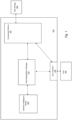
FIG. 1 is a schematic illustration of functional elements of embodiments of the present disclosure; -
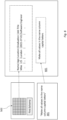
FIG. 2 is a flow diagram showing processing operations that may be performed in accordance with example embodiments; -
FIG. 3 is a schematic illustration of a process of generating a request for an artificial intelligence model to generate candidate functions according to embodiments; -
FIG. 4 is a schematic illustration of the generation of a plurality of candidate functions by an artificial intelligence model according to embodiments of the disclosure; -
FIG. 5 is a schematic illustration of the generation of a subset of a dataset in accordance with embodiments of the disclosure; -
FIG. 6 is a schematic illustration of the generation of a request to an artificial intelligence model to generate a transformation on a subset according to example embodiments. -
FIG. 7 is a schematic illustration of an AI transformation of a subset generated in response to a request to generate a transformation of the subset in accordance with example embodiments. -
FIG. 8 is a schematic illustration of the process of executing candidate functions on a subset to generate test transformations in accordance with example embodiments. -
FIG. 9 shows a block diagram of an exemplary computer system for use in some embodiments. - Example embodiments relate to methods, systems and computer programs for performing manipulations of a dataset. In the methods, systems and computer programs of the example embodiments, a computing function is generated based on a user input and applied to a dataset. In order to generate the computing function, a plurality of candidate functions for operating on a dataset are generated by an artificial intelligence model based on a user input describing a desired outcome of a transformation on a dataset. A suitable candidate function is identified based on verification steps and subsequently applied to a dataset to generate the desired transformation. Verification of candidate functions is performed by comparing the results of candidate computing functions on a sample dataset with manipulations generated by an artificial intelligence model acting explicitly on the sample dataset. The verified computing function is then applied to the dataset to generate a transformation of the dataset. Embodiments of the present invention can achieve manipulations of large datasets with greater computational efficiency than using explicit transformations of the large dataset by an artificial intelligence model. Furthermore, embodiments of the present invention are able to provide more accurate manipulations of a large dataset in comparison with computing functions that are not verified using artificial intelligence model generated manipulations acting explicitly on a sample dataset. By generating and verifying new computing functions based on a user input, transformations within data platform can be defined by a user and applied to large datasets where manual manipulation of the datasets would not be possible.
-
Fig. 1 illustrates an example of acomputing system 100 for performing manipulation of datasets in accordance with embodiments of the disclosure. - The
computing system 100 comprises adata manipulation manager 103, adata processing platform 102, adata storage 109, a user interface 106 and anartificial intelligence model 104. Some or all of the elements of thecomputing system 100 may be located in a single server or device. However, different parts of thecomputing system 100 may be hosted in remote locations or may be distributed across one or more servers. - The
data manipulation manager 103 comprises hardware, software, firmware or a combination thereof for performing processes in accordance with embodiments described herein. Thedata manipulation manager 103 communicates with other aspects of the computing device and with outside entities to perform processing operations. - The
data processing platform 102 is a computing platform for performing data analytics and data processing operations and tasks and is capable of performing a number of predefined manipulations of datasets. As described in more detail below, the embodiments of the present disclosure allow a computing system to perform manipulations of datasets that are not defined in the predefined manipulations of thedata processing platform 102. - The
data processing platform 102 can access adata storage 109, which comprises stored data for processing by thedata processing platform 102. Thedata storage 109 includes data files, which may include tabular data arranged in cells, rows and columns. Embodiments of the present disclosure are particularly advantageous when the datasets recorded in data files are very large. A large, tabular dataset may, for example, include millions or billions of rows, for which manual manipulation of the dataset by a user is not possible. - A
user 101 provides commands to thecomputing system 100 and receives responses from thecomputing system 100 via user interface 106. The user interface 106 may include a keyboard and a display or other suitable interface technology capable of receiving user inputs from the user and returning computer generated responses to the user, such as a microphone and a speaker. Theuser 101 can access thedata processing platform 102 and datasets stored in thedata storage 109 via the user interface 106. User inputs received at the user interface 106 may be provided to thedata processing platform 102 via thedata manipulation manager 103. Alternatively, user inputs may be sent directly from the user interface 106 to thedata processing platform 102, and thedata processing platform 102 may communicate with the data manipulation manager via further calls. - The
data processing platform 103 provides in-built transformation functions which allow datasets to be manipulation in accordance with pre-determined functions. For example, thedata processing platform 103 may provide functions causing the rows of dataset to be re-ordered such that values appearing in a selected column are provided in descending or ascending order or functions causing date entries in a column to be converted from a first format to a second format. - The
data manipulation manager 103 is in communication with anartificial intelligence model 104, such as a large language model (LLM). The data manipulation controller may provide inputs to theartificial intelligence model 104 and receive outputs from theartificial intelligence model 104 in response to the inputs. In some examples, thedata manipulation manager 103 provides inputs to theartificial intelligence model 104 in the form of plain text and receives outputs from the artificial intelligence model in the form of plain text. Theartificial intelligence model 104 may be an LLM trained on publicly available data without fine tuning for the purposes of the invention, such as an instance of an LLM in accordance with OpenAI's GPT series. In some embodiments, the artificial intelligence model may be an LLM that has been fine-tuned to achieve improved performance when used in embodiments of the present disclosure. The skilled person will understand that other artificial intelligence models may be used in place of the LLMs described herein. In the example embodiments described in detail below, the sameartificial intelligence model 104 is used in all steps of the invention. However, differentartificial intelligence models 104 could be used in different steps of the invention. For example, theartificial intelligence model 104 used to generate candidate models may be different to theartificial intelligence model 104 used to generate an AI transformation of a dataset. -
FIG. 2 is a flow diagram showing processing operations that may be performed by a computing system in accordance with one or more example embodiments. The processing operations may be performed using hardware, software, firmware or a combination thereof. - The operations of
Fig. 2 are particularly advantageous in circumstances when auser 101 desires to apply a transformation to a dataset for which no in-built predefined function exists in thedata processing platform 102. For example, auser 101 may desire to enact a complex transformation for a purpose that was not envisaged by the creators of thedata processing platform 102 or may desire to enact a transformation on an unclean dataset for which existing functions do not generate reliable outputs. The operations ofFig. 2 are described below with reference to illustrative example embodiments. - In
step 202, thedata manipulation manager 103 receives an indication of a target outcome, wherein the target outcome defines a transformation of a first dataset. Auser 101 may identify a first dataset stored in thedata storage 109 for manipulation and provide an indication of a target outcome defining a transformation that theuser 101 desires to apply to the first dataset. The indication of the target outcome may comprise a natural language description of the target outcome. The natural language description of the target outcome may comprise a command to theartificial intelligence model 104. The transformation may, for example, comprise one or more of: modification of the contents of cells, modification of the order of rows or columns, deletion of rows or columns, creation of new rows or columns based on the contents of existing rows, columns or cells, and other modifications and combinations of modifications of the contents of the dataset. The indication of the target outcome may include criteria for identifying rows, columns and/or cells to be modified and a description of how to determine an output state of the dataset based on an input state of the dataset. Examples of indications of target outcomes include the following natural language strings: "make all values in the name column uppercase", "order the dataset by ascending values in the salary column", "convert all values in the date column into YYYY-MM-DD form and order the dataset by date", "generate a new column titled name + age where the values of the name + age cells for each row are a concatenation of the value of the name column and the age column for that row", "place all the rows into discrete bins having salary ranges of $5,000 and provide a new column to indicate the bin to which each row belongs", and "convert text content of cells in the age column into numerals and replace unrecognizable age cells with zero". - The indication of the target outcome maybe provided by the
user 101 via the user interface 106 of the computing system. For example, theuser 101 may provide the indication of the target outcome in text using a keyboard or may speak the indication of the target outcome into a microphone. In some examples, theuser 101 may provide the indication of the target outcome to thedata manipulation manager 103 via thedata processing platform 102. In these examples, thedata processing platform 102 may prompt the user to provide an indication of a target outcome. In other examples, theuser 101 may provide the indication of the target outcome to a separate application integrated with thedata manipulation manager 103. - In
step 204, thedata manipulation manager 103 provides to theartificial intelligence model 104 one or more requests to generate candidate functions for generating a transformation in accordance with the target outcome when executed on the first dataset. The one or more requests are based on the indication of a target outcome received instep 204. For example, the requests may take the form of a plain text prompt including the indication of a target outcome, where the prompt acts as an input to theartificial intelligence model 104. In examples where theartificial intelligence model 104 is configured to receive inputs in a format other than plain text, the indication of a target outcome may be provided by thedata manipulation manager 103 in the appropriate format. - Where a single request is sent to the
artificial intelligence model 104, the request includes an indication that theartificial intelligence model 104 should provide a plurality of distinct candidate functions in response to the request. The request may include an indication of the number of distinct candidate functions that should that be provided in response to the request. For example, the request may specify that five (or any other number) distinct candidate functions should be provided in response to the request. In some examples, thedata manipulation manager 103 may provide repeated requests to theartificial intelligence model 104 for a single candidate function in order to obtain a plurality of candidate functions in response to the requests. For example, thedata manipulation manager 103 may send five (or any other number) requests for the artificial intelligence model a single candidate function. In examples where repeated requests for candidate functions are provided to theartificial intelligence model 104, the temperature parameter of the artificial intelligence model is set to be non-zero in order to increase the probability of obtaining distinct candidate functions in response to each of the repeated requests. Preferably, the temperature parameter is optimized to generate large variance between candidate functions while maintaining high accuracy in the candidate functions. - The one or more requests to generate candidate functions may comprise a text string comprising a context portion concatenated with the indication of a target outcome received in
step 204. In some examples, such as when the artificial intelligence model is not fined-tuned for use in embodiments of the present disclosure (for example, where the artificial intelligence model is an LLM trained on a corpus of publicly available literature, such as an LLM of the GPT series), the context portion may include an indication of thedata processing platform 102 being used and instructions to generate one or more distinct candidate functions that, when executed on the first dataset, would achieve the target outcome. The context portion may specify a programming language in which the candidate function should be provided. For example, the context portion may specify that the candidate function is written in one of Python, Java or SQL. The context portion may also include schema information of the first dataset, where the schema of the first dataset indicates one or more of the column names, the type of data in each column, and whether or not given columns require a null check. The schema information may be automatically extracted from the first dataset by thedata manipulation manager 103 and inserted into the context portion. The context portion may include examples of inputs and outputs (i.e. pre-generated examples of indications of target outcomes and corresponding candidate functions that are suitable for achieving the target outcome) in order to restrict theartificial intelligence model 104 to a formatted response. - In some examples, the context portion may include information regarding the functionality of the
data processing platform 102. For example, the context portion may provide a natural language description of basic operations that can be performed in thedata processing platform 102 and, preferably, how these operations can be combined to achieve use cases. This is particularly advantageous when thedata processing platform 102 includes functionality that is not described in publicly available documents or is not well-known. - In some examples, the
artificial intelligence model 104 may be fine-tuned to provide suitable outputs in response to target outcome inputs. When theartificial intelligence model 104 is fine-tuned, less context is needed to achieve reliable outputs from theartificial intelligence model 104, and the context portion of the prompt may include less information than examples where the artificial intelligence model is not fine-tuned. For example, the context portion may only include schema information extracted from the first dataset in these embodiments. Fine-tuning theartificial intelligence model 104 may involve performing training using supervised learning, transfer learning, or reinforcement learning. - In some embodiments, the
artificial intelligence model 104 may return a clarifying query to thedata manipulation manager 103 prior to returning candidate functions. For example, theartificial intelligence model 104 may request a user input to clarify what should happen to edge cases or regarding ambiguities in the target outcome. For example, theartificial intelligence model 104 may request clarification regarding how to transform a null value. In response to the clarifying query, theuser 101 provides a plain text response including further information to theartificial intelligence model 104. In some examples, the context portion of the request should indicate conditions under which theartificial intelligence model 104 should request clarifying information. For example, the context portion of the request may indicate that theartificial intelligence model 104 should request clarifying information if part of the indication of the target outcome is ambiguous. In other examples, theartificial intelligence model 104 is fine-tuned to request clarifying queries. - In response to receiving the one or more requests to generate candidate functions, the
artificial intelligence model 104 provides as an output a plurality of distinct candidate functions. The plurality of distinct candidate functions are received by thedata manipulation manager 103 instep 206. The candidate functions are output from the artificial intelligence model as plain text computing code in a language and format specified in the request prompt or by the fine-tuning of theartificial intelligence model 104. The output of theartificial intelligence model 104 may also include an indication of the columns, rows or cells of the first dataset that the candidate functions should be applied to. - In some examples, the
data manipulation manager 103 attempts to execute each of the candidate functions on a sample of columns, row or cells of the first dataset to ensure that the functions are able to successfully run to completion. The sample of columns, rows or cells may be the same as the subset discussed in more detail below with reference to step 208. Where a candidate function fails to run successfully, thedata manipulation manager 103 returns the candidate function to theartificial intelligence model 104 for repair. This process may be repeated iteratively until the number of attempts to repair the candidate function reaches a predetermined threshold value (e.g. three, five, ten attempts etc.), after which the candidate function is discarded if it has not been repaired successfully. - In
step 208, thedata manipulation manager 103 provides a request to theartificial intelligence model 104 to generate the transformation corresponding to the target outcome on a subset of the first dataset. The subset of the first dataset is provided to theartificial intelligence model 104 as part of the request to generate the transformation corresponding to the target outcome. The subset of the first dataset is a sample of the first dataset that has been extracted from the first dataset and converted into plain text. Thedata manipulation manager 103 may generate the subset of the first dataset by extracting information from the first dataset prior to step 208. The request to generate the transformation on the subset of the first dataset may have the form of a prompt comprising the subset of the first dataset formatted in plain text with the target outcome appended to the subset of the first dataset. In contrast to step 204, in which the artificial intelligence model is requested to generate functions which result in a transformation of a dataset when executed, the request to generate a transformation of the subject of the first dataset requires that theartificial intelligence model 104 performs explicit manipulations of the subset of the first dataset to generate the transformation. Explicit manipulations of a dataset by an artificial intelligence model refer to manipulations of a dataset in which a dataset is explicitly provided to theartificial intelligence model 104 as part of an input and a transformed version of the dataset is returned by theartificial intelligence model 104 in an output. - In
step 210, theartificial intelligence model 104 provides as an output an AI transformation of the subset of the first dataset to thedata manipulation manager 103. The AI transformation of the subset of the first dataset comprises a plain text version of the subset of the first dataset as manipulated by theartificial intelligence model 104 when explicitly instructed to manipulate the subset in accordance with the target outcome. The plain text version of the AI transformation is then parsed into a dataset by thedata manipulation manager 103. - Explicit manipulation of a dataset by an
artificial intelligence model 104 is generally far more computationally expensive and time consuming than execution of simple code functions to perform data manipulations. The computational cost of performing explicit manipulations scales rapidly with the size of the dataset. In order to reduce the computational cost when explicitly manipulating the subset of the first dataset by theartificial intelligence model 104, the subset is chosen to have a substantially smaller size than the first data set. The subset will usually be several orders of magnitude smaller than the first dataset. The subset may be generated to have specified number of rows. For example, the subset may include 5, 10, 50 or 100 rows of the first dataset. Alternatively, the subset may be generated to have a specified proportion of the number of rows of the first dataset. For example, the subset may include fewer than 1%, fewer than 0.1% or fewer than 0.01% of the rows of the first dataset. The subset of the first dataset may be selected as a random sample of rows of the first dataset. In some examples, the subset may be selected by selecting rows distributed throughout the first dataset at even intervals in order to obtain a representative range of values. The subset may, for example, comprise rows of the first dataset that are numbered with an integer multiple of a spacing parameter, s, that is greater than 1. For example, the subset may include only every 5th, 10th, 100th, or 1000th row of the first dataset. In other examples, selecting the subset may comprise identifying rows comprising non-standard entries, such as null values or inconsistent formatting, in order to generate manipulations for which there is a higher probability that the candidate functions will fail to replicate. In some examples, a combination of these methods may be used to generate the subset. - In some examples, the first dataset may comprise sensitive or confidential data. The
artificial intelligence model 104 may be operated by a third party and it may therefore be preferable not to provide theartificial intelligence model 104 with sensitive or confidential data. In this case, the data of the subset may be anonymised by replacing the data of the cells with non-sensitive values having the same data type as the original data based on the schema. In particular, the non-sensitive values may be generated based on type and nullability information included in the schema. The non-sensitive values may be extracted from a template comprising non-sensitive values of different data types and nullability. - In the exemplary embodiment described in detail, the
artificial intelligence model 104 used to generate an AI transformation of the subset is the sameartificial intelligence model 104 used to generate candidate functions. However, in other embodiments, different first and second artificial intelligence models may be used in these steps. Where theartificial intelligence models 104 are fine-tuned, it is particularly advantageous to use different first and second artificial intelligence models that are fine-tuned for generating candidate functions and for generating AI transformations respectively. - In some examples, the user may be presented with the AI transformation and prompted to confirm that the AI transformation has correctly implemented the target outcome before proceeding to the next steps. In this example, the
data manipulation manager 103 may request feedback from theuser 101 to provide to theartificial intelligence model 104 in order for theartificial intelligence model 104 to correct the AI transformation. - In
step 212, thedata manipulation manager 103 executes each of the plurality of candidate functions separately on the same subset used in the input to theartificial intelligence model 104 to generate the AI transformation instep 210. For each candidate function, a respective test transformation is output corresponding to the candidate function acting on specified columns, rows or cells of the subset, such that a corresponding test transformation is generated for each candidate function. In other words, each test transformation is a dataset generated by applying a respective candidate function to the subset of the first dataset. - In
step 214, thedata manipulation manager 103 compares each test transformation with the AI transformation. Where the AI transformation matches the test transformation, the candidate function that was used to generate the test transformation is considered to be validated. Validation of the test transformations may comprise parsing a text version of the AI transformation output by the artificial intelligence model into the same tabular data format as the first dataset and the test transformations. The plurality of test transformations are then compared to the AI transformation to identify test transformations that match the AI transformation. Where a given test transformation does not match the AI transformation, the candidate function that generated the test transformation is considered inaccurate and is not validated. - Validation of candidate functions based on comparisons of the test transformations generated by candidate functions with AI transformations generated by explicit manipulation of a subset by an
artificial intelligence model 104 can achieve significantly improved accuracy of candidate functions in comparison to the use of AI generated functions without validation. In particular, the accuracy of artificial intelligence models such as LLMs in generating explicit transformations of datasets is greater than the accuracy of artificial intelligence models in generating candidate functions for performing dataset manipulations. Therefore, by generating a plurality of distinct candidate functions and validating the candidate functions by comparison with the explicit AI transformations, the high accuracy of artificial intelligence models in performing explicit data manipulations can be leveraged to increase the accuracy of dataset transformations generated by computing functions that have been generated by artificial intelligence models. - In
step 216, thedata manipulation manager 103 executes one of the validated candidate functions on the first dataset to generate the transformation of the first dataset to achieve the target outcome. Executing the validated candidate function may comprise identifying rows, columns or cells for which the candidate function should be applied based on the response of theartificial intelligence model 104 to the request to generate candidate functions, and executing the validated candidate function on the identified rows, columns or cells. - Because execution of a simple function in order to manipulate a dataset requires significantly less computational resources than explicit manipulation of a dataset by an artificial intelligence model, the embodiments of the present disclosure provide a computationally efficient means of generating transformations of datasets based on user defined target outcomes. Furthermore, because explicit AI transformations of a subset of the first dataset are used to validate candidate functions, the accuracy of the transformations generated by validated candidate functions is comparable to the accuracy of explicit AI transformations of the entire dataset while being substantially more computationally efficient.
- In some embodiments, the
data manipulation manager 103 may stop validation of candidate functions when a first candidate function is validated. That candidate function may then be selected for execution on the first dataset. In other embodiments, thedata manipulation manager 103 may validate a plurality of distinct candidate functions. More than one candidate functions is validated, further criteria may be used to select a candidate function for execution on the first dataset. In some embodiments, thedata manipulation manager 103 may select the validated candidate function having the shortest run time or the lowest computational complexity for execution on the first dataset. The run time of the validated candidate functions may be compared based on the time required to execute the candidate functions on the first subset. -
Fig. 3 schematically illustrates a process of generating arequest 302 for an artificial intelligence model to generate candidate functions for generating a transformation in accordance with the target outcome when executed on the first dataset. - The
data manipulation manager 103 generates the request by combining information describing afirst schema 303 extracted from thefirst dataset 304 withuser input text 301 indicating a target outcome. Therequest 302 comprises acontext portion 305, which includes natural language instructions for theartificial intelligence model 104, and a natural language description of thefirst schema 303. The instructions for theartificial intelligence model 104 may be retrieved from a database of request templates for requests forartificial intelligence models 104. - In some embodiments, the
context portion 305 may include further information, such as example inputs and outputs to illustrate the required format of the response. - The
request 302 illustrated inFig. 3 is a request for a single candidate function. Therequest 302 illustrated inFig. 3 may be repeatedly provided to theartificial intelligence model 104 in order to generate a plurality of candidate functions, which each candidate function being provided as the output of a respective requeset. In other examples, thecontext portion 305 may indicate the number of candidate functions to be returned by theartificial intelligence model 104. -
Fig. 4 schematically illustrates the generation of a plurality of candidate functions 401 by anartificial intelligence model 104 in accordance with embodiments of the disclosure. Eachcandidate function 401 may identify the column(s), row(s) or cell(s) on which code should be executed and a plain text version of the code for execution. -
Fig. 5 schematically illustrates the generation of afirst subset 502 of afirst dataset 501 in accordance with embodiments of the disclosure. A sample of rows may be extracted from thefirst dataset 501 to form thefirst subset 502. Thefirst dataset 501 may include millions or billions of rows (not illustrated). Thefirst subset 502 may comprise a predetermined number of rows, such as 10, 50, or 100, or thefirst subset 502 may comprise a predetermined proportion of the rows of thefirst dataset 501. -
Fig. 6 schematically illustrates the generation of arequest 601 to generate a transformation on a first subset in accordance with embodiments of the disclosure. Therequest 601 comprises the first subset. - In this embodiment, the
request 601 to generate a transformation on a first subset is formatted to provide a suitable input for anartificial intelligence model 104 that is configured to receive plain text data as an input. As such, thedata manipulation manager 103 generates the request by combining a plain text formatted version of thefirst subset 502 with the indication of thetarget outcome 301. - At least part of the
request 601 may have the form of a natural language command for theartificial intelligence model 104 to perform a manipulation on the plain text formatted version of the first subset. In this example, the indication of thetarget outcome 301 in an instruction to theartificial intelligence model 104 to make all values in the name column capital letters. -
Fig. 7 schematically illustrates anAI transformation 701 of the first subset generated in response to therequest 601 to generate a transformation of the first subset. Thedata manipulation manager 103 parses a plain text version of theAI transformation 701 received from the artificial intelligence module to provide a tabular dataset, as shown inFig. 7 . In the illustrated example, the AI transformation 107 of the first subset correspond to the first subset with the values in the name column being changed to capital letters. -
Fig. 8 illustrates the process of executing candidate functions 401 on thefirst subset 502 to generatetest transformations 801. In this illustrative example, it can be seen that afirst candidate function 401 has generated afirst test transformation 801 that matches theAI transformation 701 ofFig. 7 . In contrast, thecandidate function 2 has introduced an error in the second test transformation, which does not match theAI transformation 701. Consequently, thefirst candidate function 401 can be verified by thedata manipulation manager 103 by confirming that it matches the AI transformation 107 and executed on thefirst dataset 501 to achieve the target outcome. - Because the second test transformation does not match the
AI transformation 701, thesecond candidate function 401 will not be verified and will not be executed on the first dataset. -
Fig. 9 shows a block diagram of anexemplary computer system 137, which may comprise thedata manipulation manager 103, and one or more of the servers hosting thedata processing platform 102, thedata storage 109, and theartificial intelligence model 104, consistent with examples of the present specification is shown. -
Computer system 137 includes abus 138 or other communication mechanism for communicating information, and ahardware processor 139 coupled withbus 138 for processing information.Hardware processor 139 can be, for example, a general purpose microprocessor.Hardware processor 139 comprises electrical circuitry. -
Computer system 137 includes amain memory 140, such as a random access memory (RAM) or other dynamic storage device, which is coupled to thebus 138 for storing information and instructions to be executed byprocessor 139. Themain memory 140 can also be used for storing temporary variables or other intermediate information during execution of instructions by theprocessor 139. Such instructions, when stored in non-transitory storage media accessible to theprocessor 139, render thecomputer system 137 into a special-purpose machine that is customized to perform the operations specified in the instructions. -
Computer system 137 further includes a read only memory (ROM) 141 or other static storage device coupled to thebus 138 for storing static information and instructions for theprocessor 139. Astorage device 142, such as a magnetic disk or optical disk, is provided and coupled to thebus 138 for storing information and instructions. -
Computer system 137 can be coupled via thebus 138 to adisplay 143, such as a cathode ray tube (CRT), liquid crystal display, or touch screen, for displaying information to a user. Aninput device 144, including alphanumeric and other keys, is coupled to thebus 138 for communicating information and command selections to theprocessor 139. Another type of user input device iscursor control 145, for example using a mouse, a trackball, or cursor direction keys for communicating direction information and command selections to theprocessor 139 and for controlling cursor movement on thedisplay 143. The input device typically has two degrees of freedom in two axes, a first axis (for example, x) and a second axis (for example, y), that allows the device to specify positions in a plane. -
Computer system 137 can implement the techniques described herein using customized hard-wired logic, one or more ASICs or FPGAs, firmware and/or program logic which in combination with the computer system causes orprograms computer system 137 to be a special-purpose machine. According to some embodiments, the operations, functionalities, and techniques disclosed herein are performed bycomputer system 137 in response to theprocessor 139 executing one or more sequences of one or more instructions contained in themain memory 140. Such instructions can be read into themain memory 140 from another storage medium, such asstorage device 142. Execution of the sequences of instructions contained inmain memory 140 causes theprocessor 139 to perform the process steps described herein. In alternative embodiments, hard-wired circuitry can be used in place of or in combination with software instructions. - The term "storage media" as used herein refers to any non-transitory media that stores data and/or instructions that cause a machine to operate in a specific fashion. Such storage media can comprise non-volatile media and/or volatile media. Non-volatile media includes, for example, optical or magnetic disks, such as
storage device 142. Volatile media includes dynamic memory, such asmain memory 140. Common forms of storage media include, for example, a floppy disk, a flexible disk, hard disk, solid state drive, magnetic tape, or any other magnetic data storage medium, a CD-ROM, any other optical data storage medium, any physical medium with patterns of holes, a RAM, a PROM, and EPROM, a FLASH-EPROM, NVRAM, any other memory chip or cartridge. - Storage media is distinct from, but can be used in conjunction with, transmission media. Transmission media participates in transferring information between storage media. For example, transmission media includes coaxial cables, copper wire and fibre optics, including the wires that comprise
bus 138. Transmission media can also take the form of acoustic or light waves, such as those generated during radio-wave and infra-red data communications. - Various forms of media can be involved in carrying one or more sequences of one or more instructions to
processor 139 for execution. For example, the instructions can initially be carried on a magnetic disk or solid state drive of a remote computer. The remote computer can load the instructions into its dynamic memory and send the instructions over a telephone line or other transmission medium using a modem. A modem local tocomputer system 137 can receive the data on the telephone line or other transmission medium and use an infra-red transmitter to convert the data to an infra-red signal. An infra-red detector can receive the data carried in the infra-red signal and appropriate circuitry can place the data onbus 138.Bus 138 carries the data to themain memory 140, from which theprocessor 139 retrieves and executes the instructions. The instructions received by themain memory 140 can optionally be stored on thestorage device 142 either before or after execution by theprocessor 139. -
Computer system 137 also includes acommunication interface 146 coupled to thebus 138. Thecommunication interface 146 provides a two-way data communication coupling to anetwork link 147 that is connected to alocal network 148. For example, thecommunication interface 146 can be an integrated services digital network (ISDN) card, cable modem, satellite modem, or a modem to provide a data communication connection to a corresponding type of telephone line. As another example, thecommunication interface 146 can be a local area network (LAN) card to provide a data communication connection to a compatible LAN. Wireless links can also be implemented. In any such implementation, thecommunication interface 146 sends and receives electrical, electromagnetic or optical signals that carry digital data streams representing various types of information. - The
network link 147 typically provides data communication through one or more networks to other data devices. For example, thenetwork link 147 can provide a connection through thelocal network 148 to ahost computer 149 or to data equipment operated by an Internet Service Provider (ISP) 150. TheISP 150 in turn provides data communication services through the world wide packet data communication network now commonly referred to as the "Internet" 151. Thelocal network 148 andinternet 151 both use electrical, electromagnetic or optical signals that carry digital data streams. The signals through the various networks and the signals on thenetwork link 147 and through thecommunication interface 146, which carry the digital data to and from thecomputer system 137, are example forms of transmission media. - The
computer system 137 can send messages and receive data, including program code, through the network(s),network link 147 andcommunication interface 146.
Claims (15)
- A computer-implemented method for manipulating data structures, the method comprising:receiving an indication of a target outcome, where the target outcome defines a transformation of a first dataset;providing to a first artificial intelligence model, based on the indication of a target outcome, one or more requests to generate candidate functions for generating a transformation in accordance with the target outcome when executed on the first dataset;receiving, in response to the one or more requests, a plurality of distinct candidate functions from the first artificial intelligence model;providing, to a second artificial intelligence model, a request to generate the transformation on a first subset, wherein the first subset is a subset of the first dataset and wherein the request comprises the first subset;receiving, from the second artificial intelligence model, an AI transformation of the first subset;executing each of the plurality of candidate functions on the first subset to generate a plurality of test transformations of the first subset;validating one or more of the candidate functions, where a candidate function is validated by determining that the test transformation of the first subset generated by the candidate function matches the AI transformation of the first subset; andexecuting one of the validated candidate functions on the first dataset to achieve the transformation of the first dataset.
- The computer-implemented method of claim 1, wherein the first and second artificial intelligence model are the same artificial intelligence model.
- The computer-implemented method of claim 1 or claim 2, wherein the indication of the target outcome is a natural language description of a transformation to be applied to the first dataset.
- The computer-implemented method of claim 3, wherein the one or more requests to generate candidate functions each comprise a context portion and the natural language description of the transformation to be applied to the first dataset, wherein the context portion comprises a schema of the first data set.
- The computer-implemented method of claim 4, wherein the context portion further comprises examples of target outcomes and corresponding candidate functions.
- The computer-implemented method of any preceding claim, further comprising:extracting a schema of the first dataset from the first dataset; andgenerating the one or more requests to generate candidate functions by combining the indication of the target outcome with a schema of the first dataset.
- The computer-implemented method of any preceding claim, further comprising: generating the first subset, wherein generating the first subset comprises one or more of:selecting a randomly distributed sample of rows from the first dataset;selecting evenly spaced rows from the first dataset; andidentifying rows comprising non-standard entries and selecting the identified rows.
- The computer-implemented method of any of claims 1 to 6, wherein generating the first subset comprises generating a dataset having the same schema as the first dataset, and wherein the values of cells in the subset are generated from a source other than the first dataset.
- The computer-implemented method of any preceding claim, wherein the request to generate the transformation on the first subset comprises a plain text formatted version of the first subset combined with the indication of a target outcome.
- The computer-implemented method of any preceding claim, wherein the AI transformation of the first subset is received from the artificial intelligence model in plain text form, and
wherein validating one or more of the candidate functions comprises parsing the AI transformation of the first subset into a tabular data form and determining whether one or more of the test transformations matches the AI transformation. - The computer-implemented method of any preceding claim, wherein at least one of the first artificial intelligence model and the second artificial intelligence models are large language models (LLMs).
- The computer-implemented method of any preceding claim, wherein the first artificial intelligence model is fine-tuned to provide the plurality of candidate functions in a predetermined programming language as an output in response to an input comprising the indication of the target outcome and a schema, and
the second artificial intelligence model is fine-tuned to provide the AI transformation as an output in response to an input comprising the first subset and the indication of the target outcome. - The computer-implemented method of any preceding claim, further comprising:determining a first validated candidate function of a plurality of validated candidate functions for which the time taken to generate the test transformation is shorter than the time taken for any other validated candidate function to generate a respective test transformation, whereinthe validated candidate function that is executed on the first dataset is the first validated candidate function.
- A non-transitory computer readable medium comprising instructions that, when executed, cause one or more processors of a computing system to perform the method of any of claims 1 to 13.
- An apparatus comprising:one or more processors; anda memory storing instructions that, when executed by the one or more processors, cause the apparatus to perform the method of any of claims 1 to 13.
Applications Claiming Priority (2)
| Application Number | Priority Date | Filing Date | Title |
|---|---|---|---|
| US202363541989P | 2023-10-02 | 2023-10-02 | |
| US18/381,337 US20250110929A1 (en) | 2023-10-02 | 2023-10-18 | Computer-implemented manipulation of data structures |
Publications (1)
| Publication Number | Publication Date |
|---|---|
| EP4535248A1 true EP4535248A1 (en) | 2025-04-09 |
Family
ID=92966956
Family Applications (1)
| Application Number | Title | Priority Date | Filing Date |
|---|---|---|---|
| EP24203958.4A Pending EP4535248A1 (en) | 2023-10-02 | 2024-10-01 | Computer-implemented manipulation of data structures |
Country Status (2)
| Country | Link |
|---|---|
| US (1) | US20250110929A1 (en) |
| EP (1) | EP4535248A1 (en) |
Family Cites Families (4)
| Publication number | Priority date | Publication date | Assignee | Title |
|---|---|---|---|---|
| US12079602B2 (en) * | 2022-03-07 | 2024-09-03 | Salesforce, Inc. | Systems and methods for a conversational framework of program synthesis |
| EP4594859A1 (en) * | 2022-09-30 | 2025-08-06 | Akkio, Inc. | Methods and systems for automatically generating and executing computer code using a natural language description of a data manipulation to be performed on a data set |
| CN116661855A (en) * | 2023-06-13 | 2023-08-29 | 中国人民解放军国防科技大学 | Code annotation generation method and device |
| CN116820429B (en) * | 2023-08-28 | 2023-11-17 | 腾讯科技(深圳)有限公司 | Training method and device of code processing model, electronic equipment and storage medium |
-
2023
- 2023-10-18 US US18/381,337 patent/US20250110929A1/en active Pending
-
2024
- 2024-10-01 EP EP24203958.4A patent/EP4535248A1/en active Pending
Non-Patent Citations (2)
| Title |
|---|
| DAVID NOEVER ET AL: "Numeracy from Literacy: Data Science as an Emergent Skill from Large Language Models", ARXIV.ORG, CORNELL UNIVERSITY LIBRARY, 201 OLIN LIBRARY CORNELL UNIVERSITY ITHACA, NY 14853, 31 January 2023 (2023-01-31), XP091425699 * |
| KHATRY ANIRUDH ET AL: "From Words to Code: Harnessing Data for Program Synthesis from Natural Language", 3 May 2023 (2023-05-03), arXiv.org, pages 1 - 14, XP093250751, Retrieved from the Internet <URL:https://arxiv.org/pdf/2305.01598> [retrieved on 20250217] * |
Also Published As
| Publication number | Publication date |
|---|---|
| US20250110929A1 (en) | 2025-04-03 |
Similar Documents
| Publication | Publication Date | Title |
|---|---|---|
| US11526334B2 (en) | Method and system for dynamically generating executable source codes for applications | |
| CN102713834B (en) | Management accounts format information | |
| US12182512B2 (en) | Machine learning methods and systems for extracting entities from semi-structured enterprise documents | |
| US12505028B2 (en) | Automatic generation of test scenarios from specification files | |
| CN111563051B (en) | Crawler-based data verification method and device, computer equipment and storage medium | |
| CN119960938B (en) | Interface calling method, device, computer equipment and storage medium | |
| CN120892341A (en) | Artificial intelligence-based test case generation methods, devices, equipment, and media | |
| US20220405235A1 (en) | System and method for reference dataset management | |
| US20250110929A1 (en) | Computer-implemented manipulation of data structures | |
| CN120803950A (en) | Method, device and equipment for generating test cases based on large language model | |
| US20250348731A1 (en) | Systems and methods for function-calling agent models | |
| US20260093468A1 (en) | Artificial intelligence driven system for managing deployment actions based on sentiment analysis | |
| CN120578594A (en) | A test case generation method, device, electronic device and storage medium | |
| US11327994B2 (en) | Arranging converted operation history information | |
| CN120029604A (en) | Training data generation method, device, equipment and medium | |
| CN117435189A (en) | Test case analysis method, device, equipment and medium of financial system interface | |
| CN114547059A (en) | Platform data updating method and device and computer equipment | |
| US20260105094A1 (en) | Systems and methods for mitigating positional bias in language models | |
| US11720531B2 (en) | Automatic creation of database objects | |
| US12455910B1 (en) | Controlled probabilistic sentence space expansion | |
| CN120725002B (en) | Contract auditing-oriented custom text rule generation method, system and storage medium | |
| EP4617945A1 (en) | Grounding responses from a large language model | |
| CN118780272B (en) | Foreign language writing automatic error correction method and system | |
| US20250190821A1 (en) | Knowledge extraction apparatus and knowledge extraction method | |
| US20260105089A1 (en) | Systems and methods for embedding for text and code retrieval |
Legal Events
| Date | Code | Title | Description |
|---|---|---|---|
| PUAI | Public reference made under article 153(3) epc to a published international application that has entered the european phase |
Free format text: ORIGINAL CODE: 0009012 |
|
| STAA | Information on the status of an ep patent application or granted ep patent |
Free format text: STATUS: THE APPLICATION HAS BEEN PUBLISHED |
|
| AK | Designated contracting states |
Kind code of ref document: A1 Designated state(s): AL AT BE BG CH CY CZ DE DK EE ES FI FR GB GR HR HU IE IS IT LI LT LU LV MC ME MK MT NL NO PL PT RO RS SE SI SK SM TR |
|
| STAA | Information on the status of an ep patent application or granted ep patent |
Free format text: STATUS: REQUEST FOR EXAMINATION WAS MADE |
|
| 17P | Request for examination filed |
Effective date: 20251009 |
|
| GRAP | Despatch of communication of intention to grant a patent |
Free format text: ORIGINAL CODE: EPIDOSNIGR1 |
|
| STAA | Information on the status of an ep patent application or granted ep patent |
Free format text: STATUS: GRANT OF PATENT IS INTENDED |
|
| RIC1 | Information provided on ipc code assigned before grant |
Ipc: G06N 20/00 20190101AFI20260212BHEP Ipc: G06F 8/30 20180101ALI20260212BHEP Ipc: G06Q 10/10 20230101ALI20260212BHEP Ipc: G06Q 10/105 20230101ALI20260212BHEP |
|
| INTG | Intention to grant announced |
Effective date: 20260219 |
|
| RAP3 | Party data changed (applicant data changed or rights of an application transferred) |
Owner name: PALANTIR TECHNOLOGIES INC. |
|
| RAP3 | Party data changed (applicant data changed or rights of an application transferred) |
Owner name: PALANTIR TECHNOLOGIES INC. |