EP4535244A1 - Federated learning system, model training device, federated learning method, and model training program - Google Patents
Federated learning system, model training device, federated learning method, and model training program Download PDFInfo
- Publication number
- EP4535244A1 EP4535244A1 EP22943721.5A EP22943721A EP4535244A1 EP 4535244 A1 EP4535244 A1 EP 4535244A1 EP 22943721 A EP22943721 A EP 22943721A EP 4535244 A1 EP4535244 A1 EP 4535244A1
- Authority
- EP
- European Patent Office
- Prior art keywords
- model
- dual
- learning apparatus
- variable
- parameter
- Prior art date
- Legal status (The legal status is an assumption and is not a legal conclusion. Google has not performed a legal analysis and makes no representation as to the accuracy of the status listed.)
- Pending
Links
Images




Classifications
-
- G—PHYSICS
- G06—COMPUTING OR CALCULATING; COUNTING
- G06N—COMPUTING ARRANGEMENTS BASED ON SPECIFIC COMPUTATIONAL MODELS
- G06N20/00—Machine learning
-
- G—PHYSICS
- G06—COMPUTING OR CALCULATING; COUNTING
- G06N—COMPUTING ARRANGEMENTS BASED ON SPECIFIC COMPUTATIONAL MODELS
- G06N3/00—Computing arrangements based on biological models
- G06N3/02—Neural networks
- G06N3/08—Learning methods
- G06N3/098—Distributed learning, e.g. federated learning
-
- G—PHYSICS
- G06—COMPUTING OR CALCULATING; COUNTING
- G06F—ELECTRIC DIGITAL DATA PROCESSING
- G06F9/00—Arrangements for program control, e.g. control units
- G06F9/06—Arrangements for program control, e.g. control units using stored programs, i.e. using an internal store of processing equipment to receive or retain programs
- G06F9/46—Multiprogramming arrangements
-
- G—PHYSICS
- G06—COMPUTING OR CALCULATING; COUNTING
- G06F—ELECTRIC DIGITAL DATA PROCESSING
- G06F9/00—Arrangements for program control, e.g. control units
- G06F9/06—Arrangements for program control, e.g. control units using stored programs, i.e. using an internal store of processing equipment to receive or retain programs
- G06F9/46—Multiprogramming arrangements
- G06F9/50—Allocation of resources, e.g. of the central processing unit [CPU]
- G06F9/5005—Allocation of resources, e.g. of the central processing unit [CPU] to service a request
- G06F9/5027—Allocation of resources, e.g. of the central processing unit [CPU] to service a request the resource being a machine, e.g. CPUs, Servers, Terminals
- G06F9/5055—Allocation of resources, e.g. of the central processing unit [CPU] to service a request the resource being a machine, e.g. CPUs, Servers, Terminals considering software capabilities, i.e. software resources associated or available to the machine
-
- G—PHYSICS
- G06—COMPUTING OR CALCULATING; COUNTING
- G06F—ELECTRIC DIGITAL DATA PROCESSING
- G06F9/00—Arrangements for program control, e.g. control units
- G06F9/06—Arrangements for program control, e.g. control units using stored programs, i.e. using an internal store of processing equipment to receive or retain programs
- G06F9/46—Multiprogramming arrangements
- G06F9/54—Interprogram communication
-
- G—PHYSICS
- G06—COMPUTING OR CALCULATING; COUNTING
- G06F—ELECTRIC DIGITAL DATA PROCESSING
- G06F9/00—Arrangements for program control, e.g. control units
- G06F9/06—Arrangements for program control, e.g. control units using stored programs, i.e. using an internal store of processing equipment to receive or retain programs
- G06F9/46—Multiprogramming arrangements
- G06F9/54—Interprogram communication
- G06F9/545—Interprogram communication where tasks reside in different layers, e.g. user- and kernel-space
-
- G—PHYSICS
- G06—COMPUTING OR CALCULATING; COUNTING
- G06N—COMPUTING ARRANGEMENTS BASED ON SPECIFIC COMPUTATIONAL MODELS
- G06N3/00—Computing arrangements based on biological models
- G06N3/02—Neural networks
- G06N3/08—Learning methods
Definitions
- the predetermined optimal value ⁇ may be 1/( ⁇ KE i ).
- E i is the number of other model learning apparatus connected to the model learning apparatus 100 i .
- the predetermined hyperparameter ⁇ may be, but not limited to, 2. Since different ⁇ is suitable for each federated system, it may be appropriately tailored to each federated learning system.
- the same functions and parameters as in NPL 1 may be used as f - , the cost function or the function that can replace the cost function, the model parameter u, the constraint parameter A i
- the dual-variable calculation/transmission unit 150 of each of the model learning apparatus 100 1 , ..., 100 N calculates and transmits the dual variable y i
- the dual-variable calculation/transmission unit 150 calculates the dual variable y i
- the arrow in the equation means substitution. y i j ⁇ 1 ⁇ 1 ⁇ ⁇ z i j r , k ⁇ 2 A i j w i r , k + 1
- a program describing this processing can be recorded on a computer-readable recording medium.
- An example of the computer-readable recording medium may include any recording medium such as a magnetic recording device, an optical disc, a magneto-optical recording medium, and a semiconductor memory.
- the program is distributed, for example, by sales, transfer, or lending of a portable recording medium such as a DVD or a CD-ROM on which the program is recorded.
- the distribution of the program may be performed by storing the program in advance in a storage device of a server computer and transferring the program from the server computer to another computer via a network.
- the present invention is configured by executing a predetermined program on the computer in this embodiment, at least a part of the processing may be implemented by hardware.
Landscapes
- Engineering & Computer Science (AREA)
- Theoretical Computer Science (AREA)
- Software Systems (AREA)
- Physics & Mathematics (AREA)
- General Physics & Mathematics (AREA)
- General Engineering & Computer Science (AREA)
- Computing Systems (AREA)
- Artificial Intelligence (AREA)
- Mathematical Physics (AREA)
- Data Mining & Analysis (AREA)
- Evolutionary Computation (AREA)
- Biomedical Technology (AREA)
- Molecular Biology (AREA)
- General Health & Medical Sciences (AREA)
- Computational Linguistics (AREA)
- Biophysics (AREA)
- Life Sciences & Earth Sciences (AREA)
- Health & Medical Sciences (AREA)
- Computer Vision & Pattern Recognition (AREA)
- Medical Informatics (AREA)
- Information Retrieval, Db Structures And Fs Structures Therefor (AREA)
- Management, Administration, Business Operations System, And Electronic Commerce (AREA)
- Feedback Control In General (AREA)
Abstract
Description
- The present invention relates to a federated learning system including a plurality of model learning apparatus, in which each model learning apparatus is connected to any of the other model learning apparatus via a network, a model learning apparatus, a federated learning method, and a model learning program.
- Many benefits can be expected, such as matching, automatic control, and AI-based medical treatment, using e-mails in personal terminals, purchase history, company review materials, IoT information, hospital diagnosis information, and other data sets. However, those data sets cannot be actively utilized due to concerns about information security and leakage. As a measure to prevent the leakage of confidential information such as personal information, there is federated learning (or distributed learning) for analyzing data on end user terminals and using know-how only (for example, dual variables) without releasing confidential information. NPL 1 discloses a solution to a drift problem in distributed training of machine learning models: gradient correction of stochastic variance reduction (SVR) is implicitly increased by optimally selecting constraint-strength control parameters in the update process of edge-consensus learning (ECL).
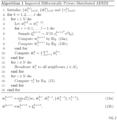
Fig. 1 showsalgorithm 2 illustrated inNPL 1. NPL 2 discloses a solution where the risk of reproducing original data is reduced by adding noise to a learning model (hereinafter simply referred to as a "model").Fig. 2 showsalgorithm 1 andequations NPL 2. -
- [NPL 1] Niwa, K., Zhang, G., Kleijn, W.B., Harada, N., Sawada, H., Fujino, A. (2021). Asynchronous Decentralized Optimization With Implicit Stochastic Variance Reduction. Proceedings of the 38th International Conference on Machine Learning, in Proceedings of Machine Learning Research.
- [NPL 2] ZonghanH, et al. "Differentially Private ADMM for Convex Distributed Learning: Improved Accuracy via Multi-Step Approximation", arXiv:2005.07890.
- However, although federated learning enables high-speed learning by dispersing the learning into multiple sessions, there is a risk of reproducing the original data using a user-generated model. Moreover, it was unclear to what extent information was exchanged for training machine learning models. Meanwhile, introducing differential privacy into federated learning reduces the risk of reproducing the original data by adding noise to the user-generated model in federated learning. The larger the noise to be added is, the lower the risk of leakage becomes, however also the lower the accuracy of the model to be trained becomes. Existing methods require arbitrary determination of a noise level, leaving the unresolved challenge of reducing the risk of leakage and improving accuracy at the same time.
- Further, when training a machine learning algorithm on individual mobile apparatus of users, local datasets owned by users are typically heterogeneous. For example, user A has blood pressure information only, while user B has heart rate information only - in other words, the attributes (labels) of local datasets may vary and have some bias. Additionally, the sizes of datasets may span several orders of magnitude, for example, user A holds datasets of 10 persons but user B has datasets of 3 persons. Since clients involved in federated learning rely on different communication media and different user terminals, computational capabilities and network speed may vary depending on users. The disclosure of
NPL 1 also has a challenge that stable federated learning is difficult to perform due to imbalanced distribution of datasets or significant differences in user terminals in terms of computational capabilities and communication efficiency. - Federated learning has several issues and limitations. A first object of the present invention is to implement stable federated learning even when there is imbalanced distribution of datasets or significant differences in user terminals in terms of computational capabilities and communication efficiency.
- A federated learning system according to the present invention includes a plurality of model learning apparatus. Each model learning apparatus is connected to any of the other model learning apparatus via a network. In the federated learning system according to the present invention, a model parameter, a dual variable, a step size, model training data, and a constraint parameter are set to predetermined initial values. Each model learning apparatus includes a mini-batch extraction unit, a model parameter update unit, a dual-variable calculation/transmission unit, a dual-variable reception unit, and a dual-variable setting unit. The mini-batch extraction unit is configured to extract a predetermined amount of data as a mini-batch from the model training data. The model parameter update unit is configured to perform learning using a dual variable, a step size, a mini-batch of model training data, a constraint parameter, and a coefficient γ using a predetermined optimal value η and a predetermined hyperparameter α, thereby updating a model parameter. The dual-variable calculation/transmission unit is configured to calculate and transmit a dual variable using the model parameter updated by the model parameter update unit and a coefficient γ for each other model learning apparatus connected to the model learning apparatus. The dual-variable reception unit is configured to receive a dual variable from the other model learning apparatus connected to the model learning apparatus. The dual-variable setting unit is configured to set the received dual variable as a dual variable to be used for the next learning.
- According to the federated learning of the present invention, the model parameter update unit of the model learning apparatus updates the model parameter with the coefficient γ using a predetermined optimal value η and the predetermined hyperparameter α. Furthermore, the dual-variable calculation/transmission unit calculates and transmits a dual variable using the updated model parameter and the coefficient γ for each other model learning apparatus connected to the model learning apparatus. Since it is adjustable to what extent the model parameters are updated based on the coefficient γ, it is possible to enable stable federated learning even when suffered by imbalanced distribution of datasets or significant differences in user terminals in terms of computational capabilities and communication efficiency.
-
- [
Fig. 1] Fig. 1 is a diagramillustrating algorithm 2 shown inNPL 1. - [
Fig. 2] Fig. 2 is a diagramillustrating algorithm 1 andequations NPL 2. - [
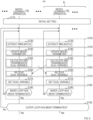
Fig. 3] Fig. 3 is a diagram illustrating a configuration example of a federated learning system according to Example 1. - [
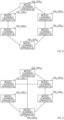
Fig. 4] Fig. 4 is a diagram illustrating an example in which model learning apparatus of the present invention are connected in a ring shape. - [
Fig. 5] Fig. 5 is a diagram illustrating an example in which model learning apparatus of the present invention are randomly connected. - [
Fig. 6] Fig. 6 is a diagram illustrating an example of a processing flow of the federated learning system according to Example 1. - [
Fig. 7] Fig. 7 is a diagram illustrating a configuration example of a federated learning system proposed by Example 2. - [
Fig. 8] Fig. 8 is a diagram illustrating an example of a processing flow of a federated learning system according to Example 2. - [
Fig. 9] Fig. 9 is a diagram illustrating of an algorithm of afederated learning system 20 according to Example 2 using the same description as inNPL 1. - [
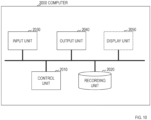
Fig. 10] Fig. 10 is a diagram illustrating a functional configuration example of a computer. - The following describes an embodiment of the present invention in detail. Note that constituent elements having the same functions are denoted by the same reference numerals and redundant explanations thereof will be omitted.
-
Fig. 3 is a diagram illustrating a configuration example of a federated learning system according to Example 1.Fig. 4 is a diagram illustrating an example in which model learning apparatus of the present invention are connected in a ring shape, andFig. 5 is a diagram illustrating an example in which model learning apparatus of the present invention are randomly connected.Fig. 6 is a diagram illustrating an example of a processing flow of the federated learning system according to Example 1. Afederated learning system 10 of Example 1 includes Nmodel learning apparatus 1001, ..., 100N. Eachmodel learning apparatus 100i is connected to any of the othermodel learning apparatus 100j via anetwork 900. N is an integer equal to or greater than 2, i is an integer in a range between 1 and N, inclusive, and j is an integer in a range between 1 and N, inclusive, but different from i. Eachmodel learning apparatus 100i includes aninitial setting unit 110, amini-batch extraction unit 130, a modelparameter update unit 140, a dual-variable calculation/transmission unit 150, a dual-variable reception unit 160, and a dual-variable setting unit 170. - In the
initial setting unit 110 of each of themodel learning apparatus 1001, ..., 100N, a model parameter wi, a dual variable zi|j, a step size µ, model training data xi, and a constraint parameter Ai|j are set to predetermined initial values (S110). For example, w1, ... wN are set to the same value, while zi|j is set to 0. - The
mini-batch extraction unit 130 of each of themodel learning apparatus 1001, ..., 100N extracts a predetermined amount of data as a mini-batch ξi r,k from the model training data xi (S130). For example, when the pieces of training data are 10,000, 500 or 1000 mini-patches may be arbitrarily extracted. i at the bottom right of ξ indicates the number of the model learning apparatus. k at the upper right of ξ is an integer indicating the number of repetitions of iterative process (inner loop process) performed by each of themodel learning apparatus 1001, ..., 100N. In the inner loop process, the process is repeated K times. K is an integer of 2 or greater, and k is an integer in a range between 1 and K, inclusive. r at the upper right of ξ is an integer indicating the number of repetitions of iterative process in the inner loop process for the entire federated learning system (outer loop process). In the outer loop process, the process is repeated R times. R is an integer of 2 or greater, and r is an integer in a range between 1 and R, inclusive. In the following explanation as well, i and j at the lower right of the symbol indicate the number of the model learning apparatus, r at the upper right of the symbol indicates the number of repetitions in the outer loop process, and k at the upper right of the symbol indicates the number of repetitions in the inner loop process. For the specification, a lower right symbol and an upper right symbol cannot be placed at the same position in the horizontal direction, so they are deviated. On the other hand, they are placed at the same position in the horizontal direction for mathematical equations and drawings in the specification. - The model
parameter update unit 140 of each of themodel learning apparatus 1001, ..., 100N performs learning using the dual variable, the step size, the mini-batch of model training data, the constraint parameter, and a coefficient γ using a predetermined optimal value η and a predetermined hyperparameter α, thereby updating the model parameter (S140). Specifically, the modelparameter update unit 140 updates the model parameter as shown in the following equation, and obtains a model parameter wi r,k+1 to be used in the next process.
- The predetermined optimal value η may be 1/(µKEi). Ei is the number of other model learning apparatus connected to the
model learning apparatus 100i. The predetermined hyperparameter α may be, but not limited to, 2. Since different α is suitable for each federated system, it may be appropriately tailored to each federated learning system. The same functions and parameters as inNPL 1 may be used as f-, the cost function or the function that can replace the cost function, the model parameter u, the constraint parameter Ai|j and others. For example, the following function qi(wi) described in "4.1. Problem Definition" ofNPL 1 may be used as the function f-:
- The dual-variable calculation/
transmission unit 150 of each of themodel learning apparatus 1001, ..., 100N calculates and transmits the dual variable yi|j using the model parameter wi r,k+1 updated by the modelparameter update unit 140 and the coefficient γ for each othermodel learning apparatus 100j connected to the model learning apparatus 100i (S150). Specifically, the dual-variable calculation/transmission unit 150 calculates the dual variable yi|j as shown in the following equation. Note that there is at least one othermodel learning apparatus 200j, but there may be two or more. The arrow in the equation means substitution.
- The dual-
variable reception unit 160 of each of themodel learning apparatus 1001, ..., 100N receives a dual variable yj|i from the othermodel learning apparatus 100j connected to the model learning apparatus 100i (S160). Since the dual variable yj|i received by the dual-variable reception unit 160 is calculated and transmitted by the dual-variable calculation/transmission unit 150 of themodel learning apparatus 100j, the positions of "j" and "i" are reversed as compared with the dual variable yi|j transmitted by the dual-variable calculation/transmission unit 150. - The dual-
variable setting unit 170 of each of themodel learning apparatus 1001, ..., 100N sets the received dual variable yj|i as a dual variable zi|j r,k+1 to be used for the next learning (S170). The dual-variable setting unit 170 may set the received dual variable yj|i as a dual variable zi|j r,k+1 to be used for the next learning as shown in the following equation:
- Each of the
model learning apparatus 1001, ..., 100N confirms whether the inner loop process has been terminated, and if it has not been terminated (NO), it continues to repeat the iterative process, and if it has been terminated (YES), proceeds to confirm the outer loop process (S180). When YES for step S180, each of themodel learning apparatus 1001, ..., 100N confirms whether the outer loop process has been terminated, and if it has not been terminated (NO), it continues to repeat the iterative process, and if it has been terminated (YES), proceeds to terminate the process (S190). - According to the
federated learning system 10, the modelparameter update unit 140 of themodel learning apparatus 1001, ..., 100N updates the model parameter wi r,k+1 with the coefficient γ using a predetermined optimal value η and the predetermined hyperparameter α. Furthermore, the dual-variable calculation/transmission unit 150 calculates and transmits a dual variable using the updated model parameter and the coefficient γ for each othermodel learning apparatus 100j connected to themodel learning apparatus 100i. Since it is adjustable to what extent the model parameters are updated based on the coefficient γ, it is possible to enable stable federated learning even when suffered by imbalanced distribution of datasets or significant differences in user terminals in terms of computational capabilities and communication efficiency. - Example 1 is a solution for the first object of the present invention, i.e. "implementation of stable federated learning even when suffered by imbalanced distribution of datasets or significant differences in user terminals in terms of computational capabilities and communication efficiency". With additional limitations to the solution for the first object, it is also possible to address another challenge of "reducing a risk of leakage and improving accuracy at the same time". Therefore, a second object for Example 2 is to "achieve both leakage risk reduction and accuracy improvement".
-
Fig. 7 is a diagram illustrating a configuration example of a federated learning system according to Example 2.Fig. 4 is a diagram illustrating an example in which model learning apparatus of the present invention are connected in a ring shape, andFig. 5 is a diagram illustrating an example in which model learning apparatus of the present invention are randomly connected.Fig. 8 is a diagram illustrating an example of a processing flow of the federated learning system according to Example 2. Afederated learning system 20 of Example 2 includes Nmodel learning apparatus 2001, ..., 200N. Eachmodel learning apparatus 200i is connected to any of the othermodel learning apparatus 200j via a network. Eachmodel learning apparatus 200i includes aninitial setting unit 110, anoise generation unit 220, amini-batch extraction unit 130, a modelparameter update unit 140, a dual-variable calculation/transmission unit 250, a dual-variable reception unit 160, and a dual-variable setting unit 170. - The processing (S130) of the
initial setting unit 110 and themini-batch extraction unit 130 of each of themodel learning apparatus 2001, ..., 200N is the same as in Example 1. Thenoise generation unit 220 of each of themodel learning apparatus 2001, ..., 200N generates noise ni (S220). Specifically, Gaussian noise ni may be generated based on a predetermined variance σ2. - The model
parameter update unit 140 of each of themodel learning apparatus 2001, ..., 200N performs learning using the dual variable, the step size, the mini-batch of model training data, the constraint parameter, and a coefficient γ using a predetermined optimal value η and a predetermined hyperparameter α, thereby updating the model parameter (S140). Specifically, the modelparameter update unit 140 updates the model parameter as shown in the following equation, and obtains a model parameter wi r,k+1 to be used in the next process.
parameter update unit 140 is the same as that of Example 1. Since noise is added to the dual variable zi|j r by the dual-variable calculation/transmission unit 250, which will be described later, γ also plays a role in adjusting the influence of noise when updating the model parameter wi r,k+1. - The dual-variable calculation/
transmission unit 250 of each of themodel learning apparatus 2001, ..., 200N calculates and transmits the dual variable yi|j with noise added using the model parameter wi r,k+1 updated by the modelparameter update unit 140 and the coefficient γ for each othermodel learning apparatus 200j connected to themodel learning apparatus 200i. Note that there is at least one othermodel learning apparatus 200j, but there may be two or more. Specifically, the dual-variable calculation/transmission unit 250 calculates the dual variable yi|j with noise added as shown in the following equation.
noise generation unit 220. γ of the dual-variable calculation/transmission unit 250 plays the role of adjusting the influence of noise and the role of preventing information leakage. - The processing (S160) of the dual-
variable reception unit 160 and the processing (S170) of the dual-variable setting unit 170 are the same as those in Example 1. As in Example 1, the inner loop process is confirmed (S180) and the outer loop process is confirmed (S190), and the iterative process is executed. -
Fig. 9 is a diagram illustrating of algorithm of thefederated learning system 20 according to Example 2 using the same description as inNPL 1. According to thefederated learning system 20, since no noise is added to ξi r,k, it is possible to reduce the influence of noise that inhibits learning, thereby improving accuracy of model learning. On the other hand, since noise is added to the dual variable yi|j transmitted to othermodel learning apparatus 200j, the risk of information leakage can be reduced. Accordingly, it is possible to provide a solution for "achievement of both leakage risk reduction and accuracy improvement", in addition to the solution for the first object i.e. "implementation of stable federated learning even when suffered by imbalanced distribution of datasets or significant differences in user terminals in terms of computational capabilities and communication efficiency". - The various types of processing described above can be performed by causing a
recording unit 2020 of acomputer 2000 shown inFig. 10 to read a program for executing each step of the above method, and allowing acontrol unit 2010, aninput unit 2030, anoutput unit 2040, and adisplay unit 2050 to perform operations. - A program describing this processing can be recorded on a computer-readable recording medium. An example of the computer-readable recording medium may include any recording medium such as a magnetic recording device, an optical disc, a magneto-optical recording medium, and a semiconductor memory.
- The program is distributed, for example, by sales, transfer, or lending of a portable recording medium such as a DVD or a CD-ROM on which the program is recorded. In addition, the distribution of the program may be performed by storing the program in advance in a storage device of a server computer and transferring the program from the server computer to another computer via a network.
- The computer that executes such a program first temporarily stores, for example, the program recorded on the portable recording medium or the program transferred from the server computer in a storage device of the computer. Furthermore, when processing is performed, the computer reads the program stored in the own recording medium and performs the processing in accordance with the read program. In addition, as another execution mode of the program, a computer may directly read the program from a portable recording medium and execute processing in accordance with the program. Further, whenever the program is transmitted from the server computer to the computer, the processing may be performed in order in accordance with the received program. Instead of transferring the program from the server computer to the computer, the above-described processing may be executed by a so-called application service provider (ASP) service, in which a processing function is implemented in response to an execution command and in accordance with result acquisition alone. The program in this example includes information to be provided for processing by a computer and information equivalent to the program (data which is not a direct command to the computer but has a property that defines the processing of the computer).
- Although the present invention is configured by executing a predetermined program on the computer in this embodiment, at least a part of the processing may be implemented by hardware.
-
- 10, 20 Federated learning system
- 100,200 Model learning apparatus
- 110 Initial setting unit
- 130 Mini-batch extraction unit
- 140 Model parameter update unit
- 150, 250 Dual-variable calculation/transmission unit
- 160 Dual-variable reception unit
- 170 Dual-variable setting unit
- 220 Noise generation unit
Claims (8)
- A federated learning system including a plurality of model learning apparatus, each model learning apparatus being connected to any of the other model learning apparatus via a network, whereina model parameter, a dual variable, a step size, model training data, and a constraint parameter are set to predetermined initial values, andeach model learning apparatus comprises:a mini-batch extraction unit configured to extract a predetermined amount of data as a mini-batch from the model training data;a model parameter update unit configured to perform learning using a dual variable, a step size, a mini-batch of model training data, a constraint parameter, and a coefficient γ using a predetermined optimal value η and a predetermined hyperparameter α, thereby updating a model parameter;a dual-variable calculation/transmission unit configured to calculate and transmit a dual variable using the model parameter updated by the model parameter update unit and a coefficient γ for each other model learning apparatus connected to the model learning apparatus;a dual-variable reception unit configured to receive a dual variable from the other model learning apparatus connected to the model learning apparatus; anda dual-variable setting unit configured to set the received dual variable as a dual variable to be used for the next learning.
- A federated learning system including a plurality of model learning apparatus, each model learning apparatus being connected to any of the other model learning apparatus via a network, whereina model parameter, a dual variable, a step size, model training data, and a constraint parameter are set to predetermined initial values, andeach model learning apparatus comprises:a noise generation unit configured to generate noise;a mini-batch extraction unit configured to extract a predetermined amount of data as a mini-batch from the model training data;a model parameter update unit configured to perform learning using a dual variable, a step size, a mini-batch of model training data, constraint parameters, a coefficient γ using a predetermined optimal value η and a predetermined hyperparameter α, thereby updating a model parameter;a dual-variable calculation/transmission unit configured to calculate and transmit a dual variable with the noise added using the model parameter updated by the model parameter update unit and a coefficient γ for each other model learning apparatus connected to the model learning apparatus;a dual-variable reception unit configured to receive a dual variable from the other model learning apparatus connected to the model learning apparatus; anda dual-variable setting unit configured to set the received dual variable as a dual variable to be used for the next learning.
- A model learning apparatus constituting a federated learning system including a plurality of model learning apparatus, each model learning apparatus being connected to any of the other model learning apparatus via a network,
whereina model parameter, a dual variable, a step size, model training data, and a constraint parameter are set to predetermined initial values, andthe model learning apparatus comprises:a mini-batch extraction unit configured to extract a predetermined amount of data as a mini-batch from the model training data;a model parameter update unit configured to perform learning using a dual variable, a step size, a mini-batch of model training data, a constraint parameter, and a coefficient γ using a predetermined optimal value η and a predetermined hyperparameter α, thereby updating a model parameter;a dual-variable calculation/transmission unit configured to calculate and transmit a dual variable using the model parameter updated by the model parameter update unit and a coefficient γ for each other model learning apparatus connected to the model learning apparatus;a dual-variable reception unit configured to receive a dual variable from the other model learning apparatus connected to the model learning apparatus; anda dual-variable setting unit configured to set the received dual variable as a dual variable to be used for the next learning. - The model learning apparatus according to claim 3, wherein the model parameter update unit is configured to update a model parameter wi r,k+1 as follows:

the dual-variable calculation/transmission unit is configured to calculate a dual variable as follows:
- A model learning apparatus constituting a federated learning system including a plurality of model learning apparatus, each model learning apparatus being connected to any of the other model learning apparatus via a network, whereina model parameter, a dual variable, a step size, model training data, and a constraint parameter are set to predetermined initial values, andthe model learning apparatus comprises:a noise generation unit configured to generate noise;a mini-batch extraction unit configured to extract a predetermined amount of data as a mini-batch from the model training data;a model parameter update unit configured to perform learning using a dual variable, a step size, a mini-batch of model training data, constraint parameters, a coefficient γ using a predetermined optimal value η and a predetermined hyperparameter α, thereby updating a model parameter;a dual-variable calculation/transmission unit configured to calculate and transmit a dual variable with the noise added using the model parameter updated by the model parameter update unit and a coefficient γ for each other model learning apparatus connected to the model learning apparatus;a dual-variable reception unit configured to receive a dual variable from the other model learning apparatus connected to the model learning apparatus; anda dual-variable setting unit configured to set the received dual variable as a dual variables to be used for the next learning.
- The model learning apparatus according to claim 5, wherein the model parameter update unit is configured to update a model parameter wi r,k+1 as follows:

the dual-variable calculation/transmission unit is configured to calculate a dual variable with noise added as follows:
- A federated learning method using a federated learning system including a plurality of model learning apparatus, each model learning apparatus being connected to any of the other model learning apparatus via a network,
whereina model parameter, a dual variable, a step size, model training data, and a constraint parameter are set to predetermined initial values, andeach model learning apparatus has an inner loop process for executing the following steps a first predetermined number of times:a model parameter update step of performing learning using a dual variable, a step size, a mini-batch of model training data, a constraint parameter, and a coefficient γ using a predetermined optimal value η and a predetermined hyperparameter α, thereby updating a model parameter;a dual-variable calculation/transmission step of calculating and transmitting a dual variable using the model parameter updated in the model parameter update step and a coefficient γ for each other model learning apparatus connected to the model learning apparatus;a dual-variable reception step of receiving a dual variable from the other model learning apparatus connected to the model learning apparatus; anda dual-variable setting step of setting the received dual variable as a dual variable to be used for the next learning, andalso has an outer loop process for executing the inner loop process a second predetermined number of times. - A program for causing a computer to function as the model learning apparatus of any one of claims 3 to 6.
Applications Claiming Priority (1)
| Application Number | Priority Date | Filing Date | Title |
|---|---|---|---|
| PCT/JP2022/021390 WO2023228317A1 (en) | 2022-05-25 | 2022-05-25 | Federated learning system, model training device, federated learning method, and model training program |
Publications (2)
| Publication Number | Publication Date |
|---|---|
| EP4535244A1 true EP4535244A1 (en) | 2025-04-09 |
| EP4535244A4 EP4535244A4 (en) | 2026-04-08 |
Family
ID=88918718
Family Applications (1)
| Application Number | Title | Priority Date | Filing Date |
|---|---|---|---|
| EP22943721.5A Pending EP4535244A4 (en) | 2022-05-25 | 2022-05-25 | FEDERATE LEARNING SYSTEM, MODEL TRAINING DEVICE, FEDERATE LEARNING PROCEDURE AND MODEL TRAINING PROGRAM |
Country Status (5)
| Country | Link |
|---|---|
| US (1) | US20250363386A1 (en) |
| EP (1) | EP4535244A4 (en) |
| JP (1) | JP7732591B2 (en) |
| CN (1) | CN119156626A (en) |
| WO (1) | WO2023228317A1 (en) |
Family Cites Families (4)
| Publication number | Priority date | Publication date | Assignee | Title |
|---|---|---|---|---|
| WO2019198815A1 (en) | 2018-04-12 | 2019-10-17 | 日本電信電話株式会社 | Machine learning system, machine learning method, and program |
| US11443240B2 (en) * | 2019-09-06 | 2022-09-13 | Oracle International Corporation | Privacy preserving collaborative learning with domain adaptation |
| DE112020004590T5 (en) * | 2019-09-26 | 2022-06-09 | Fujifilm Corporation | MACHINE LEARNING SYSTEM AND METHOD, INTEGRATION SERVER, INFORMATION PROCESSING DEVICE, PROGRAM AND INFERENCE MODEL GENERATION METHOD |
| US11715044B2 (en) | 2020-06-02 | 2023-08-01 | Huawei Cloud Computing Technologies Co., Ltd. | Methods and systems for horizontal federated learning using non-IID data |
-
2022
- 2022-05-25 EP EP22943721.5A patent/EP4535244A4/en active Pending
- 2022-05-25 JP JP2024522796A patent/JP7732591B2/en active Active
- 2022-05-25 US US18/867,140 patent/US20250363386A1/en active Pending
- 2022-05-25 WO PCT/JP2022/021390 patent/WO2023228317A1/en not_active Ceased
- 2022-05-25 CN CN202280095719.0A patent/CN119156626A/en active Pending
Also Published As
| Publication number | Publication date |
|---|---|
| CN119156626A (en) | 2024-12-17 |
| JPWO2023228317A1 (en) | 2023-11-30 |
| US20250363386A1 (en) | 2025-11-27 |
| WO2023228317A1 (en) | 2023-11-30 |
| JP7732591B2 (en) | 2025-09-02 |
| EP4535244A4 (en) | 2026-04-08 |
Similar Documents
| Publication | Publication Date | Title |
|---|---|---|
| US10963817B2 (en) | Training tree-based machine-learning modeling algorithms for predicting outputs and generating explanatory data | |
| US20230078061A1 (en) | Model training method and apparatus for federated learning, device, and storage medium | |
| US10878199B2 (en) | Word vector processing for foreign languages | |
| US11475350B2 (en) | Training user-level differentially private machine-learned models | |
| Zhang et al. | Estimating optimal treatment regimes from a classification perspective | |
| US12488273B2 (en) | Quantum-computer-based machine learning | |
| US20170039487A1 (en) | Support vector machine learning system and support vector machine learning method | |
| CN111652863A (en) | Medical image detection method, device, equipment and storage medium | |
| WO2020227958A1 (en) | Determining action selection policies of execution device | |
| US20250272619A1 (en) | System, Method, and Computer Program Product for Reducing Dataset Biases in Natural Language Inference Tasks Using Unadversarial Training | |
| US12425181B2 (en) | Using homomorphic encryption with private variables | |
| US10765949B1 (en) | Determining action selection policies of an execution device | |
| US20230084507A1 (en) | Servers, methods and systems for fair and secure vertical federated learning | |
| Karbasi et al. | Langevin thompson sampling with logarithmic communication: Bandits and reinforcement learning | |
| EP3633656A1 (en) | Secret tamper detection system, secret tamper detection device, method for detecting secret tamper, and program | |
| Saito et al. | Cost-effective and stable policy optimization algorithm for uplift modeling with multiple treatments | |
| US20250363386A1 (en) | Distributed learning system, model learning apparatus, distributed learning method, model learning program | |
| Tunes-da-Silva et al. | Cutpoint selection for discretizing a continuous covariate for generalized estimating equations | |
| Rilling et al. | A new p-value based multiple testing procedure for generalized linear models | |
| US12321712B2 (en) | Method, system, and computer program product for normalizing embeddings for cross-embedding alignment | |
| CN112292698B (en) | Method and apparatus for determining action selection policy of execution device | |
| CN117593263A (en) | Image tampering detection method, device, storage medium and electronic equipment | |
| Mağara | Privacy-preserving XGBoost inference with homomorphic encryption | |
| Steward et al. | Risk‐adjusted monitoring of healthcare quality: model selection and change‐point estimation | |
| Kim et al. | Inverse‐Weighted Quantile Regression With Partially Interval‐Censored Data |
Legal Events
| Date | Code | Title | Description |
|---|---|---|---|
| STAA | Information on the status of an ep patent application or granted ep patent |
Free format text: STATUS: THE INTERNATIONAL PUBLICATION HAS BEEN MADE |
|
| PUAI | Public reference made under article 153(3) epc to a published international application that has entered the european phase |
Free format text: ORIGINAL CODE: 0009012 |
|
| STAA | Information on the status of an ep patent application or granted ep patent |
Free format text: STATUS: REQUEST FOR EXAMINATION WAS MADE |
|
| 17P | Request for examination filed |
Effective date: 20250102 |
|
| AK | Designated contracting states |
Kind code of ref document: A1 Designated state(s): AL AT BE BG CH CY CZ DE DK EE ES FI FR GB GR HR HU IE IS IT LI LT LU LV MC MK MT NL NO PL PT RO RS SE SI SK SM TR |
|
| DAV | Request for validation of the european patent (deleted) | ||
| DAX | Request for extension of the european patent (deleted) | ||
| RAP3 | Party data changed (applicant data changed or rights of an application transferred) |
Owner name: NTT, INC. |
|
| A4 | Supplementary search report drawn up and despatched |
Effective date: 20260306 |
|
| RIC1 | Information provided on ipc code assigned before grant |
Ipc: G06N 20/00 20190101AFI20260302BHEP Ipc: G06F 9/46 20060101ALI20260302BHEP Ipc: G06N 3/08 20230101ALI20260302BHEP Ipc: G06N 3/098 20230101ALI20260302BHEP |