TECHNICAL FIELD
-
The present invention is framed in the field of medicine, specifically in precision immunotherapy against cancer and more specifically in the treatment of metastatic cutaneous melanoma. It concerns a set of functional biomarkers for response to anti-PD1 therapy that can be used for therapeutic decision-making within a strategy to predict treatment response and patient survival in terms of overall survival and disease-free progression.
BACKGROUND OF THE INVENTION
-
Melanoma is an aggressive malignant tumor of epidermal melanocytes. Cutaneous melanoma (CM) is a common cancer with increasing incidence rates in the Western world and is the most lethal form of skin cancer. In 2040, 510,000 new cases are expected to be diagnosed and about 96,000 deaths. If cutaneous melanoma becomes metastatic, treatment options and chances of survival decrease dramatically. Immunotherapy treatments based on immune checkpoint inhibitors (ICBs), such as PD-1 and CTLA4, have been a breakthrough in the treatment of metastatic cutaneous melanoma and have changed the landscape of treatment options for cutaneous melanoma in recent years. Although a very promising therapy, primary resistance to immune checkpoint blockade arises in approximately 70% of patients with cutaneous melanoma treated with a CTLA-4 inhibitor and in 40-65% of patients with cutaneous melanoma who were given PD-1-targeted therapy (Aldea et al., 2021)
-
CircRNAs can act as competitive endogenous RNAs (ceRNAs). (Tay, Rinn and Pandolfi, 2014) and give rise to an additional new post-transcriptional layer. The ceRNA hypothesis holds that biological processes are regulated by an intrinsic mechanism. It is becoming increasingly clear that circRNA deregulation is involved in carcinogenesis and progression of numerous cancers, acting as oncogenes or tumor suppressors (Montico et al., 2021).. There is currently a great effort trying to determine reliable biomarkers to predict response to immunotherapy. PDL-L1, microsatellite instability and tumor mutational burden (TMB), among others, have been used. Of these, so far only tumor mutational burden (TMB) has been used in therapeutic trials, but it has not been found to be beneficial in melanoma patients, due to the high mutation rate of melanoma tumors (Filipovic, Miller and Bolen, 2020; Aldea et al., 2021). Most of the immune checkpoint-related studies performed to date have studied the biological significance of tumor infiltrating lymphocytes (TILs) focusing on T cells and tumor neoantigens.
BRIEF DESCRIPTION OF THE INVENTION
-
The present invention addresses the lack of definitive biomarkers of immune checkpoint response or ICB in patients with metastatic melanoma by studying the differential transcript expression of responders versus non-responders to nivolumab using a transcriptomic approach involving circRNA transcripts. Thus, the potential of circRNA biomarkers for patient selection and adequacy of therapy in cancer patients, especially with cutaneous melanoma, is demonstrated.
-
Circular transcriptome analysis of large tumor samples from melanoma patients treated with the anti-PD1 agent nivolumab has been used to identify a signature of 23 circRNA genes associated with response. RNA-Seq is employed in the anti-PD1 therapy discovery cohort to select loci that might have genetic variants relevant to the resistance phenotype.
-
The expression of all loci related to the responder phenotype is also associated with overall survival ("OS") and disease-free progression ("PFS"), forming a transcriptomic signature of the response capable of predicting the overall survival (OS) of patients with metastatic melanoma treated with anti-PD1. Likewise, some of the 23 loci, specifically 13, present this prognostic value individually.
-
The initial cohort is based on 12 biopsies of metastatic cutaneous melanoma. Among these 12 patients there are 8 responders and 4 non-responders to treatment with anti-PD1 immunotherapy. Response or non-response criteria include:
- Non-responder: progression in less than 3 months from the start of immunotherapy.
- Severe: patients not responding to treatment who present hyperprogression after treatment with immunotherapy.
- Non-severe: those non-responders who previously had a poor prognosis with respect to immunotherapy treatment due to some adverse symptoms such as brain metastases or an "animal-like" tumor, so the lack of response to immunotherapy may not be related to the treatment but to the patient's tumor profile.
- Responder: patients with partial response ("PR"), complete response ("CR") or stable disease ("SD") for approximately one year or at least who have been on treatment for one year, following the partial and complete response criteria in the RECIST v1.1 ("Response Evaluation Criteria in Solid Tumors") solid tumor response criteria evaluation guideline.
-
In the present invention the term "responder" refers to those patients who have a complete or partial response to the drug, stable disease or have been on treatment for at least one year and with the term "non-responder" to those who do not respond to the same so that the tumor continues to progress in the short term (in less than 3 months) after the initiation of immunotherapeutic treatment.
-
The present invention relates to the use of the 23 loci described in Table 1, individually or in any of their combinations, to prognosticate or predict the response to anti-PD1 treatment of a human subject suffering from cancer. In a preferred embodiment, the human subject has metastatic cutaneous melanoma.
Table 1. List of circRNA loci differentially expressed between good and poor responders for patients with Metastatic Cutaneous Melanoma (MCM). | Locus | Type | Good responder status |
| hsa-ALDH1L2_0014 | circRNA | Overexpressed |
| hsa-CC38_0001 | circRNA | Overexpressed |
| hsa-CD74_0005 | circRNA | Overexpressed |
| hsa-CDR1_0001 | circRNA | Underexpressed |
| hsa-CPM_0002 | circRNA | Overexpressed |
| hsa-ERBB3_0002 | circRNA | Overexpressed |
| hsa-HLA-DRB1_0004 | circRNA | Overexpressed |
| hsa-HLA-DRB1_0005 | circRNA | Overexpressed |
| hsa_IFI30_0001 | circRNA | Overexpressed |
| hsa-ITGA6_0030 | circRNA | Overexpressed |
| hsa-MS4A1_0002 | circRNA | Overexpressed |
| hsa-MX1_0002 | circRNA | Overexpressed |
| hsa-NRCAM_0112 | circRNA | Overexpressed |
| hsa-PARP14_0007 | circRNA | Overexpressed |
| hsa-PMP22_0004 | circRNA | Overexpressed |
| hsa-PTPRC_0003 | circRNA | Overexpressed |
| hsa-RP11-219A15_0001 | circRNA | Overexpressed |
| hsa-SLC6A6_0027 | circRNA | Overexpressed |
| hsa-SLIT2 0013 | circRNA | Underexpressed |
| hsa-SOX6_0020 | circRNA | Overexpressed |
| hsa-SYTL2_0003 | circRNA | Overexpressed |
| hsa-TIM22_0002 | circRNA | Overexpressed |
| hsa-UTRN_0056 | circRNA | Overexpressed |
-
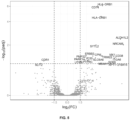
The 23 genes listed in Table 1 are differentially expressed between responders and non-responders to anti-PD1 treatment. Therefore, they are associated with response to anti-PD1 treatment and are biomarkers of response to nivolumab in metastatic cutaneous melanoma. Each of the 23 circular genes in Table 1 is individually associated with response to anti-PD1 treatment, as can be seen in Figures 5 and 6, which show the volcano plot and heatmap, indicators of the significant difference in the expression of these 23 genes in good responders to nivolumab.
-
Thus, another aspect of the invention refers to an expression profile of the 23 loci described in Table 1, both individually and in any of their combinations, as markers of response to anti-PD1 treatment, and thus as biomarkers of response to nivolumab in metastatic cutaneous melanoma.
-
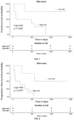
In addition, the overall survival (OS) and disease-free progression (FPS) score of the 23 genes as a whole also serves to predict patient survival. The signature as a whole is associated with OS with a p-value of 0.047 (Figure 1), and with FPS with a p-value of 0.017 (Figure 2), making it a biomarker of disease prognosis in patients with metastatic cutaneous melanoma treated with nivolumab.
-
Thus, in another aspect of the invention refers to a simultaneous form expression profile of the 23 loci described in Table 1 as prognostic markers of metastatic cutaneous melanoma in human subjects.
-
Reproduced below in Table 2 are all the loci in Table 1 to indicate the two parameters of clinical benefit used in this invention, OS and PFS, for each of the loci. Some genes are biomarkers for both, and others for one or the other. The p-values and Hazard Ratio (HR) of the individual genes are noted.
Table 2: List of the 23 circRNA loci in Table 1 noting their ability as prognostic markers of metastatic cutaneous melanoma in human subjects, measured as overall survival (OS) and/or disease-free progression (FPS). | Locus | p-value logrank OS | Median OS (Low expressio n vs. High expressio n) | HR OS | p-value logran k PFS | Median PFS (Low expressio n vs High expressio n) | HRPFS | Locus | p-value logran k OS |
| hsa-ALDH1L2_00 14 | 0,6047632 56 | 526.5 [77;NR] vs. 321 [321;NR] | 0.578 (0.0707 4.7282) | 0,6092 | 0,3858655 96 | 354 [52;NR] vs. 205.5 [180;NR] | 2.0933 (0.3797 - 11.5397 ) | 0,3964 |
| hsa-CD38 0001 | 0,4555498 05 | 405.5 [77;NR] vs 563 [563;NR] | 0.4576 (0.0558 - 3.7555) | 0,4667 | 0,1137717 45 | 205.5 [52; NR] vs. 563 [563;NR] | 0.2048 (0.0243 - 1.7271) | 0,1449 |
| hsa-CD74_0005 | 0,0383908 3 | 35 [NR;NR] vs 563 [321;NR] | 0.0953 (0.006 - 1.5255) | 0,0966 | 0,2973076 32 | 66 [NR;NR] vs. 311 [180;NR] | 0.3191 (0.0331 - 3.0772) | 0,3232 |
| hsa-CDR1_0001 | 0,0115793 37 | 56 [35;NR] vs. 716 [321;NR] | 0.0839 (0.0074 - 0.9501) | 0,0454 | 0,0369014 6 | 57 [48;NR] vs. 354 [180;NR] | 0.1576 (0.0217 - 1.1433) | 0,0676 |
| hsa-CPM_0002 | 0,8261761 74 | 322 [77;NR] vs 679.5 [321;NR] | 0.8509 (0.201 - 3.6014) | 0,8264 | 0,5979829 42 | 231.5 [52;NR] vs. 271 [180;NR] | 1.4318 (0.3747 - 5.4721) | 0,5998 |
| hsa-ERBB3_000 2 | 0,0167101 87 | 58 [28;NR] vs. 869 [490;NR] | 0.1862 (0.0404 - 0.8572) | 0,0309 | 0,2104221 66 | 59 [16;NR] vs. 354 [231;NR] | 0.4471 (0.1229 - 1.6262) | 0,2217 |
| hsa-HLA-DRB1_0004 | 0,0011419 88 | 35 [28;NR] vs. 869 [490;NR] | 0.0568 (0.0057 - 0.5675) | 0,0146 | 0,0034332 89 | 52 [16;NR] vs 397 [231;NR] | 0.0709 (0.0072 - 0.7017) | 0,0236 |
| hsa-HLA-DRB1_0005 | 0,0011419 88 | 35 [28;NR] vs. 869 [490;NR] | 0.0568 (0.0057 - 0.5675) | 0,0146 | 0,0034332 89 | 52 [16;NR] vs 397 [231;NR] | 0.0709 (0.0072 - 0.7017) | 0,0236 |
| hsa-IFI30_0001 | 0,0009111 19 | 28 [NR;NR] vs 563 [321;NR] | 0.01 (0 -0.11) | 0,001 | 0,0009111 19 | 16 [NR;NR] vs. 311 [180;NR] | 0.01 (0 - 0.05) | 0,001 |
| hsa-ITGA6_0030 | 0,6047632 56 | 526.5 [77;NR] vs. 321 [321;NR] | 0.578 (0.0707 4.7282) | 0,6092 | 0,3381522 33 | 245.5 [52;NR] vs 231 [231;NR] | 0.377 (0.0474 3.0013) | 0,3567 |
| hsa-MS4A1_0002 | 0,6233252 | 595 [77;NR] vs 526.5 [490;NR] | 1.5079 (0.2895 7.8536) | 0,6257 | 0,7527615 83 | 205.5 [52; NR] vs 437 [311;NR] | 0.7786 (0.1634 3.7104) | 0,7534 |
| hsa-MX1_0002 | 0,2463268 87 | 201 [77;NR] vs 563 [490;NR]. | 0.3971 (0.079 - 1.9953) | 0,2622 | 0,3210080 63 | 148.5 [52;NR] vs 437 [180;NR] | 0.5048 (0.1277 - 1.9948) | 0,3295 |
| hsa-NRCAM_011 2 | 0,2088293 71 | 285.5 [77;NR] vs. 869 [321;NR] | 0.3596 (0.0689 - 1.8779) | 0,2252 | 0,0405655 92 | 123 [52;NR] vs 539 [231;NR] vs 539 [231;NR] | 0.2161 (0.0441 - 1.0586) | 0,0588 |
| hsa-PARP14_000 7 | 0,0369014 6 | 58 [35;NR] vs. 716 [321;NR] | 0.1576 (0.0217 - 1.1433) | 0,0676 | 0,0697824 1 | 59 [52;NR] vs. 354 [180;NR] | 0.1933 (0.0268 - 1.3954) | 0,1032 |
| hsa-PMP22_0004 | 0,1471015 07 | 58 [28;NR] vs. 716 [490;NR] | 0.339 (0.0736 - 1.5624) | 0,1653 | 0,0527583 33 | 59 [16;NR] vs 425 [231;NR] | 0.2689 (0.0652 - 1.1088) | 0,0692 |
| hsa- PTPRC_0003 | 0,0113279 33 | 77 [35;NR] vs NR [490;NR] | 0.1775 (0.0405 - 0.779) | 0,022 | 0,0250229 6 | 52 [48;NR] vs 397 [231;NR] | 0.2362 (0.0608 - 0.9166) | 0,037 |
| hsa-RP11-219A15_000 1 | 0,5435337 16 | 716 [81;NR] vs 405.5 [77;NR] | 1.5951 (0.3491 - 7.2891) | 0,547 | 0,3133289 61 | 359.5 [66;NR] vs 271 [48;NR] | 2.0271 (0.4995 - 8.2272) | 0,3228 |
| hsa-SLC6A6_002 7 | 0,2088293 71 | 285.5 [77;NR] vs. 869 [321;NR] | 0.3596 (0.0689 - 1.8779) | 0,2252 | 0,5006962 91 | 188.5 [52;NR] vs. 385 [180;NR]. | 0.6288 (0.1611 - 2.4546) | 0,5044 |
| hsa-SLIT2 0013 | 0,6770310 8 | 563 [321;NR] vs. 81 [28;NR] | 1.4064 (0.2804 - 7.0535) | 0,6785 | 0,9747544 68 | 311 [180;NR] vs 52 [16;NR] | 1.0257 (0.2133 - 4.9313) | 0,9748 |
| hsa-SOX6 0020 | 0,1458551 02 | 563 [321;NR] vs. 77 [NR;NR] | 4.9777 (0.4506 - 54.993 7) | 0,1904 | 0,0383908 3 | 311 [180;NR] vs. 48 [NR;NR] | 10.4881 (0.6555 - 167.810 4) | 0,0966 |
| hsa-SYTL2_0003 | 0,0021786 09 | 58 [28;NR] vs. 869 [563;NR] | 0.0678 (0.0073 0.6276) | 0,0178 | 0,0104923 34 | 59 [16;NR] vs 468 [311;NR] | 0.1381 (0.0242 - 0.7873) | 0,0258 |
| hsa-TRIM22_000 2 | 0,0325546 57 | 79 [35;NR] vs. 869 [563;NR] | 0.1879 (0.0348 - 1.0146) | 0,052 | 0,0137839 07 | 59 [48;NR] vs 551 [231;NR] | 0.1625 (0.0319 - 0.8278) | 0,0287 |
| hsa-UTRN_0056 | 0,0011419 88 | 35 [28;NR] vs. 869 [490;NR] | 0.0568 (0.0057 - 0.5675) | 0,0146 | 0,0034332 89 | 52 [16;NR] vs 397 [231;NR] | 0.0709 (0.0072 - 0.7017) | 0,0236 |
-
The 13 genes out of the 23 that imply association with clinical benefit in a statistically significant manner (< 0.05) are shown below in
Table 3 and are also, both individually and in any of their combinations, biomarkers of disease prognosis in patients with metastatic cutaneous melanoma treated with nivolumab.
Table 3: List of circRNA loci from Table 1 prognostic markers of metastatic cutaneous melanoma in human subjects, measured as overall survival (OS) and/or disease-free progression (FPS). | Locus |
| hsa-CD74_0005 | hsa-PARP14_0007 |
| hsa-CDR1_0001 | hsa-PTPRC_0003 |
| hsa-ERBB3_0002 | hsa-SOX6_0020 |
| hsa-HLA-DRB1_0004 | hsa-SYTL2_0003 |
| hsa-HLA-DRB1_0005 | hsa-TRIM22_0002 |
| hsa-IFI30_0001 | hsa-UTRN_0056 |
| hsa-NRCAM_0112 | |
-
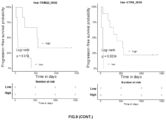
The corresponding Kaplan-Meier curves are shown in Figures 7 and 8 . The hazard ratio analysis is shown in Figures 9 and 10 .
-
In another embodiment of the invention, the expression profile is constituted by the 13 loci in Table 3, either individually or in any of their combinations, as prognostic markers of metastatic cutaneous melanoma in human subjects.
METHODS OF THE INVENTION
-
Another aspect of the invention relates to an in vitro method for predicting the response of a human subject to anti-PD1 and/or anti PD-L1 immune checkpoint inhibition immunotherapy, hereinafter first method of the invention, wherein the subject suffers from cancer, and wherein, using a biological sample from the human subject, the expression levels of the loci in Table 1 are determined in vitro individually, simultaneously or in any combination thereof, and wherein the result is indicative of a positive response if the expression levels of the loci highlighted in gray in Table 1 are overexpressed, while the genes in white in Table 1 are underexpressed.
-
In this regard, overexpressed is preferably defined as an expression level 1.5-fold higher than the expression in the non-responder group, and underexpressed as 1.5-fold lower than the expression in the non-responder group.
-
More preferably, response refers to progression in the first 3 months of treatment in the case of non-responders, or complete response, partial response, stable disease or continuation of treatment for at least 1 year in the case of responders.
-
Another aspect of the present invention relates to a prognostic method that is performed in vitro using a biological sample originating from the human subject, and wherein at the time of sampling the human subject, the human subject has not yet been treated with anti-PD1 and/or anti-PD-L1 immune checkpoint inhibition immunotherapy. This prognostic method is carried out by in vitro determination of the expression levels of all the loci in Table 1 simultaneously or of the 13 individual loci in Table 3 or any combination thereof.
-
Patient classification is based on whether the expression value of the locus or loci used is greater or less than the median expression value of each survival group, and the result is indicative of positive prognosis if the Risk Ratio is < 1 and the result is indicative of negative prognosis if the Risk Ratio is > 1.
-
The outcome for prognostic assessment may refer to overall survival and/or progression-free survival.
-
In the context of the present invention, "Response" refers to the clinical outcome of the subject. "Response" may be expressed as overall survival or progression-free survival. Survival of cancer patients is generally adequately expressed by Kaplan-Meier curves, named after Edward L. Kaplan and Paul Meier, who first described them. The Kaplan-Meier estimator is also known as the product limit estimator. It is used to estimate the survival function from lifetime data. A plot of the Kaplan-Meier estimate of the survival function is a series of horizontal steps of decreasing magnitude that, when a large enough sample is taken, approximates the true survival function for that population. The value of the survival function between successively different sampled observations is assumed to be constant. With respect to the present invention, the Kaplan-Meier estimator can be used to measure the fraction of patients who live for a certain time after the start of chemotherapy and/or radiotherapy. The predicted clinical outcome may be survival (overall/progression-free) in months/years from the time the sample was taken. It may be survival over a specified period since sampling, such as six months or more, one year or more, two years or more, three years or more, four years or more, five years or more, six years or more. In each case, "survival" may refer to "overall survival" or "progression-free survival".
-
Thus, in one embodiment of the invention, the answer is the clinical outcome, which is "overall survival" (OS). "Overall survival" denotes the chances of a patient being kept alive for a group of individuals suffering from cancer. The decisive question is whether the individual is alive or dead at any given time.
-
In vitro determination of expression levels is performed by any of the techniques known in the prior art. Preferably, the techniques are selected from the list consisting of a gene profiling method, such as a microarray, or a next generation sequencing panel and/or a method comprising PCR, such as real-time PCR; and/or Northern Blot. and/or an immunohistochemistry method; and/or an ELISA-based method. RQ-PCR is a sensitive and reproducible gene expression quantification technique that can be used particularly for profiling mRNA expression in cells and tissues. Any method can be used to evaluate RT-PCR results, and preferably the ΔΔCt method (Ct = cycle threshold values). The ΔΔΔCt method will involve a control sample and a treatment sample. For each sample, a target loci and an endogenous control gene (as described below) are included for PCR amplification from aliquots (typically serially diluted). Typically, several replicates are used for each diluted concentration to obtain amplification efficiency. PCR amplification efficiency can be defined as a percentage of amplification (from 0 to 1). During the PCR reaction, software typically measures for each sample the cycle number at which the fluorescence (PCR amplification indicator) crosses an arbitrary line, the threshold. This crossover point is the Ct value. More dilute samples will cross at later Ct values. To quantify mRNA gene expression, the Ct of an RNA or DNA of the mRNA gene of interest is divided by the Ct of the endogenous control nucleic acid, such as non-tumor tissue, to normalize for variation in RNA quantity and quality between different samples. This normalization procedure is commonly referred to as the ΔΔΔCt method (Schefe et al., 2006, J. Mol. Med. 84: 901-10). Calculations of ΔΔΔCt express data in the context of the test sample (here: mRNA) versus the calibrator (endogenous control). If the ΔΔΔCt calculation is positive (e.g. +2.0), then: 2-ΔΔΔCt = 2-(2.0) = 0.25. The target quantity, normalized to an endogenous reference and relative to a calibrator, is given by: 2-ΔΔΔCt. Details of the method of calculating ΔΔΔCt can be found in: Applied Biosystems user Bulletin No. 2 (P/N 4303859). To technically validate the differentially expressed (DE) genes, the inventors employed real-time quantitative PCR (RQ-PCR) to assess gene expression of selected loci from our signature of 23 loci. Regardless of the method used to determine the response (RQ-PCR, immunohistochemistry, ELISA-based method, etc.), in the context of the present invention, we first establish a relative expression of a selection of patients who are controls for high or low expression of the genes tested against the ACTB clearance gene. This is followed by a Pearson correlation between the gene expression values generated by RNA-seq and those generated by RQ-PCR. In our case, the expression was technically validated with an overall correlation coefficient of 0.7 (p<0.001). In the context of the present invention, the myeloid and lymphocytic context of 16 melanomas were investigated in formalin-fixed, paraffin-embedded (FFPE) tissue samples. Two complementary multiplex panels were used to allow simultaneous examination of several cell markers. A random tree algorithm classifier was trained separately for each cell marker by an experienced pathologist (CEA) annotating tumor regions. Interactive feedback on cell classification performance is provided during training in the form of a marker image, which significantly improves the accuracy of machine learning-based phenotyping (PMID: 29203879, PMID: 32591586). All phenotyping and subsequent quantifications were performed without knowledge of sample identity. Cells near the edge of the images were removed to reduce the risk of artifacts. In the context of the present invention, non-limiting illustrative examples of a biological sample include different types of tissue samples, as well as biological fluids, such as blood, serum, plasma, cerebrospinal fluid, peritoneal fluid, feces. Preferably, such samples are tissue samples and, more preferably, such tissue samples originate from tumor tissue of the individual whose response is to be predicted, and may originate from biopsies.
-
The cancer could be any immunogenic type of cancer that is susceptible to the clinical benefit of immunotherapy. In another preferred embodiment of the invention, the cancerous disease as defined in any of the methods of the invention is melanoma, nonsmall cell lung cancer, head and neck cancer, prostate cancer, breast cancer or combinations thereof. The prognosis depends on the stage of the cancer and, in this regard, it is important to find good prognostic markers for survival after treatment for this specific disease and thus the usefulness of the biomarkers of the present invention in the prognosis of this disease. More preferably, the cancer is melanoma and, more preferably, metastatic cutaneous melanoma.
-
In another preferred embodiment, the anti-PD1 treatment is an anti-PD1 antibody, most preferably the anti-PD1 antibody being selected from pembrolizumab (Keytruda), cemiplimab (Libtayo) and/or nivolumab (Opdivo), and most preferably is nivolumab.
-
In another preferred embodiment, the anti-PD1 treatment is an anti PD-L1 antibody, most preferably anti PD-L1 antibody selected from the list consisting of: atezolizumab (Tecentriq), avelumab (Bavencio), durvalumab (Imfinzi) or combinations thereof.
-
Another aspect of the present invention relates to any one of the methods of the invention, wherein the method is a drug response predictive method that is performed in vitro using a biological sample from the human subject, and wherein at the time of sampling the human subject, the human subject has not yet been treated with anti-PD1 and/or anti-PD-L1 immune checkpoint inhibition immunotherapy. The outcome for response assessment is the clinical response using the RECIST criteria at a specific time point after treatment initiation. This method of response prediction is performed by in vitro determination of the expression levels of the loci in Table 1 simultaneously or of the individual loci or any of their combinations.
-
Another aspect of the invention relates to a pharmaceutical composition comprising anti-PD1 and/or anti-PD-L1 immune checkpoint inhibition immunotherapy for the treatment of a human subject of a group identifiable by any of the methods of the invention.
-
The term "subject", as used in the description, refers to animals, preferably mammals and more preferably humans. The preferred subject is a human subject, and is not intended to be limiting in any respect; it may be of any age, sex or physical condition.
-
The methods of the present invention can be applied with samples of individuals of either sex, i.e., male or female, and of any age. The profile determined by the present invention is predictive and prognostic.
KIT OR DEVICE OF THE INVENTION
-
The present invention also provides a kit or device suitable for implementing the methods of the invention. The kit comprises at least one or more oligonucleotides capable of hybridizing to RNAs of the 23 loci of Table 1. Preferably, it allows detecting the expression level of all the genes of Table 1, simultaneously.
-
The kit or device is based on the predictive power of the method of the present invention. In the particular case of the kit, the reference value indicative of non-response (and/or a reference value indicative of response) can be provided with the kit. With the aid of the kit, the expression of each target gene can be calculated, i.e., relative to the endogenous control samples exemplified above. Thus, the endogenous control may also be included within the kit.
-
The kit can further include, without any limitation, buffers, agents to prevent contamination, protein degradation inhibitors, etc. Thus, the kit may include all necessary supports and receptacles for implementation and optimization. Preferably, the kit further comprises instructions for carrying out any of the methods of the invention.
-
In particular embodiments, the kit is selected from (a) a kit suitable for PCR (b) a kit suitable for microarray analysis, (c) a kit suitable for next generation sequencing. Regarding (a) a kit suitable for PCR, this PCR is typically a real-time quantitative PCR (RQ- PCR), a sensitive and reproducible gene expression quantification technique. In one embodiment, the kit comprises a microarray. An RNA microarray is an array on a solid substrate (usually a glass slide or a silicon thin film cell) that analyzes large amounts of different RNAs that are detectable through specific probes immobilized in spots on the solid substrate. Each spot contains a specific nucleic acid sequence, typically a DNA sequence, known as a probe (or reporter). While the number of spots is not limited as such, there is a preferred embodiment in which the microarray is adapted to the methods of the invention. In one embodiment, such a customized microarray comprises fifty dots or less, such as thirty dots or less, including twenty dots or less. In another embodiment of the invention, the kit comprises a series of capture probes for specific genes that are hybridized in suspension and subsequently amplified by PCR and sequenced on a low throughput sequencer since the total number of reads needed for targeted sequencing is low; therefore, it can be implemented in routine clinical laboratories.
-
The kit can be used and the use is not particularly limited, although use in the method of the invention in any of its embodiments is preferred. The kit can also be automated or can be incorporated into devices capable of carrying out the methods of the invention automatically.
-
Another aspect of the invention relates to computer-readable storage media comprising program instructions capable of causing a computer to perform the steps of any of the methods of the invention. The invention also extends to computer programs adapted to enable any processing means to carry out the methods of the invention. Such programs may take the form of source code, object code, an intermediate source of code and object code, for example, in partially compiled form, or in any other form suitable for use in implementing the processes according to the invention. The computer programs also encompass cloud applications based on this procedure. In particular, the invention encompasses computer programs arranged on or within a carrier. The carrier may be any entity or device capable of supporting the program. Where the program is embodied in a signal that can be carried directly by a cable or other device or medium, the carrier may comprise such a cable or other device or medium. As a variant, the carrier could be an integrated circuit in which the program is embedded, the integrated circuit being adapted to execute, or to be used in the execution of, the corresponding processes. For example, the programs could be embedded in a storage medium, such as a ROM, a CD ROM or a semiconductor ROM, a USB memory or a magnetic recording medium, e.g., a floppy disk or a hard disk. Alternatively, the programs could be supported by a transmittable carrier signal. For example, it could be an electrical or optical signal that could be carried via an electrical or optical cable, by radio or by any other means. The invention also extends to computer programs adapted for any processing means to carry out the methods of the invention. Such programs may take the form of source code, object code, an intermediate source of code and object code, for example, in partially compiled form, or in any other form suitable for use in implementing the processes according to the invention. Software also encompasses cloud applications based on this procedure. Thus, another aspect of the invention relates to a computer-readable storage medium comprising program instructions capable of causing a computer to carry out the steps of any of the methods of the invention. Another aspect of the invention relates to a transmittable signal comprising program instructions capable of causing a computer to carry out the steps of any of the methods of the invention.
-
In the context of the present invention, the terms "subject", "patient" or "individual" are used herein interchangeably to refer to all animals classified as mammals and include, but are not limited to, domestic and farm animals, primates and humans, e.g., humans, non-human primates, cows, horses, pigs, sheep, goats, dogs, cats or rodents. Preferably, the subject is a male or female human being of any age or breed.
-
Throughout the description and claims, the word "comprises" and variants thereof are not intended to exclude other technical features, complements, components or steps. To those skilled in the art, other objects, advantages and features of the invention will be understood in part from the description and in part from the practice of the invention. The following examples and drawings are provided by way of illustration and are not intended to limit the present invention.
DESCRIPTION OF THE FIGURES
-
- Figure 1 . Association of circRNA risk score based on combined expression levels with overall survival in the cutaneous melanoma specimens analyzed. Kaplan-Meier analysis of overall survival in 12 metastatic cutaneous melanomas treated with nivolumab.
- Figure 2 . Association of circRNA risk score based on combined expression levels with progression-free survival in the cutaneous melanoma specimens analyzed. Kaplan-Meier analysis of overall survival in 12 metastatic cutaneous melanomas treated with nivolumab.
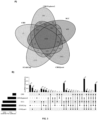
- Figure 3 . (A) Venn diagram showing the common circRNAs identified by the prediction algorithms tested. 4339 circRNA were identified by the five algorithms used to map and identify circRNA, (B) Altered graph showing the number of circRNA among the different algorithms used.
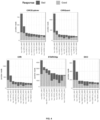
- Figure 4 . Top 10 circRNA identified by the different algorithms used. The figure represents the total number of counts in good and bad responders for the top 10 circRNAs.
- Figure 5 . Volcano plot of differential circRNA gene expression between good and poor responders. By setting multiple difference threshold (fold-change) higher than 1.5 and a p-value lower than 0.1, 23 aberrantly expressed circRNAs are observed.
- Figure 6 . Heat map representing the expression of the different differentially expressed circRNAs In the figure the adjusted p-value is less than 0.1. A pattern of expression in some subsets of genes between good and poor responders is clearly visible.
- Figure 7 . Association of the risk score of the 11 prognostically associated circRNAs based on individual expression levels with overall survival in the cutaneous melanoma specimens analyzed. Kaplan-Meier analysis of overall survival in 12 metastatic cutaneous melanomas treated with nivolumab.
- Figure 8 . Association of the risk score of the 10 prognostically associated circRNAs based on individual expression levels with progression-free survival in the cutaneous melanoma samples analyzed. Kaplan-Meier analysis of overall survival in 12 metastatic cutaneous melanomas treated with nivolumab.
- Figure 9 . Univariate hazard ratio analysis of each of the prognostic circRNAs with respect to overall survival in the 12 analyzed cutaneous melanoma samples corresponding to patients with metastatic cutaneous melanoma treated with nivolumab.
- Figure 10 . Univariate hazard ratio analysis of each of the prognostic circRNAs with respect to progression-free survival in the 12 analyzed cutaneous melanoma samples corresponding to patients with metastatic cutaneous melanoma treated with nivolumab.
EXAMPLES OF THE INVENTION
-
The following specific examples provided in this patent document serve to illustrate the nature of the present invention. These examples are included for illustrative purposes only and are not to be construed as limiting the invention claimed herein. Thus, the examples described above illustrate the invention without limiting the scope of the invention.
Subjects
-
A total of 12 patients with metastatic cutaneous melanoma treated with nivolumab donated formalin-fixed paraffin-embedded (FFPE) tissue biopsy samples that were collected in a pre-treatment state at the Hospital Regional de Málaga and Hospital Universitario Virgen de la Victoria (Málaga). The study follows the Declaration of Helsinki and is vetted by the Ethics Committee of Malaga.
Nucleic acid extraction
-
The specific tumor area in FFPE melanoma specimens was predefined by a pathologist. Two to four 10 µm slides were dissected for nucleic acid extraction using the HM 340E microtome (Thermo Scientific). RNA was extracted with the RNeasy FFPE kit (Qiagen).
Next generation sequencing
-
RNA-Seq libraries were prepared with TruSeq Stranded Total RNA Gold (Illumina; Ref. 20020598) and indexed by IDT for Illumina: TruSeq RNA UD indices (Illumina). Library concentration was determined with the Qubit dsDNA BR kit and size distribution was examined with Agilent Bioanalyzer. Paired-end reads (75 bp × 2) were acquired from the Illumina NextSeq 550 platform according to the corresponding protocol.
Real-time PCR validation
-
Expression levels of CDR1-AS, the most frequent circRNAs, were verified by the predesigned qRT-PCR taqman probe used in all samples (Hs05016408_s1).
CirRNA detection
-
Fastq data quality control of the paired end reads was performed with FastQC. Fastq files were trimmed with a Q30 cutoff. We evaluated five different pipelines to identify and quantify circRNA reading circRNAs. CIRI, CIRIExplorer2, DCC, STARchip and CIRIQUANT were used and compared. The CircBase database and the cir-c2Trait disease database were used to annotate identified circRNAs. To obtain high-confidence circRNAs, we used a minimum filter cutoff of 2 binding reads in at least 2 samples and in at least 3 software (validation strategy), which allowed for a minimum number of back splicing reads (BSJ) per circRNA. This criterion resulted in 4339 unique circRNAs across all samples, and we used these high-confidence circRNAs for all analyses performed in this study. With direct splice junction reads (FSJ) and back splice junction reads (BSJ), we used the following formula: 2*bsj/(2*bsj+fsj) to calculate the ratio of circular to linear transcripts.
Analysis of differential expressions
-
The DESq2 battery of total mapped reads was used to perform high-confidence circRNA differential expression (DE). Differential expression analysis was based on negative binomial generalized linear models and threshold values were adjusted with a p-adjusted value of p < 0.1 and an absolute value of log2 (fold change) > 1.5. In differential expression (DE) analysis the total linear mapped linear read counts were used for size factor estimation.
Statistics
-
Statistical analysis graphs and tables were performed using R 4.0.2. The Venn Diagram R package was used to create Venn diagrams. The ComplexHeatmap R package (Gu, Eils, & Schlesner, 2016) was used to create the heat maps. The package ggplot2 (Wickham, 2009) was used to create the subsequent diagrams and plots.
-
In the survival analysis, Kaplan-Meier (KM) and Logrank tests were used to test the difference between groups.
-
For the full signature study, the risk score for each patient was estimated using the method described previously (Wang et al., 2021). Based on circRNA expression value weighted by regression coefficients in univariate cox regression analysis.
-
N is the number of DE (Differentially Expressed) circRNA, Expression-i represents the normalized expression value and Coefficient-i is the Cox regression coefficient in the univariate model.
-
For the study of individual genes, the risk score was performed by calculating the Hazard Ratio (HR). The HR is calculated using the Cox univariate model of normalized expression values.
-
The classification of the patient under study is made according to whether the expression value of the locus or loci used is higher or lower than the median expression value of each survival group.
-
The result is indicative of positive prognosis if the Risk Ratio is < 1 and the result is indicative of negative prognosis if the Risk Ratio is > 1.
References
-
- Aldea, M. et al. (2021) 'Overcoming Resistance to Tumor-Targeted and Immune-Targeted Therapies', Cancer Discovery. American Association for Cancer Research, 11(4), pp. 874-899. doi: 10.1158/2159-8290.CD-20-1638.
- Filipovic, A., Miller, G. and Bolen, J. (2020) 'Progress Toward Identifying Exact Proxies for Predicting Response to Immunotherapies', Frontiers in Cell and Developmental Biology. Frontiers, p. 155. doi: 10.3389/fcell.2020.00155.
- Gu, Z., Eils, R. and Schlesner, M. (2016) 'Complex heatmaps reveal patterns and correlations in multidimensional genomic data', Bioinformatics. Bioinformatics, 32(18), pp. 2847-2849. doi: 10.1093/bioinformatics/btw313.
- Montico, B. et al. (2021) 'The pleiotropic role of circular and long noncoding RNAs in cutaneous melanoma', Molecular Oncology. John Wiley & Sons, Ltd. doi: 10.1002/1878-0261.13034.
- QIAGEN Inc (2016) Ingenuity Pathway Analysis (IPA). Available at: hftps://www.qiagen.com/us/products/discovery-and-translational-research/next-generation-sequencing/informatics-and-data/interpretation-content-databases/ingenuity-pathway-analysis/ (Accessed: 30 September 2021).
- Tay, Y., Rinn, J. and Pandolfi, P. P. (2014) 'The multilayered complexity of ceRNA crosstalk and competition', Nature. Nature, pp. 344-352. doi: 10.1038/nature12986.
- Wang, W. et al. (2021) 'RNA sequencing reveals the expression profiles of circRNA and identifies a four-circRNA signature acts as a prognostic marker in esophageal squamous cell carcinoma', Cancer Cell International. BioMed Central Ltd, 21(1), pp. 1-14. doi: 10.1186/S12935-021-01852-9/FIGURES/6.