EP4534685A1 - Method for detecting fetal genotype on basis of haplotype - Google Patents
Method for detecting fetal genotype on basis of haplotype Download PDFInfo
- Publication number
- EP4534685A1 EP4534685A1 EP22943151.5A EP22943151A EP4534685A1 EP 4534685 A1 EP4534685 A1 EP 4534685A1 EP 22943151 A EP22943151 A EP 22943151A EP 4534685 A1 EP4534685 A1 EP 4534685A1
- Authority
- EP
- European Patent Office
- Prior art keywords
- fetal
- locus
- mother
- maternal
- genotype
- Prior art date
- Legal status (The legal status is an assumption and is not a legal conclusion. Google has not performed a legal analysis and makes no representation as to the accuracy of the status listed.)
- Granted
Links
Images

Classifications
-
- C—CHEMISTRY; METALLURGY
- C12—BIOCHEMISTRY; BEER; SPIRITS; WINE; VINEGAR; MICROBIOLOGY; ENZYMOLOGY; MUTATION OR GENETIC ENGINEERING
- C12Q—MEASURING OR TESTING PROCESSES INVOLVING ENZYMES, NUCLEIC ACIDS OR MICROORGANISMS; COMPOSITIONS OR TEST PAPERS THEREFOR; PROCESSES OF PREPARING SUCH COMPOSITIONS; CONDITION-RESPONSIVE CONTROL IN MICROBIOLOGICAL OR ENZYMOLOGICAL PROCESSES
- C12Q1/00—Measuring or testing processes involving enzymes, nucleic acids or microorganisms; Compositions therefor; Processes of preparing such compositions
- C12Q1/68—Measuring or testing processes involving enzymes, nucleic acids or microorganisms; Compositions therefor; Processes of preparing such compositions involving nucleic acids
- C12Q1/6844—Nucleic acid amplification reactions
- C12Q1/6858—Allele-specific amplification
-
- G—PHYSICS
- G16—INFORMATION AND COMMUNICATION TECHNOLOGY [ICT] SPECIALLY ADAPTED FOR SPECIFIC APPLICATION FIELDS
- G16B—BIOINFORMATICS, i.e. INFORMATION AND COMMUNICATION TECHNOLOGY [ICT] SPECIALLY ADAPTED FOR GENETIC OR PROTEIN-RELATED DATA PROCESSING IN COMPUTATIONAL MOLECULAR BIOLOGY
- G16B20/00—ICT specially adapted for functional genomics or proteomics, e.g. genotype-phenotype associations
- G16B20/20—Allele or variant detection, e.g. single nucleotide polymorphism [SNP] detection
-
- G—PHYSICS
- G16—INFORMATION AND COMMUNICATION TECHNOLOGY [ICT] SPECIALLY ADAPTED FOR SPECIFIC APPLICATION FIELDS
- G16B—BIOINFORMATICS, i.e. INFORMATION AND COMMUNICATION TECHNOLOGY [ICT] SPECIALLY ADAPTED FOR GENETIC OR PROTEIN-RELATED DATA PROCESSING IN COMPUTATIONAL MOLECULAR BIOLOGY
- G16B20/00—ICT specially adapted for functional genomics or proteomics, e.g. genotype-phenotype associations
- G16B20/10—Ploidy or copy number detection
-
- G—PHYSICS
- G16—INFORMATION AND COMMUNICATION TECHNOLOGY [ICT] SPECIALLY ADAPTED FOR SPECIFIC APPLICATION FIELDS
- G16B—BIOINFORMATICS, i.e. INFORMATION AND COMMUNICATION TECHNOLOGY [ICT] SPECIALLY ADAPTED FOR GENETIC OR PROTEIN-RELATED DATA PROCESSING IN COMPUTATIONAL MOLECULAR BIOLOGY
- G16B30/00—ICT specially adapted for sequence analysis involving nucleotides or amino acids
- G16B30/10—Sequence alignment; Homology search
Definitions
- RMD relative mutation dosage
- Lo et al. used high-depth sequencing of cfDNA to analyze the maternal haplotype, and developed a method for revealing the entire fetal genome based on relative haplotype dosage (RHDO), which lays a foundation for research in this field (Lo, Chan et al. 2010).
- the method uses the imbalance of read coverage of two alleles at heterozygous loci in plasma cfDNA sequencing data of pregnant women, to develop a relative haplotype dosage (RHDO) method to identify loci in the fetal genotype that are heterozygous in mother and homozygous in father.
- the method comprises: firstly, extracting lymphocytes from the peripheral blood of a pregnant woman to perform the single cell sequencing; obtaining the highly accurate haplotype at the level of maternal two chromosomes by using the direct deterministic phasing method; performing whole genome (or exome) sequencing of cfDNA in the plasma of the pregnant woman; determining the fetal haplotype inherited from the mother by counting the number of reads at maternal heterozygous loci in the plasma of the pregnant woman; then, determining the fetal allele inherited from the paternal heterozygote loci by counting the number of reads of paternally specific heterozygote loci in the plasma of the pregnant woman; using these paternal heterozygote loci to reconstruct the paternal haplotype, so as to infer the fetal haplotype inherited from the father; and finally, obtaining the fetal genome by combining these two haplotypes.
- haplotype information A common limitation of the above methods, which use cfDNA data in plasma of pregnant women and parental haplotype sequencing data to infer fetal genome, is that they rely on haplotype information. These methods either rely on the haplotype information of a proband of the family to reconstruct the maternal haplotype, or rely on using not widely used and complex experimental techniques to obtain the maternal haplotype, which requires a lot of professional knowledge and is time-consuming. Due to various reasons, these methods cannot type the entire fetal genome and only cover some of the genomic loci, and thus cannot complete the fetal genotype inference for the loci that cannot be covered by haplotype. The use of haplotype requires dealing with recombination events and genotyping errors.
- haplotype-based methods have many limitations, and cannot infer the genotypes at all fetal loci at early gestation due to the problems such as low FF and limitations of sequencing methods.
- PCR-free WGS sequencing technology for cfDNA in plasma of pregnant women.
- Chan et al. used PCR-free experimental protocol to reduce sequencing errors and performed ultra-deep cfDNA WGS sequencing to develop a genome-wide relative allelic dosage (GRAD) analysis, which has led to two major frontiers in genome-wide NIPD for monogenic diseases: inference of maternal heterozygous loci and detection of de novo mutations (Chan, Jiang et al. 2016).
- the method uses ultra-deep sequencing ( ⁇ 270 ⁇ ) of cfDNA in plasma of pregnant women and parental whole-genome sequencing (WGS) data to infer the fetal genome.
- the method comprises: firstly, performing alignment and variant calling for maternal plasma cfDNA data and parental WGS data; using PCR-free experimental protocol to reduce sequencing errors and performing ultra-deep cfDNA WGS sequencing to develop a genome-wide relative allelic dosage (GRAD) analysis, so as to obtain the number of reads at each locus in maternal plasma, to further obtain the fetal genome.
- GRAD genome-wide relative allelic dosage
- the advantages of the method are that parental haplotype is not necessary and de novo mutations can be inferred.
- the limitations of the method include: there is no inference for the loci where both the father and mother are heterozygous; high FF is required; and the number of covered maternal heterozygous loci is much smaller than the theoretical number.
- ultra-deep sequencing data of cfDNA in plasma of pregnant women for inferring fetal genome genotype can achieve full coverage of fetal genomic loci.
- extremely high sequencing depth above 300 ⁇ is required because a fixed threshold is used for each locus to determine fetal genotype. Fetal genotype cannot be accurately inferred when the sequencing depth is low (100 ⁇ ) or the fetal concentration is low.
- the present disclosure aims to provide a fetal genotype detection method for genome-wide single nucleotide variant detection, which provides an accurate result and effectively reduces sequencing depth.
- the present disclosure provides a haplotype-based method for detecting fetal genotype, the method comprising:
- a i ) is the cumulative probability of the combination i of maternal and fetal genotypes calculated based on the read depth at the locus and the prior probability; n combinations of maternal and fetal genotypes (10 maternal genotypes ⁇ 10 fetal genotypes); when the paternal and maternal genotypes are known, the combination in the calculation of the prior probability is modified for the above Bayesian algorithm, to remove the combinations of maternal and fetal
- all SNPs in the maternal genome are classified as ⁇ type and ⁇ type, and two haplotypes of the mother are numbered as Hap I and Hap II;
- the ⁇ type SNP is defined as the allele of the father in the SNP being the same as that of the mother in Hap I
- the ⁇ type SNP is defined as the allele of the father in the SNP being the same as that of the mother in Hap II;
- the number of allele reads at the locus in Hap I increases when the fetus inherits Hap I from the mother; however, the numbers of reads of two alleles at the locus are close to balance when the fetus inherits Hap II from the mother;
- the ⁇ type SNP the numbers of reads of two alleles at the locus are close to balance when the fetus inherits Hap I from the mother; however, the number of allele reads at the locus in Hap II increases when the f
- a de novo mutation in the fetus is further screened by the following criteria:
- the maternal and paternal haplotypes are obtained by stLFR (single tube Long Fragment Read) sequencing of the maternal and paternal blood cells, respectively.
- the depth of cfDNA sequencing is 70-200 ⁇ (e.g., 100 ⁇ ).
- the embodiments of the present disclosure extend the scope of fetal genotype inference to single nucleotide variant of the whole genome by using the whole genome sequencing data of free DNA in the plasma of pregnant women, which provides support for extending the scope of fetal genetic disease screening. It further improves the accuracy of fetal genotype inference using the plasma of pregnant women alone by combining haplotype algorithm with Bayesian model. The accuracy is still high at a fetal cfDNA concentration of 4% and a sequencing depth of free DNA in the plasma of pregnant women of 100 ⁇ .
- the scope of fetal genotype inference is extended to InDels.
- Figure 1 shows a schematic diagram of the method for inferring fetal genotype.
- the embodiments of the present disclosure can accurately infer the fetal genotype by high-depth whole genome sequencing of free DNA in the peripheral blood of pregnant women and stLFR sequencing of the parental blood cells, so as to screen for abnormal conditions in the fetal genome.
- stLFR sequencing can be used to obtain parental haplotype information, and the accuracy of inferred paternal and maternal haplotypes can be further improved by introducing a Hidden Markov Model or methods based on fragment assembly, so as to improve the overall accuracy.
- other haplotype sequencing methods can be used instead of stLFR sequencing.
- the embodiments of the present disclosure do not depend on the haplotype information of proband; extend the scope of fetal genome analysis to the whole genome; improve the detection accuracy to a single base mutation; expand the application of fetal genetic disease detection, including the loci where mother is homozygous and father is heterozygous, the loci where mother is heterozygous and father is homozygous, and the loci where both mother and father are heterozygous; detect variant types comprising SNP, InDel and fetal de novo mutations; do not depend on the fetal concentration, with high precision when the fetal concentration is low (4%); and can achieve high accuracy when the sequencing depth is relatively low ( ⁇ 100 ⁇ ).
- the haplotype-based method for detecting fetal genotype comprises:
- all single nucleotide polymorphisms (SNPs) in the maternal genome are classified as ⁇ type and ⁇ type, and two haplotypes of the mother are numbered as Hap I and Hap II;
- the ⁇ type SNP is defined as the allele of the father in the SNP being the same as that of the mother in Hap I
- the ⁇ type SNP is defined as the allele of the father in the SNP being the same as that of the mother in Hap II;
- the number of allele reads at the locus in Hap I increases when the fetus inherits Hap I from the mother; however, the numbers of reads of two alleles at the locus are close to balance when the fetus inherits Hap II from the mother;
- the ⁇ type SNP the numbers of reads of two alleles at the locus are close to balance when the fetus inherits Hap I from the mother; however, the number of allele reads at the locus in Hap
- the locus where the mother is heterozygous and the father is homozygous is used to infer haplotype from the mother. If the mother' genotype is AB, the father' genotype is BB, and the fetus' genotype is BB, the fetus inherits the haplotype on which B allele is located from the mother. If the mother' genotype is AB, the father' genotype is BB, and the fetus' genotype is AB, the fetus inherits the haplotype on which A allele is located from the mother.
- MQ RMSMappingQuality, root mean square of the mapping quality of all reads, used to determine the average mapping quality at a locus.
- FS FisherStrand. Fisher's exact test is used to determine whether there is strand-specific bias for the current variant.
- MQRankSum MappingQualityRankSumTest, Mann-Whitney-Wilcoxon Rank Sum Test result for the mapping qualities among different bases at heterozygous loci, wherein the confidences of loci are evaluated based on the mapping qualities of REF versus ALT bases.
- SOR StrandOddsRatio, wherein OR value is used to determine the degree of strand bias at variant loci, and a greater value indicates a higher degree of strand bias.
- ReadPosRankSum ReadPosRankSumTest, Rank Sum Test for the heterozygous loci, used to determine whether different bases tend to appear at specific positions on the reads (for example, near the start or the end of reads).
- the method of the present disclosure combines two haplotype algorithms with a Bayesian model to infer fetal single nucleotide variant based on the depth information in the plasma of pregnant women and parental haplotype information, which achieves full coverage of genomic loci.
- Bayesian algorithm can be further combined with the difference of cfDNA fragments between mother and fetus, such as fragment length, Motif type at the end of fragment, the difference of mapping positions on the genome to increase the weight of the fragments from fetus and improve the accuracy of Bayesian algorithm.
- Bayesian algorithm is firstly used to determine the fetal haplotype inherited from father at the AAAB locus of the genome, then CIVA algorithm is used to determine the fetal haplotype inherited from the father at the ABAB locus, SPRT algorithm is used to predict the fetal haplotype inherited from the mother at the ABAB locus, and finally, the fetal ABAB genotype is inferred.
- the present disclosure conducted the tests on the maternal plasma cfDNA sequencing data (WGS paired-end 100 bp sequencing) and the paternal and maternal stLFR data (WGS paired-end 100 bp sequencing) of 5 families, and used the fetal cord blood WGS data (paired-end 100 bp) as a true positive set to calculate the accuracy of the fetal genotype inference (Tables 1, 2 and 3).
- the inference accuracy (mean ⁇ standard deviation) of AAAB type variants in InDel loci of 5 families was 94.6% ⁇ 1.9%, 80.2% ⁇ 4.3% for ABAA and 79.3% ⁇ 3.3% for ABAB.
Landscapes
- Chemical & Material Sciences (AREA)
- Life Sciences & Earth Sciences (AREA)
- Health & Medical Sciences (AREA)
- Engineering & Computer Science (AREA)
- Proteomics, Peptides & Aminoacids (AREA)
- Organic Chemistry (AREA)
- Bioinformatics & Cheminformatics (AREA)
- Physics & Mathematics (AREA)
- Biotechnology (AREA)
- Analytical Chemistry (AREA)
- Genetics & Genomics (AREA)
- Zoology (AREA)
- Biophysics (AREA)
- Molecular Biology (AREA)
- General Health & Medical Sciences (AREA)
- Wood Science & Technology (AREA)
- Evolutionary Biology (AREA)
- Theoretical Computer Science (AREA)
- Chemical Kinetics & Catalysis (AREA)
- Immunology (AREA)
- Microbiology (AREA)
- Spectroscopy & Molecular Physics (AREA)
- Medical Informatics (AREA)
- Bioinformatics & Computational Biology (AREA)
- Biochemistry (AREA)
- General Engineering & Computer Science (AREA)
- Measuring Or Testing Involving Enzymes Or Micro-Organisms (AREA)
Abstract
Description
- The present disclosure belongs to the field of biotechnology. More specifically, the present disclosure provides a haplotype-based method for detecting fetal genotype.
- Since 2000, in the field of non-invasive prenatal detection for monogenic diseases, researches and clinical applications of cfDNA in the peripheral plasma of pregnant women by PCR and related technologies were aimed at providing a clear diagnosis of the monogenic disease (Saito, Sekizawa et al. 2000), such as myotonic dystrophy (Amicucci, Gennarelli et al. 2000). Such detection methods mainly target a single gene or variant, and detect paternally inherited mutations and fetal de novo mutations by determining the presence of foreign alleles in maternal peripheral blood that differ from the genotypes of mother.
- For maternal heterozygous loci, due to the mixing of fetal and maternal DNA fragments in plasma of pregnant women, the interference of a large amount of maternal DNA information makes it difficult to determine whether a fetus carries maternal mutations and impossible to determine whether there is an allele different from the mother by qualitative analysis. Therefore, quantitative analysis is necessary for each type of allele. Digital PCR, the first method to infer maternally inherited mutations, is capable of detecting minor allele imbalances. The use of relative mutation dosage (RMD) analysis in determining the change of the proportion of the two alleles and its relationship with FF (Fetal Fraction, the concentration of cfDNA from fetus) on maternal heterozygous loci has been validated in different diseases (Tsui, Kadir et al. 2011, Barrett, McDonnell et al. 2012).
- The above mentioned methods all focus on specific variants or a small gene region. With the development of next generation sequencing technology, it becomes possible to perform whole-exome sequencing (WES) or whole genome sequencing (WGS) of cfDNA in maternal plasma to infer fetal genome, monogenic variant and do novo mutation in whole genome, based on the presence of fetal cfDNA in plasma of pregnant women.
- Lo et al. used high-depth sequencing of cfDNA to analyze the maternal haplotype, and developed a method for revealing the entire fetal genome based on relative haplotype dosage (RHDO), which lays a foundation for research in this field (Lo, Chan et al. 2010). The method uses the imbalance of read coverage of two alleles at heterozygous loci in plasma cfDNA sequencing data of pregnant women, to develop a relative haplotype dosage (RHDO) method to identify loci in the fetal genotype that are heterozygous in mother and homozygous in father.
- In the years following the publication of Lo et al.'s work, there was a focus on improving haplotype-based methods. These researches focused on using various techniques to directly analyze maternal haplotype to avoid dependence on haplotypes of other family members such as a proband (Fan, Gu et al. 2012, Kitzman, Snyder et al. 2012). The method uses cfDNA data and single cell sequencing data of the plasma in pregnant women for fetal genome inference (Fan et al., 2012). The method comprises: firstly, extracting lymphocytes from the peripheral blood of a pregnant woman to perform the single cell sequencing; obtaining the highly accurate haplotype at the level of maternal two chromosomes by using the direct deterministic phasing method; performing whole genome (or exome) sequencing of cfDNA in the plasma of the pregnant woman; determining the fetal haplotype inherited from the mother by counting the number of reads at maternal heterozygous loci in the plasma of the pregnant woman; then, determining the fetal allele inherited from the paternal heterozygote loci by counting the number of reads of paternally specific heterozygote loci in the plasma of the pregnant woman; using these paternal heterozygote loci to reconstruct the paternal haplotype, so as to infer the fetal haplotype inherited from the father; and finally, obtaining the fetal genome by combining these two haplotypes.
- A common limitation of the above methods, which use cfDNA data in plasma of pregnant women and parental haplotype sequencing data to infer fetal genome, is that they rely on haplotype information. These methods either rely on the haplotype information of a proband of the family to reconstruct the maternal haplotype, or rely on using not widely used and complex experimental techniques to obtain the maternal haplotype, which requires a lot of professional knowledge and is time-consuming. Due to various reasons, these methods cannot type the entire fetal genome and only cover some of the genomic loci, and thus cannot complete the fetal genotype inference for the loci that cannot be covered by haplotype. The use of haplotype requires dealing with recombination events and genotyping errors. Some methods cannot determine the variants of which both the father and mother are heterozygous. These methods cannot detect do novo mutations and cannot provide reliable inferences for InDel genotype. The haplotype-based methods have many limitations, and cannot infer the genotypes at all fetal loci at early gestation due to the problems such as low FF and limitations of sequencing methods.
- As the cost of high-throughput sequencing decreases, researchers have tried to use more reliable sequencing methods for high-depth sequencing, such as PCR-free WGS sequencing technology for cfDNA in plasma of pregnant women. Chan et al. used PCR-free experimental protocol to reduce sequencing errors and performed ultra-deep cfDNA WGS sequencing to develop a genome-wide relative allelic dosage (GRAD) analysis, which has led to two major frontiers in genome-wide NIPD for monogenic diseases: inference of maternal heterozygous loci and detection of de novo mutations (Chan, Jiang et al. 2016). The method uses ultra-deep sequencing (~270×) of cfDNA in plasma of pregnant women and parental whole-genome sequencing (WGS) data to infer the fetal genome. The method comprises: firstly, performing alignment and variant calling for maternal plasma cfDNA data and parental WGS data; using PCR-free experimental protocol to reduce sequencing errors and performing ultra-deep cfDNA WGS sequencing to develop a genome-wide relative allelic dosage (GRAD) analysis, so as to obtain the number of reads at each locus in maternal plasma, to further obtain the fetal genome. The advantages of the method are that parental haplotype is not necessary and de novo mutations can be inferred. The limitations of the method include: there is no inference for the loci where both the father and mother are heterozygous; high FF is required; and the number of covered maternal heterozygous loci is much smaller than the theoretical number. Next, Rabinowitz et al. used high-throughput sequencing technology to perform high-depth sequencing of cfDNA in plasma of pregnant women, which did not require the parental haplotype information, and used Bayesian model combined with machine learning methods to detect InDels and the loci where both the father and mother are heterozygous, with a lower overall detection accuracy compared to other algorithms (Rabinowitz, Polsky et al. 2019).
- The use of ultra-deep sequencing data of cfDNA in plasma of pregnant women for inferring fetal genome genotype can achieve full coverage of fetal genomic loci. However, extremely high sequencing depth (above 300×) is required because a fixed threshold is used for each locus to determine fetal genotype. Fetal genotype cannot be accurately inferred when the sequencing depth is low (100×) or the fetal concentration is low.
-
- Amicucci, P., M. Gennarelli, G. Novelli and B. Dallapiccola (2000). "Prenatal Diagnosis of Myotonic Dystrophy Using Fetal DNA Obtained from Maternal Plasma." Clinical Chemistry 46(2): 301-302,
- Barrett, A. N., T. C. McDonnell, K. C. Chan and L. S. Chitty (2012). "Digital PCR analysis of maternal plasma for noninvasive detection of sickle cell anemia." Clin Chem 58(6): 1026-1032,
- Chan, K. C., P. Jiang, K. Sun, Y. K. Cheng, Y. K. Tong, S. H. Cheng, A. I. Wong, I. Hudecova, T. Y. Leung, R. W. Chiu and Y. M. Lo (2016). "Second generation noninvasive fetal genome analysis reveals de novo mutations, single-base parental inheritance, and preferred DNA ends." Proc Natl Acad Sci U S A 113(50); E8159-E8168.
- Fan, H. C., W. Gu, J. Wang, Y. J. Blumenfeld, Y. Y. El-Sayed and S. R. Quake (2012). "Non-invasive prenatal measurement of the fetal genome." Nature 487(7407): 320-324,
- Kitzman, J. O., M. W. Snyder, M. Ventura, A. P. Lewis, R. Qiu, L. E. Simmons, H. S. Gammill, C. E. Rubens, D. A. Santillan, J. C. Murray, H. K. Tabor, M. J. Bamshad, E. E. Eichler and J. Shendure (2012). "Noninvasive whole-genome sequencing of a human fetus." Sci Transl Med 4(137): 137ra176,
- Lo, Y M., K. C. Chan, H. Sun, E. Z, Chen, P. Jiang, F. M. Lun, Y. W. Zheng, T. Y. Leung, T. K. Lau, C. R. Cantor and R. W. Chiu (2010). "Maternal plasma DNA sequencing reveals the genome-wide genetic and mutational profile of the fetus." Sci Transl Med 2(61): 61ra91.
- Rabinowitz, T., A. Polsky, D. Golan, A. Danilevsky, G. Shapira, C. Raff, L. Basel-Salmon, R. T. Matar and N. Shomron (2019). "Bayesian-based noninvasive prenatal diagnosis of single-gene disorders." Genome Res 29(3): 428-438,
- Saito, H., A. Sekizawa, T. Morimoto, M. Suzuki and T. Yanaihara (2000). "Prenatal DNA diagnosis of a single-gene disorder from maternal plasma." Lancet 356(9236): 1170.
- Tsui, N. B. Y., R. A. Kadir, K. C. A. Chan, C. Chi and Y. M. D. Lo (2011). "Noninvasive prenatal diagnosis of hemophilia by microfluidics digital PCR analysis of maternal plasma DNA." Blood 117(13): 3684-3691.
- To solve at least some of the problems in the prior art, the present disclosure aims to provide a fetal genotype detection method for genome-wide single nucleotide variant detection, which provides an accurate result and effectively reduces sequencing depth.
- Therefore, the present disclosure provides a haplotype-based method for detecting fetal genotype, the method comprising:
- 1) performing cfDNA sequencing on a plasma sample of a pregnant woman to be detected with known maternal and paternal haplotypes to obtain sequencing reads;
- 2) aligning the sequencing reads to a reference genome, and determining the depth distribution and mutations of the sample according to the alignment results;
- 3) calculating the fetal sample concentration according to the minor allele frequency for four types of allelic loci, wherein the four types of allelic loci comprise: an allelic locus where the mother is homozygous and the fetus is homozygous, an allelic locus where the mother is homozygous and the fetus is heterozygous, an allelic locus where the mother is heterozygous and the fetus is homozygous, and an allelic locus where the mother is heterozygous and the fetus is heterozygous; and
- 4) for the parental genotype combinations AAAB, ABAA and ABAB, inferring fetal SNP and InDel genotypes as follows:
- a) for the parental genotype combination AAAB, using Bayesian algorithm to infer the fetal SNP genotype, and using CIVA method to infer the fetal InDel alleles inherited from the father based on the SNP haplotype inherited from the father;
- b) for the parental genotype combination ABAA, using SPRT algorithm to infer a locus that can be covered by the haplotype and using CIVA method to infer the remaining loci;
- c) for the parental genotype combination ABAB, firstly using CIVA method to determine the fetal locus type inherited from the father; then, using SPRT algorithm to infer the fetal locus type inherited from the mother; for the locus that cannot be inferred by SPRT algorithm, using CIVA method to infer the fetal allele type inherited from the mother; combining the paternal allele and maternal allele, so as to obtain the fetal genotype of the locus;
- d) for a locus that cannot be covered by the haplotype data in the above three genotype combinations, using Bayesian algorithm to determine the genotypes of the locus; and
- e) in the case where the fetal locus inferred by Bayesian algorithm is different from the parental locus, a fetal de novo mutation is identified.
- In one embodiment, in 4),
- the Bayesian algorithm comprises: constructing a Bayesian model based on the fetal concentration to infer the fetal genotype;
- the SPRT algorithm comprises: identifying the fetal genotype at a locus where the mother is heterozygous and the father is homozygous by using the imbalance of read coverage of two alleles at heterozygous loci in the plasma cfDNA sequencing data of the pregnant woman; and
- the CIVA method comprises: inferring two haplotypes of two alleles inherited from the father and the mother on the fetal locus to be predicted, respectively, and extracting the alleles that are actually at the locus in the two haplotypes, so as to infer the fetal genotype.
- In one embodiment, in 4), the Bayesian algorithm comprises: for each locus, when the read depth of different alleles and fetal concentration in the plasma of the pregnant woman are known, the probability of obtaining a combination i of maternal and fetal genotypes is calculated as follows:

- In one embodiment, in the SPRT algorithm, all SNPs in the maternal genome are classified as α type and β type, and two haplotypes of the mother are numbered as Hap I and Hap II; the α type SNP is defined as the allele of the father in the SNP being the same as that of the mother in Hap I, and the β type SNP is defined as the allele of the father in the SNP being the same as that of the mother in Hap II; for the α type SNP, the number of allele reads at the locus in Hap I increases when the fetus inherits Hap I from the mother; however, the numbers of reads of two alleles at the locus are close to balance when the fetus inherits Hap II from the mother; for the β type SNP, the numbers of reads of two alleles at the locus are close to balance when the fetus inherits Hap I from the mother; however, the number of allele reads at the locus in Hap II increases when the fetus inherits Hap II from the mother.
- In one embodiment, in the SPRT algorithm, the following two thresholds are used to determine whether two alleles at each locus are balanced,


- wherein, q0 is the number of reads of Hap I at the locus when the fetus inherits Hap II from mother, q1 is the number of reads of Hap I at the locus when the fetus inherits Hap I from mother, and N is the total number of reads;
- for the α type SNP, q0=0.5, q1=ff/2+0.5; for the β type SNP, q1=0.5, q0=0.5-ff/2.
- In one embodiment, in e) of 4), a de novo mutation in the fetus is further screened by the following criteria:
- i) all variants recorded in dbSNP147, Genome Aggregation Database (gnomAD) with minor allele frequency (MAF) > 1% in East Asian population, and internal database;
- ii) a locus with the paternal or maternal or fetal genotype quality (GQ) < 30;
- iii) a locus with the paternal or maternal or fetal sequencing depth < 20;
- iv) a locus with the paternal or maternal or fetal genotype likelihood (PL) < 30;
- v) a locus with the paternal or maternal or fetal minor allele frequency < 0.3 or > 0.7; and
- vi) a locus with the following quality control criteria in the combined VCF (Variant Call Format, generated by GATK) of parent and fetus: QualByDepth (QD) < 2.0, RMSMappingQuality (MQ) < 50.0, FisherStrand (FS) > 60.0, StrandOddsRatio (SOR) > 3.0, MappingQualityRankSumTest (MQRankSum) < -12.5, ReadPosRankSumTest (ReadPosRankSum) < -8.0.
- In one embodiment, in 1), the maternal and paternal haplotypes are obtained by stLFR (single tube Long Fragment Read) sequencing of the maternal and paternal blood cells, respectively.
- In one embodiment, in 1), the depth of cfDNA sequencing is 70-200× (e.g., 100×).
- The embodiments of the present disclosure extend the scope of fetal genotype inference to single nucleotide variant of the whole genome by using the whole genome sequencing data of free DNA in the plasma of pregnant women, which provides support for extending the scope of fetal genetic disease screening. It further improves the accuracy of fetal genotype inference using the plasma of pregnant women alone by combining haplotype algorithm with Bayesian model. The accuracy is still high at a fetal cfDNA concentration of 4% and a sequencing depth of free DNA in the plasma of pregnant women of 100×. The scope of fetal genotype inference is extended to InDels.
-
Figure 1 shows a schematic diagram of the method for inferring fetal genotype. - The embodiments of the present disclosure can accurately infer the fetal genotype by high-depth whole genome sequencing of free DNA in the peripheral blood of pregnant women and stLFR sequencing of the parental blood cells, so as to screen for abnormal conditions in the fetal genome. In the present disclosure, stLFR sequencing can be used to obtain parental haplotype information, and the accuracy of inferred paternal and maternal haplotypes can be further improved by introducing a Hidden Markov Model or methods based on fragment assembly, so as to improve the overall accuracy. In the present disclosure, other haplotype sequencing methods can be used instead of stLFR sequencing. The present disclosure is of great significance for detecting pathogenic loci of a variety of genetic diseases, such as monogenic diseases, polygenic diseases and chromosomal diseases, which may be carried by fetus. Further, the embodiments of the present disclosure can be used in the fields such as disease inference during pregnancy, fetal phenotype inference, etc.
- The embodiments of the present disclosure: do not depend on the haplotype information of proband; extend the scope of fetal genome analysis to the whole genome; improve the detection accuracy to a single base mutation; expand the application of fetal genetic disease detection, including the loci where mother is homozygous and father is heterozygous, the loci where mother is heterozygous and father is homozygous, and the loci where both mother and father are heterozygous; detect variant types comprising SNP, InDel and fetal de novo mutations; do not depend on the fetal concentration, with high precision when the fetal concentration is low (4%); and can achieve high accuracy when the sequencing depth is relatively low (~100×).
- The embodiments of the present disclosure are explained in accompanying with an exemplary embodiment as below. In this embodiment, the haplotype-based method for detecting fetal genotype comprises:
- 1) performing high-depth sequencing (e.g., 100×) of cfDNA in the plasma of a pregnant woman and stLFR sequencing of maternal and fetal paternal blood cells for each family to be analyzed;
- 2) aligning all raw data (fq format) after quality control to the human reference genome by using alignment software such as BWA (mem mode); using methods such as Picard to remove the duplicate reads in the alignment and calculating the duplication rate; using the Base Quality Score Recalibration (BQSR) function in variant calling algorithms such as GATK to conduct the local correction in the alignment; using the Depth of Coverage function in variant calling algorithms such as GATK to calculate the depth distribution of each sample; using the population variant calling mode in variant calling algorithms such as GATK to detect single nucleotide polymorphisms (SNPs) and insertions/deletions (Indels) of small fragments;
- 3) using tools such as Hapcut2 or Longhap to assemble long fragments and analyze the sample haplotype based on barcode information for the sequencing data of single-tube long fragment reads (stLFRs) of paternal and maternal blood cells;
- 4) calculating fetal sample concentration: calculating the distribution of minor allele frequency (MAF), which is expected to have four peaks corresponding to four types of loci: a locus where the mother is homozygous and the fetus is homozygous, a locus where the mother is homozygous and the fetus is heterozygous, a locus where the mother is heterozygous and the fetus is homozygous, and a locus where the mother is heterozygous and the fetus is heterozygous; for each locus, when the fetal concentration is f, MAF corresponding to the peak of the locus where the mother is homozygous and the fetus is heterozygous is f/2 given that MAF distribution is obtained from reads of pregnant women and fetuses; therefore, for MAF ∈ [0,0.25], if the distribution is simulated as a mixed model of two normal distributions, it can be inferred that MAF corresponding to the peak in the read distribution obtained from the fetus is f/2, and the fetal concentration in the sample can be obtained;
- 5) Bayesian algorithm: establishing a Bayesian model based on the fetal cfDNA concentration to infer the fetal genotype; for each locus, when the read depth of different alleles and fetal cfDNA concentration in the plasma of the pregnant woman are known, the probability of obtaining a combination i of maternal and fetal genotypes is calculated as follows:

- 6) haplotype method a (SPRT (sequential probability ratio test) algorithm (Lo, Chan et al. 2010)): using the imbalance of read coverage of two alleles at heterozygous loci in the plasma cfDNA sequencing data of pregnant women to identify the fetal genotype at the loci where the mother is heterozygous and the father is homozygous.
- Specifically, all single nucleotide polymorphisms (SNPs) in the maternal genome are classified as α type and β type, and two haplotypes of the mother are numbered as Hap I and Hap II; the α type SNP is defined as the allele of the father in the SNP being the same as that of the mother in Hap I, and the β type SNP is defined as the allele of the father in the SNP being the same as that of the mother in Hap II; for the α type SNP, the number of allele reads at the locus in Hap I increases when the fetus inherits Hap I from the mother; however, the numbers of reads of two alleles at the locus are close to balance when the fetus inherits Hap II from the mother; for the β type SNP, the numbers of reads of two alleles at the locus are close to balance when the fetus inherits Hap I from the mother; however, the number of allele reads at the locus in Hap II increases when the fetus inherits Hap II from the mother.
- Based on the above theory, two thresholds are introduced to determine whether two alleles at each locus are balanced. The two thresholds are calculated as follows:


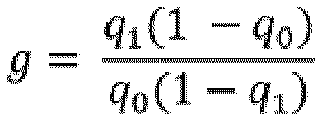
- wherein, q0 is the number of reads of Hap I at the locus when the fetus inherits Hap II from mother, q1 is the number of reads of Hap I at the locus when the fetus inherits Hap I from mother, and N is the total number of reads;
- for the α type SNP, q0=0.5, q1=ff/2+0.5; for the β type SNP, q1=0.5, q0=0.5-ff/2.
- The fetal alleles inherited from the father and the mother can be inferred by comparing the cumulative proportion of reads of the alleles that are actually inherited from the maternal Hap I and Hap II at each locus with the above two thresholds, and thus the fetal genotype can be determined. If the proportion of cumulative depth of alleles in the maternal Hap I to the total cumulative sequencing depth of two haplotypes is less than the lower boundary, the fetus inherits the maternal Hap II; if the proportion is greater than the upper boundary, the fetus inherits the maternal Hap I.
- 7) haplotype method b (closest informative variant algorithm, CIVA): inferring two haplotypes of two alleles inherited from the father and the mother on the fetal locus to be predicted, respectively, and extracting the alleles that are actually at the locus in the two haplotypes, so as to infer the fetal genotype;
- Specifically, according to the linkage disequilibrium, the genetic information of the haplotype at the locus can be inferred by using the fetal genotype information inferred by the Bayesian algorithm or SPRT algorithm in the previous step and the fetal haplotype information inherited from the father or the mother of the nearest valuable variant locus within a certain region upstream and downstream of the analyzed locus. The length of a certain region can be 50 kb, 100 kb, 200 kb, etc.
- In addition, a more rigorous method of determining whether a valuable variant locus is credible or not can be added. When two valuable variant loci in a certain region upstream and downstream of the analyzed locus indicate inconsistent haplotypes of the fetus inherited from the father or the mother, it is considered not credible, and CIVA cannot be used in this case.
- There are valuable variant loci in the following two circumstances:
The locus where the mother is homozygous and the father is heterozygous is selected in the case of inferring haplotype from the father. If the father's genotype is AB, the mother's genotype is AA, and the fetus's genotype is AB, the fetus inherits the haplotype on which B allele is located from the father. If the father's genotype is AB, the mother's genotype is AA, and the fetus's genotype is AA, the fetus inherits the haplotype on which A allele is located from the father. - Similarly, the locus where the mother is heterozygous and the father is homozygous is used to infer haplotype from the mother. If the mother' genotype is AB, the father' genotype is BB, and the fetus' genotype is BB, the fetus inherits the haplotype on which B allele is located from the mother. If the mother' genotype is AB, the father' genotype is BB, and the fetus' genotype is AB, the fetus inherits the haplotype on which A allele is located from the mother.
- 8) the combined method of haplotype and Bayesian algorithm: combining the above Bayesian algorithm, SPRT algorithm based on the haplotype information and closest informative variant algorithm to infer the fetal genotype in terms of SNPs and InDels, wherein SNPs or InDels are classified into four types and the parental genotype combinations are AAAB, ABAA, ABAB and AAAA (
Figure 1 );
SNPs are inferred as follows: - a) for a SNP of AAAB, using Bayesian algorithm;
- b) for a SNP of ABAA, using SPRT algorithm to infer a locus that can be covered by the haplotype and using CIVA method to infer the remaining loci that cannot be inferred by SPRT (the calculated value being between the two thresholds mentioned in the above SPRT method);
- c) for a SNP of ABAB, using CIVA method to determine the fetal locus type inherited from the father; then, using SPRT algorithm to infer the fetal locus type inherited from the mother; for the locus that cannot be inferred by SPRT algorithm, using CIVA method to infer the fetal allele type inherited from the mother; combining the paternal allele and maternal allele to obtain the fetal genotype at the locus;
- d) using Bayesian algorithm for the locus that cannot be covered by the haplotype data in the above three types of SNPs.
- InDel variants are inferred as follows:
- a) for an InDel of AAAB, using CIVA method to infer the fetal InDel alleles inherited from the father based on the haplotype (the SNP of AAAC) inherited from the father inferred in the previous step;
- b) for an InDel of ABAA, using SPRT algorithm to infer the locus that can be covered by the haplotype and using CIVA method to infer the remaining loci that cannot be inferred by SPRT (the calculated value being between the two thresholds mentioned in the above SPRT method);
- c) for an InDel of ABAB, firstly using CIVA method to determine the fetal locus type inherited from the father; then, using SPRT algorithm to infer the fetal locus type inherited from the mother; for the locus that cannot be inferred by SPRT algorithm, using CIVA method to infer the fetal allele type inherited from the mother; combining the paternal allele and maternal allele to obtain the fetal genotype at the locus;
- d) using Bayesian algorithm for the locus that cannot be covered by the haplotype data in the above three types of InDels.
- 9) de novo SNP mutations in the fetus: when the fetal variant loci inferred by Bayesian algorithm are different from those of the father and the mother, de novo mutations in the fetus are screened by the following criteria:
- i) all variants recorded in dbSNP147, Genome Aggregation Database (gnomAD) with minor allele frequency (MAF) > 1% in East Asian population, and internal database;
- ii) a locus with the paternal or maternal or fetal genotype quality (GQ) < 30;
- iii) a locus with the paternal or maternal or fetal sequencing depth < 20;
- iv) a locus with the paternal or maternal or fetal genotype likelihood (PL) < 30;
- v) a locus with the paternal or maternal or fetal minor allele frequency < 0.3 or > 0.7; and
- vi) a locus with the following quality control criteria in the combined VCF of parent and fetus: QualByDepth (QD) < 2.0, RMSMappingQuality (MQ) < 50.0, FisherStrand (FS) > 60.0, StrandOddsRatio (SOR) > 3.0, MappingQualityRankSumTest (MQRankSum) < -12.5, ReadPosRankSumTest (ReadPosRankSum) < -8.0.
- QD: QualByDepth, the quality value corrected by depth.
- MQ: RMSMappingQuality, root mean square of the mapping quality of all reads, used to determine the average mapping quality at a locus.
- FS: FisherStrand. Fisher's exact test is used to determine whether there is strand-specific bias for the current variant.
- MQRankSum: MappingQualityRankSumTest, Mann-Whitney-Wilcoxon Rank Sum Test result for the mapping qualities among different bases at heterozygous loci, wherein the confidences of loci are evaluated based on the mapping qualities of REF versus ALT bases.
- SOR: StrandOddsRatio, wherein OR value is used to determine the degree of strand bias at variant loci, and a greater value indicates a higher degree of strand bias.
- ReadPosRankSum: ReadPosRankSumTest, Rank Sum Test for the heterozygous loci, used to determine whether different bases tend to appear at specific positions on the reads (for example, near the start or the end of reads).
- The method of the present disclosure combines two haplotype algorithms with a Bayesian model to infer fetal single nucleotide variant based on the depth information in the plasma of pregnant women and parental haplotype information, which achieves full coverage of genomic loci. In the present disclosure, Bayesian algorithm can be further combined with the difference of cfDNA fragments between mother and fetus, such as fragment length, Motif type at the end of fragment, the difference of mapping positions on the genome to increase the weight of the fragments from fetus and improve the accuracy of Bayesian algorithm. For an ABAB locus, Bayesian algorithm is firstly used to determine the fetal haplotype inherited from father at the AAAB locus of the genome, then CIVA algorithm is used to determine the fetal haplotype inherited from the father at the ABAB locus, SPRT algorithm is used to predict the fetal haplotype inherited from the mother at the ABAB locus, and finally, the fetal ABAB genotype is inferred.
- The present inventors had conducted sample collection, sequencing and data analysis of 50 healthy families and 9 patient families in 2021 and completed the fetal genome inference based on these data, so as to test the feasibility and accuracy of the present fetal genome inference method and further clarify its application scope.
- The present disclosure conducted the tests on the maternal plasma cfDNA sequencing data (WGS paired-end 100 bp sequencing) and the paternal and maternal stLFR data (WGS paired-end 100 bp sequencing) of 5 families, and used the fetal cord blood WGS data (paired-end 100 bp) as a true positive set to calculate the accuracy of the fetal genotype inference (Tables 1, 2 and 3).
- The inference accuracy of AAAB type variants in SNP loci of 5 families was 96.2%±5.8% (mean ± standard deviation), 96.2%±1.4% for ABAA and 87.2%±4.7% for ABAB.
- The inference accuracy (mean ± standard deviation) of AAAB type variants in InDel loci of 5 families was 94.6%±1.9%, 80.2%±4.3% for ABAA and 79.3%±3.3% for ABAB.
- When the fetal concentration was 4% and the cfDNA sequencing depth was 128× (JK-53), the inference accuracies of SNPs were 95.6% (AAAB), 92% (ABAA) and 74.7% (ABAB), respectively.
- When the fetal concentration was 4% and the cfDNA sequencing depth was 270× (JK-53), the inference for fetal de novo mutation had a sensitivity of 91.3% and a positive predictive value (PPV) of 53.9%.
Table 1. Statistics of sequencing data of test families Family ID Sequencing Method Number of Raw Reads Number of Aligned Reads Alignment Rate Average Depth Coverage Rate Duplication Rate N50 Score of Phasing SNP JK-7 Cord Blood Cells WGS 1233682194 1231279450 99.81% 41.85 99.16% 3.75% JK-7 Maternal cfDNA WGS 4930998263 4899353438 99.36% 167.1 99.27% 32.58% JK-7 Maternal Blood Cells StLFR 2246895792 2213288894 98.50% 68.39 99.32% 53.12% 38692373 99.8% JK-7 Paternal Blood Cells StLFR 1847735151 1825890887 98.82% 57.29 99.87% 46.48% 13595319 99.88% JK-16 Cord Blood Cells WGS 1547702979 1544031563 99.76% 52.34 99.16% 3.15% JK-16 Maternal cfDNA WGS 4470433381 4427313912 99.04% 150.99 99.27% 31.17% JK-16 Maternal Blood Cells StLFR 1126578266 1093285410 97.04% 34,05 99.20% 37.45% 43167036 99.78% JK-16 Paternal Blood Cells StLFR 1071372133 1036265674 96.72% 32.43 99 81% 36.29% 43812809 99 84% JK-18 Cord Blood Cells WGS 1393244829 1391262033 99.86% 47.27 99.14% 3.49% JK-18 Maternal cfDNA WGS 3410469123 3388616846 99.36% 115.68 99.26% 22.39% JK-18 Maternal Blood Cells StLFR 1437373627 1404317757 97.70% 42.84 99.27% 36.91% 7009682 99.76% JK-18 Paternal Blood Cells StLFR 1419559729 1363089772 96.02% 40.42 99.88% 43.98% 4303673 99.72% JK-28 Cord Blood Cells WGS 1388613164 1386761047 99.87% 47.38 99.13% 4.18% JK-28 Maternal cfDNA WGS 3311517554 3286161812 99.23% 112.03 99.27% 21.11% JK-28 Maternal Blood Cells StLFR 1444610729 1412500944 97.78% 42.08 99.27% 38.33% 1178766 99.03% JK-28 Paternal Blood Cells StLFR 1284525331 1246303246 97.02% 17.82 99.85% 42.77% 1424125 99.20% JK-53 Cord Blood Cells WGS 1480341904 1477844272 99.23% 50.33 99.13% 4.23% JK-53 Maternal Plasma cfDNA 8909756646 8870299941 99.36% 256.12 99.29% 40.84% JK-53 Maternal Blood Cells StLFR 933259760 919002827 98.47% 28.77 99.12% 17.24% 3552388 99.66% JK-53 Paternal Blood Cells StLFR 1055522782 1035088382 98.06% 31.53 99.76% 13.31% 4708438 99.64% Table 2. Summary of accuracy of SNP loci on the fetal genome inferred by different embodiments Family FF Heterozygote Bayesian Model Haplotype-Based Method Combined Method Accuracy Number of True Positive/Number of Loci Accuracy Number of True Positive/Number of Loci Accuracy Number of True Positive/Number of Loci JK-7 0.09 AAAB 96.8% 631783/652391 ABAA 72.6% 909990/1253908 98.8% 1171962/1186610 96.1% 1209126/1253908 ABAB 61.4% 429479/698962 96.4% 572296/393618 89.8% 627424/698962 JK-16 0.27 AAAB 97.7% 576306/590073 ABAA 91.8% 1014224/1104405 99.2% 106 19801070070 98% 1082868/1104405 ABAB 85.9% 540677/629324 97.5% 5623014/576574 94.9% 597082/629324 JK-18 0.14 AAAB 96.4% 463476/480708 ABAA 75.7% 901292/1190790 99% 1112107/1123516 96.7% 1151107/1190790 ABAB 65.9% 439900/667062 92.7% 488305/526841 86.5% 576938/667062 JK-28 0.12 AAAB 95.2% 313500/329369 ABAA 69.5% 440760/633774 98.5% 5816751590448 96% 608483/633774 ABAB 57.3% 222910/388712 93.1% 268695/238587 83.2% 323556/388712 JK-53 (128X) 0.04 AAAB 95.6% 540046/564870 ABAA 59.6% 667583/1120831 97.3% 926919/952660 92.0% 998262/1085313 ABAB 49.4% 325416/658784 89.1% 363047/407606 74.7% 481240/644645 JK-53 (256.12X) 0.04 AAAB 95% 590368/621392 ABAA 63.5% 706502/1112899 97.7% 979699/1002260 93.6% 1041875/1112899 ABAB 51% 341350/668854 93.9% 462865/492889 81.8% 547115/668854 Table 3. Summary of accuracy of InDel loci on the fetal genome inferred by different embodiments Number True Positive Total Number of AAAB Loci AAAB Accuracy Number of True Positive/Total Number of ABAA Loci ABAA Accuracy Number of True Positive/Total Number of ABAB Loci ABAB Accuracy FF Total Number of InDels InDels with SPRT Results Proportion of inDels with SPRT Results JK-7 95446/123935 77% 190093/199209 95.4% 95069/123443 77% 0.09 460212 446587 97% JK-16 73714195314 77.3% 142989/147016 97.3% 74754/93231 80.2% 0.27 358513 335561 93.6% JK-18 82721/104098 79.5% 158053/170435 92.7% 84350/106000 79.8% 0.14 402516 380533 94.5% JK-28 37904/42794 88.6% 71.967/75357 95.5% 40697/48082 84.6% 0.12 174955 166233 95% JK-53 70971/90470 78.4% 131633/142619 92.3% 69269/92726 74.7% 0.04 342825 325815 95%
Claims (9)
- A haplotype-based method for detecting fetal genotype, the method comprising:1) performing cfDNA sequencing on a plasma sample of a pregnant woman to be detected with known maternal and paternal haplotypes to obtain sequencing reads;2) aligning the sequencing reads to a reference genome, and determining the depth distribution and mutations of the sample according to the alignment results;3) calculating the fetal sample concentration according to the minor allele frequency for four types of allelic loci, wherein the four types of allelic loci comprise: an allelic locus where the mother is homozygous and the fetus is homozygous, an allelic locus where the mother is homozygous and the fetus is heterozygous, an allelic locus where the mother is heterozygous and the fetus is homozygous, and an allelic locus where the mother is heterozygous and the fetus is heterozygous; and4) for the parental genotype combinations AAAB, ABAA and ABAB, inferring fetal SNP and InDel genotypes as follows:a) for the parental genotype combination AAAB, using Bayesian algorithm to infer the fetal SNP genotype, and using CIVA method to infer the fetal InDel alleles inherited from the father based on the SNP haplotype inherited from the father;b) for the parental genotype combination ABAA, using SPRT algorithm to infer a locus that can be covered by the haplotype and using CIVA method to infer the remaining loci;c) for the parental genotype combination ABAB, firstly using CIVA method to determine the fetal locus type inherited from the father; then, using SPRT algorithm to infer the fetal locus type inherited from the mother; for the locus that cannot be inferred by SPRT algorithm, using CIVA method to infer the fetal allele type inherited from the mother; combining the paternal allele and maternal allele, so as to obtain the fetal genotype at the locus;d) for a locus that cannot be covered by the haplotype data in the above three genotype combinations, using Bayesian algorithm to determine the genotypes of the locus; ande) in the case where the fetal locus inferred by Bayesian algorithm is different from the parental locus, a fetal de novo mutation is identified.
- The method of claim 1, in 4),the Bayesian algorithm comprises: constructing a Bayesian model based on the fetal concentration to infer the fetal genotype;the SPRT algorithm comprises: identifying the fetal genotype at a locus where the mother is heterozygous and the father is homozygous by using the imbalance of read coverage of two alleles at heterozygous loci in the plasma cfDNA sequencing data of the pregnant woman; andthe CIVA method comprises: inferring two haplotypes of two alleles inherited from the father and the mother on the fetal locus to be predicted, respectively, and extracting the alleles that are actually at the locus in the two haplotypes, so as to infer the fetal genotype.
- The method of claim 1 or 2, in 4), the Bayesian algorithm comprises: for each locus, when the read depth of different alleles and fetal concentration in the plasma of the pregnant woman are known, the probability of obtaining a combination i of maternal and fetal genotypes is calculated as follows:

wherein, P(A i ) is a prior probability of the combination i in n combinations of maternal and fetal genotypes obtained based on the fetal concentration; P(B|A i ) is the cumulative probability of the combination i of maternal and fetal genotypes calculated based on the read depth at the locus and the prior probability; n combinations of maternal and fetal genotypes = (10 maternal genotypes × 10 fetal genotypes); when the paternal and maternal genotypes are known, the combination in the calculation of the prior probability is modified for the above Bayesian algorithm, to remove the combinations of maternal and fetal genotypes that do not conform to Mendel's laws of heredity, and the probability value of each combination is recalculated; and finally, the combination with highest probability is selected, so as to obtain the fetal genotype. - The method of claim 1 or 2, in the SPRT algorithm, all SNPs in the maternal genome are classified as α type and β type, and two haplotypes of the mother are numbered as Hap I and Hap II; the α type SNP is defined as the allele of the father in the SNP being the same as that of the mother in Hap I, and the β type SNP is defined as the allele of the father in the SNP being the same as that of the mother in Hap II; for the α type SNP, the number of allele reads at the locus in Hap I increases when the fetus inherits Hap I from the mother; however, the numbers of reads of two alleles at the locus are close to balance when the fetus inherits Hap II from the mother; for the β type SNP, the numbers of reads of two alleles at the locus are close to balance when the fetus inherits Hap I from the mother; however, the number of allele reads at the locus in Hap II increases when the fetus inherits Hap II from the mother.
- The method of claim 4, in the SPRT algorithm, the following two thresholds are used to determine whether two alleles at each locus are balanced,


 wherein, q0 is the number of reads of Hap I at the locus when the fetus inherits Hap II from mother, q1 is the number of reads of Hap I at the locus when the fetus inherits Hap I from mother, and N is the total number of reads;for the α type SNP, q0=0.5, q1=ff/2+0.5; for the β type SNP, q1=0.5, q0=0.5-ff/2.
 - The method of claim 1 or 2, in e) of 4), a de novo mutation in the fetus is further screened by the following criteria:i) all variants recorded in dbSNP147, Genome Aggregation Database (gnomAD) with minor allele frequency (MAF) > 1% in East Asian population, and internal database;ii) a locus with the paternal or maternal or fetal genotype quality (GQ) < 30;iii) a locus with the paternal or maternal or fetal sequencing depth < 20;iv) a locus with the paternal or maternal or fetal genotype likelihood (PL) < 30;v) a locus with the paternal or maternal or fetal minor allele frequency < 0.3 or > 0.7; andvi) a locus with the following quality control criteria in the combined VCF (Variant Call Format, generated by GATK) of parent and fetus: QualByDepth (QD) < 2.0, RMSMappingQuality (MQ) < 50.0, FisherStrand (FS) > 60.0, StrandOddsRatio (SOR) > 3.0, MappingQualityRankSumTest(MQRankSum) <-12.5, ReadPosRankSumTest (ReadPosRankSum) < -8.0.
- The method of claim 1 or 2, in 1), the maternal and paternal haplotypes are obtained by stLFR (single tube Long Fragment Read) sequencing of the maternal and paternal blood cells, respectively.
- The method of claim 1 or 2, in 1), the depth of cfDNA sequencing is 70-200×.
- The method of claim 8, the depth of cfDNA sequencing is 100×.
Applications Claiming Priority (1)
| Application Number | Priority Date | Filing Date | Title |
|---|---|---|---|
| PCT/CN2022/095279 WO2023225951A1 (en) | 2022-05-26 | 2022-05-26 | Method for detecting fetal genotype on basis of haplotype |
Publications (3)
| Publication Number | Publication Date |
|---|---|
| EP4534685A1 true EP4534685A1 (en) | 2025-04-09 |
| EP4534685A4 EP4534685A4 (en) | 2025-08-06 |
| EP4534685B1 EP4534685B1 (en) | 2026-04-29 |
Family
ID=88918131
Family Applications (1)
| Application Number | Title | Priority Date | Filing Date |
|---|---|---|---|
| EP22943151.5A Active EP4534685B1 (en) | 2022-05-26 | 2022-05-26 | Method for detecting fetal genotype on basis of haplotype |
Country Status (3)
| Country | Link |
|---|---|
| EP (1) | EP4534685B1 (en) |
| CN (1) | CN119301269A (en) |
| WO (1) | WO2023225951A1 (en) |
Families Citing this family (3)
| Publication number | Priority date | Publication date | Assignee | Title |
|---|---|---|---|---|
| CN117965744B (en) * | 2023-12-12 | 2024-10-11 | 东莞博奥木华基因科技有限公司 | Kit, primer and method for detecting ploidy and maternal cell pollution of fetal samples based on multiplex PCR (polymerase chain reaction) capture technology |
| CN120148621A (en) * | 2025-02-28 | 2025-06-13 | 苏州华谦科技有限公司 | Method, device and equipment for identifying the relationship between fetus and pregnant mother |
| CN120412715B (en) * | 2025-03-17 | 2025-11-28 | 上海蓝沙生物科技有限公司 | Method for evaluating fetal DNA concentration (cffDNA) in maternal free blood during pregnancy through polymorphic site linkage region blocks |
Family Cites Families (7)
| Publication number | Priority date | Publication date | Assignee | Title |
|---|---|---|---|---|
| EP3599609A1 (en) * | 2005-11-26 | 2020-01-29 | Natera, Inc. | System and method for cleaning noisy genetic data and using data to make predictions |
| CN102203285B (en) * | 2008-10-21 | 2014-12-31 | 宋清 | Methods for haplotype determination by haplodissection |
| ES2656023T3 (en) * | 2012-05-14 | 2018-02-22 | Bgi Genomics Co., Ltd. | Procedure, system and computer-readable medium to determine base information in a predetermined region of the fetus genome |
| CN108277267B (en) * | 2016-12-29 | 2019-08-13 | 安诺优达基因科技(北京)有限公司 | Devices for detecting genetic mutations and kits for genotyping pregnant women and fetuses |
| WO2020049558A1 (en) * | 2018-09-03 | 2020-03-12 | Ramot At Tel-Aviv University Ltd. | Method and system for identifying gene disorder in maternal blood |
| WO2021073604A1 (en) * | 2019-10-18 | 2021-04-22 | 苏州亿康医学检验有限公司 | Method and system for clearing noisy genetic data, phasing haplotype, and reconstructing offspring genome, and use thereof |
| JP7311934B2 (en) * | 2020-02-05 | 2023-07-20 | ザ チャイニーズ ユニバーシティ オブ ホンコン | Molecular analysis using cell-free fragments during pregnancy |
-
2022
- 2022-05-26 WO PCT/CN2022/095279 patent/WO2023225951A1/en not_active Ceased
- 2022-05-26 CN CN202280096364.7A patent/CN119301269A/en active Pending
- 2022-05-26 EP EP22943151.5A patent/EP4534685B1/en active Active
Also Published As
| Publication number | Publication date |
|---|---|
| EP4534685B1 (en) | 2026-04-29 |
| CN119301269A (en) | 2025-01-10 |
| EP4534685A4 (en) | 2025-08-06 |
| WO2023225951A1 (en) | 2023-11-30 |
Similar Documents
| Publication | Publication Date | Title |
|---|---|---|
| EP4534685B1 (en) | Method for detecting fetal genotype on basis of haplotype | |
| AU2008278839B2 (en) | Determining a nucleic acid sequence imbalance | |
| AU755107B2 (en) | Prediction of inflammatory disease associated with IL-1 geneloci polymorphisms | |
| Flanagan et al. | Genetic mapping and exome sequencing identify 2 mutations associated with stroke protection in pediatric patients with sickle cell anemia | |
| CN114999570B (en) | A proband-independent method for haplotype construction | |
| Rabinowitz et al. | Bayesian-based noninvasive prenatal diagnosis of single-gene disorders | |
| CN104232778B (en) | Determine the method and device of fetus haplotype and chromosomal aneuploidy simultaneously | |
| CN114921536A (en) | Method, device, storage medium and equipment for detecting uniparental diploid and loss of heterozygosity | |
| CN114945685B (en) | Methods for determining fetal nucleic acid concentration and fetal genotyping methods | |
| CN118127143A (en) | A device for non-invasive prenatal detection of thalassemia and its application | |
| Pacault et al. | Non-invasive prenatal diagnosis of single gene disorders with enhanced relative haplotype dosage analysis for diagnostic implementation | |
| Hanxiao et al. | Noninvasive prenatal prediction of fetal haplotype with Spearman rank correlation analysis model | |
| Wang et al. | Identification of rare DNA variants in mitochondrial disorders with improved array-based sequencing | |
| US20190002981A1 (en) | Method of Testing for Preeclampsia and Treatment Therefor | |
| Forster‐Gibson et al. | An assessment of the use of flanking DNA markers for fra (X) syndrome carrier detection and prenatal diagnosis | |
| Peng et al. | Overcoming the pitfalls of next-generation sequencing–based molecular diagnosis of Shwachman-Diamond Syndrome | |
| Pericak‐Vance | Analysis of genetic linkage data for Mendelian traits | |
| WO1993024657A2 (en) | Use of genetic markers to diagnose familial dysautonomia | |
| CN112626187B (en) | Method and device for judging fetal genotype | |
| Huang et al. | An integrated analysis tool for analyzing hybridization intensities and genotypes using new-generation population-optimized human arrays | |
| US6895337B1 (en) | Method of identifying genomic rearrangements | |
| Liu et al. | Noninvasive Prenatal Diagnosis of SEA-Thalassemia by Combining 1000 Genomes Database and Relative Haplotype Dosage | |
| AU2022201829B2 (en) | Analyzing tumor dna in a cellfree sample | |
| AU2019283981B2 (en) | Analyzing tumor dna in a cellfree sample | |
| Zhang et al. | Guideline for data analysis of genomewide association studies |
Legal Events
| Date | Code | Title | Description |
|---|---|---|---|
| STAA | Information on the status of an ep patent application or granted ep patent |
Free format text: STATUS: THE INTERNATIONAL PUBLICATION HAS BEEN MADE |
|
| PUAI | Public reference made under article 153(3) epc to a published international application that has entered the european phase |
Free format text: ORIGINAL CODE: 0009012 |
|
| STAA | Information on the status of an ep patent application or granted ep patent |
Free format text: STATUS: REQUEST FOR EXAMINATION WAS MADE |
|
| 17P | Request for examination filed |
Effective date: 20241219 |
|
| AK | Designated contracting states |
Kind code of ref document: A1 Designated state(s): AL AT BE BG CH CY CZ DE DK EE ES FI FR GB GR HR HU IE IS IT LI LT LU LV MC MK MT NL NO PL PT RO RS SE SI SK SM TR |
|
| REG | Reference to a national code |
Ref country code: DE Ref legal event code: R079 Ref document number: 602022035934 Country of ref document: DE Free format text: PREVIOUS MAIN CLASS: C12Q0001680000 Ipc: G16B0020200000 |
|
| A4 | Supplementary search report drawn up and despatched |
Effective date: 20250708 |
|
| RIC1 | Information provided on ipc code assigned before grant |
Ipc: G16B 20/20 20190101AFI20250702BHEP Ipc: C12Q 1/68 20180101ALI20250702BHEP Ipc: C12N 15/00 20060101ALI20250702BHEP Ipc: C12Q 1/6827 20180101ALN20250702BHEP |
|
| DAV | Request for validation of the european patent (deleted) | ||
| DAX | Request for extension of the european patent (deleted) | ||
| GRAP | Despatch of communication of intention to grant a patent |
Free format text: ORIGINAL CODE: EPIDOSNIGR1 |
|
| STAA | Information on the status of an ep patent application or granted ep patent |
Free format text: STATUS: GRANT OF PATENT IS INTENDED |
|
| RIC1 | Information provided on ipc code assigned before grant |
Ipc: G16B 20/20 20190101AFI20251120BHEP Ipc: C12Q 1/68 20180101ALI20251120BHEP Ipc: C12N 15/00 20060101ALI20251120BHEP Ipc: C12Q 1/6827 20180101ALN20251120BHEP |
|
| RIC1 | Information provided on ipc code assigned before grant |
Ipc: G16B 20/20 20190101AFI20251126BHEP Ipc: C12Q 1/68 20180101ALI20251126BHEP Ipc: C12N 15/00 20060101ALI20251126BHEP Ipc: C12Q 1/6827 20180101ALN20251126BHEP |
|
| INTG | Intention to grant announced |
Effective date: 20251210 |
|
| GRAS | Grant fee paid |
Free format text: ORIGINAL CODE: EPIDOSNIGR3 |
|
| GRAA | (expected) grant |
Free format text: ORIGINAL CODE: 0009210 |
|
| STAA | Information on the status of an ep patent application or granted ep patent |
Free format text: STATUS: THE PATENT HAS BEEN GRANTED |
|
| AK | Designated contracting states |
Kind code of ref document: B1 Designated state(s): AL AT BE BG CH CY CZ DE DK EE ES FI FR GB GR HR HU IE IS IT LI LT LU LV MC MK MT NL NO PL PT RO RS SE SI SK SM TR |
|
| REG | Reference to a national code |
Ref country code: CH Ref legal event code: F10 Free format text: ST27 STATUS EVENT CODE: U-0-0-F10-F00 (AS PROVIDED BY THE NATIONAL OFFICE) Effective date: 20260429 Ref country code: GB Ref legal event code: FG4D |