EP4534656A1 - Dna methyltransferase - Google Patents
Dna methyltransferase Download PDFInfo
- Publication number
- EP4534656A1 EP4534656A1 EP23816176.4A EP23816176A EP4534656A1 EP 4534656 A1 EP4534656 A1 EP 4534656A1 EP 23816176 A EP23816176 A EP 23816176A EP 4534656 A1 EP4534656 A1 EP 4534656A1
- Authority
- EP
- European Patent Office
- Prior art keywords
- protein
- sequence
- dna
- amino acid
- methylation
- Prior art date
- Legal status (The legal status is an assumption and is not a legal conclusion. Google has not performed a legal analysis and makes no representation as to the accuracy of the status listed.)
- Pending
Links
Images




Classifications
-
- C—CHEMISTRY; METALLURGY
- C12—BIOCHEMISTRY; BEER; SPIRITS; WINE; VINEGAR; MICROBIOLOGY; ENZYMOLOGY; MUTATION OR GENETIC ENGINEERING
- C12N—MICROORGANISMS OR ENZYMES; COMPOSITIONS THEREOF; PROPAGATING, PRESERVING, OR MAINTAINING MICROORGANISMS; MUTATION OR GENETIC ENGINEERING; CULTURE MEDIA
- C12N15/00—Mutation or genetic engineering; DNA or RNA concerning genetic engineering, vectors, e.g. plasmids, or their isolation, preparation or purification; Use of hosts therefor
- C12N15/09—Recombinant DNA-technology
- C12N15/63—Introduction of foreign genetic material using vectors; Vectors; Use of hosts therefor; Regulation of expression
- C12N15/70—Vectors or expression systems specially adapted for E. coli
-
- C—CHEMISTRY; METALLURGY
- C12—BIOCHEMISTRY; BEER; SPIRITS; WINE; VINEGAR; MICROBIOLOGY; ENZYMOLOGY; MUTATION OR GENETIC ENGINEERING
- C12N—MICROORGANISMS OR ENZYMES; COMPOSITIONS THEREOF; PROPAGATING, PRESERVING, OR MAINTAINING MICROORGANISMS; MUTATION OR GENETIC ENGINEERING; CULTURE MEDIA
- C12N9/00—Enzymes; Proenzymes; Compositions thereof; Processes for preparing, activating, inhibiting, separating or purifying enzymes
- C12N9/10—Transferases (2.)
- C12N9/1003—Transferases (2.) transferring one-carbon groups (2.1)
- C12N9/1007—Methyltransferases (general) (2.1.1.)
-
- C—CHEMISTRY; METALLURGY
- C12—BIOCHEMISTRY; BEER; SPIRITS; WINE; VINEGAR; MICROBIOLOGY; ENZYMOLOGY; MUTATION OR GENETIC ENGINEERING
- C12Q—MEASURING OR TESTING PROCESSES INVOLVING ENZYMES, NUCLEIC ACIDS OR MICROORGANISMS; COMPOSITIONS OR TEST PAPERS THEREFOR; PROCESSES OF PREPARING SUCH COMPOSITIONS; CONDITION-RESPONSIVE CONTROL IN MICROBIOLOGICAL OR ENZYMOLOGICAL PROCESSES
- C12Q1/00—Measuring or testing processes involving enzymes, nucleic acids or microorganisms; Compositions therefor; Processes of preparing such compositions
- C12Q1/68—Measuring or testing processes involving enzymes, nucleic acids or microorganisms; Compositions therefor; Processes of preparing such compositions involving nucleic acids
- C12Q1/6869—Methods for sequencing
-
- C—CHEMISTRY; METALLURGY
- C12—BIOCHEMISTRY; BEER; SPIRITS; WINE; VINEGAR; MICROBIOLOGY; ENZYMOLOGY; MUTATION OR GENETIC ENGINEERING
- C12Y—ENZYMES
- C12Y201/00—Transferases transferring one-carbon groups (2.1)
- C12Y201/01—Methyltransferases (2.1.1)
- C12Y201/01037—DNA (cytosine-5-)-methyltransferase (2.1.1.37)
Definitions
- the present invention relates to a novel DNA methyltransferase.
- DNA methyltransferases are enzymes inducing methylation, which is one of the representative epigenetic modifications of DNA, and are also useful tools for epigenome analysis.
- DNA methylation at position 5 of cytosine (DNA cytosine 5-methylation (5mC)) is widely observed in the genomic DNA of living organisms.
- Non-patent Documents 1 to 4 have a drawback in that their recognition sequences overlap with a CG dinucleotide sequence which is a recognition sequence for intrinsic DNA methylation (endogenous methylation) in mammalian cells, and also have a problem in that the number of bases in their recognition sequences is too long for fine epigenetic mapping.
- MTase DNA methyltransferase
- the present invention has been made in consideration of the above situation and aims to provide a protein (MTase) and a gene encoding the same, etc., as set forth below.
- the present invention enables the provision of a protein (MTase) that is capable of introducing methylation which is distinguishable from intrinsic DNA methylation (endogenous methylation) in mammalian cells, more particularly capable of specifically recognizing a "CC dinucleotide sequence" and 5-methylating the 5'-position cytosine residue in the sequence, as well as a gene encoding the same, etc.
- the protein (MTase) according to the present invention is useful in terms of theoretically achieving, e.g., a method for epigenome analysis (epigenome mapping) which allows simultaneous profiling of endogenous methylation and any other epigenomes.
- DNA methyltransferase and the term “MTase” are synonymous with each other.
- DNA cytosine 5-methylation is widely observed in the genomic DNA of living organisms and forms one of the major epigenetic modifications.
- 5mC DNA cytosine 5-methylation
- increased levels of 5mC were considered to lead to gene silencing, whereas the levels of gene body methylation are shown to positively correlate with the expression levels of genes (References 1-4).
- the distribution pattern of 5mC is cell type-specific, and the genome-wide distribution of 5mC or methylome has always attracted much attention of researchers.
- Cytosine 5-methylation in mammalian cells depends on three DNA methyltransferases (MTases), i.e., DNMT1, DNMT3A and DNMT3B (References 5-7).
- DNMT1 is a maintenance DNA methyltransferase that introduces methylation into hemimethylated CG dinucleotides.
- DNMT3A and DNMT3B are de novo methyltransferases that introduce DNA methylation into non-methylated CG sites.
- some exceptions are known for pluripotent stem cells, oocytes, neurons and glial cells, DNA methylation on non-CG sites rarely occurs in normal somatic tissues (References 8 and 9).
- 5mC is introduced almost exclusively into CG dinucleotides, and cytosines in contexts other than CG dinucleotides are unmethylated in most mammalian cells.
- the deposition of 5mC in the genome is closely related to other epigenetic modifications.
- 5mC is depleted in gene promoters, and trimethylation of lysine 4 of histone H3 (H3K4me3) is enriched (Reference 10).
- H3K4me3 trimethylation of histone H3 lysine 36
- H3K36me2 and H3K36me3 are enriched in gene bodies and recruit DNMT3A/B to introduce 5mC.
- these modifications support gene body methylation (References 11 and 12).
- ChIP-Seq chromatin immunoprecipitation followed by sequencing
- MTase DNA methyltransferase
- Nucleosome occupancy and methylome sequencing is one of the earliest methods to measure chromatin accessibility with MTases (Reference 15), and NOMe-Seq has recently been combined with a nanopore sequencer (Reference 16).
- the same principle has recently been applied to Fiber-seq (Reference 17), which is a combination of non-specific adenine N-6 MTase M.EcoGII and a nanopore sequencer.
- Fiber-seq (Reference 17), which is a combination of non-specific adenine N-6 MTase M.EcoGII and a nanopore sequencer.
- chromatin accessibility is intended for the measurement of DNA-protein interactions of unspecified proteins, interactions between DNA and specific proteins can also be detected with MTases.
- DamID DamID
- dam methyltransferase fused with a protein of interest is expressed in target cells, and specific interactions of the fused protein with DNA can be measured by detecting DNA methylation introduced at the N-6 position of adenosine.
- methylation signals were detected using a methylation-sensitive restriction enzyme, but this is not an absolute requirement for detecting DNA methylation signals. Indeed, there are also cases where DNA methylation introduced with DamID was detected using a single-molecule sequencer.
- DiMeLo-Seq for introducing adenine N-6 methylation in the proximity of a specific epigenomic modification has also been established, and the demand for (epigenomic) detection techniques using MTases is further increased.
- MTases allow fragmentation-free and simultaneous detection of multiple epigenomes on a single DNA molecule.
- the resolution is primarily determined by the frequency of the recognized sequences in the genome, and the length of the recognized sequence determines the frequency of sequences. Since one of the most basic epigenome units, nucleosomes, are wrapped with approximately 150 base pairs (bp) of genomic DNA, the resolution required for epigenome mapping should be higher than 150 bp. Thus, the recognition sequence must be 3 bp (64 bp resolution) or less to achieve sufficient resolution for epigenetic measurement.
- Many MTases have been identified from bacterial and viral sources, and non-specific adenine N-6 MTases, such as M. EcoGII, have achieved fine mapping of chromatin accessibility (Reference 17).
- MTases that can be used as probes for fine epigenome mapping are limited to only three: M. SssI (CG), M. CviPI (GC) and M. CviPII (CCD) (the target cytosines are underlined) (References 19 and 20).
- M. SssI CG
- M. CviPI GC
- CCD CviPII
- the target cytosines are underlined
- CG dinucleotides due to the intrinsic DNA methylation (endogenous methylation) of CG dinucleotides in mammalian cells, a problem arises from the existence of sequences fully (M.SssI) or partially (M.CviPI) overlapping with CG dinucleotides.
- M.SssI endogenous methylation
- M.CviPI partially
- the inventor of the present invention has found a systematic strategy for identifying cytosine C-5 MTases with short recognition sequences, and have succeeded in identifying the MTases of six novel recognition sequences. Moreover, the inventor of the present invention has developed a novel MTase by focusing on MTases capable of recognizing CC dinucleotide among the identified MTases, because the non-overlapping specificity with CG dinucleotide is thought to be beneficial for epigenome mapping in mammalian cells. More particularly, this novel MTase is an MTase that is capable of specifically recognizing a CC dinucleotide sequence and 5-methylating the 5'-position cytosine residue in the sequence.
- the protein according to the present invention is a protein having functions as a DNA methyltransferase (MTase).
- MTase DNA methyltransferase
- the protein according to the present invention is a protein having the ability to specifically recognize a CC dinucleotide sequence and 5-methylate the 5'-position cytosine residue in the sequence.
- the protein according to the present invention is a protein modified to delete some amino acid residues including the N-terminal end of an MTase, M.CviQIX or M.CviPII, and thereby have (or acquire) the above ability (i.e., the ability to 5-methylate the 5'-position cytosine residue in the CC dinucleotide sequence).
- M.CviQIX is an MTase which has been considered to be derived from Paramecium bursaria Chlorella virus NY2A, and its amino acid sequence is as set forth in SEQ ID NO: 2. It should be noted that the nucleotide sequence encoding this amino acid sequence is not limited to, but is illustrated by, the nucleotide sequence as set forth in SEQ ID NO: 1.
- M.CviPII is an MTase derived from Chlorella virus, and its amino acid sequence is as set forth in SEQ ID NO: 4. It should be noted that the nucleotide sequence encoding this amino acid sequence is not limited to, but is illustrated by, the nucleotide sequence as set forth in SEQ ID NO: 3.
- the MTases M.CviQIX and M.CviPII are each one of many conventionally known MTases, and are known to be capable of specifically recognizing a "CCD trinucleotide sequence" (wherein D is A, G or C) and 5-methylating the 5'-position cytosine residue in this sequence.
- CCD trinucleotide sequence wherein D is A, G or C
- those skilled in the art would generally have no rational reason for attempting to further modify such an MTase capable of recognizing and methylating a relatively short sequence of CCD trinucleotide.
- a protein modified to delete some amino acid residues including the N-terminal end of the MTase M.CviQIX is not limited to, and may be, for example, a protein modified to delete 11 amino acid residues, 13 amino acid residues or 15 amino acid residues from the N-terminal end of this MTase. Among them, a protein modified to delete 15 amino acid residues is preferred.
- the amino acid sequence of this protein modified to delete 15 amino acid residues from the N-terminal end of M.CviQIX is the amino acid sequence as set forth in SEQ ID NO: 6 (it should be noted that the nucleotide sequence encoding this amino acid sequence is as set forth in SEQ ID NO: 5). For this reason, the protein according to the present invention is also preferably illustrated by a protein having the amino acid sequence as set forth in SEQ ID NO: 6.
- a protein modified to delete some amino acid residues including the N-terminal end of the MTase M.CviPII is not limited to, and may be, for example, a protein modified to delete 11 amino acid residues, 13 amino acid residues or 15 amino acid residues from the N-terminal end of this MTase. Among them, a protein modified to delete 15 amino acid residues is preferred.
- the amino acid sequence of this protein modified to delete 15 amino acid residues from the N-terminal end of M.CviPII is the amino acid sequence as set forth in SEQ ID NO: 8 (it should be noted that the nucleotide sequence encoding this amino acid sequence is as set forth in SEQ ID NO: 7). For this reason, the protein according to the present invention is also preferably illustrated by a protein having the amino acid sequence as set forth in SEQ ID NO: 8.
- the protein according to the present invention is not limited to, and is also preferably illustrated by proteins (so-called mutant proteins) comprising amino acid sequences in which one or several amino acids have been deleted, substituted or added in the amino acid sequences of the various proteins mentioned above in this section and having the ability to specifically recognize a CC dinucleotide sequence and 5-methylate the 5'-position cytosine residue in the sequence.
- proteins so-called mutant proteins
- amino acid sequence in which one or several amino acids have been deleted, substituted or added is preferably an amino acid sequence in which, for example, 1 to around 10 amino acids, preferably 1 to several amino acids, 1 to 5 amino acids, 1 to 4 amino acids, 1 to 3 amino acids, 1 to 2 amino acids, or 1 amino acid has been deleted, substituted or added.
- a kit for mutation introduction based on site-directed mutagenesis, as illustrated by GeneTailor TM Site-Directed Mutagenesis System (Invitrogen) and TaKaRa Site-Directed Mutagenesis System (e.g., Prime STAR ® Mutagenesis Basal kit, Mutan ® -Super Express Km; Takara Bio Inc., Japan), etc.
- GeneTailor TM Site-Directed Mutagenesis System Invitrogen
- TaKaRa Site-Directed Mutagenesis System e.g., Prime STAR ® Mutagenesis Basal kit, Mutan ® -Super Express Km; Takara Bio Inc., Japan
- whether the above-mentioned mutation of deletion, substitution or addition has been introduced can be confirmed using various amino acid sequencing techniques, as well as X ray- and NMR-based structural analysis techniques, etc.
- the protein according to the present invention is not limited to, and is also preferably illustrated by, proteins (so-called mutant proteins) that comprise amino acid sequences having an identity (homology) of 80% or more to the amino acid sequences of the various proteins mentioned above and that have the ability to specifically recognize a CC dinucleotide sequence and 5-methylate the 5'-position cytosine residue in the sequence.
- the above identity is preferably 85% or more, 90% or more, 95% or more, 96% or more, 97% or more, 98% or more, or 99% or more.
- Mutant proteins as mentioned above may also be prepared through genetic engineering procedures using a gene encoding the amino acid sequences of the protein.
- the term "specifically recognize a CC dinucleotide sequence” is intended to mean that only a dinucleotide composed of two consecutive cytosine (C) nucleotides can be recognized.
- the term "5-methylate the 5'-position cytosine residue in the CC dinucleotide sequence” is intended to mean methylating the carbon of the 5'-position of the cytosine residue at the 5th end of the above recognized CC, whereby the 5'-position cytosine residue, resulted in 5-methylcytosine or 5-methylcytidine (5mC).
- Such methylation activity may be detected, measured and/or evaluated, for example, by techniques to examine the presence or absence of DNA cleavage with HaeIII (which recognizes GGCC) or HpaII (which recognizes CCGG) whose cleavage activity is known to be inhibited by the presence of 5mC, or by bisulfite sequencing techniques, etc.
- the protein according to the present invention may be composed of naturally-occurring peptides linked in combination or may be obtained artificially by chemical synthesis, is not limited thereto.
- a naturally-occurring protein may be directly obtained from a naturally-occurring product by known recovery and purification procedures, or may be obtained by known gene recombination technology as follows: a gene encoding the protein is incorporated into any of various expression vectors or the like, introduced the vector into cells and expressed therein, followed by known recovery and purification procedures.
- the protein may be produced by a cell-free protein synthesis system using a commercially available kit, e.g., a reagent kit PROTEIOS TM (Toyobo Co., Ltd., Japan) or TNT TM System (Promega), a synthesizer PG-Mate TM (Toyobo Co., Ltd., Japan) or RTS (Roche Diagnostics), etc., followed by known collection and purification procedures, and is not limited thereto.
- a commercially available kit e.g., a reagent kit PROTEIOS TM (Toyobo Co., Ltd., Japan) or TNT TM System (Promega), a synthesizer PG-Mate TM (Toyobo Co., Ltd., Japan) or RTS (Roche Diagnostics), etc., followed by known collection and purification procedures, and is not limited thereto.
- a chemically synthesized protein may be obtained by known protein synthesis techniques.
- synthesis techniques include azide method, acid chloride method, acid anhydride method, mixed acid anhydride method, DCC method, active ester method, carboimidazole method and oxidation-reduction method, etc.
- the synthesis may be accomplished by applying either solid phase synthesis or liquid phase synthesis.
- a commercially available protein synthesizer may also be used for this purpose.
- the protein may be purified using known purification techniques (e.g., chromatography) in combination.
- the present invention may include derivatives of the above various proteins according to the present invention together with or in place of these proteins.
- Such derivatives are intended to encompass all derivatives which may be prepared originating from these proteins, as illustrated by those in which some of the constituent amino acids are replaced with unnatural amino acids and those in which some of the constituent amino acids (mainly their side chains) are chemically modified, etc.
- salts of the above various proteins and/or derivatives thereof may be included together with or in place of these proteins and/or derivatives thereof.
- Such salts are preferably physiologically acceptable acid addition salts or basic salts.
- acid addition salts include salts with inorganic acids (e.g., hydrochloric acid, phosphoric acid, hydrobromic acid, sulfuric acid) or salts with organic acids (e.g., acetic acid, formic acid, propionic acid, fumaric acid, maleic acid, succinic acid, tartaric acid, citric acid, malic acid, oxalic acid, benzoic acid, methanesulfonic acid, benzenesulfonic acid).
- inorganic acids e.g., hydrochloric acid, phosphoric acid, hydrobromic acid, sulfuric acid
- organic acids e.g., acetic acid, formic acid, propionic acid, fumaric acid, maleic acid, succinic acid, tartaric acid, citric acid, mal
- Examples of basic salts include salts with inorganic bases (e.g., sodium hydroxide, potassium hydroxide, ammonium hydroxide, magnesium hydroxide) or salts with organic bases (e.g., caffeine, piperidine, trimethylamine, pyridine).
- inorganic bases e.g., sodium hydroxide, potassium hydroxide, ammonium hydroxide, magnesium hydroxide
- organic bases e.g., caffeine, piperidine, trimethylamine, pyridine.
- salts may be prepared using appropriate acids such as hydrochloric acid or using appropriate bases such as sodium hydroxide.
- these salts may be prepared by treatment in water or in a liquid containing an inert water-miscible organic solvent (e.g., methanol, ethanol or dioxane) using standard protocols.
- an inert water-miscible organic solvent e.g., methanol, ethanol or dioxane
- a gene encoding the protein according to the present invention as mentioned above is not limited to, but is illustrated by, a gene comprising DNA as set forth in (a), (b) or (c) below. Genes comprising these DNAs may consist only of these DNAs or may comprise, in addition to these DNAs, known nucleotide sequences (e.g., a transcription promoter, an SD sequence, a Kozak sequence, a terminator) required for gene expression and/or recognition sequences for various restriction enzyme sites, without being limited thereto.
- known nucleotide sequences e.g., a transcription promoter, an SD sequence, a Kozak sequence, a terminator
- the nucleotide sequence as set forth in SEQ ID NO: 5 is a nucleotide sequence encoding an amino acid sequence with deletion of N-terminal 15 residues in the amino acid sequence (SEQ ID NO: 2) of the MTase M.CviQIX, as mentioned above.
- the nucleotide sequence as set forth in SEQ ID NO: 7 is a nucleotide sequence encoding an amino acid sequence with deletion of N-terminal 15 residues in the amino acid sequence (SEQ ID NO: 4) of the MTase M.CviPII.
- the above DNA (b) may be obtained from a cDNA library or a genomic library by known hybridization techniques such as colony hybridization, plaque hybridization and Southern blotting in which the above DNA (a) or DNA consisting of a nucleotide sequence complementary thereto, or a fragment thereof is used as a probe.
- a library prepared in a known manner or a commercially available cDNA or genomic library may be used for this purpose and is not limited thereto.
- stringent conditions in hybridization techniques refer to washing conditions after hybridization, and are intended to mean, for example, conditions where the salt concentration in buffer is 15 to 330 mM and the temperature is 25°C to 65°C, preferably conditions where the salt concentration is 15 to 150 mM and the temperature is 45°C to 55°C, as specifically illustrated by conditions where the salt concentration is 80 mM and the temperature is 50°C, etc. Further, in addition to such conditions of the salt concentration and the temperature, various other conditions including the probe concentration, the probe length, the reaction time and so on may also be taken into consideration to determine, as appropriate, the conditions required to obtain the above DNA (b).
- the above DNA (c) is DNA having an identity (homology) of 80% or more to the above DNA (a), as preferably illustrated by DNA having an identity of 85% or more, 90% or more, 95% or more, 96% or more, 97% or more, 98% or more, or 99% or more to the above DNA (a). This DNA is preferred for use as the above hybridizable DNA (b).
- Mutant DNA such as the above DNA (c) may be prepared, for example, according to site-directed mutagenesis as described in Molecular Cloning, A Laboratory Manual 4th ed., Cold Spring Harbor Laboratory Press (1989 ), Current Protocols in Molecular Biology, John Wiley & Sons (1987-1997 ), etc.
- mutant DNA may be prepared by known techniques (e.g., Kunkel method or Gapped duplex method) using a kit for introducing mutation based on site-directed mutagenesis, and preferred examples of such a kit include QuickChange TM Site-Directed Mutagenesis Kit (Stratagene), GeneTailor TM Site-Directed Mutagenesis System (Invitrogen), TaKaRa Site-Directed Mutagenesis System (e.g., Mutan-K, Mutan-Super Express Km; Takara Bio Inc., Japan), etc.
- Kunkel method or Gapped duplex method
- DNA comprising a nucleotide sequence encoding wild-type MTG may be used as a template in PCR under appropriate conditions to prepare mutant DNA.
- Any DNA polymerase may be used in PCR, but preferred is a highly accurate DNA polymerase, as preferably illustrated by Pwo DNA polymerase (Roche Diagnostics), Pfu DNA polymerase (Promega), platinum Pfx DNA polymerase (Invitrogen), KOD DNA polymerase (Toyobo Co., Ltd., Japan), KOD-plus-polymerase (Toyobo Co., Ltd., Japan), etc.
- Reaction conditions for PCR may be determined as appropriate depending on the optimum temperature of the DNA polymerase to be used, the length and type of DNA to be synthesized, etc.
- cycle conditions are preferably set as follows: 20 to 200 cycles in total of "90°C to 98°C for 5 to 30 seconds (thermal denaturation and dissociation) ⁇ 50°C to 65°C for 5 to 30 seconds (annealing) ⁇ 65°C to 80°C for 30 to 1200 seconds (synthesis and elongation)."
- DNA consisting of a nucleotide sequence such that this nucleotide sequence is not completely the identical as that of the above DNA (a) but the amino acid sequence translated therefrom is completely the same as that from the above DNA (a) (i.e., DNA engineered to comprise a silent mutation(s) in the above DNA (a)).
- the gene encoding the protein according to the present invention has no particular limitation on its codons corresponding to individual amino acids translated therefrom, and may comprise DNA representing codons commonly used (preferably codons frequently used) in humans or other mammals after transcription or may comprise DNA representing codons commonly used (preferably codons frequently used) in microorganisms (e.g., E. coli or yeast) or plants, etc., after transcription.
- the gene encoding the protein according to the present invention may comprise DNA encoding the amino acid sequence of the linker sequence.
- the gene according to the present invention as mentioned above should first be incorporated into an expression vector to construct a recombinant vector.
- the gene to be incorporated into the expression vector may optionally be linked in advance in its upstream with a transcription promoter, an SD sequence (when prokaryotic cells are used as a host) and a Kozak sequence (when eukaryotic cells are used as a host) and linked in advance in its downstream with a terminator, and may also be linked in advance with an enhancer, a splicing signal, a poly-A addition signal, a selective marker, etc.
- individual elements required for gene expression including a transcription promoter as mentioned above may be contained initially in the gene, or alternatively, those contained originally in the expression vector, if any, may be used. There is no particular limitation on the mode of use of each element.
- the expression vector is not limited in any way as long as it may carry the gene encoding the protein according to the present invention, as illustrated by plasmid DNA, bacteriophage DNA, retrotransposon DNA, a retroviral vector, artificial chromosomal DNA, etc., and a vector suitable for host cells to be used may be selected as appropriate for use.
- the above recombinant vector thus constructed may be introduced into a host to obtain a transformant, and this transformant may be cultured to allow the expression of the protein according to the present invention.
- transformant in the context according to the present invention is intended to mean a host into which a foreign gene has been introduced, and examples include a host into which a foreign gene has been introduced by introduction of plasmid DNA or the like (transformation) and a host into which a foreign gene has been introduced by infection with various viruses and phages (transduction).
- Such a host is not limited, and may be selected as appropriate as long as it allows the expression of the protein according to the present invention after introduction of the above recombinant vector, and examples include known hosts such as various animal cells (e.g., human and mouse cells), various plant cells, bacteria, yeast, plant cells, etc.
- animal cells When animal cells are used as a host, examples include human fibroblasts, CHO cells, monkey cells COS-7, Vero, mouse L cells, rat GH3, human FL cells, etc. Alternatively, insect cells such as Sf9 cells and Sf21 cells may also be used.
- bacteria When bacteria are used as a host, examples include E. coli, Bacillus subtilis, etc.
- yeast When yeast is used as a host, examples include Saccharomyces cerevisiae, Schizosaccharomyces pombe, etc.
- examples include tobacco BY-2 cells, etc.
- Procedures for obtaining a transformant are not limited, and may be selected as appropriate in consideration of the combination of types of host and expression vector.
- Preferred examples include electroporation, lipofection, heat shock transfection, PEG transfection, calcium phosphate transfection, DEAE-dextran transfection, and infection with various viruses (e.g., DNA virus, RNA virus).
- the codon types of the gene contained in the recombinant vector are not limited, and may be either identical with or different from the codon types in the host actually used.
- the protein according to the present invention can be produced, particularly, by a process comprising a step of culturing the above transformant and a step of collecting a protein having the ability to specifically recognize a CC dinucleotide sequence and 5-methylate the 5'-position cytosine residue in the sequence from the resulting cultured material.
- the term "cultured material" is intended to mean a culture supernatant, cultured cells, cultured microorganisms, or a disruptant of the cells or microorganisms.
- the above transformant may be cultured in accordance with standard procedures used for host culture.
- the desired protein is accumulated in the above cultured material.
- the above collection step may comprise the purification step of the protein.
- any of various known natural and synthetic media may be used as long as it contains host-assimilable sources of carbon, nitrogen, inorganic salts, etc., and allows efficient culture of the transformant.
- the transformant may be cultured under selection pressure to avoid loss of the recombinant vector contained in the transformant and loss of the gene encoding the desired protein.
- the selective marker used is a drug resistance gene
- the corresponding drug may be added to the medium
- the selective marker used is an auxotrophic complementary gene
- the corresponding trophic factor may be removed from the medium.
- a suitable inducer e.g., IPTG
- IPTG IPTG
- Culture conditions for the transformant are not limited as long as they do not impair the productivity of the desired protein and the growth of the host.
- culture may be conducted at 10°C to 40°C, preferably at 20°C to 37°C for 5 to 100 hours. pH adjustment may be accomplished by using an inorganic or organic acid, an alkaline solution, etc.
- Techniques used for culture include solid culture, static culture, shaking culture, aerobic spinner culture, etc.
- the microorganisms or cells may be disrupted to thereby collect the desired protein.
- Techniques for disruption of the microorganisms or cells include high pressure treatment with a French press or a homogenizer, ultrasonication, grinding treatment with glass beads, etc., enzymatic treatment with lysozyme, cellulase or pectinase, etc., freeze-thaw treatment, hypotonic solution treatment, and bacteriolysis induction treatment with phages.
- the disrupted debris of the microorganisms or cells may be removed, if necessary.
- the supernatant obtained after removal of the debris is a soluble cell extract fraction and can be used as a crude protein solution.
- the microorganisms or cells per se may be collected by centrifugation, membrane separation or other techniques, and used directly without being disrupted.
- the cultured solution may be used directly or may be treated by centrifugation, filtration or other techniques to remove the microorganisms or cells. Then, the desired protein may be collected from the cultured material, e.g., through extraction by ammonium sulfate precipitation, if necessary, and may further be isolated and purified by using dialysis and/or various chromatographic techniques (e.g., gel filtration, ion exchange chromatography, affinity chromatography), if necessary.
- various chromatographic techniques e.g., gel filtration, ion exchange chromatography, affinity chromatography
- the production yield of the protein obtained upon culture of the transformant may be confirmed, for example, by SDS-PAGE (polyacrylamide gel electrophoresis) or other techniques in units, for example, per culture solution, per wet cell weight or dry cell weight, per crude enzyme solution protein, etc.
- the desired protein may also be produced using a cell-free protein synthesis system where no living cells are used.
- cell-free protein synthesis system is a system where a cell extract is used to synthesize a desired protein within an artificial container such as a test tube, etc.
- cell-free protein synthesis systems available for this purpose also include a cell-free transcription system where DNA is used as a template to synthesize RNA.
- the cell extract to be used is preferably derived from host cells described above.
- a cell extract it is possible to use, for example, an extract derived from eukaryotic cells or prokaryotic cells, more particularly an extract derived from CHO cells, rabbit reticulocytes, mouse L-cells, HeLa cells, wheat germ, budding yeast, E. coli or the like. It should be noted that these cell extracts may be concentrated or diluted before use, or may be used directly, without being limited thereto.
- cell extracts may be obtained, for example, by ultrafiltration, dialysis, polyethylene glycol (PEG) precipitation, etc.
- PEG polyethylene glycol
- Such cell-free protein synthesis may also be accomplished by using a commercially available kit. Examples include a reagent kit PROTEIOS TM (Toyobo Co., Ltd., Japan) or TNT TM System (Promega), a synthesizer PG-Mate TM (Toyobo Co., Ltd., Japan) or RTS (Roche Diagnostics), etc.
- PROTEIOS TM Toyobo Co., Ltd., Japan
- TNT TM System Promega
- synthesizer PG-Mate TM Toyobo Co., Ltd., Japan
- RTS Roche Diagnostics
- the desired protein produced by cell-free protein synthesis may be purified as mentioned above by chromatographic or other means which may be selected as appropriate.
- the present invention also includes a method for epigenome analysis (epigenome mapping), which comprises using the protein according to the present invention (including proteins obtainable by the production processes described in the preceding section).
- the protein according to the present invention is capable of recognizing and methylating a CC dinucleotide sequence which is distinct from (i.e., does not overlap with) a CG dinucleotide sequence where endogenous methylation occurs in mammalian cells. For this reason, the protein according to the present invention is useful as a new probe for epigenome analysis (epigenome mapping).
- the amino acid sequence of M. CviQIX was obtained from REBASE (http://rebase.neb.com/rebase/rebase.html) (References 19 and 20), while the amino acid sequence of M.CviPII was obtained from Reference 21.
- the bacterial expression vector pCZS carrying the gene encoding M.CviQIX or M.CviPII was introduced into T7Express (New England Biolabs, Ipswich, MA).
- the cells were inoculated into 3 mL of LB medium (1% [w/v] tryptone, 0.5% [w/v] yeast extract, and 0.5% [w/v] sodium chloride) supplemented with 100 ⁇ g/mL of carbenicillin (Nacalai Tesque, Inc., Kyoto, Japan) and grown overnight at 37°C with vigorous shaking. 50 ⁇ L of each cell suspension was diluted with 3 mL of carbenicillin-supplemented LB medium, and the cells were cultured at 37°C for 3 hours with shaking.
- This cell suspension was cooled in ice-cold water for 30 minutes, and 3 ⁇ L of 1 M isopropyl ⁇ -D-1-thiogalactopyranoside (IPTG, Nacalai Tesque, Inc., Japan) was added to induce protein expression.
- the cells were collected by centrifugation and used for genomic DNA purification with a DNeasy Blood & Tissue Kit (Qiagen). The genomic DNA concentration was measured using a Qubit dsDNA BR assay kit and a Qubit fluorometer (Thermo Fisher Scientific, Waltham, MA, USA).
- Genomic DNA (100 ng) was added to a 10 ⁇ L reaction containing 1 ⁇ CutSmart Buffer and a restriction enzyme, HaeIII or HpaII. The reaction mixture was incubated at 37°C for 1 hour, followed by heating at 70°C for 10 minutes to inactivate the enzyme. After treatment with either of the above restriction enzymes, DNA was analyzed using an E-Gel Power SNAP system on a 2% E-Gel Ex gel (Thermo Fisher Scientific).
- the bacterial cells transformed with pCZS expressing the MTase-encoding gene was inoculated into 30 mL of LB medium containing 100 ⁇ g/mL carbenicillin, and cultured overnight at 37°C with vigorous shaking.
- the seed culture was transferred to a 2 L Erlenmeyer flask with baffles containing 1 L of carbenicillin-supplemented LB medium, and further cultured at 37°C for 4 hours with shaking.
- This flask was cooled in ice-cold water for 30 minutes, and 230 mg of IPTG was then added to induce protein expression.
- the flask was incubated overnight at 16°C with vigorous shaking.
- the cells were collected by centrifugation at 2500 ⁇ g for 15 minutes, and the collected cells were frozen at -80°C until use.
- the bacterial cells were re-suspended in 20 mL of HisTrap buffer A (20 mM sodium phosphate, pH 7.5, 800 mM NaCl, 20 mM imidazole, 1 mM DTT, and 10% glycerol) containing a protease inhibitor cocktail (Nacalai Tesque, Inc., Japan) and disrupted through ultrasonication.
- HisTrap buffer A (20 mM sodium phosphate, pH 7.5, 800 mM NaCl, 20 mM imidazole, 1 mM DTT, and 10% glycerol
- the lysate was cleared by centrifugation at 15,000 ⁇ g for 15 minutes and filtered with a 0.45 ⁇ m syringe filter.
- the first round of affinity purification was performed with a 5 mL HisTrap HP column (Cytiva, Marlborough, MA) using HisTrap buffer A and HisTrap buffer B (20 mM sodium phosphate, pH 7.5, 800 mM NaCl, 200 mM imidazole, 1 mM DTT, 10% glycerol).
- a fraction containing the target protein was further purified with a 1 mL StrepTrap HP (Cytiva) using StrepTrap buffer A (100 mM Tris-HCl, pH 8.0, 150 mM NaCl, 1 mM EDTA, 1 mM DTT) and StrepTrap buffer B (100 mM Tris-HCl, pH 8.0, 150 mM NaCl, 1 mM EDTA, 1 mM DTT, and 2.5 mM d-desthiobiotin). Chromatographic purification was performed with an AKTA Start System (Cytiva).
- the dual-affinity purified protein was concentrated by ultrafiltration using an Amicon Ultra-4 30 K device (Millipore), and supplemented with bovine serum albumin (BSA) and glycerol to give final concentrations of 100 ⁇ g/mL and 50% (v/v), respectively, and then stored at -20°C until use.
- BSA bovine serum albumin
- S288C cells (NBRC1136, Biological Resource Center at the National Institute of Technology and Evaluation) were inoculated into 50 ml of YPD medium (1% yeast extract, 2% Bacto peptone, 2% dextrose) and cultured overnight at 30°C with shaking. The cell suspension was diluted with 1 L of YPD and further cultured at 30°C for 4 hours with shaking. The cells were collected by centrifugation at 2000 ⁇ g for 15 minutes, washed twice with 50 mL of water, and re-suspended in 20 mL of 1 M sorbitol.
- YPD medium 1% yeast extract, 2% Bacto peptone, 2% dextrose
- the cell suspension was mixed with 20 ⁇ L of ⁇ -mercaptoethanol and 20 mg of Zymolyase 100T (Seikagaku Kogyo Co., Japan), and incubated for 15 minutes at room temperature to degrade and remove the cell wall, thereby obtaining spheroplasts. Then, the spheroplasts were washed twice with 20 mL of 1 M sorbitol, and re-suspended in 20 mL of 1 M sorbitol.
- the re-suspended spheroplasts were mixed with 240 ⁇ L of 38% formaldehyde (Wako Chemicals, Osaka, Japan) and incubated at room temperature for 5 minutes to fix the spheroplasts.
- the fixed spheroplasts were washed twice with 20 mL of 1 M sorbitol and centrifuged at 5000 ⁇ g for 5 minutes to give a pellet.
- nuclei preparation solution (10 mM HEPES-KOH, pH 7.5, 10 mM NaCl, 3 mM MgCl 2 , and 0.5% [v/v] Nonidet P 40 substitute), and incubated at room temperature for 5 minutes.
- the nuclei were collected by centrifugation at 5000 ⁇ g for 5 minutes, and washed twice with 10 mL of nuclei wash solution (10 mM HEPES-KOH, pH 7.5, 10 mM NaCl, 3 mM MgCl 2 ).
- nuclei wash solution (10 mM HEPES-KOH, pH 7.5, 10 mM NaCl, 3 mM MgCl 2 .
- the nuclei were re-suspended in 10 mL of nuclei wash solution, and the suspension was dispensed in 500 ⁇ L volumes into 20 tubes, which were stored at -80°C until use.
- the frozen nuclei suspension was thawed and re-suspended in 500 ⁇ L of 1 ⁇ methylation buffer (50 mM Tris-HCl, pH 8.5, 50 mM NaCl, 1 mM DTT, 1.6 mM SAM). Then, the purified N-terminal 15 amino acid deletion mutant of M.CviQIX (referred to as CCMT; see the section "Results" described later) was added in an appropriate amount. After incubation at 37°C for 1 hour, the nuclei were centrifuged at 5000 ⁇ g for 1 minute to give a pellet, which was then re-suspended in 40 ⁇ L of 10 mM Tris-HCl, pH 8.0.
- 1 ⁇ methylation buffer 50 mM Tris-HCl, pH 8.5, 50 mM NaCl, 1 mM DTT, 1.6 mM SAM.
- CCMT the purified N-terminal 15 amino acid deletion mutant of M.CviQI
- This nuclei suspension was mixed with 5 ⁇ L of 20 mg/ml proteinase K and 10% (w/v) SDS, and incubated at 50°C for 1 hour. Then, this reaction was supplemented with 150 ⁇ L of 1 M Tris-HCl, pH 8.0, overlaid with a white mineral oil, and incubated at 80°C for 24 hours. The aqueous phase was transferred to a new test tube, and mixed with 200 ⁇ L of Buffer AL and isopropanol. This mixture was loaded onto a DNeasy column by centrifugation at 10,000 ⁇ g for 1 minute, and the column was washed sequentially with Buffer W1 and Buffer W2 (500 ⁇ L each).
- Buffer AL, Buffer W1, Buffer W2 and Buffer AE are all reagents included in a DNeasy Blood & Tissue Kit.
- IMR-90 cells (JCRB cell bank #JCRB9054) were cultured at 37°C in an atmosphere of 100% humidity and 5% CO 2 in four T75 flasks each containing 30 mL of minimum essential medium (Thermo Fisher Scientific) supplemented with 10% fetal bovine serum (Thermo Fisher Scientific) and 50 U/mL penicillin-streptomycin (Thermo Fisher Scientific). The cells grown were treated with trypsin and collected by centrifugation at 2000 ⁇ g for 5 minutes.
- Thermo Fisher Scientific minimum essential medium supplemented with 10% fetal bovine serum (Thermo Fisher Scientific) and 50 U/mL penicillin-streptomycin (Thermo Fisher Scientific).
- the cells were washed twice with 20 mL of D-PBS (Nacalai Tesque, Inc., Japan), and re-suspended at 1 ⁇ 10 7 cells/ml in CELLBANKER 1 (Takara Bio Inc., Japan). The cell suspension was dispensed in 500 ⁇ L volumes and stored at -80°C until use.
- the frozen cell suspension was thawed before use and washed twice with PBS. Then, the cells were re-suspended in nuclei preparation buffer (10 mM Tris-HCl, pH 8.0, 10 mM NaCl, 3 mM MgCl 2 , 0.1 mM EDTA) and 0.5% (w/v) NP-40, and incubated on ice for 10 minutes. Then, the nuclei were collected through centrifugation at 2000 ⁇ g for 5 minutes, re-suspended in 500 ⁇ L of 1 ⁇ methylation buffer supplemented with an optimum amount of CCMT, and incubated at 37°C for 30 minutes.
- nuclei preparation buffer (10 mM Tris-HCl, pH 8.0, 10 mM NaCl, 3 mM MgCl 2 , 0.1 mM EDTA) and 0.5% (w/v) NP-40, and incubated on ice for 10 minutes. Then, the nuclei were collected
- nuclei were collected by centrifugation at 2000 ⁇ g for 5 minutes, and the supernatant was removed.
- the nuclei were dissolved in 20 ⁇ L of 20 mg/ml proteinase K, and 200 ⁇ L of Buffer ATL was added thereto. After the reaction solution was incubated at 56°C for 1 hour, 200 ⁇ L of Buffer AL and 200 ⁇ L of isopropanol were added thereto. This mixture was loaded onto a DNeasy column, and washed with 500 ⁇ L of Buffer W1 or Buffer W2.
- the purified DNA was eluted with 200 ⁇ L of Buffer AE, and provided for WGBS analysis.
- N-terminal deletion enhances the MTase activity of M.CviQIX and M.CviPII
- the inventor of the present invention attempted to produce an active protein of M.CviQIX which has been reported on databases to have MTase activity at the first C of the CCD trinucleotide.
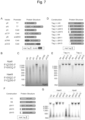
- DNA methylation activity was not detectable in most bacterial cells carrying this gene subcloned into several expression vectors ( Figures 3A to 3C ), but relatively strong MTase activity was observed in cells expressing M.CviQIX subcloned into expression vectors pCTF and pCNS. Namely, the genomic DNAs of cells carrying these two expression vectors showed resistance to both HaeIII and HpaII digestion ( Figure 3C and Figures 7A and 7B ).
- pCTF and pCNS are designed to produce a protein fused with a trigger factor (TF) and a SUMO motif at the N-terminal end of M.CviQIX, respectively ( Figure 3A ).
- TF and SUMO are expected to have an effect on protein solubilization and folding (Reference 22).
- the genomic DNA extracted from the bacterial cells carrying the expression vector for N-terminal SUMO tagging showed stronger resistance to methylation-sensitive restriction enzymes than the genomic DNA extracted from bacterial cells carrying the expression vector for C-terminal SUMO tagging ( Figure 3C ).
- the inventor of the present invention attempted to purify the products of these N-terminal TF- and SUMO-tagged constructs.
- the inventor of the present invention considered that any of these 3 residues would be used for translation initiation within the cells of organisms originally carrying this gene.
- 3 mutants were prepared to lack amino acid residues upstream of each methionine residue, and the methylation status of their host genome was analyzed.
- the deletion of N-terminal 11, 13 or 15 amino acids of M.CviQIX was found to enhance the methylation of the host genome ( Figures 3D and 3E , and Figure 7C ).
- each of these 3 methionine residues could be used as an initiation codon to produce active M.CviQIX.
- similar results were also obtained in M.CviPII ( Figures 7F and 7G ). Namely, the N-terminal amino acid sequences of M.CviQIX and M.CviPII were found to have an inhibitory effect on DNA methylation activity.
- the inventor of the present invention induced the expression of N-terminal 15 amino acid deletion (NDEL15) mutants of M.CviQIX and M.CviPII in E. coli cells, extracted the bacterial genomic DNAs, and performed whole genome bisulfite sequencing (WGBS) ( Figure 4A ). Methylation levels were measured for each cytosine residue, and the appearance frequency of surrounding nucleotide sequences contributing to the methylation levels were expressed logographically, thus indicating that M.CviQIX and M.CviPII introduced methylation at the first C of CC dinucleotide.
- the inventor of the present invention attempted to purify active proteins by using genes for N-terminal 15 amino acid deletion mutants of M.CviQIX and M.CviPII.
- the inventor of the present invention also attempted to purify an active protein of M.CviPI, as a control, whose purification conditions had been established.
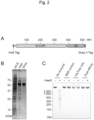
- Bacterial cells carrying an expression vector where each gene was cloned were cultured to induce protein expression, followed by dual affinity purification employing His- and StrepII-tags to purify these MTases ( Figure 2 ).
- the proteins were stored in the presence of 100 ⁇ g/ml BSA, 10 mM DTT and 50% glycerol to preserve enzymatic activity during storage at -20°C.
- NOMe-Seq with a CC-recognizing MTase produces similar methylation patterns to GCMT
- CC dinucleotide is a short recognition sequence which enables fine epigenome mapping at about 10 bp resolution.
- the inventor of the present invention attempted to establish a CC dinucleotide-recognizing MTase, M.CviQIX or M.CviPII, as a probe for epigenome mapping.
- M.CviQIX expressed under the control of a cold-shock promoter showed the highest yield and activity, and this protein was designated as CCMT.
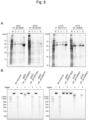
- the salt concentration in CCMT-catalyzed methylation reaction was examined, thus finding that 50 mM sodium chloride was the best condition for stringent DNA methylation activity ( Figure 9 ).
- CCMT was used for NOMe-Seq analysis of formaldehyde-crosslinked budding yeast nuclei.
- Formalin-fixed yeast spheroplasts were permeabilized in a buffer containing NP-40 to remove their cell membrane, and then subjected to CCMT-catalyzed methylation in the presence of S-adenosylmethionine, thereby achieving the methylation of DNA on chromatin.
- genomic DNA was purified, the methylation status of this DNA was analyzed by WGBS.
- Methylation levels in 10-bp bins were calculated and the methylation status of DNA between nuclei treated with commercially available GC dinucleotide-recognizing M.CviPI (GCMT) was compared with that of nuclei treated with CCMT, thus indicating that these two data sets showed similar distribution patterns of 5mC on the genome. It should be noted that since budding yeast has no endogenous DNA methylation, it can be interpreted that the detected D5mCs were all introduced by GCMT or CCMT. As illustrated in Figures 5A and 5B , a similar tendency was observed in genomic DNA methylation patterns.
- CCMT-based NOMe-Seq achieves fine mapping of the mammalian epigenomes
- CCMT-based NOMe-Seq was applied to a human-derived culture cell line, IMR-90 cells. After the cells were treated with a buffer containing NP-40 to permeabilize their cell membrane, CCMT treatment was performed and genomic DNA was purified, which was then subjected to WGBS analysis. In addition, a sample not treated with CCMT was also provided and used as a control. High-quality methylome data with 24.5-fold and 25.7-fold coverage were obtained for CCMT-treated and untreated samples, respectively (Table 1).
- the present invention enables the provision of a protein (MTase) that is capable of introducing methylation which is distinguishable from intrinsic DNA methylation (endogenous methylation) in mammalian cells, more particularly capable of specifically recognizing a "CC dinucleotide sequence" and 5-methylating the 5'-position cytosine residue in the sequence, as well as a gene encoding the same, etc.
- the protein (MTase) according to the present invention is useful in terms of theoretically achieving, e.g., a method for epigenome analysis (epigenome mapping) which allows simultaneous profiling of endogenous methylation and any other epigenomes.
Landscapes
- Life Sciences & Earth Sciences (AREA)
- Chemical & Material Sciences (AREA)
- Health & Medical Sciences (AREA)
- Organic Chemistry (AREA)
- Genetics & Genomics (AREA)
- Engineering & Computer Science (AREA)
- Wood Science & Technology (AREA)
- Zoology (AREA)
- Bioinformatics & Cheminformatics (AREA)
- General Engineering & Computer Science (AREA)
- General Health & Medical Sciences (AREA)
- Biochemistry (AREA)
- Biotechnology (AREA)
- Proteomics, Peptides & Aminoacids (AREA)
- Molecular Biology (AREA)
- Biomedical Technology (AREA)
- Microbiology (AREA)
- Physics & Mathematics (AREA)
- Biophysics (AREA)
- Medicinal Chemistry (AREA)
- Analytical Chemistry (AREA)
- Immunology (AREA)
- Plant Pathology (AREA)
- Micro-Organisms Or Cultivation Processes Thereof (AREA)
- Enzymes And Modification Thereof (AREA)
- Measuring Or Testing Involving Enzymes Or Micro-Organisms (AREA)
Abstract
Description
- The present invention relates to a novel DNA methyltransferase.
- DNA methyltransferases (MTases) are enzymes inducing methylation, which is one of the representative epigenetic modifications of DNA, and are also useful tools for epigenome analysis. DNA methylation at
position 5 of cytosine (DNA cytosine 5-methylation (5mC)) is widely observed in the genomic DNA of living organisms. - However, as to DNA cytosine 5-methylation, MTases identified so far (
Non-patent Documents 1 to 4) have a drawback in that their recognition sequences overlap with a CG dinucleotide sequence which is a recognition sequence for intrinsic DNA methylation (endogenous methylation) in mammalian cells, and also have a problem in that the number of bases in their recognition sequences is too long for fine epigenetic mapping. -
- [Non-patent Document 1] Renbaum, P. et al., Cloning, characterization, and expression in Escherichia coli of the gene coding for the CpG DNA methylase from Spiroplasma sp. strain MQ1(M.SssI). Nucleic acids research, 1990. 18(5): p. 1145-1152.
- [Non-patent Document 2] Xu, M. et al., Cloning, characterization and expression of the gene coding for a cytosine-5-DNA methyltransferase recognizing GpC. Nucleic Acids Res, 1998. 26(17): p. 3961-3966. (which is the same as Reference 21 described later)
- [Non-patent Document 3] Zhang, B. et al., The M.AluI DNA-(cytosine C5)-methyltransferase has an unusually large, partially dispensable, variable region. Nucleic Acids Res, 1993. 21(4): p. 905-911.
- [Non-patent Document 4] Vladimir S Dedkov et al., Cloning and Study of New DNA Methyltransferase M.FatI Modifying Cytosine in a Recognition Site CATG. Research Journal of Pharmaceutical, Biological and Chemical Sciences, 2015. 6(6): p. 1341-1348.
- Under these circumstances, there has been a demand for the development of a DNA methyltransferase (MTase) that is capable of introducing methylation which is distinguishable from endogenous methylation, i.e., capable of recognizing and methylating a short context other than but equivalent to a CG dinucleotide sequence where endogenous methylation occurs, etc.
- The present invention has been made in consideration of the above situation and aims to provide a protein (MTase) and a gene encoding the same, etc., as set forth below.
- [1] A protein as set forth in (a), (b) or (c) below:
- (a) a protein modified to delete some amino acid residues including the N-terminal end of DNA methyltransferase M.CviQIX or M.CviPII and thereby acquire the ability to specifically recognize a CC dinucleotide sequence and 5-methylate the 5'-position cytosine residue in the sequence;
- (b) a protein comprising an amino acid sequence with deletion, substitution or addition of one or several amino acids in the amino acid sequence of the protein (a) and having the ability to specifically recognize a CC dinucleotide sequence and 5-methylate the 5'-position cytosine residue in the sequence; or
- (c) a protein comprising an amino acid sequence sharing an identity of 80% or more with the amino acid sequence of the protein (a) and having the ability to specifically recognize a CC dinucleotide sequence and 5-methylate the 5'-position cytosine residue in the sequence.
- [2] A protein as set forth in (a), (b) or (c) below:
- (a) a protein having the amino acid sequence as set forth in SEQ ID NO: 6 or 8;
- (b) a protein comprising an amino acid sequence with deletion, substitution or addition of one or several amino acids in the amino acid sequence of the protein (a) and having the ability to specifically recognize a CC dinucleotide sequence and 5-methylate the 5'-position cytosine residue in the sequence; or
- (c) a protein comprising an amino acid sequence sharing an identity of 80% or more with the amino acid sequence of the protein (a) and having the ability to specifically recognize a CC dinucleotide sequence and 5-methylate the 5'-position cytosine residue in the sequence.
- [3] A gene encoding the protein according to [1] or [2] above.
- [4] A gene comprising DNA as set forth in (a), (b) or (c) below:
- (a) DNA comprising the nucleotide sequence as set forth in SEQ ID NO: 5 or 7;
- (b) DNA which is hybridizable under stringent conditions with DNA consisting of a nucleotide sequence complementary to the DNA (a) and which encodes a protein having the ability to specifically recognize a CC dinucleotide sequence and 5-methylate the 5'-position cytosine residue in the sequence; or
- (c) DNA which shares an identity of 80% or more with the DNA (a) and which encodes a protein having the ability to specifically recognize a CC dinucleotide sequence and 5-methylate the 5'-position cytosine residue in the sequence.
- [5] A recombinant vector comprising the gene according to [3] or [4] above.
- [6] A transformant comprising the recombinant vector according to [5] above.
- [7] A process for producing a protein having the ability to specifically recognize a CC dinucleotide sequence and 5-methylate the 5'-position cytosine residue in the sequence, which comprises the steps of:
- culturing the transformant according to [6] above; and
- collecting the protein from the resulting cultured material.
- [8] A method for epigenome analysis, which comprises using the protein according to [1] or [2] above or a protein produced by the process according to [7] above.
- The present invention enables the provision of a protein (MTase) that is capable of introducing methylation which is distinguishable from intrinsic DNA methylation (endogenous methylation) in mammalian cells, more particularly capable of specifically recognizing a "CC dinucleotide sequence" and 5-methylating the 5'-position cytosine residue in the sequence, as well as a gene encoding the same, etc. The protein (MTase) according to the present invention is useful in terms of theoretically achieving, e.g., a method for epigenome analysis (epigenome mapping) which allows simultaneous profiling of endogenous methylation and any other epigenomes.
-
-
Figure 1 illustrates the scheme of plasmid vector pCZS. -
Figure 2 illustrates a dual-affinity purification strategy used to purify candidate MTases.- A. Structure of the expressed protein.
- B. Proteins purified by HisTrap purification and by dual-affinity purification combined with HisTrap and StrepTrap purification. M.CviPI is taken here as an example of MTase.
- C. Purified M.CviPI was assayed for its DNA methylation activity using the methylation-sensitive restriction enzyme HaeIII. Unmethylated lambda DNA (Promega) was used as substrate DNA. As a control, a lane was provided where M.CviPI purchased from NEB was used.
-
Figure 3 illustrates that N-terminal extension of M.CviQIX has an inhibitory effect against DNA methylation.- A. Scheme illustrating recombinant protein structures of M.CviQIX.
- B. Recognition sequence of the restriction enzyme HaeIII. The recognition sequence contains CC dinucleotide. If the first C has been 5-methylated, HaeIII cannot cleave the substrate DNA.
- C. Results obtained when genomic DNAs extracted from bacterial cells expressing various M.CviQIX proteins as set forth in A were digested with HaeIII and analyzed on E-Gel Ex.
- D. Scheme illustrating the structures of various M.CviQIX protein constructs. Tag denotes the vector-derived sequence.
- E. Genomic DNA digestion of bacterial cells using the constructs as set forth in D.
-
Figure 4 illustrates an experimental strategy to identify the recognition sequences of candidate MTases.- A. Scheme used.
- B. Examples of identified sequence motifs.
- C. A phylogenetic tree was drawn based on the amino acid sequence similarity. The determined recognition sequences are arranged according to the gene names. The common recognition sequence of each clade is annotated at the top of the clade.
-
Figure 5 illustrates the results of NOMe-Seq of fixed yeast nuclei.- A. Comparison of methylation levels between CCMT-treated nuclei and GCMT-treated nuclei. Bin size is 10 bp.
- B. Yeast genes (Track 1), DNA methylation levels at GC sites (
Track 2, NOMe-Seq using GCMT) and CC sites (Track 3, NOMe-Seq using CCMT), read coverage of ATAC-Seq (Track 4, SRR12926697) (Reference 25), and read coverage of MNase-Seq (Track 5, SRR6729489) (Reference 26). - C-E. Aggregation plots around the initiation codons of yeast genes. DNA methylation signals at CC (C) and GC (D) sites, and MNase-Seq (E) (SRR6729489) are drawn for illustrative purposes.
-
Figure 6 illustrates the results of NOMe-Seq of IMR-90 cells.- A-D. Comparisons of DNA methylation levels between CCMT-treated nuclei and untreated nuclei. Endogenous DNA methylation at CG sites (A and B) and methylation at CC sites introduced via CCMT in vitro (C and D) are as set forth.
- E. Genome browser screenshots illustrating human genes (Track 1), intrinsic methylation levels (
Tracks Tracks Tracks
-
Figure 7 illustrates an attempt to express M.CviQIX and M.CviPII from several expression vectors.- A. Scheme of constructs used for the expression of M.CviQIX.
- B. Recognition sequences of restriction enzymes used to study the methylation status of genomic DNA. Once the underlined C has been methylated, the activity of the enzymes will be inhibited.
- C. Analysis of the methylation status of the genomic DNAs extracted from E. coli cells induced to express M.CviQIX from the constructs as set forth in A.
- D. Scheme of N-terminal deletion mutants of M.CviQIX. A cold-shock promoter-based construct was used.
- E. Digestion assay of genomic DNAs extracted from E coli cells carrying the constructs as set forth in D.
- F. Deletion mutants of M.CviPII were compared.
- G. Restriction digestion assay of genomic DNAs extracted from E. coli cells carrying the constructs as set forth in F.
-
Figure 8 illustrates the purification of MTases and their activity.- A. Representative SDS-PAGE gel images for analysis of protein purification. W: whole-cell extract; 3 and 4: 3rd and 4th fractions of HisTrap column purification, respectively; I: input of StrepTrap purification; and S: purified protein.
- B. Analysis of MTase activity of purified proteins. Unmethylated lambda DNA was treated with the purified MTases, digested with the methylation-sensitive restriction enzyme HpaII, and analyzed on E-Gel Ex.
-
Figure 9 illustrates the results examined for the optimum salt concentration for CCMT.- A. Strategy used for analysis.
- B. Methylation levels observed at the salt concentrations used.
-
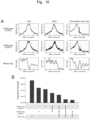
Figure 10 illustrates the analysis results of fixed budding yeast nuclei by GCMT- and CCMT-based NOMe-Seq.- A. Aggregation plots for methylation levels of GCMT- and CCMT-based NOMe-Seq, and MNase-seq.
- B. Venn diagram illustrating the overlapping peaks identified by GCMT- and CCMT-based NOMe-Seq, ATAC-seq, and MNase-seq.
- The present invention will be described in detail below. The scope of the present invention is not limited to the following descriptions, and any embodiments other than those illustrated below may also be carried out with appropriate modifications without prejudice to the spirit of the invention.
- This specification incorporates the specification of
Japanese Patent Application No. 2022-087994 (filed on May 30, 2022 - All publications cited herein, including prior art documents, patent gazettes and other patent documents, are incorporated herein by reference.
- As used herein, the term "DNA methyltransferase" and the term "MTase" are synonymous with each other.
- It should be noted that detailed information for the references appearing in the following descriptions are listed at the end of this specification.
- DNA cytosine 5-methylation (5mC) is widely observed in the genomic DNA of living organisms and forms one of the major epigenetic modifications. Classically, in mammalian cells, increased levels of 5mC were considered to lead to gene silencing, whereas the levels of gene body methylation are shown to positively correlate with the expression levels of genes (References 1-4). Thus, the distribution pattern of 5mC is cell type-specific, and the genome-wide distribution of 5mC or methylome has always attracted much attention of researchers.
- Cytosine 5-methylation in mammalian cells depends on three DNA methyltransferases (MTases), i.e., DNMT1, DNMT3A and DNMT3B (References 5-7). DNMT1 is a maintenance DNA methyltransferase that introduces methylation into hemimethylated CG dinucleotides. On the other hand, DNMT3A and DNMT3B are de novo methyltransferases that introduce DNA methylation into non-methylated CG sites. Although some exceptions are known for pluripotent stem cells, oocytes, neurons and glial cells, DNA methylation on non-CG sites rarely occurs in normal somatic tissues (
References 8 and 9). Thus, it is commonly accepted that 5mC is introduced almost exclusively into CG dinucleotides, and cytosines in contexts other than CG dinucleotides are unmethylated in most mammalian cells. - The deposition of 5mC in the genome is closely related to other epigenetic modifications. For example, 5mC is depleted in gene promoters, and trimethylation of
lysine 4 of histone H3 (H3K4me3) is enriched (Reference 10). Another example is di- and tri-methylation of histone H3 lysine 36 (H3K36me2 and H3K36me3), and their deposition in the genome is positively related to transcriptional activity. H3K36me2 and H3K36me3 are enriched in gene bodies and recruit DNMT3A/B to introduce 5mC. Thus, these modifications support gene body methylation (References 11 and 12). Because many epigenetic modifications are mutually related, simultaneous detection of DNA methylation with other epigenetic markers on the same DNA molecule would stimulate the motivation for measurement, and the establishment of such measurement would shift epigenetic measurement to the next stage. However, most current methods for detecting epigenomes are not suitable for simultaneous detection. - For example, considering with chromatin immunoprecipitation followed by sequencing (ChIP-Seq) (References 13 and 14), which is the most commonly used technique for detecting epigenomes, in ChIP-Seq, the chromatin is first fragmented, the target epigenome on the fragmented chromatin is then immunoprecipitated, and DNA bound to the epigenome is sequenced. Since ChIP-Seq is based on chromatin fragmentation, the proximally located epigenomes on different nucleosomes should be separated in this first fragmentation step. Thus, measuring the relationship between two epigenetic modifications on a single DNA molecule is not practical with ChIP-Seq. Thus, fragmentation-based procedures are not suitable for measuring multiple epigenetic modifications simultaneously on a single DNA molecule.
- However, there are some fragmentation-free procedures for epigenomic detection. For example, a DNA methyltransferase (MTase) can be used as a probe to measure chromatin accessibility.
- Nucleosome occupancy and methylome sequencing (NOMe-Seq) is one of the earliest methods to measure chromatin accessibility with MTases (Reference 15), and NOMe-Seq has recently been combined with a nanopore sequencer (Reference 16). The same principle has recently been applied to Fiber-seq (Reference 17), which is a combination of non-specific adenine N-6 MTase M.EcoGII and a nanopore sequencer. Although chromatin accessibility is intended for the measurement of DNA-protein interactions of unspecified proteins, interactions between DNA and specific proteins can also be detected with MTases. One of the representative techniques is DamID (Reference 18). In DamID, dam methyltransferase fused with a protein of interest is expressed in target cells, and specific interactions of the fused protein with DNA can be measured by detecting DNA methylation introduced at the N-6 position of adenosine. In the original DamID report (Reference 18), methylation signals were detected using a methylation-sensitive restriction enzyme, but this is not an absolute requirement for detecting DNA methylation signals. Indeed, there are also cases where DNA methylation introduced with DamID was detected using a single-molecule sequencer. Moreover, DiMeLo-Seq for introducing adenine N-6 methylation in the proximity of a specific epigenomic modification has also been established, and the demand for (epigenomic) detection techniques using MTases is further increased.
- Thus, MTases allow fragmentation-free and simultaneous detection of multiple epigenomes on a single DNA molecule.
- For epigenetic analysis based on MTases, the resolution is primarily determined by the frequency of the recognized sequences in the genome, and the length of the recognized sequence determines the frequency of sequences. Since one of the most basic epigenome units, nucleosomes, are wrapped with approximately 150 base pairs (bp) of genomic DNA, the resolution required for epigenome mapping should be higher than 150 bp. Thus, the recognition sequence must be 3 bp (64 bp resolution) or less to achieve sufficient resolution for epigenetic measurement. Many MTases have been identified from bacterial and viral sources, and non-specific adenine N-6 MTases, such as M. EcoGII, have achieved fine mapping of chromatin accessibility (Reference 17). However, when focusing on DNA cytosine C-5 MTases, MTases that can be used as probes for fine epigenome mapping are limited to only three: M. SssI (CG), M. CviPI (GC) and M. CviPII (CCD) (the target cytosines are underlined) (References 19 and 20). Further, due to the intrinsic DNA methylation (endogenous methylation) of CG dinucleotides in mammalian cells, a problem arises from the existence of sequences fully (M.SssI) or partially (M.CviPI) overlapping with CG dinucleotides. Thus, there has been a demand for the development and identification of cytosine C-5 MTases that never overlap with CG dinucleotides and has a short recognition sequence.
- The inventor of the present invention has found a systematic strategy for identifying cytosine C-5 MTases with short recognition sequences, and have succeeded in identifying the MTases of six novel recognition sequences. Moreover, the inventor of the present invention has developed a novel MTase by focusing on MTases capable of recognizing CC dinucleotide among the identified MTases, because the non-overlapping specificity with CG dinucleotide is thought to be beneficial for epigenome mapping in mammalian cells. More particularly, this novel MTase is an MTase that is capable of specifically recognizing a CC dinucleotide sequence and 5-methylating the 5'-position cytosine residue in the sequence. Such a novel MTase capable of recognizing and methylating CC dinucleotide, which is a context composed of only two nucleotides and not overlapping with CG where endogenous methylation occurs, has not yet been reported or established.
- The protein according to the present invention is a protein having functions as a DNA methyltransferase (MTase). Particularly, the protein according to the present invention is a protein having the ability to specifically recognize a CC dinucleotide sequence and 5-methylate the 5'-position cytosine residue in the sequence. More particularly, the protein according to the present invention is a protein modified to delete some amino acid residues including the N-terminal end of an MTase, M.CviQIX or M.CviPII, and thereby have (or acquire) the above ability (i.e., the ability to 5-methylate the 5'-position cytosine residue in the CC dinucleotide sequence).
- M.CviQIX is an MTase which has been considered to be derived from Paramecium bursaria Chlorella virus NY2A, and its amino acid sequence is as set forth in SEQ ID NO: 2. It should be noted that the nucleotide sequence encoding this amino acid sequence is not limited to, but is illustrated by, the nucleotide sequence as set forth in SEQ ID NO: 1.
- M.CviPII is an MTase derived from Chlorella virus, and its amino acid sequence is as set forth in SEQ ID NO: 4. It should be noted that the nucleotide sequence encoding this amino acid sequence is not limited to, but is illustrated by, the nucleotide sequence as set forth in SEQ ID NO: 3.
- It should be noted that the MTases M.CviQIX and M.CviPII are each one of many conventionally known MTases, and are known to be capable of specifically recognizing a "CCD trinucleotide sequence" (wherein D is A, G or C) and 5-methylating the 5'-position cytosine residue in this sequence. In general, those skilled in the art would generally have no rational reason for attempting to further modify such an MTase capable of recognizing and methylating a relatively short sequence of CCD trinucleotide. Moreover, even when attempting to modify an MTase capable of recognizing and methylating a shorter dinucleotide sequence, there is no rational reason leading to a means intended to delete amino acid residues including the N-terminal end of the MTase.
- A protein modified to delete some amino acid residues including the N-terminal end of the MTase M.CviQIX is not limited to, and may be, for example, a protein modified to delete 11 amino acid residues, 13 amino acid residues or 15 amino acid residues from the N-terminal end of this MTase. Among them, a protein modified to delete 15 amino acid residues is preferred. The amino acid sequence of this protein modified to delete 15 amino acid residues from the N-terminal end of M.CviQIX is the amino acid sequence as set forth in SEQ ID NO: 6 (it should be noted that the nucleotide sequence encoding this amino acid sequence is as set forth in SEQ ID NO: 5). For this reason, the protein according to the present invention is also preferably illustrated by a protein having the amino acid sequence as set forth in SEQ ID NO: 6.
- A protein modified to delete some amino acid residues including the N-terminal end of the MTase M.CviPII is not limited to, and may be, for example, a protein modified to delete 11 amino acid residues, 13 amino acid residues or 15 amino acid residues from the N-terminal end of this MTase. Among them, a protein modified to delete 15 amino acid residues is preferred. The amino acid sequence of this protein modified to delete 15 amino acid residues from the N-terminal end of M.CviPII is the amino acid sequence as set forth in SEQ ID NO: 8 (it should be noted that the nucleotide sequence encoding this amino acid sequence is as set forth in SEQ ID NO: 7). For this reason, the protein according to the present invention is also preferably illustrated by a protein having the amino acid sequence as set forth in SEQ ID NO: 8.
- The protein according to the present invention is not limited to, and is also preferably illustrated by proteins (so-called mutant proteins) comprising amino acid sequences in which one or several amino acids have been deleted, substituted or added in the amino acid sequences of the various proteins mentioned above in this section and having the ability to specifically recognize a CC dinucleotide sequence and 5-methylate the 5'-position cytosine residue in the sequence.
- As intended here, the above "amino acid sequence in which one or several amino acids have been deleted, substituted or added" is preferably an amino acid sequence in which, for example, 1 to around 10 amino acids, preferably 1 to several amino acids, 1 to 5 amino acids, 1 to 4 amino acids, 1 to 3 amino acids, 1 to 2 amino acids, or 1 amino acid has been deleted, substituted or added. For introduction of mutations such as deletion, substitution or addition, it is possible to use a kit for mutation introduction based on site-directed mutagenesis, as illustrated by GeneTailor™ Site-Directed Mutagenesis System (Invitrogen) and TaKaRa Site-Directed Mutagenesis System (e.g., Prime STAR® Mutagenesis Basal kit, Mutan®-Super Express Km; Takara Bio Inc., Japan), etc. Likewise, whether the above-mentioned mutation of deletion, substitution or addition has been introduced can be confirmed using various amino acid sequencing techniques, as well as X ray- and NMR-based structural analysis techniques, etc.
- Moreover, the protein according to the present invention is not limited to, and is also preferably illustrated by, proteins (so-called mutant proteins) that comprise amino acid sequences having an identity (homology) of 80% or more to the amino acid sequences of the various proteins mentioned above and that have the ability to specifically recognize a CC dinucleotide sequence and 5-methylate the 5'-position cytosine residue in the sequence.
- As intended here, the above identity is preferably 85% or more, 90% or more, 95% or more, 96% or more, 97% or more, 98% or more, or 99% or more.
- Mutant proteins as mentioned above may also be prepared through genetic engineering procedures using a gene encoding the amino acid sequences of the protein.
- In the context according to the present invention, the term "specifically recognize a CC dinucleotide sequence" is intended to mean that only a dinucleotide composed of two consecutive cytosine (C) nucleotides can be recognized. The term "5-methylate the 5'-position cytosine residue in the CC dinucleotide sequence" is intended to mean methylating the carbon of the 5'-position of the cytosine residue at the 5th end of the above recognized CC, whereby the 5'-position cytosine residue, resulted in 5-methylcytosine or 5-methylcytidine (5mC). Such methylation activity may be detected, measured and/or evaluated, for example, by techniques to examine the presence or absence of DNA cleavage with HaeIII (which recognizes GGCC) or HpaII (which recognizes CCGG) whose cleavage activity is known to be inhibited by the presence of 5mC, or by bisulfite sequencing techniques, etc.
- The protein according to the present invention may be composed of naturally-occurring peptides linked in combination or may be obtained artificially by chemical synthesis, is not limited thereto.
- A naturally-occurring protein may be directly obtained from a naturally-occurring product by known recovery and purification procedures, or may be obtained by known gene recombination technology as follows: a gene encoding the protein is incorporated into any of various expression vectors or the like, introduced the vector into cells and expressed therein, followed by known recovery and purification procedures. Alternatively, the protein may be produced by a cell-free protein synthesis system using a commercially available kit, e.g., a reagent kit PROTEIOS™ (Toyobo Co., Ltd., Japan) or TNT™ System (Promega), a synthesizer PG-Mate™ (Toyobo Co., Ltd., Japan) or RTS (Roche Diagnostics), etc., followed by known collection and purification procedures, and is not limited thereto.
- On the other hand, a chemically synthesized protein may be obtained by known protein synthesis techniques. Examples of synthesis techniques include azide method, acid chloride method, acid anhydride method, mixed acid anhydride method, DCC method, active ester method, carboimidazole method and oxidation-reduction method, etc. Moreover, the synthesis may be accomplished by applying either solid phase synthesis or liquid phase synthesis. A commercially available protein synthesizer may also be used for this purpose. After synthesis reaction, the protein may be purified using known purification techniques (e.g., chromatography) in combination.
- The present invention may include derivatives of the above various proteins according to the present invention together with or in place of these proteins. Such derivatives are intended to encompass all derivatives which may be prepared originating from these proteins, as illustrated by those in which some of the constituent amino acids are replaced with unnatural amino acids and those in which some of the constituent amino acids (mainly their side chains) are chemically modified, etc.
- Moreover, according to the present invention, salts of the above various proteins and/or derivatives thereof may be included together with or in place of these proteins and/or derivatives thereof. Such salts are preferably physiologically acceptable acid addition salts or basic salts. Examples of acid addition salts include salts with inorganic acids (e.g., hydrochloric acid, phosphoric acid, hydrobromic acid, sulfuric acid) or salts with organic acids (e.g., acetic acid, formic acid, propionic acid, fumaric acid, maleic acid, succinic acid, tartaric acid, citric acid, malic acid, oxalic acid, benzoic acid, methanesulfonic acid, benzenesulfonic acid). Examples of basic salts include salts with inorganic bases (e.g., sodium hydroxide, potassium hydroxide, ammonium hydroxide, magnesium hydroxide) or salts with organic bases (e.g., caffeine, piperidine, trimethylamine, pyridine).
- These salts may be prepared using appropriate acids such as hydrochloric acid or using appropriate bases such as sodium hydroxide. For example, these salts may be prepared by treatment in water or in a liquid containing an inert water-miscible organic solvent (e.g., methanol, ethanol or dioxane) using standard protocols.
- A gene encoding the protein according to the present invention as mentioned above is not limited to, but is illustrated by, a gene comprising DNA as set forth in (a), (b) or (c) below. Genes comprising these DNAs may consist only of these DNAs or may comprise, in addition to these DNAs, known nucleotide sequences (e.g., a transcription promoter, an SD sequence, a Kozak sequence, a terminator) required for gene expression and/or recognition sequences for various restriction enzyme sites, without being limited thereto.
- (a) DNA comprising the nucleotide sequence as set forth in SEQ ID NO: 5 or 7.
- (b) DNA which is hybridizable under stringent conditions with DNA consisting of a nucleotide sequence complementary to the above DNA (a) and which encodes a protein having the ability to specifically recognize a CC dinucleotide sequence and 5-methylate the 5'-position cytosine residue in the sequence.
- (c) DNA which shares an identity of 80% or more with the above DNA (a) and which encodes a protein having the ability to specifically recognize a CC dinucleotide sequence and 5-methylate the 5'-position cytosine residue in the sequence.
- In the above DNA (a), the nucleotide sequence as set forth in SEQ ID NO: 5 is a nucleotide sequence encoding an amino acid sequence with deletion of N-
terminal 15 residues in the amino acid sequence (SEQ ID NO: 2) of the MTase M.CviQIX, as mentioned above. Likewise, the nucleotide sequence as set forth in SEQ ID NO: 7 is a nucleotide sequence encoding an amino acid sequence with deletion of N-terminal 15 residues in the amino acid sequence (SEQ ID NO: 4) of the MTase M.CviPII. - The above DNA (b) may be obtained from a cDNA library or a genomic library by known hybridization techniques such as colony hybridization, plaque hybridization and Southern blotting in which the above DNA (a) or DNA consisting of a nucleotide sequence complementary thereto, or a fragment thereof is used as a probe. As such a library, a library prepared in a known manner or a commercially available cDNA or genomic library may be used for this purpose and is not limited thereto.
- As to detailed procedures for hybridization techniques, reference may be made, as appropriate, to Molecular Cloning, A Laboratory Manual 4th ed., Cold Spring Harbor Laboratory Press (1989), etc.
- The "stringent conditions" in hybridization techniques refer to washing conditions after hybridization, and are intended to mean, for example, conditions where the salt concentration in buffer is 15 to 330 mM and the temperature is 25°C to 65°C, preferably conditions where the salt concentration is 15 to 150 mM and the temperature is 45°C to 55°C, as specifically illustrated by conditions where the salt concentration is 80 mM and the temperature is 50°C, etc. Further, in addition to such conditions of the salt concentration and the temperature, various other conditions including the probe concentration, the probe length, the reaction time and so on may also be taken into consideration to determine, as appropriate, the conditions required to obtain the above DNA (b).
- The above DNA (c) is DNA having an identity (homology) of 80% or more to the above DNA (a), as preferably illustrated by DNA having an identity of 85% or more, 90% or more, 95% or more, 96% or more, 97% or more, 98% or more, or 99% or more to the above DNA (a). This DNA is preferred for use as the above hybridizable DNA (b).
- Mutant DNA such as the above DNA (c) may be prepared, for example, according to site-directed mutagenesis as described in Molecular Cloning, A Laboratory Manual 4th ed., Cold Spring Harbor Laboratory Press (1989), Current Protocols in Molecular Biology, John Wiley & Sons (1987-1997), etc. Particularly, mutant DNA may be prepared by known techniques (e.g., Kunkel method or Gapped duplex method) using a kit for introducing mutation based on site-directed mutagenesis, and preferred examples of such a kit include QuickChange™ Site-Directed Mutagenesis Kit (Stratagene), GeneTailor™ Site-Directed Mutagenesis System (Invitrogen), TaKaRa Site-Directed Mutagenesis System (e.g., Mutan-K, Mutan-Super Express Km; Takara Bio Inc., Japan), etc.
- Alternatively, using PCR primers designed such that a missense mutation is introduced to give nucleotides representing a codon for a desired amino acid, DNA comprising a nucleotide sequence encoding wild-type MTG may be used as a template in PCR under appropriate conditions to prepare mutant DNA. Any DNA polymerase may be used in PCR, but preferred is a highly accurate DNA polymerase, as preferably illustrated by Pwo DNA polymerase (Roche Diagnostics), Pfu DNA polymerase (Promega), platinum Pfx DNA polymerase (Invitrogen), KOD DNA polymerase (Toyobo Co., Ltd., Japan), KOD-plus-polymerase (Toyobo Co., Ltd., Japan), etc. Reaction conditions for PCR may be determined as appropriate depending on the optimum temperature of the DNA polymerase to be used, the length and type of DNA to be synthesized, etc. For example, cycle conditions are preferably set as follows: 20 to 200 cycles in total of "90°C to 98°C for 5 to 30 seconds (thermal denaturation and dissociation) → 50°C to 65°C for 5 to 30 seconds (annealing) → 65°C to 80°C for 30 to 1200 seconds (synthesis and elongation)."
- As to the above DNA (b) or (c), for example, particularly preferred is DNA consisting of a nucleotide sequence such that this nucleotide sequence is not completely the identical as that of the above DNA (a) but the amino acid sequence translated therefrom is completely the same as that from the above DNA (a) (i.e., DNA engineered to comprise a silent mutation(s) in the above DNA (a)).
- For description about "the ability to specifically recognize a CC dinucleotide sequence and 5-methylate the 5'-position cytosine residue in the sequence" in the above DNA (b) or (c), the descriptions in the preceding section may be applied as appropriate.
- The gene encoding the protein according to the present invention has no particular limitation on its codons corresponding to individual amino acids translated therefrom, and may comprise DNA representing codons commonly used (preferably codons frequently used) in humans or other mammals after transcription or may comprise DNA representing codons commonly used (preferably codons frequently used) in microorganisms (e.g., E. coli or yeast) or plants, etc., after transcription.
- Moreover, if the protein according to the present invention comprises a linker sequence as mentioned above, the gene encoding the protein according to the present invention may comprise DNA encoding the amino acid sequence of the linker sequence.
- To express the protein according to the present invention, the gene according to the present invention as mentioned above should first be incorporated into an expression vector to construct a recombinant vector. In this case, the gene to be incorporated into the expression vector may optionally be linked in advance in its upstream with a transcription promoter, an SD sequence (when prokaryotic cells are used as a host) and a Kozak sequence (when eukaryotic cells are used as a host) and linked in advance in its downstream with a terminator, and may also be linked in advance with an enhancer, a splicing signal, a poly-A addition signal, a selective marker, etc. It should be noted that individual elements required for gene expression including a transcription promoter as mentioned above may be contained initially in the gene, or alternatively, those contained originally in the expression vector, if any, may be used. There is no particular limitation on the mode of use of each element.
- For incorporating the gene into the expression vector, various known techniques based on gene recombination technology may be used, including those using restriction enzymes, those using topoisomerases, etc. Moreover, the expression vector is not limited in any way as long as it may carry the gene encoding the protein according to the present invention, as illustrated by plasmid DNA, bacteriophage DNA, retrotransposon DNA, a retroviral vector, artificial chromosomal DNA, etc., and a vector suitable for host cells to be used may be selected as appropriate for use.
- Then, the above recombinant vector thus constructed may be introduced into a host to obtain a transformant, and this transformant may be cultured to allow the expression of the protein according to the present invention. It should be noted that the term "transformant" in the context according to the present invention is intended to mean a host into which a foreign gene has been introduced, and examples include a host into which a foreign gene has been introduced by introduction of plasmid DNA or the like (transformation) and a host into which a foreign gene has been introduced by infection with various viruses and phages (transduction).
- Such a host is not limited, and may be selected as appropriate as long as it allows the expression of the protein according to the present invention after introduction of the above recombinant vector, and examples include known hosts such as various animal cells (e.g., human and mouse cells), various plant cells, bacteria, yeast, plant cells, etc.
- When animal cells are used as a host, examples include human fibroblasts, CHO cells, monkey cells COS-7, Vero, mouse L cells, rat GH3, human FL cells, etc. Alternatively, insect cells such as Sf9 cells and Sf21 cells may also be used.
- When bacteria are used as a host, examples include E. coli, Bacillus subtilis, etc.
- When yeast is used as a host, examples include Saccharomyces cerevisiae, Schizosaccharomyces pombe, etc.
- When plant cells are used as a host, examples include tobacco BY-2 cells, etc.
- Procedures for obtaining a transformant are not limited, and may be selected as appropriate in consideration of the combination of types of host and expression vector. Preferred examples include electroporation, lipofection, heat shock transfection, PEG transfection, calcium phosphate transfection, DEAE-dextran transfection, and infection with various viruses (e.g., DNA virus, RNA virus).
- In the resulting transformant, the codon types of the gene contained in the recombinant vector are not limited, and may be either identical with or different from the codon types in the host actually used.
- The protein according to the present invention can be produced, particularly, by a process comprising a step of culturing the above transformant and a step of collecting a protein having the ability to specifically recognize a CC dinucleotide sequence and 5-methylate the 5'-position cytosine residue in the sequence from the resulting cultured material. As used here, the term "cultured material" is intended to mean a culture supernatant, cultured cells, cultured microorganisms, or a disruptant of the cells or microorganisms. The above transformant may be cultured in accordance with standard procedures used for host culture. The desired protein is accumulated in the above cultured material. According to the present invention, the above collection step may comprise the purification step of the protein.
- As a medium used for the above culture, any of various known natural and synthetic media may be used as long as it contains host-assimilable sources of carbon, nitrogen, inorganic salts, etc., and allows efficient culture of the transformant.
- During culture, the transformant may be cultured under selection pressure to avoid loss of the recombinant vector contained in the transformant and loss of the gene encoding the desired protein. Namely, when the selective marker used is a drug resistance gene, the corresponding drug may be added to the medium, while when the selective marker used is an auxotrophic complementary gene, the corresponding trophic factor may be removed from the medium.
- In the case of culturing a transformant transformed with an expression vector using an inducible promoter as a promoter, a suitable inducer (e.g., IPTG) may be added to the medium when required.
- Culture conditions for the transformant are not limited as long as they do not impair the productivity of the desired protein and the growth of the host. In general, culture may be conducted at 10°C to 40°C, preferably at 20°C to 37°C for 5 to 100 hours. pH adjustment may be accomplished by using an inorganic or organic acid, an alkaline solution, etc. Techniques used for culture include solid culture, static culture, shaking culture, aerobic spinner culture, etc.
- After culture, when the desired protein is produced within microorganisms or cells, the microorganisms or cells may be disrupted to thereby collect the desired protein. Techniques for disruption of the microorganisms or cells include high pressure treatment with a French press or a homogenizer, ultrasonication, grinding treatment with glass beads, etc., enzymatic treatment with lysozyme, cellulase or pectinase, etc., freeze-thaw treatment, hypotonic solution treatment, and bacteriolysis induction treatment with phages. After disruption, the disrupted debris of the microorganisms or cells (including an insoluble cell extract fraction) may be removed, if necessary. Techniques for removal of the debris may be illustrated by centrifugation and filtration, etc. If necessary, a flocculating agent and/or a filter aid, etc., may be used to increase the removal efficiency of the debris. The supernatant obtained after removal of the debris is a soluble cell extract fraction and can be used as a crude protein solution.
- Alternatively, when the desired protein is produced within microorganisms or cells, the microorganisms or cells per se may be collected by centrifugation, membrane separation or other techniques, and used directly without being disrupted.
- On the other hand, when the desired protein is produced outside microorganisms or cells, the cultured solution may be used directly or may be treated by centrifugation, filtration or other techniques to remove the microorganisms or cells. Then, the desired protein may be collected from the cultured material, e.g., through extraction by ammonium sulfate precipitation, if necessary, and may further be isolated and purified by using dialysis and/or various chromatographic techniques (e.g., gel filtration, ion exchange chromatography, affinity chromatography), if necessary.
- The production yield of the protein obtained upon culture of the transformant may be confirmed, for example, by SDS-PAGE (polyacrylamide gel electrophoresis) or other techniques in units, for example, per culture solution, per wet cell weight or dry cell weight, per crude enzyme solution protein, etc.
- Moreover, in addition to a protein synthesis system as mentioned above using a transformant, the desired protein may also be produced using a cell-free protein synthesis system where no living cells are used.
- Such a cell-free protein synthesis system is a system where a cell extract is used to synthesize a desired protein within an artificial container such as a test tube, etc. Moreover, cell-free protein synthesis systems available for this purpose also include a cell-free transcription system where DNA is used as a template to synthesize RNA.
- In this case, the cell extract to be used is preferably derived from host cells described above. As a cell extract, it is possible to use, for example, an extract derived from eukaryotic cells or prokaryotic cells, more particularly an extract derived from CHO cells, rabbit reticulocytes, mouse L-cells, HeLa cells, wheat germ, budding yeast, E. coli or the like. It should be noted that these cell extracts may be concentrated or diluted before use, or may be used directly, without being limited thereto.
- These cell extracts may be obtained, for example, by ultrafiltration, dialysis, polyethylene glycol (PEG) precipitation, etc.
- Such cell-free protein synthesis may also be accomplished by using a commercially available kit. Examples include a reagent kit PROTEIOS™ (Toyobo Co., Ltd., Japan) or TNT™ System (Promega), a synthesizer PG-Mate™ (Toyobo Co., Ltd., Japan) or RTS (Roche Diagnostics), etc.
- The desired protein produced by cell-free protein synthesis may be purified as mentioned above by chromatographic or other means which may be selected as appropriate.
- The present invention also includes a method for epigenome analysis (epigenome mapping), which comprises using the protein according to the present invention (including proteins obtainable by the production processes described in the preceding section).
- Despite the increasing demand for MTases as tools for epigenome mapping, the available enzymes are limited, particularly for cytosine C-5 MTases having short recognition sequences. The protein according to the present invention is capable of recognizing and methylating a CC dinucleotide sequence which is distinct from (i.e., does not overlap with) a CG dinucleotide sequence where endogenous methylation occurs in mammalian cells. For this reason, the protein according to the present invention is useful as a new probe for epigenome analysis (epigenome mapping).
- The present invention will be further described in more detail by way of the following examples, although the present invention is not limited only to these examples.
- The amino acid sequence of M. CviQIX was obtained from REBASE (http://rebase.neb.com/rebase/rebase.html) (References 19 and 20), while the amino acid sequence of M.CviPII was obtained from Reference 21.
- Genes encoding M.CviQIX and M.CviPII were synthesized with codon optimization for E. coli by Eurofin Genomics Inc. The genes were synthesized to have BamHI and EcoRI recognition sequences at the 5'- and 3'-terminal ends, respectively, with no internal BamHI and EcoRI recognition sequences (SEQ ID NOs: 9 and 10 (the nucleotide sequences of SEQ ID NOs: 9 and 10 are designed to have the above recognition sequences at the 5'- and 3'-terminal ends of the nucleotide sequences of SEQ ID NOs: 5 and 7, respectively)). These gene fragments were each subcloned into the BamHI-EcoRI site of pCZS (
Figure 1 ). Genes for N-terminal deletion mutants of M.CviQIX and M.CviPII were prepare from the expression vectors carrying their respective full-length genes through inverse PCR and the subsequent circularization by Infusion cloning (Takara Bio Inc., Japan). - The bacterial expression vector pCZS carrying the gene encoding M.CviQIX or M.CviPII was introduced into T7Express (New England Biolabs, Ipswich, MA). The cells were inoculated into 3 mL of LB medium (1% [w/v] tryptone, 0.5% [w/v] yeast extract, and 0.5% [w/v] sodium chloride) supplemented with 100 µg/mL of carbenicillin (Nacalai Tesque, Inc., Kyoto, Japan) and grown overnight at 37°C with vigorous shaking. 50 µL of each cell suspension was diluted with 3 mL of carbenicillin-supplemented LB medium, and the cells were cultured at 37°C for 3 hours with shaking. This cell suspension was cooled in ice-cold water for 30 minutes, and 3 µL of 1 M isopropyl β-D-1-thiogalactopyranoside (IPTG, Nacalai Tesque, Inc., Japan) was added to induce protein expression. The cells were collected by centrifugation and used for genomic DNA purification with a DNeasy Blood & Tissue Kit (Qiagen). The genomic DNA concentration was measured using a Qubit dsDNA BR assay kit and a Qubit fluorometer (Thermo Fisher Scientific, Waltham, MA, USA).
- Genomic DNA (100 ng) was added to a 10 µL reaction containing 1× CutSmart Buffer and a restriction enzyme, HaeIII or HpaII. The reaction mixture was incubated at 37°C for 1 hour, followed by heating at 70°C for 10 minutes to inactivate the enzyme. After treatment with either of the above restriction enzymes, DNA was analyzed using an E-Gel Power SNAP system on a 2% E-Gel Ex gel (Thermo Fisher Scientific).
- The bacterial cells transformed with pCZS expressing the MTase-encoding gene was inoculated into 30 mL of LB medium containing 100 µg/mL carbenicillin, and cultured overnight at 37°C with vigorous shaking. The seed culture was transferred to a 2 L Erlenmeyer flask with baffles containing 1 L of carbenicillin-supplemented LB medium, and further cultured at 37°C for 4 hours with shaking. This flask was cooled in ice-cold water for 30 minutes, and 230 mg of IPTG was then added to induce protein expression. The flask was incubated overnight at 16°C with vigorous shaking. The cells were collected by centrifugation at 2500 × g for 15 minutes, and the collected cells were frozen at -80°C until use.
- The bacterial cells were re-suspended in 20 mL of HisTrap buffer A (20 mM sodium phosphate, pH 7.5, 800 mM NaCl, 20 mM imidazole, 1 mM DTT, and 10% glycerol) containing a protease inhibitor cocktail (Nacalai Tesque, Inc., Japan) and disrupted through ultrasonication. The lysate was cleared by centrifugation at 15,000 × g for 15 minutes and filtered with a 0.45 µm syringe filter. The first round of affinity purification was performed with a 5 mL HisTrap HP column (Cytiva, Marlborough, MA) using HisTrap buffer A and HisTrap buffer B (20 mM sodium phosphate, pH 7.5, 800 mM NaCl, 200 mM imidazole, 1 mM DTT, 10% glycerol). A fraction containing the target protein was further purified with a 1 mL StrepTrap HP (Cytiva) using StrepTrap buffer A (100 mM Tris-HCl, pH 8.0, 150 mM NaCl, 1 mM EDTA, 1 mM DTT) and StrepTrap buffer B (100 mM Tris-HCl, pH 8.0, 150 mM NaCl, 1 mM EDTA, 1 mM DTT, and 2.5 mM d-desthiobiotin). Chromatographic purification was performed with an AKTA Start System (Cytiva). The dual-affinity purified protein was concentrated by ultrafiltration using an Amicon Ultra-4 30 K device (Millipore), and supplemented with bovine serum albumin (BSA) and glycerol to give final concentrations of 100 µg/mL and 50% (v/v), respectively, and then stored at -20°C until use.
- S288C cells (NBRC1136, Biological Resource Center at the National Institute of Technology and Evaluation) were inoculated into 50 ml of YPD medium (1% yeast extract, 2% Bacto peptone, 2% dextrose) and cultured overnight at 30°C with shaking. The cell suspension was diluted with 1 L of YPD and further cultured at 30°C for 4 hours with shaking. The cells were collected by centrifugation at 2000 × g for 15 minutes, washed twice with 50 mL of water, and re-suspended in 20 mL of 1 M sorbitol. The cell suspension was mixed with 20 µL of β-mercaptoethanol and 20 mg of Zymolyase 100T (Seikagaku Kogyo Co., Japan), and incubated for 15 minutes at room temperature to degrade and remove the cell wall, thereby obtaining spheroplasts. Then, the spheroplasts were washed twice with 20 mL of 1 M sorbitol, and re-suspended in 20 mL of 1 M sorbitol. The re-suspended spheroplasts were mixed with 240 µL of 38% formaldehyde (Wako Chemicals, Osaka, Japan) and incubated at room temperature for 5 minutes to fix the spheroplasts. The fixed spheroplasts were washed twice with 20 mL of 1 M sorbitol and centrifuged at 5000 × g for 5 minutes to give a pellet. Then, the spheroplasts were re-suspended in 10 mL of nuclei preparation solution (10 mM HEPES-KOH, pH 7.5, 10 mM NaCl, 3 mM MgCl2, and 0.5% [v/v] Nonidet P 40 substitute), and incubated at room temperature for 5 minutes. The nuclei were collected by centrifugation at 5000 × g for 5 minutes, and washed twice with 10 mL of nuclei wash solution (10 mM HEPES-KOH, pH 7.5, 10 mM NaCl, 3 mM MgCl2). The nuclei were re-suspended in 10 mL of nuclei wash solution, and the suspension was dispensed in 500 µL volumes into 20 tubes, which were stored at -80°C until use.
- The frozen nuclei suspension was thawed and re-suspended in 500 µL of 1× methylation buffer (50 mM Tris-HCl, pH 8.5, 50 mM NaCl, 1 mM DTT, 1.6 mM SAM). Then, the purified N-
terminal 15 amino acid deletion mutant of M.CviQIX (referred to as CCMT; see the section "Results" described later) was added in an appropriate amount. After incubation at 37°C for 1 hour, the nuclei were centrifuged at 5000 × g for 1 minute to give a pellet, which was then re-suspended in 40 µL of 10 mM Tris-HCl, pH 8.0. This nuclei suspension was mixed with 5 µL of 20 mg/ml proteinase K and 10% (w/v) SDS, and incubated at 50°C for 1 hour. Then, this reaction was supplemented with 150 µL of 1 M Tris-HCl, pH 8.0, overlaid with a white mineral oil, and incubated at 80°C for 24 hours. The aqueous phase was transferred to a new test tube, and mixed with 200 µL of Buffer AL and isopropanol. This mixture was loaded onto a DNeasy column by centrifugation at 10,000 × g for 1 minute, and the column was washed sequentially with Buffer W1 and Buffer W2 (500 µL each). Finally, the purified DNA was eluted with 200 µL of Buffer AE, and provided for WGBS analysis using the tPBAT protocol. Buffer AL, Buffer W1, Buffer W2 and Buffer AE are all reagents included in a DNeasy Blood & Tissue Kit. - IMR-90 cells (JCRB cell bank #JCRB9054) were cultured at 37°C in an atmosphere of 100% humidity and 5% CO2 in four T75 flasks each containing 30 mL of minimum essential medium (Thermo Fisher Scientific) supplemented with 10% fetal bovine serum (Thermo Fisher Scientific) and 50 U/mL penicillin-streptomycin (Thermo Fisher Scientific). The cells grown were treated with trypsin and collected by centrifugation at 2000 × g for 5 minutes. The cells were washed twice with 20 mL of D-PBS (Nacalai Tesque, Inc., Japan), and re-suspended at 1 × 10⁷ cells/ml in CELLBANKER 1 (Takara Bio Inc., Japan). The cell suspension was dispensed in 500 µL volumes and stored at -80°C until use.
- The frozen cell suspension was thawed before use and washed twice with PBS. Then, the cells were re-suspended in nuclei preparation buffer (10 mM Tris-HCl, pH 8.0, 10 mM NaCl, 3 mM MgCl2, 0.1 mM EDTA) and 0.5% (w/v) NP-40, and incubated on ice for 10 minutes. Then, the nuclei were collected through centrifugation at 2000 × g for 5 minutes, re-suspended in 500 µL of 1× methylation buffer supplemented with an optimum amount of CCMT, and incubated at 37°C for 30 minutes. Then, the nuclei were collected by centrifugation at 2000 × g for 5 minutes, and the supernatant was removed. The nuclei were dissolved in 20 µL of 20 mg/ml proteinase K, and 200 µL of Buffer ATL was added thereto. After the reaction solution was incubated at 56°C for 1 hour, 200 µL of Buffer AL and 200 µL of isopropanol were added thereto. This mixture was loaded onto a DNeasy column, and washed with 500 µL of Buffer W1 or Buffer W2. The purified DNA was eluted with 200 µL of Buffer AE, and provided for WGBS analysis.
- The inventor of the present invention attempted to produce an active protein of M.CviQIX which has been reported on databases to have MTase activity at the first C of the CCD trinucleotide. However, DNA methylation activity was not detectable in most bacterial cells carrying this gene subcloned into several expression vectors (
Figures 3A to 3C ), but relatively strong MTase activity was observed in cells expressing M.CviQIX subcloned into expression vectors pCTF and pCNS. Namely, the genomic DNAs of cells carrying these two expression vectors showed resistance to both HaeIII and HpaII digestion (Figure 3C andFigures 7A and 7B ). pCTF and pCNS are designed to produce a protein fused with a trigger factor (TF) and a SUMO motif at the N-terminal end of M.CviQIX, respectively (Figure 3A ). TF and SUMO are expected to have an effect on protein solubilization and folding (Reference 22). Moreover, the genomic DNA extracted from the bacterial cells carrying the expression vector for N-terminal SUMO tagging showed stronger resistance to methylation-sensitive restriction enzymes than the genomic DNA extracted from bacterial cells carrying the expression vector for C-terminal SUMO tagging (Figure 3C ). Thus, the inventor of the present invention attempted to purify the products of these N-terminal TF- and SUMO-tagged constructs. However, both proteins showed only weak MTase activity after affinity purification using the N-terminal His6 tag. These results suggested the possibility that some factor different from protein solubilization and folding would lie at the N-terminal end and control the DNA methylation activity of M.CviQIX. Thus, the inventor of the present invention hypothesized that the N-terminal sequence may cause the low methylation activity of purified M.CviQIX. For this purpose, analysis on the genomic DNAs of bacterial cells carrying expression vectors for N-terminal deletion mutants of M.CviQIX was performed. M.CviQIX has 3 methionine residues at the N-terminal end. Thus, the inventor of the present invention considered that any of these 3 residues would be used for translation initiation within the cells of organisms originally carrying this gene. For this purpose, 3 mutants were prepared to lack amino acid residues upstream of each methionine residue, and the methylation status of their host genome was analyzed. As a result, the deletion of N-terminal 11, 13 or 15 amino acids of M.CviQIX was found to enhance the methylation of the host genome (Figures 3D and 3E , andFigure 7C ). Namely, each of these 3 methionine residues could be used as an initiation codon to produce active M.CviQIX. Likewise, similar results were also obtained in M.CviPII (Figures 7F and 7G ). Namely, the N-terminal amino acid sequences of M.CviQIX and M.CviPII were found to have an inhibitory effect on DNA methylation activity. - The inventor of the present invention induced the expression of N-
terminal 15 amino acid deletion (NDEL15) mutants of M.CviQIX and M.CviPII in E. coli cells, extracted the bacterial genomic DNAs, and performed whole genome bisulfite sequencing (WGBS) (Figure 4A ). Methylation levels were measured for each cytosine residue, and the appearance frequency of surrounding nucleotide sequences contributing to the methylation levels were expressed logographically, thus indicating that M.CviQIX and M.CviPII introduced methylation at the first C of CC dinucleotide. - Subsequently, the inventor of the present invention attempted to purify active proteins by using genes for N-
terminal 15 amino acid deletion mutants of M.CviQIX and M.CviPII. In this case, the inventor of the present invention also attempted to purify an active protein of M.CviPI, as a control, whose purification conditions had been established. Bacterial cells carrying an expression vector where each gene was cloned were cultured to induce protein expression, followed by dual affinity purification employing His- and StrepII-tags to purify these MTases (Figure 2 ). The proteins were stored in the presence of 100 µg/ml BSA, 10 mM DTT and 50% glycerol to preserve enzymatic activity during storage at -20°C. The purified proteins appeared highly homogenous upon SDS-PAGE. When assayed with restriction enzymes and WGBS using lambda phage DNA as a substrate, these MTases were found to cause the inhibition of DNA cleavage and thus confirmed to have methylation activity (Figure 8B ). - CC dinucleotide is a short recognition sequence which enables fine epigenome mapping at about 10 bp resolution. Thus, the inventor of the present invention attempted to establish a CC dinucleotide-recognizing MTase, M.CviQIX or M.CviPII, as a probe for epigenome mapping. Upon comparison of different combinations between expression vector and gene, M.CviQIX expressed under the control of a cold-shock promoter showed the highest yield and activity, and this protein was designated as CCMT. The salt concentration in CCMT-catalyzed methylation reaction was examined, thus finding that 50 mM sodium chloride was the best condition for stringent DNA methylation activity (
Figure 9 ). - Then, CCMT was used for NOMe-Seq analysis of formaldehyde-crosslinked budding yeast nuclei. Formalin-fixed yeast spheroplasts were permeabilized in a buffer containing NP-40 to remove their cell membrane, and then subjected to CCMT-catalyzed methylation in the presence of S-adenosylmethionine, thereby achieving the methylation of DNA on chromatin. After genomic DNA was purified, the methylation status of this DNA was analyzed by WGBS.
- Methylation levels in 10-bp bins were calculated and the methylation status of DNA between nuclei treated with commercially available GC dinucleotide-recognizing M.CviPI (GCMT) was compared with that of nuclei treated with CCMT, thus indicating that these two data sets showed similar distribution patterns of 5mC on the genome. It should be noted that since budding yeast has no endogenous DNA methylation, it can be interpreted that the detected D5mCs were all introduced by GCMT or CCMT. As illustrated in
Figures 5A and 5B , a similar tendency was observed in genomic DNA methylation patterns. The aggregation plots of CCMT and GCMT signals were centered at several similar genomic features (Figures 5C and 5D , andFigure 10A ). Sharp DNA methylation peaks were observed in the promoter regions of the genes (Figure 5B ). These strong DNA methylation signals were co-localized well with the signals detected using ATAC-Seq. Thus, these signals were considered to indicate open chromatin regions. The peaks detected upon CCMT- and GCMT-based NOMe-Seq and ATAC-Seq were co-localized well (Figure 10B ). - The DNA methylation levels at CC and GC dinucleotides aggregated well at the promoter-proximal regions (
Figures 5C and 5D ). These signals undoubtedly indicated nucleosome-free regions which are frequently observed in gene promoters as regions with no or weak nucleosome binding. The promoter-proximal DNA methylation signal at the -100 to -250 region of the transcription start site was inversely correlated with the low signal region detected through MNase-Seq (Figure 5E ). The DNA methylation signals at the transcription start sites illustrated a periodicity of 160 to 170 bp, and were inversely correlated with those observed using MNase-Seq (Figures 5B and 5C to 5E ). These observations recapitulated the previously reported properties of NOMe-Seq and MNase-seq (Reference 23). - Subsequently, CCMT-based NOMe-Seq was applied to a human-derived culture cell line, IMR-90 cells. After the cells were treated with a buffer containing NP-40 to permeabilize their cell membrane, CCMT treatment was performed and genomic DNA was purified, which was then subjected to WGBS analysis. In addition, a sample not treated with CCMT was also provided and used as a control. High-quality methylome data with 24.5-fold and 25.7-fold coverage were obtained for CCMT-treated and untreated samples, respectively (Table 1).
[Table 1] Basic statistics of methylome data in NOMe-Seq analysis on IMR90 cells Control CCMT-treated GCMT-treated Accession numbers at NCBI GEO GSM5769478 GSM5769479 GSM6111856 Mapping Read 1 Number of reads 462,135,990 445,678,391 447,579,538 Unique map 73.00% 72.80% 69.5% Unmap 24.20% 24.70% 27.9 % Read 2 Number of reads 462,135,988 445,678,391 447,579,537 Unique map 65.10% 64.90% 63.6% Unmap 32.60% 32.90% 34.0% Mapped read coverage Top 12.9 12.3 11.4 Bottom 12.8 12.2 11.3 Both 25.7 24.5 22.7 N 12.9 12.3 11.3 C 14.2 13.4 12.4 CpG 14.2 13.1 12.0 CHG 14.4 13.6 12.8 CHH 14.1 13.4 12.5 Methylation level C 3.4 3.9 5.4 CpG 56.2 56.2 58.0 CHG 1 1.2 3.1 CHH 0.8 1.5 2.8 Coverage vs read depth >=1 86.2% 86.1% 85.7% >=3 84.0% 83.8% 82.2% >=5 80.9% 80.6% 76.9% >=10 64.8% 63.2% 55.5% - As expected, intrinsic DNA methylation levels at CG sites were almost identical between CCMT-treated cells and untreated cells (
Figures 6A and 6B ). In contrast, DNA methylation levels at CC sites increased only in the CCMT-treated nuclei (Figures 6C and 6D ). These results indicated that endogenous CG methylation and CCMT-induced methylation at CC dinucleotides could be explicitly separated from each other. - Then, the two data sets were visually compared using a genome browser. As illustrated in
Figure 6E , several large domains with different intrinsic DNA methylation levels were observed in both data sets. These domains were undoubtedly highly methylated regions and partially methylated domains, and their existence has been described for IMR-90 cells (Reference 24). The comparison between CCMT-based NOMe-Seq and untreated control indicated that these two data sets were observed in almost the same status of intrinsic methylation on CG dinucleotides in mammalian cells. In contrast, strong and sharp methylation peaks were observed for CC methylation in the CCMT-treated samples, whereas no peaks were observed in the untreated control (Figure 6E ). Moreover, these peaks largely co-localized with the peaks identified using ATAC-Seq. Thus, the peaks observed in the CCMT-induced methylation signals indicated highly accessible chromatin regions (Figure 6E ). These results strongly suggested that CCMT-based NOMe-Seq would achieve simultaneous measurement of both the intrinsic methylome and chromatin accessibility of mammalian cells. - Despite the increasing demand for MTases as tools for epigenome mapping, the available enzymes are limited particularly for cytosine C-5 MTases of short recognition sequences. This example elucidated that the methylation activity of M.CviQIX and M. CviPII was inhibited by their N-terminal amino acid sequences of several residues, and conversely indicated that their N-terminal deletion mutants had high DNA methylation activity. These artificial mutant proteins could be purified and were found to retain their activity even in vitro. Moreover, they were also found to target CC dinucleotide which is a novel recognition sequence for cytosine C-5 MTases.
- This CC dinucleotide never overlaps with CG dinucleotide which is a recognition sequence for mammalian endogenous MTases. Thus, in addition to mammalian endogenous MTases, such a mutant protein was deemed to have a great advantage as a probe in epigenetic mapping for simultaneous detection of any epigenomic states. This was demonstrated by the achievement of NOMe-Seq in this example.
- The individual references cited herein are listed below.
- 1. Greenberg, M.V.C. and Bourc'his, D. (2019) The diverse roles of DNA methylation in mammalian development and disease. Nature Reviews Molecular Cell Biology, 20, 590-607.
- 2. Edwards, J.R., Yarychkivska, O., Boulard, M. and Bestor, T.H. (2017) DNA methylation and DNA methyltransferases. Epigenetics & Chromatin, 10, 23.
- 3. Jones, P.A. (2012) Functions of DNA methylation: islands, start sites, gene bodies and beyond. Nature Reviews Genetics, 13, 484-492.
- 4. Petryk, N., Bultmann, S., Bartke, T. and Defossez, P.-A. (2021) Staying true to yourself: mechanisms of DNA methylation maintenance in mammals. Nucleic Acids Res., 49, 3020-3032.
- 5. Jones, P.A. and Liang, G. (2009) Rethinking how DNA methylation patterns are maintained. Nat Rev Genet, 10, 805-811.
- 6. Edwards, J.R., Yarychkivska, O., Boulard, M. and Bestor, T.H. (2017) DNA methylation and DNA methyltransferases. Epigenetics Chromatin, 10, 23.
- 7. Tajima, S., Suetake, I., Takeshita, K., Nakagawa, A. and Kimura, H. (2016) Domain Structure of the Dnmt1, Dnmt3a, and Dnmt3b DNA Methyltransferases. Adv. Exp. Med. Biol., 945, 63-86.
- 8. Jang, H.S., Shin, W.J., Lee, J.E. and Do, J.T. (2017) CpG and Non-CpG Methylation in Epigenetic Gene Regulation and Brain Function. Genes, 8, 148.
- 9. Patil, V., Ward, R.L. and Hesson, L.B. (2014) The evidence for functional non-CpG methylation in mammalian cells. Epigenetics, 9, 823-828.
- 10. van de Lagemaat, L.N., Flenley, M., Lynch, M.D., Garrick, D., Tomlinson, S.R., Kranc, K.R. and Vernimmen, D. (2018) CpG binding protein (CFP1) occupies open chromatin regions of active genes, including enhancers and non-CpG islands. Epigenetics & Chromatin, 11, 59.
- 11. Teissandier, A. and Bourc'his, D. (2017) Gene body DNA methylation conspires with H3K36me3 to preclude aberrant transcription. The EMBO Journal, 36, 1471-1473.
- 12. Dhayalan, A., Rajavelu, A., Rathert, P., Tamas, R., Jurkowska, R.Z., Ragozin, S. and Jeltsch, A. (2010) The Dnmt3a PWWP domain reads .
- 13. Solomon, M.J., Larsen, P.L. and Varshavsky, A. (1988) Mapping protein-DNA interactions in vivo with formaldehyde: evidence that histone H4 is retained on a highly transcribed gene. Cell, 53, 937-947.
- 14. Johnson, D.S., Mortazavi, A., Myers, R.M. and Wold, B. (2007) Genome-wide mapping of in vivo protein-DNA interactions. Science, 316, 1497-1502.
- 15. Kelly, T.K., Liu, Y., Lay, F.D., Liang, G., Berman, B.P. and Jones, P.A. (2012) Genome-wide mapping of nucleosome positioning and DNA methylation within individual DNA molecules. Genome Res., 22, 2497-2506.
- 16. Lee, I., Razaghi, R., Gilpatrick, T., Molnar, M., Gershman, A., Sadowski, N., Sedlazeck, F.J., Hansen, K.D., Simpson, J.T. and Timp, W. (2020) Simultaneous profiling of chromatin accessibility and methylation on human cell lines with nanopore sequencing. Nat Methods, 17, 1191-1199.
- 17. Stergachis, A.B., Debo, B.M., Haugen, E., Churchman, L.S. and Stamatoyannopoulos, J.A. (2020) Single-molecule regulatory architectures captured by chromatin fiber sequencing. Science, 368, 1449-1454.
- 18. Steensel, B.v. and Henikoff, S. (2000) Identification of in vivo DNA targets of chromatin proteins using tethered Dam methyltransferase. Nat. Biotechnol., 18, 424-428.
- 19. Roberts, R.J. and Macelis, D. (1997) REBASE-restriction enzymes and methylases. Nucleic Acids Res., 25, 248-262.
- 20. Roberts, R.J., Vincze, T., Posfai, J. and Macelis, D. (2015) REBASE--a database for DNA restriction and modification: enzymes, genes and genomes. Nucleic Acids Res., 43, D298-D299.
- 21. Xu, M., Kladde, M.P., Van Etten, J.L. and Simpson, R.T. (1998) Cloning, characterization and expression of the gene coding for a cytosine-5-DNA methyltransferase recognizing GpC. Nucleic Acids Res., 26, 3961-3966.
- 22. Malakhov, M.P., Mattern, M.R., Malakhova, O.A., Drinker, M., Weeks, S.D. and Butt, T.R. (2004) SUMO fusions and SUMO-specific protease for efficient expression and purification of proteins. Journal of Structural and Functional Genomics, 5, 75-86.
- 23. Klemm, S.L., Shipony, Z. and Greenleaf, W.J. (2019) Chromatin accessibility and the regulatory epigenome. Nature Reviews Genetics, 20, 207-220.
- 24. Lister, R., Pelizzola, M., Dowen, R.H., Hawkins, R.D., Hon, G., Tonti-Filippini, J., Nery, J.R., Lee, L., Ye, Z., Ngo, Q.M. et al. (2009) Human DNA methylomes at base resolution show widespread epigenomic differences. Nature, 462, 315-322.
- 25. Braberg, H., Echeverria, I., Bohn, S., Cimermancic, P., Shiver, A., Alexander, R., Xu, J., Shales, M., Dronamraju, R., Jiang, S. et al. (2020) Genetic interaction mapping informs integrative structure determination of protein complexes. Science, 370.
- 26. Miura, F., Fujino, T., Kogashi, K., Shibata, Y, Miura, M., Isobe, H. and Ito, T. (2018) Triazole linking for preparation of a next-generation sequencing library from single-stranded DNA. Nucleic Acids Res., 46, e95.
- The present invention enables the provision of a protein (MTase) that is capable of introducing methylation which is distinguishable from intrinsic DNA methylation (endogenous methylation) in mammalian cells, more particularly capable of specifically recognizing a "CC dinucleotide sequence" and 5-methylating the 5'-position cytosine residue in the sequence, as well as a gene encoding the same, etc. The protein (MTase) according to the present invention is useful in terms of theoretically achieving, e.g., a method for epigenome analysis (epigenome mapping) which allows simultaneous profiling of endogenous methylation and any other epigenomes.
-
- SEQ ID NO: 5: recombinant DNA
- SEQ ID NO: 6: recombinant protein
- SEQ ID NO: 7: recombinant DNA
- SEQ ID NO: 8: recombinant protein
- SEQ ID NO: 9: synthetic DNA
- SEQ ID NO: 10: synthetic DNA
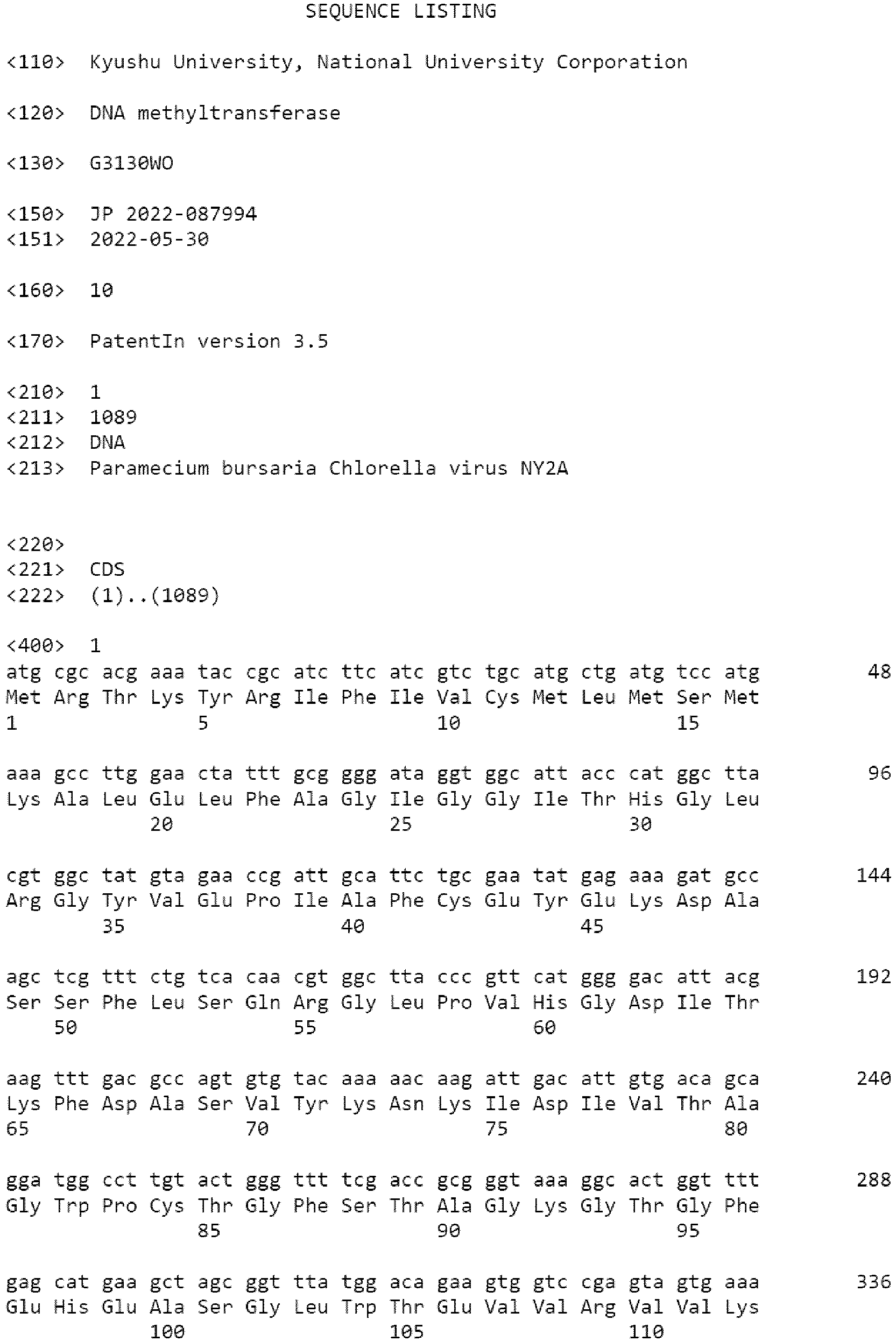


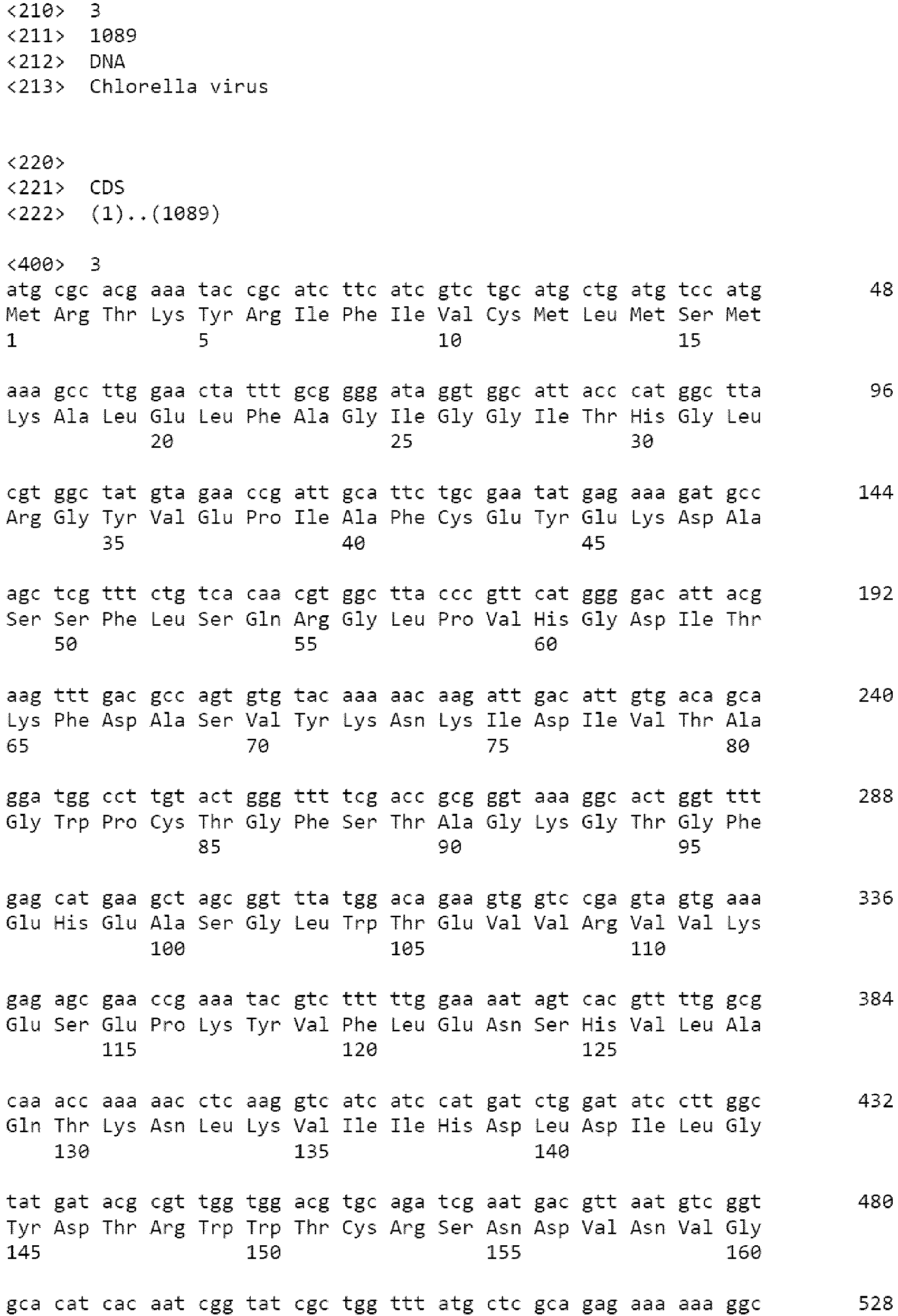


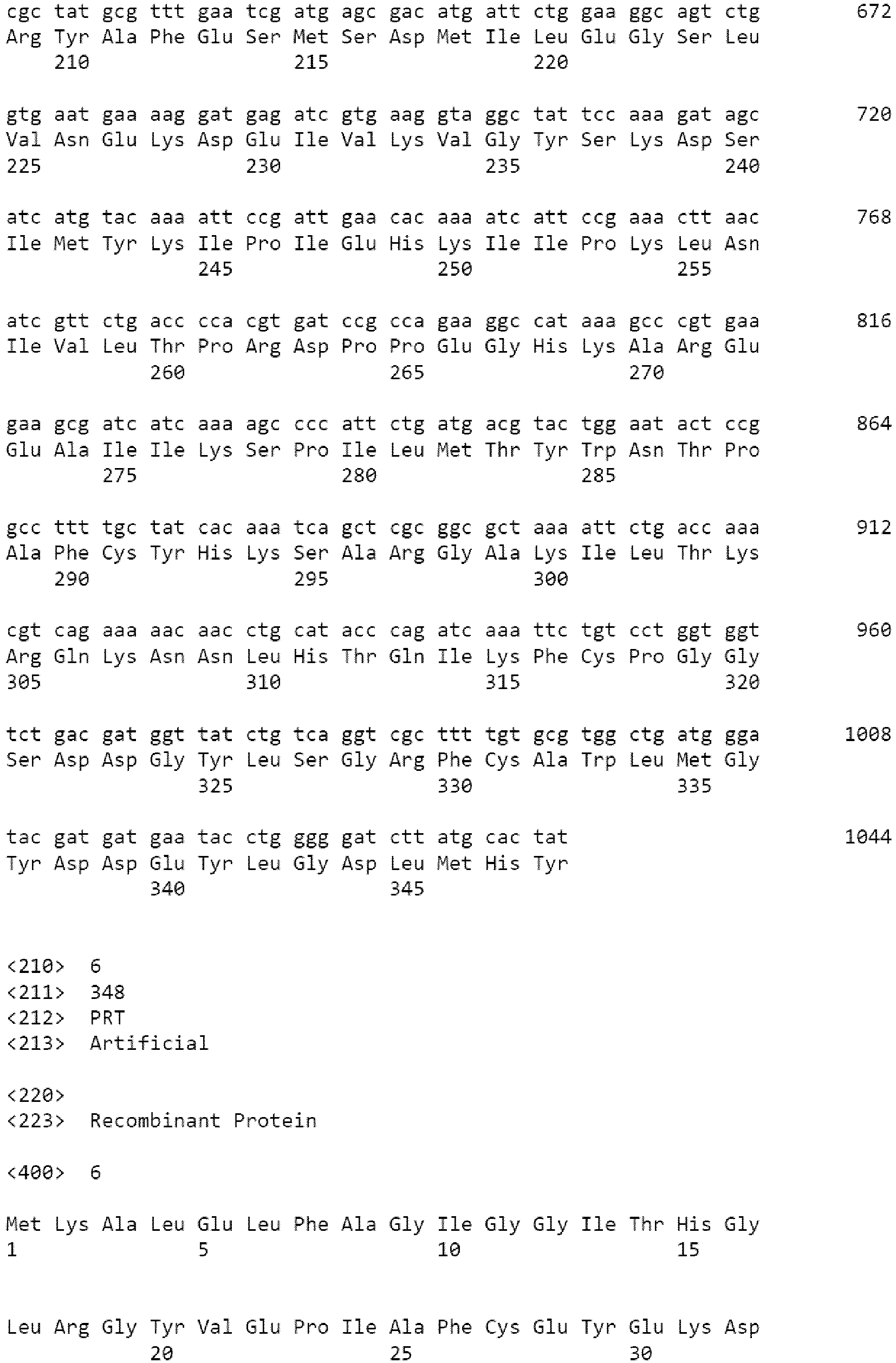


Claims (8)
- A protein as set forth in (a), (b) or (c) below:(a) a protein modified to delete some amino acid residues including the N-terminal end of DNA methyltransferase M.CviQIX or M.CviPII and thereby acquire the ability to specifically recognize a CC dinucleotide sequence and 5-methylate the 5'-position cytosine residue in the sequence;(b) a protein comprising an amino acid sequence with deletion, substitution or addition of one or several amino acids in the amino acid sequence of the protein (a) and having the ability to specifically recognize a CC dinucleotide sequence and 5-methylate the 5'-position cytosine residue in the sequence; or(c) a protein comprising an amino acid sequence sharing an identity of 80% or more with the amino acid sequence of the protein (a) and having the ability to specifically recognize a CC dinucleotide sequence and 5-methylate the 5'-position cytosine residue in the sequence.
- A protein as set forth in (a), (b) or (c) below:(a) a protein having the amino acid sequence as set forth in SEQ ID NO: 6 or 8;(b) a protein comprising an amino acid sequence with deletion, substitution or addition of one or several amino acids in the amino acid sequence of the protein (a) and having the ability to specifically recognize a CC dinucleotide sequence and 5-methylate the 5'-position cytosine residue in the sequence; or(c) a protein comprising an amino acid sequence sharing an identity of 80% or more with the amino acid sequence of the protein (a) and having the ability to specifically recognize a CC dinucleotide sequence and 5-methylate the 5'-position cytosine residue in the sequence.
- A gene encoding the protein according to claim 1 or 2.
- A gene comprising DNA as set forth in (a), (b) or (c) below:(a) DNA comprising the nucleotide sequence as set forth in SEQ ID NO: 5 or 7;(b) DNA which is hybridizable under stringent conditions with DNA consisting of a nucleotide sequence complementary to the DNA (a) and which encodes a protein having the ability to specifically recognize a CC dinucleotide sequence and 5-methylate the 5'-position cytosine residue in the sequence; or(c) DNA which shares an identity of 80% or more with the DNA (a) and which encodes a protein having the ability to specifically recognize a CC dinucleotide sequence and 5-methylate the 5'-position cytosine residue in the sequence.
- A recombinant vector comprising the gene according to claim 3 or 4.
- A transformant comprising the recombinant vector according to claim 5.
- A process for producing a protein having the ability to specifically recognize a CC dinucleotide sequence and 5-methylate the 5'-position cytosine residue in the sequence, which comprises the steps of:culturing the transformant according to claim 6; andcollecting the protein from the resulting cultured material.
- A method for epigenome analysis, which comprises using the protein according to claim 1 or 2 or a protein produced by the process according to claim 7.
Applications Claiming Priority (2)
| Application Number | Priority Date | Filing Date | Title |
|---|---|---|---|
| JP2022087994A JP2023175516A (en) | 2022-05-30 | 2022-05-30 | DNA methyltransferase |
| PCT/JP2023/020732 WO2023234419A1 (en) | 2022-05-30 | 2023-05-29 | Dna methyltransferase |
Publications (2)
| Publication Number | Publication Date |
|---|---|
| EP4534656A1 true EP4534656A1 (en) | 2025-04-09 |
| EP4534656A4 EP4534656A4 (en) | 2026-07-22 |
Family
ID=89025070
Family Applications (1)
| Application Number | Title | Priority Date | Filing Date |
|---|---|---|---|
| EP23816176.4A Pending EP4534656A4 (en) | 2022-05-30 | 2023-05-29 | DNA methyltransferase |
Country Status (4)
| Country | Link |
|---|---|
| EP (1) | EP4534656A4 (en) |
| JP (1) | JP2023175516A (en) |
| CN (1) | CN119563027A (en) |
| WO (1) | WO2023234419A1 (en) |
Family Cites Families (2)
| Publication number | Priority date | Publication date | Assignee | Title |
|---|---|---|---|---|
| US20080268507A1 (en) * | 2004-05-25 | 2008-10-30 | Airbus Deutschland Gmbh | Recombinant Dna Nicking Endonuclease and Uses Thereof |
| JP7171684B2 (en) | 2020-12-02 | 2022-11-15 | ヤマハ発動機株式会社 | Ship steering systems and vessels |
-
2022
- 2022-05-30 JP JP2022087994A patent/JP2023175516A/en active Pending
-
2023
- 2023-05-29 EP EP23816176.4A patent/EP4534656A4/en active Pending
- 2023-05-29 WO PCT/JP2023/020732 patent/WO2023234419A1/en not_active Ceased
- 2023-05-29 CN CN202380053185.XA patent/CN119563027A/en active Pending
Also Published As
| Publication number | Publication date |
|---|---|
| CN119563027A (en) | 2025-03-04 |
| EP4534656A4 (en) | 2026-07-22 |
| WO2023234419A1 (en) | 2023-12-07 |
| JP2023175516A (en) | 2023-12-12 |
Similar Documents
| Publication | Publication Date | Title |
|---|---|---|
| US20250327048A1 (en) | Modified cascade ribonucleoproteins and uses thereof | |
| KR102647766B1 (en) | Class II, type V CRISPR systems | |
| Renbaum et al. | Cloning, characterization, and expression in Escherichia coli of the gene coding for the CpG DNA methylase from Spiroplasma sp. strain MQ1 (M Sssl) | |
| EP0193413B1 (en) | Cloning restriction and modification genes | |
| EP2376632B1 (en) | Compositions, methods and related uses for cleaving modified dna | |
| EP2365067A2 (en) | Restriction endonucleases and their applications | |
| KR20190059966A (en) | S. The Piogenes CAS9 mutant gene and the polypeptide encoded thereby | |
| CN107532161A (en) | The specific engineering CRISPR Cas9 nucleases of PAM with change | |
| Heidmann et al. | Cloning, characterization and heterologous expression of the Sma I restriction-modification system | |
| EP1539945B1 (en) | Recombinant type ii restriction endonucleases, mmei and related endonucleases and methods for producing the same | |
| Mulligan et al. | Cloning, purification and initial characterization of E. coli McrA, a putative 5-methylcytosine-specific nuclease | |
| US5371006A (en) | Isolated DNA encoding the NotI restriction endonuclease and related methods for producing the same | |
| WO2023234419A1 (en) | Dna methyltransferase | |
| WO2019024081A1 (en) | Tale rvd specifically recognizing dna base modified by methylation and application thereof | |
| WO2015138582A1 (en) | Compositions for targeted dna methylation and their use | |
| JPH1057082A (en) | Cloning and production of restriction endonuclease sapi in escherichia coli | |
| US5731185A (en) | Isolated DNA encoding the hphi restriction endonuclease and related methods for producing the same | |
| AU2024355570A1 (en) | Methyl cytosine-selective deaminases and uses thereof | |
| US5298404A (en) | Method for producing the Hpa I restriction endonuclease and methylase | |
| KR101841336B1 (en) | New DNA methylase from marine microorganism and methods of preparation thereof | |
| Tarlachkov et al. | Cloning, purification and characterization of translationally fused protein DNA methyltransferase M• HhaI-EGFP | |
| HK1231119B (en) | Modified cascade ribonucleoproteins and uses thereof | |
| HK1231119A1 (en) | Modified cascade ribonucleoproteins and uses thereof |
Legal Events
| Date | Code | Title | Description |
|---|---|---|---|
| STAA | Information on the status of an ep patent application or granted ep patent |
Free format text: STATUS: THE INTERNATIONAL PUBLICATION HAS BEEN MADE |
|
| PUAI | Public reference made under article 153(3) epc to a published international application that has entered the european phase |
Free format text: ORIGINAL CODE: 0009012 |
|
| STAA | Information on the status of an ep patent application or granted ep patent |
Free format text: STATUS: REQUEST FOR EXAMINATION WAS MADE |
|
| 17P | Request for examination filed |
Effective date: 20241223 |
|
| AK | Designated contracting states |
Kind code of ref document: A1 Designated state(s): AL AT BE BG CH CY CZ DE DK EE ES FI FR GB GR HR HU IE IS IT LI LT LU LV MC ME MK MT NL NO PL PT RO RS SE SI SK SM TR |
|
| DAV | Request for validation of the european patent (deleted) | ||
| DAX | Request for extension of the european patent (deleted) | ||
| RIC1 | Information provided on ipc code assigned before grant |
Ipc: C12N 5/10 20060101AFI20260324BHEP Ipc: C12N 1/15 20060101ALI20260324BHEP Ipc: C12N 1/19 20060101ALI20260324BHEP Ipc: C12N 1/21 20060101ALI20260324BHEP Ipc: C12N 15/54 20060101ALI20260324BHEP Ipc: C12N 15/63 20060101ALI20260324BHEP Ipc: C12Q 1/48 20060101ALI20260324BHEP Ipc: C12Q 1/68 20180101ALI20260324BHEP Ipc: C12N 9/10 20060101ALI20260324BHEP Ipc: C12N 15/70 20060101ALI20260324BHEP Ipc: C12Q 1/6869 20180101ALI20260324BHEP |
|
| A4 | Supplementary search report drawn up and despatched |
Effective date: 20260622 |
|
| RIC1 | Information provided on ipc code assigned before grant |
Ipc: C12N 5/10 20060101AFI20260616BHEP Ipc: C12N 1/15 20060101ALI20260616BHEP Ipc: C12N 1/19 20060101ALI20260616BHEP Ipc: C12N 1/21 20060101ALI20260616BHEP Ipc: C12N 15/54 20060101ALI20260616BHEP Ipc: C12N 15/63 20060101ALI20260616BHEP Ipc: C12Q 1/48 20060101ALI20260616BHEP Ipc: C12Q 1/68 20180101ALI20260616BHEP Ipc: C12N 9/10 20060101ALI20260616BHEP Ipc: C12N 15/70 20060101ALI20260616BHEP Ipc: C12Q 1/6869 20180101ALI20260616BHEP |