EP4534644A1 - Method for producing microalgae concentrates with low viscosity - Google Patents
Method for producing microalgae concentrates with low viscosity Download PDFInfo
- Publication number
- EP4534644A1 EP4534644A1 EP23880005.6A EP23880005A EP4534644A1 EP 4534644 A1 EP4534644 A1 EP 4534644A1 EP 23880005 A EP23880005 A EP 23880005A EP 4534644 A1 EP4534644 A1 EP 4534644A1
- Authority
- EP
- European Patent Office
- Prior art keywords
- microalgal
- concentrate
- heat
- fermented solution
- viscosity
- Prior art date
- Legal status (The legal status is an assumption and is not a legal conclusion. Google has not performed a legal analysis and makes no representation as to the accuracy of the status listed.)
- Pending
Links
Images



Classifications
-
- C—CHEMISTRY; METALLURGY
- C12—BIOCHEMISTRY; BEER; SPIRITS; WINE; VINEGAR; MICROBIOLOGY; ENZYMOLOGY; MUTATION OR GENETIC ENGINEERING
- C12N—MICROORGANISMS OR ENZYMES; COMPOSITIONS THEREOF; PROPAGATING, PRESERVING, OR MAINTAINING MICROORGANISMS; MUTATION OR GENETIC ENGINEERING; CULTURE MEDIA
- C12N1/00—Microorganisms; Compositions thereof; Processes of propagating, maintaining or preserving microorganisms or compositions thereof; Processes of preparing or isolating a composition containing a microorganism; Culture media therefor
- C12N1/12—Unicellular algae; Culture media therefor
- C12N1/125—Unicellular algae isolates
-
- C—CHEMISTRY; METALLURGY
- C12—BIOCHEMISTRY; BEER; SPIRITS; WINE; VINEGAR; MICROBIOLOGY; ENZYMOLOGY; MUTATION OR GENETIC ENGINEERING
- C12N—MICROORGANISMS OR ENZYMES; COMPOSITIONS THEREOF; PROPAGATING, PRESERVING, OR MAINTAINING MICROORGANISMS; MUTATION OR GENETIC ENGINEERING; CULTURE MEDIA
- C12N1/00—Microorganisms; Compositions thereof; Processes of propagating, maintaining or preserving microorganisms or compositions thereof; Processes of preparing or isolating a composition containing a microorganism; Culture media therefor
- C12N1/12—Unicellular algae; Culture media therefor
-
- C—CHEMISTRY; METALLURGY
- C12—BIOCHEMISTRY; BEER; SPIRITS; WINE; VINEGAR; MICROBIOLOGY; ENZYMOLOGY; MUTATION OR GENETIC ENGINEERING
- C12N—MICROORGANISMS OR ENZYMES; COMPOSITIONS THEREOF; PROPAGATING, PRESERVING, OR MAINTAINING MICROORGANISMS; MUTATION OR GENETIC ENGINEERING; CULTURE MEDIA
- C12N1/00—Microorganisms; Compositions thereof; Processes of propagating, maintaining or preserving microorganisms or compositions thereof; Processes of preparing or isolating a composition containing a microorganism; Culture media therefor
-
- C—CHEMISTRY; METALLURGY
- C12—BIOCHEMISTRY; BEER; SPIRITS; WINE; VINEGAR; MICROBIOLOGY; ENZYMOLOGY; MUTATION OR GENETIC ENGINEERING
- C12N—MICROORGANISMS OR ENZYMES; COMPOSITIONS THEREOF; PROPAGATING, PRESERVING, OR MAINTAINING MICROORGANISMS; MUTATION OR GENETIC ENGINEERING; CULTURE MEDIA
- C12N1/00—Microorganisms; Compositions thereof; Processes of propagating, maintaining or preserving microorganisms or compositions thereof; Processes of preparing or isolating a composition containing a microorganism; Culture media therefor
- C12N1/005—Microorganisms; Compositions thereof; Processes of propagating, maintaining or preserving microorganisms or compositions thereof; Processes of preparing or isolating a composition containing a microorganism; Culture media therefor after treatment of microbial biomass not covered by C12N1/02 - C12N1/08
-
- C—CHEMISTRY; METALLURGY
- C12—BIOCHEMISTRY; BEER; SPIRITS; WINE; VINEGAR; MICROBIOLOGY; ENZYMOLOGY; MUTATION OR GENETIC ENGINEERING
- C12N—MICROORGANISMS OR ENZYMES; COMPOSITIONS THEREOF; PROPAGATING, PRESERVING, OR MAINTAINING MICROORGANISMS; MUTATION OR GENETIC ENGINEERING; CULTURE MEDIA
- C12N1/00—Microorganisms; Compositions thereof; Processes of propagating, maintaining or preserving microorganisms or compositions thereof; Processes of preparing or isolating a composition containing a microorganism; Culture media therefor
- C12N1/02—Separating microorganisms from their culture media
-
- C—CHEMISTRY; METALLURGY
- C12—BIOCHEMISTRY; BEER; SPIRITS; WINE; VINEGAR; MICROBIOLOGY; ENZYMOLOGY; MUTATION OR GENETIC ENGINEERING
- C12R—INDEXING SCHEME ASSOCIATED WITH SUBCLASSES C12C - C12Q, RELATING TO MICROORGANISMS
- C12R2001/00—Microorganisms ; Processes using microorganisms
- C12R2001/89—Algae ; Processes using algae
Definitions
- the present invention relates to a method for producing a microalgal concentrate with low viscosity comprising adjusting pH of a microalgal fermented solution and heat-treating.
- Microalgae As a raw material of vegetable protein, microalgae are emerging. Microalgae are a resource rich in carbohydrates and lipids, and are used as food due to their high content of vitamins and essential fatty acids. They have been used as various animal feed raw materials from aquaculture to livestock farms as they are rich in protein, and about 30% of biomass produced worldwide is solid as animal feed. Microalgae protein is a promising business field with an average annual growth rate of 5.8% expected to increase from 525.40 million dollars in 2018 to about 748.20 million dollars in 2023.
- Microalgae have high productivity per unit area, and use of non-cultivated land and unused space is possible, and by use of conventional infrastructure, reduction of social investment costs is possible. In addition, it has many advantages in that it is possible to secure high value-added raw materials such as pigments as well as protein sources. However, they have been researched from various researchers and companies for decades, but development of economical systems for industrialization has not been commercialized except for a few examples. Despite the high potential of microalgae, due to limitations of low yield and high production cost, many element technologies for commercialization are only at the research and development stage or empirical research. In order to derive productivity on a commercial scale for production of microalgae-based products, securing competitiveness in the unit cost of production is the most important factor.
- microalgae In order to economically produce products comprising microalgae, a technology of effectively drying harvested microalgae is required. As particles of microalgae are fine as 3 ⁇ 30 ⁇ m, drying is not performed well by a general drying method, so a method such as freeze-drying or spray drying or the like with high energy and cost are often used, but in order to produce products to be used in food which are not high value-added products such as medicine, a drying method capable of minimizing use of energy is essential.
- One embodiment of the present application provides a method for producing a microalgal concentrate with low viscosity, comprising;
- Another embodiment of the present application provides a method for drying a microalgal fermented solution comprising;
- microalgal concentrate with low viscosity produced by a method for producing a microalgal concentrate with low viscosity, comprising (1) adjusting pH of a microalgal fermented solution; and (2) heat-treating the fermented solution.
- One embodiment of the present application provides a method for producing microalgal concentrate with low viscosity, comprising;
- microalgae means small algae that cannot be seen with naked eyes and can be seen only through a microscope, and various kinds are included in the microalgae, and even strains that cannot photosynthesize and grow only as heterotrophs are included.
- Such microalgae can fix carbon dioxide and have high protein and lipid contents, so can be used as biomass for food, feed or fuel production.
- the lipid component contained in the microalgae can be used as a raw material for production of biodiesel oil used as liquid fuel.
- the microalgae may be a Schizochytrium sp., Thraustochytrium sp., Aurantiochytrium sp., Japonochytrium sp., UIkenia sp., Crypthecodinium sp. or Haliphthoros sp. strain, preferably, a Schizochytrium sp. or Thraustochytrium sp. strain, and most preferably, it may be a Schizochytrium sp. strain.
- fermented solution comprises products produced by fermenting the microalgae, and may be interchangeably used with the terms, “fermented stock solution” or "culture solution”, and specifically, it may be a fermented solution comprising microalgae or a fermented filtrate in which microalgae are removed from the fermented solution, but not limited thereto.
- the microalgal fermented solution may be produced by inoculating the microalgae in a microalgal culture medium according to a culture method known in the art.
- the microalgal culture medium may be MJW01 medium, but not limited thereto.
- adjusting pH of the step (1) may be interchangeably used with the term, "regulating pH”, and regulation of pH may be regulating by adding a sulfuric acid solution, but not limited thereto, and any method may be used as long as it is a method capable of regulating pH.
- the adjusting pH of the step (1) may be adjusting pH to 4 or less.
- the pH of the microalgal fermented solution is adjusted to 5 or more and then it is concentrated, the viscosity of the microalgal concentrate compared to the solid content (%) increases, so the steam efficiency of the drying process after the concentrating process is not good, and therefore, a relatively large steam amount is required.
- the heat-treating of the step (2) may be performed at a temperature of 80°C or more, 100°C or more, 120°C or more, 80°C to 150°C, 100°C to 150°C, or 120°C to 150°C.
- the heat-treating of the step (2) may be performed for 5 minutes or more, 10 minutes or more, 15 minutes or more, 5 minutes to 60 minutes, 10 minutes to 60 minutes, 5 minutes to 30 minutes, 10 minutes to 30 minutes, 5 minutes to 25 minutes, 10 minutes to 25 minutes, 5 minutes to 20 minutes, or 10 minutes to 20 minutes, but not limited thereto.
- the method for producing a microalgal concentrate may further comprise, step (3) concentrating the heat-treated fermented solution after the heat-treating of the step (2).
- the concentrating the heat-treated fermented solution may be performed using an evaporation concentrator, but not limited thereto.
- the present invention provides a method of drying a microalgal fermented solution comprising;
- the drying the microalgal concentrate of the step (4) may be performed using a drum drier, but not limited thereto, and it may be drying using an appropriate method known in the art.
- the steam amount required for drying of the process which passes through the steps (1) to (3) of the present application may be 2.3 times or more less than a process which does not pass through the steps (1) to (3).
- the present invention provides a microalgal concentrate with a solid content of the microalgal concentrate of 15 % by weight or more based on the total weight of the microalgal concentrate, and viscosity of 120 cP or less.
- the viscosity of the microalgal concentrate may be 120 cP or less, 110 cP or less, or 100cP or less, and the solid content of the microalgal concentrate may be 15 % by weight or more, 17 % by weight or more, 20 % by weight or more, 25 % by weight or more, 30 % by weight or more, 15 to 40 % by weight, 17 to 40 % by weight, 20 to 40 % by weight, 25 to 40 % by weight, 30 to 40 % by weight, 15 to 35 % by weight, 17 to 35 % by weight, 20 to 35 % by weight, 25 to 35 % by weight, or 30 to 35 % by weight, based on the total weight of the microalgal concentrate.
- the present invention provides a microalgal concentrate with a high solid content and low viscosity produced by a method for producing a microalgal concentrate comprising (1) adjusting pH of a microalgal fermented solution; and (2) heat-treating the fermented solution.
- the viscosity of the microalgal concentrate produced by the concentration method of the present invention may be 120 cP or less, 110 cP or less, or 100cP or less, and the solid content of the microalgal concentrate may be 15 % by weight or more, 17 % by weight or more, 20 % by weight or more, 25 % by weight or more, 30 % by weight or more, 15 to 40 % by weight, 17 to 40 % by weight, 20 to 40 % by weight, 25 to 40 % by weight, 30 to 40 % by weight, 15 to 35 % by weight, 17 to 35 % by weight, 20 to 35 % by weight, 25 to 35 % by weight, or 30 to 35 % by weight, based on the total weight of the microalgal concentrate.
- the present invention relates to a method for producing a microalgal concentrate with low viscosity comprising adjusting pH of a microalgal fermented solution and heat-treating, and provides a method for reducing utility costs and investment costs in dehydration and drying processes in order to secure price competitiveness for commercialization of production of microalgal drying products.
- the microalgal concentrate which passes through pretreatment processes of pH adjustment and heat-treatment in a range without crushing a microalgal strain has low viscosity, so it has physical properties capable of discharge and transport.
- microalgal fermented solution has high viscosity, due to the characteristic that the viscosity increases even after a small amount of dehydration process and fine cell size, it essentially requires filtration, a mechanical separator, a dehydration process through evaporation and concentration processes of which process costs are relatively inexpensive.
- the present invention has confirmed conditions of a pretreatment process capable of producing a microalgal concentrate with the lowest viscosity in a microalgal concentration process, and through this, it improves that use of a conventional multiple condensation tube with high steam efficiency is impossible, and finally, it can reduce utility costs through steam cost reduction and reduce investment costs of a drier in a drying process.
- a Schizochytrium fermented solution was recovered from a fermenter. Specifically, culturing a Schizochytrium sp. strain was performed in a 5L fermenter by supplying a glucose carbon source of 25% compared to the total culture solution for 30 hours. On a purpose of seed culture, using a sterilized MJW01 medium, culture was conducted in a 500mL flask under conditions of 30°C, 150 rpm for about 20 hours.
- the seed cultured flask was aliquoted and inoculated in a 5L fermenter, and culturing was performed under conditions of the sterilized MJW01 medium and culture environment 30°C, 500 rpm, 1.5 vvm, pH 5-8.
- the fermented solution in which the pH was adjusted was added to an evaporation concentrator (Eyela company( ) N-1210B) by 1L each, and moisture was evaporated under a condition of an internal temperature of about 70°C to evaporate and concentrate. After that, the viscosity by solid content (%) of each microalgal concentrate was measured, and the result was shown in Table 1 and FIG. 1 below.
- microalgal fermented solution with a solid content of 8% in which culturing was completed under conditions of pH 6, 30°C was heat-treated at various temperatures (30°C, 60°C, 80°C, 100°C and 120°C) for about 15 minutes.
- the fermented solution heat-treated at temperatures different from each other was put into an evaporation concentrator (Eyela company ( ) N-1210B) by 1L each to evaporate moisture, and the viscosity by solid content (%) of the microalgal concentrate was measured, and the result was shown in Table 2 and FIG. 2 below.
- each 1L of the microalgal fermented solution was heat-treated at various temperatures (80°C, 100°C and 120°C) for about 15 minutes.
- the microalgal fermented solution heat-treated at temperatures different from each other was put into an evaporation concentrator (Eyela company ( ) N-1210B) by 800g each to evaporate moisture, and the viscosity by solid content (%) was measured and shown in Table 3 and FIG. 3 below.
- each 1L of the microalgal fermented solution was heat-treated at the temperature of 120°C for about 15 minutes.
- the microalgal fermented solution heat-treated was put into an evaporation concentrator (Eyela company ( ) N-1210B) by 800g each to evaporate moisture, and the viscosity by solid content (%) was measured and shown in Table 4 and FIG. 4 below.
- the solid content (%) of the microalgal concentrate was shown as a value of 30% or more in an experimental group in which the solid content (%) of a target concentrate was 30% or more, and the pH before heat-treatment of the microalgal fermented solution was adjusted to 4 or less, so the condition in which the pH before heat-treatment was adjusted to 4 or less was established as a pretreatment condition producing a microalgal concentrate with a high solid content and low viscosity.
- each 1L of the microalgal fermented solution was heat-treated at a temperature of 30°C, 60°C, 80°C, 100°C or 120°C for about 15 minutes.
- the heat-treated fermented solution was put into an evaporation concentrator (Eyela company ( ) N-1210B) by 800g each to evaporate moisture, and the viscosity by solid content (%) was measured and shown in Table 6 and FIG. 5 below.
Landscapes
- Life Sciences & Earth Sciences (AREA)
- Engineering & Computer Science (AREA)
- Chemical & Material Sciences (AREA)
- Health & Medical Sciences (AREA)
- Biotechnology (AREA)
- Genetics & Genomics (AREA)
- Organic Chemistry (AREA)
- Zoology (AREA)
- Bioinformatics & Cheminformatics (AREA)
- Wood Science & Technology (AREA)
- Tropical Medicine & Parasitology (AREA)
- Medicinal Chemistry (AREA)
- Biomedical Technology (AREA)
- Virology (AREA)
- Biochemistry (AREA)
- General Engineering & Computer Science (AREA)
- General Health & Medical Sciences (AREA)
- Microbiology (AREA)
- Cell Biology (AREA)
- Sustainable Development (AREA)
- Botany (AREA)
- Preparation Of Compounds By Using Micro-Organisms (AREA)
- Coloring Foods And Improving Nutritive Qualities (AREA)
- Vaporization, Distillation, Condensation, Sublimation, And Cold Traps (AREA)
- Micro-Organisms Or Cultivation Processes Thereof (AREA)
Abstract
Description
- The present application claims the benefit of the priority based on
Korean Patent Application No. 10-2022-0134302 filed on October 18, 2022 - The present invention relates to a method for producing a microalgal concentrate with low viscosity comprising adjusting pH of a microalgal fermented solution and heat-treating.
- United Nations Food and Agriculture Organization (FAO) forecasts an increase in meat consumption due to an increase in the world population, and the alternative protein food market is rapidly growing, according to an increase in international interests in environmental issues such as global warming and the like, and shortage in meat supply and price jump due to recent COVID-19. Accordingly, in the middle of conversion from the era of 'cultivation·breeding' to the ear of 'extracting·fermenting·culturing', new business opportunities are also on the rise. In particular, as interests in sustainability in the social and environmental sectors, such as health, environment, animal welfare and the like around the world, a plant-oriented alternative protein market is expanding among various alternative proteins.
- As a raw material of vegetable protein, microalgae are emerging. Microalgae are a resource rich in carbohydrates and lipids, and are used as food due to their high content of vitamins and essential fatty acids. They have been used as various animal feed raw materials from aquaculture to livestock farms as they are rich in protein, and about 30% of biomass produced worldwide is solid as animal feed. Microalgae protein is a promising business field with an average annual growth rate of 5.8% expected to increase from 525.40 million dollars in 2018 to about 748.20 million dollars in 2023.
- Microalgae have high productivity per unit area, and use of non-cultivated land and unused space is possible, and by use of conventional infrastructure, reduction of social investment costs is possible. In addition, it has many advantages in that it is possible to secure high value-added raw materials such as pigments as well as protein sources. However, they have been researched from various researchers and companies for decades, but development of economical systems for industrialization has not been commercialized except for a few examples. Despite the high potential of microalgae, due to limitations of low yield and high production cost, many element technologies for commercialization are only at the research and development stage or empirical research. In order to derive productivity on a commercial scale for production of microalgae-based products, securing competitiveness in the unit cost of production is the most important factor.
- In order to economically produce products comprising microalgae, a technology of effectively drying harvested microalgae is required. As particles of microalgae are fine as 3 ~ 30 µm, drying is not performed well by a general drying method, so a method such as freeze-drying or spray drying or the like with high energy and cost are often used, but in order to produce products to be used in food which are not high value-added products such as medicine, a drying method capable of minimizing use of energy is essential. A natural drying method, hot air drying, a drying method using a drum drier or belt drier, and the like, which are economical drying methods, are used, but even if dried by the above methods, there is a limit to lowering the production cost by using a drying method with steam efficiency which does not exceed 1. Therefore, development of a more efficient low-energy and low-cost drying method is needed.
- One embodiment of the present application provides a method for producing a microalgal concentrate with low viscosity, comprising;
- (1) adjusting pH of a microalgal fermented solution; and
- (2) heat-treating the fermented solution.
- Another embodiment of the present application provides a method for drying a microalgal fermented solution comprising;
- (1) adjusting pH of a microalgal fermented solution;
- (2) heat-treating the fermented solution;
- (3) evaporating and concentrating the heat-treated fermented solution; and
- (4) drying the evaporated and concentrated microalgal concentrate.
- Other embodiment provides a microalgal concentrate with low viscosity, produced by a method for producing a microalgal concentrate with low viscosity, comprising (1) adjusting pH of a microalgal fermented solution; and
(2) heat-treating the fermented solution. - Each description and embodiment disclosed in the present application can be applied to each of other description and embodiments. In other words, all combinations of various elements disclosed in the present application fall within the scope of the present invention. In addition, it cannot be seen that the scope of the present invention is limited by the detailed description described below. Furthermore, those skilled in the art will recognize or confirm many equivalents to specific aspects of the present invention described in the present application using only a common experiment. In addition, such equivalents are intended to be included in the present invention.
- One embodiment of the present application provides a method for producing microalgal concentrate with low viscosity, comprising;
- (1) adjusting pH of a microalgal fermented solution; and
- (2) heat-treating the fermented solution.
- The term used in the present description, "microalgae" means small algae that cannot be seen with naked eyes and can be seen only through a microscope, and various kinds are included in the microalgae, and even strains that cannot photosynthesize and grow only as heterotrophs are included. Such microalgae can fix carbon dioxide and have high protein and lipid contents, so can be used as biomass for food, feed or fuel production. Specifically, the lipid component contained in the microalgae can be used as a raw material for production of biodiesel oil used as liquid fuel.
- In the present description, the microalgae may be a Schizochytrium sp., Thraustochytrium sp., Aurantiochytrium sp., Japonochytrium sp., UIkenia sp., Crypthecodinium sp. or Haliphthoros sp. strain, preferably, a Schizochytrium sp. or Thraustochytrium sp. strain, and most preferably, it may be a Schizochytrium sp. strain.
- The term used in the present description, "fermented solution" comprises products produced by fermenting the microalgae, and may be interchangeably used with the terms, "fermented stock solution" or "culture solution", and specifically, it may be a fermented solution comprising microalgae or a fermented filtrate in which microalgae are removed from the fermented solution, but not limited thereto.
- The microalgal fermented solution may be produced by inoculating the microalgae in a microalgal culture medium according to a culture method known in the art.
- The microalgal culture medium may be MJW01 medium, but not limited thereto.
- In the present invention, "adjusting pH" of the step (1) may be interchangeably used with the term, "regulating pH", and regulation of pH may be regulating by adding a sulfuric acid solution, but not limited thereto, and any method may be used as long as it is a method capable of regulating pH.
- The adjusting pH of the step (1) may be adjusting pH to 4 or less. When the pH of the microalgal fermented solution is adjusted to 5 or more and then it is concentrated, the viscosity of the microalgal concentrate compared to the solid content (%) increases, so the steam efficiency of the drying process after the concentrating process is not good, and therefore, a relatively large steam amount is required.
- The heat-treating of the step (2) may be performed at a temperature of 80°C or more, 100°C or more, 120°C or more, 80°C to 150°C, 100°C to 150°C, or 120°C to 150°C.
- The heat-treating of the step (2) may be performed for 5 minutes or more, 10 minutes or more, 15 minutes or more, 5 minutes to 60 minutes, 10 minutes to 60 minutes, 5 minutes to 30 minutes, 10 minutes to 30 minutes, 5 minutes to 25 minutes, 10 minutes to 25 minutes, 5 minutes to 20 minutes, or 10 minutes to 20 minutes, but not limited thereto.
- The method for producing a microalgal concentrate may further comprise, step (3) concentrating the heat-treated fermented solution after the heat-treating of the step (2).
- The concentrating the heat-treated fermented solution may be performed using an evaporation concentrator, but not limited thereto.
- Furthermore, the present invention provides a method of drying a microalgal fermented solution comprising;
- (1) adjusting pH of a microalgal fermented solution;
- (2) heat-treating the fermented solution;
- (3) evaporating and concentrating the heat-treated fermented solution; and
- (4) drying the evaporated and concentrated microalgal concentrate.
- The contents of the steps (1) to (3) are as described above.
- The drying the microalgal concentrate of the step (4) may be performed using a drum drier, but not limited thereto, and it may be drying using an appropriate method known in the art.
- When the drying the microalgal concentrate of the step (4) is performed using a drum drier, the steam amount required for drying of the process which passes through the steps (1) to (3) of the present application may be 2.3 times or more less than a process which does not pass through the steps (1) to (3).
- In addition, the present invention provides a microalgal concentrate with a solid content of the microalgal concentrate of 15 % by weight or more based on the total weight of the microalgal concentrate, and viscosity of 120 cP or less.
- The viscosity of the microalgal concentrate may be 120 cP or less, 110 cP or less, or 100cP or less, and the solid content of the microalgal concentrate may be 15 % by weight or more, 17 % by weight or more, 20 % by weight or more, 25 % by weight or more, 30 % by weight or more, 15 to 40 % by weight, 17 to 40 % by weight, 20 to 40 % by weight, 25 to 40 % by weight, 30 to 40 % by weight, 15 to 35 % by weight, 17 to 35 % by weight, 20 to 35 % by weight, 25 to 35 % by weight, or 30 to 35 % by weight, based on the total weight of the microalgal concentrate.
- In addition, the present invention provides a microalgal concentrate with a high solid content and low viscosity produced by a method for producing a microalgal concentrate comprising (1) adjusting pH of a microalgal fermented solution; and (2) heat-treating the fermented solution.
- The viscosity of the microalgal concentrate produced by the concentration method of the present invention may be 120 cP or less, 110 cP or less, or 100cP or less, and the solid content of the microalgal concentrate may be 15 % by weight or more, 17 % by weight or more, 20 % by weight or more, 25 % by weight or more, 30 % by weight or more, 15 to 40 % by weight, 17 to 40 % by weight, 20 to 40 % by weight, 25 to 40 % by weight, 30 to 40 % by weight, 15 to 35 % by weight, 17 to 35 % by weight, 20 to 35 % by weight, 25 to 35 % by weight, or 30 to 35 % by weight, based on the total weight of the microalgal concentrate.
- In the examples of the present invention, it was confirmed that the microalgal concentrate concentrated by passing through a pretreatment process comprising heat-treating, after adjusting the pH of a microalgal fermented solution to 4 or less had characteristics including low viscosity and a high solid content, so the method for producing a microalgal concentrate of the present invention can be usefully used as a pretreatment process of a drying method with low energy and low cost, as it can reduce a steam amount required in the subsequent drying step.
- The present invention relates to a method for producing a microalgal concentrate with low viscosity comprising adjusting pH of a microalgal fermented solution and heat-treating, and provides a method for reducing utility costs and investment costs in dehydration and drying processes in order to secure price competitiveness for commercialization of production of microalgal drying products. Specifically, in the method for producing a microalgal concentrate of the present invention, the microalgal concentrate which passes through pretreatment processes of pH adjustment and heat-treatment in a range without crushing a microalgal strain has low viscosity, so it has physical properties capable of discharge and transport. As a general microalgal fermented solution has high viscosity, due to the characteristic that the viscosity increases even after a small amount of dehydration process and fine cell size, it essentially requires filtration, a mechanical separator, a dehydration process through evaporation and concentration processes of which process costs are relatively inexpensive. The present invention has confirmed conditions of a pretreatment process capable of producing a microalgal concentrate with the lowest viscosity in a microalgal concentration process, and through this, it improves that use of a conventional multiple condensation tube with high steam efficiency is impossible, and finally, it can reduce utility costs through steam cost reduction and reduce investment costs of a drier in a drying process.
-
-
FIG. 1 is a diagram showing the viscosity depending on the solid content (%) of the microalgal concentrate concentrated by adjusting a microalgal fermented solution to a variety of pH (pH= 3, 4, 5, 6) under the same temperature condition. -
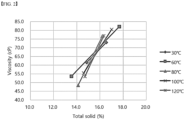
FIG. 2 is a diagram showing the viscosity depending on the solid content (%) of the microalgal concentrate concentrated by heat-treating a microalgal fermented solution at various temperatures under a pH non-adjusted condition. -
FIG. 3 is a diagram showing the viscosity depending on the solid content (%) of the microalgal concentrate concentrated by adjusting the pH of a microalgal fermented solution to 5 and then heat-treating at various temperatures. -
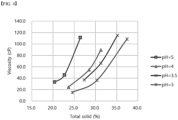
FIG. 4 is a diagram showing the viscosity depending on the solid content (%) of the microalgal concentrate concentrated by adjusting the pH of a microalgal fermented solution to 5, 4, 3.5 or 3, and then heat-treating at 120°C. -
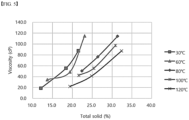
FIG. 5 is a diagram showing the viscosity depending on the solid content (%) of the microalgal concentrate concentrated by adjusting the pH of a microalgal fermented solution to 4, and then heat-treating at various temperatures. -
FIG. 6 is a diagram showing the direct drying process chart and pretreatment drying process chart. - Hereinafter, the present invention will be described in more detail by the following examples. However, these examples are intended to illustrate the present invention only, but the scope of the present invention is not limited by these examples.
- For product quality, conditions, in which solids after evaporation and concentration are 30% or more, and the viscosity is 100cP or less, which is capable of discharging in an evaporation concentrator, were searched through adjusting pH and heat-treating under a condition in which cells are not crushed.
- In order to secure a microalgal fermented solution for an experiment, a Schizochytrium fermented solution was recovered from a fermenter. Specifically, culturing a Schizochytrium sp. strain was performed in a 5L fermenter by supplying a glucose carbon source of 25% compared to the total culture solution for 30 hours. On a purpose of seed culture, using a sterilized MJW01 medium, culture was conducted in a 500mL flask under conditions of 30°C, 150 rpm for about 20 hours. The seed cultured flask was aliquoted and inoculated in a 5L fermenter, and culturing was performed under conditions of the sterilized MJW01 medium and culture environment 30°C, 500 rpm, 1.5 vvm, pH 5-8.
- pH was adjusted to 3, 4 or 5 by adding 98% sulfuric acid solution to a microalgal fermented solution with a solid content of 8% after completing culturing under conditions of pH=6, 30°C. The fermented solution in which the pH was adjusted was added to an evaporation concentrator (Eyela company() N-1210B) by 1L each, and moisture was evaporated under a condition of an internal temperature of about 70°C to evaporate and concentrate. After that, the viscosity by solid content (%) of each microalgal concentrate was measured, and the result was shown in Table 1 and

FIG. 1 below. - The solid content (%) was measured by the following method. With a principle of measuring a ratio of solids remained after heating a sample to be measured and drying moisture, a sample bottle was dried at 105°C for about 1 hour, and then cooled in a desiccator, and then the weight was measured immediately before use. Then, after measuring the weight of the sample bottle and sample accurately after taking an appropriate amount of the sample, they were completely dried in a 105°C drier for 3 hours, and then cooled by placing in a desiccator containing silica gel, and then the weight was measured. The measured value was substituted in the following equation to calculate the solid content (Total solid %).

- * W1= Weight of sample bottle
- * W2 = Weight of sample bottle and sample before drying
- * W3 = Weight of sample bottle and sample after drying
- For viscosity (cP), the viscosity of the microalgal fermented solution and concentrate was measured under conditions of 70°C, 1000 shear rate using a viscosity measurement equipment (RheolabQC, Anton paar company ()).
[Table 1] Adjust ed pH pH=3 pH=4 pH=5 pH=6 pH 7 Analys is item Solid Visco sity Solid Visco sity Solid Visco sity Solid Visco sity Solid Viscos ity Unit % cP % cP % cP % cP % cP Value 11.6 9.3 11.9 15.7 11.7 23.5 11.0 27.8 11.2 27.9 19.0 24.8 17.7 46.2 16.2 47.3 15.7 61.4 16.0 60.6 21.3 36.8 20.1 70.3 20.8 112.1 18.3 107.7 18.6 108.7 - As a result, as shown in Table 1 and
FIG. 1 , it was confirmed that the viscosity compared to the solid content (%) of the same microalgal concentrate was lower, as the pH was lower, and it was confirmed that the solid content (%) of the microalgal concentrate with viscosity at a degree capable of discharging in a concentrator (about 100cP) increased. - The microalgal fermented solution with a solid content of 8% in which culturing was completed under conditions of pH=6, 30°C was heat-treated at various temperatures (30°C, 60°C, 80°C, 100°C and 120°C) for about 15 minutes. The fermented solution heat-treated at temperatures different from each other was put into an evaporation concentrator (Eyela company () N-1210B) by 1L each to evaporate moisture, and the viscosity by solid content (%) of the microalgal concentrate was measured, and the result was shown in Table 2 and
FIG. 2 below.[Table 2] pH 6 6 6 6 6 Temperatu re 30°C 60°C 80°C 100°C 120°C Analysis item Soli d Viscosi ty Soli d Viscosi ty Soli d Viscosi ty Soli d Viscosi ty Soli d Viscosi ty Unit % cP % cP % cP % cP % cP Value 14.9 61.5 13.5 53.6 14.1 48.4 14.6 55.4 14.7 53.5 16.6 73.0 17.7 82.2 16.2 76.4 17.0 80.5 16.3 76.8 - As a result, as shown in Table 2 and
FIG. 2 , it was confirmed that there was no tendency for viscosity change by solid content (%) depending on heat-treatment temperature, when the microalgal fermented solution in which culturing was completed was heat-treated without passing through adjusting pH. - pH was adjusted to 5, by adding 98% sulfuric acid to the microalgal fermented solution with a solid content of 8% in which culturing was completed under conditions of pH=6, 30°C. After that, each 1L of the microalgal fermented solution was heat-treated at various temperatures (80°C, 100°C and 120°C) for about 15 minutes. The microalgal fermented solution heat-treated at temperatures different from each other was put into an evaporation concentrator (Eyela company () N-1210B) by 800g each to evaporate moisture, and the viscosity by solid content (%) was measured and shown in Table 3 and
FIG. 3 below.[Table 3] Adjusted pH pH=5 pH=5 pH=5 Temperature 80°C 100°C 120°C Time 15min 15min 15min Analysis item Solid Viscosity Solid Viscosity Solid Viscosity Unit % cP % cP % cP Value 22.7 84.3 23.0 63.6 22.5 38.5 24.2 110.4 25.8 103.5 24.4 47.2 27.5 197.4 28.5 165.2 28.1 120.6 - As a result, as shown in Table 3 and
FIG. 3 , it was confirmed that the higher the heat-treatment temperature, the lower the viscosity based on the solid content (%), when adjusting pH to 5 was passed through before heat-treatment. However, there was a limit that the solid content of microalgal concentrates that passed through pretreatment of adjusting pH to 5 did not exceed 30%. - pH was adjusted to 5, 4, 3.5 or 3, by adding 98% sulfuric acid to the microalgal fermented solution with a solid content of 8% in which culturing was completed under conditions of pH=6, 30°C. After that, each 1L of the microalgal fermented solution was heat-treated at the temperature of 120°C for about 15 minutes. The microalgal fermented solution heat-treated was put into an evaporation concentrator (Eyela company () N-1210B) by 800g each to evaporate moisture, and the viscosity by solid content (%) was measured and shown in Table 4 and
FIG. 4 below. In addition, in order to confirm the viscosity of the microalgal concentrate heat-treated at the same temperature under a relatively high pH condition, the result of adjusting the pH of the fermented solution to 6 or 7, and treating under the same condition was shown in Table 5 below.[Table 4] Adjusted pH pH=5 pH=4 pH=3.5 pH=3 Temperatur e 120°C 120°C 120°C 120°C Time 15min 15min 15min 15min Analysis item Solid Viscosity Solid Viscosity Solid Viscosity Solid Viscosit y Unit % cP % cP % cP % cP Value 20.4 33.2 23.7 24.4 27.4 36.9 24.6 15.1 22.7 45.5 28.5 54.7 31.3 66.2 30.4 36.3 26.5 111 31.3 89.4 35.2 115.2 37.4 108.6 [Table 5] Adjusted pH pH=6 pH=7 Temperature 120°C 120°C Time 15min 15min Analysis item Solid Viscosity Solid Viscosity Unit % cP % cP Value 19.8 113.4 20.3 110.5 24.1 222.7 24.7 246.2 - As a result, as shown in Table 4 and
FIG. 4 , it was confirmed that as the pH was lowered before the heat-treating process of the microalgal fermented solution, there was an effect that the fermented solution was concentrated and the viscosity was lowered. On the other hand, as shown in Table 5, as the viscosity was shown higher when the pH before the heat-treating process of the microalgal fermented solution was adjusted to 6 or 7, compared to that when it was adjusted to low pH, it was confirmed that the fermented solution was not sufficiently concentrated. - In order to achieve economic feasibility in the microalgal concentration process, it was confirmed that the solid content (%) of the microalgal concentrate was shown as a value of 30% or more in an experimental group in which the solid content (%) of a target concentrate was 30% or more, and the pH before heat-treatment of the microalgal fermented solution was adjusted to 4 or less, so the condition in which the pH before heat-treatment was adjusted to 4 or less was established as a pretreatment condition producing a microalgal concentrate with a high solid content and low viscosity.
- As the condition in which the pH was adjusted to 4 or less was derived as a pretreatment condition to produce a microalgal concentrate with a high solid content and low viscosity in the Experimental example 4, in order to derive an optimal heat-treatment temperature for producing a microalgal concentrate with viscosity lower than the solid content (%) under a condition in which the pH of the microalgal fermented solution was adjusted to 4, the following experiment was performed.
- Specifically, the pH of the fermented solution was adjusted to 4 by adding 98% sulfuric acid to the microalgal fermented solution in which the solid content was 8% after culturing was completed under conditions of pH=6, 30°C. After that, each 1L of the microalgal fermented solution was heat-treated at a temperature of 30°C, 60°C, 80°C, 100°C or 120°C for about 15 minutes. The heat-treated fermented solution was put into an evaporation concentrator (Eyela company () N-1210B) by 800g each to evaporate moisture, and the viscosity by solid content (%) was measured and shown in Table 6 and
FIG. 5 below.[Table 6] pH 4 4 4 4 4 Temperatu re 30°C 60°C 80°C 100°C 120°C Time 15min 15min 15min 15min 15min Analysis item Soli d Viscosi ty Soli d Viscosi ty Soli d Viscosi ty Soli d Viscosi ty Soli d Viscosi ty Unit % cP % cP % cP % cP % cP Value 12.1 18.6 13.7 34.3 22.4 50.4 21.6 42.3 19.4 21.9 18.4 55.4 19.4 48.7 26.4 76.4 25.4 55.3 24.9 41.3 21.6 87.4 22.4 98.9 29.5 99.1 30.9 97.4 32.4 87.2 - As a result, as shown in Table 6 and
FIG. 5 , it was confirmed that the higher the heat-treatment temperature, the lower the viscosity based on the same solid content (%) under a condition in which the pH of the microalgal fermented solution was adjusted to 4. Specifically, the viscosity data did not increase linearly with the change in solid content, but increased rapidly when it became a certain concentration or more quadratically, and it was confirmed that the solid content could be further concentrated by 30% or more when heat-treated at a temperature of 80°C or more, as the solid content was 23% at 60°C and 31% at 80°C based on the same 114 cp. Therefore, it is determined that performing heat-treatment at a temperature of 80°C or more has a better concentration effect. - The total amount of steam used was calculated through material balance writing based on the same fermentation index and produced amount for the microalgal products dried after passing through a pretreatment process of pH adjusting and heat-treating, and microalgal products directly dried without the pretreatment process, and shown in Table 7 below. The direct drying process chart and the process chart of drying after pretreatment were shown in
FIG. 6 .[Table 7] Process condition Unit Process Direct drying Used amount (Ton/day) Pretreatment drying (pH adjusting and heat-treating) Used amount (Ton/day) Heat-treatment steam - 64.50 Concentration tube steam - 118.20 Drier steam 1,374.56 421.30 Total 1,374.56 604.00 - As a result, as shown in Table 7, it was confirmed that the used amount of steam was reduced by about 2.3 times when drying using a drum drier after evaporation and concentration by passing through pH adjusting and heat-treating, compared to drying (direct drying) using a drum drier without a pretreatment process for the microalgal fermented solution. As a result of comparing the used amount of drier steam, the amount of steam required when the pretreatment process was passed through was 421.3 ton/day, and the amount of steam required when the microalgal fermented solution was put into a drier without the pretreatment process was shown as 1,374.6 ton/day. In other words, since the amount of steam required for the pretreatment process drying was about 3 times less than that of the direct drying, the number of driers required can be reduced by about 3 times.
- In order to confirm whether strain characteristics were maintained even after pretreatment, the number of the microalgal cells of the microalgal fermentation stock solution and the microalgal process solution (concentrate) passing through the pretreatment process (pH adjusting and heat-treating) was measured using Anvajo company(), fluidlab R-300 equipment, and shown in Table 8.
[Table 8] Process solution Fermentation stock solution Pretreatment process solution BT1 2.46E+08 2.48E+08 BT2 3.59E+08 3.35E+08 BT3 2.19E+08 2.22E+08 - As a result, as shown in Table 8, it was confirmed that the change in the number of cells between the microalgal fermentation stock solution and the process solution (concentrate) which passed through the pretreatment process was not large, so it was confirmed that microalgal strain characteristics were maintained even through the pretreatment process.
Claims (11)
- A method for producing a microalgal concentrate with low viscosity, comprising;(1) adjusting pH of a microalgal fermented solution; and(2) heat-treating the fermented solution.
- The method for producing a microalgal concentrate according to claim 1, wherein the microalgae is a Schizochytrium sp. strain.
- The method for producing a microalgal concentrate according to claim 1, wherein the (1) adjusting pH is adjusting pH to 4 or less.
- The method for producing a microalgal concentrate according to claim 1, wherein the (2) heat-treating is performed at a temperature of 80°C or more.
- The method for producing a microalgal concentrate according to claim 1, wherein the (2) heat-treating is performed at a temperature of 100°C or more.
- The method for producing a microalgal concentrate according to claim 1, wherein the (2) heat-treating is performed for 5 minutes to 25 minutes.
- The method for producing a microalgal concentrate according to claim 1, wherein the solid content of the microalgal concentrate is 15 % by weight based on the total weight of the microalgal concentrate.
- The method for producing a microalgal concentrate according to claim 1, wherein the viscosity of the microalgal concentrate is 120 cP or less.
- A method for drying a microalgal fermented solution comprising;(1) adjusting pH of a microalgal fermented solution;(2) heat-treating the fermented solution;(3) evaporating and concentrating the heat-treated fermented solution; and(4) drying the evaporated and concentrated microalgal concentrate.
- A microalgal concentrate, in which the solid content of the microalgal concentrate is 15 % by weight based on the total weight of the microalgal concentrate, and the viscosity is 120 cP or less.
- The microalgal concentrate according to claim 10, wherein the microalgal concentrate is produced by the method of claim 1.
Applications Claiming Priority (2)
| Application Number | Priority Date | Filing Date | Title |
|---|---|---|---|
| KR1020220134302A KR102908392B1 (en) | 2022-10-18 | 2022-10-18 | A method for producing low-viscosity microalgal concentrate with low viscosity |
| PCT/KR2023/013055 WO2024085425A1 (en) | 2022-10-18 | 2023-09-01 | Method for producing microalgae concentrates with low viscosity |
Publications (2)
| Publication Number | Publication Date |
|---|---|
| EP4534644A1 true EP4534644A1 (en) | 2025-04-09 |
| EP4534644A4 EP4534644A4 (en) | 2026-02-25 |
Family
ID=90737789
Family Applications (1)
| Application Number | Title | Priority Date | Filing Date |
|---|---|---|---|
| EP23880005.6A Pending EP4534644A4 (en) | 2022-10-18 | 2023-09-01 | METHOD FOR THE PRODUCTION OF LOW-VISCOSTIC MICROALGAE CONCENTRATES |
Country Status (11)
| Country | Link |
|---|---|
| US (1) | US20260035654A1 (en) |
| EP (1) | EP4534644A4 (en) |
| KR (1) | KR102908392B1 (en) |
| AR (1) | AR130612A1 (en) |
| AU (1) | AU2023363047A1 (en) |
| CA (1) | CA3260061A1 (en) |
| CL (1) | CL2025000056A1 (en) |
| PY (1) | PY2383533A (en) |
| TW (1) | TWI870003B (en) |
| UY (1) | UY40484A (en) |
| WO (1) | WO2024085425A1 (en) |
Family Cites Families (9)
| Publication number | Priority date | Publication date | Assignee | Title |
|---|---|---|---|---|
| CN103173273B (en) * | 2011-12-21 | 2015-11-25 | 新奥科技发展有限公司 | Microalgae grease extraction method |
| CN104371926A (en) * | 2013-08-15 | 2015-02-25 | 中国石油化工股份有限公司 | Microalgae culture solution treatment method |
| WO2015200888A1 (en) * | 2014-06-27 | 2015-12-30 | Solazyme, Inc. | High-protein food products made using high-protein microalgae |
| MY197963A (en) * | 2016-05-24 | 2023-07-25 | Kao Corp | Algae treatment method |
| JP6647593B2 (en) * | 2017-07-19 | 2020-02-14 | バイオックス化学工業株式会社 | Production of useful lipids using green algae |
| CA3143901A1 (en) * | 2019-06-28 | 2020-12-30 | Noblegen Inc. | Methods of protein extraction and downstream processing of euglena |
| KR20220134302A (en) | 2021-03-26 | 2022-10-05 | 김종기 | Portable Wwater Bottle With Water Purification Function |
| CN115058462A (en) * | 2022-06-09 | 2022-09-16 | 挪亚圣诺(太仓)生物科技有限公司 | Preparation method of DHA oil and DHA powder |
| KR102768762B1 (en) * | 2022-09-08 | 2025-02-19 | 한국과학기술원 | HIGH-PURITY CONTINUOUS ADSORPTION SEPARATION DEVICE FOR eicosapentaenoic acid IN MICROALGAE aND A METHOD FOR HIGH-PURITY CONTINUOUS ADSORPTION SEPARATION OF eicosapentaenoic acid IN MICROALGAE USING THE SAME |
-
2022
- 2022-10-18 KR KR1020220134302A patent/KR102908392B1/en active Active
-
2023
- 2023-09-01 WO PCT/KR2023/013055 patent/WO2024085425A1/en not_active Ceased
- 2023-09-01 US US19/100,057 patent/US20260035654A1/en active Pending
- 2023-09-01 CA CA3260061A patent/CA3260061A1/en active Pending
- 2023-09-01 AU AU2023363047A patent/AU2023363047A1/en active Pending
- 2023-09-01 EP EP23880005.6A patent/EP4534644A4/en active Pending
- 2023-09-04 TW TW112133468A patent/TWI870003B/en active
- 2023-09-28 AR ARP230102592A patent/AR130612A1/en unknown
- 2023-10-12 PY PY202302383533A patent/PY2383533A/en unknown
- 2023-10-12 UY UY0001040484A patent/UY40484A/en unknown
-
2025
- 2025-01-09 CL CL2025000056A patent/CL2025000056A1/en unknown
Also Published As
| Publication number | Publication date |
|---|---|
| TW202424203A (en) | 2024-06-16 |
| AR130612A1 (en) | 2024-12-18 |
| TWI870003B (en) | 2025-01-11 |
| US20260035654A1 (en) | 2026-02-05 |
| CA3260061A1 (en) | 2025-03-31 |
| AU2023363047A1 (en) | 2025-01-16 |
| WO2024085425A1 (en) | 2024-04-25 |
| PY2383533A (en) | 2024-05-08 |
| CL2025000056A1 (en) | 2025-05-30 |
| KR20240054044A (en) | 2024-04-25 |
| EP4534644A4 (en) | 2026-02-25 |
| KR102908392B1 (en) | 2026-01-05 |
| UY40484A (en) | 2024-01-15 |
Similar Documents
| Publication | Publication Date | Title |
|---|---|---|
| Kudra et al. | Thermal processing of bio-materials | |
| Hindersin et al. | Key parameters for outdoor biomass production of Scenedesmus obliquus in solar tracked photobioreactors | |
| Muhammad et al. | Microalgae biomass production: an overview of dynamic operational methods | |
| Yin et al. | The water footprint of biofilm cultivation of Haematococcus pluvialis is greatly decreased by using sealed narrow chambers combined with slow aeration rate | |
| Khatoon et al. | Growth and proximate composition of Scenedesmus obliquus and Selenastrum bibraianum cultured in different media and condition | |
| Piwowarek et al. | Propionic acid production from apple pomace in bioreactor using Propionibacterium freudenreichii: an economic analysis of the process | |
| CN114107073A (en) | A kind of method that utilizes molasses to produce mycelin | |
| US20260035654A1 (en) | Method for producing microalgae concentrates with low viscosity | |
| Kiran et al. | Potato peel as substrate for Single Cell Protein in animal feed by submerged fermentation | |
| Kovalchuk et al. | Investigation of the influence of nanoparticles of metals on fermenttation of wort of high concentrations | |
| Soni et al. | Influence of temperature and light intensity on the growth performance of Spirulina platensis | |
| Acharjee et al. | Growth and lipid production of marine microalgae Tetraselmis chuii cultured in different phosphorus concentrations | |
| Patelski et al. | Bioconversion of Apple Pomace to Meyerozyma guilliermondii and Scheffersomyces stipitis Biomass | |
| CN102851328A (en) | Method for preparing citric acid through fermenting corn sugar solution by immobilized Aspergillus niger | |
| JPS6131084A (en) | Novel microorganism | |
| US20220204571A1 (en) | System and method for using peptides for flavorings | |
| Aqilla et al. | Tocopherol content of Euglena sp. isolated from Yogyakarta under glucose and ethanol mixture treatment | |
| Khudayarov et al. | Microbial protein production based on complex plant raw materials: Technology development and efficiency assessment | |
| Sabirov et al. | Enrichment of the grains from rye wort after shock-activator-disintegrating processing | |
| Oktari et al. | Papaya fruit (Carica papaya L.) as a substitute for potato in potato dextrose agar (PDA) media for Aspergillus niger growth with variations in temperature and pH | |
| Kumar et al. | Studies on the effect of different gelling agents for establishment of Callus strawberry (Fragaria× ananassa Duch.) culture under in vitro condition | |
| Shayanthavi et al. | Bioconversion of single cell protein from underutilised seaweed Turbinaria sp. using natural palmyrah toddy yeast | |
| Tudella et al. | Agro-industrial wastes as nutrients for sustainable microalgae cultivation | |
| JP2021153435A (en) | Methods for preparing high concentration synthetic culture media to provide normal ribosome constitution to yeast | |
| Chairul et al. | A Novel Immobilization Method of Saccharomyces cerevisiae on Fermentation of Nipa Palm Sap for Fuel Grade Bioethanol Production |
Legal Events
| Date | Code | Title | Description |
|---|---|---|---|
| STAA | Information on the status of an ep patent application or granted ep patent |
Free format text: STATUS: THE INTERNATIONAL PUBLICATION HAS BEEN MADE |
|
| PUAI | Public reference made under article 153(3) epc to a published international application that has entered the european phase |
Free format text: ORIGINAL CODE: 0009012 |
|
| STAA | Information on the status of an ep patent application or granted ep patent |
Free format text: STATUS: REQUEST FOR EXAMINATION WAS MADE |
|
| 17P | Request for examination filed |
Effective date: 20250103 |
|
| AK | Designated contracting states |
Kind code of ref document: A1 Designated state(s): AL AT BE BG CH CY CZ DE DK EE ES FI FR GB GR HR HU IE IS IT LI LT LU LV MC ME MK MT NL NO PL PT RO RS SE SI SK SM TR |
|
| DAV | Request for validation of the european patent (deleted) | ||
| DAX | Request for extension of the european patent (deleted) | ||
| A4 | Supplementary search report drawn up and despatched |
Effective date: 20260127 |
|
| RIC1 | Information provided on ipc code assigned before grant |
Ipc: C12N 1/12 20060101AFI20260121BHEP Ipc: C12N 1/00 20060101ALI20260121BHEP Ipc: C12N 1/02 20060101ALI20260121BHEP Ipc: C12R 1/89 20060101ALI20260121BHEP |