EP4530972A1 - Learning device, noise removal device, and program - Google Patents
Learning device, noise removal device, and program Download PDFInfo
- Publication number
- EP4530972A1 EP4530972A1 EP24201779.6A EP24201779A EP4530972A1 EP 4530972 A1 EP4530972 A1 EP 4530972A1 EP 24201779 A EP24201779 A EP 24201779A EP 4530972 A1 EP4530972 A1 EP 4530972A1
- Authority
- EP
- European Patent Office
- Prior art keywords
- noise
- learning
- data
- learning data
- image
- Prior art date
- Legal status (The legal status is an assumption and is not a legal conclusion. Google has not performed a legal analysis and makes no representation as to the accuracy of the status listed.)
- Withdrawn
Links
Images







Classifications
-
- G—PHYSICS
- G06—COMPUTING OR CALCULATING; COUNTING
- G06T—IMAGE DATA PROCESSING OR GENERATION, IN GENERAL
- G06T5/00—Image enhancement or restoration
- G06T5/60—Image enhancement or restoration using machine learning, e.g. neural networks
-
- G—PHYSICS
- G06—COMPUTING OR CALCULATING; COUNTING
- G06T—IMAGE DATA PROCESSING OR GENERATION, IN GENERAL
- G06T5/00—Image enhancement or restoration
- G06T5/70—Denoising; Smoothing
-
- G—PHYSICS
- G06—COMPUTING OR CALCULATING; COUNTING
- G06N—COMPUTING ARRANGEMENTS BASED ON SPECIFIC COMPUTATIONAL MODELS
- G06N3/00—Computing arrangements based on biological models
- G06N3/02—Neural networks
- G06N3/04—Architecture, e.g. interconnection topology
- G06N3/045—Combinations of networks
-
- G—PHYSICS
- G06—COMPUTING OR CALCULATING; COUNTING
- G06N—COMPUTING ARRANGEMENTS BASED ON SPECIFIC COMPUTATIONAL MODELS
- G06N3/00—Computing arrangements based on biological models
- G06N3/02—Neural networks
- G06N3/04—Architecture, e.g. interconnection topology
- G06N3/0475—Generative networks
-
- G—PHYSICS
- G06—COMPUTING OR CALCULATING; COUNTING
- G06N—COMPUTING ARRANGEMENTS BASED ON SPECIFIC COMPUTATIONAL MODELS
- G06N3/00—Computing arrangements based on biological models
- G06N3/02—Neural networks
- G06N3/08—Learning methods
-
- G—PHYSICS
- G06—COMPUTING OR CALCULATING; COUNTING
- G06T—IMAGE DATA PROCESSING OR GENERATION, IN GENERAL
- G06T2207/00—Indexing scheme for image analysis or image enhancement
- G06T2207/10—Image acquisition modality
- G06T2207/10116—X-ray image
-
- G—PHYSICS
- G06—COMPUTING OR CALCULATING; COUNTING
- G06T—IMAGE DATA PROCESSING OR GENERATION, IN GENERAL
- G06T2207/00—Indexing scheme for image analysis or image enhancement
- G06T2207/20—Special algorithmic details
- G06T2207/20081—Training; Learning
-
- G—PHYSICS
- G06—COMPUTING OR CALCULATING; COUNTING
- G06T—IMAGE DATA PROCESSING OR GENERATION, IN GENERAL
- G06T2207/00—Indexing scheme for image analysis or image enhancement
- G06T2207/20—Special algorithmic details
- G06T2207/20084—Artificial neural networks [ANN]
-
- G—PHYSICS
- G06—COMPUTING OR CALCULATING; COUNTING
- G06T—IMAGE DATA PROCESSING OR GENERATION, IN GENERAL
- G06T2207/00—Indexing scheme for image analysis or image enhancement
- G06T2207/20—Special algorithmic details
- G06T2207/20172—Image enhancement details
- G06T2207/20182—Noise reduction or smoothing in the temporal domain; Spatio-temporal filtering
Definitions
- the present disclosure relates to a learning device, a noise removal device, and a program.
- Improving visibility of an image by reducing noise is an important issue in the field of not only a natural image such as a photograph but also a medical image.
- learning data the image data used for training the noise reducer.
- the present disclosure has been conceived in view of the above circumstances, and an object of the present disclosure is to provide a learning device, a noise reduction device, and a program that can train a noise reducer even in a case where learning data having a smaller amount of noise than a normal captured image cannot be acquired or in a case where an amount of noise in learning data having the same noise as the normal captured image is unknown.
- a learning device comprising at least one processor, in which the processor is configured to reduce noise of first learning data using a noise reducer that is trainable, add predetermined noise to be added to the first learning data in which the noise is reduced, and train the noise reducer to bring a distribution of the first learning data to which the noise to be added is added close to a distribution of second learning data.
- the noise to be added is noise that resembles the noise of the first learning data.
- target data for reducing noise via the noise reducer is image data.
- the image data is a radiation image.
- the processor is configured to train the noise reducer to make the distribution of the first learning data to which the noise to be added is added and the distribution of the second learning data unidentifiable by a predetermined identifier.
- a noise reduction device comprising a noise reducer trained by the learning device according to any one of the first to ninth aspects, and an acquisition unit that acquires predetermined data in which noise included in the data is reduced by inputting the data into the noise reducer.
- the image data is a radiation image. Accordingly, a noise remover that removes noise of image data indicating a radiation image can be trained.
Landscapes
- Engineering & Computer Science (AREA)
- Physics & Mathematics (AREA)
- Theoretical Computer Science (AREA)
- General Physics & Mathematics (AREA)
- Biophysics (AREA)
- Evolutionary Computation (AREA)
- Artificial Intelligence (AREA)
- Biomedical Technology (AREA)
- Health & Medical Sciences (AREA)
- Computational Linguistics (AREA)
- Data Mining & Analysis (AREA)
- Life Sciences & Earth Sciences (AREA)
- General Health & Medical Sciences (AREA)
- Molecular Biology (AREA)
- Computing Systems (AREA)
- General Engineering & Computer Science (AREA)
- Mathematical Physics (AREA)
- Software Systems (AREA)
- Image Processing (AREA)
Abstract
A learning device (30), a noise reduction device (50), and a program that can train a noise reducer even in a case where learning data having a smaller amount of noise than a normal captured image cannot be acquired or in a case where an amount of noise in learning data having the same noise as the normal captured image is unknown are provided. The learning device (30) includes a noise removal unit (31A) that reduces noise of first learning data using the noise reducer, a noise addition unit (31B) that adds predetermined noise to be added to the first learning data in which the noise is reduced, and a learning unit (31C) that trains the noise reducer to bring a distribution of the first learning data to which the noise to be added is added close to a distribution of second learning data.
Description
- The present disclosure relates to a learning device, a noise removal device, and a program.
- Improving visibility of an image by reducing noise is an important issue in the field of not only a natural image such as a photograph but also a medical image.
- In recent years, many noise reduction methods using deep learning have been suggested, and a technology for training a noise reducer that converts image data having a large amount of noise into image data having a small amount of noise using image data having a small amount of noise or not having noise as training data has been known (for example, refer to Beyond a Gaussian Denoiser: Residual Learning of Deep CNN for Image Denoising (Zhang+, IEEE Transactions on Image Processing)).
- However, this technology cannot be applied to a situation where image data having a smaller amount of noise than a normal captured image cannot be acquired. For example, in radiography of a human body, while image data having a small amount of noise can be obtained by increasing a dose rate compared to that in normal imaging, it is extremely difficult to obtain the image data in reality because an exposure rate is also increased.
- In order to deal with this issue, a technology for training a noise reducer using only image data having the same noise as a normal captured image as image data for learning has also been suggested (for example, refer to Recorrupted-to-Recorrupted: Unsupervised Deep Learning for Image Denoising (Pang+, IEEE/CVF Computer Vision and Pattern Recognition 2021)).
- However, in the technology for training the noise reducer using only the image data having the same noise as the normal captured image as the image data for learning, an issue arises in that an amount of each noise in the image data for learning has to be known. Hereinafter, the image data used for training the noise reducer will be referred to as "learning data".
- The present disclosure has been conceived in view of the above circumstances, and an object of the present disclosure is to provide a learning device, a noise reduction device, and a program that can train a noise reducer even in a case where learning data having a smaller amount of noise than a normal captured image cannot be acquired or in a case where an amount of noise in learning data having the same noise as the normal captured image is unknown.
- In order to achieve the object, according to a first aspect of the present invention, there is provided a learning device comprising at least one processor, in which the processor is configured to reduce noise of first learning data using a noise reducer that is trainable, add predetermined noise to be added to the first learning data in which the noise is reduced, and train the noise reducer to bring a distribution of the first learning data to which the noise to be added is added close to a distribution of second learning data.
- According to an embodiment, in the learning device according to the first aspect, the second learning data is the same data as the first learning data.
- According to an embodiment, in the learning device according to the first aspect, the noise to be added is noise that resembles the noise of the first learning data.
- According to an embodiment, in the learning device according to the first aspect, the noise reducer is a deep learning model.
- According to an embodiment, in the learning device according to the first aspect, target data for reducing noise via the noise reducer is image data.
- According to an embodiment, the image data is a radiation image.
- According to an embodiment, the processor is configured to train the noise reducer to make the distribution of the first learning data to which the noise to be added is added and the distribution of the second learning data unidentifiable by a predetermined identifier.
- According to an embodiment, the processor is configured to train the noise reducer to minimize a degree of deviation between the distribution of the first learning data to which the noise to be added is added and the distribution of the second learning data.
- According to an embodiment, the degree of deviation is a Wasserstein distance or a value based on an information amount.
- In order to achieve the object, according to another aspect of the present invention, there is provided a noise reduction device comprising a noise reducer trained by the learning device according to any one of the first to ninth aspects, and an acquisition unit that acquires predetermined data in which noise included in the data is reduced by inputting the data into the noise reducer.
- In order to achieve the object, according to an another aspect of the present invention, there is provided a program causing a computer to execute a process comprising reducing noise of first learning data using a noise reducer that is trainable, adding predetermined noise to be added to the first learning data in which the noise is reduced, and training the noise reducer to bring a distribution of the first learning data to which the noise to be added is added close to a distribution of second learning data.
- According to the present disclosure, the noise reducer can be trained even in a case where learning data having a smaller amount of noise than a normal captured image cannot be acquired or in a case where an amount of noise in learning data having the same noise as the normal captured image is unknown.
-
-
Fig. 1 is a block diagram illustrating an example of a configuration of an image processing system according to an embodiment. -
Fig. 2 is a block diagram illustrating an example of a configuration of an electrical system of a server according to the embodiment. -
Fig. 3 is a block diagram illustrating an example of a configuration of an electrical system of a learning device according to the embodiment. -
Fig. 4 is a block diagram illustrating an example of a configuration of an electrical system of a noise reduction device according to the embodiment. -
Fig. 5 is a functional block diagram illustrating functional configurations of the learning device and the noise reduction device in the image processing system according to the embodiment. -
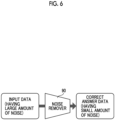
Fig. 6 is a block diagram for describing a technology in the related art. -
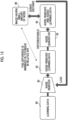
Fig. 7 is a block diagram for describing learning processing according to a first embodiment. -
Fig. 8 is a block diagram illustrating an example of an aspect of use of a Wasserstein generative adversarial network (GAN) with gradient penalty (-GP) (hereinafter, referred to as a "WGAN-GP") according to the embodiment. -
Fig. 9 is a graph for describing a Wasserstein distance (hereinafter, referred to as a "W distance") according to the embodiment. -
Fig. 10 is a block diagram for more specifically describing the learning processing according to the first embodiment. -
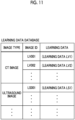
Fig. 11 is a schematic diagram illustrating an example of a configuration of a learning data database according to the embodiment. -
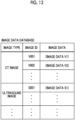
Fig. 12 is a schematic diagram illustrating an example of a configuration of an image database according to the embodiment. -
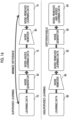
Fig. 13 is a flowchart illustrating an example of the learning processing according to the embodiment. -
Fig. 14 is a flowchart illustrating an example of noise reduction processing according to the embodiment. -
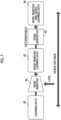
Fig. 15 is a block diagram for describing learning processing according to a second embodiment. -
Fig. 16 is a block diagram for describing learning processing according to a third embodiment. -
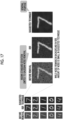
Fig. 17 is a diagram for describing an effect of the learning processing according to the embodiment. -
Fig. 18 is a diagram for describing an effect of the learning processing according to the embodiment. - Hereinafter, embodiments of the present disclosure will be described in detail with reference to the drawings.
- A case where a learning device that trains a noise remover (or a noise reducer) which removes (or reduces) noise of various types of medical image data is applied as a learning device of the disclosed technology will be described in the present embodiment. However, the present disclosure is not limited to this aspect and may include an aspect in which a learning device that trains a noise remover which removes noise of an image other than a medical image, such as image data obtained by performing imaging via a visible light camera or image data obtained by performing imaging via an infrared camera, is applied as the learning device of the disclosed technology. The present disclosure may also include an aspect in which a learning device that trains a noise remover which removes noise of audio data such as ultrasound data or audible data is applied as the learning device of the disclosed technology.
- First, a configuration of an
image processing system 1 according to the present embodiment will be described with reference toFig. 1. Fig. 1 is a block diagram illustrating an example of the configuration of theimage processing system 1 according to the present embodiment. - As illustrated in
Fig. 1 , theimage processing system 1 according to the present embodiment includes aserver 10 configured as a cloud server or the like, alearning device 30 as the learning device of the present disclosure, and a noise removal device (or a noise reduction device) 50 as a noise removal device of the present disclosure. Examples of theserver 10, thelearning device 30, and thenoise removal device 50 include information processing apparatuses such as a personal computer and a server computer. - The
server 10 according to the present embodiment stores learning data used for training a noise remover, which will be described in detail later, via thelearning device 30, target medical image data for actually removing noise via thenoise removal device 50, the noise remover, a noise generator, which will be described in detail later, and the like. As described above, in theimage processing system 1 according to the present embodiment, the noise remover and the noise generator are stored in theserver 10. However, the present disclosure is not limited to this aspect. For example, the present disclosure may include an aspect in which the noise remover and the noise generator are stored in thelearning device 30 or in thenoise removal device 50. The present disclosure may include an aspect in which a device accessible from thelearning device 30 and from thenoise removal device 50 is applied as a device storing the noise remover and the noise generator. - The
server 10, thelearning device 30, and thenoise removal device 50 are connected to each other through a network N. Theserver 10, thelearning device 30, and thenoise removal device 50 can communicate with each other through the network N. - In the present embodiment, a combination of a public communication line such as the internet or a telephone line network and an in-hospital communication line such as a local area network (LAN) or a wide area network (WAN) is applied as the network N. However, the present disclosure is not limited to this aspect. For example, the present disclosure may include an aspect in which only one of the public communication line or the in-hospital communication line is applied as the network N. In the present embodiment, wired and wireless communication lines are applied as the network N. However, the present disclosure is not limited to this aspect and may include an aspect in which only one of the wireless communication line or the wired communication line is applied.
- Next, a configuration of the
server 10 according to the present embodiment will be described with reference toFig. 2. Fig. 2 is a block diagram illustrating an example of a configuration of an electrical system of theserver 10 according to the present embodiment. - As illustrated in
Fig. 2 , theserver 10 according to the present embodiment comprises a central processing unit (CPU) 11 as a processor, amemory 12 as a temporary storage region, anon-volatile storage unit 13, aninput unit 14 such as a keyboard and a mouse, adisplay unit 15 such as a liquid crystal display, a medium reading and writing device (R/W) 16, and a communication interface (I/F)unit 18. TheCPU 11, thememory 12, thestorage unit 13, theinput unit 14, thedisplay unit 15, the medium reading and writingdevice 16, and the communication I/F unit 18 are connected to each other through a bus B1. The medium reading and writingdevice 16 reads out information written on arecording medium 17 and writes information onto therecording medium 17. - The
storage unit 13 according to the present embodiment is implemented by a hard disk drive (HDD), a solid state drive (SSD), a flash memory, or the like. Thestorage unit 13 as a storage medium stores a learningdata database 13A and animage data database 13B. The learningdata database 13A and theimage data database 13B will be described in detail later. - The
storage unit 13 also stores anoise remover 90 and anoise generator 92 described above. The noise remover 90 according to the present embodiment is configured as a deep learning model. However, the present disclosure is not limited to this. For example, the present disclosure may include an aspect in which other noise removers such as a bilateral filter that involve learning are applied as thenoise remover 90. In a case where a bilateral filter is used as thenoise remover 90, thelearning device 30, which will be described later, learns parameters of the bilateral filter. - Next, a configuration of the
learning device 30 according to the present embodiment will be described with reference toFig. 3. Fig. 3 is a block diagram illustrating an example of a configuration of an electrical system of thelearning device 30 according to the present embodiment. - As illustrated in
Fig. 3 , thelearning device 30 according to the present embodiment comprises aCPU 31 as a processor, amemory 32 as a temporary storage region, anon-volatile storage unit 33, aninput unit 34 such as a keyboard and a mouse, adisplay unit 35 such as a liquid crystal display, a medium reading and writing device (R/W) 36, and a communication I/F unit 38. TheCPU 31, thememory 32, thestorage unit 33, theinput unit 34, thedisplay unit 35, the medium reading and writingdevice 36, and the communication I/F unit 38 are connected to each other through a bus B2. The medium reading and writingdevice 36 reads out information written on arecording medium 37 and writes information onto therecording medium 37. - The
storage unit 33 according to the present embodiment is implemented by an HDD, an SSD, a flash memory, or the like. Thestorage unit 33 as a storage medium stores alearning processing program 33A. Thelearning processing program 33A is stored (installed) in thestorage unit 33 by connecting therecording medium 37 on which theprogram 33A is written to the medium reading and writingdevice 36 and reading out theprogram 33A from therecording medium 37 via the medium reading and writingdevice 36. TheCPU 31 reads out thelearning processing program 33A into thememory 32 from thestorage unit 33, as appropriate, and sequentially executes processes of theprogram 33A. - Next, a configuration of the
noise removal device 50 according to the present embodiment will be described with reference toFig. 4. Fig. 4 is a block diagram illustrating an example of a configuration of an electrical system of thenoise removal device 50 according to the present embodiment. - As illustrated in
Fig. 4 , thenoise removal device 50 according to the present embodiment comprises aCPU 51 as a processor, amemory 52 as a temporary storage region, anon-volatile storage unit 53, aninput unit 54 such as a keyboard and a mouse, adisplay unit 55 such as a liquid crystal display, a medium reading and writing device (R/W) 56, and a communication I/F unit 58. TheCPU 51, thememory 52, thestorage unit 53, theinput unit 54, thedisplay unit 55, the medium reading and writingdevice 56, and the communication I/F unit 58 are connected to each other through a bus B3. The medium reading and writingdevice 56 reads out information written on arecording medium 57 and writes information onto therecording medium 57. - The
storage unit 53 according to the present embodiment is implemented by an HDD, an SSD, a flash memory, or the like. Thestorage unit 53 as a storage unit stores anoise removal program 53A. Thenoise removal program 53A is stored (installed) in thestorage unit 53 by connecting therecording medium 57 on which theprogram 53A is written to the medium reading and writingdevice 56 and reading out theprogram 53A from therecording medium 57 via the medium reading and writingdevice 56. TheCPU 51 reads out thenoise removal program 53A into thememory 52 from thestorage unit 53, as appropriate, and sequentially executes processes of thenoise removal program 53A. - Next, functional configurations of the
learning device 30 and thenoise removal device 50 in theimage processing system 1 according to the present embodiment will be described with reference toFig. 5. Fig. 5 is a block diagram illustrating an example of the functional configurations of thelearning device 30 and thenoise removal device 50 in theimage processing system 1 according to the present embodiment. - As illustrated in
Fig. 5 , thelearning device 30 according to the present embodiment includes anoise removal unit 31A, anoise addition unit 31B, and alearning unit 31C. TheCPU 31 of thelearning device 30 functions as thenoise removal unit 31A, thenoise addition unit 31B, and thelearning unit 31C by executing thelearning processing program 33A. - The
noise removal unit 31A according to the present embodiment removes noise of first learning data using thenoise remover 90 that is trainable. Thenoise addition unit 31B according to the present embodiment adds predetermined noise to be added to the first learning data from which noise is removed by thenoise remover 90. Thelearning unit 31C according to the present embodiment trains thenoise remover 90 to bring a distribution of the first learning data to which the noise to be added is added by thenoise addition unit 31B close to a distribution of second learning data. - In the present embodiment, the same data as the first learning data is applied as the second learning data. However, the present disclosure is not limited to this. The present disclosure may include an aspect in which learning data different from the first learning data is applied as the second learning data.
- In the present embodiment, noise that resembles the noise of the first learning data is applied as the noise to be added. However, the present disclosure is not limited to this. For example, the present disclosure may include an aspect in which noise corresponding to radiation noise generated from a device near an imaging apparatus that has acquired the first learning data is applied as the noise to be added irrespective of the noise of the first learning data.
- The
learning unit 31C according to the present embodiment trains thenoise remover 90 to make the distribution of the first learning data to which the noise to be added is added and the distribution of the second learning data unidentifiable by a predetermined identifier. Particularly, thelearning unit 31C according to the present embodiment trains thenoise remover 90 to minimize a degree of deviation between the distribution of the first learning data to which the noise to be added is added and the distribution of the second learning data. - In the present embodiment, a W distance is applied as the degree of deviation. However, the present disclosure is not limited to this. For example, the present disclosure may include an aspect in which a value based on an information amount such as a Kullback-Leibler divergence is applied as the degree of deviation.
- In a case where the W distance is applied as the degree of deviation, a GAN or a model similar to a GAN is used. In a case where the Kullback-Leibler divergence is applied, a diffusion model, an autoregressive model, or the like is used. Examples of the autoregressive model include a PixelCNN autoencoder.
- In a case where a GAN or a model similar to a GAN is used, an inference can be quickly made, but learning is slightly unstable. Meanwhile, in a case where a diffusion model or an autoregressive model is used, an inference is made slightly slowly, but learning is stable.
- In addition to the W distance or the Kullback-Leibler divergence, an information amount suitable for a model applicable to comparison between original data and data obtained by adding noise after removing noise from the original data is preferably applied as the degree of deviation.
- The
noise removal device 50 according to the present embodiment includes anacquisition unit 51A. TheCPU 51 of thenoise removal device 50 functions as the acquisition unit 51Aby executing thenoise removal program 53A. - The
acquisition unit 51A according to the present embodiment acquires data from which noise included in the data is removed, by inputting predetermined data (in the present embodiment, medical image data) into thenoise remover 90 trained by thelearning device 30. - Next, a method of training the
noise remover 90 via thelearning device 30 according to the present embodiment will be described with reference toFigs. 6 to 10 .Fig. 6 is a block diagram for describing a technology in the related art, andFig. 7 is a block diagram for describing learning processing according to the present embodiment.Fig. 8 is a block diagram illustrating an example of an aspect of use of a WGAN-GP according to the present embodiment, andFig. 9 is a graph for describing the W distance according to the present embodiment.Fig. 10 is a block diagram for more specifically describing the learning processing according to the present embodiment. - For example, as illustrated in
Fig. 6 , in a case of training thenoise remover 90 for obtaining image data having a smaller amount of noise than input image data by removing noise from the image data, image data having a small amount of noise or not having noise is required as correct answer data. - However, it is difficult to acquire such correct answer data because emission of radiation having a high dose rate to a human body is required in a case where a radiation image is a target, and a large amount of thermal noise is present in a case where an infrared image is a target. For example, reducing noise of a radiation image to its 1/10 requires radiation having a dose rate that is 100 times higher, and an exposure rate of the radiation is extremely high.
- Therefore, for example, as illustrated in
Fig. 7 , in thelearning device 30 according to the present embodiment, thenoise removal unit 31A first generates noise-removedlearning data 62 by removing noise from learningdata 60 using thenoise remover 90 as a training target. Next, in thelearning device 30 according to the present embodiment, thenoise addition unit 31B generates noise-removed and added learningdata 64 by adding noise to the noise-removedlearning data 62 using thenoise generator 92. In thelearning device 30 according to the present embodiment, thelearning unit 31C trains thenoise remover 90 to bring a distribution of the noise-removed and added learningdata 64 close to a distribution of the learningdata 60. In the present embodiment, a U-Net that is a model for semantic segmentation and that is one type of fully convolutional networks (FCN) is applied as thenoise remover 90. However, the present disclosure is not limited to this. For example, the present disclosure may include an aspect in which a convolutional autoencoder, a PixelCNN autoencoder, or the like is applied as thenoise remover 90. - In the
learning device 30 according to the present embodiment, a method of training thenoise remover 90 to minimize a distance between an image distribution of the noise-removed and added learningdata 64 and an image distribution of the learning data 60 (inFig. 7 , referred to as "loss") is applied as a method of training for bringing the distribution of the noise-removed and added learningdata 64 close to the distribution of the learningdata 60. - In the
learning device 30 according to the present embodiment, thenoise remover 90 is trained using the WGAN-GP. - That is, for example, as illustrated in
Fig. 8 , in thelearning device 30 according to the present embodiment, the noise-removedlearning data 62 in which an image distribution of original learning data (inFig. 8 , referred to as "original image distribution") in a dispersed state because of an effect of noise is converted into a thinned (sparsified) image distribution in a data space is obtained by removing noise of the original learning data via thenoise remover 90. - Next, in the
learning device 30 according to the present embodiment, thenoise generator 92 adds noise to the noise-removedlearning data 62 in which the image distribution is sparsified. Accordingly, the noise-removed and added learningdata 64 in which the image distribution is converted into a dispersed state again by adding a noise component is obtained. - In a case where the image distribution of the noise-removed and added learning
data 64 obtained as described above is brought closest to the image distribution of theoriginal learning data 60, the image distribution of the noise-removedlearning data 62 is in a most thinned state as illustrated in, for example,Fig. 8 . Therefore, in thelearning device 30 according to the present embodiment, thenoise remover 90 is trained to make the image distribution of the noise-removed and added learningdata 64 unidentifiable from the image distribution of theoriginal learning data 60. - Specifically, the
learning device 30 according to the present embodiment derives the W distance from f(learning data 60) - f(noise-removed and added learning data 64) using an identifier f and trains thenoise remover 90 to minimize the W distance using a technique of the WGAN-GP. - There is a theorem (Kantorovich-Rubinstein theorem) stating that f(learning data 60) - f(noise-removed and added learning data 64) is the W distance in a case where f is optimized to be maximized with respect to a value of f(learning data 60) - f(noise-removed and added learning data 64) by imposing a constraint stating that an absolute value of an inclination of output with respect to input of the identifier f is less than 1 (-1 ≤ inclination ≤ 1). Accordingly, the W distance is obtained by maximizing the above value using the identifier f, and the
learning unit 31C according to the present embodiment trains thenoise remover 90 to minimize the W distance. - For example, as illustrated in
Fig. 9 , the W distance corresponds to a total of moving distances in a case where, for example, a "landslide of a mountain" is moved from the left to the right, and is equal to Expression (1) below in a case where the absolute value of the maximum inclination of f(x) is limited to 1 (strong duality theorem of the linear programming problem). - [Expression 1]

- In a case where v is optimized to minimize W as illustrated in Expression (2) below, µ is brought close to v.
- [Expression 2]

- The above is the gist of the WGAN. In the
learning device 30 according to the present embodiment, the learningdata 60 is converted into the noise-removed and added learningdata 64 in a framework of the WGAN-GP illustrated inFig. 8 . - As described above, in the
learning device 30 according to the present embodiment, thenoise remover 90 is trained using the WGAN-GP. However, the present disclosure is not limited to this. For example, as described above, the present disclosure may include an aspect in which a diffusion model is applied to train thenoise remover 90. - In the
learning device 30 according to the present embodiment, as illustrated inFig. 10 , for each type of a target image of thenoise remover 90, thenoise generator 92 generates anoise image 80 unique to an apparatus that has captured the image, by simulating noise generated in the apparatus or an apparatus of the same type as the apparatus. In thenoise generator 92 according to the present embodiment, the generatednoise image 80 is added to the noise-removedlearning data 62. For example, in a case where the type of the target image of thenoise remover 90 is a computed tomography (CT) image, thenoise generator 92 generates thenoise image 80 by simulating noise generated in a CT apparatus that has captured the CT image or a CT apparatus of the same type as the CT apparatus, and adds thenoise image 80 to the noise-removedlearning data 62. Examples of a method of this simulation include a method of performing simulation by modeling a noise generation mechanism of a target apparatus. - As described above, in the present embodiment, the noise image obtained by performing simulation corresponding to the type of the target image is applied as the
noise image 80 added to the noise-removedlearning data 62. However, the present disclosure is not limited to this. - For example, in a case where Gaussian noise is to be removed from the target image, the Gaussian noise may be applied as the
noise image 80. In a case where Poisson noise is to be removed, the Poisson noise may be applied as thenoise image 80. Examples of a case where the Gaussian noise is to be removed include a case where noise caused by thermal noise generated in multiple sensors is to be removed. Examples of a case where the Poisson noise is to be removed include a case where shot noise generated in a radiation image or the like is to be removed. The present disclosure may include an aspect in which any model such as the diffusion model learns the noise to be removed and is applied as thenoise generator 92 in a case where the noise cannot be represented as simple statistical noise. - In the
image processing system 1 according to the present embodiment, a medical image is applied as the target image, as described above. The medical image includes, in addition to the CT image, a simple radiation image, an infrared camera image, an ultrasound echo image, a sinogram (an original signal before reconstruction of the CT image), an endoscope image, and the like. - The simple radiation image is an image for which it is difficult to obtain high image quality image data like the CT image. The infrared camera image is an image for which it is difficult to obtain high image quality image data because infrared rays emitted by an object at a normal temperature are weak, and an amount of noise is increased in a case where a high resolution sensor is used. For the ultrasound echo image, attenuated ultrasound is transmitted to an organ or the like in a deep portion of a body. Thus, the ultrasound echo image is significantly affected by random electrical noise of a sensor, and it is difficult to obtain a signal having a small amount of noise. For the sinogram, it is difficult to obtain high image quality image data like the CT image.
- In the
image processing system 1 according to the present embodiment, thenoise remover 90 and thenoise generator 92 are prepared for each type of the target image for removing noise. However, the present disclosure is not limited to this. For example, the present disclosure may include an aspect in which only onenoise remover 90 and only onenoise generator 92 are prepared in accordance with a plurality of types of images. - Next, the learning
data database 13A according to the present embodiment will be described with reference toFig. 11. Fig. 11 is a schematic diagram illustrating an example of a configuration of the learningdata database 13A according to the present embodiment. - The learning
data database 13A according to the present embodiment is a database in which the learningdata 60 is registered and, for example, as illustrated inFig. 11 , stores information about an image type, an image identification (ID), and the learning data in association with each other. - The image type is information indicating a type of corresponding learning data. The image ID is predetermined information that is different for each type of the corresponding learning data in order to individually identify the corresponding learning data. The learning data is information indicating the learning
data 60. - Next, the
image data database 13B according to the present embodiment will be described with reference toFig. 12. Fig. 12 is a schematic diagram illustrating an example of a configuration of theimage data database 13B according to the present embodiment. - The
image data database 13B according to the present embodiment is a database in which target image data for removing noise using thenoise remover 90 trained by thelearning device 30 according to the present embodiment is registered and, for example, as illustrated inFig. 12 , stores information about each of the image type, the image ID, and the image data in association with each other. - The image type is information indicating the type of the corresponding image data. The image ID is predetermined information that is different for each type of the corresponding image data in order to individually identify the corresponding image data. The image data is information indicating the target image data for removing noise.
- Next, an action of the
learning device 30 according to the present embodiment will be described with reference toFig. 13 . The learning processing illustrated inFig. 13 is executed by executing thelearning processing program 33A via theCPU 31 of thelearning device 30. For example, the learning processing illustrated inFig. 13 is executed in a case where an instruction to start executing the learning processing is input through theinput unit 34 by the user. A case where a sufficient amount of learning data for training thenoise remover 90 is registered in the learningdata database 13A will be described in order to avoid complication. A case where the type of the target image of thenoise remover 90 as a processing target is designated in advance will be described. - In
step 100 inFig. 13 , theCPU 31 reads out any one piece of the learning data (hereinafter, referred to as "processing target learning data") corresponding to the type of the image designated in advance (hereinafter, referred to as a "designated type") from the learningdata database 13A. - In
step 102, theCPU 31 generates the noise-removedlearning data 62 by removing noise from the processing target learning data using thenoise remover 90 corresponding to the designated type (hereinafter, referred to as a "designated noise remover"). - In
step 104, theCPU 31 generates the noise-removed and added learningdata 64 by adding noise to the generated noise-removedlearning data 62 using thenoise generator 92 corresponding to the designated type (hereinafter, referred to as a "designated noise generator"). - In
step 106, theCPU 31 derives a difference (in the present embodiment, the W distance) between the image distribution of the generated noise-removed and added learningdata 64 and an image distribution of the processing target learning data as described above. Instep 108, theCPU 31 trains the designated noise remover to minimize the derived difference. - In
step 110, theCPU 31 determines whether or not the processing ofsteps 100 to 108 is finished for all pieces of the learning data corresponding to the designated type registered in the learningdata database 13A. In this determination, in a case where a negative determination is made, the learning processing returns to step 100. In a case where a positive determination is made, the learning processing is finished. In a case of repeating execution of the processing ofsteps 100 to 108, theCPU 31 applies the learning data that has not been targeted so far as the processing target learning data. - Next, an action of the
noise removal device 50 according to the present embodiment will be described with reference toFig. 14 . Noise removal processing illustrated inFig. 14 is executed by executing thenoise removal program 53A via theCPU 51 of thenoise removal device 50. For example, the noise removal processing illustrated inFig. 14 is executed in a case where an instruction to start executing the noise removal processing is input through theinput unit 54 by the user. A case where training of thenoise remover 90 as an application target is finished will be described in order to avoid complication. A case where the image data as the processing target and the type of the image indicated by the image data are designated in advance will be described. - In
step 200 inFig. 14 , theCPU 51 reads out the image data designated in advance (hereinafter, referred to as "designated image data") from theimage data database 13B. - In
step 202, theCPU 51 inputs the read designated image data into thenoise remover 90 corresponding to the type of the image designated in advance. Accordingly, thenoise remover 90 outputs noise-removed image data obtained by removing noise from the designated image data. - Therefore, in
step 204, theCPU 51 acquires the noise-removed image data output by thenoise remover 90, stores the noise-removed image data in thestorage unit 53, and then finishes the noise removal processing. - As described above, according to the learning device of the present embodiment, the noise of the first learning data is removed using the noise remover that is trainable. The predetermined noise to be added is added to the first learning data in which the noise is removed. The noise remover is trained to bring the distribution of the first learning data to which the noise to be added is added close to the distribution of the second learning data. Accordingly, the noise remover can be trained even in a case where learning data having a smaller amount of noise than a normal captured image cannot be acquired or in a case where an amount of noise in learning data having the same noise as the normal captured image is unknown.
- According to the learning device of the present embodiment, the second learning data is the same data as the first learning data. Accordingly, the noise remover can be trained without newly preparing the second learning data.
- According to the learning device of the present embodiment, the noise to be added is noise that resembles the noise of the first learning data. Accordingly, the noise remover can be trained with higher accuracy compared to that in a case where the noise to be added is noise irrespective of the noise of the first learning data.
- According to the learning device of the present embodiment, target data for removing noise via the noise remover is image data. Accordingly, a noise remover that removes noise of image data can be trained.
- According to the learning device of the present embodiment, the image data is a radiation image. Accordingly, a noise remover that removes noise of image data indicating a radiation image can be trained.
- According to the learning device of the present embodiment, the noise remover is trained to make the distribution of the first learning data to which the noise to be added is added and the distribution of the second learning data unidentifiable by the predetermined identifier. Accordingly, the noise remover can be trained using a model such as the WGAN-GP that minimizes a difference between the distribution of the first learning data and the distribution of the second learning data.
- According to the learning device of the present embodiment, the noise remover is trained to minimize the degree of deviation between the distribution of the first learning data to which the noise to be added is added and the distribution of the second learning data. Accordingly, the noise remover can be trained using the degree of deviation.
- According to the learning device of the present embodiment, the degree of deviation is the Wasserstein distance (W distance). Accordingly, the noise remover can be trained more quickly compared to that in a case where a value based on an information amount is applied as the degree of deviation.
- An example of an aspect in which the
noise remover 90 is trained using fully unsupervised learning has been described in the embodiment. In the present embodiment, an example of an aspect in which thenoise remover 90 is trained using semi-supervised learning will be described. - An overall configuration of the
image processing system 1 according to the present embodiment is substantially the same as that according to the first embodiment. Thus, its description will be omitted. A flow of learning processing executed in thelearning device 30 according to the present embodiment will be described with reference toFig. 15. Fig. 15 is a block diagram for describing the learning processing according to the present embodiment. The same constituents as those illustrated inFig. 10 will be designated by the same reference numerals as those inFig. 10 , and their description will be omitted as far as possible. - As illustrated in
Fig. 15 , thelearning device 30 according to the present embodiment is substantially the same as thelearning device 30 according to the first embodiment in terms of obtaining the noise-removedlearning data 62 by removing noise from the learningdata 60 via thenoise remover 90 and obtaining the noise-removed and added learningdata 64 by adding the noise image to the noise-removedlearning data 62 via thenoise generator 92. - Then, in the
learning device 30 according to the first embodiment, the W distance between the noise-removed and added learningdata 64 and the learningdata 60 is obtained, and thenoise remover 90 is trained to minimize the W distance. Meanwhile, in thelearning device 30 according to the present embodiment, the W distance between the noise-removed and added learningdata 64 andimage data 66 having a smaller amount of noise than theoriginal learning data 60 is obtained, and thenoise remover 90 is trained to minimize the W distance. In this aspect, an amount of noise to be added to the noise-removedlearning data 62 by thenoise generator 92 is preferably larger than an amount of noise of theimage data 66. - In a technique in the related art in which learning is performed using image data not having noise or image data having a small amount of noise, an image having higher image quality than an image indicated by the image data cannot be obtained. However, in the
learning device 30 according to the present embodiment, an image having higher image quality than the image can be obtained. - As described above, an example of an aspect in which the first learning data and the second learning data of the disclosed technology are different from each other is illustrated in the present embodiment. However, this aspect is not limited to the technology described in the present embodiment. For example, the present disclosure may include an aspect in which data obtained by imaging the same part using another modality is used as the second learning data. In this case, domain conversion of the image is performed at the same time as noise removal.
- An example of an aspect in which the
noise remover 90 is trained by combining unsupervised learning and supervised learning will be described in the present embodiment. - An overall configuration of the
image processing system 1 according to the present embodiment is substantially the same as that according to the first embodiment. Thus, its description will be omitted. A flow of learning processing executed in thelearning device 30 according to the present embodiment will be described with reference toFig. 16. Fig. 16 is a block diagram for describing the learning processing according to the present embodiment. The same constituents as those illustrated inFig. 10 will be designated by the same reference numerals as those inFig. 10 , and their description will be omitted as far as possible. - As illustrated in
Fig. 16 , thelearning device 30 according to the present embodiment is different from thelearning device 30 according to the first embodiment in that supervised learning illustrated in an upper part ofFig. 16 is applied in addition to unsupervised learning performed by thelearning device 30 according to the first embodiment as illustrated in a lower part ofFig. 16 . - As illustrated in the upper part of
Fig. 16 , in terms of the supervised learning according to the present embodiment, noise-addedlearning data 72 is generated by adding noise to learningdata 70 that is image data having a small amount of noise via thenoise generator 92. In terms of the supervised learning according to the present embodiment, noise-removedlearning data 74 is generated by removing noise from the generated noise-addedlearning data 72 via thenoise remover 90. - In terms of the supervised learning according to the present embodiment, the
noise remover 90 is trained to minimize a difference between the noise-removedlearning data 74 and the learningdata 70. - This aspect may include an aspect in which the unsupervised learning and the supervised learning are performed in parallel, or an aspect in which the supervised learning is performed after the unsupervised learning is performed.
- In this aspect, the
noise remover 90 having higher performance can be obtained compared to that trained by thelearning device 30 according to the first embodiment. - Next, an effect of the learning processing according to the embodiment will be described with reference to
Figs. 17 and18 . -
Fig. 17 is a diagram illustrating an example of image data from which noise is removed using thenoise remover 90 trained through the learning processing according to the first embodiment using a Mixed National Institute of Standards and Technology database (MNIST) data set.Fig. 18 is a diagram illustrating an example of image data from which noise is removed using thenoise remover 90 trained through the learning processing according to the first embodiment using a CelebA(https://mmlab.ie.cuhk.edu.hk/projects/CelebA.html) data set. In the example illustrated inFig. 17 , an experiment is performed in a state where Gaussian noise is applied as a type of noise and where an amount of noise is unknown for each image in a standard deviation range of 0.15 to 0.3. A noise removal result referred to as "R2R" inFig. 17 is a noise removal result obtained using the method according to Recorrupted-to-Recorrupted: Unsupervised Deep Learning for Image Denoising (Pang+, IEEE/CVF Computer Vision and Pattern Recognition 2021). - As illustrated in
Fig. 17 , in removing noise using the method of R2R for an image of a number in the MNIST data set, noise slightly remains in a background part of the number. However, in removing noise using thenoise remover 90 according to the first embodiment, an amount of noise in the background of the number is extremely small. As illustrated inFig. 18 , even for a face image in the CelebA data set, noise generated in an original image is almost removed in removing noise using thenoise remover 90 according to the first embodiment. - As described above, a noise removal effect is extremely high in the
noise remover 90 according to the embodiment. - While a case where the
CPU 31 of thelearning device 30 is applied as a processor of the disclosed technology has been described in the embodiment, the present disclosure is not limited to this. For example, the present disclosure may include an aspect in which theCPU 11 of theserver 10 or theCPU 51 of thenoise removal device 50 is applied as the processor of the disclosed technology, or an aspect in which a plurality of CPUs among the CPUs constitute the processor of the disclosed technology. - In the embodiment, for example, various processors illustrated below can be used as a hardware structure of a processing unit that executes various types of processing, such as the
noise removal unit 31A, thenoise addition unit 31B, thelearning unit 31C, and theacquisition unit 51A. The various processors include, in addition to a CPU that is a general-purpose processor functioning as various processing units by executing software (program) as described above, a programmable logic device (PLD) such as a field programmable gate array (FPGA) that is a processor having a circuit configuration changeable after manufacture, a dedicated electric circuit such as an application specific integrated circuit (ASIC) that is a processor having a circuit configuration dedicatedly designed to execute specific processing, and the like. - One processing unit may be composed of one of the various processors or may be composed of a combination of two or more processors of the same type or different types (for example, a combination of a plurality of FPGAs or a combination of a CPU and an FPGA). A plurality of processing units may be composed of one processor.
- As an example of the plurality of processing units composed of one processor, first, the present disclosure includes an aspect in which one processor is composed of a combination of one or more CPUs and software, and the processor functions as the plurality of processing units, as represented by a computer such as a client and a server. Second, the present disclosure includes an aspect of using a processor that implements functions of the entire system including the plurality of processing units in one integrated circuit (IC) chip, as represented by a system on chip (SoC). As described above, various processing units are configured using one or more of the various processors as the hardware structure.
- More specifically, an electric circuit (circuitry) in which circuit elements such as semiconductor elements are combined can be used as the hardware structure of the various processors.
- While an aspect in which the
learning processing program 33A and thenoise removal program 53A are stored (installed) in advance in thestorage unit 33 of thelearning device 30 and thestorage unit 53 of thenoise removal device 50, respectively, has been described in the embodiment, the present disclosure is not limited to this. The present disclosure may include an aspect in which these programs are provided as a recording on a recording medium such as a compact disc read only memory (CD-ROM), a digital versatile disc read only memory (DVD-ROM), and a universal serial bus (USB) memory. The present disclosure may also include an aspect in which these programs are downloaded from an external apparatus through a network. - The invention according to appendices below can be perceived from the above description.
- A learning device comprising at least one processor, in which the processor is configured to remove noise of first learning data using a noise remover that is trainable, add predetermined noise to be added to the first learning data in which the noise is removed, and train the noise remover to bring a distribution of the first learning data to which the noise to be added is added close to a distribution of second learning data.
- The learning device according to
Appendix 1, in which the second learning data is the same data as the first learning data. - The learning device according to
Appendix 1 or 2, in which the noise to be added is noise that resembles the noise of the first learning data. - The learning device according to any one of
Appendices 1 to 3, in which the noise remover is a deep learning model. - The learning device according to any one of
Appendices 1 to 4, in which target data for removing noise via the noise remover is image data. - The learning device according to Appendix 5, in which the image data is a radiation image.
- The learning device according to Appendix 2, in which the processor is configured to train the noise remover to make the distribution of the first learning data to which the noise to be added is added and the distribution of the second learning data unidentifiable by a predetermined identifier.
- The learning device according to Appendix 2, in which the processor is configured to train the noise remover to minimize a degree of deviation between the distribution of the first learning data to which the noise to be added is added and the distribution of the second learning data.
- The learning device according to Appendix 8, in which the degree of deviation is a Wasserstein distance or a value based on an information amount.
- A noise removal device comprising a noise remover trained by the learning device according to any one of
Appendices 1 to 9, and an acquisition unit that acquires predetermined data in which noise included in the data is removed by inputting the data into the noise remover. - A program causing a computer to execute a process comprising removing noise of first learning data using a noise remover that is trainable, adding predetermined noise to be added to the first learning data in which the noise is removed, and training the noise remover to bring a distribution of the first learning data to which the noise to be added is added close to a distribution of second learning data.
Claims (11)
- A learning device (30) comprising:at least one processor (11),wherein the processor (11) is configured to:reduce noise of first learning data using a noise reducer (90) that is trainable;add predetermined noise to be added to the first learning data in which the noise is reduced; andtrain the noise reducer (90) to bring a distribution of the first learning data to which the noise to be added is added close to a distribution of second learning data.
- The learning device (30) according to claim 1,
wherein the second learning data is the same data as the first learning data. - The learning device (30) according to claim 1 or claim 2,
wherein the noise to be added is noise that resembles the noise of the first learning data. - The learning device (30) according to any one of claim 1 to claim 3,
wherein the noise reducer (90) is a deep learning model. - The learning device (30) according to any one of claim 1 to claim 4,
wherein target data for reducing noise via the noise reducer is image data. - The learning device (30) according to claim 5,
wherein the image data is a radiation image. - The learning device (30) according to claim 2,
wherein the processor (11) is configured to train the noise reducer (90) to make the distribution of the first learning data to which the noise to be added is added and the distribution of the second learning data unidentifiable by a predetermined identifier. - The learning device (30) according to claim 2,
wherein the processor (11) is configured to train the noise reducer (90) to minimize a degree of deviation between the distribution of the first learning data to which the noise to be added is added and the distribution of the second learning data. - The learning device (30) according to claim 8,
wherein the degree of deviation is a Wasserstein distance or a value based on an information amount. - A noise reduction device (50) comprising:a noise reducer (90) trained by the learning device (30) according to any one of claims 1 to 9; andan acquisition unit (51A) that acquires predetermined data in which noise included in the data is reduced by inputting the data into the noise reducer (90).
- A storage medium storing a program causing a computer to execute a process comprising:reducing noise of first learning data using a noise reducer (90) that is trainable;adding predetermined noise to be added to the first learning data in which the noise is reduced; andtraining the noise reducer (90) to bring a distribution of the first learning data to which the noise to be added is added close to a distribution of second learning data.
Applications Claiming Priority (1)
| Application Number | Priority Date | Filing Date | Title |
|---|---|---|---|
| JP2023168699A JP2025058645A (en) | 2023-09-28 | 2023-09-28 | Learning device, noise removal device, and program |
Publications (2)
| Publication Number | Publication Date |
|---|---|
| EP4530972A1 true EP4530972A1 (en) | 2025-04-02 |
| EP4530972A8 EP4530972A8 (en) | 2026-01-07 |
Family
ID=92894988
Family Applications (1)
| Application Number | Title | Priority Date | Filing Date |
|---|---|---|---|
| EP24201779.6A Withdrawn EP4530972A1 (en) | 2023-09-28 | 2024-09-20 | Learning device, noise removal device, and program |
Country Status (3)
| Country | Link |
|---|---|
| US (1) | US20250111483A1 (en) |
| EP (1) | EP4530972A1 (en) |
| JP (1) | JP2025058645A (en) |
-
2023
- 2023-09-28 JP JP2023168699A patent/JP2025058645A/en active Pending
-
2024
- 2024-09-20 EP EP24201779.6A patent/EP4530972A1/en not_active Withdrawn
- 2024-09-20 US US18/890,755 patent/US20250111483A1/en active Pending
Non-Patent Citations (3)
| Title |
|---|
| DITTMER ET AL: "Ground Truth Free Denoising by Optimal Transport", ARXIV.ORG, CORNELL UNIVERSITY LIBRARY, 201 OLIN LIBRARY CORNELL UNIVERSITY ITHACA, NY 14853, 3 July 2020 (2020-07-03), pages 1 - 11, XP081714182, DOI: 10.48550/arXiv.2007.01575 * |
| LIU YUKUN ET AL: "Generative Recorrupted-to-Recorrupted: An Unsupervised Image Denoising Network for Arbitrary Noise Distribution", REMOTE SENSING, vol. 15, no. 2, 6 January 2023 (2023-01-06), CH, pages 1 - 12, XP093244388, ISSN: 2072-4292, DOI: 10.3390/rs15020364 * |
| WEI WANG ET AL: "Optimal Transport for Unsupervised Denoising Learning", ARXIV.ORG, CORNELL UNIVERSITY LIBRARY, 201 OLIN LIBRARY CORNELL UNIVERSITY ITHACA, NY 14853, 28 April 2022 (2022-04-28), XP091194039, DOI: 10.1109/TPAMI.2022.3170155 * |
Also Published As
| Publication number | Publication date |
|---|---|
| EP4530972A8 (en) | 2026-01-07 |
| JP2025058645A (en) | 2025-04-09 |
| US20250111483A1 (en) | 2025-04-03 |
Similar Documents
| Publication | Publication Date | Title |
|---|---|---|
| US11727569B2 (en) | Training a CNN with pseudo ground truth for CT artifact reduction | |
| Narayan et al. | [Retracted] Enhance‐Net: An Approach to Boost the Performance of Deep Learning Model Based on Real‐Time Medical Images | |
| CN110211111A (en) | A kind of method, apparatus of vessel extraction, image processing equipment and storage medium | |
| Tiago et al. | A data augmentation pipeline to generate synthetic labeled datasets of 3D echocardiography images using a GAN | |
| CN110782502B (en) | PET scattering estimation system based on deep learning and method using perceptual neural network model | |
| CN112767505B (en) | Image processing method, training method, device, electronic terminal and storage medium | |
| US12564366B2 (en) | Systems and methods for image denoising via adversarial learning | |
| Hosseinimanesh et al. | From mesh completion to AI designed crown | |
| WO2021005613A1 (en) | Chest radiograph image analysis system and a method thereof | |
| CN118734906B (en) | Model acquisition method, device and dose distribution generation method and device | |
| CN114266777A (en) | Segmentation model training method, segmentation method, device, electronic device and medium | |
| CN113450306A (en) | Method of providing a fracture detection tool | |
| US11710567B2 (en) | Information processing apparatus, information processing method, and program | |
| CN112150473A (en) | CT-based 3D jaw image segmentation modeling method, device and terminal equipment | |
| CN113782146B (en) | General medicine recommendation method, device, equipment and medium based on artificial intelligence | |
| CN114187303B (en) | Oral image processing method, device, electronic equipment and computer storage medium | |
| CN110390701A (en) | A kind of bearing calibration of artifact, artifact correction coefficient emulation mode and device | |
| US20250111483A1 (en) | Learning device, noise removal device, and program | |
| CN119579726A (en) | Method for generating artifact image, electronic device, storage medium and product | |
| CN116209396A (en) | Image processing device, method for operating image processing device, and program for operating image processing device | |
| CN113469915A (en) | PET reconstruction method based on denoising and scoring matching network | |
| US12505544B2 (en) | Image processing apparatus, image processing method, and image processing program | |
| CN117058405B (en) | Image-based emotion recognition method, system, storage medium and terminal | |
| CN111462203A (en) | DR lesion evolution analysis device and method | |
| Tabejamaat et al. | Exploring diffusion models for oral health applications: a conceptual review |
Legal Events
| Date | Code | Title | Description |
|---|---|---|---|
| PUAI | Public reference made under article 153(3) epc to a published international application that has entered the european phase |
Free format text: ORIGINAL CODE: 0009012 |
|
| STAA | Information on the status of an ep patent application or granted ep patent |
Free format text: STATUS: THE APPLICATION HAS BEEN PUBLISHED |
|
| AK | Designated contracting states |
Kind code of ref document: A1 Designated state(s): AL AT BE BG CH CY CZ DE DK EE ES FI FR GB GR HR HU IE IS IT LI LT LU LV MC ME MK MT NL NO PL PT RO RS SE SI SK SM TR |
|
| RAP3 | Party data changed (applicant data changed or rights of an application transferred) |
Owner name: FUJIFILM CORPORATION |
|
| STAA | Information on the status of an ep patent application or granted ep patent |
Free format text: STATUS: THE APPLICATION IS DEEMED TO BE WITHDRAWN |
|
| 18D | Application deemed to be withdrawn |
Effective date: 20251003 |