EP4529249A1 - Wireless communication method and device - Google Patents
Wireless communication method and device Download PDFInfo
- Publication number
- EP4529249A1 EP4529249A1 EP22945357.6A EP22945357A EP4529249A1 EP 4529249 A1 EP4529249 A1 EP 4529249A1 EP 22945357 A EP22945357 A EP 22945357A EP 4529249 A1 EP4529249 A1 EP 4529249A1
- Authority
- EP
- European Patent Office
- Prior art keywords
- features
- subset
- sta
- supports
- case
- Prior art date
- Legal status (The legal status is an assumption and is not a legal conclusion. Google has not performed a legal analysis and makes no representation as to the accuracy of the status listed.)
- Pending
Links
Images




Classifications
-
- H—ELECTRICITY
- H04—ELECTRIC COMMUNICATION TECHNIQUE
- H04W—WIRELESS COMMUNICATION NETWORKS
- H04W12/00—Security arrangements; Authentication; Protecting privacy or anonymity
- H04W12/02—Protecting privacy or anonymity, e.g. protecting personally identifiable information [PII]
-
- H—ELECTRICITY
- H04—ELECTRIC COMMUNICATION TECHNIQUE
- H04L—TRANSMISSION OF DIGITAL INFORMATION, e.g. TELEGRAPHIC COMMUNICATION
- H04L9/00—Cryptographic mechanisms or cryptographic arrangements for secret or secure communications; Network security protocols
- H04L9/06—Cryptographic mechanisms or cryptographic arrangements for secret or secure communications; Network security protocols the encryption apparatus using shift registers or memories for block-wise or stream coding, e.g. DES systems or RC4; Hash functions; Pseudorandom sequence generators
- H04L9/0618—Block ciphers, i.e. encrypting groups of characters of a plain text message using fixed encryption transformation
-
- H—ELECTRICITY
- H04—ELECTRIC COMMUNICATION TECHNIQUE
- H04L—TRANSMISSION OF DIGITAL INFORMATION, e.g. TELEGRAPHIC COMMUNICATION
- H04L9/00—Cryptographic mechanisms or cryptographic arrangements for secret or secure communications; Network security protocols
- H04L9/06—Cryptographic mechanisms or cryptographic arrangements for secret or secure communications; Network security protocols the encryption apparatus using shift registers or memories for block-wise or stream coding, e.g. DES systems or RC4; Hash functions; Pseudorandom sequence generators
- H04L9/0643—Hash functions, e.g. MD5, SHA, HMAC or f9 MAC
-
- H—ELECTRICITY
- H04—ELECTRIC COMMUNICATION TECHNIQUE
- H04W—WIRELESS COMMUNICATION NETWORKS
- H04W8/00—Network data management
- H04W8/22—Processing or transfer of terminal data, e.g. status or physical capabilities
-
- H—ELECTRICITY
- H04—ELECTRIC COMMUNICATION TECHNIQUE
- H04L—TRANSMISSION OF DIGITAL INFORMATION, e.g. TELEGRAPHIC COMMUNICATION
- H04L2209/00—Additional information or applications relating to cryptographic mechanisms or cryptographic arrangements for secret or secure communication H04L9/00
- H04L2209/80—Wireless
-
- H—ELECTRICITY
- H04—ELECTRIC COMMUNICATION TECHNIQUE
- H04W—WIRELESS COMMUNICATION NETWORKS
- H04W12/00—Security arrangements; Authentication; Protecting privacy or anonymity
- H04W12/03—Protecting confidentiality, e.g. by encryption
-
- H—ELECTRICITY
- H04—ELECTRIC COMMUNICATION TECHNIQUE
- H04W—WIRELESS COMMUNICATION NETWORKS
- H04W12/00—Security arrangements; Authentication; Protecting privacy or anonymity
- H04W12/60—Context-dependent security
- H04W12/69—Identity-dependent
- H04W12/71—Hardware identity
-
- H—ELECTRICITY
- H04—ELECTRIC COMMUNICATION TECHNIQUE
- H04W—WIRELESS COMMUNICATION NETWORKS
- H04W12/00—Security arrangements; Authentication; Protecting privacy or anonymity
- H04W12/60—Context-dependent security
- H04W12/69—Identity-dependent
- H04W12/75—Temporary identity
-
- H—ELECTRICITY
- H04—ELECTRIC COMMUNICATION TECHNIQUE
- H04W—WIRELESS COMMUNICATION NETWORKS
- H04W84/00—Network topologies
- H04W84/02—Hierarchically pre-organised networks, e.g. paging networks, cellular networks, WLAN [Wireless Local Area Network] or WLL [Wireless Local Loop]
- H04W84/10—Small scale networks; Flat hierarchical networks
- H04W84/12—WLAN [Wireless Local Area Networks]
-
- H—ELECTRICITY
- H04—ELECTRIC COMMUNICATION TECHNIQUE
- H04W—WIRELESS COMMUNICATION NETWORKS
- H04W88/00—Devices specially adapted for wireless communication networks, e.g. terminals, base stations or access point devices
- H04W88/08—Access point devices
Definitions
- Embodiments of the present application relate to the field of communications, and more specifically, to wireless communication methods and devices.
- Access points (APs) and stations (STAs) may maintain management information base (MIB) variables locally, such as a set of basic service set privacy enhancement (BPE) features and a set of client privacy enhancement (CPE) features.
- MIB management information base
- BPE basic service set privacy enhancement
- CPE client privacy enhancement
- Embodiments of the present application provide wireless communication methods and devices, which can reasonably divide specific features in a set of basic service set privacy enhancement features and/or a set of client privacy enhancement features to support different feature selections.
- a wireless communication method includes:
- a STA is provided for performing the method in the first aspect.
- an AP is provided for performing the method in the second aspect.
- the AP includes a functional module for performing the method in the second aspect.
- a STA including a processor and a memory.
- the memory is used to store a computer program
- the processor is used to invoke and execute the computer program stored in the memory to cause the STA to perform the method in the first aspect.
- an AP including a processor and a memory.
- the memory is used to store a computer program
- the processor is used to invoke and execute the computer program stored in the memory to cause the AP to perform the method in the second aspect.
- the apparatus includes a processor to invoke a computer program from a memory and execute the computer program to cause a device equipped with the apparatus to perform the method in any one of the first aspect and the second aspect.
- a computer-readable storage medium for storing a computer program, and the computer program causes a computer to perform the method in any one of the first aspect and the second aspect.
- a computer program product including computer program instructions, and the computer program instructions cause a computer to perform the method in any one of the first aspect and the second aspect.
- a computer program when executed on a computer, causes the computer to perform the method in any one of the first aspect and the second aspect.
- the set of basic service set privacy enhancement features maintained by the STA includes the first subset of features and/or the second subset of features, and the set of basic service set privacy enhancement features maintained by the STA includes at least one of the third subset of features, the fourth subset of features or the fifth subset of features.
- the set of basic service set privacy enhancement features maintained by the AP includes the first subset of features and/or the second subset of features, and the set of basic service set privacy enhancement features maintained by the AP includes at least one of the third subset of features, the fourth subset of features or the fifth subset of features.
- WLAN wireless local area network
- WIFI wireless fidelity
- FIG. 1 shows a schematic diagram of a wireless communication system provided by embodiments of the present application.
- the wireless communication system may include an access point (AP) and stations (STAs).
- AP access point
- STAs stations
- the AP may be referred to as an AP STA. That is, in a sense, the AP is also a STA. In some scenarios, the STAs are referred to as non-AP STAs.
- the STAs may include the AP STA and the non-AP STA.
- the communication in the communication system may be communication between the AP and the non-AP STA, communication between the non-AP STA and the non-AP STA, or communication between the STA and a peer STA.
- the peer STA here may refer to a device for peer communication with the STA.
- the peer STA may be the AP or the non-AP STA.
- the AP is equivalent to a bridge connecting a wired network and a wireless network, and its main function is to connect various wireless network clients together and then connect the wireless network to Ethernet.
- An AP device may be a terminal device (such as a mobile phone) or network device (such as a router) with a wireless-fidelity (WIFI) chip.
- WIFI wireless-fidelity
- a role of the STA in the communication system is not absolute.
- the mobile phone in a case where the mobile phone is connected to the router, the mobile phone is a non-AP STA.
- the mobile phone plays the role of an AP.
- the AP and non-AP STAs may be devices used in Internet of Vehicles; Internet of Things (IoT) nodes and sensors in the IoT; smart cameras, smart remote controls, smart water and electricity meters in a smart home; and sensors in a smart city.
- IoT Internet of Things
- the non-AP STAs may support 802.11be standard.
- the non-AP STAs may also support various current and future 802.11 family wireless local area network standards, such as 802.11ax, 802.11ac, 802.11n, 802.11g, 802.11b and 802.11a.
- the AP may be a device supporting the 802.11be standard.
- the AP may also be a device that supports various current and future 802.11 family WLAN standards, such as 802.11ax, 802.11ac, 802.11n, 802.11g, 802.11b and 802.11a.
- the STA may be a mobile phone, a pad, a computer, a virtual reality (VR) device, an augmented reality (AR) device, a wireless device in industrial control, a set-top box, a wireless device in self driving, a vehicle-mounted communication device, a wireless device in remote medical, a wireless device in smart grid, a wireless device in transportation safety, a wireless device in a smart city, or a wireless device in a smart home, a wireless communication chip, an application specific integrated circuit (ASIC), a system on chip (SOC), etc. that supports WLAN/WIFI technology.
- VR virtual reality
- AR augmented reality
- the bands supported by WLAN technology may include but are not limited to, low bands (2.4 GHz, 5 GHz, 6 GHz) and high bands (45 GHz, 60 GHz).
- the stations and access point support multi-band communications, for example, communicating simultaneously on the 2.4 GHz, 5 GHz, 6 GHz, 45 GHz, and 60 GHz bands, or communicating simultaneously on different channels in the same band (or different bands), to improve communication throughput and/or reliability between devices.
- Such a device is usually called a multi-band device, or a multi-link device (MLD), and is sometimes also called a multi-link entity or a multi-band entity.
- the multi-link device may be an access point device or a station device. In a case where the multi-link device is the access point device, the multi-link device includes one or more APs; and in a case where the multi-link device is the station device, the multi-link device includes one or more non-AP STAs.
- a multi-link device including one or more APs may be referred to as an AP, and a multi-link device including one or more non-AP STAs may be referred to as a non-AP.
- the AP may include a plurality of APs
- the non-AP may include a plurality of STAs
- a plurality of links may be formed between the APs in the AP and the STAs in the non-AP
- data communication may be performed between the APs in the AP and corresponding STAs in the non-AP through corresponding links.
- the AP is a device deployed in the wireless local area network to provide wireless communication functions for the STA.
- the station may include: a user equipment (UE), an access terminal, a user unit, a user station, a mobile station, a mobile platform, a remote station, a remote terminal, a mobile device, a wireless communication device, a user agent or a user apparatus.
- UE user equipment
- the station may include: a user equipment (UE), an access terminal, a user unit, a user station, a mobile station, a mobile platform, a remote station, a remote terminal, a mobile device, a wireless communication device, a user agent or a user apparatus.
- UE user equipment
- the station may also be a cellular phone, a cordless phone, a session initiation protocol (SIP) phone, a wireless local loop (WLL) station, a personal digital assistant (PDA), a handheld device with the wireless communication function, a computing device or other processing device connected to a wireless modem, a vehicle-mounted device, or a wearable device, which is not limited in the embodiments of the present application.
- SIP session initiation protocol
- WLL wireless local loop
- PDA personal digital assistant
- both the station and the access point support the IEEE 802.11 standard.
- the "indication" mentioned in the embodiments of the present application may be a direct indication, an indirect indication, or an indication of an associated relationship.
- a indicates B which may mean that A directly indicates B, for example, B may be obtained through A; it may also mean that A indirectly indicates B, for example, A indicates C, and B may be obtained through C; it may also mean that there is an association relationship between A and B.
- corresponding may indicate that there is a direct or indirect correspondence between two items, or an association relationship between the two items, or a relationship of indicating and being indicated, configuring and being configured, etc.
- predefined or “preconfigured” may be implemented by pre-saving corresponding codes, tables or other manners that may be used to indicate relevant information in a device (for example, including the STA and the network device).
- a device for example, including the STA and the network device.
- predefined may refer to defined in the protocol.
- the "protocol” may refer to a standard protocol in the communication field, for example, it may include a WiFi protocol and related protocols used in future WiFi communication systems, which is not limited in the present application.
- Wireless devices support multi-band communications, for example, communicating simultaneously on 2.4 GHz, 5 GHz, 6 GHz, 45 GHz, and 60 GHz bands, or communicating simultaneously on different channels in the same band (or different bands), to improve communication throughput and/or reliability between devices.
- a device is usually called a multi-band device, or a multi-link device (MLD), and is sometimes also called a multi-link entity or a multi-band entity.
- a multi-link device may be an access point device or a station device. In a case where the multi-link device is the access point device, the multi-link device includes one or more APs; and in a case where the multi-link device is the station device, the multi-link device includes one or more non-AP STAs.
- the station (STA) may discover the access point (AP) through the passive scanning and/or active scanning.
- the passive scanning means that the station discovers the access point by staying on a certain channel and receiving beacon frames transmitted by the access point.
- the station can also discover more access points by switching the channel.
- the access points periodically transmit beacon frames to advertise their presence and capabilities to nearby stations.
- the beacon frames are broadcast frames, which means that they will be received by all nearby stations.
- the beacon frame includes rates supported by the access point, encryption capabilities, and other information.
- SSID service set identifier
- the active scanning means that the station discovers the access point by transmitting a probe request frame and receiving a probe response frame from the access point.
- the probe request frame is generally transmitted in a broadcast manner (that is, the recipient address carried in the frame is a broadcast address), and the probe response frame is generally transmitted in a unicast manner (that is, the recipient address carried in the frame is an individual address).
- the station After receiving the probe response frame, the station needs to respond with an acknowledgment frame (Ack).
- the desired SSID probe request means that a value of a SSID field of the probe request frame is a SSID value of a specific network.
- the desired SSID probe request is a method for a station to check whether there is a specific network nearby, and is also the only method to identify the existence of a hidden network nearby. Only the access point (AP) whose SSID is consistent with the SSID in the probe request frame will respond with the probe response frame.
- the wildcard SSID probe request means that a value of a SSID field in the probe request frame is an empty string (that is, a string with a length of 0, and in this case, the SSID value is also called a wildcard SSID). Any access point that receives the probe request frame will respond with a probe response frame.
- the access point (AP) and the station (STA) may maintain management information base (MIB) variables locally, such as a set of basic service set privacy enhancement features and a set of client privacy enhancement features.
- MIB management information base
- an SSID of an access point especially a mobile access point (mobile AP) (such as a mobile phone hotspot, a vehicle-mounted access point)
- mobile AP such as a mobile phone hotspot, a vehicle-mounted access point
- an SSID of an access point may be used to track the access point to obtain its movement trajectory, resulting in leakage of user privacy.
- a plurality of privacy enhancement features of an access point that supports basic service set privacy enhancement features one way to solve the problem is to make the access point use a changed or obfuscated SSID, but it is now not yet clear how the access point will be compatible with a station that does not support basic service set privacy enhancement features in a case of using the method.
- FIG. 2 is a schematic flowchart of a wireless communication method 200 according to embodiments of the present application. As shown in FIG. 2 , the wireless communication method 200 may include at least part of the following content.
- a STA maintains a set of basic service set privacy enhancement features and/or a set of client privacy enhancement features.
- the set of client privacy enhancement features includes a first subset of features and/or a second subset of features
- the set of basic service set privacy enhancement features includes at least one of a third subset of features, a fourth subset of features or a fifth subset of features.
- the first subset of features includes at least one of the following features: a privacy enhancement feature related to an MAC address or identifier; a security key established in a pre-association authentication; an OTA MAC address, and AID or UID of the STA that are randomly changed; protected source address and destination address; or a protected private MAC address of the STA.
- the second subset of features includes at least one of the following features: a privacy enhancement feature for preventing fingerprint analysis; a reduced beacon frame; a protected association request or protected association response frame, and a protected reassociation request or protected reassociation response frame; a frame sequence number, a scrambler seed, a packet number for encryption and a TID of the STA that are randomly changed; or a protected MAC header.
- the third subset of features includes at least one of the following features: protected source address and destination address; or a changed SSID.
- the fourth subset of features includes at least one of the following features: a changed SSID; obfuscation of parameter information of the AP in an AP MLD or multi-AP BSSID; an obfuscated AP identifier in an RNR; randomized beacon frame transmission time; an encrypted unicast management frame; or a reception station address, a frame sequence number and a packet number for encryption that are obfuscated for groupcast frame.
- the fifth subset of features includes at least one of the following features: a sensing specific MAC address of the STA, or a ranging specific MAC address of the STA.
- the set of basic service set privacy enhancement features maintained by the STA includes the first subset of features and/or the second subset of features, and the set of basic service set privacy enhancement features maintained by the STA includes at least one of the third subset of features, the fourth subset of features or the fifth subset of features.
- the set of basic service set privacy enhancement features may be an optional set of privacy enhancement features maintained by the STA. That is, in the embodiments of the present application, the STA maintains the set of client privacy enhancement features, or the STA maintains the set of basic service set privacy enhancement features and the set of client privacy enhancement features.
- a "field” may also be referred to as a "domain” or a "subfield".
- One field may occupy one or more bytes/octets, or one field may occupy one or more bits.
- the "set of client privacy enhancement features” may also be referred to as the "set of station-related privacy enhancement features", which is not limited in the present application.
- the STA and the AP locally maintain the MIB variables, and the MIB variables contain the set of basic service set privacy enhancement features and/or the set of client privacy enhancement features.
- a value of the MIB variable is set by an upper layer application within the device or by a user.
- the value of the MIB variable is set by an upper layer application within the STA or by the user.
- the value of the MIB variable is set by an upper layer application within the AP or by the user.
- the first subset of features is a subset of features that is mandatorily supported by the STA, and/or the second subset of features is a subset of features that is optionally supported by the STA.
- subsets of features may be divided according to relevance between the features.
- the first subset of features is a subset of features that is mandatorily supported by the AP
- the second subset of features is a subset of features that is optionally supported by the AP
- the second subset of features is a subset of features that is mandatorily supported by the AP.
- subsets of features may be divided according to relevance between the features.
- dot11CPEImplemented indicates whether a mandatory set of station-related privacy enhancement features (i.e., the first subset of features) is implemented.
- the first subset of features is a mandatory subset of features (denoted as CPE1) for the STA and is indicated by the dot11CPEImplemented, including but not limited to at least one of: a privacy enhancement feature related to an MAC address or identifier (such as protection for an authentication identifier, e.g.,simultaneous authentication of equals password identifies (SAE password ID) and pairwise master key identifier (PMK ID)); a security key established in a pre-association authentication; an over the air medium access control (OTA MAC) address and an association identifier (AID)/unassociation identifier (UID) of the station that are randomly changed; protected source address (SA) and destination address (DA) values; or a protected private medium access control (MAC) address of the station.
- a privacy enhancement feature related to an MAC address or identifier such as protection for an authentication identifier, e.g.,simultaneous authentication of equals password identifies (SAE password ID)
- the second subset of features is a mandatory subset of features (denoted as CPE2) for the STA, including but not limited to at least one of: a privacy enhancement feature for preventing fingerprint analysis (such as a reduced probe request frame/reduced probe response frame); a reduced beacon frame; a protected association request frame/protected association response frame, and a protected reassociation request frame/protected reassociation response frame; a frame sequence number (SN), scrambler seed, a packet number (PN) for encryption and a traffic identifier (TID) of the station that are randomly changed; or a protected MAC header.
- a privacy enhancement feature for preventing fingerprint analysis such as a reduced probe request frame/reduced probe response frame
- a reduced beacon frame such as a reduced beacon frame
- a protected association request frame/protected association response frame such as a reduced beacon frame
- PN packet number
- TID traffic identifier
- dot11CPERandomNumbersImplemented indicates whether the frame sequence number (SN), the scrambler seed, the packet number (PN) for encryption and the traffic identifier (TID) of the station that are randomly changed are implemented.
- dot11CPEMACHeaderProtectionImplemented indicates whether the protected MAC header is implemented.
- the third subset of features is a subset of features that is optionally supported by the STA
- the fourth subset of features is a subset of features that is optionally supported by the STA
- the fifth subset of features is a subset of features that is optionally supported by the STA.
- the subsets of features may be divided according to relevance between various features.
- the third subset of features is a subset of features that is mandatorily supported by the mobile AP
- the fourth subset of features is a subset of features that is optionally supported by the AP
- the fifth subset of features is a subset of features that is optionally supported by the AP.
- the subsets of features may be divided according to relevance between various features.
- the AP in a case where the AP is a mobile AP (e.g., a mobile phone hotspot or a vehicle-mounted access point), the AP supports at least the third subset of features.
- a mobile AP e.g., a mobile phone hotspot or a vehicle-mounted access point
- the AP supports at least the third subset of features.
- dot11BPEImplemented indicates whether a conditionally mandatory set of privacy enhancement features related to the basic service set is implemented.
- dot11PattialBPESupportActivated indicates whether the access point supports an access of a station that implements partial privacy enhancement features.
- the third subset of features is an optional subset of features (denoted as BPE1) for the STA, indicated by the dot11BPEImplemented, and including but not limited to at least one of: protected source address (SA) and destination address (DA) values; or a changed basic service set identifier (BSSID).
- SA protected source address
- DA destination address
- BSSID changed basic service set identifier
- the fourth subset of features is an optional subset of features (denoted as BPE2) for the STA, including but not limited to at least one of: a changed SSID; an obfuscation of parameter information of the access point in an access point multi-link device (AP MLD) or multiple-AP BSSID; an obfuscated access point identifier in a reduced neighbor report (RNR); a randomized beacon frame transmission time; an encrypted unicast management frame; or a reception station address, a frame sequence number and a packet number for encryption that are obfuscated for groupcast frame.
- BPE2 optional subset of features for the STA, including but not limited to at least one of: a changed SSID; an obfuscation of parameter information of the access point in an access point multi-link device (AP MLD) or multiple-AP BSSID; an obfuscated access point identifier in a reduced neighbor report (RNR); a randomized beacon frame transmission time; an encrypted
- dot11BPERandomSSIDImplemented indicates whether the changed SSID is implemented.
- dot11BPEAPIdentityEnhancementImplemented indicates whether the obfuscation of parameter information of the access point in the access point multi-link device (AP MLD) or multiple-AP BSSID and the obfuscated access point identifier in the reduced neighbor report (RNR) are implemented.
- AP MLD access point multi-link device
- RNR reduced neighbor report
- dot11BPEUnicastPMFImplemented indicates whether the encrypted unicast management frame is implemented.
- dot11BPERandomizedBeaconTransmissionImplemented indicates whether the randomized beacon frame transmission time is implemented.
- dot11BPEGroupcastPrivacyEnhancementImplemented indicates whether the reception station address, the frame sequence number and the packet number for encryption that are obfuscated for groupcast frame are implemented.
- the fifth subset of features is an optional subset of features (denoted as BPE3) for the STA, including but not limited to at least one of: a sensing specific MAC address of the station; or a ranging specific MAC address of the station.
- dot11BPEServiceSpecificMACImplemented indicates whether the sensing specific MAC address of the station and the ranging specific MAC address of the station are implemented.
- the above subsets of features supported by the privacy-enhanced AP and the privacy-enhanced STA are shown in Table 1 below.
- Table 1 Subset of features CPE1 CPE2 BPE1 BPE2 BPE3 AP
- Mandatory support Mandatory support or optional support
- Mobile access point mandatory support
- Optional support Optional support
- STA Mandatory support Optional support
- Optional support Optional support
- the STA and the AP may communicate the basic service set privacy enhancement features and/or the client privacy enhancement features that they support respectively.
- the STA receives a first frame.
- the first frame includes a first element, and the first element is used to indicate capability information related to the privacy enhancement features of the AP.
- the STA receives the first frame transmitted by the AP, or the STA receives the first frame transmitted by other STAs, or the STA receives the first frame transmitted by other APs.
- the first element includes but is not limited to at least one of: a client privacy enhancement features supported field, a basic service set privacy enhancement features supported field, a partial basic service set privacy enhancement features supported field, a reduced scanning field, a protected association frame field, a random numbers field, an MAC header protection field, a random SSID field, an AP identity privacy enhancement field, a unicast management frame encryption field, a randomized beacon frame transmission time field, a groupcast frame privacy enhancement field, or a service specific MAC address field.
- a client privacy enhancement features supported field a basic service set privacy enhancement features supported field, a partial basic service set privacy enhancement features supported field, a reduced scanning field, a protected association frame field, a random numbers field, an MAC header protection field, a random SSID field, an AP identity privacy enhancement field, a unicast management frame encryption field, a randomized beacon frame transmission time field, a groupcast frame privacy enhancement field, or a service specific MAC address field.
- the client privacy enhancement (CPE) features supported field is used to indicate whether the AP supports a mandatory set of privacy enhancement features related to the STA.
- the client privacy enhancement features supported field occupies 1 bit (of course, it may also occupy more bits).
- a value of 1 indicates that the AP supports the mandatory set of privacy enhancement features related to the STA, and a value of 0 indicates that the AP does not support the mandatory set of privacy enhancement features related to the STA; or, the value of 0 indicates that the AP supports the mandatory set of privacy enhancement features related to the STA, and the value of 1 indicates that the AP does not support the mandatory set of privacy enhancement features related to the STA.
- the client privacy enhancement (CPE) features supported field may also be replaced with other names, which is not limited in the embodiments of the present application.
- the basic service set privacy enhancement (BPE) features supported field is used to indicate whether the AP supports a mandatory set of privacy enhancement features related to the basic service set.
- the basic service set privacy enhancement features supported field occupies 1 bit (of course, it may also occupy more bits).
- a value of 1 indicates that the AP supports the mandatory set of privacy enhancement features related to the basic service set, and a value of 0 indicates that the AP does not support the mandatory set of privacy enhancement features related to the basic service set; or, the value of 0 indicates that the AP supports the mandatory set of privacy enhancement features related to the basic service set, and a value of 1 indicates that the AP does not support the mandatory set of privacy enhancement features related to the basic service set.
- the basic service set privacy enhancement (BPE) features supported field may also be replaced with other names, which is not limited in the embodiments of the present application.
- the partial basic service set privacy enhancement (BPE) features supported field is used to indicate whether the AP supports an access of a STA that implements the partial privacy enhancement features.
- the partial basic service set privacy enhancement features supported field occupies 1 bit (of course, it may also occupy more bits).
- a value of 1 indicates that the AP supports an access of STA that implements the partial privacy enhancement features, and a value of 0 indicates that the AP does not support the access of STA that implements the partial privacy enhancement features; or the value of 0 indicates that the AP supports the access of STA that implements the partial privacy enhancement features, and the value of 1 indicates that the AP does not support the access of STA that implements the partial privacy enhancement features.
- the partial basic service set privacy enhancement (BPE) feature field may also be replaced with other names, which is not limited in the embodiments of the present application.
- the reduced scanning field is used to indicate whether the AP supports the reduced probe request frame or reduced probe response frame and the reduced beacon frame.
- the reduced scanning field occupies 1 bit (of course, it may also occupy more bits).
- a value of 1 indicates that the AP supports the reduced probe request or reduced probe response frame and the reduced beacon frame, and a value of 0 indicates that the AP does not support the reduced probe request or reduced probe response frame and the reduced beacon frame; or, the value of 0 indicates that the AP supports the reduced probe request or reduced probe response frame and the reduced beacon frame, and the value of 1 indicates that the AP does not support the reduced probe request or reduced probe response frame and the reduced beacon frame.
- the reduced scanning field may also be replaced with other names, which is not limited in the embodiments of the present application.
- the protected association frame field is used to indicate whether the AP supports the protected association request frame or protected association response frame and the protected reassociation request frame or protected reassociation response frame.
- the protected association frame field occupies 1 bit (of course, it may also occupy more bits).
- a value of 1 indicates that the AP supports the protected association request frame or protected association response frame and the protected reassociation request frame or protected reassociation response frame, and a value of 0 indicates that the AP does not support the protected association request frame or protected association response frame and the protected reassociation request frame or protected reassociation response frame; or, the value of 0 indicates that the AP supports the protected association request frame or protected association response frame and the protected reassociation request frame or protected reassociation response frame, and the value of 1 indicates that the AP does not support the protected association request frame or protected association response frame and the protected reassociation request frame or protected reassociation response frame.
- the protected association frame field may also be replaced with other names, which is not limited in the embodiments of the present application.
- the random numbers field is used to indicate whether the AP supports the frame sequence number, the scrambler seed, the packet number for encryption and the TID of the STA that are randomly changed.
- the random numbers field occupies 1 bit (of course, it may also occupy more bits).
- a value of 1 indicates that the AP supports the frame sequence number, scrambler seed, packet number for encryption and TID of the STA that are randomly changed, and a value of 0 indicates that the AP does not support the frame sequence number, scrambler seed, packet number for encryption and TID of the STA that are randomly changed; or, the value of 0 indicates that the AP supports the frame sequence number, scrambler seed, packet number for encryption and TID of the STA that are randomly changed, and the value of 1 indicates that the AP does not support the frame sequence number, scrambler seed, packet number for encryption and TID of the STA that are randomly changed.
- the random numbers field may also be replaced with other names, which is not limited in the embodiments of the present application.
- the MAC header protection field is used to indicate whether the AP supports the protected MAC header.
- the MAC header protection field occupies 1 bit (of course, it may also occupy more bits), a value of 1 indicates that the AP supports the protected MAC header, and a value of 0 indicates that the AP does not support the protected MAC header; or, the value of 0 indicates that the AP supports the protected MAC header, and the value of 1 indicates that the AP does not support the protected MAC header.
- the MAC header protection field may also be replaced with other names, which is not limited in the embodiments of the present application.
- the random SSID field is used to indicate whether the AP supports the changed SSID.
- the random SSID field occupies 1 bit (of course, it may also occupy more bits).
- a value of 1 indicates that the AP supports the changed SSID, and a value of 0 indicates that the AP does not support the changed SSID; or, the value of 0 indicates that the AP supports the changed SSID, and a value of 1 indicates that the AP does not support the changed SSID.
- the random SSID field may also be replaced with other names, which is not limited in the embodiments of the present application.
- the AP identity privacy enhancement field is used to indicate whether the AP supports the obfuscation of parameter information of the AP in the AP MLD or multi-AP BSSID and the obfuscated AP identifier in the RNR.
- the AP identity privacy enhancement field occupies 1 bit (of course, it may also occupy more bits).
- a value of 1 indicates that the AP supports the obfuscation of parameter information of the AP in the AP MLD or multi-AP BSSID and the obfuscated AP identifier in the RNR, and a value of 0 indicates that the AP does not support the obfuscation of parameter information of the AP in the AP MLD or multi-AP BSSID and the obfuscated AP identifier in the RNR; or, the value of 0 indicates that the AP supports the obfuscation of parameter information of the AP in the AP MLD or multi-AP BSSID and the obfuscated AP identifier in the RNR, and the value of 1 indicates that the AP does not support the obfuscation of parameter information of the AP in the AP MLD or multi-AP BSSID and the obfuscated AP identifier in the RNR. It should be noted that, in a case of implementing the same
- the unicast management frame encryption field is used to indicate whether the AP supports the encrypted unicast management frame.
- the unicast management frame encryption field occupies 1 bit (of course, it may also occupy more bits).
- a value of 1 indicates that the AP supports the encrypted unicast management frame, and a value of 0 indicates that the AP does not support the encrypted unicast management frame; or, a value of 0 indicates that the AP supports the encrypted unicast management frame, and a value of 1 indicates that the AP does not support the encrypted unicast management frame.
- the unicast management frame encryption field may also be replaced with other names, which is not limited in the embodiments of the present application.
- the randomized beacon frame transmission time field is used to indicate whether the AP supports the randomized beacon frame transmission time.
- the randomized beacon frame transmission time field occupies 1 bit (of course, it may also occupy more bits).
- a value of 1 indicates that the AP supports the randomized beacon frame transmission time, and a value of 0 indicates that the AP does not support the randomized beacon frame transmission time; or, the value of 0 indicates that the AP supports the randomized beacon frame transmission time, and the value of 1 indicates that the AP does not support the randomized beacon frame transmission time.
- the randomized beacon frame transmission time field may also be replaced with other names, which is not limited in the embodiments of the present application.
- the groupcast frame privacy enhancement field is used to indicate whether the AP supports the reception station address, frame sequence number and packet number for encryption that are obfuscated for groupcast frame.
- the groupcast frame privacy enhancement field occupies 1 bit (of course, it may also occupy more bits).
- a value of 1 indicates that the AP supports the reception station address, frame sequence number and packet number for encryption that are obfuscated for groupcast frame, and a value of 0 indicates that the AP does not support the reception station address, frame sequence number and packet number for encryption that are obfuscated for groupcast frame; or, the value of 0 indicates that the AP supports the reception station address, frame sequence number and packet number for encryption that are obfuscated for groupcast frame, and the value of 1 indicates that the AP does not support the reception station address, frame sequence number and packet number for encryption that are obfuscated for groupcast frame.
- the groupcast frame privacy enhancement field may also be replaced with other names, which is not limited in the embodiments of the present application.
- the service specific MAC address field is used to indicate whether the AP supports a sensing specific MAC address of a STA and a ranging specific MAC address of a STA.
- the service specific MAC address field occupies 1 bit (of course, it may also occupy more bits).
- a value of 1 indicates that the AP supports the sensing specific MAC address of the STA and the ranging specific MAC address of the STA, and a value of 0 indicates that the AP does not support the sensing specific MAC address of the STA and the ranging specific MAC address of the STA; or, the value of 0 indicates that the AP supports the sensing specific MAC address of the STA and the ranging specific MAC address of the STA, and the value of 1 indicates that the AP does not support the sensing specific MAC address of the STA and the ranging specific MAC address of the STA.
- the service specific MAC address field may also be replaced with other names, which is not limited in the embodiments of the present application.
- the first element is an extended capabilities element, or the first element is a robust security network element (RSNE), or the first element is a robust security network extension element (RSNXE), or the first element is a newly defined enhanced privacy capabilities element.
- RSNE robust security network element
- RSNXE robust security network extension element
- the first element is a newly defined enhanced privacy capabilities element.
- the first element may also be other elements, which is not limited in the embodiments of the present application.
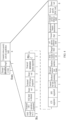
- the first element may be as shown in FIG. 3 .
- the first element may be as shown in FIG. 4 , where the first element may also include at least one of: a field length field (occupying 3 bits), a protected target wake time (TWT) operation supported field (occupying 1 bit), a simultaneous authentication of equals (SAE) hash-to-element field (occupying 1 bit), a protected wake up radio (WUR) frame supported field (occupying 1 bit), a protected announce frame supported field (occupying 1 bit), or a policy based access control (PBAC) field (occupying 1 bit).
- a field length field occupying 3 bits
- TWT protected target wake time
- SAE simultaneous authentication of equals
- WUR protected wake up radio
- PBAC policy based access control
- the first frame is at least one of: the beacon frame, the probe response frame, the association response frame, or the reassociation response frame.
- the first frame may also be other frames, which is not limited in the present application.
- a STA that does not use the client privacy enhancement feature shall not perform a point-to-point signaling (e.g., tunneled direct link setup (TDLS)) interaction with a STA that uses the client privacy enhancement feature.
- TDLS tunneled direct link setup
- the STA performs the signaling interaction with the AP using a first set of target features; where the first set of target features is an intersection of the set of client privacy enhancement features supported by the STA and the set of client privacy enhancement features supported by the AP.
- the first set of target features is the first subset of features.
- the first set of target features is the first subset of features.
- the first set of target features is the first subset of features.
- the first set of target features is the first subset of features and the second subset of features.
- AP that supports the client privacy enhancement feature does not allow an access of a STA that does not support the client privacy enhancement feature. Specifically, for example, in a case where the STA does not support the first subset of features and the AP supports the first subset of features, the STA does not use the first subset of features to perform the signaling interaction with the AP; and/or, in a case where the STA does not support the first subset of features and the AP supports the first subset of features and the second subset of features, the STA does not use the first subset of features and the second subset of features to perform the signaling interaction with the AP.
- the subset of features supported by the AP and the subset of features supported by the STA may be as shown in Table 2, and under different subset of features, the subset of features used by the STA when performing the signaling interaction with the AP may be as shown in Table 2.
- CPE1 represents the first subset of features
- CPE2 represents the second subset of features
- BPE1 represents the third subset of features
- BPE2 represents the fourth subset of features
- BPE3 represents the fifth subset of features.
- the STA in a case where the STA does not support the CPE1 and the AP supports the CPE1, the STA does not use CPE1 to perform the signaling interaction with the AP; and/or, in a case where the STA does not support the CPE1 and the AP supports the CPE1 and CPE2, the STA does not use the CPE1 and CPE2 to perform the signaling interaction with the AP.
- the first set of target features is the CPE1, that is, the STA uses the CPE1 to perform the signaling interaction with the AP.
- the first set of target features is the CPE1, that is, the STA uses the CPE1 to perform the signaling interaction with the AP.
- the first set of target features is the CPE1, that is, the STA uses the CPE1 to perform the signaling interaction with the AP.
- the first set of target features is the CPE1 and CPE2, that is, the STA uses the CPE1 and CPE2 to perform the signaling interaction with the AP.
- the above Table 2 may be replaced with the following Table 3, i.e., the row where the "Not supporting CPE1" STA is located in the above Table 2 is removed.
- the STA performs the signaling interaction with the AP using a second set of target features; where the second set of target features is part or all of the set of privacy enhancement features supported by the AP, where the set of privacy enhancement features includes the set of client privacy enhancement features and/or the set of basic service set privacy enhancement features.
- the AP does not allow an access of a STA that supports fewer set of basic service set privacy enhancement features than the set of basic service set privacy enhancement features supported by the AP.
- the second set of target features is the first subset of features and the third subset of features.
- the second set of target features is the first subset of features and the third subset of features.
- the second set of target features is the first subset of features, the second subset of features, and the third subset of features.
- the second set of target features is the first subset of features and the third subset of features.
- the second set of target features is the first subset of features, the second subset of features, and the third subset of features.
- the second set of target features is the first subset of features, the second subset of features, the third subset of features and the fourth subset of features.
- the second set of target features is the first subset of features and the third subset of features.
- the second set of target features is the first subset of features, the second subset of features and the third subset of features.
- the second set of target features is the first subset of features, the second subset of features, the third subset of features and the fourth subset of features.
- the second set of target features is the first subset of features, the second subset of features, the third subset of features, the fourth subset of features and the fifth subset of features.
- the AP in a case where the STA does not support the first subset of features, the AP does not support the access of the STA.
- the AP in a case where the STA supports the first subset of features, and the AP supports the first subset of features and the third subset of features, the AP does not support the access of the STA.
- the AP in a case where the STA supports the first subset of features, and the AP supports the first subset of features, the second subset of features and the third subset of features, the AP does not support the access of the STA.
- the AP in a case where the STA supports the first subset of features, and the AP supports the first subset of features, the second subset of features, the third subset of features and the fourth subset of features, the AP does not support the access of the STA.
- the AP in a case where the STA supports the first subset of features, and the AP supports the first subset of features, the second subset of features, the third subset of features, the fourth subset of features and the fifth subset of features, the AP does not support the access of the STA.
- the AP in a case where the STA supports the first subset of features and the third subset of features, and the AP supports the first subset of features, the second subset of features, the third subset of features and the fourth subset of features, the AP does not support the access of the STA.
- the AP in a case where the STA supports the first subset of features and the third subset of features, and the AP supports the first subset of features, the second subset of features, the third subset of features, the fourth subset of features and the fifth subset of features, the AP does not support the access of the STA.
- the AP does not support the access of the STA.
- the AP does not support the access of the STA.
- the AP does not support the access of the STA.
- the subset of features supported by the AP and the subset of features supported by the STA may be as shown in Table 4, and under different subset of features, the subset of features used by the STA when performing the signaling interaction with the AP may be as shown in Table 4.
- CPE1 represents the first subset of features
- CPE2 represents the second subset of features
- BPE1 represents the third subset of features
- BPE2 represents the fourth subset of features
- BPE3 represents the fifth subset of features.
- "N" indicates that the AP does not support the access of the corresponding STA.
- the AP does not support the access of the STA.
- the AP does not support the access of the STA.
- the AP does not support the access of the STA.
- the AP does not support the access of the STA.
- the AP does not support the access of the STA.
- the AP does not support the access of the STA.
- the AP does not support the access of the STA.
- the AP does not support the access of the STA.
- the second set of target features is the CPE1 and BPE1, that is, the STA uses the CPE1 and BPE1 to perform the signaling interaction with the AP.
- the second set of target features is the CPE1 and BPE1, that is, the STA uses the CPE1 and BPE1 to perform the signaling interaction with the AP.
- the AP does not support the access of the STA.
- the AP does not support the access of the STA.
- the second set of target features is the CPE1 and BPE1, that is, the STA uses the CPE1 and BPE1 to perform the signaling interaction with the AP.
- the second set of target features is the CPE1, CPE2 and BPE1, that is, the STA uses the CPE1, CPE2 and BPE1 to perform the signaling interaction with the AP.
- the AP does not support the access of the STA.
- the AP does not support the access of the STA.
- the second set of target features is the CPE1 and BPE1, that is, the STA uses the CPE1 and BPE1 to perform the signaling interaction with the AP.
- the second set of target features is the CPE1, CPE2 and BPE1, that is, the STA uses the CPE1, CPE2 and BPE1 to perform the signaling interaction with the AP.
- the second set of target features is the CPE1, CPE2, BPE1 and BPE2, that is, the STA uses the CPE1, CPE2, BPE1 and BPE2 to perform the signaling interaction with the AP.
- the AP does not support the access of the STA.
- the second set of target features is the CPE1 and BPE1, that is, the STA uses the CPE1 and BPE1 to perform the signaling interaction with the AP.
- the second set of target features is the CPE1, CPE2 and BPE1, that is, the STA uses the CPE1, CPE2 and BPE1 to perform the signaling interaction with the AP.
- the second set of target features is the CPE1, CPE2, BPE1 and BPE2, that is, the STA uses the CPE1, CPE2, BPE1 and BPE2 to perform the signaling interaction with the AP.
- the second set of target features is the CPE1, CPE2, BPE1, BPE2 and BPE3, that is, the STA uses the CPE1, CPE2, BPE1, BPE2 and BPE3 to perform the signaling interaction with the AP.
- a basic service set enhanced privacy access point cannot simultaneously enable a random SSID feature and a feature of compatible with the stations that do not support the random SSID.
- the access point such as a vehicle-mounted access point and/or a mobile hotspot turned on by a mobile phone
- the basic service set privacy enhancement feature and the random SSID feature whether the CPE feature is supported in the access point is set to yes, whether the BPE feature is supported is set to yes, the random SSID feature is set to yes, and the partial BPE supported is set to no. That is, the capability information of the access point is: whether to support the CPE feature being set to yes, whether to support the BPE feature being set to yes, the random SSID feature being set to yes, and the partial BPE supported being set to no.
- the beacon frame of the access point carries the capability information of the access point and the changed SSID (denoted as SSID_1, and an original SSID is denoted as SSID_0).
- the station transmits a desired SSID probe request (carrying SSID_1) or transmits a wildcard SSID probe request
- the access point responds with a probe response frame carrying the access point capability information and the SSID_1.
- the station transmits a desired SSID probe request (carrying SSID_0)
- the access point does not respond. That is to say, in this mode, stations that do not support the random SSID feature can only connect to the access point as a new network (identified by the SSID_1) and cannot connect to it as a network identified by the SSID_0.
- the changed SSID is derived from the original SSID using a predefined algorithm, and a station supporting the random SSID feature uses the passive scanning and/or wildcard SSID probe requests. After receiving the probe response frame, the station can associate the indication of the capability information of the access point and SSID_1 with the saved SSID_0, thereby determining that the access point is the access point that needs to be connected.
- the changed SSID cannot be derived from the original SSID.
- the beacon frame and the probe response frame of the access point carry a capability information field, an SSID element, and an extended SSID element, where the capability information field carries the capability information of the access point, the SSID element carries the changed SSID, the random number field in the extended SSID element carries a random number R1, and a ciphertext field of the original SSID in the extended SSID element carries the ciphertext of the original SSID.
- the station supporting the random SSID feature uses the passive scanning and/or the wildcard SSID probe requests.
- the station After receiving the beacon frame and/or the probe response frame, the station can associate the indication of the capability information of the access point, the random number R1 and the ciphertext of the original SSID with the saved SSID_0, thereby determining that the access point is the access point that needs to be connected.
- the ciphertext of the original SSID may be generated by symmetric encryption (for example, using the advanced encryption standard (AES) algorithm) of the original SSID using the key of the network and the random number R1, or by using a hash algorithm (for example, the secure hash algorithm (SHA) algorithm), or by using a key derivation algorithm (for example, the hash-based message authentication code-based key derivation function (HKDF) or the password-based key derivation function (PBKDF)).
- AES advanced encryption standard
- SHA secure hash algorithm
- a key derivation algorithm for example, the hash-based message authentication code-based key derivation function (HKDF) or the password-based key derivation function (PBKDF)
- the station supporting the random SSID feature may use the desired SSID probe request, indicating the capability information and the changed SSID in the probe request frame and carrying the random number R2 and the ciphertext of the original SSID in the extended SSID element, as shown in FIG. 6 .
- the access point can associate the capability information, the changed SSID, the random number R2 and the ciphertext of the original SSID with its own stored SSID_0, thereby determining that the station is probing the access point.
- the access point then responds with a probe response frame carrying the capability information of the access point, the random number R2, and the SSID_1, as shown in FIG. 7 .
- the station can associate the SSID_1 with the stored SSID_0 according to the random number R2, thereby determining that the access point is the access point that needs to be connected.
- the ciphertext of the original SSID may be generated by symmetric encryption of the original SSID using the key of the network and the random number R2 (for example, using the AES algorithm), or may be generated using the hash algorithm (for example, the SHA algorithm), or may be generated using the key derivation algorithm (for example, the HKDF or PBKDF).
- the beacon frame of the access point carries the access point capability information but does not carry the SSID information.
- the access point responds with the probe response frame carrying the access point capability information and the SSID_1.
- the station transmits the desired SSID probe request (carrying the SSID_0)
- the access point does not respond. That is, in this mode, stations that do not support the random SSID feature can only connect to the access point as a new network (identified by the SSID_1) and cannot connect to it as a network identified by the SSID_0.
- the station supporting the random SSID can only use the desired SSID probe request, carrying the capability information in the probe request frame and carrying the random number R2 and the ciphertext of the original SSID in the extended SSID element, as shown in FIG. 6 .
- the access point may associate the capability information, the random number R2 and the ciphertext of the original SSID with the its own stored SSID_0, thereby determining that the station is probing the access point.
- the access point responds with the probe response frame carrying the access point capability information, the random number R2 and SSID_1, as shown in FIG. 7 .
- the station After receiving the probe response frame, the station can associate SSID_1 with the stored SSID_0 according to the random number R2, thereby determining that the access point is an access point that needs to be connected.
- the ciphertext of the original SSID may be generated by the symmetric encryption of the original SSID using the key of the network and the random number R2 (for example, using the AES algorithm), or may be generated using the hash algorithm (for example, the SHA algorithm), or may be generated using the key derivation algorithm (for example, HKDF or PBKDF).
- the STA uses the second set of target features to perform the signaling interaction with the AP; where the second set of target features is part or all of the set of privacy enhancement features supported by the AP, where the set of privacy enhancement features includes the set of client privacy enhancement features and/or the set of basic service set privacy enhancement features.
- the AP allows an access of a STA that supports fewer set of basic service set privacy enhancement features than the set of basic service set privacy enhancement features supported by the AP.
- the second set of target features is an intersection of the set of privacy enhancement features supported by the STA and the set of privacy enhancement features supported by the AP, and the set of privacy enhancement features includes the set of client privacy enhancement features and/or the set of basic service set privacy enhancement features.
- the second set of target features is the first subset of features and the third subset of features.
- the second set of target features is the first subset of features and the third subset of features.
- the second set of target features is the first subset of features and the third subset of features.
- the second set of target features is the first subset of features and the third subset of features.
- the second set of target features is the first subset of features and the third subset of features.
- the second set of target features is the first subset of features, the second subset of features and the third subset of features.
- the second set of target features is the first subset of features, the second subset of features and the third subset of features.
- the second set of target features is the first subset of features, the second subset of features and the third subset of features.
- the second set of target features is the first subset of features and the third subset of features.
- the second set of target features is the first subset of features, the second subset of features and the third subset of features.
- the second set of target features is the first subset of features, the second subset of features, the third subset of features and the fourth subset of features.
- the second set of target features is the first subset of features, the second subset of features, the third subset of features and the fourth subset of features.
- the second set of target features is the first subset of features and the third subset of features.
- the second set of target features is the first subset of features, the second subset of features and the third subset of features.
- the second set of target features is the first subset of features, the second subset of features, the third subset of features and the fourth subset of features.
- the second set of target features is the first subset of features, the second subset of features, the third subset of features, the fourth subset of features and the fifth subset of features.
- the STA in a case where the STA does not support the first subset of features, the STA does not use the privacy enhancement feature in a case of accessing the AP.
- the STA in a case where the STA supports the first subset of features, and the AP supports the first subset of features and the third subset of features, the STA does not use the privacy enhancement feature in a case of accessing the AP.
- the STA in a case where the STA supports the first subset of features, and the AP supports the first subset of features, the second subset of features and the third subset of features, the STA does not use the privacy enhancement feature in a case of accessing the AP.
- the STA in a case where the STA supports the first subset of features, and the AP supports the first subset of features, the second subset of features, the third subset of features and the fourth subset of features, the STA does not use the privacy enhancement feature in a case of accessing the AP.
- the STA in a case where the STA supports the first subset of features, and the AP supports the first subset of features, the second subset of features, the third subset of features, the fourth subset of features and the fifth subset of features, the STA does not use the privacy enhancement feature in a case of accessing the AP.
- the subset of features supported by the AP and the subset of features supported by the STA may be as shown in Table 5, and under different subset of features, the subset of features used by the STA when performing the signaling interaction with the AP may be as shown in Table 5.
- CPE1 represents the first subset of features
- CPE2 represents the second subset of features
- BPE1 represents the third subset of features
- BPE2 represents the fourth subset of features
- BPE3 represents the fifth subset of features.
- the STA does not use the privacy enhancement feature in a case of accessing the AP.
- the STA does not use the privacy enhancement feature in a case of accessing the AP.
- the STA does not use the privacy enhancement feature in a case of accessing the AP.
- the STA does not use the privacy enhancement feature in a case of accessing the AP.
- the STA in a case where the STA supports the CPE1, and the AP supports the CPE1 and BPE1, the STA does not use the privacy enhancement feature in a case of accessing the AP.
- the STA in a case where the STA supports the CPE1, and the AP supports the CPE1, CPE2 and BPE1, the STA does not use the privacy enhancement feature in a case of accessing the AP.
- the STA does not use the privacy enhancement feature in a case of accessing the AP.
- the STA does not use the privacy enhancement feature in a case of accessing the AP.
- the second set of target features is the CPE1 and BPE1, that is, the STA uses the CPE1 and BPE1 to perform the signaling interaction with the AP.
- the second set of target features is the CPE1 and BPE1, that is, the STA uses the CPE1 and BPE1 to perform the signaling interaction with the AP.
- the second set of target features is the CPE1 and BPE1, that is, the STA uses the CPE1 and BPE1 to perform the signaling interaction with the AP.
- the second set of target features is the CPE1 and BPE1, that is, STA uses the CPE1 and BPE1 to perform the signaling interaction with the AP.
- the second set of target features is the CPE1 and BPE1, that is, the STA uses the CPE1 and BPE1 to perform the signaling interaction with the AP.
- the second set of target features is the CPE1, CPE2 and BPE1, that is, STA uses the CPE1, CPE2 and BPE1 to perform the signaling interaction with the AP.
- the second set of target features is the CPE1, CPE2 and BPE1, that is, STA uses the CPE1, CPE2 and BPE1 to perform the signaling interaction with the AP.
- the second set of target features is the CPE1, CPE2 and BPE1, that is, the STA uses the CPE1, CPE2 and BPE1 to perform the signaling interaction with the AP.
- the second set of target features is the CPE1 and BPE1, that is, the STA uses the CPE1 and BPE1 to perform the signaling interaction with the AP.
- the second set of target features is the CPE1, CPE2 and BPE1, that is, the STA uses the CPE1, CPE2 and BPE1 to perform the signaling interaction with the AP.
- the second set of target features is the CPE1, CPE2, BPE1 and BPE2, that is, the STA uses the CPE1, CPE2, BPE1 and BPE2 to perform the signaling interaction with the AP.
- the second set of target features is the CPE1, CPE2, BPE1 and BPE2, that is, the STA uses the CPE1, CPE2, BPE1 and BPE2 to perform the signaling interaction with the AP.
- the second set of target features is the CPE1 and BPE1, that is, the STA uses the CPE1 and BPE1 to perform the signaling interaction with the AP.
- the second set of target features is the CPE1, CPE2 and BPE1, that is, the STA uses the CPE1, CPE2 and BPE1 to perform the signaling interaction with the AP.
- the second set of target features is the CPE1, CPE2, BPE1 and BPE2, that is, the STA uses the CPE1, CPE2, BPE1 and BPE2 to perform the signaling interaction with the AP.
- the second set of target features is the CPE1, CPE2, BPE1, BPE2 and BPE3, that is, STA uses the CPE1, CPE2, BPE1, BPE2 and BPE3 to perform the signaling interaction with the AP.
- the basic service set enhanced privacy access point simultaneously enables the random SSID feature and the feature of compatible with the station that do not support the random SSID.
- the access point such as a vehicle-mounted access point and/or a mobile hotspot turned on by a mobile phone
- the basic service set privacy enhancement feature and the random SSID feature in the access point whether to support the CPE feature is set to yes, whether to support the BPE feature is set to yes, the random SSID feature is set to yes, and partial BPE supported is set to yes. That is, the capability information of the access point is: whether to support the CPE feature being set to yes, whether to support the BPE feature being set to yes, the random SSID feature being set to yes, and partial BPE supported being set to yes.
- the beacon frame of the access point carries the capability information of the access point and the changed SSID (denoted as SSID_1, and an original SSID is denoted as SSID_0).
- the access point responds with a probe response frame carrying the access point capability information and the SSID_1.
- the access point In a case where the station transmits a desired SSID probe request (carrying SSID_0), the access point responds with a probe response frame carrying the capability information of the access point and the SSID_0. That is to say, in this mode, the network established by the access point has two identifiers (the SSID_1 and SSID_0). Stations that do not support the random SSID feature can only connect to it as two different networks. Furthermore, in order to prevent downgrade attacks, stations that support the random SSIDs can only connect to the network represented by the SSID_1.
- the active or passive scanning manner of the station supporting the random SSID feature is as described in the example 1 of the above embodiment 2, which will not be repeated here.
- the beacon frame of the access point carries the access point capability information but does not carry the SSID information.
- the access point responds with the probe response frame carrying the access point capability information and the SSID_1.
- the access point responds with the probe response frame carrying the capability information of the access point and the SSID_0. That is to say, in this mode, the network established by the access point has two identifiers (the SSID_1 and SSID_0).
- Stations that do not support random SSIDs can only connect to it as two different networks. Furthermore, in order to prevent downgrade attacks, stations that support random SSIDs can only connect to the network represented by SSID_1.
- the active or passive scanning manner of the station supporting the basic service set privacy enhancement feature is as described in the example 2 in the above embodiment 2, which will not be repeated here.
- some SSIDs in the probe request frames and probe response frames may still be used to track access points.
- the privacy leakage risk they bring will gradually decrease.
- this option can take into account market benefits, is conducive to promoting the application with privacy protection features, and promotes the delisting of stations that do not support random SSID.
- the set of basic service set privacy enhancement features maintained by the STA includes the first subset of features and/or the second subset of features, and the set of basic service set privacy enhancement features maintained by the STA includes at least one of the third subset of features, the fourth subset of features or the fifth subset of features.
- the STA side embodiments of the present application are described in detail above in combination with FIGS. 2 to 7 .
- AP side embodiments of the present application will be described in detail below in combination with FIG. 8 . It should be understood that the AP side embodiments and the STA side embodiments correspond to each other, and similar descriptions may refer to the STA side embodiments.
- FIG. 8 is a schematic flowchart of a wireless communication method 300 according to an embodiment of the present application. As shown in FIG. 8 , the wireless communication method 300 may include at least part of the following contents.
- an AP maintains a set of basic service set privacy enhancement features and/or a set of client privacy enhancement features; the set of client privacy enhancement features includes a first subset of features and/or a second subset of features, and the set of basic service set privacy enhancement features includes at least one of a third subset of features, a fourth subset of features or a fifth subset of features.
- the first subset of features includes at least one of the following features: a privacy enhancement feature related to an MAC address or identifier; a security key established in a pre-association authentication; an OTA MAC address, and AID or UID of a station (STA) that are randomly changed; protected source address and destination address; or a protected private MAC address of the STA.
- the second subset of features includes at least one of the following features: a privacy enhancement feature for preventing fingerprint analysis; a reduced beacon frame; a protected association request frame or protected association response frame, and a protected reassociation request frame or protected reassociation response frame; a frame sequence number, a scrambler seed, a packet number for encryption and TID of a STA that are randomly changed; or a protected MAC header.
- the third subset of features includes at least one of the following features: protected source address and destination address; or a changed SSID.
- the fourth subset of features includes at least one of the following features: a changed SSID; obfuscation of parameter information of an AP in an AP MLD or a multi-AP BSSID; an obfuscated AP identifier in an RNR; randomized beacon frame transmission time; an encrypted unicast management frame; or a reception station address, a frame sequence number and a packet number for encryption that are obfuscated for groupcast frame.
- the fifth subset of features includes at least one of the following features: a sensing specific MAC address of the STA, or a ranging specific MAC address of the STA.
- the set of basic service set privacy enhancement features maintained by the AP includes the first subset of features and/or the second subset of features, and the set of basic service set privacy enhancement features maintained by the AP includes at least one of the third subset of features, the fourth subset of features or the fifth subset of features.
- the set of basic service set privacy enhancement features may be an optional set of privacy enhancement features maintained by the AP. That is, in the embodiments of the present application, the AP maintains the set of client privacy enhancement features, or the AP maintains the set of basic service set privacy enhancement features and the set of client privacy enhancement features.
- a "field” may also be referred to as a "domain” or a "subfield".
- One field may occupy one or more bytes/octets, or one field may occupy one or more bits.
- the AP may be, for example, a mobile phone hotspot or a vehicle-mounted access point.
- the "set of client privacy enhancement features” may also be referred to as the "set of station-related privacy enhancement features", which is not limited in the present application.
- the STA and the AP locally maintain the MIB variables, and the MIB variables contain the set of basic service set privacy enhancement features and/or the set of client privacy enhancement features.
- a value of the MIB variable is set by an upper layer application within the device or by a user.
- the value of the MIB variable is set by an upper layer application within the STA or by the user.
- the value of the MIB variable is set by an upper layer application within the AP or by the user.
- the first subset of features is a subset of features that is mandatorily supported by the AP, and/or the second subset of features is a subset of features that is optionally supported by the AP, or the second subset of features is a subset of features that is mandatorily supported by the AP.
- subsets of features may be divided according to relevance between features.
- the first subset of features is a mandatory subset of features that the STA supports, and/or the second subset of features is a subset of features that is optionally supported by the STA.
- subsets of features may be divided according to relevance between features.
- dot11CPEImplemented indicates whether a mandatory set of station-related privacy enhancement features (i.e., the first subset of features) is implemented.
- the first subset of features is a mandatory subset of features (denoted as CPE1) for the STA and is indicated by the dot11CPEImplemented, including but not limited to at least one of: a privacy enhancement feature related to an MAC address or identifier (such as authentication identify (SAE password ID) and pairwise master key identify (PMK ID)), a security key established in a pre-association authentication, an OTA MAC address and an AID/UID of the station that are randomly changed, protected source station address (SA) and destination station address (DA) values, or a protected private MAC address of the station.
- a privacy enhancement feature related to an MAC address or identifier such as authentication identify (SAE password ID) and pairwise master key identify (PMK ID)
- PMK ID pairwise master key identify
- the second subset of features is a mandatory subset of features (denoted as CPE2) for the STA, including but not limited to at least one of: the privacy enhancement feature for preventing fingerprint analysis (such as the reduced probe request frame/reduced probe response frame), the reduced beacon frame, the protected association request frame/protected association response frame and the protected reassociation request frame/protected reassociation response frame, the frame sequence number (SN), scrambler seed, packet number (PN) for encryption and traffic identifier (TID) of the STA that are randomly changed, or the protected MAC header.
- the privacy enhancement feature for preventing fingerprint analysis (such as the reduced probe request frame/reduced probe response frame), the reduced beacon frame, the protected association request frame/protected association response frame and the protected reassociation request frame/protected reassociation response frame, the frame sequence number (SN), scrambler seed, packet number (PN) for encryption and traffic identifier (TID) of the STA that are randomly changed, or the protected MAC header.
- dot11CPEReducedScanningImplemented indicates whether the reduced probe request frame/reduced probe response frame and the reduced beacon frame are implemented.
- dot11CPEProtectedAssociationImplemented indicates whether the protected association request frame/protected association response frame and the protected reassociation request frame/protected reassociation response frame are implemented.
- dot11CPERandomNumbersImplemented indicates whether the frame sequence number (SN), scrambler seed, packet number (PN) for encryption and traffic identifier (TID) of the station that are randomly changed is implemented.
- dot11CPEMACHeaderProtectionImplemented indicates whether the protected MAC header is implemented.
- the third subset of features is a subset of features that is mandatorily supported by a mobile AP
- the fourth subset of features is a subset of features that is optionally supported by the AP
- the fifth subset of features is a subset of features that is optionally supported by the AP.
- the subsets of features may be divided according to relevance between various features.
- the AP in a case where the AP is a mobile AP (e.g., a mobile phone hotspot or a vehicle-mounted access point), the AP supports at least the third subset of features.
- a mobile AP e.g., a mobile phone hotspot or a vehicle-mounted access point
- the AP supports at least the third subset of features.
- the third subset of features is an optional subset of features that STA supports
- the fourth subset of features is an optional subset of features that STA supports
- the fifth subset of features is an optional subset of features that STA supports.
- the subsets of features may be divided according to relevance between various features.
- dot11BPEImplemented indicates whether the conditionally mandatory set of privacy enhancement features related to the basic service set is implemented.
- dot11PattialBPESupportActivated indicates whether the access point supports an access of stations that implement partial privacy enhancement features.
- the third subset of features is an optional subset of features (denoted as BPE1) for the STA, indicated by the dot11BPEImplemented, including but not limited to at least one of: protected source address (SA) and destination address (DA) values; or changed basic service set identifier (BSSID).
- SA protected source address
- DA destination address
- BSSID changed basic service set identifier
- the fourth subset of features is an optional subset of features (denoted as BPE2) for the STA, including but not limited to at least one of: the changed SSID, the obfuscation of parameter information of the access point in the access point multi-link device (AP MLD) or the multiple-AP BSSID, the obfuscated access point identifier in the reduced neighbor reports (RNR), the randomized beacon frame transmission time, the encrypted unicast management frame, the reception station address, frame sequence number and packet number for encryption that are obfuscated for groupcast frame.
- BPE2 optional subset of features for the STA, including but not limited to at least one of: the changed SSID, the obfuscation of parameter information of the access point in the access point multi-link device (AP MLD) or the multiple-AP BSSID, the obfuscated access point identifier in the reduced neighbor reports (RNR), the randomized beacon frame transmission time, the encrypted unicast management frame, the reception station address
- dot11BPERandomSSIDImplemented indicates whether the changed SSID is implemented.
- dot11BPEAPIdentityEnhancementImplemented indicates whether the obfuscation of parameter information of the access point in the access point multi-link device (AP MLD) or the multiple-AP BSSID and the obfuscated access point identifier in the reduced neighbor report (RNR) are implemented.
- AP MLD access point multi-link device
- RNR reduced neighbor report
- dot11BPEUnicastPMFImplemented indicates whether the encrypted unicast management frame is implemented.
- dot11BPERandomizedBeaconTransmissionImplemented indicates whether the randomized beacon frame transmission time is implemented.
- dot11BPEGroupcastPrivacyEnhancementImplemented indicates whether the reception station address, frame sequence number and packet number for encryption that are obfuscated for groupcast frame are implemented.
- the fifth subset of features is an optional subset of features (denoted as BPE3) for the STA, including but not limited to at least one of: the sensing specific MAC address of the station, or the ranging specific MAC address of the station.
- dot11BPEServiceSpecificMACImplemented indicates whether the sensing specific MAC address of the station and the ranging specific MAC address of the station are implemented.
- the support of the above subset of features by the privacy-enhanced AP and the privacy-enhanced STA is shown in Table 1 above.
- the STA and the AP may communicate the basic service set privacy enhancement feature and/or the client privacy enhancement feature that they support respectively.
- the AP receives a second frame; where the second frame includes a second element, and the second element is used to indicate capability information related to the privacy enhancement feature of the STA.
- the AP transmits the second frame to the STA.
- the second element includes but is not limited to at least one of: a client privacy enhancement features supported field, a basic service set privacy enhancement features supported field, a partial basic service set privacy enhancement features supported field, a reduced scanning field, a protected association frame field, a random numbers field, an MAC header protection field, a random SSID field, an AP identifier privacy enhancement field, a unicast management frame encryption field, a randomized beacon frame transmission time field, a groupcast frame privacy enhancement field, or a service specific MAC address field.
- a client privacy enhancement features supported field a basic service set privacy enhancement features supported field, a partial basic service set privacy enhancement features supported field, a reduced scanning field, a protected association frame field, a random numbers field, an MAC header protection field, a random SSID field, an AP identifier privacy enhancement field, a unicast management frame encryption field, a randomized beacon frame transmission time field, a groupcast frame privacy enhancement field, or a service specific MAC address field.
- the client privacy enhancement (CPE) features supported field is used to indicate whether the STA supports a mandatory set of privacy enhancement features related to the STA.
- the client privacy enhancement features supported field occupies 1 bit (of course, it may also occupy more bits).
- a value of 1 indicates that the STA supports the mandatory set of privacy enhancement features related to the STA, and a value of 0 indicates that the STA does not support the mandatory set of privacy enhancement features related to the STA; or, the value of 0 indicates that the STA supports the mandatory set of privacy enhancement features related to the STA, and the value of 1 indicates that the STA does not support the mandatory set of privacy enhancement features related to the STA.
- the client privacy enhancement (CPE) features supported field may also be replaced with other names, which is not limited in the embodiments of the present application.
- the basic service set privacy enhancement (BPE) features supported field is used to indicate whether the STA supports a mandatory set of privacy enhancement features related to the basic service set.
- the basic service set privacy enhancement features supported field occupies 1 bit (of course, it may also occupy more bits).
- a value of 1 indicates that the STA supports the mandatory set of privacy enhancement features related to the basic service set, and a value of 0 indicates that the STA does not support the mandatory set of privacy enhancement features related to the basic service set; or, the value of 0 indicates that the STA supports the mandatory set of privacy enhancement features related to the basic service set, and a value of 1 indicates that the STA does not support the mandatory set of privacy enhancement features related to the basic service set.
- the basic service set privacy enhancement (BPE) features supported field may also be replaced with other names, which is not limited in the embodiments of the present application.
- the partial basic service set privacy enhancement (BPE) feature supported field is used to indicate whether the STA supports an access of a STA that implements partial privacy enhancement features.
- the partial basic service set privacy enhancement features supported field occupies 1 bit (of course, it may also occupy more bits).
- a value of 1 indicates that the STA supports an access of STA that implements the partial privacy enhancement features, and a value of 0 indicates that the STA does not support the access of STA that implements the partial privacy enhancement features; or the value of 0 indicates that the STA supports the access of STA that implements the partial privacy enhancement features, and the value of 1 indicates that the STA does not support the access of STA that implements the partial privacy enhancement features.
- the partial basic service set privacy enhancement (BPE) feature field may also be replaced with other names, which is not limited in the embodiments of the present application.
- the reduced scanning field is used to indicate whether the STA supports the reduced probe request frame or the reduced probe response frame and the reduced beacon frame.
- the reduced scanning field occupies 1 bit (of course, it may also occupy more bits).
- a value of 1 indicates that the STA supports the reduced probe request or reduced probe response frame and the reduced beacon frame, and a value of 0 indicates that the STA does not support the reduced probe request or reduced probe response frame and the reduced beacon frame; or, the value of 0 indicates that the STA supports the reduced probe request or reduced probe response frame and the reduced beacon frame, and the value of 1 indicates that the STA does not support the reduced probe request or reduced probe response frame and the reduced beacon frame.
- the reduced scanning field may also be replaced with other names, which is not limited in the embodiments of the present application.
- the protected association frame field is used to indicate whether the STA supports the protected association request frame or protected association response frame and the protected reassociation request frame or protected reassociation response frame.
- the protected association frame field occupies 1 bit (of course, it may also occupy more bits).
- a value of 1 indicates that the STA supports the protected association request frame or protected association response frame and the protected reassociation request frame or protected reassociation response frame, and a value of 0 indicates that the STA does not support the protected association request frame or protected association response frame and the protected reassociation request frame or protected reassociation response frame; or, the value of 0 indicates that the STA supports the protected association request frame or protected association response frame and the protected reassociation request frame or protected reassociation response frame, and the value of 1 indicates that the STA does not support the protected association request frame or protected association response frame and the protected reassociation request frame or protected reassociation response frame.
- the protected association frame field may also be replaced with other names, which is not limited in the embodiments of the present application.
- the random numbers field is used to indicate whether the STA supports the frame sequence number, scrambler seed, packet number for encryption and TID of the STA that are randomly changed.
- the random numbers field occupies 1 bit (of course, it may also occupy more bits).
- a value of 1 indicates that the STA supports the frame sequence number, scrambler seed, packet number for encryption and TID of the STA that are randomly changed, and a value of 0 indicates that the STA does not support the frame sequence number, scrambler seed, packet number for encryption and TID of the STA that are randomly changed; or, the value of 0 indicates that the STA supports the frame sequence number, scrambler seed, packet number for encryption and TID of the STA that are randomly changed, and the value of 1 indicates that the STA does not support the frame sequence number, scrambler seed, packet number for encryption and TID of the STA that are randomly changed.
- the random numbers field may also be replaced with other names, which is not limited in the embodiments of the present application.
- the MAC header protection field is used to indicate whether the STA supports the protected MAC header.
- the MAC header protection field occupies 1 bit (of course, it may also occupy more bits).
- a value of 1 indicates that the STA supports the protected MAC header, and a value of 0 indicates that the STA does not support the protected MAC header; or, the value of 0 indicates that the STA supports the protected MAC header, and the value of 1 indicates that the STA does not support the protected MAC header.
- the MAC header protection field may also be replaced with other names, which is not limited in the embodiments of the present application.
- the random SSID field is used to indicate whether the STA supports the changed SSID.
- the random SSID field occupies 1 bit (of course, it may also occupy more bits).
- a value of 1 indicates that the STA supports the changed SSID, and a value of 0 indicates that the STA does not support the changed SSID; or, the value of 0 indicates that the STA supports the changed SSID, and a value of 1 indicates that the STA does not support the changed SSID.
- the random SSID field may also be replaced with other names, which is not limited in the embodiments of the present application.
- the AP identity privacy enhancement field is used to indicate whether the STA supports the obfuscation of parameter information of the AP in the AP MLD or multi-AP BSSID and the obfuscated AP identifier in the RNR.
- the AP identity privacy enhancement field occupies 1 bit (of course, it may also occupy more bits).
- a value of 1 indicates that the STA supports the obfuscation of parameter information of the AP in the AP MLD or multi-AP BSSID and the obfuscated AP identifier in the RNR, and a value of 0 indicates that the STA does not support the obfuscation of parameter information of the AP in the AP MLD or multi-AP BSSID and the obfuscated AP identifier in the RNR; or, the value of 0 indicates that the STA supports the obfuscation of parameter information of the AP in the AP MLD or multi-AP BSSID and the obfuscated AP identifier in the RNR, and the value of 1 indicates that the STA does not support the obfuscation of parameter information of the AP in the AP MLD or multi-AP BSSID and the obfuscated AP identifier in the RNR. It should be noted that, in a case of implementing the same
- the unicast management frame encryption field is used to indicate whether the STA supports the encrypted unicast management frame.
- the unicast management frame encryption field occupies 1 bit (of course, it may also occupy more bits).
- a value of 1 indicates that the STA supports the encrypted unicast management frame, and a value of 0 indicates that the STA does not support the encrypted unicast management frame; or, a value of 0 indicates that the STA supports the encrypted unicast management frame, and a value of 1 indicates that the STA does not support the encrypted unicast management frame.
- the unicast management frame encryption field may also be replaced with other names, which is not limited in the embodiments of the present application.
- the randomized beacon frame transmission time field is used to indicate whether the STA supports the randomized beacon frame transmission time.
- the randomized beacon frame transmission time field occupies 1 bit (of course, it may also occupy more bits).
- a value of 1 indicates that the STA supports the randomized beacon frame transmission time, and a value of 0 indicates that the STA does not support the randomized beacon frame transmission time; or, the value of 0 indicates that the STA supports the randomized beacon frame transmission time, and the value of 1 indicates that the STA does not support the randomized beacon frame transmission time.
- the randomized beacon frame transmission time field may also be replaced with other names, which is not limited in the embodiments of the present application.
- the groupcast frame privacy enhancement field is used to indicate whether the STA supports the reception station address, frame sequence number and packet number for encryption that are obfuscated for groupcast frame.
- the groupcast frame privacy enhancement field occupies 1 bit (of course, it may also occupy more bits).
- a value of 1 indicates that the STA supports the reception station address, frame sequence number and packet number for encryption that are obfuscated for groupcast frame, and a value of 0 indicates that the STA does not support the reception station address, frame sequence number and packet number for encryption that are obfuscated for groupcast frame; or, the value of 0 indicates that the STA supports the reception station address, frame sequence number and packet number for encryption that are obfuscated for groupcast frame, and the value of 1 indicates that the STA does not support the reception station address, the frame sequence number and packet number for encryption that are obfuscated for groupcast frame.
- the groupcast frame privacy enhancement field may also be replaced with other names, which is not limited in the embodiments of the present application.
- the service specific MAC address field is used to indicate whether the STA supports a sensing specific MAC address of a STA and a ranging specific MAC address of a STA.
- the service specific MAC address field occupies 1 bit (of course, it may also occupy more bits).
- a value of 1 indicates that the STA supports the sensing specific MAC address of the STA and the ranging specific MAC address of the STA, and a value of 0 indicates that the STA does not support the sensing specific MAC address of the STA and the ranging specific MAC address of the STA; or, the value of 0 indicates that the STA supports the sensing specific MAC address of the STA and the ranging specific MAC address of the STA, and the value of 1 indicates that the STA does not support the sensing specific MAC address of the STA and the ranging specific MAC address of the STA.
- the service specific MAC address field may also be replaced with other names, which is not limited in the embodiments of the present application.
- the second element is an extended capabilities element, or the second element is a robust security network element (RSNE), or the second element is a robust security network extension element (RSNXE), or the second element is a newly defined enhanced privacy capabilities element.
- RSNE robust security network element
- RSNXE robust security network extension element
- the second element is a newly defined enhanced privacy capabilities element.
- the second element may also be other elements, which is not limited in the embodiments of the present application.
- the second element may be as shown in FIG. 3 .
- the second element in a case where the second element is the robust security network extension element, the second element may be as shown in FIG. 4 .
- the second frame is at least one of: a probe request frame, an association request frame, or a reassociation request frame.
- the first frame may also be other frames, which is not limited in the present application.
- a STA that does not use the client privacy enhancement feature shall not perform a point-to-point signaling (e.g., tunneled direct link setup (TDLS)) interaction with a STA that uses the client privacy enhancement feature.
- TDLS tunneled direct link setup
- the AP uses a third set of target features to perform the signaling interaction with the STA; where the third set of target features is an intersection of the set of client privacy enhancement features supported by the AP and the set of client privacy enhancement features supported by the STA.
- the third set of target features is the first subset of features.
- the third set of target features is the first subset of features.
- the third set of target features is the first subset of features.
- the third set of target features is the first subset of features and the second subset of features.
- an AP that supports a client privacy enhancement feature does not allow an access of a STA that does not support the client privacy enhancement feature. For example, in a case where the STA does not support the first subset of features and the AP supports the first subset of features, the AP does not use the third subset of features to perform the signaling interaction with the STA; and/or, in a case where the STA does not support the first subset of features and the AP supports the first subset of features and the second subset of features, the AP does not use the third subset of features and the second subset of features to perform the signaling interaction with the STA.
- the subset of features supported by the AP and the subset of features supported by the STA may be as shown in Table 2 above, and under different subset of features, the subset of features used by the STA when performing the signaling interaction with the AP may be as shown in Table 2 above.
- CPE1 represents the first subset of features
- CPE2 represents the second subset of features
- BPE1 represents the third subset of features
- BPE2 represents the fourth subset of features
- BPE3 represents the fifth subset of features.
- the AP uses a fourth set of target features to perform the signaling interaction with the STA; the fourth set of target features is part or all of the set of privacy enhancement features supported by the AP, where the set of privacy enhancement features includes the set of client privacy enhancement features and/or the set of basic service set privacy enhancement features. Further, the AP does not allow an access of a STA that supports fewer set of basic service set privacy enhancement features than the set of basic service set privacy enhancement features supported by the AP.
- the fourth set of target features is the first subset of features and the third subset of features.
- the fourth set of target features is the first subset of features and the third subset of features.
- the fourth set of target features is the first subset of features and the third subset of features.
- the fourth set of target features is the first subset of features, the second subset of features and the third subset of features.
- the fourth set of target features is the first subset of features and the third subset of features.
- the fourth set of target features is the first subset of features, the second subset of features and the third subset of features.
- the fourth set of target features is the first subset of features, the second subset of features, the third subset of features and the fourth subset of features.
- the fourth set of target features is the first subset of features and the third subset of features.
- the fourth set of target features is the first subset of features, the second subset of features and the third subset of features.
- the fourth set of target features is the first subset of features, the second subset of features, the third subset of features and the fourth subset of features.
- the fourth set of target features is the first subset of features, the second subset of features, the third subset of features, the fourth subset of features and the fifth subset of features.
- the AP in a case where the STA does not support the first subset of features, the AP does not support the access of the STA.
- the AP in a case where the STA supports the first subset of features, and the AP supports the first subset of features and the third subset of features, the AP does not support the access of the STA.
- the AP in a case where the STA supports the first subset of features, and the AP supports the first subset of features, the second subset of features and the third subset of features, the AP does not support the access of the STA.
- the AP in a case where the STA supports the first subset of features, and the AP supports the first subset of features, the second subset of features, the third subset of features and the fourth subset of features, the AP does not support the access of the STA.
- the AP in a case where the STA supports the first subset of features, and the AP supports the first subset of features, the second subset of features, the third subset of features, the fourth subset of features and the fifth subset of features, the AP does not support the access of the STA.
- the AP in a case where the STA supports the first subset of features and the third subset of features, and the AP supports the first subset of features, the second subset of features, the third subset of features and the fourth subset of features, the AP does not support the access of the STA.
- the AP in a case where the STA supports the first subset of features and the third subset of features, and the AP supports the first subset of features, the second subset of features, the third subset of features, the fourth subset of features and the fifth subset of features, the AP does not support the access of the STA.
- the AP does not support the access of the STA.
- the AP does not support the access of the STA.
- the AP does not support the access of the STA.
- the subset of features supported by the AP and the subset of features supported by the STA may be as shown in Table 4 above, and under different subset of features, the subset of features used by the STA when performing the signaling interaction with the AP may be as shown in Table 4 above.
- CPE1 represents the first subset of features
- CPE2 represents the second subset of features
- BPE1 represents the third subset of features
- BPE2 represents the fourth subset of features
- BPE3 represents the fifth subset of features.
- N indicates that the AP does not support the access of the corresponding STA. The detailed description may refer to the above description about the STA.
- the AP uses the fourth set of target features to perform the signaling interaction with the STA; the fourth set of target features is part or all of the set of privacy enhancement features supported by the AP, where the set of privacy enhancement features includes the set of client privacy enhancement features and/or the set of basic service set privacy enhancement features. Further, the AP allows an access of a STA that supports fewer set of basic service set privacy enhancement features than the set of basic service set privacy enhancement features supported by the AP.
- the fourth set of target features is an intersection of the set of privacy enhancement features supported by the STA and the set of privacy enhancement features supported by the AP
- the set of privacy enhancement features includes the set of basic service set privacy enhancement features and/or the set of client privacy enhancement features.
- the fourth set of target features is the first subset of features and the third subset of features.
- the fourth set of target features is the first subset of features and the third subset of features.
- the fourth set of target features is the first subset of features and the third subset of features.
- the second set of target features is the first subset of features and the third subset of features.
- the fourth set of target features is the first subset of features and the third subset of features.
- the fourth set of target features is the first subset of features, the second subset of features, and the third subset of features.
- the fourth set of target features is the first subset of features, the second subset of features, and the third subset of features.
- the fourth set of target features is the first subset of features, the second subset of features, and the third subset of features.
- the fourth set of target features is the first subset of features and the third subset of features.
- the fourth set of target features is the first subset of features, the second subset of features, and the third subset of features.
- the fourth set of target features is the first subset of features, the second subset of features, the third subset of features and the fourth subset of features.
- the fourth set of target features is the first subset of features, the second subset of features, the third subset of features, and the fourth subset of features.
- the fourth set of target features is the first subset of features and the third subset of features.
- the fourth set of target features is the first subset of features, the second subset of features and the third subset of features.
- the fourth set of target features is the first subset of features, the second subset of features, the third subset of features and the fourth subset of features.
- the fourth set of target features is the first subset of features, the second subset of features, the third subset of features, the fourth subset of features and the fifth subset of features.
- the STA in a case where the STA does not support the first subset of features, the STA does not use the privacy enhancement feature in a case of accessing the AP.
- the STA in a case where the STA supports the first subset of features, and the AP supports the first subset of features, the second subset of features, the third subset of features, and the fourth subset of features, the STA does not use the privacy enhancement feature in a case of accessing the AP.
- the STA in a case where the STA supports the first subset of features, and the AP supports the first subset of features, the second subset of features, the third subset of features, the fourth subset of features and the fifth subset of features, the STA does not use the privacy enhancement feature in a case of accessing the AP.
- the subset of features supported by the AP and the subset of features supported by the STA may be as shown in Table 5 above, and under different subset of features, the subset of features used by the STA when performing the signaling interaction with the AP may be as shown in Table 5 above.
- CPE1 represents the first subset of features
- CPE2 represents the second subset of features
- BPE1 represents the third subset of features
- BPE2 represents the fourth subset of features
- BPE3 represents the fifth subset of features.
- the set of basic service set privacy enhancement features maintained by the AP includes the first subset of features and/or the second subset of features, and the set of basic service set privacy enhancement features maintained by the AP includes at least one of the third subset of features, the fourth subset of features or the fifth subset of features.
- FIG. 9 shows a schematic block diagram of a STA 400 according to the embodiments of the present application.
- the STA 400 includes:
- the first subset of features is a subset of features that is mandatorily supported by the STA, and/or the second subset of features is a subset of features that is optionally supported by the STA; and/or, in the set of basic service set privacy enhancement features, the third subset of features is a subset of features that is optionally supported by the STA, and/or the fourth subset of features is a subset of features that is optionally supported by the STA, and/or the fifth subset of features is a subset of features that is optionally supported by the STA.
- the STA 400 includes a communication unit 420;
- the first element includes at least one of: a client privacy enhancement features supported field, a basic service set privacy enhancement features supported field, a partial basic service set privacy enhancement features supported field, a reduced scanning field, a protected association frame field, a random numbers field, an MAC header protection field, a random SSID field, an AP identity privacy enhancement field, a unicast management frame encryption field, a randomized beacon frame transmission time field, a groupcast frame privacy enhancement field, or a service specific MAC address field;
- the client privacy enhancement features supported field is used to indicate whether the AP supports a mandatory set of privacy enhancement features related to the STA
- the basic service set privacy enhancement features supported field is used to indicate whether the AP supports a mandatory set of privacy enhancement features related to a basic service set
- the partial basic service set privacy enhancement features supported field is used to indicate whether the AP supports an access of a STA that implements partial privacy enhancement features
- the reduced scanning field is used to indicate whether the AP supports a reduced probe request frame or a reduced probe response frame and the reduced
- the first element is an extended capabilities element, or the first element is a robust security network element, or the first element is a robust security network extension element, or the first element is a newly defined enhanced privacy capabilities element.
- the first frame is at least one of: the beacon frame, the probe response frame, the association response frame, or the reassociation response frame.
- the STA 400 further includes a communication unit 420;
- the first set of target features is the first subset of features
- an AP that supports a client privacy enhancement feature does not allow an access of a STA that does not support a client privacy enhancement feature.
- the STA in a case where the STA does not support the first subset of features and the AP supports the first subset of features, the STA does not use the first subset of features to perform the signaling interaction with the AP; and/or in a case where the STA does not support the first subset of features and the AP supports the first subset of features and the second subset of features, the STA does not use the first subset of features and the second subset of features to perform the signaling interaction with the AP.
- the STA 400 further includes a communication unit 420;
- the AP does not allow an access of a STA that supports fewer set of basic service set privacy enhancement features than the set of basic service set privacy enhancement features supported by the AP.
- the second set of target features is the first subset of features and the third subset of features
- the AP in a case where the STA does not support the first subset of features, the AP does not support an access of the STA; and/or,
- the AP allows an access of a STA that supports fewer set of basic service set privacy enhancement features than the set of basic service set privacy enhancement features supported by the AP.
- the second set of target features is an intersection of the set of privacy enhancement features supported by the STA and the set of privacy enhancement features supported by the AP; where the set of privacy enhancement features includes the set of client privacy enhancement features and/or the set of basic service set privacy enhancement features.
- the second set of target features is the first subset of features and the third subset of features
- the STA in a case where the STA does not support the first subset of features, the STA does not use the privacy enhancement feature in a case of accessing the AP; and/or,
- the AP in a case where the AP is a mobile AP, the AP supports at least the third subset of features.
- a STA that does not use the client privacy enhancement feature and a STA that uses the client privacy enhancement feature are not allowed to perform point-to-point signaling interaction.
- the communication unit may be a communication interface or a transceiver, or an input/output interface of a communication chip or a system on chip.
- the processing unit above may be one or more processors.
- the STA 400 may correspond to the STA in the method embodiments of the present application, and the above and other operations and/or function of various units in the STA 400 are respectively for implementing the corresponding process of the STA in the method 200 shown in FIG. 2 , which will not be repeated here for the sake of brevity.
- FIG. 10 shows a schematic block diagram of an AP 500 according to the embodiments of the present application.
- the AP 500 includes:
- the first subset of features is a subset of features that is mandatorily supported by the AP
- the second subset of features is a subset of features that is optionally supported by the AP
- the second subset of features is a subset of features that is mandatorily supported by the AP
- the third subset of features is a subset of features that is mandatorily supported by the mobile AP
- the fourth subset of features is a subset of features that is optionally supported by the AP
- the fifth subset of features is a subset of features that is optionally supported by the AP.
- the AP 500 includes a communication unit 520;
- the second element includes at least one of: a client privacy enhancement features supported field, a basic service set privacy enhancement features supported field, a partial basic service set privacy enhancement features supported field, a reduced scanning field, a protected association frame field, a random numbers field, an MAC header protection field, a random SSID field, an AP identifier privacy enhancement field, a unicast management frame encryption field, a randomized beacon frame transmission time field, a groupcast frame privacy enhancement field, or a service specific MAC address field; where the client privacy enhancement features supported field is used to indicate whether the STA supports a mandatory set of privacy enhancement features related to the STA, the basic service set privacy enhancement features supported field is used to indicate whether the STA supports a mandatory set of privacy enhancement features related to a basic service set, the partial basic service set privacy enhancement features supported field is used to indicate whether the STA supports an access of a STA that implements partial privacy enhancement features, the reduced scanning field is used to indicate whether the STA supports a reduced probe request frame or a reduced probe response frame and
- the second element is the extended capabilities element, or the second element is the robust security network element, or the second element is the robust security network extension element, or the second element is the newly defined enhanced privacy capabilities element.
- the second frame is at least one of: the probe request frame, the association request frame, or the reassociation request frame.
- the AP 500 further includes the communication unit 520;
- the third set of target features is the first subset of features
- the AP that supports a client privacy enhancement feature does not allow an access of a STA that does not support the client privacy enhancement feature.
- the AP in a case where the STA does not support the first subset of features and the AP supports the first subset of features, the AP does not use the third subset of features to perform the signaling interaction with the STA; and/or, in a case where the STA does not support the first subset of features and the AP supports the first subset of features and the second subset of features, the AP does not use the third subset of features and the second subset of features to perform the signaling interaction with the STA.
- the AP 500 further includes the communication unit 520;
- the AP does not allow the access of the STA that supports fewer set of basic service set privacy enhancement features than the set of basic service set privacy enhancement features supported by the AP.
- the fourth set of target features is the first subset of features and the third subset of features.
- the AP in a case where the STA does not support the first subset of features, the AP does not support an access of the STA; and/or,
- the AP allows an access of STA that supports fewer set of basic service set privacy enhancement features than the set of basic service set privacy enhancement features supported by the AP.
- the fourth set of target features is the set of privacy enhancement features supported by the STA and the set of privacy enhancement features supported by the AP; where the set of privacy enhancement features includes the set of client privacy enhancement features and/or the set of basic service set privacy enhancement features.
- the fourth set of target features is the first subset of features and the third subset of features.
- the STA in a case where the STA does not support the first subset of features, the STA does not use the privacy enhancement feature in a case of accessing the AP; and/or,
- the AP in a case where the AP is the mobile AP, the AP supports at least the third subset of features.
- the STA that does not use the client privacy enhancement feature and the STA that uses the client privacy enhancement feature are not allowed to perform point-to-point signaling interaction.
- the communication unit may be a communication interface or a transceiver, or an input/output interface of a communication chip or a system on chip.
- the processing unit above may be one or more processors.
- the AP 500 may correspond to the AP in the method embodiments of the present application, and the above and other operations and/or functions of various units in the AP 500 are respectively for implementing the corresponding process of the AP in the method 300 shown in FIG. 8 , which will not be repeated here for the sake of brevity.
- FIG. 11 is a schematic structural diagram of a communication device 600 provided in the embodiments of the present application.
- the communication device 600 shown in FIG. 11 includes a processor 610, and the processor 610 may invoke a computer program from a memory and execute the computer program to implement the method in the embodiments of the present application.
- the communication device 600 may further include a memory 620.
- the processor 610 may invoke a computer program from the memory 620 and execute the computer program to implement the method in the embodiments of the present application.
- the memory 620 may be a separate device independent of the processor 610, or may be integrated into the processor 610.
- the communication device 600 may further include a transceiver 630, and the processor 610 may control the transceiver 630 to communicate with other devices, specifically, may transmit information or data to other devices, or receive information or data transmitted by other devices.
- the transceiver 630 may include a transmitter and a receiver.
- the transceiver 630 may further include an antenna, and the number of the antennas may be one or more.
- the communication device 600 may specifically be the AP of the embodiments of the present application, and the communication device 600 may implement the corresponding processes implemented by the AP in various methods of the embodiments of the present application, which will not be repeated here for the sake of brevity.
- the communication device 600 may specifically be the STA in the embodiments of the present application, and the communication device 600 may implement the corresponding processes implemented by the STA in various methods of the embodiments of the present application, which will not be repeated here for the sake of brevity.
- FIG. 12 is a schematic structural diagram of a device according to the embodiments of the present application.
- An apparatus 700 shown in FIG. 12 includes a processor 710, and the processor 710 may invoke a computer program from a memory and execute the computer program to implement the method in the embodiments of the present application.
- the apparatus 700 may further include a memory 720.
- the processor 710 may invoke a computer program from the memory 720 and execute the computer program to implement the method in the embodiments of the present application.
- the memory 720 may be a separate device independent of the processor 710, or may be integrated into the processor 710.
- the apparatus 700 may further include an input interface 730.
- the processor 710 may control the input interface 730 to communicate with other devices or chips, and specifically, may obtain information or data transmitted by other devices or chips.
- the apparatus 700 may further include an output interface 740.
- the processor 710 may control the output interface 740 to communicate with other devices or chips, and specifically, may output information or data to other devices or chips.
- the apparatus may be applied to the AP in the embodiments of the present application, and the apparatus may implement the corresponding processes implemented by the AP in the various methods of the embodiments of the present application, which will not be repeated here, for the sake of brevity.
- the apparatus may be applied to the STA in the embodiments of the present application, and the apparatus may implement the corresponding processes implemented by the STA in the various methods of the embodiments of the present application, which will not be repeated here for the sake of brevity.
- the apparatus mentioned in the embodiments of the present application may also be a chip, for example, may be a system level chip, a system chip, a chip system, or a system-on-chip chip, etc.
- FIG. 13 is a schematic block diagram of a communication system 800 provided in the embodiments of the present application. As shown in FIG. 13 , the communication system 800 includes a STA 810 and an AP 820.
- the STA 810 may be used to implement the corresponding functions implemented by the STA in the above method, and the AP 820 may be used to implement the corresponding functions implemented by the AP in the above method, which will not be repeated here for the sake of brevity.
- the processor of the embodiments of the present application may be an integrated circuit chip with signal processing capabilities.
- various steps of the above method embodiments may be completed by an integrated logic circuit of hardware in a processor or an instruction in software form.
- the above-mentioned processor may be a general purpose processor, a digital signal processor (DSP), an application specific integrated circuit (ASIC), a field programmable gate array (FPGA) or other programmable logic devices, a discrete gate or transistor logic device, or a discrete hardware component.
- DSP digital signal processor
- ASIC application specific integrated circuit
- FPGA field programmable gate array
- the various methods, steps and logic diagrams disclosed in the embodiments of the present application may be implemented or executed.
- the general purpose processor may be a microprocessor, or the processor may be any conventional processor or the like.
- the steps of the method disclosed in combination with the embodiments of the present application may be directly embodied as being performed and completed by a hardware decoding processor, or by using a combination of hardware and software modules in the decoding processor.
- the software module may be located in the mature storage medium in the art such as the random memory, the flash memory, the read-only memory, the programmable read-only memory or electrically erasable programmable memory, the register.
- the storage medium is located in the memory, and the processor reads the information in the memory and completes the steps of the above methods in combination with its hardware.
- the memory in the embodiments of the present application may be a volatile memory or a non-volatile memory, or may include both volatile and non-volatile memories.
- the non-volatile memory may be a read-only memory (ROM), a programmable ROM (PROM), an erasable PROM (EPROM), an electrically EPROM (EEPROM) or a flash memory.
- the volatile memory may be a random access memory (RAM), which is used as an external cache.
- RAMs are available, for example, a static RAM (SRAM), a dynamic RAM (DRAM), a synchronous DRAM (SDRAM), a double data rate SDRAM (DDR SDRAM), an enhanced SDRAM (ESDRAM), a synchlink DRAM (SLDRAM) and a direct rambus RAM (DR RAM).
- SRAM static RAM
- DRAM dynamic RAM
- SDRAM synchronous DRAM
- DDR SDRAM double data rate SDRAM
- ESDRAM enhanced SDRAM
- SLDRAM synchlink DRAM
- DR RAM direct rambus RAM
- the memory in embodiments of the present application may also be a static Random Access Memory (static RAM, SRAM), a Dynamic Random Access Memory (dynamic RAM, DRAM), a synchronous DRAM (SDRAM), a double data rate SDRAM (DDR SDRAM), an enhanced SDRAM (ESDRAM), a synch link DRAM (SLDRAM), and a Direct Rambus RAM (DR RAM), etc. That is, the memory in the embodiments of the present application is intended to include, but not limited to, these and any other suitable types of memories.
- static RAM static Random Access Memory
- DRAM Dynamic Random Access Memory
- SDRAM synchronous DRAM
- DDR SDRAM double data rate SDRAM
- ESDRAM enhanced SDRAM
- SLDRAM synch link DRAM
- DR RAM Direct Rambus RAM
- a computer-readable storage medium for storing a computer program in the embodiments of the present application.
- the computer-readable storage medium may be applied to the AP in the embodiments of the present application, and the computer program causes the computer to perform the corresponding processes implemented by the AP in the various methods of the embodiments of the present application, which will not be repeated here for the sake of brevity.
- the computer-readable storage medium may be applied to the STA in the embodiments of the present application, and the computer program causes the computer to perform the corresponding processes implemented by the STA in the various methods of the embodiments of the present application, which will not be repeated here for the sake of brevity.
- a computer program product is further provided in the embodiments of the present application, including computer program instructions.
- the computer program product may be applied to the AP in the embodiments of the present application, and the computer program instructions cause the computer to perform the corresponding processes implemented by the AP in the various methods of the embodiments of the present application, which will not be repeated here for the sake of brevity.
- the computer program product may be applied to the STA in the embodiments of the present application, and the computer program instructions cause the computer to perform the corresponding processes implemented by the STA in the various methods of the embodiments of the present application, which will not be repeated here for the sake of brevity.
- a computer program is further provided in the embodiments of the present application.
- the computer program may be applied to the AP in the embodiments of the present application.
- the computer program when executed on a computer, causes the computer to perform the corresponding processes implemented by the AP in the various methods of the embodiments of the present application, which will not be repeated here for the sake of brevity.
- the computer program may be applied to the STA in the embodiments of the present application.
- the computer program when executed on a computer, causes the computer to perform the corresponding processes implemented by the STA in the various methods of the embodiments of the present application, which will not be repeated here for the sake of brevity.
- the disclosed systems, apparatus, and method may be implemented in other ways.
- the apparatus embodiments described above are only schematic, for example, division of the units is only division of logical functions, and there may be other division methods in an actual implementation, for example, a plurality of units or components may be combined or integrated into another system, or some features may be ignored or not performed.
- the coupling or direct coupling or communicative connection between each other as shown or discussed may be indirect coupling or communicative connection of apparatus or units via some interfaces, which may be electrical, mechanical, or in other forms.
- the units illustrated as separate components may be or may not be physically separated, and the components shown as units may be or may not be physical units, that is, they may be located in one place, or may be distributed onto a plurality of network units. A part or all of the units may be selected according to actual needs, to implement the purpose of the schemes of the embodiments.
- the various functional units in the various embodiments of the present application may be integrated into one processing unit, or the various units may exist physically separately, or two or more units may be integrated into one unit.
- the described functions are implemented in a form of a software functional unit and sold or used as an independent product, they may be stored in one computer readable storage medium.
- the technical solution of the present application essentially, or a part of the technical solution that contributes to the prior art, or a part of the technical solution, may be embodied in a form of a software product, and the computer software product is stored in a storage medium, and includes a plurality of instructions to cause a computer device (which may be a personal computer, a server, or a network device, etc.) to perform all or some of steps of the methods described in the various embodiments of the present application.
- the storage medium mentioned above includes a USB flash drive (U disk), a mobile hard disk, a read-only memory (ROM), a random access memory (RAM), a diskette, or an optical disk, and various mediums that may store program codes.
Landscapes
- Engineering & Computer Science (AREA)
- Computer Networks & Wireless Communication (AREA)
- Signal Processing (AREA)
- Computer Security & Cryptography (AREA)
- Databases & Information Systems (AREA)
- Power Engineering (AREA)
- Mobile Radio Communication Systems (AREA)
Abstract
Description
- Embodiments of the present application relate to the field of communications, and more specifically, to wireless communication methods and devices.
- Access points (APs) and stations (STAs) may maintain management information base (MIB) variables locally, such as a set of basic service set privacy enhancement (BPE) features and a set of client privacy enhancement (CPE) features. However, how to divide specific features in the set of basic service set privacy enhancement features and the set of client privacy enhancement features to support different feature selections is an urgent problem to be solved.
- Embodiments of the present application provide wireless communication methods and devices, which can reasonably divide specific features in a set of basic service set privacy enhancement features and/or a set of client privacy enhancement features to support different feature selections.
- In a first aspect, a wireless communication method is provided, and the method includes:
- maintaining, by a station (STA), a set of basic service set privacy enhancement features and/or a set of client privacy enhancement features;
- where the set of client privacy enhancement features includes a first subset of features and/or a second subset of features, and the set of basic service set privacy enhancement features includes at least one of a third subset of features, a fourth subset of features or a fifth subset of features;
- where the first subset of features includes at least one of the following features: a privacy enhancement feature related to a medium access control (MAC) address or identifier; a security key established in a pre-association authentication; an over the air medium access control (OTA MAC) address, and an association identifier (AID) or unassociation identifier (UID) of the STA that are randomly changed; protected source address and destination address; or a protected private MAC address of the STA;
- where the second subset of features includes at least one of the following features: a privacy enhancement feature for preventing fingerprint analysis; a reduced beacon frame; a protected association request or protected association response frame, and a protected reassociation request or protected reassociation response frame; a frame sequence number, a scrambler seed, a packet number for encryption and a traffic identifier (TID) of the STA that are randomly changed; or a protected MAC header;
- where the third subset of features includes at least one of the following features: protected source address and destination address; or a changed service set identifier (SSID);
- where the fourth subset of features includes at least one of the following features: a changed SSID; obfuscation of parameter information of the AP in an access point multi-link device (AP MLD) or multi-AP basic service set identifier (BSSID); an obfuscated AP identifier in a reduced neighbor report (RNR); randomized beacon frame transmission time; an encrypted unicast management frame; or a reception station address, a frame sequence number and a packet number for encryption that are obfuscated for groupcast frame; and
- where the fifth subset of features includes at least one of the following features: a sensing specific MAC address of the STA, or a ranging specific MAC address of the STA.
- In a second aspect, a wireless communication method is provided, and the method includes:
- maintaining, by an AP, a set of basic service set privacy enhancement features and/or a set of client privacy enhancement features;
- where the set of client privacy enhancement features includes a first subset of features and/or a second subset of features, and the set of basic service set privacy enhancement features includes at least one of a third subset of features, a fourth subset of features or a fifth subset of features;
- where the first subset of features includes at least one of the following features: a privacy enhancement feature related to a medium access control (MAC) address or identifier; a security key established in a pre-association authentication; an over the air medium access control (OTA MAC) address, and an association identifier (AID) or unassociation identifier (UID) of a station (STA) that are randomly changed; protected source address and destination address; or a protected private MAC address of the STA;
- where the second subset of features includes at least one of the following features: a privacy enhancement feature for preventing fingerprint analysis; a reduced beacon frame; a protected association request or protected association response frame, and a protected reassociation request or protected reassociation response frame; a frame sequence number, a scrambler seed, a packet number for encryption and a traffic identifier (TID) of the STA that are randomly changed; or a protected MAC header;
- where the third subset of features includes at least one of the following features: protected source address and destination address; or a changed service set identifier (SSID);
- where the fourth subset of features includes at least one of the following features: a changed SSID; obfuscation of parameter information of the AP in an access point multi-link device (AP MLD) or multi-AP basic service set identifier (BSSID); an obfuscated AP identifier in a reduced neighbor report (RNR); randomized beacon frame transmission time; an encrypted unicast management frame; or a reception station address, a frame sequence number and a packet number for encryption that are obfuscated for groupcast frame; and
- where the fifth subset of features includes at least one of the following features: a sensing specific MAC address of the STA, or a ranging specific MAC address of the STA.
- In a third aspect, a STA is provided for performing the method in the first aspect.
- Specifically, the STA includes a functional module for performing the method in the first aspect.
- In a fourth aspect, an AP is provided for performing the method in the second aspect.
- Specifically, the AP includes a functional module for performing the method in the second aspect.
- In a fifth aspect, a STA is provided, including a processor and a memory. The memory is used to store a computer program, and the processor is used to invoke and execute the computer program stored in the memory to cause the STA to perform the method in the first aspect.
- In a sixth aspect, an AP is provided, including a processor and a memory. The memory is used to store a computer program, and the processor is used to invoke and execute the computer program stored in the memory to cause the AP to perform the method in the second aspect.
- In a seventh aspect, an apparatus is provided for implementing the method in any one of the first aspect and the second aspect.
- Specifically, the apparatus includes a processor to invoke a computer program from a memory and execute the computer program to cause a device equipped with the apparatus to perform the method in any one of the first aspect and the second aspect.
- In an eighth aspect, a computer-readable storage medium is provided for storing a computer program, and the computer program causes a computer to perform the method in any one of the first aspect and the second aspect.
- In a ninth aspect, a computer program product is provided, including computer program instructions, and the computer program instructions cause a computer to perform the method in any one of the first aspect and the second aspect.
- In a tenth aspect, a computer program is provided, and the computer program, when executed on a computer, causes the computer to perform the method in any one of the first aspect and the second aspect.
- Through the technical solution of the first aspect, the set of basic service set privacy enhancement features maintained by the STA includes the first subset of features and/or the second subset of features, and the set of basic service set privacy enhancement features maintained by the STA includes at least one of the third subset of features, the fourth subset of features or the fifth subset of features. By reasonably dividing into different subsets of features, different feature selections may be supported.
- Through the technical solution of the second aspect, the set of basic service set privacy enhancement features maintained by the AP includes the first subset of features and/or the second subset of features, and the set of basic service set privacy enhancement features maintained by the AP includes at least one of the third subset of features, the fourth subset of features or the fifth subset of features. By reasonably dividing into different subsets of features, different feature selections may be supported.
-
-
FIG. 1 is a schematic diagram of a communication system architecture applied in embodiments of the present application. -
FIG. 2 is a schematic flowchart of a wireless communication method provided according to embodiments of the present application. -
FIG. 3 is a schematic diagram of an extended capabilities element provided according to embodiments of the present application. -
FIG. 4 is a schematic diagram of a robust security network extension element provided according to embodiments of the present application. -
FIG. 5 is a schematic diagram of a beacon frame or a probe response frame provided according to embodiments of the present application. -
FIG. 6 is a schematic diagram of a probe request frame provided according to the embodiments of present application. -
FIG. 7 is a schematic diagram of a probe response frame provided according to the embodiments of present application. -
FIG. 8 is a schematic flowchart of another wireless communication method provided according to embodiments of the present application. -
FIG. 9 is a schematic block diagram of a STA provided according to embodiments of the present application. -
FIG. 10 is a schematic block diagram of an AP provided according to embodiments of the present application. -
FIG. 11 is a schematic block diagram of a communication device provided according to embodiments of the present application. -
FIG. 12 is a schematic block diagram of an apparatus provided according to embodiments of the present application. -
FIG. 13 is a schematic block diagram of a communication system provided according to embodiments of the present application. - The technical solutions in the embodiments of the present application will be described below in conjunction with the drawings in the embodiments of the present application. Obviously, the described embodiments are some embodiments of the present application, rather than all of the embodiments. For the embodiments of the present application, all other embodiments obtained by those of ordinary skill in the art without creative efforts shall fall within the scope of protection of the present application.
- The technical solutions of the embodiments of the present application may be applied to various communication systems, such as a wireless local area network (WLAN), a wireless fidelity (WIFI) or other communication systems.
- Attention now is invited to
FIG. 1 , which shows a schematic diagram of a wireless communication system provided by embodiments of the present application. As shown inFIG. 1 , the wireless communication system may include an access point (AP) and stations (STAs). - In some scenarios, the AP may be referred to as an AP STA. That is, in a sense, the AP is also a STA. In some scenarios, the STAs are referred to as non-AP STAs.
- In some embodiments, the STAs may include the AP STA and the non-AP STA. The communication in the communication system may be communication between the AP and the non-AP STA, communication between the non-AP STA and the non-AP STA, or communication between the STA and a peer STA. The peer STA here may refer to a device for peer communication with the STA. For example, the peer STA may be the AP or the non-AP STA.
- The AP is equivalent to a bridge connecting a wired network and a wireless network, and its main function is to connect various wireless network clients together and then connect the wireless network to Ethernet. An AP device may be a terminal device (such as a mobile phone) or network device (such as a router) with a wireless-fidelity (WIFI) chip.
- It should be understood that a role of the STA in the communication system is not absolute. For example, in some scenarios, in a case where the mobile phone is connected to the router, the mobile phone is a non-AP STA. In a case where the mobile phone serves as a hotspot for other mobile phones, the mobile phone plays the role of an AP.
- The AP and non-AP STAs may be devices used in Internet of Vehicles; Internet of Things (IoT) nodes and sensors in the IoT; smart cameras, smart remote controls, smart water and electricity meters in a smart home; and sensors in a smart city.
- In some embodiments, the non-AP STAs may support 802.11be standard. The non-AP STAs may also support various current and future 802.11 family wireless local area network standards, such as 802.11ax, 802.11ac, 802.11n, 802.11g, 802.11b and 802.11a.
- In some embodiments, the AP may be a device supporting the 802.11be standard. The AP may also be a device that supports various current and future 802.11 family WLAN standards, such as 802.11ax, 802.11ac, 802.11n, 802.11g, 802.11b and 802.11a.
- In the embodiments of the present application, the STA may be a mobile phone, a pad, a computer, a virtual reality (VR) device, an augmented reality (AR) device, a wireless device in industrial control, a set-top box, a wireless device in self driving, a vehicle-mounted communication device, a wireless device in remote medical, a wireless device in smart grid, a wireless device in transportation safety, a wireless device in a smart city, or a wireless device in a smart home, a wireless communication chip, an application specific integrated circuit (ASIC), a system on chip (SOC), etc. that supports WLAN/WIFI technology.
- The bands supported by WLAN technology may include but are not limited to, low bands (2.4 GHz, 5 GHz, 6 GHz) and high bands (45 GHz, 60 GHz).
- There are one or more links between the station and the access point. In some embodiments, the stations and access point support multi-band communications, for example, communicating simultaneously on the 2.4 GHz, 5 GHz, 6 GHz, 45 GHz, and 60 GHz bands, or communicating simultaneously on different channels in the same band (or different bands), to improve communication throughput and/or reliability between devices. Such a device is usually called a multi-band device, or a multi-link device (MLD), and is sometimes also called a multi-link entity or a multi-band entity. The multi-link device may be an access point device or a station device. In a case where the multi-link device is the access point device, the multi-link device includes one or more APs; and in a case where the multi-link device is the station device, the multi-link device includes one or more non-AP STAs.
- A multi-link device including one or more APs may be referred to as an AP, and a multi-link device including one or more non-AP STAs may be referred to as a non-AP.
- In the embodiments of the present application, the AP may include a plurality of APs, the non-AP may include a plurality of STAs, a plurality of links may be formed between the APs in the AP and the STAs in the non-AP, and data communication may be performed between the APs in the AP and corresponding STAs in the non-AP through corresponding links.
- The AP is a device deployed in the wireless local area network to provide wireless communication functions for the STA. The station may include: a user equipment (UE), an access terminal, a user unit, a user station, a mobile station, a mobile platform, a remote station, a remote terminal, a mobile device, a wireless communication device, a user agent or a user apparatus. Optionally, the station may also be a cellular phone, a cordless phone, a session initiation protocol (SIP) phone, a wireless local loop (WLL) station, a personal digital assistant (PDA), a handheld device with the wireless communication function, a computing device or other processing device connected to a wireless modem, a vehicle-mounted device, or a wearable device, which is not limited in the embodiments of the present application.
- Optionally, both the station and the access point support the IEEE 802.11 standard.
- It should be understood that the terms "system" and "network" are often used interchangeably herein. The term "and/or" herein is merely a description of the association relationship of associated objects, indicating that there may be three relationships. For example, A and/or B may mean three cases: A alone, A and B both, and B alone. In addition, the character "/" herein generally indicates that association objects before and after it are in an "or" relationship.
- It should be understood that the "indication" mentioned in the embodiments of the present application may be a direct indication, an indirect indication, or an indication of an associated relationship. For example, A indicates B, which may mean that A directly indicates B, for example, B may be obtained through A; it may also mean that A indirectly indicates B, for example, A indicates C, and B may be obtained through C; it may also mean that there is an association relationship between A and B.
- The terms used in the implementation section of the present application are only used to explain the specific embodiments of the present application and are not intended to limit the present application. The terms "first", "second", "third" and "fourth" etc. in the specification, claims and drawings of the present application are used to distinguish different objects rather than to describe a specific order. In addition, the terms "include", "comprise", and "have", and any variations thereof, are intended to cover a non-exclusive inclusion.
- In the description of the embodiments of the present application, the term "corresponding" may indicate that there is a direct or indirect correspondence between two items, or an association relationship between the two items, or a relationship of indicating and being indicated, configuring and being configured, etc.
- In the embodiments of the present application, "predefined" or "preconfigured" may be implemented by pre-saving corresponding codes, tables or other manners that may be used to indicate relevant information in a device (for example, including the STA and the network device). The present application does not limit its specific implementation. For example, predefined may refer to defined in the protocol.
- In the embodiments of the present application, the "protocol" may refer to a standard protocol in the communication field, for example, it may include a WiFi protocol and related protocols used in future WiFi communication systems, which is not limited in the present application.
- In order to facilitate understanding of the technical solutions of the embodiments of the present application, the technical solutions of the present application are described in detail below through specific embodiments. The following related technologies may be arbitrarily combined with the technical solutions of the embodiments of the present application as optional solutions, which all belong to the protection scope of the embodiments of the present application. The embodiments of the present application include at least part of the following contents.
- Wireless devices support multi-band communications, for example, communicating simultaneously on 2.4 GHz, 5 GHz, 6 GHz, 45 GHz, and 60 GHz bands, or communicating simultaneously on different channels in the same band (or different bands), to improve communication throughput and/or reliability between devices. Such a device is usually called a multi-band device, or a multi-link device (MLD), and is sometimes also called a multi-link entity or a multi-band entity. A multi-link device may be an access point device or a station device. In a case where the multi-link device is the access point device, the multi-link device includes one or more APs; and in a case where the multi-link device is the station device, the multi-link device includes one or more non-AP STAs.
- In order to facilitate understanding of the technical solutions of the embodiments of the present application, the passive scanning and active scanning related to the present application are explained below.
- In the infrastructure basic service set (BSS) network, the station (STA) may discover the access point (AP) through the passive scanning and/or active scanning.
- The passive scanning means that the station discovers the access point by staying on a certain channel and receiving beacon frames transmitted by the access point. The station can also discover more access points by switching the channel. In infrastructure networks, the access points periodically transmit beacon frames to advertise their presence and capabilities to nearby stations. The beacon frames are broadcast frames, which means that they will be received by all nearby stations. The beacon frame includes rates supported by the access point, encryption capabilities, and other information. Generally, if the access point is set as a hidden network, its beacon frame does not carry service set identifier (SSID) information.
- The active scanning means that the station discovers the access point by transmitting a probe request frame and receiving a probe response frame from the access point. The probe request frame is generally transmitted in a broadcast manner (that is, the recipient address carried in the frame is a broadcast address), and the probe response frame is generally transmitted in a unicast manner (that is, the recipient address carried in the frame is an individual address). After receiving the probe response frame, the station needs to respond with an acknowledgment frame (Ack). There are two types of probe requests: a desired SSID probe request and a wildcard SSID probe request. The desired SSID probe request means that a value of a SSID field of the probe request frame is a SSID value of a specific network. The desired SSID probe request is a method for a station to check whether there is a specific network nearby, and is also the only method to identify the existence of a hidden network nearby. Only the access point (AP) whose SSID is consistent with the SSID in the probe request frame will respond with the probe response frame. The wildcard SSID probe request means that a value of a SSID field in the probe request frame is an empty string (that is, a string with a length of 0, and in this case, the SSID value is also called a wildcard SSID). Any access point that receives the probe request frame will respond with a probe response frame.
- In order to facilitate understanding of the technical solutions of the embodiments of the present application, the relevant technical solutions and existing problems of the present application are described below.
- The access point (AP) and the station (STA) may maintain management information base (MIB) variables locally, such as a set of basic service set privacy enhancement features and a set of client privacy enhancement features. However, how to divide specific features in the set of basic service set privacy enhancement features and the set of client privacy enhancement features to support different feature selections is an urgent problem to be solved.
- Specifically, for example, since an SSID of an access point (AP), especially a mobile access point (mobile AP) (such as a mobile phone hotspot, a vehicle-mounted access point), remains unchanged, it may be used to track the access point to obtain its movement trajectory, resulting in leakage of user privacy. As one of a plurality of privacy enhancement features of an access point that supports basic service set privacy enhancement features, one way to solve the problem is to make the access point use a changed or obfuscated SSID, but it is now not yet clear how the access point will be compatible with a station that does not support basic service set privacy enhancement features in a case of using the method.
- Based on the above problems, a solution for protecting privacy in the WLAN is proposed in the present application, which can reasonably divide the specific features in the set of basic service set privacy enhancement features and/or the set of client privacy enhancement features to support different feature selections.
- The technical solutions of the present application are described in detail below through specific embodiments.
-
FIG. 2 is a schematic flowchart of awireless communication method 200 according to embodiments of the present application. As shown inFIG. 2 , thewireless communication method 200 may include at least part of the following content. - In S210, a STA maintains a set of basic service set privacy enhancement features and/or a set of client privacy enhancement features. The set of client privacy enhancement features includes a first subset of features and/or a second subset of features, and the set of basic service set privacy enhancement features includes at least one of a third subset of features, a fourth subset of features or a fifth subset of features. The first subset of features includes at least one of the following features: a privacy enhancement feature related to an MAC address or identifier; a security key established in a pre-association authentication; an OTA MAC address, and AID or UID of the STA that are randomly changed; protected source address and destination address; or a protected private MAC address of the STA. The second subset of features includes at least one of the following features: a privacy enhancement feature for preventing fingerprint analysis; a reduced beacon frame; a protected association request or protected association response frame, and a protected reassociation request or protected reassociation response frame; a frame sequence number, a scrambler seed, a packet number for encryption and a TID of the STA that are randomly changed; or a protected MAC header. The third subset of features includes at least one of the following features: protected source address and destination address; or a changed SSID. The fourth subset of features includes at least one of the following features: a changed SSID; obfuscation of parameter information of the AP in an AP MLD or multi-AP BSSID; an obfuscated AP identifier in an RNR; randomized beacon frame transmission time; an encrypted unicast management frame; or a reception station address, a frame sequence number and a packet number for encryption that are obfuscated for groupcast frame. The fifth subset of features includes at least one of the following features: a sensing specific MAC address of the STA, or a ranging specific MAC address of the STA.
- In the embodiments of the present application, the set of basic service set privacy enhancement features maintained by the STA includes the first subset of features and/or the second subset of features, and the set of basic service set privacy enhancement features maintained by the STA includes at least one of the third subset of features, the fourth subset of features or the fifth subset of features. By reasonably dividing into different subsets of features, different feature selections may be supported.
- In some embodiments, the set of basic service set privacy enhancement features may be an optional set of privacy enhancement features maintained by the STA. That is, in the embodiments of the present application, the STA maintains the set of client privacy enhancement features, or the STA maintains the set of basic service set privacy enhancement features and the set of client privacy enhancement features.
- In the embodiments of the present application, a "field" may also be referred to as a "domain" or a "subfield". One field may occupy one or more bytes/octets, or one field may occupy one or more bits.
- In the embodiments of the present application, the "set of client privacy enhancement features" may also be referred to as the "set of station-related privacy enhancement features", which is not limited in the present application.
- In some embodiments, the STA and the AP locally maintain the MIB variables, and the MIB variables contain the set of basic service set privacy enhancement features and/or the set of client privacy enhancement features. Specifically, a value of the MIB variable is set by an upper layer application within the device or by a user. For example, for the STA, the value of the MIB variable is set by an upper layer application within the STA or by the user. For another example, for the AP, the value of the MIB variable is set by an upper layer application within the AP or by the user.
- In some embodiments, in the set of client privacy enhancement features, the first subset of features is a subset of features that is mandatorily supported by the STA, and/or the second subset of features is a subset of features that is optionally supported by the STA. For example, in the set of client privacy enhancement features, subsets of features may be divided according to relevance between the features.
- In some embodiments, in the set of client privacy enhancement features, the first subset of features is a subset of features that is mandatorily supported by the AP, and/or the second subset of features is a subset of features that is optionally supported by the AP, or the second subset of features is a subset of features that is mandatorily supported by the AP. Specifically, for example, in the set of client privacy enhancement features, subsets of features may be divided according to relevance between the features.
- Optionally, dot11CPEImplemented indicates whether a mandatory set of station-related privacy enhancement features (i.e., the first subset of features) is implemented.
- Specifically, in the set of client privacy enhancement features, the first subset of features is a mandatory subset of features (denoted as CPE1) for the STA and is indicated by the dot11CPEImplemented, including but not limited to at least one of: a privacy enhancement feature related to an MAC address or identifier (such as protection for an authentication identifier, e.g.,simultaneous authentication of equals password identifies (SAE password ID) and pairwise master key identifier (PMK ID)); a security key established in a pre-association authentication; an over the air medium access control (OTA MAC) address and an association identifier (AID)/unassociation identifier (UID) of the station that are randomly changed; protected source address (SA) and destination address (DA) values; or a protected private medium access control (MAC) address of the station.
- Specifically, in the set of client privacy enhancement features, the second subset of features is a mandatory subset of features (denoted as CPE2) for the STA, including but not limited to at least one of: a privacy enhancement feature for preventing fingerprint analysis (such as a reduced probe request frame/reduced probe response frame); a reduced beacon frame; a protected association request frame/protected association response frame, and a protected reassociation request frame/protected reassociation response frame; a frame sequence number (SN), scrambler seed, a packet number (PN) for encryption and a traffic identifier (TID) of the station that are randomly changed; or a protected MAC header.
- Optionally, dot11CPEReducedScanningImplemented indicates whether the reduced probe request frame/reduced probe response frame and the reduced beacon frame are implemented.
- Optionally, dot11CPEProtectedAssociationImplemented indicates whether the protected association request frame/protected association response frame and the protected reassociation request frame/protected reassociation response frame are implemented.
- Optionally, dot11CPERandomNumbersImplemented indicates whether the frame sequence number (SN), the scrambler seed, the packet number (PN) for encryption and the traffic identifier (TID) of the station that are randomly changed are implemented.
- Optionally, dot11CPEMACHeaderProtectionImplemented indicates whether the protected MAC header is implemented.
- In some embodiments, in the set of basic service set privacy enhancement features, the third subset of features is a subset of features that is optionally supported by the STA, and/or the fourth subset of features is a subset of features that is optionally supported by the STA, and/or the fifth subset of features is a subset of features that is optionally supported by the STA. Specifically, for example, in the set of basic service set privacy enhancement features, the subsets of features may be divided according to relevance between various features.
- In some embodiments, in the set of basic service set privacy enhancement features, the third subset of features is a subset of features that is mandatorily supported by the mobile AP, and/or the fourth subset of features is a subset of features that is optionally supported by the AP, and/or the fifth subset of features is a subset of features that is optionally supported by the AP. For example, in the set of basic service set privacy enhancement features, the subsets of features may be divided according to relevance between various features.
- In some embodiments, in a case where the AP is a mobile AP (e.g., a mobile phone hotspot or a vehicle-mounted access point), the AP supports at least the third subset of features.
- Optionally, dot11BPEImplemented indicates whether a conditionally mandatory set of privacy enhancement features related to the basic service set is implemented.
- Optionally, dot11PattialBPESupportActivated indicates whether the access point supports an access of a station that implements partial privacy enhancement features.
- Specifically, in the set of basic service set privacy enhancement features, the third subset of features is an optional subset of features (denoted as BPE1) for the STA, indicated by the dot11BPEImplemented, and including but not limited to at least one of: protected source address (SA) and destination address (DA) values; or a changed basic service set identifier (BSSID).
- Specifically, in the set of basic service set privacy enhancement features, the fourth subset of features is an optional subset of features (denoted as BPE2) for the STA, including but not limited to at least one of: a changed SSID; an obfuscation of parameter information of the access point in an access point multi-link device (AP MLD) or multiple-AP BSSID; an obfuscated access point identifier in a reduced neighbor report (RNR); a randomized beacon frame transmission time; an encrypted unicast management frame; or a reception station address, a frame sequence number and a packet number for encryption that are obfuscated for groupcast frame.
- Optionally, dot11BPERandomSSIDImplemented indicates whether the changed SSID is implemented.
- Optionally, dot11BPEAPIdentityEnhancementImplemented indicates whether the obfuscation of parameter information of the access point in the access point multi-link device (AP MLD) or multiple-AP BSSID and the obfuscated access point identifier in the reduced neighbor report (RNR) are implemented.
- Optionally, dot11BPEUnicastPMFImplemented indicates whether the encrypted unicast management frame is implemented.
- Optionally, dot11BPERandomizedBeaconTransmissionImplemented indicates whether the randomized beacon frame transmission time is implemented.
- Optionally, dot11BPEGroupcastPrivacyEnhancementImplemented indicates whether the reception station address, the frame sequence number and the packet number for encryption that are obfuscated for groupcast frame are implemented.
- Specifically, in the set of basic service set privacy enhancement features, the fifth subset of features is an optional subset of features (denoted as BPE3) for the STA, including but not limited to at least one of: a sensing specific MAC address of the station; or a ranging specific MAC address of the station.
- Optionally, dot11BPEServiceSpecificMACImplemented indicates whether the sensing specific MAC address of the station and the ranging specific MAC address of the station are implemented.
- In some embodiments, the above subsets of features supported by the privacy-enhanced AP and the privacy-enhanced STA are shown in Table 1 below.
Table 1 Subset of features CPE1 CPE2 BPE1 BPE2 BPE3 AP Mandatory support Mandatory support or optional support Mobile access point mandatory support Optional support Optional support STA Mandatory support Optional support Optional support Optional support Optional support - In some embodiments, the STA and the AP may communicate the basic service set privacy enhancement features and/or the client privacy enhancement features that they support respectively.
- In some embodiments, the STA receives a first frame. The first frame includes a first element, and the first element is used to indicate capability information related to the privacy enhancement features of the AP.
- Specifically, for example, the STA receives the first frame transmitted by the AP, or the STA receives the first frame transmitted by other STAs, or the STA receives the first frame transmitted by other APs.
- In some embodiments, the first element includes but is not limited to at least one of: a client privacy enhancement features supported field, a basic service set privacy enhancement features supported field, a partial basic service set privacy enhancement features supported field, a reduced scanning field, a protected association frame field, a random numbers field, an MAC header protection field, a random SSID field, an AP identity privacy enhancement field, a unicast management frame encryption field, a randomized beacon frame transmission time field, a groupcast frame privacy enhancement field, or a service specific MAC address field.
- Specifically, the client privacy enhancement (CPE) features supported field is used to indicate whether the AP supports a mandatory set of privacy enhancement features related to the STA. For example, the client privacy enhancement features supported field occupies 1 bit (of course, it may also occupy more bits). A value of 1 indicates that the AP supports the mandatory set of privacy enhancement features related to the STA, and a value of 0 indicates that the AP does not support the mandatory set of privacy enhancement features related to the STA; or, the value of 0 indicates that the AP supports the mandatory set of privacy enhancement features related to the STA, and the value of 1 indicates that the AP does not support the mandatory set of privacy enhancement features related to the STA. It should be noted that, in a case of implementing the same feature, the client privacy enhancement (CPE) features supported field may also be replaced with other names, which is not limited in the embodiments of the present application.
- Specifically, the basic service set privacy enhancement (BPE) features supported field is used to indicate whether the AP supports a mandatory set of privacy enhancement features related to the basic service set. For example, the basic service set privacy enhancement features supported field occupies 1 bit (of course, it may also occupy more bits). A value of 1 indicates that the AP supports the mandatory set of privacy enhancement features related to the basic service set, and a value of 0 indicates that the AP does not support the mandatory set of privacy enhancement features related to the basic service set; or, the value of 0 indicates that the AP supports the mandatory set of privacy enhancement features related to the basic service set, and a value of 1 indicates that the AP does not support the mandatory set of privacy enhancement features related to the basic service set. It should be noted that, in a case of implementing the same feature, the basic service set privacy enhancement (BPE) features supported field may also be replaced with other names, which is not limited in the embodiments of the present application.
- Specifically, the partial basic service set privacy enhancement (BPE) features supported field is used to indicate whether the AP supports an access of a STA that implements the partial privacy enhancement features. For example, the partial basic service set privacy enhancement features supported field occupies 1 bit (of course, it may also occupy more bits). A value of 1 indicates that the AP supports an access of STA that implements the partial privacy enhancement features, and a value of 0 indicates that the AP does not support the access of STA that implements the partial privacy enhancement features; or the value of 0 indicates that the AP supports the access of STA that implements the partial privacy enhancement features, and the value of 1 indicates that the AP does not support the access of STA that implements the partial privacy enhancement features. It should be noted that, in a case of implementing the same feature, the partial basic service set privacy enhancement (BPE) feature field may also be replaced with other names, which is not limited in the embodiments of the present application.
- Specifically, the reduced scanning field is used to indicate whether the AP supports the reduced probe request frame or reduced probe response frame and the reduced beacon frame. For example, the reduced scanning field occupies 1 bit (of course, it may also occupy more bits). A value of 1 indicates that the AP supports the reduced probe request or reduced probe response frame and the reduced beacon frame, and a value of 0 indicates that the AP does not support the reduced probe request or reduced probe response frame and the reduced beacon frame; or, the value of 0 indicates that the AP supports the reduced probe request or reduced probe response frame and the reduced beacon frame, and the value of 1 indicates that the AP does not support the reduced probe request or reduced probe response frame and the reduced beacon frame. It should be noted that, in a case of implementing the same feature, the reduced scanning field may also be replaced with other names, which is not limited in the embodiments of the present application.
- Specifically, the protected association frame field is used to indicate whether the AP supports the protected association request frame or protected association response frame and the protected reassociation request frame or protected reassociation response frame. For example, the protected association frame field occupies 1 bit (of course, it may also occupy more bits). A value of 1 indicates that the AP supports the protected association request frame or protected association response frame and the protected reassociation request frame or protected reassociation response frame, and a value of 0 indicates that the AP does not support the protected association request frame or protected association response frame and the protected reassociation request frame or protected reassociation response frame; or, the value of 0 indicates that the AP supports the protected association request frame or protected association response frame and the protected reassociation request frame or protected reassociation response frame, and the value of 1 indicates that the AP does not support the protected association request frame or protected association response frame and the protected reassociation request frame or protected reassociation response frame. It should be noted that, in a case of implementing the same feature, the protected association frame field may also be replaced with other names, which is not limited in the embodiments of the present application.
- Specifically, the random numbers field is used to indicate whether the AP supports the frame sequence number, the scrambler seed, the packet number for encryption and the TID of the STA that are randomly changed. For example, the random numbers field occupies 1 bit (of course, it may also occupy more bits). A value of 1 indicates that the AP supports the frame sequence number, scrambler seed, packet number for encryption and TID of the STA that are randomly changed, and a value of 0 indicates that the AP does not support the frame sequence number, scrambler seed, packet number for encryption and TID of the STA that are randomly changed; or, the value of 0 indicates that the AP supports the frame sequence number, scrambler seed, packet number for encryption and TID of the STA that are randomly changed, and the value of 1 indicates that the AP does not support the frame sequence number, scrambler seed, packet number for encryption and TID of the STA that are randomly changed. It should be noted that, in a case of implementing the same feature, the random numbers field may also be replaced with other names, which is not limited in the embodiments of the present application.
- Specifically, the MAC header protection field is used to indicate whether the AP supports the protected MAC header. For example, the MAC header protection field occupies 1 bit (of course, it may also occupy more bits), a value of 1 indicates that the AP supports the protected MAC header, and a value of 0 indicates that the AP does not support the protected MAC header; or, the value of 0 indicates that the AP supports the protected MAC header, and the value of 1 indicates that the AP does not support the protected MAC header. It should be noted that, in a case of implementing the same feature, the MAC header protection field may also be replaced with other names, which is not limited in the embodiments of the present application.
- Specifically, the random SSID field is used to indicate whether the AP supports the changed SSID. For example, the random SSID field occupies 1 bit (of course, it may also occupy more bits). A value of 1 indicates that the AP supports the changed SSID, and a value of 0 indicates that the AP does not support the changed SSID; or, the value of 0 indicates that the AP supports the changed SSID, and a value of 1 indicates that the AP does not support the changed SSID. It should be noted that, in a case of implementing the same feature, the random SSID field may also be replaced with other names, which is not limited in the embodiments of the present application.
- Specifically, the AP identity privacy enhancement field is used to indicate whether the AP supports the obfuscation of parameter information of the AP in the AP MLD or multi-AP BSSID and the obfuscated AP identifier in the RNR. For example, the AP identity privacy enhancement field occupies 1 bit (of course, it may also occupy more bits). A value of 1 indicates that the AP supports the obfuscation of parameter information of the AP in the AP MLD or multi-AP BSSID and the obfuscated AP identifier in the RNR, and a value of 0 indicates that the AP does not support the obfuscation of parameter information of the AP in the AP MLD or multi-AP BSSID and the obfuscated AP identifier in the RNR; or, the value of 0 indicates that the AP supports the obfuscation of parameter information of the AP in the AP MLD or multi-AP BSSID and the obfuscated AP identifier in the RNR, and the value of 1 indicates that the AP does not support the obfuscation of parameter information of the AP in the AP MLD or multi-AP BSSID and the obfuscated AP identifier in the RNR. It should be noted that, in a case of implementing the same feature, the AP identity privacy enhancement field may also be replaced with other names, which is not limited in the embodiments of the present application.
- Specifically, the unicast management frame encryption field is used to indicate whether the AP supports the encrypted unicast management frame. For example, the unicast management frame encryption field occupies 1 bit (of course, it may also occupy more bits). A value of 1 indicates that the AP supports the encrypted unicast management frame, and a value of 0 indicates that the AP does not support the encrypted unicast management frame; or, a value of 0 indicates that the AP supports the encrypted unicast management frame, and a value of 1 indicates that the AP does not support the encrypted unicast management frame. It should be noted that, in a case of implementing the same feature, the unicast management frame encryption field may also be replaced with other names, which is not limited in the embodiments of the present application.
- Specifically, the randomized beacon frame transmission time field is used to indicate whether the AP supports the randomized beacon frame transmission time. For example, the randomized beacon frame transmission time field occupies 1 bit (of course, it may also occupy more bits). A value of 1 indicates that the AP supports the randomized beacon frame transmission time, and a value of 0 indicates that the AP does not support the randomized beacon frame transmission time; or, the value of 0 indicates that the AP supports the randomized beacon frame transmission time, and the value of 1 indicates that the AP does not support the randomized beacon frame transmission time. It should be noted that, in a case of implementing the same feature, the randomized beacon frame transmission time field may also be replaced with other names, which is not limited in the embodiments of the present application.
- Specifically, the groupcast frame privacy enhancement field is used to indicate whether the AP supports the reception station address, frame sequence number and packet number for encryption that are obfuscated for groupcast frame. For example, the groupcast frame privacy enhancement field occupies 1 bit (of course, it may also occupy more bits). A value of 1 indicates that the AP supports the reception station address, frame sequence number and packet number for encryption that are obfuscated for groupcast frame, and a value of 0 indicates that the AP does not support the reception station address, frame sequence number and packet number for encryption that are obfuscated for groupcast frame; or, the value of 0 indicates that the AP supports the reception station address, frame sequence number and packet number for encryption that are obfuscated for groupcast frame, and the value of 1 indicates that the AP does not support the reception station address, frame sequence number and packet number for encryption that are obfuscated for groupcast frame. It should be noted that, in a case of implementing the same feature, the groupcast frame privacy enhancement field may also be replaced with other names, which is not limited in the embodiments of the present application.
- Specifically, the service specific MAC address field is used to indicate whether the AP supports a sensing specific MAC address of a STA and a ranging specific MAC address of a STA. For example, the service specific MAC address field occupies 1 bit (of course, it may also occupy more bits). A value of 1 indicates that the AP supports the sensing specific MAC address of the STA and the ranging specific MAC address of the STA, and a value of 0 indicates that the AP does not support the sensing specific MAC address of the STA and the ranging specific MAC address of the STA; or, the value of 0 indicates that the AP supports the sensing specific MAC address of the STA and the ranging specific MAC address of the STA, and the value of 1 indicates that the AP does not support the sensing specific MAC address of the STA and the ranging specific MAC address of the STA. It should be noted that, in a case of implementing the same feature, the service specific MAC address field may also be replaced with other names, which is not limited in the embodiments of the present application.
- In some embodiments, the first element is an extended capabilities element, or the first element is a robust security network element (RSNE), or the first element is a robust security network extension element (RSNXE), or the first element is a newly defined enhanced privacy capabilities element. Of course, the first element may also be other elements, which is not limited in the embodiments of the present application.
- Specifically, for example, in a case where the first element is the extended capabilities element, the first element may be as shown in
FIG. 3 . - For another specific example, in a case where the first element is the robust security network extension element, the first element may be as shown in
FIG. 4 , where the first element may also include at least one of: a field length field (occupying 3 bits), a protected target wake time (TWT) operation supported field (occupying 1 bit), a simultaneous authentication of equals (SAE) hash-to-element field (occupying 1 bit), a protected wake up radio (WUR) frame supported field (occupying 1 bit), a protected announce frame supported field (occupying 1 bit), or a policy based access control (PBAC) field (occupying 1 bit). - In some embodiments, the first frame is at least one of: the beacon frame, the probe response frame, the association response frame, or the reassociation response frame. Of course, the first frame may also be other frames, which is not limited in the present application.
- In some embodiments, a STA that does not use the client privacy enhancement feature shall not perform a point-to-point signaling (e.g., tunneled direct link setup (TDLS)) interaction with a STA that uses the client privacy enhancement feature.
- The signaling interaction between the STA and the AP is described in detail below in the embodiments of the present application through
embodiment 1 toembodiment 3. - In
embodiment 1, the STA performs the signaling interaction with the AP using a first set of target features; where the first set of target features is an intersection of the set of client privacy enhancement features supported by the STA and the set of client privacy enhancement features supported by the AP. - In some implementations, in a case where the STA supports the first subset of features and the AP supports the first subset of features, the first set of target features is the first subset of features.
- In some implementations, in a case where the STA supports the first subset of features and the AP supports the first subset of features and the second subset of features, the first set of target features is the first subset of features.
- In some implementations, in a case where the STA supports the first subset of features and the second subset of features and the AP supports the first subset of features, the first set of target features is the first subset of features.
- In some implementations, in a case where the STA supports the first subset of features and the second subset of features and the AP supports the first subset of features and the second subset of features, the first set of target features is the first subset of features and the second subset of features.
- In some implementations, AP that supports the client privacy enhancement feature does not allow an access of a STA that does not support the client privacy enhancement feature. Specifically, for example, in a case where the STA does not support the first subset of features and the AP supports the first subset of features, the STA does not use the first subset of features to perform the signaling interaction with the AP; and/or, in a case where the STA does not support the first subset of features and the AP supports the first subset of features and the second subset of features, the STA does not use the first subset of features and the second subset of features to perform the signaling interaction with the AP.
- In some implementations of
embodiment 1, the subset of features supported by the AP and the subset of features supported by the STA may be as shown in Table 2, and under different subset of features, the subset of features used by the STA when performing the signaling interaction with the AP may be as shown in Table 2. In Table 2, CPE1 represents the first subset of features, CPE2 represents the second subset of features, BPE1 represents the third subset of features, BPE2 represents the fourth subset of features, and BPE3 represents the fifth subset of features.Table 2 Subset of features supported by the AP CPE1 CPE1 + CPE2 Subset of features supported by STA Not supporting CPE1 Not using CPE1 Not using CPE1 and CPE2 CPE1 Using CPE1 Using CPE1 CPE1 + CPE2 Using CPE1 Using CPE1 + CPE2 CPE1 + CPE2 + BPE1 Using CPE1 + CPE2 Using CPE1 + CPE2 CPE1 + CPE2 + BPE1 + BPE2 Using CPE1 + CPE2 Using CPE1 + CPE2 CPE1 + CPE2 + BPE1 + BPE2 + BPE3 Using CPE1 + CPE2 Using CPE1 + CPE2 - Specifically, in the above Table 2, in a case where the STA does not support the CPE1 and the AP supports the CPE1, the STA does not use CPE1 to perform the signaling interaction with the AP; and/or, in a case where the STA does not support the CPE1 and the AP supports the CPE1 and CPE2, the STA does not use the CPE1 and CPE2 to perform the signaling interaction with the AP.
- Specifically, in the above Table 2, in a case where the STA supports the CPE1 and the AP supports the CPE1, the first set of target features is the CPE1, that is, the STA uses the CPE1 to perform the signaling interaction with the AP.
- Specifically, in the above Table 2, in a case where the STA supports the CPE1, and the AP supports the CPE1 and CPE2, the first set of target features is the CPE1, that is, the STA uses the CPE1 to perform the signaling interaction with the AP.
- Specifically, in the above Table 2, in a case where the STA supports the CPE1 and CPE2, and the AP supports the CPE1, the first set of target features is the CPE1, that is, the STA uses the CPE1 to perform the signaling interaction with the AP.
- Specifically, in the above Table 2, in a case where the STA supports the CPE1 and CPE2, and the AP supports the CPE1 and CPE2, the first set of target features is the CPE1 and CPE2, that is, the STA uses the CPE1 and CPE2 to perform the signaling interaction with the AP.
- In some implementations of the
embodiment 1, in a case where the AP that supports the client privacy enhancement features does not allow (or does not accept) the access of the STA that does not support the client privacy enhancement features, the above Table 2 may be replaced with the following Table 3, i.e., the row where the "Not supporting CPE1" STA is located in the above Table 2 is removed.Table 3 Subset of features supported by the AP CPE1 CPE1 + CPE2 Subset of features supported by STA CPE1 Using CPE1 Using CPE1 CPE1 + CPE2 Using CPE1 Using CPE1 + CPE2 CPE1 + CPE2 + BPE1 Using CPE1 + CPE2 Using CPE1 + CPE2 CPE1 + CPE2 + BPE1 + BPE2 Using CPE1 + CPE2 Using CPE1 + CPE2 CPE1 + CPE2 + BPE1 + BPE2 + BPE3 Using CPE1 + CPE2 Using CPE1 + CPE2 - In
embodiment 2, the STA performs the signaling interaction with the AP using a second set of target features; where the second set of target features is part or all of the set of privacy enhancement features supported by the AP, where the set of privacy enhancement features includes the set of client privacy enhancement features and/or the set of basic service set privacy enhancement features. Further, the AP does not allow an access of a STA that supports fewer set of basic service set privacy enhancement features than the set of basic service set privacy enhancement features supported by the AP. - In some implementations, in a case where the STA supports the first subset of features and the third subset of features, and the AP supports the first subset of features and the third subset of features, the second set of target features is the first subset of features and the third subset of features.
- In some implementations, in a case where the STA supports the first subset of features and the third subset of features, and the AP supports the first subset of features, the second subset of features and the third subset of features, the second set of target features is the first subset of features and the third subset of features.
- In some implementations, in a case where the STA supports the first subset of features, the second subset of features, and the third subset of features, and the AP supports the first subset of features and the third subset of features, the second set of target features is the first subset of features and the third subset of features.
- In some implementations, in a case where the STA supports the first subset of features, the second subset of features, and the third subset of features, and the AP supports the first subset of features, the second subset of features, and the third subset of features, the second set of target features is the first subset of features, the second subset of features, and the third subset of features.
- In some implementations, in a case where the STA supports the first subset of features, the second subset of features, the third subset of features and the fourth subset of features, and the AP supports the first subset of features and the third subset of features, the second set of target features is the first subset of features and the third subset of features.
- In some implementations, in a case where the STA supports the first subset of features, the second subset of features, the third subset of features, and the fourth subset of features, and the AP supports the first subset of features, the second subset of features, and the third subset of features, the second set of target features is the first subset of features, the second subset of features, and the third subset of features.
- In some implementations, in a case where the STA supports the first subset of features, the second subset of features, the third subset of features and the fourth subset of features, and the AP supports the first subset of features, the second subset of features, the third subset of features and the fourth subset of features, the second set of target features is the first subset of features, the second subset of features, the third subset of features and the fourth subset of features.
- In some implementations, in a case where the STA supports the first subset of features, the second subset of features, the third subset of features, the fourth subset of features and the fifth subset of features, and the AP supports the first subset of features and the third subset of features, the second set of target features is the first subset of features and the third subset of features.
- In some implementations, in a case where the STA supports the first subset of features, the second subset of features, the third subset of features, the fourth subset of features and the fifth subset of features, and the AP supports the first subset of features, the second subset of features and the third subset of features, the second set of target features is the first subset of features, the second subset of features and the third subset of features.
- In some implementations, in a case where the STA supports the first subset of features, the second subset of features, the third subset of features, the fourth subset of features and the fifth subset of features, and the AP supports the first subset of features, the second subset of features, the third subset of features and the fourth subset of features, the second set of target features is the first subset of features, the second subset of features, the third subset of features and the fourth subset of features.
- In some implementations, in a case where the STA supports the first subset of features, the second subset of features, the third subset of features, the fourth subset of features and the fifth subset of features, and the AP supports the first subset of features, the second subset of features, the third subset of features, the fourth subset of features and the fifth subset of features, the second set of target features is the first subset of features, the second subset of features, the third subset of features, the fourth subset of features and the fifth subset of features.
- In some implementations, in a case where the STA does not support the first subset of features, the AP does not support the access of the STA.
- In some implementations, in a case where the STA supports the first subset of features, and the AP supports the first subset of features and the third subset of features, the AP does not support the access of the STA.
- In some implementations, in a case where the STA supports the first subset of features, and the AP supports the first subset of features, the second subset of features and the third subset of features, the AP does not support the access of the STA.
- In some implementations, in a case where the STA supports the first subset of features, and the AP supports the first subset of features, the second subset of features, the third subset of features and the fourth subset of features, the AP does not support the access of the STA.
- In some implementations, in a case where the STA supports the first subset of features, and the AP supports the first subset of features, the second subset of features, the third subset of features, the fourth subset of features and the fifth subset of features, the AP does not support the access of the STA.
- In some implementations, in a case where the STA supports the first subset of features and the third subset of features, and the AP supports the first subset of features, the second subset of features, the third subset of features and the fourth subset of features, the AP does not support the access of the STA.
- In some implementations, in a case where the STA supports the first subset of features and the third subset of features, and the AP supports the first subset of features, the second subset of features, the third subset of features, the fourth subset of features and the fifth subset of features, the AP does not support the access of the STA.
- In some implementations, in a case where the STA supports the first subset of features, the second subset of features and the third subset of features, and the AP supports the first subset of features, the second subset of features, the third subset of features and the fourth subset of features, the AP does not support the access of the STA.
- In some implementations, in a case where the STA supports the first subset of features, the second subset of features and the third subset of features, and the AP supports the first subset of features, the second subset of features, the third subset of features, the fourth subset of features and the fifth subset of features, the AP does not support the access of the STA.
- In some implementations, in a case where the STA supports the first subset of features, the second subset of features, the third subset of features and the fourth subset of features, and the AP supports the first subset of features, the second subset of features, the third subset of features, the fourth subset of features and the fifth subset of features, the AP does not support the access of the STA.
- In some implementations of the
embodiment 2, the subset of features supported by the AP and the subset of features supported by the STA may be as shown in Table 4, and under different subset of features, the subset of features used by the STA when performing the signaling interaction with the AP may be as shown in Table 4. In Table 4, CPE1 represents the first subset of features, CPE2 represents the second subset of features, BPE1 represents the third subset of features, BPE2 represents the fourth subset of features, and BPE3 represents the fifth subset of features. In Table 4, "N" indicates that the AP does not support the access of the corresponding STA.Table 4 Subset of features supported by the AP CPE1 + BPE1 CPE1 + BPE1 + CPE2 CPE1 + BPE1 + CPE2 + BPE2 CPE1 + BPE1 + CPE2+ BPE2 + BPE3 Subset of features supported by STA Not supporting CPE1 N N N N CPE1 N N N N CPE1 + BPE1 Using CPE1 + BPE1 Using CPE1 + BPE1 N N CPE1 + BPE1 + CPE2 Using CPE1 + BPE1 Using CPE1 + BPE1 + CPE2 N N CPE1 + BPE1 + CPE2 + BPE2 Using CPE1 + BPE1 Using CPE1 + BPE1 + CPE2 Using CPE1 + BPE1 + CPE2 + BPE2 N CPE1 + BPE1 + CPE2 + BPE2 + BPE3 Using CPE1 + BPE1 Using CPE1 + BPE1 + CPE2 Using CPE1 + BPE1 + CPE2 + BPE2 Using CPE1 + BPE1 + CPE2 + BPE2 + BPE3 - Specifically, in the above Table 4, in a case where the STA does not support the CPE1, and the AP supports the CPE1 and BPE1, the AP does not support the access of the STA.
- Specifically, in the above Table 4, in a case where the STA does not support the CPE1, and the AP supports the CPE1, CPE2, and BPE1, the AP does not support the access of the STA.
- Specifically, in the above Table 4, in a case where the STA does not support the CPE1, and the AP supports the CPE1, CPE2, BPE1 and BPE2, the AP does not support the access of the STA.
- Specifically, in the above Table 4, in a case where the STA does not support the CPE1, and the AP supports the CPE1, CPE2, BPE1, BPE2, and BPE3, the AP does not support the access of the STA.
- Specifically, in the above Table 4, in a case where the STA supports the CPE1, and the AP supports the CPE1 and BPE1, the AP does not support the access of the STA.
- Specifically, in the above Table 4, in a case where the STA supports the CPE1, and the AP supports the CPE1, CPE2, and BPE1, the AP does not support the access of the STA.
- Specifically, in the above Table 4, in a case where the STA supports the CPE1, and the AP supports the CPE1, CPE2, BPE1 and BPE2, the AP does not support the access of the STA.
- Specifically, in the above Table 4, in a case where the STA supports the CPE1, and the AP supports the CPE1, CPE2, BPE1, BPE2, and BPE3, the AP does not support the access of the STA.
- Specifically, in the above Table 4, in a case where the STA supports the CPE1 and BPE1, and the AP supports the CPE1 and BPE1, the second set of target features is the CPE1 and BPE1, that is, the STA uses the CPE1 and BPE1 to perform the signaling interaction with the AP.
- Specifically, in the above Table 4, in a case where the STA supports the CPE1 and BPE1, and the AP supports the CPE1, CPE2 and BPE1, the second set of target features is the CPE1 and BPE1, that is, the STA uses the CPE1 and BPE1 to perform the signaling interaction with the AP.
- Specifically, in the above Table 4, in a case where the STA supports the CPE1 and BPE1, and the AP supports the CPE1, CPE2, BPE1 and BPE2, the AP does not support the access of the STA.
- Specifically, in the above Table 4, in a case where the STA supports the CPE1 and BPE1, and the AP supports the CPE1, CPE2, BPE1, BPE2 and BPE3, the AP does not support the access of the STA.
- Specifically, in the above Table 4, in a case where the STA supports the CPE1, CPE2 and BPE1, and the AP supports the CPE1 and BPE1, the second set of target features is the CPE1 and BPE1, that is, the STA uses the CPE1 and BPE1 to perform the signaling interaction with the AP.
- Specifically, in the above Table 4, in a case where the STA supports the CPE1, CPE2 and BPE1, and AP supports the CPE1, CPE2 and BPE1, the second set of target features is the CPE1, CPE2 and BPE1, that is, the STA uses the CPE1, CPE2 and BPE1 to perform the signaling interaction with the AP.
- Specifically, in the above Table 4, in a case where the STA supports the CPE1, CPE2 and BPE1, and the AP supports the CPE1, CPE2, BPE1 and BPE2, the AP does not support the access of the STA.
- Specifically, in the above Table 4, in a case where the STA supports the CPE1, CPE2 and BPE1, and the AP supports the CPE1, CPE2, BPE1, BPE2 and BPE3, the AP does not support the access of the STA.
- Specifically, in the above Table 4, in a case where the STA supports the CPE1, CPE2, BPE1 and BPE2, and the AP supports the CPE1 and BPE1, the second set of target features is the CPE1 and BPE1, that is, the STA uses the CPE1 and BPE1 to perform the signaling interaction with the AP.
- Specifically, in the above Table 4, in a case where the STA supports the CPE1, CPE2, BPE1 and BPE2, and AP supports the CPE1, CPE2 and BPE1, the second set of target features is the CPE1, CPE2 and BPE1, that is, the STA uses the CPE1, CPE2 and BPE1 to perform the signaling interaction with the AP.
- Specifically, in the above Table 4, in a case where the STA supports the CPE1, CPE2, BPE1 and BPE2, and the AP supports the CPE1, CPE2, BPE1 and BPE2, the second set of target features is the CPE1, CPE2, BPE1 and BPE2, that is, the STA uses the CPE1, CPE2, BPE1 and BPE2 to perform the signaling interaction with the AP.
- Specifically, in the above Table 4, in a case where the STA supports the CPE1, CPE2, BPE1 and BPE2, and the AP supports the CPE1, CPE2, BPE1, BPE2 and BPE3, the AP does not support the access of the STA.
- Specifically, in the above Table 4, in a case where the STA supports the CPE1, CPE2, BPE1, BPE2 and BPE3, and the AP supports the CPE1 and BPE1, the second set of target features is the CPE1 and BPE1, that is, the STA uses the CPE1 and BPE1 to perform the signaling interaction with the AP.
- Specifically, in the above Table 4, in a case where the STA supports the CPE1, CPE2, BPE1, BPE2 and BPE3, and the AP supports the CPE1, CPE2 and BPE1, the second set of target features is the CPE1, CPE2 and BPE1, that is, the STA uses the CPE1, CPE2 and BPE1 to perform the signaling interaction with the AP.
- Specifically, in the above Table 4, in a case where the STA supports CPE1, CPE2, BPE1, BPE2 and BPE3, and the AP supports the CPE1, CPE2, BPE1 and BPE2, the second set of target features is the CPE1, CPE2, BPE1 and BPE2, that is, the STA uses the CPE1, CPE2, BPE1 and BPE2 to perform the signaling interaction with the AP.
- Specifically, in the above Table 4, in a case where the STA supports the CPE1, CPE2, BPE1, BPE2 and BPE3, and the AP supports the CPE1, CPE2, BPE1, BPE2 and BPE3, the second set of target features is the CPE1, CPE2, BPE1, BPE2 and BPE3, that is, the STA uses the CPE1, CPE2, BPE1, BPE2 and BPE3 to perform the signaling interaction with the AP.
- In some implementations of the
embodiment 2, a basic service set enhanced privacy access point cannot simultaneously enable a random SSID feature and a feature of compatible with the stations that do not support the random SSID. In a case where the access point (such as a vehicle-mounted access point and/or a mobile hotspot turned on by a mobile phone) is configured by a user to enable the station privacy enhancement feature, the basic service set privacy enhancement feature and the random SSID feature, whether the CPE feature is supported in the access point is set to yes, whether the BPE feature is supported is set to yes, the random SSID feature is set to yes, and the partial BPE supported is set to no. That is, the capability information of the access point is: whether to support the CPE feature being set to yes, whether to support the BPE feature being set to yes, the random SSID feature being set to yes, and the partial BPE supported being set to no. - In the
embodiment 2, as an example 1, in a case where the access point is set as a non-hidden network, the beacon frame of the access point carries the capability information of the access point and the changed SSID (denoted as SSID_1, and an original SSID is denoted as SSID_0). In a case where the station transmits a desired SSID probe request (carrying SSID_1) or transmits a wildcard SSID probe request, the access point responds with a probe response frame carrying the access point capability information and the SSID_1. In a case where the station transmits a desired SSID probe request (carrying SSID_0), the access point does not respond. That is to say, in this mode, stations that do not support the random SSID feature can only connect to the access point as a new network (identified by the SSID_1) and cannot connect to it as a network identified by the SSID_0. - In some implementations, the changed SSID is derived from the original SSID using a predefined algorithm, and a station supporting the random SSID feature uses the passive scanning and/or wildcard SSID probe requests. After receiving the probe response frame, the station can associate the indication of the capability information of the access point and SSID_1 with the saved SSID_0, thereby determining that the access point is the access point that needs to be connected.
- In some implementations, the changed SSID cannot be derived from the original SSID. As shown in
FIG. 5 , the beacon frame and the probe response frame of the access point carry a capability information field, an SSID element, and an extended SSID element, where the capability information field carries the capability information of the access point, the SSID element carries the changed SSID, the random number field in the extended SSID element carries a random number R1, and a ciphertext field of the original SSID in the extended SSID element carries the ciphertext of the original SSID. The station supporting the random SSID feature uses the passive scanning and/or the wildcard SSID probe requests. After receiving the beacon frame and/or the probe response frame, the station can associate the indication of the capability information of the access point, the random number R1 and the ciphertext of the original SSID with the saved SSID_0, thereby determining that the access point is the access point that needs to be connected. The ciphertext of the original SSID may be generated by symmetric encryption (for example, using the advanced encryption standard (AES) algorithm) of the original SSID using the key of the network and the random number R1, or by using a hash algorithm (for example, the secure hash algorithm (SHA) algorithm), or by using a key derivation algorithm (for example, the hash-based message authentication code-based key derivation function (HKDF) or the password-based key derivation function (PBKDF)). - In some implementations, regardless of whether the changed SSID is derived from the original SSID, the station supporting the random SSID feature may use the desired SSID probe request, indicating the capability information and the changed SSID in the probe request frame and carrying the random number R2 and the ciphertext of the original SSID in the extended SSID element, as shown in
FIG. 6 . After receiving the probe request frame, the access point can associate the capability information, the changed SSID, the random number R2 and the ciphertext of the original SSID with its own stored SSID_0, thereby determining that the station is probing the access point. The access point then responds with a probe response frame carrying the capability information of the access point, the random number R2, and the SSID_1, as shown inFIG. 7 . After receiving the frame, the station can associate the SSID_1 with the stored SSID_0 according to the random number R2, thereby determining that the access point is the access point that needs to be connected. The ciphertext of the original SSID may be generated by symmetric encryption of the original SSID using the key of the network and the random number R2 (for example, using the AES algorithm), or may be generated using the hash algorithm (for example, the SHA algorithm), or may be generated using the key derivation algorithm (for example, the HKDF or PBKDF). - In the
embodiment 2, as an example 2, in a case where the access point is set as a hidden network, the beacon frame of the access point carries the access point capability information but does not carry the SSID information. In a case where the station transmits the desired SSID probe request (carrying the SSID_1), the access point responds with the probe response frame carrying the access point capability information and the SSID_1. In a case where the station transmits the desired SSID probe request (carrying the SSID_0), the access point does not respond. That is, in this mode, stations that do not support the random SSID feature can only connect to the access point as a new network (identified by the SSID_1) and cannot connect to it as a network identified by the SSID_0. - Thus, regardless of whether the changed SSID is derived from the original SSID, the station supporting the random SSID can only use the desired SSID probe request, carrying the capability information in the probe request frame and carrying the random number R2 and the ciphertext of the original SSID in the extended SSID element, as shown in
FIG. 6 . After receiving the probe request frame, the access point may associate the capability information, the random number R2 and the ciphertext of the original SSID with the its own stored SSID_0, thereby determining that the station is probing the access point. The access point responds with the probe response frame carrying the access point capability information, the random number R2 and SSID_1, as shown inFIG. 7 . After receiving the probe response frame, the station can associate SSID_1 with the stored SSID_0 according to the random number R2, thereby determining that the access point is an access point that needs to be connected. The ciphertext of the original SSID may be generated by the symmetric encryption of the original SSID using the key of the network and the random number R2 (for example, using the AES algorithm), or may be generated using the hash algorithm (for example, the SHA algorithm), or may be generated using the key derivation algorithm (for example, HKDF or PBKDF). - In
embodiment 3, the STA uses the second set of target features to perform the signaling interaction with the AP; where the second set of target features is part or all of the set of privacy enhancement features supported by the AP, where the set of privacy enhancement features includes the set of client privacy enhancement features and/or the set of basic service set privacy enhancement features. Further, the AP allows an access of a STA that supports fewer set of basic service set privacy enhancement features than the set of basic service set privacy enhancement features supported by the AP. - In some implementations, in a case where the STA supports at least the first subset of features and the AP supports at least the first subset of features, the second set of target features is an intersection of the set of privacy enhancement features supported by the STA and the set of privacy enhancement features supported by the AP, and the set of privacy enhancement features includes the set of client privacy enhancement features and/or the set of basic service set privacy enhancement features.
- In some implementations, in a case where the STA supports the first subset of features and the third subset of features, and the AP supports the first subset of features and the third subset of features, the second set of target features is the first subset of features and the third subset of features.
- In some implementations, in a case where the STA supports the first subset of features and the third subset of features, and the AP supports the first subset of features, the second subset of features and the third subset of features, the second set of target features is the first subset of features and the third subset of features.
- In some implementations, in a case where the STA supports the first subset of features and the third subset of features, and the AP supports the first subset of features, the second subset of features, the third subset of features and the fourth subset of features, the second set of target features is the first subset of features and the third subset of features.
- In some implementations, in a case where the STA supports the first subset of features and the third subset of features, and the AP supports the first subset of features, the second subset of features, the third subset of features, the fourth subset of features and the fifth subset of features, the second set of target features is the first subset of features and the third subset of features.
- In some implementations, in a case where the STA supports the first subset of features, the second subset of features and the third subset of features, and the AP supports the first subset of features and the third subset of features, the second set of target features is the first subset of features and the third subset of features.
- In some implementations, in a case where the STA supports the first subset of features, the second subset of features and the third subset of features, and the AP supports the first subset of features, the second subset of features and the third subset of features, the second set of target features is the first subset of features, the second subset of features and the third subset of features.
- In some implementations, in a case where the STA supports the first subset of features, the second subset of features and the third subset of features, and the AP supports the first subset of features, the second subset of features, the third subset of features and the fourth subset of features, the second set of target features is the first subset of features, the second subset of features and the third subset of features.
- In some implementations, in a case where the STA supports the first subset of features, the second subset of features and the third subset of features, and the AP supports the first subset of features, the second subset of features, the third subset of features, the fourth subset of features and the fifth subset of features, the second set of target features is the first subset of features, the second subset of features and the third subset of features.
- In some implementations, in a case where the STA supports the first subset of features, the second subset of features, the third subset of features and the fourth subset of features, and the AP supports the first subset of features and the third subset of features, the second set of target features is the first subset of features and the third subset of features.
- In some implementations, in a case where the STA supports the first subset of features, the second subset of features, the third subset of features and the fourth subset of features, and the AP supports the first subset of features, the second subset of features and the third subset of features, the second set of target features is the first subset of features, the second subset of features and the third subset of features.
- In some implementations, in a case where the STA supports the first subset of features, the second subset of features, the third subset of features and the fourth subset of features, and the AP supports the first subset of features, the second subset of features, the third subset of features and the fourth subset of features, the second set of target features is the first subset of features, the second subset of features, the third subset of features and the fourth subset of features.
- In some implementations, in a case where the STA supports the first subset of features, the second subset of features, the third subset of features and the fourth subset of features, and the AP supports the first subset of features, the second subset of features, the third subset of features, the fourth subset of features and the fifth subset of features, the second set of target features is the first subset of features, the second subset of features, the third subset of features and the fourth subset of features.
- In some implementations, in a case where the STA supports the first subset of features, the second subset of features, the third subset of features, the fourth subset of features and the fifth subset of features, and the AP supports the first subset of features and the third subset of features, the second set of target features is the first subset of features and the third subset of features.
- In some implementations, in a case where the STA supports the first subset of features, the second subset of features, the third subset of features, the fourth subset of features and the fifth subset of features, and the AP supports the first subset of features, the second subset of features and the third subset of features, the second set of target features is the first subset of features, the second subset of features and the third subset of features.
- In some implementations, in a case where the STA supports the first subset of features, the second subset of features, the third subset of features, the fourth subset of features and the fifth subset of features, and the AP supports the first subset of features, the second subset of features, the third subset of features and the fourth subset of features, the second set of target features is the first subset of features, the second subset of features, the third subset of features and the fourth subset of features.
- In some implementations, in a case where the STA supports the first subset of features, the second subset of features, the third subset of features, the fourth subset of features and the fifth subset of features, and the AP supports the first subset of features, the second subset of features, the third subset of features, the fourth subset of features and the fifth subset of features, the second set of target features is the first subset of features, the second subset of features, the third subset of features, the fourth subset of features and the fifth subset of features.
- In some implementations, in a case where the STA does not support the first subset of features, the STA does not use the privacy enhancement feature in a case of accessing the AP.
- In some implementations, in a case where the STA supports the first subset of features, and the AP supports the first subset of features and the third subset of features, the STA does not use the privacy enhancement feature in a case of accessing the AP.
- In some implementations, in a case where the STA supports the first subset of features, and the AP supports the first subset of features, the second subset of features and the third subset of features, the STA does not use the privacy enhancement feature in a case of accessing the AP.
- In some implementations, in a case where the STA supports the first subset of features, and the AP supports the first subset of features, the second subset of features, the third subset of features and the fourth subset of features, the STA does not use the privacy enhancement feature in a case of accessing the AP.
- In some implementations, in a case where the STA supports the first subset of features, and the AP supports the first subset of features, the second subset of features, the third subset of features, the fourth subset of features and the fifth subset of features, the STA does not use the privacy enhancement feature in a case of accessing the AP.
- In some implementations of the
embodiment 3, the subset of features supported by the AP and the subset of features supported by the STA may be as shown in Table 5, and under different subset of features, the subset of features used by the STA when performing the signaling interaction with the AP may be as shown in Table 5. In Table 5, CPE1 represents the first subset of features, CPE2 represents the second subset of features, BPE1 represents the third subset of features, BPE2 represents the fourth subset of features, and BPE3 represents the fifth subset of features.Table 5 Subset of features supported by the AP CPE1 + BPE1 CPE1 + BPE1 + CPE2 CPE1 + BPE1 + CPE2 + BPE2 CPE1 + BPE1 + CPE2+ BPE2 + BPE3 Subset of features supported by STA Not supporting CPE1 Not using privacy enhancement feature Not using privacy enhancement feature Not using privacy enhancement feature Not using privacy enhancement feature CPE1 Not using privacy enhancement feature Not using privacy enhancement feature Not using privacy enhancement feature Not using privacy enhancement feature CPE1 + BPE1 Using CPE1 + BPE1 Using CPE1 + BPE1 Using CPE1 + BPE1 Using CPE1 + BPE1 CPE1 + BPE1 + CPE2 Using CPE1 + BPE1 Using CPE1 + BPE1 + CPE2 Using CPE1 + BPE1 + CPE2 Using CPE1 + BPE1 + CPE2 CPE1 + BPE1 + CPE2 + BPE2 Using CPE1 + BPE1 Using CPE1 + BPE1 + CPE2 Using CPE1 + BPE1 + CPE2 + BPE2 Using CPE1 + BPE1 + CPE2 + BPE2 CPE1 + BPE1 + CPE2 + BPE2 + BPE3 Using CPE1 + BPE1 Using CPE1 + BPE1 + CPE2 Using CPE1 + BPE1 + CPE2 + BPE2 Using CPE1 + BPE1 + CPE2 + BPE2 + BPE3 - Specifically, in the above Table 5, in a case where the STA does not support the CPE1, and the AP supports the CPE1 and BPE1, the STA does not use the privacy enhancement feature in a case of accessing the AP.
- Specifically, in the above Table 5, in a case where the STA does not support the CPE1, and the AP supports the CPE1, CPE2, and BPE1, the STA does not use the privacy enhancement feature in a case of accessing the AP.
- Specifically, in the above Table 5, in a case where the STA does not support the CPE1, and the AP supports the CPE1, CPE2, BPE1 and BPE2, the STA does not use the privacy enhancement feature in a case of accessing the AP.
- Specifically, in the above Table 5, in a case where the STA does not support the CPE1, and the AP supports the CPE1, CPE2, BPE1, BPE2 and BPE3, the STA does not use the privacy enhancement feature in a case of accessing the AP.
- Specifically, in the above Table 5, in a case where the STA supports the CPE1, and the AP supports the CPE1 and BPE1, the STA does not use the privacy enhancement feature in a case of accessing the AP.
- Specifically, in the above Table 5, in a case where the STA supports the CPE1, and the AP supports the CPE1, CPE2 and BPE1, the STA does not use the privacy enhancement feature in a case of accessing the AP.
- Specifically, in the above Table 5, in a case where the STA supports the CPE1, and the AP supports the CPE1, CPE2, BPE1 and BPE2, the STA does not use the privacy enhancement feature in a case of accessing the AP.
- Specifically, in the above Table 5, in a case where the STA supports the CPE1, and the AP supports the CPE1, CPE2, BPE1, BPE2 and BPE3, the STA does not use the privacy enhancement feature in a case of accessing the AP.
- Specifically, in the above Table 5, in a case where the STA supports the CPE1 and BPE1, and the AP supports the CPE1 and BPE1, the second set of target features is the CPE1 and BPE1, that is, the STA uses the CPE1 and BPE1 to perform the signaling interaction with the AP.
- Specifically, in the above Table 5, in a case where the STA supports the CPE1 and BPE1, and the AP supports the CPE1, CPE2 and BPE1, the second set of target features is the CPE1 and BPE1, that is, the STA uses the CPE1 and BPE1 to perform the signaling interaction with the AP.
- Specifically, in the above Table 5, in a case where the STA supports the CPE1 and BPE1, and the AP supports the CPE1, CPE2, BPE1 and BPE2, the second set of target features is the CPE1 and BPE1, that is, the STA uses the CPE1 and BPE1 to perform the signaling interaction with the AP.
- Specifically, in the above Table 5, in a case where the STA supports the CPE1 and BPE1, and AP supports the CPE1, CPE2, BPE1, BPE2 and BPE3, the second set of target features is the CPE1 and BPE1, that is, STA uses the CPE1 and BPE1 to perform the signaling interaction with the AP.
- Specifically, in the above Table 5, in a case where the STA supports the CPE1, CPE2 and BPE1, and the AP supports the CPE1 and BPE1, the second set of target features is the CPE1 and BPE1, that is, the STA uses the CPE1 and BPE1 to perform the signaling interaction with the AP.
- Specifically, in the above Table 5, in a case where the STA supports the CPE1, CPE2 and BPE1, and AP supports the CPE1, CPE2 and BPE1, the second set of target features is the CPE1, CPE2 and BPE1, that is, STA uses the CPE1, CPE2 and BPE1 to perform the signaling interaction with the AP.
- Specifically, in the above Table 5, in a case where the STA supports the CPE1, CPE2 and BPE1, and AP supports the CPE1, CPE2, BPE1 and BPE2, the second set of target features is the CPE1, CPE2 and BPE1, that is, STA uses the CPE1, CPE2 and BPE1 to perform the signaling interaction with the AP.
- Specifically, in the above Table 5, in a case where the STA supports the CPE1, CPE2 and BPE1, and the AP supports the CPE1, CPE2, BPE1, BPE2 and BPE3, the second set of target features is the CPE1, CPE2 and BPE1, that is, the STA uses the CPE1, CPE2 and BPE1 to perform the signaling interaction with the AP.
- Specifically, in the above Table 5, in a case where the STA supports the CPE1, CPE2, BPE1 and BPE2, and the AP supports the CPE1 and BPE1, the second set of target features is the CPE1 and BPE1, that is, the STA uses the CPE1 and BPE1 to perform the signaling interaction with the AP.
- Specifically, in the above Table 5, in a case where the STA supports the CPE1, CPE2, BPE1 and BPE2, and the AP supports the CPE1, CPE2 and BPE1, the second set of target features is the CPE1, CPE2 and BPE1, that is, the STA uses the CPE1, CPE2 and BPE1 to perform the signaling interaction with the AP.
- Specifically, in the above Table 5, in a case where the STA supports the CPE1, CPE2, BPE1 and BPE2, and the AP supports the CPE1, CPE2, BPE1 and BPE2, the second set of target features is the CPE1, CPE2, BPE1 and BPE2, that is, the STA uses the CPE1, CPE2, BPE1 and BPE2 to perform the signaling interaction with the AP.
- Specifically, in the above Table 5, in a case where the STA supports the CPE1, CPE2, BPE1 and BPE2, and the AP supports the CPE1, CPE2, BPE1, BPE2 and BPE3, the second set of target features is the CPE1, CPE2, BPE1 and BPE2, that is, the STA uses the CPE1, CPE2, BPE1 and BPE2 to perform the signaling interaction with the AP.
- Specifically, in the above Table 5, in a case where the STA supports the CPE1, CPE2, BPE1, BPE2 and BPE3, and the AP supports the CPE1 and BPE1, the second set of target features is the CPE1 and BPE1, that is, the STA uses the CPE1 and BPE1 to perform the signaling interaction with the AP.
- Specifically, in the above Table 5, in a case where the STA supports the CPE1, CPE2, BPE1, BPE2 and BPE3, and the AP supports the CPE1, CPE2 and BPE1, the second set of target features is the CPE1, CPE2 and BPE1, that is, the STA uses the CPE1, CPE2 and BPE1 to perform the signaling interaction with the AP.
- Specifically, in the above Table 5, in a case where the STA supports the CPE1, CPE2, BPE1, BPE2 and BPE3, and the AP supports the CPE1, CPE2, BPE1 and BPE2, the second set of target features is the CPE1, CPE2, BPE1 and BPE2, that is, the STA uses the CPE1, CPE2, BPE1 and BPE2 to perform the signaling interaction with the AP.
- Specifically, in the above Table 5, in a case where the STA supports the CPE1, CPE2, BPE1, BPE2 and BPE3, and the AP supports the CPE1, CPE2, BPE1, BPE2 and BPE3, the second set of target features is the CPE1, CPE2, BPE1, BPE2 and BPE3, that is, STA uses the CPE1, CPE2, BPE1, BPE2 and BPE3 to perform the signaling interaction with the AP.
- In some implementations of the
embodiment 3, the basic service set enhanced privacy access point simultaneously enables the random SSID feature and the feature of compatible with the station that do not support the random SSID. In a case where the access point (such as a vehicle-mounted access point and/or a mobile hotspot turned on by a mobile phone) is configured by a user to enable the station privacy enhancement feature, the basic service set privacy enhancement feature and the random SSID feature, in the access point whether to support the CPE feature is set to yes, whether to support the BPE feature is set to yes, the random SSID feature is set to yes, and partial BPE supported is set to yes. That is, the capability information of the access point is: whether to support the CPE feature being set to yes, whether to support the BPE feature being set to yes, the random SSID feature being set to yes, and partial BPE supported being set to yes. - In
Embodiment 3, as Example 1, in a case where the access point is set as the non-hidden network, the beacon frame of the access point carries the capability information of the access point and the changed SSID (denoted as SSID_1, and an original SSID is denoted as SSID_0). In a case where the station transmits a desired SSID probe request (carrying SSID_1) or transmits a wildcard SSID probe request, the access point responds with a probe response frame carrying the access point capability information and the SSID_1. In a case where the station transmits a desired SSID probe request (carrying SSID_0), the access point responds with a probe response frame carrying the capability information of the access point and the SSID_0. That is to say, in this mode, the network established by the access point has two identifiers (the SSID_1 and SSID_0). Stations that do not support the random SSID feature can only connect to it as two different networks. Furthermore, in order to prevent downgrade attacks, stations that support the random SSIDs can only connect to the network represented by the SSID_1. The active or passive scanning manner of the station supporting the random SSID feature is as described in the example 1 of theabove embodiment 2, which will not be repeated here. - In the
embodiment 3, as an example 2, in a case where the access point is set as a hidden network, the beacon frame of the access point carries the access point capability information but does not carry the SSID information. In a case where the station transmits the desired SSID probe request (carrying the SSID_1), the access point responds with the probe response frame carrying the access point capability information and the SSID_1. In a case where the station transmits the desired SSID probe request (carrying the SSID_0), the access point responds with the probe response frame carrying the capability information of the access point and the SSID_0. That is to say, in this mode, the network established by the access point has two identifiers (the SSID_1 and SSID_0). Stations that do not support random SSIDs can only connect to it as two different networks. Furthermore, in order to prevent downgrade attacks, stations that support random SSIDs can only connect to the network represented by SSID_1. The active or passive scanning manner of the station supporting the basic service set privacy enhancement feature is as described in the example 2 in theabove embodiment 2, which will not be repeated here. - It is worth noting that, in the
embodiment 3, some SSIDs in the probe request frames and probe response frames may still be used to track access points. However, as stations that do not support the random SSID feature are gradually delisted, the privacy leakage risk they bring will gradually decrease. In addition, because it is compatible with stations that do not support the random SSID feature, this option can take into account market benefits, is conducive to promoting the application with privacy protection features, and promotes the delisting of stations that do not support random SSID. - In the
above embodiment 2 andembodiment 3, it is clarified how the access point and the station interact with each other in a case of supporting the client privacy enhancement feature and the basic service set privacy enhancement feature, for example, how the privacy-enhanced access point is compatible with the station that does not support the basic service set privacy enhancement feature in a case of changing the SSID. This solution can effectively solve the problem of protecting user privacy in a case where stations and access points interact. - Therefore, in the embodiments of the present application, the set of basic service set privacy enhancement features maintained by the STA includes the first subset of features and/or the second subset of features, and the set of basic service set privacy enhancement features maintained by the STA includes at least one of the third subset of features, the fourth subset of features or the fifth subset of features. By reasonably dividing into different subsets of features, different feature selections may be supported.
- The STA side embodiments of the present application are described in detail above in combination with
FIGS. 2 to 7 . AP side embodiments of the present application will be described in detail below in combination withFIG. 8 . It should be understood that the AP side embodiments and the STA side embodiments correspond to each other, and similar descriptions may refer to the STA side embodiments. -
FIG. 8 is a schematic flowchart of awireless communication method 300 according to an embodiment of the present application. As shown inFIG. 8 , thewireless communication method 300 may include at least part of the following contents. - In S310, an AP maintains a set of basic service set privacy enhancement features and/or a set of client privacy enhancement features; the set of client privacy enhancement features includes a first subset of features and/or a second subset of features, and the set of basic service set privacy enhancement features includes at least one of a third subset of features, a fourth subset of features or a fifth subset of features. The first subset of features includes at least one of the following features: a privacy enhancement feature related to an MAC address or identifier; a security key established in a pre-association authentication; an OTA MAC address, and AID or UID of a station (STA) that are randomly changed; protected source address and destination address; or a protected private MAC address of the STA. The second subset of features includes at least one of the following features: a privacy enhancement feature for preventing fingerprint analysis; a reduced beacon frame; a protected association request frame or protected association response frame, and a protected reassociation request frame or protected reassociation response frame; a frame sequence number, a scrambler seed, a packet number for encryption and TID of a STA that are randomly changed; or a protected MAC header. The third subset of features includes at least one of the following features: protected source address and destination address; or a changed SSID. The fourth subset of features includes at least one of the following features: a changed SSID; obfuscation of parameter information of an AP in an AP MLD or a multi-AP BSSID; an obfuscated AP identifier in an RNR; randomized beacon frame transmission time; an encrypted unicast management frame; or a reception station address, a frame sequence number and a packet number for encryption that are obfuscated for groupcast frame. The fifth subset of features includes at least one of the following features: a sensing specific MAC address of the STA, or a ranging specific MAC address of the STA.
- In the embodiments of the present application, the set of basic service set privacy enhancement features maintained by the AP includes the first subset of features and/or the second subset of features, and the set of basic service set privacy enhancement features maintained by the AP includes at least one of the third subset of features, the fourth subset of features or the fifth subset of features. By reasonably dividing into different subsets of features, different feature selections may be supported.
- In some embodiments, the set of basic service set privacy enhancement features may be an optional set of privacy enhancement features maintained by the AP. That is, in the embodiments of the present application, the AP maintains the set of client privacy enhancement features, or the AP maintains the set of basic service set privacy enhancement features and the set of client privacy enhancement features.
- In the embodiments of the present application, a "field" may also be referred to as a "domain" or a "subfield". One field may occupy one or more bytes/octets, or one field may occupy one or more bits.
- The AP may be, for example, a mobile phone hotspot or a vehicle-mounted access point.
- In the embodiments of the present application, the "set of client privacy enhancement features" may also be referred to as the "set of station-related privacy enhancement features", which is not limited in the present application.
- In some embodiments, the STA and the AP locally maintain the MIB variables, and the MIB variables contain the set of basic service set privacy enhancement features and/or the set of client privacy enhancement features. Specifically, a value of the MIB variable is set by an upper layer application within the device or by a user. For example, for the STA, the value of the MIB variable is set by an upper layer application within the STA or by the user. For another example, for the AP, the value of the MIB variable is set by an upper layer application within the AP or by the user.
- In some embodiments, in the set of client privacy enhancement features, the first subset of features is a subset of features that is mandatorily supported by the AP, and/or the second subset of features is a subset of features that is optionally supported by the AP, or the second subset of features is a subset of features that is mandatorily supported by the AP. For example, in the set of client privacy enhancement features, subsets of features may be divided according to relevance between features.
- In some embodiments, in the set of client privacy enhancement features, the first subset of features is a mandatory subset of features that the STA supports, and/or the second subset of features is a subset of features that is optionally supported by the STA. For example, in the set of client privacy enhancement features, subsets of features may be divided according to relevance between features.
- Optionally, dot11CPEImplemented indicates whether a mandatory set of station-related privacy enhancement features (i.e., the first subset of features) is implemented.
- Specifically, in the set of client privacy enhancement features, the first subset of features is a mandatory subset of features (denoted as CPE1) for the STA and is indicated by the dot11CPEImplemented, including but not limited to at least one of: a privacy enhancement feature related to an MAC address or identifier (such as authentication identify (SAE password ID) and pairwise master key identify (PMK ID)), a security key established in a pre-association authentication, an OTA MAC address and an AID/UID of the station that are randomly changed, protected source station address (SA) and destination station address (DA) values, or a protected private MAC address of the station.
- Specifically, in the set of client privacy enhancement features, the second subset of features is a mandatory subset of features (denoted as CPE2) for the STA, including but not limited to at least one of: the privacy enhancement feature for preventing fingerprint analysis (such as the reduced probe request frame/reduced probe response frame), the reduced beacon frame, the protected association request frame/protected association response frame and the protected reassociation request frame/protected reassociation response frame, the frame sequence number (SN), scrambler seed, packet number (PN) for encryption and traffic identifier (TID) of the STA that are randomly changed, or the protected MAC header.
- Optionally, dot11CPEReducedScanningImplemented indicates whether the reduced probe request frame/reduced probe response frame and the reduced beacon frame are implemented.
- Optionally, dot11CPEProtectedAssociationImplemented indicates whether the protected association request frame/protected association response frame and the protected reassociation request frame/protected reassociation response frame are implemented.
- Optionally, dot11CPERandomNumbersImplemented indicates whether the frame sequence number (SN), scrambler seed, packet number (PN) for encryption and traffic identifier (TID) of the station that are randomly changed is implemented.
- Optionally, dot11CPEMACHeaderProtectionImplemented indicates whether the protected MAC header is implemented.
- In some embodiments, in the set of basic service set privacy enhancement features, the third subset of features is a subset of features that is mandatorily supported by a mobile AP, and/or the fourth subset of features is a subset of features that is optionally supported by the AP, and/or the fifth subset of features is a subset of features that is optionally supported by the AP. For example, in the set of basic service set privacy enhancement features, the subsets of features may be divided according to relevance between various features.
- In some embodiments, in a case where the AP is a mobile AP (e.g., a mobile phone hotspot or a vehicle-mounted access point), the AP supports at least the third subset of features.
- In some embodiments, in the set of basic service set privacy enhancement features, the third subset of features is an optional subset of features that STA supports, and/or the fourth subset of features is an optional subset of features that STA supports, and/or the fifth subset of features is an optional subset of features that STA supports. For example, in the set of basic service set privacy enhancement features, the subsets of features may be divided according to relevance between various features.
- Optionally, dot11BPEImplemented indicates whether the conditionally mandatory set of privacy enhancement features related to the basic service set is implemented.
- Optionally, dot11PattialBPESupportActivated indicates whether the access point supports an access of stations that implement partial privacy enhancement features.
- Specifically, in the set of basic service set privacy enhancement features, the third subset of features is an optional subset of features (denoted as BPE1) for the STA, indicated by the dot11BPEImplemented, including but not limited to at least one of: protected source address (SA) and destination address (DA) values; or changed basic service set identifier (BSSID).
- Specifically, in the set of basic service set privacy enhancement features, the fourth subset of features is an optional subset of features (denoted as BPE2) for the STA, including but not limited to at least one of: the changed SSID, the obfuscation of parameter information of the access point in the access point multi-link device (AP MLD) or the multiple-AP BSSID, the obfuscated access point identifier in the reduced neighbor reports (RNR), the randomized beacon frame transmission time, the encrypted unicast management frame, the reception station address, frame sequence number and packet number for encryption that are obfuscated for groupcast frame.
- Optionally, dot11BPERandomSSIDImplemented indicates whether the changed SSID is implemented.
- Optionally, dot11BPEAPIdentityEnhancementImplemented indicates whether the obfuscation of parameter information of the access point in the access point multi-link device (AP MLD) or the multiple-AP BSSID and the obfuscated access point identifier in the reduced neighbor report (RNR) are implemented.
- Optionally, dot11BPEUnicastPMFImplemented indicates whether the encrypted unicast management frame is implemented.
- Optionally, dot11BPERandomizedBeaconTransmissionImplemented indicates whether the randomized beacon frame transmission time is implemented.
- Optionally, dot11BPEGroupcastPrivacyEnhancementImplemented indicates whether the reception station address, frame sequence number and packet number for encryption that are obfuscated for groupcast frame are implemented.
- Specifically, in the set of basic service set privacy enhancement features, the fifth subset of features is an optional subset of features (denoted as BPE3) for the STA, including but not limited to at least one of: the sensing specific MAC address of the station, or the ranging specific MAC address of the station.
- Optionally, dot11BPEServiceSpecificMACImplemented indicates whether the sensing specific MAC address of the station and the ranging specific MAC address of the station are implemented.
- In some embodiments, the support of the above subset of features by the privacy-enhanced AP and the privacy-enhanced STA is shown in Table 1 above.
- In some embodiments, the STA and the AP may communicate the basic service set privacy enhancement feature and/or the client privacy enhancement feature that they support respectively.
- In some embodiments, the AP receives a second frame;
where the second frame includes a second element, and the second element is used to indicate capability information related to the privacy enhancement feature of the STA. - For example, the AP transmits the second frame to the STA.
- In some embodiments, the second element includes but is not limited to at least one of: a client privacy enhancement features supported field, a basic service set privacy enhancement features supported field, a partial basic service set privacy enhancement features supported field, a reduced scanning field, a protected association frame field, a random numbers field, an MAC header protection field, a random SSID field, an AP identifier privacy enhancement field, a unicast management frame encryption field, a randomized beacon frame transmission time field, a groupcast frame privacy enhancement field, or a service specific MAC address field.
- Specifically, the client privacy enhancement (CPE) features supported field is used to indicate whether the STA supports a mandatory set of privacy enhancement features related to the STA. For example, the client privacy enhancement features supported field occupies 1 bit (of course, it may also occupy more bits). A value of 1 indicates that the STA supports the mandatory set of privacy enhancement features related to the STA, and a value of 0 indicates that the STA does not support the mandatory set of privacy enhancement features related to the STA; or, the value of 0 indicates that the STA supports the mandatory set of privacy enhancement features related to the STA, and the value of 1 indicates that the STA does not support the mandatory set of privacy enhancement features related to the STA. It should be noted that, in a case of implementing the same feature, the client privacy enhancement (CPE) features supported field may also be replaced with other names, which is not limited in the embodiments of the present application.
- Specifically, the basic service set privacy enhancement (BPE) features supported field is used to indicate whether the STA supports a mandatory set of privacy enhancement features related to the basic service set. For example, the basic service set privacy enhancement features supported field occupies 1 bit (of course, it may also occupy more bits). A value of 1 indicates that the STA supports the mandatory set of privacy enhancement features related to the basic service set, and a value of 0 indicates that the STA does not support the mandatory set of privacy enhancement features related to the basic service set; or, the value of 0 indicates that the STA supports the mandatory set of privacy enhancement features related to the basic service set, and a value of 1 indicates that the STA does not support the mandatory set of privacy enhancement features related to the basic service set. It should be noted that, in a case of implementing the same feature, the basic service set privacy enhancement (BPE) features supported field may also be replaced with other names, which is not limited in the embodiments of the present application.
- Specifically, the partial basic service set privacy enhancement (BPE) feature supported field is used to indicate whether the STA supports an access of a STA that implements partial privacy enhancement features. For example, the partial basic service set privacy enhancement features supported field occupies 1 bit (of course, it may also occupy more bits). A value of 1 indicates that the STA supports an access of STA that implements the partial privacy enhancement features, and a value of 0 indicates that the STA does not support the access of STA that implements the partial privacy enhancement features; or the value of 0 indicates that the STA supports the access of STA that implements the partial privacy enhancement features, and the value of 1 indicates that the STA does not support the access of STA that implements the partial privacy enhancement features. It should be noted that, in a case of implementing the same feature, the partial basic service set privacy enhancement (BPE) feature field may also be replaced with other names, which is not limited in the embodiments of the present application.
- Specifically, the reduced scanning field is used to indicate whether the STA supports the reduced probe request frame or the reduced probe response frame and the reduced beacon frame. For example, the reduced scanning field occupies 1 bit (of course, it may also occupy more bits). A value of 1 indicates that the STA supports the reduced probe request or reduced probe response frame and the reduced beacon frame, and a value of 0 indicates that the STA does not support the reduced probe request or reduced probe response frame and the reduced beacon frame; or, the value of 0 indicates that the STA supports the reduced probe request or reduced probe response frame and the reduced beacon frame, and the value of 1 indicates that the STA does not support the reduced probe request or reduced probe response frame and the reduced beacon frame. It should be noted that, in a case of implementing the same feature, the reduced scanning field may also be replaced with other names, which is not limited in the embodiments of the present application.
- Specifically, the protected association frame field is used to indicate whether the STA supports the protected association request frame or protected association response frame and the protected reassociation request frame or protected reassociation response frame. For example, the protected association frame field occupies 1 bit (of course, it may also occupy more bits). A value of 1 indicates that the STA supports the protected association request frame or protected association response frame and the protected reassociation request frame or protected reassociation response frame, and a value of 0 indicates that the STA does not support the protected association request frame or protected association response frame and the protected reassociation request frame or protected reassociation response frame; or, the value of 0 indicates that the STA supports the protected association request frame or protected association response frame and the protected reassociation request frame or protected reassociation response frame, and the value of 1 indicates that the STA does not support the protected association request frame or protected association response frame and the protected reassociation request frame or protected reassociation response frame. It should be noted that, in a case of implementing the same feature, the protected association frame field may also be replaced with other names, which is not limited in the embodiments of the present application.
- Specifically, the random numbers field is used to indicate whether the STA supports the frame sequence number, scrambler seed, packet number for encryption and TID of the STA that are randomly changed. For example, the random numbers field occupies 1 bit (of course, it may also occupy more bits). A value of 1 indicates that the STA supports the frame sequence number, scrambler seed, packet number for encryption and TID of the STA that are randomly changed, and a value of 0 indicates that the STA does not support the frame sequence number, scrambler seed, packet number for encryption and TID of the STA that are randomly changed; or, the value of 0 indicates that the STA supports the frame sequence number, scrambler seed, packet number for encryption and TID of the STA that are randomly changed, and the value of 1 indicates that the STA does not support the frame sequence number, scrambler seed, packet number for encryption and TID of the STA that are randomly changed. It should be noted that, in a case of implementing the same feature, the random numbers field may also be replaced with other names, which is not limited in the embodiments of the present application.
- Specifically, the MAC header protection field is used to indicate whether the STA supports the protected MAC header. For example, the MAC header protection field occupies 1 bit (of course, it may also occupy more bits). A value of 1 indicates that the STA supports the protected MAC header, and a value of 0 indicates that the STA does not support the protected MAC header; or, the value of 0 indicates that the STA supports the protected MAC header, and the value of 1 indicates that the STA does not support the protected MAC header. It should be noted that, in a case of implementing the same feature, the MAC header protection field may also be replaced with other names, which is not limited in the embodiments of the present application.
- Specifically, the random SSID field is used to indicate whether the STA supports the changed SSID. For example, the random SSID field occupies 1 bit (of course, it may also occupy more bits). A value of 1 indicates that the STA supports the changed SSID, and a value of 0 indicates that the STA does not support the changed SSID; or, the value of 0 indicates that the STA supports the changed SSID, and a value of 1 indicates that the STA does not support the changed SSID. It should be noted that, in a case of implementing the same feature, the random SSID field may also be replaced with other names, which is not limited in the embodiments of the present application.
- Specifically, the AP identity privacy enhancement field is used to indicate whether the STA supports the obfuscation of parameter information of the AP in the AP MLD or multi-AP BSSID and the obfuscated AP identifier in the RNR. For example, the AP identity privacy enhancement field occupies 1 bit (of course, it may also occupy more bits). A value of 1 indicates that the STA supports the obfuscation of parameter information of the AP in the AP MLD or multi-AP BSSID and the obfuscated AP identifier in the RNR, and a value of 0 indicates that the STA does not support the obfuscation of parameter information of the AP in the AP MLD or multi-AP BSSID and the obfuscated AP identifier in the RNR; or, the value of 0 indicates that the STA supports the obfuscation of parameter information of the AP in the AP MLD or multi-AP BSSID and the obfuscated AP identifier in the RNR, and the value of 1 indicates that the STA does not support the obfuscation of parameter information of the AP in the AP MLD or multi-AP BSSID and the obfuscated AP identifier in the RNR. It should be noted that, in a case of implementing the same feature, the AP identity privacy enhancement field may also be replaced with other names, which is not limited in the embodiments of the present application.
- Specifically, the unicast management frame encryption field is used to indicate whether the STA supports the encrypted unicast management frame. For example, the unicast management frame encryption field occupies 1 bit (of course, it may also occupy more bits). A value of 1 indicates that the STA supports the encrypted unicast management frame, and a value of 0 indicates that the STA does not support the encrypted unicast management frame; or, a value of 0 indicates that the STA supports the encrypted unicast management frame, and a value of 1 indicates that the STA does not support the encrypted unicast management frame. It should be noted that, in a case of implementing the same feature, the unicast management frame encryption field may also be replaced with other names, which is not limited in the embodiments of the present application.
- Specifically, the randomized beacon frame transmission time field is used to indicate whether the STA supports the randomized beacon frame transmission time. For example, the randomized beacon frame transmission time field occupies 1 bit (of course, it may also occupy more bits). A value of 1 indicates that the STA supports the randomized beacon frame transmission time, and a value of 0 indicates that the STA does not support the randomized beacon frame transmission time; or, the value of 0 indicates that the STA supports the randomized beacon frame transmission time, and the value of 1 indicates that the STA does not support the randomized beacon frame transmission time. It should be noted that, in a case of implementing the same feature, the randomized beacon frame transmission time field may also be replaced with other names, which is not limited in the embodiments of the present application.
- Specifically, the groupcast frame privacy enhancement field is used to indicate whether the STA supports the reception station address, frame sequence number and packet number for encryption that are obfuscated for groupcast frame. For example, the groupcast frame privacy enhancement field occupies 1 bit (of course, it may also occupy more bits). A value of 1 indicates that the STA supports the reception station address, frame sequence number and packet number for encryption that are obfuscated for groupcast frame, and a value of 0 indicates that the STA does not support the reception station address, frame sequence number and packet number for encryption that are obfuscated for groupcast frame; or, the value of 0 indicates that the STA supports the reception station address, frame sequence number and packet number for encryption that are obfuscated for groupcast frame, and the value of 1 indicates that the STA does not support the reception station address, the frame sequence number and packet number for encryption that are obfuscated for groupcast frame. It should be noted that, in a case of implementing the same feature, the groupcast frame privacy enhancement field may also be replaced with other names, which is not limited in the embodiments of the present application.
- Specifically, the service specific MAC address field is used to indicate whether the STA supports a sensing specific MAC address of a STA and a ranging specific MAC address of a STA. For example, the service specific MAC address field occupies 1 bit (of course, it may also occupy more bits). A value of 1 indicates that the STA supports the sensing specific MAC address of the STA and the ranging specific MAC address of the STA, and a value of 0 indicates that the STA does not support the sensing specific MAC address of the STA and the ranging specific MAC address of the STA; or, the value of 0 indicates that the STA supports the sensing specific MAC address of the STA and the ranging specific MAC address of the STA, and the value of 1 indicates that the STA does not support the sensing specific MAC address of the STA and the ranging specific MAC address of the STA. It should be noted that, in a case of implementing the same feature, the service specific MAC address field may also be replaced with other names, which is not limited in the embodiments of the present application.
- In some embodiments, the second element is an extended capabilities element, or the second element is a robust security network element (RSNE), or the second element is a robust security network extension element (RSNXE), or the second element is a newly defined enhanced privacy capabilities element. Of course, the second element may also be other elements, which is not limited in the embodiments of the present application.
- For example, in a case where the second element is the extended capabilities element, the second element may be as shown in
FIG. 3 . - For another specific example, in a case where the second element is the robust security network extension element, the second element may be as shown in
FIG. 4 . - In some embodiments, the second frame is at least one of: a probe request frame, an association request frame, or a reassociation request frame. Of course, the first frame may also be other frames, which is not limited in the present application.
- In some embodiments, a STA that does not use the client privacy enhancement feature shall not perform a point-to-point signaling (e.g., tunneled direct link setup (TDLS)) interaction with a STA that uses the client privacy enhancement feature.
- The signaling interaction between the STA and the AP is described in detail below in the embodiments of the present application through embodiment 4 to
embodiment 6. - In embodiment 4, the AP uses a third set of target features to perform the signaling interaction with the STA; where the third set of target features is an intersection of the set of client privacy enhancement features supported by the AP and the set of client privacy enhancement features supported by the STA.
- In some implementations, in a case where the STA supports the first subset of features and the AP supports the first subset of features, the third set of target features is the first subset of features.
- In some implementations, in a case where the STA supports the first subset of features and the AP supports the first subset of features and the second subset of features, the third set of target features is the first subset of features.
- In some implementations, in a case where the STA supports the first subset of features and the second subset of features and the AP supports the first subset of features, the third set of target features is the first subset of features.
- In some implementations, in a case where the STA supports the first subset of features and the second subset of features and the AP supports the first subset of features and the second subset of features, the third set of target features is the first subset of features and the second subset of features.
- In some implementations, an AP that supports a client privacy enhancement feature does not allow an access of a STA that does not support the client privacy enhancement feature. For example, in a case where the STA does not support the first subset of features and the AP supports the first subset of features, the AP does not use the third subset of features to perform the signaling interaction with the STA; and/or, in a case where the STA does not support the first subset of features and the AP supports the first subset of features and the second subset of features, the AP does not use the third subset of features and the second subset of features to perform the signaling interaction with the STA.
- In some implementations of embodiment 4, the subset of features supported by the AP and the subset of features supported by the STA may be as shown in Table 2 above, and under different subset of features, the subset of features used by the STA when performing the signaling interaction with the AP may be as shown in Table 2 above. In Table 2, CPE1 represents the first subset of features, CPE2 represents the second subset of features, BPE1 represents the third subset of features, BPE2 represents the fourth subset of features, and BPE3 represents the fifth subset of features. The detailed description may refer to the above description about the STA.
- In embodiment 5, the AP uses a fourth set of target features to perform the signaling interaction with the STA; the fourth set of target features is part or all of the set of privacy enhancement features supported by the AP, where the set of privacy enhancement features includes the set of client privacy enhancement features and/or the set of basic service set privacy enhancement features. Further, the AP does not allow an access of a STA that supports fewer set of basic service set privacy enhancement features than the set of basic service set privacy enhancement features supported by the AP.
- In some implementations, in a case where the STA supports the first subset of features and the third subset of features, and the AP supports the first subset of features and the third subset of features, the fourth set of target features is the first subset of features and the third subset of features.
- In some implementations, in a case where the STA supports the first subset of features and the third subset of features, and the AP supports the first subset of features, the second subset of features and the third subset of features, the fourth set of target features is the first subset of features and the third subset of features.
- In some implementations, in a case where the STA supports the first subset of features, the second subset of features and the third subset of features, and the AP supports the first subset of features and the third subset of features, the fourth set of target features is the first subset of features and the third subset of features.
- In some implementations, in a case where the STA supports the first subset of features, the second subset of features and the third subset of features, and the AP supports the first subset of features, the second subset of features and the third subset of features, the fourth set of target features is the first subset of features, the second subset of features and the third subset of features.
- In some implementations, in a case where the STA supports the first subset of features, the second subset of features, the third subset of features and the fourth subset of features, and the AP supports the first subset of features and the third subset of features, the fourth set of target features is the first subset of features and the third subset of features.
- In some implementations, in a case where the STA supports the first subset of features, the second subset of features, the third subset of features and the fourth subset of features, and the AP supports the first subset of features, the second subset of features and the third subset of features, the fourth set of target features is the first subset of features, the second subset of features and the third subset of features.
- In some implementations, in a case where the STA supports the first subset of features, the second subset of features, the third subset of features and the fourth subset of features, and the AP supports the first subset of features, the second subset of features, the third subset of features and the fourth subset of features, the fourth set of target features is the first subset of features, the second subset of features, the third subset of features and the fourth subset of features.
- In some implementations, in a case where the STA supports the first subset of features, the second subset of features, the third subset of features, the fourth subset of features and the fifth subset of features, and the AP supports the first subset of features and the third subset of features, the fourth set of target features is the first subset of features and the third subset of features.
- In some implementations, in a case where the STA supports the first subset of features, the second subset of features, the third subset of features, the fourth subset of features and the fifth subset of features, and the AP supports the first subset of features, the second subset of features and the third subset of features, the fourth set of target features is the first subset of features, the second subset of features and the third subset of features.
- In some implementations, in a case where the STA supports the first subset of features, the second subset of features, the third subset of features, the fourth subset of features and the fifth subset of features, and the AP supports the first subset of features, the second subset of features, the third subset of features and the fourth subset of features, the fourth set of target features is the first subset of features, the second subset of features, the third subset of features and the fourth subset of features.
- In some implementations, in a case where the STA supports the first subset of features, the second subset of features, the third subset of features, the fourth subset of features and the fifth subset of features, and the AP supports the first subset of features, the second subset of features, the third subset of features, the fourth subset of features and the fifth subset of features, the fourth set of target features is the first subset of features, the second subset of features, the third subset of features, the fourth subset of features and the fifth subset of features.
- In some implementations, in a case where the STA does not support the first subset of features, the AP does not support the access of the STA.
- In some implementations, in a case where the STA supports the first subset of features, and the AP supports the first subset of features and the third subset of features, the AP does not support the access of the STA.
- In some implementations, in a case where the STA supports the first subset of features, and the AP supports the first subset of features, the second subset of features and the third subset of features, the AP does not support the access of the STA.
- In some implementations, in a case where the STA supports the first subset of features, and the AP supports the first subset of features, the second subset of features, the third subset of features and the fourth subset of features, the AP does not support the access of the STA.
- In some implementations, in a case where the STA supports the first subset of features, and the AP supports the first subset of features, the second subset of features, the third subset of features, the fourth subset of features and the fifth subset of features, the AP does not support the access of the STA.
- In some implementations, in a case where the STA supports the first subset of features and the third subset of features, and the AP supports the first subset of features, the second subset of features, the third subset of features and the fourth subset of features, the AP does not support the access of the STA.
- In some implementations, in a case where the STA supports the first subset of features and the third subset of features, and the AP supports the first subset of features, the second subset of features, the third subset of features, the fourth subset of features and the fifth subset of features, the AP does not support the access of the STA.
- In some implementations, in a case where the STA supports the first subset of features, the second subset of features and the third subset of features, and the AP supports the first subset of features, the second subset of features, the third subset of features and the fourth subset of features, the AP does not support the access of the STA.
- In some implementations, in a case where the STA supports the first subset of features, the second subset of features, and the third subset of features, and the AP supports the first subset of features, the second subset of features, the third subset of features, the fourth subset of features, and the fifth subset of features, the AP does not support the access of the STA.
- In some implementations, in a case where the STA supports the first subset of features, the second subset of features, the third subset of features and the fourth subset of features, and the AP supports the first subset of features, the second subset of features, the third subset of features, the fourth subset of features and the fifth subset of features, the AP does not support the access of the STA.
- In some implementations of the embodiment 5, the subset of features supported by the AP and the subset of features supported by the STA may be as shown in Table 4 above, and under different subset of features, the subset of features used by the STA when performing the signaling interaction with the AP may be as shown in Table 4 above. In Table 4, CPE1 represents the first subset of features, CPE2 represents the second subset of features, BPE1 represents the third subset of features, BPE2 represents the fourth subset of features, and BPE3 represents the fifth subset of features. In Table 4, "N" indicates that the AP does not support the access of the corresponding STA. The detailed description may refer to the above description about the STA.
- In
embodiment 6, the AP uses the fourth set of target features to perform the signaling interaction with the STA; the fourth set of target features is part or all of the set of privacy enhancement features supported by the AP, where the set of privacy enhancement features includes the set of client privacy enhancement features and/or the set of basic service set privacy enhancement features. Further, the AP allows an access of a STA that supports fewer set of basic service set privacy enhancement features than the set of basic service set privacy enhancement features supported by the AP. - In some implementations, in a case where the STA supports at least the first subset of features and the AP supports at least the first subset of features, the fourth set of target features is an intersection of the set of privacy enhancement features supported by the STA and the set of privacy enhancement features supported by the AP, the set of privacy enhancement features includes the set of basic service set privacy enhancement features and/or the set of client privacy enhancement features.
- In some implementations, in a case where the STA supports the first subset of features and the third subset of features, and the AP supports the first subset of features and the third subset of features, the fourth set of target features is the first subset of features and the third subset of features.
- In some implementations, in a case where the STA supports the first subset of features and the third subset of features, and the AP supports the first subset of features, the second subset of features and the third subset of features, the fourth set of target features is the first subset of features and the third subset of features.
- In some implementations, in a case where the STA supports the first subset of features and the third subset of features, and the AP supports the first subset of features, the second subset of features, the third subset of features and the fourth subset of features, the fourth set of target features is the first subset of features and the third subset of features.
- In some implementations, in a case where the STA supports the first subset of features and the third subset of features, and the AP supports the first subset of features, the second subset of features, the third subset of features, the fourth subset of features, and the fifth subset of features, the second set of target features is the first subset of features and the third subset of features.
- In some implementations, in a case where the STA supports the first subset of features, the second subset of features, and the third subset of features, and the AP supports the first subset of features and the third subset of features, the fourth set of target features is the first subset of features and the third subset of features.
- In some implementations, in a case where the STA supports the first subset of features, the second subset of features, and the third subset of features, and the AP supports the first subset of features, the second subset of features, and the third subset of features, the fourth set of target features is the first subset of features, the second subset of features, and the third subset of features.
- In some implementations, in a case where the STA supports the first subset of features, the second subset of features, and the third subset of features, and the AP supports the first subset of features, the second subset of features, the third subset of features, and the fourth subset of features, the fourth set of target features is the first subset of features, the second subset of features, and the third subset of features.
- In some implementations, in a case where the STA supports the first subset of features, the second subset of features, and the third subset of features, and the AP supports the first subset of features, the second subset of features, the third subset of features, the fourth subset of features, and the fifth subset of features, the fourth set of target features is the first subset of features, the second subset of features, and the third subset of features.
- In some implementations, in a case where the STA supports the first subset of features, the second subset of features, the third subset of features and the fourth subset of features, and the AP supports the first subset of features and the third subset of features, the fourth set of target features is the first subset of features and the third subset of features.
- In some implementations, in a case where the STA supports the first subset of features, the second subset of features, the third subset of features, and the fourth subset of features, and the AP supports the first subset of features, the second subset of features, and the third subset of features, the fourth set of target features is the first subset of features, the second subset of features, and the third subset of features.
- In some implementations, in a case where the STA supports the first subset of features, the second subset of features, the third subset of features and the fourth subset of features, and the AP supports the first subset of features, the second subset of features, the third subset of features and the fourth subset of features, the fourth set of target features is the first subset of features, the second subset of features, the third subset of features and the fourth subset of features.
- In some implementations, in a case where the STA supports the first subset of features, the second subset of features, the third subset of features, and the fourth subset of features, and the AP supports the first subset of features, the second subset of features, the third subset of features, the fourth subset of features, and the fifth subset of features, the fourth set of target features is the first subset of features, the second subset of features, the third subset of features, and the fourth subset of features.
- In some implementations, in a case where the STA supports the first subset of features, the second subset of features, the third subset of features, the fourth subset of features and the fifth subset of features, and the AP supports the first subset of features and the third subset of features, the fourth set of target features is the first subset of features and the third subset of features.
- In some implementations, in a case where the STA supports the first subset of features, the second subset of features, the third subset of features, the fourth subset of features and the fifth subset of features, and the AP supports the first subset of features, the second subset of features and the third subset of features, the fourth set of target features is the first subset of features, the second subset of features and the third subset of features.
- In some implementations, in a case where the STA supports the first subset of features, the second subset of features, the third subset of features, the fourth subset of features and the fifth subset of features, and the AP supports the first subset of features, the second subset of features, the third subset of features and the fourth subset of features, the fourth set of target features is the first subset of features, the second subset of features, the third subset of features and the fourth subset of features.
- In some implementations, in a case where the STA supports the first subset of features, the second subset of features, the third subset of features, the fourth subset of features and the fifth subset of features, and the AP supports the first subset of features, the second subset of features, the third subset of features, the fourth subset of features and the fifth subset of features, the fourth set of target features is the first subset of features, the second subset of features, the third subset of features, the fourth subset of features and the fifth subset of features.
- In some implementations, in a case where the STA does not support the first subset of features, the STA does not use the privacy enhancement feature in a case of accessing the AP.
- In some implementations, in a case where the STA supports the first subset of features, and the AP supports the first subset of features and the third subset of features, the STA does not use the privacy enhancement feature in a case of accessing the AP.
- In some implementations, in a case where the STA supports the first subset of features, and the AP supports the first subset of features, the second subset of features, and the third subset of features, the STA does not use the privacy enhancement feature in a case of accessing the AP.
- In some implementations, in a case where the STA supports the first subset of features, and the AP supports the first subset of features, the second subset of features, the third subset of features, and the fourth subset of features, the STA does not use the privacy enhancement feature in a case of accessing the AP.
- In some implementations, in a case where the STA supports the first subset of features, and the AP supports the first subset of features, the second subset of features, the third subset of features, the fourth subset of features and the fifth subset of features, the STA does not use the privacy enhancement feature in a case of accessing the AP.
- In some implementations of the
embodiment 6, the subset of features supported by the AP and the subset of features supported by the STA may be as shown in Table 5 above, and under different subset of features, the subset of features used by the STA when performing the signaling interaction with the AP may be as shown in Table 5 above. In Table 5, CPE1 represents the first subset of features, CPE2 represents the second subset of features, BPE1 represents the third subset of features, BPE2 represents the fourth subset of features, and BPE3 represents the fifth subset of features. - Therefore, in the embodiments of the present application, the set of basic service set privacy enhancement features maintained by the AP includes the first subset of features and/or the second subset of features, and the set of basic service set privacy enhancement features maintained by the AP includes at least one of the third subset of features, the fourth subset of features or the fifth subset of features. By reasonably dividing into different subsets of features, different feature selections may be supported.
- The method embodiments of the present application are described in detail above in combination with
FIGS. 2 to 8 . The apparatus embodiments of the present application will be described in detail below in combination withFIGS. 9 to 13 . It should be understood that the apparatus embodiments and the method embodiments correspond to each other, and similar descriptions may refer to the method embodiments. -
FIG. 9 shows a schematic block diagram of aSTA 400 according to the embodiments of the present application. As shown inFIG. 9 , theSTA 400 includes: - a
processing unit 410, configured to maintain a set of basic service set privacy enhancement features and/or a set of client privacy enhancement features; - where the set of client privacy enhancement features includes a first subset of features and/or a second subset of features, and the set of basic service set privacy enhancement features includes at least one of a third subset of features, a fourth subset of features or a fifth subset of features;
- where the first subset of features includes at least one of the following features: a privacy enhancement feature related to a medium access control (MAC) address or identifier; a security key established in a pre-association authentication; an over the air medium access control (OTA MAC) address, and an association identifier (AID) or unassociation identifier (UID) of a STA that are randomly changed; protected source address and destination address; or a protected private MAC address of the STA;
- where the second subset of features includes at least one of the following features: a privacy enhancement feature for preventing fingerprint analysis; a reduced beacon frame; a protected association request or protected association response frame, and a protected reassociation request or protected reassociation response frame; a frame sequence number, a scrambler seed, a packet number for encryption and a traffic identifier (TID) of a STA that are randomly changed; or a protected MAC header;
- where the third subset of features includes at least one of the following features: a protected source address and destination address, or a changed service set identifier (SSID);
- where the fourth subset of features includes at least one of the following features: a changed SSID; obfuscation of parameter information of an AP in an access point multi-link device (AP MLD) or a multi-AP basic service set identifier (BSSID); an obfuscated AP identifier in a reduced neighbor report (RNR); randomized beacon frame transmission time; an encrypted unicast management frame; or a reception station address, a frame sequence number and a packet number for encryption that are obfuscated for groupcast frame; and
- where the fifth subset of features includes at least one of the following features: a sensing specific MAC address of the STA, or a ranging specific MAC address of the STA.
- In some embodiments, in the set of client privacy enhancement features, the first subset of features is a subset of features that is mandatorily supported by the STA, and/or the second subset of features is a subset of features that is optionally supported by the STA; and/or,
in the set of basic service set privacy enhancement features, the third subset of features is a subset of features that is optionally supported by the STA, and/or the fourth subset of features is a subset of features that is optionally supported by the STA, and/or the fifth subset of features is a subset of features that is optionally supported by the STA. - In some embodiments, the
STA 400 includes acommunication unit 420; - the
communication unit 420 is configured to receive a first frame; - the first frame includes a first element, and the first element is used to indicate capability information related to a privacy enhancement feature of the AP.
- In some embodiments, the first element includes at least one of: a client privacy enhancement features supported field, a basic service set privacy enhancement features supported field, a partial basic service set privacy enhancement features supported field, a reduced scanning field, a protected association frame field, a random numbers field, an MAC header protection field, a random SSID field, an AP identity privacy enhancement field, a unicast management frame encryption field, a randomized beacon frame transmission time field, a groupcast frame privacy enhancement field, or a service specific MAC address field;
the client privacy enhancement features supported field is used to indicate whether the AP supports a mandatory set of privacy enhancement features related to the STA, the basic service set privacy enhancement features supported field is used to indicate whether the AP supports a mandatory set of privacy enhancement features related to a basic service set, the partial basic service set privacy enhancement features supported field is used to indicate whether the AP supports an access of a STA that implements partial privacy enhancement features, the reduced scanning field is used to indicate whether the AP supports a reduced probe request frame or a reduced probe response frame and the reduced beacon frame, the protected association frame field is used to indicate whether the AP supports the protected association request frame or protected association response frame and the protected reassociation request frame or protected reassociation response frame, the random numbers field is used to indicate whether the AP supports the frame sequence number, the scrambler seed, the packet number for encryption and the TID of the STA that are randomly changed, the MAC header protection field is used to indicate whether the AP supports the protected MAC header, the random SSID field is used to indicate whether the AP supports the changed SSID, the AP identity privacy enhancement field is used to indicate whether the AP supports the obfuscation of the parameter information of the AP in the AP MLD or the multi-AP BSSID and the obfuscated AP identifier in the RNR, the unicast management frame encryption field is used to indicate whether the AP supports the encrypted unicast management frame, the randomized beacon frame transmission time field is used to indicate whether the AP supports the randomized beacon frame transmission time, the groupcast frame privacy enhancement field is used to indicate whether the AP supports the reception station address, the frame sequence number and the packet number for encryption that are obfuscated for groupcast frame, and the service specific MAC address field is used to indicate whether the AP supports the sensing specific MAC address of the STA and the ranging specific MAC address of the STA. - In some embodiments, the first element is an extended capabilities element, or the first element is a robust security network element, or the first element is a robust security network extension element, or the first element is a newly defined enhanced privacy capabilities element.
- In some embodiments, the first frame is at least one of:
the beacon frame, the probe response frame, the association response frame, or the reassociation response frame. - In some embodiments, the
STA 400 further includes acommunication unit 420; - the
communication unit 420 is configured to perform the signaling interaction with the AP using a first set of target features; - the first set of target features is an intersection of the set of client privacy enhancement features supported by the STA and the set of client privacy enhancement features supported by the AP.
- In some implementations, in a case where the STA supports the first subset of features and the AP supports the first subset of features, the first set of target features is the first subset of features; and/or,
- in a case where the STA supports the first subset of features and the AP supports the first subset of features and the second subset of features, the first set of target features is the first subset of features; and/or,
- in a case where the STA supports the first subset of features and the second subset of features and the AP supports the first subset of features, the first set of target features is the first subset of features; and/or,
- in a case where the STA supports the first subset of features and the second subset of features and the AP supports the first subset of features and the second subset of features, the first set of target features is the first subset of features and the second subset of features.
- In some implementations, an AP that supports a client privacy enhancement feature does not allow an access of a STA that does not support a client privacy enhancement feature.
- In some embodiments, in a case where the STA does not support the first subset of features and the AP supports the first subset of features, the STA does not use the first subset of features to perform the signaling interaction with the AP; and/or
in a case where the STA does not support the first subset of features and the AP supports the first subset of features and the second subset of features, the STA does not use the first subset of features and the second subset of features to perform the signaling interaction with the AP. - In some embodiments, the
STA 400 further includes acommunication unit 420; - the
communication unit 420 is configured to perform the signaling interaction with the AP using a second set of target features; and - the second set of target features is part or all of the set of privacy enhancement features supported by the AP, where the set of privacy enhancement features includes the set of client privacy enhancement features and/or the set of basic service set privacy enhancement features.
- In some embodiments, the AP does not allow an access of a STA that supports fewer set of basic service set privacy enhancement features than the set of basic service set privacy enhancement features supported by the AP.
- In some embodiments, in a case where the STA supports the first subset of features and the third subset of features, and the AP supports the first subset of features and the third subset of features, the second set of target features is the first subset of features and the third subset of features; and/or,
- in a case where the STA supports the first subset of features and the third subset of features, and the AP supports the first subset of features, the second subset of features and the third subset of features, the second set of target features is the first subset of features and the third subset of features; and/or,
- in a case where the STA supports the first subset of features, the second subset of features, and the third subset of features, and the AP supports the first subset of features and the third subset of features, the second set of target features is the first subset of features and the third subset of features; and/or,
- in a case where the STA supports the first subset of features, the second subset of features, and the third subset of features, and the AP supports the first subset of features, the second subset of features, and the third subset of features, the second set of target features is the first subset of features, the second subset of features, and the third subset of features; and/or,
- in a case where the STA supports the first subset of features, the second subset of features, the third subset of features and the fourth subset of features, and the AP supports the first subset of features and the third subset of features, the second set of target features is the first subset of features and the third subset of features; and/or,
- in a case where the STA supports the first subset of features, the second subset of features, the third subset of features, and the fourth subset of features, and the AP supports the first subset of features, the second subset of features, and the third subset of features, the second set of target features is the first subset of features, the second subset of features, and the third subset of features; and/or,
- in a case where the STA supports the first subset of features, the second subset of features, the third subset of features and the fourth subset of features, and the AP supports the first subset of features, the second subset of features, the third subset of features and the fourth subset of features, the second set of target features is the first subset of features, the second subset of features, the third subset of features and the fourth subset of features; and/or,
- in a case where the STA supports the first subset of features, the second subset of features, the third subset of features, the fourth subset of features and the fifth subset of features, and the AP supports the first subset of features and the third subset of features, the second set of target features is the first subset of features and the third subset of features; and/or,
- in a case where the STA supports the first subset of features, the second subset of features, the third subset of features, the fourth subset of features and the fifth subset of features, and the AP supports the first subset of features, the second subset of features and the third subset of features, the second set of target features is the first subset of features, the second subset of features and the third subset of features; and/or,
- in a case where the STA supports the first subset of features, the second subset of features, the third subset of features, the fourth subset of features and the fifth subset of features, and the AP supports the first subset of features, the second subset of features, the third subset of features and the fourth subset of features, the second set of target features is the first subset of features, the second subset of features, the third subset of features and the fourth subset of features; and/or,
- in a case where the STA supports the first subset of features, the second subset of features, the third subset of features, the fourth subset of features and the fifth subset of features, and the AP supports the first subset of features, the second subset of features, the third subset of features, the fourth subset of features and the fifth subset of features, the second set of target features is the first subset of features, the second subset of features, the third subset of features, the fourth subset of features and the fifth subset of features.
- In some embodiments, in a case where the STA does not support the first subset of features, the AP does not support an access of the STA; and/or,
- in a case where the STA supports the first subset of features, and the AP supports the first subset of features and the third subset of features, the AP does not support the access of the STA; and/or,
- in a case where the STA supports the first subset of features, and the AP supports the first subset of features, the second subset of features, and the third subset of features, the AP does not support the access of the STA; and/or,
- in a case where the STA supports the first subset of features, and the AP supports the first subset of features, the second subset of features, the third subset of features, and the fourth subset of features, the AP does not support the access of the STA; and/or,
- in a case where the STA supports the first subset of features, and the AP supports the first subset of features, the second subset of features, the third subset of features, the fourth subset of features, and the fifth subset of features, the AP does not support the access of the STA; and/or,
- in a case where the STA supports the first subset of features and the third subset of features, and the AP supports the first subset of features, the second subset of features, the third subset of features, and the fourth subset of features, the AP does not support the access of the STA; and/or,
- in a case where the STA supports the first subset of features and the third subset of features, and the AP supports the first subset of features, the second subset of features, the third subset of features, the fourth subset of features, and the fifth subset of features, the AP does not support the access of the STA; and/or,
- in a case where the STA supports the first subset of features, the second subset of features, and the third subset of features, and the AP supports the first subset of features, the second subset of features, the third subset of features, and the fourth subset of features, the AP does not support the access of the STA; and/or,
- in a case where the STA supports the first subset of features, the second subset of features, and the third subset of features, and the AP supports the first subset of features, the second subset of features, the third subset of features, the fourth subset of features, and the fifth subset of features, the AP does not support the access of the STA; and/or,
- in a case where the STA supports the first subset of features, the second subset of features, the third subset of features and the fourth subset of features, and the AP supports the first subset of features, the second subset of features, the third subset of features, the fourth subset of features and the fifth subset of features, the AP does not support the access of the STA.
- In some embodiments, the AP allows an access of a STA that supports fewer set of basic service set privacy enhancement features than the set of basic service set privacy enhancement features supported by the AP.
- In some embodiments, in a case where the STA supports at least the first subset of features and the AP supports at least the first subset of features, the second set of target features is an intersection of the set of privacy enhancement features supported by the STA and the set of privacy enhancement features supported by the AP; where the set of privacy enhancement features includes the set of client privacy enhancement features and/or the set of basic service set privacy enhancement features.
- In some embodiments, in a case where the STA supports the first subset of features and the third subset of features, and the AP supports the first subset of features and the third subset of features, the second set of target features is the first subset of features and the third subset of features; and/or,
- in a case where the STA supports the first subset of features and the third subset of features, and the AP supports the first subset of features, the second subset of features and the third subset of features, the second set of target features is the first subset of features and the third subset of features; and/or,
- in a case where the STA supports the first subset of features and the third subset of features, and the AP supports the first subset of features, the second subset of features, the third subset of features and the fourth subset of features, the second set of target features is the first subset of features and the third subset of features; and/or,
- in a case where the STA supports the first subset of features and the third subset of features, and the AP supports the first subset of features, the second subset of features, the third subset of features, the fourth subset of features, and the fifth subset of features, the second set of target features is the first subset of features and the third subset of features; and/or,
- in a case where the STA supports the first subset of features, the second subset of features, and the third subset of features, and the AP supports the first subset of features and the third subset of features, the second set of target features is the first subset of features and the third subset of features; and/or,
- in a case where the STA supports the first subset of features, the second subset of features, and the third subset of features, and the AP supports the first subset of features, the second subset of features, and the third subset of features, the second set of target features is the first subset of features, the second subset of features, and the third subset of features; and/or,
- in a case where the STA supports the first subset of features, the second subset of features, and the third subset of features, and the AP supports the first subset of features, the second subset of features, the third subset of features, and the fourth subset of features, the second set of target features is the first subset of features, the second subset of features, and the third subset of features; and/or,
- in a case where the STA supports the first subset of features, the second subset of features, and the third subset of features, and the AP supports the first subset of features, the second subset of features, the third subset of features, the fourth subset of features, and the fifth subset of features, the second set of target features is the first subset of features, the second subset of features, and the third subset of features; and/or,
- in a case where the STA supports the first subset of features, the second subset of features, the third subset of features and the fourth subset of features, and the AP supports the first subset of features and the third subset of features, the second set of target features is the first subset of features and the third subset of features; and/or,
- in a case where the STA supports the first subset of features, the second subset of features, the third subset of features, and the fourth subset of features, and the AP supports the first subset of features, the second subset of features, and the third subset of features, the second set of target features is the first subset of features, the second subset of features, and the third subset of features; and/or,
- in a case where the STA supports the first subset of features, the second subset of features, the third subset of features and the fourth subset of features, and the AP supports the first subset of features, the second subset of features, the third subset of features and the fourth subset of features, the second set of target features is the first subset of features, the second subset of features, the third subset of features and the fourth subset of features; and/or,
- in a case where the STA supports the first subset of features, the second subset of features, the third subset of features, and the fourth subset of features, and the AP supports the first subset of features, the second subset of features, the third subset of features, the fourth subset of features, and the fifth subset of features, the second set of target features is the first subset of features, the second subset of features, the third subset of features, and the fourth subset of features; and/or,
- in a case where the STA supports the first subset of features, the second subset of features, the third subset of features, the fourth subset of features and the fifth subset of features, and the AP supports the first subset of features and the third subset of features, the second set of target features is the first subset of features and the third subset of features; and/or,
- in a case where the STA supports the first subset of features, the second subset of features, the third subset of features, the fourth subset of features and the fifth subset of features, and the AP supports the first subset of features, the second subset of features and the third subset of features, the second set of target features is the first subset of features, the second subset of features and the third subset of features; and/or,
- in a case where the STA supports the first subset of features, the second subset of features, the third subset of features, the fourth subset of features and the fifth subset of features, and the AP supports the first subset of features, the second subset of features, the third subset of features and the fourth subset of features, the second set of target features is the first subset of features, the second subset of features, the third subset of features and the fourth subset of features; and/or,
- in a case where the STA supports the first subset of features, the second subset of features, the third subset of features, the fourth subset of features and the fifth subset of features, and the AP supports the first subset of features, the second subset of features, the third subset of features, the fourth subset of features and the fifth subset of features, the second set of target features is the first subset of features, the second subset of features, the third subset of features, the fourth subset of features and the fifth subset of features.
- In some embodiments, in a case where the STA does not support the first subset of features, the STA does not use the privacy enhancement feature in a case of accessing the AP; and/or,
- in a case where the STA supports the first subset of features, and the AP supports the first subset of features and the third subset of features, the STA does not use the privacy enhancement feature in a case of accessing the AP; and/or,
- in a case where the STA supports the first subset of features, and the AP supports the first subset of features, the second subset of features, and the third subset of features, the STA does not use the privacy enhancement feature in a case of accessing the AP; and/or,
- in a case where the STA supports the first subset of features, and the AP supports the first subset of features, the second subset of features, the third subset of features, and the fourth subset of features, the STA does not use the privacy enhancement feature in a case of accessing the AP; and/or,
- in a case where the STA supports the first subset of features, and the AP supports the first subset of features, the second subset of features, the third subset of features, the fourth subset of features and the fifth subset of features, the STA does not use the privacy enhancement feature in a case of accessing the AP.
- In some embodiments, in a case where the AP is a mobile AP, the AP supports at least the third subset of features.
- In some embodiments, a STA that does not use the client privacy enhancement feature and a STA that uses the client privacy enhancement feature are not allowed to perform point-to-point signaling interaction.
- In some embodiments, the communication unit may be a communication interface or a transceiver, or an input/output interface of a communication chip or a system on chip. The processing unit above may be one or more processors.
- It should be understood that the
STA 400 according to the embodiments of the present application may correspond to the STA in the method embodiments of the present application, and the above and other operations and/or function of various units in theSTA 400 are respectively for implementing the corresponding process of the STA in themethod 200 shown inFIG. 2 , which will not be repeated here for the sake of brevity. -
FIG. 10 shows a schematic block diagram of anAP 500 according to the embodiments of the present application. As shown inFIG. 10 , theAP 500 includes: - a
processing unit 510, configured to maintain a set of basic service set privacy enhancement features and/or a set of client privacy enhancement features; - the set of client privacy enhancement features includes a first subset of features and/or a second subset of features, and the set of basic service set privacy enhancement features includes at least one of a third subset of features, a fourth subset of features or a fifth subset of features;
- the first subset of features includes at least one of the following features: a privacy enhancement feature related to a medium access control (MAC) address or identifier; a security key established in a pre-association authentication; an over the air medium access control (OTA MAC) address and an association identifier (AID) or unassociation identifier (UID) of a station (STA) that are randomly changed; protected source address and destination address; or a protected private MAC address of the STA;
- the second subset of features includes at least one of the following features: a privacy enhancement feature for preventing fingerprint analysis; a reduced beacon frame; a protected association request or protected association response frame, and a protected reassociation request or protected reassociation response frame; a frame sequence number, a scrambler seed, a packet number for encryption and a traffic identifier (TID) of an STA that are randomly changed; or a protected MAC header;
- the third subset of features includes at least one of the following features: protected source address and destination address; or a changed service set identifier (SSID);
- where the fourth subset of features includes at least one of the following features: a changed SSID; obfuscation of parameter information of an AP in an access point multi-link device (AP MLD) or a multi-AP basic service set identifier (BSSID); an obfuscated AP identifier in a reduced neighbor report (RNR); randomized beacon frame transmission time; an encrypted unicast management frame; or a reception station address, a frame sequence number and a packet number for encryption that are obfuscated for groupcast frame; and
- the fifth subset of features includes at least one of the following features: a sensing specific MAC address of the STA, or a ranging specific MAC address of the STA.
- In some embodiments, in the set of client privacy enhancement features, the first subset of features is a subset of features that is mandatorily supported by the AP, and/or the second subset of features is a subset of features that is optionally supported by the AP, or, the second subset of features is a subset of features that is mandatorily supported by the AP; and/or
in the set of basic service set privacy enhancement features, the third subset of features is a subset of features that is mandatorily supported by the mobile AP, and/or the fourth subset of features is a subset of features that is optionally supported by the AP, and/or the fifth subset of features is a subset of features that is optionally supported by the AP. - In some embodiments, the
AP 500 includes acommunication unit 520; - the
communication unit 520 is configured to receive a second frame; - the second frame includes a second element, and the second element is used to indicate capability information related to the privacy enhancement feature of the STA.
- In some embodiments, the second element includes at least one of: a client privacy enhancement features supported field, a basic service set privacy enhancement features supported field, a partial basic service set privacy enhancement features supported field, a reduced scanning field, a protected association frame field, a random numbers field, an MAC header protection field, a random SSID field, an AP identifier privacy enhancement field, a unicast management frame encryption field, a randomized beacon frame transmission time field, a groupcast frame privacy enhancement field, or a service specific MAC address field;
where the client privacy enhancement features supported field is used to indicate whether the STA supports a mandatory set of privacy enhancement features related to the STA, the basic service set privacy enhancement features supported field is used to indicate whether the STA supports a mandatory set of privacy enhancement features related to a basic service set, the partial basic service set privacy enhancement features supported field is used to indicate whether the STA supports an access of a STA that implements partial privacy enhancement features, the reduced scanning field is used to indicate whether the STA supports a reduced probe request frame or a reduced probe response frame and the reduced beacon frame, the protected association frame field is used to indicate whether the STA supports the protected association request frame or protected association response frame and the protected reassociation request frame or protected reassociation response frame, the random numbers field is used to indicate whether the STA supports the frame sequence number, the scrambler seed, the packet number for encryption and the TID of the STA that are randomly changed, the MAC header protection field is used to indicate whether the STA supports the protected MAC header, the random SSID field is used to indicate whether the STA supports the changed SSID, the AP identity privacy enhancement field is used to indicate whether the STA supports the obfuscation of the parameter information of the AP in the AP MLD or the multi-AP BSSID and the obfuscated AP identifier in the RNR, the unicast management frame encryption field is used to indicate whether the STA supports the encrypted unicast management frame, the randomized beacon frame transmission time field is used to indicate whether the STA supports the randomized beacon frame transmission time, the groupcast frame privacy enhancement field is used to indicate whether the STA supports the reception station address, the frame sequence number and the packet number for encryption that are obfuscated for groupcast frame, and the service specific MAC address field is used to indicate whether the STA supports the sensing specific MAC address of the STA and the ranging specific MAC address of the STA. - In some embodiments, the second element is the extended capabilities element, or the second element is the robust security network element, or the second element is the robust security network extension element, or the second element is the newly defined enhanced privacy capabilities element.
- In some embodiments, the second frame is at least one of:
the probe request frame, the association request frame, or the reassociation request frame. - In some embodiments, the
AP 500 further includes thecommunication unit 520; - the
communication unit 520 is configured to perform the signaling interaction with the STA using a third set of target features; - where the third set of target features is an intersection of the set of client privacy enhancement features supported by the AP and the set of client privacy enhancement features supported by the STA.
- In some embodiments, in a case where the STA supports the first subset of features and the AP supports the first subset of features, the third set of target features is the first subset of features; and/or,
- in a case where the STA supports the first subset of features and the AP supports the first subset of features and the second subset of features, the third set of target features is the first subset of features; and/or,
- in a case where the STA supports the first subset of features and the second subset of features and the AP supports the first subset of features, the third set of target features is the first subset of features; and/or,
- in a case where the STA supports the first subset of features and the second subset of features and the AP supports the first subset of features and the second subset of features, the third set of target features is the first subset of features and the second subset of features.
- In some embodiments, the AP that supports a client privacy enhancement feature does not allow an access of a STA that does not support the client privacy enhancement feature.
- In some embodiments, in a case where the STA does not support the first subset of features and the AP supports the first subset of features, the AP does not use the third subset of features to perform the signaling interaction with the STA; and/or,
in a case where the STA does not support the first subset of features and the AP supports the first subset of features and the second subset of features, the AP does not use the third subset of features and the second subset of features to perform the signaling interaction with the STA. - In some embodiments, the
AP 500 further includes thecommunication unit 520; - the
communication unit 520 is configured to perform the signaling interaction with the STA using a fourth set of target features; - the fourth set of target features is part or all of the set of privacy enhancement features supported by the AP, and the set of privacy enhancement features includes the set of basic service set privacy enhancement features and/or the set of client privacy enhancement features.
- In some embodiments, the AP does not allow the access of the STA that supports fewer set of basic service set privacy enhancement features than the set of basic service set privacy enhancement features supported by the AP.
- In some embodiments, in a case where the STA supports the first subset of features and the third subset of features, and the AP supports the first subset of features and the third subset of features, the fourth set of target features is the first subset of features and the third subset of features; and/or,
- in a case where the STA supports the first subset of features and the third subset of features, and the AP supports the first subset of features, the second subset of features and the third subset of features, the fourth set of target features is the first subset of features and the third subset of features; and/or,
- in a case where the STA supports the first subset of features, the second subset of features, and the third subset of features, and the AP supports the first subset of features and the third subset of features, the fourth set of target features is the first subset of features and the third subset of features; and/or,
- in a case where the STA supports the first subset of features, the second subset of features, and the third subset of features, and the AP supports the first subset of features, the second subset of features, and the third subset of features, the fourth set of target features is the first subset of features, the second subset of features, and the third subset of features; and/or,
- in a case where the STA supports the first subset of features, the second subset of features, the third subset of features and the fourth subset of features, and the AP supports the first subset of features and the third subset of features, the fourth set of target features is the first subset of features and the third subset of features; and/or,
- in a case where the STA supports the first subset of features, the second subset of features, the third subset of features, and the fourth subset of features, and the AP supports the first subset of features, the second subset of features, and the third subset of features, the fourth set of target features is the first subset of features, the second subset of features, and the third subset of features; and/or,
- in a case where the STA supports the first subset of features, the second subset of features, the third subset of features and the fourth subset of features, and the AP supports the first subset of features, the second subset of features, the third subset of features and the fourth subset of features, the fourth set of target features is the first subset of features, the second subset of features, the third subset of features and the fourth subset of features; and/or,
- in a case where the STA supports the first subset of features, the second subset of features, the third subset of features, the fourth subset of features and the fifth subset of features, and the AP supports the first subset of features and the third subset of features, the fourth set of target features is the first subset of features and the third subset of features; and/or,
- in a case where the STA supports the first subset of features, the second subset of features, the third subset of features, the fourth subset of features and the fifth subset of features, and the AP supports the first subset of features, the second subset of features and the third subset of features, the fourth set of target features is the first subset of features, the second subset of features and the third subset of features; and/or,
- in a case where the STA supports the first subset of features, the second subset of features, the third subset of features, the fourth subset of features and the fifth subset of features, and the AP supports the first subset of features, the second subset of features, the third subset of features and the fourth subset of features, the fourth set of target features is the first subset of features, the second subset of features, the third subset of features and the fourth subset of features; and/or,
- in a case where the STA supports the first subset of features, the second subset of features, the third subset of features, the fourth subset of features and the fifth subset of features, and the AP supports the first subset of features, the second subset of features, the third subset of features, the fourth subset of features and the fifth subset of features, the fourth set of target features is the first subset of features, the second subset of features, the third subset of features, the fourth subset of features and the fifth subset of features.
- In some embodiments, in a case where the STA does not support the first subset of features, the AP does not support an access of the STA; and/or,
- in a case where the STA supports the first subset of features, and the AP supports the first subset of features and the third subset of features, the AP does not support the access of the STA; and/or,
- in a case where the STA supports the first subset of features, and the AP supports the first subset of features, the second subset of features, and the third subset of features, the AP does not support the access of the STA; and/or,
- in a case where the STA supports the first subset of features, and the AP supports the first subset of features, the second subset of features, the third subset of features, and the fourth subset of features, the AP does not support the access of the STA; and/or,
- in a case where the STA supports the first subset of features, and the AP supports the first subset of features, the second subset of features, the third subset of features, the fourth subset of features, and the fifth subset of features, the AP does not support the access of the STA; and/or,
- in a case where the STA supports the first subset of features and the third subset of features, and the AP supports the first subset of features, the second subset of features, the third subset of features, and the fourth subset of features, the AP does not support the access of the STA; and/or,
- in a case where the STA supports the first subset of features and the third subset of features, and the AP supports the first subset of features, the second subset of features, the third subset of features, the fourth subset of features, and the fifth subset of features, the AP does not support the access of the STA; and/or,
- in a case where the STA supports the first subset of features, the second subset of features, and the third subset of features, and the AP supports the first subset of features, the second subset of features, the third subset of features, and the fourth subset of features, the AP does not support the access of the STA; and/or,
- in a case where the STA supports the first subset of features, the second subset of features, and the third subset of features, and the AP supports the first subset of features, the second subset of features, the third subset of features, the fourth subset of features, and the fifth subset of features, the AP does not support the access of the STA; and/or,
- in a case where the STA supports the first subset of features, the second subset of features, the third subset of features and the fourth subset of features, and the AP supports the first subset of features, the second subset of features, the third subset of features, the fourth subset of features and the fifth subset of features, the AP does not support the access of the STA.
- In some embodiments, the AP allows an access of STA that supports fewer set of basic service set privacy enhancement features than the set of basic service set privacy enhancement features supported by the AP.
- In some embodiments, in a case where the STA supports at least the first subset of features and the AP supports at least the first subset of features, the fourth set of target features is the set of privacy enhancement features supported by the STA and the set of privacy enhancement features supported by the AP;
where the set of privacy enhancement features includes the set of client privacy enhancement features and/or the set of basic service set privacy enhancement features. - In some embodiments, in a case where the STA supports the first subset of features and the third subset of features, and the AP supports the first subset of features and the third subset of features, the fourth set of target features is the first subset of features and the third subset of features; and/or,
- in a case where the STA supports the first subset of features and the third subset of features, and the AP supports the first subset of features, the second subset of features and the third subset of features, the fourth set of target features is the first subset of features and the third subset of features; and/or,
- in a case where the STA supports the first subset of features and the third subset of features, and the AP supports the first subset of features, the second subset of features, the third subset of features and the fourth subset of features, the fourth set of target features is the first subset of features and the third subset of features; and/or,
- in a case where the STA supports the first subset of features and the third subset of features, and the AP supports the first subset of features, the second subset of features, the third subset of features, the fourth subset of features, and the fifth subset of features, the fourth set of target features is the first subset of features and the third subset of features; and/or,
- in a case where the STA supports the first subset of features, the second subset of features, and the third subset of features, and the AP supports the first subset of features and the third subset of features, the fourth set of target features is the first subset of features and the third subset of features; and/or,
- in a case where the STA supports the first subset of features, the second subset of features, and the third subset of features, and the AP supports the first subset of features, the second subset of features, and the third subset of features, the fourth set of target features is the first subset of features, the second subset of features, and the third subset of features; and/or,
- in a case where the STA supports the first subset of features, the second subset of features, and the third subset of features, and the AP supports the first subset of features, the second subset of features, the third subset of features, and the fourth subset of features, the fourth set of target features is the first subset of features, the second subset of features, and the third subset of features; and/or,
- in a case where the STA supports the first subset of features, the second subset of features, and the third subset of features, and the AP supports the first subset of features, the second subset of features, the third subset of features, the fourth subset of features, and the fifth subset of features, the fourth set of target features is the first subset of features, the second subset of features, and the third subset of features; and/or,
- in a case where the STA supports the first subset of features, the second subset of features, the third subset of features and the fourth subset of features, and the AP supports the first subset of features and the third subset of features, the fourth set of target features is the first subset of features and the third subset of features; and/or,
- in a case where the STA supports the first subset of features, the second subset of features, the third subset of features, and the fourth subset of features, and the AP supports the first subset of features, the second subset of features, and the third subset of features, the fourth set of target features is the first subset of features, the second subset of features, and the third subset of features; and/or,
- in a case where the STA supports the first subset of features, the second subset of features, the third subset of features and the fourth subset of features, and the AP supports the first subset of features, the second subset of features, the third subset of features and the fourth subset of features, the fourth set of target features is the first subset of features, the second subset of features, the third subset of features and the fourth subset of features; and/or,
- in a case where the STA supports the first subset of features, the second subset of features, the third subset of features, and the fourth subset of features, and the AP supports the first subset of features, the second subset of features, the third subset of features, the fourth subset of features, and the fifth subset of features, the fourth set of target features is the first subset of features, the second subset of features, the third subset of features, and the fourth subset of features; and/or,
- in a case where the STA supports the first subset of features, the second subset of features, the third subset of features, the fourth subset of features and the fifth subset of features, and the AP supports the first subset of features and the third subset of features, the fourth set of target features is the first subset of features and the third subset of features; and/or,
- in a case where the STA supports the first subset of features, the second subset of features, the third subset of features, the fourth subset of features and the fifth subset of features, and the AP supports the first subset of features, the second subset of features and the third subset of features, the fourth set of target features is the first subset of features, the second subset of features and the third subset of features; and/or,
- in a case where the STA supports the first subset of features, the second subset of features, the third subset of features, the fourth subset of features and the fifth subset of features, and the AP supports the first subset of features, the second subset of features, the third subset of features and the fourth subset of features, the fourth set of target features is the first subset of features, the second subset of features, the third subset of features and the fourth subset of features; and/or,
- in a case where the STA supports the first subset of features, the second subset of features, the third subset of features, the fourth subset of features and the fifth subset of features, and the AP supports the first subset of features, the second subset of features, the third subset of features, the fourth subset of features and the fifth subset of features, the fourth set of target features is the first subset of features, the second subset of features, the third subset of features, the fourth subset of features and the fifth subset of features.
- In some embodiments, in a case where the STA does not support the first subset of features, the STA does not use the privacy enhancement feature in a case of accessing the AP; and/or,
- in a case where the STA supports the first subset of features, and the AP supports the first subset of features and the third subset of features, the STA does not use the privacy enhancement feature in a case of accessing the AP; and/or,
- in a case where the STA supports the first subset of features, and the AP supports the first subset of features, the second subset of features, and the third subset of features, the STA does not use the privacy enhancement feature in a case of accessing the AP; and/or,
- in a case where the STA supports the first subset of features, and the AP supports the first subset of features, the second subset of features, the third subset of features, and the fourth subset of features, the STA does not use the privacy enhancement feature in a case of accessing the AP; and/or,
- in a case where the STA supports the first subset of features, and the AP supports the first subset of features, the second subset of features, the third subset of features, the fourth subset of features and the fifth subset of features, the STA does not use the privacy enhancement feature in a case of accessing the AP.
- In some embodiments, in a case where the AP is the mobile AP, the AP supports at least the third subset of features.
- In some embodiments, the STA that does not use the client privacy enhancement feature and the STA that uses the client privacy enhancement feature are not allowed to perform point-to-point signaling interaction.
- In some embodiments, the communication unit may be a communication interface or a transceiver, or an input/output interface of a communication chip or a system on chip. The processing unit above may be one or more processors.
- It should be understood that the
AP 500 according to the embodiments of the present application may correspond to the AP in the method embodiments of the present application, and the above and other operations and/or functions of various units in theAP 500 are respectively for implementing the corresponding process of the AP in themethod 300 shown inFIG. 8 , which will not be repeated here for the sake of brevity. -
FIG. 11 is a schematic structural diagram of acommunication device 600 provided in the embodiments of the present application. Thecommunication device 600 shown inFIG. 11 includes aprocessor 610, and theprocessor 610 may invoke a computer program from a memory and execute the computer program to implement the method in the embodiments of the present application. - In some embodiments, as shown in
FIG. 11 , thecommunication device 600 may further include amemory 620. Theprocessor 610 may invoke a computer program from thememory 620 and execute the computer program to implement the method in the embodiments of the present application. - The
memory 620 may be a separate device independent of theprocessor 610, or may be integrated into theprocessor 610. - In some embodiments, as shown in
FIG. 11 , thecommunication device 600 may further include atransceiver 630, and theprocessor 610 may control thetransceiver 630 to communicate with other devices, specifically, may transmit information or data to other devices, or receive information or data transmitted by other devices. - The
transceiver 630 may include a transmitter and a receiver. Thetransceiver 630 may further include an antenna, and the number of the antennas may be one or more. - In some embodiments, the
communication device 600 may specifically be the AP of the embodiments of the present application, and thecommunication device 600 may implement the corresponding processes implemented by the AP in various methods of the embodiments of the present application, which will not be repeated here for the sake of brevity. - In some embodiments, the
communication device 600 may specifically be the STA in the embodiments of the present application, and thecommunication device 600 may implement the corresponding processes implemented by the STA in various methods of the embodiments of the present application, which will not be repeated here for the sake of brevity. -
FIG. 12 is a schematic structural diagram of a device according to the embodiments of the present application. An apparatus 700 shown inFIG. 12 includes aprocessor 710, and theprocessor 710 may invoke a computer program from a memory and execute the computer program to implement the method in the embodiments of the present application. - In some embodiments, as shown in
FIG. 12 , the apparatus 700 may further include amemory 720. Theprocessor 710 may invoke a computer program from thememory 720 and execute the computer program to implement the method in the embodiments of the present application. - The
memory 720 may be a separate device independent of theprocessor 710, or may be integrated into theprocessor 710. - In some embodiments, the apparatus 700 may further include an
input interface 730. Theprocessor 710 may control theinput interface 730 to communicate with other devices or chips, and specifically, may obtain information or data transmitted by other devices or chips. - In some embodiments, the apparatus 700 may further include an
output interface 740. Theprocessor 710 may control theoutput interface 740 to communicate with other devices or chips, and specifically, may output information or data to other devices or chips. - In some embodiments, the apparatus may be applied to the AP in the embodiments of the present application, and the apparatus may implement the corresponding processes implemented by the AP in the various methods of the embodiments of the present application, which will not be repeated here, for the sake of brevity.
- In some embodiments, the apparatus may be applied to the STA in the embodiments of the present application, and the apparatus may implement the corresponding processes implemented by the STA in the various methods of the embodiments of the present application, which will not be repeated here for the sake of brevity.
- In some embodiments, the apparatus mentioned in the embodiments of the present application may also be a chip, for example, may be a system level chip, a system chip, a chip system, or a system-on-chip chip, etc.
-
FIG. 13 is a schematic block diagram of acommunication system 800 provided in the embodiments of the present application. As shown inFIG. 13 , thecommunication system 800 includes aSTA 810 and anAP 820. - The
STA 810 may be used to implement the corresponding functions implemented by the STA in the above method, and theAP 820 may be used to implement the corresponding functions implemented by the AP in the above method, which will not be repeated here for the sake of brevity. - It should be understood that the processor of the embodiments of the present application may be an integrated circuit chip with signal processing capabilities. In the implementation process, various steps of the above method embodiments may be completed by an integrated logic circuit of hardware in a processor or an instruction in software form. The above-mentioned processor may be a general purpose processor, a digital signal processor (DSP), an application specific integrated circuit (ASIC), a field programmable gate array (FPGA) or other programmable logic devices, a discrete gate or transistor logic device, or a discrete hardware component. The various methods, steps and logic diagrams disclosed in the embodiments of the present application may be implemented or executed. The general purpose processor may be a microprocessor, or the processor may be any conventional processor or the like. The steps of the method disclosed in combination with the embodiments of the present application may be directly embodied as being performed and completed by a hardware decoding processor, or by using a combination of hardware and software modules in the decoding processor. The software module may be located in the mature storage medium in the art such as the random memory, the flash memory, the read-only memory, the programmable read-only memory or electrically erasable programmable memory, the register. The storage medium is located in the memory, and the processor reads the information in the memory and completes the steps of the above methods in combination with its hardware.
- It may be understood that the memory in the embodiments of the present application may be a volatile memory or a non-volatile memory, or may include both volatile and non-volatile memories. Herein, the non-volatile memory may be a read-only memory (ROM), a programmable ROM (PROM), an erasable PROM (EPROM), an electrically EPROM (EEPROM) or a flash memory. The volatile memory may be a random access memory (RAM), which is used as an external cache. Through illustrative, rather than limiting illustration, many forms of RAMs are available, for example, a static RAM (SRAM), a dynamic RAM (DRAM), a synchronous DRAM (SDRAM), a double data rate SDRAM (DDR SDRAM), an enhanced SDRAM (ESDRAM), a synchlink DRAM (SLDRAM) and a direct rambus RAM (DR RAM). It should be noted that the memory of the system and the method described herein is intended to include, but not limited to, these and any other suitable types of memories.
- It should be understood that the above memory is exemplary but not limiting illustration, e.g., the memory in embodiments of the present application may also be a static Random Access Memory (static RAM, SRAM), a Dynamic Random Access Memory (dynamic RAM, DRAM), a synchronous DRAM (SDRAM), a double data rate SDRAM (DDR SDRAM), an enhanced SDRAM (ESDRAM), a synch link DRAM (SLDRAM), and a Direct Rambus RAM (DR RAM), etc. That is, the memory in the embodiments of the present application is intended to include, but not limited to, these and any other suitable types of memories.
- A computer-readable storage medium is provided for storing a computer program in the embodiments of the present application.
- In some embodiments, the computer-readable storage medium may be applied to the AP in the embodiments of the present application, and the computer program causes the computer to perform the corresponding processes implemented by the AP in the various methods of the embodiments of the present application, which will not be repeated here for the sake of brevity.
- In some embodiments, the computer-readable storage medium may be applied to the STA in the embodiments of the present application, and the computer program causes the computer to perform the corresponding processes implemented by the STA in the various methods of the embodiments of the present application, which will not be repeated here for the sake of brevity.
- A computer program product is further provided in the embodiments of the present application, including computer program instructions.
- In some embodiments, the computer program product may be applied to the AP in the embodiments of the present application, and the computer program instructions cause the computer to perform the corresponding processes implemented by the AP in the various methods of the embodiments of the present application, which will not be repeated here for the sake of brevity.
- In some embodiments, the computer program product may be applied to the STA in the embodiments of the present application, and the computer program instructions cause the computer to perform the corresponding processes implemented by the STA in the various methods of the embodiments of the present application, which will not be repeated here for the sake of brevity.
- A computer program is further provided in the embodiments of the present application.
- In some embodiments, the computer program may be applied to the AP in the embodiments of the present application. The computer program, when executed on a computer, causes the computer to perform the corresponding processes implemented by the AP in the various methods of the embodiments of the present application, which will not be repeated here for the sake of brevity.
- In some embodiments, the computer program may be applied to the STA in the embodiments of the present application. The computer program, when executed on a computer, causes the computer to perform the corresponding processes implemented by the STA in the various methods of the embodiments of the present application, which will not be repeated here for the sake of brevity.
- Those ordinary skilled in the art may realize that, units and algorithm steps of the examples described in combination with the embodiments disclosed herein can be implemented in electronic hardware or in a combination of computer software and electronic hardware. Whether these functions are performed by way of hardware or software depends on a specific application and a design constraint of the technical solution. A skilled person may use different methods for each specific application, to implement the described functions, but such implementation should not be considered beyond the scope of the present application.
- Those skilled in the art can clearly understand that for the convenience and simplicity of description, the working processes of the systems, devices and units described above may refer to the corresponding processes in the above method embodiments, and details will not be repeated here.
- In the several embodiments provided by the application, it should be understood that, the disclosed systems, apparatus, and method may be implemented in other ways. For example, the apparatus embodiments described above are only schematic, for example, division of the units is only division of logical functions, and there may be other division methods in an actual implementation, for example, a plurality of units or components may be combined or integrated into another system, or some features may be ignored or not performed. In addition, the coupling or direct coupling or communicative connection between each other as shown or discussed may be indirect coupling or communicative connection of apparatus or units via some interfaces, which may be electrical, mechanical, or in other forms.
- The units illustrated as separate components may be or may not be physically separated, and the components shown as units may be or may not be physical units, that is, they may be located in one place, or may be distributed onto a plurality of network units. A part or all of the units may be selected according to actual needs, to implement the purpose of the schemes of the embodiments.
- In addition, the various functional units in the various embodiments of the present application may be integrated into one processing unit, or the various units may exist physically separately, or two or more units may be integrated into one unit.
- If the described functions are implemented in a form of a software functional unit and sold or used as an independent product, they may be stored in one computer readable storage medium. Based on this understanding, the technical solution of the present application essentially, or a part of the technical solution that contributes to the prior art, or a part of the technical solution, may be embodied in a form of a software product, and the computer software product is stored in a storage medium, and includes a plurality of instructions to cause a computer device (which may be a personal computer, a server, or a network device, etc.) to perform all or some of steps of the methods described in the various embodiments of the present application. And, the storage medium mentioned above includes a USB flash drive (U disk), a mobile hard disk, a read-only memory (ROM), a random access memory (RAM), a diskette, or an optical disk, and various mediums that may store program codes.
- The above content is only specific implementations of the present application, but the protection scope of the present application is not limited thereto, and any skill familiar with this technical field may easily think of changes or substitutions within the technical scope disclosed in the present application, which should be all covered within the protection scope of the present application. Therefore, the protection scope of the present application should be subject to the protection scope of the claims.
Claims (52)
- A wireless communication method, comprising:maintaining, by a station (STA), a set of basic service set privacy enhancement features and/or a set of client privacy enhancement features;wherein the set of client privacy enhancement features comprises a first subset of features and/or a second subset of features, and the set of basic service set privacy enhancement features comprises at least one of a third subset of features, a fourth subset of features or a fifth subset of features;wherein the first subset of features comprises at least one of the following features: a privacy enhancement feature related to a medium access control (MAC) address or identifier; a security key established in a pre-association authentication; an over the air medium access control (OTA MAC) address, and an association identifier (AID) or unassociation identifier (UID) of the STA that are randomly changed; protected source address and destination address; or a protected private MAC address of the STA;wherein the second subset of features comprises at least one of the following features: a privacy enhancement feature for preventing fingerprint analysis; a reduced beacon frame; a protected association request frame or protected association response frame and a protected reassociation request or protected reassociation response frame; a frame sequence number, a scrambler seed, a packet number for encryption and a traffic identifier (TID) of the STA that are randomly changed; or a protected MAC header;wherein the third subset of features comprises at least one of the following features: protected source address and destination address; or a changed service set identifier (SSID);wherein the fourth subset of features comprises at least one of the following features: a changed SSID; obfuscation of parameter information of the AP in an access point multi-link device (AP MLD) or multi-AP basic service set identifier (BSSID); an obfuscated AP identifier in a reduced neighbor report (RNR); randomized beacon frame transmission time; an encrypted unicast management frame; or a reception station address, a frame sequence number and a packet number for encryption that are obfuscated for groupcast frame; andwherein the fifth subset of features comprises at least one of the following features: a sensing specific MAC address of the STA, or a ranging specific MAC address of the STA.
- The method according to claim 1, whereinin the set of client privacy enhancement features, the first subset of features is a subset of features that is mandatorily supported by the STA, and/or the second subset of features is a subset of features that is optionally supported by the STA; and/orin the set of basic service set privacy enhancement features, the third subset of features is a subset of features that is optionally supported by the STA, and/or the fourth subset of features is a subset of features that is optionally supported by the STA, and/or the fifth subset of features is a subset of features that is optionally supported by the STA.
- The method according to claim 1 or 2, further comprising:receiving, by the STA, a first frame,wherein the first frame comprises a first element, and the first element is used to indicate capability information related to privacy enhancement features of the AP.
- The method according to claim 3, whereinthe first element comprises at least one of: a client privacy enhancement features supported field, a basic service set privacy enhancement features supported field, a partial basic service set privacy enhancement features supported field, a reduced scanning field, a protected association frame field, a random numbers field, an MAC header protection field, a random SSID field, an AP identity privacy enhancement field, a unicast management frame encryption field, a randomized beacon frame transmission time field, a groupcast frame privacy enhancement field, or a service specific MAC address field;wherein the client privacy enhancement features supported field is used to indicate whether the AP supports a mandatory set of privacy enhancement features related to the STA, the basic service set privacy enhancement features supported field is used to indicate whether the AP supports a mandatory set of privacy enhancement features related to a basic service set, the partial basic service set privacy enhancement features supported field is used to indicate whether the AP supports an access of a STA that implements partial privacy enhancement features, the reduced scanning field is used to indicate whether the AP supports a reduced probe request or reduced probe response frame and a reduced beacon frame, the protected association frame field is used to indicate whether the AP supports a protected association request frame or protected association response frame and a protected reassociation request frame or protected reassociation response frame, the random numbers field is used to indicate whether the AP supports a frame sequence number, a scrambler seed, a packet number for encryption and a TID of a STA that are randomly changed, the MAC header protection field is used to indicate whether the AP supports a protected MAC header, the random SSID field is used to indicate whether the AP supports a changed SSID, the AP identity privacy enhancement field is used to indicate whether the AP supports the obfuscation of the parameter information of the AP in the AP MLD or multi-AP BSSID and the obfuscated AP identifier in the RNR, the unicast management frame encryption field is used to indicate whether the AP supports an encrypted unicast management frame, the randomized beacon frame transmission time field is used to indicate whether the AP supports a randomized beacon frame transmission time, the groupcast frame privacy enhancement field is used to indicate whether the AP supports a reception station address, a frame sequence number and a packet number for encryption that are obfuscated for groupcast frame, and the service specific MAC address field is used to indicate whether the AP supports a sensing specific MAC address of a STA and a ranging specific MAC address of a STA.
- The method according to claim 3 or 4, wherein the first element is an extended capabilities element, or the first element is a robust security network element, or the first element is a robust security network extension element, or the first element is a newly defined enhanced privacy capabilities element.
- The method according to any one of claims 3 to 5, wherein the first frame is at least one of:
a beacon frame, a probe response frame, an association response frame, or a reassociation response frame. - The method according to any one of claims 1 to 6, further comprising:performing, by the STA, signaling interaction with the AP using a first set of target features,wherein the first set of target features is an intersection of a set of client privacy enhancement features supported by the STA and a set of client privacy enhancement features supported by the AP.
- The method according to claim 7, whereinin a case where the STA supports the first subset of features and the AP supports the first subset of features, the first set of target features is the first subset of features; and/orin a case where the STA supports the first subset of features and the AP supports the first subset of features and the second subset of features, the first set of target features is the first subset of features; and/orin a case where the STA supports the first subset of features and the second subset of features and the AP supports the first subset of features, the first set of target features is the first subset of features; and/orin a case where the STA supports the first subset of features and the second subset of features and the AP supports the first subset of features and the second subset of features, the first set of target features is the first subset of features and the second subset of features.
- The method according to claim 7, wherein an AP that supports client privacy enhancement features do not allow an access of a STA that does not support the client privacy enhancement features.
- The method according to claim 9, whereinin a case where the STA does not support the first subset of features and the AP supports the first subset of features, the STA does not use the first subset of features to perform the signaling interaction with the AP; and/orin a case where the STA does not support the first subset of features and the AP supports the first subset of features and the second subset of features, the STA does not use the first subset of features and the second subset of features to perform the signaling interaction with the AP.
- The method according to any one of claims 1 to 6, further comprising:performing, by the STA, signaling interaction with the AP using a second set of target features,wherein the second set of target features is part or all of a set of privacy enhancement features supported by the AP, and the set of privacy enhancement features comprises a set of basic service set privacy enhancement features and/or a set of client privacy enhancement features.
- The method according to claim 11, wherein the AP does not allow an access of a STA that supports fewer set of basic service set privacy enhancement features than the set of basic service set privacy enhancement features supported by the AP.
- The method according to claim 12, whereinin a case where the STA supports the first subset of features and the third subset of features, and the AP supports the first subset of features and the third subset of features, the second set of target features is the first subset of features and the third subset of features; and/orin a case where the STA supports the first subset of features and the third subset of features, and the AP supports the first subset of features, the second subset of features and the third subset of features, the second set of target features is the first subset of features and the third subset of features; and/orin a case where the STA supports the first subset of features, the second subset of features and the third subset of features, and the AP supports the first subset of features and the third subset of features, the second set of target features is the first subset of features and the third subset of features; and/orin a case where the STA supports the first subset of features, the second subset of features and the third subset of features, and the AP supports the first subset of features, the second subset of features and the third subset of features, the second set of target features is the first subset of features, the second subset of features and the third subset of features; and/orin a case where the STA supports the first subset of features, the second subset of features, the third subset of features and the fourth subset of features, and the AP supports the first subset of features and the third subset of features, the second set of target features is the first subset of features and the third subset of features; and/orin a case where the STA supports the first subset of features, the second subset of features, the third subset of features and the fourth subset of features, and the AP supports the first subset of features, the second subset of features and the third subset of features, the second set of target features is the first subset of features, the second subset of features and the third subset of features; and/orin a case where the STA supports the first subset of features, the second subset of features, the third subset of features and the fourth subset of features, and the AP supports the first subset of features, the second subset of features, the third subset of features and the fourth subset of features, the second set of target features is the first subset of features, the second subset of features, the third subset of features and the fourth subset of features; and/orin a case where the STA supports the first subset of features, the second subset of features, the third subset of features, the fourth subset of features and the fifth subset of features, and the AP supports the first subset of features and the third subset of features, the second set of target features is the first subset of features and the third subset of features; and/orin a case where the STA supports the first subset of features, the second subset of features, the third subset of features, the fourth subset of features and the fifth subset of features, and the AP supports the first subset of features, the second subset of features and the third subset of features, the second set of target features is the first subset of features, the second subset of features and the third subset of features; and/orin a case where the STA supports the first subset of features, the second subset of features, the third subset of features, the fourth subset of features and the fifth subset of features, and the AP supports the first subset of features, the second subset of features, the third subset of features and the fourth subset of features, the second set of target features is the first subset of features, the second subset of features, the third subset of features and the fourth subset of features; and/orin a case where the STA supports the first subset of features, the second subset of features, the third subset of features, the fourth subset of features and the fifth subset of features, and the AP supports the first subset of features, the second subset of features, the third subset of features, the fourth subset of features and the fifth subset of features, the second set of target features is the first subset of features, the second subset of features, the third subset of features, the fourth subset of features and the fifth subset of features.
- The method according to claim 12, whereinin a case where the STA does not support the first subset of features, the AP does not support an access of the STA; and/orin a case where the STA supports the first subset of features, and the AP supports the first subset of features and the third subset of features, the AP does not support the access of the STA; and/orin a case where the STA supports the first subset of features, and the AP supports the first subset of features, the second subset of features and the third subset of features, the AP does not support the access of the STA; and/orin a case where the STA supports the first subset of features, and the AP supports the first subset of features, the second subset of features, the third subset of features and the fourth subset of features, the AP does not support the access of the STA; and/orin a case where the STA supports the first subset of features, and the AP supports the first subset of features, the second subset of features, the third subset of features, the fourth subset of features and the fifth subset of features, the AP does not support the access of the STA; and/orin a case where the STA supports the first subset of features and the third subset of features, and the AP supports the first subset of features, the second subset of features, the third subset of features and the fourth subset of features, the AP does not support the access of the STA; and/orin a case where the STA supports the first subset of features and the third subset of features, and the AP supports the first subset of features, the second subset of features, the third subset of features, the fourth subset of features and the fifth subset of features, the AP does not support the access of the STA; and/orin a case where the STA supports the first subset of features, the second subset of features and the third subset of features, and the AP supports the first subset of features, the second subset of features, the third subset of features and the fourth subset of features, the AP does not support the access of the STA; and/orin a case where the STA supports the first subset of features, the second subset of features and the third subset of features, and the AP supports the first subset of features, the second subset of features, the third subset of features, the fourth subset of features and the fifth subset of features, the AP does not support the access of the STA; and/orin a case where the STA supports the first subset of features, the second subset of features, the third subset of features and the fourth subset of features, and the AP supports the first subset of features, the second subset of features, the third subset of features, the fourth subset of features and the fifth subset of features, the AP does not support the access of the STA.
- The method according to claim 11, wherein the AP allows an access of a STA that supports fewer set of basic service set privacy enhancement features than the set of basic service set privacy enhancement features supported by the AP.
- The method according to claim 15, whereinin a case where the STA supports at least the first subset of features and the AP supports at least the first subset of features, the second set of target features is an intersection of the set of privacy enhancement features supported by the STA and the set of privacy enhancement features supported by the AP;wherein the set of privacy enhancement features comprises the set of client privacy enhancement features and/or the set of basic service set privacy enhancement features.
- The method according to claim 15 or 16, whereinin a case where the STA supports the first subset of features and the third subset of features, and the AP supports the first subset of features and the third subset of features, the second set of target features is the first subset of features and the third subset of features; and/orin a case where the STA supports the first subset of features and the third subset of features, and the AP supports the first subset of features, the second subset of features and the third subset of features, the second set of target features is the first subset of features and the third subset of features; and/orin a case where the STA supports the first subset of features and the third subset of features, and the AP supports the first subset of features, the second subset of features, the third subset of features and the fourth subset of features, the second set of target features is the first subset of features and the third subset of features; and/orin a case where the STA supports the first subset of features and the third subset of features, and the AP supports the first subset of features, the second subset of features, the third subset of features, the fourth subset of features and the fifth subset of features, the second set of target features is the first subset of features and the third subset of features; and/orin a case where the STA supports the first subset of features, the second subset of features and the third subset of features, and the AP supports the first subset of features and the third subset of features, the second set of target features is the first subset of features and the third subset of features; and/orin a case where the STA supports the first subset of features, the second subset of features and the third subset of features, and the AP supports the first subset of features, the second subset of features and the third subset of features, the second set of target features is the first subset of features, the second subset of features and the third subset of features; and/orin a case where the STA supports the first subset of features, the second subset of features and the third subset of features, and the AP supports the first subset of features, the second subset of features, the third subset of features and the fourth subset of features, the second set of target features is the first subset of features, the second subset of features and the third subset of features; and/orin a case where the STA supports the first subset of features, the second subset of features and the third subset of features, and the AP supports the first subset of features, the second subset of features, the third subset of features, the fourth subset of features and the fifth subset of features, the second set of target features is the first subset of features, the second subset of features and the third subset of features; and/orin a case where the STA supports the first subset of features, the second subset of features, the third subset of features and the fourth subset of features, and the AP supports the first subset of features and the third subset of features, the second set of target features is the first subset of features and the third subset of features; and/orin a case where the STA supports the first subset of features, the second subset of features, the third subset of features and the fourth subset of features, and the AP supports the first subset of features, the second subset of features and the third subset of features, the second set of target features is the first subset of features, the second subset of features, and the third subset of features; and/orin a case where the STA supports the first subset of features, the second subset of features, the third subset of features and the fourth subset of features, and the AP supports the first subset of features, the second subset of features, the third subset of features and the fourth subset of features, the second set of target features is the first subset of features, the second subset of features, the third subset of features and the fourth subset of features; and/orin a case where the STA supports the first subset of features, the second subset of features, the third subset of features and the fourth subset of features, and the AP supports the first subset of features, the second subset of features, the third subset of features, the fourth subset of features and the fifth subset of features, the second set of target features is the first subset of features, the second subset of features, the third subset of features and the fourth subset of features; and/orin a case where the STA supports the first subset of features, the second subset of features, the third subset of features, the fourth subset of features and the fifth subset of features, and the AP supports the first subset of features and the third subset of features, the second set of target features is the first subset of features and the third subset of features; and/orin a case where the STA supports the first subset of features, the second subset of features, the third subset of features, the fourth subset of features and the fifth subset of features, and the AP supports the first subset of features, the second subset of features and the third subset of features, the second set of target features is the first subset of features, the second subset of features and the third subset of features; and/orin a case where the STA supports the first subset of features, the second subset of features, the third subset of features, the fourth subset of features and the fifth subset of features, and the AP supports the first subset of features, the second subset of features, the third subset of features and the fourth subset of features, the second set of target features is the first subset of features, the second subset of features, the third subset of features and the fourth subset of features; and/orin a case where the STA supports the first subset of features, the second subset of features, the third subset of features, the fourth subset of features and the fifth subset of features, and the AP supports the first subset of features, the second subset of features, the third subset of features, the fourth subset of features and the fifth subset of features, the second set of target features is the first subset of features, the second subset of features, the third subset of features, the fourth subset of features and the fifth subset of features.
- The method according to claim 15, whereinin a case where the STA does not support the first subset of features, the STA does not use privacy enhancement features in a case of accessing the AP; and/orin a case where the STA supports the first subset of features, and the AP supports the first subset of features and the third subset of features, the STA does not use the privacy enhancement features in the case of accessing the AP; and/orin a case where the STA supports the first subset of features, and the AP supports the first subset of features, the second subset of features and the third subset of features, the STA does not use the privacy enhancement features in the case of accessing the AP; and/orin a case where the STA supports the first subset of features, and the AP supports the first subset of features, the second subset of features, the third subset of features and the fourth subset of features, the STA does not use the privacy enhancement features in the case of accessing the AP; and/orin a case where the STA supports the first subset of features, and the AP supports the first subset of features, the second subset of features, the third subset of features, the fourth subset of features and the fifth subset of features, the STA does not use the privacy enhancement features in the case of accessing the AP.
- The method according to any one of claims 7 to 18, wherein
in a case where the AP is a mobile AP, the AP supports at least the third subset of features. - The method according to any one of claims 1 to 19, wherein a STA that does not use client privacy enhancement features and a STA that uses client privacy enhancement features are not allowed to perform point-to-point signaling interaction.
- A wireless communication method, comprising:maintaining, by an access point (AP), a set of basic service set privacy enhancement features and/or a set of client privacy enhancement features;wherein the set of client privacy enhancement features comprises a first subset of features and/or a second subset of features, and the set of basic service set privacy enhancement features comprises at least one of a third subset of features, a fourth subset of features or a fifth subset of features;wherein the first subset of features comprises at least one of the following features: a privacy enhancement feature related to a medium access control (MAC) address or identifier; a security key established in a pre-association authentication; an over the air medium access control (OTA MAC) address, and an association identifier (AID) or unassociation identifier (UID) of a station (STA) that are randomly changed; protected source address and destination address; or a protected private MAC address of the STA;wherein the second subset of features comprises at least one of the following features: a privacy enhancement feature for preventing fingerprint analysis; a reduced beacon frame; a protected association request frame or protected association response frame and a protected reassociation request or protected reassociation response frame; a frame sequence number, a scrambler seed, a packet number for encryption and a traffic identifier (TID) of the STA that are randomly changed; or a protected MAC header;wherein the third subset of features comprises at least one of the following features: protected source address and destination address; or a changed service set identifier (SSID);wherein the fourth subset of features comprises at least one of the following features: a changed SSID; obfuscation of parameter information of the AP in an access point multi-link device (AP MLD) or multi-AP basic service set identifier (BSSID); an obfuscated AP identifier in a reduced neighbor report (RNR); randomized beacon frame transmission time; an encrypted unicast management frame; or a reception station address, a frame sequence number and a packet number for encryption that are obfuscated for groupcast frame; andwherein the fifth subset of features comprises at least one of the following features: a sensing specific MAC address of the STA, or a ranging specific MAC address of the STA.
- The method according to claim 21, whereinin the set of client privacy enhancement features, the first subset of features is a subset of features that is mandatorily supported by the AP, and/or the second subset of features is a subset of features that is optionally supported by the AP, or the second subset of features is a subset of features that is mandatorily supported by the AP; and/orin the set of basic service set privacy enhancement features, the third subset of features is a subset of features that is mandatorily supported by a mobile AP, and/or the fourth subset of features is a subset of features that is optionally supported by the AP, and/or the fifth subset of features is a subset of features that is optionally supported by the AP.
- The method according to claim 21 or 22, further comprising:receiving, by the AP, a second frame,wherein the second frame comprises a second element, and the second element is used to indicate capability information related to privacy enhancement features of the STA.
- The method according to claim 23, whereinthe second element comprises at least one of: a client privacy enhancement features supported field, a basic service set privacy enhancement features supported field, a partial basic service set privacy enhancement features supported field, a reduced scanning field, a protected association frame field, a random numbers field, an MAC header protection field, a random SSID field, an AP identity privacy enhancement field, a unicast management frame encryption field, a randomized beacon frame transmission time field, a groupcast frame privacy enhancement field, or a service specific MAC address field;wherein the client privacy enhancement features supported field is used to indicate whether the STA supports a mandatory set of privacy enhancement features related to the STA, the basic service set privacy enhancement features supported field is used to indicate whether the STA supports a mandatory set of privacy enhancement features related to a basic service set, the partial basic service set privacy enhancement features supported field is used to indicate whether the STA supports an access of a STA that implements partial privacy enhancement features, the reduced scanning field is used to indicate whether the STA supports a reduced probe request or reduced probe response frame and a reduced beacon frame, the protected association frame field is used to indicate whether the STA supports a protected association request frame or protected association response frame and a protected reassociation request frame or protected reassociation response frame, the random numbers field is used to indicate whether the STA supports a frame sequence number, a scrambler seed, a packet number for encryption and a TID of a STA that are randomly changed, the MAC header protection field is used to indicate whether the STA supports a protected MAC header, the random SSID field is used to indicate whether the STA supports a changed SSID, the AP identity privacy enhancement field is used to indicate whether the STA supports the obfuscation of the parameter information of the AP in the AP MLD or multi-AP BSSID and the obfuscated AP identifier in the RNR, the unicast management frame encryption field is used to indicate whether the STA supports an encrypted unicast management frame, the randomized beacon frame transmission time field is used to indicate whether the STA supports a randomized beacon frame transmission time, the groupcast frame privacy enhancement field is used to indicate whether the STA supports a reception station address, a frame sequence number and a packet number for encryption that are obfuscated for groupcast frame, and the service specific MAC address field is used to indicate whether the STA supports a sensing specific MAC address of a STA and a ranging specific MAC address of a STA.
- The method according to claim 23 or 24, wherein the second element is an extended capabilities element, or the second element is a robust security network element, or the second element is a robust security network extension element, or the second element is a newly defined enhanced privacy capabilities element.
- The method according to any one of claims 23 to 25, wherein the second frame is at least one of:
a probe request frame, an association request frame, or a reassociation request frame. - The method according to any one of claims 21 to 26, further comprising:performing, by the AP, signaling interaction with the STA using a third set of target features,wherein the third set of target features is an intersection of a set of client privacy enhancement features supported by the AP and a set of client privacy enhancement features supported by the STA.
- The method according to claim 27, whereinin a case where the STA supports the first subset of features and the AP supports the first subset of features, the third set of target features is the first subset of features; and/orin a case where the STA supports the first subset of features and the AP supports the first subset of features and the second subset of features, the third set of target features is the first subset of features; and/orin a case where the STA supports the first subset of features and the second subset of features and the AP supports the first subset of features, the third set of target features is the first subset of features; and/orin a case where the STA supports the first subset of features and the second subset of features and the AP supports the first subset of features and the second subset of features, the third set of target features is the first subset of features and the second subset of features.
- The method according to claim 27, wherein an AP that supports client privacy enhancement features do not allow an access of a STA that does not support the client privacy enhancement features.
- The method according to claim 29, whereinin a case where the STA does not support the first subset of features and the AP supports the first subset of features, the AP does not use the third subset of features to perform the signaling interaction with the STA; and/orin a case where the STA does not support the first subset of features and the AP supports the first subset of features and the second subset of features, the AP does not use the third subset of features and the second subset of features to perform the signaling interaction with the STA.
- The method according to any one of claims 21 to 26, further comprising:performing, by the AP, signaling interaction with the STA using a fourth set of target features,wherein the fourth set of target features is part or all of a set of privacy enhancement features supported by the AP, and the set of privacy enhancement features comprises a set of basic service set privacy enhancement features and/or a set of client privacy enhancement features.
- The method according to claim 31, wherein the AP does not allow an access of a STA that supports fewer set of basic service set privacy enhancement features than the set of basic service set privacy enhancement features supported by the AP.
- The method according to claim 32, whereinin a case where the STA supports the first subset of features and the third subset of features, and the AP supports the first subset of features and the third subset of features, the fourth set of target features is the first subset of features and the third subset of features; and/orin a case where the STA supports the first subset of features and the third subset of features, and the AP supports the first subset of features, the second subset of features and the third subset of features, the fourth set of target features is the first subset of features and the third subset of features; and/orin a case where the STA supports the first subset of features, the second subset of features, and the third subset of features, and the AP supports the first subset of features and the third subset of features, the fourth set of target features is the first subset of features and the third subset of features; and/orin a case where the STA supports the first subset of features, the second subset of features, and the third subset of features, and the AP supports the first subset of features, the second subset of features, and the third subset of features, the fourth set of target features is the first subset of features, the second subset of features, and the third subset of features; and/orin a case where the STA supports the first subset of features, the second subset of features, the third subset of features and the fourth subset of features, and the AP supports the first subset of features and the third subset of features, the fourth set of target features is the first subset of features and the third subset of features; and/orin a case where the STA supports the first subset of features, the second subset of features, the third subset of features, and the fourth subset of features, and the AP supports the first subset of features, the second subset of features, and the third subset of features, the fourth set of target features is the first subset of features, the second subset of features, and the third subset of features; and/orin a case where the STA supports the first subset of features, the second subset of features, the third subset of features and the fourth subset of features, and the AP supports the first subset of features, the second subset of features, the third subset of features and the fourth subset of features, the fourth set of target features is the first subset of features, the second subset of features, the third subset of features and the fourth subset of features; and/orin a case where the STA supports the first subset of features, the second subset of features, the third subset of features, the fourth subset of features and the fifth subset of features, and the AP supports the first subset of features and the third subset of features, the fourth set of target features is the first subset of features and the third subset of features; and/orin a case where the STA supports the first subset of features, the second subset of features, the third subset of features, the fourth subset of features and the fifth subset of features, and the AP supports the first subset of features, the second subset of features and the third subset of features, the fourth set of target features is the first subset of features, the second subset of features and the third subset of features; and/orin a case where the STA supports the first subset of features, the second subset of features, the third subset of features, the fourth subset of features and the fifth subset of features, and the AP supports the first subset of features, the second subset of features, the third subset of features and the fourth subset of features, the fourth set of target features is the first subset of features, the second subset of features, the third subset of features and the fourth subset of features; and/orin a case where the STA supports the first subset of features, the second subset of features, the third subset of features, the fourth subset of features and the fifth subset of features, and the AP supports the first subset of features, the second subset of features, the third subset of features, the fourth subset of features and the fifth subset of features, the fourth set of target features is the first subset of features, the second subset of features, the third subset of features, the fourth subset of features and the fifth subset of features.
- The method according to claim 32, whereinin a case where the STA does not support the first subset of features, the AP does not support an access of the STA; and/orin a case where the STA supports the first subset of features, and the AP supports the first subset of features and the third subset of features, the AP does not support the access of the STA; and/orin a case where the STA supports the first subset of features, and the AP supports the first subset of features, the second subset of features and the third subset of features, the AP does not support the access of the STA; and/orin a case where the STA supports the first subset of features, and the AP supports the first subset of features, the second subset of features, the third subset of features and the fourth subset of features, the AP does not support the access of the STA; and/orin a case where the STA supports the first subset of features, and the AP supports the first subset of features, the second subset of features, the third subset of features, the fourth subset of features and the fifth subset of features, the AP does not support the access of the STA; and/orin a case where the STA supports the first subset of features and the third subset of features, and the AP supports the first subset of features, the second subset of features, the third subset of features and the fourth subset of features, the AP does not support the access of the STA; and/orin a case where the STA supports the first subset of features and the third subset of features, and the AP supports the first subset of features, the second subset of features, the third subset of features, the fourth subset of features and the fifth subset of features, the AP does not support the access of the STA; and/orin a case where the STA supports the first subset of features, the second subset of features and the third subset of features, and the AP supports the first subset of features, the second subset of features, the third subset of features and the fourth subset of features, the AP does not support the access of the STA; and/orin a case where the STA supports the first subset of features, the second subset of features and the third subset of features, and the AP supports the first subset of features, the second subset of features, the third subset of features, the fourth subset of features and the fifth subset of features, the AP does not support the access of the STA; and/orin a case where the STA supports the first subset of features, the second subset of features, the third subset of features and the fourth subset of features, and the AP supports the first subset of features, the second subset of features, the third subset of features, the fourth subset of features and the fifth subset of features, the AP does not support the access of the STA.
- The method according to claim 31, wherein the AP allows an access of a STA that supports fewer set of basic service set privacy enhancement features than the set of basic service set privacy enhancement features supported by the AP.
- The method according to claim 35, whereinin a case where the STA supports at least the first subset of features and the AP supports at least the first subset of features, the fourth set of target features is an intersection of the set of privacy enhancement features supported by the STA and the set of privacy enhancement features supported by the AP;wherein the set of privacy enhancement features comprises the set of client privacy enhancement features and/or the set of basic service set privacy enhancement features.
- The method according to claim 35 or 36, whereinin a case where the STA supports the first subset of features and the third subset of features, and the AP supports the first subset of features and the third subset of features, the fourth set of target features is the first subset of features and the third subset of features; and/orin a case where the STA supports the first subset of features and the third subset of features, and the AP supports the first subset of features, the second subset of features and the third subset of features, the fourth set of target features is the first subset of features and the third subset of features; and/orin a case where the STA supports the first subset of features and the third subset of features, and the AP supports the first subset of features, the second subset of features, the third subset of features and the fourth subset of features, the fourth set of target features is the first subset of features and the third subset of features; and/orin a case where the STA supports the first subset of features and the third subset of features, and the AP supports the first subset of features, the second subset of features, the third subset of features, the fourth subset of features and the fifth subset of features, the fourth set of target features is the first subset of features and the third subset of features; and/orin a case where the STA supports the first subset of features, the second subset of features and the third subset of features, and the AP supports the first subset of features and the third subset of features, the fourth set of target features is the first subset of features and the third subset of features; and/orin a case where the STA supports the first subset of features, the second subset of features and the third subset of features, and the AP supports the first subset of features, the second subset of features and the third subset of features, the fourth set of target features is the first subset of features, the second subset of features and the third subset of features; and/orin a case where the STA supports the first subset of features, the second subset of features and the third subset of features, and the AP supports the first subset of features, the second subset of features, the third subset of features and the fourth subset of features, the fourth set of target features is the first subset of features, the second subset of features and the third subset of features; and/orin a case where the STA supports the first subset of features, the second subset of features and the third subset of features, and the AP supports the first subset of features, the second subset of features, the third subset of features, the fourth subset of features and the fifth subset of features, the fourth set of target features is the first subset of features, the second subset of features and the third subset of features; and/orin a case where the STA supports the first subset of features, the second subset of features, the third subset of features and the fourth subset of features, and the AP supports the first subset of features and the third subset of features, the fourth set of target features is the first subset of features and the third subset of features; and/orin a case where the STA supports the first subset of features, the second subset of features, the third subset of features and the fourth subset of features, and the AP supports the first subset of features, the second subset of features and the third subset of features, the fourth set of target features is the first subset of features, the second subset of features and the third subset of features; and/orin a case where the STA supports the first subset of features, the second subset of features, the third subset of features and the fourth subset of features, and the AP supports the first subset of features, the second subset of features, the third subset of features and the fourth subset of features, the fourth set of target features is the first subset of features, the second subset of features, the third subset of features and the fourth subset of features; and/orin a case where the STA supports the first subset of features, the second subset of features, the third subset of features and the fourth subset of features, and the AP supports the first subset of features, the second subset of features, the third subset of features, the fourth subset of features, and the fifth subset of features, the fourth set of target features is the first subset of features, the second subset of features, the third subset of features, and the fourth subset of features; and/orin a case where the STA supports the first subset of features, the second subset of features, the third subset of features, the fourth subset of features and the fifth subset of features, and the AP supports the first subset of features and the third subset of features, the fourth set of target features is the first subset of features and the third subset of features; and/orin a case where the STA supports the first subset of features, the second subset of features, the third subset of features, the fourth subset of features and the fifth subset of features, and the AP supports the first subset of features, the second subset of features and the third subset of features, the fourth set of target features is the first subset of features, the second subset of features and the third subset of features; and/orin a case where the STA supports the first subset of features, the second subset of features, the third subset of features, the fourth subset of features and the fifth subset of features, and the AP supports the first subset of features, the second subset of features, the third subset of features and the fourth subset of features, the fourth set of target features is the first subset of features, the second subset of features, the third subset of features and the fourth subset of features; and/orin a case where the STA supports the first subset of features, the second subset of features, the third subset of features, the fourth subset of features and the fifth subset of features, and the AP supports the first subset of features, the second subset of features, the third subset of features, the fourth subset of features and the fifth subset of features, the fourth set of target features is the first subset of features, the second subset of features, the third subset of features, the fourth subset of features and the fifth subset of features.
- The method according to claim 35, whereinin a case where the STA does not support the first subset of features, the STA does not use privacy enhancement features in a case of accessing the AP; and/orin a case where the STA supports the first subset of features, and the AP supports the first subset of features and the third subset of features, the STA does not use the privacy enhancement features in the case of accessing the AP; and/orin a case where the STA supports the first subset of features, and the AP supports the first subset of features, the second subset of features and the third subset of features, the STA does not use the privacy enhancement features in the case of accessing the AP; and/orin a case where the STA supports the first subset of features, and the AP supports the first subset of features, the second subset of features, the third subset of features and the fourth subset of features, the STA does not use the privacy enhancement features in the case of accessing the AP; and/orin a case where the STA supports the first subset of features, and the AP supports the first subset of features, the second subset of features, the third subset of features, the fourth subset of features and the fifth subset of features, the STA does not use the privacy enhancement features in the case of accessing the AP.
- The method according to any one of claims 21 to 38, wherein
in a case where the AP is a mobile AP, the AP supports at least the third subset of features. - The method according to any one of claims 21 to 39, wherein a STA that does not use client privacy enhancement features and a STA that uses client privacy enhancement features are not allowed to perform point-to-point signaling interaction.
- A station (STA), comprising:a processing unit, configured to maintain a set of basic service set privacy enhancement features and/or a set of client privacy enhancement features;wherein the set of client privacy enhancement features comprises a first subset of features and/or a second subset of features, and the set of basic service set privacy enhancement features comprises at least one of a third subset of features, a fourth subset of features or a fifth subset of features;wherein the first subset of features comprises at least one of the following features: a privacy enhancement feature related to a medium access control (MAC) address or identifier; a security key established in a pre-association authentication; an over the air medium access control (OTA MAC) address, and an association identifier (AID) or unassociation identifier (UID) of the STA that are randomly changed; protected source address and destination address; or a protected private MAC address of the STA;wherein the second subset of features comprises at least one of the following features: a privacy enhancement feature for preventing fingerprint analysis; a reduced beacon frame; a protected association request frame or protected association response frame and a protected reassociation request or protected reassociation response frame; a frame sequence number, a scrambler seed, a packet number for encryption and a traffic identifier (TID) of the STA that are randomly changed; or a protected MAC header;wherein the third subset of features comprises at least one of the following features: protected source address and destination address; or a changed service set identifier (SSID);wherein the fourth subset of features comprises at least one of the following features: a changed SSID; obfuscation of parameter information of the AP in an access point multi-link device (AP MLD) or multi-AP basic service set identifier (BSSID); an obfuscated AP identifier in a reduced neighbor report (RNR); randomized beacon frame transmission time; an encrypted unicast management frame; or a reception station address, a frame sequence number and a packet number for encryption that are obfuscated for groupcast frame; andwherein the fifth subset of features comprises at least one of the following features: a sensing specific MAC address of the STA, or a ranging specific MAC address of the STA.
- An access point (AP), comprising:a processing unit, configured to maintain a set of basic service set privacy enhancement features and/or a set of client privacy enhancement features;wherein the set of client privacy enhancement features comprises a first subset of features and/or a second subset of features, and the set of basic service set privacy enhancement features comprises at least one of a third subset of features, a fourth subset of features or a fifth subset of features;wherein the first subset of features comprises at least one of the following features: a privacy enhancement feature related to a medium access control (MAC) address or identifier; a security key established in a pre-association authentication; an over the air medium access control (OTA MAC) address, and an association identifier (AID) or unassociation identifier (UID) of a station (STA) that are randomly changed; protected source address and destination address; or a protected private MAC address of the STA;wherein the second subset of features comprises at least one of the following features: a privacy enhancement feature for preventing fingerprint analysis; a reduced beacon frame; a protected association request frame or protected association response frame and a protected reassociation request or protected reassociation response frame; a frame sequence number, a scrambler seed, a packet number for encryption and a traffic identifier (TID) of the STA that are randomly changed; or a protected MAC header;wherein the third subset of features comprises at least one of the following features: protected source address and destination address; or a changed service set identifier (SSID);wherein the fourth subset of features comprises at least one of the following features: a changed SSID; obfuscation of parameter information of the AP in an access point multi-link device (AP MLD) or multi-AP basic service set identifier (BSSID); an obfuscated AP identifier in a reduced neighbor report (RNR); randomized beacon frame transmission time; an encrypted unicast management frame; or a reception station address, a frame sequence number and a packet number for encryption that are obfuscated for groupcast frame; andwherein the fifth subset of features comprises at least one of the following features: a sensing specific MAC address of the STA, or a ranging specific MAC address of the STA.
- A STA, comprising: a processor and a memory, wherein the memory is configured to store a computer program, and the processor is configured to call and run the computer program stored in the memory, causes the STA to perform the method according to any one of claims 1 to 20.
- An AP, comprising: a processor and a memory, wherein the memory is configured to store a computer program, and the processor is configured to call and run the computer program stored in the memory, causes the AP to perform the method according to any one of claims 21 to 40.
- A chip, comprising: a processor, configured to call a computer program from a memory and run the computer program, causes a device equipped with the chip to perform the method according to any one of claims 1 to 20.
- A chip, comprising: a processor, configured to call a computer program from a memory and run the computer program, causes a device equipped with the chip to perform the method according to any one of claims 21 to 40.
- A computer-readable storage medium, configured to store a computer program, wherein the computer program causes a computer to perform the method according to any one of claims 1 to 20.
- A computer-readable storage medium, configured to store a computer program, wherein the computer program causes a computer to perform the method according to any one of claims 21 to 40.
- A computer program product, comprises computer program instructions, wherein the computer program instructions cause a computer to perform the method according to any one of claims 1 to 20.
- A computer program product, comprises computer program instructions, wherein the computer program instructions cause a computer to perform the method according to any one of claims 21 to 40.
- A computer program, wherein the computer program causes a computer to perform the method according to any one of claims 1 to 20.
- A computer program, wherein the computer program causes a computer to perform the method according to any one of claims 21 to 40.
Applications Claiming Priority (1)
| Application Number | Priority Date | Filing Date | Title |
|---|---|---|---|
| PCT/CN2022/098256 WO2023236216A1 (en) | 2022-06-10 | 2022-06-10 | Wireless communication method and device |
Publications (2)
| Publication Number | Publication Date |
|---|---|
| EP4529249A1 true EP4529249A1 (en) | 2025-03-26 |
| EP4529249A4 EP4529249A4 (en) | 2025-06-25 |
Family
ID=89117423
Family Applications (1)
| Application Number | Title | Priority Date | Filing Date |
|---|---|---|---|
| EP22945357.6A Pending EP4529249A4 (en) | 2022-06-10 | 2022-06-10 | Wireless communication method and device |
Country Status (5)
| Country | Link |
|---|---|
| US (1) | US20250119729A1 (en) |
| EP (1) | EP4529249A4 (en) |
| JP (1) | JP2025519519A (en) |
| CN (1) | CN118975291A (en) |
| WO (1) | WO2023236216A1 (en) |
Families Citing this family (3)
| Publication number | Priority date | Publication date | Assignee | Title |
|---|---|---|---|---|
| WO2026011366A1 (en) * | 2024-07-10 | 2026-01-15 | 北京小米移动软件有限公司 | Communication method, communication device and communication system |
| US12231926B1 (en) | 2024-08-14 | 2025-02-18 | Tp-Link Systems Inc. | Wireless communication method and device thereof |
| CN119676696B (en) * | 2024-12-20 | 2025-10-28 | 新华三技术有限公司 | Neighbor information collection method and device and wireless equipment |
Family Cites Families (10)
| Publication number | Priority date | Publication date | Assignee | Title |
|---|---|---|---|---|
| US8767758B2 (en) * | 2009-11-03 | 2014-07-01 | Intel Corporation | Apparatus, system and method of prioritizing a management frame of a wireless network |
| US10237738B2 (en) * | 2014-11-10 | 2019-03-19 | Qualcomm Incorporated | Wi-Fi privacy in an access point using media access control address randomization |
| US20160135041A1 (en) * | 2014-11-10 | 2016-05-12 | Qualcomm Incorporated | Wi-fi privacy in a wireless station using media access control address randomization |
| WO2020000430A1 (en) * | 2018-06-29 | 2020-01-02 | Nokia Shanghai Bell Co., Ltd. | Methods, device and computer-readable medium for protecting mac addresses |
| US20200221378A1 (en) * | 2019-01-07 | 2020-07-09 | Apple Inc. | Active Scanning Enhancements for Multi-Band and Multi-Basic Service Set Discovery |
| US11765577B2 (en) * | 2019-07-12 | 2023-09-19 | Apple Inc. | Identity obscuration for a wireless station |
| JP7566477B2 (en) * | 2020-03-17 | 2024-10-15 | キヤノン株式会社 | COMMUNICATION DEVICE, CONTROL METHOD, AND PROGRAM |
| US11438765B2 (en) * | 2020-07-16 | 2022-09-06 | Huawei Technologies Co., Ltd. | Methods and apparatuses for communication of privacy settings |
| US11973679B2 (en) * | 2020-08-03 | 2024-04-30 | Intel Corporation | Enhanced frame exchange and multi-link device messaging for secure communications |
| US11805416B2 (en) * | 2020-08-20 | 2023-10-31 | Apple Inc. | Systems and methods for multi-link device privacy protection |
-
2022
- 2022-06-10 CN CN202280094622.8A patent/CN118975291A/en active Pending
- 2022-06-10 WO PCT/CN2022/098256 patent/WO2023236216A1/en not_active Ceased
- 2022-06-10 EP EP22945357.6A patent/EP4529249A4/en active Pending
- 2022-06-10 JP JP2024572217A patent/JP2025519519A/en active Pending
-
2024
- 2024-12-09 US US18/973,343 patent/US20250119729A1/en active Pending
Also Published As
| Publication number | Publication date |
|---|---|
| WO2023236216A1 (en) | 2023-12-14 |
| US20250119729A1 (en) | 2025-04-10 |
| EP4529249A4 (en) | 2025-06-25 |
| JP2025519519A (en) | 2025-06-26 |
| CN118975291A (en) | 2024-11-15 |
Similar Documents
| Publication | Publication Date | Title |
|---|---|---|
| US12408223B2 (en) | System and method for multilink devices | |
| US20250119729A1 (en) | Wireless communication method and device | |
| EP3399819A1 (en) | Method and device for establishing radio resource control connection | |
| WO2014069867A1 (en) | Method and device for fast link synchronization in wlan system | |
| US20250220752A1 (en) | Multi-link communication method and device | |
| US11057770B2 (en) | Method and apparatus for dynamically changing connection in wireless LAN | |
| CN106576292A (en) | Method and device for scanning access points in wireless LAN system | |
| US20240422526A1 (en) | Wireless communication method and device | |
| WO2022021165A1 (en) | Relay discovery method, and terminal | |
| US20250119965A1 (en) | Multi-link reconfiguration method and apparatus, and communication device | |
| US20250097695A1 (en) | Wireless communication method and wireless communications device | |
| US11265922B2 (en) | Method for accessing wireless local area network, terminal device, and network device | |
| EP4247029B1 (en) | Privacy enhancement beacon frames | |
| US20250374028A1 (en) | Wireless communication method and device | |
| CN116782204A (en) | Privacy enhanced beacon frames | |
| EP4271071A1 (en) | Wireless communication method, and devices and storage medium | |
| EP4629683A1 (en) | Wireless communication method, station device, and access point device | |
| US20260006668A1 (en) | Link control method and apparatus, device, and storage medium | |
| CN106454843A (en) | Illegal AP (Access Point) suppression method and system in wireless local area network, and wireless AP | |
| CN116368865A (en) | Wireless communication method, terminal device and network device | |
| US12376063B1 (en) | Random changes of medium access control address of Wi-Fi station while connected to access point | |
| CN119967499A (en) | Wi-Fi switching method, device and storage medium |
Legal Events
| Date | Code | Title | Description |
|---|---|---|---|
| STAA | Information on the status of an ep patent application or granted ep patent |
Free format text: STATUS: THE INTERNATIONAL PUBLICATION HAS BEEN MADE |
|
| PUAI | Public reference made under article 153(3) epc to a published international application that has entered the european phase |
Free format text: ORIGINAL CODE: 0009012 |
|
| STAA | Information on the status of an ep patent application or granted ep patent |
Free format text: STATUS: REQUEST FOR EXAMINATION WAS MADE |
|
| 17P | Request for examination filed |
Effective date: 20241216 |
|
| AK | Designated contracting states |
Kind code of ref document: A1 Designated state(s): AL AT BE BG CH CY CZ DE DK EE ES FI FR GB GR HR HU IE IS IT LI LT LU LV MC MK MT NL NO PL PT RO RS SE SI SK SM TR |
|
| REG | Reference to a national code |
Ref country code: DE Ref legal event code: R079 Free format text: PREVIOUS MAIN CLASS: H04W0012080000 Ipc: H04W0012020000 |
|
| A4 | Supplementary search report drawn up and despatched |
Effective date: 20250522 |
|
| RIC1 | Information provided on ipc code assigned before grant |
Ipc: H04W 88/08 20090101ALN20250516BHEP Ipc: H04W 84/12 20090101ALN20250516BHEP Ipc: H04W 12/71 20210101ALN20250516BHEP Ipc: H04W 12/75 20210101ALN20250516BHEP Ipc: H04L 9/40 20220101ALI20250516BHEP Ipc: H04W 48/16 20090101ALI20250516BHEP Ipc: H04W 12/02 20090101AFI20250516BHEP |
|
| DAV | Request for validation of the european patent (deleted) | ||
| DAX | Request for extension of the european patent (deleted) | ||
| STAA | Information on the status of an ep patent application or granted ep patent |
Free format text: STATUS: EXAMINATION IS IN PROGRESS |
|
| 17Q | First examination report despatched |
Effective date: 20260311 |